1. Introduction
Adolescence is a developmental period marked by rapid psychological and social changes that increase vulnerability to both internal and external behaviors, including violence and suicidal thoughts. These behaviors often co-exist and may reflect shared underlying risks across psychological, social, and environmental domains (
Baldry & Winkel, 2003;
Centers for Disease Control and Prevention, 2020;
Nock et al., 2008;
Zubrick et al., 2017). Suicidal ideation among adolescents is influenced by developmental changes in cognition, emotion regulation, and interpersonal functioning (
Cha et al., 2018;
Marshall et al., 2021;
Posner et al., 2011), and is predicted by factors such as stress exposure, victimization, and psychological factors. Emerging evidence also highlights the role of internalizing symptoms such as persistent sadness, behavioral risk factors including substance use, and interpersonal stressors such as bullying as key correlates of suicidal ideation during adolescence (
Liu & Wang, 2024;
Thapar et al., 2012). Puerto Rican adolescents may additionally face contextual stressors such as natural disasters, economic instability, and community violence, which have been shown to increase risk for mental health challenges (
Orengo-Aguayo et al., 2019;
Reyes et al., 2019).
Violence, such as physical fighting and weapon carrying, is prevalent among adolescents and contributes to nonfatal injuries, emergency visits, and trauma-related medical care (
Archer, 2004;
Centers for Disease Control and Prevention, 2020;
Lansford et al., 2012;
Swahn et al., 2013). Violent behaviors often appear in adolescents alongside depression, emotional dysregulation, and impulsivity, which increases the likelihood of suicidal thoughts and behaviors (
Baldry & Winkel, 2003;
Cha et al., 2018;
Horwitz et al., 2015). These behaviors frequently co-occur with other risk indicators, including emotional distress, peer victimization, and risk-taking behaviors, suggesting that adolescent suicidality emerges within a broader constellation of interacting psychosocial factors (
Morcillo et al., 2025;
van Geel et al., 2014). Weapon carrying has been linked to suicidal ideation and attempts, due to access to dangerous instruments or methods (
Mars et al., 2019;
Romero et al., 2016). Repeated exposure to violence can augment the capability for self-harm, increasing suicide risk (
Van Orden et al., 2010).
Sex differences are important for understanding violent behavior and suicide risk. Females report higher rates of suicidal ideation and depression, whereas males engage more often in weapon carrying and physical fighting (
Archer, 2004;
Canetto & Sakinofsky, 2019;
Centers for Disease Control and Prevention, 2020;
Eagly & Wood, 2016). Since higher ideation exists in females, and higher lethality exists among males, it is important to study sex-specific patterns and risk behaviors (
Canetto & Sakinofsky, 2019;
Centers for Disease Control and Prevention, 2020). Social norms and expectations can shape behavioral responses to distress, with males being more prone to aggression and females more prone to internal behaviors (
Crone & Dahl, 2012).
Adolescence is a period of heightened vulnerability due to biological imbalances between reward pathways and cognitive control (
Giletta et al., 2015;
Joseph et al., 2025;
Ortin et al., 2019;
Telzer et al., 2015). This relates to increased exposure to peer pressure, identity formation difficulties, and social stressors, which contribute to elevated suicidal ideation during these years (
Eagly & Wood, 2016;
Marshall et al., 2021). Understanding this is especially important for Puerto Rican adolescents, who are navigating added sociopolitical and environmental stressors, such as recovery from Hurricane María (
Giletta et al., 2015;
Orengo-Aguayo et al., 2019).
In addition to externalizing behaviors, internalizing symptoms and social stressors are critical components of adolescent mental health risk. Feelings of persistent sadness, experiences of bullying, and engagement in risk behaviors such as cigarette use have been consistently associated with increased likelihood of suicidal ideation (
Liu & Wang, 2024;
Thapar et al., 2012). Examining these factors alongside violent behaviors allows for a more comprehensive understanding of the multifactorial nature of suicide risk in adolescents.
The Interpersonal-Psychological Theory of Suicide provides a useful framework for understanding the relationship between violent behaviors and suicidal ideation (
Van Orden et al., 2010). This theory posits that suicidal behavior emerges from the combination of a desire to die and an acquired capability for self-harm, which develops through repeated exposure to painful or fear-inducing experiences. Engagement in violent behaviors, such as weapon carrying or physical fighting, may reflect or contribute to this acquired capability by increasing tolerance to harm and reducing fear associated with injury or death. In this context, externalizing behaviors may serve as indicators of increased vulnerability to suicidal ideation.
Despite extensive research on suicidal ideation and violence among adolescents in the mainland United States (U.S.), less is known about these associations among Puerto Rican high school students. This study uses 2019 Youth Risk Behavior Surveillance System (YRBSS) data to examine associations between weapon carrying, physical fighting, internalizing symptoms (sadness), behavioral risk factors (cigarette use), interpersonal stressors (bullying), and suicidal ideation, while accounting for demographic variables such as sex, age, and grade. Through a set of surveys, the YRBSS monitors high schoolers’ behaviors that pose significant risks to their health. The aim of this study was to examine the associations between weapon carrying, physical fighting, and suicidal ideation among Puerto Rican high school students using nationally representative survey data.
2. Materials and Methods
2.1. Study Design and Data Source
This cross-sectional study analyzed secondary data from the 2019 Puerto Rico YRBSS questionnaires, a CDC-administered, school-based survey that monitors priority health risk behaviors among high school students in grades 9–12.
The YRBSS is administered in a school-based setting using an anonymous, self-administered questionnaire. In Puerto Rico, the survey is conducted in Spanish to ensure cultural and linguistic appropriateness. Participation is voluntary and follows established ethical procedures, including parental permission and student assent, in accordance with CDC guidelines. Measures are implemented to ensure student anonymity and confidentiality, allowing participants to report sensitive behaviors without personal identification. These procedures are designed to minimize reporting bias and protect respondent privacy.
2.2. Participants
The 2019 YRBSS dataset included 1498 high school students in Puerto Rico. From the initial dataset, an unweighted descriptive analysis was conducted for all variables; the sample size varied due to non-responses across measures. Missing data on any measures were excluded from the fully adjusted regression model using a complete-case analysis. The exclusion of 191 participants for one or more study variables (12.8%) yielded a dataset of 1307 high school students. Sociodemographic characteristics of participants included in the final analytic sample were compared with those excluded due to missing data to assess potential selection bias.
Some demographic subgroups, particularly the youngest age categories and the alternative grade category, contained relatively small numbers of respondents. These categories were retained to preserve consistency with the original YRBSS variable structure and comparability with prior YRBSS-based studies; however, estimates derived from these subgroups should be interpreted cautiously.
2.3. Measures
Age: Respondents selected ordinal categorical ages of 12 and younger; 13 years old; 14 years old; 15 years old; 16 years old; 17 years old; and 18 years old or older. Responses were recoded as 13 years old and younger; 14 years old; 15 years old; 16 years old; 17 years old; and 18 years old or older.
Sex: Respondents selected either Male or Female.
Grade: Respondents selected ordinal categorical choices of: 9th grade; 10th grade; 11th grade; 12th grade; ungraded or other grade (not traditional grade level or special education).
Persistent Sadness or Hopelessness in the past 12 months: Respondents selected dichotomous Yes or No.
Bullied at school in the past 12 months: Respondents selected dichotomous Yes or No.
Ever tried cigarette use: Respondents selected dichotomous Yes or No.
Weapon carrying: Assessed by number of days in the past 30 days; dichotomized as No (0 days) vs. Yes (≥1 day). Weapons include a gun, a knife, or a club.
Weapon carrying at school: Measured identically but specific to school property.
Physical fighting: Coded as number of fights in the past 12 months; dichotomized as No (0 fights) vs. Yes (≥1 fight).
Suicidal ideation: A single YRBSS item assessed whether students had considered attempting suicide in the previous 12 months.
2.4. Statistical Analysis
Descriptive statistics were used to summarize the prevalence of sociodemographic characteristics, violent behaviors, suicidal ideation, and other study variables. Because some survey items had missing responses, participants included in the analytic sample were compared with those excluded because of incomplete data using survey-weighted chi-square tests to assess potential selection bias.
Multivariate logistic regression models were used to determine the association between suicidal ideation and violent and psychosocial behaviors and adjusted for sex and age. Unadjusted odds ratios (ORs), adjusted odds ratios (AORs), and 95% confidence intervals (CIs) were reported. Statistical significance was defined as p < 0.05. Both descriptive and multivariate analyses accounted for the complex sampling design by including sampling weights, strata, and primary sampling units. All analyses were performed using Stata 17.
2.5. Use of Artificial Intelligence Tools
Artificial intelligence (AI) tools, including NotebookLM, Microsoft Copilot, and Google Gemini, were used solely to support language editing, improve clarity, and assist in manuscript organization. These tools were not used for data analysis, generation of results, or interpretation of findings. All scientific content, study design, statistical analyses, and conclusions were developed and critically reviewed by the authors, who take full responsibility for the integrity and accuracy of the work.
4. Discussion
This study examined the associations between violent, psychosocial, and behavioral factors, including weapon carrying, physical fighting, persistent sadness/hopelessness, bullying victimization, and cigarette use, and suicidal ideation among Puerto Rican high school students using 2019 YRBSS data, with attention to sex, age, and grade level as demographic modifiers. The findings highlight the multifactorial nature of suicidal ideation, with internalizing symptoms and psychosocial stressors emerging as the strongest factors associated with this outcome. The findings contribute to a limited evidence base on these relationships in Hispanic island communities and have direct implications for school-based prevention and mental health screening. Compared with U.S. national YRBSS data, the patterns observed in Puerto Rican youth show both striking similarities and important contextual differences that may reflect a complex interplay of psychological, social, and behavioral influences, in addition to the island’s unique sociopolitical and environmental stressors.
4.1. Suicidal Ideation and Violent Behaviors
One of the most notable findings in this study was the initial sex-based divergence in behavioral profiles observed in bivariate analyses. Females reported higher rates of suicidal ideation, whereas males were significantly more likely to carry weapons and engage in physical fighting. These patterns are consistent with gender socialization frameworks proposing that social norms shape how distress is expressed, with males more prone to externalized aggression and females more prone to internalized manifestations such as depression and suicidal ideation (
Crone & Dahl, 2012;
Eagly & Wood, 2016).
The higher prevalence of suicidal ideation among females aligns with well-established epidemiological literature. Canetto and Sakinofsky documented the “gender paradox” of suicide, in which females report higher rates of suicidal ideation and attempts despite males dying by suicide at higher rates, a pattern attributed in part to sex differences in method lethality and help-seeking behavior (
Canetto & Sakinofsky, 2019). In a large national survey, adolescent females were found to be approximately twice as likely as males to report lifetime suicidal ideation, a ratio closely mirrored by the OR of 2.11 found in the present sample (
Nock et al., 2008). These findings are also consistent with recent evidence showing that female youth continue to experience a disproportionate burden of suicidal ideation and suicidal behaviors relative to males (
Carretta et al., 2023). Furthermore, longitudinal evidence among Puerto Rican adolescents has demonstrated persistent trajectories of suicidal ideation across adolescence (
Ortin et al., 2019). In Puerto Rico, this sex difference appears to be of comparable magnitude to U.S. national estimates, suggesting that the gender paradox in suicide extends to island Hispanic populations.
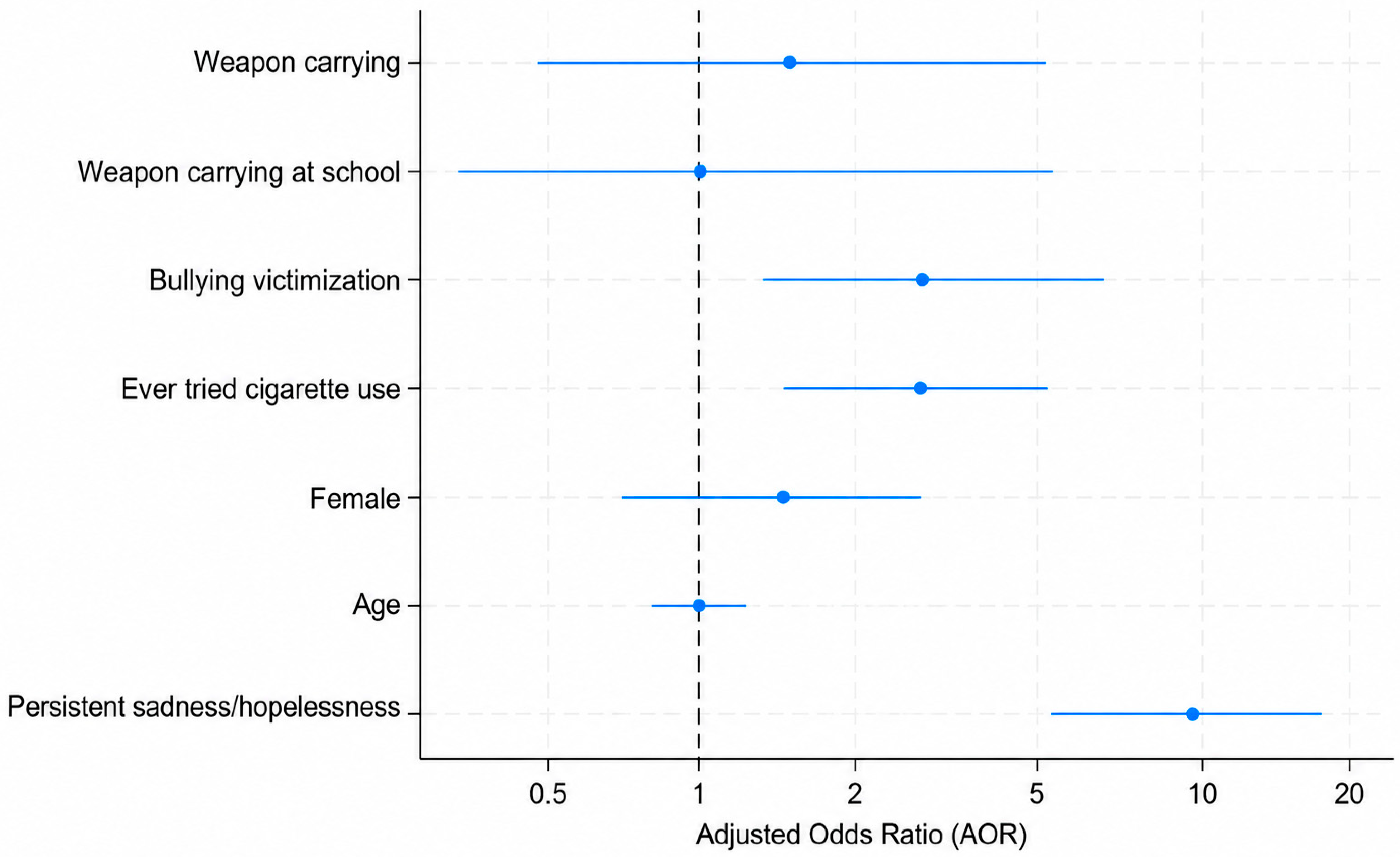
However, in the fully adjusted multivariable model, sex was not independently associated with suicidal ideation after accounting for psychosocial and behavioral factors. This finding suggests that observed sex differences may be partially explained by underlying differences in exposure to internalizing symptoms and social stressors rather than sex itself acting as an independent factor.
The predominance of weapon carrying and physical fighting among males is equally consistent with cross-cultural and national data. A meta-analytic review of sex differences in real-world aggression found consistent evidence of higher rates of physical aggression and weapon use among males across cultures, attributable to both biological and socialization factors (
Archer, 2004). This finding has been extended across nine countries, documenting higher rates of physical aggression among boys in all contexts studied (
Lansford et al., 2012). Within the U.S., national YRBSS data have consistently shown male high schoolers carry weapons at approximately two to three times the rate of females (
Centers for Disease Control and Prevention, 2020), a magnitude broadly consistent with the OR of approximately 4.5 favoring males in this sample. However, these externalizing behaviors were not independently associated with suicidal ideation in the fully adjusted model, further supporting the role of underlying psychosocial factors as more proximal correlates of suicidal ideation.
4.2. Weapon Carrying/at School and Suicidal Ideation
Weapon carrying was significantly associated with suicidal ideation in unadjusted and partially adjusted models, with carriers having more than twice the odds of reporting suicidal ideation (OR = 2.18, 95% CI [1.14, 4.19], p = 0.021), an association that remained after adjustment for sex and age with suicidal ideation only after adjustment for sex and age (AOR = 2.90, 95% CI [1.55, 5.44], p = 0.002). Weapon carrying at school was similarly associated with suicidal ideation only after adjustment for sex and age (AOR = 2.93, 95% CI [1.33, 6.49], p = 0.010). However, in the fully adjusted model that included psychosocial and behavioral variables, neither weapon carrying nor weapon carrying at school remained independently associated with suicidal ideation.
This pattern suggests that the observed associations in simpler models may reflect shared underlying risk factors, rather than a direct independent relationship between weapon carrying and suicidal ideation. In this context, weapon carrying may function as a behavioral marker of elevated risk within a broader constellation of psychosocial and behavioral vulnerabilities.
These findings align with the Interpersonal-Psychological Theory of Suicide, which posits that suicidal behavior requires both the desire to die and an acquired capability for self-harm (
Van Orden et al., 2010). Repeated exposure to violence and access to lethal means are both features of weapon carrying environments that may increase this capability. This framework has been extended by emphasizing that habituation to painful and dangerous stimuli can lower the threshold for acting on suicidal impulses, a mechanism that may be operating in students who carry weapons (
Van Orden et al., 2010). Adolescents who carried guns have been found to report higher rates of suicidal behaviors including ideation and attempts, even after controlling for bullying victimization (
Romero et al., 2016). Access to lethal means has been associated with increased likelihood of suicide attempts among adolescents already reporting ideation (
Mars et al., 2019). Longitudinal evidence further suggests that suicidal ideation may persist and progress to suicide attempts among vulnerable youth (
Ortin et al., 2019). However, the present findings suggest that these relationships may be better understood within a broader framework in which internalizing symptoms and psychosocial stressors play a more central role. The loss of statistical significance after full adjustment indicates that weapon carrying is likely intertwined with other factors—such as persistent sadness, bullying victimization, and risk behaviors—rather than functioning as an independent correlate of suicidal ideation.
In the Puerto Rican context, weapon carrying may therefore identify a subgroup of adolescents with elevated overall risk profiles, who may benefit from targeted screening and intervention. However, given the cross-sectional design, the directionality of this association cannot be determined. Thus, from an epidemiological perspective, the present findings should be interpreted as evidence of associations rather than causal relationships, and as part of a broader, multifactorial understanding of adolescent suicide risk.
4.3. Physical Fighting and Suicidal Ideation
Physical fighting was not independently associated with suicidal ideation (AOR = 1.50, 95% CI 0.85–2.66,
p = 0.151), diverging from findings reported in international adolescent samples (
Swahn et al., 2013). In the context of the present multivariable model, this finding suggests that physical fighting may not represent an independent correlate of suicidal ideation when accounting for underlying psychosocial and behavioral factors. This may reflect cultural differences in how physical aggression is socially interpreted among Puerto Rican youth, or it may indicate that observed associations in other settings are influenced by co-occurring factors such as emotional distress and social stressors. Physical fighting in U.S. samples has shown stronger associations with suicidal ideation (
Joseph et al., 2025), suggesting that the behavioral marker of risk may differ by context. The non-significant result is notable and warrants further investigation, including exploration of whether contextual or cultural factors specific to Puerto Rico moderate this relationship, such as norms around physical altercations, school climate, or community violence exposure.
Additionally, the lack of association observed in the adjusted models reinforces the broader pattern identified in this study, in which internalizing symptoms and psychosocial factors appear to play a more central role in suicidal ideation than externalizing behaviors alone.
An additional consideration relates to the measurement of suicidal ideation in this study. The use of a single dichotomous item does not capture the full clinical spectrum of suicidal ideation, including its frequency, severity, persistence, or progression toward planning and attempts. As such, this measure may obscure important heterogeneity within those classified as endorsing suicidal ideation, limiting the ability to distinguish between transient thoughts and more severe or clinically concerning patterns. This limitation may reduce the precision and practical applicability of the findings in clinical settings, where risk assessment depends on gradations of severity and intent. Future research should incorporate multi-item, validated instruments capable of capturing the complexity of suicidal ideation, allowing for more nuanced characterization of risk and more clinically actionable insights.
4.4. Age and the Vulnerability of Mid-Adolescence
Suicidal ideation showed a significant association with age, with mid-adolescence (ages 15–16) showing elevated observed frequencies relative to expected values. This peak is consistent with developmental frameworks identifying mid-adolescence as a period of heightened psychological vulnerability, characterized by the maturation of affective systems outpacing the development of prefrontal regulatory circuits (
Giletta et al., 2015;
Telzer et al., 2015). A review of the epidemiology of adolescent suicide identified mid-adolescence as a critical window of elevated risk (
Benton et al., 2021). Trajectories of suicidal ideation and suicidal behaviors during adolescence have similarly been documented in longitudinal cohorts, suggesting this period represents a developmentally sensitive phase requiring targeted attention (
Geoffroy et al., 2021). However, in the fully adjusted multivariable model, age was not independently associated with suicidal ideation after accounting for psychosocial and behavioral factors. This finding suggests that the observed age-related differences may reflect variations in exposure to underlying risk factors, such as emotional distress and social stressors, rather than age acting as an independent correlate. The concentration of suicidal ideation at ages 15–16 in Puerto Rican youth is broadly consistent with prior evidence indicating that suicidal ideation follows identifiable developmental trajectories during adolescence and represents a significant public health concern among Puerto Rican youth (
Ortin et al., 2019). Nevertheless, the present findings indicate that these age-related patterns should be interpreted within a broader multifactorial framework, in which internalizing symptoms and psychosocial factors play a more central role. Violent behaviors, by contrast, showed no significant associations with age or grade in adjusted analyses, suggesting relative stability of these behaviors across adolescence once underlying psychosocial factors are considered.
4.5. Puerto Rican Context
Puerto Rican adolescents face a distinctive constellation of sociopolitical and environmental stressors that may provide important contextual background for interpreting the relationships observed here. Recovery from Hurricane María has been associated with elevated rates of PTSD, depression, and suicidality among youth on the island. Disaster exposure has been found to significantly increase internalizing symptoms including suicidal ideation (
Orengo-Aguayo et al., 2019), and elevated PTSD and suicide-related outcomes have been documented in its aftermath (
Reyes et al., 2019). Ongoing economic instability and social disruption have further been described as compounding mental health vulnerabilities (
Rivera-Segarra et al., 2021).
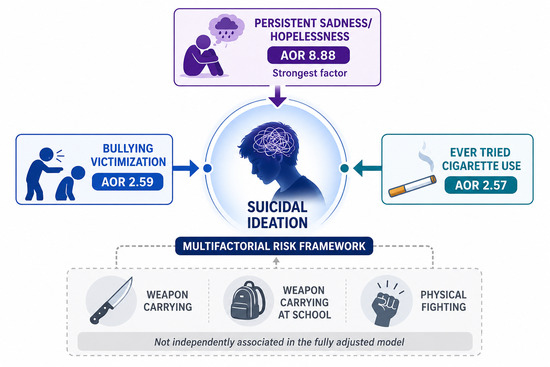
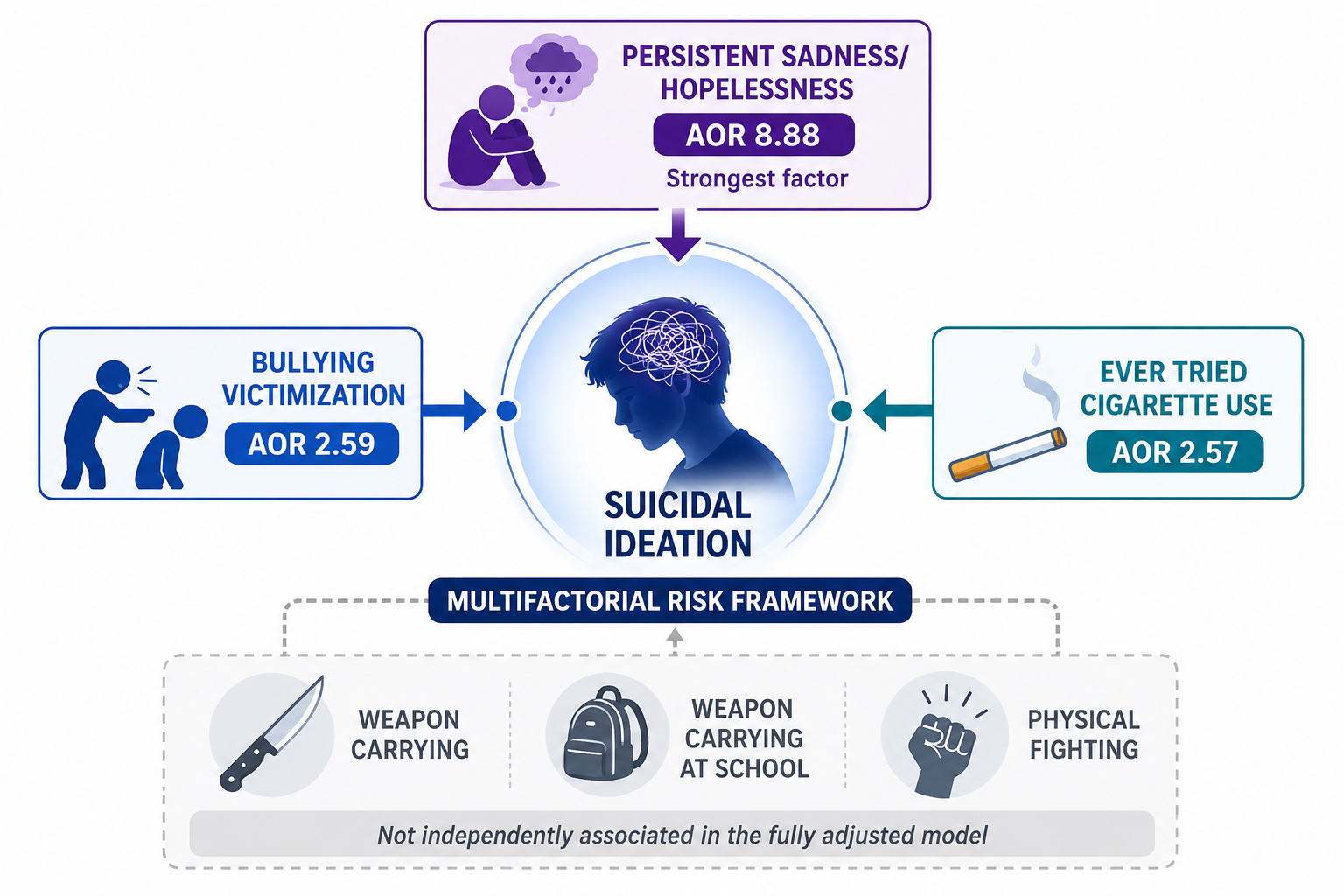
These contextual stressors may represent plausible contributing factors influencing both violent behavior and suicidal ideation; however, they were not directly measured in this study and should therefore be interpreted as hypothesis-generating rather than explanatory of the present findings. The finding that persistent sadness/hopelessness remained the strongest factor associated with suicidal ideation suggests that internalizing distress may play a central role in adolescent mental health in this context. Rather than reflecting isolated behaviors, the observed associations point toward a clustering of psychological, social, and behavioral vulnerabilities that may be shaped by post-disaster and socioeconomic conditions unique to the island, although no direct inference can be made from the present analyses.
These associations may also reflect shared underlying vulnerabilities, such as mental health conditions, trauma exposure, or adverse social environments. Future studies that incorporate direct measures of disaster exposure and sociopolitical stressors are needed to evaluate their roles in shaping these associations.
Overall, these findings reinforce the multifactorial nature of adolescent mental health, which is influenced by an interplay of psychological, social, and environmental factors. In this framework, externalizing behaviors, such as weapon carrying, are better understood as components of a broader constellation of risk indicators rather than independent correlates. This perspective underscores the importance of interpreting these results within an ecological framework of adolescent risk.
4.6. Limitations
Several limitations should be considered when interpreting these findings. First, the cross-sectional design precludes causal inference and does not establish the temporal sequence between weapon carrying and suicidal ideation. Consequently, the observed associations may reflect bidirectional or co-occurring relationships rather than a causal effect. Second, the study variables were assessed using different recall periods. Weapon carrying and weapon carrying at school were measured during the previous 30 days, whereas suicidal ideation, physical fighting, bullying victimization, and persistent sadness or hopelessness were assessed over the previous 12 months. This temporal mismatch further limits the interpretation of the chronological relationship between these behaviors. Third, although the fully adjusted model incorporated several key psychosocial and behavioral variables available in the 2019 YRBSS, including persistent sadness/hopelessness, bullying victimization, cigarette use, and violent behaviors, residual confounding from unmeasured factors cannot be excluded. Variables such as family functioning, trauma exposure, psychiatric diagnoses, community violence, socioeconomic conditions, and other relevant behavioral factors were not included in the final model and may have influenced the observed associations. Fourth, the 2019 Puerto Rico YRBSS dataset included only a binary measure of sex (male/female) and did not provide information regarding gender identity. As a result, transgender and non-binary youth could not be identified or analyzed separately. This limitation may limit the interpretation of sex-based findings. Fifth, some demographic subgroups included relatively small cell sizes, particularly the youngest age categories and the alternative grade category. Although the analyses incorporated survey weights and accounted for the complex sampling design, estimates for these subgroups may be less stable and should therefore be interpreted with caution. Additionally, a substantial proportion of variance in suicidal ideation remains unexplained, highlighting the complexity of adolescent mental health. Finally, selection bias cannot be ruled out in the fully adjusted model, as there was a statistically significant difference in sex between participants excluded due to missing data and those included. Therefore, the findings should be interpreted as evidence of associations rather than evidence of causality. Future longitudinal studies incorporating more comprehensive psychosocial, behavioral, gender identity and contextual measures are needed to clarify the temporal relationships and underlying mechanisms linking violent and psychosocial behaviors and suicidal ideation.
5. Conclusions
This study demonstrates that suicidal ideation among Puerto Rican high school students is associated with a multifactorial set of psychosocial, behavioral, and violent factors. The fully adjusted model indicated that persistent sadness or hopelessness, bullying victimization, and cigarette use were independently associated with higher odds of suicidal ideation after accounting for sociodemographic and violent behaviors. In contrast, weapon carrying and physical fighting were not independently associated with suicidal ideation in the fully adjusted model.
These findings support integrated screening approaches in school and clinical settings, in which weapon carrying is treated not only as a disciplinary concern but as a potential behavioral marker of underlying psychological distress warranting mental health assessment. More broadly, the results highlight the importance of addressing internalizing symptoms and social stressors in suicide prevention efforts. Prevention and intervention strategies should be gender-sensitive, trauma-informed, and tailored to the sociocultural context of Puerto Rico, including the ongoing sequelae of Hurricane María and related post-disaster stressors.
Future research employing longitudinal designs, comprehensive assessments of suicidal behavior, and investigation of mediators such as emotion dysregulation, bullying victimization, and community violence exposure will be essential to better characterize these relationships and inform targeted public health responses in Puerto Rican and other Hispanic adolescent populations.




 ,
,