1. Introduction
Global migration flows have intensified and diversified in recent decades, with international estimates indicating continued growth in cross-border mobility and displacement. This increase in the migrant population is observed not only in adult migration, but also in the flow of unaccompanied migrant minors (UMMs) (
Azorín, 2019).
For the purpose of this study, the term unaccompanied migrant minors (UMMs) refers to children and adolescents under 18 years of age who migrate without a legal guardian and are subsequently placed under national child protection systems; definitions may vary across countries depending on legal and administrative frameworks.
Migration involving UMMs has gained increasing visibility on the international agenda due to its legal, psychological and educational complexity. This phenomenon poses substantial challenges for protection, mental health and education systems, as UMMs are a group of special interest for interdisciplinary research, as they are at the intersection of psychosocial trauma, cultural adaptation and neuroeducational development (
García Segura et al., 2024;
Del-Sol-Flórez, 2012).
Neuroeducation recognises that early experiences of severe adversity can alter the circuits of affective regulation, memory and attachment, affecting learning and the capacity for self-regulation. However, brain plasticity and restorative relational experiences can modulate the effects of trauma, enhancing the role of education as a space for neurofunctional and affective reorganisation. This neuroeducational approach, still in its infancy, reconfigures the understanding of migratory trauma, shifting the emphasis from deficit to resilience and adaptive recovery processes mediated by bonding, learning and relational security (
Merino Lorente, 2024;
Gonzalo Marrodán, 2023).
Despite the social and scientific relevance of this topic, academic output on unaccompanied migrant minors (UMMs) from a neuroeducational perspective remains scarce and scattered. The literature has focused mainly on clinical approaches, without systematically integrating advances in neuroscience, pedagogy, and mental health. This theoretical and methodological fragmentation hinders the consolidation of an interdisciplinary framework capable of articulating empirical evidence on how educational processes can act as mediators of neuroaffective reorganisation and recovery in contexts of migratory trauma (
Gómez Vicario et al., 2023;
Gago Galvagno & Elgier, 2018).
This study conducts a scientometric analysis of international scientific production on trauma and neuroeducational development in unaccompanied migrant minors (UMMs), with the aim of identifying trends, collaboration networks, thematic clusters and knowledge gaps. By examining publications indexed in Scopus and Web of Science between 2008 and 2025, we seek to map the evolution of the field and provide a structured view of its degree of theoretical and empirical consolidation.
2. Materials and Methods
Scientometric analysis is a well-established quantitative methodology that uses statistical techniques to measure and evaluate scientific output, providing objective indicators of research progress and dynamics. This method was chosen due to its methodological effectiveness in analysing, evaluating and visualising information in order to obtain proportions, trends, patterns, relationships and indicators (
Álvarez López & Michán Aguirre, 2018).
To construct the corpus, a systematic search strategy was carried out in the international academic databases Scopus and Web of Science, aimed at identifying publications addressing trauma and neuroeducational development in unaccompanied foreign minors. An initial exploratory search combining the terms “neuroeducation” and “unaccompanied” yielded a very limited number of records, revealing the marginal consolidation of this intersection. Consequently, the search was broadened to include trauma-related terminology within migrant minors.
Preliminary searches including the term “refugee” generated a substantial body of literature primarily centered on asylum procedures, camp-based humanitarian settings, and international protection frameworks. Given that the objective of this study was to analyse unaccompanied minors situated within national child protection and educational systems—rather than asylum determination processes—the Boolean operator NOT refugee was incorporated. The final search equation (“Unaccompanied AND trauma NOT refugee”) yielded 252 documents (185 from WoS and 67 from Scopus) between 1969 and 2025.
For the purpose of this study, the term unaccompanied migrant minors (UMMs) refers to children and adolescents under 18 years of age who arrive in a host country without a legal guardian and are placed under national child protection systems. This category is analytically distinguished from refugee minors, whose legal status is defined under the 1951 Geneva Convention and administered through international protection procedures by UNHCR. Although these categories frequently overlap in practice, they represent distinct legal, administrative, and policy frameworks. The present analysis therefore focuses on unaccompanied minors embedded in educational, neurodevelopmental, and psychosocial integration processes within host-country systems.
Next, explicit inclusion and exclusion criteria were established (
Table 1).
Based on these criteria, a total of 179 documents (126 Wos and 50 Scopus) were eliminated. The remaining 73 articles represent the raw corpus of the research. Of the 73 articles, 38 documents were excluded due to a lack of methodological rigour or specific thematic relevance. The final corpus included 35 articles.
3. Results
3.1. Diachronic Analysis of Scientific Productivity
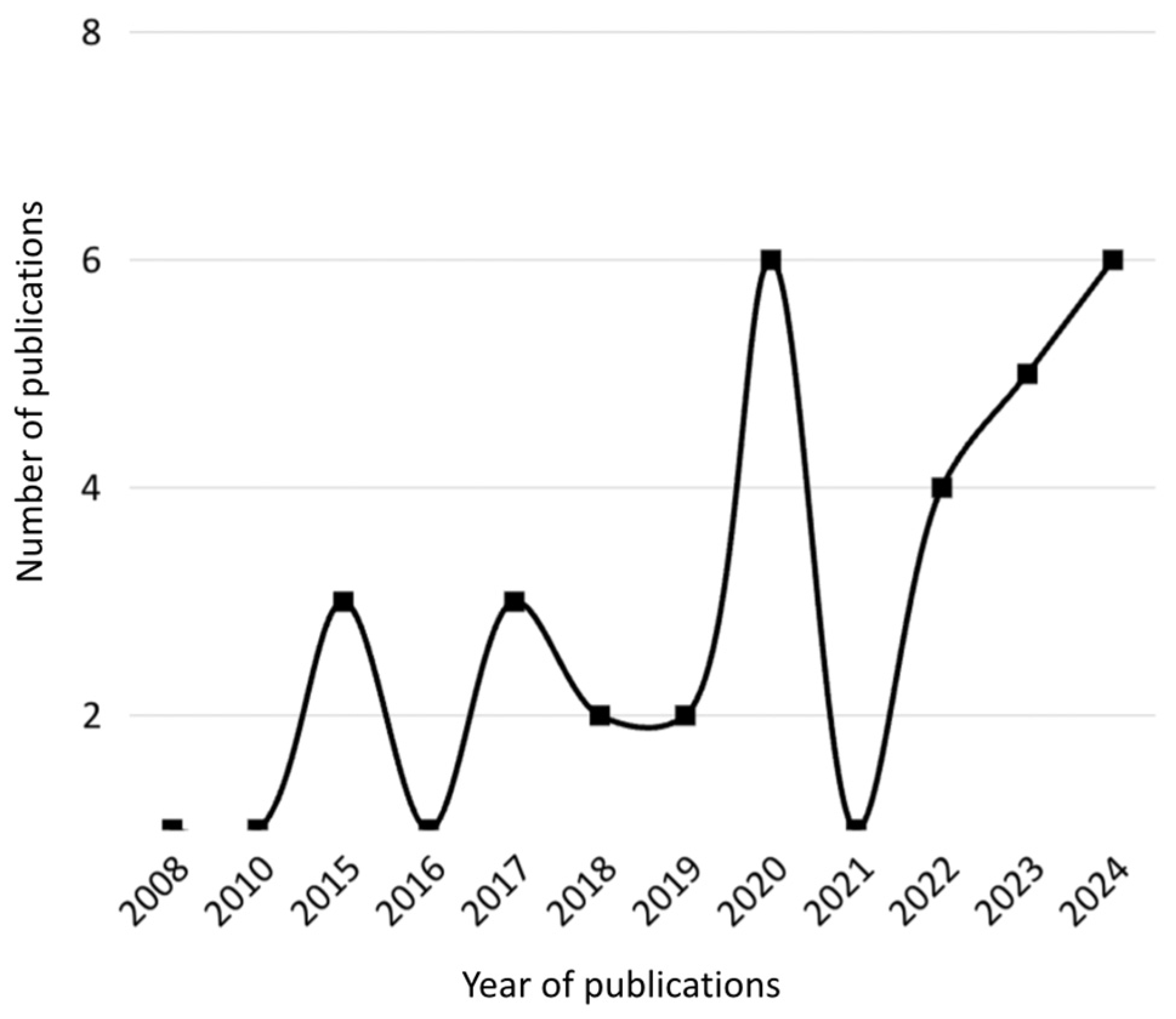
The analysis shows sustained and cumulative growth over the period 2008–2024 (
Figure 1). In the first stage (2008–2014), production was limited, with only four works identified, reflecting the emerging presence of the topic in indexed international databases.
From 2015 onwards, a phase of sustained expansion began, with a progressive increase in publications, reaching a peak in 2020. The upward trend continues until 2024, suggesting consolidation of the field.
The growth pattern approximates an exponential model in accordance with Price’s law, which describes the cumulative development of scientific knowledge. The estimated regression curve fits the model y = 0.52 × 101.15 (x − 2008), with a coefficient of determination r2 = 0.91, indicating a strong adjustment and sustained increase in scientific production over the analysed period.
The annual distribution reveals fluctuations within the overall upward trajectory, with two noticeable peaks (2015–2017 and 2020) and slight declines in 2018–2019 and post-2021. These variations reflect changes in publication intensity within the broader trend of cumulative growth.
Figure 1 presents the annual distribution of publications on trauma and neuroeducational development in unaccompanied migrant minors.
3.2. Co-Authorship Clusters as Evidence of Collaborative Networks
In terms of authorship, the corpus includes 90 unique authors. Of these, 87 authors (94.6%) contributed to a single publication, while 5 authors appeared in two publications. No author exceeded two contributions.
The log–log regression applied to the productivity distribution (ln y vs ln x) yielded an exponent of n ≈ 4.12 and a constant C ≈ 87. The empirical distribution includes only two productivity levels (x = 1 and x = 2).
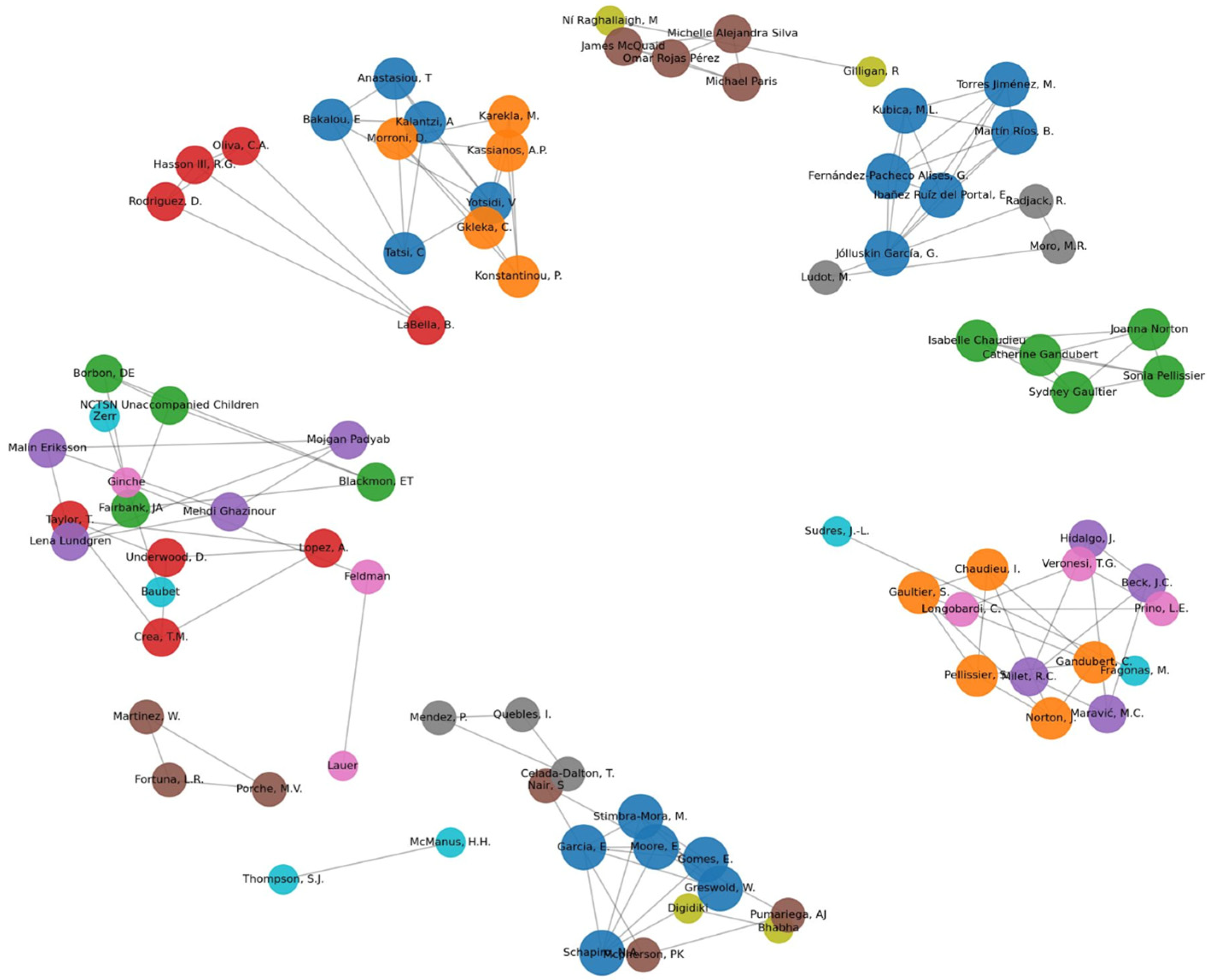
Figure 2 presents the co-authorship network. Each node represents an author, and each edge represents at least one co-authored publication. Node size is proportional to the number of collaboration links. Community detection using the Newman–Girvan modularity algorithm identified 23 clusters. The spatial configuration was generated using a force-directed layout (Fruchterman–Reingold algorithm).
The average collaboration index (IMC = 0.80) indicates predominance of multi-authored publications. Twenty percent of the documents correspond to single-authored works.
The main collaborative groups identified in the network are summarized in
Table 2, which lists the five most productive authors within each cluster for descriptive purposes.
3.3. Institutional Collaboration Clusters
The analysis of contributions by institutions reveals a highly concentrated distribution, characteristic of fields in consolidation. According to Bradford’s Law, a small number of institutions account for most of the scientific output: in this case, the top five institutions contribute approximately 50% of the total number of documents, constituting the core of the literature on unaccompanied migrant minors and neuroeducation.
The rest of the institutions form the peripheral or ‘satellite’ areas of scientific output, with scattered and minor contributions, reflecting the gradual expansion of international collaboration.
The transience index is evident in the fact that more than 60% of institutions publish only one or two documents in the area, showing the existence of a large group of occasional contributors compared to the core group of highly productive institutions. This pattern confirms the typical concentration of emerging fields and allows us to identify the most influential institutional poles, as well as the actors that could consolidate themselves in future international collaboration networks.
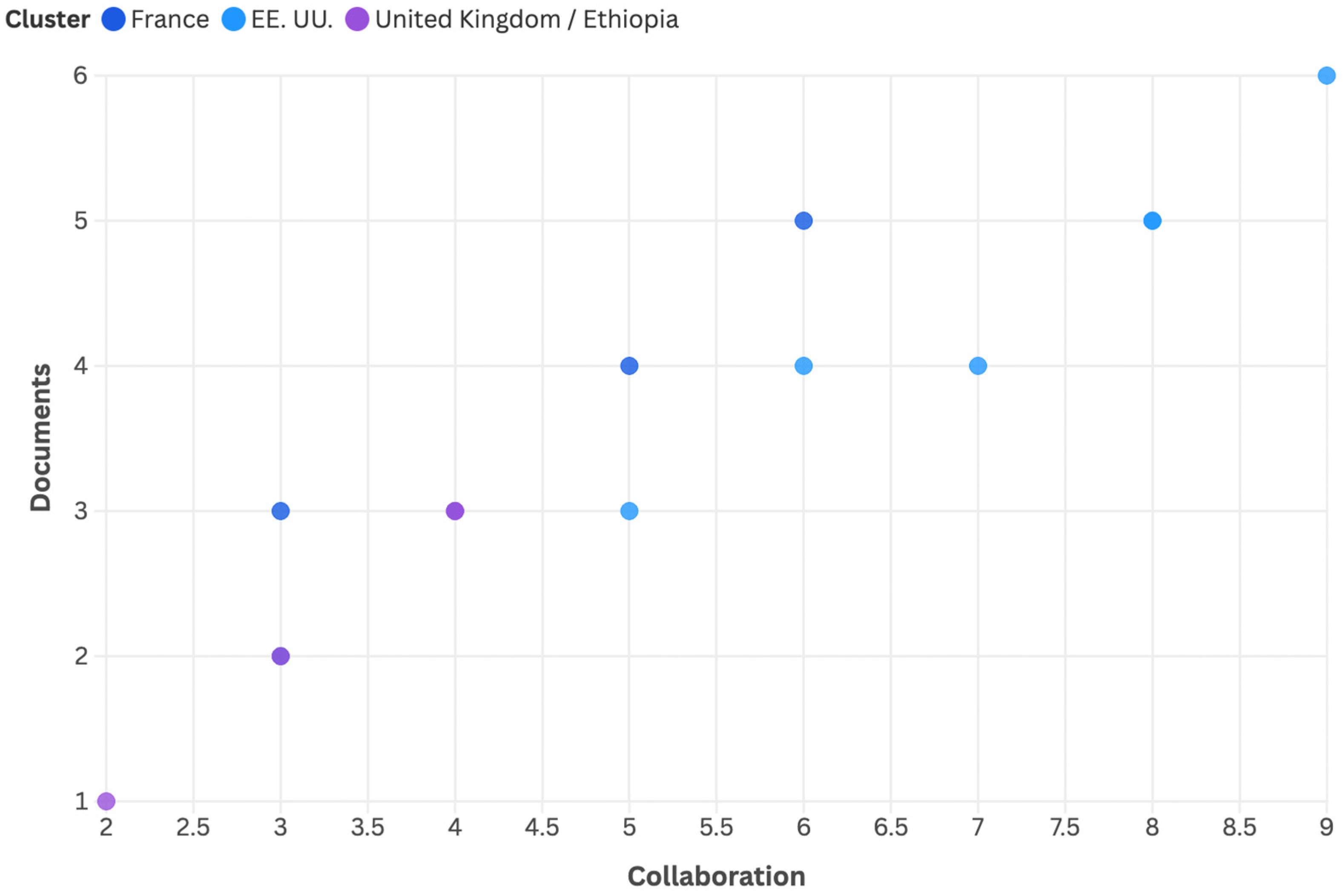
The analysis also reveals three main clusters (
Figure 3), characterised by geographical, thematic and collaborative affinity.
Firstly, the French network for child psychiatry and cross-cultural mental health brings together Parisian institutions such as Maison des Adolescents – Hôpital Cochin, AP-HP, Université Paris-Saclay, UVSQ, INSERM, CESP, University Sorbonne Paris Nord and Université Paris-13, Hôpital Avicenne. It is the most established European hub, focusing on the clinical and psychosocial assessment of migrant minors. Studies conducted in this cluster prioritise cross-cultural intervention, child and adolescent psychiatry, and the application of neuroeducation-based approaches to managing migration trauma. There is a high level of local collaboration, with numerous joint projects between hospitals and universities in Paris.
The second cluster is the US network for neuroeducation, mental health and migration policies, comprising institutions such as Boston College, School of Social Work, Boston Children’s Hospital, Harvard Medical School and Yale School of Medicine. This cluster represents the most influential North American output, integrating clinical psychology, applied neuroscience, education and social work. The authors in this network investigate the prevalence of mental disorders, the development of school and psychoeducational programmes, and the influence of migration policies on the well-being of unaccompanied minors. Inter-institutional collaboration is high, and the international reach of their publications is significant.
Finally, we find a third cluster that constitutes a British–African network on education, gender, and migration, comprising the Overseas Development Institute (ODI), the Gender and Adolescence: Global Evidence (GAGE) programme, and Ethiopian universities such as Addis Ababa University and Asaita College of Teacher Education. This group focuses on inclusive education, resilience and a gender approach to forced migration, highlighting field studies and emerging international collaboration. Interdisciplinarity combines education, social development and gender studies, although the density of collaboration is lower than in the European and American clusters.
Also noteworthy is the incipient emergence of an Iberian research hub, with institutional nodes located mainly in Spain.
3.4. Distribution of Productivity by Indexed Journals
This analysis complies with Bradford’s law, as the first core consists of specialised journals that account for the first third of articles in specialised journals that mainly address issues related to migration and childhood trauma and their neuro-educational implications, (Research in Psychotherapy, Child & Family Social Work or Journal of Paediatric Nursing), the second by an average number of journals, mainly on applied psychology, education, inclusive education and studies, and a third that includes the largest number of titles addressing the phenomenon from direct perspectives such as isolated clinical studies or reviews.
3.5. Thematic Research Content
The analysis of thematic content was based on a study of the length of document titles, a qualitative analysis of the words that make them up, and the interpretation of keywords using Flourish Studio (web-based version, Flourish Data Visualization Ltd., London, UK; accessed 1 October 2025).
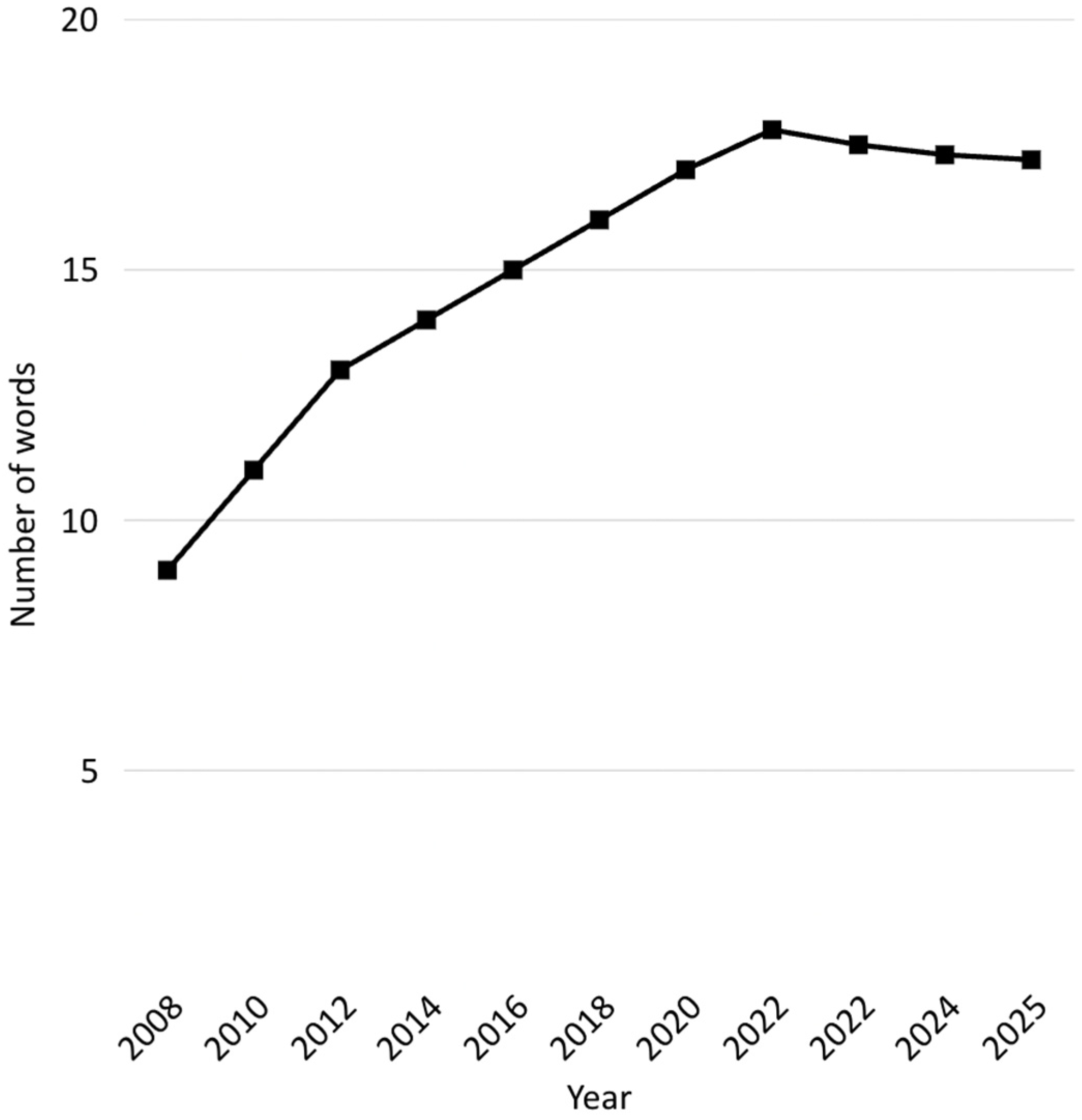
In terms of length, the titles have an average of 15.9 words, ranging from 8 to 28. This variation indicates a tendency towards moderate syntactic complexity, characteristic of interdisciplinary fields of research in the process of consolidation. In more recent studies, the length tends to stabilise at around 16–18 words per title, which can be interpreted as a maturing of scientific discourse, with more precise titles, focused on specific units of analysis and less conceptual redundancy (
Figure 4).
The lexical transience index is 57%, suggesting a field still undergoing terminological diversification, but with a tendency towards conceptual stabilisation around the trauma–resilience binomial.
The analysis of keywords (
Figure 4) reveals a complex and expanding thematic configuration, articulated around migratory trauma and its psychosocial effects, therapeutic and educational interventions with a focus on mental health, and the processes of integration and cultural adaptation of unaccompanied foreign minors.
Of the 185 keywords identified, 43% are repeated in two or more documents, with the most frequent terms shown in
Table 3.
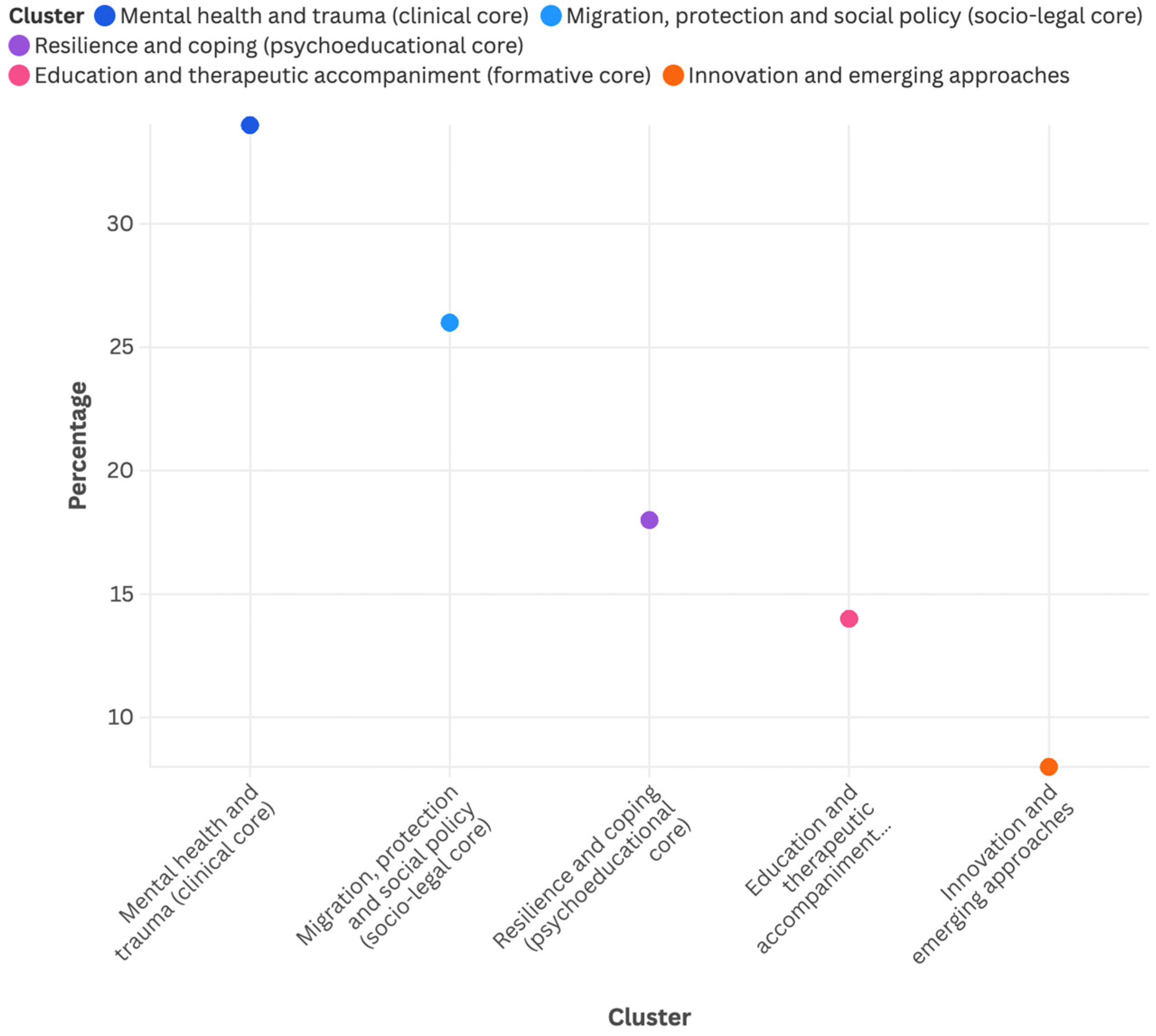
Similarly, semantic co-occurrence shows a network structure with five major thematic clusters (
Figure 5).
The clinical core of mental health and trauma accounts for 34% of the keywords in the corpus. It includes terms such as trauma-focused CBT, psychological trauma, mental health interventions, post-traumatic stress disorder and psychological first aid, which highlight the centrality of psychotherapeutic approaches and attention to the effects of trauma on migrant children and young people.
The socio-legal core of migration, protection and social policy, which represents 26% of the total, incorporates terms such as child protection, refugees, immigration, policy making, child welfare services and social exclusion. This block reflects concern for the regulatory and institutional structures that mediate the reception and protection of minors, highlighting the intersection between social research and public policy.
The psychoeducational core of resilience and coping, with 18% representation, brings together words such as coping strategies, resilience, religion, mindfulness, cultural adaptation and social support systems. This thematic set guides research towards the development of adaptive skills and the promotion of protective factors in educational and community contexts.
For its part, the training core of education and therapeutic support (14%) brings together concepts such as psychoeducation, residential care, training effectiveness, professional quality of life, burnout and playfulness approach. This block highlights the growing attention to the training and well-being of professionals involved in intervention with migrant minors, as well as to support and supervision methodologies.
Finally, the block on innovation and emerging approaches (8%) includes terms such as artificial intelligence, systematic review, evidence synthesis and large language models. Although a minority, their presence points to the incorporation of computational technologies and methodologies in the study of trauma, mental health and migration dynamics.
3.6. Qualitative Results of the Abstract Analysis
The qualitative examination of the abstracts shows a discursive convergence towards understanding migration trauma from an ecological model, while reflecting a significant theoretical shift from an initial emphasis on pathology and damage to the conceptualisation of trauma as a process of adaptive reorganisation mediated by relational, cultural and educational factors.
In terms of subject matter (
Figure 5), the studies analysed recognise the persistence of emotional and behavioural symptoms linked to post-traumatic stress, anxiety and dissociation. These phenomena are not interpreted solely in clinical terms, but as indicators of a neuroadaptive response to highly adverse contexts. The most recent summaries articulate this reading with the notion of plasticity and the ability of minors to develop self-regulatory strategies within structured and emotionally safe environments.
Table 4 presents the frequency distribution of the main thematic categories identified in the qualitative analysis of abstracts. The most recurrent category is
Trauma as Adaptive Reorganisation (n = 26), followed by
Emotional/Behavioral Symptoms (n = 23) and
Stable Reception Contexts (n = 22). Less frequent, though still significant, are references to
Institutional Deficit/Fragmented Services (n = 12) and
Neuroaffective Reorganisation (Symbolisation/Narrative) (n = 11).
Across the board, the summaries denounce the inadequacy of institutional responses and the fragmentation between protection policies, mental health services and education systems. This structural deficit leads to chronic distress and difficulty in generating sustainable integration pathways. In response to this, the studies point to the mediating role of educational spaces as environments for emotional regulation, intercultural socialisation and the development of agency.
3.7. Analytical Axes of Objectives and Hypotheses in Studies on Unaccompanied Migrant Minors
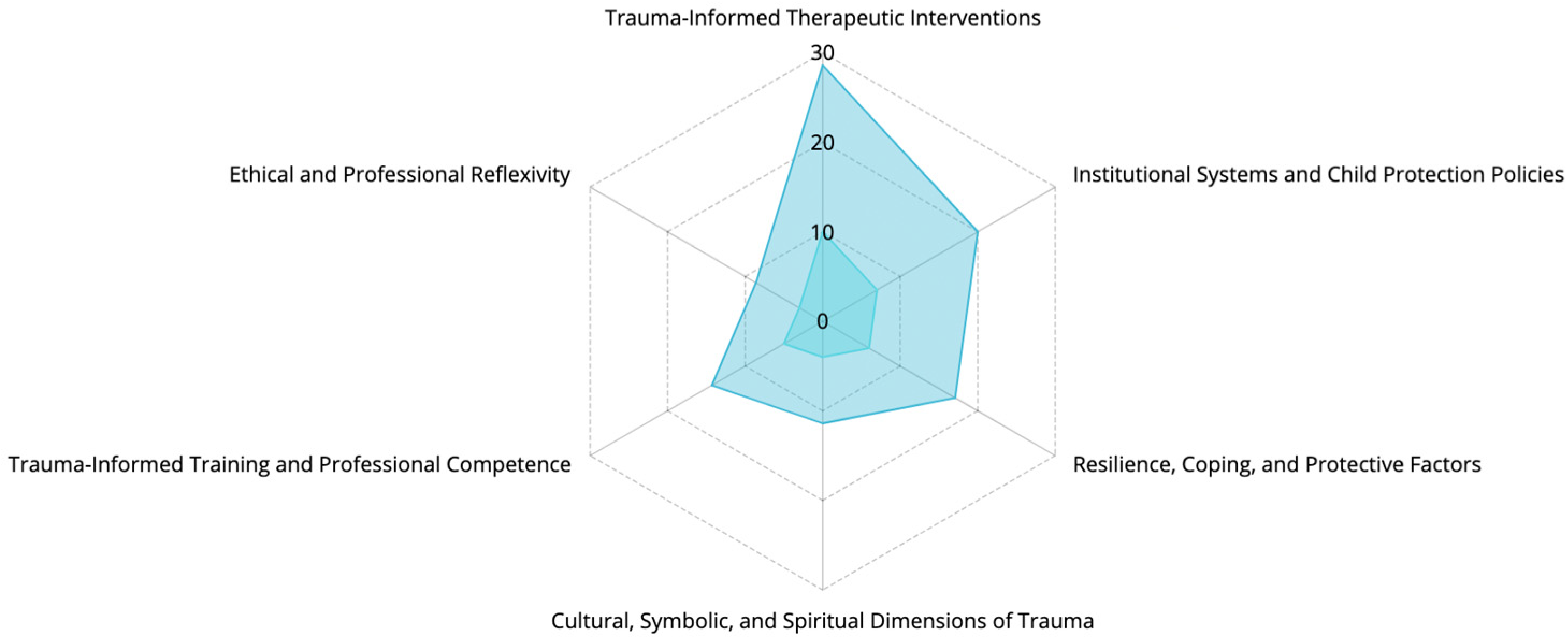
A systematic examination of the objectives and hypotheses shows a progressive transition from clinical approaches focused on symptoms to integrative approaches oriented towards trauma, resilience and social–emotional learning (SEL), the backbone of psychosocial intervention.
The corpus shows a predominance of action-oriented empirical research with a clear translational focus, i.e., aimed at transforming clinical, educational or institutional practice through the generation of applicable knowledge. The objectives and hypotheses are not limited to describing phenomena, but aim to evaluate the effectiveness, relevance, or impact of support strategies and intervention programmes, increasingly incorporating a trauma-informed perspective and applied neuroeducation.
Six axes are identified that outline a map of scientific production that moves from the clinical to the socio-educational, from reactive intervention to relational prevention, and from institutional fragmentation to the integration of knowledge. The general trend shows the emergence of a neuroeducational paradigm of migratory trauma, in which mental health, education, and social protection are conceived as interdependent dimensions of the same process of psychosocial reorganisation (
Figure 6).
3.8. Trends and Methodological Characteristics
There is a predominance of qualitative and exploratory methodologies, aimed at understanding subjective experiences and integration processes. Although less frequent, quantitative and mixed studies provide robust evidence on the effectiveness of interventions and associations between relevant variables.
Table 5 summarises the main methodological trends and characteristics identified in the corpus.
3.9. Key Findings from the Corpus Analysis
The analysis of the studies allows us to identify consistent patterns of vulnerability, resilience and effectiveness of interventions, as well as the structural barriers that affect both children and the professionals who work with them. The main findings are organised into seven thematic areas (
Table 6).
4. Discussion
The scientometric analysis of the corpus on trauma, neuroeducation and unaccompanied migrant minors reveals that scientific output is still limited and highly concentrated in specific contexts and other topics. Scientific output in the field of education remains in its infancy, highlighting a notable epistemic and social invisibility of this population, where unaccompanied migrant children continue to be marginalised in scientific knowledge, despite their growing presence in European school contexts (
Becker Herbst et al., 2018;
United Nations, 2025). This gap between the magnitude of the phenomenon and its underrepresentation in academic literature has already been pointed out by authors such as
Escarbajal et al. (
2023), who warn that academic discourse does not always reflect the real challenges faced by professionals in educational and social contexts (
UNICEF, 2023;
Quiroga Raimúndez et al., 2023).
However, there has been sustained and cumulative growth in scientific output on trauma and neuroeducational development in unaccompanied foreign minors (MENAs) between 2008 and 2024.
Importantly, this increase cannot be attributed solely to European migration dynamics. The corpus reveals significant research clusters in the United States, particularly in relation to Central American child migration, border policies, and child protection systems. Therefore, the expansion of publications reflects multiple geopolitical contexts, including both European reception frameworks and North American migration governance structures. This confirms that the scientometric growth observed is not region-specific but responds to broader global migration trends and policy transformations.
In relation to co-authorship, the concentration of authors and institutions observed, consistent with Lotka’s Law, suggests that the field is in an early stage of scientific consolidation, as only a small number of networks produce the majority of relevant studies. The existence of these clusters confirms that the subject is in its initial phase of exponential growth (
Price, 1963), which implies limited theoretical and methodological diversity, as such homogeneity restricts the construction of a plural epistemic framework capable of integrating the psychosocial, educational and neurocognitive dimensions of migratory trauma. In line with
Fernández-Simo et al. (
2022), it is necessary to expand interdisciplinary and multilevel alliances that allow scientific knowledge to be transformed into effective practices of accompaniment and educational reparation. Therefore, while the European cluster is strongly linked to reception systems in Southern Europe, the North American cluster predominantly addresses unaccompanied migrant minors within U.S. child welfare and immigration enforcement contexts. These clusters operate within distinct institutional frameworks, although they share overlapping concerns regarding trauma, protection, and educational integration.
Thus, the theoretical fragmentation observed among the three clusters reflects the difficulty of articulating a coherent framework that accounts for the complexity of the phenomenon of child migration, which hinders the consolidation of a neuroeducational paradigm of trauma (
Arar et al., 2022).
The analysis of these networks confirms that co-authorship is unevenly distributed, with consolidated hospital research groups predominating over educational or community collaborations, which is in line with the postulates of
Glänzel and Schubert (
2004), according to which scientific cooperation first expands within disciplinary clusters before generating cross-sectoral links.
This is corroborated once again by the analysis of the semantic evolution of the titles in the corpus. In line with Zipf’s Law, the titles of the articles analysed, with an average of 15.9 words, confirm the beginning of a stabilisation of the technical vocabulary in the field. This reduction in terminological transience (57%) can therefore be interpreted as a sign of epistemological maturity and theoretical convergence between neuroeducation, mental health and child migration.
In relation to lexical stabilisation, keywords are beginning to be articulated in the trauma–resilience binomial, pointing to a transition from an exploratory phase to an analytical–proactive stage. The results also show an increase in publications incorporating terms such as trauma-informed pedagogy and neuroscientific literacy, pointing to a paradigm shift that transcends the clinical towards prevention and emotional co-regulation in learning environments (
Kotouza et al., 2025).
Concepts such as resilience, mindfulness, and psychoeducation emerge as mediators between the clinical and educational dimensions, shaping a more holistic discourse on reorganisation. This trend coincides with the theoretical shift driven by affective neuroscience, which conceives of brain plasticity as the biological basis of resilience (
Thompson et al., 2022).
The distribution of keywords shows a structure in five clusters, reflecting a progressive interdisciplinary maturation of the field. However, the field continues to expand conceptually, with clinical, educational and social terms coexisting that have not yet converged into a common language. This semantic fragmentation, as
Bedard-Gilligan and Zoellner (
2012) warn, limits the articulation of pedagogical strategies based on neuroscience applied to migration contexts.
In terms of the distribution of editorial productivity, the concentration in a small number of journals (especially Children and Youth Services Review and Psychological Trauma) responds to Bradford’s Law, where certain editorial media act as hegemonic channels of dissemination. This high concentration in a small core of journals suggests scientific inbreeding, which reinforces clinical approaches and neglects the educational and social perspective (
Belmonte et al., 2019;
Vives, 2020). In this regard,
Bravo and Santos-González (
2017) warn that the institutional response to migrant minors tends to reproduce logics of control and guardianship, rather than pedagogical support and comprehensive development. The thematic concentration, therefore, reflects both the maturity of certain approaches (transcultural psychiatry, trauma) and the absence of others (neuroeducation and school resilience).
In relation to institutional output, there is institutional dispersion, consistent with the patterns of consolidation described by
Subramanyam (
1983). In practical terms, this means that research on migratory trauma and neuroeducation continues to depend on specific projects rather than sustained programmes, which hinders the transfer of knowledge to educational and social policies (
Humphris & Sigona, 2017;
Meloni, 2019). This polarisation, although indicative of methodological progress, limits epistemological diversity and overshadows community and pedagogical approaches that could articulate neuroeducation as a focus for intervention (
Arar et al., 2022).
From a qualitative perspective, the increase in scientific output also reflects a paradigm shift in the interdisciplinarity of the field. Previous research has highlighted the importance of integrating approaches from psychology, neuroscience, and education to understand and address the aftermath of trauma in unaccompanied foreign minors. For example, studies conducted in Spain have documented the living conditions and specific needs of these minors, highlighting the need for interventions adapted to their context and experiences (
Bravo & Santos-González, 2017).
Similarly, the analysis reveals that the most recent summaries interpret post-traumatic symptomatology from a more ecological perspective, demonstrating advances in the current approach to migratory trauma in unaccompanied minors towards a neuroplastic narrative of trauma, which understands stress as manifestations of neuroadaptive reorganisation rather than stable dysfunctions (
López-López & Crespo, 2025).
It is worth highlighting the recent symbolic and educational reconfiguration of trauma, which is beginning to understand plasticity and emotional self-regulation as key axes in theoretical discourse.
Mateos Rodríguez and Dobler (
2021) emphasise the importance of structured and emotionally safe environments; they conceive of reorganisation not as the exclusive result of clinical interventions, but as a symbolic and educational reconfiguration of trauma. Other authors, such as
Sucre (
2022), highlight the importance of meaningful bonds in reception contexts and their role as micro-contexts of resilience that facilitate development, reaffirming the importance of understanding trauma as a relational and educational phenomenon.
The qualitative analysis of the objectives/hypotheses reaffirms the shift towards a more integrative model. The objectives and hypotheses of the analysed corpus point to an improvement in emotional quality, as well as psychological flexibility, once again leaving behind clinical models and leaning towards the salutogenic (
Oberg & Sharma, 2023).
This transformation can be observed in the emergence of evaluations of different interventions and the consequent constant intention to measure specific effects (pre/post-intervention changes), which demonstrates a real translational orientation: they do not remain theoretical, but rather evaluate practical results (
Morroni et al., 2025).
Consequently, the objectives of the studies analysed focus on aspects such as psychological well-being and professional skills, which in turn correlate with sustainable effects in the medium term (
Unterhitzenberger et al., 2019;
Morroni et al., 2025). However, another main focus of the research relates to institutional barriers, which again supports the need to intervene at the institutional level to improve the accessibility and effectiveness of treatments. Authors such as
Dietlinger et al. (
2025) and
Pfeiffer et al. (
2022) also share findings on the importance of the institutional environment for trauma processing.
We can therefore affirm the existence of multiple trends in the literature, as well as different clear axes. However, there is also a lack of studies related to the symbolic, spiritual or cultural, as well as vague references to the ethics of care or epistemic justice.
In terms of methodology, the studies reviewed reveal a predominance of qualitative methodologies, which suggests the need to capture subjective, identity-related and neuro-emotional processes that allow for a holistic observation of the consequences of migratory trauma, which is difficult to observe at a quantitative level. However, the advancement of quantitative and mixed approaches allows for the consolidation of a dialogical approach between subjective data and experimental results, which enriches the research, while also validating evidence-based intervention models (
Betancourt & Khan, 2008).
Finally, analysis of the key findings of the corpus has allowed us to determine the factors that measure the effectiveness of interventions, which emphasise a holistic and ecological understanding of childhood migration trauma (
Betancourt & Khan, 2008). Firstly, it highlights the importance of training psychotherapists using trauma-focused approaches, which increases professional self-efficacy and reduces the risk of burnout and vicarious trauma. Authors such as
Yotsidi et al. (
2024) and
Boukhari (
2025) support this theory, emphasising that the quality of the intervention depends not only on technique, but also on the professional’s preparation and emotional sustainability. Authors such as
Arar et al. (
2022) and
Becker Herbst et al. (
2018) focus their research more on the exposure of unaccompanied foreign minors to abuse, exploitation and trauma, indicating that vulnerability is heightened in rigid institutional contexts that are insensitive to trauma, highlighting the importance of flexible and culturally mediated reception policies.
Also noteworthy are studies that support resilience as part of an ecological process that is activated through meaningful relationships and protective environments (
Ungar & Theron, 2020), as well as others that focus on the effectiveness of integrating cultural mediators and participatory methods as a way of improving the sense of belonging (
Murray et al., 2011).
We again emphasise the importance of developing recommendations on comprehensive policies and the role of narrative continuity, identity and cultural sensitivity as mediators of well-being (
Immordino-Yang, 2016).
5. Conclusions
Although childhood migration trauma constitutes an urgent social and educational challenge in Europe, the scientometric analysis reveals that the field remains in a phase of progressive but incomplete consolidation. While theoretical convergence around ecological, relational and neuroeducational frameworks is evident, empirical operability and methodological robustness remain limited. The literature shows a conceptual shift from symptom-focused approaches toward models that situate trauma as a process of neuro-emotional reorganisation mediated by educational environments, secure relational bonds and cultural contexts. However, this theoretical maturation has not yet been matched by longitudinal, multimodal, and scalable empirical designs.
To advance the field, several priority lines of action emerge. First, research should prioritise multicentre longitudinal studies capable of modelling differential developmental trajectories and distinguishing intervention effects from contextual influences. Second, neuroeducational constructs require clearer operationalisation through validated cognitive, behavioural and relational indicators. Third, multimodal methodologies combining standardised instruments, qualitative data, classroom observation and, where feasible, non-invasive physiological measures should be systematically integrated. Fourth, cross-cultural validation of tools and programmes must precede any international comparison or large-scale implementation.
At the applied level, schools should be positioned as central spaces for neuroaffective reorganisation, supported by trauma-informed training for educators and coordinated intersectoral frameworks linking education, health and child protection systems. Funding policies should prioritise programmes with structured evaluation designs and longitudinal follow-up.
The field possesses strong conceptual foundations; its next phase requires methodological consolidation and coordinated implementation to ensure that neuroeducational approaches to childhood migration trauma become measurable, replicable and sustainable.