Article

Modeling Site Suitability for Solar Farms in the Southeastern United States: A Case Study in Bibb County


Department of Environmental and Civil Engineering, School of Engineering, Mercer University, 1501 Mercer University Drive, Macon, GA 31207, USA
*
Author to whom correspondence should be addressed.
Submission received: 13 October 2025 / Revised: 6 December 2025 / Accepted: 25 December 2025 / Published: 4 January 2026
(This article belongs to the Topic Sustainable Built Environment, 2nd Volume)

Abstract

While there is currently a significant opportunity for the construction of photovoltaic solar farms in the Southeastern United States, there is also a need for proper spatial planning that has not been adequately addressed by the existing literature. The objective of this study is to examine the adaptability of geographic information system-based multiple criteria decision analysis models developed for foreign contexts to the United States. This was accomplished through the application of a model developed originally for Thailand to the study area of Bibb County, Georgia, United States. Model results were analyzed to identify trends and provide concrete recommendations for future work. Using a six-rank classification scheme, 93% of Bibb County was found to have moderate suitability, while 5% and 2% had moderate-to-low and moderate-to-high suitability, respectively. Of the 11 model criteria, land usage and power line distance were found to have the largest impact on the area’s suitability. Statistical analysis identified positive trends indicating that these criteria explained 21% and 10% of the variance in the model’s output, respectively. Empirical verification proved the model structure to be viable for application in the Southeastern United States; however, additional examination of the model’s results found that there is room to improve the model for the local context. These improvements could potentially be realized through the reweighting of criteria and the re-establishment of evaluation benchmarks, allowing for the development of a truly robust model for the region.

1. Introduction

Fossil fuels have been a dominant energy source since their inception during the industrial revolution, in which they were a key enabler of rapid technological innovation [1]. However, they currently account for approximately 80% of the world’s energy mix [2]. The use of fossil fuels presents an issue of sustainability, since their usage has contributed to increased atmospheric greenhouse gas concentrations, which is in turn linked to global warming and climate change [3]. Fossil fuels are also unsustainable in other aspects, since the uneven distribution of oil supplies has been predicted to cause future conflicts, while its nonrenewable nature is projected to cause prices to increase as supplies dwindle [4]. Together, these issues show a clear need for alternative, renewable sources of energy.
One potential source of renewable energy is photovoltaic solar farms. Solar farms are a particularly advantageous energy source due to their comparatively low environmental impact, the flexibility with where they can be located, and their modularity [5]. Solar farms are also among the cheapest energy sources, with utility-scale solar projects having a levelized cost of energy ranging from 38 USD/MWh to 78 USD/MWh in 2025 (excluding storage costs) [6]. These benefits may be key to the expansion of renewable energy as a whole, since utility-scale solar farms in rural areas have a very high potential capacity compared to other renewable energy sources [7]. The creation of solar farms requires detailed planning information; however, the suitability of a particular site for solar farm construction is dependent on a variety of factors [8]. A review of previous studies revealed that while different assessment frameworks have been observed to rely on different criteria, solar irradiance and solar insolation (both of which are measures of an area’s solar radiation exposure) are often among the most prominent factors assessed [5,8,9,10,11,12,13,14,15,16,17,18]. There is a clear gap in this literature; however, there is an imbalance in the location and currency of these studies. Of the papers identified in the literature review, only Janke [10] and Tisza [12], both of which were published prior to the year 2015, have discussed site suitability assessments in the United States.
To address this regional gap, this study was conducted with the goal of incorporating the factor of solar irradiance or insolation, as well as others identified within the literature, into a site suitability assessment for photovoltaic solar farms in the study area of Bibb County, Georgia, United States. This was accomplished by using the geographic information system (GIS) program ArcGIS Pro (version 3.3.2) to conduct a multiple-criteria decision analysis (MCDA) in which the suitability was evaluated individually for a selection of criteria in 30 m-by-30 m cells, which were then weighted and summed to yield a final suitability score. Additionally, due to the comparative lack of United States-focused literature, this study had the secondary goal of examining the adaptability of suitability models developed for foreign regions to the American context. Consequently, the MCDA model developed by Ali et al. [11] was applied with minimal modifications based on well-known local priorities. The results were used to provide recommendations for model adaptations, future research, and policy. The suitability criteria utilized by Ali et al. [11] include the following:
Solar Insolation/Irradiance: Photovoltaic solar farms rely on the photovoltaic effect, in which the electrical production in a solar cell is stimulated by its absorption of solar radiation [19]. This means that the functionality of a solar farm is dependent on the amount of solar energy it receives—measured as insolation (solar energy per unit area) or irradiance (solar power per unit area)—making it a key criterion for solar farm projects [20].
Land Topography: Two topographical factors are important for evaluating the suitability of an area for solar projects: slope and elevation. Most commonly, areas with low slopes and low elevations are preferred for solar farm projects [21].
Land Usage/Cover: While the specific types of land cover that are considered suitable can vary depending on the study and region, barren areas and areas with short vegetation are typically considered to be the most suitable due to the lack of any obstructions for solar insolation or irradiance [5,11]. Conversely, areas with taller vegetation (which can block insolation and irradiance) are less suitable for solar farms. Additionally, areas for which protection buffers have been established (discussed under the environmental criteria) are not considered to be suitable under this criterion.
Residential Buffers: Buffers between solar farms and residential areas (both urban and rural) are often considered in order to avoid inconveniencing human life [15]. Additionally, one of the common arguments against solar farm projects is their visual impact on scenic areas [22].
Environmental Buffers: Buffers between solar farms and areas such as forests and wetlands are often necessary to maintain biodiversity and preserve natural resources, as their development (and the development of supporting infrastructure) can lead to habitat loss, habitat fragmentation, and other ecological impacts if not properly managed [11,23]. These buffers are also crucial for ensuring the community’s acceptance of a solar farm project, as existing research has found that potential impacts on wildlife and habitats are one of the most commonly cited concerns about solar farm projects [24].
Airport Buffers: The glint and glare from solar farms placed in the vicinity of airports have been found to adversely impact the vision of pilots and air traffic controllers [25]. Additionally, the placement of solar panels near each other can have a negative impact on radar systems operating in the vicinity [11]. To avoid these issues, buffers between airports and solar farms were considered during this study.
Road and Power Line Proximity: A high proximity to existing roads and power transmission lines is ideal for solar farm projects, since a shorter distance between these objects will reduce the project’s construction costs [16]. A high proximity between power lines and solar farms is also important for electricity generation. The length of power line cable in a system can impact its electricity losses, whereby a shorter distance between the two objects will result in fewer electricity losses along the power lines, in turn allowing for a greater portion of the generated electricity to be used [26,27].
Available Area: Many areas are not available for solar farm projects, often due to the violation of some baseline requirement associated with one of the other criteria. For instance, Thailand’s guidelines indicate that solar farms should not be placed more than 10 km from roads or power substations [11]. This can severely limit solar farm developments in some areas, such as Italy, where only 26% of the country’s land is available for development [28]. An additional consideration related to this becomes apparent when considering the fact that the amount of available area can be critical for the success of energy projects, with solar farms typically requiring a continuous area of at least 0.4 km2 [29,30]. Because of this requirement, sites with higher quantities of available continuous areas are preferable for solar farm construction. This criterion is often evaluated separately from the multi-criteria analysis, and so it was not included in this study. Instead, it was assumed that the entire study area was available for solar farm projects during the study period.
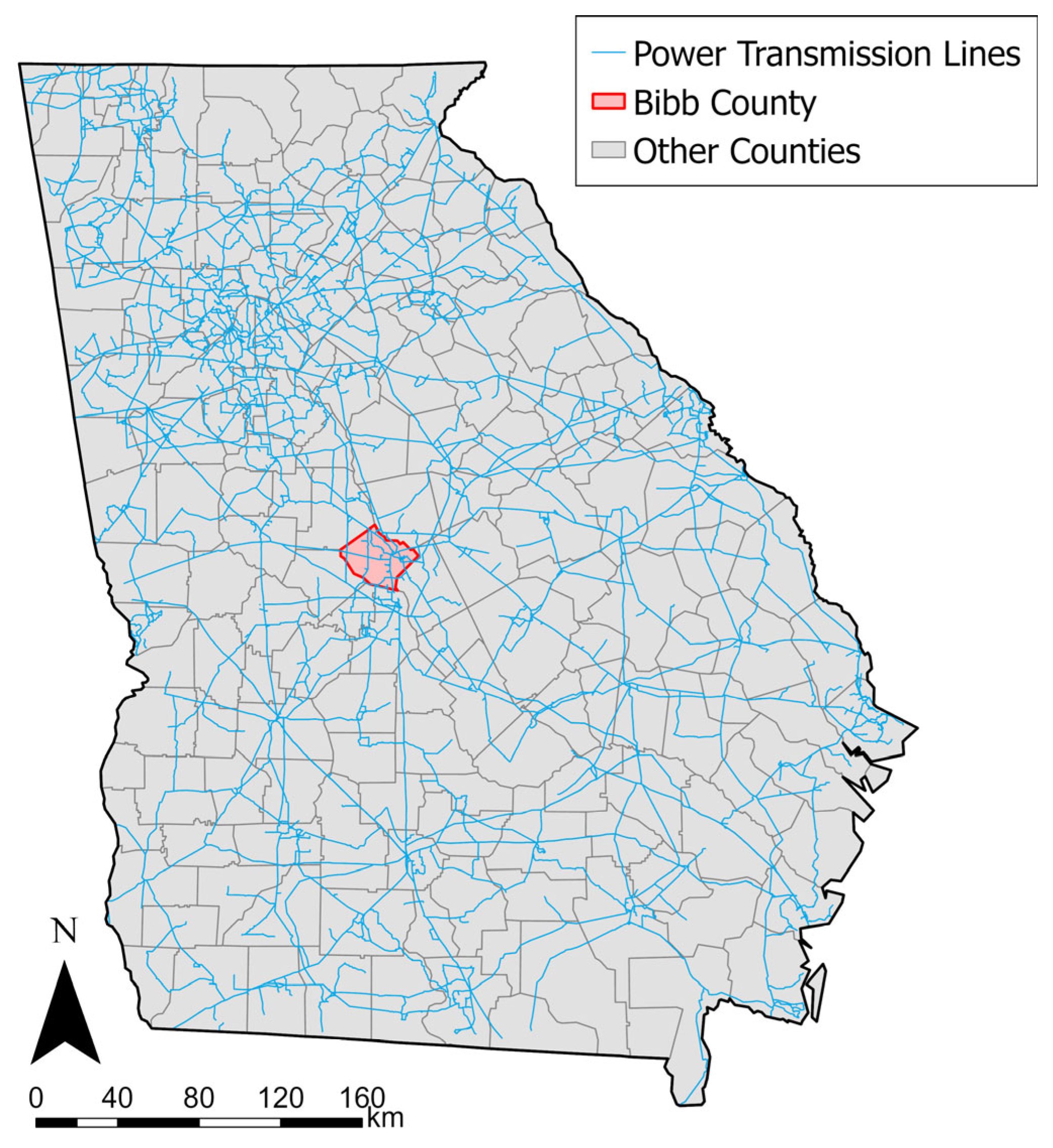
As previously mentioned, the area of focus for this study is Bibb County (also known as Macon-Bibb County), which is located near the center of the state of Georgia. This state was selected due to its location in the Southeastern United States, which has seen low rates of solar farm expansion, primarily due to the low cost of fossil fuels and the lack of state-level incentives for photovoltaic development (such as government loans, feed-in tariffs, or portfolio standards for utility companies) [12,31,32]. There is, however, a key factor that presents an opportunity for solar farm development in the area: the high levels of solar insolation experienced in the country’s southeastern region [33]. Together, these considerations motivate the choice of basing the study in the state of Georgia. The study area was further narrowed down to Bibb County for two key reasons: (1) geographically, it is located near the center of the state (as shown in Figure 1), and (2) it has a highly varied terrain, including urban areas, rural areas, forests, farmland, and wetlands.
The focus of the study on the state of Georgia introduces two additional factors for consideration during the study. The first is that the land usage of solar energy often provides a barrier to acceptance—while the technology is overall favored by the public, many stakeholders across the United States reject the placement of solar developments near their homes [35]. Within Georgia, this has manifested as concerns about the growth of solar farms causing a shrinkage of farmland, which has even caused the photovoltaics industry to receive legislative scrutiny within the state [36]. The other factor is that pollution in solar farm runoff (particularly in rural areas) has become an increasingly major concern in the state, with cases reported of property damage to nearby stakeholders [37,38]. While the former concern must be addressed through adjustments to the criterion of the same name, the latter is already implemented in the model via the previously outlined buffers.

2. Materials and Methods

As outlined previously, this study used an MCDA method to evaluate the study area’s solar farm suitability. In this analysis, scores ranging from 0 to 3 were assigned to 30 m-by-30 m cells of the study area for each criterion. A weighted average of these scores was then taken, providing the overall suitability score for each cell. The specific criteria used were taken from Ali et al. [11] with one key difference: as previously mentioned, the available area for solar farms was not evaluated. To account for this, the category weights provided by Ali et al. [11] were increased according to Equation (1):
m o d i f i e d   c r i t e r i o n   w e i g h t = o r i g i n a l   c r i t e r i o n   w e i g h t s u m   o f   a l l   o r i g i n a l   c r i t e r i o n   w e i g h t s
A summary of the criteria used is presented in Table 1.
All datasets were projected into the NAD 1983 State Plane Georgia West FIPS 1002 (Meters) coordinate system. Additionally, all raster datasets were resampled to a 30 m-by-30 m resolution using the nearest neighbor method for discrete rasters and the bilinear method for continuous rasters. A summary of the datasets used for the analysis is presented in Table 2.
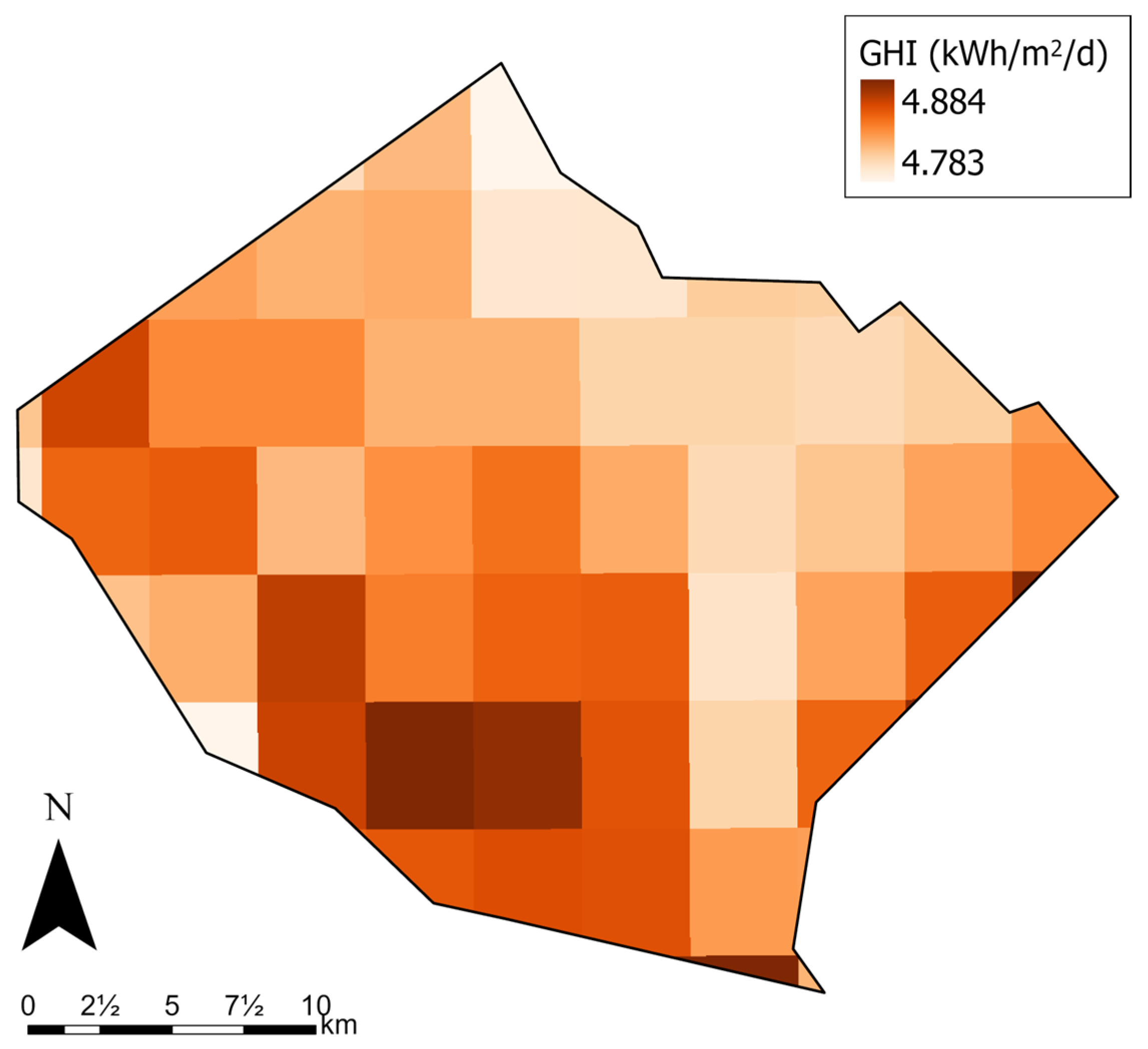
The GHI dataset used in the analysis was based on the REST2 model, with the data averaged over a temporal resolution of 19 years (1998–2016) [39]. A map depicting this dataset (clipped to Bibb County’s boundary) is presented in Figure 2. From this figure, the GHI in Bibb County is noticeably lower but less variable than the global maximum in the Atacama desert (6.6–7.4 kWh/m2/d) [45].
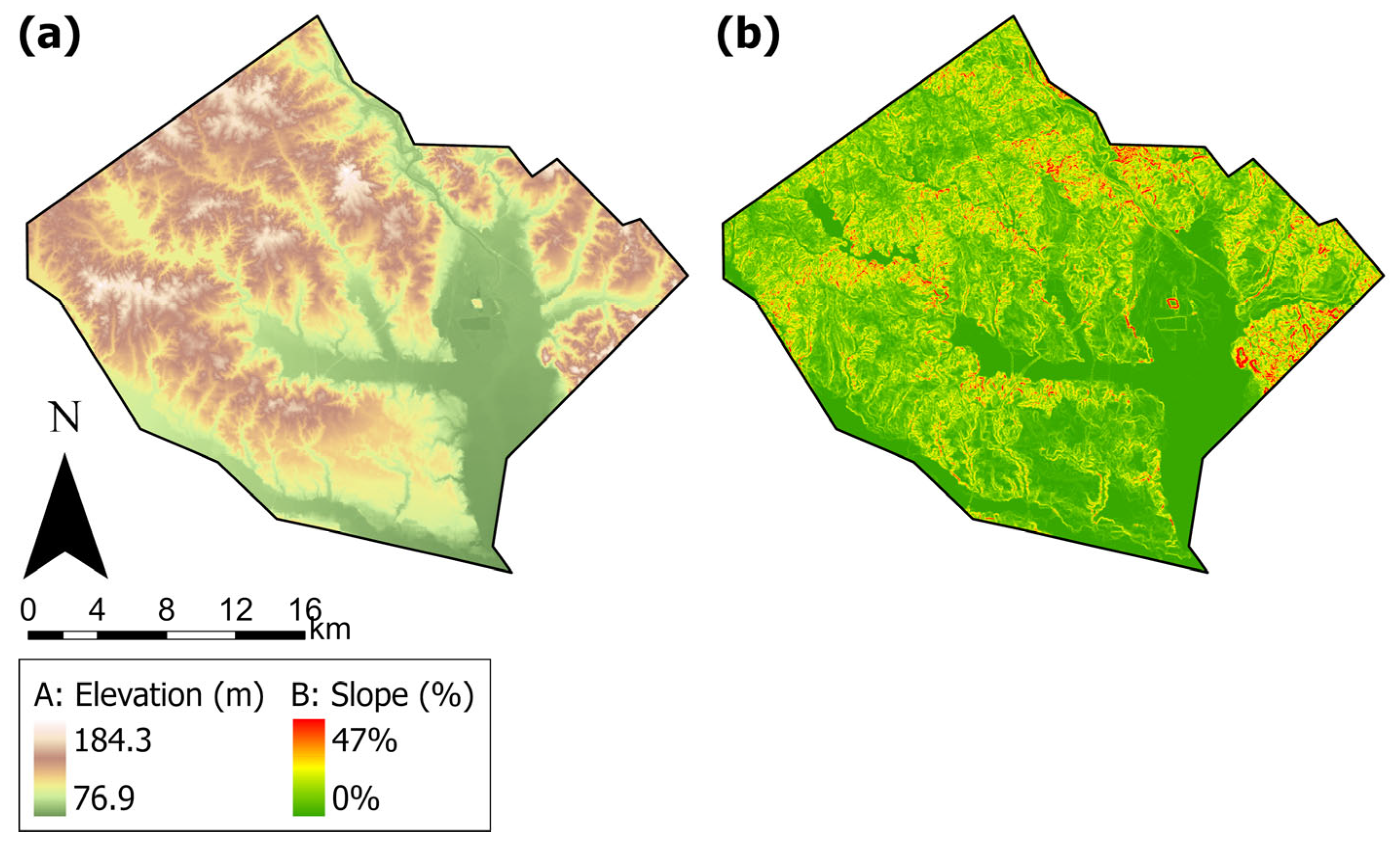
A map depicting the elevation dataset (clipped to Bibb County’s boundary) is presented in Figure 3a. The slope data used for this analysis was generated from this elevation dataset by using the Slope tool with the Planar method. The slope dataset, clipped to Bibb County’s boundary, is presented in Figure 3b.
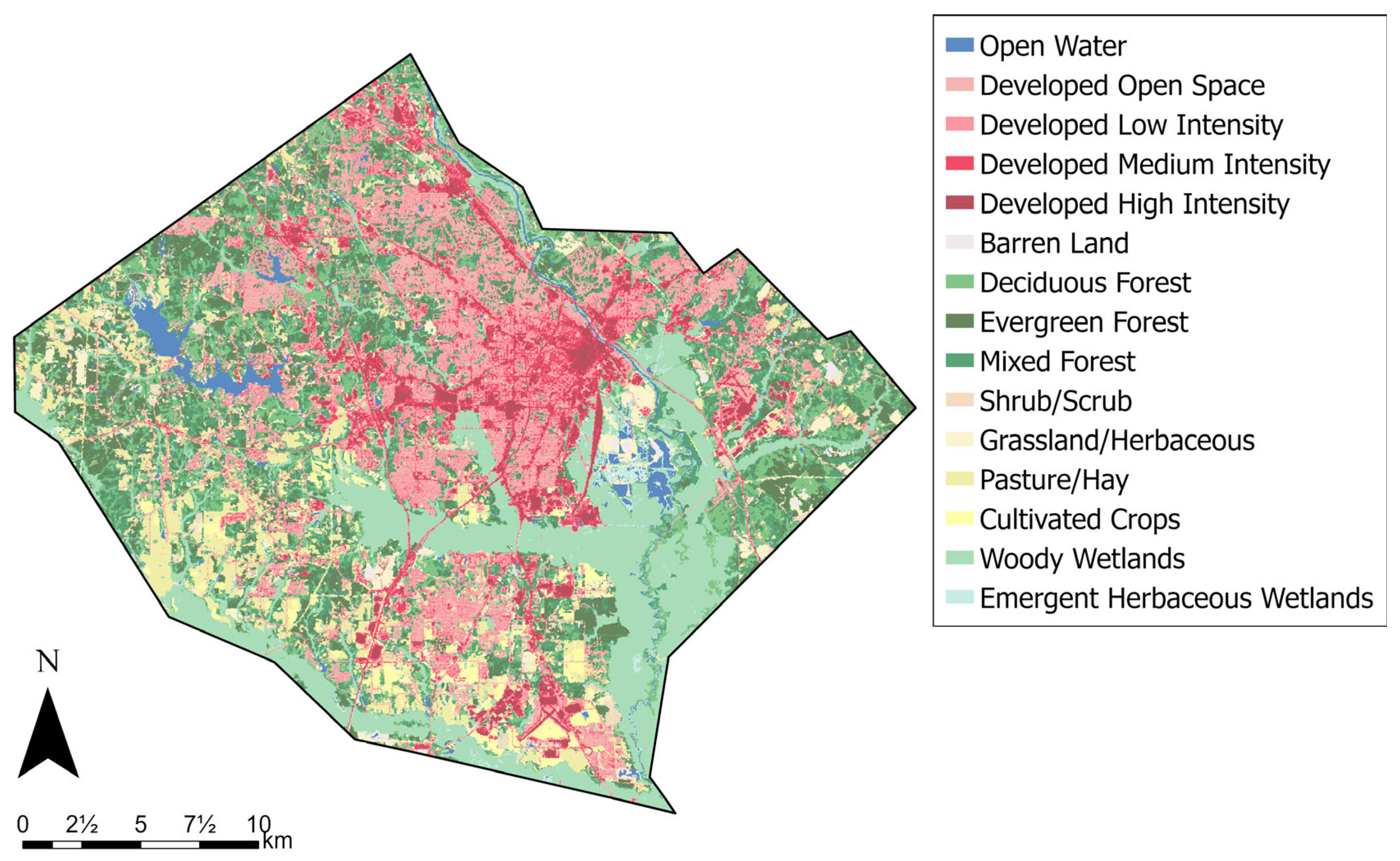
A map depicting the land usage dataset (clipped to Bibb County’s boundary) is presented in Figure 4. An additional copy of this dataset, which was instead clipped to the boundary of both Bibb County and its neighbors, was used for the four distance criteria that were dependent on this dataset (see Figure S1 in the Supplementary Material). These counties were included to account for any urban/rural/wetland/forest areas that fell just outside the study area (note that a larger range of influence could not be accounted for due to raster processing limitations).
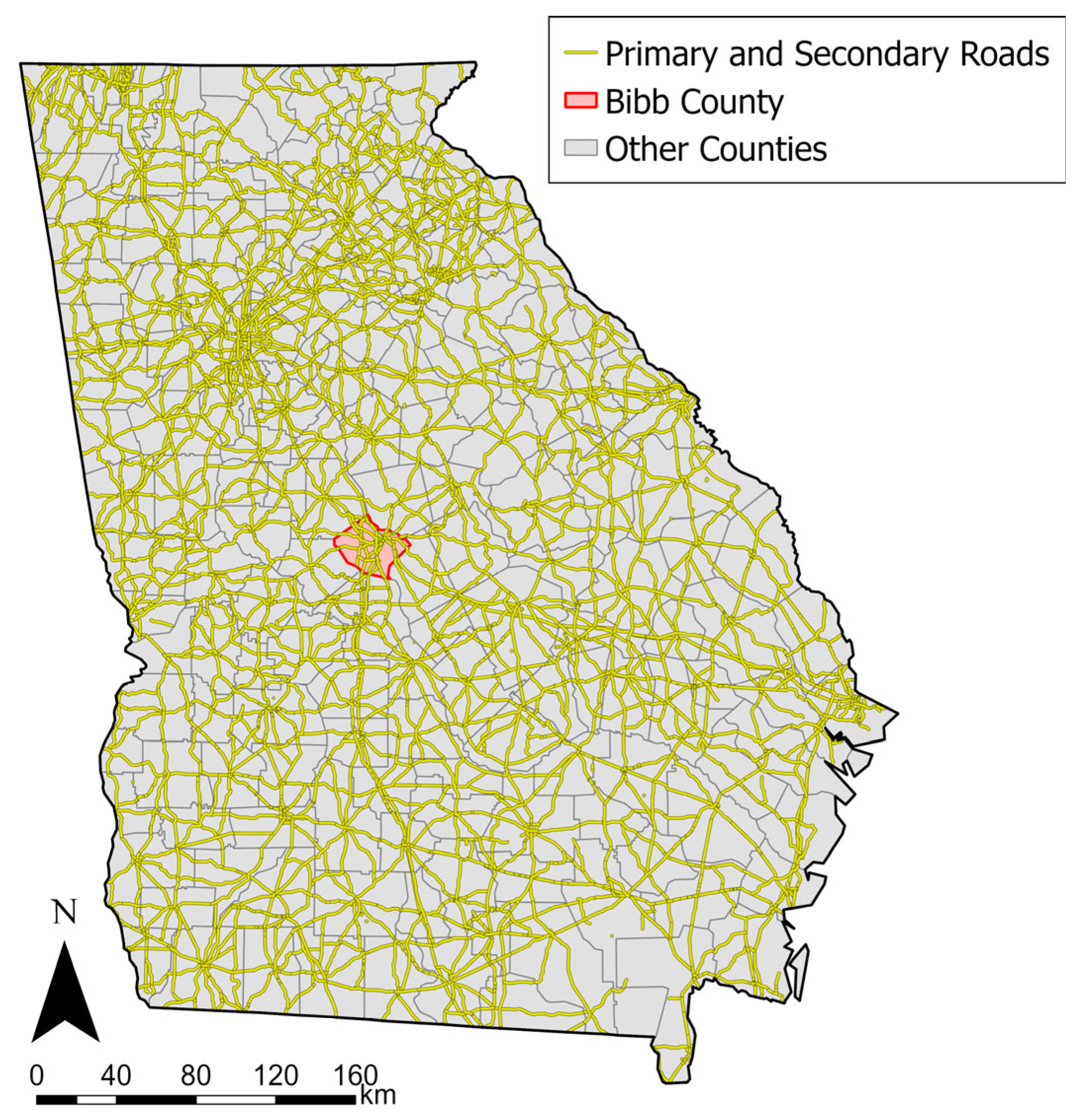
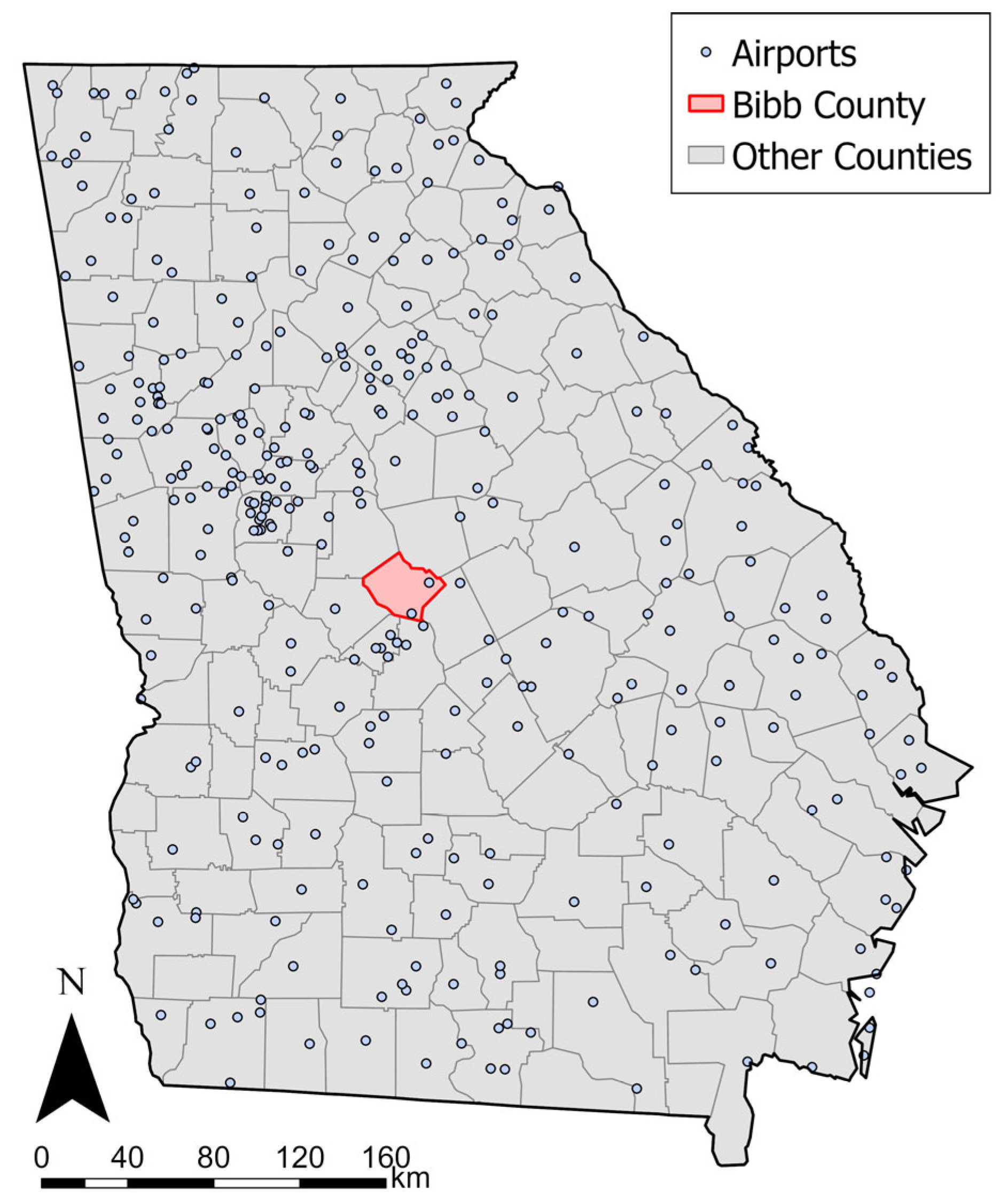
Maps depicting the aviation facility, primary and secondary road, and power transmission line datasets are presented in Figure 5, Figure 6, and Figure 7, respectively. These three datasets were clipped to the boundary of the state of Georgia to account for any features that fell just outside of the study area.
The GHI, elevation, slope, and land usage criteria were evaluated by directly assigning scores for each criterion using the Raster Calculator tool based on the maps presented in Figure 2, Figure 3 and Figure 4. The seven distance criteria, on the other hand, had a two-step evaluation process. First, the Euclidean Distance tool was used to generate raster datasets that contained the distances between each cell and the nearest instance of the features related to each criterion (maps depicting these datasets are available in the Supplementary Material). Suitability scores for these criteria were then assigned based on the newly generated distance rasters using the Raster Calculator tool.
The benchmarks used to assign suitability scores for each criterion were primarily sourced from Ali et al. [11]. However, some modifications were made to the land usage criterion. First, the land codes associated with each score were updated to match the land codes presented in the land cover raster. Second, to address concerns about the competition between solar farms and agriculture in the state of Georgia [36], the suitability of agricultural land was reduced, while the suitability of areas with short vegetation was increased. A summary of the evaluation benchmarks is presented in Table 3.
It should be noted that the Euclidean Distance tool used to evaluate the distance criteria can only be used to evaluate the distance to a vector feature. Because of this, before the criteria dependent on the land cover raster (Figure S1 in the Supplementary Material) could be evaluated, the dataset was converted to a set of point features using the Raster to Point tool. The Export Features tool was then used to split the dataset into four smaller datasets, each containing only the points with land cover codes corresponding to each criterion (Table 4 lists these codes). This allowed the data analysis to proceed according to the previously outlined framework. Maps depicting the point datasets generated during this stage are presented in the Supplementary Material.
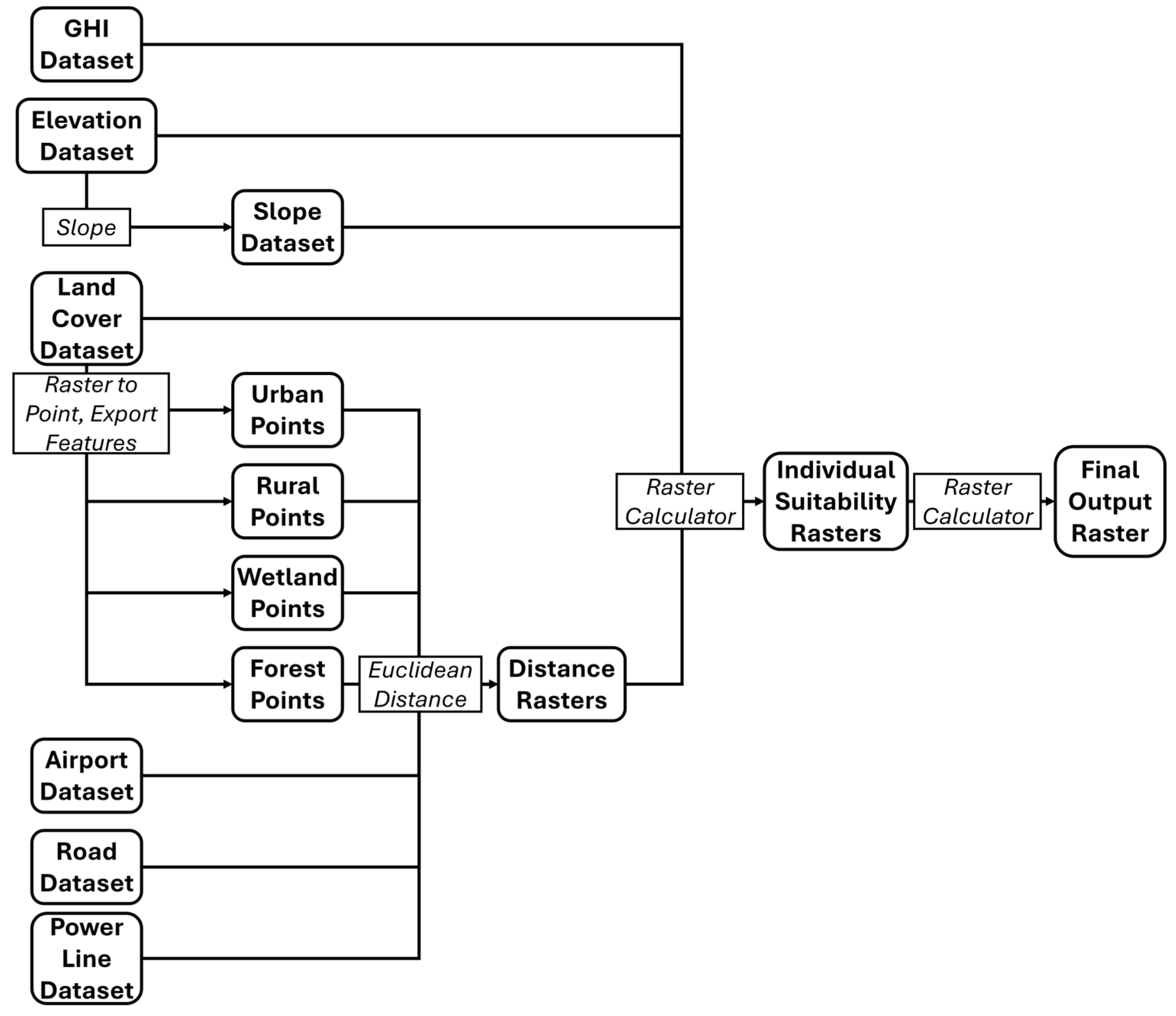
Maps depicting the individual suitability score rasters created for each criterion are presented in the Supplementary Material. The Raster Calculator tool was used to take a weighted average of the values in these individual rasters (according to the weights listed in Table 1), producing a raster containing the final suitability scores for each cell. A visual summary of the analysis process is shown in Figure 8 below. For the interpretation of results, three maps depicting final raster were generated. These maps used ramp stretch, classified (6 ranks with 0.5-point increments), and quantile symbologies, respectively.
Following the suitability assessment, a parameter modification sensitivity analysis was conducted, based on the modification of criteria weights [46]. Specifically, the methodology presented by Chen et al. [47] was employed: the suitability assessment was repeated with incremental perturbations of ±1% in each criterion, up to a maximum of ±20% (n = 440 total samples). For each sample, the number of 30 m raster cells in each rank used for the classified map of the original output was quantified. This data was then used to determine the change in area attributed to each rank compared to the original output, quantified in three ways: (1) as the raw number of 30 m raster cells, (2) as a percentage of the original number of cells in that rank, and (3) as a percentage of the total area encompassed by raster. The third measure was used to determine the thresholds (both positive and negative) for which perturbations in a given criterion would cause 1% of the total area to change ranks.

3. Results and Discussion

3.1. Model Results and Empirical Verification

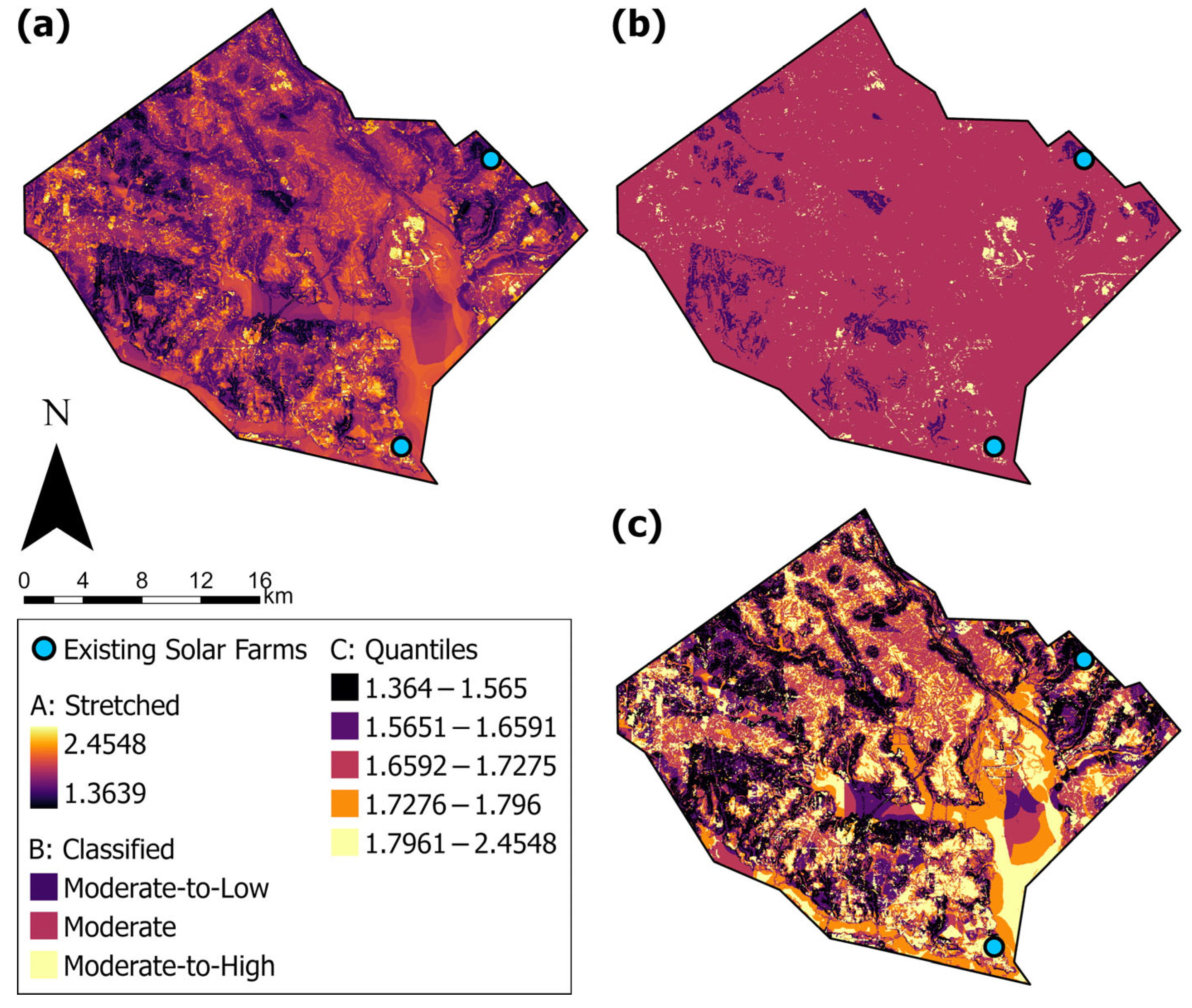
The three maps depicting the final suitability score for each raster cell (with existing solar farms overlaid) are shown in Figure 9, while the areas of land falling under each classification rank in Figure 9b are shown in Table 5. (Note: Because the markers for existing solar farms obscure some of the data shown in Figure 9, maps without this information overlaid have been provided in Appendix A as Figure A1, Figure A2 and Figure A3).
Comparison of the locations of the existing solar farms in Bibb County with the output raster indicates that the MCDA model is capable of predicting the suitability of a site for utility-scale solar farms. As shown in Figure 9, both existing solar farms fall under ‘hotspots’ or areas where raster cells are of the moderate-to-high classification rank (Figure 9b) and fifth quantile (Figure 9c) are present. While the low sample size for empirical verification (n = 2) does not allow for conclusive judgements to be made, these results do at least indicate that the model is ‘on the right track’ (i.e., that the selected model structure is sufficient, although weights or evaluation benchmarks may require adjustment).
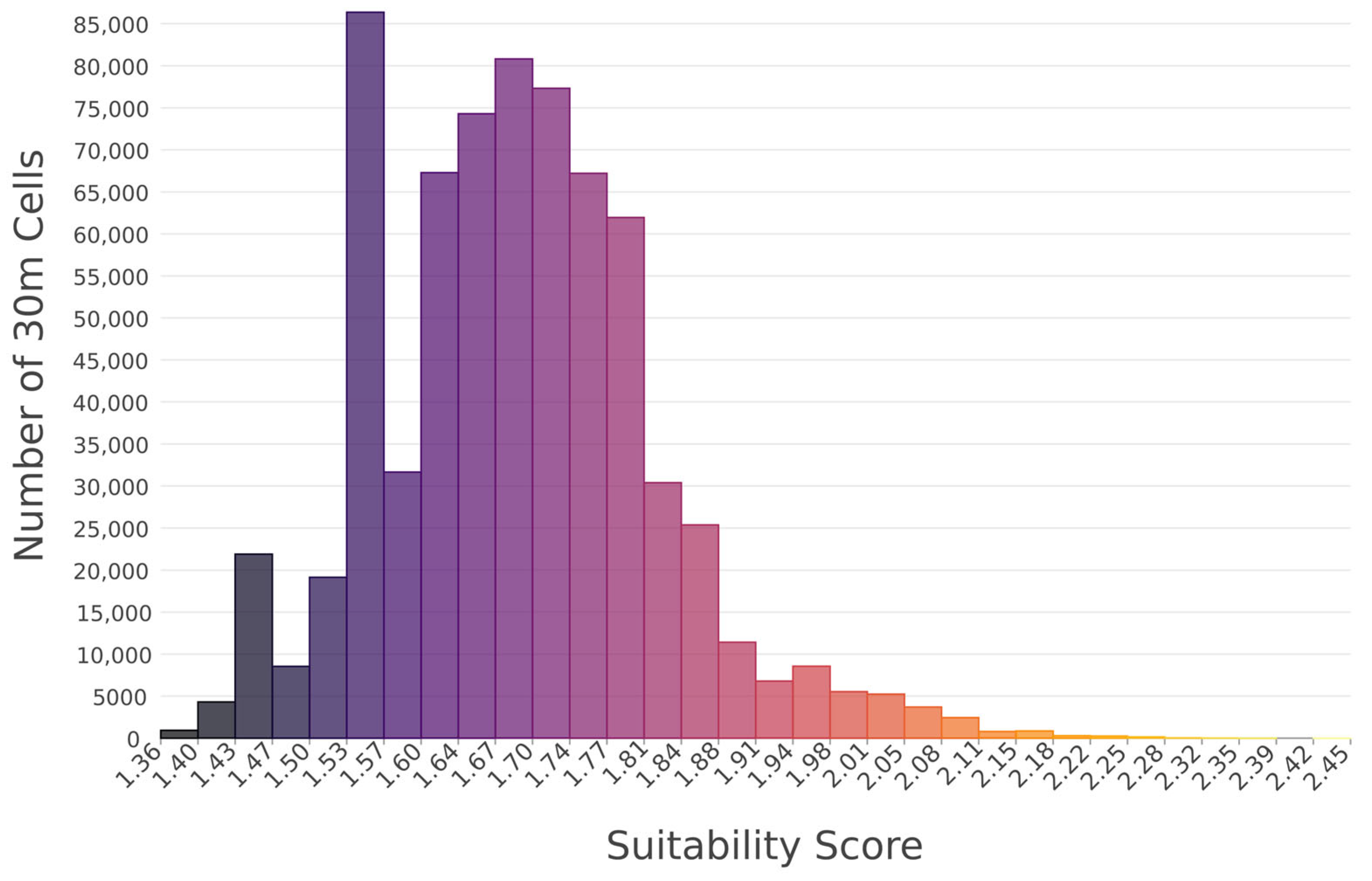
Notably, as listed in Table 5, the entire study area falls under the moderate-to-low, moderate, and moderate-to-high classification ranks. Additionally, the moderate classification rank accounts for the largest percentage of the study area at 93%. This can be taken to mean that Bibb County is overall suitable but perhaps not ideal for the development of photovoltaic solar farms. Additionally, while the relative comparability of each study’s model has not been examined, the performance of Bibb County is superficially greater than has previously been observed in Colorado. In this study, the vast majority of the study area is placed above the 50% mark (i.e., above 1.5) on the scale. Janke [10], on the other hand, has reported a much smaller proportion of well-performing areas for Colorado. However, the distribution of suitability scores does present some concerns regarding the robustness of the model. While the model is capable of identifying areas of higher and lower suitability, it struggles to distinguish between regions that fall within intermediate ranges. This is partially evident from the fact that, as previously noted, 93% of the study area falls under the moderate classification rank, while the unsuitable, low, and high ranks are empty. The density of intermediate values is further shown by the quantile-symbolized map in Figure 9c and the histogram shown in Figure 10. The middle three quantiles each contain a span of values of less than 0.1 in size, while the first and fifth quantiles span larger ranges. Figure 10 reflects this while also showing that a particularly large area (86,367 cells; 12% of the study area) is packed into the especially small range of 1.53 to 1.57. Ideally, a model output that spreads the distribution of intermediate values over a wider range (making full use of the three-point scale) would be desirable, as this would allow for the more efficient spatial planning of solar projects within these intermediate areas. Consequently, ‘fine-tuning’ (i.e., criteria reweighting or evaluation benchmark re-establishment) is necessary to obtain a truly robust site suitability model for the Southeastern United States.
Additional observations were made concerning the spatial distribution of the results shown in Figure 9b. From this map, it was found that the largest continuous areas of moderate-to-high suitability are located in the eastern portion of the county. Additional large areas of moderate-to-high suitability are located near the county’s northern and southern borders. Notably, the areas with the highest suitability are primarily located at the county’s outskirts, although this is also true of many areas of lower suitability.
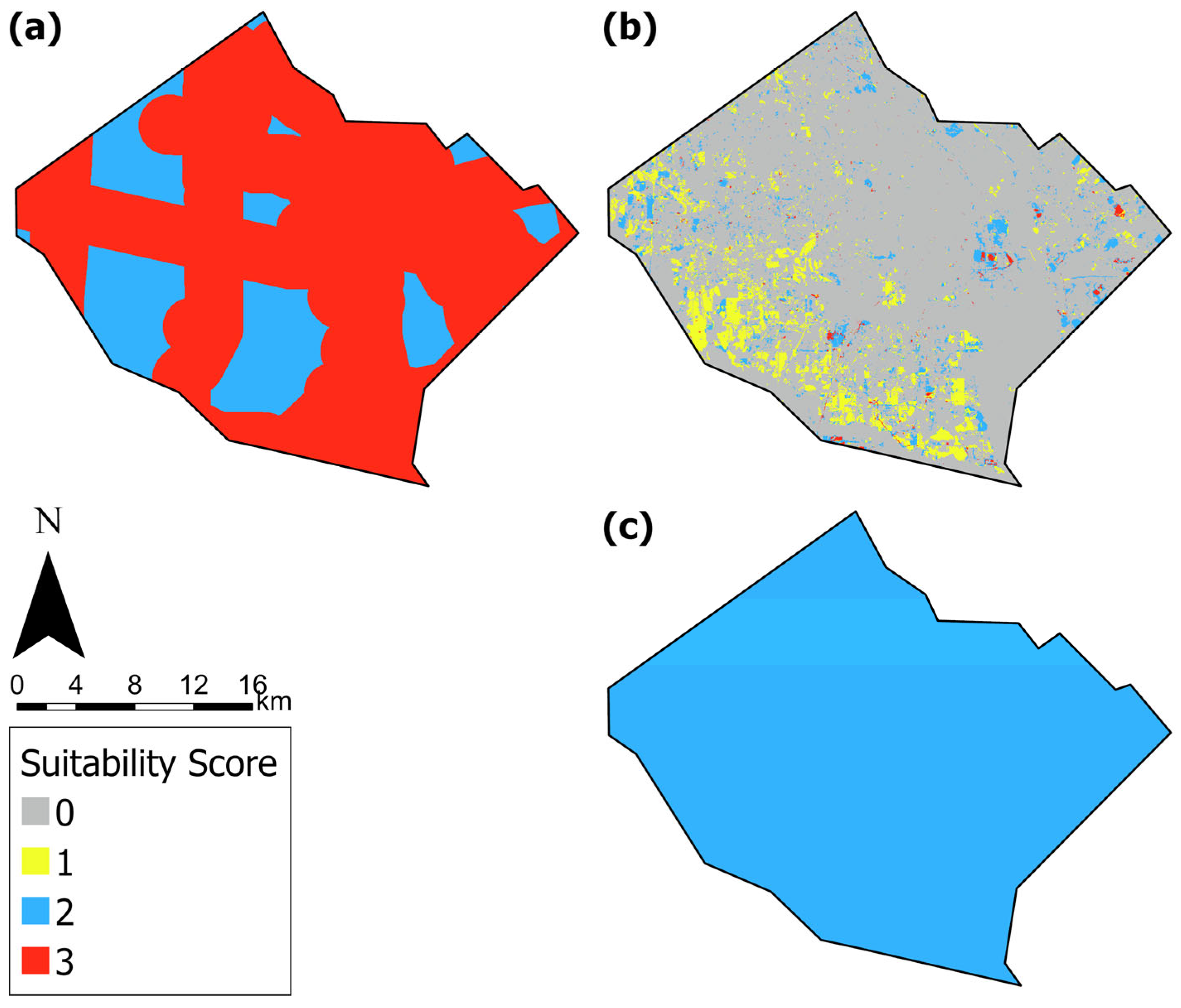
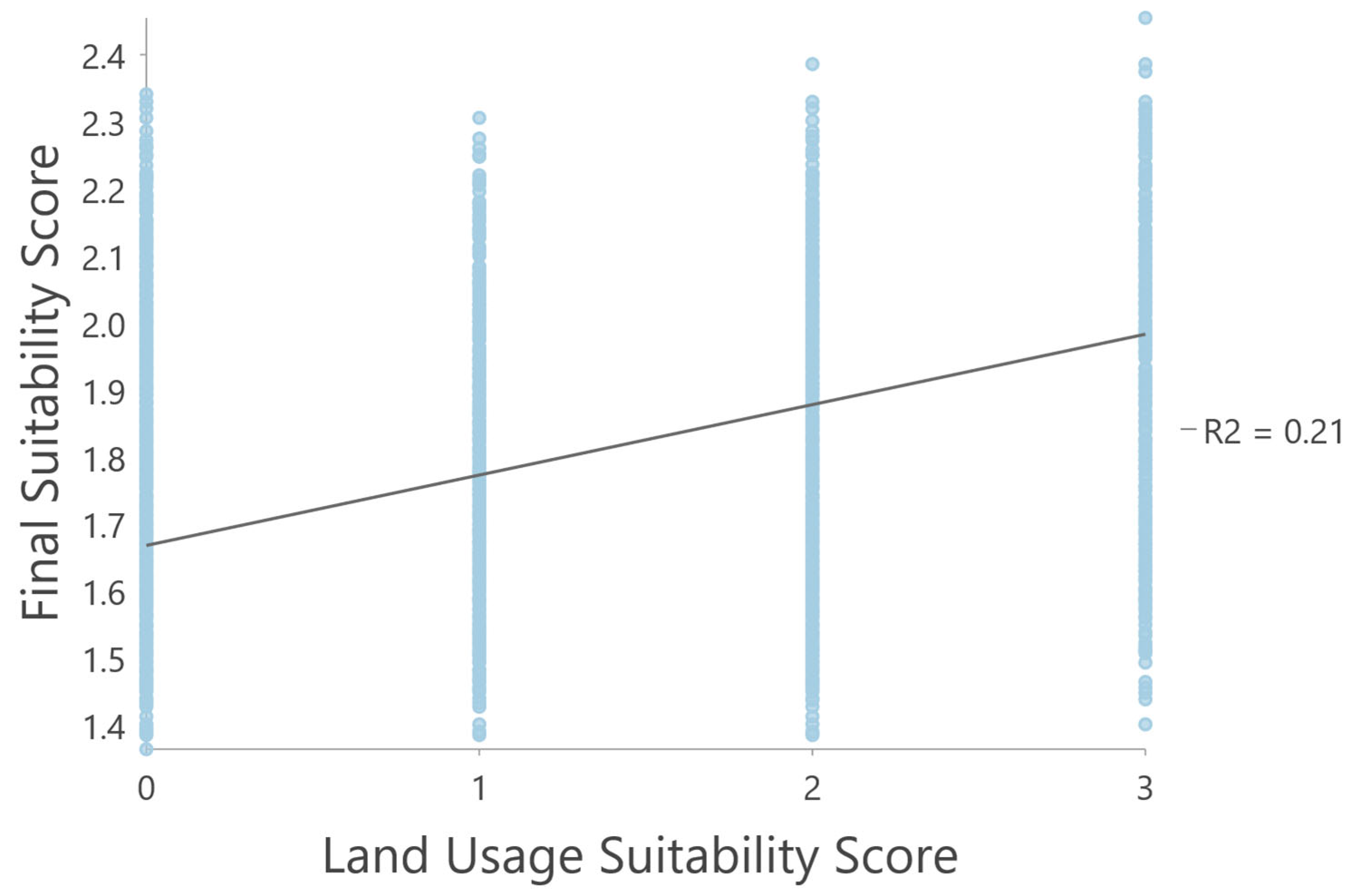
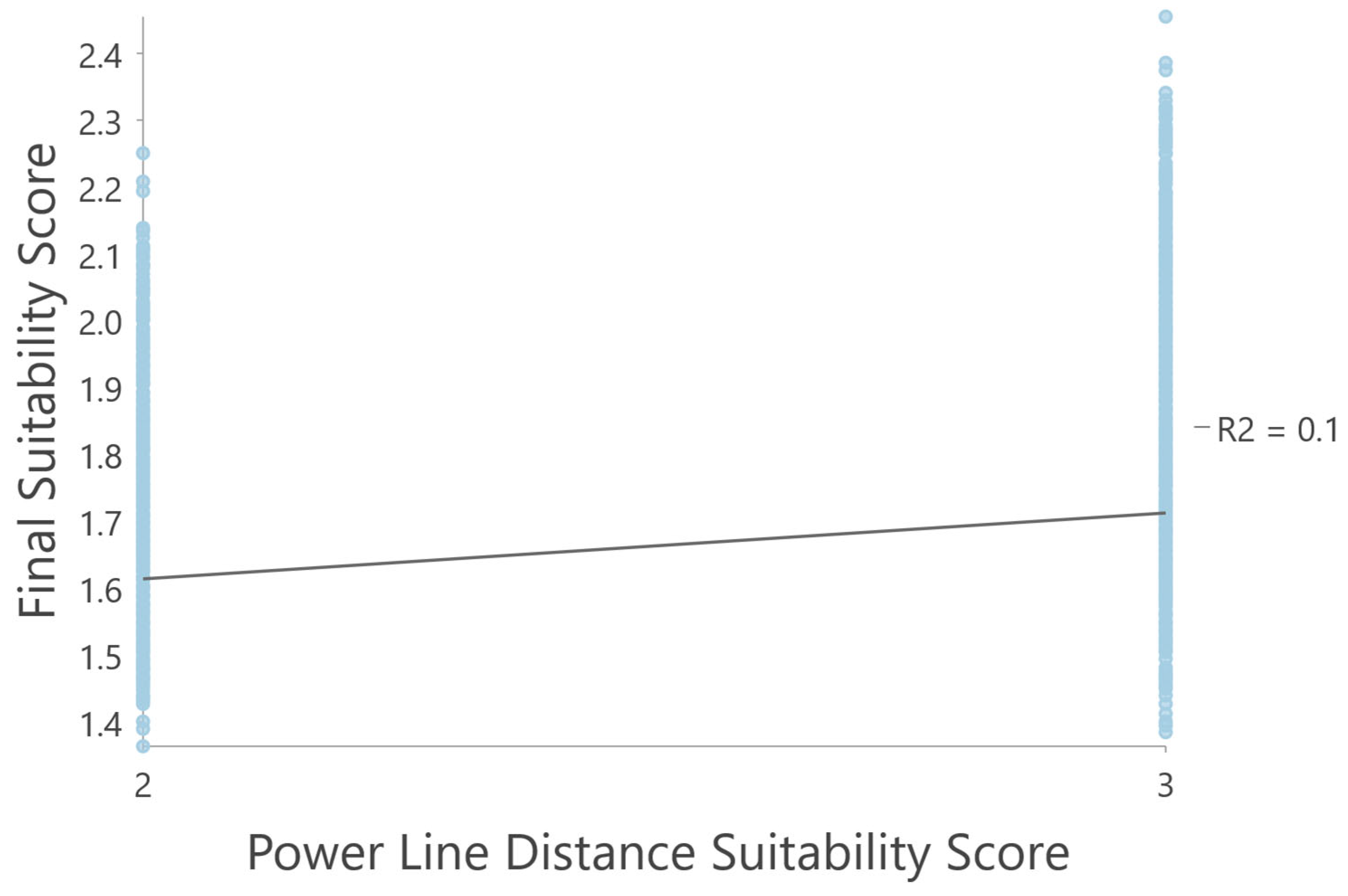
When comparing Figure 9b with the individual criteria rasters created during the analysis, it becomes apparent that one of the largest determinants of solar farm suitability in Bibb County was the power line distance. When comparing Figure 9b with Figure 11a, it can be observed that most of the areas with moderate-to-low suitability rankings received a score of 2 for the power line distance criterion. The land usage criterion was similarly found to be a key determinant, since many of the areas with higher suitability rankings also received high suitability scores for this criterion (see Figure 11b). These trends are also visible in statistical analyses, as comparisons of the suitability scores for land usage and power line distance with the final suitability scores show positive relationships explaining 21% and 10% of the variance in final scores, respectively (although ArcGIS does not provide p-values to confirm the significance of these trends). Graphs showing the results of this analysis are provided in Figure 12 and Figure 13.
These observations may, however, be influenced by the fact that these two criteria were assigned high weights—as noted in Table 1, the land usage and power line distance criteria were assigned two of the three largest weights. The only criterion with a higher weight was GHI. Because the variation observed in GHI was low (a difference of 0.101 kWh/m2/d between the highest and lowest cells), the entire county fell under the moderately suitable benchmark range listed in Table 3. Consequently, every cell in the study area received a score of 2 for this criterion, as shown in Figure 11c. Because of this, GHI did not significantly affect the results. Notably, this result has also been observed in prior assessments in the United States, since Janke [10] noted a similar result for its NREL Solar Potential criterion that it employed in Colorado. However, this uniformity in suitability scores for GHI does provide another potential explanation for these observations. While GHI was the only criterion for which the entire study area received the same score, it was not the only criterion for which most of the study area was scored identically. Urban distance, rural distance, wetland distance, forest distance, and airport distance had relatively uniform results (scores for these criteria are shown in Figures S17–S21 in the Supplementary Material). Consequently, these criteria had lower effects on the spatial distribution of results than land usage and power line distance.

3.2. Sensitivity Analysis

The perturbation thresholds for which a change in classification rank equals 1% of the entire study area are listed in Table 6. Due to the volume of data generated, full results from the sensitivity analysis are included in the Supplementary Material in Tables S1–S11.
From Table 6, it can be seen that GHI and land usage are by far the most sensitive criteria, since their thresholds for a 1% shift in ranking are much lower than the other criteria. This result is particularly concerning for land usage, considering the prior observation that most areas of higher suitability performed well in this criterion. It is imperative that future model improvements emphasize the proper calibration of this parameter, to control its high level of sensitivity.
Of the other nine criteria, slope, urban distance, airport distance, road distance, and power line distance were found to have lower levels of sensitivity, while elevation, rural distance, and forest distance were not sensitive at all. Wetland distance was only sensitive to positive perturbations. The lower or lack of sensitivity to some criteria may indicate that little fine-tuning is needed to further adapt these parameters, but it may also mean that their effect on site suitability is not being sufficiently captured. It is, therefore, likely that input from local stakeholders regarding these criteria is necessary—if a higher effect from these criteria is desirable in the local context, then larger modifications may be necessary.
During the sensitivity analysis, it was also noted that no raster cells were ever observed to fall under the unsuitable and low suitability rankings. Similarly, the only circumstance under which raster cells were observed to fall under the high suitability ranking was when the GHI criterion’s weight was reduced by at least 12% (and only a single high suitability cell was observed in these samples). This suggests that the previously identified need to fine-tune the model cannot be remedied by the reweighting of criteria alone. The development of a more robust model must also entail the re-establishment of evaluation benchmarks for the criteria.

4. Conclusions

In this study, a GIS-based MCDA model was used to evaluate the suitability of Bibb County, Georgia, United States, for the construction of photovoltaic solar farms. This study area was selected because the growth of the photovoltaics industry in the Southeastern United States has been slow, despite the region receiving sufficient solar insolation for the development of solar farms [12]. This slow growth, combined with the comparative lack of prior literature on spatial planning for solar farms in the United States compared to other countries, shows a need for site suitability modeling in this region. Consequently, the goal of this study was to evaluate the viability of a model developed outside of the United States for application in Bibb County, and to define a path forward for future model developments and renewable energy policy.
Empirical verification of the study’s results indicated that the general structure of the selected model is viable for application in the Southeastern United States. The distribution of results does indicate that additional modifications are necessary for a truly robust adaptation; however, the model struggles to differentiate between areas with intermediate suitability values. In total, 587.40 km2 (93%) of the county’s area was found to have moderate suitability, while 32.10 km2 (5%) was found to have moderate-to-low suitability and 13.67 km2 (2%) was found to have moderate-to-high suitability. Many of the largest continuous areas of both higher and lower suitability were found to lie near the county’s outskirts. Additionally, it was found that the power line distance and land usage criteria were the largest determinants of solar farm suitability in this area. Finally, the sensitivity analysis indicated that GHI and land usage were the two most sensitive criteria, indicating that future model improvements must emphasize the proper calibration of these two criteria for the local context.

Implications for Future Research and Policy

As concluded previously, there is a need to fine-tune the MCDA model to allow for greater applicability to the Southeastern United States, via both the reweighting of criteria and the re-establishment of evaluation benchmarks. A common method for establishing criteria weights in MCDA is the preference scoring matrix defined by Saaty’s analytical hierarchy process [49]. Engaging environmental experts, policymakers, and other local stakeholders with this method may be viable for reweighting criteria. The re-establishment of evaluation benchmarks, on the other hand, is a more complicated matter. For buffers to other features, which do not impact the performance of a solar farm, it may be sufficient to use the Delphi method (polling a panel of experts until a consensus is reached) to establish benchmarks [50]. On the other hand, for criteria that do relate to the performance of solar farms, quantitative studies of solar farm efficiency under varying conditions may be more helpful. These quantitative studies may also help to reduce potential errors in the model, as they may provide additional evidence supporting or rejecting the results of the empirical verification.
In addition to model fine-tuning, there is also potential for the addition of more criteria. While the empirical verification does suggest that the combination of 11 criteria used in this study is sufficient, it is worth noting that there are additional variables that have not been considered (and may allow for more accurate results to be obtained). First and foremost, there is one key limitation of this study in that the actual available area for solar farms was not considered in the analysis. Future research must pay attention to this factor, since the availability or unavailability of a particular development can bear a significant impact on the model’s policy implications. Other potential factors include the direction or aspects of the land’s slope and the geological rock type, which have both previously been considered by Tercan et al. [17]. It is also possible that a high proximity to residential areas, rather than a buffer, may be desirable depending on the local context, as Tang et al. [18] has reversed this criterion. These additional considerations may enable further research advances in suitability modeling for solar farms.
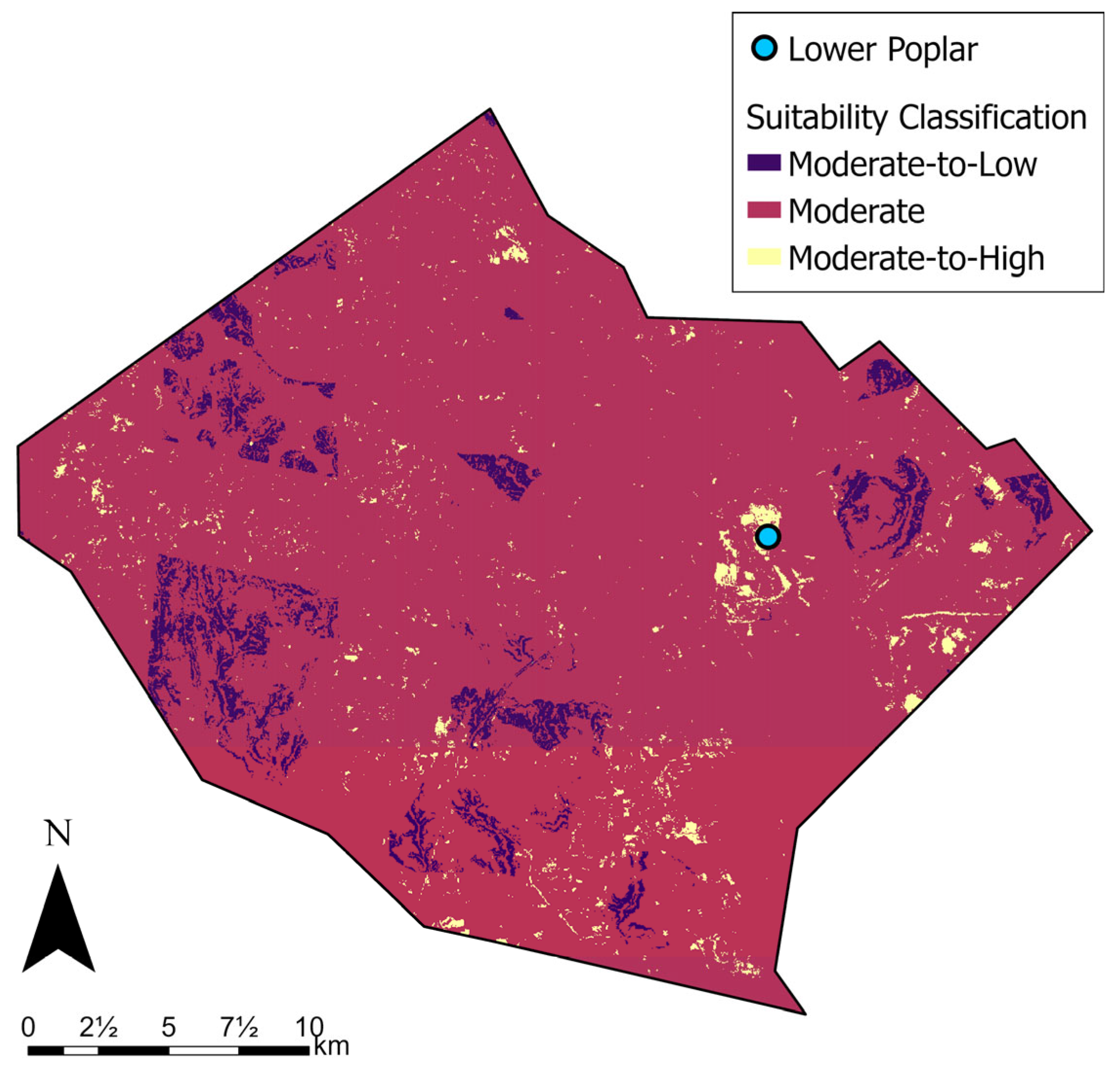
Since there is a clear need to fine-tune the model for the local context, it is not reasonable to provide long-term policy advice based on the study results at this time. In the short-term, however, it is likely that policymakers and developers should prioritize solar projects in locations that perform well in the land usage and power line distance criteria, as these have been noted to be the two most important factors in the region. For authorities within Bibb County seeking to permit or zone for utility solar projects, the areas highlighted as higher in suitability during this study may be ideal. Notably, the largest continuous area that falls into the medium-to-high suitability rank is situated near the Lower Poplar Water Reclamation Facility, a municipal wastewater treatment plant (WWTP; marked in Figure A4 in Appendix A). Previous studies have shown the potential viability of integrating solar energy with WWTPs, such that the co-location of these two features may indicate that the Lower Poplar facility is suitable for WWTP operators seeking to trial these technologies at the plant scale [51].

Supplementary Materials

The following supporting information can be downloaded at https://www.mdpi.com/article/10.3390/solar6010002/s1, Figure S1: Land cover in Bibb County and its neighbors [41]; Figure S2: Urban areas in Bibb County and its neighbors [41]; Figure S3: Rural areas in Bibb County and its neighbors [41]; Figure S4: Wetlands in Bibb County and its neighbors [41]; Figure S5: Forests in Bibb County and its neighbors [41]; Figure S6: Distances to the nearest urban area; Figure S7; Distances to the nearest rural area; Figure S8: Distances to the nearest wetland; Figure S9: Distances to the nearest forest; Figure S10: Distances to the nearest airport; Figure S11: Distances to the nearest road; Figure S12: Distances to the nearest power transmission line; Figure S13: Suitability scores for GHI; Figure S14: Suitability scores for elevation; Figure S15: Suitability scores for slope; Figure S16: Suitability scores for land usage; Figure S17: Suitability scores for urban distance; Figure S18: Suitability scores for rural distance; Figure S19: Suitability scores for wetland distance; Figure S20: Suitability scores for forest distance; Figure S21: Suitability scores for airport distance; Figure S22: Suitability scores for road distance; Figure S23: Suitability scores for power line distance; Table S1: Results of the sensitivity analysis for GHI; Table S2: Results of the sensitivity analysis for elevation; Table S3: Results of the sensitivity analysis for slope; Table S4: Results of the sensitivity analysis for land usage; Table S5: Results of the sensitivity analysis for urban distance; Table S6: Results of the sensitivity analysis for rural distance; Table S7: Results of the sensitivity analysis for wetland distance; Table S8: Results of the sensitivity analysis for forest distance; Table S9: Results of the sensitivity analysis for airport distance; Table S10: Results of the sensitivity analysis for road distance; Table S11: Results of the sensitivity analysis for power line distance.

Author Contributions

Conceptualization, E.N.; software, E.S.; validation, E.N. and E.S.; formal analysis, E.N.; investigation, E.N.; resources, E.S.; data curation, E.N.; writing—original draft preparation, E.N.; writing—review and editing, E.N. and E.S.; visualization, E.N.; supervision, E.S.; project administration, E.S. All authors have read and agreed to the published version of the manuscript.

Funding

This research received no external funding.

Data Availability Statement

The original contributions presented in this study are included in the article/Supplementary Materials. Further inquiries can be directed to the corresponding author.

Acknowledgments

The authors would like to thank the School of Engineering at Mercer University for facilitating this research project.

Conflicts of Interest

The authors declare no conflicts of interest. The funders had no role in the design of the study; in the collection, analyses, or interpretation of data; in the writing of the manuscript; or in the decision to publish the results.

Appendix A

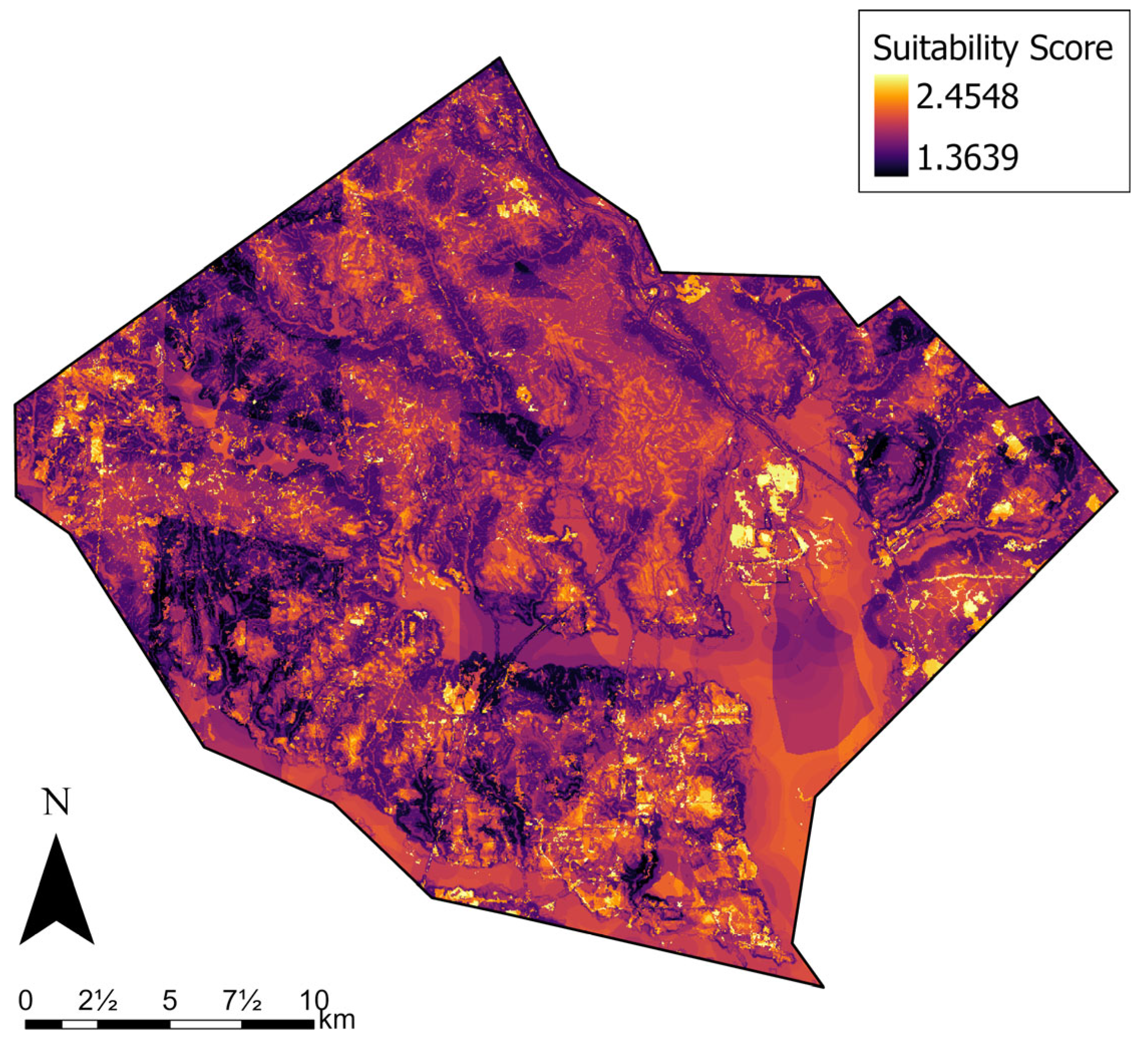
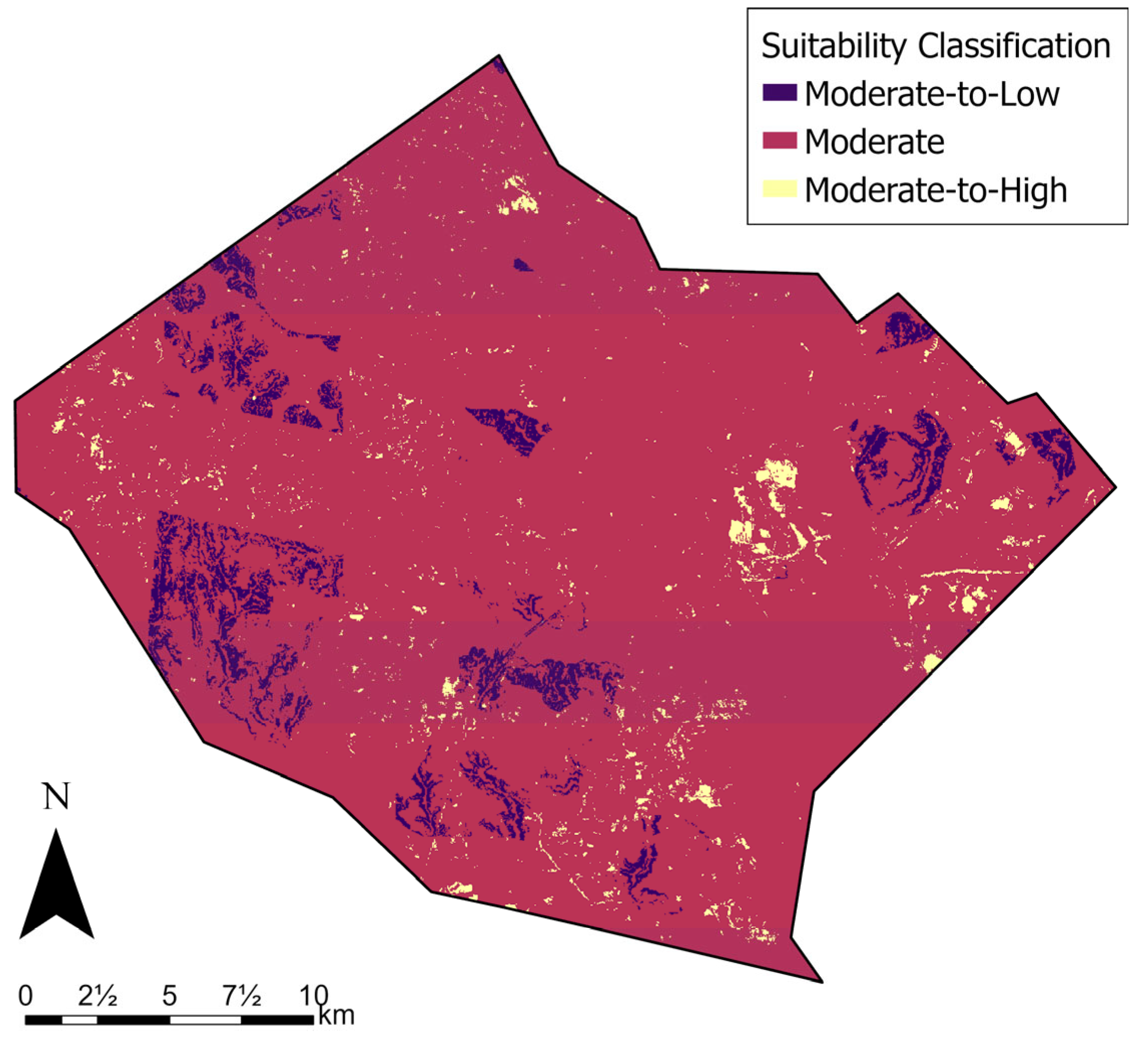
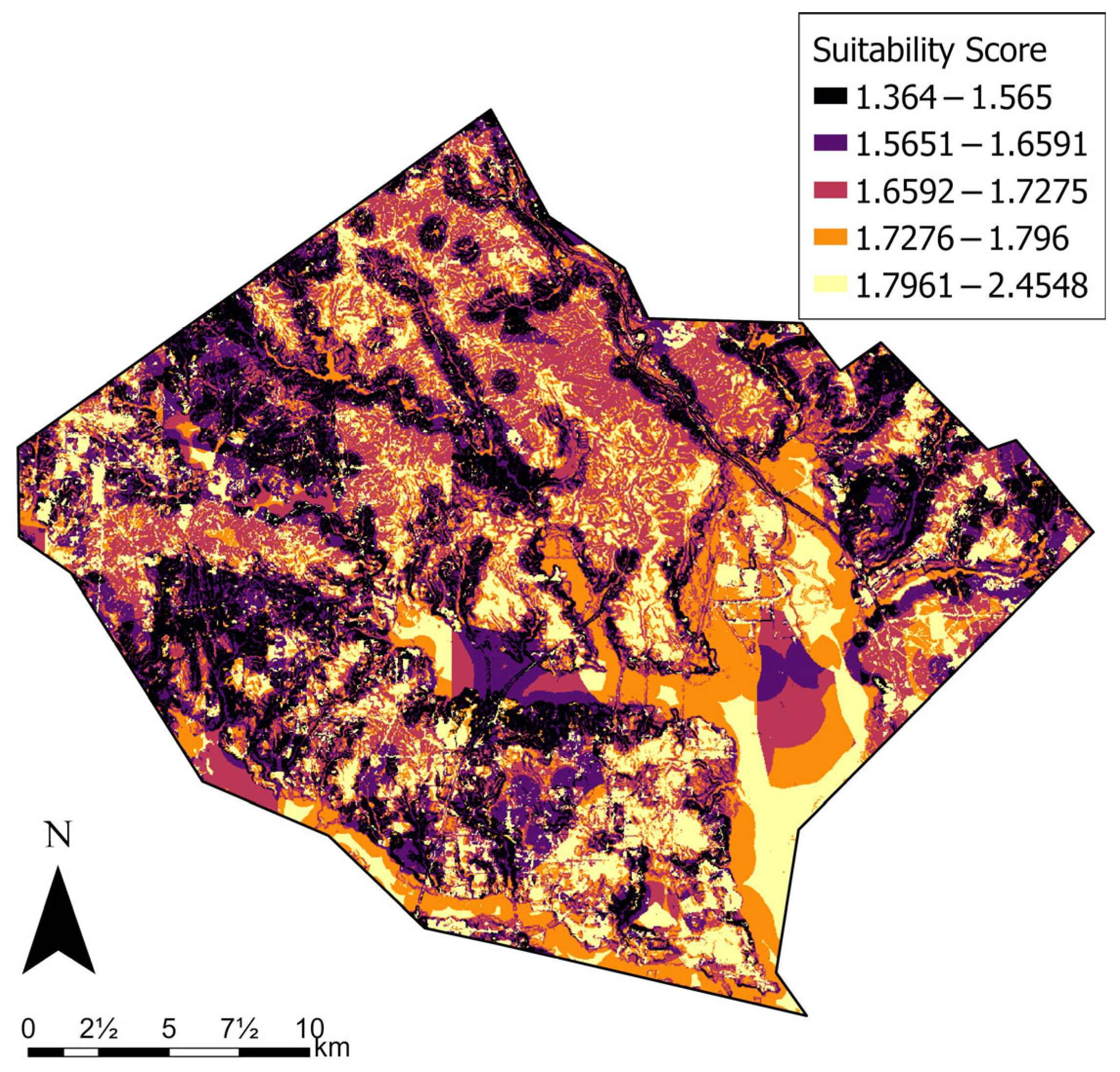
Figure A1, Figure A2 and Figure A3 depict the final suitability scores generated during the analysis, without the existing solar farms in the study area overlaid. Figure A4 shows the classified-scale map depicted in Figure A2 but with the Lower Poplar Water Reclamation Facility marked.
Figure A1. Solar farm suitability in Bibb County (ramp stretch; no infrastructure).
Solar 06 00002 g0a1
Figure A2. Solar farm suitability in Bibb County (classified; no infrastructure).
Solar 06 00002 g0a2
Figure A3. Solar farm suitability in Bibb County (quantiles; no infrastructure).
Solar 06 00002 g0a3
Figure A4. Location of the Lower Poplar Water Reclamation Facility in relation to areas of higher solar farm suitability [52].
Solar 06 00002 g0a4

References

  1. Ritchie, H.; Rosado, P. Fossil Fuels; Our World in Data: Oxford, UK, 2024. [Google Scholar]
  2. Environmental and Energy Study Institute Fossil Fuels. Available online: https://eesi.org/topics/fossil-fuels/description (accessed on 12 October 2025).
  3. Solomon, S.; Qin, D.; Manning, M.; Alley, R.B.B.; Berntsen, T.; Bindoff, N.L.L.; Chen, Z.; Chidthaisong, A.; Gregory, J.M.M.; Hegerl, G.C.C.; et al. Technical Summary. In Climate Change 2007: The Physical Science Basis. Contribution of Working Group I to the Fourth Assessment Report of the Intergovernmental Panel on Climate Change; Solomon, S., Qin, D., Manning, M., Chen, Z., Marquis, M., Averyt, K.B., Tignor, M., Miller, H.L., Eds.; HAL Open Science: Lyon, France, 2007. [Google Scholar]
  4. Kaiser, P.; Unde, R.B.; Kern, C.; Jess, A. Production of Liquid Hydrocarbons with CO2 as Carbon Source Based on Reverse Water-Gas Shift and Fischer-Tropsch Synthesis. Chem. Ing. Tech. 2013, 85, 489–499. [Google Scholar] [CrossRef]
  5. Uyan, M. GIS-Based Solar Farms Site Selection Using Analytic Hierarchy Process (AHP) in Karapinar Region, Konya/Turkey. Renew. Sustain. Energy Rev. 2013, 28, 11–17. [Google Scholar] [CrossRef]
  6. Lazard Lazard’s Levelized Cost of Energy+ (LCOE+). Available online: https://lazard.com/media/uounhon4/lazards-lcoeplus-june-2025.pdf (accessed on 12 October 2025).
  7. Lopez, A.; Roberts, B.; Heimiller, D.; Blair, N.; Porro, G. U.S. Renewable Energy Technical Potentials: A GIS-Based Analysis; National Renewable Energy Laboratory (NREL): Golden, CO, USA, 2012. [Google Scholar]
  8. Noorollahi, E.; Fadai, D.; Akbarpour Shirazi, M.; Ghodsipour, S.H. Land Suitability Analysis for Solar Farms Exploitation Using GIS and Fuzzy Analytic Hierarchy Process (FAHP)—A Case Study of Iran. Energies 2016, 9, 643. [Google Scholar] [CrossRef]
  9. Hooshangi, N.; Gharakhanlou, N.M.; Razin, S.R.G. Evaluation of Potential Sites in Iran to Localize Solar Farms Using a GIS-Based Fermatean Fuzzy TOPSIS. J. Clean. Prod. 2023, 384, 135481. [Google Scholar] [CrossRef]
  10. Janke, J.R. Multicriteria GIS Modeling of Wind and Solar Farms in Colorado. Renew. Energy 2010, 35, 2228–2234. [Google Scholar] [CrossRef]
  11. Ali, S.; Taweekun, J.; Techato, K.; Waewsak, J.; Gyawali, S. GIS Based Site Suitability Assessment for Wind and Solar Farms in Songkhla, Thailand. Renew. Energy 2019, 132, 1360–1372. [Google Scholar] [CrossRef]
  12. Tisza, K. GIS-Based Suitability Modeling and Multi-Criteria Decision Analysis for Utility Scale Solar Plants in Four States in the Southeast U.S. Master’s Thesis, Clemson University, Clemson, SC, USA, 2014. [Google Scholar]
  13. Suh, J.; Brownson, J.R.S. Solar Farm Suitability Using Geographic Information System Fuzzy Sets and Analytic Hierarchy Processes: Case Study of Ulleung Island, Korea. Energies 2016, 9, 648. [Google Scholar] [CrossRef]
  14. Watson, J.J.W.; Hudson, M.D. Regional Scale Wind Farm and Solar Farm Suitability Assessment Using GIS-Assisted Multi-Criteria Evaluation. Landsc. Urban Plan. 2015, 138, 20–31. [Google Scholar] [CrossRef]
  15. Tavana, M.; Santos Arteaga, F.J.; Mohammadi, S.; Alimohammadi, M. A Fuzzy Multi-Criteria Spatial Decision Support System for Solar Farm Location Planning. Energy Strategy Rev. 2017, 18, 93–105. [Google Scholar] [CrossRef]
  16. Kocabaldır, C.; Yücel, M.A. GIS-Based Multicriteria Decision Analysis for Spatial Planning of Solar Photovoltaic Power Plants in Çanakkale Province, Turkey. Renew. Energy 2023, 212, 455–467. [Google Scholar] [CrossRef]
  17. Tercan, E.; Eymen, A.; Urfalı, T.; Saracoglu, B.O. A Sustainable Framework for Spatial Planning of Photovoltaic Solar Farms Using GIS and Multi-Criteria Assessment Approach in Central Anatolia, Turkey. Land Use Policy 2021, 102, 105272. [Google Scholar] [CrossRef]
  18. Tang, L.; Liu, Y.; Pan, Y.; Ren, Y.; Yao, L.; Li, X. Optimizing Solar Photovoltaic Plant Siting in Liangshan Prefecture, China: A Policy-Integrated, Multi-Criteria Spatial Planning Framework. Sol. Energy 2024, 283, 113012. [Google Scholar] [CrossRef]
  19. Carlo, A.D.; Lamanna, E.; Nia, N.Y. Photovoltaics. In EPJ Web of Conferences; EDP Sciences: Les Ulis, France, 2020; Volume 246. [Google Scholar]
  20. Al Garni, H.Z.; Awasthi, A. Solar PV Power Plant Site Selection Using a GIS-AHP Based Approach with Application in Saudi Arabia. Appl. Energy 2017, 206, 1225–1240. [Google Scholar] [CrossRef]
  21. U.S. Department of Energy Large-Scale Solar Siting Resources. Available online: https://energy.gov/eere/solar/large-scale-solar-siting-resources (accessed on 9 November 2025).
  22. Roddis, P.; Carver, S.; Dallimer, M.; Norman, P.; Ziv, G. The Role of Community Acceptance in Planning Outcomes for Onshore Wind and Solar Farms: An Energy Justice Analysis. Appl. Energy 2018, 226, 353–364. [Google Scholar] [CrossRef]
  23. Rehbein, J.A.; Watson, J.E.M.; Lane, J.L.; Sonter, L.J.; Venter, O.; Atkinson, S.C.; Allan, J.R. Renewable Energy Development Threatens Many Globally Important Biodiversity Areas. Glob. Change Biol. 2020, 26, 3040–3051. [Google Scholar] [CrossRef] [PubMed]
  24. Roddis, P.; Roelich, K.; Tran, K.; Carver, S.; Dallimer, M.; Ziv, G. What Shapes Community Acceptance of Large-Scale Solar Farms? A Case Study of the UK’s First ‘Nationally Significant’ Solar Farm. Sol. Energy 2020, 209, 235–244. [Google Scholar] [CrossRef]
  25. Ho, C.K.; Sims, C.A.; Christian, J.M. Evaluation of Glare at the Ivanpah Solar Electric Generating System. Energy Procedia 2015, 69, 1296–1305. [Google Scholar] [CrossRef]
  26. Chen, X.; Xue, S.; Yang, T.; Yang, Q. Research on Influencing Factors of Line Loss Rate of Regional Distribution Network Based on Apriori-Interpretative Structural Model. Energy Rep. 2022, 8, 53–64. [Google Scholar] [CrossRef]
  27. Wu, A.; Ni, B. Line Loss Analysis and Calculation of Electric Power Systems; John Wiley & Sons, Incorporated: Singapore, 2016; ISBN 978-1-118-86723-5. [Google Scholar]
  28. Ranjgar, B.; Niccolai, A.; Leva, S. Where Can Solar Go? Assessing Land Availability for PV in Italy Under Regulatory Constraints. Solar 2025, 5, 40. [Google Scholar] [CrossRef]
  29. Kahraman, C.; Kaya, İ.; Cebi, S. A Comparative Analysis for Multiattribute Selection among Renewable Energy Alternatives Using Fuzzy Axiomatic Design and Fuzzy Analytic Hierarchy Process. Energy 2009, 34, 1603–1616. [Google Scholar] [CrossRef]
  30. Anwarzai, M.A.; Nagasaka, K. Utility-Scale Implementable Potential of Wind and Solar Energies for Afghanistan Using GIS Multi-Criteria Decision Analysis. Renew. Sustain. Energy Rev. 2017, 71, 150–160. [Google Scholar] [CrossRef]
  31. Shabazz, S. Georgia Solar Incentives, Tax Credits, Rebates and Solar Panel Cost Guide. Available online: https://www.forbes.com/home-improvement/solar/georgia-solar-incentives/ (accessed on 15 November 2024).
  32. Fthenakis, V.; Mason, J.E.; Zweibel, K. The Technical, Geographical, and Economic Feasibility for Solar Energy to Supply the Energy Needs of the US. Energy Policy 2009, 37, 387–399. [Google Scholar] [CrossRef]
  33. National Renewable Energy Laboratory for the U.S. Department of Energy Photovoltaic Solar Resource: United States and Germany. Available online: https://thurstonenergy.org/wp-content/uploads/2011/11/PVMap_USandGermany.pdf (accessed on 12 October 2025).
  34. Mastering ArcGIS Pro Tutorial Data. Available online: https://highered.mheducation.com/sites/1264091206/student_view0/arcgis_data_sets.html (accessed on 16 November 2024).
  35. Gross, S. Renewables, Land Use, and Local Opposition in the United States. Available online: https://brookings.edu/articles/renewables-land-use-and-local-opposition-in-the-united-states/ (accessed on 10 November 2025).
  36. Williams, D. Spread of Solar Farms in Georgia about to Get Legislative Scrutiny. Available online: https://capitol-beat.org/2024/06/spread-of-solar-farms-in-georgia-about-to-get-legislative-scrutiny/ (accessed on 10 October 2024).
  37. Williams, D. Giant Solar Farms Proving a Mixed Bag for Rural Georgia. Available online: https://gpb.org/news/2022/10/25/giant-solar-farms-proving-mixed-bag-for-rural-georgia (accessed on 10 October 2024).
  38. Kann, D. Solar Company Settles with Georgia Couple in Case of Muddy Runoff. Available online: https://ajc.com/news/business/silicon-ranch-settles-with-georgia-couple-in-muddy-runoff-case/VFW4S4KO3ZF6VB6PGROV2YCERU/ (accessed on 10 October 2024).
  39. Adams, J. Solar Renewable Resource. Available online: https://arcgis.com/home/item.html?id=3743e316e11b4f0f9628bd842b8eb40a (accessed on 11 November 2024).
  40. Esri Ground Surface Elevation—30m. Available online: https://arcgis.com/home/item.html?id=0383ba18906149e3bd2a0975a0afdb8e (accessed on 11 November 2024).
  41. Esri USA NLCD Land Cover. Available online: https://arcgis.com/home/item.html?id=3ccf118ed80748909eb85c6d262b426f (accessed on 11 November 2024).
  42. Esri US Federal Data Aviation Facilities. Available online: https://arcgis.com/home/item.html?id=88c147b65ced41d4a1ecb8dac2e9e7e4 (accessed on 11 November 2024).
  43. Esri US Federal Data Transportation. Available online: https://arcgis.com/home/item.html?id=f42ecc08a3634182b8678514af35fac3 (accessed on 11 November 2024).
  44. Mungroo, A. Georgia Power Grid Map. Available online: https://arcgis.com/home/item.html?id=f9ab31434cfb49ca86fb2217dbb9bc4a (accessed on 11 November 2024).
  45. Cordero, R.R.; Feron, S.; Damiani, A.; Sepúlveda, E.; Jorquera, J.; Redondas, A.; Seckmeyer, G.; Carrasco, J.; Rowe, P.; Ouyang, Z. Surface Solar Extremes in the Most Irradiated Region on Earth, Altiplano. Bull. Am. Meteorol. Soc. 2023, 104, E1206–E1221. [Google Scholar] [CrossRef]
  46. Więckowski, J.; Sałabun, W. Sensitivity Analysis Approaches in Multi-Criteria Decision Analysis: A Systematic Review. Appl. Soft Comput. 2023, 148, 110915. [Google Scholar] [CrossRef]
  47. Chen, Y.; Yu, J.; Khan, S. Spatial Sensitivity Analysis of Multi-Criteria Weights in GIS-Based Land Suitability Evaluation. Environ. Model. Softw. 2010, 25, 1582–1591. [Google Scholar] [CrossRef]
  48. Anderson, P. Solar Power Plants in the U.S. Available online: https://arcgis.com/home/item.html?id=4ca2031ccbb14ec3b5faaf36938a0a2d (accessed on 29 October 2025).
  49. Saaty, T.L. How to Make a Decision: The Analytic Hierarchy Process. Eur. J. Oper. Res. 1990, 48, 9–26. [Google Scholar] [CrossRef]
  50. Jorm, A. Using the Delphi Method to Establish Expert Consensus, 1st ed.; Advancing Methods for Interdisciplinarity in the Social Sciences; Springer: Singapore, 2025; ISBN 978-981-96-8356-7. [Google Scholar]
  51. Laasri, S.; El Hafidi, E.M.; Mortadi, A.; Chahid, E.G. Solar-Powered Single-Stage Distillation and Complex Conductivity Analysis for Sustainable Domestic Wastewater Treatment. Env. Sci Pollut Res 2024, 31, 29321–29333. [Google Scholar] [CrossRef]
  52. EPA Geospatial EPA Facility Registry Service: Integrated Compliance Information System (ICIS) Wastewater Treatment Plants. Available online: https://arcgis.com/home/item.html?id=0895b107f9184e7cb31707767b506a64 (accessed on 9 November 2025).
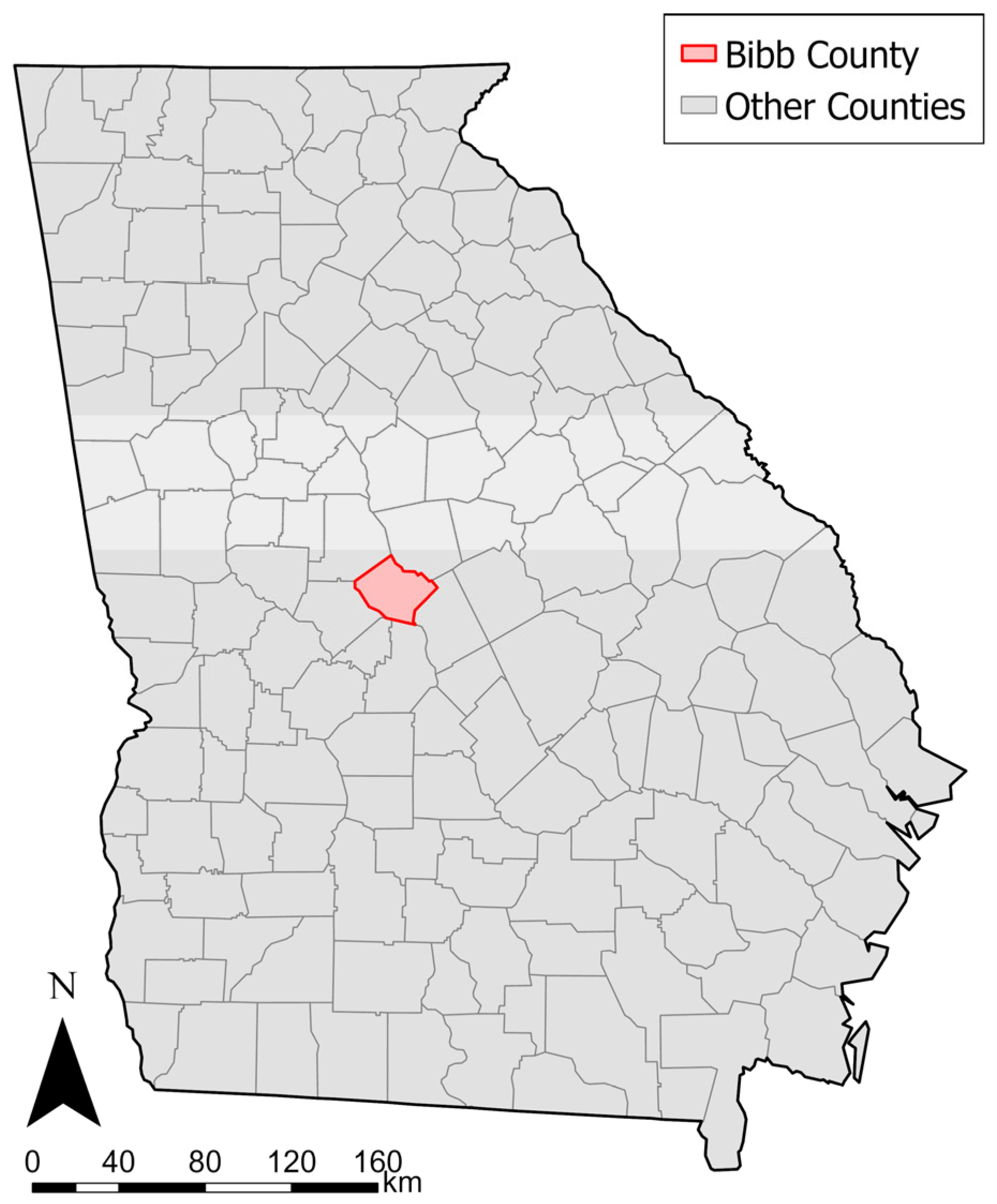
Figure 1. The location of Bibb County within the state of Georgia [34].
Solar 06 00002 g001
Figure 2. Global horizontal irradiance in Bibb County [39].
Solar 06 00002 g002
Figure 3. (a) Elevation and (b) land slope in Bibb County [40].
Solar 06 00002 g003
Figure 4. Land cover in Bibb County [41].
Solar 06 00002 g004
Figure 5. Airports in the state of Georgia [42].
Solar 06 00002 g005
Figure 6. Primary and secondary roads in the state of Georgia [43].
Solar 06 00002 g006
Figure 7. Power transmission lines in the state of Georgia [44].
Solar 06 00002 g007
Figure 8. Flow chart depicting the analysis process used for the site suitability assessment.
Solar 06 00002 g008
Figure 9. Final suitability scores for Bibb County using (a) ramp stretch symbology, (b) classified symbology (6 ranks), and (c) quantile symbology, with existing solar farms in the study area overlaid [48].
Solar 06 00002 g009
Figure 10. A 32-bucket histogram showing the distribution of suitability scores.
Solar 06 00002 g010
Figure 11. Suitability scores for (a) power line distance, (b) land usage, and (c) GHI.
Solar 06 00002 g011
Figure 12. Scatter plot comparing suitability scores for land usage with final suitability scores with trendline from linear regression.
Solar 06 00002 g012
Figure 13. Scatter plot comparing suitability scores for power line distance with final suitability scores with trendline from linear regression.
Solar 06 00002 g013
Table 1. Criteria used in the suitability assessment [11].
CriterionDescriptionOriginal WeightModified Weight
GHIThe solar irradiance received by the area, measured as global horizontal irradiance (GHI) in kWh/m2/d0.35780.4646
ElevationThe elevation of the area, measured in meters0.00760.0099
SlopeThe slope of the area, measured as a percentage0.05320.0691
Land UsageThe current usage or coverage of the area0.11630.1510
Urban DistanceThe distance to the nearest urban residential area, measured in meters0.02010.0261
Rural DistanceThe distance to the nearest rural residential area, measured in meters0.01000.0130
Wetland DistanceThe distance to the nearest wetland, measured in meters0.04230.0549
Forest DistanceThe distance to the nearest forest, measured in meters0.00600.0078
Airport DistanceThe distance to the nearest airport, measured in meters0.04230.0549
Road DistanceThe distance to the nearest primary or secondary road, measured in meters0.02860.0371
Power Line DistanceThe distance to the nearest power transmission line, measured in meters0.08590.1115
Table 2. Datasets used to evaluate each suitability criterion.
CriterionDataset NameSource
GHISolar Renewable Resource[39]
ElevationGround Surface Elevation—30 m[40]
Slope
Land UsageUSA NLCD Land Cover[41]
Urban Distance
Rural Distance
Wetland Distance
Forest Distance
Airport DistanceAviation Facilities[42]
Road DistanceTransportation[43]
Power Line DistanceGeorgia Power Grid Map[44]
Table 3. Evaluation benchmarks for each suitability criterion [11].
CriterionUnitHighly Suitable (3)Moderately Suitable (2)Low Suitability (1)Not Suitable (0)
GHIkWh/m2/d>5>4.5>3.5≤3.5
Elevationm<50<100<200≥200
Slope%<1%<3%<5%≥5%
Land UsagemBarren LandShrub/Scrub,
Grassland/Herbaceous
Pasture/Hay,
Cultivated Crops
All other codes
Urban Distancem>1500>1000>500≤500
Rural Distancem>1500>1000>500≤500
Wetland Distancem>1000>500>400≤400
Forest Distancem>1500>1250>1000≤1000
Airport Distancem>2000>1500>1000≤1000
Road Distancem<2000<5000<10,000≥10,000
Power Line Distancem<2000<5000<10,000≥10,000
Table 4. Land cover codes used for each criterion.
CriterionLand Cover Codes
Urban DistanceDeveloped medium intensity, Developed high intensity
Rural DistanceDeveloped open space, Developed low intensity
Wetland DistanceWoody wetlands, Emergent herbaceous wetlands
Forest DistanceDeciduous forest, Evergreen forest, Mixed forest
Table 5. Suitability score classification scheme for Figure 9b.
Classification RankRange of ValuesArea (km2)% of Total
Unsuitable0.0–0.50.000%
Low0.5–1.00.000%
Moderate-to-Low1.0–1.532.105%
Moderate1.5–2.0587.4093%
Moderate-to-High2.0–2.513.672%
High2.5–3.00.000%
Table 6. Threshold for change in rankings equal to 1% of total area (TNR = threshold not reached).
CriterionNegative ThresholdPositive Threshold
GHI−2%+2%
ElevationTNRTNR
Slope−7%+12%
Land Usage−3%+3%
Urban Distance−18%+18%
Rural DistanceTNRTNR
Wetland DistanceTNR+9%
Forest DistanceTNRTNR
Airport Distance−9%+8% *
Road Distance−13%+13%
Power Line Distance−7%+12%
* Secondary positive threshold at +12%. See Table S9 in the Supplementary Material for details.
Disclaimer/Publisher’s Note: The statements, opinions and data contained in all publications are solely those of the individual author(s) and contributor(s) and not of MDPI and/or the editor(s). MDPI and/or the editor(s) disclaim responsibility for any injury to people or property resulting from any ideas, methods, instructions or products referred to in the content.