Review

Off-Target Effects of Mirabegron on Muscarinic Receptors

1
Center for Pharma-Food Research (CPFR), Graduate School of Pharmaceutical Sciences, University of Shizuoka, 52-1 Yada, Suruga-ku, Shizuoka 422-8526, Shizuoka, Japan
2
Department of Pharmacology, Graduate School of Medicine, Ehime University, Shitsukawa, Toon 791-0295, Ehime, Japan
3
Department of Pharmacology II, School of Pharmacy and Pharmaceutical Sciences, Mukogawa Women’s University, Nishinomiya 668-8179, Hyogo, Japan
*
Author to whom correspondence should be addressed.
Future Pharmacol. 2026, 6(1), 7; https://doi.org/10.3390/futurepharmacol6010007
Submission received: 27 November 2025 / Revised: 17 December 2025 / Accepted: 13 January 2026 / Published: 30 January 2026
(This article belongs to the Special Issue Feature Papers in Future Pharmacology 2025)

Abstract

Older adults with multiple diseases are likely to be prescribed multiple medications including anticholinergic agents, which are frequently prescribed to manage conditions such as overactive bladder and chronic obstructive pulmonary disease and Parkinson’s disease. Overactive bladder (OAB) has been the subject of increased disease awareness and is a common and significant cause of reduced quality of life, particularly in the elderly. The selective β3 adrenoceptor agonist, mirabegron was developed for the pharmacological treatment of OAB. Mirabegron has been shown to exert off-target effects on various functional proteins such as muscarinic receptors in rat tissues. This agent may relax the detrusor muscle by activating β3 adrenoceptors and also antagonizing muscarinic receptors. Mirabegron and antimuscarinics exerted additive effects on muscarinic receptor binding and relaxant responses of cholinergic contractions of the detrusor muscle. Mirabegron excreted in human urine appears to directly attenuate muscarinic receptor-mediated functions in the bladder. Combination therapy of mirabegron and solifenacin in patients with OAB may enhance not only their therapeutic effects on OAB, but also increase the risk of anticholinergic adverse effects. Therefore, the safety of concomitant use of mirabegron and other drugs such as antimuscarinics for elderly patients needs to be carefully considered.

1. Anticholinergic Burden

With societal aging and associated increases in the prevalence of chronic illness requiring treatment, typically with medicinal products that have broad therapeutic ranges and exhibit anticholinergic activity, the management of polypharmacy and the anticholinergic burden have emerged as public health [1,2,3,4,5]. Significant changes have been reported in the pharmacokinetics and pharmacodynamics of drugs due to the effects of aging on physiological factors, including body composition, the volume of distribution for drugs, the clearance of multiple medications, and neurotransmitter receptor sensitivity. Furthermore, since the renal clearance and hepatic metabolism of drugs both decline with aging, drugs may accumulate in tissues, which increases drug exposure and the rise in developing anticholinergic adverse effects [6]. Moreover, careful consideration is needed by attending physicians when prescribing drugs that exhibit anticholinergic activity to elderly patients due to age-related increases in the permeability of the blood–brain barrier and thus in the risk of central adverse effects, such as cognitive impairment [7,8]. The altered pharmacological sensitivity to the muscarinic receptor blockade may occur by a reduction in the cholinergic reserve and a structural change in muscarinic receptors that may bring a significant impact on the agonist and antagonist receptor binding affinities and on the signal transduction. These alterations increase the risk of adverse effects to commonly used medications, including anticholinergic drugs, in the elderly. The essentiality of a burden scale for anticholinergic accumulation has been emphasized [9,10,11,12,13,14,15,16].
Yamada et al. [13,14] developed a pharmacological evidence-based anticholinergic burden scale (ABS) for 260 medications used frequently for Japanese elderly patients. In this scale, the muscarinic receptor binding activity of each drug was extensively measured by the radioreceptor binding assay using a selective radioligand, [N-methyl-3H]scopolamine chloride (NMS). The anticholinergic burden scale was evaluated by the measurement of muscarinic receptor binding activity of each drug and by considering its maximal blood concentrations after administration at the clinical dose in humans. This scale is the first comprehensive assessment of anticholinergic activities for 260 drugs by pharmacological methods that considers pharmacokinetic properties in humans. According to this scale, 33 drugs were defined as those with strong anticholinergic activity (ABS 3), 37 drugs as those with moderate activity (ABS 2), and 26 drugs as those with weak activity (ABS 1). Other drugs defined as ABS 0 had no muscarinic receptor binding activity even at high concentrations. Kagota et al. [17] investigated functional anticholinergic effects of 60 medications classified as ABS 3 (strong) or 2 (moderate) by the inhibitory effects on the cholinergic (carbachol)-induced contractions in the rat isolated bladder and ileal smooth muscles using the organ bath method. All drugs examined inhibited the muscarinic receptor-mediated smooth muscle contraction in a concentration-dependent manner in the rat isolated bladder and ileum, and their functional activities were positively correlated with muscarinic receptor binding activities. The medications with higher anticholinergic burden score and higher load may cause potentially greater risk of anticholinergic adverse effects in patients with polypharmacy. Therefore, the scoring of anticholinergic burden may predict that the adverse effects of different drugs with anticholinergic effects add up in a linear fashion.
Overactive bladder (OAB) has been the subject of increased disease awareness and is a common and significant cause of reduced quality of life, particularly in the elderly. OAB is defined as urinary urgency, usually accompanied by frequency and nocturia, with or without urgency incontinence, in the absence of urinary tract infection or other obvious pathology. The mainstay of treatment for OAB has been anticholinergic medications. These drugs block muscarinic receptors throughout the body, not only in the bladder and in the peripheral tissues but in the brain. Antimuscarinic agents such as solifenacin have been utilized as therapeutic agents but have specific anticholinergic adverse effects, such as dry mouth, constipation, the decline of cognitive function, and an increased residual urine volume [18]. A previous study reported that 70% of patients treated for OAB with antimuscarinics were 61–80 years old [5]. The elderly patients are more susceptible to these anticholinergic adverse effects in the peripheral and central organs, especially as there is increased permeability in the blood–brain barrier. The anticholinergic drugs for OAB are able to enter the central nervous system and lead to central side effects. There is increasing evidence that a high anticholinergic load may be linked to the development of cognitive impairment and dementia and increased risk of mortality. Therefore, careful attention should be paid when treating OAB in the elderly.
The selective β3 adrenoceptor stimulants, mirabegron and vibegron were developed for the pharmacological treatment of OAB [19,20,21,22]. Both drugs are considered to stimulate β3-adrenoceptors in the bladder voiding muscle, resulting in the relaxation of the detrusor smooth muscle. Mirabegron was previously shown to exert off-target effects against various functional proteins such as neurotransmitter receptors, transporters and hepatic enzymes [23,24,25,26,27,28,29,30] (Table 1), as summarized by Dehvari et al. [23]. Recently, Yamada et al. [31,32] showed that mirabegron and vibegron exerted antimuscarinic effects in rat tissues by pharmacological procedures. The off-target effects of mirabegron on muscarinic receptors are reviewed herein.

2. Off-Target Effects of Mirabegron on Muscarinic Receptors

Off-target effects refer not only to adverse effects, but also to unexpected new pharmacological actions or the discovery of new drug targets due to of the modulation of targets other than the original target of interest [23,33,34]. The off-target effects of mirabegron on functional protein molecules, including muscarinic M2 receptors, β1 adrenoceptors, α1A adrenoceptors, α1D adrenoceptors, drug metabolizing enzymes, cytochrome P450 (CYP2D6, CYP3A4), dopamine transporters, noradrenaline transporters, organic cation transporters, P-glycoprotein, and sodium channel site 2, are shown in Table 1 [23,24,25,26,27,28,29,30]. Astellas Co., Ltd. Submitted data to the FDA showing the binding affinity of mirabegron for human M2 muscarinic receptors (Ki value of 2.1 μM) (U.S. Food and Drug Administration. Pharmacology/Toxicology NDA/BLA Review and Evaluation (NDA 202-611) 2012 [Available from: http://www.accessdata.fda.gov/drugsatfda_docs/nda/2012/202611Orig1s000PharmR.pdf]) (accessed on 1 November 2025). Furthermore, the Australian Department of Health Therapeutic Goods Administration’s Australian Public Assessment on Mirabegron (Department of Health Therapeutic Goods Administration: Australian Public Assessment Report for (Mirabegron) [29] reported the binding of mirabegron to muscarinic receptors in muscarinic receptor-expressing cells.
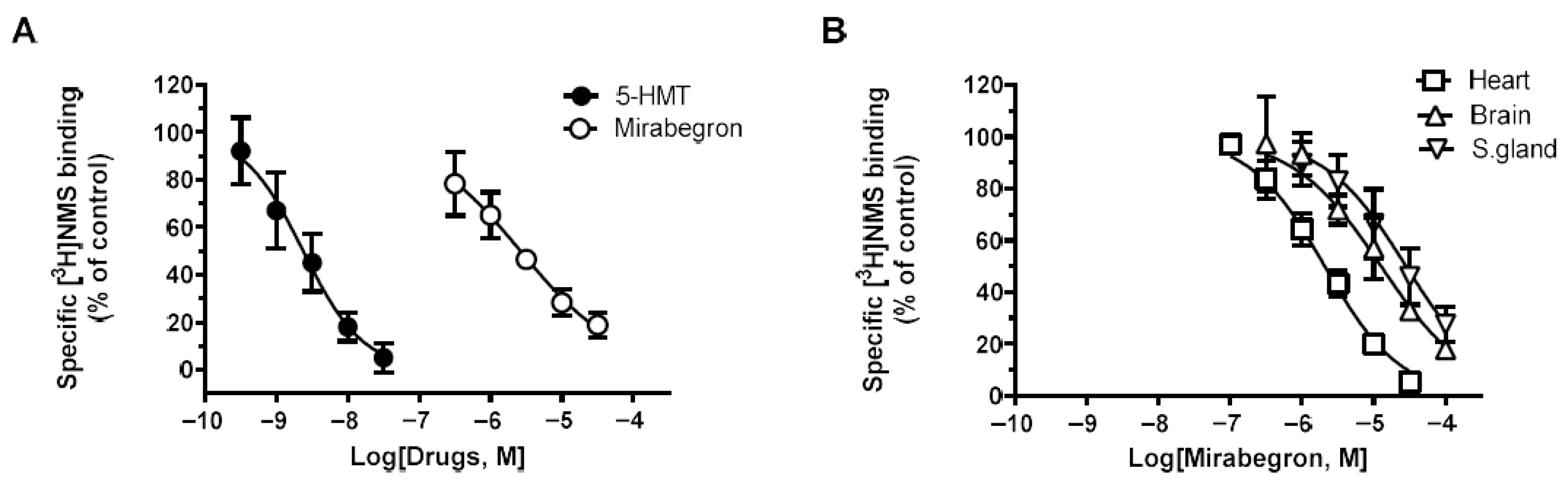
Cernecka et al. [35] previously reported that mirabegron inhibited carbachol- or KCl-induced contractions in the rat detrusor muscle, and this relaxant effect was more pronounced for carbachol-induced contractions. Yamada et al. [31,32] demonstrated that both mirabegron and vibegron bound to muscarinic receptors in the bladder and other tissues of rats by the radioligand binding assay using [3H]NMS (Figure 1 for mirabegron) and that both agents could induce concentration-dependent relaxation of the carbachol-induced contractions in the isolated bladder detrusor muscle in the presence of the non-selective β-adrenoceptor antagonist, propranolol. The relaxant activities (EC50 values) correlated significantly with their muscarinic receptor binding activities (IC50 values) [31,32] in the rat bladder. The relaxation of human and rodent detrusor muscles by mirabegron was characterized by a shallow concentration-effect curve (EC50 values in the high nM to low μM range) [18,35,36]. In a two-site model, mirabegron was shown to induce both high- and low-affinity relaxant response on carbachol-induced contractions (EC50: 87.3 nM, relative contribution: 44.5%) and EC50: 10.7 μM, relative contribution: 55.5%, respectively [31]. Furthermore, the competitive inhibition of specific [3H]NMS binding in the rat bladder revealed the involvement of the micromolar binding affinity of mirabegron to muscarinic receptors in the efficacy of its low-affinity relaxant response. Collectively, these findings indicate the pharmacological antagonist effects of mirabegron on muscarinic receptors. Other studies showed that the relaxation of precontracted human detrusor tissue by mirabegron in vitro required markedly higher concentrations, with EC50 values ranging from 588 nM to 3.9 μM, than its binding constant of 2.5 nM for β3 adrenoceptors and maximum plasma concentrations of 137 nM during standard dosing [19,36,37]. Although the β3 adrenoceptor specificity of mirabegron has been examined and its attenuation of the urine storage symptoms of OAB has been demonstrated [38,39,40], the underlying mechanism remains unclear. A number of mechanisms, including the antagonism of muscarinic receptors, suppression of cholinergic neurotransmission, or effects on afferent signaling and the central nervous system, have been proposed [40]. Therefore, the mirabegron-induced relaxation of the detrusor muscle in clinical settings may be attributed not only to its activation of β3 adrenoceptor activation, but also to its antagonistic effects on muscarinic receptors.
M2 receptor antagonism has been suggested to play a role in the mirabegron-induced relaxation of cholinergic contractions of the detrusor muscle. Yamada et al. [31] demonstrated that the binding affinity of mirabegron was several-fold higher in the bladder and myocardium (pIC50 values: 5.62 and 5.69, respectively) than in the brain and submaxillary gland (pIC50 values: 4.90 and 4.61, respectively), indicating a higher affinity for the M2 receptor subtype than for M3 or M1 receptors. The higher binding affinity for the M2 receptor is consistent with findings on muscarinic receptor subtype-expressing cells [29]. M2 receptor antagonism by mirabegron is considered to amplify the relaxation response by activating β3 adrenoceptors via increases in cAMP levels. The M2 and M3 receptor subtypes are expressed in the bladder, and the latter is primarily responsible for contractions of the detrusor muscle [41,42]. The function of the M2 receptor is considered to indirectly enhance M3 receptor-mediated contractions by inhibiting relaxation of the detrusor muscle [43,44]. This M2 receptor-stimulated inhibition of detrusor muscle relaxation may occur by suppressing adenylate cyclase activation, which may attenuate cAMP production by the adenylate cyclase activation of β3 adrenoceptor [43,44]. Ehlert et al. [45,46] found that the isoproterenol-induced relaxation of cholinergic contractions by a transmural stimulation of mouse isolated bladder strips was inhibited by the stimulation of M2 receptors by endogenous acetylcholine. Therefore, the contractile response of the detrusor muscle to muscarinic agonists may be attributed in part to the M2 receptor-mediated inhibition of the cAMP-increasing β3 agonist-induced relaxant response [44]. Therefore, M2 receptor antagonism by mirabegron is considered to amplify the relaxation response by activating β3 adrenoceptors through increases in cAMP levels. It is assumed that the dual action of β3 adrenoceptor activation and M2 muscarinic receptor antagonism by mirabegron occurs in the pharmacotherapy of patients with OAB. Ohyama and Inoue [47] investigated the association between selective β-adrenergic drugs and blood pressure elevation by reviewing the Japanese Adverse Drug Event Report (JADER) database. According to their review, some β-adrenergic agonists, including mirabegron, were associated with blood pressure elevation. The precise underlying mechanism for the cardiovascular effect of mirabegron is not clarified, but there is a possibility of this agent’s involvement in the muscarinic receptor mechanism because cholinergic stimulation lowers blood pressure.

3. Additive Effects of Mirabegron and Antimuscarinic Agents on Muscarinic Receptors

Drug combinations are expected generally to exert additive, synergistic or antagonistic pharmacological effects. The efficacy and safety of combination therapy with mirabegron and solifenacin compared with monotherapy and placebo in patients with OAB have been reported by Kelleher et al. [48] and Herschorn et al. [49]. A systematic review and network meta-analysis by Kelleher et al. [48] showed that the combination of solifenacin (5 mg) and mirabegron (25 or 50 mg) was more effective than mirabegron (50 mg) alone in terms of efficacy in patients with OAB. On the other hand, according to the careful inspection of data concerning anticholinergic side effects, the incidence of anticholinergic adverse events, such as dry mouth, constipation, and visual disturbances, was found to be higher with the combination therapy of solifenacin and mirabegron than with solifenacin alone, suggesting the enhancement of anticholinergic side effects. A similar finding was reported by Herschorn et al. [49], where combination therapy with both drugs resulted in a higher frequency of dry mouth, constipation, and dyspepsia compared to monotherapy. Therefore, it is considered that the higher incidence of anticholinergic adverse events by combination therapy with mirabegron and solifenacin results partly from the antagonistic effects of mirabegron on muscarinic receptors. A prospective randomized control study examined the efficacy and safety of mirabegron (50 mg once daily) versus slifenacin (5 mg) in pediatric patients (190 patients) newly diagnosed with OAB [50]. Dry mouth and constipation developed in 2.8, 10, and 0% and in 2.8, 11.4, and 1.4% of patients in the mirabegron, solifenacin, and placebo groups, respectively, which showed that the incidence of these anticholinergic adverse effects was higher with mirabegron than with the placebo. These findings indicate that combination therapy of mirabegron and an antimuscarinic drug may increase the risk of anticholinergic adverse effects and also that the muscarinic receptor binding activity of mirabegron may have clinical significance. Moreover, since the majority of patients treated with antimuscarinic drugs for OAB are elderly [5], central adverse effects, such as the decline of cognitive and memory functions and depression, need to be carefully considered. Therefore, further studies on the safety of combination therapy of mirabegron and antimuscarinics for elderly patients with OAB are warranted.
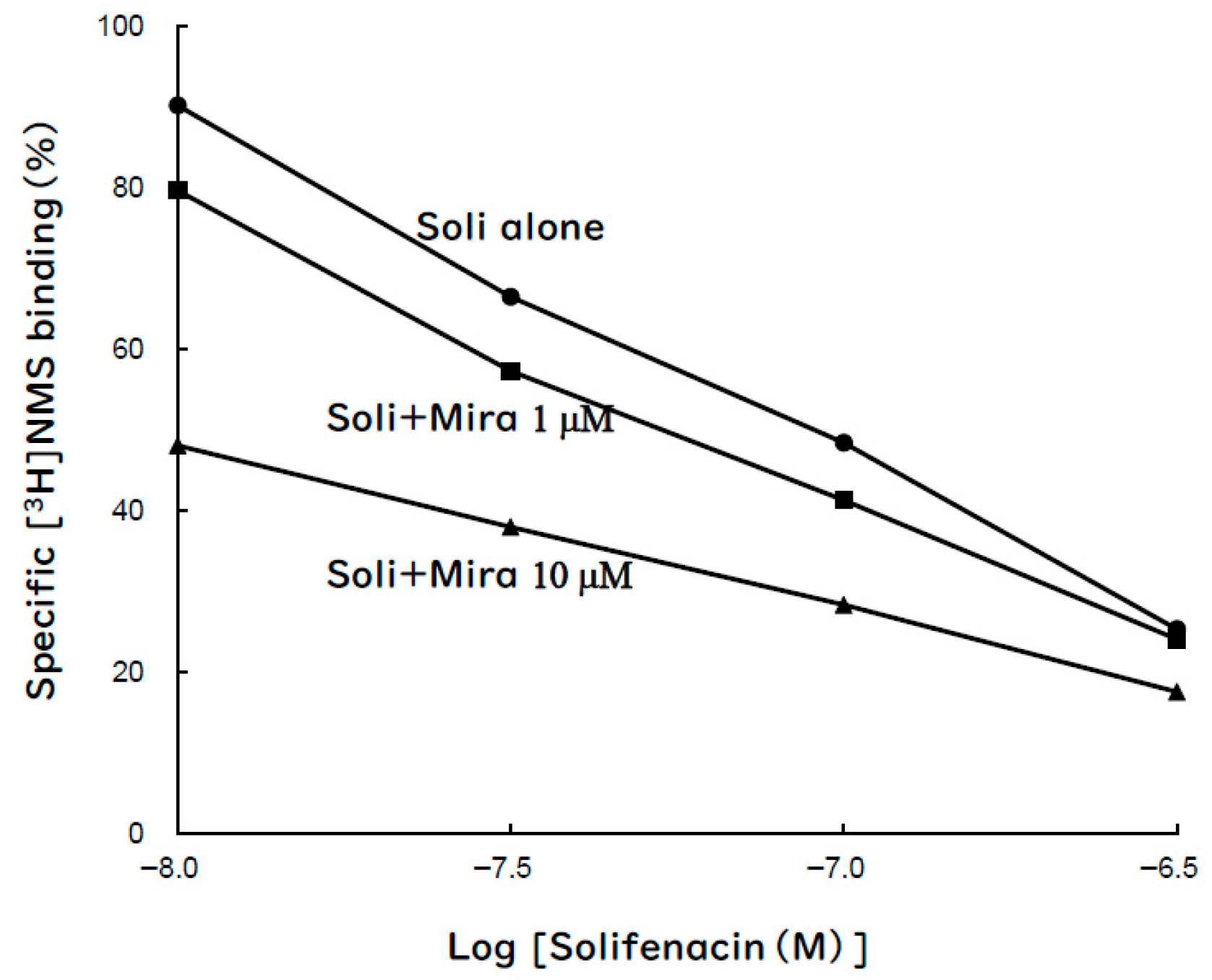
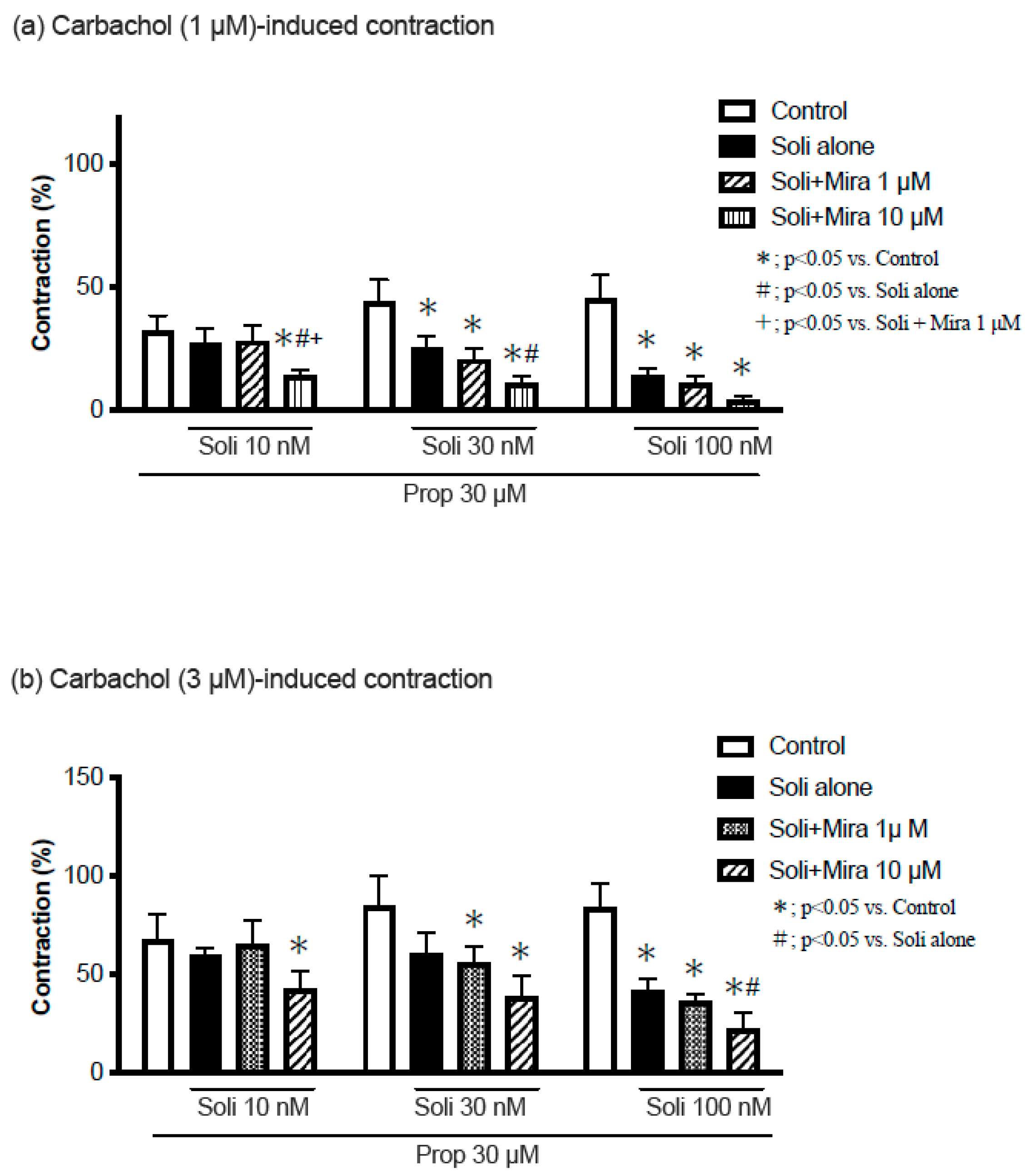
Based on clinical observation, Yamada et al. [51] very recently investigated whether the combination of mirabegron and antimuscarinics (solifenacin, imidafenacin) exerted additive effects on muscarinic receptor binding and on the cholinergic contractions of the detrusor muscle in rats. Their data revealed that the muscarinic receptor binding activity of solifenacin in rat tissue was additively enhanced by its combination with mirabegron (Figure 2). Moreover, mirabegron enhanced the relaxant effects of solifenacin on carbachol-induced contractions of rat isolated detrusor muscle strips (Figure 3). These additive effects on muscarinic receptor binding and functional responses were more pronounced at lower concentrations of solifenacin. These findings may indicate that mirabegron exerted additive effects on antimuscarinic-induced pharmacological actions on muscarinic receptors, which improved therapeutic effects on OAB and also increased the risk of anticholinergic adverse effects. The anticholinergic burden scale of mirabegron was classified as score 2 and that of solifenacin as score 3 [13,14,15]. The additive effects of the anticholinergic burden may contribute to the enhancement by mirabegron of antimuscarinic-induced muscarinic receptor binding and of the relaxant effects on the cholinergic contractions of rat tissues. Moreover, similar additive effects on muscarinic receptor binding in rat tissues were observed with the combination of mirabegron and imidafenacin, another anticholinergic agent that was frequently used for the therapy of OAB in Japan [51]. The muscarinic receptor binding activities of imidafenacin in rat tissues were additively enhanced by the addition of mirabegron, which was pronounced at a lower concentration of imidafenacin. The relaxant effect of cholinergic contraction in the rat smooth muscle by mirabegron and imidafenacin in the presence of propranolol was also additive. Such additive effects of the combination of mirabegron and low concentrations of antimuscarinics in the preclinical study may be associated with the findings by Shin et al. [52], which showed the good efficacy and safety of add-on therapy with low-dose antimuscarinics in patients with suboptimal responses after four weeks of mirabegron monotherapy. Collectively, these findings suggest the clinical relevance of the scoring of anticholinergic burden by the combination therapy with mirabegron and other medications with anticholinergic effects in patients with polypharmacy.
In the combination of mirabegron and solifenacin or imidafenacin, Sugaya et al. [53] examined the effect of combining mirabegron and 5-hydroxymethyl tolterodine (an active metabolite of fesoterodine, a clinically used anticholinergic agent for OAB treatment) in a rat model of pelvic congestion. The additive relaxant effects of mirabegron and 5-hydroxymethyl tolterodine were observed in vitro in the electrical field stimulation-induced contractions of bladder strips from pelvic congestion rats. In vivo, bladder capacity was increased significantly by a combination of mirabegron and 5-hydroxymethyl tolterodine, with the combined effect exceeding the sum of the effects of monotherapies. These results indicate that the combination of mirabegron and 5-hydroxymethyl tolterodine causes a potential for synergistic effects in a rat pelvic congestion model.

4. Pharmacokinetics of Mirabegron and Prediction of Human Bladder Muscarinic Receptor Occupancy

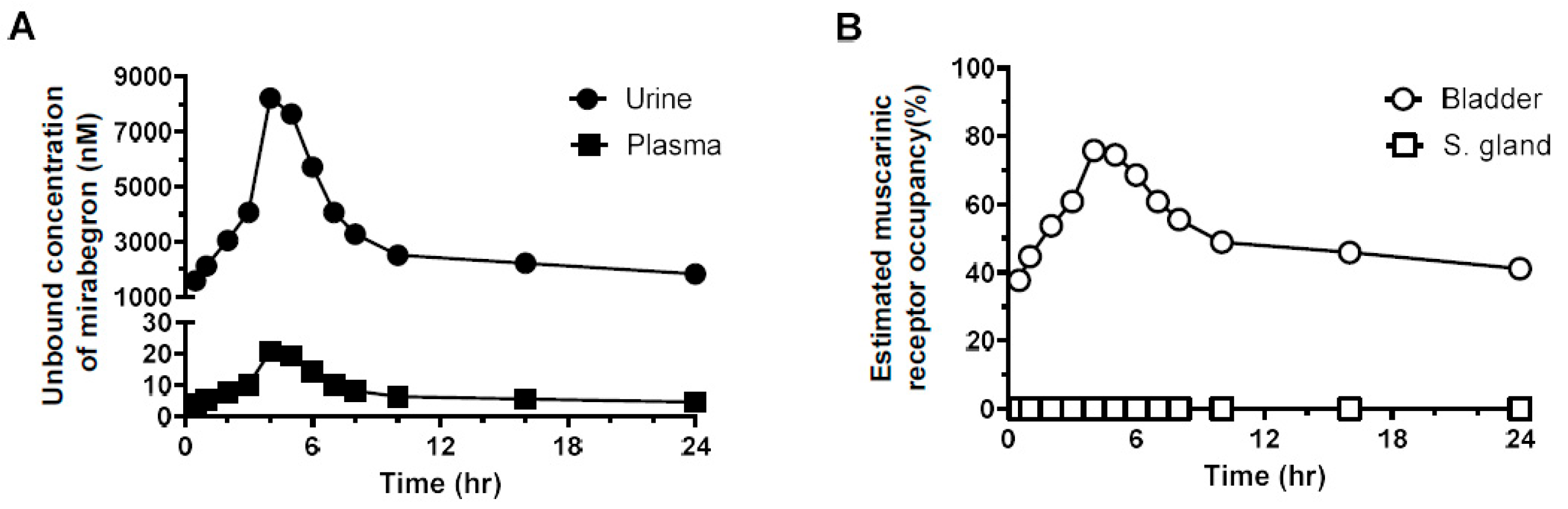
Similarities in the muscarinic receptor binding activities of anticholinergic agents used clinically to treat OAB have been reported between rat and human tissues [14], suggesting negligible differences in the tissue sensitivity of muscarinic receptors between rodents and humans. Using the muscarinic receptor binding activity of mirabegron in the rat bladder and its pharmacokinetic parameters in humans, Yamada et al. [31] estimated human plasma unbound and urinary unbound drug concentrations at clinical doses, from which human bladder muscarinic receptor occupancy was predicted. The absorption of the clinical dose of mirabegron (50 mg/day) after its oral administration to the elderly was rapid, with a maximum plasma concentration of approximately 85 nM and a time to reach Tmax of 3–4 h [37]. In healthy Japanese male subjects, the mean elimination half-life (t1/2β) was 25.1–36.4 h [54], which was consistent with the range observed in non-Japanese males following single- (27.9–40.6 h) and multiple-dose administrations (29.2–36.8 h) in those previous studies [37,55]. Mirabegron accumulated upon once-daily dosing relative to single-dose data. Furthermore, the oral administration of [14 C]-labeled mirabegron in rats elevated tissue plasma radioactivity levels in some organs, with ratios increasing to 20 after its repeated administration, and was then slowly eliminated from a number of tissues, including the kidney [23]. Pharmacokinetic parameters suggest that urinary mirabegron is significantly concentrated by active tubular secretion and water reabsorption in addition to renal glomerular filtration. The bladder tissue concentration of mirabegron was markedly higher than its plasma concentration, while its urinary concentration in the elderly after a single 50 mg dose was predicted to be in the micromolar (μM) range, suggesting that higher concentrations of mirabegron are excreted in the urine after repeated administration. As shown in Figure 4, human urinary unbound concentrations (1.6–8.2 μM) of mirabegron at a clinical dose (50 mg) were significantly (approximately 400-fold) higher than plasma unbound concentrations [31]. As mentioned above, the species difference in the muscarinic receptor binding affinity of mirabegron in the bladder between rats and humans is small. Based on the assumption that the interstitial concentration of mirabegron in the bladder smooth muscle is close to its urine concentration, the estimation of muscarinic receptor occupancy in the human bladder by mirabegron was performed. According to the predictions by the pharmacokinetics and micromolar receptor binding affinity of mirabegron, muscarinic receptor occupancy was estimated to be 37–76% in the bladders of elderly subjects who received a single 50 mg dose of this drug [31]. Therefore, it is hypothesized that mirabegron excreted in human urine directly blocks muscarinic receptor-mediated functions in the bladder, possibly by simple diffusion across the urothelium during urine storage, contributing to the therapeutic and adverse side effects of this agent.

5. Conclusions

Polypharmacy is a significant concern in the medication and management of anticholinergic medications, particularly in older adults. Moreover, an age-related decline in the renal excretion and hepatic metabolism of drugs results in their accumulation in tissues and increases in the permeability of the blood–brain barrier, indicating a significant increase in the risk of anticholinergic adverse effects in the peripheral and central nervous system, such as cognitive impairment. Mirabegron, a β3 adrenoceptor stimulant clinically utilized to treat patients with OAB, exerts off-target effects on various functional molecules such as neurotransmitter receptors, drug-metabolizing enzymes, and transporters. This drug was shown to antagonize muscarinic receptors that are distinct from its target molecule, the bladder β3 adrenoceptor, by radioligand receptor binding assay of muscarinic receptors and functional assay in rat tissues using the organ bath method. Therefore, the mirabegron-induced relaxation of the detrusor muscle may be attributed to its antagonistic effects on muscarinic receptors and its activation of β3 adrenoceptors. Based on predictions by the pharmacokinetics and micromolar receptor binding affinity of mirabegron, muscarinic receptor occupancy is significantly high in the bladders of elderly subjects treated with mirabegron at a clinical dose. The administration of low concentrations of mirabegron and antimuscarinics (solifenacin and imidafenacin) has been shown to exert additive effects on muscarinic receptor binding and the relaxation of cholinergic-induced detrusor muscle contractions, which appeared not only to enhance their therapeutic effects in patients with OAB but also to cause anticholinergic adverse effects. The safety of combination therapy for elderly patients with OAB needs to be carefully considered. Therefore, concomitant use of mirabegron and drugs with anticholinergic properties, such as antimuscarinics, may be responsible for the high incidence of anticholinergic adverse events. Further investigations of the anticholinergic burden with polypharmacy using anticholinergic burden scales may be of clinical significance.

Author Contributions

All authors contributed to the preparation, review, and finalization of the manuscript, approved the final draft of the manuscript before its submission, and agreed to be accountable for all aspects of the work. The interpretation and conclusions contained in the present study are those of the authors. All authors have read and agreed to the published version of the manuscript.

Funding

This research did not receive any specific grant from funding agencies in the public, commercial, or not-for-profit sectors.

Data Availability Statement

The original contributions presented in this study are included in the article. Further inquiries can be directed to the corresponding author.

Acknowledgments

The authors would like to thank Michiyo Shirai and Masae Mochizuki (University of Shizuoka) for their valuable secretarial work.

Conflicts of Interest

All authors declare that they have no conflicts of interest.

References

  1. Kojima, T.; Akishita, M.; Kameyama, Y.; Yamaguchi, K.; Yamamoto, H.; Eto, M.; Ouchi, Y. High risk of adverse drug reactions in elderly patients taking six or more drugs: Analysis of inpatient database. Geriatr. Gerontol. Int. 2012, 12, 761–762. [Google Scholar] [CrossRef]
  2. Ruxton, K.; Woodman, R.J.; Mangoni, A.A. Drugs with anticholinergic effects and cognitive impairment, falls and all-cause mortality in older adults: A systematic review and meta-analysis. Br. J. Clin. Pharmacol. 2015, 80, 209–220. [Google Scholar] [CrossRef]
  3. Salahudeen, M.S.; Duffull, S.B.; Nishtala, P.S. Anticholinergic burden quantified by anticholinergic risk scales and adverse outcomes in older people: A systematic review. BMC Geriatr. 2015, 15, 31. [Google Scholar] [CrossRef] [PubMed]
  4. Tune, L.E. Anticholinergic effects of medication in elderly patients. J. Clin. Psychiatry 2011, 62, 11–14. [Google Scholar]
  5. Araklitis, G.; Robinson, D.; Cardozo, L. Cognitive effects of anticholinergic load in women with overactive bladder. Clin. Interv. Aging 2020, 15, 1493–1503. [Google Scholar] [CrossRef] [PubMed]
  6. Shi, S.; Klotz, U. Age-related changes in pharmacokinetics. Curr. Drug Metab. 2011, 12, 601–610. [Google Scholar] [CrossRef] [PubMed]
  7. Montagne, A.; Barnes, S.R.; Sweeney, M.D.; Halliday, M.R.; Sagare, A.P.; Zhao, Z.; Toga, A.W.; Jacobs, R.E.; Liu, C.Y.; Amezcua, L.; et al. Blood-brain barrier breakdown in the aging human hippocampus. Neuron 2015, 85, 296–302. [Google Scholar] [CrossRef]
  8. Shiota, T.; Torimoto, K.; Okuda, M.; Iwata, R.; Kumamoto, H.; Miyake, M.; Hirayama, A.; Tanaka, N.; Fujimoto, K. Cognitive burden and polypharmacy in elderly Japanese patients treated with anticholinergics for an overactive bladder. LUTS Low. Urin. Tract Symptoms 2020, 12, 54–61. [Google Scholar] [CrossRef]
  9. Chew, M.L.; Mulsant, B.H.; Pollock, B.G.; Lehman, M.E.; Greenspan, A.; Mahmoud, R.A.; Kirshner, M.A.; Sorisio, D.A.; Bies, R.R.; Gharabawi, G. Anticholinergic activity of 107 medications commonly used by older adults. J. Am. Geriatr. Soc. 2008, 56, 1333–1341. [Google Scholar] [CrossRef]
  10. Rudolph, J.L.; Salow, M.J.; Angelini, M.C.; McGlinchey, R.E. The anticholinergic risk scale and anticholinergic adverse effects in older persons. Arch. Intern. Med. 2008, 168, 508–513. [Google Scholar] [CrossRef]
  11. The 2019 American Geriatrics Society Beers Criteria® Update Expert Panel. American Geriatrics Society 2019 Updated AGS Beers Criteria® for potentially inappropriate medication use in older adults. J. Am. Geriatr. Soc. 2019, 67, 674–694.
  12. Jun, K.; Hwang, S.; Ah, Y.; Suh, Y.; Lee, J. Development of an anticholinergic burden scale specific for Korean older adults. Geriatr. Gerontol. Int. 2019, 19, 628–634. [Google Scholar] [CrossRef]
  13. Yamada, S.; Mochizuki, M.; Chimoto, J.; Futokoro, R.; Kagota, S.; Shinozuka, K. Development of a pharmacological evidence-based anticholinergic burden scale for medications commonly used in older adults. Geriatr. Gerontol. Int. 2023, 23, 558–564. [Google Scholar] [CrossRef]
  14. Yamada, S.; Mochizuki, M.; Atobe, K.; Kato, Y. Pharmcokinetic and pharmacodynamic considerations for the anticholinergic burden scale of drugs. Geriatr. Gerontol. Int. 2024, 24, 81–87. [Google Scholar] [CrossRef]
  15. Yamada, S.; Mochizuki, M. Anticholinergic adverse events by polypharmacy and anticholinergic burden score. Jap. J. Geriatr. 2024, 61, 256–270. (In Japanese) [Google Scholar]
  16. Mizokami, F.; Mizuno, T.; Taguchi, R.; Nasu, I.; Arai, S.; Higashi, K.; Matsumoto, A.; Kamei, M.; Kojima, T.; Sakai, T.; et al. Japanese Society of Geriatric Pharmacy Working Group on Japanese Anticholinergic Risk Scale. Development of the Japanese anticholinergic risk scale: English translation of the Japanese article. Geriatr. Gerontol. Int. 2025, 25, 5–13. [Google Scholar] [CrossRef] [PubMed]
  17. Kagota, S.; Futokoro, R.; Maruyama-Fumoto, K.; Chimoto, J.; Yamada, S.; Shinozuka, K. Functional anticholinergic activity of drugs classified as strong and moderate on the anticholinergic burden scale on bladder and ileum. Basic Clin. Pharmacol. Toxicol. 2024, 135, 451–463. [Google Scholar] [CrossRef]
  18. Yamada, S.; Ito, Y.; Nishijima, S.; Kadekawa, K.; Sugaya, K. Basic and clinical aspects of antimuscarinic agents used to treat overactive bladder. Pharmacol. Ther. 2018, 189, 130–148. [Google Scholar] [CrossRef] [PubMed]
  19. Takasu, T.; Ukai, M.; Sato, S.; Matsui, T.; Nagase, I.; Maruyama, T.; Sasamata, M.; Miyata, K.; Uchida, H.; Yamaguchi, O. Effect of (R)-2-(2-Aminothiazol-4-yl)-4′-{2-[(2-hydroxy-2-phenylethyl)amino]ethyl} Acetanilide (YM178), A novel selective β3-adrenoceptor agonist, on bladder function. J. Pharmacol. Exp. Ther. 2007, 321, 642–647. [Google Scholar] [CrossRef]
  20. Chapple, C.R.; Kaplan, S.A.; Mitcheson, D.; Klecka, J.; Cummings, J.; Drogendijk, T.; Dorrepaal, C.; Martin, N. Randomized double-blind, active-controlled phase 3 study to assess 12-month safety and efficacy of mirabegron, a β3-adrenoceptor agonist, in overactive bladder. Eur. Urol. 2013, 63, 296–305. [Google Scholar] [CrossRef]
  21. Michel, M.C.; Korstanje, C. β3-Adrenoceptor agonists for overactive bladder syndrome: Role of translational pharmacology in a repositioning clinical drug development project. Pharmacol. Ther. 2016, 159, 66–82. [Google Scholar] [CrossRef] [PubMed]
  22. Di Salvo, J.; Nagabukuro, H.; Wickham, L.A.; Abbadie, C.; DeMartino, J.A.; Fitzmaurice, A.; Gichuru, L.; Kulick, A.; Donnelly, M.J.; Jochnowitz, N.; et al. Pharmacological characterization of a novel beta 3 adrenergic agonist, vibegron: Evaluation of antimuscarinic receptor selectivity for combination therapy for overactive bladder. J. Pharmacol. Exp. Ther. 2017, 360, 346–355. [Google Scholar] [CrossRef]
  23. Dehvari, N.; Da Silva, E.D., Jr.; Bengtsson, T.; Hutchinson, D.S. Mirabegron: Potential off target effects and uses beyond the bladder. Br. J. Pharmacol. 2018, 175, 4072–4082. [Google Scholar] [CrossRef]
  24. Alexandre, E.C.; Kiguti, L.R.; Calmasini, F.B.; Silva, F.H.; da Silva, K.P.; Ferreira, R.; Ribeiro, C.A.; Mónica, F.Z.; Pupo, A.S.; Antunes, E. Mirabegron relaxes urethral smooth muscle by a dual mechanism involving β3-adrenoceptor activation and α1-adrenoceptor blockade. Br. J. Pharmacol. 2016, 173, 415–428. [Google Scholar] [CrossRef] [PubMed]
  25. Calmasini, F.B.; Candido, T.Z.; Alexandre, E.C.; D’ANcona, C.A.; Silva, D.; de Oliveira, M.A.; De Nucci, G.; Antunes, E.; Mónica, F.Z. The beta-3 adrenoceptor agonist, mirabegron relaxes isolated prostate from human and rabbit: New therapeutic indication? Prostate 2015, 75, 440–447. [Google Scholar] [CrossRef]
  26. Mo, W.; Michel, M.C.; Lee, X.W.; Kaumann, A.J.; Molenaar, P. The β3-adrenoceptor agonist mirabegron increases human atrial force through β1-adrenoceptors: An indirect mechanism? Br. J. Pharmacol. 2017, 174, 2706–2715. [Google Scholar] [CrossRef]
  27. Takusagawa, S.; Miyashita, A.; Iwatsubo, T.; Usui, T. In vitro inhibition and induction of human cytochrome P450 enzymes by mirabegron, a potent and selective β3-adrenoceptor agonist. Xenobiotica 2012, 42, 1187–1196. [Google Scholar] [CrossRef]
  28. Takusagawa, S.; Yajima, K.; Miyashita, A.; Uehara, S.; Iwatsubo, T.; Usui, T. Identification of human cytochrome P450 isoforms and esterases involved in the metabolism of mirabegron, a potent and selective β3-adrenoceptor agonist. Xenobiotica 2012, 42, 957–967. [Google Scholar] [CrossRef]
  29. Department of Health Therapeutic Goods Administration: Australian Public Assessment Report for Mirabegron. 2014. Available online: https://www.tga.gov.au/auspar/auspar-mirabegron (accessed on 1 November 2025).
  30. Groen-Wijnberg, M.; van Dijk, J.; Krauwinkel, W.; Kerbusch, V.; Meijer, J.; Tretter, R.; Zhang, W.; van Gelderen, M. Pharmacokinetic interactions between mirabegron and metformin, warfarin, digoxin or combined oral contraceptives. Eur. J. Drug Metab. Pharmacokinet. 2017, 42, 417–429. [Google Scholar] [CrossRef]
  31. Yamada, S.; Chimoto, J.; Shiho, M.; Okura, T.; Morikawa, K.; Wakuda, H.; Shinozuka, K. Possible involvement of muscarinic receptor blockade in mirabegron therapy for patients with overactive bladder. J. Pharmacol. Exp. Ther. 2021, 377, 201–206. [Google Scholar] [CrossRef] [PubMed]
  32. Yamada, S.; Chimoto, J.; Shiho, M.; Okura, T.; Morikawa, K.; Kagota, S.; Shinozuka, K. Muscarinic receptor binding activity in rat tissues by vibegron and prediction of its receptor occupancy levels in the human bladder. Int. J. Urol. 2021, 28, 1298–1303. [Google Scholar] [CrossRef] [PubMed]
  33. Rudmann, D.G. On-target and Off-target-based Toxicologic Effects. Toxicol. Pathol. 2013, 41, 310–314. [Google Scholar] [CrossRef] [PubMed]
  34. Chou, C.-K.; Liu, Y.-L.; Chen, Y.-I.; Huang, P.-J.; Tsou, P.-H.; Chen, C.-T.; Lee, H.-H.; Wang, Y.-N.; Hsu, J.L.; Lee, J.-F.; et al. Digital receptor occupancy assay in quantifying on- and off-target binding affinities of therapeutic antibodies. ACS Sens. 2020, 5, 296–302. [Google Scholar] [CrossRef] [PubMed]
  35. Cernecka, H.; Kersten, K.; Maarsingh, H.; Elzinga, C.R.; de Jong, I.J.; Korstanje, C.; Michel, M.C.; Schmidt, M. β3-Adrenoceptor-mediated relaxation of rat and human urinary bladder: Roles of BKCa channels and rho kinase. Naunyn-Schmiedeberg’s Arch. Pharmacol. 2015, 388, 749–759. [Google Scholar] [CrossRef]
  36. Svalø, J.; Nordling, J.; Bouchelouche, K.; Andersson, K.-E.; Korstanje, C.; Bouchelouche, P. The novel β3-adrenoceptor agonist mirabegron reduces carbachol-induced contractile activity in detrusor tissue from patients with bladder outflow obstruction with or without detrusor overactivity. Eur. J. Pharmacol. 2013, 699, 101–105. [Google Scholar] [CrossRef] [PubMed]
  37. Krauwinkel, W.; van Dijk, J.; Schaddelee, M.; Eltink, C.; Meijer, J.; Strabach, G.; van Marle, S.; Kerbusch, V.; van Gelderen, M. Pharmacokinetic Properties of Mirabegron, a β3-Adrenoceptor Agonist: Results from Two Phase I, Randomized, Multiple-Dose Studies in Healthy Young and Elderly Men and Women. Clin. Ther. 2012, 34, 2144–2160. [Google Scholar] [CrossRef]
  38. Igawa, Y.; Aizawa, N.; Michel, M.C. β3-Adrenoceptors in the normal and diseased urinary bladder-what are the open questions? Br. J. Pharmacol. 2019, 176, 2525–2538. [Google Scholar] [CrossRef]
  39. Dale, P.R.; Cernecka, H.; Schmidt, M.; Dowling, M.R.; Charlton, S.J.; Pieper, M.P.; Michel, M.C. The pharmacological rationale for combining muscarinic receptor antagonists and β-adrenoceptor agonists in the treatment of airway and bladder disease. Curr. Opin. Pharmacol. 2014, 16, 31–42. [Google Scholar] [CrossRef]
  40. Huang, R.; Tamalunas, A.; Waidelich, R.; Strittmatter, F.; Stief, C.G.; Hennenberg, M. Inhibition of full smooth muscle contraction in isolated human detrusor tissues by mirabegron is limited to off-target inhibition of neurogenic contractions. J. Pharmacol. Exp. Ther. 2022, 381, 176–187. [Google Scholar] [CrossRef]
  41. Ito, Y.; Oyunzul, L.; Seki, M.; Fujino Oki, T.; Matsui, M.; Yamada, S. Quantitative analysis of the loss of muscarinic receptors in various peripheral tissues in M1-M5 receptor single knockout mice. Br. J. Pharmacol. 2009, 156, 1147–1153. [Google Scholar] [CrossRef]
  42. Oki, T.; Takagi, Y.; Inagaki, S.; Taketo, M.M.; Manabe, T.; Matsui, M.; Yamada, S. Quantitative analysis of binding parameters of [3H]N-methylscopolamine in central nervous system of muscarinic acetylcholine receptor knockout mice. Brain Res. Mol. Brain Res. 2005, 133, 6–11. [Google Scholar] [CrossRef]
  43. Noronha-Blob, L.; Lowe, V.; Patton, A.; Canning, B.; Costello, D.; Kinnier, W.J. Muscarinic receptors: Relationships among phosphoinositide breakdown, adenylate cyclase inhibition, in vitro detrusor muscle contractions and in vivo cystometrogram studies in guinea pig bladder. J. Pharmacol. Exp. Ther. 1989, 249, 843–851. [Google Scholar] [CrossRef]
  44. Matsui, M.; Griffin, M.T.; Shehnaz, D.; Taketo, M.M.; Ehlert, F.J. Increased relaxant action of forskolin and isoproterenol against muscarinic agonist-induced contractions in smooth muscle from M2 receptor knockout mice. J. Pharmacol. Exp. Ther. 2003, 305, 106–113. [Google Scholar] [CrossRef]
  45. Ehlert, F.J.; Griffin, M.T.; Abe, D.M.; Vo, T.H.; Taketo, M.M.; Manabe, T.; Matsui, M. The M2 muscarinic receptor mediates contraction through indirect mechanisms in mouse urinary bladder. J. Pharmacol. Exp. Ther. 2005, 313, 368–378. [Google Scholar] [CrossRef]
  46. Ehlert, F.J.; Ahn, S.; Pak, K.J.; Park, G.J.; Sangnil, M.S.; Tran, J.A.; Matsui, M. Neuronally released acetylcholine acts on the M2 muscarinic receptor to oppose the relaxant effect of isoproterenol on cholinergic contractions in mouse urinary bladder. J. Pharmacol. Exp. Ther. 2007, 322, 631–637. [Google Scholar] [CrossRef]
  47. Ohyama, K.; Inoue, M. Association between selective beta-adrenergic drugs and blood pressure elevation: Data mining of the Japanese Adverse Drug Event Report (JADER) database. Yakugaku Zasshi 2016, 136, 1065–1071. [Google Scholar] [CrossRef]
  48. Kelleher, C.; Hakimi, Z.; Zur, R.; Siddiqui, E.; Maman, K.; Aballéa, S.; Nazir, J.; Chapple, C. Efficacy and tolerability of mirabegron compared with antimuscarinic monotherapy or combination therapies for overactive bladder: A systematic review and network meta-analysis. Eur. Urol. 2018, 74, 324–333. [Google Scholar] [CrossRef] [PubMed]
  49. Herschorn, S.; Chapple, C.R.; Abrams, P.; Arlandis, S.; Mitcheson, D.; Lee, K.; Ridder, A.; Stoelzel, M.; Paireddy, A.; van Maanen, R.; et al. Efficacy and safety of combinations of mirabegron and solifenacin compared with monotherapy and placebo in patients with overactive bladder (SYNERGY study). BJU Int. 2017, 120, 562–575. [Google Scholar] [CrossRef] [PubMed]
  50. Soliman, M.G.; El-Abd, S.; El-Gamal, O.M.; Raheem, A.A.; Abou-Ramadan, A.R.; El-Abd, A.S. Mirabegron versus solifenacin in children with overactive bladder: Prospective randomized single-blind controlled trial. Urol. Int. 2021, 105, 1011–1017. [Google Scholar] [CrossRef]
  51. Yamada, S.; Mochizuki, M.; Maruyama-Fumoto, K.; Kagota, S.; Shinozuka, K. Additive effects of mirabegron on muscarinic receptor binding and on relaxation of cholinergic detrusor muscle contraction by antimuscarinics. J. Pharmacol. Sci. 2025, 58, 363–367. [Google Scholar] [CrossRef] [PubMed]
  52. Shin, J.H.; Kim, A.; Choo, M.-S. Additional low-dose antimuscarinics can improve overactive bladder symptoms in patients with suboptimal response to beta 3 agonist monotherapy. Investig. Clin. Urol. 2017, 58, 261–266. [Google Scholar] [CrossRef] [PubMed]
  53. Sugaya, K.; Yamagami, H.; Nishijima, S.; Kadekawa, K.; Hizue, M.; Ito, Y.; Yamada, S. Effects of combined treatment with fesoterodine and mirabegron in a pelvic congestion rat model: Results from in vitro and in vivo functional studies. LUTS Low. Urin. Tract Symptoms 2020, 12, 173–179. [Google Scholar] [CrossRef]
  54. Iitsuka, H.; Tokuno, T.; Amada, Y.; Matsushima, H.; Katashima, M.; Sawamoto, T.; Takusagawa, S.; van Gelderen, M.; Tanaka, T.; Miyahara, H. Pharmacokinetics of mirabegron, a β3-adrenoceptor agonist for treatment of overactive bladder, in healthy Japanese Male Subjects: Results from single- and multiple-dose studies. Clin. Drug Investig. 2014, 34, 27–35. [Google Scholar] [CrossRef] [PubMed]
  55. Eltink, C.; Lee, J.; Schaddelee, M.; Zhang, W.; Kerbusch, V.; Meijer, J.; van Marle, S.; Grunenberg, N.; Kowalski, D.; Drogendijk, T.; et al. Single dose pharmacokinetics and absolute bioavailability of mirabegron, b3-adrenoceptor agonist for treatment of overactive bladder. Int. J. Clin. Pharmacol. Ther. 2012, 50, 838–849. [Google Scholar] [CrossRef] [PubMed]
Figure 1. Inhibitory effects of mirabegron on specific [3H]NMS binding in rat tissues ((A): bladder, (B): submaxillary gland, brain, bladder, and heart) (Reproduced with permission from Ref. [31] 2021, Elsevier).
Futurepharmacol 06 00007 g001
Figure 2. Inhibitory effects of mirabegron (Mira) and solifenacin (Soli) on specific [3H]NMS binding in the rat brain (Reproduced with permission from Ref. [51] 2025, Elsevier).
Futurepharmacol 06 00007 g002
Figure 3. Effects of mirabegron and solifenacin on carbachol ((a): 1 μM, (b): 3 μM)-induced contractions in the rat isolated detrusor muscle (Reproduced with permission from Ref. [51] 2025, Elsevier).
Futurepharmacol 06 00007 g003
Figure 4. Estimation of unbound concentrations of mirabegron in plasma and urine (A) and muscarinic receptor occupancy (B) in the bladder and submaxillary gland (B) after the administration of a single oral dose of mirabegron (50 mg) to healthy elderly subjects (Reproduced with permission from Ref. [31] 2021, Elsevier).
Futurepharmacol 06 00007 g004
Table 1. Off-target effects of mirabegron (Reproduced with permission from Ref. [23] 2018, Wiley).
TargetEffect
α1A-AdrenoceptorsRelaxes mouse urethra smooth muscle [24]
Antagonizes α1-adrenoceptor mediated human prostate smooth muscle contraction [25]
Binds to human αIA-adrenoceptors (pki 6.36) [24]
αlD-AdrenoceptorsAntagonizes noradrenaline-mediated responses in the rat aorta [24]
β1-AdrenoceptorsCardiostimulant [26]
CYP2D6, CYP3A4Inhibitor [27,28]
Dopamine transporterBinds to dopamine transporters [29]
Muscarinic M2 receptorBinds to M2 receptor [29]
Noradrenaline transportersIncrease noradrenaline release in the heart; cardiostimulant [26,29]
Binds to noradrenaline transporters [29]
Organic cation transportersInhibitor [29,30]
P-glycoproteinWeak inhibitor [29,30]
Sodium channel site 2Binds to sodium channels [29]
Disclaimer/Publisher’s Note: The statements, opinions and data contained in all publications are solely those of the individual author(s) and contributor(s) and not of MDPI and/or the editor(s). MDPI and/or the editor(s) disclaim responsibility for any injury to people or property resulting from any ideas, methods, instructions or products referred to in the content.