
Article

Impact of Environmental Weathering on the Chemical Composition of Spilled Oils in a Real Case in Brazil
by
Ana Beatriz A. de M. Salata
1,
Marília G. A. Pereira
1,
Isabelle F. S. de Lima
1,
Ignes Regina dos Santos
1,
Danielle M. M. Franco
2,
Boniek G. Vaz
2 and
Jandyson M. Santos
1,*
1
Petroleum, Energy, and Mass Spectrometry Research Group (PEM), Department of Chemistry, Federal Rural University of Pernambuco (UFRPE), Recife 52171-900, PE, Brazil
2
Chromatography and Mass Spectrometry Laboratory (LaCEM), Department of Chemistry, Federal University of Goiás, Goiânia 74853-120, GO, Brazil
*
Author to whom correspondence should be addressed.
Coasts 2025, 5(4), 49; https://doi.org/10.3390/coasts5040049
Submission received: 30 October 2025 / Revised: 12 December 2025 / Accepted: 15 December 2025 / Published: 18 December 2025

Abstract

Brazil suffered the largest oil spill disaster in its history, beginning on August 2019, affecting the Northeast coast. This study proposes a chemical investigation of oils from the 2019 spill in Brazil, which had naturally undergone different weathering processes in terrestrial and aquatic environments after an extended period of exposure. Three samples were collected at different times and under distinct environmental conditions, coded as spilled oil (SO), oil recovered from the aquatic environment (SA), and oil collected from the terrestrial environment (ST), the latter two having spent more time naturally exposed to aquatic and terrestrial environments. The analyses were performed by gas chromatography–mass spectrometry (GC-MS) and electrospray ionization coupled with Fourier transform ion cyclotron resonance mass spectrometry (ESI FT-ICR MS). The results of the GC-MS analysis indicated that, although the samples share a common geochemical origin, the SA and ST samples showed a decrease in the intensity of n-alkane distribution compared to the SO sample, mainly attributed to evaporation and biodegradation processes. FT-ICR MS analysis identified dozens of classes of ESI(+) and ESI(–) compounds, most of them rich in sulfur and oxygen, with the highest intensities and quantities of molecular formulas in the SA and ST samples. Diagnostic ratios for heteroatom classes concluded that the SA and ST samples had undergone a higher level of weathering, mainly associated with photooxidation and biodegradation processes. Thus, the combined use of GC-MS and FT-ICR MS proved to be a robust approach for the detailed characterization of spilled oils, contributing to a clearer understanding of the extent and type of weathering in samples from the 2019 Brazilian spill.

1. Introduction

In August 2019, an oil spill was discovered along the Brazilian coast. By November 2019, thousands of tons had spread across 4334 km, affecting 11 Northeastern states, 120 municipalities, and 724 locations. It was subsequently recognized as the largest oil spill disaster in the country’s history and the one with the greatest environmental impact on a tropical coastal region [1]. The oil found on the Brazilian coast in 2019 was solid and had a density greater than seawater, indicating chemical modifications to its original composition caused by weathering processes such as biodegradation, evaporation, dissolution, photooxidation, and emulsification [2]. Evidence found by Pereira et al. [3] indicated the presence of heavy components after the oil underwent cracking. These factors allowed its transport by groundwater for thousands of kilometers along the continental margin, driven by Brazil’s northern and southern routes, following the bifurcation in the southern part of the South Equatorial Current [4]. The main studies worldwide focusing on the characterization of spilled oils are conducted using Gas Chromatography–Mass Spectrometry (GC-MS) analysis [5,6]. This is a highly effective tool for separating complex mixtures of organic compounds from the nonpolar fraction of petroleum components, segregating them based on their retention times in a capillary column with a carrier gas. The separation of compounds can be carried out in different acquisition modes, such as selective ion monitoring (SIM) and full scan (SCAN) [3].
Studies involving oil spills are based on a chemical fingerprinting approach, which identifies petroleum biomarkers, primarily hydrocarbon molecules, and determines the identity of the spilled oil [6]. Although GC-MS is the most conventional technique, the use of Fourier Transform Ion Cyclotron Resonance Mass Spectrometry (FT-ICR MS) is also especially effective for identifying polar compounds in crude oils [7]. FT-ICR MS boasts ultra-high resolution and mass accuracy, enabling the identification of components at the molecular level. Its importance in analytical chemistry lies in its high sensitivity and ability to determine the elemental composition of compounds (CcHhNnOoSs) [7,8,9]. The combination of GC-MS and FT-ICR MS data can be used as a comprehensive geochemical tool for crude oils, in order to provide geochemical predictions based on nonpolar and polar compound profiles [10].
FT-ICR MS and/or GC-MS were widely explored in studies of the 2019 oil spill in Brazil. Lima et al. [9] analyzed spilled oils collected between 2019 and 2021 along the Brazilian coast using GC-MS, GC × GC-TOFMS, and FT-ICR MS, demonstrating that the biomarker parameters indicated the same source for the spilled oils. They also proposed new ratios using Ox, SOx, and N1 classes to evaluate biodegradation extension. Pereira et al. [3] identified and correlated spilled oils collected from the 2019 spill in Brazil with other samples collected in 2022 in the same region and submitted to GC-MS and FT-Orbitrap-MS analysis, which indicated that the samples were from different geochemical origins.
Here, we propose a chemical investigation of oils from the 2019 spill in Brazil, which naturally had undergone different weathering processes in terrestrial and aquatic environments. The study involved knowledge of petroleum and environmental chemistry, evaluating the effects of weathering processes on the chemical composition of the spilled oils, to understand the scale of the spill’s environmental impact. Towards this end, we applied GC-MS and FT ICR-MS techniques, providing an in-depth analysis of the oils’ chemical composition and enabling a more precise understanding of the level of weathering impacts.

2. Material and Methods

2.1. Sample Collection and Extraction

In the context of spilled oils, three samples were collected from two beaches in the municipality of Cabo de Santo Agostinho, Pernambuco, Northeast Brazil, between September 2019 and April 2021. Figure 1 shows the sample collection locations and information. The SO sample was collected directly from the beach sand at the beginning of the 2019 spill. The SA sample is the spilled oil that reached the shore 1 year and 4 months after the spill started, and remained in contact with the aquatic environment during this period. The ST sample is the oil spilled in September 2019, which was discarded on the terrestrial environment of the beach at that time, and was collected after 1 year and 7 months.
A metal spatula was used to collect the samples, which were a mix of spilled oil and beach sand. The samples were then stored in glass vials. Samples were prepared as described previously by Carregosa et al. [11]. Briefly, five samples each of 2 g of the mixture were extracted with 5 mL of dichloromethane (Merck, purity ≥ 99.5%). After each extraction, the sample was centrifuged, and the organic phase was transferred to a flat-bottomed flask. The dichloromethane was then removed using a rotary evaporator, leaving a brown oily residue.

2.2. GC-MS Analysis

A total of 1 mg of the extracted oil was dissolved in 1 mL of hexane for analysis. GC-MS analyses were employed by gas chromatograph/quadrupole mass spectrometer (GCMS-QP2010 SE, Shimadzu Co., Kyoto, Japan) using the method described by Pereira et al. [3]. Chromatographic separation was performed using a capillary column (HP-5 MS Ultra Inert, 5% phenylmethylpolysiloxane; Restek, Bellefonte, PA, USA), with a heating ramp from 70 to 325 °C at a rate of 20 °C min−1 (holding time of 10 min), resulting in a total run time of 95 min. The sample injection volume was 1 μL in split mode (1:20), and the injector, ion source, and interface temperatures were set at 300, 250, and 300 °C, respectively. He (99.999% purity) was used as the carrier gas at a constant flow rate of 1 mL min−1. Sample solutions were analyzed in full-scan and SIM acquisition modes. In SIM mode, m/z 85, 191, 217, and 231 were monitored, corresponding to alkylcyclohexanes and n-alkanes/branched hydrocarbons, tri- and pentacyclic terpanes, steranes and diasteranes, and triaromatic steroids, respectively. Chromatographic peaks were identified using absolute retention times and mass spectral profiles. Data were processed using GCMSsolution, version 4.20 (Shimadzu Co., Japan).

2.3. ESI(±) FT-ICR MS Analysis

The analyses were performed with an ultra-high-resolution mass spectrometer operating with an Ion Cyclotron Resonance analyzer (FT-ICR MS) model 7T Solarix XR (Bruker Daltonics, Bremen, Germany). The samples were injected with syringe pump at a flow rate of 240 µL/h for the positive mode, and 120 µL/h for the negative mode into an Electrospray ionization source (ESI). Nitrogen was used as the drying gas at 200 °C in both modes, with a flow of 4.0 L/min in the positive mode and the nebulizing gas adjusted to 1.3 bar; in the negative mode, the nebulizing gas was maintained at 1.0 bar. The capillary voltage was set to +3.5 kV in the positive mode, and −4.5 kV in the negative mode. The ion accumulation time in the collision cell was 0.006 s for the positive mode, and 0.003 s for the negative mode. For ESI(−), a small amount of ammonium hydroxide (0.1%) was added to the sample solution, aiming to promote the deprotonation of the molecules. For ESI(+), formic acid was added to the sample solution to promote the protonation of the molecules.
Data processing was performed using Composer 64 software (Version 1.5.3, Sierra Analytica, Modesto, CA, USA) for the assignment of molecular formulas and homologous series. The data generated by the processing, such as molecular formulas, the number of carbon atoms, and DBE values, were organized into spreadsheets and graphically represented using Microsoft Excel software (Microsoft Office Professional Plus 2010).

3. Results and Discussion

3.1. GC-MS Analysis of Non-Polar Compounds

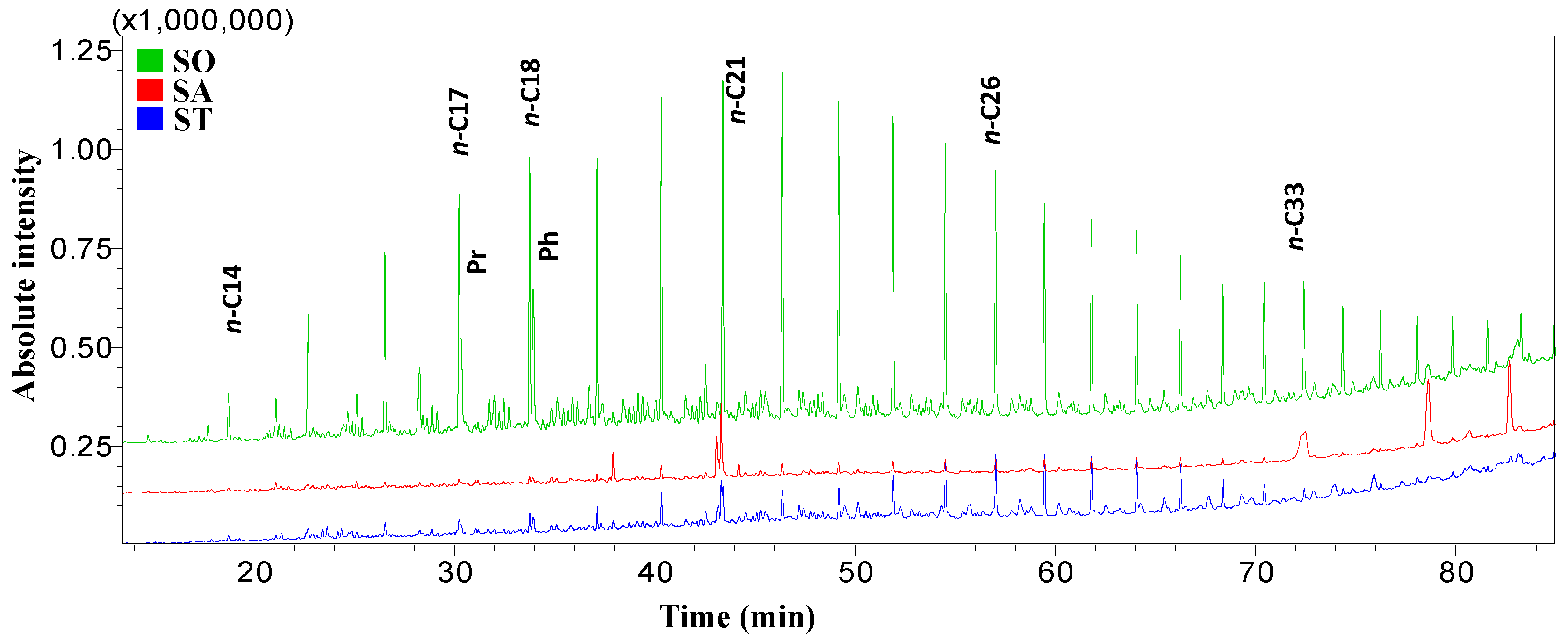
The preliminary geochemical assessment was conducted using GC-MS analysis. Evaporation and dissolution [12] are one of the first natural weathering processes that influence the GC-MS fingerprinting of spilled oils within hours or even days after the spill, primarily affecting the class of linear n-alkanes and isoprenoids (SIM acquisition in m/z 85), as shown in Figure 2 and Table S1. The samples in Figure 2 exhibited a low intensity or absence of linear n-alkanes smaller than C15, explained by their boiling points below 200 °C and/or vapor pressures above 0.1 mmHg for these compounds, which mainly promote evaporation [8,13]. The losses of linear n-alkanes with carbon numbers < C15 (Figure 2) may also be attributable to the effects of drying the samples to completeness during preparation. The SA and ST samples were exposed to different environments, aquatic and terrestrial, respectively, and we have found a gradual decrease in the intensity of all n-alkanes series when compared to the SO sample. This continuous loss of n-alkanes of greater molecular mass can be mainly attributed to the weathering process related to bio-degradation processes, as mentioned by Elumalai et al. [14].
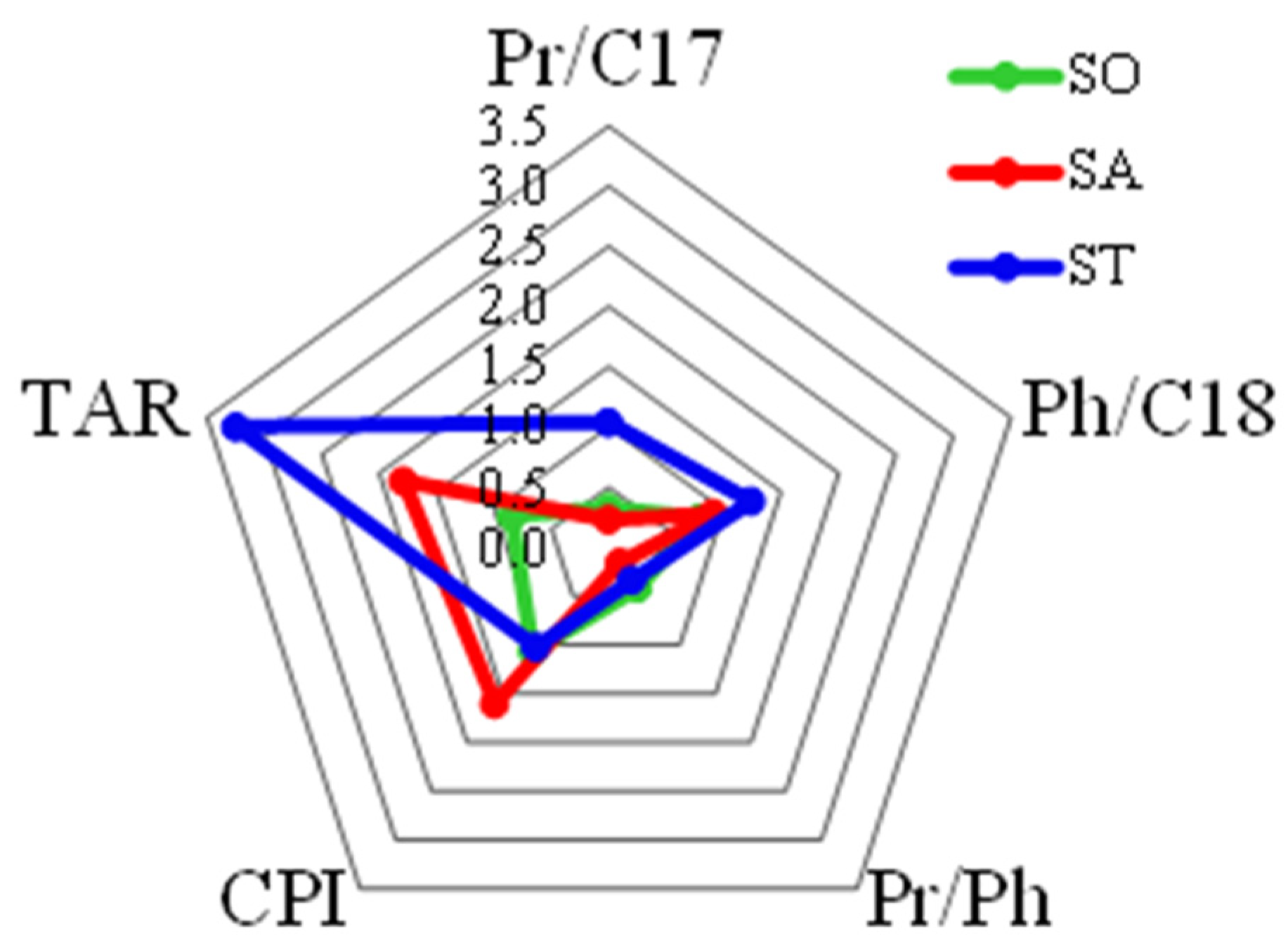
The Carbon Preference Index (CPI), terrestrial/aquatic ratio (TAR), pristane/phytane (Pr/Ph), pristane/n-C17, and phytane/n-C18 ratios were calculated to detect potential chemical alterations (Figure 3). These ratios are commonly used in organic geochemistry to assess contributions of organic matter and depositional environments for oils [9,15,16]. The values of Pr/n-C17 and Ph/n-C18 are generally lower for slightly biodegraded oils [17,18]. The sample SA exhibited lower values, indicating that it had undergone a high level of biodegradation. Figure 3 shows that the Pr/Ph ratio values are similar among the three samples, with values below 1, suggesting a predominantly anoxic, often hypersaline depositional environment [18,19]. All samples presented CPI values between 1 and 0, indicating a predominance of even-numbered n-paraffins over odd-numbered ones, suggesting a marine origin [20].
The terrestrial-to-aquatic ratio (TAR) [21] is valuable for determining changes in organic matter contributions from terrestrial and aquatic flora, although it may overrepresent the absolute amounts from terrestrial sources [22]. The TAR in the SO sample was less than 1, which means that the dominant source of organic matter was aquatic. In contrast, the ST and SA samples had TAR > 1, which suggests a larger input of organic matter from terrestrial sources. Thus, although the three samples represented oil from the same origin, the CPI, TAR, Pr/Ph, Pr/n-C17, and Ph/n-C18 ratios were affected by the weathering processes suffered by the oil exposed in terrestrial and marine aquatic environments.
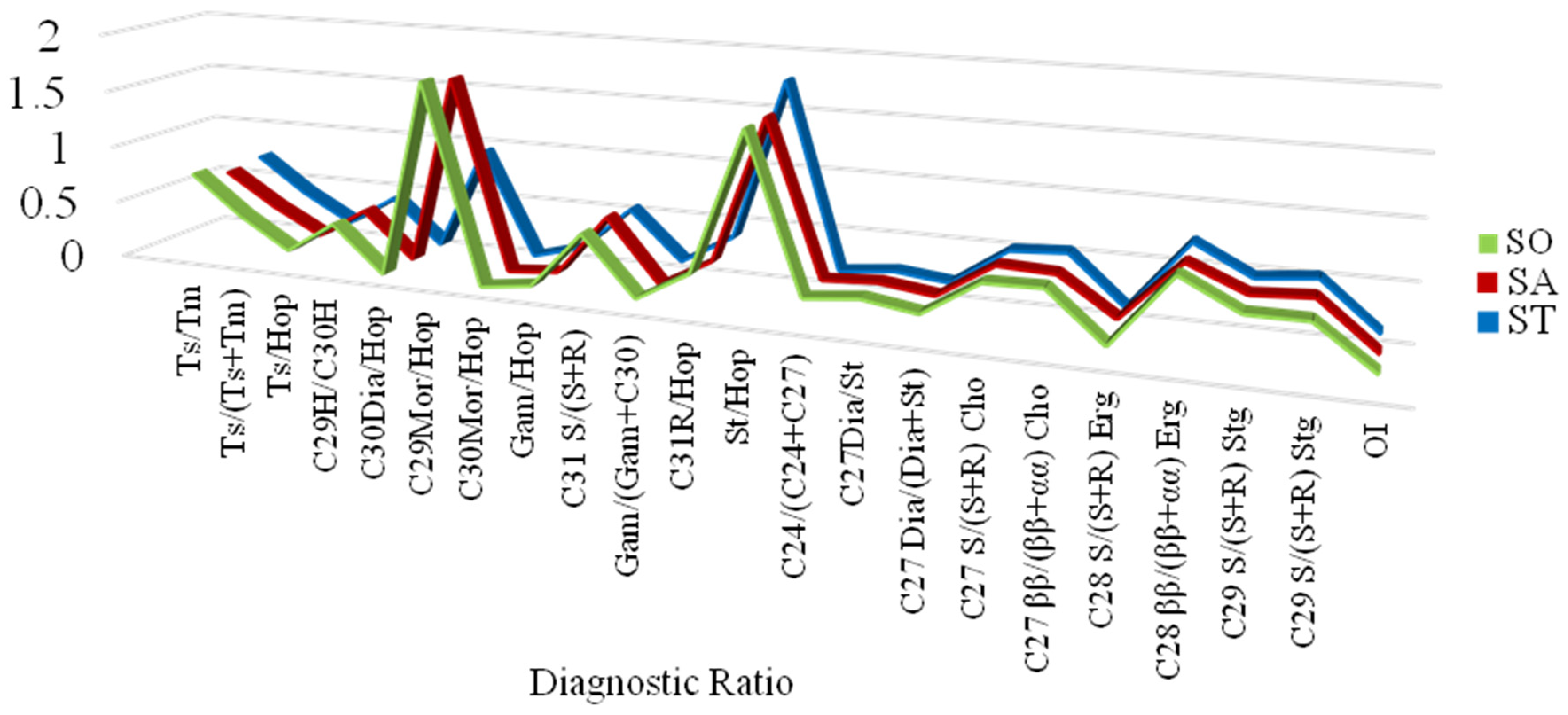
Terpane and sterane compounds are known to be resistant to degradation during periods of weathering and are defined as petroleum biomarkers. These can be divided into groups: tricyclic, tetracyclic, or pentacyclic (GC-MS monitoring in m/z 191) compounds for the terpane class, and compounds derived from sterols, typically found in eukaryotic organisms (GC-MS monitoring in m/z 217), for the sterane class [23]. Figures S1 and S2 show the GC-MS chromatographic profiles obtained in SIM mode for these two classes, respectively. When comparing the profiles of compounds belonging to the sterane class, it is possible to note that the concentrations remained practically unchanged when comparing the three samples, indicating greater resistance of these compounds to weathering processes. A subtle modification can be seen in Figure S1 between 36 and 37 min, where the intensity of the terpanes decreased, in comparison of the SA and ST samples with the SO sample. Table S2 presents the retention time, code, and the compounds that were used to calculate the diagnostic ratios presented in Figure 4.
Twenty-two diagnostic ratios of terpane and sterane compounds were calculated (Figure 4) to provide geochemical information about the oils related to depositional environment and thermal maturity [18]. The data obtained in the analyses indicated that the values of the diagnostic ratios for all samples were quite similar, which is reflected in the graphical representations in Figure 4, where the profiles overlap. This constancy suggests that, although the oils were subjected to natural weathering processes, such as biodegradation and photooxidation, the biomarker compounds that made up the ratios did not undergo significant changes.

3.2. ESI(+) FT-ICR MS

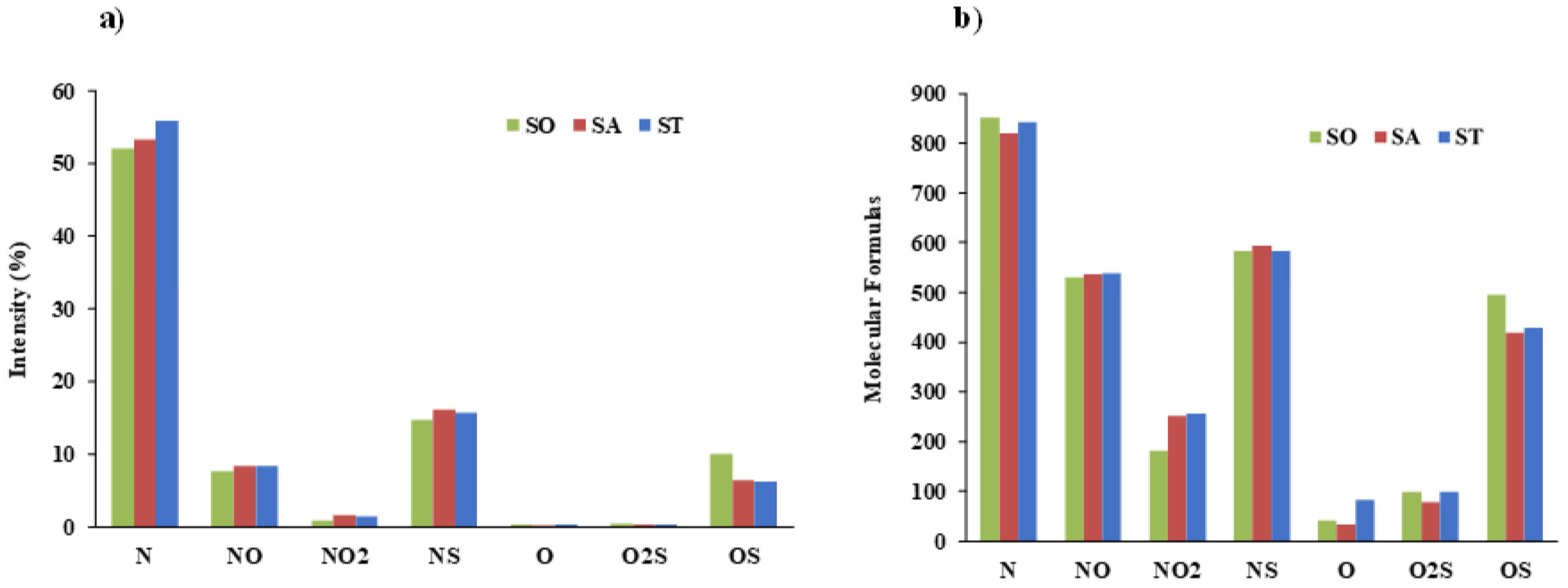
The FT-MS spectra were obtained for the three samples, as shown in Figure S3. We assigned 2784, 2734, and 2834 molecular formulas for SO, SA and ST samples, respectively, which were organized in seven classes as: N, NO, NO2, NS, O, O2S, OS (Figure 5; Table S3). The ESI(+) tends to preferentially ionize compounds that contain protophilic functions, that is, with a greater affinity to accept protons, which favors the ionization of molecules that have functional groups considered non-basic [4,24]. A rich composition of sulfur-containing classes was found, which is a chemical characteristic of oils from the 2019 spill in Brazil, as also was reported by Reddy et al. [25] and Pereira et al. [3].
The graphs presented in Figure 5a show that there was no significant variation in the intensities of major classes for the three samples. However, a difference was observed in the OS class, whose intensity was considerably higher in the SO sample compared to the other two samples, indicating that weathering or dissolution processes were more influential in this class, causing a decrease in the intensity of the classes in SA and ST samples. Regarding the graph of the quantity of molecular formulas (Figure 5b), we also found lower values for the OS class in samples SA and ST, which were the samples that suffered weathering processes in aquatic and terrestrial environments. In contrast, the NO2, NO, and NS classes showed an increase in the number of molecular formulas in the same samples. This pattern of variation can be explained by the combined action of weathering processes, such as photooxidation and biodegradation.
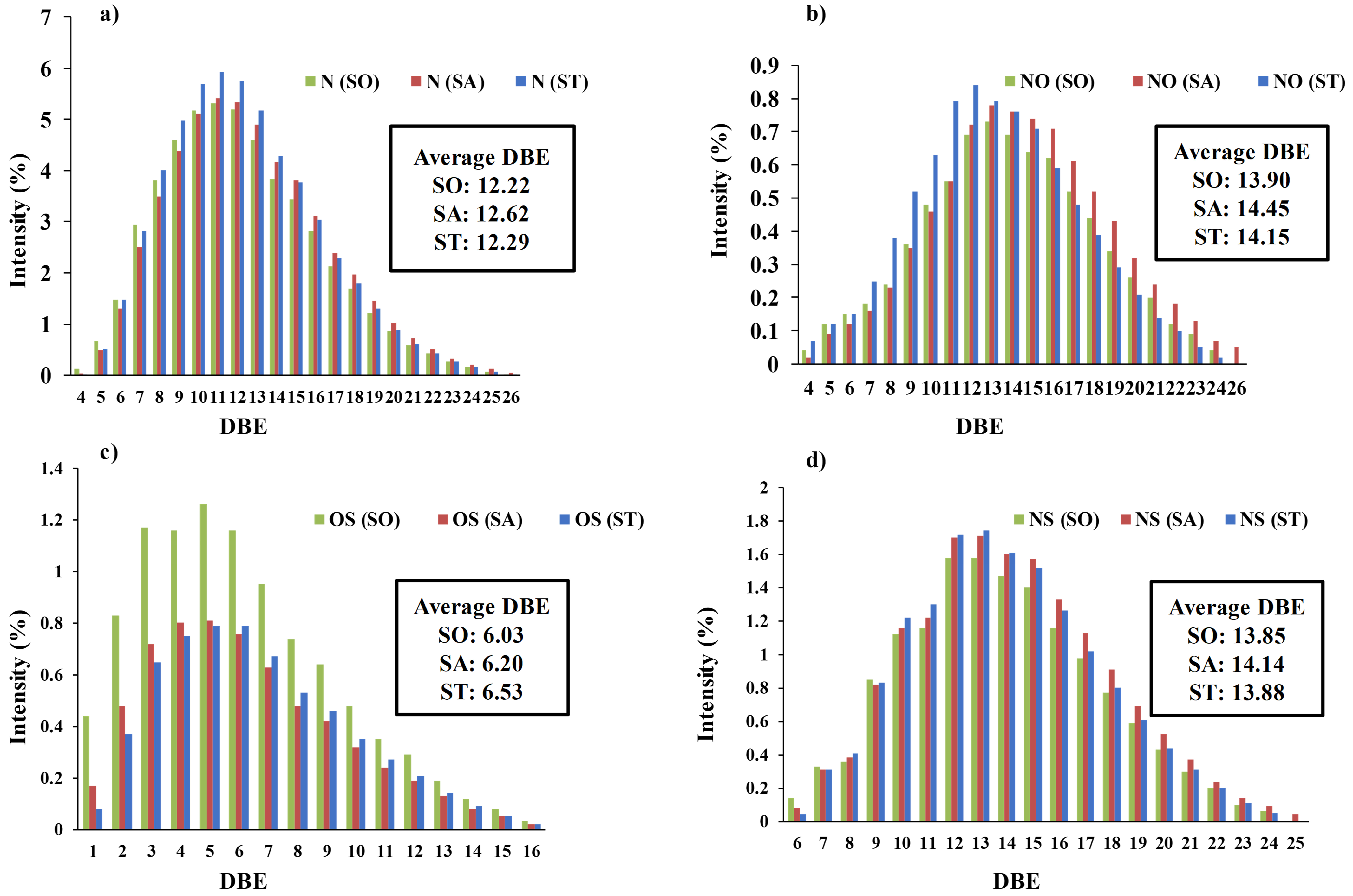
Figure 6 shows the DBE distribution for most classes with intensity identified by ESI(+), and the Average DBE values, which are an estimate of the average degree of unsaturation of the molecules of a given class of compounds [26]. For class N (Figure 6a), the compounds presented DBE values between 4 and 26. The presence of non-aromatic compounds (DBE 1–3) was absent, while the intensity of compounds with lower DBE values was greater for the SO sample, and lower for the SA and ST samples. The NO and NS classes (Figure 6b,d) demonstrated similar behavior, indicating the absence of non-aromatic compounds with DBE below 4.
The highest average DBE values for the N, NO, and NS classes were obtained for the ST and SA samples, especially the latter, which had the highest values. This behavior reflects the predominance of compounds with higher aromatic content in these samples, characteristic of higher DBE values, when compared to the initial SO spilled crude oil. This indicates that the weathering processes undergone by the SA and ST samples favored the aromatization of compounds. Note that the SA sample presented the highest intensities for DBE values > 14, compared with the other samples. For the OS class (Figure 6c), a more distinct behavior can be observed, where the intensity is significantly higher in the SO sample for all DBE values found (DBE = 1–16).

3.3. ESI(−) FT-ICR MS

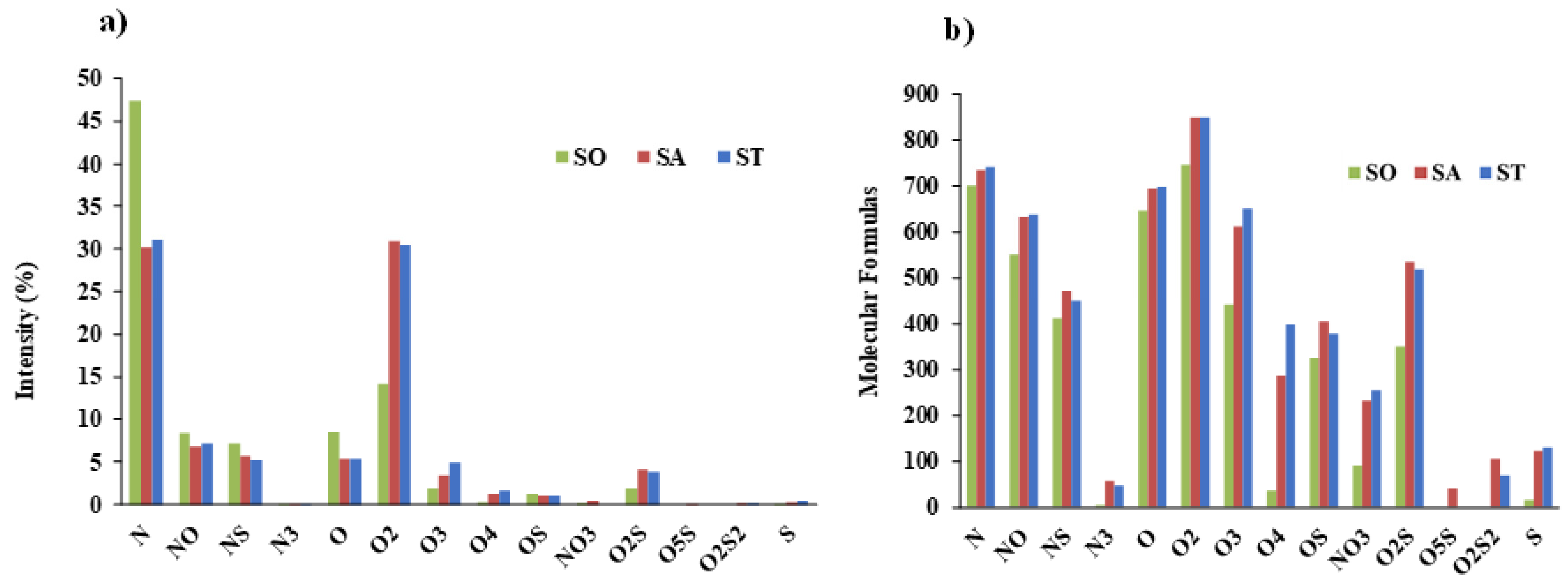
The FT-MS spectra were obtained for the three samples, as shown in Figure S4. We assigned 4325, 5784, and 6078 molecular formulas to the SO, SA, and ST samples, respectively, which were organized in fourteen classes: N, NO, NS, N3, O, O2, O3, O4, OS, NO3, O2S, O5S, O2S2, S, as can be seen in Figure 7 and Table S4. The molecules detected by ESI(−) were more susceptible to proton loss, in general, for the classes of phenols, carboxylic acids, pyrroles, and their derivatives [7].
The intensity of classes (Figure 7a) shows a much higher intensity for the N class, corresponding to non-basic nitrogen compounds, mainly in the SO sample. On the other hand, the oxygenated classes (O2, O3, O4) show greater intensity in the SA and ST samples, which can be attributed to the weathering processes suffered, with emphasis on photooxidation and biodegradation that produced oxygenated compounds. When we compare the class intensity versus number of molecular formulas graphs (Figure 7a versus Figure 7b), it is possible to observe that although the N and O2 classes exhibit visibly different intensities, all the molecular formulas of the samples presented similar values. In contrast, the O3, O4, and O2S classes varied greatly, indicating a greater quantity of molecular formulas in the SA and ST samples.
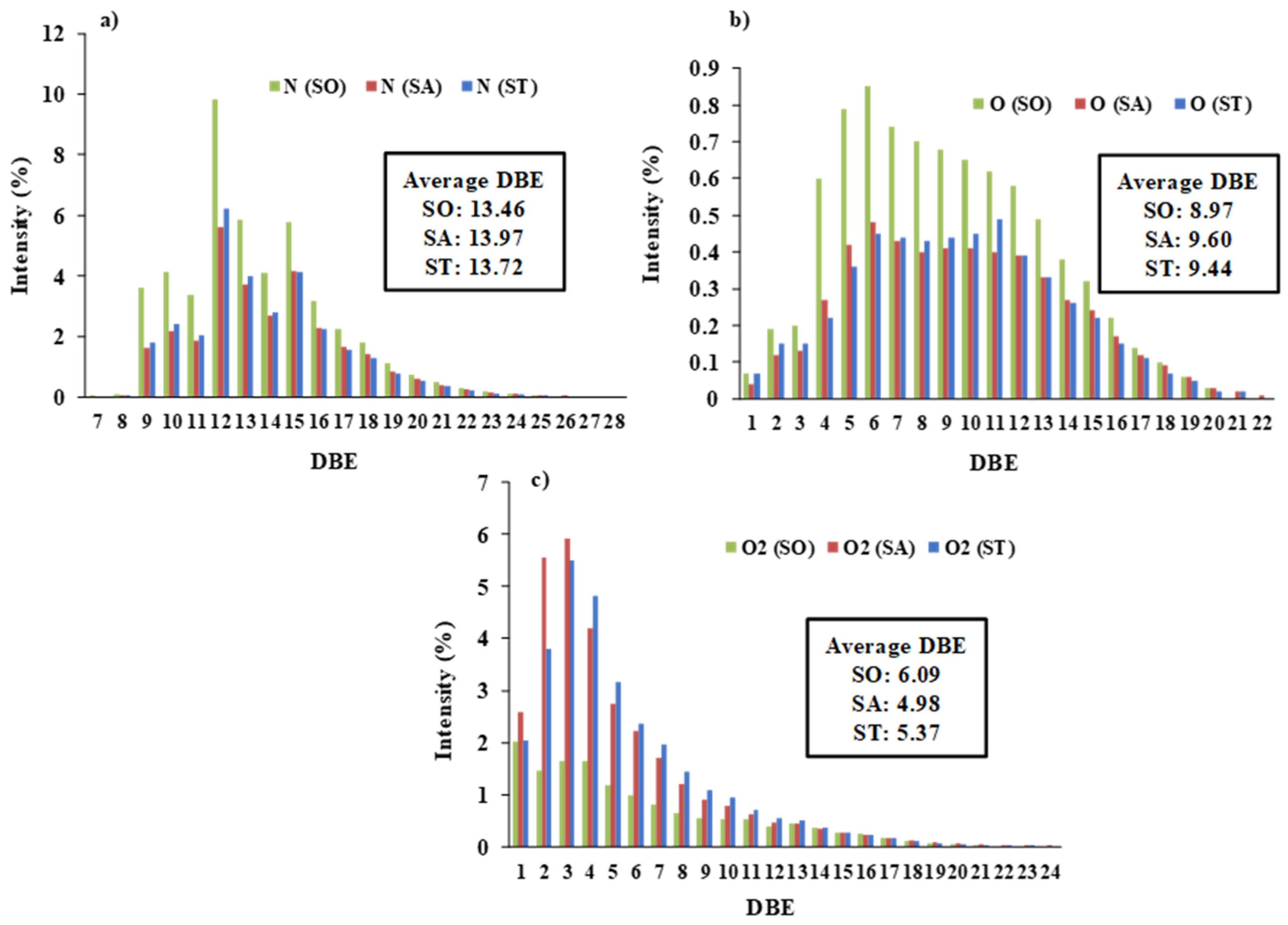
Figure 8 shows the DBE distribution for the molecules of N, O, and O2 classes. The N class (Figure 8a) exhibits a predominant intensity for the SO sample, where it is possible to highlight mainly the DBE values of 9, 12, and 15, which represent the carbazoles, benzocarbazoles, and dibenzocarbazoles compounds [27]. The O class (Figure 8b) also generally showed higher intensity for the SO sample at DBE values ranging from 1 to 18. On the other hand, class O2 (Figure 8c) illustrates the highest intensities for the SA and ST samples for all range of DBE when compared with the SO sample, which means that these samples had the highest content of fatty acids and alkylbenzoic carboxylic acids, as described by Qin et al. [26]. For N and O classes, the average DBE values were higher for the SA sample, which indicates a predominance of molecules with unsaturation and aromatic compounds.
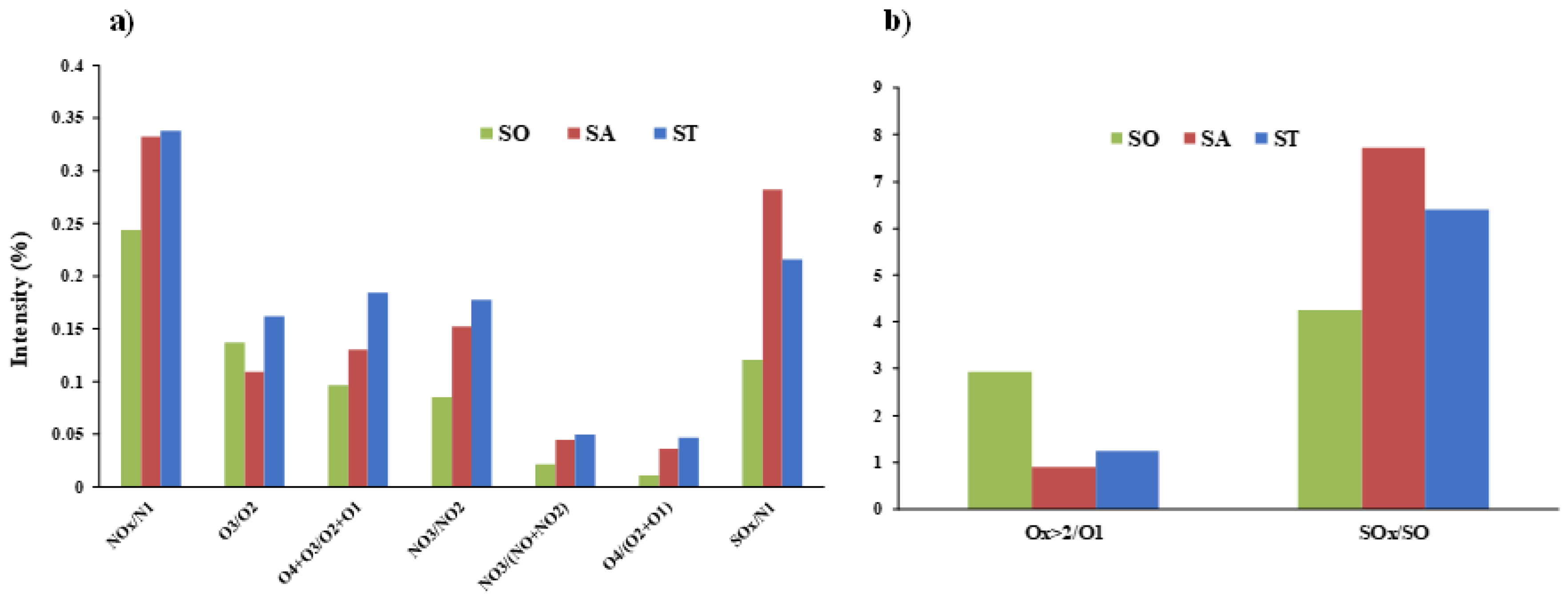
Figure 9 shows ratios calculated using heteroatom classes in order to assess the effects of the weathering processes on the three samples. The NOx/N1, O3/O2, (O4 + O3)/(O2 + O1), NO3/NO2, NO3/(NO + NO2), O4/(O2 + O1) (Figure 9a), and OX > 2/O1 (Figure 9b) ratios in Figure 9 are useful for assessing the levels of photooxidation in spilled oils [16]. These ratios indicate the degree of oxidation of nitrogenated and oxygenated compound classes, and higher values reflect the presence of highly oxygenated species, typically coming from processes mediated by the photooxidation process. Note that all of these ratios, the SA and ST samples presented the highest values, which means a greater degree of photooxidation suffered by the spilled oils due to a longer exposure time to sunlight in the aquatic and terrestrial environments, respectively, when compared with the SO sample, which had a shorter exposure time.
According to Nascimento et al. [16], the SOx/N1 (Figure 9a) and SOx/SO (Figure 9b) ratios are useful for identifying levels of biodegradation in oils, where SOx represent oxygenated sulfur compounds, classified based on the number of oxygen atoms from 1 to 4. In this context, the SA and ST samples showed the highest values for these ratios, in particular the SA, which indicates that they were affected by the weathering process, possibly due to a longer exposure time to microbial activity and photooxidation in the aquatic and terrestrial environment.
The results obtained from the ratios of heteroatom classes in Figure 9 reinforce their use as indicators of the environmental exposure time of spilled oils to understand the level of weathering processes suffered. For our study, the increase in ratios for classes with higher oxygenated contents was greater in the SA and ST samples, which were exposed to spills in the environment for a longer time. Further, this can be explained by the tropical region of the spill in Northeast Brazil, where the high intensity of solar radiation accelerated the photooxidation processes.

4. Conclusions

Geochemical results of spilled oils using GC-MS and FT-ICR MS analysis were obtained in order to characterize real samples that were subjected to different environmental exposure conditions associated with the largest spill that occurred on the coast of Northeast Brazil in 2019. The analysis allowed the identification of classical non-polar biomarkers and polar components, and the evaluation of relevant chemical changes in weathering processes under different environmental conditions.
The n-alkanes and isoprenoids profiles by GC-MS were the most affected by the weathering processes associated with the biodegradation and photooxidation that the spilled oil samples suffered as they were exposed in marine and terrestrial aquatic environments. For sterane and terpane biomarkers, similar values for diagnostic ratios were found, with reference to a common origin for the analyzed oil, despite having been subjected to different weathering processes, as expected since they are more recalcitrant compounds.
The basic and acid polar compounds were evaluated by ESI(±) FT-ICR MS which identified thousands of molecular formulas and dozens of classes, in special classes containing oxygen and sulfur, which were characteristic of the spilled oil from the disaster in Brazil, such as NS and OS classes by ESI(+). In ESI(−), the N and oxygenated classes (O2, O3, O4) were the most relevant classes that showed the weathering processes suffered by the samples. In addition, DBE and average DBE values were illustrated for certain classes in both ionization modes, revealing information about the unsaturation and aromaticity of these classes. The results indicated the presence of compounds with a higher degree of aromaticity in the SA and ST samples, and ratios of classes indicated that oils that had been impacted by the weathering processes, particularly related to photooxidation and biodegradation. It is important to mention that the main limitation of this study lies in the small number of samples, a restriction inherent to obtaining real samples of oil exposed to the environment over the long term. However, the scientific value of the data obtained is significant, as it is based on the analysis of unique and rare samples, providing information that cannot be replicated in laboratory experiments.
The combined use of GC-MS and FT-ICR MS proved to be a robust and effective means for the detailed chemical characterization of spilled oil, contributing significantly to understanding the effects of weathering processes and for forensic oil investigations. This study reinforces the importance of these techniques for future analyses in similar events, enabling the identification of oil sources and the assessment of environmental impacts.

Supplementary Materials

The following supporting information can be downloaded at: https://www.mdpi.com/article/10.3390/coasts5040049/s1. Figure S1: GC-MS for m/z 191 related to terpene class for the SO. SA and ST samples; Figure S2: GC-MS for m/z 217 related to sterane class for the SO. SA and ST samples; Figure S3: ESI(+) FT-ICR MS of the SO. SA. and ST samples; Figure S4: ESI(−) FT ICR-MS of the SO. SA. and ST samples; Table S1: n-alkanes and isoprenoids identified by GC-MS at SIM mode monitoring the m/z 85; Table S2: Sterane and terpane compounds identified by GC-MS at SIM mode monitoring the m/z 217 and 191; Table S3: Number of molecular formulas obtained by ESI(+) FT-ICR MS for the SO. SA. and ST samples; Table S4: Number of molecular formulas obtained by ESI(−) FT-ICR MS for the SO. SA. and ST samples.

Author Contributions

A.B.A.d.M.S. conceptualization, formal analysis, and investigation; M.G.A.P.: conceptualization and formal analysis; I.F.S.d.L.: formal analysis; I.R.d.S.: for-mal analysis; D.M.M.F.: formal analysis; B.G.V.: formal analysis; J.M.S.: conceptualization, funding acquisition, and supervision. All authors have read and agreed to the published version of the manuscript.

Funding

The authors declare that the work reported in this paper was funded by the Fundação de Amparo à Ciência e Tecnologia de Pernambuco—FACEPE (grant numbers APQ-0656-1.06/19; APQ-0036-1.06/20, and IBPG-1124-1.06/22).

Data Availability Statement

The original contributions presented in this study are included in the article/Supplementary Material. Further inquiries can be directed to the corresponding author.

Acknowledgments

The authors thank Natural Products Laboratory (LPNBio—UFRPE) for providing the GC-MS.

Conflicts of Interest

There are no relevant financial or non-financial competing interests to report.

References

  1. Pena, P.G.L.; Northcross, A.L.; de Lima, M.A.G.; de Cássia Franco Rêgo, R. The crude oil spill on the Brazilian coast in 2019: The question of public health emergency. Cad. Saúde Pública 2020, 36, e00231019. [Google Scholar] [CrossRef]
  2. Lourenço, R.A.; Combi, T.; Alexandre, M.; Sasaki, S.; Zanardi-Lamardo, E.; Yogui, G. Mysterious oil spill along Brazil’s northeast and southeast seaboard (2019–2020): Trying to find answers and filling data gaps. Mar. Pollut. Bull. 2020, 156, 111219. [Google Scholar] [CrossRef] [PubMed]
  3. Pereira, M.G.A.; Santos, I.R.; Lima, I.F.S.; Coutinho, M.E.B.; Carregosa, J.C.; Wisniewski, A.; Santos, J.M. Geochemical Assessment of Tar Balls That Arrived in 2022 along the Northeast Coast of Brazil and Their Relationship with the 2019 Oil Spill Disaster. Energy Fuels 2023, 37, 16388–16395. [Google Scholar] [CrossRef]
  4. Carreira, R.; Zanardi-Lamardo, E.; Massone, C.; Araujo, M.; Nobre, P.; Yogui, G. The mysterious oil spill in the northeastern coast of Brazil: Tracking offshore seawater and the need for improved vessel facilities. Ocean. Coast. Res. 2022, 70, e22007. [Google Scholar] [CrossRef]
  5. Carmichael, C.A.; Arey, J.S.; Graham, W.M.; Linn, J.L.; Lemkau, K.L.; Nelson, R.K.; Reddy, C.M. Floating oil-covered debris from Deepwater. Environ. Res. Lett. 2012, 7, 015301. [Google Scholar] [CrossRef]
  6. Reddy, C.M.; Arey, J.S.; Seewald, J.S.; Sylva, S.P.; Lemkau, K.L.; Nelson, R.K.; Carmichael, C.A.; McIntyre, C.P.; Fenwick, J.; Ventura, G.T.; et al. Composition and fate of gas and oil released to the water column during the Deepwater Horizon oil spill. Proc. Natl. Acad. Sci. USA 2012, 109, 20229–20234. [Google Scholar] [CrossRef] [PubMed]
  7. Santos, J.M.; Santos, F.M.L.; Eberlin, M.N.; Wisniewski, A. Advanced Aspects of Crude Oils Correlating Data of Classical Biomarkers and Mass Spectrometry Petroleomics. Energy Fuels 2017, 31, 1208–1217. [Google Scholar] [CrossRef]
  8. Aeppli, C.; Nelson, R.; Radović, J.; Carmichael, C.; Valentine, D.; Reddy, C. Recalcitrance and degradation of petroleum biomarkers upon abiotic and biotic natural weathering of Deepwater Horizon oil. Environ. Sci. Technol. 2014, 48, 6726–6734. [Google Scholar] [CrossRef]
  9. Lima, B.D.; Martins, L.; Pereira, V.; Franco, D.; dos Santos, I.; Santos, J.; Vaz, B.; Azevedo, D.; da Cruz, G. Weathering impacts on petroleum biomarker, aromatic, and polar compounds in the spilled oil at the northeast coast of Brazil over time. Mar. Pollut. Bull. 2023, 189, 114744. [Google Scholar] [CrossRef]
  10. Aguiar, D.V.A.; Lima, G.S.; Silva, R.R.; Medeiros Júnior, I.; Gomes, A.O.; Mendes, L.A.N.; Vaz, B.G. Comprehensive composition and comparison of acidic nitrogen- and oxygen-containing compounds from pre- and post-salt Brazilian crude oil samples by ESI(−) FT-ICR MS. Fuel 2022, 326, 125129. [Google Scholar] [CrossRef]
  11. Carregosa, J.C.; Santos, I.R.D.; De Sá, M.S.; Santos, J.M.; Wisniewski, A. Multiple reaction monitoring tool applied in the geochemical investigation of a mysterious oil spill in northeast Brazil. An. Acad. Bras. Ciências 2021, 93, e20210171. [Google Scholar] [CrossRef] [PubMed]
  12. Keramea, P.; Spanoudaki, K.; Zodiatis, G.; Gikas, G.; Sylaios, G. Oil spill modeling: A critical review on current trends, perspectives, and challenges. J. Mar. Sci. Eng. 2021, 9, 181. [Google Scholar] [CrossRef]
  13. dos Santos, I.; Lucena, P.; Moraes, A.; Carregosa, J.; Santos, T.; Wisniewski, A.; Santos, J. Biomarkers Profile of the Mysterious 2019 Oil Spill on the Northeast Coast of Brazil and Discrimination from Unreported Events. J. Braz. Chem. Soc. 2023, 34, 1698–1706. [Google Scholar] [CrossRef]
  14. Elumalai, P.; Parthipan, P.; Karthikeyan, O.P.; Rajasekar, A. Enzyme-mediated biodegradation of long-chain n-alkanes (C32 and C40) by thermophilic bacteria. 3 Biotech 2017, 7, 116. [Google Scholar] [CrossRef]
  15. Lima, B.D.; Martins, L.L.; de Souza, E.S.; Pudenzi, M.A.; da Cruz, G.F. Monitoring chemical compositional changes of simulated spilled Brazilian oils under tropical climate conditions by multiple analytical techniques. Mar. Pollut. Bull. 2021, 164, 111985. [Google Scholar] [CrossRef]
  16. Nascimento, A.; Azevedo, R.; Pereira, M.; Franco, D.; Vaz, B.; Oliveira, A.; Santos, J.; Cavalcante, R.; Martins, L. Forensic environmental geochemistry to reveal the extent, characteristics, and fate of waxy tarballs spilled over the northeast coast of Brazil in 2022. Mar. Environ. Res. 2025, 204, 106878. [Google Scholar] [CrossRef]
  17. De, D.; Azevedo, A.; Freitas Da Silva, T.; Bastos Da Silva, D. Avaliação geoquímica de biomarcadores ocluídos em estruturas asfaltênicas. Química Nova 2009, 32, 1770–1776. [Google Scholar] [CrossRef]
  18. Peters, K.E.; Walters, C.C.; Moldowan, J.M. The Biomarker Guide; Cambridge University Press: Cambridge, UK, 2005. [Google Scholar] [CrossRef]
  19. Syakti, A.D. Molecular diagnostic ratios to assess the apportionment of petroleum hydrocarbons contaminantion in marine sediment. Molekul 2016, 11, 208. [Google Scholar] [CrossRef]
  20. Bray, E.E.; Evans, E.D. Distribution of n-paraffins as a clue to recognition of source beds. Geochim. Cosmochim. Acta 1961, 22, 2–15. [Google Scholar] [CrossRef]
  21. Meyers, P.A. Organic Geochemical Proxies of Paleoceanographic, Paleolimnologic, and Paleoclimatic Processes. Org. Geochem. 1997, 27, 213–250. [Google Scholar] [CrossRef]
  22. Kucuksezgin, F.; Pazi, I.; Gonul, L.T. Marine organic pollutants of the Eastern Aegean: Aliphatic and polycyclic aromatic hydrocarbons in Candarli Gulf surficial sediments. Mar. Pollut. Bull. 2012, 64, 2569–2575. [Google Scholar] [CrossRef]
  23. Zhang, X.; Shen, B.; Yang, J.; Sun, W.; Hou, D. Evolution characteristics of maturity-related sterane and terpane biomarker parameters during hydrothermal experiments in a semi-open system under geological constraint. J. Pet. Sci. Eng. 2021, 201, 108412. [Google Scholar] [CrossRef]
  24. Rocha, Y.S.; Pereira, R.C.L.; Mendonça Filho, J.G. Geochemical characterization of lacustrine and marine oils from off-shore Brazilian sedimentary basins using negative-ion electrospray Fourier transform ion cyclotron resonance mass spectrometry (ESI FTICR-MS). Org. Geochem. 2018, 124, 29–45. [Google Scholar] [CrossRef]
  25. Reddy, C.; Nelson, R.; Hanke, U.; Cui, X.; Summons, R.; Valentine, D.; Rodgers, R.; Chacón-Patiño, M.; Niles, S.; Teixeira, C.; et al. Synergy of Analytical Approaches Enables a Robust Assessment of the Brazil Mystery Oil Spill. Energy Fuels 2022, 36, 13688–13704. [Google Scholar] [CrossRef]
  26. Qin, Z.; Wang, Y.; Zhang, W.; Cheng, Z.; Chen, J.; Chen, Y.; Huang, H. Comprehensive Molecular Characterization of Organic Compounds in Petroleum-Contaminated Soils from the Changqing Oilfield by FT-ICR MS and GC-MS. Energy Fuels 2024, 38, 18512–18520. [Google Scholar] [CrossRef]
  27. Pudenzi, M.A.; Eberlin, M.N. Assessing Relative Electrospray Ionization, Atmospheric Pressure Photoionization, Atmospheric Pressure Chemical Ionization, and Atmospheric Pressure Photo- and Chemical Ionization Efficiencies in Mass Spectrometry Petroleomic Analysis via Pools and Pairs of Selected Polar Compound Standards. Energy Fuels 2016, 30, 7125–7133. [Google Scholar] [CrossRef]
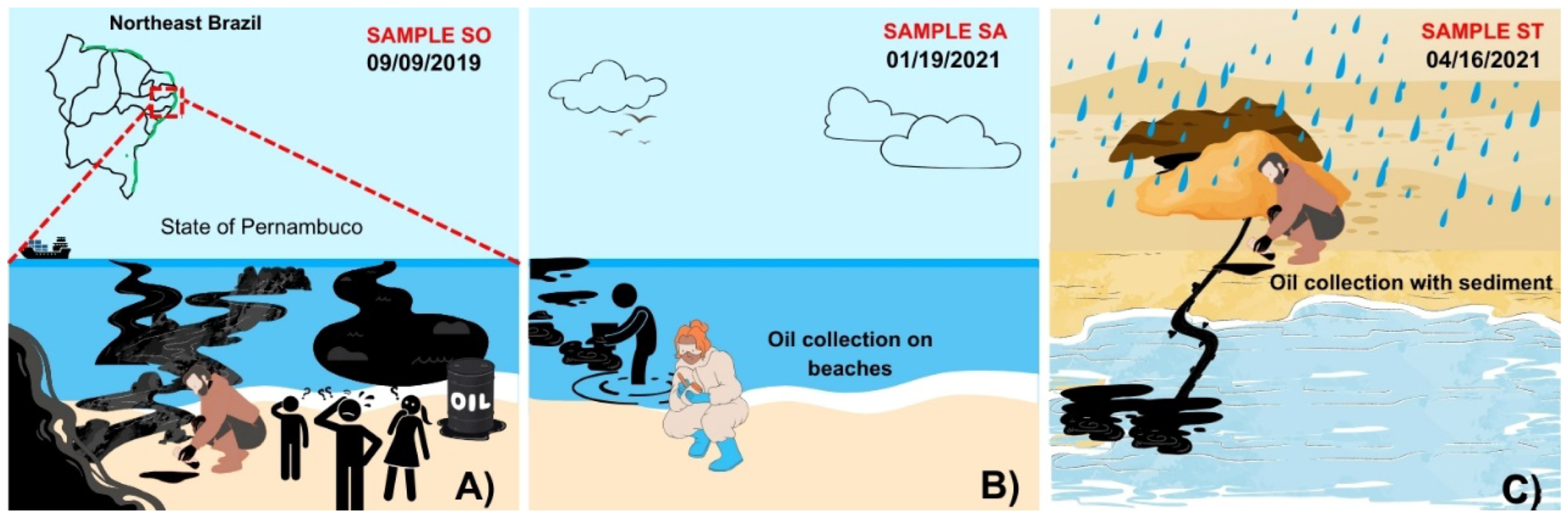
Figure 1. Three spilled oils collected as: (A) oil reaching the beaches of Pernambuco state in September 2019; (B) the oil reappeared on the beaches in January 2021; and (C) spilled oil that remained on the ground for 1 year and 7 months collected in April 2021. Sample coordinates: SO: 8°18′56″ S; 34°56′51″ W; SA: 8°30′87.4″ S; 34°94′55.2″ W, and ST: 8°17′55.1″ S; 34°57′11.6″ W.
Coasts 05 00049 g001
Figure 2. GC-MS profile in SIM mode of m/z 85 for distributions of n-alkanes (from n-C13 to n-C40), and the pristane (Pr) and phytane (Ph) isoprenoids.
Coasts 05 00049 g002
Figure 3. Radar plots comparing the diagnostic rates of n-alkanes and isoprenoids for SO, SA and ST samples obtained by GC-MS analyses.
Coasts 05 00049 g003
Figure 4. Diagnostic ratios of the petroleum biomarkers of terpane and sterane compounds identified for the SO, SA, and ST samples by GC-MS analyses.
Coasts 05 00049 g004
Figure 5. Class distribution in terms of intensity (a) and number of molecular formulas (b) obtained by ESI(+) FT-ICR MS for the SO, SA, and ST samples.
Coasts 05 00049 g005
Figure 6. DBE distribution and Average DBE values for N (a), NO (b), OS (c), and NS (d) classes for SO, SA, and ST samples obtained by ESI(+) FT-ICR MS.
Coasts 05 00049 g006
Figure 7. Class distribution in terms of intensity (a) and number of molecular formulas (b) obtained by ESI(−) FT-ICR MS for the SO, SA, and ST samples.
Coasts 05 00049 g007
Figure 8. DBE distribution and Average DBE values for N (a), O (b), and O2 (c) classes for SO, SA, and ST samples obtained by ESI(−) FT-ICR MS.
Coasts 05 00049 g008
Figure 9. Graphs of NOx/N1, O3/O2, (O4 + O3)/(O2 + O1), NO3/NO2, NO3/(NO + NO2), O4/(O2 + O1) and SOx/N1 (a), Ox>2/O1 and SOx/SO (b) ratios for heteroatom classes calculated through ESI(−) FT ICR-MS data.
Coasts 05 00049 g009
Disclaimer/Publisher’s Note: The statements, opinions and data contained in all publications are solely those of the individual author(s) and contributor(s) and not of MDPI and/or the editor(s). MDPI and/or the editor(s) disclaim responsibility for any injury to people or property resulting from any ideas, methods, instructions or products referred to in the content.