You are currently viewing a new version of our website. To view the old version click .
Knowledge
  • Article
  • Open Access

9 November 2023

Cognitive Factors Affecting the Manufacturing Optimization Skills of Rural Indian BPO Workers

,
and
1
School of Computing, Engineering and the Built Environment, Edinburgh Napier University, Edinburgh EH10 5DT, UK
2
School of Engineering, The University of Edinburgh, Edinburgh EH9 3FB, UK
3
Supply Chain Management Centre, Indian Institute of Management, Bangalore 560076, India
*
Author to whom correspondence should be addressed.

Abstract

Crowdsourcing offers on-demand access to large numbers of human workers to implement new forms of human–computer collaborative functionalities that can be seamlessly integrated into advanced software and algorithms. However, crowdsourcing tasks are primarily undertaken by urban rather than rural workers. To enable the development of skilled rural employment, this research aims to assess rural crowdsourcing workers’ spatial reasoning and creative abilities and their abilities to solve irregular strip packing problems associated with the manufacture of sheet materials. The study conducted experiments and data collection with 140 rural Business Processing Outsourcing (BPO) workers located in six states of India. The statistical analyses of the data collected from seven rural BPO firms (140 rural workers) reveal that rural workers can achieve a 2D packing efficiency that is up to 8% higher than that of commercial algorithm outcomes. The results suggest that rural crowdsourcing can lead to effective job creation, skill development, and, for a modest cost, it can support industries that employ CAD/CAM systems to generate geometric data for common manufacturing processes.

1. Introduction

Digital innovation through crowdsourcing creates new opportunities to bridge the widening urban–rural employment gap. Crowdsourcing has been loosely defined as “getting a job traditionally performed by a designated agent and contracting it out to an undefined, generally large group of people in an open call” [1]. Even though crowdsourcing is rapidly becoming a common tool for various business processes, the largest group of people benefiting from the $1–2 billion earned via crowdsourced work [2] seems to be those in urban areas with above-average incomes in both developing and developed countries [3]. For example, Khanna et al. [3] reported that less than 3% of India-based crowd workers fall into the demographic of low-income workers. Although several researchers have investigated crowdsourcing as a tool for innovation and process improvement, most investigations have focused exclusively on developed countries. Frequently overlooked, however, is the potential for rural crowdsourcing to create new employment in areas where social exclusion and poverty prevent many workers in developing countries from participating in and accessing these new jobs.
As Kling [4], reminded us, the consequences of Information and Communication Technology (ICT) are not universally positive. ICT can lead to unemployment, heightened economic disparity, and labor and financial market instability, among other social challenges. In this research, we hypothesize that large crowdsourcing tasks, especially those requiring spatial reasoning and creative abilities, could be outsourced to rural workers. This would pave the way for access to knowledge and skill enrichment tasks in these areas. Such spatial-reasoning-oriented tasks could offer skilled employment opportunities for rural workers. The global market for Computer Aided Manufacturing (CAM) systems, which currently handle many industrial spatial reasoning tasks, is projected to be around $5.4 billion in 2028 [5]. Thus, there is no scarcity of data and tasks. Nevertheless, the foundational skill requirements, namely spatial reasoning and creativity, must be evaluated to determine the feasibility of using rural workers for spatial reasoning tasks.

1.1. Aim and Objectives

This research was motivated by the hypothesis that large numbers of industrial optimization tasks involving spatial reasoning (such as packing, packaging, feature extraction, etc.) can be outsourced as human intelligence tasks to rural workers in locations far from the manufacturing industry. Implicit in this vision is an assumption that humans, regardless of their educational or social background, are adept at manipulating and reasoning about shapes. Therefore, the aim of the research is to investigate the veracity of this hypothesis by assessing whether a correlation exists between workers’ creativity and spatial reasoning skills and their performance in 2D irregular strip packing problems.
The results have both commercial value and academic novelty. Commercially, establishing the influences on work performance will help to develop customized training to enhance productivity (i.e., improved efficiency results in less time). Academically, the data will fill a knowledge gap, because although a significant body of literature quantifies the spatial reasoning abilities and creativity of individuals in Europe and North America [6], much less is known about the skills of rural Indian workers with basic IT skills.
Since more than 100 rural business process outsourcing (BPO) units are estimated to be operating in India [7] and carrying out tasks (such as text or data entry), these units can be used to provide access to rural workers to assess their spatial and creative abilities. To answer the research aim with regard to the BPO centers, the following objectives where identified:
  • Quantify workers’ performance in 2D manufacturing packing problems,
  • Quantify the 2D spatial reasoning abilities of the same workers,
  • Quantify the creative abilities of the same workers, and
  • Analyze the resulting data for correlations.
To meet these objectives, 140 rural workers were assessed at seven rural Business Process Outsourcing (BPO) firms across India using the Multidimensional Aptitude Battery (MAB) for 2D spatial mental rotation, the Torrance Tests of Creative Thinking (TTCT) for creativity assessment, and six 2D irregular strip packing problems to assess workers’ abilities to solve spatial manufacturing problems. The positive results from this research could be used to build the business case for expanding blue-collar occupation jobs (i.e., primarily production and service jobs) in rural areas at a significantly faster rate. Furthermore, the results will motivate the private sector to transfer highly skillful crowdsourcing tasks to rural areas to develop infrastructure and a quality rural workforce.
The following sections of this paper present related literature on challenges in solving 2D irregular strip packing problems, spatial reasoning and creativity, research questions, and the methodology followed when assessing the spatial rotation ability, creativity, and manufacturing tasks, as well as the analyzed results, discussion, and conclusions.

3. Research Questions and Methodology

The following research questions are studied and answered in this paper to understand rural BPO workers’ abilities to participate in the solving of potential spatial reasoning manufacturing crowdsourcing tasks:
  • How well do rural workers solve 2D packing tasks compared to commercial baseline results?
  • Are there associations between 2D packing efficiency and spatial and creativity skills?
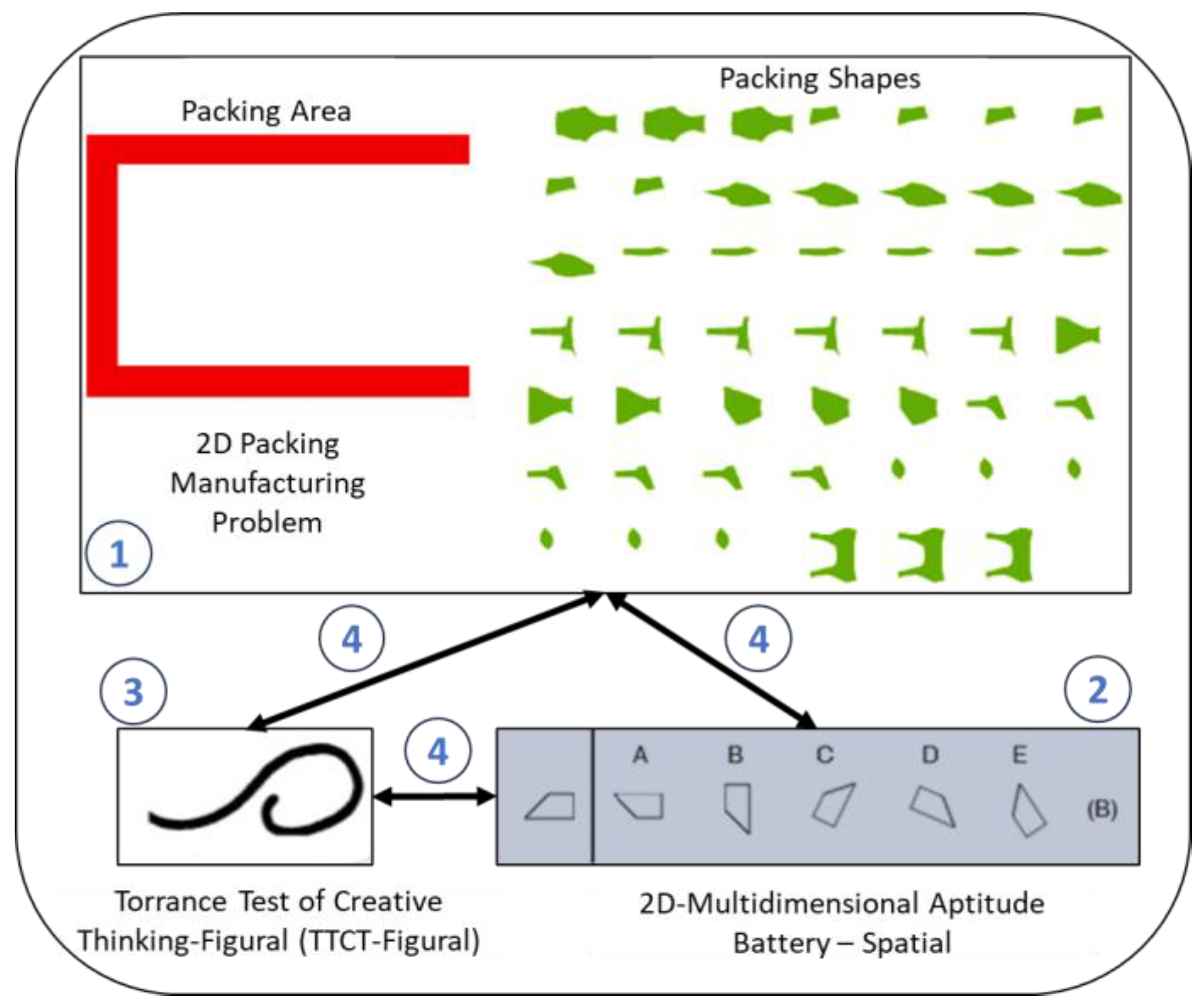
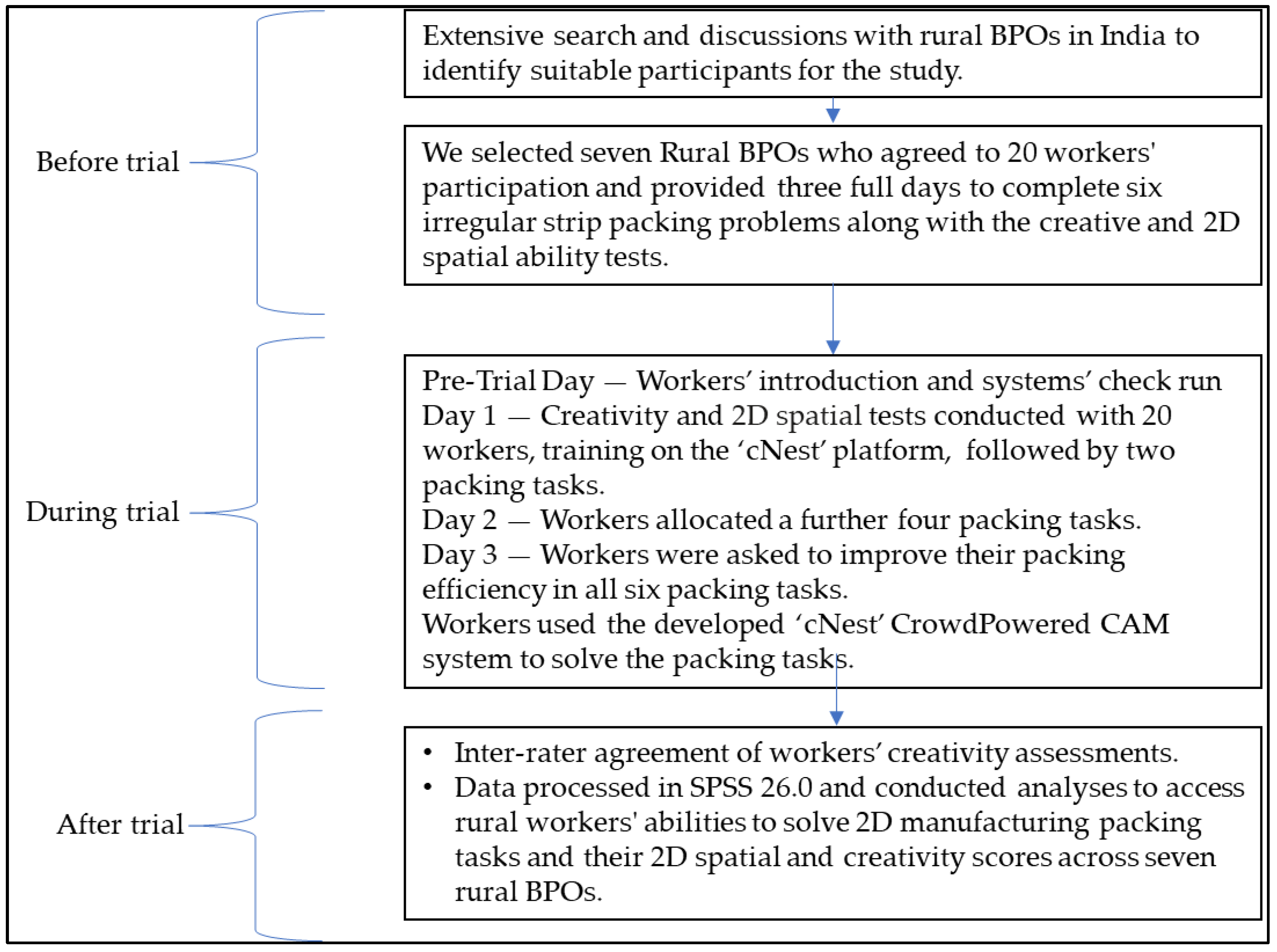
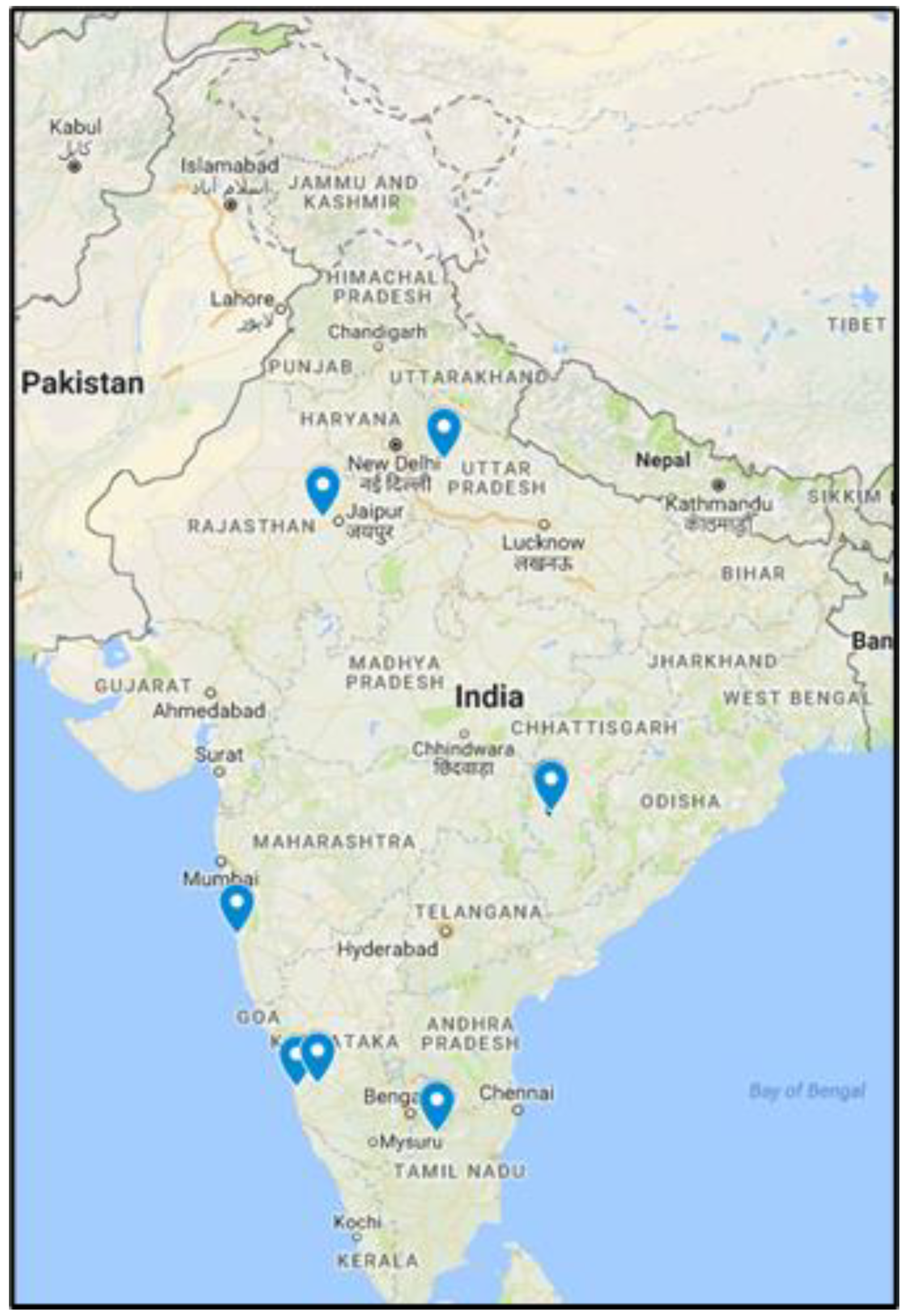
Figure 2 illustrates the research questions schematically. To facilitate the study, we selected seven rural BPO firms located in different states of India to obtain the comprehensive demographic coverage of rural workers. Figure 3 illustrates the main phases of the research methodologies (i.e., before, during, and after the trials). The chosen firms’ locations are shown in Figure 4. Researchers agreed to anonymity for these commercial operations, so the exact locations of these firms are not presented. Since these tests were conducted in a real-time business environment, the choice of rural workers to participate in this study was controlled by the BPO firm. Twenty rural workers participated in each firm, so 140 rural BPO workers were assessed.
Figure 2. Schematic of the research study’s main components (The annotated numbers 1 to 4 represent the four research objectives mentioned in Section 1.1). The text (B) in the 2D-Multidiensional aptitude test represents the correct answer out of five choices.
Figure 3. Flowchart to detail the steps carried out at the different research stages.
Figure 4. Locations of the seven rural BPO firms used in the study.
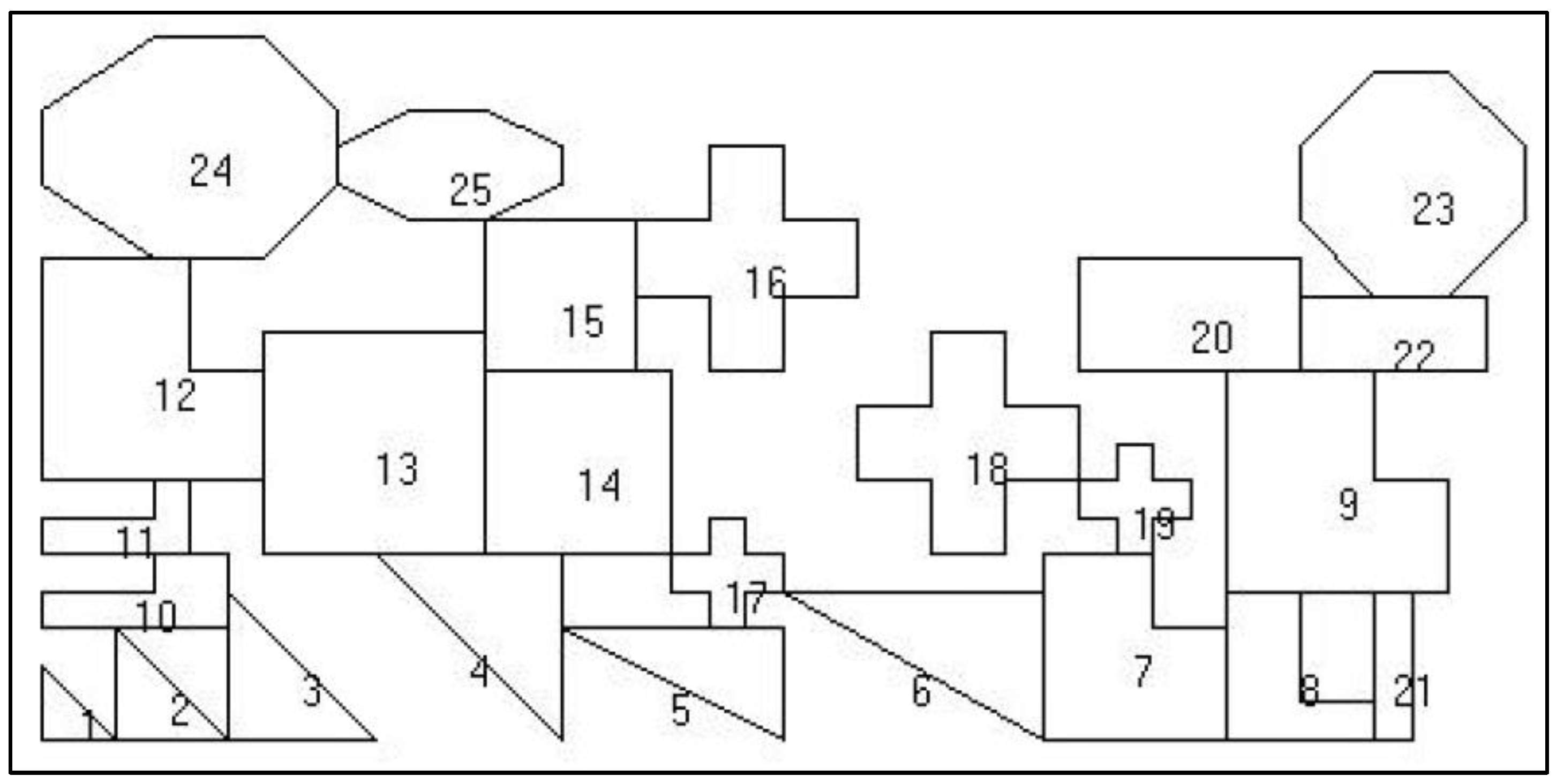
Six benchmark datasets downloaded from the ESICUP website [13] (i.e., Albano, Dagli, Fu, Jakobs1, Jakobs2 and Mao) were used to assess the performance of rural workers experimentally. Originating in the textile industry, the number of items packed in Albano, Dagli, Fu, Jakobs1, Jakobs2 and Mao are 24, 30, 12, 25, 25, and 20, respectively. A CrowdPowered CAM system known as “cNest” was designed and implemented. This system presents workers with a set of 2D shapes which have to be packed within a defined rectangular area using the minimum overall length. The full details of the software used for the study are presented in [12].
The 2D-Multidimensional Aptitude Battery (MAB) was used to assess the spatial rotation ability. The MAB, developed by Jackson [31], is a paper–pencil-based test for measuring 2D spatial intelligence. The test aims to see how well rural workers can visualize the rotation of two-dimensional objects within a given time frame. A sample question is provided in Figure 2. Each problem in this test consists of one figure on the left of a vertical line and five figures on the right (A, B, C, D, E). The workers have to decide which of the five figures on the right is the same as the figure on the left. In Figure 2, picture “B” can look like the figure on the left by “turning” it into a different position on the page. Pictures A, C, D, and E are not the same. They cannot be made to look like the figure on the left by turning them on the page. They would have to be flipped over. A score of “1” is given for a correct answer; otherwise, a score of “0” is given. The test comprises 50 questions to be answered in seven minutes. The maximum score is 50. The test–retest reliability for separately timed test administrations showed a value for performance of 0.96 [32]. This test was chosen because it is easier to understand for people who are not experienced with spatial rotation.
This study utilized the figural Torrance Tests of Creativity Thinking (TTCT) to assess creativity [33]. The Torrance Tests of Creative Thinking (TTCT) is one of the most widely used means for quantifying human creativity and has the following strengths:
  • Over 40 years, longitudinal studies have been conducted, showing its predictive validity.
  • The TTCT figural suits people with limited language proficiency (non-English speakers) [34].
  • It is easy to use because it is administered in a paper-and-pencil format.
The TTCT is grouped into various subtests, including verbal and figural tests. In this research, we used figural tests (Form A) to study the correlation between spatial ability and creativity. These figural tests invite workers to think of ideas (the most interesting and unusual ideas) and to draw them together in various ways. There are three activities: picture construction and two picture completions using pairs of straight lines. The total time taken to complete this test is 30 min (10 min for each activity). It uses three picture-based exercises to assess five mental characteristics: fluency, resistance to premature closure, elaboration, the abstractness of titles, and originality. The definitions of the mental characteristics are given below:
  • Fluency: The number of ideas a person expresses through interpretable responses that use the stimulus meaningfully—how many ideas are there in total?
  • Originality: The statistical infrequency and unusualness of the response—how different is the idea from others?
  • Elaboration: The imagination and exposition of detail is a function of the creative ability, appropriately labelled elaboration—how detailed is the drawing?
  • Abstractness of titles: Producing good titles involves synthesizing and organizing thinking processes—how deep and rich can the viewer see the picture?
  • Resistance to premature closure: The ability to keep open and delay closure long enough to make the mental leap that makes original ideas possible.
The total creativity score was calculated by summing the scores of the above five factors. Two people scored the figural TTCT using streamlined scoring schema [33] for inter-rater agreement. The following section analyzed the assessment test data and answered the research questions.

4. Research Results

4.1. Rural Workers’ Abilities to Solve 2D Manufacturing Packing Tasks

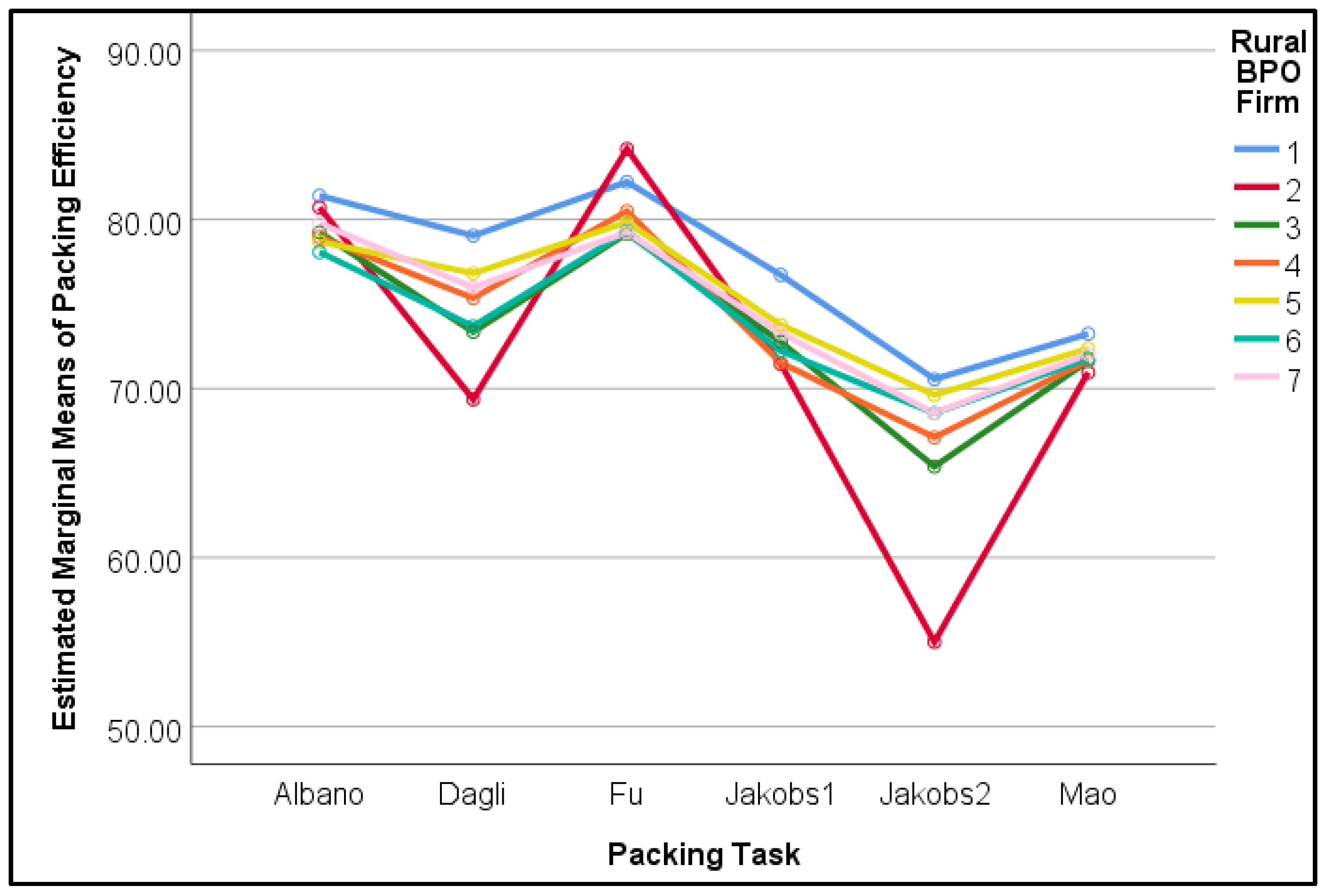
Figure 4 shows the marginal mean packing efficiency achieved by rural workers in seven BPO firms across six tasks. A two-way (7 × 6) ANOVA was used to determine whether there were main and interaction effects between seven rural BPO firms and six packing tasks on packing efficiency. The analysis shows that there were statistically significant main effects of the BPO firms ( F 6,762 = 5.822 , p < 0.0005 , p a r t i a l   η 2 = 0.044 ) , packing tasks ( F 5,762 = 87.059 , p < 0.0005 , p a r t i a l   η 2 = 0.364 ) , and interaction between packing tasks and rural BPO firms for the packing efficiency scores F 30,762 = 1.680 , p = 0.013 , p a r t i a l   η 2 = 0.062 . Among the packing tasks, the univariate tests show that only the packing efficiency scores for the Dagli task ( F 6,762 = 4.204 , p < 0.0005 , p a r t i a l   η 2 = 0.032 ) and Jakobs2 task F 6,762 = 5.563 , p < 0.0005 , p a r t i a l   η 2 = 0.042 were statistically different between the rural BPO firms. These results are observed in the plot of the estimated marginal means of the packing efficiency of packing tasks for all seven rural BPO firms (Figure 5).
Figure 5. Estimated marginal means of the packing efficiency in packing tasks for all seven rural BPO firms.
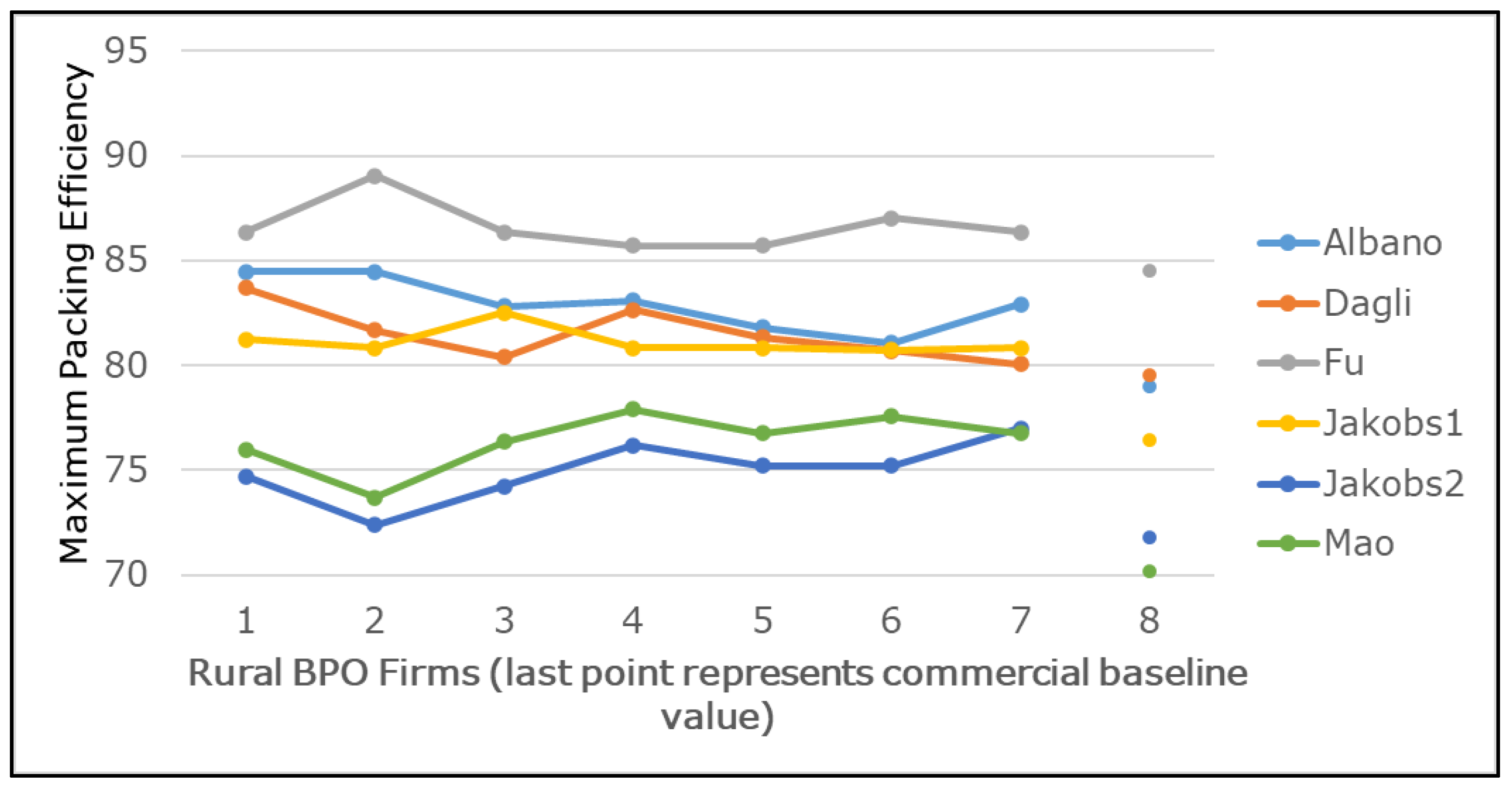
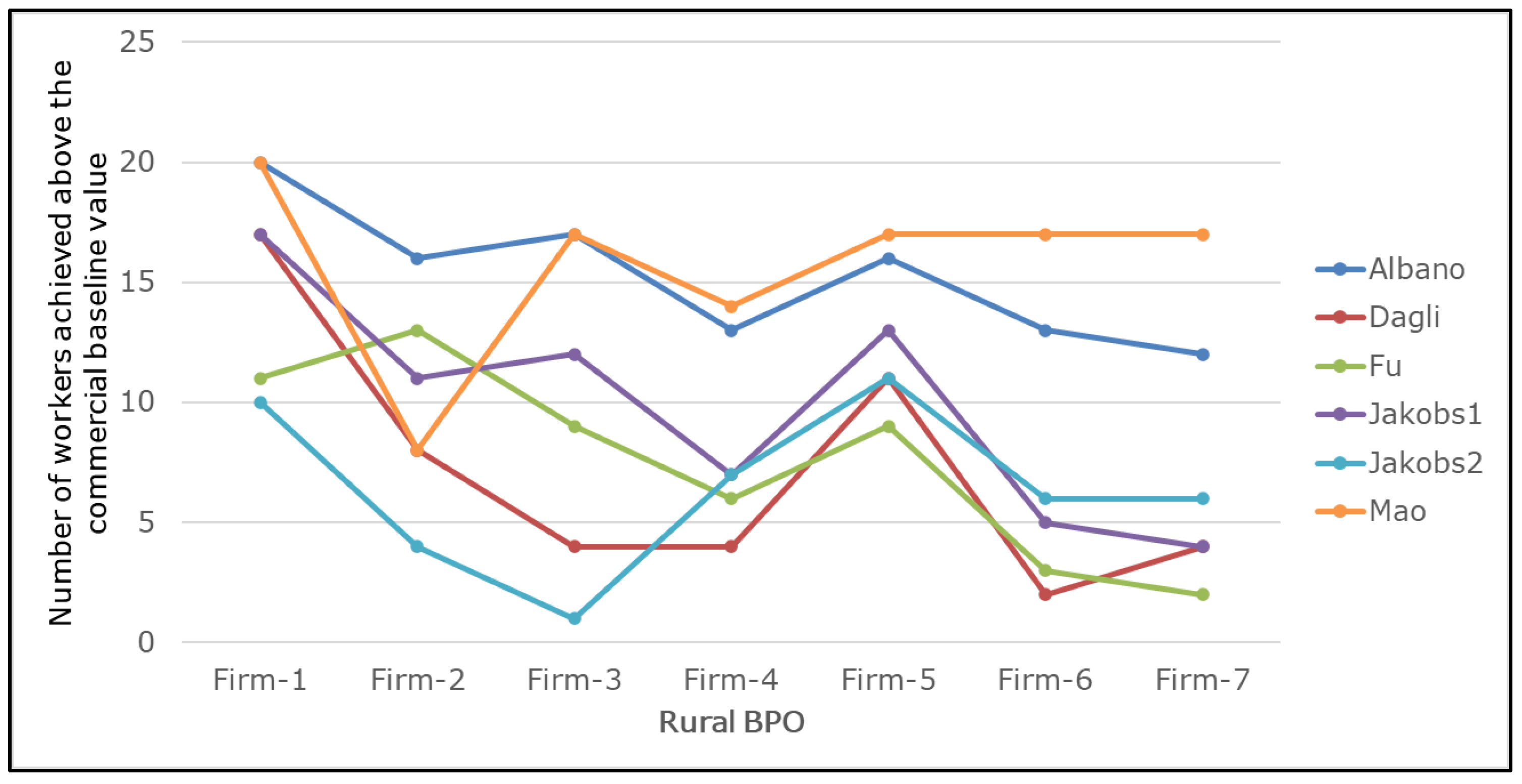
Figure 6 compares the maximum packing efficiency scores for all tasks across rural BPO firms and the commercial baseline value [12]. It shows that all of the rural BPO firms achieved higher packing efficiencies for all tasks than the commercial baseline values. The maximum efficiency improvements for the Albano, Dagli, Fu, Jakobs1, Jakobs2, and Mao packing tasks were 5.49, 4.2, 4.6, 6.13, 5.25, and 7.77%, respectively. Figure 7 portrays the number of workers who achieved scores above the commercial baseline value across all seven rural BPO firms and six packing tasks. The figure shows that, on average, more than 75% of the workers achieved better performances for the Albano and Mao tasks in all the BPO firms. However, in every BPO studied, this average percentage was less than 50% for all other tasks.
Figure 6. Comparison of the maximum packing efficiency scores across rural BPO firms and commercial algorithm baseline values.
Figure 7. Number of workers who achieved above the commercial baseline value across all seven rural BPO firms and six packing tasks.

4.2. Reliability of the TTCT Scoring and Creativity Scores of Rural BPO Workers

Since the scoring of the TTCT test is subjective, the inter-rater agreement is identified by correlating the two researchers’ scores. Table 1 lists the identified correlations between the five measures of creativity. Intraclass correlation coefficients were calculated to check the magnitudes of the inter-rater scores. The inter-rater agreement and the significant values are high, except for the originality and the resistance to premature closure measures.
Table 1. Inter-rater agreement and intraclass correlation coefficients for the creativity measures.
The main reason for the variation in scores for the originality measure is that the scoring guideline was abstracted based on the experience with the American population. For example, one of the researchers localized the scores based on the originality noted in each center, whereas another based the entire originality scoring on the TTCT scoring guideline. In this case, the tacit knowledge of Americans will be different from that of Indian people in rural areas and vice versa. However, to ensure a comparison could be made with other published studies in this research, the final assessment scores used are based on the original scoring guideline.
The difference in the assessment of the Resistance to Premature Closure arises from applying three levels of marking, which are explained by using examples in the guideline. However, the description is not clear enough for each circumstance, and applying the guidelines that ensure consistent assessment between markers is challenging. Therefore, giving marks according to personal interpretations and preferences is subjective. It was agreed to provide one score only if external entities were added to the main drawing. The differences between the two scorers were nullified through this inter-rater reliability study and the subsequent corrections made.
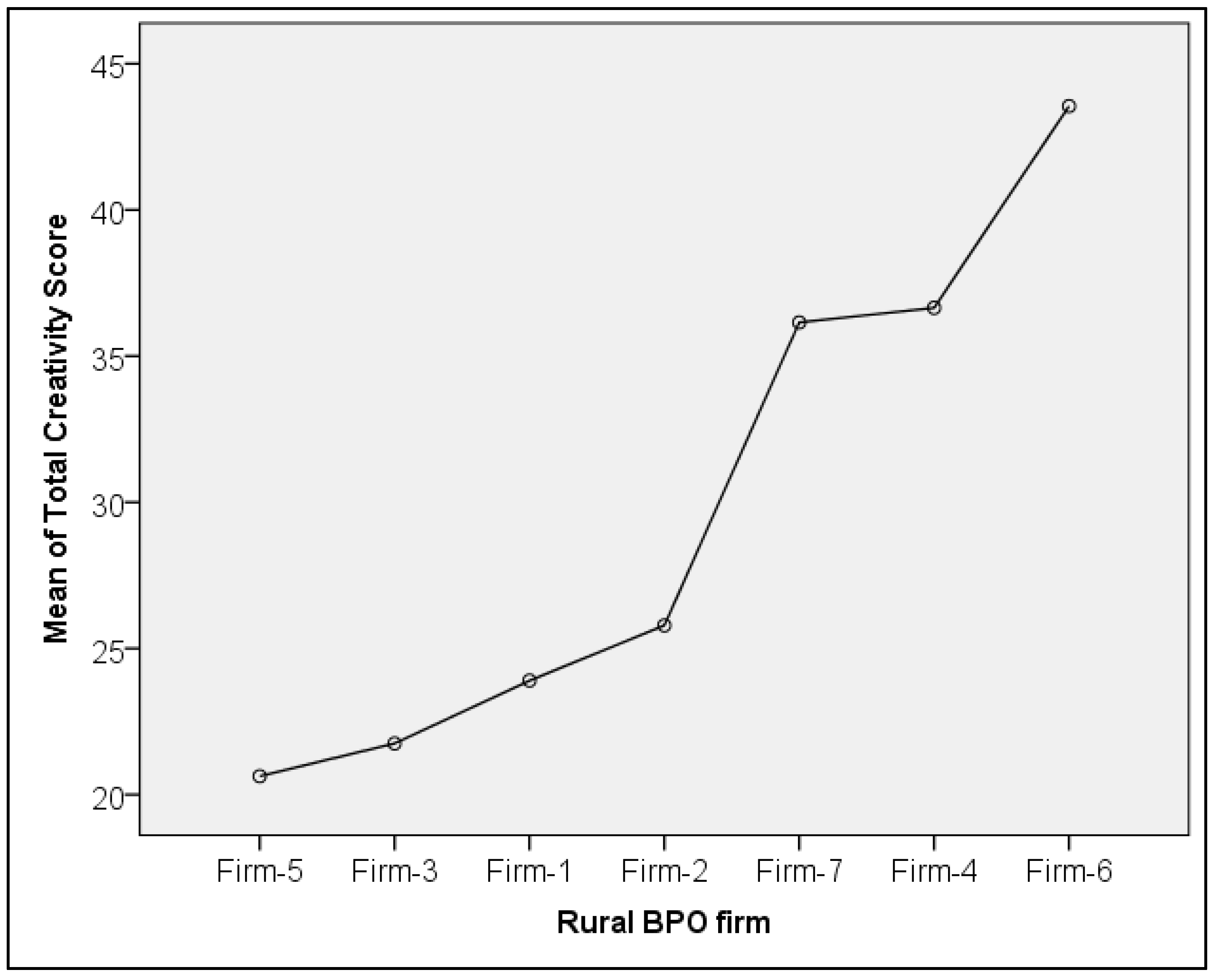
Table 2 presents the mean creativity parameter scores of the workers across seven rural BPO firms. The mean total creativity score ranges between 22 and 44 across the seven firms. The variation between firms is most pronounced for the fluency parameter. The scores obtained for the originality and abstractness of titles are higher only for two BPO firms, whereas the mean scores for elaboration and resistance to the premature closure parameters are low across all firms. The one-way ANOVA was conducted to identify statistical differences between the total creativity scores between firms. A single extreme value in Firm-5 was removed from further analysis to satisfy the following assumption conditions: the total creativity score was normally distributed for the rural BPO firms, as assessed by Shapiro–Wilk’s test p > 0.05 , and variances were homogeneous, as assessed by Levene’s test for the equality of variances ( p = 0.01 ) . The total creativity score was statistically significantly different between rural BPO firms, F 6,131 = 10.308 ,   p < 0.0005 ,   e f f e c t   s i z e   ω 2 = 0.288 , p a r t i a l   η 2 = 0.321 ) . The mean plot (Figure 8) clearly shows that two clusters of rural BPO firms emerged from these analyses: a high mean group (Firm-4, Firm-6, and Firm-7) and a low mean group (Firm-1, Firm-2, Firm-3, and Firm-5).
Table 2. Mean creativity parameter scores of the workers across seven rural BPO firms.
Figure 8. The mean plot of the total creativity scores of seven rural BPO firms.

4.3. Spatial Ability of Rural Workers

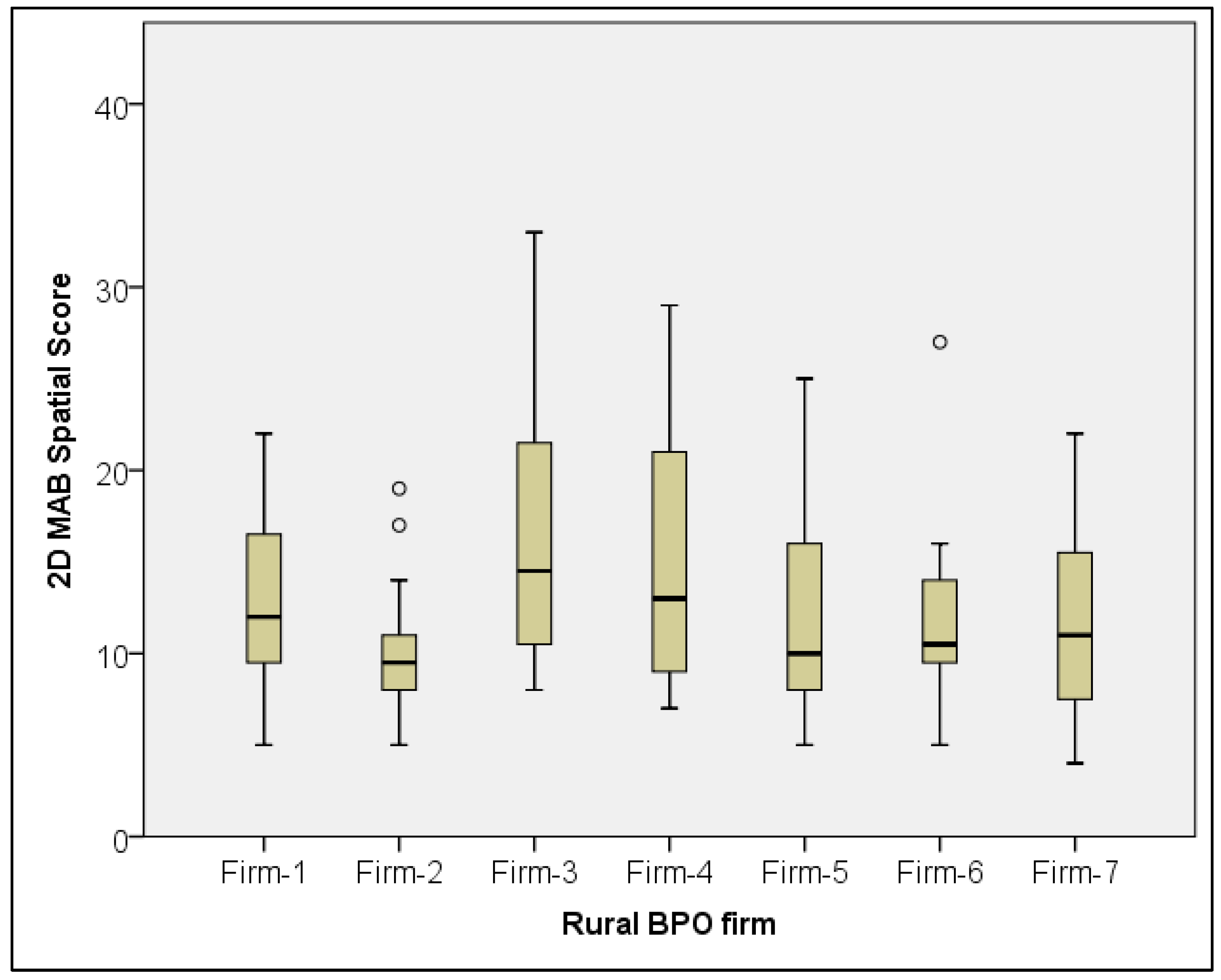
Figure 9 represents the distributions of 2D MAB scores of seven rural BPO firms. Although the mean spatial scores are almost the same for all firms, higher scores were achieved in Firm-3 than in others. The normality condition and the homogeneity test of variance are not satisfied with these spatial test scores across the rural BPO firms. Therefore, a Kruskal–Wallis H test was used to find firm differences. This means that a rank-based nonparametric test was used to determine if there are statistically significant differences between seven rural BPO groups. The distributions of the 2D MAB scores were statistically significantly different between the groups, χ 2 6 = 14.255 , p = 0.027 . On average, the rural workers were able to answer just 26% of the questions in the 2D spatial test correctly.
Figure 9. Distributions of 2D MAB scores across all seven rural BPO firms (outliers are marked in circles).

4.4. Associations between 2D Packing Tasks, Creativity, and 2D-MAB Skills

The Pearson correlation was used to assess the strength of the linear associations between the 2D packing efficiency scores of all six tasks, the creativity parameters, and the 2D-MAB scores. Only workers who had completed all six packing tasks were considered in these analyses (N = 126). Table 3 reports the Pearson correlations between 2D packing tasks. Statistically significant correlations were observed for every 2D packing task. Likewise, Table 4 demonstrates that the correlations between the creativity parameters were mostly statistically significant. These results indicate that rural workers consistently achieve 2D packing efficiency for all tasks and creativity parameters. However, the Pearson correlations between the 2D packing tasks, creativity parameters, and 2D spatial scores revealed that only the ”fluency” creativity parameter was statistically correlated with the Albano and Jakobs2 packing tasks. The “elaboration” creativity parameter and 2D MAB spatial score were statistically correlated with only the Albano task (Table 5). No direct association was found between the creativity parameters and the 2D MAB spatial scores. These results show no dependable significant associations between the 2D packing tasks, creativity, and spatial reasoning scores.
Table 3. Pearson correlations between the 2D packing tasks.
Table 4. Correlations between creativity parameters.
Table 5. Pearson correlations between the 2D packing tasks, creativity parameters, and 2D spatial score.

5. Discussion

5.1. Motivation and Novelty of the Study

Knowledge, learning, and innovation are of paramount importance for bridging urban–rural gaps, especially in employment. The growing number of rural BPO firms in India (over 100 in 2014) suggests that reaching rural workers through BPO firms is an increasingly viable option that improves the communication infrastructure in these firms and the surrounding areas. The rural BPOs provide considerable employment opportunities in and around the surrounding regions with low attrition employment rates compared to urban firms. However, most of the rural BPO centers in India are predominately occupied with data entry jobs. Moving from unskilled to skilled jobs is a significant challenge for these rural BPO centers. Integrating rural BPO firms into the workflow that supports core manufacturing processes could provide workers with skilled, sustainable job opportunities. This research aims to bring high-value, sustainable, skilled spatial reasoning business jobs to rural workers. This research tested workers’ creative and 2D spatial rotation abilities and their skills to solve 2D manufacturing packing tasks and investigated their possible associations.

5.2. Systematic Study at Rural BPOs

A three-day study was conducted with seven rural BPO organizations, which agreed to provide 20 workers to participate in all three full days to complete six irregular strip packing problems and also to do the tests to access creative and spatial abilities. The 2D-Multidimensional Aptitude Battery (MAB) spatial test and the Torrance Tests of Creative Thinking (TTCT) test were chosen for this study due to their high test–retest reliabilities (demonstrated in the literature) and ease of understanding for people who are not experienced in these types of assessments. Both of these tests were administered as per the instructions provided by the original authors. Six irregular strip packing benchmark problems utilized by the EURO Special Interest Group on Cutting and Packing (ESICUP) were chosen to assess the performance of rural workers. All rural workers quickly learnt the “cNest” CAM system usage and effectively utilized it to solve the packing problems. The three-day schedule was adhered to across all the seven rural BPOs studies, which ensured a relevant comparison of the study results across them.

5.3. Meritorious Study Results

The study revealed that all rural BPO firms achieved higher packing efficiencies in all tasks than the commercial baseline values. The maximum efficiency improvement was to 8%. This result answers the first objective, which aimed to quantify workers’ performances in 2D manufacturing packing problems. These incremental packing efficiency percentages will significantly reduce manufacturing wastage. The possibility of increasing the packing efficiency compared to the results of automated commercial algorithms demonstrates the feasibility of crowdsourcing potential spatial manufacturing optimization tasks to rural BPO firms. Also, the consistency displayed by workers when solving all six packing tasks shows this proposition’s viability. Demonstrating this viability is significant, considering that workers did not have experience in spatial tasks and possessed limited English language proficiency. The software developed for this study (cNest—a CrowdPowered CAM system) provided an effective computer user interface for workers to solve spatial problems by freely rotating objects and obtaining real-time feedback. These results suggest that rural crowdsourcing can lead to effective job creation and skill development and can support industries to improve engineering CAD/CAM geometric solutions for a modest cost.

5.4. Study Identification of Scope for Improvement

Although all rural BPO firms achieved higher packing efficiencies in all tasks, not all participating workers accomplished them. Less than 50% of the workers did not score higher efficiencies for most packing tasks in every firm. In commercial services, all workers must produce good results for all packing tasks. This issue highlights the workers who require training for this new form of spatial task.

5.5. Study Recognition of Possible Training Methods for Workers

A possible approach to training spatial tasks could be through spatial reasoning and creativity tests. The results tabulated in Table 2 and Figure 9 answer the second and third objectives (i.e., to quantify the rural workers’ 2D spatial reasoning and creative abilities). Currently, the mean 2D spatial test score of rural BPO firms is less than the results reported in the literature (Table 6). Compared to the observed average score of 13 in rural BPO firms (Figure 8), the literature results present an average spatial test score of about 30.
Table 6. Literature results of 2D MAB spatial test scores.
Also, the creativity parameter scores of rural BPO workers are compared with some of the literature results from adult participants (Table 7). The comparison of Table 2 and Table 7 reveals that the total creativity scores (mean range: 48 to 64) reported in the literature are much higher than the rural BPO firms’ total creativity scores (mean range: 23–44). The mean scores for the fluency and originality of rural BPO workers are on par with the other observed results, except for those for Firm-2, Firm-3, and Firm-5. However, the rural BPO workers’ mean scores for elaboration, abstractness of title, and resistance to premature closure are significantly less than the results reported in the literature.
Table 7. Creativity parameter scores reported in the literature for adult participants.
The low scores of rural BPO workers in the Multidimensional Aptitude Battery (MAB) for 2D spatial mental rotation and the Torrance Tests of Creative Thinking (TTCT) for creativity assessment could be due to time limitations, difficulty in expressing their thoughts explicitly through the drawing medium, minimal exposure to a variety of shapes and spaces, and poor drawing skills. Due to these possible reasons for low scores, no consistent significant correlations were identified between 2D packing tasks, creativity, and the 2D MAB spatial scores. Also, the skills involving perceiving objects and carrying out mental spatial rotations seem to differ from those of imaging novel objects based on an incomplete picture and expressing them through a drawing medium.
The study answered objective four, that no dependable significant associations or correlations exist between the performance in 2D manufacturing packing problems and 2D spatial and creative abilities. Since the associations between creativity and spatial rotational skills to achieve higher packing efficiencies are unclear, developing a training program using cross-transfer knowledge from one activity to another is questionable in rural BPO environments. Considering the statistically significant correlations between the 2D packing tasks, training could be more efficient if it aligned with the packing tasks. The assessment identified exceptionally talented individual workers for all packing tasks and in the spatial ability and creativity tests in all seven rural firms. So, given that most of the workers are graduates and a small pool of talented workers already exists, only a small amount of focused training could improve the performance to the level required for commercial crowdsourcing purposes.

5.6. The Future Scope of This Research

Thus, the next step in this work is to develop focused training platforms to develop the ability of rural workers to understand and solve different forms of spatial reasoning tasks with the long-term goal of enabling sustained skilled employment. There is also an open research question regarding the cognitive and social influences of rural and Indian-nation-based workers versus urban and American workers. For example, it has been suggested that the playing of computer games could be associated with the development of spatial reasoning skills. While this was beyond the scope of the investigation, it is certainly a topic that is worthy of investigation.


6. Conclusions

This research assessed, for the first time, the potential of distributed geometric tasks to provide sustainable rural employment by examining the capabilities of workers. The results indicate that, when compared to commercial automated algorithms, rural BPO firms from various states in India can generate similar performances in 2D packing tasks. However, there is also a clear need to enhance spatial skills to elevate the performances of all rural workers. The research results suggest that dedicated spatial skill training programs tailored to specific crowdsourcing tasks are crucial. Simply transferring knowledge from creativity training or other general IT skills is not sufficient. Future research will aim to devise a structured workflow model for outsourcing spatial manufacturing tasks to rural firms to bridge the urban–rural business and knowledge divide. The immediate practical application of this study is that it demonstrates the feasibility of delivering improved performances for industrial tasks, such as 2D metal sheet packing and 3D container logistics via rural BPO centers.

Author Contributions

Conceptualization, G.V. and J.C.; methodology, G.V., C.K.U. and J.C.; validation, G.V. and C.K.U.; formal analysis, G.V. and C.K.U.; investigation, G.V., C.K.U. and J.C.; resources, G.V. and J.C.; data curation, G.V.; writing—original draft preparation, G.V.; writing—review and editing, G.V., C.K.U. and J.C.; visualization, G.V.; supervision, G.V. and J.C.; project administration, G.V. and J.C.; funding acquisition, J.C. All authors have read and agreed to the published version of the manuscript.

Funding

This research was collaboratively funded by EPSRC, UK [grant number EP/J000728/1]; DST, India [grant number DST/SEED/INDO–UK/005/2011/C] as part of the research project “Distributing Industrial Optimization Tasks to Rural Workers”.

Institutional Review Board Statement

Ethical review and approval were waived for this study due to non-influential assessments and non-reveal identities.

Data Availability Statement

All data collected and analyzed in this research will be shared with a public link after the manuscript is accepted.

Acknowledgments

We sincerely thank Parmatma Yadav for supporting this project work and all participants involved in this research.

Conflicts of Interest

The authors declare no conflict of interest. The funders had no role in the design of the study; in the collection, analyses, or interpretation of data; in the writing of the manuscript; or in the decision to publish the results.

References

  1. Howe, J. The rise of crowdsourcing. Wired Mag. 2006, 14, 1–4. [Google Scholar]
  2. Frei, B. Paid Crowdsourcing: Current State & Progress toward Mainstream Business Use. Smartsheet White Paper: USA, 2009. [Google Scholar]
  3. Khanna, S.; Ratan, A.; Davis, J.; Thies, W. Evaluating and improving the usability of Mechanical Turk for low-income workers in India. In Proceedings of the First ACM Symposium on Computing for Development, London, UK, 17–18 December 2010; ACM: New York, NY, USA, 2010; p. 12. [Google Scholar]
  4. Kling, R. (Ed.) Computerization and Controversy: Value Conflicts and Social Choices; Morgan Kaufmann: Burlington, MA, USA, 1996. [Google Scholar]
  5. Vikas, G.; Rachita, R. Computer Aided Manufacturing Market; Allied Market Research: Portland, OR, USA, 2021. [Google Scholar]
  6. Wong, R.; Niu, W. Cultural Difference in Stereotype Perceptions and Performances in Nonverbal Deductive Reasoning and Creativity. J. Creat. Behav. 2013, 47, 41–59. [Google Scholar] [CrossRef]
  7. Wharton. It Takes a Village: The Rise of the Rural BPO; India Knowledge: Wharton, PA, USA, 2010; p. 20. [Google Scholar]
  8. Rao, R.V. Evaluation of Metal Stamping Layouts. In Decision Making in the Manufacturing Environment: Using Graph Theory and Fuzzy Multiple Attribute Decision Making Methods; Springer: London, UK, 2007; pp. 231–241. [Google Scholar]
  9. Leung, S.C.; Lin, Y.; Zhang, D. Extended Local Search Algorithm based on Non-linear Programming for Two-dimensional Irregular Strip Packing Problem. Comput. Oper. Res. 2012, 39, 678–686. [Google Scholar] [CrossRef]
  10. Elkeran, A. A New Approach for Sheet Packing Problem Using Guided Cuckoo Search and Pairwise Clustering. Eur. J. Oper. Res. 2013, 231, 757–769. [Google Scholar] [CrossRef]
  11. Gomes, A.M.; Oliveira, J.F. Solving Irregular Strip Packing Problems by Hybridising Simulated Annealing and Linear Programming. Eur. J. Oper. Res. 2006, 171, 811–829. [Google Scholar] [CrossRef]
  12. Annamalai Vasantha, G.V.; Jagadeesan, A.P.; Corney, J.R.; Lynn, A.; Agrawal, A. Crowdsourcing solutions to 2D irregular strip packing problems from Internet workers. Int. J. Prod. Res. 2016, 54, 4104–4125. [Google Scholar] [CrossRef]
  13. EURO ESICUP, Datasets. 2015. Available online: https://www.euro-online.org/websites/esicup/data-sets/ (accessed on 29 March 2023).
  14. Jakobs, S. On genetic algorithms for the packing of polygons. Eur. J. Oper. Res. 1996, 88, 165–181. [Google Scholar] [CrossRef]
  15. Fülöp, M.T.; Gubán, M.; Gubán, Á.; Avornicului, M. Application research of soft computing based on machine learning production scheduling. Processes 2022, 10, 520. [Google Scholar] [CrossRef]
  16. Lohman, D.F. Spatial ability and g. In Human Abilities: Their Nature and Measurement; Lawrence Erlbaum Associates, Inc.: Mahwah, NJ, USA, 1996; pp. 97–116. [Google Scholar]
  17. Zavotka, S.L. Analysis of three dimensional computer graphics animation to teach spatial skills to interior design students. J. Inter. Des. 1986, 12, 45–52. [Google Scholar] [CrossRef]
  18. Smith, I. Spatial Ability; Knapp: San Diego, CA, USA, 1964. [Google Scholar]
  19. Strong, S.; Smith, R. Spatial visualization: Fundamentals and trends in engineering graphics. J. Ind. Technol. 2002, 18, 2–6. [Google Scholar]
  20. Hegarty, M. Components of spatial intelligence. Psychol. Learn. Motiv. 2010, 52, 265–297. [Google Scholar]
  21. Gerson, H.B.; Sorby, S.A.; Wysocki, A.; Baartmans, B.J. The development and assessment of multimedia software for improving 3-D spatial visualization skills. Comput. Appl. Eng. Educ. 2001, 9, 105–113. [Google Scholar] [CrossRef]
  22. Smith, M.E. The Correlation between a Pre-Engineering Student’s Spatial Ability and Achievement in an Electronics Fundamentals Course. Bachelor’s Thesis, Utah State University, Logan, UT, USA, 2009; 254p. [Google Scholar]
  23. Allen, A.D. Complex spatial skills: The link between visualization and creativity. Creat. Res. J. 2010, 22, 241–249. [Google Scholar] [CrossRef]
  24. Boden, M.A. The Creative Mind: Myths and Mechanisms; Psychology Press: London, UK, 2004. [Google Scholar]
  25. Sarkar, P.; Chakrabarti, A. Studying engineering design creativity-developing a common definition and associated measures. In Studying Design Creativity; Gero, J., Ed.; Springer: Berlin/Heidelberg, Germany, 2008. [Google Scholar]
  26. Torrance, E. Education and the Creative Potential; University of Minnesota Press: Minneapolis, MN, USA, 1963. [Google Scholar]
  27. Ohly, S. Promoting Creativity at Work–Implications for Scientific Creativity; European Review; Cambridge University Press: Cambridge, UK, 2018; pp. 1–9. [Google Scholar]
  28. González, M.A.; Campos, A.; Pérez, M.J. Mental imagery and creative thinking. J. Psychol. 1997, 131, 357–364. [Google Scholar] [CrossRef]
  29. Kozhevnikov, M.; Kozhevnikov, M.; Yu, C.J.; Blazhenkova, O. Creativity, visualization abilities, and visual cognitive style. Br. J. Educ. Psychol. 2013, 83, 196–209. [Google Scholar] [CrossRef]
  30. Charyton, C.; Jagacinski, R.J.; Merrill, J.A.; Clifton, W.; DeDios, S. Assessing creativity specific to engineering with the revised creative engineering design assessment. J. Eng. Educ. 2011, 100, 778–799. [Google Scholar] [CrossRef]
  31. Everatt, J.; Steffert, B.; Smythe, I. An eye for the unusual: Creative thinking in dyslexics. Dyslexia 1999, 5, 28–46. [Google Scholar] [CrossRef]
  32. Jackson, D.N. MAB, Multidimensional Aptitude Battery: Manual; Research Psychologists Press: Houlton, ME, USA, 1984. [Google Scholar]
  33. Torrance, E.P.; Ball, O.E.; Safter, H.T. Torrance Tests of Creative Thinking: Streamlined Scoring Guide: Figural A and B; Scholastic Testing Service: Bensenville, IL, USA, 1992. [Google Scholar]
  34. Cramond, B.; Matthews-Morgan, J.; Bandalos, D.; Zuo, L. A report on the 40-year follow-up of the Torrance Tests of Creative Thinking: Alive and well in the new millennium. Gift. Child Q. 2005, 49, 283–291. [Google Scholar] [CrossRef]
  35. Luciano, M.; Wright, M.J.; Geffen, G.M.; Geffen, L.B.; Smith, G.A.; Evans, D.M.; Martin, N.G. A genetic two-factor model of the covariation among a subset of Multidimensional Aptitude Battery and Wechsler Adult Intelligence Scale—Revised subtests. Intelligence 2003, 31, 589–605. [Google Scholar] [CrossRef]
  36. Chan, D.W. Gender differences in spatial ability: Relationship to spatial experience among Chinese gifted students in Hong Kong. Roeper Rev. 2007, 29, 277–282. [Google Scholar] [CrossRef]
  37. McIntyre, F.S.; Hite, R.E.; Rickard, M.K. Individual characteristics and creativity in the marketing classroom: Exploratory insights. J. Mark. Educ. 2003, 25, 143–149. [Google Scholar] [CrossRef]
  38. Aslan, A.; Puccio, G.J. Developing and testing a Turkish version of Torrance’s Tests of Creative Thinking: A study of adults. J. Creat. Behav. 2006, 40, 163–177. [Google Scholar] [CrossRef]
Disclaimer/Publisher’s Note: The statements, opinions and data contained in all publications are solely those of the individual author(s) and contributor(s) and not of MDPI and/or the editor(s). MDPI and/or the editor(s) disclaim responsibility for any injury to people or property resulting from any ideas, methods, instructions or products referred to in the content.

Article Metrics

Citations

Article Access Statistics

Multiple requests from the same IP address are counted as one view.