Review

Insect-Derived Frass in Aquafeeds: Prospects and Limitations for Advancing Aquaculture Sustainability


by
Tiruken Aziz Atnafu
1,
Anisa Mitra
2,
Folasade Damilola Amulejoye
3,
Missinhoun Dagoudo
4,
Chikumbutso Memory Phiri
5,
Amoah Kwaku
6,7,
Lee Seong Wei
8,* and
Sahya Maulu
9,*
1
Department of Aquatic Sciences, Fisheries and Aquaculture, Hawassa University, Hawassa P.O. Box 05, Ethiopia
2
Department of Zoology, Sundarban Hazi Desarat College, Pathankhali 743611, India
3
Department of Fisheries and Aquaculture Technology, School of Agriculture, Food and Natural Resources, Olusegun Agagu University of Science and Technology, Okitipupa 350104, Nigeria
4
Research Unit in Aquaculture and Fisheries Management, National University of Agriculture, Porto Novo 01BP55, Benin
5
Directorate of Distance Education and Open Learning, Copperbelt University, Kitwe P.O. Box 21692, Zambia
6
Guangdong Provincial Key Laboratory of Aquatic Animal Disease Control and Healthy Culture, Zhanjiang 524088, China
7
Key Laboratory of Diseases Controlling for Aquatic Economic Animals of Guangdong Higher Education Institutions, College of Fisheries, Guangdong Ocean University, Zhanjiang 524088, China
8
Department of Agricultural Sciences, Faculty of Agro-Based Industry, Universiti Malaysia Kelantan, Jeli Campus, Jeli 17600, Kelantan, Malaysia
9
Department of Aquaculture and Fisheries Sciences, School of Agricultural Sciences, Palabana University, Lusaka 50199, Zambia
*
Authors to whom correspondence should be addressed.
Aquac. J. 2026, 6(2), 15; https://doi.org/10.3390/aquacj6020015
Submission received: 22 February 2026 / Revised: 26 April 2026 / Accepted: 29 April 2026 / Published: 7 May 2026

Abstract

Aquaculture is expanding rapidly, creating a greater need for sustainable and cost-effective feed ingredients to reduce reliance on traditional protein sources such as fishmeal (FM) and soybean meal (SBM). Insect-derived frass, which consists of insect excrement, molted exoskeletons, uneaten substrate, plus associated microbial biomass, has shown potential as a viable and sustainable ingredient in aquafeed. Although traditionally used as an organic fertilizer, its richness in essential nutrients and bioactive compounds highlights its potential as a partial substitute for conventional feedstuffs. This study synthesizes current research on insect-derived frass, focusing on its nutritional composition and effects on growth performance, immunity, health, and gut microbiota in aquaculture species, alongside environmental, economic, safety, and regulatory considerations. Although a wide range of insect species have been evaluated for use in aquafeeds, research on insect frass has primarily focused on black soldier fly and yellow mealworm, with most studies examining its application in omnivorous fish species. Despite its promise as a circular economy-aligned aquafeed ingredient, challenges remain due to nutritional and amino acid variability, largely influenced by the quality of the original insect rearing substrate, as well as species-specific responses and potential contamination risks. To promote widespread adoption of insect-derived frass in aquafeed, there is a need to optimize insect rearing substrate selection and processing, define inclusion levels by insect and target aquatic species, establish safety protocols, and develop harmonized international standards.

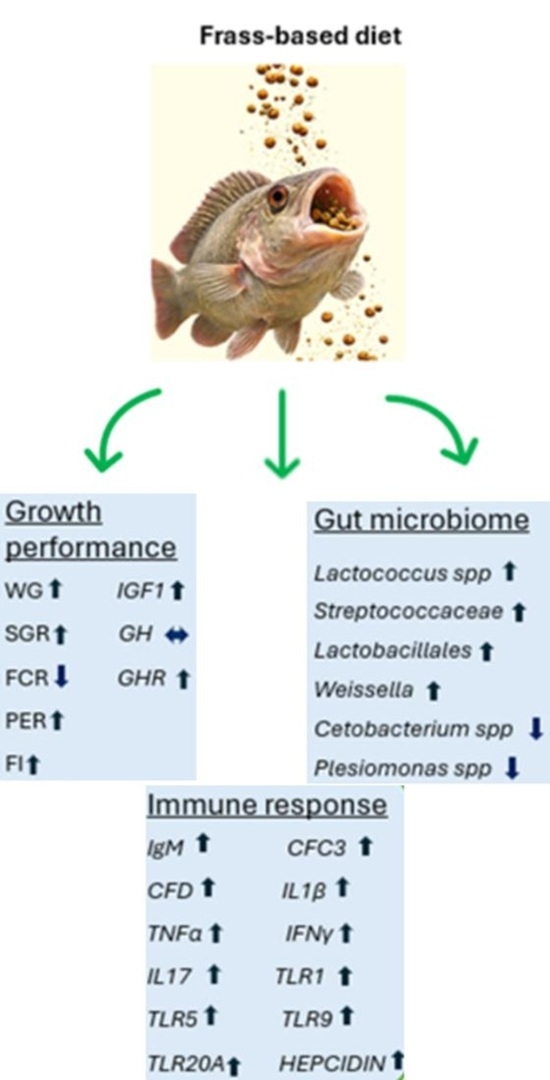
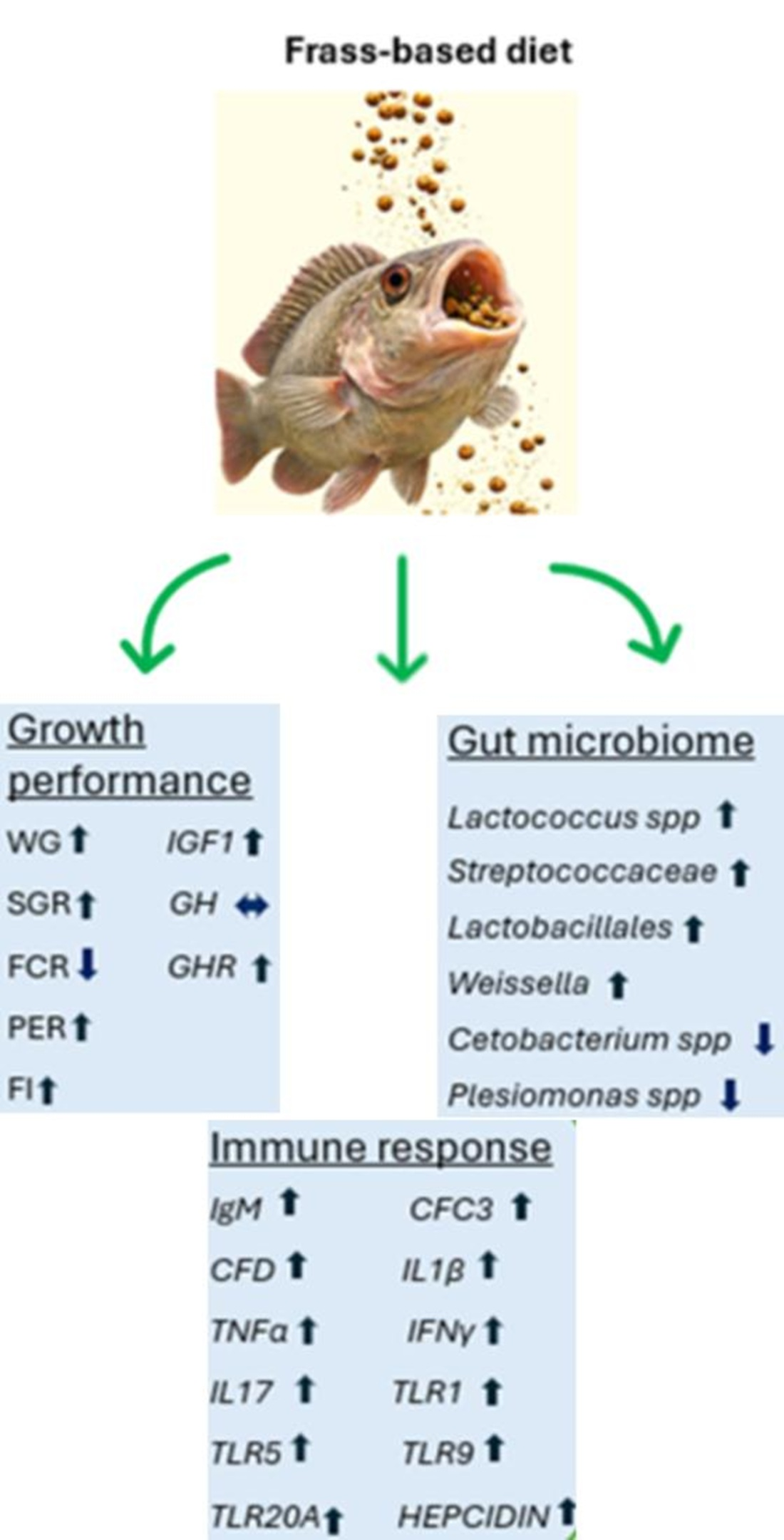
Graphical Abstract

1. Introduction

The aquaculture industry faces a critical sustainability paradox: it must increase production by 50% by 2050 [1] while reducing dependence on ecologically problematic ingredients. Traditionally, aquaculture has been criticized for its heavy dependence on marine-derived ingredients such as fishmeal (FM) and fish oil (FO), which place significant pressure on wild fisheries [2,3]. FM, the gold standard protein source, currently consumes approximately 20% of global marine catches [3], creating unsustainable pressure on marine ecosystems, especially as aquaculture continues to expand. Over the past two decades, considerable progress has been made in reducing this reliance, with global FM production declining from 6.6 to 4.8 million tonnes, while FO production has fallen from 1.5 to 1.0 million tonnes over the last decade [4]. In recent years, FM production has largely stabilized, whereas aquaculture production continues to expand, highlighting a growing supply–demand imbalance.
Plant-based alternatives like soybean meal (SBM) have made a substantial contribution to the reduction in the use of marine ingredients in aquafeed, but introduce a distinct set of ecological and nutritional complications. Soy cultivation remains a significant driver of tropical deforestation, while inherent anti-nutritional factors, including trypsin inhibitors, phytates, and saponins, impair digestion, nutrient absorption, and gut integrity in key aquaculture species [5]. This dual burden of ecological destruction and nutritional constraint reflects a broader challenge: the absence of a circular, nutritionally complete, and scalable alternative to conventional aquafeed proteins [6,7].
Insects have gained increasing attention as a nutritious alternative to conventional animal protein sources to bridge this gap. A key by-product of insect farming is frass, a heterogeneous mixture of insect excreta, shed exoskeletons, unconsumed substrate residues, and associated microbial communities generated during rearing [8]. It is produced in large quantities, estimated at 30 to 90% of the original substrate input [9,10]. It is a by-product of insect farming, especially from species such as the black soldier fly (BSF: Hermetia illucens), the yellow mealworm (YMW: Tenebrio molitor), and the house cricket (Acheta domesticus) [9]. However, the majority of existing research has focused on BSF and YMW. BSF larvae are highly efficient and rapid decomposers, achieving waste reduction efficiencies often exceeding 60–70%, which results in more extensively processed, microbially transformed frass. In contrast, YMW larvae show lower bioconversion efficiency, leaving frass with higher residual fiber and comparatively less microbial modification. These differences highlight the greater substrate degradation capacity of BSF larvae and the relatively less intensive processing achieved by YMW larvae. Research on insect-derived ingredients in aquafeeds has progressed considerably, with insect meal being increasingly validated as an effective FM substitute across a range of commercially relevant species [11]. However, this body of work has been almost exclusively focused on the insect biomass itself, leaving a major co-product stream critically underexplored.
Recently, there has been growing recognition of insects as multifunctional resources with applications in organic waste bioconversion, animal feed production, and human consumption, driving the rapid expansion of insect farming systems [8,10]. At projected insect farming scales, this is expected to generate millions of tonnes of frass annually, a volume that simultaneously represents a significant waste management challenge and an underutilised potential nutritional resource. Recent economic modelling suggests that full valorisation of frass within insect farming operations could improve enterprise profitability by 15–20% [12,13], adding economic urgency to the biological and ecological rationale for its application. Despite this potential, research on insect frass as an aquafeed ingredient remains nascent, scattered across disparate species trials, inconsistent characterisation methodologies, and varied frass sources. No comprehensive synthesis currently exists that integrates frass nutritional composition, bioactive functional properties, and dose–response effects across aquatic species within a unified framework.
This review summarizes the current literature on insect frass, including its nutritional profile and its prebiotic, antimicrobial, and immunostimulatory properties in addition to its in vivo effects on growth performance, gut health, and immune function in aquatic animals. In addition to providing an inclusive first synthesis of frass as an aquaculture feed ingredient, this review categorizes the types of conditions under which frass has a positive effect and identifies the main sources of biological and methodological variability that prevent valid comparisons across studies. It also presents an evidence-based research agenda aimed at accelerating the practical use of frass as an aquaculture feed ingredient. To the best of our knowledge, no existing studies have critically reviewed the effects of insect-derived frass in aquatic animals. As insect farming continues to expand, the strategic use of frass in aquaculture feed systems may offer one of the most feasible ways to enhance the circularity, economic viability, and nutritional sustainability of global aquaculture.

2. Methodology

This study adopted a narrative review approach, drawing on a comprehensive literature search conducted in reputable databases, including Web of Science, Scopus, and Google Scholar. This approach was selected due to the limited number of studies available on the use of frass in aquatic animal nutrition.
Studies were selected based on relevance, particularly those examining the application of frass in aquafeeds and its nutritional properties. Only peer-reviewed publications were included to uphold scientific rigor and reliability. The review sought to identify as many pertinent studies as possible while prioritizing high-quality, peer-reviewed evidence published in the English language. To reduce publication bias, studies reporting neutral or negative results were also considered, and relevant studies were presented in appropriate summary tables detailing the direction of effects, trial period, and key methodological features.
This approach ensures a balanced synthesis of the literature, integrating both positive and negative findings while accounting for species differences, variations in dosage, and overall evidence quality. As a result, it provides a solid foundation for evaluating the role of frass in aquafeed.

3. Insect Frass in Aquaculture: Sources, Variability, and Applications

3.1. Dominant Insect Species in Frass Production

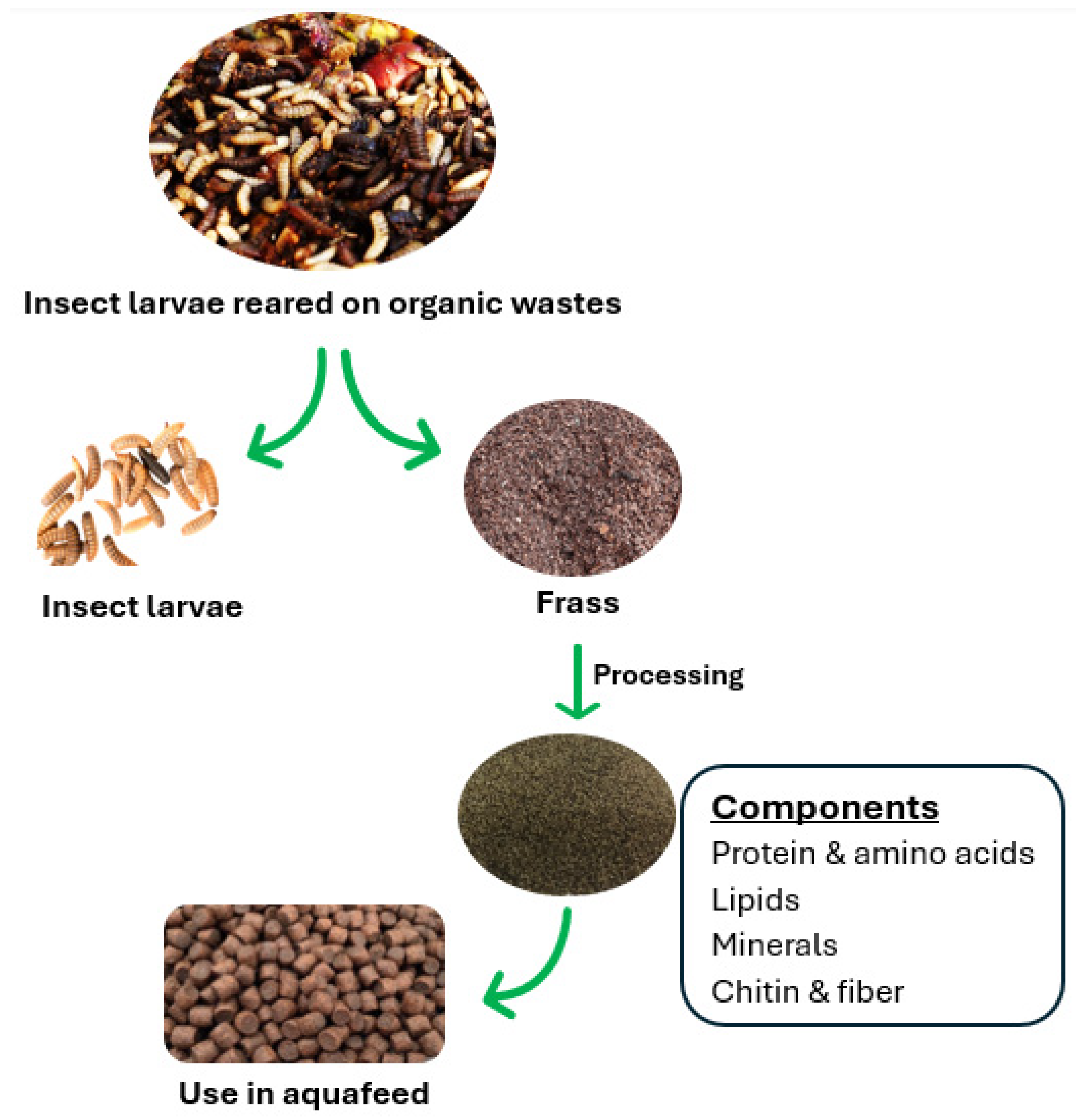
Several insect species dominate commercial frass production, each contributing unique characteristics shaped by their physiology and feeding habits [14]. Although numerous insect species have been studied for their potential use in aquafeeds, species such as BSF, YMW, the house cricket, and silkworm pupae (Bombyx mori) are considered the most promising due to their favourable nutritional profiles, high production potential, and environmental benefits [15,16]. Despite extensive research on these species as viable feed ingredients, relatively few studies have examined the potential incorporation of their frass into aquafeeds. Regardless of the insect species, the production of frass can be summarised as illustrated in Figure 1.

3.2. Nutrient Composition of Insect Frass

As with insect meals, the nutritional composition of insect-derived frass exhibits wide variability, not only among insect species but also depending on the substrate used for rearing, similar to the case for other insect-based products [17,18]. This variability implies that frass cannot be considered a standardized feed ingredient, and its inclusion in aquafeed must therefore be based on batch-specific compositional analysis rather than generic assumptions. In addition, the quantity of frass produced differs among insect species, largely reflecting their efficiency in utilising substrate inputs as well as the specific composition of the substrate, as some materials are more readily digested than others. This variability impacts nutrient profiles, digestibility, and safety, necessitating optimization to unlock frass’s potential in the circular bioeconomy [19,20]. From an aquafeed perspective, this highlights that both production efficiency and feed quality are closely tied to substrate formulation, making substrate selection a critical determinant of frass nutritional value. Frass derived from BSF and YMW species is the most widely studied in aquafeed, and their nutritional compositions have been reported (Table 1).
Both BSF and YMW frass possess promising nutritional attributes, supporting their application in aquafeeds. However, BSF exhibits a substantially higher waste reduction efficiency (68.5%) compared to YMW, which achieves only 28.1% [21]. In addition, although both insect species produce frass with essential nutrients to support fish performance, BSF frass often contains higher crude protein levels depending on the rearing substrate. This indicates that BSF frass may provide a relatively better protein contribution to aquafeeds, although it still cannot fully replace conventional protein sources. Nevertheless, frass from both species provides valuable nutrients, including crude protein, lipids, and minerals, as well as functional components such as chitin and fiber that may support aquatic animal growth and health. These components suggest that frass may function not only as a nutrient source but also as a functional feed additive with potential benefits for gut health and immunity. As production of these insects continues to expand in response to their growing use in animal feeds, the quantity of frass generated is also expected to increase, offering a substantial biomass. Therefore, the sustainable utilisation of frass may be essential for improving the environmental and economic sustainability of insect farming and animal feed production, aligning with the principles of a circular economy.
Most studies on frass nutritional composition have focused on BSF, likely due to its established promise as a viable feed ingredient. In Table 1, the mean values of the nutritional composition of insect-derived frass are presented against those of FM and SBM. Generally, frass composition varies widely across studies, largely reflecting differences in insect rearing substrates and, to a lesser extent, processing methods. This variability highlights the need for standardized production protocols to ensure consistent feed quality and predictable animal performance. While studies on the nutritional composition of YMW frass remain limited compared with BSF frass, available literature has reported its proximate composition (crude protein, lipids, dry matter, fiber, and ash) and mineral profile, with only a few studies providing amino acid data, particularly for larvae reared on agricultural by-products such as wheat bran [21]. This lack of comprehensive amino acid data limits the ability to accurately assess the protein quality of YMW frass for aquafeed formulation. Consequently, the current literature may not fully capture the amino acid variability of YMW-derived frass across different rearing substrates. Further research is warranted to explore the nutritional composition of YMW reared on various substrate types. Nonetheless, when compared with BSF frass, YMW frass shows comparable minimum amino acid ranges, suggesting that its nutritional profile could similarly vary depending on the substrate type. This suggests that both frass types should be treated as dynamic feed ingredients whose nutritional quality depends strongly on production inputs.
The crude protein content of BSF frass can reach approximately 45%, while YMW frass may reach up to 23%, making both valuable protein sources for aquafeeds [21]. Despite these values, frass protein may be less digestible due to its high fiber content and lower biological value than FM and, in some cases, SBM, supporting its use as a supplementary rather than primary protein source depending on species. Ref. [22] reported the highest BSF frass protein content (45.1%) when using a mixed substrate comprising expired commercial fish feed, fruits, vegetables, and kitchen waste. The relatively high protein content may be associated with the nutrient-rich composition of the mixed substrate, especially the inclusion of expired commercial fish feed, which is formulated to be nutrient-dense and may contribute to the nutrient profile of the resulting frass. While this indicates that substrate enrichment can be an effective strategy to enhance frass nutritional quality for aquafeed applications, the use of expensive or high-value feed ingredients may undermine the economic and circular economy benefits of insect production systems.
However, studies using distillers’ dried grains [23] or hemp waste [24] have reported lower crude protein levels (18–25%). Research on YMW frass composition remains sparse, and existing studies have only reported frass derived from insects reared on plant-based substrates rich in carbohydrates [25]. Generally, the protein content and amino acid profile of both BSF and YMW frass are inferior to that of FM and, in many cases, SBM, although BSF frass may approach SBM levels depending on the rearing substrate. This suggests that frass is more appropriately used as a partial ingredient or supplement rather than a complete replacement of conventional protein sources. Frass also contains appreciable levels of fatty acids, but research on their profiles remains limited. Recent findings by [21] show that BSF frass is dominated by oleic fatty acid (C18:1) and has the lowest proportion of stearic acid (C18:0, 3.94%). In contrast, YMW frass is rich in linoleic acid (C18:2), comprising 42.82% of total fatty acids, while eicosanoic acid (C20:0) is least abundant (0.03%). The primary differences between the two species lie in oleic and linoleic acid contents: BSF exhibit lower levels of these fatty acids than YMW larvae, but their frass shows the opposite trend, with YMW frass containing substantially higher linoleic acid levels. These differences indicate that frass fatty acid composition may influence its suitability for different fish species, particularly those with specific essential fatty acid requirements.
Frass is also rich in fiber, consisting mainly of cellulose, hemicellulose, and lignin, derived from plant-based feed substrates [26]. Because insects cannot efficiently digest these components, particularly when fed on plant materials, significant fiber residues remain in the frass. While this fiber fraction may limit digestibility and energy availability in fish diets, it may also serve as a functional component by modulating gut motility and microbiota in certain species. The mineral composition of insect-derived frass further enhances its potential value, as minerals play key roles in maintaining aquatic animal health and physiological performance. Like other nutrients, mineral content varies by insect species and rearing substrate, emphasizing the importance of selecting nutrient-rich substrates. Key macronutrients commonly found in BSF and YMW frass include nitrogen, calcium, phosphorus, and potassium [14]. Notably, BSF frass exhibits higher potassium content than YMW frass, SBM, and FM, likely due to the strong bioconversion capacity of BSF larvae, which enhances substrate breakdown and concentrates minerals in the frass through excretion and microbial processing. Microelement concentrations were generally higher in both BSF and YMW frass compared to SBM and FM, likely reflecting the bioconversion process, which concentrates trace minerals through substrate digestion, larval metabolism, and associated microbial activity. Essential minerals present in insect frass may contribute to meeting dietary mineral requirements in fish, although their bioavailability and balance relative to dietary needs require further investigation. These minerals contribute not only to animal nutrition but also make frass valuable as an organic fertilizer in fish ponds.
In addition to nutrients, insect-derived frass contains chitin, which, together with fiber, may confer functional properties that enhance animal health, immunity, and gut microbiota modulation. Chitin primarily originates from insect exoskeletons and exuviae, which are shed during molting [27]. When included in animal diets, chitin has been shown to enhance innate immunity, improve disease resistance, and modulate gut microbiota in aquatic species [22]. Although the chitin content of frass has not been fully quantified, it is likely lower than the 4–10% typically found in insect larvae [28], since frass contains chitin mainly from molting residues. However, ref. [29] reported that frass from YMW reared on brewer’s spent grain contained approximately 7.40% chitin. This suggests that, under certain substrates, frass can still provide biologically relevant levels of functional chitin.
Therefore, insect-derived frass may be more viable for use in feeds for low-value species such as tilapia, carp, and catfish, which thrive on diets with moderate protein quality. These species are more tolerant of higher fiber levels and less stringent amino acid profiles, making them better candidates for frass inclusion. This could help reduce feed costs and improve the overall sustainability of aquaculture, especially given the large global production volumes of these species. Frass may also be included in diets for high-value species, but likely at lower inclusion levels and with supplementation of limiting essential amino acids. Thus, frass should be strategically integrated into feed formulations depending on species requirements, nutritional constraints, and production objectives.
Table 1. Proximate, amino acid, and mineral compositions of insect-derived frass from BSF and YMW larvae in comparison with conventional feedstuffs.
Component BSF Frass,
Mean (n) 1
YMW Frass
Mean (n) 2
SBM
Mean (n) 3
FM
Mean (n) 3
Dry matter91.19 (6)87.08 (3)89.50 (2)91.83 (6)
Crude protein24.90 (6)22.19 (3)46.25 (2)65.53 (6)
Crude fat5.43 (6)2.60 (3)1.20 (2)8.79 (6)
Crude fiber10.91 (6)11.73 (3)5.37 (2)0.78 (6)
Ash15.75 (6)16.13 (3)6.03 (2)16.17 (6)
Essential amino acids (%)
Arginine1.46 (6)0.50 (1)3.42 (2)4.22 (6)
Lysine1.76 (6)0.50 (1)2.54 (2)5.56 (6)
Phenylalanine1.49 (6)0.45 (1)2.44 (2)2.77 (6)
Methionine0.77 (6)0.30 (1)0.66 (2)2.01 (6)
Tryptophan0.59 (6)N.R0.66 (2)0.67 (5)
Threonine0.92 (6)0.40 (1)1.87 (2)2.84 (6)
Valine0.98 (6)N.R2.55 (2)3.44 (6)
Isoleucine0.98 (6)0.40 (1)2.30 (2)3.09 (6)
Leucine1.73 (6)0.45 (1)3.61 (2)4.93 (6)
Histidine1.27 (6)0.25 (1)1.24 (2)1.74 (6)
Macrominerals (%)
Calcium4.32 (6)0.17 (2)0.19 (2)4.77 (6)
Phosphorous2.99 (6)2.05 (2)0.49 (2)2.81 (6)
Magnesium0.56 (6)0.48 (2)0.22 (2)0.19 (6)
Potassium5.32 (6)1.55 (2)0.07 (2)0.84 (6)
Sulfur0.29 (6)0.35 (2)0.26 (2)0.54 (6)
Sodium0.97 (6)0.03 (2)0.03 (2)0.72 (6)
Micro elements (mg/kg)
Iron621.36 (6)661.25 (2)112.00 (2)277.00 (6)
Manganese104.56 (6)451.70 (2)25.90 (2)12.53 (6)
Zinc153.80 (6)201.50 (2)36.00 (2)142.67 (6)
Copper24.05 (6)81.20 (2)15.00 (2)8.67 (6)
Note: N.R. = not reported; SBM = soybean meal, FM = fishmeal, BSF = black soldier fly; YMW = yellow mealworm; n = number of studies included. 1 ([22], [30], [23], [27], [31]). 2 ([24], [32], [33], [21], [34], [35]). 3 [36]. FM values represent means of meals derived from anchovy, herring, menhaden, tuna, and white fish byproducts. SBM values represent mean values of dehulled and whole (with hulls) soybean meal.
Overall, insect derived frass shows considerable promise as a sustainable and multifunctional resource in aquaculture, although its nutritional composition is highly variable and largely influenced by insect species and rearing substrate. Frass from BSF and YMW provide essential nutrients for fish, including crude protein, lipids, minerals, and functional components such as chitin and fiber, but its amino acid profile is generally inferior to conventional protein sources such as soybean meal and fishmeal. Considering wide nutrient variability, the use of frass in aquafeed requires standardization of production through optimized and well-defined rearing substrates, as variability directly affects nutrient composition, digestibility, and safety. In addition, limitations in essential amino acids, particularly in YMW frass, may necessitate supplementation when incorporated into formulated diets. The presence of functional compounds such as chitin further enhances its value by supporting gut health, immune function, and disease resistance, especially in low value species such as tilapia and carp.
Insect frass also represents a key link between waste management and sustainable feed production by converting organic waste streams into valuable nutrients for aquaculture and agriculture. Its use can reduce dependence on conventional feed ingredients, lower environmental pollution, and improve resource use efficiency. As insect farming continues to expand, the resulting increase in frass production underscores the importance of its effective utilization to close nutrient loops and support a more sustainable and circular bioeconomy.

4. Effects of Insect-Derived Frass Inclusion in Aquatic Animal Feeds

4.1. The Effects on Growth and Feed Utilisation

Although several insect species produce frass, most experimental studies to date have focused on evaluating the effects of BSF frass on growth performance and potential toxicity in cultured fish and shrimp across different aquaculture systems (Table 2). Several studies have investigated the effects of BSF frass on fish growth performance and feed utilisation, reporting no adverse effects on channel catfish (Ictalurus punctatus) and common carp (Cyprinus carpio var. specularis) compared with control diets [37,38,39]. These findings suggest that BSF frass may support normal fish growth in omnivorous fish species, likely due to the residual nutrients and bioactive compounds such as chitin. In contrast, ref. [27] demonstrated that the growth performance of Mozambique tilapia (Oreochromis mossambicus) was significantly influenced by the type of BSF frass rather than the inclusion level. Specifically, BSF frass produced from expired fish feed significantly enhanced growth compared with frass derived from mixed fruit and vegetable peels, highlighting the influence of larval rearing substrate on the nutritional value of the frass.
A study by [8] also reported that a 20% inclusion of BSF frass significantly improved growth performance in channel catfish, whereas higher inclusion levels (up to 30%) did not affect growth. In a subsequent study, ref. [23] reported that replacing 30% of dietary ingredients with BSF frass significantly enhanced growth performance in hybrid tilapia (O. niloticus × O. mossambicus). Furthermore, ref. [31] reported that BSF frass inclusion at 10% significantly improved growth performance in channel catfish. Collectively, these findings suggest that the effects of insect frass on aquatic animals are likely dose-dependent, largely influenced by its nutrient composition and bioactive constituents, which in turn are shaped by the substrate used for insect rearing.
While most studies indicate that BSF frass either improves or does not negatively affect fish growth, ref. [23] reported reduced growth performance in Florida pompano (Trachinotus carolinus L.) fed 6–18% BSF frass. In their 8-week trial, replacing corn and wheat flour with frass lowered final weight and weight gain, likely due to the low protein (10.6%) and lipid (8%) contents of frass derived from hemp-fed larvae. The authors attributed the observed adverse effects to the limited nutrient composition of the frass, particularly for carnivorous species such as T. carolinus, which have high dietary protein requirements (~46%). Given the paucity of studies examining frass inclusion in diets of carnivorous fish, further research is needed to confirm these findings.
Most existing studies on the use of frass in aquafeeds have focused on finfish, with very limited research on shellfish such as shrimp. Ref. [30] evaluated the effects of BSF frass on Pacific white shrimp (Litopenaeus vannamei) and reported no significant differences in weight gain compared with control diets, although the highest growth was observed at a 5% inclusion level. Further studies are needed to assess the effects of different frass and inclusion levels on shrimp growth, as well as to determine optimal inclusion levels for both fish and shrimp across different aquaculture systems.
In general, while insect-derived frass shows promising effects on growth and feed utilisation, its efficacy is highly context dependent, influenced by inclusion level, species-specific nutritional requirements, and substrate-driven variability, highlighting the need for further research under diverse aquaculture conditions.

4.2. Modulation of Immune and Gut Health

Recent studies indicate that inclusion of insect-derived frass in aquafeeds can significantly influence fish health, particularly by modulating hematological parameters and other key physiological indicators. These effects are likely driven by the presence of bioactive components such as chitin, fiber, and residual microbial metabolites in frass, which may act synergistically to influence host physiology. For instance, red blood cell (RBC) counts in channel catfish supplemented with BSF frass at inclusion levels of 10–30% increased significantly; the highest RBC counts (3.28 × 10⁶/μL) were observed in fish fed 30% frass. With each additional dietary frass level, hemoglobin concentration and hematocrit increased; but at the highest dietary frass level (30%) haemoglobin concentration increased significantly, indicating an increased ability of the blood to carry oxygen, which can help fish perform better under stressful circumstances. This improvement may be associated with enhanced nutrient absorption and overall physiological status, potentially linked to improved gut integrity and reduced metabolic stress. In addition, fish fed the highest dietary levels of frass (30%) had significantly higher serum cholesterol levels compared to fish fed a diet devoid of frass or a control diet [40]. This may reflect both the presence of residual insect-derived lipids and a modulation of endogenous lipid metabolism, potentially linked to improved nutrient assimilation and metabolic regulation rather than direct dietary cholesterol input alone. Ref. [23] evaluated BSF frass as a substitute for dietary carbohydrates in Florida pompano and reported that its inclusion reduced the hepatosomatic index while increasing the viscerosomatic index. Microbiome analysis further revealed that fish fed the control diet exhibited greater gut microbial diversity, whereas those fed frass-based diets showed signs of community imbalance. This shift may be attributed to the relatively lower starch content of frass, which likely reduced the availability of fermentable substrates required to sustain a diverse community of carbohydrate-utilizing microbes. Alternatively, these changes may also reflect a restructuring of the gut microbiome driven by frass-associated bioactive compounds such as chitin, which can selectively enrich beneficial microbial taxa and suppress opportunistic pathogens [41].
In hybrid tilapia (O. niloticus × O. mossambicus), challenge trials with Streptococcus iniae and F. columnare demonstrated dose-dependent improvements in survival, indicating enhanced disease resistance with increasing levels of BSF frass. This enhanced resistance is likely associated with immune priming through pattern recognition receptor activation by chitin, leading to the upregulation of innate immune pathways and improved pathogen recognition and clearance. Frass derived from larvae reared on distillers’ dried grains with solubles was shown to be a valuable feed ingredient, improving innate immune responses and overall resistance to infection [23].
In crustaceans, similar beneficial effects have been reported. For instance, serum from shrimp fed diets containing 20% BSF frass exhibited a significantly greater inhibitory activity against V. parahaemolyticus, indicating enhanced antimicrobial capacity. Dietary frass inclusion also positively modulated hemolymph parameters, including increases in serum protein, hemocyanin, and total hemocyte count, while maintaining serum cholesterol within normal physiological ranges. These responses may reflect enhanced innate immune readiness and improved physiological resilience, potentially mediated by improved nutritional status and immunostimulatory effects of frass-derived components. These responses suggest improved immune readiness and physiological resilience, potentially linked to enhanced nutrient status and the immunostimulatory effects of frass-derived bioactive compounds [40].
Table 2. Summary of experimental studies evaluating the effects of insect-derived frass on growth, feed utilization, immune response, and gut health in aquatic animals.
Aquatic Animal SpeciesTrial Duration, System UsedFrass Inclusion Level, Substrate Used, and ProcessingReported Effects Compared with the Control (p < 0.05)Reference
Channel catfish
(I. punctatus) juveniles
10 weeks,
Aquaponics
0.225% (w/w) BSF frass from larvae fed a mixture of spent coffee, dough, spoiled fish feeds, and a mixture of fruits/vegetables.WG (↔), SGR (↔), FCR (↔).[37]
Channel catfish juveniles8 weeks,
Aquaponics.
10% frass from BSF reared on a mixture of expired commercial fish diet, fruits/vegetables, and kitchen waste. Processing—air oven drying and milling.WG/SGR (↑), hepatic IGFβ (↑), IGF-1 (↑), GHR (↑), intestinal inflammation (↓), muscle proximate composition (↔), taurine (↓), calcium (↑), phosphorus (↑), C14:0 (↑), C15:0 (↑).[31]
Channel catfish juveniles10 weeks,
Flow through aquaria
0, 5, 10, 20, and 30% BSF frass from larvae fed Distillers’ dried grains with solubles, replacing plant proteins. Processing—extrusion, air drying, and sieving.Growth-related genes (glucose-6-phosphatase, myostatin) (↑); innate immune genes (TLR5, apolipoprotein A1, C-type lectin, lysozyme) (↑); innate immune receptors (TLR1, TLR5, TLR9, TLR20A) (↑); proinflammatory cytokines (IL-1β, IL-17, IFN-γ, TNFα) (↑); chemokines (CFC3, CFD) (↑); hepcidin (↑).[42]
Catfish
(I. punctatus) juveniles
12 weeks,
RAS
7.5, or 15.0% BSF frass.Final biomass (↔), WG (↔), SR (↔); FCR (↔); survival against E. ictaluri (↑); post-infection survival against A. hydrophila (↔) and F. covae (↔), indicating no adverse effects.[43]
Channel catfish juveniles10 weeks,
Flow through aquaria
0, 5, 10, 20, and 30% BSF frass from larvae fed Distillers’ dried grains with solubles, replacing plant proteins. Processed by mixing, extrusion, air-drying, grinding, and sieving.FI (↑); FCR (↓); PER (↓); SR (↔); whole-body composition (↔); mineral content (↔), at 30%.[8]
Channel Catfish juveniles10 weeks,
Flow through aquaria
0, 5, 10, 20, and 30% BSF frass from larvae fed Distillers’ dried grains with solubles, replacing plant proteins. Processed by mixing, extrusion, air-drying, grinding, and sieving.Hematological parameters (RBC count, hemoglobin, hematocrit) (↑); serum glucose (↓); serum cholesterol (↑ at 30% inclusion); complement activity (↑ at 10–20% inclusion); other serum components (↔); survival (↑ at ≥20% inclusion).[40]
Channel Catfish juveniles8 weeks1.25%, 2.5%, and 5.0% BSF frass. Processed by sieving, air oven drying, and milling.Growth (↔); viscerosomatic index (↔); intraperitoneal fat (↔); hematology (↔); intestinal histology (↔); hepatosomatic index (↑ at 5% inclusion); Lactococcus and other beneficial bacteria (↑ at 1.25% inclusion); Cetobacterium and Plesiomonas (↓ at 1.25% inclusion).[38]
Hybrid tilapia
Nile tilapia × Mozambique tilapia (O. niloticus × O. mossambicus) fingerlings
12 weeks,
Flowthrough aquaria
0, 5, 10, 20, and 30% BSF frass from larvae fed Distillers’ dried grains with solubles, replacing plant proteins. Processed by mixing, extrusion, air-drying, grinding, and sieving.WG (↑) and PER (↑) at 30% inclusion; FI (↔); FCR (↔); survival (↔); body composition (↔); blood parameters (↔); serum complement activity (↑ at 30% inclusion); disease resistance against F. columnare (↑) and Streptococcus iniae (↑).[22]
Mozambique tilapia
juveniles
8 weeks,
Flow through tank
5% or 10% BSF frass made from either EFD (45% crude protein)
or a combination of fruits/vegetable peels (FV; 9.3% crude protein). Processed by air, oven drying, and milling.
Growth (↑ at 10% EFD frass); crude protein (↔); lipid levels (↔); amino acid profile (↔/varied); fatty acid profile (↔/varied); phosphorus (↑ in FV frass diets); liver inflammation (↓ at 10% inclusion); intestinal health (↑ in all frass-fed groups).[27]
Florida Pompano
(T. carolinus) juveniles
8 weeks,
RAS
6, 12, 18% BSF frass from hemp waste, replacing plant-based proteins. Processed by oven drying and millingWG (↓); SGR (↓); FCR (↓); body composition (↔); viscerosomatic index (↑); hepatosomatic index (↓); gut microbiome composition (↔/varied, with distinct profile in control likely due to higher starch content).[23]
Channel catfish juveniles8 weeks,
Tank culture
Soybean meal, corn meal, cotton seed meal, corn germ, wheat midds, and catfish oil were replaced at 1.25%, 2.5%, 5%. Frass used a mixture of expired commercial fish diets and kitchen waste (fruits and vegetables, their peels, rice, and bread. Processed by air oven drying and milling.FBW (↔); WG (↔); feed intake (↔); growth overall (↔).[38]
Cyprinus carpio var. specularis fingerlings8 weeks,
Aquaponics
2.8 mg/L, 5.6 mg/L, 11.2 mg/L
Frass used-Kitchen waste. Processed by air-drying.
SGR (↔); FBW (↔); WG (↔)[25]
Pacific white shrimp (Litopenaeus vannamei)12 weeks,
Flow through aquaria
0, 5, 10, 20, and 30% BSF frass from larvae fed Distillers’ dried grains with solubles, replacing plant proteins. Processed by air-drying.WG (↔); SR (↔); whole-body composition (↔); growth (↔, quadratic trend with ↑ at 5% and ↓ at 30% inclusion); fillet lipid content (↓ at ≥20% inclusion); serum inhibition of Vibrio parahaemolyticus (↑ at 20% inclusion); other hemolymph parameters (↔).[40]
Note: FCR, feed conversion ratio; WG, weight gain; FI, feed intake; PER, protein efficiency ratio; FBW, final body weight; SR, survival rate; RAS, recirculating aquaculture system; BSF, black soldier fly; EFD, expired fish diet, FV, fruits and vegetable peels; SGR, specific growth rate; IGFβ, insulin like growth factor beta; IGF-1, insulin like growth factor 1; GHR, growth hormone receptor; TLR1, toll like receptor 1; TLR5, toll like receptor 5; TLR9, Toll like receptor 9; TLR20A, Toll like receptor 20A; IL-1β, interleukin 1 beta; IL-17, interleukin 17; IFN-γ, interferon gamma; TNFα, tumor necrosis factor alpha; CFC3, complement factor C3. ↓, reduction; ↑ improvement, and ↔ neutral/no change.
In channel catfish, diets containing 10% and 20% BSF frass significantly increased complement activity [40]. Similarly, tilapia fed diets with 30% BSF frass exhibited enhanced complement activity and improved survival following challenge with Flavobacterium covae, indicating strengthened innate immune responses and increased disease resistance. Complement activation is a key effector mechanism of innate immunity, facilitating opsonisation, pathogen lysis, and enhanced phagocytic activity. These findings highlight the potential of BSF frass as a functional feed ingredient in aquaculture, particularly in production systems where bacterial diseases are prevalent. Although lysozyme responses varied among studies, no significant differences were observed among dietary treatments; however, frass-fed fish generally exhibited higher lysozyme activity [23]. In juvenile channel catfish, a 25% BSF frass diet reduced Cetobacterium and Plesiomonas while increasing Streptococcaceae, Lactobacillales, Weissella, and Lactococcus (~47%), indicating a shift towards lactic acid bacteria associated with improved gut health and microbial balance [38]. This shift in microbial composition may contribute to improved gut barrier function, enhanced production of short-chain fatty acids, and increased competitive exclusion of pathogenic bacteria. This microbial modulation may be driven by the prebiotic properties of chitin and related polysaccharides, which promote the production of short-chain fatty acids, enhance intestinal barrier integrity, and contribute to improved nutrient absorption and immune signalling.
These findings suggest that insect-derived frass may enhance fish health through a combination of microbiota modulation, immune system activation, and improved physiological status. However, responses are highly variable and appear to be influenced by inclusion level, species, and frass composition, which itself depends on insect species and rearing substrate. Despite these promising findings, current evidence is limited to a relatively small number of species and controlled conditions, and the specific contributions of individual bioactive components remain unclear. While the observed improvements in hematology, immune parameters, and disease resistance are promising, further studies are required to elucidate the specific mechanisms of action, standardise frass composition, and determine optimal inclusion levels across a wider range of aquaculture species. Future research should focus on mechanistic validation, dose optimisation, and application under commercial farming conditions to fully establish the functional potential of frass in aquafeeds.
Overall, insect-derived frass, particularly from BSF, shows promising potential as a sustainable and functional feed ingredient in aquaculture, with most studies reporting neutral to positive effects on growth and feed utilisation in omnivorous species such as Nile tilapia, channel catfish, and common carp, especially at inclusion levels of 10–30%. Its performance, however, is highly dependent on rearing substrate, which influences nutrient composition and bioactive compounds, leading in some cases to reduced growth, particularly in carnivorous species with higher protein requirements. Beyond growth, frass has demonstrated functional benefits, including improved hematological parameters, enhanced immune responses such as increased complement activity and disease resistance, and positive modulation of gut microbiota, attributable to the action of chitin and other bioactive components. In crustaceans like shrimp, moderate inclusion levels appear safe and may enhance immune function without adverse physiological effects. However, current evidence remains limited, with most studies focusing on specific species, short-term trials, and controlled conditions, and there is a lack of long-term data, species-specific evaluations, and commercial-scale validation. Additionally, variability in frass composition presents challenges for standardization and consistent application. Therefore, while frass holds strong promise for improving sustainability and resource efficiency in aquaculture, its use should be approached with caution until further comprehensive research establishes optimal inclusion levels, safety, and long-term impacts across diverse aquaculture systems.

5. Environmental and Economic Considerations

In recent years, there has been a growing emphasis on integrating circular bioeconomy principles into animal production systems, including aquaculture. This shift has become increasingly relevant as the global population continues to rise amid limited natural resources, necessitating innovative and sustainable strategies to secure food production. Circular approaches not only focus on resource efficiency but also on closing nutrient loops through the valorisation of waste streams into high-value inputs such as feed ingredients and soil amendments. Within aquaculture, significant efforts are being directed toward adopting feed ingredients that align with the circular bioeconomy, thereby enhancing resource efficiency and reducing environmental impacts [3]. Overdependence on conventional plant-based ingredients in aquafeed, such as soybean, as its large-scale production drives competition with human food systems, deforestation, biodiversity loss, soil degradation, and greenhouse gas emissions [44]. Additionally, reliance on these ingredients exposes aquaculture systems to price volatility and supply chain constraints, further highlighting the need for novel inputs [45].
Despite the scarcity of studies reporting aquaculture’s contribution to GHG emissions, ref. [46] reported that aquaculture generates lower emissions than other production systems, such as livestock and pig farming. However, ref. [47] argued that actual GHG from aquaculture could be several times higher than current estimates, depending largely on the type of substrate inputs and their associated environmental footprints. They emphasized that most existing estimates rely solely on measurements of water–atmosphere diffusive fluxes, while emissions of methane (CH4) and nitrous oxide (N2O) during pond drainage and refilling, as well as methane ebullition from sediments, are often overlooked. These methodological limitations highlight the need for more comprehensive life cycle assessments that capture system-wide emissions, particularly when evaluating novel feed inputs such as insect-derived products. In addition, most studies on the environmental impacts of insect-based feeds are conducted at a small scale and may not reflect industrial conditions. Consequently, uncertainties remain, and the environmental implications of large-scale insect production are still not well understood [48]. In Salmonidae culture, feed production has been identified as the primary driver of global warming impacts, contributing 65.05% of total emissions, with a median value of 2570 kg CO2-equivalent (interquartile range: 2032.5–3802 kg CO2-equivalent) [49]. Despite the limited research on greenhouse gas emissions from insect frass, insect production systems are highly efficient, requiring minimal land, water, and energy inputs, depending on substrate type used, and consequently exhibiting a substantially lower carbon footprint in general, compared to conventional feed ingredients [50]. This efficiency is largely driven by the ability of insects to upcycle organic waste streams into biomass, thereby reducing pressure on primary agricultural resources and contributing to waste mitigation.
The search for alternative and sustainable feed ingredients has intensified, with particular attention given to insect-based products due to their resource efficiency, nutrient profile, and circularity potential [51,52]. Insects possess a unique capacity for bioconversion, transforming low-value organic by-products into biomass rich in proteins, lipids, and bioactive compounds suitable for aquafeeds [51,53]. Furthermore, insects have short life cycles and can be mass-produced within small production systems, enabling scalability and year-round availability [53]. This makes insect farming particularly suitable for decentralized production systems, where local waste streams can be converted into valuable feed inputs, reducing transport costs and environmental burdens.
The utilisation of insect-derived frass presents an emerging frontier in this field. Frass may account for over 50% of the original substrate input in insect rearing, depending on the species and production system, representing a significant underutilised biomass [54]. Its chemical compositions make it attractive for use as an organic fertiliser in agriculture. However, redirecting frass into aquafeeds presents a novel and promising approach to further enhance the sustainability of aquaculture production systems. From a nutrient cycling perspective, this approach enables the recovery of residual proteins, lipids, and bioactive compounds, thereby extending the value chain of insect production systems. Its application may be particularly feasible in low-trophic omnivorous species such as tilapia and carp, where partial replacement of conventional ingredients can reduce feed costs without compromising productivity [54,55]. Furthermore, in integrated production systems, insect meals could be prioritised for high-value or early-life-stage species that require nutrient-dense diets, while frass could be strategically used for grow-out stages or lower-value species, thereby optimising resource utilisation and overall production efficiency. Such integration supports a cascading use of resources, aligning with circular economy principles by maximizing the functional use of all outputs from insect farming systems.
Therefore, the incorporation of insect-derived frass into aquafeeds represents a potentially viable and cost-effective strategy for valorizing waste streams, enhancing resource circularity, and improving the environmental sustainability of aquaculture production systems. However, frass may contain relatively high levels of indigestible fiber, which can reduce digestibility and potentially increase fecal output compared with conventional feed ingredients. Consequently, its inclusion in aquafeeds must be carefully optimised to ensure adequate intake, efficient nutrient utilisation, and minimal waste production. In this context, species that can tolerate higher dietary fiber levels, particularly omnivorous fish, are more likely to benefit from frass inclusion, especially at moderate inclusion levels.
By complementing the use of insect meals, frass utilisation offers an opportunity to improve feed cost efficiency while strengthening aquaculture’s role in advancing a circular and climate-resilient bioeconomy. Nevertheless, further research is required to standardise frass composition, evaluate long-term environmental impacts, and assess scalability under commercial production conditions to fully realise its potential in sustainable aquafeed systems.

6. Safety Considerations

The application of insect-derived frass in aquaculture is challenged by its heterogeneous composition, raising nutritional, environmental, safety, and economic concerns. Variable phosphorus solubility (50–80%) may increase eutrophication risk in aquaculture effluents [56]. This risk is particularly relevant in intensive systems where nutrient loading is already elevated, highlighting the importance of nutrient management and effluent control strategies. Safety risks may arise from biological and chemical contaminants originating from rearing substrates or insect metabolism. Insect-derived frass, by its nature, consists of a complex mixture of insect excreta, undigested feed substrate, shed exoskeletons, and associated microbial biomass. This composition results in a naturally high microbial load. Untreated frass frequently harbours elevated counts of bacteria, including potential human and animal pathogens such as Salmonella spp., Escherichia coli, Bacillus cereus, Clostridium perfringens, and various members of the Enterobacteriaceae family [57,58]. Although many studies focus on insect larvae, their findings suggest that contaminants can be excreted or retained in residual substrates, suggesting that frass may also serve as a contamination pathway. Pathogens and mycotoxins reported in insect production systems highlight the need for post-processing treatments such as heat treatment or fermentation [20,48]. Such treatments may reduce microbial loads and partially degrade certain toxins, although their effectiveness depends on processing conditions and contaminant type.
Heavy metal occurrence in frass can be influenced by insect species, substrate composition, and metal type [59,60]. While metals such as Cd, Pb, Hg, As, and Ni often show limited bioaccumulation in larvae, several studies report higher concentrations in residual substrates and excreta, which contribute to frass [61,62,63,64]. This suggests that frass may act as a concentration matrix for unassimilated contaminants, particularly under conditions where nutrient absorption by larvae is limited. Reduced dry matter in residual substrates further concentrates metals, indicating that frass may act as a sink for excreted or unassimilated elements [65,66]. Consequently, the safety of frass is strongly dependent on upstream substrate quality and monitoring of contaminant inputs.
Similar patterns are observed for mycotoxins. BSF, YMW, and lesser mealworms (LMW) generally tolerate dietary mycotoxins without significant accumulation in larval tissues; however, mycotoxins are frequently metabolized, transformed, or excreted, which may result in detectable residues or metabolites in frass [62,67]. These biotransformation processes may reduce toxin toxicity, but may not fully eliminate risk, as some metabolites can retain or even enhance biological activity. Higher mycotoxin concentrations in frass compared with larvae have been reported for aflatoxins and other Fusarium toxins, largely due to excretion and dry matter concentration effects [21,68]. This reinforces the need for routine screening of frass intended for feed applications, particularly when derived from substrates with known mycotoxin contamination.
Chemical residues such as veterinary drugs and pesticides may also enter frass through contaminated substrates. Although insects can metabolize or degrade several pharmaceuticals and agrochemicals, incomplete degradation and excretion suggest that frass may retain parent compounds or metabolites [68,69,70]. The presence of such residues raises concerns regarding bioaccumulation in aquatic organisms and potential transfer through the food chain. Pesticide fate studies in larvae indicate limited accumulation for many compounds, but excretion and persistence in undigested substrate material imply potential residue occurrence in frass [62,71,72,73]. Furthermore, variability in degradation pathways across insect species and environmental conditions adds another layer of uncertainty to contaminant fate in frass.
Therefore, while insect larvae often exhibit low contaminant bioaccumulation, existing evidence suggests that frass can concentrate or retain contaminants, emphasizing the need for strict substrate control, standardized processing, and comprehensive risk assessment before frass is applied in aquaculture systems. Future research should prioritise the establishment of safety thresholds, contaminant monitoring frameworks, and validated processing methods to ensure that frass can be safely integrated into aquafeed systems without compromising animal health or food safety.

7. Standardization and Regulatory Hurdles

7.1. Lack of Standardization

Insect farming is at infant stages in most countries and requires standards to regulate mass rearing, commercialization, marketing, and utilization of insect-based products.
In East Africa, standards have been developed to regulate the production, processing, and marketing of edible insects and their products [74,75,76]. However, these standards vary significantly across regions and continents, which is a major obstacle to the global commercialization and marketing of insect-based products.
For example, European legislation permits only seven insect species, prohibits the use of animal waste as a food source, and has specific regulations for using frass as a fertilizer [74,77,78]. In contrast, standards in African countries like Kenya, Uganda, and Rwanda allow for the consumption of all available edible insects and the use of all types of organic waste as feedstock, but they lack regulatory standards specifically for frass use in aquafeed [75,76].

7.2. Regulatory Hurdles

Despite the potential benefits of insect frass in fish nutrition, the widespread use of insect frass in fish nutrition faces significant obstacles related to safety, regulation, and a lack of specific frameworks. A major challenge is the classification and approval of frass as a feed ingredient. While the European Union authorized insect proteins for aquaculture feed in 2017 under Commission Regulation (EU) 2017/893 [79,80], frass is treated differently. EU Regulation 2021/1925 primarily addresses frass for use as a fertilizer, requiring heat treatment to mitigate microbiological risks. However, its use in animal feed remains ambiguous, forcing producers to comply with broader regulations for processed animal proteins (PAP) under Regulation (EU) No 142/2011, which require extensive testing for heavy metals, mycotoxins, and veterinary residues [77]. This lack of specific guidelines for frass leads to lengthy and costly approval processes, delaying its market entry.
Regulatory approaches vary significantly by region, creating trade barriers. In the United States and Canada, frass is often classified as insect manure, which could simplify the regulatory process by aligning it with existing fertilizer or feed additive standards. However, uncertainties persist regarding the quality of the substrate and its waste origins [51,81]. The Food and Drug Administration (FDA) requires proof of non-toxicity, but the nascent insect industry lacks standardized data on the long-term effects of frass, resulting in slow, case-by-case evaluations [51]. This leads to global trade barriers, as less stringent regulations in some exporting countries may not meet the import standards of the EU or the US [52,82].
Producers also face safety and economic hurdles. Chemical hazards like pesticide residues or dioxins from feed substrates necessitate rigorous and expensive testing [81]. The need for advanced processing to eliminate microbiological risks demands advanced processing, which increases costs and limits scalability [81,83]. These challenges may contribute to low consumer and industry adoption [80]. To unlock the full potential of insect frass in global aquaculture, there is a clear need for harmonized international standards and streamlined approval processes. Policymakers should prioritize the creation of specific, science-based guidelines for frass to support its role in sustainable aquafeed.

8. Challenges and Future Directions

The use of insect-derived frass, particularly from BSF and YMW, offers a promising route to improve the sustainability of aquaculture by converting waste substrates into functional feed ingredients. Existing research demonstrates that frass can modulate gut microbiota, enhance immune responses, and, in some cases, support growth performance in juvenile fish. Compounds derived from frass, including chitin and antimicrobial molecules, may offer potential protection to aquatic animals against pathogens. Therefore, the application of insect-derived frass in aquafeed aligns with the principles of a circular economy, enabling the use of insect farming by-products while reducing waste disposal costs.
Despite these promising aspects, several challenges limit the broader application of frass in aquafeeds. Research has so far focused on a few insect species, primarily BSF and YMW, with limited exploration of less-studied species such as migratory locust (Locusta migratoria) and banded cricket (Gryllodes sigillatus). The substrates used to rear these insects have also been narrow in scope, often including food waste, expired commercial feeds, or distillers’ grains, which provides limited information on frass nutritional composition. Nutritionally, frass generally contains lower crude protein and essential amino acids, variable fat content, and higher fiber compared with FM or SBM (Table 1), which may limit its capacity to effectively replace these conventional protein sources fully especially in carnivorous species. In addition, the optimal dietary inclusion levels and nutrient balance, particularly for essential amino acids such as lysine and methionine and key fatty acids, are not yet well established when frass is used in aquafeeds.
Most existing studies have been conducted on juvenile stages of a few freshwater species, mostly catfish and tilapia (Table 2), leaving adult and marine species largely unexplored. Inclusion levels have ranged widely from 0.225% to 30%, and the optimal levels for growth, feed efficiency, and immune function are not well defined. Furthermore, long-term studies assessing frass impacts across the entire life cycle of fish are lacking. The majority of experiments have been conducted under controlled systems such as aquaponics, recirculating aquaculture, and flow-through tanks, with little information available on pond culture or commercial-scale applications.
Other gaps include limited understanding of frass processing methods, microbial safety, and the impact of insect rearing substrates on frass quality. Microbiome profiling, including metagenomic assessment of probiotic potential, remains largely unexplored. Regulatory frameworks are still evolving, and universal quality standards for frass as an aquafeed ingredient are absent. Integrated studies linking substrate optimization, processing, and fish performance are needed to ensure consistent product efficacy and safety. Value-added processing approaches, such as fermentation or heat treatment, may enhance frass functionality and standardisation.
Future research should therefore expand to a broader range of insect species, substrates, aquaculture species, and developmental stages. Studies should define optimal inclusion levels, evaluate long-term effects on growth, health, immunity, and gut microbiota, and explore functional compounds that confer disease resistance. Additionally, techno-economic analyses of frass production and large-scale use, alongside regulatory harmonization, are critical for enabling its sustainable adoption in aquafeeds. Overall, insect-derived frass represents a nutritionally and environmentally promising feed ingredient, but systematic, multi-dimensional research is required to fully harness its potential across diverse aquaculture systems and ensure optimal inclusion levels to realise these benefits.

9. Conclusions

Insect frass, particularly from BSF and YMW larvae, shows considerable potential as a sustainable aquafeed ingredient within circular bioeconomy systems. Its nutritional composition, coupled with evidence of improved growth performance, immune responses, disease resistance, and gut health in certain fish species, supports its potential partial replacement of conventional feed ingredients. Additionally, its use contributes to the valorisation of organic waste and improved resource efficiency in insect production systems. However, current evidence remains limited and highly variable, with most studies focusing on black soldier fly frass, a narrow range of substrates, and juvenile freshwater species under controlled conditions. Key concerns, including substrate-dependent variability, limited taxonomic coverage, lack of standardized inclusion levels, and safety issues related to contaminants, continue to restrict its wider application.
Future research should address these gaps through expanded species and substrate evaluation, standardized and long-term feeding trials across life stages, mechanistic studies on functional effects, and comprehensive safety and regulatory assessments. Such efforts will be critical to establish frass as a reliable, safe, and commercially viable ingredient in sustainable aquafeed systems.

Author Contributions

Conceptualization: S.M.; formal analysis: S.M. and A.M.; writing—original draft preparation: T.A.A., A.M., F.D.A., M.D., C.M.P., A.K., L.S.W. and S.M.; writing—review and editing, A.M., L.S.W., M.D. and S.M.; supervision, S.M.; funding acquisition, L.S.W. and S.M. All authors have read and agreed to the published version of the manuscript.

Funding

This study did not receive any funding.

Institutional Review Board Statement

As this manuscript is a review and does not involve any research on animals or human subjects, ethical approval from an Institutional Review Board was not required.

Data Availability Statement

No data was generated in this study.

Acknowledgments

The collaborating institutions represented by all authors are acknowledged.

Conflicts of Interest

The authors declare no conflicts of interest.

Abbreviations

The following abbreviations are used in this manuscript:
FMFish meal
FOFish oil
SBMSoybean meal
BSFBlack soldier fly
LMWLesser mealworms
YMWYellow mealworm
RBCRed blood cell
CSMCottonseed meal
FCRFeed conversion ratio
WGWeight gain
FIFeed intake
PERProtein efficiency ratio
RASRecirculating aquaculture system
EFDExpired fish diet
FVFruits/vegetable peels
SGRSpecific growth rate
IGFβInsulin like growth factor beta
IGF-1Insulin like growth factor 1
GHRGrowth hormone receptor
TLR1Toll like receptor 1
TLR5Toll like receptor 5
TLR9Toll like receptor 9
TLR20AToll like receptor 20A
IL-1βInterleukin 1 beta
IL-17Interleukin 17
IFN-γInterferon gamma
TNFαTumor necrosis factor alpha
CFC3complement factor C3
GHGGreenhouse gases

References

  1. Food and Agriculture Organization of the United Nations. The State of World Fisheries and Aquaculture 2024: Blue Transformation in Action; FAO: Rome, Italy, 2024.
  2. Hardy, R.W. Utilization of plant proteins in fish diets: Effects of global demand and supplies of fishmeal. Aquac. Res. 2010, 41, 770–776. [Google Scholar] [CrossRef]
  3. Hua, K.; Cobcroft, J.M.; Cole, A.; Condon, K.; Jerry, D.R.; Mangott, A.; Praeger, C.; Vucko, M.J.; Zeng, C.; Zenger, K.; et al. The future of aquatic protein: Implications for protein sources in aquaculture diets. One Earth 2019, 1, 316–329. [Google Scholar] [CrossRef]
  4. Naylor, R.L.; Hardy, R.W.; Buschmann, A.H.; Bush, S.R.; Cao, L.; Klinger, D.H.; Little, D.C.; Lubchenco, J.; Shumway, S.E.; Troell, M. A 20-year retrospective review of global aquaculture. Nature 2021, 591, 551–563. [Google Scholar] [CrossRef] [PubMed]
  5. Gatlin, D.M.; Barrows, F.T.; Brown, P.; Dabrowski, K.; Gaylord, T.G.; Hardy, R.W.; Herman, E.; Hu, G.; Krogdahl, Å.; Nelson, R.; et al. Expanding the utilization of sustainable plant products in aquafeeds: A review. Aquac. Res. 2007, 38, 551–579. [Google Scholar] [CrossRef]
  6. Mitra, A.; Amulejoye, F.D.; Barua, P.; Odu-Onikosi, S.G.; Mohanty, P.; Khalil, H.S.; Maulu, S. Nano-enhanced diets: Advancing sustainability in aquaculture—A review. Cogent Food Agric. 2025, 11, 2453900. [Google Scholar] [CrossRef]
  7. Maulu, S.; Eynon, B.; Abarra, S.; Rawling, M.; Merrifield, D.L. Black soldier fly, Hermetia illucens, larvae meal improves intestinal health and growth performance of Nile tilapia, Oreochromis niloticus, juveniles. J. World Aquac. Soc. 2025, 56, e70035. [Google Scholar] [CrossRef]
  8. Yıldirim-Aksoy, M.; Eljack, R.; Beck, B.H. Nutritional value of frass from black soldier fly larvae, Hermetia illucens, in a channel catfish, Ictalurus punctatus, diet. Aquac. Nutr. 2020, 26, 812–819. [Google Scholar] [CrossRef]
  9. Barragán-Fonseca, K.B.; Dicke, M.; van Loon, J.J.A. Nutritional value of the black soldier fly (Hermetia illucens L.) and its suitability as animal feed—A review. J. Insects Food Feed. 2017, 3, 105–120. [Google Scholar] [CrossRef]
  10. Beesigamukama, D.; Mochoge, B.; Korir, N.; Menale, K.; Muriithi, B.; Kidoido, M.; Kirscht, H.; Diiro, G.; Ghemoh, C.J.; Tanga, C.M. Nutrient composition and microbial communities in two contrasting insect frass fertilizers. Waste Manag. 2020, 107, 172–181. [Google Scholar]
  11. Lisboa, H.M.; Nascimento, A.; Arruda, A.; Sarinho, A.; Lima, J.; Batista, L.; Dantas, M.F.; Andrade, R. Unlocking the potential of insect-based proteins: Sustainable solutions for global food security and nutrition. Foods 2024, 13, 1846. [Google Scholar] [CrossRef]
  12. Beesigamukama, D.; Mochoge, B.; Korir, N.; Menale, K.; Muriithi, B.; Kidoido, M.; Kirscht, H.; Diiro, G.; Ghemoh, C.; Sevgan, S.; et al. Economic and ecological values of frass fertiliser from black soldier fly agro-industrial waste processing. J. Insects Food Feed 2022, 8, 245–254. [Google Scholar] [CrossRef]
  13. Beesigamukama, D.; Subramanian, S.; Tanga, C.M. Nutrient quality and maturity status of frass fertilizer from nine edible insects. Sci. Rep. 2022, 12, 7182. [Google Scholar] [CrossRef]
  14. Barragan-Fonseca, K.B.; Dicke, M.; van Loon, J.J.A. Nutritional value of the mealworm Tenebrio molitor (L.) fed on Acrocomia aculeata (Jacq.) Lodd. Ex Mart. pupae versus wheat bran as a control diet. J. Insects Food Feed 2019, 5, 307–314. [Google Scholar]
  15. Gasco, L.; Biasato, I.; Dabbou, S.; Schiavone, A.; Gai, F. Animals fed insect-based diets: State-of-the-art on digestibility, performance and product quality. Animals 2019, 9, 170. [Google Scholar] [CrossRef]
  16. Maulu, S.; Odu-Onikosi, S.; Abarra, S.; Momoh, T.; Joshua, F.; Rawling, M. Alternative protein sources in tilapia feeds: Perspectives from Africa. In Sustainable Feed Ingredients and Additives for Aquaculture Farming; Gabriel, N.N., Abasubong, K.P., Erasmus, V.N., Kamble, M.T., Eds.; Springer: Singapore, 2024; pp. 1–30. [Google Scholar]
  17. Kagata, H.; Ohgushi, T. Positive and negative impacts of insect frass quality on soil nitrogen availability and plant growth. Popul. Ecol. 2012, 54, 75–82. [Google Scholar] [CrossRef]
  18. Meyer-Rochow, V.B.; Gahukar, R.T.; Ghosh, S.; Jung, C. Chemical composition, nutrient quality and acceptability of edible insects are affected by species, developmental stage, gender, diet, and processing method. Foods 2021, 10, 1036. [Google Scholar] [CrossRef] [PubMed]
  19. Klammsteiner, T.; Walter, A.; Bogataj, T.; Heussler, C.D.; Stres, B.; Steiner, F.M.; Schlick-Steiner, B.C.; Arthofer, W.; Insam, H. The core gut microbiome of black soldier fly (Hermetia illucens) larvae raised on low-bioburden diets. Front. Microbiol. 2020, 11, 993. [Google Scholar] [CrossRef]
  20. Lomonaco, G.; Franco, A.; De Smet, J.; Scieuzo, C.; Salvia, R.; Falabella, P. Larval frass of Hermetia illucens as organic fertilizer: Composition and beneficial effects on different crops. Insects 2024, 15, 293. [Google Scholar] [CrossRef] [PubMed]
  21. Shojaaddini, M. Applicability of black soldier fly and yellow mealworm in municipal food waste bioconversion: Assessment of efficiency, nutritional proficiency, and safety. J. Asia-Pac. Entomol. 2024, 27, 102306. [Google Scholar] [CrossRef]
  22. Romano, N.; Yamamoto, F.; Rawles, S.D.; Webster, C.D. Type of black soldier fly (Hermetia illucens) larvae frass influences the nutritional value when included in a prepared diet for Mozambique tilapia (Oreochromis mossambicus). Aquaculture 2024, 589, 740946. [Google Scholar] [CrossRef]
  23. Yıldirim-Aksoy, M.; Eljack, R.; Schrimsher, C.; Beck, B.H. Use of dietary frass from black soldier fly larvae, Hermetia illucens, in hybrid tilapia (Nile × Mozambique, Oreochromis niloticus × O. mozambique) diets improves growth and resistance to bacterial diseases. Aquac. Rep. 2020, 17, 100373. [Google Scholar] [CrossRef]
  24. Banavar, A.; Amirkolaei, S.K.; Duscher, L.; Khairunisa, B.H.; Mukhopadhyay, B.; Schwarz, M.; Ovissipour, R. Nutritional evaluation of black soldier fly frass as an ingredient in Florida Pompano (Trachinotus carolinus L.) diets. Animals 2022, 12, 2407. [Google Scholar] [CrossRef] [PubMed]
  25. Poveda, J.; Jiménez-Gómez, A.; Saati-Santamaría, Z.; Usategui-Martín, R.; Rivas, R.; García-Fraile, P. Mealworm frass as a potential biofertilizer and abiotic stress tolerance-inductor in plants. Appl. Soil Ecol. 2019, 142, 110–122. [Google Scholar] [CrossRef]
  26. Shah, A.A.; Totakul, P.; Matra, M.; Cherdthong, A.; Hanboonsong, Y.; Wanapat, M. Nutritional composition of various insects and potential uses as alternative protein sources in animal diets. Anim. Biosci. 2022, 35, 317–331. [Google Scholar] [CrossRef]
  27. Kaya, M.; Baublys, V.; Can, E.; Satkauskiene, I.; Bitim, B.; Tubelyte, V.; Baran, T. Comparison of physicochemical properties of chitins isolated from an insect (Melolontha melolontha) and a crustacean species (Oniscus asellus). Zoomorphology 2014, 133, 285–293. [Google Scholar] [CrossRef]
  28. Maulu, S.; Langi, S.; Hasimuna, O.J.; Missinhoun, D.; Munganga, B.P.; Hampuwo, B.M.; Gabriel, N.N.; Elsabagh, M.; Van Doan, H.; Kari, Z.A. Recent advances in the utilization of insects as an ingredient in aquafeeds: A review. Anim. Nutr. 2022, 11, 334–349. [Google Scholar] [CrossRef]
  29. Muñoz-Seijas, N.; Fernandes, H.; Outeiriño, D.; Morán-Aguilar, M.G.; Domínguez, J.M.; Salgado, J.M. Potential use of frass from edible insect Tenebrio molitor for proteases production by solid-state fermentation. Food Bioprod. Process. 2024, 144, 146–155. [Google Scholar] [CrossRef]
  30. Yildirim-Aksoy, M.; Eljack, R.; Beck, B.H.; Peatman, E. Nutritional evaluation of frass from black soldier fly larvae as potential feed ingredient for Pacific white shrimp, Litopenaeus vannamei. Aquac. Rep. 2022, 27, 101353. [Google Scholar] [CrossRef]
  31. Romano, N.; Datta, S.N.; Pande, G.S.J.; Sinha, A.K.; Yamamoto, F.Y.; Beck, B.H.; Webster, C.D. Dietary inclusions of black soldier fly (Hermetia illucens) larvae frass enhanced production of channel catfish (Ictalurus punctatus) juveniles, stevia (Stevia rebaudiana), and lavender (Lavandula angustifolia) in an aquaponic system. Aquaculture 2023, 575, 739742. [Google Scholar] [CrossRef]
  32. Watson, C.; Preißing, T.; Wichern, F. Plant nitrogen uptake from insect frass is affected by the nitrification rate as revealed by urease and nitrification inhibitors. Front. Sustain. Food Syst. 2021, 5, 721840. [Google Scholar] [CrossRef]
  33. Radwan, M.A.; Maggiolino, A.; Hassanien, H.A.M.; Palo, P.D.; El-Kassas, N.E.M.; Abbas, H.S.; Salem, A.Z.M. Dietary utilization of mealworm frass in rabbit feeding regimes and its effect on growth, carcass characteristics, and meat quality. Front. Vet. Sci. 2023, 10, 1069447. [Google Scholar] [CrossRef]
  34. Hassanein, H.A.M.; Abou El-Fadel, M.H.; El-Kassas, N.E.M.; Phillip, Y.L.; Tirado-Estrada, G.; Alderey, A.A.; Lackner, M. Dietary inclusion of mealworm frass: Effect on blood metabolites and growth performance of rabbits. J. Agric. Food Res. 2025, 19, 101637. [Google Scholar] [CrossRef]
  35. Verardi, A.; Sangiorgio, P.; Della Mura, B.; Moliterni, S.; Spagnoletta, A.; Dimatteo, S.; Bassi, D.; Cortimiglia, C.; Rebuzzi, R.; Palazzo, S.; et al. Tenebrio molitor frass: A cutting edge biofertilizer for sustainable agriculture and advanced adsorbent precursor for environmental remediation. Agronomy 2025, 15, 758. [Google Scholar] [CrossRef]
  36. Jobling, M. National Research Council (NRC): Nutrient Requirements of Fish and Shrimp; The National Academies Press: Washington, DC, USA, 2011; 392p, ISBN 978-0-309-16338-5. [Google Scholar]
  37. Romano, N.; Powell, A.; Islam, S.; Fischer, H.; Renukdas, N.; Sinha, A.K.; Francis, S. Supplementing aquaponics with black soldier fly (Hermetia illucens) larvae frass tea: Effects on the production and composition of sweet potato slips and sweet banana peppers. Aquaculture 2022, 555, 738160. [Google Scholar] [CrossRef]
  38. Farias, A.B.; Santana, T.M.; Silva, V.F.; Older, C.E.; Conde, C.L.; Romano, N.; Yamamoto, F.Y. Dietary inclusion of frass from black soldier fly (Hermetia illucens) larvae modulates gut microbiota without compromising the growth performance and health status of catfish (Ictalurus punctatus) juveniles. Fish Physiol. Biochem. 2025, 51, 137. [Google Scholar] [CrossRef] [PubMed]
  39. Abdessan, R.; Zhumanova, M.; Luo, X.L.; Yan, J.J.; Ji, H. Influence of direct supplementation of different levels of black soldier fly larvae (Hermetia illucens) frass to a recirculating aquaponic system: Focusing on fish (Cyprinus carpio var. specularis), plant (Lactuca sativa var. ramosa Hort) and water quality. Aquaculture 2025, 595, 741608. [Google Scholar] [CrossRef]
  40. Yıldırım-Aksoy, M.; Eljack, R.; Aksoy, J.; Beck, B.H. Frass from black soldier fly larvae, Hermetia illucens, as a possible functional dietary ingredient in channel catfish feed. Fishes 2023, 8, 542. [Google Scholar] [CrossRef]
  41. Weththasinghe, P.; Hansen, J.Ø.; Mydland, L.T.; Øverland, M. A systematic meta-analysis-based review on black soldier fly (Hermetia illucens) as a novel protein source for salmonids. Rev. Aquac. 2022, 14, 938–956. [Google Scholar] [CrossRef]
  42. Sankappa, N.M.; Lange, M.D.; Eljack, R.; Kucuktas, H.; Beck, B.H.; Abernathy, J.W. Transcriptome analysis and immune gene expression of channel catfish (Ictalurus punctatus) fed diets with inclusion of frass from black soldier fly larvae. Front. Physiol. 2024, 14, 1330368. [Google Scholar] [CrossRef]
  43. Tabbara, M.; Adeyemi, A.; Davis, D.A.; Kumar, V.; Kelly, A.M.; Adams, D.; Koutsos, E.; Bruce, T.J. Growth and disease resistance of channel catfish offered dietary black soldier fly larva frass. N. Am. J. Aquac. 2025, 87, 247–258. [Google Scholar] [CrossRef]
  44. van Riel, A.-J.; Nederlof, M.A.J.; Chary, K.; Wiegertjes, G.F.; de Boer, I.J.M. Feed-food competition in global aquaculture: Current trends and prospects. Rev. Aquac. 2023; in press. [CrossRef]
  45. Mitra, A. Thought of alternate aquafeed: Conundrum in aquaculture sustainability? In Proceedings of the Zoological Society 2021; Springer: New Delhi, India, 2021; Volume 74, pp. 1–18. [Google Scholar]
  46. MacLeod, M.J.; Hasan, M.R.; Robb, D.H.; Mamun-Ur-Rashid, M. Quantifying greenhouse gas emissions from global aquaculture. Sci. Rep. 2020, 10, 11679. [Google Scholar] [CrossRef] [PubMed]
  47. Kosten, S.; Almeida, R.M.; Barbosa, I.; Mendonça, R.; Muzitano, I.S.; Oliveira-Junior, E.S.; Vroom, R.J.; Wang, H.J.; Barros, N. Better assessments of greenhouse gas emissions from global fishponds needed to adequately evaluate aquaculture footprint. Sci. Total Environ. 2020, 748, 141247. [Google Scholar] [CrossRef]
  48. Biteau, C.; Bry-Chevalier, T.; Crummett, D.; Ryba, R.; Jules, M.S. Is turning food waste into insect feed an uphill climb? A review of persistent challenges. Sustain. Prod. Consum. 2024, 49, 492–501. [Google Scholar] [CrossRef]
  49. Budhathoki, M.; Phuyal, S.; Pandey, S.; Thomsen, M. Environmental impacts of Salmonidae farming: A systematic review and meta-analysis of life cycle assessment studies. Rev. Aquac. 2025, 17, e70069. [Google Scholar] [CrossRef]
  50. Spranghers, T.; Ottoboni, M.; Klootwijk, C.; Ovyn, A.; Deboosere, S.; De Meulenaer, B.; Michiels, J.; Eeckhout, M.; De Clercq, P.; De Smet, S. Nutritional composition of black soldier fly (Hermetia illucens) prepupae reared on different organic waste substrates. J. Sci. Food Agric. 2017, 97, 2594–2600. [Google Scholar] [CrossRef]
  51. Fantatto, R.R.; Mota, J.; Ligeiro, C.; Vieira, I.; Guilgur, L.G.; Santos, M.; Murta, D. Exploring sustainable alternatives in aquaculture feeding: The role of insects. Aquac. Rep. 2024, 37, 102228. [Google Scholar] [CrossRef]
  52. Selvaraj, V.; Won, E. Transforming aquaculture with insect-based feed: Restraining factors. Anim. Front. 2024, 14, 24–27. [Google Scholar] [CrossRef]
  53. Lu, S.; Taethaisong, N.; Meethip, W.; Surakhunthod, J.; Sinpru, B.; Sroichak, T.; Archa, P.; Thongpea, S.; Paengkoum, S.; Purba, R.A.P.; et al. Nutritional composition of black soldier fly larvae (Hermetia illucens L.) and its potential uses as alternative protein sources in animal diets: A review. Insects 2022, 13, 831. [Google Scholar] [CrossRef]
  54. Basri, N.E.; Azman, N.A.; Ahmad, I.K.; Suja, F.; Jalil, N.A.; Amrul, N.F. Potential applications of frass derived from black soldier fly larvae treatment of food waste: A review. Foods 2022, 11, 2664. [Google Scholar] [CrossRef]
  55. Gautam, A.; Gyawali, I.; Poudel, S.; Devkota, S.; Acharya, R.; Kandel, M.; Subedi, D. Insects as food and feed source: A comprehensive review on nutritional value, food safety concern, environmental benefits, economic potential, technological innovations, challenges, and future prospects. Food Front. 2025, 6, 2591–2646. [Google Scholar] [CrossRef]
  56. Lopes, I.G.; Yong, J.W.; Lalander, C. Frass derived from black soldier fly larvae treatment of biodegradable wastes. A critical review and future perspectives. Waste Manag. 2022, 142, 65–76. [Google Scholar] [CrossRef]
  57. Van Looveren, N.; Vandeweyer, D.; Van Campenhout, L. Impact of heat treatment on the microbiological quality of frass originating from black soldier fly larvae (Hermetia illucens). Insects 2021, 13, 22. [Google Scholar] [CrossRef] [PubMed]
  58. De Volder, A.; De Smet, J.; Frooninckx, L.; Deruytter, D.; Ceusters, J.; Vandeweyer, D. Heat treatment and storage of frass from black soldier fly larvae and yellow mealworm production: Compliance with EU regulation on microbiological quality and safety. MicrobiologyOpen 2025, 14, e70020. [Google Scholar] [CrossRef] [PubMed]
  59. Truzzi, C.; Illuminati, S.; Girolametti, F.; Antonucci, M.; Scarponi, G.; Ruschioni, S.; Riolo, P.; Annibaldi, A. Influence of feeding substrates on the presence of toxic metals (Cd, Pb, Ni, As, Hg) in larvae of Tenebrio molitor: Risk assessment for human consumption. Int. J. Environ. Res. Public Health 2019, 16, 4815. [Google Scholar] [CrossRef] [PubMed]
  60. van der Fels-Klerx, H.J.; Meijer, N.; Nijkamp, M.M.; Schmitt, E.; van Loon, J.J.A. Chemical food safety of using former foodstuffs for rearing black soldier fly larvae (Hermetia illucens) for feed and food use. J. Insects Food Feed 2020, 6, 475–488. [Google Scholar] [CrossRef]
  61. Cai, M.; Hu, R.; Zhang, K.; Ma, S.; Zheng, L.; Yu, Z.; Zhang, J. Resistance of black soldier fly (Diptera: Stratiomyidae) larvae to combined heavy metals and potential application in municipal sewage sludge treatment. Environ. Sci. Pollut. Res. Int. 2018, 25, 1559–1567. [Google Scholar] [CrossRef]
  62. Purschke, B.; Scheibelberger, R.; Axmann, S.; Adler, A.; Jäger, H. Impact of substrate contamination with mycotoxins, heavy metals and pesticides on the growth performance and composition of black soldier fly larvae (Hermetia illucens) for use in the feed and food value chain. Food Addit. Contam. Part A 2017, 34, 1410–1420. [Google Scholar] [CrossRef]
  63. Proc, K.; Bulak, P.; Wiącek, D.; Bieganowski, A. Hermetia illucens exhibits bioaccumulative potential for 15 different elements—Implications for feed and food production. Sci. Total Environ. 2020, 723, 138125. [Google Scholar] [CrossRef]
  64. Bohm, K.; Hatley, G.A.; Robinson, B.H.; Gutiérrez-Ginés, M.J. Black soldier fly-based bioconversion of biosolids creates high-value products with low heavy metal concentrations. Resour. Conserv. Recycl. 2022, 180, 106149. [Google Scholar] [CrossRef]
  65. Diener, S.; Zurbrügg, C.; Tockner, K. Bioaccumulation of heavy metals in the black soldier fly, Hermetia illucens and effects on its life cycle. J. Insects Food Feed 2015, 1, 261–270. [Google Scholar] [CrossRef]
  66. van der Fels-Klerx, H.J.; Camenzuli, L.; van der Lee, M.K.; Oonincx, D.G.A.B. Uptake of cadmium, lead and arsenic by Tenebrio molitor and Hermetia illucens from contaminated substrates. PLoS ONE 2016, 11, e0166186. [Google Scholar] [CrossRef] [PubMed]
  67. Camenzuli, L.; Van Dam, R.; de Rijk, T.; Andriessen, R.; Van Schelt, J.; Van der Fels-Klerx, H.J.I. Tolerance and excretion of the mycotoxins aflatoxin B1, zearalenone, deoxynivalenol, and ochratoxin A by Alphitobius diaperinus and Hermetia illucens from contaminated substrates. Toxins 2018, 10, 91. [Google Scholar] [CrossRef] [PubMed]
  68. Meyer, A.M.; Meijer, N.; Hoek-van den Hil, E.F.; van der Fels-Klerx, H.J. Chemical food safety hazards of insects reared for food and feed. J. Insects Food Feed 2021, 7, 823–831. [Google Scholar] [CrossRef]
  69. Lalander, C.; Senecal, J.; Gros Calvo, M.; Ahrens, L.; Josefsson, S.; Wiberg, K.; Vinnerås, B. Fate of pharmaceuticals and pesticides in fly larvae composting. Sci. Total Environ. 2016, 565, 279–286. [Google Scholar] [CrossRef]
  70. De Paepe, E.; Wauters, J.; Van Der Borght, M.; Claes, J.; Huysman, S.; Croubels, S.; Vanhaecke, L. Ultra-high performance liquid chromatography coupled to quadrupole orbitrap high-resolution mass spectrometry for multi-residue screening of pesticides, (veterinary) drugs and mycotoxins in edible insects. Food Chem. 2019, 293, 187–196. [Google Scholar] [CrossRef]
  71. Gao, Y.; Chen, J.; Liu, C.; Lv, X.; Li, J.; Guo, B. Enantiomerization and enantioselective bioaccumulation of benalaxyl in Tenebrio molitor larvae from wheat bran. J. Agric. Food Chem. 2013, 61, 9045–9051. [Google Scholar] [CrossRef]
  72. Lv, X.; Liu, C.; Li, Y.; Gao, Y.; Wang, H.; Li, J.; Guo, B. Stereoselectivity in bioaccumulation and excretion of epoxiconazole by mealworm beetle (Tenebrio molitor) larvae. Ecotoxicol. Environ. Saf. 2014, 107, 71–76. [Google Scholar] [CrossRef]
  73. Houbraken, M.; Spranghers, T.; De Clercq, P.; Cooreman-Algoed, M.; Couchement, T.; De Clercq, G.; Verbeke, S.; Spanoghe, P. Pesticide contamination of Tenebrio molitor (Coleoptera: Tenebrionidae) for human consumption. Food Chem. 2016, 201, 264–269. [Google Scholar] [CrossRef]
  74. Tanga, C.M.; Waweru, J.W.; Tola, Y.H.; Onyoni, A.A.; Khamis, F.M.; Ekesi, S.; Paredes, J.C. Organic waste substrates induce important shifts in gut microbiota of black soldier fly (Hermetia illucens L.): Coexistence of conserved, variable, and potential pathogenic microbes. Front. Microbiol. 2021, 12, 635881. [Google Scholar] [CrossRef]
  75. KEBS. Production and Handling of Insects for Food and Feed—Code of Practice; Kenya Bureau of Standards: Nairobi, Kenya, 2020.
  76. UNBS. Uganda National Bureau of Standards (2019) Uganda Standards Catalogue as at 31 March 2019; Uganda National Bureau of Standards: Kampala, Uganda, 2019; p. 256.
  77. European Commission. Regulation (EU) 2021/1925 of 5 November 2021 Amending Certain Annexes to Regulation (EU) No 142/2011 as Regards the Requirements for Placing on the Market of Certain Insect Products and the Adaptation of a Containment Method; EU: Brussels, Belgium, 2018. [Google Scholar]
  78. European Commission. Regulation (EU) 2019/1009 of the European Parliament and of the Council of 5 June 2019 Laying Down Rules on the Making Available of EU Fertilizing Products and Amending Regulation (EC) No 1069/2009 and (EC) No 1107/2009 and Repealing Regulation (EC) No 2003/2003; EU: Brussels, Belgium, 2019. [Google Scholar]
  79. European Commission. Regulation (EU) 2017/893 Amending Annexes I and IV to Regulation (EC) No. 999/2001 of the European Parliament and of the Council and Annexes X, XIV and XV to Commission Regulation (EU) No 142/2011 as Regards the Provisions on Processed Animal Protein; EU: Brussels, Belgium, 2017. [Google Scholar]
  80. Sogari, G.; Bellezza Oddon, S.; Gasco, L.; van Huis, A.; Spranghers, T.; Mancini, S. Recent advances in insect-based feeds: From animal farming to the acceptance of consumers and stakeholders. Animal 2023, 17, 100904. [Google Scholar] [CrossRef] [PubMed]
  81. Safitri, R.A.; Vandeweyer, D.; Deruytter, D.; Meijer, N.; Coudron, C.L.; Banach, J.L.; Van der Fels-Klerx, H.J. Exploring potential uses of insect frass for agricultural production considering its nutrients, and chemical and microbiological safety. J. Insects Food Feed 2024, 11, 167–190. [Google Scholar] [CrossRef]
  82. Devic, E.D.P. Assessing Insect-Based Products as Feed Ingredients for Aquaculture. Ph.D. Thesis, University of Stirling, Stirling, UK, 2016. [Google Scholar]
  83. Yadav, N.K.; Deepti, M.; Patel, A.B.; Kumar, P.; Angom, J.; Debbarma, S.; Meena, D.K. Dissecting insects as sustainable protein bioresource in fish feed for aquaculture sustainability. Discov. Food 2025, 5, 47. [Google Scholar] [CrossRef]
Figure 1. An illustration of insect-derived frass production.
Aquacj 06 00015 g001
Disclaimer/Publisher’s Note: The statements, opinions and data contained in all publications are solely those of the individual author(s) and contributor(s) and not of MDPI and/or the editor(s). MDPI and/or the editor(s) disclaim responsibility for any injury to people or property resulting from any ideas, methods, instructions or products referred to in the content.