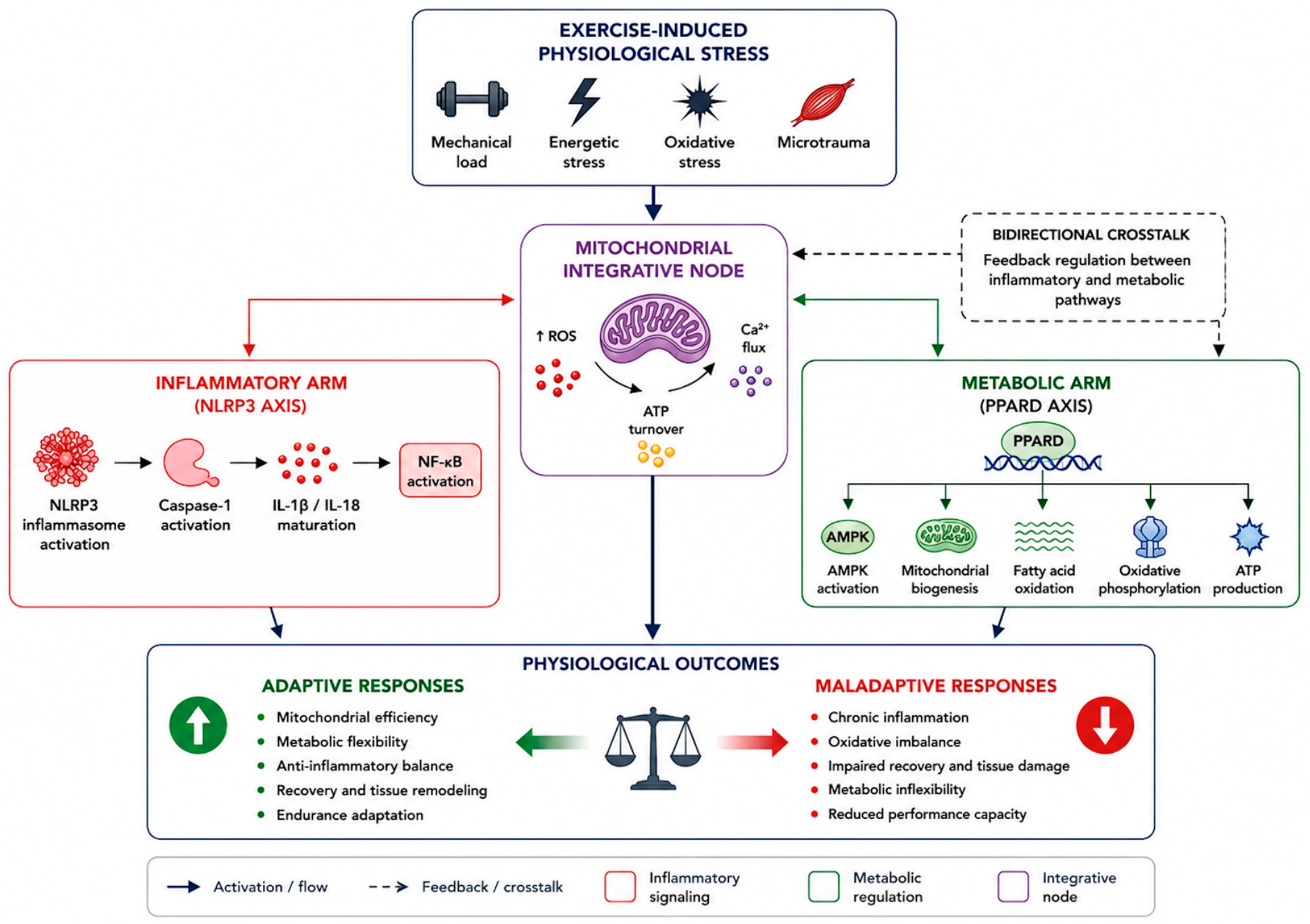
1. Introduction
Exercise adaptation is increasingly recognized as a complex and dynamic physiological process resulting from coordinated interactions among metabolic regulation, inflammatory signaling, mitochondrial remodeling, tissue repair, and recovery. Rather than depending on isolated molecular determinants, interindividual variability in exercise performance, metabolic efficiency, tissue remodeling, endurance capacity, and recovery dynamics emerges through multidimensional interactions involving training load, nutritional status, sleep quality, psychosocial stress, immune regulation, and energetic homeostasis [
1,
2,
3,
4]. Accordingly, contemporary exercise physiology has progressively shifted from reductionist candidate-gene interpretations to systems-level frameworks, in which exercise-related phenotypes are understood as context-dependent physiological responses shaped by interconnected molecular and environmental regulatory networks [
5,
6,
7].
Recent advances in exercise immunology and molecular physiology have highlighted inflammatory and metabolic pathways as central regulators of adaptation to repeated exercise-induced stress [
8,
9]. Repeated physiological stress promotes coordinated adaptive responses involving mitochondrial remodeling, substrate utilization, redox-sensitive signaling, vascular adaptation, and immune–metabolic communication [
10,
11]. These responses are mediated through interconnected pathways involving AMP-activated protein kinase (AMPK), peroxisome proliferator-activated receptors (PPARs), calcium-dependent signaling, and cellular stress response systems [
12,
13]. Collectively, these mechanisms contribute to energetic homeostasis, physiological resilience and long-term cardiometabolic adaptation.
Although regular physical activity exerts predominantly anti-inflammatory and cardioprotective effects, elite and highly trained athletes are frequently exposed to repeated bouts of high-intensity or prolonged exercise, which can induce transient oxidative stress, tissue damage, mitochondrial perturbation, and systemic inflammatory activation [
14,
15,
16]. Under appropriate recovery conditions, these responses contribute to tissue remodeling and physiological adaptations. However, excessive cumulative training load, insufficient recovery, chronic energy imbalance, and sustained physiological stress may favor maladaptive responses associated with persistent inflammation, oxidative imbalance, impaired mitochondrial regulation, and reduced adaptive capacity [
17,
18]. Therefore, exercise-induced inflammation should be interpreted as a context-dependent physiological response rather than an inherently detrimental process [
19].
Within this physiological framework, the
NLRP3 inflammasome has emerged as a biologically relevant innate immune signaling platform linking mitochondrial dysfunction, oxidative stress, ionic imbalance, and metabolic perturbations to downstream inflammatory activation. Experimental and mechanistic evidence suggests that exercise-induced mitochondrial stress and reactive oxygen species (ROS) generation may activate inflammasome pathways. However, much of the available evidence is derived from experimental systems and inflammatory or cardiometabolic disease models, whereas direct exercise-specific evidence remains comparatively limited. Consequently, the physiological relevance of
NLRP3-associated signaling during exercise adaptation should be interpreted within a mechanistic and hypothesis-generating framework, rather than as a definitively established exercise-specific mechanism. These pathways are associated with caspase-1 activation and maturation of IL-1β and IL-18, cytokines involved in inflammatory regulation, endothelial adaptation, tissue remodeling, and metabolic homeostasis [
20,
21,
22,
23].
Among the metabolic regulators involved in exercise adaptation, peroxisome proliferator-activated receptor delta (
PPARD/PPARδ) has received increasing attention because of its central role in coordinating fatty acid oxidation, oxidative metabolism, mitochondrial biogenesis, substrate utilization, and metabolic flexibility.
PPARD-dependent signaling has been implicated in transcriptional pathways associated with endurance adaptation, mitochondrial efficiency, skeletal muscle oxidative phenotypes, and recovery physiology, although supporting evidence originates from a combination of exercise-related and experimental metabolic studies [
24,
25,
26].
Within this immunometabolic context, genetic variability affecting inflammatory and metabolic signaling pathways has emerged as a potential contributor to interindividual variability in exercise-related physiological adaptation. In particular, the
NLRP3 rs10754558 polymorphism, located within the 3′ untranslated region (3′UTR), and the
PPARD rs2267668 intronic variant have been proposed as candidate modulators of inflammatory responsiveness and metabolic regulation. Nevertheless, currently available evidence remains heterogeneous and fragmented across exercise physiology, sports genomics, immunology, metabolism, and cardiovascular research. Furthermore, direct functional evidence in athletic populations remains limited, and most available findings are derived from broader immunometabolic and cardiometabolic contexts rather than from well-characterized exercise cohorts [
27,
28]. The selection of rs10754558 and rs2267668 was based on their potential regulatory relevance, biological plausibility, and reported associations with inflammatory and metabolic phenotypes. These variants were specifically chosen because they represent candidate molecular interfaces linking inflammatory responsiveness and metabolic flexibility, which are two central components of exercise immunometabolism.
Importantly, accumulating evidence indicates that inflammatory and metabolic pathways interact dynamically during exercise adaptation and recovery phases. Rather than functioning as isolated biological systems, immune regulation, substrate utilization, mitochondrial activity, and cellular stress responses collectively contribute to the maintenance of physiological homeostasis and adaptive remodeling following repeated exercise exposure. Consequently, the influence of individual genetic variants should be interpreted within the context of these interconnected regulatory networks rather than as independent determinants of exercise-related phenotypes [
29,
30].
Despite the increasing interest in exercise immunometabolism, sports genomics, and molecular physiology, important gaps remain in our understanding of how inflammatory and metabolic pathways interact within a unified framework of exercise adaptation. Previous reviews have generally examined inflammasome signaling, mitochondrial adaptation, metabolic regulation, and exercise-associated immune responses as separate biological processes. In contrast, the present review integrates these dimensions around two candidate regulatory variants, NLRP3 rs10754558 and PPARD rs2267668, while explicitly distinguishing direct exercise evidence from indirect mechanistic evidence derived from experimental and cardiometabolic studies.
3. Discussion
This review supports a systems-level interpretation of exercise adaptation, in which inflammatory and metabolic regulatory pathways interact dynamically during repeated physiological stress exposure. The recurrent identification of mitochondrial and redox-sensitive pathways across evidence domains further supports their potential integrative role in exercise immunometabolism [
36,
47,
48].
A central finding of this review is that exercise-induced inflammation should be interpreted as a context-dependent physiological response. Acute and transient inflammatory activation may contribute to tissue remodeling, immune surveillance, vascular adaptation, and recovery after repeated training stimuli. However, excessive or insufficiently compensated physiological stress may favor maladaptive responses associated with persistent inflammation, oxidative imbalance, impaired mitochondrial regulation and reduced adaptive capacity [
49,
50,
51]. This interpretation aligns with contemporary exercise physiology models, in which adaptation depends on the balance between physiological stress exposure and recovery capacity, rather than isolated molecular pathway activation.
Within this framework, the
NLRP3 inflammasome represents a relevant inflammatory interface linking mitochondrial perturbation, reactive oxygen species generation, ionic imbalance, danger-associated molecular signals and downstream cytokine maturation. Exercise-induced mitochondrial stress may transiently activate inflammasome-related pathways that contribute to immune regulation, tissue remodeling, and recovery-associated physiological responses in skeletal muscle. These mechanisms may participate in the adaptive response to repeated exercise exposure through interactions with the mitochondrial and metabolic regulatory systems [
7,
10].
Therefore, the functional relevance of
NLRP3 rs10754558 should be interpreted cautiously. Although this variant is located in the 3′ untranslated region and may influence post-transcriptional regulation, mRNA stability, or inflammatory responsiveness, direct evidence in athletic populations remains limited. Most mechanistic support derives from inflammatory, cardiometabolic, and oxidative stress contexts rather than from longitudinal exercise cohorts. Consequently,
NLRP3 rs10754558 should be considered a potential modulatory marker of inflammatory responsiveness and not a deterministic predictor of exercise performance, recovery capacity or maladaptive outcomes [
45,
52].
The reviewed evidence suggests the potential physiological relevance of
PPARD-associated metabolic regulation in exercise adaptation.
PPARD-related pathways appear to be closely linked to substrate utilization efficiency, oxidative metabolic adaptation, mitochondrial function, and maintenance of energetic balance during prolonged physiological demand. Through interactions with AMPK, PGC-1α, and SIRT1, these mechanisms may contribute to adaptive metabolic responses that support endurance physiology, metabolic flexibility, and exercise-associated energy homeostasis [
9,
32,
50,
53].
Similarly,
PPARD rs2267668 may represent a regulatory variant with potential relevance to metabolic adaptation. The interpretation of non-coding variants remains complex because regulatory effects may be influenced by tissue-specific expression patterns and linkage disequilibrium with neighboring functional loci. Consequently, longitudinal exercise studies integrating transcriptomic, epigenetic, and functional genomic approaches are required to clarify the biological relevance of rs10754558 and rs2267668 in adaptive responses to training [
49].
Evidence supporting the involvement of NLRP3- and PPARD-related pathways in exercise immunometabolism is heterogeneous. Direct evidence is derived mainly from human exercise interventions, athlete-based studies, and physiological investigations assessing inflammatory, metabolic, and mitochondrial responses to exercise. Additional support comes from animal and cellular models, whereas a substantial part of the mechanistic framework is extrapolated from the contexts of inflammatory, metabolic, and cardiometabolic diseases. Therefore, the interpretation of the proposed NLRP3–PPARD interaction should consider the heterogeneous origin and strength of the currently available evidence.
A major contribution of this review is the integration of inflammatory and metabolic regulation within the exercise immunometabolism framework [
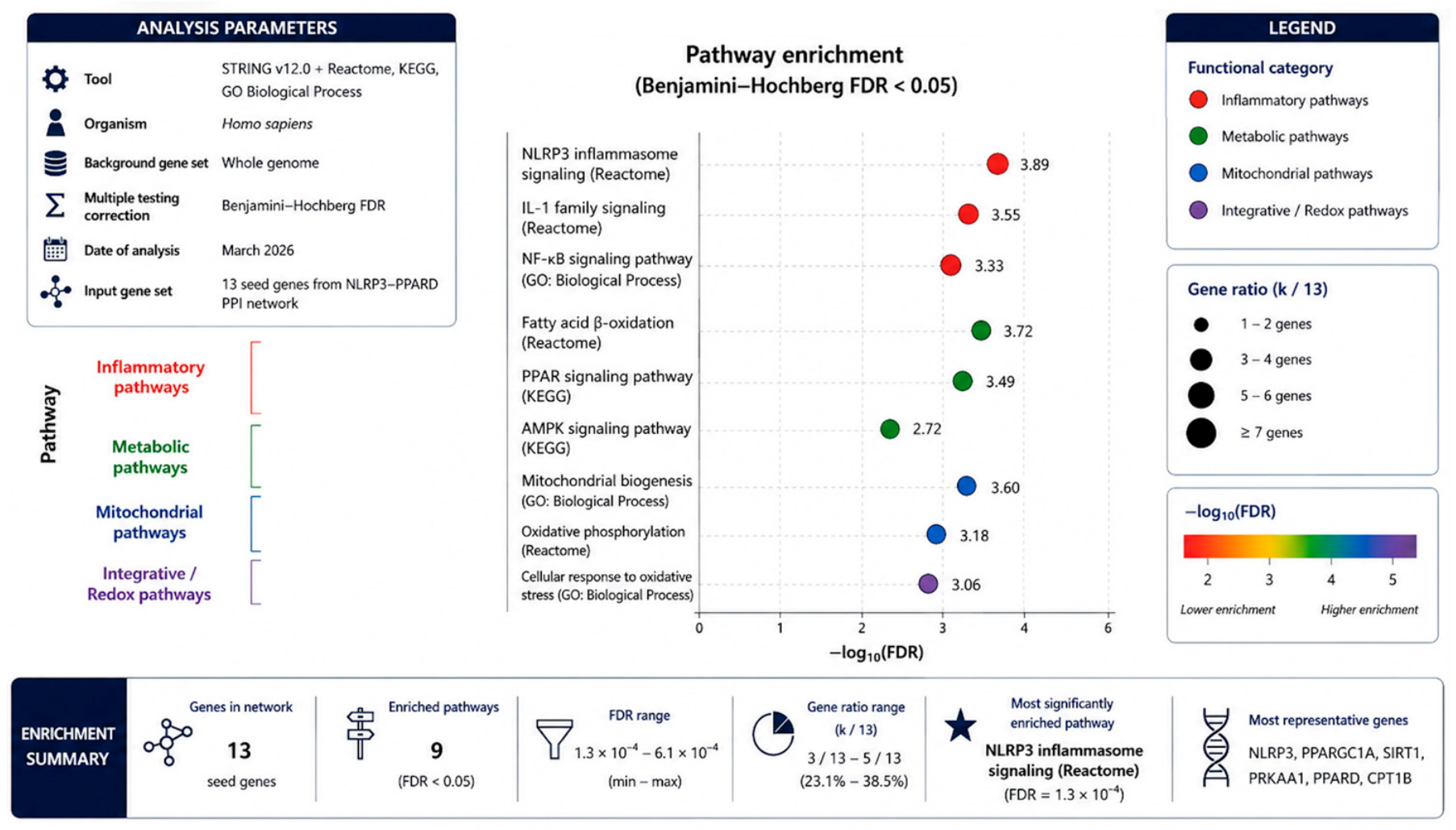
54]. Pathway enrichment analyses identified associations among inflammatory signaling, mitochondrial regulation, substrate utilization, and energy-sensing pathways, supporting the interpretation that adaptive exercise responses involve coordinated immunometabolic regulation rather than isolated molecular mechanisms [
12,
53].
The proposed framework may have important implications for recovery physiology. Efficient recovery following repeated exercise exposure likely depends on coordinated regulation of inflammatory resolution, energetic restoration, tissue repair, and metabolic recovery processes [
52,
55]. When appropriately regulated, these adaptive responses may contribute to improved physiological resilience and the restoration of homeostasis. Conversely, impaired recovery regulation may favor maladaptive responses associated with persistent fatigue, oxidative imbalance, and reduced physiological adaptation [
56].
The proposed framework may also help explain interindividual variability in exercise adaptation. Individuals exposed to similar training stimuli may exhibit distinct physiological responses because adaptation is influenced by training history, nutritional status, sleep quality, inflammatory tone, mitochondrial function, environmental exposure, sex, age, and broader genetic background [
57]. Consequently, isolated candidate gene interpretations are insufficient to explain the complexity of exercise-related phenotypes, reinforcing the need for integrative approaches that combine physiological, molecular, metabolic, and recovery-related assessments [
58,
59].
From a translational perspective, these findings support the potential value of integrated biomarker panels over single genetic markers. Future studies should evaluate whether combined inflammatory, metabolic, mitochondrial, and recovery-associated signatures can help identify adaptive or maladaptive responses to exercise training. Such approaches could contribute to precision exercise physiology, athlete monitoring, recovery optimization, and the prevention of maladaptive responses associated with excessive cumulative physiological stress. Nevertheless, these applications remain exploratory and require rigorous longitudinal validation before clinical or performance-related implementation [
49,
50].
An additional consideration is the growing evidence that inflammatory and metabolic responses to exercise may differ between males and females. Sex hormones influence immune regulation, substrate utilization, mitochondrial function, and recovery-associated physiology, potentially contributing to [
57]. Emerging evidence suggests that females may exhibit distinct inflammatory responses, enhanced lipid utilization, and differences in mitochondrial regulation compared with males, although the underlying mechanisms remain incompletely understood [
58,
59].
From the perspective of exercise immunometabolism, these observations highlight the possibility that the biological effects of
NLRP3-associated inflammatory signaling and
PPARD-mediated metabolic regulation may vary according to sex-specific physiological context. However, direct evidence evaluating the sex-dependent effects of rs10754558 and rs2267668 in exercise settings remains limited. Future studies integrating genetic, hormonal, metabolic, and exercise response data will be important for clarifying the potential sex-specific mechanisms underlying interindividual variability in exercise adaptation [
57,
58,
59].
This study has several limitations. First, this review was designed as a structured narrative synthesis rather than a formal systematic review or meta-analysis. Accordingly, the literature search was intended to identify and integrate relevant evidence sources rather than provide exhaustive study retrieval or formal evidence synthesis procedures.
Second, the available literature is heterogeneous in terms of exercise protocols, populations, training status, molecular outcomes, inflammatory biomarkers, metabolic endpoints and recovery measures. Third, direct evidence simultaneously evaluating NLRP3- and PPARD-related pathways in well-characterized athletic cohorts is limited. Fourth, the in silico analyses were based on public databases and pathway annotations, which are useful for biological contextualization but cannot establish causality or functional validation. Finally, the interpretation of NLRP3 rs10754558 and PPARD rs2267668 remains hypothesis-generating and should not be used for deterministic or predictive conclusions.
Future research should prioritize longitudinal multicenter studies integrating standardized exercise protocols, repeated physiological testing, mitochondrial phenotyping, inflammatory and metabolic biomarkers, multi-omics profiling, and recovery assessment. Particular attention should be paid to sex-specific responses, ancestry diversity, training status, nutritional context, and environmental modifiers. Experimental validation in skeletal muscle, immune cells, and vascular tissues is necessary to clarify whether
NLRP3- and
PPARD-related pathways directly modulate exercise-induced adaptation or primarily reflect broader immunometabolic states [
57].
In conclusion, the evidence synthesized in this review supports a biologically plausible systems-level framework in which exercise adaptation emerges through coordinated immunometabolic regulation, involving interconnected inflammatory and metabolic pathways. NLRP3-associated inflammatory signaling and PPARD-mediated metabolic regulation may contribute to the interindividual variability in exercise-related physiological responses and recovery processes. However, the strength of the available evidence is heterogeneous, and a substantial proportion of the proposed mechanistic framework is derived from experimental models and cardiometabolic disease contexts rather than direct exercise-based investigations. Consequently, current evidence remains insufficient to support deterministic genetic predictions or causal interpretations of exercise adaptation. Future longitudinal studies on athletes, controlled exercise interventions, and mechanistic validation studies integrating molecular, physiological, and multi-omics approaches are necessary to clarify the direct role of NLRP3- and PPARD-related pathways in exercise physiology and adaptive responses to training.
4. Materials and Methods
4.1. Study Design and Reporting Framework
This study was designed as a structured narrative review integrating systems-level physiological and immunometabolic perspectives, complemented by exploratory in silico functional annotation, protein–protein interaction (PPI) network analysis, and pathway enrichment analysis. The primary objective was to synthesize the current evidence regarding the potential contribution of NLRP3 rs10754558 and PPARD rs2267668 to inflammatory and metabolic regulation associated with exercise adaptation and the interconnected immunometabolic regulation.
Given the substantial heterogeneity across exercise protocols, study populations, molecular outcomes, inflammatory biomarkers, metabolic endpoints, and recovery-related physiological measures, a formal systematic review or meta-analysis approach was not methodologically appropriate. Instead, this study prioritized integrative physiological interpretation and systems-level contextualization of inflammatory and metabolic pathways associated with exercise immunometabolism.
The study design integrated three complementary analytical components: (i) a structured literature synthesis focused on inflammatory, metabolic, mitochondrial, and exercise physiology pathways; (ii) functional annotation of NLRP3 rs10754558 and PPARD rs2267668 using publicly available genomic and regulatory databases; and (iii) exploratory systems-level analyses, including protein–protein interaction networks and pathway enrichment analyses, to identify recurrent biological processes associated with inflammatory signaling, oxidative metabolism, mitochondrial adaptation, energetic stress sensing, and recovery-associated physiological regulation.
The reporting strategy was developed to align with the contemporary recommendations for narrative and integrative reviews in molecular physiology and exercise biology. Particular emphasis was placed on distinguishing direct evidence derived from exercise physiology investigations from complementary mechanistic evidence originating from inflammatory, metabolic, mitochondrial, and cardiometabolic research. Additionally, the interpretation of functional annotations and pathway enrichment findings was intentionally restricted to biological plausibility and hypothesis generation rather than causal inference or predictive exercise-related interpretations.
Because the analyses incorporated publicly available databases, literature-derived annotations, and previously published studies, no human participants, biological samples, or identifiable personal data were directly involved in this investigation. Therefore, institutional ethics committee approval and informed consent were not required for this study.
Accordingly, the present review should be interpreted as a structured physiological synthesis integrating mechanistic and translational evidence, rather than a quantitative evidence-grading review.
4.2. Eligibility Criteria
Eligibility criteria were established to identify studies relevant to inflammatory regulation, metabolic adaptation, mitochondrial physiology, exercise immunometabolism, and the potential biological relevance of NLRP3- and PPARD-related pathways during exercise-induced physiological stress and recovery.
Studies were considered eligible if they met at least one of the following criteria: (i) evaluated inflammatory, mitochondrial, metabolic, oxidative stress, or recovery-associated responses related to exercise physiology; (ii) investigated NLRP3 inflammasome signaling, PPARD-associated metabolic regulation, or interconnected immunometabolic pathways associated with exercise adaptation; (iii) examined molecular, physiological, or biomarker responses associated with mitochondrial remodeling, oxidative metabolism, substrate utilization, energetic stress sensing, or metabolic flexibility; or (iv) provided mechanistic, translational, or systems-level evidence relevant to exercise-induced physiological adaptation, recovery physiology, or cardiometabolic regulation.
Both experimental and observational studies were considered eligible, including human exercise studies, athlete-based investigations, mechanistic physiological studies, molecular biology studies, and relevant translational or experimental investigations involving inflammatory and metabolic regulation. Complementary evidence derived from mitochondrial biology, immunology, metabolism, and cardiometabolic research was also included when relevant to exercise adaptation and immunometabolic regulation.
Review articles, mechanistic reviews, and systems biology studies were also considered if they provided relevant conceptual or physiological integration regarding inflammatory–metabolic interactions, mitochondrial adaptation, energetic regulation, or exercise recovery physiology. Publicly available genomic, regulatory, and pathway databases used for functional annotation and enrichment analyses, including dbSNP, Ensembl, GTEx, RegulomeDB, STRING, Reactome, KEGG, and Gene Ontology databases, were also considered eligible sources for exploratory in silico analyses. All database searches were performed up to March 2026.
Studies were excluded if they (i) lacked relevance to exercise physiology, inflammatory regulation, mitochondrial adaptation, oxidative metabolism, or metabolic physiology; (ii) focused exclusively on unrelated pathological conditions without physiological or mechanistic relevance to exercise adaptation; (iii) did not provide sufficient methodological or mechanistic information for physiological interpretation; or (iv) represented duplicate publications, conference abstracts without accessible full data, editorials, or non-scientific reports.
No strict restrictions regarding participant sex, age, ancestry, or training status were applied because the objective of this review was to capture broad physiological and mechanistic evidence related to exercise immunometabolism and inflammatory–metabolic integration. However, studies directly involving exercise interventions, athletic populations, skeletal muscle physiology, mitochondrial adaptation, inflammatory biomarkers, and exercise-associated metabolic regulation were prioritized during evidence synthesis.
Because the present study aimed to provide a systems-level physiological interpretation rather than quantitative pooled estimates, the study selection prioritized mechanistic relevance, physiological integration, and biological plausibility over formal risk-of-bias stratification or evidence grading.
Studies were considered eligible if they addressed one or more of the following domains: (i) NLRP3-associated inflammatory signaling; (ii) PPARD-related metabolic regulation; (iii) exercise physiology, exercise adaptation, or exercise immunometabolism; (iv) mitochondrial, inflammatory, metabolic, or recovery-associated pathways relevant to exercise adaptation; and (v) functional, regulatory, or translational evidence related to rs10754558 or rs2267668.
Studies were excluded if they lacked relevance to exercise physiology, immunometabolism, inflammatory regulation, metabolic adaptation, or the biological pathways investigated in this review. Conference abstracts without sufficient methodological information, duplicate reports, and studies lacking relevance to the predefined thematic framework were also excluded. Eligibility decisions were guided by thematic relevance to the review objectives and the predefined evidence domains used to structure the narrative synthesis.
4.3. Information Sources and Search Strategy
A structured literature search was conducted to identify studies related to exercise immunometabolism, inflammatory regulation, mitochondrial adaptation, oxidative metabolism, metabolic flexibility, recovery-associated physiology, and the potential biological relevance of NLRP3- and PPARD-related pathways in exercise-induced physiological stress. The search strategy was designed to capture mechanistic, physiological, translational, and systems-level evidence relevant to inflammatory–metabolic integration in exercise adaptation.
The literature search was performed using the electronic databases PubMed/MEDLINE, Scopus, and Web of Science from database inception to March 2026. Additional complementary searches were conducted through manual screening of reference lists from relevant review articles and primary studies to identify potentially eligible publications not captured during the initial database search.
The search terms combined controlled vocabulary and free-text keywords related to exercise physiology, immunometabolism, mitochondrial adaptation, inflammatory signaling, metabolic regulation, and candidate pathways associated with NLRP3 and PPARD. The principal search strategy included combinations of the following terms: “exercise immunometabolism,” “exercise physiology,” “exercise adaptation,” “exercise-induced stress,” “NLRP3 inflammasome,” “PPARD” OR “PPARδ,” “mitochondrial adaptation,” “oxidative phosphorylation,” “fatty acid oxidation,” “metabolic flexibility,” “AMPK signaling,” “PGC-1α,” “oxidative stress,” “ROS signaling,” “exercise recovery,” and “recovery physiology.” Boolean operators (“AND,” “OR”) were applied to optimize search sensitivity and specificity according to database requirements.
Representative search combinations included: (“exercise adaptation” AND “
NLRP3”), (“exercise physiology” AND “
PPARD”), (“exercise immunometabolism” AND “mitochondrial adaptation”), (“oxidative metabolism” AND “exercise recovery”), (“NLRP3 inflammasome” AND “oxidative stress” AND “exercise”), and (“
PPARD” OR “
PPARδ”) AND (“fatty acid oxidation” OR “metabolic flexibility”) AND (“exercise adaptation”). Detailed Boolean combinations and database-specific search strategies used during literature retrieval are provided in
Supplementary Table S1 to enhance methodological transparency and reproducibility. The search strategy was intended to identify relevant evidence sources and support the development of a structured narrative synthesis, rather than to perform a formal systematic review, scoping review, or quantitative evidence synthesis. Consequently, no predefined study selection flow diagram, risk of bias assessment, or quantitative pooling procedures were applied. The retrieved literature was evaluated according to its relevance to exercise physiology, exercise immunometabolism, inflammatory regulation, metabolic adaptation, and the proposed
NLRP3–PPARD framework of this review.
The literature retrieval strategy was designed to support a systems-level physiological synthesis integrating inflammatory signaling, mitochondrial adaptation, metabolic flexibility, oxidative metabolism, redox-sensitive regulation, and recovery physiology within the exercise immunometabolism framework. The principal physiological domains, conceptual search categories, representative search terms, and their biological relevance to exercise adaptation are presented in
Table 4.
The search strategy prioritized studies published in peer-reviewed journals and written in English only. No strict restriction regarding publication year was initially applied because foundational mechanistic studies related to mitochondrial physiology, inflammatory regulation, oxidative metabolism, and exercise adaptation were considered relevant for a systems-level physiological interpretation. However, particular emphasis was placed on contemporary literature addressing exercise immunometabolism, mitochondrial remodeling, and inflammatory and metabolic integration.
In parallel, publicly available genomic and regulatory resources were consulted to perform exploratory analyses of NLRP3 rs10754558 and PPARD rs2267668, including dbSNP, the Ensembl Genome Browser, GTEx Portal, RegulomeDB, STRING v12.0, Reactome, KEGG, and Gene Ontology databases. These resources were used to evaluate genomic localization, regulatory features, protein–protein interaction profiles, and biological pathways associated with inflammatory and metabolic processes relevant to the exercise physiology.
Potentially relevant studies were assessed according to predefined thematic domains and grouped into categories related to inflammatory regulation, metabolic adaptation, mitochondrial biology, exercise responsiveness, recovery-associated physiology, functional genomics, and system-level regulation. This framework facilitates evidence integration across complementary biological disciplines while avoiding formal evidence grading or quantitative synthesis.
The overall selection strategy emphasized physiological relevance, mechanistic consistency, and translational interpretation, rather than exhaustive evidence retrieval. Nevertheless, literature identification and study selection procedures were conducted systematically to enhance transparency, reproducibility, and consistency throughout the evidence-synthesis process.
4.4. Study Selection and Evidence Integration
The literature retrieval process identified 420 potentially relevant records from the PubMed/MEDLINE, Scopus, and Web of Science databases, including additional studies identified through manual reference screening. After duplicate removal and title and abstract screening, 185 articles were selected for full-text evaluation based on their relevance to exercise physiology, immunometabolism, inflammatory regulation, mitochondrial adaptation, oxidative metabolism, metabolic flexibility, and recovery-related physiological responses. Of these, 87 studies were considered sufficiently relevant for inclusion in the final evidence synthesis.
Because this study was designed as a structured narrative review rather than a formal systematic review, the study selection was intended to identify representative, mechanistically informative, and physiologically relevant evidence sources rather than to provide exhaustive literature retrieval according to the PRISMA methodology. Consequently, the selection process prioritized studies that offered direct experimental, mechanistic, translational, or exercise-related biological insights relevant to inflammatory and metabolic adaptation.
Particular emphasis was placed on investigations involving exercise interventions, skeletal muscle physiology, mitochondrial remodeling, substrate utilization, oxidative metabolism, inflammatory signaling, energetic stress responses, and recovery-associated adaptive processes. When available, evidence derived directly from exercise physiology studies was prioritized in this review. However, as studies simultaneously evaluating NLRP3 rs10754558, PPARD rs2267668, and exercise-associated physiological outcomes remain scarce, complementary evidence from related biological fields was incorporated to support mechanistic interpretation and physiological contextualization.
Accordingly, additional evidence derived from inflammatory biology, mitochondrial physiology, metabolism, cardiometabolic research, and systems biology was included when relevant to exercise immunometabolism and adaptive regulation of exercise. The final evidence integration strategy emphasized physiological relevance, mechanistic consistency, translational coherence, and a systems-level interpretation of exercise adaptation. Functional relationships were interpreted within the broader context of interconnected inflammatory and metabolic pathways while avoiding causal inference or deterministic conclusions based on isolated candidate-gene associations.
Data Extraction and Evidence Synthesis
Information extracted from eligible studies included the study design, study population, biological pathways investigated, exercise-related outcomes, genetic findings, inflammatory markers, metabolic markers, and principal conclusions. The extracted information was organized into predefined thematic categories relevant to exercise immunometabolism.
Evidence synthesis was conducted narratively through the thematic integration of inflammatory regulation, metabolic adaptation, mitochondrial biology, exercise responsiveness, recovery-associated physiology, and systems-level physiological interactions. Because the primary objective of this review was conceptual and mechanistic integration rather than quantitative evidence synthesis, no formal risk-of-bias assessment or evidence-grading framework was applied. The initial screening and thematic categorization were performed by the first author and subsequently reviewed by the co-authors. Potential disagreements regarding study relevance or evidence interpretation were resolved through consensus.
4.5. Exploratory Systems-Level Analyses
4.5.1. Gene Selection and Enrichment Parameters
Exploratory systems-level analyses were conducted to provide biological contextualization of the inflammatory and metabolic pathways potentially involved in exercise immunometabolism. The analyses were centered on the candidate genes NLRP3 and PPARD, which were selected based on their reported relevance to inflammasome signaling, metabolic regulation, mitochondrial adaptation, and exercise-associated physiological responses.
To capture the broader biological networks potentially linking inflammatory and metabolic regulation during exercise adaptation, the initial candidate genes were expanded through literature-guided selection of functionally related genes with established relevance to inflammatory signaling, mitochondrial biology, oxidative stress responses, energy sensing, and metabolic homeostasis. The final gene set used for network construction included
NLRP3,
PPARD,
IL1B,
IL18,
CASP1,
NFKB1,
TNF,
PRKAA1 (AMPK),
PPARGC1A (PGC-1α),
SIRT1,
AKT1,
MTOR, and
PPARA genes. The biological rationale supporting the inclusion of each gene in the exploratory systems-level analyses is summarized in
Supplementary Table S2.
These genes were selected because of their documented involvement in interconnected pathways related to inflammasome activation, cytokine regulation, energy sensing, mitochondrial biogenesis, substrate utilization, oxidative metabolism, and physiological adaptation during exercise. This predefined 13-gene set served as the input for protein–protein interaction network construction and subsequent pathway enrichment analysis.
Because system-level enrichment analyses depend on existing biological annotations and literature representation, the resulting findings were interpreted as exploratory and hypothesis-generating rather than direct evidence of exercise-specific physiological regulation.
4.5.2. Functional Annotation Analysis
Functional annotation analyses were performed to characterize the genomic localization, regulatory context, and potential biological relevance of NLRP3 rs10754558 and PPARD rs2267668 polymorphisms. Publicly available genomic and regulatory resources, including dbSNP, Ensembl, GTEx, RegulomeDB, and LDlink, were consulted to evaluate the genomic position, predicted regulatory function, expression quantitative trait loci (eQTL) evidence, tissue-specific annotation patterns, and broader genomic context of each variant.
Particular attention was given to evidence potentially relevant to exercise physiology, including tissues involved in metabolic regulation and physiological adaptation, such as skeletal muscle, adipose tissue, the liver, and vascular tissues. Available annotations were reviewed to identify potential regulatory mechanisms associated with non-coding variation, including transcriptional regulation, post-transcriptional regulation, chromatin accessibility, and possible linkage disequilibrium with neighboring functional loci.
The objective of this analysis was to provide a biological context for interpreting rs10754558 and rs2267668 within interconnected inflammatory and metabolic pathways potentially involved in exercise immunometabolism. Because functional annotations are derived from publicly available genomic resources and computational predictions, the resulting interpretations were considered descriptive and hypothesis-generating rather than evidence of direct physiological effects or causal relationships in the exercise settings.
Accordingly, the functional annotation results were integrated with evidence from exercise physiology, inflammatory biology, metabolic regulation, and systems-level analyses to support the broader conceptual framework proposed in this review.
4.5.3. Protein–Protein Interaction Network Analysis
Protein–protein interaction (PPI) networks were generated using STRING (version 12.0) and GeneMANIA to explore potential functional relationships among the predefined exercise immunometabolism gene set described in
Section 4.5.1. Analyses were restricted to
Homo sapiens and incorporated interactions supported by experimental evidence and curated database annotations available within the STRING platform.
Network construction was performed using a minimum STRING interaction confidence score of 0.40 (medium confidence level). Interactions were restricted to the predefined gene set, and network interpretation focused on experimentally supported and biologically plausible associations relevant to inflammatory signaling, metabolic regulation, mitochondrial function, oxidative stress responses, and exercise-associated physiological adaptations.
The resulting PPI networks were examined to identify recurrent functional clusters and interconnected biological modules associated with inflammasome activation, energy sensing, mitochondrial biogenesis, substrate utilization, oxidative metabolism, and inflammatory–metabolic crosstalk. Particular attention was given to interactions that potentially link NLRP3-mediated inflammatory signaling with PPARD-associated metabolic regulation within the broader framework of exercise immunometabolism.
Because PPI networks are dependent on existing biological knowledge, database curation, and annotation density, the identified interactions should be interpreted as representations of functional associations rather than direct evidence of exercise-specific physiological regulation. Accordingly, network analyses are considered exploratory and hypothesis-generating approaches intended to provide a systems-level biological context for the mechanisms discussed throughout this review.
4.5.4. Pathway Enrichment Analysis
Pathway enrichment analyses were conducted using the Reactome, Kyoto Encyclopedia of Genes and Genomes (KEGG), and Gene Ontology Biological Process databases to identify biological pathways overrepresented within the predefined exercise immunometabolism gene set and the associated protein–protein interaction network.
Enrichment significance was evaluated using the Benjamini–Hochberg false discovery rate (FDR) correction procedure to account for multiple tests. Pathways with FDR-adjusted p-values < 0.05 were considered significantly enriched and retained for biological interpretation. The enriched pathways were subsequently grouped according to their primary biological functions, including inflammatory, metabolic, mitochondrial, and integrative redox-related pathways.
The enrichment results were used to identify recurrent biological themes potentially linking inflammatory signaling, mitochondrial regulation, energy sensing, oxidative metabolism, and metabolic adaptation in exercise immunometabolism. However, because enrichment analyses reflect statistically overrepresented functional annotations derived from existing biological databases, the identified pathways should be interpreted as hypothesis-generating functional associations rather than as direct evidence of exercise-specific physiological regulation. The principal enriched pathways identified through Reactome, KEGG, and Gene Ontology analyses are shown in
Figure 2.
4.6. Statistical Considerations
Because this study was conducted as a structured narrative review complemented by exploratory systems-level in silico analyses, no formal meta-analysis, quantitative evidence synthesis, or inferential statistical analyses involving primary experimental datasets were performed in this study.
For pathway enrichment analyses, statistical significance was evaluated using Benjamini–Hochberg false discovery rate (FDR)-adjusted p-values, and pathways with FDR-adjusted p-values < 0.05 were considered significantly enriched. These statistical procedures were applied exclusively to exploratory enrichment analyses and did not represent direct evidence of exercise-specific physiological regulation.
Accordingly, the system-level findings should be interpreted as exploratory and hypothesis-generating rather than as confirmatory evidence of causal or exercise-specific biological mechanisms. The results are intended to provide a biological context and support the conceptual integration of the inflammatory and metabolic pathways discussed throughout this review.
4.7. Evidence Classification Framework
To improve the transparency of the interpretation of the reviewed literature, all evidence discussed in this review was classified according to its proximity to exercise physiology. Three hierarchical levels of evidence were defined and applied throughout this study (
Table 1). Level 1 corresponded to direct exercise evidence, including human exercise interventions, athlete-based studies, training studies, and investigations evaluating exercise-induced physiological, metabolic, inflammatory, mitochondrial, recovery-related and genetic responses.
Level 2 corresponds to experimental mechanistic evidence derived from animal models, skeletal muscle models, cellular systems, and in vitro studies investigating the biological mechanisms relevant to exercise adaptation.
Level 3 corresponds to indirect mechanistic evidence derived from inflammatory, metabolic, cardiometabolic, obesity-related, insulin resistance, or chronic disease contexts. These studies were used to support biological plausibility but were not interpreted as direct evidence of exercise adaptation or athletic performance.
This framework was applied throughout the review to distinguish direct exercise-related findings from extrapolated mechanistic evidence and facilitate the interpretation of the available literature. Accordingly, discussions involving NLRP3 rs10754558 and PPARD rs2267668 were contextualized according to the origin and strength of the supporting evidence, and causal, deterministic, or predictive interpretations were avoided when direct exercise-specific evidence was lacking.
Functional Annotation of Genetic Variants
Functional annotation analyses were performed as exploratory systems-level approaches to characterize the genomic localization, regulatory context, and potential biological relevance of NLRP3 rs10754558 and PPARD rs2267668 polymorphisms. Publicly available genomic and regulatory resources, including dbSNP (NCBI), Ensembl, GTEx, RegulomeDB, and LDlink, were consulted to evaluate genomic position, regulatory classification, expression quantitative trait loci (eQTL) evidence, predicted transcriptional relevance, and broader genomic context of the variants.
Particular attention was given to regulatory features potentially relevant to exercise physiology, including non-coding functional annotation, tissue-specific regulatory patterns, and potential linkage disequilibrium with neighboring loci. Functional annotations were reviewed in the context of inflammatory signaling, metabolic regulation, mitochondrial biology, and exercise immunometabolism.
NLRP3 rs10754558 was evaluated as a regulatory variant located within the 3′ untranslated region (3′UTR) of the NLRP3 gene, whereas PPARD rs2267668 was evaluated as an intronic regulatory variant within the PPARD locus. The functional annotation strategy focused on identifying biologically plausible regulatory mechanisms and contextualizing both variants within pathways potentially relevant to inflammatory and metabolic adaptations.
Because these analyses relied on publicly available genomic resources and computational annotations, the resulting interpretations were considered descriptive and hypothesis-generating rather than evidence of direct physiological effects or causal relationships in the exercise settings.
4.8. Protein–Protein Interaction Network and Enrichment Analyses
Protein–protein interaction network and pathway enrichment analyses were performed to provide systems-level biological contextualization of the inflammatory and metabolic mechanisms discussed throughout this review. Using the predefined exercise immunometabolism gene set described in
Section 4.5.1, the analyses explored potential functional relationships linking inflammasome signaling, metabolic regulation, mitochondrial function, energy sensing, and physiological adaptation to the exercise.
The resulting interaction networks and enrichment profiles were used to identify recurrent biological themes and interconnected signaling pathways potentially relevant to exercise-induced immunometabolism. Particular attention was given to inflammatory–metabolic interfaces involving NLRP3-associated signaling, PPARD-mediated metabolic regulation, AMPK signaling, mitochondrial biogenesis, oxidative metabolism, and stress-responsive pathways because of their recognized physiological relevance to exercise adaptation.
The findings were interpreted within a systems-level framework intended to facilitate the conceptual integration of the available literature. Because the analyses relied on publicly available databases and functional annotations rather than direct experimental validation in athletic populations, the resulting interaction profiles and enriched pathways should be considered exploratory and hypothesis generating. Accordingly, they were used to provide a biological context for the proposed inflammatory–metabolic framework rather than evidence of causal molecular mechanisms or predictive exercise-related phenotypes. Accordingly, the observed pathway convergence should be interpreted as reflecting biologically plausible functional relationships supported by existing annotations, rather than the discovery of novel molecular mechanisms.
4.9. Methodological Considerations and Limitations
Several methodological considerations should be acknowledged when interpreting the findings of the present review and complementary systems-level analyses.
First, this study was conducted as a structured narrative review rather than a formal systematic review or a quantitative meta-analysis. Consequently, the objective was to provide conceptual integration and biological contextualization of the available literature rather than a quantitative estimation of effect sizes or formal evidence grading.
Second, the literature addressing exercise immunometabolism remains heterogeneous with respect to study design, participant characteristics, exercise modalities, training status, molecular methodologies and physiological endpoints. This heterogeneity limited direct comparability across studies and precluded quantitative synthesis.
Third, direct evidence specifically evaluating NLRP3 rs10754558 and PPARD rs2267668 in well-characterized athletic or exercise-trained populations remains limited. Much of the available evidence derives from inflammatory, metabolic, cardiometabolic, or mechanistic research contexts and requires cautious interpretation when extrapolating the findings to exercise physiology.
Fourth, functional annotation, protein–protein interaction, and pathway enrichment analyses relied on publicly available genomic and biological databases, including STRING, Reactome, KEGG, Gene Ontology, GTEx, Ensembl, RegulomeDB, and dbSNP. Although these resources provide valuable biological context, they are dependent on existing annotations, curated datasets, previously reported molecular interactions, and the current representation of biological knowledge in public databases. Consequently, they cannot establish causality, tissue-specific physiological effects, or direct functional validation in exercise settings.
An additional limitation of systems-level analyses is that pathway enrichment results may preferentially identify extensively studied biological pathways because enrichment significance is influenced by annotation density and database coverage. Therefore, recurrent enrichment of inflammatory, metabolic, mitochondrial, and energy-sensing pathways may partly reflect the structure of existing biological knowledge rather than the identification of novel exercise-specific mechanisms of action. Accordingly, the enrichment results should be interpreted as providing biological contextualization and support for conceptual integration, rather than as evidence of previously unrecognized mechanistic pathways.
Despite these limitations, the integrative framework adopted in this review is a strength. The combination of structured literature synthesis, functional annotation, protein–protein interaction networks, and pathway enrichment analyses facilitated the identification of biologically plausible interfaces linking inflammatory and metabolic regulation within the exercise immunometabolism.
Overall, the findings should be interpreted as exploratory and hypothesis-generating. Future longitudinal studies integrating exercise physiology, functional genomics, transcriptomics, metabolomics, proteomics, mitochondrial phenotyping, and exercise intervention designs are necessary to clarify the physiological relevance of NLRP3- and PPARD-related pathways and the potential contribution of rs10754558 and rs2267668 to interindividual variability in exercise adaptation.
5. Conclusions
The evidence synthesized in this review supports a biologically plausible, systems-level framework linking inflammatory and metabolic processes involved in exercise immunometabolism. Rather than operating as isolated mechanisms, these pathways appear to interact dynamically to shape physiological responses to exercise and recovery.
Within this framework, NLRP3-associated inflammatory signaling and PPARD-mediated metabolic regulation emerge as biologically relevant components of interconnected immunometabolic networks that may contribute to the interindividual variability in exercise-related physiological responses. However, the available evidence remains heterogeneous in origin and is derived from a combination of direct exercise studies, experimental models, and indirect cardiometabolic research. Consequently, the proposed biological interactions should be interpreted as mechanistically plausible and hypothesis-generating, rather than as definitively established exercise-specific mechanisms.
Importantly, current evidence is insufficient to support deterministic interpretations of the physiological effects of NLRP3 rs10754558 or PPARD rs2267668 on exercise performance, endurance capacity, or athletic phenotypes. Neither variant should be considered an independent predictor of exercise adaptation, as adaptive responses are influenced by multiple interacting biological and environmental factors.
The systems-level framework proposed in this review may contribute to future research investigating the biological basis of exercise responsiveness and interindividual adaptation. Although the integration of inflammatory and metabolic biomarkers may eventually inform precision exercise physiology approaches, these translational applications remain exploratory and require rigorous validations. Future research should incorporate sex-specific physiological, hormonal, and molecular factors when investigating the roles of inflammatory and metabolic pathways in exercise adaptation. Growing evidence indicates that biological sex may influence immune regulation, substrate utilization, mitochondrial function, and recovery-related responses to exercise, highlighting the importance of considering sex as a relevant source of interindividual variability in exercise immunometabolism.
Beyond the synthesis of inflammatory and metabolic pathways, this review highlights the potential value of integrating regulatory genetic variations into contemporary models of exercise immunometabolism. Within this framework, rs10754558 and rs2267668 emerged as regulatory variants of potential relevance for understanding the interindividual variability in adaptive responses to exercise. Although current evidence remains insufficient to support predictive or deterministic interpretations, these variants represent promising targets for future hypothesis-driven research in exercise physiology, genomics, and precision exercise medicine. In addition, longitudinal studies in athletes, controlled exercise interventions, and integrative multi-omics investigations combining genomic, transcriptomic, metabolic, and physiological assessments are required to clarify the functional relevance of NLRP3- and PPARD-related pathways. Such approaches may help determine how these interconnected inflammatory and metabolic networks contribute to adaptive and maladaptive responses to exercise in diverse physiological contexts.




 ,
,