
Review

Anticancer Potential and Molecular Mechanisms of Cinnamaldehyde and Its Congeners Present in the Cinnamon Plant


by
Sabyasachi Banerjee
* and
Subhasis Banerjee
Department of Pharmaceutical Chemistry, Gupta College of Technological Sciences, Asansol 713301, West Bengal, India
*
Author to whom correspondence should be addressed.
Physiologia 2023, 3(2), 173-207; https://doi.org/10.3390/physiologia3020013

Submission received: 21 December 2022 / Revised: 3 February 2023 / Accepted: 28 March 2023 / Published: 30 March 2023

Abstract

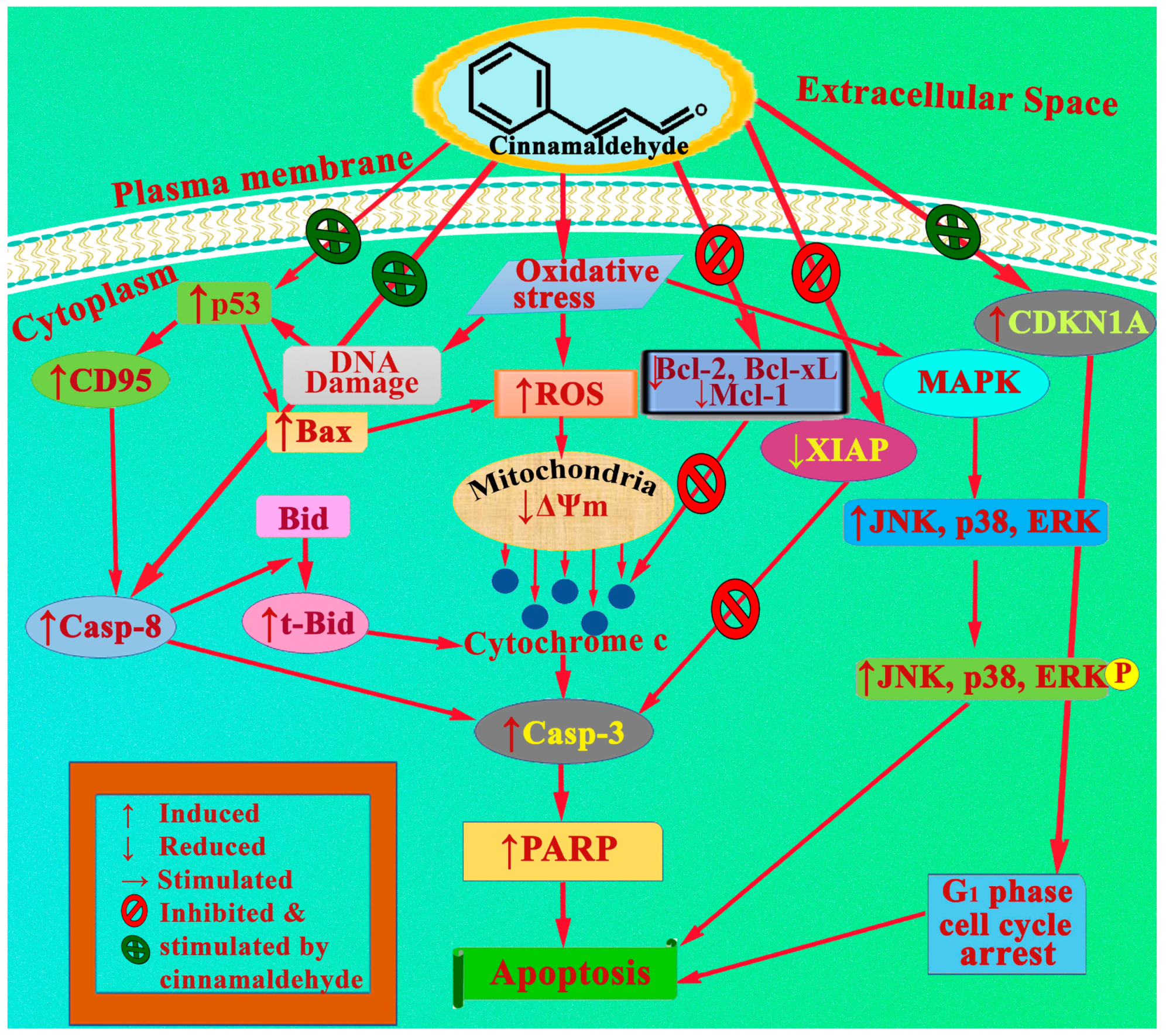
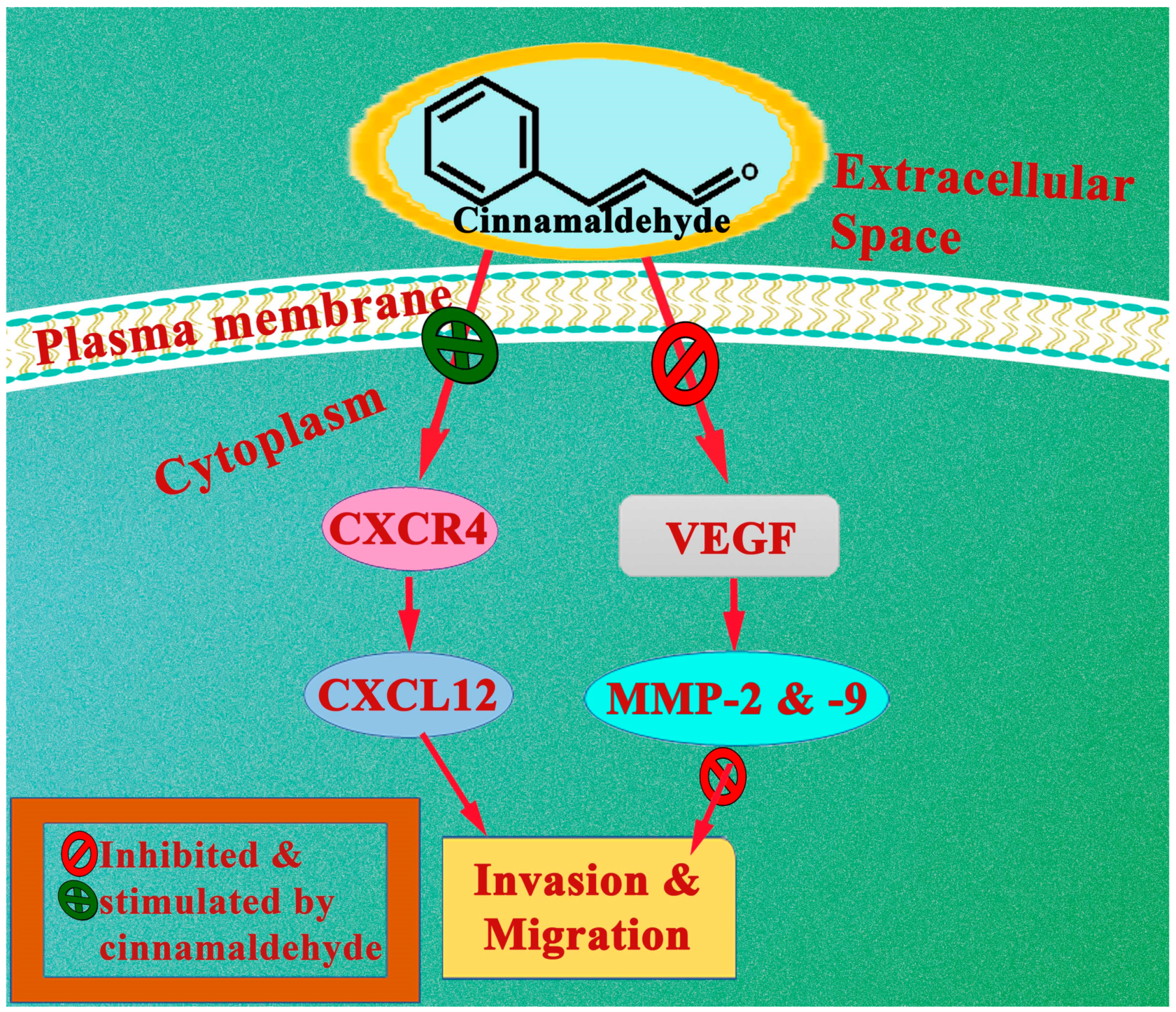
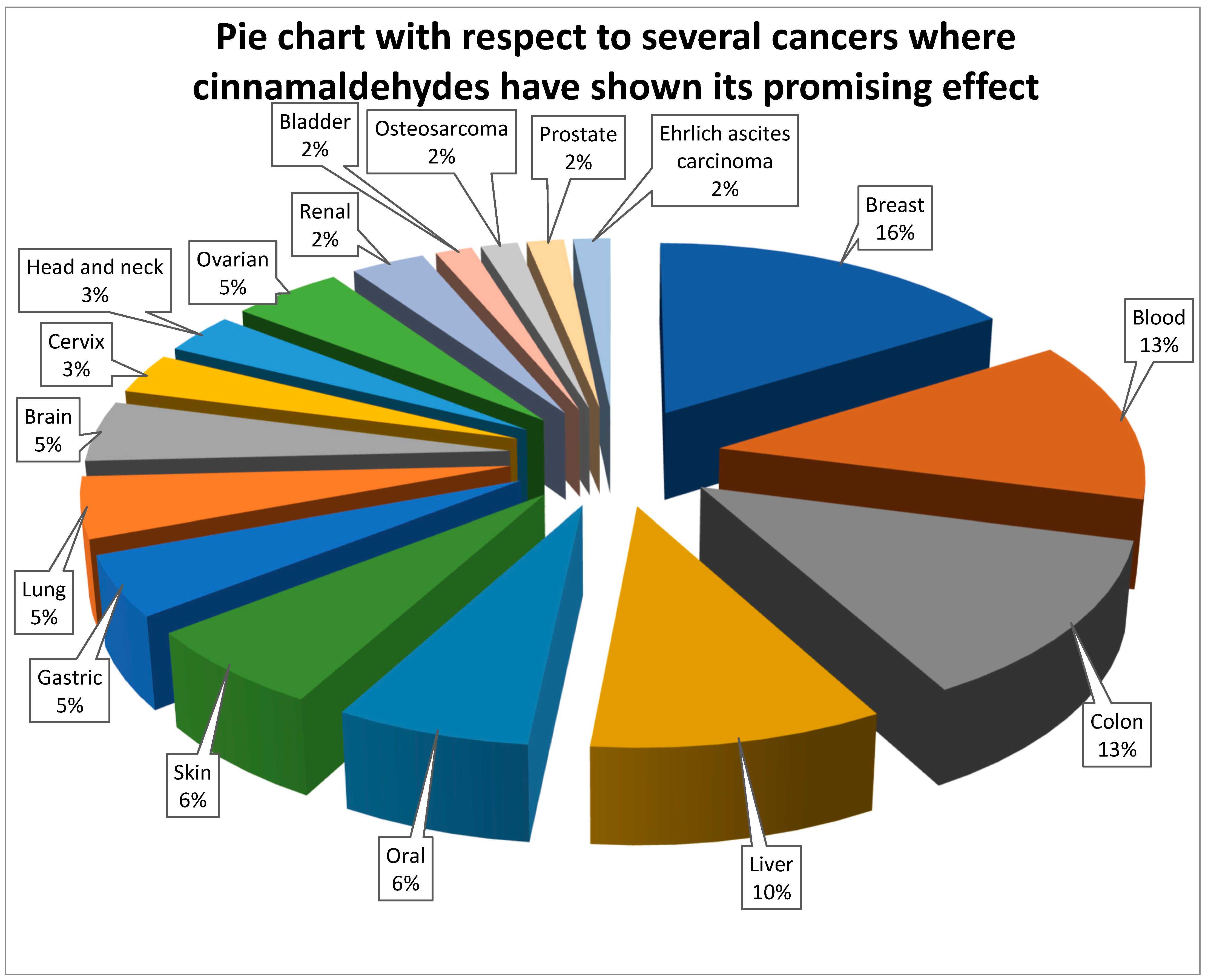
Background: Today, cancer is the leading cause of death. It appears that using large amounts of natural resources reduces the damaging consequences of cancer therapy. Over the last decade, phytoconstituents in food have shown potential as anticancer agents. Cinnamaldehyde and its congeners have shown their ability to act against several cancers. Objective: This article’s purpose is to examine the cellular and molecular mechanisms that entail cinnamaldehyde’s potential for use in the treatment and prevention of cancer. Methods: The anticancer effects of cinnamaldehydes were researched by searching a variety of academic databases (such as Scopus, PubMed, Science Direct, Medline, and Google scholar) in accordance with a predetermined set of criteria. Results: Studies were conducted in order to investigate the mechanism(s) by which cinnamaldehyde causes cancer cells to undergo apoptosis. Additionally, research has shown that cinnamaldehydes have an effect that inhibits the invasion and metastasis of cancer cells. This class of compounds was investigated for their possible application in the treatment of cancers, such as leukaemia, colon, hepatocellular carcinoma, prostate, mouth, and breast cancers. Conclusion: According to an in-depth examination of the relevant published research, cinnamaldehyde and its analogs demonstrate several signalling pathways that are effective against cancers. This review provides a summary of recent research on cinnamaldehyde and its congeners as potential candidates for anticancer drugs.
Keywords: cancer prevention; cinnamaldehyde and its congeners; cinnamon plant; cassia; molecular mechanism cancer prevention; cinnamaldehyde and its congeners; cinnamon plant; cassia; molecular mechanism
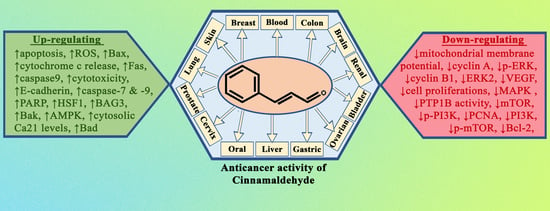
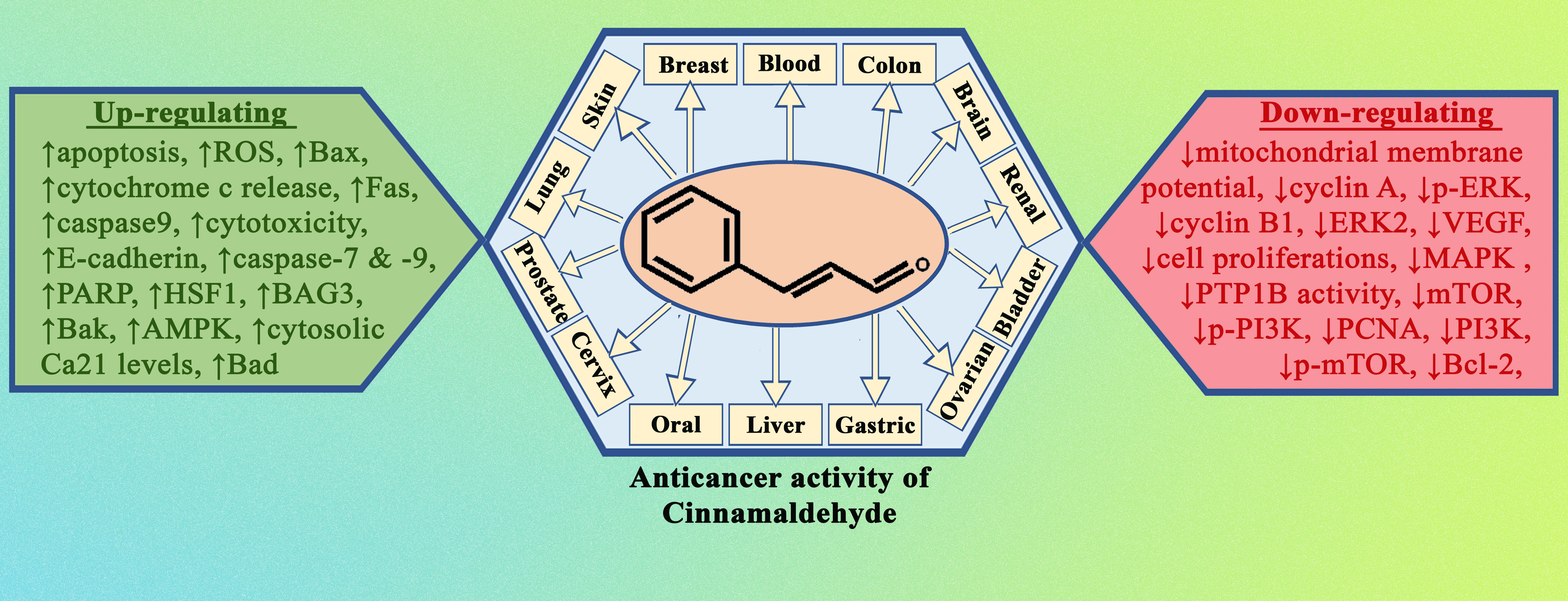
Graphical Abstract