Systematic Review

Phycology in Macaronesia: A PRISMA-Based Review of Research Trends, Knowledge Gaps, and Emerging Threats


1
Institute of Marine Sciences—OKEANOS, University of the Azores, Rua Professor Doutor Frederico Machado 4, 9900-140 Horta, Portugal
2
IMAR—Instituto do Mar, Department of Oceanography and Fisheries, University of the Azores, Rua Professor Doutor Frederico Machado 4, 9900-140 Horta, Portugal
3
CCMAR—Center of Marine Sciences, University of Algarve, Campus de Gambelas Building 7, 8005-139 Faro, Portugal
*
Author to whom correspondence should be addressed.
Phycology 2026, 6(1), 24; https://doi.org/10.3390/phycology6010024
Submission received: 12 December 2025 / Revised: 16 January 2026 / Accepted: 28 January 2026 / Published: 3 February 2026

Abstract

Macroalgae are essential components of marine ecosystems, supporting biodiversity, primary productivity, and the functioning of coastal habitats. In the northeast Atlantic Macaronesian archipelagos (Azores, Madeira, Selvagens, Canary Islands, Cabo Verde), they hold significant ecological and economic value and have recently emerged as key indicators of environmental change. This oceanic region faces increasing pressure from multiple stressors, including climate change, invasive species, habitat degradation, and other anthropogenic impacts, driving shifts in coastal ecosystems and the simplification of structurally complex habitats such as marine forests. To assess the current state of knowledge on Macaronesian macroalgae and identify gaps relevant to conservation and management, we conducted a systematic literature review following PRISMA guidelines. Our results show strong but uneven foundational knowledge, with the Azores and Canary Islands accounting for roughly 80% of publications. Research is dominated by fundamental studies in ecology and taxonomy, while applied research (e.g., resource exploitation, aquaculture, toxicology, and climate-change impacts) remains limited. Red algae and a few dominant orders (Ceramiales, Fucales, Dictyotales) are well represented, whereas green algae and less conspicuous taxa are understudied. Future research should expand geographic coverage, broaden taxonomic scope using molecular tools, strengthen applied research, standardize monitoring frameworks, and align scientific output with management needs.

1. Introduction

Oceanic islands act as natural laboratories, as their isolation and uniquely assembled biotas provide the empirical foundation for core concepts in biogeography, ecology, evolutionary biology, and conservation science [1,2]. The Macaronesian region exemplifies this paradigm. Its five volcanic archipelagos, Azores, Madeira, Selvagens, the Canary Islands, and Cabo Verde, emerged from the ocean floor and lie far from continental margins [3]. Scientific interest in these islands dates back to the pioneering naturalists of the 18th and 19th centuries, like von Humboldt, Hartung, Feulliee, Berthelott, Webb, or Hooker, whose early observations laid the foundations for contemporary island-based research [3].
The Macaronesian archipelagos span a broad latitudinal gradient, from the Azores at 39° N to Cabo Verde near 15° N, thus being subjected to marked climatic contrasts [4]. They also exhibit varying degrees of isolation from continental coastlines, ranging from roughly 1400 km (the shortest distance from the Azorean islands to the European continent) to about 100 Km (the shortest distance from the Canary Islands to north Africa). Because all these islands are volcanic and have not been geologically linked to continental landmasses, biogeographers generally agree that their marine flora and fauna arrived primarily via long-distance oceanic dispersal, a process strongly mediated by prevailing currents and the distances to the nearest mainland or shallow seamount [5,6,7]. Consequently, these oceanographic and climatic factors are pivotal in shaping the region’s algal biodiversity [4,6,7,8,9].
Macroalgae are essential components of marine ecosystems, contributing to biodiversity, primary production, and the functioning of coastal habitats [10,11]. They are the base of the intertidal and infralittoral food webs, and are also habitat structuring species, providing shelter, food, and nursery areas for several species, including fishes and invertebrates of commercial interest [12,13,14,15]. Humans have recognized their importance for thousands of years, with the first records of macroalgal use for water carrier manufacture in Tasmania 37,000 years ago [16], as well as use as food and medicine in Chile 14,000 years ago [17].
In the Macaronesian archipelagos, macroalgae provide essential ecological functions and socio-economic support but are also undergoing severe changes which cascade into impacts across the ecosystems, and as such they are important indicators of environmental change [6,18,19,20]. This region is experiencing increasing pressures and threats from multiple fronts, including climate change impacts from marine heatwaves [21] or ocean acidification [22]; invasive species such as Acrothamnion preissii [23] or more recently Rugulopetryx okamurae [24,25,26]; habitat degradation [27], and other natural and anthropogenic impacts [28]. The combined effects of human activities, such as coastal urban development that destroys habitat and overfishing that disrupts the food web, create imbalances that allow grazers like Diadema africanum to proliferate [28]. These stressors are driving shifts in coastal ecosystems, often resulting in the simplification of structurally complex habitats such as marine forests [29] or in tropicalization processes [30,31].
Macroalgae are thus important components of the much-needed ecosystem-based management (EBM) approach to the sustainable management of marine resources and in mitigating the impacts of the new challenges driven by climate change [32] in this region. However, such a goal requires good ecological knowledge of these key ecosystem components. Phycological studies in Macaronesia evolved significantly since the early studies. Yet, at present, there is no systematized assessment of such knowledge, nor are there significant knowledge gaps in the face of the needs for the various disciplines involved in EBM.
Systematic reviews synthesize the existing body of knowledge within a field, thereby revealing gaps and shaping future research agendas. By integrating findings across multiple studies, they can answer questions that single investigations cannot, expose methodological shortcomings that warrant correction, and develop or test theoretical frameworks explaining observed phenomena [33]. In this context, the present study conducts a systematic review of the current state of knowledge on phycology in Macaronesia, with a particular focus on seaweed (macroalgae) research. Specifically, the objectives were to (i) map the distribution of research output across the constituent islands, (ii) identify the taxa and thematic areas that have received the greatest and the least attention, and (iii) elucidate historical evolution in regional phycology and the geographic biases in the literature. By evaluating which archipelagos and disciplinary domains are least extensively represented, we also aim to pinpoint those critical knowledge gaps that warrant further investigation. In particular, the identification of knowledge gaps of priority to support the decision regarding management actions that can address and mitigate the main challenges posed by climate change and other human-induced threats (e.g., topicalization, marine heatwaves, and introduced species) to the macroalgae species and habitats that they form in Macaronesia.

2. Materials and Methods

2.1. Study Area

Macaronesia historically refers to the biogeographic region that comprises the volcanic archipelagos of the northeast Atlantic, extending from the southernmost islands of Cabo Verde, through the Canary Islands (an autonomous community of Spain), Selvagens, Madeira, and finally to the northernmost Azores (the latter three forming autonomous regions of Portugal). The term was first introduced by Philip Barker-Webb in 1845, but in recent decades, its utility as a biogeographic and phytogeographic unit has been debated [34]. Some authors argue for the exclusion of Cabo Verde [7], while others consider it a different marine bioregion from the remaining archipelagos [35]. Nevertheless, contemporary research has adopted a more unified view towards considering these archipelagos as a single region in order to conform to coordinated political initiatives for management purposes, including the European Union nature conservation policies [1,36,37]. Accordingly, the present study adopts the conventional grouping of the five archipelagos (Azores, Madeira, Selvagens, Canary Islands, and Cabo Verde) as a unified marine bioregion under Macaronesia.
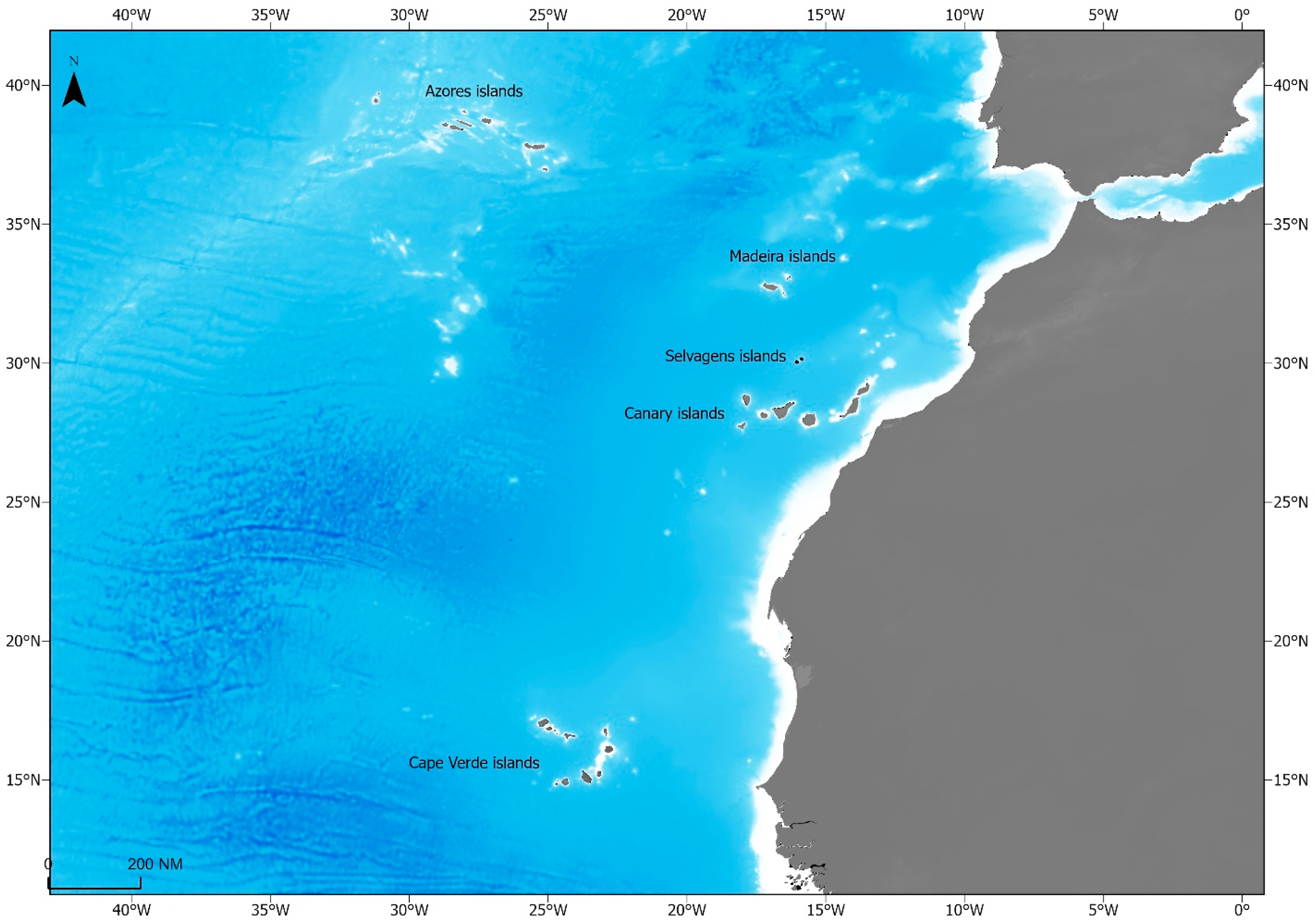
The five archipelagos differ markedly in age, size, and distance from the continental mainland, environmental factors that shape their biotic assemblages and vulnerability to human activities [1,7,38]. The oldest islands (age of the oldest emerged island) are the Selvagens (27 Myr), the Canary Islands (21 Myr), and Cabo Verde (16 Myr), which are also situated relatively close to the continental coasts of Africa (between 96 and 571 km), whereas the younger Azores (8 Myr) lie farthest from any continent (approx. 1400 km from Europe). Madeira occupies an intermediate position geologically and geographically (14 Myr and 630 km from the African continent) [39] (see Figure 1). These gradients translate into distinct bioregional characteristics [1,40].
Correspondingly, anthropogenic pressures vary across the region. The densely populated Canary Islands and Madeira experience intense coastal development and tourism pressure, which leads to overfishing, pollution, and habitat degradation and fragmentation [41,42,43,44]. In Cabo Verde, lower human density does not preclude pressure; overexploitation of marine resources and an increase in tourism are major concerns [45]. The Azores, with a modest permanent population, face challenges associated with fisheries, shipping, the continual arrival of non-indigenous species, and the recent growth in tourism [46]. The Selvagens Islands, lacking permanent residents, retain a larger proportion of relatively undisturbed habitats and were the first marine protected area of Portugal, designated in 1971, and presently a fully marine protected area [18]. In addition, all these archipelagos are subject to the impacts of climate change [21,43,47].

2.2. Method of Systematic Literature Review

We conducted a systematic literature review in accordance with the Preferred Reporting Items for Systematic reviews and Meta-Analyses (PRISMA) 2020 statement guidelines [33,48]. Originally published in 2009 and updated in 2020, this statement was designed to help systematic reviewers present a clear, transparent account of their review’s purpose, methodology, and findings. To maximize the review’s usefulness for readers, authors should provide a thorough and precise description of the rationale behind the review, the process used to locate and select studies, and the outcomes uncovered, including detailed study characteristics and the results of any meta-analyses [33].
No protocol was prepared for this review, and the review was not registered in a public registry.
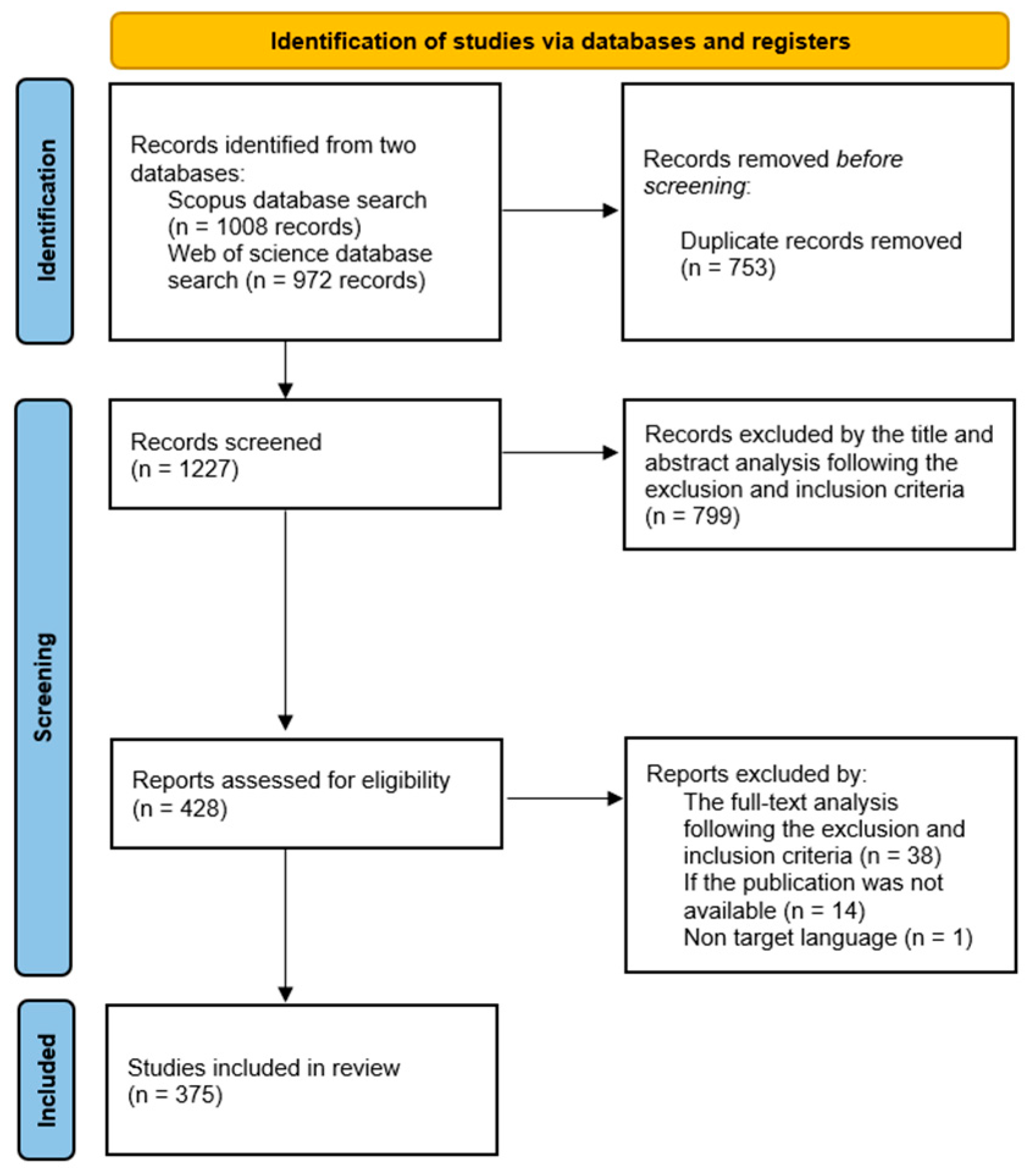
Following these guidelines, we first defined our keywords regarding the aim of the study and region (Table 1) to identify the records of all the peer-reviewed online literature up to June 2025 in two bibliographic citation databases: Scopus (https://www.scopus.com, accessed on 3 July 2025) and Web of Science (https://www.webofscience.com, accessed on 3 July 2025). We performed the search on the title, abstract, and keywords, considering only publications in English, Portuguese, and Spanish, obtaining a total of 1008 publications for Scopus and 972 for Web of Science, which resulted in an overall 1227 publications after removal of duplicates (Figure 2).
We then defined our inclusion and exclusion criteria (Table 2) for the screening of the publications and to ensure that we would select all relevant publications for this study.
The selection process was conducted in two phases. In the first phase, we carried out an initial screening for the eligibility of all selected papers (n = 1226) based on the title and abstract after the exclusion/inclusion criteria, excluding a total of 799 records.
In the second phase, 428 full-text articles were assessed for eligibility. A total of 53 records were excluded: 43 records were excluded by the full-text analysis following the exclusion and inclusion criteria, 15 records were excluded because the publication was not available, and 1 was excluded because it was written in a non target language. In total, 375 publications were finally included in the analysis (Figure 2).

Data Analysis

The bibliographic data was extracted independently by the first two authors, and each article was coded for publication year, thematic category, geographic origin, and taxonomic focus.
  • Thematic classification:
We organized the literature into eleven topics grouped under two overarching domains:
Fundamental science—Taxonomy and systematic (including morphology and anatomy), biology and physiology, genetics and genomics, ecology, biogeography (species distribution and checklists), and paleoecology and paleophycology.
Applied science—Uses: biotech applications (pharmacy, cosmetics, medical, and nutritional) and resource exploitation: aquaculture and natural harvesting; and impacts: non-indigenous species (NIS), climate change, and toxicology.
  • Geographic scope:
The study area includes every region explicitly cited in the source material: the Azores, Madeira, the Selvagens, the Canary Islands, and Cabo Verde. In addition, when the research adopts a truly Macaronesian perspective, examining the archipelagos as a single, cohesive unit rather than dissecting them into separate sub-regions, the broader Macaronesian region is also incorporated. In this sense, “Macaronesia” denotes studies that treat the five archipelagos collectively, focusing on processes, patterns, or phenomena that span the entire island complex (e.g., shared biogeography). Thus, the Macaronesian component of the study captures investigations that view the archipelagos as an integrated whole, rather than as isolated case studies of individual islands.
  • Taxonomic treatment:
We extracted and documented the species reported in each paper, provided that such taxonomic information was available. When a publication does not name a specific species, we assign the observation to the highest taxonomic rank reported (genus, family, etc.). Each article was screened for mentions of individual species names, and every explicit citation of a species was recorded as a single occurrence. Duplicate mentions of the same species within a single article were counted only once to avoid inflating prevalence estimates. We used the taxonomic classification provided by AlgaeBase (https://www.algaebase.org, accessed on 7 October 2025) and updated it to reflect the currently accepted names where necessary. Individual species were excluded from our analysis when the study treated them collectively—as part of an ecological community, as seaweed habitats, or as functional groups—or when the work presented a taxonomic checklist. In this context, a taxonomic checklist is understood as a curated, systematic inventory of all taxa (species, subspecies, genera, families, and higher ranks) documented within a defined geographic area, habitat, or taxonomic grouping. Consequently, records were classified into one of three mutually exclusive categories: (1) community-based assemblages, (2) functional-group descriptions, or (3) taxonomic checklists.
These classifications formed the basis for subsequent quantitative and qualitative syntheses.
All calculations and analyses were carried out in RStudio (Posit Software, PBC, Boston, MA, USA; v. 2025.09.2 Build 418).

3. Results

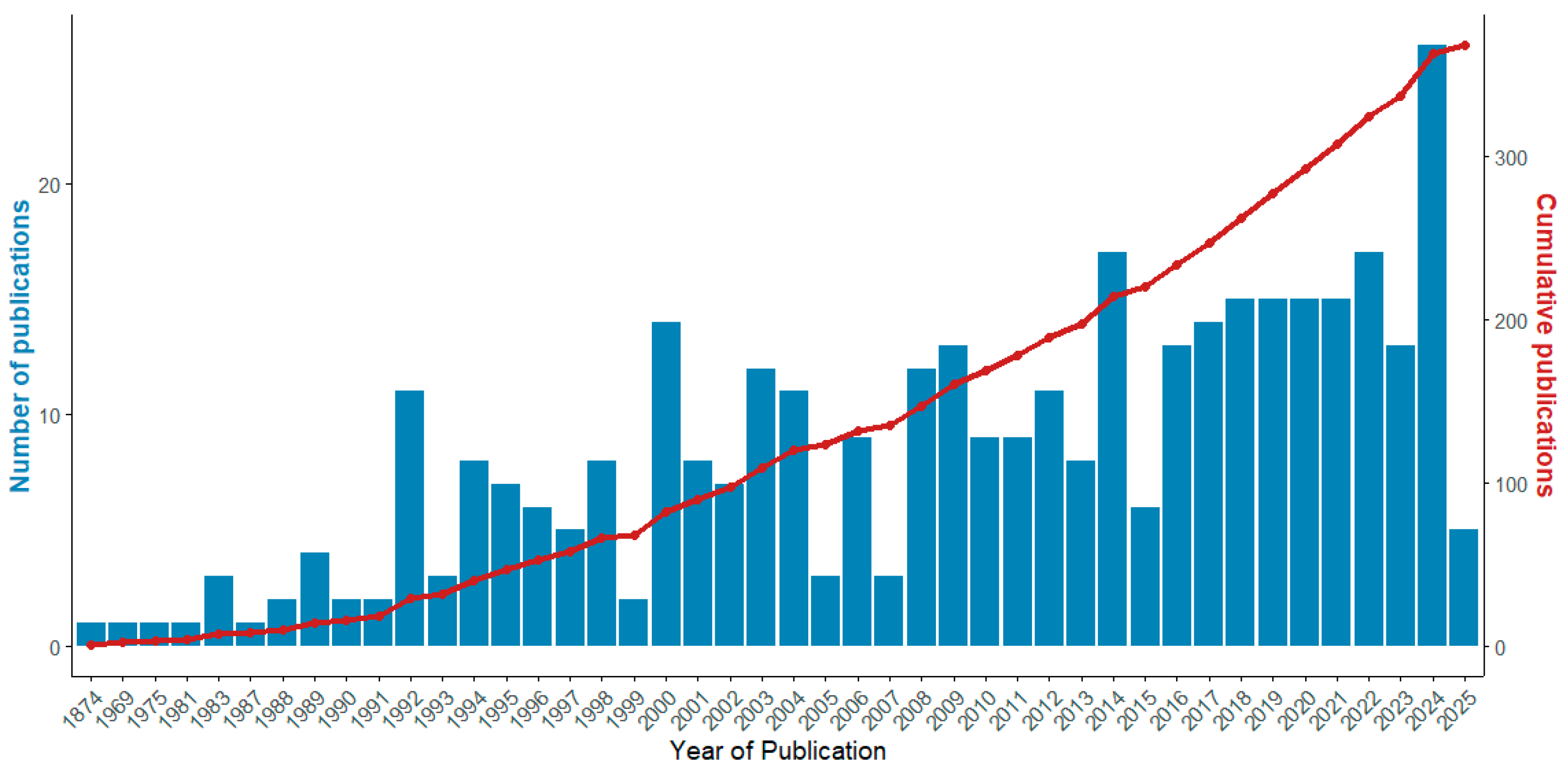
This review included 375 studies in the analysis (Table S1), with the earliest phycological work dating back to 1874, when a seaweed checklist was compiled for Cabo Verde [49] (Figure 3 and Figure 4). Subsequent pioneering studies were carried out in the Canary Islands in 1969, the Azores in 1988, Madeira in 1997, and the Selvagens in 2014 (Figure 4). The first comprehensive study covering the broader Macaronesia region appeared in 1988. From the late 1960s through the 1980s, only a limited number of investigations were conducted. Figure 3 shows a steady accumulation of publications from the late 1980s to the present, with several annual peaks, including a maximum of 26 papers in 2024.
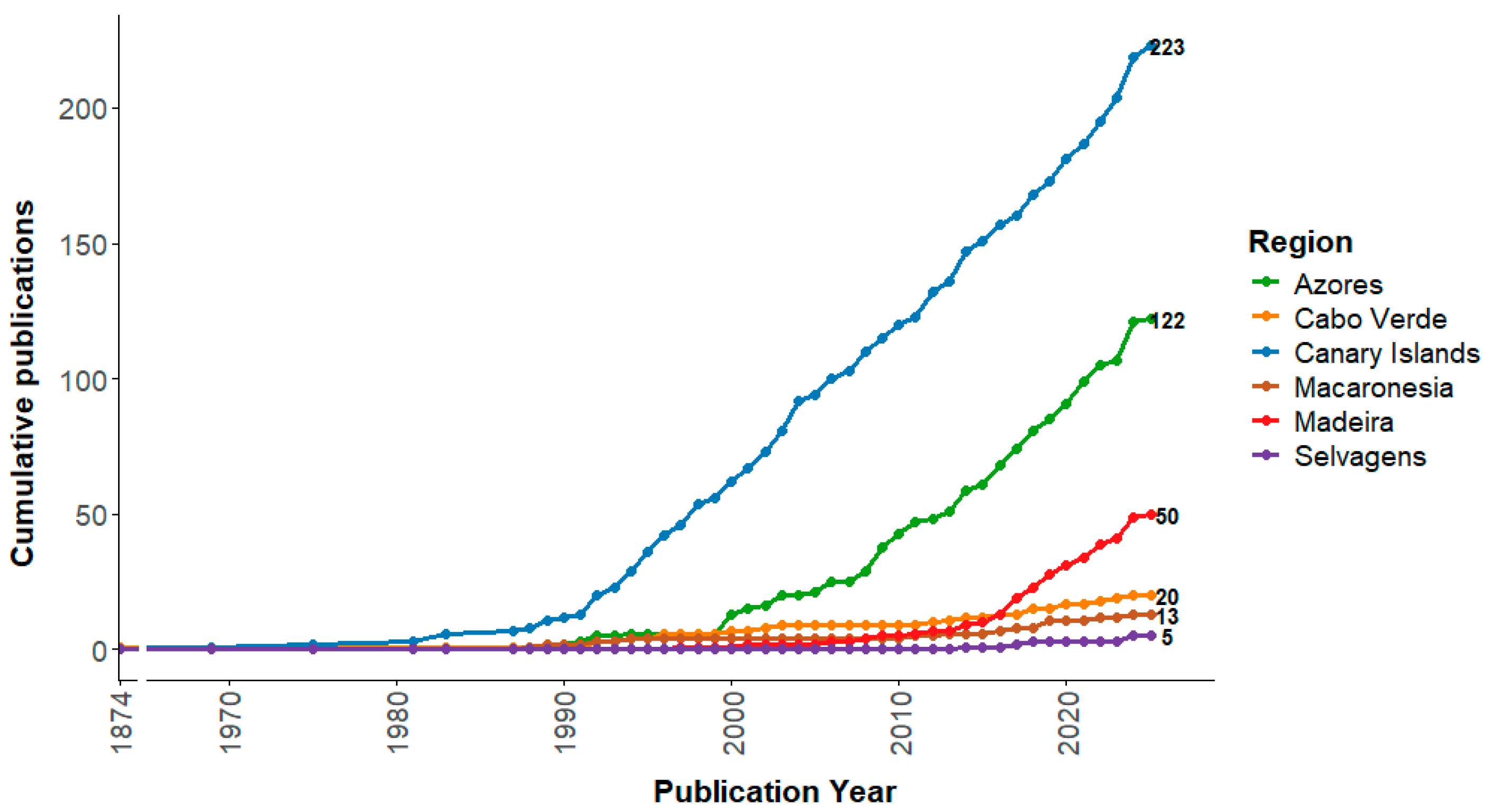
At the regional scale, the cumulative publication record (up to 2025) shows a large difference between archipelagos (Figure 4). The Canary Islands and the Azores together account for more than 80% of the total, followed by Madeira with 12%. These three archipelagos each initiated a distinct period of growth in different decades: the Canary Islands began their earliest surge in the 1990s and have accumulated 223 papers; the Azores entered their expansion phase in the early 2000s, reaching 122 cumulative publications; and Madeira’s increase started in the mid-2010s, resulting in 50 papers to date. Smaller contributors to the overall Macaronesian output include Cabo Verde (20 publications), the broader Macaronesia aggregate (13 publications), and the Selvagens (5 publications) (Figure 4).
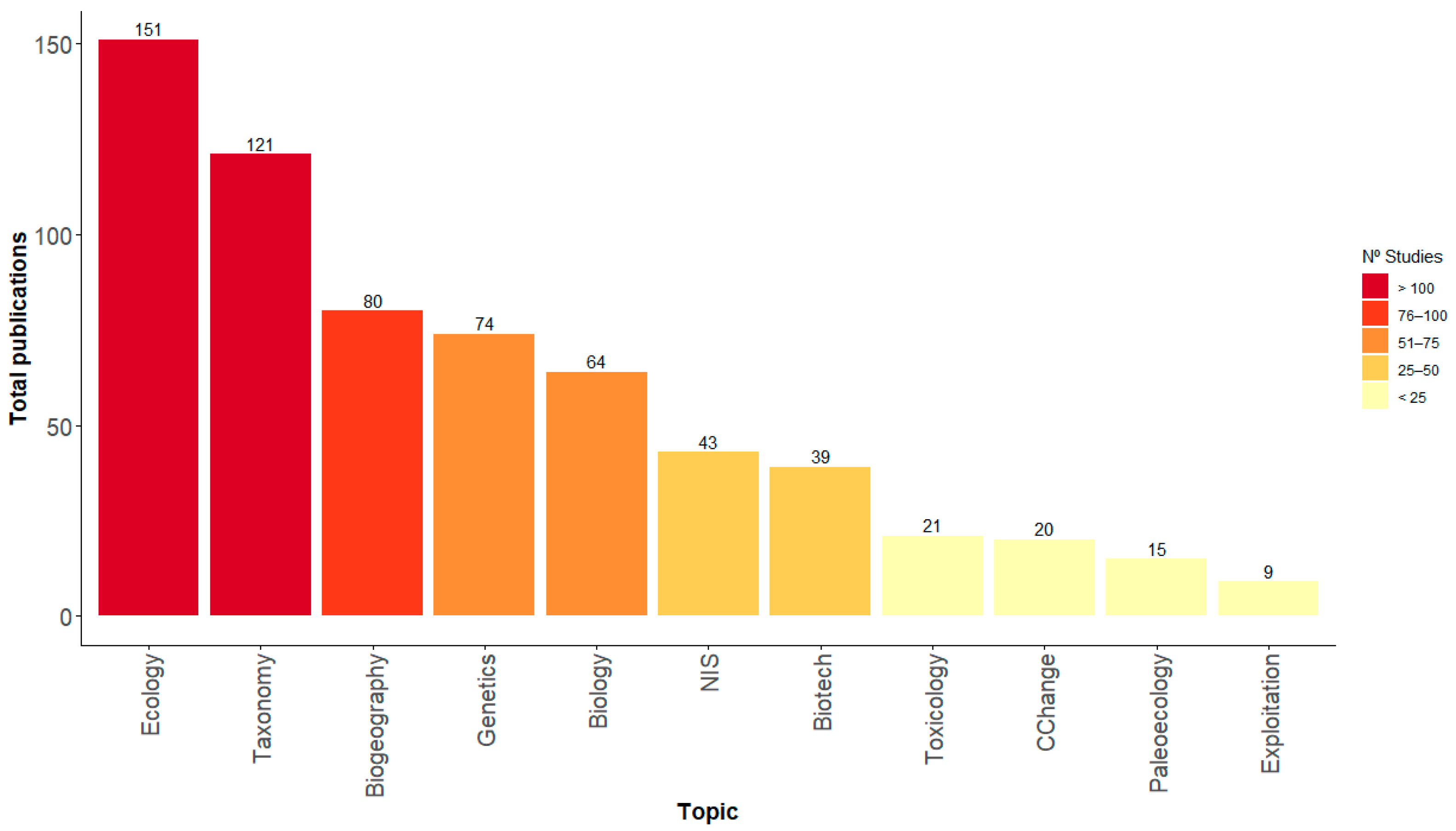
When analyzed per research theme (Figure 5), a pronounced imbalance emerges between fundamental and applied science. With the exception of paleocology (15 records), all fundamental science topics dominate over applied science, accounting for a total of 505 publications. In contrast, applied studies comprise 132 records, of which 84 address environmental impacts and 48 focus on practical uses. Within the fundamental domain, ecology and taxonomy are the most represented themes, each exceeding 100 publications. Biogeography, genetics, and biology follow, each falling within the 50–100 publication range. Within applied science, research on NIS and biotechnology is predominant. Conversely, the least explored topics are resource exploitation, climate change, and toxicology, each contributing fewer than 25 studies (Figure 5).
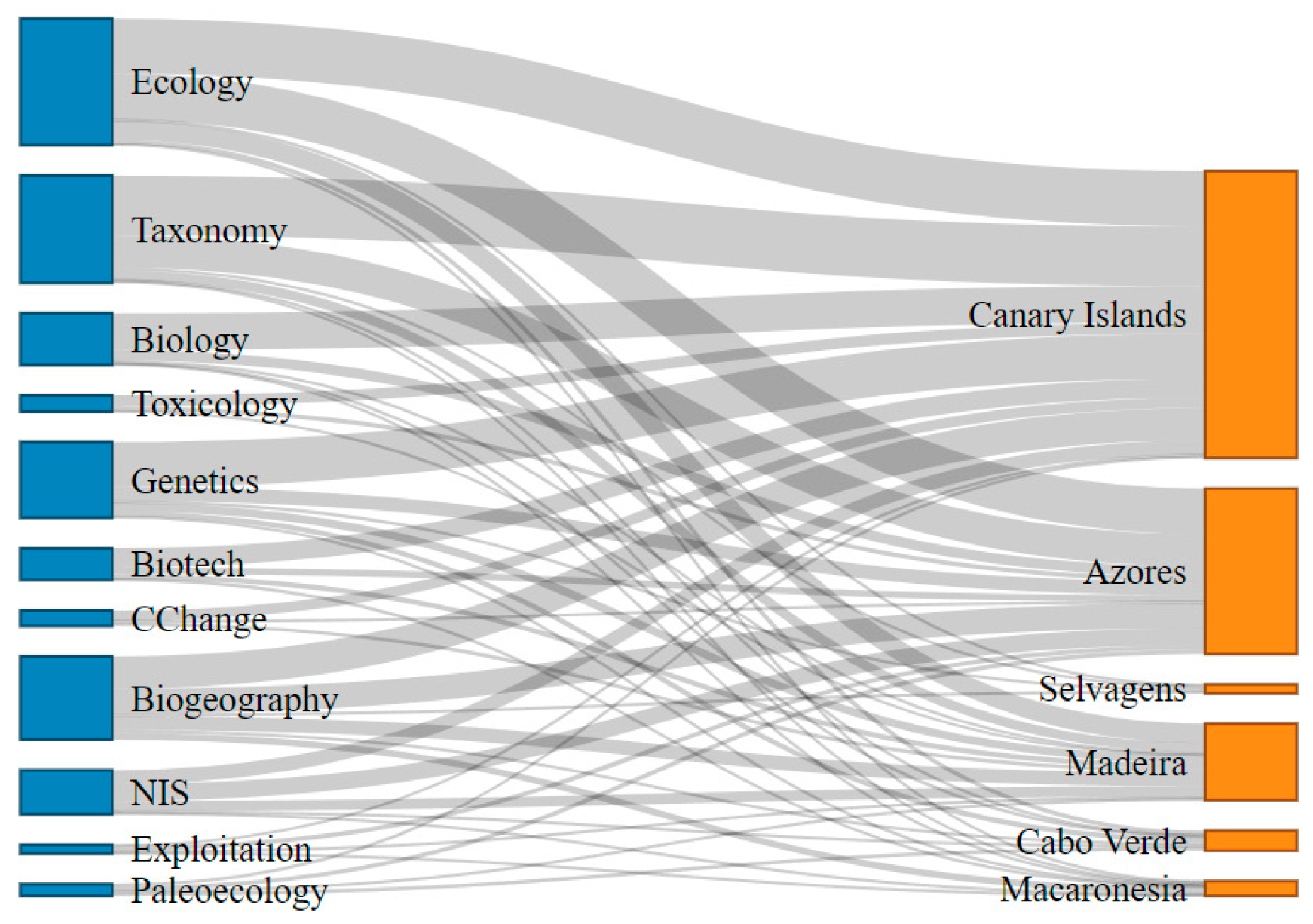
Figure 6 displays a Sankey diagram that quantifies the distribution of peer-reviewed publications across the Macaronesian archipelagos and the aggregated “Macaronesia” region by thematic areas. The width of each flow is proportional to the number of papers linking a given region to a specific research theme. The Canary Islands exhibit the broadest and most evenly distributed flows, with substantial contributions to taxonomy, ecology, genetics, and biology, reflecting the 223 papers published for this archipelago. In the Azores, the dominant flows connect to ecology and taxonomy, followed by biogeography and NIS research, within the 122 publications identified for this area. Madeira’s pattern is characterized by strong links to ecology and biogeography and a smaller yet evident flow toward NIS, corresponding to its 50-paper output. For the Macaronesia aggregate, only a thin band appears for biogeography, indicating that the 13 aggregated publications on this region are relatively sparse. Additionally, much narrower flows represent the contributions from Cabo Verde (20 papers) and the Selvagens (5 papers).
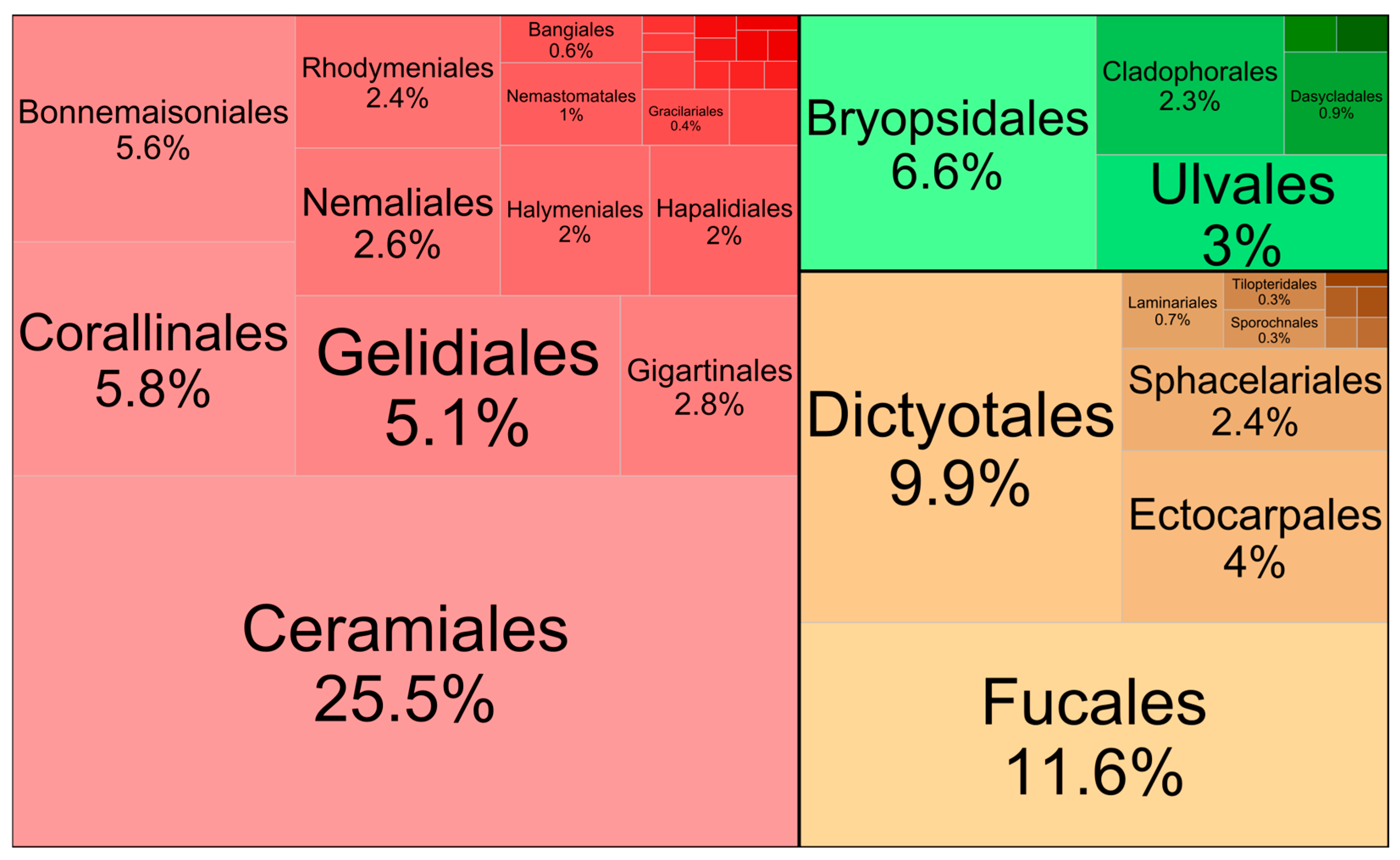
The distribution of studies across algal phyla reveals a pronounced bias toward red algae (Rhodophyta), which accounts for approximately 56% of the publications (Figure 7). Brown algae (Phaeophyceae, Phylum Ochrophyta) comprise the next largest proportion at 29%, followed by green algae (Chloprophyta) at 15%. When the data are examined at the order level, three orders dominate the literature: the red order Ceramiales (26% of studies) and the brown orders Fucales (12%) and Dictyotales (10%). Together, these three orders represent nearly half of all investigations (Figure 7). It should be noted that 7% of the total studies involve multiple species (community-based assemblages, checklists, and functional groups) and were excluded from the calculations presented before (see Figure 7).
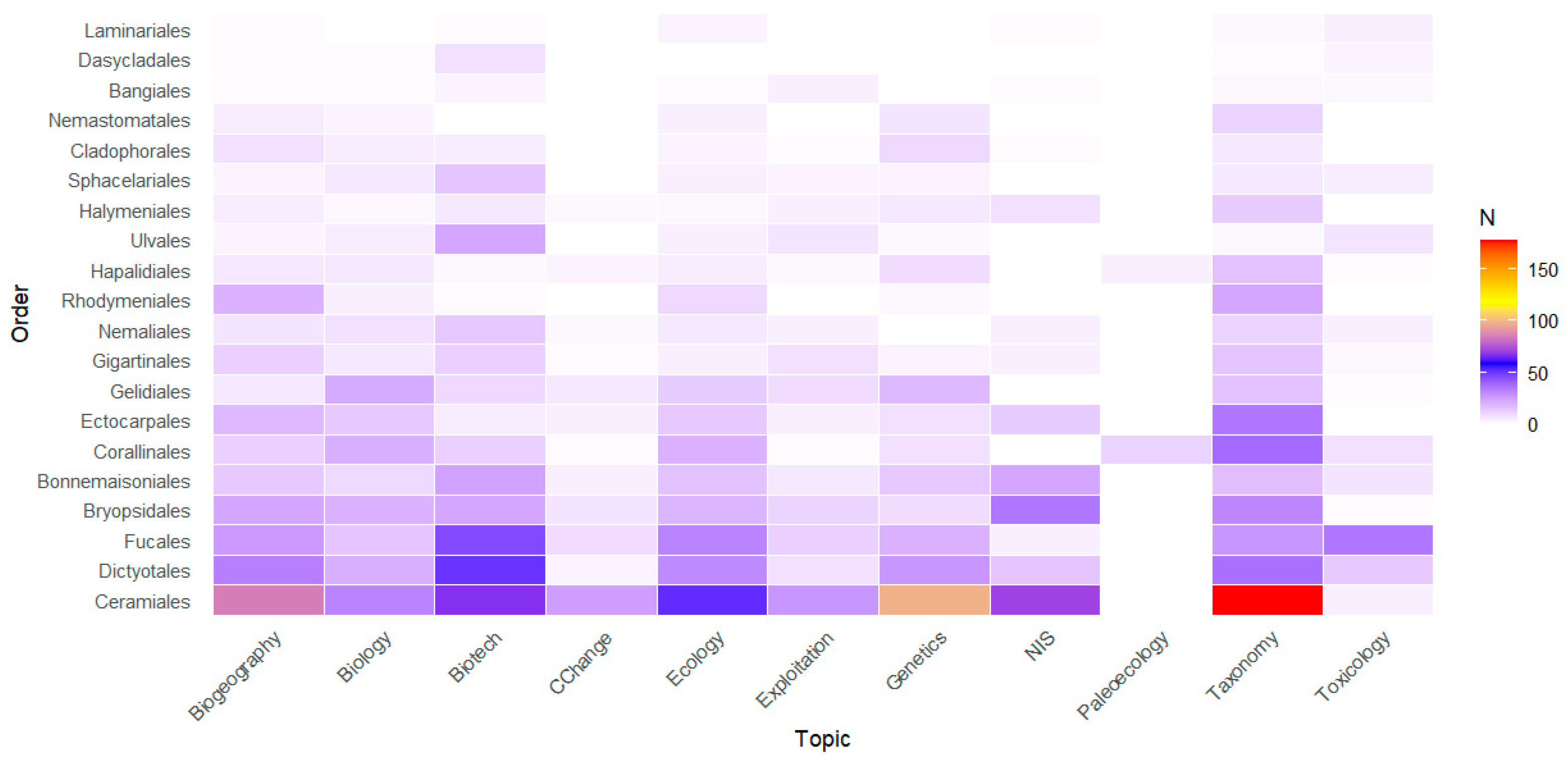
The analysis of research effort across algal orders (Figure 8 and Figure 9) revealed a concentration of publications within a limited set of taxa. Across all eleven thematic areas, Ceramiales consistently occupied a leading position, accounting for the highest number of studies in biogeography, biotechnology, biology, climate change, ecology, exploitation of resources, genetics, non-indigenous-species investigations, and taxonomy. Its dominance is especially evident in taxonomy (177 records) and genetics (98 records). Fucales was the foremost order in toxicology (35 records) and emerged as the second most frequently examined order, contributing substantially to biotechnology, ecology, and genetics. Dictyotales was the third most frequently examined order; it featured prominently in biogeography, biotechnology, ecology, genetics, taxonomy, and toxicology.
Secondary contributors included Bryopsidales, which appeared in studies on biology, climate change, resource exploitation, and non-indigenous species. Orders such as Corallinales, Hapalidiales, and Bonnemaisoniales were also best represented, though within a narrow range of topics, primarily paleoecology, taxonomy, or non-indigenous-species research.
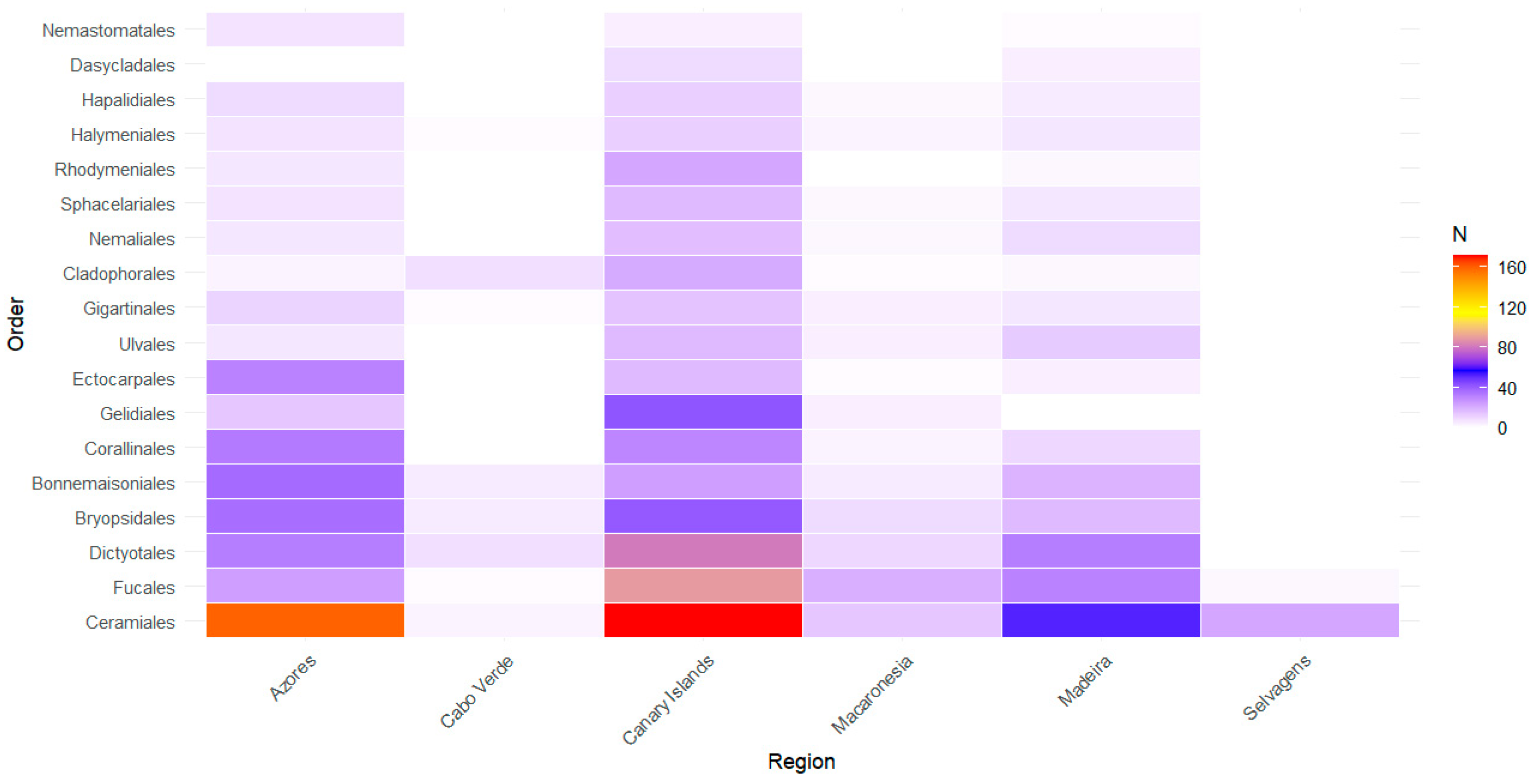
The regional distribution of species-level investigations (Figure 10) also shows the same pronounced skew towards a few algal orders, with the very species-rich order Ceramiales emerging as the most intensively studied across the majority of locations, followed by species of Fucales and Dictyotales. In the Azores, Ceramiales alone accounts for 159 species records, far exceeding the next most studied groups, Bonnemaisoniales (37) and Bryopsidales (36). A similar pattern is observed in the Canary Islands, where Ceramiales again dominates with 171 species records, followed by substantial contributions from Fucales (89) and Dictyotales (81). Madeira follows this trend, with records of species of Ceramiales (52) outnumbering both Dictyotales (32) and Fucales (31). Even in the sparsely sampled Selvagens archipelago, Ceramiales (22) represents most species records relative to the modest Fucales presence (2). In Cabo Verde, the major research effort at the species level is evenly split among four orders (Cladophorales, Dictyotales, Corallinales, and Bonnemaisionales), each contributing between five and eight studies. In the broader Macaronesia grouping, Fucales (20) is the most frequently recorded, yet Ceramiales (14) and Dictyotales (10) remain well represented.
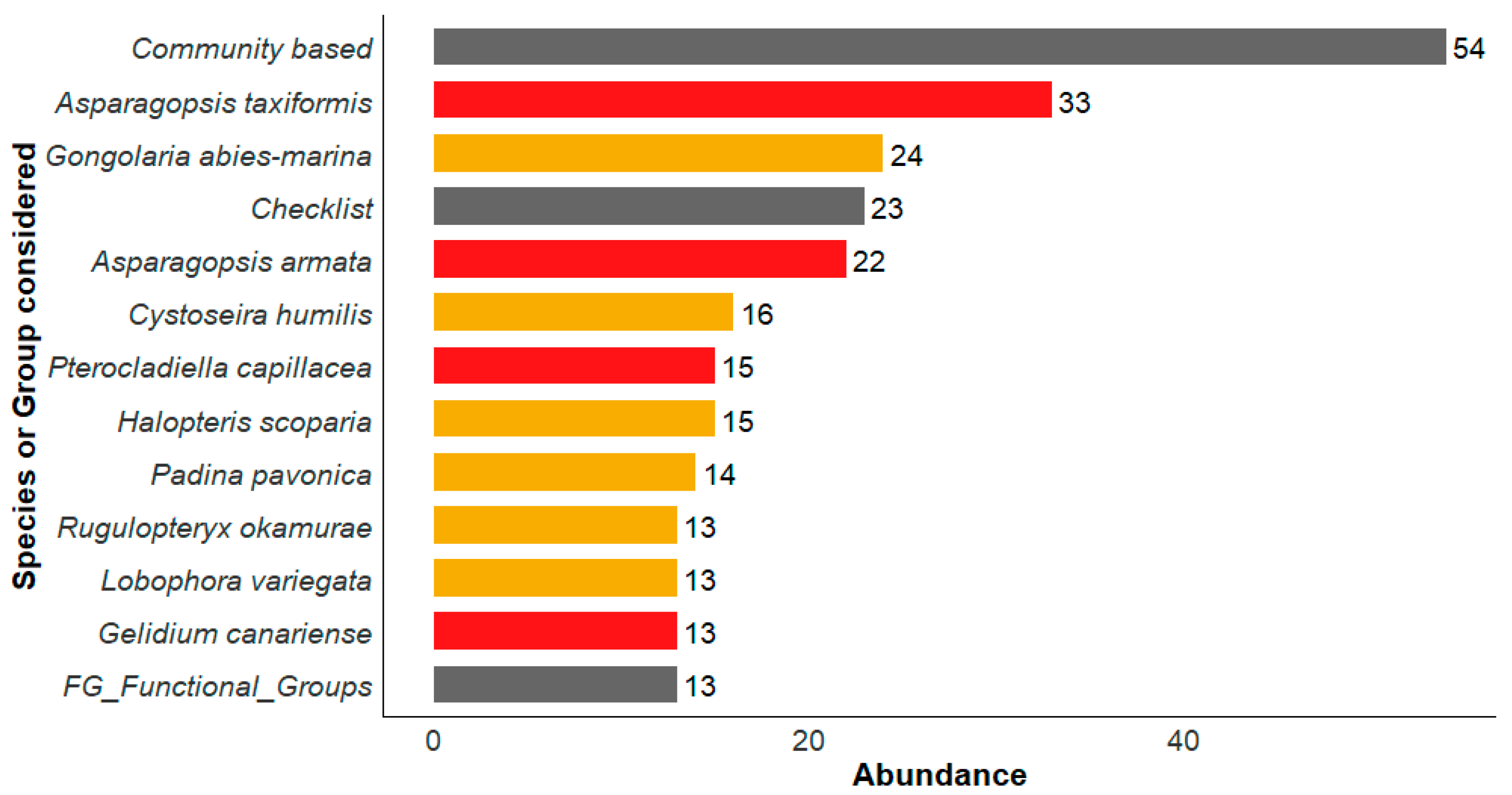
The most frequently studied species are represented in Figure 10, which shows that the main taxa under investigation are multispecies as community-based assemblages, followed by Asparagopsis taxiformis and Gongolaria abies-marina. Checklists and functional-group analyses also rank among the ten most frequently investigated taxa. Additional species receiving considerable attention include Asparagopsis armata, Cystoseira humilis, Pterocladiella capillacea, Halopteris scoparia, Padina pavonica, Rugulopteryx okamurae, Lobophpora variegata, and Gelidium canariense (Figure 10).

4. Discussion

Our review provides the first integrated assessment of how phycological research has developed across the Macaronesian archipelagos, placing the region’s scientific output into a coherent historical, geographical, thematic, and taxonomic context. By synthesizing 375 peer-reviewed studies published over the last 150 years, we demonstrate a marked shift from early, sporadic floristic inventories to a more diversified and methodologically mature research landscape that now sustains a consistent annual output. Although a previous attempt to review phycological research in Macaronesia was published in 2014 [38], its restricted accessibility and methodological limitations prevented it from delivering a comprehensive or up-to-date synthesis. Our study builds on that early effort by offering a fully systematic, reproducible, and region-wide assessment that captures recent advances and provides the most complete overview to date. In addressing our three objectives, several patterns emerge, most notably strong geographic asymmetries, uneven representation of taxa, and thematic imbalances, that together reveal how scientific effort has been distributed and where critical knowledge gaps persist. These patterns provide the foundation for interpreting the drivers of research bias in the region and their implications for biogeography and coastal management.
The historical development of phycological research in Macaronesia reveals a shift from opportunistic documentation to a structured and increasingly diversified scientific effort. The earliest record, a seaweed checklist from Cabo Verde published in 1874, illustrates the exploratory period that characterized the late nineteenth and early twentieth centuries, when marine botany had limited institutional support and remained peripheral within broader marine science. The sparse output until the mid-1960s parallels global patterns in which phycology lagged behind zoological and oceanographic research owing to logistical constraints, limited taxonomic expertise, and the absence of dedicated research programs [50,51]. Only a small number of contributions were published between 1874 and the mid-1960s, reflecting a regional scientific landscape with limited capacity and few dedicated specialists. A marked inflection occurs in the late 1980s, when annual publication output begins to increase steadily. This shift aligns with broader global trends in phycology and coincides with technological and institutional developments that transformed the field. The introduction of accessible diving techniques (including early narguilé systems and SCUBA) expanded the range of subtidal habitats that could be surveyed, while the diffusion of molecular tools such as PCR and DNA sequencing (e.g., [52]) opened new avenues in taxonomy, phylogeography, and population genetics. These advancements aligned with the establishment of active phycological research groups in the Canary Islands and the Azores (e.g., [38], which provided stable institutional bases, training opportunities, and long-term research programs. The upward trajectory intensifies in the last decade, culminating in 2024 with 26 publications, more than twice the long-term annual average, indicating sustained and expanding scientific activity across the region.
Geographically, research output is strongly dominated by the Canary Islands and the Azores (see Figure 4 and Figure 6), each following its own growth trajectory shaped largely by institutional development. In the Canary Islands, the longstanding presence of the University of La Laguna (founded in 1927) and the introduction of marine botany into its curriculum in the 1980s appear to have catalyzed the first major surge in publications during the 1990s. The Azores experienced a comparable rise in the early 2000s with the formation of a dedicated phycology group at the University of the Azores, which consolidated taxonomic expertise and promoted ecological and biogeographic studies throughout the archipelago. Madeira occupies an intermediate position: its more recent increase in productivity, beginning in the 2010s, could correspond to the creation of MARE-Madeira, which provided the first stable institutional platform for phycological research on the island. In contrast, Cabo Verde, the Selvagens, and work addressing Macaronesia as a unified bioregion collectively account for less than 10% of total publications. Several structural constraints likely contribute to this pattern: limited national research funding, the absence of permanent phycologists in Cabo Verde [38], and the logistical difficulty of sampling in the Selvagens, an uninhabited fully protected archipelago with restricted access [18]. Nevertheless, the presence of even a small number of studies suggests a nascent but growing research interest that could be strengthened through collaborative networks, targeted capacity building, and improved regional coordination. The fact that a very limited number of publications treat Macaronesia as a coherent marine biogeographic unit further underscores the need for integrated approaches capable of capturing cross-archipelago patterns and processes.
Beyond the historical and geographic asymmetries described above, our review also reveals pronounced taxonomic and thematic biases that further shape the current landscape of phycological knowledge in Macaronesia. Rhodophyta and several prominent orders, especially Ceramiales, Fucales, and Dictyotales, dominate the literature. While this pattern partly reflects true species richness and ecological prominence, it also emerges from methodological convenience, historical taxonomic interest, and the ecological visibility of structurally complex, canopy-forming species. Several factors contribute to these biases. First, the morphological complexity and high species richness of Ceramiales have long motivated intensive taxonomic revisions and molecular phylogenetic work. Second, many brown algae, particularly species within Cystoseira sensu lato, form ecologically important, canopy-forming assemblages that are both conspicuous and readily surveyed, making them frequent research targets. Third, the recent invasion of Rugulopteryx okamurae, a member of the Dictyotales, has triggered a surge of studies addressing its biology, ecology, and invasive dynamics. The prominence of invasive species among the most studied taxa, including R. okamurae and two Asparagopsis species, reflects their high ecological impact and, in some cases, also the commercial relevance of the genus Asparagopsis. However, this focus risks reinforcing a taxonomic attention cycle that diverts effort away from understudied native groups. The comparatively poor representation of green algae and other inconspicuous taxa represents a substantive gap, particularly given their roles in cryptic diversity, primary production, and early successional dynamics. Their systematic underrepresentation also limits our understanding of ecosystem functioning at the regional scale and generates geographic knowledge gaps, as their distributions remain poorly resolved across islands and archipelagos. This imbalance constrains biogeographic analyses, reduces the robustness of ecological inferences, and may ultimately hinder the design of effective conservation and management strategies. Deliberately incorporating these overlooked taxa into future surveys will therefore be essential for producing a more accurate and representative picture of algal diversity in the Macaronesian region.
Our synthesis also highlights a strong thematic imbalance. Fundamental sciences, particularly ecology and taxonomy/systematics, dominate Macaronesian phycology. Applied research is comparatively limited, though two areas are increasingly prominent: NIS and biotechnology. This disparity reflects the historical focus of Macaronesian phycology on biodiversity documentation, systematics, and ecological interactions, fields that form the foundation for future applied outcomes. The strong representation of NIS reflects their accelerating ecological impacts, while the prominence of biotechnology contrasts with the relatively low number of studies focused on resource exploitation and aquaculture. In the domain of environmental impacts, NIS research is relatively well developed, but toxicology and climate-change responses remain severely underrepresented. This gap is concerning given the increasing frequency of marine heatwaves, warming anomalies, and other climatic stressors affecting the Northeast Atlantic [53,54,55,56]. In the context of accelerating ocean warming, biological invasions, and expanding coastal development in the region, broadening applied research streams is essential to support evidence-based management and the sustainable use of algal resources. Long-term monitoring of canopy-forming assemblages and the systematic assessment of invasive species should therefore be prioritized to ensure preparedness for future ecological shifts. Differences in thematic emphasis among archipelagos reflect local drivers: invasive species research is particularly active in the Azores and Madeira due to recent introductions, whereas the Canary Islands host the broadest thematic spectrum owing to their longer institutional history and higher research capacity. These patterns underscore that regional agendas are shaped as much by local socio-environmental context as by scientific tradition.
This review is subject to several limitations. The exclusion of grey literature, regional reports, and academic theses may underrepresent locally relevant observations, especially for the most poorly studied islands. Similarly, the decision to omit multispecific studies when calculating order-level proportions may slightly underestimate the contribution of community-based research. Finally, database indexing biases inevitably favor English-language journals, raising the possibility that relevant Portuguese and Spanish works remain underdetected.

5. Conclusions and Future Research Directions

Phycological research in Macaronesia has evolved from isolated, largely descriptive studies to a more integrated, multidisciplinary enterprise. Our systematic review reveals that foundational knowledge in taxonomy, systematics, and ecology is solid, yet unevenly distributed: the Canary Islands and the Azores account for nearly 80% of publications, while other archipelagos remain underrepresented. Fundamental investigations dominate the literature, particularly on ecology and taxonomy, whereas applied research, especially on resource exploitation/aquaculture, toxicology, and climate-change impacts, is comparatively scarce. Red algae (Rhodophyta) and a few dominant orders (Ceramiales, Fucales, Dictyotales) are heavily studied, whereas green algae and less conspicuous taxa remain underrepresented. Among the most studied species, several are invasive (Rugulopteryx okamurae and Asparagopsis spp.), and some have commercial relevance, reflecting both ecological and economic drivers of research focus. Despite the review limitations, the synthesis provides a comprehensive overview of the geographic, taxonomic, and thematic patterns in Macaronesian phycology.
Based on these findings, several priorities emerge for future research. First, geographic coverage should be expanded to understudied regions, with collaborative field campaigns and shared data initiatives targeting Madeira, Cabo Verde, and Selvagens. Second, applied research should be strengthened, particularly in areas where fundamental knowledge exists but practical utilization is limited, with the goal of conserving and not impacting the local ecosystem, such as the exploitation of invasive species to promote their removal or the aquaculture of native species to promote their sustainable use without affecting natural ecosystems. Third, taxonomic breadth should be increased by incorporating understudied algal lineages, leveraging high-throughput sequencing and molecular tools to uncover cryptic diversity and endemicity. Fourth, monitoring efforts should be standardized across islands to allow detection of long-term trends, assessment of ecosystem health, and early identification of emerging threats such as invasive species and climate-change impacts. In this regard, it would be strategic to ensure the deployment of a regional cross-border monitoring program using equivalent methodology (e.g., in situ UVCs with photoquadrats with taxonomic identification) to produce periodic estimates of diversity, abundance, and canopy coverage in selected sites across the archipelagos, ecological conditions, and vulnerability to accumulated human impacts. The existence of different local programs and research teams in several of these regions would be a good starting point. Finally, research priorities should still address fundamental scientific knowledge, which is the basis for scientific and applied innovation, while ensuring the information targeted at needs with socio-economic relevance, aligning scientific output with management needs. By advancing these priorities, the Macaronesian phycological community may help reduce existing knowledge gaps, enhance inter-archipelago collaboration, and contribute to a more robust framework for the conservation and sustainable management of the region’s marine algal ecosystems.

Supplementary Materials

The following supporting information can be downloaded at: https://www.mdpi.com/article/10.3390/phycology6010024/s1, Table S1: List of articles included in the phycological review of Macaronesia.

Author Contributions

Conceptualization, D.M.-F. and P.A.; methodology, D.M.-F. and A.L.; validation, D.M.-F. and A.L.; formal analysis, D.M.-F.; data curation, D.M.-F. and A.L.; writing—original draft preparation, D.M.-F.; writing—review and editing, D.M.-F., A.L., E.A.S. and P.A.; visualization, D.M.-F.; funding acquisition, E.A.S. and P.A. All authors have read and agreed to the published version of the manuscript.

Funding

This research was funded by the RESTORESEAS project—Marine Forests of Animals, Plants, and Algae: Nature-Based Tools to Protect and Restore Biodiversity (Ref. M2.2/RESTORESEAS/002/2022), funded through the joint 2019–2020 Biodiversa & Water JPI call for research proposals under the BiodivRestore ERA-Net COFUND programme and the Regional Science and Technology Fund of the Azores (FRCT). Additional support was provided by the Azorean Regional Government under the MoniCO Programme—Azores Coastal Resources and Environmental Monitoring Program (SRMCT/DRP), and by European Union’s Horizon 2020 research and innovation programme under Grant Agreement No 862428 (MISSION ATLANTIC). Further funding was granted by Foundation for Science and Technology (FCT) through the strategic project UIDB/05634/2025 and UIDP/05634/2025 to OKEANOS; UID/04326/2025, UID/PRR/04326/2025 and LA/P/0101/2020 to CCMAR; and to D.M-F. through the doctoral fellowship 2021.04718.BD. P.A. aknowledges individually support from the EC and the Regional Government of the Azores (FRCT) within the EU Mission Atlantic (H2020-LC-BG-08-2018-862428), MEESO (H2020-LC-BG-03-2018–817669), OceanICU (HE-CL6-2022-101083922) and RestoreSeas (M2.2/RESTORESEAS/002/2022).

Data Availability Statement

The original contributions presented in this study are included in the article/Supplementary Materials. Further inquiries can be directed to the corresponding author.

Acknowledgments

We would like to thank Ricardo Medeiros for creating the Macaronesian map. This work is dedicated to the memory of Ana Neto, who contributed greatly to the knowledge of phycology in the Azores.

Conflicts of Interest

The authors declare no conflicts of interest. The funders had no role in the design of the study; in the collection, analyses, or interpretation of data; in the writing of the manuscript; or in the decision to publish the results.

Abbreviations

The following abbreviations are used in this manuscript:
EBMEcosystem-based management
NISNon-Indigenous species
PRISMAPreferred Reporting Items for Systematic reviews and Meta-Analyses

References

  1. Florencio, M.; Patiño, J.; Nogué, S.; Traveset, A.; Borges, P.A.V.; Schaefer, H.; Amorim, I.R.; Arnedo, M.; Ávila, S.P.; Cardoso, P.; et al. Macaronesia as a Fruitful Arena for Ecology, Evolution, and Conservation Biology. Front. Ecol. Evol. 2021, 9, 718169. [Google Scholar] [CrossRef]
  2. Castro, N.; Félix, P.M.; Gestoso, I.; Costa, J.L.; Canning-Clode, J. Management of Non-Indigenous Species in Macaronesia: Misconceptions and Alerts to Decision-Makers. Mar. Pollut. Bull. 2024, 204, 116506. [Google Scholar] [CrossRef] [PubMed]
  3. Fernández-Palacios, J.M.; De Nascimento, L.; Otto, R.; Delgado, J.D.; García-Del-Rey, E.; Arévalo, J.R.; Whittaker, R.J. A Reconstruction of Palaeo-Macaronesia, with Particular Reference to the Long-Term Biogeography of the Atlantic Island Laurel Forests. J. Biogeogr. 2011, 38, 226–246. [Google Scholar] [CrossRef]
  4. De Nicolas, J.P.; Fernandez-Palacios, J.M.; Ferrer, F.J.; Nieto, E. Inter-Island Floristic Similarities in the Macaronesian Region. Vegetatio 1989, 84, 117–125. [Google Scholar] [CrossRef]
  5. MacArthur, R.H.; Wilson, E.O. The Theory of Island Biogeography; Princeton University Press: Princeton, NJ, USA, 2001; ISBN 9780691088365. [Google Scholar]
  6. Tuya, F.; Haroun, R.J. Phytogeography of Lusitanian Macaronesia: Biogeographic Affinities in Species Richness and Assemblage Composition. Eur. J. Phycol. 2009, 44, 405–413. [Google Scholar] [CrossRef]
  7. Freitas, R.; Romeiras, M.; Silva, L.; Cordeiro, R.; Madeira, P.; González, J.A.; Wirtz, P.; Falcón, J.M.; Brito, A.; Floeter, S.R.; et al. Restructuring of the ‘Macaronesia’ Biogeographic Unit: A Marine Multi-Taxon Biogeographical Approach. Sci. Rep. 2019, 9, 15792. [Google Scholar] [CrossRef]
  8. Sangil, C.; Hernández, J.C.; Alves, F.; Neto, A.I.; Ribeiro, C.; León-Cisneros, K.; Canning-Clode, J.; Rosas-Alquicira, E.; Menzoza, J.C.; Titley, I.; et al. Shallow Subtidal Macroalgae in the North-Eastern Atlantic Archipelagos (Macaronesian Region): A Spatial Approach to Community Structure. Eur. J. Phycol. 2018, 53, 83–98. [Google Scholar] [CrossRef]
  9. Morton, B.; Britton, J.C. The Origins of the Coastal and Marine Flora and Fauna of the Azores. In Oceanography and Marine Biology: An Annual Review; Barnes, M., Gibson, R.N., Eds.; CRC Press: Boca Raton, FL, USA, 2000; Volume 38, pp. 13–84. ISBN 9781134556540. [Google Scholar]
  10. Araujo, R.M.; Bartsch, I.; Bekkby, T.; Erzini, K.; Sousa-Pinto, I. What Is the Impact of Kelp Forest Density and/or Area on Fisheries? Environ. Evid. 2013, 2, 15. [Google Scholar] [CrossRef]
  11. Steneck, R.S.; Graham, M.H.; Bourque, B.J.; Corbett, D.; Erlandson, J.M.; Estes, J.A.; Tegner, M.J. Kelp Forest Ecosystems: Biodiversity, Stability, Resilience and Future. Environ. Conserv. 2002, 29, 436–459. [Google Scholar] [CrossRef]
  12. Seitz, R.D.; Wennhage, H.; Bergström, U.; Lipcius, R.N.; Ysebaert, T. Ecological Value of Coastal Habitats for Commercially and Ecologically Important Species. ICES J. Mar. Sci. 2014, 71, 648–665. [Google Scholar] [CrossRef]
  13. Mkhize, T.; Adams, J.; Parker-Nance, S.; James, N. Habitat Use by Juvenile Fish in Macroalgae and Seagrass Beds in a Temperate South African Seascape. Estuar. Coast. Shelf Sci. 2025, 319, 109258. [Google Scholar] [CrossRef]
  14. de Bettignies, T.; Vanalderweireldt, L.; Launay, M.; Moutardier, G.; Pasqualini, V.; Durieux, É.; Le Gall, L. The Role of Algae in Structuring Reef Communities: Innovative Monitoring and Ecological Insights within a Mediterranean Conservation Priority Area. Front. Mar. Sci. 2025, 12, 1516792. [Google Scholar] [CrossRef]
  15. Corliss, K.; von Biela, V.; Coletti, H.; Bodkin, J.; Esler, D.; Iken, K. Relative Importance of Macroalgae and Phytoplankton to Nearshore Consumers and Growth Across Climatic Conditions in the Northern Gulf of Alaska. Estuaries Coasts 2024, 47, 1579–1597. [Google Scholar] [CrossRef]
  16. Baweja, P.; Kumar, S.; Sahoo, D.; Levine, I. Biology of Seaweeds. In Seaweed in Health and Disease Prevention; Elsevier: Amsterdam, The Netherlands, 2016; pp. 41–106. ISBN 9780128027936. [Google Scholar]
  17. Dillehay, T.D.; Ramírez, C.; Pino, M.; Collins, M.B.; Rossen, J.; Pino-Navarro, J.D. Monte Verde: Seaweed, Food, Medicine, and the Peopling of South America. Science 2008, 320, 784–786. [Google Scholar] [CrossRef] [PubMed]
  18. Friedlander, A.M.; Ballesteros, E.; Clemente, S.; Gonçalves, E.J.; Estep, A.; Rose, P.; Sala, E. Contrasts in the Marine Ecosystem of Two Macaronesian Islands: A Comparison between the Remote Selvagens Reserve and Madeira Island. PLoS ONE 2017, 12, e0187935. [Google Scholar] [CrossRef]
  19. Castro, N.; Carlton, J.T.; Costa, A.C.; Marques, C.S.; Hewitt, C.L.; Cacabelos, E.; Lopes, E.; Gizzi, F.; Gestoso, I.; Monteiro, J.G.; et al. Diversity and Patterns of Marine Non-Native Species in the Archipelagos of Macaronesia. Divers. Distrib. 2022, 28, 667–684. [Google Scholar] [CrossRef]
  20. Haroun, R.; Gil-Rodríguez, M.C.; Neto, A.I.; Machín-Sánchez, M.; Viera-Rodríguez, M.A. A Review of Current Uses and Potential Biotechnological Applications of Seaweeds from the Macaronesian Region (Central-East Atlantic Ocean). J. Appl. Phycol. 2019, 31, 3777–3790. [Google Scholar] [CrossRef]
  21. Bernal-Ibáñez, A.; Gestoso, I.; Ramalhosa, P.; Campanati, C.; Cacabelos, E. Interaction of Marine Heatwaves and Grazing on Two Canopy-Forming Algae. J. Exp. Mar. Biol. Ecol. 2022, 556, 151795. [Google Scholar] [CrossRef]
  22. Gil-Díaz, T.; Haroun, R.; Tuya, F.; Betancor, S.; Viera-Rodríguez, M.A. Effects of Ocean Acidification on the Brown Alga Padina Pavonica: Decalcification Due to Acute and Chronic Events. PLoS ONE 2014, 9, e108630. [Google Scholar] [CrossRef]
  23. Parente, M.I.; Gabriel, D.; Micael, J.; Botelho, A.Z.; Ballesteros, E.; Milla, D.; dos Santos, R.; Costa, A.C. First Report of the Invasive Macroalga Acrothamnion Preissii (Rhodophyta, Ceramiales) in the Atlantic Ocean. Bot. Mar. 2018, 61, 85–90. [Google Scholar] [CrossRef]
  24. Faria, J.; Prestes, A.C.L.; Moreu, I.; Martins, G.M.; Neto, A.I.; Cacabelos, E. Arrival and Proliferation of the Invasive Seaweed Rugulopteryx Okamurae in NE Atlantic Islands. Bot. Mar. 2022, 65, 45–50. [Google Scholar] [CrossRef]
  25. Bernal-Ibáñez, A.; Chebaane, S.; Sempere-Valverde, J.; Faria, J.; Ramalhosa, P.; Kaufmann, M.; Florido, M.; Albert-Fonseca, A.; Canning-Clode, J.; Gestoso, I.; et al. A Worrying Arrival: The First Record of Brown Macroalga Rugulopteryx Okamurae in Madeira Island and Its Invasive Risk. Bioinvasions Rec. 2022, 11, 912–924. [Google Scholar] [CrossRef]
  26. Jiménez, M.M.; Riera, R. The Brown Alga Rugulopteryx Okamurae: Insights into Epifaunal Diversity across Marginal Populations in Gran Canaria. J. Sea Res. 2025, 204, 102571. [Google Scholar] [CrossRef]
  27. Valdazo, J.; Viera-Rodríguez, M.A.; Espino, F.; Haroun, R.; Tuya, F. Massive Decline of Cystoseira Abies-Marina Forests in Gran Canaria Island (Canary Islands, Eastern Atlantic). Sci. Mar. 2017, 81, 499–507. [Google Scholar] [CrossRef]
  28. Bernal-Ibáñez, A.; Cacabelos, E.; Melo, R.; Gestoso, I. The Role of Sea-Urchins in Marine Forests from Azores, Webbnesia, and Cabo Verde: Human Pressures, Climate-Change Effects and Restoration Opportunities. Front. Mar. Sci. 2021, 8, 649873. [Google Scholar] [CrossRef]
  29. Bernal-Ibáñez, A.; Gestoso, I.; Wirtz, P.; Kaufmann, M.; Serrão, E.A.; Canning-Clode, J.; Cacabelos, E. The Collapse of Marine Forests: Drastic Reduction in Populations of the Family Sargassaceae in Madeira Island (NE Atlantic). Reg. Environ. Change 2021, 21, 71. [Google Scholar] [CrossRef]
  30. Ribeiro, C.; Neto, A.I.; Moreu, I.; Haroun, R.; Neves, P. A New Signal of Marine Tropicalization in the Macaronesia Region: First Record of the Mesophotic Macroalga Avrainvillea Canariensis A. Gepp & E.S. Gepp in the Madeira Archipelago. Aquat. Bot. 2019, 153, 40–43. [Google Scholar] [CrossRef]
  31. Ribeiro, C.; Sauvage, T.; Ferreira, S.; Haroun, R.; Silva, J.; Neves, P. Crossing the Atlantic: The Tropical Macroalga Caulerpa Ashmeadii Harvey 1858 as a Recent Settler in Porto Santo Island (Madeira Archipelago, North-Eastern Atlantic). Aquat. Bot. 2023, 184, 103595. [Google Scholar] [CrossRef]
  32. O’Higgins, T.G.; Lago, M.; DeWitt, T.H. Ecosystem-Based Management, Ecosystem Services and Aquatic Biodiversity; O’Higgins, T.G., Lago, M., DeWitt, T.H., Eds.; Springer International Publishing: Cham, Switzerland, 2020; ISBN 978-3-030-45842-3. [Google Scholar]
  33. Page, M.J.; McKenzie, J.E.; Bossuyt, P.M.; Boutron, I.; Hoffmann, T.C.; Mulrow, C.D.; Shamseer, L.; Tetzlaff, J.M.; Akl, E.A.; Brennan, S.E.; et al. The PRISMA 2020 Statement: An Updated Guideline for Reporting Systematic Reviews. BMJ 2021, 372, n71. [Google Scholar] [CrossRef]
  34. Fernández-Palacios, J.M.; Otto, R.; Capelo, J.; Caujapé-Castells, J.; de Nascimento, L.; Duarte, M.C.; Elias, R.B.; García-Verdugo, C.; Menezes de Sequeira, M.; Médail, F.; et al. In Defence of the Entity of Macaronesia as a Biogeographical Region. Biol. Rev. 2024, 99, 2060–2081. [Google Scholar] [CrossRef]
  35. Spalding, M.D.; Fox, H.E.; Allen, G.R.; Davidson, N.; Ferdaña, Z.A.; Finlayson, M.; Halpern, B.S.; Jorge, M.A.; Lombana, A.; Lourie, S.A.; et al. Marine Ecoregions of the World: A Bioregionalization of Coastal and Shelf Areas. Bioscience 2007, 57, 573–583. [Google Scholar] [CrossRef]
  36. Fernández-Palacios, Y.; Kaushik, S.; Abramic, A.; Cordero-Penín, V.; García-Mendoza, A.; Bilbao-Sieyro, A.; Pérez-González, Y.; Sepúlveda, P.; Lopes, I.; Andrade, C.; et al. Status and Perspectives of Blue Economy Sectors across the Macaronesian Archipelagos. J. Coast. Conserv. 2023, 27, 39. [Google Scholar] [CrossRef]
  37. Cosme De Esteban, M.; Tuya, F.; Haroun, R.; Otero-Ferrer, F. A Systematic Review of Marine Habitat Mapping in the Central-Eastern Atlantic Archipelagos: Methodologies, Current Trends, and Knowledge Gaps. Remote Sens. 2025, 17, 2331. [Google Scholar] [CrossRef]
  38. Neto, A.I.; Viera, M.A.; Haroun, R. A Synthetic Overview of Marine Phycological Studies in the Macaronesian Archipelagos. Silva Lusit. 2014, 22, 217–244. [Google Scholar]
  39. Fernández-Palacios, J.M. The Islands of Macaronesia. In Terrestrial Arthropods of Macaronesia. Biodiversity, Ecology and Evolution; Serrano, A.R.M., Borges, P.A.V., Boieiro, M., Oromí, P., Eds.; Sociedad Portuguesa de Entomología: Lisbon, Portugal, 2011; pp. 1–30. [Google Scholar]
  40. Hawkins, S.J.; Corte-Real, H.B.S.M.; Pannacciulli, F.G.; Weber, L.C.; Bishop, J.D.D. Thoughts on the Ecology and Evolution of the Intertidal Biota of the Azores and Other Atlantic Islands. Hydrobiologia 2000, 440, 3–17. [Google Scholar] [CrossRef]
  41. Ferrer-Valero, N.; Hernández-Calvento, L.; Hernández-Cordero, A.I. Human Impacts Quantification on the Coastal Landforms of Gran Canaria Island (Canary Islands). Geomorphology 2017, 286, 58–67. [Google Scholar] [CrossRef]
  42. Delgado, J.D.; Riera, R. Anthropogenic Disturbances and Conservation of Coastal Environments in an Oceanic Archipelago. J. Integr. Coast. Zone Manag. 2020, 20, 249–264. [Google Scholar] [CrossRef]
  43. Riera, R.; Becerro, M.A.; Stuart-Smith, R.D.; Delgado, J.D.; Edgar, G.J. Out of Sight, out of Mind: Threats to the Marine Biodiversity of the Canary Islands (NE Atlantic Ocean). Mar. Pollut. Bull. 2014, 86, 9–18. [Google Scholar] [CrossRef]
  44. Lousada, S.; Naranjo Gómez, J.M.; Jankauskienė, D.; Pukite, V. Land-Use Changes in an Island Urban Setting: A Retrospective Study of Funchal, Madeira (1990–2018). J. Sustain. Res. 2025, 7, e250029. [Google Scholar] [CrossRef]
  45. OECD. Sustainable Ocean Economy Country Diagnostics of Cabo Verde; OECD: Paris, France, 2022. [Google Scholar]
  46. Gomes, I.; Serrano, D.; Pham, C.; Afonso, P. Remote but Not Isolated; an Integrated Ecosystem Assessment across the Marine Ecosystem of the Azores. Ecol. Indic. 2025, 181, 114409. [Google Scholar] [CrossRef]
  47. Carvalho, F.S.; Meirelles, M.G.; Henriques, D.; Porteiro, J.; Navarro, P.; Vasconcelos, H.C. Climate Change and Extreme Events in Northeast Atlantic and Azores Islands Region. Climate 2023, 11, 238. [Google Scholar] [CrossRef]
  48. Moher, D.; Liberati, A.; Tetzlaff, J.; Altman, D.G.; Antes, G.; Atkins, D.; Barbour, V.; Barrowman, N.; Berlin, J.A.; Clark, J.; et al. Preferred Reporting Items for Systematic Reviews and Meta-Analyses: The PRISMA Statement. BMJ 2009, 339, b2535. [Google Scholar] [CrossRef] [PubMed]
  49. Dickie, G., VII. Enumeration of Algae Collected at the Cape-Verde Islands. Linn. Soc. Trans. 1874, 14, 344–349. [Google Scholar]
  50. Bold, H.C. Phycology, 1947–1972. Ann. Mo. Bot. Gard. 1974, 61, 14. [Google Scholar] [CrossRef]
  51. Egerton, F.N. History of Ecological Sciences, Part 51: Formalizing Marine Ecology, 1870s to 1920s. Bull. Ecol. Soc. Am. 2014, 95, 347–430. [Google Scholar] [CrossRef]
  52. Tautz, D.; Arctander, P.; Minelli, A.; Thomas, R.H.; Vogler, A.P. A Plea for DNA Taxonomy. Trends Ecol. Evol. 2003, 18, 70–74. [Google Scholar] [CrossRef]
  53. Filbee-Dexter, K.; Wernberg, T. Rise of Turfs: A New Battlefront for Globally Declining Kelp Forests. Bioscience 2018, 68, 64–76. [Google Scholar] [CrossRef]
  54. Frölicher, T.L.; Fischer, E.M.; Gruber, N. Marine Heatwaves under Global Warming. Nature 2018, 560, 360–364. [Google Scholar] [CrossRef]
  55. Smale, D.A.; Wernberg, T.; Oliver, E.C.J.; Thomsen, M.; Harvey, B.P.; Straub, S.C.; Burrows, M.T.; Alexander, L.V.; Benthuysen, J.A.; Donat, M.G.; et al. Marine Heatwaves Threaten Global Biodiversity and the Provision of Ecosystem Services. Nat. Clim. Change 2019, 9, 306–312. [Google Scholar] [CrossRef]
  56. Thomas, A.; Baptiste, A.; Martyr-Koller, R.; Pringle, P.; Rhiney, K. Annual Review of Environment and Resources Climate Change and Small Island Developing States. Annu. Rev. Environ. Resour. 2025, 39, 44. [Google Scholar] [CrossRef]
Figure 1. Map of the Macaronesian archipelagos.
Phycology 06 00024 g001
Figure 2. Flow diagram for the study selection process across the different phases of the systematic review, adapted from PRISMA 2020 statement [33].
Phycology 06 00024 g002
Figure 3. Number of publications about macroalgae of Macaronesia (see selection criteria in methods) per year (blue bars) and cumulative number of publications (red line).
Phycology 06 00024 g003
Figure 4. Cumulative progression of publications about macroalgae of Macaronesia (see selection criteria in methods) per region.
Phycology 06 00024 g004
Figure 5. Total publications about macroalgae of Macaronesia (see selection criteria in methods) by research topic.
Phycology 06 00024 g005
Figure 6. Sankey diagram of topics about macroalgae of Macaronesia studied per region.
Phycology 06 00024 g006
Figure 7. Treemap representing the percentage of phycological studies in Macaronesia by order. Colors represent the different phyla: red for Rhodophyta, green for Chlorophyta, and brown for Phaeophyceae.
Phycology 06 00024 g007
Figure 8. Studies about macroalgae of Macaronesia by order and topic.
Phycology 06 00024 g008
Figure 9. Number of species in each of the orders of macroalgae of Macaronesia studied per region.
Phycology 06 00024 g009
Figure 10. Ten most frequently studied species of macroalgae in Macaronesia. Color bars represent different groups: grey for multitaxa, red for Rhodophyta, and yellow for Phaeophyceae.
Phycology 06 00024 g010
Table 1. Search terms selected for systematic literature review within the different variables (aim of study and region). The asterisk (*) was used as a wildcard in the search strategy to include all derived forms of the terms.
Aim of StudyRegion
“alga*” OR “macroalga*” OR “seaweed*” OR “phycology*” OR “Phaeophy*” OR “Rhodophy*” OR “Chlorophy*”“Macaronesia*” OR “Canary Islands” OR “Canarias” OR “Canaries” OR “Azores” OR “Açores” OR “Madeira” OR “Cape Verde” OR “Cabo Verde” OR “selvagens” OR “savage islands” OR “salvage islands” OR “salvajes”
Table 2. Inclusion and exclusion criteria used for the literature search in the systematic review.
Inclusion CriteriaExclusion Criteria
Macaronesian archipelagos Non Macaronesian studies
Marine AlgaeFreshwater algae, Seagrasses, or Lichens
MacroalgaeMicroalgae, Cyanobacteria, or Phytoplankton
Specifically regarding seaweedOther organisms than macroalgae (e.g., invertebrates)
Articles in English, Portuguese, or SpanishMacroalgae are not the main focus of any part of the study
Disclaimer/Publisher’s Note: The statements, opinions and data contained in all publications are solely those of the individual author(s) and contributor(s) and not of MDPI and/or the editor(s). MDPI and/or the editor(s) disclaim responsibility for any injury to people or property resulting from any ideas, methods, instructions or products referred to in the content.