Article

Evolution of a Dystrophic Crisis in a Non-Tidal Lagoon Through Microphyte Blooms


by
Francesca Polonelli
1,
Marco Leporatti Persiano
2,
Chiara Melillo
1 and
Mauro Lenzi
2,*
1
Ecology and Physiology Laboratory, Department of Biology, University of Florence, Via P.A: Micheli 1, 50121 Firenze, Italy
2
Lagoon Ecology and Aquaculture Laboratory, Via Giacomo Leopardi 9, 58015 Orbetello, Italy
*
Author to whom correspondence should be addressed.
Phycology 2025, 5(4), 78; https://doi.org/10.3390/phycology5040078 (registering DOI)
Submission received: 7 August 2025 / Revised: 10 November 2025 / Accepted: 19 November 2025 / Published: 1 December 2025

Abstract

In July–August 2024, a severe dystrophic process occurred in the Orbetello lagoon (Italy). This study reports the following: (1) the macroalgal biomass and the sediment labile organic matter (LOM) between 2018 and 2024; (2) the water temperature and dissolved oxygen values between June and September 2024 and the T-mean, T-max, and T-min in July and August between 2013 and 2024; (3) the list of microphyte taxa that occurred during the dystrophy; (4) satellite images documenting the evolution of the dystrophic process. The results suggest that the dystrophy was caused by the decay of a large macroalgal mass and high accumulations of LOM in the sediment, which triggered anaerobic processes, particularly intense sulphate-reductive activity. This virulent process was facilitated by a record increase in temperatures (with T-min and T-max higher than those of the previous years), in a context of poor hydrodynamics, typical of non-tidal lagoons. Microphyte blooms, which occurred during the dystrophy, were at the basis of the evolution of the phenomenon, allowing for the most critical phase to be overcome through intense oxygen production. Microphytic blooms, with intense water colouring, although constituting an evident sign of a eutrophic/hypertrophic state of the lagoon, could lead to a rapid evolution of the dystrophy and mitigate the environmental conditions.

1. Introduction

In recent decades, marine and transitional aquatic environments have been subjected, almost worldwide, to high anthropogenic pressure and a consequent increase in nutrient loading [1]. The abundance of nitrogen, phosphorus, and organic matter has led to severe eutrophication with intense and frequent blooms of submerged macroalgal and/or microphytic vegetation [2,3,4,5,6].
Non-tidal lagoons, due to shallow water and modest water exchange with the adjacent sea, are structurally subject to eutrophic stress and therefore have populations capable of tolerating this stress, which gives the ecosystem a high level of resilience [7]. However, changes in the trophic structure of a non-tidal lagoon basin towards an increasingly important increase in nutrients lead to an increase in primary production and a drift in the vegetation structure that goes from the dominance of angiosperms to Rhodophyceae, to Chlorophyceae, and then, if the conditions become even more extreme, to the dominance of microphytes [8,9] (Figure 1).
The accumulation of organic matter (OM) in sediments, resulting from the decay of macroalgal masses and the fall-out of microphytes, triggers anaerobic bacterial processes, such as bacteria that utilise nitrate (NO3) as an oxidant, strains that perform nitrate respiration (Equation (1)), or strains that carry out the denitrification process, which leads to nitrous oxide (N2O) and/or molecular nitrogen (N2). The ammonia formed through the respiration of nitrates and through the ammonification of nitrogen from proteins, during the decay of plant masses, is sometimes in such quantities as to be toxic for phanerogams [10] and benthic organisms. Subsequently, once the nitrate pool has been exhausted and the oxidation-reduction potential (Eh) of the sediment has further decreased, as a consequence of the increase in reducing catabolites, other bacteria intervene, which use oxidants such as the tetravalent manganese ion (MnIV; Equation (2)) and the ferric ion (Fe3+), the latter in the forms of goethite, hematite, and ferrihydrite, FeOOH, Fe2O3, and Fe(OH)3, respectively (Equation (3)).
The incidence of these bacterial processes, their duration, and the amount of OM that can be mineralised by the processes themselves depend on the amount of iron and manganese present in the sediment, conditions which undoubtedly vary from one place to another, and on the quantity and quality of OM [11]. It is important to underline that in the transition from the 3+ to 2+ oxidative state of iron, the orthophosphate ion (PO43−) is released from the ferric oxyhydroxides to which it was bound. P, in fact, is present in the sediments mainly as calcium (Ca) and magnesium (Mn) orthophosphates, which are mostly bound to the oxyhydroxides present in the sediment [12,13]. Once released from the oxyhydroxides, orthophosphates can become soluble, rise through the water column, and become available to algal vegetation. Once most of the bioavailable Fe and Mn have been transformed into chemically reduced forms, the breakdown of organic sediment deposits, through the action of other bacterial strains, switches to the use of another oxidant, the sulphate ion, SO42− (Equation (4)), through the action of sulphate-reducing bacteria (SRB). This is the most dangerous process of anaerobic mineralization, since the reduction in sulphate leads to the formation of hydrogen sulphide (H2S), which has a high toxicity for all organisms.
The sequence of the different electron acceptors, as reported above, remains valid if the environmental conditions are at the standard values of 25 °C and 0.1 Mpa and the transfer of 1 mole of electron (e) is considered in the stoichiometry; in this case, the Gibbs free energy yield (ΔG0) of the electron acceptance process occurs in a progressive decrease, as the redox decreases [14]. In non-standard conditions, the redox order reported in the equations can change [11]. Equations (2) and (4) give ΔG0 of −27.5 kcal mol−1 of e and −7.4 kcal mol−1 of e, respectively, so as one proceeds towards increasingly weaker oxidants, the demolition process becomes less and less efficient.
The accumulation of OM in sediments induces SRB activity that is more intense the larger the organic deposits and the more susceptible the OM is. The byproducts of SRB activity are H2S and its dissociation ions, HS and S2−, which, together with ferrous sulphide (FeS) and manganese sulphide (MnS), are collectively called acid volatile sulphides (AVSs). AVSs are strongly statistically correlated (Pearson’s coefficient, r > 0.5) negatively with Eh, and positively with sediment labile organic matter (LOM) [15].
H2S and its first and second dissociation ions can be removed in natural environments by chemical mechanisms in the sediment, which we can define as buffer mechanisms: any residues of ferric oxyhydroxides and MnIV oxidise H2S to elemental sulphur [16]; Fe2+ blocks H2S forming FeS [17], which is an insoluble salt, but acid-soluble and easily oxidizable, which gives the typical black colour of anoxic muds; the reaction between FeS and elemental S0 can produce pyrite, a more tenaciously insoluble compound (Equation (5)) [13,18]; an oxidative process of H2S is catalysed by sulphur-oxidising bacteria (SOB) [19]. The result of buffering is the elimination of toxicity. When the buffering components are exhausted, hydrogen sulphide is released from the sediments and rises into the water column ([H2S]:[Fe ion] > 1) [20]. At this stage, the system can collapse, resulting in faunal die-off, a phenomenon known as dystrophic crisis. Dystrophy refers to a dissipative process through which the ecosystem, which has reached unsustainable energy levels, tends to heal itself. Essentially, through dystrophic dissipation, the ecosystem eliminates the excess energy that had accumulated in the sediment in the form of organic matter chemical bonds [21,22].
1/4CH2O + 1/8NO3 + 1/8H+ → 1/8NH3 + 1/4CO2 + 1/8H2O
1/4CH2O + 1/2MnO2 + H+ → 1/2Mn2+ + 1/4CO2 + 3/2H2O
1/4CH2O + Fe(OH)3 + 2H+ → Fe2+ + 1/4CO2 + 11/4H2O
1/4CH2O + 1/8SO42− + 1/8H+ → 1/8HS + 1/4H2O + 1/4 CO2
FeS + S0 → FeS2
The decomposition of macroalgal masses and, even more so, dystrophies release a large amount of nutrients, particularly ammoniacal nitrogen, orthophosphate (Figure 1), and particulate organic matter (POM) and dissolved organic matter (DOM). This leads to microphytic growths that vary in quality/quantity depending on the N/P ratios, the amount of ammoniacal nitrogen and nitrate nitrogen, the nature of the organic matter, and the ratios of carbohydrates, proteins, and lipids [23].
In the Orbetello lagoon, during the decay of the macroalgal masses, blooms of mixotrophic Dinophyceae, such as Coolia monotis [24], often occur, while in advanced decay and especially following dystrophic events, blooms of Cyanobacteria have been observed, such as in the summer–autumn of 2015, probably involving Synechocystis sp. [25]. Although C. monotis is considered potentially capable of producing toxins [26], no cases of poisoning attributable to this species through shellfish feeding have ever been reported in the Orbetello lagoon. The same is true for Cyanobacteria blooms in the Orbetello lagoon, although Cyanobacteria of a picoplanktonic cell size (0.2 to 2.0 µm), such as Synechocystis sp., due to their small size, remain poorly studied: little information on toxicity is reported, while the number of reports concerning their presence in ecosystems is increasing [27].
Microphyte blooms following the decay of macroalgal masses can be a prelude to a dystrophic event; however, this dissipative process is not easily predictable. The Tuscany Region, during the environmental management of the Orbetello lagoon from 2013 to today, adopted a protocol in the Environmental Safety Plan that established a Threshold of Attention for LOM > 8%, T 30 °C, DO 2 mg/L, and an Alarm Threshold for T 32 °C, DO 0.5 mg/L. However, the complexity of the process would require a specific mathematical model capable of comparing the different dystrophic events.
In this study, we describe the dynamics of a widespread dystrophy that occurred during the summer of 2024 in the Orbetello lagoon and its subsequent evolution by monitoring microphyte growth. The goal is to understand how these energy-dissipating phenomena, to which non-tidal lagoon systems are typically subject, evolve once triggered. This could help us, in the future, to intervene to mitigate and promote a rapid progression of the phenomenon, leveraging the ecosystem’s resilient capabilities.

2. Materials and Methods

2.1. The Study Area

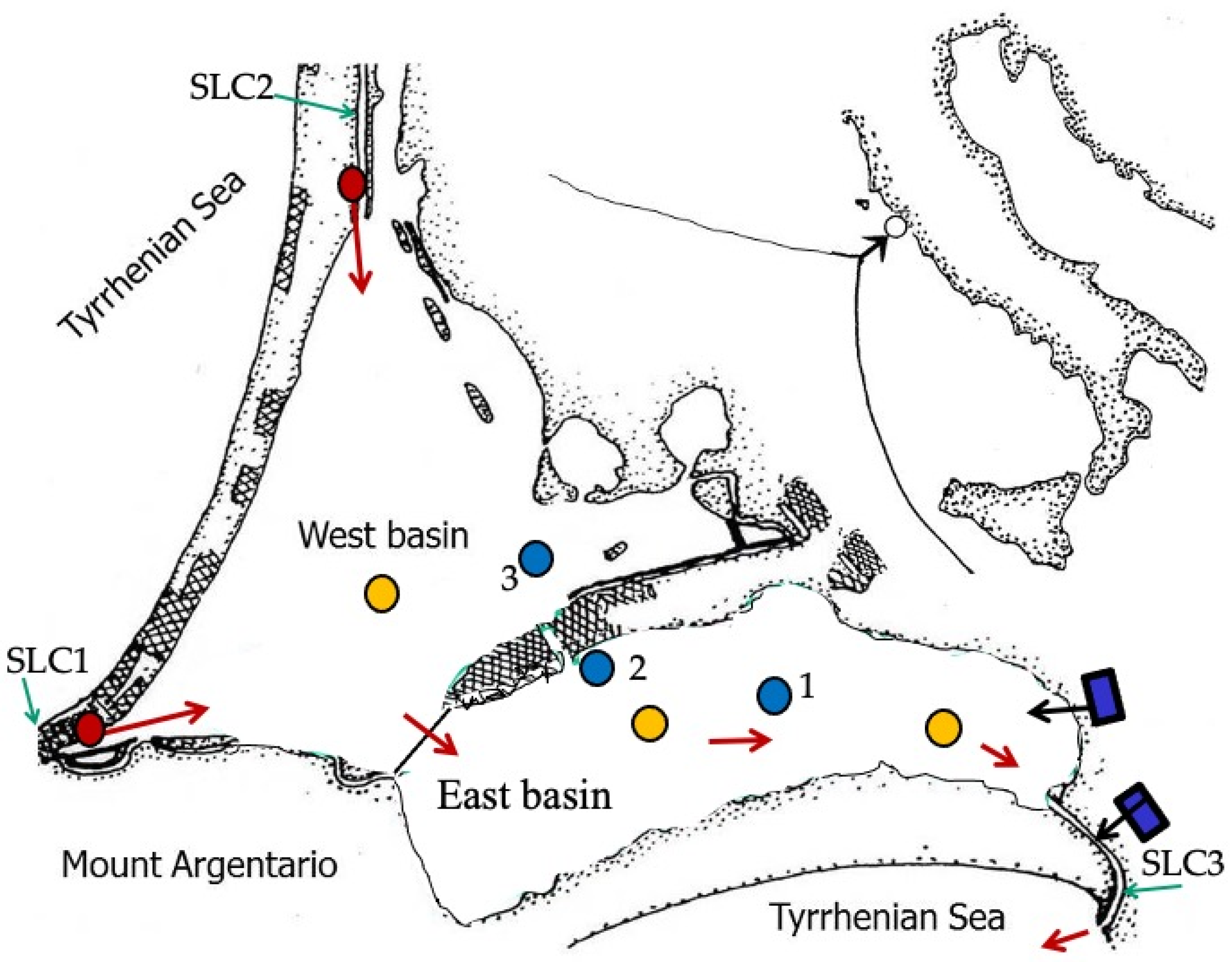
The Orbetello lagoon is a shallow, non-tidal, eutrophic environment with low water turnover. It is located along the Tyrrhenian coast (42°25′–42°29′ N; 11°10′–11°17′ E) and consists of two communicating basins, West and East, of 15.25 km2 and 10.00 km2, respectively (Figure 2). This lagoon has three canals of communication with the sea, two in the West basin and one in the East basin. Because exchange with the sea is relatively difficult, salinity varies between the wettest seasons, fall and spring, and the dry summer season, between 25 and 40 (practical salinity scale). The lagoon is eutrophic due to land-based fish-farm wastewater, intermittent agricultural run-off flow, and nutritional sediment stores coming from the urban and productive activities’ wastewater discharged in the past [28].
Two fish-farms, located in the easternmost sector of the lagoon (Figure 2), discharge wastewaters into the lagoon, and their waters mainly affect a stretch of 130–140 ha of the lagoon, and to a lesser extent up to 270 ha [29]. These land-based aquaculture activities annually introduce 71 tons of N and 4.5 tons of P into the far eastern part of the East basin, with percentages of N-NH4+, N-NOx, and DON transported with the wastewater being 42%, 37%, and 16%, respectively, for one of the fish farms, and 16%, 9%, and 75%, respectively, for the other, equipped with lagoon/phyto-remediation [29].
The intermittent flow of agricultural runoff comes mainly from the Albegna River, near the mouth of which the SLC-2 canal begins. Based on a hydrodynamic model, the natural flow regime of the canal allows water to enter the lagoon for 5.6 months/year, with a total volume of 49.8 × 10⁶ m3. Nutrient inputs have been estimated at approximately 97.1 tons of N per year, over 90% nitrate, and 10.5 tons of P per year [30].
In the East basin, historical accumulations of N were 0.13 ± 0.02% of the dried sediment at constant weight, and P was 0.08 ± 0.07%. In the West basin, N and P were 0.45 ± 0.12% and 0.06 ± 0.05%, respectively. These values are spread over an area of more than 25 km2 [28].
The critical environmental issues are managed through the macroalgal harvesting, the resuspension of the top soft sediments with high organic matter content to promote their oxidation, and the pumping of seawater, the latter especially during the summer. Seawater pumping is conducted through two pumping stations located at the two lagoon mouths of the West basin, and, excluding natural circulation with the sea, the injected water is pushed towards the only mouth remaining open to free circulation, which is at the east end of the East basin (Figure 2).
Dystrophic criticalities have occurred with increasing frequency in the last 40 years in this lagoon, as reported by Lenzi et al. [22], later adding the dystrophies of 2015, 2017, 2022, and, those examined here, of 2024.

2.2. Macroalgae Monitoring

Macroalgal species determination and biomass estimation were examined between 2018 and 2024. The method for determining the standing crop present at the time of survey is based on estimating the density of macroalgal mats by collecting and weighing samples in the field and on the extent of the mats through the use of satellite imagery.
The field estimates were always carried out between May and June, the period of greatest extension and biomass of the mats, with the exception of 2024, when the estimates were conducted in February. Biomass estimates were conducted by collecting and weighing the algae within the conventional area of 3600 cm2, using a 60 × 60 cm box lowered to the point station. The macroalgae collected inside the box were drained for a few minutes and weighed directly in the field using a portable electronic balance with sensitivity ± 0.5 g. Data were then fed back to the unit area of 1 m2 and expressed as kg wet weight m−2 (kgww m−2). The overall mean (±SD) was then calculated. Sampling points varied according to the extension and number of mats, between 40 and 70 for the West basin and 20–30 for the East basin. Through the retrieval of satellite images as coincident as possible with the sampling date (obtained from the Land-Viewer website, EOS DATA ANALYTICS, USGS/NASA, for the Landsat-8 and Sentinel-2 satellites), the extent of macroalgal mats was calculated using Fiji software (Image J 2 ver. 2.16.0) [31]. The satellite’s MSI Level-2A imagery provides multispectral bands at 10 m, 20 m, and 60 m spatial resolutions. For this study, 10 m bands (B02, B03, and B04 in Natural Colour) were used, and the images were analysed with a ground sampling distance of 10 m/pixel.
The macroalgal coverage related to the extent of the area in question provided the total coverage:
EM × A−1 = CT
where EM is the macroalgal extent in m2; A is the basin area in m2; CT is the total macroalgal coverage over the basin extent.
Standing crop (SC), that is, the algal mass present in the lagoon surface during the survey, was calculated by applying the following equation:
SC = b × CT × A × 1000−1
where SC is the standing crop expressed in tonnes wet weight (tWW); b, the average biomass, obtained from field surveys, expressed in kgWW m−2; 1000−1, the factor to bring the final value to tonnes.
The equation is simplified by substituting CT for its estimated ratio:
SC = b × EM × 1000−1

2.3. Sediment Organic Matter

Annual sediment labile organic matter (LOM) means are reported between 2018 and 2024. Samples were collected in the same station points of macroalgae estimates, using a horizontal coring sampler capable of collecting sediment matter from the top 3–4 cm thick, according to Lenzi and Renzi [32]. Samples were refrigerated and then, in the laboratory, filtered with a 1 mm mesh and dried at 75 °C to constant weight. Samples to constant weight were taken to an oven at 250 °C for 6 h, cooled to anhydrous conditions, and weighed again [33]. The LOM was obtained by subtracting from the weight at 75 °C the weight obtained at 250 °C.
With seasonal frequency, 30 and 40 samples (120 and 160 annually) were collected from the West basin and the East basin, respectively.

2.4. Water Chemical-Physical Variables

Dissolved oxygen (DO; mg/L), pH, and temperature (T, °C) were obtained by multiparameter probes on two fixed stations, with hourly frequency records (Figure 2).
In this study, T was examined between 2013 and 2024 for July and August, the months within which dystrophy can occur, with the mean, T-minimum, and T-maximum values. For June–September 2024, trends in T and DO were considered. For this last period, salinity (s, practical salinity scale) was measured directly in situ with a fortnightly frequency at the stations of multiparameter probes by an ATAGO S/Mill refractometer.

2.5. Microphyte Determinations

Lagoon water sampling for microphyte determination was carried out on 24 July, 5 August, and 8 August. Station points, shown in Figure 2 and below in the satellite images that describe the evolution of the dystrophy, were not pre-established but chosen following the intense colours of the water due to the microphyte blooms. For this purpose, satellite images correspond as closely as possible to the sampling dates: Landsat-9, Sentinel-2, and Landsat-9, for 24 July, 5 August, and 9 August, respectively.
Samples were refrigerated, then preserved using neutralised formaldehyde 37% (adding sodium tetraborate until pH 7 was reached), pending taxa determination. Cell counts were performed using the inverted microscope Zeiss IM35 (Oberkochen, Germany) at a magnification of 400× after sedimentation of 10 mL seawater following the Utermöhl method [34] for the East basin (24/07) and filling the observation chamber (about 2.5 mL) for the other samples. Taxa were determined to the lowest taxonomic level possible using the texts indicated in Zingone et al. [35]. Pictures were taken with a Nikon digital camera.

2.6. Dystrophies

Dystrophies are dissipative phenomena through which the ecosystem reduces its energy level. In thermodynamic terms, they reduce the system’s enthalpy because they release heat, and the substances produced have a lower binding energy than the reactants. In biological terms, once the dissipative process is complete, ecosystem critical issues are reduced or even eliminated, only to reappear as organic debris begins to accumulate again, at a rate that depends on the degree of eutrophication (Figure 1).
Dystrophies occur at a certain point in the amount of organic debris accumulated in the sediment (Figure 1). This critical point is variable and depends on numerous environmental variables. We can generalise by stating that the most severe dystrophies, capable of compromising the ecosystem with extensive fish kills, occur due to the concomitance of three factors: (1) high load of labile organic matter (LOM) and/or perishable macroalgal masses; (2) increased temperature (>25 °C); (3) poor hydrodynamics/water stagnation/absence of wind (water flow rate < 3–4 cm s−1) [36].
The decomposition processes of macroalgae occur slowly at temperatures between autumn and spring, and this slowness allows for the system to counteract and metabolise the released catabolites, compensating for them with adequate quantities of oxygen. High summer temperatures do not allow for an adequate influx of oxygen, while anaerobic bacterial activity becomes intense. Adequate renewal of the water masses covering sediments that have accumulated high OM quantities can counteract dystrophy, as the toxic products are removed, dispersed, and oxidised. The converse occurs if conditions of stagnation exist.
A classification of dystrophies based on conditions and onset patterns is reported in Lenzi [37]. Here, we will use a classification that measures the severity of the damage related to the impact on fish fauna and the extension of the event. We will say that the dystrophy is moderate (D1, first level) if the extension can reach a hundred hectares and more (even distributed in several areas), killing mainly benthic organisms (crustaceans, molluscs, gobies, blennies, and sygnathids) and a few quintals of vagile species; important (D2, second level) if the extension is extended to a few hundred hectares (both distributed in several areas and in time) and affects both benthic and vagile species, but the latter in quantities limited to a few tens of quintals; severe (D3, third level) if the extension affects at least an entire basin, and a large quantity of fish dies, in the order of tens of tonnes.
The dystrophic phenomenon in question was also followed since its onset through satellite images obtained by the Land-Viewer website, EOS DATA ANALYTICS, USGS/NASA, for the Landsat-8, Landsat-9, and Sentinel-2 satellites.

3. Results

3.1. Macroalgae Monitoring

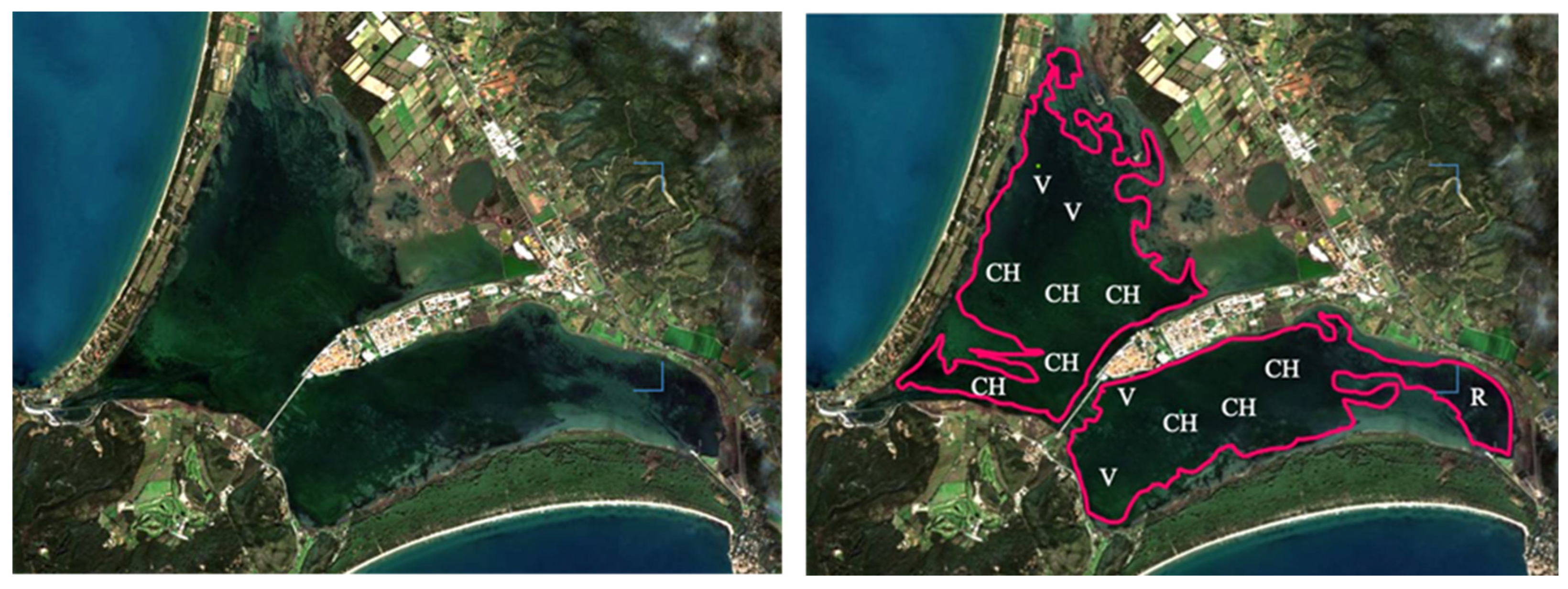
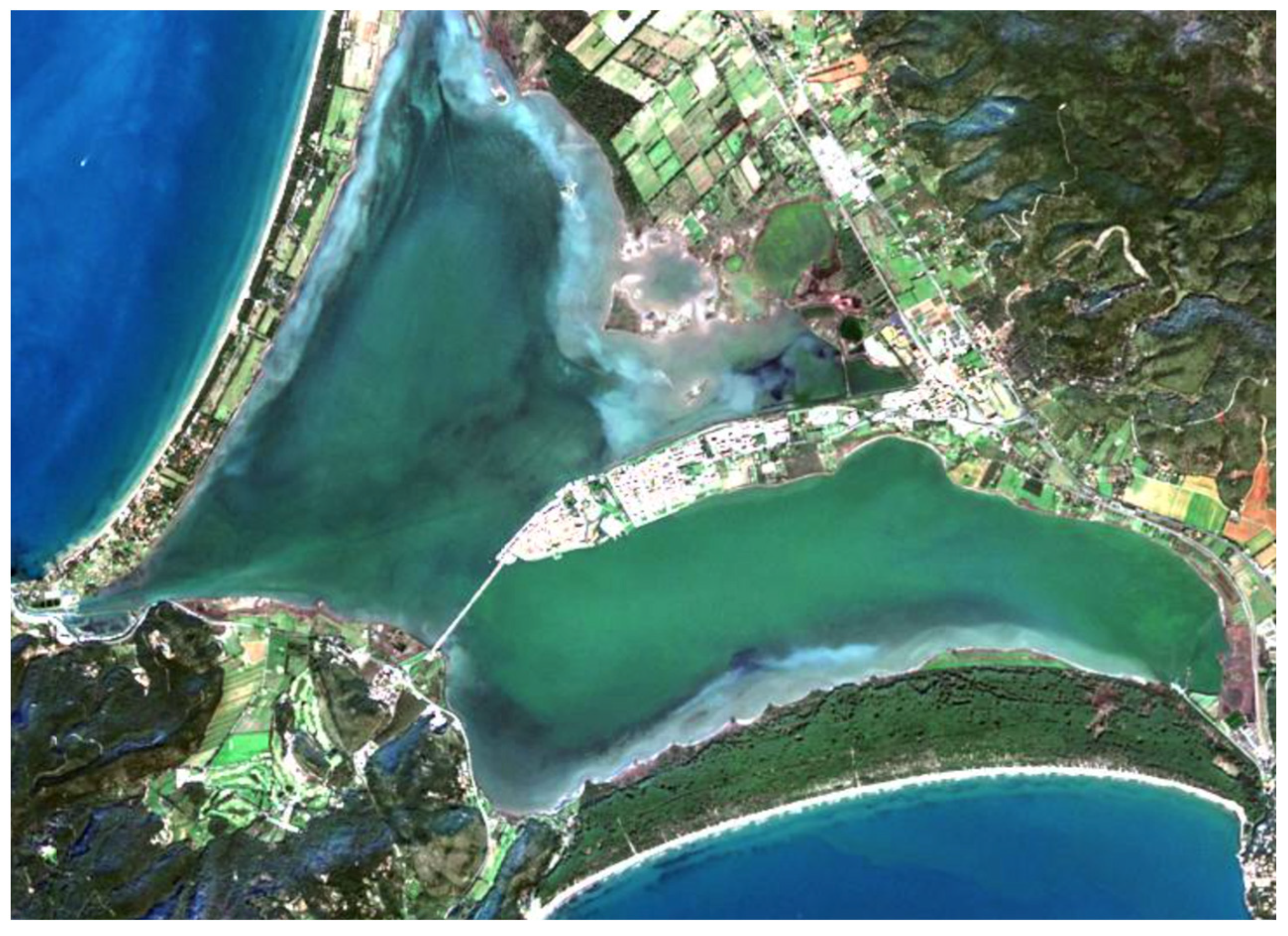
Table 1 reports the estimates of the standing crops (SCs) of the macroalgal mats and the dominances of the main macroalgal species of the Orbetello lagoon between 2018 and 2024. SC values, reported to the entire lagoon, varied on average between 1.074 kg m−2 and 2.093 kg m−2. However, since these masses are not distributed evenly, but often form high-density mats, the organic load can have a significant impact on the ecosystem. In 2024, SC’s estimates were conducted in February, so these data could be lower than those developed in the spring months. In this regard, Figure 3 shows the coverage of the lagoon bottom by the distribution of the macroalgal cover for February 2024. In comparison, Figure 4 shows the situation in February of the following year, with most of the submerged vegetation having disappeared due to dystrophy.
Between 2018 and 2024, the dominance was held by the Chlorophyta Chaetomorpha linum and, secondarily, by the Chlorophyta Valonia aegagropila, while the Rhodophyta were confined to a restricted area in the East basin. Since 2020, widespread developments have been observed in both the West and East basins of the Heterocontophyta Gongolaria barbata [38].
The July–August 2024 dystrophy destroyed the dominant structure of submerged vegetation and determined the early detachment of the fronds of the angiosperms whose meadows border the lagoon, especially along the two sand bars.

3.2. Water Chemical-Physical Variables

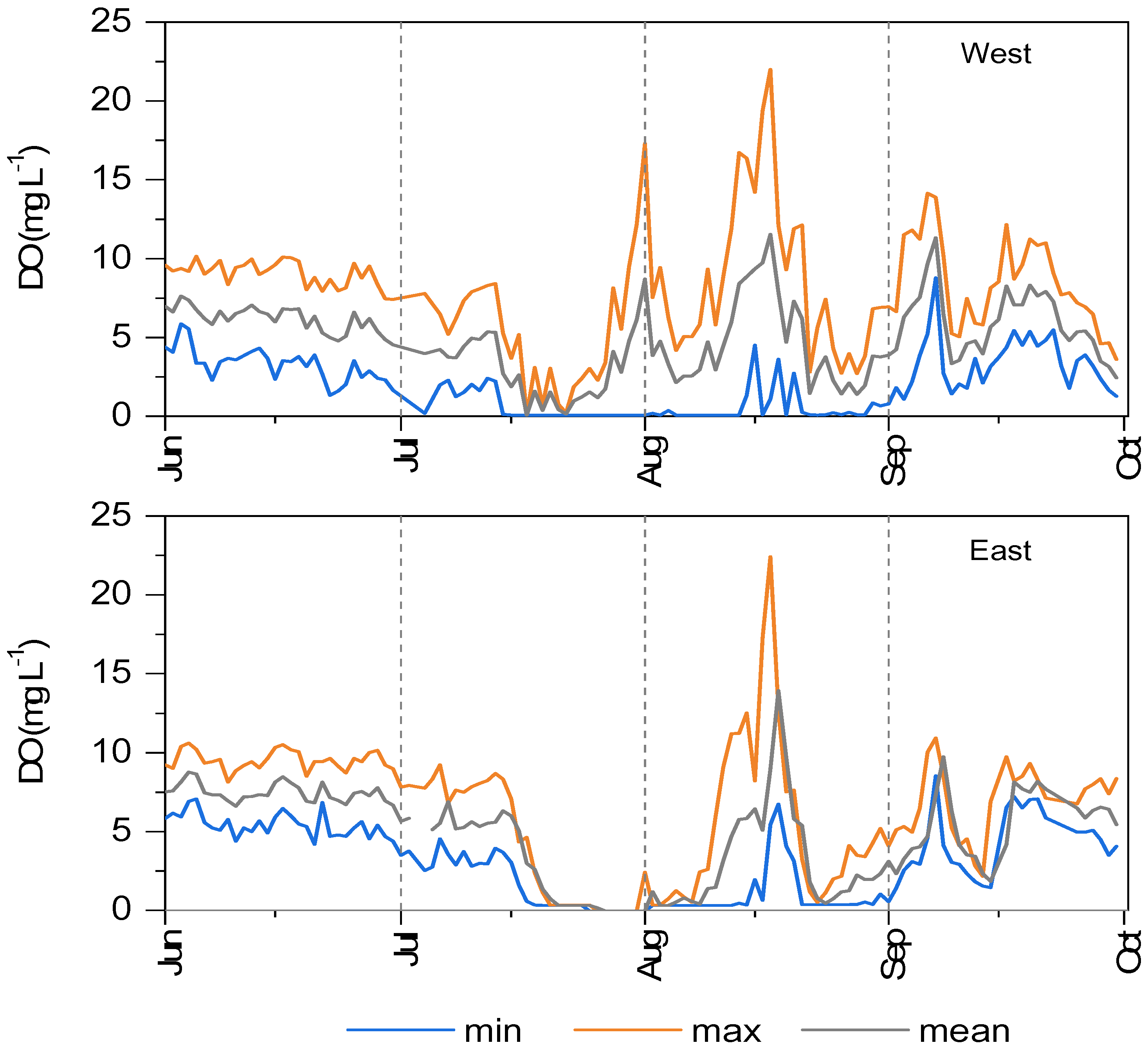
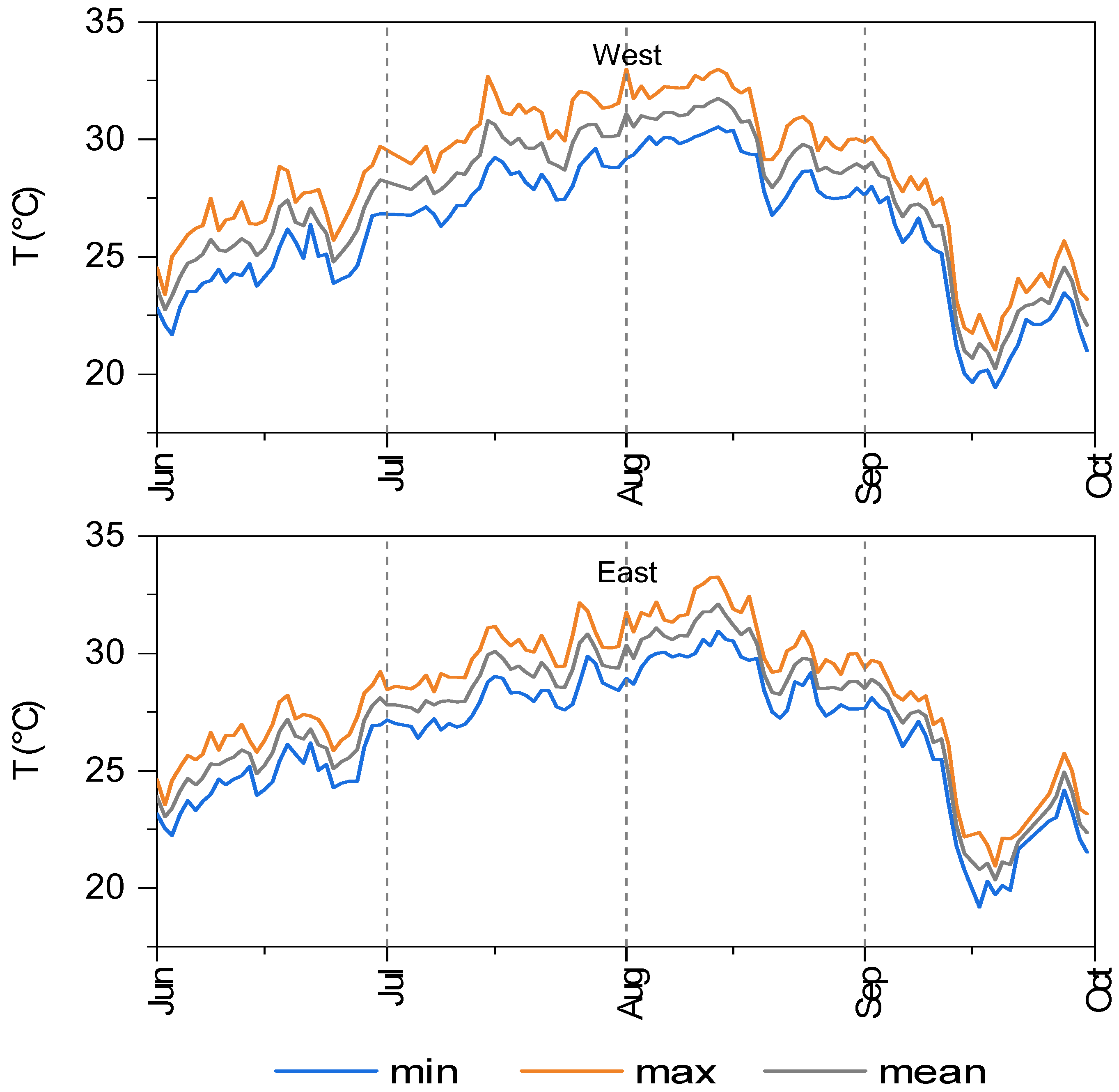
Figure 5 and Figure 6 show DO and T trends, respectively, for the June–September 2024 period, obtained from fixed multiparameter probe stations located in the West and East basins. The pH fluctuations and trends were consistent and positively correlated with the DO trend, ranging from 8.70 to 7.00. Salinity varied between 37 and 39.
DO fluctuated between 5 mg L−1 and 10 mg L−1 in June, showing a gradual decline in the first half of July until total anoxia in the East basin, maintaining minimum levels at 0 mg L−1 until mid-August and, partly, also at the beginning of September. In the West basin, minimum values remained at 0 mg L−1 persistently for 30 days.
In the second half of August, maximum DO values reached supersaturation levels in both basins, more persistently in the West basin.
In the East basin, August minimum temperature (T-min) ranged between 29 °C and 31 °C for 17 consecutive days. Maximum temperature (T-max) exceeded 31 °C for 18 consecutive days, with peaks above 34 °C (Figure 6).
Table 2 shows the T-mean, T-min, and T-max between 2013 and 2024, for July and August, in the West and East basins. These two months in 2024 were the warmest of the period examined, with the exception of 2015, although they exceeded it in the West basin.

3.3. Sediment Organic Matter

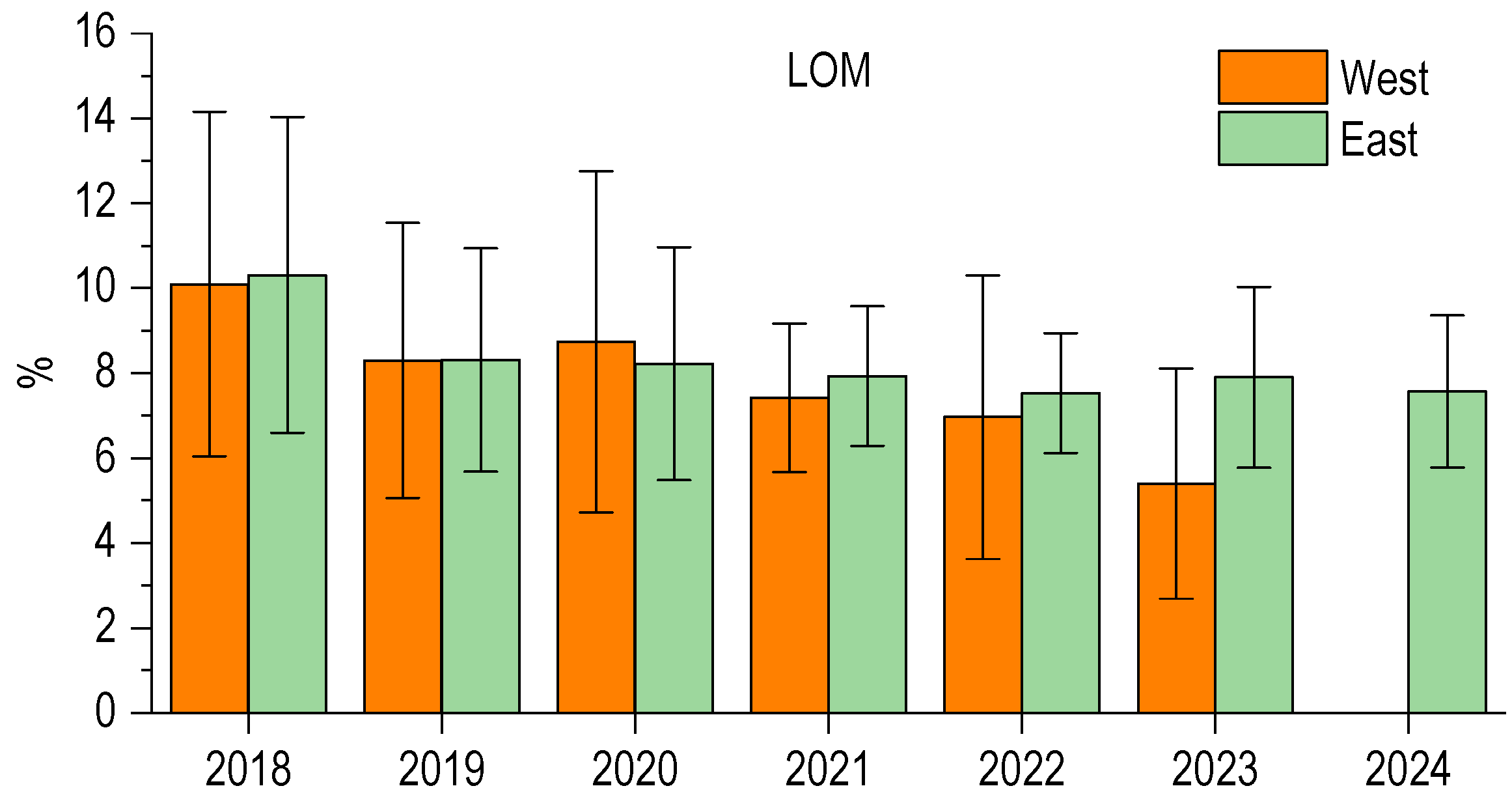
Figure 7 shows the values of LOM that were present in the sediment of the West and East basins of the Orbetello lagoon between 2018 and 2024. The average of all records for the period in question, for the West basin, was 8.78 ± 3.75%. (min 3.45%; max 21.63%), and for the East basin, was 8.33 ± 2.83% (min 4.34; max 24.04%). For 2024, values are available only for the East basin, which averaged 7.57 ± 1.79% (54 records).

3.4. Dystrophy

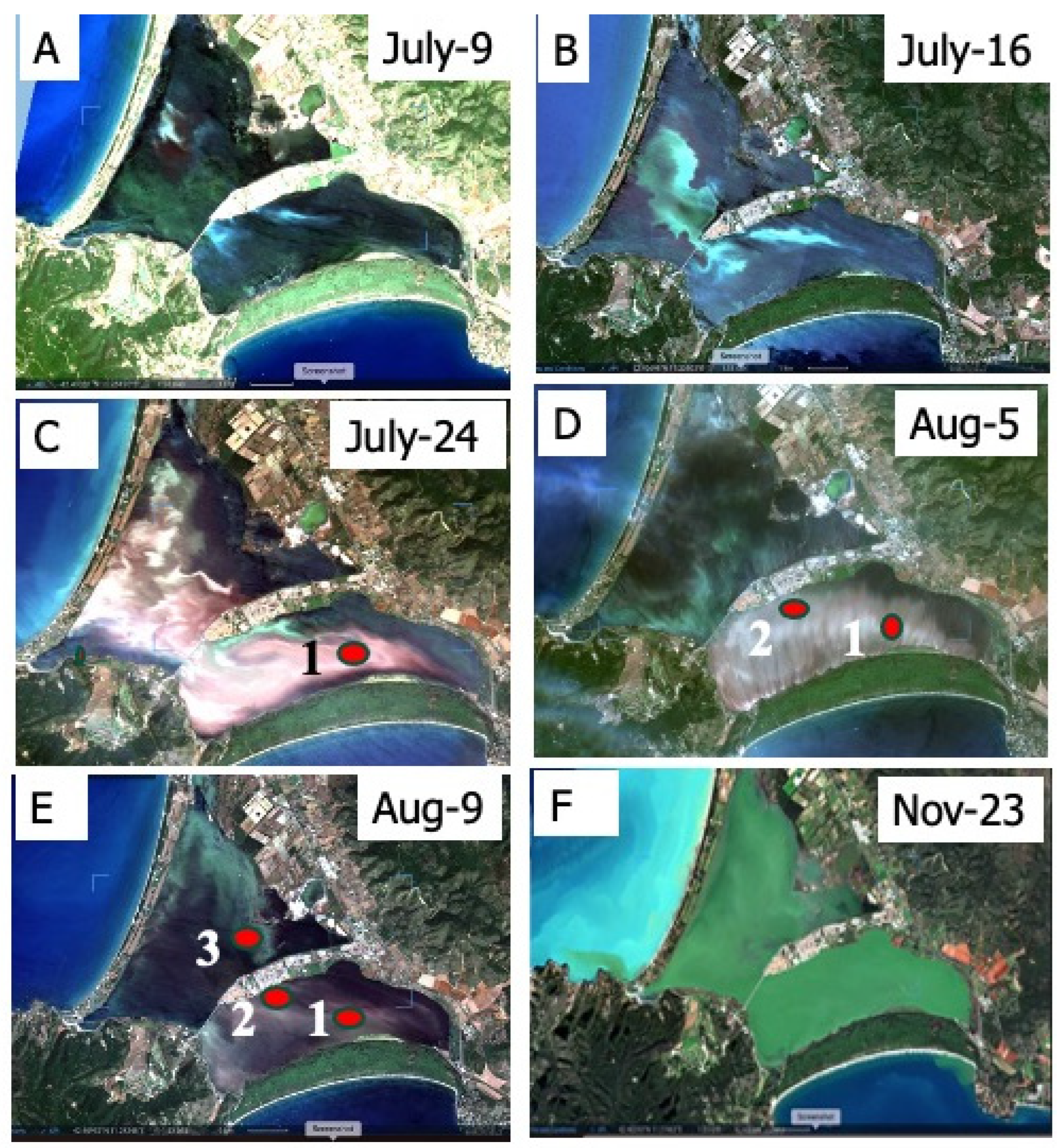
In Figure 8A–F, satellite images of the Orbetello lagoon between July and November 2024 are reported. From this last Figure, the onset of the dystrophy, the progressive extension, and its evolution through microphytic developments can be observed. The images also show the sampling points for microphytes determination for the dates coinciding with the images themselves.

3.5. Microphyte Determinations

In Table 3, the list of microphyte species that developed during and after the dystrophic event is reported. In total, 59 taxa were identified; they were Bacillariophyceae, Dinophyceae, Dictyochophyceae, Cryptophyceae, Euglenoidea, Prasinophyceae, Prymnesiophyceae, Raphidophyceae, and Cyanobacteria. The list is compared with the lists of microphytic developments observed in the past and published in 1996 [24] and 2003 [39]. These last lists detected 34 and 73 taxa, respectively.
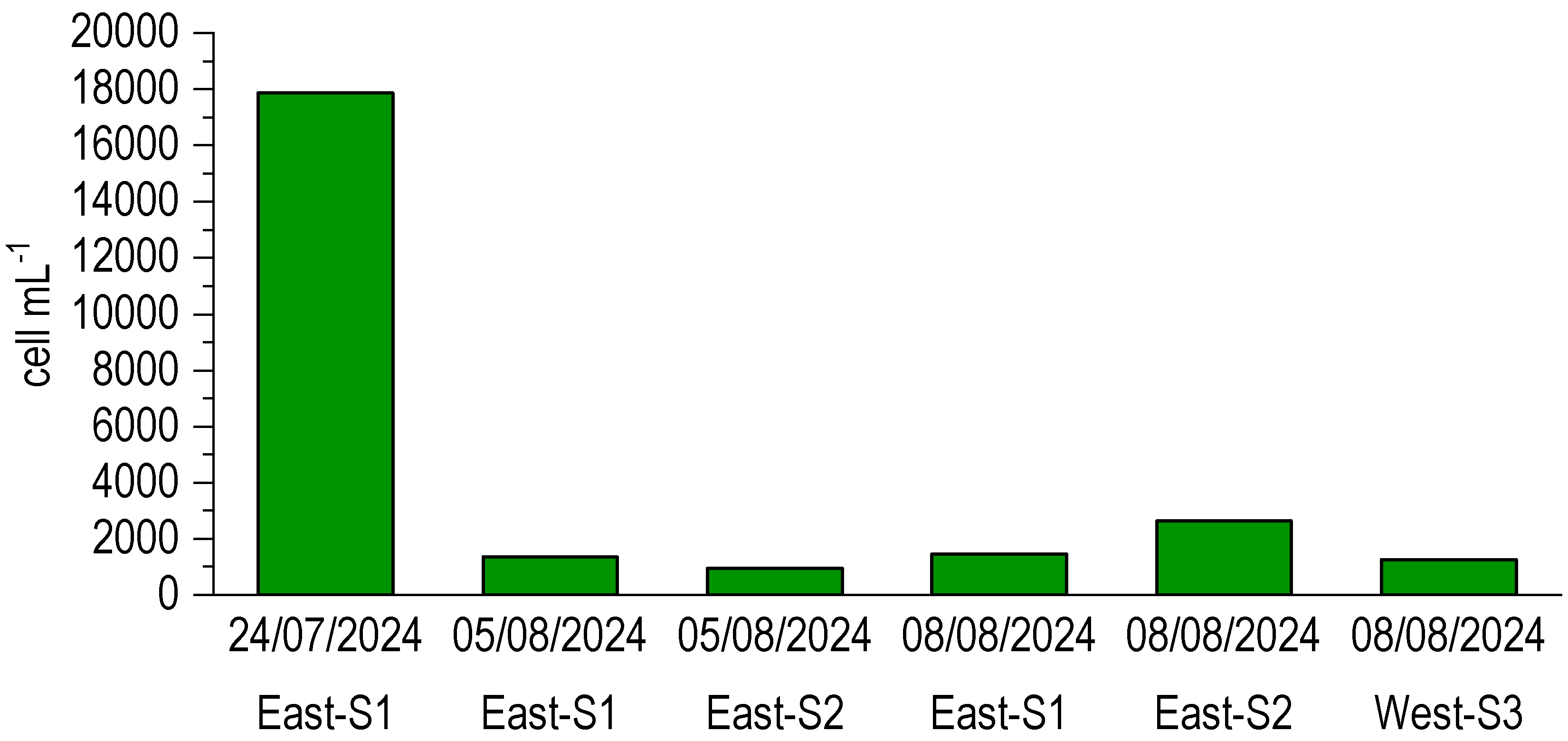
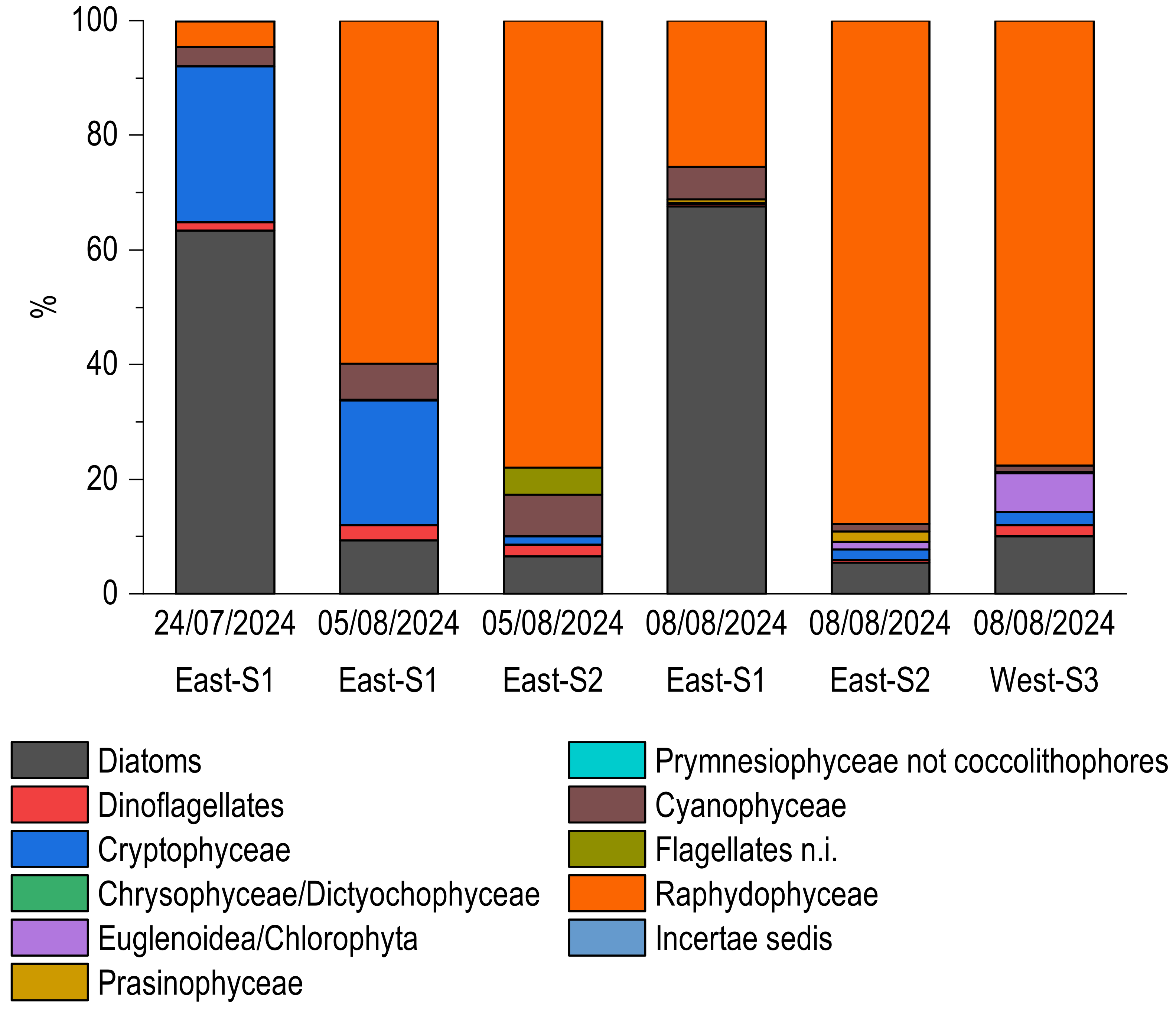
Between July and August 2024, total microphytic densities (Figure 9 and Figure 10) varied from a maximum of 17,851 cells mL−1 in the East basin (weakly pink colour) sampled on 24 July (Figure 8, station 1; Figure 9), with diatoms dominance (Figure 10), to a minimum of 951 cells mL−1, in the same station sampled on 5 August, with Raphidophyceae dominance (Figure 9 and Figure 10). The same station sampled on 8 August instead presented an increase in density at about 1446 cells mL−1, with a new diatom dominance (Figure 9 and Figure 10). Still on 8 August, at the station close to the communication canal between the two basins (Figure 8E, station 2), cell mL−1 reached 2649 (Figure 9), with Raphidophyceae dominance (Figure 10).
In the West basin, total densities reached 1256 cells mL−1 on 8 August (Figure 9; station 3, Figure 8E), with Raphidophyceae dominance (Figure 10).
Subsequently, from mid-September 2024 until February 2025, a very intense bloom of Cyanobacteria developed (Figure 8F).
Looking at the percentage contribution of the Classes (Figure 10), at station 1, in the East basin, on 24 July and 8 August, the population was largely represented by Bacillariophyceae (63.3% and 67.6%, respectively), together with Cryptophyceae (27.28%) in July and Raphidophyceae (25.6%) in August. The same station 1 sampled on 5 August, however, showed a different population, dominated by Raphidophyceae (78%). Station 2 on 5 August showed a population composed of Bacillariophyceae (9%), Cryptophyceae (22%), and Raphidophyceae (60%). In the West basin, at station 3, and in the East basin, at station 2, in the 8 August samples, the population was dominated by Raphidophyceae, which represented, respectively, 78% and 88% of the total individuals.
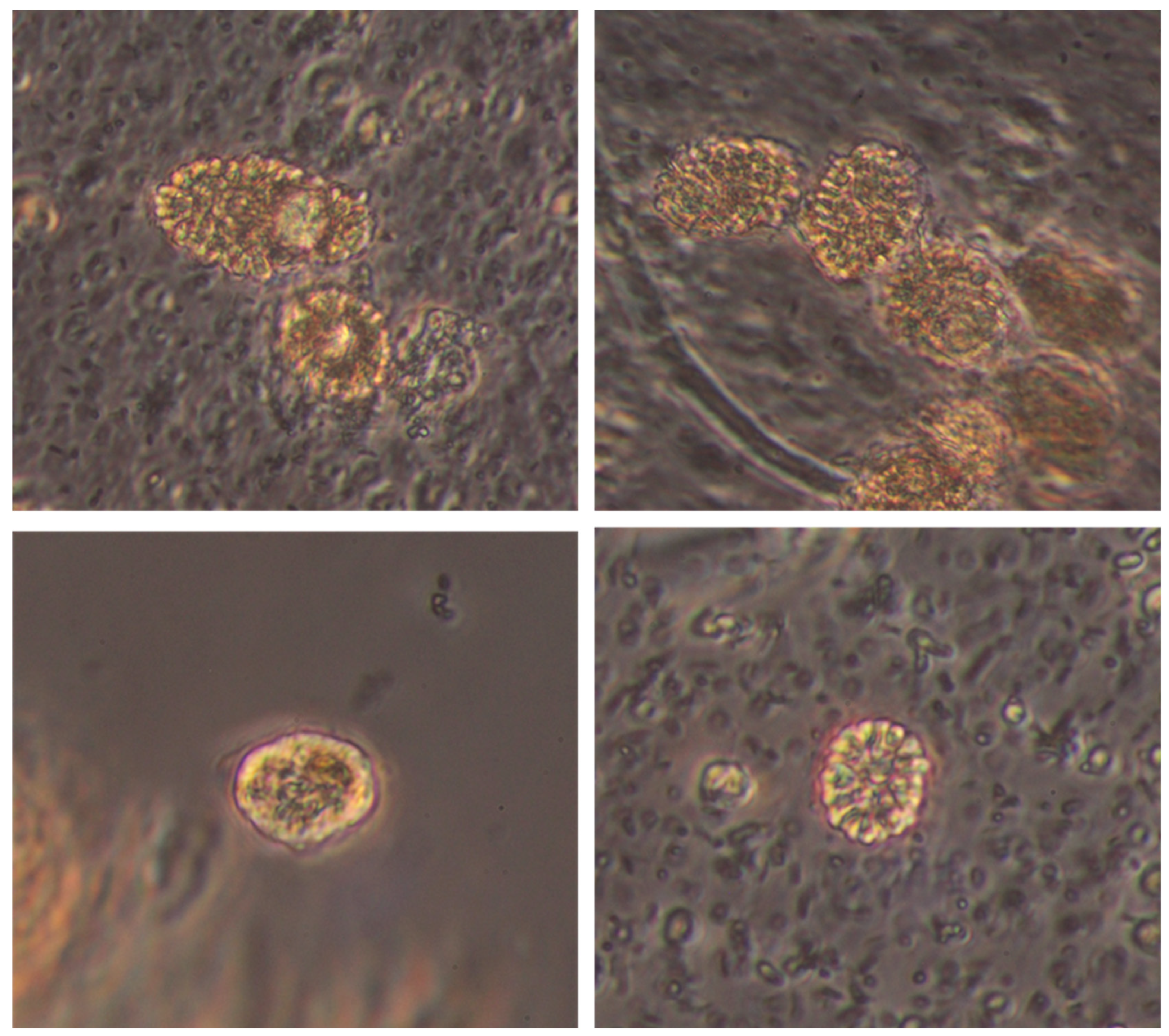
The most abundant taxa for Bacillariophyceae were Amphora sp. (present mainly in July in the East basin), Chaetoceros neogracile (present mainly in August in the East basin), Chaetoceros tenuissimus, Chaetoceros simplex, and Thalassiosira delicatula. The most representative Raphidophyceae were sp-1 (cf. Fibrocapsa japonica), present in the East basin both in July and during the August bloom, and sp-2 (cf. Heterosigma akashiwo), which characterised the August population in the West basin (Figure 11). In these stations, Euglenophyceae were also detected, such as Euglena acusformis, Eutreptia viridis, and Eutreptiella braarudii, while in all stations, Cyanobacteria were also detected, such as Gloeocapsa sp., Merismopedia sp., Phormidium sp., Planktolyngbya contorta, Planktothrix sp., and Spirulina sp.

4. Discussion

4.1. Macroalgae and Sediment Labile Organic Matter

July–August 2024 dystrophy was particularly severe, destroying all macroalgal masses, which were already very high in February 2024 (Figure 3; Table 1) and probably increased further in the spring months. The severe criticality of the dystrophy is confirmed by the satellite image of February 2025 (Figure 4), where the lagoon bottom appears substantially bare, and, after a field examination, the dark areas observed in the image were found to be composed of detrital organic matter.
A large availability of nutrients and dissolved and particulate organic matter favours microphyte blooms. Massive releases of nutrients detected in the Burano non-tidal lagoon (Italy) during the dystrophy of July and August 2021 favoured an intense and prolonged bloom of the Dinophyta Alexandrium tamarense [36]. It is very likely that the decay of the macroalgae masses and the sediment organic load, due to the dystrophic process, produced in the Orbetello lagoon significant releases of nutrients, above all ammonium and orthophosphate, as typically occurred in conditions of dystrophy in other lagoon environments (Souchu et al. [40]: N-NH4+ > 24 μM; Lenzi and Cianchi [36]: N-NH4+ = 111 ± 31 μM).
In the Orbetello lagoon, in May 2024, under a high DO concentration (8.96 ± 1.95 mg/L) due to high macroalgal masses, nutrient releases were already evident with N-NH4+, N-NO3, and P-PO43− concentrations of 21 ± 9 μM, 83 ± 70 μM, and 1.6 ± 1.1 μM, respectively. Even higher were the concentrations for the water above the high-density mat of C. linum, coming from the decay of the mat layer adjacent to the bottom: N-NH4+, 27 μM; N-NO3, 211 μM; P-PO43−, 3.2 μM [38].
Significant nutrient releases from C. linum masses are also confirmed by laboratory studies [41], which established that the decomposition of this species results in a decrease in DO and pH and a significant increase in orthophosphate. The remarkable increase in P concentration in the water was due to both P release from macroalgae and sediments, concluding that the decomposition of large quantities of C. linum also promoted P release from the sediment.
However, the mats of this species are very resistant and have been found to survive even under dystrophic conditions, with mat decomposition occurring essentially in the near-bottom layer [42], obviously depending greatly on the intensity and duration of the dissipative phenomenon. On the other hand, although the degradation of macroalgal masses is not always as drastic as that which occurred in July–August 2024, G. barbata, V. aegagropila, and Rhodophyta are always very sensitive to recent significant increases in temperature and probably to the bacterial aggression that is triggered by the increase in temperature; therefore, they decay very quickly, unlike C. linum [42,43].
Comparing Figure 3 and Figure 8, it can be seen that the dystrophic event began in the areas of the V. aegagropila mats, which probably provided the initial fuel for the anaerobic process with their decay. In a cascade, as conditions became increasingly extreme and high temperatures persisted, the process spread to other organic deposits, and even the other plant masses succumbed, even the most refractory ones. It is probable that the increase in temperature initially acted in determining a rapid decay of the most sensitive species and that the anoxic-reducing dystrophic waters involved other macroalgal masses and the sediments with a higher LOM component, in a cascade process. In fact, the extent of the dystrophy was remarkable, as can be observed in Figure 8C. Figure 8A–C shows how the dystrophy extended from small areas distributed in the two basins to most of the lagoon, in just 15 days. The speed was astonishing, if one considers that the hydrodynamics of this lagoon basin is extremely low, with a mean residence time of the waters of about 57 days, under a pumping regime and a summer breeze, with much higher water renewal times in the central and marginal areas of the artificial flow [44]. It would seem that the process occurred independently of the water flow, as if the bottom of the lagoon were a lit fuse.
Although the percentage of LOM in sediments tended to decrease since 2018 (Figure 7), the values determined in 2024 in the East lagoon can still be considered high enough to constitute a potential “fuel” for anaerobic decomposition, such that it can trigger a dystrophic process. Although data from the West basin for 2024 were not available, it is likely that, given the abundance of macroalgal masses, LOM was not lower than the values of the previous year. The criticality of LOM depends greatly on its nature, the quantity of lipids, proteins, and low molecular weight carbohydrates [23,45,46,47].
The reason why the phenomenon occurred in 2024 and not in previous years, when LOM was higher and the macroalgal masses were in quantity and quality likely comparable to 2024, must probably be attributed above all to the achievement of high and prolonged temperatures. Indeed, in the West basin, the T-min remained between 29 °C and 30.5 °C for 23 days, while the T-max ranged between 31 °C and 33 °C for 24 days. In the East basin, the T-min fluctuated between 29 °C and 30.7 °C for 18 days, while the T-max ranged between 31 °C and 34 °C for 25 days (Figure 6).
Global warming, by increasing environmental extremes, may impact non-tidal lagoons by selecting for more resistant species, both in terms of their physiology and mat structure, further reducing biodiversity. During the transition phase towards the dominance of increasingly tolerant species, the frequency of dystrophic phenomena can increase, but once their total dominance is achieved, these phenomena could decrease significantly. Indeed, with the dominance of C. linum, LOM tends to decrease, diminishing the mats of species that rapidly decay with rising temperatures. We can interpret this vegetation shift as an ecosystem response to warming: the dominance of a stress-resistant species tends to counteract, within certain limits, a potential increase in dystrophic events. This process, which leads the ecosystem to become even less balanced and less resilient, in the sense that it becomes increasingly difficult to return to better conditions. Furthermore, this process makes the ecosystem more vulnerable to native and non-native species that have sufficient tolerance to these environmental stresses.

4.2. Dystrophy Evolution and Microphyte Blooms

In Table 3, three lists of microphytes determined at various times in the Orbetello lagoon are reported. The 2003 list was more diversified than in 2024, for both Bacillariophyceae and Dinophyceae; in fact, the 2003 study refers to several years of sampling in non-dystrophic conditions. During that period, the trophic conditions of the lagoon showed a wide range of dissolved inorganic nitrogen and phosphorus (from 0.5 to 70 μM and from undetectable values to 1.6 μM, respectively), with seasonal variations in the N/P ratio, the lowest values in summer. The interannual variation in the microphyte total densities ranged from 100 cells/mL−1 to more than 10,000 cells/mL−1. Densities showed oscillations mainly in the East basin, where Bacillariophyceae were relevant during summer [39]. On the contrary, the 1996 list includes estimates conducted in particularly critical years, in which several dystrophies had occurred: the most critical conditions produced blooms of organisms that are more tolerant and in a smaller number of species. Skeletonema costatum produced blooms several times between 1986 and 1989, in late summer, during and after dystrophic conditions [24], a species that does not appear in the 2024 list, despite the critical conditions that could have assimilated the two lists.
DO trends in the two basins between June and September (Figure 5) were quite similar, showing large excursions in June with generally high values, indicating intense macroalgal photosynthesis and significant nocturnal respiration.
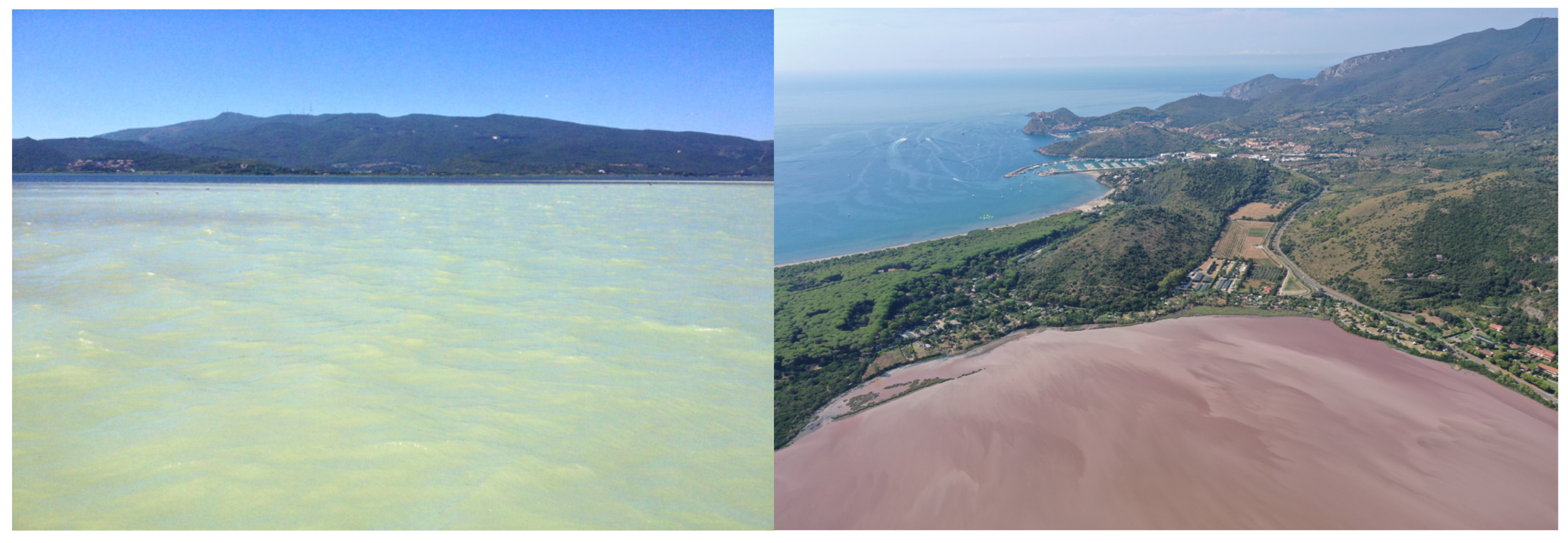
The first dystrophic areas began in the two basins on 9 July (Figure 8A), at maximum temperatures of 30–31 °C and minimum temperatures of 29 °C (Figure 6), while on 16 July (Figure 8B), they appeared to extend mainly into the West basin. This first phase of the phenomenon was characterised by white water, as observed in many other lagoon environments [40,48,49,50,51], due to the formation of colloidal sulphur produced by the oxidation of hydrogen sulphide, which rises from the bottom in the water column (Figure 8A,B). The bluish and greenish colours in the satellite image is an alteration of the colour: in situ, the waters were clearly white/yellowish (Figure 12).
The dystrophic phenomenon began to produce extensive effects in the West basin on 14 July (Figure 8B; the satellite image is from 16 July), with DO falling to zero, a condition which remained constant until 13 August, for 29 days (Figure 5), with high temperature (T-min about 30 °C and T-max about 32 °C, Figure 6).
In the East basin, anoxia occurred on 23 July and remained constantly at zero until 12 August, for 20 days (Figure 5). Although, as already stated, the speed of diffusion of the dystrophy exceeded the speed of the water-flow imposed by the pumping of sea-water, proceeding from west to east towards the marine mouth of SLC-3 (Figure 1), this constant and unidirectional water flow contributed to worsening the conditions in the East basin, which persistently received all the anoxic-reducing waters of the West basin. Moreover, it is likely that the intense, initial pink/red colour of the water, as is also clearly evident in Figure 12, was initially due to the growth of anaerobic sulphur-oxidising bacteria (SOB). A similar phenomenon has been observed in the past by many other researchers [52,53,54,55,56], who observed “a sudden and transitory red coloration” shortly after the development of hydrogen sulphide, attributing it to the genera Rhodopseudomonas, Thiopolicoccus, Chromatium, Thiocystis, and Thiocapsa, which are all sulphur-oxidising photosynthetic bacteria.
In our case, this phase of dystrophy was supplanted by microphyte blooms. In the West basin, after several days of hypoxia and nocturnal anoxia stress, the first DO supersaturation level began on 27 July, when the intense colouration of the waters had already spread in both basins for several days (since 20 July). The DO peak corresponded to 30 July (Figure 5) and was undoubtedly supported by a bloom which was not sampled.
In the East basin, the first peak of supersaturation occurred on 12 August, after 20 days of dystrophic stress. In this case, the pink colouration persisted in anoxia from 21 July to 6 August, for 15 days.
Although the 24 July bloom had the highest estimated cell density for the three sampling dates, this bloom did not counteract the anoxic state of the lagoon waters. This bloom consisted of Bacillariophyceae, dominant over Cryptophyceae in a subordinate role, and occurred in conjunction with intense pink–brown colourations (Figure 12). This colouration could have been a consequence of the dominance of purple SOB, and, in this case, the abundance of Bacillariophyceae could be due to the suspension in the water column of previously epiphytic species on the macroalgal masses that decayed during the dystrophy, suspended by water movements following the production of gas from the bottom. These microalgae either were unable to counteract the anoxic-reducing waters through photosynthesis or were subjected to such stress that they were unable to carry out photosynthesis. Only several days later, the microalgal development overcame the anoxia.
The samplings on 5 August and 8 August in the two basins took place in phases of low DO concentration; the dominance was of the photosynthetic autotrophs Raphidophyceae in stations 2 and 3 and of Bacillariophyceae in station 1, but the densities were not particularly high (Figure 9 and Figure 10).
In mid-September, the previous microphyte blooms decreased, and the development of Cyanobacteria, which had attempted to dominate at other times (9 August, Figure 8E), gradually took over. The Cyanobacteria bloom dominated from mid-September 2024 to January 2025 (Figure 8F). This last phenomenon was not new to the Orbetello lagoon: due to the severe dystrophy of 2015, an immediate and intense growth of Cyanobacteria of the Synechocystis group occurred, which continued from September to January of the following year [25].
Photosynthetic microphytes have the potential to counteract dystrophic conditions, but their development is capable of rapidly evolving critical issues that have not always occurred in sufficient quantities, and, therefore, we have observed fluctuations in DO over time and the passage from dominance from one group to another.

5. Conclusions

In the Orbetello lagoon, a dystrophic process occurred in the summer of 2024 through a combination of rising temperatures, abundance of organic deposits/macroalgal biomass, and poor hydrodynamics. Microphytic blooms often accompany the decay of macroalgal masses and are frequently composed of Dinophyceae.
Subsequently, the development of a complex of anaerobic bacterial pools dominated by sulphate-reducing bacteria can produce white water, due to the release of hydrogen sulphide from the sediments, which oxidises to colloidal sulphur. This anoxic phase has a variable duration depending on subsequent developments: anaerobic sulphur-oxidising bacteria maintain the anoxia, a phenomenon counteracted by the development of aerobic photosynthetic organisms. At this stage, coloured tides can form, the colour of which depends on the dominance of the various microorganisms.
Nutrient abundance, especially ammonium nitrogen, dissolved organic nitrogen, and soluble orthophosphates, favours microphytic development, variably composed of Dynophyceae, Bacillariophyceae, Cryptophyceae, Raphidophyceae, Cyanobacteria, etc. These blooms, producing oxygen through photosynthesis, counteract dystrophic conditions and are at the basis of the evolution of dystrophy itself. They tend to mitigate the extremely toxic nature of anoxic-reducing dystrophic waters, promoting the oxidation of the reduced components (FeII, MnII, HS, S, S2O3, SO2, etc.), and reintroducing oxygen to levels acceptable for vagile animal populations. This next phase of the dystrophic event is extremely variable in dominance and depends on multiple factors, from the physicochemical characteristics of the water, to meteorological conditions, to the quality and ratios of the nutrient chemical species.
The remarkable virulence of the dystrophy in July–August 2024 in the Orbetello Lagoon completely eliminated submerged plant populations and reduced the labile organic load of the sediment. From February 2025 onwards, when the cyanobacterial bloom also died out, the lagoon began its new cycle of organic accumulation, as it remains a hypertrophic environment.
In a context of environmental degradation, due to a hypertrophic condition that is difficult to remediate, it is more than appropriate to work on the development of photosynthetic microphytes, the only ones with the potential to counteract the drastic dystrophic conditions that jeopardise not only fishing but tourism and the health of urban areas, through miasmas and chironomid spawning. Therefore, one environmental management objective could be to encourage microphytic blooms as early as possible when monitoring suggests the worst.

Author Contributions

M.L.P. and M.L., conceptualization, field surveys and sampling; F.P. and C.M., sample processing and taxonomic determinations; M.L., data curation, writing and editing. All authors have read and agreed to the published version of the manuscript.

Funding

This research received no external funding.

Data Availability Statement

The original contributions presented in this study are included in the article. Further inquiries can be directed to the corresponding author.

Conflicts of Interest

The authors declare no conflicts of interest.

References

  1. Boyer, W.; Howarth, R.W. Chapter 36—Nitrogen Fluxes from Rivers to the Coastal Oceans. In Nitrogen in the Marine Environment; Capone, D.G., Bronk, D.A., Mulholland, M.R., Carpenter, E.J., Eds.; Elsevier: Amsterdam, The Netherlands, 2008. [Google Scholar] [CrossRef]
  2. Andersen, J.H.; Schluter, L.; Ærtebjerg, G. Coastal eutrophication: Recent developments in definitions and implications for monitoring strategies. J. Plankton Res. 2006, 28, 621–628. [Google Scholar] [CrossRef]
  3. Grégori, G.J.; Dugenne, M.; Thyssen, M.; Garcia, N.; Nicolas, M.; Bernard, G. Monitoring of a Potential Harmful Algal Species in the Barre Lagoon by Automated in Situ Flow Cytometry. In Marine Productivity: Perturbations and Resilience of Socio-Ecosystems; Ceccardi, H.J., Hénocque, Y., Koike, Y., Komatsu, T., Stora, G., Tusseau-Vuillemin, M.-H., Eds.; Springer International Publishing: Berlin/Heidelberg, Germany, 2015; pp. 117–127. [Google Scholar]
  4. Hauxwell, J.; Valiela, I. Effects of nutrient loading on shallow seagrass-dominated coastal systems: Patterns and processes. In Estuarine Nutrient Cycling: The Influence of Primary Producers; Nielsen, S.L., Banta, G.T., Pedersen, M.F., Eds.; Kluwer Academic Publishers: Dordrecht, The Netherlands, 2004; pp. 59–92. [Google Scholar]
  5. Charlier, R.H.; Morand, P.; Finkl, C.W.; Thys, A. Green tides on the Brittany coasts. Environ. Res. Eng Manag. 2007, 3, 52–59. [Google Scholar]
  6. Liu, F.; Pang, S.; Chopin, T.; Gao, S.; Shan, T.; Zhao, X.; Li, J. Understanding the recurrent large-scale green tide in the Yellow Sea: Temporal and spatial correlations between multiple geographical, aquacultural and biological factors. Mar. Environ. Res. 2013, 83, 38–47. [Google Scholar] [CrossRef]
  7. Elliott, M.; Quintino, V. The estuarine quality paradox, environmental homeostasis and the difficulty of detecting anthropogenic stress in naturally stressed areas. Mar. Pollut. Bull. 2007, 54, 640–645. [Google Scholar] [CrossRef]
  8. Duarte, C.M. Submerged aquatic vegetation in relation to different nutrient regimes. Ophelia 1995, 41, 87–112. [Google Scholar] [CrossRef]
  9. Lenzi, M.; Gennaro, P.; Renzi, M.; Persia, E.; Porrello, S. Spread of Alsidium corallinum C. Ag. in a Tyrrhenian eutrophic lagoon dominated by opportunistic macroalgae. Mar. Pollut. Bull. 2012, 64, 2699–2707. [Google Scholar] [CrossRef]
  10. McGlathery, K. Macroalgal blooms contribute to the decline in seagrasses in nutrient-enriched coastal waters. J. Phycol. 2001, 37, 453–456. [Google Scholar] [CrossRef]
  11. Arndt, S.; Jørgensen, B.B.; LaRowe, D.E.; Middelburg, J.J.; Pancost, R.D.; Regnier, P. Quantifying the degradation of organic matter in marine sediments: A review and synthesis. Earth-Sci. Rev. 2013, 123, 53–86. [Google Scholar]
  12. Gunnars, A.; Blomqvist, S. Phosphate exchange across the sediment-water interface when shifting from anoxic to oxic conditions: An experimental comparison of freshwater and brackish-marine systems. Biogeochemistry 1997, 37, 203–226. [Google Scholar] [CrossRef]
  13. Rozan, T.F.; Taillefert, M.; Trouwborst, R.E.; Glazer, B.T.; Ma, S.; Herszage, J.; Valdes, L.M.; Price, K.S.; Luther, G.W., III. Iron-sulphur-phosphorus cycling in the sediments of a shallow coastal bay: Implications for sediment nutrients release and benthic macroalgal blooms. Limnol. Oceanogr. 2002, 47, 1346–1354. [Google Scholar] [CrossRef]
  14. Froelich, P.N.; Klinkhammer, G.P.; Bender, M.L.; Luedtke, N.A.; Heath, G.R.; Cullen, D.; Dauphin, P.; Hammond, D.; Hartman, B.; Maynard, V. Early oxidation of organic-matter in pelagic sediments of the eastern equatorial atlantic-suboxic diagenesis. Geochim. Cosmochim. Acta 1979, 43, 1075–1090. [Google Scholar] [CrossRef]
  15. Chaikaew, P.; Sompongchaiyakul, P. Acid volatile sulphide estimation using spatial sediment covariates in the Eastern Upper Gulf of Thailand: Multiple geostatistical approaches. Oceanologia 2018, 60, 478–487. [Google Scholar] [CrossRef]
  16. Schippers, A.; Jorgensen, B.B. Biogeochemistry of pyrite and iron sulfide oxidation in marine sediments. Geochim. Cosmochi. Acta 2002, 66, 85–92. [Google Scholar] [CrossRef]
  17. Fenchel, T.; Jorgensen, B.B. Detritus food chains of aquatic ecosystems: The role of bacteria. In Advances in Microbial Ecology; Springer: Berlin/Heidelberg, Germany, 1977; Volume 1, 58p. [Google Scholar]
  18. Berner, R.A. Sedimentary pyrite formation: An uptdate. Geochim. Cosmochim. Acta 1984, 48, 605–615. [Google Scholar] [CrossRef]
  19. Preisler, A.; de Beer, D.; Lichtschlag, A.; Lavik, G.; Boetius, A.; Jorgensen, B.B. Biological and chemical sulfide oxidation in a Beggiatoa inhabited marine sediment. ISME J. 2007, 1, 341–353. [Google Scholar] [CrossRef]
  20. Giordani, G.; Azzoni, R.; Viaroli, P. A rapid assessment of the sedimentary buffering capacity towards free sulphides. Hydrobiologia 2008, 611, 55–66. [Google Scholar] [CrossRef]
  21. Lenzi, M. Vegetation structure of lagoon environments as a result of sediment biogeochemical dynamics and organic matter load: A review. In Macrophytes. Biodiversity, Role in Aquatic Ecosystems and Management Strategies; Capello, R., Ed.; Nova Science Publishers, Inc.: Hauppauge, NY, USA, 2014; Chapter 3; pp. 15–58. [Google Scholar]
  22. Lenzi, M.; Renzi, M.; Nesti, U.; Gennaro, P.; Persia, P.; Porrello, S. Vegetation cyclic shift in eutrophic lagoon. Assessment of dystrophic risk indices based on standing crop evaluations. Estuar. Coast. Shelf Sci. 2013, 13, 99–107. [Google Scholar] [CrossRef]
  23. Pusceddu, A.; Dell’Anno, A.; Danovaro, R.; Marini, E.; Sarà, G.; Fabiano, M. Enzymatically hydrolysable protein and carbohydrate sedimentary pools as indicators of the trophic state of “detritus sink” systems: A case study in a Mediterranean coastal lagoon. Estuaries 2003, 26, 641–650. [Google Scholar] [CrossRef]
  24. Tolomio, C.; Lenzi, M. Eaux colorees dans les lagunes d’Orbetello et de Burano (Mer Tyrrhenienne du Nord) de 1986 à 1989. Vie Milieu/Life Environ. 1996, 46, 25–37. [Google Scholar]
  25. Lenzi, M.; Persiano, M.; Gennaro, P.; Rubegni, F. Wind Mitigating Action on Effects of Eutrophication in Coastal Eutrophic Water Bodies. Int. J. Mar. Sci. Ocean Technol. 2016, 3, 14–20. [Google Scholar] [CrossRef]
  26. Rhodes, L.; Adamson, J.; Suzuki, T.; Briggs, L.; Garthwaite, I. Toxic marine epiphytic dinoflagellates, Ostreopsis siamensis and Coolia monotis (Dinophyceae), in New Zealand. J. Mar. Freshw. Res. 2000, 34, 371–383. [Google Scholar] [CrossRef]
  27. Jakubowska, N.; Szelag-Wasielewska, E. Toxic Picoplanktonic Cyanobacteria. Review. Mar. Drugs 2015, 13, 1497–1518. [Google Scholar] [CrossRef]
  28. Lenzi, M.; Palmieri, R.; Porrello, S. Restoration of the eutrophic Orbetello lagoon (Tyrrhenian Sea, Italy): Water quality management. Mar. Pollut. Bull. 2003, 46, 1540–1548. [Google Scholar] [CrossRef]
  29. Lenzi, M.; Gennaro, P.; Franchi, E.; Marsili, L. Assessment of fish-farms wastewater synergistic impact on a Mediterranean non-tidal lagoon. J. Aquac. Fisheries 2019, 3, 021. [Google Scholar] [CrossRef] [PubMed]
  30. DICEA, Department of Civil and Environmental Engineering. Research Activity for the Mitigation of Eutrophic Processes in the Orbetello Lagoon: Study on the Estimation of the Nutrient Balance and on the Numerical Model of the Hydrodynamic Circulation; University of Florence: Firenze, Italy, 2019; 264p. (In Italian) [Google Scholar]
  31. Schindelin, J.; Arganda-Carreras, I.; Frise, E.; Kaynig, V.; Longair, M.; Pietzsch, T.; Preibisch, S.; Rueden, C.; Saalfeld, S.; Schmid, B.; et al. Fiji: An open-source platform for biological-image analysis. Nat. Methods 2012, 9, 676–682. [Google Scholar] [CrossRef] [PubMed]
  32. Lenzi, M.; Renzi, M. Effects of artificial disturbance on quantity and biochemical composition of organic matter in sediments of a coastal lagoon. Knowl. Manag. Aquat. Ecosyst. 2011, 402, 8. [Google Scholar] [CrossRef]
  33. Loh, P.S. An Assessment of the Contribution of Terrestrial Organic Matter to Total Organic Matter in Sediments in Scottish Sea Lochs. Ph.D. Thesis, UHI Millenium Institute, Inverness, UK, 2005; 350p. [Google Scholar]
  34. Utermöhl, H. Zur Vervollkommnung der quantitativen Phytoplankton-Methodik: Mit 1 Tabelle und 15 abbildungen im Text und auf 1 Tafel. Int. Ver. Theor. Angew. Limnol. Mitteilungen 1958, 9, 1–38. [Google Scholar] [CrossRef]
  35. Zingone, A.; Totti, C.; Sarno, D.; Cabrini, M.; Caroppo, C.; Giacobbe, M.; Lugliè, A.; Nuccio, C.; Socal, G. Fitoplancton: Metodiche di analisi quali-quantitativa. In Metodologie di Studio del Plancton Marino; ISPRA SIBM: Rome, Italy, 2010. [Google Scholar]
  36. Lenzi, M.; Cianchi, F. Summer Dystrophic Criticalities of Non-Tidal Lagoons: The Case Study of a Mediterranean Lagoon. Diversity 2022, 14, 771. [Google Scholar] [CrossRef]
  37. Lenzi, M. Cacciatori di Solfaie Ambienti Lagunari Atidali Eutrofici e Meccaniche Distrofiche; PandioN: Roma, Italy, 2019; 116p. [Google Scholar]
  38. Lenzi, M.; Leporatti Persiano, M.; D’Agostino, A. Growth tests of Gongolaria barbata (Ochrophyta Sargassaceae), a native species producing pleustophitic blooms in a hypertrophic Mediterranean lagoon. J. Aquac. Mar. Biol. 2024, 13, 71–78. [Google Scholar] [CrossRef]
  39. Nuccio, C.; Melillo, C.; Massi, L.; Innamorati, M. Phytoplankton abundance, community structure and diversity in the eutrophicated Orbetello lagoon (Tuscany) from 1995 to 2001. Oceanol. Acta 2003, 26, 15–25. [Google Scholar] [CrossRef]
  40. Souchou, P.; Gasc, A.; Collos, Y.; Vaquer, A.; Tournier, H.; Bibent, B.; Desious-Paolin, J.-M. Biogeochimical aspects of bottom anoxia in a Mediterranean lagoon (Thau, France). Mar. Ecol. Prog. Ser. 1998, 164, 135–146. [Google Scholar] [CrossRef]
  41. Gao, L.; Zhang, L.; Hou, J.; Wei, Q.; Fu, F.; Shao, H. Decomposition of macroalgal blooms influences phosphorus release from sediments and implications for coastal restoration in Swan Lake, Shandong, China. Ecol. Eng. 2013, 60, 19–28. [Google Scholar] [CrossRef]
  42. Sorce, C.; Persiano Leporatti, M.; Lenzi, M. Growth and physiological features of Chaetomorpha linum (Müller) Kütz. in high density mats. Mar. Pollut. Bull. 2017, 129, 772–781. [Google Scholar] [CrossRef] [PubMed]
  43. Lenzi, M. Growth Test of 5 Native Opportunistic Species Producing Blooms in a Hypertrophic Mediterranean Lagoon. Prog. Aqua Farming Mar. Biol. 2024, 4, 180043. [Google Scholar]
  44. Zannella, A.; Simonetti, I.; Lubello, C.; Cappietti, L. Hydrodynamics, transport time scales and water temperature dynamics in heavily anthropized eutrophic coastal lagoon. Estuar. Coast. Shelf Sci. 2025, 314, 109146. [Google Scholar] [CrossRef]
  45. Pusceddu, A.; Dell’Anno, A.; Fabiano, M. Organic matter composition in coastal sediments at Terra Nova Bay (Ross Sea) during summer 1995. Pol. Biol. 2000, 23, 288–293. [Google Scholar] [CrossRef]
  46. Pusceddu, A.; Dell’Anno, A.; Fabiano, M.; Danovaro, R. Quantity and bioavaillability of sediment organic matte ras signatures of benthic trophic status. Mar. Ecol. Prog. Ser. 2009, 375, 41–52. [Google Scholar] [CrossRef]
  47. Pusceddu, A.; Grémare, A.; Escoubeyrou, K.; Amoroux, J.M.; Fiordelmondo, C.; Danovaro, R. Impact of natural (storm) and anthropogenic (trawling) sediment resuspension on particulate organic matter in coastal environments. Cont. Shelf Res. 2005, 25, 2506–2520. [Google Scholar] [CrossRef]
  48. Souchu, P.; Abadie, E.; Vercelli, C.; Buestel, D.; Sauvagnargues, J.-C. La Creise Anoxique du Basin de Thau de l’ete 1997. Bilqn Du phenomene et Perspectives; R.INT.DEL/98.04/SETE; IFREMER: Brest, France, 1998; 33p. [Google Scholar]
  49. Chapelle, A.; Lazure, P.; Souchu, P. Modelisation numerique des crisis anoxiques (malaigues) dand la lagune de Thau (France). Oceanol. Acta 2001, 24 (Suppl. S1), 87–97. [Google Scholar] [CrossRef]
  50. Hamon, P.-Y.; Vercelli, C.; Yves, P.; Lagards, F.; Le Gall, P.; Oheix, J. Les malaïgues de l’ètang de Thau. Tome 2. Descriptgion des malaïgues. Moyens de lute, Recommandations; DRV/RA/RST/2003-01; IFREMER: Brest, France, 2003. [Google Scholar]
  51. Cladas, Y.; Papantoniou, G.; Bekiari, V.; Fragkopoulu, N. Dystrophic crisis event in Papas Lagoon, Araxos Cape, Western Greece in the summer 2012. Medit. Mar. Sci. 2016, 17, 32–38. [Google Scholar] [CrossRef]
  52. Forti, A. Il fenomeno del lago di sangue nello stagno di Pergusa in Sicilia Alla Metà di Settembre 1932. G. Bot. Ital. 1933, 40, 76–80. [Google Scholar] [CrossRef]
  53. Cerruti, A. Le condizioni oceanografiche e biologiche del mar Piccolo di Taranto durante l’agosto del 1938. Boll. Pesca Piscic. Idrobiol. 1938, 14, 711–751. [Google Scholar]
  54. Cvliic, V. Apparition de’eau rouge dans le “Veliko jezero”. Rapp. P. Reun Commn int. Explor. Sci. Mer Mediterr. 1955, 15, 79–81. [Google Scholar]
  55. Truper, H.; Genovese, S. Characterization of photosynthetic sulfur bacteria causing red water in lake Faro (Sicily). Hydrobiologia 1968, 47, 241–252. [Google Scholar] [CrossRef]
  56. Caumette, P.; Baleux, B. Etude de eaux rouges dues à la proliferation des bacteries photosyntethetiques sulfo-oxydantes dans l’etang du Prevost, lagune saumatre mediterraneenne. Mar. Biol. 1980, 56, 183–194. [Google Scholar] [CrossRef]
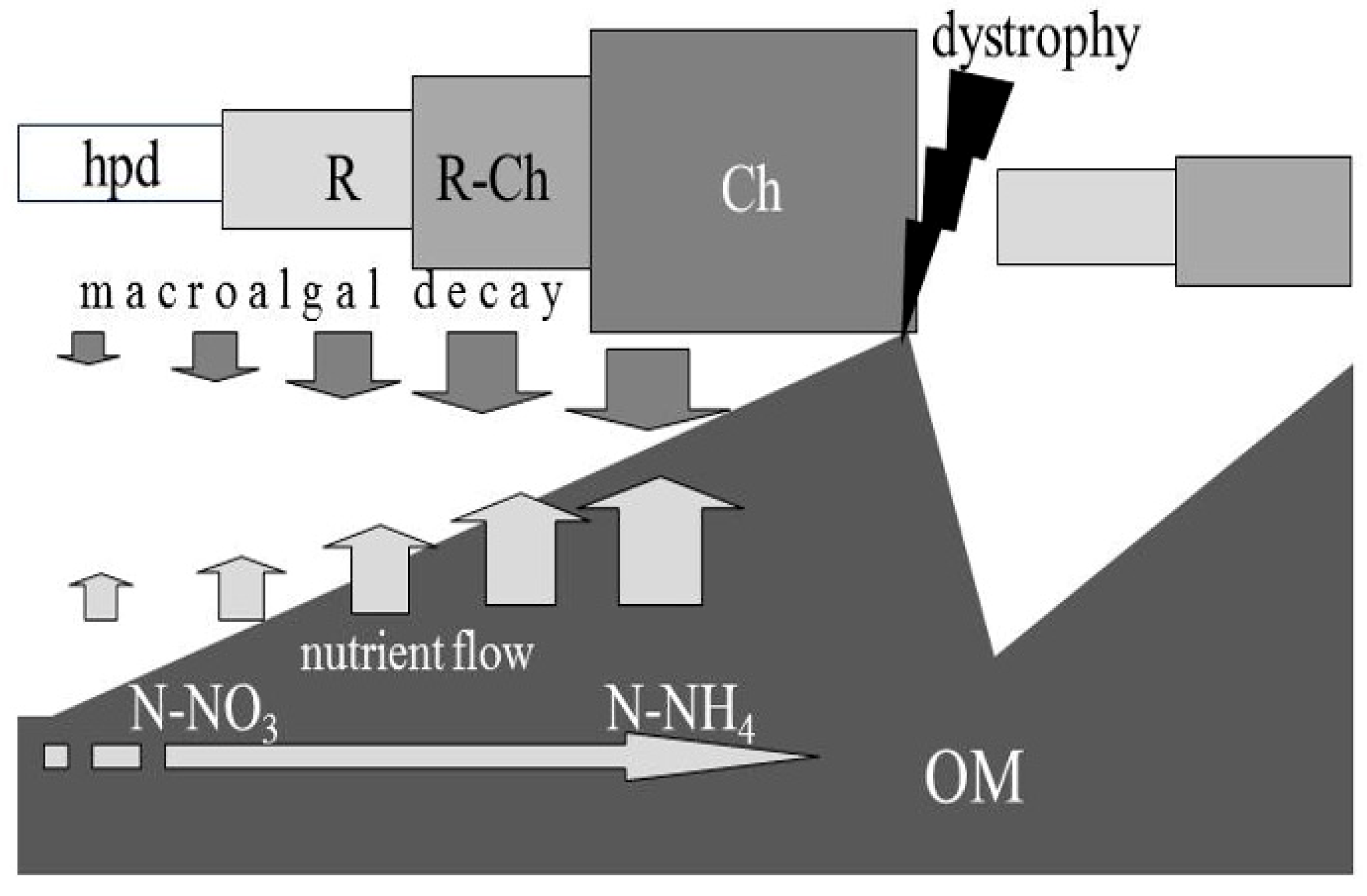
Figure 1. Below: release of nutrients from the sediment and their drift towards the dominance of ammonium as the sediment organic matter (OM) is increasing (arrow from left to right); above: cycle/fluctuations of dominance/abundance of the species of the lagoon vegetation, as a result of accumulations and dissipation (dystrophy) of OM, coming from algal decay. The model expresses a cyclical trend that sees the conclusion of a vegetational condition following a dystrophic event and the start of a new growth cycle immediately afterwards. The new start will come from one of the growth stages concerning the degree of dissipation. hpd, high biodiversity; R, Rhodophyceae; Ch, Chlorophyceae (from Lenzi et al. [9], modified).
Phycology 05 00078 g001
Figure 2. The Orbetello lagoon with the West basin and the East basin. Yellow circles, stations equipped with multi-parameter probes for chemical-physical analysis; red circles, pumping station; SLC, sea–lagoon canals; blue circles, microphyte sampling station; red arrows, unidirectional flow due to pumping activity, between March and September; blue squares, land-based fish-farms and wastewater effluents.
Phycology 05 00078 g002
Figure 3. Satellite image of 17 February 2024. On the left, the dark colour of the lagoon bottom is due to the macroalgal mat cover; on the right, for the same image, inside the red line is the distribution of the main species in the mats: CH, C. linum; V, V. aegagropila; R, Rhodophyceae.
Phycology 05 00078 g003
Figure 4. Disappearance of submerged vegetation in the satellite image of 6 February 2025. The dark colouration along the edges of the two basins, and along a central transect in the West Lagoon, is caused by accumulations of refractory plant detritus.
Phycology 05 00078 g004
Figure 5. Dissolved oxygen trend (DO, mg L−1), as minimum, maximum, and mean values, between June and September 2024, in the West and East basins of the Orbetello lagoon.
Phycology 05 00078 g005
Figure 6. Temperature trend (T, °C) between June and September 2024, in the West and East basins of the Orbetello lagoon.
Phycology 05 00078 g006
Figure 7. Sediment percentage (±SD) of labile organic matter (LOM) in the West and East basins of the Orbetello lagoon between 2018 and 2024.
Phycology 05 00078 g007
Figure 8. (AF) Dystrophy evolution of the Orbetello lagoon between July and August 2024, as shown through satellite images. In the image (C), station 1 for the 24 July sampling; in (D), stations 1 and 2 for the 5 August sampling; in (E), stations 1, 2, 3 for the 8 August sampling (satellite images of 9 August). 23 November 2024 shows the dominance of Cyanobacteria.
Phycology 05 00078 g008
Figure 9. Cell density (cell mL−1) in lagoon water samples collected between 24 July and 8 August, in the East and West basins of the Orbetello lagoon.
Phycology 05 00078 g009
Figure 10. Relative abundance, in microphytic bloom samples collected in the West and East basins of the Orbetello lagoon in the summer of 2024, of the classes indicated in the caption in relation to total abundance (%). S-1, S-2, and S-3 sampling stations, as reported in Figure 1 and Figure 8.
Phycology 05 00078 g010
Figure 11. In the two images above, sp-1, cf. Fibrocapsa japonica, present in the East basin both in July and August 2024 blooms; in the two images below, sp-2, cf. Heterosigma akashiwo, which characterised the August 2024 population in the West basin.
Phycology 05 00078 g011
Figure 12. On the left, initial discolouration of the dystrophy due to colloidal sulphur from the oxidation of hydrogen sulphide released from the sediment (white tide), consistent with the image in Figure 8B. On the right, brown–pink discolouration, consistent with the image in Figure 8C, following the formation of the white tide, likely due to purple anaerobic sulphur-oxidising bacteria and the presence of previously epiphytic diatoms on the macroalgal mats.
Phycology 05 00078 g012
Table 1. Estimates of standing crops (SCs) in tonnes wet weight (tWW) in the Orbetello lagoon between 2018 and 2024. Dominances of the main macroalgal species: CH, Chaetomorpha linum; V, Valonia aegagropila; Ac, Alsidium corallinum; Sc, Sphaerococcus coronopifolius; Gb, Gongolaria barbata. Dystrophies: D2, dystrophy of the second level; D3, dystrophy of the third level. East, East basin; West, West basin.
SC (tww)DominancesDystrophies/Basin
201840,615CH > V >> Ac + Sc
201942,079CH > V >> Ac + Sc
202040,114CH > V >> Ac + Sc + Gb
202153,382CH > V >> Ac + Sc + Gb
202227,399CH > V >> Ac + Sc + GbD2, East
202349,672CH > V >> Ac + Sc + Gb
202453,290CH > V >> Ac + Sc + GbD3, East and West
Table 2. Temperature values (T, °C) (T-mean, T-maximum, and T-minimum values reached monthly) of July and August of the East and West basins of the Orbetello lagoon from 2013 to 2024, obtained from the multiparametric probes located in the two lagoon basins. Each mean is obtained from 744 records. In bold, temperatures higher than 32 °C.
YearMonth East West
T-MinT-MeanT-MaxT-MinT-MeanT-Max
2013July24.129.032.724.129.029.0
Aug25.428.230.825.428.328.3
2014July24.327.229.624.327.327.3
Aug24.327.430.724.327.427.4
2015July28.331.234.928.331.131.1
Aug25.828.632.525.828.528.5
2016July21.928.433.121.928.528.5
Aug21.927.330.921.927.427.4
2017July23.828.331.723.828.428.4
Aug23.528.132.523.528.128.1
2018July25.428.431.025.428.431.2
Aug23.328.632.523.328.632.1
2019July23.728.832.123.728.732.7
Aug25.428.631.525.428.731.8
2020July25.228.332.225.227.332.0
Aug23.728.331.123.728.231.2
2021July24.227.630.724.227.331.1
Aug23.128.132.023.128.131.9
2022July24.529.633.024.529.632.7
Aug24.628.332.424.628.331.8
2023July25.728.732.025.729.832.7
Aug22.627.831.122.627.631.1
2024July25.629.032.525.629.332.7
Aug26.930.134.126.930.133.0
Table 3. Lists of the microphyte species observed in blooms in the Orbetello lagoon: 1996 list, results of the 1985–1986 study [24] and determinations carried out in 1987, 1988, and 1989 (Tolomio and Lenzi, unpublished data); 2003 list, results of the 1995–1998 study [39]; 2024 list, results of determinations carried out on samplings of blooms occurred during the July–August 2024 dystrophy. In brackets, the taxonomic names originally used in the list, while the name used is that of the currently accepted systematics.
199620032024
Chromista
Heterokontophyta
Bacillariophyceae
Chaetoceros spp. XX
Chaetoceros neogracile X
Chaetoceros simplex XX
Chaetoceros compressus X
Chaetoceros tenuissimus XX
Leptocylindrus danicum X
Bacellariophyceae centric undetermined X
Proboscia alata X
Paralia sulcata X
Thalassiosira spp. X
Thalassiosira angulata X
Thalassiosira delicatula X
Rhizosolenia cf. pungens X
Rhizosolenia cf. setigera X
Rhizosolenia sp.X
Amphiprora gigantea var. sulcata X
Skeletonema costatumXX
Amphiprora spp. X
Achnantes X
Amphora cymbifera
Anphora hyalinaX
Amphora turgida X
Amphora laevis X
Amphora spp. XX
Bacellariophyceae centric undetermined-2 X
Asterionellopsis glacialis X
Cocconeis scutellum XX
Achnanthes brevipesX
Cylindrotheca closteriumXXX
Cocconeis spp. X
Diploneis crebro X
Diploneis spp. X
Bacillaria paxillifera X
Bacillariophyceae pennate <20 µm X
Bacillariophyceae pennate >20 µm X
Pleurosigma sp.XX
Pleurosigma affineX
Pleurosigma normaniiX X
Pleurosigma elongatumX
Eunotia sp. X
Fragilaria spp. X
Entomoneis cf. paludosa X
Halamphora coffeiformis X
Licmophora gracilis X
Licmophora flabellataX
Licmophora spp. X
Navicula spp.XXX
Navicula transitans var. derasa X
Mastogloia sp. X
Nitzschia distans X
Nitzschia longissimaXXX
Nitzschia cf. acicularis X
Nitzschia sp. X
Grammatophora oceanicaXX
Striatella unipunctataXX
Eutreptiella marinaX
Melosira juergensiX
Grammatophora spp.
Synedra spp. X
Thalassionema spp. X
Thalassiothrix sp. X
Bacillariophyceae undetermined-3 X
Thalassionema nitzschioides X
Tryblionella punctata X
Dinophyceae
Amphidinium spp. XX
Dinophysis caudata X
Dinophysis spp. X
Goniaulax scrippsae X
Goniaulax spp. X
Gymnodiniaceae X
Akashiwo sanguinea (Gymnodinium sanguineum) XX
Gymnodinium splendensX
Gymnodinium sp. °XX
Gymnodiniaceae < 20 µm X
Gymnodiniaceae > 20 µmX X
Gymnodinium catenatum X
Gyrodinium spp. X
Heterocapsa sp. x
Alexandrium catenella X
Alexandrium cf. minutum X
Alexandrium ostenfeldii X
Alexandrium pseudogonyaulax X
Alexandrium spp. X
Dinophyceae thecate < 20 µm X
Dinophyceae thecate > 20 µm X
Oxyteoxum sceptrum X
Oxytoxum sp. X
Oxytoxum variabile X
Prorocentrum dentatum X
Prorocentrum gracile X
Prorocentrum micansXX
Prorocentrum cordatum (P. minimum) X
Prorocentrum limaX X
Prorocentrum spp. X
Prorocentrum triestinum X
Coolia monotis ***X
Tryblionella compressa °° (Prorocentrum compressum)X
Protoperidinium divergensX
Pentapharsodinium tyrrhenicumX
Blixaea quinquecornis (Protoperidinium quinquecorne)XX
Protoperidinium spp. XX
Scrippsiella sp. X
Dinophyceae naked X
Dinophyceae thecate X
Cryptophyceae spp. **XXX
Alisphaera ordinata X
Paulinella sp. X
Calicomonas sp. X
Syracosphaera mediterranea (Coronosphaera mediterranea) X
Syracosphaera pulchra X
Gephyrocapsa huxleyi (Emiliania huxleyi) X
undetermined flagellates <10 mm X
undetermined flagellates <20 mm X
Prymnesiophycidae
Phaeocystis sp. X
Dictyochophyceae
Apedinella radians (A. spinifera) XX
Raphidophyceae
Chattonella subsalsa X
Fibrocapsa japonica X
Heterosigma akashiwo X
Protozoa
Euglenoidea
Euglena acusX
Euglena gasterosteusX
Euglena caudataX
Euglena pascheri *X
Euglena mutabilisX
Euglena sp. X
Euglena acusformis X
Eutreptia sp. X
Eutreptia viridis X
Eutreptia lanowiX
Eutreptiella sp. X
Eutreptiella marinaX
Eutreptiella braarudii X
Discosea
Vannella simplex X
Chlorophyta Prasinophyceae
Pyramimonas spp. X
Chlorodendraceae
Tetraselmis sp. X
Cyanobacteria
Chroococcus dispersus
Phormidium fragile X
Phormidium sp.
Spirulina sp. X
Spirulina subtilissima
Lyngbya martensiana
Lyngbya semiplena
Oscillatoria margaritifera
Oscillatoria semplicissima
Schizothrix minuta
Calothrix confervicola
Mixoderma goetzii
Chroococcus dispersus
Chroococcus limneticus
Chroococcus membranimus
Chroococcus turgidus
Xenococcus acervatus
Xenococcus cladophore
Xenococcus kerneri
Hyella caespitosa
Merismopedia sp. X
Planktolyngbya contorta X
Planktothrix sp. X
Gloeocapsa sp. X
Cyanophyceae undetermined X
N. Taxa347359
Notes: * dominant species in the September 1987 bloom; ** group of species dominant in the December 1987 bloom; *** almost monospecifically dominant in April and May 1988; ° abundant in the June 1988 bloom, and in the East and West basins blooms of August 1989; °° species almost monospecifically abundant in January 1989.
Disclaimer/Publisher’s Note: The statements, opinions and data contained in all publications are solely those of the individual author(s) and contributor(s) and not of MDPI and/or the editor(s). MDPI and/or the editor(s) disclaim responsibility for any injury to people or property resulting from any ideas, methods, instructions or products referred to in the content.