
Article

Association of Hair Shedding Level with Cow–Calf Performance in Summer-Bred Dexter Cattle

by
Richard Browning Jr.
*,
Emily G. Hayes
,
Kaylee S. Hillin
and
Maria Lenira Leite-Browning
Department of Food and Animal Sciences, Tennessee State University, Nashville, TN 37209, USA
*
Author to whom correspondence should be addressed.
Ruminants 2026, 6(1), 9; https://doi.org/10.3390/ruminants6010009
Submission received: 12 December 2025 / Revised: 15 January 2026 / Accepted: 20 January 2026 / Published: 27 January 2026

Simple Summary

Cows, particularly those of temperate Bos taurus breeds, shed their heavy coats of winter hair in the spring to aid in heat dissipation. Delayed hair shedding may increase the risk of heat stress and impact fertility in spring-calving herds where breeding takes place during the summer. In this project, cows were scored for their hair shedding levels in one year from May to July and their reproductive performance was assessed over the concurrent year and previous four years. Cow age and lactation status affected shedding levels, so those two factors were accounted for. Cows classified as high hair shedders had higher reproductive rates than low hair shedders. Associations of cow hair shedding with preweaning calf performance were minimal. Improved hair shedding in cow herds appears to have the potential to improve reproductive performance in spring-calving cattle herds.

Abstract

Reduced winter hair shedding in beef cows through the spring and summer months may contribute to heat stress and reduced performance in spring-calving herds. This study evaluated the relationship of hair shedding with the fertility and maternal performance of 72 Dexter cows. Hair shedding data for 20 May, 3 June, 17 June, and 1 July in 2019 were used to classify cows as high or low hair shedders. Hair shedding levels were lower (p < 0.05) for 2-year-old cows than for cows 7+ years of age for the first three dates and lower (p ≤ 0.05) for lactating cows than for dry cows on the first two dates. Concurrent and four years of historical performance records were used to assess the associations between hair shedding and cow–calf performance. Data from 230 natural matings in July and August from 2015 to 2019 were analyzed. Birth to weaning weight data were recorded from 2016 to 2019 on 124 spring-born calves. Cow fertility was higher (p < 0.05) for high-shed cows than for low-shed cows for the 1 July classification. When the records from cows that were dry in 2019 were excluded from testing, fertility was higher (p < 0.05) for high-shed cows than for low-shed cows at all four scoring dates. The associations of cow hair shedding levels with preweaning calf performance were minimal. Dexter cows exhibiting higher hair shedding levels in the spring and summer expressed higher summer fertility.

1. Introduction

Hyperthermia is a condition well-documented as adversely affecting cattle performance and well-being [1,2,3]. In the southeastern region of the United States, various factors contribute to hyperthermia in cattle, including the humid subtropical climate, endophyte-infected tall fescue as the most prominent forage in the region, and the prevalent use of heat-sensitive, temperate Bos taurus breeds [4,5,6]. Forage management recommendations to mitigate tall fescue toxicosis, a cause of hyperthermia in cattle, may not be viable options in many production systems. The increased environment temperatures associated with climate change will further exacerbate the problem of hyperthermia in cattle herds [7,8]. Managers cannot control the climate although the modified timing of some cattle management practices can help reduce heat stress effects. Most beef calves in the US are born in the spring season [9,10]. Spring calving best matches lactating cow nutrient requirements with pasture nutrient availability but requires cows to be bred during the summer months. The summer breeding season is a critical point at which hyperthermia reduces beef cow performance [11,12].
A long-term mitigation strategy to overcome hyperthermia in cattle production systems is changing the cattle to better cope with a production environment conducive to thermal stress. This approach involves using heat-tolerant breeds [13,14] and/or selecting individual animals demonstrating enhanced thermal tolerance within the preferred temperate breed [15,16,17]. A trait targeted for within-breed improvement is the shedding of the winter hair coat. A related management practice is scoring and selecting cattle based on the level of winter hair shedding [18]. This is not a new area of investigation [19], but it has gained renewed attention because of its ease of application. Cattle with hair shortened mechanically [20,21] or genetically [22,23,24] have lower body temperatures during the summer than their longer-haired contemporaries. Cattle that shed their winter hair earlier in the warm season have lower body temperatures than those with delayed hair shedding [25].
Although early hair shedding has been shown to enhance calf weaning weights [18,26], the effects on cow fertility have not been indicated. Cow fertility in a beef herd is generally regarded as a greater driver of profitability than calf performance traits. In a spring-calving herd, it was hypothesized that cows with elevated winter hair shedding in the spring and summer had expressed higher summer fertility than herd mates with delayed hair shedding. The aim of this study was to determine if divergent hair shedding levels recorded in a single year were associated with cow fertility and calf growth across retrospective and concurrent years.

2. Materials and Methods

2.1. Herd Management

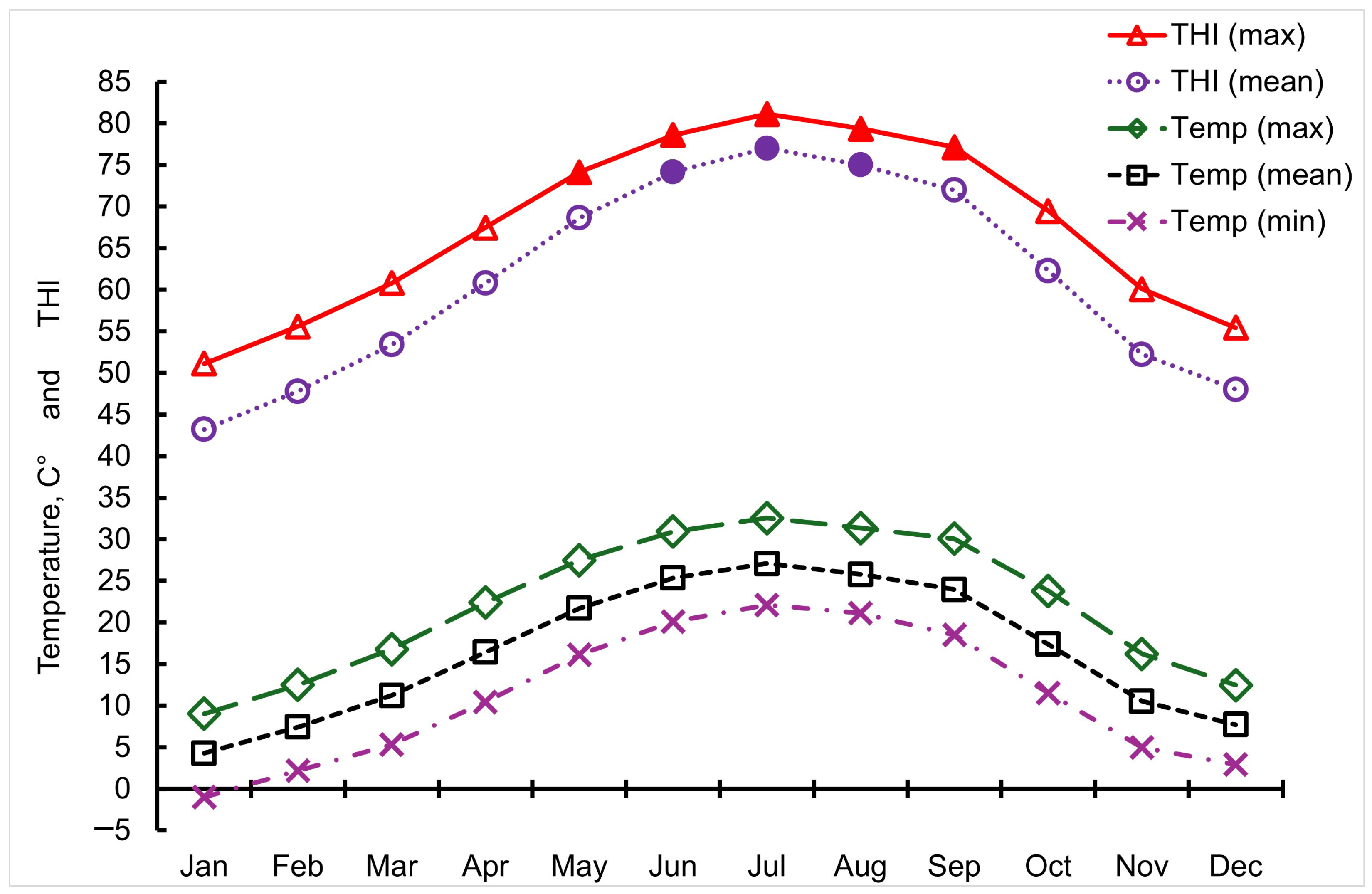
Study cattle were managed in Tennessee State University (TSU) research stations in accordance with the practices outlined in the Guide for the Care and Use of Agricultural Animals in Agricultural Research and Teaching [27] as approved by the TSU Institutional Animal Care and Use Committee. Purebred Dexter cows in the TSU herd were scored for winter hair loss during one production year. The study herd consisted of 48 purchased foundation cows and 24 TSU-born cows. Most of the cows were black (n = 49), but red and dun cows were also in the herd. Cows ranged from 2 to 13 years of age (µ = 5.5 yrs) at calving. The herd was divided between two TSU farms. Thirty-four cows with an average age of 6.3 years were managed at the Ashland City station (36°13′30″ N 87°01′34″ W). Thirty-eight cows with an average age of 4.7 years were managed at the Nashville station (36°10′33″ N 86°49′40″ W). Both farms are located on bottomland along the Cumberland River, 18.5 km apart. Pasture conditions and cow management were the same between the two management sites. The general location of the study sites is in the humid, subtropical southeastern United States. Climatic data averaged over the five-year study period recorded at a weather station centrally located between the two farms are presented in Figure 1.
Cows grazed pastures at both farms that consisted of mostly cool-season tall fescue (Festuca arundinacea) and warm-season bermudagrass (Cynodon dactylon). Various other species of grasses, clovers, broadleaf weeds, and woody browse species were present in the pastures. Cows were provided mixed grass hay in the winter supplemented with free-choice molasses tubs or limit-fed whole cottonseed. Loose mineral supplement and fresh water were always available for consumption. Hardwood tree groves and artificial shade structures were available to grazing cows throughout the year at both locations.
For five years, the herd was managed for spring calving with 8-week breeding seasons spanning July and August. Cows were bred to Dexter bulls by natural service each year in single-sire breeding groups with cow-to-bull ratios no greater than 16:1. The average start of breeding was 18 July. Calves were the progeny of 13 Dexter sires. Calf weights were recorded at birth, at approximately 3 months (µ = 96 d) of age, and weaning (µ = 213 d). Weaning occurred in December when calves were an average age of 7 months. Calves were raised without creep feed supplementation or growth stimulants and bull calves remained intact through the preweaning period. Cows evaluated on this study had between 2 and 5 years of production records that were used to assess cow fertility and calf performance. Cows with 5 years of data were part of the original population that established the university herd.
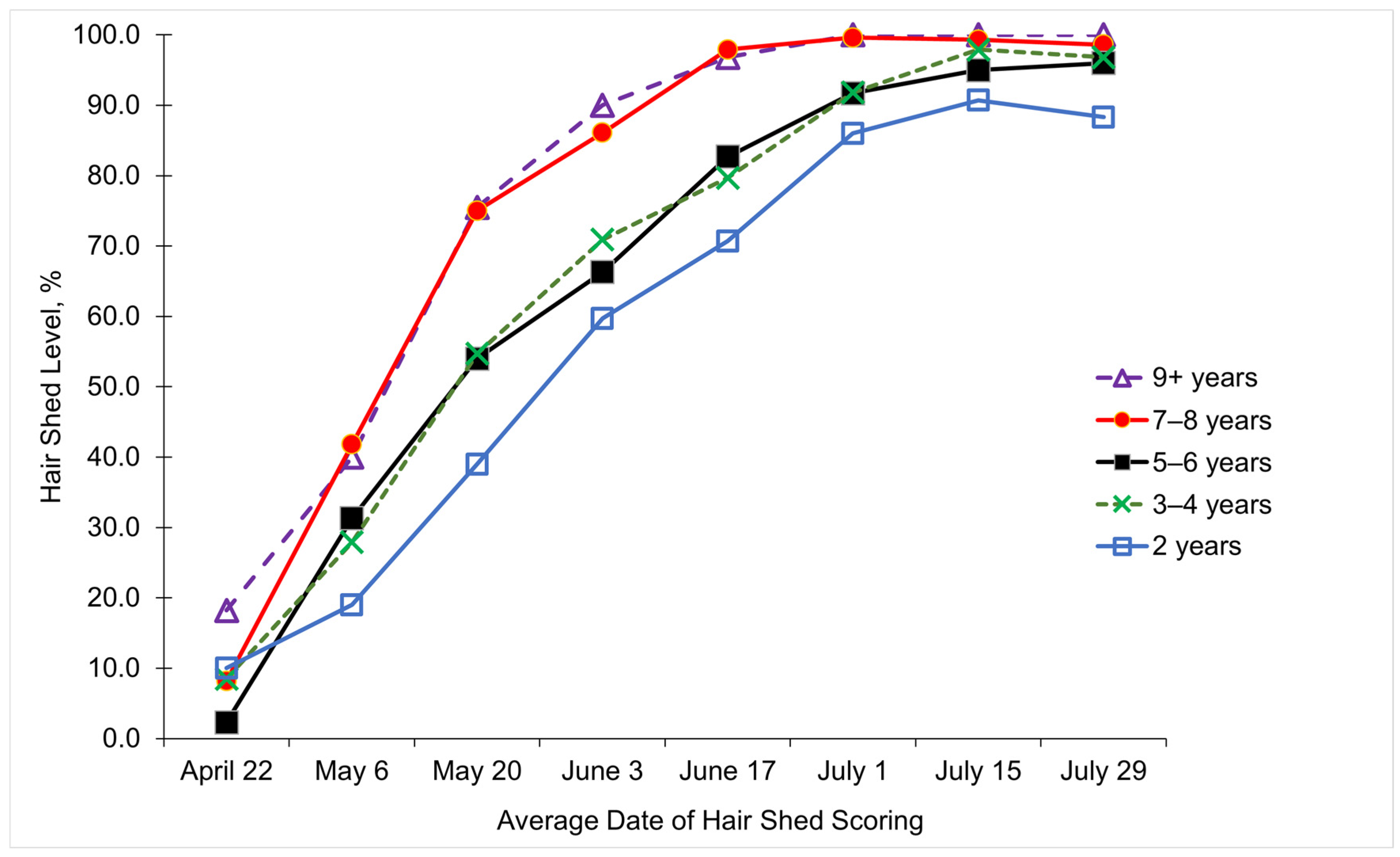
Hair scores were recorded on cows unrestrained on pasture at 2-week intervals from April to July in 2019. Scoring was performed by two technicians at each measurement date. Scores were recorded in 5% increments from 0% (no hair shedding) to 100% (complete hair shedding) based on visual appraisal of hair loss by scoring the forequarter, middle half, and hindquarter separately for each animal and combining the partial scores to determine the total level of hair shed. The first recording date occurred during the calving season and last recording date occurred during the breeding season. Two hair shedding groups (high shedder cows [HiS] and low shedder cows [LoS]) were created at four observation dates from 20 May to 1 July (Figure 2) based on cows being above or below the average hair shedding value for the herd at each date. Shedding averages were determined within each cow age group. Table 1 presents the number of cows classified as HiS and LoS by scoring date.

2.2. Data Analysis

Cow age, physiological status, hair color, and station site were tested as fixed effects affecting hair shedding levels at the third (20 May) through the sixth (1 July) scoring dates of 2019 using an SAS MIXED model (SAS Version 9.4). Cow fertility across five years of summer breeding (2015–2019; 230 cumulative matings) was tested using the SAS GLIMMIX model. Fertility was based on calving records in the subsequent spring. Model terms for calving rate included 2019 hair shedding group (high or low), physiological status at mating (lactating or dry), station site (Ashland City or Nashville), cow hair color (black or non-black), and two-way interactions of hair shedding group with physiological status and station site as fixed effects, cow age as a fixed covariate, and mating year and cow nested within hair shedding group as random effects using the random residual option for repeated measures with a compound symmetry covariance structure. Physiological status was classified at the time of breeding in each production year. Fertility was tested in three datasets: (1) whole-herd—all 230 matings for cows scored in 2019; (2) lactating herd—153 matings of cows raising calves when scored in 2019; (3) lactating herd excluding 2019 calving records—107 matings that excluded the records for the spring 2019 calving season because all cows in the second subset were raising calves in 2019 by design. Models testing each dataset were run for each of the four hair scoring dates, resulting in 12 date–dataset test models.
Preweaning growth traits for 124 calves across four years (2016–2019) were tested using SAS MIXED model. Calf traits included 3-month weight, weaning weight, and average daily gain (ADG) from birth to 3 months and birth to weaning. Terms in the model for calf performance included dam hair shedding group, sex of calf, dam hair color, dam history (e.g., physiological status of the dam in the previous year), research station, and two-way interactions of hair shedding group with calf sex, physiological status, and station site as fixed effects, age of dam as a fixed effect covariate, and year, sire of calf, and dam of calf nested within hair shedding group included as random effects. Calf growth data were retested after excluding records from cows that were not raising calves when scored in 2019.
For all cow and calf models, interactions and main effects were interpreted as significant sources of variation at an α = 0.05. The Tukey–Kramer means that the separation test was used to compare least squares means with paired means interpreted as significantly different at an α = 0.05.

3. Results

3.1. Hair Shedding

The interactions of hair shedding x cow age and hair shedding x research station were not significant sources of variation at any test date. The lactation status and age of the cow were significant main effects affecting hair shedding levels (Table 2). In mid-May and early June, lactating cows had significantly lower levels of hair shedding than dry cows. Younger cows exhibited lower hair shedding levels compared to older cows from mid-May to mid-June (Table 2). In the later recording dates, the differences in hair shedding levels by cow age and physiological status were lost. Hair color and station location were not significant factors for hair shedding levels at any date.

3.2. Cow Fertility

The interactions of hair shedding group × physiological status and hair shedding group × research station were not significant for any of the 12 date–dataset tests. The physiological status and station site were important (p < 0.01) sources of variation for all 12 tests of summer fertility. For each test, fertility was higher at the Ashland City station and higher for dry cows. For example, in the whole-herd test for 20 May, the Ashland City cows had higher fertility than the Nashville cows (89.3 ± 4.1% vs. 76.3 ± 7.9% calving rate) and dry cows had higher fertility than lactating cows (90.3 ± 4.2% vs. 74.4 ± 7.5% calving rate). Similarly, in the 1 July test of the subpopulation of cows raising calves when scored for hair shedding in 2019 with the 2019 calving records excluded, the Ashland City cows had higher fertility than the Nashville cows (93.2 ± 4.2% vs. 67.7 ± 13.9% calving rate) and dry cows had higher fertility than lactating cows (96.8 ± 3.5% vs. 49.2 ± 8.6% calving rate). For the sake of brevity, data from the other 10 tests are not presented. Hair coat color and cow age as a covariate were not significant factors in any of the 12 models run for fertility.
Whole-herd evaluation across the five years indicated that cumulative fertility was associated with hair shedding level when tested on 1 July. The HiS cows as classified on 1 July had a record of significantly higher fertility than LoS cows across the five-year observation period (Table 3). When the records of cows that were dry at hair scoring in 2019 were excluded from the dataset, the hair shedding classification was associated (p < 0.05) with cow fertility at all the test dates (Table 4). The five-year fertility levels were higher for HiS cows than for LoS cows (Table 4). Cows in the subset presented in Table 3 had a 100% calving rate in the 2019 breeding season by group definition. Therefore, the data were rerun excluding the 2019 calving season. The association of hair shedding level in 2019 with fertility across 4 years remained important at all test dates as HiS cows had a higher (p < 0.05) record of fertility than LoS cows (Table 5).

3.3. Calf Preweaning Performance

The only interaction important for calf performance in the full population dataset was dam hair shedding group × calf sex which affected (p = 0.02) 3-month calf weights using the 17 June hair scoring groups. The nature of the interaction was the differences in calf sex comparison within hair shedding groups. Within the HiS dam group, bull calves (96.3 ± 4.2 kg) did not differ from heifer calves (89.5 ± 4.1 kg). Within the LoS dam group, bull calves (100.4 ± 5.2 kg) were heavier (p < 0.01) than heifer calves (81.2 ± 5.8 kg). No other interactions of hair shedding group with calf sex, dam history, or research station were significant for calf traits across scoring dates.
As a main effect, the sex of the calf consistently affected calf growth traits (Table 6). Mean values for growth traits were higher for bull calves than for heifer calves across all the test models. For the 20 May test, birth to 3-month ADG and weaning weight were higher (p < 0.001) for bull calves (583.0 ± 28.0 g/d; 147.7 ± 6.2 kg) than for heifer calves (510.4 ± 28.3 g/d; 141.1 ± 6.4 kg). The physiological status of the dam in the prior year affected birth to-3 month and birth to weaning ADGs for all test dates and influenced 3-month and weaning weights in a date-dependent manner. Cows dry in the prior year had higher values than cows raising calves in the prior year. For the 20 May test, calf birth to 3-month ADG and weaning weight were higher (p ≤ 0.05) for dams dry in the past year (711.9 ± 24.3 g/d; 143.4 ± 6.5 kg) than for dams that raised calves in the past year (667.3 ± 23.5 g/d; 135.4 ± 6.3 kg). Farm location consistently affected calf growth rates and weaning weight (Table 6), with calves at the Ashland City station having higher values than calves at the Nashville station. To the contrary, the hair color of dams was not a significant factor for any calf traits across the test dates (Table 6). The hair shedding classification of dams did not significantly influence any calf growth trait for any of the test dates (Table 7).
When the reduced calf population dataset was tested, the interaction of dam hair shedding group x calf sex affected (p < 0.05) the 3-month weight and weaning weight using the 17 June hair scoring groups. Within the HiS dam group, 3-month and weaning weights did not differ between bull calves (95.8 ± 4.7 kg; 144.1 ± 6.8 kg) and heifer calves (89.4 ± 4.6 kg; 135.3 ± 6.8 kg). Within the LoS dam group, 3-month and weaning weights were higher (p < 0.01) for bull calves (101.4 ± 5.4 kg; 149.2 ± 7.9 kg) than for heifer calves (82.0 ± 6.1 kg; 124.9 ± 8.7 kg). No other interactions of the hair shedding group with calf sex, dam history, or research station were significant for calf traits across scoring dates in the reduced calf dataset. The importance of calf sex, farm site, and dam hair colors as main effects observed in the full dataset (Table 6) did not change when the calf reduced population subset was tested (Table 8). When moving from the full dataset to the reduced subset of calf records, dam history lost significance in most tests. When calf data were retested after excluding cows that were dry in 2019, dam hair shedding group became significant for one calf trait (Table 8). For hair shedding groups as classified on 20 May, birth to 3-month ADG was higher (p < 0.05) for calves from HiS dams than for calves from LoS dams (Table 9). Dam hair shedding group as a main effect was not important in any other test of calf performance in the reduced population subset (Table 8).

4. Discussion

4.1. Hair Shedding

As hair coat increases in length and coarseness in cattle, so does their summertime body temperature [25,30,31]. As the ambient temperature and Temperature Humidity Index (THI) increase from spring to summer, so does the level of hair shedding required to avoid heat stress and performance impairment. Grouping cows by hair shedding for assessing cow fertility and calf growth in this study was confined to the 20 May through 1 July observation periods because adequate variation for shedding was present in the herd in that time frame to allow for statistical testing.
A premise of this study was that cows classified as higher hair shedders in one year should be higher shedders every year relative to the scoring date and compared to herd contemporaries. Otherwise, there would be little value in hair shed score as a trait for selection in cow herds in the quest for improving heat tolerance as recommended to producers [18,32]. Repeatability of 0.62 was reported for mature Hereford and Shorthorn cows for hair coat scores over three years [33]. Hair coat score repeatability estimates of 0.34 and 0.45 for Angus cows were reported under grazing conditions that presented low and high risk of fescue toxicosis, respectively, in multiple herds over six years [18]. The cited repeatability values were for cow populations across reproductive states. In preliminary results from a multi-year evaluation period on this Dexter herd that followed the current study, repeatability for hair shedding for the June and July scoring dates were 0.30 to 0.34, respectively, for the whole-herd assessment and increased to 0.45 to 0.49, respectively, for the subset of lactating cow records [34]. Repeatability values in the Dexter herd increased by approximately 50% when dry cow records were excluded from the dataset, further demonstrating the efficacy of distinguishing between dry and lactating cows when assessing cows for relative hair shedding merit. The repeatability values for hair coat scores across studies were moderate and supported the expectation of repeatable hair shedding measurements across years for the purpose of this study.
Climatic conditions were conducive to heat stress during this study (Figure 1). Climate data in 2019 did not deviate from the 5-year averages for temperature and the THI in the study area. The maximum July THI for this study (81%) closely aligned with the THI maximum (82%) reported for Tennessee [2]. Daily high THI was in the danger to emergency range for 5 months and the daily mean THI was in the danger range for 3 months [28,29]. It is important for beef cattle managers to be aware of how their herds may be impacted by heat stress during the summer months. The impacts may differ based on various management protocols such as when the breeding and calving seasons are scheduled and what genetics are used in the breeding herd. Various factors have been presented that influence the impact of heat stress on cattle [2].
The age and lactation status of the cow affected hair shedding levels in the current study. Young cows had a different level of hair shedding than mature cows. The observations here agree with a past study [18] that reported delayed hair shedding in young cows compared to mature cows in Angus cattle. Differences in nutrient demands between young, growing cows and mature cows likely play a role in the divergent hair shedding patterns between the two age classifications. The divergent values presented in Table 2 and Figure 2 led to the use of age adjustments when assigning cows to hair shedding groups in this study. Ranking cows on a strict whole-herd scoring system may create selection bias where a lower shedding cow group would also be a younger cow group. This could be more consequential in commercial herds or heritage breed seedstock herds that do not use large-scale genetic evaluation systems with adjusted ratings or breeding values.
The observation that lactating, suckled cows had lower hair shedding levels than dry cows did not concur in a prior study [33]; the cited study did not observe hair shedding differences based on pregnancy or lactation status in spring-calving Hereford or Shorthorn cows. Lactation is a dynamic physiological state of a beef cow that affects nutrient balance [35] and is tied to maternal behavior, which is a multi-faceted, resource-demanding function of suckled beef cows [36,37,38]. Beef cows nursing calves are in a different physiological state than dry beef cows, so it was reasonable to observe that lactation status affected hair shedding. In spring-calving cows, early- to mid-lactational calf rearing coincides with the period of hair shedding and rising THI. When scoring cows across a herd for hair shedding, dry cows and lactating cows may need to be treated as separate cohorts for evaluation purposes.

4.2. Cow Fertility

Summer fertility in the cow herd appeared to be associated with the level of hair shedding in the weeks leading up to the breeding season. In the whole-herd assessment, the significance of hair shedding classifications was limited to the 1 July scoring date which was approximately 2 weeks from the average start of the breeding seasons. Most cows were completely shed by 1 July, but the few cows with relatively low shedding levels recorded lower summer fertility. The whole-herd assessment suggested little value in scoring cattle at the May and June dates relative to enhancing herd fertility. Differences in shedding levels by cow physiological status led to retesting with the exclusion of dry cows. With a homogenous set of cows raising calves, the relationship of hair shedding to cow fertility expanded. Relative shedding levels as early as mid-May emerged as being linked to summer cow fertility. Removing the records of cows that were dry in 2019 when hair shedding was scored reduced the variability of the hair shedding dataset and extended the relationship of hair shedding with cow fertility to multiple scoring dates. The association of the relative hair shedding levels of cows with summer fertility was consistent as hair shedding progressed from mid-May to early July in the lactating cow dataset.
Across the three datasets (Table 3, Table 4 and Table 5), the largest magnitude of difference in calving rates between the HiS and LoS groups was for the 1 July classification date. This date was closest to the start of the breeding season and had the highest temperature and THI of the four test dates (Figure 1). Although not statistically tested, the mean calving rate was consistent for the HiS group from 20 May to 1 July, whereas the mean calving rate declined numerically for the LoS group from 20 May to 1 July in all three datasets. These relationships suggest that cows with a higher degree of retained winter hair in July and closest to the start of summer breeding would display the greatest level of lost fertility, presumably because that subset of cows would experience the highest level of hyperthermia.
Fertility has received little attention in discussions of hair shedding evaluations in beef cows. Hair shedding did not affect the pregnancy rates of fall-calving Angus base cows in three preliminary reports [39,40,41]. Fall-calving herds are in the winter, so hair shedding may not affect cow fertility in such herds. The effect of hair shedding on body temperatures in cattle [24,25,30] could be predicted to affect summer fertility. Thicker hair coats resulted in higher services per conception in tropical dairy cattle [42,43]. There are various points along the hypothalamic–pituitary–ovarian axis and during conceptus development at which hyperthermia can impair bovine reproductive function [12,44,45]. The average THI of 72.9 and minimum daily temperature average of 16.7 °C were reported as the points above which beef cows experienced lowered fertility in the central US [11]. In the current study, the average THI was over 73 from June to August and the average minimum daily temperature was over 17 °C for June to September. June through September covered the period from the month preceding the breeding season to the third month after bull turn-out in this study. This four-month period covers nearly all the potential physiological points where heat stress can cause reproductive dysfunction. The observations of the current study suggest that the successful breeding of cows in the summer to produce spring-born calves in the southern US could be enhanced, in part, by selecting cows with improved hair shedding in the pre-breeding period.

4.3. Calf Preweaning Growth

The associations of hair shedding levels with preweaning calf traits were minimal across the various traits and test models. Improved hair shedding in cows was associated with higher calf weaning weights in prior studies involving Angus cows and larger calf datasets [18,26]. The cited studies included a combination of fall and spring calves and did not indicate if the effects of hair shedding status on calf weights differed between spring-born and fall-born calves. Cow–calf pairs in a spring-calving system would experience heat stress during the early preweaning period when calves are younger and more dependent on milk for nutrients, whereas cow–calf pairs in a fall-calving system would be exposed to high heat and THI during the late preweaning period when calves may be less dependent on their dams for nutrients [46]. In the current study, the analyses of 3-month weight and ADG to 3 months of age were conducted to capture the early preweaning growth period in calves when cow–calf pairs were exposed to high heat and THI. In the 20 May models that excluded dry cows, an association of hair shedding with early calf performance was captured with calf ADG favoring dams in the high hair shedding group.
A combination of influences may help to explain why calf growth performance was not impacted to the extent seen for cow fertility by dam hair shedding classification. It is possible that increased body temperature in heat-stressed cows has a greater impact on fertility than on milk yield. If it is assumed that lactating LoS cows had reduced milk yield because of heat stress [23], the lower milk yield may not translate to lower calf performance. The relationship between dam milk yield and calf preweaning weight gain is highly variable with multiple reports of low and insignificant associations between the two traits [46]. The effect of dam milk yield on calf growth seemed to be concentrated to the first two months of the preweaning period and generally dissipated by weaning [46]. This may explain why the only significance of dam hair status on calf performance was for 3-month ADG. Consistently significant factors affecting calf performance such as sex, location, and dam age, as well as the genetic variation among the sires for progeny performance, may have further diluted any potential relationship of dam hair shedding status with calf weight traits. Concurrent measurements of dam hair shedding level and preweaning calf growth may be more informative in understanding the relationship between the two traits.

4.4. General Discussion

Cow age and lactation status affected the progression of hair shedding. Older cows and dry cows shed their winter hair at relatively higher levels than young cows and lactating cows. A single year of hair shedding records was informative regarding multiple years of reproductive performance in the study herd. The impact of cow lactational status on hair shedding level was demonstrated directly in Table 2 and further implicated when the exclusion of dry cow records increased the association of hair shedding level and cow fertility (Table 3 and Table 4) and increased herd repeatability values for hair shedding [34]. Combining the hair shedding records of dry and lactating cows increased variability in the hair shedding dataset and reduced predictive values for cow fertility.
Previous studies have focused on calf performance [18,26,34]. Cow fertility is generally considered as a more important profit driver than calf growth in commercial beef cow–calf operations. Full papers were not found in the current literature that directly addressed the reproductive performance in cattle with varied hair shedding levels. The results of the current study suggested that reduced hair shedding levels were associated with reduced fertility in summer-bred cows.
A protocol to score hair shedding in cows based on five shedding categories is available for producers to help manage heat stress in beef cow herds [18,26,32]. The 5-point scoring system (AHSS) has definitive end points of Score 1 (100% hair shed) and Score 5 (0% hair shed) with scores of 2, 3, and 4 representing intermediate estimates of 75%, 50%, and 25% hair shed, respectively. Because of the age-dependent assignment of hair shedding level on the current study, a particular AHSS score may have been represented in both the HiS and LoS cow groups at each scoring date. On 20 May, for example, 2-year-old cows with an AHSS Score 3 would have been classified as HiS, whereas 8-year-old cows with an AHSS Score 3 would have been classified as LoS. Hair shedding assessments in this study were relative, not absolute. Similarly, a particular AHSS score may have been deemed high on one date and low at a later date. For instance, 2-year-old cows with an AHSS Score 3 on 20 May would have been classified as HiS, whereas 2-year-old cows with an AHSS Score 3 on 1 July would have been classified as LoS. As Figure 2 and a similar figure in Turner and Schleger [33] suggest, the numerical definition of a cow with superior hair shedding changes with cow age and calendar date. Using what was essentially a 21-point scoring system (i.e., 0–100% at 5% increments) in this investigation provided a more precise assessment of hair scoring variation over time than the 5-point AHSS offered for producer application and allowed for a greater ability to differentiate between relatively high and low shedding cows.
Much of the research addressing hair shedding in beef cattle has focused on grazing tall fescue [18,47] because ergot alkaloids cause winter hair retention into the spring and summer [25,48]. Differing hair shedding levels in cattle exposed to ergot alkaloids has been considered an indication of susceptibility to fescue toxicosis [49]. The current study herd was on pastures that included tall fescue with an undetermined level of endophyte infection and ample inclusion of various warm-season plant species. The herd generally did not show a primary sign of toxicosis as cows experiencing fescue toxicosis typically retain long, rough hair coats well into summer [25]. Study cows did shed their winter hair as only three study cows did not reach 50% shedding and five cows did not reach 100% by the last observation date in the year of hair coat scoring. Reproductive rates in this study for the low shedders were generally higher than those recorded in cattle experiencing fescue toxicosis (≤80%) across multiple studies [50,51,52]. Under the prevailing pasture conditions, an association between hair shedding level and cow fertility was established. It would be informative if studies on hair shedding levels in cattle included non-fescue conditions to understand the hair shedding effects on cattle performance independent of ergot alkaloid exposure. Fescue exposure was highlighted as an important consideration for genetic evaluations of hair shedding in beef cattle [18]. Cow fertility is recognized as a trait that can be adversely affected by fescue toxicosis [50,51,52], with responses ranging from no effect to 40% reductions in fertility in cow herds experiencing fescue toxicosis. Independent of fescue toxicosis, heat stress has been reported to reduce cow herd fertility from 5 to 45% [11,53,54]. Differences in cow fertility based on hair shedding group were in alignment with fescue toxicosis and heat stress effects. In the current study, 1 July fertility was 13% to 33% lower for LoS cows than for HiS cows across the three datasets tested. Further work looking at the relationships between hair shedding levels and cow reproductive rates would be valuable.

5. Conclusions

Summer-bred cows with relatively higher hair shedding values in one year of scoring, particularly among cows lactating when scored, had higher spring-calving rates across five years. The usefulness of hair shedding levels as a selection trait in cows to lessen heat stress and enhance herd productivity depends on the consistency of the comparative rankings among herd contemporaries across time. This should be true if projecting forward or looking back within a population. A combination of dry and lactating cows at scoring could reduce the reliability of hair shedding comparisons if not adequately accounted for. The best approach may be to group dry cows and lactating cows as different cohorts for evaluation purposes. Further research that measures hair shedding annually in concurrence with summer breeding and calf rearing would enhance the understanding of how hair shedding levels affect cow fertility and preweaning calf growth in spring-calving herds under different production systems and using various breeds.

Author Contributions

R.B.J.: conceptualization, funding acquisition, investigation, methodology, project administration, resources, supervision, formal evaluation, validation, writing—original draft, writing—review and editing. E.G.H.: investigation, methodology, project administration, supervision, writing—review and editing. K.S.H.: investigation, writing—review and editing. M.L.L.-B.: investigation, writing—review and editing. All authors have read and agreed to the published version of the manuscript.

Funding

This research project was supported by USDA-NIFA 1890 Evans-Allen capacity grant funds provided to Tennessee State University.

Institutional Review Board Statement

The management of cattle in this project at the Tennessee State University research stations was in accordance with the Guide for the Care and Use of Agricultural Animals in Agricultural Research and Teaching as approved by the TSU Institutional Animal Care and Use Committee (#1521, approved 1 June 2015).

Informed Consent Statement

Not applicable.

Data Availability Statement

The data used to generate the outcomes interpreted in this article will be shared by the corresponding author upon request.

Acknowledgments

The authors express appreciation to Mozell Byars, undergraduate students, and graduate students for their assistance in herd management and data collection.

Conflicts of Interest

The authors declare no conflicts of interest.

References

  1. Blackshaw, J.K.; Blackshaw, A.W. Heat stress in cattle and the effect of shade on production and behaviour: A review. Aust. J. Exp. Agric. 1994, 34, 285–295. [Google Scholar] [CrossRef]
  2. St-Pierre, N.R.; Cobanov, B.; Schnitkey, G. Economic losses from heat stress by US livestock industries. J. Dairy Sci. 2003, 86, E52–E77. [Google Scholar] [CrossRef]
  3. McManus, C.M.; Faria, D.A.; De Bem, A.; Maranhão, A.Q.; Paiva, S.R. Physiology and genetics of heat stress in cattle. CABI Rev. 2020, 15, 1–12. [Google Scholar] [CrossRef]
  4. Browning, R., Jr. Effects of endophyte-infected tall fescue on indicators of thermal status and growth in Hereford and Senepol steers. J. Anim. Sci. 2004, 82, 634–643. [Google Scholar] [CrossRef][Green Version]
  5. Riley, D.G.; Arthington, J.D.; Chase, C.C., Jr.; Coleman, S.W.; Griffin, J.L.; Rae, D.O.; Mader, T.L.; Olson, T.A. Evaluation of 2 sources of Angus cattle under South Florida subtropical conditions. J. Anim. Sci. 2011, 89, 2265–2272. [Google Scholar] [CrossRef] [PubMed]
  6. Asem-Hiablie, S.; Rotz, C.A.; Stout, R.; Place, S. Management characteristics of beef cattle production in the eastern United States. Prof. Anim. Sci. 2018, 34, 311–325. [Google Scholar] [CrossRef]
  7. Misztal, I. Resilience and lessons from studies in genetics of heat stress. J. Anim. Sci. 2017, 95, 1780–1787. [Google Scholar] [CrossRef]
  8. Henry, B.K.; Eckard, R.J.; Beauchemin, K.A. Adaptation of ruminant livestock production systems to climate changes. Animal 2018, 12, s445–s456. [Google Scholar] [CrossRef] [PubMed]
  9. USDA. Beef Cow-Calf Management Practices in the United States, 2017, Report 1; USDA-APHIS-VS-CEAH-NAHMS: Fort Collins, CO, USA, 2020. [Google Scholar]
  10. Campbell, B.T.; Backus, W.M.; Dixon, C.M.; Carlisle, R.J.; Waller, J.C. A comparison of spring-and fall-calving beef herds grazing tall fescue. Prof. Anim. Sci. 2013, 29, 172–178. [Google Scholar] [CrossRef]
  11. Amundson, J.L.; Mader, T.L.; Rasby, R.J.; Hu, Q.S. Environmental effects on pregnancy rate in beef cattle. J. Anim. Sci. 2006, 84, 3415–3420. [Google Scholar] [CrossRef]
  12. Fernandez-Novo, A.; Pérez-Garnelo, S.S.; Villagrá, A.; Pérez-Villalobos, N.; Astiz, S. The effect of stress on reproduction and reproductive technologies in beef cattle—A review. Animals 2020, 10, 2096. [Google Scholar] [CrossRef]
  13. Thrift, F.A. Reproductive performance of cows mated to and preweaning performance of calves sired by Brahman vs alternative subtropically adapted breeds. J. Anim. Sci. 1997, 75, 2597–2603. [Google Scholar] [CrossRef] [PubMed]
  14. Cooke, R.F.; Cardoso, R.C.; Cerri, R.L.; Lamb, G.C.; Pohler, K.G.; Riley, D.G.; Vasconcelos, J.L. Cattle adapted to tropical and subtropical environments: Genetic and reproductive considerations. J. Anim. Sci. 2020, 98, skaa015. [Google Scholar] [CrossRef] [PubMed]
  15. Bradford, H.L.; Fragomeni, B.O.; Bertrand, J.K.; Lourenco, D.A.L.; Misztal, I. Genetic evaluations for growth heat tolerance in Angus cattle. J. Anim. Sci. 2016, 94, 4143–4150. [Google Scholar] [CrossRef] [PubMed]
  16. Carabaño, M.J.; Ramón, M.; Menéndez-Buxadera, A.; Molina, A.; Díaz, C. Selecting for heat tolerance. Anim. Front. 2019, 9, 62–68. [Google Scholar] [CrossRef]
  17. Pryce, J.E.; Nguyen, T.T.T.; Cheruiyot, E.K.; Marett, L.; Garner, J.B.; Haile-Mariam, M. Impact of hot weather on animal performance and genetic strategies to minimise the effect. Anim. Prod. Sci. 2022, 62, 726–735. [Google Scholar] [CrossRef]
  18. Durbin, H.J.; Lu, D.; Yampara-Iquise, H.; Miller, S.P.; Decker, J.E. Development of a genetic evaluation for hair shedding in American Angus cattle to improve thermotolerance. Genet. Sel. Evol. 2020, 52, 63. [Google Scholar] [CrossRef]
  19. Turner, H.G. Coat characters of cattle in relation to adaption. Proc. Aust. Soc. Anim. Prod. 1964, 5, 181–187. [Google Scholar]
  20. Turner, H.G. Effect of clipping the coat on performance of calves in the field. Aust. J. Agric. Res. 1962, 13, 180–192. [Google Scholar] [CrossRef]
  21. McClanahan, L.K.; Aiken, G.E.; Dougherty, C.T. Influence of rough hair coats and steroid implants on the performance and physiology of steers grazing endophyte-infected tall fescue in the summer. Prof. Anim. Sci. 2008, 24, 269–276. [Google Scholar] [CrossRef]
  22. Olson, T.A.; Lucena, C.; Chase, C.C., Jr.; Hammond, A.C. Evidence of a major gene influencing hair length and heat tolerance in Bos taurus cattle. J. Anim. Sci. 2003, 81, 80–90. [Google Scholar] [CrossRef]
  23. Dikmen, S.; Khan, F.A.; Huson, H.J.; Sonstegard, T.S.; Moss, J.I.; Dahl, G.E.; Hansen, P.J. The SLICK hair locus derived from Senepol cattle confers thermotolerance to intensively managed lactating Holstein cows. J. Dairy Sci. 2014, 97, 5508–5520. [Google Scholar] [CrossRef]
  24. Farias, C.O.; Lazzari, J.; da Cunha, Í.S.; Gonçalves, P.B.D.; Gasperin, B.G.; Lucia, T., Jr.; Schmitt, E.; Cardoso, F.F.; Sarubbi, J.; Mondadori, R.G. Thermotolerance in Angus cattle is related to hair coat characteristics but not to coat color. J. Therm. Biol. 2024, 124, 103945. [Google Scholar] [CrossRef]
  25. Aiken, G.E.; Klotz, J.L.; Looper, M.L.; Tabler, S.F.; Schrick, F.N. Disrupted hair follicle activity in cattle grazing endophyte-infected tall fescue in the summer insulates core body temperatures. Prof. Anim. Sci. 2011, 27, 336–343. [Google Scholar] [CrossRef]
  26. Gray, K.A.; Smith, T.; Maltecca, C.; Overton, P.; Parish, J.A.; Cassady, J.P. Differences in hair coat shedding, and effects on calf weaning weight and BCS among Angus dams. Livest. Sci. 2011, 140, 68–71. [Google Scholar] [CrossRef]
  27. FASS. Guide for the Care and Use of Agricultural Animals in Agricultural Research and Teaching, 3rd ed.; Federation of Animal Science Societies: Champaign, IL, USA, 2010. [Google Scholar]
  28. Mader, T.L.; Davis, M.S.; Brown-Brandl, T. Environmental factors influencing heat stress in feedlot cattle. J. Anim. Sci. 2006, 84, 712–719. [Google Scholar] [CrossRef]
  29. Brown-Brandl, T.M. Understanding heat stress in beef cattle. Rev. Bras. Zootec. 2018, 47, e20160414. [Google Scholar] [CrossRef]
  30. Finch, V.A. Body temperature in beef cattle: Its control and relevance to production in the tropics. J. Anim. Sci. 1986, 62, 531–542. [Google Scholar] [CrossRef]
  31. Riley, D.G.; Chase, C.C., Jr.; Coleman, S.W.; Olson, T.A. Genetic assessment of rectal temperature and coat score in Brahman, Angus, and Romosinuano crossbred and straightbred cows and calves under subtropical summer conditions. Livest. Sci. 2012, 148, 109–118. [Google Scholar] [CrossRef]
  32. Decker, J.; Thomas, J. Hair Shedding Scores: A Tool to Select Heat Tolerant Cattle; University of Missouri Extension: Columbia, MO, USA, 2021. [Google Scholar]
  33. Turner, H.G.; Schleger, A.V. The significance of coat type in cattle. Aust. J. Agric. Res. 1960, 11, 645–663. [Google Scholar] [CrossRef]
  34. Tartan, C. Hair Shedding Effect on Cow Herd Performance. Master’s Thesis, Tennessee State University, Nashville, TN, USA, 2024. [Google Scholar]
  35. Orquera-Arguero, K.G.; Casasús, I.; Ferrer, J.; Blanco, M. Beef cows’ performance and metabolic response to short nutritional challenges in different months of lactation. Res. Vet. Sci. 2023, 159, 26–34. [Google Scholar] [CrossRef] [PubMed]
  36. Geburt, K.; Friedrich, M.; Piechotta, M.; Gauly, M.; von Borstel, U.K. Validity of physiological biomarkers for maternal behavior in cows—A comparison of beef and dairy cattle. Physiol. Behav. 2015, 139, 361–368. [Google Scholar] [CrossRef] [PubMed]
  37. Michenet, A.; Saintilan, R.; Venot, E.; Phocas, F. Insights into the genetic variation of maternal behavior and suckling performance of continental beef cows. Genet. Sel. Evol. 2016, 48, 45. [Google Scholar] [CrossRef]
  38. Nevard, R.P.; Pant, S.D.; Broster, J.C.; Norman, S.T.; Stephen, C.P. Maternal behavior in beef cattle: The physiology, assessment and future directions—A review. Vet. Sci. 2022, 10, 10. [Google Scholar] [CrossRef]
  39. Smith, T. Effect of hair shedding on reproductive performance in Angus females. J. Anim. Sci. 2016, 94, 5–6. [Google Scholar] [CrossRef]
  40. Foster, M.M.; Powell, J.G.; Kegley, E.B.; Kutz, B.R.; Backes, E.A.; Meyer, L.R.; Shoulders, B.P.; Anschutz, K.S. Effect of hair coat shedding on herd performance in crossbred beef cattle. J. Anim. Sci. 2016, 94, 5. [Google Scholar] [CrossRef]
  41. Midkiff, K.A.; Kegley, B.B.; Krumpelman, B.W.; Kutz, B.R.; Powell, J.G. Evaluation of winter hair coat shedding on cow and calf performance in crossbred Angus cattle in Arkansas. J. Anim. Sci. 2022, 100, 208. [Google Scholar] [CrossRef]
  42. Bertipaglia, E.C.A.; Silva, R.G.; Maia, A.S.C. Fertility and hair coat characteristics of Holstein cows in a tropical environment. Anim. Reprod. 2018, 2, 187–194. [Google Scholar]
  43. Negrón-Pérez, V.M.; Aponte, A. Developmental and reproductive performance differences of the slick-hair Holstein. J. Agric. Univ. P. R. 2022, 106, 165–182. [Google Scholar] [CrossRef]
  44. Sprott, L.R.; Selk, G.E.; Adams, D.C. Factors affecting decisions on when to calve beef females. Prof. Anim. Sci. 2001, 17, 238–246. [Google Scholar] [CrossRef]
  45. Wolfenson, D.; Roth, Z.; Meidan, R. Impaired reproduction in heat-stressed cattle: Basic and applied aspects. Anim. Reprod. Sci. 2000, 60–61, 535–547. [Google Scholar] [CrossRef]
  46. Mulliniks, J.T.; Beard, J.K.; King, T.M. Effects of selection for milk production on cow-calf productivity and profitability in beef production systems. Appl. Anim. Sci. 2020, 36, 70–77. [Google Scholar] [CrossRef]
  47. Poole, R.K.; Devine, T.L.; Mayberry, K.J.; Eisemann, J.H.; Poore, M.H.; Long, N.M.; Poole, D.H. Impact of slick hair trait on physiological and reproductive performance in beef heifers consuming ergot alkaloids from endophyte-infected tall fescue. J. Anim. Sci. 2019, 97, 1456–1467. [Google Scholar] [CrossRef] [PubMed]
  48. Eisemann, J.H.; Ashwell, M.S.; Devine, T.L.; Poole, D.H.; Poore, M.H.; Linder, K.E. Physiological response, function of sweat glands, and hair follicle cycling in cattle in response to fescue toxicosis and hair genotype. J. Anim. Sci. 2020, 98, skaa013. [Google Scholar] [CrossRef] [PubMed]
  49. Poole, D.H.; Mayberry, K.J.; Newsome, M.; Poole, R.K.; Galliou, J.M.; Khanal, P.; Poore, M.H.; Serão, N.V. Evaluation of resistance to fescue toxicosis in purebred Angus cattle utilizing animal performance and cytokine response. Toxins 2020, 12, 796. [Google Scholar] [CrossRef]
  50. Porter, J.K.; Thompson, F.N., Jr. Effects of fescue toxicosis on reproduction in livestock. J. Anim. Sci. 1992, 70, 1594–1603. [Google Scholar] [CrossRef]
  51. Paterson, J.; Forcherio, C.; Larson, B.; Samford, M.; Kerley, M. The effects of fescue toxicosis on beef cattle productivity. J. Anim. Sci. 1995, 73, 889–898. [Google Scholar] [CrossRef] [PubMed]
  52. Burke, J.M.; Rorie, R.W.; Piper, E.L.; Jackson, W.G. Reproductive responses to grazing endophyte-infected tall fescue by postpartum beef cows. Theriogenology 2001, 56, 357–369. [Google Scholar] [CrossRef]
  53. Vincent, C.K. Effects of season and high environmental temperature on fertility in cattle: A review. J. Am. Vet. Med. Assoc. 1972, 161, 1333–1338. [Google Scholar] [CrossRef]
  54. De Rensis, F.; Scaramuzzi, R.J. Heat stress and seasonal effects on reproduction in the dairy cow—A review. Theriogenology 2003, 60, 1139–1151. [Google Scholar] [CrossRef]
Figure 1. Climatic data for the five-year study period recorded at a weather station centrally located between the two farms. Solid symbols represent Temperature Humidity Index (THI) that met or exceeded the danger to emergency level [28,29].
Ruminants 06 00009 g001
Figure 2. Average hair shedding levels by cow age group at eight observation dates.
Ruminants 06 00009 g002
Table 1. Number of study cows as classified by hair shedding level in 2019.
Hair Shedding Cow Group
Score DateAll Cows Cows Raising Calves
HighLow HighLow
20 May3834 1927
3 June4636 2620
17 June5616 3313
1 July6012 379
Table 2. Effect of cow age and physiological status on hair shedding levels in 2019.
Observation Date
Source of Variation 20 May 3 June 17 June 1 July
Cow Agen(p < 0.01) (p = 0.03) (p = 0.02) (p = 0.17)
2 years1538.3 ± 8.0a59.2 ± 7.3a70.4 ± 6.7a86.0 ± 4.4
3–4 years1759.4 ± 7.7ab73.8 ± 7.1ab81.6 ± 6.4ab91.8 ± 4.2
5–6 years1559.3 ± 8.2ab69.6 ± 7.5ab84.8 ± 6.8ab91.7 ± 4.4
7–8 years1479.9 ± 8.4b89.1 ± 7.8b99.8 ± 7.0b99.6 ± 4.6
9+ years1176.5 ± 9.3 b90.6 ± 8.6b97.2 ± 7.8ab100.0 ± 5.2
Physiological Statusn(p < 0.01) (p = 0.05) (p = 0.16) (p = 0.20)
Lactating4651.2 ± 4.7a69.4 ± 4.3 a82.2 ± 3.9 91.8 ± 2.6
Dry2674.1 ± 6.2b83.6 ± 5.7b91.4 ± 5.1 97.3 ± 3.4
a,b LSMeans (±SE) within source of variation and date differed (p ≤ 0.05).
Table 3. Five-year calving rate (2016–2020) in summer-bred, spring-calving Dexter cows scored and grouped by hair shedding level in 2019.
Score DateHair Shedding Cow Group
High Low
Matings, nHair Shed, %Calving Rate, % Matings, nHair Shed, %Calving Rate, %
20 May1258984.4 ± 5.5 1052683.2 ± 6.1
3 June1499584.9 ± 5.1 813781.4 ± 6.6
17 June1779884.6 ± 5.1 534480.6 ± 7.4
1 July 119410084.9 ± 4.5 366370.5 ± 10.0
1 LSMeans (± SE) within row for calving rate differed (p < 0.05).
Table 4. Five-year spring-calving rates (2016–2020) in Dexter cows rearing calves when scored and grouped by hair shedding levels in 2019.
Score DateHair Shedding Cow Group
High Low
Matings, nHair Shed, %Calving Rate, % Matings, nHair Shed, %Calving Rate, %
20 May 1678899.0 ± 1.2 862595.5 ± 4.8
3 June 1839499.0 ± 1.2 703995.0 ± 5.6
17 June 21069798.3 ± 1.9 474894.9 ± 5.5
1 July 11239998.0 ± 2.1 306385.8 ± 13.2
1 LSMeans (±SE) within row for calving rate differed (p < 0.01). 2 LSMeans (±SE) within row for calving rate differed (p < 0.05).
Table 5. Four-year spring-calving rates (2016–2018, 2020) in Dexter cows rearing calves when scored and grouped by hair shedding levels in 2019.
Score DateHair Shedding Cow Group
High Low
Matings, nHair Shed, %Calving Rate, % Matings, nHair Shed, %Calving Rate, %
20 May 1488896.4 ± 2.7 592586.4 ± 8.0
3 June 1579496.0 ± 3.1 503980.8 ± 11.0
17 June 1739793.0 ± 4.4 344879.6 ± 11.4
1 July 2869993.5 ± 4.1 216360.6 ± 19.3
1 LSMeans (±SE) within row for calving rate differed (p < 0.05). 2 LSMeans (±SE) within row for calving rate differed (p < 0.01).
Table 6. Sources of variation for four years (2016–2019) of preweaning calf performance for all spring-calving Dexter cows scored for hair shedding in 2019.
Score
Date
Calf TraitDam Hair SheddingCalf
Sex
Dam
History 1
Dam Hair
Color
Research
Station
Dam Age
p-value
20 MayBirth to 3-month ADG 20.14<0.01<0.010.99<0.010.02
3-month weight0.18<0.010.030.820.080.03
Birth to weaning ADG0.13<0.010.030.71<0.01<0.01
Weaning weight0.18<0.010.050.75<0.01<0.01
3 JuneBirth to 3-month ADG0.36<0.010.010.980.010.02
3-month weight0.92<0.010.080.940.140.02
Birth to weaning ADG0.44<0.010.050.77<0.01<0.01
Weaning weight0.83<0.010.110.85<0.01<0.01
17 JuneBirth to 3-month ADG0.33<0.010.010.980.010.02
3-month weight0.60<0.010.040.830.120.02
Birth to weaning ADG0.28<0.010.040.71<0.01<0.01
Weaning weight0.52<0.010.080.79<0.01<0.01
1 JulyBirth to 3-month ADG0.46<0.010.010.970.010.02
3-month weight0.91<0.010.050.960.140.02
Birth to weaning ADG0.48<0.010.040.77<0.01<0.01
Weaning weight0.99<0.010.070.86<0.01<0.01
1 Physiological status of dam (lactating or dry) in the year prior to calf birth. 2 Average daily gain
Table 7. Four-year (2016–2019) preweaning calf performance for all spring-calving Dexter cows grouped by hair shedding level in 2019.
Score DateCalf TraitHair Shedding Cow Group1
High Low
nweight Nweight
20 MayBirth to 3-month ADG, g/d 270703.7 ± 23.9 52675.5 ± 25.0
3-month weight, kg7094.9 ± 3.9 5290.5 ± 4.1
Birth to weaning ADG, g/d72569.9 ± 29.7 52536.0 ± 30.2
Weaning weight, kg72142.1 ± 6.4 52136.0 ± 6.7
3 JuneBirth to 3-month ADG, g/d82696.7 ± 23.2 40678.5 ± 26.4
3-month weight, kg8293.2 ± 3.8 4092.8 ± 4.4
Birth to weaning ADG, g/d84551.4 ± 27.3 40538.1 ± 29.5
Weaning weight, kg84140.2 ± 6.0 40139.2 ± 6.7
17 JuneBirth to 3-month ADG, g/d94696.7 ± 23.0 28674.7 ± 28.6
3-month weight, kg9492.9 ± 3.9 2890.8 ± 5.0
Birth to weaning ADG, g/d96552.8 ± 27.6 28531.9 ± 31.3
Weaning weight, kg96140.7 ± 6.1 28137.3 ± 7.2
1 JulyBirth to 3-month ADG, g/d107694.8 ± 22.4 15674.1 ± 32.9
3-month weight, kg10793.1 ± 3.8 1593.7 ± 5.7
Birth to weaning ADG, g/d109549.7 ± 27.4 15532.4 ± 34.9
Weaning weight, kg109139.9 ± 5.9 15139.8 ± 8.4
1 Groups based on cows being higher or lower than the age-based cohort average for hair shedding at each scoring date. 2 Average daily gain, grams/day.
Table 8. Sources of variation for four years (2016–2019) of preweaning calf performance for spring-calving Dexter cows rearing calves when scored for hair shedding in 2019.
Score
Date
Calf TraitDam Hair SheddingCalf
Sex
Dam
History 1
Dam Hair
Color
Research
Station
Dam Age
p-value
20 MayBirth to 3-month ADG 20.05<0.010.040.640.020.01
3-month weight0.20<0.010.050.660.450.02
Birth to weaning ADG0.20<0.010.320.80<0.010.02
Weaning weight0.27<0.010.300.88<0.01<0.01
3 JuneBirth to 3-month ADG0.31<0.010.070.540.020.02
3-month weight0.77<0.010.110.810.590.01
Birth to weaning ADG0.53<0.010.450.73<0.010.02
Weaning weight0.92<0.010.480.98<0.01<0.01
17 JuneBirth to 3-month ADG0.36<0.010.070.570.030.02
3-month weight0.83<0.010.050.710.440.01
Birth to weaning ADG0.37<0.010.410.79<0.010.02
Weaning weight0.66<0.010.310.85<0.01<0.01
1 JulyBirth to 3-month ADG0.52<0.010.070.500.020.02
3-month weight0.68<0.010.070.850.540.01
Birth to weaning ADG0.84<0.010.420.65<0.010.02
Weaning weight0.79<0.010.380.99<0.01<0.01
1 Physiological status of dam (lactating or dry) in the year prior to calf birth. 2 Average daily gain.
Table 9. Four-year (2016–2019) preweaning calf performance for spring-calving Dexter cows rearing calves and scored for hair shedding in 2019.
Score DateCalf TraitHair Shedding Cow Group 1
High Low
nweight nweight
20 MayBirth to 3-month ADG, g/d 2,347714.0 ± 25.6 49677.7 ± 26.6
3-month weight, kg4795.5 ± 4.5 4990.6 ± 4.5
Birth to weaning ADG, g/d49559.8 ± 30.0 49536.6 ± 30.3
Weaning weight, kg49142.5 ± 6.8 49136.8 ± 6.9
3 JuneBirth to 3-month ADG, g/d56703.6 ± 24.1 40684.8 ± 25.9
3-month weight, kg5692.7 ± 4.4 4093.8 ± 4.8
Birth to weaning ADG, g/d56551.8 ± 28.9 40540.6 ± 28.9
Weaning weight, kg58139.7 ± 6.4 40140.2 ± 7.0
17 JuneBirth to 3-month ADG, g/d68702.6 ± 24.3 28683.7 ± 28.1
3-month weight, kg6892.6 ± 4.3 2891.7 ± 5.2
Birth to weaning ADG, g/d70552.8 ± 29.1 28534.9 ± 32.4
Weaning weight, kg70139.7 ± 6.4 28137.1 ± 7.7
1 JulyBirth to 3-month ADG, g/d81694.8 ± 22.4 15674.1 ± 32.9
3-month weight, kg8193.0 ± 4.2 1595.2 ± 6.2
Birth to weaning ADG, g/d83549.8 ± 28.1 15545.0 ± 35.2
Weaning weight, kg83139.8 ± 6.2 15141.7 ± 8.7
1 Groups based on cows being higher or lower than the age-based cohort average for hair shedding at each scoring date. 2 Average daily gain, grams/day. 3 LSMeans (±SE) within row differed (p < 0.05).
Disclaimer/Publisher’s Note: The statements, opinions and data contained in all publications are solely those of the individual author(s) and contributor(s) and not of MDPI and/or the editor(s). MDPI and/or the editor(s) disclaim responsibility for any injury to people or property resulting from any ideas, methods, instructions or products referred to in the content.