


Abstract
Despite the increasing number of older Syrian refugees in Canada, little is known about how they manage their health care needs while contending with language barriers, cultural dissonance, and systemic inequities. This qualitative study explored how older Syrian refugees in the Greater Toronto Area (GTA) navigate healthcare across Canadian and transnational contexts. The study was guided by the transnational circulation of care framework and used an interpretive descriptive design. Following research ethics approval, 20 older Syrian refugees were interviewed by bilingual research assistants. In-depth individual interviews were conducted in Arabic and analyzed using reflexive thematic analysis. Four interrelated themes emerged: (1) Navigating a New System; (2) Living in Two Worlds; (3) Medication Portability, Herbal Practices, and Supplement Culture; and (4) Digital Health Across Borders. Findings demonstrate that older Syrian refugees actively construct hybrid care pathways that integrate biomedical, cultural, and transnational practices. These strategies reflect resilience and adaptability but also expose gaps in the healthcare system. The study underscores the need for culturally responsive and age-friendly healthcare practices that acknowledge transnational realities. By illuminating how care circulates across borders, this study provides actionable guidance for designing responsive health systems.
1. Introduction
Since 2015, more than 100,000 Syrian refugees have resettled in Canada. At the time of arrival, more than 11% of this group were 45 years of age or older [1]. Because of the ongoing conflicts and crises that force mass displacement around the world, a large number of refugee older adults are forced to contend with the complexities of aging in unfamiliar settings [2]. This, in turn, is forcing refugee older adults to manage their health in an unfamiliar healthcare system in their new (resettled) country [2].
Canada’s healthcare system is publicly funded and provides universal coverage for medically necessary physician and hospital services [3]. Access to specialist care is typically mediated through primary care providers, and while core services are publicly insured, coverage for medications, dental care, vision care, and allied health services remains fragmented, particularly for older adults and newcomers [3,4]. Long wait times and system navigation challenges have been widely documented, shaping how migrants and refugees experience access to care and motivating alternative and transnational healthcare practices [3,4]. Limited research available on the topic indicates that older Syrian refugees encounter various barriers to access to healthcare services, including those related to language barriers, cost, unfamiliarity with care navigation, cultural differences, fear, and lack of trust [5]. Language barriers can hinder even basic healthcare access tasks, such as booking appointments, dealing with phone calls, and completing forms and discussions of symptoms and treatment options with healthcare providers [6]. Consequently, many older Syrian refugees rely on their adult children to schedule visits, translate, and navigate the system, which has implications for privacy, accuracy, and autonomy [6,7]. Low household incomes further limit access to uncovered services, such as in-home caregiving, and even when paid caregiving is available, linguistic mismatch can render it useless or ineffective [7]. These challenges can especially drive refugee older adults to look for alternative options to manage their health needs, including transnational healthcare practices involving their countries of origin [8,9,10]. These practices involve blending the local healthcare practices and services with culturally familiar support from transnational contexts to sustain their health in the host countries [8,10,11]. Recognizing and integrating these practices within host countries’ healthcare systems is important for ensuring access, use, and safety in health care for refugee older adults [12].
Transnational healthcare practices among older adult refugees can include obtaining advice or treatment from outside the host country, often from the country of origin, via travel or remote means, and are frequently shaped by cultural fit, economics, and system navigation [8,10]. For many migrants who sustain cross-border ties, care sought “back home” can feel more trustworthy and comprehensible because it is language-concordant and culturally aligned [8,13,14]. Virtual care further extends these practices by enabling information seeking, consultations, and follow-up with origin-country healthcare providers at a distance [15,16]. Additionally, virtual care can support care at a distance by connecting older adults with dispersed family and friends, supporting daily life, and enhancing life satisfaction in transnational contexts [17]. Using this type of care can address financial constraints and offer reduced wait times for healthcare provider consultations, assessment, and/or treatment, motivate cross-border care, while difficulties or discrimination in host-country systems can reinforce this turn to transnational options, though the link with social integration is not uniformly linear [15,16].
From a structural vulnerability perspective, transnational healthcare practices emerge as adaptive responses to institutional constraint, rather than deviations from normative care. Long wait times, fragmented coverage, and administrative complexity function as structural pressures that redirect care flows toward transnational and digital channels [18,19]. In this sense, healthcare seeking among older Syrian refugees is best understood as a relational and negotiated process shaped by unequal power relations embedded in healthcare systems.
Trust and telehealth are central to transnational healthcare practices among older Syrian refugees. Evidence suggests that culturally responsive, language-concordant mental health services reduce stigma and increase engagement and trust through telemedicine platforms that incorporate translation and attend to cultural context [9]. Notably, language-concordant, trauma-informed digital tools have shown symptom reductions in traumatic stress, anxiety, and depression, and further lower entry barriers where disclosure feels risky [9]. Beyond mental health, telehealth supports older adult refugees’ care continuity amid residential mobility by enabling remote follow-up, secure information exchange, and provider continuity across settings [9,20]. It also widens access to Arabic-speaking clinicians, embeds real-time translation, and offers discreet pathways to care, especially in rural or under-resourced areas [9]. As an information-seeking tool, digital health can also sustain ongoing screening and health behavior monitoring as well as navigating and tracking health options and modalities [21]. However, these gains are contingent on digital inclusion, as many older adults face limited device access, low bandwidth, and constrained e-health literacy [9]. This underscores the need for targeted coaching, simple platforms (e.g., WhatsApp, FaceTime, Teams), and clinic-supported onboarding to translate telehealth’s promise into equitable uptake and aging [9,12].
These transnational healthcare practices have mixed implications. On the one hand, culturally familiar, language-matched care can enhance satisfaction and perceived care quality, supporting continuity with personal health beliefs and routines [8,10]. They may also sustain social connections and identity as part of broader transnational activities, as shown among older Chinese and Korean migrants [19,22,23]. On the other hand, juggling multiple systems can fragment care and complicate coordination, and growing reliance on digital channels risks excluding older adults with limited access to technology or digital skills, underscoring a persistent digital divide [17]. While prior studies document barriers to care among migrant populations, few examine how older refugees actively construct transnational and digitally mediated healthcare pathways, a gap this study directly addresses. Despite growing research on older adults, however, no research was found that focused on how transnational healthcare practices shape health outcomes for older Syrian refugees. Our study aims to provide a nuanced understanding of how older Syrian refugees in the Greater Toronto Area manage their healthcare needs across Canadian and transnational contexts.
2. Theoretical Framework
This study draws from the transnationalism framework, which recognizes that migrants’ lives are embedded in simultaneous social fields spanning origin, transit, and settlement contexts, foregrounding how resources, care, obligations, and meanings circulate rather than remaining bounded by national borders [24,25]. More specifically, we use the “circulation of care” perspective [26,27] which helps to focus on how advice, medicines, money, and health information, for example, move; who mobilizes them; and which infrastructures enable or constrain flows [13,24,25,26,27]. This perspective helps identify transnational healthcare practices such as medication portability, virtual consultations, and family-mediated navigation not as deviations from “standard” care but as adaptive strategies sustained by older Syrian refugees [26,27]. The framework offers a venue to convert participants’ insights into actionable recommendations while preserving the cross-border ties that many older adults rely on [13,26,27].
The framework motivates ego-centric network prompts, timeline mapping of cross-border exchanges, and inventories of channels used to obtain medicines and advice, alongside questions about “co-presence at a distance” [26,27] (e.g., WhatsApp, video calls) and regulatory interfaces (prescription requirements, customs screening). The selected framework supports migrants’ experiences of what circulates (resources), who/what carries it (vectors and institutions), how it moves (digital and logistical infrastructures), and when flows intensify or stall (life-course events, policy changes) [26,27], enabling comparisons across sponsorship pathways and time-since-arrival. The framework offers a venue to convert participants’ insights into actionable recommendations while preserving the cross-border ties that many older adults rely on [13,14,26,27]. Guided by transnationalism and the circulation of care framework, this study conceptualizes healthcare seeking among older Syrian refugees as a relational and cross-border process through which care, advice, medicines, and meanings circulate across national and digital spaces.
3. Methods
3.1. Study Design and Rationale
An interpretive, descriptive qualitative design [28] was undertaken to generate a nuanced understanding of transnational healthcare practices and experiences among older Syrian refugees in the GTA. The design is characterized by its inductive analysis, which allows researchers to move beyond mere description to provide a deeper understanding that is relevant for practice and policy change [28,29]. The design is characterized by its inductive analysis, which moves beyond mere description to provide insights that are relevant to practice and policy [29]. In particular, this design can help document, in participants’ own experiences and perspectives [28], how they manage care across Canadian and transnational contexts.
3.2. Participants and Setting
The study was conducted in the GTA, a large and diverse metropolitan region that has been home to Syrian refugees since their first major arrival in 2015. The study was conducted in the GTA, a large, ethnically diverse metropolitan region with one of the largest Syrian refugee populations in Canada. Participants were community-dwelling older Syrian refugees who had resettled in the GTA through government-assisted or private sponsorship pathways and were living in urban and suburban neighborhoods with varying access to healthcare and settlement services. Participants varied by gender, time since arrival, sponsorship pathway, employment status, and country of departure, allowing for diverse perspectives on healthcare navigation and transnational practices in later life.
Individuals who met the following eligibility criteria were included: (1) 55 years of age or older; (2) born outside of Canada; (3) self-identifying as belonging to Syrian community; (4) living in the community (i.e., not in institutional settings) in the GTA; (5) have accessed any form of healthcare or related information or services from their home country since arriving in Canada [30]. A purposive sampling strategy [31] was used to identify individuals able to provide rich accounts of navigating healthcare across Canadian and transnational contexts [30]. Recruitment was carried out through settlement agencies, community organizations, and faith-based/community networks serving older Syrian refugees in the GTA. Recruitment materials were provided in Arabic.
3.3. Data Collection
Participants were recruited on a voluntary basis through Arabic and English invitations shared by GTA settlement agencies, community organizations, and faith-based/community networks. Interested individuals contacted the study team by phone, WhatsApp, or email and were screened for eligibility. Two trained Arabic-speaking research assistants with extensive experience working with refugee communities conducted the semi-structured, in-depth interviews using a descriptive interpretive qualitative approach. Interviews were conducted by phone or via secure videoconference (Zoom), according to participant preference and accessibility. Conversations lasted between 45 and 60 min and were completed over a three-month period (July 2025–September 2025). All interviews were conducted in Arabic, the preferred and primary language of all participants. Interviews were audio-recorded, transcribed verbatim in Arabic, and subsequently translated into English for analysis.
All interviews were conducted by two bilingual Arabic-speaking research assistants with prior experience working with Syrian refugee communities. Neither interviewer had a prior personal relationship with participants; however, they shared linguistic and cultural backgrounds, which facilitated rapport, trust, and nuanced communication during interviews. This cultural and linguistic concordance supported participants’ comfort in sharing sensitive experiences related to health, migration, and aging. The interviewers introduced themselves as members of a university-based research team and emphasized their independent role from healthcare or settlement service provision to minimize power imbalances and social desirability bias.
With consent, interviews were audio-recorded, transcribed verbatim in Arabic, and translated into English; identifying details were removed, and field notes were documented after each session [32]. Interviews opened with brief rapport-building and demographic questions (e.g., age, gender, year of arrival, sponsorship pathway, place of residence, employment status). Guided by the transnational care-circulation framework, the interview guide explicitly mapped cross-border “care circuits” (who/what/how/when advice, medicines, and information move) [26,27]. The interview guide examined transnational practices; barriers and facilitators (language, costs, transportation, waiting times); traditional/alternative care; cross-border medicines and supplements; Arabic online/virtual consultations; and the roles of family, community, and settlement services in care navigation. The guide was informed by the literature on aging migrants and transnational care and was refined by experts in aging and Syrian refugee research to ensure cultural and contextual relevance (See Table 1). Participants received a CAD $50 honorarium as reimbursement for their time and participation.
Table 1.
Interview Guide.
3.4. Data Analysis
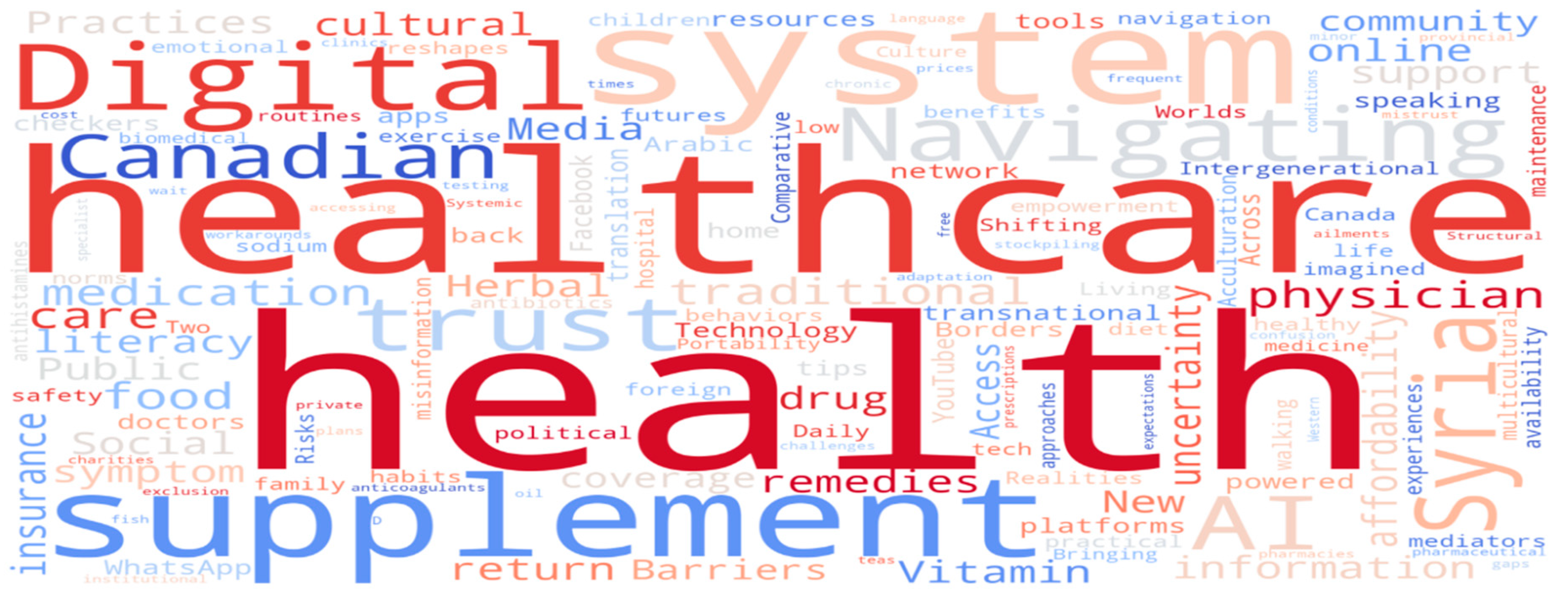
Data were analyzed using reflexive thematic analysis following Braun and Clarke’s approach [33]. Guided by the transnational care-circulation framework, the analysis applied complementary deductive codes [33] alongside inductive coding. The process entailed: (1) familiarization with the transcripts through repeated reading and note-taking; (2) inductive coding to capture patterned meanings related to transnational healthcare practices; (3) collating and organizing codes into initial thematic clusters; (4) reviewing and refining these across the full dataset to ensure internal coherence and analytic distinctiveness; (5) defining and naming of themes/subthemes with clear scope and boundaries; and (6) producing the analytic narrative with illustrative quotations [33]. Memos were kept to document decisions and enhance transparency [34]. Bilingual team members (AA &YY) cross-checked codes across Arabic and English datasets to capture culture-specific terms and concepts for semantic and cultural nuance [35]. Reflexive discussions within the research team considered how shared language and cultural familiarity may have shaped data generation and interpretation. Analytic decisions were documented through memos and team discussions to ensure that themes remained grounded in participants’ accounts rather than interviewer assumptions. NVivo (Qualitative software V.14) was used to support data management. Additionally, a word cloud of the most frequently occurring codes was generated in NVivo to aid familiarization and visualization of codes (see Figure 1).
Figure 1.
Word Cloud of Key Codes Rigor.
The study followed the Consolidated Criteria for Reporting Qualitative Research (COREQ) guidelines [36] to ensure methodological rigor and trustworthiness. Two trained interviewers conducted all interviews to maintain procedural consistency, summarizing key points during each session for immediate verification [37]. Member checking [38] was conducted with eight original participants for feedback on the study findings; seven affirmed that the final themes aligned with their experiences, and one did not respond. A detailed audit trail was developed to document protocol decisions, codebook iterations, contextual notes, and challenges during data collection [39]. Field notes and a reflexive journal were kept [40] that captured analytic decisions and researcher assumptions to ensure grounding interpretations in participants’ accounts. To ensure accuracy and validity, an independent bilingual reviewer performed a back-translation [41] of a subset of transcripts into Arabic; discrepancies were discussed and resolved by consensus.
3.5. Ethical Considerations
Ethics approval was obtained from an institutional research ethics board (Approval number 2024-468, approved on 2 April 2025). Study participants received clear information about the study’s purpose, procedures, potential risks/benefits, and their rights to withdraw from the study and the voluntary nature of participation. Written or verbal informed consent was obtained prior to data collection. Participants selected a pseudonym to protect their anonymity [42]. To protect confidentiality, transcripts were de-identified, and any personal identifiers were removed [43]. Audio recordings were stored on an encrypted password-protected drive, then deleted after verbatim transcription; de-identified transcripts and related files were stored securely and will be retained for five years.
4. Findings
Characteristics of Participants
The final study sample comprised 20 older Syrian refugees (age 50–63, mean = 56 years), with more than half of the sample being women (13/20). Most participants clustered in Scarborough, Oakville, and Mississauga (four participants in each), with additional participants in Burlington, Brampton, and Oshawa. Their year of arrival to Canada spanned anywhere from 2016 to as recent as 2025, capturing both longer- (2016–2019) and more recent entrants (2023–2025), offering rich contrasts in system navigation by time-since-arrival. Immigration pathways were mixed: privately sponsored refugees with permanent residency (8) and government-assisted refugees with permanent residency (6), alongside Canadian citizens from both streams (6 in total). Twelve people were unemployed, and the remaining participants reported performing household work (4), part-time jobs (2), being retired (1), and full-time (1). Nearly all were born in Syria (18/20), but countries of departure reflected common secondary-migration hubs: Turkey (7), Saudi Arabia (5), United Arab Emirates (5), and Jordan (3); (see Table 2). The analysis identified four interrelated themes: Navigating a New System; Living in Two Worlds; Medication Portability, Herbal Practices, and Supplement Culture; and Digital Health Across Borders. (See Table 3). Across themes, participants’ accounts reveal patterned forms of care circulation in which advice, medicines, and health knowledge move across borders through specific actors and infrastructures, illustrating how older Syrian refugees actively construct hybrid care pathways rather than relying on a single healthcare system.
Table 2.
Summary of Participant Characteristics.
Table 3.
Thematic Analysis.
6. Living in Two Worlds: The “New Syria” vs. Canadian Realities
This theme captures how older Syrian refugees weigh the emotional pull and practical politics of returning to Syria to seek care against the everyday reshaping of health in Canada. Participants’ narratives highlight how healthcare seeking unfolds across overlapping social fields, where emotional ties, trust, and uncertainty influence when and how care is sought locally versus transnationally. Uncertainty about safety, affordability, and system reliability in the “new” Syria coexists with evolving routines in Toronto, including walking paths, scheduled exercise, food label reading, and dietary shifts, while cultural foods, remedies, and family norms remain anchors of identity. This tension produces a continual dilemma: whether to seek medical care or consultation “back home,” rely on Canadian healthcare providers and coverage, or blend both, as participants negotiate trust, cost, and convenience alongside belonging and loss living in the host country. Maintaining connections to “back home” care reflects not nostalgia, but an effort to preserve moral continuity and identity while adapting to Canadian health norms.
6.1. Uncertainty of Return and Comparative Healthcare Experiences
Several participants described continually recalibrating whether, when, and how to seek care “back home”. They shared how they factored in shifting reports about safety, clinic functionality, medication availability, and out-of-pocket costs in Syria alongside Canada’s longer wait times, transportation burdens, and language barriers. This comparative weighing was an ongoing risk–benefit calculation that continued to be shaped by new symptoms, family advice, and prior experiences with both systems. In practice, many adopted a hybrid strategy: initiating diagnostics and prescriptions locally while using transnational networks for rapid explanations, second opinions in their native language, or guidance on specific medications and tests. A 55-year-old man who had been in Canada for 3 years) shared, “My brother says clinics reopened in Damascus, but I don’t know if it’s safe or affordable now. Here I can see a doctor, but tests take time, so I ask back home for advice and wait here for the results.”
Many participants framed returning home for health care as conditionally attractive due to familiarity and continuity but one that was constrained by political and financial risk. Within this context, a hybrid healthcare strategy was seen as more efficient and effective. Another 55-year-old, woman who had been in Canada for two years) shared, “If travel is easy, I will do a quick check-up in Aleppo. Doctors there know our history. But I worry about safety and costs, so I start tests here and message my nephew’s friend, a doctor in Syria, to explain the results in Arabic.”
6.2. Shifting Habits Through Canadian Exposure
Several participants described adopting Canadian health routines such as daily walking, reading nutrition labels, and scheduled exercise while retaining culturally familiar foods and remedies, illustrating hybrid day-to-day practices shaped by life in Canada and tempered by a conditional openness to return care. A 55-year-old woman who had been in Canada for eight years shared, “In Canada I started walking every day and checking calories on food labels, but I still make our soups and herbal teas. If Syria were stable, I might go for a quick check-up until then, I mix both worlds.” This statement underscores that older Syrian refugees’ everyday routines are reshaped by Canadian health norms while cultural practices are kept. The imagined possibility of returning to the home country functions as a conditional option rather than a fixed plan.
A 60-year-old woman who had been in Canada for one year) shared, “My neighbors walk after dinner, so I joined them and started to go with them to the community center class; I check salt and nutritional facts on labels now, but I still cook our dishes and drink my thyme tea.” There seems to be incremental change driven by local Canadian cues and accessible programs while some of cultural practices are maintained.
7. Medication Portability, Herbal Practices, and Supplement Culture
Study participants described medication and supplement routines that span borders, blending biomedical regimens with long-standing cultural practices. This theme demonstrates how medications and health practices circulate across borders through informal and formal channels, revealing older refugees’ active negotiation of safety, familiarity, cost, and regulatory constraints. Participants reported bringing trusted brands from Syria or transit countries, navigating Canadian prescriptions and coverage by substituting generics, and relying on family/friends’ couriers, and travel to bridge cost and availability gaps. In integrative and health promotion practices, daily management often combines prescribed therapies with herbal teas and home remedies (e.g., thyme, chamomile) and widely used supplements (vitamin D, fish oil (Omega 3), calibrated to symptoms, the season, and advice from both Canadian and Arabic-speaking healthcare providers online. Together, these strategies form a practical, transnational toolkit for managing chronic conditions in later life. Medication portability and integrative practices reflect older refugees’ active risk–benefit calculations, balancing cultural familiarity with biomedical safety.
7.1. Cross-Border Medication Practices (Portability, Access, and Trust)
Older Syrian refugees often managed costs and uncertainty by bringing medicines across borders and substituting locally when this was needed. Medication portability was often enabled by family or friends’ couriers during periodic travel, while Canadian access was shaped by prescriptions, formularies, and out-of-pocket costs. These cross-border flows were subjected to legal and safety considerations (e.g., customs limits, expiry dates). Participant 12 (a 62-year-old man who had been in Canada for two years) shared, “I still bring antibiotics and my usual skin care from Syria or other transit countries. There I can buy them without a prescription. Here they are expensive without coverage or insurance.”
Similarly, a 61-year-old man who had been in Canada for two years), shared, “My sister sends my blood thinner pills from Turkey because I trust that brand. At the clinic here, the doctor matched the ingredient, and the pharmacist explained the dose is different. Now I use the Canadian one but keep the Turkish box as backup.” This account shows how brand loyalty and cross-border supply are reconciled with local prescribing, including the equivalence checking, dose adjustment, and pharmacist counseling to convert a trusted foreign drug into a clinically aligned Canadian regimen, while a retained “backup” maintains a sense of security.
7.2. Integrative Health Promotion Practices (Herbal and Supplement Use)
Many participants described blending prescribed therapies with herbal teas and over-the-counter supplements. Participant 18 (a 59-year-old man who had been in Canada for two years) stated, “My doctor gave me pills for blood sugar control, and I still use black seed oil and cinnamon tea; my son asked the pharmacist about interactions, so I take them at different times.” This statement reflects that participants’ herbal use is integrated, not oppositional, and the pharmacist’s guidance structures timing and safety alongside ongoing diabetes management.
Many participants described layering clinic-recommended supplements with familiar herbal remedies, often influenced by cultural norms and perceived preventive benefits. For instance, participant 13 (a 60-year-old woman who had been in Canada for two years) stated, “They started me on vitamin D and told me to keep moving; I also drink ginger turmeric tea for my joints and honey lemon when I’m sick. I see many people here using omega-3, so I bought a big bottle and started taking it too for general health, my heart, and immunity.” This account shows how social cues and accessibility shape integrative health promotion self-care practices where biomedical advice (i.e., vitamin D, activity) coexists with culturally familiar teas and community-influenced adoption of omega-3, producing a pragmatic, layered regimen attentive to prevention and symptom relief.
9. Discussion
This study offers insight into the healthcare experiences of older Syrian refugees in the GTA, illuminating how transnational healthcare practices intersect with displacement-related challenges to shape health in later life. This study advances the literature by conceptualizing older Syrian refugees’ healthcare practices as hybrid care pathways, including intentional, meaning-laden assemblages of local, transnational, cultural, and digital resources. Rather than passive responses to barriers, these practices represent active strategies through which older refugees negotiate trust, continuity, and control in later-life health management across borders. The findings point to how older Syrian refugees actively assemble care across countries. Navigating healthcare systems, language, and access barriers in Canada alongside cross-border medications, traditional remedies, and virtual consultations were reported by our study participants.
Our findings on how older Syrian refugees navigate a new healthcare system, ability to receive public healthcare, access, and structural barriers mirror existing literature where older refugees face compounded obstacles such as language discordance, limited cultural competence in clinical encounters, and socioeconomic constraints that delay or deter care and widen disparities [18,44,45]. Social isolation and low health literacy further impede system navigation, even when family or community groups provide some support [46,47]. In our study, long wait times, health coverage confusion, and reliance on informal interpreters reproduced these dynamics in the GTA, while settlement agencies and pharmacists partially mitigated access gaps. Addressing these structural barriers through language-concordant care, clearer coverage pathways, and community navigation remains essential to equitable aging for refugee older adults [12].
Interpreting our findings through intersectionality and structural vulnerability [48] deepens understanding of why older Syrian refugees engage in transnational healthcare practices. Participants’ reliance on family mediation, origin-country clinicians, digital platforms, and medication portability reflects not individual preference alone, but the intersection of aging, refugee status, and language marginalization [49] especially within the Canadian healthcare system [30]. These intersecting forces shape both access to care and perceptions of legitimacy, trust, and belonging in later life [50,51].
The study findings around how older Syrian refugees living in two worlds and navigating the “new Syria” vs. Canadian realities echo prior research that shows resilience and constraint. Many older Syrian refugees maintain frequent contact and supportive community ties to buffer isolation [52]. Yet limited English proficiency continues to hinder system navigation and heighten reliance on family, despite strong efforts to learn the language [6]. The mental and physical health of older Syrian refugees is shaped by age, service satisfaction, and stress exposure, and socioeconomic and structural inequities further affect their health outcomes, underscoring the need for age-inclusive, trauma-informed support [53,54].
The study findings indicate that older Syrian refugees manage chronic disease through layered, cross-border transnational healthcare practices. They sought second opinions through virtual care from home-country clinicians [55]. Alongside, they used herbal/supplemental health products [56] that align with regional evidence, and medication reviews [57]. Previous research also underscored the need for structured, pharmacist-supported management [57]. In our GTA sample, participants described bringing familiar brands of medications, including antibiotics, from abroad and substituting locally with pharmacist guidance when coverage or availability was limited, mirroring these needs. Consistent with biomedical regimens, culturally familiar remedies (e.g., chamomile, thyme, sage) and common supplements (vitamin D, omega-3) remain integral and consistent with research showing widespread, culturally embedded herbal use among older adults [56]. Taken together, these patterns suggest healthcare plans should anticipate cross-border sourcing, proactively reconcile ingredients and dosing, and discuss herb–drug interactions, preserving cultural continuity while safeguarding medication and patient safety and adherence [57].
The study findings on digital health across borders echo evidence that culturally responsive, language-concordant telehealth can reduce stigma, build trust, and improve care engagement, especially when platforms embed translation and trauma-informed design [9]. Beyond mental health, telehealth supports older Syrian refugees’ continuity of care amid moves, enables remote follow-up and secure information sharing, and expands access to Arabic-speaking healthcare providers and discreet care pathways [9,20,21]. However, telehealth and technology adoption among refugees depend on digital inclusion [9]. The limited device access, connectivity, and e-health literacy among older adult refugees necessitate targeted coaching, simplified platforms (e.g., WhatsApp, FaceTime, Teams), and clinic-supported onboarding to support equitable access and aging [9,12].
This study engages with and advances healthcare-seeking by situating older Syrian refugees’ practices within transnationalism and the circulation of care framework. Conventional healthcare-seeking models often assume linear, host–country–bound pathways driven by individual choice, availability of services, or perceived need. Our findings challenge these assumptions by demonstrating that healthcare seeking among older refugees is relational, cross-border, and iterative, shaped by aging, displacement, trust, and structural constraints.
Participants did not seek care in a singular or sequential manner; rather, they mobilized circulating resources—including family networks, medications, herbal knowledge, digital platforms, and origin-country clinicians—to construct hybrid care pathways that span Canada and transnational contexts. By analytically tracing the flows, vectors, and infrastructures through which care circulates, this study demonstrates that transnational healthcare among older Syrian refugees is not merely descriptive of parallel practices but a structured, adaptive system of care shaped by aging, displacement, and digital transformation. Healthcare seeking thus functioned not only as access to services, but as an ongoing process of meaning-making, where trust, cultural familiarity, and perceived safety were actively negotiated. By applying the circulation of care lens, this study extends healthcare-seeking to account for how care, advice, and therapeutic authority move across borders and technologies, particularly in later life. Importantly, our findings show that transnational healthcare seeking is not a residual or temporary practice, but a durable and adaptive strategy that enables older refugees to preserve autonomy, continuity, and identity while navigating fragmented systems. In doing so, this study contributes to a more inclusive theoretical understanding of healthcare seeking that reflects the lived realities of aging in conditions of forced migration. Together, these findings shift the literature from describing transnational healthcare as fragmented or compensatory toward understanding it as a meaningful, adaptive, and evolving form of later-life health management among forcibly displaced older adults.
Finally, situating these findings within broader transnational healthcare scholarship extends existing theory by foregrounding aging and digital mediation as central dimensions of care circulation. Unlike earlier work that emphasized mobility and episodic cross-border care [58], this study shows how older refugees sustain durable, hybrid care pathways that combine local services with transnational advice, trust networks, and technologies. These pathways illuminate how “medical citizenship” [59] is not solely conferred by legal status, but continuously negotiated through everyday healthcare encounters across borders [59,60].
9.1. Study Implications
The study findings point to practical steps that can improve care for older Syrian refugees in the GTA across clinical practice, policy design, education, and research. In practice, primary care teams should embed strategies to overcome language barriers and access issues, such as trained interpreters and translated after-visit summaries [47]. Healthcare providers should adopt clear medication reconciliation and counseling that anticipates cross-border medication brand differences [61], and brief “transnational care check-ins and cross-border contracting” [62] that normalize discussion of online or overseas consultations and imported medicines. These counseling sessions align with person-centered, culturally responsive care models and are associated with better access and trust for migrant populations. Community health centers and family health teams can also integrate digital navigation support, such as help with patient portals, translation applications, and safe information-seeking. Additionally, leverage family mediators without replacing professional interpretation, thus harnessing intergenerational strengths while minimizing safety risks. The findings can inform practice changes by legitimizing virtual second opinions within primary care [55], strengthening safe and legal medication pathways, and partnering with settlement agencies to stabilize fragile segments of these transnational healthcare practices. Recognizing hybrid care pathways legitimizes transnational practices within clinical encounters and supports the integration of “transnational check-ins” into routine primary care for older migrants.
At the policy level, results support expanded public drug coverage and clearer eligibility pathways for older refugees, streamlined access to specialist care, and funding for settlement [50]. Health partnerships that provide navigation, transportation, and medication affordability support are key priority areas repeatedly identified in migrant-health frameworks. From an education perspective, continuing professional development should incorporate case-based modules on transnational healthcare practices, including virtual second opinions from home-country healthcare providers [55], herbal/supplement use and drug supplement interactions [56] and useful AI tools. For research, future studies should examine how sponsorship pathway, time-since-arrival, and digital literacy interact to shape transnational healthcare trajectories; mixed-methods designs, and longitudinal studies can trace changes as policy or coverage shifts occur. Collaborative approaches that include community partners and engage people with lived experiences to achieve successful practice modifications and service improvement based on evidence-based and best practice guidelines. The study findings call for strengthening and harmonizing border regulations that include clear import rules, routine screening, and traveler education to reduce uncontrolled/unsafe cross-border medication transport and enhance patient safety.
9.2. Study Limitations
This study has limitations that warrant consideration. First, the purposive sample (N = 20) was relatively small given the diversity of the Syrian diasporas in the Greater Toronto Area. Second, recruitment through community and health organizations may have resulted in the inclusion of individuals who are more connected to services. Lastly, although interviews were conducted in Arabic, subtle linguistic and cultural nuances may have been lost in translation both during the interviews and the translation of the recorded interviews.
10. Conclusions
The study explores how older Syrian refugees in the GTA accessed and used healthcare across Canadian and transnational contexts. Results show that participants managed language barriers and medication coverage gaps and costs by supplementing local care with cross-border medications, herbal remedies, and virtual consultations. Digital tools, such as WhatsApp, translation apps, and AI, were used to seek information and appointments, but these also posed risks of misinformation. Daily practices reflected a balance between Canadian health norms, dietary changes, and preserving cultural identities. The study calls for practice and service modifications, including transnational check-ins, proactive language access supports, medication counseling that anticipates brand substitutions, as well as partnerships with settlement service providers to promote the health of older Syrian refugees. Policy actions to expand drug coverage and streamline specialist access, along with healthcare provider education on transnational and culturally grounded care, are warranted. Future research considerations include following different arrival cohorts and sponsorship pathways to pilot refugee-centered, community-engaged, and practical interventions to manage transnational healthcare practices.
Author Contributions
Conceptualization, A.A.-H., Y.M.Y. and S.G.; methodology, A.A.-H., Y.M.Y., H.A., S.G., L.W., K.M., Z.Z., C.C. and L.Y.; software, A.A.-H. and Y.M.Y.; validation, A.A.-H., Y.M.Y., L.Y., L.W. and Z.Z. formal analysis, A.A.-H., Y.M.Y. and S.G.; investigation, A.A.-H., Y.M.Y. and S.G.; resources, A.A.-H., Y.M.Y. and S.G.; data curation, L.K. and Y.C.; writing—original draft preparation, A.A.-H., Y.M.Y., Y.C. and S.G.; writing—review and editing, A.A.-H., Y.M.Y., S.G., L.W., K.M., Z.Z., C.C., H.A., L.Y., L.K. and Y.C.; visualization, A.A.-H.; supervision, A.A.-H., Y.M.Y. and S.G.; project administration, S.G.; funding acquisition, S.G. All authors have read and agreed to the published version of the manuscript.
Funding
This research was funded by the Bridging Divides project that is funded by the Government of Canada through the Canada First Research Excellence Fund (CFREF): grant number 1-51-49019.
Institutional Review Board Statement
The study was conducted in accordance with the Declaration of Helsinki, and approved by the Research Ethics Board of Toronto Metropolitan University (protocol code REB 2024-468 and date of approval 2 April 2025).
Informed Consent Statement
Written or verbal informed consent was obtained from all participants involved in the study. Participation was voluntary, and confidentiality and anonymity were maintained throughout the research process.
Data Availability Statement
The data supporting this study are not publicly available to protect participant confidentiality but may be provided by the corresponding author upon reasonable request and with appropriate ethical approvals.
Acknowledgments
The authors thank the older Syrian refugees who shared their experiences, the bilingual research assistants for their dedication, and the community organizations in the Greater Toronto Area for their support.
Conflicts of Interest
The authors declare no conflicts of interest.
References
- Immigration Refugees and Citizenship Canada. Syrian Outcomes Report. Evaluation Division. 2019. Available online: https://www.canada.ca/content/dam/ircc/documents/pdf/english/corporate/reports-statistics/evaluations/syria-outcomes-report-may-2019.pdf (accessed on 15 September 2025).
- Owino, J.; Fuller, H. Predictors of quality of life among refugees aging out-of-place. J. Cross-Cult. Gerontol. 2025, 40, 179–196. [Google Scholar] [CrossRef] [Scilit] [PubMed]
- Allin, S.; Rudoler, D. The Canadian health care system. Int. Profiles Health Care Syst. 2019, 21, 27–35. [Google Scholar]
- Martin, D.; Miller, A.P.; Quesnel-Vallée, A.; Caron, N.R.; Vissandjée, B.; Marchildon, G.P. Canada’s universal health-care system: Achieving its potential. Lancet 2018, 391, 1718–1735. [Google Scholar] [CrossRef] [Scilit] [PubMed]
- Alghalyini, B.; Zia Zaidi, A.R.; Zangiabadi, S.; Alamgir, A.; Tamim, H. Vaccine hesitancy among Syrian refugee parents in Canada: A multifaceted challenge in public health. Hum. Vaccines Immunother. 2024, 20, 2430086. [Google Scholar] [CrossRef] [Scilit]
- Boutmira, S. Older Syrian refugees’ experiences of language barriers in postmigration and (re)settlement context in Canada. Int. Health Trends Perspect. 2021, 1, 404–417. [Google Scholar] [CrossRef] [Scilit]
- Taiebine, M.; Marfak, A.; Al Hassani, W.; Nejjari, C. Cross-cultural barriers and facilitators of dementia care in Arabic-speaking migrants and refugees: Findings from a narrative scoping review. Clin. Epidemiol. Glob. Health 2024, 25, 101498. [Google Scholar] [CrossRef] [Scilit]
- Metersky, K.; Guruge, S.; Wang, L.; Al-Hamad, A.; Yasin, Y.M.; Catallo, C.; Yang, L.; Salma, J.; Zhuang, Z.C.; Chahine, M.; et al. Transnational healthcare practices among migrants: A concept analysis. J. Adv. Nurs. 2024, 81, 3647–3673. [Google Scholar] [CrossRef] [Scilit]
- Abasi, A.; Aghda, S.A.F.; Zahedian, M.; Miyanroudi, Z.J.; Bahariniya, S.; Yazdani, B.; Fallah-Aliabadi, S.; Hazhir, S. An investigation into telemedicine utilization for refugee mental health: A systematic review. Glob. Health 2025, 21, 31. [Google Scholar] [CrossRef] [Scilit]
- Yasin, Y.M.; Al-Hamad, A.; Guruge, S.; Metersky, K.; Catallo, C.; Wang, L.; Zhuang, Z.; Salma, J.; MacKenzie-Ede, F.; Charbonneau, K.; et al. Healthcare practices among refugee older adults: A scoping review. J. Aging Health 2025, 4. [Google Scholar] [CrossRef] [Scilit]
- Al-Hamad, A.; Yasin, Y.M.; Rahman, R.; Hayrabedian, V.; Metersky, K. Resourceful aging among migrants and refugees: A concept analysis and model development for holistic nursing care. J. Holist. Nurs. 2025, 8980101251323012. [Google Scholar] [CrossRef] [Scilit]
- Al-Hamad, A.; Yasin, Y.M.; Guruge, S.; Metersky, K.; Wang, L.; Catallo, C.; Amanzai, H.; Zhuang, Z.C.; Rahman, R.; Zhang, A. Equitable aging among migrants: A concept analysis and model development for transcultural nursing care. J. Transcult. Nurs. 2025, 36, 644–660. [Google Scholar] [CrossRef] [Scilit] [PubMed]
- Baldassar, L. Transnational families and aged care: The mobility of care and the migrancy of ageing. J. Ethn. Migr. Stud. 2007, 33, 275–297. [Google Scholar] [CrossRef] [Scilit]
- Baldassar, L. Transnational families and the provision of moral and emotional support: The relationship between truth and distance. Identities Glob. Stud. Cult. Power 2007, 14, 385–409. [Google Scholar] [CrossRef] [Scilit]
- Shin, Y.-K.; Koskinen, V.; Kouvonen, A.; Kemppainen, T.; Olakivi, A.; Wrede, S.; Kemppainen, L. Digital information technology use and transnational healthcare: A population-based study on older Russian-speaking migrants in Finland. J. Immigr. Minor. Health 2022, 24, 125–135. [Google Scholar] [CrossRef] [Scilit]
- Kemppainen, L.; Koskinen, V.; Safarov, N.; Wrede, S.; Olakivi, A.; Kouvonen, A. Use of transnational health care among older Russian-speakers in Finland. Idäntutkimus 2022, 29, 3–20. [Google Scholar] [CrossRef] [Scilit]
- Ngan, L.L.S. The impact of digital technologies on the transnational aging experience of older Hong Kongers. Glob. Netw. 2025, 25, e12519. [Google Scholar] [CrossRef] [Scilit]
- Alenezy, A.; Salama, B.; Bayomy, N.A.; Esmaeel, S.E.; Fahmy, E.K.; Mehmood, Y.; Hamid, O.A.; Shah, S.S.H. Health consequences of refugee displacement: A comprehensive review of risks, barriers and systemic challenges. J. Pioneer. Med. Sci. 2025, 14, 124–134. [Google Scholar] [CrossRef] [Scilit]
- Czukar, L.; Wang, L.; Guruge, S.; Lum, J.; Greenbaum, M. A Comparison of Chinese and Korean Older Adult Immigrants’ Transnational Healthcare Practices in Toronto, Canada: A Mixed-Methods Study. Healthcare 2025, 13, 2493. [Google Scholar] [CrossRef] [Scilit]
- Talhouk, R.; Akik, C.; Araujo-Soares, V.; Ahmad, B.; Mesmar, S.; Olivier, P.; Balaam, M.; Montague, K.; Garbett, A.; Ghattas, H. Integrating health technologies in health services for Syrian refugees in Lebanon: Qualitative study. J. Med. Internet Res. 2020, 22, e14283. [Google Scholar] [CrossRef] [Scilit]
- Ekoh, P.C.; Okolie, T.J.; Nnadi, F.B.; Oyinlola, O.; Walsh, C.A. Understanding the impact of digital technology on the well-being of older immigrants and refugees: A scoping review. Digit. Health 2023, 9, 20552076231194947. [Google Scholar] [CrossRef] [Scilit]
- Li, W.; Chong, M.D. Transnationalism and social wellbeing and older Chinese migrants. Grad. J. Asia-Pac. Stud. 2012, 8, 29–44. [Google Scholar]
- Wang, L.; Kwak, M.-J. Immigration, barriers to healthcare and transnational ties: A case study of South Korean immigrants in Toronto, Canada. Soc. Sci. Med. 2015, 133, 340–348. [Google Scholar] [CrossRef] [Scilit] [PubMed]
- Levitt, P.; Glick Schiller, N. Conceptualizing simultaneity: A transnational social field perspective on society. Int. Migr. Rev. 2004, 38, 1002–1039. [Google Scholar] [CrossRef] [Scilit]
- Verdery, A.M.; Mouw, T.; Edelblute, H.; Chavez, S. Communication flows and the durability of a transnational social field. Soc. Netw. 2018, 53, 57–71. [Google Scholar] [CrossRef] [Scilit]
- Gotehus, A. ‘She’s like family’: Transnational Filipino families, voluntary kin and the circulation of care. J. Fam. Stud. 2023, 29, 1704–1721. [Google Scholar] [CrossRef] [Scilit]
- Baldassar, L.; Merla, L. (Eds.) Transnational Families, Migration and the Circulation of Care: Understanding Mobility and Absence in Family Life; Routledge Transnationalism Series; Routledge: Oxfordshire, UK, 2014. [Google Scholar]
- Thorne, S. Interpretive Description: Qualitative Research for Applied Practice; Taylor & Francis: Philadelphia, PA, USA, 2025. [Google Scholar]
- Ghorbani, A.; Matourypour, P. Comparison of interpretive description and qualitative description in the nursing scope. Braz. J. Nurs. 2020, 73, e20190339. [Google Scholar] [CrossRef] [Scilit]
- Guruge, S.; Wang, L.; Metersky, K.; Al-Hamad, A.; Zhuang, Z.; Catallo, C.; Amanzai, H.; Yang, L.; Yasin, Y.M.; Illesinghe, V. Transnational Healthcare Practices Among Afghan, Syrian, and Ukrainian Refugee Older Adults in the Greater Toronto Area: A Study Protocol. Healthcare 2025, 13, 2644. [Google Scholar] [CrossRef] [Scilit]
- Campbell, S.; Greenwood, M.; Prior, S.; Shearer, T.; Walkem, K.; Young, S.; Bywaters, D.; Walker, K. Purposive sampling: Complex or simple? Research case examples. J. Res. Nurs. 2020, 25, 652–661. [Google Scholar] [CrossRef] [Scilit]
- Phillippi, J.; Lauderdale, J. A guide to field notes for qualitative research: Context and conversation. Qual. Health Res. 2018, 28, 381–388. [Google Scholar] [CrossRef] [Scilit]
- Braun, V.; Clarke, V. Reflecting on reflexive thematic analysis. Qual. Res. Sport Exerc. Health 2019, 11, 589–597. [Google Scholar] [CrossRef] [Scilit]
- Crossman, J.; Bordia, S.; McGrath, R. Chapter 15: Journalling and memoing: Reflexive qualitative research tools. In Handbook of Qualitative Research Methodologies in Workplace Contexts; Edward Elgar Publishing: Cheltenham, UK, 2021. [Google Scholar]
- Kashgary, A.D. The paradox of translating the untranslatable: Equivalence vs. non-equivalence in translating from Arabic into English. J. King Saud Univ.-Lang. Transl. 2011, 23, 47–57. [Google Scholar] [CrossRef] [Scilit]
- Tong, A.; Sainsbury, P.; Craig, J. Consolidated criteria for reporting qualitative research (COREQ): A 32-item checklist for interviews and focus groups. Int. J. Qual. Health Care 2007, 19, 349–357. [Google Scholar] [CrossRef] [Scilit] [PubMed]
- Powell, M.B.; Cavezza, C.; Hughes-Scholes, C.; Stoove, M. Examination of the consistency of interviewer performance across three distinct interview contexts. Psychol. Crime Law 2010, 16, 585–600. [Google Scholar] [CrossRef] [Scilit]
- Birt, L.; Scott, S.; Cavers, D.; Campbell, C.; Walter, F. Member Checking: A Tool to Enhance Trustworthiness or Merely a Nod to Validation? Qual. Health Res. 2016, 26, 1802–1811. [Google Scholar] [CrossRef] [Scilit]
- Carcary, M. The research audit trail: Methodological guidance for application in practice. Electron. J. Bus. Res. Methods 2020, 18, 166–177. [Google Scholar] [CrossRef] [Scilit]
- Dado, M.; Spence, J.R.; Elliot, J. The case of contradictions: How prolonged engagement, reflexive journaling, and observations can contradict qualitative methods. Int. J. Qual. Methods 2023, 22, 16094069231189372. [Google Scholar] [CrossRef] [Scilit]
- Behr, D. Assessing the use of back translation: The shortcomings of back translation as a quality testing method. Int. J. Soc. Res. Methodol. 2017, 20, 573–584. [Google Scholar] [CrossRef] [Scilit]
- Subedi, K.R. Safeguarding participants: Using pseudonyms for ensuring confidentiality and anonymity in qualitative research. KMC J. 2025, 7, 1–20. [Google Scholar] [CrossRef] [Scilit]
- Myers, C.A.; Long, S.E.; Polasek, F.O. Protecting participant privacy while maintaining content and context: Challenges in qualitative data De-identification and sharing. Proc. Assoc. Inf. Sci. Technol. 2020, 57, e415. [Google Scholar] [CrossRef] [Scilit]
- Nowak, A.C.; Hornberg, C. Experiences of people with refugee backgrounds in utilising healthcare in Germany: Findings from a qualitative study. Bundesgesundheitsblatt-Gesundheitsforschung-Gesundheitsschutz 2023, 66, 1117–1125. [Google Scholar] [CrossRef] [Scilit]
- Sudha, S.; Morrison, S.D. We are not all “Model”: Health of older Asian refugees in the United States. In Handbook of Aging, Health and Public Policy: Perspectives from Asia; Springer Nature: Singapore, 2022; pp. 1–19. [Google Scholar]
- Martinelli, P. Barriers, resources and reserves shaping older migrants’ access to healthcare: A research imperative for Switzerland. Int. J. Public Health 2025, 70, 1608753. [Google Scholar] [CrossRef] [Scilit]
- Mudie, L.I.; Patnaik, J.L.; Gill, Z.; Wagner, M.; Christopher, K.L.; Seibold, L.K.; Ifantides, C. Disparities in eye clinic patient encounters among patients requiring language interpreter services. BMC Ophthalmol. 2023, 23, 82. [Google Scholar] [CrossRef] [Scilit]
- Smith, L.; Phillipson, L.; Kirby, E.; Newman, C.E.; O’Shea, A. Ageing, disability, dementia and gender and sexuality diversity: What do the intersections tell us about models of care? In The Routledge International Handbook of Disability and Global Health; Routledge: Oxfordshire, UK, 2024; pp. 659–671. [Google Scholar]
- Bozorgmehr, K.; Razum, O. Forced Migration and Global Responsibility for Health: Comment on” Defining and Acting on Global Health: The Case of Japan and the Refugee Crisis”. Int. J. Health Policy Manag. 2016, 6, 415. [Google Scholar] [CrossRef] [Scilit] [PubMed]
- Hachem, S.; Ali, S.; Al-Omari, S.; Abi Chahine, M.; Fahme, S.A.; Mehio Sibai, A. “Older people tend to be invisible”: A qualitative study exploring the needs and inclusion of older Syrian refugees in the context of compounding crises in host country, Lebanon. Confl. Health 2022, 16, 61. [Google Scholar] [CrossRef] [Scilit] [PubMed]
- Torres, S. Ethnicity and Old Age: Expanding Our Imagination; Policy Press: Bristol, UK, 2019. [Google Scholar]
- Hanley, J.; Hassan, M.; Al Mhamied, A.; Guruge, S.; Hajjar, O.; Hynie, M.; Jamil, R.; Razavipour, E. Resettlement of older Syrian refugees in Canada: Key individual factors of social inclusion. Refuge 2024, 40, 1–23. [Google Scholar] [CrossRef] [Scilit]
- Kuo, B.C.; Granemann, L.; Najibzadeh, A.; Al-Saadi, R.; Dali, M.; Alsmoudi, B. Examining post-migration social determinants as predictors of mental and physical health of recent Syrian refugees in Canada: Implications for counselling, practice, and research. Can. J. Couns. Psychother. 2020, 54, 778–802. [Google Scholar] [CrossRef] [Scilit]
- Wang, S.-R.; Guinn, V.; Brown, L.M. A multidimensional trajectory of older refugees’ resettlement and its policy implications. In Research Handbook on Inequalities in Later Life; Edward Elgar Publishing: Cheltenham, UK, 2024; pp. 89–103. [Google Scholar]
- Shaw, J.; Jamieson, T.; Agarwal, P.; Griffin, B.; Wong, I.; Bhatia, R.S. Virtual care policy recommendations for patient-centred primary care: Findings of a consensus policy dialogue using a nominal group technique. J. Telemed. Telecare 2018, 24, 608–615. [Google Scholar] [CrossRef] [Scilit]
- Agbabiaka, T.B.; Spencer, N.H.; Khanom, S.; Goodman, C. Prevalence of drug–herb and drug–supplement interactions in older adults: A cross-sectional survey. Br. J. Gen. Pract. 2018, 68, e711–e717. [Google Scholar] [CrossRef] [Scilit]
- Alalawneh, M.; Berardi, A.; Nuaimi, N.; Basheti, I.A. Improving Syrian refugees’ knowledge of medications and adherence following a randomized control trial assessing the effect of a medication management review service. PLoS ONE 2022, 17, e0276304. [Google Scholar] [CrossRef] [Scilit]
- Ormond, M.; Lunt, N. Transnational medical travel: Patient mobility, shifting health system entitlements and attachments. J. Ethn. Migr. Stud. 2020, 46, 4179–4192. [Google Scholar] [CrossRef] [Scilit]
- Schrewe, B.M. Medical Citizenship and the Social Right to Health Care in Canada: A Genealogy of Medical Education Discourses. Ph.D. Thesis, University of British Columbia, Vancouver, BC, Canada, 2023. [Google Scholar]
- Jauho, M.; Helén, I. Citizenship by vitality: Rethinking the concept of health citizenship. Distinktion J. Soc. Theory 2023, 24, 467–487. [Google Scholar] [CrossRef] [Scilit]
- Filmer, T.; Ray, R.; Glass, B.D. Barriers and facilitators experienced by migrants and refugees when accessing pharmaceutical care: A scoping review. Res. Soc. Adm. Pharm. 2023, 19, 977–988. [Google Scholar] [CrossRef] [Scilit]
- Glinos, I.A.; Baeten, R.; Maarse, H. Purchasing health services abroad: Practices of cross-border contracting and patient mobility in six European countries. Health Policy 2010, 95, 103–112. [Google Scholar] [CrossRef] [Scilit]

Disclaimer/Publisher’s Note: The statements, opinions and data contained in all publications are solely those of the individual author(s) and contributor(s) and not of MDPI and/or the editor(s). MDPI and/or the editor(s) disclaim responsibility for any injury to people or property resulting from any ideas, methods, instructions or products referred to in the content. |
© 2026 by the authors. Licensee MDPI, Basel, Switzerland. This article is an open access article distributed under the terms and conditions of the Creative Commons Attribution (CC BY) license.