

A Comparative Evaluation Model for Design Studio Pedagogy: Linking Educational Objectives and Professional Readiness in Architectural Higher Education

 ,
,  ,
,  , ,
, ,  ,
,  and
and 
Abstract
1. Introduction
1.1. Motivation for the Study: Design Studio Pedagogy
1.2. Transformation of AHE and Its Implications on Design Studio
1.3. Paper Outline
- RQ1 (Pedagogical Innovation/Site of Innovation): How do different design studio models manifest innovation in pedagogical focus, design scale, temporal orientation, and conceptual approach to heritage and sustainability within the SPATTERN comparative framework?
- RQ2 (Policy Alignment/Site of Learning): To what extent do the analysed design studios align with the learning outcomes and capabilities defined by the UNESCO–UIA Charter for Architectural Education, and how do heritage and environmental contexts reinforce or challenge this alignment?
- RQ3 (Professional Competence/Site of Professional Formation): How do the studied design studios cultivate professional competencies in line with the UNESCO–UIA Validation System, and which pedagogical strategies most effectively translate academic experimentation into practice readiness?
- RQ4 (Cross-Track Relationships/Systemic Linkages): What systemic relationships can be identified between academic learning capabilities and professional competence domains, and how do these relationships reflect the integrative pedagogical function of the design studio?
1.4. Core Contribution of This Study
2. Materials and Methods
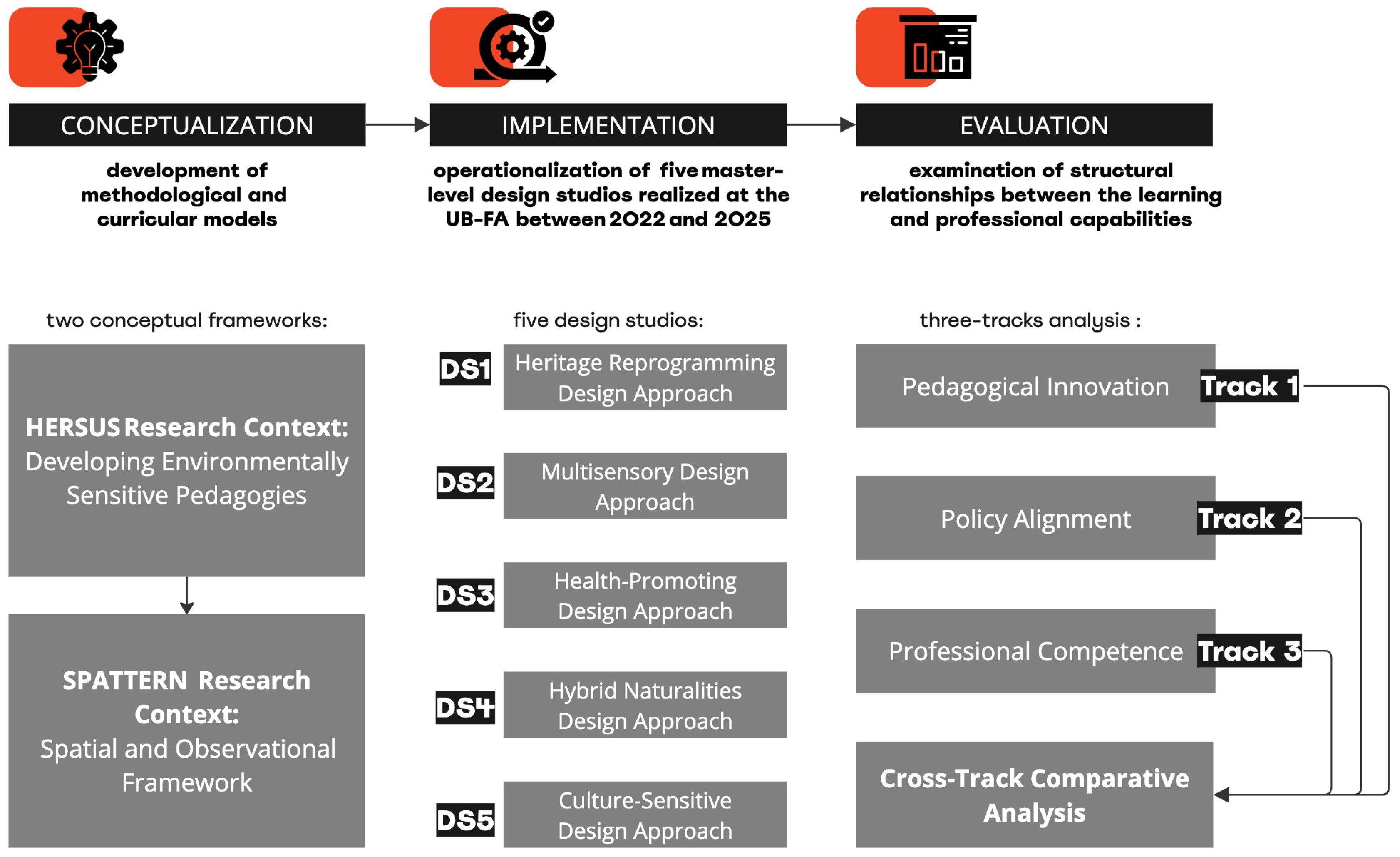
2.1. Conceptualization of the Design Studio Framework
2.1.1. HERSUS Research Context: Developing Environmentally Sensitive Pedagogies
2.1.2. SPATTERN Research Context: Spatial and Observational Framework
2.2. Implementation Context
- First, the studios reflect a broad spectrum of design-based approaches, ranging from heritage reprogramming [25] and multisensory design [57] to health-promoting design [58], hybrid naturalities [59], and culture-sensitive methodologies [60]. These approaches have been tested over multiple years within the UB–FA design studio pedagogy and have been previously disseminated through academic publications. This diversity ensures that the comparative framework captures differentiated design cultures, methodological orientations, and epistemic positions within AHE.
- Second, the studios span two academic programs at the master level (MASA and IASA). This ensures that the sample covers both conventional two-year master-level studios (MASA, years 1–2), as well as final-year studios of the five-year integrated program (IASA, years 4–5). The resulting dataset is therefore structurally representative of master-level AHE at UB–FA.
- Third, the formats and credit structures also contribute to sample heterogeneity. Two principal formats are present: (1) Design Studio + Seminar (15 ECTS studio + 2 ECTS seminar) implemented on the first year of MASA, and (2) Diploma Design Studio (30 ECTS) implemented as the final, thesis-oriented studio on the second year of MASA. This ensures that both exploratory, research-oriented studios and comprehensive, project and thesis integrated diploma studios are included within the comparison.
- Fourth, the implementation scale and teaching configuration also vary across the studios: (1) DS1 was conducted within standard accreditation-based group size for MASA/IASA, (2) DS3 was delivered through two parallel groups working on the same thematic brief, allowing observation of variation within a shared pedagogical structure, (3) DS4 was taught as small diploma-level units focused on intensive mentorship, and (4) DS2 and DS5, although dimensioned as a standard master studio cohort, was implemented across two consecutive semesters, providing additional temporal depth to its outputs.
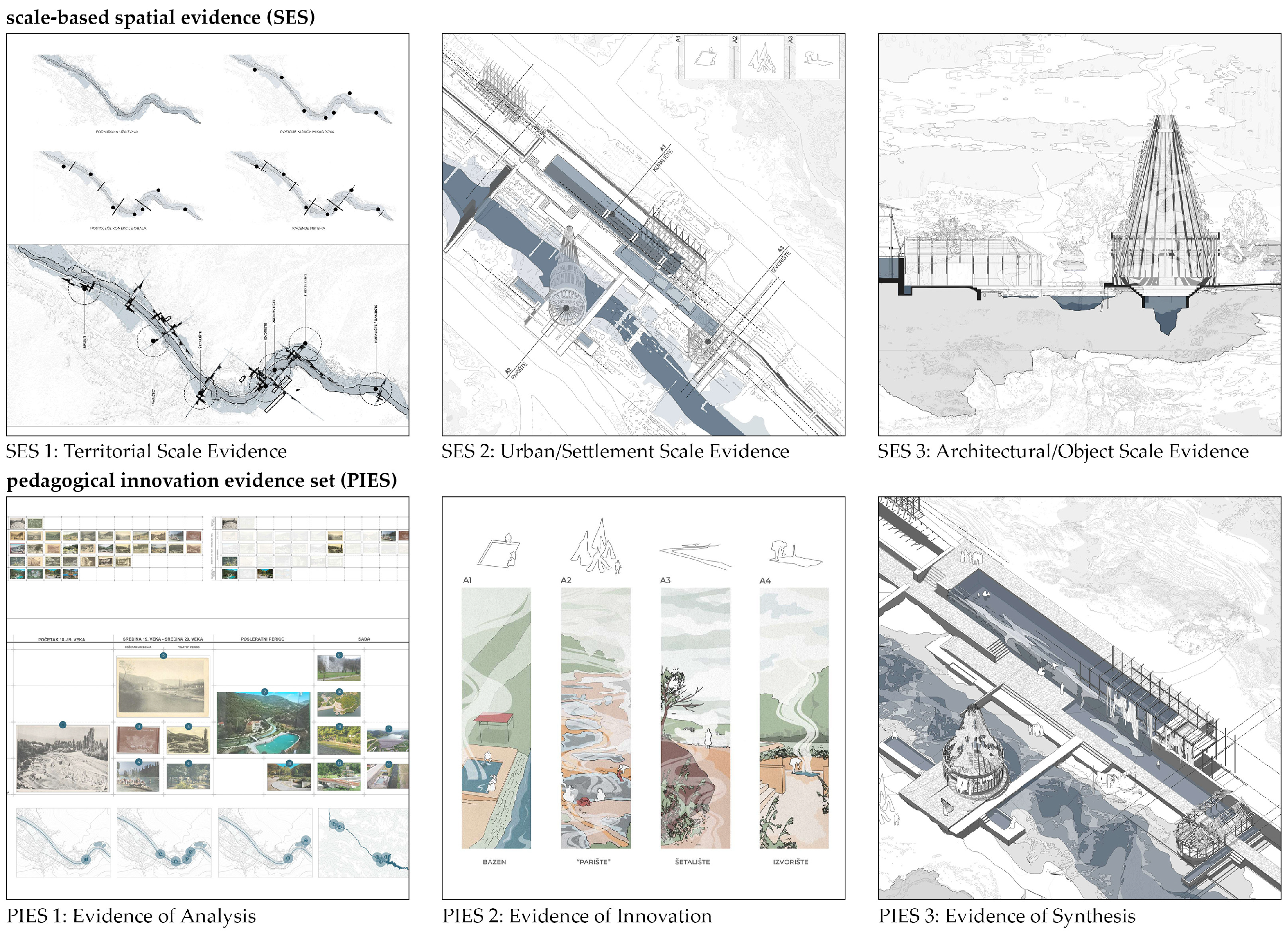
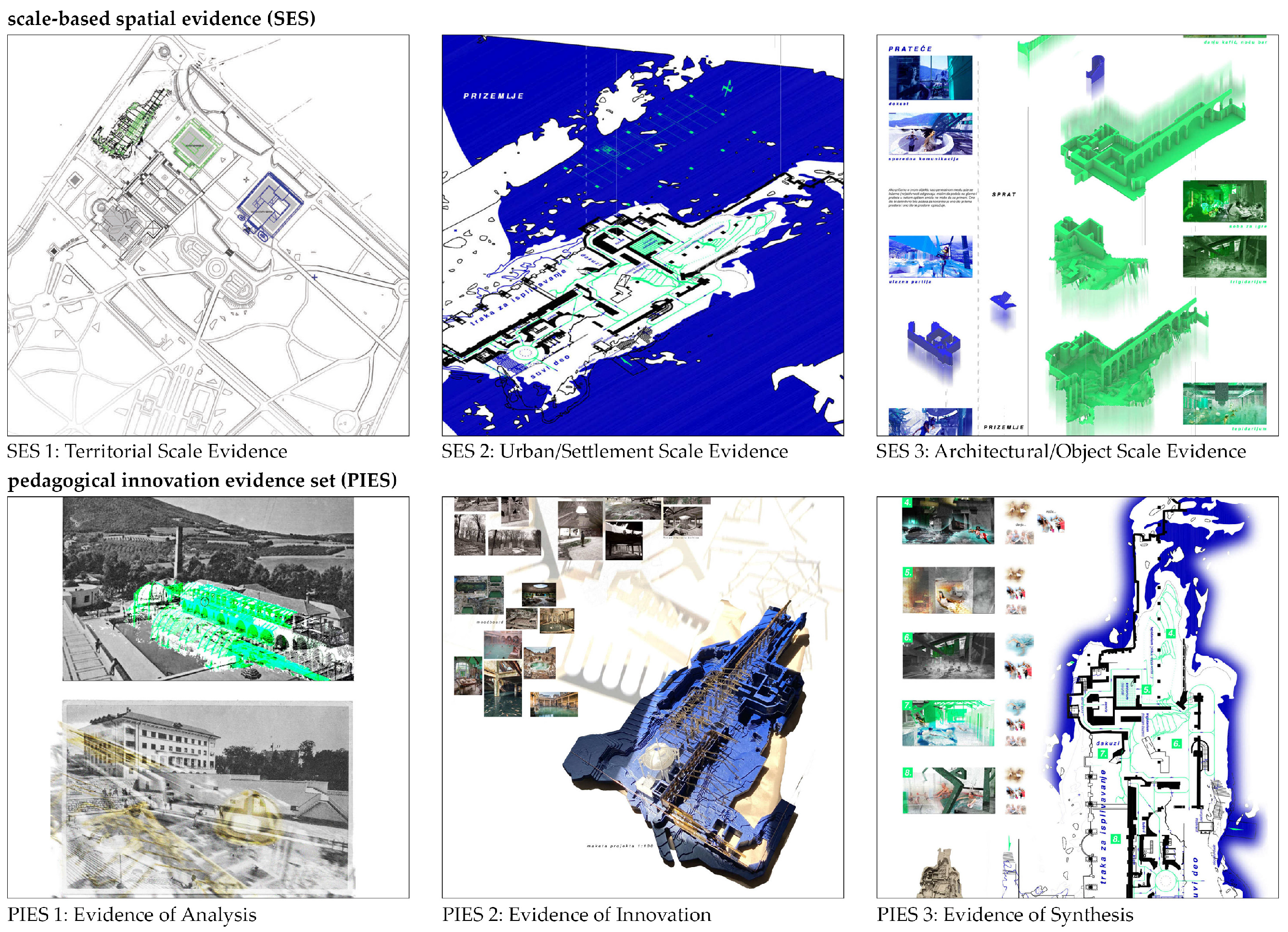
- Finally, the Observatory Case structure, a key analytical component of the SPATTERN research framework, differs across the studios and further enriches the comparative potential of the sample. Studios employ three types of observatory configurations: (1) predefined cases assigned uniformly to all students (DS5), (2) selective predefined cases from which students choose (DS1, DS3, DS4), and (3) full selective corpus involving all 38 spa settlements (DS2). This variation ensures that the studios engage with the spascape context at different scales and levels of specificity, from deeply focused case studies to wide-scope territorial analyses.
2.3. Evaluation and Comparative Analytical Framework
2.3.1. Track 1: Pedagogical Innovation
2.3.2. Track 2: Policy Alignment
2.3.3. Track 3: Professional Competence
2.3.4. Cross-Track Comparative Analysis
3. Results
3.1. Track 1: Pedagogical Innovation
3.1.1. Studio-Specific Profiles
3.1.2. Cross-Studio Patterns
3.2. Track 2: Policy Alignment
3.3. Track 3: Professional Competence
4. Discussion
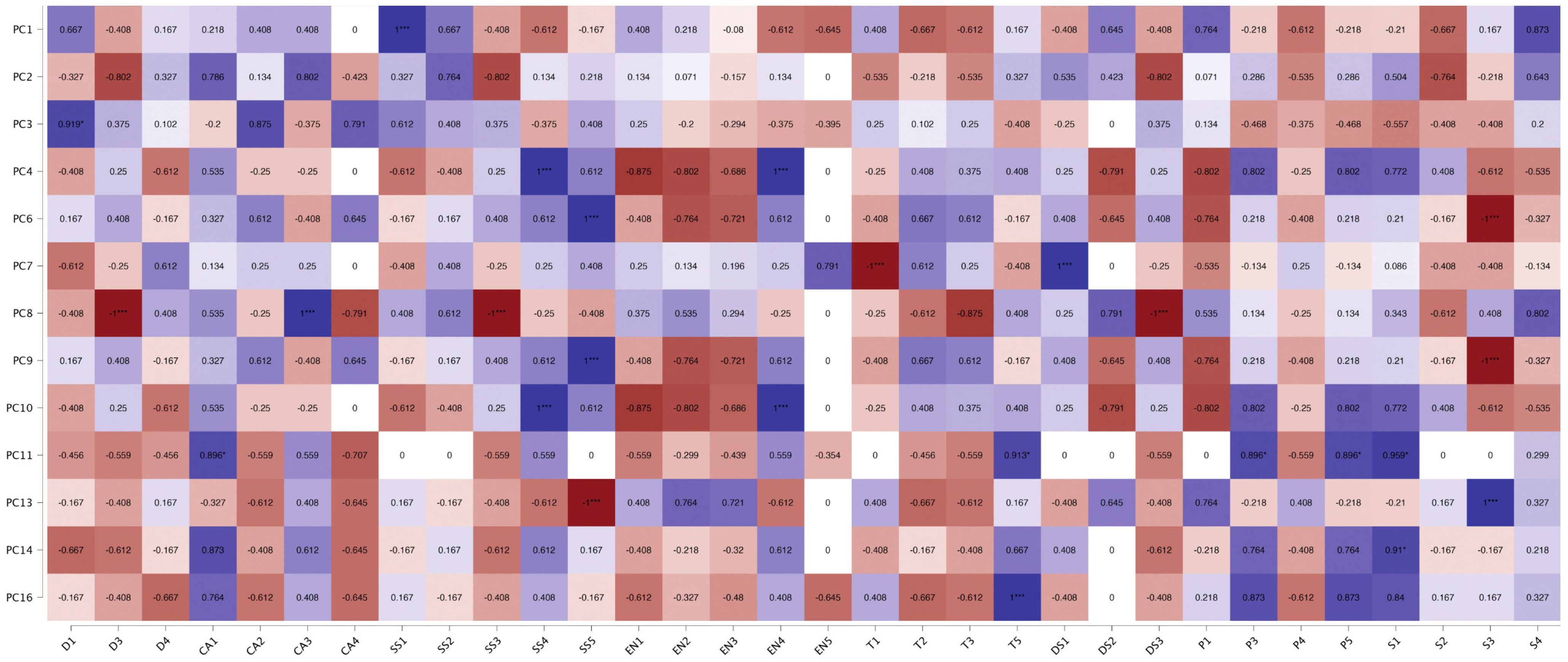
4.1. Cross-Track Alignment Between Learning and Professional Capabilities
4.1.1. Zones of Strong Positive Alignment
4.1.2. Zones of Strong Negative Alignment
4.1.3. Neutral Zones and Weak Associations
4.1.4. Interpretation of Structural Gaps
4.2. Insights and Transferability of the Evaluation Model
4.2.1. Pedagogical Innovation as a Mediating Layer
4.2.2. Transferability and Future Applications
4.3. Limitations of the Study
5. Conclusions
Supplementary Materials
Author Contributions
Funding
Institutional Review Board Statement
Informed Consent Statement
Data Availability Statement
Acknowledgments
Conflicts of Interest
Abbreviations
| AHE | Architectural Higher Education |
| ECTS | European Credit Transfer and Accumulation System |
| UB–FA | University of Belgrade—Faculty of Architecture |
| DS | Design Studio |
| MASA | Master Studies in Architecture |
| IASA | Integrated Single-Cycle 5-Year Studies in Architecture |
| LC | Learning Capabilities |
| PC | Professional Capabilities |
| PP | Pedagogical Parameters |
| SES | Scale-based Spatial Evidence Set |
| PIES | Pedagogical Innovation Evidence Set |
References
- Wang, T. A New Paradigm for Design Studio Education. Int. J. Art Des. Educ. 2010, 29, 173–183. [Google Scholar] [CrossRef]
- Đorđević, A.; Milovanović, A.; Milojević, M.P.; Zorić, A.; Pešić, M.; Ristić Trajković, J.; Nikezić, A.; Djokić, V. Developing Methodological Framework for Addressing Sustainability and Heritage in Architectural Higher Education—Insights from HERSUS Project. Sustainability 2022, 14, 4597. [Google Scholar] [CrossRef]
- Crolla, K.; Hodgson, P.; Ho, A.W.Y. Peer Critique’in Debate: A Pedagogical Tool for Teaching Architectural Design Studio. Int. J. Scholarsh. Teach. Learn. 2019, 13, 8. [Google Scholar]
- Sardashti, S.; Shafaie, M.I.N.O.O.; Mozaffar, F. Critical Pedagogy in Architectural Design Course (Case Study: Postgraduate Design Course (1) of Islamic Azad University of Gorgan). Technol. Educ. J. (TEJ) 2019, 13, 550–564. [Google Scholar]
- Munasinghe, H. Architectural Education and Design Studio Tradition: Critical Pedagogy as Praxis. J. Res. Archit. Plan. 2008, 7, 29–38. [Google Scholar] [CrossRef]
- Gray, C.M. Critical Pedagogy and the Pluriversal Design Studio. In Proceedings of the DRS2022 Bilbao, Bilbao, Spain, 25 June–1 July 2022; Design Research Society: Bilbao, Spain, 2022; p. 238. [Google Scholar]
- Ciravoğlu, A. Notes on Architectural Education: An Experimental Approach to Design Studio. Procedia-Soc. Behav. Sci. 2014, 152, 7–12. [Google Scholar] [CrossRef]
- Tidafi, T.; Iordanova, I. Experimental Approach in an Architectural Design Studio. In Proceedings of the 24th Conference on Education in Computer Aided Architectural Design in Europe, Volos, Greece, 6–9 September 2006; University of Thessaly: Volos, Greece, 2006; pp. 852–858. [Google Scholar]
- Abdelhamid, M. Experimental Based Teaching Approach and Architectural Students Performance. Eng. Res. J. 2019, 164, 37–48. [Google Scholar] [CrossRef]
- Aydemir, A.Z. Experiments, Practices and Positions in Architectural Design Studio. Doctoral Dissertation, Istanbul Technical University, Istanbul, Turkey, 2017. [Google Scholar]
- Kurt, S. Use of Constructivist Approach in Architectural Education. Procedia-Soc. Behav. Sci. 2011, 15, 3980–3988. [Google Scholar] [CrossRef]
- Hilhorst, W. Constructivism in Architectural Design Education. In Proceedings of the Initiations: Practices of Teaching 1st Year Design in Architecture, Nicosia, Cyprus, 23–25 October 2019; University of Cyprus: Nidosica, Cyprus, 2021; pp. 301–309. [Google Scholar]
- Schön, D.A. The Reflective Practitioner: How Professionals Think in Action; Routledge: London, UK, 2017. [Google Scholar]
- Barker, J.L. Engaging Critical Reflection and Authenticity in Higher Education: A Narrative Inquiry into the Roles of Educators in Architecture Education. Doctoral Dissertation, University of Memphis, Memphis, TN, USA, 2020. [Google Scholar]
- Pombo, F.; Bervoets, W.; De Smet, H. Phenomenology for Introductory Architectural Analysis Courses: The Pentagon Methodological Approach. Des. Technol. Educ. 2015, 20, 58–69. [Google Scholar]
- Temple, S. A Phenomenological Approach to Beginning Design Education. Rev. Educ. Stud. 2024, 4, 24–35. [Google Scholar]
- Sözen, G.; Yavuz, A.O. Phenomenology in Basic Design Education: Studio and Its Phenomena. Gazi Univ. J. Sci. Part B Art. Humanit. Des. Plan. 2023, 11, 353–364. [Google Scholar]
- Carnell, B. Towards a Connected Curriculum in Architectural Education: Research-Based Education in Practice. Charrette 2017, 4, 14–26. [Google Scholar]
- Emam, M.; Taha, D.; ElSayad, Z. Collaborative Pedagogy in Architectural Design Studio: A Case Study in Applying Collaborative Design. Alex. Eng. J. 2019, 58, 163–170. [Google Scholar] [CrossRef]
- Núñez-Andrés, M.A.; Martinez-Molina, A.; Casquero-Modrego, N.; Suk, J.Y. The Impact of Peer Learning on Student Performance in an Architectural Sustainability Course. Int. J. Sustain. High. Educ. 2022, 23, 159–176. [Google Scholar] [CrossRef]
- Khonsari, T. Community Action: An Architecture and Design Pedagogy. Architecture 2025, 5, 115. [Google Scholar] [CrossRef]
- Wang, J. Architecture Students’ Peer Learning in Informal Situations by Lens of the Community of Practice–One Case Study. Interact. Learn. Environ. 2025, 33, 4394–4418. [Google Scholar] [CrossRef]
- Iqbal, M.N.; Shafique, T. Unpacking Community-Based Architectural Pedagogy: A Systematic Review of Current Scholarship. Spatium—Int. Rev. 2025, 53, 62–72. [Google Scholar] [CrossRef]
- Salama, A.M.; Patil, M.P. The Socius in Architectural Pedagogy: Transformative Design Studio Teaching Models. Architecture 2025, 5, 61. [Google Scholar] [CrossRef]
- Ristić Trajković, J.; Milovanović, A.; Nikezić, A. Reprogramming Modernist Heritage: Enhancing Social Wellbeing by Value-Based Programming Approach in Architectural Design. Sustainability 2021, 13, 11111. [Google Scholar] [CrossRef]
- Bentz, J.; Ristić Trajković, J. Imagining, Designing and Teaching Regenerative Futures: Art-Science Approaches and Inspirations From Around the World; Springer: Singapore, 2025. [Google Scholar]
- Architects’ Registration Board. Modernising the Initial Education and Training of Architects: Discussion Document; Architects’ Registration Board: London, UK, 2021.
- Mossin, N.; Stilling, S.; Chevalier Bøjstrup, T.; Grupe Larsen, V.; Lotz, M.; Blegvad, A. AN ARCHITECTURE GUIDE to the UN 17 Sustainable Development Goals; KADK: Copenhagen, Denmark, 2018. [Google Scholar]
- Osorio, A.J.D.; Ramírez, A.F.D.; Ramírez, J.D.D.; Abad, G.J.N. Digital Transformation of Architecture: A Retrospective Analysis. Land Archit. 2022, 1, 12. [Google Scholar] [CrossRef]
- Salama, A.M. Spatial Design Education: New Directions for Pedagogy in Architecture and Beyond; Routledge: New York, NY, USA, 2016. [Google Scholar]
- Panayi, C.; Roussou, E.; Charalambous, N. Architectural Design Studio: Embracing a Transdisciplinary Approach. In School of Architecture(s)—New Frontiers of Architectural Education, Proceedings of the EAAE Annual Conference—Turin 2023, Turin, Italy, 30 August–1 September 2023; Springer: Cham, Switzerland, 2023; pp. 273–282. [Google Scholar]
- UNESCO-UIA Validation Council for Architectural Education. UNESCO-UIA Charter for Architectural Education; UNESCO-UIA Validation Council for Architectural Education: Paris, France, 2023. [Google Scholar]
- Jones, A.; Charlton, W.; Carmichael, L.; Dobson, A.; Gloster, D.; Watson, N. The Way Ahead: An Introduction to the New RIBA Education and Professional Development Framework and an Overview of Its Key Components; Royal Institute of British Architects: London, UK, 2020. [Google Scholar]
- Brogden, L.; Iftikhar, N.; Oldfield, P.; Stead, N.; Kessler, C.; Knapp, C.; Reinhardt, D. Climate Literacy and Action in Architecture Education: Australasian Perspectives; Association of Architecture Schools of Australasia: Melbourne, Australia, 2022. [Google Scholar]
- European Commission. New European Bauhaus: Beautiful, Sustainable, Together—A Communication from the Commission to the European Parliament, the Council, the European Economic and Social Committee and the Committee of the Regions (COM(2021) 550 Final); European Commission: Brussels, Belgium, 2021. [Google Scholar]
- Joseph, A.; Kroll, D.; Srivastava, A.; Sharifi, E.; Datey, A. Collaboration in Architectural Design Studio Pedagogy: A Literature Review. CoDesign 2025, 1–7. [Google Scholar] [CrossRef]
- Architects’ Council of Europe. The Architectural Profession in Europe—2024 Sector Study; Architects’ Council of Europe: Treviso, Italy, 2025. [Google Scholar]
- European Commission. Communication from the Commission to the European Parliament, the Council, the European Economic and Social Committee and the Committee of the Regions, The European Green Deal; COM/2019/640 Final 2020; European Commission: Brussels, Belgium, 2020. [Google Scholar]
- UNESCO. Greening Curriculum Guidance: Teaching and Learning for Climate Action; UNESCO: London, UK, 2024. [Google Scholar]
- Borucka, J.; Czyż, P.; Mazurkiewicz, W.; Pancewicz, L.; Perzyna, I. Improving Social Competencies of Architecture Students through Participatory Design of Marketplace Regeneration. World Trans. Eng. Technol. Educ. 2021, 19, 71–78. [Google Scholar]
- Milovanović Rodić, D.; Živković, J.; Lalović, K. Changing Architectural Education for Reaching Sustainable Future: A Contribution to the Discussion. Spatium—Int. Rev. 2013, 29, 75–80. [Google Scholar] [CrossRef]
- Kyropoulou, M. Bridging the Gap: Sustainable Thinking in Architectural Curricula. In Proceedings of the 112th Annual Meeting of the ACSA: Disrupters on the Edge, Vancouver, BC, Canada, 14–16 March 2024; Architects Council of America: Washington, DC, USA, 2024; pp. 521–529. [Google Scholar]
- Cenk, Z.K. Scientific Mapping of Digitalization in Architectural Education for Sustainability. VITRUVIO—Int. J. Archit. Technol. Sustain. 2025, 10, 22911. [Google Scholar] [CrossRef]
- Meterelliyöz, M.U.; Önder, O. BIM-Enabled Learning for Building Systems and Technology. J. Inf. Technol. Constr. (ITcon) 2022, 27, 1–19. [Google Scholar] [CrossRef]
- Milovanovic, J.; Moreau, G.; Siret, D.; Miguet, F. Virtual and Augmented Reality in Architectural Design and Education: An Immersive Multimodal Platform to Support Architectural Pedagogy. In Future Trajectories of Computation in Design, Proceedings of the 17th International Conference on Computer Aided Architectural Design Futures, Istanbul, Turkey, 12–14 July 2017; Istanbul Technical University: Istanbul, Turkey, 2017; pp. 513–532. [Google Scholar]
- Norouzianpour, H. Teaching Architecture through Community Engagement; Strategies for Service Learning in Architectural Education. AIA J. 2020, 18, 68–71. [Google Scholar]
- Wojtowicz-Jankowska, D.; Gil, E.; Belter, Z. Designing Learning Spaces via an International and Interdisciplinary Collaborative Design Studio—An Example of Collaboration of Engineer-Architects with Pedagogy Students. World Trans. Eng. Technol. Educ. 2024, 22, 90–95. [Google Scholar]
- Aktuna, B.; Köylüoğlu, Ö. Pushing the Boundaries of Architectural and Engineering Education: A Case Study Analysis of the Experience, Outcomes, and Challenges of an Interdisciplinary and Collaborative Design Studio. J. Mediterr. Cities 2024, 4, 1–24. [Google Scholar] [CrossRef]
- Bachman, L.R.; Bachman, C. Designing Student Learning Outcomes in Undergraduate Architecture Education: Frameworks for Assessment. ARCC J. Archit. Res. 2009, 6, 49–67. [Google Scholar] [CrossRef]
- Hariyanto, V.L.; Daryono, R.W.; Hidayat, N.; Prayitno, S.H.; Nurtanto, M. A Framework for Measuring the Level of Achievement of Vocational Students Competency of Architectural Education. J. Technol. Sci. Educ. 2022, 12, 157–171. [Google Scholar] [CrossRef]
- Mackintosh, L.A. Sustaining Learning: Transformative Experiences in Architectural Education. Doctoral Dissertation, University of Western Australia, Crawley, Australia, 2018. [Google Scholar]
- Deamer, P. Design Pedagogy: The New Architectural Studio and Its Consequences. Archit._MPS 2020, 18, 2. [Google Scholar] [CrossRef]
- UNESCO-UIA Validation Council for Architectural Education. UNESCO-UIA Validation System—Procedures Manual for Study Programmes and Systems; UNESCO-UIA Validation Council for Architectural Education: Paris, France, 2023. [Google Scholar]
- Djokić, V.; Nikezić, A.; Loren-Méndez, M.; Sakantamis, K.; Philokyprou, M.; Sorbo, E. Statements for Teaching Through Design for Sustainability of the Built Environment and Heritage Awareness; University of Belgrade—Faculty of Architecture: Belgrade, Serbia, 2021. [Google Scholar]
- Nikezić, A.; Radivojević, A.; Živković, J.; Djokić, V.; Loren-Méndez, M.; Sakantamis, K.; Philokyprou, M.; Sorbo, E. Book of Courses: Imagining Program for Sustainability of the Built Environment and Heritage Awareness; University of Belgrade—Faculty of Architecture: Belgrade, Serbia, 2023. [Google Scholar]
- Milovanović, A.; Pešić, M.; Janković, S.; Krstić, V.; Ristić Trajković, J.; Milojević, M.; Nikezić, A.; Djokić, V. Compendium of Spascapes: Personalities, Form, and Development; University of Belgrade—Faculty of Architecture: Belgrade, Serbia, 2025. [Google Scholar]
- Bentz, J.; Ristić Trajković, J.; Ng, K. Sensing the City. In Imagining, Designing and Teaching Regenerative Futures: Art-Science Approaches and Inspirations From Around the World; Springer: Singapore, 2025; pp. 203–208. [Google Scholar]
- Ristić Trajković, J. Society, Ecology and Design Education: Transformative Learning for Future Sustainable and Healthy Environments. In Proceedings of the International Scientific and Professional Conference Politehnika 2023, Belgrade, Serbia, 15 December 2023; The Academy of Applied Technical Studies “Belgrade”: Belgrade, Serbia, 2023; pp. 539–544. [Google Scholar]
- Nikezić, A. Enhancing Biocultural Diversity of Wild Urban Woodland through Research-Based Architectural Design: Case Study—War Island in Belgrade, Serbia. Sustainability 2022, 14, 11445. [Google Scholar] [CrossRef]
- Milojević, M.; Đorđević, A.; Pešić, M.; Živković, J.; Djokić, V. Field-Based Learning in Urban Morphology: Observation, Documentation and Characterization. In Sustainable Heritage Management—Design: Notions, Methods and Techniques; Springer: Cham, Switzerland, 2025; pp. 147–161. [Google Scholar]



| Design Studio (DS) Code | Approach | Core Idea | Key Methods | Outcomes | Values |
|---|---|---|---|---|---|
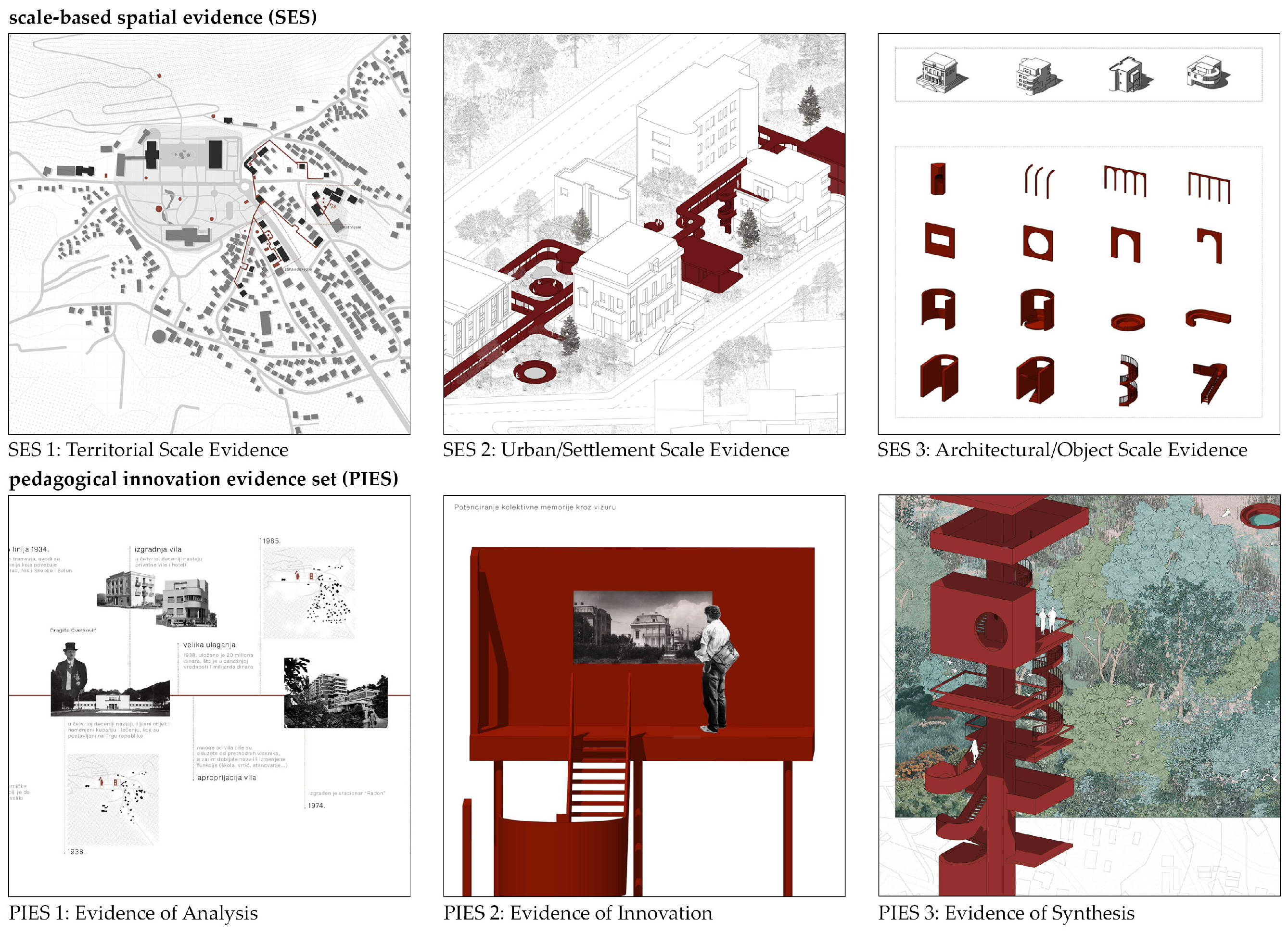
| DS1 | Heritage Reprogramming Design Approach | Heritage as a dynamic resource to be reprogrammed for contemporary uses without demolition | Critical mapping, adaptive reuse, scenario design | New programmatic typologies rooted in inherited structures | Circularity, care for the existing, long-term adaptability |
| DS2 | Multisensory Design Approach | Engaging all senses to design spaces that support well-being and embodied experience | Sensory mapping, behavioural observation, narrative design | Inclusive design solutions that address more-than-visual perception | Inclusivity and empathy, human-centered design, well-being |
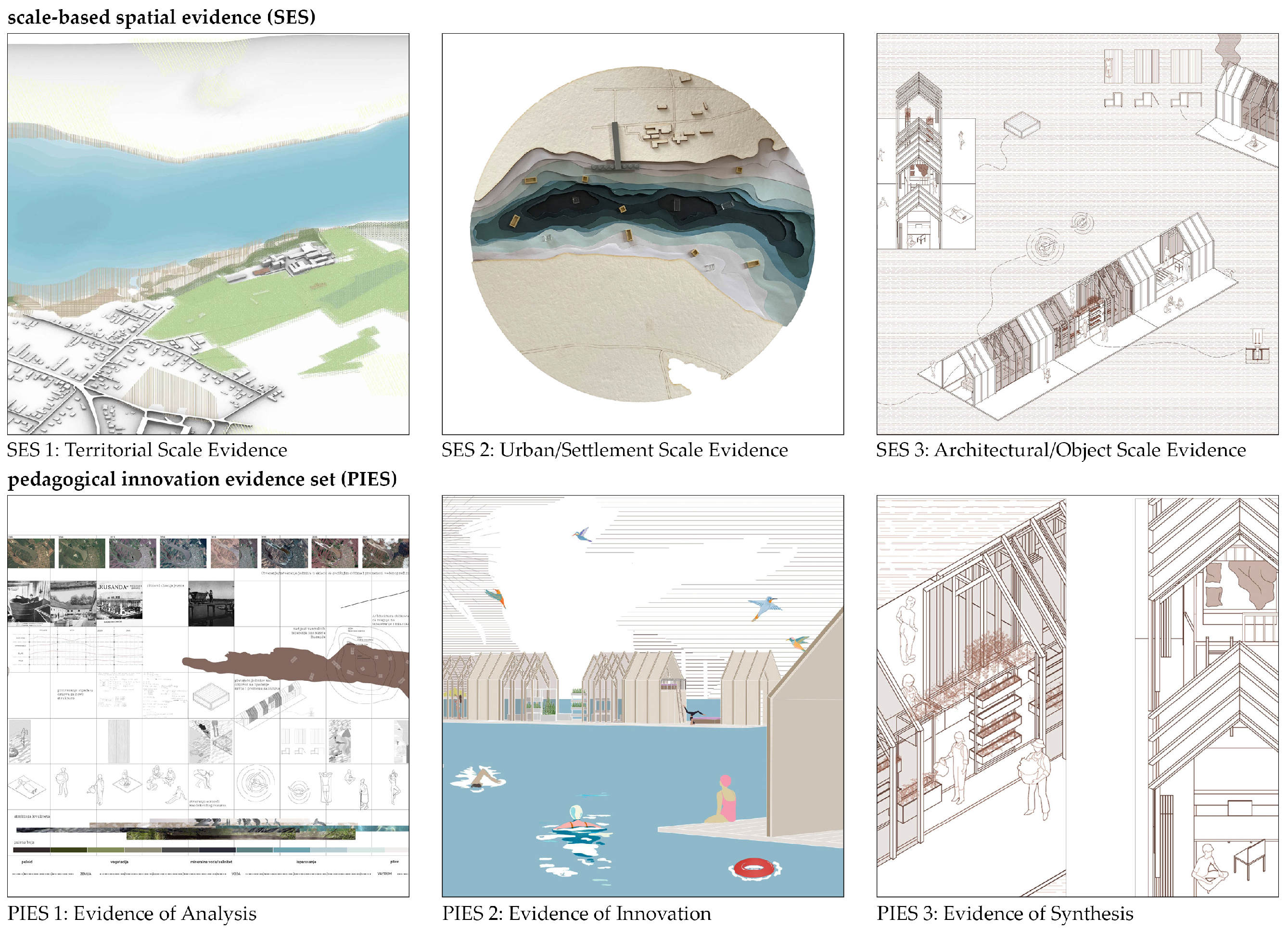
| DS3 | Health-Promoting Design Approach | Architecture and urban design as active agents for health and preventive care | Environmental diagnostics, restorative design | Integration of health infrastructure into urban form | Well-being, restorative interaction, integration of health and space |
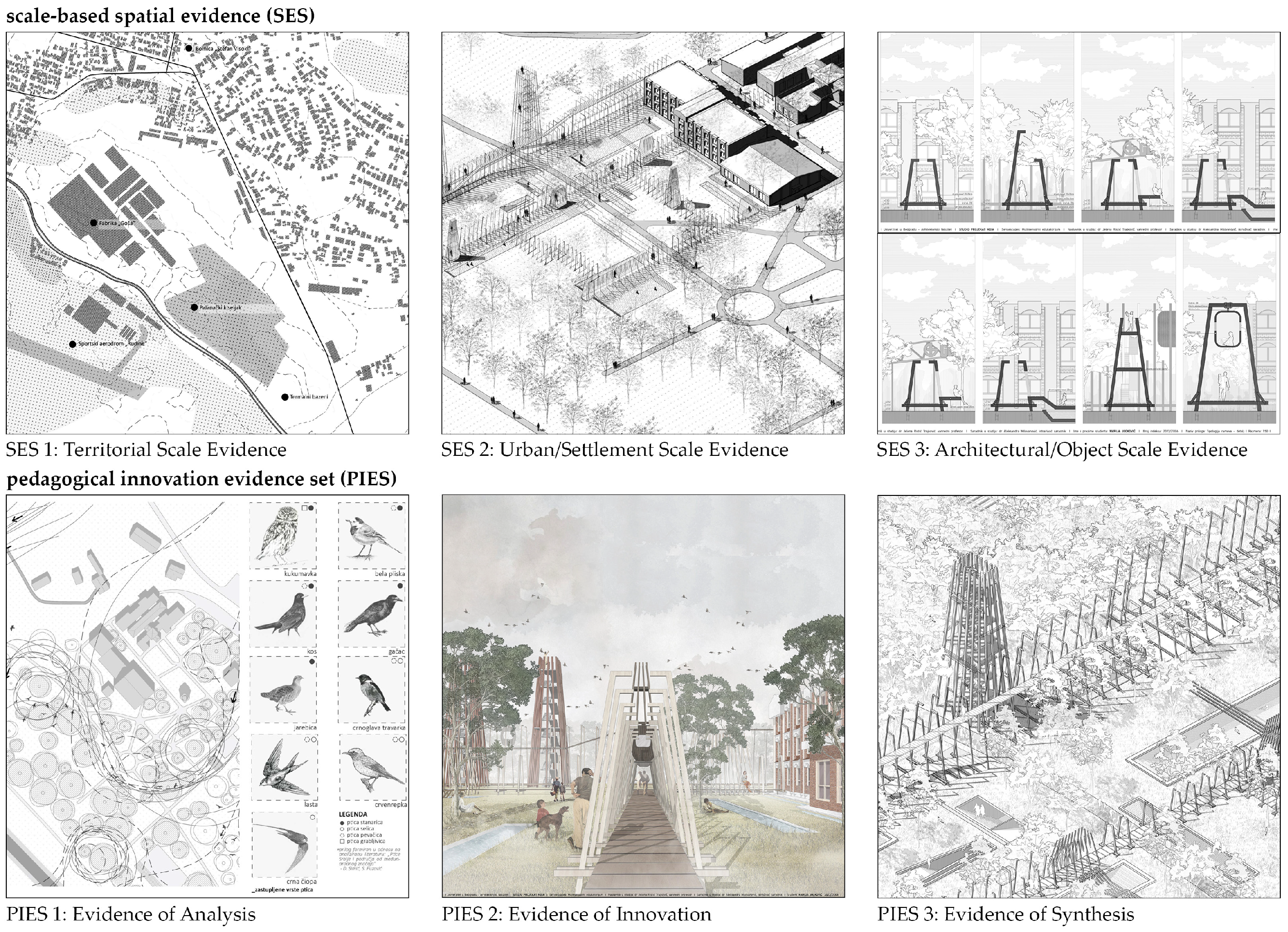
| DS4 | Hybrid Naturalities Design Approach | Exploring the “third nature”—hybrid of natural and cultural flows in Anthropocene ecologies | Site eco-diagnostics, ecological storytelling, speculative programming | Hybrid landscapes that merge heritage, ecology, and technology | Ecology–resilience symbiosis, coexistence of human and non-human agents |
| DS5 | Culture-Sensitive Design Approach | Embedding cultural values and local identities into spatial design processes | Storytelling, contextual analysis, research by modelling (topography research), morphogenesis | Place-specific typologies that preserve cultural identity while enabling adaptation | Diversity, rootedness, cultural sustainability |
| Design Studio (DC) Code | Approach | Academic Level and Program | Format and Credits (ECTS) | Semester/Year | Number of Students | Observatory Case |
|---|---|---|---|---|---|---|
| DS1 | Heritage Reprogramming Design Approach | MASA | Design Studio + Seminar | 2nd Semester 2023/2024 | 15 | Selective predefined cases: settlements with legally protected heritage areas |
| DS2 | Multisensory Design Approach | MASA + IASA | Design Studio + Seminar | 1st Semester 2023/2024, and 1st Semester 2024/2025 | 37 (19 in first implementation of design studio and 18 in second one) | Full corpus: All 38 spa settlements in Serbia |
| DS3 | Health-Promoting Design Approach | MASA | Design Studio + Seminar | 2nd Semester 2024/2025 | 34 (17 in two groups which works together) | Selective predefined cases: Students choose among three assigned settlements (Slankamen, Kanjiža, Rusanda) |
| DS4 | Hybrid Naturalities Design Approach | MASA + IASA | Diploma Design Studio | 2nd Semester 2023/2024, and 2nd Semester 2024/2025 | 14 (7 in first implementation of design studio, and 7 in second one) | Selective predefined cases: 12 Role Models of Serbian Spa Settlements |
| DS5 | Culture-Sensitive Design Approach | IASA | Design Studio + Seminar | 8th Semester 2022/2023, and 8th Semester 2023/2024 | 38 (18 in first implementation of design studio and 20 in second one) | Predefined cases: Bukovička banja and Ivanjica |
| Track | Reference Document | Analytical Scope | Nature of Benchmark |
|---|---|---|---|
| Track 1— Pedagogical Innovation | SPATTERN Compendium of Spascapes [56] | Pedagogical Parameters (PP) | Pedagogical differentiation/innovation benchmark (studio profiles and methods) |
| Track 2— Policy Alignment | UNESCO–UIA Charter for Architectural Education [32] | Learning Capabilities (LC) | Academic/institutional validation benchmark (learning outcomes and capabilities) |
| Track 3— Professional Competence | UNESCO–UIA Validation System [53] | Professional Capabilities (PC) | Professional/practice-readiness benchmark (validation lens) |
| Parameter | Definition | Analytical Focus and Interpretation |
|---|---|---|
| Pedagogical Focus | The central theme or driver of the educational experiment—such as health, ecology, inclusivity, cultural identity, or speculative futures | Identifies the thematic orientation of each studio and its alignment with broader societal and environmental agendas |
| Design Scale | The operative spatial range within which design inquiry unfolds—from the architectural object to the urban fabric or territorial system. | Explores how design thinking extends beyond conventional building design to multi-scale and systemic spatial reasoning |
| Temporal Perspective | The studio’s orientation toward time: whether it primarily addresses the past (conservation and memory), the present (reprogramming and adaptation), or the future (anticipation and speculation) | Examines the temporal stance embedded in the studio pedagogy and its implications for heritage and sustainability |
| Innovation Type | The nature of pedagogical experimentation—programmatic, experiential, systemic, or speculative | Distinguishes the methodological logic behind innovation and how it reshapes learning processes, outputs, and evaluation criteria |
| Heritage Notion | The conceptual understanding of heritage as articulated within the studio: heritage as resource, infrastructure, identity, or open category | Assesses how heritage is positioned in relation to design learning—whether as constraint, opportunity, or generator of knowledge |
| Future Potential in Pedagogy | The capacity of the studio model to be transferred, scaled, or institutionalized beyond its initial context | Evaluates the replicability and adaptability of the pedagogical model, particularly in relation to environmental and heritage-based learning |
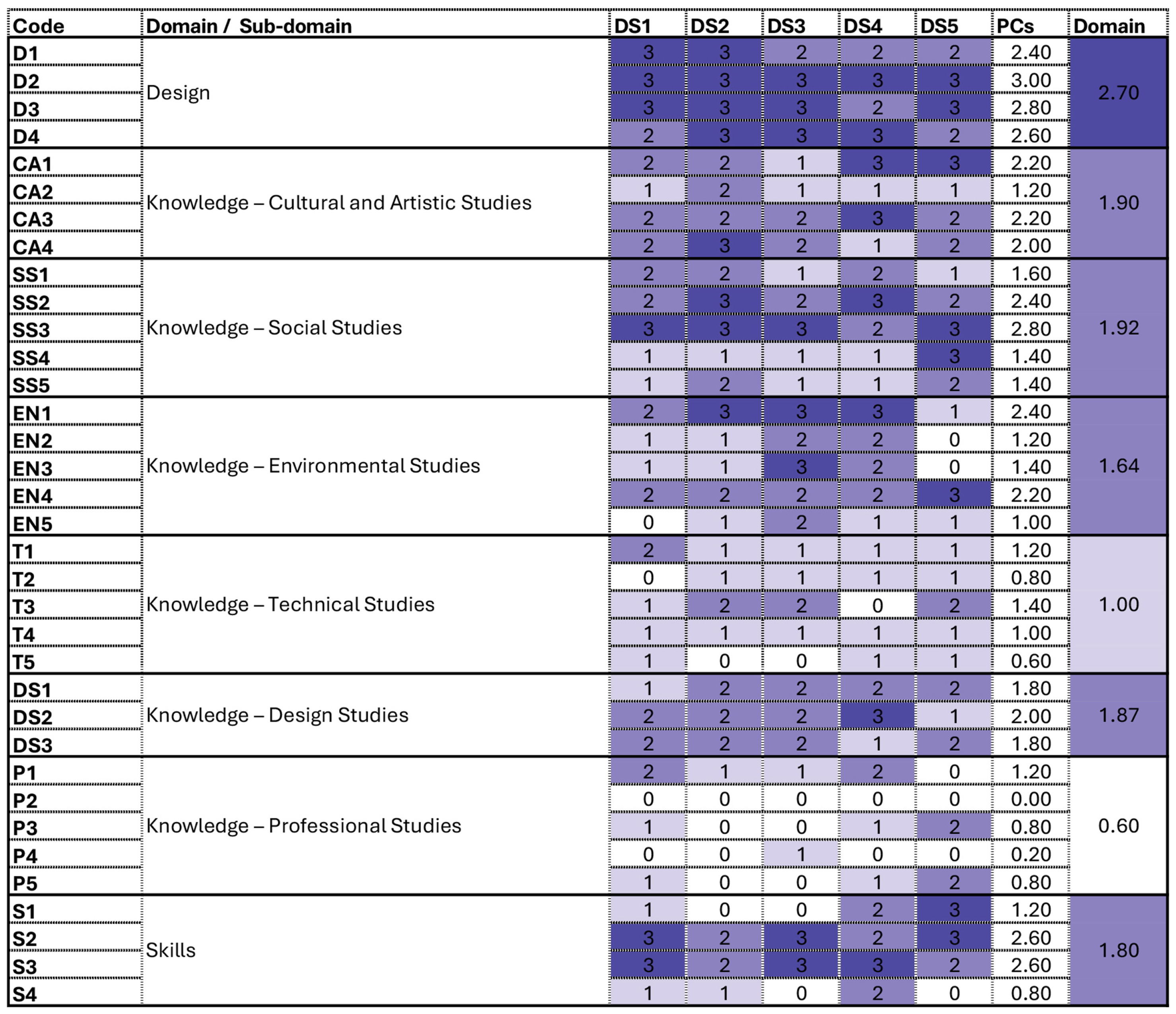
| Code | Domain/Sub-Domain | Capability Description |
|---|---|---|
| D1 | Design | Ability to engage imagination, think creatively, innovate, and provide design leadership. |
| D2 | Ability to gather information, define problems, apply analyses and critical judgment, and formulate strategies for action. | |
| D3 | Ability to think three-dimensionally in the exploration of design. | |
| D4 | Ability to reconcile divergent factors, integrate knowledge, and apply skills in the creation of a design solution. | |
| CA1 | Knowledge—Cultural and Artistic Studies | Ability to act with knowledge of historical and cultural precedents in local and world architecture. |
| CA2 | Ability to act with knowledge of the fine arts as an influence on the quality of architectural design. | |
| CA3 | Understanding of heritage issues in the built environment. | |
| CA4 | Awareness of the links between architecture and other creative disciplines. | |
| SS1 | Knowledge—Social Studies | Ability to act with knowledge of society, and to work with clients and users representing society’s needs. |
| SS2 | Ability to develop a project brief by defining users’ and clients’ needs, and to research contextual and functional requirements for diverse built environments. | |
| SS3 | Understanding of the social context in which built environments are procured, including ergonomics, space requirements, and issues of equity and access. | |
| SS4 | Awareness of the relevant codes, regulations, and standards for planning, design, construction, health, safety, and use of built environments. | |
| SS5 | Awareness of philosophy, politics, and ethics as related to architecture. | |
| EN1 | Knowledge—Environmental Studies | Ability to act with knowledge of natural systems and built environments. |
| EN2 | Understanding of conservation and waste management issues. | |
| EN3 | Understanding of the life cycle of materials, ecological sustainability, environmental impact, energy reduction, and passive systems. | |
| EN4 | Awareness of the history and practice of landscape architecture, urban design, and territorial/national planning, and their demographic and resource implications. | |
| EN5 | Awareness of natural system management considering natural disaster risks. | |
| T1 | Knowledge—Technical Studies | Technical knowledge of structure, materials, and construction. |
| T2 | Ability to act with innovative technical competence in the use of building techniques and understanding their evolution. | |
| T3 | Understanding of technical design processes and integration of structure, technologies, and service systems into a functional whole. | |
| T4 | Understanding of services systems, including transportation, communication, maintenance, and safety. | |
| T5 | Awareness of the role of technical documentation, specifications, and construction planning, cost, and control processes. | |
| DS1 | Knowledge—Design Studies | Knowledge of design theory and methods. |
| DS2 | Understanding of design procedures and processes. | |
| DS3 | Knowledge of design precedents and architectural criticism. | |
| P1 | Knowledge—Professional Studies | Ability to understand different forms of procurement of architectural services. |
| P2 | Understanding of the fundamental workings of the construction and development industries, such as finance, real estate investment and facilities management. | |
| P3 | Understanding of the potential roles of architects in conventional and new areas of activity and in an international context. | |
| P4 | Understanding of business principles and their application to the development of built environments, project management and the functioning of a professional consultancy. | |
| P5 | Understanding of professional ethics and codes of conduct as they apply to the practice of architecture and of the architects’ legal responsibilities where registration, practice and building contracts are concerned. | |
| S1 | Skills | Ability to work in collaboration with other architects and members of interdisciplinary teams. |
| S2 | Ability to act and to communicate ideas through collaboration, speaking, numeracy, writing, drawing, modelling and evaluation. | |
| S3 | Ability to utilise manual, electronic, graphic and model making capabilities to explore, develop, define and communicate a design proposal. | |
| S4 | Understanding of systems of evaluation, that use manual and/or electronic means for performance assessments of built environments. |
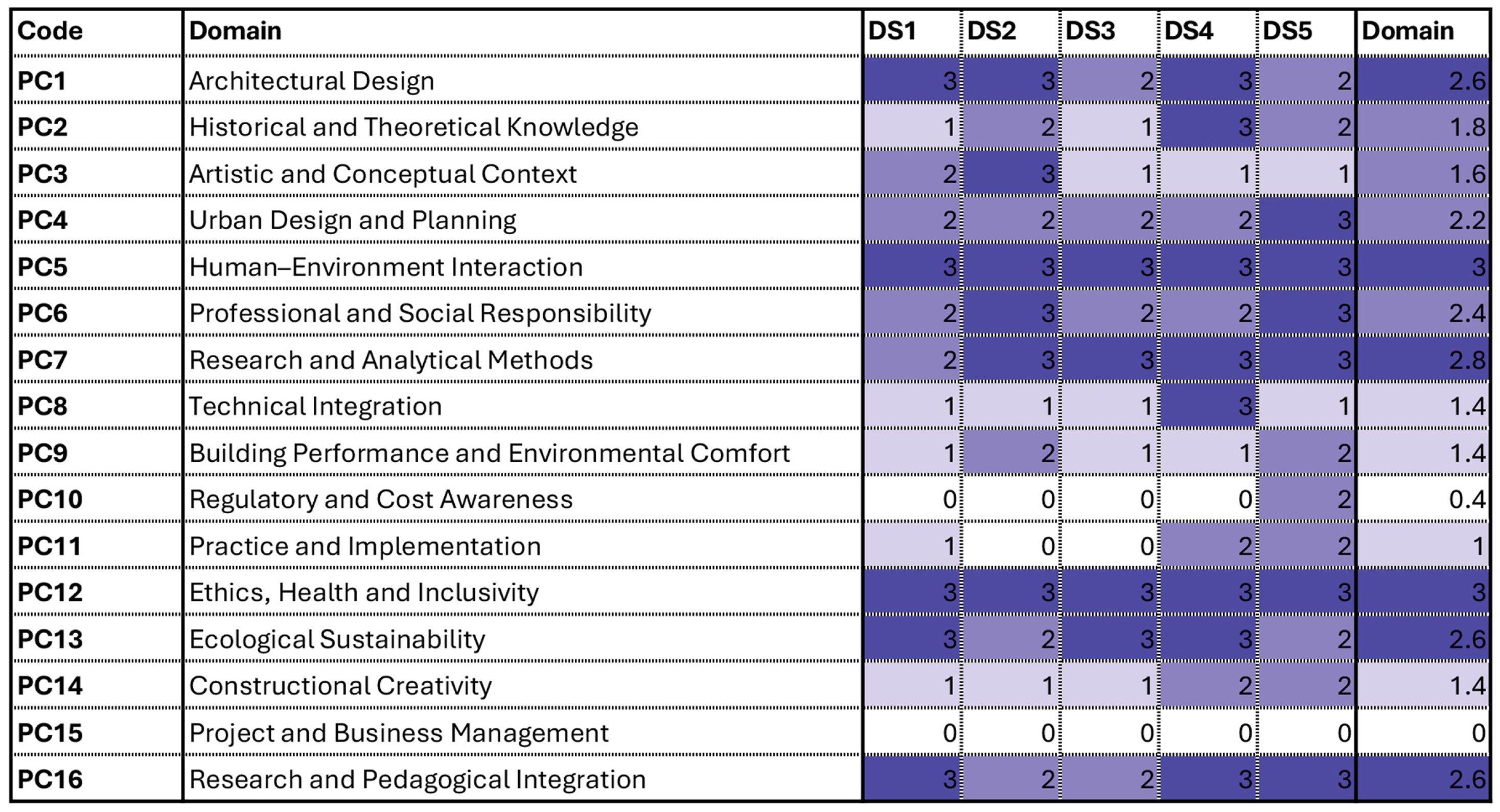
| Code | Professional Capability | Domain |
|---|---|---|
| PC1 | Ability to create architectural designs that satisfy both aesthetic and technical requirements | Architectural Design |
| PC2 | Adequate knowledge of the history and theories of architecture and related arts, technologies, and human sciences | Historical and Theoretical Knowledge |
| PC3 | Knowledge of the fine arts as an influence on the quality of architectural design. | Artistic and Conceptual Context |
| PC4 | Adequate knowledge of urban design, planning, and the skills involved in the planning process. | Urban Design and Planning |
| PC5 | Understanding of the relationship between people and buildings, and between buildings and their environment, and of the need to relate buildings and the spaces between them to human needs and scale. | Human–Environment Interaction |
| PC6 | Understanding of the profession of architecture and the role of the architect in society, particularly in preparing briefs that take account of social factors. | Professional and Social Responsibility |
| PC7 | Understanding of methods of investigation and preparation of the brief for a design project. | Research and Analytical Methods |
| PC8 | Understanding of structural design, construction, and engineering problems associated with building design. | Technical Integration |
| PC9 | Adequate knowledge of physical problems and technologies and of the function of buildings to ensure internal comfort and protection against climate. | Building Performance and Environmental Comfort |
| PC10 | Design skills necessary to meet building users’ requirements within constraints imposed by cost factors and building regulations. | Regulatory and Cost Awareness |
| PC11 | Adequate knowledge of industries, organizations, regulations, and procedures involved in translating design concepts into buildings and integrating plans into overall planning. | Practice and Implementation |
| PC12 | Understanding of professional and disciplinary responsibilities toward human, social, cultural, urban, architectural, and environmental values, including health, safety, and welfare of the public, as well as commitment to equity, diversity, and inclusivity. | Ethics, Health and Inclusivity |
| PC13 | Knowledge of ecologically sustainable design and environmental conservation and rehabilitation, with focus on relevant aspects of the UN Sustainable Development Goals. | Ecological Sustainability |
| PC14 | Ability to demonstrate creative competence in building techniques, founded on a comprehensive understanding of construction disciplines and methods. | Constructional Creativity |
| PC15 | Knowledge of project financing, project management, cost control, and methods of project delivery. | Project and Business Management |
| PC16 | Understanding of research and pedagogical methodologies, including transdisciplinary knowledge action and transferability as inherent parts of architectural learning. | Research and Pedagogical Integration |
| Parameter | Shared Patterns (Cross-Studio Convergence) | Divergent Patterns (Cross-Studio Differentiation) |
|---|---|---|
| Pedagogical Focus | All studios operate within the spascape framework, treating spa settlements as laboratories for environmentally sensitive and heritage-based learning | DS1 and DS5 emphasize cultural continuity, DS3 and DS4 emphasize ecological and therapeutic environments, DS2 foregrounds sensory and experiential design |
| Design Scale | Multiscale workflow present in all studios (territorial → urban → architectural) | DS3 and DS4 strongly anchored in territorial/ecological systems, DS1 and DS5 in urban/architectural typologies, DS2 balances experiential micro-scale with system-scale analysis |
| Temporal Perspective | All studios incorporate past–present–future relations within design reasoning | Conservation/reprogramming (DS1, DS5), present-focused experiential grounding (DS2), future-oriented anticipation and speculation (DS3, DS4) |
| Innovation Type | Methodological hybridity is consistent across studios (combining analysis, narrative, diagnostics, modelling, etc.) | Innovation types vary: programmatic (DS1), experiential (DS2), therapeutic (DS3), ecological-systemic (DS4), culture-sensitive (DS5) |
| Heritage Notion | Heritage broadly understood as active context and design driver (not static constraint) | Heritage as identity (DS1, DS5), heritage as ecological/health infrastructure (DS3, DS4), heritage as experiential atmosphere (DS2) |
| Future Potential in Pedagogy | All studios cultivate environmentally responsible, context-aware design thinking | Degree of emphasis differs: ecological literacy (DS3, DS4), sensory awareness (DS2), cultural literacy (DS1, DS5) |
Disclaimer/Publisher’s Note: The statements, opinions and data contained in all publications are solely those of the individual author(s) and contributor(s) and not of MDPI and/or the editor(s). MDPI and/or the editor(s) disclaim responsibility for any injury to people or property resulting from any ideas, methods, instructions or products referred to in the content. |
© 2026 by the authors. Licensee MDPI, Basel, Switzerland. This article is an open access article distributed under the terms and conditions of the Creative Commons Attribution (CC BY) license.
Share and Cite
Milovanović, A.; Pešić, M.; Trajković, J.R.; Milojević, M.; Nikezić, A.; Krstić, V.; Djokić, V. A Comparative Evaluation Model for Design Studio Pedagogy: Linking Educational Objectives and Professional Readiness in Architectural Higher Education. Architecture 2026, 6, 7. https://doi.org/10.3390/architecture6010007
Milovanović A, Pešić M, Trajković JR, Milojević M, Nikezić A, Krstić V, Djokić V. A Comparative Evaluation Model for Design Studio Pedagogy: Linking Educational Objectives and Professional Readiness in Architectural Higher Education. Architecture. 2026; 6(1):7. https://doi.org/10.3390/architecture6010007
Chicago/Turabian StyleMilovanović, Aleksandra, Mladen Pešić, Jelena Ristić Trajković, Milica Milojević, Ana Nikezić, Verica Krstić, and Vladan Djokić. 2026. "A Comparative Evaluation Model for Design Studio Pedagogy: Linking Educational Objectives and Professional Readiness in Architectural Higher Education" Architecture 6, no. 1: 7. https://doi.org/10.3390/architecture6010007
APA StyleMilovanović, A., Pešić, M., Trajković, J. R., Milojević, M., Nikezić, A., Krstić, V., & Djokić, V. (2026). A Comparative Evaluation Model for Design Studio Pedagogy: Linking Educational Objectives and Professional Readiness in Architectural Higher Education. Architecture, 6(1), 7. https://doi.org/10.3390/architecture6010007