Article

Disease Localization and Bowel Resections as Predictors of Vitamin B12 and Vitamin D Status in Patients with Inflammatory Bowel Disease


1
School of Medicine, Washington University, St. Louis, MO 63110, USA
2
School of Medicine, University of Missouri, Columbia, MO 65201, USA
3
SSM Health, St. Louis University, St. Louis, MO 63110, USA
*
Author to whom correspondence should be addressed.
Int. J. Transl. Med. 2025, 5(4), 54; https://doi.org/10.3390/ijtm5040054 (registering DOI)
Submission received: 13 July 2025 / Revised: 26 November 2025 / Accepted: 28 November 2025 / Published: 2 December 2025

Abstract

Background: Terminal ileum inflammation and surgical resections impair absorption of vitamin B12 and D in patients with Crohn’s disease (CD) and Ulcerative Colitis (UC). We assessed differences in subclinical deficiencies of vitamin B12 (<350 pg/mL) or D (<50 nmol/L), by lesion localization (namely non-ileal CD, ileal CD, and UC) and surgical resection status (namely no resection, non-ileal small bowel resections, ileocecal resections, and colonic resections) in CD and UC patients. Methods: We analyzed data from 571 patients (17–93 years), with UC (51%) and CD (49%, including 47 non-ileal (8%), 244 ileal-CD (46%)) managed at the University of Missouri Health Care System (Jan 2017–April 2022). Results: Prevalence of vitamin B12 and vitamin D deficiencies was 19% and 83%, respectively. Prevalence of resection was 26%, including 5% with non-ileal small bowel resections, 11% with ileocecal resections, and 10% with colonic resections. CD with ileal involvement was associated with a 3-fold elevated risk of B12 deficiency (p = 0.004), but not vitamin D. Ileocecal resections were associated with a >3-fold increase in both B12 deficiency (OR = 3.53, p = 0.001) and D deficiency (OR = 3.35, p = 0.044). Conclusions: CD patients with ileal involvement and ileocecal resections have an elevated risk of vitamin B12 and D deficiency, and may benefit from adjunctive supplementation.

1. Introduction

Inflammatory bowel diseases (IBD), including Crohn’s Disease (CD) and Ulcerative Colitis (UC), are characterized by chronic immune-mediated inflammation of the gastrointestinal tract [1]. By definition, UC is restricted to the colon, whereas CD can affect any segment of the GI tract, from the oral cavity down to the anus [1]. Micronutrient deficiencies are common in IBD patients [2], owing in part to elective dietary restrictions, impaired digestion, and malabsorption from loss of GI mucosal integrity, therapeutic surgical resections [3], and effects of certain medications [4,5]. In particular, deficiencies of vitamin D and B12 (or cobalamin) may be high because of involvement of the terminal ileum in CD [6]. If uncorrected, sustained deficiencies of vitamins D and B12 may manifest clinically as bone loss, anemia, neuropsychiatric disorders, and immune dysregulation. An important first step in the management of micronutrient deficits is the identification of patient groups who are most at risk for these deficiencies. Thus, a primary goal of this study is to quantify the magnitude of these micronutrient deficiencies in IBD subtypes and to assess associations with lesion localization and surgical resection. A secondary goal is to assess how antacid medications, especially proton pump inhibitors (PPIs), affect vitamin B12 and vitamin D status in IBD patients.
An estimated 50% of CD patients have involvement of the terminal ileum, where vitamin B12 absorption occurs [7,8]. Consistent with this, ileocecal resections are the most common surgeries in CD patients. Together, both terminal ileum inflammation and surgical resection predispose to a high risk of vitamin B12 deficiency. In addition, evidence is lacking on whether CD without ileal involvement and UC are associated with an increased risk of vitamin B12 deficiency. In this study, we assessed variations in vitamin B12 status across IBD subtypes defined by the location of lesions, as well as across groups defined by the type of surgical resections. Such a level of evidence is critical in determining optimal supplementation needs in subgroups of IBD patients.
Vitamin D, a fat-soluble vitamin, is absorbed primarily in the ileum as a part of mixed micelles composed of fatty acids and bile acids [4,5]. Limited evidence suggests that more than a third of IBD patients may be living with vitamin D deficiency, although the exact burden remains unknown. Because vitamin D is involved in immune modulation, it is postulated that low levels predispose to immune dysregulation and increased disease severity in the context of IBD [9,10,11,12]. A goal of this study was to also quantify the burden of vitamin D deficiency and to evaluate its association with terminal ileum involvement and surgical resection.
Several molecular mechanisms underlie the increased risk of both vitamin B12 and vitamin D deficiencies in patients with IBD. Because vitamin B12 is primarily absorbed at the terminal ileum, severe ileal disease or ileal resection predisposes to increased malabsorption and therefore deficiency [13]. It is also believed that inflammation in the terminal ileum leads to increased B12 metabolism and, therefore, reduced bioavailability [13]. Similarly, active or chronic inflammation can impair absorption of vitamin D. Additionally, limited evidence suggests that CD may increase the expression of vitamin D efflux proteins, leading to increased intestinal losses [14].
In the US, it is common practice to prescribe antacids for the treatment of comorbid dyspepsia in individuals with IBD [14,15]. Unfortunately, the use of antacids, especially PPIs, has been linked with vitamin B12 and D deficiencies [16,17,18,19], although the evidence base remains inconclusive [16,17]. In this light, a secondary goal of this study is to quantify the association between PPI use and vitamin B12 status in IBD patients.

2. Materials and Methods

2.1. Institutional Review Board (IRB) Statement

The study was approved by the Institutional Review Board at the University of Missouri (approval code: 384487; approved on: 19 October 2022).

2.2. Study Design and Participants

Our study population included IBD patients, aged 17–94, who were receiving care through the University of Missouri Health Care system (UMHCS), from January 2017 to April 2021. We conducted a retrospective data review of the electronic medical records of eligible IBD patients and abstracted relevant variables of interest using a pre-designed electronic data collection template.

2.3. Data Collections

Data collection started in 2021. First, we identified the list of IBD patients receiving care through the gastroenterology clinic at our institution and reviewed documentation of clinic visits occurring in the 5-year interval between January 2017 and April 2021. De-identified patient data were collected into a pre-designed HIPAA-compliant template containing a pre-defined list of variables of interest and the accepted ranges of values for continuous data. Data collected included patient sociodemographic information, IBD type and location, surgical resection status, diagnosed comorbidities, and pertinent medications used. We reviewed laboratory data ordered within 5 years of the last gastroenterology clinic visit for evidence of vitamin B12 and D assays. In patients with multiple assays for the same micronutrient, the most recent result was chosen.

2.4. Sample Size Considerations

Because of the paucity of data on the primary associations assessed in this study, we conducted a conservative power analysis for the association between PPI use and vitamin B12 concentration. With serum levels of 722 pg/mL in PPI users and 564 pg/mL in non-users, we estimated a power of 86% at a 5% type 1 error rate to detect this difference, assuming a within-group standard deviation in serum vitamin B12 of 514 pg/mL. We performed similar conservative power analyses for detecting differences in vitamin D status. With a 1:1 ratio of PPI users to non-users, we estimated that with a power of 90%, we would be able to differentiate in vitamin D levels of 5 nmol/L between PPI users and non-users at a 5% type 1 error rate, assuming a standard deviation of ~18 nmol/L within each group.

2.5. Definitions

The primary outcomes of interest were vitamin B12 or vitamin D status based on serum concentrations. We defined subclinical vitamin B12 deficiency as a serum level <350 pg/mL based on evidence from published data [20]. Vitamin D deficiency was defined as a serum level <50 nmol/L. The IBD type was defined as UC, CD with ileal involvement, or CD without ileal involvement. Bowel resection was categorized as never, ileocecal, non-ileal small bowel, or colonic resections based on surgical reports in the patients’ EMRs. Patients were defined as PPI users if they had a documented prescription for PPI use.

2.6. Statistical Analyses

All statistical analyses were conducted using STATA17 (StataCorp, College Station, TX, USA). Multi-variate linear or logistic regression models were used to assess changes in vitamin B12 or D concentrations across IBD subtypes as defined by lesion localization, bowel resection status, and PPI use, controlling for potential confounders. To identify potential confounders, we constructed univariate linear and logistic regression models with vitamin B12 or D as the primary outcome and the potential confounders as the independent variables. Variables with p-values < 0.1 were included in the final multi-variate models. This included age, gender, race, and the prescribed therapeutic regimens. In the final models, statistical significance was defined as p < 0.05. Effect modification was assessed using interactive models, with significance defined as p < 0.1. LOWESS plots or histograms were used to visualize associations and distributions of continuous variables.

3. Results

Baseline data (Table 1):
A total of 571 IBD patients, with available laboratory data for vitamin B12 (n = 395) and/or vitamin D (n = 528), were included in the final analyses (Table 1).
With an average age of 47 years (range 17 to 94), our study population was predominantly Caucasian (93%), with a higher proportion of females (63%). There was a roughly 1:1 ratio of UC (49%) to CD (51%) patients. About 42% of IBD patients had CD with ileal involvement, whereas 8% had non-ileal CD. Prevalence of PPI use in this population was about 44%. The prevalence of vitamin B12 and vitamin D deficiencies was 18% and 83%, respectively. Overall prevalence of bowel resection was 26%, including 5% with non-ileal small bowel resections, 11% with ileocecal resections, and 10% with colonic resections.

3.1. Micronutrient Status and IBD Lesion Localization

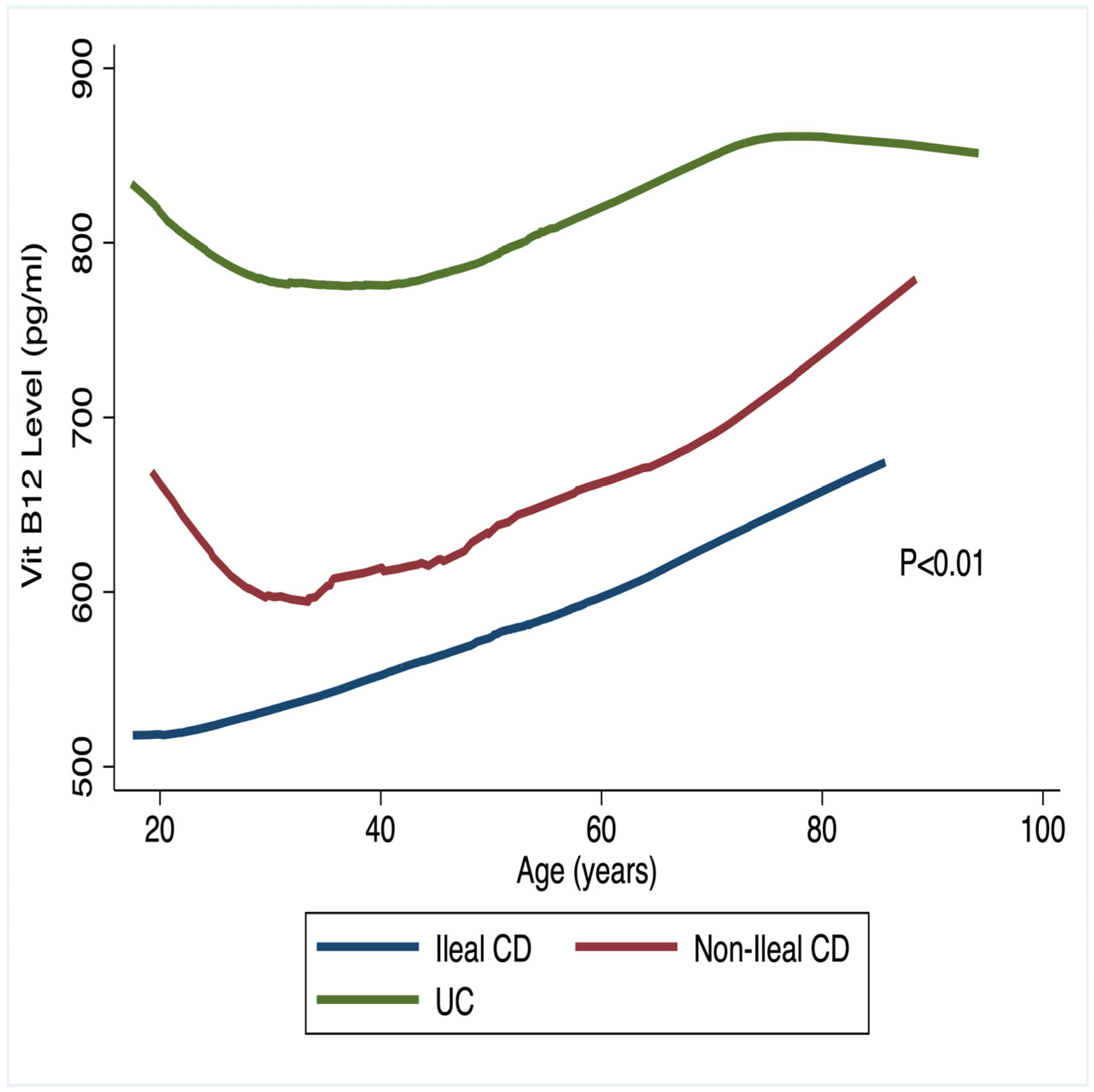
The average serum concentration of vitamin B12 was 652 pg/mL and 557 pg/mL in patients with non-ileal CD and ileal CD, respectively, compared to an average of 850 pg/mL in UC patients (p = 0.0001) (Table 2).
Ileal CD was associated with about a 3-fold increase in the risk of vitamin B12 deficiency (odds ratio [OR] = 3.26, p = 0.004; Table 3) compared with UC patients and with CD patients without ileal involvement (OR = 2.78, p = 0.051).
This disparity in vitamin B12 levels was consistent across all age groups (p = 0.01) (Figure 1).
Although serum vitamin B12 level in non-ileal CD patients was significantly lower than that of UC patients (−197 pg/mL, p = 0.047), this did not translate into a statistically significant difference in subclinical vitamin B12 deficiency. Compared to UC patients, subclinical vitamin B12 deficiency was about 18% higher in patients with non-ileal CD, but this difference was not statistically significant. There was a high prevalence of vitamin D deficiency across all IBD groups, ranging from 78% in CD without ileal involvement to as high as 84% in CD with ileal involvement. Despite this high prevalence, vitamin D deficiency did not differ significantly across the IBD subtypes (p = 0.60).

3.2. Micronutrient Status and Bowel Resection Status

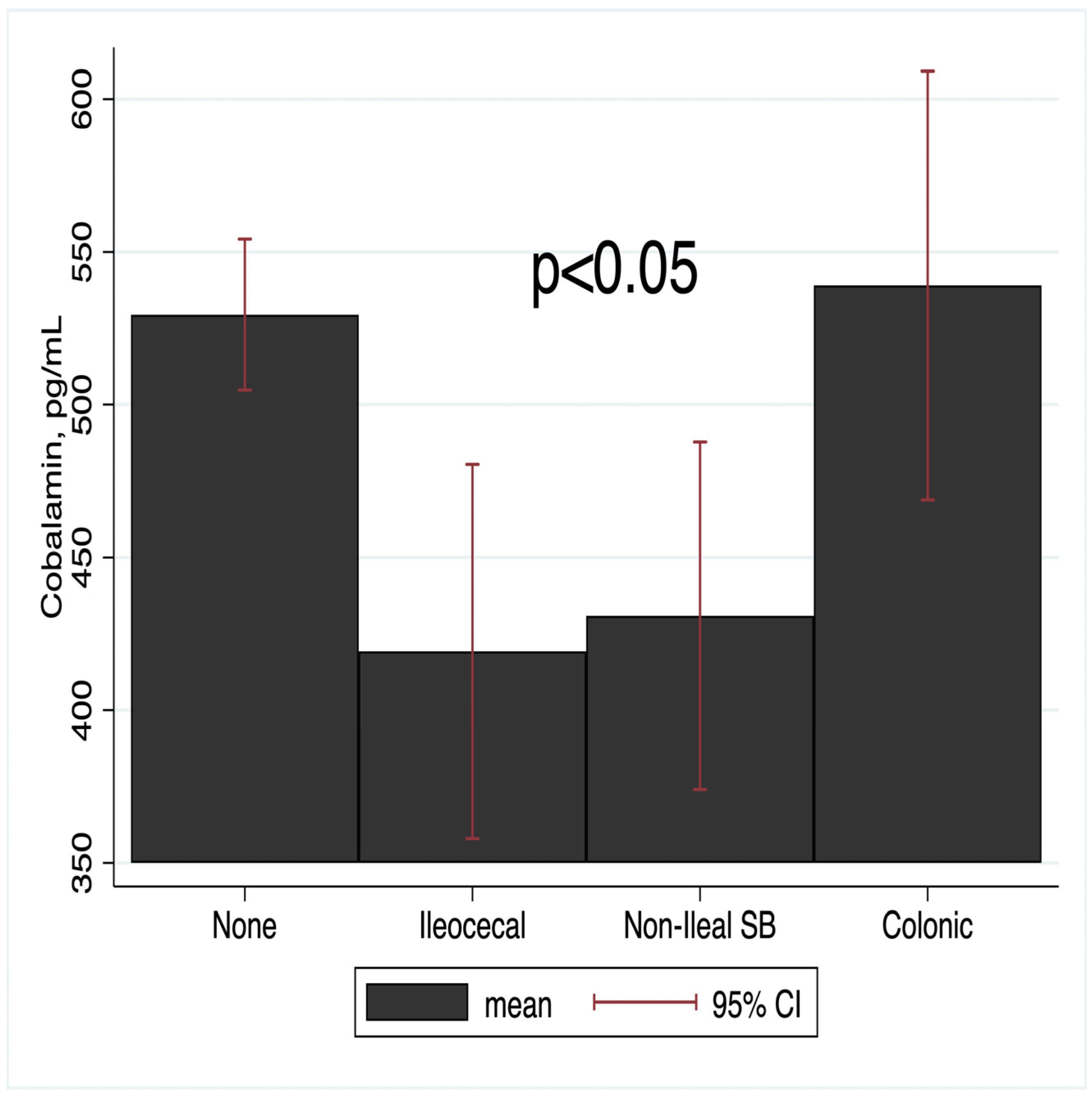
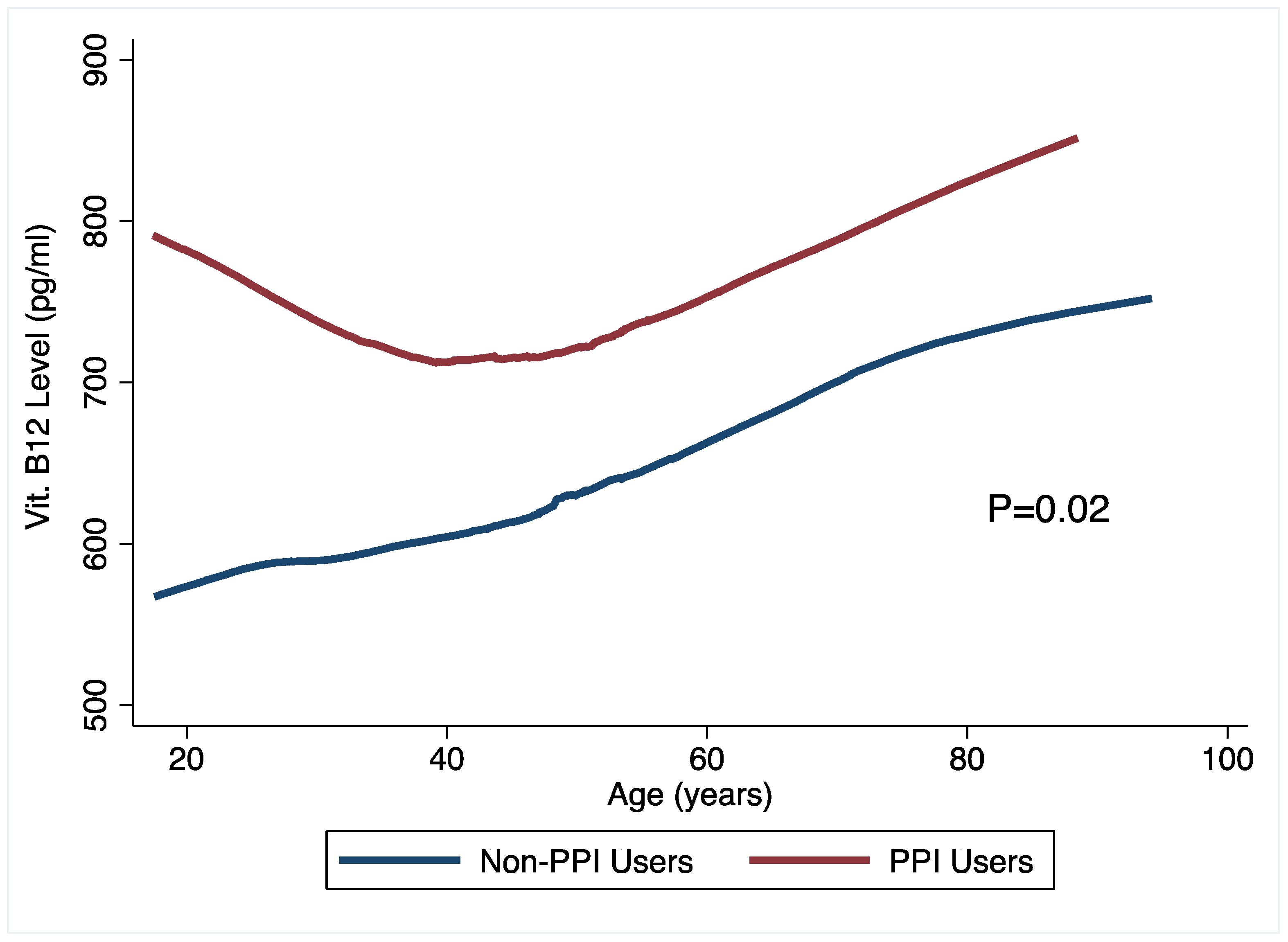
Overall, small-bowel resections, particularly ileocecal resections, were associated with elevated risk of both vitamin B12 and D deficiencies (Table 4 and Figure 2 and Figure 3).
Compared to IBD patients without bowel resection, ileocecal resection was associated with a >3-fold increase in both vitamin B12 deficiency (OR = 3.3 (1.58, 6.95), p = 0.001) and vitamin D deficiency (OR = 3.53 (1.03, 12.06), p = 0.044). A subsequent stratified analysis showed the elevated risk was restricted to only patients with CD. Non-ileal small bowel resection was associated with a marginally significant increase in vitamin B12 deficiency (OR = 2.89 (0.93, 9.96), p = 0.066) but not vitamin D deficiency (OR = 1.47 (0.41, 5.30), p = 0.55). Colonic resection was not significantly associated with vitamin B12 or D status, regardless of IBD type.

3.3. Micronutrient Status and PPI Use

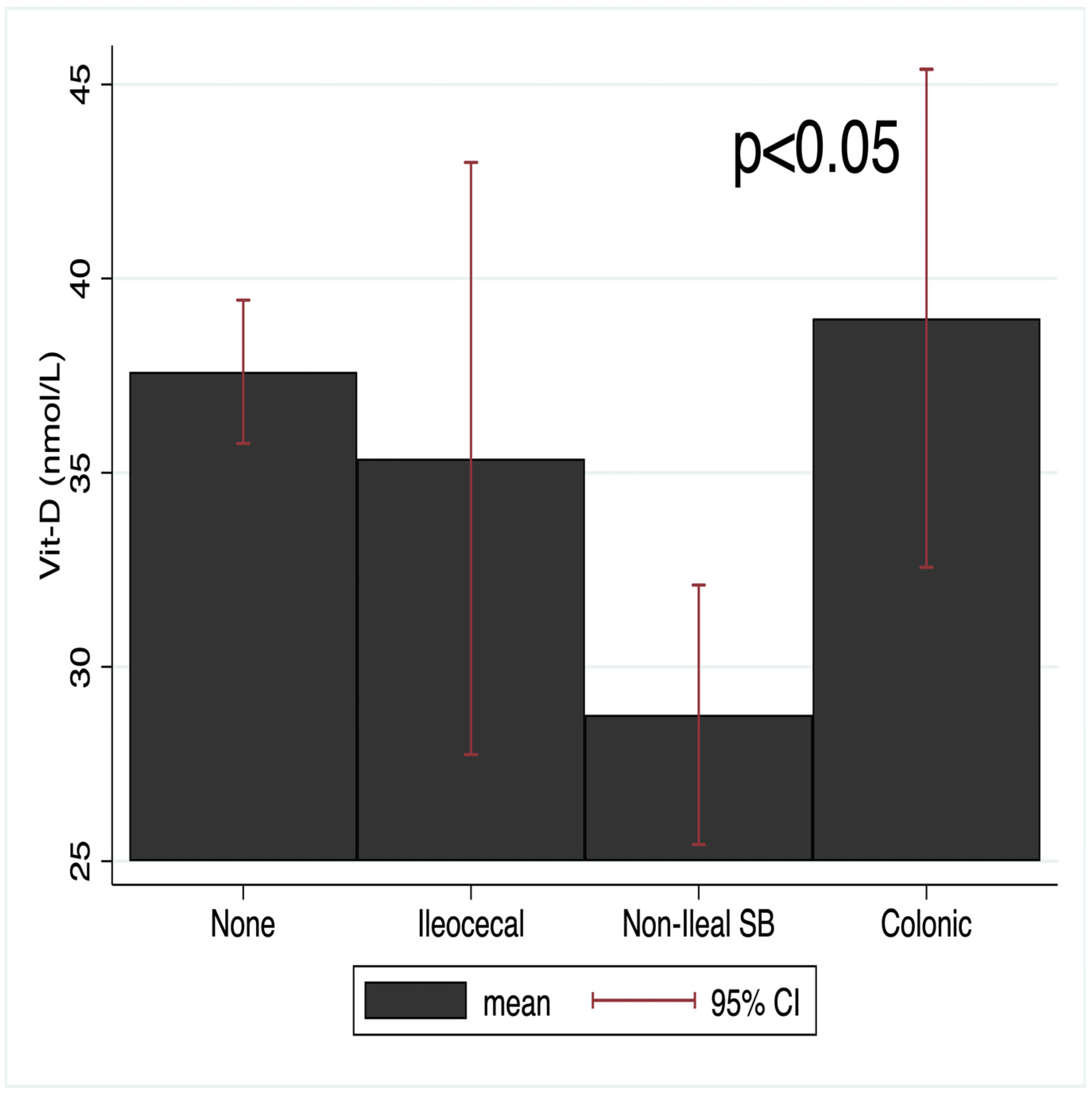
Use of PPI was associated with an average increase in vitamin B12 concentration of 133 pg/mL (p = 0.028), and this translated into a 46% reduction in the risk of subclinical vitamin B12 deficiency (p = 0.043, Table 5).
This pattern was observed consistently across all age groups (Figure 4).
Average serum vitamin D concentration in PPI users and non-users was 38 nmol/L and was comparable (p > 0.05). Although PPI use was associated with a lower risk of vitamin D deficiency, this difference was not statistically significant.

4. Discussion

This study was designed to assess the prevalence of subclinical deficiencies of vitamin B12 and vitamin D in a population of IBD patients seen at the University of Missouri Health Care System, and to characterize differences in prevalence or micronutrient status by (a) IBD subtype, (b) surgical resection status, and (c) PPI use. Our data showed that the prevalence of vitamin B12 deficiency (19%) and especially vitamin D deficiency (>80%) was high in this population. Consistent with prior studies, we observed in this population that the risk for vitamin B12 deficiency is particularly elevated in IBD patients with ileal involvement. Ileocecal resections were associated with an increased risk of both vitamin B12 and D in patients with CD. Unlike previous studies, however, we observed that PPI was associated with a reduced risk of vitamin B12 deficiency in this population of IBD patients.
Clinical vitamin B12 deficiency is rare, and the exact burden in IBD patients is not very well characterized. More studies are increasingly focusing on characterizing the burden of subclinical vitamin B12 deficiency (as opposed to clinical deficiency) because of a perception that the prevalence is much greater, and especially because there is a greater opportunity to intervene earlier. Unfortunately, the threshold for defining subclinical vitamin B12 deficiency is not very well standardized, as cut-offs are often driven by differences in assays and treatment practices. In a recent meta-analysis of studies investigating vitamin B12 status, the cut-off for defining subclinical deficiency across the various studies ranged from 150 to 350 pg/mL. By this definition, it is estimated that about 20% of CD patients and about 5% of UC patients may have subclinical vitamin B12 deficiency [21]. In this study, we adopted the higher cut-off of 350 pg/mL reported in prior studies to improve sensitivity. At this threshold, we estimated an average prevalence of 18%, ranging from as high as 24% in Ileal-CD to as low as 10% in UC patients. Overall, our estimate of vitamin B12 deficiency was consistent with the published literature and demonstrates a need for routine assessment and interventions for subgroups at risk.
The prevalence of vitamin D deficiency in the population was relatively higher than observed in other populations [22,23,24]. In the United States, the prevalence of vitamin D deficiency in adults 20 years and older is estimated at ~60%. By comparison, the prevalence of vitamin D deficiency in this population of IBD patients was about 20 percentage points higher than the national average (Table 1). This disparity in prevalence may be attributable to several factors, including seasonality, age, and adherence to therapy. More importantly, our data suggest that IBD patients are especially vulnerable to developing vitamin D deficiency and its complications, and may likely benefit from supplementation. Additional studies are needed to identify preventable risk factors and optimal strategies for ameliorating the high prevalence of vitamin D deficiency in IBD patients.
A second goal of this study was to determine how vitamin B12 or D deficiency varies with disease IBD localizations and bowel resections. Consistent with the current understanding of IBD etiology, we observed that the risk of B12 deficiency was highest in the context of ileal-CD (Table 2 and Table 3 and Figure 1) or ileocecal resections (Table 4 and Figure 2). Compared to UC or non-ileal CD, the risk of vitamin B12 deficiency in ileal-CD patients was increased by about 3-fold (p < 0.001, Table 2 and Table 3, Figure 2) after controlling for several key confounders. Ileocecal resections were associated with a similar risk of vitamin B12 deficiency in patients with CD. In this population, we estimated that lesion localization to the terminal ileum and ileocecal resections may account for >50% of the burden of vitamin B12 deficiency in this population. Similarly, the risk of vitamin D deficiency was highest in CD patients with ileal resections. The absorption of vitamin B12 occurs predominantly in the terminal ileum, whereas that of vitamin D occurs in the proximal jejunum and ileum. Thus, the increased risk of both vitamin B12 and D in ileal resections may be explained by a reduction in total absorptive surface. This further justifies the need for additional prospective studies to quantify the benefits of adjunctive micronutrient supplementation in the context of IBD. Interestingly, our analyses also showed that non-ileal CD (compared to UC patients) resulted in significantly reduced vitamin B12 levels (p = 0.047). The clinical significance of this difference, however, is uncertain, as it did not translate into a statistically significant difference in the prevalence of vitamin B12 deficiency. Thus, additional studies are needed to shed light on the mechanism of vitamin B12 reduction in non-ileal CD and to determine whether patients with non-ileal CD may also benefit from vitamin B12 supplementation.
A secondary goal of this study was to assess changes in vitamin B12 and D status in relation to PPI use. Acid suppressant medications, including PPIs, are widely believed to increase the risk of vitamin B12 deficiency. A recent meta-analysis of 25 studies concluded that overall, PPI use was associated with about a 42% increase in the risk of vitamin B12 deficiency [17]. However, the meta-analysis found significant heterogeneity, with most studies reporting no evidence of association [17], whereas two studies found evidence of a trend towards improved B12 status [25,26]. In a group of hospitalized patients in Canada, Hartman et al. [25] found a marginally increased serum B12 concentration in patients using PPIs (~35 pg/mL, p = 0.07) compared with non-users. Consistent with this, a large cross-sectional study (n = 25,230) by Lermen et al. also found PPI use was associated with about a 20 pg/mL increase in serum B12 concentration [26]. This observation is unexpected and paradoxical. Unfortunately, there is a paucity of studies specifically designed to assess the association between PPI use and vitamin B12 status in IBD patients. To our knowledge, our study is the first to explore this issue in IBD patients. Overall, we observed that PPI use was associated with ~130 pg/mL increase in mean serum vitamin B12, and a resultant reduction in the risk of vitamin B12 deficiency of about 50% (Table 4 and Figure 4). Although the mechanism for this potential benefit is unclear, given that PPI is mostly prescribed in the US, it is plausible that PPI users likely also have better overall healthcare access, including access to the needed IBD medications and nutritional supplements. At best, this is speculative and justifies the need for more robust data.
Our study did not find any evidence that vitamin D status in IBD patients is impacted by concurrent PPI use. This finding was surprising, especially considering the high prevalence of vitamin D deficiency observed in this population. Unfortunately, there is a paucity of research specifically examining changes in vitamin D status in response to PPI in IBD patients. Thus, more empirical studies are needed to characterize the determinants of vitamin B12 status in IBD patients and the need for nutritional supplementation.
A potential weakness of our analysis is our choice of controls, which in this case was the group of patients with UC. On one hand, this choice of control allows us to link the variations in vitamin B12 to disease etiology more closely. On the other hand, such a choice of controls limits the generalizability of our results. Furthermore, this study could benefit from adjusting for validated indicators of disease severity, such as the Mayo score, which was not available for a large number of our study population and, therefore, was not included in our final analysis. While useful for predicting disease activity, the Mayo score has not been validated for assessing nutritional status in IBD patients. More importantly, in the context of this study, surgical resections render the Mayo score inapplicable. Patients with bowel resections would theoretically have a favorable score despite a much higher risk for nutrient malabsorption. Another weakness of this study is the lack of markers of inflammation, such as CRP, ESR, and fecal calprotectin, which would have enhanced the interpretation of the nutritional markers used here, as they are all affected by the acute phase response. That said, vitamin B12 and D deficiencies are chronic nutritional problems that do not correlate strongly with acute phase reactants. We would need serial CRP or fecal calprotectin data, which were unfortunately not available in this study. Additionally, the lack of data on nutritional supplementation, which may impact the prevalence estimates reported here, is another limitation.
Our findings are strengthened by our ability to control for potential confounding factors, including biases induced by commonly prescribed therapeutic regimens, such as antibiotics, immunomodulators, steroids, and biologics. This paper has several implications for the field of IBD management and future research. The documented high prevalence of subclinical vitamin B12 and vitamin D deficiencies, especially in patients with ileal involvement and those undergoing ileocecal resections, underscores the urgent need for clinicians to incorporate routine micronutrient screening into standard care protocols. Our findings advocate for the development of clinical decision-support tools for flagging high-risk patients, enabling personalized supplementation protocols and proactive clinical interventions. These insights can inform healthcare policies by emphasizing the importance of precision medicine approaches, such as stratification based on IBD subtype, surgical history, and medication use. Overall, this targeted approach can enhance patient outcomes by addressing the specific needs of different patient subgroups, leading to more effective and individualized patient management strategies.
Finally, this paper lays a critical foundation for future research into the mechanistic pathways underlying micronutrient deficiencies in IBD, including microbiome alterations and regulations in nutrient transporters and absorption. In particular, there is a need for more research to identify specific transport proteins that may be particularly affected by the acute-phase reactions induced by IBD flares. The availability of such markers may be useful in risk stratification and targeted interventions. Ultimately, this paper serves as a pivotal reference point for advancing mechanistic investigations and translational research aimed at enhancing the precision and effectiveness of IBD care.

5. Conclusions

In conclusion, our study underscores the considerable burden of subclinical deficiencies of vitamin B12 and vitamin D among IBD patients. Consistent with existing research, we have shown that CD, especially with ileal involvement or following ileocecal resections, significantly increases the risk of vitamin B12 deficiency. Our findings highlight the need to incorporate routine screening for micronutrient deficiencies as part of the standard of care for IBD patients. Given the elevated risk, especially among those with specific disease localizations or surgical histories, personalized supplementation and proactive clinical interventions should be considered to improve patient outcomes. Further research is warranted to explore the mechanistic pathways underlying micronutrient deficiencies in IBD, including potential impacts on microbiome alterations and nutrient absorption. Overall, provides a pivotal reference for guiding future research aimed at improving the management of micronutrient deficiencies in IBD patients.

Author Contributions

Conceptualization, M.A.B. and Y.A.G.; methodology, M.A.B.; software, M.A.B.; validation, M.A.B. and Y.A.G.; formal analysis, M.A.B.; investigation, M.A.B.; data curation, M.A.B.; writing—original draft preparation, M.A.B.; writing—review and editing, M.G., S.C., H.C., Z.L., K.F., E.K., H.F., E.R., E.B. and K.L.; visualization, M.A.B.; supervision, M.A.B., M.G. and Y.A.G.; All authors have read and agreed to the published version of the manuscript.

Funding

This research received no external funding.

Institutional Review Board Statement

This study was approved by the University of Missouri Institutional Review Board (approval code: 384487; approved on: 19 October 2022).

Informed Consent Statement

Patient consent was waived because this study was a secondary analysis of pre-existing data. No contact was made with patients.

Data Availability Statement

The original contributions presented in this study are included in the article. Further inquiries can be directed to the corresponding author.

Conflicts of Interest

The authors declare no conflicts of interest.

References

  1. Abraham, B.P.; Ahmed, T.; Ali, T. Inflammatory Bowel Disease: Pathophysiology and Current Therapeutic Approaches. In Gastrointestinal Pharmacology; Greenwood-Van Meerveld, B., Ed.; Springer International Publishing: Cham, Switzerland, 2017; pp. 115–146. [Google Scholar]
  2. Weisshof, R.; Chermesh, I. Micronutrient deficiencies in inflammatory bowel disease. Curr. Opin. Clin. Nutr. Metab. Care 2015, 18, 576–581. [Google Scholar] [CrossRef] [PubMed]
  3. Behrend, C.; Jeppesen, P.B.; Mortensen, P.B. Vitamin B12 absorption after ileorectal anastomosis for Crohn’s disease: Effect of ileal resection and time span after surgery. Eur. J. Gastroenterol. Hepatol. 1995, 7, 397–400. [Google Scholar] [PubMed]
  4. Nielsen, O.H.; Hansen, T.I.; Gubatan, J.M.; Jensen, K.B.; Rejnmark, L. Managing vitamin D deficiency in inflammatory bowel disease. Frontline Gastroenterol. 2019, 10, 394–400. [Google Scholar] [CrossRef] [PubMed]
  5. Vítek, L. Bile acid malabsorption in inflammatory bowel disease. Inflamm. Bowel Dis. 2015, 21, 476–483. [Google Scholar] [CrossRef] [PubMed]
  6. MacMaster, M.J.; Damianopoulou, S.; Thomson, C.; Talwar, D.; Stefanowicz, F.; Catchpole, A.; Gerasimidis, K.; Gaya, D.R. A prospective analysis of micronutrient status in quiescent inflammatory bowel disease. Clin. Nutr. 2021, 40, 327–331. [Google Scholar] [CrossRef] [PubMed]
  7. Neale, G. B12 binding proteins. Gut 1990, 31, 59–63. [Google Scholar] [CrossRef] [PubMed]
  8. O’Leary, F.; Samman, S. Vitamin B12 in health and disease. Nutrients 2010, 2, 299–316. [Google Scholar] [CrossRef] [PubMed]
  9. Boccuzzi, L.; Infante, M.; Ricordi, C. The potential therapeutic role of vitamin D in inflammatory bowel disease. Eur. Rev. Med. Pharmacol. Sci. 2023, 27, 4678–4687. [Google Scholar] [PubMed]
  10. Ananthakrishnan, A.N.; Khalili, H.; Higuchi, L.M.; Bao, Y.; Korzenik, J.R.; Giovannucci, E.L.; Richter, J.M.; Fuchs, C.S.; Chan, A.T. Higher predicted vitamin D status is associated with reduced risk of Crohn’s disease. Gastroenterology 2012, 142, 482–489. [Google Scholar] [CrossRef] [PubMed]
  11. Jørgensen, S.P.; Hvas, C.L.; Agnholt, J.; Christensen, L.A.; Heickendorff, L.; Dahlerup, J.F. Active Crohn’s disease is associated with low vitamin D levels. J. Crohns Colitis 2013, 7, e407–e413. [Google Scholar] [CrossRef] [PubMed]
  12. Singh, N.; Nugent, Z.; Singh, H.; Shaffer, S.R.; Bernstein, C.N. Proton Pump Inhibitor Use Before and After a Diagnosis of Inflammatory Bowel Disease. Inflamm. Bowel Dis. 2023, 29, 1871–1878. [Google Scholar] [CrossRef] [PubMed]
  13. Hashash, J.G.; Elkins, J.; Lewis, J.D.; Binion, D.G. AGA Clinical Practice Update on Diet and Nutritional Therapies in Patients with Inflammatory Bowel Disease: Expert Review. Gastroenterology 2024, 166, 521–532. [Google Scholar] [CrossRef] [PubMed]
  14. Peng, J.; Song, X.; Zhu, F.; Zhang, C.; Xia, J.; Zou, D.; Liu, J.; Yin, F.; Yin, L.; Guo, H.; et al. ABCG2 plays a central role in the dysregulation of 25-hydrovitamin D in Crohn’s disease. J. Nutr. Biochem. 2023, 118, 109360. [Google Scholar] [CrossRef] [PubMed]
  15. Onwuzo, S.; Boustany, A.; Khaled Abou Zeid, H.; Hitawala, A.A.; Almomani, A.; Onwuzo, C.; Lawrence, F.; Monteiro, J.M.; Ndubueze, C.; Asaad, I. Prevalence and Risk Factors Associated with Inflammatory Bowel Disease in Patients Using Proton-Pump Inhibitors: A Population-Based Study. Cureus 2023, 15, e34088. [Google Scholar] [CrossRef] [PubMed]
  16. Lam, J.R.; Schneider, J.L.; Zhao, W.; Corley, D.A. Proton pump inhibitor and histamine 2 receptor antagonist use and vitamin B12 deficiency. JAMA 2013, 310, 2435–2442. [Google Scholar] [CrossRef] [PubMed]
  17. Choudhury, A.; Jena, A.; Jearth, V.; Dutta, A.K.; Makharia, G.; Dutta, U.; Goenka, M.; Kochhar, R.; Sharma, V. Vitamin B12 deficiency and use of proton pump inhibitors: A systematic review and meta-analysis. Expert Rev. Gastroenterol. Hepatol. 2023, 17, 479–487. [Google Scholar] [CrossRef] [PubMed]
  18. Losurdo, G.; Caccavo, N.L.B.; Indellicati, G.; Celiberto, F.; Ierardi, E.; Barone, M.; Di Leo, A. Effect of Long-Term Proton Pump Inhibitor Use on Blood Vitamins and Minerals: A Primary Care Setting Study. J. Clin. Med. 2023, 12, 2910. [Google Scholar] [CrossRef] [PubMed]
  19. Wakeman, M. A Literature Review of the Potential Impact of Medication on Vitamin D Status. Risk Manag. Healthc. Policy 2021, 14, 3357–3381. [Google Scholar] [CrossRef] [PubMed]
  20. Aparicio-Ugarriza, R.; Palacios, G.; Alder, M.; González-Gross, M. A review of the cut-off points for the diagnosis of vitamin B12 deficiency in the general population. Clin. Chem. Lab. Med. 2015, 53, 1149–1159. [Google Scholar] [CrossRef] [PubMed]
  21. Headstrom, P.D.; Rulyak, S.J.; Lee, S.D. Prevalence of and risk factors for vitamin B(12) deficiency in patients with Crohn’s disease. Inflamm. Bowel Dis. 2008, 14, 217–223. [Google Scholar] [CrossRef] [PubMed]
  22. Janssen, C.E.; Globig, A.M.; Busse Grawitz, A.; Bettinger, D.; Hasselblatt, P. Seasonal variability of vitamin D status in patients with inflammatory bowel disease—A retrospective cohort study. PLoS ONE 2019, 14, e0217238. [Google Scholar] [CrossRef] [PubMed]
  23. Frigstad, S.O.; Høivik, M.; Jahnsen, J.; Dahl, S.R.; Cvancarova, M.; Grimstad, T.; Berset, I.P.; Huppertz-Hauss, G.; Hovde, Ø.; Torp, R.; et al. Vitamin D deficiency in inflammatory bowel disease: Prevalence and predictors in a Norwegian outpatient population. Scand. J. Gastroenterol. 2017, 52, 100–106. [Google Scholar] [CrossRef] [PubMed]
  24. Parva, N.R.; Tadepalli, S.; Singh, P.; Qian, A.; Joshi, R.; Kandala, H.; Nookala, V.K.; Cheriyath, P. Prevalence of Vitamin D Deficiency and Associated Risk Factors in the US Population (2011–2012). Cureus 2018, 10, e2741. [Google Scholar] [CrossRef] [PubMed]
  25. Hartman, B.; Donnelly-VanderLoo, M.; Watson, T.; O’Connor, C.; Madill, J. Proton-pump inhibitor therapy and vitamin B(12) status in an inpatient hospital setting. Appl. Physiol. Nutr. Metab. 2016, 41, 1071–1076. [Google Scholar] [CrossRef] [PubMed]
  26. Lerman, T.T.; Cohen, E.; Sochat, T.; Goldberg, E.; Goldberg, I.; Krause, I. Proton pump inhibitor use and its effect on vitamin B12 and homocysteine levels among men and women: A large cross-sectional study. Am. J. Med. Sci. 2022, 364, 746–751. [Google Scholar] [CrossRef] [PubMed]
Figure 1. Differences in serum cobalamin levels by IBD-type.
Ijtm 05 00054 g001
Figure 2. Differences in serum cobalamin by surgical resection status in IBD patients.
Ijtm 05 00054 g002
Figure 3. Differences in serum Vitamin D by surgical resection status in IBD patients.
Ijtm 05 00054 g003
Figure 4. Vitamin B12 levels across different age groups, stratified by PPI use status.
Ijtm 05 00054 g004
Table 1. Sociodemographic indicators, medication use, and micronutrient status among IBD patients included in this study.
VariableValue
Mean Age (range)47 (17–94)
Gender, n (%)
Female362 (63)
Male208 (37)
Race, n (%)
Caucasian522 (91)
Other49 (9)
Medications used, n (%)
PPI254 (44)
Corticosteroid286 (50)
Antibiotic237 (42)
Biologic332 (58)
Immunomodulator223 (39)
Histamine-2 Receptor Antagonist74 (13)
Micronutrient Status
Vitamin B12 (n = 394)
Mean Concentration (SD, pg/mL)643 (514)
Prevalence of deficiency (%)74 (19)
Vitamin D (n = 528)
Mean Concentration (SD, nmol/L)37 (18)
Prevalence of deficiency (%)435 (83)
IBD Subtype
UC280 (49)
Non-Ileal CD47 (8)
Ileal CD241 (43)
Surgical resection
No resection371 (74.2)
Non-Ileal Small Bowel23 (4.6)
Ileocecal56 (11.2)
Colonic50 (10.0)
Final analyses included 571 IBD patients with laboratory data for vitamins B12 and/or vitamin D. PPI = proton pump inhibitor; UC = Ulcerative Colitis; CD = Crohn’s Disease. Five hundred patients had verifiable surgical resection status.
Table 2. Assessment of global differences in vitamin B12 and vitamin D status across IBD subtypes.
Non-Ileal CDIleal-CDUCGlobal p-Value
Vitamin B12, pg/mol652 (588–817)557 (482–631)850 (744–957)0.0001
Deficiency, n (%)5 (12.2)49 (24.3)10 (10.0)0.006
Vitamin D, nmol/L36.9 (31.6, 42.1)34.9 (33.0, 38.0)38.6 (35.5, 40.7)0.39
36 (78.3)190 (84.1)160 (82.0)0.60
All models were adjusted for age, gender, race, and use of corticosteroids, immunomodulators, PPI, antibiotics, and histamine-2 receptor antagonists.
Table 3. Pairwise comparison of vitamin B12 concentration and risk of deficiency across IBD subtypes.
Difference in Vitamin B-12 Concentration, pg/molDifference in Prevalence of Vitamin B12 Deficiency
Effect (95% CI)p-valueEffect (95% CI)p-value
Ileal CD vs. Non-ilea CD−96 (−278, 86)0.3012.78 (1.00, 7.75)0.051
Ileal CD vs. UC−293 (−426, −161)0.0013.26 (1.47, 7.25)0.004
Non-Ileal CD vs. UC−197 (−393, −2)0.0471.18 (0.35, 3.85)0.790
All models adjusted for age, gender, race, and use of steroids, immunomodulators, PPI, antibiotics, and histamine-2 receptor antagonists.
Table 4. Risk of vitamin B12 and D deficiency in IBD patients stratified by type of surgical resection.
Type of Surgery ALLCDUC
n (%)OR (95% CI)p-ValueOR (95% CI)p-ValueOR (95% CI)p-Value
Vitamin B12
No resection371 (74.2)1.00-1.00-1.00-
Non-Ileal Small Bowel23 (4.6)1.47 (0.93, 9)0.0662.31 (0.72, 7.42)0.158--
Ileocecal56 (11.2)3.53 (1.5, 7)0.0012.54 (1.15, 5.61)0.021--
Colonic50 (10.0)0.56 (0.67, 4.31)0.2562.03 (0.70, 5.87)0.1931.40 (0.13, 15.54)0.785
Vitamin D
No resection371 (74.2)1.00-1.00-1.00-
Non-Ileal Small Bowel23 (4.6)1.40 (0.4, 5.30)0.5551.38 (0.36, 5.21)0.631--
Ileocecal56 (11.2)3.35 (1.03, 12.06)0.0443.68 (1.01, 13.42)0.048--
Colonic50 (10.0)0.50 (0.28, 1.15)0.1140.58 (0.22, 1.50)0.2610.53 (0.17, 1.65)0.275
Model adjusted for age, race, lesion localizations, and prescription for steroids, antibiotics, H2-histamine blockers, and biologics.
Table 5. Use of proton pump inhibitors and vitamin B12 or vitamin D status in IBD patients.
Difference in Serum Concentration Difference in Prevalence of Deficiency
Mean conc.Effect
(95% CI)
p-valuePrevalence,
n (%)
Effect
(95% CI)
p-value
Vitamin B12 (n = 394)
Non-PPI users587
(506, 669)
-
46 (23.5)

1.00
PPI users722
(640, 803)
132.9
(14.7, 251.1)

0.028

28 (14.1)
0.54
(0.29, 0.98)

0.043
Vitamin D (n = 528)
Non-PPI users36 (34, 38)- 250 (85.6)1.00
PPI users
38 (35, 40)
1.65
(−1.80, 5.09)

0.348

185 (78.4)
0.74
(0.44, 1.25)

0.263
Serum concentration measured in nmol/L for vitamin D and pg/mol for vitamin B12. All models adjusted for age, gender, race, and use of steroids, immunomodulators, antibiotics, and histamine blockers.
Disclaimer/Publisher’s Note: The statements, opinions and data contained in all publications are solely those of the individual author(s) and contributor(s) and not of MDPI and/or the editor(s). MDPI and/or the editor(s) disclaim responsibility for any injury to people or property resulting from any ideas, methods, instructions or products referred to in the content.