Review

Medical Microplastics: Research Progress on Exposure Pathways, Toxic Effects, and Detection Methods


1
School of Life Sciences, China Jiliang University, 258 Xueyuan Street, Qiantang District, Hangzhou 310018, China
2
College of Environment, Hangzhou Institute for Advanced Study, University of Chinese Academy of Sciences, 1 Xiangshan Lane, Xihu District, Hangzhou 310024, China
3
College of Biosystems Engineering and Food Science, Zhejiang University, 866 Yuhangtang Road, Xihu District, Hangzhou 310058, China
*
Authors to whom correspondence should be addressed.
Microplastics 2026, 5(2), 61; https://doi.org/10.3390/microplastics5020061
Submission received: 30 December 2025 / Revised: 22 January 2026 / Accepted: 10 March 2026 / Published: 1 April 2026

Abstract

The escalating use of plastic medical products has made medical microplastics (MMPs) contamination an important health concern for specific populations (e.g., patients undergoing medical interventions) and has rendered it a growing focus in global environmental health research. This review systematically summarizes the release characteristics of MMPs throughout their life cycle from device manufacturing and clinical use to waste disposal, and elucidates human exposure pathways. For the general population, environmental exposure and dietary intake are the dominant exposure sources. In patients, however, invasive procedures and intravenous infusions serve as direct, high-concentration routes, enabling MMPs to enter the bloodstream directly. The article focuses on analyzing the molecular mechanisms underlying multisystem pathological effects induced by MMPs, including cardiovascular injury, respiratory dysfunction, digestive disorders, and reproductive toxicity, which involve key pathways such as oxidative stress, inflammatory responses, apoptosis, and dysregulated autophagy. Regarding existing detection technologies, we compare and evaluate the advantages and limitations of microscopic observation, spectral analysis, and chromatography–mass spectrometry in terms of sensitivity, specificity, and applicability, proposing that integrated technical strategies can significantly improve detection reliability. Finally, the review discusses current challenges and future research directions, including the establishment of standardized risk assessment frameworks, the development of highly sensitive in situ detection technologies, and the exploration of targeted intervention strategies. This work provides a theoretical basis for understanding the health risks of MMPs and offers valuable insights for formulating safety management policies for medical plastics.

1. Introduction

Microplastics (MPs), as emerging environmental contaminants, are typically defined as plastic particles smaller than 5 mm, characterized by their persistence, bioaccumulation potential, and inherent toxicity [1]. In recent years, the healthcare sector has been identified as a significant source of MPs, which are continuously released throughout the entire lifecycle of medical plastic products, including manufacturing [2], clinical application [3], and waste disposal [4]. Of particular concern are medical microplastics (MMPs), which possess distinct physicochemical properties [5]. This is partly because medical-grade plastics often contain additives such as plasticizers and stabilizers [6] and partly because healthcare-specific processes like sterilization and mechanical abrasion can alter the surface characteristics of MPs [7], potentially rendering them more bioactive than those originating from general environmental sources.
Epidemiological studies have documented the release of MMPs from medical scenarios such as dental procedures and traditional Chinese medicine decoction packaging [8,9], with invasive medical procedures representing a unique high-risk exposure pathway [10]. This unique exposure pathway results in a bioavailability significantly higher than that of MPs ingested orally [11]. Recent studies have detected markedly elevated concentrations of MPs, primarily polyamide (PA) and polyethylene (PE), in the bloodstream of patients following percutaneous coronary intervention (PCI) [12]. Furthermore, results from exposure assessment models have estimated the annual exposure to MPs per person via syringes, infusion sets, and venous indwelling needles at 3.75, 6.22, and 0.35 items, respectively [13]. Accordingly, the total annual exposure from these medical devices was calculated to be approximately 10.32 items, corresponding to a per capita daily exposure level of about 0.028 items.
Given the ubiquity of MMPs exposure and their potential health risks, this article systematically reviews recent advances from four key perspectives: source characteristics, environmental behavior, toxicological effects, and detection technologies. Specifically, it aims to: (1) elucidate the mechanisms of MMPs release during the production and use of medical plastic products; (2) analyze human exposure pathways to MMPs; (3) uncover the molecular pathways underlying MMPs-induced multi-organ toxicity; and (4) evaluate the applicability and limitations of existing detection techniques. Through interdisciplinary analysis, this review seeks to provide a scientific basis for establishing risk assessment frameworks and mitigation strategies for MMPs.

2. Methodology

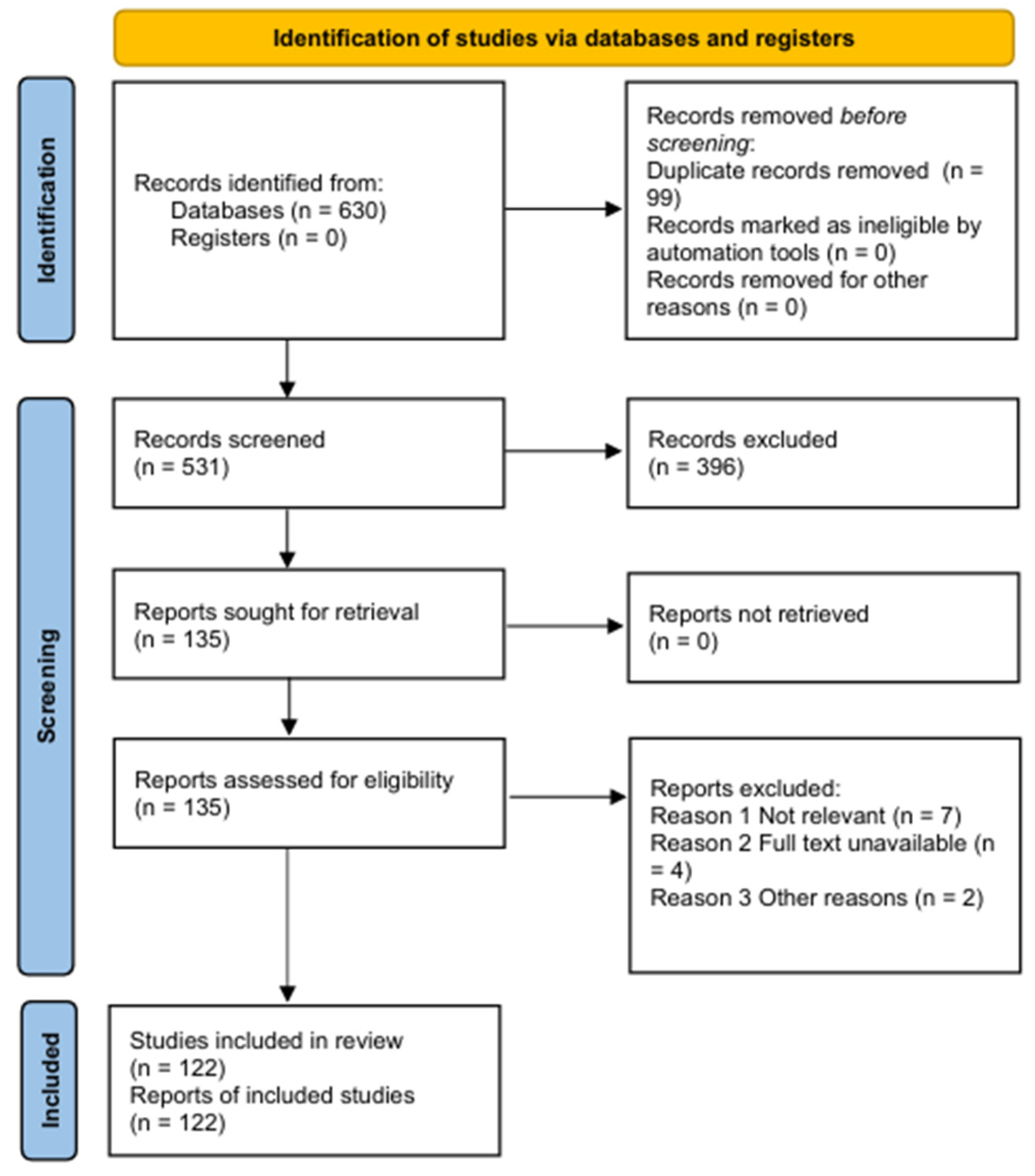
This scoping review was conducted in accordance with the Preferred Reporting Items for Systematic Reviews and Meta-Analyses (PRISMA) 2020 statement to ensure transparency, reproducibility, and rigor [14]. The study selection process is summarized in Figure 1. The detailed methodology is described as follows.

2.1. Literature Search Strategy

A comprehensive and structured literature search was performed across four major academic databases to cover both English and Chinese research outputs: Web of Science, Scopus, PubMed (for English literature), and China National Knowledge Infrastructure (CNKI, for Chinese literature). The search time frame was restricted from January 2010 to December 24, 2025, to encompass foundational and the latest advances in the field of MMPs. The core search strategy combined subject terms and free-text terms to maximize sensitivity: (“medical microplastics” or “medical MPs”) and (“source” or “exposure pathway” or “toxicity” or “detection”). No restrictions were imposed on study types to comprehensively capture original research articles, reviews, and short communications, with the search language limited to English and Chinese. All retrieved records were imported into the EndNote reference management software [2024] for duplicate removal and subsequent screening. The core strategy was adapted for each database using appropriate field tags (e.g., Ti-tle/Abstract for PubMed, TS for Web of Science, TITLE-ABS-KEY for Scopus, and subject field for CNKI), with all searches limited to the specified date range and languages. For PRISMA checklist, see Supplementary Material.

2.2. Study Selection Criteria

Studies were included if they met the following criteria: (1) focused explicitly on MMPs originating from medical scenarios (e.g., medical device use, sterilization, waste disposal); (2) reported MMPs-related data on source characteristics, release mechanisms, exposure pathways, toxic effects, or detection methods; (3) contained original experimental, clinical, or mechanistic data, or were systematic reviews with clear conclusions (studies distinguishing MMPs from environmental microplastics were prioritized); and (4) were published as peer-reviewed journal articles or authoritative book chapters.
Studies were excluded if they: (1) solely investigated environmental MPs without a medical context; (2) lacked empirical data (e.g., theoretical speculations, commentaries, or data-free reviews); (3) were non-standard publications (e.g., conference abstracts, preprints, duplicates); or (4) had inaccessible full texts or missing key experimental parameters.

2.3. Study Selection Process

Database searches identified 630 records. After removing 99 duplicates, 531 records were screened. Based on title/abstract, 396 were excluded. Full texts of 135 reports were retrieved and assessed; 13 were excluded (irrelevant topic: 7; inaccessible full text: 4; others: 2). Finally, 122 studies were included.

2.4. Data Extraction and Synthesis

Data from the 122 included studies were independently extracted by two reviewers using a standardized form, covering variables such as MMPs source, polymer type, particle characteristics, exposure routes, toxic effects, molecular mechanisms, and detection methods. Disagreements between the two reviewers were resolved through discussion or by consulting a third reviewer. Data were synthesized into tables and figures for comparative analysis.

2.5. Methodological Notes

Screening and eligibility were assessed independently by two reviewers, with discrepancies resolved by a third. No formal quality appraisal or meta-analysis was performed due to the scoping review design and methodological heterogeneity across studies.

3. Sources and Classification Characteristics of MMPs

3.1. Release Mechanisms of MMPs in Healthcare Environments

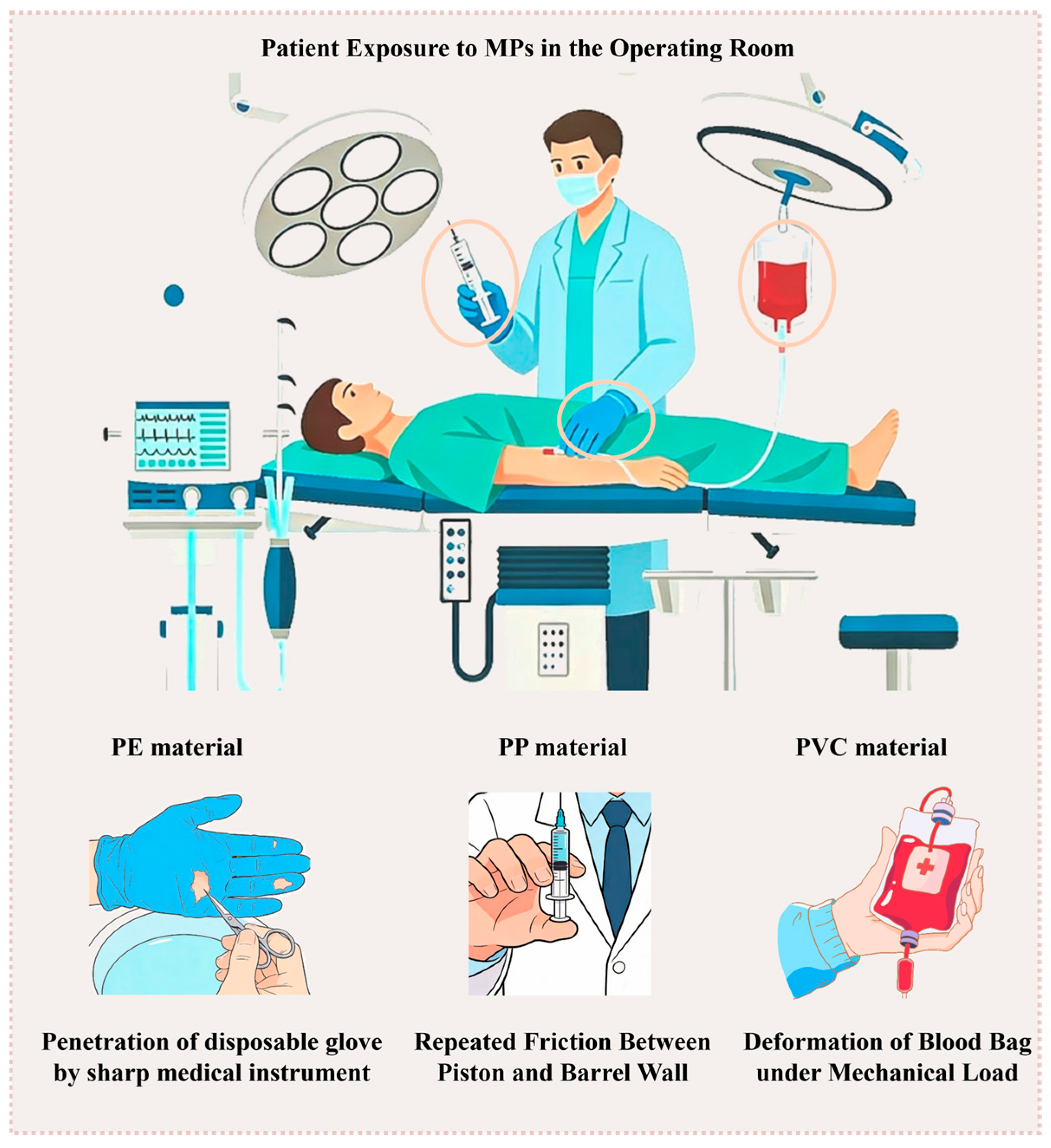
In the healthcare sector, plastic products are extensively utilized in various medical devices and consumables [15], primarily employing three types of polymers: PE, polypropylene (PP), and poly (vinyl chloride) (PVC) [16]. Figure 2 illustrates the potential pathways for MMPs generation from relevant material products in high-intensity, dynamic surgical environments. Disposable gloves [17] release flake- or fiber-like MMPs due to surface abrasion and localized ruptures caused by frequent manipulation, contact with sharp instruments, and liquid immersion. Syringes [18] shed MMPs through repeated aspiration and high-pressure injections, via reciprocating friction between the piston and barrel wall, stress concentration at the needle hub connection, and fluid scouring effects. Blood transfusion bags [19] release MMPs via fluid dynamic effects and material fatigue mechanisms resulting from tubing compression and bending, pressure fluctuations during rapid infusion, and temperature variations. These pathways often occur simultaneously or successively, thereby forming composite sources of MPs exposure in medical settings.
Collectively, MPs generated from these medical devices, along with the plastic waste itself, ultimately enter environmental systems. Inadequate management of MMPs pollution may exacerbate the accumulation of such single-use plastic products in environmental matrices. It is estimated that plastics constitute a substantial portion of global medical waste. For instance, daily medical waste generation in Asia reaches approximately 16,659.48 tons, while in the United States, annual medical waste amounts to about 5.9 million tons, of which plastic waste represents 1.7 million tons, accounting for approximately 28.8% of the total [20]. Once released into the environment, medical plastic debris can undergo further degradation through weathering processes—distinct from the natural degradation pathways of environmental MPs (e.g., oceanic or soil weathering)—leading to increased MMPs flux [21]. Furthermore, these MMPs can adsorb pathogenic microorganisms on their surfaces, forming a “plastisphere” effect [22], which significantly amplifies their biohazard potential.

3.2. Origin, Formation, and Classification of MMPs

Plastics play a pivotal role in modern medical systems, particularly in the domains of sterile packaging and precision surgical instruments, where their importance is irreplaceable [23]. Based on their origin and formation mechanisms, MMPs can be categorized into primary and secondary MMPs (Table 1).
Primary MMPs are synthetic polymer particles that are deliberately engineered and manufactured for specific medical applications, offering distinct advantages in the field of targeted drug delivery [24]. For instance, employing polymer microspheres or nanoparticles as carriers enables the precise delivery of active pharmaceutical ingredients to be targeted tissues or organs, facilitating site-specific drug release [25]. Moreover, by modulating drug release kinetics, such MMPs allow for sustained and controlled drug release, which not only contributes to mitigating the risks associated with drug overdose due to fluctuations in blood concentration but also enhances clinical efficacy and promotes patient recovery [26].
Secondary MMPs originate primarily from the fragmentation of plastic products in medical environments under the combined effects of physical abrasion, chemical degradation, and biological processes, exhibiting highly heterogeneous morphological characteristics such as fibrous and irregular fragments [27]. In dental surgical settings, oral care products and restorative materials continuously release MMPs particles due to prolonged exposure to multiple mechanisms, including biomechanical friction, enzymatic hydrolysis by salivary esterases, and fluctuations in oral temperature and pH [28]. Furthermore, during drug infusion procedures, certain solution components can induce the generation of reactive oxygen species (ROS), thereby accelerating the aging of PP materials and carbon chain scission. This mechanism not only leads to the release of MMPs from medical devices during use but also results in the detection of consistent PP particles in hospital wastewater, establishing a complete pollution pathway from “device aging” to “human exposure” and further to “environmental migration”. Additionally, operational conditions such as autoclaving and long-term storage aging can further promote the physical degradation and micro fragmentation of surgical instrument housings and plastic packaging, thereby generating secondary MMPs [29].
Table 1. Origins and formation pathways of primary and secondary MMPs.
FeatureSourceFormationMorphologyScenariosRef
Primary MMPsDesigned for
medical use
Controlled industrial synthesisUniform
regular
Targeted drug carriers[24,25]
Secondary MMPsIn-use medical
plastic degradation
Physicochemical degradationHeterogeneous
irregular
Aging release from dental materials/infusion sets[27,28,29]

4. Human Exposure Routes to MMPs

Studies have revealed that MPs are now widely detected in various human biological samples [30]. Specifically, MPs particles have been identified in a range of tissues and bodily fluids, including the placenta [31,32], breast milk [33], feces [34,35], blood [36,37], thrombi [38,39], sputum [40], respiratory secretions [41], lung tissue [42] and cirrhotic liver tissue [43]. While existing evidence confirms the presence of MPs in the human body, their definitive entry pathways remain unclear and warrant further investigation. This section will elaborate on the exposure routes of MMPs from both direct and indirect perspectives.

4.1. Direct Exposure Route

The direct exposure route refers to scenarios where MMPs are introduced directly and immediately into a patient’s body during medical interventions. This occurs primarily through two principal pathways: invasive medical procedures and intravenous infusion systems. The following sections will detail their release mechanisms and quantify the associated risks.

4.1.1. Invasive Medical Procedure

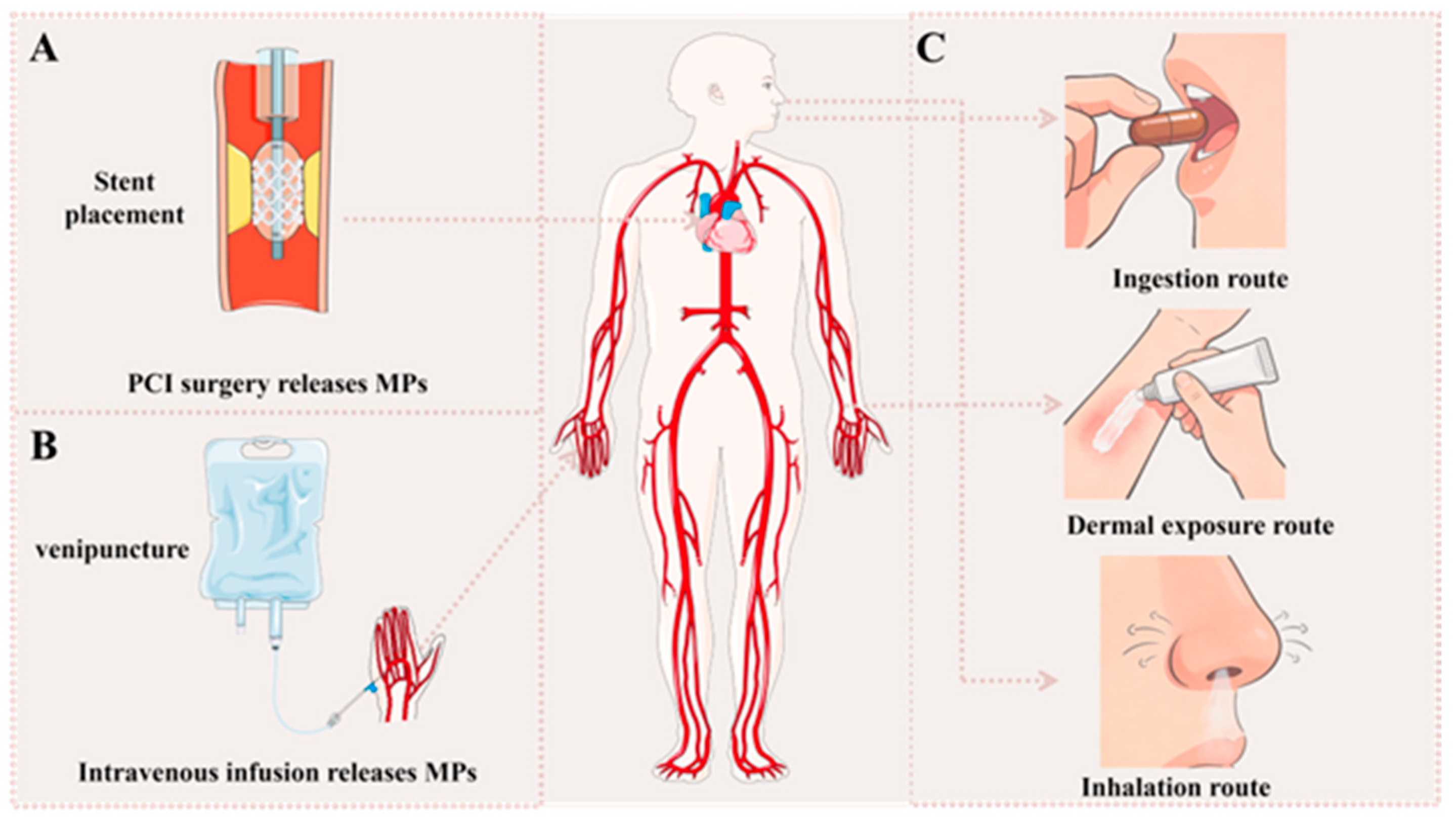
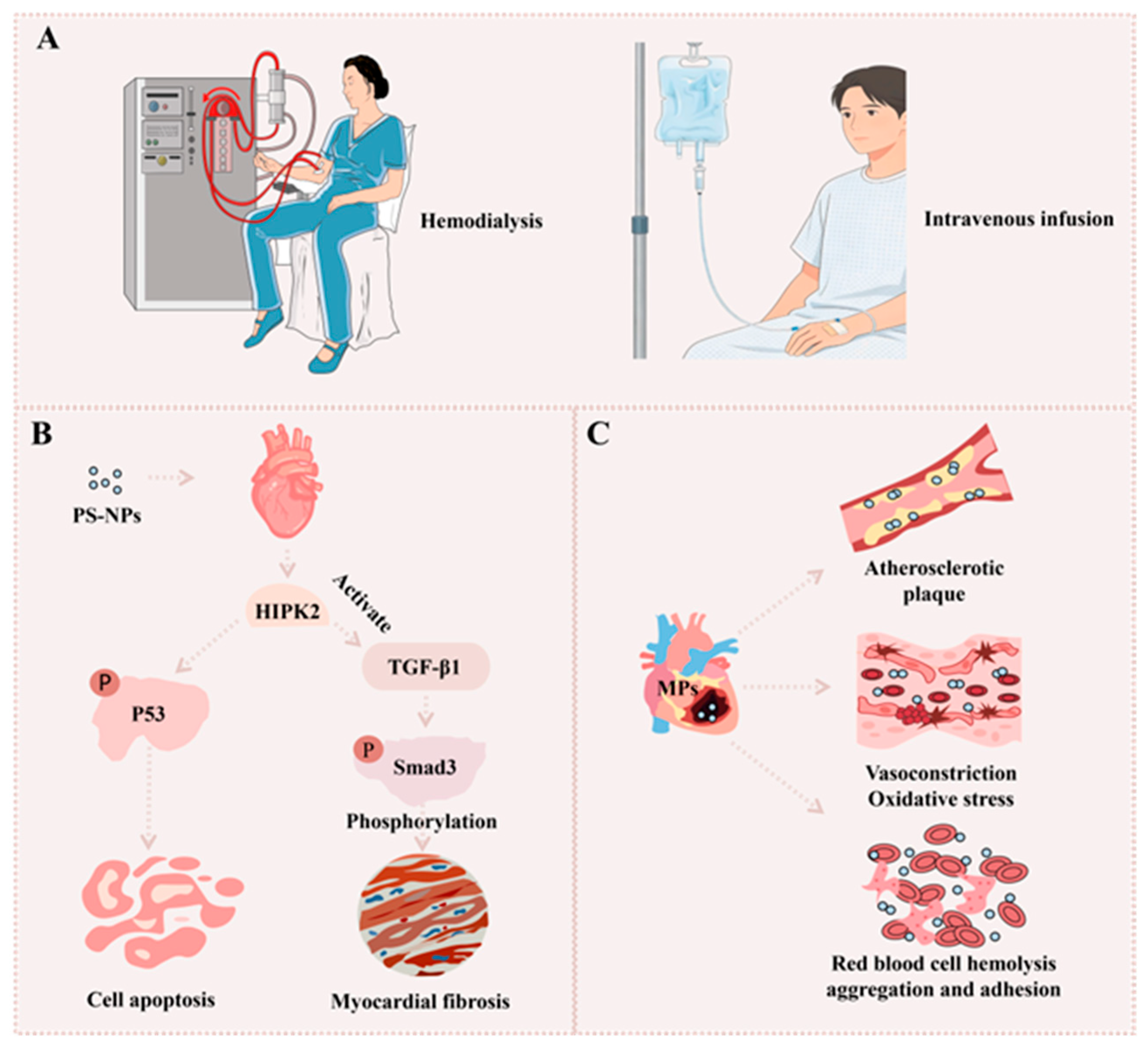
Surgical procedures represent a core clinical intervention. However, they also create potential pathways for the introduction of MMPs particles into human tissues and the systemic circulation [44]. As illustrated in Figure 3A, Liu et al. conducted a clinical study on 23 patients with coronary artery disease undergoing PCI. They reported that interventional devices (guidewires, catheters, balloons, and stents) release MMPs through friction and collision during the procedure and these MMPs are introduced directly into the patient’s bloodstream, resulting in a marked increase in MMPs from 4.96 ± 3.40 to 93.57 ± 35.95 particles per 10 mL of blood postoperatively [12]. In cardiac surgery, similar evidence also exists. A study conducted by Professor Yang’s research team demonstrated that nine types of MMPs (with a maximum diameter of 469 µm) were detected in the pericardium and myocardial tissue of 15 patients who underwent cardiac surgery. The types and size distribution of MMPs in postoperative blood showed significant alterations compared to preoperative levels, and the poly (methyl methacrylate) (PMMA) detected in tissues such as the left atrial appendage could not be attributed to surgical contamination, directly proving the introduction of MMPs during the procedure [45]. Furthermore, Field et al. conducted a pioneering quantitative study on atmospheric MPs pollution within the unique indoor setting of a hospital operating theater. Over a one-week sampling period with 12 h intervals, the research systematically evaluated the concentration, polymer types, and particle-size distribution of microplastics in a cardiothoracic operating room and its adjoining anaesthetic room. Study findings indicate that MPs levels were significantly higher than those measured in domestic indoor environments and were directly correlated with surgical activity, as MPs were largely undetectable during non-working hours. The detected MPs were predominantly within inhalable size ranges, and polymer analysis identified PET and PP as the most abundant types, implicating common sources such as instrument blister packs and disposable surgical gowns/drapes [46]. This evidence substantiates that the surgical setting constitutes a notable point source for direct respiratory inhalation exposure to MPs for both patients and staff. Meanwhile, evidence indicates that these MPs can migrate across vascular endothelial gaps into peripheral tissues, potentially inducing localized inflammatory responses [47].

4.1.2. Intravenous Infusion System

Infusion procedures represent a critical pathway for the direct introduction of MMPs into the bloodstream [48]. As illustrated in Figure 3B, a recent study by Zheng et al. systematically quantified the release of micro- and nanoplastics from disposable PVC infusion sets under simulated clinical conditions using fluorescence-based methods. The study demonstrated that such sets not only carry intrinsic PVC particles but also release them during infusion, with the quantity and size distribution of released particles influenced by infusion duration, temperature, and fluid composition. Significantly higher levels are observed with alkaline solutions (e.g., 5% sodium bicarbonate) compared to isotonic saline (0.9% sodium chloride) over the same infusion duration. Notably, the MMPs release flux demonstrated dynamic characteristics, exhibiting an exponential accumulation trend with prolonged infusion time and elevated ambient temperature. This time–temperature synergistic effect establishes infusion as a significant source of intravenous MMPs exposure [49]. Subsequent investigation by Mou et al. demonstrated that the concentration of MMPs in the initial 12 mL flush of intravenous infusion was significantly higher than in the subsequent fluid, indicating a pronounced initial pulse release of MMPs during the early phase of infusion. Furthermore, the study revealed a distinct time-dependent increase in MMPs release, with the total mass of MMPs released from the infusion tubing rising progressively as the infusion duration extended from 1 to 4 h, from 0.3 ± 0.1 µg to 0.8 ± 0.3 µg. These findings confirm that infusion duration and temperature are critical factors governing MMPs release, clarifying the spatiotemporal distribution characteristics and associated exposure risks of MMPs during intravenous therapy [50].

4.2. Other Exposure Routes

In addition to direct pathway into the circulatory system, MMPs may access the human organism via a range of additional routes (Figure 3C). Long-term storage of oral medications in plastic containers made of materials such as PVC and PP may lead to the release of MMPs due to material aging and adsorption of drug components by the packaging, resulting in the simultaneous ingestion of MMPs by patients during medication administration [51]. Additionally, the heating process involved in preparing traditional Chinese medicine may cause its plastic packaging to release MMPs, thereby creating an exposure route that enters the human body through oral intake [8]. For topical pharmaceuticals and medical supplies, nanoplastic particles smaller than 200 nm can penetrate the stratum corneum barrier through skin folds, lipid pathways, and hair follicles, thereby permeating into the body [52,53]. Beyond that, respiratory assistive devices manufactured from plastic polymers tend to release micro- and nanoscale plastic particles under conditions of heating or exposure to water vapor, which can then be inhaled into the human body during breathing [54]. Notably, MPs have also been detected in the air of hospital and surgical environments, indicating that humans can be directly exposed to airborne MPs via inhalation [46,55].
For the general population, MMPs contribute relatively little to total MPs exposure compared to environmental pathways. The indirect MMPs exposure routes discussed herein are specific to medical-related scenarios (e.g., medical packaging, topical products) rather than general environmental intake. Although medical pathways such as intravenous infusion and surgery can lead to significant individual exposure in specific scenarios, such exposure is limited to individuals undergoing treatment and is intermittent. Therefore, at the public health level, while continuing to focus on environmental MPs control, it is critical to strengthen MMPs risk management in the medical field to ensure patient safety.

5. Multisystem Toxic Effects of MMPs

In medical contexts, MPs predominantly originate from plastic-based devices, packaging materials, and drug delivery systems, entering the human body through routine use, material degradation, or direct administration [56,57,58]. Their adverse impacts on cells and tissues are mediated through a combination of physical interactions and chemical mechanisms [53]. This section draws on existing evidence from in vitro and animal models to elucidate the key pathways through which MMPs may exert toxic effects on the cardiovascular, respiratory, digestive, and reproductive systems, thereby providing a theoretical basis for a comprehensive risk assessment (Table 2).

5.1. Cardiovascular Toxicity

During medical interventions such as dialysis and infusion, exposed MMPs can directly enter the systemic circulation, where they achieve relatively elevated local concentrations and circumvent the body’s natural barrier defenses [59,60]. As shown in Figure 4A, extracorporeal circulation circuits can release particles due to pump shear forces and sterilization-induced degradation, causing the patient’s postoperative blood MMPs concentration to rise from 3.54 µg/g to 7.62 µg/g [61]. MMPs released from infusion systems (e.g., PP infusion bags) can accumulate in cardiovascular tissues, with release quantities influenced by clinical usage frequency and duration. Currently, multiple lines of evidence have confirmed that the accumulation of MMPs in myocardial tissue and vascular plaques correlates with the severity of cardiovascular diseases, and the toxicological mechanisms are closely associated with the characteristics of medical exposure [62,63].
MMPs induce cardiovascular toxicity primarily through three mechanisms: myocardial injury, vascular inflammation, and thrombosis. However, most evidence is derived from animal models or in vitro studies, and the dose–response relationship in clinical populations remains unclear. Mechanistically, in vitro studies using cardiomyocyte models have shown that 50 nm polystyrene nanoplastics (PS-NPs) significantly upregulate homeodomain interacting protein kinase 2 (HIPK2), subsequently activating the P53 signaling pathway. In these experimental systems, this process increased cardiomyocyte apoptosis by 35–40% and activated the TGF-β1/Smad3 signaling pathway, inducing myocardial fibrosis—suggesting a potential mechanism for cardiomyocyte homeostasis disruption, though direct clinical evidence in humans remains unestablished [64] (Figure 4B). Secondly, elevated local concentrations of MPs strongly induce vascular inflammation and oxidative stress. In patients with acute coronary syndrome, circulating MPs levels correlate positively with coronary lesion complexity [65]. MPs concentration within femoral artery plaques can be tens to hundreds of times higher than in healthy arteries [66]. Marfella et al. provided the first evidence of MPs accumulation within human carotid artery atherosclerotic plaques (detection rate 58.4%). These MPs promote local oxidative stress and inflammatory responses, leading to a 4.53-fold increased risk of major adverse cardiovascular events [67]. Thirdly, once in the bloodstream, MMPs can immediately interfere with the coagulation system. Sheng et al. discovered that following entry into the systemic circulation, PS-NPs interact with plasma proteins. Specifically, their ready adsorption by coagulation factor XII and plasminogen activator inhibitor-1 significantly enhances the probability of thrombus formation [68] (Figure 4C). Clinical data also confirm that the incidence rate of thrombosis in long-term dialysis patients is 2–3 times that of the non-dialysis population [69], highlighting the unique cardiovascular risks associated with MMPs. However, current clinical evidence is predominantly based on correlational studies, lacking validation from prospective cohorts. Moreover, future research should prioritize elucidating the differential toxicity among various polymer types (e.g., PET, PP, PVC), their synergistic effects with pharmaceuticals, and the cardiovascular risks associated with chronic low-dose exposure.

5.2. Respiratory Toxicity

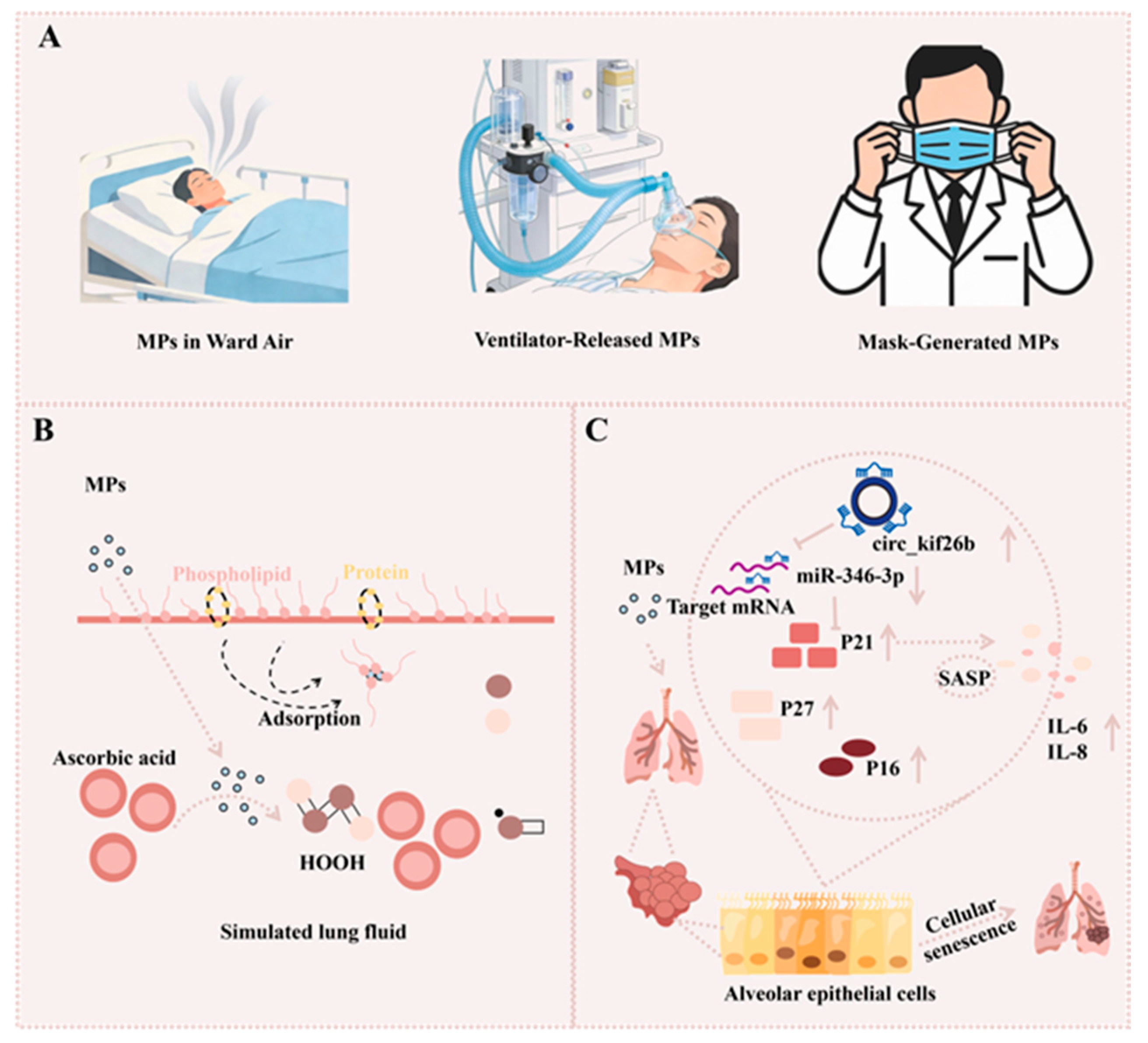
In clinical settings, MMPs constitute a significant source of human respiratory exposure to MPs, with exposure pathways characterized by both ubiquity and clinical specificity (Figure 5A). Firstly, airborne MPs in hospital wards can be directly inhaled through spontaneous breathing, serving as a baseline for long-term exposure in inpatients [55]. Secondly, respiratory therapy equipment such as ventilator circuits and humidifiers may release MMPs due to material wear or degradation during use and disinfection [54]. Furthermore, the manner of using protective gear influences exposure levels; for instance, repeated donning/doffing or storage in pockets can significantly increase MMPs’ release from masks, with related handling potentially doubling the dislodging of melt-blown fibers [70].
Existing evidence indicates that MMPs can lead to pulmonary function impairment and fibrosis by disrupting pulmonary surfactants and inducing cellular senescence and inflammation. Shi et al. observed that once deposited in alveolar regions, MPs preferentially adsorb phospholipid components of lung surfactants. This adsorption, in turn, induces oxidative stress by promoting hydroxyl radical (•OH) generation in simulated lung fluid, thereby compromising alveolar stability. While this effect is validated in vitro, the complexity of the physiological environment in vivo may attenuate its magnitude [71] (Figure 5B). Luo et al. demonstrated that MPs exposure upregulates the expression of circular RNA kif26b (circ_kif26b). The upregulated circ_kif26b functions by sequestering microRNA-346-3p (miR-346-3p), which alleviates the post-transcriptional repression of the cell cycle inhibitor p21. Consequently, the expression levels of senescence-associated proteins, including p21, p16, and p27, are elevated. These molecular alterations collectively induce cell cycle arrest and amplify the senescence-associated secretory phenotype (SASP), marked by increased secretion of inflammatory factors such as Interleukin-6 and Interleukin-8 (IL-6, IL-8). This enhanced inflammatory response ultimately contributes to the progression of pulmonary fibrosis [72] (Figure 5C). Moreover, in patients with prolonged respiratory support, MMPs can induce airway damage, leading to impaired ventilatory function and airway remodeling [73]. They disrupt bronchial tight junctions, compromising epithelial integrity and increasing infection risk [74]. Additionally, MPs can adsorb typical pollutants present on PM2.5, forming composite particles [75], significantly exacerbating oxidative stress and inflammatory responses. Although existing studies have demonstrated the adverse effects of MMPs on the respiratory system, research to date has primarily focused on PS particles, lacking systematic comparisons of toxicity across different polymers and shapes. Additionally, quantitative data on MMP release from medical devices remain insufficient, hindering the establishment of a clinical dose–response relationship between exposure and lung injury.

5.3. Digestive Toxicity

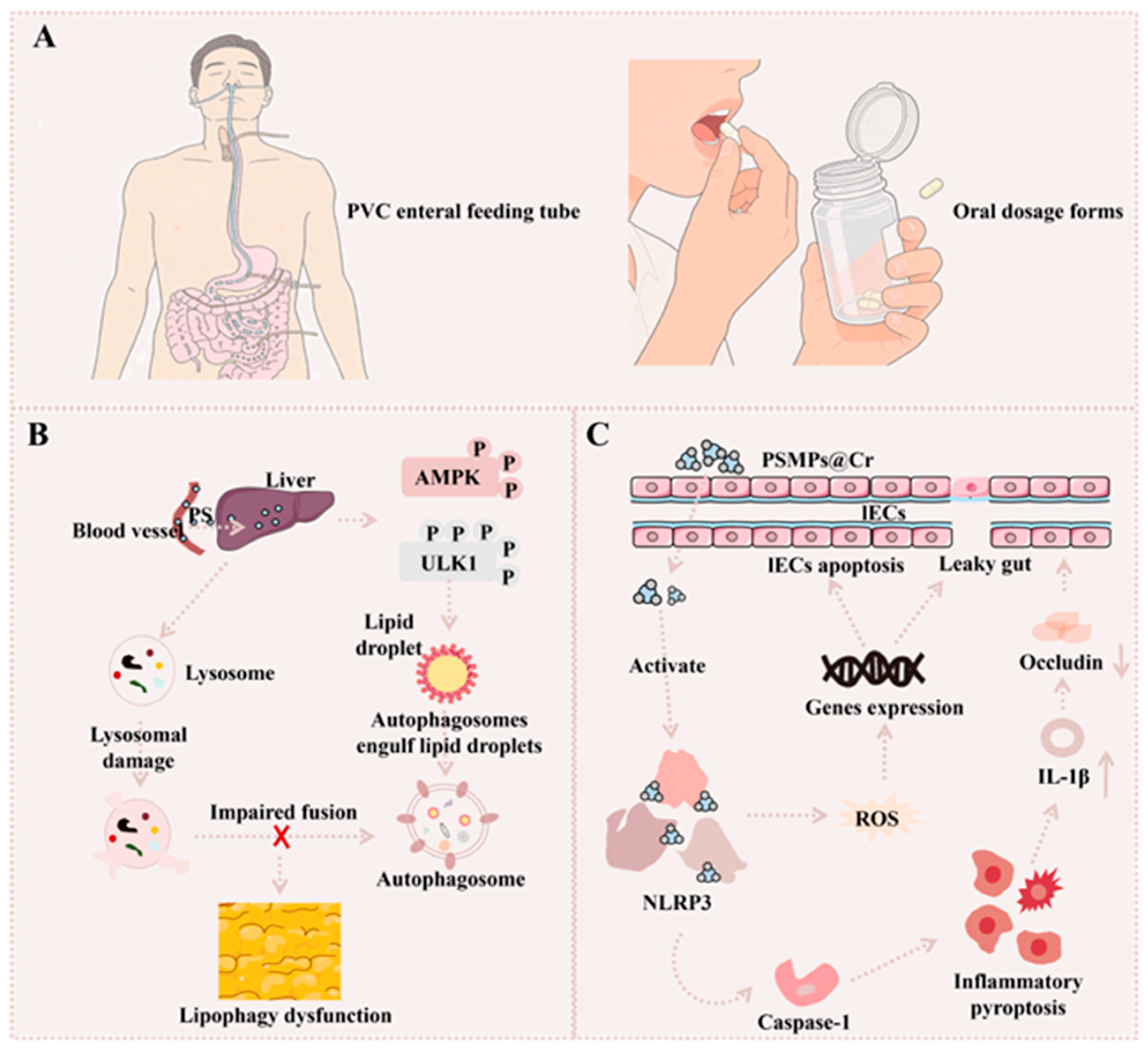
Medical practice represents a notable route of human exposure to MMPs, with associated risks to digestive health requiring considerable concern. As shown in Figure 6A, long-term use of enteral nutrition support tubes, particularly PVC varieties, leads to the continuous release of MMPs and plasticizers, influenced by body temperature and nutritional solution composition [76]. Similarly, storage of oral medications in plastic containers over extended periods—ranging from months to years—can promote the release and accumulation of MMPs and related additives within pharmaceutical formulations [51]. Additionally, certain drugs may lose active ingredients due to adsorption by plastic containers during storage, as observed with diazepam and nitroglycerin in PVC materials [77].
Following their introduction into the digestive system through the noted routes, MMPs can drive hepatic and intestinal injury via distinct pathogenic mechanisms. Studies suggest that its mechanisms involve lipid metabolism dysregulation, intestinal barrier disruption, and microbiota dysbiosis. Fan et al. demonstrated that PS-NPs disrupt lysosomal function and dysregulate the AMPK/ULK1 pathway, leading to impaired lipophagy and subsequent lipid accumulation in hepatocytes [78] (Figure 6B). While this mechanism has been confirmed in animal models, it remains unclear whether human hepatocytes exhibit a similar sensitivity to MMPs. Furthermore, MPs pose direct and complex threats to the intestine itself, acting as vectors for pollutants (e.g., by adsorbing heavy metals) and facilitating their co-entry into intestinal epithelial cells (IECs). As investigated by Shaoyong et al., heavy metal-adsorbed aged MPs can activate the NACHT, LRR and PYD domains-containing protein 3 (NLRP3) [79] inflammasome within IECs, triggering inflammatory cascades involving cysteine-dependent aspartate-specific protease 1 (Caspase-1)-mediated pyroptosis and increased interleukin-1β (IL-1β) secretion. These processes downregulate the expression of the tight junction protein occludin, markedly compromising intestinal barrier integrity [80] (Figure 6C). It is noteworthy that the combined toxicity of aged MPs and heavy metals may substantially exceed that of MPs alone. Additional studies indicate that MPs can induce the mechanism known as danger-associated molecular patterns through Toll-like receptors, thereby triggering an inflammatory cascade in mammalian cells [81]. Furthermore, MPs and their leached chemical additives disrupt intestinal microbiota balance [82] and form a vicious cycle with gut inflammation. Simultaneously, high concentrations of MPs themselves can lead to decreased cellular viability in intestinal cells [83]. Collectively, these mechanisms demonstrate that MMPs exposure constitutes a systemic health risk factor, with effects extending from local intestinal barrier impairment and dysbiosis to hepatic metabolic disturbances. However, most studies on digestive toxicity have employed single polymers or high-concentration exposures, failing to reflect the realistic clinical scenario of mixed polymers with low-dose, long-term exposure. Furthermore, the role of the gut–liver axis in MMPs’ toxicity remains to be elucidated.

5.4. Reproductive and Endocrine Toxicity

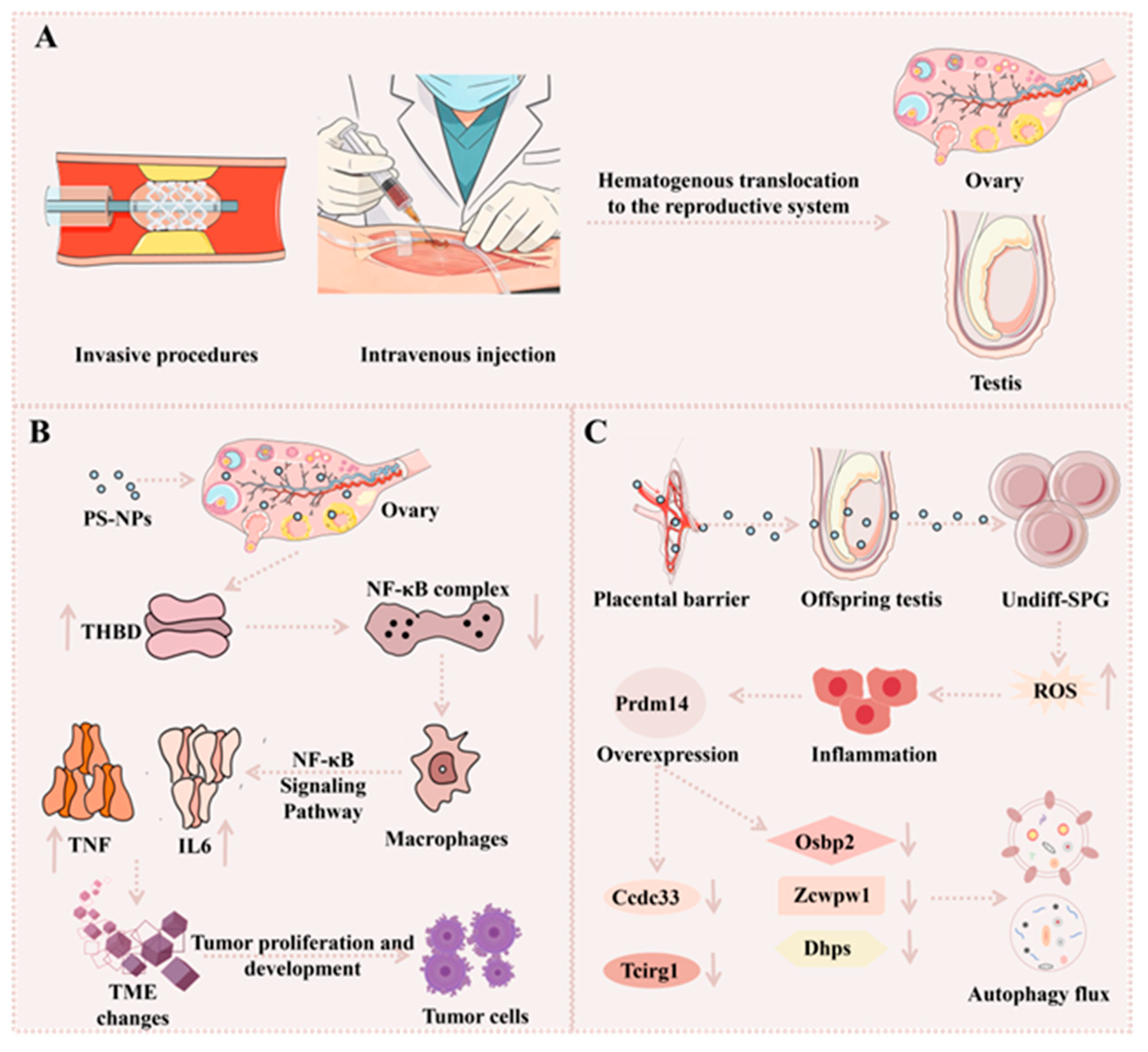
MMPs can enter the human circulatory system directly through pathways such as intravenous infusion, invasive procedures, or degradation of medical devices [13,45,46,49,50]. They subsequently disseminate via the bloodstream and accumulate in various organs and cells, including male and female gonads, posing direct risks to the reproductive system (Figure 7A). Studies have detected diverse MPs polymers in ovarian follicular fluid and endometrial tissues [84,85], with their presence associated with ovarian endocrine dysfunction and linked to gynecological surgeries and related medical devices as significant contamination sources. These particles have also been widely identified in testicular tissues and semen [86], where they contribute to male infertility by disrupting spermatogenesis, impairing sperm quality, and disturbing hormonal homeostasis.
The reproductive toxicity of MPs involves complex, multi-pathway mechanisms. In the female reproductive system, MPs directly disrupt ovarian endocrine function, including altering follicle-stimulating hormone levels [87], and act synergistically with contaminants like phthalates to increase follicular atresia and polycystic ovary syndrome risk [88]. At the molecular level, MPs promote cancer cell proliferation by interfering with estrogen signaling [89]. Specifically, PS-NPs could upregulate the expression of thrombomodulin (THBD) and inhibit the assembly of the nuclear factor kappa B (NF-κB) complex. This process activated the NF-κB signaling pathway, thereby promoting macrophages to enhance the secretion of tumor necrosis factor (TNF) and IL-6. This process triggered early reprogramming of the tumor microenvironment (TME), ultimately facilitating abnormal tumor proliferation and development [90] (Figure 7B). In the male reproductive system, MPs induce toxicity through endocrine disruption, including reduced testosterone bioavailability, which compromises the spermatogenic microenvironment [91]. MPs also trigger oxidative stress, activate PPARγ signaling, and impair lipophagy, leading to lipid dysregulation and testicular injury [92]. Furthermore, MPs exhibit transgenerational toxicity by crossing the placental barrier and accumulating in offspring testes [93]. This exposure induces overexpression of the key transcription factor PR domain-containing 14 (Prdm14) in undifferentiated spermatogonia (Undiff-SPG). Prdm14 overexpression suppresses the expression of key genes (Ccdc33, Tcirg1) and spermatogenesis-related proteins (Osbp2, Zcwpw1, Dhps), which is concomitant with reduced sperm concentration, decreased motility, and an increased abnormality rate, ultimately resulting in impaired spermatogenesis in the offspring [94] (Figure 7C). Although animal studies provide evidence of the harmful effects of microplastics on the reproductive system, it is important to note that the discussed reproductive toxicity research relies heavily on animal models, while human epidemiological data remain scarce. Future research should prioritize exploring the combined toxicity of MMPs with common endocrine disruptors, sex-specific sensitivity, and impacts on assisted reproductive technology outcomes.
Table 2. Summary of MMPs’ multisystem toxic effects.
Affected
Systems
Exposure RoutesCore Toxic EffectsMolecular MechanismsResearch
Evidence Types
Overall TrendsRef
CardiovascularDialysis,
invasive, IV
Injury, Inflammation, ThrombosisOxidative stress, P53In vitro,
Animal, Clinical
Disease of severity link[64,67,68]
RespiratoryWard air, Ventilators, MaskFibrosis,
Barrier damage
•OH generation, SASPIn vitro,
Animal, BALF
Inhalation widespread[71,72]
DigestiveFeeding tubes,
Drug packs
Lipid accumulation, Barrier disruptionAMPK/ULK1, NLRP3In vitro, Animal,
Limited
Chronic low-dose risk[78,80]
ReproductiveIV, Invasive, PlacentalDysfunction,
Impaired sperm
Estrogen interference, Prdm14Animal,
Limited clinical
Synergistic toxicity[90,94]

5.5. Limitations and Uncertainties in MMPs Health Risk Assessment

While existing in vitro and animal studies have underpinned the understanding of MPs-induced toxicity in the cardiovascular, respiratory, digestive, and reproductive systems mediated by pathways such as oxidative stress, inflammation, and autophagy dysfunction [64,71,78,94], the translational relevance of these findings to humans is constrained. In vitro models often use unrealistic high concentrations and isolated cells that diverge from clinical exposure scenarios [49,67], animal models suffer from species-specific metabolic disparities and fail to replicate clinical exposure routes or vulnerable patient populations [61], extrapolation to humans faces uncertainties in dose–response scaling and individual variability, and inconsistent detection methods and experimental protocols hinder data comparability [95,96]. These constraints highlight the need to acknowledge methodological gaps, avoiding overinterpretation of current evidence to support credible MMPs health risk assessment.

6. Advances in Analytical Techniques for MMPs

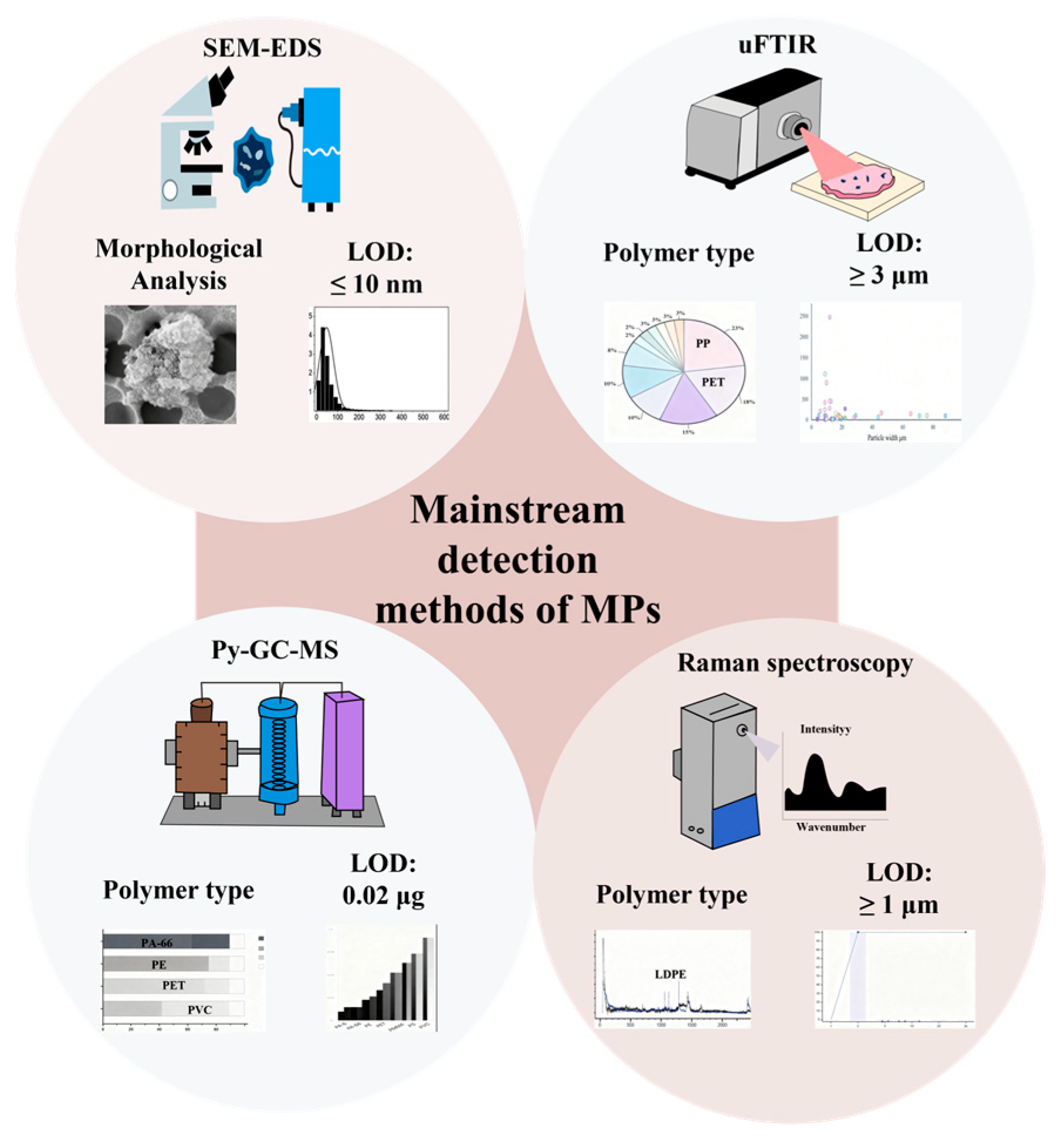
In the field of medical and clinical research, the detection of MMPs faces a series of unique challenges, notably the lack of standardized sampling and analytical methods [97], as well as high false-positive risks from contamination during sample collection, pretreatment, and instrument analysis [17,97]. Many studies have confirmed that plastic lab consumables such as disposable gloves and plastic centrifuge tubes can release microfibers or particles, which may be misidentified as MMPs in biological samples [17,98]. Therefore, contamination control has become a critical prerequisite for ensuring the reliability of MMPs detection results. Currently, the primary techniques for MMPs detection in biological matrices such as blood, tissue, and other body fluids are centered around three categories: microscopic imaging techniques, spectroscopic analytical techniques, and chromatography–mass spectrometry hyphenated techniques (Figure 8). As systematically compared in Table 3, these methods exhibit distinct characteristics in terms of limit of detection (LOD), qualitative/quantitative capabilities, information dimensions, and applicable scenarios. Microscopic imaging provides direct particle morphology and size data but offers limited submicron resolution and insufficient chemical specificity, requiring strict sample stage cleaning and non-plastic sample carriers to avoid contamination [99]. Spectroscopy enables simultaneous morphological and chemical polymer identification, yet its resolution is constrained by optical diffraction and is sensitive to sample physical state, with blank scanning of non-sample areas necessary to exclude instrument background contamination [100]. Chromatography–mass spectrometry delivers exceptional chemical specificity and sensitivity for trace analysis, but its complex pretreatment and prolonged analysis time hinder high-throughput applications, and frequent replacement of inlet liners and solvent flushing of chromatographic columns are required to prevent cross-contamination [101].
Notably, unlike environmental MPs detection that focuses on bulk matrix analysis, MMPs detection has driven targeted technical innovations to address the specificity of biological samples (e.g., high water content, complex organic matrices, and ultra-trace particle levels). Therefore, technique selection should weigh the specific detection objectives of physical characterization or chemical analysis or employ complementary approaches.

6.1. Scanning Electron Microscope Coupled to Energy Dispersive X-Ray Spectroscopy

Given the capability of scanning electron microscopy (SEM) in characterizing the three-dimensional morphology of MPs, it is commonly coupled with an energy dispersive spectrometer to form the SEM-EDS technique, thereby enabling discrimination between carbon-dominated MPs and inorganic particles while providing elemental composition information [102]. To minimize contamination interference in medical sample analysis, the sample stage should be covered with aluminum foil and wiped with anhydrous ethanol before each test, and glass or metal sample holders should be used instead of plastic ones.
In medical detection scenarios, this method has been successfully applied to the analysis of MPs in various biological samples. Baeza-Martínez et al. conducted a systematic analysis of bronchoalveolar lavage fluid (BALF) samples and found that MPs pollutants predominantly existed in the form of microfibers, accounting for 97.06% of the total, with an average concentration of 9.18 ± 2.45 items/100 mL BALF [103]. In a separate study, Li et al. utilized SEM-EDS to analyze intravenous infusion products, revealing that the identified MPs particles were predominantly irregular or near-spherical in morphology, with size ranges from 10 nm to 3.6 µm. Quantitative analysis revealed that MPs concentrations during intravenous therapy can reach (5.82 ± 0.86) × 104 items/L, thereby demonstrating a substantial particulate contamination risk in clinical infusion solutions [98]. Building upon conventional SEM-EDS technology, an innovative variable-pressure SEM with dual EDS detectors (VP-SEM-dEDS) enables direct imaging and chemical mapping of hydrated biological tissues under low-vacuum conditions. Applied to ten human placenta samples, this technique identified exogenous carbon-rich microparticles ranging from 2.1 to 18.5 µm on villous surfaces. Through elemental mapping, these microplastics were distinguished from the surrounding tissue by their characteristic high-density carbon signatures, establishing a reliable and artifact-minimized method for detecting plastic contamination in clinical specimens at micrometer resolution [104].
However, SEM-EDS faces technical limitations in detection of MPs, including suboptimal resolution for submicron particles and limited specificity in identifying organic polymers, making it difficult to accurately discriminate between hydrocarbon polymer homologs such as PE and PP [97]. Additionally, the electron gun and detector need to be cleaned in a timely manner after detection to avoid cross-contamination between samples. Consequently, it is often necessary to integrate molecular vibrational spectroscopy techniques such as Fourier transform infrared (FTIR) spectroscopy and Raman spectroscopy. These methods enhance the reliability of polymer type identification by providing molecular-level information, including C-H/O-H stretching vibrations and characteristic peaks in the fingerprint region [105].

6.2. Micro-Fourier Transform Infrared Spectroscopy

FTIR spectroscopy has become a critical analytical technique in environmental science due to its efficient detection capability for MPs within complex environmental matrices [106]. As a spatially resolved extension of FTIR technology, µFTIR enables nondestructive analysis of target polymers while simultaneously acquiring both characteristic chemical fingerprint spectra and micromorphological features, thereby significantly enhancing the sensitivity and specificity of MPs detection [107]. For medical sample analysis, CaF2 or KBr materials should be selected for the sample cell, and nitrogen purging should be performed for 10 min before detection to remove residual particles. Metal fixtures should be used instead of plastic sample holders to avoid contamination from plastic components.
The µFTIR technique has been successfully applied to detect MPs in medical samples such as human tissues and blood. The team led by Jenner was the first to successfully detect and quantify MPs in human lung tissue using µFTIR spectroscopy, which has a size detection limit of ≥3 µm. Their analysis revealed an average MPs abundance of 1.42 ± 1.50 MP/g of lung tissue, with PP (23%) and PET (18%) identified as the predominant polymer types [95]. In another study, Leonard’s team detected 24 types of polymers in 90% of human blood samples using µFTIR. Using a limit of quantification (LOQ) approach, five polymer types were quantified above the threshold, with a mean concentration of 2466 ± 4174 MP/L. The analyzed plastic concentrations in the blood samples ranged from 1.84 to 4.65 µg/mL. The particle dimensions varied widely, with lengths ranging from 7 to 3000 µm and widths from 5 to 800 µm [108].
Despite its unique advantages such as non-destructive analysis and the simultaneous acquisition of chemical fingerprints and morphological information, µFTIR technology is constrained by the optical diffraction limit in spatial resolution and imposes stringent requirements on sample thickness, homogeneity, and water content. To address water interference in biological samples, label-free optical photothermal infrared (O-PTIR) spectroscopy has been developed for medical use. Leveraging 500 nm spatial resolution (instrument maximum) and targeting key bands (e.g., 1740 cm−1 for lipids, 1656 cm−1 for proteins), it enables in situ analysis of fresh hydrated tissues without dehydration, bridging the gap between dry- and wet-sample infrared detection [109]. This optimization is exclusive to clinical detection and fills the gap between environmental dry-sample µFTIR and wet biological sample analysis. However, the detection results are easily affected by the water content of biological samples, and proper sample dehydration treatment is required while avoiding the use of plastic dehydration containers [100]. To overcome these limitations, it is often necessary to employ Raman spectroscopy as a complementary analytical technique.

6.3. Raman Spectroscopy

The capability of Raman spectroscopy for high-precision analysis of MPs is attributed to its submicron spatial resolution and minimal interference from water molecules [110]. This makes the technique particularly effective for the identification of particles with diameters down to 1 µm [111]. Before laser focusing, it is necessary to scan the blank area of the glass slide without samples to exclude background contamination from the instrument itself. Glass slides should be used instead of plastic ones to avoid particle release from plastic materials affecting detection results.
Raman spectroscopy provided direct spectroscopic evidence for the presence of MPs in human thrombi. In the study by Wu et al., Raman spectroscopy, which enables detection of particles with a size limit of ≥1 µm, was employed to systematically analyze 26 human thrombus samples. A total of 87 exogenous microparticles were identified, ranging in size from 2.1 to 26.0 µm. Among these, one particle was identified as low-density polyethylene (LDPE), accounting for approximately 1.15% (1/87) of the total detected particles [112]. Similarly, Massardo et al. detected MPs in human urine and renal tissue through Raman spectroscopy. Analysis of 10 kidney samples and 10 urine samples led to the identification of 26 MPs particles, with sizes ranging from 3 to 13 µm in urine samples and 1 to 29 µm in kidney samples. The most frequently identified polymer types were PE and polystyrene (PS) [113].
Despite the excellent performance of Raman spectroscopy in MPs detection, the technique is susceptible to fluorescence interference, which limits its identification capability for dark/strongly fluorescent polymers [114]. In addition, biological tissues may have spontaneous fluorescence, requiring the selection of 638 nm laser wavelength and blank tissue controls to reduce false-positive signals. A medical Raman breakthrough is the combination of surface-enhanced Raman scattering (SERS) with citrate-reduced silver nanoparticles (cit-Ag NPs), achieving two key advances. First, it attains single-molecule sensitivity for ultra-trace targets, overcoming conventional Raman’s limitation for nanoscale analytes; second, it enables specific recognition of biomolecule-bound targets in tissues, a gap rarely addressed in environmental studies [115]. Furthermore, for the comprehensive analysis of MPs, especially in complex environmental matrices, coupling Raman or SERS with chromatographic–mass spectrometric techniques is often necessary to enhance polymer identification, quantification, and additive profiling.

6.4. Pyrolysis–Gas Chromatography–Mass Spectrometry

When detecting MPs in complex matrices, chromatography–mass spectrometry techniques demonstrate significant advantages [116]. For pyrolysis–gas chromatography–mass spectrometry (Py-GC-MS) analysis of medical samples, glassware should be used throughout the sample pretreatment process to avoid particle dissolution from plastic consumables. The inlet liner needs to be replaced after every 50 samples to prevent residual polymer cross-contamination.
In medical research, Py-GC-MS has been applied to detect MPs in human tissues and body fluids. Liu et al. conducted a quantitative analysis of MPs in three types of human arterial tissues using Py-GC-MS, a method capable of detecting MPs down to 0.02 µg. MPs were identified in all 17 arterial specimens, with an average concentration of 118.66 ± 53.87 µg/g tissue. Four polymer types were detected, dominated by PET (73.70%), followed by PA-66 (15.54%), PVC (9.69%), and PE (1.07%) [96]. Tian et al. analyzed MPs in human amniotic fluid using Raman spectroscopy and Py-GC-MS, detecting MPs in 81.25% of 48 samples. The identified MPs particles exhibited an average size of 3.05 ± 1.05 µm, with a size distribution ranging from 0.94 to 5.73 µm. Systematic quantitative analysis further revealed that polytetrafluoroethylene (PTFE), PS, and acrylonitrile-butadiene-styrene (ABS) were the predominant polymer types, with detection rates of 31.25%, 20.83%, and 14.58%, respectively [117].
Table 3. Mainstream detection methods of MPs.
TypeLOD *Qualitative/
Quantitative
Information
Dimension
Application
Scenarios
Ref
SED-EDS≤10 nmQualitative/Semi-quantitativeElemental
Morphological
Surface
characterization
[98,103]
µFTIR≥3 µmQualitativeChemical compositionTissue analysis[95,108]
Raman
spectroscopy
≥1 µmQualitativeChemical
Morphological
Particle profiling[112,113]
Py-GC-MS0.02 µgQualitative/QuantitativePolymer massMass screening[96,117]
* Values denote either minimum detectable particle size or mass.
Although Py-GC-MS enables polymer identification of MPs through characteristic pyrolysis products, its application is constrained by complex sample preparation procedures and an analysis time typically exceeding 30 min per sample, which limits high-throughput analysis [101]. To address these limitations in clinical settings, a modified double-shot Py-GC-MS method has been developed. It detects four types of MPs (≥300 nm) in biological samples with RSD 6.50–20.68%, using P(E-13C2) as internal standard, supporting combined health risk assessment rarely covered in environmental applications [118]. It should be noted, however, that the high-temperature pyrolysis process may cause the release of plastic components from the instrument’s internal pipeline, requiring regular maintenance and cleaning of the instrument.
The accurate detection of MPs in complex biological samples like tissues and blood poses significant challenges in the medical field. Single analytical methods are often insufficient for multiparameter identification. Therefore, researchers are increasingly turning to strategies that combine multiple techniques to improve detection reliability and obtain more comprehensive information. For instance, integrating microscopy with Raman spectroscopy enables simultaneous morphological observation and chemical composition analysis, significantly improving detection accuracy [119]. Coupling chromatographic–mass spectrometric techniques with FTIR allows for the determination of MPs polymer types while enabling mass-based quantification, thereby enhancing detection sensitivity [120]. Furthermore, the application of methods such as fluorescent staining [121] and receptor-based assays [122] effectively mitigates inaccuracies caused by the limitations and false-signal interference inherent in single-method approaches. These integrated approaches not only improve the accuracy and comprehensiveness of MPs detection but also provide a stronger technical foundation for assessing human exposure levels, distribution patterns, and potential health effects.

7. Challenges and Prospects

This review systematically elucidates the release mechanisms of MMPs during their production and application and details their multiple exposure pathways through which they enter the human body. These include direct routes (e.g., surgical intervention, intravenous infusion) and indirect routes (e.g., inhalation of airborne particles in clinical settings, ingestion via orally administered drugs stored in plastic containers, and dermal absorption from topical medical products). Furthermore, it elucidates the potential molecular pathways of multi-organ toxicity induced by MMPs, which are closely associated with their release characteristics in medical environments. Specifically, MMPs have been shown to trigger oxidative stress, inflammatory responses, apoptotic pathways, and dysregulated autophagy across cardiovascular, respiratory, digestive, and reproductive systems. These processes contribute to pathological outcomes such as myocardial injury, pulmonary fibrosis, hepatic steatosis, intestinal barrier dysfunction, and impaired spermatogenesis.
Notwithstanding this established conceptual framework linking MMPs to health risks, significant research and translational gaps persist, posing challenges for risk assessment and management. Firstly, standardized methods for detecting and quantifying MMPs in complex biological matrices (e.g., blood, tissue) and clinical environments are lacking. Inconsistencies in sampling protocols, particle size detection limits, and contamination control severely hinder data comparability and reliable exposure assessment. Secondly, the toxicological database remains insufficient, particularly regarding the chronic effects of low-dose, recurrent MMPs exposure—a scenario common in patients undergoing long-term or repeated medical treatments. The potential for synergistic toxicity with pharmaceuticals, leaching additives, or co-pollutants adsorbed onto MMPs also requires elucidation. Additionally, the development of safe and environmentally friendly alternative materials for medical plastics is progressing slowly, failing to meet the clinical demand for materials that combine biocompatibility with environmental sustainability. Finally, the absence of a unified global regulatory framework means that effective management and control of MMPs lack a solid legal basis.
To overcome these bottlenecks, future research must focus on the following key directions. Priority must be given to developing and validating standardized analytical methodologies suitable for clinical and environmental monitoring of MMPs. Robust longitudinal studies and advanced vitro models (e.g., patient-derived organoids) are needed to characterize the long-term health outcomes and underlying mechanisms of MMPs exposure. Moreover, it is essential to accelerate the development of biodegradable polymer materials and thoroughly investigate their feasibility in replacing traditional non-degradable plastics in various medical devices, thereby reducing the generation and release of MMPs at the source. Ultimately, translating scientific evidence into policy is crucial; integrating MMPs risk considerations into medical device safety evaluations and healthcare waste management protocols will be essential for protecting patient health and environmental sustainability.
In conclusion, while the link between medical plastic use and human exposure to MMPs is now evident, bridging the knowledge-to-action gap demands a concerted, interdisciplinary effort. By advancing detection science, deepening mechanistic toxicology, innovating in materials design, and strengthening regulatory oversight, the healthcare sector can mitigate the risks posed by MMPs and move toward a more sustainable and safer practice.

Supplementary Materials

The following supporting information can be downloaded at: https://www.mdpi.com/article/10.3390/microplastics5020061/s1, PRISMA checklist.

Author Contributions

Conceptualization, K.L. and X.X.; Writing—original draft, K.L.; Writing—review and editing, W.L., Y.S., T.M., L.Y., Y.R., X.L., Y.F. and X.X.; Visualization, K.L., W.L., Y.F. and X.X.; Supervision, Y.F., X.Y. and X.X.; Project administration, X.Y.; Funding acquisition, X.X. All authors have read and agreed to the published version of the manuscript.

Funding

This research was funded by the Zhejiang Provincial Natural Science Foundation of China (grant no. RG26C200001), the National Natural Science Foundation of China (grant no. 22576044), and the Key Research and Development Program of Zhejiang Province (grant nos. 2025C02126 and 2024C03231).

Institutional Review Board Statement

Not applicable.

Informed Consent Statement

Not applicable.

Data Availability Statement

No new data were created or analyzed in this study. Data sharing is not applicable to this article.

Acknowledgments

Authors thank their universities for scientific database subscriptions.

Conflicts of Interest

The authors declare no conflicts of interest.

References

  1. Thompson, R.C.; Olsen, Y.; Mitchell, R.P.; Davis, A.; Rowland, S.J.; John, A.W.G.; McGonigle, D.; Russell, A.E. Lost at Sea: Where Is All the Plastic? Science 2004, 304, 838. [Google Scholar] [CrossRef]
  2. Pinlova, B.; Hufenus, R.; Nowack, B. Systematic study of the presence of microplastic fibers during polyester yarn production. J. Clean. Prod. 2022, 363, 132247. [Google Scholar] [CrossRef]
  3. Li, M.; Hou, Z.; Meng, R.; Hao, S.; Wang, B. Unraveling the potential human health risks from used disposable face mask-derived micro/nanoplastics during the COVID-19 pandemic scenario: A critical review. Environ. Int. 2022, 170, 107644. [Google Scholar] [CrossRef]
  4. Masud, R.I.; Suman, K.H.; Tasnim, S.; Begum, M.S.; Sikder, M.H.; Uddin, M.J.; Haque, M.N. A review on enhanced microplastics derived from biomedical waste during the COVID-19 pandemic with its toxicity, health risks, and biomarkers. Environ. Res. 2023, 216, 114434. [Google Scholar] [CrossRef] [PubMed]
  5. Deng, X.; Gui, Y.; Zhao, L. The micro(nano)plastics perspective: Exploring cancer development and therapy. Mol. Cancer 2025, 24, 30. [Google Scholar] [CrossRef] [PubMed]
  6. Caux, B.; De Saint Jores, C.; Abou-Naccoul, R.; West, C. From extraction to detection: An analytical journey of plastic additives and their migrations. Trends Anal. Chem. 2025, 191, 118373. [Google Scholar] [CrossRef]
  7. Ye, S.; Tan, X.; Yang, H.; Xiong, J.; Zhu, H.; Song, H.; Chen, G. Catalytic removal of attached tetrabromobisphenol A from microplastic surface by biochar activating oxidation and its impact on potential of disinfection by-products formation. Water Res. 2022, 225, 119191. [Google Scholar] [CrossRef]
  8. Xuan, Y.; Chen, Y.; Song, X.; Xu, J.; Chen, J. Releasing characteristics and risk of micro/nanoplastics from Chinese herbal decoction packages under daily usage scenarios. J. Hazard. Mater. 2025, 483, 136676. [Google Scholar] [CrossRef]
  9. Chen, Y.; Chen, J.; Guo, J.; Yao, M.; Liu, Y.; Qian, J.; Ma, Q. Release of microplastics during dental procedures and denture wear: Impact on dental personnel and patients. J. Hazard. Mater. 2025, 494, 138463. [Google Scholar] [CrossRef] [PubMed]
  10. Cui, T.; Liu, K.; Zhu, L.; Wang, X.; Dong, X.; Jabeen, K.; Zong, C.; Wang, X.; Wei, N.; He, Y.; et al. Is intravenous infusion an unrecognized route for internal microplastic human exposure? A general assessment. J. Hazard. Mater. 2024, 480, 135769. [Google Scholar] [CrossRef]
  11. Lamoree, M.H.; van Boxel, J.; Nardella, F.; Houthuijs, K.J.; Brandsma, S.H.; Been, F.; van Duursen, M.B.M. Health impacts of microplastic and nanoplastic exposure. Nat. Med. 2025, 31, 2873–2887. [Google Scholar] [CrossRef]
  12. Liu, S.; Yang, Y.; Du, Z.; Wang, C.; Li, L.; Zhang, M.; Ni, S.; Yue, Z.; Yang, K.; Gao, H.; et al. Percutaneous coronary intervention leads to microplastics entering the blood: Interventional devices are a major source. J. Hazard. Mater. 2024, 476, 135054. [Google Scholar] [CrossRef]
  13. Li, B.; Li, M.; Du, D.; Tang, B.; Yi, W.; He, M.; Liu, R.; Yu, H.; Yu, Y.; Zheng, J. Characteristics and influencing factors of microplastics entering human blood through intravenous injection. Environ. Int. 2025, 198, 109377. [Google Scholar] [CrossRef]
  14. Page, M.J.; McKenzie, J.E.; Bossuyt, P.M.; Boutron, I.; Hoffmann, T.C.; Mulrow, C.D.; Shamseer, L.; Tetzlaff, J.M.; Akl, E.A.; Brennan, S.E.; et al. The PRISMA 2020 statement: An updated guideline for reporting systematic reviews. BMJ 2021, 372, n71. [Google Scholar] [CrossRef]
  15. Street, A.; Lie, A.K.; Strasser, B.J.; Greene, J.A. Plastics in health care: Rethinking medical device innovation, use, and disposal for sustainability. Lancet 2025, 406, 791–792. [Google Scholar] [CrossRef]
  16. Zhao, Y.; Zhu, B.; Wang, Y.; Liu, C.; Shen, C. Effect of different sterilization methods on the properties of commercial biodegradable polyesters for single-use, disposable medical devices. Mater. Sci. Eng. C 2019, 105, 110041. [Google Scholar] [CrossRef] [PubMed]
  17. Witzig, C.S.; Foldi, C.; Worle, K.; Habermehl, P.; Pittroff, M.; Muller, Y.K.; Lauschke, T.; Fiener, P.; Dierkes, G.; Freier, K.P.; et al. When Good Intentions Go Bad-False Positive Microplastic Detection Caused by Disposable Gloves. Environ. Sci. Technol. 2020, 54, 12164–12172. [Google Scholar] [CrossRef]
  18. Wang, J.; Xie, L.G.; Wu, X.F.; Zhao, Z.G.; Yang, H.Y.; Sun, H.M. Identification and quantification of micro-nano-plastics in polypropylene-bottled injections. Heliyon 2024, 10, e35101. [Google Scholar] [CrossRef] [PubMed]
  19. Al Salloum, H.; Saunier, J.; Dazzi, A.; Vigneron, J.; Etcheberry, A.; Marlière, C.; Aymes-Chodur, C.; Herry, J.M.; Bernard, M.; Jubeli, E.; et al. Characterization of the surface physico-chemistry of plasticized PVC used in blood bag and infusion tubing. Mater. Sci. Eng. C 2017, 75, 317–334. [Google Scholar] [CrossRef] [PubMed]
  20. Haque, F.; Fan, C. Prospect of microplastic pollution control under the “New normal” concept beyond COVID-19 pandemic. J. Clean. Prod. 2022, 367, 133027. [Google Scholar] [CrossRef]
  21. Wu, X.; Zhao, X.; Chen, R.; Liu, P.; Liang, W.; Wang, J.; Shi, D.; Teng, M.; Wang, X.; Gao, S. Size-dependent long-term weathering converting floating polypropylene macro- and microplastics into nanoplastics in coastal seawater environments. Water Res. 2023, 242, 120165. [Google Scholar] [CrossRef] [PubMed]
  22. Eze, C.G.; Nwankwo, C.E.; Dey, S.; Sundaramurthy, S.; Okeke, E.S. Food chain microplastics contamination and impact on human health: A review. Environ. Chem. Lett. 2024, 2, 1889–1927. [Google Scholar] [CrossRef]
  23. Rivera, A.M.; Strauss, K.W.; Van Zundert, A.; Mortier, E. The history of peripheral intravenous catheters: How little plastic tubes revolutionized medicine. Acta Anaesthesiol. Belg. 2005, 56, 271–282. [Google Scholar]
  24. Amberg, S.; Mitrano, D.M. Exploring the Essential Use Concept for Primary Microplastics Regulation in the EU. Environ. Sci. Technol. 2025, 59, 7799–7809. [Google Scholar] [CrossRef]
  25. Srivastava, A.; Yadav, T.; Sharma, S.; Nayak, A.; Kumari, A.; Mishra, N. Polymers in Drug Delivery. JBM 2016, 4, 69–84. [Google Scholar] [CrossRef]
  26. Kučuk, N.; Primožič, M.; Knez, Ž.; Leitgeb, M. Sustainable Biodegradable Biopolymer-Based Nanoparticles for Healthcare Applications. Int. J. Mol. Sci. 2023, 24, 3188. [Google Scholar] [CrossRef]
  27. Shi, Y.; Shi, L.; Huang, H.; Ye, K.; Yang, L.; Wang, Z.; Sun, Y.; Li, D.; Shi, Y.; Xiao, L.; et al. Analysis of aged microplastics: A review. Environ. Chem. Lett. 2024, 22, 1861–1888. [Google Scholar] [CrossRef]
  28. Saha, U.; Jena, S.; Simnani, F.Z.; Singh, D.; Choudhury, A.; Naser, S.S.; Lenka, S.S.; Kirti, A.; Nandi, A.; Sinha, A.; et al. The unseen perils of oral-care products generated micro/nanoplastics on human health. Ecotoxicol. Environ. Saf. 2025, 290, 117526. [Google Scholar] [CrossRef]
  29. Zhang, X.; Li, N.; Li, X.; Liu, C.; Wang, M.; Zhang, S.; Dong, Z.; Ma, J.; Liu, S. Reactive oxygen species drive aging-associated microplastic release in diverse infusion ingredients. J. Hazard. Mater. 2025, 490, 137728. [Google Scholar] [CrossRef] [PubMed]
  30. Aminzai, M.T.; Yildirim, M.; Yabalak, E. Microplastics in the human body and environment: Pathways, health impacts, detection, and removal strategies. J. Environ. Chem. Eng. 2025, 13, 119200. [Google Scholar] [CrossRef]
  31. Shen, F.; Li, D.; Guo, J.; Chen, J. Mechanistic toxicity assessment of differently sized and charged polystyrene nanoparticles based on human placental cells. Water Res. 2022, 223, 118960. [Google Scholar] [CrossRef]
  32. Yun, X.; Liang, L.; Tian, J.; Li, N.; Chen, Z.; Zheng, Y.; Duan, S.; Zhang, L. Raman-guided exploration of placental microplastic exposure: Unraveling the polymeric tapestry and assessing developmental implications. J. Hazard. Mater. 2024, 477, 135271. [Google Scholar] [CrossRef]
  33. Ragusa, A.; Notarstefano, V.; Svelato, A.; Belloni, A.; Gioacchini, G.; Blondeel, C.; Zucchelli, E.; De Luca, C.; D’Avino, S.; Gulotta, A.; et al. Raman Microspectroscopy Detection and Characterisation of Microplastics in Human Breastmilk. Polymers 2022, 14, 2700. [Google Scholar] [CrossRef]
  34. Schwabl, P.; Köppel, S.; Königshofer, P.; Bucsics, T.; Trauner, M.; Reiberger, T.; Liebmann, B. Detection of Various Microplastics in Human Stool. Ann. Intern. Med. 2019, 171, 453–457. [Google Scholar] [CrossRef]
  35. Zhu, L.; Wu, Z.; Dong, J.; Zhao, S.; Zhu, J.; Wang, W.; Ma, F.; An, L. Unveiling Small-Sized Plastic Particles Hidden behind Large-Sized Ones in Human Excretion and Their Potential Sources. Environ. Sci. Technol. 2024, 58, 11901–11911. [Google Scholar] [CrossRef] [PubMed]
  36. Leslie, H.A.; van Velzen, M.J.M.; Brandsma, S.H.; Vethaak, A.D.; Garcia-Vallejo, J.J.; Lamoree, M.H. Discovery and quantification of plastic particle pollution in human blood. Environ. Int. 2022, 163, 107199. [Google Scholar] [CrossRef] [PubMed]
  37. Schwaerzer, G. Microplastics in the bloodstream can induce cerebral embolism and neurological impairment. Nat. Cardiovasc. Res. 2025, 4, 120. [Google Scholar] [CrossRef] [PubMed]
  38. Huang, H.; Hou, J.; Li, M.; Wei, F.; Liao, Y.; Xi, B. Microplastics in the bloodstream can induce cerebral thrombosis by causing cell obstruction and lead to neurobehavioral abnormalities. Sci. Adv. 2025, 11, eadr8243. [Google Scholar] [CrossRef]
  39. Wang, T.; Yi, Z.; Liu, X.; Cai, Y.; Huang, X.; Fang, J.; Shen, R.; Lu, W.; Xiao, Y.; Zhuang, W.; et al. Multimodal detection and analysis of microplastics in human thrombi from multiple anatomically distinct sites. EBioMedicine 2024, 103, 105118. [Google Scholar] [CrossRef]
  40. Huang, S.; Huang, X.; Bi, R.; Guo, Q.; Yu, X.; Zeng, Q.; Huang, Z.; Liu, T.; Wu, H.; Chen, Y.; et al. Detection and Analysis of Microplastics in Human Sputum. Environ. Sci. Technol. 2022, 56, 2476–2486. [Google Scholar] [CrossRef]
  41. Winkler, A.S.; Cherubini, A.; Rusconi, F.; Santo, N.; Madaschi, L.; Pistoni, C.; Moschetti, G.; Sarnicola, M.L.; Crosti, M.; Rosso, L.; et al. Human airway organoids and microplastic fibers: A new exposure model for emerging contaminants. Environ. Int. 2022, 163, 107200. [Google Scholar] [CrossRef] [PubMed]
  42. Amato-Lourenco, L.F.; Carvalho-Oliveira, R.; Junior, G.R.; Dos Santos Galvao, L.; Ando, R.A.; Mauad, T. Presence of airborne microplastics in human lung tissue. J. Hazard. Mater. 2021, 416, 126124. [Google Scholar] [CrossRef]
  43. Horvatits, T.; Tamminga, M.; Liu, B.; Sebode, M.; Carambia, A.; Fischer, L.; Puschel, K.; Huber, S.; Fischer, E.K. Microplastics detected in cirrhotic liver tissue. EBioMedicine 2022, 82, 104147. [Google Scholar] [CrossRef]
  44. Wu, Y.; Chen, Y.; He, R.; Zhao, T.; Chen, Z. Micronanoplastic exposure due to cardiopulmonary bypass in children: A prospective observational study. J. Hazard. Mater. 2025, 489, 137732. [Google Scholar] [CrossRef]
  45. Yang, Y.; Xie, E.; Du, Z.; Peng, Z.; Han, Z.; Li, L.; Zhao, R.; Qin, Y.; Xue, M.; Li, F.; et al. Detection of Various Microplastics in Patients Undergoing Cardiac Surgery. Environ. Sci. Technol. 2023, 57, 10911–10918. [Google Scholar] [CrossRef]
  46. Field, D.T.; Green, J.L.; Bennett, R.; Jenner, L.C.; Sadofsky, L.R.; Chapman, E.; Loubani, M.; Rotchell, J.M. Microplastics in the surgical environment. Environ. Int. 2022, 170, 107630. [Google Scholar] [CrossRef]
  47. Gu, X.; Zhang, Z.; Zhao, L.; Lu, L.; Lu, X.; Li, Y.; Gu, T.; Huang, X.; Huang, G.; Liang, Y.; et al. Exposure to polyethylene terephthalate micro(nano)plastics exacerbates inflammation and fibrosis after myocardial infarction by reprogramming the gut and lung microbiota and metabolome. J. Hazard. Mater. 2025, 488, 137410. [Google Scholar] [CrossRef]
  48. Huang, T.; Liu, Y.; Wang, L.; Ruan, X.; Ge, Q.; Ma, M.; Wang, W.; You, W.; Zhang, L.; Valev, V.K.; et al. MPs Entering Human Circulation through Infusions: A Significant Pathway and Health Concern. Environ. Health 2025, 3, 551–559. [Google Scholar] [CrossRef] [PubMed]
  49. Zheng, X.; Feng, Q.; Guo, L. Quantitative analysis of microplastics and nanoplastics released from disposable PVC infusion tubes. J. Hazard. Mater. 2024, 465, 133246. [Google Scholar] [CrossRef]
  50. Mou, L.; Wu, C.; Li, R.; Zhu, Y.; Su, G.; Zhang, Y. Rapid detection of microplastics/nanoplastics directly exposed to blood during intravenous injections via mie scattering spectra. J. Hazard. Mater. 2024, 480, 136193. [Google Scholar] [CrossRef] [PubMed]
  51. Twardowski, Z.J.; Nolph, K.D.; McGary, T.J.; Moore, H.L. Influence of temperature and time on insulin adsorption to plastic bags. Am. J. Hosp. Pharm. 1983, 40, 583–586. [Google Scholar] [CrossRef] [PubMed]
  52. Döge, N.; Hadam, S.; Volz, P.; Wolf, A.; Schönborn, K.-H.; Blume-Peytavi, U.; Alexiev, U.; Vogt, A. Identification of Polystyrene Nanoparticle Penetration Across Intact Skin Barrier as Rare Event at Sites of Focal Particle Aggregations. J. Biophotonics 2018, 11, e201700169. [Google Scholar] [CrossRef]
  53. Campanale, C.; Massarelli, C.; Savino, I.; Locaputo, V.; Uricchio, V.F. A Detailed Review Study on Potential Effects of Microplastics and Additives of Concern on Human Health. Int. J. Environ. Res. Public Health 2020, 17, 1212. [Google Scholar] [CrossRef]
  54. Goulet, B.; Olson, L.; Mayer, B.K. A Comparative Life Cycle Assessment between a Metered Dose Inhaler and Electric Nebulizer. Sustainability 2017, 9, 1725. [Google Scholar] [CrossRef]
  55. Hazrati Niari, M.; Ghobadi, H.; Amani, M.; Aslani, M.R.; Fazlzadeh, M.; Matin, S.; Samadi Takaldani, A.H.; Hosseininia, S. Characteristics and assessment of exposure to microplastics through inhalation in indoor air of hospitals. Air Qual. Atmos. Health 2025, 18, 253–262. [Google Scholar] [CrossRef]
  56. Lamparelli, E.P.; Marino, M.; Szychlinska, M.A.; Della Rocca, N.; Ciardulli, M.C.; Scala, P.; D’Auria, R.; Testa, A.; Viggiano, A.; Cappello, F.; et al. The Other Side of Plastics: Bioplastic-Based Nanoparticles for Drug Delivery Systems in the Brain. Pharmaceutics 2023, 15, 2549. [Google Scholar] [CrossRef] [PubMed]
  57. Wang, J.; Chen, Z.-L.; Liang, C.-G.; Yang, H.-Y.; Wu, X.-F.; Sun, H.-M. Toxicological Impacts of Polypropylene Nanoparticles Similar in Size to Nanoplastics in Plastic-Bottle Injections on Human Umbilical Vein Endothelial Cells. Toxics 2025, 13, 802. [Google Scholar] [CrossRef]
  58. Yang, J.; Kim, P.-G.; Chung, M.-W.; Hong, E.; Park, S.-A.; Jung, J.; Seo, J.H. First assessment of microplastic exposure from heated liquid herbal medicine: Packaging breakdown and ingestion risk. Ecotoxicol. Environ. Saf. 2025, 303, 119069. [Google Scholar] [CrossRef] [PubMed]
  59. Passos, R.S.; Davenport, A.; Busquets, R.; Selden, C.; Silva, L.B.; Baptista, J.S.; Barceló, D.; Campos, L.C. Microplastics and nanoplastics in haemodialysis waters: Emerging threats to be in our radar. Environ. Toxicol. Pharmacol. 2023, 102, 104253. [Google Scholar] [CrossRef] [PubMed]
  60. Casella, C.; Cornelli, U.; Zanoni, G.; Moncayo, P.; Ramos-Guerrero, L. Health Risks from Microplastics in Intravenous Infusions: Evidence from Italy, Spain, and Ecuador. Toxics 2025, 13, 597. [Google Scholar] [CrossRef]
  61. Lv, L.; Lang, X.; Sun, Y.; Li, G.; Wu, Y.; Liu, Z.; Wang, Q. Discovery of microplastics and nanoplastics in pediatric myocardium and blood. Environ. Technol. Innov. 2025, 40, 104371. [Google Scholar] [CrossRef]
  62. Cui, C.; Guo, Z.; Liu, Y.; Han, N.; Song, J.; Chen, Y.; Zheng, Y.; Sheng, C.; Balmer, L.; Li, H.; et al. Tissue-specific distribution of microplastics in human blood and carotid plaques: A paired sample analysis. Environ. Int. 2025, 203, 109743. [Google Scholar] [CrossRef] [PubMed]
  63. Zhang, Y.; Gao, Q.; Gao, Q.; Xu, M.; Fang, N.; Mu, L.; Han, X.; Yu, H.; Zhang, S.; Li, Y.; et al. Microplastics and nanoplastics increase major adverse cardiac events in patients with myocardial infarction. J. Hazard. Mater. 2025, 489, 137624. [Google Scholar] [CrossRef]
  64. Yang, J.Z.; Zhang, K.K.; Hsu, C.; Miao, L.; Chen, L.J.; Liu, J.L.; Li, J.H.; Li, X.W.; Zeng, J.H.; Chen, L.; et al. Polystyrene nanoplastics induce cardiotoxicity by upregulating HIPK2 and activating the P53 and TGF-beta1/Smad3 pathways. J. Hazard. Mater. 2024, 474, 134823. [Google Scholar] [CrossRef] [PubMed]
  65. Yang, Y.; Zhang, F.; Jiang, Z.; Du, Z.; Liu, S.; Zhang, M.; Jin, Y.; Qin, Y.; Yang, X.; Wang, C.; et al. Microplastics are associated with elevated atherosclerotic risk and increased vascular complexity in acute coronary syndrome patients. Part. Fibre Toxicol. 2024, 21, 34. [Google Scholar] [CrossRef]
  66. Massie, P.L.; Garcia, M.A.; Gallego, D.; Schlosser, C.; Decker, A.; Liu, R.; MazloumiBakhshayesh, M.; Kulkarni, D.; Justus, M.P.; Pace, C.; et al. Micro- and nanoplastics are elevated in femoral atherosclerotic plaques compared with undiseased arteries. JVS-Vasc. Sci. 2025, 6, 100393. [Google Scholar] [CrossRef]
  67. Marfella, R.; Prattichizzo, F.; Sardu, C.; Fulgenzi, G.; Graciotti, L.; Spadoni, T.; D’Onofrio, N.; Scisciola, L.; La Grotta, R.; Frige, C.; et al. Microplastics and Nanoplastics in Atheromas and Cardiovascular Events. N. Engl. J. Med. 2024, 390, 900–910. [Google Scholar] [CrossRef]
  68. Sheng, C.; Wang, G.; Liu, Z.; Zheng, Y.; Zhao, Z.; Tang, D.; Li, W.; Li, A.; Zong, Q.; Zhou, R.; et al. Polystyrene nanoplastics enhance thrombosis through adsorption of plasma proteins. J. Hazard. Mater. 2024, 480, 136168. [Google Scholar] [CrossRef]
  69. Königsbrügge, O.; Lorenz, M.; Auinger, M.; Schmaldienst, S.; Klauser-Braun, R.; Kletzmayr, J.; Grilz, E.; Posch, F.; Antlanger, M.; Pabinger, I.; et al. Venous thromboembolism and vascular access thrombosis in patients with end-stage renal disease on maintenance hemodialysis: Cross-sectional results of the Vienna InVestigation of AtriaL fibrillation and thromboembolism in patients on hemoDIalysis (VIVALDI). Thromb. Res. 2017, 158, 59–64. [Google Scholar] [CrossRef]
  70. Weng, Y.; Yan, H.; Nan, X.; Sun, H.; Shi, Y.; Zhang, Y.; Zhang, N.; Zhao, X.; Liu, B. Potential health risks of microplastic fibres release from disposable surgical masks: Impact of repeated wearing and handling. J. Hazard. Mater. 2024, 470, 134219. [Google Scholar] [CrossRef]
  71. Shi, W.; Cao, Y.; Chai, X.; Zhao, Q.; Geng, Y.; Liu, D.; Tian, S. Potential health risks of the interaction of microplastics and lung surfactant. J. Hazard. Mater. 2022, 429, 128109. [Google Scholar] [CrossRef]
  72. Luo, H.; Xiao, T.; Sun, X.; Song, Y.; Shi, W.; Lu, K.; Chen, D.; Sun, C.; Bian, Q. The regulation of circRNA_kif26b on alveolar epithelial cell senescence via miR-346-3p is involved in microplastics-induced lung injuries. Sci. Total Environ. 2023, 882, 163512. [Google Scholar] [CrossRef] [PubMed]
  73. Li, Y.; Zhang, X.; Sun, J.; Chen, H.; Han, Z.; Ji, X.; Tian, S.; Liu, S.; Zheng, Y.; Li, L.; et al. Inhalable microplastics of different shapes disrupt airway epithelial homeostasis: A comparative study of fibers and irregular particles. Environ. Int. 2025, 203, 109736. [Google Scholar] [CrossRef] [PubMed]
  74. Dong, C.-D.; Chen, C.-W.; Chen, Y.-C.; Chen, H.-H.; Lee, J.-S.; Lin, C.-H. Polystyrene microplastic particles: In vitro pulmonary toxicity assessment. J. Hazard. Mater. 2020, 385, 121575. [Google Scholar] [CrossRef] [PubMed]
  75. Zhang, Y.; Kumar, P.; Yuan, J.; Haleem, N.; Traub, J.; Gu, Z.; Yang, X. Airborne microplastics (AMPs) and their impact on human health: A critical review. J. Environ. Sci. 2025, 161, 277–295. [Google Scholar] [CrossRef]
  76. Welle, F.; Wolz, G.; Franz, R. Migration of plasticizers from PVC tubes into enteral feeding solutions. Pharma Int. 2005, 3, 17–21. [Google Scholar]
  77. Illum, L.; Bundgaard, H. Sorption of drugs by plastic infusion bags. Int. J. Pharm. 1982, 10, 339–351. [Google Scholar] [CrossRef]
  78. Fan, Z.; Zhang, Y.; Fang, Y.; Zhong, H.; Wei, T.; Akhtar, H.; Zhang, J.; Yang, M.; Li, Y.; Zhou, X.; et al. Polystyrene nanoplastics induce lipophagy via the AMPK/ULK1 pathway and block lipophagic flux leading to lipid accumulation in hepatocytes. J. Hazard. Mater. 2024, 476, 134878. [Google Scholar] [CrossRef]
  79. Xu, J.; Núñez, G. The NLRP3 inflammasome: Activation and regulation. Trends Biochem. Sci. 2023, 48, 331–344. [Google Scholar] [CrossRef]
  80. Shaoyong, W.; Sun, L.; Gan, Y.; Jin, H.; Wang, W.; Yin, L.; Wang, Y.; Jin, M. Sight of Aged Microplastics Adsorbing Heavy Metal Exacerbated Intestinal Injury: A Mechanistic Study of Autophagy-Mediated Toxicity Response. ACS Nano 2024, 18, 28849–28865. [Google Scholar] [CrossRef]
  81. Yong, C.Q.Y.; Valiyaveettil, S.; Tang, B.L. Toxicity of Microplastics and Nanoplastics in Mammalian Systems. Int. J. Environ. Res. Public Health 2020, 17, 1509. [Google Scholar] [CrossRef]
  82. Lu, L.; Luo, T.; Zhao, Y.; Cai, C.; Fu, Z.; Jin, Y. Interaction between microplastics and microorganism as well as gut microbiota: A consideration on environmental animal and human health. Sci. Total Environ. 2019, 667, 94–100. [Google Scholar] [CrossRef] [PubMed]
  83. Stock, V.; Laurisch, C.; Franke, J.; Dönmez, M.H.; Voss, L.; Böhmert, L.; Braeuning, A.; Sieg, H. Uptake and cellular effects of PE, PP, PET and PVC microplastic particles. Toxicol. Vitr. 2021, 70, 105021. [Google Scholar] [CrossRef]
  84. Montano, L.; Raimondo, S.; Piscopo, M.; Ricciardi, M.; Guglielmino, A.; Chamayou, S.; Gentile, R.; Gentile, M.; Rapisarda, P.; Oliveri Conti, G.; et al. First evidence of microplastics in human ovarian follicular fluid: An emerging threat to female fertility. Ecotoxicol. Environ. Saf. 2025, 291, 117868. [Google Scholar] [CrossRef] [PubMed]
  85. Qin, X.; Cao, M.; Peng, T.; Shan, H.; Lian, W.; Yu, Y.; Shui, G.; Li, R. Features, Potential Invasion Pathways, and Reproductive Health Risks of Microplastics Detected in Human Uterus. Environ. Sci. Technol. 2024, 58, 10482–10493. [Google Scholar] [CrossRef] [PubMed]
  86. Medeiros, P.d.C.; da Silva, A.G.G.; Angelo, A.B.S.; de Moura, M.J.N.; Kannan, U.; Gregory, M.; Dufresne, J.; Borges, C.d.S.; Cyr, D.G. Unravelling the potential mechanisms of nano- and microplastic toxicity to the male reproductive system: A systematic review. Reprod. Toxicol. 2025, 137, 109002. [Google Scholar] [CrossRef]
  87. Li, X.; Li, X.; Ding, G.; Li, Z.; Pu, Q.; Li, Y. Female exposure to microplastics in the atmospheric environment: Endocrine disrupting toxicity and its risk regulation strategies. J. Hazard. Mater. 2025, 498, 139848. [Google Scholar] [CrossRef]
  88. Xu, K.; Wang, Y.; Gao, X.; Wei, Z.; Han, Q.; Wang, S.; Du, W.; Wan, J.; Wan, C.; Chen, M. Polystyrene microplastics and di-2-ethylhexyl phthalate co-exposure: Implications for female reproductive health. Environ. Sci. Ecotechnol. 2024, 22, 100471. [Google Scholar] [CrossRef]
  89. Lee, S.-W.; Kim, H.-Y.; Jang, S.; Kim, W.; Kim, C.; Lee, J.; Ryoo, Z.Y.; Han, J.E.; Baek, S.-M.; Park, J.-K.; et al. Exploratory investigation of the correlation between microplastics and breast cancer: Polystyrene-derived microplastics promote cell proliferation via estrogenic endocrine disruption. J. Environ. Chem. Eng. 2025, 13, 115473. [Google Scholar] [CrossRef]
  90. Chen, G.; Shan, H.; Xiong, S.; Zhao, Y.; van Gestel, C.A.M.; Qiu, H.; Wang, Y. Polystyrene nanoparticle exposure accelerates ovarian cancer development in mice by altering the tumor microenvironment. Sci. Total Environ. 2024, 906, 167592. [Google Scholar] [CrossRef]
  91. Zhang, P.; Zhang, Y.; Li, P.; Tu, D.; Zheng, X. Effects of the adsorption behavior of polyamide microplastics on male reproductive health by reduction of testosterone bioavailability. Ecotoxicol. Environ. Saf. 2024, 269, 115747. [Google Scholar] [CrossRef]
  92. Zhou, X.; Yan, H.; Hong, Y.; Ding, Y.; Chen, J.; Tang, H.; Wei, Y.; Long, C.; Shen, L.; Wei, G.; et al. PPARγ mediated lysosomal membrane permeabilization and lipophagy blockage were involved in microplastics and di (2-ethylhexyl) phthalate co-exposure induced immature testis injury. Free Radic. Biol. Med. 2025, 237, 615–630. [Google Scholar] [CrossRef] [PubMed]
  93. Zhao, M.; Xie, J.; Wang, J.; Zhang, Y.; Xue, J.; Zhang, R.; Zhang, R.; Ge, W.; Ren, L.; Wang, H.; et al. Prenatal exposure to polystyrene nanoplastics caused testicular development toxicities and relative mechanisms in male offspring mice from embryo to adulthood. J. Environ. Sci. 2025; in press. [CrossRef]
  94. Ma, S.; Li, S.; Jiang, S.; Wang, L.; Zhan, D.; Xiong, M.; Jiang, Y.; Huang, Q.; Kui, H.; Li, X. Maternal Exposure to Polystyrene Nanoplastics Disrupts Spermatogenesis in Mouse Offspring by Inducing Prdm14 Overexpression in Undifferentiated Spermatogonia. ACS Nano 2025, 19, 2148–2161. [Google Scholar] [CrossRef]
  95. Jenner, L.C.; Rotchell, J.M.; Bennett, R.T.; Cowen, M.; Tentzeris, V.; Sadofsky, L.R. Detection of microplastics in human lung tissue using muFTIR spectroscopy. Sci. Total Environ. 2022, 831, 154907. [Google Scholar] [CrossRef]
  96. Liu, S.; Wang, C.; Yang, Y.; Du, Z.; Li, L.; Zhang, M.; Ni, S.; Yue, Z.; Yang, K.; Wang, Y.; et al. Microplastics in three types of human arteries detected by pyrolysis-gas chromatography/mass spectrometry (Py-GC/MS). J. Hazard. Mater. 2024, 469, 133855. [Google Scholar] [CrossRef]
  97. Danopoulos, E.; Twiddy, M.; Rotchell, J.M. Microplastic contamination of drinking water: A systematic review. PLoS ONE 2020, 15, e0236838. [Google Scholar] [CrossRef]
  98. Li, P.; Xu, H.; Li, Q.; Lai, Y.; Yu, S.; Liu, R.; Zhang, B.; Liu, J. Micro(nano)plastics (<4 um): An important but ignored concern during intravenous infusion. J. Hazard. Mater. 2025, 494, 138599. [Google Scholar] [CrossRef] [PubMed]
  99. Silva, A.B.; Bastos, A.S.; Justino, C.I.L.; da Costa, J.P.; Duarte, A.C.; Rocha-Santos, T.A.P. Microplastics in the environment: Challenges in analytical chemistry—A review. Anal. Chim. Acta 2018, 1017, 1–19. [Google Scholar] [CrossRef] [PubMed]
  100. Veerasingam, S.; Ranjani, M.; Venkatachalapathy, R.; Bagaev, A.; Mukhanov, V.; Litvinyuk, D.; Mugilarasan, M.; Gurumoorthi, K.; Guganathan, L.; Aboobacker, V.M.; et al. Contributions of Fourier transform infrared spectroscopy in microplastic pollution research: A review. Crit. Rev. Environ. Sci. Technol. 2020, 51, 2681–2743. [Google Scholar] [CrossRef]
  101. Zhou, X.; Hao, L.; Wang, H.; Li, Y.; Liu, J. Cloud-Point Extraction Combined with Thermal Degradation for Nanoplastic Analysis Using Pyrolysis Gas Chromatography-Mass Spectrometry. Anal. Chem. 2019, 91, 1785–1790. [Google Scholar] [CrossRef]
  102. Blair, R.M.; Waldron, S.; Phoenix, V.R.; Gauchotte-Lindsay, C. Microscopy and elemental analysis characterisation of microplastics in sediment of a freshwater urban river in Scotland, UK. Environ. Sci. Pollut. Res. 2019, 26, 12491–12504. [Google Scholar] [CrossRef]
  103. Baeza-Martinez, C.; Olmos, S.; Gonzalez-Pleiter, M.; Lopez-Castellanos, J.; Garcia-Pachon, E.; Masia-Canuto, M.; Hernandez-Blasco, L.; Bayo, J. First evidence of microplastics isolated in European citizens’ lower airway. J. Hazard. Mater. 2022, 438, 129439. [Google Scholar] [CrossRef]
  104. Ragusa, A.; Matta, M.; Cristiano, L.; Matassa, R.; Battaglione, E.; Svelato, A.; De Luca, C.; D’Avino, S.; Gulotta, A.; Nottola, S.A.; et al. Deeply in Plasticenta: Presence of Microplastics in the Intracellular Compartment of Human Placentas. Int. J. Environ. Res. Public Health 2022, 19, 11593. [Google Scholar] [CrossRef]
  105. Xu, J.-L.; Thomas, K.V.; Luo, Z.; Gowen, A.A. FTIR and Raman imaging for microplastics analysis: State of the art, challenges and prospects. TrAC Trends Anal. Chem. 2019, 119, 115629. [Google Scholar] [CrossRef]
  106. Elert, A.M.; Becker, R.; Duemichen, E.; Eisentraut, P.; Falkenhagen, J.; Sturm, H.; Braun, U. Comparison of different methods for MP detection: What can we learn from them, and why asking the right question before measurements matters? Environ. Pollut. 2017, 231, 1256–1264. [Google Scholar] [CrossRef] [PubMed]
  107. Ramos, V.S.; Dias, M.L. Refined Analysis of Microplastics: Integrating Infrared and Raman Spectroscopy. An. Acad. Bras. Ciênc. 2025, 97, e20241313. [Google Scholar] [CrossRef]
  108. Leonard, S.V.L.; Liddle, C.R.; Atherall, C.A.; Chapman, E.; Watkins, M.; Calaminus, S.D.J.; Rotchell, J.M. Microplastics in human blood: Polymer types, concentrations and characterisation using uFTIR. Environ. Int. 2024, 188, 108751. [Google Scholar] [CrossRef] [PubMed]
  109. Gvazava, N.; Konings, S.C.; Cepeda-Prado, E.; Skoryk, V.; Umeano, C.H.; Dong, J.; Silva, I.A.N.; Ottosson, D.R.; Leigh, N.D.; Wagner, D.E.; et al. Label-Free High-Resolution Photothermal Optical Infrared Spectroscopy for Spatiotemporal Chemical Analysis in Fresh, Hydrated Living Tissues and Embryos. J. Am. Chem. Soc. 2023, 145, 24796–24808. [Google Scholar] [CrossRef]
  110. Araujo, C.F.; Nolasco, M.M.; Ribeiro, A.M.P.; Ribeiro-Claro, P.J.A. Identification of microplastics using Raman spectroscopy: Latest developments and future prospects. Water Res. 2018, 142, 426–440. [Google Scholar] [CrossRef] [PubMed]
  111. Fang, C.; Sobhani, Z.; Zhang, X.; Gibson, C.T.; Tang, Y.; Naidu, R. Identification and visualisation of microplastics/ nanoplastics by Raman imaging (ii): Smaller than the diffraction limit of laser? Water Res. 2020, 183, 116046. [Google Scholar] [CrossRef]
  112. Wu, D.; Feng, Y.; Wang, R.; Jiang, J.; Guan, Q.; Yang, X.; Wei, H.; Xia, Y.; Luo, Y. Pigment microparticles and microplastics found in human thrombi based on Raman spectral evidence. J. Adv. Res. 2023, 49, 141–150. [Google Scholar] [CrossRef]
  113. Massardo, S.; Verzola, D.; Alberti, S.; Caboni, C.; Santostefano, M.; Eugenio Verrina, E.; Angeletti, A.; Lugani, F.; Ghiggeri, G.M.; Bruschi, M.; et al. MicroRaman spectroscopy detects the presence of microplastics in human urine and kidney tissue. Environ. Int. 2024, 184, 108444. [Google Scholar] [CrossRef]
  114. Nava, V.; Frezzotti, M.L.; Leoni, B. Raman Spectroscopy for the Analysis of Microplastics in Aquatic Systems. Appl. Spectrosc. 2021, 75, 1341–1357. [Google Scholar] [CrossRef]
  115. Bi, X.; Qian, X.; Xue, B.; Zhang, M.; Liu, S.; Chen, H.; Jin, C.; Tang, H.; Ye, J. Molecule-resolvable SERSome for metabolic profiling. Chem 2025, 11, 102528. [Google Scholar] [CrossRef]
  116. Picó, Y.; Barceló, D. Pyrolysis gas chromatography-mass spectrometry in environmental analysis: Focus on organic matter and microplastics. TrAC Trends Anal. Chem. 2020, 130, 115964. [Google Scholar] [CrossRef]
  117. Tian, J.; Liang, L.; Li, Q.; Li, N.; Zhu, X.; Zhang, L. Association between microplastics in human amniotic fluid and pregnancy outcomes: Detection and characterization using Raman spectroscopy and pyrolysis GC/MS. J. Hazard. Mater. 2025, 482, 136637. [Google Scholar] [CrossRef] [PubMed]
  118. Ji, S.; Wang, W.; Wang, Y.; Bai, H.; Li, Z.; Huo, Z.; Luo, K. Quantitative Detection of Micro- and Nanoplastics (≥300 nm) in Human Urine Using Double-Shot Py-GC/MS with Internal Standard Calibration. Toxics 2025, 13, 452. [Google Scholar] [CrossRef] [PubMed]
  119. Caldwell, J.; Loussert-Fonta, C.; Toullec, G.; Heidelberg Lyndby, N.; Haenni, B.; Taladriz-Blanco, P.; Espina, B.; Rothen-Rutishauser, B.; Petri-Fink, A. Correlative Light, Electron Microscopy and Raman Spectroscopy Workflow to Detect and Observe Microplastic Interactions with Whole Jellyfish. Environ. Sci. Technol. 2023, 57, 6664–6672. [Google Scholar] [CrossRef]
  120. Kirstein, I.V.; Hensel, F.; Gomiero, A.; Iordachescu, L.; Vianello, A.; Wittgren, H.B.; Vollertsen, J. Drinking plastics?—Quantification and qualification of microplastics in drinking water distribution systems by microFTIR and Py-GCMS. Water Res. 2021, 188, 116519. [Google Scholar] [CrossRef]
  121. Villa, B.; Bolla, G.; Gambino, I.; Terzaghi, E.; Boldrocchi, G.; Baldini, E.; Brusa, F.; Federici, S.; Ducoli, S.; Bergna, G.; et al. Co-staining microplastics with Nile Red and Rose Bengal for improved optical quantification. Sci. Rep. 2025, 15, 346. [Google Scholar] [CrossRef] [PubMed]
  122. Tang, Y.; Hardy, T.J.; Yoon, J.Y. Receptor-based detection of microplastics and nanoplastics: Current and future. Biosens. Bioelectron. 2023, 234, 115361. [Google Scholar] [CrossRef] [PubMed]
Figure 1. PRISMA flowchart outlining the identification and selection of studies for inclusion.
Microplastics 05 00061 g001
Figure 2. Release of MPs in the surgical environment.
Microplastics 05 00061 g002
Figure 3. Human exposure routes of MMPs. Direct exposure route of MMPs: (A) MPs exposure from invasive medical procedures. (B) MPs exposure via intravenous infusion. Indirect exposure route of MMPs: (C) other exposure routes.
Microplastics 05 00061 g003
Figure 4. Cardiovascular toxicity mechanisms. (A) MMP release from hemodialysis and infusion. (B) Exposure to PS-NPs induces cardiomyocyte apoptosis and cardiac fibrosis. (C) MPs promote inflammatory responses, hemolysis, and the development of atherosclerosis.
Microplastics 05 00061 g004
Figure 5. Respiratory toxicity mechanisms. (A) MMPs’ release from ward air, ventilators, and masks in clinical settings. (B) PS-MPs affect lung surfactants. (C) PS-MPs trigger cellular senescence and inflammation.
Microplastics 05 00061 g005
Figure 6. Digestive toxicity mechanisms. (A) MMPs release from PVC enteral tubes and oral dosage forms. (B) PS-NPs affect liver lipid accumulation. (C) PSMPs@Cr exacerbates intestinal injury.
Microplastics 05 00061 g006
Figure 7. Reproductive toxicity mechanisms. (A) MMPs’ release from invasive procedures and intravenous injection. (B) PS-NPs promote ovarian cancer metastasis. (C) Maternal exposure affects offspring spermatogenesis.
Microplastics 05 00061 g007
Figure 8. Traditional MPs detection techniques.
Microplastics 05 00061 g008
Disclaimer/Publisher’s Note: The statements, opinions and data contained in all publications are solely those of the individual author(s) and contributor(s) and not of MDPI and/or the editor(s). MDPI and/or the editor(s) disclaim responsibility for any injury to people or property resulting from any ideas, methods, instructions or products referred to in the content.