Article

SDN-Based Routing Framework for Elephant and Mice Flows Using Unsupervised Machine Learning

1
Autonomous Marine Systems Research Group, School of Engineering, Computing and Mathematics, University of Plymouth, Plymouth PL4 8AA, UK
2
Department of Missions and Cultural Relations, University of Information Technology and Communications (UoITC), Baghdad 00964, Iraq
*
Author to whom correspondence should be addressed.
Network 2023, 3(1), 218-238; https://doi.org/10.3390/network3010011

Submission received: 9 December 2022 / Revised: 20 January 2023 / Accepted: 22 February 2023 / Published: 2 March 2023

Abstract

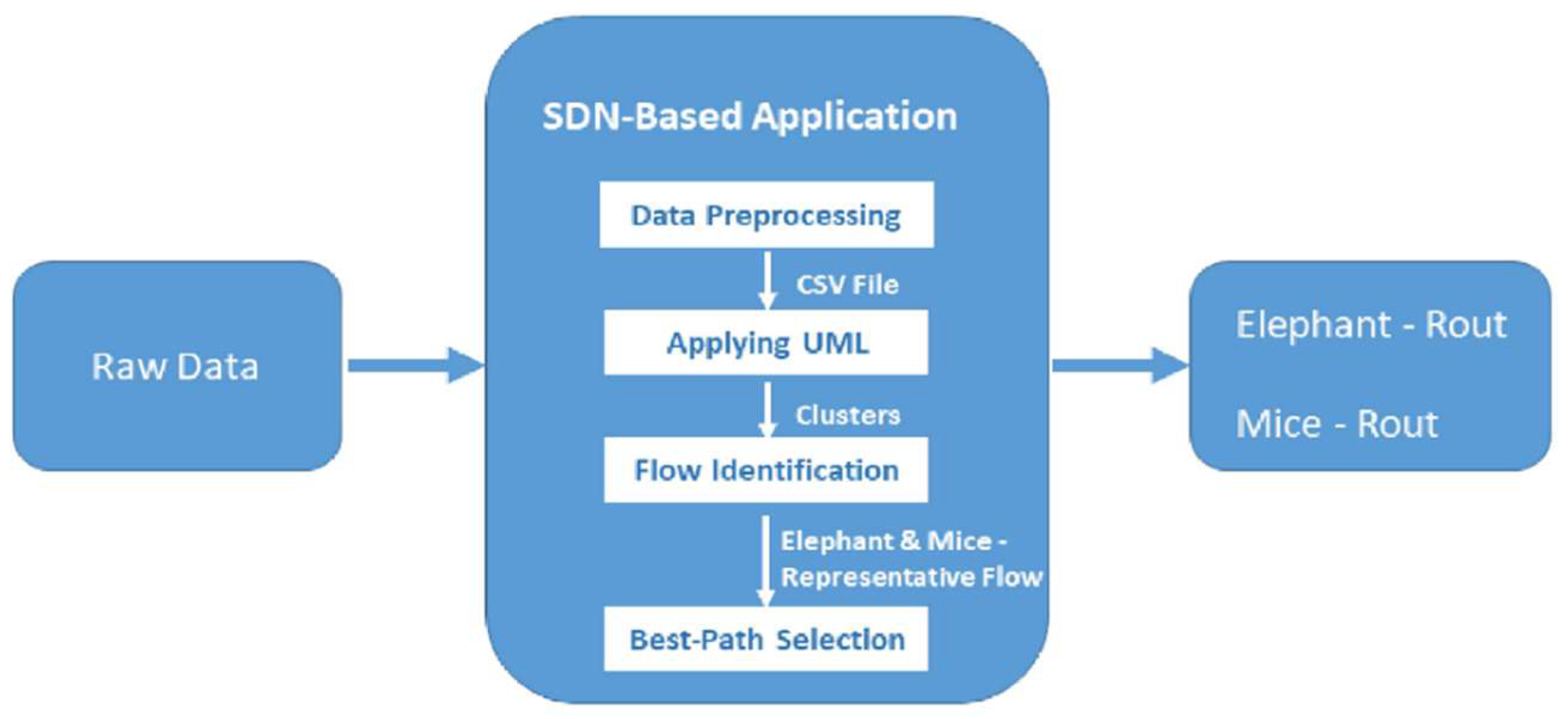
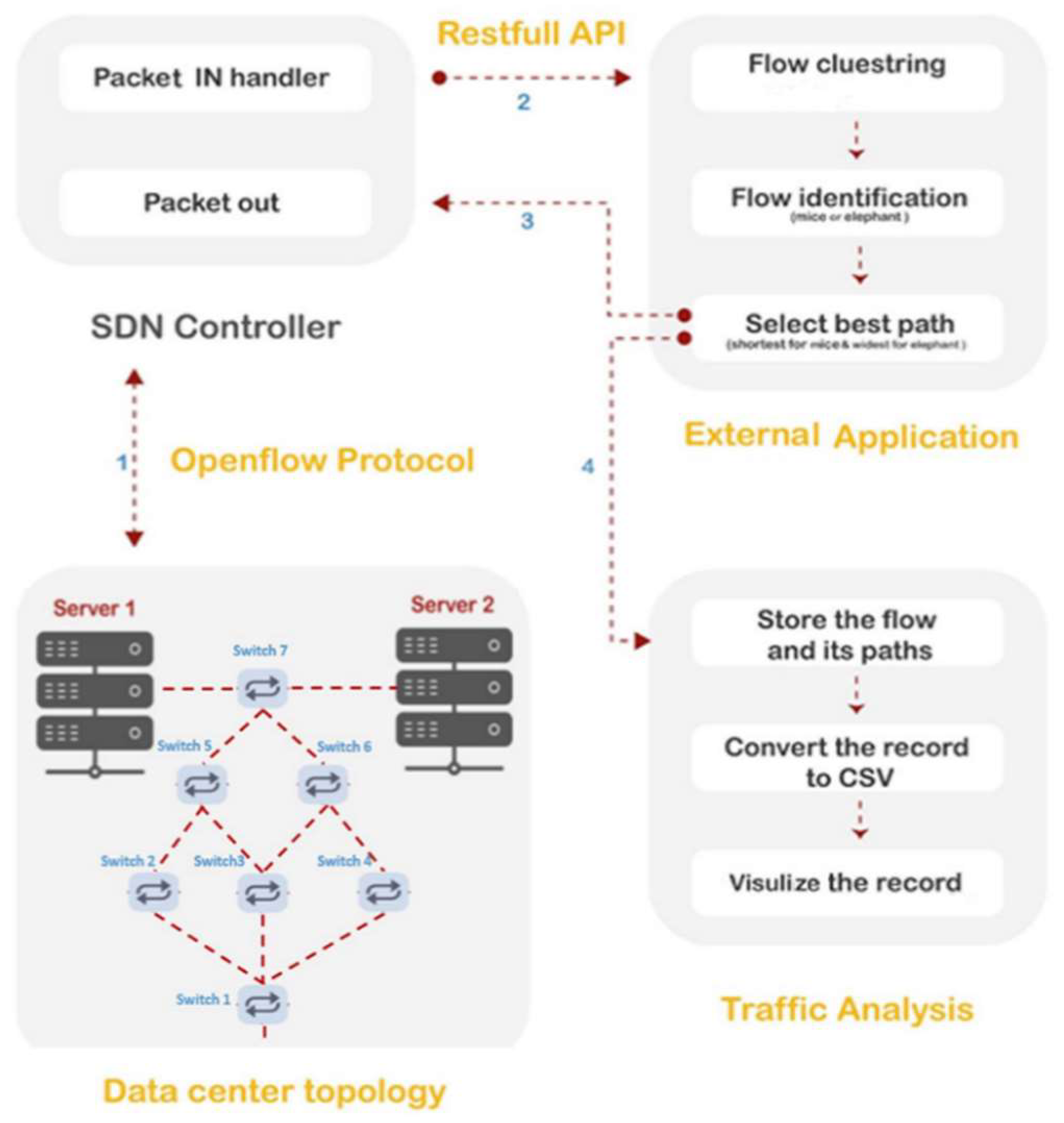
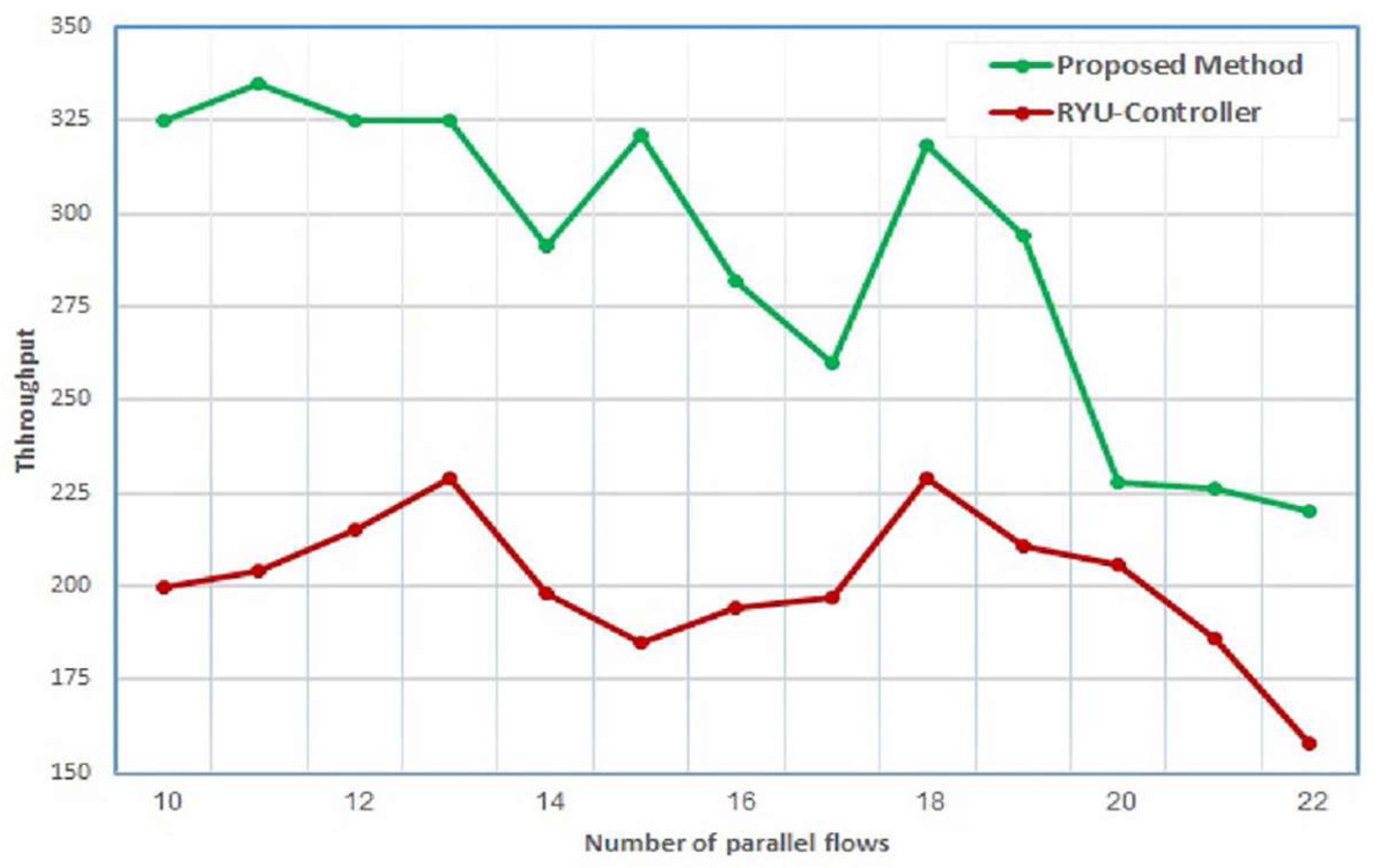
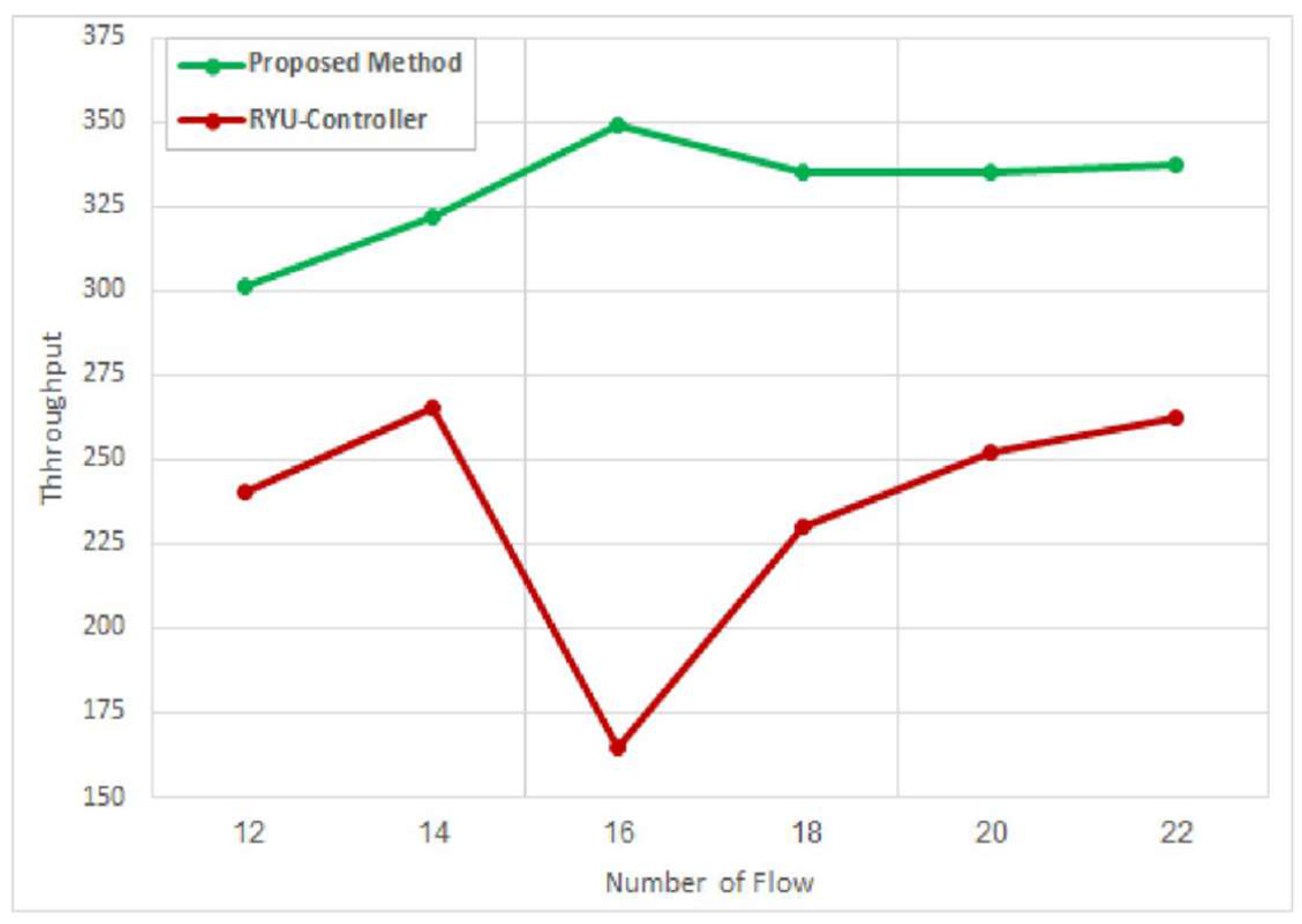
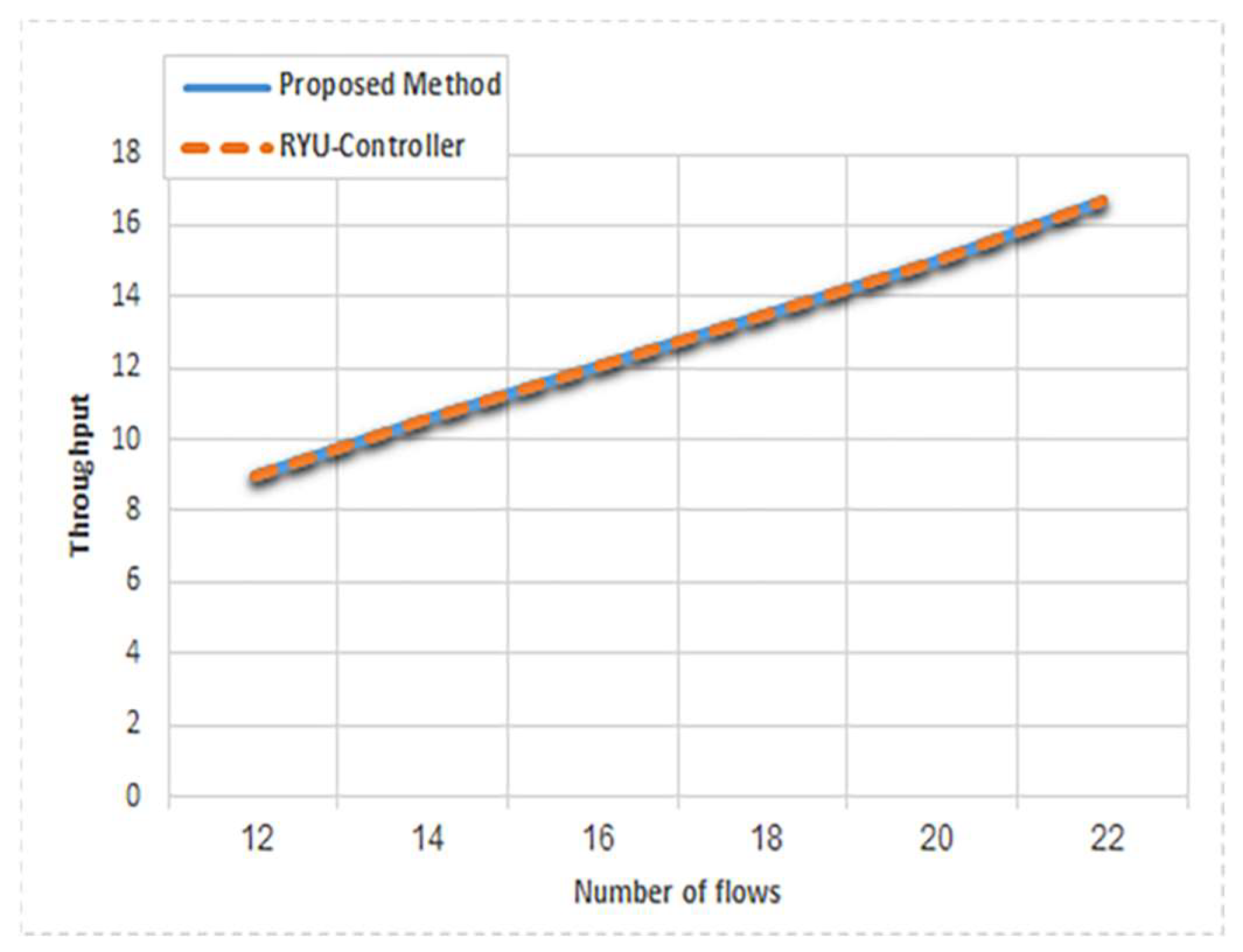
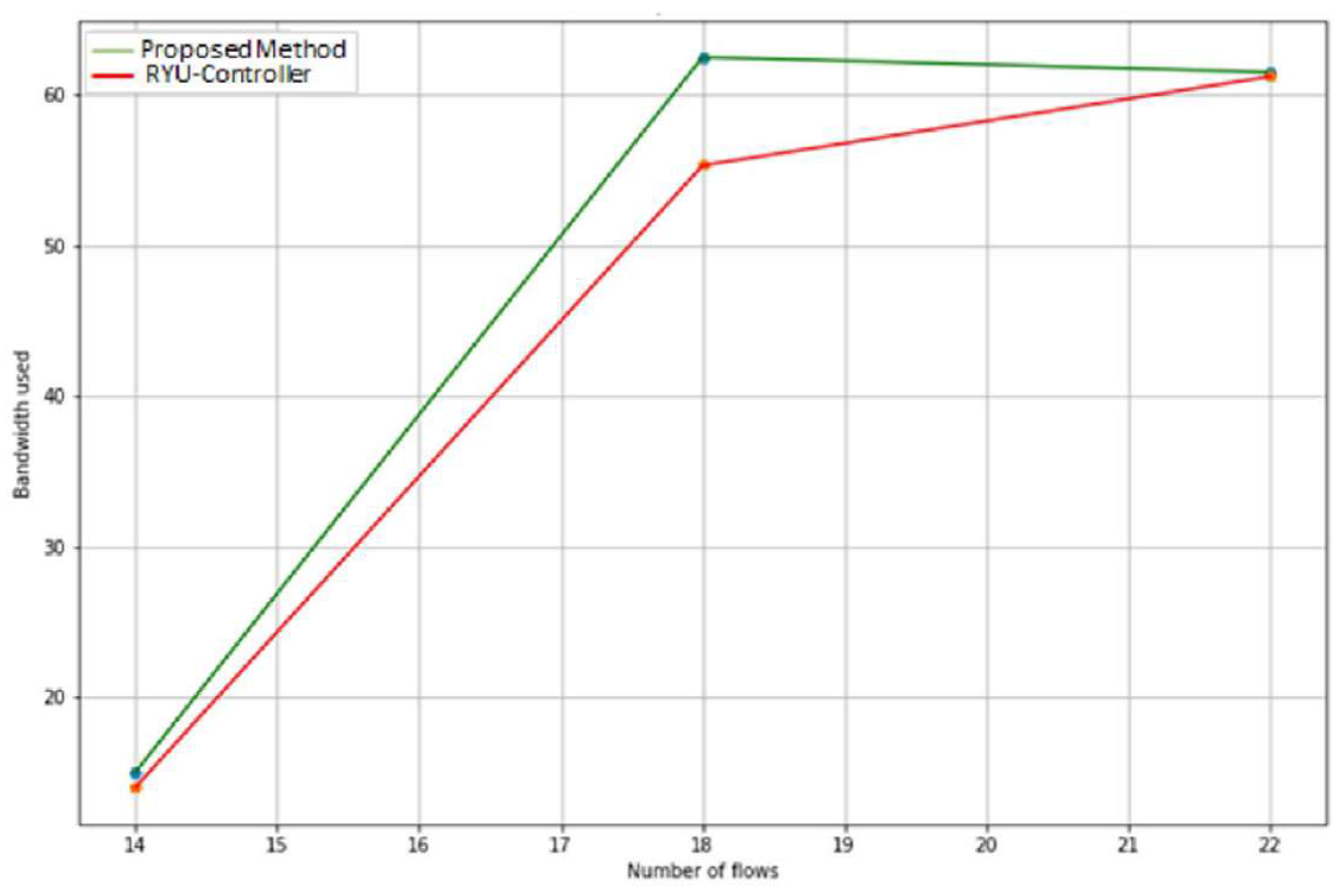
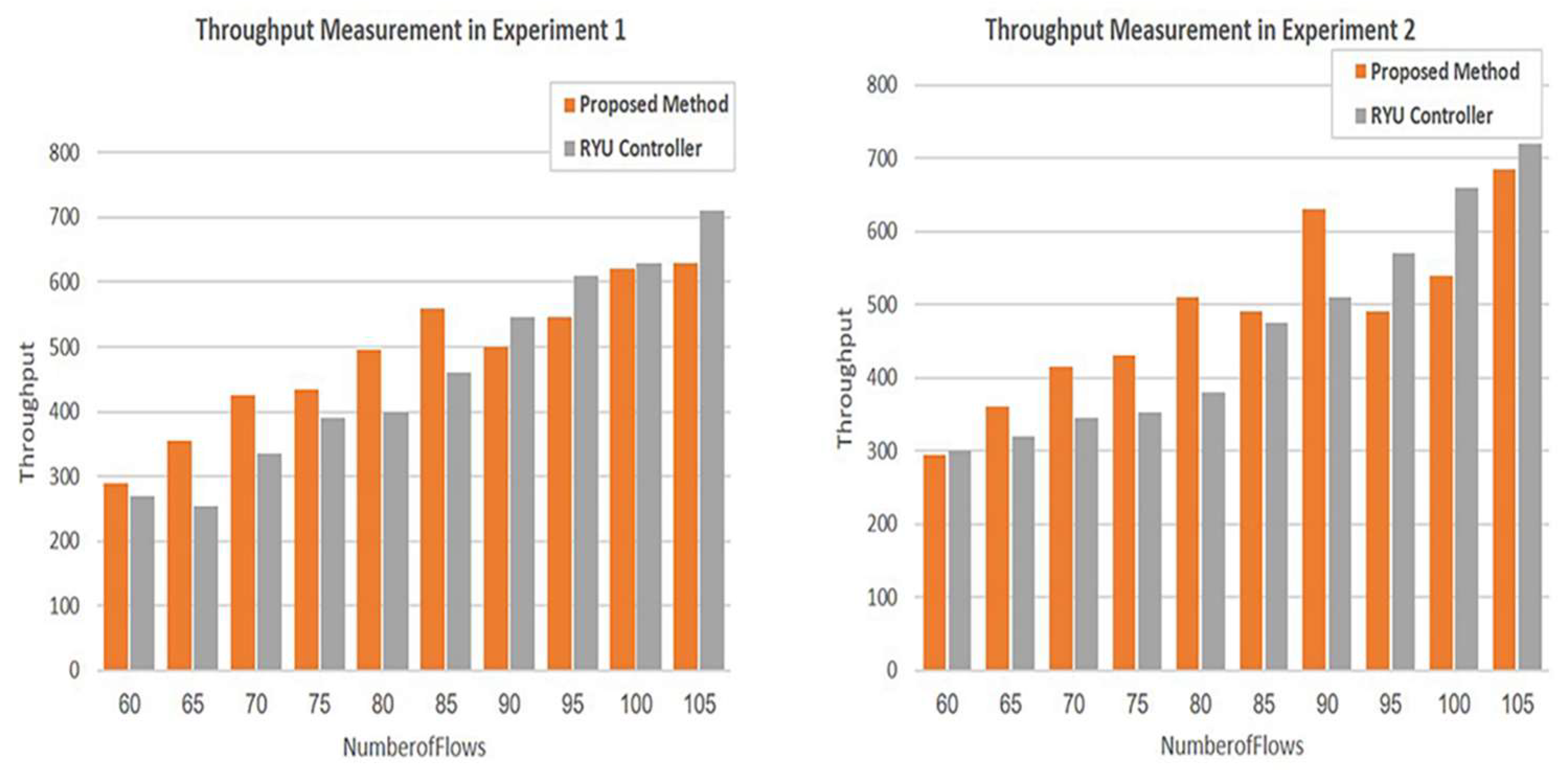
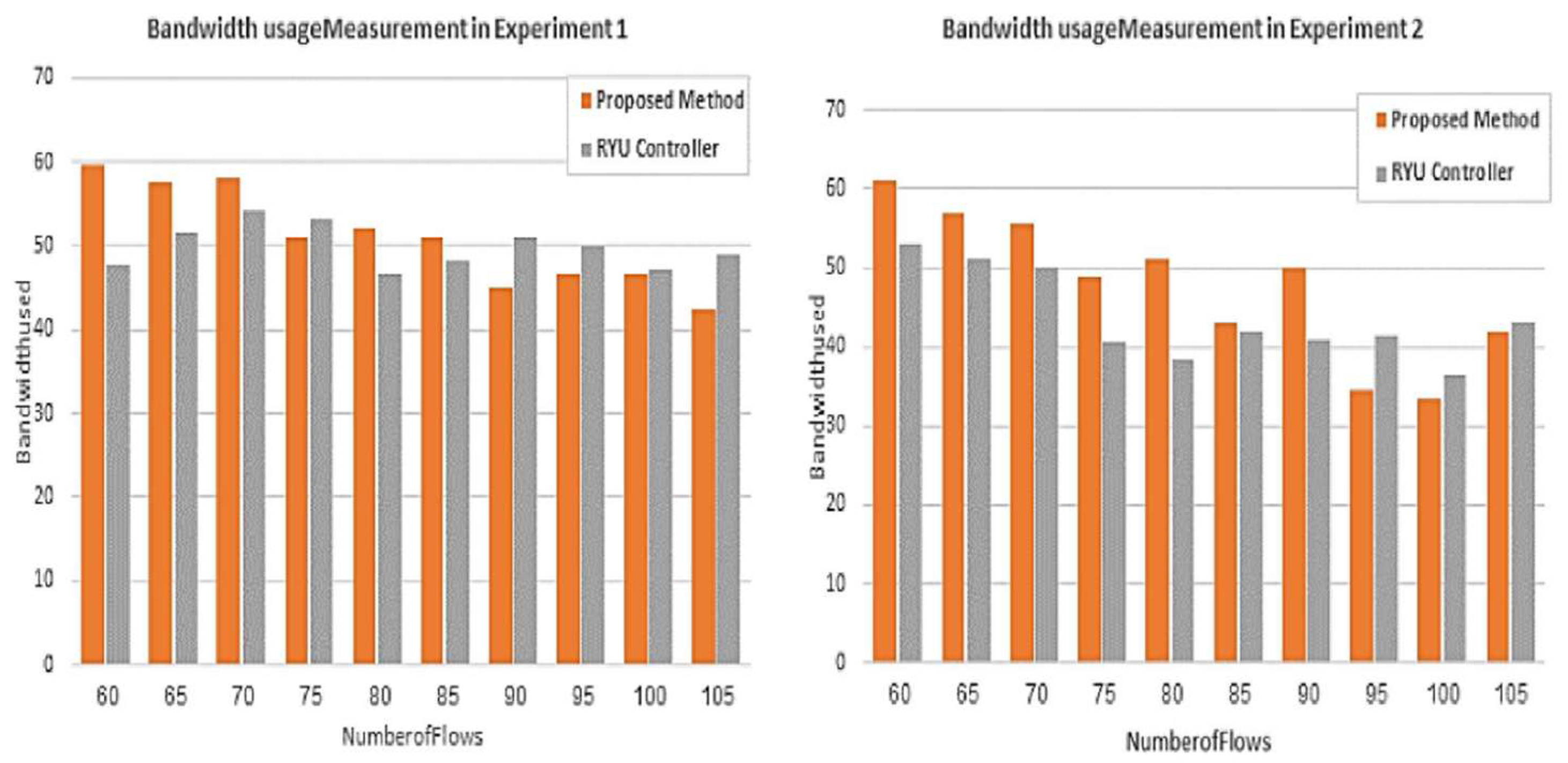
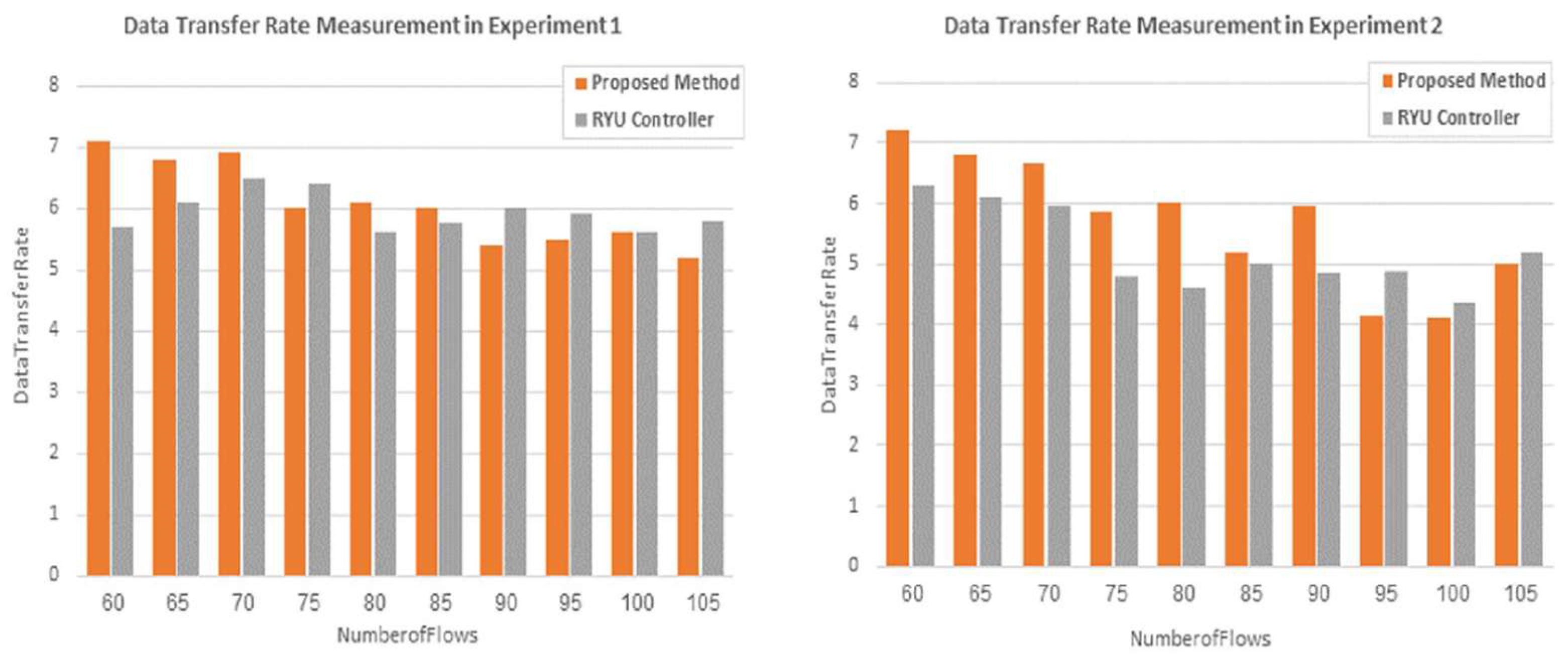
Software-defined networks (SDNs) have the capabilities of controlling the efficient movement of data flows through a network to fulfill sufficient flow management and effective usage of network resources. Currently, most data center networks (DCNs) suffer from the exploitation of network resources by large packets (elephant flow) that enter the network at any time, which affects a particular flow (mice flow). Therefore, it is crucial to find a solution for identifying and finding an appropriate routing path in order to improve the network management system. This work proposes a SDN application to find the best path based on the type of flow using network performance metrics. These metrics are used to characterize and identify flows as elephant and mice by utilizing unsupervised machine learning (ML) and the thresholding method. A developed routing algorithm was proposed to select the path based on the type of flow. A validation test was performed by testing the proposed framework using different topologies of the DCN and comparing the performance of a SDN-Ryu controller with that of the proposed framework based on three factors: throughput, bandwidth, and data transfer rate. The results show that 70% of the time, the proposed framework has higher performance for different types of flows.
Keywords: Software-Defined Networks (SDN); Data Center Networks (DCN); Machine Learning (ML); K-means; Principal Components Analysis (PCA); elephant flows; mice flows; flow identification; SDN application Software-Defined Networks (SDN); Data Center Networks (DCN); Machine Learning (ML); K-means; Principal Components Analysis (PCA); elephant flows; mice flows; flow identification; SDN application