Systematic Review

Heritage Management and Sustainable Tourism: A Systematic Literature Review

by
Nataša Urošević
1,*,
Kristina Afrić Rakitovac
1 and
Matteo Legović
2
1
Faculty of Economics and Tourism, Juraj Dobrila University of Pula, 52100 Pula, Croatia
2
Faculty of Tourism Studies—Turistica, University of Primorska, 6000 Koper, Slovenia
*
Author to whom correspondence should be addressed.
Encyclopedia 2026, 6(4), 78; https://doi.org/10.3390/encyclopedia6040078
Submission received: 9 March 2026 / Revised: 25 March 2026 / Accepted: 26 March 2026 / Published: 30 March 2026
(This article belongs to the Collection Encyclopedia of Social Sciences)

Abstract

Cultural heritage, with its humanistic values, is seen as a tool for preserving historical memory and reinforcing cultural identity, while its socio-economic values have a significant impact on the tourism industry. However, the contemporary global context, characterized by rapid and often unsustainable development, has intensified challenges such as tourism massification, urbanization, and climate change. To address these challenges, the authors assume that contemporary society should find a balanced development model in which heritage management becomes an integrated part of sustainable tourism practices. Although the relationship between heritage, tourism, and sustainability has been extensively explored for more than four decades, existing research remains fragmented and lacks an integrated conceptual framework that systematically explains the interconnections between sustainable tourism and heritage management. Therefore, the main goal of this paper is to develop a conceptual framework and conduct a comprehensive literature review that synthesizes these processes, contributing to the existing body of knowledge and addressing identified research gaps. The conducted research indicates that contemporary approaches should enhance integrated heritage management plans, effective visitor management strategies, carrying capacity assessments, and continuous monitoring of tourism impacts. In this context, sustainable tourism and heritage management represent a coordinated process of planning and governance aimed at ensuring the long-term conservation of cultural and natural heritage resources while enabling responsible tourism development. By reviewing and synthesizing existing literature, this paper contributes to the theoretical advancement of sustainable tourism and heritage management studies through the development of an integrated conceptual framework that addresses existing research gaps and incorporates contemporary academic insights.

1. Introduction

The Digital Era of global connectivity is marked by turbulent transformations and tensions between modernization processes and the preservation of tradition. As the most intimate elements of human culture; identity, tradition, and heritage, are increasingly challenged, this paper emphasizes the importance of the strategic and sustainable use of valuable and limited cultural resources.
Cultural heritage, considering its humanistic and socio-economic values, has a great impact on the economic, social, and cultural development of tourist destinations as well as environmental protection [1,2]. However, the contemporary global context, in which neoliberal economic models are characterized by the aggressive and unsustainable exploitation of resources, has intensified challenges such as tourism massification, urbanization, and climate change [3]. These processes contribute to overtourism, gentrification, the physical degradation of heritage sites, loss of authenticity, inadequate governance structures, and insufficient coordination among stakeholders, placing unique cultural heritage assets at increasing risk.
Heritage and tourism have multiple and dynamic interrelations, but the current issues have dramatically accelerated the tourism heritagization process and contributed to a new “heritage regime”, placing heritage as a driver in achieving sustainable goals, social justice and guaranteeing local communities well-being [4]. A long-standing issue is also the tension between the intrinsic and extrinsic values of cultural heritage, often resulting in conflicts between conservation objectives and heritage commodification [5]. Therefore, strategic policies and frameworks should prioritize the sustainable use of limited and valuable cultural and natural resources, thereby transforming local destinations into highly desirable and attractive places to live, work, visit, and invest in [6]. In this context, cultural heritage management aligns with sustainable tourism development, ensuring that heritage resources are protected, interpreted, and utilized in ways that generate long-term social, cultural, economic, and environmental benefits for local communities.
Although the relationship between heritage, tourism, and sustainability has been extensively explored for more than four decades [7,8,9,10], existing research remains fragmented and lacks an integrated conceptual framework that systematically explains the interconnections between sustainable tourism and heritage management. The main goal of this paper is to develop a conceptual framework through a systematic literature review (SLR) based on the PRISMA method. The authors assume that contemporary society should find a balanced development model in which heritage management becomes an integrated part of sustainable tourism practices.

2. Literature Review

2.1. Heritage Management

Cultural heritage is considered as a continuous process in which its tangible and intangible elements are transformed in contemporary experiences [11]. The importance of preserving and managing cultural heritage derives from the institutionalization of the first major international charters and conventions dedicated to heritage protection, notably the Athens Charter (1931) [12], the Venice Charter (1964) [12], the UNESCO World Heritage Convention (1972) [13], and the Burra Charter (1979) [14].
More than two decades ago, B. McKercher and H. du Cros [5] pioneered in linking heritage management and tourism, defining it as a key component in tourism development. The primary objective of heritage management is to safeguard tangible and intangible heritage for future generations, while ensuring the appropriate presentation and interpretation of its specific cultural values for present generations [5,15]. Recent studies emphasize the transition from technical conservation approaches to integrated socio-economic and governance-based models, reflecting the growing complexity of contemporary heritage contexts [16,17,18]. Heritage management has evolved into a global, interdisciplinary field shaped by comparative methodologies and cross-cultural policy transfer [19].
Understanding the process of heritage management derives from international frameworks related primarily to UNESCO World Heritage Sites, in which the heritage management system is recommended as a support to the conservation, protection and governance of unique properties and its values, while enhancing broader social, economic, and environmental benefits. This integrated approach places heritage management within a wider development context and emphasizes value-based protection, sustainability principles, and the participation of all key stakeholders [20,21,22,23]. The interdisciplinary, multidimensional and holistic framework of heritage management integrates tourism development, sustainability goals, conservation theory, spatial planning instruments, and governance mechanisms [22,23,24,25,26].
Heritage management systems share nine key components: Legislative, institutional and resources elements; planning, implementation and monitoring processes; and outcomes, outputs and improvements to the management system results [22]. Governance models are considered as essential aspects in heritage management, highlighting the decision-making process, its stakeholders, instruments (legislative policies, management plans), and processes of planning and community engagements [23]. The digitalization, performance assessment tools, and data-centric monitoring systems are increasingly connected with heritage governance frameworks, particularly in WH context [18].
Heritage management operates at three interconnected levels: Macro, meso, and micro, ranging from national policy frameworks and intersectoral coordination, through regional and landscape-based management, to local communities and individual cultural properties. Across all levels, it follows an integrated and cyclical approach in which understanding leads to valuing, valuing leads to protection, and protection enables the sustainable enjoyment of heritage over time [27]. Due to the complex interconnections among multiple stakeholders and their roles in ensuring the appropriate valorisation of traditional knowledge and cultural values, the creation and implementation of sustainable heritage management systems remain a continuous challenge [28]. Despite the great role of cultural heritage management for local economic development, the process is often challenged by the lack of coordination and potential conflicts between key stakeholders, administrative and political issues, limited finances, growing natural and human hazards, legislative and policy frameworks [29].
Conserving cultural heritage is essential for sustainable urban development, and the development dimension should emphasize humanistic and ecological aspects. On the other hand, unsustainable urbanization could pose a threat to cultural heritage, especially historic sites and cities, which are excluded from urban development processes, reflecting conflicting relationship between the development and conservation of heritage [30]. As indicated by R. van Oers [31], creating a sustainable urban environment requires respecting the ecological balance and social identity of urban communities, where heritage resources are used as drivers of cultural creativity, innovation, and urban regeneration.
Besides climate-related risks and long-term environmental uncertainty, protection of heritage sites endangered by numerous conflicts in war zones have become a current research topic in heritage management. A systematic review conducted by Orr, Richards, and Fatorić [32] discusses the rapid expansion of studies addressing risk mapping, vulnerability assessment, and policy integration as priority areas. Identifying climate resilience and disasters, while protecting fragile ecosystems and biodiversity, should align with pillars of contemporary heritage governance [33]. Starting with the 1954 Hague Convention for the Protection of Cultural Property in the Event of Armed Conflict [34], the protection of heritage sites in times of conflicts has become a priority in the policies of international organizations [35]. Since cultural heritage is perceived as an instrument for peace and reconciliation, its protection and conservation is crucial for rebuilding societies and overcoming the sense of loss and displacement caused by conflicts [36]. While cultural heritage is frequently viewed as a universal good, its protection can raise significant dilemmas regarding the prioritization of heritage over human life, the potential for politicization, and the involvement of military actors in preservation efforts [37].
Recent global syntheses underline the growing importance of the integration of collective memory studies into heritage governance, arguing that management strategies increasingly mediate between historical narratives, social cohesion, and contested interpretations of the past [38].
In tourism contexts, scholars consistently highlight the tensions between economic exploitation and heritage conservation, cautioning that unmanaged tourism pressures can undermine authenticity, social cohesion, and long-term sustainability [5,39,40]. In response, participatory, community-based, and bottom-up approaches to heritage management have gained prominence as alternative models to the existing passive state and public-dominated decision-making processes [41], advocating inclusive decision-making, multi-stakeholder cooperation, local empowerment, and community well-being [42,43], with particular emphasis on public–private–community partnerships [44]. Such inclusive and participatory approaches are considered crucial in achieving sustainable tourism development and heritage-based tourism [45,46].
Within the context of sustainable tourism, the fundamental paradigm of heritage management has shifted: heritage is conserved not only for its intrinsic value but also for its broader social, environmental, and economic functions [47,48,49]. Although demanding and complex, this approach contributes to heritage preservation and revitalisation, stimulates local economic development, and supports the strengthening of social capital and environmental protection [28]. The complex relationship between heritage management and sustainable tourism is reciprocal; while heritage management provides and protects the tourism resource to attract visitors, sustainable tourism should provide the financial and social support necessary for its long-term preservation.

2.2. Sustainable Tourism

Over the past sixty years, international organizations have evidenced how irresponsible and unsustainable tourism development, connected with mass- and overtourism, have often produced negative impacts on local communities, including environmental degradation, rising living costs, traffic congestion, and the neglect of residents’ needs in physical planning. It is also frequently associated with poor working conditions and social pressures, ultimately undermining the wellbeing and satisfaction of local inhabitants [50,51]. According to the United Nations and World Tourism Organization [52] (p. 7) sustainable tourism “can accelerate the structural transformation of economies and provide opportunities in related sectors”. When effectively managed and strategically promoted, investment in tourism has the potential to stimulate sustained economic growth, generate employment opportunities, strengthen the position of marginalized groups and local communities, advance social inclusion, drive innovation and technological adoption, and contribute to environmental conservation and climate change adaptation efforts.
The social, economic, environmental, and cultural challenges emerging in various host countries have stimulated academic debate on the necessity of developing a more responsible model of tourism development. This debate began already in the 1970s, including negative impacts of mass tourism, as well as the importance of environmental protection, and the search for alternative forms of tourism development [53,54].
Sustainable tourism was defined by the UNWTO [50] (pp. 11–12) as “tourism that takes full account of its current and future economic, social, and environmental impacts, addressing the needs of visitors, the industry, the environment and host communities”. The concept requires the informed participation of all relevant stakeholders as well as strong political leadership to ensure wide participation and consensus building. Sustainable tourism is generally understood to rest on four core pillars of sustainability: social, economic, cultural, and environmental. Social sustainability includes fostering social cohesion, strengthening social capital, promoting social justice and fairness, and encouraging responsible behaviour towards tourists and the host community. Economic sustainability focuses on recognizing and valuing natural, social, and human capital within national accounts, as well as on including environmental and social costs (externalities) in the financial reporting of tourism and related businesses. Environmental sustainability emphasizes the conservation, protection, and responsible use of natural resources. Cultural sustainability derived from the segment of social sustainability and was established as the fourth pillar of sustainable development [50,55].
The significance of the cultural dimension in sustainable tourism lies in the strong influence that cultural factors have on human relationships, consumer behaviour, environmental awareness and interactions with the natural environment. Leading international organizations defined cultural heritage as a catalyst for sustainable development [22,56,57], raising questions around the responsible use of cultural resources in tourism development. In this context tourist destination stakeholders should consider prioritizing heritage preservation within sustainable tourism strategies [58]. Deriving from these considerations, the UNESCO WH + ST Programme is crucial in defining sustainable tourism as a vehicle for managing cultural (and natural) heritage [59]. A sustainable tourism strategy cannot be culturally neutral; it must acknowledge cultural diversity and actively engage a wide range of stakeholders. According to J. D. Wolfesohn, former president of the World bank, “we are beginning to understand that the efficiency of development depends, in part on solutions” that are harmonized with the feeling of the (local) community for its own identity [60]. Sustaining local communities has emerged as a fundamental pillar of sustainable tourism. Unless resources within the host community are managed responsibly, the long-term sustainability of tourism development cannot be achieved [61].
The scientific discourse on sustainable tourism has intensified significantly over the past thirty years. Z. Liu [62] in his often cited paper criticizes the weaknesses in the sustainable tourism debates, elaborating on issues that are often overlooked but must be addressed in research, by using a systemic perspective and interdisciplinary approach: the dynamics of market requirements, the inherent qualities of destination assets, distributive justice, tourism’s role in socio-economic advancement, standardized metrics of sustainability, and sustainable tourism implementation models. R. Buckley [63] assesses the progress of sustainability practices in tourism businesses, considering that regulation, rather than market forces, is the primary driver of improvement in implementing sustainability measures, practices and standards. Sustainable tourism is constrained by a lack of rigorous and quantifiable metrics, which hinders the ability to assess whether management practices align with long-term sustainability objectives. After the introduction of sustainable–responsible tourism discourse, the debate shifted towards responsible–sustainable tourism as a synthesis of sustainable (theory/concept) and responsible (practice/action) tourism. It bridges the gap between sustainability ideals and implementation by focusing on how organizations and destinations actively apply sustainability agendas, often using a “Triple-A” model: Awareness, Agenda, and Action [53].
De Bryun et al. [64] after an extensive bibliometric and systematic analysis of 6326 Scopus-indexed studies on tourism sustainability published in the period from 1990 to 2022, conclude that tourism sustainability has gained significant academic prominence over time. While the volume of literature has expanded steadily since 1998, the field experienced substantial intensification after 2013, with annual contributions quadrupling to approximately 1000 by 2021. Although tourism research has grown rapidly, sustainability and the SDGs remain underexplored. Sustainability is often mentioned but not deeply integrated into tourism research or practice, leaving unclear guidance for managers. Since tourism depends on social, cultural, and environmental resources, stronger policies and destination management are needed. The authors also noticed a lack of research on carrying capacity in tourism, on sustainable tourism transport and on the methods and implications of facing overtourism and tourism in protected areas.
The scientific discourse on sustainable tourism in the last ten years has been developing towards some new and specific topics [65], addressing the transition towards smart and digital sustainable tourism [66,67,68]. More recently, the discussion is evolving towards the application and impacts of artificial intelligence in sustainable tourism [69] and the use of Big Data [70]. Many research papers address the importance of implementing a circular economy in the development of sustainable tourism [71]. Introducing sustainable tourism transition theory, the most recent studies reflect on a new way of thinking about contemporary challenges by establishing a comprehensive, holistic and systematic perspective. The sustainability transitions approach is defined as a theoretical framework and practical system exploring in depth the tourism transition to sustainability [72]. D. Dredge [73] explores the transformations in thinking, structural systems and practices that bridge the boundaries needed to enable the transition to regenerative tourism.
The shift from sustainable tourism to regenerative tourism moves beyond merely minimizing harm to actively improving and restoring destinations, leaving them better than before by enhancing ecological, cultural, and social capital, focusing on systems thinking, community co-creation, and empowering local people and nature to thrive, not just survive [74]. Regenerative tourism restores the symbiotic and co-evolutionary dynamics between human societies and natural ecosystems, emphasizing a bottom-up approach to destination management. While sustainability aims to maintain balance, regeneration seeks to create a net positive impact, fostering mutualism and resilience by integrating indigenous wisdom and a deeper understanding of interconnected living systems. Regenerative tourism reframes destinations as living systems and calls for development that restores social–ecological capacities while enhancing community wellbeing [75].
Many papers reflect on community-based tourism, elaborating on the importance of local community empowerment [76] and the role of community-based tourism in achieving sustainability goals [77]. In the context of strengthening social sensitivity, topics related to inclusive tourism, whose transformative role can contribute to profound social changes, are increasingly common [78]. Elaborating on the possibility of sustainable transformation, regeneration, and reset of the current global tourism development model, Afrić et al. [54] emphasize the importance of monitoring and measuring tourism sustainability, analyze existing frameworks, and propose developing the innovative system of sustainability indicators. Although the advanced systems of assessment and measurement of sustainability are developed, the key problem is still their implementation and the capacity of local and national stakeholders to apply these complex systems.
After the literature review, the next chapter defines the process of applying the PRISMA method and identifying eligible studies, used for building the following conceptual framework.

3. Methods

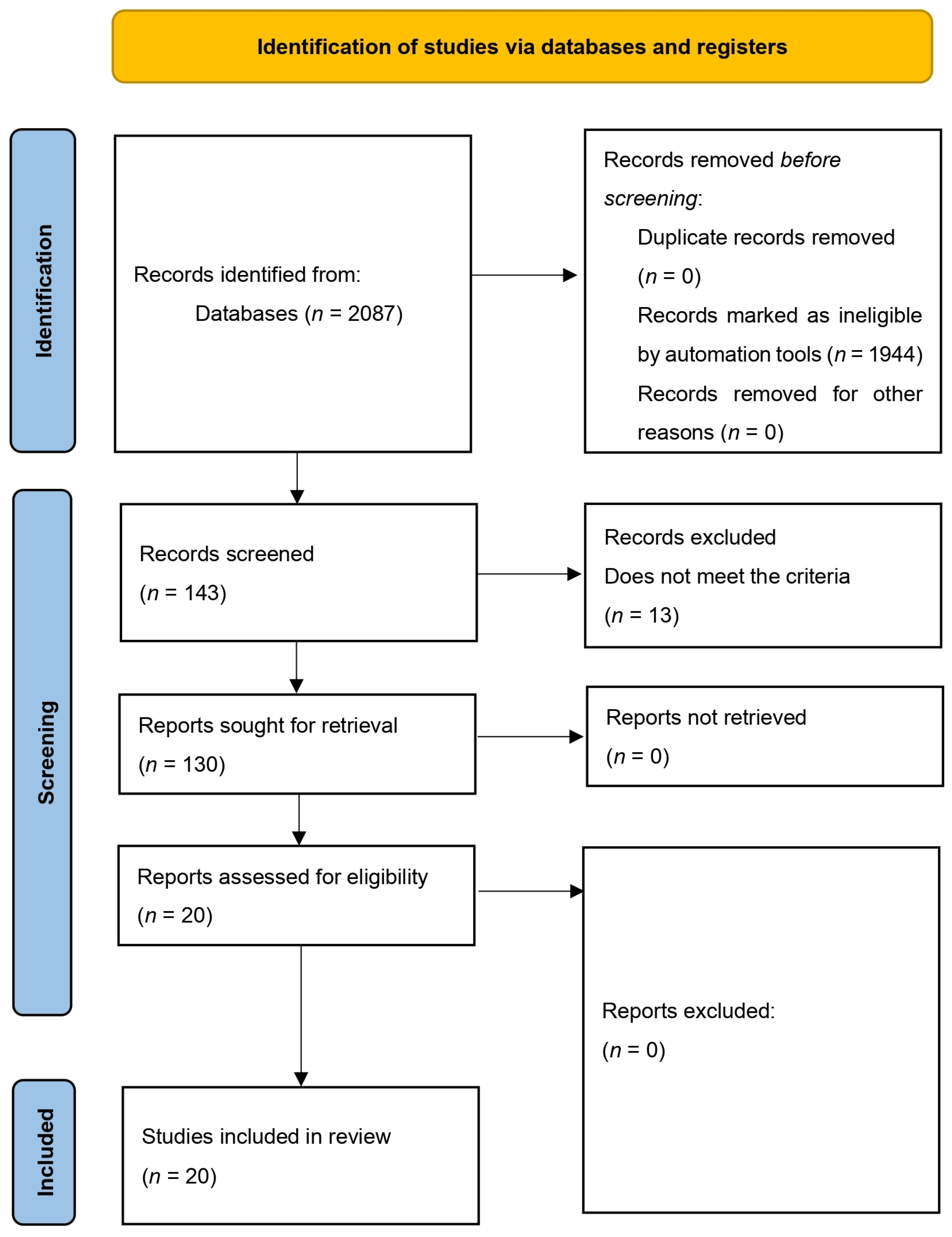
This research employed a systematic literature review methodology to assess the current state of the topic, identify research gaps, and propose an innovative conceptual framework. To identify and evaluate relevant studies, a search was conducted in the Scopus database in January and February 2026 using keywords related to heritage management and sustainable tourism. The selected keywords derive from the key concepts mentioned in the title of this paper and are the most widely used umbrella terms in the literature, related also to authors research fields and current projects. The search results are presented through a PRISMA flow diagram (Figure 1), following the PRISMA 2020 guideline (see Supplementary Materials) [79].
The structured identification was conducted using the search codes (“heritage management”) AND (“sustainable tourism”) within the TITLE-ABS-KEY fields (N = 2087). The screening process was limited to peer-reviewed journal articles published between 2015 and 2025, written in English, and available as open-access to ensure transparency and full-text accessibility (N = 130). The titles and abstracts were screened for relevance, followed by full-text assessment based on predefined inclusion criteria: explicit conceptual or empirical linkage between heritage management and sustainable tourism, focusing on governance, planning, conservation, or management dimensions, and clear methodological articulation (N = 20). Studies addressing tourism sustainability without a heritage dimension or conservation without tourism integration were excluded. Eligible studies were extracted and thematically coded to identify recurring dimensions such as governance models, sustainability indicators, carrying capacity assessment, community engagement and digital management tools (Table 1). The emerged themes (dimensions) formed the basis for the conceptual synthesis and informed the development of the proposed framework.

4. Results

The selected studies elaborate on the role of heritage management as a driver of sustainable tourism development, especially in the context of developing heritage-based tourism [80,81] and defining several important dimensions of this conceptual framework. Although the reviewed studies are predominantly case-study oriented, the conceptual synthesis reveals a clear theoretical anchoring within sustainable tourism theory, integrating heritage management. By synthesizing key conceptual dimensions across the selected studies, the framework clarifies how heritage assets function as drivers of sustainable tourism transformation.
Approaching cultural heritage not only as monuments and buildings, but as holistic cultural landscapes is important in valuing broader socio-economic heritage dimensions. Tourism destinations and their unique heritage assets are challenged with overtourism, environmental deterioration, and cultural commodification, so the first dimension reflects the need for the implementation of a management system, recommended as a tool for achieving sustainability and the preservation of resources [82,83]. Sustainable tourism development should imply the responsible management of natural and cultural heritage, maximizing destinations’ potential while creating a balance between environmental, economic, social, and cultural principles [84]. Heritage management systems emphasize preventive planning and adaptive management strategies that allow destinations to respond to growing tourism pressures while safeguarding the integrity of cultural resources.
The second dimension emerging from the reviewed studies concerns governance structures and stakeholder participation, emphasizing the importance of consultations with key stakeholders. Heritage management can be achieved through suitable tourism development by integrating cultural sites into sustainable tourism strategies that balance conservation, local engagement, and economic benefits, as demonstrated in the case of Öşkvank Monastery in northeast Turkey [85]. The study shows, through the SWOT and TOWS matrix, a structured Cultural Heritage Management Framework (CHMF) that engages diverse stakeholders in developing sustainable tourism plans and contributes to the preservation and socio-economic use of heritage assets. The most important aspect of integrating heritage management and sustainable tourism is the involvement of all local stakeholders in the decision-making process for managing tourism challenges [83]. The bottom-up approach is proposed as important practice in sustainable tourism development and ensuring the conservation and protection of tangible and intangible heritage [86]. Developing sustainable tourism practices through cultural revitalization and community participation, investigated on the Vietnamese case studies, indicates how it can enhance the empowerment and well-being of ethnic communities and preserve endangered cultural identities, traditions and costumes [87]. Human-induced threats, disturbance between key stakeholders, wrong priorities, and a lack of government interests can lead to the mismanagement and destruction of cultural heritage [88], thus not enabling the sustainable use of cultural heritage.
The third dimension relates to the operationalization of sustainability through measuring tools. The complex interconnection between sustainability, tourism, cultural heritage, and management highlights the need for implementing heritage sustainability indicators. In the analyzed study the identification of key sustainability indicators was employed on the selected built heritage attractions in the UK and China, indicating how “appropriate management is the key catalyst to sustainable development in practice” [89]. Measuring heritage sustainability is gaining great importance as a strategic management instrument, since well-defined indicators enable the continuous monitoring of the current condition of heritage assets, the identification of emerging socio-environmental pressures, and the timely adaptation of policies to address evolving conservation and tourism-related challenges. As the study by Ren and Han [89] indicate, from both a theoretical and an operational perspective, selecting relevant indicators for measuring heritage sustainability is highly demanding, as it requires specific and measurable variables that incorporate the environmental, social, cultural, and economic dimensions of management. An important aspect is also the monitoring of tourism impacts, which is crucial in achieving long-term sustainability [86].
In the current digital environment, innovations and digital technologies are discussed as important tools to enhance the sustainability of cultural heritage management through authentication, conservation, preservation, and promotion. Different digital tools, such as Information Modeling (BIM), Geographic Information Systems (GIS), Digital Twin (DT), Virtual Reality (VR), Augmented Reality (AR), Deep Learning (DL), and the Metaverse can positively contribute to the innovative interpretation of heritage by visitors, and the documentation, preservation, and monitoring of heritage assets [90]. Current global development is increasingly shaped by artificial intelligence and data-driven systems, so the integration of digital technologies into both sustainable tourism and heritage management is essential because it assists in monitoring, conservation, decision-making, and more personalized sustainable visitor engagement.
The fifth dimension reflected in the selected studies is the regeneration and revitalization of heritage. Mature tourist destinations with signs of economic stagnation, such as the case of Costa Blanca (Spain), founded their urban heritage as a resource for the sustainable transformation of tourism models through heritage regeneration and revitalization [91]. Urban heritage regeneration processes can be theoretically framed within sustainability transition models, where mature destinations shift from volume-based tourism toward value-based development. While urban heritage in the Mediterranean is confronted with tourism pressure, the literature review enlightens cultural routes as a development strategy in Asian countries in fostering sustainable tourism that preserves cultural and natural heritage [92]. The Middle East pilgrimage routes show how investing and revitalizing archaeological sites creates new experience, develops new jobs and preserves exceptional local heritage [80]. Cultural routes and itineraries, through revitalization programs, represent strategic reorientation mechanisms that seek to diversify local economies, but their effectiveness depends on institutional capacity, stakeholder coordination, and the ability to maintain heritage authenticity and local ownership.
The importance of heritage management and sustainable tourism is tightly connected to World Heritage Sites, due to substantial tourism growth often putting at risk cultural and natural resources of Outstanding Universal Value, especially relevant for new emerging WH destinations [93,94]. To answer exploitation and preservation challenges, the WHS of Chinese assembly halls in Hoi An (Vietnam) suggest how integrated approaches are needed for effective management, conservation, and responsible utilization, transforming the site into living heritage [95]. China is the second country in the world with the biggest number of WHS, with several examples of best practice in incorporating heritage management for sustainable tourism development. Investigating the well-known case of Mt. Huangshan as an example of sustainable development, the following elements are important to note: sustainable regulations and practices; visitor experience quality; cooperation between national and international organizations; maximizing the economic impacts of local economic development; local communities’ well-being; and building public heritage awareness [96]. Beside the mentioned elements, the conceptual connection between sustainable tourism and heritage management studies indicates also the role of social values [97] and tourism carrying capacities [98,99] which can contribute and ensure the long-term sustainability of WHS. Evaluating heritage values influences decisions on how cultural heritage should be protected and managed, particularly in destinations characterized by high-value heritage assets, where overtourism and large numbers of visitors can threaten heritage integrity and therefore require the implementation of carrying-capacity strategies. The mentioned sustainable tourism strategies at WHS must integrate complex management responsibilities related to conservation standards, governance models, visitor control, and key stakeholders’ cooperation, all with the purpose of maintaining the Outstanding Universal Value of the sites.
The analyzed literature suggests that the sustainability of heritage tourism increasingly depends on the capacity of destinations to adopt integrated and adaptive management approaches that respond to evolving economic, environmental, social, and technological challenges.
In this context, heritage management emerges as a dynamic process that continuously negotiates the relationship between conservation priorities, tourism development, and community well-being. As indicated by the reviewed studies, heritage management effectiveness strongly reflects on tourism sustainability, which can address current challenges and reinforce responsible development through the implementation of dimensions proposed in the next chapter.

5. Discussion

The review of the conducted research indicates that the majority of the studies remains based on participatory management approach and predominantly focus on identifying stakeholder attitudes as the main methodological contribution. This perspective has narrowed the analytical scope, leaving institutional frameworks and comparative governance models insufficiently explored. This reveals a structural gap that calls for a more holistic, robust, multidimensional and interdisciplinary framework which could enlighten transferable models that connect heritage stewardship with sustainable tourism development, allowing controlled innovation and economic vitality, and meet the needs of visitors and the aspirations of current and future local communities. This is confirmed by the current shifts in both sustainable tourism theory and heritage management concepts, where cultural heritage is approached as a holistic landscape, and heritage place [4,23,82] and tourist destinations are transitioning to sustainable development implementing regenerative practices [72,73].
The synthesis of the reviewed studies suggests that heritage management and sustainable tourism should not be treated as parallel or merely overlapping fields, but rather as interdependent subsystems within a broader socio-ecological heritage system. Within this conceptual framework, heritage management is understood as an institutionalized and coordinated process that requires a central governmental body responsible for aligning strategic actions across the cultural and tourism sectors, ensuring integrated governance and the promotion of sustainable tourism practices, minimizing negative socio-economic-environmental impacts. This discussion is addressed by several international frameworks, which are presented in the following paragraph.
The World Heritage and Sustainable Tourism (WH + ST) programme, recommended by UNESCO, represents one of the first international frameworks integrating participatory heritage management with sustainable tourism development [59]. The ICOMOS Cultural Tourism and Visitor Management Framework connects the International Cultural Heritage Tourism Charter (2022) (the Cultural Tourism Charter), UNESCO’s Visitor Management Assessment and Strategy Tool (VMAST) and the United Nations 2030 Sustainable Development Goals (UNSDG5), supporting systematic and inclusive approaches to sustainable destination and heritage management, focusing on the enhancement of community resilience and heritage values [100]. The recent UNESCO manual Managing World Heritage shifts the perspective from preserving monuments to a holistic heritage place approach. The framework introduces 12 tools used as an iterative methodology for evaluating the effectiveness of management systems, focusing on people-centered and rights-based approaches, emphasizing the importance of dynamic social, economic, environmental, and political contexts [23]. The existing international frameworks focus on several common topics related to sustainable development, policy frameworks, governance models, stakeholders’ participation, and climate change in search of solutions for current challenges in the turbulent global context. Building on this knowledge the authors elaborate on emerging issues such as digitalization and AI, disaster risk management, sustainability assessment, and cultural sensibility building. The novelty of the proposed framework consists of wider conceptualization and understanding of the evolution of cultural heritage from monument-based toward holistic and multidimensional approaches, and a broader understanding of tourism sustainability transitions.
Based on the conducted research Heritage Management and Sustainable Tourism Framework is understood as an interconnected theoretical and operational ecosystem, where sustainable tourism is not achievable without integrated heritage governance at a combination of macro, meso, and micro levels, and incorporating following dimensions:
  • Holistic Understanding of Cultural Heritage
    Heritage should be approached as a combination of tangible monuments, intangible practices, and broader cultural landscapes and heritage places. This perspective enables the evaluation of social, economic, environmental, and cultural dimensions, which is crucial for sustainable destination planning [23,82,83].
  • Tourism Sustainability Transitions
    The concept of sustainability transitions refers to long-term systemic changes in systems toward sustainability and development toward the structural transformation of destinations [72].
  • Institutional and Policy Frameworks
    Effective integration of heritage and tourism management relies on clear legislation, strategic policies, and financial mechanisms that support long-term sustainability [22,23,29,50].
  • Governance Models and Stakeholder Participation
    Establishing a central governance body is essential in creating a sustainable participatory heritage management framework [22,23], and participatory and bottom-up governance approaches engaging local communities and multi-stakeholder cooperation are crucial in achieving sustainable tourism development goals [76,77,78].
  • Sustainability Indicators
    Implementing measurable indicators is vital for monitoring heritage conditions, assessing tourism pressures, and informing policy adaptation. Studies highlight that appropriate indicator selection and implementation is complex but essential to translating sustainability principles into management practices and sustainable tourism development [54,63,89].
  • Digitalization and Innovation
    Emerging digital tools and AI-driven monitoring systems can enhance heritage conservation, while supporting destination planning and monitoring, as well as outcoming innovative tourism products through heritage interpretation [69,70,90].
  • Regeneration and Revitalization
    Urban heritage and management models (such as cultural routes) can drive sustainable tourism through strategic urban regeneration and revitalization, fostering economic development, preserving authenticity and fostering social cohesion [9,80,92].
  • Climate Change and Environmental Considerations
    Contemporary heritage governance must address climate risks, ecosystem protection, and long-term environmental sustainability to ensure the resilience of both heritage sites and tourism infrastructure [32,33].
  • Disaster Risk Adaptation
    Disaster risk adaptation strengthens the capacity of heritage sites and tourism destinations to anticipate, mitigate, and recover from environmental and human-induced hazards [23,36,37].
  • Community Education and Cultural Sensibility
    Building local awareness and curating the sensibility of local communities towards their unique resources are critical for sustaining community participation, ensuring responsible tourism behaviours, and protecting heritage values [97]. The imperative is to build responsible–sustainable communities.

6. Conclusions and Prospects

The conducted research indicates that sustainable tourism and heritage management represent a coordinated processes of planning and governance aimed at ensuring the long-term conservation of cultural and natural heritage resources while enabling responsible tourism development.
This paper contributes to the theoretical advancement of sustainable tourism and heritage management studies through the development of an integrated conceptual framework that addresses existing epistemological gaps and incorporates contemporary academic insights.
Besides the common and well elaborated themes, such as participatory management and stakeholders’ involvement, the conducted research indicated some important emerging concepts, which are still not adequately addressed such as, currently most relevant, topics related to the effects of potential threats of wars and conflicts, climate change and unsustainable urbanization. Regarding sustainability monitoring, the advanced systems of the assessment and measurement of sustainability are developed, both for tourism and heritage management, but the problem is still their implementation and the capacity of local and national stakeholders to apply these complicated systems. Although the research on smart and digital tourism and the use of AI both in tourism and heritage management has developed in the last decade, there is still a research gap related to the long-term impact of AI on tourism and heritage stakeholders, and whole sectors and sustainability indicators.
Future research should include improved governance models which would allow better coordination and communication between key stakeholders. The elaboration of existing frameworks aimed at balancing the preservation of cultural and natural assets with socio-economic development by positioning heritage as a catalyst for community well-being and environmental resilience must include key concepts, such as the carrying-capacity assessment. Further discussion should connect landscape-based approaches (such as Historic Urban Landscape) with sustainable re-use in the context of circular economies with the use of digital tools to evaluate economic, social, and environmental impacts, enhance conservation, and improve visitor management to ensure the sustainability of heritage management.
Although the conducted systematic review indicates the numerous studies elaborating on the importance of this topic, implementing sustainability dimensions into tourism development and incorporating heritage management systems remain complex and demanding processes. The proposed Heritage Management and Sustainable Tourism Framework, building on previous frameworks recommended by international organizations and scholars [23,59,100], could serve as a support to policymakers, managers, and all relevant stakeholders in finding a balanced development model in which heritage management is an integrated part of sustainable tourism practices.
The limitations of this research include the use of selected methodologies and the availability of analyzed literature.

Supplementary Materials

The following supporting information can be downloaded at: https://www.mdpi.com/article/10.3390/encyclopedia6040078/s1, PRISMA 2020 Checklist [79].

Author Contributions

All authors contributed equally. All authors have read and agreed to the published version of the manuscript.

Funding

This research received no external funding.

Institutional Review Board Statement

Not applicable.

Informed Consent Statement

Not applicable.

Data Availability Statement

No new data were created or analyzed in this study. Data sharing is not applicable to this article.

Conflicts of Interest

The authors declare no conflicts of interest.

References

  1. Timothy, D.J. Contemporary Cultural Heritage and Tourism: Development Issues and Emerging Trends. Public Archaeol. 2014, 13, 30–47. [Google Scholar] [CrossRef]
  2. Šmid Hribar, M.; Bole, D.; Pipan, P. Sustainable Heritage Management: Social, Economic and Other Potentials of Culture in Local Development. Procedia-Soc. Behav. Sci. 2015, 188, 103–110. [Google Scholar] [CrossRef]
  3. Milano, C.; Novelli, M.; Cheer, J.M. Overtourism and Tourismphobia: A Journey Through Four Decades of Tourism Development, Planning and Local Concerns. Tour. Plan. Dev. 2019, 16, 353–357. [Google Scholar] [CrossRef]
  4. Gravari-Barbas, M. Heritage and tourism: From opposition to coproduction. In A Research Agenda for Heritage Tourism; Grabari-Barbas, M., Ed.; Edward Elgar Publishing: Cheltenham, UK, 2020. [Google Scholar] [CrossRef]
  5. McKercher, B.; du Cros, H. Cultural Tourism: The Partnership Between Tourism and Cultural Heritage Management; Routledge: New York, NY, USA; London, UK, 2002. [Google Scholar]
  6. Urošević, N.; Afrić Rakitovac, K. Models of Valorisation of Cultural Heritage in Sustainable Tourism; Juraj Dobrila University of Pula: Pula, Croatia, 2017. [Google Scholar]
  7. Robinson, M.; Picard, D. Tourism, Culture and Sustainable Development; UNESCO: Paris, France, 2006. [Google Scholar]
  8. Loulanski, T.; Loulanski, V. The sustainable integration of cultural heritage and tourism: A meta-study. J. Sustain. Tour. 2011, 19, 837–862. [Google Scholar] [CrossRef]
  9. Jelinčić, D.A. Indicators for Cultural and Creative Industries’ Impact Assessment on Cultural Heritage and Tourism. Sustainability 2021, 13, 7732. [Google Scholar] [CrossRef]
  10. Pai, C.H.; Zhang, Y.; Wang, Y.L.; Li, K.; Shang, Y. Current challenges and opportunities in cultural heritage preservation through sustainable tourism practices. Curr. Issues Tour. 2025, 29, 1016–1034. [Google Scholar] [CrossRef]
  11. Ashworth, G. Preservation, Conservation and Heritage: Approaches to the Past in the Present through the Built Environment. Asian Anthropol. 2011, 10, 1–18. [Google Scholar] [CrossRef]
  12. ICOMOS. International Charter for the Conservation and Restoration of Monuments and Sites; ICOMOS: Venice, Italy, 1964. [Google Scholar]
  13. UNESCO. Convention Concerning the Protection of the World Cultural and Natural Heritage; UNESCO: Paris, France, 1972. [Google Scholar]
  14. ICOMOS. The Burra Charter: The Australia ICOMOS Charter for Places of Cultural Significance; ICOMOS: Burwood, Australia, 2013. [Google Scholar]
  15. Jelinčić, D.A. Culture in a Shopwindow: A Short Guide for Cultural Heritage Management; Meandarmedia: Zagreb, Croatia, 2010. [Google Scholar]
  16. Hayat, D.T.; Ibrahim, B. Sustainable Heritage Management: A Literature Review. In Managing Risk and Decision Making in Times of Economic Distress; Grima, S., Özen, E., Romānova, I., Eds.; Emerald Publishing Limited: Leeds, UK, 2022. [Google Scholar] [CrossRef]
  17. Cristini, V.; Mileto, C.; Vegas, F.; García-Soriano, L.; Juvanec, B.; Benko, A.; Palotas, J.; Palotas, G. Heritage Management: Educational Handbook; Re-think Heritage! Erasmus+ KA2 Strategic Partnership; Universitat Politècnica de València: Valencia, Spain, 2023; Available online: https://rethink-heritage.eu/uploads/RETHINK-book.pdf (accessed on 9 March 2026).
  18. Shlyakhetko, O.; Steinringer, C. Cultural Heritage Management: A Review of the Literature. In Data-Centric Business and Applications; Štarchoň, P., Fedushko, S., Gubíniová, K., Eds.; Lecture Notes on Data Engineering and Communications Technologies; Springer: Cham, Switzerland, 2024; Volume 208. [Google Scholar] [CrossRef]
  19. Zan, L.; Baraldi, S.B.; Lusiani, M.; Shoup, D.; Ferri, P.; Onofri, F. Managing Cultural Heritage: An International Research Perspective, 1st ed.; Routledge: Oxfordshire, UK, 2015. [Google Scholar] [CrossRef]
  20. Pedersen, A. Managing Tourism at World Heritage Sites: A Practical Manual for World Heritage Site Managers; UNESCO World Heritage Centre: Paris, France, 2002. [Google Scholar]
  21. Landorf, C. A Framework for Sustainable Heritage Management: A Study of UK Industrial Heritage Sites. Int. J. Herit. Stud. 2009, 15, 494–510. [Google Scholar] [CrossRef]
  22. UNESCO. Managing Cultural World Heritage; UNESCO World Heritage Centre: Paris, France, 2013. [Google Scholar]
  23. UNESCO. Managing World Heritage; UNESCO: Paris, France, 2026. [Google Scholar]
  24. UNESCO. The Recommendation on Historic Urban Landscape; UNESCO: Paris, France, 2011. [Google Scholar]
  25. Min, W. A scientometric review of cultural heritage management and sustainable development through evolutionary perspectives. npj Herit. Sci. 2025, 13, 215. [Google Scholar] [CrossRef]
  26. Kurnaz, A. From circular economy to social design: Obstacles and solutions in heritage management. J. Rural Stud. 2026, 122, 104000. [Google Scholar] [CrossRef]
  27. Pivac, T.; Vujičić, M.; Besermenji, S.; Vukojević, D.; Cimbaljević, M.; Marić, A. Management of Cultural Heritage and Cultural Tourism; Department of Geography, Tourism and Hotel, Faculty of Sciences, University of Novi Sad: Novi Sad, Serbia, 2022. [Google Scholar]
  28. Afrić Rakitovac, K. Sustainable tourism as a driver for community development. In Models of Valorisation of Cultural Heritage in Sustainable Tourism; Urošević, N., Afrić Rakitovac, K., Eds.; Juraj Dobrila University of Pula: Pula, Croatia, 2017. [Google Scholar]
  29. Seila, F.; Selim, G.; Newisar, M. A Systematic Review of Factors Contributing to Ineffective Cultural Heritage Management. Sustainability 2025, 17, 366. [Google Scholar] [CrossRef]
  30. Rashed, A. The Impacts of Unsustainable Urbanization on the Cultural Heritage. In Heritage Management [Working Title]; IntechOpen: London, UK, 2026. [Google Scholar] [CrossRef]
  31. van Oers, R. Cultural heritage management and sustainability. Percept. Sustain. Herit. Stud. 2015, 4, 189–202. [Google Scholar] [CrossRef]
  32. Orr, S.A.; Richards, J.; Fatorić, S. Climate Change and Cultural Heritage: A Systematic Literature Review (2016–2020). Hist. Environ. Policy Pract. 2021, 12, 434–477. [Google Scholar] [CrossRef]
  33. Pisolkar, Y. Cultural Heritage Management and Sustainable Development: Major Themes and Research Trajectories. J. Electr. Syst. 2024, 20, 2417–2431. [Google Scholar] [CrossRef]
  34. UNESCO. Available online: https://www.unesco.org/en/heritage-armed-conflicts (accessed on 9 March 2026).
  35. ICOMOS. Available online: https://www.icomos.org/advocacy/icomos-and-conflict-zones/ (accessed on 9 March 2026).
  36. Lambert, S.; Rockwell, C. Protecting Cultural Heritage in Times of Conflict; ICCROM: Rome, Italy, 2012. [Google Scholar]
  37. Russo, A. The Protection of Cultural Heritage in Conflict and Post-Conflict Settings: Challenges and Opportunities for Cooperation in EU Neighbouring Countries; Project Report; University of Trento: Trento, Italy, 2025; Available online: https://www.esteri.it/wp-content/uploads/2025/03/UNITN_The-Protection-of-Cultural-Heritage-in-Conflict-and-Post-Conflict-Settings.pdf (accessed on 9 March 2026).
  38. Castor, R.G. A systematic review of cultural memory and heritage management: Global perspectives and integrated analysis. Res. Sq. 2026. preprint. [Google Scholar] [CrossRef]
  39. Garrod, B.; Fyall, A. Managing heritage tourism. Ann. Tour. Res. 2000, 27, 682–708. [Google Scholar] [CrossRef]
  40. Vythoulka, A.; Caradimas, C.; Delegou, E.; Moropoulou, A. Cultural Heritage Preservation and Management in Areas Affected by Overtourism—A Conceptual Framework for the Adaptive Reuse of Sarakina Mansion in Zakynthos, Greece. Heritage 2025, 8, 288. [Google Scholar] [CrossRef]
  41. Grcheva, O.; Oktay Vehbi, B. From Public Participation to Co-Creation in the Cultural Heritage Management Decision-Making Process. Sustainability 2021, 13, 9321. [Google Scholar] [CrossRef]
  42. Li, J.; Krishnamurthy, S.; Pereira Roders, A.; van Wesemael, P. Community participation in cultural heritage management: A systematic literature review comparing Chinese and international practices. Cities 2020, 96, 102476. [Google Scholar] [CrossRef]
  43. Liorančaitė-Šukienė, A.; Jurėnienė, V. Heritage Management Models for Sustainable Community Tourism Development. Tour. Hosp. 2025, 6, 111. [Google Scholar] [CrossRef]
  44. Žuvela, A.; Šveb Dragija, M.; Jelinčić, D.A. Partnerships in Heritage Governance and Management: Review Study of Public–Civil, Public–Private and Public–Private–Community Partnerships. Heritage 2023, 6, 6862–6880. [Google Scholar] [CrossRef]
  45. Afrić Rakitovac, K.; Urošević, N. Stakeholders’ Perspectives on Post-Pandemic Sustainable Tourism Development—The Case of Vrsar, Croatia. Tour. Int. Interdiscip. J. 2023, 71, 193–210. [Google Scholar] [CrossRef]
  46. Ottaviani, D.; Demiröz, M.; Szemző, H.; De Luca, C. Adapting Methods and Tools for Participatory Heritage-Based Tourism Planning to Embrace the Four Pillars of Sustainability. Sustainability 2023, 15, 4741. [Google Scholar] [CrossRef]
  47. Tarrafa Pereira da Silva, A.M.; Pereira Roders, A.R. Cultural heritage management and heritage (impact) assessments. In Proceedings of the Joint CIB W070, W092 & TG72 International Conference on Facilities Management, Procurement Systems and Public Private Partnership, Cape Town, South Africa, 23–25 January 2012; Available online: https://research.tue.nl/en/publications/cultural-heritage-management-and-heritage-impact-assessments/ (accessed on 9 March 2026).
  48. Abdelalim, M.; Abowardah, E.S.; AbdelSattar, A.; Labib, W. Sustainable Management as Socio-Economic Challenge in the Context of Cultural Heritage Development. In Proceedings of the ICSDI 2024 Volume 2. ICSDI 2024; Mansour, Y., Subramaniam, U., Mustaffa, Z., Abdelhadi, A., Al-Atroush, M., Abowardah, E., Eds.; Lecture Notes in Civil Engineering; Springer: Singapore, 2025; Volume 557. [Google Scholar] [CrossRef]
  49. Yildiz, G.; Hetemoglu-Venedik, A. Transforming Heritage into Innovation Spaces: Exploration of Heritage Helix Ecosystems. Heritage 2024, 7, 7142–7164. [Google Scholar] [CrossRef]
  50. UNWTO. Sustainable Tourism for Development; UNWTO: Madrid, Spain, 2013. [Google Scholar] [CrossRef]
  51. UNWTO. ‘Overtourism’?—Understanding and Managing Urban Tourism Growth beyond Perceptions; UNWTO: Madrid, Spain, 2018. [Google Scholar] [CrossRef]
  52. UNWTO. Guiding Principles for Sustainable Investment in Tourism; UN/UN Tourism: New York, NY, USA; Madrid, Spain, 2025. [Google Scholar] [CrossRef]
  53. Mihalic, T. Sustainable-responsible tourism discourse—Towards “responsustable” tourism. J. Clean. Prod. 2016, 11, 461–470. [Google Scholar] [CrossRef]
  54. Afrić Rakitovac, K.; Vukadin, I.M.; Urošević, N. Challenges of Measuring Sustainable Tourism Development in the Mediterranean—Case Study of Croatia. In Global Challenges and Uncertainty in Tourism and Hospitality; Fan, D.X., Efthymiou, L., Thrassou, A., Vrontis, D., Eds.; Palgrave Macmillan: Cham, Switzerland, 2025; Volume II. [Google Scholar] [CrossRef]
  55. Zheng, X.; Herman, S.S.B.; Salih, S.A.; Ismail, S.B. Sustainable Characteristics of Traditional Villages: A Systematic Literature Review Based on the Four-Pillar Theory of Sustainable Development. Sustainability 2024, 16, 10352. [Google Scholar] [CrossRef]
  56. Labadi, S.; Giliberto, F.; Rosetti, I.; Shetabi, L.; Yildirim, E. Heritage and the Sustainable Development Goals: Policy Guidance for Heritage and Development Actors; ICOMOS: Paris, France, 2021; Available online: https://openarchive.icomos.org/id/eprint/2453 (accessed on 9 March 2026).
  57. Council of Europe. Culture Without Borders: Cultural Heritage Management for Local and Regional Development; Council of Europe: Strasburg, France, 2025. [Google Scholar]
  58. Ye, J.; Qin, Y.; Wu, H. Cultural heritage and sustainable tourism: Unveiling the positive correlations and economic impacts. Curr. Psychol. 2024, 43, 36393–36415. [Google Scholar] [CrossRef]
  59. UNESCO. Available online: https://whc.unesco.org/en/tourism/ (accessed on 9 March 2026).
  60. UNESCO. World Report Investing in Cultural Diversity and Intercultural Dialogue; UNESCO: Paris, France, 2009; Available online: http://unesdoc.unesco.org/images/0018/001847/184755e.pdf (accessed on 9 March 2026).
  61. Richards, G.; Hill, D. (Eds.) Tourism and Sustainable Community Development; Routledge Advances in Tourism: Oxford, UK, 2000. [Google Scholar]
  62. Liu, Z. Sustainable Tourism Development: A Critique. J. Sustain. Tour. 2003, 11, 459–475. [Google Scholar] [CrossRef]
  63. Buckley, R. Sustainable tourism: Research and reality. Ann. Tour. Res. 2012, 39, 528–546. [Google Scholar] [CrossRef]
  64. De Bruyn, C.; Ben Said, F.; Meyer, N.; Soliman, M. Research in tourism sustainability: A comprehensive bibliometric analysis from 1990 to 2022. Heliyon 2023, 9, e18874. [Google Scholar] [CrossRef]
  65. Judijanto, L.; Syamsulbahri, S.; Harsono, I. Mapping Research Trends in Sustainable Tourism Development. Es Econ. Entrep. 2025, 3, 273–286. [Google Scholar] [CrossRef]
  66. Boes, K.; Buhalis, D.; Inversini, A. Smart tourism destinations: Ecosystems for tourism destination competitiveness. Int. J. Tour. Cities 2016, 2, 108–124. [Google Scholar] [CrossRef]
  67. Gretzel, U.G.; Sigala, M.; Xiang, Z.; Koo, C. Smart tourism: Foundations and developments. Electron. Mark. 2015, 25, 179–188. [Google Scholar] [CrossRef]
  68. Tussyadiah, I.P.; Wang, D.; Jia, C.H. Virtual Reality and Attitudes Toward Tourism Destinations. In Information and Communication Technologies in Tourism 2017, Proceedings of the International Conference; Schegg, R., Stangl, B., Eds.; Springer: Berlin/Heidelberg, Germany; University of Surrey: Guildford, UK, 2017. [Google Scholar]
  69. Bulchand-Gidumal, J.; William Secin, E.W.; O’Connor, P.; Buhalis, D. Artificial intelligence’s impact on hospitality and tourism marketing: Exploring key themes and addressing challenges. Curr. Issues Tour. 2024, 27, 2345–2362. [Google Scholar] [CrossRef]
  70. Xu, F.; Nash, N.; Whitmarsh, L. Big data or small data? A methodological review of sustainable tourism. J. Sustain. Tour. 2020, 28, 144–163. [Google Scholar] [CrossRef]
  71. Fusco Girard, L.; Nocca, F. From linear to circular economy. Aestimum 2017, 70, 51–74. [Google Scholar] [CrossRef]
  72. Niewiadomski, P.; Brouder, P. From ‘sustainable tourism’ to ‘sustainability transitions in tourism’? Tour. Geogr. 2024, 26, 141–150. [Google Scholar] [CrossRef]
  73. Dredge, D. Regenerative tourism: Transforming mindsets, systems and practices. J. Tour. Futures 2022, 8, 269–281. [Google Scholar] [CrossRef]
  74. GSTC. Global Sustainable Tourism Council Criteria and Suggested Performance Indicators for Destinations; Global Sustainable Tourism Council: Washington, DC, USA, 2013; Available online: http://www.gstcouncil.org (accessed on 9 March 2026).
  75. Bellato, L.; Pollock, A. Regenerative tourism: A state-of-the-art review. Tour. Geogr. 2023, 27, 558–567. [Google Scholar] [CrossRef]
  76. Boley, B.; McGehee, N.; Hammet, A.L. Importance-performance analysis (IPA) of sustainable tourism initiatives: The resident perspective. Tour. Manag. 2017, 58, 66–77. [Google Scholar] [CrossRef]
  77. Jackson, L.A. Community-Based Tourism: A Catalyst for Achieving the United Nations Sustainable Development Goals One and Eight. Tour. Hosp. 2025, 6, 29. [Google Scholar] [CrossRef]
  78. Biddulph, R.; Scheyvens, R. Introducing inclusive tourism. Tour. Geogr. 2018, 20, 583–588. [Google Scholar] [CrossRef]
  79. Page, M.J.; McKenzie, J.E.; Bossuyt, P.M.; Boutron, I.; Hoffmann, T.C.; Mulrow, C.D.; Shamseer, L.; Tetzlaff, J.M.; Akl, E.A.; Brennan, S.E.; et al. The PRISMA 2020 Statement: An Updated Guideline for Reporting Systematic Reviews. BMJ 2021, 372, n71. [Google Scholar] [CrossRef] [PubMed]
  80. Moscatelli, M. Heritage as a Driver of Sustainable Tourism Development: The Case Study of the Darb Zubaydah Hajj Pilgrimage Route. Sustainability 2024, 16, 7055. [Google Scholar] [CrossRef]
  81. Demiröz, M.; Åberg, H.E.; de Luca, C. Shaping the Relation Between Heritage and Tourism: Taxonomies of Sustainable Cultural Tourism for Local Development. Herit. Soc. 2025, 1–21. [Google Scholar] [CrossRef]
  82. Biasi, R.; Collotti, F.V.; Baia Curioni, S. Returning to Integrated Landscape Management as an Approach to Counteract Land Degradation in Small Mediterranean Islands: The Case Study of Stromboli (Southern Tyrrhenian Sea, Italy). Land 2024, 13, 1949. [Google Scholar] [CrossRef]
  83. Singh, S.K.; Choudari, S.; Dubey, A.; Rani, N.; Dutta, I.; Singh, O.S.; Singh, H. Cultural Landscapes and Sustainable Tourism Development: Balancing Conservation and Economic Growth. J. Appl. Bioanal. 2025, 11, 55–71. [Google Scholar] [CrossRef]
  84. Krajnović, A.; Zdrilić, I.; Miletić, N. Sustainable Development of an Island Tourist Destination: Example of the Island of Pag. Acad. Tur.-Tour. Innov. J. 2021, 14, 23–37. [Google Scholar] [CrossRef]
  85. Özgeriş, M.; Demircan, N.; Karahan, A.; Gökçe, O.; Karahan, F.; Sezen, I.; Akpınar Külekçi, E. Cultural Heritage Management in the Context of Sustainable Tourism: The Case of Öşkvank Monastery (Uzundere, Erzurum). Sustainability 2024, 16, 9964. [Google Scholar] [CrossRef]
  86. Jamhawi, M.M.; Hajahjah, Z.A. A bottom-up approach for cultural tourism management in the old city of As-Salt, Jordan. J. Cult. Herit. Manag. Sustain. Dev. 2017, 7, 91–106. [Google Scholar] [CrossRef]
  87. Nguyen Thi, H.; Nguyen Thi, T.; Vu Trong, T.; Nguyen Duc, T.; Nguyen Nghi, T. Sustainable tourism governance: A study of the impact of culture. J. Gov. Regul. 2024, 13, 474–485. [Google Scholar] [CrossRef]
  88. Nomishan, T.S.; Tubi, P.K.; Gubam, D.S. Cultural heritage management and the effect of corruption in Nigeria: Hampering sustainable development via cultural heritage destruction. J. Cult. Herit. Manag. Sustain. Dev. 2023, 13, 662–684. [Google Scholar] [CrossRef]
  89. Ren, W.; Han, F. Indicators for Assessing the Sustainability of Built Heritage Attractions: An Anglo-Chinese Study. Sustainability 2018, 10, 2504. [Google Scholar] [CrossRef]
  90. El-belkasy, M.I.; Shehata, A.M. Framework for Digital Application in Sustainable Heritage Management. Civ. Eng. Archit. 2024, 12, 2326–2341. [Google Scholar] [CrossRef]
  91. Ruiz, I.; Serrano, B.; Temes, R. Renovation of mature destinations: The case of the Playa De San Juan. Int. J. Sustain. Dev. Plan. 2016, 11, 295–302. [Google Scholar] [CrossRef]
  92. Zhang, K.; González del Valle-Brena, A.; Ramos Riera, I.; Zhao, J. Ancient routes, new gateways: A systematic literature review of China’s cultural route heritage. J. Cult. Herit. Manag. Sustain. Dev. 2024, 14, 266–281. [Google Scholar] [CrossRef]
  93. Bay, M.A.; Alnaim, M.M.; Albaqawy, G.A.; Noaime, E. The Heritage Jewel of Saudi Arabia: A Descriptive Analysis of the Heritage Management and Development Activities in the At-Turaif District in Ad-Dir’iyah, a World Heritage Site (WHS). Sustainability 2022, 14, 10718. [Google Scholar] [CrossRef]
  94. Sampieri, S.; Bagader, M. Sustainable Tourism Development in Jeddah: Protecting Cultural Heritage While Promoting Travel Destination. Sustainability 2024, 16, 9148. [Google Scholar] [CrossRef]
  95. That, V.V.; Hop, D.V.; Tuyet, V.T.A. Management and conservation of ancient architectural heritage for sustainable tourism development: A case study of Chinese Assembly Halls in Hoi An (Quang Nam, Vietnam). Multidiscip. Sci. J. 2025, 8, 2026356. [Google Scholar] [CrossRef]
  96. Zhu, H.; Zhang, J.; Yu, X.; Hu, S. Sustainable tourism development strategies and practices of World Heritage Sites in China: A case study of Mt. Huangshan. Int. J. Sustain. Dev. Plan. 2019, 14, 297–306. [Google Scholar] [CrossRef]
  97. Dans, E.P.; González, P.A. Sustainable tourism and social value at World Heritage Sites: Towards a conservation plan for Altamira, Spain. Ann. Tour. Res. 2019, 74, 68–80. [Google Scholar] [CrossRef]
  98. Bencardino, M.; Cresta, A.; Esposito, V.; Senatore, A.; Valanzano, L. A Model for Estimating the Tourism Carrying Capacity (TCC) of a Serial Cultural Heritage: The Case of the Via Appia. Regina Viarum. Sustainability 2025, 17, 8213. [Google Scholar] [CrossRef]
  99. Erdoğan, A. Carrying Capacity Assessments for Sustainable Tourism in A Heritage Site. Adv. Hosp. Tour. Res. (AHTR) 2025, 13, 237–274. [Google Scholar] [CrossRef]
  100. Organization of World Heritage Cities; ICOMOS ICTC (International Committee on Cultural Tourism). Cultural Tourism and Visitor Management Framework Workbook; Organization of World Heritage Cities: Quebec, QC, Canada, 2023. [Google Scholar]
Figure 1. PRISMA flow diagram.
Encyclopedia 06 00078 g001
Table 1. Studies included in review.
Ref. NoTitleAuthorYearKeywords
[80]Heritage as a Driver of Sustainable Tourism Development: The Case Study of the Darb Zubaydah Hajj Pilgrimage Route Monica Moscatelli2024culture heritage, community engagement, economic development, pilgrimage route,
sustainable tourism, Saudi Arabia
[81]Shaping the Relation Between Heritage and Tourism:
Taxonomies of Sustainable Cultural Tourism for Local Development
Merve Demiröz, Hanna Elisabet Åberg, Claudia de Luca2025cultural tourism planning,
heritage management,
heritage resources, heritage-based tourism, cultural
tourism product, co-mapping, community,
heritage experts, urban and
regional development
[82]Returning to Integrated Landscape Management as an Approach to Counteract Land Degradation in Small Mediterranean
Islands: The Case Study of Stromboli (Southern Tyrrhenian Sea, Italy)
Rita Biasi, Francesco Valerio Collotti,
Stefano Baia Curioni
2024agroforestry, community, cultural landscape, ecological landscape design, extreme climate events, heritage, Olea europaea, sustainable tourism, territory, traditional hydraulic knowledge
[83]Cultural Landscapes and Sustainable Tourism Development:
Balancing Conservation and Economic Growth
Shashank Kishor Singh, Sudheer Choudari, Arunanshu Dubey, Neha Rani, Indrajit Dutta, Oinam Sadananda Singh, Harsh Singh2025cultural landscapes, sustainable tourism, conservation, economic growth, community engagement
[84]Sustainable Development of an Island Tourist
Destination: Example of the Island of Pag
Aleksandra Krajnović,
Ivica Zdrilić,
Nikolina Miletić
2021sustainable tourism, mass tourism, sustainable tourist destination,
seasonability, sustainable tourism on islands, the island of Pag
[85]Cultural Heritage Management in the Context of Sustainable
Tourism: The Case of Öskvank Monastery (Uzundere, Erzurum)
Mustafa Özgeris, Neslihan Demircan, Elif Akpınar Külekçi, Ayse Karahan, Oguz Gökçe, Faris Karahan, Isık Sezen2024cultural heritage management, sustainable tourism, swot analysis, tows matrix, Öskvank monastery, Uzundere, Türkiye
[86]A bottom-up approach for cultural tourism management in the old
city of As-Salt, Jordan
Monther M. Jamhawi,
Zain A. Hajahjah
2017Jordan, sustainable tourism, tourism planning, As-Salt city, bottom-up approach, cultural resources management
[87]Sustainable tourism governance: A study of the impact of culture Ha Nguyen Thi, Thuc Nguyen Thi, Thanh Vu Trong,
Thang Nguyen Duc, Thanh Nguyen Nghi
2024sustainable tourism, ethnic, cultural, preservation,
ethnic minority, Vietnam
[88]Cultural heritage management and
the effect of corruption in Nigeria:
hampering sustainable development via cultural heritage destruction
Terngu Sylvanus Nomishan,
Paul-Kolade Tubi, Dimas Solomon Gubam
2023corruption, cultural heritage, heritage destruction, heritage management, heritage institutions,
sustainable development
[89]Indicators for Assessing the Sustainability of Built Heritage Attractions: An Anglo-Chinese StudyWei Ren, Feng Han 2018indicators; sustainability; built heritage; sustainable tourism; the UK; China
[90]Framework for Digital Application in Sustainable Heritage ManagementMohamed Ibrahim El-belkasy,
Ahmed M. Shehata
2024virtual tools, heritage management,
heritage sustainability
[91]Renovation of mature destinations: The case of the Playa de San Juan I. Ruiz, B. Serrano, R. Temes2016architecture and tourism, coastal zones, heritage management, sea and sand—destination, tourist renewal strategies, urban regeneration, urban renewal
[92]Ancient routes, new gateways:
a systematic literature review of
China’s cultural route heritage
Ke Zhang,
Almudena Gonzalez del Valle-Brena, Ignacio Ramos Riera,
Jingli Zhao
2024cultural route heritage, Chinese cultural routes, cultural heritage, heritage management, heritage tourism
[93]The Heritage Jewel of Saudi Arabia: A Descriptive Analysis of the Heritage Management and Development Activities in the At-Turaif District in Ad-Dir’iyah, a World Heritage Site (WHS) Mohammed Abdulfattah Bay, Emad Noaime,
Mohammed Mashary Alnaim,
Ghazy Abdullah Albaqawy
2022conservation, cultural heritage of Saudi Arabia, world heritage, heritage management,
sustainable development, Historic Diriyah
[94]Sustainable Tourism Development in Jeddah: Protecting
Cultural Heritage While Promoting Travel Destination
Sara Sampieri, Mohammed Bagader 2024tourism; heritage, tourism development, heritage management, UNESCO, sustainability,
Saudi Arabia, Historic Jeddah
[95]Management and conservation of ancient architectural heritage for sustainable tourism development: A case study of Chinese Assembly
Halls in Hoi An (Quang Nam, Vietnam)
Vo Van Thata, Dao Vinh Hopa, Vo Thi Anh Tuyet2025Chinese assembly halls, the hoa community, ancient architecture, sustainable tourism, Hoi An (Quang Nam)
[96]Sustainable tourism development strategies and practices of World Heritage Sites in China: A case study of Mt. Huangshan Hongbing Zhu, Junwiang Zhang, Xiangyanf Yu, Shanfeng Hu2019developing country, Mt. Huangshan, sustainable development, sustainable tourism, World Heritage Sites
[97]Sustainable tourism and social value at World Heritage Sites: Towards a conservation plan for Altamira, SpainEva Parga Dansa,
Pablo Alonso González
2019social value, cultural heritage management, sustainable tourism, World Heritage Site, Altamira, Spain
[98]A Model for Estimating the Tourism Carrying Capacity (TCC) of
a Serial Cultural Heritage: The Case of the Via Appia.
Regina Viarum
Massimiliano Bencardino, Luigi Valanzano, Angela Cresta, Vincenzo Esposito, Adelaide Senatore 2025Tourism Carrying Capacity, tourism planning, territorial planning, UNESCO World Heritage site, Via Appia. Regina Viarum, sustainable tourism, local development,
geographical information systems, heritage management, tourism management
[99]Carrying capacity assessments for sustainable tourism a heritage siteAygün Erdogan2025sustainable tourism, tourism carrying capacity, Cifuentes’s model, Doxey’s index, Butler’s model, Amasya-Türkiye
Disclaimer/Publisher’s Note: The statements, opinions and data contained in all publications are solely those of the individual author(s) and contributor(s) and not of MDPI and/or the editor(s). MDPI and/or the editor(s) disclaim responsibility for any injury to people or property resulting from any ideas, methods, instructions or products referred to in the content.