


Definition
Şerefeddin Sabuncuoğlu (c. 1385–1470) was one of the most prominent surgeons of the early Ottoman period, particularly noted for his systematic and visually documented surgical approaches to breast tissue. His principal work, Cerrahiyyetü’l-Hâniyye, is based on the 30th volume of the Andalusian physician al-Zahrawi’s Kitab al-Tasrif, yet it goes well beyond a translation by incorporating Sabuncuoğlu’s clinical observations, experiential knowledge, and original surgical explanations. The text provides detailed descriptions of breast pathologies, including gynecomastia, and outlines diagnostic procedures, therapeutic strategies, surgical drainage methods, local wound-cleansing practices, and the definitions and uses of numerous surgical instruments, many of which are illustrated via miniatures. His second major work, Mücerrebnâme, is equally significant from a pharmacotherapeutic perspective, containing experiential prescriptions for swelling, inflammation, and painful breast lesions and reflecting the empirical reasoning he applied to drug-based treatments. Together, these two works portray Sabuncuoğlu as a versatile physician who combined operative techniques with pharmacological knowledge, offering a comprehensive view of medical practice in the early Ottoman period. His detailed account of gynecomastia surgery, supported by observations on pre- and postoperative care, represents an important source for understanding both medieval surgical practice and the development of anatomical and therapeutic knowledge in the Islamic medical tradition.
1. Introduction
Medical studies and surgical methods are as old as human history. They have always been remarkable due to their direct relation to human life. Like many diseases that require surgical intervention, breast diseases have long been an area of interest in medicine. Throughout the period of history extending from ancient Greece to the golden age of Islamic medicine [1], surgical approaches to breast tissue have constituted a significant portion of the accumulated knowledge pertaining to traumatic and neuroplastic pathologies [2,3]. The most prominent representative of this accumulation in the early Ottoman period is Şerefeddin Sabuncuoğlu (1385–1470?) [4].
Although primarily based on al-Zahrwi’s Volume 30 of his surgical collection Kitab al-Tasrif [5], Sabuncuoğlu’s Cerrahiyyetü’l-Hâniyye [Imperial Surgery] is not merely a translated text; it is an original work containing the author’s personal clinical observations and experiential knowledge. This feature grants the work its status as a compilation. His work presents, in detail, the processes for diagnosing and treating breast abscesses, ulcerative lesions, neoplastic masses, and traumatic injuries of the breast and explains local antiseptic applications, surgical drainage techniques, and the definitions and uses of surgical instruments [6].
In Cerrahiyyetü’l-Haniyye, folios 202v–206v contain detailed descriptions of the medicinal formulations that Sabuncuoğlu used during and after surgical procedures. This section does not appear in al-Taṣrīf and therefore represents one of the original parts of the work entirely authored by Sabuncuoğlu. He explicitly states that he personally tested these preparations, applied them repeatedly, and included them in the manuscript because they had proven effective. Among these multi-ingredient formulations are mixtures described as “cooling the discharge” and “promoting tissue growth,” which were intended to be applied directly onto the wound following surgical intervention (e.g., 206v). Their primary purpose was to protect the wound, reduce exudate, and provide conditions suitable for healing. Although the modern concept of antisepsis had not yet emerged, these practices reflect a systematic effort to prevent harm to the wound and to minimize contamination.
Sabuncuoğlu also notes that some of these formulations retained their effectiveness for up to six months, indicating both their complex preparation techniques and their intended protective function. The mixtures commonly included ingredients such as olive oil, wine, vinegar, aged vinegar, egg white, beeswax, and rose oil—substances known for their natural drying, astringent, or protective properties (202v–204r). In Mücerrebnâme, similar formulations are discussed more extensively under the headings “wines” and “medicated pastes,” indicating that these wound-protective materials were part of a broader therapeutic repertoire (2v–3v, 62a).
Sabuncuoğlu’s Mücerrebnâme [On Attemption] is an experimental medical book in which he presents treatment formulas based on the results obtained through direct clinical practice, and it is notable for its pharmacotherapeutic approaches to breast diseases. The book includes prescriptions for both the internal and external applications for swelling, inflammation, and painful lesions in the breast tissue [7].
This study examines Sabuncuoğlu’s surgical approach to gynecomastia, which he considered a breast disease, by analyzing the relevant sections of the two works mentioned above within their historical and medical context. In addition to his surgical descriptions, this study evaluates Sabuncuoğlu’s identity as a versatile physician by considering his general medical knowledge, methodological preferences, recommendations for postoperative patient care, scientific attitude, and ethical understanding, all of which contribute to our overall assessment.
The author’s copy of Sabuncuoğlu’s work Cerrahiyyetü’l-Hâniyye, registered in the Paris Bibliothèque Nationale de France under Supplément Turc, number 693, has been taken as the basis for determining his surgical approach to treating gynecomastia. This copy is an autograph copy presented to Fatih Sultan Mehmed, which bears the seal of Baye-zid II. The surgical technique related to gynecomastia, located on folios 88b–89a in this manuscript, were analyzed through a reading of Chapter 47. The instruments and medications Sabuncuoğlu used during his surgical interventions, recorded in the same work, are also examined. When evaluating the manuscript, the modern edition prepared by İlter Uzel and published in two volumes by the Turkish Historical Society has also been used comparatively [8].
To determine which medical supplies a physician might need during gynecomastia surgery, the relevant prescriptions and application recommendations were identified by examining the copy of Mücerrebnâme registered under no. 3619 at the Süleymaniye Library in Fatih, Istanbul. The sections related to gynecomastia in both of Sabuncuoğlu’s works were examined comparatively to provide a comprehensive historical analysis.
2. Breast Surgery Mentioned in Cerrahiyyetü’l-Haniyye (1465)
Breast surgery is mentioned in Cerrahiyyetü’l-Haniyye in the context of the removal of abscesses, swellings, tumors, cancer, and arrows that have entered the body at breast level. Gynecomastia is the breast disease that takes up the most room in this work, and it is discussed under the heading of “growth of the male breast similar to the female breast.” The relevant chapter explains the gynecomastia diagnosis and treatment as follows:
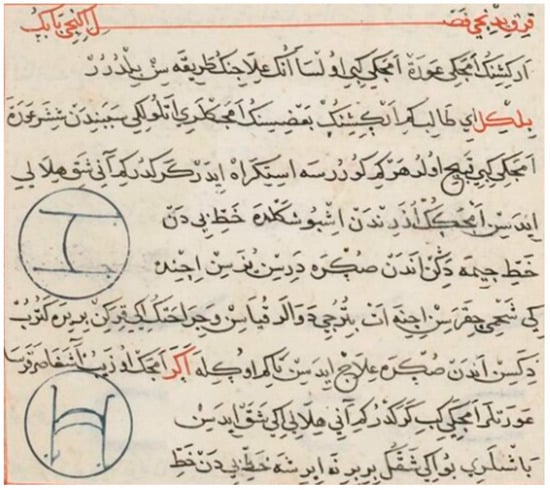
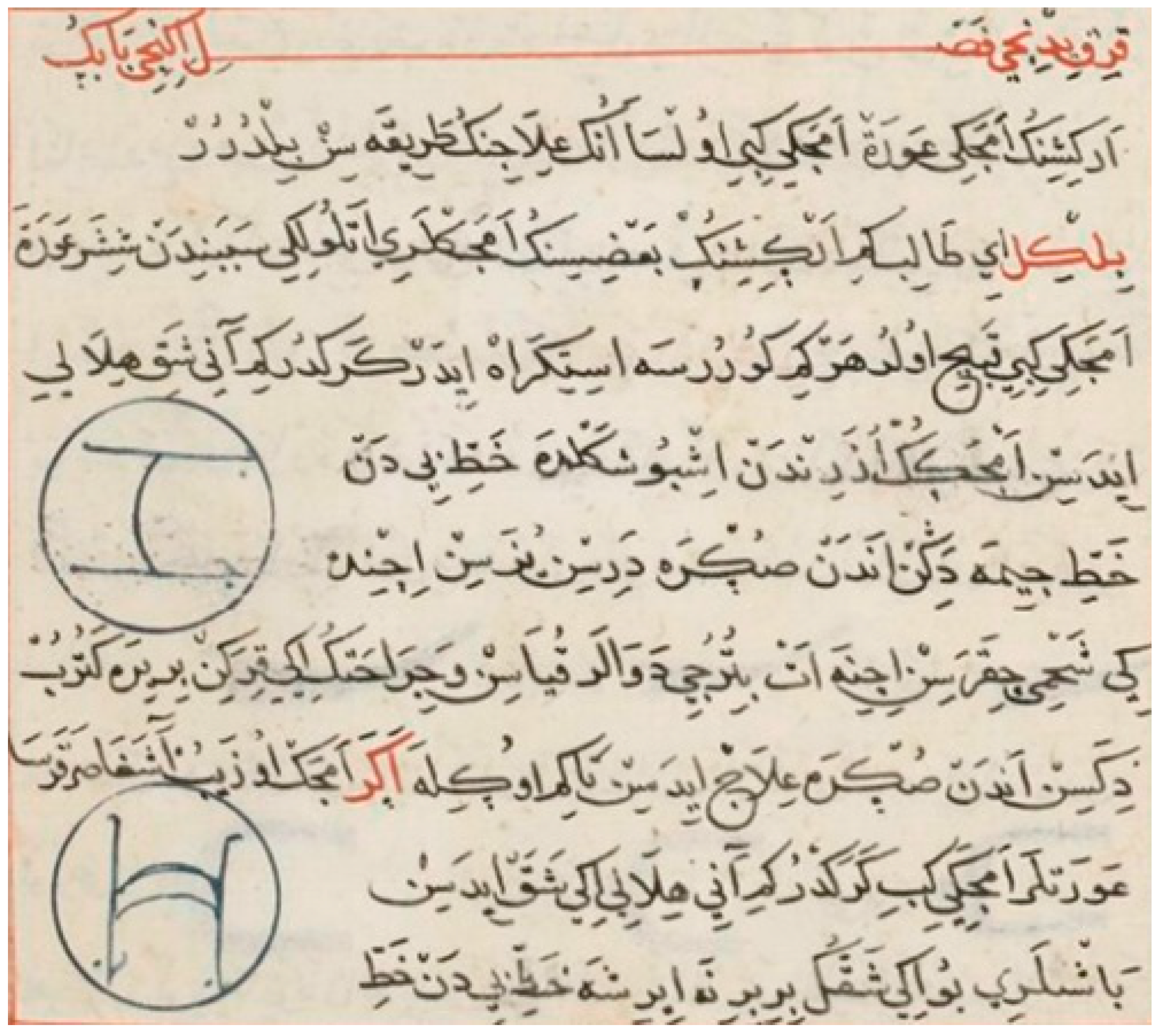
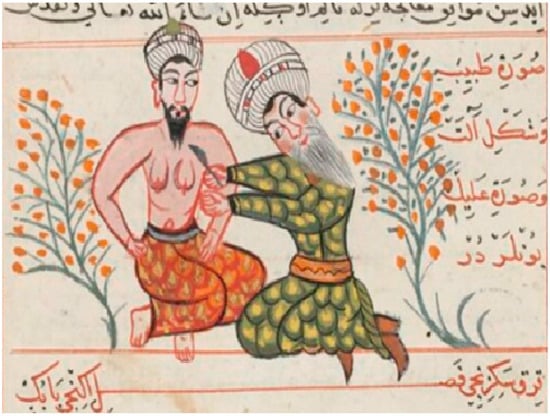
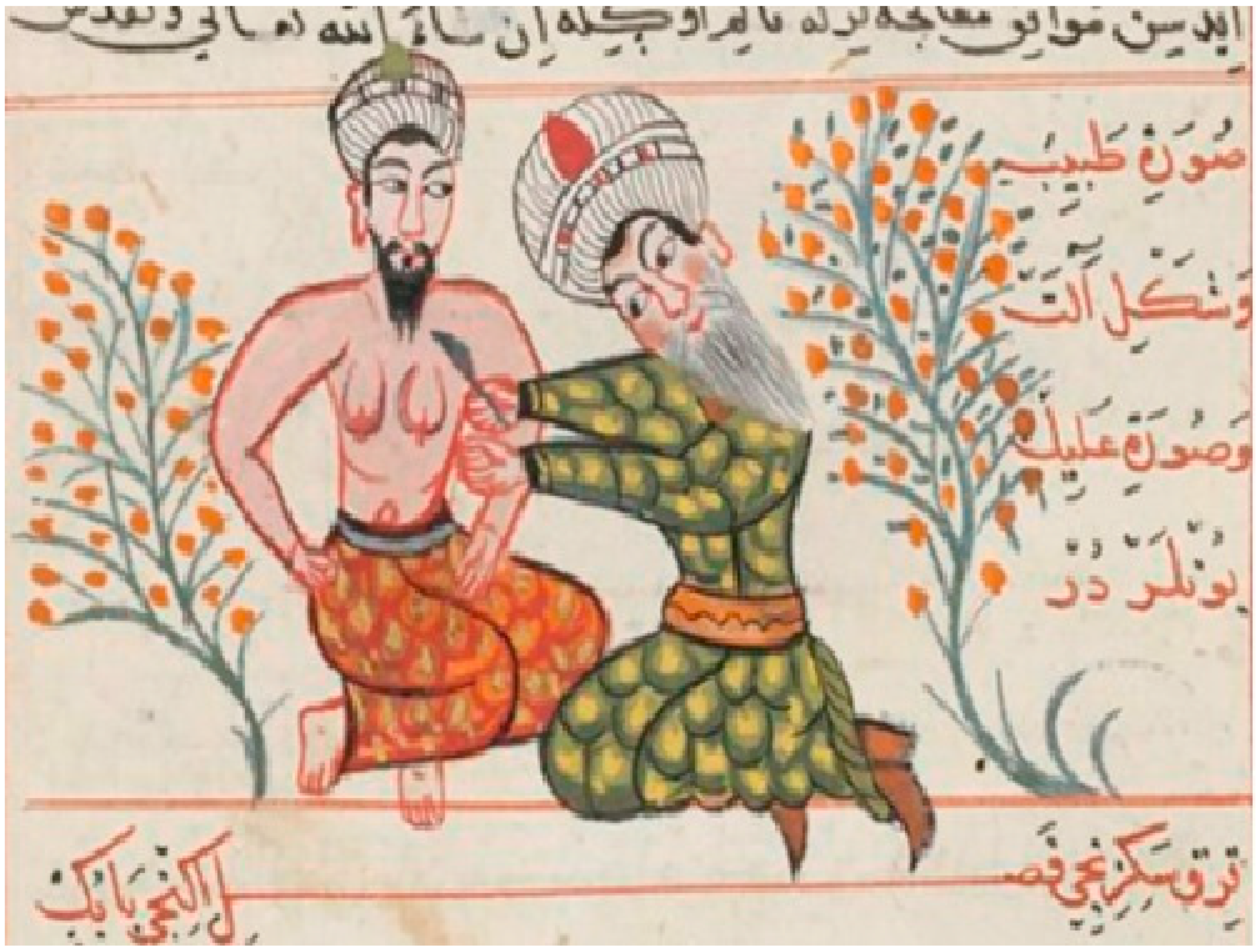
O seeker, know that some men’s breasts swell due to fleshiness and become ugly (ugly, undesirable) similar to the female breast. Whoever sees it is revolted and disgusted. What you must do is this: Cut it [the breast] in a crescent shape starting from point b to c on the breast in this way (Figure 1), then peel it and remove the inner fat [adipose]. You should place some flesh-making remedies in it and sew the two sides of the purulent matter together, then use medicine. If it happens again, however, and the breast grows and hangs down similar to the female breast, you should cut it in the form of two crescent shapes (Figure 2). The beginnings of these two incisions should reach each other from point b to c, and when you see this, you should peel back the skin and remove it between those two lines, as well as the adipose. You should combine and sew the two sides of the incision you made. If you do this, it will be alright, God willing. If you cannot remove the adipose completely due to reasons such as its hardness, the patient’s inability to bear it, or the loss of too much blood, then what you need to do is soak old cotton in ointment and insert it into the wound, wait for it to eat away the remaining flesh, and then use the appropriate medicine.Figure 1. Sabuncuoğlu Şerefeddin’s writing in Cerrahiyyetü’l-Hâniyye descripting gynecomastia surgery and the second intervention to be performed in case of possible recurrence (f. 88v). (Reprinted from [6]).Figure 2. Miniature of Sabuncuoğlu Şerefeddin depicting the examination and diagnosis of a gynecomastia patient in Cerrahiyyetü’l-Hâniyye (f. 89r). (Reprinted from [6]).
The same leaf contains a miniature depicting a gynecomastia patient. Sabuncuoğlu drew the miniature, which shows a surgeon holding a scalpel in his hand (Figure 2). Surgical instruments are given broad coverage in Cerrahiyyetü’l-Haniyye. This leaf also contains a drawing showing how to perform the surgical procedure.
Although Mücerrebname (1468) does not directly mention gynecomastia, it does include the medications used during and after surgical procedures.
Both works include agents for stopping hemorrhage, analgesics, anesthetics applied before the procedure, methods for sterilizing the surgical area, and various pharmacological prescriptions that can be used in dressings during patient follow-up. These are examined in the following section.
3. Discussion
Sabuncuoğlu’s full name is Şerefeddin bin Ali bin el Hac İlyas Sabuncuoğlu. He came from a family of physicians, and his ancestors served the Ottoman palace. A physician, surgeon, author, and translator, Sabuncuoğlu completed Cerrahiyyetü’l-Haniyye in 1465 and Mücerrebname in 1468. He was 83 when he wrote the first book and 85 when he wrote the second. Sabuncuoğlu had been solely involved in medicine and surgery since his early youth and wrote both of his works in Turkish, demonstrating a conscious choice not only regarding scientific production but also the dissemination of the Turkish scientific language. In fact, behind his choice to write in Turkish lay his desire to appeal to medical candidates who knew no language other than Turkish, which was in line with his social identity, and it is also apparent that he viewed this as a necessity [6]. In this respect, Sabuncuoğlu’s works are notable not only for their medical content but also for their contribution to developing Turkish as a scientific language. In fact, producing science in one’s native language was commonplace in 15th-century Anatolia. For example, Sabuncuoğlu’s fellow countryman, Amirdovlat Amasia (1420–1496), wrote his works in Armenian, and he was also able to enter Fatih’s palace physicians. His work Cahiller İçin Gereksizdir (Useless for the Ignorant) is famous [9,10]. Mehmed II was famous for his patronage of scientists in his palace [11]. However, the fact that Sabuncuoğlu was not rewarded with any official duty despite presenting Cerrahiyyetü’l-Hâniyye to the palace in Istanbul, combined with his choice to remain largely in Amasya, may be considered among the possible reasons for his limited recognition in scientific circles during his lifetime.
Foremost among Sabuncuoğlu’s sources are those pertaining to Islamic medicine, with references to ancient Greek and Roman medicine also being found. Sabuncuoğlu was also influenced by Turkish physicians such as Haji Pasha, who lived in Anatolia. This multi-layered use of sources shows that he benefited from the cosmopolitan scientific environment of his period [12]. Although Amasya is geographically located in the countryside, it provided a convenient environment for Sabuncuoğlu’s intellectual development as it was a junction point for multiple paths of knowledge and notable for its local scientific repertoire. Sabuncuoğlu’s works reflect the diverse contributions of Ottoman medical institutions to the field of medicine, including the development of new pharmaceuticals, the introduction of techniques used in dentistry, and the incorporation of music therapy into medical treatment [13,14].
Sabuncuoğlu’s approach to medicine clearly differed from the common practices of his time that were based on magic, sorcery, and superstition. His works were grounded in knowledge, experience, and direct observation. In Mücerrebnâme, he records not only the experiments he conducted on animals but also those performed on humans [7]. In this context, he provides a detailed account of a compound antidote (tiryak) and explains the series of trials through which he tested it (fols. 12r–15v). He first administered the tiryak to a rooster and observed that, after the animal was bitten by a venomous snake, the effects of the poison were significantly reduced (fols. 14r–15r). He then applied the same preparation to individuals suffering from intoxication and reported that they remained conscious and did not exhibit the expected severity of inebriation (fol. 8v). Sabuncuoğlu also experimented on himself: he notes that he ingested the tiryak, deliberately allowed a snake to bite his finger, and subsequently took an additional dose, observing that the venom produced no harmful effect on his body (fol. 7r). These accounts demonstrate that the tiryak functioned as both a protective and therapeutic remedy and show that Sabuncuoğlu took pride in its strengthening and resistance-enhancing properties. In this regard, several of his applications resemble modern experimental protocols [4,15], and Sabuncuoğlu can be considered to have carried out clinical studies consistent with the principles of experimental medicine during his time.
Sabuncuoğlu was not content with just providing information; he also presented clear guidelines for how physicians should attain knowledge. In Cerrahiyyetü’l-Hâniyye, he emphasizes how knowledge needs to be sought and acquired through effort, addressing surgeons and prospective surgeons by saying “O those who aspire”. He frequently uses phrases in the form of “Read plenty.” These warnings point to the disadvantages of acting with insufficient knowledge in the medical profession [6].
His works contain direct references to significant figures in the history of medicine, including the opinions of figures such as Hippocrates, Galen, and Ibn Sina, using direct citations such as “According to Hippocrates…” and “Ibn Sina states…” [7]. These references show Sabuncuoğlu to have evaluated medicine not as an isolated discipline but as one situated within a tradition based on the knowledge and experience of the physicians before him. In addition, the fact that he explicitly mentions these names is also noteworthy in terms of the study of how historical medical sources were employed at the time [16].
Both of Sabuncuoğlu’s works include his evaluations of the breast region. He identifies diseases such as breast abscesses, cancers, swellings, tumors, and inflamed masses, recommending surgical intervention in some cases and stating in others that, based on the symptoms, no procedure should be performed. Sabuncuoğlu also applied the information from the case example Avicenna revealed concerning stage-4 breast cancer, which can be considered the earliest report on this subject [17]. With regard to arrowhead injuries, Sabuncuoğlu [6] noted that intervention should be avoided when the arrow is embedded toward the heart from a point close to the nipple. In the arrowhead example, he draws attention to the need to carefully examine the symptoms of the patient. However, he explains that this may be insufficient and that the physician needs to be acquainted with arrowheads themselves—both the materials from which they are made and their sizes. These examples indicate that Sabuncuoğlu’s observations and practices regarding breast diseases did not stop at the level of theoretical knowledge; they appear to have also been shaped by direct clinical experience.
He identifies gynecomastia not only as a physiological disorder but also as an esthetic problem associated with one’s social acceptance. The use of the phrase, “It becomes purulent similar to the female breast” emphasizes that the disease is not only physically disturbing but also visually and emotionally bothersome. In this respect, the text also provides indirect information about the beauty norms and social perceptions of the period. No historical period has depicted the ideal male body with large breasts [18]. However, Sabuncuoğlu offers no explanation for the underlying causes or diagnostic differences in gynecomastia; his approach focuses on direct observation and treatment processes (for modern endocrine mechanisms and classification, see [19,20]). At the same time, his visual materials largely correct for this deficiency, especially the miniature on the same leaf. The miniature in question clearly depicts a bearded male figure with enlarged breasts resembling female breasts (Figure 2). Figure 1 not only conveys the physical appearance of the disease but also reveals Sabuncuoğlu to have treated gynecomastia as a visually identifiable clinical condition. The surgeon’s position—holding a scalpel in his hand and aiming it toward the initial point of incision—indicates planning for surgical interventions having been expressed visually. In this context, the miniature can be considered an explanatory tool for the practitioner that supports the diagnostic dimension not included in the textual exposition.
Sabuncuoğlu’s approach to gynecomastia is notable not only for his technical surgical knowledge but also for the decision-making mechanisms he monitored during the treatment. Sabuncuoğlu explains the surgical technique in detail. He anatomically identifies the starting and ending points of the incision to be made on the breast (b to c) and describes the incision line as crescent shaped (Figure 1). He then states that the skin should be peeled, the adipose should be removed, the edges of the wound should be united and stitched, and flesh-forming medicines should be applied to the region. The surgical procedure is not just limited to the primary application. Sabuncuoğlu describes a second surgical intervention if the breast sags similarly to the female breast. In this situation, he recommends making two crescent-shaped incisions. The start and end points for each incision (line b–c) should be the same (Figure 1); the skin should be peeled after the incision, and the interstitial tissue and adipose should be completely removed. The two incisions that were opened should be united and stitched, and the treatment process should be restarted. Sabuncuoğlu’s exposition does not focus only on successful applications; it also offers alternative solutions for cases of limited surgical success. For example, surgical intervention can be limited in cases of complications such as dense adipose tissue, the patient’s inability to withstand the procedure, or excessive blood loss. In such cases, he recommends placing cut-and-dried cotton soaked in ointment into the wound, gradually removing the remaining tissue, and then using medications for assistance [21]. This approach is consistent with the principles of avoiding unnecessary intervention and considering what is in the patient’s best interests, reflecting Sabuncuoğlu’s ethical understanding [6,21]; (fols. 11r–14r, 52r, 162r, 167r). Sabuncuoğlu explicitly emphasizes his views regarding medical ethics, noting that he openly cites the sources he uses, acknowledges direct assistance from other physicians when relevant, and advises surgeons to follow patients after surgery, avoid unnecessary interventions, and act with great care against bleeding and infections [6] (fols 11r–14r, 52r, 167r); [7] (fols. 15v, 21r, 74r).
Another noteworthy point is that Sabuncuoğlu clearly recommends surgery when addressing gynecomastia, unlike the examples where he advocates not intervening in other tumors or malignancies [6] (fol. 47a). He emphasizes the importance of early diagnosis with regard to certain cases and suggests not taking any action in cases where diagnosis has been delayed, such as in cases of breast abscesses or pus accumulation. This difference shows Sabuncuoğlu to have made decisions regarding medical interventions by taking into account the course, prognosis, and treatability of the disease and to have directly recommended intervention in cases deemed to be correctable through surgery [6] (fol. 89a).
Cerrahatü’l-Hâniyye provides wide coverage of the surgical instruments employed. Sabuncuoğlu [6] stated, “The more diverse the tools, large and small, the easier the job becomes” and specifically introduced tools such as the mihceme (a suction tool for controlling blood loss) to gynecomastia surgery. The work explains not only the names of the instruments but also the contexts of their use, thus making the text a guide for surgeons. This approach is a continuation of a tradition in Anatolia whereby Arabo-Islamic physicians not only passed on the instruments they had inherited from ancient Greek and Greco-Roman surgeons but also developed innovative tools by transforming them in accordance with new surgical needs. According to Tsoucalas and Sgantzos [22]:
The work has the distinction of being the first illustrated surgical atlas. Sabuncuoğlu included his own personal colorful miniatures of surgical procedures, cutting techniques, and instruments in his work. This type of visual representation led to more accurate and detailed surgical depictions in later works.
The incisions Sabuncuoğlu describes while introducing surgical instruments include certain anatomical points and instructions; these points are also indicated through the relevant miniatures. Surgical intervention is understood to have been considered in accordance with certain references on the body and the application to have been defined within a specific layout [6] (fol. 147v).
The work provides a detailed description of the materials preferred when producing the instruments used in surgical applications. Various types of wood, such as boxwood, ebony, and pine, as well as different organic and inorganic materials, such as glass, ceramic, copper, iron, bronze, silver, lead, horn, bird feathers, reeds, and animal bladders, were used to manufacture surgical instruments and their parts [6] (fols. 29r, 32v, 88r, 57r, 58v, 78v, 94v, 125r, 160v, 176v, 197v). The suction devices used in gynecomastia surgeries were made mostly of copper. This situation is explained by copper being an easy-to-produce material. The suction device stands out for its functional properties in terms of controlling bleeding. Sabuncuoğlu states that the suction device is used to reduce blood loss in sudden bleeding and to give the doctor time to continue the intervention. The device is designed to cut off blood flow, targeting blood flow stoppage through application to the vein. Therefore, the suction device is not only a technical tool of surgery but also an apparatus with a life-saving function. The vascular suction device has thin walls, with a small protrusion at the top to facilitate holding. Sabuncuoğlu’s [6] drawings depict the suction devices (mihceme) in three sizes: small, medium, and large. The suction device is generally used on large surfaces of the body, such as the calves, thighs, legs, back, arms, and chest.
Sabuncuoğlu also includes the preparation steps that need to be taken prior to surgical intervention. He recommends the patient be restricted from eating and drinking for one day and to undergo an enema prior to certain interventions [6] (fol. 44r). For surgical procedure to be performed on hairy areas such as the head or arms, he states that the relevant area needs to be shaved and cleaned. Afterward, one must identify the area to be operated upon and mark it with ink. In this way, the surgeon identifies the boundaries of the intervention by identifying the anatomical area to be treated beforehand. Upon taking the necessary tools in hand, the physician applies the intervention to the marked area [6] (fols. 53r, 53v,89r).
In Cerrahiyyetü’l-Hâniyye, Sabuncuoğlu [6] (fol. 44r) states that the patient should be anesthetized or immobilized by assistants during the surgical intervention. Some miniatures also visually document this practice, with people being clearly depicted assisting the physician. Features such as the color, temperature, and texture of the mass are taken into account during the observation and physical examination; the miniatures also indicate cases where patients are restrained/immobilized [6] (fols. 29r, 29v, 83v, 85r, 200r, 201r, 205v). Sabuncuoğlu’s approach in Cerrahiyyetü’l-Hâniyye is not limited to conveying surgical practices; his visual representation of these practices is an extension of his pedagogical, systematic approach to knowledge. The miniatures in the work not only depict the processes but also provide an idea of how the transmission of knowledge is organized in the visual dimension. In this context, the inclusion of a figure depicting a female surgeon treating a female patient is notable not only from an iconographic perspective but also as an exceptional example of the social representation of medicine within the Islamic medical tradition [6] (fols. 110v, 112r). This choice by Sabuncuoğlu reveals his way of recording clinical observations to not only have been descriptive but to have also pushed the boundaries of the period [23].
Şerefeddin Sabuncuoğlu’s approach to medicine can be clearly traced in both of his works. Sabuncuoğlu compiled a significant portion of the medicines he used having benefitted from the works of physicians before him, and he also included prescriptions in his works based on his own observations and experiences. This approach is particularly evident in Mücerrebnâme. It is also notable that Sabuncuoğlu does not hesitate to include cases in which he had failed or the help he had occasionally received. In fact, he conveys how, while working to treat a patient, an old doctor found the medicine Sabuncuoğlu was using to be inadequate. Sabuncuoğlu describes this incident sincerely, stating how he adopted the treatment method favored by the older doctor for years after learning it [7].
Mücerrebnâme contains more than 340 diseases and more than 600 herbal, animal, and mineral-derived medicines for these diseases. This work should be considered an early experimental medical text whose contents are based on direct experience. Sabuncuoğlu clearly presents his claims in the work. Mücerrebnâme is a collection of fully tried and tested prescriptions based on direct clinical observation and individual explication. This work reveals Sabuncuoğlu to not only have been a physician who conveyed knowledge but also one who produced medical knowledge and filtered it through a critical experimental lens. In Cerrahiyyetü’l-Hâniyye, Sabuncuoğlu systematically presents the medications used in connection with surgical interventions. Chapter 36, in particular, is devoted to these medications. This chapter, which Sabuncuoğlu added to the translation of Kitab al-Tasrif, is profoundly original. It contains the names of medications; the situations in which and how they should be used; their ingredients, preparation, and methods of application; the duration of their effectiveness; their dosage information; and the physician’s comments. The section not only conveys practical knowledge but also arranges this knowledge systematically [24].
Sabuncuoğlu also provided space in his works for extensive coverage of the medications used during and after surgical procedures. Narcotics, hemostatic agents, wound-healing ointments, and painkillers are among the medications to be administered to the patient. This variety shows how he planned treatments that were not only symptom-oriented but that also covered the entire process. Anesthesia was unknown in the 15th century, and the inability to completely anesthetize a patient during surgery and the limited duration of this state posed a significant challenge for surgeons of the period. Sabuncuoğlu talks about this in Cerrahiyyetü’l-Hâniyye, saying, “Some patients can tolerate procedures that involve cutting, sewing, and burning, while others cannot.” Although unique needles and silk threads were used for surgical stitches in the Middle Ages, these procedures could still be difficult for patients to endure [25]. As a solution to this problem, Sabuncuoğlu suggested a special mixture called “mürkid”. This approach reflects Sabuncuoğlu’s observation-based clinical decision-making competence and the importance he placed on individualized intervention.
Mürkid is a mixture containing mandrake extract, meat fat, and sweet almond oil. Sabuncuoğlu states that after soaking overnight, this mixture should be given to adult patients at a specific dose. The application should be continued for three days, and the patient should be carefully observed. However, surgical intervention should be performed only after evaluating the results from the observation. Sabuncuoğlu emphasizes how this practice must be performed carefully and warns physicians to avoid possible mistakes. Pharmacology at the time considered mandrake [Mandragora officinarum L./Mandragora autumnalis Bertol.], used in the formula for mürkid, to be a plant with somewhat legendary qualities. Sabuncuoğlu expressed his confidence in this mixture, saying, “I’ve used this as long as I have lived, and I haven’t needed any other mixture” [6].
The ointments used in the post-surgery process also constitute an important dimension of Sabuncuoğlu’s medical approach. Prescriptions such as white salve, zinc salve, merhemü’l-hall [sesame oil salve?], red salve, lead salve, and deva-yı Mısri [Egyptian remedy] were used for wound healing, pain management, and tissue repair. Methods such as melting, pounding, soaking in vinegar, and boiling are described in reference to preparing these medications. For his prescriptions, Sabuncuoğlu also documents the duration of the medicines’ effectiveness and which doses should be applied to which patients. For example, Sabuncuoğlu states in one place, “One and a half dirhams will not benefit the temperament of contemporary people”, and in another, he specifies, “according to their person” [6], pointing out that the dose should be adjusted according to personal characteristics.
Regular post-surgery patient follow-up is another important topic Sabuncuoğlu emphasizes. Regarding the treatment process, he recommends a detailed follow-up protocol, stating, “After applying the medication, bind it tightly, wait 10 days, open, and check it; if necessary, apply the medication again and rewrap it. Continue this process until the wound heals” [6]. These details demonstrate Sabuncuoğlu’s emphasis not simply of medications but also on holistically managing the surgical process, as well as his adoption of observation-based decision-making practices. His documentation of such elements as observations, physical immobilization, and organizing assistance distinguishes him from the surgeons of his time. This resembles a historical reflection of the multidisciplinary approach that has been adopted in the clinical decision-making processes in modern medicine and reveals the surgeon to have been positioned not only as a technical practitioner but also as a figure who manages the process, makes observations, and makes multifaceted decisions.
4. Conclusions and Prospects
In conclusion, Sabuncuoğlu’s experimental and pharmacological approach to surgical interventions is not merely about conveying the knowledge of his time. A picture emerges of a versatile physician who adhered to past authorities while also generating new knowledge based on his own clinical observations. Sabuncuoğlu’s surgical knowledge was not limited to breast pathologies; he also developed unique approaches to treatment in many areas, such as the nervous system, orthopedic cases, and traumatic injuries. The intervention method he presented in the 15th century for sciatic nerve pain is particularly noteworthy in terms of demonstrating the systematicity and surgical diversity of his clinical observations [26,27,28]. When evaluated in the specific context of gynecomastia surgery, the fact that he considered the entire process, from presurgical preparation to wound care and from pain control to medication dosing, shows that he approached surgery within a broad medical framework.
This study demonstrates that Sabuncuoğlu conceived gynecomastia surgery not merely as a single operative act but as a comprehensive medical process encompassing preoperative preparation, the surgical intervention itself, and postoperative care. By bringing together Cerrahiyyetü’l-Hâniyye and Mücerrebnâme for the first time in the literature, this article shows that his procedure constitutes a complete intervention chain, thereby offering an original contribution to existing research. Sabuncuoğlu’s use of miniatures to document surgical steps and his explicit remarks on the social dimension of the condition indicate that Sabuncuoğlu regarded gynecomastia not only as a medical issue but also as a source of shame and discomfort within its social context. Taken together, these elements show that, while following the El-Tasrîf tradition, Sabuncuoğlu integrated the surgical explanations in Cerrahiyyetü’l-Hâniyye with the clinical and pharmacological observations in Mücerrebnâme, forming a holistic medical understanding shaped by his own context.
Sabuncuoğlu’s detailed explanations of drugs and recommended applications served not only as historical records but also as pharmacological strategies that were ahead of their time. In this respect, Sabuncuoğlu should be evaluated holistically—that is, as a scientist who not only dealt with surgical practices but with the medical assistance framework within which surgery is undertaken.
Author Contributions
M.G. studied the Mücerrebnâme manuscript, collected and analyzed data on the history of breast surgery, and edited the article. S.U. examined the gynecomastia section of the Cerrahiyyetü’l-Hâniyye manuscript in Ottoman script and evaluated existing scholarship on the work. E.Ö. collected, reviewed, and analyzed studies conducted on Sabuncuoğlu. All authors have read and agreed to the published version of the manuscript.
Funding
This research received no external funding.
Institutional Review Board Statement
Not applicable.
Informed Consent Statement
Not applicable.
Data Availability Statement
No new data were created or analyzed in this study. Data sharing is not applicable to this article.
Conflicts of Interest
The authors declare no conflicts of interest.
References
- Conrad, L.I.; Neve, M.; Nutton, V.; Porter, R.; Wear, A. The Western Medical Tradition: 800 BC to AD 1800; Cambridge University Press: Cambridge, UK, 1995. [Google Scholar]
- Prioreschi, P. A History of Medicine: Roman Medicine; Horatius Press: Omaha, NE, USA, 1998; Volume 3. [Google Scholar]
- Pormann, P.E.; Savage-Smith, E. Medieval Islamic Medicine; Edinburgh University Press: Edinburgh, UK, 2007. [Google Scholar]
- Savage-Smith, E. Islamic Medicine. In Science and Technology in Medieval Islam; Walker, C.B.F., Ed.; British Museum Press: London, UK, 1995; pp. 14–23. [Google Scholar]
- Chavoushi, S.H.; Ghabili, K.; Kazemi, A.; Aslanabadi, A.; Babapour, S.; Ahmedli, R.; Golzari, S.E. Surgery for gynecomastia in the Islamic Golden Age: Al-Tasrif of Al-Zahrawi (936–1013 AD). Int. Sch. Res. Not. 2012, 2012, 934965. [Google Scholar] [CrossRef] [Scilit] [PubMed]
- Şerefeddin, S. Cerrahiyyetü’l-Hâniyye [Handwritten Manuscript]; Supplément Turc 693; Bibliothèque Nationale de France: Paris, France, 1465; pp. 42a–312. [Google Scholar]
- Şerefeddin, S. Mücerrebnâme [Handwritten Manuscript]; Süleymaniye Kütüphanesi, Fatih Koleksiyonu: Istanbul, Turkey, 1468; pp. 1–86. [Google Scholar]
- Şerefeddin, S. Cerrahiyyetü’l-Hâniyye; Uzel, İ., Ed.; Türk Tarih Kurumu Yayınları: Ankara, Turkey, 2020; Volume 2. [Google Scholar]
- Vardanyan, S.A. Amierdovalat Amasiatsi: Unnecessary for the Ignorant (Translation from Armenian and Commentary) [Aмupдoвлam Aмacuaцu, Heнyжнoe для нeyчeй]; Hayka: Moscow, Russia, 1990; p. 13. ISBN 9785020040328. [Google Scholar]
- Vardanyan, S.A. Amirdovlat Amasiatsi: A Fifteenth-Century Armenian Natural Historian and Physician; Yoshpa, M., Ed.; Caravan: Tehran, Iran, 1999. [Google Scholar]
- İhsanoğlu, E. Osmanlı Bilim Mirası Giriş: Mirasın Oluşumu, Gelişimi ve Meseleleri; Yapı Kredi Yayınları: Istanbul, Turkey, 2015; Volume 1. [Google Scholar]
- Gutas, D. Greek Thought, Arabic Culture: The Graeco-Arabic Translation Movement in Baghdad and Early ‘Abbāsid Society (2nd–4th/8th–10th Centuries); Routledge: Oxford, UK, 1998. [Google Scholar]
- Shefer-Mossensohn, M. Ottoman Medicine: Healing and Medical Institutions, 1500–1700; State University of New York Press: Albany, NY, USA, 2009. [Google Scholar]
- Rahman, A.S.; Sidek, R.S. Role and Contribution of Ottoman Science Institutions in the Development of Muslim Civilization: Spotlight on 16th Century. Int. J. Acad. Res. Bus. Soc. Sci. 2017, 7, 462–468. [Google Scholar] [PubMed]
- Ragab, A. The Medieval Islamic Hospital: Medicine, Religion, and Charity; Cambridge University Press: Cambridge, UK, 2015. [Google Scholar]
- Nutton, V. Ancient Medicine, 2nd ed.; Routledge: Oxford, UK, 2012. [Google Scholar]
- Zarshenas, M.M.; Mohammadi-Bardbori, A. A medieval description of metastatic breast cancer; from Avicen-na’s view point. Breast 2017, 31, 21–23. [Google Scholar] [CrossRef] [Scilit] [PubMed]
- String, T.C. Body building: The fabrication of the masculine body in Renaissance portraiture. In The Male Body and Social Masculinity in Premodern Europe; Murray, J., Ed.; Centre for Reformation and Renaissance Studies: Toronto, ON, Canada, 2022; pp. 229–249. [Google Scholar]
- D’Angelo, A.; Portaluri, A.; Caprini, F.; Sofia, C.; Ferrara, F.; Condorelli, E.; Iaccarino, L.; Catanzariti, F.; Mancino, M.; Trombadori, C.M.L.; et al. Male Breast: A Review of the Literature and Current State of the Art of Diagnostic Imaging Work-Up. Diagnostics 2023, 13, 3620. [Google Scholar] [CrossRef] [Scilit] [PubMed]
- Shi, Z.; Xin, M. Endocrine Hormones and Their Impact on Pubertal Gynecomastia. J. Clin. Med. 2024, 14, 158. [Google Scholar] [CrossRef] [Scilit] [PubMed]
- Sarı, N. Ethical aspects of Ottoman surgical practice. Türkiye Klin. Tıp Etiği-Hukuku-Tarihi Derg. 2000, 8, 9–14. [Google Scholar]
- Tsoucalas, G.; Sgantzos, M. A historical glance at the Arabo-Islamic surgical instruments during the ages. World J. Surg. 2017, 41, 1636–1645. [Google Scholar] [CrossRef] [Scilit] [PubMed]
- Bademci, G. First illustrations of female “neurosurgeons” in the fifteenth century by Serefeddin Sabuncuoglu. Neurocirugía 2006, 17, 162–165. [Google Scholar] [CrossRef] [Scilit] [PubMed]
- Sezgin, F. Geschichte des Arabischen Schrifttums; Medizin–Pharmazie–Zoologie–Veterinärmedizin; IGNAW: Frankfurt, Germany, 1996; Volume III. [Google Scholar]
- Al-Zahrawi, A.A.Q. On Surgery and Instruments; Spink, M.S., Lewis, G.L., Eds.; University of California Press: Oakland, CA, USA, 1973. [Google Scholar]
- Aygen, G.; Karasu, A.; Ofluoglu, A.E.; Pait, G.; Toplamaoglu, H. The first Anatolian contribution to treatment of sciatica by Serefeddin Sabuncuoglu in the 15th century. Surg. Neurol. 2009, 71, 130–133. [Google Scholar] [CrossRef] [Scilit] [PubMed]
- Elassal, I.; Elmallwany, E.; Hammad, A. Practice cupping therapy as a sustainable medical heritage from An-dalusian and Ottoman surgery: A case study of Kitāb al-Taṣrīf and Cerrahiye-i Ilhaniye manuscripts. J. Cult. Herit. Manag. Sustain. Dev. 2024, 15, 876–889. [Google Scholar] [CrossRef] [Scilit]
- Verit, A.; Aksoy, S.; Kafalı, H.; Verit, F.F. Urologic techniques of Şerefeddin Sabuncuoğlu in the 15th-century Ottoman period. Urology 2003, 62, 776–778. [Google Scholar] [CrossRef] [Scilit] [PubMed]
Disclaimer/Publisher’s Note: The statements, opinions and data contained in all publications are solely those of the individual author(s) and contributor(s) and not of MDPI and/or the editor(s). MDPI and/or the editor(s) disclaim responsibility for any injury to people or property resulting from any ideas, methods, instructions or products referred to in the content. |
© 2025 by the authors. Licensee MDPI, Basel, Switzerland. This article is an open access article distributed under the terms and conditions of the Creative Commons Attribution (CC BY) license (https://creativecommons.org/licenses/by/4.0/).