
Previous Article in Journal
Metrological Validation of Low-Cost DS18B20 Digital Temperature Sensors Using the TH-001 Procedure: Calibration Models, Uncertainty, and Reproducibility
Previous Article in Special Issue
Geometrical Prediction of Copper-Coated Solid-Wire Deposition by Wire-Arc Additive Manufacturing Based on Artificial Neural Networks and Support Vector Machines
 
 
Due to scheduled maintenance work on our servers, there may be short service disruptions on this website between 11:00 and 12:00 CEST on March 28th.
Article

Interlaboratory Comparison of SI-Traceable Flow Metering Calibration Facilities with Gaseous Carbon Dioxide


by
Ara Abdulrahman
1,*,
Gabriele Chinello
2,
Revata Seneviratne
2,
Kurt Rasmussen
3,
Dennis van Putten
4 and
Pier Giorgio Spazzini
5
1
VSL B.V. National Metrology Institute, 2629JA Delft, The Netherlands
2
TÜV SÜD National Engineering Laboratory, East Kilbride G75 0AF, UK
3
FORCE Technology, 2605 Brøndby, Denmark
4
DNV Netherlands B.V., 9747AA Groningen, The Netherlands
5
Istituto Nazionale di Ricerca Metrologica (INRIM), 10135 Torino, Italy
*
Author to whom correspondence should be addressed.
Metrology 2026, 6(2), 22; https://doi.org/10.3390/metrology6020022
Submission received: 20 November 2025 / Revised: 25 February 2026 / Accepted: 2 March 2026 / Published: 24 March 2026
(This article belongs to the Special Issue Applied Industrial Metrology: Methods, Uncertainties, and Challenges)

Abstract

Carbon capture, utilization, and storage (CCUS) plays an important role in meeting the European Union’s target to reduce greenhouse gas emissions by 55% by 2030 and become carbon neutral by 2050. Accurate flow metering is required throughout the carbon capture and storage (CCS) chain to meet fiscal and regulatory requirements. To establish accurate CO2 flow metering, flow meters must be calibrated with traceability to international standards of measurement at relevant flow conditions. To ensure confidence, reliability, and comparability of calibration results, calibration facilities perform interlaboratory comparisons. However, there is currently a lack of CO2 gas flow meter calibration facilities. The flow metering calibration facilities of VSL, NEL, INRIM, DNV, and FORCE participated in an interlaboratory comparison with CO2 up to 400 m3/h and 31 bar(a) to compare the calibration results with several flow metering principles. At the intermediate-scale facilities of NEL, VSL, and INRIM, the difference in results between the VSL and INRIM facilities were within the facilities’ CMC values, while NEL’s facility showed a significant difference primarily due to vibrational relaxational effects of CO2 with small critical flow Venturi nozzles. At the large-scale facilities of NEL, DNV, and FORCE, 91% of the test points passed the equivalency criteria in the range of 20 m3/h to 400 m3/h with a Coriolis meter, confirming traceability for carbon dioxide across the facilities. Overall, the interlaboratory comparison has made it possible for the CCUS industry to calibrate gaseous CO2 flow meters with traceability to international standards.

1. Introduction

Europe must make reductions in CO2 emissions in order to meet stringent reduction targets related to global warming. The European Union set a target to reduce greenhouse gas emissions by 55% by 2030 and become carbon neutral by 2050 [1]. To support meeting these ambitious targets the Green Deal was introduced which specifically states that “priority areas include clean hydrogen, fuel cells and other alternative fuels, energy storage, and carbon capture, storage and utilization.”
Carbon capture, utilization, and storage (CCUS) can be used to remove the CO2 produced by industrial processes to be re-used or stored either underground or locked in an alternative material. It is versatile, in the sense that the CO2 removal step can complement any process (e.g., production of power, fuels, chemicals and heating). In order to facilitate efficient and safe operation of CCUS technologies across Europe and to support the CCUS industry, accurate flow measurement of carbon dioxide transferred across the CCUS chain is required for operational, fiscal and regulatory purposes [2,3,4,5]. For example, the accuracy requirement for the European Union’s Emission Trading System (EU ETS) can be as low as 2.5% on the emitted mass of CO2 [2,5,6], where it is estimated that flow measurement accuracy needs to be 1.5% or better in order to meet the 2.5% requirement after accounting for the uncertainties in the measurement of composition, temperature and pressure, and equations of state (EoS) [3].
To ensure accurate flow measurement across the CCUS chain, flow meter calibration facilities that are traceable to international standards (SI-traceable facilities) are required. These facilities are preferably ISO 17025 [7] certified and can calibrate flow meters with CO2 to create similar flow conditions as experienced by the meters in the field [3,8]. There is currently a lack of flow meter calibration facilities that can calibrate flow meters in the relevant range of flow conditions in the CCUS chain [3].
Interlaboratory comparisons are used to gain confidence in the calibration of the flow meters, establish effectiveness in measurements and comparability of measurements, demonstrate validity of calibration results, and enable SI-traceable calibrations [7,9]. While there are many flow meter calibration facilities that can calibrate flow meters with CO2, there is no assurance with regard to SI traceability and, to the authors’ best knowledge, interlaboratory comparisons with CO2 have not been performed.
An interlaboratory comparison was conducted between several laboratories in the intermediate and large scale with gaseous CO2, as part of the “Metrology Support for Carbon Capture Utilisation and Storage” (21GRD06 MetCCUS) project. In the intermediate scale, the comparison was performed up to 30 m3/h at atmospheric pressure between VSL, NEL and INRIM with a rotary meter and a Coriolis meter. In the large scale, the comparison was performed up to 400 m3/h and 31 bar(a) between NEL, FORCE and DNV with a Coriolis and a turbine meter.
This paper includes a description of the facilities participating in the comparison, the methodology of assessing equivalence between the laboratories, results and discussions, conclusion, and recommendations for future work.

2. Facilities Descriptions

2.1. Intermediate Scale

2.1.1. VSL Mercury-Seal Piston Prover

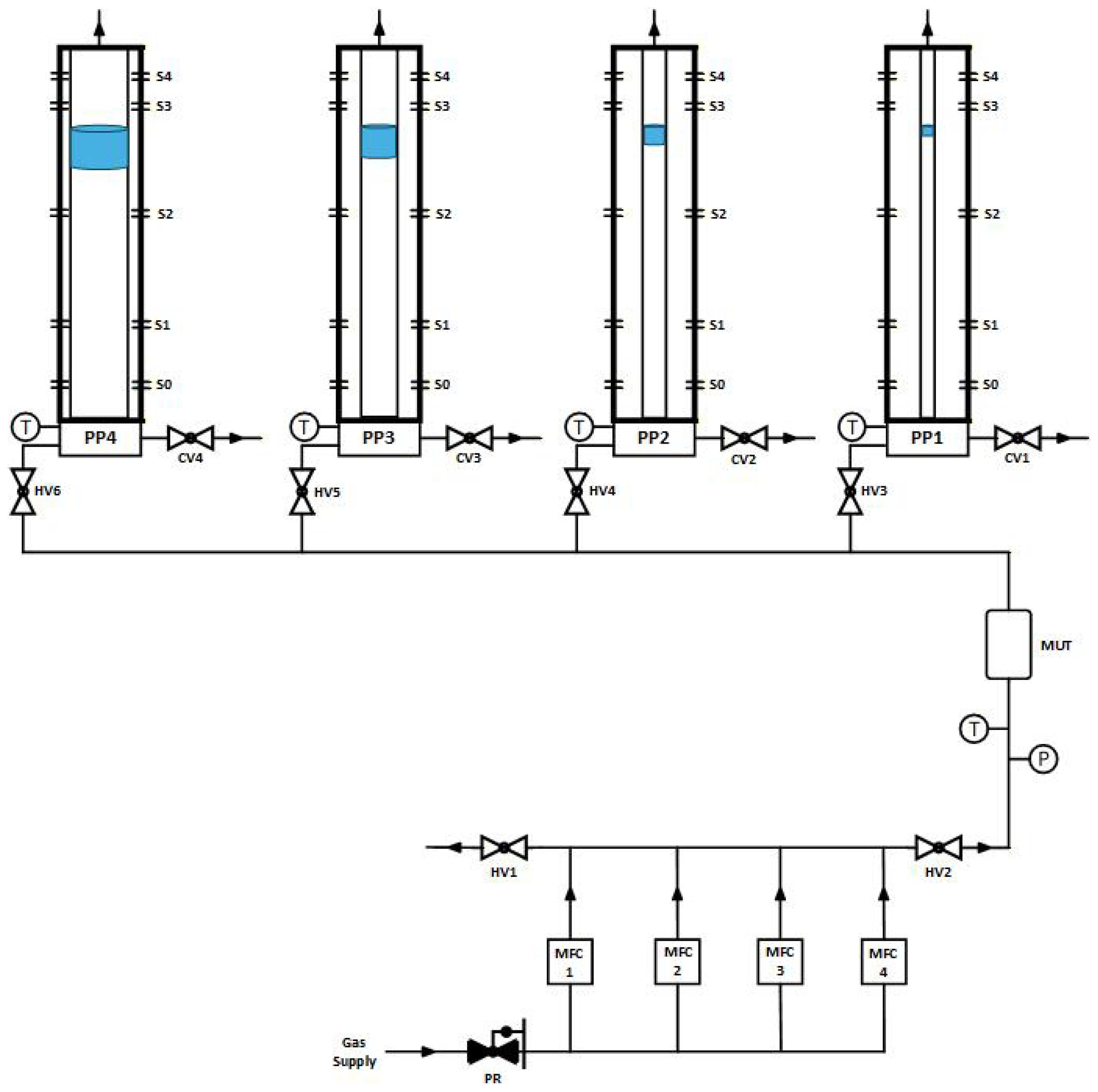
The VSL mercury-seal piston prover is a primary flow measurement standard for calibration of flow meters and other mercury piston provers. The system consists of four mass flow controllers (MFCs) and four mercury ring tubes, also called measuring tubes. The system uses one mercury ring tube at a time, which is chosen based on the flow rate at which the device or meter under test (MuT) is calibrated. The mercury ring tubes serve as reference devices for calibrations. The system is ISO 17025 accredited and has a range of 0.0001 m3/h to 3.5 m3/h at ambient conditions, with a calibration and measurement capability (CMC) of 0.2–0.4% (k = 2). The system can calibrate volume and flow rate measuring instruments.
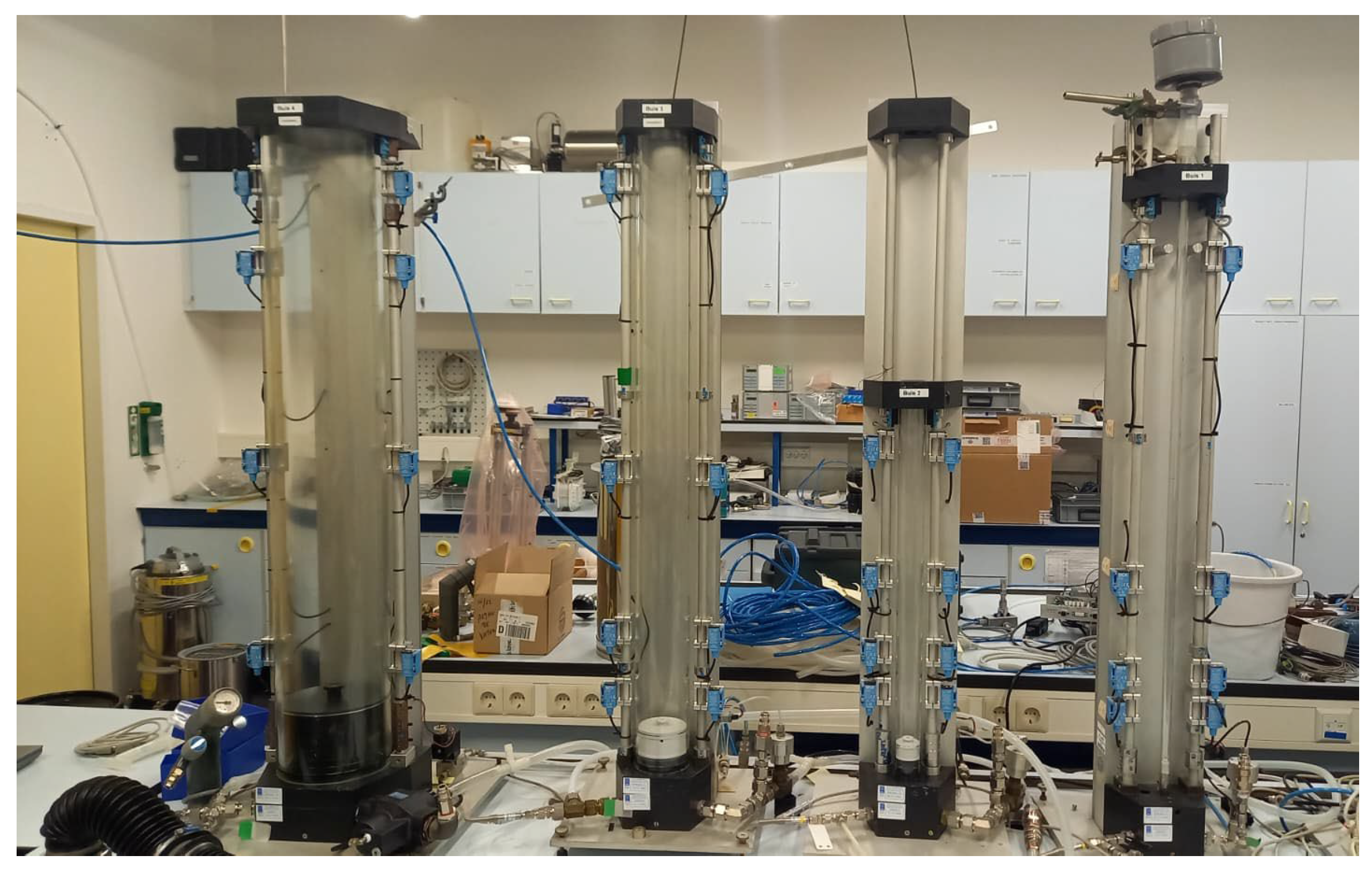
A simplified process flow diagram and photo of the mercury-seal piston prover system are shown in Figure 1 and Figure 2 below.
The MFCs are used to generate a constant flow rate and consist of a control valve and a thermal mass flow meter. To maintain a constant inlet pressure, a pressure regulator is installed just before the inlet of the MFCs. This allows the MFCs to maintain the desired flow rate more consistently.
A mercury ring tube consists of a precision glass tube containing a piston with a mercury-seal. By using mercury, the piston can move through the glass tube virtually friction-free, while the mercury ensures a gas-tight seal.
Infrared and laser sensors are located at various heights on guides placed parallel to the tube. These sensors emit an electrical pulse at time ti when the piston interrupts the light beam. The size of a single volume therefore depends on the difference in height between two sensors and the diameter of the tube between the two sensors.
The length between the two sensors and the diameter of the tube between the two sensors are calibrated with direct traceability to the “meter”, ensuring SI-traceability. The system also includes calibrated timers that are directly traceable to the “second”. Since the calibration of the internal volume is independent of the gas, the provers can provide SI-traceable calibrations with any gas.
The MFCs generate a flow rate, which is directed to the flow meter under test and then a mercury ring tube via the valves. To initiate a flow measurement, a valve behind the tube is closed, causing the piston to move. When the piston passes the first sensor (s0), a time measurement is initiated. When the piston passes the next sensor, the time between s0 and this sensor is stored. A temperature measurement recording is also initiated while passing s0, which stops once the stop sensor is reached. Using the measured time and the known volume, the flow rate can now be determined.

2.1.2. NEL High-Pressure Low-Flow Facility

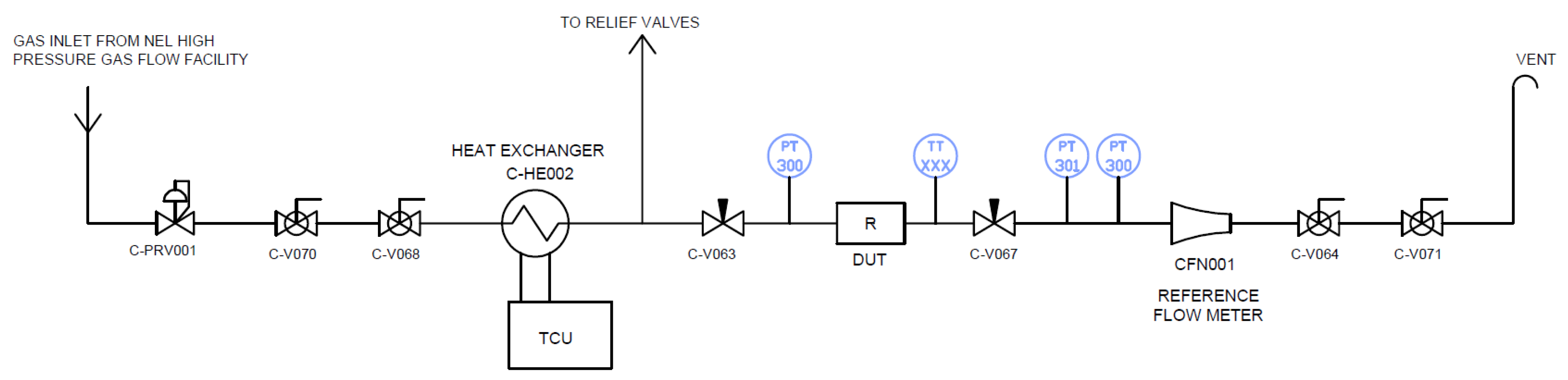
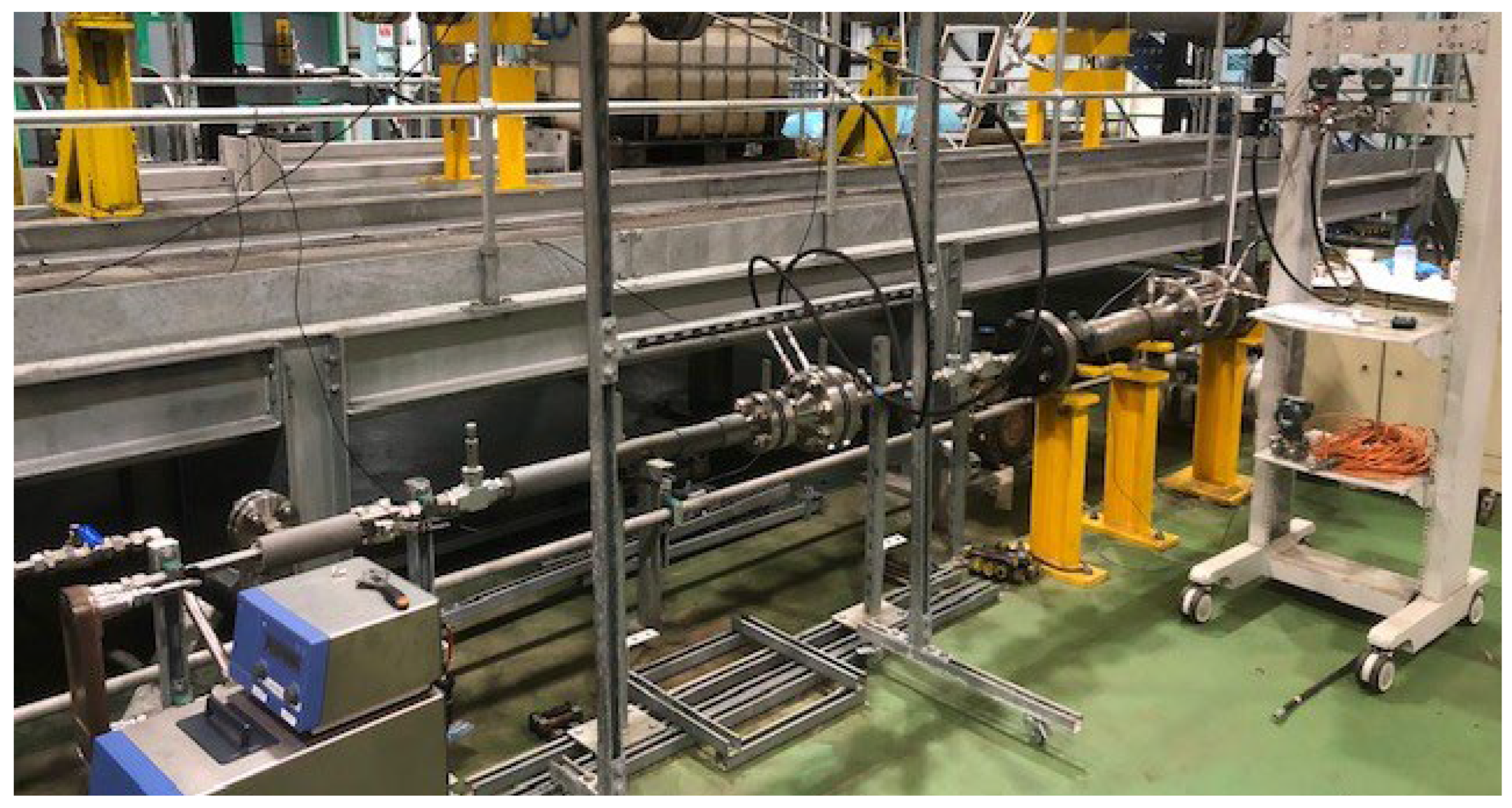
The NEL high-pressure low-flow facility, illustrated in Figure 3 and Figure 4, is built around a DN25 nominal bore line, with gas supplied via an off take from the NEL high-pressure gas flow facility’s 60 bar(g) gas supply line. The inlet pressure to the meter under test (MUT) is regulated using a pressure regulator. A plate heat exchanger installed between the pressure regulator and MUT compensates for temperature changes due to the pressure changes through the regulator and also enables testing at different gas temperatures from 0 °C to 40 °C. Gas flow rates are controlled using a needle valve installed downstream of the MUT. The reference flow rate is determined using a range of critical flow Venturi nozzles (CFVN) installed further downstream and the outlet piping from the CFVN is open to the atmosphere. All static pressure, differential pressure, and temperature measurements are taken with traceable calibrated instrumentation. Gas properties are calculated using REFPROP from NIST [10].
When the facility operates with nitrogen gas at 40 bar(g) and 20 °C, it has the capability to calibrate flow meters at gas flow rates from 0.2 kg/min (0.259 m3/h) to 4 kg/min (5.18 m3/h) with expanded uncertainty of the reference flow measurement of 0.3% (k = 2). The recent upgrade to this facility includes the capability to test with carbon dioxide gas.

2.1.3. INRIM Piston Prover

For the intermediate-scale comparison INRIM used its large piston prover (MeGAS) for the high flow rates and its bell prover (BellGAS) for the low flow rates.
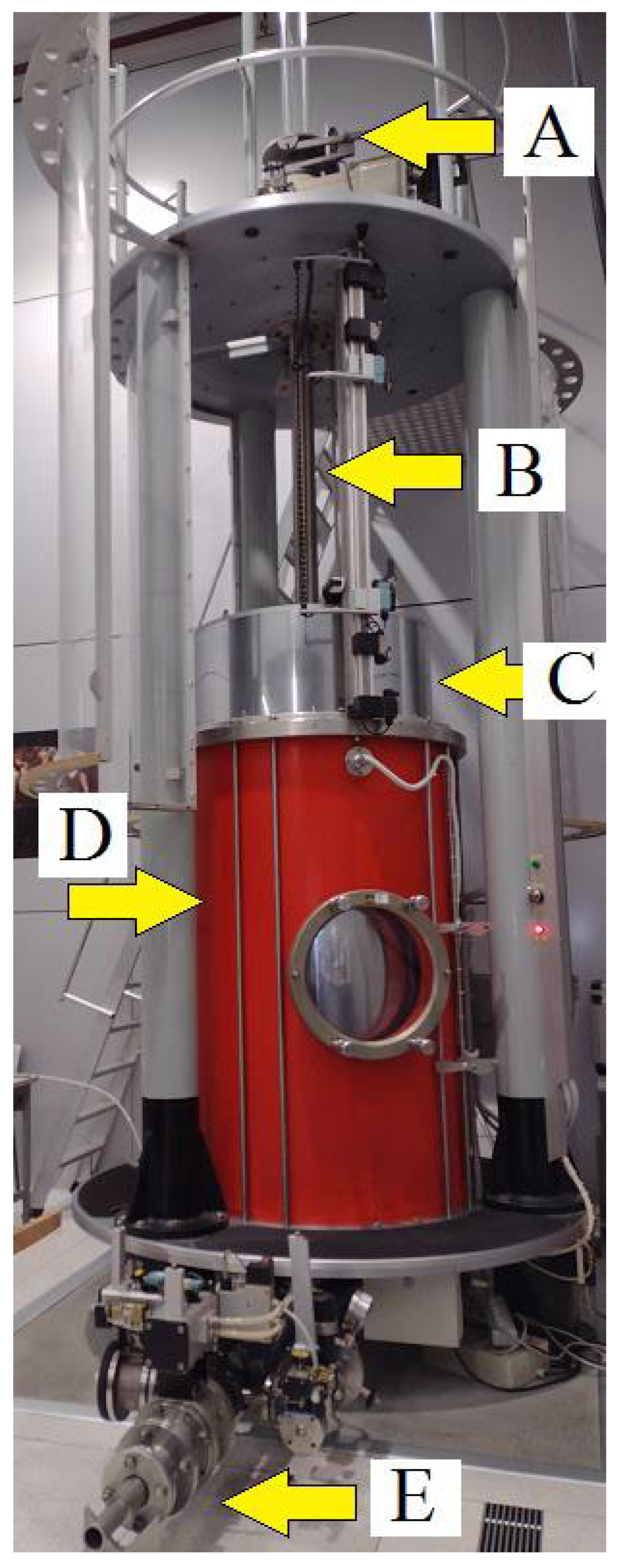
The MeGas test rig is a single-stroke, plunger-type piston prover. The device is a 6 m high structure (see Figure 5) that has a platform at the top where a finely controlled brushless motor drives, through a gearbox, the female ball-screw of a lead screw connected with the piston. This apparatus causes the vertical movement of the piston and the emission of pulses from a rotating encoder fitted on the female screw. The piston is constituted by a 1000 mm nominal diameter, 1630 mm long and 14 mm thick carbon steel cylinder fitted to a large bottom flange. The leak-proof gasket at the top of the chamber is a Teflon-coated, 1000 mm diameter O-ring compressed to the necessary and adjustable extent by an upper flange.
The internal diameter of the measurement chamber is 1095 mm; in the clearance between its walls and the piston, 10 platinum resistance temperatures (PRTs) are installed at different heights and positions in order to measure the average gas temperature and to detect possible non uniformities. The chamber rests on the 1950 mm diameter base of the prover. A bended pipe is connected to a 100 mm bore at the center of the base which conveys the gas displaced by the piston towards the test line. A group of automatically operated valves (a safety valve, one for admission of atmospheric air and one for gas delivery to the test line) are installed at the facility exit.
The MeGAS itself is calibrated through the dimensional calibration of the piston, making the standard directly traceable to the “metre”. The claimed expanded uncertainty of the facility MeGAS is 0.1% (k = 2). More detail on the calibration of the MeGAS can be found in the paper by Piccato et al. [11].
The BellGAS facility is a standard bell prover, with an internal volume of about 150 L. the original facility was improved by modifying the position reading through addition of a high resolution encoder, allowing a reading of the movement with a resolution of about 0.5 mL/pulse, and a special movable compensation weight, which allows to maintain the stability of the pressure within the bell to +/−2 Pa throughout the bell run. The flow capacity of the device ranges between approximately 0.03 m3/h and 7.2 m3/h, and the claimed expanded uncertainty of the BellGAS facility is 0.12% (k = 2). The internal volume of the BellGAS bell prover is calibrated using the volume displacement method against a calibrated scale. Therefore the standard is traceable to the kilogram.

2.2. Large Scale

2.2.1. NEL High-Pressure Gas Flow Facility

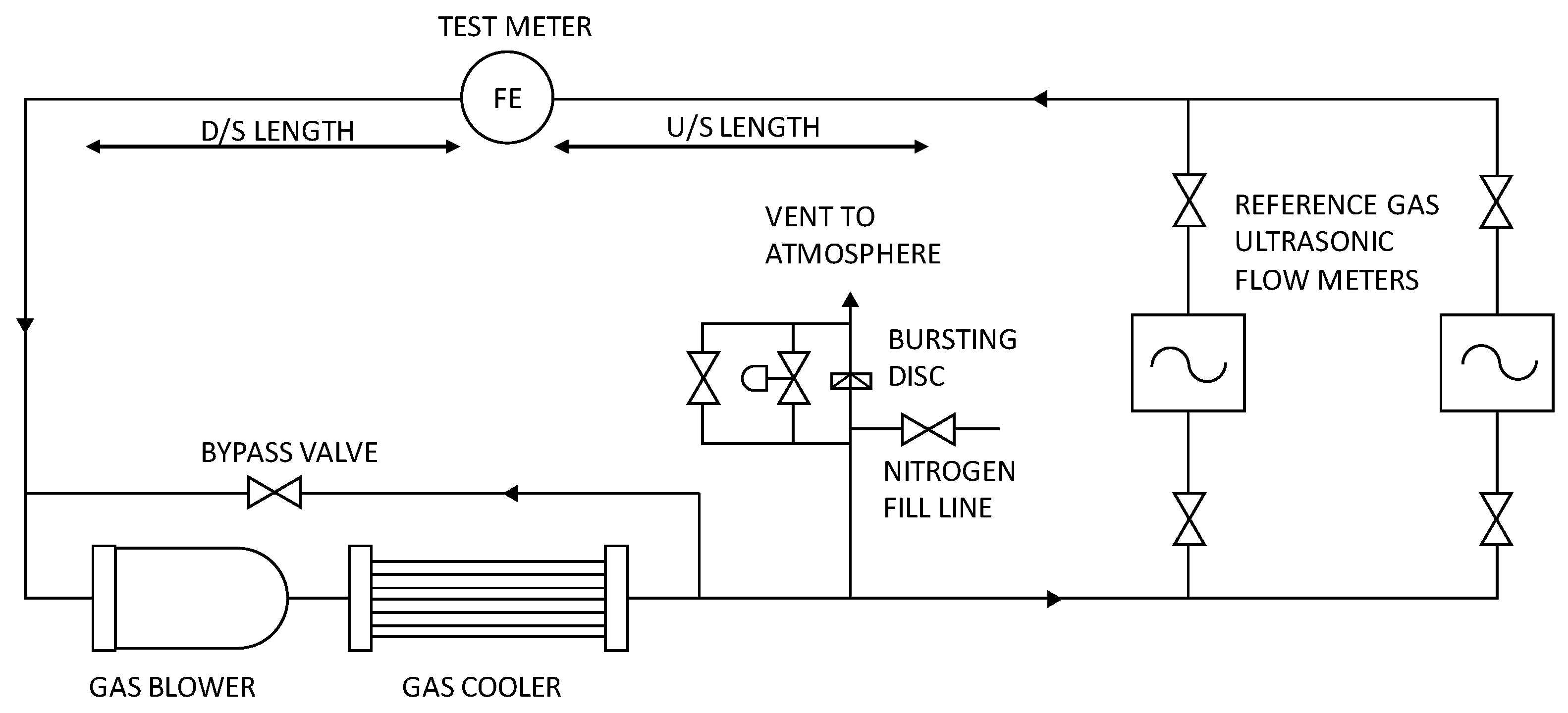
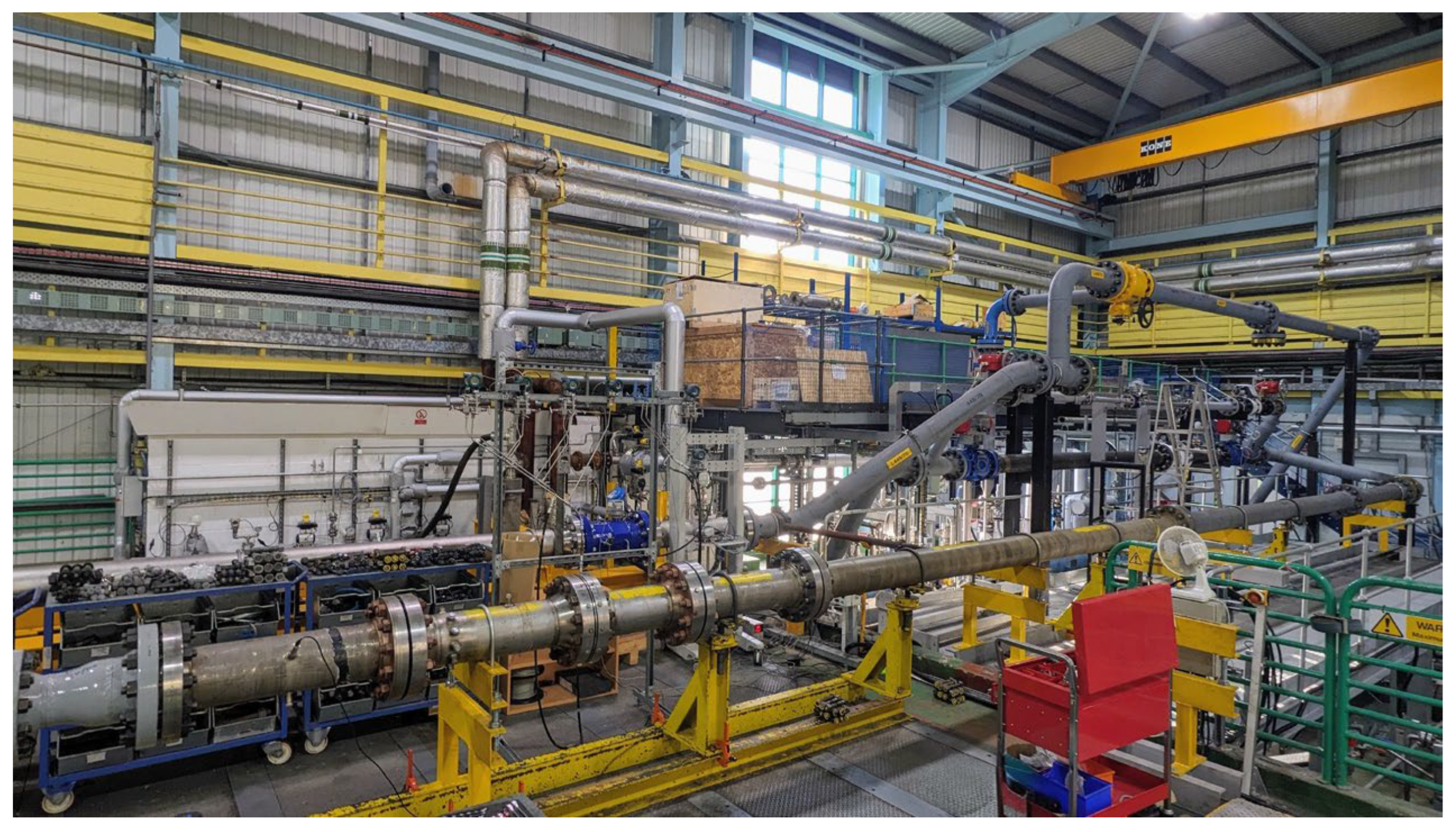
The NEL large-scale gas flow facility is based around a DN150 nominal bore flow loop as illustrated in Figure 6 and Figure 7. The gas used for testing is nitrogen or carbon dioxide. Mixtures of carbon dioxide and inert gases (i.e., N2, Ar, He) can also be tested. The gas properties are calculated from using REFPROP from NIST [10].
The facility operates at a nominal temperature of 20 °C, over a nominal pressure range of 10 bar(g) to 63 bar(g) for nitrogen (which corresponds to a gas density range of approximately 13 kg/m3 to 74 kg/m3) and 20 bar(g) to 40 bar(g) for carbon dioxide (which corresponds to a gas density range of approximately 43 kg/m3 to 101 kg/m3).
The gas is driven around the flow loop by a 200 kW fully encapsulated gas blower and the flow rate is controlled by varying the speed of the blower. The maximum achievable gas volumetric flow rate is dependent upon the size and type of reference/test flow meter installed. The facility is ISO 17025 accredited (UKAS) for a flow range of 20 m3/h to 1600 m3/h, and can reach up to 2100 m3/h.
The reference master meter used for the tests described in this report is a DN200 FLOWSIC600-XT ultrasonic gas meter (serial number 22101021 and calibrated K factor 7992 pulse/m3 for nitrogen, and 7962 pulse/m3 for carbon dioxide).
The ultrasonic meter K factor was obtained against a 6-inch turbine meter from PTB [12], and it is checked for drift at regular intervals against an in-house 8-inch orifice package. All static pressure, differential pressure, and temperature measurements are taken using SI-traceable calibrated instrumentation.
In this interlaboratory comparison, the NEL gas flow facility was operated in ‘recirculation’ mode with the transfer package compared against the reference master meter system. For this mode, the overall uncertainty in the volumetric quantity of gas passed through the meter under test (MUT), is 0.35% (k = 2).

2.2.2. FORCE Piston Prover

The primary standard at FORCE Technology’s gas flow test facility is a piston prover system. It is based on a closed-loop, bidirectional configuration, consisting of two parallel cylinders with a bore diameter of 0.6 m. Each piston is hydraulically driven, and its position is monitored by a linear transducer to ensure precise control of the flow. Four directional control valves maintain a consistent flow path during both forward and reverse operation.
The facility supports calibration of flowmeters with nominal pipe sizes ranging from 2 inches to 6 inches. It operates at a nominal temperature of 20 °C and can handle pressures from 1 bar(a) to 66 bar(a). The test gases include natural gas, CO2, nitrogen, and air. The system accommodates flow rates from 2 m3/h to 400 m3/h, with differential pressures up to 500 mbar.
The piston prover serves as a primary standard with metrological traceability to the meter, based on dimensional measurements of the piston and its displacement. All measurements of static pressure, differential pressure, and temperature are performed using traceable calibrated instrumentation, and the gas property calculations were performed using the REFPROP database developed by NIST [10].

2.2.3. DNV Flow Facility

The All Gas Flow Loop Groningen (AGFLG) test facility at DNV is a closed loop system based on DNV’s existing multiphase test facility, extended with a dedicated gas reference system [13]. The facility can handle 25 bar differential pressure, which makes it suitable for testing several meters in series and uses critical flow Venturi nozzles (CFVN) as reference meters. The operational range of the facility is summarized in Table 1.
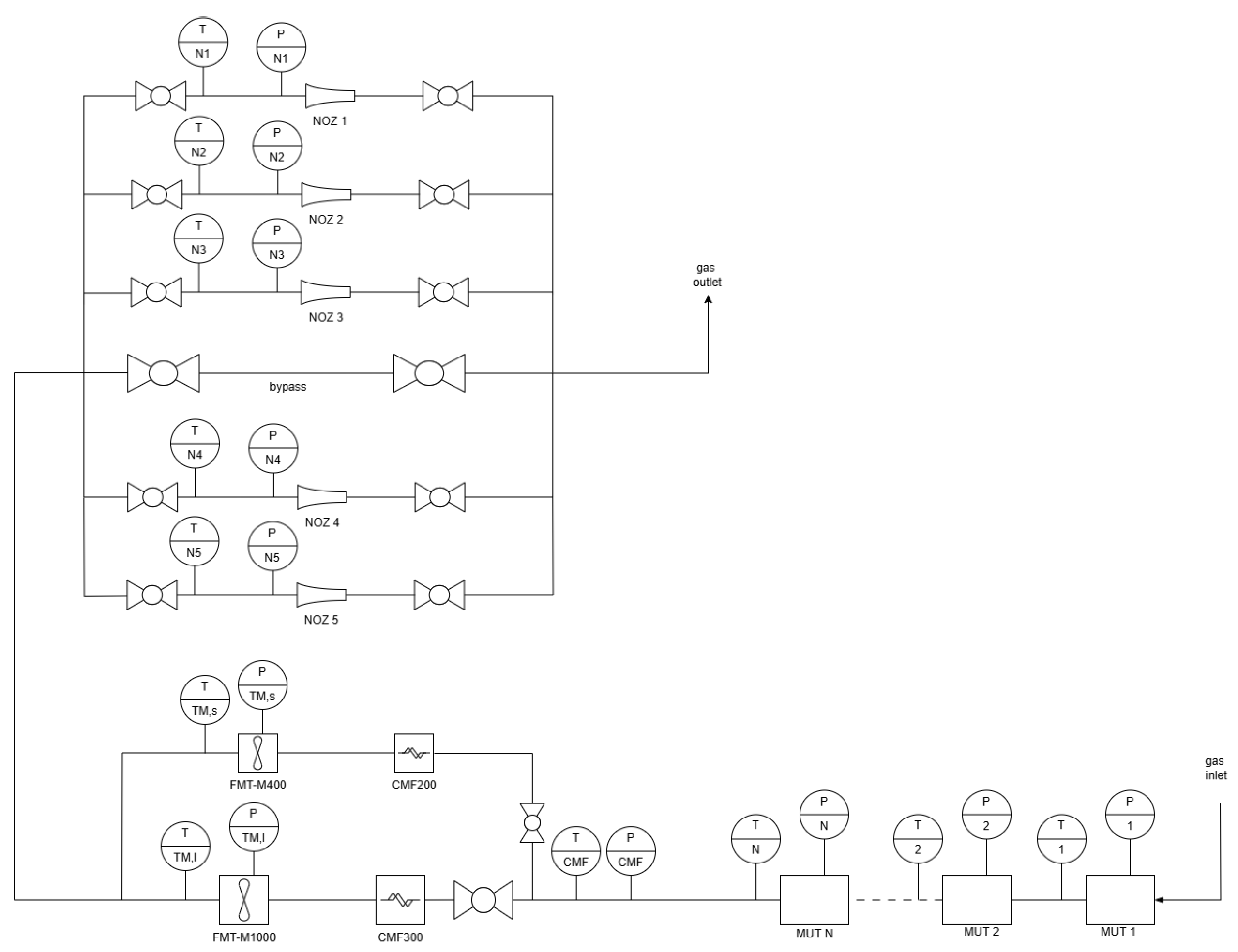
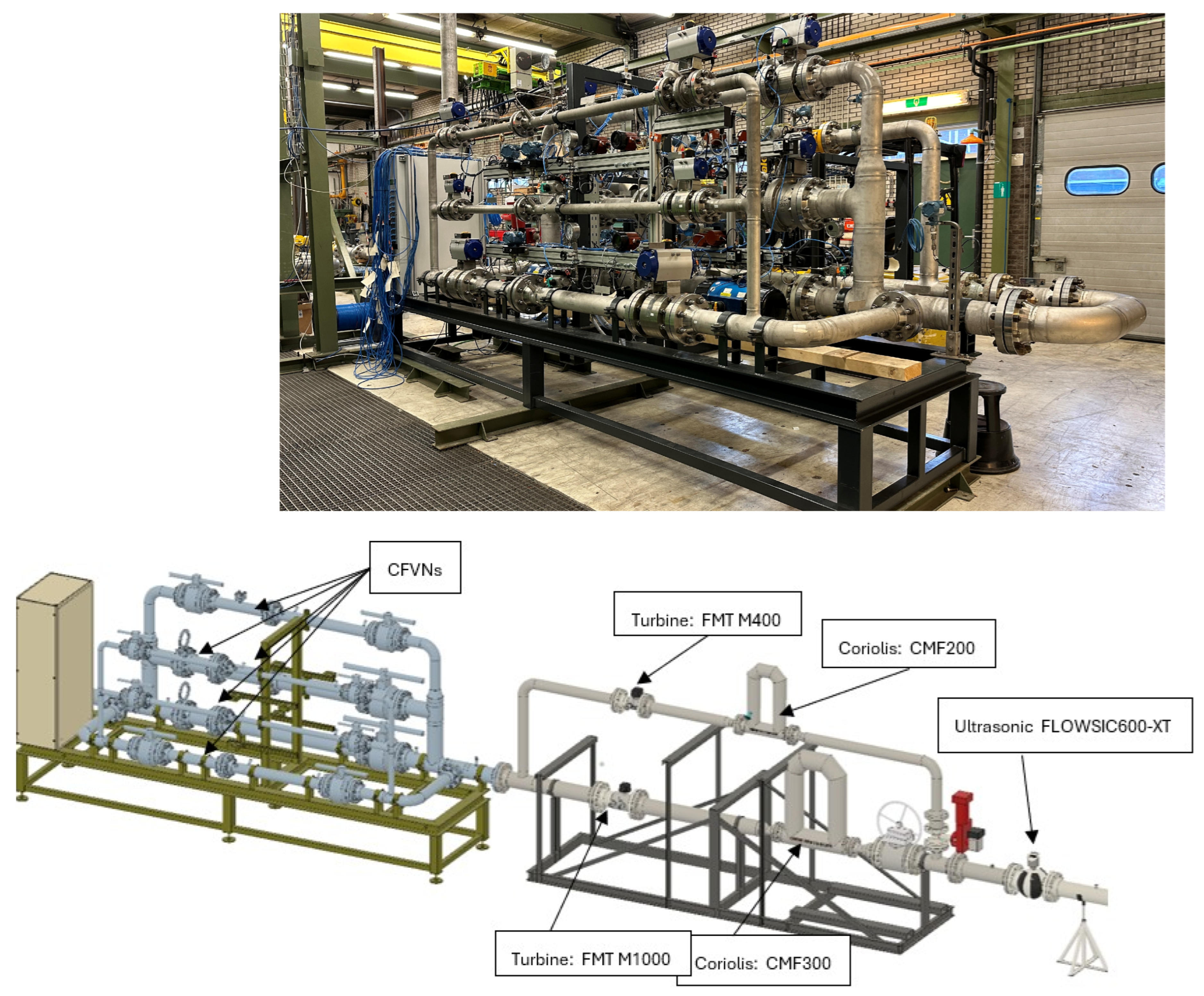
The AGFLG reference system consists of a sonic nozzle skid (containing CFVNs) in series with 4-inch and 6-inch dual lines containing a turbine and Coriolis reference meter, as outlined in Figure 8. A 4-inch turbine meter (FMG MT400, 40 m3/h to 400 m3/h) and a 2-inch Coriolis meter (Emerson Micromotion CMF200) are installed in the 4-inch line, while a 6-inch turbine meter (FMG MT1000, 100 m3/h to 1000 m3/h) and an 3-inch Coriolis meter (Emerson Micromotion CMF300) are installed in the 6-inch line.
Each reference meter has its own traceability chain [14]. The CFVNs are traceable via dimensional measurements (throat diameter and curvature) [15,16] and air calibration tests at Physikalisch-Technische Bundesanstalt (PTB) [14], the German national metrology institute. The Coriolis meters were calibrated at the manufacturer’s ISO 17025 accredited calibration facility with water (Emerson’s test facility in Ede, NL) to achieve its traceability. The turbine gas meters are traceable via DNV and FORCE, the Danish Designated Institute for flow measurement. The corrections of the turbine meters are determined according to the PTB turbine meter model [17,18] and the Coriolis meters are corrected for pressure and compressibility effects [19,20,21]. The reference system is installed downstream of the test section as shown in Figure 8 and Figure 9 below.
The metrological evaluation and facility uncertainty estimation was performed independently by PTB, and detailed information is provided in the report by Van der Grinten et al. [14]. The facility uncertainty is estimated to be between 0.12% and 0.15% (k = 2) for the range of gases tested in [14] and is expected to be applicable/transferable to CO2 as well. Compared to reference [14], an additional ultrasonic flow meter is installed to verify the composition measurement by means of the speed of sound comparison.

3. Methodology

Each flow measurement facility conducted the calibrations and processed the recorded data in accordance with their respective internal procedures. The comparison calculations were based on standardized methods as found in [22,23,24,25]. The comparison of the facilities was undertaken at each flow condition by using the mean value of the flow measurement from the three repeats. Expanded uncertainty of the mean value for each test point, U r was determined using the expression in Equation (1).
U r = t * σ n
where
t * is Students t value at 95% confidence, σ is the sample standard deviation of the results, and n is the number of repeats (i.e., 3).
In the case of these interlaboratory comparison calibrations, the degrees of freedom for each test point, v = n 1 = 2 .
Hence, for a t-distribution with 2 degrees of freedom at 95% confidence, t (4.95%); t * = 4.303 .
Equation (1) then becomes:
U r = 4.303   σ 3
The overall expanded uncertainty for each test facility, U i is calculated by combining the reference lab expanded uncertainty, U l a b quoted by the test facility and the repeatability uncertainty of the mean, U r [25], as follows:
U i = U l a b 2 + U r 2
Calibration and measurement capability (CMC) values for each facility were used as the reference uncertainty, U l a b . Table 2 and Table 3 below summarize the CMC values applied in this inter-comparison, which vary depending on the test conditions. It is worth noting that Equation (3) is rearranged from the equation included in the “WGFF Guideline for CMC Uncertainty and Calibration Report Uncertainty” [24] as follows:
U i =         2           ( U l a b 2 ) 2 + ( t 95 2   σ n ) 2   = U l a b 2 + ( t 95   σ n ) 2 =   U l a b 2 + U r 2
The normalized error, E n between each laboratory’s results and the comparison reference value, CRV were calculated following the procedure outlined by Cox [23] and is summarized as follows.
The CRV and its associated uncertainty are determined using the weighted mean formula, as expressed in Equations (5) and (6), respectively.
C R V = i = 0 n e i U i 2 i = 0 n 1 U i 2
U 2 ( C R V ) = 1 i = 0 n 1 U i 2
where e i is the mean relative error of the transfer meter for each test facility and U i is the overall uncertainty of the test facility as defined by Equation (3).
The difference between mean relative error for each test facility, d i and the C R V was calculated by using Equation (7).
d i = e i C R V
And the expanded uncertainty U ( d i ) was calculated using Equation (8).
U 2 ( d i ) = U i 2 U 2 ( C R V )
Since the facilities operated independently and contributed to the C R V , the normalized error, E n was calculated for each test facility according to Equation (9).
E n = d i U ( d i )
E n provides a measure of the equivalence of each of the facilities’ results relative to the C R V . The interpretation of the absolute value of E n is as follows:
  • | E n | < 1 : the result of the laboratory is consistent with the CRV (passed).
  • 1 < | E n | < 1.2 : the result of the laboratory might indicate a possible warning in the measurement process. For this particular situation the particular facility is recommended to check the procedures and methodology.
  • | E n | > 1.2 : the result of the laboratory is not consistent with CRV (failed).

3.1. Intermediate-Scale Comparison

3.1.1. Intermediate-Scale Test Conditions

The intermediate-scale comparison was performed between VSL, NEL and INRIM with carbon dioxide and nitrogen. The calibrations with nitrogen gas establishes a baseline for the laboratories and comparison because the laboratories readily calibrate meters with nitrogen. The test conditions are reported in Table 4. It should be noted that test pressure at NEL was higher than at VSL and INRIM because the NEL facility uses sonic nozzles as reference meters which require sufficient upstream pressure to ensure sonic velocity at the nozzle throat.

3.1.2. Intermediate-Scale Test Meter and Sequence of Testing

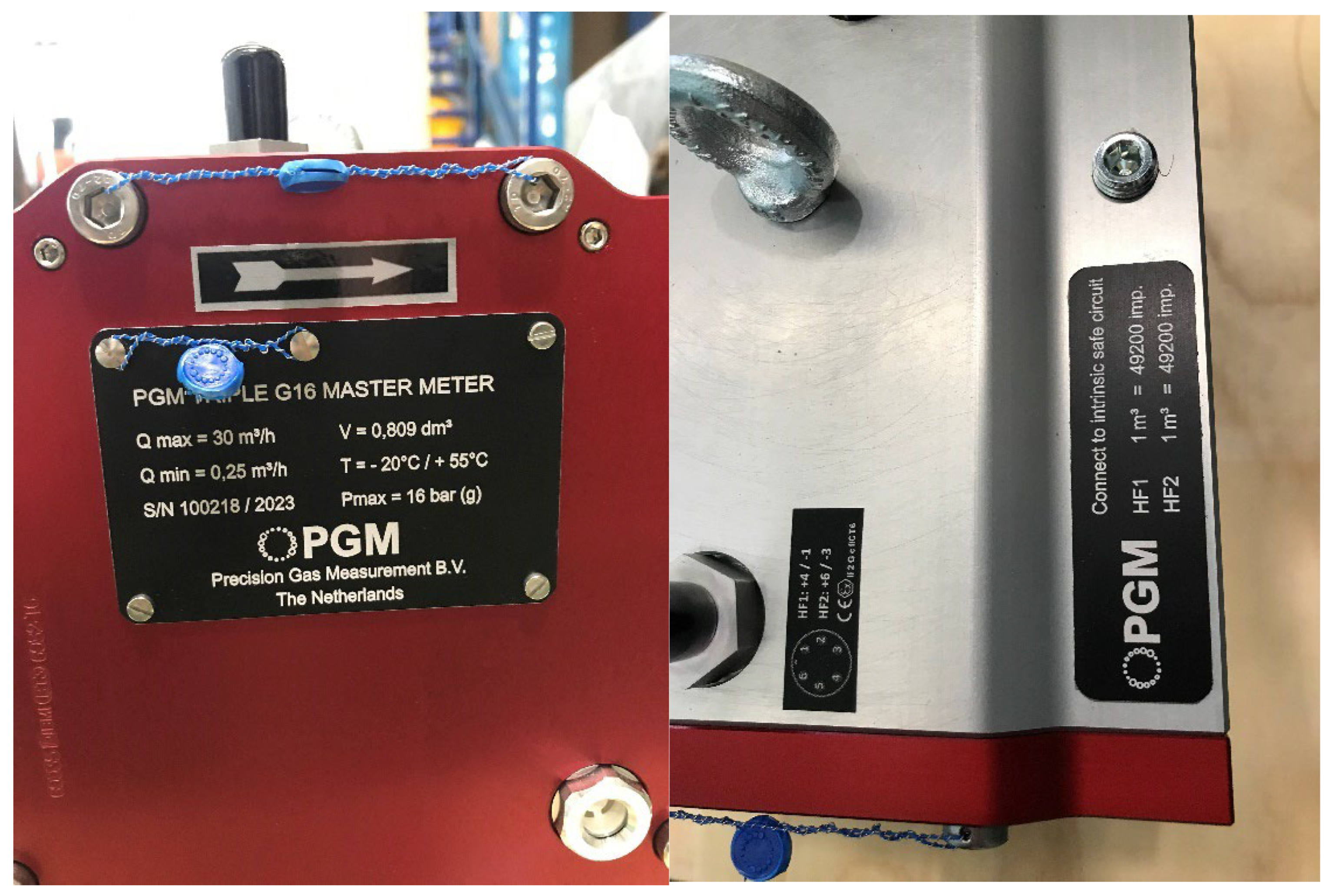
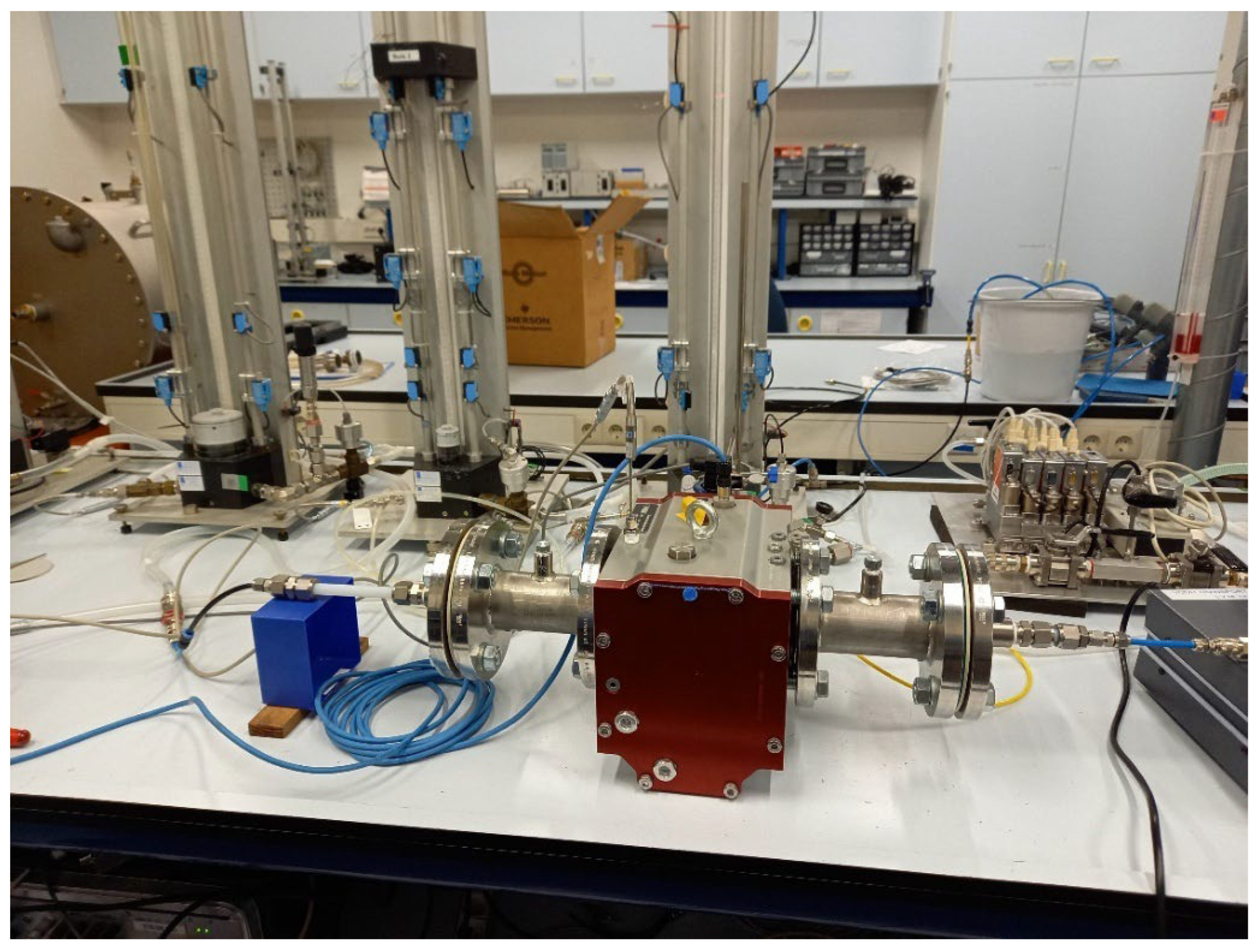
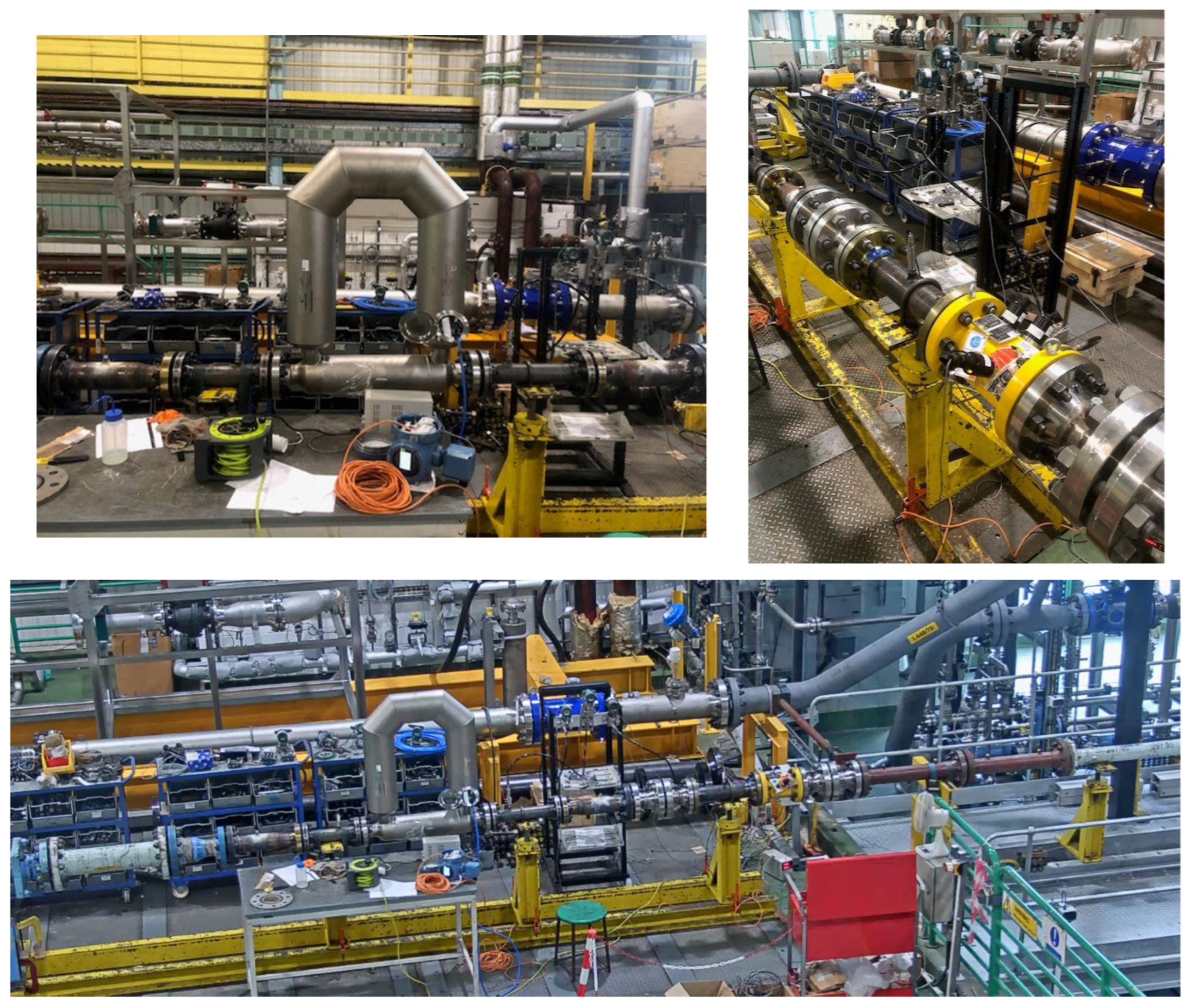
The test meter for this comparison was a DN50 PGM rotary gas meter provided by NEL (PGM triple master meter G16 serial number 100218/2023) with a flow range of 0.25 m3/h to 30 m3/h. See Figure 10 below. The PGM flow meter was calibrated with upstream and downstream 2-inch flanges spools as shown in Figure 11. The DN50 rotary meter was initially calibrated at VSL in July 2024. The meter was subsequently calibrated by NEL in March 2025, followed by the final set of calibrations conducted by INRIM in June 2025. Figure 11 and Figure 12 show the meter installed in the VSL and NEL facilities, respectively. It should be noted that a Coriolis meter was also calibrated at the three facilities. However, the results of the comparison with the Coriolis meter are not presented here because the results were inconclusive.
To calibrate the meter, its pulse output was used to calculate the volume and volume flow rate. Each facility used its own pressure and temperature measurement devices. The pressure was measured at the pressure port located at the rotary meter body. VSL and INRIM measured the temperature at temperature port located at the rotary meter body. NEL measured the temperature in the downstream rotary meter spool.

3.2. Large-Scale Comparison

3.2.1. Large-Scale Test Conditions

The large-scale comparison was performed between NEL, DNV and FORCE for carbon dioxide. The test conditions are reported in Table 5.

3.2.2. Large-Scale Test Meter and Sequence of Testing

Two meters were selected as the transfer package for the interlaboratory comparison. The first is an Emerson 3-inch Coriolis meter (CMF300M serial number 21046486) provided by NEL. The second flow meter is a DN100 Honeywell turbine gas meter provided by FORCE (SM-RI-X G250 serial number 10533326). Employing two different types of transfer standards allows evaluation of whether the comparison results vary using different meter types.
The 3-inch Coriolis meters was previously calibrated at NEL in the Elevated Pressure and Temperature (EPAT) oil facility up to 90 bar(g). The EPAT facility has an uncertainty in mass of ±0.08% at 95% confidence level. This calibration provided a reference baseline of the meter’s response and allowed the derivation of an experimental pressure correction factor. The resulting oil flow error was within ±0.05% after pressure correction was applied.
The 3-inch Coriolis meter was initially calibrated at NEL in November 2023 as part of a separate previous project [12]. Upon receiving the turbine meter from the manufacturer, FORCE conducted preliminary calibrations using air and natural gas.
The first calibration of the turbine and Coriolis meters took place at NEL in July 2024. The package was subsequently tested by DNV in January 2025, followed by the final set of comparison calibrations conducted by FORCE between March and May 2025. To assess for any potential drift, the Coriolis meter was returned to NEL and re-calibrated in July 2025.
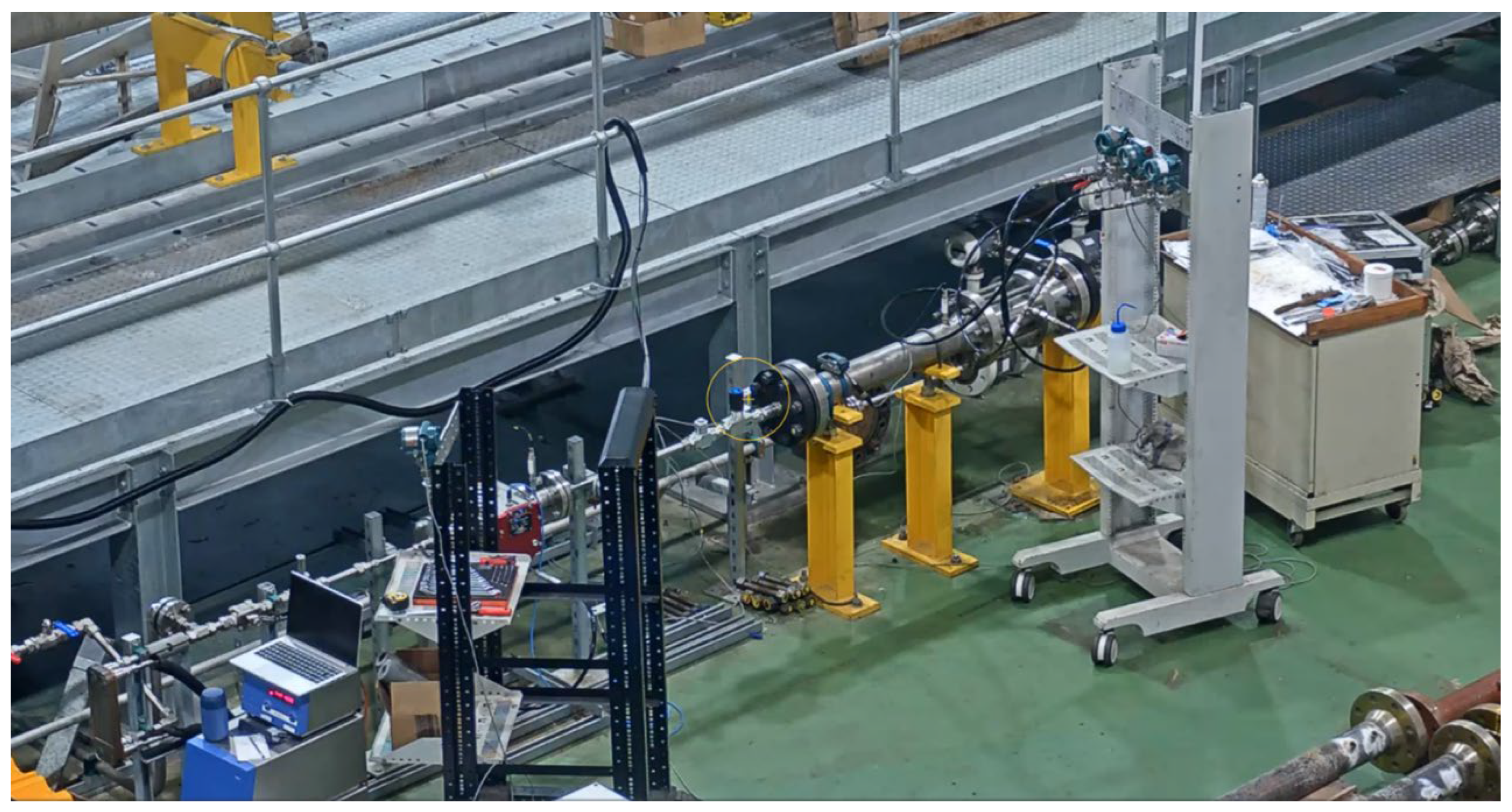
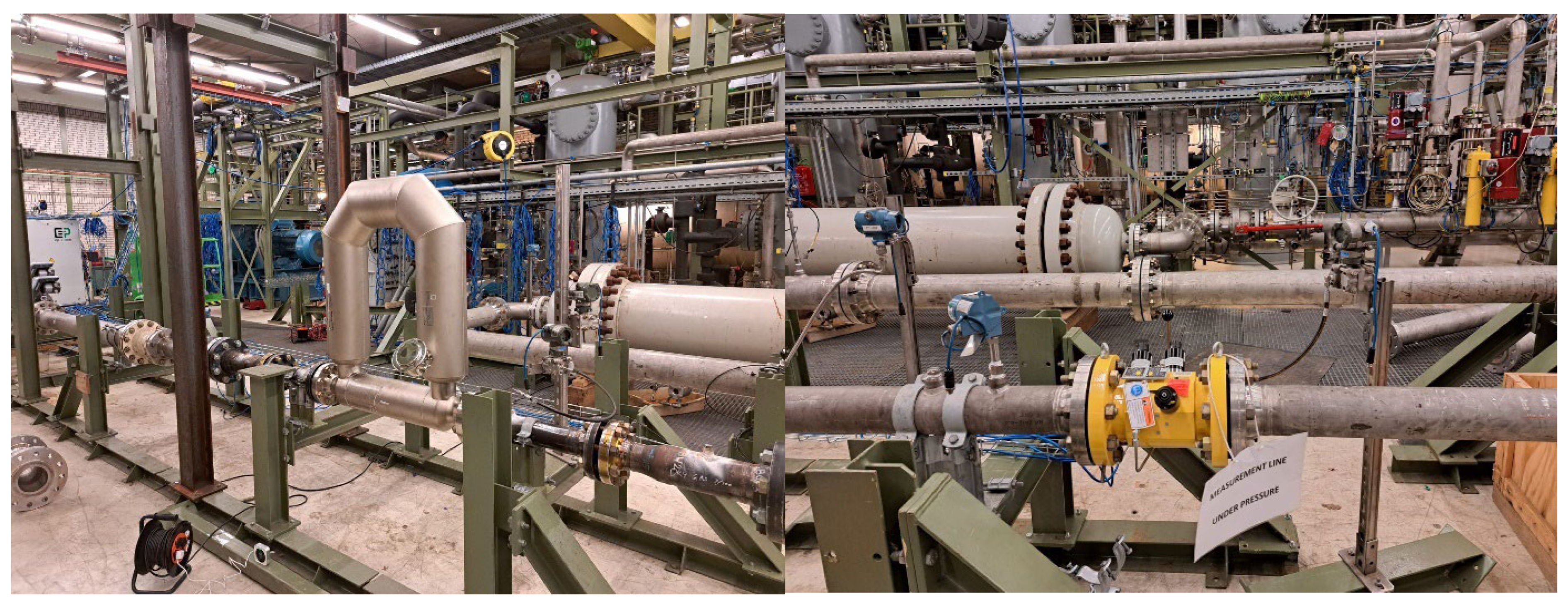
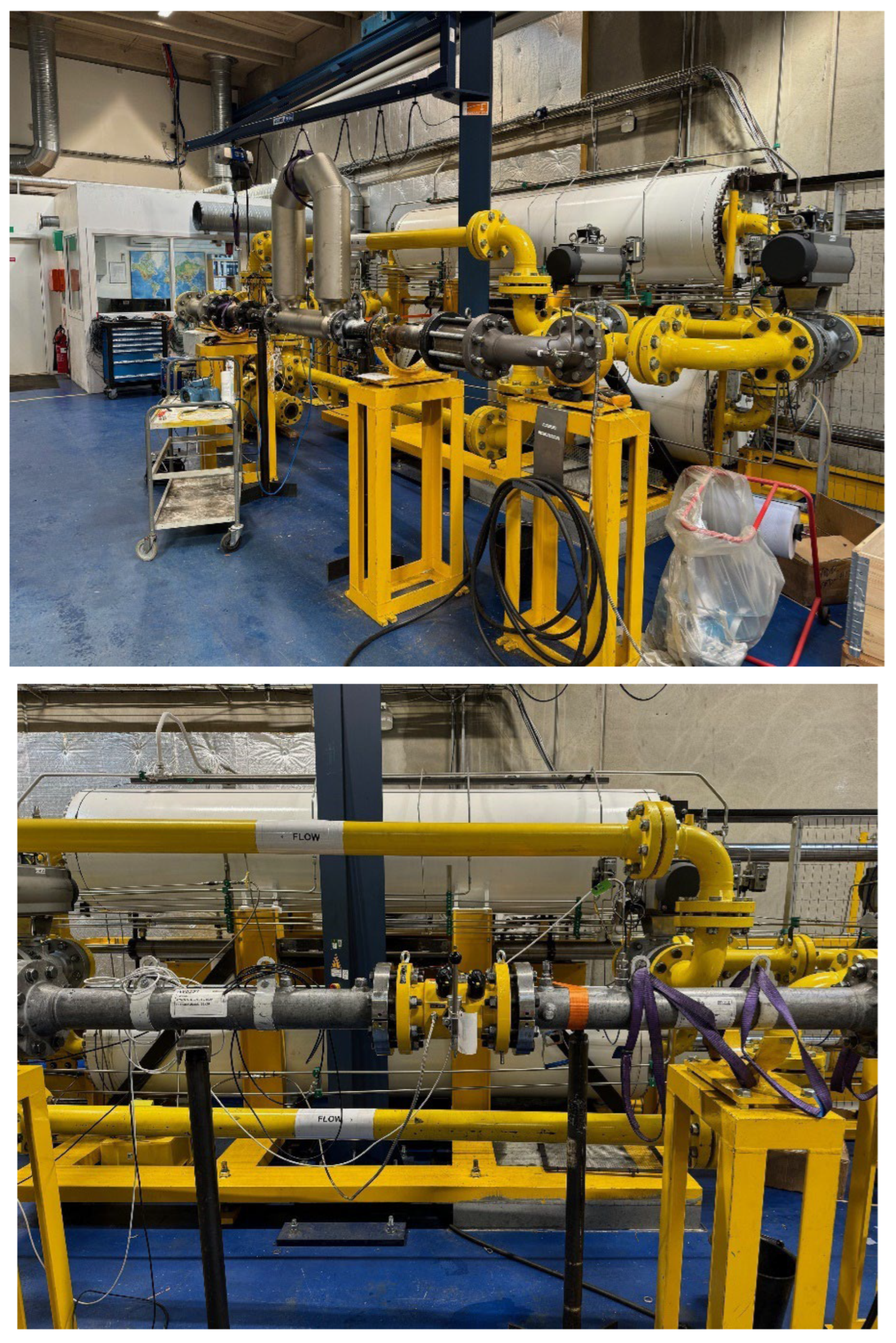
Figure 13, Figure 14 and Figure 15 show the meters installed at the NEL, DNV and FORCE facilities, respectively.

4. Results and Discussion

4.1. Intermediate-Scale Comparison Results

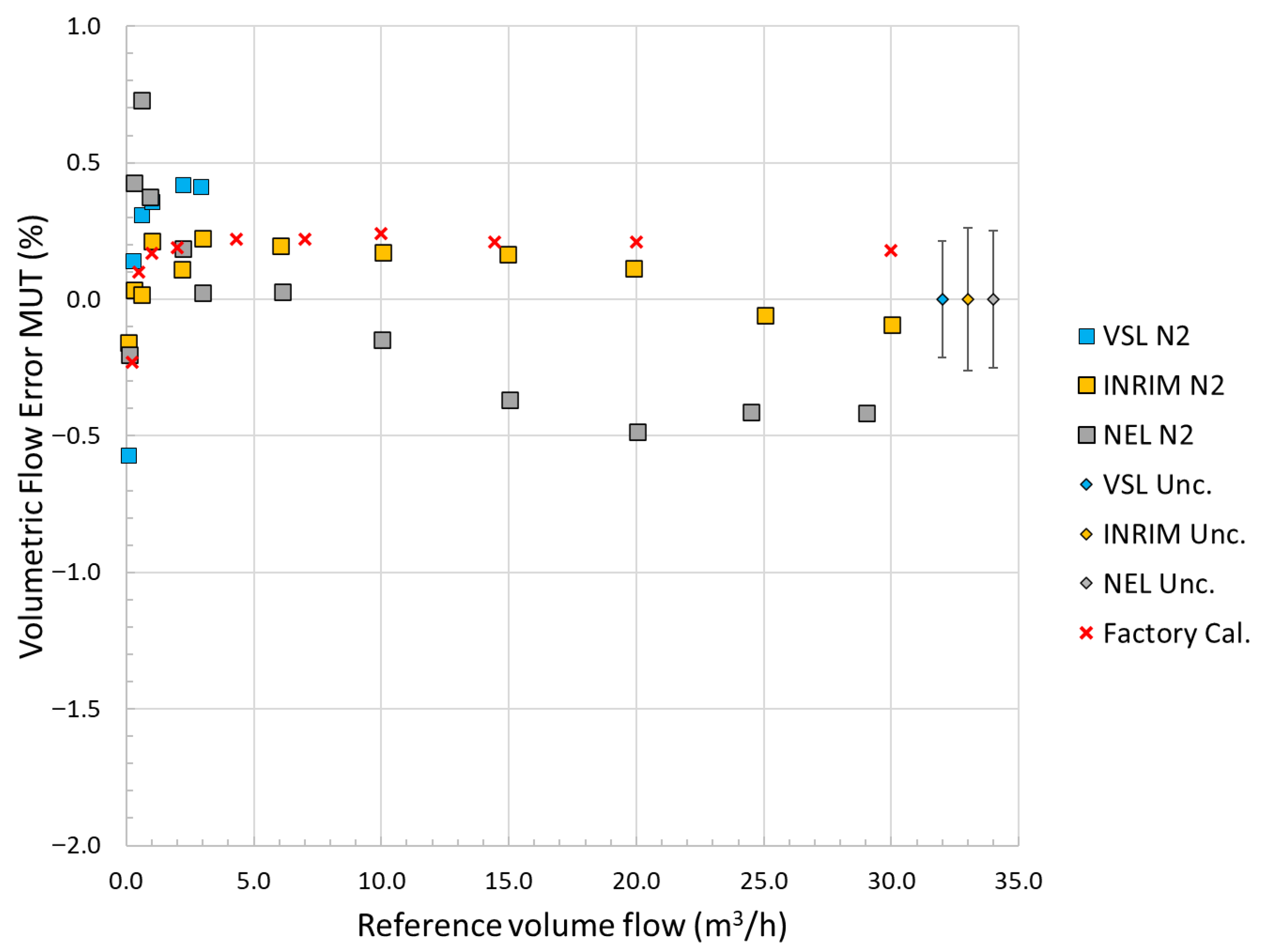
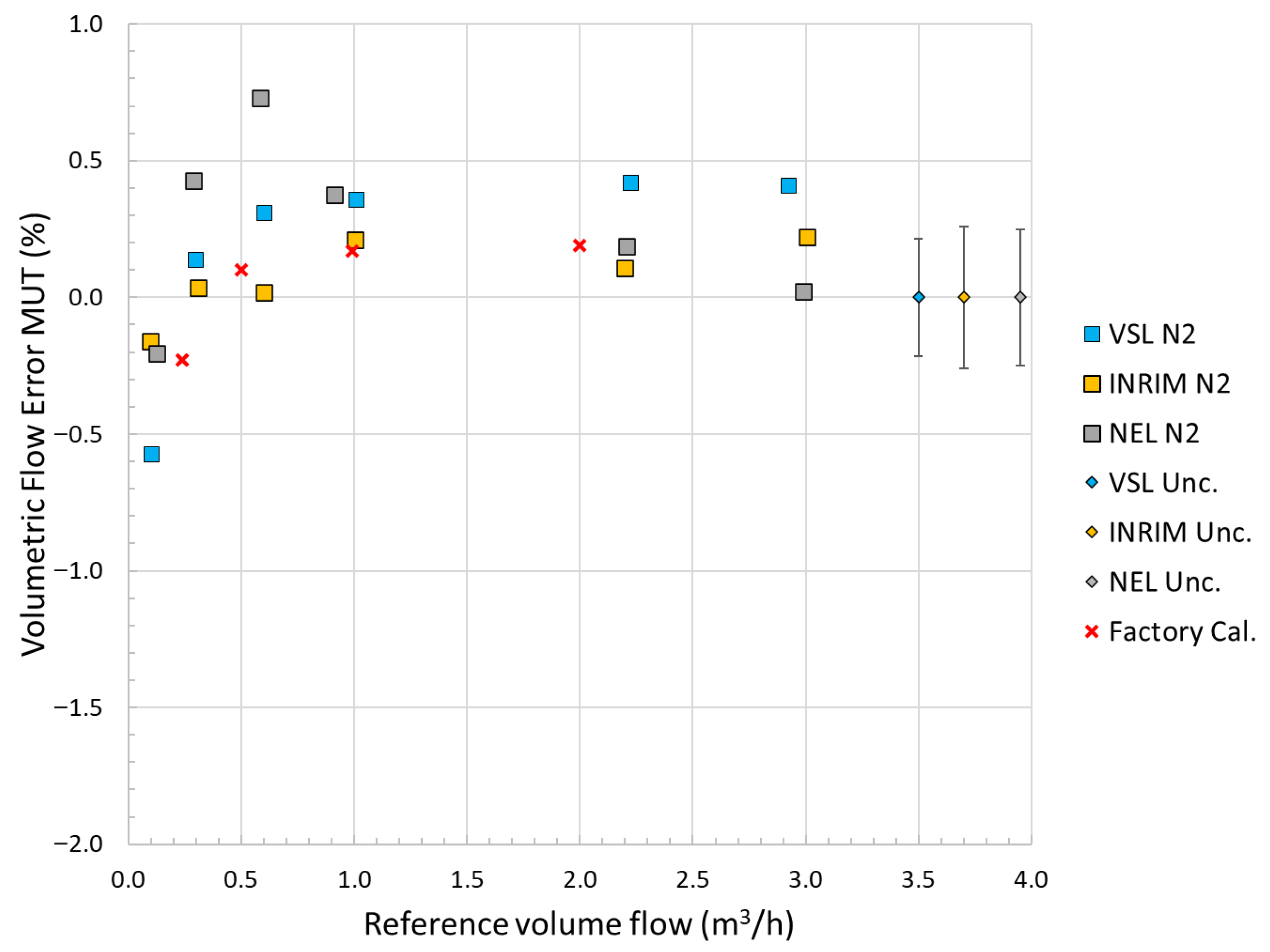
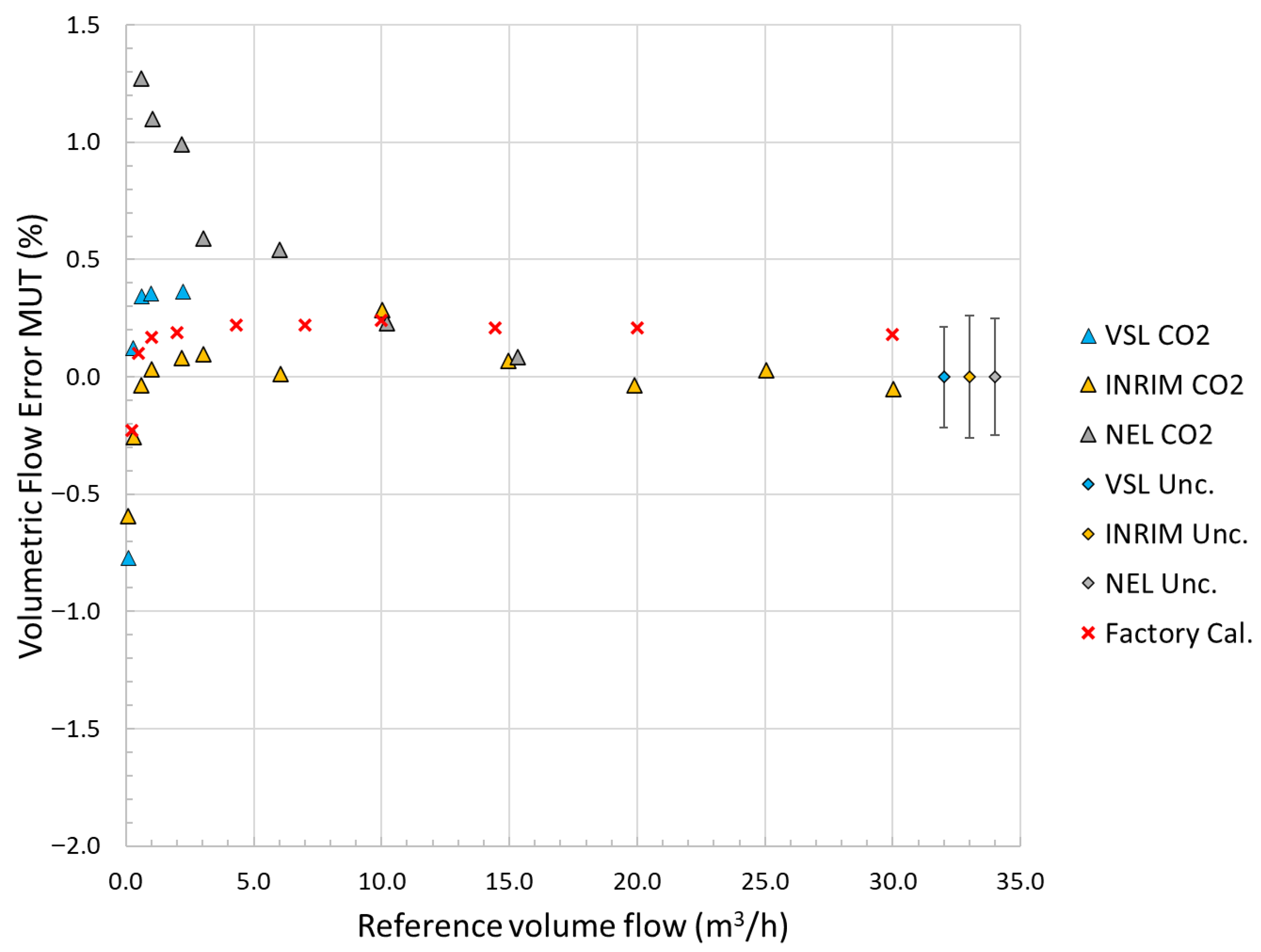
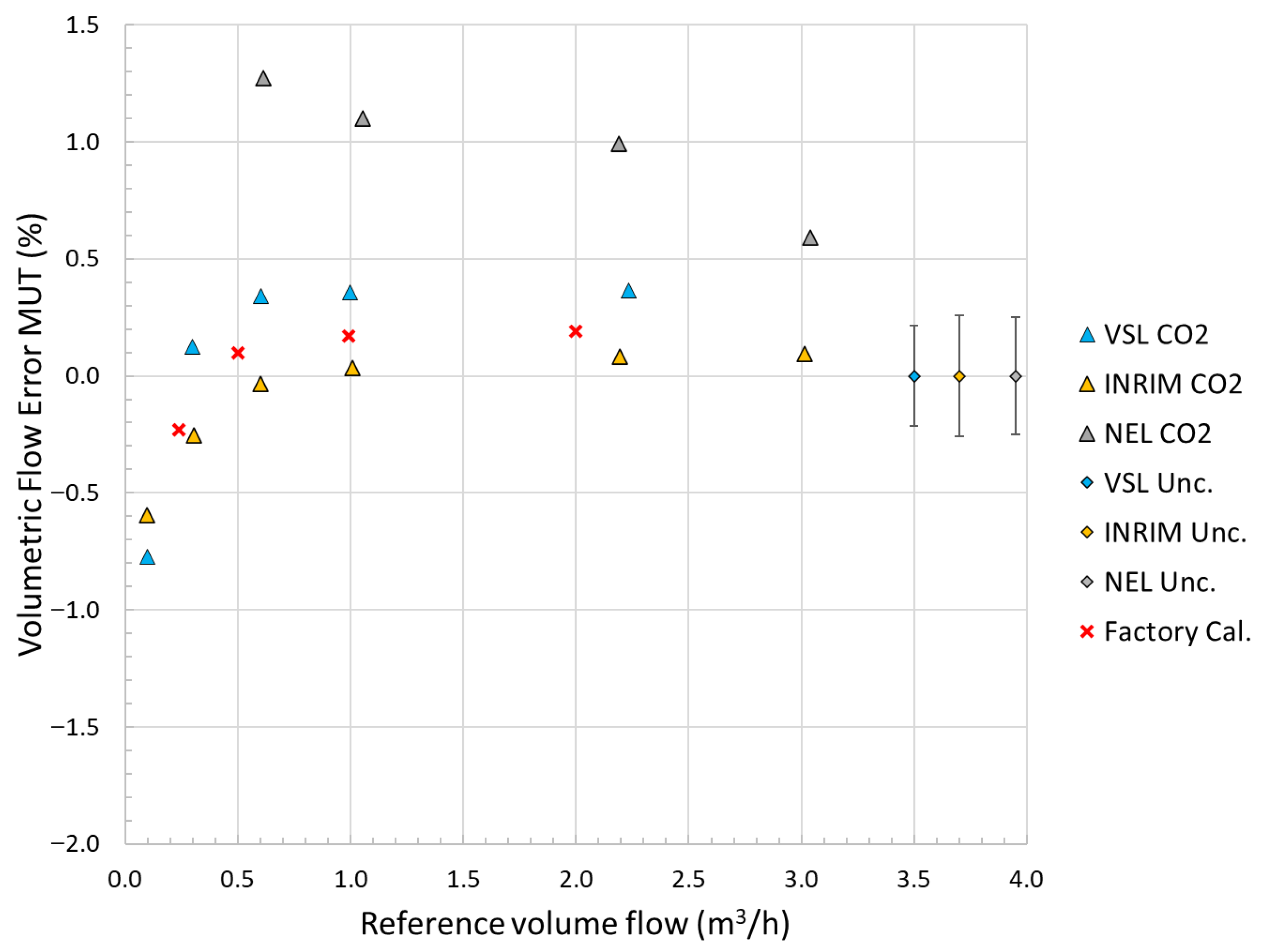
The comparison results for the rotary meter along with the average uncertainties associated with each facility are presented in Figure 16 and Figure 17 for nitrogen, and Figure 18 and Figure 19 for carbon dioxide. Each plotted test result is the averaged value of three consecutive repeats. It should be noted that the average uncertainties plotted in the figures also include the repeatability associated with the three repeats.
The results indicate that the facilities show better agreement when using nitrogen than with carbon dioxide. The most notable deviation is observed in the NEL test results with carbon dioxide. This discrepancy is attributed to the performance of NEL’s reference sonic nozzles, which previous studies suggested may be affected when operated with CO2 [26,27,28,29,30,31,32,33,34,35,36]. The CFVNs used for NEL’s CO2 tests had throat diameters ranging from 1.9 mm to 8.0 mm, while the throat Reynolds number was between 0.9 × 10⁵ and 4.1 × 10⁵. Earlier studies have shown that CFVNs with similar small throat diameters, when calibrated with air, exhibit vibrational relaxation effects when operated with carbon dioxide, leading to higher experimentally determined discharge coefficients at Reynolds numbers comparable to those used in the NEL CO2 tests. However, there is currently no standardized method available to correct for this effect. Hence further research is required to enable appropriate corrections when CFVNs are operated with CO2.

Normalized Error | E n | Intermediate Scale

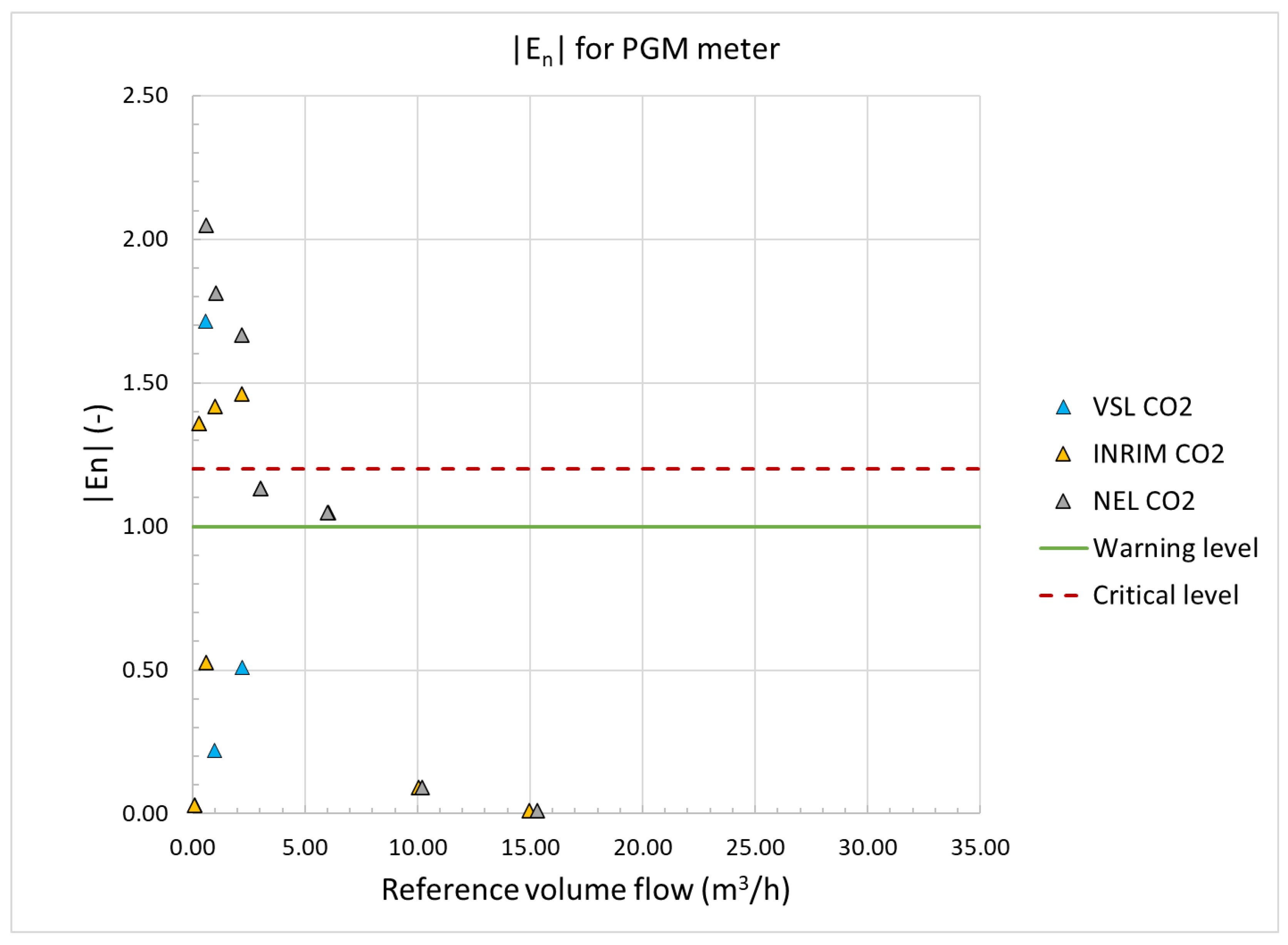
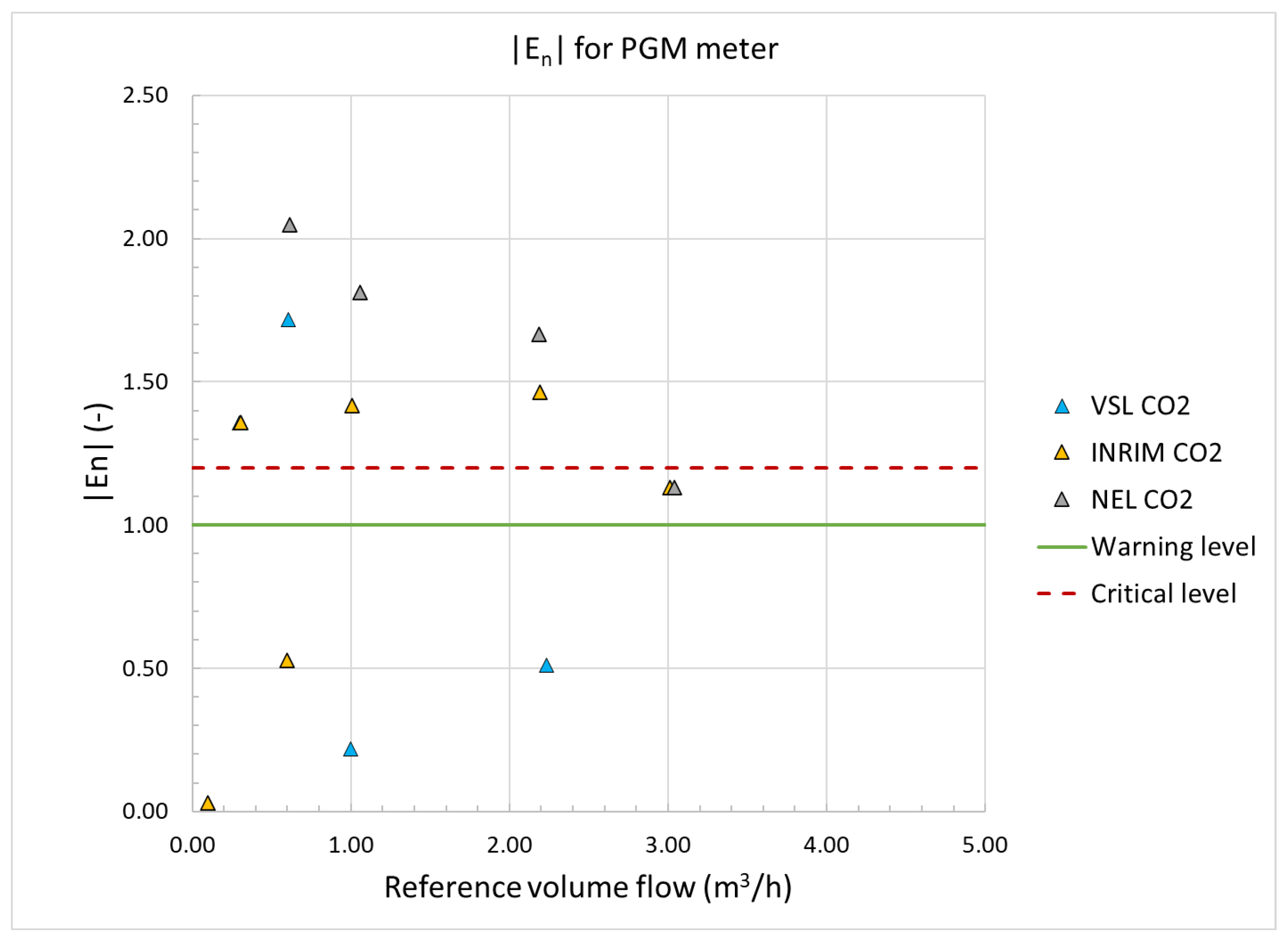
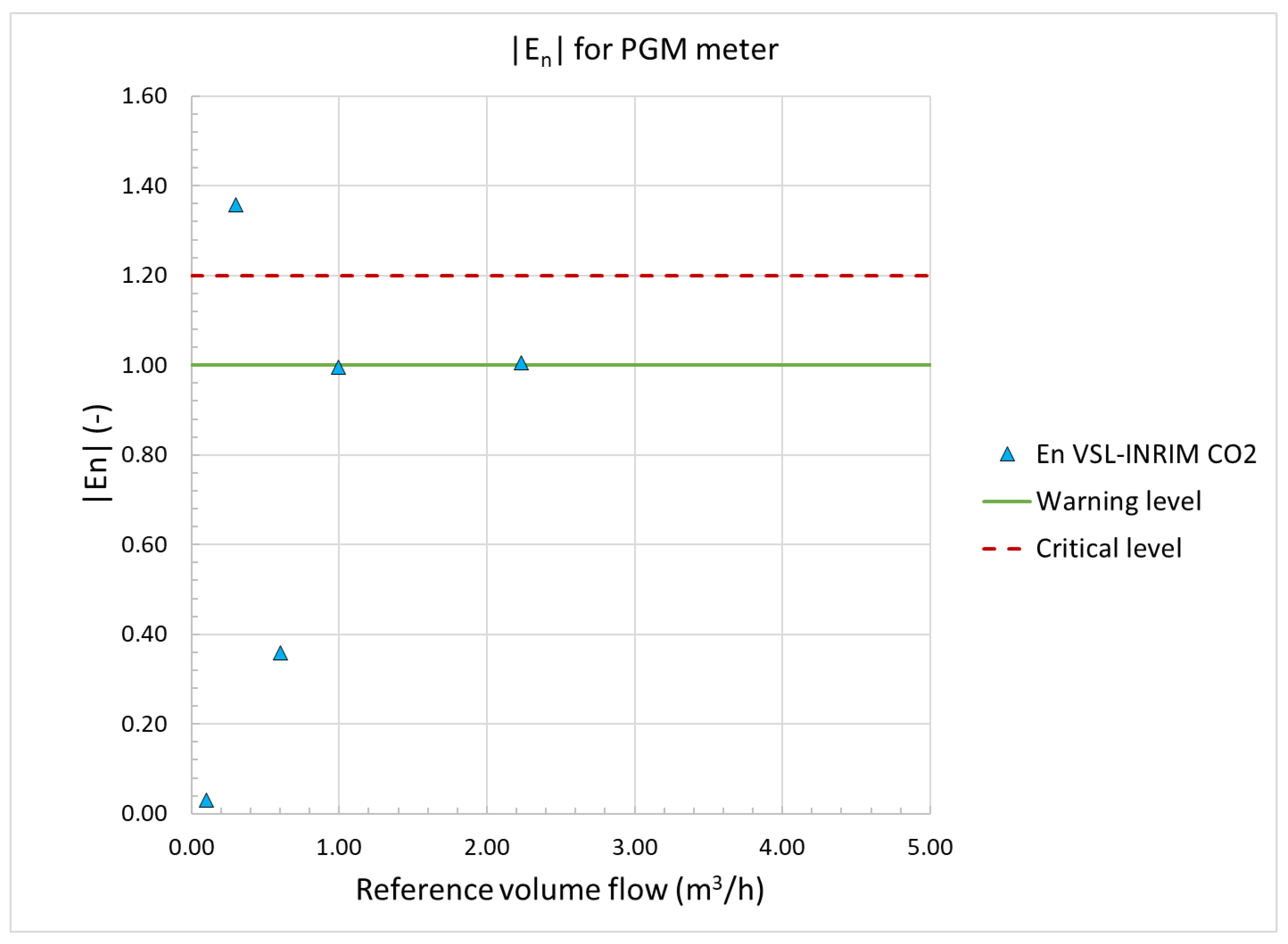
Figure 20 and Figure 21 present the normalized error, | E n | values for each test facility based on the PGM meter measurements with carbon dioxide. It can be seen that the normalized errors fall mostly above the critical level, deeming the comparison inconclusive. The normalized error at the higher flow rates between NEL and INRIM standards are well below the warning level, showing good consistency between the two facilities at the higher flow rates. As per Section 4.1 above, NEL’s small size sonic nozzles introduce significant errors when calibrated with air and used with CO2 and their performance and a correction model with CO2 must be further investigated in the future. Figure 22 then presents the normalized error, | E n | values between only VSL and INRIM’s facilities up to 4 m3/h with CO2. It can be noted that the normalized error is at or below the warning level at four out of the five test points, with only one test point falling above the critical level, suggesting that the facilities are consistent with each other.
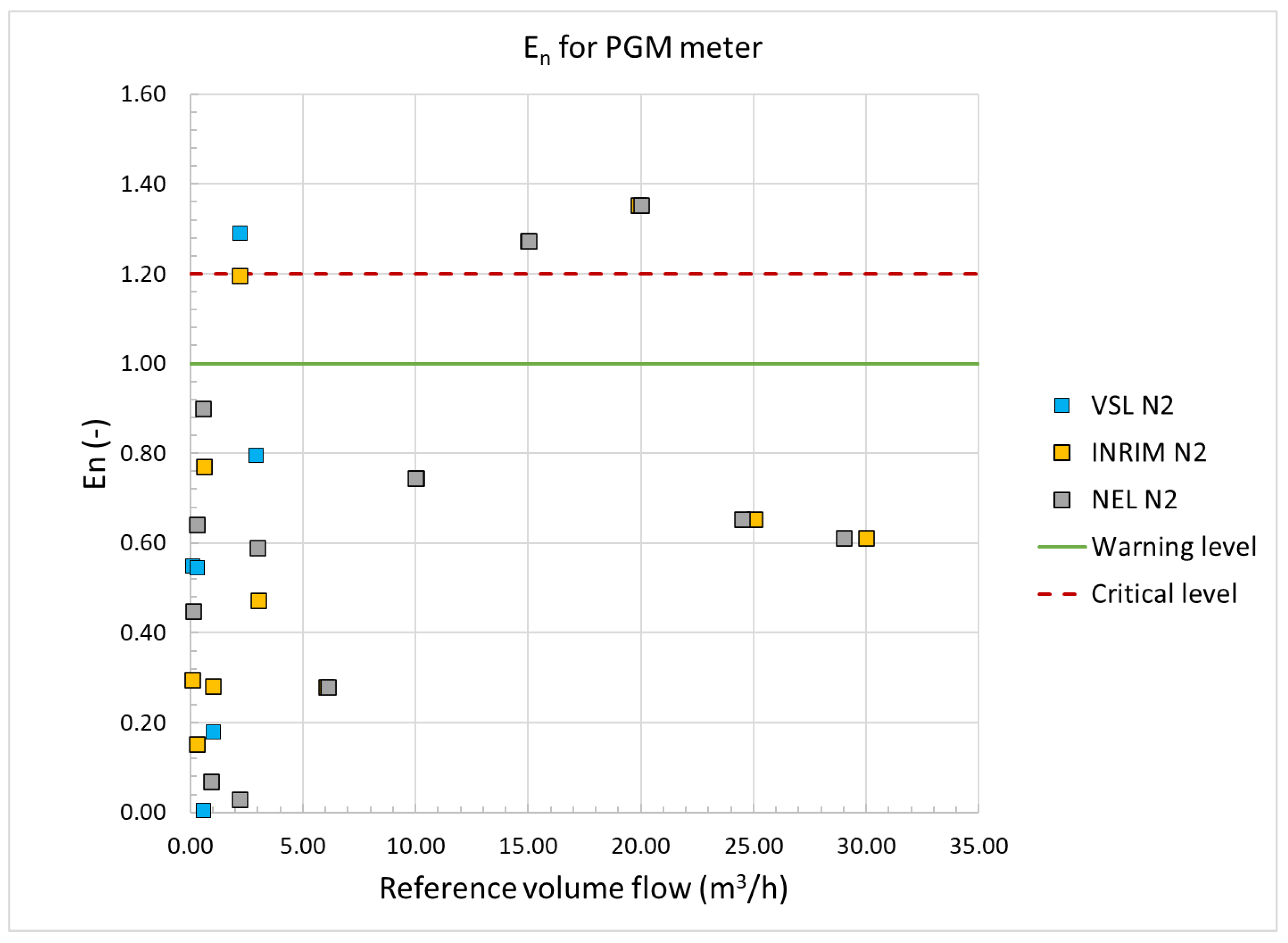
Figure 23 presents the normalized error, | E n | values for each test facility based on the PGM meter measurements with nitrogen. Approximately 80% of the test points shown in this graph have | E n | < 1 , demonstrating that the three test facilities—NEL, VSL and INRIM—are consistent with the CRV with nitrogen gas.
Figure 23 also highlights six test points where | E n | exceeded 1, which are listed below. One of these points had | E n | value between 1 and 1.2, suggesting a potential warning regarding the measurement processes at these facilities under the respective test conditions. Five results had | E n | > 1.2, indicating that the test facility failed the equivalency test under these specific flow conditions.

4.2. Large-Scale Comparison Results

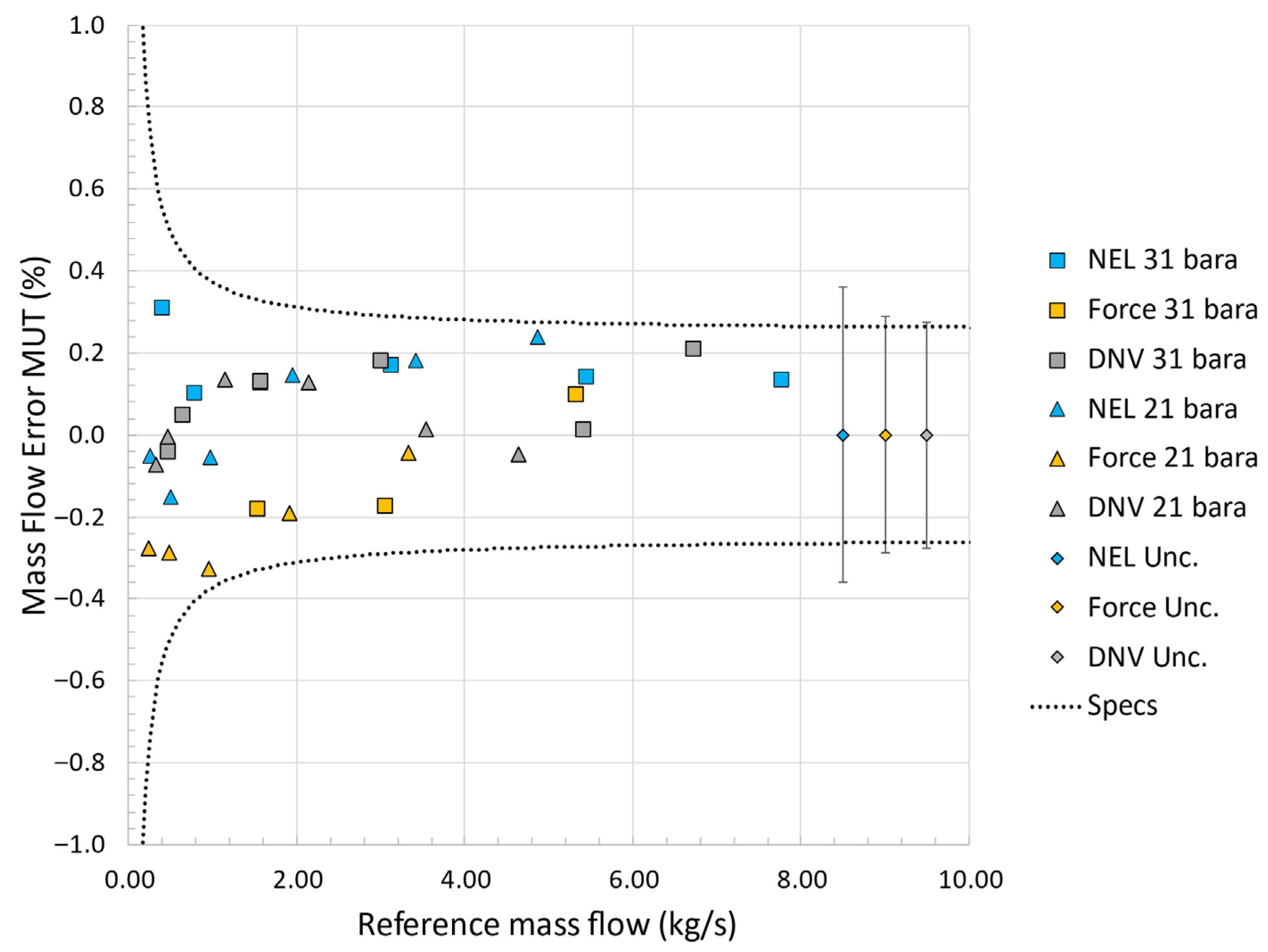
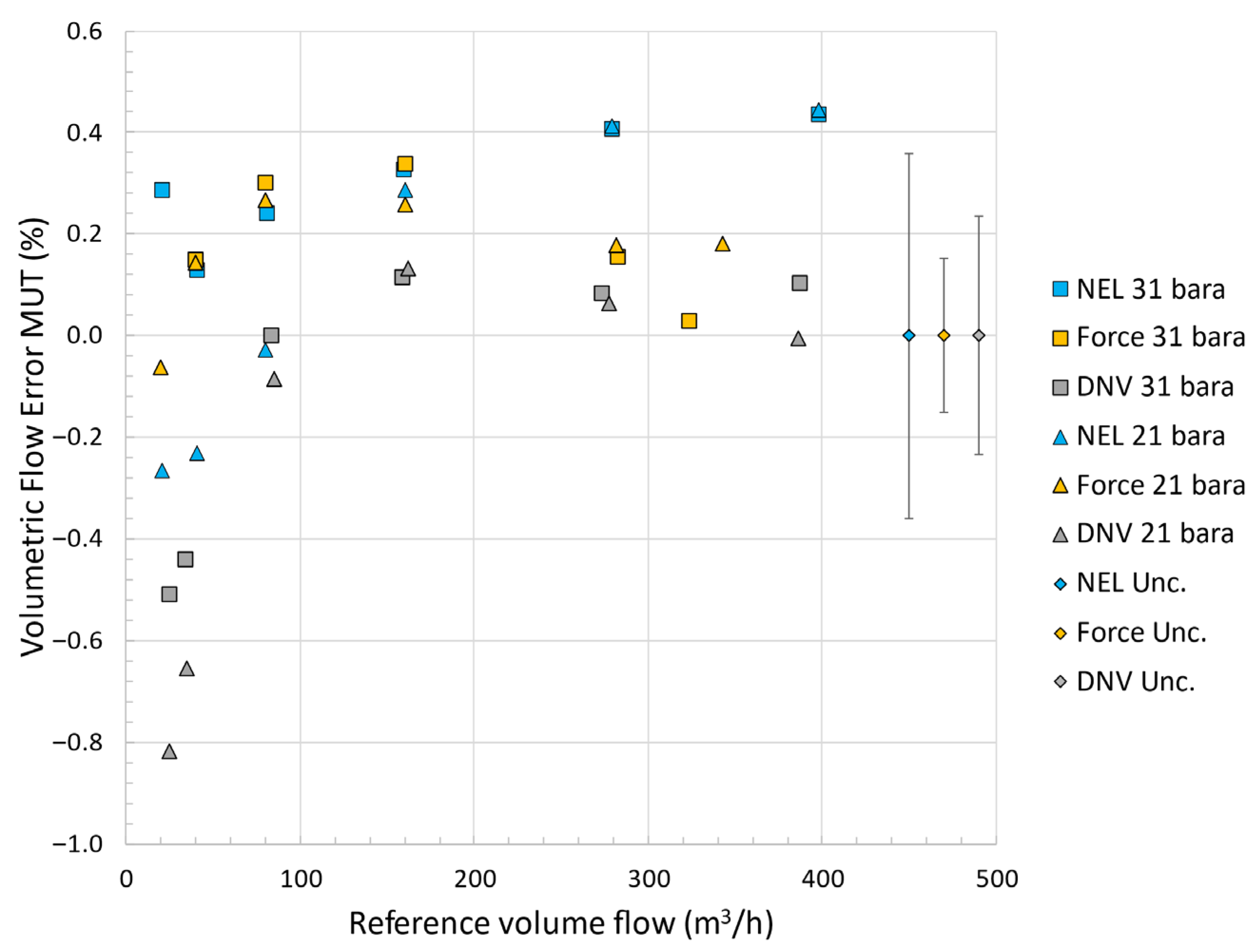
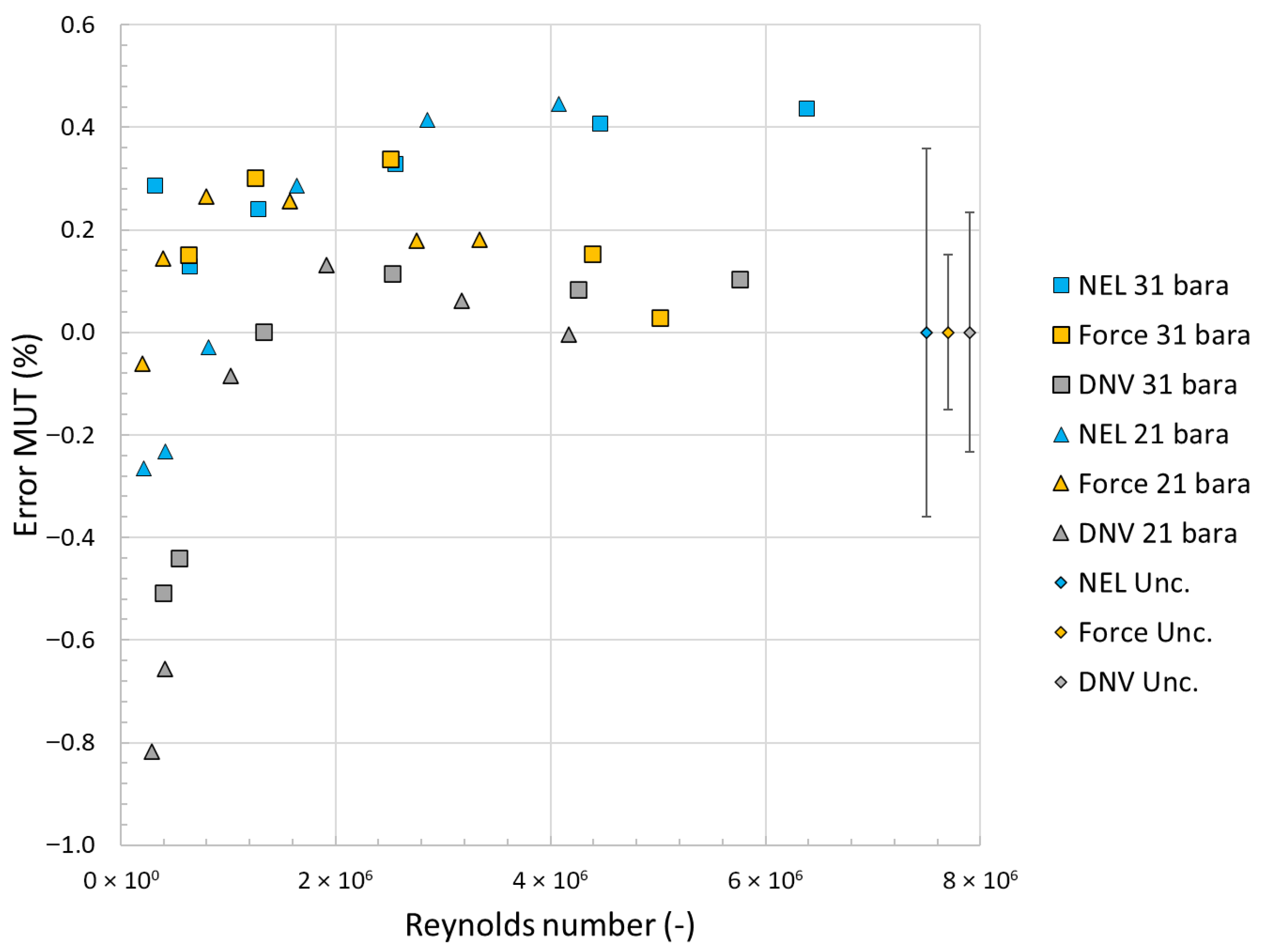
The comparison results for the Coriolis meter and turbine gas meter at each facility along with the average uncertainties (as indication) associated with each facility are presented in Figure 24 and Figure 25, respectively. Figure 26 presents the calibration results of the turbine meter as a function of Reynolds number. Each plotted calibration result is the averaged value of three consecutive repeats. It should be noted that the average uncertainties plotted in the figures also include the repeatability associated with the three repeats.
The results indicate that the difference in meter error in the flow measurements with both meters between the three test facilities generally fall within the uncertainty range of these test facilities, except at the bottom of the flow range.

Normalized Error | E n | Large Scale

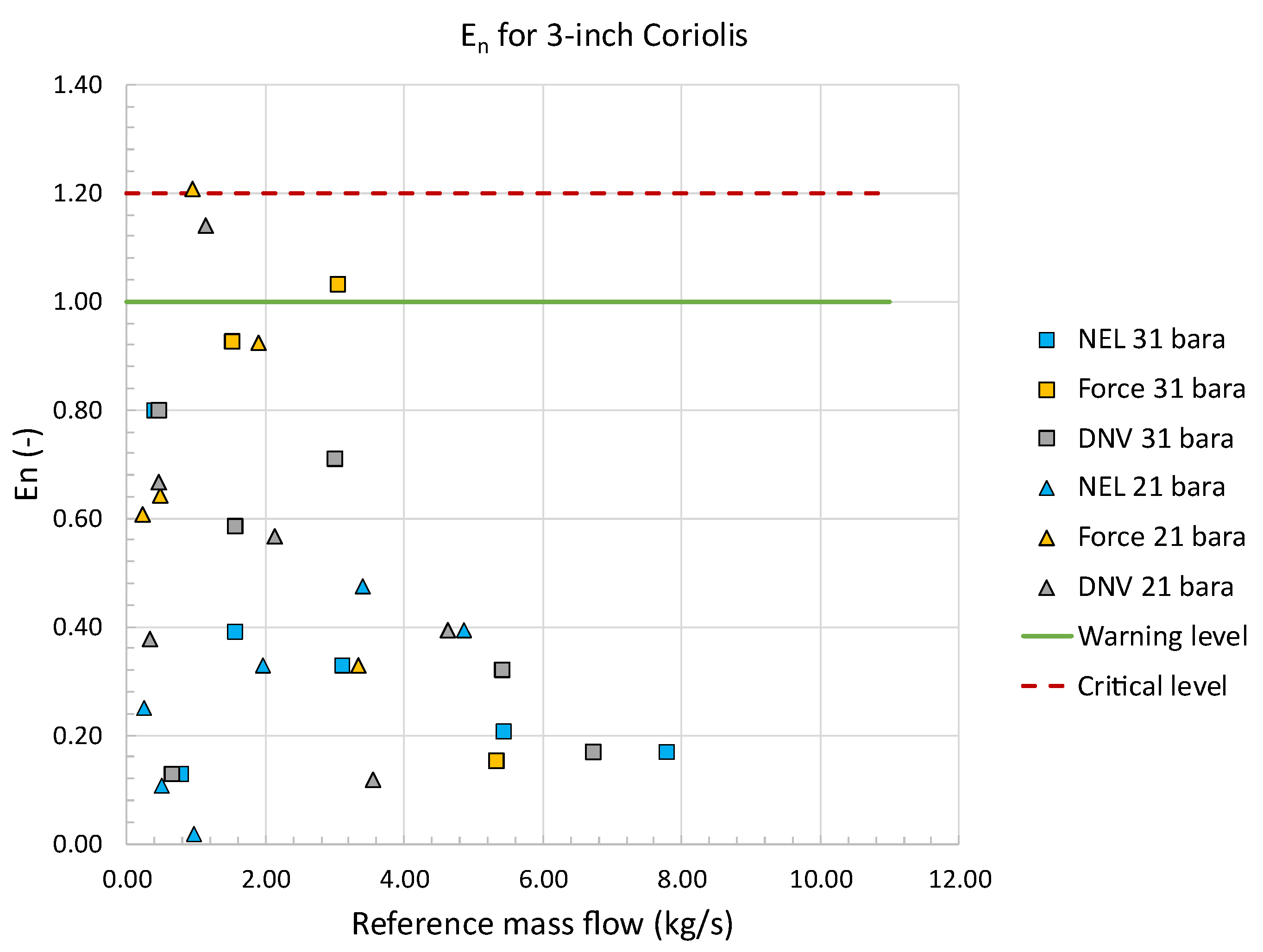
Figure 27 presents the | E n | values for each test facility based on the Coriolis meter measurements. Approximately 91% of the test points shown in this graph have | E n | < 1, demonstrating that the three test facilities—NEL, DNV and FORCE—are consistent with the CRV, and therefore have successfully passed the equivalency test for the specific flow conditions maintained during these test runs.
Figure 27 also highlights three test points where | E n | exceeded 1. These points had | E n | values between 1 and 1.2, suggesting a potential warning regarding the measurement processes at these facilities under the respective test conditions.
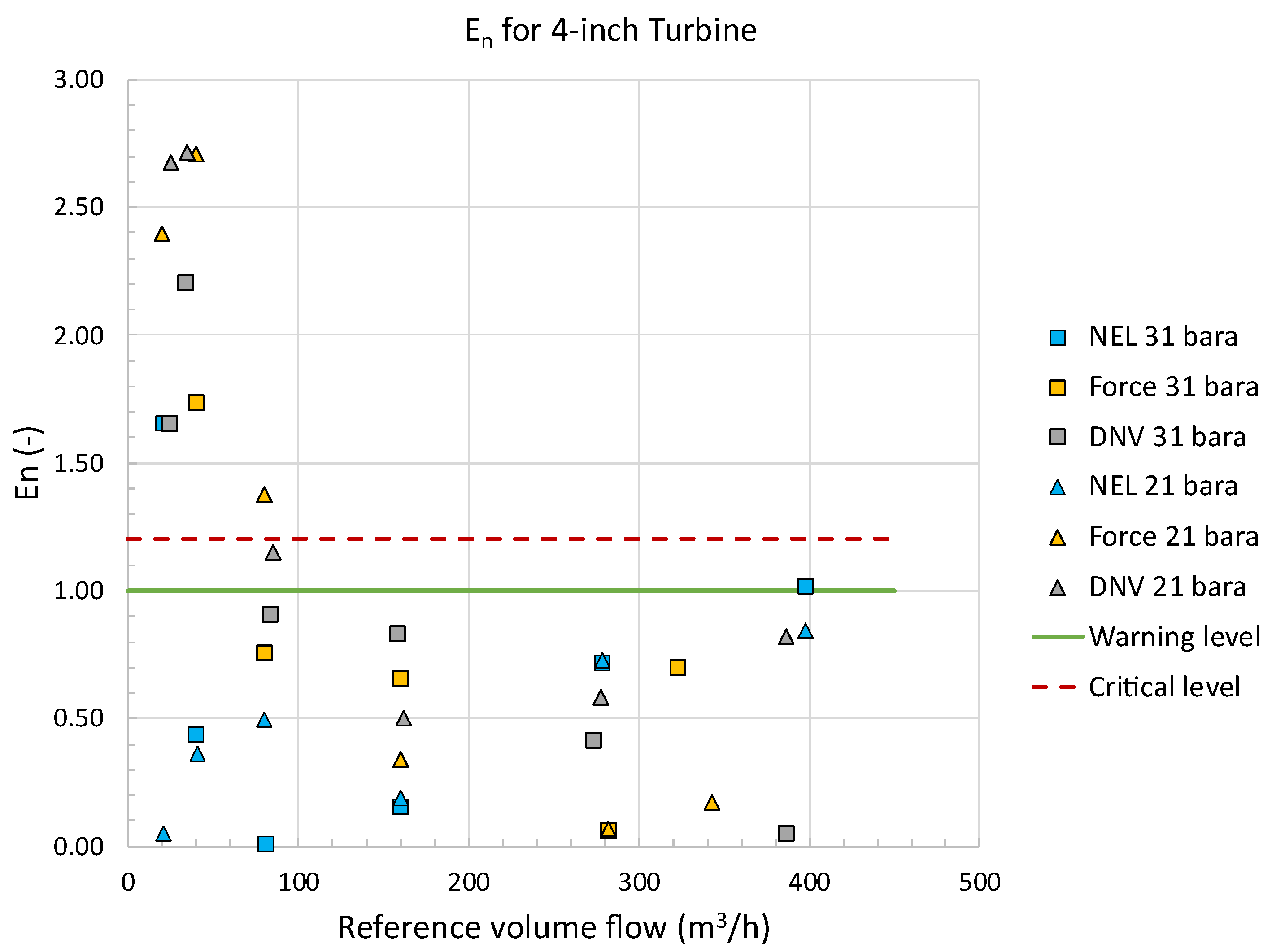
Figure 28 presents the normalized error ( | E n | ) values for each test facility based on the turbine gas meter measurements. Over 68% of the test points shown in this graph have | E n | < 1 . The figure also highlights eleven test points where | E n | exceeded 1. Two of these points had | E n | values between 1 and 1.2, suggesting a potential warning regarding the measurement processes at these facilities under the respective test conditions. However, nine results had | E n | > 1.2 , indicating that the test facility failed the equivalency test under these specific low-flow conditions. It should be noted that the reported uncertainties do not include the effect of long-term stability of the meters, increasing the normalized errors. See more in the recommendations section.
The failed test points all occurred at flow rates below 85 m3/h—a range where turbine meter performance typically deteriorates due to increased bearing friction. Additionally, measurement reliability tends to decrease in this region due to limitations of the test facility itself. Furthermore, for a given nominal test flow rate, the actual flow rates achieved at each facility can differ significantly. This discrepancy can have a considerable impact in low-flow regions, where the turbine meter’s response is highly sensitive to small changes in flow rate.
Nevertheless, the discrepancies are believed to be primarily attributable to the turbine meter’s performance at low flow rates, as supported by the fact that the facilities showed better agreement at low flow rates when using the Coriolis flow meter (Figure 24 and Figure 27). It should be noted that the turbine meter was also tested at atmospheric pressure at FORCE in the beginning of the comparison and when the meter was returned to FORCE at the end of the comparison, and at flow rates below 80 m3/h, a meter shift in the range of 0.2–0.8% was detected in the positive direction, suggesting a drift in the meter itself in the lower end of the flow rate range that contributes to the discrepancies between the laboratories. Additionally, the turbine meter was a new meter and since new turbine meters typically need sufficient initial volume throughput to achieve long-term stability (also known as “run-in” time), the meter likely drifted during the duration of the comparison.

5. Conclusions

This paper presented the results of interlaboratory comparisons for the calibration of flow meters at intermediate and large-scale facilities with carbon dioxide to establish traceability of CO2 flow meter calibrations and support accurate flow metering across the carbon capture and storage (CCS) chain.
In the large-scale comparison between FORCE, DNV, and NEL the facilities passed the equivalency criteria in 91% of the test points in the flow range of 20 m3/h to 400 m3/h with the Coriolis meter, demonstrating traceability for carbon dioxide across facilities. Results with the turbine meter below 85 m3/h were less satisfactory, primarily due to known limitations in turbine meter performance at low flow rates.
Intermediate-scale comparisons between INRIM, VSL, and NEL confirmed traceability for nitrogen across all facilities. Agreement was also observed between VSL and INRIM for carbon dioxide. However, NEL’s results for carbon dioxide differed significantly, which was traced to the use of small-diameter sonic nozzles calibrated in air, known to produce errors when used with carbon dioxide primarily due to vibrational relaxation effects, particularly at low Reynolds numbers. These findings are also consistent with existing literature.
Having performed the interlaboratory comparison between the NEL, DNV, and FORCE in the large-scale range and VSL and INRIM in the intermediate-scale range, the facilities have established traceable calibration capabilities of CO2 flow meters, which enables accurate CO2 flow metering and accounting to help the CCUS industry meet the operational, fiscal and regulatory requirements, and help Europe meet its CO2 emissions reduction target.

6. Recommendations

In the large-scale facilities at NEL, DNV, and FORCE, it is recommended to conduct additional comparisons at flow rates above 400 m3/h to extend the validated range and better serve the CCUS industry. When using the turbine meter, the tests could be done after the meter has had the necessary “run-in” volume through it so that it is more stable over time. The meter could also be tested at 21 bar(a) and 31 bar(a) with CO2 when it is returned to the pilot laboratory to determine the meter drift, such that the uncertainty due to the drift can be calculated and included in the determination of the normalized error. As such, the measurement uncertainty Ui in (4 can be updated as follows (Equation (10)):
U i = U l a b 2 + U r 2 + U L T S
where ULTS is the uncertainty due to the long-term stability of the meter (drift) and is calculated as follows:
U L T S ( k = 1 ) = M e t e r   e r r o r   a t   s t a r t   o f   c o m p a r i s o n M e t e r   e r r o r   a t   e n d   o f   c o m p a r i s o n   3
where the meter errors at start and end of the comparison are determined at the pilot laboratory. In Equation (11) above, the error is divided by square root of three to convert the absolute error to standard uncertainty contribution assuming a rectangular distribution.
In the intermediate-scale comparison between NEL, VSL, and INRIM, it is recommended to conduct a comparison with an additional meter of a different technology that is compatible with all the facilities to gain more confidence in the traceability of the facilities with carbon dioxide.
At NEL’s intermediate-scale facility, further experimental and theoretical investigations into the performance of critical flow Venturi nozzles with CO2 are recommended, with the aim of developing suitable correction methods to mitigate vibrational relaxation effects.

Author Contributions

Conceptualization, A.A., G.C., K.R., D.v.P. and P.G.S.; methodology, G.C., A.A., P.G.S., K.R. and D.v.P.; validation, G.C., R.S., D.v.P., P.G.S., A.A. and K.R.; formal analysis, G.C., R.S., D.v.P., P.G.S., A.A. and K.R.; investigation, G.C., R.S., D.v.P., P.G.S., A.A. and K.R.; resources, G.C., D.v.P., P.G.S., A.A. and K.R.; data curation, G.C., D.v.P., P.G.S., A.A. and K.R.; writing—original draft preparation, A.A., G.C., R.S., D.v.P., P.G.S. and K.R.; writing—review and editing, A.A., G.C., R.S., D.v.P., P.G.S. and K.R.; visualization, A.A., G.C. and R.S.; supervision, A.A., G.C., R.S., D.v.P., P.G.S. and K.R.; project administration, A.A., G.C., D.v.P., P.G.S. and K.R.; funding acquisition, G.C., D.v.P., P.G.S. and K.R. All authors have read and agreed to the published version of the manuscript.

Funding

This research was funded by the European Metrology Programme for Innovation and Research (EMPIR), co-financed by the participating States and from the European Union’s Horizon 2020 research and innovation program, with grant number 21GRD06.

Data Availability Statement

The original data presented in the study are openly available in Zenodo at https://doi.org/10.5281/zenodo.17734594.

Acknowledgments

This work was carried out as part of the project “Metrology Support for Carbon Capture Utilisation and Storage” 21GRD06 MetCCUS, www.metccus.eu. The “Metrology Support for Carbon Capture Utilisation and Storage” 21GRD06 project has received funding from the European Metrology Programme for Innovation and Research (EMPIR), co-financed by the participating States and from the European Union’s Horizon 2020 research and innovation program. The authors would like to thank the teams at TÜV SÜD National Engineering Laboratory, VSL, DNV, FORCE and INRIM for their contributions towards the realization of this work.

Conflicts of Interest

The authors declare that they have no known competing financial interests or personal relationships that could have appeared to influence the work reported in this paper.

References

  1. European Commission. The European Green Deal-European Commission. Available online: https://commission.europa.eu/strategy-and-policy/priorities-2019-2024/european-green-deal_en (accessed on 8 September 2025).
  2. European Union. Commission Implementation Regulation 2018/2066, On the Monitoring and Reporting of Greenhouse Gas Emissions Pursuant to Directive 2003/87/EC of the European Parliament and of the Council and of the Council and Amending Commission Regulation (EU) No 601/20; European Union: Brussels, Belgium, 2025. [Google Scholar]
  3. Mills, C.; Chinello, G.; Henry, M. Flow measurement challenges for carbon capture, utilisation and storage. Flow Meas. Instrum. 2022, 88, 102261. [Google Scholar] [CrossRef]
  4. Arellano, Y. An overview of the measurement landscape needs for CCS. In Proceedings of the 12th Trondheim Conference on Carbon Capture, Transport and Storage, Trondheim, Norway, 19–21 June 2023. [Google Scholar]
  5. van Putten, D.; ten Cate, R.; Al Saleem, M. Considerations for CO2 metering and allocation systems. In Proceedings of the Global Flow Measurement Workshop, Tønsberg, Norway, 24–27 October 2023. [Google Scholar]
  6. EU Commission. Implementation Regulation 2018/2067, On the Verification of Data and on the Accreditation of Verifiers Pursuant to Directive 2003/87/EC of the European Parliament and of the Council; European Union: Brussels, Belgium, 2025. [Google Scholar]
  7. ISO/IEC 17025; General Requirements for the Competence of Testing and Calibration Laboratories. ISO: Geneva, Switzerland, 2017.
  8. Porthos CO2 Transport and Storage C.V., “Standard CO2 Transport and Storage Conditions,” 2023. Available online: https://www.porthosco2.nl/wp-content/uploads/2022/03/Porthos-standard-CO2-Transport-and-Storage-Conditions.pdf (accessed on 18 February 2026).
  9. ISO/IEC. Conformity Assessment-General Requirements for the Competence of Proficiency Testing Providers; ISO: Geneva, Switzerland; IEC: Geneva, Switzerland, 2023. [Google Scholar]
  10. Lemmon, E.W.; Bell, I.H.; Huber, M.L.; McLinden, M.O. NIST Standard Reference Database 23: Reference Fluid Thermodynamic and Transport Properties-REFPROP; Version 10.0; National Institute of Standards and Technology: Gaithersburg, MD, USA, 2018. [Google Scholar]
  11. Piccato, A.; Bisi, M.; Spazzini, P.G.; Bertiglia, F.; La Piana, G.; Audrita, E.; Santiano, M.; Bellotti, R.; Francese, C. Metrological features of the large piston prover at INRIM. Measurement 2022, 192, 110841. [Google Scholar] [CrossRef]
  12. Brown, R.; Chinello, G.; Workamp, M.; Mickan, B. Experimental evaluation of various flow meters using gaseous CO2. Flow Meas. Instrum. 2024, 99, 102672. [Google Scholar] [CrossRef]
  13. Chinello, G.; de kater, A.; Sadri, M.; Modrego, J.; van Putten, D.; Stiphout, W.; Workamp, M.; Anderson, D. Calibration facilities and test results for gas network hydrogen and hydrogen enriched natural gas flow meters. Int. J. Hydrogen Energy 2025, 160, 150431. [Google Scholar] [CrossRef]
  14. van der Grinten, J.; Mickan, B.; Riezebos, H.; van Putten, D. Gas flow traceability for non-conventional and renewable gases. In Proceedings of the 39th International North Sea Flow Measurement Workshop, Tønsberg, Norway, 26–29 October 2021. [Google Scholar]
  15. Mickan, B.; Kramer, R.; Dopheide, D. Determination of discharge coefficient of critical nozzles based on their geometry and the theory of laminar and turbulent boundary layer. In Proceedings of the 6th International Symposium on Fluid Flow Measurement, Querétaro, Mexico, 14–19 May 2006. [Google Scholar]
  16. Mickan, B.; van der Grinten, J.; Kappes, T. Primary and secondary flow standards for a wide variety of gas compositions-a solid base for reliable traceability facing the energy transition. In Proceedings of the 38th International North Sea Flow Measurement Workshop, Virtual Event, 27–29 October 2020. [Google Scholar]
  17. Böckler, H.B. Messrichtigkeit von Mechanischen Gasmessgeräten bei Verwendung von Unterschiedlichen Gasbeschaffenheiten; Universität Duisburg-Essen: Essen, Germany, 2019. [Google Scholar]
  18. van der Grinten, J.G.; Gunnarsson, A.; van der Beek, M.; Mickan, B. An intercomparison between primary high-pressure gas flow standards with sub-permille uncertainties. In Proceedings of the 37th Internationsl North Sea Flow Measurement Workshop, Tønsberg, Norway, 22–25 October 2019. [Google Scholar]
  19. Mills, C. Calibrating and operating Coriolis flow meters with respect to process effects. Flow Meas. Instrum. 2020, 71, 101649. [Google Scholar] [CrossRef]
  20. Hemp, J.; Kutin, J. Theory of errors in Coriolis flowmeter readings due to compressibility of the fluid being metered. Flow Meas. Instrum. 2006, 17, 359–369. [Google Scholar] [CrossRef]
  21. Costa, F.; Mills, C.; Garcia, D.; Gomez, J.; Pereira, L.O. Optimizing Coriolis Flowmeter Performance for the Brazilian O&G Industry: Influence Factors and Calibration Strategies. In Proceedings of the Global Flow Measurement Workshop, Tønsberg, Norway, 24–26 October 2023. [Google Scholar]
  22. JCGM 200:2008; International Vocabulary of Metrology—Basic and General Concepts and Associated Terms (VIM) Vocabulaire International de Métrologie—Concepts Fondamentaux et Généraux et Termes Associés (VIM). BIPM: Sèvres, France, 2008.
  23. Cox, M.G. The evaluation of key comparison data. Metrologia 2002, 39, 589. [Google Scholar] [CrossRef]
  24. Working Group For Fluid Flow. WGFF Guidelines for CMC Uncertainty and Calibration Report Uncertainty. 21 October 2013. Available online: https://www.bipm.org/documents/20126/44756349/ccm-wgff-guidelines.pdf/eda74c50-1192-a20e-fc16-a3760e11329e (accessed on 4 September 2025).
  25. Wright, J.; Toman, B.; Mickan, B.; Wubbeler, G.; Bodnar, O. Pass/Fail/Inconclusive Criteria for Inter-Laboratory Comparisons. In Proceedings of the 9th International Symposium on Fluid Flow Measurement, Arlington, VA, USA, 14–17 April 2015. [Google Scholar]
  26. Johnson, A.N.; Espina, P.I.; Wright, J.D.; Mattingly, J.D.; Merkle, C.L. Numerical Characterization Of The Discharge Coefficient In Critical Nozzles. In Proceedings of the 1998 National Conference of Standards Laboratories Workshop & Symposium, Albuquerque, NM, USA, 19–23 July 1998. [Google Scholar]
  27. Ishibashi, M.; Takamoto, M. Very Accurate Analytical Calculation of the Discharge Coefficients of Critical Venturi Nozzles with Laminar Boundary Layer. In Proceedings of the FLUCOME, Hayama, Japan, 1–4 September 1997. [Google Scholar]
  28. Nakao, S.; Hirayama, T.; Takamoto, M. Effects of Thermalphysical Properties of Gases on the Discharge Coefficients of the Sonic Venturi Nozzle. In Proceedings of the ASME FLuids Engineering Division Summer Meeting, Vancouver, BC, Canada, 22–26 June 1997. [Google Scholar]
  29. Nakao, S.-I.; Takamoto, M. Discharge Coefficients of Critical Venturi Nozzles for CO2 and SF6. J. Fluids Eng. 2000, 122, 730–734. [Google Scholar] [CrossRef]
  30. Johnson, A.N.; Wright, J.D.; Nakao, S.; Merkle, C.L.; Meldover, M.R. The effect of vibrational relaxation on the discharge coefficient of critical flow venturis. Flow Meas. Instrum. 2000, 11, 315–327. [Google Scholar] [CrossRef]
  31. Wright, J.D. What Is the “Best” Transfer Standard for Gas Flow? In Proceedings of the 11th Conference on Flow Measurement, Groningen, The Netherlands, 12–14 May 2003. [Google Scholar]
  32. Johnson, A.N.; Merkle, C.L.; Moldover, M.R.; Wright, J.D. Relaxation Effects in Small Critical Nozzles. J. Fluids Eng. 2006, 128, 170–176. [Google Scholar] [CrossRef][Green Version]
  33. ISO 9300:2022; Measurement of Gas Flow by Means of Critical flow Nozzles. ISO: Geneva, Switzerland, 2022.
  34. Bobovnik, G.; Sambol, P.; Kutin, J. Characterisation of the Discharge Coefficient of CFVNs for Different Gases; EURAMET: Braunschweig, Germany, 2022. [Google Scholar]
  35. Bobovnik, G.; Mickan, B.; Sambol, P.; Maury, R.; Kutin, J. Investigation of the discharge coefficient in the laminar boundary layer regime of critical flow Venturi nozzles calibrated with different gases including hydrogen. Measurement 2023, 217, 113134. [Google Scholar] [CrossRef]
  36. Nagao, J.; Matsuo, S.; Mohammad, M.; Setoguchi, T. Numerical Study on Characteristics of Real Gas Flow Through a Critical Nozzle. Int. J. Turbo Jet Engines 2012, 29, 21–27. [Google Scholar] [CrossRef]
Figure 1. VSL’s mercury-seal piston prover facility. For the tests in this comparison, the meter was placed in the MUT (meter under test) position. T represents a temperature sensor. P represents a pressure sensor. PR represents a pressure reducer. PP represents a piston prover. MFC represents a mass flow controller. HV represents a hand valve, and CV represents an automatic control valve. S0–S4 represent the infrared sensors. The arrows represent the flow direction.
Metrology 06 00022 g001
Figure 2. A photo of the mercury-seal piston provers at VSL.
Metrology 06 00022 g002
Figure 3. Schematic of the NEL high-pressure low-flow facility. PT is pressure transmitter. TT is temperature transmitter. C-V is the control valve. DUT is device under test. C-PR is pressure regulator. The arrows represent the flow direction.
Metrology 06 00022 g003
Figure 4. A photo of the NEL high-pressure low-flow facility.
Metrology 06 00022 g004
Figure 5. MeGas facility, A: MeGas encoder and piston control, B: screw, C: piston, D: measurement chamber, E: facility outlet.
Metrology 06 00022 g005
Figure 6. Schematic of the NEL high-pressure gas flow facility. U/S means upstream. D/S means downstream. The arrows represent the flow directions.
Metrology 06 00022 g006
Figure 7. A photo of the NEL high-pressure flow facility.
Metrology 06 00022 g007
Figure 8. Schematic of the reference section of the All Gas Flow Loop Groningen (AGFLG) test facility at DNV. From the right, the gas flows first through the meter under test (MUT), then through the reference Coriolis meters, reference turbine meters, and the reference critical flow Venturi nozzles. T represents temperature sensors. P represents pressure sensors. NOZ represents sonic nozzles. The dashed lines represents a series of MUT devices that can be installed in series. CMF200 and CMF300 are reference Coriolis meters. FMT-M400 and FMT-M1000 are reference turbine meters.
Metrology 06 00022 g008
Figure 9. Photo of the CFVN section of gas flow reference system of the All Gas Flow Loop Groningen (AGFLG) test facility at DNV (top). Bottom figure indicates the different measurement principles with flow from right to left.
Metrology 06 00022 g009
Figure 10. Photo of the PGM triple G16 test meter. The arrow on the meter represents the flow direction such that the meter is installed properly.
Metrology 06 00022 g010
Figure 11. A photo of the PGM G16 DN50 rotary meter installed at VSL. The meter is installed in series with and upstream of the VSL mercury piston prover. The flow is from right to left.
Metrology 06 00022 g011
Figure 12. Pictures of the DN50 rotary meter installed at NEL. The meter is installed upstream of the reference sonic nozzle holder. The flow is from left to right.
Metrology 06 00022 g012
Figure 13. Photos of the 4-inch turbine and Coriolis meter installed at NEL. The meters are installed in series with the turbine upstream of the Coriolis meter. The flow is from right to left.
Metrology 06 00022 g013
Figure 14. Photos of the 4-inch turbine and Coriolis meter installed at DNV. The meters are installed in series with the turbine upstream of the Coriolis meter. The flow is from right to left.
Metrology 06 00022 g014
Figure 15. Photos of the 4-inch turbine (bottom) and Coriolis meter (top) installed at FORCE. The meters are calibrated separately due to length constraints.
Metrology 06 00022 g015
Figure 16. Rotary meter relative error in gas volumetric flow rate at each facility as a function of the reference volumetric flow rate; the results are for nitrogen. Factory calibration with air is also shown. The uncertainties are the facilities’ CMCs. The uncertainties may be higher at lower flow rates.
Metrology 06 00022 g016
Figure 17. Rotary meter relative error in gas volumetric flow rate at each facility as a function of the reference volumetric flow rate; results are for nitrogen. The graph is zoomed in to better visualize the test results below 4 m3/h. Factory calibration with air is also shown. The uncertainties are the facilities’ CMCs. The uncertainties may be higher at lower flow rates. It can be noted that the results from the three laboratories agree with each other within the laboratories’ CMCs.
Metrology 06 00022 g017
Figure 18. Rotary meter relative error in gas volumetric flow rate at each facility as a function of the reference volumetric flow rate; results are for carbon dioxide. Factory calibration with air is also shown. The uncertainties are the facilities’ CMCs. The uncertainties may be higher at lower flow rates. It can be noted that the results from the three laboratories agree with each other within the laboratories’ CMCs, except the meter errors from NEL diverge below 5 m3/h (as explained in Section 4.1 above).
Metrology 06 00022 g018
Figure 19. Rotary meter relative error in gas volumetric flow rate at each facility as a function of the reference volumetric flow rate; the results are for carbon dioxide. The graph is zoomed in to better visualize the test results below 4 m3/h. Factory calibration with air is also shown. The uncertainties are the facilities’ CMCs. The uncertainties may be higher at lower flow rates. It can be noted that the results from VSL and INRIM agree with each other within the laboratories’ CMCs, while the meter errors from NEL diverge below 5 m3/h (as explained in Section 4.1 above).
Metrology 06 00022 g019
Figure 20. |En| for each facility’s calibrations with the rotary gas meter for CO2. Most test points below 5 m3/h fall outside of the critical level as outlined in Section 4.1.
Metrology 06 00022 g020
Figure 21. |En| for each facility’s calibrations with the rotary gas meter for CO2. The graph is zoomed in to better visualize the test results below 4 m3/h. Most test points fall outside of the critical level as outlined in Section 4.1.
Metrology 06 00022 g021
Figure 22. |En| between VSL and INRIM’s facilities calibrations with the rotary gas meter for CO2. When considering only the results between VSL and INRIM, most test points fall within the warning level.
Metrology 06 00022 g022
Figure 23. |En| for each facility’s calibrations with the rotary gas meter for nitrogen. At flow rates between 5 m3/h and 20 m3/h, only one data point appears because the test flow rates were virtually identical and the |En| was calculated between two laboratories; hence, both have the same |En| values, resulting in identical coordinates on the plot. It can be noted that most test points fall within the warning level.
Metrology 06 00022 g023
Figure 24. Coriolis meter relative error in gas mass flow rate at each facility as a function of the reference mass flow rate. The accuracy specification of the flow meter is also shown in dotted lines. It can be noted all the test points fall within the specifications of the flow meter.
Metrology 06 00022 g024
Figure 25. Turbine meter relative error in gas volumetric flow rate at each facility as a function of the reference volumetric flow rate. It can be noted that the flow rates above 80 m3/h agree within the laboratories’ CMCs. While NEL results appear higher at higher flow rates, the claimed uncertainty is also higher. At flow rates below 80 m3/h there are large discrepancies due to lower measurement accuracy of turbine meters at low flow rates, as explained below.
Metrology 06 00022 g025
Figure 26. Turbine meter relative error in gas volumetric flow rate at each facility as a function of the Reynolds number. It can be noted that at Reynold numbers above 2 × 10⁶ the test points agree within the laboratories’ CMCs. While NEL results appear higher at higher flow rates, the claimed uncertainty is also higher. At Reynold numbers below 2 × 10⁶ there are large discrepancies due to lower measurement accuracy of turbine meters at low flow rates, as explained below.
Metrology 06 00022 g026
Figure 27. The |En| of the large-scale comparison for each facility at the various test conditions with the Coriolis meter. It can be noted that most test points fall within the warning level, with three test points falling between the warning and critical level.
Metrology 06 00022 g027
Figure 28. The |En| of the large-scale comparison for each facility at the various test conditions with the turbine gas meter. It can be noted that the |En| values at flow rates above 80 m3/h are below the warning level. At flow rates below 80 m3/h the |En| values are outside the critical limits due to lower measurement accuracy of turbine meters.
Metrology 06 00022 g028
Table 1. Specifications of the All Gas Flow Loop Groningen (AGFLG) test facility at DNV.
Test Fluids:Nitrogen, hydrogen (up to 30% in natural gas, and 100% in future), methane, carbon dioxide
Flow Range:16 am3/h to 1000 am3/h
Test Sections:2-inch to 8-inch
Operating Pressure:5 bar(g) to 33 bar(g)
Test section differential pressure:25 bar
Temperature Range:−45 °C to 35 °C
Reference meters:Sonic nozzles, turbine meters, Coriolis meters
Claimed reference uncertainty:0.12% to 0.15% (k = 2)
Table 2. Calibration and measurement capabilities (CMC) of each intermediate-scale facility.
Transfer MeterCalibration and Measurement Capability (%) (k = 2)
NELVSLINRIM
PGM meter (volume flow)0.390.20.1
Table 3. Calibration and measurement capabilities (CMC) for each large-scale facility.
Transfer MeterCalibration and Measurement Capability (%) (k = 2)
NELDNVFORCE
Coriolis meter (mass flow)0.350.22 to 0.290.27
Turbine meter (volumetric flow)0.350.22 to 0.270.15
Table 4. The test conditions of the intermediate-scale comparison.
Calibration FluidPressure (bar.a)Temperature (°C)Density (kg/m3)Flow Rate Range (m3/h)VSLINRIMNEL
N2Atmospheric
(6 to 11 at NEL)
201.13 to 1.20
(7 to 13 at NEL)
0.1 to 300.1 to 3 m3/hYesYes
CO2Atmospheric
(3 to 7 at NEL)
201.16 to 1.8
(6 to 12 at NEL)
0.1 to 300.1 to 2.2 m3/hYes0.6 to 15 m3/h
Table 5. Large-scale facilities comparison test conditions.
Test FluidPressure (bar.a)Temperature (°C)Density (kg/m3)Flow Rate Range (kg/s)Flow Rate Range (m3/h)NELDNVFORCE
Coriolis
FORCE
Turbine
CO23120690.4 to 7.820 to 400YesYesOnly 80, 160 and 280 m3/hFrom 40 m3/h
CO22120440.25 to 4.920 to 400YesYesUp to 280 m3/hYes
Disclaimer/Publisher’s Note: The statements, opinions and data contained in all publications are solely those of the individual author(s) and contributor(s) and not of MDPI and/or the editor(s). MDPI and/or the editor(s) disclaim responsibility for any injury to people or property resulting from any ideas, methods, instructions or products referred to in the content.