Review

Integrating Vadadustat into Pharmaceutical Care for CKD-Related Anemia: Evidence-Based and Pharmacovigilance Perspectives

1
Department of Nephrology and Urology, Bogomolets National Medical University, 01601 Kyiv, Ukraine
2
L.T.Mala Therapy National Institute, National Academy of Medical Sciences of Ukraine, 61039 Kharkiv, Ukraine
3
KfH-Nierenzentrum, 95326 Kulmbach, Germany
4
Central Formulary Committee, Ministry of Health of Ukraine, 03057 Kyiv, Ukraine
5
MEDICE Arzneimittel Pütter GmbH & Co. KG, 58638 Iserlohn, Germany
*
Author to whom correspondence should be addressed.
Kidney Dial. 2026, 6(3), 53; https://doi.org/10.3390/kidneydial6030053 (registering DOI)
Submission received: 7 May 2026 / Revised: 21 July 2026 / Accepted: 21 July 2026 / Published: 1 August 2026
(This article belongs to the Collection Teaching Cases in Nephrology, Dialysis and Transplantation)

Abstract

Anemia management in chronic kidney disease patients is a significant challenge for modern healthcare professionals. Anemia in chronic kidney disease patients has multiple causes, which include erythropoietin deficiency, abnormal iron metabolism, resistance to erythropoietin signaling, bone marrow suppression, blood loss, inflammation, nutrition deficiencies, and oxidative stress. Vadadustat, a stabilizer of hypoxia-inducible factor (HIF), is indicated for the treatment of symptomatic anemia associated with chronic kidney disease (CKD) in adults on chronic maintenance dialysis. Evidence-based pharmaceutical care services are of great importance for chronic kidney disease patients because they provide safe and cost-effective care for patients. In the present article, we outline the most important pharmaceutical aspects that may affect the efficacy and safety of drug therapy with vadadustat and other HIF stabilizers. We conclude that evidence-based pharmaceutical care is one of the criteria that promotes management of vadadustat therapeutic efficacy and safety. Such an approach will contribute to improving patient adherence to treatment and, consequently, quality of life. Special attention is paid to structure-derived side effects of widely used HIF stabilizers, including their advantages and disadvantages. Based on all available safety and efficacy data for vadadustat, the overall risk–benefit profile remains positive for the approved indications for use.

1. Introduction

According to different sources, the prevalence rates of anemia associated with chronic kidney disease (CKD) in Europe vary from 12.8% to 61.5%, increasing with age and later stage of CKD [1]; in dialysis-dependent (DD) patients, this prevalence exceeds 90% [2]. CKD-related anemia presents a considerable economic burden and increased healthcare resource utilization, particularly in DD-CKD patients [1,3,4,5]. Among 290,000 patients with DD-CKD in Europe, 7.2–27.3% undergo at-home dialysis with varying proportions across European countries [6]. Anemia is associated with poor outcomes and prognosis, reduced quality of life [7,8,9,10], increased risk of cardiovascular events and hospitalization [11,12,13], progression to end-stage kidney disease [11,14], and increased morbidity and mortality [15,16]. Anemia in CKD patients has multiple causes, which include erythropoietin (EPO) deficiency, abnormal iron metabolism, resistance to EPO signaling, bone marrow suppression, blood loss, inflammation, nutrition deficiencies, and oxidative stress [15,17,18]. Inadequately decreased EPO production in patients with CKD is caused by loss of renal EPO-producing cells and, more importantly, abnormalities in oxygen sensing [16]. Some patients (10–20%) have low hemoglobin (Hb) levels despite normal-range EPO levels, indicating a functional EPO deficiency, which means an inadequate erythropoiesis response to EPO [15].
Impaired iron homeostasis is common among patients with CKD and includes systemic iron deficiency and iron-restricted erythropoiesis, resulting in reduced availability of iron for erythropoiesis [15,19]. In addition to dietary uptake, iron is mainly provided by recycling of iron present in senescent erythrocytes and the release of iron from storage sites [16]. To maintain iron homeostasis, iron absorption and recycling are adjusted by mechanisms regulating cellular iron uptake, utilization, and storage [16,20].
Ferroportin and hepcidin are the major proteins maintaining iron homeostasis [19]. Hepcidin production is stimulated by inflammatory cytokines, especially interleukin-6 (IL-6), and by increased storage iron. Hepcidin is down-regulated by iron deficiency and expanded erythropoiesis [11]. Increased hepcidin downregulates ferroportin, the iron exporter on all cells, and thereby decreases gastrointestinal iron absorption and decreases iron release from storage sites in the liver and spleen. This decreased iron export and release leads to functional iron deficiency, i.e., low circulating iron available for erythropoiesis (low transferrin saturation (TSAT)), albeit with normal or increased storage iron (high ferritin). It might also contribute to EPO resistance due to inhibiting erythroid progenitor proliferation and survival [16].
Patients with CKD frequently manifest an inflammatory state [21]. Numerous studies have shown that inflammation impairs erythropoiesis and is one of the most frequent causes of resistance to EPO in CKD patients [15].
The standard of care in treating anemia in CKD patients is correction of iron deficiency with iron supplementation and administration of recombinant human erythropoietin (EPO) or one of its long-acting derivatives, including the hyperglycosylated darbepoetin alfa and the pegylated methoxy polyethylene glycol-epoetin beta (Continuous Erythropoietin Receptor Activator, CERA), which are collectively termed erythropoiesis-stimulating agents (ESAs) [8]. The introduction of ESAs was a breakthrough in anemia treatment. However, despite being well-studied with regard to safety and efficacy, ESAs have several disadvantages, including the following [8]:
  • Need for (self-)injection and/or regular clinic visits;
  • Requirement for cold storage conditions;
  • Resistance in chronic inflammatory states;
  • Potential risk of enhancing tumor growth;
  • Development of antibody-mediated pure red cell aplasia (rare);
  • Increased risk of cardiovascular events with higher ESA doses [22] and higher Hb level targets [23];
  • ESA hyporesponsiveness [15,24].
Short-acting ESAs (epoetin alfa/beta) require more frequent administration, whereas long-acting ESAs such as darbepoetin alfa and pegylated beta ESA have prolonged half-lives and different dosing schedules [8].
This review summarizes current evidence on HIF stabilizers use in CKD-related anemia patients. A systematic literature search was performed in PubMed from inception to 20 April 2026, using predefined combinations of keywords related to anemia, chronic kidney disease, vadadustat, pharmaceutical care, evidence-based medicine and pharmacy, hypoxia-inducible factor prolyl-hydroxylase inhibitors. The search was limited to English-language publications. Regulatory documents from the EMA and FDA, as well as key congress abstracts, were additionally screened to ensure completeness of the evidence base. Priority was given to Phase II and III randomized controlled trials (PRO2TECT, MODIFY, FOCUS and INNO2VATE).

2. Vadadustat Is a Hypoxia-Inducible Factor Stabilizer for Anemia Treatment in CKD Patients

In 2019, the Nobel Prize in Physiology or Medicine was awarded for describing the molecular mechanisms of hypoxia-inducible factor (HIF) oxygen sensing. This mechanism plays a central role in adaptation to hypoxic conditions, including induction of EPO production [25].
Vadadustat (Vafseo®, Medice Arzneimittel Pütter GmbH & Co. KG, Iserlohn, Germany) is a HIF-prolylhydroxylase domain inhibitor (HIF-PHI) that mimics hypoxic conditions by inhibiting prolylhydroxylase enzymes. This inhibition results in stabilization and increased levels of HIF-α, dose-dependent increases in serum EPO, and improved Hb concentration and numbers of red blood cells (RBCs) [11,26,27,28].
Vadadustat was approved by the European Medicines Agency (EMA) for the treatment of symptomatic anemia associated with CKD in adults on chronic maintenance dialysis. The United States Food and Drug Administration (FDA) has approved vadadustat tablets for the treatment of anemia due to CKD in adults who have been receiving dialysis for at least three months.
While ESAs directly activate the EPO receptor, HIF-PHIs have pleiotropic actions as HIF induces transcription of multiple target genes in multiple cell types with higher sensitivity of genes associated with erythropoiesis, including endogenous EPO from the kidney or/and liver and genes related to iron absorption and mobilization [15,27].
Vadadustat has been studied in 36 completed studies. The completed studies involved 20 Phase I studies (with healthy volunteers), eight Phase II studies, and eight Phase III studies (involving four global studies) [29,30]. Clinical efficacy and safety of vadadustat given once daily for the treatment of anemia in adult DD patients with CKD are supported by the results of two global Phase III randomized, open-label, active-controlled studies known as the INNO2VATE studies (NCT 02865850, NCT02892149) [26,30].
The INNO2VATE trials evaluated the long-term sustained effect on Hb by assessing changes in Hb levels from baseline through the primary (weeks 24–36) and secondary (weeks 40–52) evaluation periods and specifically addressed whether the treatment of anemia by darbepoetin alfa (ESA control) and vadadustat were associated with similar or different cardiovascular risk [31,32,33]. One of the key patient eligibility differences was incident dialysis patients in the INNO2VATE 1 (CI-0016) and prevalent dialysis patients in the INNO2VATE 2 study (CI-0017).
The phase III PRO2TECT trials (NCT02648347, NCT02680574) evaluating oral vadadustat versus parenteral darbepoetin alfa in ESA-treated patients with anemia due to NDD-CKD reported that vadadustat was noninferior to darbepoetin alfa in maintaining hemoglobin levels; however, noninferiority for MACE was not demonstrated in the overall study population [34]. Post hoc regional analysis revealed substantial geographic heterogeneity, with no apparent excess cardiovascular risk among patients enrolled in the United States, whereas a higher MACE risk was observed in patients enrolled outside the US. These findings contributed to limiting the current clinical use of vadadustat in patients with DD-CKD; however, in Japan, it is approved for both indications: NDD- and DD-CKD patients [35].
Additionally, vadadustat demonstrated non-inferiority for hemoglobin correction; regulatory authorities limited its indication to DD-CKD patients because the overall benefit-risk assessment differed between DD- and NDD-populations, particularly with regard to cardiovascular considerations [34].
Thus, while vadadustat demonstrated noninferior efficacy to darbepoetin alfa for hemoglobin maintenance across the global NDD-CKD program (PRO2TECT), noninferiority for MACE was not established in the overall NDD-CKD population. Consequently, with the exception of Japan, where vadadustat is approved for patients with both NDD-CKD and DD-CKD, vadadustat approval by the FDA, EMA, and other agencies remains restricted to use in patients with DD-CKD.

3. Evidence for the Efficacy and Safety of Vadadustat Therapy

3.1. Hb Concentration Change

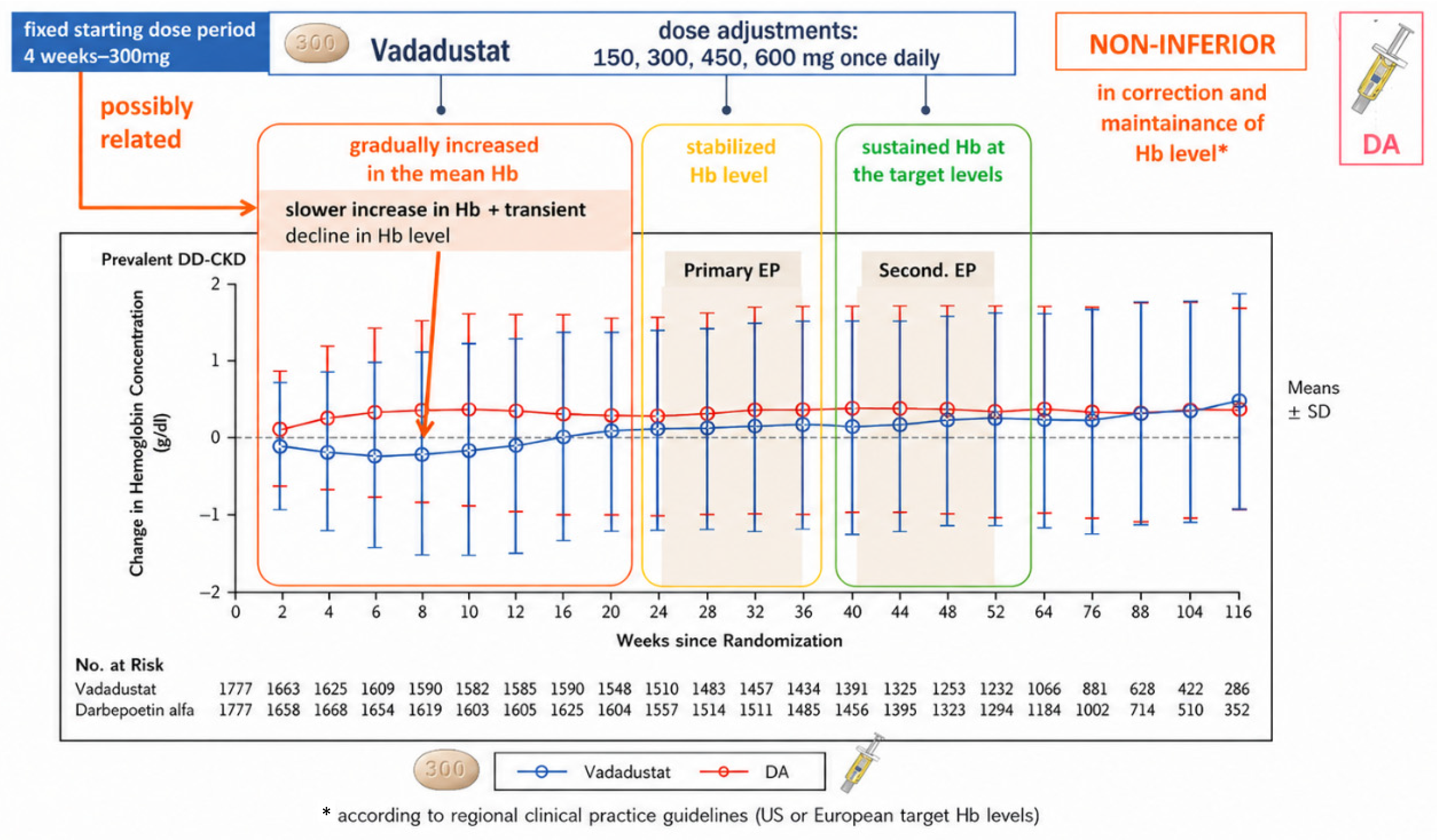
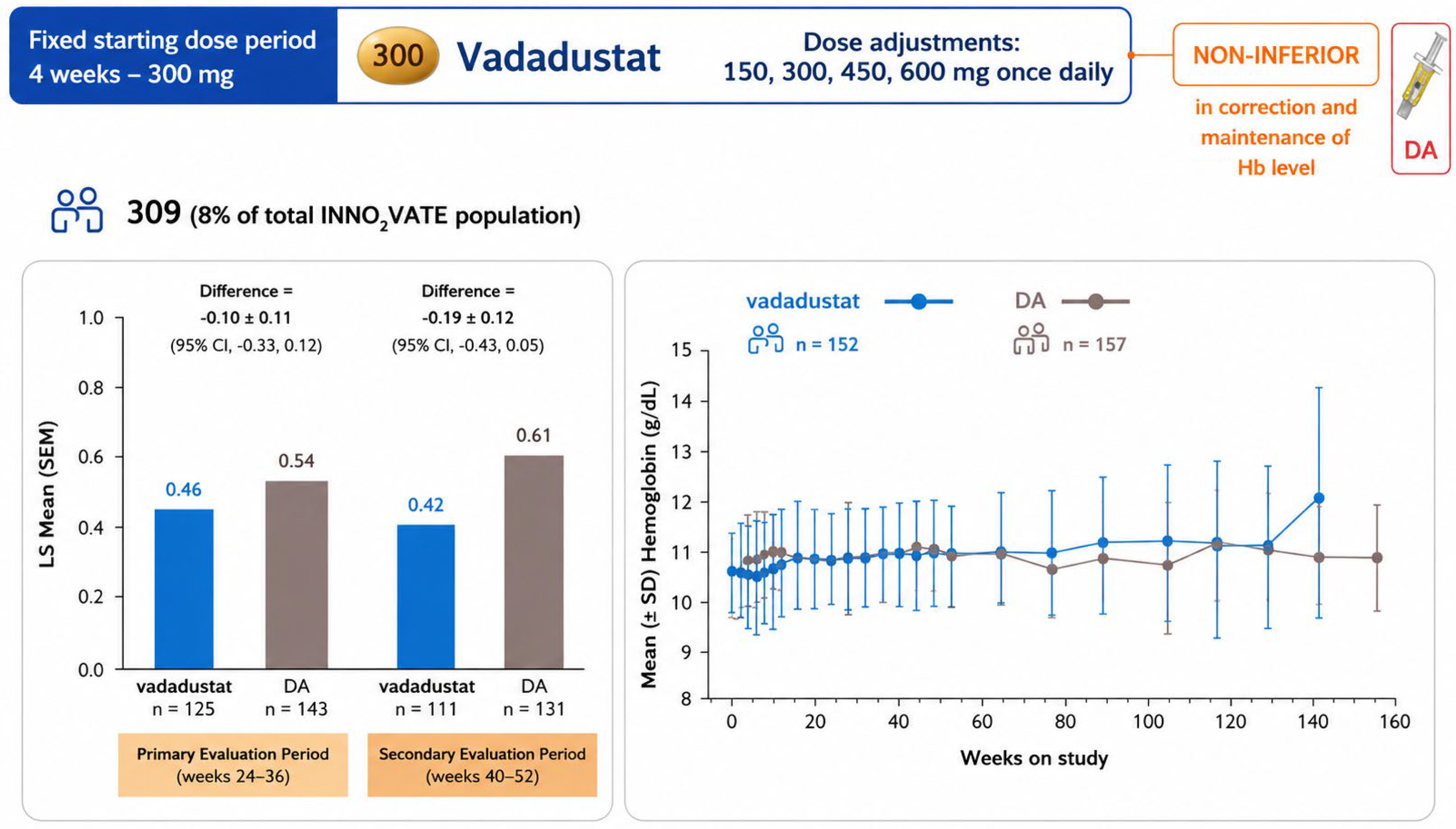
In both INNO2VATE studies, vadadustat gradually increased the mean hemoglobin (Hb) level during the initial correction/conversion period (up to week 23), stabilized it by weeks 24–36 (primary efficacy period) and sustained it throughout weeks 40–52 (secondary efficacy period) at the target levels according to clinical practice guidelines without overshooting the target range of Hb during dose adjustment (Figure 1 and Figure 2) [32]. In the prevalent DD-CKD trial, patients treated with vadadustat had a slower increase in Hb concentrations than patients receiving darbepoetin alfa (DA) following an initial transient decline in Hb concentrations (Figure 2) [33]. However, after 24 weeks, the Hb concentration with vadadustat became very similar to that with DA [33]. The initial transient decline of Hb level in the prevalent study was considered to be related to the study design, which had a fixed starting dose for vadadustat for 4 weeks, whereas in the DA group, all patients were previously ESA-treated and started with the dose the patient had been receiving before the trial or an equivalent dose using a concentration conversion coefficient when switching from another ESA. Non-inferiority was established for vadadustat compared to DA in each study at the primary (weeks 24 to 36) and the secondary evaluation period (weeks 40 to 52) [33]. The efficacy of vadadustat for treating anemia in dialysis patients demonstrated in this study extends the results of previous Phase II studies of vadadustat [33,36,37,38].

3.2. Measures of Iron Metabolism

3.2.1. Hepcidin

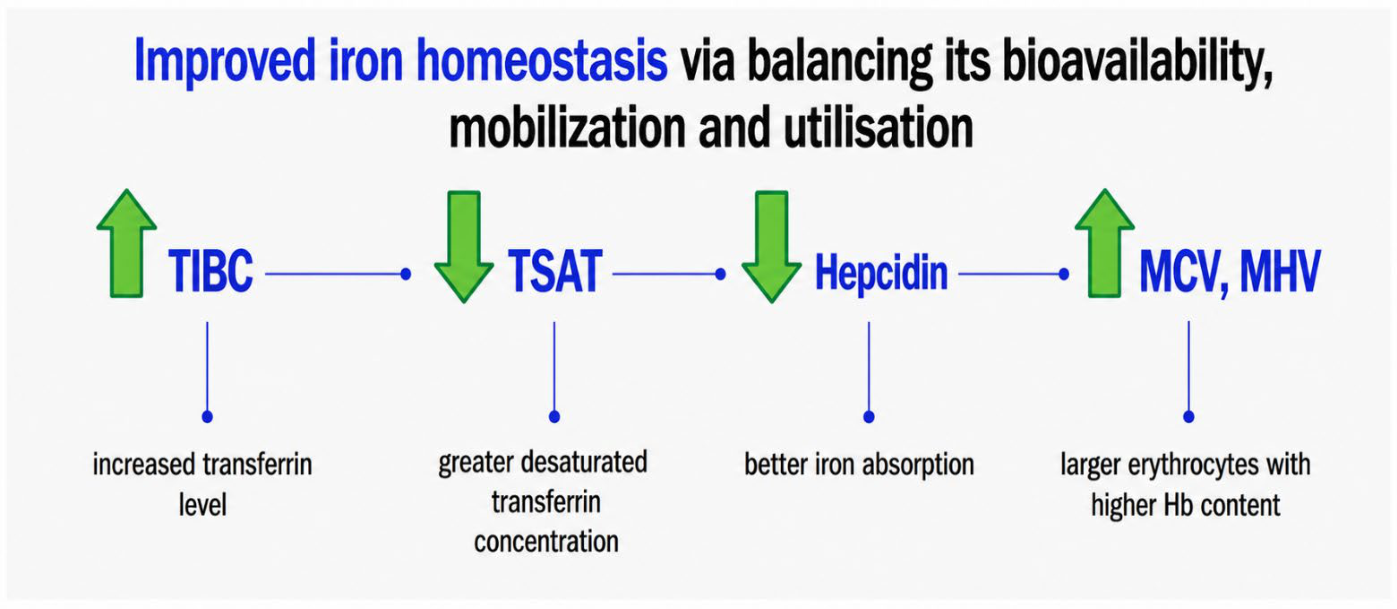
Vadadustat decreased mean hepcidin more prominently compared to DA in both DD-CKD studies (weeks 40–52: Incident DD-CKD: −22.4 ng/mL vs. −16.8 ng/mL; p = 56; Prevalent DD-CKD: −66.2 ng/mL vs. −43.6 ng/mL; p < 0.001). In the ESA-untreated NDD-CKD trial, serum hepcidin decreased to a greater extent with vadadustat than with darbepoetin alfa (LS mean difference −26.1 ng/mL; p < 0.0001) [32,39]. This result suggests that vadadustat therapy likely enhances iron absorption in the gastrointestinal tract as well as iron availability from the body’s iron stores, both of which are diminished in patients with CKD due to sustained elevated hepcidin levels [16,32,40].

3.2.2. Transferrin

Vadadustat significantly increased serum transferrin concentrations measured by mean total iron-binding capacity (weeks 40–52: Incident DD-CKD: 19.2 μg/dL vs. −4.4 μg/dL; p < 0.001; Prevalent DD-CKD: 28.2 μg/dL vs. 1.4 μg/dL; p < 0.001) (TIBC) as compared to DA in both DD-CKD trials, where mean baseline TIBC concentrations in all groups were below the lower limits of the population reference range (250–425 μg/dL) [32,39].

3.2.3. Serum Iron

Mean serum iron concentrations were increased in patients receiving vadadustat in the Incident DD-CKD study over weeks 24 to 36 and weeks 40 to 52, though remaining unchanged in the Prevalent DD-CKD group [39]. The prevalent DD-CKD darbepoetin control group had decreased serum iron relative to baseline at these times, resulting in the vadadustat group having significantly greater serum iron values compared to the darbepoetin group. Considering changes in other iron-related proteins, a lack of serum iron increase indicates improved iron homeostasis via balancing its bioavailability, mobilization, and utilization [32].

3.3. Erythrocyte Indices

In both DD-CKD trials (Figure 3), at each time point, patients treated with vadadustat had higher mean corpuscular volume (MCV) and mean corpuscular Hb (MCH). Furthermore, they also had increased numbers of reticulocytes (absolute reticulocyte count was approximately 10–20% greater at weeks 12 and 28 in the Incident DD-CKD patients, and weeks 12–52 in the Prevalent DD-CKD) compared with patients randomized to DA [32,39].

3.4. Dose Adjustment

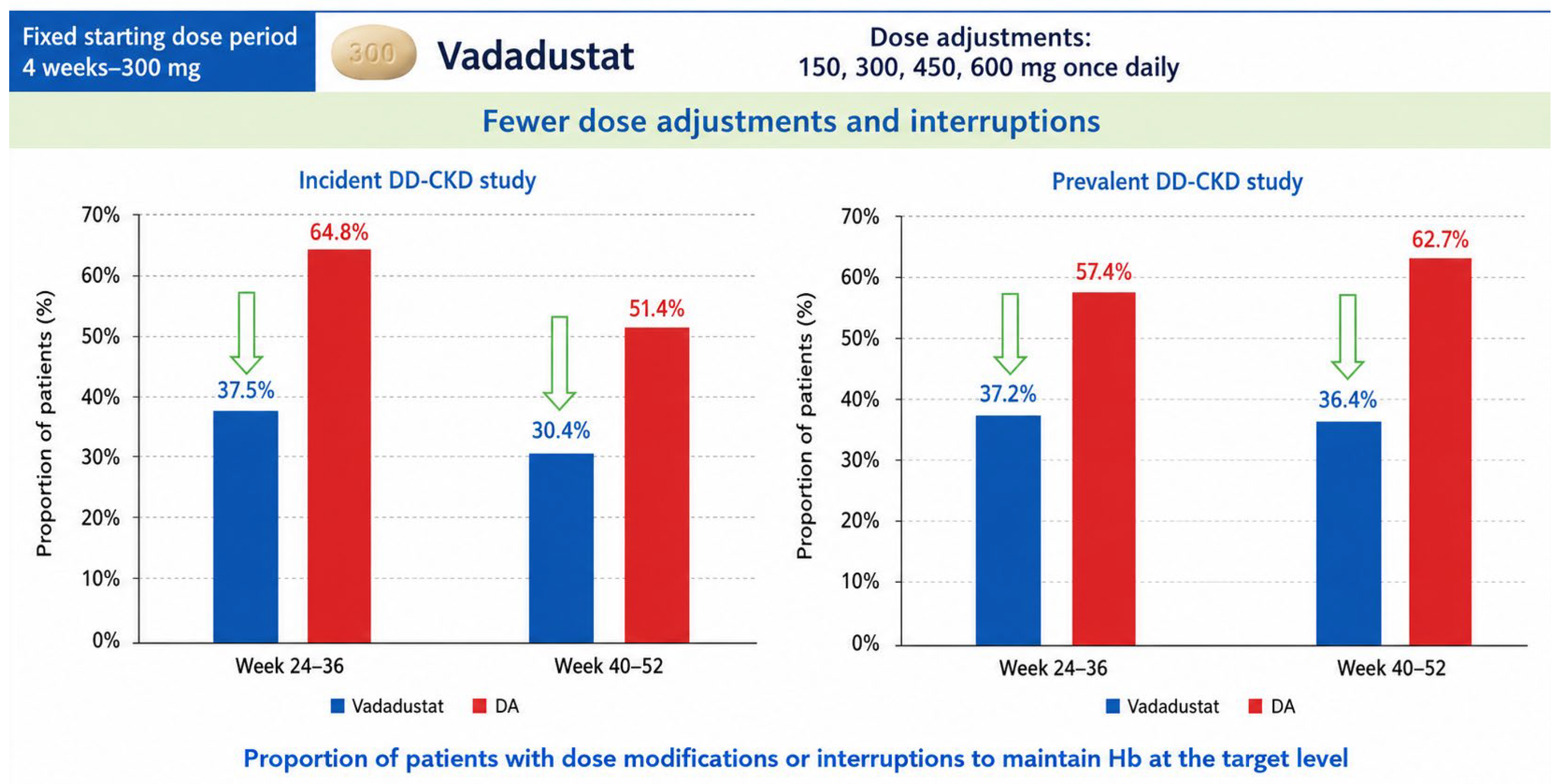
There were fewer dose adjustments and interruptions in vadadustat-treated subjects compared to DA-treated subjects to maintain Hb levels within the geographic-specific target range (Figure 4): 37.5% versus 64.8% in the incident DD-CKD trial and 37.2% versus 57.4%, respectively, in prevalent DD-CKD trial in the primary efficacy period (weeks 24–36) and 30.4% versus 51.4% in the incident DD-CKD trial and 36.4% versus 62.7% in the prevalent study in the secondary evaluation period (weeks 40–52) [33].
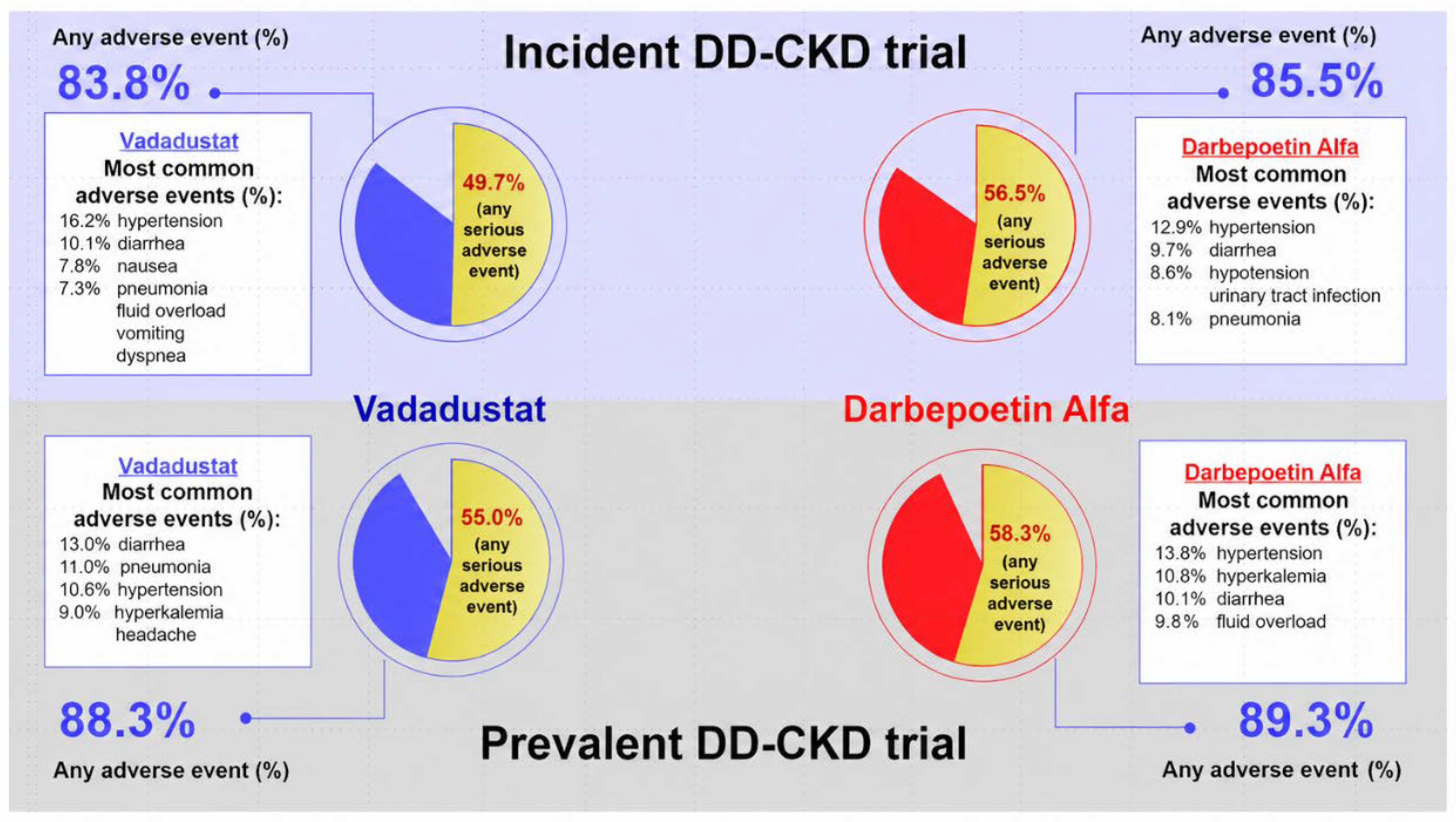
Overall, in both INNO2VATE studies, there were no safety signals identified compared to the safety data obtained earlier in Phase I-III studies. Figure 5 shows the incidence of AEs and SAEs in the Incident and Prevalent DD-CKD studies [32,33].
The pooled results from the two INNO2VATE studies showed similar major adverse cardiovascular events (MACE) in vadadustat- and DA-treated patients. The hazard ratio (HR) (95% confidence interval (CI)) for the time to first MACE in the DD-CKD population for vadadustat compared to DA was 0.96 (0.833, 1.113). Thereby, vadadustat demonstrated non-inferiority to DA for the primary safety endpoint (time to first MACE) [32,33].

3.5. Alternative Dosing Regimens

In DD-CKD patients, a vadadustat dosing schedule that reduces the frequency of administration from a daily to a three-times-per-week schedule has the potential to reduce pill burden and could be coordinated with the days of dialysis. The Phase IIIb, multicenter, open-label FOCUS study enrolled 456 patients with anemia due to DD-CKD and evaluated conversion from parenteral methoxy polyethylene glycol-epoetin beta (MPG-EPO) to oral vadadustat administered three times weekly. Vadadustat (600 or 900 mg three times weekly) was noninferior to MPG-EPO in maintaining hemoglobin levels during weeks 20–26 and 46–52, with a comparable safety profile, low transfusion rates, and reduced need for rescue ESA therapy. These findings support the efficacy and safety of three-times-weekly vadadustat as a convenient oral treatment option for patients receiving maintenance hemodialysis [41].
The Phase IIIb MODIFY trial evaluated the safety and efficacy of oral vadadustat administered once daily or three times weekly versus parenteral darbepoetin alfa (DA) in 319 patients with anemia due to DD-CKD who were converted from prior ESA therapy. Vadadustat once daily demonstrated noninferiority to DA in maintaining hemoglobin levels during the primary evaluation period (weeks 20–26), while the three-times-weekly regimen showed similar hemoglobin responses but did not meet the predefined noninferiority criterion in the randomized population. Both vadadustat regimens were generally well tolerated, with safety profiles comparable to DA, low transfusion rates, and a reduced need for rescue ESA therapy, supporting vadadustat as an effective oral treatment option for anemia in patients receiving maintenance dialysis [42].

3.6. Patients with Peritoneal Dialysis: Consistent Results

Worldwide, peritoneal dialysis (PD) accounts for 11% of all dialysis, presenting distinct advantages compared with hemodialysis (HD), including the convenience of home treatment, improved quality of life, technical simplicity, lesser need for trained staff, and greater cost-effectiveness in most countries [43]. As an oral agent with convenient dosing, vadadustat has a range of additional benefits to patients undergoing home PD-dialysis compared to those receiving in-center HD. The results of post hoc subgroup analysis in patients receiving PD in INNO2VATE studies are consistent with the overall INNO2VATE trials conclusions with regard to primary safety and efficacy endpoints (Figure 6). Hb levels were in the target range for most patients in the vadadustat and DA treatment groups. Vadadustat showed non-inferiority to DA with respect to correction and maintenance of Hb concentration. This result is consistent with previous studies with PD patients treated with HIF-PHIs compared to ESAs conducted in Japan and China [44,45].
In a peritoneal dialysis population, unlike the results of the overall dialysis-dependent population, peritonitis was the most common treatment-emergent adverse event (TEAE) and serious adverse event, although it was more common in darbepoetin alfa–treated patients. The incidence of overall TEAEs was lower in the vadadustat group (88%) than in the darbepoetin alfa group (96%). The four most common TEAEs in both groups were peritonitis (vadadustat: n = 27, 18%; darbepoetin alfa: n = 43, 27%), hypertension (vadadustat: n = 22, 15%; darbepoetin alfa: n = 30, 19%), nasopharyngitis (vadadustat: n = 21, 14%; darbepoetin alfa: n = 20, 13%) and pneumonia (vadadustat: n = 18, 12%; darbepoetin alfa: n = 17, 11%) [45].
PD patients treated with vadadustat had increased TIBC in the primary evaluation period and slightly increased serum iron compared to subjects receiving DA, where there was a slightly decreasing tendency. In the vadadustat group, hepcidin decreased by −49.2 ng/mL versus −33.1 ng/mL in the DA group, and TSAT decreased by −3.0% versus −1.8% in the DA group. Serum ferritin decreased in the vadadustat group (−21.2 ng/mL) while increasing in the DA group (16.8 ng/mL) [45].
The rate of overall TEAEs was lower in the vadadustat group than in the DA group. The time to first MACE was similar in both vadadustat and DA treatment groups (HR 1.10; 95% CI 0.62, 1.93) [45].

4. Evidence-Based Pharmaceutical Care While Using Vadadustat Therapy

Pharmaceutical care is defined as the responsible provision of drug therapy for the purpose of achieving definite outcomes that improve a patient’s quality of life [46].
Pharmaceutical care services are of great importance for chronic kidney disease patients: they provide safe, effective, and economic care for patients. Evidence-based pharmaceutical care improves a patient’s quality of life and the quality of provided services. Being updated and evidence-based is a key tool to achieve effective pharmaceutical care services [47,48,49,50].
The members of the European Anaemia of CKD Alliance advocate a shift towards a holistic, personalized, evidence-based and long-term management approach in which people with anemia of CKD are fully informed of their treatment options and make shared decisions with their physician/nurse that best suit their individual needs and preferences [51].
Accordingly, based on current EMA and FDA approvals, vadadustat should be considered for adults with DD-CKD, while broader use in other CKD populations awaits further evidence to establish a noninferior or favorable risk–benefit profile.
This approach is also consistent with the 2026 KDIGO Clinical Practice Guideline, which recommends ESAs as the preferred first-line therapy for anemia in patients with CKD. Recommendation 3.1.1 (Grade 2D) suggests using an ESA rather than a HIF-PHI as first-line treatment after correction of reversible causes of anemia [52].
Importantly, treatment decisions should not be based solely on ESA dose requirements or the presence of ESA hyporesponsiveness. Regulatory analyses have suggested that conversion to roxadustat in patients requiring high baseline ESA doses may be associated with a less favorable cardiovascular risk profile, including higher risks of MACE and all-cause mortality. Therefore, ESA hyporesponsiveness alone should not be considered a sufficient reason for switching therapy. Instead, treatment selection should incorporate the overall cardiovascular risk profile, dialysis status, approved indications, and the individual safety characteristics of each HIF-PHI. These observations further support an individualized rather than class-based approach to HIF-PHI selection [31,53].
In the present article, we have outlined the most important pharmaceutical aspects that may affect the efficacy and safety of drug therapy with vadadustat and other HIF-stabilizers.

4.1. Dose Titration of Vadadustat

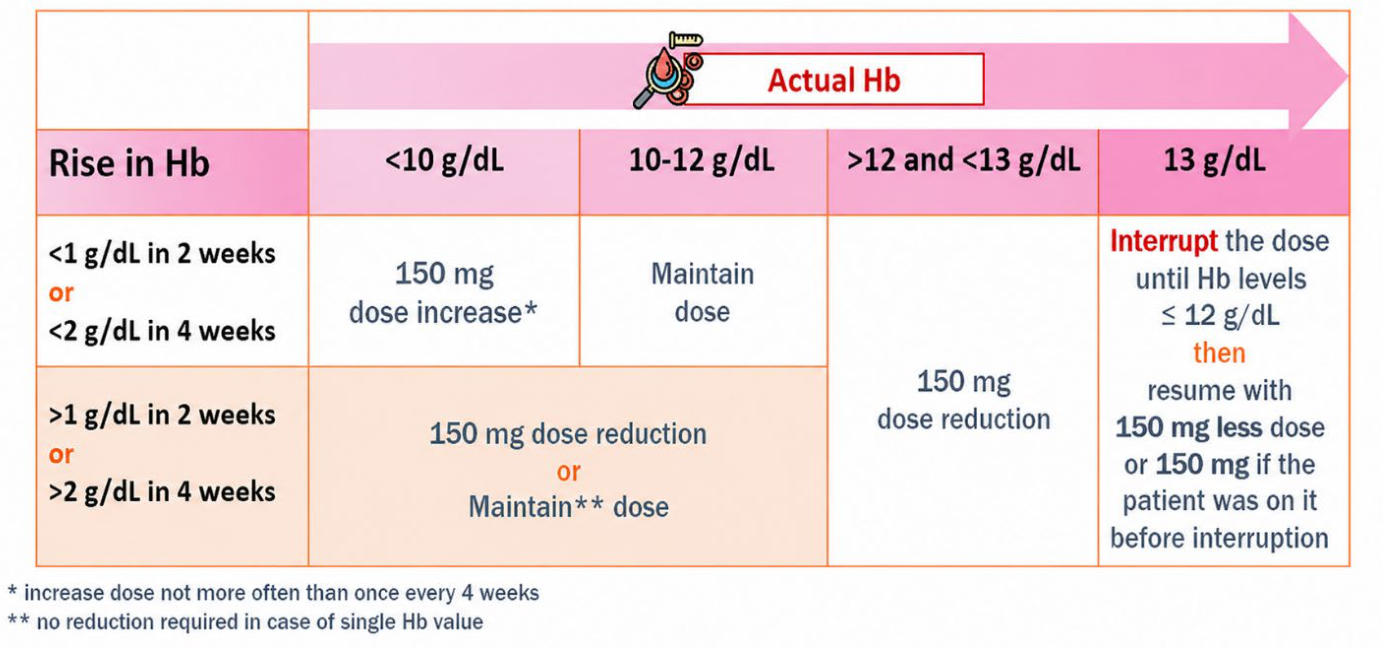
When initiating or adjusting therapy, Hb levels should be monitored closely. Initially, Hb levels should be monitored every two weeks. Once stable, monitoring should be performed at least monthly (Figure 7).
When adjusting the dose, increments of 150 mg are recommended. The dose should be adjusted within the range of 150 mg to a maximum recommended daily dose of 600 mg. The goal is to achieve or maintain Hb levels within the range of 10 to 12 g/dL (EMA, Summary of product characteristics) [26].
According to Vafseo—accessdata.fda.gov (https://www.accessdata.fda.gov/drugsatfda_docs/label/2024/215192s000lbl.pdf), the dose should be adjusted in increments of 150 mg to achieve or maintain hemoglobin levels of 10 g/dL to 11 g/dL [51,54].
New KDIGO 2026 guidelines recommend that patients started on HIF-PHIs have a goal of eliminating RBC transfusions and relieving symptoms of anemia [52].
Doses should not be increased more frequently than every 4 weeks, a period that allows for proper evaluation of the therapy’s effectiveness and prevents any potential adverse events (AEs) from rapid Hb increase. However, decreases in dose can occur more frequently if necessary. If Hb levels exceed 12 g/dL, the dose should be decreased by 150 mg to maintain the desired range.
Patients with signs and symptoms of serious adverse cardiovascular reactions or stroke should be promptly evaluated and treated according to standard of care. The decision to interrupt or discontinue treatment should be based on a risk–benefit consideration for the individual patient [26].
The use of vadadustat should be considered in the context of the cardiovascular and thrombotic warnings described in the prescribing information, including an increased risk of mortality, myocardial infarction, stroke, venous thromboembolism, and vascular access thrombosis. Particular attention should be paid to avoiding rapid increases in hemoglobin levels, and dose titration should be performed in accordance with current recommendations, consistent with the KDIGO approach that prioritizes symptom improvement and reduction in transfusion requirements rather than achieving a hemoglobin concentration within a specific target range. Although no structure-related adverse effects such as hypothyroidism or copper overload have been reported with vadadustat in clinical trials and post-marketing experience to date, continued pharmacovigilance remains important. As with all HIF-PHIs, ongoing long-term surveillance will further characterize the safety profile of vadadustat in routine clinical practice.

4.2. Polypharmacy Challenges in Dialysis Patients

Polypharmacy, the use of multiple medications by a single individual, poses significant challenges in dialysis patients. These individuals already face numerous health complications due to their kidney disease, and the addition of multiple medications further complicates their treatment plans [25].
One of the primary challenges of polypharmacy in dialysis patients is the increased risk of adverse drug reactions. With multiple medications being prescribed, there is a higher likelihood of drug interactions, leading to unwanted side effects or even toxicity. The impaired kidney function in these patients also affects drug metabolism and excretion, further increasing the risk of adverse reactions.
Another challenge is medication adherence. Dialysis patients often have complex medication regimens, including medications for managing kidney disease, controlling blood pressure, treating anemia, and addressing other comorbidities. Keeping track of all these medications and adhering to the prescribed schedule can be overwhelming for patients, leading to missed doses or incorrect administration.
To address these challenges, vadadustat was studied in numerous drug–drug interaction studies. The corresponding recommendations for rational use of combinations are provided in the Summary of Product Characteristics (SmPC) [31]:
  • Prescribe vadadustat to be taken at least 1 h before intake of iron supplements or iron-containing phosphate binders;
  • Prescribe vadadustat to be taken at least 1 h before or 2 h after intake of iron-free phosphate binders (such as sevelamer carbonate or calcium acetate) or other medicines containing calcium, magnesium or aluminum.
An alternative practical approach to minimize potential interactions may be evening administration (e.g., before bedtime), as proposed by Dr. Patrick Biggar; however, this approach has not been formally evaluated in controlled clinical studies.

4.3. Vadadustat: Substance Effect Due to Structure-Dependent Mechanism

Vadadustat’s active ingredient was synthesized in a way to ensure that its small-molecule size had a high specificity towards the binding site of HIF-PH [54,55]. Thus, the chemical structure of vadadustat contains a site that antagonistically occupies the 2-oxoglutarate (α-ketoglutarate) binding site of PH isoforms and thereby inhibits O2-dependent degradation of both HIF-1α and HIF-2α [16]. HIF-2α has a critical role in EPO production in adults [55,56].
Due to this structure-related mechanism of action, vadadustat increases iron mobilization and RBC production, resulting in a gradual rise in Hb levels [26].
In contrast to other HIF-stabilizers, vadadustat had no reports of a structure-dependent complication of hypothyroidism, as specified in the SmPC and shown in pharmacovigilance data of another marketed HIF-stabilizer [57].

4.4. Structure-Derived Adverse Events of Other HIF-Stabilizers

Central hypothyroidism has been reported in patients treated with roxadustat (Evrenzo®) [58,59,60,61,62] apparently due to the similar molecular structure of roxadustat and triiodothyronine (T3), such that roxadustat’s binding to thyroid-hormone receptor (THR) β may lead to the downregulation of thyrotropin-releasing hormone (TRH). Roxadustat reversibly suppressed TSH levels in patients undergoing hemodialysis [63].
Analysis of the reporting period (between April 2004 and March 2023) of the Japanese Adverse Drug Event Report (JADER) database showed 410 cases of hypothyroidism on roxadustat. At the same time, no cases were reported on vadadustat. Hypothyroidism was also reported in post-marketing surveillance of daprodustat (Jesduvroq®), another HIF-PH inhibitor.
The association between daprodustat and hypothyroidism is less pronounced than that of roxadustat. Nine cases of hypothyroidism occurring after daprodustat administration are registered in the JADER database. Studies show that patients receiving daprodustat have a lower risk of developing hypothyroidism than those receiving roxadustat [56,64,65].
Hypothyroidism may worsen anemia and lead to ESA hyporesponsiveness, both of which are cardiovascular risk factors in kidney disease [66].
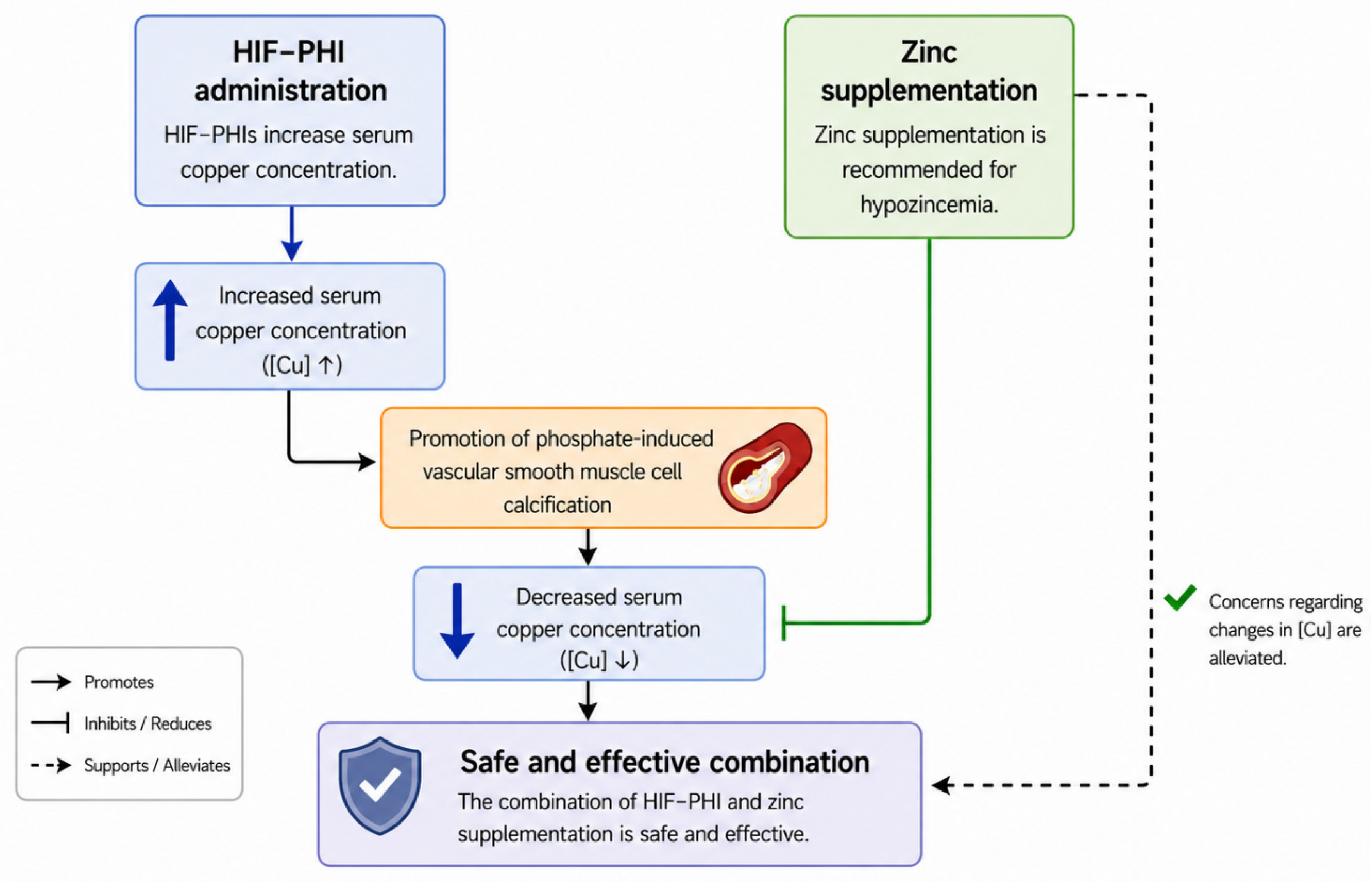
There are also reports that HIF-PH inhibitors, specifically roxadustat and/or daprodustat, may increase serum copper levels; in particular, even small doses of roxadustat can increase serum copper concentrations [67,68,69,70]. A potential way to mitigate excessive copper levels may be zinc supplementation (Figure 8). The use of a combination of HIF-PHI administration and zinc supplementation not only prevents the excessive increase in serum copper concentration during HIF-PHI administration but also enables safe zinc supplementation without a reduction in serum copper concentration in patients undergoing hemodialysis who are at a high risk of zinc deficiency [69]. There are no publications on increased serum copper levels with vadadustat.
Differences in PHD isoform selectivity may contribute to variability in pharmacodynamic profiles. Roxadustat is a pan-PHD inhibitor, whereas Daprodustat preferentially inhibits PHD1 and PHD3. Vadadustat is an equipotent inhibitor of all three PHD isoforms, while Molidustat is selective for PHD2 [55]. The clinical significance of these biochemical differences remains uncertain, as no head-to-head trials have compared the agents directly. Nonetheless, variation in off-target effects has been reported. For example, effects on serum lipids differ between molecules: Roxadustat significantly reduces both LDL-C and HDL-C levels, Daprodustat significantly lowers HDL-C, and Enarodustat appears to have no effect on either LDL-C or HDL-C [71].
It is important to note that spontaneous reporting systems such as JADER are subject to important methodological limitations, including under-reporting, the absence of reliable exposure (denominator) data, and potential confounding by indication. Therefore, pharmacovigilance findings should be interpreted primarily as signal-generating rather than definitive comparative safety evidence. However, in the case of roxadustat-associated hypothyroidism, these pharmacovigilance observations are supported by mechanistic data, clinical studies demonstrating changes in thyroid hormone parameters, and published case reports, suggesting that the signal is biologically plausible and consistent with other available evidence.
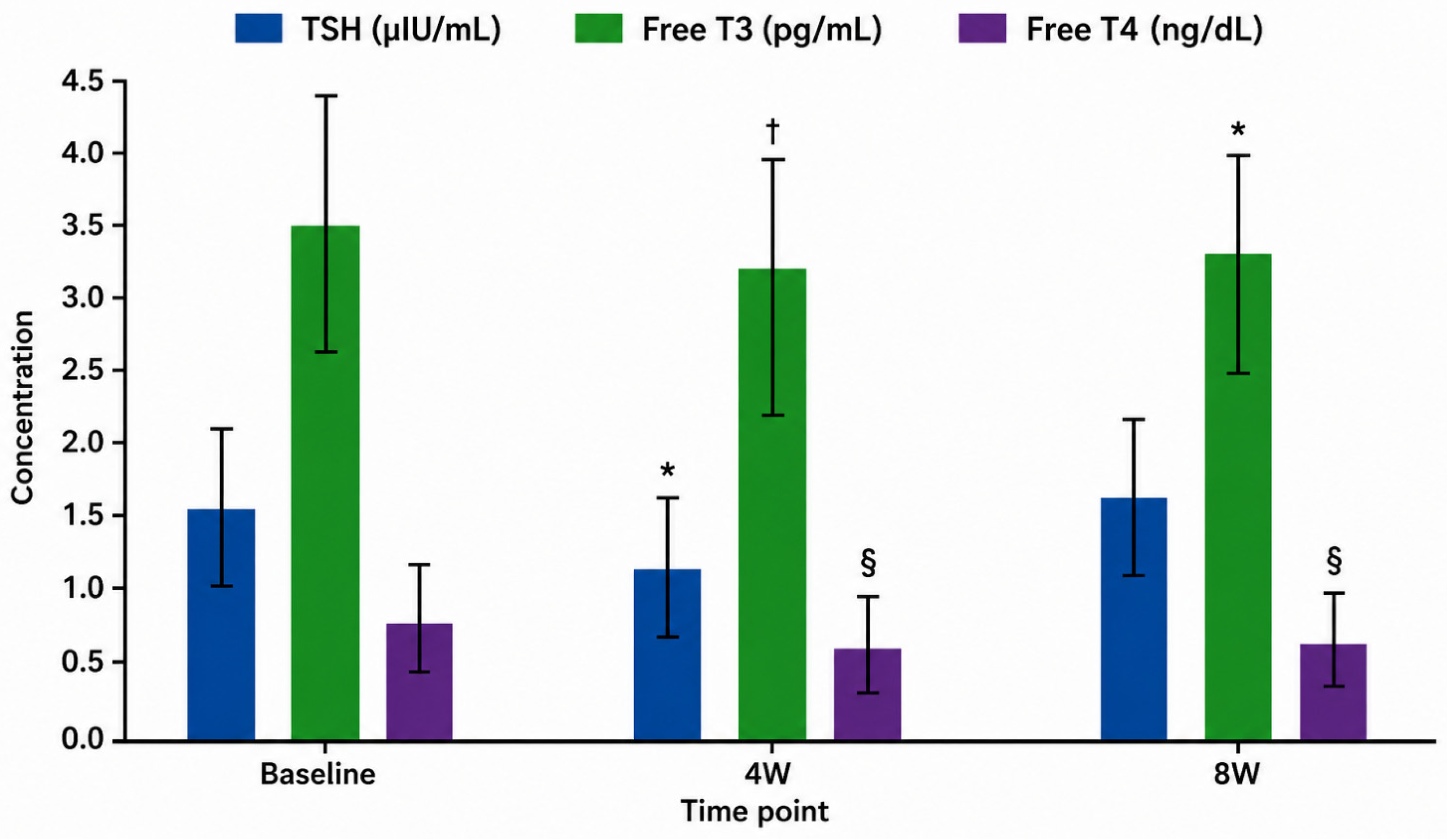
A study involving 34 hemodialysis patients examined the relationship between roxadustat and changes in serum trace element levels and hypothyroidism [72]. Patients receiving weekly doses of darbepoetin-α or a continuous erythropoietin receptor activator once every 2 or 4 weeks were switched to roxadustat (70 mg, three times weekly). The study covered 56 days and showed that serum copper and ceruloplasmin levels were significantly increased by roxadustat treatment on days 28 and 56, and serum selenium levels were lower on day 28. However, serum zinc levels were unchanged over the 56 days. Serum TSH levels were decreased on day 28, and they then returned to baseline on day 56 in the majority of patients. Serum free-T3 and free-T4 levels were significantly decreased from day 28 to day 56. Serum levels of free-T3 and free-T4 on days 28 and 56 were lower than at baseline. Values of delta free-T3 and delta free-T4 on day 28 and day 56 are shown as median (IQR): delta free-T3, −0.37 (0.06, −0.65) and −0.25 (0.33, −0.65) pg/mL; and delta free-T4, −0.15 (−0.10, −0.23) and −0.16 (−0.04, −0.25) ng/mL, respectively (Figure 9). Serum TSH levels were lower on day 28 than at baseline (value of delta TSH (median (IQR)), −0.33 (−0.71, 0.08) μIU/mL), but the levels returned close to baseline on day 56 (Figure 9). Higher doses of roxadustat tended to be associated with lower serum free-T3 and freeT4 levels. The numbers of patients with serum TSH, free-T3, and free-T4 levels lower than the target range on day 56 were four, 0, and 20, respectively [73]. Additionally, the study revealed an increase in serum copper and ceruloplasmin levels in HD patients [71]. Changes in roxadustat doses were associated with changes in serum TSH, free-T3, and free-T4 levels, whereas they were not associated with serum levels of trace elements [72].
A case presentation of 53-year-old man with a 3-year history of hemodialysis due to diabetic kidney disease who had been treated with roxadustat showed that his serum concentrations of thyroid hormones were low (free triiodothyronine (FT3), <1.5 pg/mL; free thyroxine (FT4), <0.42 ng/dL; and TSH, 1.146 μU/mL; tests for thyroid peroxidase and thyroglobulin antibodies were negative), and he was diagnosed with hypothyroidism. After discontinuation of roxadustat, the patient was treated with vadadustat. One month after switching medication, a stimulation test with thyrotropin-releasing hormone showed a normal response to thyroid-stimulating hormone [73].
There is mention of the risk of hypothyroidism developing when taking roxadustat and the importance of evidence-based pharmaceutical care in understanding, monitoring, and possibly preventing the development of this side effect [74].
The recent ‘Kidney Disease: Improving Global Outcomes’ (KDIGO)—KDIGO 2026 Anemia Guideline: ESA/HIF-PHI Initiation—also addresses concerns about potential risks associated with adverse event profiles observed in clinical trials, including hypothyroidism [52].
Current evidence suggests that hypothyroidism is an important adverse effect of HIF-PHIs, particularly roxadustat, whereas this association appears less pronounced with daprodustat and has not been demonstrated for vadadustat. As hypothyroidism may worsen anemia and contribute to ESA hyporesponsiveness in patients with CKD, thyroid function should be monitored during HIF-PHIs therapy.
This underpins the necessity to compare the efficacy and safety profiles of medicines as the basis of conducting pharmaceutical care for patients.
Clinical trial and post-marketing data currently have not identified potential adverse events that are specific to vadadustat; however, these observations are based on a relatively limited duration of exposure and may evolve as broader real-world experience accumulates. Findings from the FOCUS and MODIFY studies, together with the PRO2TECT trials, indicate that the risk–benefit profile of vadadustat is not uniform across all populations with CKD, with variations according to dialysis status (DD-CKD versus NDD-CKD) and geographic region. At the same time, accumulating clinical, mechanistic, and pharmacovigilance evidence suggests that certain adverse events observed with individual HIF-PHIs may be structure-related rather than class effects. For example, hypothyroidism has been reported predominantly with roxadustat, likely reflecting its structural similarity to triiodothyronine, resulting in thyroid hormone receptor β agonistic activity that may contribute to worsening anemia and ESA hyporesponsiveness. Accordingly, the selection of HIF stabilizers should be individualized, taking into account patient-specific clinical characteristics, approved indications, safety profiles, and the potential for agent-specific adverse effects.

5. Conclusions

Modern health professionals, inheriting the principles of individualized therapy for the treatment of anemia in patients with chronic kidney disease, should be guided by evidence-based medicine to administer pharmaceutical agents reflecting the highest qualitative criteria of efficacy and safety of drug therapy. Such an approach will contribute to improving patient adherence to treatment and, consequently, quality of life. The focus of this review is on structure-derived adverse events of the most popular hypoxia-inducible factor stabilizers, their advantages and disadvantages, and the peculiarities of clinical application. Although hypothyroidism and increased serum copper were reported mainly with roxadustat and less frequently with daprodustat, they have not been reported with vadadustat in currently available clinical and post-marketing data. The reports presently do not support HIF-PHI class effects. Notably, the 2026 KDIGO Anemia Guideline recommends periodic thyroid function monitoring specifically in patients receiving roxadustat, further supporting the concept that safety signals associated with HIF-PHIs may be molecule-specific rather than class-wide effects. Moreover, each agent should be administered based on its individual merits and safety profile using the present officially licensed dosage recommendations.

Author Contributions

Conceptualization, I.D. and K.Z.; methodology, K.Z.; formal analysis, K.Z. and P.B.; investigation, I.D., I.R., and K.Z.; resources, I.D., I.R., and P.B.; writing—original draft preparation, K.Z.; writing—review and editing, I.D., I.R., P.B., and K.Z.; visualization, K.Z.; supervision, I.D.; project administration, K.Z. All authors have read and agreed to the published version of the manuscript.

Funding

This research received no external funding.

Institutional Review Board Statement

Not applicable.

Informed Consent Statement

Not applicable.

Data Availability Statement

No new data were created or analyzed in this study.

Acknowledgments

We would like to express our sincere gratitude to Mark J. Koury (Medical and Research Service, Department of Veterans Affairs, Tennessee Valley Healthcare System, Nashville, TN; Division of Hematology and Oncology, Department of Medicine, Vanderbilt University Medical Center and Vanderbilt University School of Medicine, Nashville, TN) for his scientific assessment and advising that were instrumental in preparing the manuscript.

Conflicts of Interest

Iurii Rudyk received consultancy fees support from MEDICE Arzneimittel Pütter GmbH & Co. KG. Patrick Biggar received consultancy fees support from MEDICE Arzneimittel Pütter GmbH & Co. KG. Kateryna Zupanets is an employee of MEDICE Arzneimittel Pütter GmbH & Co. KG. The remaining authors declare that the research was conducted in the absence of any commercial or financial relationships that could be construed as a potential conflict of interest. The authors are responsible for the content of the manuscript and the views expressed herein. The company did not influence the scientific conclusions or the decision to submit the manuscript for publication.

References

  1. Okoro, T.; Amelio, J.; Mahajan, A.; Gupta, D.; Refoios, R. P0857 Burden of anemia associated with chronic kidney disease in dialysis and non-dialysis-dependent patients in Europe: A review of published evidence. Nephrol. Dial. Transplant. 2020, 35, 1189. [Google Scholar] [CrossRef]
  2. Evans, M.; Bower, H.; Cockburn, E.; Jacobson, S.H.; Barany, P.; Carrero, J.J. Contemporary management of anemia, erythropoietin resistance and cardiovascular risk in patients with advanced chronic kidney disease: A nationwide analysis. Clin. Kidney J. 2020, 13, 821–827. [Google Scholar] [CrossRef] [PubMed]
  3. Pergola, P.E.; Pecoits-Filho, R.; Winkelmayer, W.C.; Spinowitz, B.; Rochette, S.; Thompson-Leduc, P.; Lefebvre, P.; Shafai, G.; Bozas, A.; Sanon, M.; et al. Economic Burden and Health-Related Quality of Life Associated with Current Treatments for Anemia in Patients with CKD not on Dialysis: A Systematic Review. PharmacoEconomics-Open 2019, 3, 463–478. [Google Scholar] [CrossRef] [PubMed]
  4. Spinowitz, B.; Pecoits-Filho, R.; Winkelmayer, W.C.; Pergola, P.E.; Rochette, S.; Thompson-Leduc, P.; Lefebvre, P.; Shafai, G.; Bozas, A.; Sanon, M.; et al. Economic and quality of life burden of anemia on patients with CKD on dialysis: A systematic review. J. Med. Econ. 2019, 22, 593–604. [Google Scholar] [CrossRef] [PubMed]
  5. Wish, J.; Schulman, K.; Law, A.; Nassar, G. Healthcare expenditure and resource utilization in patients with anemia and chronic kidney disease: A retrospective claims database analysis. Kidney Blood Press. Res. 2009, 32, 110–118. [Google Scholar] [CrossRef] [PubMed]
  6. Boenink, R.; Astley, M.E.; Huijben, J.A.; Stel, V.S.; Kerschbaum, J.; Ots-Rosenberg, M.; Åsberg, A.A.; Lopot, F.; Golan, E.; Castro de la Nuez, P.; et al. The ERA Registry Annual Report 2019: Summary and age comparisons. Clin. Kidney J. 2022, 15, 452–472. [Google Scholar] [CrossRef] [PubMed]
  7. Babitt, J.L.; Lin, H.Y. Mechanisms of anemia in CKD. J. Am. Soc. Nephrol. 2012, 23, 1631–1634. [Google Scholar] [CrossRef] [PubMed]
  8. Khan, A.; Ghulam Hussain, S.; Mushtaq, S.; Abbas, S.; Dong, Y.; Feng, W.; Fang, Y. Prevalence and management of anemia and impact of treatment burden on health-related quality of life in chronic kidney disease and dialysis patients. J. Pharm. Policy Pract. 2024, 17, 2427779. [Google Scholar] [CrossRef] [PubMed]
  9. van Haalen, H.; Jackson, J.; Spinowitz, B.; Milligan, G.; Moon, R. Impact of chronic kidney disease and anemia on health-related quality of life and work productivity: Analysis of multinational real-world data. BMC Nephrol. 2020, 21, 88. [Google Scholar] [CrossRef] [PubMed] [PubMed Central]
  10. Grandy, S.; Palaka, E.; Guzman, N.; Dunn, A.; Wittbrodt, E.T.; Finkelstein, F.O. Understanding Patient Perspectives of the Impact of Anemia in Chronic Kidney Disease: A United States Patient Survey. J. Patient Exp. 2022, 9, 23743735221092629. [Google Scholar] [CrossRef] [PubMed] [PubMed Central]
  11. Wish, J.B. Treatment of Anemia in Kidney Disease: Beyond Erythropoietin. Kidney Int. Rep. 2021, 6, 2540–2553. [Google Scholar] [CrossRef] [PubMed]
  12. Hashmi, M.F.; Aeddula, N.R.; Shaikh, H.; Rout, P. Anemia of Chronic Kidney Disease. In StatPearls; StatPearls Publishing: Treasure Island, FL, USA, 2024. [Google Scholar] [PubMed]
  13. Shiferaw, W.S.; Akalu, T.Y.; Aynalem, Y.A. Risk Factors for Anemia in Patients with Chronic Renal Failure: A Systematic Review and Meta-Analysis. Ethiop. J. Health Sci. 2020, 30, 829–842. [Google Scholar] [CrossRef] [PubMed] [PubMed Central]
  14. Gupta, N.; Wish, J.B. Hypoxia-Inducible Factor Prolyl Hydroxylase Inhibitors: A Potential New Treatment for Anemia in Patients with CKD. Am. J. Kidney Dis. 2017, 69, 815–826, Erratum in Am. J. Kidney Dis. 2017, 69, 869. https://doi.org/10.1053/j.ajkd.2017.04.001.. [Google Scholar] [CrossRef] [PubMed]
  15. Li, J.; Haase, V.H.; Hao, C.-M. Updates on Hypoxia-Inducible Factor Prolyl Hydroxylase Inhibitors in the Treatment of Renal Anemia. Kidney Dis. 2023, 9, 1–11. [Google Scholar] [CrossRef] [PubMed]
  16. Portolés, J.; Martín, L.; Broseta, J.J.; Cases, A. Anemia in Chronic Kidney Disease: From Pathophysiology and Current Treatments, to Future Agents. Front. Med. 2021, 8, 642296. [Google Scholar] [CrossRef] [PubMed]
  17. Ku, E.; Del Vecchio, L.; Eckardt, K.U.; Haase, V.H.; Johansen, K.L.; Nangaku, M.; Tangri, N.; Waikar, S.S.; Więcek, A.; Cheung, M.; et al. Novel anemia therapies in chronic kidney disease: Conclusions from a Kidney Disease: Improving Global Outcomes (KDIGO) Controversies Conference. Kidney Int. 2023, 104, 655–680. [Google Scholar] [CrossRef] [PubMed]
  18. Badura, K.; Janc, J.; Wąsik, J.; Gnitecki, S.; Skwira, S.; Młynarska, E.; Rysz, J.; Franczyk, B. Anemia of Chronic Kidney Disease-A Narrative Review of Its Pathophysiology, Diagnosis, and Management. Biomedicines 2024, 12, 1191. [Google Scholar] [CrossRef] [PubMed] [PubMed Central]
  19. Wallace, D.F. The Regulation of Iron Absorption and Homeostasis. Clin. Biochem. Rev. 2016, 37, 51–62. [Google Scholar] [PubMed] [PubMed Central]
  20. Katsarou, A.; Pantopoulos, K. Basics and principles of cellular and systemic iron homeostasis. Mol. Asp. Med. 2020, 75, 100866. [Google Scholar] [CrossRef] [PubMed]
  21. Fu, S.; Huang, J.; Feng, Z.; Wang, H.; Xu, H.; Wu, M.; Ma, F.; Xu, Z. Inflammatory indexes and anemia in chronic kidney disease: Correlation and survival analysis of the National Health and Nutrition Examination Survey 2005–2018. Ren. Fail. 2024, 46, 2399314. [Google Scholar] [CrossRef] [PubMed] [PubMed Central]
  22. Pfeffer, M.A.; Burdmann, E.A.; Chen, C.Y.; Cooper, M.E.; de Zeeuw, D.; Eckardt, K.U.; Feyzi, J.M.; Ivanovich, P.; Kewalramani, R.; Levey, A.S.; et al. A trial of darbepoetin alfa in type 2 diabetes and chronic kidney disease. N. Engl. J. Med. 2009, 361, 2019–2032. [Google Scholar] [CrossRef] [PubMed]
  23. Singh, A.K.; Szczech, L.; Tang, K.L.; Barnhart, H.; Sapp, S.; Wolfson, M.; Reddan, D.; CHOIR Investigators. Correction of anemia with epoetin alfa in chronic kidney disease. N. Engl. J. Med. 2006, 355, 2085–2098. [Google Scholar] [CrossRef] [PubMed]
  24. Wu, H.H.L.; Chinnadurai, R.; Walker, R.J. Is HIF-PHI the Answer to Tackle ESA Hyporesponsiveness in the Elderly? Kidney Dial. 2022, 2, 446–453. [Google Scholar] [CrossRef]
  25. Haase, V.H. Hypoxia-inducible factor–prolyl hydroxylase inhibitors in the treatment of anemia of chronic kidney disease. Kidney Int. Suppl. 2021, 11, 8–25. [Google Scholar] [CrossRef] [PubMed]
  26. Vafseo. INN-Vadadustat. Summary of Product Characteristics. Available online: https://www.ema.europa.eu/en/documents/product-information/vafseo-epar-product-information_en.pdf (accessed on 22 August 2024).
  27. Wish, J.B.; Eckardt, K.U.; Kovesdy, C.P.; Fishbane, S.; Spinowitz, B.S.; Berns, J.S. Hypoxia-Inducible Factor Stabilization as an Emerging Therapy for CKD-Related Anemia: Report from a Scientific Workshop Sponsored by the National Kidney Foundation. Am. J. Kidney Dis. 2021, 78, 709–718. [Google Scholar] [CrossRef] [PubMed]
  28. Percy, M.J.; Furlow, P.W.; Lucas, G.S.; Li, X.; Lappin, T.R.J.; McMullin, M.F.; Lee, F.S. A gain-of-function mutation in the HIF2A gene in familial erythrocytosis. N. Engl. J. Med. 2008, 358, 162–168. [Google Scholar] [CrossRef] [PubMed]
  29. Novel Drug Approvals for 2024. Available online: https://www.fda.gov/drugs/novel-drug-approvals-fda/novel-drug-approvals-2024 (accessed on 1 February 2026).
  30. Vadadustat. ClinicalTrials.gov. April 2024. Available online: https://clinicaltrials.gov/search?intr=vadadustat (accessed on 25 April 2024).
  31. Eckardt, K.U.; Agarwal, R.; Farag, Y.M.; Jardine, A.G.; Khawaja, Z.; Koury, M.J.; Luo, W.; Matsushita, K.; McCullough, P.A.; Parfrey, P.; et al. Global Phase 3 programme of vadadustat for treatment of anemia of chronic kidney disease: Rationale, study design and baseline characteristics of dialysis-dependent patients in the INNO2VATE trials. Nephrol. Dial. Transplant. 2021, 36, 2039–2048. [Google Scholar] [CrossRef] [PubMed]
  32. European Medicines Agency (EMA). Vafseo (Vadadustat). Available online: https://www.ema.europa.eu/en/medicines/human/EPAR/vafseo (accessed on 1 February 2026).
  33. Eckardt, K.-U.; Agarwal, R.; Aswad, A.; Awad, A.; Block, G.A.; Bacci, M.R.; Farag, Y.M.K.; Fishbane, S.; Hubert, H.; Jardine, A.; et al. Safety and Efficacy of Vadadustat for Anemia in Patients Undergoing Dialysis. N. Engl. J. Med. 2021, 384, 1601–1612. [Google Scholar] [CrossRef] [PubMed]
  34. Chertow, G.M.; Pergola, P.E.; Farag, Y.M.K.; Agarwal, R.; Arnold, S.; Bako, G.; Block, G.A.; Burke, S.; Castillo, F.P.; Jardine, A.G.; et al. PRO2TECT Study Group. Vadadustat in Patients with Anemia and Non-Dialysis-Dependent CKD. N. Engl. J. Med. 2021, 384, 1589–1600. [Google Scholar] [CrossRef] [PubMed]
  35. Parfrey, P.S.; Burke, S.K.; Chertow, G.M.; Eckardt, K.U.; Jardine, A.G.; Lewis, E.F.; Luo, W.; Matsushita, K.; McCullough, P.A.; Minga, T.; et al. Safety endpoints with vadadustat versus darbepoetin alfa in patients with non-dialysis-dependent CKD: A post hoc regional analysis of the PRO2TECT randomized clinical trial of ESA-treated patients. Kidney Med. 2023, 5, 100667. [Google Scholar] [CrossRef] [PubMed]
  36. Martin, E.R.; Smith, M.T.; Maroni, B.J.; Zuraw, Q.C.; DeGoma, E.M. Clinical Trial of Vadadustat in Patients with Anemia Secondary to Stage 3 or 4 Chronic Kidney Disease. Am. J. Nephrol. 2017, 45, 380–388. [Google Scholar] [CrossRef] [PubMed]
  37. Nangaku, M.; Farag, Y.M.K.; DeGoma, E.; Luo, W.; Vargo, D.; Khawaja, Z. Vadadustat, an oral hypoxia-inducible factor prolyl hydroxylase inhibitor, for treatment of anemia of chronic kidney disease: Two randomized Phase 2 trials in Japanese patients. Nephrol. Dial. Transplant. 2020, 36, 1244–1252. [Google Scholar] [CrossRef] [PubMed]
  38. Pergola, P.E.; Spinowitz, B.S.; Hartman, C.S.; Maroni, B.J.; Haase, V.H. Vadadustat, a novel oral HIF stabilizer, provides effective anemia treatment in nondialysis-dependent chronic kidney disease. Kidney Int. 2016, 90, 1115–1122. [Google Scholar] [CrossRef] [PubMed]
  39. Koury, M.J.; Agarwal, R.; Chertow, G.M.; Eckardt, K.U.; Fishbane, S.; Ganz, T.; Haase, V.H.; Hanudel, M.R.; Parfrey, P.S.; Pergola, P.E.; et al. Erythropoietic effects of vadadustat in patients with anemia associated with chronic kidney disease. Am. J. Hematol. 2022, 97, 1178–1188. [Google Scholar] [CrossRef] [PubMed]
  40. Brookhart, M.A.; Schneeweiss, S.; Avorn, J.; Bradbury, B.D.; Rothman, K.J.; Fischer, M.; Mehta, J.; Winkelmayer, W.C. The effect of altitude on dosing and response to erythropoietin in ESRD. J. Am. Soc. Nephrol. JASN 2008, 19, 1389–1395. [Google Scholar] [CrossRef] [PubMed]
  41. Toka, H.R.; Bernardo, M.; Burke, S.K.; Luo, W.; Manllo-Karim, R.; Ullah, I.; Yang, Z.; Zhang, Z.; Tumlin, J. Vadadustat three times weekly in patients with anemia due to dialysis-dependent CKD. Am. J. Kidney Dis. 2025, 85, 454–464.e1. [Google Scholar] [CrossRef] [PubMed]
  42. Kooienga, L.; Burke, S.; Kathresal, A.; Luo, W.; Yang, Z.; Zhang, Z.; Zwiech, R.; Hernandez, G.T. Safety and Efficacy of Vadadustat Once Daily and Three Times Weekly in Patients with Dialysis-Dependent CKD with Anemia. Kidney360 2024, 5, 1652–1661. [Google Scholar] [CrossRef] [PubMed]
  43. Bello, A.K.; Okpechi, I.G.; Osman, M.A.; Cho, Y.; Cullis, B.; Htay, H.; Jha, V.; Makusidi, M.A.; McCulloch, M.; Shah, N.; et al. Epidemiology of peritoneal dialysis outcomes. Nat. Rev. Nephrol. 2022, 18, 779–793. [Google Scholar] [CrossRef] [PubMed]
  44. Nangaku, M.; Kondo, K.; Ueta, K.; Kokado, Y.; Kaneko, G.; Matsuda, H.; Kawaguchi, Y.; Komatsu, Y. Efficacy and safety of vadadustat compared with darbepoetin alfa in Japanese anemic patients on hemodialysis: A Phase 3, multicenter, randomized, double-blind study. Nephrol. Dial. Transplant. 2021, 36, 1731–1741. [Google Scholar] [CrossRef] [PubMed]
  45. Sarnak, M.J.; Agarwal, R.; Boudville, N.; Chowdhury, P.C.P.; Eckardt, K.U.; Gonzalez, C.R.; Kooienga, L.A.; Koury, M.J.; Ntoso, K.A.; Luo, W.; et al. Vadadustat for treatment of anemia in patients with dialysis-dependent chronic kidney disease receiving peritoneal dialysis. Nephrol. Dial. Transplant. 2023, 38, 2358–2367. [Google Scholar] [CrossRef] [PubMed]
  46. Hepler, C.D.; Strand, L.M. Opportunities and responsibilities in pharmaceutical care. Am. J. Hosp. Pharm. 1990, 47, 533–543. [Google Scholar] [CrossRef] [PubMed]
  47. Heidari, K. Evidence Based Pharmaceutical Care. J. Pharm. Care 2014, 2, 140–141. [Google Scholar]
  48. Al-Quteimat, O.M.; Amer, A.M. Evidence-based pharmaceutical care: The next chapter in pharmacy practice. Saudi Pharm. J. 2016, 24, 447–451. [Google Scholar] [CrossRef] [PubMed] [PubMed Central]
  49. Al Raiisi, F.; Stewart, D.; Fernandez-Llimos, F.; Salgado, T.M.; Mohamed, M.F.; Cunningham, S. Clinical pharmacy practice in the care of Chronic Kidney Disease patients: A systematic review. Int. J. Clin. Pharm. 2019, 41, 630–666. [Google Scholar] [CrossRef] [PubMed] [PubMed Central]
  50. Ardavani, A.; Curtis, F.; Hopwood, E.; Highton, P.; Katapa, P.; Khunti, K.; Wilkinson, T.J. Effect of pharmacist interventions in chronic kidney disease: A meta-analysis. Nephrol. Dial. Transplant. 2024, 40, gfae221. [Google Scholar] [CrossRef] [PubMed]
  51. Dasgupta, I.; Bagnis, C.I.; Floris, M.; Furuland, H.; Zurro, D.G.; Gesualdo, L.; Heirman, N.; Minutolo, R.; Pani, A.; Portolés, J.; et al. European Anaemia of aCKD Alliance. Anaemia and quality of life in chronic kidney disease: A consensus document from the European Anaemia of CKD Alliance. Clin. Kidney J. 2024, 17, sfae205. [Google Scholar] [CrossRef] [PubMed] [PubMed Central]
  52. Babitt, J.L.; Berns, J.S.; Bozkurt, B.; Cheung Khedairy, R.S.; Cuevas, Y.; Effa, E.E.; Eisenga, M.F.; Fishbane, S.; Ginzburg, Y.Z.; Haase, V.H.; et al. Executive Summary of the KDIGO 2026 Clinical Practice Guideline for the Management of Anemia in Chronic Kidney Disease (CKD). Kidney Int. 2026, 109, 44–56. [Google Scholar] [CrossRef] [PubMed]
  53. European Medicines Agency (EMA). Evrenzo (Roxadustat): Assessment Report; EMA/CHMP/393136/2021; Committee for Medicinal Products for Human Use (CHMP): Amsterdam, The Netherlands, 2021. [Google Scholar]
  54. Vafseo® (Vadadustat) Tablets, for Oral Use, Initial U.S. Approval. 2024. Available online: https://www.accessdata.fda.gov/drugsatfda_docs/label/2024/215192s000lbl.pdf (accessed on 20 April 2026).
  55. Semenza, G.L. Regulation of Erythropoiesis by the Hypoxia-Inducible Factor Pathway: Effects of Genetic and Pharmacological Perturbations. Annu. Rev. Med. 2023, 74, 307–319. [Google Scholar] [CrossRef] [PubMed]
  56. Zuk, A.; Si, Z.; Loi, S.; Bommegowda, S.; Hoivik, D.; Danthi, S.; Molnar, G.; Csizmadia, V.; Rabinowitz, M. Preclinical Characterization of Vadadustat (AKB-6548), an Oral Small Molecule Hypoxia-Inducible Factor Prolyl-4-Hydroxylase Inhibitor, for the Potential Treatment of Renal Anemia. J. Pharmacol. Exp. Ther. 2022, 383, 11–24. [Google Scholar] [CrossRef] [PubMed]
  57. Tanaka, H.; Tani, A.; Onoda, T.; Ishii, T. Hypoxia-inducible Factor Prolyl Hydroxylase Inhibitors and Hypothyroidism: An Analysis of the Japanese Pharmacovigilance Database. In Vivo 2024, 38, 917–922. [Google Scholar] [CrossRef] [PubMed]
  58. Chii, M.; Mori, K.; Miyaoka, D.; Sonoda, M.; Tsujimoto, Y.; Nakatani, S.; Shoji, T.; Emoto, M. Suppression of thyrotropin secretion during roxadustat treatment for renal anemia in a patient undergoing hemodialysis. BMC Nephrol. 2021, 22, 104. [Google Scholar] [CrossRef] [PubMed] [PubMed Central]
  59. Tokuyama, A.; Kadoya, H.; Obata, A.; Obata, T.; Sasaki, T.; Kashihara, N. Roxadustat and thyroid-stimulating hormone suppression. Clin. Kidney J. 2021, 14, 1472–1474. [Google Scholar] [CrossRef] [PubMed] [PubMed Central]
  60. Cheng, Y.; Xiang, Q.; Cao, T.; Tang, F.; Chen, J.; Qi, D.; Hu, H.; Song, H.; Chang, Z.; Ku, M.; et al. Suppression of thyroid profile during roxadustat treatment in chronic kidney disease patients. Nephrol. Dial. Transpl. 2023, 38, 1567–1570. [Google Scholar] [CrossRef] [PubMed]
  61. Yao, B.; Wei, Y.; Zhang, S.; Tian, S.; Xu, S.; Wang, R.; Zheng, W.; Li, Y. Revealing a mutant-induced receptor allosteric mechanism for the thyroid hormone resistance. iScience 2019, 20, 489–496. [Google Scholar] [CrossRef] [PubMed]
  62. Brent, G.A. Mechanisms of thyroid hormone action. J. Clin. Investig. 2012, 122, 3035–3043. [Google Scholar] [CrossRef] [PubMed]
  63. Otsuka, E.; Kitamura, M.; Funakoshi, S.; Mukae, H.; Nishino, T. Roxadustat has risks of reversible central hypothyroidism in patients undergoing hemodialysis: A single-center retrospective cohort study. Ren. Fail. 2024, 46, 2410375. [Google Scholar] [CrossRef] [PubMed] [PubMed Central]
  64. Hishida, K.; Nakajima, R.; Matsui, H.; Ue, Y.; Tamura, Y.; Kurata, H.; Okada, I. A comparison of thyroid-stimulating hormone levels in hemodialysis patients treated with either roxadustat or daprodustat. Jpn. J. Nephrol. Pharmacother. 2022, 11, 23–28. [Google Scholar] [CrossRef] [PubMed]
  65. Haraguchi, T.; Hamamoto, Y.; Kuwata, H.; Yamazaki, Y.; Nakatani, S.; Hyo, T.; Yamada, Y.; Yabe, D.; Seino, Y. Effect of roxadustat on thyroid function in patients with renal anemia. J. Clin. Endocrinol. Metab. 2023, 109, dgad483. [Google Scholar] [CrossRef] [PubMed]
  66. Rhee, C.M.; Brent, G.A.; Kovesdy, C.P.; Soldin, O.P.; Nguyen, D.; Budoff, M.J.; Brunelli, S.M.; Kalantar-Zadeh, K. Thyroid functional disease: An under-recognized cardiovascular risk factor in kidney disease patients. Nephrol. Dial. Transpl. 2015, 30, 724–737. [Google Scholar] [CrossRef] [PubMed]
  67. Nakamura, H.; Ueda, M.; Anayama, M.; Makino, Y.; Nagasawa, M. Short-term effects of roxadustat on serum copper and iron changes in a peritoneal dialysis patient. CEN Case Rep. 2023, 12, 292–296. [Google Scholar] [CrossRef] [PubMed] [PubMed Central]
  68. Moriyama, T.; Taguchi, K.; Kodama, G.; Fukami, K. Effects of Hypoxia-Inducible Factor Prolyl Hydroxylase Inhibitors on Copper Metabolism and Association with Organ Damage in CKD: TH-PO984. J. Am. Soc. Nephrol. 2023, 34, 366. [Google Scholar] [CrossRef]
  69. Takahashi, A. Co-Administration of Roxadustat and Zinc Stabilizes Both Serum Copper and Zinc Concentrations in Patients Undergoing Hemodialysis. Nutrients 2023, 15, 4887. [Google Scholar] [CrossRef] [PubMed] [PubMed Central]
  70. Nakamura, H.; Kurihara, S.; Anayama, M.; Makino, Y.; Nagasawa, M. Four cases of serum copper excess in patients with renal anemia receiving a hypoxia-inducible factor-prolyl hydroxylase inhibitor: A possible safety concern. Case Rep. Nephrol. Dial. 2022, 12, 124–131. [Google Scholar] [CrossRef] [PubMed] [PubMed Central]
  71. Taira, T.; Sugita, A.; Oda, G.; Kurata, M.; Hisa, Y. Different Effects of Hypoxia-Inducible Factor-Prolyl Hydroxylase Inhibitors on Serum Lipid Levels in Patients on Hemodialysis. J. Urol. Ren. Dis. 2024, 9, 1362. [Google Scholar] [CrossRef]
  72. Aoki, S.; Saito, T.; Yoshida, S.; Shibagaki, K.; Hirao, K.; Yuza, T.; Honda, H. Associations of roxadustat with copper elevation and hypothyroidism in patients on hemodialysis. Int. Urol. Nephrol. 2025, 58, 2333–2334. [Google Scholar] [CrossRef] [PubMed]
  73. Yamashita, C.; Hirai, Y.; Nishigaito, T.; Mizumoto, A.; Kawakami, M.; Uzu, T. Roxadustat and transfusional iron overload induced hypothyroidism in a hemodialysis patient: A case report with a literature review. Ren. Replace. Ther. 2024, 10, 20. [Google Scholar] [CrossRef]
  74. Dudar, I.; Hellmann, B.; Ammer, R.; Zupanets, K. Vadadustat for anemia management in chronic kidney disease patients: Evidence-based pharmaceutical care. In Proceedings of the Abstracts Der 17. Jahrestagung Der Deutschen Gesellschaft Für Nephrologie Kongress Für Nephrologie 2025, Berlin, Germany, 2–5 October 2025. [Google Scholar]
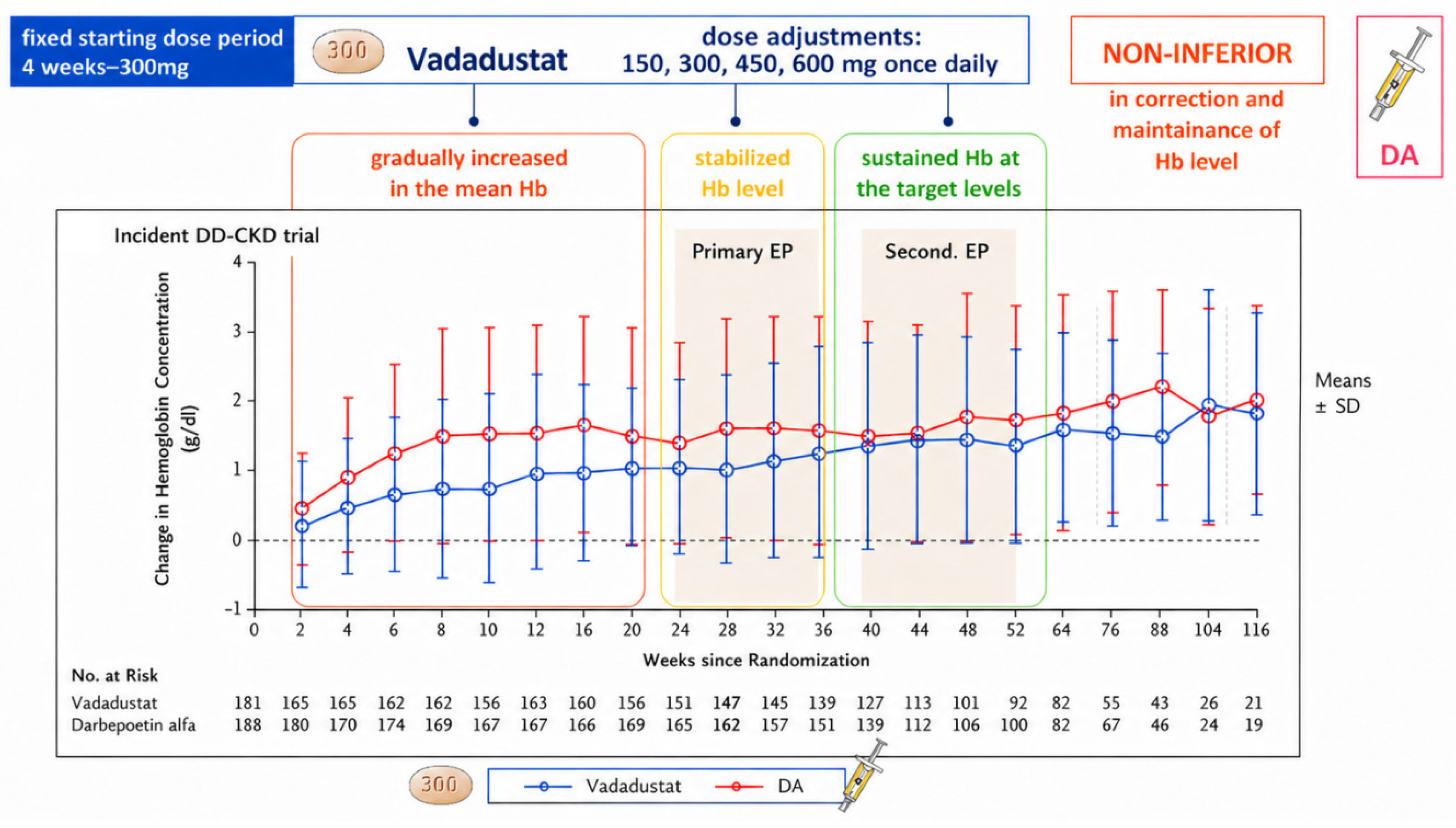
Figure 1. Mean change from baseline in hemoglobin concentrations in the randomized populations in the Incident DD-CKD study (INNO2VATE-1). Adapted and modified from data reported in [32,33].
Kidneydial 06 00053 g001
Figure 2. Mean change from baseline in hemoglobin concentrations in the randomized populations in the Prevalent DD-CKD study (INNO2VATE-2). Adapted and modified from data reported in [33].
Kidneydial 06 00053 g002
Figure 3. Potential beneficial vadadustat erythropoietic effects as derived from the data of Phase III INNO2VATE trials evaluating vadadustat versus darbepoetin alfa for treatment of anemia in chronic kidney disease [32,39].
Kidneydial 06 00053 g003
Figure 4. Proportion of patients with dose modification or interruptions to maintain Hb within the target range in Phase III INNO2VATE trials evaluating vadadustat versus darbepoetin alfa for treatment of anemia in chronic kidney disease [32].
Kidneydial 06 00053 g004
Figure 5. Proportion of patients with AEs in Phase III INNO2VATE trials evaluating vadadustat versus darbepoetin alfa for treatment of anemia in chronic kidney disease [33].
Kidneydial 06 00053 g005
Figure 6. Mean change in Hb and mean Hb over time in patients receiving PD in Phase III INNO2VATE studies (randomized population). Adapted and modified from data reported in [45].
Kidneydial 06 00053 g006
Figure 7. Vadadustat dose titration algorithm [26].
Kidneydial 06 00053 g007
Figure 8. Use of a combination of an HIF-PHI and zinc supplementation. Adapted and modified data from [69].
Kidneydial 06 00053 g008
Figure 9. Roxadustat-induced changes in serum thyroid-stimulating hormone (TSH), free-triiodothyronine (T3), and free-tetraiodothyronine (T4) levels. * (p < 0.05), † (p < 0.01) and § (p < 0.0001) are vs. baseline. Adapted and modified from data reported in [72].
Kidneydial 06 00053 g009
Disclaimer/Publisher’s Note: The statements, opinions and data contained in all publications are solely those of the individual author(s) and contributor(s) and not of MDPI and/or the editor(s). MDPI and/or the editor(s) disclaim responsibility for any injury to people or property resulting from any ideas, methods, instructions or products referred to in the content.