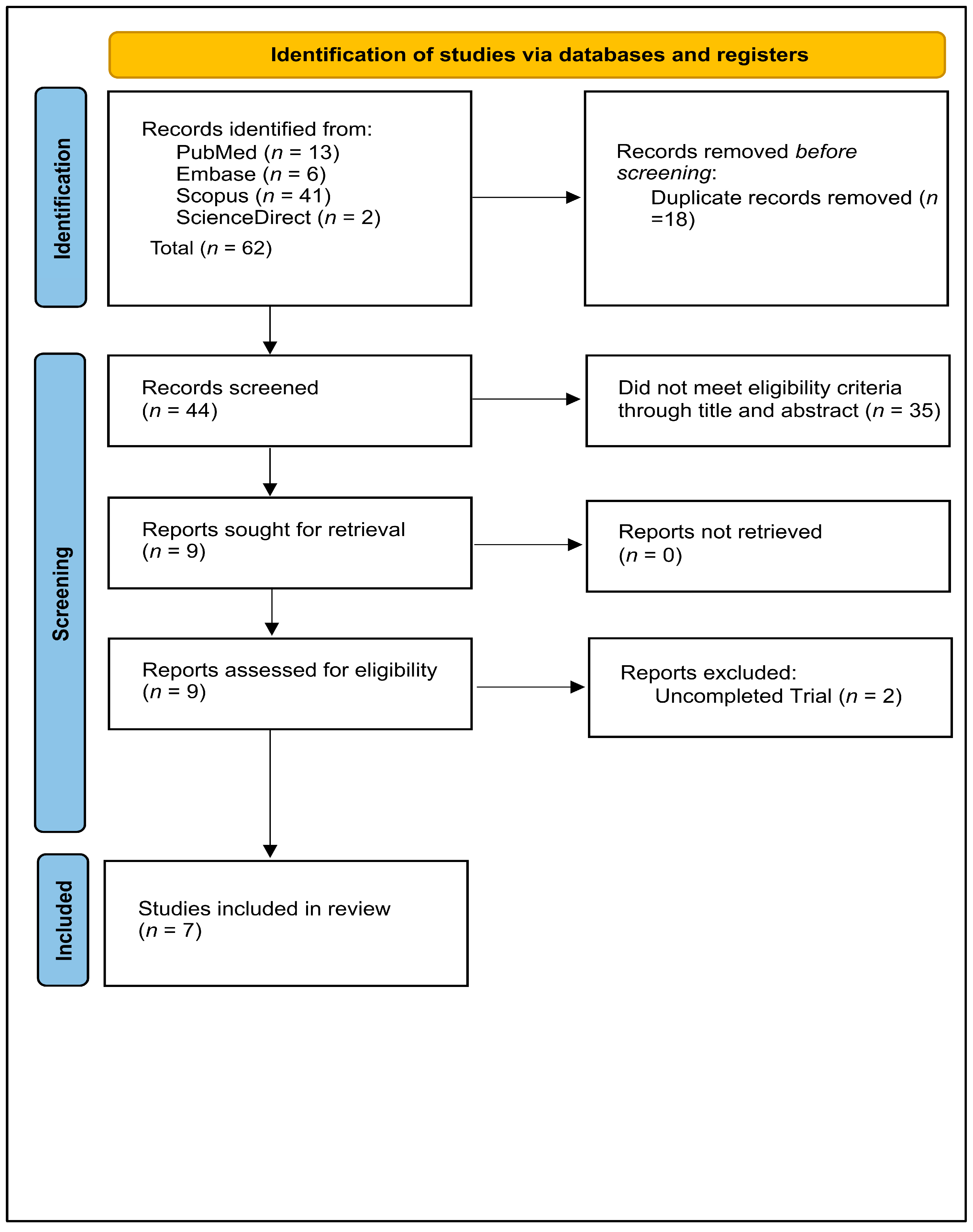

Sodium Zirconium Cyclosilicate in the Therapeutic Management of Hyperkalemia: A Systematic Review of Efficacy and Safety

 , ,
, ,  ,
, 
Abstract
1. Introduction
2. Methods
2.1. Inclusion Criteria
2.2. Exclusion Criteria
2.3. Study Records
2.4. Risk of Bias
2.5. Eligibility Criteria
2.6. Search Strategy
3. Results
3.1. Selection of Studies
3.2. Characteristics of the Included Studies
3.3. Primary Results
3.3.1. Serum K+ Reduction
3.3.2. Time to Achieve Reduction
3.3.3. Duration of Potassium-Lowering Effect
3.4. Secondary Outcomes
3.5. Safety
3.6. Methodological Quality
Assessment Using the Rob-2 Tool
4. Discussion
4.1. Efficacy in K+ Reduction
4.2. Onset of Action: Clinical Significance of Rapid K+ Reduction
4.3. Sustained K+ Control: Duration of Effect and Maintenance Implications
4.4. Safety Profile, Clinical Risk, and Practical Considerations for Use
4.5. Limitations
5. Conclusions
Supplementary Materials
Author Contributions
Funding
Institutional Review Board Statement
Informed Consent Statement
Data Availability Statement
Conflicts of Interest
Abbreviations
| AE | Adverse Event |
| CI | Confidence Interval |
| CKD | Chronic Kidney Disease |
| CV | Cardiovascular |
| ECG | Electrocardiogram |
| ED | Emergency Department |
| HF | Heart Failure |
| HR | Hazard Ratio |
| K+ | Potassium |
| RAAS | Renin–Angiotensin–Aldosterone System |
| RAASi | Renin–Angiotensin–Aldosterone System Inhibitor |
| RCT | Randomized Controlled Trial |
| ROB 2 | Risk of Bias 2 Tool |
| SCD | Sudden Cardiac Death |
| sK+ | Serum Potassium |
| SPS | Sodium Polystyrene Sulfonate |
| SZC | Sodium Zirconium Cyclosilicate |
Appendix A

| Database | Keywords | Strategy | Filters Applied to the Database | Number of Possible Items to Select |
|---|---|---|---|---|
| PubMed | Sodium Zirconium Cyclosilicate, ZS-9, Lokelma, Hyperkalemia, Elevated Potassium, Potassium Disorder, Efficacy, Effectiveness, Therapeutic Use, Safety, Adverse Effects, Side Effects, Hospitalization, Acute Dialysis, Mortality | (“Sodium Zirconium Cyclosilicate”[Title/Abstract] OR “ZS-9”[Title/Abstract] OR “Lokelma”[Title/Abstract] OR “zirconium cyclosilicate”[Title/Abstract]) AND (“Hyperkalemia”[Mesh] OR “Hyperkalemia”[Title/Abstract] OR “elevated potassium”[Title/Abstract] OR “potassium disorder”[Title/Abstract] OR “hyperkalaemia”[Title/Abstract]) AND (“efficacy”[Title/Abstract] OR “effectiveness”[Title/Abstract] OR “therapeutic use”[Title/Abstract] OR “safety”[Title/Abstract] OR “adverse effects”[Title/Abstract] OR “side effects”[Title/Abstract] OR “hospitalization”[Title/Abstract] OR “dialysis”[Title/Abstract] OR “mortality”[Title/Abstract] OR “treatment outcome”[Mesh]) | Meta-Analysis, Randomized Controlled Trial, Systematic Review; Publication Year 2020–2025; Language: English/Spanish | 13 |
| Embase | Sodium Zirconium Cyclosilicate, ZS-9, Lokelma, Hyperkalemia, Elevated Potassium, Efficacy, Effectiveness, Therapeutic Use, Safety, Adverse Effect, Side Effects, Hospitalization, Acute Dialysis, Mortality | (‘sodium zirconium cyclosilicate’:ti OR ‘ZS-9’:ti OR ‘Lokelma’:ti) AND (‘hyperkalemia’:ti OR ‘elevated potassium’:ti) AND (‘efficacy’:ti OR ‘effectiveness’:ti OR ‘therapeutic use’:ti OR ‘safety’:ti OR ‘adverse effect’:ti OR ‘side effects’:ti OR ‘hospitalization’:ti OR ‘acute dialysis’:ti OR ‘mortality’:ti) | Systematic Review, Meta-Analysis, Randomized Controlled Trial; Language: English/Spanish; Year 2020–2025 | 6 |
| Science Direct | Sodium Zirconium Cyclosilicate, ZS-9, Lokelma, Hyperkalemia, Elevated Potassium, Potassium Disorder, Efficacy, Therapeutic Use, Safety, Adverse Effects, Side Effects, Hospitalization, Acute Dialysis, Mortality | (“Sodium Zirconium Cyclosilicate” OR “ZS-9” OR “Lokelma”)AND (“Hyperkalemia” OR “Elevated Potassium”) AND (“Efficacy” OR “Safety” OR “Mortality”) | Systematic Review, RCT; Language: English/Spanish; Year 2020–2025 | 2 |
| Scopus | Sodium Zirconium Cyclosilicate, ZS-9, Lokelma, Hyperkalemia, Elevated Potassium, Potassium Disorder, Efficacy, Safety, Hospitalization, Acute Dialysis, Mortality | (“Sodium Zirconium Cyclosilicate” OR “ZS-9” OR “Lokelma”) AND (“Hyperkalemia” OR “Elevated Potassium” OR “Potassium Disorder”) AND (“Efficacy” OR “Safety” OR “Hospitalization” OR “Acute Dialysis” OR “Mortality”) | RCT; Language: English/Spanish; Year 2020–2025 | 41 |
References
- Kim, M.J.; Valerio, C.; Knobloch, G.K. Potassium Disorders: Hypokalemia and Hyperkalemia. Am. Fam. Physician 2023, 107, 59–70. [Google Scholar]
- Ferreira, J.P.; Butler, J.; Rossignol, P.; Pitt, B.; Anker, S.D.; Kosiborod, M.; Lund, L.H.; Bakris, G.L.; Weir, M.R.; Zannad, F. Abnormalities of Potassium in Heart Failure. J. Am. Coll. Cardiol. 2020, 75, 2836–2850. [Google Scholar] [CrossRef] [Scilit]
- Sandau, K.E.; Funk, M.; Auerbach, A.; Barsness, G.W.; Blum, K.; Cvach, M.; Lampert, R.; May, J.L.; McDaniel, G.M.; Perez, M.V.; et al. Update to Practice Standards for Electrocardiographic Monitoring in Hospital Settings: A Scientific Statement from the American Heart Association. Circulation 2017, 136, e273–e344. [Google Scholar] [CrossRef] [Scilit]
- Hunter, R.W.; Bailey, M.A. Hyperkalemia: Pathophysiology, Risk Factors and Consequences. Nephrol. Dial. Transplant. 2019, 34, iii2–iii11. [Google Scholar] [CrossRef] [Scilit] [PubMed]
- Seliger, S.L. Hyperkalemia in Patients with Chronic Renal Failure. Nephrol. Dial. Transplant. 2019, 34, iii12–iii18. [Google Scholar] [CrossRef] [Scilit] [PubMed]
- Stevens, P.E.; Ahmed, S.B.; Carrero, J.J.; Foster, B.; Francis, A.; Hall, R.K.; Herrington, W.G.; Hill, G.; Inker, L.A.; Kazancıoğlu, R.; et al. KDIGO 2024 Clinical Practice Guideline for the Evaluation and Management of Chronic Kidney Disease. Kidney Int. 2024, 105, S117–S314. [Google Scholar] [CrossRef] [Scilit] [PubMed]
- Chang, A.R.; Sang, Y.; Leddy, J.; Yahya, T.; Kirchner, H.L.; Inker, L.A.; Matsushita, K.; Ballew, S.H.; Coresh, J.; Grams, M.E. Antihypertensive Medications and the Prevalence of Hyperkalemia in a Large Health System. Hypertension 2016, 67, 1181–1188. [Google Scholar] [CrossRef] [Scilit]
- Dong, L.; Xu, W.; Deng, Y.; Tan, J.; Qin, W. Efficacy and Safety of Potassium Binders in the Treatment of Patients with Chronic Kidney Disease and Hyperkalemia. Eur. J. Pharmacol. 2022, 931, 175174. [Google Scholar] [CrossRef] [Scilit]
- Natale, P.; Palmer, S.C.; Ruospo, M.; Saglimbene, V.M.; Strippoli, G.F. Potassium Binders for Chronic Hyperkalaemia in People with Chronic Kidney Disease. Cochrane Database Syst. Rev. 2020, 6, CD013165. [Google Scholar] [CrossRef] [Scilit]
- Palmer, B.F. Potassium Binders for Hyperkalemia in Chronic Kidney Disease—Diet, Renin-Angiotensin-Aldosterone System Inhibitor Therapy, and Hemodialysis. Mayo Clin. Proc. 2020, 95, 339–354. [Google Scholar] [CrossRef] [Scilit]
- Lizaraso-Soto, F.; Gutiérrez-Abejón, E.; Bustamante-Munguira, J.; Martín-García, D.; Chimeno, M.M.; Nava-Rebollo, Á.; Maurtua-Briseño-Meiggs, Á.; Fernández-Zoppino, D.; Bustamante-Munguira, E.; De Paz, F.J.; et al. Binding Potassium to Improve Treatment With Renin-Angiotensin-Aldosterone System Inhibitors: Results From Multiple One-Stage Pairwise and Network Meta-Analyses of Clinical Trials. Front. Med. 2021, 8, 686729. [Google Scholar] [CrossRef] [Scilit]
- Page, M.J.; McKenzie, J.; Bossuyt, P.; Boutron, I.; Hoffmann, T.; Mulrow, C.; Shamseer, L.; Tetzlaff, J.; Akl, E.; Brennan, S.E.; et al. The PRISMA 2020 Statement: An Updated Guideline for Reporting Systematic Reviews. MetaArXiv 2020. [Google Scholar] [CrossRef] [Scilit]
- Kashihara, N.; Nishio, T.; Osonoi, T.; Saka, Y.; Imasawa, T.; Ohtake, T.; Mizuno, H.; Shibagaki, Y.; Kim, H.; Yajima, T.; et al. Correction of Serum Potassium with Sodium Zirconium Cyclosilicate in Japanese Patients with Hyperkalemia: A Randomized, Dose-Response, Phase 2/3 Study. Clin. Exp. Nephrol. 2020, 24, 1144–1153. [Google Scholar] [CrossRef] [Scilit] [PubMed]
- Zannad, F.; Hsu, B.-G.; Maeda, Y.; Shin, S.K.; Vishneva, E.M.; Rensfeldt, M.; Eklund, S.; Zhao, J. Efficacy and Safety of Sodium Zirconium Cyclosilicate for Hyperkalaemia: The Randomized, Placebo-Controlled HARMONIZE-Global Study. ESC Heart Fail. 2020, 7, 54–64. [Google Scholar] [CrossRef] [Scilit] [PubMed]
- Liang, X.; Lu, W.; Yu, X.; Cheng, H.; He, Q.; Peng, Q.; Ni, Z.; Long, G.; Wang, L.; Chen, W.; et al. HARMONIZE Asia: A Phase III Randomized Study to Investigate the Efficacy and Safety of Sodium Zirconium Cyclosilicate in Patients with Hyperkalemia in China. Clin. Ther. 2024, 46, 702–710. [Google Scholar] [CrossRef] [Scilit]
- Ni, Z.; Lu, R.; Xu, X.; Bian, X.; Zhou, Z.; Yang, J.; Luo, Q.; Chen, M.; Chen, C.; Sun, X.; et al. DIALIZE China: A Phase IIIb, Randomized, Placebo-Controlled Study to Reduce Predialysis Hyperkalemia With Sodium Zirconium Cyclosilicate in Chinese Patients. Clin. Ther. 2023, 45, 633–642. [Google Scholar] [CrossRef] [Scilit]
- Elsayed, M.M.; Abdelrahman, M.A.; Sorour, A.M.; Rizk, I.G.; Hassab, M.A.A. Sodium Zirconium Cyclosilicate versus Sodium Polystyrene Sulfonate for Treatment of Hyperkalemia in Hemodialysis Patients: A Randomized Clinical Trial. BMC Nephrol. 2025, 26, 227. [Google Scholar] [CrossRef] [Scilit]
- Fishbane, S.; Dember, L.M.; Jadoul, M.; Kovesdy, C.P.; Guzman, N.; Kordzakhia, G.; Lisovskaja, V.; Sekar, P.; Wessman, P.; Al-Shurbaji, A.; et al. The randomized DIALIZE-Outcomes trial evaluated sodium zirconium cyclosilicate in hemodialysis. Kidney Int. 2025, 108, 686–694. [Google Scholar] [CrossRef] [Scilit]
- Peacock, W.F.; Rafique, Z.; Vishnevskiy, K.; Michelson, E.; Vishneva, E.; Zvereva, T.; Nahra, R.; Li, D.; Miller, J. Emergency Potassium Normalization Treatment Including Sodium Zirconium Cyclosilicate: A Phase II, Randomized, Double-Blind, Placebo-Controlled Study (ENERGIZE). Acad. Emerg. Med. 2020, 27, 475–486. [Google Scholar] [CrossRef] [Scilit]
- Riaz, A.A.; Abrar, Z.; Cheema, F.F.; Ayesha, N.; Khoont, D.; Fatima, Z.; Javaid, M.U.; Haroon, A.; Bashir, A.M.D.; Jafar, U.; et al. Safety and Efficacy of Novel Potassium Binders for Chronic Hyperkalemia: A Systematic Review and Meta-Analysis of Randomized Controlled Trials. Bayl. Univ. Med. Cent. Proc. 2026, 39, 110–118. [Google Scholar] [CrossRef] [Scilit]
- Shrestha, D.B.; Budhathoki, P.; Sedhai, Y.R.; Baniya, R.; Cable, C.A.; Kashiouris, M.G.; Dixon, D.L.; Kidd, J.M.; Adhikari, Y.; Marasini, A.; et al. Patiromer and Sodium Zirconium Cyclosilicate in Treatment of Hyperkalemia: A Systematic Review and Meta-Analysis. Curr. Ther. Res. 2021, 95, 100635. [Google Scholar] [CrossRef] [Scilit]
- Zhang, Y.; Xu, R.; Wang, F.; Liu, Y.; Xu, J.; Zhao, N.; Cheng, F.; Long, L.; Jia, J.; Lin, S. Effects and Safety of a Novel Oral Potassium-Lowering Drug-Sodium Zirconium Cyclosilicate for the Treatment of Hyperkalemia: A Systematic Review and Meta-Analysis. Cardiovasc. Drugs Ther. 2021, 35, 1057–1066. [Google Scholar] [CrossRef] [Scilit]
- Desai, N.R.; Kammerer, J.; Budden, J.; Olopoenia, A.; Tysseling, A.; Gordon, A. The Association of Heart Failure and Edema Events between Patients Initiating Sodium Zirconium Cyclosilicate or Patiromer. Kidney360 2024, 5, 1835–1843. [Google Scholar] [CrossRef] [Scilit] [PubMed]
- Kim, K.; Fagerström, J.; Chen, G.; Lagunova, Z.; Furuland, H.; McEwan, P. Cost Effectiveness of Sodium Zirconium Cyclosilicate for the Treatment of Hyperkalaemia in Patients with CKD in Norway and Sweden. BMC Nephrol. 2022, 23, 281. [Google Scholar] [CrossRef] [Scilit] [PubMed]
- Alcázar-Arroyo, R.; Crespo-Leiro, M.G.; Bover, J.; Oliva, J.; Sequera-Mutiozabal, M.; Gradari, S.; Martínez-López, A.; López-Chicheri, B.; Vidal-Vilar, N.; Aceituno, S.; et al. Cost-Effectiveness of Sodium Zirconium Cyclosilicate for the Treatment of Hyperkalemia in Patients with Chronic Kidney Disease or Heart Failure in Spain. Nefrol. (Engl. Ed.) 2024, 44, 709–720. [Google Scholar] [CrossRef] [Scilit]

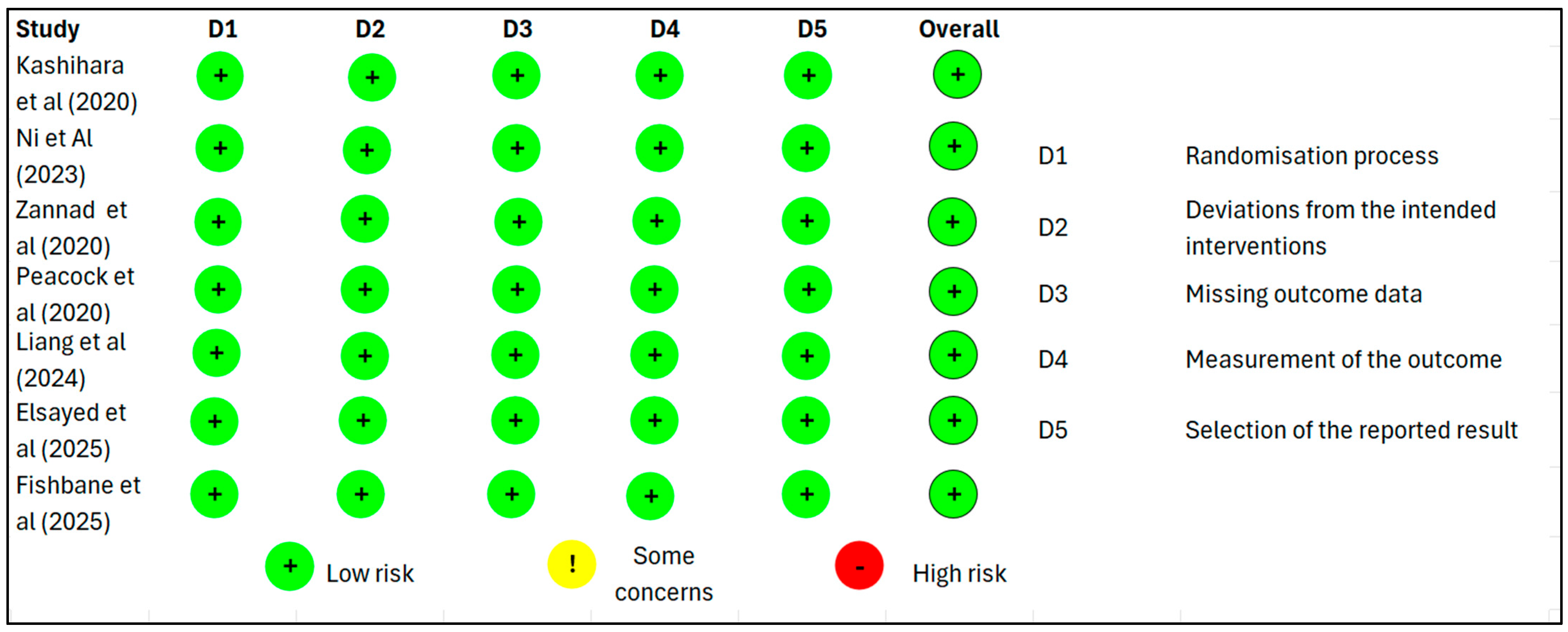
| Study | Study Type | Patient Population/Clinical Setting | SZC Dose(s) Evaluated | Study Focus/Outcomes | Summary of Findings |
|---|---|---|---|---|---|
| Kashihara et al. [13] (n = 101) | Phase II/III RCT, double-blind, placebo-controlled | Adults with hyperkalemia (K+ 5.1–6.5 mmol/L); mixed outpatient/hospitalized; CKD, HF, DM eligible | 5 g TID 10 g TID (48 h correction) | Exponential rate of K+ change over 48 h; proportion achieving normokalaemia at 48 h; safety | Significant, dose-dependent serum K+ reduction vs. placebo. 91.7% normokalaemia at 48 h (10 g). Well, tolerated; no serious AEs. |
| Ni et al. [16] (n = 127) | Phase IIIb RCT, double-blind, placebo-controlled | Chinese adults on chronic hemodialysis with predialysis hyperkalemia (K+ > 5.4 mmol/L after LIDI) | 5 g QD (inter-dialytic days) | Proportion of responders (K+ 4.0–5.0 mmol/L in ≥3/4 LIDI visits); predialysis K+ maintenance ≤ 5.5 mmol/L; K+ gradient < 3.0 mmol/L during LIDI | Significantly higher responder rate with SZC (37.3% vs. 10.4%; OR 5.10). Better predialysis of K+ control and gradient during LIDI. |
| Zannad et al. [14] (n = 248) | Phase III RCT, double-blind, placebo-controlled; two phases (correction + maintenance) | Adults with hyperkalemia (K+ ≥ 5.1 mmol/L, two consecutive readings); mixed outpatient/hospitalized; CKD, HF eligible | Correction: 10 g TID × 48 h Maintenance: 5 g QD or 10 g QD × 28 d | Change in K+ from baseline at 24 h and 48 h; proportion achieving normokalaemia; maintenance of normokalaemia up to 28 days; safety | Rapid correction (↓ 1.28 mmol/L at 48 h). 89.1% normokalaemia at 48 h. Normokalemia maintained over 28 days; risk of recurrent HK reduced by 56–84%. Edema and constipation are most frequent AEs. |
| Peacock et al. [19] (n = 250) | Phase II RCT, double-blind, placebo-controlled, multicenter (33 countries) | Adults ≥ 18 yr presenting to the emergency department with severe hyperkalemia (K+ ≥ 5.8 mmol/L); all SZC given with insulin + glucose | 10 g single dose + standard care (insulin + glucose) | Proportion of patients achieving normokalaemia within 24 h of ED admission | Greater K+ reduction with SZC from 2 h. Trend toward higher ED discharge rate. No statistically significant difference in primary endpoint. |
| Liang et al. [15] (n = 250) | Phase III RCT, double-blind, placebo-controlled (China) | Chinese adults with hyperkalemia (K+ ≥ 5.1 mmol/L); outpatient/hospitalized; CKD, HF, DM eligible | Correction: 5 g TID or 10 g TID × OL Maintenance: 5 g QD or 10 g QD × 28 d | Effect of different SZC doses on K+ reduction (efficacy) and safety profile | Dose-dependent reduction (7% with 5 g vs. 15% with 10 g vs. placebo). 58.8–76.5% maintained normokalaemia over 28 days. Peripheral edema is the most frequent AE. |
| Elsayed et al. [17] (n = 120) | RCT, double-blind, multicenter (Alexandria, Egypt) | Adults on chronic dialysis with hyperkalemia; comparator was SPS (not placebo) | SZC (dose NR) vs. SPS; 8-week follow-up | Time to normokalaemia and K+ reduction vs. SPS; safety comparison | Both agents achieved normokalaemia; SZC reached target in 2 weeks vs. 6 weeks with SPS. Fewer GI adverse events with SZC. |
| Fishbane et al. [18] (n = 2690) | Phase III RCT, double-blind, placebo-controlled, international, event-driven, 3-year follow-up | Adults ≥ 18 yr with kidney failure on chronic hemodialysis; largest and longest study in this review | 5 g QD on inter-dialytic days (maintenance) | Composite of CV events (primary); K+ control and safety (secondary); 3-year follow-up | No significant reduction in CV events vs. placebo (HR 0.98). 74% vs. 47% maintained normokalaemia (OR 3.36). Edema 4.7%; hypokalemia 3.0%; 30.4% discontinuation by year 3. |
| Study (n) | Patient Population | Serum K+ Reduction | Time to Achieve Reduction | Duration of K+-Lowering Effect |
|---|---|---|---|---|
| Kashihara et al. [13] (n = 101) | Mixed outpatient/hospitalized; CKD, HF, DM eligible | 0.27–0.51% per hour during first 48 h vs. placebo (p < 0.0001 for both doses). Normokalemia at 48 h: 91.7% (10 g) vs. placebo. | Median time to normokalemia: 1.8 h (10 g) vs. 3.9 h (placebo). No significant difference for 5 g. | Maintained during the 48-h study period. No follow-up beyond this interval due to study design. |
| Ni et al. [16] (n = 127) | Chronic haemodialysis (CKD); predialysis HK > 5.4 mmol/L | Responder rate: 37.3% (SZC) vs. 10.4% (placebo); OR 5.10 (95% CI: 1.90–15.12; p < 0.001). Predialysis K+ ≤ 5.5 mmol/L at LIDI: 58% vs. 17% (OR 6.41). | Not reported as time-to-event; responder status evaluated over 4-week maintenance period. | Maintained during the 4-week stable-dose evaluation phase (LIDI and SIDI visits). |
| Zannad et al. [14] (n = 248) | Mixed outpatient/hospitalized; CKD, HF eligible; two-phase design | Correction: ↓ 0.81 mmol/L at 24 h; ↓ 1.28 mmol/L at 48 h (p < 0.001). Maintenance: relative reduction 9.6% (5 g) and 17.7% (10 g) vs. placebo (p < 0.001 both). | Onset from 1 h. Normokalemia at 24 h: 63.3%; at 48 h: 89.1% (10 g TID). | Maintained 28 days. Odds of remaining normokalemic: ~6 × (5 g) and ~18 × (10 g) vs. placebo. Normokalemic days increased by 7 (5 g) and 12 (10 g). HK recurrence risk reduced 56–84%. |
| Peacock et al. [19] (n = 250) | Emergency department; severe HK ≥ 5.8 mmol/L; all patients received insulin + glucose | At 4 h: −0.36 (±0.57) mmol/L (SZC) vs. −0.25 (±0.63) mmol/L (placebo). Adjusted diff. −0.13 mmol/L (95% CI: −0.44 to 0.17); not significant. | Similar reduction at 1 h; greater K+ reduction with SZC from 2 h (−0.72 vs. −0.36 mmol/L; diff. −0.35; 95% CI: −0.68 to −0.02). | Measurements to 24 h; Day 8 assessment for safety only. Duration of effect not evaluable by study design. |
| Liang et al. [15] (n = 250) | Mixed outpatient/hospitalized (China); CKD, HF, DM eligible | Days 8 and 29: K+ 4.9 mmol/L (5 g), 4.4 mmol/L (10 g), 5.2 mmol/L (placebo). Reductions: 7% (5 g) and 15% (10 g) vs. placebo. Dose-dependent. | 10 g TID achieved normokalemia in 69.0% at 24 h; 87.4% by end of open-label phase. | 28-day maintenance. Normokalemia maintained: 58.8% (5 g), 76.5% (10 g), 36.8% (placebo); p < 0.001 for both SZC groups. |
| Elsayed et al. [17] (n = 120) | Chronic dialysis; active comparator (SPS), not placebo | SZC K+ levels significantly lower than SPS throughout 8-week study (p < 0.001). Both groups reduced K+ from baseline from week 1 onward. | SZC group achieved normokalemia (<5 mmol/L) by 2 weeks; SPS group reached target only by 6 weeks. | Effect maintained throughout 8-week study period; specific maintenance proportions not reported. |
| Fishbane et al. [18] (n = 2690) | Chronic haemodialysis (CKD); longest follow-up (3 years); largest sample | Normokalemia during 3-year follow-up: 74.0% (SZC) vs. 47.0% (placebo); OR 3.36 (95% CI: 2.64–4.26; p < 0.0001). Rescue therapy need: 8.7% vs. 20.4% (HR 0.39; p < 0.001). | Time to K+ normalization not specifically reported. | K+-lowering benefit sustained throughout 3-year study. Primary CV endpoint not met (HR 0.98; p = 0.867). |
| Study (n) | Patient Population | SZC Dose | Hospitalizations | Emergency Dialysis | Cardiovascular Events |
|---|---|---|---|---|---|
| Kashihara et al. [13] (n = 101) | Mixed; CKD, HF, DM | 5 g/10 g TID × 48 h | Not reported | Not reported | Not reported |
| Ni et al. [16] (n = 127) | Chronic hemodialysis | 5 g QD | Not reported | No rescue therapy required (SZC group) | Not reported |
| Zannad et al. [14] (n = 248) | Mixed; CKD, HF | 5 g/10 g QD × 28 d | Not reported | Not reported | Not reported |
| Peacock et al. [19] (n = 250) | Emergency dept; severe HK | 10 g single dose | Discharge rates: 39.4% (SZC) vs. 32.4% (Placebo). Mean time to discharge: 27.9 vs. 24.3 h (NS) | Dialysis initiated: 33.3% (SZC) vs. 48.6% (placebo). 0–4 h: 9.4% vs. 13.9% (NS) | Not primary outcome: 1 HF event (SZC group, not related per investigators) |
| Liang et al. [15] (n = 250) | Mixed; CKD, HF, DM (China) | 5 g/10 g QD × 28 d | Not reported | Not reported | Not reported |
| Elsayed et al. [17] (n = 120) | Chronic dialysis vs. SPS | vs. SPS (dose NR) | Not reported | Not reported | Not reported |
| Fishbane et al. [18] (n = 2690) | Chronic hemodialysis; 3-year follow-up | 5 g QD | Overall: 0.07 vs. 0.07 per person-year (RR 0.96; NS). HF hosp. arrhythmia: 5.5% vs. 4.8% (HR 1.12; NS) | Not reported | Primary endpoint (composite CV): 8.8% vs. 8.9% (HR 0.98; 95% CI: 0.76–1.26; p = 0.867). Sudden cardiac death: HR 0.95 (NS). Stroke: HR 0.95 (NS) |
| Study (n) | Patient Population | SZC Dose | Edema n (%) | Constipation n (%) | Hypokalemia n (%) | Discontinuation. n (%) | Serious/Notable AEs |
|---|---|---|---|---|---|---|---|
| Kashihara et al. [13] (n = 101) | Mixed; CKD, HF, DM | 5/10 g TID | NR | 1 (2.9%) (5 g group) | 0 | 0 | Tremor and ventricular extrasystoles (2 pts, 10 g group); all non-serious per investigators |
| Ni et al. [16] (n = 127) | Hemodialysis | 5 g QD | 1 | 6 (9.1%) | 7 (10.6%) | 4 (2 SZC, 2 PBO) | 2 SZC discontinuations due to hypokalemia |
| Zannad et al. [14] (n = 248) | Mixed; CKD, HF | 5/10 g QD | 4 (SZC 10 g: 15.2%; 5 g: 5.1%; PBO: 0%) | 4 (SZC 10 g: 9.1%; 5 g: 1.0%; PBO: 0%) | 1 (SZC 10 g: 1.0%) | 17 (14 SZC/3 PBO) 7.1% each SZC arm | Dose-related pattern for edema and constipation |
| Peacock et al. [19] (n = 250) | Emergency dept | 10 g single dose | NR | NR | NR | 1 | SZC: tibial fracture, GI hemorrhage, HF (1 each, not related). PBO: hypotension, respiratory failure, seizures, pneumonia, 2× hyperkalemia |
| Liang et al. [15] (n = 250) | Mixed; CKD, HF, DM (China) | 5/10 g QD | 21 (5 g: 9.0%; 10 g: 12.0%; PBO: 0%) | 12 (5 g: 7.0%; 10 g: 5.0%; PBO: 0%) | NR | NR | Most AEs mild-to-moderate |
| Elsayed et al. [17] (n = 120) | Chronic dialysis vs. SPS | vs. SPS (NR) | 0 | 2 | 0 | NR | 2 serious AEs: MI and catheter bloodstream infection (both SZC group). Diarrhea × 1; headache × 1; unpleasant taste × 2 |
| Fishbane et al. [18] (n = 2690) | Hemodialysis; 3-year follow-up | 5 g QD | 64 (4.7%) | NR | 40 (3.0%) | 30.4% by 2023 | SARS-CoV-2 infection was most frequent AE overall (temporal context, not drug-related). Higher cumulative discontinuation with SZC over 3 years |
Disclaimer/Publisher’s Note: The statements, opinions and data contained in all publications are solely those of the individual author(s) and contributor(s) and not of MDPI and/or the editor(s). MDPI and/or the editor(s) disclaim responsibility for any injury to people or property resulting from any ideas, methods, instructions or products referred to in the content. |
© 2026 by the authors. Licensee MDPI, Basel, Switzerland. This article is an open access article distributed under the terms and conditions of the Creative Commons Attribution (CC BY) license.
Share and Cite
Zavaleta-Monestel, E.; Castro-Gamboa, J.A.; Herrera-Jiménez, L.G.; Arguedas-Chacón, S.; Mora-Jiménez, J.; Cruz-Mora, K.; Granados-Romero, S.; Chaverri-Fernandez, J.M. Sodium Zirconium Cyclosilicate in the Therapeutic Management of Hyperkalemia: A Systematic Review of Efficacy and Safety. Kidney Dial. 2026, 6, 19. https://doi.org/10.3390/kidneydial6010019
Zavaleta-Monestel E, Castro-Gamboa JA, Herrera-Jiménez LG, Arguedas-Chacón S, Mora-Jiménez J, Cruz-Mora K, Granados-Romero S, Chaverri-Fernandez JM. Sodium Zirconium Cyclosilicate in the Therapeutic Management of Hyperkalemia: A Systematic Review of Efficacy and Safety. Kidney and Dialysis. 2026; 6(1):19. https://doi.org/10.3390/kidneydial6010019
Chicago/Turabian StyleZavaleta-Monestel, Esteban, José Andrés Castro-Gamboa, Luis Guillermo Herrera-Jiménez, Sebastián Arguedas-Chacón, Jeaustin Mora-Jiménez, Kevin Cruz-Mora, Sofía Granados-Romero, and José Miguel Chaverri-Fernandez. 2026. "Sodium Zirconium Cyclosilicate in the Therapeutic Management of Hyperkalemia: A Systematic Review of Efficacy and Safety" Kidney and Dialysis 6, no. 1: 19. https://doi.org/10.3390/kidneydial6010019
APA StyleZavaleta-Monestel, E., Castro-Gamboa, J. A., Herrera-Jiménez, L. G., Arguedas-Chacón, S., Mora-Jiménez, J., Cruz-Mora, K., Granados-Romero, S., & Chaverri-Fernandez, J. M. (2026). Sodium Zirconium Cyclosilicate in the Therapeutic Management of Hyperkalemia: A Systematic Review of Efficacy and Safety. Kidney and Dialysis, 6(1), 19. https://doi.org/10.3390/kidneydial6010019