


Abstract
University students are a major target population for infectious disease prevention programmes. Understanding the barriers to implementation of these programmes, and specifically vaccines, among student populations is critical for effective health prevention strategies. To assess changes in COVID-19 vaccine hesitancy and vaccine delivery programmes, we compared questionnaire-based survey data of two cohorts of first year students from two points, July and October 2021, during the COVID-19 vaccine rollout in the United Kingdom. We observed a highly significant increase in vaccine uptake without any alteration in vaccine hesitancy, as measured using a modified VAX score between the two survey dates. The October survey confirmed an association of vaccine hesitancy with the Non-White ethnic group and specifically identified concerns with the plurality of vaccine testing as a potential cause of this hesitancy. University pop-ups for COVID-19 vaccine delivery were not extensively utilised but were deemed as strongly or weakly favourable by 28.3% of students. Survey responses indicated that on-campus pop-ups for delivery of MMR and MenACWY were also supported by a significant minority of students.
1. Introduction
The COVID-19 pandemic caused major global disruption, increasing mortality and affecting global health and wellbeing [1]. In the UK, 174,800 premature deaths have been attributed to COVID-19 infections [2]. Vaccination was shown to be one of the most effective methods for reducing rates of mortality, morbidity, and hospitalisation globally [3]. In a WHO report, COVID-19 vaccine uptake in England was estimated to have decreased mortality by 72%, saving ~449,241 lives [2]. Effectiveness against mortality increased with each dose of the vaccine, rising from 58.7% to 88.6% to 93.2% after the first, second and third doses, respectively [4]. The UK’s Joint Committee on Vaccination and Immunisation (JCVI) guided the vaccine rollout strategy, with adults aged 18–49 eligible from April 2021 in a staggered manner with all adults aged 18 and above becoming eligible by 19 July 2021 [5].
Effectiveness for several vaccine programmes in general [6,7], and COVID in particular [7,8], depends on both vaccine efficacy in individuals and on herd protection resulting from achieving sufficient vaccine uptake for reduced transmission. A major barrier to an effective vaccine programme is vaccine hesitancy [7]. Over the past decade, global vaccine hesitancy has grown, contributing to rises in vaccine-preventable diseases [9]. Vaccine hesitancy is now considered a major public health concern and is classified by the WHO as one of the top ten global health threats. Vaccine hesitancy is a complex concept that extends beyond simple refusal of immunisation. The WHO definition of vaccine hesitancy focuses on both delays in vaccine uptake that are not hindered by availability of vaccination services and complete refusal of safe vaccines [9,10]. This is not a binary measure but exists on a continuum, where individuals may range from full acceptance to outright refusal [10,11]. Hesitancy differs from ‘vaccine behaviour’, as some individuals who ultimately receive vaccines may still possess doubts or concerns [12]. For example, vaccine hesitancy in the USA rose from 40.7% to 44.6% between 2021 and 2022, even though vaccine uptake increased [13].
The multiple reasons given by individuals for vaccine hesitancy can be summarised within matrix models [10,11] such as the 5Cs model developed by Betsch et al. [14] in 2018, which includes: complacency, confidence, convenience, calculation, and collective responsibility. Complacency is defined as people perceiving the vaccine as being of low priority due to the disease not being a threat. Confidence refers to people’s trust in the effectiveness and safety of the vaccine and healthcare system. Convenience relates to the barriers in accessing the vaccine such as physical or economic barriers. Calculation is the weighing up of an individual’s perceived risks and benefits of being vaccinated. Collective responsibility refers to the willingness to be vaccinated in order to help achieve herd immunity and protect other people from the disease. These determinants of vaccine hesitancy vary between populations, over time, and for particular vaccines or diseases [14,15]. In the UK, COVID-19 vaccine hesitancy was found to be more frequent among younger adults, ethnic minority groups, and people from lower socioeconomic backgrounds, while globally, associations are linked to being female, unemployed, or of Black ethnicity [16,17]. As detected by Becares et al. in November to December 2020 for COVID-19 [18], some scholars argue that vaccine hesitancy has gone beyond individual-level determinants and has been used as a scapegoat, obscuring the role of systemic racism and structural inequities in shaping disparities in vaccine uptake [19,20,21].
In the UK, COVID-19 vaccine uptake was consistently below the national average (76% overall) among younger adults (only 50–60% of 18–25-year-olds received a second dose by October 2021) and certain ethnic minority groups (48% of Chinese origin; 49% in Black Caribbean and Black Other groups) [5,22]. A UK study of 12,035 adults found that 26.5% of 16–24-year-olds were unlikely or very unlikely to accept COVID-19 vaccination in November/December 2020 [23]. Contrastingly, hesitancy declined over the course of the pandemic, including within some ethnic minority groups [5]. Vaccine hesitancy has been increasing for several communicable diseases due in part to associations with the disproven, but widely shared and accepted, study on MMR and autism [9,24]. The WHO reported vaccine hesitancy as a leading cause of a 30% increase in global measles cases in 2019 [9]. UK measles vaccine coverage declined from 92.4% in 2014–2015 to 89.2% in 2024–2025, resulting in several large measles outbreaks, including one in Birmingham, where 89% of cases occurred in unvaccinated individuals [25,26]. Low vaccine uptake also arises from deficits in awareness about availability of specific vaccines and of individuals’ vaccination status, as observed for the MenACWY vaccine among parents, university students and the general public [27]. In summary, vaccine hesitancy is extensive and goes beyond just the COVID-19 issue.
University students are an important demographic for vaccine hesitancy discussions. Students are highly mobile, socially active and exposed to communal accommodation and teaching arrangements, with these proclivities heightening risks of super-spreader events and campus-based outbreaks with transmission to vulnerable groups in the wider society [28]. COVID-19 infection rates were nearly twice as high in 18–23-year-olds in university towns compared with their peers in non-university towns [29,30,31]. Pop-up vaccination clinics are effective measures for increasing uptake, particularly among younger adults [32]. Similar benefits have been observed for influenza vaccination, where pop-up clinics helped reduce barriers to uptake among college students [33]. However, impact from these enhanced delivery modes is limited if students are unaware of their availability, hesitant due to misinformation or lack trust in the offered vaccines.
We previously reported on the uptake and attitudes of University of Leicester students to COVID-19 and other vaccines using data acquired in July 2021 [34]. In order to evaluate temporal changes in uptake and attitudes and to further extend our analysis of the underlying causes of vaccine hesitancy, we conducted a second survey in October 2021 among the new intake of University of Leicester first-year students. This report focuses on five aspects: participant demographics associated with COVID-19 vaccine hesitancy; temporal changes in COVID-19 vaccine hesitancy; use and perceptions of vaccine pop-up clinics; and information sources for health and COVID-19 information. Overall, this study sought to inform development of targeted public health interventions for decreasing vaccine hesitancy and increasing vaccine uptake within this social group.
2. Materials and Methods
Study design and sample. This study had a repeated cross-sectional design that comprised two surveys conducted among University of Leicester students. Surveys were administered between 1 and 21 June 2021 and 25 and 28 October 2021. Methodological details for the June survey have been previously reported [34]. As the June survey included students from all year groups, only responses for first-year students were abstracted for comparison. The October survey was administered exclusively to first-year and foundation university students. Both surveys were conducted during term time either at the beginning (October survey) or end (June survey) of the academic year.
Both surveys were administered via Online surveys to campus-based undergraduate students with an invitation email and one (October) or two (June) reminder emails. Both surveys offered entry into a prize draw for a £200 prize (five and three prizes for the June and October surveys, respectively). The June but not the October survey also included an offer to participate in follow-up interviews. Both surveys were sent to campus-based University of Leicester undergraduate students, with the June survey going to all year groups and the October 2021survey to only the first and foundation year groups. Usable response rates were 7.6% (827/10,869) and 5.1% (187/3690) for the June and October surveys, respectively.
Overview of survey distribution and content. Both surveys were administered electronically through unique, single-use survey links distributed by email for each student. Completed responses were automatically de-identified by the survey software to prevent linkage with student email addresses. The June and October surveys each contained 30 questions. The question formats included free-text, single-choice, multiple-choice, and Likert scale responses. For most questions, “Prefer not to answer” or “Don’t know” options were available. In both surveys, all questions were compulsory except for questions 28 and 29 in the June and October surveys, respectively.
Both surveys collected information on socio-demographics, general health beliefs, attitudes toward vaccines, COVID-19 infection status, and sources of information regarding COVID-19. The June questionnaire also included questions on pandemic-related experiences. The October survey replaced these questions with three new questions: question 11. What are your views on COVID-19 vaccines? (this was a sub-question only accessible to vaccine-hesitant individuals in the June survey); question 16. Are you aware that the University of Leicester ran COVID-19 vaccine pop-ups on campus at the start of term?; and question 17. How do on-campus COVID-19 vaccine pop-ups affect your decision to be vaccinated? Data on numbers of COVID-19 vaccine doses were collected only in the October 2021 survey, as these vaccines were not widely available to this age group during the June 2021 survey period.
Socio-demographic factors collected were age (≤21 years, >21 years, or prefer not to say), gender (female, male, non-binary, another gender identity, or prefer not to say), ethnicity (White, Asian, Black, Other, or prefer not to say), study year (first or foundation), student status (UK student, UK-based international student, or non-UK international student), and non-term residence (first part of postcode). For analyses, ethnicity was merged into “White” and “Other”, with “Other” comprising Black, Asian, Mixed, or Other minority ethnicities. Non-term residence was categorised into Leicester, Leicestershire, rest of the UK, and international based on home postcode and student status.
Primary endpoints and analysis methods. Primary endpoints from the October survey were: vaccine willingness; willingness to be vaccinated at university-based pop-up clinics; awareness and use of pop-up clinics; vaccine uptake; and COVID-19 information sources. Vaccine willingness was assessed using a VAX score. VAX scores were derived from responses to four sub-questions (0.1, 0.2, 0.3 and 0.5) of question 20 with three (0.2, 0.3 and 0.5) reverse-coded, so a higher score indicated higher vaccine willingness. “Prefer not to answer” responses were removed, and answers were shifted by minus one to make the lowest score 0. The total score was calculated and then divided by the maximum possible score of 28 to give a VAX score between 0 and 1. A score of 0 represented the lowest willingness/highest hesitancy, and 1 represented the highest willingness/lowest hesitancy. The VAX scores were normally distributed and stable between the two survey periods. In order to have an even class balance between high and low scores, the VAX score was dichotomised by splitting at the median value (0.57), with scores ≤0.57 assigned to a group of lower willingness and scores >0.57 assigned to a group of higher willingness. This even class balance and dichotomisation allowed for use of logistic regression for estimation of risk factors and clear communication of odds ratios and statistical significance. Willingness to receive a vaccine at a pop-up clinic was assessed using a five-level ordinal scale in question 17 (for the COVID-19 vaccine) and question 18 (for the MenACWY and MMR vaccines). The options were: “Definitely increase”, “Somewhat increase”, “Neither”, “Somewhat decrease”, “Definitely decrease”, and “Don’t know”. Awareness and use of pop-up clinics were assessed in question 16 using tick-boxes with three options: “YES, I obtained a COVID-19 vaccine from one of them”, “YES, I was aware of them but did not use them”, and “NO, I was not aware of these pop-ups”. For how students became aware of pop-up clinics, respondents could select multiple options from a provided list. Vaccine uptake was assessed in question 10. Respondents could select one of three options: “I have already had a COVID-19 vaccination”, “I have decided not to have the vaccine”, or “Other”. Those who indicated they had received a COVID-19 vaccination were asked a follow-up question on the number of doses received (1, 2, or >2). Information sources regarding COVID-19 were collected in question 25, where students were asked to rank their top four sources from a list of 13 categories, from most to least used (1 to 4).
Statistical analysis methods. Baseline characteristics of participants were summarised by the survey enrolment period. Continuous data were expressed as mean and standard deviations, while categorical data were summarised as frequencies and percentages. Differences in characteristics between the two survey periods were calculated using the Wilcoxon rank-sum test for continuous variables and the Pearson chi-squared test for categorical variables on unweighted survey data. Comparisons for intention to vaccinate were made by merging “Vaccinated” and “Intention to vaccinate” against “Hesitant”, “Other”, and “Prefer not to say” and analysed using the Pearson chi-squared test. No survey weights were applied in this study.
VAX scores in both surveys were summarised as median, lower quartile, and upper quartile. Differences in VAX scores between the two survey periods were assessed using the Wilcoxon rank-sum test. Multivariate logistic regression models generated adjusted odds ratios (ORs) and 95% confidence intervals (CIs) for factors associated with VAX scores. Predictors in the multivariate model included non-term residency and ethnicity. These models were used to identify significant factors influencing vaccine hesitancy rather than to create an effective predictive model. Factors of vaccine hesitancy between ethnicities were compared using Fisher’s exact test.
Availability and willingness to be vaccinated were presented as counts and percentages. Student awareness of the university-based COVID-19 vaccine pop-up clinics was also presented as counts and percentages, stratified by non-term residence. Comparison between the surveys for MenACWY and MMR vaccines was presented as counts and percentages. Pairwise analysis was conducted on the relative preference of COVID-19 information sources. A Plackett–Luce model was used to derive a quasi-standard error for item parameters to produce a listwise ranking of information sources. Due to a low item non-response rate, missing data were excluded, and a complete case analysis was performed. The statistical significance level was set at a p-value of <0.05.
All data analysis and visualisation were conducted using R version 4.5.0 (2025, The R Foundation for Statistical Computing, Vienna, Austria). R packages used included tidyverse 1.3.2 (dplyr 1.2.0, tidyr 1.3.2, forcats 1.0.1, stringr 1.6.0, and scales 1.4.0, for data handling), jsonlite 1.7.1 (data extraction), ggplot2 3.3.2 (general graphing), cowplot 1.1.1 and viridis 0.6.2 (graph theming and colour palettes), gtsummary 1.4.2 (tabulation), ggstatsplot 0.9.1 (statistical visualisation), UpSetR 1.4.0 (set visualisation), PlackettLuce 0.4.4 (ranking analysis), and likert 1.3.5 (graphing of Likert-style responses). All packages were downloaded from the Comprehensive R Archive Network (CRAN) [35,36,37,38,39,40,41,42].
Ethics. Participation in the survey was voluntary, and all participants provided informed consent before enrolment into this study. The study was conducted in accordance with the Declaration of Helsinki. Ethical approval for the October survey was provided on 21 October 2021 (application reference number: 29522-lg149-ss/mc:media&communication) by the University of Leicester Medicine and Biological Sciences Research Ethics Committee, with this approval being an amendment of the approval for the June 2021 survey, as provided on 24 May 2021 [34].
3. Results
This study aimed to assess changes in vaccine hesitancy as the COVID-19 pandemic progressed and vaccine availability increased by comparing two groups of first-year UK university students who were surveyed before or after widespread vaccine rollout. Key areas of comparison included attitudes toward COVID-19 vaccines, vaccines in general, vaccine willingness and hesitancy, awareness and actual/potential use of pop-up clinics, vaccine uptake, and COVID-19 information sources.
Sociodemographic and vaccination characteristics. Response rates of first-/foundation-year university students were 2.6% (285/10,869) and 5.1% (187/3690) for the June and October 2021 surveys, respectively. Sociodemographic information found a predominance among participants for both surveys of individuals aged ≤21 years, female, White, in their first academic year, UK students, lived outside of Leicestershire but within the UK during non-term time, and had already received the COVID-19 vaccine (Table 1). Significant differences were observed for gender distributions, ethnicity, student status, and non-term residence. For gender, 28% of participants in the earlier survey were male compared to 39% in October. For ethnicity, relative to the June survey, the October survey was lower for Black respondents but slightly higher for White and Asian respondents. Similarly for student status and non-term residence, there were upwards shifts between the earlier and later studies in both UK-based international students and those residing internationally outside of term time.
Table 1.
Baseline characteristics and unweighted univariate analysis of the June and October 2021 survey respondents.
Vaccination uptake and trust increased between the June and October surveys, with an increase from 59% to 91% in the numbers of vaccinated individuals and a decrease in vaccine hesitancy from 6.7% to 3.7%. As expected given the vaccine rollout, the proportion of respondents who had not been offered vaccinations had decreased to 0% in the October survey.
General analysis of vaccine hesitancy and willingness. In order to analyse the determinants of vaccine hesitancy, a multivariate analysis of vaccine willingness, as measured by the VAX score, was conducted for the October survey (Table 2). As complex models failed to converge due to the small sample size, we focussed on a simple explanatory model covering ethnicity and non-term-time residence, as these factors had high significance in the univariate model (Table 1). Student status was excluded due to the small numbers of international students and overlap with the non-term residence data. After adjusting for non-term-time residence, ethnicity was a significant predictor of a higher VAX score. The combined group of Black, Asian, Mixed, or Other minority ethnic backgrounds had significantly lower odds of higher VAX scores than the White student group (OR 0.27; 95% CI: 0.13–0.55; p < 0.001), indicating lower willingness to be vaccinated and higher hesitancy. VAX score was not however a predictor of vaccine uptake (Table S1).
Table 2.
Multivariate logistic regression analysis showing predictors of a higher VAX score in the October 2021 survey.
For non-term residence, compared to students whose home address was outside Leicestershire, those residing in Leicester were a significant predictor of higher VAX scores and had high odds ratios. Students with an international home address or from Leicestershire had higher or slightly increased odd ratios, respectively, but neither association was statistically significant in comparison to students who lived outside of Leicestershire.
To see whether the level of vaccine hesitancy changed between the two survey periods, the distributions of the VAX scores were compared (Table 3). Each survey had an identical median VAX score with no statistically significant difference between the score distributions, indicating similar vaccine willingness levels between the two survey periods.
Table 3.
Distribution of COVID-19 total VAX scores in the June 2021 and October 2021 surveys.
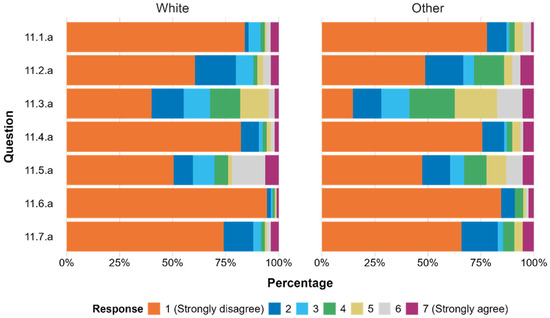
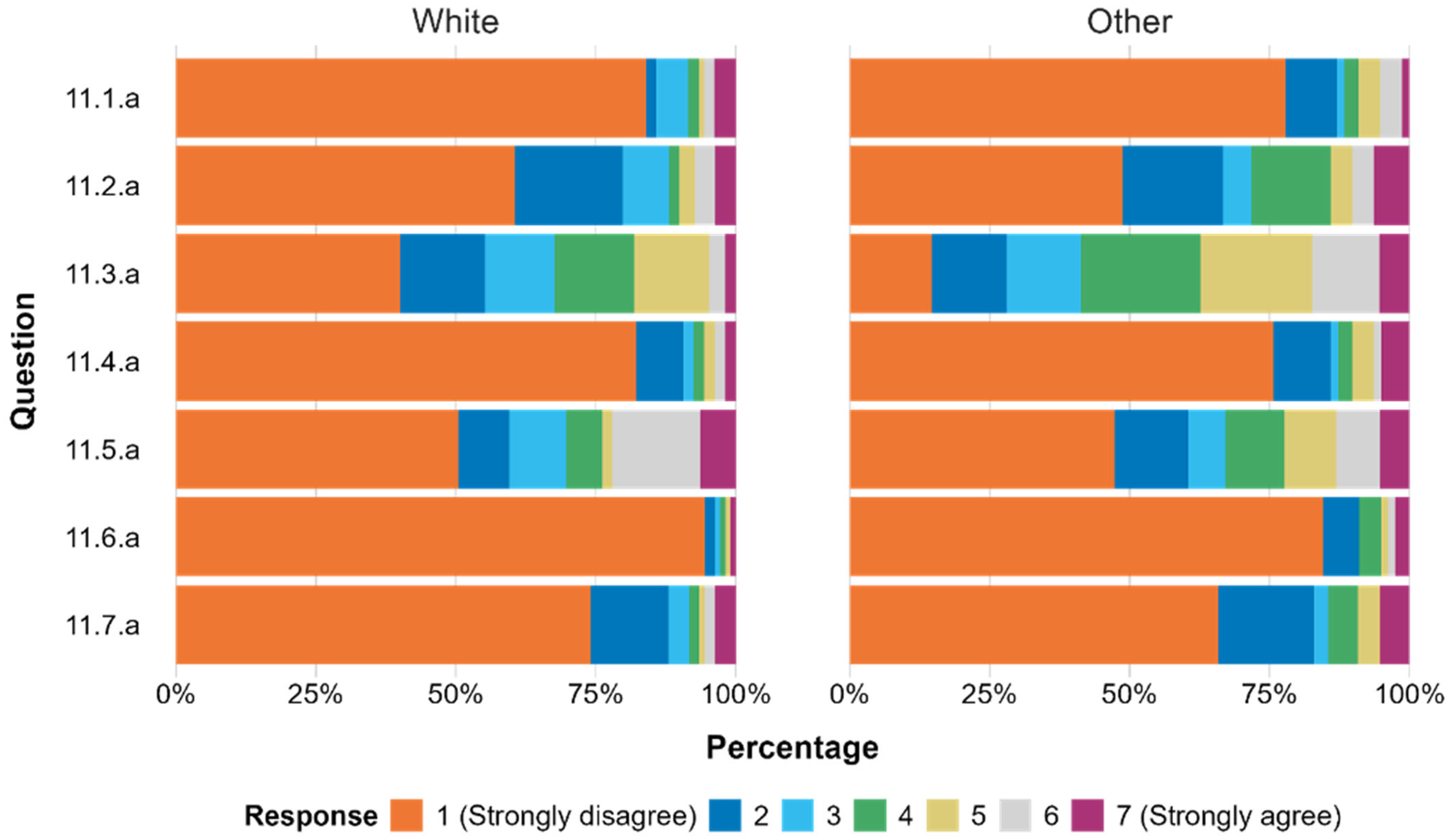
Analysis of specific determinants of vaccine hesitancy. In contrast to the July survey, the October survey enabled all students to answer a specific set of vaccine hesitancy questions. This data allowed for stratification of attitudes towards vaccination in the October survey by ethnicity, as depicted in Figure 1. Statistical testing of the Non-White versus White groups for these questions (Table S2) indicated that there was no statistically significant difference in attitudes towards the COVID-19 vaccine between the ethnicities, including feeling personally at risk from COVID-19 (p = 0.10), general belief in vaccinations (p = 0.14), or the inconvenience of being vaccinated (p = 0.5). There were, however, statistically significant differences between ethnic categories regarding the conviction on whether the COVID-19 vaccine will be effective (p = 0.038) or had been thoroughly tested in all ethnic groups (p = 0.005). Specifically, only 49% of students from the Other (Non-White) ethnic group strongly disagreed that COVID-19 vaccines will not be effective, whereas among White students, 61% disagreed with this statement (p = 0.038). Similarly, 39% of White students strongly disagreed that the COVID-19 vaccine may not have been thoroughly tested in all ethnic groups compared to 14% of Other ethnic groups (p = 0.005).
Figure 1.
Comparison of COVID-19 vaccine hesitancy factors between ethnicities. Abbreviations: Other = Black, Asian, Mixed, or Other minority ethnicity. Survey response definitions: “11.1.a” = I have allergies, needle phobia, am immuno-compromised, or have other clinical reasons not to be vaccinated. “11.2.a” = I am not convinced that COVID-19 vaccines will be effective. “11.3.a” = Vaccines may not have been tested thoroughly in all ethnic groups. “11.4.a” = I have had COVID-19 and therefore do not feel I need the vaccine. “11.5.a” = I do not feel that I personally am at risk from COVID-19. “11.6.a” = I do not believe in vaccinations in general. “11.7.a” = It is inconvenient to get a COVID-19 vaccine. Counts (n) and percentages (%) are unweighted.
Further analysis of differences between the Non-White and White ethnic groups considered the levels of strong disagreement for the vaccine hesitancy questions. Levels for both groups were generally high across most statements. Between 75–85% of students in both groups strongly disagreed with rejecting vaccines on clinical grounds, and 85–95% of students strongly disagreed with not believing in vaccines in general. These data showed that hesitancy appeared to centre more on COVID-19 vaccine-specific doubts rather than a general hesitancy towards vaccinations. Specifically, only 15–40% strongly disagreed that the COVID-19 vaccine had not been thoroughly tested in all ethnicities, suggesting lingering concerns about inclusivity in clinical trials. Contrastingly, 40–50% strongly disagreed with the statement that they did not feel personally at risk from COVID-19, 60–75% strongly disagreed that it was inconvenient to obtain the vaccine, and 50–60% strongly disagreed with the idea that the COVID-19 vaccine would not be effective. Thus, concerns were focused mainly on the testing of the COVID-19 vaccine rather than the nature and delivery of the vaccine.
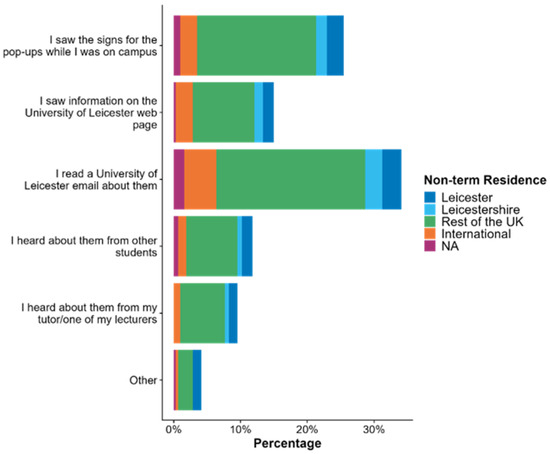
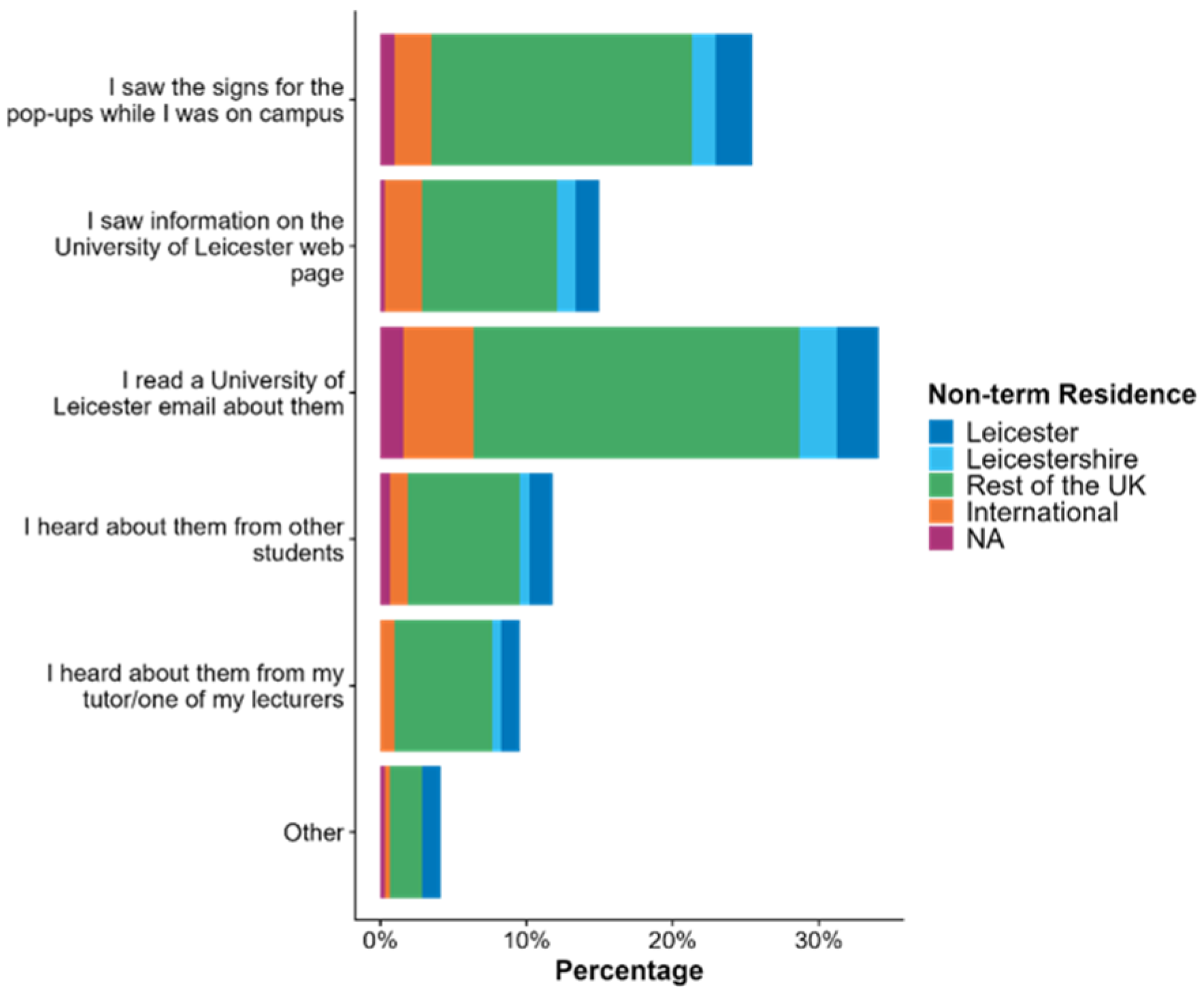
Acceptance of vaccine pop-up clinics. Vaccine pop-up clinics were used at the University of Leicester from September to December 2021. The October 2021 survey assessed the impact, awareness and use of these clinics (Table 4). Most students (65.2%) were ambivalent about the effects of university-based pop-up clinics on their uptake of COVID-19 vaccines. However, the second most common response (15.5%) was that clinics would definitely increase their willingness to be vaccinated, with only a small minority of students voting that the clinics would decrease (1%) their willingness to be vaccinated. These values correlate with the small percentage of students (3.2%) who reported being aware of and having used university pop-up vaccine clinics, while the majority, 82.4%, indicated awareness but not use of these clinics (Figure 2). There were, however, a major fraction (14.4%) who were unaware of these clinics. Assessment of how students became aware of these clinics indicated that the university emails and, to a lesser extent, on-campus signs were their major information sources, with smaller proportions reporting awareness through tutors, lecturers, or other students (Figure 2). Stratification by ethnicity or students with a non-term home address did not detect any differences between Leicester and non-Leicester students (Table S3).
Table 4.
Impact of on-campus pop-up clinics on COVID-19 vaccine uptake and willingness to be vaccinated in the October 2021 survey.
Figure 2.
Student awareness of university-based COVID-19 vaccine pop-up clinics in the October 2021 survey. Abbreviations: NA = no response. Respondents could select more than one answer option.
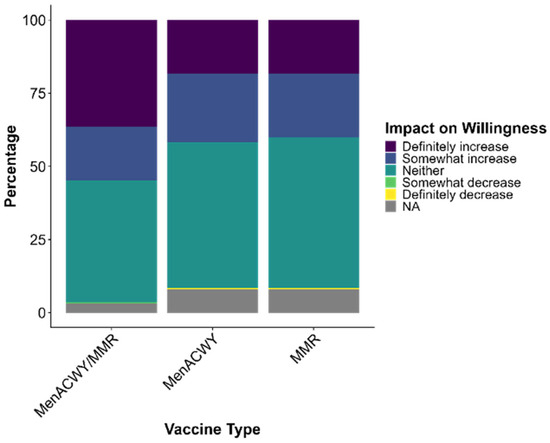
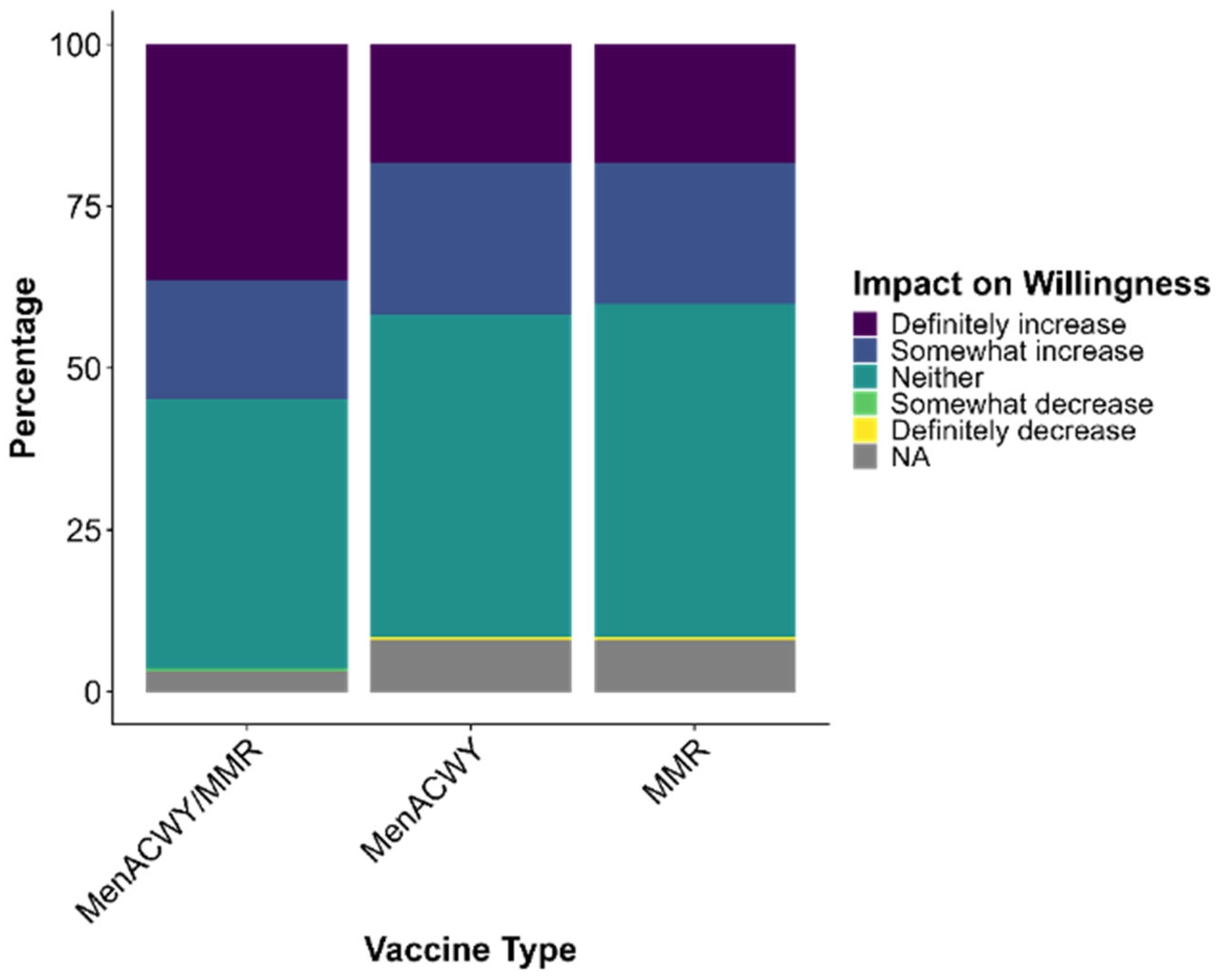
For on-campus MMR and MenACWY vaccine pop-up clinics (Figure 3), student attitudes were similar across both surveys. Responses of ‘Definitely increase’ declined from 37% to 18% between June and October 2021. In both surveys, the majority response was of neither an increase nor decrease in willingness to be vaccinated, while very few students selected ‘Somewhat decrease’ or ‘Definitely decrease’, consistent with attitudes towards COVID-19 pop-up clinics.
Figure 3.
On-campus availability of MMR and MenACWY vaccines and willingness to be vaccinated in the June and October 2021 surveys. For the June 2021 survey, the MenACWY/MMR data was derived from a question where responses were combined for both vaccines. For the October 2021 survey, the data was derived from questions where responses for the MenACWY and MMR vaccine were provided as separate responses. The numbers and percentage responses for Definitely increase, Somewhat increase, Neither, Somewhat decrease, Definitely decrease and NA are as follows for vaccine: MenACWY/MMR, 104 (36.5%), 52 (18%), 119 (42%), 1 (0.5%), 0, (0%) and 9 (3%); MenACWY, 34 (18%), 44 (23.5%), 93 (50%), 0 (0%), 1 (0.5%), 15 (8%); MMR, 34 (18%), 41 (22%), 96 (51.5%), 0 (0%), 1 (0.5%), 15 (8%). NA = no response. Counts (n) and percentages (%) are unweighted.
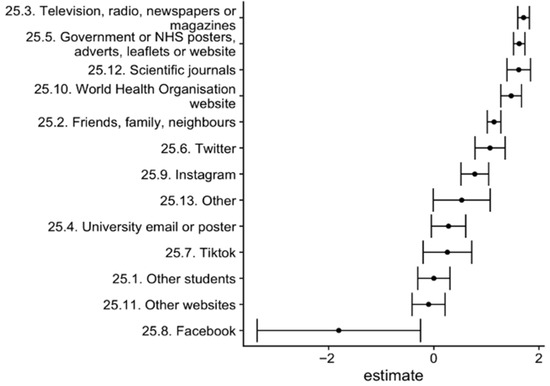
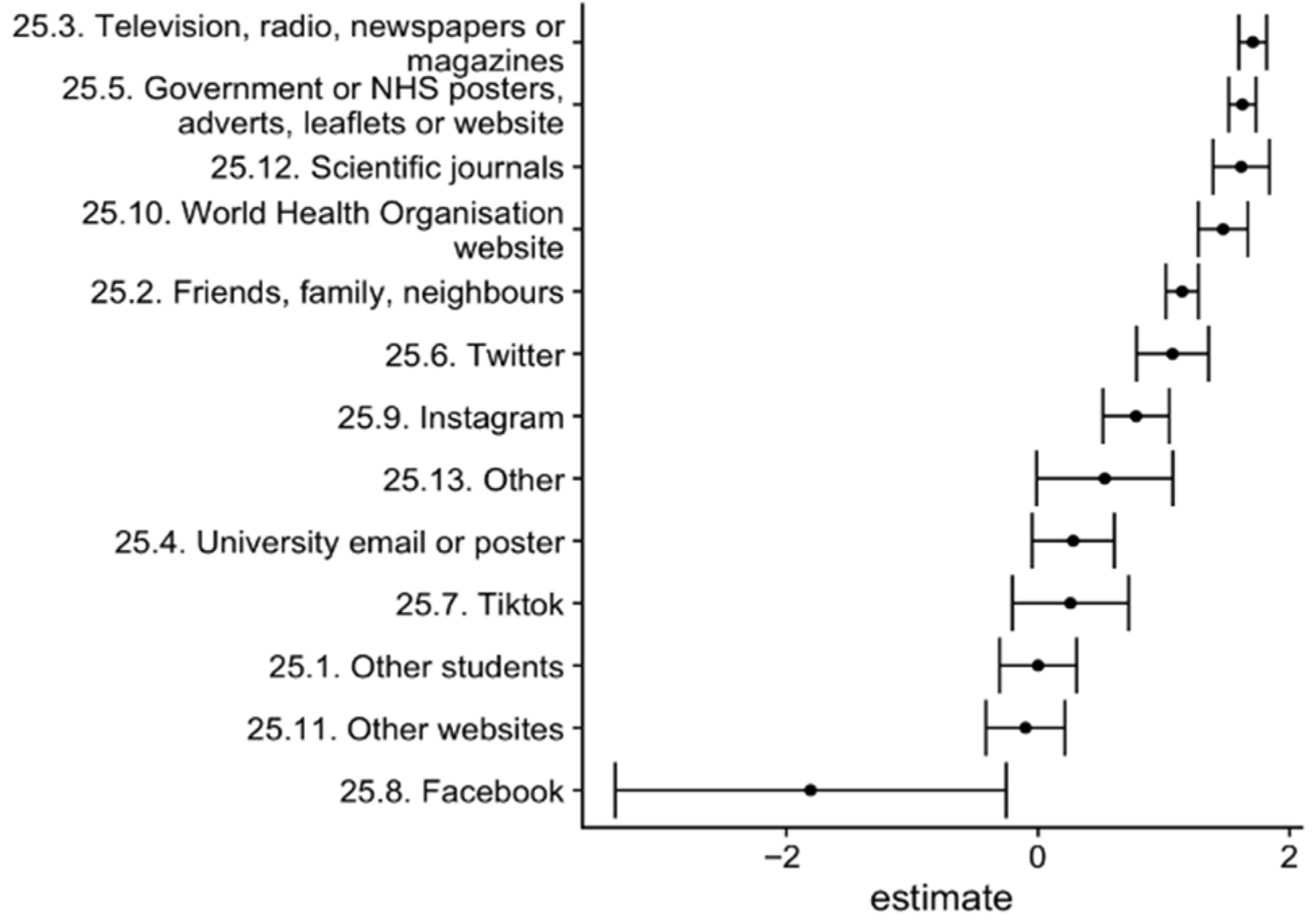
Student COVID-19 information sources. The general pattern for COVID-19 information sources was a preference for official sources, with pre-established personal networks rated more favourably than peer or student networks (Figure 4). Notably, social media sources generally ranked lower. Traditional media (e.g., television, radio) were generally the most trusted information sources, followed closely by governmental/NHS outlets and scientific journals. Personal networks (25.2 in Figure 4) were ranked above most peer-related sources, such as other students, which appeared near the bottom of the ranking. Within social media platforms, Twitter was the most trusted, followed by Instagram. In contrast, TikTok and Facebook ranked lowest, with Facebook receiving the least preference overall. University emails or posters were placed in the middle range, lower than Twitter and Instagram but still above TikTok and peers at university.
Figure 4.
Forest plot showing the relative preference of COVID-19 information sources. Plackett–Luce modelling was used to derive estimates. Error bars represent quasi standard errors, with higher estimates indicating sources more likely to be ranked highly by respondents.
4. Discussion
This study investigated COVID-19 vaccine hesitancy and uptake among students at the University of Leicester across two periods in 2021 of the COVID-19 pandemic. Our findings show that while COVID-19 vaccine uptake increased over the course of the survey period, vaccine hesitancy slightly decreased or remained the same. Our analysis detected an association between ethnicity and COVID-19 vaccine hesitancy, with more detailed questions indicating that a lack of confidence in the consideration of ethnicity during vaccine testing may have influenced these attitudes. Our findings also indicate that campus-based pop-up clinics for delivery of COVID-19, MMR and MenACWY vaccines could or would increase uptake among 16–18% of students.
COVID-19 vaccine uptake. The proportion of COVID-19 vaccinees in our October 2021 survey was higher at 91% than the 64% reported by the National Audit Office for 18–24-year-olds [5]. Higher uptake may be explained by our sample population comprising entirely university students, a group previously shown to be less vaccine-hesitant than those without a higher education degree [43]. Vaccine uptake increased between the survey periods, which aligns with the UK picture of an increase in vaccine uptake and decrease in hesitancy from December 2020 to October 2021 [5], particularly among 18–29-year-olds who were more likely to move to become vaccinated after being previously classified as hesitant [44].
General and specific effects of ethnicity on COVID-19 vaccine hesitancy. General attitudes to vaccine hesitancy and willingness were assessed by deriving a VAX score from answers to a set of widely used health- and vaccine-related attitudinal questions, while specific effects were inferred from a set of bespoke COVID-19-related questions. Our study found ethnicity to be a predictor for a higher vaccine hesitancy score. This is similar to findings from studies conducted on students in the UK and abroad, as well as studies conducted on the general public in the UK and globally [45,46]. Non-White students in our study were more likely to believe that COVID-19 vaccines had not been thoroughly tested on all ethnic groups, which is consistent with previous research in the UK showing fear of experimentation and mistrust among ethnic minority communities [47]. Although we could not analyse subgroups, due to small numbers, prior studies show variation in hesitancy causes across ethnic groups [23,46]. Previous UK research has also shown differences in reasons for vaccine ethnicity, with Black participants more likely to distrust vaccines and Pakistani/Bangladeshi participants more likely to worry about side-effects [23]. While other studies have found women to be more vaccine-hesitant [16], our study did not find an association between gender and vaccine hesitancy, nor could we examine degree subject associations with hesitancy, which has been linked to hesitancy in US student studies [48].
Other determinants of COVID-19 vaccine hesitancy. In reference to the 5C model of the determinants of vaccine hesitancy [14], in our study, confidence emerged as the primary determinant of vaccine hesitancy among students, aligning with findings from a recent global systematic review on university students where confidence-related concerns dominated [49]. Similar UK studies identified fears about side-effects, long-term safety, and rapid development as central [23,44]. In contrast to a USA study, our findings suggested that complacency was a less significant factor, and students’ perceptions of personal risk did not strongly correlate with vaccine hesitancy [45]. Additionally, convenience (inconvenience of getting a vaccine) was not a major barrier in our study, as few students reported it as a significant issue.
Pop-up clinics. While our findings indicated that on-campus vaccine pop-up clinics had a minimal impact on actual student COVID-19 vaccination uptake for September to October 2021, we did find that significant proportions of students thought that pop-up clinics would definitely increase vaccine uptake for both COVID-19 (16%) and MMR/MenACWY (18–36%) vaccines. General indifference to these specific pop-up clinics was likely due to high vaccination rates at the point of the survey so that most students did not benefit from ease of on campus access to COVID-19 vaccines. A survey from September 2021 found that 86% of people found it ‘very easy’ or ‘easy’ to get their first COVID-19 vaccine dose, suggesting that access was not a significant issue for most people during this period of the COVID-19 vaccine rollout [44]. Other research has shown that co-designed, community-led initiatives can increase uptake, particularly in minority groups [50], but pop-ups alone may not address accessibility barriers [51]. The limited impact of pop-ups in our study may therefore reflect timing, availability of alternative vaccination sites, and low trust in university communication channels, which students ranked poorly compared with other information sources. Nevertheless, future vaccine campaigns aiming to increase vaccine uptake among university students are likely to be enhanced by pop-ups. At the University of Leicester, these pop-up clinics were mobile units located in parts of the main campus with significant footfall. Other universities are likely to have similar locations where the majority of students congregate. While situating these clinics in student union, library or health centre buildings would be likely to achieve a similar effect. Assessing the relevant location would only require minor tweaks to the questions utilised in our study.
Information sources. Misinformation, including disinformation, has been consistently linked to vaccine hesitancy. In the UK, exposure to vaccine-related misinformation has been shown to reduce individuals’ intention to be vaccinated [47,52]. Conspiracy theories around COVID-19 vaccines were identified as one of the most common drivers of strong hesitancy in previous studies [12], while broader misinformation has also been directly associated with increased hesitancy [53]. Among students, one study found that 60% reported encountering negative information about COVID-19 vaccines through the media, highlighting the important role of information sources in shaping vaccine attitudes [54].
Our study found that students reported being primarily reliant on traditional media and official sources rather than social media platforms for pandemic and COVID-19 vaccine information [55]. Surprisingly, and in contrast to another student study [56], university communications were rated as of lower reliability by our survey respondents. As the University of Leicester has similar demographics and email communications are widespread within the sector, our findings are likely to be relevant to other universities or similar institutions. Previous work has shown that lower vaccine hesitancy is associated with higher trust in scientific journals, whereas higher hesitancy correlates with social media reliance [56]. A UK study concluded that misinformation exposure was common among 16–24-year-olds and strongly associated with hesitancy and mistrust [57]. Specifically, a high percentage of 16–24-year-olds held misinformation beliefs, such as the idea that COVID-19 vaccines were for population control, the highest percentage of all age group categories [57]. This viewpoint was reinforced by another study, where a strong association between misinformation exposure and vaccine hesitancy was detected [58]. As the core issue is one of trust, which misinformation erodes [59], our observations of high reliance on traditional sources is encouraging and perhaps indicates the success of UK government health messaging.
An important implication for public health of our study is that ethnicity should be considered when tailoring messages and interventions, as vaccine hesitancy drivers vary between ethnic groups. Additionally, interventions should address misinformation on social media while also strengthening trust in university and official sources. Co-production of interventions with the student population may be helpful in ensuring that effective and targeted interventions are in place to navigate and minimise vaccine hesitancy among the student population.
Strengths and limitations. One strength of our analysis was the consistency across both the July and October 2021 surveys, such that direct data comparisons are not subject to concerns about differences in methodology or survey questions. Another strength of our study was the use of VAX scores, as applied across other studies to measure vaccine hesitancy, which will facilitate direct comparisons between our data and those of other studies. Nevertheless, our dichotomisation of VAX scores should be treated with caution, as the median value utilised for splitting the data may be specific to our dataset and should not be viewed as a marker of two divergent populations but as an arbitrary point on a continuum, such that our results may be an under- or overestimation of the determinants of vaccine hesitancy.
One limitation of our study was the cross-sectional design, which prevented evaluation of temporal changes in vaccine hesitancy and uptake by individual students. Another important limitation was the small sample size, which limited adjustment for confounders and prevented subgroup analyses by different ethnicities, despite evidence that hesitancy varies across ethnic groups, and may have resulted in response bias. The small size may be compounded by missing data values where students have given unclear responses (e.g., Prefer not to say or Unknown). These non-responses were very low at 0–5 for key categories such as ethnicity and intention to be vaccinated. The survey distribution via university email, which students ranked relatively low in trust, may have limited uptake and resulted in demand characteristics, as students may have felt constrained in providing answers perceived as critical of the University despite the indication that all responses would be anonymised. The survey may also have contextual issues, as some questions could be viewed as opinions and hence subject to interpretation errors, while the predefined list of information sources may not have fully captured the range of channels used, despite the inclusion of ‘Other’ as an option for answers to this question. Finally, vaccination status was self-reported and therefore not independently verified, and vaccine brand type was not assessed in relation to hesitancy, although other studies suggest differences in acceptance across vaccines.
5. Conclusions
Our analysis of repeated survey data at the same UK institution showed that vaccine hesitancy among first-year university students was unchanged across a three-month period of 2021 when COVID-19 vaccines were being rolled out and vaccine uptake increased. While the generalisability of our findings was limited by the cross-sectional design and small sample size, this dataset is nevertheless valuable, as we are not aware of any other studies where COVID-19 uptake was assessed at the same university during the COVID-19 rollout. Furthermore, our finding that vaccine hesitancy was influenced by confidence-related factors benefited from the high ethnic diversity of the University of Leicester. Using appropriate univariate and exploratory multivariate models, we were able to exploit these unusual demographics to detect of an association of Non-White ethnicities with higher vaccine hesitancy levels and significant differences in causes of vaccine hesitancy, reflecting issues of trust. University pop-up clinics were highly valued by a significant minority of students for COVID-19, MMR and MenACWY vaccines. University communication strategies and public health messaging will benefit from addressing potential causes of vaccine hesitancy within university student populations by working alongside these communities to co-design interventions and communication strategies. Finally, our study will provide baseline data for follow-up surveys to inform pandemic preparedness or disease outbreak control involving university students.
Supplementary Materials
The following supporting information can be downloaded at https://www.mdpi.com/article/10.3390/covid6020028/s1, Table S1: Association between COVID-19 vaccine uptake and VAX score in the October 2021 survey, Table S2: Comparison of COVID-19 vaccine hesitancy factors between ethnicities in the October 2021 survey, Table S3: Student awareness of university-based COVID-19 vaccine pop-up clinics in the October 2021 survey.
Author Contributions
Conceptualisation and funding acquisition, C.D.B., L.G. and M.P.; supervision and project administration, C.D.B. and L.G.; methodology, A.W.; formal analysis, A.W.; data curation, C.D.B.; writing—original draft preparation, A.W., A.T.K.-E. and C.D.B.; writing—review and editing, C.D.B. and L.G. All authors have read and agreed to the published version of the manuscript.
Funding
This research was funded by the Economic and Social Research Council, grant number ES/W00299X/1, and by the University of Leicester Alumni Association Committee with a donation from the Convocation Fund.
Institutional Review Board Statement
The study was conducted in accordance with the Declaration of Helsinki and approved by the University of Leicester (UoL) Medicine and Biological Sciences Research Ethics Committee (reference number 29522; 24 May 2021).
Informed Consent Statement
Informed consent was obtained from all subjects involved in the study.
Data Availability Statement
Data are available from Bayliss, Christopher; Gies, Lieve; Pareek, Manish; Webb, Adam (2025). UniCoVac October 2021 COVID-19 Student Survey. University of Leicester. Dataset. https://doi.org/10.25392/leicester.data.30870290.v1.
Acknowledgments
The authors would like to thank Dan Smith and Tamara Vivian for help with setting up and circulation of the questionnaire to University of Leicester students. The authors would also like to thank all the students who participated in this questionnaire.
Conflicts of Interest
All authors declare that they have no known financial interests or personal relationships that could have appeared to influence the work reported in this paper. The funders had no role in the design of the study; in the collection, analyses, or interpretation of data; in the writing of the manuscript or in the decision to publish the results.
Open Access Statement
For the purpose of open access, the author has applied a Creative Commons Attribution (CC BY) license to the author-accepted manuscript version arising from this submission.
References
- Ettman, C.K.; Abdalla, S.M.; Cohen, G.H.; Sampson, L.; Vivier, P.M.; Galea, S. Prevalence of Depression Symptoms in US Adults Before and During the COVID-19 Pandemic. JAMA Netw. Open 2020, 3, e2019686. [Google Scholar] [CrossRef] [Scilit] [PubMed]
- Mesle, M.M.I.; Brown, J.; Mook, P.; Katz, M.A.; Hagan, J.; Pastore, R.; Benka, B.; Redlberger-Fritz, M.; Bossuyt, N.; Stouten, V.; et al. Estimated number of lives directly saved by COVID-19 vaccination programmes in the WHO European Region from December, 2020, to March, 2023: A retrospective surveillance study. Lancet Respir. Med. 2024, 12, 714–727. [Google Scholar] [CrossRef] [Scilit] [PubMed]
- Haque, M.A.; Tanbir, M.; Ahamed, B.; Hossain, M.J.; Roy, A.; Shahriar, M.; Bhuiyan, M.A.; Islam, M.R. Comparative Performance Evaluation of Personal Protective Measures and Antiviral Agents Against SARS-CoV-2 Variants: A Narrative Review. Clin. Pathol. 2023, 16. [Google Scholar] [CrossRef] [Scilit]
- Office_for_National_Statistics. COVID-19 Vaccine Effectiveness Estimated Using Census 2021 Variables, England: 31 March 2021 to 20 March 2022. 2023: ONS Website. Available online: https://www.ons.gov.uk/peoplepopulationandcommunity/birthsdeathsandmarriages/deaths/bulletins/covid19vaccineeffectivenessestimatedusingcensus2021variablesengland/31march2021to20march2022 (accessed on 10 February 2025).
- The_Committee_of_Public_Accounts, The Rollout of the COVID-19 Vaccine Programme in England. House of Commons, 2022. Available online: https://committees.parliament.uk/publications/23019/documents/168825/default/ (accessed on 10 February 2025).
- Forman, R.; Shah, S.; Jeurissen, P.; Jit, M.; Mossialos, E. COVID-19 vaccine challenges: What have we learned so far and what remains to be done? Health Policy 2021, 125, 553–567. [Google Scholar] [CrossRef] [Scilit]
- Nuwarda, R.F.; Ramzan, I.; Weekes, L.; Kayser, V. Vaccine Hesitancy: Contemporary Issues and Historical Background. Vaccines 2022, 10, 1595. [Google Scholar] [CrossRef] [Scilit] [PubMed]
- Randolph, H.E.; Barreiro, L.B. Herd Immunity: Understanding COVID-19. Immunity 2020, 52, 737–741. [Google Scholar] [CrossRef] [Scilit]
- World_Health_Organisation, Ten health Issues WHO Will Tackle This Year. 2019, WHO Website. Available online: https://www.who.int/news-room/spotlight/ten-threats-to-global-health-in-2019 (accessed on 10 February 2025).
- MacDonald, N.E.; SAGE Working Group on Vaccine Hesitancy. Vaccine hesitancy: Definition, scope and determinants. Vaccine 2015, 33, 4161–4164. [Google Scholar] [CrossRef] [Scilit]
- Dube, E.; Vivion, M.; MacDonald, N.E. Vaccine hesitancy, vaccine refusal and the anti-vaccine movement: Influence, impact and implications. Expert Rev. Vaccines 2015, 14, 99–117. [Google Scholar] [CrossRef] [Scilit]
- Moore, R.; Purvis, R.S.; Willis, D.E.; Worley, K.C.; Hervey, D.; Reece, S.; Yeates, A.; McElfish, P.A. The vaccine hesitancy continuum among hesitant adopters of the COVID-19 vaccine. Clin. Transl. Sci. 2022, 15, 2844–2857. [Google Scholar] [CrossRef] [Scilit]
- Nguyen, K.H.; Chung, E.L.; McChesney, C.; Vasudevan, L.; Allen, J.D.; Bednarczyk, R.A. Changes in general and COVID-19 vaccine hesitancy among U.S. adults from 2021 to 2022. Ann. Med. 2024, 56, 2357230. [Google Scholar] [CrossRef] [Scilit]
- Betsch, C.; Schmid, P.; Heinemeier, D.; Korn, L.; Holtmann, C.; Bohm, R. Beyond confidence: Development of a measure assessing the 5C psychological antecedents of vaccination. PLoS ONE 2018, 13, e0208601. [Google Scholar] [CrossRef] [Scilit]
- Larson, H.J.; Jarrett, C.; Eckersberger, E.; Smith, D.M.; Paterson, P. Understanding vaccine hesitancy around vaccines and vaccination from a global perspective: A systematic review of published literature, 2007–2012. Vaccine 2014, 32, 2150–2159. [Google Scholar] [CrossRef] [Scilit]
- Freeman, D.; Loe, B.S.; Chadwick, A.; Vaccari, C.; Waite, F.; Rosebrock, L.; Jenner, L.; Petit, A.; Lewandowsky, S.; Vanderslott, S.; et al. COVID-19 vaccine hesitancy in the UK: The Oxford coronavirus explanations, attitudes, and narratives survey (Oceans) II. Psychol. Med. 2022, 52, 3127–3141. [Google Scholar] [CrossRef]
- Troiano, G.; Nardi, A. Vaccine hesitancy in the era of COVID-19. Public Health 2021, 194, 245–251. [Google Scholar] [CrossRef] [Scilit]
- Becares, L.; Shaw, R.J.; Katikireddi, S.V.; Irizar, P.; Amele, S.; Kapadia, D.; Nazroo, J.; Taylor, H. Racism as the fundamental cause of ethnic inequities in COVID-19 vaccine hesitancy: A theoretical framework and empirical exploration using the UK Household Longitudinal Study. SSM Popul. Health 2022, 19, 101150. [Google Scholar] [CrossRef] [Scilit]
- Corbie-Smith, G. Vaccine Hesitancy Is a Scapegoat for Structural Racism. JAMA Health Forum. 2021, 2, e210434. [Google Scholar] [CrossRef] [Scilit] [PubMed]
- Vlasak, D.; Dinero, R.E.; Roitman, N.A. Vaccine hesitancy at both ends of the socioeconomic spectrum: A new paradigm for understanding the role of systemic inequity. J. Public Health Emerg. 2023, 7, 28. [Google Scholar] [CrossRef] [Scilit]
- Wilson, R.F.; Kota, K.K.; Sheats, K.J.; Luna-Pinto, C.; Owens, C.; Harrison, D.D.; Razi, S. Call out racism and inequity in reports on vaccine intentions. Nat. Hum. Behav. 2023, 7, 300–302. [Google Scholar] [CrossRef] [Scilit]
- Drobniewski, F.; Kusuma, D.; Broda, A.; Castro-Sanchez, E.; Ahmad, R. COVID-19 Vaccine Hesitancy in Diverse Groups in the UK-Is the Driver Economic or Cultural in Student Populations. Vaccines 2022, 10, 501. [Google Scholar] [CrossRef] [Scilit] [PubMed]
- Robertson, E.; Reeve, K.S.; Niedzwiedz, C.L.; Moore, J.; Blake, M.; Green, M.; Katikireddi, S.V.; Benzeval, M.J. Predictors of COVID-19 vaccine hesitancy in the UK household longitudinal study. Brain Behav. Immun. 2021, 94, 41–50. [Google Scholar] [CrossRef] [Scilit] [PubMed]
- Eggertson, L. Lancet retracts 12-year-old article linking autism to MMR vaccines. CMAJ. 2010, 182, E199–E200. [Google Scholar] [CrossRef] [Scilit]
- UK_Health_Security_Agency. Quarterly Vaccination Coverage Statistics for Children Up to 5 Years in the UK (COVER Programme): April to June 2024. Updated September 2025. 2025. Available online: https://www.gov.uk/government/statistics/cover-of-vaccination-evaluated-rapidly-cover-programme-2024-to-2025-quarterly-data/quarterly-vaccination-coverage-statistics-for-children-aged-up-to-5-years-in-the-uk-cover-programme-april-to-june-2024 (accessed on 10 January 2026).
- Jary, H.; Pullen, A.; Howett, D.; Hani, E.; Suleman, S.; Byrne, L.; Booth, E.; Puleston, R.; Saliba, V.; Campbell, C.N.; et al. Sociodemographic inequalities in the epidemiology and vaccine uptake within a large outbreak of measles in Birmingham, England, 2023 to 2024. Euro Surveill. 2025, 30, 2400652. [Google Scholar] [CrossRef] [Scilit]
- Ballalai, I.; Dawson, R.; Horn, M.; Smith, V.; Bekkat-Berkani, R.; Soumahoro, L.; Vicic, N. Understanding barriers to vaccination against invasive meningococcal disease: A survey of the knowledge gap and potential solutions. Expert Rev. Vaccines 2023, 22, 457–467. [Google Scholar] [CrossRef] [Scilit]
- Lu, H.; Weintz, C.; Pace, J.; Indana, D.; Linka, K.; Kuhl, E. Are college campuses superspreaders? A data-driven modeling study. Comput. Methods Biomech. Biomed. Eng. 2021, 24, 1136–1145. [Google Scholar] [CrossRef] [Scilit]
- Brooks-Pollock, E.; Christensen, H.; Trickey, A.; Hemani, G.; Nixon, E.; Thomas, A.C.; Turner, K.; Finn, A.; Hickman, M.; Relton, C.; et al. High COVID-19 transmission potential associated with re-opening universities can be mitigated with layered interventions. Nat. Commun. 2021, 12, 5017. [Google Scholar] [CrossRef] [Scilit]
- Leeman, D.; Flannagan, J.; Chudasama, D.; Dack, K.; Anderson, C.; Dabrera, G.; Lamagni, T. Effect of Returning University Students on COVID-19 Infections in England, 2020. Emerg. Infect. Dis. 2022, 28, 1366–1374. [Google Scholar] [CrossRef] [Scilit] [PubMed]
- Vusirikala, A.; Whitaker, H.; Jones, S.; Tessier, E.; Borrow, R.; Linley, E.; Hoschler, K.; Baawuah, F.; Ahmad, S.; Andrews, N.; et al. Seroprevalence of SARS-CoV-2 antibodies in university students: Cross-sectional study, December 2020, England. J. Infect. 2021, 83, 104–111. [Google Scholar] [CrossRef] [Scilit]
- Evans, J.; Huddart, K.; Healy, A.; Richardson, S.; Jones, C.; Scollen, C. P114 leaving non-one behind: Use of pop-up clinics to increase COVID-19 vaccination access and uptake. J. Epidemiol. Community Health 2023, 77, A105–A106. [Google Scholar]
- Benzaken, C.; Mithal, L.; Tan, T.; Jhaveri, R. Using “pop-up” clinics and live-attenuated influenza vaccine to reduce barriers to flu vaccination among college students. J. Am. Coll. Health 2025, 73, 3340–3344. [Google Scholar] [CrossRef] [Scilit]
- Webb, A.; Gogoi, M.; Weidman, S.; Woolf, K.; Zavala, M.; Ladhani, S.N.; Pareek, M.; Gies, L.; Bayliss, C.D. Cross-Sectional Study of University Students’ Attitudes to ‘On Campus’ Delivery of COVID-19, MenACWY and MMR Vaccines and Future-Proofing Vaccine Roll-Out Strategies. Vaccines 2022, 10, 1287. [Google Scholar] [CrossRef] [Scilit] [PubMed]
- R: The R Project for Statistical Computing. 2025. Available online: https://www.r-project.org/ (accessed on 31 December 2025).
- Patil, I.; Powell, C. Ggstatsplot: ‘Ggplot2’ Based Plots with Statistical Details. 2025. Available online: https://cran.r-project.org/web/packages/ggstatsplot/index.html (accessed on 31 December 2025).
- Bryer, J.; Speerschneider, K. Likert: Analysis and Visualisation Likert Tiems. 2025. Available online: https://cran.r-project.org/web/packages/likert/index.html (accessed on 31 December 2025).
- Conway, J.; Gehlenborg, N. UpSetR: A More Scalable Alternative to Venn and Euler Diagrams for Visualising Intersecting Sets. 2019. Available online: https://cran.r-project.org/web/packages/UpSetR/index.html (accessed on 31 December 2025).
- Ooms, J. The jsonlite package: A practical and consistent mapping between JSON data and R objects. arXiv 2014, arXiv:1403.2805. [Google Scholar] [CrossRef] [Scilit]
- Wickham, H.; Averick, M.; Bryan, J.; Chag, W.; McGowan, L.D.; Francois, R.; Grolemund, G.; Hayes, A.; Henry, L.; Hester, J.; et al. Welcome to the tidyverse. J. Open Source Softw. 2019, 4, 1686. [Google Scholar] [CrossRef] [Scilit]
- Turner, H.; Kosmidis, I.; Firth, D.; van Etten, J. PlackettLuce: Plackett-Luce Models for Rankings. 2025. Available online: https://cran.r-project.org/web/packages/PlackettLuce/index.html (accessed on 31 December 2025).
- Sjoberg, D.D.; Lamarange, J.; Curry, M.; Rua, E.; Lavery, J.; Whiting, K.; Zabor, E.C.; Bai, X.; Barrett, M.; Drill, E.; et al. Gtsummary: Presentation-Ready Data Summary and Analytic Result Tables. 2025. Available online: https://cran.r-project.org/web/packages/gtsummary/index.html (accessed on 31 December 2025).
- Jennings, W.; Stoker, G.; Bunting, H.; Valgarethsson, V.O.; Gaskell, J.; Devine, D.; McKay, L.; Mills, M.C. Lack of Trust, Conspiracy Beliefs, and Social Media Use Predict COVID-19 Vaccine Hesitancy. Vaccines 2021, 9, 593. [Google Scholar] [CrossRef] [Scilit]
- Office_for_National_Statistics, Coronavirus and Changing Attitudes Towards Vaccination, England: 7 to 16 September 2021. 2021: ONS Website. Available online: https://www.ons.gov.uk/peoplepopulationandcommunity/healthandsocialcare/healthandwellbeing/bulletins/coronavirusandchangingattitudestowardsvaccinationengland/7to16september2021 (accessed on 10 February 2025).
- Gilbert-Esparza, E.; Brady, A.; Haas, S.; Wittstruck, H.; Miller, J.; Kang, Q.; Mulcahy, E.R. Vaccine Hesitancy in College Students. Vaccines 2023, 11, 1243. [Google Scholar] [CrossRef] [Scilit]
- Siani, A.; Driscoll, M.; Hurst, T.M.; Coker, T.; Grantham, A.G.; Bunet, A. Investigating the determinants of vaccine hesitancy within undergraduate students’ social sphere. J. Public Health 2022, 30, 2791–2799. [Google Scholar] [CrossRef] [Scilit]
- Lockyer, B.; Islam, S.; Rahman, A.; Dickerson, J.; Pickett, K.; Sheldon, T.; Wright, J.; McEachan, R.; Sheard, L.; Bradford Institute for Health Research Covid-19 Scientific Advisory Group. Understanding COVID-19 misinformation and vaccine hesitancy in context: Findings from a qualitative study involving citizens in Bradford, UK. Health Expect. 2021, 24, 1158–1167. [Google Scholar] [CrossRef] [Scilit]
- Geng, H.; Cao, K.; Zhang, J.; Wu, K.; Wang, G.; Liu, C. Attitudes of COVID-19 vaccination among college students: A systematic review and meta-analysis of willingness, associated determinants, and reasons for hesitancy. Hum. Vaccines Immunother. 2022, 18, 2054260. [Google Scholar] [CrossRef] [Scilit]
- Min Htike, W.Y.; Zhang, M.; Wu, Z.; Zhou, X.; Lyu, S.; Kam, Y.W. Addressing Vaccine Hesitancy in College Students Post COVID-19 Pandemic: A Systematic Review Using COVID-19 as a Case Study. Vaccines 2025, 13, 461. [Google Scholar] [CrossRef] [Scilit]
- Berrou, I.; Hamilton, K.; Cook, C.; Armour, C.; Hughes, S.; Hancock, J.; Quigg, S.; Hajinur, H.; Srivastava, S.; Kenward, C.; et al. Leaving No One Behind: Interventions and Outcomes of the COVID-19 Vaccine Maximising Uptake Programme. Vaccines 2022, 10, 840. [Google Scholar] [CrossRef] [Scilit] [PubMed]
- Rotenberg, S.; Downer, M.B.; Cooper, J. Making COVID-19 vaccinations accessible for people with disabilities. Vaccine 2021, 39, 5727–5728. [Google Scholar] [CrossRef] [Scilit] [PubMed]
- Burki, T. Vaccine misinformation and social media. Lancet Digit. Health 2019, 1, E258–E259. [Google Scholar] [CrossRef] [Scilit]
- Lee, S.K.; Sun, J.; Jang, S.; Connelly, S. Misinformation of COVID-19 vaccines and vaccine hesitancy. Sci. Rep. 2022, 12, 13681. [Google Scholar] [CrossRef] [Scilit]
- Wotring, A.J.; Hutchins, M.; Johnson, M.K.; Ferng, S.F.; Strawser, C.; Pfrank, H.; Warner, M.; Behrendt, L. COVID-19 Vaccine Uptake Among College Students at a Midwest University. J. Community Health 2022, 47, 292–297. [Google Scholar] [CrossRef] [Scilit] [PubMed]
- Jameel, R.; Greenfield, S.; Lavis, A. A thematic analysis of UK COVID-19 vaccine hesitancy discussions on Twitter. BMC Public Health 2025, 25, 61. [Google Scholar] [CrossRef] [Scilit] [PubMed]
- Rusgis, M.M.; Bays, J.E.; Abt, R.M.; Sperry, M.L. Impact of COVID-19 health information sources on student vaccine hesitancy. Curr. Pharm. Teach. Learn. 2022, 14, 468–475. [Google Scholar] [CrossRef] [Scilit]
- Duffy, B. Coronavirus: Vaccine Misinformation and the Role of Social Media. 2020. Available online: https://www.kcl.ac.uk/policy-institute/assets/coronavirus-vaccine-misinformation.pdf (accessed on 10 February 2025).
- Neely, S.R.; Eldredge, C.; Ersing, R.; Remington, C. Vaccine Hesitancy and Exposure to Misinformation: A Survey Analysis. J. Gen. Intern. Med. 2022, 37, 179–187. [Google Scholar] [CrossRef] [Scilit] [PubMed]
- Pertwee, E.; Simas, C.; Larson, H.J. An epidemic of uncertainty: Rumors, conspiracy theories and vaccine hesitancy. Nat. Med. 2022, 28, 456–459. [Google Scholar] [CrossRef] [Scilit]

Disclaimer/Publisher’s Note: The statements, opinions and data contained in all publications are solely those of the individual author(s) and contributor(s) and not of MDPI and/or the editor(s). MDPI and/or the editor(s) disclaim responsibility for any injury to people or property resulting from any ideas, methods, instructions or products referred to in the content. |
© 2026 by the authors. Licensee MDPI, Basel, Switzerland. This article is an open access article distributed under the terms and conditions of the Creative Commons Attribution (CC BY) license.