
You are currently viewing a new version of our website. To view the old version click .
COVID
  • Review
  • Open Access

16 December 2025

Neurological Sequelae of Long COVID: Mechanisms, Clinical Impact and Emerging Therapeutic Insights


,
,
,
,
,
,
,
,
and
1
Department of Diagnostic and Allied Health Science, Faculty of Health and Life Sciences, Management and Science University, Shah Alam 40100, Selangor, Malaysia
2
School of Graduate Studies, Management and Science University, Shah Alam 40100, Selangor, Malaysia
3
Department of Basic Medical Sciences, College of Medicine, Ajman University, Ajman P.O. Box 346, United Arab Emirates
4
Department of Anatomy and Physiology, School of Basic Medical Sciences, Faculty of Medicine, University Sultan Zainal Abidin, Kuala 20400, Terengganu, Malaysia
This article belongs to the Special Issue Exploring Neuropathology in the Post-COVID-19 Era

Abstract

The COVID-19 pandemic has demonstrated that its effects go far beyond the initial respiratory illness, with many survivors experiencing lasting neurological problems. Some patients develop a condition known as Long COVID, or post-acute sequelae of SARS-CoV-2 infection (PASC), which includes current issues such as reduced cognitive function, chronic headaches, depression, neuropathic pain, and sensory disturbances. These symptoms can severely disrupt daily life and overall well-being. In this narrative review, we provide an overview of current understanding regarding the neurological effects of COVID-19, with a focus on Long COVID. We discuss possible underlying mechanisms, including direct viral invasion of the nervous system, immune-related damage, and vascular complications. We also summarize findings from cohort studies and meta-analyses that explore the causes, symptom patterns, and frequency of these neurological issues. Approximately one-third of people who have had COVID-19 report neurological symptoms, especially those who experienced severe illness or were infected with pre-Omicron variants. Emerging research has identified potential biomarkers such as neurofilament light chain (NFL) and glial fibrillary acidic protein (GFAP) that may help in diagnosis. Treatment approaches under investigation include antiviral medications, nutraceuticals, and comprehensive rehabilitation programs. Factors like older age, existing health conditions, and genetic differences in ACE2 and TMPRSS2 genes may affect an individual’s risk. To effectively address these challenges, current research is essential to improve diagnostic methods, develop targeted treatments, and enhance rehabilitation strategies. Ultimately, a coordinated, multidisciplinary effort is crucial to reduce the neurological impact of Long COVID and support better recovery for patients.

1. Introduction

The COVID-19 pandemic has fundamentally altered our understanding of viral infections and their long-term health consequences. While widespread vaccination and public health interventions have mitigated acute disease severity, a substantial proportion of survivors continue to experience debilitating symptoms that persist months to years after initial infection—a condition collectively termed Long COVID or post-acute sequelae of SARS-CoV-2 infection (PASC) [1]. Among the diverse clinical manifestations of Long COVID, neurological sequelae have emerged as particularly prevalent and disabling, affecting cognitive function, sensory processing, mood regulation, and overall quality of life.
This review examines the enduring consequences of COVID-19 often described as a “new normal”, with particular attention to its neurological sequelae [1]. According to recent World Health Organization (WHO) latest fact-sheet, although overall incidence of new cases of post-COVID-19 condition has declined compared to earlier in the pandemic, approximately 6% of people who contract COVID-19 still develop persistent symptoms, and the risk remains significant especially among unvaccinated individuals and those with prior vulnerabilities [2].
Recent longitudinal studies reveal that more than 60% of Long COVID patients experience persistent neurological symptoms affecting cognitive function and quality of life even 2–3 years post-infection, with brain fog reported in 60% and fatigue in 74% of patients. A comprehensive meta-analysis of over 4 million patients through March 2024 confirms that approximately 34% of COVID-19 survivors experience cognitive deficits lasting beyond six months post-infection, highlighting the substantial public health burden of long-term cognitive impairment [3]. These findings represent a significant evolution from earlier pandemic-era estimates and underscore the enduring nature of neurological complications. The neurological manifestations of Long COVID warrant focused investigation as a distinct clinical entity for several compelling reasons [4]. First, they involve multifactorial pathogenesis encompassing direct viral effects, systemic inflammation, immune dysfunction, vascular complications, and tissue hypoxia. Second, mounting evidence suggests potential for long-term neurodegenerative consequences that may not manifest for years or decades. Third, unique neuroimmune interactions distinguish neurological sequelae from other systemic manifestations, requiring specialized diagnostic and therapeutic approaches. The delayed recognition of COVID-19′s multisystem impact initially perceived solely as a respiratory illness has resulted in underrepresentation of neurological presentations in clinical data, particularly among non-hospitalized patients who predominantly present with neurological and myalgic encephalomyelitis/chronic fatigue syndrome-type symptoms [5]. The pathophysiology of neurological Long COVID involves complex, interconnected mechanisms including immune dysregulation with persistent low-grade inflammation, autoimmunity triggered by molecular mimicry, endothelial dysfunction leading to blood–brain barrier disruption, viral persistence in neural tissues, and chronic neuroinflammation mediated by dysregulated microglial activation. These mechanisms range from alterations in neurotransmitter metabolism to blood–brain barrier dysfunction, with both innate and adaptive immune responses contributing to pronounced neuroinflammation, synaptic remodelling, and CNS parenchymal infiltration. Through its primary cellular entry receptor, angiotensin-converting enzyme 2 (ACE2), SARS-CoV-2 can infiltrate multiple organ systems and trigger cascading inflammatory immune responses. The virus’s neurotropic potential enables direct invasion of the central and peripheral nervous systems, resulting in diverse neurological complications
These effects manifest across the lifespan, though with notable age-dependent variations. Neurological manifestations documented at hospital admission demonstrate significant differences between adults and children: fatigue affects 37.4% of adults versus 20.4% of children, altered consciousness occurs in 20.9% versus 6.8%, myalgic presents in 16.9% versus 7.6%, dysgeusia in 7.4% versus 1.9%, anosmia in 6.0% versus 2.2%, and seizures in 1.1% versus 5.2% [6]. Despite growing recognition of Long COVID’s neurological impact, critical knowledge gaps persist that limit clinical management and therapeutic development [6]. These include: (1) incomplete understanding of the relative contribution of direct viral neuro-invasion versus immune-mediated mechanisms in driving persistent neurological symptoms; (2) lack of standardized diagnostic protocols and reproducible scoring systems for neuroimaging findings; (3) uncertain extent and duration of microglial activation and its role in symptom persistence; (4) absence of validated biomarkers for predicting disease course and treatment response; and (5) limited evidence for effective therapeutic interventions targeting specific pathophysiological mechanisms. Additionally, the mechanisms underlying common symptoms such as headaches and olfactory dysfunction remain incompletely characterized, and their relationship to broader neurocognitive decline requires further elucidation. This narrative review provides a comprehensive synthesis of current understanding regarding the neurological sequelae of Long COVID. We systematically examine proposed underlying mechanisms, including direct viral neuro-invasion, immune-mediated damage, and vascular complications. We analyze findings from recent cohort studies and meta-analyses exploring epidemiology, symptom patterns, and risk factors for neurological manifestations. Emerging diagnostic approaches, including potential biomarkers such as neurofilament light chain (NFL) and glial fibrillary acidic protein (GFAP), are critically evaluated. We review current therapeutic strategies under investigation, including antiviral medications, nutraceuticals, and comprehensive rehabilitation programs. Finally, we examine individual susceptibility factors, including age, comorbidities, and genetic variations in ACE2 and TMPRSS2 genes that may influence neurological risk.
Our overarching goal is to provide clinicians, researchers, and public health professionals with an evidence-based framework for understanding, diagnosing, and managing the neurological sequelae of Long COVID. By synthesizing current knowledge and identifying critical research priorities, we aim to catalyze the development of targeted diagnostic tools, therapeutic interventions, and rehabilitation strategies that can meaningfully improve outcomes for the millions of individuals worldwide affected by this emerging condition. Ultimately, addressing the neurological burden of Long COVID requires a coordinated, multidisciplinary effort combining mechanistic research, clinical innovation, and patient-centered care delivery.

2. Primary Neurological Effects of COVID-19

Over the course of the pandemic, increasing evidence has revealed that COVID-19 extends beyond respiratory illness to exert significant neurological consequences. These consequences include a broad spectrum of central, cognitive, psychiatric, and peripheral nervous system effects, highlighting the neurotropic potential of SARS-CoV-2 and its ability to induce both direct and indirect neuropathology.
The transmission of SARS-CoV-2 from the respiratory system to the central nervous system (CNS) is characterized by a multitude of symptoms, likely involving a complex interplay of pathways. This process can ultimately result in neuronal damage or brain dysfunction, primarily driven by an enduring inflammatory response triggered by the virus’s invasion or its impact on the immune system, which represents indirect consequences of the infection. The CNS may undergo inflammation as a direct consequence of the virus’s intrusion, initiating a cascade of systemic inflammation that disrupts overall immune function and subsequently triggers neuroinflammation [5].
SARS-CoV-2 may access the CNS through multiple routes, including hematogenous spread, retrograde axonal transport, or disruption of the blood–brain barrier. Direct viral invasion can trigger local neuroinflammation and neuronal injury, whereas systemic inflammation and immune dysregulation may produce secondary neurotoxic effects. Common CNS-related outcomes include cerebrovascular events such as ischemic and hemorrhagic strokes, encephalopathy, encephalitis, seizures, and cognitive impairments [7]. Xu et al. (2022) similarly reported elevated risks across diverse neurological categories, encompassing ischemic and hemorrhagic stroke, memory and cognitive disorders, extrapyramidal and movement disorders, and conditions such as Guillain–Barré syndrome and myelitis [8].
In a cohort study involving 236,379 individuals diagnosed with COVID-19, approximately 33.62% of patients experienced neurological damage, whereas approximately 12.84% developed psychiatric conditions within six months of their COVID-19 diagnosis. An examination of individual diagnoses within this cohort revealed that 46.42% of patients had neurological damage, 0.56% experienced intracranial hemorrhage, 2.10% suffered from ischemic stroke, 0.11% developed parkinsonism, 17.39% were diagnosed with anxiety disorders, 1.40% exhibited psychotic disorders, and 0.67% had dementia among those who required intensive therapy unit (ITU) care [7]. A diverse range of neurological symptoms affecting both the central and peripheral nervous systems has been observed in individuals with ‘long-COVID’ syndrome. However, it is essential to note that neurological issues are often deeply intertwined with ‘long-COVID’ symptoms involving other body systems. Additionally, generalized symptoms such as fatigue, ‘brain fog,’ post-exertional malaise, and sleep disturbances may be secondary effects of underlying respiratory, cardiovascular, endocrine, renal, hematologic, autoimmune, or psychiatric conditions. As new findings continue to surface, the clinical picture of ‘long-COVID’ keeps expanding [4].
Cognitive deficits including “brain fog,” impaired attention, and memory disturbances are frequently reported among COVID-19 survivors, particularly in those experiencing post-acute sequelae (“long-COVID”). Psychiatric outcomes such as anxiety, depression, and psychotic disorders are also prevalent. In a large cohort study of 236,379 individuals with COVID-19, approximately 33.6% exhibited neurological or psychiatric conditions within six months of diagnosis, including anxiety (17.4%), psychotic disorders (1.4%), and dementia (0.7%) among those admitted to intensive therapy units [7]. These findings highlight the complex overlap between neuroinflammation, stress-related mechanisms, and psychosocial consequences of prolonged illness.
Peripheral neurological manifestations include anosmia, ageusia, neuropathic pain, paresthesia, and muscle weakness. These may arise from immune-mediated damage, microvascular dysfunction, or sustained inflammatory responses rather than direct viral invasion. Observational studies at six-month follow-up of hospitalized survivors revealed sensory and motor deficits, postural tremors, and reduced smell or taste as among the most common findings [9].
Supporting earlier findings, an observational study of 165 COVID-19 survivors showed that, at a 6-month follow-up after hospitalization, common symptoms included depression or anxiety (27%), shortness of breath (21%), vision disturbances (20%), numbness or tingling (19%), reduced smell or taste (16%), urinary issues (14%), confusion or dizziness (13%), headaches (10%), balance issues (9%), and swallowing difficulties (6%). A significant outcome of this study was that 40% of patients exhibited measurable abnormalities on neurological examination, with the most frequent being reduced smell (18%), cognitive impairments (18%), postural tremor (14%), and motor or sensory deficits (8%) [4] Xu et al. demonstrate an elevated risk of a wide range of neurological disorders across multiple categories, including both ischemic and haemorrhagic strokes, cognitive and memory disorders, peripheral nervous system disorders, episodic disorders, extrapyramidal and movement disorders, mental health disorders, musculoskeletal disorders, sensory impairments, and other conditions such as Guillain–Barré syndrome, encephalitis, and encephalopathy [8]. In this context, the impact of COVID-19 on the nervous system is multifaceted and involves intricate pathways and mechanisms that demand current exploration and research.
Despite these findings, an overarching question remains: What are the underlying mechanisms contributing to these neurological effects? Supporting earlier findings, an observational follow-up of 165 hospitalized COVID-19 survivors at six months reported high frequencies of neurological and neuropsychiatric symptoms, including depression or anxiety (27%), vision disturbances (20%), numbness or tingling (19%), reduced smell or taste (16%), and balance or coordination difficulties (9%). Notably, 40% of patients exhibited measurable neurological abnormalities, with reduced smell, cognitive impairments, postural tremors, and sensory deficits being the most frequent findings [4]. Whether these neurological sequelae result from direct viral neuro-invasion or secondary systemic effects remains a central question. Evidence suggests a dual mechanism, direct neuronal infection via ACE2 receptor expression and indirect injury mediated by cytokine-driven neuroinflammation, hypoxia, endothelial dysfunction, and coagulopathy. Post-mortem analyses and neuroimaging studies support inflammation-induced microvascular injury as a dominant feature rather than widespread viral presence in the brain [10]. This implies that many neurological outcomes may arise from systemic immune activation and metabolic dysregulation rather than direct viral replication within neural tissue.
Collectively, the neurological burden of COVID-19 encompasses an intricate interplay between central, psychiatric, and peripheral manifestations. The heterogeneity of these outcomes underscores the multifactorial nature of SARS-CoV-2 neuropathogenesis, involving direct viral effects, immune-mediated injury, and the broader physiological consequences of systemic illness. Continued investigation integrating longitudinal cohort data, neuropathological evidence, and mechanistic studies remains essential to disentangle these overlapping pathways.

3. Hypothetical Mechanisms of Neurological Damage in COVID-19 and Long-Term COVID-19

It is crucial to understand the mechanisms driving neurological impairment in COVID-19 patients and long-term COVID-19 patients because only by doing so can the complicated interaction between the virus and the nervous system be fully understood. Although extensive research has shown the neurological effects of COVID-19, research into the exact mechanisms by which the virus has an influence is still underway. These mechanisms are not isolated from each other and often coexist in affected individuals [5]. Recent network-based analyses revealed that hub genes such as CCL2, IL6, IL10, and TLR4 are shared between COVID-19 and common comorbidities, pointing to overlapping pathways that may underlie neurological sequelae [11].
First, direct neuro invasion by SARS-CoV-2 has been proposed [5,12]. However, it is critical to acknowledge the significant limitations in the evidence base for this mechanism. Postmortem examinations and brain autopsies have provided suggestive evidence of SARS-CoV-2 neuro-invasion, albeit in a limited number of acutely infected patients with severe clinical symptoms [13,14]. As noted in autopsy studies, a limitation of our study is that autopsy samples from only a small number of patients were examined, providing a snapshot of case reports from several patients rather than a generalizable phenomenon. Moreover, the neuroinvasive potential of SARS-CoV-2 has been a controversial topic, with some reports suggesting non-permissiveness of neurons to SARS-CoV-2 and limited CNS invasion [15], while other studies report contradictory findings showing viral infection of neurons in trigeminal ganglia and other neural tissues [15]. The paradox of detecting viral infection outside the respiratory tract without consistent histopathological evidence of virally mediated injury or inflammation raises important questions about the clinical significance of detected viral presence [16].
A comprehensive autopsy study involving 44 patients with extensive CNS sampling revealed that SARS-CoV-2 is widely distributed throughout the body, with viral RNA detected in multiple brain regions up to seven months post-infection [16].
However, important caveats include: (1) viral presence does not necessarily indicate active replication or causal relationship with symptoms; (2) detection frequency varies substantially between studies due to methodological differences; and (3) the long postmortem intervals inherent to pandemic autopsy protocols can affect tissue quality and viral detection through cellular autolysis [17].
Additionally, rare case reports have reported the detection of SARS-CoV-2 in cerebrospinal fluid (CSF), primarily in severely symptomatic patients, and this association has been linked to conditions such as encephalitis, stroke, and Guillain–Barré syndrome [18]. However, CSF detection remains uncommon even among patients with neurological symptoms, and its rarity limits conclusions about the prevalence of direct CNS invasion in the broader COVID-19 population.
Challenges in studying SARS-CoV-2 neuro-invasion include: (1) CNS is not the primary organ affected, making neurological disease study challenging; (2) only a subset of patients exhibit neuro-invasion; (3) lack of technology to sample CNS tissues directly in living patients; and (4) difficulty distinguishing direct neuro-invasion from systemic viremia effects within the brain [18]. Furthermore, most animal models do not accurately predict SARS-CoV-2 CNS infection due to different distributions and densities of ACE2, NRP1, BSG, and TMPRSS2 receptors between these models and the human brain, with rodents and humanized mice exhibiting higher expression levels than humans [17].
Although the possibility of direct viral invasion into the central nervous system exists, the clinical significance, frequency, and causal role in Long COVID neurological symptoms remain areas requiring further investigation with larger, more representative patient cohorts.
In addition to these uncertainties, recent hypotheses propose that persistent viral reservoirs may contribute to prolonged neurological symptoms in Long COVID-19. Unlike acute neuro-invasion, which remains inconsistently demonstrated, viral persistence refers to the prolonged retention of viral RNA or proteins within immune-privileged sites such as the CNS, even in the absence of active replication. Autopsy and molecular studies have detected low-level SARS-CoV-2 genetic material in brain tissue months after initial infection, raising the possibility that residual viral components could sustain chronic neuroinflammatory responses or trigger maladaptive immune activation [18]. Although the clinical implications of these reservoirs remain unclear, their presence suggests a potential mechanism for current neurological dysfunction, particularly in patients experiencing persistent cognitive, sensory, or autonomic symptoms. Further longitudinal studies are needed to determine whether these viral remnants drive chronic pathology or represent biologically inert byproducts of infection.
Second, another avenue to explore centers around immune dysregulation as a potential contributor [5,12]. Severe cases of COVID-19 often lead to hypoxia and a state of heightened inflammation, akin to the cytokine storm observed in severe sepsis. Both hypoxia and the inflammatory mediators released during this storm can potentially inflict CNS injury. Notably, disruption of the blood–brain barrier has been associated with several long-term neuropathological conditions [19]. Immune-mediated mechanisms, including cytokine-driven neuroinflammation, have been proposed as central drivers of neurological dysfunction in Long COVID [20].
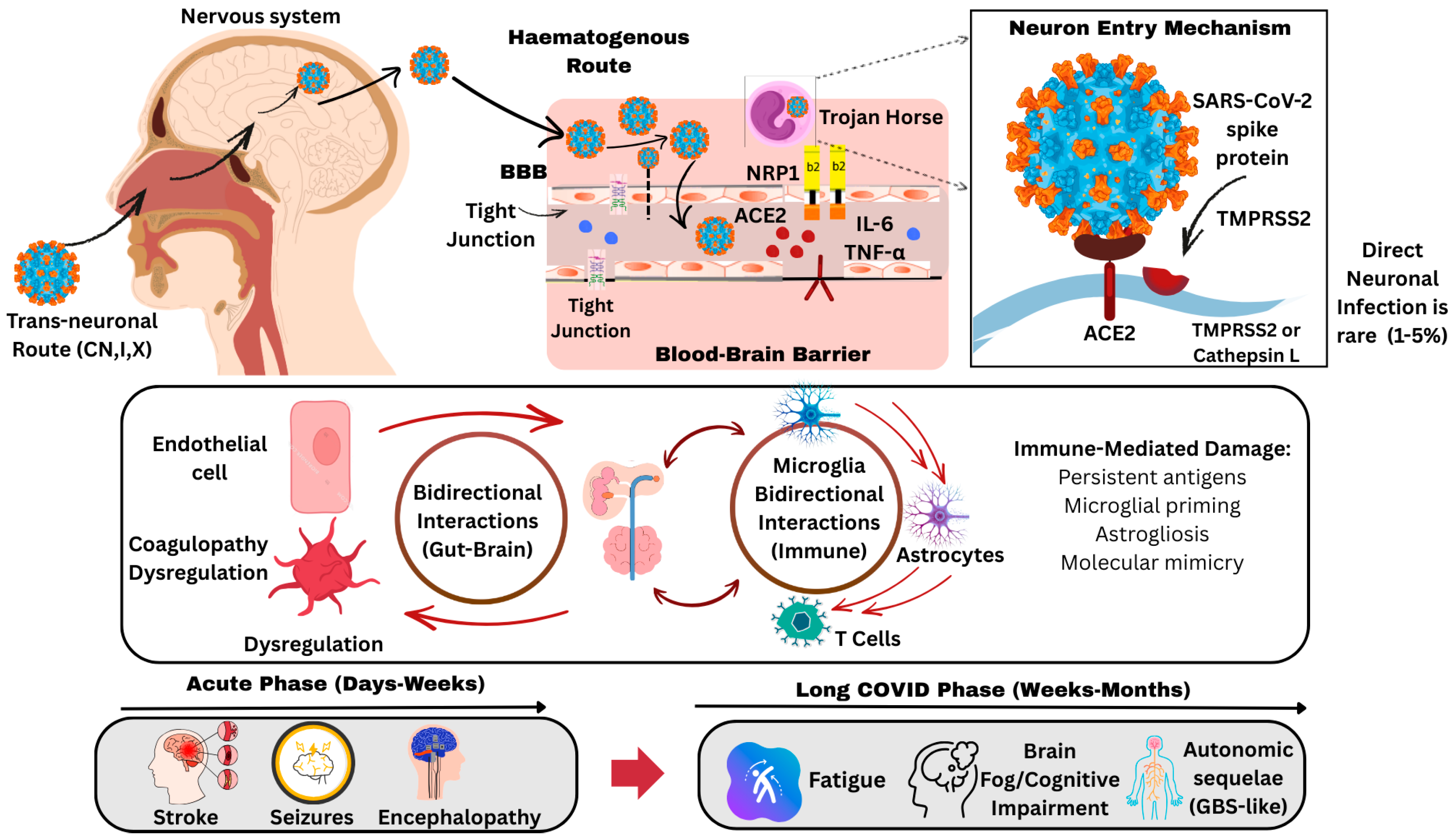
Finally, consideration should be given to the possibility that vascular injury plays a role in the neurological manifestations of COVID-19 and long-term COVID-19 [8,10]. Severe COVID-19 patients often present with thrombotic complications in multiple organs. A retrospective case series conducted by Dixon et al. [21] suggested that microbleed patterns in COVID-19 patients mirror those observed in critically ill non-COVID-19 patients and individuals experiencing severe hypoxia from other causes. While an association between COVID-19 and the development of cerebral microbleeds has been established, the specific pathogenic mechanisms underlying this phenomenon remain the subject of current investigation [19]. The following Figure 1 provides a visual summary of the proposed mechanisms contributing to neurological damage in patients with COVID-19 and long-term COVID-19.
Figure 1. Mechanisms of SARS-CoV-2 Neuro-invasion and Neurological Sequelae in COVID-19. This schematic illustrates the multifaceted pathways through which SARS-CoV-2 invades the central nervous system and the resulting neurological manifestations across acute and long COVID phases. Abbreviations used in this figure: ACE2—Angiotensin-Converting Enzyme 2; BBB—Blood–Brain Barrier; CN—Cranial Nerve; COVID-19—Coronavirus Disease 2019; GBS—Guil-lain-Barré Syndrome; IL-6—Interleukin-6; NRP1—Neuropilin-1; SARS-CoV-2—Severe Acute Respiratory Syndrome Coronavirus 2; TMPRSS2—Transmembrane Serine Protease 2; TNF-α—Tumor Necrosis Factor-alpha. Created by using Canva.com.

4. Neurological Symptoms and Conditions Associated with Long COVID-19

Like acute COVID-19, Long COVID-19 can affect several organs or organ systems. As the pandemic has spread, accounts of people who have had protracted neurological symptoms have appeared, illuminating the significant long-term effects that this virus can have on the nervous system.
Two population-based studies have suggested that SARS-CoV-2 infection may increase the likelihood of developing neurological disorders. In a study by Xu et al [8], a comparison of neurological disorder incidence at the 12-month mark following acute COVID-19 revealed a heightened risk of various neurological conditions, ranging from migraine to Alzheimer’s disease. While there is potential for SARS-CoV-2 infection to be causally linked to inflammatory conditions such as Guillain–Barré syndrome (GBS) or encephalitis, it is also feasible that it can accelerate the diagnosis of preexisting, yet previously undetected, neurodegenerative diseases such as Parkinson’s or Alzheimer’s disease [22]. Evidence linking COVID-19 and Alzheimer’s disease (AD) remains limited but is rapidly emerging. Several mechanisms have been proposed, including direct viral entry into the central nervous system via ACE2 receptors expressed on neurons and glial cells, chronic neuroinflammation driven by cytokine release, and vascular injury leading to blood–brain barrier disruption. In addition, genetic studies have identified the OAS1 gene as a shared susceptibility factor, suggesting a potential molecular bridge between AD and COVID-19. Clinical data indicate that individuals with AD are at higher risk for severe COVID-19 outcomes, including ICU admission, mechanical ventilation, pneumonia, and mortality, underscoring the need for targeted clinical management. These findings highlight the importance of personalized care strategies for vulnerable populations and call for longitudinal studies to clarify whether SARS-CoV-2 infection accelerates neurodegeneration or unmasks latent AD pathology. A clearer understanding of these relationships will emerge with current and more extended follow-up studies. In another two-year retrospective cohort study led by Taquet et al. [23], involving 1,284,437 COVID-19 patients matched with respiratory controls on the basis of propensity scores, the authors examined the incidence and hazard ratios for a spectrum of neurological conditions (Table 1).
Table 1. Neurological Complication and Associated with Long COVID-19.
Recently, research on the outcomes from COVID-19 has identified a complex spectrum of neuropsychiatric and cognitive consequences in people who experienced the infection. Increased research shows that 30% of COVID-19 survivors experience symptoms like depression, anxiety, insomnia, and PTSD within the first year of recovery, indicating that the mental health burden in considerable following infection [33,34,35]. It is important to note that these psychiatric outcomes are at least as common as cognitive deficits, including impaired memory and processing, which are encompassed in a description known as ‘brain fog’ [34,36]. This conveys an important interdependence between emotional distress, inflammatory response, and neurological dysfunction following COVID-19. Studies demonstrate a significant association between cognitive impairments and depressed mood, where patients with fatigue or depressive symptoms exhibited a considerable reduction in cognitive performance. This further complicates the clinical understanding of ‘brain fog’, as it suggests that psychological symptoms should always be taken into account when contemplating cognitive function [34,36]. The overlapping nature of these symptoms emphasizes a need for the integration of neuropsychiatric care, since cognitive impairments likely do not occur in isolation, but are often tied to a more general mental state [37,38]. Conditions like PTSD, and prolonged fatigue have been linked to mild forms of cognitive disability, leaving open that Long COVID involves both cognitive and psychiatric aspects that are closely related [34,39]. For this reason, awareness of these relationships is critical for clinicians, requiring a strong, multimodal care model that addresses the multiple aspects of Long COVID, including cognitive and mental health challenges [40,41].
Emerging evidence also indicates that Long COVID-19 shares significant symptom overlap with myalgic encephalomyelitis/chronic fatigue syndrome (ME/CFS), particularly regarding persistent fatigue, post-exertional symptom exacerbation, cognitive slowing, and autonomic instability. Both conditions appear to involve converging immune pathways, including elevated levels of pro-inflammatory cytokines such as IL-6, disturbances in cellular energy metabolism, and impaired autonomic regulation [42]. Recent findings suggest that SARS-CoV-2 infection may trigger or reveal an ME/CFS-like phenotype in susceptible individuals, complicating clinical differentiation between post-viral fatigue syndromes. Given these shared mechanisms and persistent symptom clusters, clinicians should consider ME/CFS overlap when evaluating patients presenting with prolonged fatigue, cognitive impairment, or exercise intolerance following COVID-19 [43].
Recent data indicate that postural orthostatic tachycardia syndrome (POTS) develops in 2–14% of COVID-19 survivors, and POTS-like symptoms, including tachycardia, orthostatic intolerance, fatigue, and cognitive impairment, are experienced by 9–61% of COVID-19 survivors within 6–8 months after SARS-CoV-2 infection [44]. POTS, a complex disorder characterized by orthostatic tachycardia and intolerance, can be triggered by viral infections and significantly affects individuals’ quality of life. POTS is categorized into five subtypes on the basis of its pathophysiology: joint hypermobility-related, neuropathic, hyperadrenergic, hypovolemic, and immune-related [45]. The clinical definition of POTS involves chronic orthostatic intolerance with a heart rate increase of ≥30 bpm within 10 min of standing, without significant hypotension. Notably, POTS is acknowledged in NICE guidance as a potential contributor to certain post-COVID-19 symptoms [44]. Autonomic disturbances linked to COVID-19 have been observed, initially in intensive care patients and more recently in single-case reports of POTS in COVID-19 patients who did not require critical care.
In a study conducted by Gall et al. [46], dysfunctional breathing was observed in a significant number of patients within the series. This inefficient breathing pattern can lead to exercise limitations, and therapeutic interventions have been shown to provide symptomatic relief. Intriguingly, evidence suggests that dysfunctional breathing is also a notable phenomenon in COVID-19 patients. Most patients described in this post-COVID-19 POTS series were female and of premenopausal age, a common demographic characteristic in other non-COVID-19 POTS series. Although the explanation for this remains uncertain, autoimmune drivers might play a relevant role. Patients in this series presented with classic cardiovascular symptoms. Blitshteyn et al. [47] noted that nearly one-third of their patients had a background of occasional autonomic symptoms such as dizziness, syncope, or palpitations, and 20% had a distant history of concussion. Although drawing definitive conclusions from a case series is challenging, it suggests the possibility that preexisting minor autonomic symptoms or a history of concussion—known to trigger autonomic dysfunction—might serve as potential risk factors for post-COVID-19 autonomic disorders. In contrast, Campen et al. [48] noted that the incidence of POTS diminishes over time following the onset of long-term COVID-19. They reported that while abnormal cerebral blood flow reduction during the tilt test decreases over time after symptom onset, it persists in an abnormal state. Additionally, patients might transition to developing orthostatic hypertension or exhibit a normal heart rate and blood pressure response during the tilt table test, as outlined in their methodology. This suggests that the initial POTS reaction may fade during the disease course, be replaced by another hemodynamic form, or even lead to normalization of heart rate and blood pressure responses. The study also revealed that although the abnormal reduction in cerebral blood flow during the tilt table test diminishes over time following the onset of symptoms, the abnormal status of the reduction in cerebral blood flow continues.
Throughout the COVID-19 pandemic, there have been documented neurological complications, encompassing conditions such as cerebrovascular disease, seizures, meningitis, and encephalitis [49]. Additionally, instances of peripheral nerve damage have been reported, manifesting as both mononeuropathy and a more widespread acute polyneuropathy, commonly identified as Guillain–Barré syndrome (GBS). GBS represents a collection of associated acute inflammatory neuropathies that are often initiated by an immune response triggered by exposure to specific viral or bacterial antigens [50]. In approximately two-thirds of GBS patients, there is a reported history of preceding infections, with potential culprits including bacterial agents such as Campylobacter jejuni and Mycoplasma sp., as well as viral infections such as cytomegalovirus, Epstein–Barr virus, HIV, hepatitis B and C, Zika virus, and influenza [51]. The aetiology of Guillain–Barré syndrome (GBS) is intricate and likely stems from an immune-mediated reaction triggered by a preceding infection, possibly due to molecular mimicry [52]. GBS has been previously documented following coronavirus infections, including MERS-CoV infection [53], and more recently, cases associated with SARS-CoV-2 infection have been reported. The immune dysregulation linked to COVID-19 likely increases susceptibility to immune-mediated conditions such as GBS. A notable aspect of Raahimi et al. patient presentation [50] was the presence of muscle and radicular pain, a symptom observed in two-thirds of GBS cases but less frequently reported in COVID-19-related GBS cases (14.8% of cases). The patient also reported lethargy at the onset of aesthesia, which could be attributed to recent COVID-19 pneumonitis. This is not typically described as an early feature of GBS and might be indicative of Long COVID-19. The persistence of sensory deficits could also align with this phenomenon. The key findings from this study underscore that while GBS is a rare but recognized late complication of acute infections, including those related to SARS-CoV-2, its onset in this case was relatively late compared with other reports. In instances of acute GBS presentations with recent influenza-like or respiratory symptoms, considering COVID-19 serology to explore the causative factor is warranted. Patients require vigilant monitoring for disease progression, particularly in terms of respiratory function, with frequent forced vital capacity assessments. Notably, pain and paresthesia may precede muscle weakness in GBS patients, emphasizing the importance of recognizing these early indicators for timely intervention [50].
As the number of hospitalized COVID-19 patients declines, Long COVID-19 cases will predominantly impact younger patients who do not require hospitalization. While strides have been made in symptom management for Long COVID-19 patients, there is an urgent need for further research to uncover its underlying causes, identify risk factors and biomarkers indicating disease activity, and develop targeted therapies for this debilitating condition [54]. Currently, the absence of clear-cut pathological findings in brain neuroimaging studies and limited knowledge of the underlying pathophysiological processes contribute to the complexity of this clinical syndrome [12]. In addition to cognitive research, the exploration of biomarkers via computational analysis, indicating neuronal injury, has the potential to shed light on the possibility of long-term neurological consequences.

5. Epidemiology of Neurological Manifestations

Recent research indicates that the variants of SARS-CoV-2 may vary in their propensity to cause neurological problems, as for example, symptoms like anosmia and Long COVID were seen less frequently in cases of Omicron compared to cases of earlier variants such as D614G, alpha, or delta variants [55,56,57,58]. However, while no major differences in neurological or psychiatric risk have been observed for Delta and Omicron waves, cohort studies show that psychiatric and affective conditions make up a large part of the neurological burden of Long COVID. COVID-19 cohort studies have noted a significantly greater incidence of psychiatric conditions, such as depression, anxiety, sleep problems, and post-traumatic stress symptoms, which may last for two years after SARS-CoV-2 infection [37,59,60]. Moreover, the overlap of psychiatric symptoms with common sequelae related to Long COVID, such as fatigue and cognitive dysfunction, suggests that they are not distinct from each other but may share neuroinflammatory mechanisms and psychosocial avenues [61,62].
Studying neuropathogenesis in humans is challenging because of the limited number of samples, which are often available only at the end stage of the disease, in in vitro and in vivo models [23] (Table 2).
Table 2. Overview of the Diverse Neurological Impacts and Underlying Mechanisms Associated with Different SARS-CoV-2 Variants.
Numerous studies indicate that SARS-CoV-2 has the capacity to infiltrate the central nervous system (CNS), primarily by utilizing the olfactory nerve as a key pathway. This infiltration typically initiates viral infection of cells in the nasal olfactory mucosa, followed by the virus travelling along the nerve to reach the olfactory bulb. The reduced transmission of Omicron via the olfactory nerve might indicate limited initial access to the CNS during acute infection, yet the observed impacts on blood–brain barrier integrity and cellular stress could have delayed or persistent effects relevant to Long COVID pathogenesis. Notably, the Omicron BA.1 variant was less efficient at entering the CNS than both the D614G and Delta variants were [65,66,67], consistent with computational evidence showing that structural changes in BA.1, BA.1.1, BA.2, and BA.3 spike proteins reduce neurotropism [68]. This diminished transmission of SARS-CoV-2 via the olfactory nerve to the CNS was correlated with lower levels of virus replication within the olfactory mucosa and other sections of the respiratory tract.
SARS-CoV-2 can infect a diverse array of neuronal cells, including olfactory sensory neurons within the olfactory mucosa, cortical neurons, dopaminergic neurons, astrocytes, and epithelial cells of the choroid plexus [57]. Newly emerging variants of SARS-CoV-2 exhibit numerous mutations in the S protein, impacting the ability of the virus to attach to host cell receptors and fuse with membranes, which are crucial for initiating infection. For example, mutations in the S protein of the alpha variant enhance its replication in cells lacking human ACE2 receptors compared with the D614G variant. Conversely, S protein mutations in the Omicron BA.1 variant lead to less efficient cleavage between the S1 and S2 regions, altering the virus’s preferred cell targets [64].
In vitro and animal studies have consistently demonstrated that Omicron BA.1 exhibits reduced neurotropism and neurovirulence compared to Delta and D614G variants [65]. In human induced pluripotent stem cell (hiPSC)-derived cortical neurons co-cultured with astrocytes, Omicron BA.1 showed impaired neurovirulence compared to earlier variants. In Syrian hamsters, neuro-invasion into the CNS via the olfactory nerve was observed in D614G but not in Delta or Omicron BA.1 inoculated animals. Neuro-invasion in D614G infected hamsters was associated with neuroinflammation in the olfactory bulb [65]. Elderly human brain spheroids infected with Omicron BA.1/BA.2 exhibited lower neuroinflammatory responses than those infected with wild-type strain, despite similar neurotropism [69].
However, contrasting results from a study performed by Proust et al. [70] found that the Omicron variant might pose a greater risk for neurological damage by inducing stress in CNS cells, impacting extracellular glutamate levels, and damaging blood–brain barrier components through cytopathic effects specifically on endothelial cells and pericytes. Conversely, the Eta, Delta, Beta, and Alpha variants appeared to have comparatively lower impact on these parameters. They either do not directly cause cellular death, do not significantly affect glutamate levels, or do not induce breakdown of the blood–brain barrier. Their study proposed the neurotropic nature of SARS-CoV-2, highlighting its detrimental impact on the integrity of the blood–brain barrier and cells within the central nervous system. To explore this, they employed primary human pericytes, fatal astrocytes, endothelial cells, and a microglial cell line to assess the impacts of various SARS-CoV-2 variants on their functional capabilities. Notably, the Omicron variant exhibited cytopathic effects specifically on endothelial cells and pericytes [71]. A different result was reported by Vicco et al. [71]. Although intriguing mutations were discovered in the viral genome under scrutiny, a comprehensive analysis did not reveal a clear correlation between symptoms and specific viral sequence characteristics. These apparent contradictions may arise from different aspects of neurovirulence being measured. Neurotropism, the ability to infect neural cells, appears reduced in Omicron. Neuro-invasiveness, or the ability to enter the central nervous system (CNS), also shows lower efficiency, particularly via the olfactory nerve. However, despite reduced neural infection, Omicron may cause greater endothelial or pericyte damage, leading to increased blood–brain barrier disruption. In terms of neurovirulence, defined as the capacity to cause CNS pathology, Omicron induces lower neuroinflammation when neural infection occurs. Collectively, these findings suggest that Omicron may cause neurological effects through mechanisms distinct from earlier variants primarily through vascular or barrier dysfunction rather than direct neuronal infection and inflammation. Epidemiological observations must take into account several critical factors. These include pre-existing immunity in populations exposed to later variants, differences in vaccination coverage across variant waves, changes in testing and diagnostic practices over time, and survivor bias present in autopsy and clinical studies. Considering these variables is essential for accurate interpretation of data and understanding the true impact of each variant. Additionally, MRI scans of the patients excluded the possibility of localized brain inflammation. Notably, across the patients, the MRI results were consistently negative, except for one patient, whose findings revealed a concurrent ischemic episode. Consequently, their findings suggest that the neurological manifestations of COVID-19 might be more closely associated with an individual’s inflammatory response rather than with specific features within the viral genome [71]. However, it is essential to acknowledge the limitations of this preliminary study, notably the small number of patients enrolled. Despite this limitation, these findings hold significance, as they were derived from whole-genome sequencing of viral RNA directly extracted from nasopharyngeal swabs without viral amplification in cell culture.
These apparent contradictions may arise from complexities in viral behavior and the multifaceted nature of neurological responses. The reduced transmission of Omicron via the olfactory nerve might indicate limited initial access to the CNS, yet the observed impact within the CNS, as highlighted by increased cellular stress, altered glutamate levels, and damage to blood–brain barrier components, raises questions about its potential neurological implications. These contrasting findings underscore the intricacy of the interaction of SARS-CoV-2 variants with the nervous system, warranting further comprehensive investigations to reconcile and deepen our understanding of their effects on neurological health. Understanding how these mutations influence infection dynamics and cellular tropism within the central nervous system will provide crucial insights into neurological implications of variant infections.
Neurovirulence defines a virus’s capacity to promote CNS pathology, contributing to clinical disease independently of its ability to invade or target the nervous system. In a study by Kong et al. [63], infection of brain organoids and primary astrocytes with SARS-CoV-2 D614G triggered the transcription of interferons, interferon-stimulated genes, and proinflammatory chemokines, instigating antiviral and proinflammatory responses. Moreover, genes vital for maintaining synaptic plasticity were downregulated. These findings indicate that SARS-CoV-2 infection disrupts neural equilibrium, fostering an environment conducive to neuronal dysfunction and cytotoxicity.
Research exploring the neuropathological differences among SARS-CoV-2 variants is limited. Notably, the observed disparities in neuro-invasiveness and neurotropism among these variants suggest the potential for differing levels of neurovirulence. Future investigations should aim to uncover potential discrepancies in the neurovirulent capabilities of SARS-CoV-2 variants and elucidate the underlying mechanisms contributing to these distinctions.

6. Clinical and Diagnostic Considerations

The diagnosis and management of Long COVID have become global concerns, with several key challenges complicating effective care. A primary issue is delayed diagnosis, as other potential causes of symptoms must first be excluded. Additionally, determining if and when a patient had a confirmed COVID-19 infection has grown increasingly difficult due to reduced self-testing, laboratory testing, reporting, and documentation, especially as the pandemic subsides and life returns to a “new normal.” The inconsistency and lack of consensus on Long COVID diagnostic criteria and management strategies further hinder effective care, along with limited referral options and lengthy wait times, often leaving patients without specialist guidance or support [72].
In light of these challenges, identifying reliable biomarkers for Long COVID may offer a crucial avenue for more timely diagnosis and targeted intervention strategies. Three main blood biomarker subtypes are emerging as significant to Long COVID presentation: (1) immunological and inflammatory dysfunction, (2) endothelial and vascular dysfunction, and (3) metabolic and clotting abnormalities [73]. These biomarkers could be key in refining diagnostic and therapeutic approaches, particularly as general practice becomes the primary point of care for patients with lingering COVID-19 symptoms. The use of such biomarkers may help overcome diagnostic obstacles linked to the lack of documented COVID-19 infection status, providing objective measures to support clinical diagnosis and management in the absence of comprehensive testing records.
Acute COVID-19 is marked by severe systemic inflammation and extensive tissue damage, driven by pro-inflammatory cytokines and chemokines that accelerate processes like leukocyte trafficking, cytokine storm, and necroptosis of healthy tissue. Systemic inflammatory markers such as IL-6 and CRP have been linked to disease severity and mortality in COVID-19 patients. Neurological symptoms are among the most prevalent clinical manifestations of Long COVID [74]. NFL and GFAP are structural proteins essential for the stability of neuron axons and astrocytes, and their presence in circulation may serve as biomarkers of neuronal damage and degeneration. Long COVID patients with elevated serum levels of NFL and GFAP often experience more severe headaches and chronic neuropathic pain. Additionally, Peluso et al. [75] reported a positive correlation between serum NFL and GFAP levels and pro-inflammatory markers IL-6, TNF-α, and CCL2 in post-acute COVID patients, which may drive immune cell activation and promote harmful neuroinflammation. This indirect pathway suggests that pro-inflammatory cytokines and chemokines may further intensify neuronal damage [74].
More recent research has evaluated the diagnostic accuracy of such biomarkers. Higher levels of neurofilament light chain (NFL) have been shown to reflect good sensitivity (80–90%) but moderate specificity (60–70%) for neuronal injury in neuroinflammatory conditions, having potential use as a screening marker but not as a definitive sole diagnosis [76]. Similarly, elevations in glial fibrillary acidic protein (GFAP) indicate a stronger correlation with astroglia damage, with sensitivity of approximately 75% and specificity of 85% in differentiating neurodegenerative from inflammatory state [74,77]. While not specific, IL-6 may serve as an adjuvant marker correlating with disease severity and burden of neuroinflammation. Combining these biomarkers with neuroimaging outcomes, namely PET or MRI-based structural parameters, may enhance diagnostic precision and predictiveness for Long COVID-related neurocognitive syndrome.
Clinical and structured assessments are essential for identifying neurological impairments following COVID-19. However, various non-invasive neuroimaging techniques can support these findings, aid in diagnosis, clarify prognosis, and assist with long-term rehabilitation. These brain imaging methods can be categorized as structure-based (e.g., computed tomography and magnetic resonance imaging [MRI]), metabolic-based (e.g., functional MRI [fMRI], near-infrared spectroscopy [NIRS]), and electrophysiological-based techniques (primarily electroencephalography and magnetoencephalography) [78].
Neuroimaging, especially PET scanning with the glucose analog 18F-fluorodeoxyglucose (18F-FDG), has been instrumental in studying the neurological and psychiatric effects of COVID-19. By visualizing metabolic activity, 18F-FDG PET provides critical insights into brain function and pathology, proving valuable in diagnosing and managing a range of brain disorders, including neurodegenerative diseases, epilepsy, brain tumors, and inflammatory conditions. In Long COVID patients, 18F-FDG PET scans frequently show a distinctive pattern of reduced glucose metabolism in certain brain areas. Additionally, FDG-PET studies reveal a changing metabolic profile of COVID-19, highlighting the progression of the disease from the acute phase to more persistent stages. Magnetic Resonance (MR) imaging has also emerged as a key noninvasive technique for examining various aspects of the central nervous system, especially when combined with PET in PET-MR imaging. MR imaging allows for detailed analysis of the brain by capturing structural volumes and anatomical changes (morphometry), assessing white matter (WM) integrity (diffusion), and exploring alterations in brain activity (functional, connectivity). This multimodal approach has become essential for advancing our understanding of the neurological effects of SARS-CoV-2 [76].
Among neuroimaging techniques with high temporal resolution, electroencephalography (EEG) is predominantly used to assess patients after COVID-19. EEG abnormalities are prevalent among COVID-19 patients and can be linked to disease severity and pre-existing neurological conditions [78]. EEG studies investigate both cortical excitability (qualitative analysis) and patterns of brain electrical activity and their impact on cognitive behavior (quantitative analysis). Qualitative EEG studies have identified frontal sharp waves in nearly all patients with COVID-19 who exhibited epileptiform discharges, as well as bifrontal monomorphic diphasic periodic delta slow waves, diffuse background slowing, focal slowing, and frontal intermittent rhythmic delta activity (FIRDA). Additionally, Gogia et al. noted that 50% of deceased patients showed generalized diffuse severe slowing, suggesting a global neurological process [79]. EEG abnormalities are often observed in the frontal region and may serve as potential biomarkers for COVID-19 encephalopathy.
The multicomponent character of Long COVID neurological presentation necessitates an interdisciplinary model of care including neurology, psychiatry, and rehabilitation medicine. Neurologists participate in differential diagnosis and neurophysiological monitoring, while psychiatrists manage overlaid cognitive, mood, and anxiety symptoms that confuse neurological diagnosis. Neurorehabilitation experts participate in cognitive retraining, physical stamina reinstatement, and autonomic dysfunction management using individualized rehabilitation programs. The collaborative approaches have been demonstrated to produce superior functional results and quality of life compared to single-specialty care [7,78,80]. Referral pathways between general practitioners and these specialties that are standardized are essential to optimizing care continuity in patients with Long COVID.
In addition to imaging discoveries, new epidemiological studies highlight the significant cognitive impact of COVID-19, even among individuals with mild infections. One study involving nearly 113,000 participants revealed that those infected with SARS-CoV-2 had notable deficits in memory and executive function tasks compared to those uninfected, with cognitive impairment severity linked to COVID-19 severity; even mild cases were associated with a measurable decline in intelligence quotient (IQ) [3]. Another study of over 100,000 Norwegians found that memory impairments persisted for up to three years following a positive SARS-CoV-2 test [81].

7. Therapeutic and Management Strategies

Given the significant social and economic impact of Long COVID on healthcare systems, efforts are underway to establish guidelines for managing this syndrome. Various therapeutic strategies, both pharmacological and non-pharmacological, have been proposed. Currently, drug treatments are only symptomatic, as there are no medications that directly treat Long COVID itself. An increasing trend in managing post-COVID syndrome (PCS) involves the use of complementary and alternative medicine (CAM). Over the past two years, CAM use has expanded globally, with vitamins, herbal remedies, and dietary supplements increasingly promoted as supportive measures for maintaining general health and immune function [82]. However, despite their popularity, robust clinical evidence demonstrating their efficacy and safety in treating Long COVID remains limited. Most available studies are small, non-randomized, or observational, and often lack standardized formulations, dosage control, or long-term follow-up. Furthermore, the assumption that CAM therapies are inherently safe is not fully substantiated, as variability in product composition, purity, and potential drug–supplement interactions may pose risks [83]. While these approaches may offer adjunctive benefits, their role should be interpreted cautiously until validated through large-scale, randomized controlled trials with well-defined endpoints.
Various supplement formulations, including natural extracts rich in bioactive compounds, have been investigated for their potential to alleviate neurological symptoms associated with Long COVID, such as fatigue and memory loss. The utilization of complementary and alternative medicine (CAM) is increasingly prevalent in the field of neurology, as supplements may contribute to delaying cognitive decline frequently reported by COVID-19 survivors. For instance, Bove et al. [84] assessed the effects of a nootropic nutraceutical supplement in 40 elderly patients with post-COVID syndrome (PCS) experiencing cognitive impairment. After three months, this supplement significantly enhanced functional status (p < 0.05), as measured by the Mini-Mental State Examination (MMSE), and reduced psychological distress, as indicated by the Perceived Stress Questionnaire (PSQ) and Self-Rating Depression Scale (SRDS). Although these findings are promising, the study’s relatively small sample size and the absence of a placebo-controlled design limit the robustness and generalizability of its conclusions. Additionally, the short duration of the intervention and reliance on self-reported outcomes may introduce bias, indicating that the current evidence on CAM use in patients with Long COVID remains preliminary and necessitates validation through larger, well-controlled clinical trials. To date, literature has only underscored the potential benefits of these supplements during both the acute and long-term phases of COVID-19. However, adverse effects, including severe toxicities and therapeutic failure, can occur in patients who combine supplements with other medications [85].
A recent meta-analysis and systematic review found that antiviral treatments given during acute COVID-19 infection were effective in reducing persistent symptoms in the post-acute phase. In contrast, neither corticosteroids nor monoclonal antibody (mAb) treatments showed similar protective benefits. Prior meta-analyses on antiviral drugs, particularly Paxlovid (nirmatrelvir/ritonavir) and molnupiravir, have demonstrated their effectiveness in lowering mortality and hospitalization rates. However, corticosteroid use during acute COVID-19 did not appear to prevent Long COVID; in fact, a slight, though statistically insignificant, increase in Long COVID incidence was observed among patients treated with corticosteroids [86]. This observed trend, which appears perplexing, may be partially attributed to the administration of corticosteroids, such as dexamethasone, primarily to patients with severe COVID-19 who require oxygen therapy for increased survival and reduced need for life support in patients with COVID-19 that requires oxygen supplementation [87]. This cohort is already at risk of developing Long COVID. However, the current body of evidence is heterogeneous, with studies exhibiting significant variability in terms of patient severity, timing, dosage, and duration of treatment, complicating the interpretation of the long-term effects of corticosteroids. While corticosteroids are effective in suppressing cytokine storms and acute respiratory distress, their immunosuppressive properties may attenuate antiviral responses during the early phase of infection, potentially affecting post-acute immune recovery. Recent clinical trials continue to investigate optimized dosing regimens and adjunct therapies to balance these effects; however, data regarding their role in preventing Long COVID remain inconclusive. Current research, including large-scale trials evaluating anti-inflammatory and immune-modulating agents, is anticipated to elucidate whether corticosteroids mitigate or exacerbate long-term post-COVID sequelae.
Complementary and alternative medicine (CAM) use has risen sharply during and after the COVID-19 pandemic, including vitamins, herbal remedies, and supplements used as supportive therapies. Despite their popularity as perceived safe and affordable options, scientific evidence for their efficacy remains limited and largely based on observational data. Studies by Dehghan et al. [88] and Lam et al. [89] reported widespread CAM use for 84% in Iran and 44% in Hong Kong, mainly for prevention, anxiety reduction, and immune support, yet few were supported by rigorous clinical trials. These findings highlight a growing reliance on self-care approaches but also expose evidence gaps regarding dosage, safety, and interaction with prescribed medications. Therefore, CAM should complement, not replace, evidence-based treatments. Integrating scientifically validated supplements alongside pharmacological therapies, such as antivirals like nirmatrelvir/ritonavir or molnupiravir, may offer a balanced and effective strategy for managing Long COVID.
The analysis of monoclonal antibody (mAb) treatments revealed mixed results regarding their effectiveness in preventing Long COVID. Among the studies included in the meta-analysis, two suggested that mAbs could reduce the incidence of Long COVID [90,91], one reported an increased incidence [92], and two found no significant impact [93,94]. Although mAbs are effective at reducing hospitalization rates for acute COVID-19, this study’s findings did not indicate that mAbs reduce the risk of Long COVID. In contrast, antiviral treatments consistently showed a protective effect against Long COVID when administered during the acute phase, despite a few studies reporting no clear association. Given their beneficial role in reducing Long COVID symptoms across multiple organ systems and in vulnerable groups, antiviral therapy during acute COVID-19 is recommended as part of comprehensive management [86].

8. Risk Factors and Susceptibility

Navigating the intricate landscape of neurological effects caused by SARS-CoV-2 involves understanding various risk factors that contribute to susceptibility. These factors intricately influence how individuals respond to the virus’s impact on the nervous system. Delving into these risk factors reveals the multifaceted interplay among biological, environmental, and individual elements that shape the manifestation and severity of neurological manifestations in patients with COVID-19. SARS-CoV-2, the causative agent of COVID-19, often results in severe pneumonia and acute respiratory distress syndrome (ARDS). Concurrently, the presence of neurological symptoms such as encephalitis, stroke, headaches, seizures, and Guillain–Barré syndrome has become increasingly evident in COVID-19 patients. While these neurological manifestations suggest potential acute or subacute neuropathogenic effects of the virus, the long-term neurological repercussions for individuals affected by SARS-CoV-2 remain unclear. This underlines the evolving discourse surrounding the enduring neurological impacts of the virus beyond the acute phase of the disease [94,95,96].
To understand the characteristics linked to Long COVID-19 symptoms, researchers have interviewed a total of 274 non-hospitalized individuals who were positive for COVID-19. They reported that age, particularly among those aged 50 years or older, and the presence of multiple preexisting conditions were significant risk factors for a slower recovery. Among these conditions, hypertension, obesity, diagnosed psychiatric disorders, and immunosuppressive conditions are strongly associated with a reduced likelihood of achieving full recovery [97]. Another study conducted a cross-sectional analysis and revealed a correlation between the severity of acute COVID-19 infection and the onset of lingering symptoms in individuals post recovery. This study suggested that a more severe initial phase of the illness might lead to more pronounced long-term COVID-19 symptoms [98]. Additionally, a cohort study supported these findings, indicating that patients with more than five initial COVID-19 symptoms or those requiring hospitalization were more prone to experiencing persistent long-term COVID-19 symptoms [99].
Schirinzi et al.’s [96] review delves into potential biological pathways triggered by SARS-CoV-2 infection, which could intersect with the mechanisms implicated in Parkinson’s disease (PD), multiple sclerosis (MS), or narcolepsy. These findings contribute to the current discourse on how the virus might instigate various clinical manifestations and immune–inflammatory responses, including viral–host interactions. These observations suggest the possible role of the virus in shaping pathogenic mechanisms: the virus has the potential to inflict neuronal injury, target olfactory pathways, disrupt the blood–brain barrier, trigger systemic inflammation, disturb lymphocyte levels, and even colonize the intestines. These mechanisms can collectively lead to neuroinflammation, neurodegeneration, or demyelination, culminating in chronic neurological conditions. This highlights the potential role of viruses as contributing risk factors for such disorders [96].
While certain factors increase the risk of both severe and Long COVID-19, some elements linked to COVID-19 severity may not necessarily increase the risk of Long COVID-19. For example, male sex and older age are correlated with a greater risk of severe COVID-19. However, women exhibit a greater prevalence of Long COVID-19 symptoms than men do (23.6% versus 20.7%). Interestingly, the age groups most affected by Long COVID-19 symptoms are estimated to be 35–49 years (26.8%), followed by 50–69 years (26.1%), and the ≥70 years group (18%). Notably, while male sex, age, and certain preexisting conditions, such as obesity, diabetes, and cardiovascular diseases, are associated with severe COVID-19, they have shown no clear associations with the risk of developing Long COVID-19. However, the presence of asthma has been significantly linked to Long COVID-19 [100].
Variations in genes encoding ACE2 and TMPRSS2 potentially influence COVID-19 susceptibility. The ACE2 variant distribution and gene expression patterns vary across ethnic groups, potentially contributing to the differing severity and vulnerability to COVID-19 among different ethnicities [101,102,103]. Changes in ACE2 expression levels might impact susceptibility, symptoms, and COVID-19 outcomes because of its multiple roles and tissue-specific expression patterns. Structural and sequence variants in the ACE2 gene might alter its expression in diverse tissues, impacting responses to SARS-CoV-2 infections [104]. Recent research [105,106] pinpointed that ACE2 variants interact with the SARS-CoV-2 spike protein, potentially intensifying host cell damage, which could heighten susceptibility to neurological diseases, as ACE2 receptors serve as entry points to the CNS. Shared genes between severe COVID-19 and established neurological conditions, such as the OAS1 gene in Alzheimer’s disease, suggest common pathogenic mechanisms [107,108]. Notably, TMPRSS2, which is upregulated in various tissues, including the CNS, in Down syndrome (DS) patients might contribute to their heightened vulnerability to COVID-19. This upregulation could suggest increased susceptibility to neurological implications upon viral infection. Furthermore, the upregulation of proinflammatory interferon signalling genes such as IFNAR and CXCL10 in DS individuals adds complexity to the interplay between genetic factors and COVID-19 susceptibility in individuals with neurological involvement [109].

9. Long-Term Neurological Implications

Among the myriad challenges posed by Long COVID-19, persistent neurological implications stand as a defining feature, significantly impacting the quality of life for those affected. These implications vary depending on individual perspectives, cultural and value systems, goals, expectations, standards, and concerns, as defined by the World Health Organization [2].
In a secondary analysis of data derived from a randomized clinical trial involving 100 Long COVID-19 patients in Spain, researchers made noteworthy observations. They reported that these individuals experienced a notable decline in both their physical and mental well-being. Importantly, this decline was significantly correlated with the number of symptoms reported, cognitive impairments, a low emotional state, sleep quality issues, and their level of health literacy. Predictors of reduced physical health include a greater symptom burden, compromised physical functioning, and disrupted sleep patterns [110].
Further observational studies at interdisciplinary post-COVID-19 consultation centres emphasize the challenges faced by long-term COVID-19 patients. The findings indicated that patients frequently experienced symptoms such as fatigue (81%), difficulty concentrating (60%), and dyspnoea (60%).
Female patients often reported limitations in performing their usual daily activities and experienced pain, discomfort, or anxiety [111]. Emerging evidence suggests that biological factors may contribute to this increased susceptibility. The ACE2 gene, which serves as the primary entry receptor for SARS-CoV-2, is located on the X chromosome. In females, incomplete X-chromosome inactivation may result in elevated ACE2 expression, potentially providing a larger cellular reservoir for viral persistence and prolonging symptom duration [112]. Additionally, sex-specific differences in immune responses, influenced by both X-linked genes and sex hormones, may predispose females to heightened inflammatory or neuroinflammatory responses. Together, these genetic and immunological factors could help explain why women are disproportionately affected by certain long-term neurological and functional sequelae of COVID-19 [9,113].
Furthermore, a study conducted in South Korea evaluated the lasting impact of COVID-19 on individuals 24 months after acute infection. Intriguingly, the incidence of concentration difficulties and amnesia remained elevated even at the 24-month mark, mirroring the incidence observed during the initial symptomatic phase. These findings underscore the enduring nature of certain neurological symptoms in individuals affected by COVID-19 [111].
All the above studies boil down to a single conclusion. There is a critical need for comprehensive support, healthcare interventions, and continued investigations to improve the quality of life for those enduring the relentless impact of Long COVID-19. Patients can benefit from extensive rehabilitation programs that take both their physical and emotional health into account, enhancing their quality of life.

10. Conclusions

This review highlights the potential for persistent neurological sequelae following SARS-CoV-2 infection. Better understanding of the underlying mechanisms is required to develop targeted therapies, identify reliable biomarkers, and improve rehabilitation strategies. Our knowledge of the precise mechanisms and underlying causes that result in these long-term neurological repercussions is still lacking, despite our exploration of the different neurological symptoms and disorders linked to this condition. An improved understanding of these mechanisms can pave the way for the development of targeted therapies, personalized interventions, and the identification of biomarkers to monitor disease activity. By filling this knowledge void, we can enhance the quality of life and well-being of those affected by Long COVID-19.
This review consolidates current evidence on the neurological consequences of SARS-CoV-2 infection, revealing that COVID-19 can affect both the central and peripheral nervous systems through direct viral invasion, immune-mediated injury, and vascular dysfunction. Reported manifestations include cognitive impairment, encephalopathy, stroke, neuropathy, and neuropsychiatric symptoms, many of which may persist beyond the acute phase as part of Long COVID. These findings highlight the multifactorial nature of COVID-19-related neurological sequelae, involving neuroinflammation, blood–brain barrier disruption, and dysregulated immune and vascular pathways.
Despite growing knowledge, the precise mechanisms underlying these long-term effects remain poorly understood. Further studies are needed to clarify the interplay between viral persistence, host immune response, and neurodegenerative processes. Improved understanding of these mechanisms will be crucial for developing targeted therapies, identifying reliable biomarkers for early detection and prognosis, and designing effective rehabilitation strategies. Addressing these gaps will ultimately enhance patient outcomes and quality of life among those affected by post-COVID neurological disorders.

Author Contributions

M.D.C.R.: Writing—Review and editing, Writing—Original draft, Resources; B.K.D.S., Z.Z.A., A.A. and A.N.: Writing—Original draft; Z.M.H. and C.M.N.C.M.N.: Conceptualization, Writing—Review and editing; R.T., N.A.B.M.I. and S.K.: Writing—Original draft, Visualization, Methodology, Formal analysis, Data curation. All authors have read and agreed to the published version of the manuscript.

Funding

The APC was funded by Management and Science University (MSU) Malaysia, Grant No: MPG-021-042024.

Acknowledgments

The authors would like to express their gratitude to Management and Science University for funding the article processing charge (APC). The authors acknowledge that ChatGPT 4.0, an AI language model developed by OpenAI, was used to assist in refining certain limited sections of this manuscript, specifically for language editing and improvement. All AI-assisted content was carefully reviewed and thoroughly edited by the authors to ensure accuracy, scientific rigor, and compliance with academic writing standards. The authors assume full responsibility for the content of this manuscript, including any parts enhanced with AI tools, and remain accountable for any breach of publication ethics.

Conflicts of Interest

The authors declare no conflicts of interest.

Abbreviations

The following abbreviations are used in this manuscript:
18F-FDGFluorine-18 Fluorodeoxyglucose
ACE2Angiotensin-Converting Enzyme 2
ARDSAcute Respiratory Distress Syndrome
BBBBlood–Brain Barrier
bpmBeats per Minute
CAMComplementary and Alternative Medicine
CCL2CC-Chemokine Ligand 2
CNSCentral Nervous System
COVID-19Coronavirus Disease 2019
CRPC-Reactive Protein
CTLA4Cytotoxic T-Lymphocyte Associated Protein 4
CTNNB1Catenin Beta 1
D614GAspartic Acid-to-Glycine Substitution at Position 614 of the SARS-CoV-2 Spike Protein
DSDown Syndrome
EEGElectroencephalography
ERKExtracellular Signal-Regulated Kinase
FIRDAFrontal Intermittent Rhythmic Delta Activity
fMRIFunctional Magnetic Resonance Imaging
GBGuillain–Barré Syndrome
GFAPGlial Fibrillary Acidic Protein
GPCRG-Protein-Coupled Receptor
HIVHuman Immunodeficiency Virus
IFNARInterferon Alpha/Beta Receptor
IL-6Interleukin-6
IQIntelligence Quotient
KITProto-Oncogene Receptor Tyrosine Kinase
KRASKirsten Rat Sarcoma Viral Oncogene Homolog
LPSLipopolysaccharide
mAbMonoclonal Antibody
MAPKMitogen-Activated Protein Kinase
MAPK/ERKMitogen-Activated Protein Kinase / Extracellular Signal-Regulated Kinase
MERS-CoVMiddle East Respiratory Syndrome Coronavirus
MMSEMini-Mental State Examination
MRIMagnetic Resonance Imaging
MRMagnetic Resonance
mTORC2Mechanistic Target of Rapamycin Complex 2
NF1Neurofibromin 1
NFLNeurofilament Light Chain
NIRSNear-Infrared Spectroscopy
NICENational Institute for Health and Care Excellence
NONitric Oxide
OAS12′-5′-Oligoadenylate Synthetase 1
PCSPost-COVID Syndrome
PDParkinson’s Disease
PETPositron Emission Tomography
PI3KPhosphatidylinositol 3-Kinase
PI3K/AktPhosphatidylinositol 3-Kinase / Protein Kinase B Pathway
POTSPostural Orthostatic Tachycardia Syndrome
PSQPerceived Stress Questionnaire
PTPN22Protein Tyrosine Phosphatase Non-Receptor Type 22
RETRearranged during Transfection (Proto-Oncogene Receptor Tyrosine Kinase)
RNARibonucleic Acid
S proteinSpike Protein
SARS-CoV-2Severe Acute Respiratory Syndrome Coronavirus 2
SRDSSelf-Rating Depression Scale
TMPRSS2Transmembrane Serine Protease 2
TNF-αTumor Necrosis Factor Alpha
WHOWorld Health Organization
WMWhite Matter
ZERZerumbone

References

  1. El-Sadr, W.M.; Vasan, A.; El-Mohandes, A. Facing the New Covid-19 Reality. N. Engl. J. Med. 2023, 388, 385–387. [Google Scholar] [CrossRef] [PubMed]
  2. World Health Organization: WHO. Post COVID-19 Condition (Long COVID). 26 February 2025. Available online: https://www.who.int/news-room/fact-sheets/detail/post-covid-19-condition-%28long-covid%29?utm_source=chatgpt.com (accessed on 1 June 2025).
  3. Hampshire, A.; Azor, A.; Atchison, C.; Trender, W.; Hellyer, P.J.; Giunchiglia, V.; Husain, M.; Elliott, P. Cognition and Memory after Covid-19 in a Large Community Sample. N. Engl. J. Med. 2024, 390, 806–818. [Google Scholar] [CrossRef]
  4. Stefanou, M.-I.; Palaiodimou, L.; Bakola, E.; Smyrnis, N.; Papadopoulou, M.; Paraskevas, G.P.; Rizos, E.; Boutati, E.; Grigoriadis, N.; Krogias, C.; et al. Neurological manifestations of long-COVID syndrome: A narrative review. Ther. Adv. Chronic Dis. 2022, 13, 20406223221076890. [Google Scholar] [CrossRef] [PubMed]
  5. Wesselingh, R. Prevalence, pathogenesis and spectrum of neurological symptoms in COVID-19 and post-COVID-19 syndrome: A narrative review. Med. J. Aust. 2023, 219, 230–236. [Google Scholar] [CrossRef] [PubMed]
  6. Cho, S.-M.; White, N.; Premraj, L.; Battaglini, D.; Fanning, J.; Suen, J.; Bassi, G.L.; Fraser, J.; Robba, C.; Griffee, M.; et al. Neurological manifestations of COVID-19 in adults and children: A prospective multicentre ISARIC study. Brain 2022, 146, 1648–1661. [Google Scholar] [CrossRef]
  7. Taquet, M.; Geddes, J.R.; Husain, M.; Luciano, S.; Harrison, P.J. 6-month neurological and psychiatric outcomes in 236 379 survivors of COVID-19: A retrospective cohort study using electronic health records. Lancet Psychiatry 2021, 8, 416–427. [Google Scholar] [CrossRef] [PubMed]
  8. Xu, E.; Xie, Y.; Al-Aly, Z. Long-term neurologic outcomes of COVID-19. Nat. Med. 2022, 28, 2406–2415. [Google Scholar] [CrossRef]
  9. Stein, S.R.; Ramelli, S.C.; Grazioli, A.; Chung, J.-Y.; Singh, M.; Yinda, C.K.; Winkler, C.W.; Sun, J.; Dickey, J.M.; Ylaya, K.; et al. SARS-CoV-2 infection and persistence in the human body and brain at autopsy. Nature 2022, 612, 758–763. [Google Scholar] [CrossRef]
  10. Vashisht, A.; Vashisht, V.; Singh, H.; Ahluwalia, P.; Mondal, A.K.; Williams, C.; Farmaha, J.; Woodall, J.; Kolhe, R. Neurological Complications of COVID-19: Unraveling the Pathophysiological Underpinnings and Therapeutic Implications. Viruses 2024, 16, 1183. [Google Scholar] [CrossRef]
  11. Kumar, S.; Wee, J.-J.; Senthil Kumar, K.J. Identification of Common Hub Genes in COVID-19 and Comorbidities: Insights into Shared Molecular Pathways and Disease Severity. COVID 2025, 5, 105. [Google Scholar] [CrossRef]
  12. Taruffi, L.; Muccioli, L.; Bisulli, F. Neurological Manifestations of Long COVID: A Single-Center One-Year Experience. Neuropsychiatr. Dis. Treat. 2023, 19, 311–319. [Google Scholar] [CrossRef] [PubMed]
  13. Li, Y.C.; Zhang, Y.; Tan, B.H. What Can Cerebrospinal Fluid Testing and Brain Autopsies Tell Us about Viral Neuroinvasion of SARS-CoV-2. J. Med. Virol. 2021, 93, 4247–4257. [Google Scholar] [CrossRef]
  14. Sabra, M.; Kobeissy, F.; Bizri, M.; Haidar, M.A.; Shakkour, Z.; Reslan, M.A.; Al-Haj, N.; Chamoun, P.; Habashy, K.; Kaafarani, H.; et al. SARS-CoV-2 Involvement in Central Nervous System Tissue Damage. Neural Regen. Res. 2022, 17, 1228. [Google Scholar] [CrossRef]
  15. Hsu, J.C.; Saenkham-Huntsinger, P.; Huang, P.; Octaviani, C.P.; Drelich, A.K.; Peng, B.-H.; Tseng, C.-T.K. Characterizing neuroinvasion and neuropathology of SARS-CoV-2 by using AC70 human ACE2 transgenic mice. Front. Microbiol. 2024, 15, 1455462. [Google Scholar] [CrossRef]
  16. Wan, D.; Du, T.; Hong, W.; Chen, L.; Que, H.; Lu, S.; Peng, X. Neurological complications and infection mechanism of SARS-CoV-2. Signal Transduct. Target. Ther. 2021, 6, 411. [Google Scholar] [CrossRef] [PubMed]
  17. Gorenshtein, A.; Liba, T.; Leibovitch, L.; Stern, S.; Stern, Y. Intervention modalities for brain fog caused by long-COVID: Systematic review of the literature. Neurol. Sci. 2024, 45, 2951–2968. [Google Scholar] [CrossRef]
  18. Ong, I.; Kolson, D.L.; Schindler, M.K. Mechanisms, Effects, and Management of Neurological Complications of Post-Acute Sequelae of COVID-19 (NC-PASC). Biomedicines 2023, 11, 377. [Google Scholar] [CrossRef]
  19. Song, E.; Zhang, C.; Israelow, B.; Lu-Culligan, A.; Prado, A.V.; Skriabine, S.; Lu, P.; Weizman, O.-E.; Liu, F.; Dai, Y.; et al. Neuroinvasion of SARS-CoV-2 in human and mouse brain. J. Exp. Med. 2021, 218, e20202135. [Google Scholar] [CrossRef] [PubMed]
  20. Hein, Z.M.; Kumar, S.; Che Ramli, M.D.; Che Mohd Nassir, C.M.N. Immunomodulatory Mechanisms Underlying Neurological Manifestations in Long COVID: Implications for Immune-Mediated Neurodegeneration. Int. J. Mol. Sci. 2025, 26, 6214. [Google Scholar] [CrossRef]
  21. Dixon, L.; Varley, J.; Gontsarova, A.; Mallon, D.; Tona, F.; Muir, D.; Luqmani, A.; Batty, R.; Mehta, P.R.; Gale, A.; et al. Cerebral microhaemorrhage in COVID-19: A critical illness related phenomenon? Stroke Vasc. Neurol. 2020, 5, e000652. [Google Scholar] [CrossRef] [PubMed]
  22. Shajahan, S.R.; Kumar, S.; Che Ramli, M.D. Unravelling the Connection between COVID-19 and Alzheimer’s Disease: A Comprehensive Review. Front. Aging Neurosci. 2024, 15, 1274452. [Google Scholar] [CrossRef]
  23. Taquet, M.; Sillett, R.; Zhu, L.; Mendel, J.; Camplisson, I.; Dercon, Q.; Harrison, P.J. Neurological and psychiatric risk trajectories after SARS-CoV-2 infection: An analysis of 2-year retrospective cohort studies including 1,284,437 patients. Lancet Psychiatry 2022, 9, 815–827. [Google Scholar] [CrossRef]
  24. Golzari-Sorkheh, M.; Weaver, D.F.; Reed, M.A. COVID-19 as a Risk Factor for Alzheimer’s Disease. J. Alzheimer’s Dis. JAD 2023, 91, 1–23. [Google Scholar] [CrossRef] [PubMed]
  25. Breville, G.; Lascano, A.M.; Roux-Lombard, P.; Lalive, P.H. IL-8 as a potential biomarker in Guillain-Barre Syndrome. Eur. Cytokine Netw. 2019, 30, 130–134. [Google Scholar] [CrossRef] [PubMed]
  26. Gunning, W.T., III; Stepkowski, S.M.; Kramer, P.M.; Karabin, B.L.; Grubb, B.P. Inflammatory Biomarkers in Postural Orthostatic Tachycardia Syndrome with Elevated G-Protein-Coupled Receptor Autoantibodies. J. Clin. Med. 2021, 10, 623. [Google Scholar] [CrossRef] [PubMed]
  27. Liu, T.W.; Chen, C.M.; Chang, K.H. Biomarker of Neuroinflammation in Parkinson’s Disease. Int. J. Mol. Sci. 2022, 23, 4148. [Google Scholar] [CrossRef]
  28. Parnetti, L.; Castrioto, A.; Chiasserini, D.; Persichetti, E.; Tambasco, N.; El-Agnaf, O.; Calabresi, P. Cerebrospinal fluid biomarkers in Parkinson disease. Nat. Rev. Neurol. 2013, 9, 131–140. [Google Scholar] [CrossRef]
  29. Fakhoury, M. Role of Immunity and Inflammation in the Pathophysiology of Neurodegenerative Diseases. Neuro Degener. Dis. 2015, 15, 63–69. [Google Scholar] [CrossRef]
  30. García-Fernández, P.; Höfflin, K.; Rausch, A.; Strommer, K.; Neumann, A.; Cebulla, N.; Reinhold, A.; Rittner, H.; Üçeyler, N.; Sommer, C. Systemic inflammatory markers in patients with polyneuropathies. Front. Immunol. 2023, 14, 1067714. [Google Scholar] [CrossRef]
  31. Aringer, M.; Dörner, T.; Leuchten, N.; Johnson, S.R. Toward new criteria for systemic lupus erythematosus-a standpoint. Lupus 2016, 25, 805–811. [Google Scholar] [CrossRef]
  32. Yu, H.; Nagafuchi, Y.; Fujio, K. Clinical and immunological biomarkers for systemic lupus erythematosus. Biomolecules 2021, 11, 928. [Google Scholar] [CrossRef] [PubMed]
  33. Zeng, N.; Zhao, Y.; Yan, W.; Li, C.; Lu, Q.; Liu, L.; Ni, S.-Y.; Mei, H.; Yuan, K.; Shi, L.; et al. A systematic review and meta-analysis of long term physical and mental sequelae of covid-19 pandemic: Call for research priority and action. Mol. Psychiatry 2022, 28, 423–433. [Google Scholar] [CrossRef]
  34. Sampogna, G.; Vincenzo, M.D.; Giallonardo, V.; Perris, F.; Volpicelli, A.; Vecchio, V.D.; Luciano, M.; Fiorillo, A. The psychiatric consequences of long-covid: A scoping review. J. Pers. Med. 2022, 12, 1767. [Google Scholar] [CrossRef]
  35. Calabria, M.; García-Sánchez, C.; Grunden, N.; Pons, C.; Arroyo, J.A.; Gómez-Ansón, B.; García, M.d.C.E.; Belvís, R.; Morollón, N.; Igual, J.V.; et al. Post-covid-19 fatigue: The contribution of cognitive and neuropsychiatric symptoms. J. Neurol. 2022, 269, 3990–3999. [Google Scholar] [CrossRef]
  36. Chen, A.; Wang, X.; McCluskey, L.P.; Morgan, J.C.; Switzer, J.A.; Mehta, R.; Tingen, M.; Su, S.; Harris, R.A.; Hess, D.C.; et al. Neuropsychiatric sequelae of long covid-19: Pilot results from the covid-19 neurological and molecular prospective cohort study in georgia, usa. Brain Behav. Immun.-Health 2022, 24, 100491. [Google Scholar] [CrossRef] [PubMed]
  37. Méndez, R.; Balanzá-Martínez, V.; Luperdi, S.C.; Estrada, I.; Latorre, A.; González-Jiménez, P.; Bouzas, L.; Yépez, K.; Ferrando, A.; Reyes, S.; et al. Long-term neuropsychiatric outcomes in covid-19 survivors: A 1-year longitudinal study. J. Intern. Med. 2021, 291, 247–251. [Google Scholar] [CrossRef]
  38. Rolin, S.; Chakales, A.; Verduzco-Gutierrez, M. Rehabilitation strategies for cognitive and neuropsychiatric manifestations of covid-19. Curr. Phys. Med. Rehabil. Rep. 2022, 10, 182–187. [Google Scholar] [CrossRef]
  39. Huff, H.V.; Roberts, H.; Bartrum, E.; Norato, G.; Grayson, N.; Fleig, K.; Wilkerson, M.J.; Stussman, B.J.; Nath, A.; Walitt, B. Prevalence and severity of neurologic symptoms in long-covid and the role of pre-existing conditions, hospitalization, and mental health. Front. Neurol. 2025, 16, 1562084. [Google Scholar] [CrossRef]
  40. Byrne, A.W.; Barber, R.; Lim, C.H. Impact of the covid-19 pandemic–a mental health service perspective. Prog. Neurol. Psychiatry 2021, 25, 27. [Google Scholar] [CrossRef]
  41. Coleman, B.; Casiraghi, E.; Callahan, T.J.; Blau, H.; Chan, L.; Laraway, B.; Clark, K.B.; Re’eM, Y.; Gersing, K.R.; Wilkins, K.J.; et al. Association of post-covid phenotypic manifestations with new-onset psychiatric disease. Transl. Psychiatry 2024, 14, 246. [Google Scholar] [CrossRef] [PubMed]
  42. Gorenshtein, A.; Leibovitch, L.; Liba, T.; Stern, S.; Stern, Y. Gender Disparities in Neurological Symptoms of Long COVID: A Systematic Review and Meta-Analysis. Neuroepidemiology 2025, 59, 426–440. [Google Scholar] [CrossRef]
  43. Foresta, C.; Rocca, M.S.; Di Nisio, A. Gender susceptibility to COVID-19: A review of the putative role of sex hormones and X chromosome. J. Endocrinol. Investig. 2021, 44, 951–956. [Google Scholar] [CrossRef]
  44. Ormiston, C.K.; Świątkiewicz, I.; Taub, P.R. Postural orthostatic tachycardia syndrome as a sequela of COVID-19. Hear. Rhythm 2022, 19, 1880–1889. [Google Scholar] [CrossRef]
  45. Taub, P.R.; Zadourian, A.; Lo, H.C.; Ormiston, C.K.; Golshan, S.; Hsu, J.C. Randomized Trial of Ivabradine in Patients with Hyperadrenergic Postural Orthostatic Tachycardia Syndrome. J. Am. Coll. Cardiol. 2021, 77, 861–871. [Google Scholar] [CrossRef]
  46. Gall, N.P.; James, S.; Kavi, L. Observational Case Series of Postural Tachycardia Syndrome (PoTS) in Post-COVID-19 Patients. Br. J. Cardiol. 2022, 29, 3. [Google Scholar] [PubMed]
  47. Blitshteyn, S.; Whitelaw, S. Postural Orthostatic Tachycardia Syndrome (POTS) and Other Autonomic Disorders after COVID-19 Infection: A Case Series of 20 Patients. Immunol. Res. 2021, 69, 205–211. [Google Scholar] [CrossRef]
  48. Campen, C.L.M.V.; Visser, F.C. Long-Haul COVID Patients: Prevalence of POTS Are Reduced but Cerebral Blood Flow Abnormalities Remain Abnormal with Longer Disease Duration. Healthcare 2022, 10, 2105. [Google Scholar] [CrossRef] [PubMed]
  49. Pezzini, A.; Padovani, A. Lifting the Mask on Neurological Manifestations of COVID-19. Nat. Rev. Neurol. 2020, 16, 636–644. [Google Scholar] [CrossRef] [PubMed]
  50. Raahimi, M.M.; Kane, A.; Moore, C.E.G.; Alareed, A.W. Late Onset of Guillain-Barré Syndrome Following SARS-CoV-2 Infection: Part of “Long COVID-19 Syndrome”? BMJ Case Rep. 2021, 14, 240178. [Google Scholar] [CrossRef]
  51. Hahn, A.F. Guillain–Barré Syndrome. Lancet 1998, 352, 635–641. [Google Scholar] [CrossRef]
  52. Van Den Berg, B.; Walgaard, C.; Drenthen, J.; Fokke, C.; Jacobs, B.C.; Van Doorn, P.A. Guillain–Barré Syndrome: Pathogenesis, Diagnosis, Treatment and Prognosis. Nat. Rev. Neurol. 2014, 10, 469–482. [Google Scholar] [CrossRef]
  53. Kim, J.E.; Heo, J.H.; Kim, H.; Song, S.H.; Park, S.H.; Park, T.S. Neurological Complications during Treatment of Middle East Respiratory Syndrome. J. Clin. Neurol. 2017, 13, 227–233. [Google Scholar] [CrossRef] [PubMed]
  54. Perez Giraldo, G.S.; Ali, S.T.; Kang, A.K.; Patel, T.R.; Budhiraja, S.; Gaelen, J.I.; Lank, G.K.; Clark, J.R.; Mukherjee, S.; Singer, T.; et al. Neurologic Manifestations of Long COVID Differ Based on Acute COVID-19 Severity. Ann. Neurol. 2023, 94, 146–159. [Google Scholar] [CrossRef]
  55. Butowt, R.; Bilinska, K.; von Bartheld, C.S. Olfactory Dysfunction in COVID-19: New Insights into the Underlying Mechanisms. Trends Neurosci. 2023, 46, 75–90. [Google Scholar] [CrossRef]
  56. Vaira, L.A.; Lechien, J.R.; Deiana, G.; Salzano, G.; Maglitto, F.; Piombino, P.; Mazzatenta, A.; Boscolo-Rizzo, P.; Hopkins, C.; De Riu, G. Prevalence of Olfactory Dysfunction in D614G, Alpha, Delta and Omicron Waves: A Psychophysical Case-Control Study. Rhinology 2023, 61, 32–38. [Google Scholar] [CrossRef]
  57. Bauer, L.; van Riel, D. Do SARS-CoV-2 Variants Differ in Their Neuropathogenicity? mBio 2023, 14, e02920-22. [Google Scholar] [CrossRef]
  58. Kumar, S.; Thambiraja, T.S.; Karuppanan, K.; Subramaniam, G. Omicron and Delta Variant of SARS-CoV-2: A Comparative Computational Study of Spike Protein. J. Med. Virol. 2022, 94, 1641–1649. [Google Scholar] [CrossRef]
  59. Premraj, L.; Kannapadi, N.; Briggs, J.; Seal, S.; Battaglini, D.; Fanning, J.P.; Suen, J.; Robba, C.; Fraser, J.; Cho, S.-M. Mid and long-term neurological and neuropsychiatric manifestations of post-covid-19 syndrome: A meta-analysis. J. Neurol. Sci. 2022, 434, 120162. [Google Scholar] [CrossRef] [PubMed]
  60. Marchi, M.; Grenzi, P.; Serafini, V.; Capoccia, F.; Rossi, F.; Marrino, P.; Pingani, L.; Galeazzi, G.M.; Ferrari, S. Psychiatric symptoms in Long-COVID patients: A systematic review. Front. Psychiatry 2023, 14, 1138389. [Google Scholar] [CrossRef] [PubMed]
  61. Rahmati, M.; Udeh, R.; Yon, D.K.; Lee, S.W.; Dolja-Gore, X.; McEVoy, M.; Kenna, T.; Jacob, L.; Sánchez, G.F.L.; Koyanagi, A.; et al. A systematic review and meta-analysis of long-term sequelae of COVID-19 2-year after SARS-CoV-2 infection: A call to action for neurological, physical, and psychological sciences. J. Med Virol. 2023, 95, e28852. [Google Scholar] [CrossRef]
  62. Yang, C.; Chang, C.; Yang, C.; Pariante, C.M.; Su, K. Long covid and long chain fatty acids (lcfas): Psychoneuroimmunity implication of omega-3 lcfas in delayed consequences of covid-19. Brain Behav. Immun. 2022, 103, 19–27. [Google Scholar] [CrossRef]
  63. Kong, W.; Li, J.; Chen, Y.; Zhao, L.; Zhang, C.; Xu, Q.; Zhang, H.; Liu, Y.; Shi, Y.; Li, L.; et al. Neuropilin-1 Mediates SARS-CoV-2 Infection of Astrocytes in Brain Organoids, Inducing Inflammation Leading to Dysfunction and Death of Neurons. mBio 2022, 13, e0317822. [Google Scholar] [CrossRef]
  64. Niemeyer, D.; Zapatka, M.; Moritz, F.; Rößler, F.; Kaufer, B.B.; Müller, M.A.; Drosten, C.; Hofmann, H.; Pöhlmann, S. SARS-CoV-2 Variant Alpha Has a Spike-Dependent Replication Advantage over the Ancestral B.1 Strain in Human Cells with Low ACE2 Expression. PLoS Biol. 2022, 20, e3001871. [Google Scholar] [CrossRef]
  65. Bauer, L.; Dietert, K.; Kimpel, J.; Döring, M.; Leitzen, E.; Ziegler, U.; Hoffmann, D.; Seehusen, F.; Flegel, T.; Köster, M.; et al. In Vitro and In Vivo Differences in Neurovirulence between D614G, Delta and Omicron BA.1 SARS-CoV-2 Variants. Acta Neuropathol. Commun. 2022, 10, 124. [Google Scholar] [CrossRef]
  66. Seehusen, F.; Bauer, L.; Dietert, K.; Kimpel, J.; Döring, M.; Leitzen, E.; Ziegler, U.; Hoffmann, D.; Flegel, T.; Köster, M.; et al. Neuroinvasion and Neurotropism by SARS-CoV-2 Variants in the K18-hACE2 Mouse. Viruses 2022, 14, 1020. [Google Scholar] [CrossRef] [PubMed]
  67. Natekar, J.P.; Geller, A.I.; Kibbey, S.M.; Balasubramanian, S.; McDonald, E.; Sordillo, E.M.; Diamond, M.S.; Krammer, F. Differential Pathogenesis of SARS-CoV-2 Variants of Concern in Human ACE2-Expressing Mice. Viruses 2022, 14, 1139. [Google Scholar] [CrossRef]
  68. Kumar, S.; Karuppanan, K.; Subramaniam, G. Omicron (BA.1) and Sub-Variants (BA.1.1, BA.2, and BA.3) of SARS-CoV-2 Spike Infectivity and Pathogenicity: A Comparative Sequence- and Structural-Based Computational Assessment. J. Med. Virol. 2022, 94, 4780–4791. [Google Scholar] [CrossRef] [PubMed]
  69. Chen, W.; Jiang, X.; Liang, W.; Bai, H.; Xu, M.; Liu, Z.; Yi, L.; Liu, Y.; Huang, Y.; Zhang, Y.; et al. SARS-CoV-2 Omicron Variants Show Attenuated Neurovirulence Compared with the Wild-Type Strain in Elderly Human Brain Spheroids. Research 2024, 7, 0376. [Google Scholar] [CrossRef] [PubMed]
  70. Proust, A.; Queval, C.J.; Harvey, R.; Adams, L.; Bennett, M.; Wilkinson, R.J. Differential Effects of SARS-CoV-2 Variants on Central Nervous System Cells and Blood–Brain Barrier Functions. J. Neuroinflammation 2023, 20, 184. [Google Scholar] [CrossRef]
  71. Vicco, A.; Muscatello, A.; Mancini, F.; Locatelli, M.; Reale, C.; Piga, S.; Di Bella, S.; Muscatello, M.R.; Taliani, G.; Baldanti, F.; et al. Genomic Surveillance of SARS-CoV-2 in Patients Presenting Neurological Manifestations. PLoS ONE 2022, 17, e0270024. [Google Scholar] [CrossRef]
  72. Thomas, J.; Prgomet, M.; Weeding, S.; McGuire, P.; Goodger, B.; Joss, N.; Mackintosh, C.F.; McLeod, A.; Georgiou, A. A Qualitative Study of the General Practice Experience of Diagnosing and Managing Long COVID: Challenges and Practical Recommendations. Aust. J. Gen. Pract. 2024, 53, 732–736. [Google Scholar] [CrossRef] [PubMed]
  73. Thomas, C.; Faghy, M.A.; Chidley, C.; Frost, J.; Hollingsworth, T.; Kengne, A.P.; O’Hara, D.; Saunders, C.; Singh, M.; White, J.; et al. Blood Biomarkers of Long COVID: A Systematic Review. Mol. Diagn. Ther. 2024, 28, 537–574. [Google Scholar] [CrossRef]
  74. Lai, Y.-J.; Liu, S.-H.; Manachevakul, S.; Lee, T.-A.; Kuo, C.-T.; Bello, D. Biomarkers in Long COVID-19: A Systematic Review. Front. Med. 2023, 10, 1085988. [Google Scholar] [CrossRef]
  75. Peluso, M.J.; Sans, H.M.; Forman, C.A.; Nylander, A.N.; Ho, H.; Lu, S.; Goldberg, S.A.; Hoh, R.; Tai, V.; Munter, S.E.; et al. Plasma Markers of Neurologic Injury and Inflammation in People with Self-Reported Neurologic Postacute Sequelae of SARS-CoV-2 Infection. Open Forum Infect. Dis. 2022, 9, e200003. [Google Scholar] [CrossRef] [PubMed]
  76. Xu, Y.; Chen, A.; Chen, R.; Zheng, W. Association between depressive symptoms and cognitive function in the older population, and the mediating role of neurofilament light chain: Evidence from NHANES 2013–2014. J. Affect. Disord. 2024, 360, 221–228. [Google Scholar] [CrossRef]
  77. Tajiri, M.; Takasone, K.; Kodaira, M.; Kimura, A.; Shimohata, T.; Sekijima, Y. Autoimmune Glial Fibrillary Acidic Protein Astrocytopathy Following SARS-CoV-2 Infection. Intern. Med. 2024, 63, 337–339. [Google Scholar] [CrossRef]
  78. Luvizutto, G.J.; Bazan, R. Electrophysiological and Neuroimaging Tools to Evaluate Neurological Symptoms, Manifestations, and Complications in Patients with Long COVID-19. Neurol. Neurochir. Pol. 2023, 57, 8–10. [Google Scholar] [CrossRef]
  79. Gogia, B.; Thottempudi, N.; Ajam, Y.; Singh, A.; Ghanayem, T.; Dabi, A.; Fang, X.; Masel, T.; Rai, P. EEG Characteristics in COVID-19 Survivors and Non-survivors With Seizures and Encephalopathy. Cureus 2021, 13, e18476. [Google Scholar] [CrossRef]
  80. Davis, H.E.; Assaf, G.S.; McCorkell, L.; Wei, H.; Low, R.J.; Re’em, Y.; Redfield, S.; Austin, J.P.; Akrami, A. Characterizing long COVID in an international cohort: 7 months of symptoms and their impact. EClinicalMedicine 2021, 38, 101019. [Google Scholar] [CrossRef]
  81. Ellingjord-Dale, M.; Brunvoll, S.H.; Søraas, A. Prospective Memory Assessment before and after Covid-19. N. Engl. J. Med. 2024, 390, 863–865. [Google Scholar] [CrossRef] [PubMed]
  82. Arora, I.; White, S.; Mathews, R. Global Dietary and Herbal Supplement Use during COVID-19—A Scoping Review. Nutrients 2023, 15, 771. [Google Scholar] [CrossRef]
  83. Kim, T.-H.; Jeon, S.-R.; Kang, J.W.; Kwon, S. Complementary and Alternative Medicine for Long COVID: Scoping Review and Bibliometric Analysis. Evid.-Based Complement. Altern. Med. 2022, 2022, 7303393. [Google Scholar] [CrossRef]
  84. Bove, M.; Fogacci, F.; Quattrocchi, S.; Veronesi, M.; Cicero, A.F.G. Effect of Synaid on cognitive functions and mood in elderly subjects with self-perceived loss of memory after COVID-19 infection. Arch. Med. Sci. 2021, 17, 1797–1799. [Google Scholar] [CrossRef] [PubMed]
  85. Conti, V.; Corbi, G.; Sabbatino, F.; De Pascale, D.; Sellitto, C.; Stefanelli, B.; Bertini, N.; De Simone, M.; Liguori, L.; Di Paola, I.; et al. Long COVID: Clinical Framing, Biomarkers, and Therapeutic Approaches. J. Pers. Med. 2023, 13, 334. [Google Scholar] [CrossRef] [PubMed]
  86. Sun, G.; Lin, K.; Ai, J.; Zhang, W. The efficacy of antivirals, corticosteroids, and monoclonal antibodies as acute COVID-19 treatments in reducing the incidence of Long COVID: A systematic review and meta-analysis. Clin. Microbiol. Infect. 2024, 30, 1505–1513. [Google Scholar] [CrossRef] [PubMed]
  87. Annane, D. Corticosteroids for COVID-19. J. Intensiv. Med. 2021, 1, 14–25. [Google Scholar] [CrossRef]
  88. Dehghan, M.; Ghanbari, A.; Ghaedi Heidari, F.; Mangalian, P.; Ali Zakeri, M. Use of complementary and alternative medicine in general population during COVID-19 outbreak: A survey in Iran. J. Integr. Med. 2021, 20, 45–51. [Google Scholar] [CrossRef]
  89. Lam, C.S.; Koon, H.K.; Chung, V.C.-H.; Cheung, Y.T. A public survey of traditional, complementary and integrative medicine use during the COVID-19 outbreak in Hong Kong. PLoS ONE 2021, 16, e0253890. [Google Scholar] [CrossRef]
  90. Bertuccio, P.; Degli Antoni, M.; Minisci, D.; Amadasi, S.; Castelli, F.; Odone, A.; Quiros-Roldan, E. The impact of early therapies for COVID-19 on death, hospitalization and persisting symptoms: A retrospective study. Infect. Dis. Rep. 2023, 15, 370–24626. [Google Scholar] [CrossRef]
  91. Tannous, J.; Pan, A.P.; Potter, T.; Bako, A.T.; Dlouhy, K.; Drews, A.; Sostman, H.D.; Vahidy, F.S. Real-world effectiveness of COVID-19 vaccines and anti-SARS-CoV-2 monoclonal antibodies against postacute sequelae of SARS-CoV-2: Analysis of a COVID-19 observational registry for a diverse US metropolitan population. BMJ Open 2023, 13, e067611. [Google Scholar] [CrossRef]
  92. Cardona-Pascual, I.; Pallero, M.; Berlana, D.; Villar, A.; Montoro-Ronsano, J.B.; Berastegui, C. Long-term effect of tocilizumab on mortality, readmissions, persistent symptoms and lung function in SARS-CoV-2 patients 1 year after hospital discharge: A matched cohort study. Respir. Med. Res. 2023, 84, 101064. [Google Scholar] [CrossRef]
  93. Price, J.K.; Gerber, L.H.; Stepanova, M.; de Avila, L.; Weinstein, A.A.; Pham, H.; Nader, F.; Afendy, M.; Terra, K.; Austin, P.; et al. Post-Acute SARS-CoV-2 Symptoms are Fewer, Less Intense Over Time in People Treated with Mono-Clonal Antibodies for Acute Infection. Int. J. Gen. Med. 2023, 16, 1479–1490. [Google Scholar] [CrossRef]
  94. Lippi, A.; Domingues, R.; Setz, C.; Outeiro, T.F.; Krisko, A. SARS-CoV-2: At the Crossroad Between Aging and Neurodegeneration. Mov. Disord. 2020, 35, 716–720. [Google Scholar] [CrossRef]
  95. Natoli, S.; Oliveira, V.; Calabresi, P.; Maia, L.F.; Pisani, A. Does SARS-CoV-2 Invade the Brain? Translational Lessons from Animal Models. Eur. J. Neurol. 2020, 27, 1764–1773. [Google Scholar] [CrossRef] [PubMed]
  96. Schirinzi, T.; Landi, D.; Liguori, C. COVID-19: Dealing with a Potential Risk Factor for Chronic Neurological Disorders. J. Neurol. 2021, 268, 1171–1178. [Google Scholar] [CrossRef]
  97. Tenforde, M.W.; Kim, S.S.; Lindsell, C.J.; Billig Rose, E.; Shapiro, N.I.; Files, D.C.; Gibbs, K.W.; Erickson, H.L.; Steingrub, J.S.; Smithline, H.A.; et al. Symptom Duration and Risk Factors for Delayed Return to Usual Health Among Outpatients with COVID-19 in a Multistate Health Care Systems Network—United States, March–June 2020. Morb. Mortal. Wkly. Rep. 2020, 69, 993. [Google Scholar] [CrossRef]
  98. Sudre, C.H.; Murray, B.; Varsavsky, T.; Graham, M.S.; Penfold, R.S.; Bowyer, R.C.E.; Tomlinson, R.; Reynolds, D.; Modat, M.; Jorge Cardoso, M.; et al. Attributes and Predictors of Long COVID. Nat. Med. 2021, 27, 626–631. [Google Scholar] [CrossRef]
  99. Kamal, M.; Abo Omirah, M.; Hussein, A.; Saeed, H. Assessment and Characterization of Post-COVID-19 Manifestations. Int. J. Clin. Pract. 2021, 75, e13746. [Google Scholar] [CrossRef]
  100. Crook, H.; Raza, S.; Nowell, J.; Young, M.; Edison, P. Long COVID—Mechanisms, Risk Factors, and Management. BMJ 2021, 374, n1648. [Google Scholar] [CrossRef] [PubMed]
  101. Hou, Y.; Zhao, J.; Martin, W.; Kallianpur, A.; Chung, M.; Jehi, L.; Sharifi, N.; Erzurum, S.C.; Eng, C. New Insights into Genetic Susceptibility of COVID-19: An ACE2 and TMPRSS2 Polymorphism Analysis. BMC Med. 2020, 18, 216. [Google Scholar] [CrossRef] [PubMed]
  102. Cao, Y.; Li, L.; Feng, Z.; Wan, S.; Huang, P.; Sun, X.; Wen, F.; Huang, X.; Ning, G.; Wang, W. Comparative Genetic Analysis of the Novel Coronavirus (2019-nCoV/SARS-CoV-2) Receptor ACE2 in Different Populations. Cell Discov. 2020, 6, 11. [Google Scholar] [CrossRef]
  103. Lopresti, M.; Beck, D.B.; Duggal, P.; Cummings, D.A.T.; Solomon, B.D. The Role of Host Genetic Factors in Coronavirus Susceptibility: Review of Animal and Systematic Review of Human Literature. Am. J. Hum. Genet. 2020, 107, 381–402. [Google Scholar] [CrossRef]
  104. Strafella, C.; Caputo, V.; Termine, A.; Barati, S.; Gambardella, S.; Borgiani, P.; Novelli, G.; Giardina, E. Analysis of ACE2 Genetic Variability among Populations Highlights a Possible Link with COVID-19-Related Neurological Complications. Genes 2020, 11, 741. [Google Scholar] [CrossRef] [PubMed]
  105. Hussain, M.; Jabeen, N.; Raza, F.; Shabbir, S.; Baig, A.A.; Amanullah, A.; Aziz, B. Structural Variations in Human ACE2 May Influence Its Binding with SARS-CoV-2 Spike Protein. J. Med. Virol. 2020, 92, 1580–1586. [Google Scholar] [CrossRef] [PubMed]
  106. de O Cruz, J.; Conceição, I.M.C.A.; Sousa, S.M.B.; Luizon, M.R. Functional Prediction and Frequency of Coding Variants in Human ACE2 at Binding Sites with SARS-CoV-2 Spike Protein on Different Populations. J. Med. Virol. 2021, 93, 71. [Google Scholar] [CrossRef]
  107. Salih, D.A.; Dobson, R.J.B.; Sims, R. Genetic Variability in Response to Amyloid Beta Deposition Influences Alzheimer’s Disease Risk. Brain Commun. 2019, 1, fcz001. [Google Scholar] [CrossRef]
  108. De Toma, I.; Dierssen, M. Network Analysis of Down Syndrome and SARS-CoV-2 Identifies Risk and Protective Factors for COVID-19. Sci. Rep. 2021, 11, 1930. [Google Scholar] [CrossRef]
  109. Jesuthasan, A.; Massey, F.; Manji, H.; Zandi, M.S.; Wiethoff, S. Emerging Potential Mechanisms and Predispositions to the Neurological Manifestations of COVID-19. J. Neurol. Sci. 2021, 428, 117608. [Google Scholar] [CrossRef]
  110. Samper-Pardo, M.; León-Herrera, S.; Oliván-Blázquez, B.; Gascón-Santos, S.; Sánchez-Recio, R. Clinical Characterization and Factors Associated with Quality of Life in Long COVID Patients: Secondary Data Analysis from a Randomized Clinical Trial. PLoS ONE 2023, 18, e0278728. [Google Scholar] [CrossRef] [PubMed]
  111. Malesevic, S.; Peric, R.; Milic, J.; Milovanovic, B.; Petrovic, M.; Bojovic, R.; Stojanovic, M.; Mitrovic, A.; Mitrovic, K.; Jovanovic, M.; et al. Impaired Health-Related Quality of Life in Long-COVID Syndrome after Mild to Moderate COVID-19. Sci. Rep. 2023, 13, 7717. [Google Scholar] [CrossRef]
  112. Poenaru, S.; Abdallah, S.J.; Corrales-Medina, V.; Cowan, J. COVID-19 and post-infectious myalgic encephalomyelitis/chronic fatigue syndrome: A narrative review. Ther. Adv. Infect. Dis. 2021, 8, 20499361211009385. [Google Scholar] [CrossRef] [PubMed]
  113. Viveiros, A.; Rasmuson, J.; Vu, J.; Mulvagh, S.L.; Yip, C.Y.Y.; Norris, C.M.; Oudit, G.Y. Sex differences in COVID-19: Candidate pathways, genetics of ACE2, and sex hormones. Am. J. Physiol. Circ. Physiol. 2021, 320, H296–H304. [Google Scholar] [CrossRef] [PubMed]
Disclaimer/Publisher’s Note: The statements, opinions and data contained in all publications are solely those of the individual author(s) and contributor(s) and not of MDPI and/or the editor(s). MDPI and/or the editor(s) disclaim responsibility for any injury to people or property resulting from any ideas, methods, instructions or products referred to in the content.

Article Metrics

Citations

Article Access Statistics

Multiple requests from the same IP address are counted as one view.