

Article

Press and School Violence: Subjective Theories in the Post-Pandemic Narratives in Chilean Online Newspapers


by
Fabiana Rodríguez-Pastene
1,
Sara Sorza
2,
Pablo J. Castro-Carrasco
3,*,
Claudia Carrasco-Aguilar
4,
Verónica Gubbins
5,
Vladimir Caamaño-Vega
6 and
Martina Zelaya
7
1
Department of Gender, Policy and Culture, Universidad de Playa Ancha, Valparaíso 2340000, Chile
2
Universidad Adolfo Ibáñez, Viña del Mar 2562340, Chile
3
Research Center on Subjective Theories, Department of Psychology, Faculty of Humanities, Universidad de La Serena, La Serena 1700000, Chile
4
Universidad de Málaga, 29071 Málaga, Spain
5
Faculty of Education, Psychology and Family, Center for Psychology, Education and Family Research, Universidad Finis Terrae, Santiago 7501015, Chile
6
School of Psychology, Universidad Santo Tomás, La Serena 1700000, Chile
7
Research Center on Subjective Theories, Department of Arts and Letters, Faculty of Humanities, Universidad de La Serena, La Serena 1700000, Chile
*
Author to whom correspondence should be addressed.
COVID 2025, 5(12), 208; https://doi.org/10.3390/covid5120208
Submission received: 17 November 2025 / Revised: 9 December 2025 / Accepted: 12 December 2025 / Published: 18 December 2025
(This article belongs to the Section Long COVID and Post-Acute Sequelae)

Abstract

This study examines how the explanations about school violence are constructed in Chilean online newspapers after the country—which had the longest period of school closures—returned to in-person classes. During early 2022, several complaints of school violence surged compared to the lockdown years, prompting questions about how the media shaped public interpretations of this rise. Using a content analysis of three Chilean online newspapers (“SoyChile”, “ElMostrador”, and “LUN”), this study reconstructed the Subjective Theories (STs) conveyed in their coverage. All articles (n = 50) published during three strategic periods of the 2022 school year were analyzed to identify explicit and implicit theories about the causes, intervening conditions, and strategies for addressing school violence. The most prevalent ST framed school violence as a structural problem, appearing 27 times. This narrative portrays the phenomenon as both inevitable and beyond the control of key actors, such as caregivers, teachers, school leaders, authorities, and students, ultimately reducing perceived accountability and agency in prevention or intervention efforts. Media discourse tended to legitimize explanations that locate school violence outside the sphere of individual or institutional responsibility.

1. Introduction

According to data published by Emol [1], a Chilean newspaper, over the last decade (2014–2024), there has been a steady increase in complaints submitted to the Superintendency of Education, particularly at the school and preschool levels. During this period, 133,357 complaints were registered, an increase that reflects a higher volume and the diversification of the issues, incorporating cyberbullying, discrimination, gender identity, and autism, matters that were less visible a decade ago. Consequently, school coexistence has emerged as a priority for the Chilean educational agenda. In response to this phenomenon, the Ministry of Education (Mineduc) has implemented various strategies aimed at strengthening the social and emotional well-being of school communities and preventing violence in the educational environment.
In May 2024, Minister Nicolás Cataldo announced that he would update the National School Coexistence Policy (PNCE acronym in Spanish), which had been in development since 2022 and is part of the Educational Reactivation Plan following the pandemic. One of the most recent initiatives was the National Day of Action Against Violence, held in July 2025. This activity brought together all schools in the country, from upper secondary to high school, to participate in spaces for reflection and dialogue on school violence, actively involving students, teachers, parents, and school management teams [2].
In addition, the ministry developed teaching materials differentiated by educational level, available on the campaign’s official website. These resources seek to facilitate the implementation of activities that promote school coexistence and emotional well-being in classrooms. It has also strengthened structural programs such as “A Convivir se Aprende” (Coexistence is Learned) with preventive and educational strategies. In 2024, this project worked with more than 1760 educational communities in 149 municipalities across the country [3]. On the other hand, the state program “Habilidades para la Vida” (Life Skills), developed jointly by the Ministry of Education and the Ministry of Health, promotes the socio-emotional development of students through psychosocial and educational interventions in schools [4].
In legislative affairs, the Senate recently approved a new educational coexistence proposal, which aims to update the current regulatory framework to address current challenges in school coexistence. This proposal recognizes the need to strengthen the role of the State in promoting safe, inclusive, and respectful school environments [5].
All these initiatives highlight that the COVID-19 pandemic had a significant impact on the Chilean education system, particularly on the dynamics of school coexistence. According to the Organization for Economic Cooperation and Development (OECD) Education at a Glance 2022 report, Chile was the member country that kept its schools closed for the longest period of time: 147 days in 2020 and 112 days in 2021, adding up to a total of 259 days without in-person classes. This extended closure affected not only teaching and learning processes, but also the social and emotional bonds between members of school communities [6].
The consequences of this isolation reflected a significant increase in reports of school violence. According to the 2022 Annual Report of the National Human Rights Institute (INDH in Spanish), 2968 complaints were reported to the Superintendency of Education during the first half of that year regarding acts of violence within schools. This represents an increase of 1700 reports compared to the total amount reported during the previous two years of isolation, which shows a deterioration in school coexistence conditions after the return to in-person learning [7]. In addition, the institution claims that there is a hidden figure of violence related to drug trafficking that affects schools, often going unreported due to fear.
The INDH reports that the initial public agenda following the arrival of COVID-19 in Chile focused on recovering learning gaps rather than adequately addressing the psychosocial impact of the pandemic on an educational community that, according to the same report, lacks sufficient mental health and coexistence specialists to provide the necessary support to children and adolescents. Actually, according to UNICEF Chile and the NGO Bullying sin Fronteras (Bullying without Borders), Chile has experienced a significant increase in reports of school violence, far above other Latin American countries [8].
This study seeks to reconstruct the explanations found in the public discourse in Chilean online newspapers about the causes, intervening factors, and strategies for addressing a phenomenon that, due to its magnitude and impact on the physical health and socio-emotional well-being of children and adolescents, can be considered a true “pandemic”.
The research questions guiding this study are: What are the subjective theories available in three Chilean media when explaining school violence? Do these narratives promote or inhibit action?

1.1. Conceptualization of School Violence

According to the Ministry of Education, violence is defined as “any form of aggression, whether physical, psychological, or sexual, and can take different forms and occur in all contexts: at home, in neighborhoods, in schools, and in cyberspace, with negative consequences for individuals” [9]. The same ministerial document understands school violence to be any form of violence “inside or outside the classroom, in the vicinity of schools, on the way to or from school, as well as online and in other digital environments” [10].
Although school violence can be understood in different ways depending on those involved and the social or institutional spaces where it takes place [11], in general terms, it tends to be defined as a type of relationship of force, imposition, and power imbalance that is constructed between peers based on repeated and systematic physical or psychological aggression over time by one student or group of peers against others [12]. The phenomenon has been the subject of growing academic interest and, as a result, has been approached from multiple theoretical and methodological perspectives, contributing to the consolidation of a broad and diverse field of study [11]. In this research, we adopt the definition proposed by Neut [13], who understands school violence as those situations in which students participate in or organize violent acts, either inside or outside the school, provided that they are motivated by educational causes.
Various studies agree that school violence cannot be explained in isolation, but rather responds to the interaction of multiple structural, social, family, cultural, and school factors. On a social level, a correlation has been identified between school violence and variables such as poverty, territorial segregation, perceptions of safety in neighborhoods, type of school, and use of social media [14,15]. At the family level, the influence of parenting styles, domestic coexistence norms, and parental educational practices has been highlighted [16,17].
Likewise, factors internal to the school system also influence the advent of violent behavior, such as the school climate, student satisfaction with school, the quality of teaching, teacher turnover and absenteeism, peer harassment, and racial discrimination [18,19]. Finally, some authors have pointed to the role of the mass media (MM) as an agent that can influence the normalization or reproduction of violence in school contexts [20].
Indeed, school coexistence and violence have occupied an important place in news coverage. This study delves into the role of the press: although between 2019 and 2022, there was an increase of more than 4000 reports of violence to the Superintendency of Education in Chile, and media coverage of violent crimes increased significantly since the end of lockdowns [21]. This represents 1700 reports immediately after lockdown compared to the pandemic years [22].
Consequently, the current context shows growing complexity in the configuration of the school environment and in the understanding of violence in educational spaces. This complexity arises from the interaction between the media, social dynamics, and public policies on the subject, all of which contribute to shaping public opinion that tends to normalize new ways of understanding and representing these phenomena. Thus, social and media discourse directly influences the collective perception of what constitutes healthy school coexistence and what practices are considered violent—or nonviolent—within the educational environment.

1.2. Collective Subjective Theories and Mass Media

It is vital to clarify the discourses massively socialized through the mass media in order to explain the phenomenon. This is because the narratives disseminated by the mass media are more easily legitimized by audiences, becoming a privileged source for obtaining social representations. These are understood as a kind of shared and socially constructed knowledge that leads to the construction of a reality that is common to a given social group [23]. The representations projected by the mass media thus constitute a decisive universe of discourses and narratives that can foster and reinforce the values, attitudes, and judgments that citizens hold regarding their social, cultural, and political environment [24]. Authors such as Colás and Villaciervos [25] explain that “from a sociocultural perspective, these representations are internalized by the subjects who are part of that culture, structuring and shaping ways of interpreting, acting, and thinking about reality.” Therefore, representations affect our perceptions and the ways in which we articulate the explanations that allow us to process our social environment and, based on that, our behavior.
In this research, we have chosen to study those explanatory social representations—argumentative ones—known as subjective theories; in particular, those that are supported by a collective, that is, collective subjective theories [26,27]. Collective subjective theories, hereinafter referred to as CSTs, which may be found in discourses circulating in various socially valued media, such as the mass media, shape the construction of perceptions that audiences use to manage their own explanations and actions regarding social phenomena. The recipient constructs explanations or appropriates them from the narratives to which they are exposed; these operate as frameworks for action from which they perceive the world and develop their responses [28,29,30,31,32].
The STs model focuses its research on the internal argumentative structure [33] of everyday knowledge [34], constructed from representations that seek to explain some aspect of the personal or social world [35,36]. This value, referring to the possibility of delving deeper into the structure, is linked to the specificity of focusing on those representations which, in the shape of theories, “hypotheses” [37], or explanatory models, are related to social and individual action or, in other words, to individual and social practices.
The media provide frames loaded with arguments and explanations that construct the social realities presented [38,39,40,41,42]. Therefore, “they not only inform, but also construct representations of social phenomena” [43]. As a result, they end up naturalizing a certain understanding of the world and the environment that is accepted by the whole of society without any conflict until a new and better one prevails [44].
Indeed, Loscertales [45] describes the media as agents of social reproduction that construct ways of understanding the environment and the behavior of the different groups that make up a society. Various research traditions have highlighted the relevance of the representation they make of different social groups, a phenomenon that takes on special relevance when media coverage refers to children and adolescents. From a macro-perspective, the portrayal in the press can influence the way citizens conceive children and adolescents as a group and how they prioritize and frame the issues that concern them, creating trends in public opinion that influence social debate and even the design of public policies [46]. The same authors emphasize that, from a personal perspective, children and adolescents are individuals who are in the process of developing their identity; therefore, the beliefs that circulate regarding their roles, role models, and stereotypes can influence their idea of themselves as a group and as individuals [47].
As such, the media defines the priority issues in public debate [47,48,49]; their hierarchy, and the way in which they are addressed and discussed [49], subjectively defining and explaining the problem, diagnosing its causes, and even proposing solutions or courses of action [29].
In other words, they explicitly or implicitly [50] support explanatory models and guidelines for interpreting reality [51] on issues and events. This implies that the media frames used to cover news related to school coexistence and school violence “can influence how government actors address and decide on the design of policies concerning this age group” [46].
However, regarding the relationship between the three concepts addressed here—namely STs, school violence/coexistence, and the media—the literature is scarce and recent. Noteworthy is the work of Castro and colleagues [52], who focus on the media discourse of the Chilean Teachers’ Union after the pandemic. Through a qualitative analysis of digital media publications, they identify the collective beliefs that underpin the union’s statements, as well as their causal explanations and proposed approaches. The study shows how these symbolic constructions, disseminated in the media, influence the shaping of public opinion and the direction of the educational debate in the scenario following COVID-19.
The study by Fuenteabla and colleagues [53] analyzes the STs of experts on school violence and school coexistence through letters to the editor published in the Chilean press during 2022. Using a qualitative design with open and axial coding, underlying beliefs linked to individual student accountability, the demand for punitive sanctions, and, to a lesser extent, the promotion of restorative and systemic prevention strategies were identified. This work bridges the gap between the STs that circulate in the educational community and those that are mediated, showing how expert discourse in the press can reinforce or challenge certain dominant interpretive frameworks.
Despite the recent interest in studying STs in the Chilean school context, there is a lack of studies that analyze the STs reproduced by the media when explaining the phenomena of school violence and coexistence; what are the causes, contributing factors, actors involved, and voices that the press legitimizes discursively when analyzing these manifestations in the face of public opinion?

1.3. Agenda Setting and Framing in News Construction

The concept of agenda setting was developed by Maxwell McCombs and Donald Shaw [47]. “Its metaphorical name comes from the notion that the mass media are capable of transferring the relevance of a news item from their agenda to that of society” [54]. In simplified terms, the theory, also known as agenda-setting theory, argues that the media not only have the power to select and focus on the issues they present in their journalistic agenda, but also have an impact on the public agenda by determining which issues are considered relevant by audiences. In line with the above, McCombs [54] mentions that the prominence and repetition of issues in the press are relevant factors in the impact on those who consume the media; therefore, repeated exposure to an issue can increase its relevance and capture the public’s attention, just as a lack of coverage of certain issues can lead to their invisibility.
Meanwhile, Framing Theory, developed by Goffman [55], proposes that the press has the power to choose which aspects of a story to highlight and which elements to use—or omit—when presenting it. In this way, they can give greater relevance and prominence to certain perspectives of an event, making some frames more salient and relevant in the public’s mind. Similarly, Entman [29] refers to the ability of the mass media to focus on economic, political, human, social, cultural, and other aspects, while ignoring others, which influences how social phenomena are understood and interpreted.
Thus, as Goffman [55] details, the media not only reflect reality but also construct it by selecting and presenting certain frames. In doing so, they can influence how the public understands and perceives events, with their narrative being very close to reality or, conversely, partial or inadequately representative. In this way, the frames used by the media and their editorial approaches have consequences for perceptions and opinions: “Metaphorically, they can be understood as the frames of a picture: they tell us what to pay attention to, what is inside and what is not, and how we should read it. They frame the boundaries and possibilities of rhetoric” [56].
Focusing now on the role of the press and journalists, theorist Miquel Rodrigo Alsina [57] defines news as a predominant element in the social construction of reality. The author conceives news as a phenomenon that is created and generated in the media system, with communications professionals playing a decisive role in the process of giving meaning to these narratives.
For the author, the news can be defined as: “an institutionally produced social representation of everyday reality that manifests itself in the construction of a possible world”. From a functional perspective, the author proposes that “journalists have a socially legitimized and institutionalized role in constructing socially relevant reality” [57]. Although news is a product that arises from reality based on an event that can be considered newsworthy—whether due to its topicality, magnitude, impact, significance, rarity, or other factor of interest—it is also captured, interpreted, and transformed. It is, therefore, a reconstruction, a representation of that initial event, endowed—by the journalist, the editor on duty, the editorial line of the media outlet, the sources consulted, among other factors—with certain frames that are far from innocuous and that are in turn inserted into certain audiences as if they were reality itself.
News stories are presented to audiences based on a series of decisions that each media outlet makes, consciously or unconsciously. Meanwhile, we, the public, consume the news trusting in its promise not only of plausibility, but also of truthfulness and relevance.
Studies have examined the agenda-setting role of social media regarding student protests, revealing that this accelerated the circulation of sensitive stories around this issue [58]. Media criminalization in discourses on school violence in the press has also been analyzed as an element of social stigmatization [59]. Hence, the relevance of studying the discursive narratives that the media use to explain highly complex cross-cutting phenomena, since their discourses—simply by circulating on their various well-known platforms equipped with “newsworthiness”—are already legitimized by a significant part of society, which sees them as one of the main sources of information for understanding the environment around them and acting accordingly.

2. Methods

2.1. Data Collection Procedures

For data collection, a documentary approach based on the review of hemerographic material was chosen. The corpus consisted of publications from three Chilean media outlets singled out for their distinct editorial lines with national coverage, freely accessible in digital format—a feature that contributes to their wide availability.
The selection of “SoyChile”, “ElMostrador”, and “Lun” as free digital media outlets for analyzing content on school violence in the Chilean press is based on editorial, ideological, and reach criteria that guarantee diversity in the treatment of information.
Firstly, “SoyChile” is a news portal belonging to the holding company “El Mercurio Sociedad Anónima Periodística”, a Chilean media company. With the arrival of Cristian Edwards, son of Agustín Edwards (owner of El Mercurio S.A.P.), the holding company’s digital media outlets were revamped and the “Soy” brand was founded, which eventually became a breaking news web platform in 2011. This media outlet, which has national reach and free access, draws on more than 20 websites belonging to the group, as well as its associated media outlets in print across the entire country. It also includes the “SoyTV” current affairs interview platform. “SoyChile” differs from the chain’s print newspapers in that it has the freedom to write beyond the limitations imposed by print media in terms of advertising and page count. The media outlet is characterized by offering content that is close to the communities, prioritizing current events and issues of public interest, which makes it a benchmark for observing how school violence is addressed in local and everyday contexts. This orientation makes it possible to capture narratives that reflect the immediate reality of the regions, where school conflicts tend to have high media visibility.
Meanwhile, “El Mostrador.cl”, recognized as Chile’s first exclusively digital newspaper, states on its website that it is governed by the editorial principles of “independence, pluralism of information, respect and positive appreciation of diversity, promotion of human and civil rights, oversight of established powers, and citizen dialogue.” Founded in 2000, it belongs to an investment group called “La Plaza S.A.” El Mostrador is part of what is known as Journalism 2.0, which deals with the creation of content from and for the internet from its conception [60]. Its editorial principles translate into a more thoughtful and critical treatment of social phenomena, including school violence, from a structural and public policy perspective. Moreover, its audience is mainly composed of opinion leaders and groups interested in debates on democracy and rights, which ensures a less sensationalist and more analytical approach [61].
As for “Lun”, including it in the analysis helps us understand another side of the Chilean media ecosystem. Editorially, it is geared toward the popular press with a strong focus on entertainment, showbiz, and social commentary, which are typical features of sensationalist and tabloid journalism. Its editorial line favors eye-catching headlines, colloquial language, and the use of Chilean slang, seeking to connect with the middle class and mass audiences, which contrasts with the more informative tone of “SoyChile” and the more serious tone of “ElMostrador”. In terms of reach, “LUN” is one of the most widely read newspapers in Chile, with high penetration on digital platforms, with millions of monthly visits, making it a key player in shaping social imaginaries. Furthermore, studies on information consumption reveal that its audience is concentrated in middle-class segments, with a strong preference for entertainment and lifestyle content, reinforcing its role as a media outlet that simplifies and dramatizes conflicts for its audiences [62].
Secondly, the selection of these media outlets also considers their political positioning. Both “SoyChile” and “LUN” belong to the “El Mercurio” group and lean towards a traditional, right-wing ideology [63]. Their approach seeks to maintain a stable narrative, avoiding critical positions towards the political and economic right. Although their websites do not state their editorial line, this can be inferred from the “El Mercurio” newspaper itself: “the El Mercurio S.A. press group, owned by the Edwards family—which includes the national newspaper El Mercurio (founded in 1900) [64].
In contrast, “El Mostrador” is ideologically closer to the center-left, with an editorial line that is critical of power and focused on social and political analysis, refreshing the news market and providing an independent perspective, “given the well-known war between Mercurio and Copesa” [60], media outlets linked to the economic right and the political right, respectively. This online newspaper stands out for uncovering news stories outside the media oligopoly, often forcing its conservative competitors to publish them in their respective editions [65]. Studies on media consumption confirm that “El Mostrador” is preferred by audiences who identify with progressive positions [63].
Incorporating this diversity strengthens the analysis, avoiding bias and offering a more complete view of the media’s treatment of the phenomenon. However, it was not the focus of our study to analyze the relation between the ideologies of the media and their STs. The reason behind selecting different media was based on the desire to cover a spectrum as complex and diverse as possible. That is, we seek a heterogeneous sample.
The methodological choice to analyze three free digital media outlets as opposed to print media is based on two key factors: the low readership of print media and the high cost of physical subscriptions. First, print media consumption has declined steadily in Latin America and other regions. In fact, digital access has become the main channel for information consumption; more than 80% of Latin American users browse multiple devices daily, spending most of their time on social media and online platforms. According to the study “Reading in Chile 2022” [66], most Chileans consume content in digital formats (email, websites, and social media). This trend is reinforced by the 2025 National Report on News Consumption [67], which shows that social media and digital platforms are the main source of information, especially among young people, consolidating the migration to digital environments. This trend reflects a structural shift towards digital environments, where immediacy and free access are decisive factors.
To collect the data, in the case of “El Mostrador” and “Soy Chile,” a search engine was used to filter by time period and also by topic. To do this, words such as “violence,” “school violence,” “coexistence,” “school coexistence,” “educational institution(s),” “guardian(s),” “school(s),” and “bullying,” among others, were used to filter the news items that actually referred to these topics. In the case of “LUN,” all editions of the digital newspaper were reviewed for the selected months to identify news items related to the study topic.
The methodological choice of the months of the year to be analyzed is based on the fact that these months reflect the start of the school year in Chile (March), the middle of the school year (July), and the end of the school year (November). This choice allowed us to study the differences in media discourse on school violence at different stages of the school year in Chile.

2.2. Data Analysis

2.2.1. Descriptive Analysis

The analysis was carried out using the Content Analysis technique, understood according to Piñuel [68] as a procedure for interpreting registered communicative products, which combine quantitative and qualitative strategies to unravel the assumptions and beliefs of those who elaborate them. In this study, this type of analysis involved identifying textual quotations that explicitly or implicitly contain subjective theory structures (if-then), recording their frequency, and subsequently interpreting them.
Krippendorff [69] adds that Content Analysis aims to generate reproducible and valid inferences that can be applied to the specific context under study. Through coding, the relevant features of the content are transformed into units that make it easier to describe and analyze. The author emphasizes the importance of context in interpreting a message, as it shapes its meaning. Furthermore, it underscores the role of inferences, which examine the connotative meaning of the message, going beyond the purely textual or observable elements. This qualitative approach expands the scope of research by considering who is absent from the narrative and who holds authority within the discourse. Thus, Content Analysis serves as a tool for uncovering hidden meanings, not just the explicit content of a message. Particularly in the analysis of subjective theories, the possibility of reconstructing them from discourse is considered, as they are often implicit [33].
Initially, the project behind this article considered only the first two media outlets, focusing exclusively on the last month of classes in 2022. Specifically, it included all publications related to school coexistence and violence released between 2 November and 2 December, corresponding to the final month of the academic year in municipal schools. In this second part of the study—presented here—the results from November and December were compared with those from March (first month of the academic year) and July (last month of the first semester, which is six months long in Chile), also including “LUN”. This approach allows for a longitudinal analysis that not only compares the media outlets but also examines the evolution of STs over time.
Finally, as part of a long-term research project, these results are being compared with STs derived from other actors and media, including social networks, the Ministry of Education website, public policies, teachers’ associations and expert discourse in the media, among others [52,53,70]. The research team for this study developed a matrix to categorize the newspaper data for each item analyzed, which, after application and refinement, included the categories shown in Table 1. Once the news items had been selected, the thesis team and research assistant identified the STs, which were then exchanged to ensure reliability in relation to the matrix and finally reviewed by the researcher in charge.
After compiling this initial table, all the texts were reviewed to identify which STs related to school coexistence and violence could be extracted—both explicitly and implicitly—from the material analyzed. Explicit and implicit STs were identified by the distinction between those formulated directly and recognizably in the discourse, following a cause-and-effect logic (the explicit ones), and those that can be inferred from the analysis of the text. Therefore, the former are presented directly in the text, while the latter required an interpretive exercise that allowed for the reconstruction of the conceptual relationships underlying the content and influencing the way in which the phenomenon studied is understood or explained. It should be noted that the STs collected through the matrix emerge organically “because as the research progresses, the theory takes shape in the form of the new analytical categories, or the study finds it necessary to draw on unforeseen conceptual categories to interpret the corpus and revisit it with greater certainty” [71].
To characterize each of the reconstructed STs, the following fields were added to the matrix. Table 2 summarizes the coding matrix used to classify the identified subjective theories in the journalistic texts.
Throughout the selected months for this analysis—March, July and November—50 news items from the media outlets “SoyChile”, “El Mostrador” and “Las Últimas Noticias” were studied, all focusing on issues related to school violence and coexistence in the post-pandemic context. Of the total, 29 news items were published on 7 March in July and 14 in November. Most of these articles (19) came from the “SoyChile.cl” website, followed by “El Mostrador” with 16, and “LUN” with 15 articles related to the topics examined in this research.

2.2.2. Interpretive Analysis

An axial coding was then performed on the subjective theories identified in the coding matrix. To this end, the macro-level STs with the highest density and frequency were selected, as well as those containing a significant number of subordinate micro-level STs, considering them to be explanatory nuclei of the case. Based on these STs, an interpretative synthesis was carried out, organizing the material into the components of the axial coding paradigm (phenomenon, causal conditions, context, intervening conditions, action/interaction strategies, and consequences), aligned with the action orientation category used in the study (initiates, inhibits, or perpetuates action). This procedure made it possible to reconstruct a collective subjective theory of the case, integrating the different explanations present in the news items into a relational model that shows how school violence is defined, what causes are attributed to it, what responses are considered possible, and what effects are projected on the action of educational communities.

3. Results

After analyzing the content of each news article, the following STs were identified at different levels, both superordinate (macro-level explanations) and subordinate (those that support the superordinate) [70]. These STs account for both the phenomena of violence and the mitigation or prevention strategies that foster healthy school coexistence. Table 3 summarizes the macro- and micro-level subjective theories identified in the analyzed texts.
A total of 220 textual references were identified, including 135 superordinate STs, either implicit (839) or explicit (137). However, it is worth noting that, although November did not have the highest number of news items analyzed, it was the period with the most references containing STs, totaling 111 mentions, followed by March with 84 and July with 25.
The macro ST that was most common across the three months was: 1.4 Violence in the country is a structural issue, appearing 23 times. The argument of this ST is implicit in the following headline published by El Mostrador in March 2022:
Constant episodes of school violence and threat of massacre at Quinta Normal school concern the Ministry of Education”,
Implicitly assuming the subjective collective theory of violence as a structural problem.
Another article published by one of the Chilean media outlets was
The employee of a warehouse located in front of the Confederación Suiza School (…) clarifies that protests at the school are an everyday occurrence”.
(LUN, 22 November 2022)
This text, published by one of the media outlets, also considers school violence outside schools to be a structural problem:
With high dropout and absenteeism rates resulting from the COVID-19 pandemic, amid a climate of violence led by hooded individuals throwing Molotov cocktails at the police…”.
(El Mostrador, 16 November 2022)
This suggests that the phenomenon extends beyond those directly involved, affecting institutions, authorities and society as a whole, which struggles to address or curb it. When examining the data month by month, as shown in Table 4, it is notable that this ST appeared the same number of times (10) in both March and December. This suggests that, despite the passage of time and the measures implemented by authorities and educational institutions, the perception of violence as a systemic problem continues to persist, at least in the discourse in the media.
To further illustrate how this ST is addressed in the media, we can refer to the March 28 article in “SoyChile” entitled “Child advocate points to the role of adults in cases of school violence”, which includes the following passage linking the various levels at which acts of violence occur and are experiences: “There are many adults who understand violence as part of their life dynamics, where violence occurs not only in the family context but also in the social context, and this clearly impacts children’s development.”
Another example is the ST identified in the July 28 article in “El Mostrador”, which addresses the issue of suicide and states that “59% report experiencing this (harassment or abuse) in their own homes, surpassing the school environment, which reaches 32%”.
Continuing with the data analysis and considering the macro-level and micro-level STs most prevalent in the matrix, the following stands out: with a total of 21 mentions, “1.5 Return to on-site classes leads to various problems (violence, dropouts, bullying, mental health, etc.)” and its corresponding micro STs, with 2 mentions, which detail the difficulties students experienced after returning to classrooms post-COVID-19. An example of this subjective theory in the first month of returning to face-to-face classes is this:
Not overloading the academic aspect, prioritizing a space for meeting and emotional support, maintaining self-care measures, and recovering sleep routines are key aspects for this return to face-to-face classes that many children and young people are experiencing this week.”.
(1 March 2022, El Mostrador)
In the same way, toward the end of the year, this explanation remained prominent, for example:
This whole process has been even more complex for students who have graduated from high school in the last three years, who have also had to deal with the ravages of the pandemic.”.
(LUN, 29 November 2022)
This is significant because it highlights a belief that states the impact that confinement had on students’ development—or the lack thereof—and can be seen as a factor that both exacerbates school violence and adds complexity to the challenges of childhood and adolescence.
Despite the generally negative outlook, this contrasts with the STs that ranked third and fourth in overall presence: “1.6 The role of education professionals can prevent violence,” and “1.9 The role of authorities prevents violence,” along with their corresponding micro STs. In this regard, it should be noted that both STs relate to explanations concerning the proper work carried out by authorities (such as ministries, local councils or superintendencies) and teachers, as well as the potential implementation of various mechanisms that could help prevent violence, such as drafting or applying coexistence protocols or hiring specialized professionals to better manage or address the phenomenon.
An example of this is the news article titled “14-year-old student stabbed at the National Institute” in Las Últimas Noticias, published on November 10. The article highlights the actions of the then Undersecretary of the State, Manuel Monsalve, who “announced that he will request the appointment of a prosecutor to investigate violent incidents occurring in traditional high schools.”
However, STs that adopt a broader approach to solutions—such as involving the justice system, the private sector, or promoting beneficial practices like sports or reflection to improve school coexistence—remain undiscussed in the media, and thus have less presence. An example of this approach that received less media coverage is this article, which represents a more comprehensive point of view:
In addition to this, local efforts are being made with stakeholders, such as working groups with provincial education departments, municipalities, and schools, to design reconnection initiatives and share best practices.
(El Mostrador, 16 November 2022)
These results confirm that violence within educational institutions is a problem without a straightforward solution. Due to its complexity, it often lies beyond the control of those directly involved, such as students —who are mentioned as a source in only 3 of the 220 references—education professionals, appearing just 4 times, or families, cited only 5 times in the news.
This contrasts with the number of mentions to government authorities (58) as a source of information, or experts (42) who analyze the phenomenon as an entity external to schools. This shows that those shaping public discourse about what happens in classrooms are not the main stakeholders, students, teachers, principals or parents, but rather individuals who, from positions of authority or expertise, interpret the situation and offer society explanations for the problems affecting the student body.
Furthermore, this is reinforced by the frequent use of direct quotations—enclosed in quotation marks—as the primary way of presenting what the sources say, which adds weight and credibility to their statements. Across all three months and media outlets, this pattern was the most consistently repeated.
Another key aspect of subjective theories is whether they explain the causes of the issues or their consequences. In this regard, the variations are minimal when comparing the different media outlets or the months analyzed. In total, 113 instances aimed to explain the causes, while 107 focused on the consequences of incidents related to school violence.
Finally, regarding whether the ST is associated with initiating, inhibiting or perpetuating an action—recorded in the analysis matrix as Action Orientation—the most frequent category was “initiates action,” appearing in 114 cases, followed by “Inhibits action” with 69 instances, and “Perpetuates action” with 37. This trend is consistent across the three media outlets, with the initiation of actions taking the lead. A clear example of this is the article published on July 27 by “SoyChile”, which describes the creation of a School Coexistence Office that, according to the report, “seeks to create healthy and safe school environments in educational establishments,” highlighting the launch of an initiative aimed at improving students’ relationships within schools.

Relational Analysis

The press upholds a collective subjective theory in which post-pandemic school violence is understood as a structural problem caused by external factors and institutional failures, which must be addressed through top-down actions by authorities, initiating action “from above” but inhibiting transformative action “from within” school communities.
Based on an axial coding process, which interpretively synthesized the subjective theories identified and selected the macro-level STs with the highest density (those containing the most micro-level STs), the following collective subjective theory of the case was reconstructed.
The subjective theory of the case argues that post-pandemic school violence is a fundamentally structural phenomenon that exceeds the capacity of schools to act. This phenomenon is sustained by causal conditions that link episodes of violence to a violent social structure, the effects of returning to in-person schooling after COVID-19 (socio-emotional deregulation, academic strains, lack of mental health support), and adult and institutional failures in preventing and addressing conflicts.
These explanations are part of a context of schools strained or stressed by coexistence issues, and media coverage focused on critical cases, which reinforces the idea of a permanent crisis. This scenario is influenced by intervening conditions that shape the meaning of the phenomenon and the possible responses: the predominance of the voices of authorities and experts, an adult-centered and technocratic media culture, and narrative frameworks oriented toward control and the restoration of order. This framework gives rise to certain strategies for action/interaction, which place solutions mainly in the intervention of external entities (ministries, municipalities, control and justice institutions) and in the preventive role of education professionals and public policies, although all of this is done within a strongly vertical framework, while pedagogical, community, or student-led initiatives remain in a subordinate position. The consequences of this configuration are expressed in the inhibition of school and community agency, structural dependence on external solutions, and the reinforcement of the perception of the inevitability of the problem, shaping an action orientation that privileges responses initiated “from above” and weakens the possibility of transformation “from within” the educational communities themselves (see Figure 1).

4. Discussion

In recent years, especially after the COVID-19 pandemic, school violence has increased in several countries, for example, cyberbullying [72,73], student assaults on teachers [74], bullying of students with special educational needs [75], shootings [76], physical and psychological violence [77], and the influence of structural aspects [78,79].
Although the decline in school coexistence after the pandemic results from a complex interplay of factors, its impact has also been attributed to the media [20]. The results of this research invite us to critically examine the role of mass media in shaping perceptions of school violence in post-pandemic Chile, using the framework of collective subjective theories [26,27]. These frameworks serve as interpretive lenses, shaping how audiences perceive and respond to complex social phenomena.
This study aimed to reconstruct the causes, contributing factors and strategies for addressing school coexistence and violence, as reflected in the subjective theories of three Chilean media outlets during three months of the 2022 school year, following the return to on-site classes after the COVID-19 lockdown. The study identified a set of subjective theories used by these media outlets to explain school coexistence and violence after the pandemic. These theories, presented explicitly or implicitly, also propose measures to address the issue, potentially guiding the actions of those involved, such as teachers, authorities or parents.
The predominance of subjective theories portraying school violence as a structural, external and uncontrollable problem reveals a narrative that, while acknowledging the multiple causes of the phenomenon, tends to limit the agency of those directly involved in schools. The externalization of conflict aligns with what Groeben and Scheele [33] describe as the “argumentative structure of everyday knowledge,” in which widely circulated explanations function as legitimized hypotheses that shape social action or inaction.
From a framing perspective [29,55], the media emphasize and prioritize specific aspects of the phenomenon, drawing attention to macro-level causes such as post-pandemic stress, exposure to violent content or insufficient mental health care. This is not a neutral selection: by emphasizing certain frameworks, others are marginalized or excluded, such as restorative practices, student leadership and the active involvement of school communities. In this way, the media does more than inform; they also shape social realities [57], setting the boundaries of what is considered thinkable and possible.
The limited presence of STs that encourage action within schools—such as implementing coexistence protocols, teacher training or providing spaces for reflection—underscores a lack of diversity in the approaches circulating in media discourse. This gap restricts the ability to envision contextualized, participatory and sustainable solutions, running counter to the principles of educational co-responsibility advocated by organizations like UNESCO [10] and the Chilean Ministry of Education [2].
Conversely, the unequal distribution of voice reinforces a top-down logic in the way the narrative is constructed. As Browne and Rodríguez-Pastene [46] caution, the media often legitimizes the voices of authorities and experts, while students, teachers and families are only marginally represented. This dynamic reproduces an adult-centered and technocratic view of the problem, which can hinder the community’s ownership of the solutions and the strengthening of children’s and adolescents’ collective identity as rights-bearing individuals.
At this point, it is interesting to examine the study conducted by Fuentealba and colleagues [53], who analyzed letters to the editor written by experts during 2022 that address the issue of school violence. A relevant finding from the study is related to the academic disciplines of the authors of the letters analyzed. It is particularly noteworthy that the fields of law, economics and administrative sciences represent the largest share of contributions on school coexistence and violence. This pattern indicates that the voices most visible in public discourse predominantly come from disciplines that are traditionally far removed from pedagogy. This overrepresentation of certain approaches may shape how the phenomenon is understood, giving priority to legal, administrative or managerial frameworks over pedagogical, socio-emotional or community perspectives—a finding that aligns with the results of this study.
Scientific research has also devoted relatively little attention to the role of the family in school coexistence [80]. Nonetheless, the few studies that have examined this aspect note that teachers view the family as one of the main influences on school coexistence [81].
Research into media portrayals of teachers has found predominantly negative social representations, often assigning them exclusive responsibility for poor educational outcomes [82,83]. These findings can probably be explained by the educational dimension investigated, which in this study corresponded to educational transversality, specifically school coexistence and did not refer solely to educational results that account for academic progress in subjects.
In short, the analysis confirms that the media act as agents of symbolic reproduction, shaping the dominant framework used to explain school violence. When internalized by audiences, these representations influence how the problem is perceived, how responsibility is assigned, and how institutional responses are designed.
The findings therefore show that media narratives are not merely descriptive but performative: they shape interpretive frameworks that influence the public agenda and the prioritization of resources. This highlights the need for educational authorities to develop communication strategies that counter fatalistic narratives and promote action-oriented representations, in line with the principles of educational co-responsibility [10].
The limited visibility of restorative practices and student protagonism in media discourse underscores the urgent need to incorporate communication and socio-emotional skills into both initial and ongoing teacher training. Additionally, it is necessary to strengthen the capacity of school leadership teams to engage with the media and promote narratives that support context-specific solutions.

5. Conclusions

Although the three media outlets analyzed in this study are supported by different political interests, the results of this research show a set of shared beliefs about post-pandemic school violence. These explanatory similarities allow us to recognize the incidence of a hegemonic discourse that silences, omits, and ignores alternative perspectives for action [84]. Little room is given to the debate of diverse subjective theories in favor of the co-construction of proposals to address an issue as complex as school violence. This finding is relevant insofar as the media contribute to defining public agendas and the capacity and orientation of government and school action. In this way, this hegemony establishes particular ways of approaching, understanding, and dealing with situations that are complex in nature, running the risk that the social majority will internalize them as universal and absolute truths. This limitation would prevent the development of creative, contextually relevant solutions that promote identification and adherence to change on the part of those directly involved [85].
This discursive hegemony revealed in this study also shows the invisibility of the explanations that the students themselves would be constructing in this regard over those of the authorities and experts [46]. This has implications at different levels. From the point of view of governance, it reinforces unequal participation among those most involved and affected by school violence, such as students. This omission could lead to decisions being made without consideration for the experiences, meanings, and proposals for change in those who experience it on a daily basis. This establishes top-down, hierarchical, and adult-centered approaches to institutional governance both inside and outside of schools, with little attention to the relational, emotional, cultural, or symbolic dynamics that students could communicate, thereby reducing their legitimacy and effectiveness.
This perspective merely maintains the status quo, paralyzing opportunities for questioning and divergent analysis aimed at transformation, legitimizing certain economic, cultural, and political systems, and shaping a certain social perception of school violence and the orientation of public policies. Hence, it is understandable why the media analyzed in this research emphasize the dissemination of top-down technocratic solutions and punitive and control-oriented interventions over the co-construction of pedagogical and community-based innovations [85]. In short, this reduces the possibilities of moving towards more just and participatory policies from an approach that understands the issue of school violence as a collective construct and not just a security problem.
This study shows that the mass media act as socializing agents that shape collective beliefs about school violence. This symbolic role calls for an ethical reflection on the media’s responsibility in shaping educational realities, especially in contexts of increased social vulnerability.
This study made it possible to identify and analyze the subjective theories circulating in Chilean media discourse on post-pandemic school violence, highlighting how mass media operate as agents of symbolic construction that legitimize certain explanations while excluding others. Through content analysis of three online newspapers with distinct editorial lines, it was found that the predominant narrative attributes school violence to structural, external and uncontrollable causes, contributing to a perception of inevitability that discourages transformative action.
This discursive hegemony reinforces the idea that school violence is a systemic problem, difficult to address by the direct school actors and requiring interventions from higher-level authorities. However, this perspective obscures the active role that students, teachers and families could play in building a healthy school climate, while also limiting the diversity of approaches available to address the phenomenon.
Additionally, a marked asymmetry was observed in the attribution of voice in the analyzed news: governmental authorities and experts dominate the discourse, while school actors are marginally represented. This vertical distribution of the narrative reinforces a logic of externalizing the problem, which can hinder community ownership of solutions. The predominance of institutional and expert voices, combined with the absence of students and families, reproduces an adult-centered logic that invisibilizes community agency. This omission restricts the possibility of developing participatory and sustainable solutions.
The results show, indeed, that the press shapes interpretative frameworks that can inhibit transformative action. The dominant STs invisibilized comprehensive intervention strategies. It is necessary to bring models into the public debate that include school mediation, socio-emotional education, and student participation, aligned with international standards for safe learning environments [6,10]. There is an urgent need to design communication policies that promote narratives focused on shared responsibility and prevention, integrating schools, families and the media.
To counter this discursive hegemony, it is essential to make the testimonies and experiences of students, teachers and parents visible. Incorporating the pedagogical and socio-emotional perspectives that complement the predominantly legal and administrative approaches.
This study also identified subjective theories that recognize the preventive potential of education professionals and public policies, opening a window of opportunity to strengthen narratives that promote action, shared responsibility and transformation. However, these explanations have yet to establish themselves as dominant within the media landscape.
Consequently, it can be concluded that it is necessary to broaden the range of voices and perspectives present in public discourse—including media discourse—on school violence. This involves promoting social representations in news coverage that enable the active participation of educational communities, acknowledge the complexity of the phenomenon and guide action toward contextualized, comprehensive and sustainable interventions. Not only is this task essential for understanding the problem, but also for influencing its management from a critical and inclusive perspective.
Despite its contributions, this study has limitations. For example, only news items from three media outlets were analyzed, which, although representative of the country, do not show the entirety of subjective collective theories in the Chilean media. Based on the results of this study, a comparative analysis could be conducted between the STs of the media in Chile and other Latin American countries. Thus, our study opens the door for future research to explore the relationship between media narratives and social perception in other Latin American countries, as well as the impact of social media on the construction of STs about school violence. It is suggested to advance toward comparative studies in Latin America that analyze how media narratives on school violence vary according to sociopolitical contexts and educational governance models in the current period, as opposed to the aftermath of the pandemic. Another limitation is that we only analyzed the textual discourse component of the news items. Future studies could complement this by incorporating multimodal analyses [86] to further examine the influence of images, headlines and graphic elements in shaping these STs.

Author Contributions

F.R.-P.: Conceptualization, Methodology, Formal analysis, Writing—original draft; S.S.: Conceptualization, Methodology, Formal analysis, Writing—original draft; P.J.C.-C.: Conceptualization, Methodology, Formal analysis, Funding acquisition, Writing—original draft; C.C.-A.: Conceptualization, Methodology, Writing—review and editing; V.G.: Conceptualization, Methodology, Writing—review and editing; V.C.-V.: Conceptualization, Methodology, Writing—review and editing; M.Z.: Writing—review and editing. All authors have read and agreed to the published version of the manuscript.

Funding

This research received no external funding.

Institutional Review Board Statement

Not applicable.

Informed Consent Statement

Not applicable.

Data Availability Statement

The raw data supporting the conclusions of this article will be made available by the authors on request.

Conflicts of Interest

The authors declare that the research was conducted in the absence of any commercial or financial relationships that could be construed as a potential conflict of interest.

References

  1. EMOL. Denuncias en Colegios por Convivencia Escolar Aumentan un 40% en 2025, Según Datos del Mineduc. Emol. Available online: https://www.emol.com/noticias/Nacional/2025/09/07/1176991/denuncias-colegios-educacion-convivencia-escolar.html (accessed on 7 September 2025).
  2. Ministerio de Educación. Establecimientos de Todo el País se Suman a la Jornada Nacional “Presentes Contra la Violencia”. Available online: https://www.mineduc.cl/establecimientos-de-todo-el-pais-se-suman-a-la-jornada-nacional-presentes-contra-la-violencia/ (accessed on 12 August 2025).
  3. Ministerio de Educación. Ministro Nicolás Cataldo presenta la Cuenta Pública 2025 del Mineduc. Available online: https://www.mineduc.cl/ministro-nicolas-cataldo-presenta-la-cuenta-publica-2025-del-mineduc/ (accessed on 11 July 2025).
  4. Ministerio de Educación. Plan de Reactivación Educativa. 2023. Available online: https://reactivacioneducativa.mineduc.cl/wp-content/uploads/sites/127/2023/11/Plan-de-Reactivacion-Educativa.Formalizado-2023.pdf (accessed on 1 January 2024).
  5. Senado de Chile. Convivencia Escolar: Sala Aprueba en General Proyecto que Busca Prevenir Violencia en Establecimientos Educacionales. Available online: https://www.senado.cl/comunicaciones/noticias/convivencia-escolar-sala-aprueba-en-general-proyecto-que-busca-prevenir (accessed on 12 September 2025).
  6. OECD. Education at a Glance 2022; OECD Indicators; OECD Publishing: Paris, France, 2022. [Google Scholar] [CrossRef]
  7. Instituto Nacional de Derechos Humanos (INDH). Situación de los Derechos Humanos en Chile 2022: Informe Anual [en Línea]. Santiago: INDH. 2022. Available online: https://bibliotecadigital.indh.cl/bitstreams/ad9c06f7-716a-43f8-b3f6-90a880756220/download (accessed on 9 April 2024).
  8. Instituto Nacional de Derechos Humanos (INDH). En el día contra el bullying: Informe Anual 2022 Mostró una Creciente Violencia en el Retorno a Clases Luego de la Pandemia [en Línea]. Santiago: INDH. 2022. Available online: http://surl.li/clbhne (accessed on 23 February 2023).
  9. Ministerio de Educación. Presentes Contra la Violencia. 2025. Available online: https://presentescontralaviolencia.mineduc.cl/assets/download/Convivencia,%20violencia%20y%20actos%20constitutivos.pdf (accessed on 1 November 2025).
  10. UNESCO. Entornos de Aprendizaje Seguros. Available online: https://www.unesco.org/es/health-education/safe-learning-environments (accessed on 5 November 2024).
  11. López-Castedo, A.; García, D.; Alonso, J.; Rosales, E. Expressions of school violence in adolescence. Psicothema 2018, 30, 395–400. [Google Scholar] [CrossRef]
  12. Hernández, R.; Saravia, M. Generalidades del Acoso Escolar: Una Revisión de Conceptos. Rev. Investig. Apunt. Psicológicos 2016, 1, 30–40. Available online: https://repositorio.usil.edu.pe/entities/publication/ea01b863-26b6-4f54-ab59-e2467f490ec7 (accessed on 10 April 2024).
  13. Neut, P. Contra la Escuela. Autoridad, Democratización y Violencias en el Escenario Educativo Chileno; LOM Ediciones: Santiago, Chile, 2019. [Google Scholar]
  14. Medina, D.C.M.; Paredes, D.A.S. Violencia Escolar en adolescentes: Una revisión sistemática. Rev. Investig. Enlace Univ. 2021, 20, 10–24. [Google Scholar] [CrossRef]
  15. Velázquez, L.M. Convivencia y violencia a través de las Tecnologías de la Información y Comunicación. In Convivencia, Disciplina y Violencia en las Escuelas 2002–2011; En Furlán, A., Spitzer, T.C., Eds.; ANUIES-COMIE Colección Estados del Conocimiento: Mexico City, Mexico, 2013; pp. 261–278. Available online: https://www.comie.org.mx/v5/sitio/wp-content/uploads/2020/08/Convivencia-disciplina-y-violencia-en-las-escuelas.pdf (accessed on 11 April 2023).
  16. Carhuaz, E.O.; Yupanqui-Lorenzo, D. Violencia escolar y funcionalidad familiar en adolescentes con riesgo de deserción escolar. Rev. Científica UCSA 2020, 7, 3–13. [Google Scholar] [CrossRef]
  17. Herrera-López, M.; Benavides Mdel, R.; Ortiz, G.P.; Ruano, M.A. Effects of parenting guidelines on the roles of school violence. Psychol. Soc. Educ. 2022, 14, 23–34. [Google Scholar] [CrossRef]
  18. Prieto-García, M. Violencia escolar y vida cotidiana en la escuela secundaria. Rev. Mex. Investig. Educ. 2005, 10, 1005–1026. Available online: https://www.redalyc.org/pdf/140/14002703.pdf (accessed on 13 April 2025).
  19. Varela, J.J.; Zimmerman, M.A.; Ryan, A.M.; Stoddard, S.A.; Heinze, J.E.; Alfaro, J. Life satisfaction, school satisfaction, and school violence: A mediation analysis for Chilean adolescent victims and perpetrators. Child Indic. Res. 2018, 11, 487–505. [Google Scholar] [CrossRef]
  20. dos Reis, J.B.; Dayrell, J. Experiências juvenis contemporâneas: Reflexões teóricas e metodológicas sobre socialização e individualização. Educação 2020, 45, 71. [Google Scholar] [CrossRef]
  21. Olea, B. @bastimapache]. Cobertura de Delincuencia en Prensa Versus Estadísticas de Delincuencia. [Foto] Twitter. Available online: https://twitter.com/bastimapache/status/1777805638266949662/photo/1 (accessed on 9 April 2024).
  22. Rojas-Andrade, R.; López Leiva, V.; Varela, J.J.; Soto García, P.; Álvarez, J.P.; Ramírez, M.T. Feasibility, acceptability, and appropriability of a national whole-school program for reducing school violence and improving school coexistence. Front. Psychol. 2024, 15, 1395990. [Google Scholar] [CrossRef]
  23. Jodelet, D.; Moscovici, S. Folies et Représentations Sociales; Presses Universitaires de France: Paris, France, 1989. [Google Scholar]
  24. Santander, P. Por qué y cómo hacer Análisis de Discurso. Cinta Moebio 2011, 41, 207–224. Available online: https://cintademoebio.uchile.cl/index.php/CDM/article/view/18183 (accessed on 13 April 2025).
  25. Colás, P.; Villaciervos, P. La interiorización de los estereotipos de género en jóvenes y adolescentes. Rev. Investig. Educ. 2007, 25, 35–58. Available online: https://revistas.um.es/rie/article/view/96421 (accessed on 14 April 2025).
  26. Catalán, J. Hacia la formulación de una teoría general de las teorías subjetivas. Psicoperspectivas 2016, 15, 53–65. [Google Scholar] [CrossRef]
  27. Sandoval, J.; Cuadra, D. El abordaje psicológico de la vulnerabilidad escolar desde una dimensión subjetiva: El psicólogo escolar entre la estructura y la agencia. In Psicólogos en la Escuela: El Replanteo de un rol Confuso Volumen II; Leal-Soto, F., Coord.; Noveduc: Buenos Aires, Argentina, 2018; pp. 49–84. [Google Scholar]
  28. Checa, L. Del Encuadre a los Marcos Estructurales: Teorías de Análisis de Medios y Contexto Socio-Cultural. F@Ro Rev. Teórica Dep. Cienc. Comun. 2018, 2, 3–25. Available online: https://www.revistafaro.cl/index.php/Faro/article/view/266/196 (accessed on 14 April 2025).
  29. Entman, R. Framing: Toward clarification of a fractured paradigm. J. Commun. 1993, 43, 51–58. [Google Scholar] [CrossRef]
  30. Moscovici, S. El Psicoanálisis, su Imagen y su Público; Huemul S.A.: Buenos Aires, Argentina, 1961. [Google Scholar]
  31. Iyengar, S. Is Anyone Responsible? How Television Frames Political Issues; The University of Chicago Press: Chicago, IL, USA, 1991. [Google Scholar]
  32. Semetko, H.; Valkenburg, P. Framing European politics: A content analysis of press and television news. J. Commun. 2000, 50, 93–109. [Google Scholar] [CrossRef]
  33. Groeben, N.; Scheele, B. Dialogue-hermeneutic method and the “research program subjective theories”. Forum Qual. Sozialforschung Forum: Qual. Soc. Res. 2001, 2, 10. [Google Scholar]
  34. Flick, U. Everyday knowledge in social psychology. In The Psychology of the Social; Flick, U., Ed.; Cambridge University Press: Cambridge, UK, 1998; pp. 41–59. [Google Scholar]
  35. Goller, A.; Markert, J. Teacher educators’ subjective theories on education for sustainable development in higher education. Environ. Educ. Res. 2025, 31, 1335–1355. [Google Scholar] [CrossRef]
  36. Köb, S.; Janz, F. Teachers’ subjective theories regarding social dynamics management and social participation of students with Intellectual Disabilities in inclusive classrooms. Int. J. Incl. Educ. 2023, 27, 1530–1543. [Google Scholar] [CrossRef]
  37. Flick, U. An Introduction to Qualitative Research; Sage: Thousand Oaks, CA, USA, 2023. [Google Scholar]
  38. Ardévol, A. Framing o teoría del encuadre en comunicación. Orígenes, desarrollo y panorama actual en España. Rev. Lat. Comun. Soc. 2015, 70, 423–450. [Google Scholar] [CrossRef]
  39. Reese, S.D.; Gandy, O.H., Jr.; Grant, A.E. (Eds.) Framing Public Life: Perspectives on Media and Our Understanding of the Social World, 1st ed.; Routledge: Abingdon-on-Thames, UK, 2001. [Google Scholar] [CrossRef]
  40. Scheufele, D. Framing as a theory of media effects. J. Commun. 1999, 49, 103–122. [Google Scholar] [CrossRef]
  41. Goffman, E. Frame Analysis: Los Marcos de la Experiencia; CIS: Madrid, Spain, 2006. [Google Scholar]
  42. Fernández-Ramos, M.; Antón, M. Estereotipos de las personas mayores y de género en la prensa digital: Estudio empírico desde la teoría del framing. Prism. Soc. 2018, 21, 317–337. Available online: https://dialnet.unirioja.es/servlet/articulo?codigo=6521444 (accessed on 25 January 2025).
  43. Angélico, R.; Dikenstein, V.; Fischberg, S.; Maffeo, F. El feminicidio y la violencia de género en la prensa argentina: Un análisis de voces, relatos y actores. Univ. Humanística 2014, 78, 281–303. [Google Scholar] [CrossRef]
  44. Cegarra, J. Fundamentos teórico epistemológicos de los imaginarios sociales. Cinta Moebio 2012, 43, 1–13. [Google Scholar] [CrossRef]
  45. Loscertales, F. Los Medios de Comunicación con Mirada de Género. Junta de Andalucía; Instituto Andaluz de la Mujer: Andalusia, Spain, 2008. [Google Scholar]
  46. Browne, M.; Rodríguez-Pastene, F. Nuevas miradas para viejos estereotipos mediáticos de la infancia y la adolescencia (169–197). In Niños, Niñas y Adolescentes en Medios de Comunicación: Construcción de Estereotipos en Prensa Escrita y Televisión en Chile; Fondo de las Naciones Unidas para la Infancia, UNICEF: New York, NY, USA, 2019; Available online: https://www.unicef.org/chile/media/2836/file/ninos_ninas_y_adolescentes_en_medios_de_comunicacion.pdf (accessed on 25 January 2025).
  47. McCombs, M.; Shaw, D.L. The agenda-setting function of mass media. Public Opin. Q. 1972, 36, 176–187. Available online: http://www.jstor.org/stable/2747787 (accessed on 25 January 2025). [CrossRef]
  48. McCombs, M. Setting the Agenda: The Mass Media and Public Opinion; Polity Press: Cambridge, UK, 2004. [Google Scholar]
  49. Scheufele, D.A.; Tewksbury, D. Framing, agenda setting, and priming: The evolution of three media effects models. J. Commun. 2007, 57, 9–20. [Google Scholar] [CrossRef]
  50. Shang, B.; Duan, Y.; Brehm, W.; Liang, W. Subjective theories of Chinese office workers with irregular physical activity: An interview-based study. Front. Psychol. 2022, 13, 854855. [Google Scholar] [CrossRef]
  51. Rey, G. El Cuerpo del Delito. Representación y Narrativas Mediáticas de la Seguridad Ciudadana; Centro de Competencia en Comunicación para América Latina: Bogotá, Colombia, 2005. [Google Scholar]
  52. Castro-Carrasco, P.; Cuadra Martínez, D.; Gubbins, V.; Rodríguez-Pastene, F.; Carrasco Aguilar, C.; Caamaño-Vega, V.; Zelaya, M. Subjective theories of the Chilean teachers’ union about school climate and violence after the pandemic: A study of web news. Front. Educ. 2024, 9, 1455387. [Google Scholar] [CrossRef]
  53. Fuentealba-Jorquera, D.; Rodríguez-Pastene-Vicencio, F.; Andrada, P.; Castro-Carrasco, P.; Caamaño-Vega, V.; Gubbins, V.; Zelaya, M. Teorías subjetivas sobre convivencia y violencia escolar en discurso experto en la prensa de 2022. Rev. Lat. Comun. Soc. 2025, 84, 1–28. [Google Scholar] [CrossRef]
  54. McCombs, M. Influencia de las noticias sobre nuestras imágenes del mundo. In Los Efectos de los Medios de Comunicación: Investigaciones y Teorías; En Bryant, J., Zillmann, D., Eds.; Editorial Paidós: Barcelona, Spain, 1996. [Google Scholar]
  55. Goffman, E. Frame Analysis: An Essay on the Organization of Experience; Harvard University Press: Cambridge, MA, USA, 1974. [Google Scholar]
  56. Carvajal, V.; Rodríguez-Alarcón, L.; Velasco, V. Siete Puntos Clave para Crear Nuevas Narrativas Sobre los Movimientos de las Personas en el Mundo. 2019. Available online: https://porcausa.org/wp-content/uploads/2019/05/porCausa_Nuevas_Narrativas_8_mayo_2019-1.pdf (accessed on 25 January 2025).
  57. Rodrigo-Alsina, M. La Construcción de la Noticia, 2nd ed.; Ediciones Paidós: Barcelona, Spain, 1993. [Google Scholar]
  58. Saptaparna Nath, S.; Ashiqur Rahman, A. Social media’s agenda-setting role in Bangladesh’s July 2024 student movement. J. Gov. Secur. Dev. 2025, 6, 1–18. [Google Scholar] [CrossRef]
  59. Saez, V. La criminalización mediática en los discursos sobre la escuela argentina. Psicoperspectivas 2019, 18, 144–156. [Google Scholar] [CrossRef]
  60. Agurto, R.; Araya, C.; Amaro, M.; Muñoz, P.; Mardones, F.Y.; Vidal, A. Weblogs y Cibermedios en Chile. Los Desafíos de un Formato en Evolución y Sus Usos en La Tercera, El Mercurio, La Cuarta y El Mostrador [en línea]; Universidad de Chile—Facultad de Comunicación e Imagen: Santiago, Chile, 2006; Available online: https://repositorio.uchile.cl/handle/2250/184234 (accessed on 25 January 2025).
  61. Asociación Técnica de Diarios Latinoamericanos. Sitio web de la ATDL. 2025. Available online: https://www.atdl.org/ (accessed on 25 January 2025).
  62. Martin-Neira, J.I.; Rojas-Torrijos, J.L. Periodismo deportivo con enfoque científico: Un estudio de caso a partir de la experiencia del diario LUN de Chile. Estud. Sobre Mensaje Periodístico 2024, 30, 885–895. [Google Scholar] [CrossRef]
  63. Niklander, S.; Pastene, F.R.; Mestrovic, D.; Senarega, H. Journalistic treatment of the tissue collusion in Chile: Comparative analysis between El Mercurio and El Mostrador. In Proceedings of the 2019 14th Iberian Conference on Information Systems and Technologies (CISTI), Coimbra, Portugal, 19–22 June 2019; pp. 1–6. [Google Scholar]
  64. Rodríguez-Pastene, F.; Niklander, S.; Ojeda, G.; Vera, E. Interculturalidad y representación social: El conflicto de la Araucanía en la prensa chilena. Casos Melinao y Luchisnger. Estud. Sobre Mensaje Periodístico 2020, 26, 1583–1598. [Google Scholar] [CrossRef]
  65. Couso, J. El Mercado Como Obstáculo a la Libertad de Expresión: La Concentración de la Prensa Escrita en Chile en la Era Democrática; Documento de Trabajo, 23; Plataforma Democrática: São Paulo, SP, Brasil, 2011. [Google Scholar]
  66. Fundación La Fuente; IPSOS. Leer en Chile 2022: Estudio de Hábitos y Percepciones Lectoras. 2022. Available online: https://www.ipsos.com/sites/default/files/ct/publication/documents/2022-10/Leer%20en%20Chile%202022_baja.pdf (accessed on 24 January 2025).
  67. Feedback; Pontificia Universidad Católica de Valparaíso. Informe 2025: Consumo de Noticias y Evaluación del Periodismo en Chile. 2025. Available online: https://www.feedbackresearch.cl/consumo-noticias-2025 (accessed on 22 January 2025).
  68. Piñuel, J.L. Epistemología, metodología y técnicas del análisis de contenido. Estud. Sociolingüística 2002, 3, 1–42. [Google Scholar] [CrossRef]
  69. Krippendorff, K. Metodología de Análisis de Contenido: Teoría y Práctica (L. Wolfson, Trad.); Ediciones Paidós: Mexico City, Mexico, 1990. [Google Scholar]
  70. Castro-Carrasco, P.J.; Gubbins, V.; Caamaño, V.; González-Palta, I.; Rodríguez-Pastene Vicencio, F.; Zelaya, M.; Carrasco-Aguilar, C. Public Discourse of the Chilean Ministry of Education on School Violence and Convivencia Escolar: A Subjective Theories Approach. Soc. Sci. 2025, 14, 539. [Google Scholar] [CrossRef]
  71. Rodríguez-Pastene, F. Del Atributo a la Promesa. Representaciones del Consumo en INGLATERRA, 1881–1910. Un Estudio de la Publicidad como Fuente Historiográfica. Ph.D. Thesis, Pontificia Universidad Católica de Valparaíso, Valparaiso, Chile, 2016. [Google Scholar]
  72. Espelage, D.; Sun, J.; Valido, A. Cyberbullying. In Handbook of Educational Psychology, 4th ed.; Schutz, P., Muis, K., Eds.; Routledge: Oxfordshire, UK, 2024. [Google Scholar]
  73. Santana, A. Escuelas en Transformación: Programas de Intervención Social Como Apuestas de Mejoramiento Escolar en Contextos de Pobreza; Ediciones Universidad Alberto Hurtado: Santiago, Chile, 2021. [Google Scholar]
  74. Molcho, M.; Walsh, S.D.; King, N.; Pickett, W.; Donnelly, P.D.; Cosma, A.; Elgar, F.J.; Ng, K.; Augustine, L.; Malinowska-Cieślik, M.; et al. Trends in indicators of violence among adolescents in Europe and North America, 1994–2022. Int. J. Public Health 2025, 70, 1607654. [Google Scholar] [CrossRef]
  75. Worrell, F.; Astor, R.; Reddy, L.; Martinez, A.; Perry, A.; Anderman, E.; McMahon, S.; Espelage, D. Violence directed against teachers during the COVID-19 pandemic: A social-ecological analysis of safety and well-being. Sch. Psychol. 2023, 39, 510–519. [Google Scholar] [CrossRef]
  76. Cornell, D.; Kerere, J.; Konold, T.; Maeng, J.; Afolabi, K.; Huang, F.; Cowley, D. Referral rates for school threat assessment. Psychol. Sch. 2025, 62, 1294–1305. [Google Scholar] [CrossRef]
  77. Scott, S.; Katsiyannis, A.; Rapa, L.; Durham, O. School shootings in the United States: 1997–2022. Pediatrics 2024, 15, e2023064311. [Google Scholar] [CrossRef]
  78. Imran, M. Criminological examination of physical and psychological violence committed against children in the school environment. Riwayat Educ. J. Hist. Humanit. 2024, 7, 41–47. [Google Scholar] [CrossRef]
  79. Canci, L.; Gassen, A.P.; da Rosa, S.A. School violence: Children and teachers in a socio-economic–political–ideological plot. Psicol. Esc. E Educ. 2023, 27, e256822. [Google Scholar] [CrossRef]
  80. Forsberg, J.T.; Thorvaldsen, S. The severe impact of the COVID-19 pandemic on bullying victimization, mental health indicators, and quality of life. Sci. Rep. 2022, 12, 22634. [Google Scholar] [CrossRef]
  81. Andrades, J. “Convivencia escolar en Latinoamérica: Una revisión bibliográfica”. Rev. Electrónica Educ. 2020, 24, 346–368. [Google Scholar] [CrossRef]
  82. Cuadra, D.; Castro, P.J.; Tognetta, L.R.P.; Pérez, D.; Véliz, D.; y Menares, N. Teorías subjetivas de la convivencia escolar: ¿Qué dicen los padres? Psicol. Esc. Educ. 2021, 25, e221423. [Google Scholar] [CrossRef]
  83. Edling, S.; Liljestrand, J. Let’s talk about teacher education! Analysing the media debates in 2016-2017 on teacher education using Sweden as a case. Asia-Pac. J. Teach. Educ. 2019, 48, 251–266. [Google Scholar] [CrossRef]
  84. Goldstein, R.A. Imaging the Frame: Media Representations of Teachers, Their Unions, NCLB, and Education Reform. Educ. Policy 2011, 25, 543–576. [Google Scholar] [CrossRef]
  85. Ferrer, A.F.; Retis, J. Hegemonía y resistencia en el espacio mediático: Los medios de minorías étnicas. In Comunicación y diversidad: Selección de comunicaciones del VII Congreso Internacional de la Asociación Española de Investigación de la Comunicación; Ediciones Profesionales de la Información SL: Granada, Spain, 2020; pp. 131–141. [Google Scholar]
  86. Kress, G. Multimodal discourse analysis. In The Routledge Handbook of Discourse Analysis, 2nd ed.; Handford, M., Gee, J.P., Eds.; Routledge: Oxfordshire, UK, 2023. [Google Scholar]
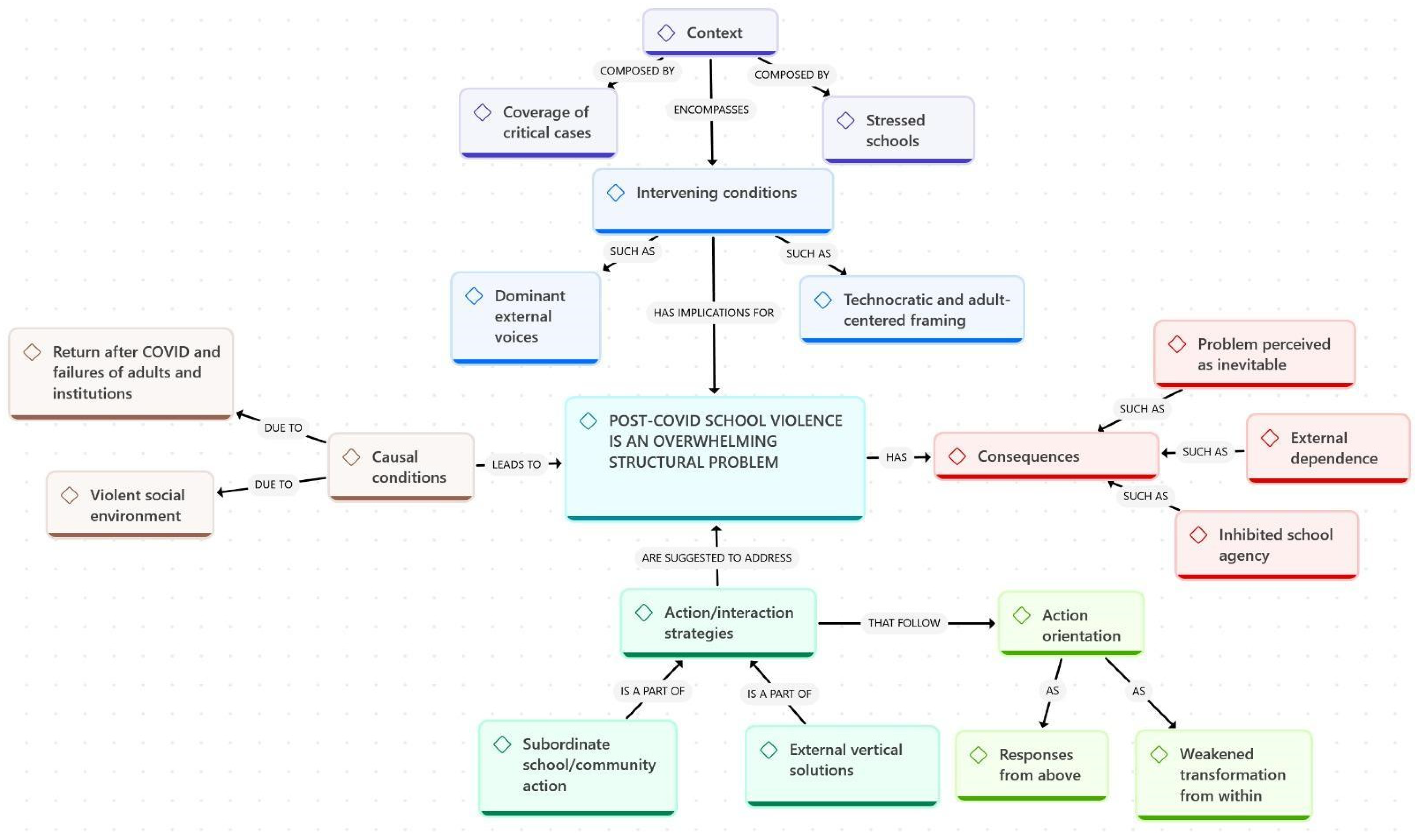
Figure 1. Relational model: Collective subjective theory of the media (Atlas.ti 24).
Covid 05 00208 g001
Table 1. Data classification matrix.
HEADLINE: Name of the author of the news item, interview or report being analyzed. Completed. Open category.
MEDIUM: The publication platform or outlet of the news item, interview or report. Category closed. EL MOSTRADOR/SOYCHILE/LUN
DATE: The date on which the news item, interview or report was published. Completed. Open category.
CATEGORY: The general theme or subject addressed by the news item, interview or report. Closed category (obtained after analyzing the news). Not excluding (there may be more than one category per news item). AUTHORITY ROLE/FAMILY ROLE/TEACHERS’ ROLE/SAFETY AND ORDER/ISSUES/PANDEMIC
Authority role: Representatives or institutions linked to the executive, legislative, municipal, regional governments, etc.
Family role: The role of family members, guardians and legal proxies in general.
Teaching role: The work of educators in preventing and repairing harm.
Order and Justice: Representatives or institutions linked to armed forces, and law enforcement, as well as the judiciary (prosecutors, judges, public defenders, etc.).
Issues: Violence, bullying, school dropout rates, mental health, etc.
Source: Own work.
Table 2. Data classification matrix (expanded).
IMPLICIT/EXPLICIT: Indicates whether the subjective theory is presented denotatively (explicitly) or connotatively (implicitly) in the analyzed text. Category closed.
DIRECT QUOTATION: Passage or passages from the journalistic text—whether a news article, interview or report—that support the identified subjective theory. Completed. Open category.
SOURCE: Name and position of the individual or entity who expresses or supports the identified subjective theory.
SOURCE TYPE: The category or type of source that expresses or supports the identified subjective theory. Category closed. GOVERNMENT AUTHORITY/FAMILY/MEDIA/TEACHER/EXPERT/EDUCATIONAL INSTITUTION/LAW ENFORCEMENT AND ARMED FORCES/JUDICIARY/LEGISLATURE/TOWN COUNCIL
TYPE OF QUOTE: Classification or rating of the quote that supports the identified subjective theory. Category closed. DIRECT (QUOTATION IN QUOTATION MARKS, LITERAL)/INDIRECT (PARAPHRASED QUOTATION)/NEUTRAL (SUPPORTED BY THE MEDIA IN THE TEXT OF THE NEWS ARTICLE).
WHAT IT EXPLAINS: Indicates whether the subjective theory refers to the causes, intervening factors, strategies or consequences of the action. Category closed. CAUSE/EFFECT.
ACTION ORIENTATION: Indicates the intended purpose or guiding effect of the presented subjective theory. Category closed. INITIATES ACTION/PERPETUATES ACTION/INHIBITS ACTION.
NOTE: Notes from the researcher. Open category. Completed.
Source: Own work.
Table 3. Macro-level and micro-level subjective theories.
1. MACRO-LEVEL AND MICRO-LEVEL STs
1.1 Adults are responsible for the rise in school violence
  1.1.1 Violence can be explained by the tendency of children and adolescents to imitate the behavior of those around them.
  1.1.2 Violence can be explained by the failure of adults to set a positive example for children and adolescents.
  1.1.3 Society as a whole must take responsibility for the issue.
1.2 The justice system plays a role in preventing violence.
  1.2.1 Justice that acts as a deterrent helps prevent new cases of violence.
1.3 The rise in problems leads to protests.
  1.3.1 Guardians are taking action to raise awareness about the issue.
  1.3.2 Teachers are mobilizing because they are overwhelmed by violence.
  1.3.3 Students mobilize to raise awareness about the issue.
1.4 Violence in Chile is a structural issue.
1.5 The return to on-site classes leads to various problems, including violence, dropouts, bullying and mental health issues.
  1.5.1 Children and adolescents struggle with social interactions after the pandemic.
  1.5.2 Children and adolescents experience stress from the academic demands of on-site schooling.
  1.5.3 Children and adolescents were exposed to violent stimuli (e.g., video games, YouTube) during the pandemic and are replicating those behaviors.
  1.5.4 Children and adolescents did not receive mental health support during the pandemic.
  1.5.5 Children and adolescents experienced various readjustments and changes that acted as stressors.
  1.5.6 Children and adolescents dropped out of school due to their parents’ economic difficulties because they could no longer afford tuition or required their children to work.
1.6 The role of education professionals can help prevent violence.
  1.6.1 Teacher training and a proactive approach help address the problem more effectively.
  1.6.2 Developing and implementing coexistence protocols can help prevent school violence.
  1.6.3 Hiring specialized professionals can help prevent violence.
1.7 The problems stem from the negligence of the authorities.
  1.7.1 The ministry has failed to take adequate measures.
  1.7.2 The Education Superintendency has not implemented adequate measures.
  1.7.3 The Office of the Children’s Ombudsman has failed to take adequate measures.
  1.7.4 The local council is not taking adequate measures.
1.8 Violence results from negligence on the part of educational institutions.
  1.8.1 Establishments do not have adequate protocols in place.
  1.8.2 Educational institutions fail to take action in response to reported incidents of violence and minimize their significance.
  1.8.3 Educational institutions do not act proactively to prevent.
  1.8.4 Educational institutions do not have trained personnel.
  1.8.5 Teachers are overworked and cannot deal with violence in the classroom.
1.9. The role of authorities plays a part in preventing violence.
  1.9.1 The ministry has taken the appropriate measures.
  1.9.2 The Education Superintendency has not implemented adequate measures.
  1.9.3 The Office of the Children’s Ombudsman has taken appropriate measures.
  1.9.4 The local council is taking the appropriate measures.
1.10. Initiatives from the private sector can help improve school coexistence.
1.11. The development and promotion of specific activities can help enhance school coexistence.
  1.11.1 Regular physical activity improves the behavior and coexistence of children and adolescents.
  1.11.2 Opportunities for conversation and reflection enhance the behavior and coexistence of children and adolescents.
1.12. Authorities’ role and the implementation of public policies can help improve school coexistence.
1.13. The role of students prevents violence.
Source: Own work.
Table 4. Macro-level subjective theories by media outlet and month of publication.
MARCHJULYNOVEMBER
MACRO-LEVEL SUBJECTIVE THEORIESTOTALSOY CHILEEL MOSTRADORLUNTOTALSOY CHILEEL MOSTRADORLUNTOTALSOY CHILEEL MOSTRADORLUNTOTAL
1.1 Adults are responsible for the rise in school violence.41211 11 1 6
1.2 The justice system plays a role in preventing violence.53 21 1 31119
1.3 The rise in problems leads to protests.51131 1 1 1 7
1.4 Violence in Chile is a structural issue.10442312 1035223
1.5 The return to on-site classes leads to various problems, including violence, dropouts, bullying and mental health issues.944122 1027121
1.6 The role of education professionals can help prevent violence.1262411 421117
1.7 The problems stem from the negligence of the authorities.2 2 1 1 3 3 6
1.8 Violence results from negligence by educational institutions.321 3 211 1 7
1.9 The role of authorities plays a part in preventing violence.713332 14 3114
1.10 Initiatives from the private sector can help improve school coexistence.1 1 1 11 1 3
1.11 The development and promotion of specific activities can help enhance school coexistence.2 2 2
1.12 Authorities’ role and the implementation of public policies can help improve school coexistence.1 1 1 1 2
1.13 The role of students prevents violence. 211 1 13
TOTAL6122201919784408257
Disclaimer/Publisher’s Note: The statements, opinions and data contained in all publications are solely those of the individual author(s) and contributor(s) and not of MDPI and/or the editor(s). MDPI and/or the editor(s) disclaim responsibility for any injury to people or property resulting from any ideas, methods, instructions or products referred to in the content.


