1. Introduction
Organizations are increasingly expected to deliver strategic performance while navigating two major shifts: the rapid spread of digital technologies into work and management and the growing need to embed sustainability into core organizational decisions. Human resource management (HRM) is central to this intersection because it shapes how organizations build skills, structure work, govern behavior, and sustain commitment over time. Strategic HRM has long emphasized alignment between people-management systems and organizational strategy [
1]. What is changing today is the strategic landscape itself: digital transformation is redefining how HR activities are designed and executed [
2,
3], while sustainability-oriented HRM extends HR’s mandate beyond efficiency and productivity toward long-term social and environmental responsibility [
4,
5]. At the same time, cultural influences remain decisive for how HR practices are interpreted, accepted, and enacted in daily organizational life, especially in people-intensive and service contexts [
6,
7].
This study is important because these three dynamics—digital transformation, sustainability, and culture—are often researched separately rather than as interacting drivers of strategic HR outcomes. Digital HR research increasingly focuses on the adoption and implications of AI, automation, and e-HRM, but it also highlights that technological change can generate insecurity, stress, and capability gaps when people and systems are misaligned [
8,
9]. Sustainability-oriented HRM proposes that HR practices can foster sustainable organizational cultures by integrating environmental and social aims into recruitment, training, performance management, and reward systems [
4,
10]. Cultural and comparative HRM research shows, however, that HR systems are filtered through national values, institutional expectations, and local managerial traditions, which affects whether practices travel effectively across borders or even across subcultures within the same organization [
11,
12,
13]. Bringing these strands together is therefore not just an academic exercise; it is central to explaining why the same digital or sustainability HR initiative may succeed in one context and fail or produce unintended consequences in another [
14,
15].
The current state of the field indicates rapid growth alongside conceptual fragmentation. In digital transformation research applied to HR, definitions have shifted from “digitization” as process automation to transformation as organizational change enabled by new technologies [
2,
3]. This research emphasizes that HR is not merely a recipient of technology but a driver of adoption, capability development, and change management. At the same time, diffusion-oriented perspectives highlight that adoption depends on perceived usefulness, usability, and fit with the organizational environment, implying that successful digital HR initiatives require more than tool deployment; they require sensemaking, learning, and governance [
3,
16]. In sustainability-oriented HRM, recent work positions sustainable HRM as a response to pressures for responsible business and long-term organizational resilience, linking HR practices to sustainability outcomes through workforce competencies, engagement, and culture [
4,
5]. Green HRM is commonly described as the systematic alignment of HR practices with environmental objectives, embedding sustainability into core HR functions rather than treating it as a peripheral “CSR (corporate social responsibility) activity” [
10,
17]. Meanwhile, cultural HRM scholarship continues to show that HR systems operate through social meaning: recruitment criteria, evaluation fairness, reward legitimacy, and voice opportunities are all culturally mediated, and these effects become particularly visible in service sectors such as tourism and hospitality, where interaction and emotional labor are central [
6,
7].
Key publications across these domains also indicate a growing convergence. Research on AI (artificial intelligence) and automation in HR highlights both operational efficiencies and deeper organizational impacts, including changes to workflows, corporate culture, and the ethical governance of decision-making [
18,
19]. At the same time, sustainability research increasingly links HR practices with organizational culture and long-term value creation, suggesting that sustainability becomes enduring when embedded in everyday routines and incentives rather than in formal statements alone [
20,
21]. Cultural diversity research similarly contends that diversity can be a strategic resource, enhancing creativity and adaptability, if HR systems are designed to support integration, learning, and coordination across differences [
15,
22]. In the Romanian organizational contexts examined, digital and sustainability initiatives were most coherent when aligned with cultural mechanisms of support and openness.
However, the literature also presents several controversial and divergent hypotheses that make integration necessary rather than optional.
First, there is an ongoing tension between standardization and contextual adaptation. Digital HR systems and sustainability frameworks often depend on standardized practices and metrics, but cross-cultural research shows that the effectiveness and perceived legitimacy of these practices vary across cultures and institutional environments [
11,
12,
13]. Even the concept of “employee voice” is culturally contingent: what is considered appropriate to speak up about and how it is rewarded or sanctioned differs across contexts and shapes HR outcomes [
6,
7]. This creates a strategic dilemma: too much localization can weaken coherence, while too much standardization can undermine acceptance and performance.
Second, the digital transformation stream reflects a tension between technology as empowerment and technology as strain or control. Some contributions emphasize the promise of improved decision-making and efficiency, while others highlight the human costs of constant change, such as skills obsolescence, stress, and climate deterioration, when transformation outpaces capability building or is implemented without adequate support [
8,
9]. This divergence is central to strategic HRM because it determines whether digitalization strengthens or erodes human capital.
Third, sustainability-oriented HRM includes debates about what sustainability means in HR terms and how comprehensively it is operationalized. Some studies emphasize environmental outcomes (green practices), while other perspectives argue for more explicit integration of economic, social, and environmental dimensions [
4,
5]. This debate matters because HR systems can unintentionally privilege one dimension (e.g., ecological compliance) while neglecting others (e.g., employee well-being, inclusion, and decent work), especially when evaluation systems narrow what “counts” as performance [
17,
20].
Finally, AI-driven HR raises governance debates that cut across all three domains. Cultural and AI-focused research highlights a huge risk around privacy, bias, transparency, and accountability—issues that directly affect the legitimacy, trust, and social sustainability of HR systems [
18,
19]. The ethical acceptability of AI-enabled HR decisions may also vary across cultural contexts, implying that governance solutions themselves can be culturally contested [
11,
23].
Against this backdrop, the main aim of this article is to integrate evidence and insights from three literature-grounded interview guides—digital transformation in HR, sustainability-oriented HRM, and cultural influences in HRM—into a coherent strategic framework for managing HR under conditions of technological disruption, sustainability pressures, and cultural plurality. The principal conclusions highlighted by this integrated analysis are as follows: (1) Digital transformation and sustainability initiatives in HR are most strategically effective when approached as capability-building and culture-shaping programs rather than as purely technical implementations [
3,
10]. (2) Cultural influences affect both adoption and outcomes, making cross-cultural competence and adaptive leadership essential for strategic HRM rather than optional “international HR” add-ons [
12,
14]. (3) AI-enabled and data-driven HR systems increase the need for governance—fairness, transparency, privacy, and accountability—because legitimacy and trust become strategic resources that directly impact sustainability and performance [
18,
19].
This research offers exploratory insights into the strategic human resource management literature in three main ways. First, it integrates digital transformation, sustainability, and cultural influences into a single analytical framework, addressing the fragmentation common in current research on these topics. Second, it provides qualitative evidence from HR professionals and managers, offering practice-oriented insights into the implementation, experience, and evaluation of digital and sustainability initiatives within organizations. The findings identify organizational culture as a mediating mechanism that shapes the adoption, effectiveness, and perceived legitimacy of digital and sustainability-focused HR practices, rather than simply serving as a contextual factor. In doing so, the study promotes a more context-sensitive and strategically integrated understanding of contemporary HRM.
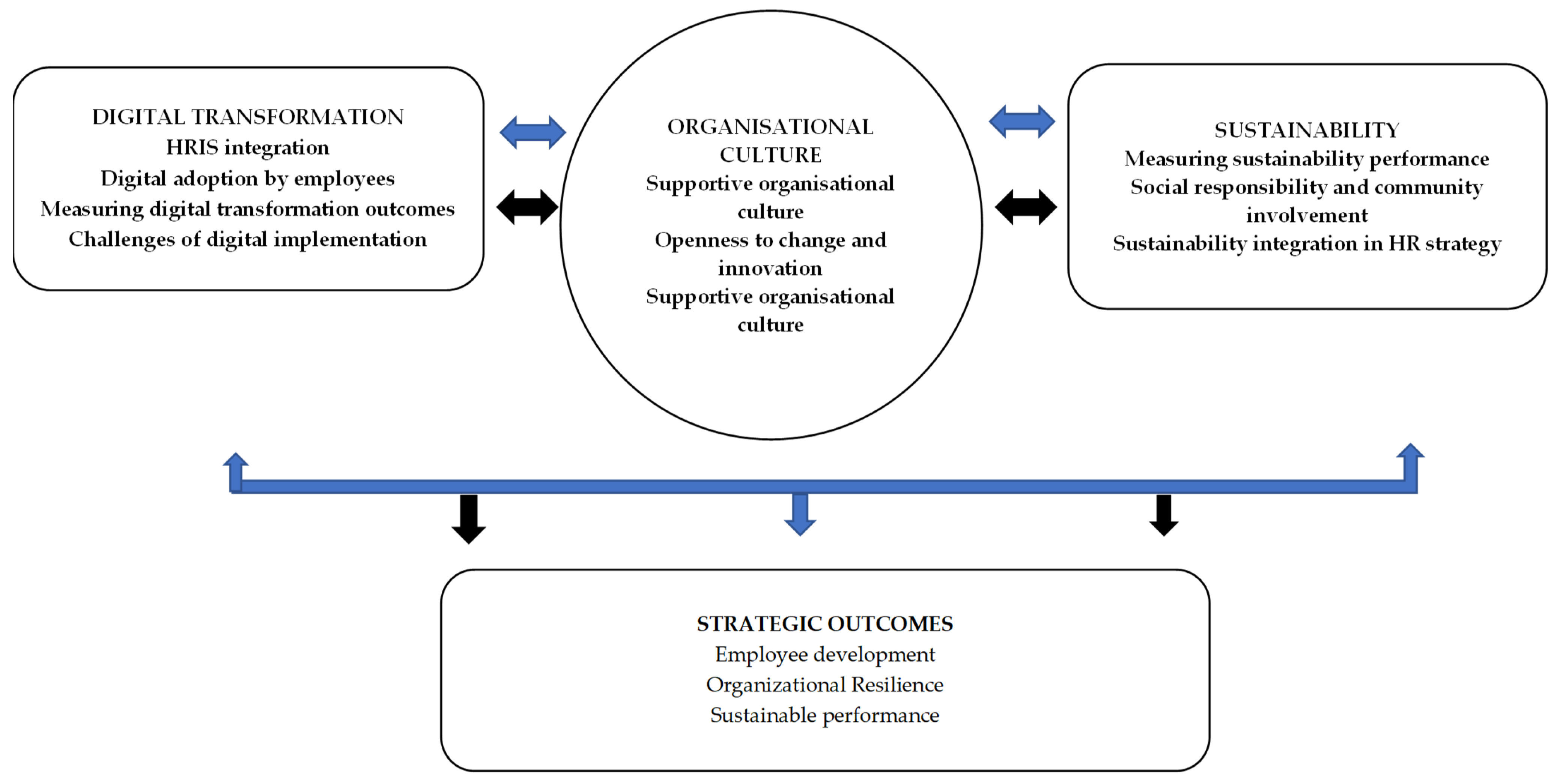
Figure 1 presents the Strategic Triad framework, which defines strategic human resource management as the result of dynamic interaction among digital transformation, sustainability, and organizational culture. Digital transformation refers to the adoption and integration of digital technologies within HR processes, enabling operational efficiency, data-driven decision-making, and employee empowerment. Sustainability involves aligning HR practices with long-term economic, social, and environmental objectives, emphasizing responsible workforce management and organizational resilience. Organizational culture acts as a mediating factor that shapes how members of the organization interpret, adopt, and evaluate digital and sustainability initiatives. Rather than serving as a separate contextual variable, culture influences employee sensemaking, readiness for change, and the perceived legitimacy of HR initiatives. The framework emphasizes that strategic HR outcomes emerge when these three dimensions are aligned and mutually reinforcing, highlighting the importance of integrated and contextually responsive HR strategies in modern organizations. All these aspects reflect the integration of digital transformation, sustainability, and cultural organization in the empowerment of companies.
2. Materials and Methods
This study uses an exploratory, descriptive qualitative design to examine how organizations manage human resources strategically at the intersection of digital transformation, sustainability, and cultural influences—the “Strategic Triad” framework that structures this article. Building on prior literature-grounded interview syntheses, the empirical component uses semi-structured interviews to capture how these themes are understood and enacted in practice, with attention to perceived impacts, challenges, and alignment mechanisms.
The interviews follow a structured guide explicitly designed for this topic and are conducted under a confidentiality statement for academic use. Data were collected from nine organizational respondents (reported only via anonymized participant codes), with a participant descriptor table provided to support contextual interpretation.
The study is guided by the following research questions:
RQ1: How is digital transformation implemented and experienced within strategic HRM?
RQ2: How are sustainability principles operationalized in HRM and linked to HR outcomes?
RQ3: How do organizational and cultural factors influence digital and sustainability-oriented HR initiatives?
RQ4 (integrative): How do organizations align digital, sustainability, and cultural dimensions into a coherent HR strategy?
These research questions guide the structure of the data analysis and the presentation of the results.
2.1. Study Design and Materials Phase
This article follows a two-part design that integrates a literature-grounded interview guide of three research concepts—digital transformation in HR, sustainability-oriented HRM, and cultural influences in HRM—with an exploratory qualitative component based on interviews with industry representatives.
In the first phase, literature-grounded interview guide studies were used to identify the dominant themes, conceptual emphases, and points of convergence/divergence across the three streams, which then informed the logic and structure of the interview guide. The digital-transformation literature-grounded interview guide work relied on Web of Science records.
2.2. Interview Instrument Structure
The interview guide was developed based on the theoretical themes and research directions identified in the materials phase (
Section 2.1). The instrument was organized into four sections to ensure a comprehensive analysis of the study’s “Strategic Triad” (Digital–Sustainable–Cultural) and its strategic alignment.
Demographic and Professional Profile: Initial questions established the respondent’s professional role and experience in HR, organizational type (public, private, or NGO), and workforce size, with optional demographic descriptors (interview guide, n.d.).
Section 1: Digital Transformation in HR: This section examined the operational use of digital tools in HR. It explored the extent to which respondents use digital technologies (such as AI, automation, and HR platforms) in recruitment, training, and performance management; the perceived impact of digitalization on employee experience; and challenges such as resistance to change, costs, and digital competence gaps.
Section 2: Sustainability Concerns: Participants were asked how sustainability is integrated into HR practices and how HR contributes to fostering a sustainability-oriented culture (for example, through training, recognition practices, and continuity of “good habits”), including perceived links to engagement and retention, and obstacles in aligning sustainability goals with HR strategy.
Section 3: Cultural Influences: This section analyzed how organizational culture and cultural diversity influence the adoption and implementation of digital and sustainable initiatives, including the management of cultural diversity in global or hybrid teams, and whether cultural differences affect implementation approaches.
Section 4: Strategic Alignment: The final section synthesized the triad by prompting examples of successful integration, lessons learned in managing these dimensions simultaneously, and practical recommendations for other organizations.
2.3. Participants and Data Collection
This study used a qualitative approach, employing a structured interview guide with nine diverse organizations. The aim was to understand personal experiences and perspectives on strategic HR management in the context of digital transformation, sustainability, and cultural influences.
The participants represented a range of organizations based in Romania, including private companies, with workforce sizes varying from 100 to over 100,000 employees. Interviews were conducted with HR professionals, including HR specialists with approximately three years of administrative experience and a university-level education.
All participants provided informed consent prior to participation. Participation was voluntary, and interviews were anonymized; data were treated confidentially and stored securely.
Given the exploratory and qualitative nature of the study, a sample size of nine participants was considered sufficient. The goal was to analyze the data with analytical depth and contextual understanding rather than to achieve statistical generalization, which aligns with the principles of qualitative research. Saturation was assessed iteratively through concurrent data collection and analysis. Interviews were transcribed and coded on a rolling basis, allowing the research team to monitor whether additional interviews produced substantively new codes, themes, or relationships. As the analysis progressed, later interviews became increasingly confirmatory, primarily refining or adding nuance to the existing thematic structure rather than introducing new thematic categories. Data collection was concluded when thematic redundancy was observed, and further interviews were judged unlikely to yield additional conceptual insights relevant to the study aims. This stopping criterion reflects the study’s qualitative objective of achieving conceptual completeness within a focused research scope rather than statistical representativeness. In the context of strategic human resources management, this approach ensured that the data set was sufficiently rich to identify recurring patterns related to sustainability, digital transformation, and cultural influences.
Instead of treating the organization as a statistical entity, the unit of analysis is the managerial perception of strategic HR alignment, consistent with the exploratory qualitative design. Coding frequencies are not used as statistical indicators; they serve only for analytical transparency and thematic structuring. Therefore, the study provides a conceptual and contextual understanding of the Romanian context rather than measuring prevalence or claiming organizational representativeness.
3. Results
The Results section presents the main themes and subthemes identified through the thematic analysis of the interview data, illustrated with representative excerpts from participant responses. The Discussion section then develops the theoretical implications and interpretive significance of these findings.
3.1. Overview of Thematic Findings
The structural findings were organized into a coherent thematic framework derived from the interview dataset, with codes and subthemes capturing specific and concrete aspects of how organizations navigate the intersection of digital transformation, sustainability, and organizational culture. The qualitative evidence was generated through semi-structured interviews with industry representatives (
Table 1), and all participants provided informed consent before participating. Participation was voluntary, and all responses were anonymized and treated confidentially to protect participant privacy. The complete thematic coding structure derived from the analysis is presented in
Table A1.
The analysis was structured around three overarching themes that reflect the paper’s objectives and research questions: digital transformation, sustainability, and organizational culture. The findings primarily address RQ1–RQ3, highlighting how digitalization, sustainability-oriented HRM, and cultural factors interact within strategic HRM. Across the interviews, organizational culture emerged as a cross-cutting factor shaping how digital and sustainability initiatives are interpreted, accepted, and embedded, which reinforces its relevance for understanding implementation processes and outcomes.
To ensure structural consistency and achieve a stable final analytical structure, the coding system was refined iteratively throughout the analysis. Codes were selected and adjusted based on the study aims and research questions and were designed to document the adoption, integration, challenges, and progress associated with the three focal domains—digital transformation, sustainability, and organizational culture. Coding and theme development were supported by Atlas.ti, with four researchers working in two teams. Both teams first piloted the initial codebook on a subset of transcripts and jointly clarified code definitions and boundaries. Subsequently, transcripts were coded in parallel, with regular calibration discussions to reconcile interpretations and maintain coherence across the full dataset. When refinements were introduced, earlier transcripts were revisited to ensure that the final thematic structure remained consistent across interviews.
Importantly, the interview evidence also supports a broader interpretation of digital transformation in HRM: participants described it not only in terms of platforms and task automation but also as encompassing organizational tools, redesigned processes, and links to sustainability-related practices. Consequently, assessing digitalization cannot rely solely on platform adoption or tool implementation; it requires attention to how digital practices are integrated into HR processes and how they influence work design, decision-making, and sustainability alignment. Within this process, organizational culture frequently appeared as a mediating factor that can accelerate or hinder the adoption of new structures and routines.
Building on this overview, the next section presents the results following this thematic structure and illustrates how interviewees described the interplay between digital transformation, sustainability, and organizational culture in their organizational contexts.
3.2. Results of the Qualitative Research
The qualitative data consisted of nine semi-structured interviews with HR professionals and managers working in various organizational settings in Romania. Instead of focusing on the numerical distribution of codes, the analysis identified frequent patterns, interpretive themes, and contextual mechanisms that highlighted concerns from managerial perspectives. The coding scheme included three general themes, namely digital transformation, sustainability, and organizational culture, which were analytically organized in the context of adoption, integration, difficulties, and alignment processes.
Digital transformation emerged as a central theme in participants’ reflections on strategic HR practices. According to participants, implementing digital tools in recruitment, onboarding, performance management, and internal communication was viewed as an ongoing organizational change rather than a single technical upgrade.
The integration of HRIS (Human Resource Information Systems) was regularly described as the foundation for data coherence, workflow efficiency, and strategic visibility of HR processes. Respondents emphasized that digital systems increase employee autonomy by making them less dependent on administration and enabling data access. At the same time, digital transformation was associated with implementation challenges such as cost, resistance to change, skill shortages, and a lack of readiness among different groups of employees.
Although the implementation process was covered in more detail, the formal evaluation of digital transformation results was discussed less widely and in a less organized manner. This suggests that operational adoption may be at a more advanced stage compared to systematic measurement systems.
Sustainability has emerged as an increasingly important aspect of HR strategy. Participants discussed efforts to integrate sustainability principles into HR processes such as engagement programs, volunteering initiatives, and value-based organizational practices.
Employee motivation and corporate identity were often linked to social responsibility and community involvement. However, the implementation of sustainability was also reported to be constrained by limited resources, competing priorities, and the need to demonstrate organizational returns.
Although the need to assess sustainability performance was acknowledged, measurement mechanisms were mostly described as indirect or developmental rather than as well-defined indicator systems. This suggests that sustainability measurement practices are still evolving within the organizations involved.
Organizational culture emerged as an intermediate factor that shapes digital and sustainability pathways. Participants repeatedly emphasized the importance of managerial support, internal cohesion, and openness to innovation in facilitating implementation processes.
A supportive and adaptive culture was seen to accelerate the integration of digital adoption and sustainability efforts, while cultural differences—such as generational gaps, varying attitudes toward change, and subcultural norms—were identified as potential sources of friction.
Overall, culture was not viewed as a passive contextual element but as an active interpretive mechanism that influences the legitimization, acceptance, and incorporation of digital and sustainability initiatives into everyday organizational practices.
Practice development may currently be outpacing systematic performance measurement, as participants generally provided more detail about implementation and integration dynamics than about formalized evaluation systems. The implications of these trends for strategic human resource management are examined in the following section, along with their interpretation in light of current literature.
4. Discussion
The empirical results are interpreted in the context of research on digital transformation, sustainability-focused HRM, and cultural influences. The findings are consistent with earlier studies that emphasize the organizational and human aspects of digitalization, supporting the view that digital transformation in HR goes beyond technology adoption and serves as a capability-building and change management process [
2,
3,
16]. Concerns from previous research about the implementation gap in sustainable HRM are confirmed by the uneven application of sustainability-oriented HR practices, which are often limited by measurement challenges and conflicting priorities [
4,
5,
10,
21]. Notably, the results identify organizational culture as a mediating factor that shapes how sustainability and digital initiatives are perceived, adopted, and implemented in practice. This supports the argument that formal systems and tools are not the only determinants of strategic HRM outcomes [
6,
7,
11,
15,
20].
The analysis of the findings initially revealed five key factors in digital transformation: digital adoption by employees, employee autonomy through digital tools, challenges of digital implementation, HRIS integration, and measuring digital transformation outcomes [
2,
16].
As shown in
Figure 1, the interaction among digital transformation, sustainability, and organizational culture helps interpret why similar HR initiatives may produce different outcomes in various organizational contexts.
Although not addressed as a standalone research question, RQ4 is explored indirectly through the integrated analysis of digital transformation, sustainability, and cultural influences.
Several participants regularly mentioned the first code, “Digital adoption by employees,” supporting its recurrence in the interviews. This perspective highlights that digital adoption is now considered a standard rather than an optional element. This theme emerged consistently across the interviews.
The second code, “Employee autonomy through digital tools,” emerged consistently in the interview material. Participants noted that they use digital tools daily, which has increased autonomy at multiple levels. This is perceived as a positive element in the adoption process and fosters an environment where administrative dependency is reduced [
8,
16].
“Challenges of digital implementation” was a recurring topic, with participants frequently citing difficulties related to resources, complexity, and personnel competencies. These challenges emerged consistently in the interview material.
HRIS integration was identified multiple times, emphasizing the importance of platforms in human resources systems. Participants discussed how integrating platforms and applications benefits the company’s overall system, not just employee competencies.
Within the examined organizational contexts, digitalization and sustainability initiatives were more coherent when viewed as mutually reinforcing processes rather than as separate interventions. Organizational culture plays a key role in aligning these dimensions by shaping employees’ sensemaking, readiness for change, and perceptions of fairness and legitimacy. Strategically, this requires human resource leaders to manage technological capabilities, sustainability goals, and cultural alignment simultaneously to establish coherent and resilient human resource strategies [
10,
20,
21].
The uneven distribution of “Measuring the results of digital transformation” suggests that the programming and measurement techniques of the digital approach are still in the early stages [
8,
16].
For the second research theme, sustainability was defined by four codes in the analysis: sustainability integration in HR strategy, social responsibility and community involvement, challenges in sustainability implementation, and measuring sustainability performance.
The first code that defined sustainability was the integration of sustainability into HR strategy. Participants explained that most systems were affected by incorporating sustainability into various HR initiatives, such as volunteering and other activities. This theme recurred throughout the interviews.
Two important codes that demonstrate employee involvement in sustainable initiatives are social responsibility and community involvement. Because the digital approach significantly impacts human resources and there is a push to integrate sustainability into the system, participants noted important implications for similar operations. This theme remained consistent throughout the interviews.
Challenges in implementing sustainability were mentioned several times during the interviews. One of the most frequent concerns is the scarcity of resources, followed by employees’ negative attitudes toward new techniques. This aspect was recurrent in participants’ reflections.
When measuring sustainability performance based on this code, participants stated that they use the number of platforms as an indicator. The success of the overall digital sustainability and CSR process increases with the number of apps used regularly. This dimension appeared recurrently in participants’ reflections [
10].
The analysis of the four important codes related to organizational culture—supportive organizational culture, openness to change and innovation, managing cultural differences, and cultural impact on digital and sustainability initiatives—highlighted the importance of a clear and open system [
6,
11,
15,
22,
23].
A supportive organizational culture highlights the importance of management assistance in implementing digital technology. Participants emphasized the value of an innovative environment in daily activities. Employees are more likely to adopt new technologies when they work in a supportive setting [
15,
23].
Openness to change and innovation characterizes an environment that fosters innovation and supports the effectiveness of current strategies and tools to improve company operations. When asked about the importance of an open atmosphere for businesses to adopt new methods more quickly, participants responded positively [
3,
15].
Managing cultural differences was identified as a primary challenge in adopting new technology. Participants mentioned factors such as age, attitudes, interests, resources, and distinct corporate cultures. The data demonstrated the significance and influence of this factor on businesses and their systems.
The cultural impact on digital and sustainability initiatives reveals the role of cultural systems in digital adoption within HR and in integrating sustainable practices and platforms into routine tasks [
6,
11,
20].
The results showed that each theme was highly significant to the participants. The thematic structure highlights the relative emphasis participants placed on implementation processes, autonomy dynamics, sustainability integration, and cultural mediation. Participants recognized the importance of every theme and guideline discussed. The codes used in the analysis address research issues related to the adoption of digitalization, the impact on workers regarding sustainable activities, and the role of organizational culture in enhancing these activities [
14]. Evidence from tourism organizations using the Competing Values Framework similarly indicates that adhocracy-oriented cultures tend to achieve higher digitalization scores, whereas hierarchical cultures generally lag, reinforcing the sector-specific relevance of culture-digital alignment [
24].
5. Conclusions, Implications, Limitations, and Future Directions
Overall, this study suggests that digitally enabled HRM and sustainability-oriented HRM can be interpreted as a coupled strategic system whose effectiveness depends on how well it is translated into employees’ everyday experience and meaning-making. By positioning organizational culture as a boundary condition rather than a background variable, the paper proposes a context-sensitive interpretive layer to ongoing debates on HRM 4.0 and sustainable HRM and clarifies why “best practices” often do not transfer well across settings [
2,
5,
11,
20]. The framework presented here can serve as a basis for future hypothesis-driven testing (e.g., longitudinal or multi-country designs) that explicitly models culture-sensitive pathways from digitalization to sustainable HR outcomes and performance [
6,
21,
24].
Theoretically, the paper bridges two streams that are still too often discussed in parallel: HRM digital transformation (HRM 4.0) and sustainable HRM. It argues that digital transformation is not only a technological shift but also a redesign of HR architectures that alters autonomy, voice, and accountability, aligning with contemporary HRM digital transformation scholarship [
2,
16] and cross-cultural perspectives on employee voice and behavior [
7,
11]. Simultaneously, it refines sustainable HRM by contending that “integration” depends on cultural fit and interpretive legitimacy, echoing recent systematic reviews and empirical work that call for more context-aware models [
4,
5,
20,
21]. By linking cultural dimensions to digital innovation logics, the paper also extends emerging conceptual work that highlights culture as an explanatory mechanism for digital innovation trajectories across industries, including tourism [
24].
Practically, HR leaders may benefit from treating digital and sustainability initiatives as a single portfolio with shared governance, metrics, and change management, rather than as separate projects competing for attention and resources [
10,
16]. Implementation should deliberately build digital champions, invest in capability development, and use incremental rollouts with feedback loops to prevent resistance and uneven adoption [
3,
9]. Because cultural assumptions shape how employees interpret autonomy, control, and participation, organizations operating across cultural contexts should tailor communication, participation mechanisms, and incentives, rather than replicating a standard HRIS or sustainability playbook [
11,
15,
20]. When adopting AI-enabled HR tools, organizations should align transparency and accountability mechanisms with both institutional constraints and employee trust to capture benefits while minimizing ethical and operational risks [
9,
18,
19].
This study has several limitations that should be considered when interpreting the findings and designing future research. First, the qualitative design and small number of interviews (n = 9) allowed for depth and contextual nuance but necessarily limited statistical generalizability and may under-represent variability across industries and organizational types. Second, the evidence relies primarily on participants’ perceptions and retrospective accounts; while these insights are valuable for sensemaking and theory-building, they may be influenced by social desirability, selective recall, and single-informant bias and do not support strong causal claims regarding downstream outcomes. Third, the cross-sectional nature of the data provides a snapshot of digital and sustainability integration rather than the dynamics of implementation, learning, and institutionalization over time—an issue repeatedly noted in sustainability-oriented HRM and digital HR transformation research, where processual change is central [
4,
5,
16,
21]. Finally, the study did not triangulate interview data with objective indicators (e.g., HR analytics, digital adoption metrics, audit data) or with additional stakeholder perspectives (e.g., employees, line managers), which could further validate and refine the proposed mechanisms, especially in culturally contingent contexts [
7,
15,
20].
Future studies should quantitatively test the proposed relationships in larger and more diverse samples, operationalizing HRM 4.0 maturity and sustainable HR integration as measurable constructs and examining their associations with employee- and firm-level outcomes [
2,
4,
16,
21]. To address perception-driven limitations, multi-source designs should include the perspectives of HR specialists, line managers, and employees, particularly for culture-sensitive phenomena such as voice, autonomy, and participation, where meaning and behavioral responses may differ across groups and contexts [
7,
11,
15]. Finally, sector-specific comparative work—particularly in service-intensive settings such as tourism and hospitality—could clarify how organizational and national cultural patterns shape digital innovation trajectories and the feasibility of aligning digital HR architectures with sustainability goals [
11,
24]. Longitudinal and hybrid (mixed-method) approaches are especially promising: panel surveys combined with follow-up interviews and organizational data can track how digital HR initiatives and sustainability practices co-evolve, enabling researchers to distinguish early adoption effects from longer-term capability building and institutionalization [
5,
16,
21]. Additionally, as AI-enabled HR tools become more prevalent, research should examine governance, transparency, and accountability arrangements that influence trust and perceived fairness and how these factors interact with sustainability objectives [
18,
19].
Proposed Research Hypotheses
Based on the qualitative results and the integrative Strategic Triad framework, this paper introduces several research hypotheses that may be used for future empirical testing:
Hypothesis 1. Organizational culture mediates the strategic effects of digital HR initiatives, particularly openness to innovation and managerial support.
Hypothesis 2. When digitally enabled measurement and governance mechanisms support the integration of sustainability in HRM, sustainability is improved.
Hypothesis 3. Cultural diversity within organizational cultures involves a digital transformation that requires adaptive leadership and context-sensitive implementation strategies to preempt resistance and fragmentation.
These hypotheses are not empirically tested in the present study but are derived from thematic patterns observed in the interviews and the theoretical integration formulated in this study. They provide a starting point for future quantitative, longitudinal, or multi-country studies that explore culture-sensitive mechanisms linking digital transformation, sustainability, and strategic HR performance.
Therefore, the findings should be interpreted as context-dependent knowledge derived from a qualitative Romanian sample, rather than as generalized statements applicable worldwide.