Article

An Ab Initio Investigation of the Hydration of Iron(III)

by
Cory C. Pye
* and
Fernanda de Paola Rodrigues
Department of Chemistry, Saint Mary’s University, 923 Robie Street, Halifax, NS B3H 3C3, Canada
*
Author to whom correspondence should be addressed.
Submission received: 23 December 2025 / Revised: 23 January 2026 / Accepted: 2 February 2026 / Published: 9 February 2026
(This article belongs to the Special Issue Hydration of Ions in Aqueous Solution, 2nd Edition)

Abstract

The energies, structures, and vibrational frequencies of [Fe(H2O)n]3+, n = 0–6, 18 have been calculated at the Hartree–Fock, second-order Møller–Plesset, and density functional (B3LYP) levels of theory using the 6−31G* and 6−31+G* basis sets. The metal–oxygen distances and stretching frequencies were compared with each other, with related crystal structure and solution measurements and with previous calculations. The Fe-O distances and stretching vibrational frequencies were well reproduced with an explicit model for the second hydration shell.

1. Introduction

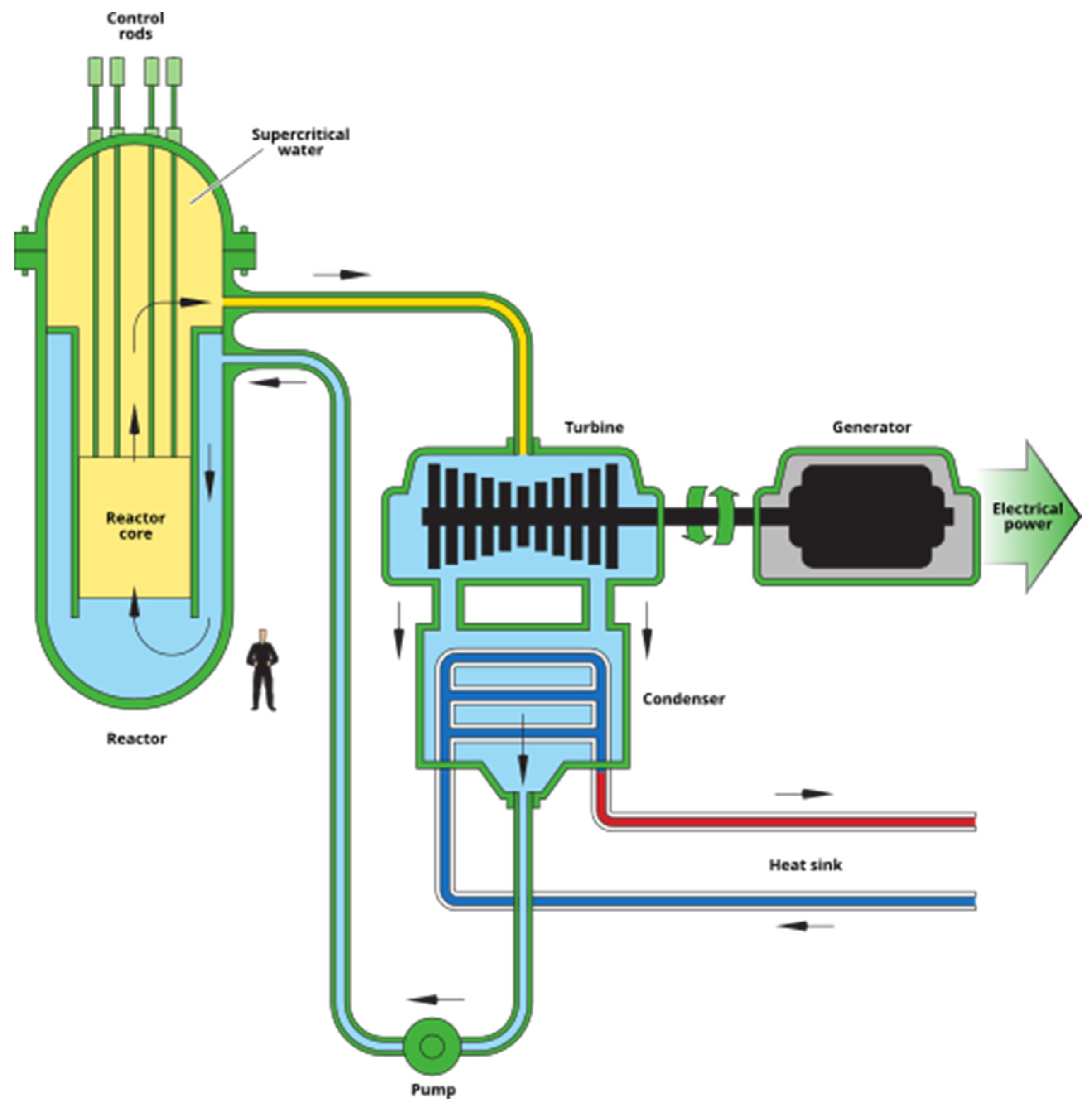
Planning for the next generation of nuclear reactors is being guided by the Generation-IV International Forum (GIF) [1]. Six reactor systems have been selected as meeting the sustainability and proliferation resistance goals: the very high-temperature gas-cooled reactor (VHTR), the gas-cooled fast reactor (GFR), the sodium-cooled fast reactor (SFR), the lead-cooled fast reactor (LFR), the molten salt reactor (MSR), and the supercritical water-cooled reactor (SCWR) [2]. Canada is a signatory to the GIF Framework Agreement and has committed to research the supercritical water-cooled reactor concept (Figure 1), with some experience operating supercritical water-cooled fossil fuel power plants. The approach Canada has taken is to continually advance the existing Canadian Deuterium Uranium (CANDU) reactors [3], which were originally developed by Atomic Energy of Canada Ltd. (AECL). The same evolutionary approach will be used to develop the SCWR.
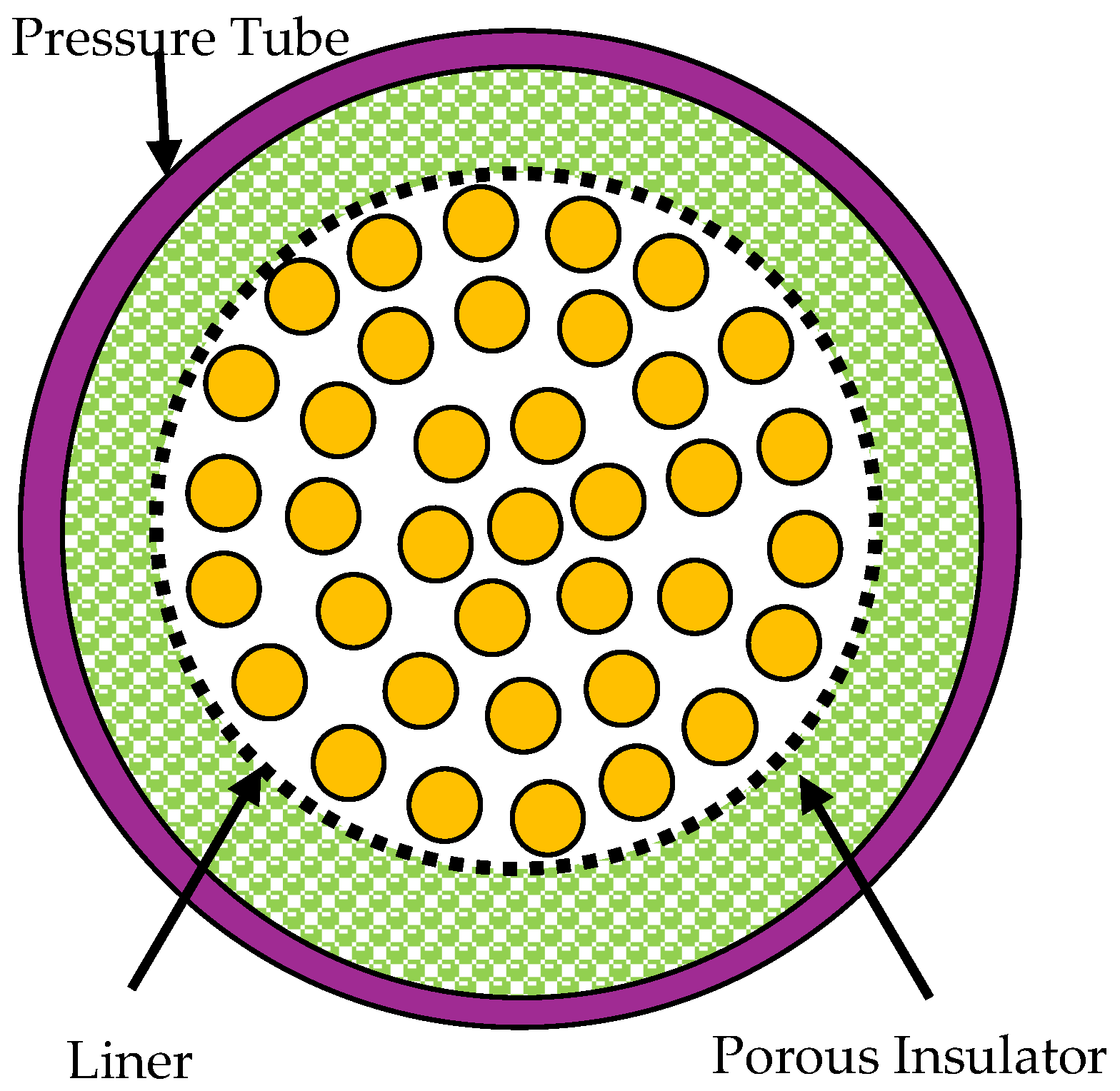
The SCWR is a pressure tube reactor (Figure 2) using H2O as a coolant, with a low-pressure D2O moderator vessel that produces supercritical water to be used to generate electricity, hydrogen, and district heating. The critical point of water (647 K, 22 MPa) is the point above which water can no longer be distinguished as a liquid or gas, only a supercritical fluid. The viability of the SCWR depends on the ability of operators to maintain water chemistry to minimize material degradation and the transport of corrosion products and radionuclides, because supercritical water is known to be rather corrosive [4]. Because the coolant is in contact with both the fuel bundle cladding and the condenser in this single-loop system (unlike the current two-loop CANDU reactors), any contaminants introduced via condenser leaks or makeup water could become concentrated because of temperature-dependent solubility differences and interact with corrosion products and, more rarely, with actinides and their fission products from fuel failures. If these prove to be volatile, then high radiation fields could exist outside the core of the reactor, posing a safety risk.
The SCWR, operating at pressures of 25–30 MPa, would require careful consideration of both the water chemistry and the materials used (typically steels and zirconium alloys). Steel is mostly composed of iron metal. There are several temperature- and pressure-dependent allotropes of iron [5]. Under ambient conditions, iron exists as the ferromagnetic body-centered cubic (bcc) α-iron (the mineral ferrite). Above the Curie point of 771 °C, it transforms to the paramagnetic form, known as β-iron in the older literature. Above 912 °C, it transforms to the face-centered cubic (fcc) γ-iron (the mineral austenite). At 1394 °C, it transforms again to a bcc δ-iron before melting at 1538 °C. At pressures of ~10 GPa, iron can transform to the hexagonal close-packed ε-iron (hexaferrum), which may be relevant in the inner core of earth. The triple point of ferrite, austenite, and hexaferrum exists at 10.5 GPa and 477 °C.
In the presence of oxygen under ambient conditions, iron is in equilibrium with Fe3O4 (the mineral magnetite), a mixed iron(II/III) oxide [6,7]. For higher levels of oxygen, Fe3O4 is in equilibrium with Fe2O3 (the mineral hematite). Between about 560 and 1371 °C, the nonstoichiometric “FeO” (the mineral wüstite) appears. Solid solutions with varying oxygen content dominate the higher temperature range. Even when exposed to water, iron will form magnetite and hydrogen gas, especially at higher steam temperatures [8]. These iron oxides were some of the first compounds characterized by X-ray diffraction. Magnetite was thought to have the cubic spinel structure (Fe2+)(Fe3+)2O4, in which the divalent iron forms the center of a FeO4 tetrahedron and the trivalent iron the center of an FeO6 octahedron (a = 8.30 Å) [9]. The unit cell is Fd-3m, a = 8.400 Å [10]. A modern redetermination gave an inverse spinel structure, Fd3m, a = 8.3941(7) Å, with Fe-O distances of 1.8883(17) Å (tetrahedral, Fe3+) and 2.0584(9) Å (octahedral, randomly distributed Fe2+ and Fe3+) [11]. Hematite was found to be rhombohedral, with space group R-3c, a = 5.420 Å, α = 55.27° [12]. The Fe-O distances were found to be 2.060(35) and 1.985(25) Å in an approximate octahedron. A later refinement gave space group R3c, a = 5.038(2), c = 13.772(12) Å, with Fe-O distances of 2.116 and 1.945 Å [13]. Wüstite was found to be cubic, Fm-3m, a = 4.29(4) Å, with the rock salt structure, implying an Fe-O distance of 2.145 Å [14].
In CANDU reactors, the apparent pH is typically maintained in the range of 10.2–10.4 using LiOD and adding H2 to maintain a reducing atmosphere and suppress radiolysis products. Under these conditions, the primary corrosion product of iron is magnetite, which may undergo further dissolution [15,16]. Major aqueous species produced include Fe2+, FeOH+, Fe(OH)2, Fe(OH)3, Fe(OH)3, and Fe(OH)4. Under normal operation, Fe3+ is not expected to be formed. Condenser leaks could potentially introduce species such as chloride and ammonia. The latter is sometimes used as a pH control agent. The soluble iron(II) and iron(III) could form complexes with chloride, hydroxide, and ammonia. Power stations, including nuclear ones, experience chemical hideout, where contaminants and additives are concentrated by boiling or precipitation at local hot spots under deposits and in crevices containing large thermal and concentration gradients under full power. At low power, temperatures drop and these products re-dissolve. One widely accepted treatment is the oxygenated feed-water treatment, which uses stringently pure water and carefully controlled oxygen levels to maintain protective oxide layers on steel alloys. If too much oxygen was inadvertently introduced, the ratio of iron(III) to iron(II) would increase as oxidation occurs and more Fe3+ would form, which would lower the pH. These ions at low pH typically exist as the aqua ion, and the formation of these other complexes would require the displacement of water molecules from the inner solvation shell. Therefore, the study of aquairon(III), the most common form of iron(III) at low pH, as a foundation from which ligand displacement might occur, is warranted. Another application would be the study of acid mine drainage, where pyrite FeS2 is oxidized to give sulfate and iron(II), which is further oxidized to iron(III), producing a large amount of H+, which solubilizes the iron.
The electron configuration of the iron atom is 4s23d6. Upon losing three electrons to form the iron 3+ cation, the electron configuration becomes 3d5. For high-field ligands, a doublet would be expected, whereas for low-field ligands, a sextet is expected. In an aqueous solution, iron(III) is believed to form the hexaaquairon(III) ion. With water being a low-field ligand, the hexaaquairon(III) would be a high-spin complex. Typically, hexaaquairon(III), in solution and its salts, is pale violet in color. In the mineral paracoquimbite, Fe2(SO4)3•9H2O contains octahedral iron(III), with some iron ions only bound to water molecules, others bound only to sulfate oxygens, and others bound to both (space group R-3) [17]. For the hexaaquairon(III) component, the Fe-O distance is 1.98(2) Å. but with both water and sulfate ions in the inner hydration shell. The hygroscopic iron(III) nitrate crystallizes from dilute nitric acid solutions as [Fe(H2O)6]3+(NO3)3•3H2O, containing the hexaaquairon(III) ion in the space group P21/c [18]. The two crystallographically distinct hexaaquairon(III) entities have a mean Fe-O distance of 1.986(7) Å, with a range of 1.966(3)–2.014(3) Å. Commercially available iron perchlorate “hexahydrate” has been shown to actually be [Fe(H2O)6]3+(ClO4)3•3H2O (space group R-3c, 250 K), with an Fe-O distance of 1.988(2) Å [19]. Other determinations resulted in space group R-3 (293 K, Fe-O distance of 1.997(1) Å [20]; 100 K, Fe-O distance of 2.007 Å [21]), with two distinct iron atoms and disordered perchlorates. In unheated iron(III) nitrate and perchlorate heavy water solutions, the Fe-O distance was found to be 2.01(2) Å by neutron diffraction [22]. The Fe-O distance in iron(III) perchlorate hexahydrate and its solution was found by EXAFS to be 2.003(3) and 1.994(3) Å, respectively [23]. The solution measurements are in good agreement with the solid-state measurements, strongly suggesting that the iron remains hexacoordinate in solution. In addition to the usual perchlorate Raman bands, Sharma [24] found that a 1.98 M Fe(ClO4)3 solution in 1 M HClO4 contains a polarized band at ~509 cm−1 and a very weak depolarized band at 308 cm−1. Similarly, a 2.2 M Fe(NO3)3 solution in 1 M HNO3 contains, in addition to the nitrate bands, the same bands. These have been assigned to the Ag and Eg Fe-O stretching modes of [Fe(H2O)6]3+. Sharma also found that there must be two distinct hexaaquairon(III) ions in the nitrate crystal (verified later in [17]) as the nondegenerate Raman Ag mode appeared at both 512 and 520 cm−1 in the crystal but became a single band at 509 cm−1 upon melting [25]. Kanno assigned bands of glassy iron(III) nitrate solutions at 325 (dp), 450 (dp), and 506 cm−1 (p) to hexaaquairon(III) but argued that the band at 325 was due to the Tg mode [26]. Murata et al. also observed the hexaaquairon(III) band at 510 cm−1 [27]. A small concentration dependence was noted by Biswas et al., who found a 2.5 cm−1 decrease in the totally symmetric stretching frequency when the concentration was increased from 0.75 to 3.0 mol/kg [28].

2. Materials and Methods

Calculations were carried out using Gaussian 03 [29], using the standard STO−3G, 3−21G, 6−31G*, and 6−31+G* basis sets in conjunction with the standard HF and MP2 levels of theory. The second-order Moller–Plesset (MP2) calculations use the frozen core approximation. A stepping stone approach was used, where the geometries and molecular orbital coefficients at the levels HF/STO−3G, HF/3−21G, HF/6−31G*, HF/6−31+G*, MP2/6−31G*, and MP2/6−31+G* were sequentially optimized (geom = allcheck guess = read). Default optimization specifications were normally used. After each level, a frequency calculation was performed at the same level, and the resulting force constants were used in the subsequent optimization. Z-matrix coordinates constrained to the appropriate symmetry were used to speed up the optimizations and simplify the assignment of vibrational modes (FOpt = z-matrix, ReadFC). The force constants were evaluated at the first geometry as well (FOpt = CalcFC). Spin contamination was found to be minor. The calculations were repeated and expanded with Gaussian 16 [30], adding in the B3LYP/6−31G* and B3LYP/6−31+G* levels and removing the HF/STO−3G and HF/3−21G levels, taking care to carefully constrain the symmetry of the wave function by use of SCF = Symm. The use of Guess = Only and Guess = Alter was not needed. A systematic desymmetrization procedure was followed [31,32].

3. Results

We first describe the structures found and then compare our results to the experimental Fe-O distances and vibrational stretching frequencies.

3.1. A Survey of Structures

3.1.1. Monoaquairon(III)

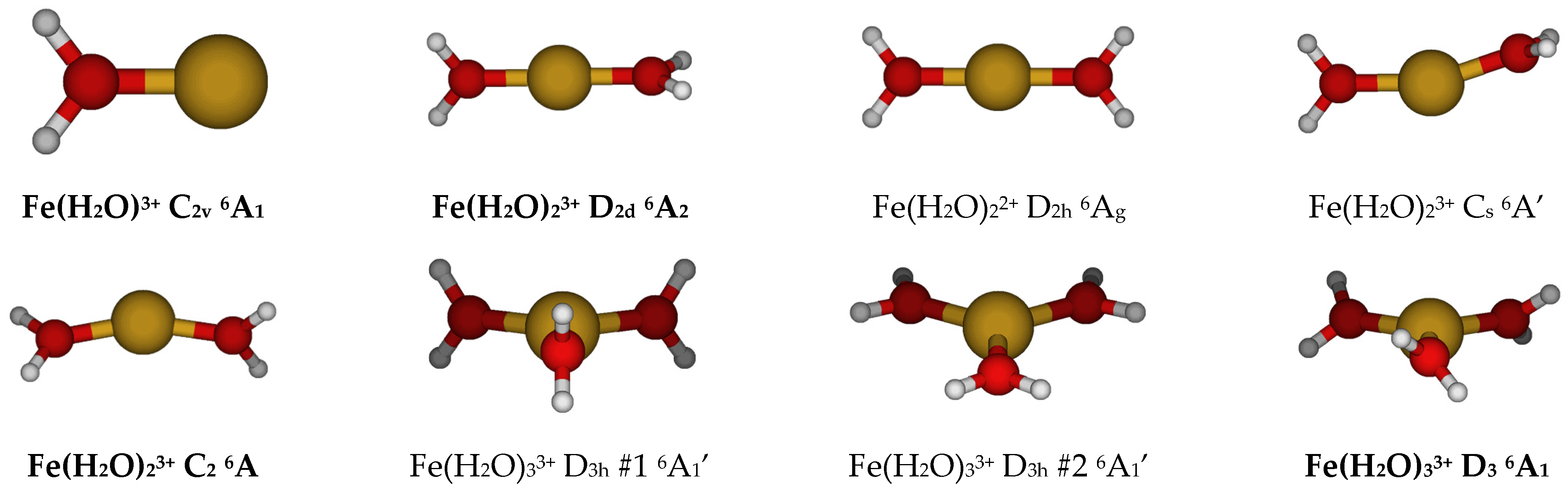
In all cases, monoaquairon(III) possesses C2v symmetry (Figure 3). The stable sextet configuration is 6A1. The Fe-O distance and Fe-O stretching vibrational frequency are given in Table 1 and Table 2. For the B3LYP levels, no stable configuration exists because the molecule dissociated into Fe and H2O fragments. Thermodynamically, the Fe2+ + H2O+ pair at infinite separation lies significantly lower (900–1000 kJ/mol) in energy than the Fe3+ + H2O pair at the minimum distance of around 1.8 Å but about 750–1000 kJ/mol lower than the Fe3+ + H2O pair at infinite separation (Figure S1). For the B3LYP levels, there is no minimum in energy. The crossing between the two curves for the HF and MP2 levels occurs at around 2.3 Å.

3.1.2. Diaquairon(III)

In most cases, the lowest-energy structure of diaquairon(III) possesses D2d symmetry (Figure 3). However, at the HF/3−21G and MP2/6−31G* levels, the C2 structure is preferred, in which the linearity is lost. The most stable sextet configuration is 6A2/6A. The D2h-6Ag structure is slightly higher in energy.

3.1.3. Triaquairon(III)

The two D3h structures were first examined (Figure 3). In both cases, the configuration was 6A1′, but neither was a minimum on their respective potential energy surfaces. Both structures desymmetrize to the stable D3 form (6A1).

3.1.4. Tetraaquairon(III)

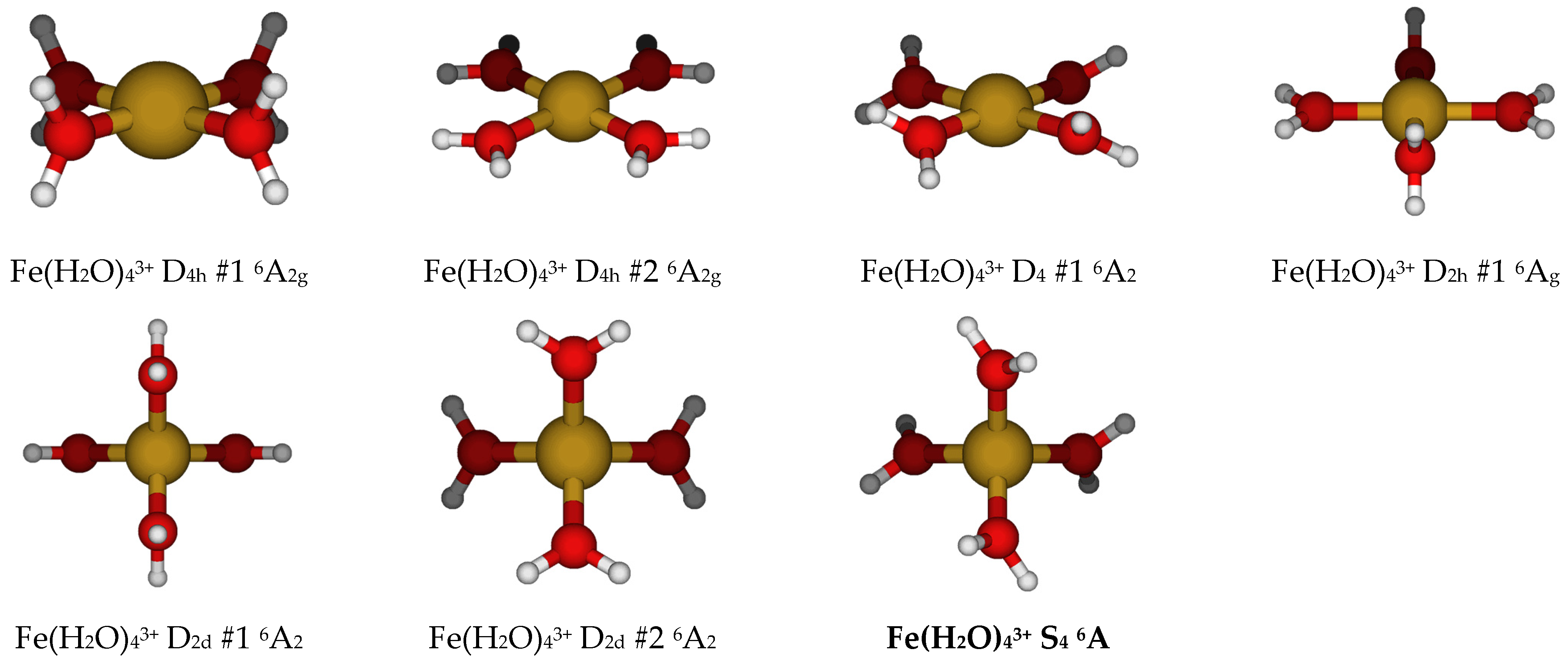
The two D4h structures (6A2g) were first examined (Figure 4), but neither was an energy minimum. Desymmetrization along the water twisting modes gave either a D4 (6A2) or a D2h (6Ag) structure, which were comparable in energy to each other and about 30 kJ/mol lower in energy than D4h #2. More energy was gained by desymmetrization from a square planar to two tetrahedral D2d (6A2) structures. These nearly isoenergetic structures were 75–100 kJ/mol lower in energy than D4h #2. Both desymmetrize to the stable S4 (6A) structure to lower the energy up to an additional 10 kJ/mol.

3.1.5. Pentaaquairon(III)

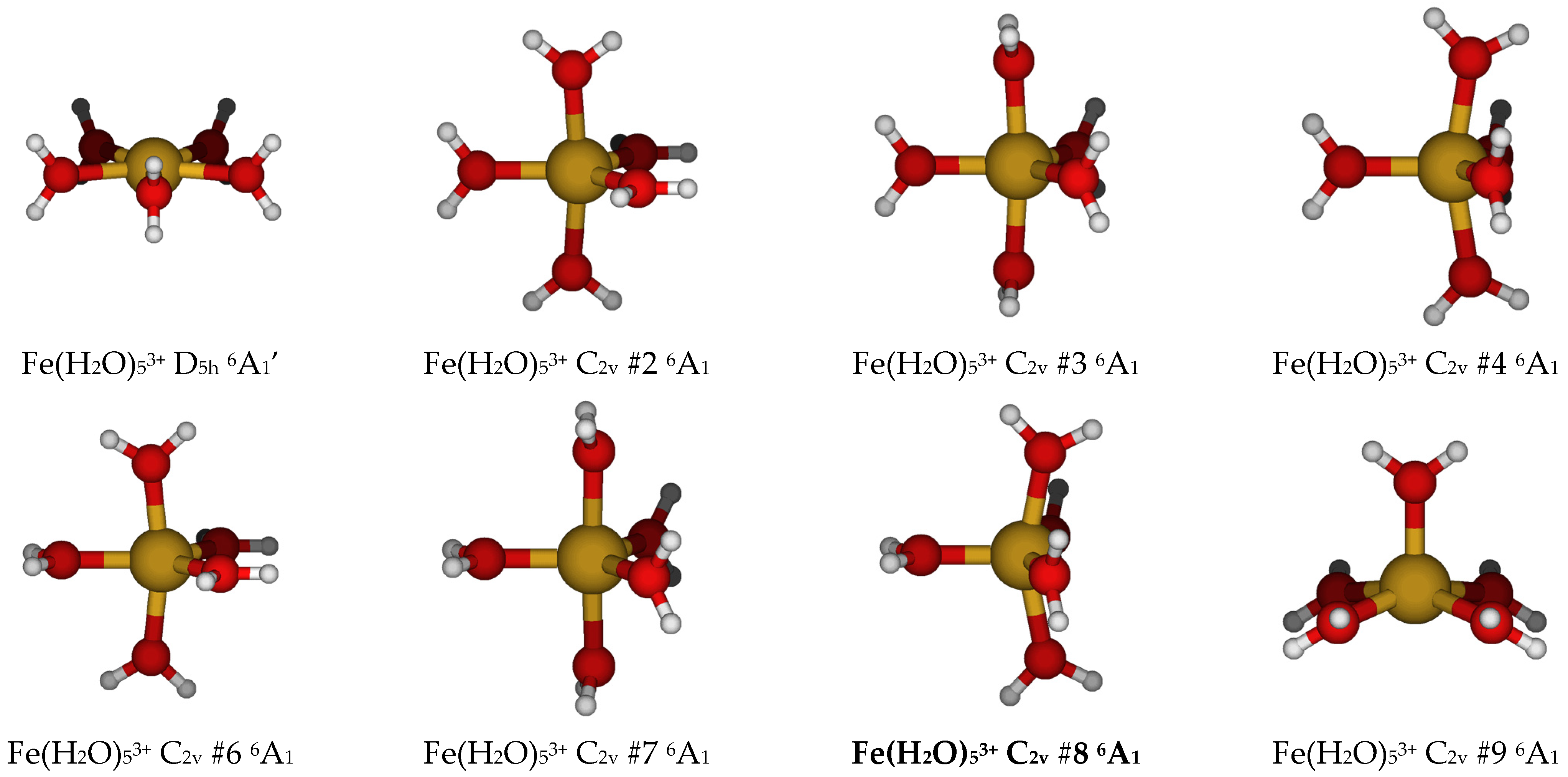
The planar D5h structure was first examined (Figure 5), but this possessed numerous imaginary frequencies, most of which destroyed the σh plane of symmetry perpendicular to the principal C5 rotation axis. Eight C2v structures were next examined. These occur as pairs that could potentially interconvert via a Berry pseudorotation: C2v #1 and C2v #8, C2v #2 and C2v #6, C2v #3 and C2v #7, and C2v #4 and C2v #5. Many of these did undergo this, so they were reoptimized to ensure this was not an artifact from the initial geometry being from the previous level’s optimized geometry. The initial OFeO angles were reset to 90.0 and 120.0 degrees, and the initial Hessian value was recalculated, but the molecular orbital estimates were retained to the desired symmetry. In most cases, the pseudorotation persisted. The C2v #1 structure always converted to C2v #8, and the C2v #5 structure always converted to C2v #4. The C2v #8 structure was lowest in energy and was always a minimum. An additional square pyramidal C2v #9 structure was also examined, but it was not a minimum.

3.1.6. Hexaaquaaquairon(III)

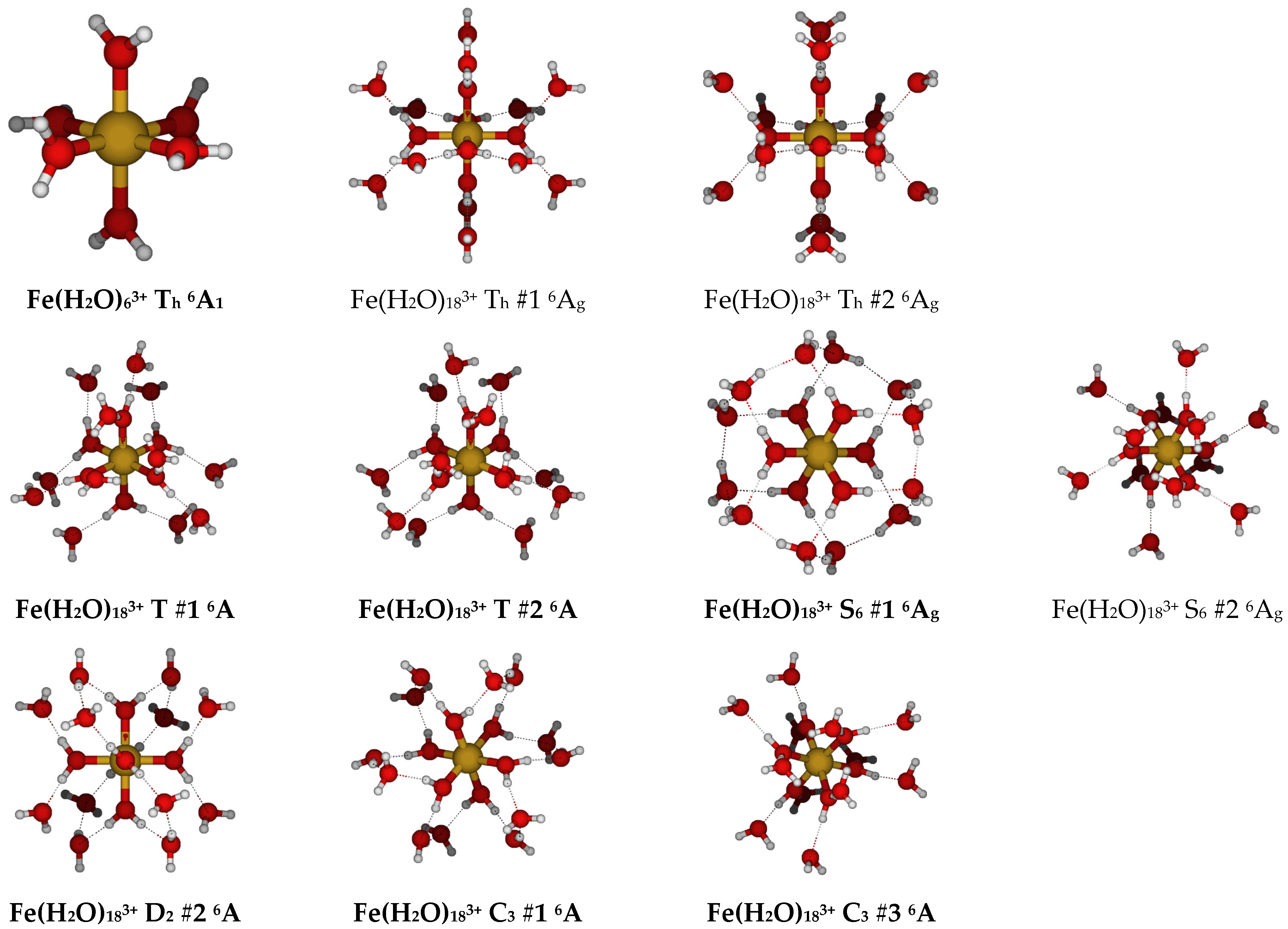
First, the Th structure (Ag) was examined (Figure 6). As this highly symmetrical structure was a minimum at all levels, no further structures were examined.

3.1.7. Octadecaaquairon(III)

We now add a second hydration shell consisting of 12 water molecules. First, two Th structures were calculated. We were able to calculate the vibrational frequencies at the MP2-FC levels for the first time for such a large number of water molecules, which required special care not to exceed computational resources. These would desymmetrize along imaginary Eg, Tg, Au, Eu, and Tu modes to give D2h, S6, T, D2, and C3 structures, respectively [31,32]. Neither structure had imaginary Eg modes. Both structures had imaginary Au, Eu, and Tg modes at all levels, which would give T #1 and #2, D2 #1 and #2, and S6 #1 and #2, respectively. The Th #1 had an imaginary Tu mode at one level, giving rise to C3 #1, whereas Th #2 only had an imaginary Tu mode at the two MP2 levels and B3LYP/6−31G*, giving C3 #2. Both distinct T structures were found, which differ in the relative orientation of the water trimers of the second shell relative to the first shell. These were stable at all levels of theory. Similarly, two distinct S6 structures were found, the disk (S6 #1) and the pinwheel (S6 #2), of which only the disk is stable. Of the two possible D2 structures, these usually converged to the corresponding T structures (D2 is a subgroup of T), but there are stable D2 structures in which only two of the three hydrogen bonds in the second-sphere water trimers have formed. These are somewhat higher in energy than the T structures. The S6 #1 structure is the lowest-energy structure of those examined. The S6 #2 structure desymmetrizes to the stable C3 #3 structure, which contains two water trimers and three water dimers in the second hydration shell. In some cases, the C3 #1 structure ascends in symmetry to give the cog structure (S6 #3).

3.2. Comparison of Fe-O Distance in Hexaaquairon(III) with Experiment

The calculated iron(III)–oxygen distances increase as the coordination number increases from one to six. The Fe-O distances using the 6−31+G* basis set are slightly longer than those using the 6−31G* basis set, and the level trend follows MP2 < B3LYP < HF (Table 1). The calculated iron(III)–oxygen distances of hexaaquairon(III) range from 2.032 to 2.054 Å, which are slightly too long compared to the experimental solid-phase results of 1.98–2.01 Å. However, including a second hydration shell reduces the Fe-O distance by around 0.025 Å to the range 1.999–2.029 Å. The choice of model for the second hydration shell does not seem to matter too much in this case. This level of agreement is excellent.

3.3. Comparison of Skeletal FeO6 Vibrational Frequencies with Experiment

The calculated Fe-O totally symmetric vibrational frequency decreases with coordination number (Table 2). The totally symmetric vibrational frequency using the 6−31+G* basis set is about 10–20 cm−1 lower than for the 6−31G* basis set. Compared to Hartree–Fock, this frequency is typically slightly higher at the MP2 levels but moderately lower at the B3LYP levels. Of some concern is the underestimation of the totally symmetric A1g stretching vibrational frequency (Table 3), which is predicted to lie between 413 and 451 cm−1. Experimentally, this band appears at ~510 cm−1. It is common practice to introduce frequency correction factors of ca. 0.9 (HF) to 0.95 (MP2) to improve the agreement with experiments [33]. However, this process would lower the predicted frequencies, making the agreement with the experiment worse. In accordance with numerous other calculations by one of the authors [34], this was correctly hypothesized to be due to the lack of a second hydration shell (Table 4). In this case, the choice of model matters more. Using one of the two Th models increases the vibrational frequencies somewhat more than the two T and S6 #1 models. In the S6 model, the splitting of the T modes into the A and E components are noted, whereas the degeneracy is preserved for the T models. The minimum-energy models give good predictions for the totally symmetric stretch (except B3LYP/6−31+G*, for unknown reasons). The excellent performance of MP2/6−31+G* is noted here. Based on these results, the depolarized mode at ~450 cm−1 is probably the Eg mode, in agreement with Kanno. The T1u stretching mode is predicted to be nearly degenerate with the A1g mode. While the deformation modes can be easily assigned in the hexaaqua complex, the same cannot be said of the 18-water complexes, as there is extensive coupling with higher-frequency water librational modes of the second hydration shell. While other options to model the second hydration shell exist, such as using a polarizable continuum model on either the hexaaqua- or octadecaaquairon(III) ion, some disadvantages can be introduced, such as artificial symmetry reduction or poorer convergence of the geometry optimization.

4. Discussion

In their study of the many-body effects on iron(III)–water interactions in [Fe(H2O)n]3+, n = 4, 6, 8, Curtiss et al. showed that the use of two-body potentials would tend to favor higher coordination numbers [35]. Their Hartree–Fock calculations with a double-zeta basis set assumed an Fe-O distance of 2.0 Å. Chang et al. used VWN/DNP, BP/DNP, and BLYP/DNP DFT methods for the hexaaqua ion to give distances of 2.024, 2.108, and 2.121 Å, respectively [36]. The last two gradient-corrected functional results are much longer than the local density functional result. For iron(III), Remsungnen and Rode found a hexacoordinate structure with 13.4 water molecules on average in the second hydration shell [37] using the Hartree–Fock description for the ion with the first hydration shell and ab initio-generated two- and three-body potentials for the remainder. They found an Fe-O distance of 2.02 Å with the HF/DZP basis set used. The velocity autocorrelation function was used to generate (scaled, 0.89) vibrational frequencies of 443 cm−1 (Ag), 379 cm−1 (Eg), 275 cm−1 (T2g), and 240 cm−1 (T1u) [38]. The unscaled results (498, 426, 309, 270 cm−1) are still slightly too low compared with the experiment. A pure two- and three-body potential MD simulation gave a distance of 2.05 Å and 15 water molecules in the second hydration shell [39]. The B3LYP/6−31G* calculation (Fe-VTZ) of hexaaquairon(III) with and without implicit solvation demonstrated that the PCM model of solvation can decrease the Fe-O bond distance in Fe(H2O)63+ from 2.039 Å to 1.996 Å (Th) or 2.005 Å (S6) [40]. The symmetry lowering was an artifact of the solvation model. The BLYP/6−31G** Pople-style and BLYP/US-PW plane wave basis set with the Vanderbilt pseudopotential calculation gave the same Fe-O distance of 2.064 Å [41]. These results were combined with a Car–Parrinello and classical MD simulation with 32 water molecules and another classical simulation with 512 water molecules to give Fe-O first peak maxima at 2.05, 1.98, and 1.96 Å, respectively. Of note is the shortening of the Fe-O distance by ~0.02 Å. Our static calculations also reproduce the shortening of Fe-O by the second hydration sphere, but it is slightly more pronounced. Another Car–Parrinello 12 ps simulation using 64 water molecules and the PBE96 exchange correlation with a pseudopotential and plane wave basis set gave a first-shell peak at 2.10 Å (average 2.12 Å, σ = 0.088 Å) [42]. The corresponding gas phase calculation (PBE96/pVDZ) gave an Fe-O distance of 2.11 Å. A QMCF-MD simulation with 1000 water molecules at the HF/DZP level gave an inner shell of six water molecules and Fe-O first-shell maxima of 2.03 Å (half-width 0.25 Å), with a second shall average of 13.6 water molecules (range 11–17) [43]. The stretching frequency was found to be 513 cm−1. Their static calculations on the di-, tetra-, and hexahydrate gave slightly longer distances than ours: HF, 1.89, 1.97, 2.06; MP2, 1.87, 1.95, 2.04; and B3LYP, 1.92, 1.95, 2.05 (all in Å). Their CCSD/DZP calculation on the dihydrate gave 1.88 Å, which is between the HF and MP2 result. A MCSCF/(aug)cc-pVTZ and MR-PT2/(aug)-cc-pVTZ calculation on the hexaaqua ion gives an Fe-O distance of 2.059 and 2.032 Å, respectively [44]. Other electronic states were also calculated. For the most part, these results were in good agreement with ours.

5. Conclusions

The HF, MP2, and B3LYP methods were paired with the 6−31G* and 6−31+G* basis sets to study the hydrated high-spin iron(III) ion. The calculated structures of the hexaaqua ion compared favorably with the crystal structures of hexaaquairon(III) salts. The calculated vibrational frequencies of the hexaaquairon(III) ion do not agree with the experimental solution measurements. However, including an explicit second hydration shell in the calculation brings the results to much closer agreement. Symmetry can be used to guide the search for new structures.

Supplementary Materials

The following supporting information can be downloaded at: https://www.mdpi.com/article/10.3390/liquids6010008/s1, Figure S1: Energies of Fe(H2O)3+ (relative to Fe3+ + H2O) as a function of Fe-O distance; Figure S2: Total and incremental binding energies of Fe(H2O)n3+ (no zero-point, thermal, or entropy corrections); Table S1: Total energies of structures considered.

Author Contributions

Conceptualization, C.C.P.; methodology, C.C.P.; validation, C.C.P.; formal analysis, C.C.P.; investigation, C.C.P. and F.d.P.R.; data curation, C.C.P.; writing—original draft preparation, C.C.P.; writing—review and editing, C.C.P.; visualization, C.C.P. and F.d.P.R.; supervision, C.C.P.; project administration, C.C.P.; funding acquisition, C.C.P. All authors have read and agreed to the published version of the manuscript.

Funding

This research was funded by a strategic project grant from the Natural Sciences and Engineering Research Council of Canada and Atomic Energy of Canada Ltd., grant number STPGP 380986-09.

Data Availability Statement

Data is contained within the article and Supplementary Materials.

Acknowledgments

The authors thank ACEnet (placentia) and the Digital Research Alliance of Canada (nibi) for the computational resources.

Conflicts of Interest

The authors declare no conflicts of interest. The funders had no role in the design of the study; in the collection, analyses, or interpretation of data; in the writing of the manuscript; or in the decision to publish the results.

Abbreviations

The following abbreviations are used in this manuscript:
HFHartree–Fock
MP2Second-order Møller–Plesset perturbation theory
DFTDensity functional theory
B3LYPBecke three-parameter exchange + Lee–Yang–Parr correlation functional
GIFGeneration-IV International Forum
SCWRSupercritical Water Reactor
CANDUCanada Deuterium Uranium Reactor

References

  1. Gen IV International Forum. Available online: https://www.gen-4.org/gif/ (accessed on 21 December 2025).
  2. Abram, T.; Ion, S. Generation-IV nuclear power: A review of the state of the science. Energy Policy 2008, 36, 4323–4330. [Google Scholar] [CrossRef]
  3. Torgerson, D.F.; Shalaby, B.A.; Pang, S. CANDU Technology for Generation III+ and IV reactors. Nucl. Eng. Des. 2006, 236, 1565–1572. [Google Scholar] [CrossRef]
  4. Guzonas, D.; Brosseau, F.; Tremaine, P.; Meesungnoen, J.; Jay-Gerin, J.-P. Water Chemistry in a Supercritical Water-cooled Pressure Tube Reactor. Nucl. Technol. 2012, 179, 205–219. [Google Scholar] [CrossRef]
  5. Komabayashi, T. Phase Relations of Earth’s Core-Forming Materials. Crystals 2021, 11, 581. [Google Scholar] [CrossRef]
  6. Darken, L.S.; Gurey, R.W. The System Iron-Oxygen. I. The Wüstite Field and Related Equilibria. J. Am. Chem. Soc. 1945, 67, 1398–1412. [Google Scholar] [CrossRef]
  7. Darken, L.S.; Gurey, R.W. The System Iron-Oxygen. II. Equilibrium and Thermodynamics of Liquid Oxide and Other Phases. J. Am. Chem. Soc. 1946, 68, 798–816. [Google Scholar] [CrossRef]
  8. Whitney, W.R. The Corrosion of Iron. J. Am. Chem. Soc. 1903, 25, 394–406. [Google Scholar] [CrossRef]
  9. Bragg, W.H. The Structure of Magnetite and the Spinels. Nature 1915, 95, 561. [Google Scholar] [CrossRef]
  10. Claassen, A.A. The Scattering Power of Oxygen and Iron for X-rays. Proc. Phys. Soc. Lond. 1925, 38, 482–487. [Google Scholar] [CrossRef]
  11. Fleet, M.E. The Structure of Magnetite. Acta Cryst. B 1981, 37, 917–920. [Google Scholar] [CrossRef]
  12. Pauling, L.; Hendricks, S.B. The Crystal Structures of Hematite and Corundum. J. Am. Chem. Soc. 1925, 47, 781–790. [Google Scholar] [CrossRef]
  13. Blake, R.L.; Hessevick, R.E.; Zoltai, T.; Finger, L.W. Refinement of the Hematite Structure. Am. Miner. 1966, 51, 123–129. [Google Scholar]
  14. Wyckoff, R.W.G.; Crittenden, E.D. Herstellung und Kristallstruktur von Ferrooxyd (FeO). Z. Krist. 1926, 63, 144–147. [Google Scholar] [CrossRef]
  15. Tremaine, P.R.; von Massow, R.; Sherman, G.R. A Calculation of Gibbs Free Energies for Ferrous Ions and the Solubility of Magnetite in H2O and D2O to 300 °C. Thermochim. Acta 1977, 19, 287–300. [Google Scholar] [CrossRef]
  16. Tremaine, P.R.; LeBlanc, J.C. The Solubility of Magnetite and the Hydrolysis and Oxidation of Fe2+ in Water to 300 °C. J. Sol. Chem. 1980, 9, 415–442. [Google Scholar] [CrossRef]
  17. Robinson, P.D.; Fang, J.H. Crystal Structures and Mineral Chemistry of Hydrated Ferric Sulphates. II. The Crystal Structure of Paracoquimbite. Am. Miner. 1971, 56, 1567–1572. [Google Scholar]
  18. Hair, N.J.; Beattie, J.K. Structure of Hexaaquairon(III) Nitrate Trihydrate. Comparison of Iron(II) and Iron(III) Bond Lengths in High-Spin Octahedral Environments. Inorg. Chem. 1977, 16, 245–250. [Google Scholar] [CrossRef]
  19. Fischer, A. Hexaaquairon(III) perchlorate trihydrate. Acta Cryst. E 2006, 62, i94–i95. [Google Scholar] [CrossRef]
  20. Skogareva, L.S.; Shilov, G.V.; Karelin, A.I. Crystal structure and Raman Spectra of [Fe(H2O)6]3+(ClO4)3•3H2O. J. Struct. Chem. 2012, 53, 907–914. [Google Scholar] [CrossRef]
  21. Hennings, E.; Schmidt, H.; Voigt, W. Crystal structure of iron(III) perchlorate nonahydrate. Acta Cryst. E 2014, 70, 477–479. [Google Scholar] [CrossRef]
  22. Herdman, G.J.; Neilson, G.W. Ferric ion (Fe(III)) coordination in concentrated aqueous electrolyte solutions. J. Phys. Condens. Matter 1992, 4, 627–638. [Google Scholar] [CrossRef]
  23. Lundberg, D.; Ullstrom, A.-S.; D’Angelo, P.; Persson, I. A structural study of the hydrated and the dimethylsulfoxide, N,N’-dimethylpropyleneurea, and N,N-dimethylthioformamide solvated iron(II) and iron(III) ions in solution and solid state. Inorg. Chim. Acta 2007, 360, 1809–1818. [Google Scholar] [CrossRef]
  24. Sharma, S.K. Raman Study of Ferric Perchlorate and Nitrate in Acidic Solutions. J. Inorg. Nucl. Chem. 1973, 35, 3831–3836. [Google Scholar] [CrossRef]
  25. Sharma, S.K. Raman study of ferric nitrate crystalline hydrate and variably hydrated liquids. J. Chem. Phys. 1974, 61, 1748–1754. [Google Scholar] [CrossRef]
  26. Kanno, H.; Hiraishi, J. A Raman Study of Aqueous Solutions of Ferric Nitrate, Ferrous Chloride and Ferric Chloride in the Glassy State. J. Raman Spectrosc. 1982, 12, 224–227. [Google Scholar] [CrossRef]
  27. Murata, K.; Irish, D.E.; Toogood, G.E. Vibrational spectral studies of solutions at elevated temperatures and pressures. 11. A Raman spectral study of aqueous iron(III) chloride solutions between 25 and 300 °C. Can. J. Chem. 1989, 67, 517–524. [Google Scholar] [CrossRef]
  28. Biswas, B.; Allen, H.C. Solution and Surface Solvation of Nitrate Anions with Iron(III) and Aluminum(III) in Aqueous Environments: A Raman and Vibrational Sum Frequency Generation Study. J. Phys. Chem. A 2024, 129, 8938–8953. [Google Scholar] [CrossRef]
  29. Frisch, M.J.; Trucks, G.W.; Schlegel, H.B.; Scuseria, G.E.; Robb, M.A.; Cheeseman, J.R.; Montgomery, J.A., Jr.; Vreven, T.; Kudin, K.N.; Burant, J.C.; et al. Gaussian 03, Revision D.02; Gaussian, Inc.: Wallingford, CT, USA, 2004. [Google Scholar]
  30. Frisch, M.J.; Trucks, G.W.; Schlegel, H.B.; Scuseria, G.E.; Robb, M.A.; Cheeseman, J.R.; Scalmani, G.; Barone, V.; Petersson, G.A.; Nakatsuji, H.; et al. Gaussian 16, Revision C.01; Gaussian, Inc.: Wallingford, CT, USA, 2019. [Google Scholar]
  31. Pye, C.C.; Whynot, D.C.M.; Corbeil, C.R.; Mercer, D.J.W. Desymmetrization in geometry optimization: Application to an ab initio study of copper(I) hydration. Pure Appl. Chem. 2020, 92, 1643–1654. [Google Scholar] [CrossRef]
  32. Pye, C.C.; Gilbert, C.R. An ab initio investigation of the second hydration shell of metal cations. Comp. Appl. Chem. 2020, 37, 81–85. [Google Scholar]
  33. Rudolph, W.W.; Pye, C.C. Raman Spectroscopic Measurements and ab Initio Molecular Orbital Studies of Cadmium(II) Hydration in Aqueous Solution. J. Phys. Chem. B 1998, 102, 3564–3573. [Google Scholar] [CrossRef]
  34. Michels, M.R.; Enright, T.G.; Tomney, M.R.; Pye, C.C.; Rudolph, W.W. Ab initio calculation of the effect of metal ions on the vibrational spectrum of water. Can. J. Anal. Sci. Spectrosc. 2003, 48, 64–76. [Google Scholar]
  35. Curtiss, L.A.; Hailey, J.W.; Hautman, J. Many-Body Effects in Ion-Water Interactions: Fe3+ in Water. Chem. Phys. 1989, 133, 89–94. [Google Scholar] [CrossRef]
  36. Chang, C.M.; Wang, M.K. Linear relationship for acidity and stability in hexaaqua metal ions—Density functional studies. Chem. Phys. Lett. 1988, 286, 46–50. [Google Scholar] [CrossRef]
  37. Remsungnen, T.; Rode, B.M. QM/MM Molecular Dynamics Simulation of the Structure of Hydrated Fe(II) and Fe(III) Ions. J. Phys. Chem. A 2003, 107, 2324–2328. [Google Scholar] [CrossRef]
  38. Remsungnen, T.; Rode, B.M. Dynamical properties of the water molecules in the hydration shells of Fe(II) and Fe(III) ions: Ab initio AM/MM molecular dynamics simulations. Chem. Phys. Lett. 2003, 367, 586–592. [Google Scholar] [CrossRef]
  39. Remsungnen, T.; Rode, B.M. Molecular dynamics simulation of the hydration of transition metal ions: The role of non-additive effects in the hydration shells of Fe2+ and Fe3+ ions. Chem. Phys. Lett. 2004, 385, 491–497. [Google Scholar] [CrossRef]
  40. Jarzecki, A.A.; Anbar, A.D.; Spiro, T.G. DFT Analysis of Fe(H2O)63+ and Fe(H2O)62+ Structure and Vibrations; Implications for Isotope Fractionation. J. Phys. Chem. A 2004, 108, 2726–2732. [Google Scholar] [CrossRef]
  41. Amira, S.; Spangberg, D.; Zelin, V.; Probst, M.; Hermansson, K. Car-Parrinello Molecular Dynamics Simulation of Fe3+(aq). J. Phys. Chem. B 2005, 109, 14235–14242. [Google Scholar] [CrossRef]
  42. Bogatko, S.A.; Bylaska, E.J.; Weare, J.H. First Principles Simulation of the Bonding, Vibrational, and Electronic Properties of the Hydration Shells of the High-Spin Fe3+ Ion in Aqueous Solution. J. Phys. Chem. A 2010, 114, 2189–2200. [Google Scholar] [CrossRef]
  43. Moin, S.T.; Hofer, T.S.; Pribil, A.B.; Randolf, B.R.; Rode, B.M. A Quantum Mechanical Charge Field Molecular Dynamics Study of Fe2+ and Fe3+ Ions in Aqueous Solutions. Inorg. Chem. 2010, 49, 5101–5106. [Google Scholar] [CrossRef]
  44. Miliordis, E.; Xantheas, S.S. Ground and Excited States of the [Fe(H2O)6]2+ and [Fe(H2O)6]3+ Clusters: Insight into the Electronic Structure of the [Fe(H2O)6]2+–[Fe(H2O)6]3+ Complex. J. Chem. Theory Comput. 2015, 11, 1549–1563. [Google Scholar] [CrossRef]
Figure 1. Schematic of a supercritical water-cooled reactor. The black arrows indicate the direction of fluid flow.
Liquids 06 00008 g001
Figure 2. Pressure tube design. The orange circles represent the fuel pins, which are surrounded by the flowing H2O coolant. Outside the pressure tube is the D2O moderator.
Liquids 06 00008 g002
Figure 3. Structures of mono-, di- and triaquairon(III) complexes. Labels in bold indicate a minimum on the potential energy surface. Yellow = iron; red = oxygen; white = hydrogen.
Liquids 06 00008 g003
Figure 4. Structures of tetraaquairon(III) complexes.
Liquids 06 00008 g004
Figure 5. Structures of pentaaaquairon(III) complexes.
Liquids 06 00008 g005
Figure 6. Structures of hexa- and octadecaaaquairon(III) complexes.
Liquids 06 00008 g006
Table 1. Average Fe-O distances (Å) of aquairon(III) complexes. n/a = not applicable. () value corresponds to the lower symmetry indicated.
SpeciesSym.Config.HFMP2B3LYP
6−31G*6−31+G*6−31G*6−31+G*6−31G*6−31+G*
Fe(H2O)3+C2v6A11.83621.83941.81591.8218n/an/a
Fe(H2O)23+D2d(C2)6A21.87461.8787(1.8579)1.86321.89471.9102
Fe(H2O)33+D36A11.91291.91681.89771.90171.90621.9151
Fe(H2O)43+S46A1.95051.95561.93511.93931.93751.9462
Fe(H2O)53+C2v6A12.00712.01161.99121.99691.99542.0054
Fe(H2O)63+Th6Ag2.04832.05352.03152.03772.03712.0491
Fe(H2O)183+Th #16Ag2.01692.02311.99892.00432.00652.0191
Fe(H2O)183+Th #26Ag2.01832.02412.00042.00442.00862.0201
Fe(H2O)183+T #16A2.02302.02752.00732.01052.01612.0265
Fe(H2O)183+T #26A2.02462.02782.00992.01132.01882.0279
Fe(H2O)183+S6 #16Ag2.02292.02872.00702.01162.01342.0252
Fe(H2O)183+(S6 #2)6Ag2.02042.02592.00412.00842.01312.0243
Table 2. Totally symmetric Fe-O vibrational frequencies (cm−1) of aquairon(III) complexes.
SpeciesSym.Config.HFMP2B3LYP
6−31G*6−31+G*6−31G*6−31+G*6−31G*6−31+G*
Fe(H2O)3+C2v6A1696687715697n/an/a
Fe(H2O)23+D2d(C2)6A2572563(582)563462430
Fe(H2O)33+D36A1537527541526487468
Fe(H2O)43+S46A504493508494478462
Fe(H2O)53+C2v6A1472461477463453432
Fe(H2O)63+Th6Ag445435451438431413
Table 3. Skeletal Fe-O vibrational frequencies (cm−1) of hexaaquairon(III). Treating water as a point mass, the point group symmetry is Oh, with Γ vib = A 1 g + E g + 2 T 1 u + T 2 g + T 2 u . R = Raman active; IR = infrared active; n.a. = not active; p = polarized; dp = depolarized. The ? indicates an uncertain assignment.
ModeActivityExpt.HFMP2B3LYP
6−31G*6−31+G*6−31G*6−31+G*6−31G*6−31+G*
ν1(A1g)R,p510445435451438431413
ν2(Eg)R,dp308?351339360346341323
ν3(T1u)IR450?438428440427417399
ν4(T1u)IR 186186178184171175
ν5(T2g)R,dp 180179170166164169
ν6(T2u)n.a. 124123120122113115
Table 4. Fe-O stretching vibrational frequencies (cm−1) of hexaaquairon(III) in models containing explicit second hydration shell. * = Contains imaginary frequencies. The actual irreducible representations in the lower symmetry corresponding to those assuming a point mass (Oh) can be found through correlation diagrams.
Mode[6+0] ThTh #1 *Th #2 *T #1T #2S6 #1
HF/6−31G*
ν1(A1g)445534521494504/14527
ν2(Eg)351467448426428430
ν3(T1u)438535528494514506,519
HF/6−31+G*
ν1(A1g)435520509525494513
ν2(Eg)339453435414418414
ν3(T1u)428520514512501490,499
MP2/6−31G*
ν1(A1g)451546531516518529
ν2(Eg)360481463444441447
ν3(T1u)440548540510536528,543
MP2/6−31+G*
ν1(A1g)438532520505506517
ν2(Eg)346467451433433429
ν3(T1u)427533526511520512,525
B3LYP/6−31G*
ν1(A1g)431529512506503524
ν2(Eg)341466441431426404
ν3(T1u)417526516497491475,497
B3LYP/6−31+G*
ν1(A1g)413507492459479457
ν2(Eg)323446422409406418
ν3(T1u)399502494461472457,459
Disclaimer/Publisher’s Note: The statements, opinions and data contained in all publications are solely those of the individual author(s) and contributor(s) and not of MDPI and/or the editor(s). MDPI and/or the editor(s) disclaim responsibility for any injury to people or property resulting from any ideas, methods, instructions or products referred to in the content.