
Diversity of Fusarium spp. in Pomelo (Citrus maxima (Burm.) Merr.) Orchards Riskily Caused Root Rot and Yellow Leaf Disease, and the Control Approach

 , , ,
, , ,
Abstract
1. Introduction
2. Materials and Methods
2.1. Materials
2.2. Methods
2.2.1. Isolation and Assessment of Pathogenicity of Fusarium spp. in Pomelo
2.2.2. Isolation and Selection of Trichoderma spp.
- PIMG = {(R1 − R2)/R1} × 100%
- R1: The radii of Fusarium spp. in the negative control;
- R2: The radii of Fusarium spp. co-inoculated with Trichoderma spp.
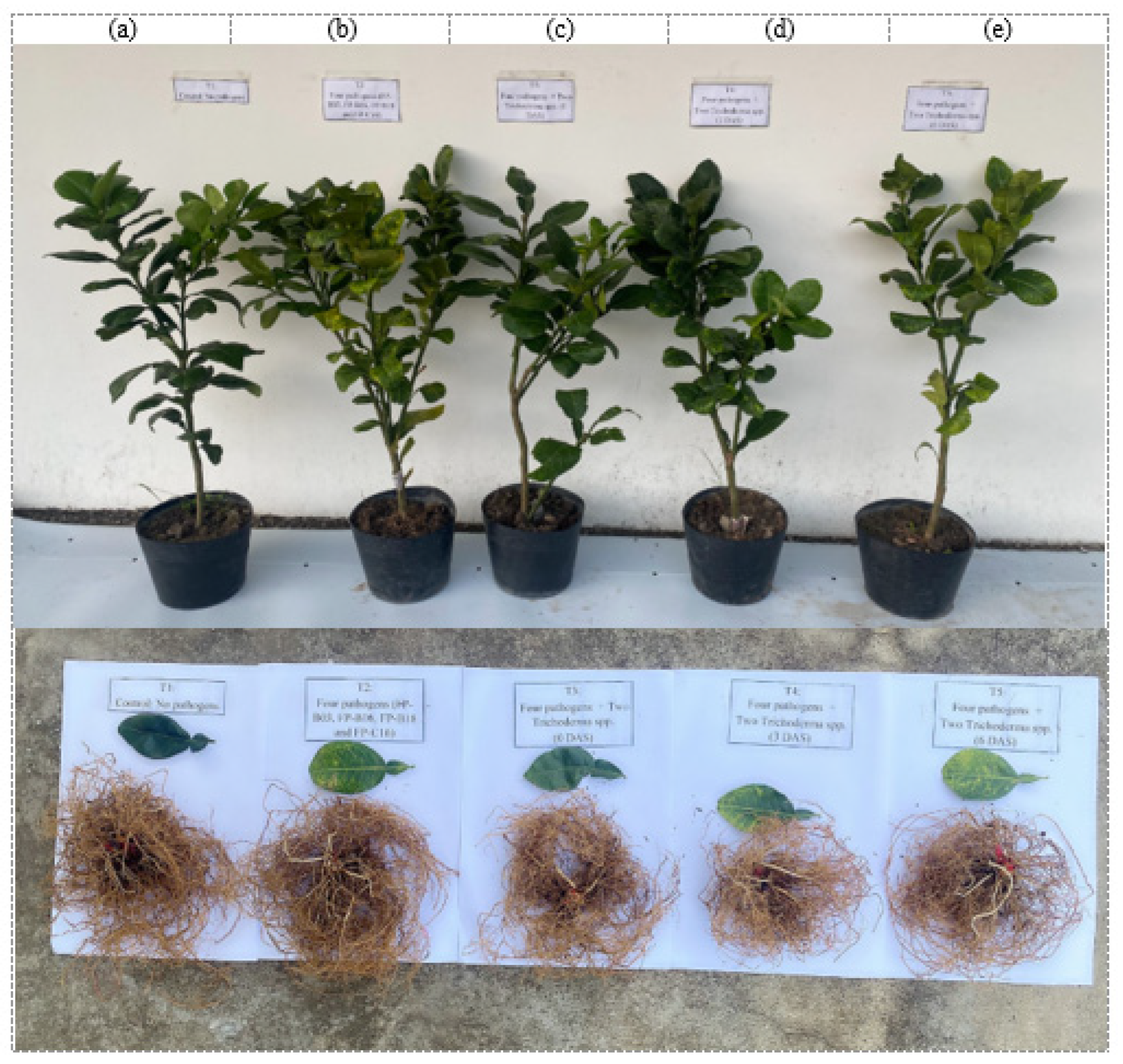
- Treatment 1: no pathogens;
- Treatment 2: four pathogenic strains;
- Treatment 3: four pathogenic strains + spray two Trichoderma spp. strains at the same time as the infection;
- Treatment 4: four pathogenic strains + spray two Trichoderma spp. strains 3 days after the infection;
- Treatment 5: four pathogenic strains + spray two Trichoderma spp. strains 6 days after the infection.
2.3. Statistical Analysis
3. Results
3.1. Morphology and Growth of Fusarium spp. Strains Causing RRYLD in Pomelo
3.1.1. Morphology of Fusarium spp.
3.1.2. Growth of Fusarium spp. on PDA
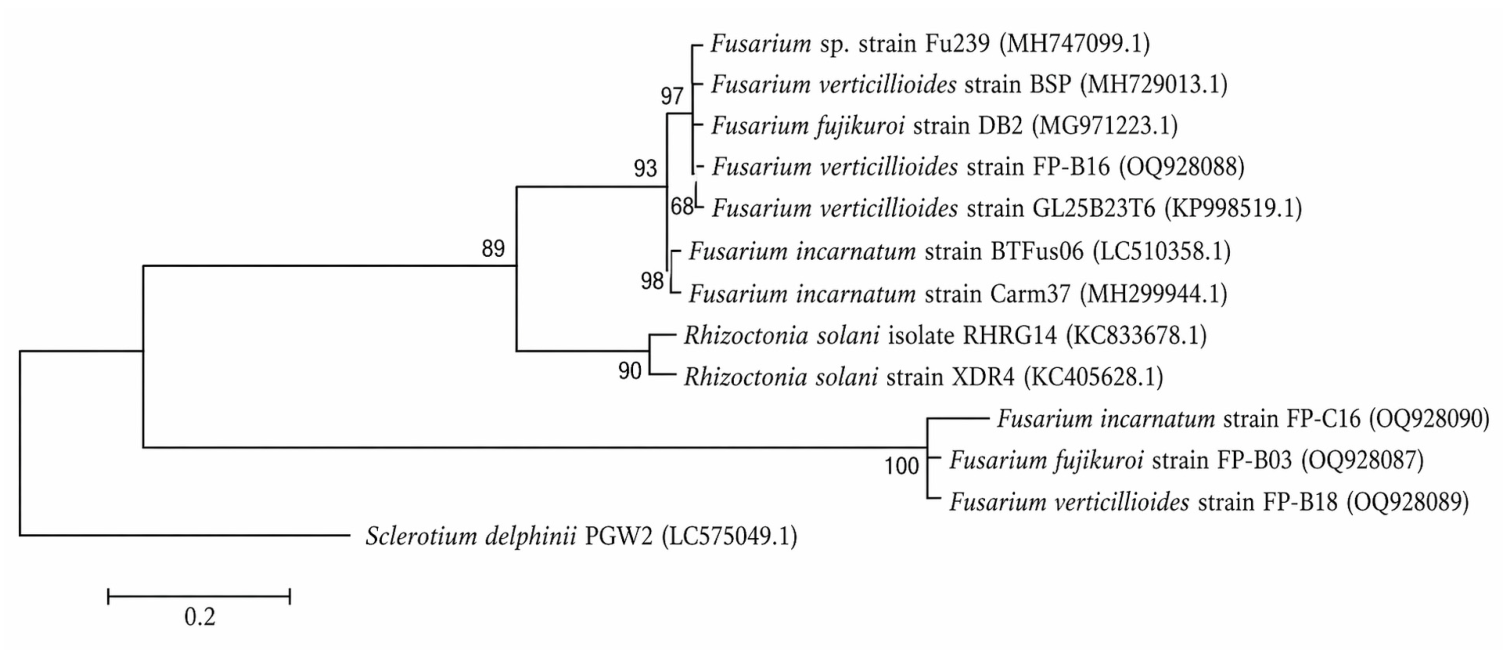
3.1.3. Identification of Fusarium spp. Causing RRYLD in Pomelo
3.2. Morphology and Growth of Trichoderma spp. Strains
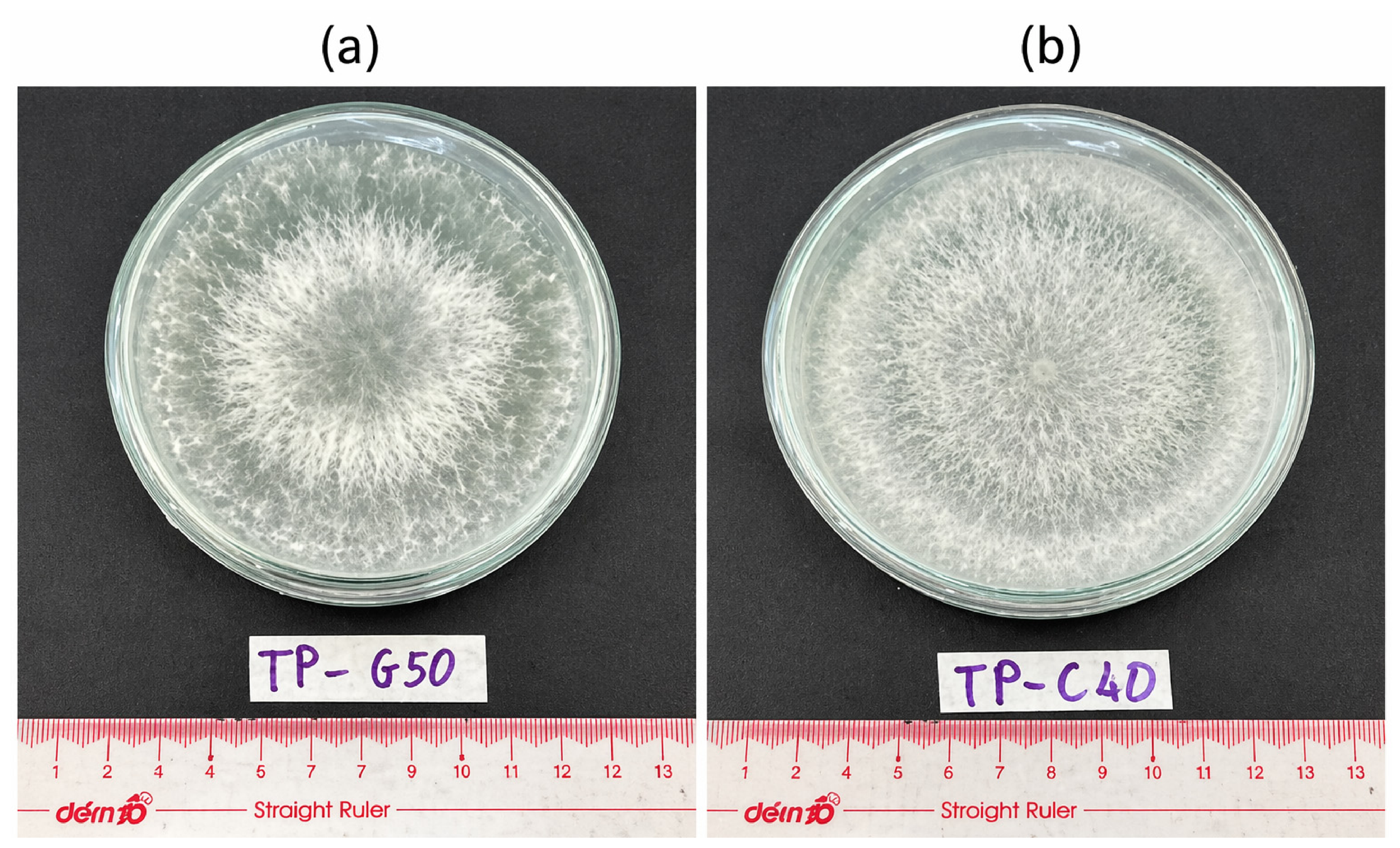
3.2.1. Morphology of Trichoderma spp.
3.2.2. Growth of Trichoderma spp. on PDA
3.3. Biocontrol Capacity of Trichoderma spp. Against Fusarium spp. Under In Vitro Conditions
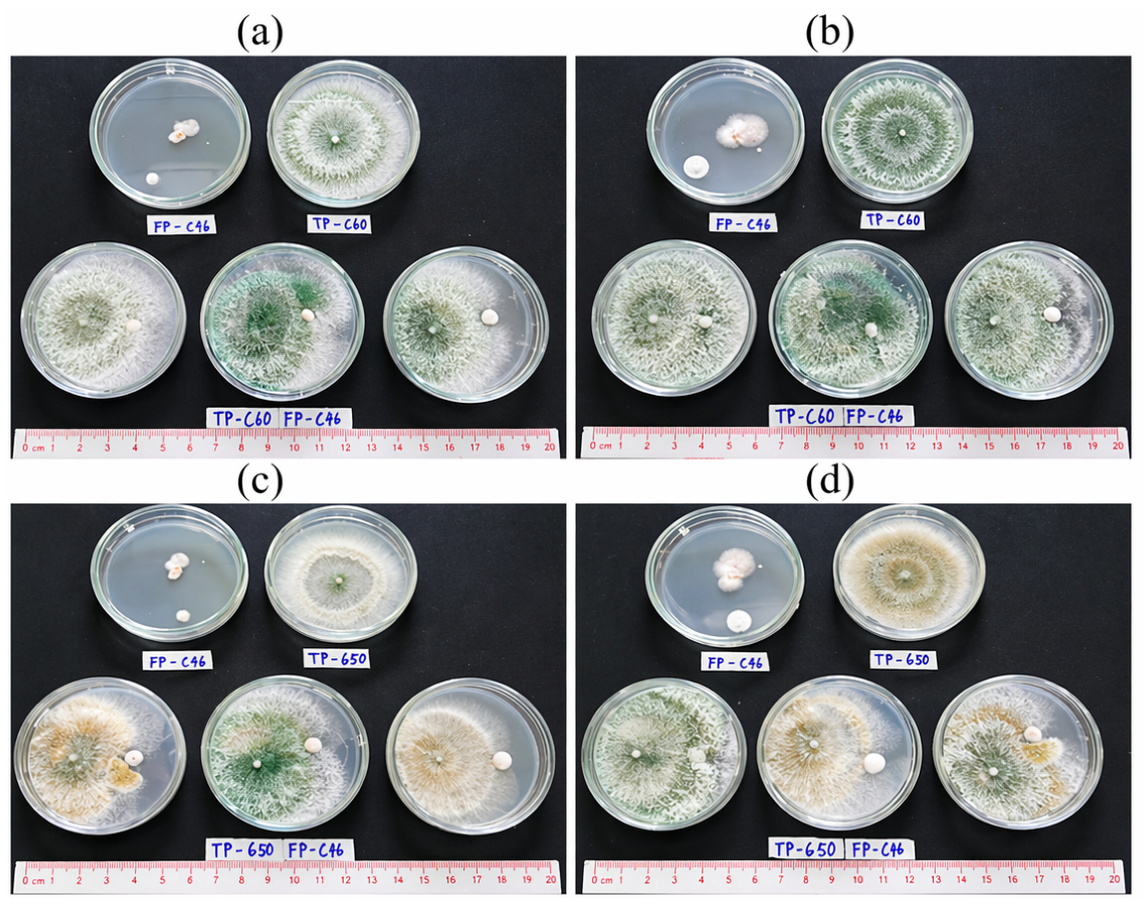
3.3.1. Antagonism of Trichoderma spp. Against Fusarium incarnatum FP-C16 Under In Vitro Conditions
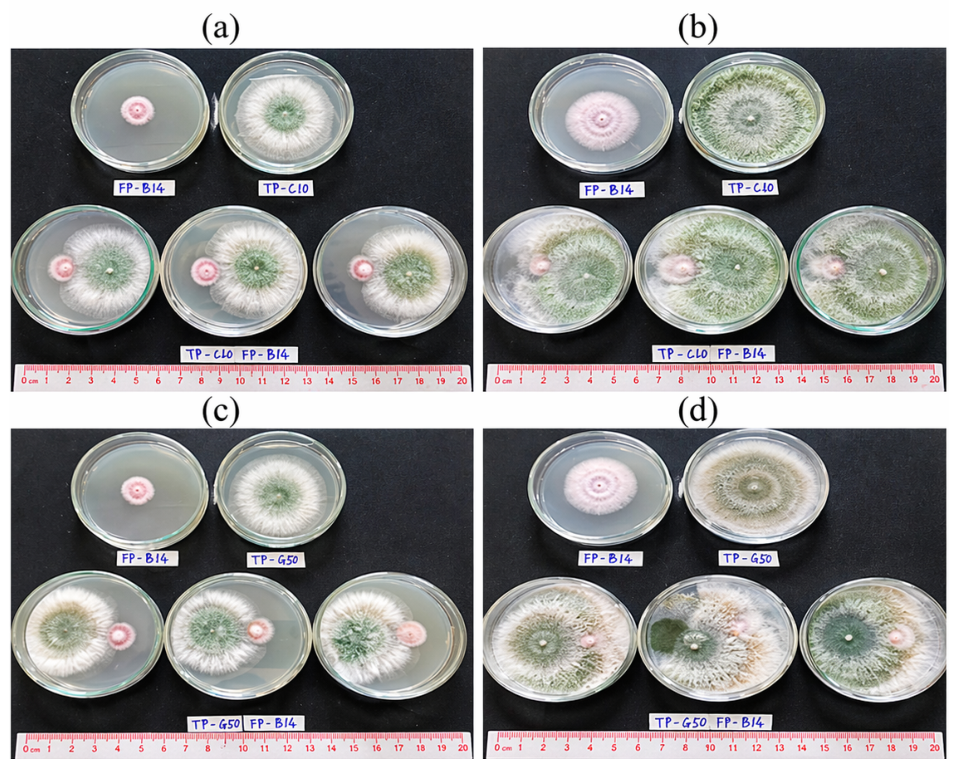
3.3.2. Antagonism of Trichoderma spp. Against Fusarium verticillioides FP-B16 Under In Vitro Conditions
3.3.3. Identification of Trichoderma spp. Antagonizing Fusarium spp.
3.4. Effectiveness of Trichoderma spp. in Controlling Pomelo RRYLD Caused by Fusarium spp. Under Greenhouse Conditions
4. Discussion
5. Conclusions
Supplementary Materials
Author Contributions
Funding
Institutional Review Board Statement
Informed Consent Statement
Data Availability Statement
Acknowledgments
Conflicts of Interest
Abbreviations
| RRYLD | Root Rot and Yellow Leaf Disease |
| PDA | Potato Dextrose Agar |
| SDW | Sterilized Distilled Water |
| TSM | Trichoderma Selective Medium |
References
- Van Hoa, N.; Uyen, D.T.; Thoa, N.T.; Thoai, V.H. Citrus Industry of Vietnam: Present Status and Future Opportunities. In Asian Citrus Industry; Ghosh, D.K., Song, K.J., Bhattacharyya, S., Roy, S.S., Ramadugu, C., Eds.; CRC Press: Boca Raton, FL, USA, 2025; pp. 249–275. [Google Scholar] [CrossRef]
- Thuan, V.M.; Quyen, P.T.; Khoa, H.N.; Xuan, D.T.; Quang, L.T.; Xuan, L.N.; Khuong, N.Q. Occurrence of the Stem End Rot Disease in Pomelo, Citrus maxima, Caused by Lasiodiplodia Species in Ben Tre Province, Vietnam. Arab. J. Plant Prot. 2025, 43, 310–316. [Google Scholar] [CrossRef]
- Chi, N.M.; Thu, P.Q.; Nam, H.B.; Quang, D.Q.; Phong, L.V.; Van, N.D.; Trang, T.T.; Kien, T.T.; Tam, T.T.T.; Dell, B. Management of Phytophthora palmivora disease in Citrus reticulata with chemical fungicides. J. Gen. Plant Pathol. 2020, 86, 494–502. [Google Scholar] [CrossRef]
- Vu, T.X.; Tran, T.B.; Hoang, C.Q.; Nguyen, H.T.; Do, L.M.; Dinh, M.T.; Thai, D.H.; Tran, T.V. Potential of Trichoderma asperellum as a biocontrol agent against citrus diseases caused by Penicillium digitatum and Colletotrichum gloeosporioides. Int. J. Agric. Technol. 2021, 17, 2005–2020. [Google Scholar]
- Khuong, N.Q.; Nhien, D.B.; Thu, L.T.M.; Trong, N.D.; Hiep, P.C.; Thuan, V.M.; Quang, L.T.; Thuc, L.V.; Xuan, D.T. Using Trichoderma asperellum to antagonize Lasiodiplodia theobromae causing stem-end rot disease on pomelo (Citrus maxima). J. Fungi 2023, 9, 981. [Google Scholar] [CrossRef] [PubMed]
- Thanh, N.N.; Guong, V.T.; Trinh, M.T.C.; Thu, T.A.; Vien, D.M. Evaluation of some selected physical, chemical and biological soil properties on Citrus nobilis infected by dry root rot disease in Tam Binh district, Vinh Long province. Can Tho Univ. J. Sci. 2018, 54, 72–81. [Google Scholar] [CrossRef]
- Ekwomadu, T.I.; Mwanza, M. Fusarium fungi pathogens: Identification, adverse effects, disease management, and global food security—A review of the latest research. Agriculture 2023, 13, 1810. [Google Scholar] [CrossRef]
- Ezrari, S.; Lahlali, R.; Radouane, N.; Tahiri, A.; Asfers, A.; Boughalleb-M’Hamdi, N.; Amiri, S.; Lazraq, A. Characterization of Fusarium species causing dry root rot disease of citrus trees in Morocco. J. Plant Dis. Prot. 2020, 128, 431–447. [Google Scholar] [CrossRef]
- Ezrari, S.; Radouane, N.; Tahiri, A.; Housni, Z.E.; Mokrini, F.; Özer, G.; Lazraq, A.; Belabess, Z.; Amiri, S.; Lahlali, R. Dry root rot disease, an emerging threat to citrus industry worldwide under climate change: A review. Physiol. Mol. Plant Pathol. 2022, 117, 101753. [Google Scholar] [CrossRef]
- Kurt, Ş.; Uysal, A.; Soylu, E.M.; Kara, M.; Soylu, S. Characterization and pathogenicity of Fusarium solani associated with dry root rot of citrus in the eastern Mediterranean region of Turkey. J. Gen. Plant Pathol. 2020, 86, 326–332. [Google Scholar] [CrossRef]
- Farhaoui, A.; Alami, N.E.; Gachara, G.; Ezrari, S.; Khadiri, M.; Tahiri, A.; Radouane, N.; Belabess, Z.; Lahlali, R. Characterization and pathogenicity of Fusarium species causing sugar beet root rot in Morocco. J. Phytopathol. 2023, 171, 552–566. [Google Scholar] [CrossRef]
- Saad, C.A.; Masiello, M.; Habib, W.; Gerges, E.; Sanzani, S.M.; Logrieco, A.F.; Moretti, A.; Somma, S. Diversity of Fusarium species isolated from symptomatic plants belonging to a wide range of agri-food and ornamental crops in Lebanon. J. Fungi 2022, 8, 897. [Google Scholar] [CrossRef]
- Guzmán-Guzmán, P.; Kumar, A.; De Los Santos-Villalobos, S.; Parra-Cota, F.I.; Del Carmen Orozco-Mosqueda, M.A.; Fadiji, A.E.; Hyder, S.; Babalola, O.O.; Santoyo, G. Trichoderma species: Our best fungal allies in the biocontrol of plant diseases—A review. Plants 2023, 12, 432. [Google Scholar] [CrossRef]
- Haque, Z.; Pandey, K.; Zamir, S. Bio-Management of Fusarium Wilt of Tomato (Fusarium oxysporum f. sp. lycopersici) with Multifacial Trichoderma Species. Discov. Agric. 2023, 1, 7. [Google Scholar] [CrossRef]
- Khuong, N.Q.; Trang, C.T.T.; Xuan, D.T.; Quang, L.T.; Huu, T.N.; Xuan, L.N.T.; Sakagami, J.I.; Thuc, L.V. Evaluation of the antagonistic potential of Trichoderma spp. against Fusarium oxysporum F.28.1A. J. Plant Prot. Res. 2023, 63, 13–26. [Google Scholar] [CrossRef]
- Mishra, R.K.; Pandey, S.; Hazra, K.K.; Mishra, M.; Naik, S.J.S.; Bohra, A.; Parihar, A.K.; Rathore, U.S.; Naimuddin, N.; Kumar, K.; et al. Biocontrol efficacy and induced defense mechanisms of indigenous Trichoderma strains against Fusarium wilt (F. udum (Butler)) in pigeonpea. Physiol. Mol. Plant Pathol. 2023, 127, 102122. [Google Scholar] [CrossRef]
- Acharya, T.; Hare, J. Sabouraud Agar and Other Fungal Growth Media. In Laboratory Protocols in Fungal Biology; Gupta, V.K., Tuohy, M., Eds.; Fungal Biology; Springer: Cham, Switzerland, 2022. [Google Scholar] [CrossRef]
- Singh, S.; Singh, A.K.; Pradhan, B.; Tripathi, S.; Kumar, K.S.; Chand, S.; Rout, P.R.; Shahid, M.K. Harnessing Trichoderma Mycoparasitism as a Tool in the Management of Soil Dwelling Plant Pathogens. Microb. Ecol. 2024, 87, 158. [Google Scholar] [CrossRef]
- Olszak-Przybyś, H.; Korbecka-Glinka, G.; Patkowska, E. Identification and Pathogenicity of Fusarium Isolated from Soybean in Poland. Pathogens 2023, 12, 1162. [Google Scholar] [CrossRef] [PubMed]
- Nikitin, D.A.; Ivanova, E.A.; Semenov, M.V.; Zhelezova, A.D.; Ksenofontova, N.A.; Tkhakakhova, A.K.; Kholodov, V.A. Diversity, Ecological Characteristics and Identification of Some Problematic Phytopathogenic Fusarium in Soil: A Review. Diversity 2023, 15, 49. [Google Scholar] [CrossRef]
- White, T.J.; Bruns, T.; Lee, S.; Taylor, J. Amplification and direct sequencing of fungal ribosomal RNA genes for phylogenetics. In PCR Protocols: A Guide to Methods and Applications; Innis, M.A., Gelfand, D.H., Sninsky, J.J., White, T.J., Eds.; Academic Press: London, UK, 1990; pp. 315–322. [Google Scholar]
- Alwadai, A.S.; Perveen, K.; Alwahaibi, M. The Isolation and Characterization of Antagonist Trichoderma spp. from the Soil of Abha, Saudi Arabia. Molecules 2022, 27, 2525. [Google Scholar] [CrossRef]
- Xuan, L.N.T.; Thong, T.T.; Nhut, P.T.; Trong, N.D.; Thuan, V.M.; Nhan, T.C.; Thu, L.T.; Xuan, D.T.; Quang, L.T.; Khuong, N.Q. Indigenous Trichoderma spp. Fungi That Can Antagonize Fusarium spp. Fungi Causing Pineapple Stem Rot. Korean J. Microbiol. 2024, 60, 138–151. [Google Scholar] [CrossRef]
- Matas-Baca, M.Á.; García, C.U.; Pérez-Álvarez, S.; Flores-Córdova, M.A.; Escobedo-Bonilla, C.M.; Magallanes-Tapia, M.A.; Chávez, E.S. Morphological and Molecular Characterization of a New Autochthonous Trichoderma sp. Isolate and Its Biocontrol Efficacy against Alternaria sp. Saudi J. Biol. Sci. 2022, 29, 2620–2625. [Google Scholar] [CrossRef]
- Kumar, G.; Singh, A.; Pandey, S.; Singh, J.; Chauhan, S.S.; Srivastava, M. Morphomolecular identification of Trichoderma sp. and their mycoparasitic activity against soil-borne pathogens. Int. J. Bioresour. Stress Manag. 2020, 11, 613–627. [Google Scholar] [CrossRef]
- Krutmuang, P.; Rajula, J.; Pittarate, S.; Chatima, C.; Thungrabeab, M.; Mekchay, S.; Senthil-Nathan, S. The Inhibitory Action of Plant Extracts on the Mycelial Growth of Ascosphaera apis, the Causative Agent of Chalkbrood Disease in Honey Bee. Toxicol. Rep. 2022, 9, 713–719. [Google Scholar] [CrossRef]
- Uddin, M.J.; Huang, X.; Lu, X.; Li, S. Increased Conidia Production and Germination In Vitro Correlate with Virulence Enhancement in Fusarium oxysporum f. sp. cucumerinum. J. Fungi 2023, 9, 847. [Google Scholar] [CrossRef] [PubMed]
- Hasan, M.F.; Islam, M.A.; Sikdar, B. First report on molecular identification of Fusarium species causing fruit rot of mandarin (Citrus reticulata) in Bangladesh. F1000Research 2023, 9, 1212. [Google Scholar] [CrossRef] [PubMed]
- Harish, J.; Jambhulkar, P.P.; Bajpai, R.; Arya, M.; Babele, P.K.; Chaturvedi, S.K.; Kumar, A.; Lakshman, D.K. Morphological characterization, pathogenicity screening, and molecular identification of Fusarium spp. isolates causing post-flowering stalk rot in maize. Front. Microbiol. 2023, 14, 1121781. [Google Scholar] [CrossRef]
- Sodikov, B.; Khakimov, A.; Rakhmonov, U.; Omonlikov, A.; Gulmatov, R.; Utaganov, S. Soil-borne plant pathogenic fungi biodiversity of sunflower. IOP Conf. Ser. Earth Environ. Sci. 2022, 1068, 012018. [Google Scholar] [CrossRef]
- Piasai, R.; Chalmers, P.; Piasai, O.; Khewkhom, N. Postharvest fungicide dips to control fruit rot of ‘Monthong’ durian (Durio zibethinus). Eur. J. Plant Pathol. 2021, 160, 325–336. [Google Scholar] [CrossRef]
- Brizuela, A.M.; Gálvez, L.; Arroyo, J.M.; Sánchez, S.; Palmero, D. Evaluation of Trichoderma spp. on Fusarium oxysporum f. sp. asparagi and Fusarium wilt control in asparagus crop. Plants 2023, 12, 2846. [Google Scholar] [CrossRef]
- Ferreira, F.V.; Musumeci, M.A. Trichoderma as biological control agent: Scope and prospects to improve efficacy. World J. Microbiol. Biotechnol. 2021, 37, 90. [Google Scholar] [CrossRef]
- Boat, M.A.B.; Sameza, M.L.; Iacomi, B.; Tchameni, S.N.; Boyom, F.F. Screening, identification and evaluation of Trichoderma spp. for biocontrol potential of common bean damping-off pathogens. Biocontrol Sci. Technol. 2019, 30, 228–242. [Google Scholar] [CrossRef]
- Sood, M.; Kapoor, D.; Kumar, V.; Sheteiwy, M.S.; Ramakrishnan, M.; Landi, M.; Araniti, F.; Sharma, A. Trichoderma: The “secrets” of a multitalented biocontrol agent. Plants 2020, 9, 762. [Google Scholar] [CrossRef]
- Modrzewska, M.; Błaszczyk, Ł.; Stępień, Ł.; Urbaniak, M.; Waśkiewicz, A.; Yoshinari, T.; Bryła, M. Trichoderma versus Fusarium—Inhibition of pathogen growth and mycotoxin biosynthesis. Molecules 2022, 27, 8146. [Google Scholar] [CrossRef] [PubMed]
- Awad-Allah, E.F.A.; Shams, A.H.M.; Helaly, A.A.; Ragheb, E.I.M. Effective applications of Trichoderma spp. as biofertilizers and biocontrol agents mitigate tomato Fusarium wilt disease. Agriculture 2022, 12, 1950. [Google Scholar] [CrossRef]
- Innocenti, G.; Roberti, R.; Piattoni, F. Biocontrol ability of Trichoderma harzianum strain T22 against Fusarium wilt disease on water-stressed lettuce plants. BioControl 2015, 60, 573–581. [Google Scholar] [CrossRef]
- Lopez-Mondejar, R.; Bernal-Vicente, A.; Ros, M.; Tittarelli, F.; Canali, S.; Intrigiolo, F.; Pascual, J.A. Utilisation of citrus compost-based growing media amended with Trichoderma harzianum T-78 in Cucumis melo L. seedling production. Bioresour. Technol. 2010, 101, 3718–3723. [Google Scholar] [CrossRef]
- Mao, T.; Chen, X.; Ding, H.; Chen, X.; Jiang, X. Pepper growth promotion and Fusarium wilt biocontrol by Trichoderma hamatum MHT1134. Biocontrol Sci. Technol. 2020, 30, 1228–1243. [Google Scholar] [CrossRef]




| Fungal Strain | Location | Mycelia and Spores | ||
|---|---|---|---|---|
| Color | Hyphae | Spore | ||
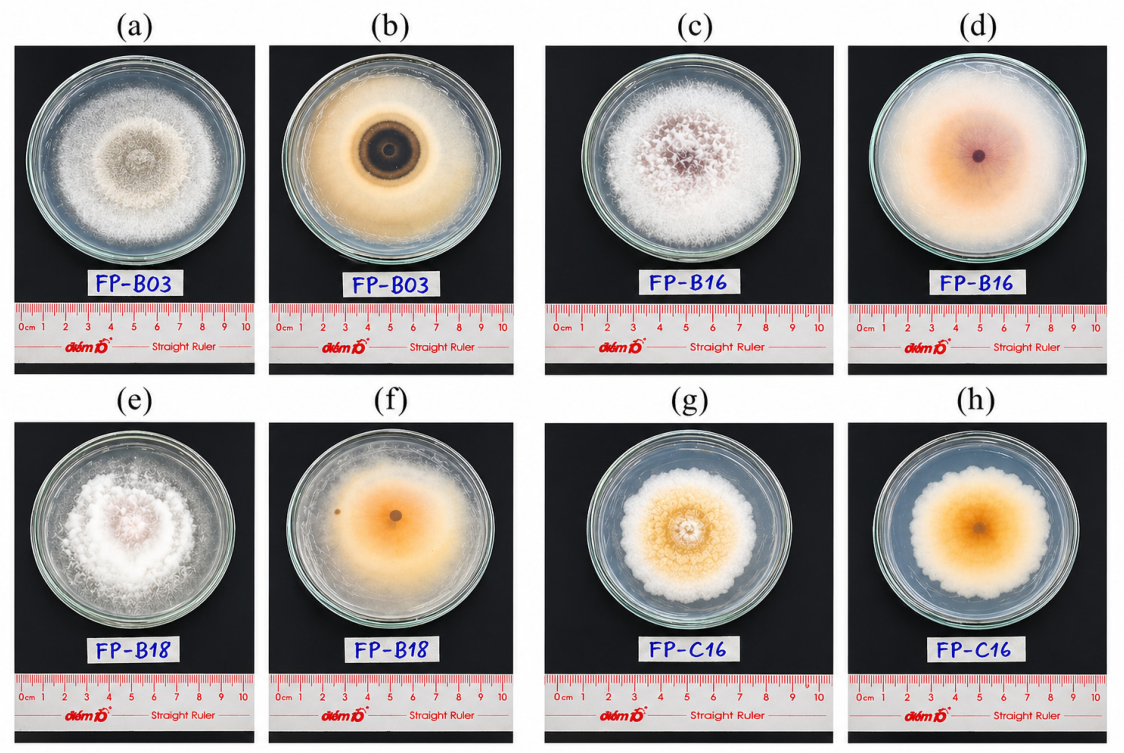
| FP-B03 | Binh Dai | From darkish brown to white | Tilt, crossed | Transparent, oval |
| FP-B06 | Binh Dai | White | Tilt, crossed | Transparent, oval |
| FP-B10 | Binh Dai | White | Tilt, crossed | Transparent, oval |
| FP-B16 | Binh Dai | From purple to light yellow | Tilt, crossed | Transparent, oval |
| FP-B18 | Binh Dai | From yellow to white | Tilt, crossed | Transparent, oval |
| FP-C05 | Chau Thanh | From yellow to yellowish pink | Tilt, crossed | Transparent, oval |
| FP-C10 | Chau Thanh | From yellow to white | Tilt, crossed | Transparent, oval |
| FP-C16 | Chau Thanh | From yellow to white | Tilt, crossed | Transparent, oval |
| Fungal Strain | Mycelia Growth (mm) | |||
|---|---|---|---|---|
| 24 h | 48 h | 72 h | 96 h | |
| FP-B03 | 10.7 b | 17.7 b | 31.7 b | 39.7 c |
| FP-B06 | 5.33 d | 12.3 e | 20.3 e | 29.3 e |
| FP-B10 | 8.67 c | 14.6 d | 22.7 d | 30.1 e |
| FP-B16 | 17.3 a | 28.3 a | 45.7 a | 60.3 a |
| FP-B18 | 16.7 a | 27.3 a | 44.3 a | 57.3 b |
| FP-C05 | 9.01 c | 14.3 d | 19.3 e | 25.1 f |
| FP-C10 | 6.67 d | 16.1 c | 25.6 c | 34.7 d |
| FP-C16 | 8.33 c | 12.3 e | 22.1 d | 32.3 e |
| F | * | * | * | * |
| CV (%) | 8.03 | 5.50 | 5.22 | 4.15 |
| Fungal Strain | Shape | Surface | Color |
|---|---|---|---|
| TP-B26 | Round | Roughly green forming concentric circle | Green, white |
| TP-B27 | Round | Roughly green | Green, white |
| TP-B28 | Nearly round | From white to light yellow, in the middle of the mycelia, a green circle appeared | Green, light yellow |
| TP-B29 | Even round | Green, round white hyphae forming concentric circle | Green, white |
| TP-B30 | Round | Roughly green, white hyphae in the concentric circle | Green, white |
| TP-B31 | Nearly round | Smoothly green, white concentric circle | Dark green, white |
| TP-B32 | Even round | Roughly green, thick white hyphae, altered green hyphae | Green, white |
| TP-C33 | Even round | Roughly green, light yellow | Green, light yellow |
| TP-C34 | Round | Roughly green, green center with altered white hyphae | Dark green, white |
| TP-C35 | Uneven round | Fibrous white, green center | Green, white |
| TP-C36 | Uneven round | Roughly green center, from green to light yellow border | Green, light yellow |
| TP-C37 | Round to nearly round | Roughly green, white center, green and white surrounding | Dark green, white |
| TP-C38 | Nearly round | Roughly green, white hyphae on green mycelia | Dark green, white |
| TP-C39 | Round to nearly round | Roughly white and roughly green, green center | Dark green, roughly white |
| TP-C40 | Even round | Roughly green, thick white hyphae on green mycelia | Dark green, white |
| TP-C41 | Round to nearly round | Smoothly green center, white hyphae on green mycelia | Green, white |
| TP-C42 | Irregular | Roughly green | Green |
| TP-C43 | Nearly round | Fibrous white on green mycelia in the center, green surrounding | Dark green, white |
| TP-C44 | Round to nearly round | Roughly white on green mycelia | Green, white |
| TP-G45 | Nearly round | Roughly green with altered white hyphae | Dark green, white |
| TP-G46 | Even round | Smoothly green, raised white center | Green, white |
| TP-G47 | Even round | Roughly green, white center | Dark green, white |
| TP-G48 | Even round | Fibrous light-yellow border, roughly green center, raised roughly white surrounding | Green, from white to light yellow |
| TP-G49 | Irregular | Roughly green, white hyphae on green mycelia in the center, light yellow border | Dark green, from white to light yellow border |
| TP-G50 | Even round | Raised fibrous white, roughly green border | Dark green, white |
| Fungal Strain | Growth (mm) | ||
|---|---|---|---|
| 24 h | 48 h | 72 h | |
| TP-B26 | 33.3 de | 63.3 de | 88.3 ab |
| TP-B27 | 32.0 efg | 61.3 f | 86.3 c |
| TP-B28 | 28.0 klm | 57.0 hi | 83.5 d |
| TP-B29 | 33.8 cd | 66.0 ab | 89.3 ab |
| TP-B30 | 35.5 ab | 67.0 a | 89.5 ab |
| TP-B31 | 30.0 hij | 57.8 ghi | 83.2 d |
| TP-B32 | 29.5 ijk | 58.5 gh | 83.6 d |
| TP-C33 | 33.5 cde | 63.0 de | 88.7 ab |
| TP-C34 | 33.3 de | 63.3 de | 88.0 b |
| TP-C35 | 27.7 lmn | 56.7 ij | 82.7 de |
| TP-C36 | 35.0 abc | 66.0 ab | 89.0 ab |
| TP-C37 | 26.3 nop | 55.3 jk | 80.7 f |
| TP-C38 | 26.0 op | 55.0 k | 80.3 f |
| TP-C39 | 28.7 j–m | 57.7 ghi | 82.7 de |
| TP-C40 | 28.3 klm | 57.0 hi | 82.5 de |
| TP-C41 | 29.0 i–l | 58.5 gh | 84.0 d |
| TP-C42 | 31.5 fgh | 62.5 def | 83.0 ab |
| TP-C43 | 30.5 ghi | 62.0 ef | 88.0 b |
| TP-C44 | 29.3 ijk | 59.0 g | 83.0 de |
| TP-G45 | 33.0 def | 64.0 cd | 89.3 ab |
| TP-G46 | 34.0 bcd | 65.0 bc | 89.4 ab |
| TP-G47 | 36.0 a | 67.0 a | 90.0 a |
| TP-G48 | 35.7 ab | 67.0 a | 90.0 a |
| TP-G49 | 25.3 p | 54.7 k | 78.7 g |
| TP-G50 | 27.3 mno | 57.7 ghi | 81.3 ef |
| F | * | * | * |
| CV (%) | 0.49 | 0.04 | 0.03 |
| Fungal Strain | PIMG (%) | Inhibition Diameter of Fusarium incarnatum FP-C16 (cm) | ||
|---|---|---|---|---|
| 48 h | 72 h | 48 h | 72 h | |
| TP-B26 | 56.5 a | 58.6 abc | 0.93 ef ± 0.20 | 1.13 cde ± 0.12 |
| TP-B28 | 47.0 bcd | 58.6 abc | 1.13 cde ± 0.23 | 1.13 cde ± 0.23 |
| TP-B30 | 28.3 ef | 22.1 e | 1.53 ab ± 0.23 | 2.13 a ± 0.23 |
| TP-B32 | 47.0 bcd | 61.1 ab | 1.13 cde ± 0.40 | 1.07 de ± 0.12 |
| TP-C34 | 22.1 f | 22.1 e | 1.67 a ± 0.23 | 2.13 a ± 0.31 |
| TP-C36 | 50.2 abc | 61.1 ab | 1.07 def ± 0.23 | 1.07 de ± 0.20 |
| TP-C38 | 59.5 a | 51.3 c | 0.86 f ± 0.31 | 1.33 c ± 0.23 |
| TP-C40 | 47.1 bcd | 63.5 a | 1.13 cde ± 0.23 | 1.00 e ± 0.12 |
| TP-C42 | 22.1 f | 36.7 d | 1.33 bc ± 0.35 | 1.73 b ± 0.12 |
| TP-C44 | 37.7 de | 24.6 e | 1.67 a ± 0.12 | 2.06 a ± 0.23 |
| TP-C46 | 40.8 cd | 53.8 bc | 1.27 cd ± 0.12 | 1.27 cd ± 0.20 |
| TP-C48 | 47.1 bcd | 61.1 ab | 1.13 cde ± 0.23 | 1.07 de ± 0.12 |
| TP-G50 | 40.8 cd | 58.6 abc | 1.27 cd ± 0.12 | 1.13 cde ± 0.23 |
| F | * | * | * | * |
| CV (%) | 92.3 | 65.0 | 11.5 | 10.4 |
| Fungal Strain | PIMG (%) | Inhibition Diameter of Fusarium verticillioides FP-B16 (cm) | ||
|---|---|---|---|---|
| 48 h | 72 h | 48 h | 72 h | |
| TP-B26 | 36.1 ab | 55.2 b | 2.13 cd ± 0.20 | 2.00 f ± 0.12 |
| TP-B28 | 36.1 ab | 53.7 bc | 2.13 cd ± 012 | 2.07 def ± 0.23 |
| TP-B30 | 30.1 bc | 38.7 ef | 2.33 bc ± 0.20 | 2.73 ab ± 0.12 |
| TP-B32 | 36.2 ab | 56.6 b | 2.13 cd ± 0.12 | 1.93 f ± 0.23 |
| TP-C34 | 18.2 d | 35.7 f | 2.73 a ± 0.12 | 2.93 a ± 0.20 |
| TP-C36 | 26.1 d | 44.7 d | 2.47 ab ± 0.12 | 2.47 c ± 0.20 |
| TP-C38 | 36.1 ab | 47.7 cd | 2.13 cd ± 0.12 | 2.33 cd ± 0.23 |
| TP-C40 | 30.1 cb | 47.7 cd | 2.33 bc ± 0.23 | 2.33 cd ± 0.12 |
| TP-C42 | 30.1 bc | 43.2 de | 2.33 bc ± 0.12 | 2.53 bc ± 0.31 |
| TP-C44 | 20.2 d | 34.2 f | 2.67 a ± 0.20 | 2.86 a ± 0.12 |
| TP-G46 | 32.1 bc | 49.2 cd | 2.27 bc ± 0.12 | 2.27 cde ± 0.12 |
| TP-G48 | 38.1 ab | 53.7 bc | 2.07 cd ± 0.23 | 2.07 def ± 0.20 |
| TP-G50 | 44.1 a | 62.6 a | 1.86 d ± 0.12 | 1.67 g ± 0.20 |
| F | * | * | * | * |
| CV (%) | 8.01 | 7.66 | 10.63 | 9.68 |
| Treatment | Number of Yellow Leaves | |||
|---|---|---|---|---|
| 7 Days | 14 Days | 21 Days | 28 Days | |
| Treatment 1 | 0 | 0 | 0 | 0 |
| Treatment 2 | 0 | 8 | 18 | 36 |
| Treatment 3 | 0 | 3 | 4 | 4 |
| Treatment 4 | 0 | 4 | 6 | 10 |
| Treatment 5 | 0 | 6 | 15 | 20 |
| Treatment | Number of Rotten Roots | |||
|---|---|---|---|---|
| Number of Primary Roots | Number of Diseased Primary Roots | Number of Secondary Roots | Number of Diseased Secondary Roots | |
| Treatment 1 | 35 | 0 | 385 | 0 |
| Treatment 2 | 42 | 26 | 630 | 52 |
| Treatment 3 | 38 | 7 | 532 | 0 |
| Treatment 4 | 30 | 13 | 330 | 13 |
| Treatment 5 | 48 | 25 | 432 | 36 |
Disclaimer/Publisher’s Note: The statements, opinions and data contained in all publications are solely those of the individual author(s) and contributor(s) and not of MDPI and/or the editor(s). MDPI and/or the editor(s) disclaim responsibility for any injury to people or property resulting from any ideas, methods, instructions or products referred to in the content. |
© 2026 by the authors. Licensee MDPI, Basel, Switzerland. This article is an open access article distributed under the terms and conditions of the Creative Commons Attribution (CC BY) license.
Share and Cite
Khuong, N.Q.; An, C.L.; Trong, N.D.; Quang, L.T.; Thu, L.T.M.; Van, N.P.; Xuan, D.T. Diversity of Fusarium spp. in Pomelo (Citrus maxima (Burm.) Merr.) Orchards Riskily Caused Root Rot and Yellow Leaf Disease, and the Control Approach. Appl. Microbiol. 2026, 6, 58. https://doi.org/10.3390/applmicrobiol6050058
Khuong NQ, An CL, Trong ND, Quang LT, Thu LTM, Van NP, Xuan DT. Diversity of Fusarium spp. in Pomelo (Citrus maxima (Burm.) Merr.) Orchards Riskily Caused Root Rot and Yellow Leaf Disease, and the Control Approach. Applied Microbiology. 2026; 6(5):58. https://doi.org/10.3390/applmicrobiol6050058
Chicago/Turabian StyleKhuong, Nguyen Quoc, Chau Ly An, Nguyen Duc Trong, Le Thanh Quang, Le Thi My Thu, Nguyen Phuong Van, and Do Thi Xuan. 2026. "Diversity of Fusarium spp. in Pomelo (Citrus maxima (Burm.) Merr.) Orchards Riskily Caused Root Rot and Yellow Leaf Disease, and the Control Approach" Applied Microbiology 6, no. 5: 58. https://doi.org/10.3390/applmicrobiol6050058
APA StyleKhuong, N. Q., An, C. L., Trong, N. D., Quang, L. T., Thu, L. T. M., Van, N. P., & Xuan, D. T. (2026). Diversity of Fusarium spp. in Pomelo (Citrus maxima (Burm.) Merr.) Orchards Riskily Caused Root Rot and Yellow Leaf Disease, and the Control Approach. Applied Microbiology, 6(5), 58. https://doi.org/10.3390/applmicrobiol6050058