
Role of Plant GrowthPromoting Microbes in Plant Growth and Development



Abstract
1. Introduction
2. Role of Microorganisms in Plants
2.1. Negative Plant–Microbe Interaction (Plant Pathogens)
2.2. Positive Plant–Microbe Interaction (PGP Microbes)
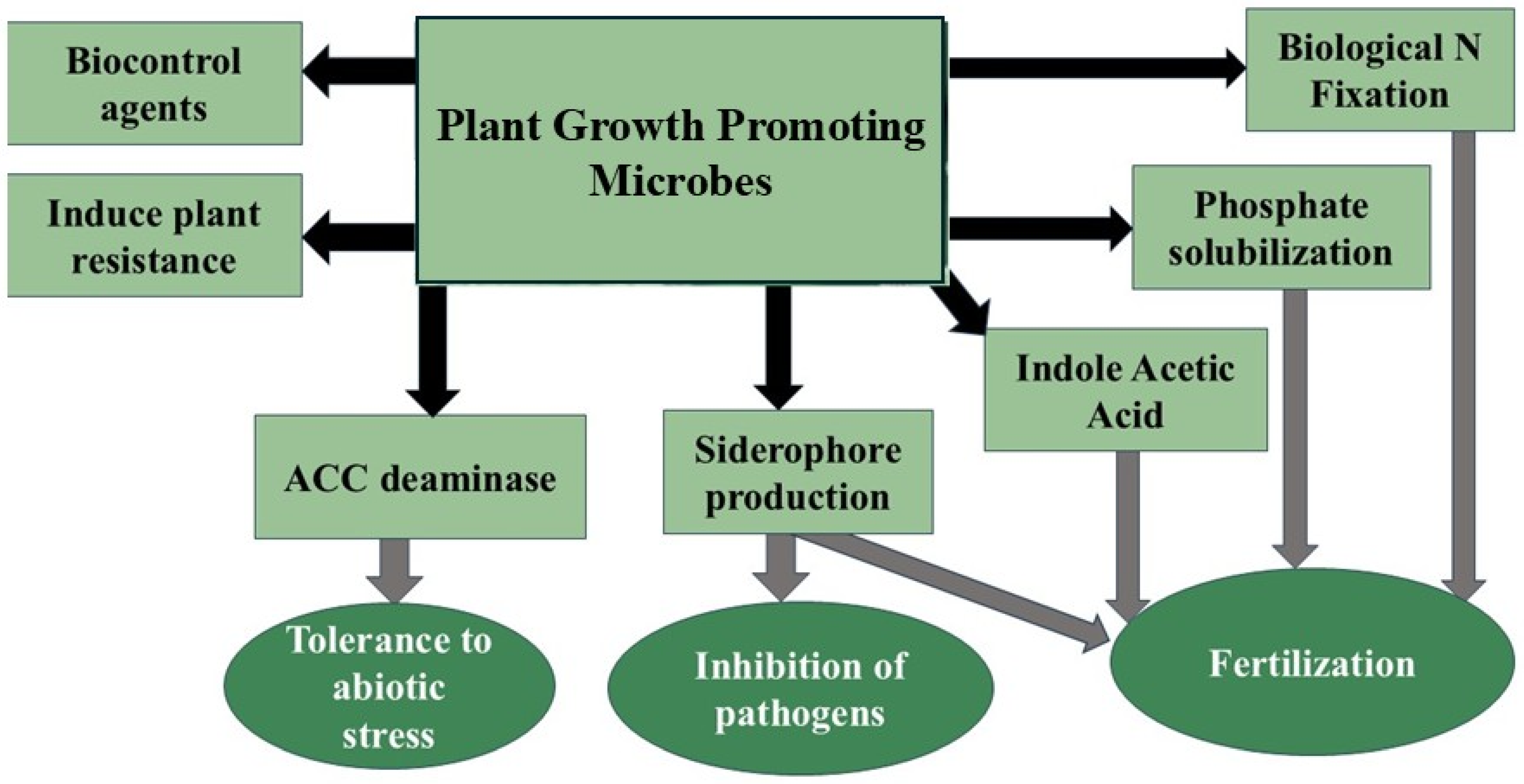
3. Importance of the PGP Microbes in Plant Growth and Development
3.1. Supporting Plant Growth Under Biotic Stress
3.1.1. Protecting Plants from Pests and Phytopathogens
3.1.2. Induced Systemic Resistance (ISR)
3.2. Supporting Plant Growth Under Abiotic Stress
3.2.1. Nitrogen Fixation
3.2.2. Phosphate Solubilization
3.2.3. Siderophores Production
3.2.4. Bacterial ACC Deaminase Enzyme Activity
3.2.5. Effect of Bacterial Phytohormone
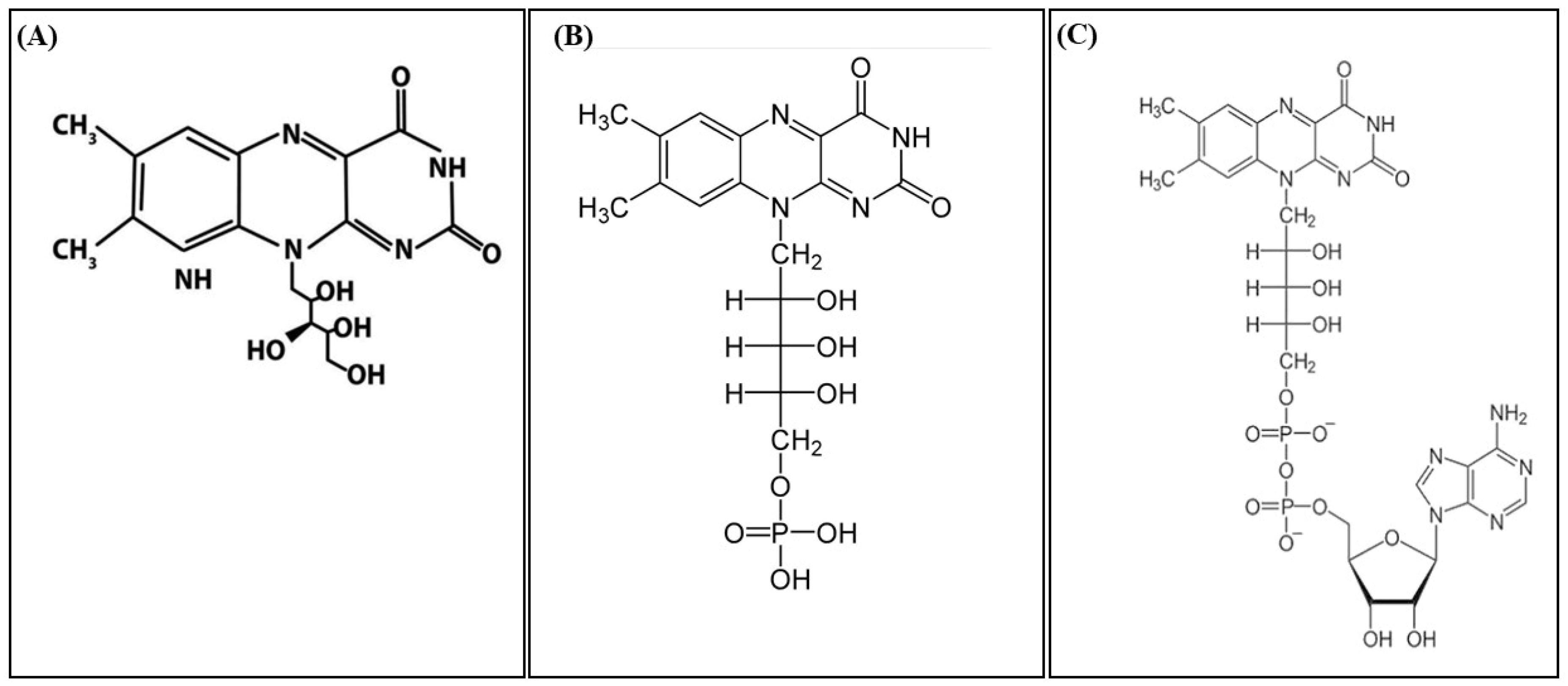
3.2.6. Flavin Secretion
4. Introducing PGP Microbes to Soil
5. Application of Molecular-Based Tools for Plant–Microbe Interactions
6. Conclusions
Author Contributions
Funding
Data Availability Statement
Conflicts of Interest
Abbreviations
| ACC | 1-aminocyclopropane-1-carboxylic acid |
| BNF | Biological nitrogen fixation |
| BOD | Biological oxygen demand |
| CO2 | Carbon dioxide |
| DNA | Deoxyribonucleic acid |
| ET | Ethylene |
| FADs | Flavin adenine dinucleotides |
| FLs | Flavins |
| FL+ | S. meliloti 1021 |
| FL− | 1021ΔribBA |
| FMNs | Flavin mononucleotides |
| GTP | Guanosine triphosphate |
| IAA | Indole-3-acetic acid |
| N | Nitrogen |
| N2 | di-Nitrogen |
| NO3- | Nitrate |
| OTUs | Operational taxonomical unit |
| P | Phosphorus |
| PGP | Plant growth promoting |
| PGPB | Plant growth-promoting bacteria |
| PICRUSt | Phylogenetic investigation of communities by reconstruction of unobserved states |
| PSB | Phosphate solubilizing bacteria |
| RF | Riboflavin |
| RibBA | 3,4-Dihydroxy-2-butanone 4-phosphate synthase; GTP cyclohydrolase II |
| RNA | Ribonucleic acid |
| rRNA | Ribosomal ribonucleic acid |
| STAMP | Statistical analysis of taxonomic and functional profiles |
References
- Alexandratos, N.; Bruinsma, J. World Agriculture Towards 2030/2050: The 2012 Revision; FAO: Rome, Italy, 2012. [Google Scholar]
- Elferink, M.; Florian, S. Global Demand for Food Is Rising. Can We Meet It? Harv. Bus. Rev. 2016, 7, 2016. [Google Scholar]
- Savci, S. Investigation of Effect of Chemical Fertilizers on Environment. APCBEE Procedia 2012, 1, 287–292. [Google Scholar] [CrossRef] [Scilit]
- Kumar, R.; Prakash, O.G. The Impact of Chemical Fertilizers on Our Environment and Ecosystem Thesis Work View Project Natural Products View Project. In Research Trends in Environmental Sciences, 2nd ed.; AkiNik Publications: New Delhi, India, 2019. [Google Scholar]
- Kundu, M.C.; Mandal, B.; Sarkar, D. Assessment of the Potential Hazards of Nitrate Contamination in Surface and Groundwater in a Heavily Fertilized and Intensively Cultivated District of India. Environ. Monit. Assess. 2008, 146, 183–189. [Google Scholar] [CrossRef] [Scilit]
- Xuejun, L.; Fusuo, Z. Nitrogen Fertilizer Induced Greenhouse Gas Emissions in China. Curr. Opin. Environ. Sustain. 2011, 3, 407–413. [Google Scholar] [CrossRef] [Scilit]
- Chislock, M.; Doster, E.; Zitomer, R.; Wilson, A. Eutrophication: Causes, Consequences, and Controls in Aquatic Ecosystems. Nat. Educ. Knowl. 2013, 4, 10. [Google Scholar]
- Bijay-Singh; Craswell, E. Fertilizers and Nitrate Pollution of Surface and Ground Water: An Increasingly Pervasive Global Problem. SN Appl. Sci. 2021, 3, 518. [Google Scholar] [CrossRef] [Scilit]
- Massa, F.; Defez, R.; Bianco, C. Exploitation of Plant Growth Promoting Bacteria for Sustainable Agriculture: Hierarchical Approach to Link Laboratory and Field Experiments. Microorganisms 2022, 10, 865. [Google Scholar] [CrossRef] [Scilit]
- Choudhary, D.K.; Prakash, A.; Johri, B.N. Induced Systemic Resistance (ISR) in Plants: Mechanism of Action. Indian J. Microbiol. 2007, 47, 289–297. [Google Scholar] [CrossRef] [Scilit] [PubMed]
- Al-Ani, L.K.T.; Franzino, T.; Aguilar-Marcelino, L.; Haichar, F.E.Z.; Furtado, E.L.; Raza, W.; Jatoi, G.H.; Raza, M. The Role of Microbial Signals in Plant Growth and Development: Current Status and Future Prospects. In New and Future Developments in Microbial Biotechnology and Bioengineering: Trends of Microbial Biotechnology for Sustainable Agriculture and Biomedicine Systems: Diversity and Functional Perspectives; Elsevier: Amsterdam, The Netherlands, 2020; pp. 225–242. ISBN 9780128205266. [Google Scholar]
- Lopes, M.J.d.S.; Dias-Filho, M.B.; Gurgel, E.S.C. Successful Plant Growth-Promoting Microbes: Inoculation Methods and Abiotic Factors. Front. Sustain. Food Syst. 2021, 5, 606454. [Google Scholar] [CrossRef] [Scilit]
- Cardarelli, M.; Woo, S.L.; Rouphael, Y.; Colla, G. Seed Treatments with Microorganisms Can Have a Biostimulant Effect by Influencing Germination and Seedling Growth of Crops. Plants 2022, 11, 259. [Google Scholar] [CrossRef] [Scilit]
- Leung, T.L.F.; Poulin, R. Parasitism, commensalism, and mutualism: Exploring the many shades of symbioses. Vie Milieu/Life Environ. 2008, 58, 107–115. [Google Scholar]
- Smith, J.E.; Read, D. Mycorrhizal Symbiosis; Elsevier: Amsterdam, The Netherlands, 2010; Volume 73. [Google Scholar]
- Puginier, C.; Keller, J.; Delaux, P.M. Plant–Microbe Interactions That Have Impacted Plant Terrestrializations. Plant Physiol. 2022, 190, 72–84. [Google Scholar] [CrossRef] [Scilit] [PubMed]
- Turner, T.R.; James, E.K.; Poole, P.S. The Plant Microbiome. Genome Biol. 2013, 14, 209. [Google Scholar] [CrossRef] [Scilit]
- Montesinos, E. Plant-Associated Microorganisms: A View from the Scope of Microbiology. Int. Microbiol. 2003, 6, 221–223. [Google Scholar] [CrossRef] [Scilit] [PubMed]
- Ling, N.; Wang, T.; Kuzyakov, Y. Rhizosphere Bacteriome Structure and Functions. Nat. Commun. 2022, 13, 836. [Google Scholar] [CrossRef] [Scilit] [PubMed]
- Ajeethan, N.; Ali, S.; Fuller, K.D.; Abbey, L.; Yurgel, S.N. Apple Root Microbiome as Indicator of Plant Adaptation to Apple Replant Diseased Soils. Microorganisms 2023, 11, 1372. [Google Scholar] [CrossRef] [Scilit]
- Van Der Heijden, M.G.A.; Bardgett, R.D.; Van Straalen, N.M. The Unseen Majority: Soil Microbes as Drivers of Plant Diversity and Productivity in Terrestrial Ecosystems. Ecol. Lett. 2008, 11, 296–310. [Google Scholar] [CrossRef] [Scilit]
- Bashir, I.; War, A.F.; Rafiq, I.; Reshi, Z.A.; Rashid, I.; Shouche, Y.S. Phyllosphere Microbiome: Diversity and Functions. Microbiol. Res. 2022, 254, 126888. [Google Scholar] [CrossRef] [Scilit]
- Yurgel, S.N.; Douglas, G.M.; Dusault, A.; Percival, D.; Langille, M.G.I. Dissecting Community Structure in Wild Blueberry Root and Soil Microbiome. Front. Microbiol. 2018, 9, 1187. [Google Scholar] [CrossRef] [Scilit]
- Xun, F.; Xie, B.; Liu, S.; Guo, C. Effect of Plant Growth-Promoting Bacteria (PGPR) and Arbuscular Mycorrhizal Fungi (AMF) Inoculation on Oats in Saline-Alkali Soil Contaminated by Petroleum to Enhance Phytoremediation. Environ. Sci. Pollut. Res. 2015, 22, 598–608. [Google Scholar] [CrossRef] [Scilit]
- Vacher, C.; Hampe, A.; Porté, A.J.; Sauer, U.; Compant, S.; Morris, C.E. The Phyllosphere: Microbial Jungle at the Plant-Climate Interface. Annu. Rev. Ecol. Evol. Syst. 2016, 47, 1–24. [Google Scholar] [CrossRef] [Scilit]
- Nihorimbere, V.; Ongena, M.; Smargiassi, M.; Thonart, P. Beneficial Effect of the Rhizosphere Microbial Community for Plant Growth and Health. BASE 2011, 15, 327–337. [Google Scholar]
- Hütsch, B.W.; Augustin, J.; Merbach, W. Plant Rhizodeposition—An Important Source for Carbon Turnover in Soils. J. Plant Nutr. Soil Sci. 2002, 165, 397–407. [Google Scholar] [CrossRef] [Scilit]
- Mitter, B.; Pfaffenbichler, N.; Flavell, R.; Compant, S.; Antonielli, L.; Petric, A.; Berninger, T.; Naveed, M.; Sheibani-Tezerji, R.; Maltzahn, G.V.; et al. A New Approach to Modify Plant Microbiomes and Traits by Introducing Beneficial Bacteria at Flowering into Progeny Seeds. Front. Microbiol. 2017, 8, 11. [Google Scholar] [CrossRef] [Scilit]
- Velásquez, A.C.; Castroverde, C.D.M.; He, S.Y. Plant–Pathogen Warfare under Changing Climate Conditions. Curr. Biol. 2018, 28, R619–R634. [Google Scholar] [CrossRef] [Scilit]
- Abdulkhair, W.M.; Alghuthaymi, M.A. Plant Pathogens. Plant Growth 2016, 49. [Google Scholar]
- Van Der Wolf, J.M.; De Boer, S.H. Bacterial Pathogens of Potato. In Potato Biology and Biotechnology; Elsevier: Amsterdam, The Netherlands, 2007; pp. 595–617. [Google Scholar]
- Serrano, M.; Coluccia, F.; Torres, M.; L’Haridon, F.; Métraux, J.P. The Cuticle and Plant Defense to Pathogens. Front. Plant Sci. 2014, 5, 274. [Google Scholar] [CrossRef] [Scilit]
- Mazzola, M.; Manici, L.M. Apple Replant Disease: Role of Microbial Ecology in Cause and Control. Annu. Rev. Phytopathol. 2012, 50, 45–65. [Google Scholar] [CrossRef] [Scilit] [PubMed]
- Manici, L.M.; Kelderer, M.; Franke-Whittle, I.H.; Rühmer, T.; Baab, G.; Nicoletti, F.; Caputo, F.; Topp, A.; Insam, H.; Naef, A. Relationship between Root-Endophytic Microbial Communities and Replant Disease in Specialized Apple Growing Areas in Europe. Appl. Soil Ecol. 2013, 72, 207–214. [Google Scholar] [CrossRef] [Scilit]
- Ali, S.; Tyagi, A.; Bae, H. Plant Microbiome: An Ocean of Possibilities for Improving Disease Resistance in Plants. Microorganisms 2023, 11, 392. [Google Scholar] [CrossRef] [Scilit]
- Lindow, S.E.; Brandl, M.T. Microbiology of the Phyllosphere. Appl. Environ. Microbiol. 2003, 69, 1875–1883. [Google Scholar] [CrossRef] [Scilit] [PubMed]
- Beckett, D.C.; Aartila, T.P.; Miller, A.C. Invertebrate Abundance on Potamogeton Nodosus: Effects of Plant Surface Area and Condition. Can. J. Zool. 1991, 70, 300–306. [Google Scholar] [CrossRef] [Scilit]
- Harman, G.; Khadka, R.; Doni, F.; Uphoff, N. Benefits to Plant Health and Productivity From Enhancing Plant Microbial Symbionts. Front. Plant Sci. 2021, 11, 610065. [Google Scholar] [CrossRef] [Scilit]
- Prakash, O.; Sharma, R.; Rahi, P.; Karthikeyan, N. Role of Microorganisms in Plant Nutrition and Health. In Nutrient Use Efficiency: From Basics to Advances; Springer: New Delhi, India, 2015; pp. 125–161. [Google Scholar]
- Whipps, J.M.; Hand, P.; Pink, D.; Bending, G.D. Phyllosphere Microbiology with Special Reference to Diversity and Plant Genotype. J. Appl. Microbiol. 2008, 105, 1744–1755. [Google Scholar] [CrossRef] [Scilit]
- Toju, H.; Kurokawa, H.; Kenta, T. Factors Influencing Leaf- and Root-Associated Communities of Bacteria and Fungi across 33 Plant Orders in a Grassland. Front. Microbiol. 2019, 10, 241. [Google Scholar] [CrossRef] [Scilit] [PubMed]
- Arnold, A.E.; Carlos Mejía, L.; Kyllo, D.; Rojas, E.I.; Maynard, Z.; Robbins, N.; Herre, E.A. Fungal Endophytes Limit Pathogen Damage in a Tropical Tree. Proc. Natl. Acad. Sci. USA 2003, 100, 15649–15654. [Google Scholar] [CrossRef] [Scilit]
- Hacquard, S.; Spaepen, S.; Garrido-Oter, R.; Schulze-Lefert, P. Annual Review of Phytopathology Interplay Between Innate Immunity and the Plant Microbiota. Annu. Rev. Phytopathol. 2017, 55, 565–589. [Google Scholar] [CrossRef] [Scilit]
- Gao, F.-K.; Dai, C.-C.; Liu, X.-Z. Mechanisms of Fungal Endophytes in Plant Protection against Pathogens. Afr. J. Microbiol. Res. 2010, 4, 1346–1351. [Google Scholar]
- Tedersoo, L.; May, T.W.; Smith, M.E. Ectomycorrhizal Lifestyle in Fungi: Global Diversity, Distribution, and Evolution of Phylogenetic Lineages. Mycorrhiza 2010, 20, 217–263. [Google Scholar] [CrossRef] [Scilit] [PubMed]
- Vurukonda, S.S.K.P.; Giovanardi, D.; Stefani, E. Plant Growth Promoting and Biocontrol Activity of Streptomyces spp. As Endophytes. Int. J. Mol. Sci. 2018, 19, 952. [Google Scholar] [CrossRef] [Scilit]
- Newsham, K.K. A Meta-Analysis of Plant Responses to Dark Septate Root Endophytes. New Phytol. 2011, 190, 783–793. [Google Scholar] [CrossRef] [Scilit]
- Xie, X.G.; Zhang, F.M.; Yang, T.; Chen, Y.; Li, X.G.; Dai, C.C. Endophytic Fungus Drives Nodulation and N2 Fixation Attributable to Specific Root Exudates. mBio 2019, 10, e00728-19. [Google Scholar] [CrossRef] [Scilit] [PubMed]
- Kai, M.; Effmert, U.; Piechulla, B. Bacterial-Plant-Interactions: Approaches to Unravel the Biological Function of Bacterial Volatiles in the Rhizosphere. Front. Microbiol. 2016, 7, 108. [Google Scholar] [CrossRef] [Scilit]
- Bakker, P.A.H.M.; Pieterse, C.M.J.; Van Loon, L.C. Induced Systemic Resistance by Fluorescent Pseudomonas spp. Phytopathology 2007, 97, 239–243. [Google Scholar] [CrossRef] [Scilit] [PubMed]
- Glick, B.R.; Cheng, Z.; Czarny, J.; Duan, J. Promotion of Plant Growth by ACC Deaminase-Producing Soil Bacteria. Eur. J. Plant Pathol. 2007, 119, 329–339. [Google Scholar] [CrossRef] [Scilit]
- Ansari, I.; Magdy El-Kady, M.; Muniyan, S. Global Climate Change Global Climate Change A Review on the Fatal Impact of Pesticide Toxicity on Environment and Human Health. In Global Climate Change; Elsevier: Amsterdam, The Netherlands, 2021; pp. 361–391. [Google Scholar]
- Nicholson, G.M. Fighting the Global Pest Problem: Preface to the Special Toxicon Issue on Insecticidal Toxins and Their Potential for Insect Pest Control. Toxicon 2007, 49, 413–422. [Google Scholar] [CrossRef] [Scilit] [PubMed]
- Roberts, D.W.; Eger, R.J.S.L. Metarhizium spp., Cosmopolitan Insect-Pathogenic Fungi: Mycological Aspects. Adv. Appl. Microbiol. 2004, 54, 1–70. [Google Scholar]
- Li, W.; Sheng, C.F. Occurrence and Distribution of Entomophthoralean Fungi Infecting Aphids in Mainland China. Biocontrol Sci. Technol. 2007, 17, 433–439. [Google Scholar] [CrossRef] [Scilit]
- White, J.F.; Kingsley, K.I.; Kowalski, K.P.; Irizarry, I.; Micci, A.; Soares, M.A.; Bergen, M.S. Disease Protection and Allelopathic Interactions of Seed-Transmitted Endophytic Pseudomonads of Invasive Reed Grass (Phragmites Australis). Plant Soil 2018, 422, 195–208. [Google Scholar] [CrossRef] [Scilit]
- Haskett, T.L.; Tkacz, A.; Poole, P.S. Engineering Rhizobacteria for Sustainable Agriculture. ISME J. 2021, 15, 949–964. [Google Scholar] [CrossRef] [Scilit]
- De Silva, N.I.; Brooks, S.; Lumyong, S.; Hyde, K.D. Use of Endophytes as Biocontrol Agents. Fungal Biol. Rev. 2019, 33, 133–148. [Google Scholar] [CrossRef] [Scilit]
- Van Loon, L.C.; Bakker, P.A.H.M.; Pieterse, C.M.J. Systemic Resistance Induced by Rhizosphere Bacteria. Annu. Rev. Phytopathol. 1998, 36, 453–483. [Google Scholar] [CrossRef] [Scilit]
- Sticher, L.; Mauch-Mani, B.; Métraux, J.P. Systemic Acquired Resistance. Annu. Rev. Phytopathol. 1997, 35, 235–270. [Google Scholar] [CrossRef] [Scilit]
- Van, L.C.; Bakker, P.A.H.M. Induced Systemic Resistance as a Mechanism of Disease Suppression by Rhizobacteria. In PGPR: Biocontrol and Biofertilization; Springer: Dordrecht, The Netherlands, 2005; pp. 39–66. [Google Scholar]
- Yan, Z.; Reddy, M.S.; Ryu, C.-M.; McInroy, J.A.; Wilson, M.; Kloepper, J.W. Induced Systemic Protection Against Tomato Late Blight Elicited by Plant Growth-Promoting Rhizobacteria. Phytopathology 2002, 92, 1329–1333. [Google Scholar] [CrossRef] [Scilit]
- Liu, L.; Kloepper, J.W.; Tuzun, S. Induction of Systemic Resistance in Cucumber against Fusarium Wilt by Plant Growth-Promoting Rhizobacteria. Phytopathology 1995, 85, 695–698. [Google Scholar] [CrossRef] [Scilit]
- Ramamoorthy, V.; Viswanathan, R.; Raguchander, T.; Prakasam, V.; Samiyappan, R. Induction of Systemic Resistance by Plant Growth Promoting Rhizobacteria in Crop Plants against Pests and Diseases. Crop. Prot. 2001, 20, 1–11. [Google Scholar] [CrossRef] [Scilit]
- Kloepper, J.W.; Ryu, C.-M.; Zhang, S. The Nature and Application of Biocontrol Microbes: Bacillus spp. Induced Systemic Resistance and Promotion of Plant Growth by Bacillus spp. Phytopathology 2004, 94, 1259–1266. [Google Scholar] [CrossRef] [Scilit]
- Gupta, G.; Shailendra, S.; Narendra, K.A.; Sunil, K.S.; Vinod, S. Plant Growth Promoting Rhizobacteria (PGPR): Current and Future Prospects for Development of Sustainable Agriculture. J. Microb. Biochem. Technol. 2015, 7, 96–102. [Google Scholar] [CrossRef]
- Pérez-García, A.; Romero, D.; de Vicente, A. Plant Protection and Growth Stimulation by Microorganisms: Biotechnological Applications of Bacilli in Agriculture. Curr. Opin. Biotechnol. 2011, 22, 187–193. [Google Scholar] [CrossRef] [Scilit]
- Beneduzi, A.; Ambrosini, A.; Passaglia, L.M.P. Plant Growth-Promoting Rhizobacteria (PGPR): Their Potential as Antagonists and Biocontrol Agents. Genet. Mol. Biol. 2012, 35, 1044–1051. [Google Scholar] [CrossRef] [Scilit] [PubMed]
- Pieterse, C.M.J.; Zamioudis, C.; Berendsen, R.L.; Weller, D.M.; Van Wees, S.C.M.; Bakker, P.A.H.M. Induced Systemic Resistance by Beneficial Microbes. Annu. Rev. Phytopathol. 2014, 52, 347–375. [Google Scholar] [CrossRef] [Scilit]
- Gkizi, D.; Lehmann, S.; L’Haridon, F.; Serrano, M.; Paplomatas, E.J.; Métraux, J.P.; Tjamos, S.E. The Innate Immune Signaling System as a Regulator of Disease Resistance and Induced Systemic Resistance Activity against Verticillium Dahliae. Mol. Plant-Microbe Interact. 2016, 29, 313–323. [Google Scholar] [CrossRef] [Scilit]
- Ryu, C.M.; Farag, M.A.; Hu, C.H.; Reddy, M.S.; Kloepper, J.W.; Paré, P.W. Bacterial Volatiles Induce Systemic Resistance in Arabidopsis. Plant Physiol. 2004, 134, 1017–1026. [Google Scholar] [CrossRef] [Scilit] [PubMed]
- Grady, E.N.; MacDonald, J.; Liu, L.; Richman, A.; Yuan, Z.C. Current Knowledge and Perspectives of Paenibacillus: A Review. Microb. Cell Fact. 2016, 15, 203. [Google Scholar] [CrossRef] [Scilit] [PubMed]
- Aznar, A.; Dellagi, A. New Insights into the Role of Siderophores as Triggers of Plant Immunity: What Can We Learn from Animals? J. Exp. Bot. 2015, 66, 3001–3010. [Google Scholar] [CrossRef] [Scilit]
- Zhu, L.; Huang, J.; Lu, X.; Zhou, C. Development of Plant Systemic Resistance by Beneficial Rhizobacteria: Recognition, Initiation, Elicitation and Regulation. Front. Plant Sci. 2022, 13, 952397. [Google Scholar] [CrossRef] [Scilit]
- Hayat, R.; Ali, S.; Amara, U.; Khalid, R.; Ahmed, I. Soil Beneficial Bacteria and Their Role in Plant Growth Promotion: A Review. Ann. Microbiol. 2010, 60, 579–598. [Google Scholar] [CrossRef] [Scilit]
- Goswami, M.; Deka, S. Plant Growth-Promoting Rhizobacteria—Alleviators of Abiotic Stresses in Soil: A Review. Pedosphere 2020, 30, 40–61. [Google Scholar] [CrossRef] [Scilit]
- Tang, H.; Xiang, G.; Xiao, W.; Yang, Z.; Zhao, B. Microbial Mediated Remediation of Heavy Metals Toxicity: Mechanisms and Future Prospects. Front. Plant Sci. 2024, 15, 1420408. [Google Scholar] [CrossRef] [Scilit]
- Khan, N.; Mishra, A.; Chauhan, P.S.; Sharma, Y.K.; Nautiyal, C.S. Paenibacillus Lentimorbus Enhances Growth of Chickpea (Cicer Arietinum L.) in Chromium-Amended Soil. Antonie Van Leeuwenhoek Int. J. Gen. Mol. Microbiol. 2012, 101, 453–459. [Google Scholar] [CrossRef] [Scilit] [PubMed]
- Archana, G.; Buch, A.; Kumar, G.N. Pivotal Role of Organic Acid Secretion by Rhizobacteria in Plant Growth Promotion. In Microorganisms in Sustainable Agriculture and Biotechnology; Springer: Dordrecht, The Netherlands, 2013; pp. 35–53. ISBN 9789400722149. [Google Scholar]
- Glick, B.R.; Penrose, D.M.; Li, J. A Model for the Lowering of Plant Ethylene Concentrations by Plant Growth-Promoting Bacteria. J. Theor. Biol. 1998, 190, 63–68. [Google Scholar] [CrossRef] [Scilit] [PubMed]
- Goldstein, A.H. Bioprocessing of Rock Phosphate Ore: Essential Technical Considerations for the Development of a Successful Commercial Technology. In Proceedings of the International Fertilizer Industry Technical Conference, New Orleans, LA, USA, 1–4 October 2000; pp. 1–22. [Google Scholar]
- Goswami, D.; Parmar, S.; Vaghela, H.; Dhandhukia, P.; Thakker, J.N. Describing Paenibacillus Mucilaginosus Strain N3 as an Efficient Plant Growth Promoting Rhizobacteria (PGPR). Cogent Food Agric. 2015, 1, 1000714. [Google Scholar] [CrossRef] [Scilit]
- Di Benedetto, N.A.; Corbo, M.R.; Campaniello, D.; Cataldi, M.P.; Bevilacqua, A.; Sinigaglia, M.; Flagella, Z. The Role of Plant Growth Promoting Bacteria in Improving Nitrogen Use Efficiency for Sustainable Crop Production: A Focus on Wheat. AIMS Microbiol. 2017, 3, 413–434. [Google Scholar] [CrossRef] [Scilit] [PubMed]
- Camargo, J.A.; Alonso, A.; Salamanca, A. Nitrate Toxicity to Aquatic Animals: A Review with New Data for Freshwater Invertebrates. Chemosphere 2005, 58, 1255–1267. [Google Scholar] [CrossRef] [Scilit] [PubMed]
- Newton, W.E. Nitrogen Fixation in Perspective; Springer: Dordrecht, The Netherlands, 2000; Volume 38. [Google Scholar]
- Franche, C.; Lindström, K.; Elmerich, C. Nitrogen-Fixing Bacteria Associated with Leguminous and Non-Leguminous Plants. Plant Soil 2009, 321, 35–59. [Google Scholar] [CrossRef] [Scilit]
- Hernandez, J.A.; George, S.J.; Rubio, L.M. Molybdenum Trafficking for Nitrogen Fixation. Biochemistry 2009, 48, 9711–9721. [Google Scholar] [CrossRef] [Scilit]
- Ahmed, K.A.; Jilani, G.; Akhtar, M.S.; S Naqvi, S.M.; Rasheed, M.; Jilani, G.; Saleem Akhtar, M.; Muhammad Saqlan Naqvi, S.; Rasheed, M. A Phosphorus Solubilizing Bacteria: Occurrence, Mechanisms and Their Role in Crop Production. J. Agric. Biol. Sci. 2009, 1, 48–58. [Google Scholar]
- Richardson, A.E.; Simpson, R.J. Soil Microorganisms Mediating Phosphorus Availability. Plant Physiol. 2011, 156, 989–996. [Google Scholar] [CrossRef] [Scilit]
- Ibrahim, M.; Iqbal, M.; Tang, Y.T.; Khan, S.; Guan, D.X.; Li, G. Phosphorus Mobilization in Plant–Soil Environments and Inspired Strategies for Managing Phosphorus: A Review. Agronomy 2022, 12, 2539. [Google Scholar] [CrossRef] [Scilit]
- Goswami, D.; Thakker, J.N.; Dhandhukia, P.C. Portraying Mechanics of Plant Growth Promoting Rhizobacteria (PGPR): A Review. Cogent Food Agric. 2016, 2, 1127500. [Google Scholar] [CrossRef] [Scilit]
- Kumar Jha, C.; Saraf, M. Plant Growth Promoting Rhizobacteria (PGPR): A Review. E3 J. Agric. Res. Dev. 2015, 5, 108–0119. [Google Scholar]
- Whitelaw, M.A. Growth promotion of plants inoculated with phosphate~olubilizing fungi. Adv. Agron. 2000, 69, 99–151. [Google Scholar]
- Maliha, R.R.; Samina, K.; Najma, A.; Alam, S.; Farooq, L. Organic Acids Production and Phosphate Solubilization by Phosphate Solubilizing Microorganisms (PSM) Under in Vitro Conditions. Pak. J. Biol. Sci. 2004, 7, 187–196. [Google Scholar] [CrossRef] [Scilit]
- Sharma, S.B.; Sayyed, R.Z.; Trivedi, M.H.; Gobi, T.A. Phosphate Solubilizing Microbes: Sustainable Approach for Managing Phosphorus Deficiency in Agricultural Soils. Springerplus 2013, 2, 587. [Google Scholar] [CrossRef] [Scilit] [PubMed]
- Jones, D.L. Organic Acids in the Rhizosphere-a Critical Review. Plant Soil 1998, 205, 25–44. [Google Scholar] [CrossRef] [Scilit]
- Chen, Y.P.; Rekha, P.D.; Arun, A.B.; Shen, F.T.; Lai, W.A.; Young, C.C. Phosphate Solubilizing Bacteria from Subtropical Soil and Their Tricalcium Phosphate Solubilizing Abilities. Appl. Soil Ecol. 2006, 34, 33–41. [Google Scholar] [CrossRef] [Scilit]
- Aliyat, F.Z.; Maldani, M.; El Guilli, M.; Nassiri, L.; Ibijbijen, J. Phosphate-Solubilizing Bacteria Isolated from Phosphate Solid Sludge and Their Ability to Solubilize Three Inorganic Phosphate Forms: Calcium, Iron, and Aluminum Phosphates. Microorganisms 2022, 10, 980. [Google Scholar] [CrossRef] [Scilit]
- Matos, A.D.; Gomes, I.C.; Nietsche, S.; Xavier, A.A.; Gomes, W.S.; dos Santos, J.A.; Pereira, M.C. Phosphate solubilization by endophytic bacteria isolated from banana trees. An. Acad. Bras. Ciências 2017, 89, 2945–2954. [Google Scholar] [CrossRef] [Scilit]
- Ughamba, K.T.; Ndukwe, J.K.; Lidbury, I.D.; Nnaji, N.D.; Eze, C.N.; Aduba, C.C.; Groenhof, S.; Chukwu, K.O.; Anyanwu, C.U.; Nwaiwu, O.; et al. Trends in the application of phosphate-solubilizing microbes as biofertilizers: Implications for soil improvement. Soil Syst. 2025, 9, 6. [Google Scholar] [CrossRef] [Scilit]
- Briat, J.F.; Dubos, C.; Gaymard, F. Iron Nutrition, Biomass Production, and Plant Product Quality. Trends Plant Sci. 2015, 20, 33–40. [Google Scholar] [CrossRef] [Scilit]
- Lemanceau, P.; Expert, D.; Gaymard, F.; Bakker, P.A.H.M.; Briat, J.F. Role of Iron in Plant-Microbe Interactions. Adv. Bot. Res. 2009, 51, 491–549. [Google Scholar]
- Neilands, J.B. Siderophores: Structure and Function of Microbial Iron Transport Compounds. J. Biol. Chem. 1995, 270, 26723–26726. [Google Scholar] [CrossRef] [Scilit]
- Arora, N.K.; Tewari, S.; Singh, R. Multifaceted Plant-Associated Microbes and Their Mechanisms Diminish the Concept of Direct and Indirect PGPRs. In Plant Microbe Symbiosis: Fundamentals and Advances; Springer: New Delhi, India, 2013; pp. 411–449. ISBN 9788132212874. [Google Scholar]
- Orsi, N. The Antimicrobial Activity of Lactoferrin: Current Status and Perspectives. Biometals 2004, 17, 189–196. [Google Scholar] [CrossRef] [Scilit] [PubMed]
- Mcmorran, B.J.; Kumara, S.; Sullivan, K.; Lamont, I.L. Involvement of a Transformylase Enzyme in Siderophore Synthesis in Pseudomonas Aeruginosa. Microbiology 2001, 147, 1517–1524. [Google Scholar] [CrossRef] [Scilit] [PubMed]
- Parmar, H.Y.; Chakraborty, H. Effect of siderophore on plant growth promotion. Int. J. Appl. Pure Sci. Agric. 2016, 2, 60–68. [Google Scholar]
- Meneely, M.K. The Biochemistry of Siderophore Biosynthesis; University of Kansas: Lawrence, KS, USA, 2007. [Google Scholar]
- Crowley, D.E. Microbial Siderophores in the Plant Rhizosphere. In Iron Nutrition in Plants and Rhizospheric Microorganisms; Springer: Dordrecht, The Netherlands, 2006; Volume 35, pp. 169–198. [Google Scholar]
- Chang, C. Q and A: How Do Plants Respond to Ethylene and What Is Its Importance? BMC Biol. 2016, 14, 7. [Google Scholar] [CrossRef] [Scilit]
- Glick, B.R. Bacteria with ACC Deaminase Can Promote Plant Growth and Help to Feed the World. Microbiol. Res. 2014, 169, 30–39. [Google Scholar] [CrossRef] [Scilit]
- Yang, C.Y.; Hsu, F.C.; Li, J.P.; Wang, N.N.; Shih, M.C. The AP2/ERF Transcription Factor AtERF73/HRE1 Modulates Ethylene Responses during Hypoxia in Arabidopsis. Plant Physiol. 2011, 156, 202–212. [Google Scholar] [CrossRef] [Scilit]
- Liu, J.L.; Xie, B.M.; Shi, X.H.; Ma, J.M.; Guo, C.H. Effects of Two Plant Growth-Promoting Rhizobacteria Containing 1-Aminocyclopropane-1-Carboxylate Deaminase on Oat Growth in Petroleum-Contaminated Soil. Int. J. Environ. Sci. Technol. 2015, 12, 3887–3894. [Google Scholar] [CrossRef] [Scilit]
- Abiri, R.; Shaharuddin, N.A.; Maziah, M.; Yusof, Z.N.B.; Atabaki, N.; Sahebi, M.; Valdiani, A.; Kalhori, N.; Azizi, P.; Hanafi, M.M. Role of Ethylene and the APETALA 2/Ethylene Response Factor Superfamily in Rice under Various Abiotic and Biotic Stress Conditions. Environ. Exp. Bot. 2017, 134, 33–44. [Google Scholar] [CrossRef] [Scilit]
- Iqbal, N.; Khan, N.A.; Ferrante, A.; Trivellini, A.; Francini, A.; Khan, M.I.R. Ethylene Role in Plant Growth, Development and Senescence: Interaction with Other Phytohormones. Front. Plant Sci. 2017, 8, 475. [Google Scholar] [CrossRef] [Scilit]
- Dubois, M.; Van den Broeck, L.; Inzé, D. The Pivotal Role of Ethylene in Plant Growth. Trends Plant Sci. 2018, 23, 311–323. [Google Scholar] [CrossRef] [Scilit] [PubMed]
- Glick, B.R. Plant Growth-Promoting Bacteria: Mechanisms and Applications. Scientifica 2012, 2012, 963401. [Google Scholar] [CrossRef] [Scilit] [PubMed]
- Mukherjee, A.; Gaurav, A.K.; Singh, S.; Yadav, S.; Bhowmick, S.; Abeysinghe, S.; Verma, J.P. The Bioactive Potential of Phytohormones: A Review. Biotechnol. Rep. 2022, 35, e00748. [Google Scholar] [CrossRef] [Scilit]
- Phillips, K.A.; Skirpan, A.L.; Liu, X.; Christensen, A.; Slewinski, T.L.; Hudson, C.; Barazesh, S.; Cohen, J.D.; Malcomber, S.; McSteen, P. Vanishing Tassel2 Encodes a Grass-Specific Tryptophan Aminotransferase Required for Vegetative and Reproductive Development in Maize. Plant Cell 2011, 23, 550–566. [Google Scholar] [CrossRef] [Scilit] [PubMed]
- Tao, Y.; Ferrer, J.-L.; Ljung, K.; Pojer, F.; Hong, F.; Long, J.A.; Li, L.; Moreno, J.E.; Bowman, M.E.; Ivans, L.J.; et al. Rapid Synthesis of Auxin via a New Tryptophan-Dependent Pathway Is Required for Shade Avoidance in Plants. Cell 2008, 133, 164–176. [Google Scholar] [CrossRef] [Scilit]
- Apine, O.A.; Jadhav, J.P. Optimization of Medium for Indole-3-Acetic Acid Production Using Pantoea Agglomerans Strain PVM. J. Appl. Microbiol. 2011, 110, 1235–1244. [Google Scholar] [CrossRef] [Scilit]
- Vishwakarma, K.; Kumar, V.; Tripathi, D.K.; Sharma, S. Characterization of Rhizobacterial Isolates from Brassica Juncea for Multitrait Plant Growth Promotion and Their Viability Studies on Carriers. Environ. Sustain. 2018, 1, 253–265. [Google Scholar] [CrossRef] [Scilit]
- Ahmed, A.; Hasnain, S. Extraction and evaluation of indole acetic acid from indigenous auxin-producing rhizosphere bacteria. JAPS J. Anim. Plant Sci. 2020, 30, 1024–1036. [Google Scholar] [CrossRef] [Scilit]
- Sitlaothaworn, K.; Busabun, T.; Dechkla, M.; Thaipratum, R. Isolation and optimization of efficient indole acetic acid-producing Staphylococcus edaphicus from Saccharum officinarum rhizosphere with their influence on multiple plant growth-promoting traits. Int. J. Agric. Technol. 2022, 18, 2255–2270. [Google Scholar]
- Spaepen, S.; Vanderleyden, J.; Remans, R. Indole-3-Acetic Acid in Microbial and Microorganism-Plant Signaling. FEMS Microbiol. Rev. 2007, 31, 425–448. [Google Scholar] [CrossRef] [Scilit]
- Kumar, V.; Singh, S.; Singh, J.; Upadhyay, N. Potential of Plant Growth Promoting Traits by Bacteria Isolated from Heavy Metal Contaminated Soils. Bull. Environ. Contam. Toxicol. 2015, 94, 807–814. [Google Scholar] [CrossRef] [Scilit]
- García de Salamone, I.E.; Hynes, R.K.; Nelson, L.M. Cytokinin Production by Plant Growth Promoting Rhizobacteria and Selected Mutants. Can. J. Microbiol. 2001, 47, 404–411. [Google Scholar] [CrossRef]
- Kang, S.M.; Radhakrishnan, R.; Khan, A.L.; Kim, M.J.; Park, J.M.; Kim, B.R.; Shin, D.H.; Lee, I.J. Gibberellin Secreting Rhizobacterium, Pseudomonas Putida H-2-3 Modulates the Hormonal and Stress Physiology of Soybean to Improve the Plant Growth under Saline and Drought Conditions. Plant Physiol. Biochem. 2014, 84, 115–124. [Google Scholar] [CrossRef] [Scilit]
- Suwannasom, N.; Kao, I.; Pruß, A.; Georgieva, R.; Bäumler, H. Riboflavin: The Health Benefits of a Forgotten Natural Vitamin. Int. J. Mol. Sci. 2020, 21, 950. [Google Scholar] [CrossRef] [Scilit] [PubMed]
- Jordan, D.B.; Bacot, K.O.; Carlson, T.J.; Kessel, M.; Viitanen, P.V. Plant Riboflavin Biosynthesis. Cloning, Chloroplast Localization, Expression, Purification, and Partial Characterization of Spinach Lumazine Synthase. J. Biol. Chem. 1999, 274, 22114–22121. [Google Scholar] [CrossRef] [Scilit]
- Gutiérrez-Preciado, A.; Torres, A.G.; Merino, E.; Bonomi, H.R.; Goldbaum, F.A.; García-Angulo, V.A. Extensive Identification of Bacterial Riboflavin Transporters and Their Distribution across Bacterial Species. PLoS ONE 2015, 10, e0126124. [Google Scholar] [CrossRef] [Scilit]
- Phillips, D.A.; Joseph, C.M.; Yang, G.-P.; Martínez-Romero, E.; Sanborn, J.R.; Volpin, H. Identification of Lumichrome as a Sinorhizobium Enhancer of Alfalfa Root Respiration and Shoot Growth. Proc. Natl. Acad. Sci. USA 1999, 96, 12275–12280. [Google Scholar] [CrossRef] [Scilit] [PubMed]
- Matiru, V.N.; Dakora, F.D. The Rhizosphere Signal Molecule Lumichrome Alters Seedling Development in Both Legumes and Cereals. New Phytol. 2005, 166, 439–444. [Google Scholar] [CrossRef] [Scilit]
- Barile, M.; Giancaspero, T.A.; Leone, P.; Galluccio, M.; Indiveri, C. Riboflavin Transport and Metabolism in Humans. J. Inherit. Metab. Dis. 2016, 39, 545–557. [Google Scholar] [CrossRef] [Scilit] [PubMed]
- Edwards, A.M. Structure and General Properties of Flavins. Methods Mol. Biol. 2014, 1146, 3–13. [Google Scholar] [CrossRef] [Scilit]
- Joosten, V.; van Berkel, W.J. Flavoenzymes. Curr. Opin. Chem. Biol. 2007, 11, 195–202. [Google Scholar] [CrossRef] [Scilit]
- Yurgel, S.N.; Rice, J.; Domreis, E.; Lynch, J.; Sa, N.; Qamar, Z.; Rajamani, S.; Gao, M.; Roje, S.; Bauer, W.D. Sinorhizobium Meliloti Flavin Secretion and Bacteria-Host Interaction: Role of the Bifunctional RibBA Protein. Mol. Plant-Microbe Interact. 2014, 27, 437–445. [Google Scholar] [CrossRef] [Scilit]
- Galibert, F.; Finan, T.M.; Long, S.R.; Pühler, A.; Abola, P.; Ampe, F.; Barloy-Hubler, F.; Barnet, M.J.; Becker, A.; Boistard, P.; et al. The Composite Genome of the Legume Symbiont Sinorhizobium Meliloti. Science 2001, 293, 668–672. [Google Scholar] [CrossRef] [Scilit]
- Jha, B.; Thakur, M.C.; Gontia, I.; Albrecht, V.; Stoffels, M.; Schmid, M.; Hartmann, A. Isolation, Partial Identification and Application of Diazotrophic Rhizobacteria from Traditional Indian Rice Cultivars. Eur. J. Soil. Biol. 2009, 45, 62–72. [Google Scholar] [CrossRef] [Scilit]
- Yanni, Y.G.; Dazzo, F.B. Enhancement of Rice Production Using Endophytic Strains of Rhizobium Leguminosarum Bv. Trifolii in Extensive Field Inoculation Trials within the Egypt Nile Delta. Plant Soil 2010, 336, 129–142. [Google Scholar] [CrossRef] [Scilit]
- Lupwayi, N.Z.; Clayton, G.W.; Hanson, K.G.; Rice, W.A.; Biederbeck, V.O. Endophytic Rhizobia in Barley, Wheat and Canola Roots. Can. J. Plant Sci. 2004, 84, 37–45. [Google Scholar] [CrossRef] [Scilit]
- Yanni, Y.; Zidan, M.; Dazzo, F.; Rizk, R.; Mehesen, A.; Abdelfattah, F.; Elsadany, A. Enhanced Symbiotic Performance and Productivity of Drought Stressed Common Bean after Inoculation with Tolerant Native Rhizobia in Extensive Fields. Agric. Ecosyst. Environ. 2016, 232, 119–128. [Google Scholar] [CrossRef] [Scilit]
- Ayuso-Calles, M.; García-Estévez, I.; Jiménez-Gómez, A.; Flores-Félix, J.D.; Teresa Escribano-Bailón, M.; Rivas, R. Rhizobium Laguerreae Improves Productivity and Phenolic Compound Content of Lettuce (Lactuca Sativa L.) under Saline Stress Conditions. Foods 2020, 9, 1166. [Google Scholar] [CrossRef] [Scilit] [PubMed]
- García-Fraile, P.; Carro, L.; Robledo, M.; Ramírez-Bahena, M.H.; Flores-Félix, J.D.; Fernández, M.T.; Mateos, P.F.; Rivas, R.; Igual, J.M.; Martínez-Molina, E.; et al. Rhizobium Promotes Non-Legumes Growth and Quality in Several Production Steps: Towards a Biofertilization of Edible Raw Vegetables Healthy for Humans. PLoS ONE 2012, 7, e38122. [Google Scholar] [CrossRef] [Scilit] [PubMed]
- Alami, Y.; Achouak, W.; Marol, C.; Heulin, T. Rhizosphere Soil Aggregation and Plant Growth Promotion of Sunflowers by an Exopolysaccharide-Producing Rhizobium Sp. Strain Isolated from Sunflower Roots. Appl. Environ. Microbiol. 2000, 66, 3393–3398. [Google Scholar] [CrossRef] [Scilit]
- Ajeethan, N.; Yurgel, S.N.; Abbey, L. Role of Bacteria-Derived Flavins in Plant Growth Promotion and Phytochemical Accumulation in Leafy Vegetables. Int. J. Mol. Sci. 2023, 24, 13311. [Google Scholar] [CrossRef] [Scilit] [PubMed]
- Ahammed, I.; Mondal, R.; Nesa, J.; Mandal, A.K.; Sadat, A. Understanding the role of soil microbiota and its’ interplay with environment to ensure sustainable development for the future generations. Appl. Soil Ecol. 2025, 212, 106217. [Google Scholar] [CrossRef] [Scilit]
- Fitzsimons, M.S.; Miller, R.M. The importance of soil microorganisms for maintaining diverse plant communities in tallgrass prairie. Am. J. Bot. 2010, 97, 1937–1943. [Google Scholar] [CrossRef] [Scilit]
- Vuolo, F.; Novello, G.; Bona, E.; Gorrasi, S.; Gamalero, E. Impact of plant-beneficial bacterial inocula on the resident bacteriome: Current knowledge and future perspectives. Microorganisms 2022, 10, 2462. [Google Scholar] [CrossRef] [Scilit]
- Ramakrishna, W.; Yadav, R.; Li, K. Plant growth promoting bacteria in agriculture: Two sides of a coin. Appl. Soil Ecol. 2019, 138, 10–18. [Google Scholar] [CrossRef] [Scilit]
- Castro-Sowinski, S.; Herschkovitz, Y.; Okon, Y.; Jurkevitch, E. Effects of inoculation with plant growth-promoting rhizobacteria on resident rhizosphere microorganisms. FEMS Microbiol. Lett. 2007, 276, 1–11. [Google Scholar] [CrossRef] [Scilit]
- Qiao, J.; Yu, X.; Liang, X.; Liu, Y.; Borriss, R.; Liu, Y. Addition of plant-growth-promoting Bacillus subtilis PTS-394 on tomato rhizosphere has no durable impact on composition of root microbiome. BMC Microbiol. 2017, 17, 131. [Google Scholar] [CrossRef] [Scilit] [PubMed]
- Mallon, C.A.; Le Roux, X.; van Doorn, G.S.; Dini-Andreote, F.; Poly, F.; Salles, J.F. The impact of failure: Unsuccessful bacterial invasions steer the soil microbial community away from the invader’s niche. ISME J. 2018, 12, 728–741. [Google Scholar] [CrossRef] [Scilit]
- Mallon, C.A.; Van Elsas, J.D.; Salles, J.F. Microbial invasions: The process, patterns, and mechanisms. Trends Microbiol. 2015, 23, 719–729. [Google Scholar] [CrossRef] [Scilit] [PubMed]
- Kinnunen, M.; Dechesne, A.; Albrechtsen, H.J.; Smets, B.F. Stochastic processes govern invasion success in microbial communities when the invader is phylogenetically close to resident bacteria. ISME J. 2018, 12, 2748–2756. [Google Scholar] [CrossRef] [Scilit]
- Souza, R.D.; Ambrosini, A.; Passaglia, L.M. Plant growth-promoting bacteria as inoculants in agricultural soils. Genet. Mol. Biol. 2015, 38, 401–419. [Google Scholar] [CrossRef] [Scilit] [PubMed]
- Alquéres, S.; Meneses, C.; Rouws, L.; Rothballer, M.; Baldani, I.; Schmid, M.; Hartmann, A. The bacterial superoxide dismutase and glutathione reductase are crucial for endophytic colonization of rice roots by Gluconacetobacter diazotrophicus PAL5. Mol. Plant-Microbe Interact. 2013, 26, 937–945. [Google Scholar] [CrossRef] [Scilit]
- Beauregard, P.B.; Chai, Y.; Vlamakis, H.; Losick, R.; Kolter, R. Bacillus subtilis biofilm induction by plant polysaccharides. Proc. Natl. Acad. Sci. USA 2013, 110, E1621–E1630. [Google Scholar] [CrossRef] [Scilit]
- Hibbing, M.E.; Fuqua, C.; Parsek, M.R.; Peterson, S.B. Bacterial competition: Surviving and thriving in the microbial jungle. Nat. Rev. Microbiol. 2010, 8, 15–25. [Google Scholar] [CrossRef] [Scilit] [PubMed]
- Danhorn, T.; Fuqua, C. Biofilm formation by plant-associated bacteria. Annu. Rev. Microbiol. 2007, 61, 401–422. [Google Scholar] [CrossRef] [Scilit] [PubMed]
- Attwood, G.T.; Wakelin, S.A.; Leahy, S.C.; Rowe, S.; Clarke, S.; Chapman, D.F.; Muirhead, R.; Jacobs, J.M.E. Applications of the Soil, Plant and Rumen Microbiomes in Pastoral Agriculture. Front. Nutr. 2019, 6, 107. [Google Scholar] [CrossRef] [Scilit]
- Hayes, S.; Mahony, J.; Nauta, A.; Van Sinderen, D. Metagenomic Approaches to Assess Bacteriophages in Various Environmental Niches. Viruses 2017, 9, 127. [Google Scholar] [CrossRef] [Scilit]
- He, G.-Q.; Liu, T.-J.; Sadiq, F.A.; Gu, J.-S.; Zhang, G.-H. Insights into the Microbial Diversity and Community Dynamics of Chinese Traditional Fermented Foods from Using High-Throughput Sequencing Approaches. J. Zhejiang Univ. Sci. B 2017, 18, 289–302. [Google Scholar] [CrossRef] [Scilit]
- Quince, C.; Walker, A.W.; Simpson, J.T.; Loman, N.J.; Segata, N. Shotgun Metagenomics, from Sampling to Analysis. Nat. Biotechnol. 2017, 35, 833–844. [Google Scholar] [CrossRef] [Scilit]
- Kamble, A.; Sawant, S.; Singh, H. 16S Ribosomal RNA Gene-Based Metagenomics: A Review. Biomed. Res. J. 2020, 7, 5. [Google Scholar] [CrossRef] [Scilit]
- Nam, N.N.; Do, H.D.K.; Loan Trinh, K.T.; Lee, N.Y. Metagenomics: An Effective Approach for Exploring Microbial Diversity and Functions. Foods 2023, 12, 2140. [Google Scholar] [CrossRef] [Scilit]
- Roumpeka, D.D.; Wallace, R.J.; Escalettes, F.; Fotheringham, I.; Watson, M. A Review of Bioinformatics Tools for Bio-Prospecting from Metagenomic Sequence Data. Front. Genet. 2017, 8, 23. [Google Scholar] [CrossRef] [Scilit]
- Zheng, J.J.; Wang, P.W.; Huang, T.W.; Yang, Y.J.; Chiu, H.S.; Sumazin, P.; Chen, T.W. MOCHI: A Comprehensive Cross-Platform Tool for Amplicon-Based Microbiota Analysis. Bioinformatics 2022, 38, 4286–4292. [Google Scholar] [CrossRef] [Scilit] [PubMed]
- Bokulich, N.A.; Kaehler, B.D.; Rideout, J.R.; Dillon, M.; Bolyen, E.; Knight, R.; Huttley, G.A.; Gregory Caporaso, J. Optimizing Taxonomic Classification of Marker-Gene Amplicon Sequences with QIIME 2’s Q2-Feature-Classifier Plugin. Microbiome 2018, 6, 90. [Google Scholar] [CrossRef] [Scilit] [PubMed]
- Arndt, D.; Xia, J.; Liu, Y.; Zhou, Y.; Guo, A.C.; Cruz, J.A.; Sinelnikov, I.; Budwill, K.; Nesbø, C.L.; Wishart, D.S. METAGENassist: A Comprehensive Web Server for Comparative Metagenomics. Nucleic Acids Res. 2012, 40, W88–W95. [Google Scholar] [CrossRef] [Scilit]
- Schloss, P.D.; Westcott, S.L.; Ryabin, T.; Hall, J.R.; Hartmann, M.; Hollister, E.B.; Lesniewski, R.A.; Oakley, B.B.; Parks, D.H.; Robinson, C.J.; et al. Introducing Mothur: Open-Source, Platform-Independent, Community-Supported Software for Describing and Comparing Microbial Communities. Appl. Environ. Microbiol. 2009, 75, 7537–7541. [Google Scholar] [CrossRef] [Scilit]
- Meyer, F.; Paarmann, D.; D’Souza, M.; Olson, R.; Glass, E.M.; Kubal, M.; Paczian, T.; Rodriguez, A.; Stevens, R.; Wilke, A.; et al. The Metagenomics RAST Server—A Public Resource for the Automatic Phylogenetic and Functional Analysis of Metagenomes. BMC Bioinform. 2008, 9, 386. [Google Scholar] [CrossRef] [Scilit] [PubMed]
- Oulas, A.; Pavloudi, C.; Polymenakou, P.; Pavlopoulos, G.A.; Papanikolaou, N.; Kotoulas, G.; Arvanitidis, C.; Iliopoulos, I. Metagenomics: Tools and Insights for Analyzing next-Generation Sequencing Data Derived from Biodiversity Studies. Bioinform. Biol. Insights 2015, 9, 75–88. [Google Scholar] [CrossRef] [Scilit]
- Nilakanta, H.; Drews, K.L.; Firrell, S.; Foulkes, M.A.; Jablonski, K.A. A Review of Software for Analyzing Molecular Sequences. BMC Res. Notes 2014, 7, 830. [Google Scholar] [CrossRef] [Scilit]
- Pan, L.; Cai, B. Phosphate-solubilizing bacteria: Advances in their physiology, molecular mechanisms and microbial community effects. Microorganisms 2023, 11, 2904. [Google Scholar] [CrossRef] [Scilit] [PubMed]
- Mohammadi-Shemirani, P.; Sood, T.; Paré, G. From ‘omics to multi-omics technologies: The discovery of novel causal mediators. Curr. Atheroscler. Rep. 2023, 25, 55–65. [Google Scholar] [CrossRef] [Scilit] [PubMed]
- Ren, X.; Sun, M.; Hui, J.; Yang, J.; Zhang, J.; Li, P.; Lin, G. Combined transcriptome and metabolome analyses provide new insights into the changes in the flesh color of anthocyanins in strawberry (Fragaria× ananassa (Weston) Duchesne ex Rozier). Genes 2024, 15, 1391. [Google Scholar] [CrossRef] [Scilit] [PubMed]
- Ding, Y.; Yi, Z.; Fang, Y.; He, S.; Li, Y.; He, K.; Zhao, H.; Jin, Y. Multi-omics reveal the efficient phosphate-solubilizing mechanism of bacteria on rocky soil. Front. Microbiol. 2021, 12, 761972. [Google Scholar] [CrossRef] [Scilit]
- Khan, M.M.; Ernst, O.; Manes, N.P.; Oyler, B.L.; Fraser, I.D.; Goodlett, D.R.; Nita-Lazar, A. Multi-omics strategies uncover host–pathogen interactions. ACS Infect. Dis. 2019, 5, 493–505. [Google Scholar] [CrossRef] [Scilit]
- Fung, C.; Rusling, M.; Lampeter, T.; Love, C.; Karim, A.; Bongiorno, C.; Yuan, L.L. Automation of QIIME2 Metagenomic Analysis Platform. Curr. Protoc. 2021, 1, e254. [Google Scholar] [CrossRef] [Scilit]
- Estaki, M.; Jiang, L.; Bokulich, N.A.; McDonald, D.; González, A.; Kosciolek, T.; Martino, C.; Zhu, Q.; Birmingham, A.; Vázquez-Baeza, Y.; et al. QIIME 2 Enables Comprehensive End-to-End Analysis of Diverse Microbiome Data and Comparative Studies with Publicly Available Data. Curr. Protoc. Bioinform. 2020, 70, e100. [Google Scholar] [CrossRef] [Scilit]


Disclaimer/Publisher’s Note: The statements, opinions and data contained in all publications are solely those of the individual author(s) and contributor(s) and not of MDPI and/or the editor(s). MDPI and/or the editor(s) disclaim responsibility for any injury to people or property resulting from any ideas, methods, instructions or products referred to in the content. |
© 2026 by the authors. Licensee MDPI, Basel, Switzerland. This article is an open access article distributed under the terms and conditions of the Creative Commons Attribution (CC BY) license.
Share and Cite
Ajeethan, N.; Abbey, L.; Yurgel, S.N. Role of Plant GrowthPromoting Microbes in Plant Growth and Development. Appl. Microbiol. 2026, 6, 34. https://doi.org/10.3390/applmicrobiol6020034
Ajeethan N, Abbey L, Yurgel SN. Role of Plant GrowthPromoting Microbes in Plant Growth and Development. Applied Microbiology. 2026; 6(2):34. https://doi.org/10.3390/applmicrobiol6020034
Chicago/Turabian StyleAjeethan, Nivethika, Lord Abbey, and Svetlana N. Yurgel. 2026. "Role of Plant GrowthPromoting Microbes in Plant Growth and Development" Applied Microbiology 6, no. 2: 34. https://doi.org/10.3390/applmicrobiol6020034
APA StyleAjeethan, N., Abbey, L., & Yurgel, S. N. (2026). Role of Plant GrowthPromoting Microbes in Plant Growth and Development. Applied Microbiology, 6(2), 34. https://doi.org/10.3390/applmicrobiol6020034