
Article

Assessment of Stress Tolerance of Enterococcus faecium and Enterococcus durans Strains by Flow Cytometry Using NADS Protocol and Traditional Culture Methods

1
Laboratory of Biology of Microorganisms and Biotechnology, University of Oran 1 Ahmed Ben Bella, Oran 31000, Algeria
2
Mediterranean Institute of Oceanography (MIO), Aix-Marseille Univ, Université de Toulon, CNRS, IRD, 13288 Marseille, France
3
Laboratory of Phytotherapy Applied to Chronic Diseases, University Ferhat Abbas Setif 1, Setif 19000, Algeria
*
Author to whom correspondence should be addressed.
Appl. Microbiol. 2026, 6(2), 24; https://doi.org/10.3390/applmicrobiol6020024
Submission received: 22 November 2025 / Revised: 15 January 2026 / Accepted: 21 January 2026 / Published: 27 January 2026

Abstract

The first step to selecting interesting lactic acid bacteria for commercial use is testing their resistance to different physicochemical stresses. In this study, we evaluated the viability of Enterococcus faecium and Enterococcus durans, obtained from two traditional fermented cheeses, subjected to several stresses (thermal, osmotic, acidic, alkaline, oxidative, detergent, and alcoholic). The assessment of cell viability was conducted via flow cytometry (FCM) combined with nucleic-acid double staining (NADS) and was compared to the conventional plate count method (CFU). The findings from the two approaches indicated that Enterococcus faecium and Enterococcus durans demonstrated a substantial proportion of viable cells following exposure to osmotic, thermal, and acidic stress. The alkaline stress treatment does not diminish the proportion of viable cells. Both strains exhibited extensive sensitivity to SDS, oxidative stress, and experienced total cell death under alcoholic stress. We observed a satisfactory correlation between cell viability as measured by FCM and CFU under all stress conditions. These data demonstrate the existence of indigenous strains of Enterococcus spp. that exhibit notable stress resistance. FCM for viability enumeration is better than the conventional plate counting method due to its rapid results and precision, which offer an effective evaluation of live, dead, and permeabilised cells. This technique holds promise for physiological state research in dairy applications to evaluate the quality of fermented products and the viable cell count for probiotic manufacturing.

1. Introduction

Fermentation is one of the oldest processes for preserving food and remains relevant today. This fermentation allows the transformation of raw materials into the final product through the actions of microorganisms. Among them are the lactic acid bacteria, which are responsible for the vast majority of biotransformation based on the fermentation of lactic acid [1,2].
Enterococcus belonging to lactic acid bacteria are Gram-positive, catalase-negative, and facultative anaerobic microorganisms and non-spore-forming bacteria [3,4]. They occur ubiquitously in many traditional fermented foods and are part of the subdominant microbiota of many artisanal cheeses [5]. They are also widespread, inhabiting different habitats, such as the surface of water, soil, some plants, the tracts of humans and animals, and raw meat. This remarkable ecological adaptability is probably due to their ability to survive adverse environmental conditions such as extreme pH, temperature, and salinity [6,7,8].
The genus Enterococcus includes over 20 species. Enterococcus faecalis, Enterococcus faecium, and Enterococcus durans are the principal species commonly identified in dairy products [9]. They are deemed crucial for the synthesis of aromatic compounds and flavour development, since their inherent presence in milk imparts distinctive flavour notes to traditional cheeses via proteolytic and lipolytic activities [10,11].
Indeed, strains of Enterococcus faecium and Enterococcus durans have been suggested and utilised as auxiliary starters to enhance the sensory attributes of dairy products [12,13]. Additionally, apart from their technological properties, enterococci are also known for producing peptides with antibacterial activity (bacteriocins) that play a role in food preservation. Furthermore, the bacteriocins have potential health-promoting benefits for human and animal health by alleviating the symptoms of intestinal inflammation [14,15].
Despite these benefits, the utilisation of enterococci in industrial production remains controversial and debatable, given the multiple vancomycin resistance genes and the various nosocomial infections they cause [16,17]. Nevertheless, numerous strains are non-pathogenic, and a significant number of probiotic candidates have been recently introduced and used in human, animal, and medicinal foods [18,19]. They are used to treat irritable bowel syndrome, infectious diarrhoea, and antibiotic-associated diarrhoea, along with lowering cholesterol levels and enhancing host immunity [17,20,21].
However, the application of lactic acid bacteria in industry subjects these bacterial cells to environmental stressors, such as low pH during fermentation, fluctuations in temperature, and elevated salt concentrations during cheese maturation, all of which affect the cell envelope. Consequently, preserving the integrity of the cell membrane amidst endogenous disrupting agents is essential for survival [22]. The creation of swift and dependable techniques for measuring cell viability is crucial for analysing the impact of stress on bacterial cells and for confirming the suitability of starter cultures exposed to various stressors [22,23].
Flow cytometry represents simple, rapid, and accurate technology that allows the bacterial enumeration of cells at both the individual and the population levels with particular characteristics of interest, such as various aspects of cell viability [24,25,26,27]. Flow cytometry can quantify viable cells when combined with established viability dyes. A nucleic acid stain can signify bacterial cell membrane integrity in various physiological stages, aiding in the differentiation and quantification of viable cells vs. non-viable cells [28,29,30].
A nucleic-acid double staining protocol for flow cytometry enables assessment and enumeration of cell viability based on membrane integrity [31,32,33,34]. This protocol utilises two nucleic acid stains concurrently: the membrane-permeant SYBR Green (SY) and the membrane-impermeant Propidium iodide (PI). During excitation at 488 nm, the efficacy of labelling depends on the resonance fluorescence energy transfer (FRET) from the SY to the PI when these two fluorochromes are positioned in proximity inside the nucleic acids. The green fluorescence energy of SY can therefore be absorbed by the PI under the required conditions, which can then emit a red fluorescence to distinguish and enumerate fractions of viable, damaged, and dead cells [35].
Consequently, cells with intact membranes identified as viable, and thus impermeable to the PI, only fluoresce green. Cells with partially damaged membranes allow varying amounts of PI to penetrate, leading to an increase in red fluorescence intensity while decreasing green fluorescence intensity; this change is directly related to the significance of energy transfer from SY to the PI. In contrast, cells with compromised membranes that are permeable to the PI fluoresce red and are identified as dead [32,34].
This work aimed to (1) evaluate the tolerance of Enterococcus faecium and Enterococcus durans to different stress treatments by enumerating their viability to determine if these strains can be exploited for industrial applications; (2) develop a new enumeration approach for the rapid assessment of cell viability and membrane integrity in lactic acid bacteria using flow cytometry combined with the NADS protocol; (3) validate the FCM enumeration method by comparing it with plate-counting methods.

2. Materials and Methods

2.1. Bacterial Strains and Growth Conditions

This study utilised two strains of Enterococcus faecium and Enterococcus durans, which were isolated from two traditionally fermented cheeses, Jben and Chelal, produced in the Oran region of Algeria. The identification and susceptibility testing for antibiotics were conducted using the automated microbiology system VITEK 2 (BioMérieux, Craponne, Rhône-Alpes, France). The strains were provided by the Laboratory of Biology and Biotechnology of Microorganisms at the University of Oran 1 (Algeria), cultivated in M17 broth at 37 °C [34], and preserved at −20 °C in M17 broth with 80% (v/v) glycerol.

2.2. Stress Treatments on Exponential Phase Cells

To assess the impact of stress on cells during the exponential phase of culture, cells were exposed to different stress conditions following the modified protocol of Parente et al., [35] (Table 1). Exponential phase cells were obtained after inoculation of M17 broth by strains grown overnight (10% w/v) and incubated at 30 °C for 4 h (OD600 nm ~0.6) [35]. Exponential phase cells were harvested by centrifugation at 12,000× g for 10 min, washed twice with 20 mmol/L sterile phosphate buffer, pH 7, and standardised to obtain a final OD600 nm of ~1 and resuspended in 1 mL of the following stress solutions (Table 1). As a control, one culture (1 mL) was maintained at 30 °C in a phosphate buffer at pH 7 for 1 h. Then, survival was evaluated by flow cytometry analysis compared to colony-forming units. Three replicate experiments were performed for each stress on different days.

2.3. Enumeration of the Total Viable Count and Survival Percentage by CFU

The number of viable cells after acclimatisation with stress solutions was determined as colony-forming units. One millilitre of each inoculated stress solution was used as a decimal dilution in PB7, and 10 microlitres of each dilution were plated on M17 agar, which was then incubated at 37 °C for 48 h. The results are expressed as CFU/mL. Then, the viability percentage for each population was calculated by comparing the number of cell colonies grown on M17 agar after stress treatment to the initial bacterial concentration (control) as
s u r v i v a l % = C F U   o f   v i a b l e   c e l l s   s u r v i v e d   a f t e r   s t r e s s   t r e a t m e n t C F U   o f   v i a b l e   c e l l s   o f   c o n t r o l × 100  

2.4. Enumeration of the Total Viable Count by FCM

2.4.1. Instrument

The ACCURITM C6 flow cytometer (Becton Dickinson, San Diego, CA, USA) of the PRECYM flow cytometry platform (https://precym.mio.osupytheas.fr/, 15 January 2026) was used for single-cell light scattering and fluorescence measurements. It is equipped with a blue (488 nm, 20 mW) and a red laser (640 nm, 14.7 mW) and collects forward (0 degrees, ±13) and side (90 degrees, ±13) light scatter intensities, as well as green (FL1; 533 nm ± 15), orange (FL2; 585 nm ± 20), red (FL3; >670 nm, excited by the blue laser beam), and red (FL4; 675 nm ± 12.5 nm, excited by the red laser beam) fluorescence intensities. The applicable flow rates are 14 µL/min, 35 µL/min, and 66 µL/min, respectively. Distilled water was used as sheath fluid.

2.4.2. Fluorescent Probes

The NADS protocol [30,32] is based on the simultaneous utilisation of two nucleic acid stains, SYBR green (fluoresces in the green maximum at 521 nm) and Propidium iodide (fluoresces in the red maximum at 617 nm) during excitation with a 488 nm argon laser.

2.4.3. Staining Methodology and Flow Cytometric Assessment

The staining methods were executed in the precise sequence illustrated in Figure 1, and cytometric analyses were conducted under anaerobic conditions following modifications to the ACCURITM C6 cytometer to reduce the influence of O2 on sample viability (Figure S1).
The results of FCM enumeration are expressed as a percentage of (i) cells with intact membranes (viable cells), stained only by SY, and therefore fluorescing only in green; (ii) cells with damaged membranes (stressed cells) stained by both SY and PI but with incomplete quenching of SY by PI, and as such fluorescing both in orange; (iii) cells with compromised membranes (dead cells) stained by both SY and PI but with a complete quenching of SY by PI, and as such fluorescing only in red.
We determined viable, membrane-damaged, and membrane-compromised bacteria in the cytogram by defining three quadrants from the background noise limits (Figure S2) as follows: Q1 (viable cells): PI− and SY+; Q2 (stressed cells or membrane-damaged cells): PI+ and SY+; Q3 (dead cells): PI+ and SY−. The percentage of each population was determined by the method explained by Hiraoka et al. [36] and performed as
%   o f   c e l l s = c o u n t   o f   i c o u n t   o f   Q 1   +   Q 2   +   Q 3 × 100
where i is Q1, Q2, or Q3. Non-fluorescent debris was excluded.

2.5. Statistical Analysis

All statistical analyses were run with the software R (Version 4.2.3. R Studio). One-way ANOVA is performed to analyse the data for each parameter studied (determination of cell viability by CFU and percentage of viable cells, damaged cells, and dead cells by flow cytometry), followed by Dunnett’s post hoc test to compare each group with the control group (the non-stressed group). A two-factor ANOVA (factor 1: the different stressors; factor 2: the two bacterial strains) to compare the percentage of viable cells of CFU and FCM, followed by Student’s t-test. Statistical data are presented as the mean ± standard deviation (SD) with n = 3; a difference was considered significant when the p value was less than 0.05.
A principal component analysis (PCA) is performed to visualise the correlation between the behaviours of the two bacterial strains in the different stressor groups for flow cytometry analysis.

3. Results

3.1. Evaluation of Viability During the Exponential Phase by CFU

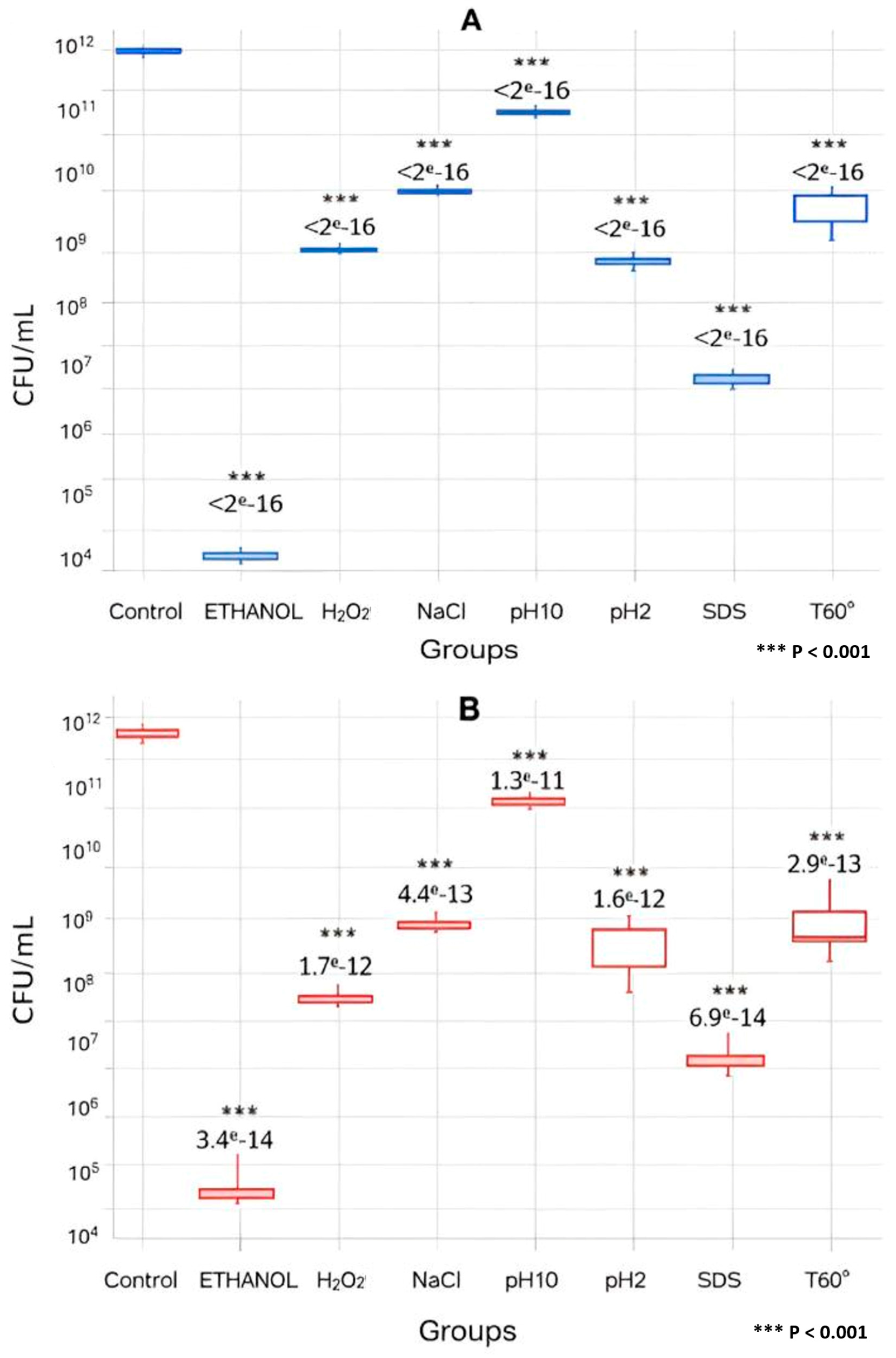
Exponential phase cells of Enterococcus faecium and Enterococcus durans were subjected to various stresses, such as osmotic, thermal, acid, alkaline, detergent, oxidative, and alcoholic stresses. The cells’ survival after each stress was estimated by enumerating CFU and compared to the control, as presented in Figure 2.
The survival rate of the cells for the control is 1.25 × 10¹² CFU/mL for Enterococcus faecium and 1.42 × 10¹² CFU/mL for Enterococcus durans, and when cells are in contact with higher concentrations of NaCl (17%), the CFU decreases to 7.53 × 10⁹ CFU/mL for Enterococcus faecium and 1.21 × 10¹⁰ CFU/mL for Enterococcus durans, showing a statistically significant increase in survival (p < 0.001).
During acclimatisation with heat stress, the CFU decreases to 5.17 × 10⁹ CFU/mL for Enterococcus faecium and 4.18 × 10¹⁰ CFU/mL for Enterococcus durans. In the same way, both strains showed reduced growth after contact with acidic pH2 stress; the CFU decreased to 9.40 × 10⁹ CFU/mL for Enterococcus faecium and 7.93 × 10⁸ CFU/mL for Enterococcus durans.
After contact with an alkaline pH11, the CFU was 1.27 × 10¹¹ CFU/mL for Enterococcus faecium and 1.20 × 10¹¹ CFU/mL for Enterococcus durans. During detergent stress, the CFU is strongly reduced; the CFU was 6.70 × 10⁷ CFU/mL for Enterococcus faecium and 5.40 × 10⁶ CFU/mL for Enterococcus durans. After oxidative stress with 0.1% hydrogen peroxide, a reduction in CFU of strains was observed; the CFU was 7.2 × 10⁸ CFU/mL for Enterococcus faecium and 1.1 × 10⁹ CFU/mL for Enterococcus durans.
When the cells were acclimated in ethanol, a significant decrease in cell viability was observed, resulting in a total reduction in CFU. The cell viability decreased to 5.63 × 10³ CFU/mL for Enterococcus faecium and 5.4 × 10² CFU/mL for Enterococcus durans.
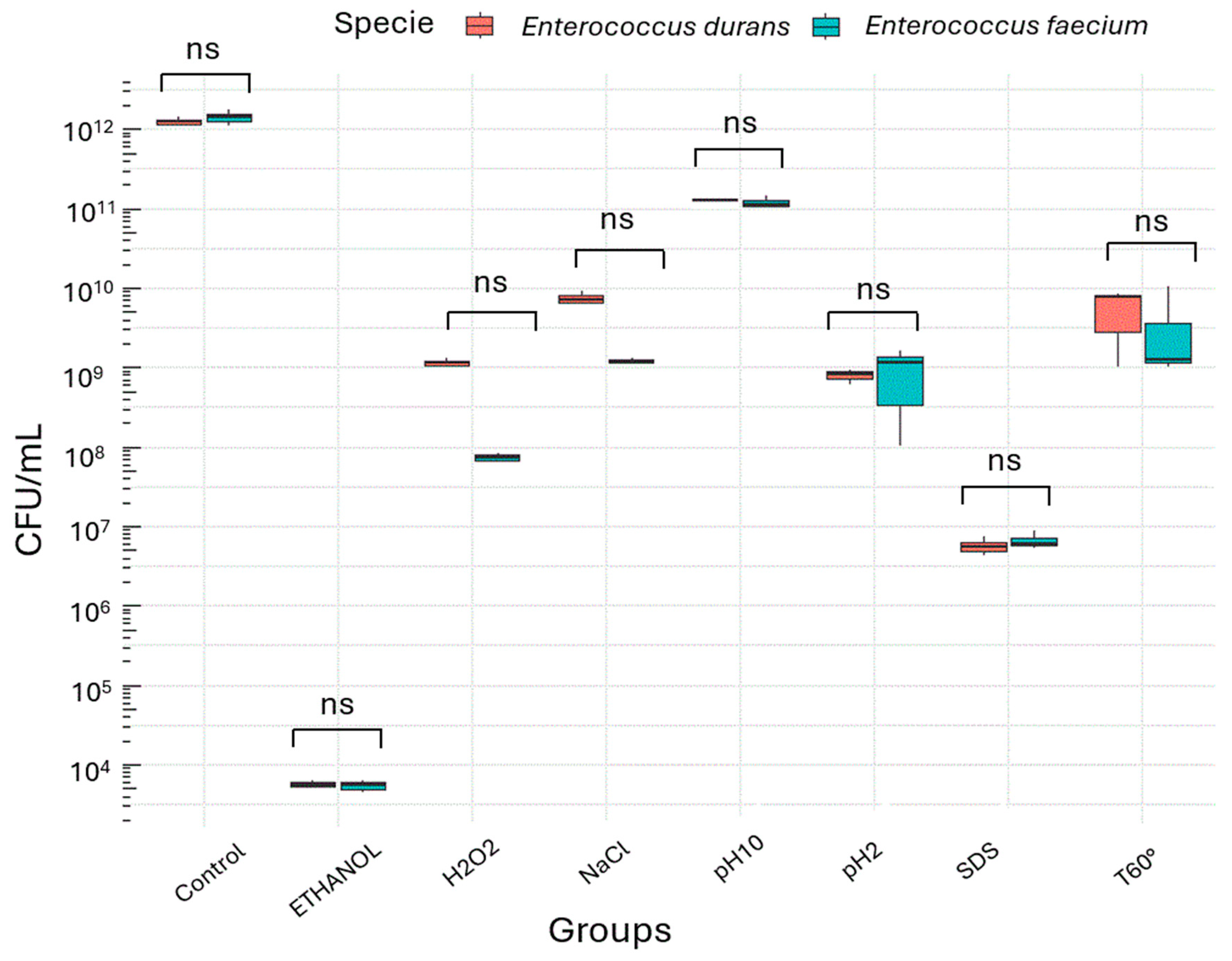
After assessing cell survival after each stress by counting colony-forming units, we compared the number of CFU between the two strains, as shown in Figure 3. No significant difference (p > 0.05) was observed between the two strains, indicating that they react identically to various stresses. No variability in response during enumeration was found when strains were exposed to different stressors.

3.2. Assessment of Cell Viability and Membrane Integrity by FCM

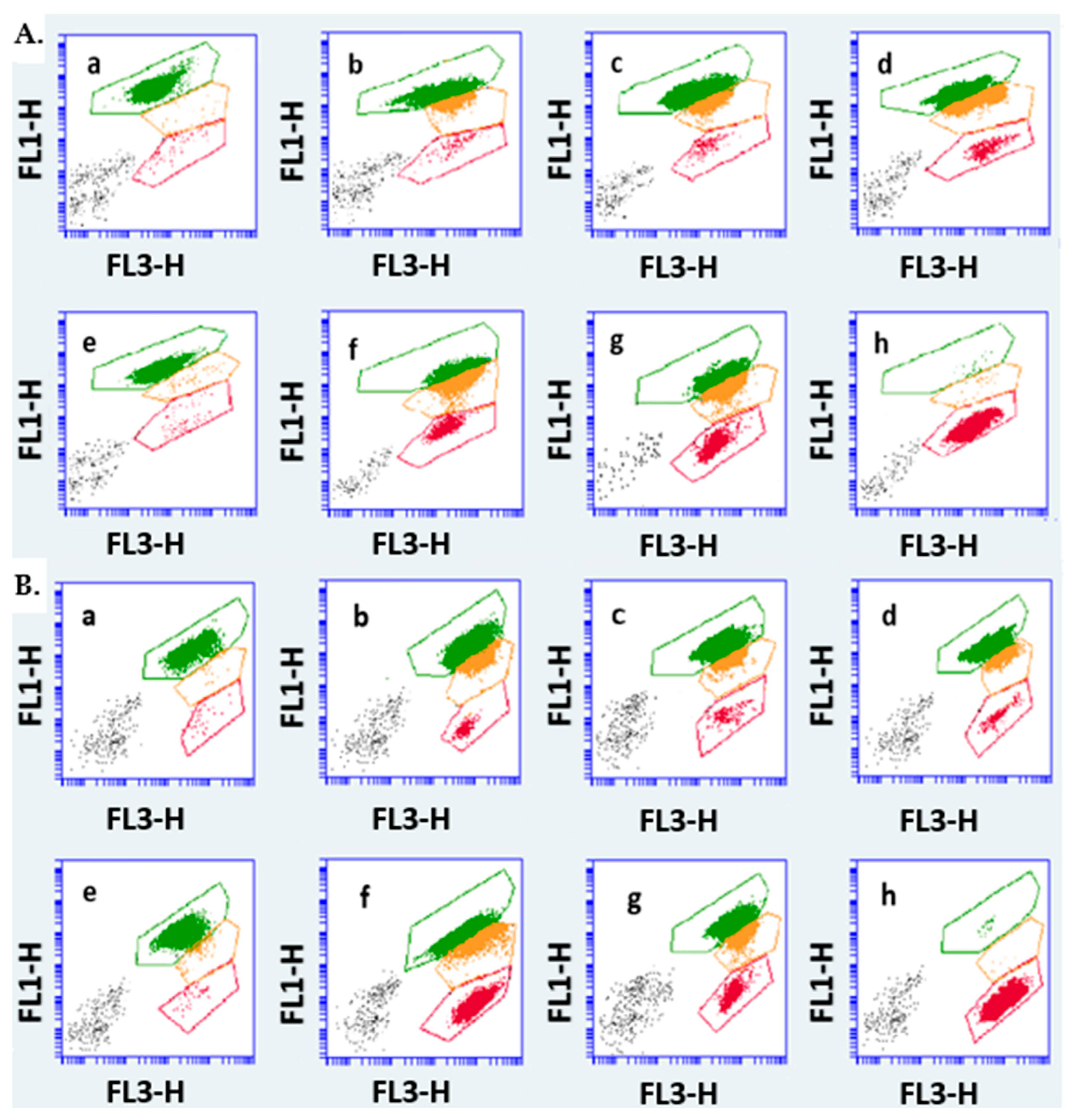
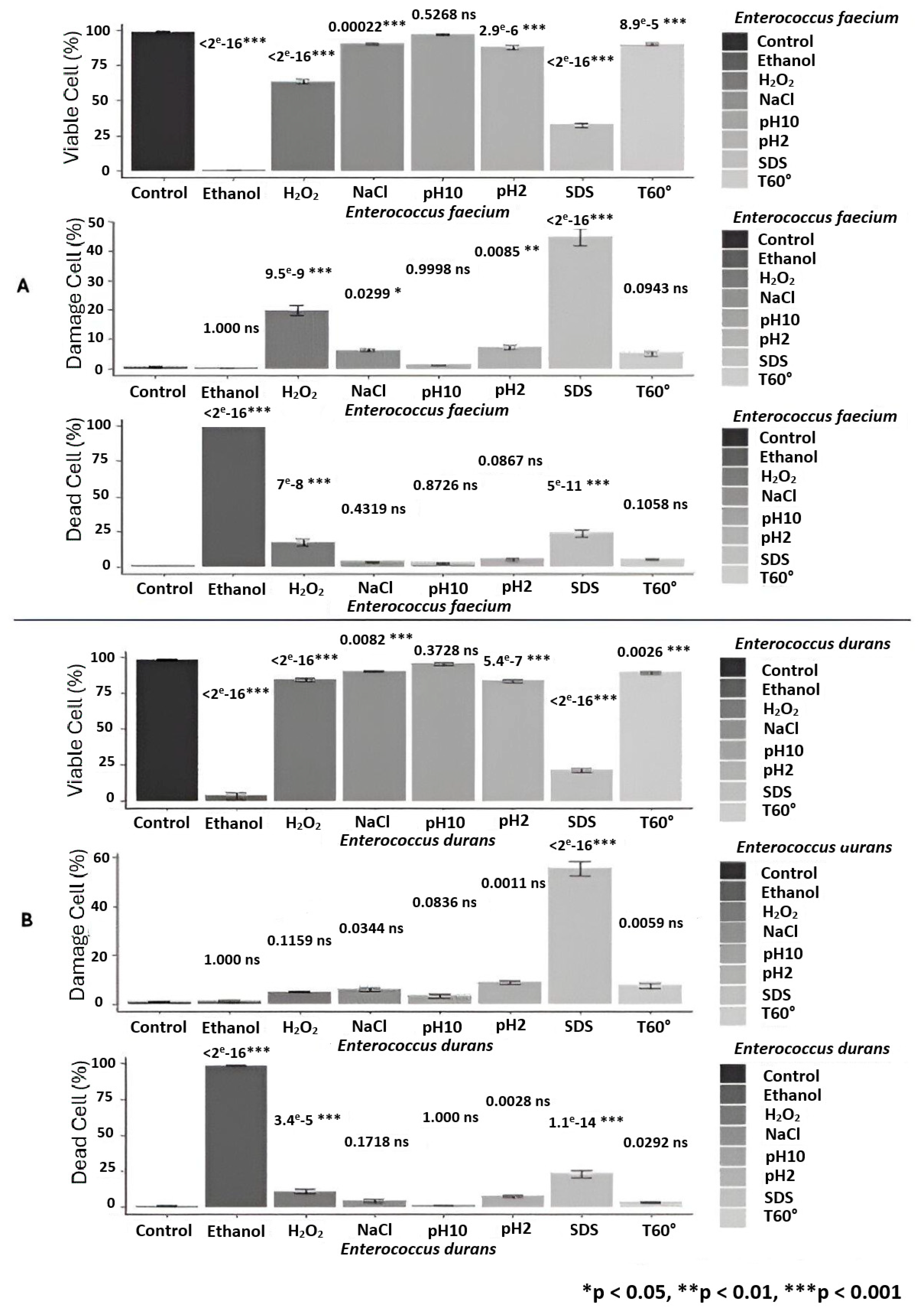
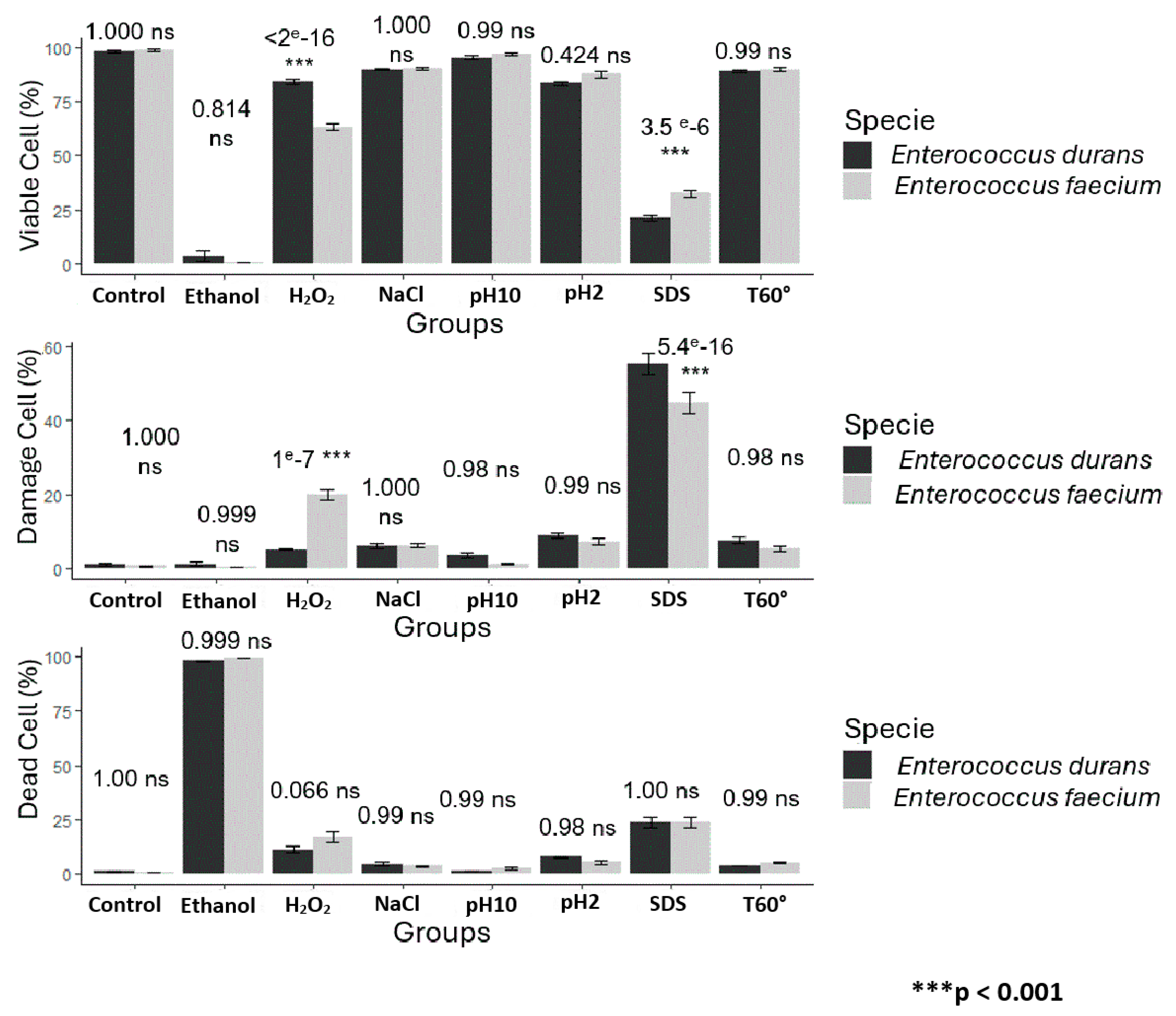
Three physiological states were identified using multicolour flow cytometry (Figure 4), and the proportions of each population were enumerated in percentage and illustrated as histograms (Figure 5). Enterococcus faecium and Enterococcus durans strains exhibit a large percentage of viable cells after stress acclimatisation, demonstrating tolerance to alkaline, osmotic, thermal, and acidic stresses, with viable cell percentages exceeding 83%. The results demonstrated that the percentage of viable cells in the control is 98.93% ± 0.80 for Enterococcus faecium and 98.23% ± 1.21 for Enterococcus durans, and when cells are in contact with higher concentrations of NaCl (17%), the two strains showed a statistically significant decrease in viable cells compared to the control group (p < 0.001), with 90.41% ± 1.14 viable cells for Enterococcus faecium and 89.92% ± 0.68 for Enterococcus durans.
After contact with heat stress, a significant difference in the percentage of living cells was observed in both strains (p < 0.001), with 89.9% ± 1.61 for Enterococcus faecium and 89.06% ± 1.36 for Enterococcus durans. In the same way, at pH 2, the difference between the control and treated groups showed a statistically significant increase (p < 0.001); however, acid stress tolerance was demonstrated by both strains, with 87.59% ± 2.64 viable cells for Enterococcus faecium and 83.55% ± 1.55 for Enterococcus durans.
Stress alkaline showed no statistically significant (p > 0.05) changes in the treated groups compared to that of the control groups, resulting in no increase in damaged and dead cells. Cells exposed to alkaline stress remained viable at 96.71% ± 1.12 for Enterococcus faecium and at 95.32% ± 1.35 for Enterococcus durans. The differences in the patterns of cytograms (e) (Figure 4) of fluorescent subpopulations were not significantly different from those of the control cytograms (a). This data suggests that cells are particularly resistant to alkaline shock.
During detergent stress, cell survival is strongly affected, and damaged cells are augmented, as shown by partial quenching of SY fluorescence by PI (Cytograms f in Figure 4). It is worth mentioning that in cells acclimated with SDS, the percentage of viable cells dropped to 32.46% ± 2.40 for Enterococcus faecium and 21.29% ± 2.05 for Enterococcus durans, with, as a consequence, a large increase in damaged cells at 44.76 ± 5.02 for Enterococcus faecium and at 55.37% ± 4.93 for Enterococcus durans, as well as an increase in dead cells at 23.77% ± 4.20 for Enterococcus faecium and at 23.33% ± 4.23 for Enterococcus durans.
After oxidative stress with 0.1% hydrogen peroxide (H2O2), the two strains’ viability decreased, with 63.24% ± 2.48 of viable cells for Enterococcus faecium and 84.37% ± 1.97 for Enterococcus durans. When the cells were acclimated to 20% ethanol, their survival was strongly affected, and a significant decrease in viable cells was observed. With a considerable increase in dead cells, the mortality rate increased until reaching 99.67% ± 0.20 for Enterococcus faecium and 99.54% ± 1.14 for Enterococcus durans at the end of the experiment. In cytograms h (Figure 4), full quenching of SY fluorescence by PI identifies dead cells stained in red.
In the comparison of flow cytometry results between the two strains depicted in Figure 6, no significant differences (p > 0.05) were observed under the following stress conditions: thermal, osmotic, acid, and alkaline stress, with both strains exhibiting a viability percentage exceeding 83%. We observed a significant difference (p < 0.001) in oxidative stress sensitivity across the strains, with Enterococcus durans exhibiting a larger proportion of viable cells than Enterococcus faecium. Similarly, both strains exhibited sensitivity to detergent stress; however, Enterococcus faecium shown greater resistance to detergent stress than Enterococcus durans. Ultimately, we observed no notable change between the two strains following ethanol treatment, which is demonstrated to be fatal for the cells and detrimental to the cytoplasmic membrane.

3.3. Validation of the Viability Method by Flow Cytometry Compared to the Classical Plate Count Method

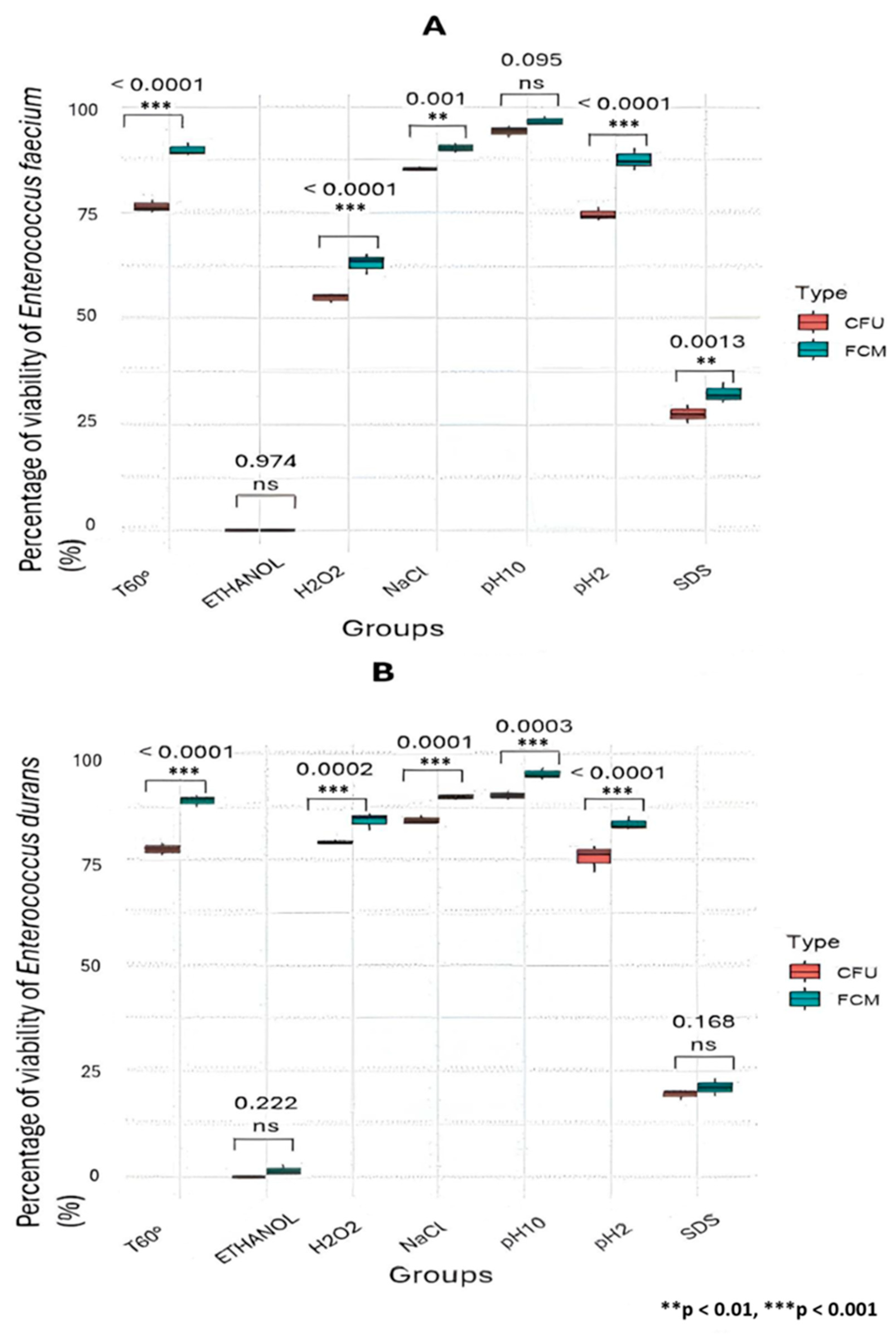
We compared the results of the percentage viability obtained from the traditional culture method to those of flow cytometry after different stress treatments for Enterococcus faecium and Enterococcus duransFigure 7 reports this comparison. For Enterococcus faecium (Figure 7A), we have found significant differences (p < 0.001) in the percentage viability obtained between the traditional culture method and flow cytometry for osmotic, thermal, acid, detergent, and oxidative stresses. For Enterococcus durans (Figure 7B), we have found significant differences (p < 0.001) in the percentage viability obtained between the traditional culture method and flow cytometry for osmotic, thermal, acid, alkaline, and oxidative stresses. But we did not observe a difference after exposure to alkaline and alcoholic stress for Enterococcus faecium and alcoholic and detergent stress for Enterococcus durans. A satisfactory correlation between the two vitality measurement methods was found, showing no statistically significant (p > 0.05) difference in the treated groups.

3.4. The Principal Component Analysis

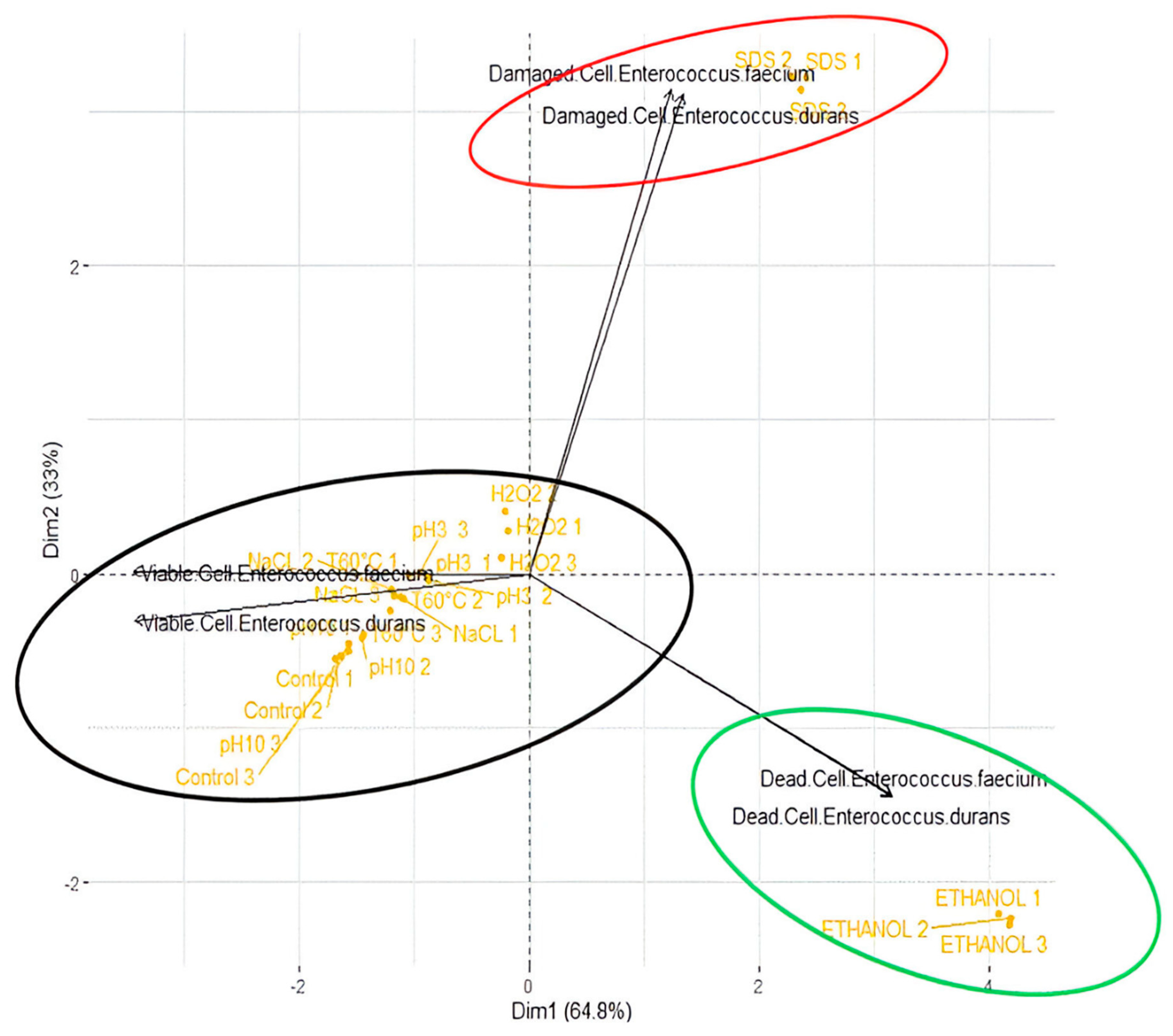
Principal component analysis (PCA) (Figure 8) was employed to investigate the correlations between responses to various stressors in Enterococcus faecium and Enterococcus durans for flow cytometry analysis. The initial two principal components collectively represented 97.8% of the total variance, with the first principal component accounting for 64.8% and the second for 33%. The biplot displays a clustering of individuals from each strain alongside the examined parameters (the various constraints imposed), with each point on the graphical representation denoting the projection of individuals from the two bacterial strains. This representation indicates that the bacterial strains cluster around a specific parameter (viable cell vectors), implying that they exhibit analogous responses to heat stress, saline, alkaline, acidic, and oxidative conditions, there by confirming that the two strains respond similarly to these various stressors. The bacterial strains are grouped based on a specific criterion (damaged cell vectors) that demonstrates sensitivity to detergents. Similarly, in the context of alcohol-induced stress, bacterial strains congregate around a certain parameter (dead cell vectors), indicating a complete loss of viable cells. This test establishes a robust association between the reactions of the two bacterial strains to various stressors manifested at acute angles.

4. Discussion

Tolerating and adapting to multiple stresses is crucial for the ecological success of lactic acid bacteria in both food environments and the gastrointestinal tract [37,38]. In our study, we assessed the tolerance of different stresses in Enterococcus faecium and Enterococcus durans isolated from two artisanal salted cheese and found them sensitive to vancomycin and penicillin. For this purpose, the two strains were subjected to different stress, and tolerance was assessed by enumerating cell viability through flow cytometry using the NADS protocol, and we compared it to the classical culture method. Our results demonstrated that different levels of stress tolerance exist in Enterococcus faecium and Enterococcus durans; these strains showed tolerance after acclimatisation to severe stressors such as heat, osmotic, acid, and alkaline conditions, as evidenced by a large percentage of viable cells exceeding 70% by the two enumerating methods.
The heat resistance of Enterococcus faecium and Enterococcus durans is unsurprising; our findings corroborate the existing literature indicating that Enterococcus spp. can endure heat treatment at 60 °C for 30 min. Our strains demonstrated viability post-thermal stress, with a viability percentage surpassing 75% as per both analytical methodologies employed. This microorganism is among the most thermally resistant non-spore-forming bacteria, capable of proliferating across a broad spectrum of temperatures in saline conditions and at low pH levels [39]. Our results align with the findings of Shi Y et al. [6], which reported that the heat tolerance tests of Enterococcus faecium MK-SQ-1, isolated from chicken bile, showed the strain maintained nearly total vitality at 50 °C and about 80% vitality at 60 °C for 15 min. Additionally, according to Amaral D et al. [40], strains of Enterococcus faecium and Enterococcus durans isolated from water buffalo mozzarella cheese demonstrate exceptional heat tolerance and will sustain their productive activity under high-temperature settings during feed processing. This tolerance constitutes a significant advantage in the cheesemaking process.
Both analytical methods confirm that Enterococcus faecium and Enterococcus durans tolerate osmotic stress, as evidenced by a viability percentage exceeding 80%. This finding aligns with the observation that most LAB are halotolerant, which is a crucial characteristic for their application in dairy products [41]. According to the literature, microorganisms respond to osmotic stress by accumulating compatible solutes intracellularly (through uptake or synthesis), which prevents water loss caused by high external osmolarity and allows for the maintenance of turgor [37].
Resistance to acid stress represents a crucial criterion for the selection of probiotic strains. In this study, our strains demonstrated a viability percentage exceeding 73% at pH 2 after 1 h, based on evaluations by FCM and CFU. This aligns with the results reported by Pieniz S et al. [42], which indicated that Enterococcus durans, identified by the code LAB18s and isolated from Minas Frescal cheese, exhibited high tolerance to acidic conditions after exposure to acidified media at pH 3 and pH 4, with no significant differences observed with the control (pH 7) during the incubation time, ranging between 0 and 4 h. The study by Zaghloul et al. [4] on the acid tolerance of Enterococcus faecium EA9, which was isolated from marine shrimp samples, recorded a strong ability to withstand low pH levels, with respective survival rates of 98% at pH 4, 84% at pH 3, and 69% at pH 2. This finding is in perfect accord with our results.
Alkaline stress at pH 11 shown no significant variations in cell survival compared to the control. Papadimitriou et al. [2] assert that alkaline stress has not been deemed physiologically pertinent to the lifestyle of LAB.
A detergent concentration of 0.05% significantly reduces cell viability. Both strains demonstrate minimal resistance to detergent, evidenced by a marked reduction in cell viability and a substantial rise in the proportion of injured cells. The bibliography verifies that SDS at 0.1% entirely inhibits Gram-positive bacteria [43]. In the presence of SDS, proteins associate with it to create a negatively charged SDS-protein complex [44]. SDS can disrupt hydrophobic contacts, ionic bonds, and hydrogen bonds; however, it does not impact disulphide bonds [45]. Injured cells remain metabolically active but have sustained damage that results in a temporary or perhaps permanent loss of proliferative capacity [46].
After oxidative stress with 0.1% hydrogen peroxide (H2O2), a reduction in the viability of the strains was observed by both analytical methods, which is normal because lactic bacteria are deficient in catalase activity. But Enterococcus durans shows better resistance to oxidative stress than Enterococcus faecium, which supports the study by Pieniz S et al. [42] on Enterococcus durans LAB18s, which showed high antioxidant activity. Among enzymatic antioxidant systems, the most conserved oxidative resistance mechanism in LAB is that oxygen is directly reduced to water by the coupling of NADH oxidase and NADH peroxidase. Oxygen is initially used for the oxidation of NADH to NAD+ via NADH oxidase, a reaction that produces H2O, which is then reduced to water by NADH peroxidase [47].
The FCM indicate that detergent and oxidative stress partially damaged membranes of the cells by SDS and H2O2 allow varying amounts of PI to penetrate, which leads to an increase in red fluorescence intensity and a decrease in green fluorescence intensity; this change is directly related to the significance of energy transfer from SY to the PI through resonance fluorescence energy transfer (FRET) when these two fluorochromes are positioned close to each other in the nucleic acids like demonstrated in cytograms (f and g) in Figure 4.
Ethanol was the only stressor that fully suppressed the viability of the two strains and increased cell death compared to the controls. Ethanol primarily targets the cytoplasmic membrane, as it is a non-charged, low-molecular-weight molecule capable of compromising membrane integrity. This disruption results in the dissipation of the electrochemical gradient and the loss of intracellular constituents, such as enzymatic cofactors and ions vital for cellular growth and fermentation [48,49,50]. The cellular analysis by cytometry shows cells with compromised membranes are permeable to the PI, which increases red fluorescence and causes a total quenching of the SYBR Green fluorescence; this change is directly related to the significance of energy transfer from SY to the PI. This results in a complete quenching of the SY fluorescence.
In this experiment, we did not observe significant differences in the responses of the two strains after osmotic, acid, alkaline, oxidative, and alcoholic stress treatments. We found that both strains were tolerant of thermal stress at 60 °C, osmotic stress at 17% NaCl, acid stress at pH 2, and alkaline stress at pH 11, but were completely intolerant of alcoholic stress at 20% ethanol. We observe notable disparities in viability percentages between the two strains following oxidative treatment with 0.1% H2O2 and detergent stress with 0.05% SDS, as demonstrated by flow cytometry. This disparities in viability depending on the species, which had been isolated from two different environments. Enterococcus durans exhibits superior tolerance to oxidative stress, while Enterococcus faecium displays enhanced resilience to detergent stress, as analysed by flow cytometry. This information could not be disclosed in the traditional box count. The diversity of tolerance to stress in the two strains must correlate with the ecological characteristics of the ecosystems from which the strains were isolated, which had previously adapted to adverse conditions such as salinity and elevated temperatures during the cheesemaking process.
The comparison of viability enumerations obtained from the traditional culture method and flow cytometry after different stress treatments demonstrated a satisfactory agreement in the percentage of viability between the two methods; however, the flow cytometry-derived percentage of cell viability surpassed that determined by plate counts, indicating the presence of viable non-cultivable cells (VBNC). In contrast, the plate counts method exclusively reflects cultivable cells and under-represents actual viability. According to Wendel U [51]. Colony-forming units is a technique that facilitates the identification of live bacterial cells through their capacity for replication. Nonetheless, cells may remain alive despite lacking the capacity for replication. The findings of Giraffa and Neviani [52], indicate that stressful situations might alter the viability and cultivability of cells, causing classical approaches to potentially overlook bacterial species that are metabolically active yet non-cultivable. Bacteria in the VBNC state exhibit metabolic activity and are deemed alive; however, they cannot be cultured or proliferated in culture media due to their inability to undergo sustained cellular division necessary for colony formation on standard agar media. This state is employed by cells as a mechanism to counteract stress [24,53].
The results obtained from this study demonstrate that the FCM, when used in combination with the NADS protocol, provides a rapid analysis for enumerating the viability of bacterial cells exposed to stress, reducing the analysis time from 3 days to just 2 h compared to the traditional method, which allows for a better evaluation of cell viability. The same observation was reported by Pereira P et al. [54] saying that flow cytometry has advantages over plate counting in terms of speed, reproducibility, and sensitivity, likely due to the capacity to detect cells in the VBNC state.

5. Conclusions

In this work, we demonstrated that there are indigenous strains of Enterococcus spp. with interesting stress tolerance. Therefore, there is a keen interest in conducting further tests to assess the probiotic properties of these strains, with the aim of incorporating them into a food system and enhancing human health. The comparison of the classical plate counting method with a new vitality test using a flow cytometer represents a conclusive test. We show that combining flow cytometry with the NADS protocol could potentially enable a swift and precise evaluation of cell viability enumeration. This technique has the potential to be used in physiological state research within dairy applications to assess the quality of fermented products and the viable cell count for probiotic production.

Supplementary Materials

The following supporting information can be downloaded at: https://www.mdpi.com/article/10.3390/applmicrobiol6020024/s1, Figure S1: Diagram modification on the sample injection system adapted on the flow cytometer, for the acquisition of the double labelled sample (viability) in anaerobic conditions; Figure S2: Representative cytograms.

Author Contributions

Conceptualization, H.A. and F.B.; methodology, H.A., F.B., A.B. and G.G.; software, H.A. and Y.M.; validation, H.A., F.B., A.B. and G.G.; formal analysis, A.B. and Y.M.; investigation, H.A.; resources, H.A. and F.B.; data curation, H.A.; writing—original draft preparation, H.A.; writing—review and editing, H.A., F.B., A.B. and G.G.; visualisation, H.A., F.B. and G.G.; supervision, F.B.; project administration, H.A. and F.B.; funding acquisition, H.A. All authors have read and agreed to the published version of the manuscript.

Funding

This work was supported by the Ministry of Higher Education and Scientific Research of Algeria, and the Faculty of Nature and Life Sciences of the University of Oran1 Ahmed Ben Bella. PRECYM of the Mediterranean Institute of Oceanography (MIO) of Aix-Marseille University was supported by funding from the European fund Fonds Européen de Développement Régional (FEDER Fund under project 1166-39417) and the French ‘Groupe d’Intérêt Scientifique Installations de recherche en Biologie, Santé et Agronomie’ (GIS IBiSA) supporting research infrastructures.

Data Availability Statement

The data supporting the findings of this study are available from the corresponding author upon reasonable request.

Acknowledgments

The authors thank the Flow Cytometry Platform for Microbiology (PRECYM) of the Mediterranean Institute of Oceanography (MIO) for providing the technical means and skills of its personnel, making available equipment and protocols, and methodological advice.

Conflicts of Interest

The authors declare no conflicts of interest.

Abbreviations

The following abbreviations are used in this manuscript:
NADSnucleic-acid double staining
CFUcolony-forming units
FCMFlow cytometry
SYSYBR green
PIPropidium iodide
VBNCviable non-cultivable cells

References

  1. Papadimitriou, K.; Pot, B.; Tsakalidou, E. How microbes adapt to a diversity of food niches. Curr. Opin. Food Sci. 2015, 2, 29–35. [Google Scholar] [CrossRef]
  2. Papadimitriou, K.; Alegría, Á.; Bron, P.A.; De Angelis, M.; Gobbetti, M.; Kleerebezem, M.; Lemos, J.A.; Linares, D.M.; Ross, P.; Stanton, C.; et al. Stress Physiology of Lactic Acid Bacteria. Microbiol. Mol. Biol. Rev. 2016, 80, 837–890. [Google Scholar] [CrossRef]
  3. Salek, F.; Mirzaei, H.; Khandaghi, J.; Javadi, A.; Nami, Y. Apoptosis induction in cancer cell lines and anti-inflammatory and anti-pathogenic properties of proteinaceous metabolites secreted from potential probiotic Enterococcus faecalis KUMS-T48. Sci. Rep. 2023, 13, 7813. [Google Scholar] [CrossRef]
  4. Zaghloul, E.H.; Abuohashish, H.M.; El Sharkawy, A.S.; Abbas, E.M.; Ahmed, M.M.; Al-Rejaie, S.S. Probiotic Potential of the Marine Isolate Enterococcus faecium EA9 and In Vivo Evaluation of Its Antisepsis Action in Rats. Mar. Drugs 2023, 21, 45. [Google Scholar] [CrossRef]
  5. Casey, M.G.; Häni, J.P.; Gruskovnjak, J.; Schaeren, W.; Wechsler, D. Characterisation of the non-starter lactic acid bacteria (NSLAB) of Gruyère PDO cheese. Le Lait 2006, 86, 407–414. [Google Scholar] [CrossRef]
  6. Shi, Y.; Zhai, M.; Li, J.; Li, B. Evaluation of safety and probiotic properties of a strain of Enterococcus faecium isolated from chicken bile. J. Food Sci. Technol. 2020, 57, 578–587. [Google Scholar] [CrossRef] [PubMed]
  7. Dinçer, E.; Kıvanç, M. In vitro evaluation of probiotic potential of Enterococcus faecium strains isolated from Turkish pastırma. Arch. Microbiol. 2021, 203, 2831–2841. [Google Scholar] [CrossRef]
  8. Abril, A.G.; Quintela-Baluja, M.; Villa, T.G.; Calo-Mata, P.; Barros-Velázquez, J.; Carrera, M. Proteomic Characterization of Virulence Factors and Related Proteins in Enterococcus Strains from Dairy and Fermented Food Products. Int. J. Mol. Sci. 2022, 23, 10971. [Google Scholar] [CrossRef]
  9. Hassanzadazar, H.; Ehsani, A.; Mardani, K. Antibacterial activity of Enterococcus faecium derived from Koopeh cheese against Listeria monocytogenes in probiotic ultra-filtrated cheese Prevalence, serotypes and antimicrobial resistance of isolated salmonella from Eggs marketed in Zanjan city View project Monitoring of edible oils quality in resteurants and fast food centers using peroxide and Acid value View project. Vet. Res. Forum 2014, 5, 169–175. [Google Scholar] [PubMed]
  10. Martino, G.P.; Quintana, I.M.; Espariz, M.; Blancato, V.S.; Magni, C. Aroma compounds generation in citrate metabolism of Enterococcus faecium: Genetic characterization of type I citrate gene cluster. Int. J. Food Microbiol. 2016, 218, 27–37. [Google Scholar] [CrossRef] [PubMed]
  11. Zareie, Z.; Moayedi, A.; Garavand, F.; Tabar-Heydar, K.; Khomeiri, M.; Maghsoudlou, Y. Probiotic Properties, Safety Assessment, and Aroma-Generating Attributes of Some Lactic Acid Bacteria Isolated from Iranian Traditional Cheese. Fermentation 2023, 9, 338. [Google Scholar] [CrossRef]
  12. Gotova, I.; Dimitrov, Z. Dimitrov Enterococcus faecium strain used as an adjunct culture in a starter for kashkaval cheese plays important role to proteolytic processes and release of bioactive peptides during ripening. J. BioSci. Biotechnol. 2015, 119–123. Available online: https://api.semanticscholar.org/CorpusID:6293506.
  13. Akpinar, A.; Saygili, D.; Yerlikaya, O. Production of set-type yoghurt using Enterococcus faecium and Enterococcus durans strains with probiotic potential as starter adjuncts. Int. J. Dairy Technol. 2020, 73, 726–736. [Google Scholar] [CrossRef]
  14. AlKalbani, N.S.; Turner, M.S.; Ayyash, M.M. Isolation, identification, and potential probiotic characterization of isolated lactic acid bacteria and in vitro investigation of the cytotoxicity, antioxidant, and antidiabetic activities in fermented sausage. Microb. Cell Fact. 2019, 18, 188. [Google Scholar] [CrossRef] [PubMed]
  15. Ghazisaeedi, F.; Meens, J.; Hansche, B.; Maurischat, S.; Schwerk, P.; Goethe, R.; Wieler, L.H.; Fulde, M.; Tedin, K.A. Virulence factor as a therapeutic: The probiotic Enterococcus faecium SF68 arginine deiminase inhibits innate immune signaling pathways. Gut Microbes 2022, 14, 2106105. [Google Scholar] [CrossRef] [PubMed]
  16. Hanchi, H.; Mottawea, W.; Sebei, K.; Hammami, R. The Genus Enterococcus: Between Probiotic Potential and Safety Concerns-An Update. Front. Microbiol. 2018, 9, 1791. [Google Scholar] [CrossRef]
  17. Yerlikaya, O.; Akbulut, N. In vitro characterisation of probiotic properties of Enterococcus faecium and Enterococcus durans strains isolated from raw milk and traditional dairy products. Int. J. Dairy Technol. 2019, 73, 98–107. [Google Scholar] [CrossRef]
  18. Ferchichi, M.; Sebei, K.; Boukerb, A.M.; Karray-Bouraoui, N.; Chevalier, S.; Feuilloley, M.G.J.; Connil, N.; Zommiti, M. Enterococcus spp.: Is It a Bad Choice for a Good Use—A Conundrum to Solve? Microorganisms 2021, 9, 2222. [Google Scholar] [CrossRef] [PubMed]
  19. Krishna, K.V.; Koujalagi, K.; Surya, R.U.; Namratha, M.P.; Malaviya, A. Enterococcus species and their probiotic potential: Current status and future prospects. J. Appl. Biol. Biotechnol. 2023, 11, 36–44. [Google Scholar] [CrossRef]
  20. Giraffa, G. Functionality of enterococci in dairy products. Int. J. Food Microbiol. 2003, 88, 215–222. [Google Scholar] [CrossRef]
  21. Giraffa, G. Enterococci from foods. FEMS Microbiol. Rev. 2002, 26, 163–171. [Google Scholar] [CrossRef] [PubMed]
  22. Wilkinson, M.G. Flow Cytometry and Food Microbiology: Challenges, opportunities and progress to date. Técnicas Lab. 2016, 417, 722–728. [Google Scholar]
  23. Sielatycka, K.; Poniewierska-Baran, A.; Nurek, K.; Torbé, A.; Ratajczak, M.Z. Novel View on Umbilical Cord Blood and Maternal Peripheral Blood-an Evidence for an Increase in the Number of Circulating Stem Cells on Both Sides of the Fetal-Maternal Circulation Barrier. Stem Cell Rev. Rep. 2017, 13, 774–780. [Google Scholar] [CrossRef] [PubMed]
  24. Wilkinson, M.G. Flow cytometry as a potential method of measuring bacterial viability in probiotic products: A review. Trends Food Sci. Technol. 2018, 78, 1–10. [Google Scholar] [CrossRef]
  25. Wen, G.; Cao, R.; Wan, Q.; Tan, L.; Xu, X.; Wang, J.; Huang, T. Development of fungal spore staining methods for flow cytometric quantification and their application in chlorine-based disinfection. Chemosphere 2020, 243, 125453. [Google Scholar] [CrossRef]
  26. Doherty, S.B.; Wang, L.; Ross, R.P.; Stanton, C.; Fitzgerald, G.F.; Brodkorb, A. Use of viability staining in combination with flow cytometry for rapid viability assessment of Lactobacillus rhamnosus GG in complex protein matrices. J. Microbiol. Methods 2010, 82, 301–310. [Google Scholar] [CrossRef] [PubMed]
  27. Sielatycka, K.; Juzwa, W.; Śliwa-Dominiak, J.; Kaczmarczyk, M.; Łoniewski, I.; Marlicz, W. Multiparameter flow cytometric enumeration of probiotic-containing commercial powders. Innov. Food Sci. Emerg. Technol. 2021, 68, 102598. [Google Scholar] [CrossRef]
  28. Tracey, H.; Coates, N.; Hulme, E.; John, D.; Michael, D.R.; Plummer, S.F. Insights into the enumeration of mixtures of probiotic bacteria by flow cytometry. BMC Microbiol. 2023, 23, 48. [Google Scholar] [CrossRef]
  29. Barbesti, S.; Citterio, S.; Labra, M.; Baroni, M.D.; Neri, M.G.; Sgorbati, S. Two and three-color fluorescence flow cytometric analysis of immunoidentified viable bacteria. Cytometry 2000, 40, 214–218. [Google Scholar] [CrossRef] [PubMed]
  30. Grégori, G.; Citterio, S.; Ghiani, A.; Labra, M.; Sgorbati, S.; Brown, S.; Denis, M. Resolution of viable and membrane-compromised bacteria in freshwater and marine waters based on analytical flow cytometry and nucleic acid double staining. Appl. Environ. Microbiol. 2001, 67, 4662–4670. [Google Scholar] [CrossRef]
  31. Falcioni, T.; Papa, S.; Gasol, J.M. Evaluating the flow-cytometric nucleic acid double-staining protocol in realistic situations of planktonic bacterial death. Appl. Environ. Microbiol. 2008, 74, 1767–1779. [Google Scholar] [CrossRef] [PubMed]
  32. Grégori, G.; Denis, M.; Sgorbati, S.; Citterio, S. Resolution of Viable and Membrane-Compromised Free Bacteria in Aquatic Environments by Flow Cytometry. Curr. Protoc. Cytom. 2018, 85, e42. [Google Scholar] [CrossRef] [PubMed]
  33. Davey, H.M.; Kell, D.B. Flow cytometry and cell sorting of heterogeneous microbial populations: The importance of single-cell analyses. Microbiol. Rev. 1996, 60, 641–696. [Google Scholar] [CrossRef] [PubMed]
  34. Terzaghi, B.E.; Sandine, W.E. Improved medium for lactic streptococci and their bacteriophages. Appl. Microbiol. 1975, 29, 807–813. [Google Scholar] [CrossRef]
  35. Parente, E.; Ciocia, F.; Ricciardi, A.; Zotta, T.; Felis, G.E.; Torriani, S. Diversity of stress tolerance in Lactobacillus plantarum, Lactobacillus pentosus and Lactobacillus paraplantarum: A multivariate screening study. Int. J. Food Microbiol. 2010, 144, 270–279. [Google Scholar] [CrossRef]
  36. Hiraoka, Y.; Kimbara, K. Rapid assessment of the physiological status of the polychlorinated biphenyl degrader Comamonas testosteroni TK102 by flow cytometry. Appl. Environ. Microbiol. 2002, 68, 2031–2035. [Google Scholar] [CrossRef]
  37. Van de Guchte, M.; Serror, P.; Chervaux, C.; Smokvina, T.; Ehrlich, S.D.; Maguin, E. Stress responses in lactic acid bacteria. Antonie Van Leeuwenhoek 2002, 82, 187–216. [Google Scholar] [CrossRef]
  38. Serrazanetti, D.I.; Guerzoni, M.E.; Corsetti, A.; Vogel, R. Metabolic impact and potential exploitation of the stress reactions in lactobacilli. Food Microbiol. 2009, 26, 700–711. [Google Scholar] [CrossRef]
  39. Martínez, S.; López, M.; Bernardo, A. Thermal inactivation of Enterococcus faecium: Effect of growth temperature and physiological state of microbial cells. Lett. Appl. Microbiol. 2003, 37, 475–481. [Google Scholar] [CrossRef] [PubMed]
  40. Amaral, D.M.F.; Silva, L.F.; Casarotti, S.N.; Nascimento, L.C.S.; Penna, A.L.B. Enterococcus faecium and Enterococcus durans isolated from cheese: Survival in the presence of medications under simulated gastrointestinal conditions and adhesion properties. J. Dairy Sci. 2017, 100, 933–949. [Google Scholar] [CrossRef] [PubMed]
  41. Silva, L.F.; Casella, T.; Gomes, E.S.; Nogueira, M.C.L.; De Dea Lindner, J.; Penna, A.L.B. Diversity of Lactic Acid Bacteria Isolated from Brazilian Water Buffalo Mozzarella Cheese. J. Food Sci. 2015, 80, 411–417. [Google Scholar] [CrossRef] [PubMed]
  42. Pieniz, S.; Andreazza, R.; Anghinoni, T.; Camargo, F.; Brandelli, A. Probiotic potential, antimicrobial and antioxidant activities of Enterococcus durans strain LAB18s. Food Control 2014, 37, 251–256. [Google Scholar] [CrossRef]
  43. Kramer, V.C.; Nickerson, K.W.; Hamlett, N.V.; O’Hara, C. Prevalence of extreme detergent resistance among the Enterobacteriaceae. Can. J. Microbiol. 1984, 30, 711–713. [Google Scholar] [CrossRef]
  44. Jung, J.M.; Savin, G.; Pouzot, M.; Schmitt, C.; Mezzenga, R. Structure of heat-induced beta-lactoglobulin ag gregates and their complexes with sodium-dodecyl sulfate. Biomacromolecules 2008, 9, 2477–2486. [Google Scholar] [CrossRef] [PubMed]
  45. Zegarra, F.C.; Homouz, D.; Eliaz, Y.; Gasic, A.G.; Cheung, M.S. Impact of hydrodynamic interactions on protein folding rates depends on temperature. Phys. Rev. E 2018, 97, 032402. [Google Scholar] [CrossRef] [PubMed]
  46. Papadimitriou, K.; Pratsinis, H.; Nebe-von-Caron, G.; Kletsas, D.; Tsakalidou, E. Acid tolerance of Streptococcus macedonicus as assessed by flow cytometry and single-cell sorting. Appl. Environ. Microbiol. 2007, 73, 465–476. [Google Scholar] [CrossRef] [PubMed]
  47. Miyoshi, A.; Rochat, T.; Gratadoux, J.J.; Le Loir, Y.; Oliveira, S.C.; Langella, P.; Azevedo, V. Oxidative stress in Lactococcus lactis. Genet. Mol. Res. 2003, 2, 348–359. [Google Scholar]
  48. Graça da Silveira, M.; Vitória San Romão, M.; Loureiro-Dias, M.C.; Rombouts, F.M.; Abee, T. Flow cytometric assessment of membrane integrity of ethanol-stressed Oenococcus oeni cells. Appl. Environ. Microbiol. 2002, 68, 6087–6093. [Google Scholar] [CrossRef] [PubMed]
  49. Leão, C.; Van Uden, N. Effects of ethanol and other alkanols on passive proton influx in the yeast Saccharomyces cerevisiae. Biochim. Biophys. Acta 1984, 774, 43–48. [Google Scholar] [CrossRef]
  50. Osman, Y.A.; Ingram, L.O. Mechanism of ethanol inhibition of fermentation in Zymomonas mobilis CP4. J. Bacteriol. 1985, 164, 173–180. [Google Scholar] [CrossRef]
  51. Wendel, U. Assessing Viability and Stress Tolerance of Probiotics—A Review. Front. Microbiol. 2022, 12, 81846. [Google Scholar] [CrossRef]
  52. Giraffa, G.; Neviani, E. DNA-based, culture-independent strategies for evaluating microbial communities in food-associated ecosystems. Int. J. Food Microbiol. 2001, 67, 19–34. [Google Scholar] [CrossRef]
  53. Davis, C. Enumeration of probiotic strains: Review of culture-dependent and alternative techniques to quantify viable bacteria. J. Microbiol. Methods 2014, 103, 9–17. [Google Scholar] [CrossRef]
  54. Hansen, S.J.Z.; Tang, P.; Kiefer, A.; Galles, K.; Wong, C.; Morovic, W. Droplet Digital PCR Is an Improved Alternative Method for High-Quality Enumeration of Viable Probiotic Strains. Front. Microbiol. 2020, 10, 3025. [Google Scholar] [CrossRef] [PubMed]
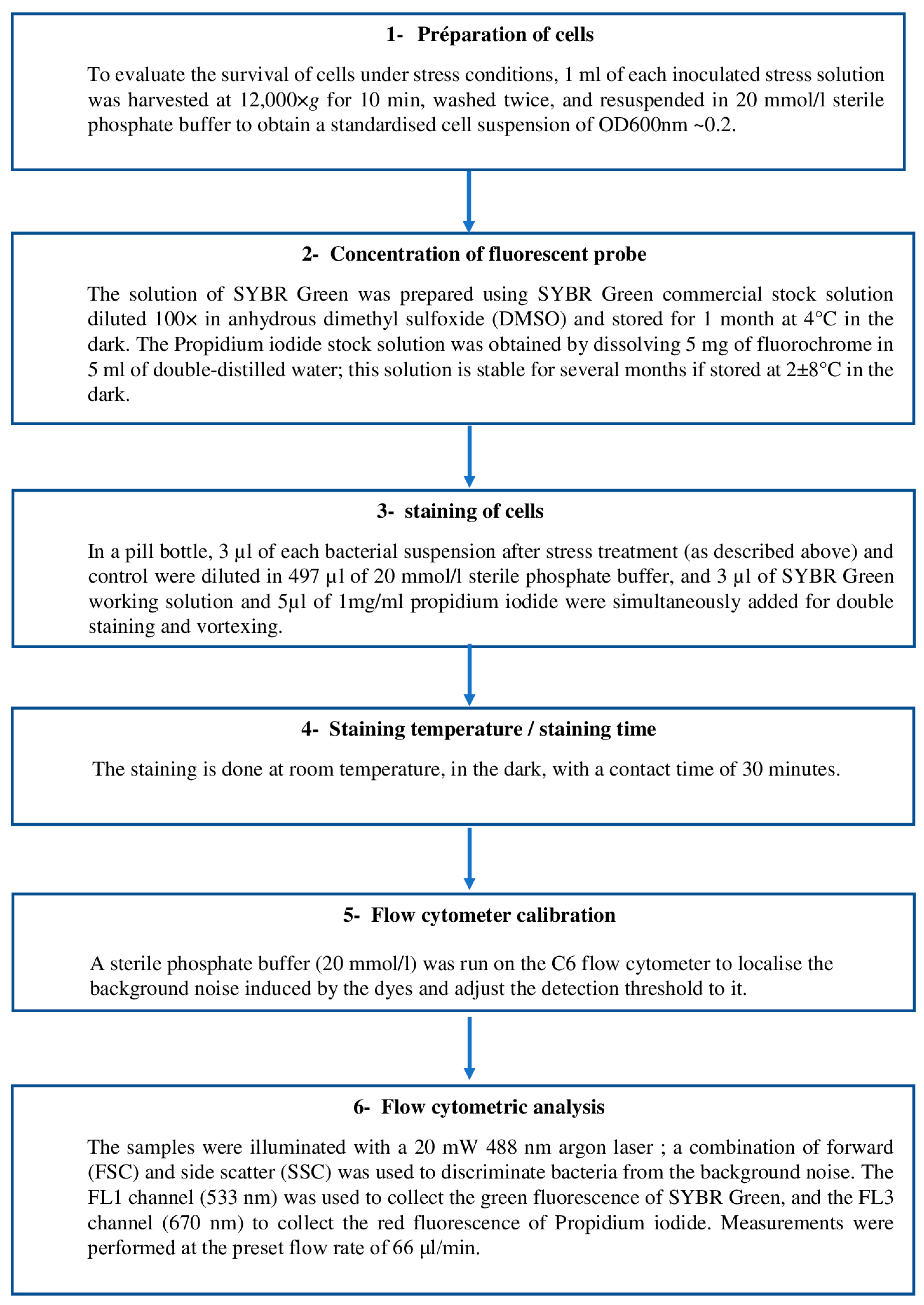
Figure 1. The principal steps for staining NADS protocol for flow cytometric analysis of cells.
Applmicrobiol 06 00024 g001
Figure 2. The effect of different stresses on the viability of Enterococcus faecium (A) and Enterococcus durans (B) in exponential phase cells determined by CFU.
Applmicrobiol 06 00024 g002
Figure 3. The difference in tolerance of the effect of stresses on the viability between Enterococcus faecium and Enterococcus durans in exponential phase cells determined by CFU.
Applmicrobiol 06 00024 g003
Figure 4. Cytogram of the effect of different stresses on membrane integrity of Enterococcus faecium (A) and Enterococcus durans (B) showing viable cells (green cells; upper region), dead cells (red cells; lower region), and damaged cells (orange cells; centre region). (a) non-stressed cells (b) (Osmotic stress); (c) (Heat stress); (d) (Acidic stress); (e) (Alkaline stress); (f) (Detergent stress); (g) (Oxidative stress); (h) (Alcoholic stress).
Applmicrobiol 06 00024 g004
Figure 5. Histogram analysis of the effect of different stresses on the percentage of viable, damaged, and dead cells of Enterococcus faecium (A) and Enterococcus durans (B) compared to the control in exponential phase cells.
Applmicrobiol 06 00024 g005
Figure 6. The difference in tolerance of different stresses on the percentage of viable, damaged, and dead cells between Enterococcus faecium and Enterococcus durans in exponential phase cells.
Applmicrobiol 06 00024 g006
Figure 7. The comparison between cell viability estimated with plate counts (CFU) and with flow cytometry (FCM) for Enterococcus faecium (A) and Enterococcus durans (B).
Applmicrobiol 06 00024 g007
Figure 8. ACP of the difference in tolerance of different stresses on the viability between Enterococcus faecium and Enterococcus durans.
Applmicrobiol 06 00024 g008
Table 1. Stress solutions applied to Enterococcus faecium and Enterococcus durans.
StressSolutions
Osmotic stress3 mol/L NaCl solution, 1 h, 30 °C.
Heat stress10 mmol/L phosphate buffer pH7 (PB7), 30 min, 60 °C.
Acid stress0.1 mol/L Citrate buffer pH 2.0, 1 h, 30 °C.
Alkaline stress0.2 mol/L glycine-NaOH buffer pH 11, 1 h, 30 °C.
Detergent stress0.05% (w/v), sodium dodecyl sulfate solution (SDS) 30 min, 30 °C
Oxidative stress0.1% v/v H2O2 solution, 30 min, 30 °C.
Alcoholic stress20% ethanol solution, 30 min, 30 °C.
Disclaimer/Publisher’s Note: The statements, opinions and data contained in all publications are solely those of the individual author(s) and contributor(s) and not of MDPI and/or the editor(s). MDPI and/or the editor(s) disclaim responsibility for any injury to people or property resulting from any ideas, methods, instructions or products referred to in the content.