Review

Gut Microbiome Modulation by Probiotics: Implications for Livestock Growth Performance and Health—Narrative Review


by
Peter Ayodeji Idowu
1,*,
Lwando Mbambalala
2,
Oluwakamisi Festus Akinmoladun
3,4,* and
Adeola Patience Idowu
5
1
Section of Veterinary Public Health, Department of Paraclinical Sciences, Faculty of Veterinary Science, University of Pretoria, Private Bag X20, Onderstepoort, Pretoria 0028, Gauteng, South Africa
2
School of Interdisciplinary Research and Graduate Studies, College of Graduate Studies, University of South Africa (UNISA), Preller Street, Muckleneuk Ridge, Pretoria 0003, Gauteng, South Africa
3
Department of Animal and Pasture Science, Faculty of Science and Agriculture, University of Fort Hare, Private Bag X1314, Alice 5700, Eastern Cape, South Africa
4
Department of Animal and Environmental Biology, Faculty of Science, Adekunle Ajasin University PMB 001, Akungba-Akoko 340102, Nigeria
5
Department of Animal Science, Faculty of Natural and Agricultural Science, North-West University, Mmabatho 2735, North West, South Africa
*
Authors to whom correspondence should be addressed.
Appl. Microbiol. 2025, 5(4), 149; https://doi.org/10.3390/applmicrobiol5040149
Submission received: 8 November 2025 / Revised: 8 December 2025 / Accepted: 11 December 2025 / Published: 16 December 2025

Abstract

Probiotics have emerged as gut modulators, capable of restructuring microbial communities to enhance animal health and performance. This review synthesizes peer-reviewed studies published between 2015 and 2025, retrieved from Scopus, Web of Science, and Google Scholar. It encompasses both ruminant and monogastric species to evaluate the effects of probiotic supplementation under diverse production environments. Evidence indicates that diet, age, host genetics, and management practices strongly influence gut microbiome composition and function, explaining the context-dependent nature of probiotic efficacy. These interventions improve growth performance, feed efficiency, gut morphology, pathogen resistance, and systemic immune parameters, supporting their potential as sustainable alternatives to antibiotic growth promoters. However, responses vary and are context-dependent, based on differences in strain specificity, dosage, host physiology, and environmental stress. By explaining how probiotic-mediated modulation translates into improved productivity, reduced antimicrobial dependence, and greater resilience in real-world farming systems, this review highlights their practical value for modern livestock production. Future research should focus on field-based validation, multi-omics approaches to resolve host–microbiota–probiotic interactions, and long-term assessments of animal health, productivity, and environmental impacts. Strategic deployment of probiotics, combined with scalable delivery technologies and regulatory alignment, can enhance resilience, sustainability, and efficiency in livestock production systems.

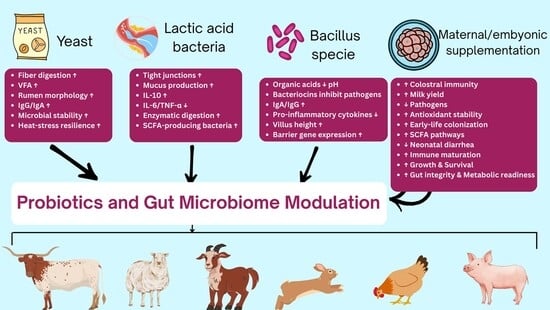
Graphical Abstract

1. Introduction

The gastrointestinal tract (GIT) is a known for digestion, nutrient assimilation, immune regulation, and overall livestock performance [1]. Beyond its digestive role, it serves as a dynamic interface between the host and the environment, modulating immune responses and acting as a frontline defense against pathogens [2]. In intensive production systems, animals are frequently exposed to high pathogen loads, environmental stressors, and dietary imbalances that disrupt gut microbial communities [3,4]. This resulted in impaired intestinal integrity, reduced feed efficiency, weakened immunity, and diminished growth resilience [5]. These challenges have historically led to the use of antibiotic growth promoters (AGPs) to maintain health and productivity [6]. However, their widespread use has contributed to antimicrobial resistance, posing animal and public health risks [3]. Sustainable alternatives are therefore urgently needed to support performance without compromising animal, human, or environmental health.
Probiotics have emerged as one of such alternatives. Probiotic is defined as live microorganisms by the Food and Agriculture Organisation and World Health Organization [7]. This includes bacterial taxa such as LactoBacillus, Bifidobacterium, and Bacillus spp., as well as yeasts such as Saccharomyces cerevisiae. Probiotics enhance nutrient absorption, strengthen intestinal barrier function, inhibit pathogenic colonization, and stimulate immune responses. All these leads to improvements in health and productivity without reliance on antibiotics [2,8]. Probiotics are distinct from related categories of gut health-promoting product. Prebiotics are non-digestible food ingredients (e.g., inulin, fructooligosaccharides) that selectively stimulate the growth and activity of beneficial gut bacteria. Synbiotics refer to formulations combining probiotics and prebiotics that work synergistically to improve the survival and functional activity of beneficial microorganisms in the gut. Postbiotics consist of non-viable microbial cells, metabolites, or cell components, such as short-chain fatty acids and bacteriocins, that confer health benefits without containing live microorganisms.
Yeast-based strains, such as S. cerevisiae and Pichia kudriavzevii, improve rumen fermentation, stabilize pH, and enhance fiber digestion in ruminants [9]. In monogastric, probiotic support early microbiota establishment and immune maturation in pigs and poultry [10,11]. Lactic acid bacteria (LAB), especially Lactobacillus and Bifidobacterium, exert immunomodulatory and antimicrobial effects via organic acid and bacteriocin production [12]. Also, it lowers intestinal pH and stimulates mucosal immunity [13,14]. Spore-forming Bacillus species such as B. subtilis, B. licheniformis, and Bacillus subtilis, Bacillus licheniformis, and Bacillus coagulans contribute to enzymatic digestion, oxidative balance, and epithelial renewal [13,15]. Multispecies formulations combining bacterial and yeast strains often demonstrate synergistic benefits through metabolic complementarity.
Probiotic efficacy is influenced by strain specificity, host genetics, developmental stage, diet, production system, and environmental stressors [16]. Both viable and non-viable cells exert metabolic and immunomodulatory effects [17]. This mode of action is through pathogen exclusion, microbial balance restoration, cytokine regulation, and epithelial barrier enhancement [18]. Advances in metagenomics, transcriptomics, and metabolomics have further clarified host–microbiome–probiotic interactions [14,19,20]. Early-life interventions, including in ovo or post-hatch yeast supplementation, promote stable microbial succession, enhance immune and metabolic function, and reduce post-weaning diarrhea and mortality [21,22,23]. Despite growing evidence, uncertainties remain regarding optimal strains, dosing strategies, and host–strain compatibility.
This narrative review synthesizes current evidence on probiotic-mediated modulation of the gut microbiome and its implications for growth performance, immune competence, and metabolic health across ruminants, pigs, rabbits, and chickens.

2. Materials and Methods

This narrative review synthesizes articles on probiotic-mediated gut microbiome modulation and its implications for livestock growth and health. Peer-reviewed studies published between 2015 and 2025 were retrieved from Scopus and Google Scholar databases. Search keywords included: (“Probiotics” OR “live microorganisms” OR “direct-fed microbials” OR “beneficial bacteria” OR “good bacteria” OR “live cultures” OR “Lactobacillus” OR “Bifidobacterium” OR “Bacillus” OR “Streptococcus” OR “Enterococcus” OR “Pediococcus” OR “Yeasts” OR “Saccharomyces cerevisiae” OR “Saccharomyces boulardii”), AND (“Gut microbiota” OR “intestinal microbiota” OR “rumen microbiome”) AND (“Cattle” OR “Sheep” OR “Goats” OR “Poultry” OR “Swine” OR “Pig”) AND (“Growth performance” OR “feed efficiency” OR “milk yield” OR “immune response”). The review process was guided by established principles of transparent reporting to enhance clarity and reproducibility. Articles were included if they: (i) were published in English, (ii) evaluated probiotic-induced modulation of gut microbiota, and (iii) reported growth, immune, or health outcomes in livestock species. Exclusion criteria comprised non-peer-reviewed materials, conference abstracts, studies on humans or non-livestock animals, unspecified probiotic strains, and articles outside the 2015–2025. To ensure relevance, all retrieved records were screened at the title and abstract level, followed by full-text assessment. In total, 234 studies were screened and 108 met the inclusion criteria, forming the basis of this narrative synthesis. This article is a narrative review and therefore does not follow PRISMA systematic review guidelines.

3. Results

3.1. Gut Microbiome in Livestock: An Overview

Livestock host a complex community of microorganisms within the GIT that influences growth traits and immunity [24]. Microbial colonization begins during embryogenesis in ruminants [25] and shortly after feeding in monogastric animals such as poultry [25,26]. The gut microbiome comprises bacteria, archaea, fungi, protozoa, and viruses, together with their genetic and structural components, forming an integrated metabolic network essential for host physiology [26,27].
In ruminants, ruminal fermentation generates volatile fatty acids (VFA’s), microbial proteins, and other metabolites that supply energy and metabolic substrates to the host [28]. The dominant bacterial taxa such as Ruminococcus, Fibrobacter, and Prevotella degrade cellulose and hemicellulose [29,30], while methanogenic archaea, Methanobrevibacter utilize hydrogen to produce methane, thereby diverting energy from productive pathways [31]. In addition, rumen protozoa and fungi play essential roles in degrading plant cell wall components, particularly cellulose and hemicellulose, thereby enhancing fiber breakdown and overall nutrient availability. Their activity also helps maintain fermentation stability by regulating bacterial populations, smoothing fluctuations in rumen pH, and supporting a more balanced microbial ecosystem [32]. In monogastric species such as pigs and poultry, hindgut microbiota ferment undigested carbohydrates into short-chain fatty acids (SCFAs), which support energy supply and gut health [33,34]. Equally, excess undigested proteins entering the hindgut are fermented into ammonia, branched-chain fatty acids, phenols, indoles [35], and metabolites that can impair gut integrity and increase diarrhea incidence.
Gut microbiota composition is shaped by host species, genetics, age, diet, management, and antibiotic exposure (Table 1). Microbial diversity generally increases with age, transitioning from facultative to obligate anaerobes, with diet shifts and management practices further modulating this trajectory [36,37]. Fiber-rich diets promote fibrolytic bacteria, while high-concentrate feeding predisposes animals to acidosis [38,39]. Studies have shown that pasture-based systems enhance beneficial taxa and immune competence, whereas intensive confinement often reduces microbial diversity [40,41]. Host genetics contribute to breed-specific microbiome patterns and differences in energy metabolism [42,43]. Misuse of antibiotics disrupts microbial equilibrium and promotes antimicrobial resistance gene dissemination [43,44].
A stable gut microbiota supports nutrient absorption and immune regulation, whereas dysbiosis, microbial imbalance, can induce inflammation and reduce animal performance [26]. Probiotics help restore eubiosis. Eubiosis is a state of a balanced, stable, and mutually beneficial gut microbial ecosystem that supports optimal host physiology, nutrient utilization, and resilience against stressors, enhance resilience, and improve both health and productivity [45,46]. This aligns with global efforts toward sustainable and antibiotic-free livestock production.
Table 1. Factors influencing gut microbiota composition in livestock.
FactorRuminants (Cattle, Sheep, Goats)Monogastrics (Pigs, Poultry, Rabbits)References
DietHigh-fiber forage diets favor fibrolytic taxa such as Ruminococcus albus, Fibrobacter succinogenes, Butyrivibrio fibrisolvens, and Treponema bryantii, promoting acetate and butyrate formation. High-concentrate diets reduce diversity, increase Succinivibrio and Prevotella abundance while predisposed to acidosis.Fiber-rich diets increase Lactobacillus, Faecalibacterium, and SCFA producers (Roseburia, Coprococcus). Weaning or high-starch diets enrich Clostridium spp., Bacteroides, and Megasphaera elsdenii.[38,47,48,49]
AgeEarly colonizers: Escherichia–Shigella, Enterococcus, Lacticaseibacillus, Streptococcus. Pre-weaning: Prevotella, Blautia, Ruminococcaceae. Weaning (2–4 months): rise in Treponema, Fibrobacter, Azoarcus, Dialister; decline in Anaeroplasma. Adult: Ruminococcus, Butyrivibrio, Methanobrevibacter.Neonates show low diversity dominated by Enterococcus, Lactobacillus, and Escherichia coli; post-weaning, Prevotella, Clostridium cluster, Roseburia, and Faecalibacterium dominate. In chicks, maturation shifts from Lactobacillus and Enterococcus to Bacteroides and Ruminococcus post-hatch.[49,50,51,52,53,54,55]
Environment/Rearing systemPasture-based or extensive systems increase Ruminococcaceae, Lachnospiraceae, and Succinivibrionaceae diversity; reduce methanogens (Methanobrevibacter spp.). Seasonal grazing alters Prevotella and Bacteroides ratios. Indoor housing favors Proteobacteria and decreases richness.Outdoor or free-range pigs and chickens show higher Firmicutes/Bacteroidetes ratios, more Lactobacillus and Ruminococcus, and fewer opportunists (Clostridium, E. coli). Confinement or antibiotic litter reduces diversity and enriches Enterobacteriaceae.[49,56,57,58,59]
Host Genetics and ManagementHolstein vs. Jersey had differences in Prevotella ruminicola, Methanobrevibacter smithii, Succinivibrio dexi. Indigenous breeds (Tibetan sheep, Mongolian cattle) show higher Bacteroidetes and Spirochaetes richness under harsh climates. Candidate genes (TAS1R2) modulate rumen microbiota composition. Feed efficiency linked to enriched Ruminococcus, Butyrivibrio, and archaeal diversity; stress and high stocking density reduce Lachnospiraceae.Duroc vs. Taoyuan pigs differ in Prevotella, Bacteroides, and gut fungi (Candida, Piromyces). Xiangcun hybrids display intermediate mycobiomes. Weaning stress reduces Lactobacillus and increases Bacteroides. FMT restores Faecalibacterium prausnitzii and L. reuteri. Probiotic supplementation enhances[48,49,60,61,62,63,64]
Bifidobacterium and Limosilactobacillus.
Antibiotic ExposureAntibiotic use enriches resistance genes (tet(W), β-lactamase). Stall-fed cattle show up to 10× higher resistome than pasture-fed. Dysbiosis reduces Ruminococcus and Fibrobacter, increases Proteobacteria. Recovery > 18 days post-withdrawal; FMT accelerates restoration.Antibiotics deplete Lactobacillus, Bifidobacterium, Butyricicoccus, allowing proliferation of Clostridium and E. coli. Recovery through probiotics (e.g., L. rhamnosus, L. plantarum) re-establishes SCFA balance. Repeated exposure increases ARGs (ermB, tetM) in pig and poultry farms.[43,49,65,66,67]
The table summarizes key bacterial and fungal taxa associated with different physiological, environmental, and management factors across livestock species. Ruminants exhibit microbial specialization driven by fibrous diets and rumen fermentation, while monogastrics display microbial flexibility influenced by diet type, housing, and breed.

3.2. Mechanism of Action of Probiotics

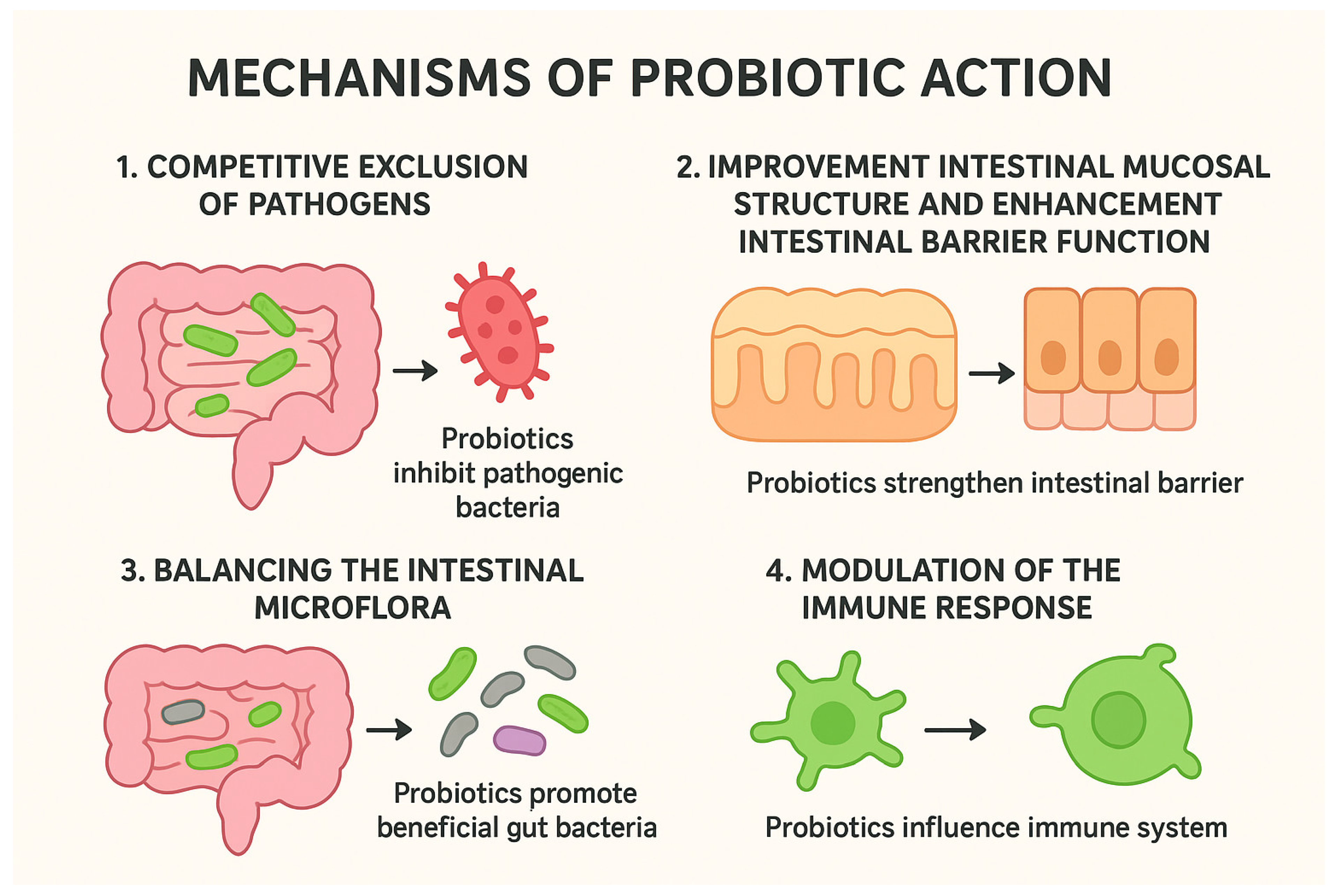
Probiotics exerts their beneficial effects through multiple, interrelated mechanisms that enhance gut health, suppress pathogens and modulate immune responses. One of their primary modes of action involves the inhibition of pathogenic microorganisms through the production of antimicrobial compounds such as bacteriocins and organic acids, which lowers intestinal pH and reduces pathogen viability [68]. Additionally, probiotics compete with pathogen for adhesion sites on the intestinal mucosa and for essential nutrients, thereby limiting pathogen colonization and proliferation [69]. Beyond pathogen exclusion, probiotics play a vital role in strengthening the host’s immune system. They stimulate macrophage activity, enhance phagocytosis and promote the secretion of immunoglobulins (IgG, IgM, and IgA) as well as interferons, which collectively improve immune surveillance and pathogen clearance [70]. Probiotics also alleviate stress-induced immune suppression by modulating neuroendocrine–immune interactions, thus supporting overall immune resilience [71]. Importantly, both viable and non-viable probiotic strains can act as immunogens, enhancing host’s defense responses [72]. Probiotics contribute to immune homeostasis by inducing regulatory T cells and anti-inflammatory cytokines such as interleukin-10 (IL-10) and transforming growth factor-beta (TGF-β), while simultaneously suppressing pro-inflammatory mediators including IL-12 and IL-23 [73,74]. This dual modulation alleviates chronic intestinal inflammation and maintains mucosal integrity. Moreover, probiotics downregulate IL-8 secretion and inhibit the NF-κB and MAPK signaling pathways, key molecular regulators of inflammation [75]. Probiotic-derived DNA further activates Toll-like receptor 9 (TLR9), which mediates additional anti-inflammatory effects [18]. Certain probiotic strains such as S. boulardii stabilize tight-junction proteins, thereby preventing epithelial barrier disruption and maintaining intestinal permeability [76]. Additionally, S. boulardii, Lactobacillus and Bifidobacterium strains induce heat shock proteins and inhibit proteasome activity, providing cryoprotection against stress-induced cellular damage [77,78]. The mode of action of probiotics is shown in Figure 1.

3.3. Effect of Probiotic-Mediated Gut Microbiome Modulation on Livestock Health and Growth Performance

3.3.1. Growth Performance, Feed Efficiency, and Antioxidant-Metabolic Regulation

Across livestock species, probiotic supplementation, particularly yeast-based strains such as S. cerevisiae—consistently enhances nutrient utilization, microbial balance, and overall growth performance [15,77,79,80,81]. In fattening Hu sheep, S. cerevisiae culture (10–40 g/day) enriched cellulolytic taxa including Succiniclasticum and Fibrobacter, improves average daily gain (ADG), nitrogen retention, and rumen morphology [77]. Similarly, in dairy cows supplemented with 10 g/day of live S. cerevisiae (1 × 10¹⁰ CFU/g), the acetate-to-propionate ratio improved, accompanied by an increase in fiber-fermenting microbial populations and enhanced milk protein synthesis [9]. In goats, yeast and mannan oligosaccharides increased Ruminococcus flavefaciens and Akkermansia muciniphila. This results in greater weight gain and higher immunoglobulin concentrations [82]. A yeast-derived S. cerevisiae (S288c) strain also enhanced microbial stability via enrichment of Ruminococcus and Succinivibrio, reducing diarrhea and mortality [83]. Comparable benefits in broilers include improved feed conversion ratio (FCR) and enhanced metabolic activity [84]. Collectively, yeast-based probiotics optimize fermentation efficiency in ruminants and monogastrics by promoting SCFA/VFA production and stabilizing microbial diversity. Nevertheless, excessive levels (>40 g/day) may disrupt microbial equilibrium.
Lactic acid bacteria (LAB), such as Lactobacillus, Lacticaseibacillus, Limosilactobacillus, and Pediococcus, exert strong effects on nutrient digestion, gut morphology, and immune–metabolic regulation [13,83,84]. In Hu lambs and calves, Lactobacillus acidophilus and B. subtilis (1 × 10⁹ CFU/g) administered for 50 days increased ADG, dry matter intake, VFA production, and antioxidant enzyme activities such as SOD (Superoxide Dismutase) and GSH-Px [84]. Further, LAB supplementation in goats improved fermentation efficiency by suppressing harmful taxa including Methanomassiliicoccus and Chlamydiae, support better feed efficiency and growth [79].
In monogastrics, LAB consistently enhance feed efficiency and growth performance [13,14,50,85,86,87]. Fermented feeds containing L. acidophilus and Pediococcus acidilactici (200 g/pig/day) improved ADG and increased Bifidobacteria while reducing Clostridia, with P. acidilactici showing strong antidiarrheal effects [88]. In broilers, Lactiplantibacillus plantarum (500 mg/kg) elevated beneficial taxa such as Limosilactobacillus reuteri and improved early-phase FCR and enzymatic activity [89]. Similarly, L. paracasei and L. rhamnosus administered in ovo enhanced embryonic microbial colonization and post-hatch growth [90]. In rabbits, combined supplementation of L. plantarum and L. acidophilus improved body weight gain, nutrient digestibility, and epithelial thickness [91]. Nonetheless, high inclusion levels (>10 g/kg diet) may reduce microbial richness [14] or produce minimal effects when baseline gut health is already optimal [92].
Spore-forming Bacillus species—including B. subtilis, B. licheniformis, and B. coagulans—also enhance enzymatic digestion and nutrient assimilation. In calves, Bacillus amyloliquefaciens and B. subtilis (4 × 10¹⁰ CFU/day) enriched SCFA-producing taxa such as Akkermansia, increasing IGF-1 and growth hormone levels [15]. In rabbits, B. coagulans (1 × 10⁶ CFU/g) improved ADG, feed intake, FCR, and mucosal integrity markers (ZO-1, occludin, claudin-1) while suppressing inflammatory pathways [84]. Broilers supplemented with B. subtilis (0.05%) showed improved FCR, carcass yield, and villus height–crypt depth ratios [18], and mixtures containing B. licheniformis and B. subtilis enhanced mucus production and goblet cell activity in pigs [93]. While moderate doses support gut structure and nutrient absorption, excessive levels may cause dysbiosis and enteritis [93]. In some cases, improved digestion occurred without major microbiota shifts. This emphasizes that Bacillus acts primarily through enzymatic enhancement and epithelial repair [94].
Multispecies probiotic formulations often yield the most consistent outcomes. In ruminants, blends of Aspergillus oryzae, Candida utilis, and S. cerevisiae (400–1200 g/ton feed) increased ADG, IgG, and IL-2 while reducing inflammatory markers [95]. In pigs, combinations containing Bacillus amyloliquefaciens, Limosilactobacillus reuteri, and Levilactobacillus brevis improved Firmicutes/Bacteroidetes ratios, boosted SCFA production, and enhanced feed efficiency [96]. In rabbits, the multi-strain product Slab51 (250 mg/kg) elevated acetic and butyric acids, improving feed efficiency and antioxidant capacity [82]. Poultry supplemented with L. salivarius, L. reuteri, B. velezensis, and B. paralicheniformis exhibited improved growth, SCFA synthesis, and lipid metabolism [84].
Collectively, these findings explain the strain-specific modes of action of probiotics in livestock. LAB primarily acidifies the gut and suppress pathogens; Bacillus enhances digestive enzymes and epithelial integrity; and yeast strains improve metabolic energy supply and oxidative balance. However, inappropriate strain combinations or excessive concentrations can hinder microbial establishment and lead to inconsistent outcomes [97]. Overall, evidence indicates that multispecies probiotics at approximately 109 CFU/kg feed provide superior stability under nutritional or environmental stress, particularly in young or recently weaned animals where microbial instability is at its peak.

3.3.2. Immune Modulation and Anti-Inflammatory Effects

Probiotics modulate immune responses through diverse mechanisms involving both innate and adaptive pathways.
Supplementation with L. acidophilus and B. subtilis (≥1.0 × 109 CFU/g feed) in Hu lambs for 50 days enhanced humoral immunity by increasing serum IgG while concurrently downregulating inflammatory cytokines [98]. Similarly, dietary inclusion of L. plantarum (15 × 109 CFU/kg) combined B. subtilis (200 × 108 CFU/kg) in rabbits elevated serum immunoglobulins (IgG, IgM, IgA) and reduced hepatic enzymes and lipid accumulation [91]. In malnourished rabbits, L. acidophilus and L. plantarum administration suppressed E. coli and Salmonella enterica proliferation, attenuating TNF-α and IL-1 expression [99]. Furthermore, in pigs, L. fermentum and P. acidilactici (4% in diet) significantly decreased IL-6 and IFN-γ [50]. However, inactivated Lactiplantibacillus plantarum (500 mg/kg) increased IgG and sIgA but failed to sustain cytokine upregulation beyond day 21 in broilers [89]. Collectively, LAB exert pronounced effects on both mucosal and systemic immunity, although the intensity of immune activation is influenced by dosage, strain and host physiological stage. Spore-forming Bacillus probiotics primarily influence epithelial integrity and cytokine modulation rather than direct immunoglobulin synthesis. In lambs, B. subtilis and B. amyloliquefaciens reduced serum IgG yet downregulated inflammatory cytokines, thereby promoting immune balance [98]. Comparable anti-inflammatory outcomes were observed in weaned pigs, where B. subtilis alleviated E. coli-induced enteritis and promoted villus regeneration [100]. In poultry, B. subtilis-based supplementation upregulated IL-10 expression [101], while B. velezensis formulations effectively suppressed pro-inflammatory cytokines [102]. Nonetheless, the immunomodulatory efficiency of Bacillus species appears context-dependent, as co-administration with glucose oxidase failed to enhance immunity in broilers [103]. In general, Bacillus strains confer consistent anti-inflammatory benefits, particularly under post-weaning or pathogen-challenged conditions, although their humoral effects are secondary to their roles in oxidative stress mitigation and epithelial barrier stabilization. Yeast probiotics such as S. cerevisiae primarily regulate humoral and metabolic immunity in ruminants. Dietary supplementation in ewes and lambs elevated colostral and serum IgG concentrations [104], while combined yeast–mannan oligosaccharide administration enhanced mucosal IgA and IgG in goats [82]. However, S. cerevisiae supplementation alone did not consistently alter gut microbiota or inflammatory cytokines; for instance, inclusion during late gestation failed to affect colostrum microbial profiles in ewes [104]. Consequently, yeast probiotics appear particularly effective in strengthening passive immunity and alleviating enteric stress during perinatal and early weaning stages, though their cytokine modulation capacity remains less pronounced than LAB or Bacillus species. In small ruminants, probiotics such as Lactobacillus, Bifidobacterium, Enterococcus, and Bacillus enhanced serum immunoglobulins (IgG, IL-2, IL-6, IFN-γ) and digestive enzyme activities (CMCase, xylanase, amylase, glucosidase, acetyl esterase, and protease), while suppressing pro-inflammatory markers [95,105]. Similarly, in goats, multi-strain blends of Candida utilis and B. coagulans increased IL-10 and elicited coordinated anti-inflammatory response [106]. In broilers, LAB-Bifidobacterium groups showed upregulated immune and barrier genes (Claudin, Occludin, MUC2, ZO-1) and promoted a biphasic immune response characterized by initial activation by controlled inflammatory suppression [14]. Conversely, Dietzia spp. failed to control Mycobacterium avium infection in rabbits despite modulating gut-associated lymphoid tissue [107].

3.3.3. Intestinal Morphology and Barrier Integrity

Probiotics contribute significantly to intestinal development, epithelial renewal and barrier integrity through strain-specific mechanisms that modulate mucosal structure and tight-junction dynamics. In neonatal calves, L. reuteri, L. johnsonii, L. amylovorus, and L. animalis improved gut integrity and epithelial cohesion [108]. In grower–finisher pigs, fermented feed supplemented with L. acidophilus and P. acidilactici (200 g/pig/day) increased villus height and villus-to-crypt ratio, elevated fecal lactic acid, and reduced ammonia N and pH, indicating enhanced mucosal stability and reduced intestinal irritation [13]. Similarly, co-administration of L. salivarius and L. reuteri in poultry improved villus height, crypt morphology, and expression of tight-junction proteins including claudin-1 and ZO-1 [86].
In broilers, L. gallinarum and L. paracasei subsp. paracasei L1 promoted duodenal villus elongation and absorptive surface area [109,110]. Likewise, L. plantarum in combination with B. subtilis improved villus height and epithelial thickness in rabbits [91]. These findings confirm that LAB stimulate epithelial proliferation and tight-junction assembly, primarily through SCFA-mediated modulation of the mucosa–microbiota interface. However, excessively high probiotic inclusion levels (≥10 g/kg) of L. casei, L. acidophilus, and Bifidobacterium blends reduced microbial alpha diversity despite improving barrier gene expression [14], suggesting the importance of dosage optimization. Spore-forming Bacillus species enhances intestinal architecture through goblet cell proliferation and epithelial renewal. In Klebsiella pneumoniae-challenged rabbits, B. coagulans (1 × 10⁶ CFU/g feed) increased goblet cell density, proliferating cell nuclear antigen (PCNA) activity, and mucin (MUC1, MUC2) expression while upregulating occludin, claudin-1, and ZO-1, thus reinforcing barrier integrity [85]. Similarly, B. licheniformis and B. subtilis upregulated Atoh1 and MUC2 genes in pigs, enhancing mucus layer thickness and intestinal protection against E. coli [93]. In broilers, B. subtilis combined with Clostat® 0.05% inclusion) increased villus height and mucosal proliferation [101], while B. subtilis and B. licheniformis (0.5 g/kg) reduced ileal viscosity, indirectly supporting nutrient absorption [95]. Collectively, Bacillus species strengthen intestinal morphology by activating goblet cell pathways and upregulating tight-junction genes that maintain mucosal resilience (Table 2). Yeast probiotics, particularly S. cerevisiae, also enhance intestinal and ruminal structure through microbiota modulation and epithelial turnover. In Hu sheep, S. cerevisiae supplementation increased rumen papillary height and wall thickness, improving absorptive capacity [77]. Similarly, combined supplementation of B. subtilis and S. cerevisiae (0.1% in feed) enhanced villus height in growing New Zealand White rabbits [111]. These yeast-induced improvements are largely attributed to the stimulation of fibrolytic and commensal bacteria, which enhance nutrient assimilation and epithelial regeneration. Multi-strain probiotic formulations exert the most comprehensive effects on intestinal morphology. In Hu sheep, a quadruple probiotic mixture (Bifidobacterium, L. acidophilus, Enterococcus faecalis, and B. cereus, 1.5 × 10⁸ CFU/g feed) increased mucosal thickness and epithelial density [95]. In 6-week-old rabbits, the multi-strain probiotic Slab51 (250 mg/kg) enhanced villus height, crypt depth, and mucosal architecture while reducing lipid peroxidation (TBARS) and serum cholesterol [81]. In broilers, compound probiotics containing L. casei, L. acidophilus, and Bifidobacterium (1–10 g/kg) improved carcass yield, upregulated barrier genes (Claudin, Occludin, MUC2, ZO-1), and optimized villus-to-crypt ratios [14]. In weaned pigs, supplementation with multi-species probiotics (B. amyloliquefaciens, L. reuteri, L. brevis) improved intestinal morphology and mucosal health [96]. Likewise, multi-strain preparations (1 × 10⁸ CFU/kg) restored epithelial integrity and mitigated Listeria monocytogenes induced barrier damage in rabbits [112]. The use of effective microorganisms (EM) mixtures further enhanced villus height and reduced crypt depth across intestinal segments [113].

3.3.4. Reproductive and Maternal Transfer Effects

Probiotics play a pivotal role in enhancing reproductive efficiency and promoting maternal transfer of immune and microbial factors to offspring across livestock species. In twin-bearing ewes, supplementation with live S. cerevisiae during the final month of gestation significantly elevated colostral and serum IgG concentrations in artificially reared lambs, accompanied by increased levels of the oligosaccharide Neu-5Gc. However, no changes were detected in colostrum bacterial composition or nutrient content [104]. Similarly, administration of the yeast culture S. cerevisiae strain “Duan-Nai-An” to early weaned piglets reduced mortality rates by stabilizing gut microbial diversity and increasing the relative abundance of Enterococcus, Ruminococcus, and Succinivibrio [83]. Collectively, these findings indicate that yeast-based probiotics enhance colostral immune enrichment and stabilize neonatal microbiota, thereby supporting passive immunity, gastrointestinal maturation, and early-life resilience in both ruminants and monogastric (Table 2). In poultry, embryonic exposure to Lacticaseibacillus rhamnosus or L. paracasei at approximately 109 CFU/egg enhanced early microbial colonization and immune preparedness. By embryonic day 20, treated eggs and chorioallantoic membranes exhibited increased abundance of Lactobacillaceae and Enterococcus, alongside reduced Proteobacteria [90]. These in ovo treatments also improved microbial metabolic pathways linked to carbohydrate and energy utilization, leading to superior hatchling development and post-hatch growth. Similarly, in lactating rabbits, daily administration of a compound microecological preparation (3–9 g/female/day) from day 24 of gestation until weaning significantly increased milk yield by 19–44% and improved offspring body weight gain by 3.6–10.2% [115]. Together, these results suggest that LAB-based probiotics, whether administered maternally or embryonically, enhance vertical microbial transmission, immune development, and metabolic competence in offspring. Encapsulated Bacillus-based probiotics have shown strong potential for improving maternal microbial transfer and offspring viability, particularly in poultry. Supplementation with a nanoparticle-encapsulated formulation containing E. faecium, B. subtilis, and L. acidophilus (1 × 10⁸ CFU/g) over a 26-week laying cycle (20–46 weeks of age) significantly reduced Salmonella typhimurium loads in the ceca, liver, ovaries, and spleen, while increasing beneficial gut bacteria [116]. Treated hens displayed improved egg production, fertility, and hatchability, along with reduced embryonic mortality. These findings demonstrate that Bacillus probiotics can protect both maternal and embryonic health by limiting transovarian pathogen transmission and enhancing reproductive performance. Thus, spore-forming probiotics function as intergenerational bio-protectants that enhance antimicrobial defense and reproductive resilience. In Bama mini-pigs, dietary inclusion of mixed probiotics (108–109 CFU/kg feed) during pregnancy and lactation enriched maternal gut populations of Ruminococcus, Bacteroides, and Anaeroplasma, while increasing Actinobacteria and Anaerostipes and suppressing Proteobacteria and Desulfovibrio [60]. Piglets from supplemented sows exhibited higher relative abundance of Deferribacteres and Fusobacterium. This indicates that maternal probiotic intake effectively shaped offspring gut microbial inheritance. In rabbits, supplementation with mixed microbial preparations improved milk yield, enhanced antioxidant capacity, and increased neonatal weight gain [115]. These results across multiple species demonstrate that maternal exposure to probiotic groups modulates the maternal microbiome, facilitating the vertical transfer of beneficial microbes and immune components to offspring. Overall, probiotic supplementation during gestation, lactation, or embryogenesis consistently enhances offspring health and performance by promoting early microbiota establishment and immune programming across ruminants, pigs, rabbits, and poultry. Yeast-based probiotics are particularly effective in ruminants for improving colostral immunity; LAB strains show the strongest impact in poultry and rabbits by facilitating microbial colonization and epithelial maturation; and Bacillus species excel in enhancing reproductive performance and pathogen resistance. Optimal outcomes are typically achieved with doses ranging from 108–109 CFU/kg feed or 3–40 g/day, while deviations from these ranges may yield inconsistent results. These findings underscore that probiotic efficacy depends on species-specific physiology, reproductive stage, strain compatibility, and delivery strategy. Collectively, probiotics serve as functional bio-optimizers for antibiotic-free, welfare-oriented livestock reproduction and productivity.

3.3.5. Limitations of Probiotics

Despite extensive evidence supporting probiotic supplementation as a dietary means to enhance gut health, efficiency, and immune resilience across livestock, findings remain variable and occasionally contradictory. Luise et al. [100] reported that Bacillus-based probiotics reduced diarrhea severity in E. coli-challenged piglets but failed to improve growth performance or microbial diversity. This suggests that pathogen mitigation does not always translate into productivity outcomes. Similarly, Myhill et al. [97] found that multi-strain formulations altered gut microbial profiles and reduced inflammatory cytokines during helminth infection but had no effect on parasite load. This explains that immune modulation may occur without reducing harmful microbes.
Comparable inconsistencies have been observed in poultry and ruminant studies. In broilers, Zaghari et al. [95] and Ye et al. [113] reported improved feed conversion ratios without significant changes in caecal microbiota composition, implying that metabolic benefits may arise from enzymatic or endocrine regulation rather than microbial rearrangement. In ruminants, high-dose supplementation occasionally yields neutral or transient effects when basal rumen fermentation and nutrient digestibility already approach physiological plateaus. Similarly, Ma et al. [60] demonstrated that maternal probiotic supplementation improved antioxidant balance but did not consistently alter microbial richness. This explains the influence of host genetics and environmental homeostasis on probiotic outcomes.
These limitations underscore the complexity of host–microbiome interactions and it is important to point that variability is an important consideration. Probiotics hold strong potential as sustainable alternatives to antibiotic growth promoters (AGPs), but their success depends on precision, matching strains to host species, diet, physiological state, and production goals. Future strategies should therefore incorporate genomic, metabolomic, and microbial profiling to design targeted probiotic applications rather than relying on generalized supplementation.
Probiotic Regulatory Frameworks Relevant to Livestock Production
In the European Union (EU), probiotics intended for use as animal feed additives are regulated under Regulation (EC) No. 1831/2003, which provides a clear and stringent framework for their approval [117]. The Scientific Committee on Animal Nutrition (SCAN) plays a central role in evaluating microbial feed additives and establishing guidelines for their safety and efficacy [118]. The SCAN’s 2001 revised guidelines outline mandatory assessments for enzymes and microorganisms, covering target animal safety, operator safety, and consumer protection [119]. Approved strains must not exhibit toxigenicity, possess virulence factors, produce clinically relevant antimicrobial substances, or carry transmissible antibiotic resistance genes [120].
Target animal safety is established through ‘tolerance tests’, where animals receive a tenfold overdose of the product [120]. These evaluations should be performed separately for each intended species or production category. They should assess potential adverse effects, growth performance, product quality, blood chemistry, and fecal microbiota. In some cases, the impact on the shedding of human pathogens is also examined as reviewed by Dishaw [121]. Operator safety assessments focus on risks associated with handling microbial powders or granules, requiring tests for skin and eye irritation, potential sensitisation, and inhalation risks through dust and particle-size evaluations [122]. Consumer safety assessments focus on potential accumulation of fermentation by-products in edible tissues and require genotoxicity testing, such as bacterial reverse mutation and in vitro mammalian clastogenicity assays, alongside a 90-day oral toxicity study in rodents [123].
Further evaluation is mandated for Bacillus species, particularly members of the B. cereus group due to their toxigenic potential. Required tests include PCR screening for enterotoxin genes and cytotoxicity assays to detect uncharacterized toxins [124]. Also, the SCAN recommends determining minimal inhibitory concentrations (MICs) for selected antibiotics and provides breakpoints for several genera. If MIC thresholds are exceeded, additional investigations, including conjugation studies and PCR screening for resistance genes, are required to determine whether resistance is intrinsic or transmissible [125].
In Canada, the regulation of probiotics for livestock depends on their intended purpose which determines whether a product is classified as a Feed or a Drug [126]. Products regulated as Feeds fall under the Feeds Act and Regulations, administered by the Canadian Food Inspection Agency (CFIA) [127]. Feed-grade probiotics are used to support normal nutritional processes, enhance digestion, promote growth and maintenance, or prevent nutritional disorders. Feed is defined as both nutritive and non-nutritive additives, such as flavorings, pellet binders, enzymes, and preservatives [128]. Feed-grade probiotics must therefore promote normal physiological function without making therapeutic claims [127].
Probiotics intended to produce a therapeutic effect, such as mitigating diarrhea, suppressing pathogens, or modifying digestive physiology, are classified as Drugs and regulated under the Food and Drugs Act and Regulations by Health Canada [126]. In multi-ingredient products, the presence of any therapeutically active component leads to classification as a drug [126]. Feed products cannot make therapeutic claims but may act as carriers for drug-regulated substances. Drug-classified probiotics must meet higher standards for safety, efficacy, manufacturing quality, and supporting evidence before they are approved for commercial use [128].
In the United States, the Food and Drug Administration (FDA) oversees probiotics used in animal feeds under the Federal Food, Drug, and Cosmetic Act. Probiotics intended for livestock are classified as direct-fed microbials [129]. Approval requires evidence of safety, manufacturing consistency, and accurate labeling [129]. Claims must be limited to structure–function benefits unless supported by extensive data demonstrating therapeutic efficacy. Although the U.S. framework is less prescriptive than that of the EU, it enforces strict quality-control standards, particularly with respect to viable cell counts and contamination risks. Safety evaluations, including toxicological assessments, are conducted to ensure a reasonable certainty of no harm. Some additives may achieve Generally Recognized As Safe (GRAS) status if qualified experts agree on their safety, allowing for a streamlined approval process [130,131].
In China, microbial feed additives are regulated by the Ministry of Agriculture and Rural Affairs (MARA), which ensures products meet safety, efficacy, and environmental standards before approval [132]. Evaluation includes detailed identification and characterization of microbial strains to ensure they do not carry pathogenic traits or antibiotic resistance genes [133]. China has over 35 microbial species that have received approval for use as feed additives according to the Feed Additives Catalogue 2013 [134]. Many of which are specific to livestock species. Approval requires toxicological assessments, genetic stability tests, and evidence of beneficial effects under local production conditions [133].
Regulatory infrastructure in Africa, South America, and parts of Asia is still developing. In many African countries, probiotics fall under general livestock feed laws or veterinary feed additive regulations, often with minimal standardization as reviewed by Odey et al. [135]. This variability can allow poorly characterized or low-quality products to enter the market, contributing to inconsistent field performance.
Economic Feasibility and Challenges to Industry-Scale Implementation
Although probiotics are increasingly recognized as sustainable alternatives to antibiotic growth promoters, their widespread adoption in commercial livestock systems ultimately depends on economic feasibility and practical implementation. Cost–benefit analyses indicate that probiotics can reduce mortality, improve feed conversion ratio (FCR), and enhance growth performance [136,137]. However, the magnitude of these benefits varies considerably across farms, species, management practices, and production systems [136]. Such inconsistencies directly influence farmers’ willingness to invest in microbial feed additives, especially in sectors with narrow profit margins.
One of the primary economic barriers relates to production and formulation costs. High-quality probiotic products require controlled fermentation, sterile production environments, stabilization or encapsulation technologies, and in many cases, cold-chain distribution [138]. These requirements substantially increase manufacturing expenses, particularly for multi-strain formulations or encapsulated products that provide superior stability and efficacy but are more costly to produce. Strain–host–diet compatibility further complicates economic outcomes. A probiotic strain that performs well under controlled research conditions may yield only modest or inconsistent benefits under field conditions, making return on investment uncertain [139]. This is especially relevant for smallholder and low-margin livestock enterprises, where producers tend to adopt probiotics only when clear and consistent economic gains are demonstrated.
Regulatory compliance and quality assurance also add financial burdens [120]. Requirements for genomic characterization, safety evaluations, and multi-species trials increase development costs, which are eventually reflected in product pricing [140]. In regions with weak regulatory oversight, the market may become saturated with inexpensive, poorly characterized products. This in turn undermines farmer’s confidence and diminish the perceived value of scientifically validated probiotics.
Logistical challenges during storage and distribution present additional constraints [138]. Many probiotic strains are sensitive to high temperatures, humidity, and feed-processing stresses such as pelleting, which can significantly reduce viability [141]. Ensuring adequate cell counts at the point of use often requires specialized packaging, cold-chain storage, or microencapsulation technologies [142]. These measures increase operational costs, particularly in warm climates where thermal stress is unavoidable.
Despite these obstacles, probiotics can offer substantial long-term economic benefits. Such as reducing reliance on antibiotics, enhancing animal health and immunity, improving nutrient digestibility, and contributing to better improve meat, milk, and eggs quality [43,71,77]. To achieve industry-scale adoption, future developments must prioritize cost-effective production technologies such as thermostable or spore-forming strains, precision targeting of strains to specific species and production environments, and stabilization strategies that guarantee shelf life under real-world conditions. Also, adoption of robust economic evidence from farm-scale trials and the harmonization of regulatory frameworks to enhance product credibility and producer confidence.

3.3.6. Conclusions and Implications

Supplementation of livestock diet with probiotics has proven to be a viable approach for improving productivity through multifaceted mechanisms such as microbial modulation, immune regulation, oxidative balance and epithelial integrity. Despite the positive outcome recorded by many studies, the consistency of responses differs across species, production systems, and experimental conditions. This variability is because of probiotic strain specificity, host genetics, dietary composition, and environmental stressors, highlighting the need for precision-guided probiotic application rather than broad empirical use. Yeast-based probiotics (S. cerevisiae) dominate in ruminants, enhance fiber fermentation, rumen morphology, and nitrogen utilization. LAB are particularly effective in monogastrics as they improve the efficiency of feed, immune tolerance, and lipid metabolism, while Bacillus spp. strengthens mucosal integrity and enzymatic digestion through spore-mediated resilience. Multi-strain formulations (yeast, LAB, and spore-formers), consistently yield the most comprehensive benefits across species by synergizing fermentation efficiency with immune-metabolic stability. Reports have shown that high doses or poor strain-host compatibility sometimes yield neutral or even negative effects. These inconsistencies underline the complex interplay between host physiology, probiotic metabolism, and environmental factors. Beyond growth and feed conversion, probiotics exert systemic effects on antioxidant balance and cytokine regulation. Also, it reduces inflammatory stress and improves maternal–offspring performance through microbial and immunological means. These interactions collectively enhance production efficiency while mitigating antibiotic dependence which aligns with sustainable livestock management goals. The key insight emerging from recent studies is that probiotic benefits are not always mediated through major shifts in microbial composition. Improvements in growth or immunity have been observed even when microbiota structure remains unchanged, suggesting that probiotics may exert systemic metabolic or endocrine effects independent of compositional remodeling. This observation opens a new interface for investigating non-microbial signaling pathways involved in probiotic action. The magnitude of probiotic response remains strain, dose, and host specific. Future research must establish optimal dosage thresholds (≥108–109 CFU/g or 10–40 g/day) relative to physiological stage, diet type, and microbial baseline. Molecular and omics-based characterization of probiotic-host interactions is needed to elucidate species-dependent signaling pathways which link the gut microbiome to host metabolism, immunity, and reproduction. Moreover, emerging evidence showing that maternal microbiota seeding strongly shapes early gut colonization in neonates—where prenatal probiotics can modulate microbial transmission pathways [143]. Also, maternal–offspring supplementation can alter cytokine development and immune programming in young animals [144]. This emphasizes maternal–neonatal microbial interventions as a high-priority area for immediate research. This will offer a promising solution for lifelong productivity and disease resilience. Advancing these mechanistic insights into precision probiotic strategies will redefine functional feeding, ensuring robust, antibiotic-free livestock systems.

3.3.7. Future Direction

Future research on probiotics in livestock production should shift from descriptive efficacy studies toward precision microbiome engineering, where probiotic use is guided by host genotype, microbial baseline, and environmental context. The integration of multi-omics technologies such as metagenomics, metabolomics, transcriptomics, and proteomics will be essential to elucidate the molecular signaling pathways that connect probiotic activity to immune modulation, oxidative metabolism, and epithelial barrier regulation. These approaches can reveal strain-specific functions and metabolic crosstalk, facilitating rational selection of probiotic groups optimized for each production species and stage. Another critical direction involves defining dose thresholds, colonization dynamics, and persistence of probiotic strains under commercial feeding systems. Few studies currently differentiate between transient and stable colonizers; yet this distinction determines long-term benefits on gut ecology and health. Controlled, longitudinal trials combining microbial sequencing with growth, immune, and metabolic endpoints are needed to establish mechanistic dose–response relationships. Maternal and early-life interventions represent an additional opportunity. Prenatal and perinatal supplementation has shown promise in enhancing offspring immunity, milk yield, and antioxidant balance across pigs, rabbits, and ruminants. However, the molecular mechanisms underlying vertical microbial and immunological transmission remain poorly characterized. Future studies should therefore explore maternal-neonatal microbial imprinting as a sustainable strategy to improve herd resilience and productivity across generations. Finally, advancing species-comparative probiotic modeling linking microbial taxa, SCFA metabolism, and immune-endocrine pathways across ruminants, monogastrics, and poultry will refine predictive frameworks for targeted probiotic design. Such interdisciplinary, data-driven approaches will enable the development of next-generation probiotics that are strain-specific, context-adaptive, and mechanistically validated, driving the transition toward antibiotic-free, high-efficiency livestock systems.

Author Contributions

Conceptualization, O.F.A., P.A.I. and A.P.I.; methodology, A.P.I.; validation, P.A.I., L.M., A.P.I. and O.F.A.; resources, P.A.I., L.M., A.P.I. and O.F.A.; writing—original draft preparation, O.F.A., P.A.I., L.M. and A.P.I. writing—review and editing, P.A.I., L.M., A.P.I. and O.F.A.; supervision: P.A.I., L.M., A.P.I. and O.F.A.; project administration, P.A.I., L.M., A.P.I. and O.F.A. All authors have read and agreed to the published version of the manuscript.

Funding

This research received no external funding.

Data Availability Statement

Not Applicable.

Conflicts of Interest

The authors declare no conflicts of interest.

References

  1. Celi, P.; Cowieson, A.J.; Fru-Nji, F.; Steinert, R.E.; Kluenter, A.M.; Verlhac, V. Gastrointestinal functionality in animal nutrition and health: New opportunities for sustainable animal production. Anim. Feed Sci. Technol. 2017, 234, 88–100. [Google Scholar] [CrossRef]
  2. Deng, X.; Li, H.; Wu, A.; He, J.; Mao, X.; Dai, Z.; Tian, G.; Cai, J.; Tang, J.; Luo, Y. Composition, influencing factors, and effects on host nutrient metabolism of fungi in gastrointestinal tract of monogastric animals. Animals 2025, 15, 710. [Google Scholar] [CrossRef]
  3. Karl, J.P.; Hatch, A.M.; Arcidiacono, S.M.; Pearce, S.C.; Pantoja-Feliciano, I.G.; Doherty, L.A.; Soares, J.W. Effects of psychological, environmental and physical stressors on the gut microbiota. Front. Microbiol. 2018, 9, 2013. [Google Scholar] [CrossRef]
  4. Akinmoladun, O.F. Stress amelioration potential of vitamin C in ruminants. A review. Trop. Anim. Health Prod. 2022, 54, 24. [Google Scholar] [CrossRef] [PubMed]
  5. Chen, Y.; Yang, Y.; Li, B.; Zhang, K.; Wang, X. Characterization and comparison of microbiota in the gastrointestinal tracts of the goat (Capra hircus) during preweaning development. Front. Microbiol. 2019, 10, 2125. [Google Scholar] [CrossRef]
  6. Rodrigues, G.; Maximiano, M.R.; Franco, O.L. Antimicrobial peptides used as growth promoters in livestock production. Appl. Microbiol. Biotechnol. 2021, 105, 7115–7121. [Google Scholar] [CrossRef] [PubMed]
  7. Food and Agriculture Organization of the United Nations (FAO); World Health Organization (WHO). Probiotics in Food: Health and Nutritional Properties and Guidelines for Evaluation (FAO Food and Nutrition Paper No. 85); FAO: Rome, Italy, 2006; Available online: https://www.fao.org/3/a0512e/a0512e.pdf (accessed on 5 November 2025).
  8. Alou, M.T.; Lagier, J.C.; Raoult, D. Diet influence on the gut microbiota and dysbiosis related to nutritional disorders. Human Microbiome J. 2016, 1, 3–11. [Google Scholar] [CrossRef]
  9. Cattaneo, L.; Lopreiato, V.; Piccioli-Cappelli, F.; Trevisi, E.; Minuti, A. Effect of supplementing live Saccharomyces cerevisiae yeast on performance, rumen function, and metabolism during the transition period in Holstein dairy cows. J. Dairy Sci. 2023, 106, 4353–4365. [Google Scholar] [CrossRef]
  10. Hussein, E.; Selim, S. Efficacy of yeast and multi-strain probiotic alone or in combination on growth performance, carcass traits, blood biochemical constituents, and meat quality of broiler chickens. Livest. Sci. 2018, 216, 153–159. [Google Scholar] [CrossRef]
  11. Lin, Y.; Yu, C.; Ma, Z.; Che, L.; Feng, B.; Fang, Z.; Xu, S.; Zhuo, Y.; Li, J.; Zhang, J.; et al. Effects of yeast culture supplementation in wheat–rice-based diet on growth performance, meat quality, and gut microbiota of growing–finishing pigs. Animals 2022, 12, 2177. [Google Scholar] [CrossRef] [PubMed]
  12. Feng, J.; Wang, L.; Zhou, L.; Yang, X.; Zhao, X. Using in vitro immunomodulatory properties of lactic acid bacteria for selection of probiotics against Salmonella infection in broiler chicks. PLoS ONE 2016, 11, e0147630. [Google Scholar] [CrossRef]
  13. Dowarah, R.; Verma, A.K.; Agarwal, N.; Singh, P.; Singh, B.R. Selection and characterization of probiotic lactic acid bacteria and its impact on growth, nutrient digestibility, health and antioxidant status in weaned piglets. PLoS ONE 2018, 13, e0192978. [Google Scholar] [CrossRef] [PubMed]
  14. Liu, C.; Ma, N.; Feng, Y.; Zhou, M.; Li, H.; Zhang, X.; Ma, X. From probiotics to postbiotics: Concepts and applications. Anim. Res. One Health 2023, 1, 92–114. [Google Scholar] [CrossRef]
  15. Pawar, L.; Singh, A.; Chouhan, N.; Amer, H.A.; Likitha, K.; Prasanthmadduluri, N.; Singh, S.K.; Soltani, M. Physiology of Spore Formation for Bacillus Probiotic Production. In Bacillus Probiotics for Sustainable Aquaculture; CRC Press: Boca Raton, FL, USA, 2025; pp. 64–86. [Google Scholar]
  16. Yoha, K.S.; Nida, S.; Dutta, S.; Moses, J.A.; Anandharamakrishnan, C. Targeted delivery of probiotics: Perspectives on research and commercialization. Probiotics Antimicrob. Proteins 2022, 14, 15–48. [Google Scholar] [CrossRef]
  17. Fathima, S.; Shanmugasundaram, R.; Adams, D.; Selvaraj, R.K. Gastrointestinal microbiota and their manipulation for improved growth and performance in chickens. Foods 2022, 11, 1401. [Google Scholar] [CrossRef] [PubMed]
  18. Kaur, H.; Ali, S.A. Probiotics and gut microbiota: Mechanistic insights into gut immune homeostasis through TLR pathway regulation. Food Funct. 2022, 13, 7423–7447. [Google Scholar] [CrossRef]
  19. Sabih Ur Rehman, S.; Nasar, M.I.; Mesquita, C.S.; Al Khodor, S.; Notebaart, R.A.; Ott, S.; Mundra, S.; Arasardanam, R.P.; Muhammad, K.; Alam, M.T. Integrative systems biology approaches for analyzing microbiome dysbiosis and species interactions. Brief. Bioinform. 2025, 26, bbaf323. [Google Scholar] [CrossRef]
  20. Yang, S.Y.; Han, S.M.; Lee, J.Y.; Kim, K.S.; Lee, J.E.; Lee, D.W. Advancing Gut Microbiome Research: The Shift from Metagenomics to Multi-Omics and Future Perspectives. J. Microbiol. Biotechnol. 2025, 35, e2412001. [Google Scholar] [CrossRef]
  21. Shehata, A.M.; Paswan, V.K.; Attia, Y.A.; Abdel-Moneim, A.M.E.; Abougabal, M.S.; Sharaf, M.; Elmazoudy, R.; Alghafari, W.T.; Osman, M.A.; Farag, M.R.; et al. Managing gut microbiota through in ovo nutrition influences early-life programming in broiler chickens. Animals 2021, 11, 3491. [Google Scholar] [CrossRef]
  22. Guo, W.; Wang, C.; Qin, K.; Shi, H.; Yang, X.; Yang, X. Lactobacillus plantarum injection at the embryonic stage alters the early growth performance and lipid metabolism of broilers by specific genera of bacteria. Poult. Sci. 2023, 102, 102522. [Google Scholar] [CrossRef]
  23. Xiang, Q.; Wu, X.; Pan, Y.; Wang, L.; Guo, Y.; Cui, C.; Hu, L.; Zhu, L.; Peng, J.; Wei, H. Early intervention using fecal microbiota transplantation combined with probiotics influence the growth performance, diarrhea, and intestinal barrier function of piglets. Appl. Sci. 2020, 10, 568. [Google Scholar] [CrossRef]
  24. Zhang, C.; Virk, A.K.; Khan, I.; Qin, H. Gut Microbiota and Health. In Gut Remediation of Environmental Pollutants: Potential Roles of Probiotics and Gut Microbiota; Springer: Singapore, 2020; pp. 31–79. [Google Scholar]
  25. Li, K.; Shi, B.; Na, R. The colonization of rumen microbiota and intervention in pre-weaned ruminants. Animals 2023, 13, 994. [Google Scholar] [CrossRef]
  26. Idowu, P.A.; Mpofu, T.J.; Magoro, A.M.; Modiba, M.C.; Nephawe, K.A.; Mtileni, B. Impact of probiotics on chicken gut microbiota, immunity, behavior, and productive performance—A systematic review. Front. Anim. Sci. 2025, 6, 1562527. [Google Scholar] [CrossRef]
  27. Garcia-Bonete, M.J.; Rajan, A.; Suriano, F.; Layunta, E. The underrated gut microbiota helminths, bacteriophages, fungi, and archaea. Life 2023, 13, 1765. [Google Scholar] [CrossRef]
  28. Liu, K.; Zhang, Y.; Yu, Z.; Xu, Q.; Zheng, N.; Zhao, S.; Huang, G.; Wang, J. Ruminal microbiota–host interaction and its effect on nutrient metabolism. Anim. Nutr. 2021, 7, 49–55. [Google Scholar] [CrossRef]
  29. Weimer, P.J. Degradation of cellulose and hemicellulose by ruminal microorganisms. Microorganisms 2022, 10, 2345. [Google Scholar] [CrossRef] [PubMed]
  30. Palmonari, A.; Federiconi, A.; Formigoni, A. Animal board invited review: The effect of diet on rumen microbial composition in dairy cows. Animal 2024, 18, 101319. [Google Scholar] [CrossRef]
  31. Choudhury, P.K.; Jena, R.; Tomar, S.K.; Puniya, A.K. Reducing enteric methanogenesis through alternate hydrogen sinks in the rumen. Methane 2022, 1, 320–341. [Google Scholar] [CrossRef]
  32. da Silva Pereira, M.; Alcantara, L.M.; de Freitas, L.M.; de Oliveira Ferreira, A.L.; Leal, P.L. Microbial Rumen proteome analysis suggests Firmicutes and Bacteroidetes as key producers of lignocellulolytic enzymes and carbohydrate-binding modules. Braz. J. Microbiol. 2025, 56, 817–833. [Google Scholar] [CrossRef] [PubMed]
  33. Jha, R.; Fouhse, J.M.; Tiwari, U.P.; Li, L.; Willing, B.P. Dietary fiber and intestinal health of monogastric animals. Front. Vet. Sci. 2019, 6, 48. [Google Scholar] [CrossRef] [PubMed]
  34. Guevarra, R.B.; Kim, E.S.; Cho, J.H.; Song, M.; Cho, J.H.; Lee, J.H.; Kim, H.; Kim, S.; Keum, G.B.; Lee, C.H.; et al. Gut microbial shifts by synbiotic combination of Pediococcus acidilactici and lactulose in weaned piglets challenged with Shiga toxin-producing Escherichia coli. Front. Vet. Sci. 2023, 9, 1101869. [Google Scholar] [CrossRef]
  35. Gilsenan, S.; Leong, D.; Cotter, P.D.; Brennan, L.; Nilaweera, K.N. Digging deep for nutrients and metabolites derived from high dietary protein intake and their potential functions in metabolic health. Nutr. Res. Rev. 2024, 38, 586–598. [Google Scholar] [CrossRef] [PubMed]
  36. Guo, C.Y.; Ji, S.K.; Yan, H.; Wang, Y.J.; Liu, J.J.; Cao, Z.J.; Yang, H.J.; Zhang, W.J.; Li, S.L. Dynamic change of the gastrointestinal bacterial ecology in cows from birth to adulthood. Microbiologyopen 2020, 9, e1119. [Google Scholar] [CrossRef]
  37. Yin, Z.; Ji, S.; Yang, J.; Guo, W.; Li, Y.; Ren, Z.; Yang, X. Cecal microbial succession and its apparent association with nutrient metabolism in broiler chickens. Msphere 2023, 8, e00614-22. [Google Scholar] [CrossRef]
  38. Uyeno, Y.; Sekiguchi, Y.; Kamagata, Y. Impact of consumption of forage or grain on rumen microbial populations. Anim. Sci. J. 2015, 86, 356–363. [Google Scholar]
  39. Faniyi, T.O.; Adegbeye, M.J.; Elghandour, M.M.M.Y.; Pilego, A.B.; Salem, A.Z.M.; Olaniyi, T.A.; Adediran, O.; Adewumi, M.K. Role of diverse fermentative factors towards microbial community shift in ruminants. J. Appl. Microbiol. 2019, 127, 2–11. [Google Scholar] [CrossRef]
  40. Hubert, S.M.; Al-Ajeeli, M.; Bailey, C.A.; Athrey, G. The role of housing environment and dietary protein source on the gut microbiota of chicken. Animals 2019, 9, 1085. [Google Scholar] [CrossRef]
  41. Wen, C.; Van Dixhoorn, I.; Schokker, D.; Woelders, H.; Stockhofe-Zurwieden, N.; Rebel, J.M.; Smidt, H. Environmentally enriched housing conditions affect pig welfare, immune system and gut microbiota in early life. Anim. Microbiome 2021, 3, 52. [Google Scholar] [CrossRef] [PubMed]
  42. Rajasekaran, R. Probiotics and prebiotics. In Handbook of Molecular Biotechnology; CRC Press: Boca Raton, FL, USA, 2024; pp. 485–492. [Google Scholar]
  43. Rabee, A.E.; Abou-Souliman, I.; Yousif, A.I.; Lamara, M.; El-Sherbieny, M.A.; Elwakeel, E.A.; Sallam, A.M. Variations in rumen microbiota and host genome impacted feed efficiency in goat breeds. Front. Microbiol. 2025, 16, 1492742. [Google Scholar] [CrossRef]
  44. Enshaie, E.; Nigam, S.; Patel, S.; Rai, V. Livestock Antibiotics Use and Antimicrobial Resistance. Antibiotics 2025, 14, 621. [Google Scholar] [CrossRef] [PubMed]
  45. Ji, Y.; Li, X.; Zhang, Y.; Sun, S. Antibiotic-driven alterations in gut microbiota and resistance gene dynamics in pigs. Front. Microbiol. 2019, 10, 2730. [Google Scholar]
  46. Kumar, S.; Singh, O.; Kundgir, S.; Mahna, N.; Gupta, M.; Yadav, P.; Tyagi, N.; Samanta, A.K.; Tyagi, A.K. Prospects of probiotics in improvement of health and productivity of dairy animals and reducing antibiotic load on the environment. Biotechnol. Environ. 2025, 2, 13. [Google Scholar] [CrossRef]
  47. Malmuthuge, N. Understanding the gut microbiome of dairy calves: Opportunities to improve early-life gut health. J. Dairy Sci. 2017, 100, 5996–6005. [Google Scholar] [CrossRef] [PubMed]
  48. Kobayashi, R.; Nagaoka, K.; Nishimura, N.; Koike, S.; Inoue, R. Comparison of the fecal microbiota of two monogastric herbivorous and five omnivorous mammals. Anim. Sci. J. 2020, 91, e13366. [Google Scholar] [CrossRef]
  49. Tardiolo, G.; La Fauci, D.; Riggio, V.; Daghio, M.; Di Salvo, E.; Zumbo, A.; Sutera, A.M. Gut Microbiota of Ruminants and Monogastric Livestock: An Overview. Animals 2025, 15, 758. [Google Scholar] [CrossRef]
  50. Wang, Y.; Guo, Y.; Chen, H.; Wei, H.; Meng, Q. Development of intestinal microbiota in chickens and its correlation with growth performance. Poult. Sci. 2019, 98, 4260–4269. [Google Scholar]
  51. Jami, E.; Israel, A.; Kotser, A.; Mizrahi, I. Exploring the bovine rumen bacterial community from birth to adulthood. ISME J. 2013, 7, 1069–1079. [Google Scholar] [CrossRef]
  52. Pan, Z.; Ma, T.; Steele, M.; Guan, L.L. Varied microbial community assembly and specialization patterns driven by early life microbiome perturbation and modulation in young ruminants. ISME Commun. 2024, 4, ycae044. [Google Scholar] [CrossRef]
  53. Alawneh, A.M.; Pan, X.; Machado, V.S. Temporal microbial succession in the gastrointestinal tract of young ruminants: Linking age with metabolic development. Front. Microbiol. 2024, 15, 12765. [Google Scholar]
  54. Machado, M.O.; Santana, D.A.D.; de Carvalho, M.B.; Ollhoff, R.D.; Weber, S.H.; Sotomaior, C.S. Performance, ruminal and fecal microbiome of lambs fed diets supplemented with probiotics. Trop. Anim. Health Prod. 2024, 56, 319. [Google Scholar] [CrossRef]
  55. Such, N.; Csitári, G.; Stankovics, P.; Wágner, L.; Koltay, I.A.; Farkas, V.; Pál, L.; Strifler, P.; Dublecz, K. Effects of probiotics and wheat bran supplementation of broiler diets on the ammonia emission from excreta. Animals 2021, 11, 2703. [Google Scholar] [CrossRef] [PubMed]
  56. Liu, J.; Zhang, M.; He, Y. Pasture-based management enhances microbial diversity and rumen stability in dairy cattle. Appl. Environ. Microbiol. 2016, 82, 5960–5970. [Google Scholar]
  57. Ngunjiri, J.M.; Taylor, K.J.; Abundo, M.C.; Jang, H.; Elaish, M.; Kc, M.; Ghorbani, A.; Wijeratne, S.; Weber, B.P.; Johnson, T.J.; et al. Farm stage, bird age, and body site dominantly affect the quantity, taxonomic composition, and dynamics of respiratory and gut microbiota of commercial layer chickens. Appl. Environ. Microbiol. 2019, 85, e03137-18. [Google Scholar] [CrossRef]
  58. Yang, H.; Xiao, Y.; Wang, J.; Wu, Y.; Yang, C. The impact of housing systems on gut microbiota and immune response of laying hens. Poult. Sci. 2021, 100, 101024. [Google Scholar]
  59. Pan, Y.; Wang, J.; Ye, H.; Zeng, D.; Zhou, L.; Wang, G.; Qiao, S. Comparison of the gut microbiota composition between free-range and caged pigs. Front. Microbiol. 2022, 13, 856709. [Google Scholar]
  60. Zhu, Q.; Song, M.; Azad, M.A.K.; Ma, C.; Yin, Y.; Kong, X. Probiotics and synbiotics addition to bama mini-pigs’ diet improve carcass traits and meat quality by altering plasma metabolites and related gene expression of offspring. Front. Vet. Sci. 2022, 9, 779745. [Google Scholar] [CrossRef]
  61. Dill-McFarland, K.A.; Breaker, J.D.; Suen, G. Microbial succession in the gastrointestinal tract of dairy cows from birth to adulthood. Nat. Commun. 2017, 8, 14975. [Google Scholar]
  62. Kogut, M.H.; Arsenault, R.J.; Tellez, G. Influence of nutrition and management on gut microbiota resilience in poultry production. Front. Vet. Sci. 2019, 6, 193. [Google Scholar]
  63. Malmuthuge, N.; Liang, G.; Guan, L.L. Regulation of rumen development in neonatal ruminants through microbial and host interactions. Front. Microbiol. 2015, 6, 647. [Google Scholar]
  64. McLoughlin, R.; O’Donnell, M.M.; Harris, H.M.B.; Ross, R.P.; O’Toole, P.W. Core fecal microbiota of domesticated herbivorous ruminant, hindgut fermenters, and monogastric animals. MicrobiologyOpen 2017, 6, e509. [Google Scholar]
  65. Wang, J.; Ji, H. Influence of probiotics on dietary protein digestion and utilization in the gastrointestinal tract. Curr. Protein Pept. Sci. 2019, 20, 125–131. [Google Scholar] [CrossRef]
  66. Thomas, A.D. Supplementation of Two Novel Probiotics in the Diet of Lactating Dairy Cows. Master’s Thesis, Iowa State University, Ames, IA, USA, 2017. [Google Scholar]
  67. Jasim, A.Y.; Dahham, M.T.; Harbi, S.M.; Alkurdi, N.M.; Abd, S.; Alkadir, O.K.A.; Abdulhussein, N.A.; Alsalame, H.A.A.A. Long-term effects of antibiotic usage on gut microbiota in livestock. J. Anim. Health Prod. 2025, 13, 511–516. [Google Scholar] [CrossRef]
  68. Anjana, A.; Tiwari, S.K. Bacteriocin-producing probiotic lactic acid bacteria in controlling dysbiosis of the gut microbiota. Front. Cell. Infect. Microbiol. 2022, 12, 851140. [Google Scholar] [CrossRef]
  69. Caballero-Flores, G.; Pickard, J.M.; Núñez, G. Microbiota-mediated colonization resistance: Mechanisms and regulation. Nat. Rev. Microbiol. 2023, 21, 347–360. [Google Scholar] [CrossRef]
  70. Kober, A.H.; Riaz Rajoka, M.S.; Mehwish, H.M.; Villena, J.; Kitazawa, H. Immunomodulation potential of probiotics: A novel strategy for improving livestock health, immunity, and productivity. Microorganisms 2022, 10, 388. [Google Scholar] [CrossRef]
  71. Ahmad, R.; Yu, Y.H.; Hsiao, F.S.H.; Dybus, A.; Ali, I.; Hsu, H.C.; Cheng, Y.H. Probiotics as a friendly antibiotic alternative: Assessment of their effects on the health and productive performance of poultry. Fermentation 2022, 8, 672. [Google Scholar] [CrossRef]
  72. Shinde, T.; Hansbro, P.M.; Sohal, S.S.; Dingle, P.; Eri, R.; Stanley, R. Microbiota modulating nutritional approaches to countering the effects of viral respiratory infections including SARS-CoV-2 through promoting metabolic and immune fitness with probiotics and plant bioactives. Microorganisms 2020, 8, 921. [Google Scholar] [CrossRef]
  73. Plaza-Diaz, J.; Gomez-Llorente, C.; Fontana, L.; Gil, A. Modulation of immunity and inflammatory gene expression in the gut, in inflammatory diseases of the gut and in the liver by probiotics. World J. Gastroenterol. WJG 2014, 20, 15632. [Google Scholar] [CrossRef]
  74. Cristofori, F.; Dargenio, V.N.; Dargenio, C.; Miniello, V.L.; Barone, M.; Francavilla, R. Anti-inflammatory and immunomodulatory effects of probiotics in gut inflammation: A door to the body. Front. Immunol. 2021, 12, 578386. [Google Scholar] [CrossRef] [PubMed]
  75. Khan, S.; Chousalkar, K.K. Functional enrichment of gut microbiome by early supplementation of Bacillus based probiotic in cage free hens: A field study. Anim. Microbiome 2021, 3, 50. [Google Scholar] [CrossRef] [PubMed]
  76. Terciolo, C.; Dapoigny, M.; Andre, F. Beneficial effects of Saccharomyces boulardii CNCM I-745 on clinical disorders associated with intestinal barrier disruption. Clin. Exp. Gastroenterol. 2019, 12, 67–82. [Google Scholar] [CrossRef] [PubMed]
  77. Wang, P.; Li, X.; Zhu, Y.; Wei, J.; Zhang, C.; Kong, Q.; Nie, X.; Zhang, Q.; Wang, Z. Genome-wide association analysis of milk production, somatic cell score, and body conformation traits in Holstein cows. Front. Vet. Sci. 2022, 9, 932034. [Google Scholar] [CrossRef]
  78. Zhao, T.; Wang, H.; Liu, Z.; Liu, Y.; DeJi Li, B.; Huang, X. Recent perspective of Lactobacillus in reducing oxidative stress to prevent disease. Antioxidants 2023, 12, 769. [Google Scholar] [CrossRef]
  79. Maake, T.W.; Aiyegoro, O.A.; Adeleke, M.A. Effects of Lactobacillus rhamnosus and Enterococcus faecalis supplementation as direct-fed microbials on rumen microbiota of boer and speckled goat breeds. Vet. Sci. 2021, 8, 103. [Google Scholar] [CrossRef]
  80. Dias, J.A.R.; Alves, L.L.; Barros, F.A.L.; Cordeiro, C.A.M.; Meneses, J.O.; Santos, T.B.R.; Santos, C.C.M.; Paixão, P.E.G.; Filho, R.M.N.; Martins, M.L.; et al. Comparative effects of autochthonous single-strain and multi-strain probiotics on the productive performance and disease resistance in Colossoma macropomum (Cuvier, 1818). Aquac. Res. 2022, 53, 4141–4154. [Google Scholar] [CrossRef]
  81. Tufarelli, V.; Losacco, C.; Pugliese, G.; Tateo, A.; Schiavitto, M.; Iarussi, F.; Laudadio, V.; Passantino, L. Effects of a multi-strain probiotic on productive traits, antioxidant defence, caecal microbiota and short-chain fatty acid profile, and intestinal histomorphology in rabbits. Anim. Biosci. 2025, 38, 1247. [Google Scholar] [CrossRef] [PubMed]
  82. Emu, Q.; Guan, H.; Zhu, J.; Zhang, L.; Fan, J.; Ji, Y.; Lin, Y.; Li, C.; Dan, X.; Aguo, Y.; et al. Grazing and supplementation of dietary yeast probiotics shape the gut microbiota and improve the immunity of black fattening goats (Capra hircus). Front. Microbiol. 2021, 12, 666837. [Google Scholar] [CrossRef]
  83. Xu, J.; Li, Y.; Yang, Z.; Li, C.; Liang, H.; Wu, Z.; Pu, W. Yeast probiotics shape the gut microbiome and improve the health of early-weaned piglets. Front. Microbiol. 2018, 9, 2011. [Google Scholar] [CrossRef]
  84. Wang, J.; Zhang, Z.; Wang, J.; Shi, L.; Wang, S.; Niu, B.; Tian, X.; Lv, Q.; Wei, L.; Li, M.; et al. Bacillus coagulans alleviates intestinal barrier injury induced by Klebsiella pneumoniae in rabbits by regulating the TLR4/MyD88/NF-κB signalling pathway. Vet. Microbiol. 2025, 301, 110364. [Google Scholar] [CrossRef]
  85. Zhang, A.; Yang, Y.; Li, Y.; Zheng, Y.; Wang, H.; Cui, H.; Yin, W.; Lv, M.; Liang, Y.; Chen, W. Effects of wheat-based fermented liquid feed on growth performance, nutrient digestibility, gut microbiota, intestinal morphology, and barrier function in grower–finisher pigs. J. Anim. Sci. 2024, 102, skae229. [Google Scholar] [CrossRef]
  86. Chavan, N.; Gupta, M.; Bahiram, K.B.; Korde, J.P.; Kadam, M.; Dhok, A.; Kumar, S. Ligilactobacillus salivarius and Limosilactobacillus reuteri improve growth and intestinal health in broilers via modulating gut microbiota and immune response. Res. Vet. Sci. 2025, 194, 105837. [Google Scholar] [CrossRef]
  87. Boranbayeva, G.; Tekebayeva, Z.; Temirkhanov, A.; Temirbekova, A.; Yevneyeva, D.; Abilkhadirov, A.; Mkilima, T.; Abzhalelov, A. Probiotic consortium from poultry strains for supporting gut immunity against pathogens. Microb. Pathog. 2025, 204, 107584. [Google Scholar] [CrossRef]
  88. Joysowal, M.; Saikia, B.N.; Dowarah, R.; Tamuly, S.; Kalita, D.; Choudhury, K.D. Effect of probiotic Pediococcus acidilactici FT28 on growth performance, nutrient digestibility, health status, meat quality, and intestinal morphology in growing pigs. Vet. World 2018, 11, 1669. [Google Scholar] [CrossRef] [PubMed]
  89. Jiao, Y.; Huang, W.; Zhang, Q.; Liu, L.; Zhao, J.; Chen, Y. Inactivated Lactiplantibacillus plantarum Ps-8 enhances growth performance and intestinal health in broiler chickens via gut microbiota and serum metabolite modulation. Poult. Sci. 2025, 104, 105611. [Google Scholar] [CrossRef]
  90. Gao, M.; Ren, Y.; Lu, S.; Reddyvari, R.; Amalaradjou, M.A. Probiotic application to hatching egg surface supports microbiota development and acquisition in broiler embryos and hatchlings. Poult. Sci. 2025, 104, 105391. [Google Scholar] [CrossRef] [PubMed]
  91. Mohamed, M.A.; Anas, H.; Alduwish, M.A.; Alharbi, N.A.; Alian, H.A.; Youssef, I.M.; Moustafa, M.; Elolimy, A.A.; El-Hack, M.E.A.; Saber, H.S. Influence of probiotic supplementation on growth, health and gut characteristics in growing rabbits. Ital. J. Anim. Sci. 2025, 24, 1499–1514. [Google Scholar] [CrossRef]
  92. Colombino, E.; Biasato, I.; Michetti, A.; Rubino, M.G.; Franciosa, I.; Giribaldi, M.; Antoniazzi, S.; Bergagna, S.; Paliasso, G.; Ferrocino, I.; et al. Effects of dietary supplementation of lactobacillus acidophilus on blood parameters and gut health of rabbits. Animals 2022, 12, 3543. [Google Scholar] [CrossRef]
  93. Zhang, W.; Zhu, Y.H.; Zhou, D.; Wu, Q.; Song, D.; Dicksved, J.; Wang, J.F. Oral administration of a select mixture of Bacillus probiotics affects the gut microbiota and goblet cell function following Escherichia coli challenge in newly weaned pigs of genotype MUC4 that are supposed to be enterotoxigenic E. coli F4ab/ac receptor negative. Appl. Environ. Microbiol. 2017, 83, e02747-16. [Google Scholar]
  94. Zaghari, M.; Sarani, P.; Hajati, H. Comparison of two probiotic preparations on growth performance, intestinal microbiota, nutrient digestibility and cytokine gene expression in broiler chickens. J. Appl. Anim. Res. 2020, 48, 166–175. [Google Scholar] [CrossRef]
  95. Yu, Y.; Li, Q.; Zeng, X.; Xu, Y.; Jin, K.; Liu, J.; Cao, G. Effects of probiotics on the growth performance, antioxidant functions, immune responses, and caecal microbiota of broilers challenged by lipopolysaccharide. Front. Vet. Sci. 2022, 9, 846649. [Google Scholar] [CrossRef] [PubMed]
  96. Oh, J.K.; Vasquez, R.; Kim, S.H.; Hwang, I.C.; Song, J.H.; Park, J.H.; Kim, I.H.; Kang, D.K. Multispecies probiotics alter fecal short-chain fatty acids and lactate levels in weaned pigs by modulating gut microbiota. J. Anim. Sci. Technol. 2021, 63, 1142. [Google Scholar] [CrossRef] [PubMed]
  97. Myhill, L.J.; Stolzenbach, S.; Mejer, H.; Krych, L.; Jakobsen, S.R.; Kot, W.; Skovgaard, K.; Canibe, N.; Nejsum, P.; Nielsen, D.S.; et al. Parasite-probiotic interactions in the gut: Bacillus sp. and Enterococcus faecium regulate type-2 inflammatory responses and modify the gut microbiota of pigs during helminth infection. Front. Immunol. 2022, 12, 793260. [Google Scholar] [CrossRef]
  98. Mao, H.; Ji, W.; Yun, Y.; Zhang, Y.; Li, Z.; Wang, C. Influence of probiotic supplementation on the growth performance, plasma variables, and ruminal bacterial community of growth-retarded lamb. Front. Microbiol. 2023, 14, 1216534. [Google Scholar] [CrossRef]
  99. El Ghany, K.; Mallasiy, L.O.; Haredy, S.A.; Ahmed-Farid, O.A.; Aboukhezam, B.; Elshafey, N. Lactobacillus-based probiotics restore gut microbial balance in weaned rabbits: Insights into dietary modulation and molecular docking analysis. Food Biosci. 2025, 68, 106466. [Google Scholar] [CrossRef]
  100. Luise, D.; Bosi, P.; Raff, L.; Amatucci, L.; Virdis, S.; Trevisi, P. Bacillus spp. probiotic strains as a potential tool for limiting the use of antibiotics, and improving the growth and health of pigs and chickens. Front. Microbiol. 2022, 13, 801827. [Google Scholar] [CrossRef]
  101. Al-Marzooqi, W.; Elaswad, A.; El-Zaiat, H.M. Impact of Bacillus subtilis supplementation on growth, gut histology, and mi-crobial genetic diversity in native and commercial chickens. Ger. J. Vet. Res. 2025, 5, 102–114. [Google Scholar]
  102. Yu, L.; Zhang, L.; Zhang, S.; Zhao, Y.; Bi, Z.; Xu, J.; Fu, H.; Zhang, X. Effects of dietary Bacillus velezensis Y01 supplementation on growth performance, immune function, and cecal microbiota of 1 to 42 days Langya chickens. BMC Microbiol. 2025, 25, 288. [Google Scholar] [CrossRef]
  103. Merino-Guzman, R.; Luna-Cardoso, M.L.C.M.; Tellez-Isaías, G.; Latorre, J.D.; Hargis, B.M. Effect of Glucose Oxidase and a Commercial Bacillus-based Direct Feed Microbial Supplementation on the Productive Performance, Intestinal IgA, Gut Permeability, and Cecal Microbiota of Broiler Chickens. J. Poult. Sci. Avian Dis. 2025, 3, 1–11. [Google Scholar] [CrossRef]
  104. Dunière, L.; Renaud, J.B.; Steele, M.A.; Achard, C.S.; Forano, E.; Chaucheyras-Durand, F. A live yeast supplementation to gestating ewes improves bioactive molecule composition in colostrum with no impact on its bacterial composition and beneficially affects immune status of the offspring. J. Nutr. Sci. 2022, 11, e5. [Google Scholar] [CrossRef]
  105. Sheikh, G.G.; Ganai, A.M.; Ahmad Sheikh, A.; Mir, D.M. Rumen microflora, fermentation pattern and microbial enzyme activity in sheep fed paddy straw based complete feed fortified with probiotics. Biol. Rhythm Res. 2022, 53, 547–558. [Google Scholar] [CrossRef]
  106. Melara, E.G.; Avellaneda, M.C.; Valdivié, M.; García-Hernández, Y.; Aroche, R.; Martínez, Y. Probiotics: Symbiotic relationship with the animal host. Animals 2022, 12, 719. [Google Scholar] [CrossRef]
  107. Arrazuria, R.; Oyanguren, M.; Molina, E.; Mugica, M.; Gunapati, B.; Subbian, S.; Lavin, J.L.; Anguita, J.; Elguezabal, N. Dual effects of probiotic administration prior to Mycobacterium avium subsp. paratuberculosis infection are associated with immunological and microbiota shifts. Sci. Rep. 2025, 15, 23341. [Google Scholar] [CrossRef]
  108. Fan, P.; Nelson, C.D.; Driver, J.D.; Elzo, M.A.; Peñagaricano, F.; Jeong, K.C. Host genetics exerts lifelong effects upon hindgut microbiota and its association with bovine growth and immunity. ISME J. 2021, 15, 2306–2321. [Google Scholar] [CrossRef]
  109. Xu, Y.; Tian, Y.; Cao, Y.; Li, J.; Guo, H.; Su, Y.; Tian, Y.; Wang, C.; Wang, T.; Zhang, L. Probiotic properties of Lactobacillus paracasei subsp. paracasei L1 and its growth performance-promotion in chicken by improving the intestinal microflora. Front. Physiol. 2019, 10, 937. [Google Scholar] [CrossRef] [PubMed]
  110. Zhou, X.; You, Y.; Ren, L.; Akhtar, M.; Ji, H.; Wang, T.; Meng, N.; Fan, X.; Yang, S.; Zhou, Z.; et al. Lactobacillus gallinarum improves broiler performance by enhancing antioxidant capacity and regulating intestinal microbiota. Poult. Sci. 2025, 104, 105537. [Google Scholar] [CrossRef] [PubMed]
  111. Helal, F.; El-Badawi, A.; El-Naggar, S.; Shourrap, M.; Aboelazab, O.; Abu Hafsa, S. Probiotics role of Saccharomyces cerevisiae and Bacillus subtilis in improving the health status of rabbits’ gastrointestinal tract. Bull. Natl. Res. Cent. 2021, 45, 66. [Google Scholar] [CrossRef]
  112. Abd El-Hamid, M.I.; Ibrahim, D.; Hamed, R.I.; Nossieur, H.H.; Elbanna, M.H.; Baz, H.; Abd-Allah, E.M.; El Oksh, A.S.; Ibrahim, G.A.; Khalifa, E.; et al. Modulatory impacts of multi-strain probiotics on rabbits’ growth, nutrient transporters, tight junctions and immune system to fight against Listeria monocytogenes infection. Animals 2022, 12, 2082. [Google Scholar] [CrossRef]
  113. Ye, Y.; Li, Z.; Wang, P.; Zhu, B.; Zhao, M.; Huang, D.; Ye, Y.; Ding, Z.; Li, L.; Wan, G.; et al. Effects of probiotic supplements on growth performance and intestinal microbiota of partridge shank broiler chicks. PeerJ 2021, 9, e12538. [Google Scholar] [CrossRef]
  114. Zhang, X.; Zhong, R.; Wu, J.; Tan, Z.; Jiao, J. Dietary selection of distinct gastrointestinal microorganisms drives fiber utilization dynamics in goats. Microbiome 2025, 13, 118. [Google Scholar] [CrossRef]
  115. Zhao, R.; Shang, B.; Sun, L.; Lv, S.; Liu, G.; Wu, Q.; Geng, Y. Synergistic effects of probiotics with soy protein alleviate ulcerative colitis by repairing the intestinal barrier and regulating intestinal flora. J. Funct. Foods 2024, 122, 106514. [Google Scholar] [CrossRef]
  116. Elabbasy, M.T.; Kishawy, A.T.; Abdelaziz, W.S.; Hassan, A.A.; Nada, H.S.; Elbhnsawy, R.A.; Shosha, A.M.; Ibrahim, D.; Eldemery, F.; Atwa, S.A.; et al. Optimistic effects of dual nano-encapsulated probiotics on breeders laying performance, intestinal barrier functions, immunity and resistance against Salmonella Typhimurium challenge. Sci. Rep. 2025, 15, 27836. [Google Scholar] [CrossRef]
  117. Salminen, S.; von Wright, A. Safety Assessment of Probiotics in the European Union. In Lactic Acid Bacteria; CRC Press: Boca Raton, FL, USA, 2024; pp. 823–833. [Google Scholar]
  118. EFSA Panel on Biological Hazards (BIOHAZ); Ricci, A.; Allende, A.; Bolton, D.; Chemaly, M.; Davies, R.; Girones, R.; Koutsoumanis, K.; Lindqvist, R.; Nørrung, B.; et al. Update of the list of QPS-recommended biological agents intentionally added to food or feed as notified to EFSA 7: Suitability of taxonomic units notified to EFSA until September 2017. EFSA J. 2018, 16, e05131. [Google Scholar]
  119. EFSA Scientific Committee; Bennekou, S.H.; Allende, A.; Bearth, A.; Casacuberta, J.; Castle, L.; Coja, T.; Crépet, A.; Halldorsson, T.I.; Hoogenboom, R.; et al. Guidance on the characterisation of microorganisms in support of the risk assessment of products used in the food chain. EFSA J. 2025, 23, e9705. [Google Scholar] [CrossRef]
  120. Wright, G.D. Bacterial resistance to antibiotics: Enzymatic degradation and modification. Adv. Drug Deliv. Rev. 2005, 57, 1451–1470. [Google Scholar] [CrossRef] [PubMed]
  121. Dishaw, L.; Yost, E.; Arzuaga, X.; Luke, A.; Kraft, A.; Walker, T.; Thayer, K. A novel study evaluation strategy in the systematic review of animal toxicology studies for human health assessments of environmental chemicals. Environ. Int. 2020, 141, 105736. [Google Scholar] [CrossRef] [PubMed]
  122. Nazir, A.; Javed, S.; Ahmad, A.; Ahmed, S.; Zahoor, A.F. Microbiological Safety and Cosmetics. In Sustainable Cosmeceuticals: Integrating Natural and Biotechnological Innovations; Springer Nature: Cham, Switzerland, 2025; pp. 453–478. [Google Scholar]
  123. Vilas-Boas, A.A.; Pintado, M.; Oliveira, A.L. Natural bioactive compounds from food waste: Toxicity and safety concerns. Foods 2021, 10, 1564. [Google Scholar] [CrossRef]
  124. Cui, Y.; Märtlbauer, E.; Dietrich, R.; Luo, H.; Ding, S.; Zhu, K. Multifaceted toxin profile, an approach toward a better understanding of probiotic Bacillus cereus. Crit. Rev. Toxicol. 2019, 49, 342–356. [Google Scholar] [CrossRef] [PubMed]
  125. Kowalska-Krochmal, B.; Dudek-Wicher, R. The minimum inhibitory concentration of antibiotics: Methods, interpretation, clinical relevance. Pathogens 2021, 10, 165. [Google Scholar] [CrossRef]
  126. Health Canada. Guidance Document: Classification of Veterinary Drugs and Livestock Feeds; Government of Canada: Ottawa, ON, Canada, 2017; Available online: https://www.canada.ca/en/health-canada/services/drugs-health-products/veterinary-drugs/legislation-guidelines/guidance-documents/guidance-document-classification-veterinary-drugs-livestock-feeds/document.html (accessed on 8 December 2025).
  127. Perera, W.N.U.; Ravindran, V. Role of feed additives in poultry nutrition: Historical, current and future perspectives. Anim. Feed. Sci. Technol. 2025, 326, 116371. [Google Scholar] [CrossRef]
  128. Health Canada. Pathway for Licensing Natural Health Products Making Modern Health Claims. Government of Canada. 6 July 2022. Available online: https://www.canada.ca/en/health-canada/services/drugs-health-products/natural-non-prescription/legislation-guidelines/guidance-documents/pathway-licensing-making-modern-health-claims.html (accessed on 8 December 2025).
  129. Smith, A.B. The regulation of probiotics in the United States. In Lactic Acid Bacteria; CRC Press: Boca Raton, FL, USA, 2019; pp. 693–710. [Google Scholar]
  130. Stevens, H.C.; Nabors, L.O. Microbial Food Cultures: A Regulatory Update; IFT News & Publications: London, UK, 2009. [Google Scholar]
  131. Mog, S.R.; Zang, Y.J. Safety assessment of food additives: Case example with myrcene, a synthetic flavoring agent. Toxicol. Pathol. 2019, 47, 1035–1037. [Google Scholar] [CrossRef]
  132. All About Feed. China’s Antibiotic Plan and Its Effect on the Feed Industry. 21 November 2018. Available online: https://www.allaboutfeed.net/animal-feed/feed-additives/chinas-antibiotic-plan-and-its-effect-on-the-feed-industry/ (accessed on 8 December 2025).
  133. ZMUni Compliance Centre. Monthly Collection: China and International Food Regulatory Updates in March 2025. 8 April 2025. Available online: https://www.zmuni.com/en/news/monthly-collection-china-and-international-food-regulatory-12/ (accessed on 8 December 2025).
  134. Wang, B.; Wu, Q.; Yu, S.; Lu, Q.; Lv, X.; Zhang, M.; Kan, Y.; Wang, X.; Zhu, Y.; Wang, G.; et al. Host-derived Bacillus spp. as probiotic additives for improved growth performance in broilers. Poult. Sci. 2023, 102, 102240. [Google Scholar] [CrossRef]
  135. Odey, T.O.J.; Tanimowo, W.O.; Afolabi, K.O.; Jahid, I.K.; Reuben, R.C. Antimicrobial use and resistance in food animal production: Food safety and associated concerns in Sub-Saharan Africa. Int. Microbiol. 2024, 27, 1–23. [Google Scholar] [CrossRef]
  136. Leistikow, K.R.; Beattie, R.E.; Hristova, K.R. Probiotics beyond the farm: Benefits, costs, and considerations of using antibiotic alternatives in livestock. Front. Antibiot. 2022, 1, 1003912. [Google Scholar] [CrossRef] [PubMed]
  137. Van Wagenberg, C.P.A.; van Horne, P.L.M.; van Asseldonk, M.A.P.M. Cost-effectiveness analysis of using probiotics, prebiotics, or synbiotics to control Campylobacter in broilers. Poult. Sci. 2020, 99, 4077–4084. [Google Scholar] [CrossRef] [PubMed]
  138. Fenster, K.; Freeburg, B.; Hollard, C.; Wong, C.; Rønhave Laursen, R.; Ouwehand, A.C. The production and delivery of probiotics: A review of a practical approach. Microorganisms 2019, 7, 83. [Google Scholar] [CrossRef] [PubMed]
  139. Al-Shawi, S.G.; Dang, D.S.; Yousif, A.Y.; Al-Younis, Z.K.; Najm, T.A.; Matarneh, S.K. The potential use of probiotics to improve animal health, efficiency, and meat quality: A review. Agriculture 2020, 10, 452. [Google Scholar] [CrossRef]
  140. Arora, M.; Arora, M.; Bansal, P.; Baldi, A. Need and recommendations for universal guidelines on regulatory status and quality control/safety of probiotic products. Appl. Clin. Res. Clin. Trials Regul. Aff. 2019, 6, 231–249. [Google Scholar] [CrossRef]
  141. Kuo, C.C.; Clark, S.; Qin, H.; Shi, X. Development of a shelf-stable, gel-based delivery system for probiotics by encapsulation, 3D printing, and freeze-drying. LWT 2022, 157, 113075. [Google Scholar] [CrossRef]
  142. Ulubayram, N.; Cinar, A.Y. Microencapsulated and fresh royal jelly: Monitoring 10-HDA content, antibacterial and antifungal activity at different storage periods. Braz. Arch. Biol. Technol. 2023, 66, e23220203. [Google Scholar] [CrossRef]
  143. Meng, L.; Fan, G.; Xie, H.; Tye, K.D.; Xia, L.; Luo, H.; Tang, X.; Huang, T.; Lin, J.; Ma, G.; et al. Maternal–to–neonatal microbial transmission and impact of prenatal probiotics on neonatal gut development. J. Transl. Med. 2025, 23, 1–17. [Google Scholar] [CrossRef]
  144. Ding, S.; Ye, T.; Azad, M.A.K.; Zhu, Q.; Liu, Y.; Tan, B.; Kong, X. Effects of maternal-offspring supplementation of probiotics and synbiotics on the immunity of offspring Bama mini-pigs. Front. Immunol. 2025, 16, 1507080. [Google Scholar] [CrossRef] [PubMed]
Figure 1. Diagrammatic representation of mechanism of action of probiotics in livestock animals.
Applmicrobiol 05 00149 g001
Table 2. Mechanistic Summary of Probiotic Effects in Livestock.
Probiotic GroupRuminants (Cattle, Sheep, Goats)PigsRabbitsPoultry (Broilers/Layers)Dominant Mechanism/Key OutcomesReferences
Yeast (Saccharomyces cerevisiae, Candida utilis)↑ VFA, rumen papillae, N retention, milk protein; improved fiber digestion↓ post-weaning diarrhea; ↑ feed efficiency↑ BWG, gut stability, antioxidant enzymes↑ FCR, mucosal integrity, reduced heat stressEnhances fermentation efficiency, stabilizes rumen/hindgut microbiota, supports redox balance[9,77,82,83,114]
Lactic acid bacteria (LAB): LactoBacillus, Pediococcus, Bifidobacterium↑ VFA yield, DMI, immune indices↑ ADG, ↓ E. coli, improved nutrient absorption↑ digestibility, villus height, IgG↑ FCR, barrier genes (Claudin, ZO-1)Acidification, pathogen exclusion, cytokine modulation, mucosal immunity[13,14,89,98]
Spore-forming Bacillus spp. (B. subtilis, B. licheniformis, B. coagulans)↑ enzymatic digestion, IGF-1, rumen morphology↑ mucus, ↓ IL-6, improved digestibility↑ tight-junction proteins (occludin, claudin-1)↑ villus/crypt ratio, ↑ IL-10, ↓ pathogensEnzymatic enhancement, barrier reinforcement, anti-inflammatory response[15,77,100,101]
Multi-strain formulations (LAB + Yeast ± Bacillus)↑ ADG, IgG, SCFA production; ↓ inflammation↑ Firmicutes: Bacteroidetes; improved FCR↑ antioxidant capacity, lipid metabolism↑ growth, SCFA yield, immune balanceSynergistic metabolic complementarity and cross-species resilience[81,95,96,106]
Maternal/embryonic supplementation↑ colostral IgG, lamb survival↑ milk yield, offspring BWG↑ milk yield (+10–40%), neonatal antioxidant status↑ fertility, hatchability; ↓ Salmonella loadVertical microbial transfer, early-life immune programming[90,104,115,116,117]
↓: decrease, ↑: increase, ADG: Average Daily Gain, BWG: Body Weight Gain, IgG: Immunoglobulin G, DMI: Dry Matter Intake, FCR: Feed Conversion Ratio, SCFA: Short-Chain Fatty Acid, VFA: Volatile Fatty Acids, ZO-1: Zonula Occludens-1.
Disclaimer/Publisher’s Note: The statements, opinions and data contained in all publications are solely those of the individual author(s) and contributor(s) and not of MDPI and/or the editor(s). MDPI and/or the editor(s) disclaim responsibility for any injury to people or property resulting from any ideas, methods, instructions or products referred to in the content.