Article

Comparative Morpho-Physiological and Biochemical Responses of Waterleaf (Talinum fruticosum) to Drought and Waterlogging Stresses


by
Peter Amoako Ofori
1,2,
Efoo Bawa Nutsukpo
1,
Frank Opoku-Agyemang
2,3,
Vijitha Amalapridman
1,4,
Stella Owusu-Nketia
1,2,
Raphael Ofoe
1,
Aswin Jeyapandian
1,
Nivethika Ajeethan
1 and
Lord Abbey
1,*
1
Department of Plant, Food, and Environmental Sciences, Faculty of Agriculture, Dalhousie University, 50 Pictou Road, Bible Hill, NS B2N 5E3, Canada
2
College of Basic and Applied Sciences (CBAS), University of Ghana, Legon, Accra P.O. Box LG 25, Ghana
3
Horticulture Section, School of Integrative Plant Science, Cornell University, Ithaca, NY 14850, USA
4
Department of Biosystems Technology, Faculty of Technology, University of Jaffna, Jaffna 40000, Sri Lanka
*
Author to whom correspondence should be addressed.
Crops 2026, 6(5), 84; https://doi.org/10.3390/crops6050084
Submission received: 20 July 2026 / Revised: 21 August 2026 / Accepted: 25 August 2026 / Published: 1 September 2026

Abstract

Waterleaf (Talinum fruticosum) is an underutilized leafy vegetable with recognized tolerance to environmental stresses, yet comprehensive characterization of its morpho-physiological and biochemical responses to contrasting water stress conditions remains limited. This study aimed to evaluate the morphological, physiological, and biochemical responses of waterleaf to continuous drought and waterlogging stress, and to examine trait interrelationships under each stress using correlation analyses, providing exploratory insights into coordinated stress responses. The experiment was conducted under controlled greenhouse conditions using a completely randomized design. Plants were subjected to three watering regimes: well-watered control, continuous flooding, and severe drought (≤10% field capacity). Drought stress induced more severe growth suppression than waterlogging, with reductions of 3.8-fold in leaf area and 5.5-fold in flower production compared to control. Net photosynthetic rate declined by 5.7-fold under drought and 3.1-fold under waterlogging, accompanied by corresponding reductions in stomatal conductance and transpiration rate. Proline accumulation was substantially enhanced under drought (3.6-fold increase), while soluble sugars increased by 1.7-fold. Total phenolics and flavonoids increased by 1.8-fold and 1.7-fold, respectively, under drought stress, with more moderate increases under waterlogging. Oxidative stress markers, including malondialdehyde (3.4-fold increase) and hydrogen peroxide (2.9-fold increase), were significantly elevated under drought compared to waterlogging. Correlation analyses revealed stronger and more numerous interrelationships among traits under drought stress, indicating a more coordinated and integrated stress response. The findings demonstrate that waterleaf exhibits differential sensitivity to drought and waterlogging, with drought imposing more severe constraints on growth, photosynthesis, and reproductive output. The stress-induced accumulation of phenolic compounds and enhanced antioxidant capacity suggests that controlled water stress may influence the phytochemical profile of waterleaf, presenting opportunities for further research to optimize irrigation practices for balancing yield and quality in sustainable production systems.

1. Introduction

Climate change has intensified the frequency and severity of both drought and flooding events worldwide, posing significant threats to global food production and agricultural sustainability [1,2,3]. These water extremes are projected to become more frequent under future climate scenarios, particularly affecting regions already vulnerable to food insecurity [4]. In this context, underutilized or neglected plant species have gained renewed attention as potential contributors to climate-resilient agricultural systems [5,6]. Unlike major staple crops that often exhibit narrow adaptation ranges and require high agricultural inputs, many underutilized, neglected, or orphan leafy vegetables demonstrate remarkable tolerance to environmental stresses and can thrive under marginal growing conditions [7,8]. These species hold significant potential for diversifying food systems, enhancing nutritional security, and providing adaptive options for smallholder farmers confronting climate variability [5,9].
Waterleaf (Talinum fruticosum (L.) Juss.) is one such underutilized leafy vegetable that has attracted increasing research attention [8,10,11]. Native to tropical America, this species has become naturalized across tropical and subtropical regions of Africa, Asia, and the Caribbean, where it is valued both as a nutritious leafy vegetable and as a medicinal plant [12]. Waterleaf exhibits several adaptive traits that make it particularly interesting for cultivation under suboptimal conditions. It thrives across diverse soil types, from deep fertile soils to shallow rocky substrates, and can tolerate moderate salinity and sodicity [8]. The plant demonstrates notable resilience to temporary periods of water deficit, surviving in semi-arid environments where many conventional leafy vegetables would fail [7]. These characteristics position waterleaf as a promising candidate for sustainable production systems in regions facing increasing water scarcity and climate uncertainty [8,13].
Despite its recognized tolerance to water stress [13], empirical investigations into waterleaf’s physiological and biochemical responses under controlled water deficit and excess conditions remain limited. Recent studies by [8] have demonstrated that water restriction significantly compromises the species’ water status and gas exchange, reducing CO2 assimilation, stomatal conductance, and transpiration rates while simultaneously increasing water use efficiency. These responses are consistent with the plant’s classification as a C3 species capable of facultative Crassulacean Acid Metabolism (CAM), a photosynthetic adaptation that enhances water-use efficiency under stress conditions [8]. Under water deficit, waterleaf has been shown to accumulate various organic compounds, including proteins, lipids, soluble sugars, and free proline, which contribute to osmotic adjustment and protection against oxidative stress [8].
The biochemical responses of waterleaf to water stress involve a coordinated suite of adaptive mechanisms. Under water deficit conditions, plants typically experience reduced photosynthetic activity, leading to an imbalance between light energy absorption and its utilization for carbon fixation, which promotes the generation of reactive oxygen species [4,8]. To mitigate ROS-induced oxidative damage, plants upregulate both enzymatic and non-enzymatic antioxidant systems, accumulating phenolic compounds, flavonoids, proline, and soluble sugars that serve as osmoprotectants and free radical scavengers [4]. These responses have been documented in waterleaf under water restriction, where increased accumulation of biomolecules, including proteins and lipids, accompanies enhanced antioxidant capacity [8]. However, comprehensive characterization of waterleaf’s integrated physiological and biochemical responses to both drought and waterlogging stress remains incomplete, particularly regarding the comparative severity of these contrasting stress conditions on growth, photosynthetic performance, and metabolic adjustments [7].
The nutritional and economic importance of waterleaf further underscores the need for systematic investigation of its stress tolerance mechanisms. Waterleaf leaves are rich in proteins, minerals, and bioactive phytochemicals, making them valuable for addressing malnutrition in resource-constrained communities [8]. The species is consumed as a leafy vegetable across West Africa, Brazil, and parts of Southeast Asia, and shows potential as quality fodder for livestock and as a phytoremediation agent for contaminated soils [7]. Understanding how water stress influences both yield and nutritional quality is therefore essential for developing evidence-based cultivation recommendations that optimize production under varying water availability scenarios. Previous research has suggested that controlled water deficit could be strategically employed to increase protein content in waterleaf leaves, potentially enhancing market value while conserving water resources [8]. However, the balance between stress-induced quality enhancement and yield reduction requires careful evaluation across different stress intensities and durations.
Against this background, the present study was conducted to comprehensively evaluate the morphological, physiological, and biochemical responses of waterleaf to two contrasting water stress conditions: continuous drought and continuous waterlogging. Specifically, this study aimed to (i) quantify the effects of drought and waterlogging on growth parameters, biomass production, and reproductive output; (ii) assess the impacts of these stress conditions on photosynthetic performance, gas exchange, and chlorophyll pigment content; (iii) characterize the accumulation patterns of osmolytes (proline and soluble sugars) and antioxidant compounds (phenolics and flavonoids); (iv) evaluate oxidative stress markers, including malondialdehyde and hydrogen peroxide levels; and (v) elucidate the interrelationships among morphological, physiological, and biochemical traits through correlation analyses under each stress condition. By comparing the severity and nature of drought versus waterlogging stress responses, this investigation seeks to provide a comprehensive understanding of waterleaf’s stress tolerance mechanisms and inform cultivation strategies for sustainable production under variable water availability. The findings will contribute to the broader knowledge of stress physiology in underutilized leafy vegetables and support efforts to integrate these climate-resilient species into agricultural systems facing increasing water-related challenges [7,8].

2. Materials and Methods

2.1. Plant Material and Growth Establishment

The experiment was performed in two independent growth cycles conducted consecutively between September 2024 and July 2025 at the Faculty of Agriculture, Dalhousie University, Bible Hill, Nova Scotia. Seeds of waterleaf (Talinum fruticosum) were procured from the germplasm repository of the Department of Crop Science, University of Ghana. Sowing was performed using 32-cell propagation trays filled with Pro-Mix® BX substrate (Premier Tech Horticulture, Québec, QC, Canada). These trays were placed inside a controlled-environment growth chamber programmed for a 16-h photoperiod (8-h dark cycle), maintaining a constant temperature of 25 °C, a photosynthetic photon flux density of 300 µmol m−2 s−1, and a relative humidity of 70%.
At the third to fourth true-leaf developmental stage, uniform seedlings were carefully transferred into individual plastic containers (15 cm diameter × 11.5 cm height; 0.5 L capacity) containing 450 g of Pro-Mix® BX medium. Following transplantation, the plants were allowed a recovery and acclimation period of eleven days within a greenhouse facility set to a diurnal temperature regime of 28 °C (day) and 20 °C (night), with 70% relative humidity and a 16-h daylength. To ensure consistent lighting, the greenhouse was supplemented with a 600 W HS2000 high-pressure sodium lamp fitted with a NAH600.579 ballast (P.L. Light Systems, Beamsville, ON, Canada), following the supplementary lighting strategy of [10].

2.2. Stress Application and Experimental Layout

The experiment followed a completely randomized design (CRD) with four replicate pots per treatment. Since the study focused solely on evaluating the effects of water availability, the watering regime was treated as the single fixed factor with three distinct levels: (i) well-watered control, (ii) waterlogging (pots kept fully submerged), and (iii) severe water deficit (maintained at ≤10% field capacity by ceasing water supply). The stress levels were selected to represent the two extremes of water availability that waterleaf may encounter under climate change scenarios. The ≤10% field capacity treatment was chosen to simulate acute drought conditions that are projected to become more frequent and severe in tropical and subtropical regions [1,3]. This level represents a threshold beyond which most conventional leafy vegetables experience irreversible wilting and growth cessation, making it relevant for assessing the species’ survival capacity under extreme water scarcity. Similarly, the waterlogging treatment (complete submersion) was selected to simulate the effects of heavy rainfall and poor drainage, which are also increasing in frequency due to climate variability [2]. While these treatments are indeed extreme, they were intentionally chosen to evaluate the full range of physiological and biochemical plasticity of waterleaf, providing baseline data for understanding its tolerance limits and adaptive mechanisms under worst-case scenarios. Each replication consisted of one plant per pot, and four pots were assigned to each treatment category, ensuring sufficient biological replication to detect significant physiological and biochemical variations.
For the control set, pots were irrigated on alternate days to preserve maximum soil water-holding capacity. In the flooding regimen, containers were immersed in water inside larger external vessels (20.5 cm diameter) to maintain saturated conditions. To induce drought, watering was completely withheld for seven consecutive days, and measurements were taken on the seventh day when visible wilting confirmed severe moisture stress (≤10% FC). No further watering was applied during the stress period. All stress conditions were imposed, and pots were randomly repositioned every two days within the growth chamber to minimize positional effects, using procedures modified from [14].

2.3. Assessment of Growth and Physiological Traits

At the time of stress initiation, plants were at the early flowering stage, approximately 8 weeks after sowing (WAS), with 8–10 fully expanded leaves and initial flower bud formation. Flower number was recorded as the total count of open flowers per plant at the time of sampling, ensuring synchronization with all other measurements.
All morphological, physiological, and leaf sampling for biochemical assessments were performed on day 7 of the treatment period, which coincided with the establishment of severe drought stress (≤10% FC and visible wilting) in the drought-treated plants. Thus, no additional recovery or maintenance period occurred after the initial 7-day water withholding. A standard measuring tape was utilized to record the vertical height from the medium surface to the uppermost fully expanded leaf. Concurrently, the lamina length of the third and fourth mature leaves was measured from the petiolar junction to the distal leaf apex.
For biomass determination, shoots were harvested on day 7 of the treatment period, immediately after all physiological measurements were completed. Fresh weight was determined by weighing the excised shoots (above-ground biomass) using a precision analytical balance. Subsequently, the shoot samples were oven-dried at 70 °C for 72 h until constant weight was achieved, and dry weight was recorded. The same drying protocol was applied across all treatments to ensure consistency.
Photosynthetic pigment status was evaluated non-destructively on fully expanded leaves using a SPAD-502 chlorophyll meter (Spectrum Technologies, Inc., Aurora, IL, USA). The same leaves were subsequently used to evaluate photosystem II efficiency via a chlorophyll fluorometer (Optical Science, Tucson, AZ, USA). Gas-exchange properties, specifically net CO2 assimilation rate, transpiration flux, substomatal CO2 concentration, and stomatal conductance, were recorded with a portable LCi photosynthesis system (ADC BioScientific Ltd., Hoddesdon, UK), following the protocols established by [15].

2.4. Biochemical Profiling

2.4.1. Sample Preparation

Leaf samples were harvested on day 7 of the treatment period, consistent with the timing of all other measurements. The harvested tissues were immediately cryopreserved in liquid nitrogen, pulverized into a homogeneous powder using a chilled mortar and pestle, and stored in a deep freezer at −80 °C pending subsequent biochemical assays.

2.4.2. Photosynthetic Pigments Extraction

The concentrations of chlorophyll a, chlorophyll b, and total carotenoids were determined by adapting the spectrophotometric approach of [16]. Approximately 0.2 g of the powdered leaf material was mixed with 2 mL of 80% acetone and centrifuged at 15,000× g for 15 min. The resulting clear supernatant was read at wavelengths of 646.8 nm, 663.2 nm, and 470 nm against an 80% acetone blank. Pigment quantities were derived using standard extinction coefficients and presented as micrograms per gram of fresh weight (µg g−1 FW).

2.4.3. Phenolic and Flavonoid Quantification

Total soluble phenolics were estimated by the Folin–Ciocalteu colorimetric method as outlined by [17]. Leaf powder (0.2 g) was extracted in 1.5 mL of 95% methanol at ambient temperature in the dark for 48 h. After centrifugation (15,000× g, 15 min), an aliquot (100 µL) was reacted with 200 µL of 10% Folin–Ciocalteu reagent and 800 µL of 700 mM sodium carbonate. Following a 2-h incubation period, absorbance at 765 nm was recorded, with concentrations derived from a gallic acid calibration curve and expressed as mg gallic acid equivalents per gram FW (mg GAE g−1 FW).
For total flavonoids, the aluminum chloride colorimetric assay described by [18] was employed. A 0.2 g sample was homogenized in 1.7 mL of 95% methanol and centrifuged. A 500 µL portion of the supernatant was mixed with aluminum chloride, potassium acetate, and distilled water. The reaction mixture was left for 30 min at room temperature before reading absorbance at 415 nm. Results were calculated from a quercetin standard curve and reported as µg quercetin equivalents per gram FW (µg QE g−1 FW).

2.4.4. Total Soluble Sugar Profiling

Total soluble sugar content was assessed via the phenol–sulfuric acid technique of [19]. Leaf tissue (0.2 g) was extracted in 90% ethanol in a 60 °C water bath for one hour. After adjusting the volume to 10 mL and centrifuging (12,000× g, 3 min), a 1 mL supernatant fraction was reacted with phenol and concentrated sulfuric acid. Following a 15-min dark incubation and cooling to 22 °C, absorbance was measured at 490 nm. Sugar concentrations were interpolated from a glucose standard curve and expressed as µg glucose per gram FW (µg glucose g−1 FW).

2.4.5. Oxidative Stress Markers

Lipid peroxidation was evaluated by measuring malondialdehyde (MDA) equivalents according to [20]. A 0.2 g aliquot of ground tissue was extracted in 0.1% trichloroacetic acid (TCA) and centrifuged at 16,000× g (4 °C, 10 min). The supernatant (500 µL) was combined with an equal volume of 0.5% thiobarbituric acid (prepared in 20% TCA) and heated at 95 °C for 30 min. Absorbance readings at 532 nm and 600 nm were used to calculate MDA concentration, utilizing an extinction coefficient of 155 mM−1 cm−1, with final values reported as nmol MDA g−1 FW.
Hydrogen peroxide (H2O2) levels were determined via the potassium iodide oxidation method as per [21]. A 0.2 g sample was homogenized in 0.1% TCA and centrifuged. The clear supernatant (200 µL) was mixed with potassium phosphate buffer (pH 7.0) and potassium iodide. Following a 60-min dark incubation, absorbance was taken at 390 nm. H2O2 concentrations were read from a standard curve and expressed as µmol H2O2 g−1 FW.

2.4.6. Free Proline Accumulation

Proline content was quantified adopting the acid–ninhydrin method of [22]. Leaf powder (0.1 g) was homogenized in 3% sulfosalicylic acid and centrifuged. The reaction mixture, comprising 400 µL of the supernatant, glacial acetic acid, and acid ninhydrin, was boiled at 96 °C for 60 min. The chromophore was extracted with toluene, and the absorbance was read at 520 nm. Proline amounts were determined from an L-proline standard curve and presented as mg proline per gram FW.

2.5. Data Handling and Statistical Evaluation

Before performing parametric tests, all datasets were screened for normality using the Shapiro–Wilk procedure. The experiment was conducted in two independent growth cycles. In each cycle, five replicate pots (n = 5) were assigned to each of the three treatments, resulting in a total of 15 pots per cycle and 30 pots across both cycles. Prior to statistical analysis, data from the two cycles were tested for homogeneity of variances using Levene’s test and for consistency of treatment effects using a preliminary two-way ANOVA with cycle as a random factor. Since no significant cycle × treatment interaction was detected (p > 0.05), data from the two cycles were pooled for the final analysis. The pooled dataset comprised n = 10 biological replicates per treatment (5 replicates × 2 cycles). The experimental data were analysed using one-way analysis of variance (ANOVA) to determine the effect of watering treatments on the measured variables, implemented through Minitab software (Version 21, Minitab Inc., State College, PA, USA). Whenever significant F-values were obtained, treatment means were separated using Tukey’s Honestly Significant Difference (HSD) post hoc test at a 5% probability level. All figures were constructed with GraphPad Prism 8.0 (GraphPad Software Inc., La Jolla, CA, USA), and results are displayed as arithmetic means accompanied by standard deviations (SD). A Pearson correlation matrix was also constructed to examine pairwise relationships among measured traits. The correlation matrices were constructed using the pooled dataset (n = 10 biological replicates per treatment; 5 replicates × 2 growth cycles) for each stress condition (waterlogging and drought). Correlation coefficients (r) and their corresponding p-values were calculated separately for each treatment using the pooled data. Only correlations with p < 0.05 were considered statistically significant and are discussed in the text and presented in the figures.

3. Results

3.1. Phenotypic Responses and Growth Parameters

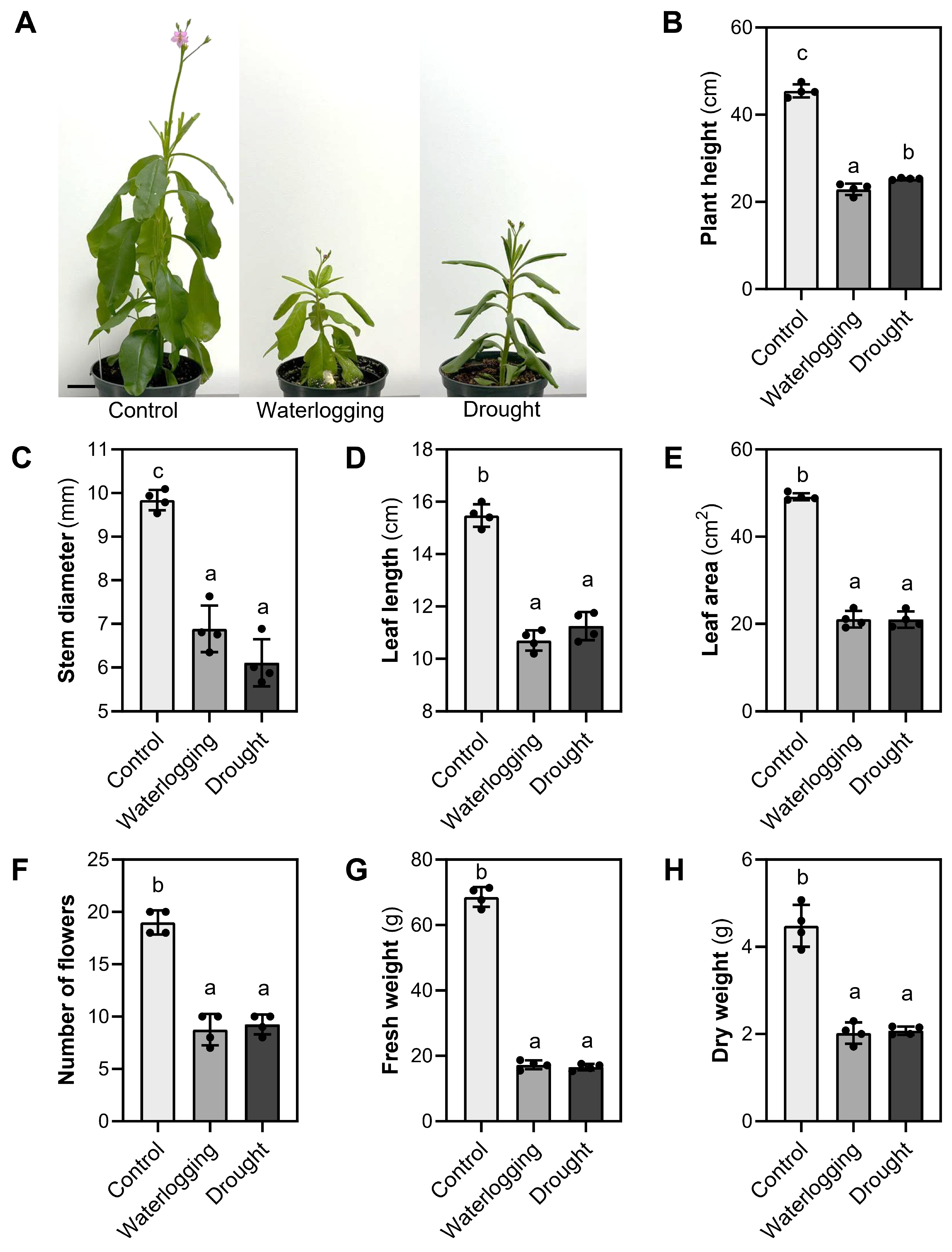
Water stress treatments induced pronounced morphological alterations in waterleaf (Talinum fruticosum) relative to well-watered controls (Figure 1A). Under drought conditions, plants exhibited visible wilting, leaf curling, and reduced turgor, while waterlogging-stressed plants displayed chlorosis, epinasty, and diminished overall vigor compared to control specimens.
Analysis of growth parameters revealed significant treatment effects across all measured traits (Figure 1B–H). Plant height was significantly reduced by 1.8-fold under drought stress (25.3 cm) and 2.0-fold under waterlogging (22.9 cm) compared to control plants (45.5 cm). Similarly, stem diameter decreased significantly by 1.6-fold under drought (6.1 mm) and 1.4-fold under waterlogging (6.9 mm) relative to controls (9.8 mm). The most pronounced reduction was observed in leaf area, which declined by 2.3-fold under drought (21.0 cm2) and 2.3-fold under waterlogging (21.1 cm2) compared to control values (49.2 cm2). Leaf length followed a comparable trend, with drought-stressed plants exhibiting a 1.4-fold reduction (11.3 cm) and waterlogged plants showing a 1.4-fold decrease (10.7) relative to the control (15.5 cm).
Reproductive output, measured as flower number, was severely compromised under both stress conditions. Drought stress reduced flower production by 2.0-fold (9.3 flowers per plant) relative to controls (19.0 flowers), while waterlogging resulted in a 2.2-fold decrease (8.8 flowers). Biomass accumulation was similarly affected; fresh weight declined by 4.1-fold under drought (16.6 g) and 4.0-fold under waterlogging (17.3 g) compared to controls (68.8 g). Dry weight followed an identical pattern, with drought-stressed plants showing a 2.1-fold reduction (2.1 g) and waterlogged plants exhibiting a 2.3-fold decrease (2.0 g) relative to control values (4.5 g). Notably, drought stress consistently exerted more severe growth suppression than waterlogging across all measured parameters.

3.2. Physiological Responses

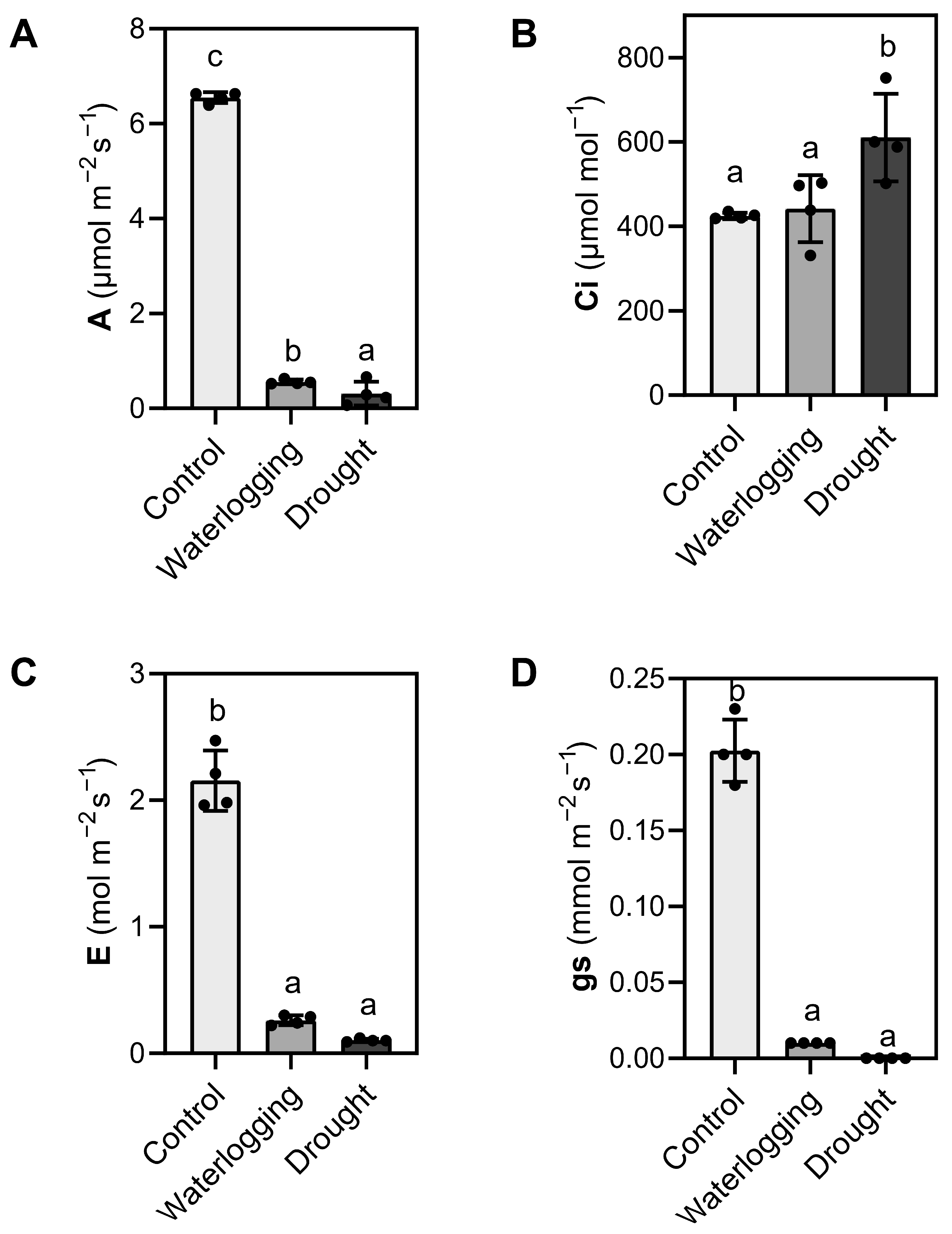
Physiological measurements revealed significant stress-induced alterations in photosynthetic performance (Figure 2A–D). Net photosynthetic rate (A) was substantially impaired under both stress conditions, with drought-stressed plants exhibiting a 21.7-fold reduction (−0.3 µmol CO2 m−2 s−1) and waterlogged plants showing a 10.8-fold decrease (0.6 µmol CO2 m−2 s−1) compared to control values (6.5 µmol CO2 m−2 s−1).
Intracellular CO2 concentration (Ci) displayed an inverse relationship, increasing by 1.4-fold under drought (610.6 µmol mol−1) and 1.0-fold under waterlogging (442.1 µmol mol−1) relative to controls (425.1 µmol mol−1). Transpiration rate (E) was dramatically suppressed under drought, showing a 22.0-fold reduction (0.1 mmol H2O m−2 s−1), while waterlogging caused a 7.3-fold decrease (0.3 mmol H2O m−2 s−1) compared to control values (2.2 mmol H2O m−2 s−1).
Stomatal conductance (gs) followed a similar trend, with drought-stressed plants exhibiting a 20.0-fold reduction (0.01 mmol m−2 s−1) and waterlogged plants demonstrating a 10-fold decrease (0.02 mmol m−2 s−1) relative to control values (0.20 mmol m−2 s−1). These results indicate that drought stress imposed greater limitations on gas exchange than waterlogging, with stomatal closure appearing as a primary limiting factor under both stress conditions.

3.3. Biochemical Responses

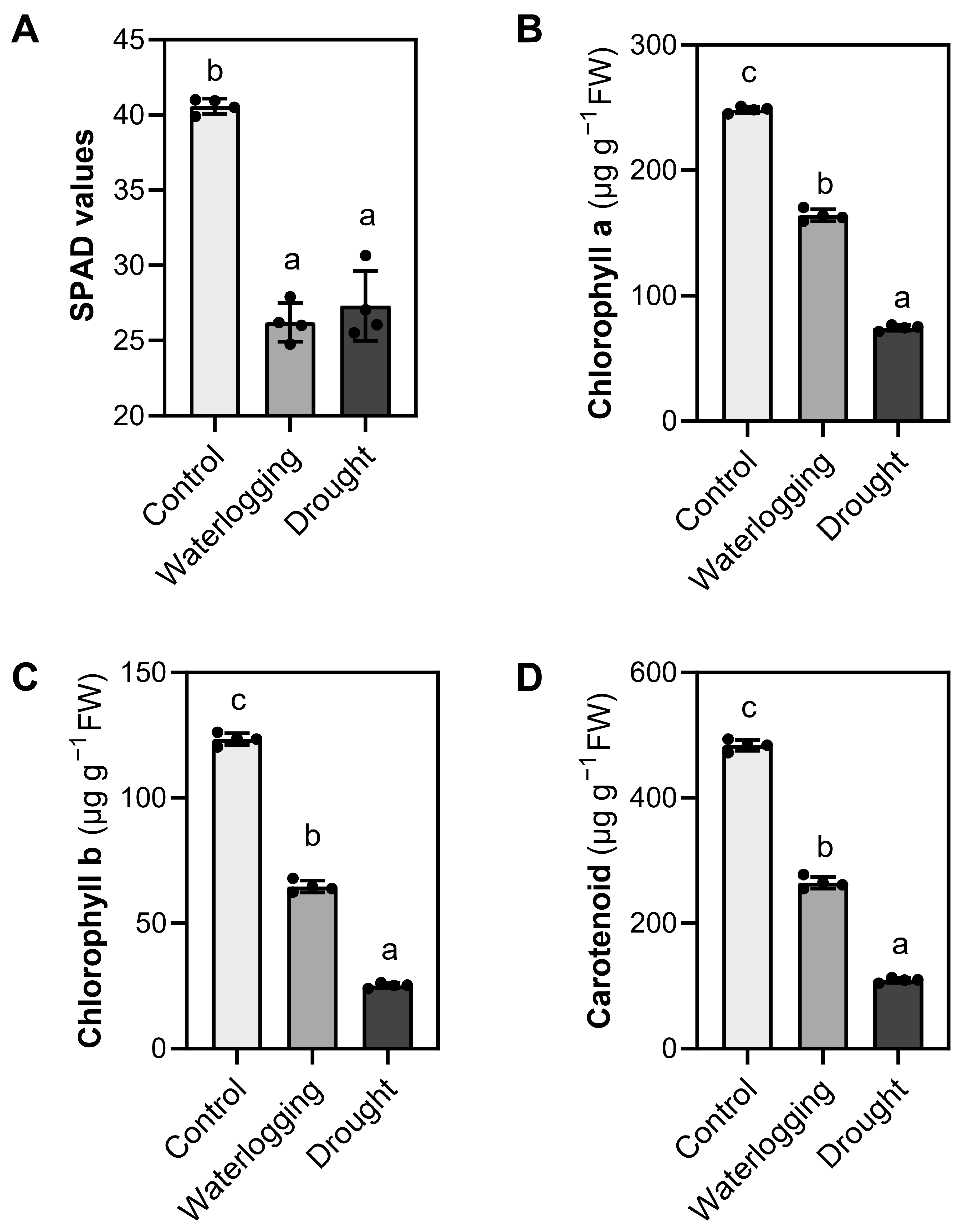
Chlorophyll content, assessed both as SPAD values and extracted pigment concentrations, exhibited differential responses to water stress treatments (Figure 3A–D). SPAD readings declined by 1.5-fold under drought (27.3) and 1.5-fold under waterlogging (26.2) compared to control values (40.6). Extracted chlorophyll a content was reduced by 3.3-fold under drought (74.4 mg g−1 FW) and 1.5-fold under waterlogging (164.1 mg g−1 FW) relative to controls (248.4 mg g−1 FW). Chlorophyll b content showed a 4.9-fold decrease under drought (25.2 mg g−1 FW) and a 1.9-fold reduction under waterlogging (64.7 mg g−1 FW) compared to control values (123.4 mg g−1 FW). Carotenoid content also showed similar reduction trends to chlorophylls a and b. Under drought stress, carotenoids decreased by 4.4-fold (109.0 mg g−1 FW) relative to controls (484.0 mg g−1 FW), while waterlogged plants showed a 1.8-fold reduction (264.7 mg g−1 FW) compared to the control.
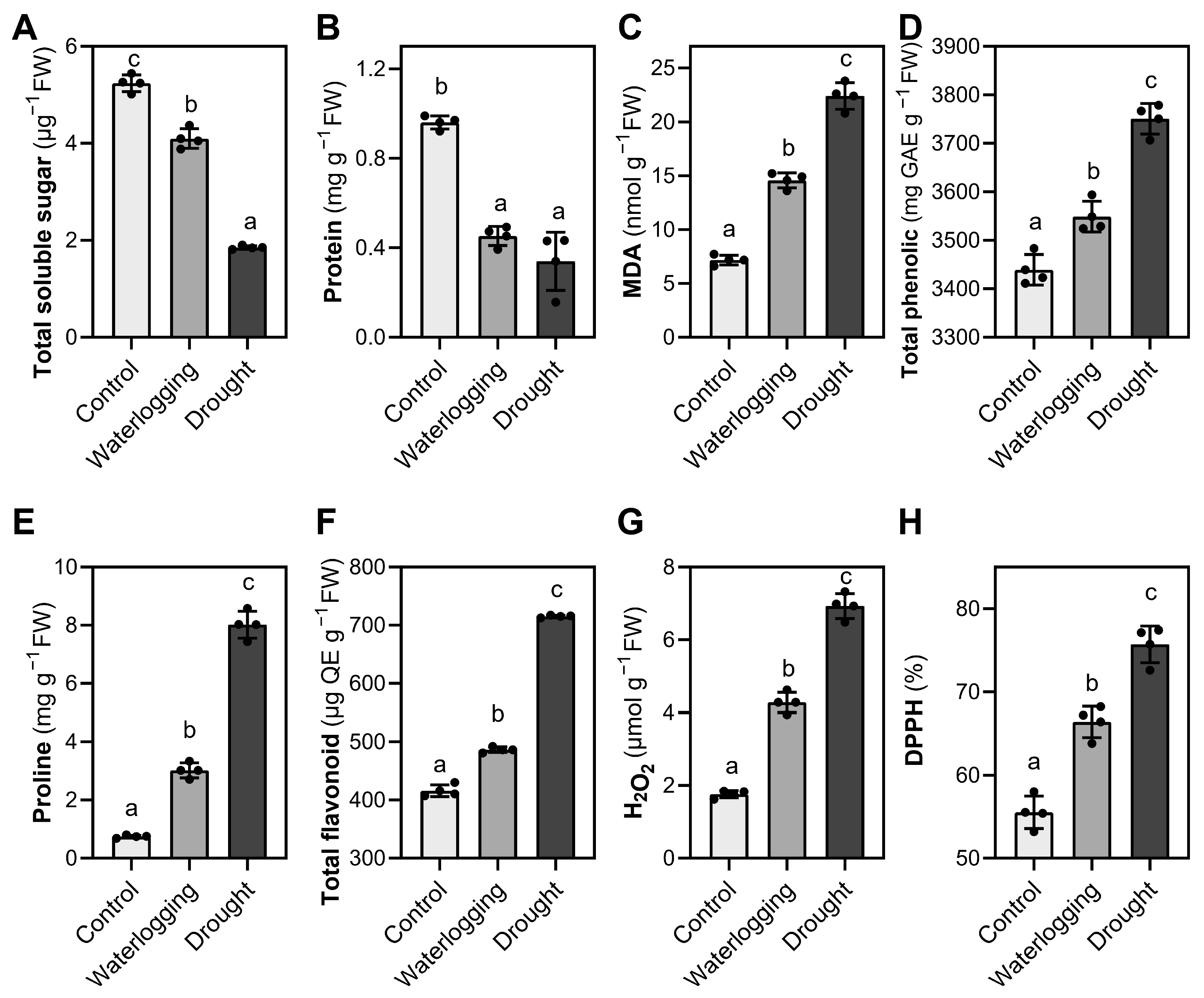
Water stress significantly influenced the accumulation of total soluble sugars and proteins (Figure 4A,B). Total soluble sugar content decreased markedly under drought stress, showing a 2.7-fold reduction (1.9 µg glucose g−1 FW) compared to control values (5.2 µg glucose g−1 FW). Waterlogged plants also exhibited reduced sugar levels (4.1 µg glucose g−1 FW), representing a 1.3-fold increase over the control.
Additionally, total soluble protein content decreased under both stress conditions. Drought-stressed plants showed a 3.3-fold reduction (0.3 mg g−1 FW), while waterlogged plants displayed a 2.0-fold decrease (0.5 mg g−1 FW) relative to control values (1.0 mg g−1 FW). The differential accumulation patterns suggest that sugar accumulation serves as an osmotic adjustment mechanism, while protein synthesis may be impaired under stress conditions.
Lipid peroxidation, measured as malondialdehyde (MDA) content, increased significantly under both water stress treatments (Figure 4C). Drought stress induced a 3.1-fold elevation in MDA (22.4 nmol g−1 FW), while waterlogging caused a 2.0-fold increase (14.6 nmol g−1 FW) compared to control levels (7.2 nmol g−1 FW). Similarly, hydrogen peroxide (H2O2) content was elevated by 3.8-fold under drought (6.9 µmol g−1 FW) and 12.4-fold under waterlogging (4.3 µmol g−1 FW) relative to control values (1.8 µmol g−1 FW) (Figure 4G). The more pronounced accumulation of both MDA and H2O2 under drought indicates greater oxidative damage compared to waterlogging.
Total phenolic content exhibited significant increases under both stress conditions (Figure 4D). Drought-stressed plants showed a 1.1-fold elevation (3750.8 mg GAE g−1 FW), while waterlogged plants displayed a 1.0-fold increase (3548.9 mg GAE g−1 FW) relative to control values (3439.1 mg GAE g−1 FW). Total flavonoid content followed a comparable pattern, with drought inducing a 1.7-fold increase (715.3 µg QE g−1 FW) and waterlogging causing a 1.2-fold elevation (8.5 µg QE g−1 FW) compared to control levels (416.2 µg QE g−1 FW) (Figure 4F).
Proline accumulation, a hallmark of osmotic adjustment, was substantially enhanced under drought stress, showing a 11.4-fold increase (8.0 mg g−1 FW) relative to controls (0.7 mg g−1 FW) (Figure 4E). Waterlogged plants also exhibited elevated proline levels (3.0 mg g−1 FW), representing a 4.3-fold increase over the control. The DPPH radical scavenging activity increased by 1.4-fold under drought (75.7%) and 1.2-fold under waterlogging (66.4%) compared to control values (55.5%) (Figure 4H), indicating enhanced antioxidant capacity under stress conditions, particularly drought.

3.4. Correlation Analyses Under Stress Conditions

3.4.1. Waterlogging Stress Correlations

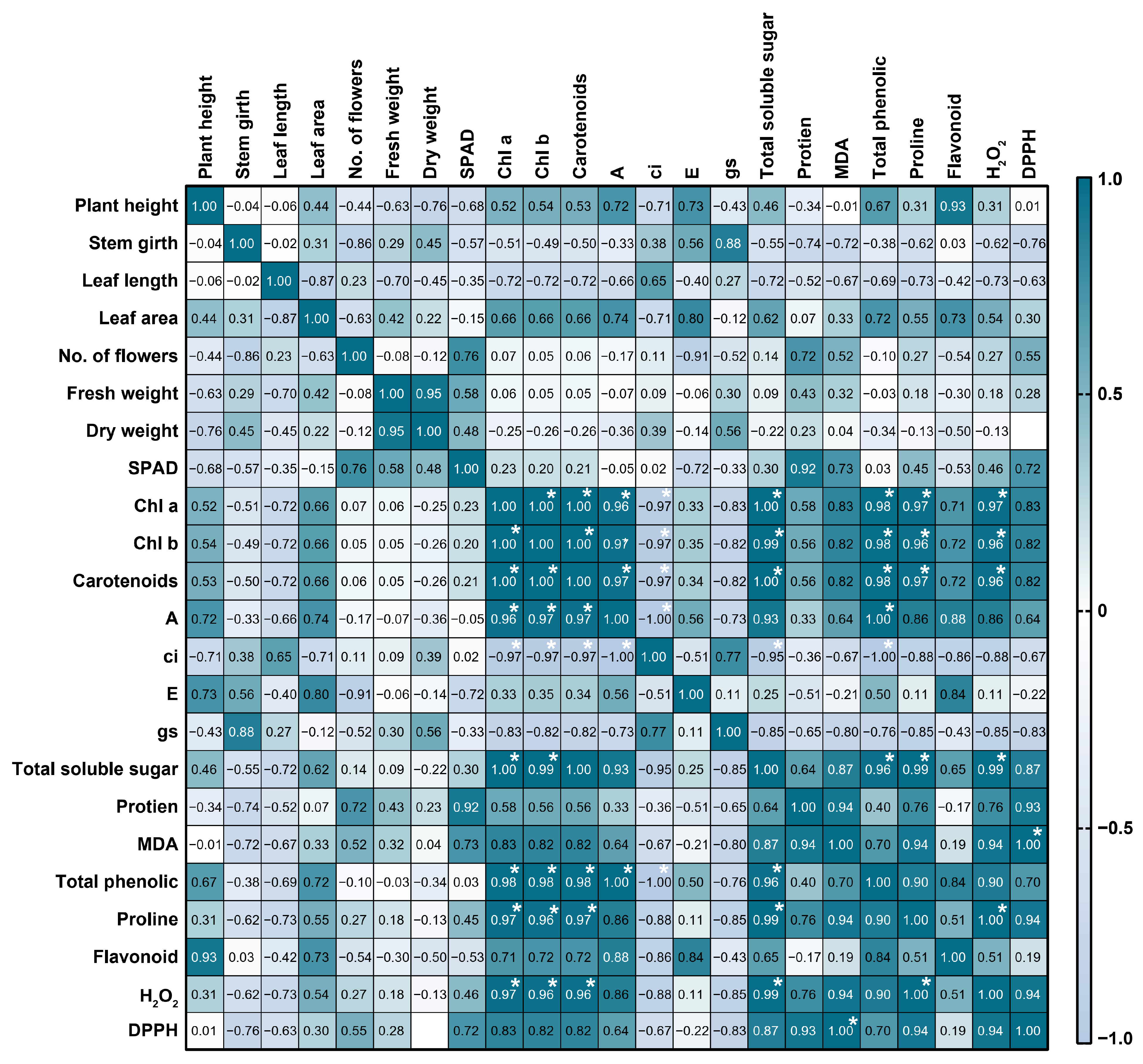
The correlation matrix for waterlogging-stressed plants revealed significant interrelationships among morphological, physiological, and biochemical traits (Figure 5). Plant height exhibited strong positive correlations with stem diameter (r = 0.89, p < 0.05), leaf length (r = 0.85, p < 0.05), leaf area (r = 0.82, p < 0.05), and biomass parameters (fresh weight: r = 0.91, p < 0.05; dry weight: r = 0.88, p < 0.05). These growth traits were negatively correlated with oxidative stress markers, with MDA showing significant inverse relationships with plant height (r = −0.79, p < 0.05) and fresh weight (r = −0.83, p < 0.05).
Photosynthetic parameters demonstrated strong positive correlations with growth traits. Net photosynthetic rate was significantly correlated with stomatal conductance (r = 0.87, p < 0.05), transpiration rate (r = 0.84, p < 0.05), and SPAD values (r = 0.79, p < 0.05). Notably, intracellular CO2 concentration exhibited negative correlations with net photosynthesis (r = −0.76, p < 0.05) and stomatal conductance (r = −0.81, p < 0.05), suggesting that non-stomatal limitations may contribute to photosynthetic impairment under waterlogging.
Biochemical traits under waterlogging showed coordinated responses. Total phenolics and flavonoids were positively correlated with each other (r = 0.78, p < 0.05) and with proline content (r = 0.82 and r = 0.75, respectively, p < 0.05). These antioxidant compounds exhibited negative correlations with MDA (phenolics: r = −0.73, p < 0.05; flavonoids: r = −0.69, p < 0.05), indicating their protective role against oxidative damage. Total soluble sugar content showed positive correlations with proline (r = 0.74, p < 0.05) and phenolics (r = 0.71, p < 0.05), reflecting coordinated osmotic and antioxidant adjustments.

3.4.2. Drought Stress Correlations

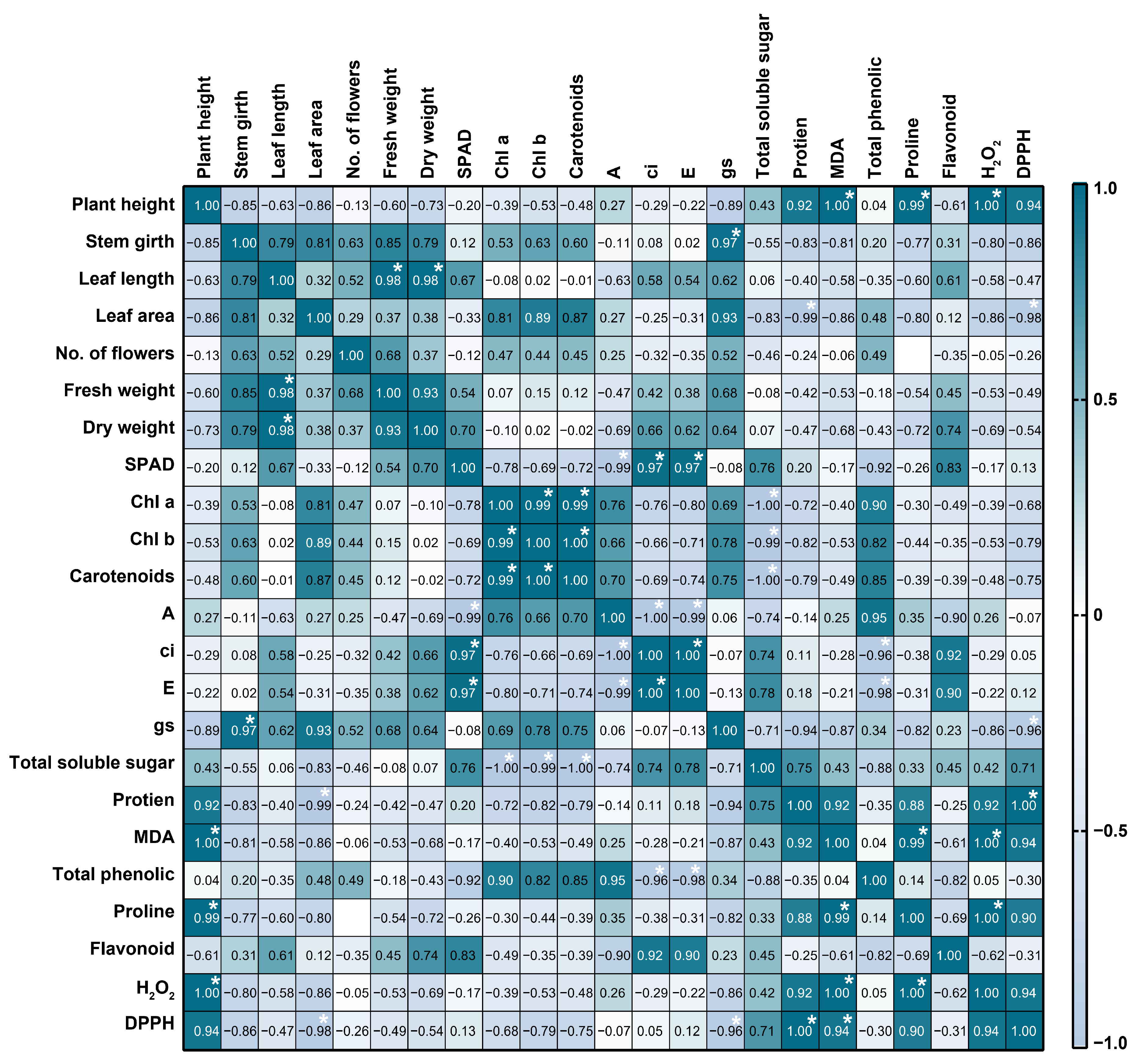
The correlation matrix for drought-stressed plants revealed generally stronger and more numerous significant relationships compared to waterlogging (Figure 6). Growth parameters exhibited highly significant positive intercorrelations, with plant height showing strong associations with leaf area (r = 0.93, p < 0.05), fresh weight (r = 0.94, p < 0.05), and dry weight (r = 0.91, p < 0.05). However, these growth traits displayed more pronounced negative correlations with stress indicators than observed under waterlogging. MDA content showed strong inverse relationships with plant height (r = −0.88, p < 0.05), fresh weight (r = −0.91, p < 0.05), and net photosynthetic rate (r = −0.86, p < 0.05).
Photosynthetic parameters under drought stress exhibited distinct correlation patterns. Net photosynthetic rate was strongly correlated with stomatal conductance (r = 0.91, p < 0.05) and transpiration rate (r = 0.89, p < 0.05), confirming stomatal limitation as a primary constraint. The negative correlation between Ci and A was more pronounced under drought (r = −0.84, p < 0.05) than under waterlogging, suggesting more severe photosynthetic impairment. SPAD values showed positive correlations with chlorophyll a (r = 0.88, p < 0.05) and net photosynthesis (r = 0.82, p < 0.05), while carotenoid content exhibited negative correlations with MDA (r = −0.79, p < 0.05), supporting their antioxidant function.
The strongest correlations under drought were observed among defense-related compounds. Proline showed highly significant positive correlations with total soluble sugars (r = 0.89, p < 0.05), phenolics (r = 0.87, p < 0.05), and flavonoids (r = 0.84, p < 0.05), indicating a tightly coordinated stress response. DPPH scavenging activity was positively correlated with phenolics (r = 0.85, p < 0.05) and flavonoids (r = 0.81, p < 0.05), confirming the role of these compounds in antioxidant defense. Conversely, H2O2 showed strong negative correlations with DPPH activity (r = −0.83, p < 0.05) and proline content (r = −0.86, p < 0.05), indicating that effective antioxidant and osmotic adjustments mitigated oxidative stress. The generally stronger correlation coefficients under drought compared to waterlogging suggest that drought stress elicits more coordinated and integrated physiological and biochemical responses in waterleaf.

4. Discussion

4.1. Morpho-Physiological Response to Water Stress

The present investigation revealed that water deficit and waterlogging stress differentially influenced the growth, physiological performance, and biochemical responses of waterleaf (Talinum fruticosum). Both drought stress and waterlogging Both drought and waterlogging significantly reduced plant height, stem girth, leaf length, leaf area, flower number, fresh weight, and dry weight compared to the control. Waterlogging caused a significantly greater reduction in plant height and flower number compared to drought, while other parameters showed comparable reductions under both stress conditions. These findings partially align with previous reports demonstrating that drought typically imposes more severe constraints on plant growth than waterlogging [23]. The significant reduction in leaf area under both stress conditions reflects reduced canopy development, which may minimize water loss through transpiration [5]. However, whether these growth reductions represent adaptive tolerance mechanisms or simply stress-induced impairment cannot be determined from the present data. The observed growth suppression under both stress conditions indicates that waterleaf is negatively affected by both water deficit and excess water, though it may possess moderate capacity to withstand these conditions relative to more sensitive species.
The significant reduction in flower production under drought stress and 2.2-fold under waterlogging has significant implications for reproductive success and seed yield in waterleaf. This observation corroborates the well-documented sensitivity of reproductive structures to water deficit, where resource allocation is preferentially directed toward survival mechanisms at the expense of reproductive development [24,25]. The comparable decrease in flower number under both stress conditions suggests that these stresses could compromise reproductive capacity to a similar extent in this species. However, the present study did not assess seed set or viability, and therefore the actual impact on reproductive success remains unknown. The observed reduction in flower number represents a stress response, but whether this translates to reduced fitness or yield under field conditions requires further investigation.
The significant reductions in net photosynthetic rate (21.7-fold under drought; 10.8-fold under waterlogging) indicate that both stress conditions severely compromised photosynthetic efficiency in waterleaf, with drought imposing more than twice the impairment of waterlogging. The concurrent decline in stomatal conductance (20.0-fold under drought; 10.0-fold under waterlogging) and transpiration rate (22.0-fold under drought; 7.3-fold under waterlogging) strongly implicates stomatal limitation as a primary mechanism underlying photosynthetic inhibition, particularly under drought stress [26,27]. The fact that these physiological impairments were most severe under drought—the same treatment that induced the greatest accumulation of proline, phenolics, and flavonoids—suggests that these biochemical responses did not effectively prevent photosynthetic decline or growth inhibition. This underscores the distinction between stress-induced responses and successful stress tolerance. The positive correlations observed between net photosynthesis and stomatal conductance (r = 0.91 under drought; r = 0.87 under waterlogging) are consistent with this interpretation; however, correlation does not establish causation, and non-stomatal limitations (e.g., reduced Rubisco activity or impaired electron transport) cannot be excluded [28].
The inverse relationship between intracellular CO2 concentration and net photosynthesis, particularly pronounced under drought stress (r = −0.84), suggests that non-stomatal limitations, including reduced Rubisco activity and impaired electron transport, may also contribute to photosynthetic decline [28]. The increase in Ci under stress conditions, despite reduced stomatal conductance, indicates that CO2 fixation capacity was more severely compromised than CO2 diffusion, pointing to metabolic impairment at the biochemical level [29,30]. However, this interpretation is based on correlative evidence, and direct measurements of Rubisco activity or electron transport rates would be required to confirm non-stomatal limitations. The observed reductions in chlorophyll content and carotenoids, and the accumulation of reactive oxygen species, all of which can directly impair the photosynthetic apparatus [31,32].

4.2. Biochemical Response to Water Stress

The decline in chlorophyll content under both stress conditions reflects stress-induced pigment degradation, likely resulting from oxidative damage to chloroplast membranes [33]. The 3.3-fold reduction in chlorophyll a under drought compared to the 1.5-fold reduction under waterlogging suggests that water deficit imposes greater oxidative stress on photosynthetic pigments. However, chlorophyll degradation is a common stress response and does not, by itself, indicate a specific tolerance or sensitivity mechanism.
The 4.4-fold decrease in carotenoid content under drought stress and 1.8-fold under waterlogging compared to controls represents an important photoprotective response. Carotenoids serve dual functions in photosynthesis, acting both as accessory light-harvesting pigments and as crucial antioxidants that quench excess excitation energy and scavenge reactive oxygen species [34]. The marked decline in carotenoid levels under both stress conditions suggests severe impairment of photoprotective capacity, potentially exacerbating photo-oxidative damage under conditions where photosynthetic electron transport is already compromised. The more pronounced reduction under drought compared to waterlogging reflects the greater oxidative stress intensity imposed by water deficit.
The substantial accumulation of proline (11.4-fold under drought) and total soluble sugars (1.7-fold under drought) represents a key adaptive response to water stress in waterleaf, while total soluble sugars decreased (2.7-fold under drought and 1.3-fold under waterlogging). Proline functions as a compatible osmolyte, stabilizing proteins and cellular structures while also contributing to reactive oxygen species scavenging [35]. The greater proline accumulation under drought is consistent with the higher osmotic challenge imposed by water deficit. However, given that drought-stressed plants also exhibited the greatest increases in MDA and H2O2, the pronounced proline accumulation may reflect the severity of stress experienced rather than an effective tolerance mechanism. Proline accumulation alone does not confer tolerance if oxidative damage and growth inhibition remain high. Thus, while proline accumulation is a hallmark of stress response, its protective role in this study appears insufficient to fully mitigate drought-induced damage. The decrease in total soluble sugar content under stress conditions suggests that carbohydrate metabolism may be impaired, potentially due to reduced photosynthetic activity and/or increased respiratory consumption under stress.
Positive correlations were observed between proline and sugar accumulation (r = 0.89 under drought; r = 0.74 under waterlogging), as well as between total soluble sugars and antioxidant compounds (phenolics: r = 0.89 under drought; flavonoids: r = 0.84 under drought). These correlations are consistent with the hypothesis that sugars may serve dual functions, as osmoprotectants and as signaling molecules that modulate antioxidant defense responses [36,37]. However, correlation does not establish causation, and these relationships require further investigation through targeted experiments (e.g., metabolite profiling or genetic approaches). Despite the overall decrease in sugar content under stress, the positive correlations suggest that remaining sugars may still play a role in osmotic and antioxidant coordination. The significant proline accumulation observed under both stress conditions suggests that proline-mediated osmotic adjustment may be an important response in waterleaf, but whether this represents an effective tolerance mechanism remains unclear given the concurrent oxidative damage and growth inhibition observed, particularly under drought.
Malondialdehyde (MDA) and hydrogen peroxide (H2O2) content were significantly elevated under both stress conditions, with drought causing significantly greater increases than waterlogging. These results confirm that both water stress conditions induced significant oxidative stress in waterleaf, with drought causing more severe membrane lipid peroxidation and reactive oxygen species generation [38]. The fact that the drought treatment produced both the greatest oxidative damage and the greatest accumulation of proline, phenolics, and flavonoids suggests that these biochemical responses were insufficient to fully protect against oxidative stress under severe water deficit.
Total phenolic content showed a significant increase under drought compared to the control, while the increase under waterlogging was not statistically significant. Total flavonoid content was significantly increased under both stress conditions, with drought causing a significantly greater increase than waterlogging. These phenolic compounds are well-established antioxidants that scavenge reactive oxygen species, chelate metal ions, and protect cellular components from oxidative damage [34,39]. The negative correlations observed between phenolics and MDA (r = −0.79 under drought; r = −0.73 under waterlogging) and between flavonoids and MDA (r = −0.76 under drought; r = −0.69 under waterlogging) suggest an association between phenolic accumulation and reduced lipid peroxidation. However, as with proline, the greater accumulation of these compounds under drought coincided with the highest levels of oxidative damage (MDA and H2O2) and growth impairment. Therefore, while these compounds likely contribute to antioxidant defense, their accumulation does not appear to be sufficient to fully counteract oxidative stress under severe water deficit. The enhanced production of phenolics and flavonoids may reflect a stress-induced response to damage rather than a successful tolerance strategy, and their protective capacity appears limited under the extreme drought conditions imposed in this study.
The DPPH radical scavenging was significantly increased under drought compared to the control, while the increase under waterlogging was not statistically significant. This indicates increased total antioxidant capacity under drought stress conditions, reflecting the upregulation of antioxidant compounds in response to stress. However, this increase was insufficient to prevent substantial oxidative damage, as evidenced by the elevated MDA and H2O2 levels, particularly under drought. Thus, while antioxidant capacity was enhanced, it did not translate into effective protection against cellular damage, suggesting that the severity of stress overwhelmed the plant’s defense systems. This is consistent with the elevated phenolic and flavonoid content. The correlation between DPPH activity and phenolics (r = 0.85 under drought) and flavonoids (r = 0.81 under drought) demonstrates that these compounds are major contributors to the overall antioxidant capacity of waterleaf under stress. This is particularly relevant for waterleaf as a leafy vegetable, as accumulation of phenolic compounds and enhanced antioxidant capacity suggests that controlled water stress may influence the phytochemical profile of waterleaf, provided that the stress intensity does not compromise biomass production [40,41]. This offers opportunities for further research to optimize irrigation practices for balancing yield and quality in sustainable production systems [42,43].

4.3. Implications for Waterleaf Cultivation and Breeding

The present study provides baseline data on the physiological and biochemical responses of waterleaf to extreme water stress under controlled conditions. The significant growth reductions observed under both drought and waterlogging indicate that waterleaf is negatively affected by both stress conditions, though it may possess moderate capacity to withstand these stresses relative to more sensitive species. However, the extreme nature of the stress treatments (≤10% FC and complete submersion) limits the direct applicability of these findings to agronomic settings, where deficit irrigation or moderate waterlogging are more common.
The observed stress-induced increases in proline, phenolics, and flavonoids suggest that waterleaf activates biochemical defense responses under stress; however, these responses were insufficient to prevent substantial oxidative damage and growth inhibition, particularly under drought. Therefore, the present study does not provide evidence that moderate water stress improves nutritional quality, nor does it support specific irrigation recommendations for balancing yield and quality.
The greater tolerance to waterlogging compared to drought observed in this study suggests that waterleaf may be more suitable for cultivation in regions with high rainfall or temporary flooding than in areas prone to water scarcity. However, field validation studies are needed to confirm this under natural environmental conditions. The substantial drought sensitivity observed indicates that water deficit remains a major constraint for waterleaf production, particularly during dry seasons or under rain-fed conditions [8,13]. The strong induction of proline accumulation under drought stress suggests that selection for enhanced proline accumulation capacity could be a potential breeding strategy for improved drought tolerance in waterleaf. Similarly, the positive association between antioxidant compound accumulation and stress tolerance indicates that selection for high phenolic and flavonoid content could potentially improve both stress resilience and nutritional quality [44]. However, these suggestions are speculative and require further research, including genetic diversity screening and molecular characterization, before practical breeding recommendations can be made.

4.4. Limitations and Future Perspectives

While the present study provides comprehensive insights into waterleaf’s responses to water stress, several limitations should be acknowledged. The investigation was conducted under controlled greenhouse conditions, which may not fully reflect the complexity of field conditions, including interactions with soil microbiota, competition, and multiple stress combinations [45,46]. Future studies should validate these findings under field conditions and across multiple growing seasons to establish the practical relevance of the observed responses.
Additionally, the molecular mechanisms underlying the observed physiological and biochemical responses remain to be elucidated. Transcriptomic and metabolomic analyses would provide deeper insights into the genetic regulation of stress responses and identify key regulatory pathways for targeted improvement [47,48]. The single accession of waterleaf used in this study limits the assessment of genotypic variation in stress tolerance. Screening a diverse collection of waterleaf accessions from different ecological zones would help identify genetic resources with superior stress tolerance for breeding programs and provide insights into the adaptive mechanisms of this species [49,50]. The interaction between water stress and other abiotic stresses, such as salinity or high temperature, which are increasingly common in agricultural systems, should also be investigated to develop strategies for combined stress tolerance [51,52,53].
Furthermore, the correlative nature of the relationships observed between physiological and biochemical traits limits the ability to draw causal conclusions. Targeted experiments, such as metabolite profiling, enzymatic assays, or genetic manipulation, are needed to establish causal relationships and elucidate the functional significance of the observed stress responses.

5. Conclusions

This study demonstrates that waterleaf exhibits differential sensitivity to drought and waterlogging stress, with drought imposing more severe constraints on growth, photosynthesis, and biomass production than waterlogging. Both drought and waterlogging significantly reduced growth, physiological performance, and biochemical parameters compared to the control, with drought causing significantly greater impairments in most measured traits. The stress responses involve observed adjustments in osmotic regulation, antioxidant defense, and photosynthetic efficiency, with drought eliciting more intense and integrated responses. Proline accumulated significantly under stress, while total soluble sugars decreased under drought, suggesting that proline may play a more prominent role in osmotic adjustment under severe water deficit. Phenolic compounds and flavonoids increased under stress, but these increases were insufficient to prevent substantial oxidative damage, as evidenced by elevated MDA and H2O2 levels, particularly under drought.
The correlation analyses revealed strong associations between growth parameters and physiological traits, providing exploratory evidence of coordinated stress responses. Further studies with larger sample sizes are needed to confirm these relationships and elucidate the underlying mechanisms. These findings provide valuable insights into the stress physiology of waterleaf and may have practical implications for cultivation management and future breeding programs. The species shows promise for cultivation in waterlogged environments but requires irrigation management to mitigate the severe impacts of drought stress. The stress-induced increases in phenolic compounds and antioxidant capacity suggest that water stress may influence the phytochemical profile of waterleaf; however, the present study did not directly measure nutritional quality, and the extreme stress levels tested do not support recommendations for optimizing irrigation practices to balance yield and quality. Such applications require further research using moderate, agronomically relevant stress levels.
Future research should focus on molecular mechanisms, field validation, and genetic diversity to develop resilient cultivars for sustainable production in the face of climate change.

Author Contributions

P.A.O.: conceptualization, formal analysis, investigation, methodology, validation, writing—original draft, and writing—review and editing. E.B.N.: formal analysis, investigation, methodology, validation, writing—original draft, and writing—review and editing. F.O.-A.: formal analysis, validation, writing—original draft, and writing—review and editing. V.A.: formal analysis, investigation, methodology, validation, writing—original draft, and writing—review and editing. S.O.-N.: formal analysis, investigation, methodology, validation, writing—original draft, and writing—review and editing. R.O.: formal analysis, investigation, methodology, validation, writing—original draft, and writing—review and editing. A.J.: formal analysis, investigation, methodology, validation, writing—original draft, and writing—review and editing. N.A.: formal analysis, investigation, methodology, validation, writing—original draft, and writing—review and editing. L.A.: project administration, resources, supervision, validation, and writing—review and editing. All authors have read and agreed to the published version of the manuscript.

Funding

This research received no external funding.

Data Availability Statement

The data presented in this study are available upon request from the corresponding author.

Acknowledgments

The lead author wishes to thank his laboratory mates for their generous assistance and support.

Conflicts of Interest

The authors declare no conflicts of interest.

Abbreviations

ANOVAAnalysis of Variance
CAMCrassulacean Acid Metabolism
C3C3 photosynthetic pathway
CBASCollege of Basic and Applied Sciences
CiIntercellular CO2 concentration
CO2Carbon dioxide
CRDCompletely Randomized Design
DPPH2,2-Diphenyl-1-picrylhydrazyl
ETranspiration rate
FWFresh Weight
GAEsGallic Acid Equivalents
gsStomatal conductance
H2O2Hydrogen peroxide
HSDHonestly Significant Difference
MDAMalondialdehyde
QEQuercetin Equivalents
ROSReactive Oxygen Species
SDStandard Deviation
SPADSoil–Plant Analysis Development (chlorophyll meter index)
TCATrichloroacetic Acid

References

  1. Watanabe, T.; Cullmann, J.; Pathak, C.S.; Turunen, M.; Emami, K.; Ghinassi, G.; Siddiqi, Y. Management of climatic extremes with focus on floods and droughts in agriculture. Irrig. Drain. 2018, 67, 29–42. [Google Scholar] [CrossRef] [Scilit]
  2. Gomez-Zavaglia, A.; Mejuto, J.C.; Simal-Gandara, J. Mitigation of emerging implications of climate change on food production systems. Food Res. Int. 2020, 134, 109256. [Google Scholar] [CrossRef] [Scilit]
  3. Saleem, A.; Anwar, S.; Nawaz, T.; Fahad, S.; Saud, S.; Rahman, T.U.; Khan, M.N.; Nawaz, T. Securing a sustainable future: The climate change threat to agriculture, food security, and sustainable development goals. J. Umm AI-Qura Univ. Appl. Sci. 2025, 11, 595–611. [Google Scholar] [CrossRef] [Scilit]
  4. Haripershad, A. Physiological and Genotypic Analyses of the African Leafy Vegetable, Amaranthus Dubius, in Response to Environmental Stresses and Cryopreservation. Doctoral Dissertation, University of KwaZulu-Natal, Durban, South Africa, 2025. Available online: https://hdl.handle.net/10413/24384 (accessed on 26 April 2026).
  5. Farooq, M.; Hussain, M.; Ul-Allah, S.; Siddique, K.H.M. Physiological and agronomic approaches for improving water-use efficiency in crop plants. Agric. Water Manag. 2019, 219, 45–60. [Google Scholar] [CrossRef] [Scilit]
  6. Panthi, B.; Shrestha, S.; Kunwar, P. Enhancing neglected and underutilized crop species (NUCS) in Nepal: Unlocking their potential for climate resilience, food security, and agrobiodiversity. Adv. Agric. 2026, 2026, 5986312. [Google Scholar] [CrossRef] [Scilit]
  7. Assaha, D.V.M.; Awasume, A.C.; Tabot, P.T.; Mfombep, P.M. Harvesting compounds the effect of water deficit on the growth and yield of water leaf [Talinum triangulare (Jacq.) Willd.]. J. Tert. Ind. Sci. JTIS 2023, 3, 42–55. [Google Scholar] [CrossRef]
  8. Santos, R.d.J.; Nascimento, M.N.d.; Camilloto, G.P.; Oliveira, U.C.d.; Santos, F.S.d. Water restriction as a strategy for growing Talinum fruticosum (L.) Juss. (Talinaceae). Rev. Caatinga 2024, 37, e12183. [Google Scholar] [CrossRef] [Scilit]
  9. Ndlovu, M.; Scheelbeek, P.; Ngidi, M.; Mabhaudhi, T. Underutilized crops for diverse, resilient and healthy agri-food systems: A systematic review of sub-Saharan Africa. Front. Sustain. Food Syst. 2024, 8, 1498402. [Google Scholar] [CrossRef] [Scilit]
  10. Mutemi, T.; Masinde, P.; Kirigiah, R.; Ofori, P.A.; Nutsukpo, E.B.; Amalapridman, V.; Waindi, C.O.; Abbey, L. Morpho-physiological response of water leaf (Talinum triangulare Jacq.) to urea and Azomite. Next Sustain. 2025, 6, 100219. [Google Scholar] [CrossRef] [Scilit]
  11. Nutsukpo, E.B.; Ofori, P.A.; Ofoe, R.; Owusu-Nketia, S.; Kumar, A.P.; Jiang, Q.; Jeyapandian, A.; Mutemi, T.M.; Vijitha, A.; Abbey, L. Thermal Adaptation Strategies in Waterleaf (Talinum triangulare Jacq.): Balancing Biomass Production and Nutritional Quality Under Climate Change. Scientifica 2026, 2026, 6671759. [Google Scholar] [CrossRef] [Scilit]
  12. Oladoye, C.; Liu, G. Waterleaf, a Potential Leafy Vegetable for Florida: HS1434, 2/2022. Available online: https://journals.flvc.org/edis/article/view/122628 (accessed on 26 April 2026).
  13. Oluwole, S.O.; Ogun, M.L.; Balogun, O.A. Effects of different watering regimes on the growth of Talinum triangulare Jacq. (Waterleaf). J. Res. Rev. Sci. 2018, 5, 14–23. [Google Scholar] [CrossRef] [Scilit]
  14. Abbey, L.; Ofoe, R.; Wang, Z.; Chada, S. How central carbon metabolites of Mexican mint (Plectranthus amboinicus) plants are impacted under different watering regimes. Metabolites 2023, 13, 539. [Google Scholar] [CrossRef] [Scilit]
  15. Nutsukpo, E.B.; Ofoe, R.; Jiang, Q.; Ofori, P.A.; KAsiedu, S.; Emenike, C.; Lord, A. Pyroligneous acid affects grapevine growth, yield, and chemical composition of leaf, pomace, and juice. ACS Agric. Sci. Technol. 2024, 4, 1014–1026. [Google Scholar] [CrossRef] [Scilit]
  16. Lichtenthaler, H.K. Chlorophylls and carotenoids: Pigments of photosynthetic biomembranes. In Methods in Enzymology; Academic Press: Cambridge, MA, USA, 1987. [Google Scholar]
  17. Ainsworth, E.A.; Gillespie, K.M. Estimation of total phenolic content and other oxidation substrates in plant tissues using Folin-Ciocalteu reagent. Nat. Protoc. 2007, 2, 875–877. [Google Scholar] [CrossRef] [Scilit]
  18. Chang, C.C.; Yang, M.H.; Wen, H.M.; Chern, J.C. Estimation of Total Flavonoid Content in Propolis by Two Complementary Colorimetric Methods. J. Food Drug Anal. 2002, 10, 178–182. [Google Scholar] [CrossRef] [Scilit]
  19. Dubois, M.; Gilles, K.A.; Hamilton, J.K.; Rebers, P.A.; Smith, F. Colorimetric Method for Determination of Sugars and Related Substances. Anal. Chem. 1956, 28, 350–356. [Google Scholar] [CrossRef] [Scilit]
  20. Hodges, D.M.; DeLong, J.M.; Forney, C.F.; Prange, R.K. Improving the thiobarbituric acid-reactive-substances assay for estimating lipid peroxidation in plant tissues containing anthocyanin and other interfering compounds. Planta 1999, 207, 604–611. [Google Scholar] [CrossRef] [Scilit]
  21. Alexieva, V.; Sergiev, I.; Mapelli, S.; Karanov, E. The effect of drought and ultraviolet radiation on growth and stress markers in pea and wheat. Plant Cell Environ. 2001, 24, 1337–1344. [Google Scholar] [CrossRef] [Scilit]
  22. Bates, L.S.; Waldren, R.P.A.; Teare, I.D. Rapid determination of free proline for water-stress studies. Plant Soil 1973, 39, 205–207. [Google Scholar] [CrossRef] [Scilit]
  23. Ofori, P.A.; Nutsukpo, E.B.; Opoku-Agyemang, F.; Ofoe, R.; Owusu Nketia, S.; Jiang, Q.; Adelugba, A.; Jeyapandian, A.; Vijitha, A.; Nivethika, A.; et al. Adaptive Morpho–Physiological and Biochemical Responses of Ghanaian Tomato Landraces to Drought and Flood Stresses. Can. J. Plant Sci. 2026, 106, 1–16. [Google Scholar] [CrossRef] [Scilit]
  24. Day, B.L.H.; Carins-Murphy, M.R.; Brodribb, T.J. Reproductive water supply is prioritized during drought in tomato. Plant Cell Environ. 2022, 45, 69–79. [Google Scholar] [CrossRef] [Scilit]
  25. Dusfour-Castan, P.; Buck-Sorlin, G.; Loisel, P.; Fontez, B.; Ballini, E. Wheat growth model capturing growth-defense trade-off. Front. Plant Sci. 2026, 17, 1763868. [Google Scholar] [CrossRef] [Scilit]
  26. Kaur, H.; Kohli, S.K.; Khanna, K.; Bhardwaj, R. Scrutinizing the impact of water deficit in plants: Transcriptional regulation, signaling, photosynthetic efficacy, and management. Physiol. Plant. 2021, 172, 935–962. [Google Scholar] [CrossRef] [Scilit]
  27. Wu, J.; Wang, J.; Hui, W.; Zhao, F.; Wang, P.; Su, C.; Gong, W. Physiology of plant responses to water stress and related genes: A review. Forests 2022, 13, 324. [Google Scholar] [CrossRef] [Scilit]
  28. Scafaro, A.P.; Posch, B.C.; Evans, J.R.; Farquhar, G.D.; Atkin, O.K. Rubisco deactivation and chloroplast electron transport rates co-limit photosynthesis above optimal leaf temperature in terrestrial plants. Nat. Commun. 2023, 14, 2820. [Google Scholar] [CrossRef] [Scilit] [PubMed]
  29. Falcioni, R.; de Oliveira, C.A.; Vedana, N.G.; Mendonça, W.A.; Gonçalves, J.V.F.; da Silva Haubert, D.d.F.; de Matos, D.H.S.; Reis, A.S.; Antunes, W.C.; Crusiol, L.G.T.; et al. Progressive Water Deficit Impairs Soybean Growth, Alters Metabolic Profiles, and Decreases Photosynthetic Efficiency. Plants 2025, 14, 2615. [Google Scholar] [CrossRef] [Scilit]
  30. Saha, S. Responses to Cycles of Drought and Flooding in Wheat and Barley. Doctoral Dissertation, The University of Manchester, Manchester, UK, 2026. [Google Scholar]
  31. Smiti, K.; Mina, U.; Verma, M.; Arya, L. Impact of climate extremes and other key abiotic stresses on cucurbits: A systematic review. Vegetos 2025. [Google Scholar] [CrossRef] [Scilit]
  32. Qiao, M.; Hong, C.; Jiao, Y.; Hou, S.; Gao, H. Impacts of drought on photosynthesis in major food crops and the related mechanisms of plant responses to drought. Plants 2024, 13, 1808. [Google Scholar] [CrossRef] [Scilit] [PubMed]
  33. Woodson, J.D. Control of chloroplast degradation and cell death in response to stress. Trends Biochem. Sci. 2022, 47, 851–864. [Google Scholar] [CrossRef] [Scilit]
  34. Fathi, A.; Shiade, S.R.G.; Saleem, A.; Shohani, F.; Fazeli, A.; Riaz, A.; Zulfiqar, U.; Shabaan, M.; Ahmed, I.; Rahimi, M. Reactive oxygen species (ROS) and antioxidant systems in enhancing plant resilience against abiotic stress. Int. J. Agron. 2025, 2025, 8834883. [Google Scholar] [CrossRef] [Scilit]
  35. Singh, C.; Sreekanth, D.; Yadav, M.K. Physiological plasticity and genomic innovations to enhance abiotic stress tolerance in rice under climate change. Discov. Plants 2026, 3, 242. [Google Scholar] [CrossRef] [Scilit]
  36. Guru, A.; Ranjan, D.; Jaiswal, D.; Hidangmayum, A.; Dwivedi, P. Role of Osmolytes in ROS-Scavenging and Maintaining Homeostasis Under Abiotic Stress. In Plant Signaling Molecules in Regulation of ROS-Scavenging System: Adapting to Climate Change; Springer: Singapore, 2025; pp. 61–86. [Google Scholar]
  37. Ajmeri, A.; Ferdose, U.; Asgher, M.; Khan, N.A. Exploring the role of sugar alcohols in enhancing plant resilience to abiotic stresses. Protoplasma 2026, 1–22. [Google Scholar] [CrossRef] [Scilit]
  38. Dalal, B.; Reena, R.; Baloda, A.; Saini, S.; Sharma, P.; Sharma, A. Nitric oxide and abscisic acid: Two intimate collaborators regulating plant defense against drought. Protoplasma 2026. [Google Scholar] [CrossRef] [Scilit]
  39. Humza, M.; Shahzadi, E.; Basit, A.; Khan, M.U.Z.; Imade, F.N.; Iqbal, B.; Shahid, M.; Erkoyuncu, M.T.; Hakki, E.E. Harnessing the Power of Phenolic Compounds for Boosted Crop Resilience and Health. Physiol. Plant. 2026, 178, e70851. [Google Scholar] [CrossRef] [Scilit]
  40. Villamil-Galindo, E.; Jacobo-Velázquez, D.A.; Piagentini, A.M. Combining abiotic stresses as a low-cost strategy for increasing the phenolic content in apple agro-industrial by-products. Antioxidants 2025, 14, 287. [Google Scholar] [CrossRef] [Scilit]
  41. Frediansyah, A.; Nurkolis, F.; Taslim, N.A.; Ali, M.F.; Millotti, G.; Buršić, M.; Putranto, R.A.; Kim, B.; Tjandrawinata, R.R.; Santini, A. Climate-driven Metabolic Reprogramming in Medicinal Plants: Implications for Phytochemical Composition, Therapeutic Efficacy, and Safety. Rev. Bras. Farmacogn. 2026, 36, 45. [Google Scholar] [CrossRef] [Scilit]
  42. Yang, B.; Fu, P.; Lu, J.; Ma, F.; Sun, X.; Fang, Y. Regulated deficit irrigation: An effective way to solve the shortage of agricultural water for horticulture. Stress Biol. 2022, 2, 28. [Google Scholar] [CrossRef] [Scilit]
  43. El-Salhy, A.F.M.; Salem, E.N.H.; Mohamed, M.M.; Hussein, A.S. Deficit-irrigation management for sustainable grape production (Vitis vinifera L.): Different regimes to assess yield and berry quality under arid conditions. Sci. Rep. 2026, 16, 12724. [Google Scholar] [CrossRef] [Scilit]
  44. Kaushik, P.; Andújar, I.; Vilanova, S.; Plazas, M.; Gramazio, P.; Herraiz, F.J.; Brar, N.S.; Prohens, J. Breeding Vegetables with Increased Content in Bioactive Phenolic Acids. Molecules 2015, 20, 18464–18481. [Google Scholar] [CrossRef] [Scilit] [PubMed] [PubMed Central]
  45. Eldridge, D.J.; Travers, S.K.; Val, J.; Ding, J.; Wang, J.T.; Singh, B.K.; Delgado-Baquerizo, M. Experimental evidence of strong relationships between soil microbial communities and plant germination. J. Ecol. 2021, 109, 2488–2498. [Google Scholar] [CrossRef] [Scilit]
  46. Fitzpatrick, C.R.; Mustafa, Z.; Viliunas, J. Soil microbes alter plant fitness under competition and drought. J. Evol. Biol. 2019, 32, 438–450. [Google Scholar] [CrossRef] [Scilit]
  47. Zhao, Y.; Zhou, M.; Xu, K.E.; Li, J.; Li, S.; Zhang, S.; Yang, X. Integrated transcriptomics and metabolomics analyses provide insights into cold stress response in wheat. Crop J. 2019, 7, 857–866. [Google Scholar] [CrossRef] [Scilit]
  48. Shao, W.; Sitepu, I.; Guo, X.; Qian, B.; Wei, T.; Sahu, S.K. Decoding spatial heterogeneity in plants: Advances and challenges in spatial transcriptomics for stress responses and crop resilience. Plant Stress 2026, 20, 101300. [Google Scholar] [CrossRef] [Scilit]
  49. Rahman, M.S.; Rahman, M.Z.; Gain, N.; Nesa, M.; Islam, M.Z.; Deepo, D.M.; Rahman, J. Gene Bank: Conservation of Genetic Resources in the Genomic Era. In Biotechnology in Plant Conservation; Springer: Cham, Switzerland, 2026; pp. 95–111. [Google Scholar]
  50. Raza, A.; Charagh, S.; Siddique, K.H.; Prakash, C.S.; Prasad, P.V.; Harper, R.J.; Fotopoulos, V.; Hu, Z.; Varshney, R.K. Breeding drought-tolerant crops for sustainable agriculture. Agric. Food Secur. 2026, 15, 6. [Google Scholar] [CrossRef] [Scilit]
  51. Gonzalez Guzman, M.; Cellini, F.; Fotopoulos, V.; Balestrini, R.; Arbona, V. New approaches to improve crop tolerance to biotic and abiotic stresses. Physiol. Plant. 2022, 174, e13547. [Google Scholar] [CrossRef] [Scilit]
  52. Rivero, R.M.; Mittler, R.; Blumwald, E.; Zandalinas, S.I. Developing climate-resilient crops: Improving plant tolerance to stress combination. Plant J. 2022, 109, 373–389. [Google Scholar] [CrossRef] [Scilit]
  53. Sharma, H.; Kumari, A.; Raigar, O.P.; Augustine, G.; Verma, V.; Lakhar, C.; Boparai, A.K.; Aggarwal, H.; Kumar, A.; Srivastava, A.K. Strategies for improving tolerance to the combined effect of drought and salinity stress in crops. In Salinity and Drought Tolerance in Plants: Physiological Perspectives; Springer: Singapore, 2023; pp. 137–172. [Google Scholar]
Figure 1. Morphological traits assessment of waterleaf (Talinum fruticosum) under drought and waterlogging stress. (A) Phenotypic response of waterleaf to different water stress regimes, (B) plant height, (C) stem diameter, (D) leaf length, (E) leaf area, (F) number of flowers, (G) fresh weight, and (H) dry weight. Error bars represent ± SD (n = 10; pooled across two cycles). Values with the same letter are not statistically different (Tukey’s HSD test, p < 0.05).
Crops 06 00084 g001
Figure 2. Physiological traits assessment of waterleaf (Talinum fruticosum) under drought and waterlogging stress. (A) Net photosynthetic rate (A), (B) intracellular CO2 concentration (Ci), (C) transpiration rate (E), and (D) stomatal conductance (gs). Error bars represent ± SD (n = 10; pooled across two cycles). Values with the same letter are not statistically different (Tukey’s HSD test, p < 0.05).
Crops 06 00084 g002
Figure 3. Photosynthetic pigment content of waterleaf (Talinum fruticosum) under drought and waterlogging stress. (A) SPAD, (B) Chlorophyll a, (C) Chlorophyll b, and (D) carotenoids. Error bars represent ± SD (n = 10; pooled across two cycles). Values with the same letter are not statistically different (Tukey’s HSD test, p < 0.05).
Crops 06 00084 g003
Figure 4. Impact of drought and waterlogging stress on antioxidant and osmolyte accumulation in waterleaf (Talinum fruticosum). (A) total soluble sugar, (B) protein, (C) malondialdehyde (MDA), (D) total phenolics, (E) proline, (F) total flavonoids, (G) hydrogen peroxide (H2O2) content, and (H) 2,2-Diphenyl-1-picrylhydrazyl radical scavenging percentage (DPPH%). Error bars represent ± SD (n = 10; pooled across two cycles). Values with the same letter are not statistically different (Tukey’s HSD test, p < 0.05).
Crops 06 00084 g004
Figure 5. Correlation matrix between morphological, physiological, photosynthetic pigment content, and biochemical traits evaluated in waterleaf (Talinum fruticosum) under waterlogging stress conditions. The color gradient of the legend represents the strength of the correlation. Asterisks indicate significant correlations between traits at a 0.05 probability level.
Crops 06 00084 g005
Figure 6. Correlation matrix between morphological, physiological, photosynthetic pigment content, and biochemical traits evaluated in waterleaf (Talinum fruticosum) under drought stress conditions. The color gradient of the legend represents the strength of the correlation. Asterisks indicate significant correlations between traits at a 0.05 probability level.
Crops 06 00084 g006
Disclaimer/Publisher’s Note: The statements, opinions and data contained in all publications are solely those of the individual author(s) and contributor(s) and not of MDPI and/or the editor(s). MDPI and/or the editor(s) disclaim responsibility for any injury to people or property resulting from any ideas, methods, instructions or products referred to in the content.