
Hub Gene Clusters Reveal Dysregulated Synaptic Neurotransmitter Signaling Pathways and Drug Repurposing Prospect in Brain Tumors


Simple Summary
Abstract
1. Introduction
2. Materials and Methods
2.1. Acquiring and Preprocessing Microarray Datasets
2.1.1. Microarray Expression Profiles Acquisition
2.1.2. Differential Gene Expression Analysis
2.2. Gene Co-Expression Network Analysis
2.2.1. Protein-Protein Interaction Network
2.2.2. Preserved Clusters and Hub Genes
2.3. Pathway Enrichment Analysis
2.4. Screening of Candidate Repurposed Drugs
2.4.1. Drug–Gene Interactions
2.4.2. Drug Validation by Gene Set Enrichment Analysis and Connectivity Mapping
2.4.3. Brain or IntestinaL EstimateD (BOILED) Permeation Predictive Model of Drugs
3. Results
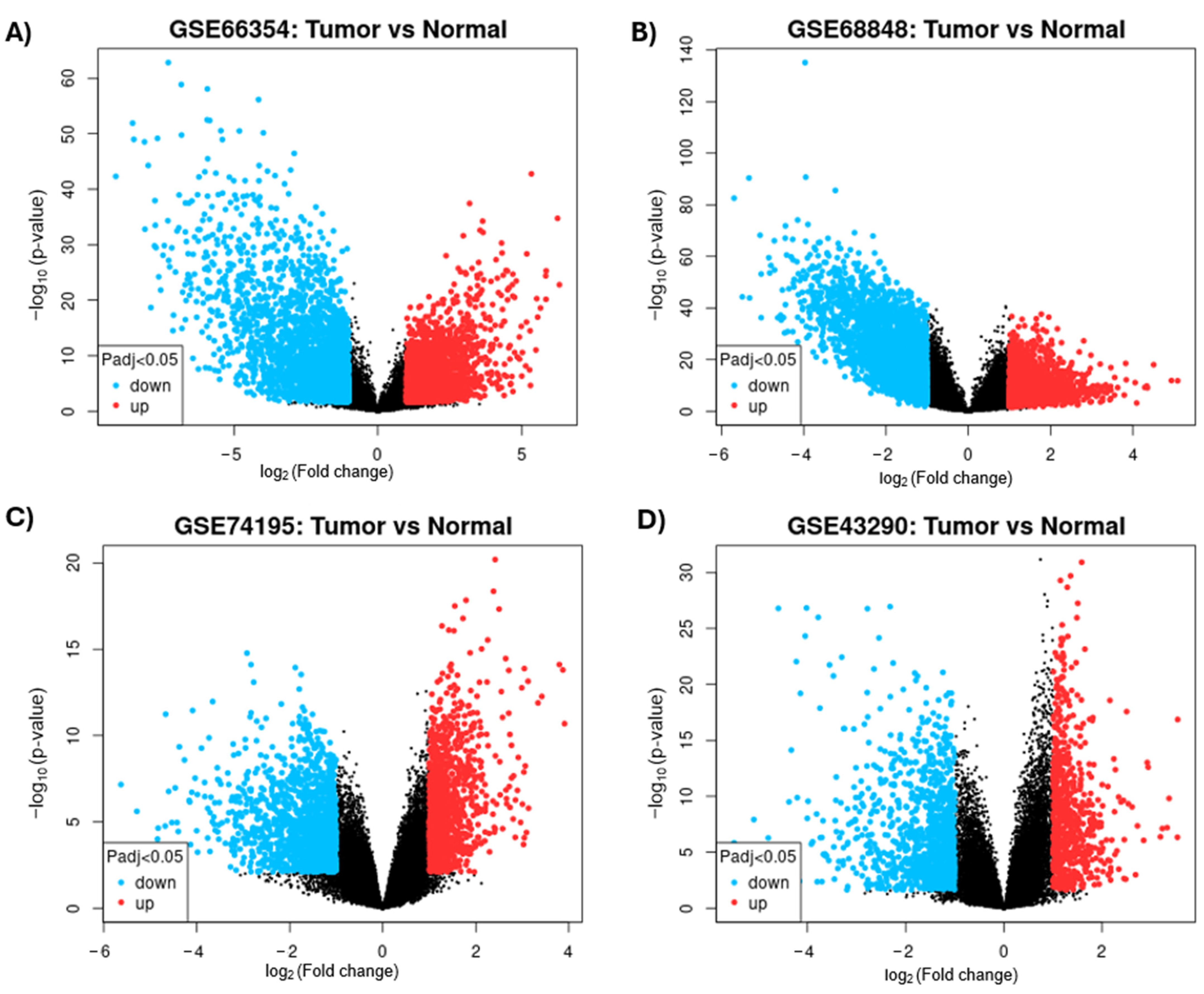
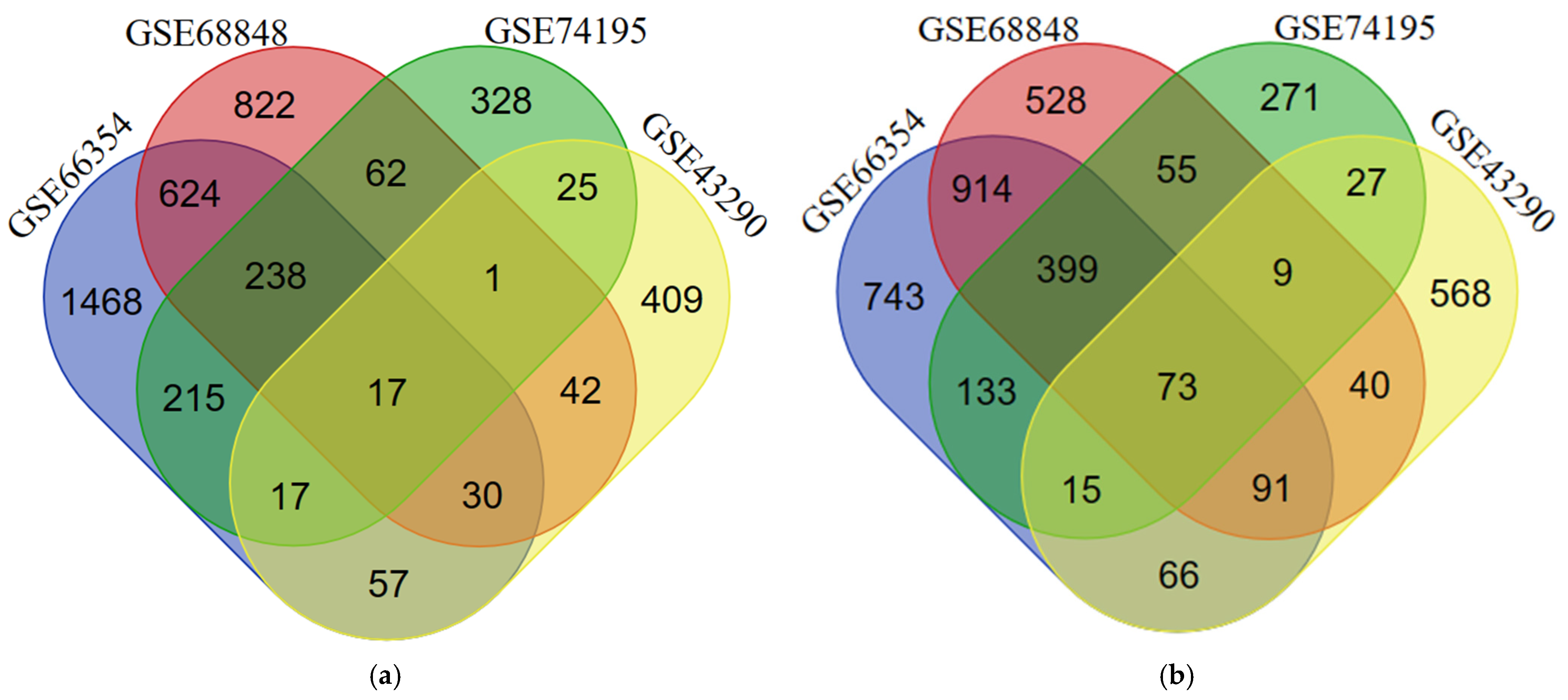
3.1. Differentially Expressed Genes
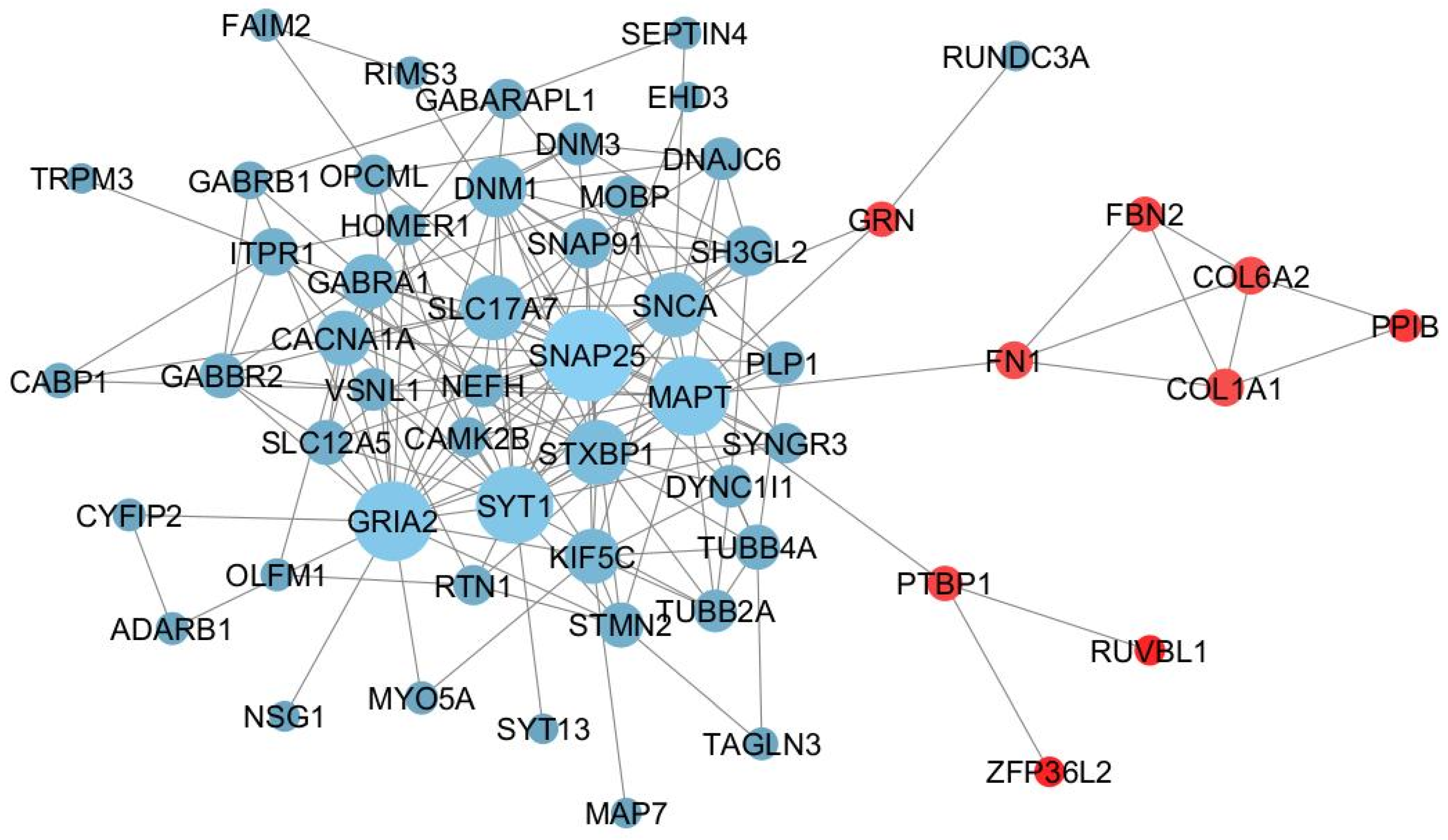
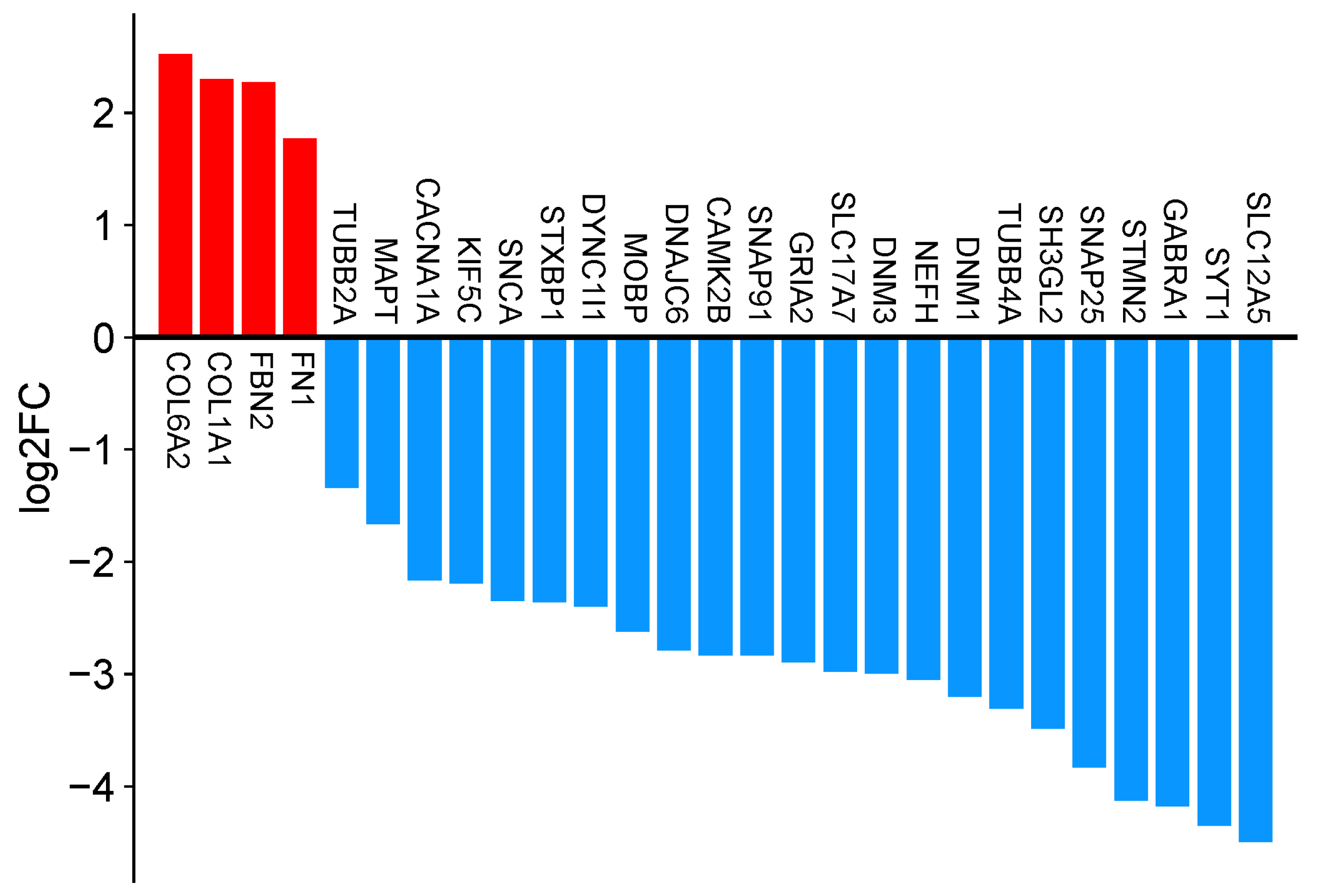
3.2. Gene Co-Expression Network
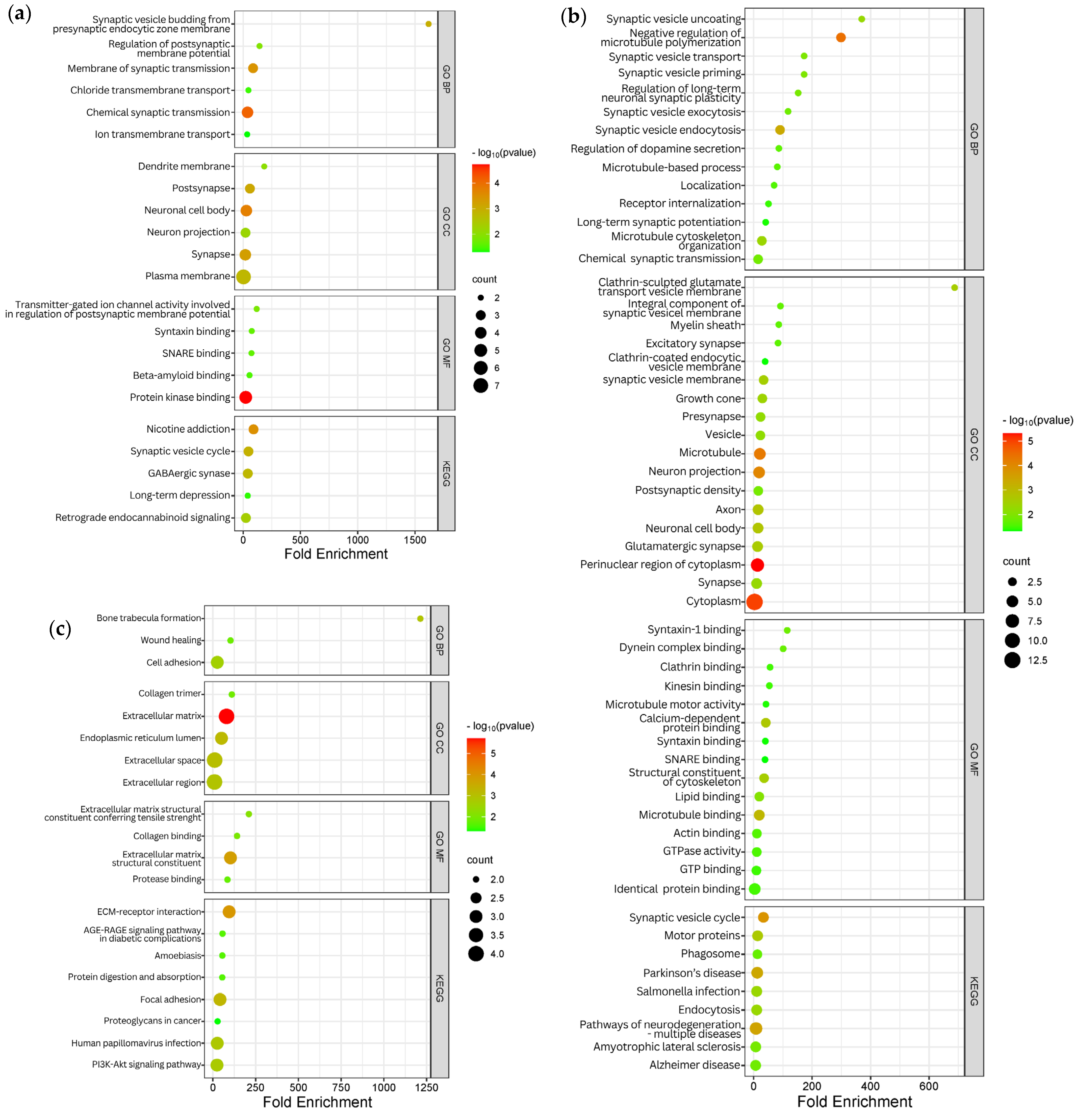
3.3. Cluster Genes Pathway Enrichment
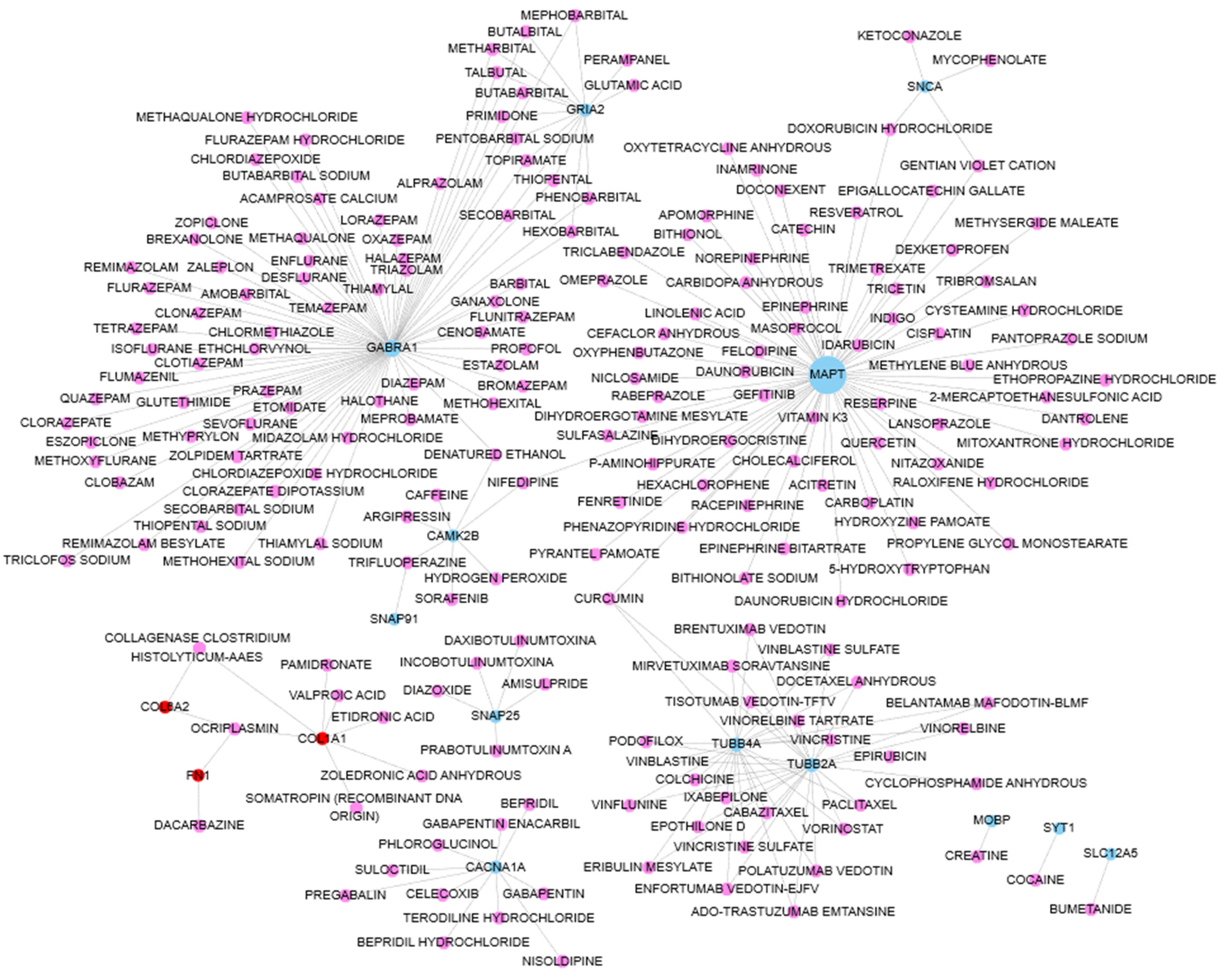
3.4. Drug-Repurposing Candidates
3.5. Gene Set Enrichment Analysis and Connectivity Mapping for Repurposed Drug Validation
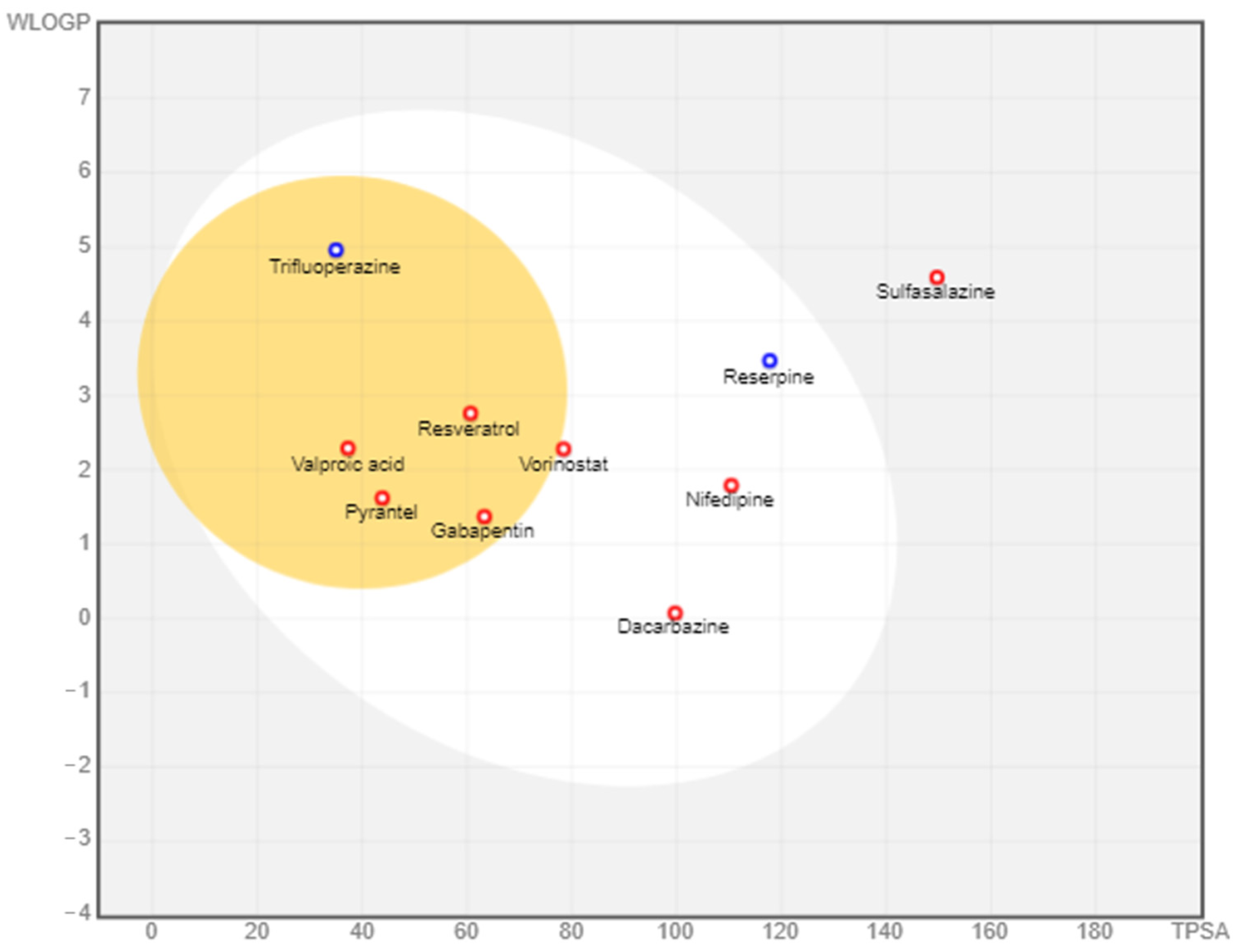
3.6. Pharmacokinetics Based on Brain or IntestinaL EstimateD (BOILED) Permeation Predictive Model
4. Discussion
4.1. Hub Differentially Expressed Genes
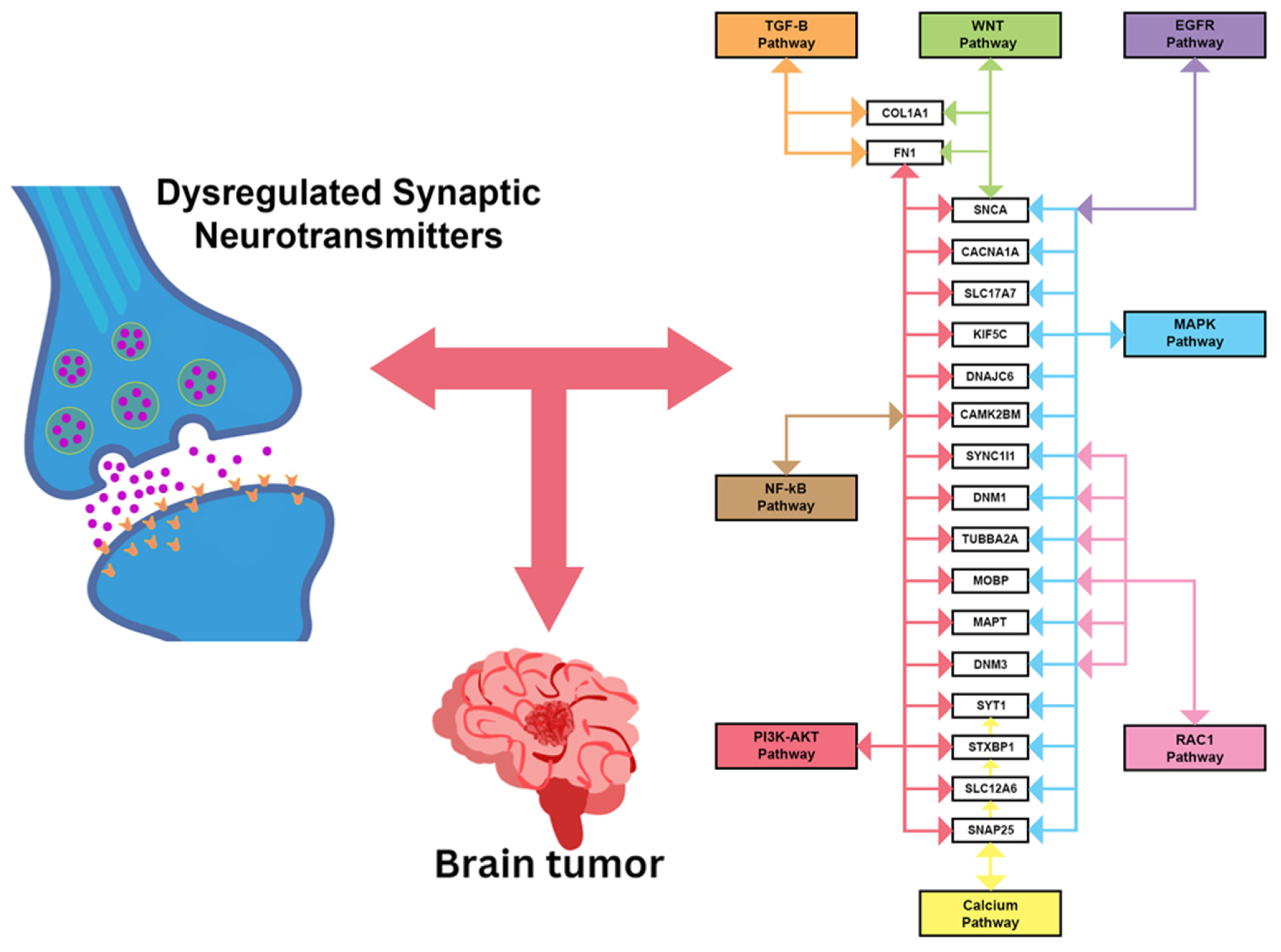
4.2. Cluster Genes and Enriched Signaling Pathways
4.3. Candidate Repurposed Drugs
5. Conclusions
Author Contributions
Funding
Institutional Review Board Statement
Informed Consent Statement
Data Availability Statement
Acknowledgments
Conflicts of Interest
References
- Miller, K.D.; Ostrom, Q.T.; Kruchko, C.; Patil, N.; Tihan, T.; Cioffi, G.; Fuchs, H.E.; Waite, K.A.; Jemal, A.; Siegel, R.L.; et al. Brain and Other Central Nervous System Tumor Statistics, 2021. CA Cancer J. Clin. 2021, 71, 381–406. [Google Scholar] [CrossRef]
- Fan, Y.; Zhang, X.; Gao, C.; Jiang, S.; Wu, H.; Liu, Z.; Dou, T. Burden and Trends of Brain and Central Nervous System Cancer from 1990 to 2019 at the Global, Regional, and Country Levels. Arch. Public Health 2022, 80, 209. [Google Scholar] [CrossRef]
- Wu, W.; Klockow, J.L.; Zhang, M.; Lafortune, F.; Chang, E.; Jin, L.; Wu, Y.; Daldrup-Link, H.E. Glioblastoma Multiforme (GBM): An Overview of Current Therapies and Mechanisms of Resistance. Pharmacol. Res. 2021, 171, 105780. [Google Scholar] [CrossRef] [PubMed]
- Debinski, W. Gliomas; Exon Publications: Brisbane, Australia, 2021. [Google Scholar]
- Śledzińska, P.; Bebyn, M.G.; Furtak, J.; Kowalewski, J.; Lewandowska, M.A. Prognostic and Predictive Biomarkers in Gliomas. Int. J. Mol. Sci. 2021, 22, 10373. [Google Scholar] [CrossRef]
- Gualano, F.M.; Hassoun, P.; Carter, C.L.; Hanson, D. Embryonal Tumor with Multilayered Rosettes: Post-Treatment Maturation and Implications for Future Therapy. Cancer Rep. 2023, 6, e1812. [Google Scholar] [CrossRef] [PubMed]
- Louis, D.N.; Perry, A.; Reifenberger, G.; von Deimling, A.; Figarella-Branger, D.; Cavenee, W.K.; Ohgaki, H.; Wiestler, O.D.; Kleihues, P.; Ellison, D.W. The 2016 World Health Organization Classification of Tumors of the Central Nervous System: A Summary. Acta Neuropathol. 2016, 131, 803–820. [Google Scholar] [CrossRef]
- Louis, D.N.; Perry, A.; Wesseling, P.; Brat, D.J.; Cree, I.A.; Figarella-Branger, D.; Hawkins, C.; Ng, H.K.; Pfister, S.M.; Reifenberger, G.; et al. The 2021 WHO Classification of Tumors of the Central Nervous System: A Summary. Neuro. Oncol. 2021, 23, 1231–1251. [Google Scholar] [CrossRef] [PubMed]
- Ortiz, R.; Perazzoli, G.; Cabeza, L.; Jiménez-Luna, C.; Luque, R.; Prados, J.; Melguizo, C. Temozolomide: An Updated Overview of Resistance Mechanisms, Nanotechnology Advances and Clinical Applications. Curr. Neuropharmacol. 2020, 19, 513–537. [Google Scholar] [CrossRef]
- Hart, M.G.; Garside, R.; Rogers, G.; Stein, K.; Grant, R. Temozolomide for High Grade Glioma. Cochrane Database Syst. Rev. 2013, 2013, CD007415. [Google Scholar] [CrossRef] [PubMed]
- Lönnemark, O.; Ryttlefors, M.; Sundblom, J. Cranioplasty in Brain Tumor Surgery: A Single-Center Retrospective Study Investigating Cranioplasty Failure and Tumor Recurrence. World Neurosurg. 2023, 170, e313–e323. [Google Scholar] [CrossRef]
- Maarif, R.; Kubota, Y.; Chernov, M.F. Early Tumor-Related Hemorrhage after Stereotactic Radiosurgery of Brain Metastases: Systematic Review of Reported Cases. J. Clin. Neurosci. 2023, 115, 66–70. [Google Scholar] [CrossRef] [PubMed]
- Hamblin, R.; Vardon, A.; Akpalu, J.; Tampourlou, M.; Spiliotis, I.; Sbardella, E.; Lynch, J.; Shankaran, V.; Mavilakandy, A.; Gagliardi, I.; et al. Risk of Second Brain Tumour after Radiotherapy for Pituitary Adenoma or Craniopharyngioma: A Retrospective, Multicentre, Cohort Study of 3679 Patients with Long-Term Imaging Surveillance. Lancet Diabetes Endocrinol. 2022, 10, 581–588. [Google Scholar] [CrossRef] [PubMed]
- Bhowmik, A.; Khan, R.; Ghosh, M.K. Blood Brain Barrier: A Challenge for Effectual Therapy of Brain Tumors. BioMed Res. Int. 2015, 2015, 320941. [Google Scholar] [CrossRef] [PubMed]
- Hernández-Lemus, E.; Martínez-García, M. Pathway-Based Drug-Repurposing Schemes in Cancer: The Role of Translational Bioinformatics. Front. Oncol. 2021, 10, 605680. [Google Scholar] [CrossRef]
- Parvathaneni, V.; Kulkarni, N.S.; Muth, A.; Gupta, V. Drug Repurposing: A Promising Tool to Accelerate the Drug Discovery Process. Drug Discov. Today 2019, 24, 2076–2085. [Google Scholar] [CrossRef]
- Dinić, J.; Efferth, T.; García-Sosa, A.T.; Grahovac, J.; Padrón, J.M.; Pajeva, I.; Rizzolio, F.; Saponara, S.; Spengler, G.; Tsakovska, I. Repurposing Old Drugs to Fight Multidrug Resistant Cancers. Drug Resist. Updates 2020, 52, 100713. [Google Scholar] [CrossRef]
- Basso, J.; Miranda, A.; Sousa, J.; Pais, A.; Vitorino, C. Repurposing Drugs for Glioblastoma: From Bench to Bedside. Cancer Lett. 2018, 428, 173–183. [Google Scholar] [CrossRef] [PubMed]
- Pasamba, E.C.; Orda, M.A.; Villanueva, B.H.A.; Tsai, P.W.; Tayo, L.L. Transcriptomic Analysis of Hub Genes Reveals Associated Inflammatory Pathways in Estrogen-Dependent Gynecological Diseases. Biology 2024, 13, 397. [Google Scholar] [CrossRef]
- De La Cerna, J.L.O.; Talubo, N.D.D.; Villanueva, B.H.A.; Tsai, P.W.; Tayo, L.L. Conserved Blood Transcriptome Patterns Highlight MicroRNA and Hub Gene Drivers of Neurodegeneration. Genes 2025, 16, 1178. [Google Scholar] [CrossRef]
- MotieGhader, H.; Safavi, E.; Rezapour, A.; Amoodizaj, F.F.; asl Iranifam, R. Drug Repurposing for Coronavirus (SARS-CoV-2) Based on Gene Co-Expression Network Analysis. Sci. Rep. 2021, 11, 21872. [Google Scholar] [CrossRef]
- Wu, L.; Wang, J.; Zhao, J.; Yao, R.; Xu, Q.; Ma, L.; Liu, J. Bioinformatics Analysis Identified RGS4 as a Potential Tumor Promoter in Glioma. Pathol. Res. Pract. 2022, 240, 154225. [Google Scholar] [CrossRef]
- Cai, L.; Shi, B.; Zhu, K.; Zhong, X.; Lai, D.; Wang, J.; Tou, J. Bioinformatical Analysis of the Key Differentially Expressed Genes for Screening Potential Biomarkers in Wilms Tumor. Sci. Rep. 2023, 13, 15404. [Google Scholar] [CrossRef] [PubMed]
- Szklarczyk, D.; Kirsch, R.; Koutrouli, M.; Nastou, K.; Mehryary, F.; Hachilif, R.; Gable, A.L.; Fang, T.; Doncheva, N.T.; Pyysalo, S.; et al. The STRING Database in 2023: Protein-Protein Association Networks and Functional Enrichment Analyses for Any Sequenced Genome of Interest. Nucleic Acids Res. 2023, 51, D638–D646. [Google Scholar] [CrossRef] [PubMed]
- Jiang, L.; Zhong, M.; Chen, T.; Zhu, X.; Yang, H.; Lv, K. Gene Regulation Network Analysis Reveals Core Genes Associated with Survival in Glioblastoma Multiforme. J. Cell. Mol. Med. 2020, 24, 10075–10087. [Google Scholar] [CrossRef]
- Shen, Z.; Pu, S.; Cao, X.; Tang, M.; Wang, S.; Bai, D.; Jiang, G. Bioinformatics and Network Pharmacology Analysis of Drug Targets and Mechanisms Related to the Comorbidity of Epilepsy and Migraine. Epilepsy Res. 2023, 189, 107066. [Google Scholar] [CrossRef] [PubMed]
- Li, Y.; Dong, Y.P.; Qian, Y.W.; Yu, L.X.; Wen, W.; Cui, X.L.; Wang, H.Y. Identification of Important Genes and Drug Repurposing Based on Clinical-Centered Analysis across Human Cancers. Acta Pharmacol. Sin. 2021, 42, 282–289. [Google Scholar] [CrossRef]
- Chen, Y.; Xu, R. Drug Repurposing for Glioblastoma Based on Molecular Subtypes. J. Biomed. Inform. 2016, 64, 131–138. [Google Scholar] [CrossRef]
- Griesinger, A.M.; Josephson, R.J.; Donson, A.M.; Levy, J.M.M.; Amani, V.; Birks, D.K.; Hoffman, L.M.; Furtek, S.L.; Reigan, P.; Handler, M.H.; et al. Interleukin-6/STAT3 Pathway Signaling Drives an Inflammatory in Group A Ependymoma. Cancer Immunol. Res. 2015, 3, 1165–1174. [Google Scholar] [CrossRef]
- Madhavan, S.; Zenklusen, J.C.; Kotliarov, Y.; Sahni, H.; Fine, H.A.; Buetow, K. Rembrandt: Helping Personalized Medicine Become a Reality through Integrative Translational Research. Mol. Cancer Res. 2009, 7, 157–167. [Google Scholar] [CrossRef]
- Gusev, Y.; Bhuvaneshwar, K.; Song, L.; Zenklusen, J.C.; Fine, H.; Madhavan, S. Data Descriptor: The REMBRANDT Study, a Large Collection of Genomic Data from Brain Cancer Patients. Sci. Data 2018, 5, 180158. [Google Scholar] [CrossRef]
- De Bont, J.M.; Kros, J.M.; Passier, M.M.C.J.; Reddingius, R.E.; Sillevis Smitt, P.A.E.; Luider, T.M.; Den Boer, M.L.; Pieters, R. Differential Expression and Prognostic Significance of SOX Genes in Pediatric Medulloblastoma and Ependymoma Identified by Microarray Analysis. Neuro. Oncol. 2008, 10, 648–660. [Google Scholar] [CrossRef]
- Tabernero, M.D.; Maillo, A.; Gil-Bellosta, C.J.; Castrillo, A.; Sousa, P.; Merino, M.; Orfao, A. Gene Expression Profiles of Meningiomas Are Associated with Tumor Cytogenetics and Patient Outcome. Brain Pathol. 2009, 19, 409–420. [Google Scholar] [CrossRef]
- Clough, E.; Barrett, T. The Gene Expression Omnibus Database. In Methods in Molecular Biology; Humana Press Inc.: Totowa, NJ, USA, 2016; Volume 1418, pp. 93–110. [Google Scholar]
- Clough, E.; Barrett, T.; Wilhite, S.E.; Ledoux, P.; Evangelista, C.; Kim, I.F.; Tomashevsky, M.; Marshall, K.A.; Phillippy, K.H.; Sherman, P.M.; et al. NCBI GEO: Archive for Gene Expression and Epigenomics Data Sets: 23-Year Update. Nucleic Acids Res. 2024, 52, D138–D144. [Google Scholar] [CrossRef]
- Barrett, T.; Wilhite, S.E.; Ledoux, P.; Evangelista, C.; Kim, I.F.; Tomashevsky, M.; Marshall, K.A.; Phillippy, K.H.; Sherman, P.M.; Holko, M.; et al. NCBI GEO: Archive for Functional Genomics Data Sets—Update. Nucleic Acids Res. 2013, 41, D991–D995. [Google Scholar] [CrossRef] [PubMed]
- Zhou, W.; Han, L.; Altman, R.B. Imputing Gene Expression to Maximize Platform Compatibility. Bioinformatics 2017, 33, 522–528. [Google Scholar] [CrossRef]
- Barnes, M.; Freudenberg, J.; Thompson, S.; Aronow, B.; Pavlidis, P. Experimental Comparison and Cross-Validation of the Affymetrix and Illumina Gene Expression Analysis Platforms. Nucleic Acids Res. 2005, 33, 5914–5923. [Google Scholar] [CrossRef]
- Robinson, M.D.; Speed, T.P. A Comparison of Affymetrix Gene Expression Arrays. BMC Bioinform. 2007, 8, 449. [Google Scholar] [CrossRef]
- Wesseling, P.; van den Bent, M.; Perry, A. Oligodendroglioma: Pathology, Molecular Mechanisms and Markers. Acta Neuropathol. 2015, 129, 809–827. [Google Scholar] [CrossRef]
- Chen, X.; Robinson, D.G.; Storey, J.D. The Functional False Discovery Rate with Applications to Genomics. Biostatistics 2021, 22, 68–81. [Google Scholar] [CrossRef] [PubMed]
- Law, C.W.; Chen, Y.; Shi, W.; Smyth, G.K. Voom: Precision Weights Unlock Linear Model Analysis Tools for RNA-Seq Read Counts. Genome Biol. 2014, 15, R29. [Google Scholar] [CrossRef] [PubMed]
- Ritchie, M.E.; Phipson, B.; Wu, D.; Hu, Y.; Law, C.W.; Shi, W.; Smyth, G.K. Limma Powers Differential Expression Analyses for RNA-Sequencing and Microarray Studies. Nucleic Acids Res. 2015, 43, e47. [Google Scholar] [CrossRef]
- Hackstadt, A.J.; Hess, A.M. Filtering for Increased Power for Microarray Data Analysis. BMC Bioinform. 2009, 10, 11. [Google Scholar] [CrossRef]
- Shannon, P.; Markiel, A.; Ozier, O.; Baliga, N.S.; Wang, J.T.; Ramage, D.; Amin, N.; Schwikowski, B.; Ideker, T. Cytoscape: A Software Environment for Integrated Models of Biomolecular Interaction Networks. Genome Res. 2003, 13, 2498–2504. [Google Scholar] [CrossRef]
- Otasek, D.; Morris, J.H.; Bouças, J.; Pico, A.R.; Demchak, B. Cytoscape Automation: Empowering Workflow-Based Network Analysis. Genome Biol. 2019, 20, 185. [Google Scholar] [CrossRef]
- Wang, J.; Zhong, J.; Chen, G.; Li, M.; Wu, F.X.; Pan, Y. ClusterViz: A Cytoscape APP for Cluster Analysis of Biological Network. IEEE/ACM Trans. Comput. Biol. Bioinform. 2015, 12, 815–822. [Google Scholar] [CrossRef] [PubMed]
- Chin, C.H.; Chen, S.H.; Wu, H.H.; Ho, C.W.; Ko, M.T.; Lin, C.Y. CytoHubba: Identifying Hub Objects and Sub-Networks from Complex Interactome. BMC Syst. Biol. 2014, 8, S11. [Google Scholar] [CrossRef] [PubMed]
- Kanehisa, M.; Goto, S. KEGG: Kyoto Encyclopedia of Genes and Genomes. Nucleic Acids Res. 2000, 28, 27–30. [Google Scholar] [CrossRef] [PubMed]
- Harris, M.A.; Clark, J.; Ireland, A.; Lomax, J.; Ashburner, M.; Foulger, R.; Eilbeck, K.; Lewis, S.; Marshall, B.; Mungall, C.; et al. The Gene Oncology (GO) Database and Informatics Resource. Nucleic Acids Res. 2004, 32, D258–D261. [Google Scholar] [CrossRef]
- Sherman, B.T.; Hao, M.; Qiu, J.; Jiao, X.; Baseler, M.W.; Lane, H.C.; Imamichi, T.; Chang, W. DAVID: A Web Server for Functional Enrichment Analysis and Functional Annotation of Gene Lists (2021 Update). Nucleic Acids Res. 2022, 50, W216–W221. [Google Scholar] [CrossRef]
- Freshour, S.L.; Kiwala, S.; Cotto, K.C.; Coffman, A.C.; McMichael, J.F.; Song, J.J.; Griffith, M.; Griffith, O.L.; Wagner, A.H. Integration of the Drug-Gene Interaction Database (DGIdb 4.0) with Open Crowdsource Efforts. Nucleic Acids Res. 2021, 49, D1144–D1151. [Google Scholar] [CrossRef]
- Chen, E.Y.; Tan, C.M.; Kou, Y.; Duan, Q.; Wang, Z.; Meirelles, G.V.; Clark, N.R.; Ma’ayan, A. Enrichr: Interactive and Collaborative HTML5 Gene List Enrichment Analysis Tool. BMC Bioinform. 2013, 14, 128. [Google Scholar] [CrossRef]
- Kuleshov, M.V.; Jones, M.R.; Rouillard, A.D.; Fernandez, N.F.; Duan, Q.; Wang, Z.; Koplev, S.; Jenkins, S.L.; Jagodnik, K.M.; Lachmann, A.; et al. Enrichr: A Comprehensive Gene Set Enrichment Analysis Web Server 2016 Update. Nucleic Acids Res. 2016, 44, W90–W97. [Google Scholar] [CrossRef]
- Daina, A.; Michielin, O.; Zoete, V. SwissADME: A Free Web Tool to Evaluate Pharmacokinetics, Drug-Likeness and Medicinal Chemistry Friendliness of Small Molecules. Sci. Rep. 2017, 7, 42717. [Google Scholar] [CrossRef]
- Daina, A.; Zoete, V. A BOILED-Egg To Predict Gastrointestinal Absorption and Brain Penetration of Small Molecules. ChemMedChem 2016, 11, 1117–1121. [Google Scholar] [CrossRef]
- Gao, Y.-F.; Mao, X.-Y.; Zhu, T.; Mao, C.-X.; Liu, Z.-X.; Wang, Z.-B.; Li, L.; Li, X.; Yin, J.-Y.; Zhang, W.; et al. COL3A1 and SNAP91: Novel Glioblastoma Markers with Diagnostic and Prognostic Value. Oncotarget 2016, 7, 70494–70503. [Google Scholar] [CrossRef]
- Wang, H.; Zhang, J.; Li, H.; Yu, H.; Chen, S.; Liu, S.; Zhang, C.; He, Y. FN1 Is a Prognostic Biomarker and Correlated with Immune Infiltrates in Gastric Cancers. Front. Oncol. 2022, 12, 918719. [Google Scholar] [CrossRef]
- Liu, S.; Ye, Z.; Xue, V.W.; Sun, Q.; Li, H.; Lu, D. KIF2C Is a Prognostic Biomarker Associated with Immune Cell Infiltration in Breast Cancer. BMC Cancer 2023, 23, 307. [Google Scholar] [CrossRef]
- Zhou, T.; Wang, Y.; Qian, D.; Liang, Q.; Wang, B. Over-Expression of TOP2A as a Prognostic Biomarker in Patients with Glioma. Int. J. Clin. Exp. Pathol. 2018, 11, 1228. [Google Scholar] [PubMed]
- Zhu, J.; Lin, Q.; Zheng, H.; Rao, Y.; Ji, T. The Pro-Invasive Factor COL6A2 Serves as a Novel Prognostic Marker of Glioma. Front. Oncol. 2022, 12, 897042. [Google Scholar] [CrossRef]
- Dai, W.; Feng, J.; Hu, X.; Chen, Y.; Gu, Q.; Gong, W.; Feng, T.; Wu, J. SLC7A7 Is a Prognostic Biomarker Correlated with Immune Infiltrates in Non-Small Cell Lung Cancer. Cancer Cell Int. 2021, 21, 106. [Google Scholar] [CrossRef] [PubMed]
- Belotti, Y.; Tolomeo, S.; Yu, R.; Lim, W.T.; Lim, C.T. Prognostic Neurotransmitter Receptors Genes Are Associated with Immune Response, Inflammation and Cancer Hallmarks in Brain Tumors. Cancers 2022, 14, 2544. [Google Scholar] [CrossRef]
- Kawaguchi, A.; Iwadate, Y.; Komohara, Y.; Sano, M.; Kajiwara, K.; Yajima, N.; Tsuchiya, N.; Homma, J.; Aoki, H.; Kobayashi, T.; et al. Gene Expression Signature-Based Prognostic Risk Score in Patients with Primary Central Nervous System Lymphoma. Clin. Cancer Res. 2012, 18, 5672–5681. [Google Scholar] [CrossRef] [PubMed]
- Zaman, S.; Chobrutskiy, B.I.; Sikaria, D.; Blanck, G. MAPT (Tau) Expression Is a Biomarker for an Increased Rate of Survival for Low-Grade Glioma. Oncol. Rep. 2019, 41, 1359–1366. [Google Scholar] [CrossRef]
- Bruschi, M.; Petretto, A.; Cama, A.; Pavanello, M.; Bartolucci, M.; Morana, G.; Ramenghi, L.A.; Garré, M.L.; Ghiggeri, G.M.; Panfoli, I.; et al. Potential Biomarkers of Childhood Brain Tumor Identified by Proteomics of Cerebrospinal Fluid from Extraventricular Drainage (EVD). Sci. Rep. 2021, 11, 1818. [Google Scholar] [CrossRef] [PubMed]
- Shin, D.; Park, J.; Han, D.; Moon, J.H.; Ryu, H.S.; Kim, Y. Identification of TUBB2A by Quantitative Proteomic Analysis as a Novel Biomarker for the Prediction of Distant Metastatic Breast Cancer. Clin. Proteom. 2020, 17, 16. [Google Scholar] [CrossRef]
- Cotter, J.A.; Hawkins, C. Medulloblastoma: WHO 2021 and Beyond. Pediatr. Dev. Pathol. 2022, 25, 23–33. [Google Scholar] [CrossRef]
- Chen, Y.; Yan, Y.; Xu, M.; Chen, W.; Lin, J.; Zhao, Y.; Wu, J.; Wang, X. Development of a Machine Learning Classifier for Brain Tumors Diagnosis Based on DNA Methylation Profile. Front. Bioinform. 2021, 1, 744345. [Google Scholar] [CrossRef]
- Cao, L.; Chen, Y.; Zhang, M.; Xu, D.Q.; Liu, Y.; Liu, T.; Liu, S.X.; Wang, P. Identification of Hub Genes and Potential Molecular Mechanisms in Gastric Cancer by Integrated Bioinformatics Analysis. PeerJ 2018, 6, e5180. [Google Scholar] [CrossRef] [PubMed]
- Xu, B. Prediction and Analysis of Hub Genes between Glioblastoma and Low-Grade Glioma Using Bioinformatics Analysis. Medicine 2021, 100, e23513. [Google Scholar] [CrossRef]
- Dashti, S.; Taheri, M.; Ghafouri-Fard, S. An In-Silico Method Leads to Recognition of Hub Genes and Crucial Pathways in Survival of Patients with Breast Cancer. Sci. Rep. 2020, 10, 18770. [Google Scholar] [CrossRef] [PubMed]
- Le Roux, M.; Barth, M.; Gueden, S.; Desbordes de Cepoy, P.; Aeby, A.; Vilain, C.; Hirsch, E.; de Saint Martin, A.; des Portes, V.; Lesca, G.; et al. CACNA1A-Associated Epilepsy: Electroclinical Findings and Treatment Response on Seizures in 18 Patients. Eur. J. Paediatr. Neurol. 2021, 33, 75–85. [Google Scholar] [CrossRef]
- Kramer, A.A.; Bennett, D.F.; Barañano, K.W.; Bannister, R.A. A Neurodevelopmental Disorder Caused by a Dysfunctional CACNA1A Allele. eNeurologicalSci 2023, 31, 100456. [Google Scholar] [CrossRef]
- Luo, X.; Rosenfeld, J.A.; Yamamoto, S.; Harel, T.; Zuo, Z.; Hall, M.; Wierenga, K.; Pastore, M.T.; Bartholomew, D.; Delgado, M.R.; et al. Clinically Severe CACNA1A Alleles Affect Synaptic Function and Neurodegeneration Differentially. PLoS Genet. 2017, 13, e1006905. [Google Scholar] [CrossRef]
- Travaglini, L.; Nardella, M.; Bellacchio, E.; D’Amico, A.; Capuano, A.; Frusciante, R.; Di Capua, M.; Cusmai, R.; Barresi, S.; Morlino, S.; et al. Missense Mutations of CACNA1A Are a Frequent Cause of Autosomal Dominant Nonprogressive Congenital Ataxia. Eur. J. Paediatr. Neurol. 2017, 21, 450–456. [Google Scholar] [CrossRef] [PubMed]
- Indelicato, E.; Boesch, S. From Genotype to Phenotype: Expanding the Clinical Spectrum of CACNA1A Variants in the Era of Next Generation Sequencing. Front. Neurol. 2021, 12, 639994. [Google Scholar] [CrossRef]
- Phan, N.N.; Wang, C.Y.; Chen, C.F.; Sun, Z.; Lai, M.D.; Lin, Y.C. Voltage-Gated Calcium Channels: Novel Targets for Cancer Therapy. Oncol. Lett. 2017, 14, 2059–2074. [Google Scholar] [CrossRef]
- Appenzeller, S.; Balling, R.; Barisic, N.; Baulac, S.; Caglayan, H.; Craiu, D.; De Jonghe, P.; Depienne, C.; Dimova, P.; Djémié, T.; et al. De Novo Mutations in Synaptic Transmission Genes Including DNM1 Cause Epileptic Encephalopathies. Am. J. Hum. Genet. 2014, 95, 360–370. [Google Scholar] [CrossRef]
- AlTassan, R.; AlQudairy, H.; Alromayan, R.; Alfalah, A.; AlHarbi, O.A.; González-Álvarez, A.C.; Arold, S.T.; Kaya, N. Clinical, Radiological, and Genetic Characterization of a Patient with a Novel Homoallelic Loss-of-Function Variant in DNM1. Genes 2022, 13, 2252. [Google Scholar] [CrossRef] [PubMed]
- Yigit, G.; Sheffer, R.; Daana, M.; Li, Y.; Kaygusuz, E.; Mor-Shakad, H.; Altmüller, J.; Nürnberg, P.; Douiev, L.; Kaulfuss, S.; et al. Loss-of-Function Variants in DNM1 Cause a Specific Form of Developmental and Epileptic Encephalopathy Only in Biallelic State. J. Med. Genet. 2022, 59, 549–553. [Google Scholar] [CrossRef] [PubMed]
- Lima, A.R.; Santos, L.; Correia, M.; Soares, P.; Sobrinho-Simões, M.; Melo, M.; Máximo, V. Dynamin-Related Protein 1 at the Crossroads of Cancer. Genes 2018, 9, 115. [Google Scholar] [CrossRef]
- Qian, W.; Wang, J.; Van Houten, B. The Role of Dynamin-Related Protein 1 in Cancer Growth: A Promising Therapeutic Target? Expert Opin. Ther. Targets 2013, 17, 997–1001. [Google Scholar] [CrossRef]
- Tian, M.; Yang, X.; Li, Y.; Guo, S. The Expression of Dynamin 1, 2, and 3 in Human Hepatocellular Carcinoma and Patient Prognosis. Med. Sci. Monit. 2020, 26, e923359-1–e923359-10. [Google Scholar] [CrossRef]
- Arslan, A. Pathogenic Variants of Human GABRA1 Gene Associated with Epilepsy: A Computational Approach. Heliyon 2023, 9, e20218. [Google Scholar] [CrossRef]
- Steudle, F.; Rehman, S.; Bampali, K.; Simeone, X.; Rona, Z.; Hauser, E.; Schmidt, W.M.; Scholze, P.; Ernst, M. A Novel de Novo Variant of GABRA1 Causes Increased Sensitivity for GABA In Vitro. Sci. Rep. 2020, 10, 2379. [Google Scholar] [CrossRef]
- Yang, Y.; Ren, L.; Li, W.; Zhang, Y.; Zhang, S.; Ge, B.; Yang, H.; Du, G.; Tang, B.; Wang, H.; et al. GABAergic Signaling as a Potential Therapeutic Target in Cancers. Biomed. Pharmacother. 2023, 161, 114410. [Google Scholar] [CrossRef]
- Lu, W.; Bromley-Coolidge, S.; Li, J. Regulation of GABAergic Synapse Development by Postsynaptic Membrane Proteins. Brain Res. Bull. 2017, 129, 30–42. [Google Scholar] [CrossRef]
- Lukow, P.B.; Martins, D.; Veronese, M.; Vernon, A.C.; McGuire, P.; Turkheimer, F.E.; Modinos, G. Cellular and Molecular Signatures of in Vivo Imaging Measures of GABAergic Neurotransmission in the Human Brain. Commun. Biol. 2022, 5, 372. [Google Scholar] [CrossRef] [PubMed]
- Coombs, I.D.; Ziobro, J.; Krotov, V.; Surtees, T.L.; Cull-Candy, S.G.; Farrant, M. A Gain-of-Function GRIA2 Variant Associated with Neurodevelopmental Delay and Seizures: Functional Characterization and Targeted Treatment. Epilepsia 2022, 63, e156–e163. [Google Scholar] [CrossRef] [PubMed]
- Salpietro, V.; Dixon, C.L.; Guo, H.; Bello, O.D.; Vandrovcova, J.; Efthymiou, S.; Maroofian, R.; Heimer, G.; Burglen, L.; Valence, S.; et al. AMPA Receptor GluA2 Subunit Defects Are a Cause of Neurodevelopmental Disorders. Nat. Commun. 2019, 10, 3094. [Google Scholar] [CrossRef] [PubMed]
- Coombs, I.D.; Bats, C.; Sexton, C.A.; Studniarczyk, D.; Cull-Candy, S.G.; Farrant, M. Enhanced Functional Detection of Synaptic Calcium-Permeable AMPA Receptors Using Intracellular NASPM. eLife 2023, 12, e66765. [Google Scholar] [CrossRef] [PubMed]
- Deshpande, K.; Martirosian, V.; Nakamura, B.N.; Iyer, M.; Julian, A.; Eisenbarth, R.; Shao, L.; Attenello, F.; Neman, J. Neuronal Exposure Induces Neurotransmitter Signaling and Synaptic Mediators in Tumors Early in Brain Metastasis. Neuro. Oncol. 2022, 24, 914–924. [Google Scholar] [CrossRef] [PubMed]
- Strang, K.H.; Golde, T.E.; Giasson, B.I. MAPT Mutations, Tauopathy, and Mechanisms of Neurodegeneration. Lab. Investig. 2019, 99, 912–928. [Google Scholar]
- Young, A.L.; Bocchetta, M.; Russell, L.L.; Convery, R.S.; Peakman, G.; Todd, E.; Cash, D.M.; Greaves, C.V.; Van Swieten, J.; Jiskoot, L.; et al. Characterizing the Clinical Features and Atrophy Patterns of MAPT -Related Frontotemporal Dementia With Disease Progression Modeling. Neurology 2021, 97, E941–E952. [Google Scholar] [CrossRef]
- Arendt, T.; Stieler, J.T.; Holzer, M. Tau and Tauopathies. Brain Res. Bull. 2016, 126, 238–292. [Google Scholar] [CrossRef] [PubMed]
- Siino, V.; Amato, A.; Di Salvo, F.; Caldara, G.F.; Filogamo, M.; James, P.; Vasto, S. Impact of Diet-Induced Obesity on the Mouse Brain Phosphoproteome. J. Nutr. Biochem. 2018, 58, 102–109. [Google Scholar] [CrossRef]
- Jiang, Y.; Liao, H.L.; Chen, L.Y. A Pan-Cancer Analysis of SLC12A5 Reveals Its Correlations with Tumor Immunity. Dis. Markers 2021, 2021, 3062606. [Google Scholar] [CrossRef] [PubMed]
- Saitsu, H.; Watanabe, M.; Akita, T.; Ohba, C.; Sugai, K.; Ong, W.P.; Shiraishi, H.; Yuasa, S.; Matsumoto, H.; Beng, K.T.; et al. Impaired Neuronal KCC2 Function by Biallelic SLC12A5 Mutations in Migrating Focal Seizures and Severe Developmental Delay. Sci. Rep. 2016, 6, 30072. [Google Scholar] [CrossRef]
- Yuan, S.; He, S.H.; Li, L.Y.; Xi, S.; Weng, H.; Zhang, J.H.; Wang, D.Q.; Guo, M.M.; Zhang, H.; Wang, S.Y.; et al. A Potassium-Chloride Co-Transporter Promotes Tumor Progression and Castration Resistance of Prostate Cancer through M6A Reader YTHDC1. Cell Death Dis. 2023, 14, 7. [Google Scholar] [CrossRef]
- Takata, A.; Matsumoto, N.; Kato, T. Genome-Wide Identification of Splicing QTLs in the Human Brain and Their Enrichment among Schizophrenia-Associated Loci. Nat. Commun. 2017, 8, 14519. [Google Scholar] [CrossRef]
- Freibauer, A.; Wohlleben, M.; Boelman, C. STXBP1-Related Disorders: Clinical Presentation, Molecular Function, Treatment, and Future Directions. Genes 2023, 14, 2179. [Google Scholar] [CrossRef] [PubMed]
- Kessi, M.; Chen, B.; Shan, L.D.; Wang, Y.; Yang, L.; Yin, F.; He, F.; Peng, J.; Wang, G. Genotype-Phenotype Correlations of STXBP1 Pathogenic Variants and the Treatment Choices for STXBP1-Related Disorders in China. BMC Med. Genom. 2023, 16, 46. [Google Scholar] [CrossRef]
- Abramov, D.; Guy, N.; Guiberson, L.; Burré, J. STXBP1 Encephalopathies: Clinical Spectrum, Disease Mechanisms, and Therapeutic Strategies. J. Neurochem. 2021, 157, 165–178. [Google Scholar] [CrossRef]
- Kovačević, J.; Maroteaux, G.; Schut, D.; Loos, M.; Dubey, M.; Pitsch, J.; Remmelink, E.; Koopmans, B.; Crowley, J.; Cornelisse, L.N.; et al. Protein Instability, Haploinsufficiency, and Cortical Hyper-Excitability Underlie STXBP1 Encephalopathy. Brain 2018, 141, 1350–1374. [Google Scholar] [CrossRef]
- Suo, G.; Cao, X.; Zheng, Y.; Li, H.; Zhang, Q.; Tang, J.; Wu, Y. A de Novo Nonsense Mutation of STXBP1 Causes Early-Onset Epileptic Encephalopathy. Epilepsy Behav. 2021, 123, 108245. [Google Scholar] [CrossRef]
- Li, T.; Cheng, M.; Wang, J.; Hong, S.; Li, M.; Liao, S.; Xie, L.; Jiang, L. De Novo Mutations of STXBP1 in Chinese Children with Early Onset Epileptic Encephalopathy. Genes Brain Behav. 2018, 17, e12492. [Google Scholar] [CrossRef]
- Akita, T.; Aoto, K.; Kato, M.; Shiina, M.; Mutoh, H.; Nakashima, M.; Kuki, I.; Okazaki, S.; Magara, S.; Shiihara, T.; et al. De Novo Variants in CAMK2A and CAMK2B Cause Neurodevelopmental Disorders. Ann. Clin. Transl. Neurol. 2018, 5, 280–296. [Google Scholar] [CrossRef]
- Küry, S.; van Woerden, G.M.; Besnard, T.; Proietti Onori, M.; Latypova, X.; Towne, M.C.; Cho, M.T.; Prescott, T.E.; Ploeg, M.A.; Sanders, S.; et al. De Novo Mutations in Protein Kinase Genes CAMK2A and CAMK2B Cause Intellectual Disability. Am. J. Hum. Genet. 2017, 101, 768–788. [Google Scholar] [CrossRef]
- Jia, Q.; Liao, X.; Zhang, Y.; Xu, B.; Song, Y.; Bian, G.; Fu, X. Anti-Tumor Role of CAMK2B in Remodeling the Stromal Microenvironment and Inhibiting Proliferation in Papillary Renal Cell Carcinoma. Front. Oncol. 2022, 12, 740051. [Google Scholar] [CrossRef]
- He, Q.; Li, Z. The Dysregulated Expression and Functional Effect of CaMK2 in Cancer. Cancer Cell Int. 2021, 21, 326. [Google Scholar] [CrossRef] [PubMed]
- Kool, M.J.; Onori, M.P.; Borgesius, N.Z.; Van De Bree, J.E.; Elgersma-Hooisma, M.; Nio, E.; Bezstarosti, K.; Buitendijk, G.H.S.; Jolfaei, M.A.; Demmers, J.A.A.; et al. CAMK2-Dependent Signaling in Neurons Is Essential for Survival. J. Neurosci. 2019, 39, 5424–5439. [Google Scholar] [CrossRef] [PubMed]
- Ng, J.; Cortès-Saladelafont, E.; Abela, L.; Termsarasab, P.; Mankad, K.; Sudhakar, S.; Gorman, K.M.; Heales, S.J.R.; Pope, S.; Biassoni, L.; et al. DNAJC6 Mutations Disrupt Dopamine Homeostasis in Juvenile Parkinsonism-Dystonia. Mov. Disord. 2020, 35, 1357–1368. [Google Scholar] [CrossRef]
- Wulansari, N.; Handoko, W.; Darsono, W.; Woo, H.-J.; Chang, M.-Y.; Kim, J.; Bae, E.-J.; Sun, W.; Lee, J.-H.; Cho, I.-J.; et al. Neurodevelopmental Defects and Neurodegenerative Phenotypes in Human Brain Organoids Carrying Parkinson’s Disease-Linked DNAJC6 Mutations. Sci. Adv. 2021, 7, eabb1540. [Google Scholar] [CrossRef]
- Hengel, H.; Buchert, R.; Sturm, M.; Haack, T.B.; Schelling, Y.; Mahajnah, M.; Sharkia, R.; Azem, A.; Balousha, G.; Ghanem, Z.; et al. First-Line Exome Sequencing in Palestinian and Israeli Arabs with Neurological Disorders Is Efficient and Facilitates Disease Gene Discovery. Eur. J. Hum. Genet. 2020, 28, 1034–1043. [Google Scholar] [CrossRef]
- Yang, J.K.; Song, J.; Huo, H.R.; Zhao, Y.L.; Zhang, G.Y.; Zhao, Z.M.; Sun, G.Z.; Jiao, B.H. DNM3, P65 and P53 from Exosomes Represent Potential Clinical Diagnosis Markers for Glioblastoma Multiforme. Ther. Adv. Med. Oncol. 2017, 9, 741–754. [Google Scholar] [CrossRef]
- Brown, E.E.; Blauwendraat, C.; Trinh, J.; Rizig, M.; Nalls, M.A.; Leveille, E.; Ruskey, J.A.; Jonvik, H.; Tan, M.M.X.; Bandres-Ciga, S.; et al. Analysis of DNM3 and VAMP4 as Genetic Modifiers of LRRK2 Parkinson’s Disease. Neurobiol. Aging 2021, 97, 148.e17–148.e27. [Google Scholar] [CrossRef] [PubMed]
- Juknytė, G.; Laurinaitytė, I.; Vilkevičiūtė, A.; Gedvilaitė, G.; Glebauskienė, B.; Kriaučiūnienė, L.; Liutkevičienė, R. TBX15 Rs98422, DNM3 Rs1011731, RAD51B Rs8017304, and Rs2588809 Gene Polymorphisms and Associations with Pituitary Adenoma. In Vivo 2021, 35, 815–826. [Google Scholar] [CrossRef] [PubMed]
- Fa, J. Dynamin 3 Overexpression Suppresses the Proliferation, Migration and Invasion of Cervical Cancer Cells. Oncol. Lett. 2021, 22, 524. [Google Scholar] [CrossRef] [PubMed]
- Wong, K.K.; Bateman, N.W.; Ng, C.W.; Tsang, Y.T.M.; Sun, C.S.; Celestino, J.; Nguyen, T.V.; Malpica, A.; Hillman, R.T.; Zhang, J.; et al. Integrated Multi-Omic Analysis of Low-Grade Ovarian Serous Carcinoma Collected from Short and Long-Term Survivors. J. Transl. Med. 2022, 20, 606. [Google Scholar] [CrossRef]
- Zhou, J.; Zhu, Y.; Ma, S.; Li, Y.; Liu, K.; Xu, S.; Li, X.; Li, L.; Hu, J.; Liu, Y. Bioinformatics Analysis Identifies DYNC1I1 as Prognosis Marker in Male Patients with Liver Hepatocellular Carcinoma. PLoS ONE 2021, 16, e0258797. [Google Scholar] [CrossRef]
- Liu, Z.D.; Zhang, S.; Hao, J.J.; Xie, T.R.; Kang, J.S. Cellular Model of Neuronal Atrophy Induced by DYNC1I1 Deficiency Reveals Protective Roles of RAS-RAF-MEK Signaling. Protein Cell 2016, 7, 638–650. [Google Scholar] [CrossRef]
- Neubauer, H.A.; Tea, M.N.; Zebol, J.R.; Gliddon, B.L.; Stefanidis, C.; Moretti, P.A.B.; Pitman, M.R.; Costabile, M.; Kular, J.; Stringer, B.W.; et al. Cytoplasmic Dynein Regulates the Subcellular Localization of Sphingosine Kinase 2 to Elicit Tumor-Suppressive Functions in Glioblastoma. Oncogene 2019, 38, 1151–1165. [Google Scholar] [CrossRef]
- Kanai, Y.; Okada, Y.; Tanaka, Y.; Harada, A.; Terada, S.; Hirokawa, N. KIF5C, a Novel Neuronal Kinesin Enriched in Motor Neurons. J. Neurosci. 2000, 20, 6374–6384. [Google Scholar] [CrossRef]
- Li, W.; Cheng, T.; Dong, X.; Chen, H.; Yang, L.; Qiu, Z.; Zhou, W. KIF5C Deficiency Causes Abnormal Cortical Neuronal Migration, Dendritic Branching, and Spine Morphology in Mice. Pediatr. Res. 2022, 92, 995–1002. [Google Scholar] [CrossRef]
- Willemsen, M.H.; Ba, W.; Wissink-Lindhout, W.M.; de Brouwer, A.P.M.; Haas, S.A.; Bienek, M.; Hu, H.; Vissers, L.E.L.M.; van Bokhoven, H.; Kalscheuer, V.; et al. Involvement of the Kinesin Family Members KIF4A and KIF5C in Intellectual Disability and Synaptic Function. J. Med. Genet. 2014, 51, 487–494. [Google Scholar] [CrossRef]
- Swarnkar, S.; Avchalumov, Y.; Espadas, I.; Grinman, E.; Liu, X.A.; Raveendra, B.L.; Zucca, A.; Mediouni, S.; Sadhu, A.; Valente, S.; et al. Molecular Motor Protein KIF5C Mediates Structural Plasticity and Long-Term Memory by Constraining Local Translation. Cell Rep. 2021, 36, 109369. [Google Scholar] [CrossRef]
- Michels, S.; Foss, K.; Park, K.; Golden-Grant, K.; Saneto, R.; Lopez, J.; Mirzaa, G.M. Mutations of KIF5C Cause a Neurodevelopmental Disorder of Infantile-Onset Epilepsy, Absent Language, and Distinctive Malformations of Cortical Development. Am. J. Med. Genet. A 2017, 173, 3127–3131. [Google Scholar] [CrossRef]
- Bettencourt, C.; Foti, S.C.; Miki, Y.; Botia, J.; Chatterjee, A.; Warner, T.T.; Revesz, T.; Lashley, T.; Balazs, R.; Viré, E.; et al. White Matter DNA Methylation Profiling Reveals Deregulation of HIP1, LMAN2, MOBP, and Other Loci in Multiple System Atrophy. Acta Neuropathol. 2020, 139, 135–156. [Google Scholar] [CrossRef]
- Liampas, I.; Siokas, V.; Aloizou, A.-M.; Bakirtzis, C.; Tsouris, Z.; Nousia, A.; Nasios, G.; Papadimitriou, D.; Liakos, P.; Bogdanos, D.P.; et al. MOBP Rs616147 Polymorphism and Risk of Amyotrophic Lateral Sclerosis in a Greek Population: A Case-Control Study. Medicina 2021, 57, 1337. [Google Scholar] [CrossRef]
- Bettencourt, C.; Miki, Y.; Piras, I.S.; de Silva, R.; Foti, S.C.; Talboom, J.S.; Revesz, T.; Lashley, T.; Balazs, R.; Viré, E.; et al. MOBP and HIP1 in Multiple System Atrophy: New α-Synuclein Partners in Glial Cytoplasmic Inclusions Implicated in the Disease Pathogenesis. Neuropathol. Appl. Neurobiol. 2021, 47, 640–652. [Google Scholar] [CrossRef]
- Nasrabady, S.E.; Rizvi, B.; Goldman, J.E.; Brickman, A.M. White Matter Changes in Alzheimer’s Disease: A Focus on Myelin and Oligodendrocytes. Acta Neuropathol. Commun. 2018, 6, 22. [Google Scholar] [CrossRef]
- Jacquier, A.; Delorme, C.; Belotti, E.; Juntas-Morales, R.; Solé, G.; Dubourg, O.; Giroux, M.; Maurage, C.A.; Castellani, V.; Rebelo, A.; et al. Cryptic Amyloidogenic Elements in Mutant NEFH Causing Charcot-Marie-Tooth 2 Trigger Aggresome Formation and Neuronal Death. Acta Neuropathol. Commun. 2017, 5, 55. [Google Scholar] [CrossRef]
- Calmon, M.F.; Jeschke, J.; Zhang, W.; Dhir, M.; Siebenkäs, C.; Herrera, A.; Tsai, H.C.; O’Hagan, H.M.; Pappou, E.P.; Hooker, C.M.; et al. Epigenetic Silencing of Neurofilament Genes Promotes an Aggressive Phenotype in Breast Cancer. Epigenetics 2015, 10, 622–632. [Google Scholar] [CrossRef]
- Zhu, Y.; Zhang, X.; Wang, L.; Ji, Z.; Xie, M.; Zhou, X.; Liu, Z.; Shi, H.; Yu, R. Loss of SH3GL2 Promotes the Migration and Invasion Behaviours of Glioblastoma Cells through Activating the STAT3/MMP2 Signalling. J. Cell. Mol. Med. 2017, 21, 2685–2694. [Google Scholar] [CrossRef]
- Yao, Y.; Xue, Y.; Ma, J.; Shang, C.; Wang, P.; Liu, L.; Liu, W.; Li, Z.; Qu, S.; Li, Z.; et al. MIR-330-Mediated Regulation of SH3GL2 Expression Enhances Malignant Behaviors of Glioblastoma Stem Cells by Activating ERK and PI3K/AKT Signaling Pathways. PLoS ONE 2014, 9, e95060. [Google Scholar] [CrossRef]
- Reimer, R.J. SLC17: A Functionally Diverse Family of Organic Anion Transporters. Mol. Asp. Med. 2013, 34, 350–359. [Google Scholar] [CrossRef]
- Aykaç, A.; Şehirli, A.Ö. The Role of the SLC Transporters Protein in the Neurodegenerative Disorders. Clin. Psychopharmacol. Neurosci. 2020, 18, 174–187. [Google Scholar] [CrossRef]
- Wang, Q.; Tao, S.; Xing, L.; Liu, J.; Xu, C.; Xu, X.; Ding, H.; Shen, Q.; Yu, X.; Zheng, Y. SNAP25 Is a Potential Target for Early Stage Alzheimer’s Disease and Parkinson’s Disease. Eur. J. Med. Res. 2023, 28, 570. [Google Scholar] [CrossRef]
- Huang, Q.; Lian, C.; Dong, Y.; Zeng, H.; Liu, B.; Xu, N.; He, Z.; Guo, H. SNAP25 Inhibits Glioma Progression by Regulating Synapse Plasticity via GLS-Mediated Glutaminolysis. Front. Oncol. 2021, 11, 698835. [Google Scholar] [CrossRef]
- Liu, H.; Koros, C.; Strohäker, T.; Schulte, C.; Bozi, M.; Varvaresos, S.; Ibáñez de Opakua, A.; Simitsi, A.M.; Bougea, A.; Voumvourakis, K.; et al. A Novel SNCA A30G Mutation Causes Familial Parkinsonʼs Disease. Mov. Disord. 2021, 36, 1624–1633. [Google Scholar] [CrossRef]
- Li, Y.X.; Yu, Z.W.; Jiang, T.; Shao, L.W.; Liu, Y.; Li, N.; Wu, Y.F.; Zheng, C.; Wu, X.Y.; Zhang, M.; et al. SNCA, a Novel Biomarker for Group 4 Medulloblastomas, Can Inhibit Tumor Invasion and Induce Apoptosis. Cancer Sci. 2018, 109, 1263–1275. [Google Scholar] [CrossRef]
- Lin, D.; Zhang, H.; Zhang, J.; Huang, K.; Chen, Y.; Jing, X.; Tao, E. α-Synuclein Induces Neuroinflammation Injury through the IL6ST-AS/STAT3/HIF-1α Axis. Int. J. Mol. Sci. 2023, 24, 1436. [Google Scholar] [CrossRef]
- Grima, N.; Henden, L.; Fearnley, L.G.; Rowe, D.B.; D’Silva, S.; Pamphlett, R.; Adams, L.; Kiernan, M.C.; Mazumder, S.; Timmins, H.C.; et al. NEK1 and STMN2 Short Tandem Repeat Lengths Are Not Associated with Australian Amyotrophic Lateral Sclerosis Risk. Neurobiol. Aging 2022, 116, 92–95. [Google Scholar] [CrossRef]
- Zhong, F.J.; Sun, B.; Cao, M.M.; Xu, C.; Li, Y.M.; Yang, L.Y. STMN2 Mediates Nuclear Translocation of Smad2/3 and Enhances TGFβ Signaling by Destabilizing Microtubules to Promote Epithelial-Mesenchymal Transition in Hepatocellular Carcinoma. Cancer Lett. 2021, 506, 128–141. [Google Scholar] [CrossRef]
- Riggs, E.; Shakkour, Z.; Anderson, C.L.; Carney, P.R. SYT1-Associated Neurodevelopmental Disorder: A Narrative Review. Children 2022, 9, 1439. [Google Scholar] [CrossRef]
- Schmidt, L.; Wain, K.E.; Hajek, C.; Estrada-Veras, J.I.; Guillen Sacoto, M.J.; Wentzensen, I.M.; Malhotra, A.; Clause, A.; Perry, D.; Moreno-De-Luca, A.; et al. Expanding the Phenotype of TUBB2A -Related Tubulinopathy: Three Cases of a Novel, Heterozygous TUBB2A Pathogenic Variant p.Gly98Arg. Mol. Syndromol. 2021, 12, 33–40. [Google Scholar] [CrossRef]
- Cushion, T.D.; Paciorkowski, A.R.; Pilz, D.T.; Mullins, J.G.L.; Seltzer, L.E.; Marion, R.W.; Tuttle, E.; Ghoneim, D.; Christian, S.L.; Chung, S.K.; et al. De Novo Mutations in the Beta-Tubulin Gene TUBB2A Cause Simplified Gyral Patterning and Infantile-Onset Epilepsy. Am. J. Hum. Genet. 2014, 94, 634–641. [Google Scholar] [CrossRef]
- Gao, S.; Wang, S.; Zhao, Z.; Zhang, C.; Liu, Z.; Ye, P.; Xu, Z.; Yi, B.; Jiao, K.; Naik, G.A.; et al. TUBB4A Interacts with MYH9 to Protect the Nucleus during Cell Migration and Promotes Prostate Cancer via GSK3β/β-Catenin Signalling. Nat. Commun. 2022, 13, 2792. [Google Scholar] [CrossRef]
- Ren, J.; Da, J.; Hu, N. Identification of COL1A1 Associated with Immune Infiltration in Brain Lower Grade Glioma. PLoS ONE 2022, 17, e0269533. [Google Scholar] [CrossRef]
- Comba, A.; Faisal, S.M.; Dunn, P.J.; Argento, A.E.; Hollon, T.C.; Al-Holou, W.N.; Varela, M.L.; Zamler, D.B.; Quass, G.L.; Apostolides, P.F.; et al. Spatiotemporal Analysis of Glioma Heterogeneity Reveals COL1A1 as an Actionable Target to Disrupt Tumor Progression. Nat. Commun. 2022, 13, 3606. [Google Scholar] [CrossRef]
- Zheng, Z.; Chen, Y.; Wang, Y.; Li, Y.; Cheng, Q. MicroRNA-513b-5p Targets COL1A1 and COL1A2 Associated with the Formation and Rupture of Intracranial Aneurysm. Sci. Rep. 2021, 11, 14897. [Google Scholar] [CrossRef]
- Chen, J.; Xiang, Q.; Xiao, X.; Xu, B.; Xie, H.; Wang, H.; Yang, M.; Liu, S. Carrying Both COL1A2 and FBN2 Gene Heterozygous Mutations Results in a Severe Skeletal Clinical Phenotype: An Affected Family. BMC Med. Genom. 2022, 15, 154. [Google Scholar] [CrossRef]
- Hong, X.; Zhang, J.; Zou, J.; Ouyang, J.; Xiao, B.; Wang, P.; Peng, X. Role of COL6A2 in Malignant Progression and Temozolomide Resistance of Glioma. Cell. Signal. 2023, 102, 110560. [Google Scholar] [CrossRef]
- Zanotti, S.; Magri, F.; Salani, S.; Napoli, L.; Ripolone, M.; Ronchi, D.; Fortunato, F.; Ciscato, P.; Velardo, D.; D’Angelo, M.G.; et al. Extracellular Matrix Disorganization and Sarcolemmal Alterations in COL6-Related Myopathy Patients with New Variants of COL6 Genes. Int. J. Mol. Sci. 2023, 24, 5551. [Google Scholar] [CrossRef]
- van Loon, K.; Yemelyanenko-Lyalenko, J.; Margadant, C.; Griffioen, A.W.; Huijbers, E.J.M. Role of Fibrillin-2 in the Control of TGF-β Activation in Tumor Angiogenesis and Connective Tissue Disorders. Biochim. Biophys. Acta Rev. Cancer 2020, 1873, 188354. [Google Scholar]
- Poszepczyński, J.; Pietrusiński, M.; Borowiec, M.; Domżalski, M.E. Assessment of Fibrillin-2 and Elastin Gene Polymorphisms in Patients with a Traumatic Achilles Tendon Rupture: Is Achilles Tendon Rupture a Genetic Disease? Acta Orthop. Traumatol. Turc. 2023, 57, 73–77. [Google Scholar] [CrossRef]
- Liu, X.; Meng, L.; Li, X.; Li, D.; Liu, Q.; Chen, Y.; Li, X.; Bu, W.; Sun, H. Regulation of FN1 Degradation by the P62/SQSTM1-Dependent Autophagy–Lysosome Pathway in HNSCC. Int. J. Oral Sci. 2020, 12, 34. [Google Scholar] [CrossRef]
- Yang, C.H.; Wang, Y.; Sims, M.; Cai, C.; Pfeffer, L.M. MicroRNA-1 Suppresses Glioblastoma in Preclinical Models by Targeting Fibronectin. Cancer Lett. 2019, 465, 59–67. [Google Scholar] [CrossRef]
- Su, M.T.; Inui, M.; Wong, Y.L.; Takahashi, M.; Sugahara-Tobinai, A.; Ono, K.; Miyamoto, S.; Murakami, K.; Itoh-Nakadai, A.; Kezuka, D.; et al. Blockade of Checkpoint ILT3/LILRB4/Gp49B Binding to Fibronectin Ameliorates Autoimmune Disease in BXSB/Yaa Mice. Int. Immunol. 2021, 33, 447–458. [Google Scholar] [CrossRef] [PubMed]
- Yang, C.; Wang, C.; Zhou, J.; Liang, Q.; He, F.; Li, F.; Li, Y.; Chen, J.; Zhang, F.; Han, C.; et al. Fibronectin 1 Activates WNT/β-Catenin Signaling to Induce Osteogenic Differentiation via Integrin Β1 Interaction. Lab. Investig. 2020, 100, 1494–1502. [Google Scholar] [CrossRef]
- Venkataramani, V.; Tanev, D.I.; Kuner, T.; Wick, W.; Winkler, F. Synaptic Input to Brain Tumors: Clinical Implications. Neuro. Oncol. 2021, 23, 23–33. [Google Scholar] [CrossRef]
- Fang, M.; Yuan, J.; Peng, C.; Li, Y. Collagen as a Double-Edged Sword in Tumor Progression. Tumor Biol. 2014, 35, 2871–2882. [Google Scholar] [CrossRef]
- Liu, R.; Chen, Y.; Liu, G.; Li, C.; Song, Y.; Cao, Z.; Li, W.; Hu, J.; Lu, C.; Liu, Y. PI3K/AKT Pathway as a Key Link Modulates the Multidrug Resistance of Cancers. Cell Death Dis. 2020, 11, 797. [Google Scholar] [CrossRef]
- Burotto, M.; Chiou, V.L.; Lee, J.M.; Kohn, E.C. The MAPK Pathway across Different Malignancies: A New Perspective. Cancer 2014, 120, 3446–3456. [Google Scholar] [CrossRef]
- Maklad, A.; Sedeeq, M.; Milevskiy, M.J.G.; Azimi, I. Calcium Signalling in Medulloblastoma: An in Silico Analysis of the Expression of Calcium Regulating Genes in Patient Samples. Genes 2021, 12, 1329. [Google Scholar] [CrossRef]
- Huang, Q.; Chen, L.; Liang, J.; Huang, Q.; Sun, H. Neurotransmitters: Potential Targets in Glioblastoma. Cancers 2022, 14, 3970. [Google Scholar] [CrossRef] [PubMed]
- Mancino, M.; Ametller, E.; Gascón, P.; Almendro, V. The Neuronal Influence on Tumor Progression. Biochim. Biophys. Acta Rev. Cancer 2011, 1816, 105–118. [Google Scholar] [CrossRef] [PubMed]
- Weissenrieder, J.S.; Neighbors, J.D.; Mailman, R.B.; Hohl, R.J. Cancer and the Dopamine D2 Receptor: A Pharmacological Perspective. J. Pharmacol. Exp. Ther. 2019, 370, 111–126. [Google Scholar] [CrossRef] [PubMed]
- Oh, M.C.; Kim, J.M.; Safaee, M.; Kaur, G.; Sun, M.Z.; Kaur, R.; Celli, A.; Mauro, T.M.; Parsa, A.T. Overexpression of Calcium-Permeable Glutamate Receptors in Glioblastoma Derived Brain Tumor Initiating Cells. PLoS ONE 2012, 7, e47846. [Google Scholar] [CrossRef]
- Rogers, H.A.; Ward, J.H.; Miller, S.; Lowe, J.; Coyle, B.; Grundy, R.G. The Role of the WNT/β-Catenin Pathway in Central Nervous System Primitive Neuroectodermal Tumours (CNS PNETs). Br. J. Cancer 2013, 108, 2130–2141. [Google Scholar] [CrossRef]
- Joghataei, M.T.; Bakhtiarzadeh, F.; Dehghan, S.; Ketabforoush, A.H.M.E.; Golab, F.; Zarbakhsh, S.; Ahmadirad, N. The Role of Neurotransmitters in Glioblastoma Multiforme-Associated Seizures. Int. J. Dev. Neurosci. 2023, 83, 677–690. [Google Scholar] [CrossRef]
- Power, E.A.; Rechberger, J.S.; Gupta, S.; Schwartz, J.D.; Daniels, D.J.; Khatua, S. Drug Delivery across the Blood-Brain Barrier for the Treatment of Pediatric Brain Tumors—An Update. Adv. Drug Deliv. Rev. 2022, 185, 114303. [Google Scholar] [CrossRef]
- Zhang, D.; Kong, J.; Huang, X.; Zeng, J.; Du, Q.; Yang, T.; Yue, H.; Bao, Q.; Miao, Y.; Xu, Y.; et al. Targeted Glioblastoma Therapy by Integrating Brain-Targeting Peptides and Corn-Derived Cancer Cell-Penetrating Proteins into Nanoparticles to Cross Blood-Brain Tumor Barriers. Mater. Today Nano 2023, 23, 100347. [Google Scholar] [CrossRef]
- Lee, K.I.; Kim, M.J.; Koh, H.; Lee, J.I.; Namkoong, S.; Oh, W.K.; Park, J. The Anti-Hypertensive Drug Reserpine Induces Neuronal Cell Death through Inhibition of Autophagic Flux. Biochem. Biophys. Res. Commun. 2015, 462, 402–408. [Google Scholar] [CrossRef]
- Bao, R.; Wang, T.; Jiang, W. Resveratrol for Cancer Treatment: Effects on Metabolism and Immune Cells. Biomolecules 2026, 16, 118. [Google Scholar] [CrossRef]
- Zhou, Q.; Xu, Y.; Zhou, Y.; Wang, J. Promising Chemotherapy for Malignant Pediatric Brain Tumor in Recent Biological Insights. Molecules 2022, 27, 2685. [Google Scholar] [CrossRef]
- Kuo, Y.J.; Yang, Y.H.; Lee, I.Y.; Chen, P.C.; Yang, J.T.; Wang, T.C.; Lin, M.H.C.; Yang, W.H.; Cheng, C.Y.; Chen, K.T.; et al. Effect of Valproic Acid on Overall Survival in Patients with High-Grade Gliomas Undergoing Temozolomide: A Nationwide Population-Based Cohort Study in Taiwan. Medicine 2020, 99, e21147. [Google Scholar] [CrossRef] [PubMed]
- Mastall, M.; Roth, P.; Bink, A.; Fischer Maranta, A.; Läubli, H.; Hottinger, A.F.; Hundsberger, T.; Migliorini, D.; Ochsenbein, A.; Seystahl, K.; et al. A Phase Ib/II Randomized, Open-Label Drug Repurposing Trial of Glutamate Signaling Inhibitors in Combination with Chemoradiotherapy in Patients with Newly Diagnosed Glioblastoma: The GLUGLIO Trial Protocol. BMC Cancer 2024, 24, 82. [Google Scholar] [CrossRef]
- Han, W.; Guan, W. Valproic Acid: A Promising Therapeutic Agent in Glioma Treatment. Front. Oncol. 2021, 11, 687362. [Google Scholar] [CrossRef] [PubMed]
- Islam, M.A.; Amin, A.; Aziz, M.A.; Rahaman, M.M.; Hossain, J.; Chowdhury, J.A.; Islam, M.S. An Updated Narrative Review on the Therapeutic Potential of Resveratrol in the Treatment of Cancer. Health Sci. Rep. 2026, 9, e71995. [Google Scholar] [CrossRef]
- Cotino-Nájera, S.; Herrera, L.A.; Domínguez-Gómez, G.; Díaz-Chávez, J. Molecular Mechanisms of Resveratrol as Chemo and Radiosensitizer in Cancer. Front. Pharmacol. 2023, 14, 1287505. [Google Scholar] [CrossRef]
- Schultz, C.W.; Nevler, A. Pyrvinium Pamoate: Past, Present, and Future as an Anti-Cancer Drug. Biomedicines 2022, 10, 3249. [Google Scholar] [CrossRef] [PubMed]
- Serala, K.; Bai, J.; Prince, S. Pyrvinium Pamoate Alone and With Gemcitabine Exhibits Anti-Pancreatic Cancer Activity in 2D and 3D Cell Culture Models. J. Cell. Mol. Med. 2024, 28, e70222. [Google Scholar] [CrossRef] [PubMed]
- Ishii, I.; Harada, Y.; Kasahara, T. Reprofiling a Classical Anthelmintic, Pyrvinium Pamoate, as an Anti-Cancer Drug Targeting Mitochondrial Respiration. Front. Oncol. 2012, 2, 33811. [Google Scholar] [CrossRef] [PubMed]





| NCBI GEO Accession | GSE66354 a | GSE68848 b | GSE74195 c | GSE43290 d |
|---|---|---|---|---|
| Published | 27 February 2015 | 14 May 2015 | 21 October 2015 | 5 January 2013 |
| Type | Expression profiling by array | |||
| Conditions | 2 ACM 17 ATRT 29 EPN-PFA 26 EPN-PFB 9 EPN-ST 19 GBM 4 MED-G3 7 MED-G4 8 MED-SHH 15 PA 13 normal brain tissue | 148 ACM 1 228 GBM 2 67 ODG 67 unknowns 11 mixed 1 unclassified 30 tumor cell lines 28 nontumor brain tissue | 13 EPN 1 EPN-BM 5 PNET 27 MED 5 normal cerebellum tissue | 47 MEN 4 normal meninges |
| Platform | GPL570 (HG-U133_Plus_2) Affymetrix Human Genome U133 Plus 2.0 Array | GPL96 (HG-U133A) Affymetrix Human Genome U133A Array | ||
| RNA Source | Surgically removed brain tumors and normal brain tissue. | |||
| No. of Samples | 149 | 580 | 51 | 51 |
| Validated Drugs | Genes | Regulation |
|---|---|---|
| Dacarbazine | FN1 * and CACNA1A | Upregulate |
| Doxorubicin | COL1A1 * and SNCA | Upregulate |
| Gabapentin | CAMK2B, COL1A1 *, and SLC17A7 | Upregulate |
| Nifedipine | COL1A1 * and KIF5C | Upregulate |
| Paclitaxel | CAMK2B and DNAJC6 | Upregulate |
| Pyrantel | CAMK2B, COL1A1 *, DNM3, and SNAP25 | Upregulate |
| Reserpine | FN1 * and SNCA | Upregulate |
| Resveratrol | COL1A1 * and MAPT | Upregulate |
| Sulfasalazine | CAMK2B and SNCA | Upregulate |
| Trifluoperazine | COL1A1 * and FN1 * | Upregulate |
| Valproic acid | COL1A1 *, DNAJC6, FN1 *, KIF5C, MAPT, MOBP, SLC12A5, SLC17A7, SNCA, STXBP1, SYT1, and TUBB2A | Upregulate |
| Vorinostat | DNAJC6, DNM3, KIF5C, SLC17A7, STXBP1, SYT1, and TUBB2A | Upregulate |
| Valproic acid | DNM1 $ and DYNC1I1 $ | Downregulate |
| Gene Symbol | Description | Molecular Function | References | |
|---|---|---|---|---|
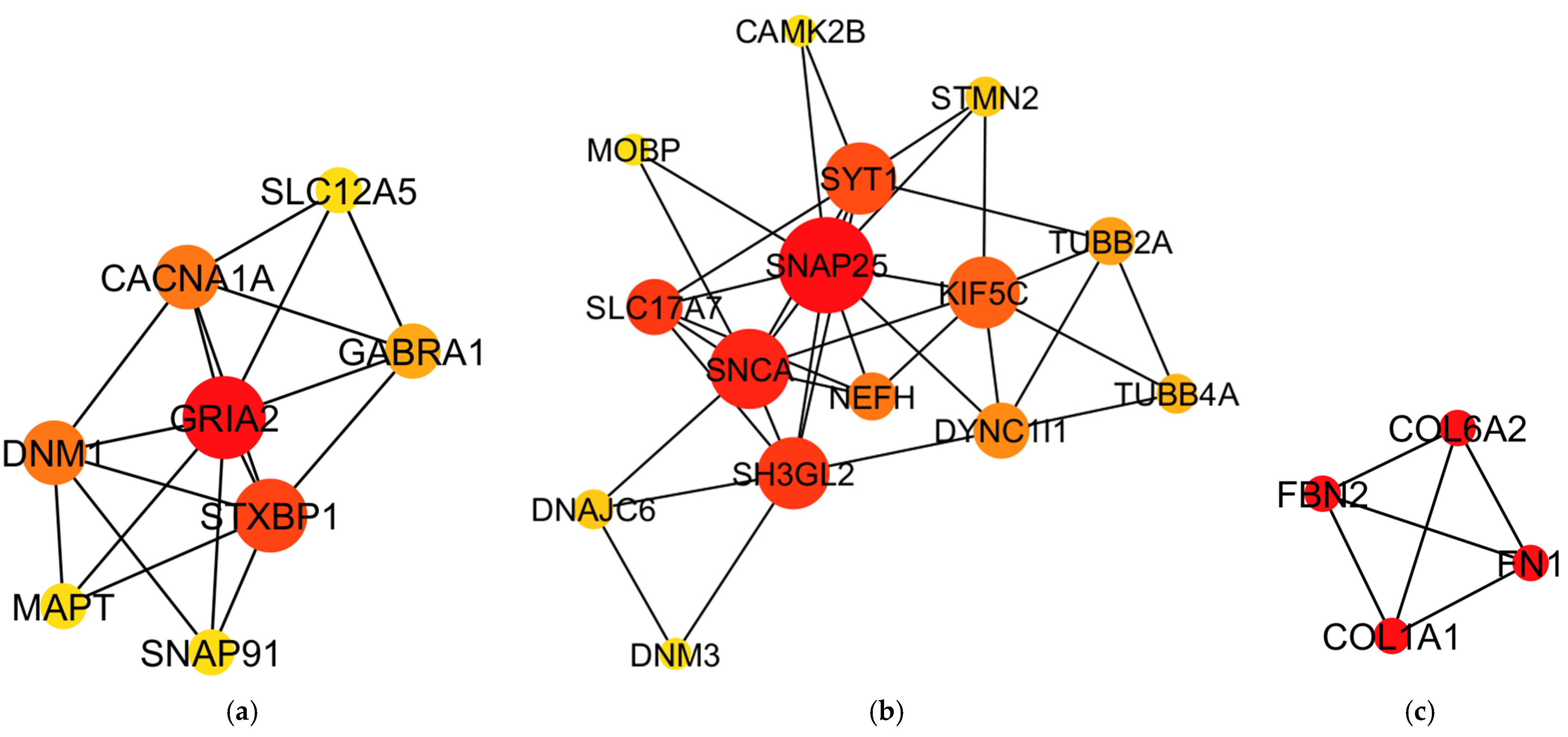
| Cluster 1 | CACNA1A | Calcium voltage-gated channel subunit α1 A | Neuronal P/Q type voltage-dependent Ca2+ channels, the central synapse neuromuscular junction, and neurotransmitter release | [73,74,75,76,77,78] |
| DNM1 | Dynamin 1 | Mechanochemical GTPase for clathrin-mediated endocytosis, microtubule bundle formation, and mitochondrial fission machinery | [79,80,81,82,83,84] | |
| GABRA1 | γ-Aminobutyric acid type A receptor subunit α1 | GABAergic neurotransmission and transmembrane ligand-gated Cl− channel | [85,86,87,88,89] | |
| GRIA2 | Glutamate ionotropic receptor α-amino-3-hydroxy-5-methyl-4-isoxazolepropionic acid type subunit 2 | Glutamatergic synaptic transmission, Q/R receptor, CP−-AMPARs differ from CI−-AMPARs, Ca2+ Flux, and excitatory postsynaptic currents | [90,91,92,93] | |
| MAPT | Microtubule-associated protein τ | Neuronal plasticity, microtubule assembly, and stability | [65,94,95,96,97] | |
| SLC12A5 | Solute carrier family 12-member 5 | Neuronal K+-Cl− co-transporter, activation of GABAA and glycine receptors | [98,99,100] | |
| SNAP91 | Synaptosome-associated protein 91 | Synaptic vesicle reformation, neuronal vesicle trafficking, and clathrin-associated protein sorting adaptors AP180 | [57,97,101] | |
| STXBP1 | Syntaxin binding protein 1 | Synaptic vesicle fusion machinery, syntaxin-1 trafficking, SNARE complex formation, and presynaptic protein Munc18-1 | [102,103,104,105,106,107] | |
| Cluster 2 | CAMK2B | Calcium/Calmodulin-dependent protein kinase II β | Serine/threonine kinase, neuronal migration, neuronal excitability, synaptic plasticity, and memory formation | [108,109,110,111,112] |
| DNAJC6 | DNAJ heat shock protein family (Hsp40) member C6 | Auxilin chaperone engages HSPA8/HSC70 for the disassembly of clathrin-coated vesicles and endocytosis, and synaptic vesicle post-endocytotic recycling | [113,114,115] | |
| DNM3 | Dynamin 3 | Mechanochemical GTPases for clathrin-mediated endocytosis, microtubule bundle formation, and mitochondrial fission machinery | [84,116,117,118,119,120] | |
| DYNC1I1 | Dynein cytoplasmic 1 intermediate chain 1 | Retrograde-directed transport motor complex, subcellular localization of sphingosine kinase 2, RAS-RAF-MEK signaling pathway, and dendritic length | [121,122,123] | |
| KIF5C | Kinesin family member 5C | Cortical neuronal migration, dendritic branching, synaptic plasticity, and excitatory, and local translation of RNA substrates long-distance transport | [124,125,126,127,128] | |
| MOBP | Myelin-associated oligodendrocyte basic protein | Myelin sheath stabilization, myelin to a membrane-associated signaling complex, and oligodendrocyte differentiation | [129,130,131,132] | |
| NEFH | Neurofilament heavy chain | Neurofilament formation, neuronal caliber, and axonal sensorimotor | [133,134] | |
| SH3GL2 | Src homology 3 domains containing growth factor receptor-bound protein 2-like 2 | Endophilin A1 protein, early endosomes, BDNF-NTRK2, early endocytic signal trafficking, synaptic vesicle endocytosis, EGFR endocytosis, and STAT3/MMP2 signaling | [57,135,136] | |
| SLC17A7 | Solute carrier family 17-member 7 | Vesicular L-glutamate transporters, γ + LAT1 light chain, Na+-dependent inorganic phosphate (Pi) transport, and vesicular K+/H+ antiport activity | [137,138] | |
| SNAP25 | Synaptosome-associated protein 25 | Synaptic connectivity, plasticity, communication, and t-SNARE neurotransmitter release | [139,140] | |
| SNCA | Synuclein α | Synaptic vesicle trafficking, SNARE-complex assembly chaperone, and dopamine neurotransmission | [129,131,141,142,143] | |
| STMN2 | Stathmin-2 | Microtubules dissemble, Smad2/3 translocation, MAPK8 phosphorylation neurite extension and cell motility | [144,145] | |
| SYT1 | Synaptotagmin 1 | Neuronal growth-associated protein, microtubule stability, Ca (2+)-dependent interaction to putative receptors, and neurite length | [146] | |
| TUBB2A | Tubulin β 2A class IIA | GTP-tubulin dimers, α-tubulin GTPase activity, and neuronal migration | [67,147,148] | |
| TUBB4A | Tubulin β 4A class IVA | GTP-tubulin dimers, α-tubulin GTPase activity, and neuronal migration | [148,149] | |
| Cluster 3 | COL1A1 | Collagen type I α1 chain | Type I collagen, fibrillar-forming collagen, and ECM formation | [70,150,151,152,153] |
| COL6A2 | Collagen type VI α2 chain | Collagen VI non-fibrillar heterotrimeric cell-binding protein, ECM disorganization and organization | [61,154,155] | |
| FBN2 | Fibrillin 2 | ECM organization, elastin fibers, extracellular calcium-binding microfibrils, and elastic fiber assembly | [156,157] | |
| FN1 | Fibronectin 1 | Cytoskeletal organization, ECM glycoprotein, cell surface binding of collagen, fibrin, heparin, DNA, and actin, WNT/β-catenin signaling, and FCGR1A/CD64-mediated monocyte activation | [58,158,159,160,161] |
Disclaimer/Publisher’s Note: The statements, opinions and data contained in all publications are solely those of the individual author(s) and contributor(s) and not of MDPI and/or the editor(s). MDPI and/or the editor(s) disclaim responsibility for any injury to people or property resulting from any ideas, methods, instructions or products referred to in the content. |
© 2026 by the authors. Licensee MDPI, Basel, Switzerland. This article is an open access article distributed under the terms and conditions of the Creative Commons Attribution (CC BY) license.
Share and Cite
Villanueva, B.H.A.; Tayo, L.L.; Chuang, K.-P. Hub Gene Clusters Reveal Dysregulated Synaptic Neurotransmitter Signaling Pathways and Drug Repurposing Prospect in Brain Tumors. Onco 2026, 6, 22. https://doi.org/10.3390/onco6020022
Villanueva BHA, Tayo LL, Chuang K-P. Hub Gene Clusters Reveal Dysregulated Synaptic Neurotransmitter Signaling Pathways and Drug Repurposing Prospect in Brain Tumors. Onco. 2026; 6(2):22. https://doi.org/10.3390/onco6020022
Chicago/Turabian StyleVillanueva, Brian Harvey Avanceña, Lemmuel L. Tayo, and Kuo-Pin Chuang. 2026. "Hub Gene Clusters Reveal Dysregulated Synaptic Neurotransmitter Signaling Pathways and Drug Repurposing Prospect in Brain Tumors" Onco 6, no. 2: 22. https://doi.org/10.3390/onco6020022
APA StyleVillanueva, B. H. A., Tayo, L. L., & Chuang, K.-P. (2026). Hub Gene Clusters Reveal Dysregulated Synaptic Neurotransmitter Signaling Pathways and Drug Repurposing Prospect in Brain Tumors. Onco, 6(2), 22. https://doi.org/10.3390/onco6020022