
Review

Microbiome-Driven Diagnostic and Therapeutic Strategies in Cancer

1
Department of Pharmacology and Toxicology, University of Texas Medical Branch, 301 University Boulevard, Galveston, TX 77555, USA
2
University School of Allied Health Science, Rayat Bahra University, Greater Mohali 140301, Punjab, India
3
Faculty of Applied Science and Biotechnology, Shoolini University, Solan 173229, Himachal Pradesh, India
4
Department of Microbiology, Royal School of Biosciences, The Assam Royal Global University, Guwahati 781035, Assam, India
*
Author to whom correspondence should be addressed.
These authors contributed equally to this work.
Onco 2026, 6(2), 21; https://doi.org/10.3390/onco6020021 (registering DOI)
Submission received: 7 February 2026 / Revised: 6 May 2026 / Accepted: 7 May 2026 / Published: 12 May 2026

Simple Summary

The current review article explores the association of microbes with cancer and suggests possible ways to diagnose and treat cancer. The synergistic association between microbes and cancer paves the way for early detection and timely treatment. The human microbiome plays a major role in health and disease, with emerging data highlighting its potential role in cancer biology. Continued research to understand the essential relationships between cancer and microbial communities can harness the microbiome’s potential in oncology and pave the way for novel therapeutic methods with better patient outcomes.

Abstract

In cancer biology, the microbiome has emerged as a revolutionary field, revealing host–microbe interactions that drive cancer initiation, development, metastasis, and therapeutic response. The microbiome plays a mechanistic role in carcinogenesis by directly regulating host cell proliferation, apoptosis, and genomic stability, and indirectly through immune regulation and chronic inflammation. Depending on the microbial genetic makeup and host environment, microbial genotoxins, metabolites, and signaling molecules can either induce tumor growth or exert beneficial anticancer effects. Infectious agents are estimated to trigger a significant proportion of cancers globally, although the mechanistic pathways of the broader microbiome remain less well quantified. Likewise, it has been shown that microbiomes modulate the toxicity and efficacy of cancer treatments—specifically immunotherapy and chemotherapy—by mediating anti-tumor reactions and altering drug metabolism. Microbiome-based diagnostics, predictive markers, and therapeutic strategies like dietary modifications, probiotics, synthetic microbes, and fecal microbiota transplantation have collectively benefited from these breakthroughs. Despite rapid progress, integrating microbiome research into oncology is hindered by patient variability, methodological hurdles, and the difficulty of identifying definitive causal links. Large-scale clinical trials are essential for verifying the functional impact of microbiome-targeted treatments. The current review evaluates the mechanistic influence of microbiomes on cancer diagnosis and therapeutics.

1. Introduction

The human microbiome comprises a complex ecosystem of bacteria, viruses, fungi, and protozoa that inhabit various parts of the human body. An estimated 100 trillion microbial cells are hosted by the human body, potentially exceeding the 37–40 trillion human cells, and around 2 million genes are encoded by such microbes, in comparison with the 20,000–22,000 genes of the human genome [1,2]. By promoting immune function, regulating essential nutrients, and maintaining intestinal integrity while also influencing the development of disease, the microbiome plays a pivotal role in sustaining human health [3]. As an emerging field, the oncobiome examines microbial communities and their interactions with cancer biology. According to recent studies, there is a shift from linking microorganisms to cancer to exploring mechanistic insights into how these microbes affect cancer development, progression, and treatment [4]. Although researchers were initially skeptical of this field, it has gained considerable traction as studies have begun to demonstrate microbial roles in tumor initiation and progression, the influence of microbiomes on immune responses, and the potential for therapeutic interventions [5,6]. Nevertheless, the field remains in its infancy, with many investigations reporting associations rather than establishing causal relationships, and methodological challenges such as sample contamination and population variability persist.
The human gut microbiome is remarkably diverse, harboring approximately 3000 bacterial species and trillions of microbial cells [7,8]. The formation of the gut microbiome is highly variable, with most individuals sharing a core microbiota of 50–100 bacterial species, chiefly from the Firmicutes and Bacteroidetes phyla [8,9]. About 70% of the total microbial load consists of microorganisms that dwell in the gastrointestinal tract [1]. Approximately 3.3 million exclusive genes in the gut have been revealed by metagenomic studies, substantially more than the human genome [9]. Conducive to the ecosystem’s resilience and the host’s physiological homeostasis, microbial diversity is notably rich [10,11], comprising more than 700 species and varying across the disparate sites of the oral microbiome [12]. Several factors, such as host age, ethnicity, lifestyle, and diet, can affect microbial composition, which in turn plays a vital role in both oral and systemic health [13,14]. Likewise, the skin microbiome is highly diverse, exhibiting marked variation across body sites and harboring over 1000 bacterial species [15]. The urogenital microbiome also presents considerable diversity, with gender playing a vital role in its composition [16].
The composition of the microbiome is potentially more influenced by environmental and lifestyle factors than by the host’s genetics. A benchmark study found that environmental factors such as diet and medication contribute substantially to microbiome variability, often exceeding the contribution of host genetics in some cohorts [17]. Diet, antibiotics, and lifestyle factors, viz. exercise and cleanliness, can affect microbiome shifts and composition within 24–48 h under dietary or antibiotic perturbations [18,19,20]; external causes can change 30–40% of the microbiota composition throughout life [21]. The dynamic equilibrium of the human microbiome, in which distinct microbial associations are in stable interaction with the host, is referred to as microbial homeostasis. Conversely, pathological disruption of this balance can give rise to a range of health conditions, including obesity, inflammatory bowel disease, and diabetes, collectively referred to as dysbiosis [22,23]; arising from antibiotics, dietary changes, stress, or genetic factors, dysbiosis attenuates host immune responses and fosters a cancer-permissive environment [24,25]. The microbiome also influences tumor angiogenesis and remodeling of the microenvironment, thereby promoting cancer progression through complex associations [26]. DNA damage, chronic inflammation, alterations in immune responses, and alterations in metabolic pathways are induced by dysbiosis; each of these factors contributes to cancer development [27,28]. Helicobacter pylori and Fusobacterium nucleatum, like specific microbes, are linked to the proliferation of cancer cells [29].
The microbiome has been implicated as an active contributor to tumor dissemination rather than a passive observer in cancer metastasis [30], mechanistically modulating immune surveillance, regulating epithelial–mesenchymal transition, and conditioning pre-metastatic niches [31]. According to recent studies, breast cancer patients exhibit markedly distinct microbiome profiles characterized by reduced Methylobacterium and increased Gram-positive organisms. Lung and urogenital microbiota affect cancer development and the tumor immune response and can serve as diagnostic markers [32,33,34,35]. A substantial portion of this research, while compelling, remains in its early phases, with current findings predominantly predictive rather than definitively causal.
The rationale for reviewing microbiome-cancer associations lies in the potential to uncover new opportunities for cancer screening, prevention, diagnosis, and treatment through exploration of microbial dysbiosis. There is a need to establish more robust evidence of the interaction between cancer progression and microbiome shifts by standardizing sampling techniques and collecting prediagnostic specimen studies in future research. The human microbiome plays a major role in health and disease, with data highlighting its potential role in cancer biology. Continued research to understand the essential relationships between cancer and microbial communities can harness the microbiome’s potential in oncology and pave the way for novel therapeutic methods with better patient outcomes.
Brief method for selecting data and articles for this review: We have extensively searched the published literature in different national and international scientific journals; we have thoroughly searched Google Scholar, PubMed, and Research Gate. The time frame for the current study is 2012 to 2026. Still, we have included the maximum number of articles from the last five years (2020–2025), and the search terms were cancer, diagnostics, microbiome, therapeutics, and synthetic microbes.

2. Organ-Specific Role of Microbiome in Cancer

2.1. Oral Cavity

The discovery of 13 oral bacterial species is distinctively correlated to head and neck squamous cell carcinoma (HNSCC). The evidence suggests a microbial risk associated with an increased relative risk (reported up to ~50% in some cohorts), further establishing a potential link between oral microbiota dysregulation and cancer development and progression, as hallmarks show the oral microbiome and HNSCC association has a major role in microbial dysbiosis [36,37].

2.2. Stomach

Direct cytotoxic DNA damage, activation of tumorigenic pathways, and proinflammatory signaling mechanisms link gastrointestinal malignancies to the gastric microbiome. There is a direct association between microbes such as Helicobacter pylori, Epstein–Barr virus, Escherichia coli, and malignancies, including gastric and colorectal adenocarcinomas [38,39].

2.3. Lower Gastrointestinal Tract

A complex interaction with colorectal cancer (CRC), characterized by definitive microbial dysbiosis that can both promote and significantly prevent cancer development, is primarily mediated by the gut microbiome [40,41].

3. Microbiome as a Diagnostic and Prognostic Tool

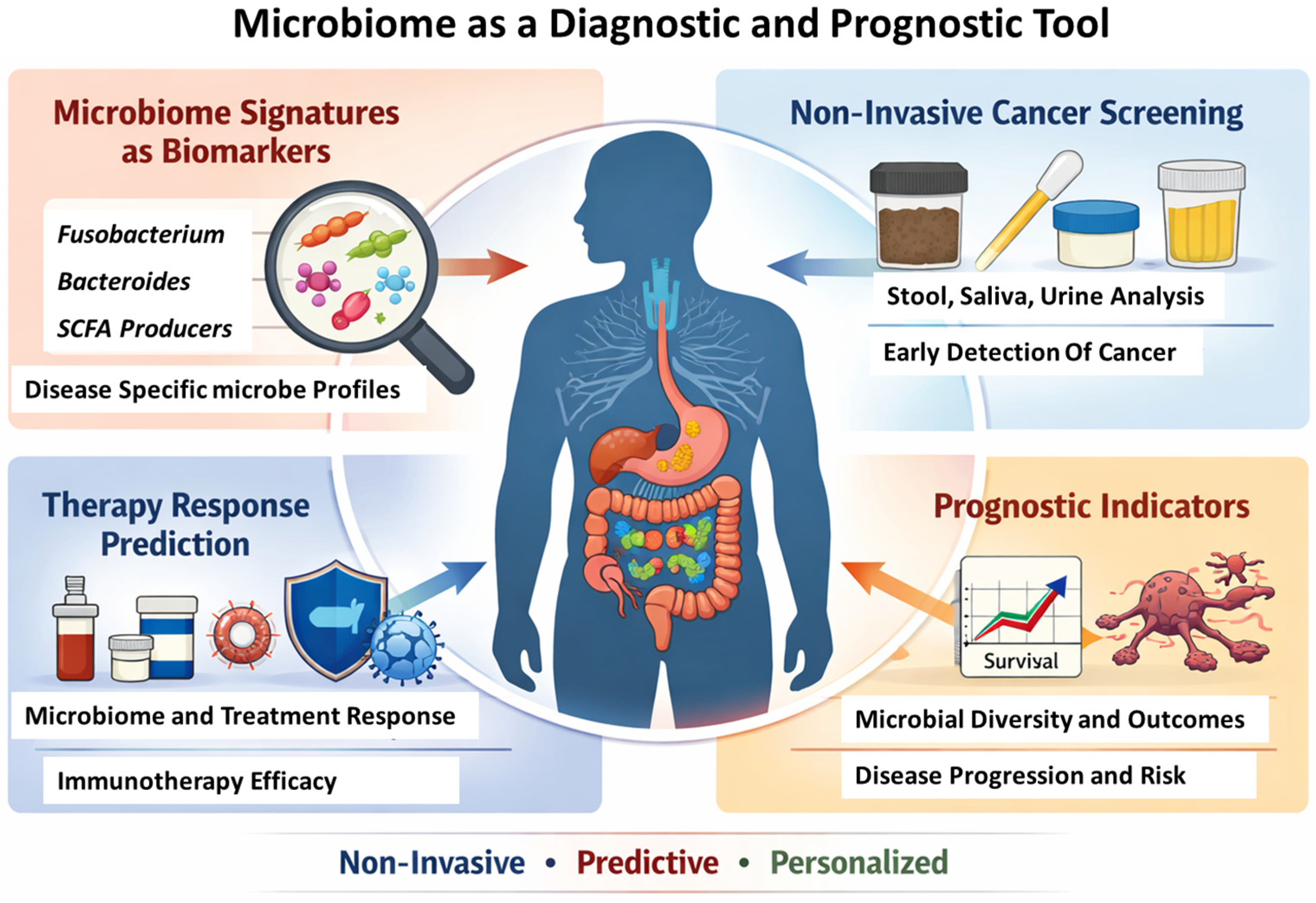
The human microbiome has emerged as a promising source of diagnostic and prognostic biomarkers in cancer, supporting early disease detection, risk stratification, and prediction of therapeutic response (Figure 1) and (Table 1). Alterations in microbial diversity and community composition have been associated with cancer stage and progression, enabling identification of microbiome-derived signatures as early diagnostic biomarkers [42]. Non-invasive biological samples, including stool, urine, and saliva, are increasingly used for microbiome-based cancer screening and early detection strategies [43]. Several studies demonstrate that microbial composition can predict treatment outcomes, particularly responses to chemotherapy and immune checkpoint inhibitors [44]. Advances in next-generation sequencing and metagenomic profiling have enabled high-resolution identification of cancer-associated microbial signatures, strengthening their clinical utility as diagnostic and prognostic tools [45,46].

3.1. Microbiome Signatures as Biomarkers

The term microbiome signatures usually refers to disease-associated patterns of microbial taxa, functional genes, or metabolic products that can be continuously detected in affected individuals [47]. Fusobacterium nucleatum concentration in tumor tissues and fecal samples has been frequently documented in CRC, where it promotes inflammation, immune evasion, and tumor growth [48,49]. Similarly, altered abundances of Bacteroides fragilis and Escherichia coli, which produce genotoxins, have been linked to CRC development [50]. Changes in the gut microbiota that impact estrogen metabolism—known as the “estrobolome”—have been suggested as possible biomarkers for breast cancer [51]. Functional microbiome signals offer mechanistic insights that go beyond taxonomic markers. Because of compromised epithelial barrier function and immunological dysregulation, reduced populations of short-chain fatty acid (SCFA)-producing bacteria, such as Faecalibacterium prausnitzii, are associated with chronic inflammation and cancer [52]. Therefore, metabolites and pathways originating from microbiomes may serve as useful functional biomarkers that complement conventional molecular diagnostics.

3.2. Non-Invasive Cancer Screening Approaches

The approach of detecting biological samples through non-invasive cancer screening has emerged as a valuable resource, improving patient compliance and facilitating large-scale screening implementation [42]. Regarding conventional Fecal Occult Blood Testing (FOBT) for early-stage detection of CRC, fecal microbiota analysis has demonstrated superior diagnostic sensitivity [49]. Metagenomic studies have already shown that integrating microbial markers enhances detection accuracy, especially when combined with Fecal Immunochemical Testing (FIT). Diagnosis using specific microbial taxa, including Peptostreptococcus and Parvimonas spp., has been reported to significantly improve CRC diagnostic performance [53]. Beyond CRC, changes in the oral microbiome have been associated with pancreatic cancer and oral squamous cell carcinoma, with increased levels of Porphyromonas gingivalis species proposed as potential non-invasive indicators [54]. Similarly, for prostate and bladder cancer, the profiling of the urinary microbiome is being explored as an early diagnostic strategy [55]. The oncology approach is therefore expected to further enhance through the integration of microbiome-derived data into risk stratification and personalized screening frameworks [56]. Risk stratification and customized screening techniques are now possible thanks to further improvements in predictive accuracy achieved by integrating microbiome data with machine learning algorithms [56].

3.3. Predictive Value for Therapy Response and Prognosis

It has been demonstrated that microbiomes affect treatment effectiveness and clinical outcomes, especially in cancer immunotherapy, and play a crucial role in determining host immune responses [57]. A unique gut microbiome enriched in Akkermansia muciniphila, Bifidobacterium longum, and Faecalibacterium prausnitzii was found in melanoma patients responding to immune checkpoint inhibitors (ICIs), according to groundbreaking research [44]. Gut microbiome composition dictates the efficacy and toxicity of immune checkpoint inhibitors, highlighting microbiome-based interventions as promising strategies to personalize and enhance cancer immunotherapy outcomes [58]. These bacteria increase anti-tumor immunity, stimulate cytotoxic T-cell infiltration, and improve antigen presentation. On the other hand, decreased ICI efficacy and worse survival outcomes have been linked to antibiotic-induced changes in gut flora [59]. Microbes can modulate ICI in several ways. The microbes can tune the expression of APCs, dendritic cell activation, and CD8+ T cell expansion, thereby further improving tumor control. The interplay between microbes and immune cells strongly influences the magnitude of the T cell response and their spatial deployment within the tumor. The microbiome–immune interactions ensure that all microenvironments are exposed to cytotoxic effectors once PD-1/PD-L1 signaling is blocked. Microbial metabolites play a pivotal role in elevating ICI response. One microbial metabolite, short-chain fatty acid (SCFA) butyrate, can profoundly influence innate immunity and the mucosal inflammatory response, further supporting the notion that microbial metabolite levels can influence downstream anti-tumor immunity. The microbiome has a bidirectional impact on ICI, as it affects anti-tumor immunity and, conversely, influences epithelial barrier function and systemic inflammation, which are central to immune-related toxicity. The gut microbiota is well known to act on cancer drugs through its translocation, immunomodulation, metabolism, enzymatic degradation, and reduced ecological variation. The microbiota is well known to modulate absorption, excretion, endogenous metabolite production, immune modulation, and the apoptotic pathway for the regulation of cancer drugs. Along with these, the gut microbiota is well known to regulate intestinal permeability by modulating tight junction integrity and the thickness of intestinal mucus layers, which in turn influence the absorption of pharmacological agents. Microbiome composition has predictive importance in addition to determining therapy response. While pro-inflammatory bacterial enrichment is linked to aggressive tumor characteristics and metastasis, more microbial diversity is typically associated with better progression-free survival and overall survival [60]. The routine clinical use of microbiome-based diagnostics is limited by several issues, despite encouraging data. Finding universal biomarkers is complicated by inter-individual variability driven by host genetics, nutrition, geography, and antibiotic use [61,62]. Another significant obstacle is the absence of standardization in sample collection, sequencing techniques, and data analysis pipelines. Recent advances in multi-omics approaches, including immunogenomics, metabolomics, and microbiomics, are progressively addressing the limitations of microbiome-based diagnostics. With extensive longitudinal studies and well-designed clinical trials, microbiome-derived biomarkers are expected to gain validation for routine clinical application [47]. In oncology, comprehensive microbiome profiling is important for supporting prognostic assessment, guiding individualized therapeutic strategies, and promoting early disease detection. Altogether, the microbiome approach has gained significant importance as a powerful prognostic and diagnostic resource in modern medicine. Disease-specific microbial signatures have the potential to support non-invasive cancer screening, serve as reliable biomarkers for disease identification, and provide valuable prognostic insights into treatment response and patient outcomes (Table 1).
Table 1. Role of the Microbiome as a Diagnostic and Prognostic Tool in Cancer.
AspectMicrobiome ComponentSample TypeClinical ApplicationKey Findings/
Significance
References
Microbiome signatures as biomarkersFusobacterium nucleatumStool, tumor tissuediagnosisEnriched in CRC; promotes inflammation and tumor progression[48,49]
Microbiome signatures as biomarkersBacteroides fragilis, E. coli (pks+)StoolCRC risk assessmentGenotoxin-producing strains linked to carcinogenesis[50]
Non-invasive cancer screeningGut microbial panelsStoolCRC screeningImproves sensitivity compared to FOBT/FIT[49,53]
Prediction of therapy responseAkkermansia muciniphilaStoolImmunotherapy responseEnhances PD-1 inhibitor efficacy in melanoma and non-small cell lung cancer (NSCLC) patients [59]
Prognostic valueHigh microbial diversityStoolSurvival predictionAssociated with improved overall survival in Melanoma and NSCLC cohorts[60]

4. Microbiome and Cancer Therapeutics

The human body harbors diverse microbes, including bacteria, fungi, viruses, archaea, and protozoa, that live in different organs and on the body’s surface. It has been reported that bacteria inhabiting the human microbiome alone outnumber human cells [63]. Most of these microbes are friendly to the human body and exert positive effects on health. The International Agency for Research on Cancer (IARC) has classified only 11 trillion microbes, which are considered carcinogenic to humans, as Group 1 carcinogens. These carcinogens comprise one bacterial species, three parasitic helminths, and seven viruses. Worldwide, every year, 2.2 million cancer cases are reported, and most of them are linked to the above-described microbes [64]. It is very important to understand how these microbes directly or indirectly influence cancer, as this affects various facets of cancer care, including disease emergence, progression, diagnosis, and therapies.

4.1. Influence of Microbiomes on Chemotherapy Efficacy and Toxicity

The gut microbiota contributes to heterogeneous responses to chemotherapy, as distinct bacterial profiles have been associated with variations in clinical treatment outcomes across multiple observational studies. These findings suggest potential links between gut microbial composition and variability in chemotherapeutic response, efficacy, and toxicity. Several studies have reported associations between specific bacterial species and altered chemotherapy responses in cancer patients [65]. Several bacterial species have been shown to modulate carcinogenic pathways through defined molecular mechanisms. For example, Fusobacterium nucleatum activates the Wnt/β-catenin signaling pathway via FadA adhesion, promoting colorectal tumor progression; enterotoxigenic Bacteroides fragilis induces STAT3 and NF-κB signaling through BFT toxin; and pks+ E. coli produces colibactin, which is associated with DNA double-stranded breaks and genomic instability, contributing to tumorigenesis. Despite various advancements, the impact of microbiota on the effectiveness and toxicity of cancer therapies remains poorly understood. The correlation between microbes and the effectiveness of cancer therapies, as reported in several studies, highlights the requirement for additional research in this field [66]. Despite advances in precision treatments such as immunotherapy and targeted therapy, chemotherapy remains widely used due to its broad therapeutic scope, cytotoxic potency, and relatively low cost [65]. The therapeutic effectiveness of chemotherapy is strongly affected by specific microbes that can alter the behavior and action of cancer-fighting agents in the body [66].
Recent experimental and clinical studies have further associated gut microbiota composition with tumor progression, chemotherapy response traits, and treatment-related adverse effects [67]. Chemotherapeutic compounds can transform the profile of gut microbiota, resulting in microbial shifts that may either exacerbate or lessen clinically important side effects. In a review encompassing 22 findings, certain bacterial groups were correlated with improved clinical responses across various malignancies. In pulmonary tumors, enhanced therapeutic outcomes were associated with an increased abundance of Streptococcus mutans, Enterococcus casseliflavus, and Bacteroides species; in contrast, within gastrointestinal cancers, a positive response was linked to higher levels of Lactobacillaceae, Bacteroides fragilis, and Roseburia faecis. As a result, modulating gut microbiota during chemotherapy is emerging as a promising approach to improve therapeutic efficacy and mitigate chemotherapy-induced adverse effects [65].
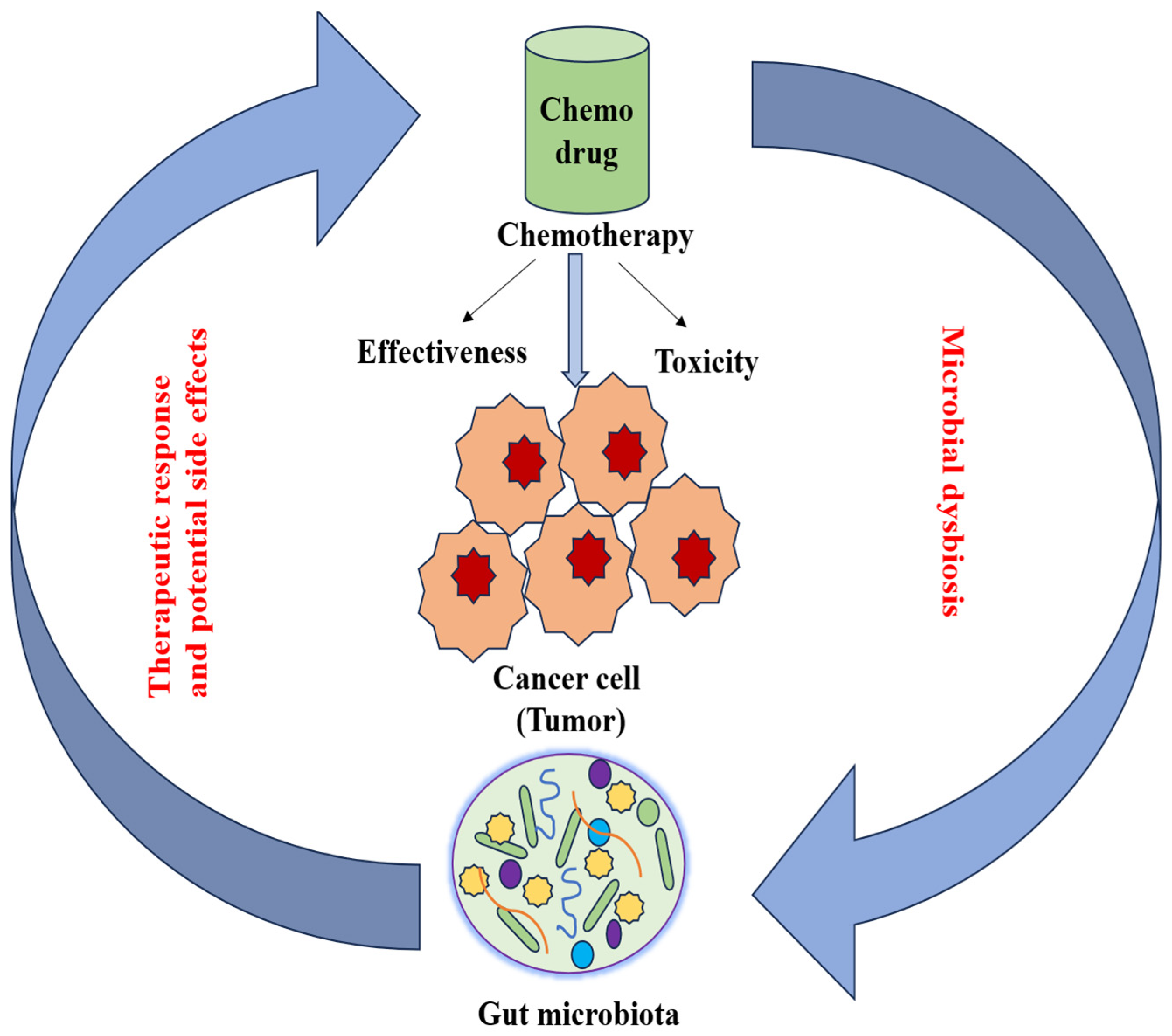
The microbiota shapes the effects of chemotherapeutic compounds delivered via both oral and parenteral routes, highlighting the core principle of mutual interaction between the host microbiota and tumor therapies (Figure 2).
A pivotal mechanistic basis for this interplay and an important therapeutic target is the microbiota’s ability to induce chemoresistance [68]. One such pathway involves the modulation of transmembrane drug transporters, which may influence the movement of cytotoxic drugs into and out of tumor cells, thereby influencing malignant cells’ therapeutic response [69]. Additionally, host DNA repair pathways can be altered by the microbiota to improve the efficacy of chemotherapy-induced damage in cancer cells [70]. Fusobacterium nucleatum is among the best-characterized chemo-resistant microbes, with a substantial impact on therapeutic response reported [71].
Major shifts in microbial community profiles are induced by chemotherapeutic regimens, resulting in treatment-associated dysbiosis. A prominent and extensively studied example of microbiota-driven chemotherapy toxicity involves irinotecan (a camptothecin-derived drug used for colorectal cancer, non–small cell lung cancer, and ovarian cancer) [72]; following administration, the drug undergoes modification by host esterases to SN38 (the active, pro-apoptotic form), which targets topoisomerase I, disrupts DNA repair, and promotes cytotoxicity [73]. SN38 is then detoxified in the liver by forming SN38-glucuronide (SN38G), which is excreted in bile and feces. Microbial taxa linked to chemotherapy-induced toxicity included Prevotella and Clostridia in lung cancer patients, and Bacteroides along with Klebsiella pneumoniae in patients with gastrointestinal tumors. In summary, microbiota’s influence on chemotherapeutic response, efficacy, and toxicity can be attributed to pharmacokinetic and metabolic interactions that alter drug metabolism.

4.2. Role of Immunotherapy Response (Checkpoint Inhibitors)

Immune checkpoint inhibitors (ICIs), including antibodies targeting programmed cell death protein 1 (PD-1), programmed death ligand 1 (PD-L1), and cytotoxic T-lymphocyte-associated antigen 4 (CTLA-4), have significantly improved clinical outcomes across multiple malignancies. However, substantial interpatient variability in response and toxicity remains a major limitation. Emerging evidence suggests that the gut microbiome may influence immunotherapy efficacy, although the strength and nature of this relationship vary across study types. Growing evidence highlights the role of the gut microbiome as an important determinant of immunotherapy outcomes and of immune-related toxicities, including colitis and hepatitis. The gut microbiome interacts synergistically with the host immune system to maintain a balance between tolerance to food-derived antigens and the presence of resident microbes, while safeguarding against pathogens and disturbances induced by drugs and illness [74]. The gut microbiome shapes the immune system through multiple distinct routes. Stimulation of pattern-recognition receptors (PRRs) on intestinal epithelial cells activates intracellular signaling pathways that promote the secretion of immunomodulatory cytokines. In addition, microbial metabolites, particularly SCFAs, can influence the differentiation of both pro-inflammatory TH1 and TH17 cells and anti-inflammatory regulatory T cells (T-regs) [75]. Immune checkpoints expressed on T cells serve as crucial modulators of the immune system. They safeguard host tissues during responses to pathogens and preserve self-tolerance by attenuating T cell activation, thereby avoiding autoimmune reactions. Cancer cells harness these regulatory pathways to evade immune detection by interacting with checkpoint receptors, thereby downregulating T cell activation and expansion and impairing anti-tumor immune responses. The chief molecular targets of ICIs are programmed cell death protein 1 (PD-1) and cytotoxic T-lymphocyte-associated protein 4 (CTLA-4), both of which are found on T lymphocytes. Malignant cells exploit these receptors to inhibit T-cell-driven immune responses. At present, ICIs are classified into three principal classes: anti-CTLA-4, anti-PD-1, and anti-PD-L1, each designed to block these receptors and restore immune activity against tumor cells [71]. The major characteristics of microbiome studies related specifically to ICIs are highlighted in Table 2.
Across multiple cohorts, enrichment of taxa such as Akkermansia muciniphila, Faecalibacterium spp., and Bifidobacterium spp. consistently correlates with improved responsiveness to checkpoint inhibitors, whereas antibiotic-associated dysbiosis is linked to reduced survival. Several clinical studies have quantitatively demonstrated that gut microbiome composition serves as both a predictive biomarker and therapeutic modulator of immune checkpoint inhibitor (ICI) efficacy across cancers. In a multicenter cohort study involving 249 patients with advanced non-small cell lung cancer and renal cell carcinoma, responders to anti-PD-1 therapy showed significant enrichment of Akkermansia muciniphila, and patients receiving antibiotics before immunotherapy exhibited reduced median survival of 11.5 months to 20.6 months [59]. Similarly, in patients with metastatic melanoma (n = 112), increased baseline microbial alpha diversity and enrichment of Faecalibacterium species were associated with prolonged progression-free survival. Another independent melanoma study reported an objective response rate of 40% in microbiome-rich responders compared with 7–8% in non-responders. Furthermore, responders derived fecal microbiota transplantation restored sensitivity to anti-PD-1 therapy in approximately 30–40% of previously resistant melanoma patients. Conversely, enrichment of butyrate-producing genera, including Roseburia and Faecalibacterium, has been linked to improved epithelial barrier integrity and enhanced anti-tumor immune signaling. These microbial signatures therefore represent promising non-invasive diagnostic biomarkers for early disease stratification and prediction of immunotherapy responsiveness in patients. Overall, current evidence supports a contributory role of the gut microbiome in modulating immunotherapy outcomes, but most clinical findings remain associative. Further large-scale, longitudinal, and interventional studies are required to establish causality, improve reproducibility, and enable the development of clinically actionable microbiome-based strategies.

4.3. Microbial Drug Metabolism and Resistance to Anticancer Therapies

The study of microbial drug metabolism is an emerging area of research focused on understanding the complex biochemical interactions between microbes and therapeutic compounds. Microorganisms, including bacteria and fungi, can biotransform anticancer drugs, thereby influencing their efficacy, toxicity, and pharmacokinetic behavior [85,86]. Microbial enzymatic activity can convert inactive prodrugs into active therapeutic metabolites; for example, bacterial β-glucuronides reactivate irinotecan metabolites in the intestine, contributing to both therapeutic effects and gastrointestinal toxicity [87]. Furthermore, gut microbiota can indirectly regulate host drug metabolism by modulating hepatic cytochrome P450 enzyme expression and immune signaling pathways that influence treatment responsiveness [88]. Variations in microbiome composition have been associated with differences in chemotherapy response, with substantial interpatient variability reported during fluoropyrimidine-based therapy, highlighting the role of host–microbiota interactions in determining treatment outcomes. Various strategies in bioinformatics and sequencing have reshaped microbiome research [89]; the incorporation of metagenomic tools has enabled the association of the metabolic capacity of microbial taxa, providing crucial insights into how drug metabolism and patient outcomes are affected by the human microbiota [90]. Computational approaches, such as machine-learning-based prediction of microbiome-mediated drug metabolism, provide valuable insights into host–microbe interactions and complement experimental findings from in vitro, ex vivo, and in vivo cancer models investigating microbiome-driven therapeutic responses [91]. Growing evidence indicates that the gut microbiota plays a vital role in resistance to diverse cancer treatments, including chemotherapy, immunotherapy, radiotherapy, and post-surgical outcomes. These microbial taxa can affect treatment receptivity through various pathways, including modifying drug potency, reducing therapeutic benefit, and contributing to treatment-related toxicities [59]. Numerous studies have indicated the gut microbiome’s role in shaping resistance to widely administered chemotherapeutic agents, including irinotecan, oxaliplatin, cyclophosphamide, 5-fluorouracil (5-FU), gemcitabine, and anthracyclines.

4.4. Antibiotic Use and Treatment Outcomes

Antibiotics are often proposed to eliminate harmful microbial communities, yet their effects are imprecise. Their exposure can disrupt the gut microbiota, leading to microbial dysbiosis, which may intensify chemoresistance and result in poor therapeutic outcomes [83,84]. Also, antibiotics given to address chemotherapy-related complications may interfere with the overall effectiveness of treatment [92]. Lactobacillus murinus and Lactobacillus johnsonii are Gram-positive bacteria that play a key role in modulating the tumor-suppressive efficacy of cyclophosphamide (CTX). Broad-spectrum antibiotics, such as vancomycin and colistin, reduced the therapeutic effects of CTX in mastocytoma- and sarcoma-bearing mice, highlighting the major role of microbes in the CTX response against cancer cells [93]; hence, antibiotics tested against Gram-positive bacteria can negatively affect the effectiveness of cancer therapy [94]. Clinical studies in lung and renal cancer patients have shown that antibiotic exposure before initiation of immune checkpoint inhibitor therapy is associated with significantly reduced progression-free survival and overall survival compared with non-exposed patients [95]. Conversely, in patients with pancreatic cancer, antibiotic use has been associated with improved responses to ICI, likely due to the eradication of tumor-resident bacteria that contribute to an immunosuppressive environment [96,97]. These evaluations reveal that the influence of antibiotics on clinical outcomes depends on the malignancies treated and the therapeutic strategies employed, further emphasizing the importance of the microbiome as a prognostic indicator of therapeutic success. These observations highlight the need for controlled clinical trials evaluating microbiome-targeted interventions, including selective antibiotics, probiotics, and dietary modulation, as adjunct strategies to improve therapeutic outcomes.

5. Targeting Microbiome Dynamics for Disease Management

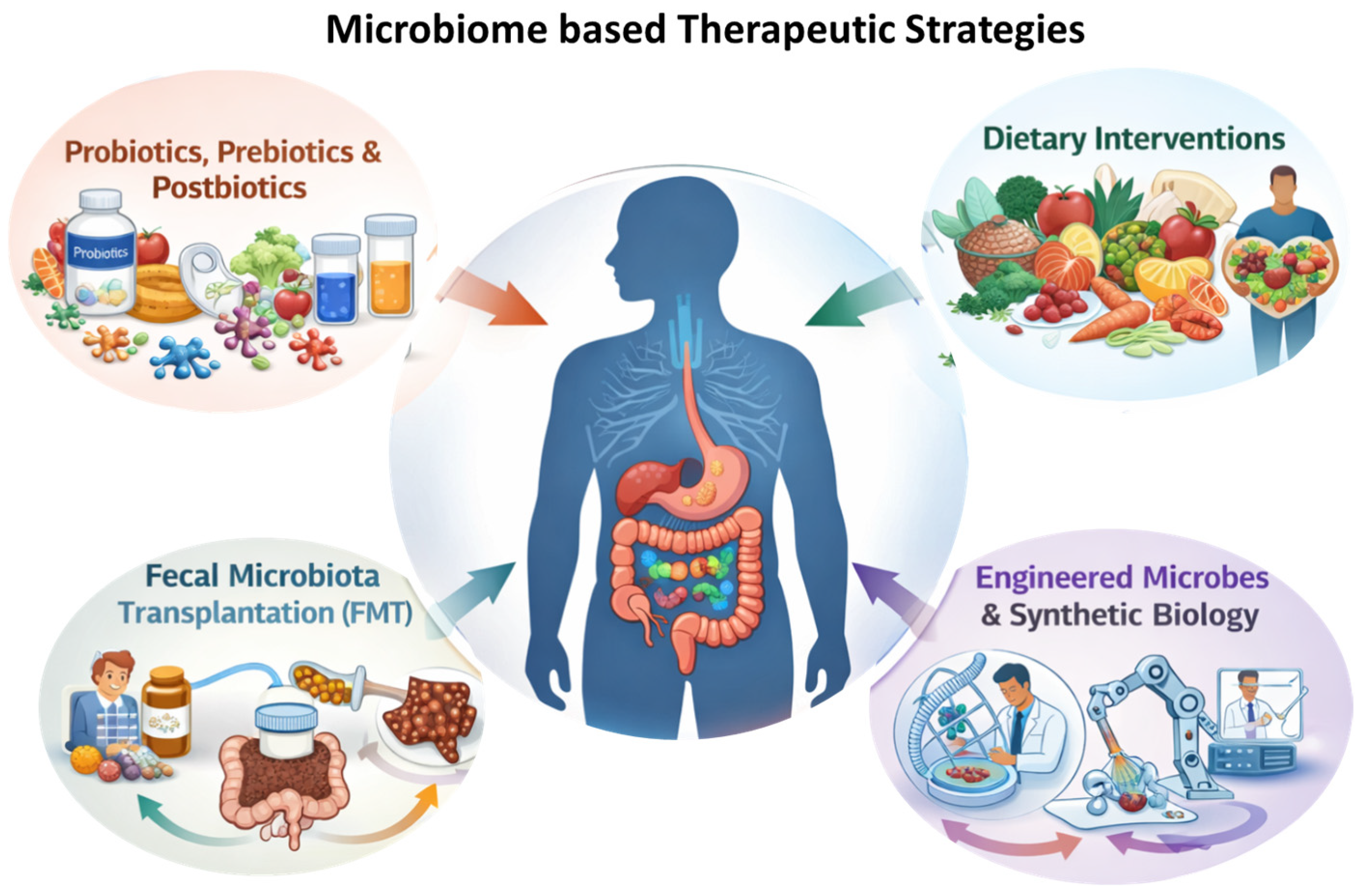
Immune modulation, disease susceptibility, and host metabolism are all significantly influenced by the human microbiome, especially the gut microbiota. The gut microbiota drives both local and distant oncogenesis by modulating systemic immune tone through molecular mimicry and microbial-associated patterns [98]. Numerous illnesses, including inflammatory bowel disease (IBD), metabolic syndrome, cancer, neurological diseases, and immune-related disorders, have been linked to dysbiosis, an imbalance in microbial makeup and activity [99]. Therapeutic strategies that mainly focus on modulating the gut microbiota have attracted increasing attention as alternatives or complements to conventional treatments, which generally include probiotics, prebiotics, postbiotics, dietary interventions, and fecal microbiota transplantation (FMT) to restore microbial balance (Figure 3). Advances in synthetic biology have also enabled the development of genetically engineered microorganisms, which further expand the potential of microbiome-based therapeutic approaches.

5.1. Probiotics, Prebiotics, and Postbiotics

Probiotics are live microorganisms that are usually associated with health benefits when taken in proper amounts, improving gut health by boosting immunity [100]. Commonly used probiotic genera include Lactobacillus, Bifidobacterium, Saccharomyces, and Enterococcus. Generally, these microbes produce antimicrobial metabolites that increase epithelial barrier integrity and modulate mucosal immunity by limiting the growth of pathogenic bacteria through competitive exclusion and other protective mechanisms [101]. Probiotic interventions have been extensively studied for gastrointestinal disorders such as Inflammatory Bowel Disease (IBD) and irritable bowel syndrome (IBS), as well as for antibiotic-associated diarrhea, in which certain strains have been shown to reduce disease duration and severity [102]. The growing body of evidence from meta-analyses also confirms that probiotics may support cancer therapy by improving immune checkpoint inhibitor responses and modulating treatment-related mucositis through gut immune signaling [103]. Probiotic efficacy is highly strain-specific and influenced by host genetics, immune status, and baseline microbiome composition [104]. Accordingly, rigorous clinical validation is important, particularly in immunocompromised patients. The composition and functional activity of the gut microbiota are continuously modulated by prebiotics, thereby promoting the host’s health [105]. Common examples of prebiotics include inulin, Fructooligosaccharides (FOS), Galactooligosaccharides (GOS), and resistant starch. The fermentation of prebiotics by gut microorganisms leads to the production of SCFAs, such as acetate, propionate, and butyrate, which play a pivotal role in immune regulation, intestinal homeostasis, and metabolic balance. In this context, butyrate possesses significant anti-inflammatory and anti-carcinogenic properties and serves as the principal energy source for colonocytes [106]. Prebiotic supplementation has been shown to support gut barrier integrity, reduce systemic inflammation, and improve glucose metabolism in therapeutics. Interestingly, when prebiotics are combined with probiotics as synbiotics, prebiotics enhance the survival and colonization of beneficial microbes, resulting in improved therapeutic outcomes [107]. Postbiotics generally enhance the host’s gut microbiome health through metabolites, cellular components, and nonviable microbial cells [108]. SCFAs, microbial peptides, enzymes, polysaccharides, lipoteichoic acids, and cell wall fragments are among their components, compared with active probiotics; postbiotics provide several benefits, such as increased stability, safety, and shelf life. They have been shown to improve intestinal barrier function, reduce oxidative stress, and regulate immune responses. For example, butyrate and other microbial metabolites can inhibit the generation of pro-inflammatory cytokines and control the development of T-regulatory cells [109]. Postbiotics have been studied as next-generation microbiome therapies, particularly in pharmaceutical and functional food applications, owing to their well-defined chemical composition and consistent biological activity.

5.2. Dietary Interventions

Diet is one of the most important factors influencing gut microbial composition, diversity, and functional activity [110]. The long-term dietary patterns play a vital role in shaping the structure and metabolic output of the gut microbiota. Diets rich in carbohydrates and fats, characteristics of Western dietary habits, are associated with reduced microbial diversity and increased inflammatory responses. In this context, the fiber-rich, plant-based diets enhance the growth of important microbes such as Faecalibacterium prausnitzii and Bifidobacterium [111]. Bioactive metabolites that affect host physiology are produced by microbial metabolism of food components. The significance of nutritional balance is evident. In contrast, excessive protein fermentation can yield potentially toxic metabolites, such as ammonia and phenolic compounds, whereas fiber fermentation produces beneficial SCFAs [112]. Numerous dietary approaches have shown therapeutic advantages mediated by microbiomes. The Mediterranean diet, rich in unsaturated fats, dietary fiber, and polyphenols, lowers inflammatory indicators and increases microbial diversity [113]. The ketogenic diet has the potential to treat neurological conditions like epilepsy by changing the composition of gut microbes [114]. A low-FODMAPS diet can effectively reduce fermentable carbs and alleviate IBS symptoms; however, long-term impacts on microbial diversity should be carefully considered [115]. To maximize therapeutic outcomes, emerging personalized nutrition techniques aim to tailor dietary therapies to individual microbiome profiles [116].

5.3. Fecal Microbiota Transplantation (FMT)

Transferring fecal material from a healthy donor to a recipient to restore microbial variety and function is known as fecal microbiota transplantation. With cure rates surpassing 90%, FMT has shown impressive efficacy in treating recurrent Clostridium difficile infections [117,118]. In addition to C. difficile, FMT is being studied for neuropsychiatric conditions, metabolic syndrome, and IBD. However, outcomes have been inconsistent, perhaps because of variations in recipient characteristics, administration methods, and donor microbiota [119]. The creation of standardized screening procedures and the identification of microbial consortia as safer substitutes have been spurred by safety concerns, particularly the possible spread of multidrug-resistant pathogens.

5.4. Engineered Microbes and Synthetic Biology Approaches

Advances in synthetic biology have enabled the creation of engineered microbes capable of detecting, responding to, and treating diseases in situ. Therapeutic compounds, including immune modulators, anti-inflammatory cytokines, and anticancer agents, can be delivered directly to sites of disease using genetically modified strains such as Escherichia coli and Lactococcus lactis [120]. Engineered microorganisms can also be programmed to recognize disease-associated biomarkers and respond dynamically to pathological signals. For example, engineered Salmonella typhimurium strains selectively colonize tumors and have been shown to induce tumor regression in murine models of melanoma and colorectal cancer through localized delivery of cytotoxic proteins. Similarly, modified probiotic platforms have been shown to enhance checkpoint inhibitor efficacy by promoting CD8+ T-cell infiltration in preclinical tumor models [121]. Regulatory, biosafety, and ethical issues remain major obstacles to clinical translation despite the field’s potential. Before widespread therapeutic use, long-term safety investigations and robust containment mechanisms were crucial.
In contemporary medicine, microbiome-based treatment approaches represent a rapidly evolving field. Novel approaches to restore microbial balance and treat disease include probiotics, prebiotics, postbiotics, dietary modification, FMT, and engineered microbes. Clinical data are growing, but issues with safety, regulatory approval, and inter-individual variability persist. It is anticipated that future developments in synthetic biology, systems biology, and personalized medicine will refine microbiome-based treatments and pave the way for more precise and effective interventions (Table 3).

6. Preclinical Animal Studies and Mixed with Human Subjects (Preclinical and Clinical Evidence)

Preclinical studies using rodent models with varying microbiome status (germ-free, SPF, conventional), including rats (55.8%), mice (44.2%), C57BL/6 mice, Apc Min/+ mice, and gnotobiotic IL-10−/− mice, were used to evaluate microbiome-driven cancer strategies. predominant cancer types, using chemically induced models (DMH, AOM/DSS) and genetic models [122]. Probiotic therapies using Lactobacillus and Bifidobacterium strains markedly reduced lesions or tumors in the majority of preclinical mouse trials, whilst the multi-strain formulation VSL#3 reduced both tumor number and size in typical mice [123]. Pathogenic bacteria administered via oral gavage facilitated tumorigenesis: E. coli NC101 augmented tumor load in gnotobiotic IL-10−/− mice, whereas F. nucleatum increased tumor burden in APC Min/+ mice [124]. In immunotherapy models, Bifidobacterium spp. increased anti-PD-L1 effectiveness in non-responder mice by promoting CD8+ T cell infiltration. In vitro investigations were confined to two papers, which analyzed CRC cell lines cocultured with F. nucleatum and intestinal epithelial cell lines subjected to bacterial products, with fragilysin inducing spermine oxidase synthesis in epithelial cells [125]. The observed benefits varied significantly across animal models due to microbiome composition, genetic background, and housing conditions, encompassing pathways such as IL-10-mediated immunoregulatory effects, IgA production, metabolite synthesis (including butyrate), and augmentation of barrier function [125] (Table 4).

7. Limitations and Future Prospects

Globally, microbiomes are emerging as a novel frontier in cancer diagnostics, yet researchers face substantial obstacles to the clinical application of microbiome-based strategies. Persistent challenges include inconsistent sampling, heterogeneous sequencing methodologies, the absence of standardized protocols, a lack of reliable biomarkers, and an incomplete understanding of microbial associations, all of which obscure treatment options and hinder reliable cancer diagnosis. Despite these challenges, the field of microbiome research holds considerable promise for transforming targeted cancer therapy. Bacteroides fragilis and Fusobacterium nucleatum were identified as specific microbial hallmarks associated with cancer progression. These outcomes highlight the course of action for novel diagnostic and therapeutic strategies. However, the process is riddled with challenges, as the complex nature of microbe-host associations varies across numerous cancers. In immunotherapy, particularly given the likelihood of microbiome research to enhance treatment success, professionals face the intricate nature of microbial variation and the pressing need for standardized screening protocols. Histopathological examination is still highlighted as the gold standard for the diagnosis of cancer. Presently, microbiome-based biomarkers are used as an adjunctive tool for risk grouping, prognosis, and prediction of response to therapy, rather than as a definitive replacement for diagnostics.

8. Conclusions

In the field of cancer diagnostics and therapeutics, microbiomes have emerged as a promising frontier, offering advances in understanding, monitoring, and treating cancer. The association of pancreatic, colorectal, and gastric cancer types with specific microbial hallmarks has identified potent diagnostic biomarkers that aid cancer detection, enhance immunotherapy efficacy, and prevent carcinogenesis, thereby supporting targeted therapeutic interventions. Intramural colonization and metabolite production are major metabolic pathways through which microorganisms can affect cancer biology. Nonetheless, many gaps in this field require broader, large-scale, clinically validated studies to establish the main causal associations. Taken together, early diagnosis, treatment stratification, and novel therapeutic strategies through the microbiome play a vital role in redefining cancer biology.

Author Contributions

Writing—original draft preparation, R.D., A.S., J.V., R.T., D.D. and N.P.; writing—review and editing, R.D., A.S., R.T., D.D. and N.P.; figure preparation, J.V. All authors have read and agreed to the published version of the manuscript.

Funding

This research received no external funding.

Institutional Review Board Statement

Not applicable.

Informed Consent Statement

Not applicable.

Data Availability Statement

No new data were created or analyzed in this study.

Acknowledgments

We thank the anonymous reviewers for their thorough and insightful feedback, which significantly improved the quality of this manuscript.

Conflicts of Interest

All authors declare no conflicts of interest.

References

  1. Chauhan, G.; McClure, J.; Hekman, J.; Marsh, P.W.; Bailey, J.A.; Daniels, R.F.; Genereux, D.P.; Karlsson, E.K. Combining Citizen Science and Genomics to Investigate Tick, Pathogen, and Commensal Microbiome at Single-Tick Resolution. Front. Genet. 2020, 10, 1322. [Google Scholar] [CrossRef] [PubMed]
  2. Anlar, H.G.; Başaran, N. Microbiome and Human Health: Review. Turk. Klin. J. Pharm. Sci. 2016, 5, 46–51. [Google Scholar] [CrossRef][Green Version]
  3. Grice, E.A.; Segre, J.A. The Human Microbiome: Our Second Genome. Annu. Rev. Genom. Hum. Genet. 2012, 13, 151–170. [Google Scholar] [CrossRef]
  4. Mishra, N.; Ashique, S.; Garg, A. (Eds.) Inflammatory Bowel Disease and Gut Microbiota: Current Strategies and Future Prospects in Nanomedicine, 1st ed.; Apple Academic Press: Palm Bay, FL, USA; Burlington, ON, Canada, 2025. [Google Scholar] [CrossRef]
  5. Thomas, R.M.; Jobin, C. The Microbiome and Cancer: Is the ‘Oncobiome’ Mirage Real? Trends Cancer 2015, 1, 24–35. [Google Scholar] [CrossRef]
  6. Ma, Z.S. Anna Karenina Principle, Immune-Oncology-Microbiome Trio and Cancer Microbiome Therapy. WIREs Mech. Dis. 2025, 17, e70004. [Google Scholar] [CrossRef]
  7. Rosenberg, E. Diversity of Bacteria within the Human Gut and Its Contribution to the Functional Unity of Holobionts. NPJ Biofilms Microbiomes 2024, 10, 134. [Google Scholar] [CrossRef]
  8. Zhu, B.; Wang, X.; Li, L. Human Gut Microbiome: The Second Genome of Human Body. Protein Cell 2010, 1, 718–725. [Google Scholar] [CrossRef]
  9. Sankar, S.A.; Lagier, J.-C.; Pontarotti, P.; Raoult, D.; Fournier, P.-E. The Human Gut Microbiome, a Taxonomic Conundrum. Syst. Appl. Microbiol. 2015, 38, 276–286. [Google Scholar] [CrossRef]
  10. Zitvogel, L.; Derosa, L.; Routy, B.; Loibl, S.; Heinzerling, L.; De Vries, I.J.; Engstrand, L.; Segata, N.; Kroemer, G. Impact of the ONCOBIOME network in cancer microbiome research. Nat. Med. 2025, 31, 1085–1098. [Google Scholar] [CrossRef]
  11. Mondot, S.; de Wouters, T.; Doré, J.; Lepage, P. The Human Gut Microbiome and Its Dysfunctions. Dig. Dis. 2013, 31, 278–285. [Google Scholar] [CrossRef] [PubMed]
  12. Tian, S.; Ding, T.; Li, H. Oral Microbiome in Human Health and Diseases. mLife 2024, 3, 367–383. [Google Scholar] [CrossRef]
  13. Nath, S.; Zilm, P.; Jamieson, L.; Kapellas, K.; Goswami, N.; Ketagoda, K.; Weyrich, L.S. Development and Characterization of an Oral Microbiome Transplant among Australians for the Treatment of Dental Caries and Periodontal Disease: A Study Protocol. PLoS ONE 2021, 16, e0260433. [Google Scholar] [CrossRef]
  14. He, J.; Li, Y.; Cao, Y.; Xue, J.; Zhou, X. The Oral Microbiome Diversity and Its Relation to Human Diseases. Folia Microbiol. 2015, 60, 69–80. [Google Scholar] [CrossRef]
  15. Guet-Revillet, H.; Dompmartin, A.; Join-Lambert, O. Skin microbiome: Role in human health and skin inflammatory diseases. Rev. Prat. 2020, 70, 653–656. [Google Scholar]
  16. Nickel, J.C.; Stephens, A.; Ackerman, A.L.; Anger, J.T.; Lai, H.H.; Ehrlich, G.D. The Healthy Urinary Microbiome in Asymptomatic Participants in the MAPP Network Study: Relation to Gender, Age, and Menopausal Status. Can. Urol. Assoc. J. 2022, 16, E448. [Google Scholar] [CrossRef] [PubMed]
  17. Weissbrod, O.; Rothschild, D.; Barkan, E.; Segal, E. Host Genetics and Microbiome Associations through the Lens of Genome Wide Association Studies. Curr. Opin. Microbiol. 2018, 44, 9–19. [Google Scholar] [CrossRef]
  18. Voreades, N.; Kozil, A.; Weir, T.L. Diet and the Development of the Human Intestinal Microbiome. Front. Microbiol. 2014, 5, 494. [Google Scholar] [CrossRef] [PubMed]
  19. Fujisaka, S.; Avila-Pacheco, J.; Soto, M.; Kostic, A.; Dreyfuss, J.M.; Pan, H.; Ussar, S.; Altindis, E.; Li, N.; Bry, L.; et al. Diet, Genetics, and the Gut Microbiome Drive Dynamic Changes in Plasma Metabolites. Cell Rep. 2018, 22, 3072–3086. [Google Scholar] [CrossRef] [PubMed]
  20. Flandroy, L.; Poutahidis, T.; Berg, G.; Clarke, G.; Dao, M.-C.; Decaestecker, E.; Furman, E.; Haahtela, T.; Massart, S.; Plovier, H.; et al. The Impact of Human Activities and Lifestyles on the Interlinked Microbiota and Health of Humans and of Ecosystems. Sci. Total Environ. 2018, 627, 1018–1038. [Google Scholar] [CrossRef]
  21. Kashtanova, D.A.; Popenko, A.S.; Tkacheva, O.N.; Tyakht, A.B.; Alexeev, D.G.; Boytsov, S.A. Association between the Gut Microbiota and Diet: Fetal Life, Early Childhood, and Further Life. Nutrition 2016, 32, 620–627. [Google Scholar] [CrossRef]
  22. Dixit, K.; Chaudhari, D.; Dhotre, D.; Shouche, Y.; Saroj, S. Restoration of Dysbiotic Human Gut Microbiome for Homeostasis. Life Sci. 2021, 278, 119622. [Google Scholar] [CrossRef]
  23. Peterson, C.T.; Sharma, V.; Elmén, L.; Peterson, S.N. Immune Homeostasis, Dysbiosis and Therapeutic Modulation of the Gut Microbiota. Clin. Exp. Immunol. 2015, 179, 363–377. [Google Scholar] [CrossRef]
  24. Sadrekarimi, H.; Gardanova, Z.R.; Bakhshesh, M.; Ebrahimzadeh, F.; Yaseri, A.F.; Thangavelu, L.; Hasanpoor, Z.; Zadeh, F.A.; Kahrizi, M.S. Emerging Role of Human Microbiome in Cancer Development and Response to Therapy: Special Focus on Intestinal Microflora. J. Transl. Med. 2022, 20, 301. [Google Scholar] [CrossRef]
  25. Fakruddin, M.; Shishir, M.A.; Oyshe, I.I.; Amin, S.M.T.; Hossain, A.; Sarna, I.J.; Jerin, N.; Mitra, D.K. Microbial Architects of Malignancy: Exploring the Gut Microbiome’s Influence in Cancer Initiation and Progression. Cancer Plus 2023, 5, 397. [Google Scholar] [CrossRef]
  26. Zhang, W.; Xiang, Y.; Ren, H.; Liu, Y.; Wang, Q.; Ran, M.; Zhou, W.; Tian, L.; Zheng, X.; Qiao, C.; et al. The Tumor Microbiome in Cancer Progression: Mechanisms and Therapeutic Potential. Mol. Cancer 2025, 24, 195. [Google Scholar] [CrossRef]
  27. Xu, K.-Y.; Xia, G.-H.; Lu, J.-Q.; Chen, M.-X.; Zhen, X.; Wang, S.; You, C.; Nie, J.; Zhou, H.-W.; Yin, J. Impaired Renal Function and Dysbiosis of Gut Microbiota Contribute to Increased Trimethylamine-N-Oxide in Chronic Kidney Disease Patients. Sci. Rep. 2017, 7, 1445. [Google Scholar] [CrossRef]
  28. El Tekle, G.; Garrett, W.S. Bacteria in Cancer Initiation, Promotion and Progression. Nat. Rev. Cancer 2023, 23, 600–618. [Google Scholar] [CrossRef]
  29. Doocey, C.M.; Finn, K.; Murphy, C.; Guinane, C.M. The Impact of the Human Microbiome in Tumorigenesis, Cancer Progression, and Biotherapeutic Development. BMC Microbiol. 2022, 22, 53. [Google Scholar] [CrossRef]
  30. Ahn, J.; Sinha, R.; Pei, Z.; Dominianni, C.; Wu, J.; Shi, J.; Goedert, J.J.; Hayes, R.B.; Yang, L. Human Gut Microbiome and Risk for Colorectal Cancer. JNCI J. Natl. Cancer Inst. 2013, 105, 1907–1911. [Google Scholar] [CrossRef] [PubMed]
  31. Chattopadhyay, I.; Dhar, R.; Pethusamy, K.; Seethy, A.; Srivastava, T.; Sah, R.; Sharma, J.; Karmakar, S. Exploring the Role of Gut Microbiome in Colon Cancer. Appl. Biochem. Biotechnol. 2021, 193, 1780–1799. [Google Scholar] [CrossRef]
  32. Ece, G.; Aktaş, A.; Caner, A.; Sağlık, İ.; Kula Atik, T.; Ulusan Bağcı, Ö.; Bayındır Bilman, F.; Demirbakan, H.; Güdül Havuz, S.; Kaya, E.; et al. The Urogenital System Microbiota: Is It a New Gamechanger in Urogenital Cancers? Microorganisms 2025, 13, 315. [Google Scholar] [CrossRef] [PubMed]
  33. Picardo, S.L.; Coburn, B.; Hansen, A.R. The Microbiome and Cancer for Clinicians. Crit. Rev. Oncol./Hematol. 2019, 141, 1–12. [Google Scholar] [CrossRef]
  34. Huybrechts, I.; Zouiouich, S.; Loobuyck, A.; Vandenbulcke, Z.; Vogtmann, E.; Pisanu, S.; Iguacel, I.; Scalbert, A.; Indave, I.; Smelov, V.; et al. The Human Microbiome in Relation to Cancer Risk: A Systematic Review of Epidemiologic Studies. Cancer Epidemiol. Biomark. Prev. 2020, 29, 1856–1868. [Google Scholar] [CrossRef]
  35. Bautista-Gonzalez, E.; Reyes-Garcia, H.T.; Barragan-Carrillo, R.; Martinez-Cannon, B.A.; Quintero-Leyra, A.; Pikhart, H.; Peasey, A.; Vindrola-Padros, C. Patient Navigation Programmes for Symptomatic Lung Cancer Patients: A Scoping Review. Arch. Public. Health 2025, 83, 294. [Google Scholar] [CrossRef]
  36. Kwak, S.; Wang, C.; Usyk, M.; Wu, F.; Freedman, N.D.; Huang, W.-Y.; McCullough, M.L.; Um, C.Y.; Shrubsole, M.J.; Cai, Q.; et al. Oral Microbiome and Subsequent Risk of Head and Neck Squamous Cell Cancer. JAMA Oncol. 2024, 10, 1537–1547. [Google Scholar] [CrossRef]
  37. Bocha, D.; Le Guevelou, J.; Ortholan, C.; Calderon, B.; Pointreau, Y. Hypofractionated Radiotherapy for Head and Neck Squamous Cell Carcinoma. Cancer/Radiothérapie 2025, 29, 104681. [Google Scholar] [CrossRef]
  38. Wang, R.-F.; Wang, H.Y. Immune Targets and Neoantigens for Cancer Immunotherapy and Precision Medicine. Cell Res. 2017, 27, 11–37. [Google Scholar] [CrossRef] [PubMed]
  39. Huang, G.; Cai, Y.; Ren, M.; Zhang, X.; Fu, Y.; Cheng, R.; Wang, Y.; Miao, M.; Zhu, L.; Yan, T. Salidroside Sensitizes Triple-Negative Breast Cancer to Ferroptosis by SCD1-Mediated Lipogenesis and NCOA4-Mediated Ferritinophagy. J. Adv. Res. 2025, 74, 589–607. [Google Scholar] [CrossRef]
  40. Bonde, A.; Daly, S.; Kirsten, J.; Kondapaneni, S.; Mellnick, V.; Menias, C.O.; Katabathina, V.S. Human Gut Microbiota–Associated Gastrointestinal Malignancies: A Comprehensive Review. RadioGraphics 2021, 41, E1103–E1122. [Google Scholar] [CrossRef] [PubMed]
  41. Abreu, D.V.; Dias, J.S.R.; Santos, G.D.A.; Silva, I.G.D.; Mendes, A.Z.; Neto, M.I.C.; Rocha, J.K.L.D.; Meyer, M.M.M.M.D.E. Impact of Oral Antibiotic Use in Preparation for Colorectal Surgeries. J. Coloproctol. 2024, 44, S1–S138. [Google Scholar] [CrossRef]
  42. Zitvogel, L.; Ma, Y.; Raoult, D.; Kroemer, G.; Gajewski, T.F. The Microbiome in Cancer Immunotherapy: Diagnostic Tools and Therapeutic Strategies. Science 2018, 359, 1366–1370. [Google Scholar] [CrossRef]
  43. Schwabe, R.F.; Jobin, C. The Microbiome and Cancer. Nat. Rev. Cancer 2013, 13, 800–812. [Google Scholar] [CrossRef] [PubMed]
  44. Gopalakrishnan, V.; Spencer, C.N.; Nezi, L.; Reuben, A.; Andrews, M.C.; Karpinets, T.V.; Prieto, P.A.; Vicente, D.; Hoffman, K.; Wei, S.C.; et al. Gut Microbiome Modulates Response to Anti–PD-1 Immunotherapy in Melanoma Patients. Science 2018, 359, 97–103. [Google Scholar] [CrossRef]
  45. Turnbaugh, P.J.; Ley, R.E.; Hamady, M.; Fraser-Liggett, C.M.; Knight, R.; Gordon, J.I. The Human Microbiome Project. Nature 2007, 449, 804–810. [Google Scholar] [CrossRef]
  46. Garrett, W.S. Cancer and the Microbiota. Science 2015, 348, 80–86. [Google Scholar] [CrossRef] [PubMed]
  47. Sepich-Poore, G.D.; Zitvogel, L.; Straussman, R.; Hasty, J.; Wargo, J.A.; Knight, R. The Microbiome and Human Cancer. Science 2021, 371, eabc4552. [Google Scholar] [CrossRef]
  48. Kostic, A.D.; Chun, E.; Robertson, L.; Glickman, J.N.; Gallini, C.A.; Michaud, M.; Clancy, T.E.; Chung, D.C.; Lochhead, P.; Hold, G.L.; et al. Fusobacterium Nucleatum Potentiates Intestinal Tumorigenesis and Modulates the Tumor-Immune Microenvironment. Cell Host Microbe 2013, 14, 207–215. [Google Scholar] [CrossRef]
  49. Yu, J.; Feng, Q.; Wong, S.H.; Zhang, D.; Liang, Q.Y.; Qin, Y.; Tang, L.; Zhao, H.; Stenvang, J.; Li, Y.; et al. Metagenomic Analysis of Faecal Microbiome as a Tool towards Targeted Non-Invasive Biomarkers for Colorectal Cancer. Gut 2017, 66, 70–78. [Google Scholar] [CrossRef]
  50. Wong, S.H.; Yu, J. Gut Microbiota in Colorectal Cancer: Mechanisms of Action and Clinical Applications. Nat. Rev. Gastroenterol. Hepatol. 2019, 16, 690–704. [Google Scholar] [CrossRef]
  51. Larnder, A.H.; Manges, A.R.; Murphy, R.A. The Estrobolome: Estrogen-metabolizing Pathways of the Gut Microbiome and Their Relation to Breast Cancer. Intl. J. Cancer 2025, 157, 599–613. [Google Scholar] [CrossRef]
  52. Facchin, S.; Bertin, L.; Bonazzi, E.; Lorenzon, G.; De Barba, C.; Barberio, B.; Zingone, F.; Maniero, D.; Scarpa, M.; Ruffolo, C.; et al. Short-Chain Fatty Acids and Human Health: From Metabolic Pathways to Current Therapeutic Implications. Life 2024, 14, 559. [Google Scholar] [CrossRef]
  53. Baxter, N.T.; Ruffin, M.T.; Rogers, M.A.M.; Schloss, P.D. Microbiota-Based Model Improves the Sensitivity of Fecal Immunochemical Test for Detecting Colonic Lesions. Genome Med. 2016, 8, 37. [Google Scholar] [CrossRef]
  54. El-Omar, E.; Grady, W.; Gerbes, A. Highlights from This Issue. Gut 2012, 61, i–ii. [Google Scholar] [CrossRef][Green Version]
  55. Bučević Popović, V.; Šitum, M.; Chow, C.-E.T.; Chan, L.S.; Roje, B.; Terzić, J. The Urinary Microbiome Associated with Bladder Cancer. Sci. Rep. 2018, 8, 12157. [Google Scholar] [CrossRef]
  56. Marcos-Zambrano, L.J.; Karaduzovic-Hadziabdic, K.; Loncar Turukalo, T.; Przymus, P.; Trajkovik, V.; Aasmets, O.; Berland, M.; Gruca, A.; Hasic, J.; Hron, K.; et al. Applications of Machine Learning in Human Microbiome Studies: A Review on Feature Selection, Biomarker Identification, Disease Prediction and Treatment. Front. Microbiol. 2021, 12, 634511. [Google Scholar] [CrossRef]
  57. Helmink, B.A.; Khan, M.A.W.; Hermann, A.; Gopalakrishnan, V.; Wargo, J.A. The Microbiome, Cancer, and Cancer Therapy. Nat. Med. 2019, 25, 377–388. [Google Scholar] [CrossRef]
  58. Ciernikova, S.; Sevcikova, A.; Novisedlakova, M.; Mego, M. Insights into the Relationship Between the Gut Microbiome and Immune Checkpoint Inhibitors in Solid Tumors. Cancers 2024, 16, 4271. [Google Scholar] [CrossRef]
  59. Routy, B.; Le Chatelier, E.; Derosa, L.; Duong, C.P.M.; Alou, M.T.; Daillère, R.; Fluckiger, A.; Messaoudene, M.; Rauber, C.; Roberti, M.P.; et al. Gut Microbiome Influences Efficacy of PD-1–Based Immunotherapy against Epithelial Tumors. Science 2018, 359, 91–97. [Google Scholar] [CrossRef]
  60. Oyovwi, M.O.; Ben-Azu, B.; Babawale, K.H. Therapeutic Potential of Microbiome Modulation in Reproductive Cancers. Med. Oncol. 2025, 42, 152. [Google Scholar] [CrossRef]
  61. Alexander, J.L.; Wilson, I.D.; Teare, J.; Marchesi, J.R.; Nicholson, J.K.; Kinross, J.M. Gut Microbiota Modulation of Chemotherapy Efficacy and Toxicity. Nat. Rev. Gastroenterol. Hepatol. 2017, 14, 356–365. [Google Scholar] [CrossRef]
  62. Falony, G.; Joossens, M.; Vieira-Silva, S.; Wang, J.; Darzi, Y.; Faust, K.; Kurilshikov, A.; Bonder, M.J.; Valles-Colomer, M.; Vandeputte, D.; et al. Population-Level Analysis of Gut Microbiome Variation. Science 2016, 352, 560–564. [Google Scholar] [CrossRef]
  63. Sender, R.; Fuchs, S.; Milo, R. Revised Estimates for the Number of Human and Bacteria Cells in the Body. PLoS Biol. 2016, 14, e1002533. [Google Scholar] [CrossRef]
  64. Chao, T.E.; Sharma, K.; Mandigo, M.; Hagander, L.; Resch, S.C.; Weiser, T.G.; Meara, J.G. Cost-Effectiveness of Surgery and Its Policy Implications for Global Health: A Systematic Review and Analysis. Lancet Glob. Health 2014, 2, e334–e345. [Google Scholar] [CrossRef]
  65. Böhm, D.; Russ, E.; Guchelaar, H.-J.; Ziemons, J.; Penders, J.; Smidt, M.L.; Van Best, N.; Deenen, M.J. The Role of the Gut Microbiota in Chemotherapy Response, Efficacy and Toxicity: A Systematic Review. NPJ Precis. Onc. 2025, 9, 265. [Google Scholar] [CrossRef]
  66. Cazzaniga, M.; Zonzini, G.B.; Di Pierro, F.; Palazzi, C.M.; Cardinali, M.; Bertuccioli, A. Influence of the Microbiota on the Effectiveness and Toxicity of Oncological Therapies, with a Focus on Chemotherapy. Pathol. Oncol. Res. 2023, 29, 1611300. [Google Scholar] [CrossRef]
  67. He, J.; Li, H.; Jia, J.; Liu, Y.; Zhang, N.; Wang, R.; Qu, W.; Liu, Y.; Jia, L. Mechanisms by Which the Intestinal Microbiota Affects Gastrointestinal Tumors and Therapeutic Effects. Mol. Biomed. 2023, 4, 45. [Google Scholar] [CrossRef]
  68. Sevcikova, A.; Izoldova, N.; Stevurkova, V.; Kasperova, B.; Chovanec, M.; Ciernikova, S.; Mego, M. The Impact of the Microbiome on Resistance to Cancer Treatment with Chemotherapeutic Agents and Immunotherapy. Int. J. Mol. Sci. 2022, 23, 488. [Google Scholar] [CrossRef]
  69. Sharom, F.J. ABC Multidrug Transporters: Structure, Function, and Role in Chemoresistance. Pharmacogenomics 2008, 9, 105–127. [Google Scholar] [CrossRef]
  70. Li, L.; Guan, Y.; Chen, X.; Yang, J.; Cheng, Y. DNA Repair Pathways in Cancer Therapy and Resistance. Front. Pharmacol. 2021, 11, 629266. [Google Scholar] [CrossRef]
  71. Shang, F.-M.; Liu, H.-L. Fusobacterium nucleatum and Colorectal Cancer: A Review. World J. Gastrointest. Oncol. 2018, 10, 71–81. [Google Scholar] [CrossRef]
  72. Bailly, C. Irinotecan: 25 Years of Cancer Treatment. Pharmacol. Res. 2019, 148, 104398. [Google Scholar] [CrossRef]
  73. Kciuk, M.; Marciniak, B.; Kontek, R. Irinotecan—Still an Important Player in Cancer Chemotherapy: A Comprehensive Overview. Int. J. Mol. Sci. 2020, 21, 4919. [Google Scholar] [CrossRef]
  74. Li, X.; Zhang, S.; Guo, G.; Han, J.; Yu, J. Gut Microbiome in Modulating Immune Checkpoint Inhibitors. eBioMedicine 2022, 82, 104163. [Google Scholar] [CrossRef]
  75. Park, J.; Kim, M.; Kang, S.G.; Jannasch, A.H.; Cooper, B.; Patterson, J.; Kim, C.H. Short-Chain Fatty Acids Induce Both Effector and Regulatory T Cells by Suppression of Histone Deacetylases and Regulation of the mTOR–S6K Pathway. Mucosal Immunol. 2015, 8, 80–93. [Google Scholar] [CrossRef]
  76. Matson, V.; Fessler, J.; Bao, R.; Chongsuwat, T.; Zha, Y.; Alegre, M.L.; Luke, J.J.; Gajewski, T.F. The commensal microbiome is associated with anti–PD-1 efficacy in metastatic melanoma patients. Science 2018, 359, 104–108. [Google Scholar] [CrossRef]
  77. Schwartz, D.J.; Rebeck, O.N.; Dantas, G. Complex interactions between the microbiome and cancer immune therapy. Crit. Rev. Clin. Lab. Sci. 2019, 56, 567–585. [Google Scholar] [CrossRef]
  78. Oh, B.; Boyle, F.; Pavlakis, N.; Clarke, S.; Eade, T.; Hruby, G.; Lamoury, G.; Carroll, S.; Morgia, M.; Kneebone, A.; et al. The gut microbiome and cancer immunotherapy: Can we use the gut microbiome as a predictive biomarker for clinical response in cancer immunotherapy? Cancers 2021, 13, 4824. [Google Scholar] [CrossRef]
  79. Davar, D.; Dzutsev, A.K.; McCulloch, J.A.; Rodrigues, R.R.; Chauvin, J.M.; Morrison, R.M.; Deblasio, R.N.; Menna, C.; Ding, Q.; Pagliano, O.; et al. Fecal microbiota transplant overcomes resistance to anti–PD-1 therapy in melanoma patients. Science 2021, 371, 595–602. [Google Scholar] [CrossRef]
  80. Essa, M.E.; Noori, H.; Butler, J.; Ahmed, A.A. Gut microbial signatures and immunotherapy outcomes in NSCLC and melanoma: A systematic review and meta-analysis. BMC Cancer 2026, 26, 340. [Google Scholar] [CrossRef]
  81. Lee, K.A.; Thomas, A.M.; Bolte, L.A.; Björk, J.R.; De Ruijter, L.K.; Armanini, F.; Asnicar, F.; Blanco-Miguez, A.; Board, R.; Calbet-Llopart, N.; et al. Cross-cohort gut microbiome associations with immune checkpoint inhibitor response in advanced melanoma. Nat. Med. 2022, 28, 535–544. [Google Scholar] [CrossRef]
  82. McCulloch, J.A.; Davar, D.; Rodrigues, R.R.; Badger, J.H.; Fang, J.R.; Cole, A.M.; Balaji, A.K.; Vetizou, M.; Prescott, S.M.; Fernandes, M.R.; et al. Intestinal microbiota signatures of clinical response and immune-related adverse events in melanoma patients treated with anti-PD-1. Nat. Med. 2022, 28, 545–556. [Google Scholar] [CrossRef]
  83. York, A. Overcoming hurdles in cancer immunotherapy. Nat. Rev. Microbiol. 2021, 19, 222–223. [Google Scholar] [CrossRef]
  84. Tsunoda, S.M.; Gonzales, C.; Jarmusch, A.K.; Momper, J.D.; Ma, J.D. Contribution of the Gut Microbiome to Drug Disposition, Pharmacokinetic and Pharmacodynamic Variability. Clin. Pharmacokinet. 2021, 60, 971–984. [Google Scholar] [CrossRef]
  85. Cai, J.; Auster, A.; Cho, S.; Lai, Z. Dissecting the Human Gut Microbiome to Better Decipher Drug Liability: A Once-Forgotten Organ Takes Center Stage. J. Adv. Res. 2023, 52, 171–201. [Google Scholar] [CrossRef]
  86. Sun, C.; Chen, L.; Shen, Z. Mechanisms of Gastrointestinal Microflora on Drug Metabolism in Clinical Practice. Saudi Pharm. J. 2019, 27, 1146–1156. [Google Scholar] [CrossRef]
  87. Pant, A.; Maiti, T.K.; Mahajan, D.; Das, B. Human Gut Microbiota and Drug Metabolism. Microb. Ecol. 2023, 86, 97–111. [Google Scholar] [CrossRef]
  88. Malla, M.A.; Dubey, A.; Kumar, A.; Yadav, S.; Hashem, A.; Abd_Allah, E.F. Exploring the Human Microbiome: The Potential Future Role of Next-Generation Sequencing in Disease Diagnosis and Treatment. Front. Immunol. 2019, 9, 2868. [Google Scholar] [CrossRef]
  89. Wensel, C.R.; Pluznick, J.L.; Salzberg, S.L.; Sears, C.L. Next-Generation Sequencing: Insights to Advance Clinical Investigations of the Microbiome. J. Clin. Investig. 2022, 132, e154944. [Google Scholar] [CrossRef]
  90. McCoubrey, L.E.; Thomaidou, S.; Elbadawi, M.; Gaisford, S.; Orlu, M.; Basit, A.W. Machine Learning Predicts Drug Metabolism and Bioaccumulation by Intestinal Microbiota. Pharmaceutics 2021, 13, 2001. [Google Scholar] [CrossRef]
  91. Ma, W.; Mao, Q.; Xia, W.; Dong, G.; Yu, C.; Jiang, F. Gut Microbiota Shapes the Efficiency of Cancer Therapy. Front. Microbiol. 2019, 10, 1050. [Google Scholar] [CrossRef]
  92. Vétizou, M.; Pitt, J.M.; Daillère, R.; Lepage, P.; Waldschmitt, N.; Flament, C.; Rusakiewicz, S.; Routy, B.; Roberti, M.P.; Duong, C.P.M.; et al. Anticancer Immunotherapy by CTLA-4 Blockade Relies on the Gut Microbiota. Science 2015, 350, 1079–1084. [Google Scholar] [CrossRef]
  93. Viaud, S.; Saccheri, F.; Mignot, G.; Yamazaki, T.; Daillère, R.; Hannani, D.; Enot, D.P.; Pfirschke, C.; Engblom, C.; Pittet, M.J.; et al. The Intestinal Microbiota Modulates the Anticancer Immune Effects of Cyclophosphamide. Science 2013, 342, 971–976. [Google Scholar] [CrossRef]
  94. Halley, A.; Leonetti, A.; Gregori, A.; Tiseo, M.; Deng, D.M.; Giovannetti, E.; Peters, G.J. The Role of the Microbiome in Cancer and Therapy Efficacy: Focus on Lung Cancer. Anticancer. Res. 2020, 40, 4807–4818. [Google Scholar] [CrossRef]
  95. Derosa, L.; Hellmann, M.D.; Spaziano, M.; Halpenny, D.; Fidelle, M.; Rizvi, H.; Long, N.; Plodkowski, A.J.; Arbour, K.C.; Chaft, J.E.; et al. Negative Association of Antibiotics on Clinical Activity of Immune Checkpoint Inhibitors in Patients with Advanced Renal Cell and Non-Small-Cell Lung Cancer. Ann. Oncol. 2018, 29, 1437–1444. [Google Scholar] [CrossRef]
  96. Pushalkar, S.; Hundeyin, M.; Daley, D.; Zambirinis, C.P.; Kurz, E.; Mishra, A.; Mohan, N.; Aykut, B.; Usyk, M.; Torres, L.E.; et al. The Pancreatic Cancer Microbiome Promotes Oncogenesis by Induction of Innate and Adaptive Immune Suppression. Cancer Discov. 2018, 8, 403–416. [Google Scholar] [CrossRef]
  97. Cho, I.; Blaser, M.J. The Human Microbiome: At the Interface of Health and Disease. Nat. Rev. Genet. 2012, 13, 260–270. [Google Scholar] [CrossRef] [PubMed]
  98. Goubet, A.-G.; Daillère, R.; Routy, B.; Derosa, L.; Roberti, P.M.; Zitvogel, L. The Impact of the Intestinal Microbiota in Therapeutic Responses against Cancer. Comptes Rendus. Biol. 2018, 341, 284–289. [Google Scholar] [CrossRef]
  99. Hill, C.; Guarner, F.; Reid, G.; Gibson, G.R.; Merenstein, D.J.; Pot, B.; Morelli, L.; Canani, R.B.; Flint, H.J.; Salminen, S.; et al. The International Scientific Association for Probiotics and Prebiotics Consensus Statement on the Scope and Appropriate Use of the Term Probiotic. Nat. Rev. Gastroenterol. Hepatol. 2014, 11, 506–514. [Google Scholar] [CrossRef] [PubMed]
  100. Lebeer, S.; Bron, P.A.; Marco, M.L.; Van Pijkeren, J.-P.; O’Connell Motherway, M.; Hill, C.; Pot, B.; Roos, S.; Klaenhammer, T. Identification of Probiotic Effector Molecules: Present State and Future Perspectives. Curr. Opin. Biotechnol. 2018, 49, 217–223. [Google Scholar] [CrossRef]
  101. Smolinska, S.; Popescu, F.-D.; Zemelka-Wiacek, M. A Review of the Influence of Prebiotics, Probiotics, Synbiotics, and Postbiotics on the Human Gut Microbiome and Intestinal Integrity. J. Clin. Med. 2025, 14, 3673. [Google Scholar] [CrossRef]
  102. Ciernikova, S.; Mego, M.; Chovanec, M. Exploring the Potential Role of the Gut Microbiome in Chemotherapy-Induced Neurocognitive Disorders and Cardiovascular Toxicity. Cancers 2021, 13, 782. [Google Scholar] [CrossRef]
  103. Suez, J.; Zmora, N.; Segal, E.; Elinav, E. The Pros, Cons, and Many Unknowns of Probiotics. Nat. Med. 2019, 25, 716–729. [Google Scholar] [CrossRef]
  104. Gibson, G.R.; Hutkins, R.; Sanders, M.E.; Prescott, S.L.; Reimer, R.A.; Salminen, S.J.; Scott, K.; Stanton, C.; Swanson, K.S.; Cani, P.D.; et al. Expert Consensus Document: The International Scientific Association for Probiotics and Prebiotics (ISAPP) Consensus Statement on the Definition and Scope of Prebiotics. Nat. Rev. Gastroenterol. Hepatol. 2017, 14, 491–502. [Google Scholar] [CrossRef]
  105. Koh, A.; De Vadder, F.; Kovatcheva-Datchary, P.; Bäckhed, F. From Dietary Fiber to Host Physiology: Short-Chain Fatty Acids as Key Bacterial Metabolites. Cell 2016, 165, 1332–1345. [Google Scholar] [CrossRef]
  106. Swanson, K.S.; Gibson, G.R.; Hutkins, R.; Reimer, R.A.; Reid, G.; Verbeke, K.; Scott, K.P.; Holscher, H.D.; Azad, M.B.; Delzenne, N.M.; et al. The International Scientific Association for Probiotics and Prebiotics (ISAPP) Consensus Statement on the Definition and Scope of Synbiotics. Nat. Rev. Gastroenterol. Hepatol. 2020, 17, 687–701. [Google Scholar] [CrossRef]
  107. Salminen, S.; Collado, M.C.; Endo, A.; Hill, C.; Lebeer, S.; Quigley, E.M.M.; Sanders, M.E.; Shamir, R.; Swann, J.R.; Szajewska, H.; et al. The International Scientific Association of Probiotics and Prebiotics (ISAPP) Consensus Statement on the Definition and Scope of Postbiotics. Nat. Rev. Gastroenterol. Hepatol. 2021, 18, 649–667. [Google Scholar] [CrossRef]
  108. Tan, J.; Taitz, J.; Sun, S.M.; Langford, L.; Ni, D.; Macia, L. Your Regulatory T Cells Are What You Eat: How Diet and Gut Microbiota Affect Regulatory T Cell Development. Front. Nutr. 2022, 9, 878382. [Google Scholar] [CrossRef]
  109. David, L.A.; Maurice, C.F.; Carmody, R.N.; Gootenberg, D.B.; Button, J.E.; Wolfe, B.E.; Ling, A.V.; Devlin, A.S.; Varma, Y.; Fischbach, M.A.; et al. Diet Rapidly and Reproducibly Alters the Human Gut Microbiome. Nature 2014, 505, 559–563. [Google Scholar] [CrossRef]
  110. De Filippo, C.A. Impact of diet in shaping gut microbiota. In Proceedings of the FISV 2012: XII Congress, Rome, Italy, 24–27 September 2012. [Google Scholar]
  111. Jha, R.; Berrocoso, J.F.D. Dietary Fiber and Protein Fermentation in the Intestine of Swine and Their Interactive Effects on Gut Health and on the Environment: A Review. Anim. Feed Sci. Technol. 2016, 212, 18–26. [Google Scholar] [CrossRef]
  112. De Filippis, F.; Pellegrini, N.; Vannini, L.; Jeffery, I.B.; La Storia, A.; Laghi, L.; Serrazanetti, D.I.; Di Cagno, R.; Ferrocino, I.; Lazzi, C.; et al. High-Level Adherence to a Mediterranean Diet Beneficially Impacts the Gut Microbiota and Associated Metabolome. Gut 2016, 65, 1812–1821. [Google Scholar] [CrossRef]
  113. Pittman, Q.J. A Gut Feeling about the Ketogenic Diet in Epilepsy. Epilepsy Res. 2020, 166, 106409. [Google Scholar] [CrossRef]
  114. Zhang, H.; Su, Q. Low-FODMAP Diet for Irritable Bowel Syndrome: Insights from Microbiome. Nutrients 2025, 17, 544. [Google Scholar] [CrossRef]
  115. Shukla, V.; Singh, S.; Verma, S.; Verma, S.; Rizvi, A.A.; Abbas, M. Targeting the Microbiome to Improve Human Health with the Approach of Personalized Medicine: Latest Aspects and Current Updates. Clin. Nutr. ESPEN 2024, 63, 813–820. [Google Scholar] [CrossRef]
  116. Baunwall, S.M.D.; Lee, M.M.; Eriksen, M.K.; Mullish, B.H.; Marchesi, J.R.; Dahlerup, J.F.; Hvas, C.L. Faecal Microbiota Transplantation for Recurrent Clostridioides difficile Infection: An Updated Systematic Review and Meta-Analysis. EClinicalMedicine 2020, 29–30, 100642. [Google Scholar] [CrossRef]
  117. Van Nood, E.; Vrieze, A.; Nieuwdorp, M.; Fuentes, S.; Zoetendal, E.G.; De Vos, W.M.; Visser, C.E.; Kuijper, E.J.; Bartelsman, J.F.W.M.; Tijssen, J.G.P.; et al. Duodenal Infusion of Donor Feces for Recurrent Clostridium difficile. N. Engl. J. Med. 2013, 368, 407–415. [Google Scholar] [CrossRef] [PubMed]
  118. D’Haens, G.R.; Jobin, C. Faecal Microbial Transplantation for Diseases Beyond Recurrent Clostridium Difficile Infection. Gastroenterology 2019, 157, 624–636. [Google Scholar] [CrossRef]
  119. Zahedifard, Z.; Mahmoodi, S.; Ghasemian, A. Genetically Engineered Bacteria as a Promising Therapeutic Strategy Against Cancer: A Comprehensive Review. Biotech. App Biochem. 2025, 72, 1458–1476. [Google Scholar] [CrossRef]
  120. Niu, L.; Deng, Z.; Jin, Y.; Guan, N.; Ye, H. Engineering Oncolytic Bacteria as Precision Cancer Therapeutics: Design Principles, Therapeutic Strategies, and Translational Perspectives. Protein Cell 2026, 17, 279–303. [Google Scholar] [CrossRef]
  121. Magnone, M.; Sturla, L.; Guida, L.; Spinelli, S.; Begani, G.; Bruzzone, S.; Fresia, C.; Zocchi, E. Abscisic acid: A conserved hormone in plants and humans and a promising aid to combat prediabetes and the metabolic syndrome. Nutrients 2020, 12, 1724. [Google Scholar] [CrossRef]
  122. Sivan, A.; Corrales, L.; Hubert, N.; Williams, J.B.; Aquino-Michaels, K.; Earley, Z.M.; Benyamin, F.W.; Man Lei, Y.; Jabri, B.; Alegre, M.L.; et al. Commensal Bifidobacterium promotes antitumor immunity and facilitates anti–PD-L1 efficacy. Science 2015, 350, 1084–1089. [Google Scholar] [CrossRef]
  123. Culver, E.L.; Wang, L.M.; Bungay, H.; Chapman, R.W.; Collier, J. A rare cause of colonic thickening and lymphadenopathy. Gut 2017, 66, 78. [Google Scholar] [CrossRef]
  124. Gao, Y.; Bi, D.; Xie, R.; Li, M.; Guo, J.; Liu, H.; Guo, X.; Fang, J.; Ding, T.; Zhu, H.; et al. Fusobacterium nucleatum enhances the efficacy of PD-L1 blockade in colorectal cancer. Signal Transduct. Target. Ther. 2021, 6, 398. [Google Scholar] [CrossRef]
  125. Leystra, A.A.; Clapper, M.L. Gut microbiota influences experimental outcomes in mouse models of colorectal cancer. Genes 2019, 10, 900. [Google Scholar] [CrossRef]
  126. Baruch, E.N.; Youngster, I.; Ben-Betzalel, G.; Ortenberg, R.; Lahat, A.; Katz, L.; Adler, K.; Dick-Necula, D.; Raskin, S.; Bloch, N.; et al. Fecal microbiota transplant promotes response in immunotherapy-refractory melanoma patients. Science 2021, 371, 602–609. [Google Scholar] [CrossRef]
  127. Bowen, J.M.; Stringer, A.M.; Gibson, R.J.; Yeoh, A.S.; Hannam, S.; Keefe, D.M. VSL# 3 probiotic treatment reduces chemotherapy-induced diarrhoea and weight loss. Cancer Biol. Ther. 2007, 6, 1445–1450. [Google Scholar] [CrossRef]
  128. Arthur, J.C.; Perez-Chanona, E.; Mühlbauer, M.; Tomkovich, S.; Uronis, J.M.; Fan, T.J.; Campbell, B.J.; Abujamel, T.; Dogan, B.; Rogers, A.B.; et al. Intestinal inflammation targets cancer-inducing activity of the microbiota. Science 2012, 338, 120–123. [Google Scholar] [CrossRef]
Figure 1. Microbiome as a Diagnostic and Prognostic Tool (Figure was created by the authors using PowerPoint and https://biorender.com/xfjdd0i, accessed on 25 December 2025).
Onco 06 00021 g001
Figure 2. Bidirectional correlation between chemotherapy and microbiota. (Figure was made by authors with the help of PowerPoint.
Onco 06 00021 g002
Figure 3. Microbiome-based Therapeutic Strategies. (Figure was created by the authors using PowerPoint and https://biorender.com/xfjdd0i, accessed on 25 December 2025).
Onco 06 00021 g003
Table 2. Mechanistic and clinical studies highlighting the interaction between gut microbiome and immune checkpoint inhibitors across various malignancies.
Type of CancerMicrobiome Evaluation MethodMain ObjectiveStudy
Lung and kidney cancersMetagenomics at diagnosisEnrichment of Akkermansia muciniphila associated with improved anti-PD-1 response; antibiotic exposure reduced OS (11.5 vs. 20.6 months)[59]
Metastatic melanoma16S rRNA, metagenomic shotgun, qPCRHigher abundance of Faecalibacterium associated with improved PFS (9.8 vs. 3.2 months)[76]
Metastatic melanoma16S rRNA sequencing, shotgun metagenomicsMicrobial diversity correlated with checkpoint inhibitor responsiveness and CD8+ T-cell infiltration[77]
Metastatic melanoma (n = 6), HCC (n = 2), NSCLC (n = 1), NSCLC/RCC (n = 1)16S rRNA sequencing, shotgun metagenomicsAssociation between baseline microbiome and ICI response[78]
Melanoma and other solid/hematological tumors16S rRNA with NGS, metagenomic shotgun sequencingFMT restored anti-PD-1 sensitivity in ~30–40% resistant melanoma patients[79]
Melanoma, RCC, colorectal cancer, hepatobiliary carcinoma16S rRNA, metagenomicsMicrobiome–immunotherapy crosstalk[80]
Multiple cancer types-Cause-and-effect relationships[81]
CRC, gastric cancer, esophageal adenocarcinoma-Microbiome mechanisms in GI malignancies[82]
Melanoma, NSCLC, other solid tumors16S rRNA, metagenomics with ML classifiersComprehensive clinical evidence synthesis[83]
Multiple cancer types-Mechanisms and precision therapeutics[84]
Table 3. Summary of Microbiome-Based Therapeutic Strategies.
Therapeutic StrategyDefinitionMechanismsClinical Applications/Therapeutic ContextsReferences
ProbioticsLive microorganisms confer health benefits when administered adequatelyPathogen inhibition, immune modulation, gut barrier enhancementIBS, IBD, antibiotic-associated diarrhea, adjunct support during cancer therapy[100,104]
PrebioticsBeneficial microbes selectively utilize non-digestible substratesSCFA production, stimulation of beneficial taxaMetabolic disorders, gut health, and immune regulation[105,106]
PostbioticsNon-viable microbial cells or metabolites with health benefitsAnti-inflammatory, antioxidant, and immune signaling modulationFunctional foods, pharmaceuticals, immunomodulation[108]
Dietary InterventionsDiet-based modulation of gut microbiome compositionMicrobial diversity alteration, metabolite productionMetabolic syndrome, IBS, and inflammatory diseases[121]
Fecal Microbiota Transplantation (FMT)Transfer of healthy donor microbiota to restore dysbiosisRestoration of microbial diversity and functionRecurrent Clostridioides difficile infection, IBD[118]
Engineered MicrobesGenetically modified microorganisms for targeted therapyControlled delivery of therapeutic molecules, biosensingCancer, inflammatory diseases, and precision medicine[121]
Table 4. Summary of representative preclinical, clinical, and literature-based studies describing microbiome-associated experimental strategies across different cancer types.
Study TypeAnimal ModelsCell LinesCancer TypeMicrobiome StrategyReference
In vivo onlyRats (55.8%), Mice (44.2%), Apc (Min/+) mice; age 21 days-20 weeksNot applicable(chemically induced with DMH)Probiotics (Lactobacillus, Bifidobacterium)[122]
Mixed (in vivo + human trials)C57BL/6 mice (germ-free or conventional)Not mentionedMetastatic melanoma, colorectal, pancreatic adenocarcinomaProbiotics (Bifidobacterium), FMT, and antibiotics[123]
Mixed (in vivo + human)Germ-free (GF) and specific pathogen-free (SPF) miceNot mentionedNon-small cell lung cancer, renal cell carcinoma, metastatic melanomaFMT, probiotics[59]
Review-based evidence summaryNot mentionedNot mentionedColorectal cancerMicrobiota analysis, modulation[49]
In vivo onlyGerm-free miceNot mentionedNot specifiedNot specified[76]
Mixed (in vivo + in vitro)C57BL/6 mice, Apc Min/+ mice (germ-free, conventional, SPF)Coculture of CRC cell lines with F. nucleatum, E. coli, and incubation with cancer cell lines(chemically induced AOM/DSS, genetic Apc Min/+)Probiotics (VSL#3), microbiota colonization[125]
Review-based evidence summaryNot mentionedNot mentionedVarious tumor typesFecal microbial transplant (FMT)[126]
Mixed (in vivo + in vitro)Gnotobiotic IL-10−/− mice, APC Min/+ mice, wild type mice (SPF conditions)Intestinal epithelial cell lines(chemically induced AOM/DSS, genetic IL-10−/−, APC Min/+)Bacterial gavage (E. coli, F. nucleatum, ETBF)[124]
In vivo onlyFemale Dark Agouti rats, miceNot mentioned(chemotherapy-induced mucositis)Probiotics (B. infantis, B. bifidum, L. acidophilus, VSL#3)[127]
Review-based evidence summaryNot mentionedNot mentionedVarious cancers across speciesNot mentioned[128]
Disclaimer/Publisher’s Note: The statements, opinions and data contained in all publications are solely those of the individual author(s) and contributor(s) and not of MDPI and/or the editor(s). MDPI and/or the editor(s) disclaim responsibility for any injury to people or property resulting from any ideas, methods, instructions or products referred to in the content.