
Article

Three-Dimensional Reconstruction of Basal Cell and Squamous Cell Carcinomas: Noninvasive Evaluation of Cancerous Tissue Cross Sections and Margins


by
Frederick H. Silver
1,2,*,
Tanmay Deshmukh
2 and
Gayathri Kollipara
1
1
Department of Pathology and Laboratory Medicine, Robert Wood Johnson Medical School, Rutgers, the State University of New Jersey, Piscataway, NJ 088547, USA
2
OptoVibronex, LLC., Bethlehem, PA 18104, USA
*
Author to whom correspondence should be addressed.
Submission received: 18 November 2025 / Revised: 30 December 2025 / Accepted: 31 December 2025 / Published: 5 January 2026

Simple Summary

There is a growing number of skin cancers found in the US each year that require tissue biopsies. While tissue biopsies are a routine procedure, they require time to process and obtain a diagnosis from a pathologist. In this paper we present a new method to obtain a 3D image of a skin lesion and to classify it using artificial intelligence and optical coherence tomography. Using this method, it is possible to classify basal cell carcinoma and squamous cell carcinoma without a biopsy and to look at different cuts through these cancers noninvasively. This method will help reduce the need for biopsies on benign skin lesions.

Abstract

Background: There are approximately 5.4 M basal cell (BCC) and squamous cell (SCC) carcinomas diagnosed each year, and the number is increasing. Currently, the gold standard for skin cancer diagnosis is histopathology, which requires the surgical excision of the tumor followed by pathological evaluation of a tissue biopsy. The three-dimensional (3D) nature of human tissue suggests that two-dimensional (2D) cross sections may be insufficient in some cases to represent the complex structure due to sampling bias. There is a need for new techniques that can be used to classify skin lesion types and margins noninvasively. Methods: We use optical coherence tomography volume scan images and AI to noninvasively create 3D images of basal cell and squamous cell carcinomas. Results: Three-dimensional optical coherence tomography images can be broken down into a series of cross sections that can be classified as benign or cancerous using convolutional neural network models developed in this study. These models can identify cancerous regions as well as clear edges. Cancerous regions can also be verified based on visual review of the color-coded images and the loss of the green and blue subchannel pixel intensities. Conclusions: Three-dimensional optical coherence tomography cross sections of cancerous lesions can be collected noninvasively, and AI can be used to classify skin lesions and detect clear lesion edges. These images may provide a means to speed up treatment and promote better patient screening, especially in older patients who will likely develop several lesions as they age.

1. Introduction

There are approximately 5.4 M basal cell (BCC) and squamous cell (SCC) carcinomas diagnosed each year in the US [1,2], with 8 out of 10 of these cancers being BCCs [2]. Recent studies suggest that the digital biopsy market is expanding rapidly to meet the clinical needs for the increasing number of skin cancers [3]. Of the BCCs 60 to 80% are nodular lesions [2,4]. Currently, the gold standard for skin cancer diagnosis is histopathology, which requires the surgical excision of the tumor followed by pathological evaluation of a tissue biopsy. This process is time-consuming, uncomfortable for patients, and contributes to the high direct annual costs for the diagnosis and treatment of skin cancer [5]. New noninvasive methods are needed to evaluate the structure of skin cancers and to determine the margins of the lesions noninvasively prior to treatment to meet the growing number of patients that have skin lesions.
While dermoscopy and visual inspection are normally used by the dermatologist to discern possible cancers in the clinic, tissue biopsies are needed to fully diagnose skin cancers. Image reconstruction techniques are used to improve the image quality of lesions obtained from dermoscopy [6]. Analysis of reconstructed super-resolution (SR) images allows early detection and fine feature extraction, which aid in the development of treatment plans. Despite advancements in machine learning, the intricate textures obtained by dermoscopy are difficult to analyze [6]. Artificial intelligence (AI)-based reconstruction algorithms can be used on dermoscopic images to obtain fine features for early diagnosis [6].
The three-dimensional (3D) nature of human tissue suggests that two-dimensional (2D) cross sections may be insufficient in some cases to represent the complex structure due to sampling bias [7]. In addition, clinical translation of histology is hampered by the complex manual evaluation required to locate the cancerous lesion, and the lack of computational platforms used to interpret information contained in images [7]. Use of information contained in larger tissue volumes mitigates the risk of minimizing variability from sampling bias, underscoring the value of capturing larger amounts of tissue structure to evaluate [7]. A variety of methods have been proposed to generate 3D reconstructions from 2D dermoscopic and histologic images. These include estimation methods, 3D shape feature determinations, and use of algorithms for estimating tissue sizes and shapes [8,9]. These efforts are fueled by advancements in imaging technologies, computational algorithms, and data processing techniques [9]. The reconstruction of tissue architecture in 3D is a more accurate method for enhanced visualization, quantitative evaluation, and analysis of cellular interactions, tissue organization, and spatial relationships [9,10,11,12].
One 3D method termed TriPath is a deep learning platform for processing tissue volumes and efficiently predicting clinical outcomes based on 3D morphological features. Some characteristics of complex tissue micro-structures are difficult to analyze in 2D cross-sectional histology images [13]. These factors suggest that a shift from 2D to 3D pathology may allow for better characterization of the morphological diversity encountered in an entire tissue volume [11].
AI techniques are increasingly being used in pathology practice for a wide variety of image analyses. These techniques can improve diagnostic workflow, eliminate human errors, improve interobserver reproducibility, and make prognostic predictions [12]. AI is reported to have a high degree of diagnostic accuracy but requires more rigorous evaluation of its performance [13].
It is reported that identifying and implementing new workflows for processing pathologic specimens and improving communication of critical laboratory information to and from clinicians for appropriate care of patients is critical for rapid disease diagnosis [14]. UNI is a general purpose self-supervised model for pathologic tissue evaluation. It is pretrained using more than 100 million images across 20 major tissue types used to facilitate AI model training [15]. Other AI-based systems are needed in coordination with histopathological analysis to improve skin cancer diagnosis.
While dermoscopy is useful in diagnosis of skin cancer, new techniques are needed, such as optical coherence tomography (OCT), a noninvasive imaging technique that produces serial cross sections of a virtual tissue biopsy [16]. Using serial cross sections of a lesion the exact location and extent of a cancer can be estimated. The morphology of these sections can be correlated with histological images and provide a means for studying biopsies in 3D [17]. Beyond the ability to correlate OCT digital section structure with tissue histopathology, the digital sections produced by OCT can be studied with AI to define the nature of the lesion in 3D. The purpose of this paper is to present 3D reconstructions and cross-sectional images of skin cancers obtained from OCT. These images in combination with AI can be used to classify lesion types and estimate the margins noninvasively.

2. Methods

2.1. OCT Image Collection

An OptoScope is the instrument used in this study to collect OCT images. It consists of a modified Lumedica OQ 2.0 OCT (Lumedica Inc, Durham, NC, USA) operating at a wavelength of 840 nm, collecting 13,000 frames per second, as described previously [16,17,18]. The images were collected from biopsies of BCC and SCC lesions and in vivo measurements from patients with skin cancers. All images were collected as part of IRB-approved clinical studies on skin at Rutgers Center for Dermatology (Somerset, NJ, USA) and Summit Health (Berkeley Heights, NJ, USA). Clinical diagnoses were made by board-certified dermatopathologists after H&E staining and review of the tissue sections as part of routine clinical skin excisional protocols. All patients signed consent forms to be included in this study and were characterized as Fitzpatrick skin types I and II. Lesions were from anatomical sites including head, neck, face, ears, nose, back, arms, and legs.
All OCT serial sections were created by scanning the skin or cancerous lesion using the volume scan feature on the OptoScope. The scanned images were processed into a 3D image. The grayscale scans were color coded using ImageJ (software 1.5) as reported previously [18]. The OCT grayscale pixel images were also broken into green, blue, and red subchannel images using a lookup table [18]. By breaking up the pixel intensity distribution at each point into low (green), medium (blue), and high (red) intensities, it is possible to examine differences in reflection of the different layers of skin and skin lesions.
OCT images collected on the lesions were compared to H&E-stained tissue sections of the cancerous lesions. Images were collected on skin lesions and compared to images of normal skin using convolutional neural network (CNN) models for skin cancers previously developed [18,19]. Images were collected on 200 normal skin samples as well as 100 BCCs and 47 SCCs [19]. The classification of each section image was determined by comparing the images using a convolutional neural network (CNN) model [19]. In this manner the nature of each section was determined as a probability that each lesion was either normal skin, BCC, or SCC. All the lesion model quantitative results were compared to the predictions of the CNN models. The clear boundaries identified were classified histologically by board-certified dermatopathologists.

2.2. Three-Dimensional Skin Cancer Image Generation

Patient images were collected using the hand piece of the OptoScope which consisted of a small square box approximately 6 inches × 4 inches × 2 inches in size that is connected via a fiber-optic cable to the rest of the OCT. The handpiece is placed about 2 inches above the skin in question. The OCT scans the image horizontally across the skin and saves the images in digital files within the instrument. The patient is seated on an examination chair that is moved up and down and left to right for optimum image collection. The digital images of the 2D slices were stacked sequentially in the correct order, and the resulting volume was visualized using MATLAB’s 3D Viewer tool. No interpolation was applied, preserving the original resolution of the OCT data.

2.3. Convolutional Neural Network Model Development

In this study, a transfer learning-based convolutional neural network (CNN) using the ResNet18 architecture was implemented to classify OCT images of normal skin versus BCC and SCC. The images were converted into three-channel inputs to match the ResNet18 requirements, and data augmentation techniques such as random horizontal flipping, rotation, and resizing were applied to enhance generalization, while normalization following ImageNet standards [19] was conducted. Using a 5-fold cross-validation strategy, to ensure robust performance evaluation, the final classification layer of ResNet18 was modified to output a single node for binary classification. Key features of the different layers such as cell clustering, the blood vessel architecture, and fibrosis were used to classify images. All grayscale images were split into red, green, and blue subimages. Moreover, 80% of the images were used for training and 20% for model testing. Specimens studied in 3D were not used in the training and testing of the models. The network was trained using the Adam optimizer with Binary Cross-Entropy loss over multiple epochs, with the best-performing model saved based on validation accuracy. To provide interpretability, Gradient-weighted Class Activation Mapping (Grad-CAM) was employed to highlight the discriminative regions used by the model when distinguishing skin lesions from normal skin. Finally, model performance was assessed through test accuracy, confusion matrices, sensitivity, specificity, and ROC-AUC analysis, offering both predictive power and clinical relevance.
CNN models generated correctly resulted in sensitivity and specificity between 92 and 100% for predicting BCCs and SCCs from grayscale OCT images as discussed previously [18,19].

3. Results

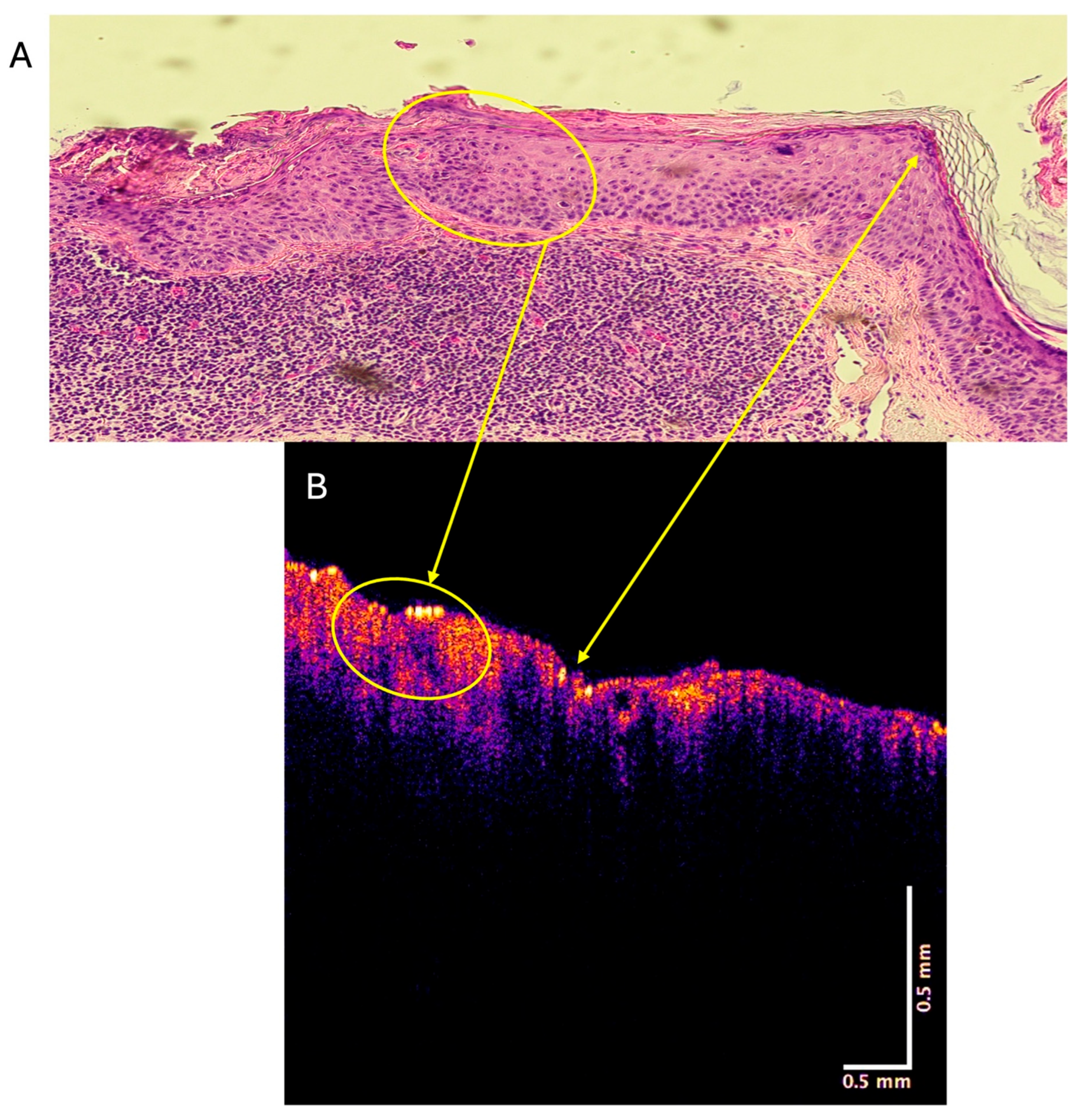
Figure 1 shows 3D reconstructions of a BCC lesion (A) and normal skin (B) made using the volume scan app on the OptoScope. The reconstruction can be cut at any point. The cut shown in Figure 2 is the middle section (slice #64) of the sample. Each section can be analyzed using CNN models developed previously [18,19]. The cross section shown in Figure 2 is collected by cutting the center of Figure 1A horizontally. It represents slice #64 of 128 slices. Figure 3 shows the color-coded image of the nodular BCC shown in Figure 2 as well as the green, blue, and red subchannels. The probability that this cross section (#64) of the lesion is correctly identified as a BCC is 96.4%, as listed in Table 1, based on the CNN models developed previously [19].
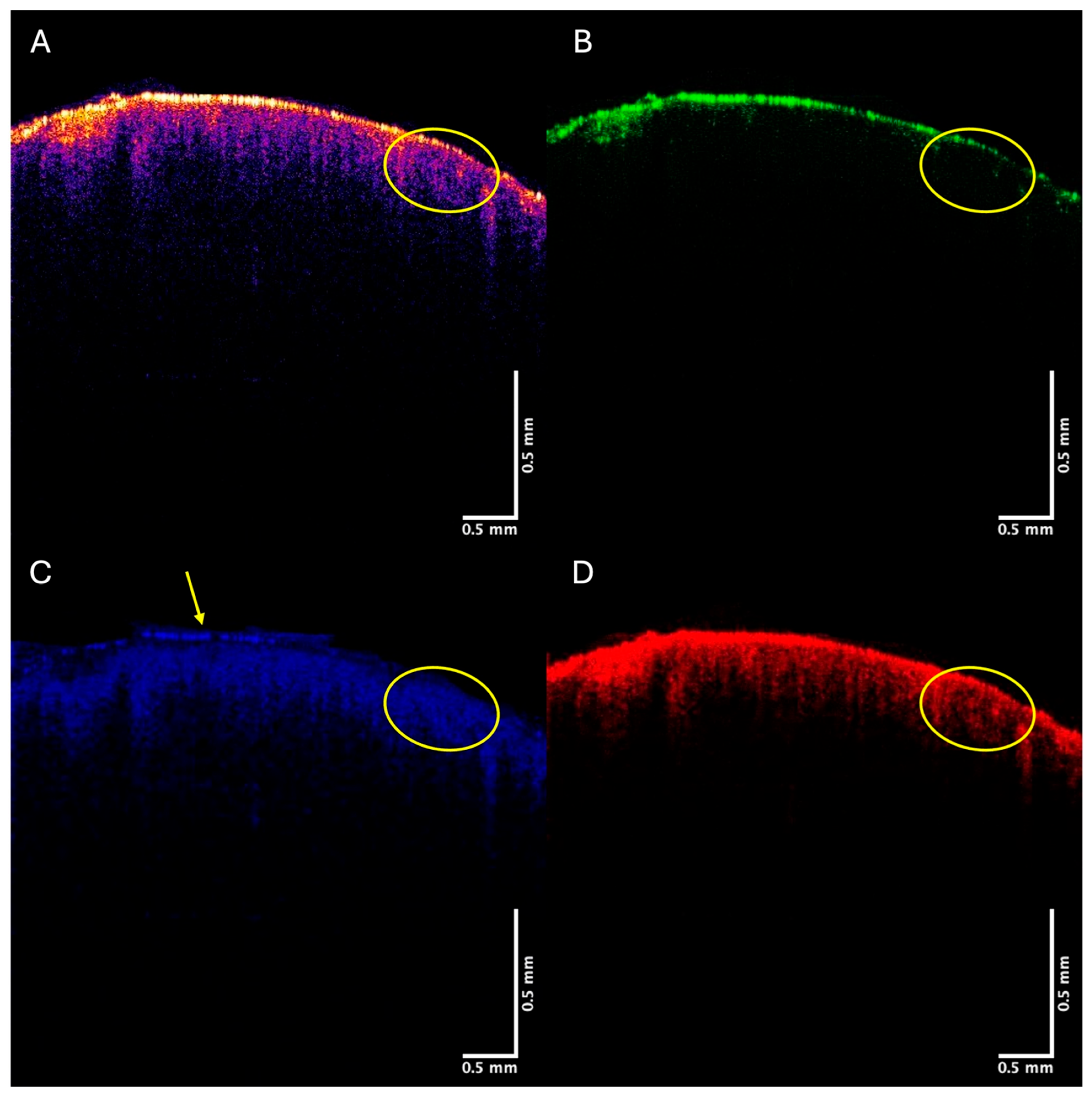
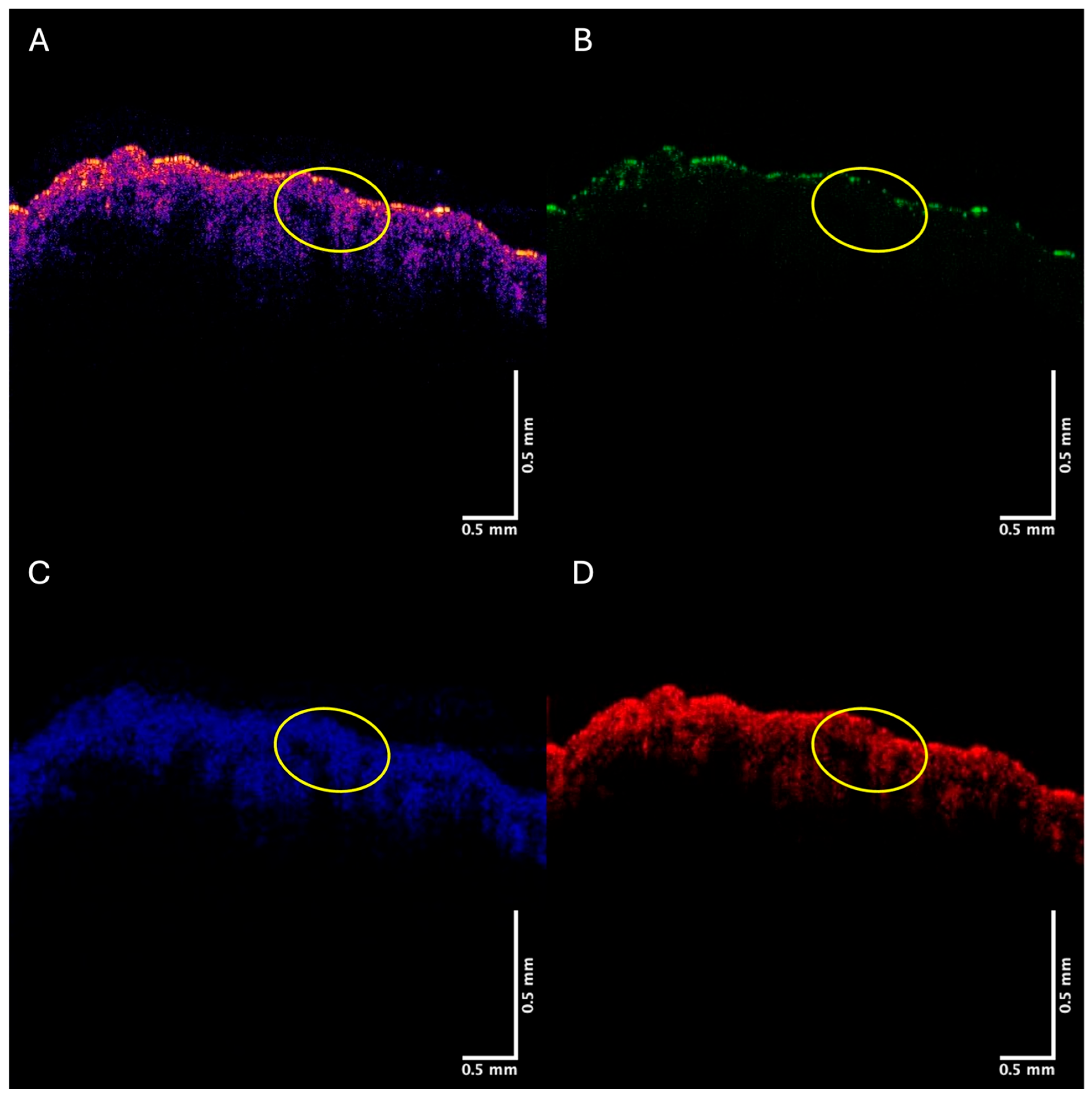
Figure 3 contains an OCT color-coded (A) and subchannel images of a nodular basal cell carcinoma (B, C, D). The color-coded image of a nodular BCC (A) and the green (B), blue (C), and red (D) subchannel images of the BCC are characteristic of changes seen in BCC in the skin. Changes in the green and blue subchannels occur at the location of the cancerous lesion as reported previously [18,19] and are due to Mie scattering by large cellular aggregates and fibrotic collagen deeper into the sample. Notably, the changes in the green and blue subchannel intensities in the cancerous lesion (see circled regions) is characteristic of epithelial-derived skin cancers. The arrow points to an area with a normal hyporeflective region where the skin looks normal but is next to the circled cancer.
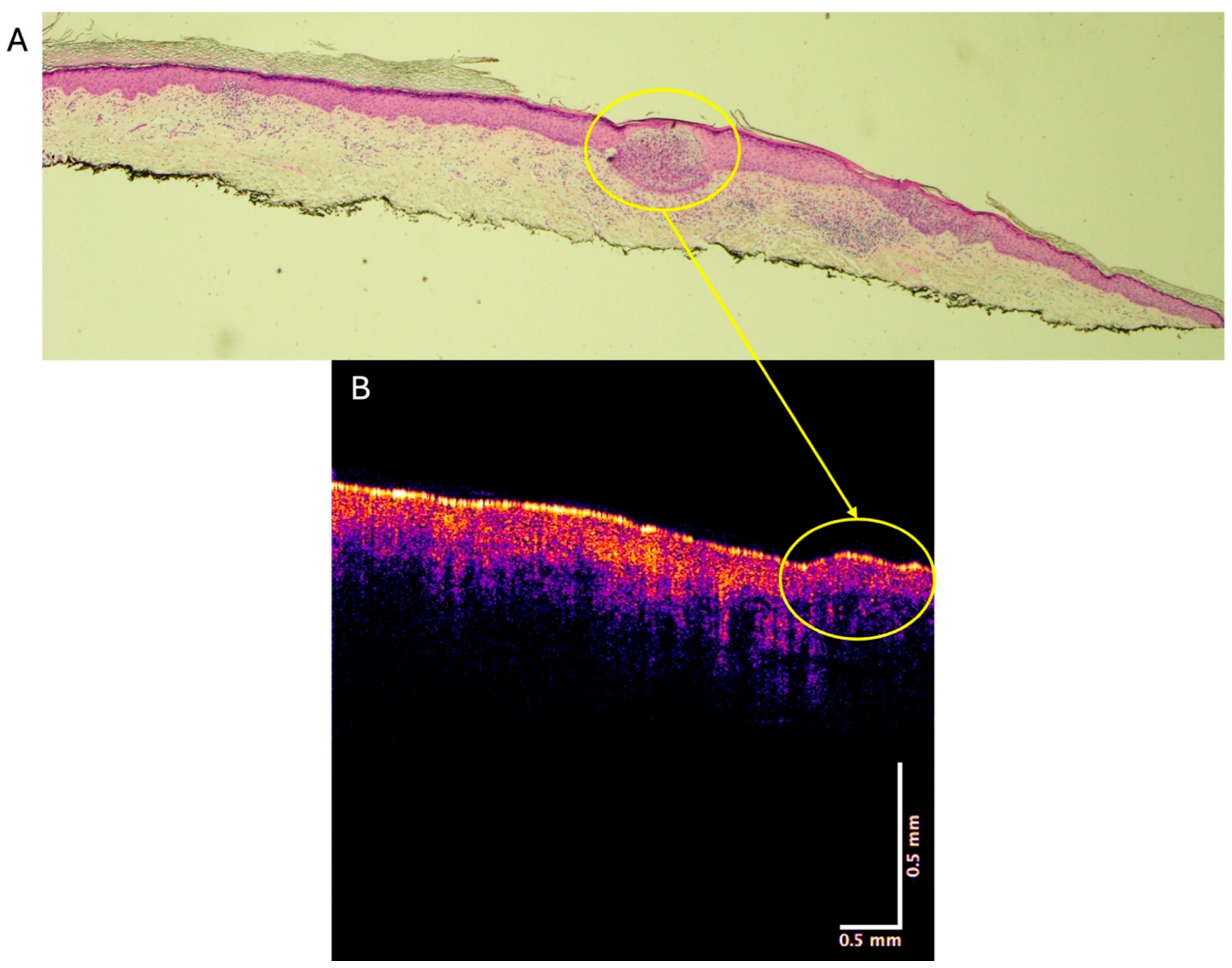
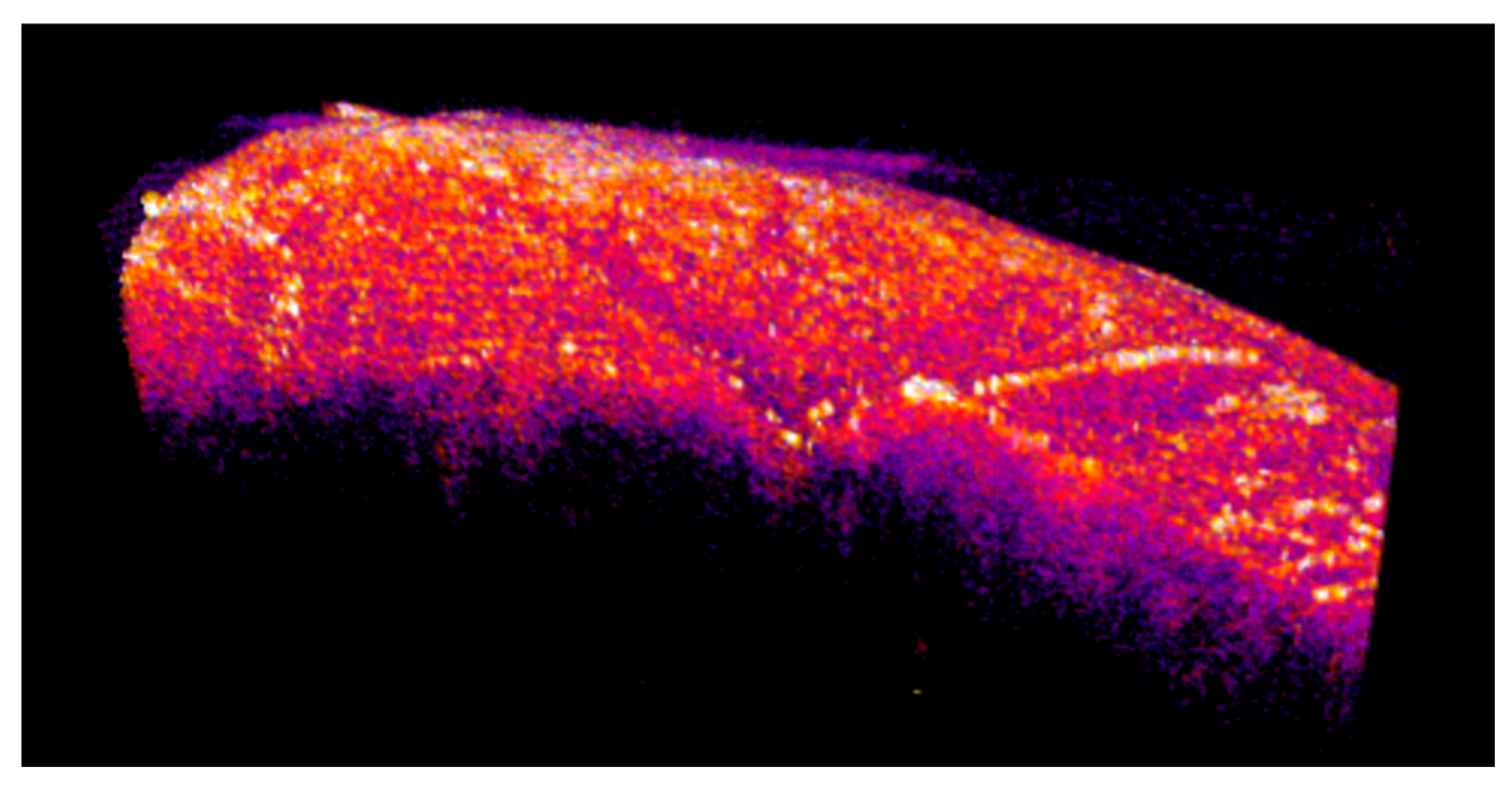
Figure 4 shows a 3D reconstruction of an SCC using the volume scan app on the OptoScope. A H&E-stained histological section of the SCC is shown in Figure 5A, and a color-coded OCT image (horizontal slice #64) of the squamous cell carcinoma is shown in Figure 5B.
Figure 6 is a color-coded OCT image of the SCC shown in Figure 5A as well as the green (B), blue (C), and red (D) subchannels. It is worth noting the loss in the green subchannel intensity in Figure 6B at several locations in the image, and the blue channel lacks the hyporeflective layer near the surface that is found in normal skin [18,19]. The probability that this is an SCC is 96.2% based on the CNN model.
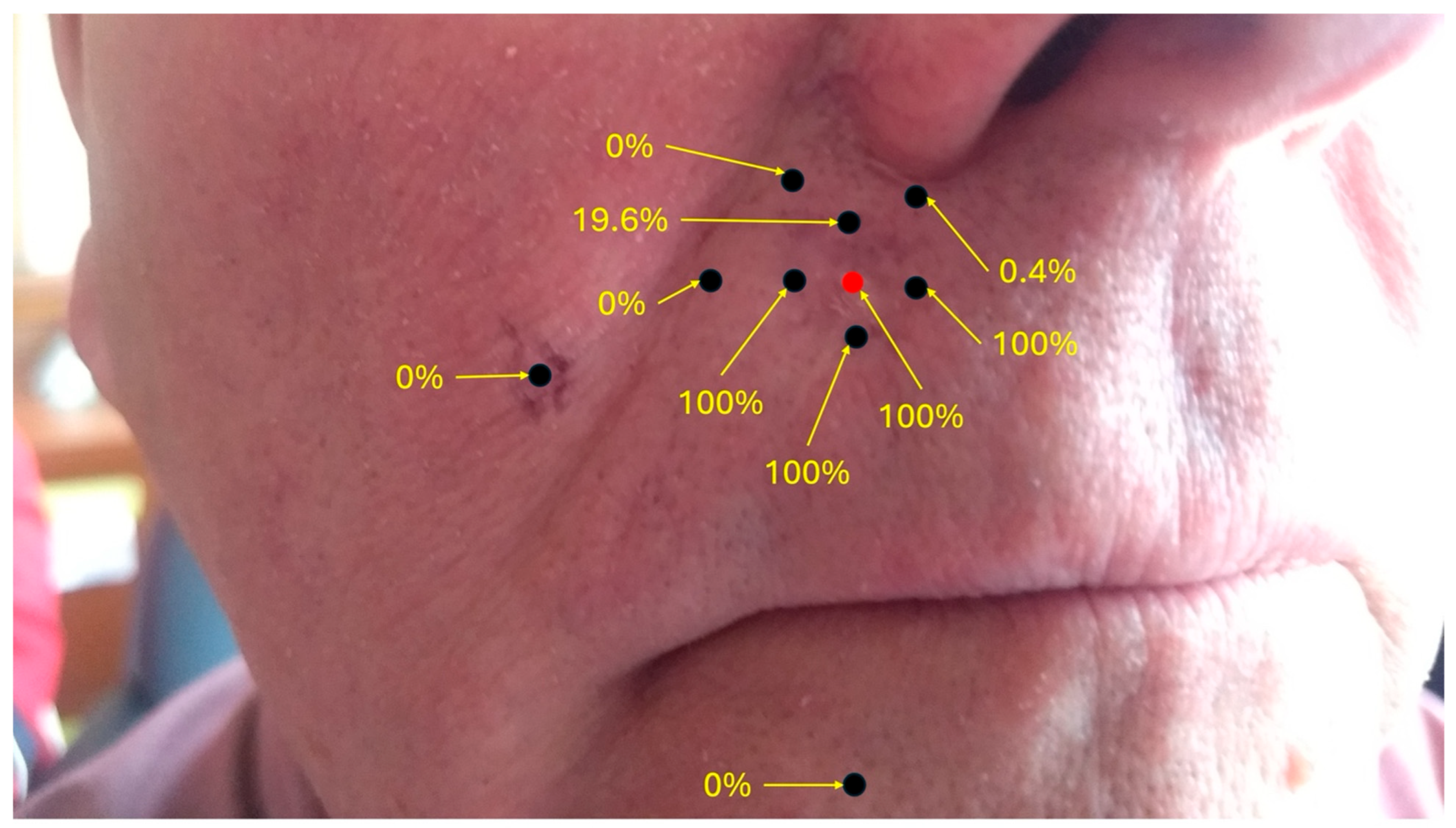
Figure 7 is a photograph of a patient with a BCC diagnosed after a shave biopsy. The biopsy was taken at the 100% point in the center marked in red. Regions surrounding the biopsy were imaged and analyzed using the CNN models. The results show 100% probability of BCC at the central points. Regions away from the biopsy point show lower probabilities of being part of the BCC. These points are likely to be free of cancer.
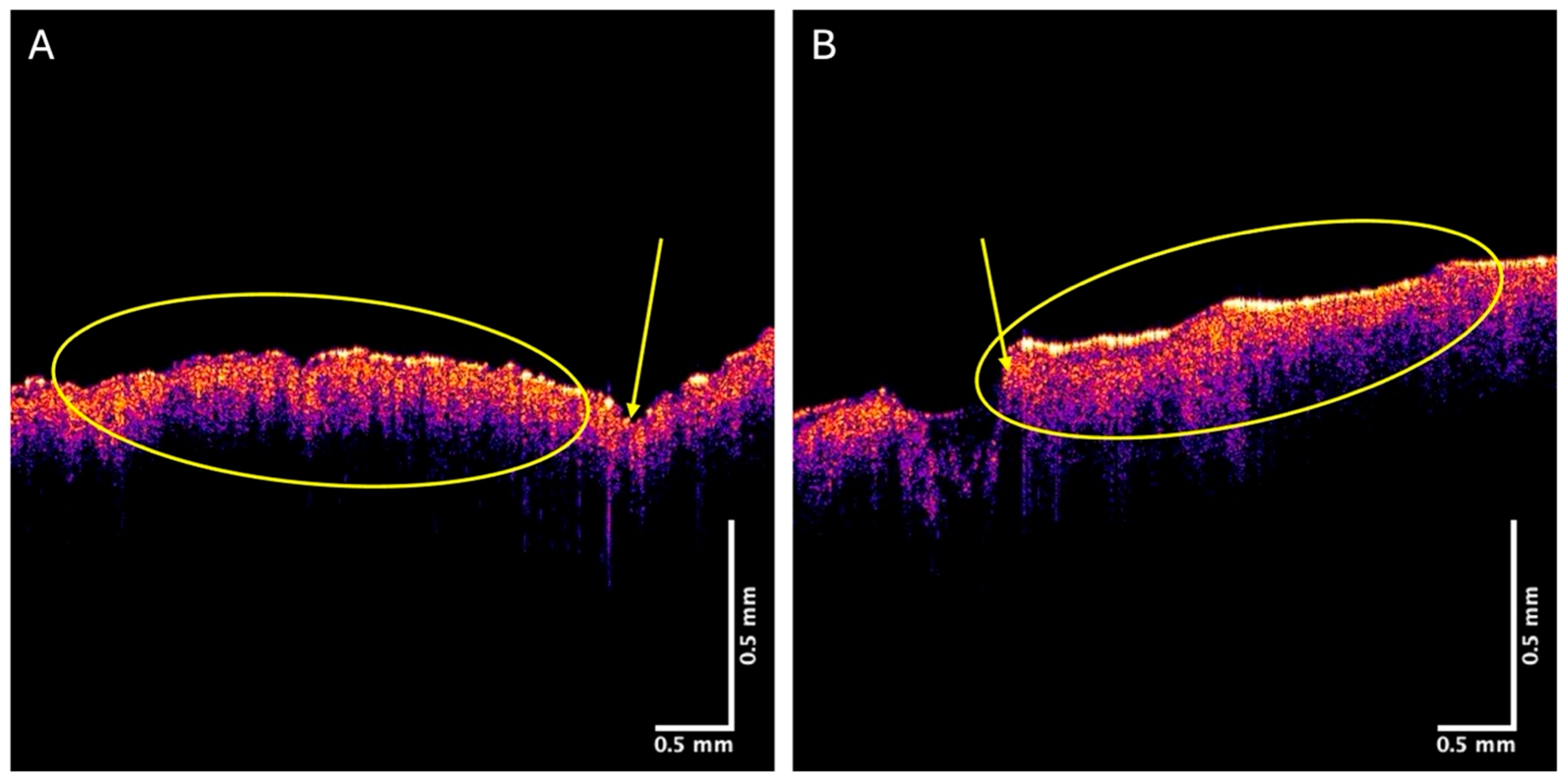
Figure 8 shows edges of BCC and SCC lesions that are circled. The probability based on the CNN models that these edges are cancerous is less than 1%, as listed in Table 1.
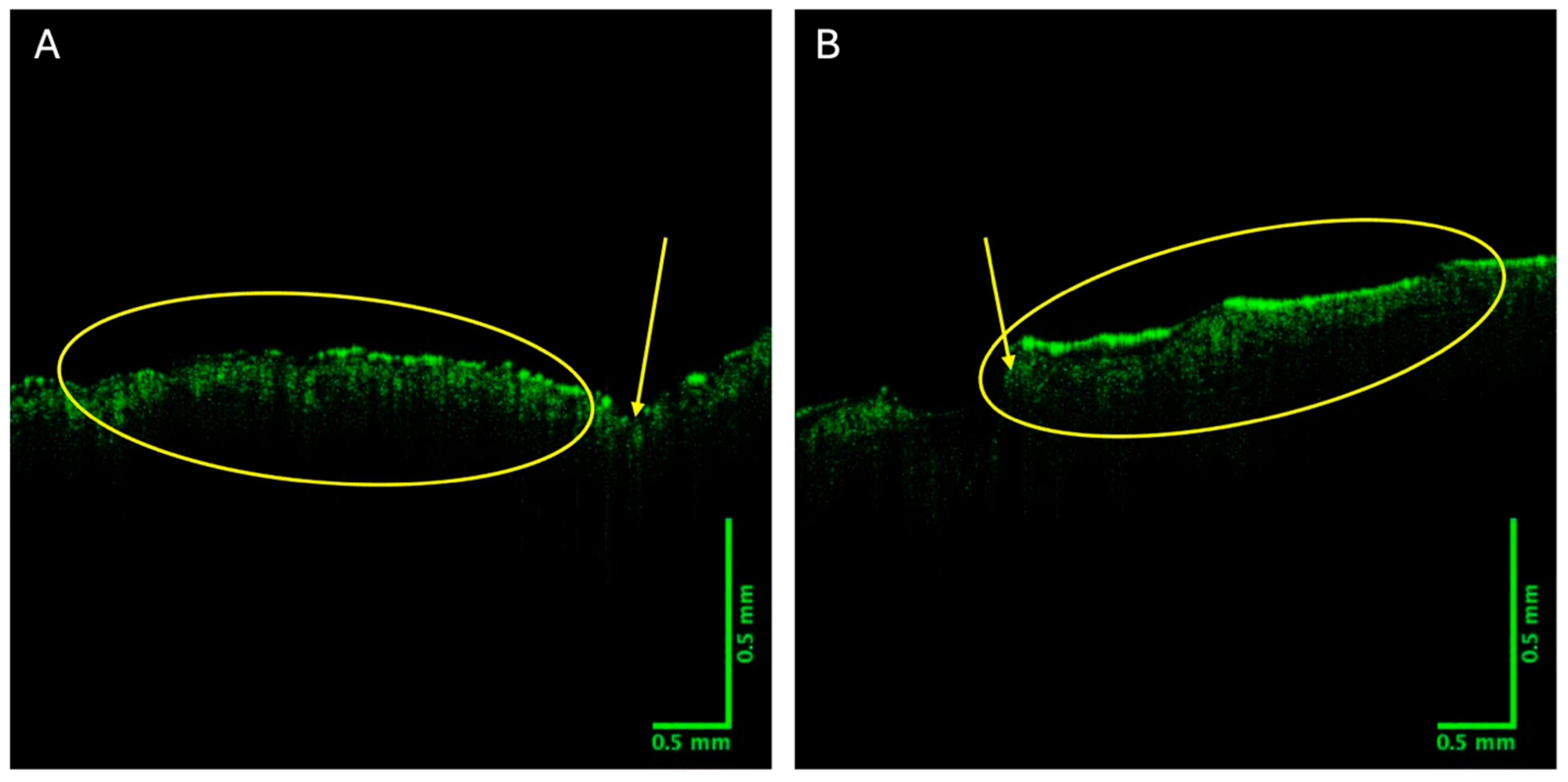
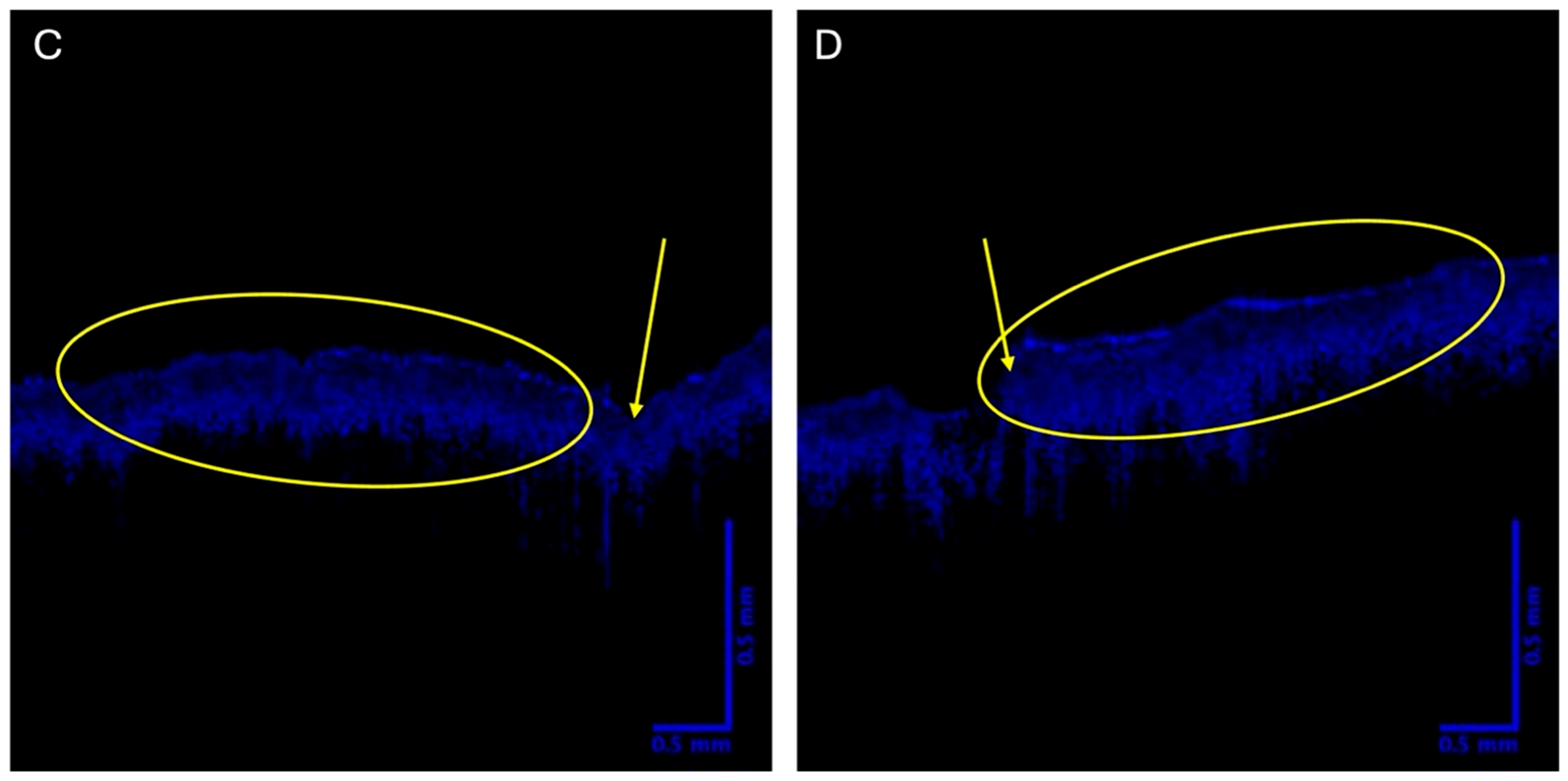
The green and blue subchannel images of the lesion edges shown in Figure 8A of the BCC are shown in Figure 9A,C. Figure 9C,D show the blue subchannel images of the SCC shown in Figure 8B. Note the strong intensity of the green channels in 9A and 9B and the presence of the hyporeflective regions seen in 9C and 9D like that seen in normal skin identify the clear edges of these cancers.

4. Discussion

The ability to noninvasively identify cancerous skin lesions in vivo in 3D provides additional information that can be used by dermatologists and pathologists to facilitate lesion identification and the classification of skin cancers. The 3D image and cross-sectional slices obtained by OCT provide additional information that the dermatologist can use to identify the lesion margins and depth prior to surgery. The OCT images may help pathologists understand the overall structure of the lesion, especially if it is friable and falls apart during embedding and sectioning. Since many of the lesions biopsied are benign these images and AI may help identify benign lesions and cut down on the number of biopsies conducted each year. In areas where dermatologist visits are difficult to schedule the images can be obtained remotely for review by an expert or they can be collected by primary care specialists providing patient access to personalized care in rural locations.
We have previously shown that epithelial cell-derived skin cancers are characterized by new cancer-associated fibroblasts that have resonant frequencies that are higher than normal epithelial cells (80 Hz versus 50 Hz), new thin blood vessels with resonant frequencies of about 130 Hz, and fibrous tissue with resonant frequencies between 250 and 260 Hz [16]. These resonant frequencies are not seen in normal skin and can be used to differentiate normal skin from skin cancers [16,17]. These changes in resonant frequencies are related to changes in the structure and texture of the tissue that can be indirectly derived from analysis of the OCT images using CNN models [18,19].
Three-dimensional reconstructions of BCC and SCC skin cancers can be obtained noninvasively using the volume scan app found on the OptoScope. The app generates 128 serial cross section images of each lesion that are digitally recorded and can be analyzed with CNN models to classify the lesion type. The noninvasive review of OCT virtual serial sections may eliminate bias introduced in sectioning some lesions. It can also be used to locate the clear edges of the lesion that appear to be cancer free. In addition to identifying the type and location of a lesion, OptoScope images and data may provide a means to identify benign lesions that do not need to be biopsied or to be excised. Noninvasive lesion classification would speed up patient evaluation, improve flow of patients through the medical office, and reduce costs of care.
The use of OCT to classify lesions takes about 2 min and can increase patient flow through the dermatologist’s office. It also provides additional information and facilitates identification of the location of the lesion edges as well as the extent of the lesion below the tissue surface. This is useful in identifying difficult cases that may need referral to a plastic surgeon to avoid extensive scarring when an excision is made. This also helps a clinician to gauge the width and depth of the lesion, which is key to planning the extent of treatment that may be needed.
The results shown in this paper indicate that the use of AI in predicting the probability that a lesion is cancerous can be verified visually by reviewing the green and blue subchannel images. Loss of the green subchannel image pixel intensity is associated with the formation of cellular aggregates in BCC, SCC, and melanoma due to Mie scattering of the light deeper into the specimen [18,19]. This appears to occur in all epithelial-derived cancers of the skin and can be confirmed by CNN model predictions after reviewing the subchannel images. The loss of blue channel pixel intensities in cancerous lesions is associated with mutations in the intermediate filaments that are associated with loss of keratin and increases in the cytokeratin found in BCCs, SCCs, and melanomas [18,19].
The cancer-free edges of the lesions can be verified by both lesion images and CNN model predictions. This may provide a way to limit removal of normal skin and may save time during Mohs surgery while waiting for the results of histology conducted on frozen sections. In addition, the instrument can be run remotely, making it possible to collect images in areas where dermatologist visits are difficult to schedule. These images can be viewed remotely and classified by a trained expert.
Dermoscopy and visual inspection are the most widely used methods to detect skin cancers [20,21]. However, more advanced noninvasive diagnostic techniques are being developed. Some of these methods can be employed remotely and data transferred over the Internet. Rapid noninvasive methods are also needed to improve the quality of patient skin checks that can be achieved in part through improving the quality of teledermatology.
Teledermatology has been used remotely by analyzing camera photos or live video conferences of skin problems along with associated clinical histories [20,21,22,23,24,25,26,27,28]. In the past teledermatology was considered a supplement to a patient’s total care and not a replacement for in-person doctor’s visits [20,21,22,23,24,25,26,27,28]. New techniques such as optical coherence tomography, elastic scattering, Raman spectroscopy, high-frequency ultrasound, electrical impedance spectroscopy, and reflectance confocal microscopy [26] may provide more information on skin subsurface structure. Advances in these technologies for the diagnosis of skin cancer are needed to optimize individual patient treatments [21]. Use of OCT and AI may promote the use of teledermatology [20,21,22,23,24,25,26,27,28], especially in remote regions and locations where dermatologists are in short supply. Screening for skin cancer is especially important for subjects that have blue, green, or hazel eye colors and have Fitzpatrick skin types I and II. These patients are likely to develop one or more skin cancers by the age of 70. Improved screening can be achieved through development of additional telemedicine techniques.
The limitations of the methods described in this manuscript are as follows. The accuracy of the convolutional neural network models can be improved by collecting data on additional cancerous as well as noncancerous skin lesions. Further modification of the models may prevent overfitting of the data and provide more accuracy. The models become more accurate as more clinical data are analyzed and the models are refined to minimize overfitting. The technique is also limited by the lack of consensus among dermatopathologists on lesion diagnosis, especially of pigmented lesions including melanomas. Further studies with lesions with mixed components will be conducted to better define how the CNN models can be applied to complex skin cancers.

5. Conclusions

Using noninvasive 3D OCT images of skin lesions with the OptoScope it is possible to identify the location and relative size of skin lesions without touching the skin. These 3D images can be broken down into a series of cross sections that can be reviewed one by one. Each cross section can be classified as benign or cancerous using convolutional neural network (CNN) models that have been previously developed. These models can identify cancerous regions as well as clear edges. The cancerous regions can be verified based on visual review of the color-coded images and the changes of the green and blue subchannel pixel intensities.
By providing rapid OCT images of skin lesions, the dermatologist and pathologist can work together to attempt to eliminate unnecessary biopsies and reduce the need to remove normal skin. These images may provide a means to speed up lesion treatment and provide impetus to use topical treatments on small lesions. Early lesion noninvasive classification techniques may promote better patient screening, especially in older patients with blue, green, or hazel eye colors who will likely have multiple cancerous lesions by the age of 70.

Author Contributions

Conceptualization, F.H.S. and G.K.; methodology, T.D., G.K. and G.K.; formal analysis, F.H.S., T.D. and G.K.; investigation, G.K. and T.D.; data curation, T.D. and G.K.; writing—original draft preparation, F.H.S. and T.D.; writing—review and editing, F.H.S., T.D. and G.K. All authors have read and agreed to the published version of the manuscript.

Funding

Partial support for this project was provided by Ben Franklin Tech Partners during 2024–2025.

Institutional Review Board Statement

The protocol was approved by the I.R.B. at the Robert Wood Johnson Medical School on 16 April 2024, IRB Number: Pro2023002455, and by Advarra for Summit Health.

Informed Consent Statement

All subjects provided consent.

Data Availability Statement

Data are available at optovibronex.com.

Acknowledgments

The authors thank Emrah Bayrak and the Capstone team at Lehigh University composed of Kendalin Flores, Max Tran, Ernesto Sanchez Lopez, Nico Babbio, and Julia Knox for their assistance in programming the convolutional neural network models. The authors would like to thank Cindy Wassef and Amy Pappert for their assistance in collecting some of the biopsies used in this study.

Conflicts of Interest

F.H.S. is a stockholder and T.D. is an employee of OptoVibronex. The remaining authors declare that the research was conducted in the absence of any commercial or financial relationships that could be construed as a potential conflict of interest.

References

  1. Available online: https://gco.iarc.fr/today/en/fact-sheets-cancers (accessed on 22 August 2025).
  2. Available online: https://www.cancer.org/cancer/types/basal-and-squamous-cell-skin-cancer/about/key-statistics.html (accessed on 6 March 2025).
  3. Available online: https://www.globenewswire.com/news-release/2025/08/11/3130726/28124/en/Digital-Biopsy-Market-Insights-Competitive-Landscape-and-Forecast-Report-2024-2032-Rising-Cancer-Cases-and-Adoption-of-Advanced-Digital-Biopsy-Systems-Drive-Market-Growth.html (accessed on 23 August 2025).
  4. Negrutiu, M.; Danescu, S.; Popa, T.; Focsan, M.; Vesa, S.C.; Baican, A. Advancements in Basal Cell Carcinoma Diagnosis: Non-Invasive Imaging and Multimodal Approach. J. Clin. Med. 2024, 13, 39. [Google Scholar] [CrossRef]
  5. Guy, G.P., Jr.; Ekwueme, D.U.; Tangka, F.K.; Richardson, L.C. Melanoma Treatment Costs: A Systematic Review of the Literature, 1990–2011. Am. J. Prev. Med. 2012, 43, 537–545. [Google Scholar] [CrossRef]
  6. Veeramani, N.; Jayaraman, P. A promising AI based super resolution image reconstruction technique for early diagnosis of skin cancer. Sci. Rep. 2025, 15, 5084. [Google Scholar] [CrossRef]
  7. Song, A.H.; Williams, M.; Williamson, D.F.K.; Jaume, G.; Zhang, A.; Chen, B.; Serafin, R.; Liu, J.T.C.; Baras, A.; Parwani, A.V.; et al. Weakly Supervised AI for Efficient Analysis of 3D Pathology Samples. arXiv 2023, arXiv:2307.14907v1. [Google Scholar] [CrossRef]
  8. Satheesha, T.Y.; Satyanarayana, D.; Prasad, M.N.G.; Dhruve, K.D. Melanoma Is Skin Deep: A 3D Reconstruction Technique for Computerized Dermoscopic Skin Lesion Classification. IEEE J. Transl. Eng. Health Med. 2017, 5, 4300117. [Google Scholar] [CrossRef] [PubMed]
  9. Pichat, J.; Iglesias, J.E.; Yousry, T.; Ourselin, S.; Modat, M. A survey of methods for 3D histology reconstruction. Med. Image Anal. 2018, 46, 73e105. [Google Scholar] [CrossRef] [PubMed]
  10. Kurza, A.; Hei Müllerb, H.; Katherc, J.N.; Schneidera, L.; Buchera, T.C.; Titus, J.; Brinkera, T.J. 3-Dimensional Reconstruction From Histopathological Sections: A Systematic Review. Lab. Investig. 2024, 104, 102049. [Google Scholar] [CrossRef]
  11. Tanaka, N.; Kanatani, S.; Tomer, R.; Sahlgren, C.; Kronqvist, P.; Kaczynska, D.; Louhivuori, L.; Kis, L.; Lindh, C.; Mitura, P.; et al. Wholetissue biopsy phenotyping of three-dimensional tumours reveals patterns of cancer heterogeneity. Nat. Biomed. Eng. 2017, 1, 796–806. [Google Scholar] [CrossRef] [PubMed]
  12. Shafi, S.; Parwani, A.V. Artificial intelligence in diagnostic pathology. Diagn. Pathol. 2023, 18, 109. [Google Scholar] [CrossRef]
  13. McGenity, C.; Clarke, E.L.; Jennings, C.; Matthews, G.; Cartlidge, C.; Freduah-Agyemang, H.; Stocken, D.D.; Treanor, D. Artificial intelligence in digital pathology: A systematic review and meta-analysis of diagnostic test accuracy. npj Digit. Med. 2024, 7, 114202. [Google Scholar] [CrossRef]
  14. Tawfik, O.W.; Subramanian, J.; Caughron, S.; Mana, P.; Ewing, E.; Aboudara, M.; Borsa, J.; Schafer, L.; Saettele, T.; Jonnalagadda, S. Challenges in Pathology Specimen Processing in the New Era of Precision Medicine. Arch. Pathol. Lab. Med. 2022, 146, 603–610. [Google Scholar] [CrossRef]
  15. Chen, R.J.; Ding, T.; Lu, M.Y.; Williamson, D.F.K.; Jaume, G.; Song, A.H.; Chen, B.; Zhang, A.; Shao, D.; Shaban, M.; et al. Towards a general-purpose foundation model for computational pathology. Nat. Med. 2024, 30, 850–862. [Google Scholar] [CrossRef] [PubMed] [PubMed Central]
  16. Silver, F.H.; Deshmukh, T.; Ryan, N.; Romm, A.; Nadiminti, H. “Fingerprinting” Benign and Cancerous Skin Lesions Using Vibrational Optical Coherence Tomography: Differentiation among Cancerous Lesion Types Based on the Presence of New Cells, Blood Vessels, and Fibrosis. Biomolecules 2022, 12, 1332. [Google Scholar] [CrossRef] [PubMed]
  17. Silver, F.H.; Kelkar, N.; Deshmukh, T.; Horvath, I.; Shah, R.G. Mechano-Vibrational Spectroscopy of Tissues and Materials Using Vibrational Optical Coherence Tomography: A New Non-Invasive and Non-Destructive Technique. Recent Prog. Mater. 2020, 2, 010. [Google Scholar] [CrossRef]
  18. Silver, F.H.; Deshmukh, T.; Kollipara, G.; Patel, A. Noninvasive Screening of Basal Cell Carcinomas: A Comparison of the Structure and Physical Properties of Large and Small Nodular Lesions Using Vibrational OCT and Histopathology. Onco 2025, 5, 23. [Google Scholar] [CrossRef]
  19. Silver, F.H.; Deshmukh, T.; Ritter, K.; Nadiminti, H. Clinical Use of Vibrational Coherence Tomography and Optical Coherence Tomography to Noninvasively Classify Skin Cancers: A New Telemedicine Technique. Med. Res. Arch. 2025, 13. [Google Scholar] [CrossRef]
  20. Haleem, A.; Javaid, M.; Singh, R.P.; Suman, R. Telemedicine for healthcare: Capabilities, features, barriers, and applications. Sens. Int. 2021, 2, 100117. [Google Scholar] [CrossRef]
  21. Reed, M.; Huang, J.; Somers, M.; Hsueh, L.; Graetz, I.; Millman, A.; Muelly, E.; Gopalan, A. Telemedicine Versus In-Person Primary Care: Treatment and Follow-up Visits. Ann. Intern. Med. 2023, 176, 1349–1357. [Google Scholar] [CrossRef]
  22. Su, Z.; Li, C.; Fu, H.; Wang, L.; Wu, M.; Feng, X. Development and prospect of telemedicine. Intell. Med. 2024, 4, 1–9. [Google Scholar] [CrossRef]
  23. Sud, E.; Anjankar, A. Applications of Telemedicine in Dermatology. Cureus 2022, 14, e27740. [Google Scholar] [CrossRef]
  24. Mocharnuk, J.; Lockard, T.; Georgesen, C.; English, J.C. Inpatient Teledermatology: A Review. Curr. Dermatol. Rep. 2022, 11, 52–59. [Google Scholar] [CrossRef]
  25. McKoy, K.; Halpern, S.; Mutyambizi, K. International Teledermatology Review. Curr. Dermatol. Rep. 2021, 10, 55–66. [Google Scholar] [CrossRef]
  26. Ibrahim, A.E.; Magdy, M.; Khalaf, E.M.; Mostafa, A.; Arafa, A. Teledermatology in the time of COVID-19. Int. J. Clin. Pract. 2021, 75, e15000. [Google Scholar] [CrossRef] [PubMed]
  27. Maddukuri, S.; Patel, J.; Lipoff, J.B. Teledermatology Addressing Disparities in Health Care Access: A Review. Curr. Dermatol. Rep. 2021, 10, 40–47. [Google Scholar] [CrossRef] [PubMed]
  28. Ahuja, S.; Briggs, S.M.; Collier, S.M. Teledermatology in Rural, Underserved, and Isolated Environments: A Review. Curr. Dermatol. Rep. 2022, 11, 328–335. [Google Scholar] [CrossRef] [PubMed]
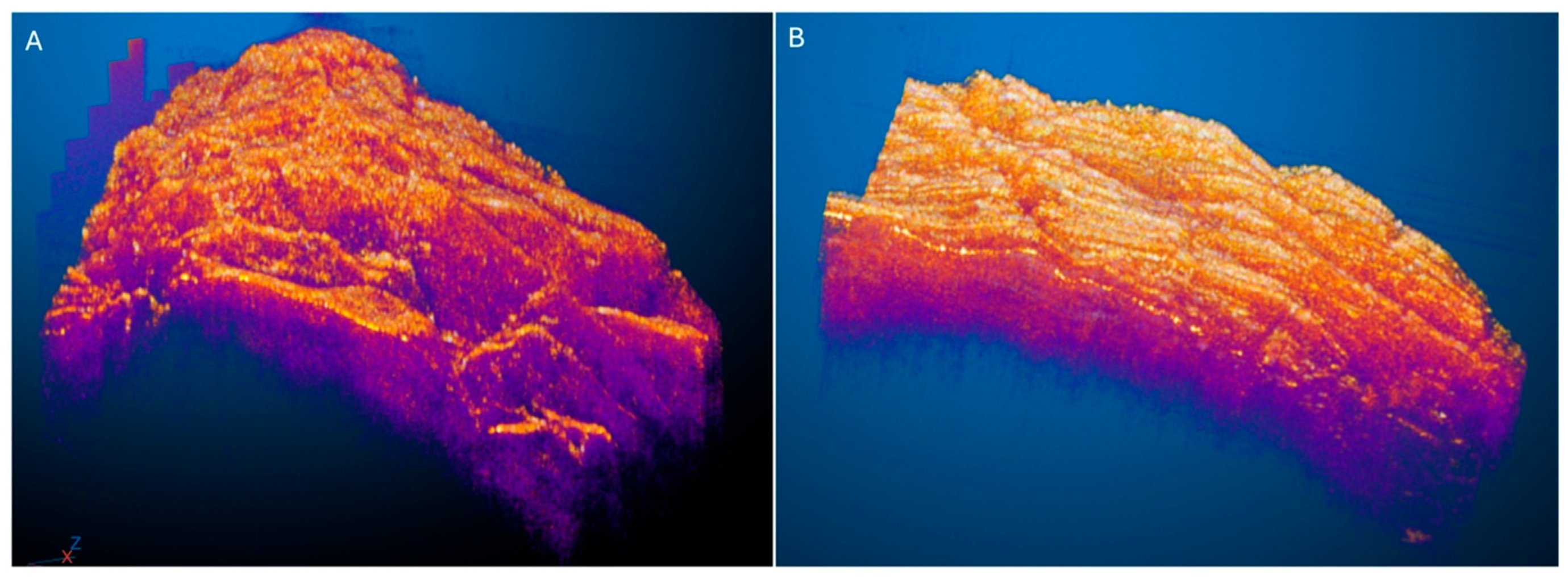
Figure 1. Three-dimensional OCT images of a basal cell carcinoma (BCC) (A) and normal skin (B) obtained in vivo using OptoScope. Three-dimensional reconstructions of a BCC (A) and normal skin (B) made using the volume scan app on the OptoScope. The 3D reconstruction can be cut at any point as demonstrated in Figure 2 to identify where the lesion is located. The 3D reconstructions were created by combining 128 horizontal scans using MATLAB R2024B. The lesion is predicted to be a BCC based on the CNN model and the evaluation of slice #64 of the cross section shown in Figure 2 (see Table 1). The yellow color is that of the stratum corneum and the blue represents the collagen of the papillary dermis.
Onco 06 00003 g001
Figure 2. Histopathology of a basal cell carcinoma (BCC) (A) and an OCT image of the same location (B) in the lesion. A comparison of the histopathology of a section of a nodular BCC stained with H&E from a patient (A) and a color-coded OCT cross-sectional image (slice #64) of the lesion (B) selected by viewing the OCT image used in constructing Figure 1. Note the BCC lesion is circled in the images. The lesion is located by lining up similar surface curvature changes that occur in both histology and OCT images.
Onco 06 00003 g002
Figure 3. Color-coded OCT image of a cross section of a nodular BCC (A) as well as the green (B), blue (C), and red (D) subchannels. The lesion shown in Figure 2 is circled in the images. Note the green subchannel (cell layers) and blue channel images change in skin cancer. The green channel becomes less intense in the cancerous lesion, while the hyporeflective region at the arrow is missing in the cancerous lesion in the blue channel. The hyporeflective region is associated with the normal keratin content of the intermediate filaments. Mutations in the keratin are associated with a loss of the hyporeflective layer [18,19] between the stratum corneum and the papillary layer. The changes in the green and blue subchannel intensities in the cancerous lesion (see circles) is characteristic of epithelial-derived skin cancers.
Onco 06 00003 g003
Figure 4. Three-dimensional OCT image of normal a SCC in vivo. Three-dimensional reconstruction using a series of a series of SCC cross sections (like #64 shown in Figure 5) using 128 horizontal image slices obtained using the volume scan app on the OptoScope and combined into a single image using MATLAB. The 3D image can be cut at any point to review the details of the OCT cross section and to evaluate the lesion using a CNN model.
Onco 06 00003 g004
Figure 5. Histological (A) and OCT (B) images of a squamous cell carcinoma. (A) H&E-stained histological section of the SCC shown in Figure 4 as well as a color-coded OCT cross section (slice #64) of the squamous cell carcinoma (B). Note the cancerous lesion is circled in (A,B). The arrows shown point to similar regions of curvature in the histology (A) and the OCT image (B). Note there are several other regions with SCC lesions in this sample and only one of them is circled in 5A and 5B for simplicity.
Onco 06 00003 g005
Figure 6. Color-coded OCT image (A) and subchannel images (BD) of the squamous cell carcinoma (SCC) shown in Figure 5. The yellow circles show the location of the lesion in each part of the figure. A color-coded OCT image of an SCC (slice #64) (A) as well as the green (B), blue (C), and red (D) subchannels. Note the loss of the green channel in (B) and the absence of any hyporeflective region in the blue channel (C) indicate the location of the cancer. The extensive loss of the green channel in cancerous tissue is due to the formation of large cellular and tissue aggregates, while the loss of the hyporeflective region of the blue channel is a consequence of mutations in the keratin found in the intermediate filaments of the cancerous tissue. Forward light scattering deeper into the tissue and decreased subchannel image intensity, termed Mie scattering, is due to the formation of large clumps of cells, an increased number of blood vessels, and large collagen fibers found in fibrous tissues, which are all indicative of cancerous tissue.
Onco 06 00003 g006
Figure 7. Facial photograph of a patient diagnosed with a basal cell carcinoma (BCC) at the point shown in red. A photograph of a patient with a BCC identified based on the results of a shave biopsy and histopathology taken in the lesion center (red point labeled 100% in the center). The immediate regions around the center appear to be cancerous (probability of 100%), while the outer regions and below the lower lip appear to be cancer free based on the CNN results (probability less than 20%).
Onco 06 00003 g007
Figure 8. Color-coded OCT images of the edges of a BCC (A) and an SCC (B). The circled areas in the top left in (A) and the top right in (B) were analyzed with the CNN models and by histopathology. The probability that the edges in (A,B) contain cancerous lesions is less than 1%, as shown in Table 1. The probabilities obtained from the CNN models suggest that the edges are like normal skin, which is consistent with the pathology report that the edges of the lesions are clear of cancer.
Onco 06 00003 g008
Figure 9. OCT subchannel images of the lesions shown in Figure 8. The green and blue subchannel images of the BCC lesion edges are shown in (A,B), while (C,D) show the green and blue subchannel images of the SCC shown in Figure 8B. Note the strong intensity of the green channels in (A,C) and the presence of the hyporeflective regions in (B,D) like that seen in normal skin. These reflections are due to light scattering by cells and intermediate filaments rich in keratin. Analysis of these lesion edges suggests that they are free of cancerous lesions based on CNN model analysis of the images, as shown in Table 1, and the histopathology report of the dermatopathologist. The yellow arrows show the interface between the area biopsied and the cancer-free edges of the lesions. Note the mag bars are the same size in all the figure parts.
Onco 06 00003 g009aOnco 06 00003 g009b
Table 1. Probabilities of skin lesion types based on OCT images using convolutional neural network (CNN) models [19,20] for images shown in this paper. The sensitivity and specificity were reported to be between 93.4 and 100% and the area under the operating curve was between 0.97 and 1.00 [19,20]. Cancerous lesions were defined as having probabilities greater than 90%. Benign lesions had probabilities of less than 20%. Note that the CNN model correctly identifies both BCC and SCC cancers (Figure 2, Figure 3, Figure 4, Figure 5, Figure 6 and Figure 7) in agreement with the dermatopathologist’s diagnosis. The edges of the lesions were reported clear of the cancer in the pathology reports, in agreement with the CNN model predictions based on the images of the lesion edges (Figure 8 and Figure 9).
BCC ProbabilitySCC Probability
Figure 2 BCC Diagnosis96.4%0.56%
Figure 5 SCC Diagnosis0.01%96.2%
Figure 8A (BCC edge)0.14%0.05%
Figure 8B (SCC edge)0.01%0.43%
Disclaimer/Publisher’s Note: The statements, opinions and data contained in all publications are solely those of the individual author(s) and contributor(s) and not of MDPI and/or the editor(s). MDPI and/or the editor(s) disclaim responsibility for any injury to people or property resulting from any ideas, methods, instructions or products referred to in the content.