
Review

Family-Centred Care for Children with Biopsychosocial Support Needs: A Scoping Review
1
Centre of Health Activity and Rehabilitation Research, School of Physiotherapy, University of Otago, Dunedin 9016, New Zealand
2
Department of Geography, University of Otago, Dunedin 9016, New Zealand
*
Author to whom correspondence should be addressed.
Disabilities 2021, 1(4), 301-330; https://doi.org/10.3390/disabilities1040022

Submission received: 5 July 2021 / Revised: 13 September 2021 / Accepted: 22 September 2021 / Published: 27 September 2021

Abstract

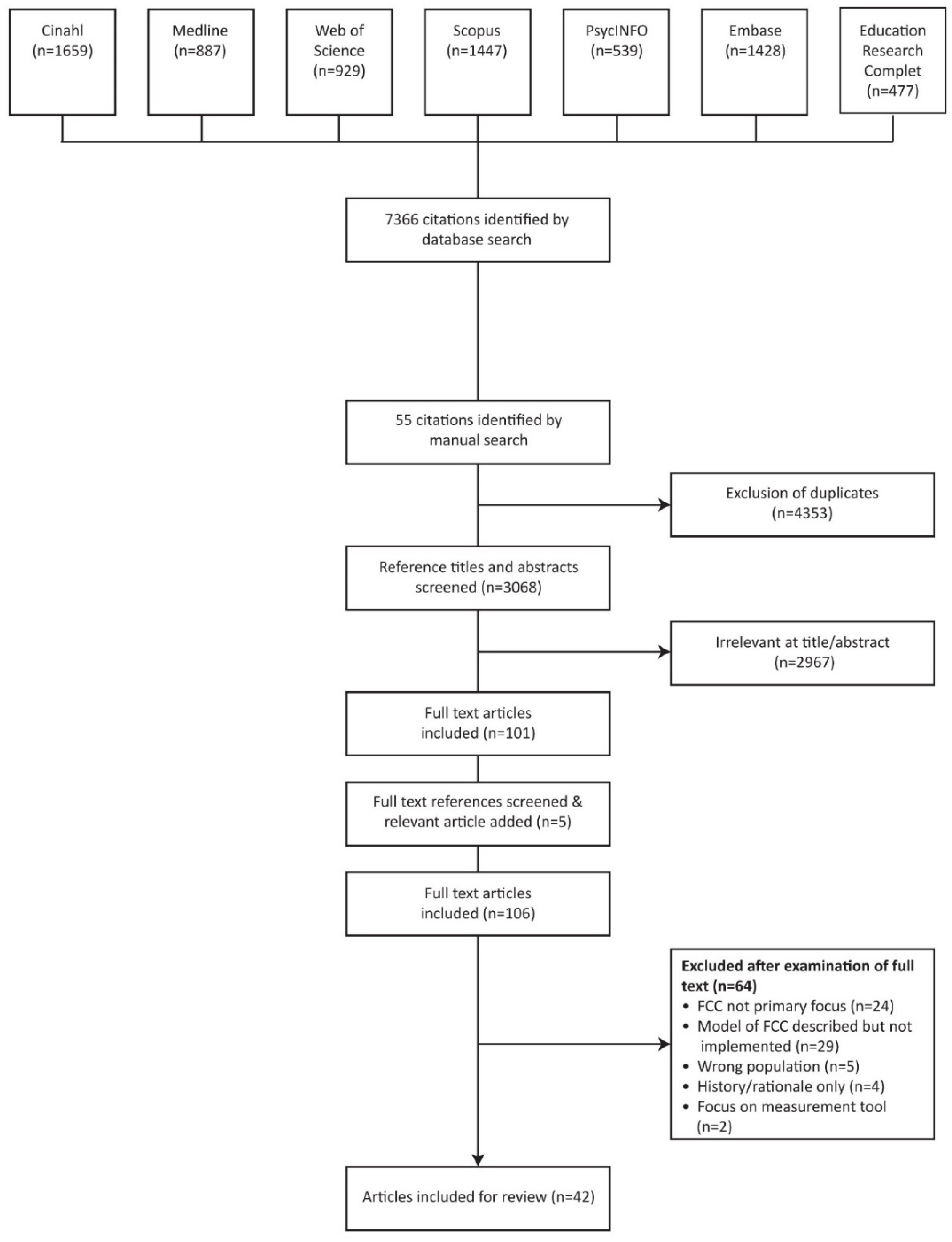
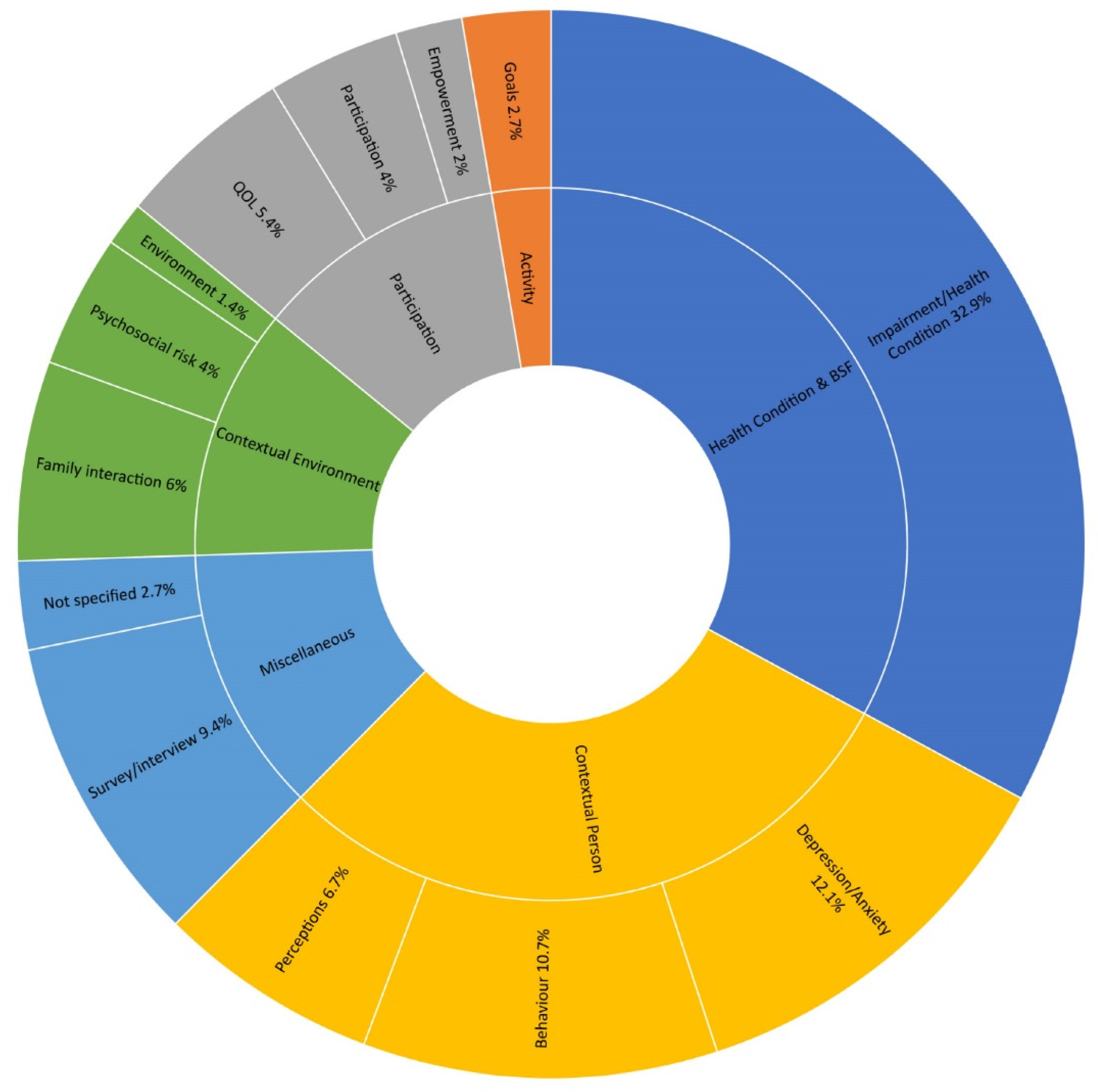
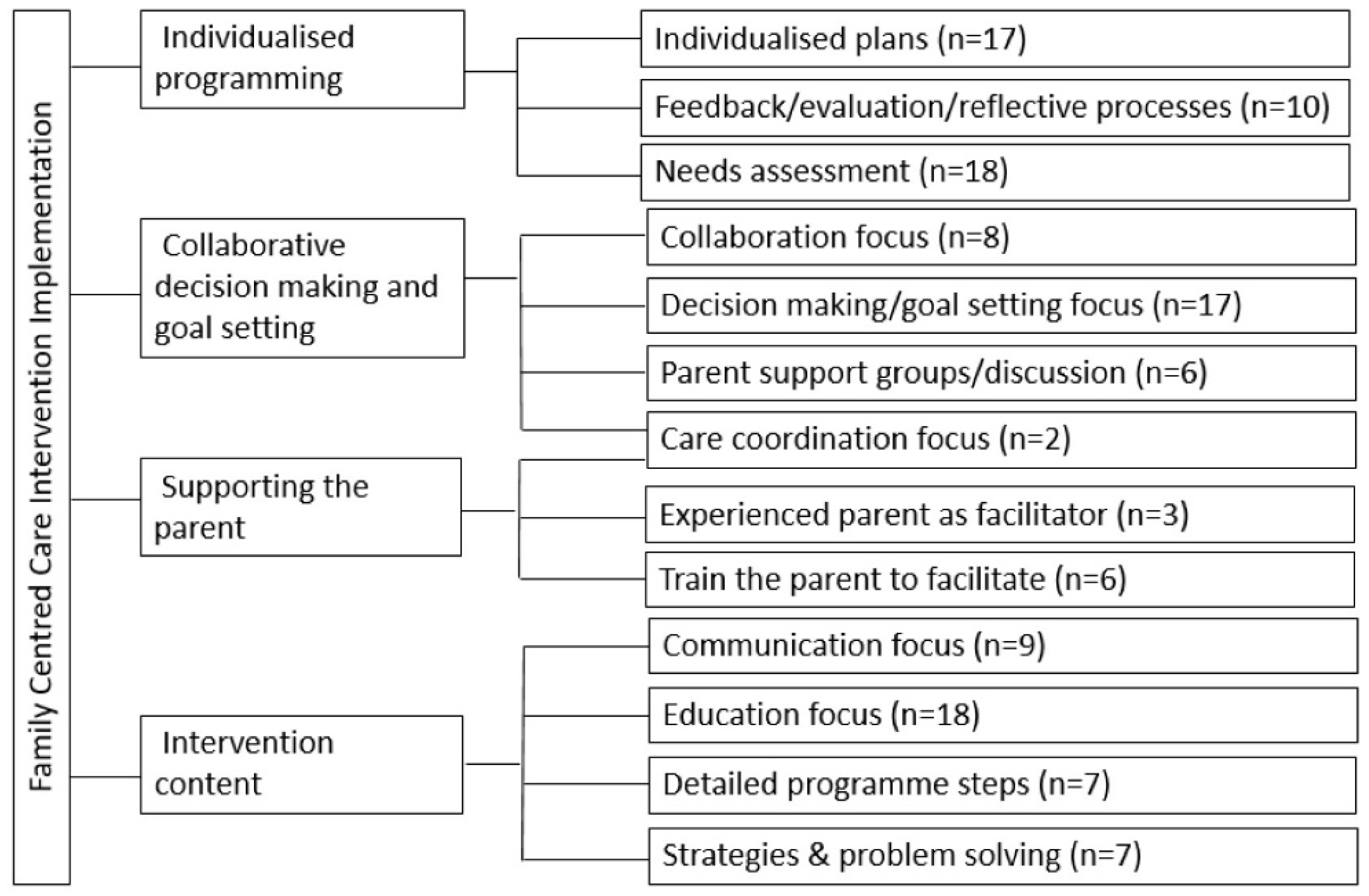
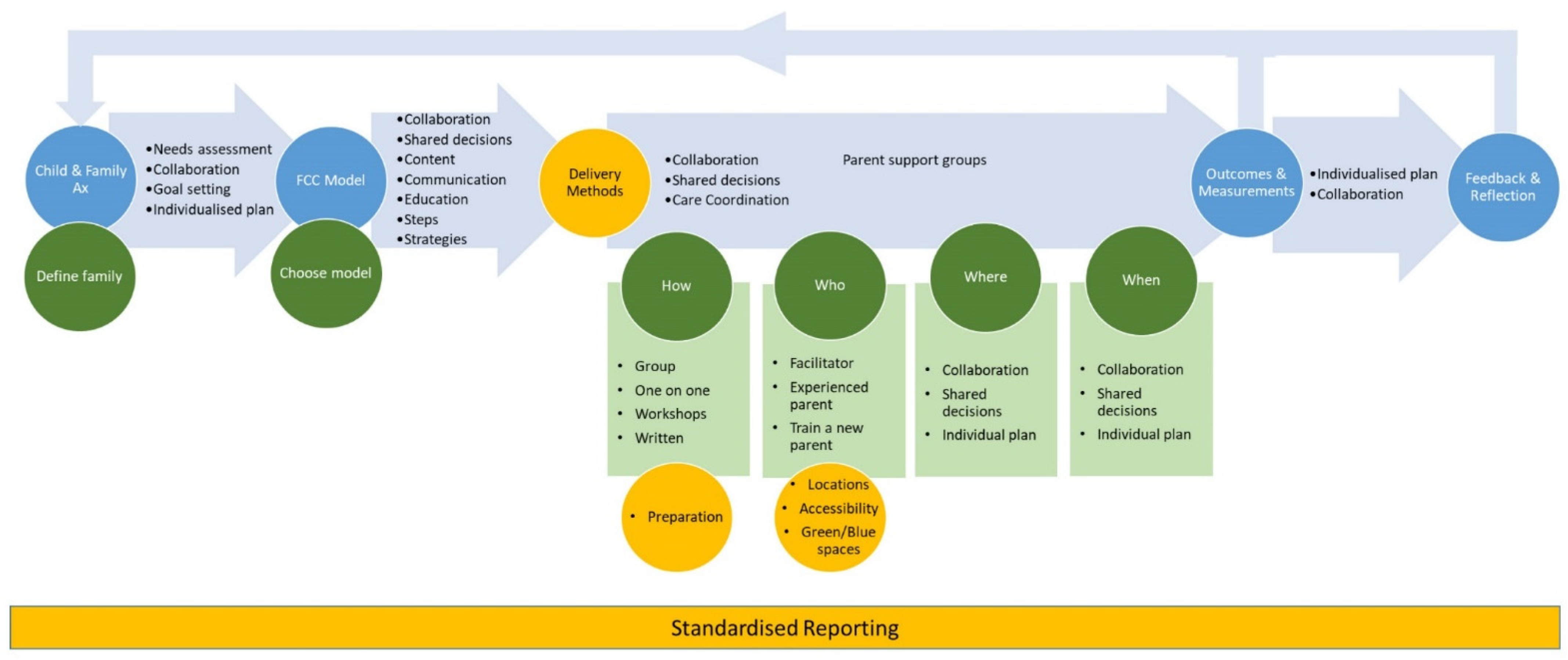
Children’s health and wellness are influenced by a wide range of biological, psychological or social factors with a rising number of children requiring supportive healthcare. Family-centred care is considered best practice paediatric healthcare; however, processes and actions are not well explored in the literature. This research aimed to synthesise the evidence on the processes of implementation of family-centred care for children with biopsychosocial support needs and identify outcome measures used in the studies. A scoping search across Cinahl, Medline, Web of Science, Scopus, Psyc INFO, Embase and Education Research Complete for English language publications published between 2005 and 14 October 2020 was conducted. A total of 42 studies met the inclusion criteria: a focus on the processes of implementation of family-centred care for children aged 0–21 years with biopsychosocial needs. Diversity in the implementation of interventions of family-centred care was evident due to heterogeneity in study populations, methodology and reporting. Health condition or impairment focused outcome measures were found to be standard with a paucity of outcomes measuring participation or activity. Theoretical and practical elements of implementing interventions were identified as novel and key attributes of family-centred care and contributed to a new standardised framework for the processes of implementation of family-centred care. Future research should address whether mapping family-centred care to the International Classification of Function model helps families and health professionals identify meaningful participation and activity outcomes, which in turn may guide the processes of implementation of family-centred care interventions.
Keywords: family-centred care; paediatric; biopsychosocial needs; healthcare; outcome measures family-centred care; paediatric; biopsychosocial needs; healthcare; outcome measures