
Development and Performance of a Vacuum-Based Seawater Desalination System Driven by a Solar Water Heater

 ,
, 
Abstract
1. Introduction
1.1. Rationale of Research
1.2. Research Gaps
1.3. Research Purpose
2. Experimental Apparatus and Field Test Setup
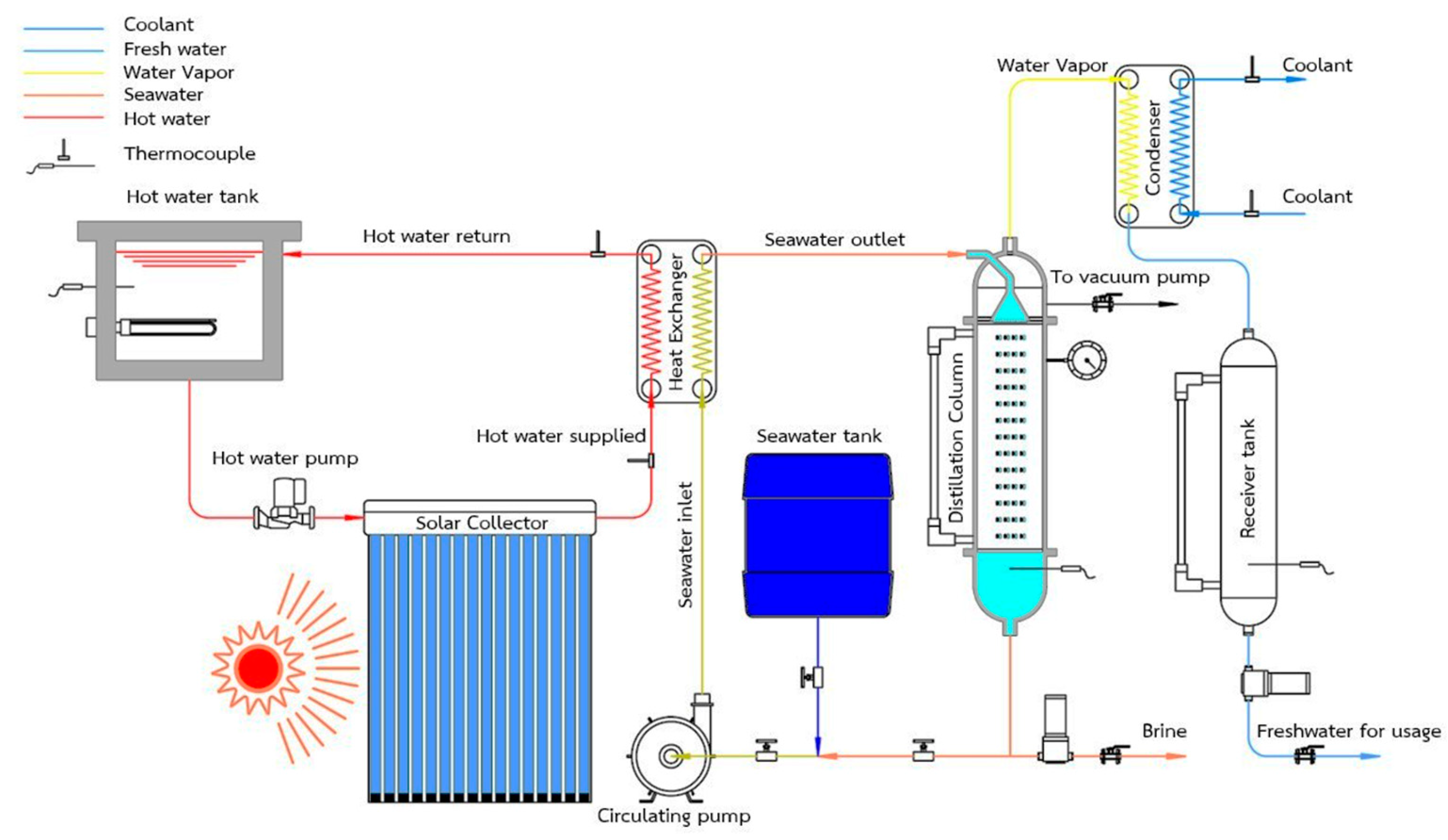
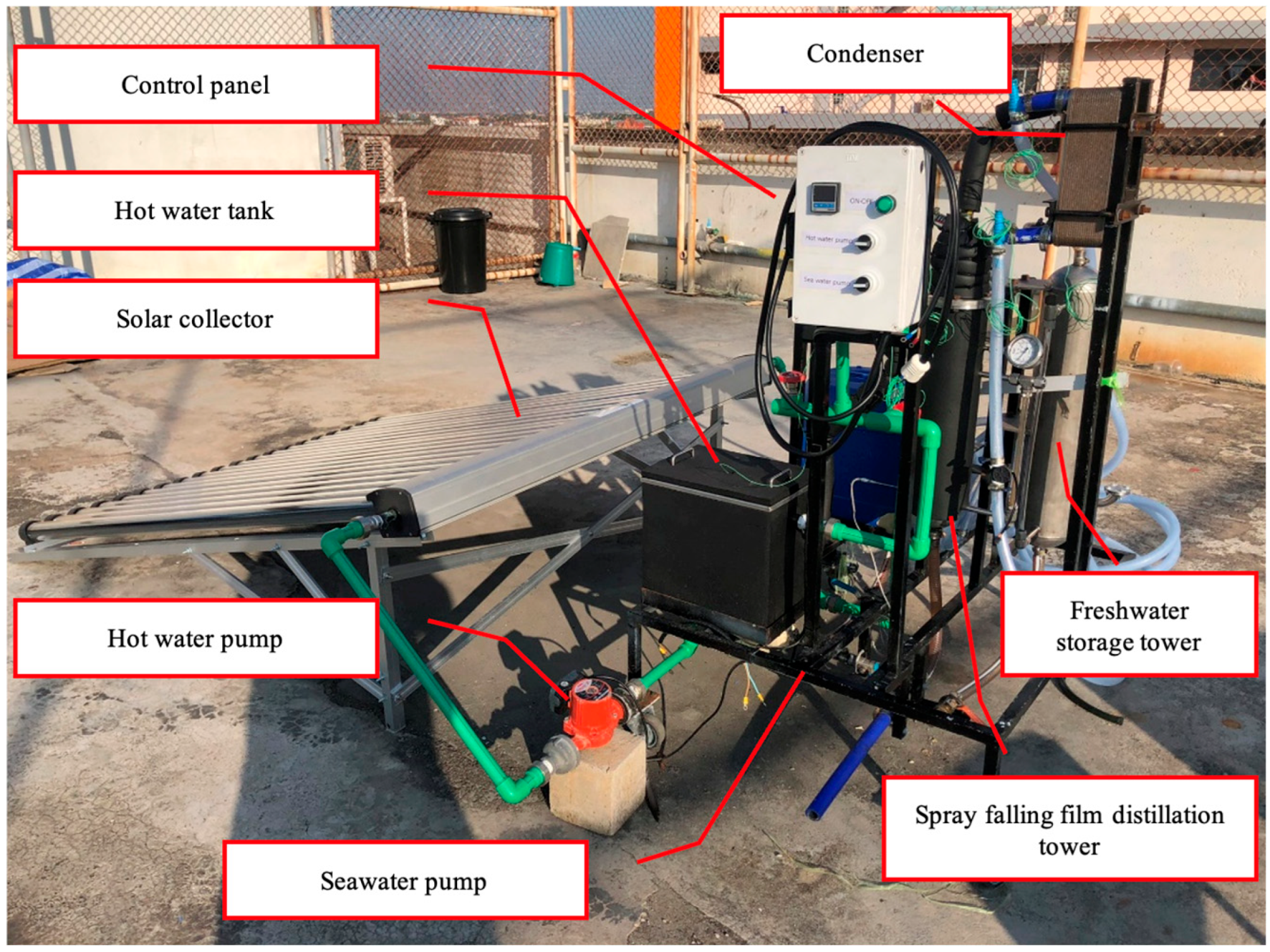
2.1. System Description of a Vacuum Seawater Desalination System (VSDS)
2.2. Performance Parameter
2.3. Uncertainty Analysis
3. Results and Discussion
3.1. Experimental Study of the VSDS Working with Different Distillation Columns
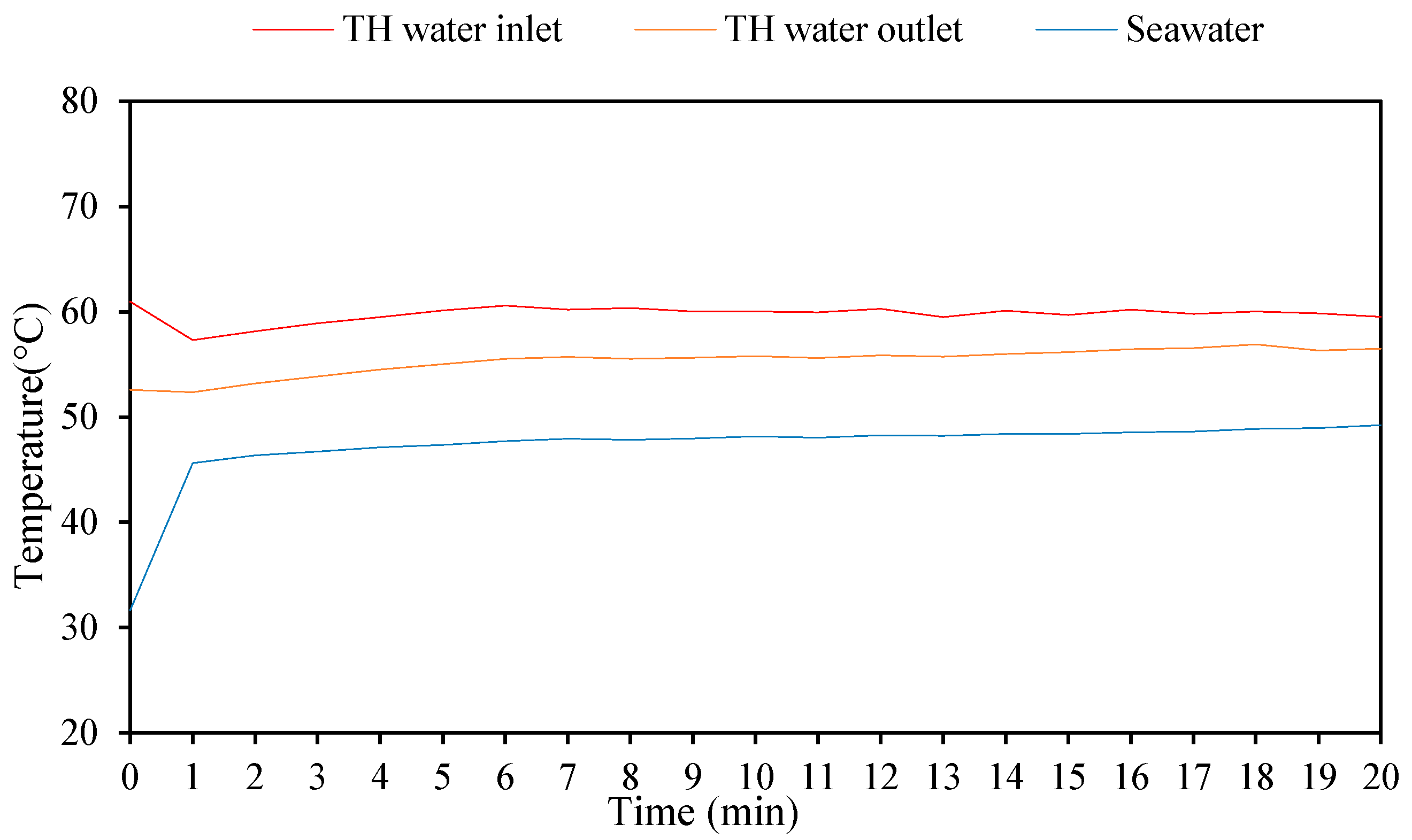
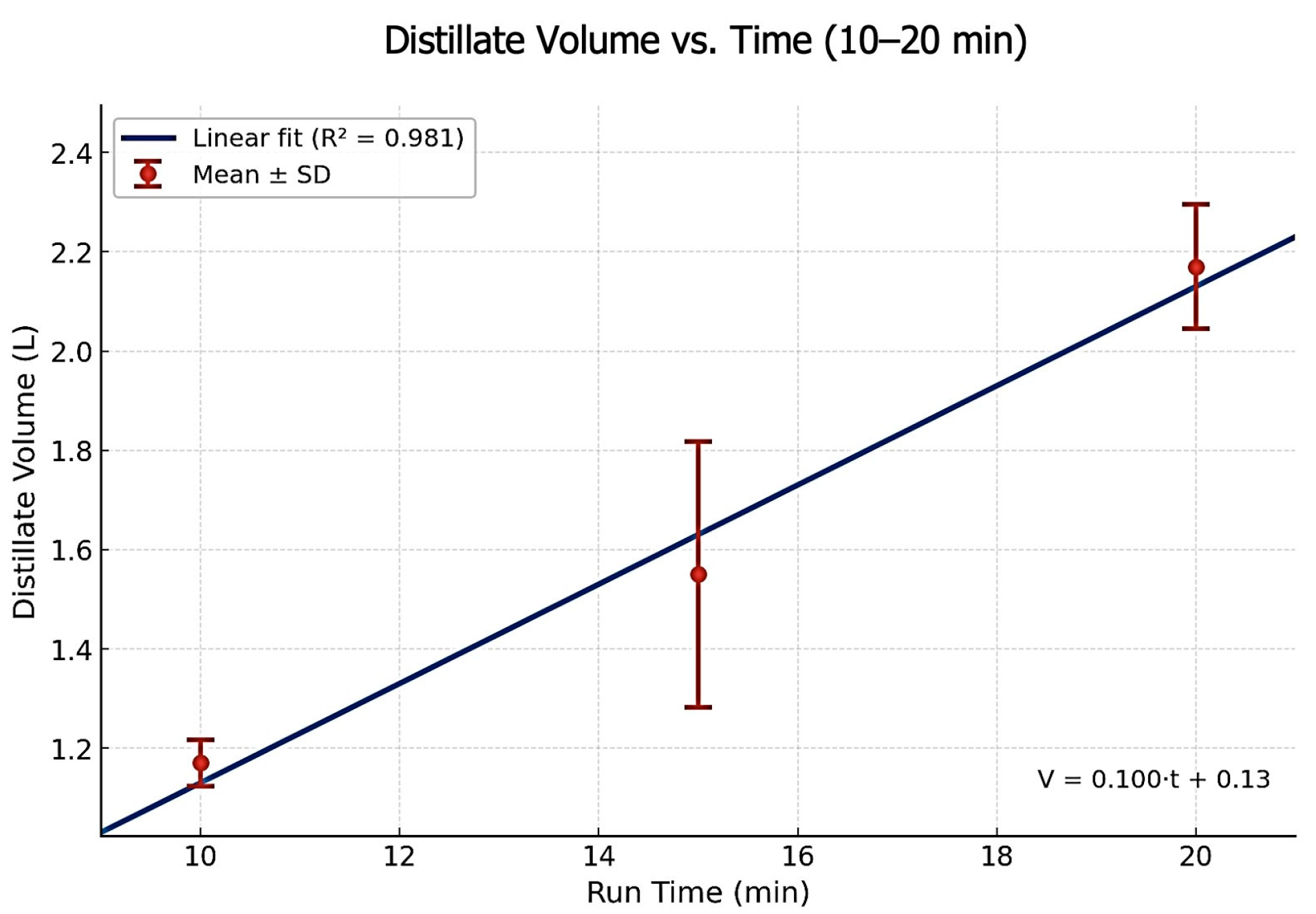
3.2. Working Characteristic of the VSDS Working with SFF
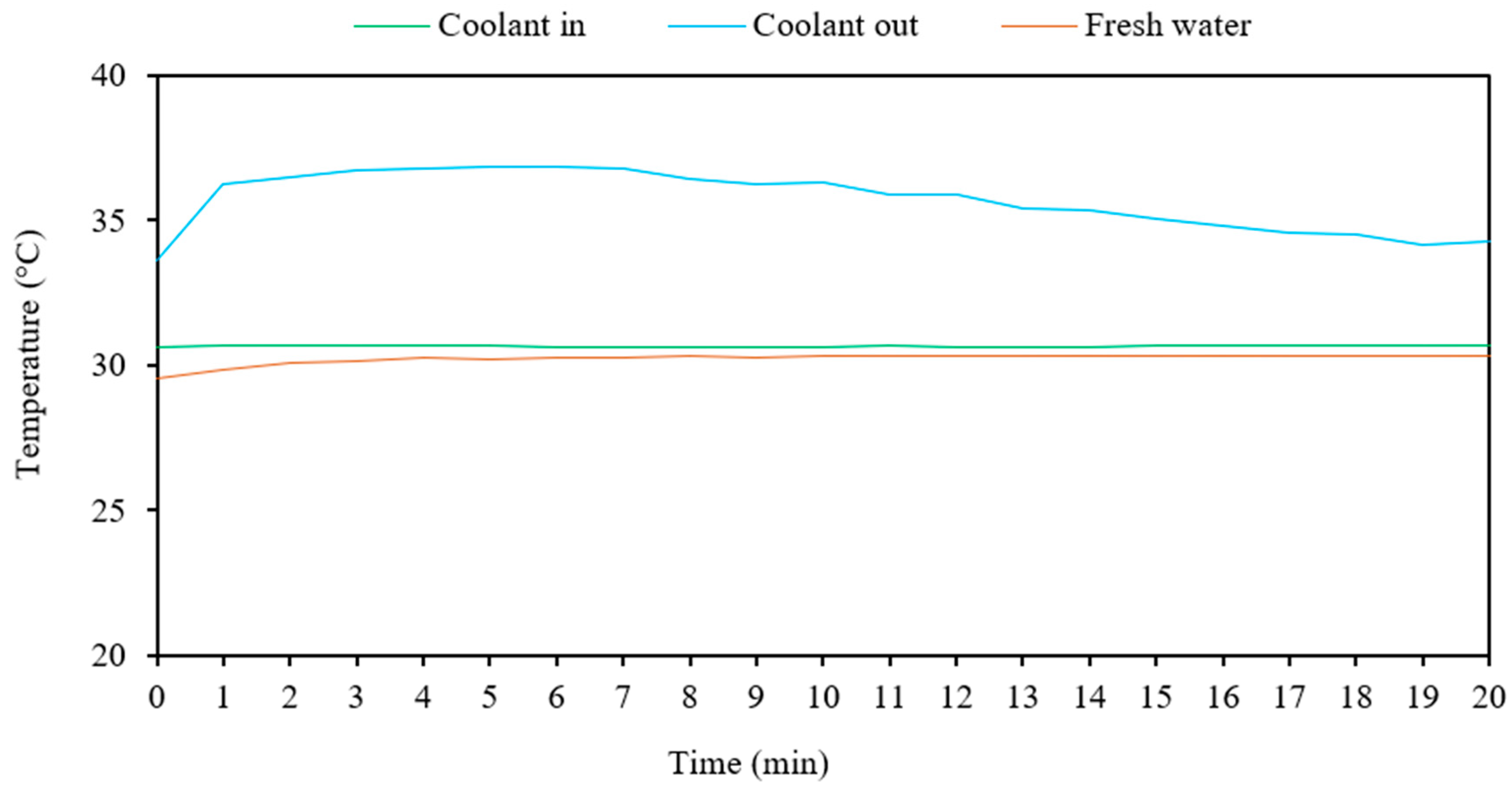
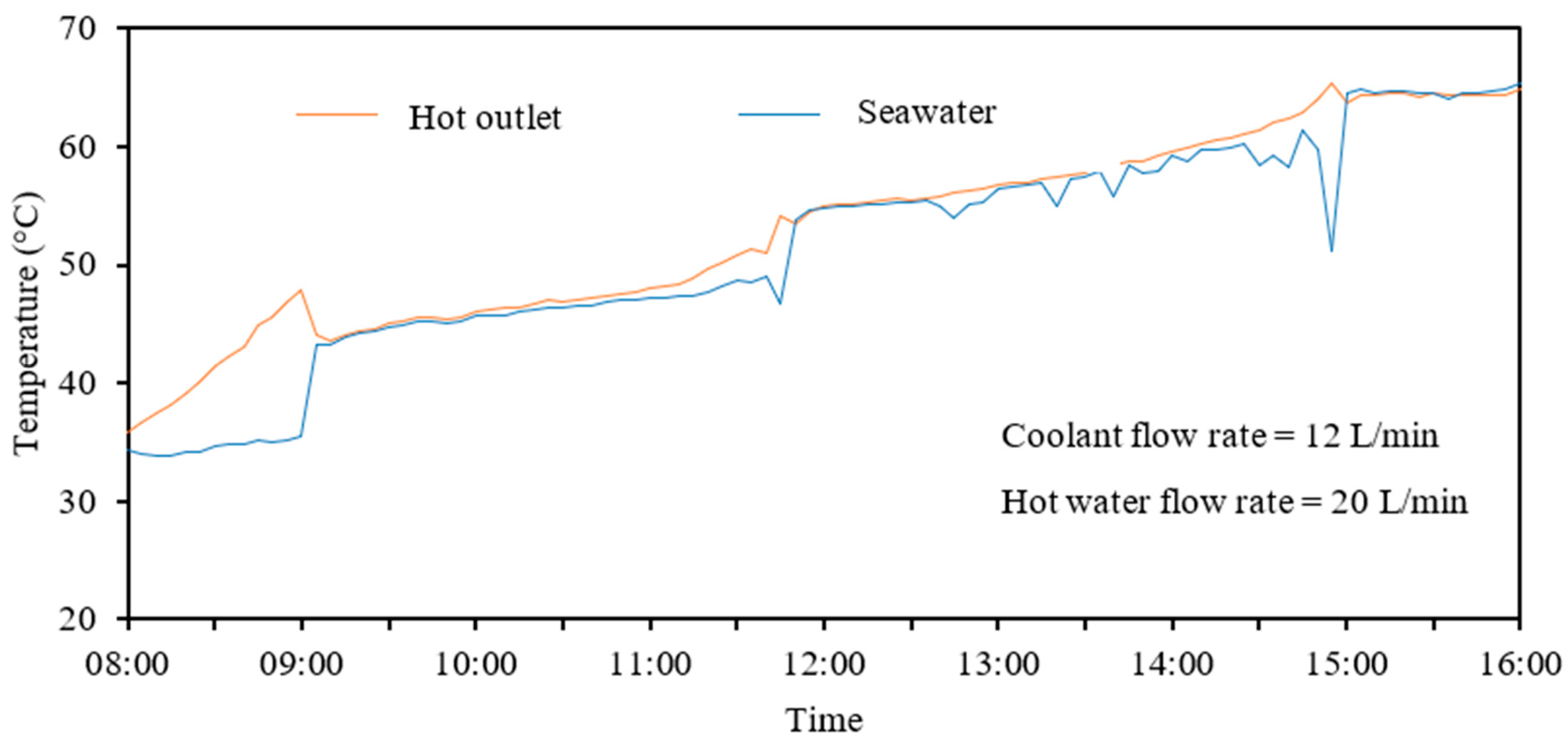
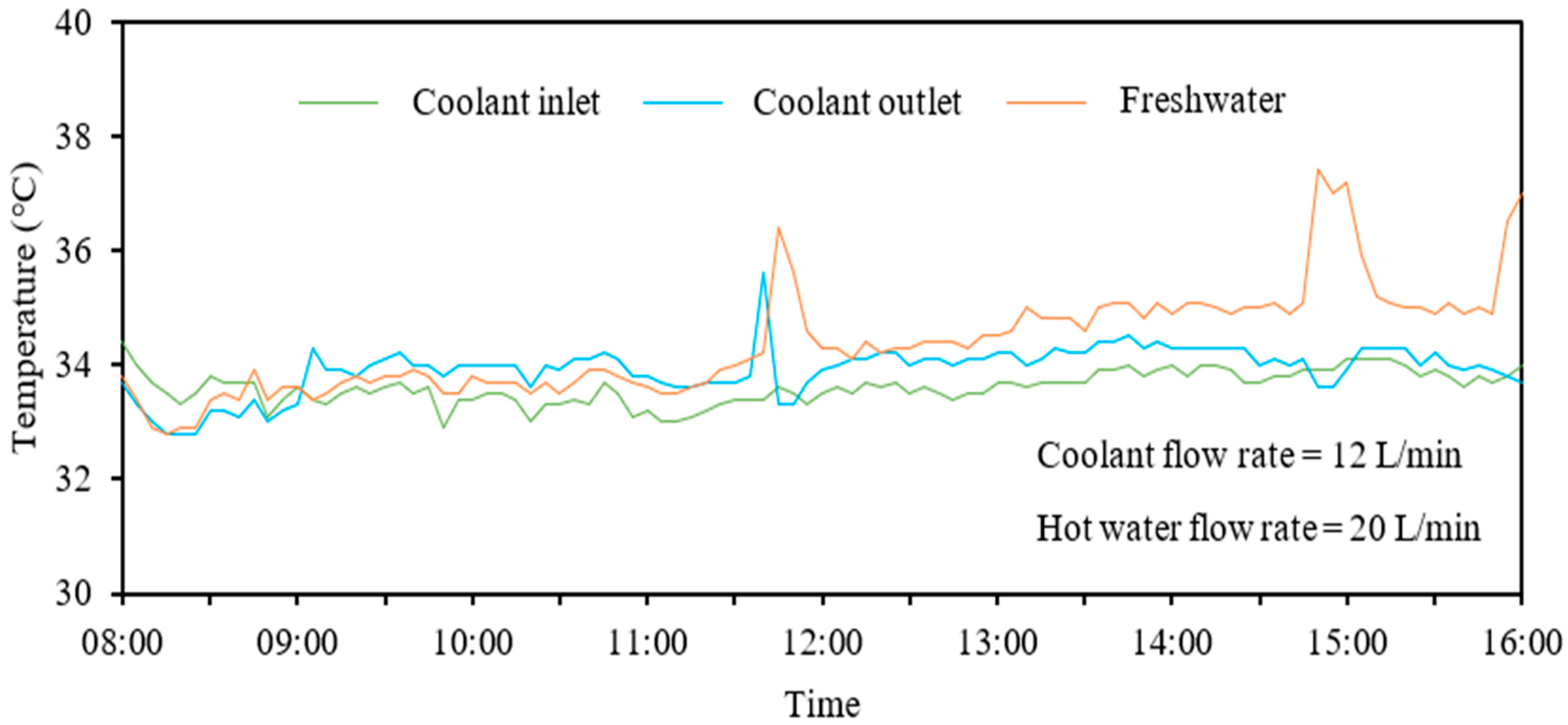
- Temperatures are monitored at key points, including the hot water inlet/outlet of the heat exchanger, seawater inlet/outlet of the heat exchanger, coolant inlet/outlet of the condenser, and distillate (freshwater) temperature;
- Freshwater production and thermal efficiency are quantified to identify the operating condition that yields the highest efficiency.
3.3. Field Test of the VSDS Driven by an Evacuated Tube Solar Collector
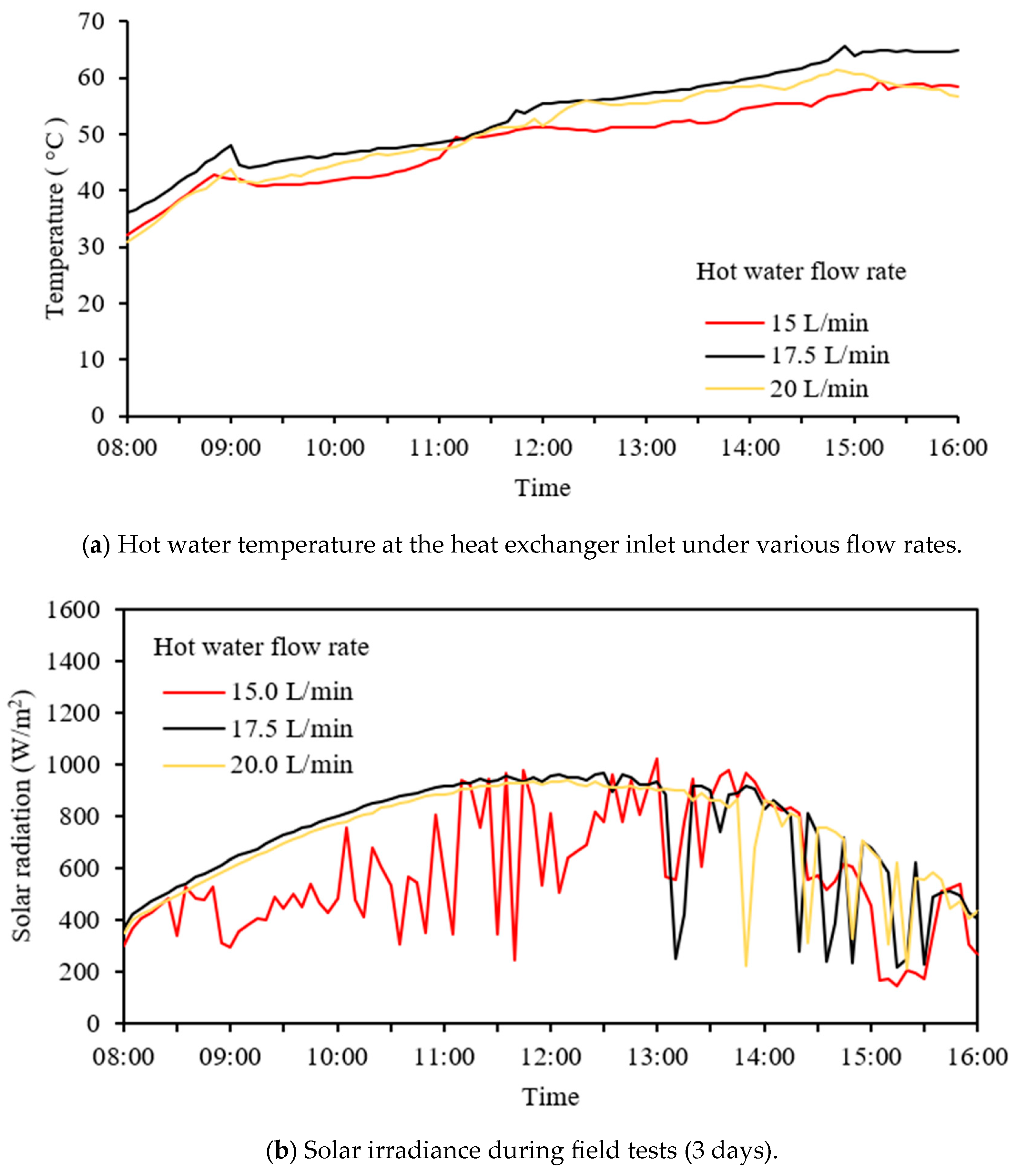
Effect of the Hot Water Flow Rate
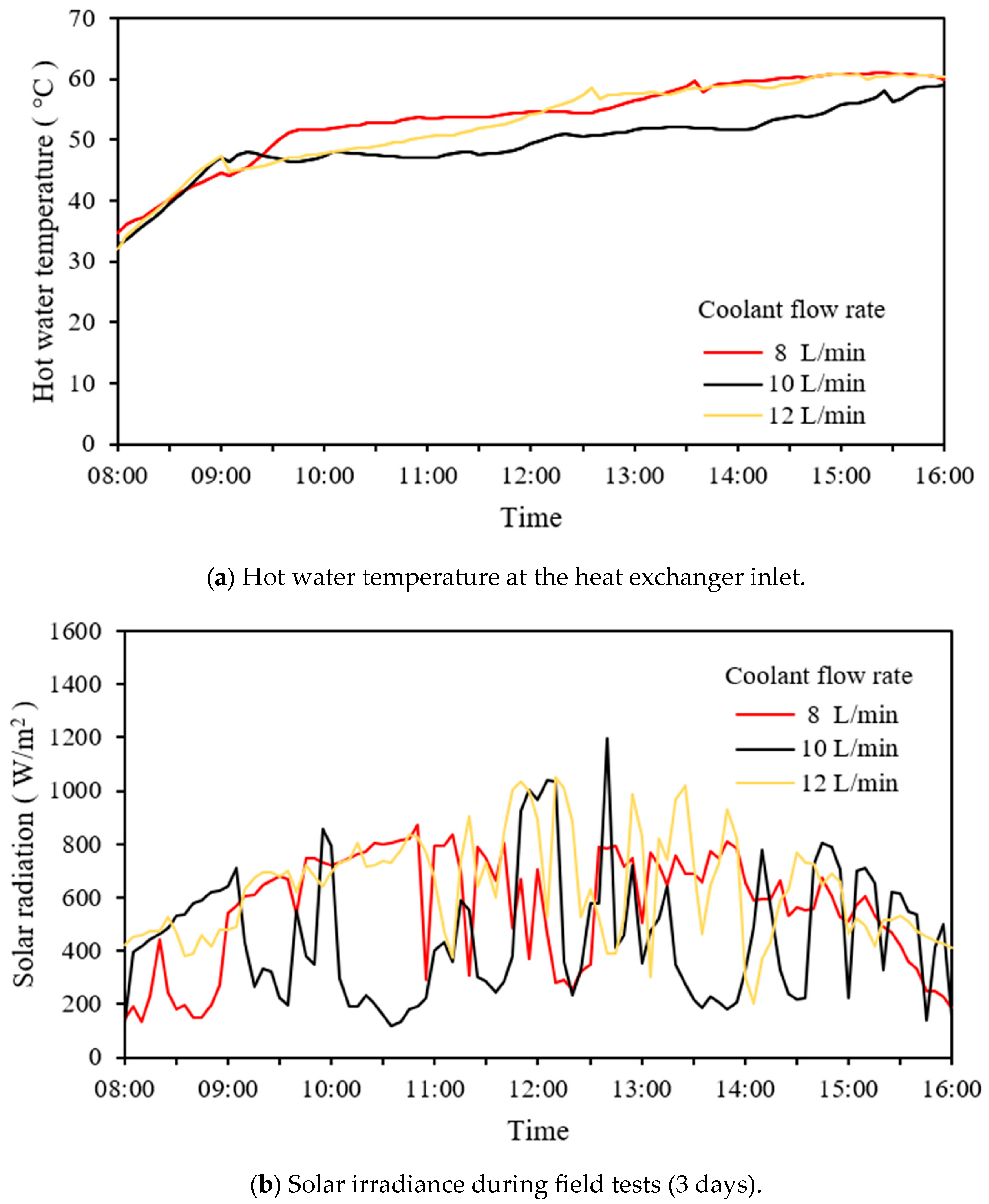
3.4. Effect of the Cooling Water Flow Rate of the System Driven by Solar Water Heater
3.5. Product Water Quality and Compliance with MWA and WHO Criteria
4. Conclusions
- The laboratory test indicated that the VSDS working with SFF performed better than that working with DPF in terms of both the freshwater production yield and thermal efficiency. The key to this improvement is the heat and mass transfer enhancement because of larger interfacial areas for heat/mass transfer and reduced surface tension. The improvement potential of the SFF over DPF is 61–110% depending on the working conditions.
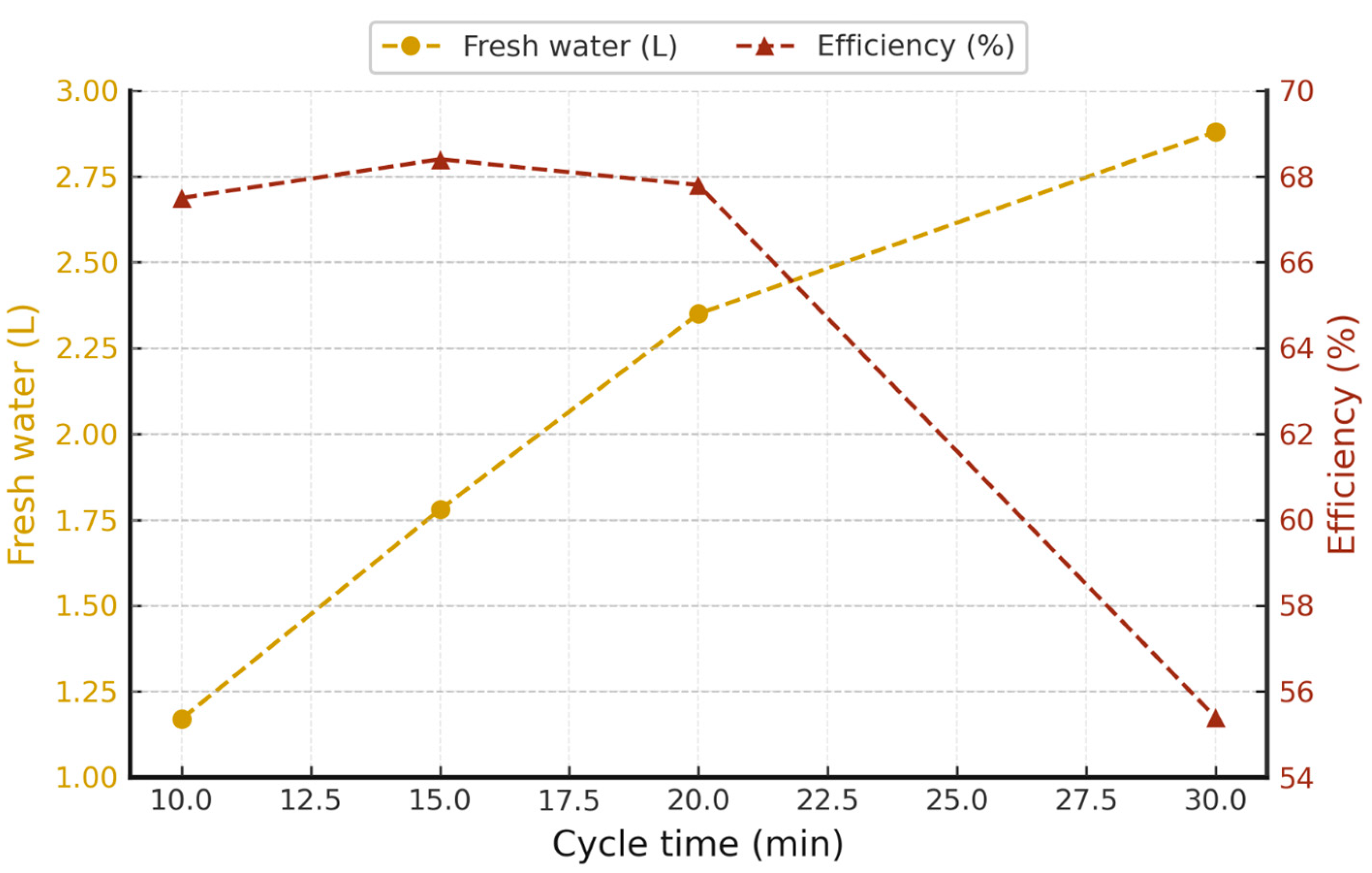
- It was experimentally found that a longer cycle time for distillation yielded a higher freshwater production. However, using too long of a cycle time produced only a slightly higher amount of freshwater due to concentrated brine. An increase in the hot water flow rate results in an increase in the thermal efficiency.
- The VSDS driven by evacuated tube collectors can work steadily to produce fresh water even when there is a fluctuation in solar irradiance. The freshwater production depends significantly on the total solar irradiation falling on the evacuated tube arrays. The collector efficiency of 55–68% and thermal efficiency of up to 26% are achieved depending on the working flow rate of the hot water and coolant.
Author Contributions
Funding
Data Availability Statement
Acknowledgments
Conflicts of Interest
Nomenclature
| VSDS | Vacuum spray distillation system |
| VDVS | Vacuum-driven vacuum distillation system |
| MWA | Metropolitan Waterworks Authority |
| WHO | World Health Organization |
| RO | Reverse osmosis |
| SEC | Specific energy consumption |
| TVDS | Thermal vacuum distillation system |
| ETCs | Evacuated tube solar collectors |
| STD | Solar thermal desalination |
| STEC | Solar thermal energy conversion |
| PV | Photovoltaic |
| SDGs | Sustainable development goals |
| CSP | Concentrated solar power |
| RSM | Response surface methodology |
| T | Temperature (K) |
| MED | Multi-effect distillation |
| MVC | Mechanical vapor compression |
| MEE | Multi-effect evaporation |
| ETC | Evacuated tube collector |
| ETSC | Evacuated tube solar collector |
| LMTD | Logarithmic mean temperature difference |
| BPE | Boiling point elevation |
| Heat rate (kW) | |
| Q | Total amount of thermal energy (kJ) |
| Mass flow rate (kg/s) | |
| h | Specific enthalpy (kJ/kg) |
| Volume flow rate (m3/s) | |
| V | Volume (m3) |
| A | Area (m2) |
| t | Time |
| VDS | Vacuum distillation system |
| VSDS | Vacuum seawater desalination system |
| DPF | Dripping/pipe feed |
| SFF | Spray falling film |
| PHE | Plate heat exchanger |
| P | Power (W) |
| SD | Standard deviation |
| EC | Electrical conductivity (μS/cm) |
| TDS | Total dissolved solids (mg/L) |
| GDWQ | Guidelines for Drinking Water Quality |
| Subscripts and superscripts | |
| cond | Condenser |
| HE | Heat exchanger |
| H | Hot |
| C | Inlet coolant temperature |
| cool | Cooling |
| sw | Seawater |
| bat | Batch |
| h | Heater |
| H-in | Hot inlet |
| H-out | Hot outlet |
| sw out | Seawater |
| lm | Logarithmic mean temperature difference |
| c-in | Inlet coolant |
| c-out | Outlet coolant |
| Greek symbols | |
| Thermal efficiency () | |
| Density (kg/m3) | |
References
- Orfi, J.; Sherif, R.; AlFaleh, M. Conventional and Emerging Desalination Technologies: Review and Comparative Study from a Sustainability Perspective. Water 2025, 17, 279. [Google Scholar] [CrossRef]
- Kumar, L.; Soomro, J.; Khoharo, H.; Assad, M.E.H. A Comprehensive Review of Solar Thermal Desalination Technologies for Freshwater Production. AIMS Energy 2023, 11, 293–318. [Google Scholar] [CrossRef]
- Hu, Z.; Zhang, C.; Chen, Y. Spray-Enhanced Flash Desalination Using Ocean Thermal Energy. Energy 2025, 322, 135727. [Google Scholar] [CrossRef]
- Huang, J.; Zheng, H.; Kong, H. Key pathways for efficient solar thermal desalination. Energy Convers. Manag. 2024, 299, 117806. [Google Scholar] [CrossRef]
- Essa, M.E.S.M.; El-Sayed, H.S.; El-Kholy, E.E.; Amer, M.; Elsisi, M.; Sajjad, U.; Hamid, K.; Awad, H.E.-S. Developments in solar-driven desalination: Technologies, photovoltaic integration, and processes. Energy Convers. Manag. X 2025, 25, 100861. [Google Scholar]
- Madhuri, R.V.S.; Said, Z.; Ihsanullah, I.; Sathyamurthy, R. Solar energy-driven desalination: A renewable solution for climate change mitigation and advancing sustainable development goals. Desalination 2025, 602, 118575. [Google Scholar] [CrossRef]
- Guo, G.; Zhu, C.; Ji, Z.; Zhou, M. Integrated system model of spray flash vacuum distillation with internal heat recovery. Desalination 2023, 564, 116793. [Google Scholar] [CrossRef]
- Ahmed, F.; Abdul Aziz, M.S.; Shaik, F.; Khor, C.Y. Optimization of a Novel Spray Flash Desalination System Integrated with Concentrated Solar Power Utilizing Response Surface Methodology. Desalination 2023, 558, 116640. [Google Scholar] [CrossRef]
- Alrashidi, A.; Gaheen, O.A.; Elsemary, I.M.; Benini, E.; Aziz, M.A. An experimental study exploring heat transfer enhancement in tube in tube heat exchanger with pulsating flow. Appl. Therm. Eng. 2024, 248, 123149. [Google Scholar] [CrossRef]
- Zhao, C.-Y.; Ji, W.-T.; Jin, P.-H.; Tao, W.-Q. Correlations of Falling Film Hydrodynamics and Heat Transfer on Horizontal Tubes: A Review. Renew. Sustain. Energy Rev. 2024, 197, 114384. [Google Scholar] [CrossRef]
- Li, C.; Zhang, L.; Mu, X.; Shen, S. A Correlation of Heat Transfer for Falling Film Evaporation on the Horizontal Tube with Multiple-Precision Expansion Method. Int. J. Heat. Mass. Transf. 2024, 221, 125027. [Google Scholar] [CrossRef]
- Dai, Z.; Zhang, Y.; Wang, S.; Nawaz, K.; Jacobi, A.M. Falling-Film Heat Exchangers Used in Desalination Systems: A Review. Int. J. Heat. Mass. Transf. 2022, 185, 122407. [Google Scholar] [CrossRef]
- Tabarhoseini, S.M.; Sheikholeslami, M.; Said, Z. Recent advances on the evacuated tube solar collector scrutinizing latest innovations in thermal performance improvement involving economic and environmental analysis. Sol. Energy Mater. Sol. Cells 2022, 241, 111733. [Google Scholar] [CrossRef]
- Samimi, M.; Rahimi, M. Modified Evacuated Tube Collector Basin Solar Still for Optimal Desalination of Reverse Osmosis Concentrate. Energy 2024, 289, 130383. [Google Scholar] [CrossRef]
- Shoeibi, S.; Kargarsharifabad, H.; Rahbar, N.; Khosravi, G.; Sharifpur, M. An Integrated Solar Desalination with Evacuated Tube Heat Pipe Solar Collector and New Wind Ventilator External Condenser. Sustain. Energy Technol. Assess. 2022, 50, 101857. [Google Scholar] [CrossRef]
- Dayem, A.M.A. Innovative solar natural vacuum desalination system. Case Stud. Therm. Eng. 2023, 44, 102881. [Google Scholar] [CrossRef]
- Abdullah, A.S.; Joseph, A.; Abdelaziz, G.B.; Edreis, E.M.; Attia, M.E.H.; Alawee, W.H.; Sharshir, S.W. Harnessing evacuated tube technology for enhanced solar still: A comprehensive review. Results Eng. 2024, 24, 103335. [Google Scholar] [CrossRef]
- Manasrah, A.; Younes, M.B.; Abdelhafez, E. Sun-powered solutions: Investigating productivity and economics of small-scale solar desalination system. Case Stud. Therm. Eng. 2024, 63, 105262. [Google Scholar] [CrossRef]
- Lin, H.-Y.; Muneeshwaran, M.; Yang, C.-M.; Nawaz, K.; Wang, C.-C. On falling film evaporator–A review of mechanisms and critical assessment of correlation on a horizontal tube bundle with updated development. Int. Commun. Heat Mass Transf. 2024, 150, 107165. [Google Scholar] [CrossRef]
- Cartaxo, S.J.M.; Fernandes, F.A. Counterflow logarithmic mean temperature difference is actually the upper bound: A demonstration. Appl. Therm. Eng. 2011, 31, 1172–1175. [Google Scholar] [CrossRef]
- Cai, B.; Zhao, Y.; Sun, Y.; Wang, R.; Wang, J.; Che, X.; Cai, W. An experimental research on the vacuum spray flash evaporation of ethanol–water solution. Appl. Therm. Eng. 2025, 280, 128133. [Google Scholar] [CrossRef]
- Singh, S.; Mahato, P.; Karmakar, J.; Chakraborty, P.R.; Kothadia, H.B. Study of liquid carrying effect in spray flash desalination: A batch process evaluation. Sep. Purif. Technol. 2025, 380, 135104. [Google Scholar] [CrossRef]
- Ahmed, M.S.; Mohamed, A.; Mohamed, H.A.; Abdelaal, M.; Abbady, H. A review of vacuum solar desalination powered by renewable energy: Recent trends. J. Clean. Prod. 2023, 428, 139244. [Google Scholar] [CrossRef]
- Easa, A.S.; Tolan, M.T.; Essa, A.R.S.; Soliman, A.M.A. Experimental investigation of solar desalination unit performance using air-pressurized humidifier with economic analysis. Appl. Water Sci. 2025, 15, 138. [Google Scholar] [CrossRef]
- Habib, B.B.; Nazari, M.A.; Ullah, N.; Shah, N.A. Applications of different types of heat pipes in solar desalinations: A comprehensive review. Water Sci. Technol. 2024, 89, 2044–2059. [Google Scholar] [CrossRef]
- Hawai‘i Natural Energy Institute (HNEI). Ocean Thermal Energy Convertion (OTEC) Heat Exchanger Development (Aug 2022–May 2023); Technical Report; Hawai‘i Natural Energy Institute (HNEI): Honolulu, HI, USA, 2023. [Google Scholar]
- Jenne, S.; Gore, S.; Sitterley, K. Review of solar-enabled desalination and implications for zero-liquid-discharge applications. Prog. Energy 2024, 6, 032004. [Google Scholar]
- Fthenakis, V.; Yetman, G.; Zhang, Z.; Squires, J.; Atia, A.A.; Alarcón-Padilla, D.-C.; Palenzuela, P.; Vicraman, V.; Zaragoza, G. A solar energy desalination analysis tool, sedat, with data and models for selecting technologies and regions. Sci. Data 2022, 9, 223. [Google Scholar] [CrossRef]
- Liu, X.; Zheng, H.; Zhao, Y.; Ma, X. Solar-driven natural vacuum desalination system with inner condenser. Appl. Therm. Eng. 2021, 196, 117320. [Google Scholar] [CrossRef]
- Behzad, S.; Varga, S.; Soares, J.; Palmero-Marrero, A.; Oliveira, A. Performance evaluation of a variable geometry ejector applied in a multi-effect thermal vapor compression desalination system. Appl. Therm. Eng. 2021, 195, 117177. [Google Scholar] [CrossRef]
- Al-Mahmoud, H.A.; Ibrahim, N.I.; Al-Sulaiman, F.A.; Zubair, S.M. Thermodynamic performance evaluation of a hybrid ejector cooling and humidification-dehumidification desalination system. Energy Convers. Manag. 2020, 225, 113450. [Google Scholar] [CrossRef]
- Kister, H.Z. Distillation Operation, 2nd ed.; McGraw-Hill: New York, NY, USA, 1992. [Google Scholar]
- Abdel Dayem, A.M. Efficient solar desalination system using humidification/dehumidification process. J. Sol. Energy Eng. 2014, 136, 041014. [Google Scholar] [CrossRef]
- Incropera, F.P.; DeWitt, D.P.; Bergman, T.L.; Lavine, A.S. Fundamentals of Heat and Mass Transfer, 8th ed.; Wiley: Hoboken, TX, USA, 2017. [Google Scholar]
- Kabeel, A.E.; Omara, Z.M.; Essa, F.A. Enhancement of modified solar still integrated with external condenser using nanofluids: An experimental approach. Energy Convers. Manag. 2014, 78, 493–498. [Google Scholar] [CrossRef]
- Strigle, R.F., Jr. Packed Tower Design and Applications: Random and Structured Packings, 2nd ed.; Houston Gulf Publishing: Hoboken, TX, USA, 1994. [Google Scholar]
- Hewitt, G.F.; Shires, G.L.; Bott, T.R. Process Heat Transfer; CRC Press: Boca Raton, FL, USA, 1994. [Google Scholar]
- Voutchkov, N. Desalination Engineering: Planning and Design; McGraw-Hill: New York, NY, USA, 2013. [Google Scholar]
- Tongchana, T.; Singmai, W.; Janpla, P.; Amornsawaddirak, T.; Sutthivirode, K. Experimental and Theoretical Investigation of Vacuum-Based Seawater Desalination System Driven by Ultra-Low Temperature Heat Source. Int. J. Thermofluids 2025, 30, 101502. [Google Scholar]
- Chotiwut, P.; Kittiwoot, S.; Tongchana, T. Performance Enhancement of a Solar Air Heater Equipped with a Tree-like Fractal Cylindrical Pin for Drying Applications: Tests Under Real Climatic Conditions. Energies 2025, 18, 2230. [Google Scholar] [CrossRef]
- Metropolitan Waterworks Authority (MWA). Drinking Water Quality Standard of the Metropolitan Waterworks Authority; Metropolitan Waterworks Authority: Bangkok, Thailand, 2013. [Google Scholar]



| Configuration/Process | Heat Source | Temperature/Vacuum (as Reported) | Key Findings | Ref. |
|---|---|---|---|---|
| Solar thermal desalination (STD) pathways | Solar thermal (general) | ~50–70 °C; low pressure (overview) | Seven design pathways to improve STD; reduced STEC via coupling and latent heat recovery | [1] |
| Solar-driven desalination (PV-RO and solar thermal) | Solar PV/solar thermal | - | State-of-the-art of solar-driven desalination; integration roadmap | [2] |
| Solar energy-driven desalination (broad) | Solar thermal/PV | - | Renewable desalination for SDGs; climate mitigation perspective | [3] |
| Spray flash vacuum distillation with internal heat recovery | Low-grade thermal (model-based) | Low-grade heat + vacuum (model space) | Internal heat recovery boosts yield and lowers thermal duty | [4] |
| Novel spray flash desalination + CSP (RSM optimization) | Concentrated solar power (thermal) | Vacuum; CSP-level hot side | RSM identifies the best operating window to improve productivity/energy metrics | [5] |
| Spray-enhanced flash desalination (vacuum) | Ocean thermal/low-grade heat | Vacuum; small ΔT driving | Spray intensifies flashing and freshwater yield under vacuum | [6] |
| Falling film hydrodynamics and heat transfer (horizontal tubes) | Thermal (general) | Covers correlations, including low-pressure cases | Updated correlations; role of film thickness/waves/surface | [7] |
| Falling film evaporation on horizontal tube | Thermal (general) | Parametric (not field-specific) | New heat transfer correlation via multi-precision expansion | [8] |
| Falling film heat exchangers in desalination | Thermal (general) | Covers MED/MVC/MEE, including vacuum operations | Comprehensive review linking hydrodynamics and heat transfer to desalination design | [9] |
| Evacuated tube solar collector (ETC/ETSC)—advances | Solar thermal (ETC) | Typical ETC outlet 50–70 °C (review) | Recent advances and performance of ETC for thermal supply | [10] |
| Modified ETC basin solar still for RO brine | Evacuated tube solar collector (ETC) | Elevated brine temperature; no vacuum (still) | ETC + condenser geometry significantly increases productivity | [11] |
| Integrated solar still + external condenser | ETC heat pipe solar collector | Lower condenser-side temperature; no vacuum (still) | External condenser and ETC coupling enhance condensation and yield | [12] |
| Equipment | Description and Specification | Significant Parameters |
|---|---|---|
| Heat exchanger (hot side) | Plate heat exchanger | A = 0.65 m2 Designed LMTD = 15–20 |
| Condenser (cold side) | Plate heat exchanger | A = 0.65 m2 Designed LMTD = 15–20 |
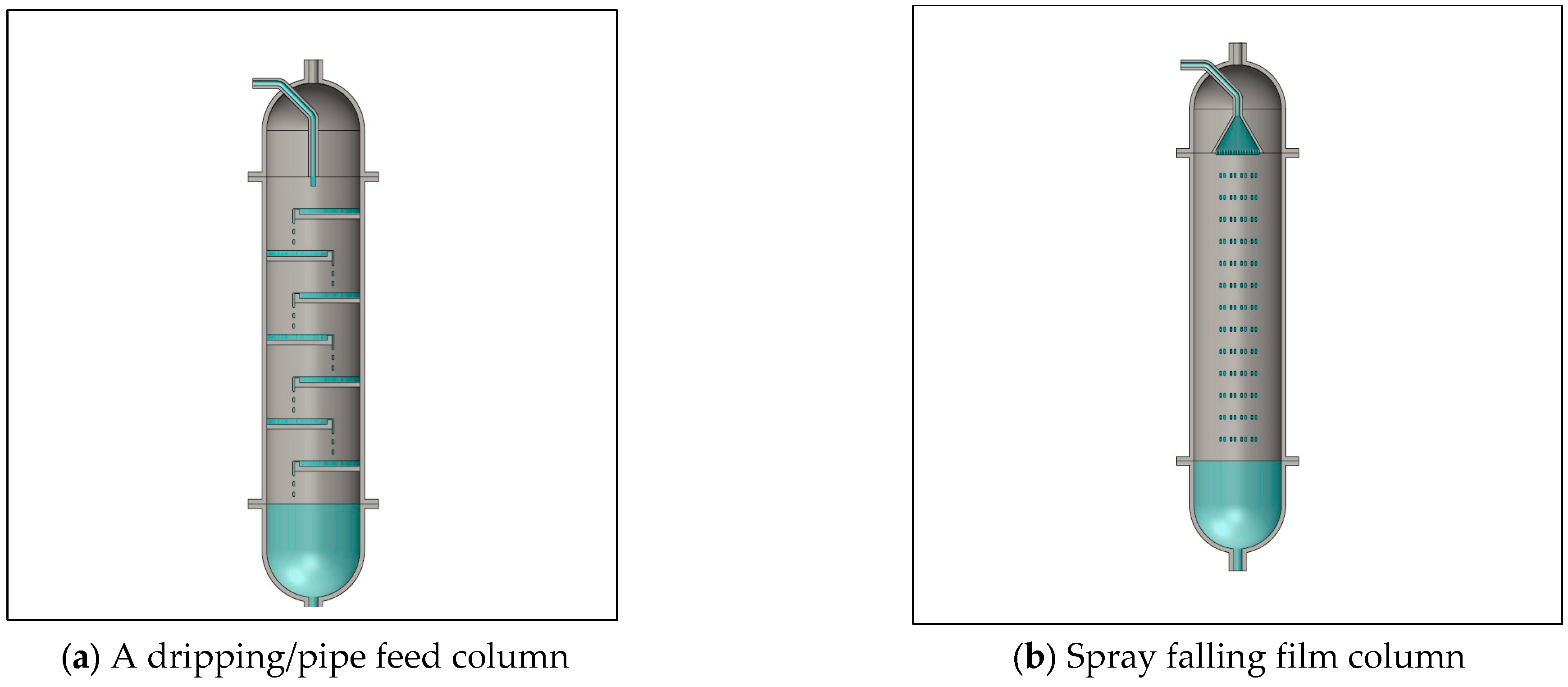
| Pipe feed distillation column | -Cylindrical shape with a total volume of 4.7 L, 120 cm height -7 trays were installed along the column (shown in Figure 3) -Made of stainless steel (SUS-316) with a feeding pipe diameter of 12.5 mm | -Tray is installed to increase the heat transferring area during the evaporation |
| Spray falling film distillation column | -Cylindrical shape with a total volume of 4.7 L, 120 cm height -Spray header diameter of 2.5 inches with 100 holes, each hole diameter of 1 mm -Made of stainless steel (SUS-316) with sight glass to observe the liquid level | -The spray falling header is designed to work as the atomized nozzle to increase the evaporation and reduce the surface tension of seawater |
| Receiver tank | -Capsule shape with a total capacity of 6 L -Made of stainless steel (SUS-316) with sight glass to observe the liquid level | -Accumulating the fresh water before pumping out the system for usage |
| Seawater circulating pump | -Magnetic coupling centrifugal pump (power of 200 W) | -It is necessary for this application to avoid leakage |
| Evacuated tube solar collector | -20 Pcs tubes -Total aperture area of 1.86 m2 -Collector orientation of 15°, southwest direction | -It is used to implement the field test under real solar irradiance |
| Heater (simulating heat source in laboratory) | -An immersion heater with a rated power of 7 kW -Achieving the desired temperature via a digital thermostat with solid state relay | -It is only used for laboratory testing so that the hot side can be maintained at a constant desired temperature |
| Parameter | Equipment/Instrument | Model | Accuracy |
|---|---|---|---|
| Solar irradiation | Pyrometer | Lutron, model SPM-116SD | ±2.5% |
| Air velocity | Hot wire anemometer | Fluke 925 | ±2.0% |
| Relative humidity | Hygrometer | Climomaster, model 6501 | ±2.0% |
| Data collector | Data logger | Hioki-LR8431 | ±1.5 °C |
| Temperature | Thermocouples | K-Type | ±0.5% |
| Parameter | Symbol | Set Point | Unit | Note |
|---|---|---|---|---|
| Hot water temperature | TH | 60 | °C | Controlling the heat source temperature |
| Cycle time per batch | tbat | 20 | min | Duration per experimental round |
| Cooling water flow rate | 12.5 | L min−1 | Maintaining condensation process | |
| Seawater feed flow rate | 10 | L min−1 | Promoting spray falling film/pipe feed | |
| Hot water flow rate | 20 | L min−1 | Heating loop | |
| Seawater volume per batch | 3 | L | Initial volume of seawater | |
| Heater power | Ph | 7000 | W | Heat source simulation |
| Metric | Dripping/ Pipe Feed | Spray Falling Film | Absolute Δ | Improvement |
|---|---|---|---|---|
| Distillate volume (L) | 1.33 | 2.16 | +0.83 | +62.4% |
| Distillation rate (L min−1) | 0.067 | 0.108 | +0.041 | +61.2% |
| Thermal efficiency (–) | 0.337 | 0.708 | +0.371 | +110.1% |
| Parameter | Symbol | Value/Level | Unit | Note |
|---|---|---|---|---|
| Hot water temperature | TH | 60 | °C | Fixed |
| Distillation time | tdis | 10, 15, 20, 30 | min | Varied |
| Hot water flow rate | 20 | L min−1 | Fixed | |
| Cooling water flow rate | 12.5 | L min−1 | Fixed | |
| Seawater feed rate | 10 | L min−1 | Fixed | |
| Seawater volume per batch | 3 | L | Per cycle time |
| Time (min) | Fresh Water (L) | Distillation Rate (L/min) | Efficiency (%) |
|---|---|---|---|
| 10 | 1.17 | 0.117 | 67.5 |
| 15 | 1.78 | 0.103 | 68.4 |
| 20 | 2.35 | 0.118 | 67.8 |
| 30 | 2.88 | 0.096 | 55.4 |
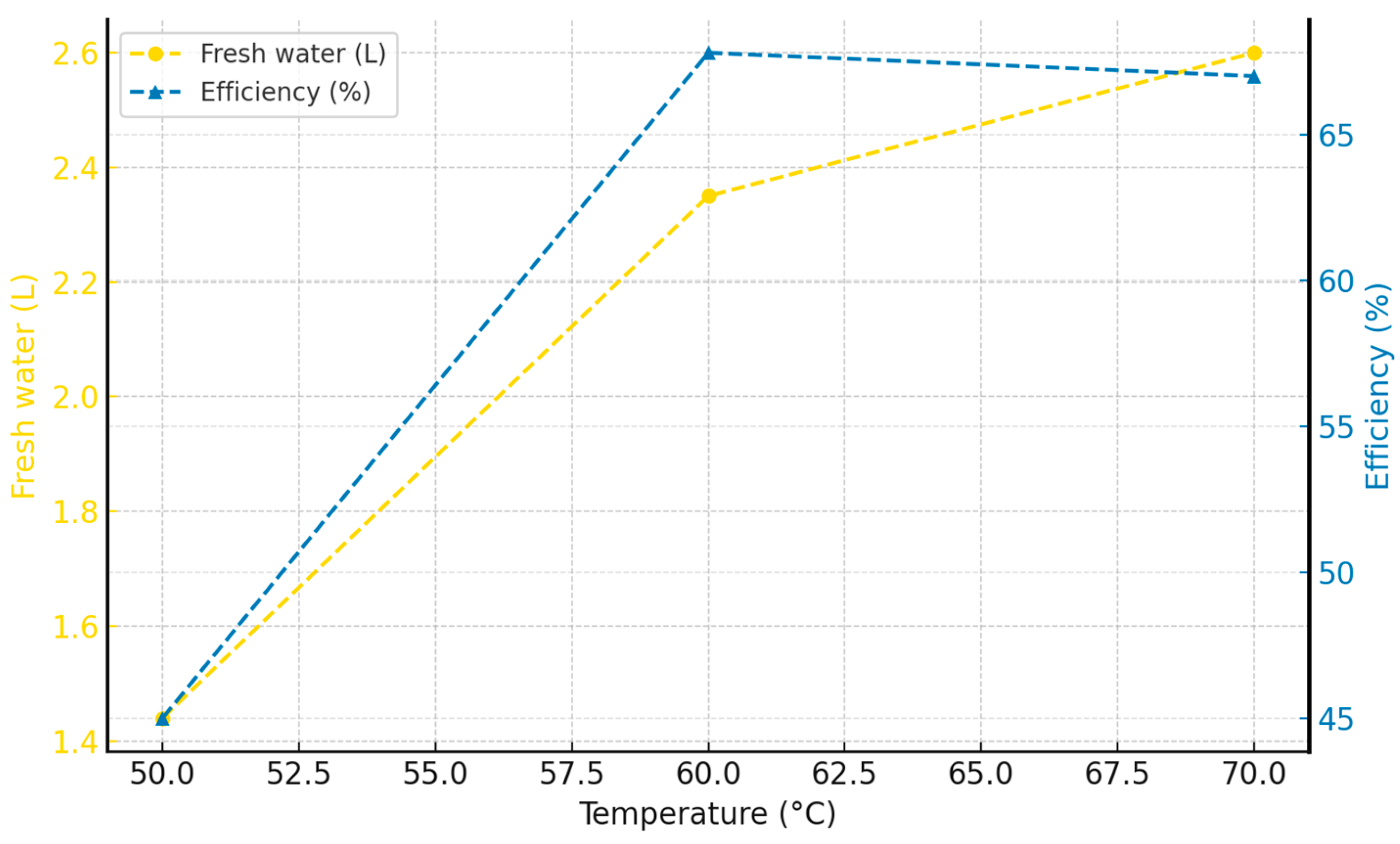
| Temperature (°C) | Fresh Water (L) | Distillation Rate (L.min−1) | Efficiency (%) | UA | LMTD |
|---|---|---|---|---|---|
| 50 | 1.44 | 0.072 | 45.0 | 1289.2 | 4.65 |
| 60 | 2.35 | 0.118 | 67.8 | 579.4 | 11.22 |
| 70 | 2.60 | 0.130 | 67.0 | 369.5 | 19.0 |
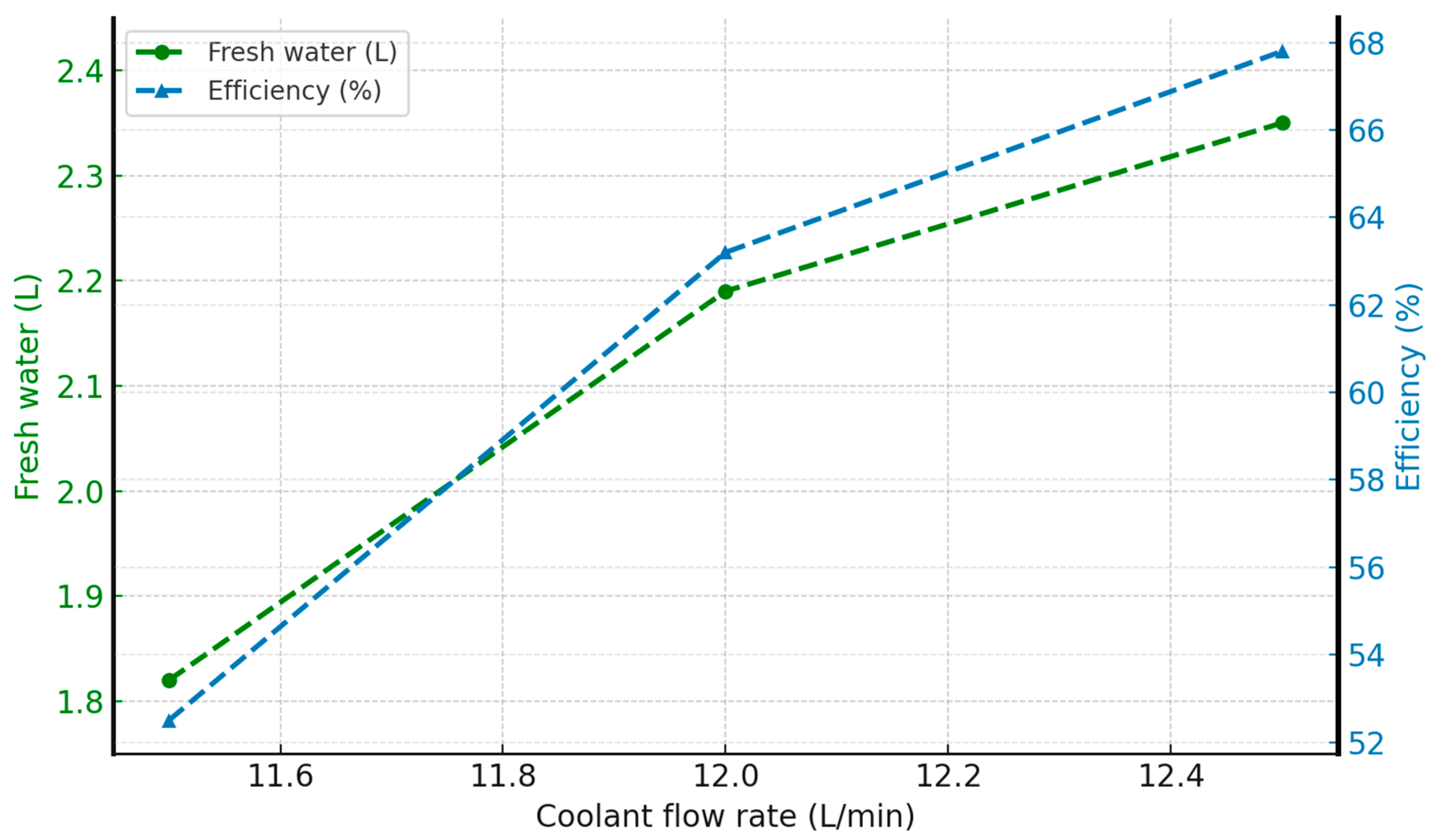
| Coolant Flow Rate (L.min−1) | Fresh Water (L) | Distillation Rate (L.min−1) | Efficiency (%) | LMTD | UA |
|---|---|---|---|---|---|
| 11.5 | 1.82 | 0.091 | 52.5 | 7.64 | 851.0 |
| 12.0 | 2.19 | 0.110 | 63.2 | 7.42 | 875.8 |
| 12.5 | 2.35 | 0.118 | 67.8 | 7.07 | 920.0 |
| Item | Set Point/Value | Unit | Notes |
|---|---|---|---|
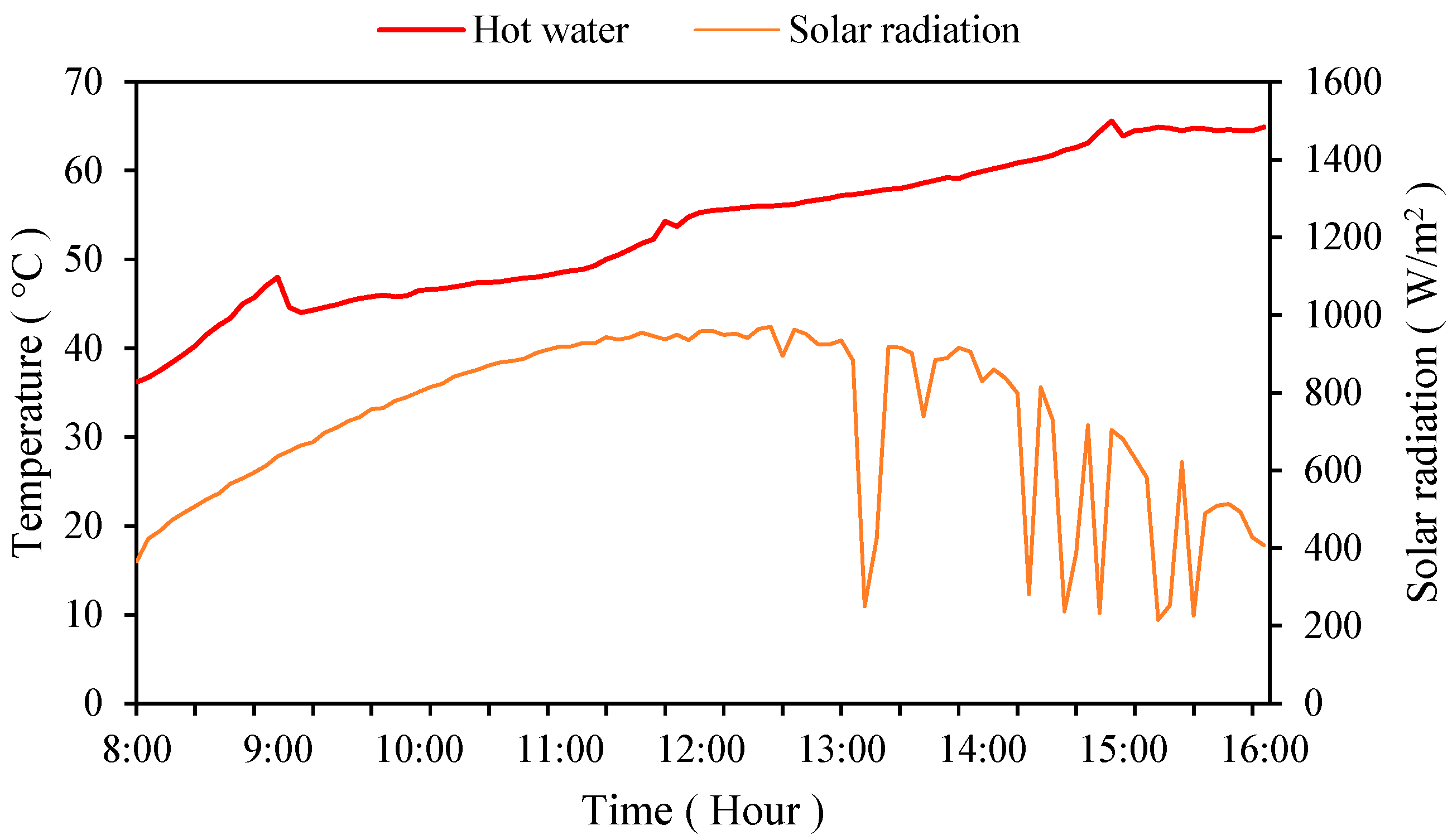
| Heating element | Evacuated tube solar collector | – | Converting solar radiation to hot water |
| Number of ETC tubes | 20 | tubes | – |
| Solar aperture area | 1.86 | m2 | Collector illuminated area |
| Collector orientation | Southwest, 15° | – | Its best angle for Thailand |
| Water storage capacity | 20 | L | For thermal energy storage |
| Coolant flow rate | 12 | L.min−1 | Ensuring the complete condensation process |
| Seawater flow rate | 10 | L.min−1 | Promoting evaporation under a vacuum |
| Seawater per batch | 3 | L | Suitable for the distillation column |
| Test duration | 08:00–16:00 | 8 h | Standard solar time |
| Preheat period | 08:00–09:00 | 1 h | Performing thermal energy storage |
| Distillation period | 09:00–16:00 | 7 h | Performing distillation |
| Data logging interval | Every 5 min | min | Thermocouples and flow meters |
| Test Conditions: Fixed Coolant Flow Rate at 12 L/min Solar Time: 8.00–16.00 | ||||||
|---|---|---|---|---|---|---|
| Hot Water Flow Rate | Total Solar Irradiation | Useful Desalination Energy (Qu) | Energy Storage in Water (Qsto) | Fresh Water | Thermal Efficiency | Collector Efficiency |
| 15.0 L.min−1 (day 1) | 39.17 MJ | 10.05 MJ | 16.25 MJ | 4.05 L | 25.65% | 67.14% |
| 17.5 L.min−1 (day 2) | 31.47 MJ | 7.76 MJ | 11.85 MJ | 3.45 L | 24.66% | 62.31% |
| 20.0 L.min−1 (day 3) | 39.45 MJ | 7.31 MJ | 16.42 MJ | 3.25 L | 18.53% | 60.15% |
| Hint: Solar collector efficiency can be determined: | ||||||
| Test Conditions: Fixed Coolant Flow Rate at 12 L/min Solar Time: 8.00–16.00 | ||||||
|---|---|---|---|---|---|---|
| Coolant Flow Rate | Total Solar Irradiation | Useful Desalination Energy | Energy Storage Conversion | Fresh Water | Thermal Efficiency | Collector Efficiency |
| 8.0 L.min−1 (day 1) | 30.33 MJ | 5.87 MJ | 11.25 MJ | 2.61 L | 19.35% | 56.45% |
| 10.0 L.min−1 (day 2) | 22.38 MJ | 4.21 MJ | 9.55 MJ | 1.87 L | 18.81% | 61.48% |
| 12.0 L.min−1 (day 3) | 32.07 MJ | 6.17 MJ | 12.78 MJ | 2.74 L | 19.21% | 59.10% |
| Hint: Solar collector efficiency can be determined: | ||||||
| Study/System | Desalination Configuration | Distillate pH (–) | Comment on Water Quality |
|---|---|---|---|
| Present work | Thermally driven vacuum desalination system (TDVDS) driven by ultra-low-temperature heat source (50–70 °C) | 7.47–7.86 (Seawater = 8.0) | Near-neutral pH; all samples fall within MWA/WHO guideline range 6.5–8.5 for drinking water. |
| Dayem [33] | Solar natural vacuum desalination system (SNVD); natural vacuum created by 9.8 m elevation of evaporator | ≈7.00 | Review of SNVD performance reports a “neutral fixed pH value of 7.00” with ~100% reduction in conductivity, indicating excellent potable-water quality. |
| Kabeel et al. [35] | Modified single-basin solar still with nanofluids and auxiliary vacuum fan | 7.1 (feed 8.9 and distillate 7.1) | Measured TDS decreased from 932 to 82 mg/L and pH from 8.9 to 7.1 after desalination; authors concluded that the distillate quality satisfies WHO drinking-water guidelines. |
Disclaimer/Publisher’s Note: The statements, opinions and data contained in all publications are solely those of the individual author(s) and contributor(s) and not of MDPI and/or the editor(s). MDPI and/or the editor(s) disclaim responsibility for any injury to people or property resulting from any ideas, methods, instructions or products referred to in the content. |
© 2025 by the authors. Licensee MDPI, Basel, Switzerland. This article is an open access article distributed under the terms and conditions of the Creative Commons Attribution (CC BY) license.
Share and Cite
Singmai, W.; Janpla, P.; Jamsawang, S.; Sutthivirode, K.; Thongtip, T. Development and Performance of a Vacuum-Based Seawater Desalination System Driven by a Solar Water Heater. Thermo 2026, 6, 3. https://doi.org/10.3390/thermo6010003
Singmai W, Janpla P, Jamsawang S, Sutthivirode K, Thongtip T. Development and Performance of a Vacuum-Based Seawater Desalination System Driven by a Solar Water Heater. Thermo. 2026; 6(1):3. https://doi.org/10.3390/thermo6010003
Chicago/Turabian StyleSingmai, Wichean, Pichet Janpla, Suparat Jamsawang, Kittiwoot Sutthivirode, and Tongchana Thongtip. 2026. "Development and Performance of a Vacuum-Based Seawater Desalination System Driven by a Solar Water Heater" Thermo 6, no. 1: 3. https://doi.org/10.3390/thermo6010003
APA StyleSingmai, W., Janpla, P., Jamsawang, S., Sutthivirode, K., & Thongtip, T. (2026). Development and Performance of a Vacuum-Based Seawater Desalination System Driven by a Solar Water Heater. Thermo, 6(1), 3. https://doi.org/10.3390/thermo6010003