


Abstract
Medical textiles have gained significant attention for their ability to prevent the transmission of infectious diseases while ensuring the safety and comfort of healthcare professionals. This study focuses on modifying the surfaces of polyethylene terephthalate (PET) fabrics with titanium dioxide (TiO2) nanoparticles (NPs) to enhance their antibacterial properties, thermophysiological comfort, and thermal insulation. The effects of varying volumes of the tetraisopropyl orthotitanate precursor on the functional properties of the coated PET fabrics were systematically investigated. The surface morphology was characterized using scanning electron microscopy (SEM). At the same time, the elemental and chemical properties were analyzed through Energy-dispersive spectroscopy (EDS), Raman spectroscopy, and Fourier-transform infrared spectroscopy (FTIR). The TiO2 NPs-coated PET fabrics demonstrated exceptional antibacterial activity against Gram-negative and Gram-positive bacteria and significantly improved thermophysiological comfort. Specifically, thermal resistance increased with a higher density of TiO2 nanoparticles, leading to a decrease in thermal conductivity. Notably, only minimal reductions were observed in relative water vapor permeability (RWVP) and air permeability (AP), indicating that the fabric’s porosity was maintained. Furthermore, the presence of the TiO2 nanolayer on the PET fabric significantly enhanced its thermal stability, providing excellent thermal insulation properties. These findings underscore the potential of TiO2 NPs-coated PET fabrics as promising candidates for advanced medical textile applications, where a balance of protection, comfort, and thermal insulation is essential.
1. Introduction
The market for advanced functional fabrics is experiencing significant growth, driven by enhancements that enhance textile qualities for both residential and industrial applications. In recent years, textiles have evolved quickly, incorporating innovative features like self-cleaning capabilities, superhydrophobic qualities, antimicrobial characteristics, anti-static properties, and functions that combat pollution [1].
There has been an increasing focus on modifying surfaces of materials to make them antibacterial, driven by heightened concerns related to health and hygiene in diverse applications [2,3,4], including medical care, protective clothing [5], and leisure activities [6]. Due to its extensive application in the textile sector, polyethylene terephthalate (PET) fabric is a suitable choice for this purpose. PET is recognized for its strength, durability, and resistance to abrasion, making it perfect for long-lasting uses, such as protective apparel and medical textiles [7]. Furthermore, PET fabric can be recycled, supporting environmental sustainability objectives. Improving its antibacterial features can help minimize the likelihood of infection spread, especially in medical environments and with personal protective gear [5]. Modifying the surface of PET fabric to minimize bacterial growth necessitates changes in its properties. Factors such as surface charge, energy, hydrophilicity, and texture affect how bacteria attach to the surface. Increased surface free energy and reduced contact angles are associated with less bacterial adhesion [8,9].
Recently, there has been significant interest in the comfort properties of textiles coated with nanoparticles, driven by rising market demands. Textile comfort is generally defined as the lack of unpleasant sensations or discomfort the wearer feels. Fabric comfort can be classified into three primary categories: thermo-physiological, sensorial, and psychological. The most crucial factor is thermo-physiological comfort, which manages heat and moisture exchange between the body and the surrounding environment. This type of comfort is primarily affected by how heat, air, and humidity are transmitted through the fabric, which helps keep the body dry while ensuring a stable temperature [10,11]. Therefore, the comfort properties of the textiles must not be compromised during the coating of the nanostructures on them.
Titanium dioxide (TiO2) is widely used in functional textile finishing because of its strong photocatalytic activity, chemical stability, non-toxicity, and compatibility with diverse substrate materials. When exposed to ultraviolet light, TiO2 generates reactive oxygen species that can degrade organic contaminants, imparting self-cleaning and antibacterial properties to fabrics. These characteristics make TiO2 a promising candidate for durable multifunctional textile coatings. Incorporating titanium dioxide (TiO2) nanoparticles into textiles has garnered significant interest in recent years due to its distinct characteristics, including its photocatalytic properties, generation of reactive oxygen species (ROS), safety, chemical stability, and affordability. Titanium dioxide, known as TiO2 or Titania, is an affordable and efficient n-type semiconductor that generates pairs of free electrons and holes in the conduction and valence band areas when exposed to light at a specific wavelength of less than 390 nm. These free electrons and holes interact with oxygen and the attached hydroxyl group, leading to the formation of superoxide (•O2−) and hydroxyl radicals (•OH), which are highly effective oxidants capable of breaking down a wide variety of organic pollutants, as well as bacteria and viruses. Consequently, TiO2 has emerged as the most widely used high-efficiency catalyst, attributed to its high refractive index, UV absorption capabilities, strong photocatalytic effects, biological inertness, and cost-effectiveness [12,13]. TiO2 offers a remarkable range of properties, making it ideal for innovative applications such as self-cleaning, antimicrobial protection, UV protection, and impressive thermal stability. This particularly benefits synthetic fibers such as polyester, nylon, and acrylic. Notably, research indicates that TiO2 and its composites are widely adopted as photocatalysts in the textile industry. In fact, most functional textiles utilize TiO2, as it becomes energized when exposed to ultraviolet (UV) light, paving the way for a brighter, cleaner future in fabrics [14,15]. TiO2 consists of three primary crystal polymorphs: anatase, rutile, and brookite, each exhibiting distinct physical properties and offering unique functional benefits. Anatase, a metastable tetragonal phase, is well known for its high photocatalytic activity and efficient ROS production, making it very effective for antimicrobial and self-cleaning textile applications. Rutile, the thermodynamically stable tetragonal phase, offers excellent thermal stability and strong UV absorption, making it useful for UV-protective and thermoregulating fabrics [16]. Brookite, an orthorhombic phase with a more complex crystal structure, also shows notable photocatalytic properties but is less commonly used in textiles due to synthesis difficulties and lower stability compared to anatase and rutile [17]. Generally, in a photocatalytic reaction, the electromagnetic radiation with phonon energy Eg (eV) (related to its wavelength λ [nm]) at least equal to the band gap of the semiconductor should be used. The required wavelength λ (nm) just overcoming the band gap is simply given by Equation (1).
λ = 1240/Eg
For the visible light range, this energy is from 3.1 eV to 1.7 eV. One of the most efficient materials for photochemical oxidation/reduction is TiO2 nanoparticles of different shapes and sizes [18]. TiO2 serves as a multifunctional photocatalyst that effectively breaks down various organic pollutants, bacteria, cancer cells, and viruses. This makes it useful for air and water purification, as well as creating self-sterilizing surfaces. Studies have shown that factors such as particle size, crystal structure, and morphology significantly influence the photocatalytic effectiveness of TiO2, which are primarily determined by the synthesis method and reaction conditions, such as the type of titanium salt, pH level, reaction temperature, duration, and various additives [19].
Research and literature reviews have illustrated the progression from basic sol–gel applications to more advanced in situ deposition methods, with hydrothermal synthesis emerging as a preferred technique for achieving uniform and well-adhered nanostructures directly on fiber surfaces. Different methods have been employed to apply TiO2 nanoparticles onto synthetic fibers, such as sol–gel, chemical vapor deposition (CVD), dip-pad-dry-cure, and hydrothermal techniques [20,21]. One noteworthy feature of hydrothermal synthesis is its capacity to promote in situ growth, which enables the direct nucleation of TiO2 nanostructures on fibers in aqueous solutions at high temperatures and pressures. The hydrothermal approach of in situ deposition works especially well for synthetic fibers because it creates a strong binding by interacting chemically with the fibers’ functional groups [22,23]. In a recent study, antibacterial nanocellulose-TiO2/PET composites exhibited over 95% inhibition of E. coli, maintaining stable performance even after multiple uses. However, the study did not investigate the thermo-physiological comfort or thermal insulation properties of the coated fabrics [24]. Moreover, a study on TiO2/Cu composite nanoparticles coated on polyester fabric showed excellent antibacterial durability, achieving over a 98% reduction in both S. aureus and E. coli, even after 50 washing cycles. However, the study did not evaluate the fabric’s thermo-physiological comfort and thermal stability [25]. Beyond these individual properties, TiO2 coatings on PET fabrics offer the opportunity to develop multifunctional smart textiles that combine antibacterial protection, thermal insulation, and wearer comfort. Recent advances in wearable textiles underscore the growing potential of multifunctional smart textiles to combine antibacterial properties, thermal regulation, and wearer comfort, thereby enhancing personal thermal management. Despite previous developments, the combined evaluation of antibacterial efficacy, thermo-physiological comfort, and thermal insulation of TiO2-coated PET fabrics remains underexplored, highlighting the novelty and significance of the present work.
The present study systematically investigates the effects of TiO2 nanoparticle coatings on antibacterial performance, thermal stability, thermal insulation, and wearer comfort of PET fabrics, aiming to develop multifunctional protective textiles suitable for medical and wearable applications. Moreover, the combined influence of TiO2 NP coatings on antibacterial efficacy, thermo-physiological comfort, thermal stability, and thermal insulation has not yet been systematically explored. To address this gap, the present study makes a novel contribution by evaluating the multifunctional performance of TiO2 NP-coated PET fabrics, with a particular emphasis on the interplay between antibacterial protection and wearer comfort/thermal regulation, which are crucial for protective clothing and wearable healthcare applications.
2. Experimental Methods
2.1. Materials
Tetrabutyl orthotitanate (TBOT, C16H36O4Ti) and tetraisopropyl orthotitanate (TPOT, Ti(OC3H7)4) were purchased from TCI Chemicals, Tokyo, Japan. Hydrochloric acid (37%), sodium hydroxide (≥97%), acetic acid, and ethanol (99.9%) were obtained from Merck, Darmstadt, Germany. Bacterial strains Escherichia coli strain (CCM 7395) and Staphylococcus aureus (CCM2446), intended for antibacterial testing, were obtained from the Czech Collection of Microorganisms at Masaryk University in Brno, Czech Republic [26,27,28]. A local manufacturer provided plain woven fabric made entirely of polyester (PET) with a GSM of 97 g/m2 and a total porosity of 61%.
2.2. In Situ Immobilization of TiO2 Nanoparticles (NPs) on PET Fabric
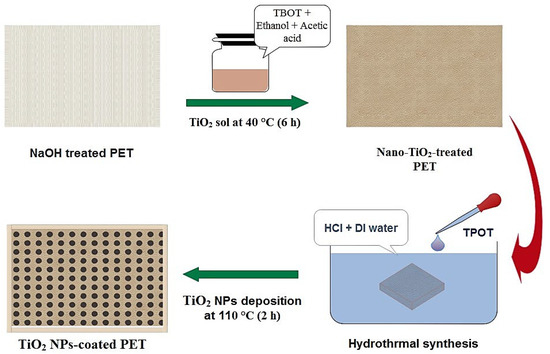
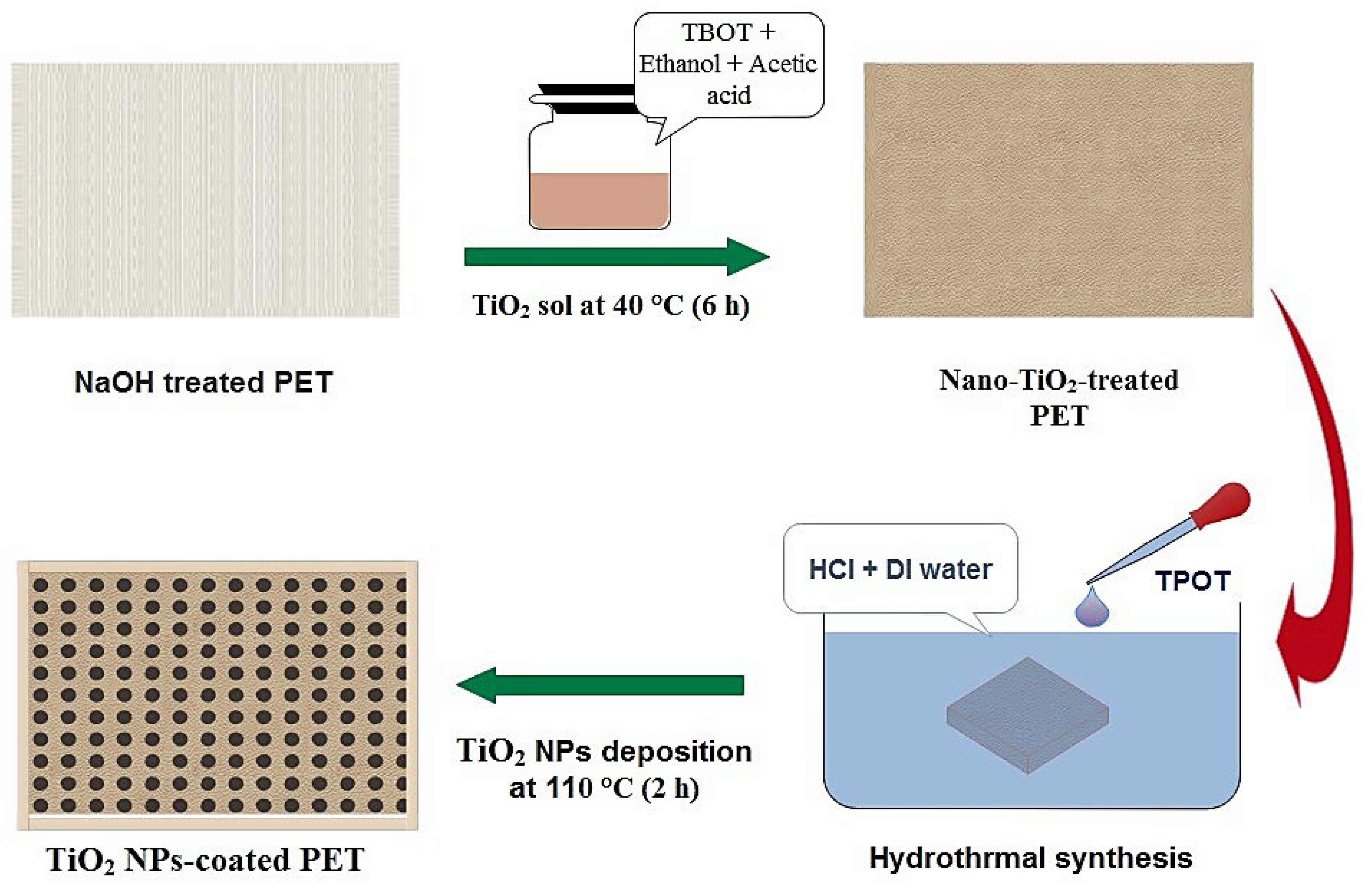
The PET fabric was initially treated with a 3% (w/v) sodium hydroxide (NaOH) solution at 90 °C for 30 min. This pretreatment activated the fabric surface, enhancing material adsorption. The TiO2 NPs were then deposited onto the PET fabrics using a modified method based on our previously published work [29]. First, the NaOH-treated fabric was dip-coated with a nano-TiO2 sol prepared via a sol–gel process. The titanium precursor solution was then prepared through a sol–gel process by mixing 10 mL of tetrabutyl orthotitanate (TBOT), 100 mL of ethanol, and 3.2 mL of acetic acid. The mixture was stirred at 40 °C for 6 h until a stable TiO2 sol was formed. The NaOH-treated fabric was dip-coated in this sol and dried at 100 °C. Subsequently, a 1:4 (v/v) hydrochloric acid/deionized water solution (200 mL of HCl and 800 mL of DI water) was prepared. Different volumes of tetraisopropyl orthotitanate (TPOT) were then added under constant stirring, as listed in Table 1. For each reaction, 100 mL of the resulting TPOT-containing solution, along with the nano-TiO2-coated PET fabric, was transferred into a Teflon-lined stainless-steel autoclave and heated at 110 °C for 2 h. After the reaction, the fabrics were removed, thoroughly rinsed with deionized water, and dried. As a result, TiO2 nanoparticles were successfully deposited onto the surface of the PET fabric. Figure 1 illustrates the schematic of the immobilization of TiO2 nanoparticles on PET fabric.
Table 1.
Sample preparation characteristics.
Figure 1.
Immobilization of TiO2 nanoparticles on PET fabric.
2.3. Characterization of Surface and Chemical Properties
The pristine PET samples coated with TiO2 nanoparticles were subjected to morphological and elemental surface analysis using field-emission scanning electron microscopy (FE-SEM, Zeiss, Oberkochen, Germany) and energy-dispersive X-ray spectroscopy (EDS). Prior to the SEM analysis, a 2 nm conductive layer was deposited on the samples via platinum sputtering to enhance conductivity and mitigate charging issues during imaging. To explore the surface chemical bonds of both the pristine PET and the TiO2 NPs-coated PET samples, Fourier transform-infrared (FT-IR, Perkin Elmer, Waltham, MA, USA) spectroscopy was employed. The IZ10 model from Thermo Fisher Scientific was specifically used for analyzing the surface chemical bonds in the TiO2 NPs-coated PET samples. The DXR Raman Microscope (Thermo Scientific, Waltham, MA, USA) utilized a 532 nm laser and a 900 lines/mm grating to identify the crystal phases. Samples were analyzed using an Olympus LMPlanFL objective (10× and 50×; Olympus Corporation, Tokyo, Japan), with a 25 µm and 50 µm slit aperture, laser power ranging from 0.9 to 5.0 mW, a 1 s exposure time, and 50 exposures.
2.4. Antibacterial Evaluation
The extensive antibacterial evaluation of TiO2 NPs-coated PET samples was conducted to determine their efficacy against both Gram-positive and Gram-negative bacteria across various time periods. For this purpose, the antibacterial performance of the TiO2 NPs-coated PET samples was examined under dynamic contact conditions, adhering to a standardized testing procedure (ASTM E2149), with certain adjustments made [26,30]. The Escherichia coli strain (CCM 7395) and Staphylococcus aureus (CCM2446) were sourced from Masaryk University in Brno, Czech Republic, to evaluate their antimicrobial properties. Colony counts were assessed after 2, 5, and 24 h. Initially, a bacterial concentration of 105 colony-forming units (CFU)/mL was utilized for each sample. A pristine PET sample and a TiO2 NPs-coated PET sample, each measuring 1 × 2 cm, were immersed in 25 mL of the bacterial inoculum solution and mixed thoroughly at 120 rpm. After immersion, 1 mL of the solution was extracted and placed onto Petri dishes, which were subsequently covered with tempered PCA agar (Bio-Rad, Marnes-la-Coquett, France). The samples were incubated in a thermostat set at 37 °C for 24 h. Once cultivation was complete, the microorganism colonies on each Petri dish were counted separately, and the total colony-forming units (CFU) for both Escherichia coli and Staphylococcus aureus were quantified and expressed in CFU/mL. Cultivation analysis was performed in duplicate for all samples. The reduction percentage (R%) was calculated using the resultant CFU to evaluate the antibacterial effectiveness of the TiO2 NPs-coated PET samples through the following Equation (2) [30,31,32].
where C1 and C2 represent the resultant CFUs obtained after testing the pristine PET sample and the TiO2 NPs-coated PET sample, respectively.
2.5. Characterization of Thermophysiological Comfort and Thermal Properties
The pristine PET and TiO2 NPs-coated PET samples were conditioned in relative humidity (65% ± 2%) at 20 ± 2 °C atmospheres for 24 h before testing.
2.5.1. Thermogravimetric Analysis (TGA)
The thermal stability of the PET samples coated with TiO2 nanoparticles was assessed utilizing a Thermogravimetric Analyzer (TGA Q500, TA Instruments, New Castle, DE, USA). The samples were heated from 30 °C to 700 °C at a steady rate of 10 °C/min, with a synthetic air flow of 60 mL/min. TGA is a commonly used method for examining the thermal behavior and degradation properties of textile materials.
2.5.2. Thermal Conductivity
The Alambeta instrument (produced by Sensora Instruments, Liberec, Czech Republic) was employed to assess the thermal characteristics of TiO2 NPs-coated PET samples, which include thermal conductivity, thermal resistance, and thickness [33,34]. This device functions based on the principle of transient heat transfer through the sample, driven by the temperature gradient between the heated upper plate and the cooled lower plate. The sample’s thermal conductivity is determined using the equation provided in (3).
where Q indicates heat flux (W/m2), T is temperature (K), is the thermal conductivity (W/m·K), A is the area, and h is the thickness (m).
2.5.3. Thermal Resistance
Thermal resistance indicates how well fabrics insulate and is inversely associated with thermal conductivity. It is directly related to the material’s thickness and also relies on the fabric’s physical and chemical attributes. Fabrics with higher porosity can hold more air and moisture, which enhances their absorbency and affects their thermal conductivity. The porosity and density of the textile play a vital role in defining its thermal properties. The thermal resistance of the sample was determined using Equation (4) [34,35].
where R is the thermal resistance (m2K/W), h is the fabric thickness (m) and is the thermal conductivity (W/m·K).
2.5.4. Relative Water Vapor Permeability
The relative water vapor permeability (RWVP) of uncoated PET and PET samples coated with TiO2 nanoparticles was assessed using the PERMETEST device, which replicates conditions found in human skin. This apparatus quantifies heat loss from a heated permeable membrane as water evaporates through the material, enabling the determination of the sample’s water vapor resistance and relative permeability based on the decrease in heat flow [35,36]. The RWVP (%) of the fabric samples was assessed in accordance with the ISO 11092 standard [37]. The RWVP was determined using the equation below (5) [38].
where is the heat flow (W/m2), which passes through the measuring head with the sample. Whereas, is the heat flow that passes through the measuring head without a sample.
2.5.5. Air Permeability
The air permeability of the fabric samples (mm/s) was assessed using a Textest FX 3300 device (Textest AG, Schwerzenbach, Switzerland), in accordance with the EN ISO 9237:1995 standard [39]. A pressure differential of 100 Pa was utilized over a test area measuring 20 cm2.
2.5.6. Infrared Thermography
Infrared thermography was performed using a FLIR E6 infrared thermal camera (FLIR Systems, Wilsonville, OR, USA) to evaluate the thermal insulation index of both pristine PET and TiO2 NP-coated PET samples. A horizontal hot plate, maintained at a stable temperature of approximately 50 °C ± 1 °C, served as the heat source. The specimen was placed on the hot plate, and thermal video was captured by an infrared camera 30 cm away. The ambient temperature was maintained at 25 °C ± 1 °C throughout the experiment. The thermal imaging system captured the heat radiation emitted by the specimen from the hot plate. The thermal insulation index (I) was determined using the following Equation (6).
where TS is the sample temperature, TR is the room temperature, and TH is the heater temperature.
3. Results and Discussion
3.1. SEM Analysis of TiO2 NPs-Coated PET Samples
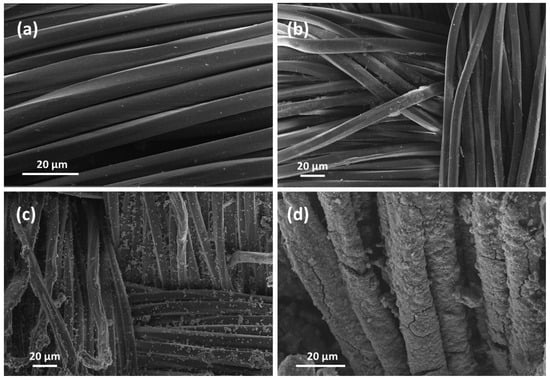
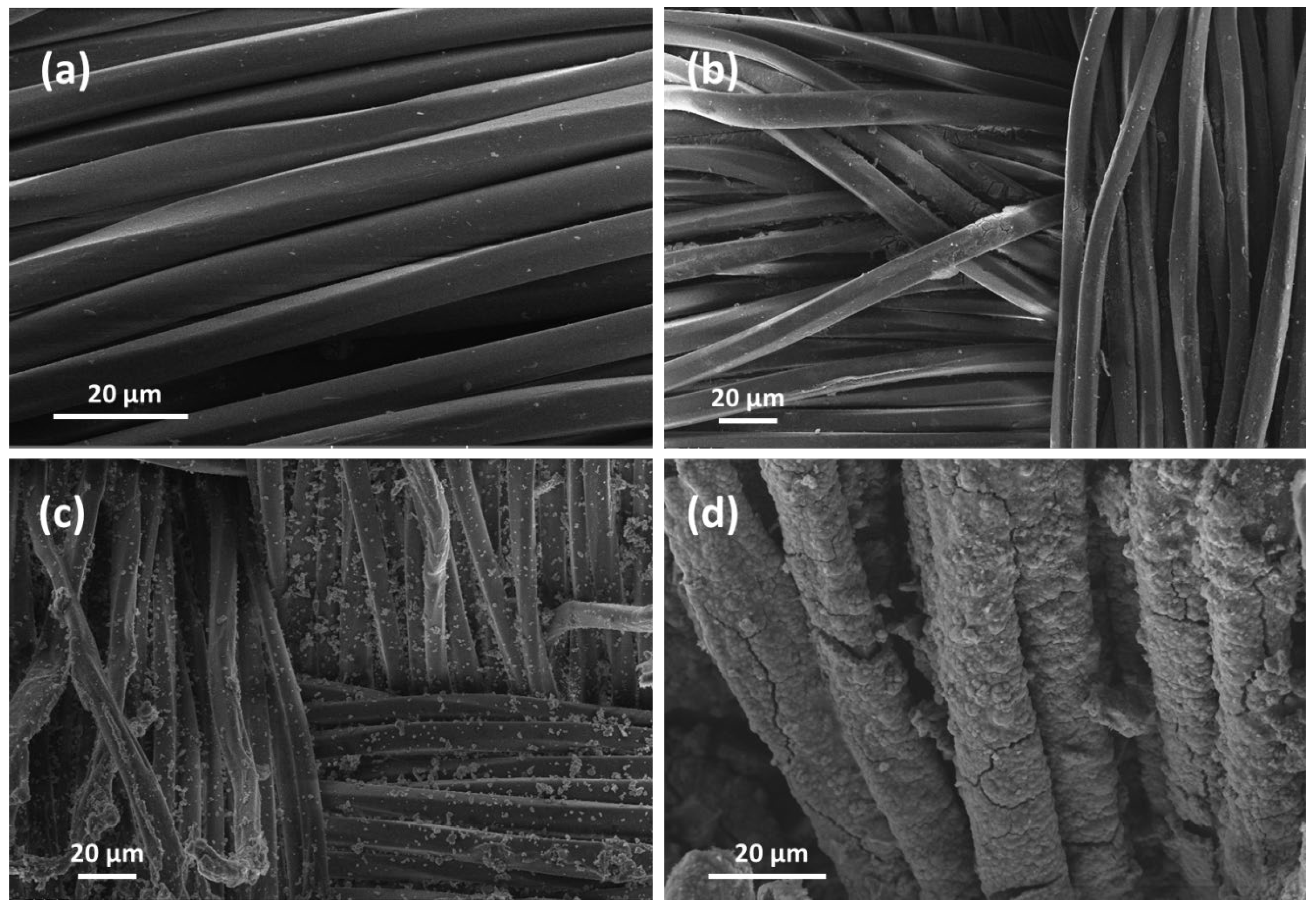
The surface morphology of NaOH-treated PET and TiO2 NPs-coated samples was examined using scanning electron microscopy (SEM), as seen in Figure 2. The surface characteristics of PET fibers include low surface free energy, poor wettability, and inadequate adhesion properties, primarily due to the absence of polar functional groups such as –COOH and –OH in their molecular structure. To improve surface reactivity and enhance the bonding of TiO2 NPs, an alkaline treatment with sodium hydroxide (NaOH) was performed. This treatment successfully broke the ester linkages within the PET chains, promoting hydrolysis and creating hydroxyl and carboxylic acid groups on the fiber surfaces [40,41]. The results indicated that the varying amounts of tetraisopropyl orthotitanate (TPOT) precursor significantly impacted the synthesis and immobilization of TiO2 NPs. At a concentration of 30 mL/L (S1), only a small quantity of NPs was observed, which resulted in a thin coating layer and limited coverage of the PET fibers (Figure 2b). When the precursor concentration was increased to 60 mL/L (S2), a higher density of TiO2 NPs was noted, with larger particles distributed more uniformly across the fiber surface (Figure 2c). Increasing the concentration further to 90 mL/L (S3) resulted in the formation of a continuous and thicker TiO2 layer, achieving complete surface coverage of the fibers (Figure 2d). The enhanced adhesion of TiO2 NPs to the PET fibers can be attributed to the introduction of hydroxyl groups through alkaline hydrolysis, which facilitates hydrogen bonding interactions between the fiber surface and the deposited nanoparticles.
Figure 2.
SEM images of PET samples: (a) NaOH-treated PET; (b) S1; (c) S2; (d) S3.
3.2. EDS Analysis of TiO2 NPs-Coated PET Samples
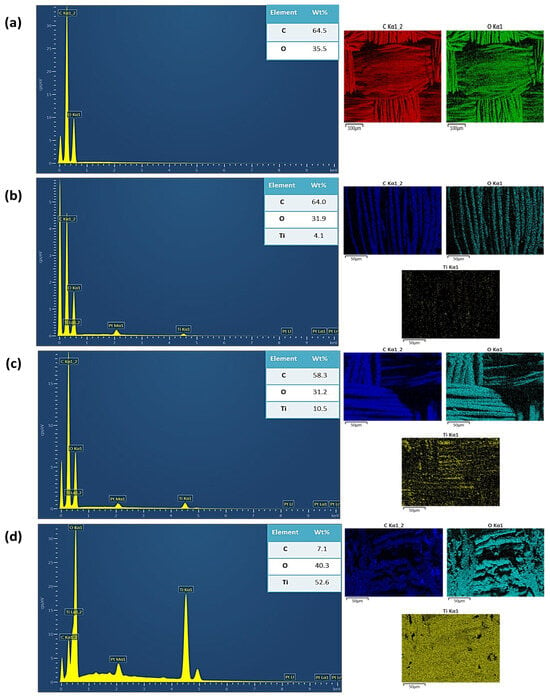
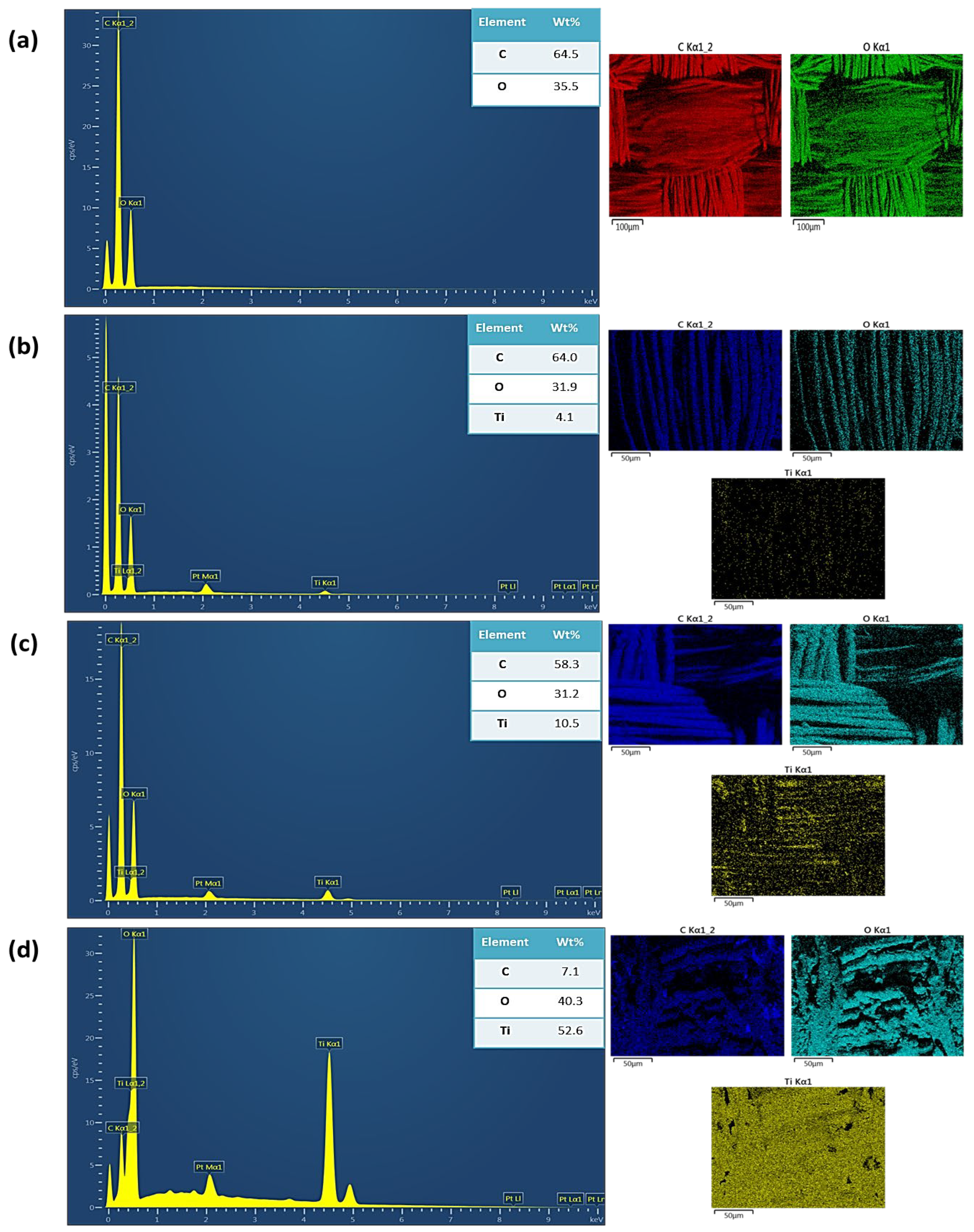
To verify the composition of the deposited nanoparticles (NPs), energy-dispersive spectroscopy (EDS) was used to analyze the samples. The pristine PET fabric mainly consisted of carbon and oxygen, consistent with its polymer structure. In contrast, the EDS spectra for the TiO2-coated PET fabrics clearly showed the presence of titanium (Ti) and oxygen (O), confirming the successful deposition of nanoparticles (see Figure 3). The relative weight percentages of titanium (Ti) measured were 4.1%, 10.5%, and 52.6% for the TiO2 NPs-coated samples S1, S2, and S3, respectively. These results support the scanning electron microscopy (SEM) findings, indicating that higher precursor concentrations result in increased nanoparticle loading and improved surface coverage of the PET fibers. The trend of increasing TPOT volume corresponds with higher titanium content, initially suggesting that the system might not be saturated. However, SEM and EDS analyses show that at the highest TPOT concentration tested, the PET fibers were fully coated with nanoparticles. This verifies that complete surface coverage was achieved, making further increases in TPOT unnecessary and ensuring optimal nanoparticle loading and uniform distribution across the fiber surfaces. Additionally, the mapping images show an even distribution of TiO2 nanoparticles on the PET fiber surfaces, with greater intensity associated with higher precursor amounts.
Figure 3.
EDX spectra and elemental mapping images of (a) Pristine PET and TiO2 NPs-coated PET fabrics: (b) S1, (c) S2, and (d) S3.
3.3. Raman Spectroscopy of TiO2 NPs-Coated PET Fabrics
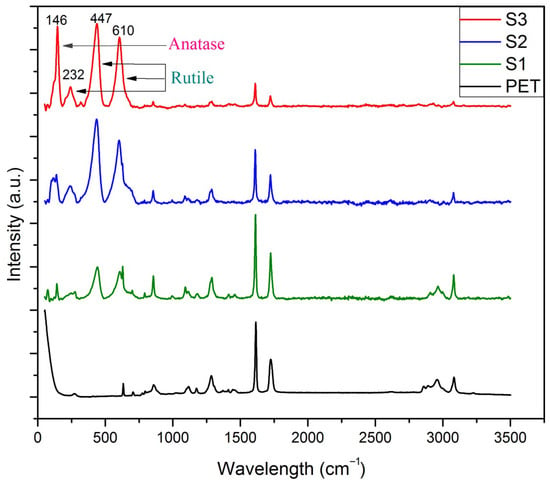
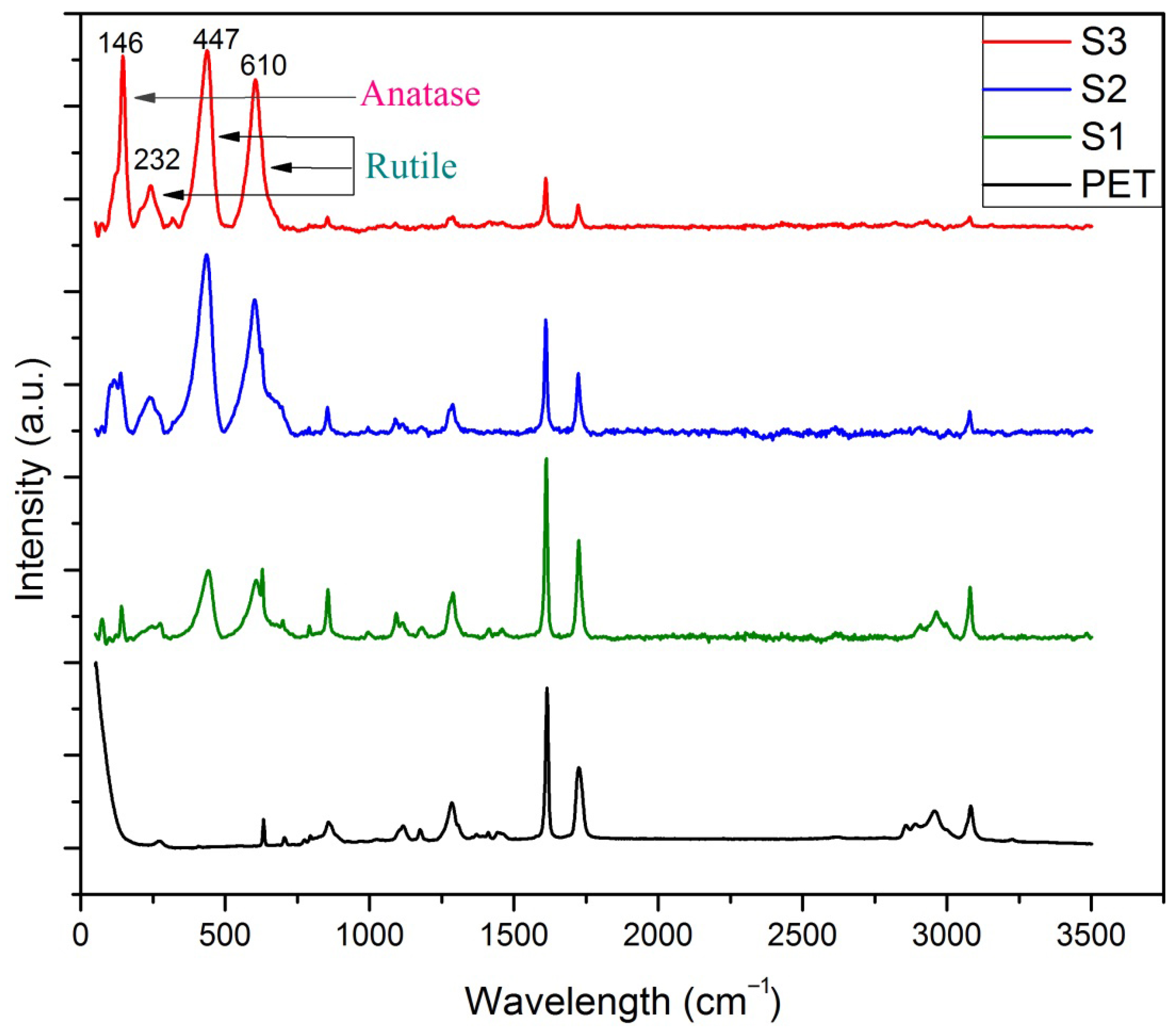
Raman spectroscopy was employed to investigate the crystal structure of TiO2 NPs immobilized on PET fibers. The spectra of the coated samples (Figure 4) exhibited several characteristic peaks corresponding to different TiO2 phases. A sharp peak at approximately 146 cm−1 is attributed to the anatase phase [42,43]. Two strong peaks at 447 cm−1 and 610 cm−1 correspond to the rutile phase. Additionally, a small peak observed at around 232 cm−1 can be assigned to second-order Raman scattering of rutile TiO2, consistent with literature reports [44,45,46]. This indicates that, in addition to the fundamental rutile modes, multi-phonon processes contribute to the Raman signal, confirming the presence of rutile domains in the coating. The Raman results reveal that the TiO2 coating has a mixed-phase structure containing anatase and rutile crystallites [42,43].
Figure 4.
Raman spectra of the TiO2 NPs-coated PET fabrics.
3.4. FT-IR Analysis
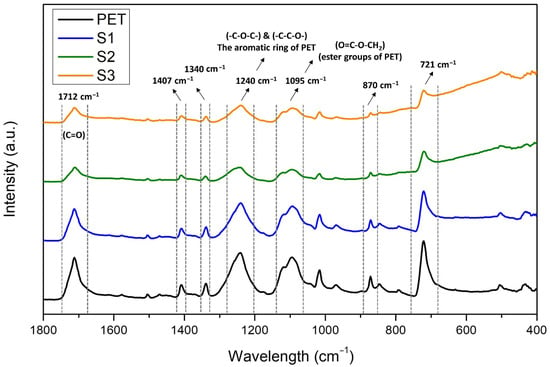
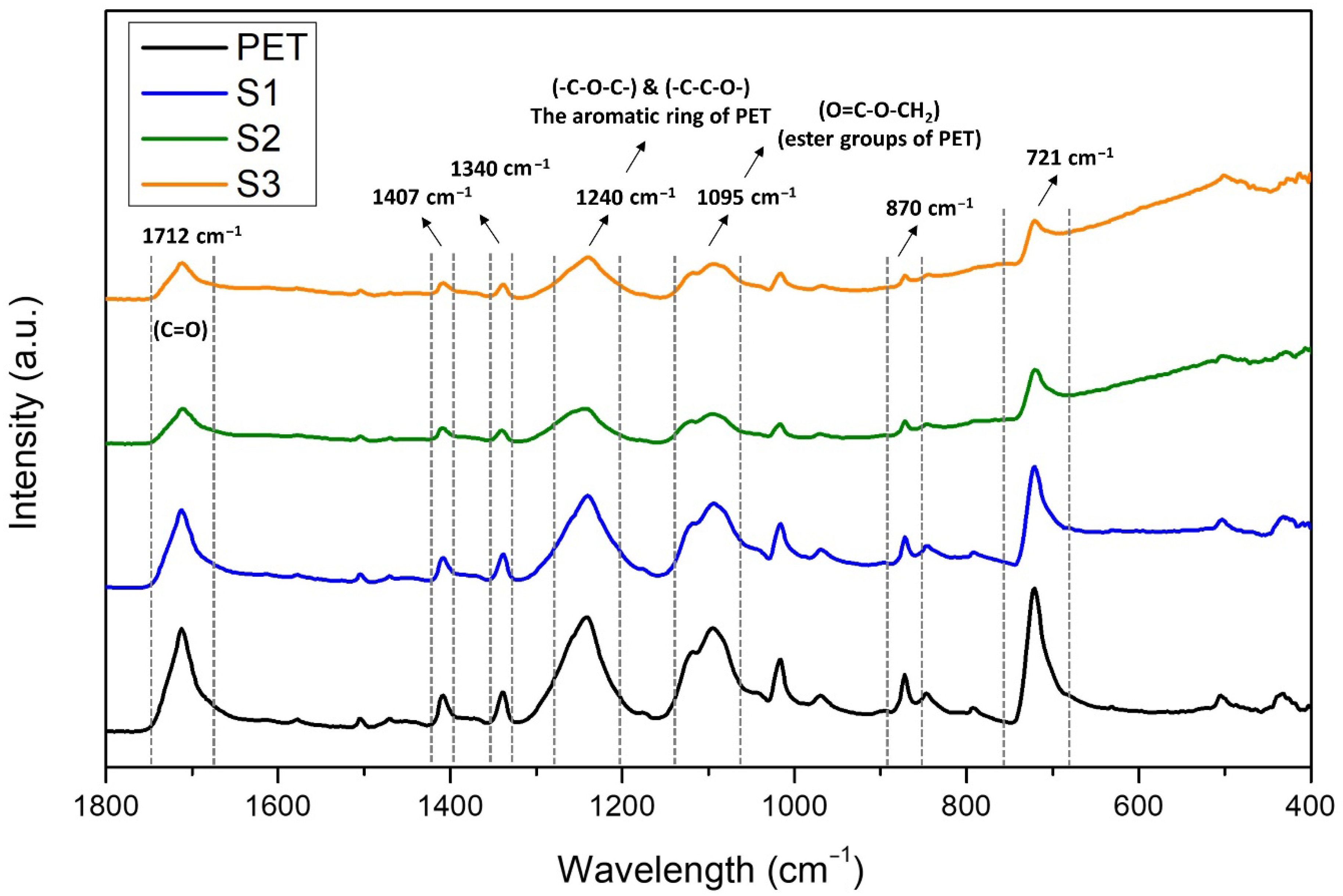
FT-IR spectroscopy was used to investigate the chemical structure of pristine PET fabric and TiO2 NPs-coated PET samples (S1, S2, and S3). The corresponding spectra are depicted in Figure 5. The spectrum of pristine PET (black line) displayed characteristic absorption peaks indicative of its chemical structure. A sharp peak appeared at 1712 cm−1, corresponding to the C=O stretching vibration of the ester carbonyl group, which is a key structural feature of PET [47]. The trans and gauche wagging vibrations of CH2 groups within the PET structure were evident near 1407 cm−1 and 1340 cm−1, while the peaks around 1240 cm−1 and 1095 cm−1 are attributed to the asymmetric stretching of the -C-O-C- and -C-C-O- group of the aromatic ring of PET, and stretching vibration of the O=C-O-CH2- in the ester group of PET, respectively [47]. Bands observed at 870 cm−1 and 721 cm−1 correspond to -CH2 rocking of amorphous PET and out-of-plane bending vibrations of aromatic C-H bonds, confirming the presence of the benzene ring within the polymer backbone [48].
Figure 5.
FT-IR spectra analysis of TiO2 NPs-coated PET samples.
Upon surface modification (samples S1 to S3), the FT-IR spectra maintained the major PET-specific peaks, indicating that the bulk chemical structure of PET was not altered by TiO2 immobilization. However, subtle changes were noted with increasing TiO2 content. A slight broadening and increase in peak intensity around 450–600 cm−1, noticeable in all coated samples, especially S2 and S3, were observed. This band is associated with the Ti-O-Ti stretching vibrations, confirming the successful immobilization of TiO2 onto the PET fabric surface [49]. The increasing intensity of this band from S1 to S3 correlates with the higher concentration of TiO2, which aligns with the expected modification gradient. Overall, the FT-IR analysis confirmed that while the main structure of PET remains intact, the successful immobilization of TiO2 NPs was evident from the emergence of Ti-O-Ti bands and increased surface -OH groups, especially in samples S2 and S3.
3.5. Antibacterial Performance
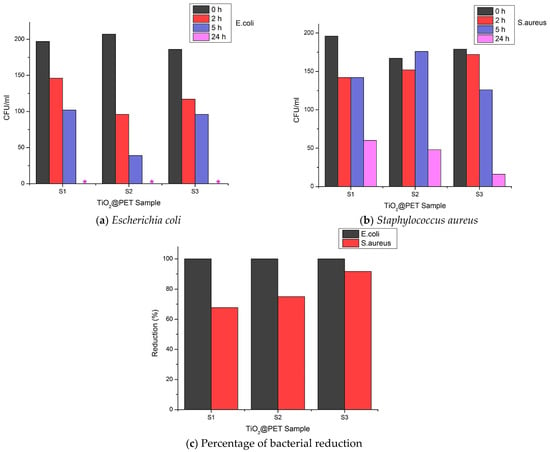
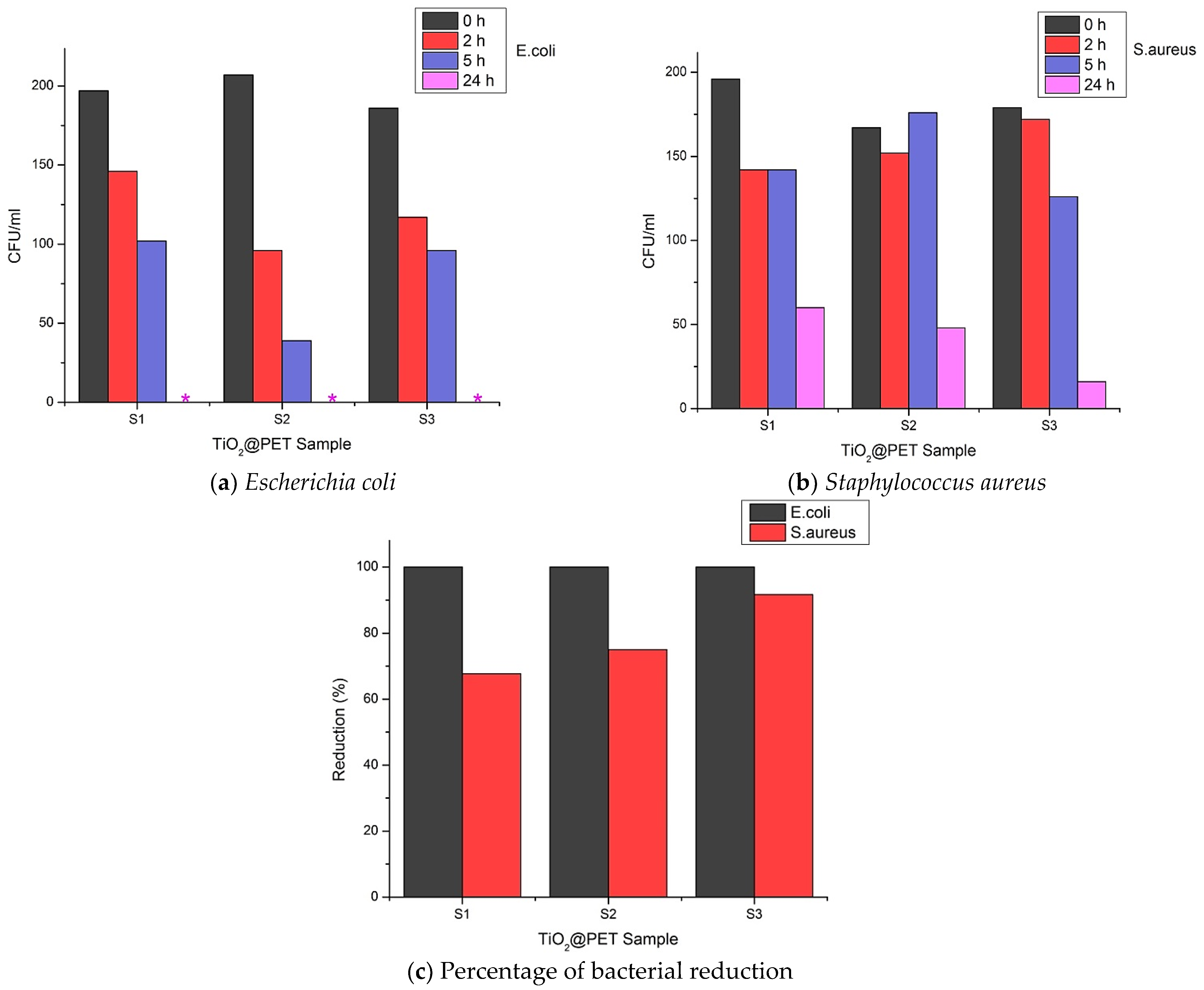
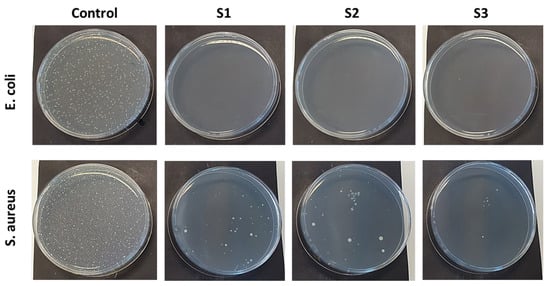
The quantitative evaluation of the bactericidal properties of TiO2 NPs-coated PET fabrics was performed against Staphylococcus aureus and Escherichia coli. This assessment employed a quantitative testing method that measures bactericidal effectiveness by calculating the percentage decrease in bacterial concentration after exposure to the TiO2 coating. The count of surviving bacterial colonies (indicated as CFU/mL) was utilized to determine the extent of bacterial inhibition (% reduction). The TiO2 NPs-immobilized PET samples exhibited superior antibacterial effectiveness against Escherichia coli (representative of Gram-negative bacteria) in comparison to Staphylococcus aureus (representative of Gram-positive bacteria). Following a 24 h contact period, all TiO2-coated specimens showed 0 CFU/mL, resulting in a 100% reduction in bacteria against E. coli. Conversely, the TiO2 NPs-coated samples S1, S2, and S3 presented CFU/mL values of 60, 48, and 16 against S. aureus after 24 h of incubation, translating to bacterial reduction percentages of 67.7%, 75%, and 91.7%, respectively (Figure 6). These results from the AATCC 100 assay indicate that the synthesized TiO2 NPs-coated PET fabrics exhibit excellent antibacterial performance. Compared to the pristine PET fabric, which showed no bactericidal activity (Figure 7), the TiO2-coated samples demonstrated significant inhibition against E. coli and S. aureus, confirming their promising potential in antibacterial applications.
Figure 6.
Colony-forming units (CFU) counts of (a) E. coli and (b) S. aureus after 0, 2, 5, and 24 h of incubation. * Indicates no detectable colonies. (c) Percentage reduction against E. coli and S. aureus after 24 h contact time.
Figure 7.
Antibacterial activity of the pristine PET and TiO2 NPs-coated PET fabrics.
The bactericidal activity of TiO2 NPs is primarily attributed to the photocatalytic generation of reactive oxygen species (ROS) under UV light. Although TiO2 is mainly known for its photocatalytic antibacterial activity under UV light, multiple studies have shown that TiO2 can also exert antibacterial effects in the dark through non-photocatalytic mechanisms. These include causing structural damage to bacterial membranes via direct nanoparticle-cell contact, producing low levels of reactive oxygen species (ROS) in the absence of light, disrupting cellular metabolic processes, and enabling TiO2’s surface hydroxyl groups to interact with bacterial membranes, leading to the leakage of intracellular contents. Additionally, the high surface area and nanoscale shape of TiO2 enhance bacterial adhesion, leading to mechanical stress and growth inhibition even without exposure to UV light. Therefore, the antibacterial properties of TiO2 NPs can also originate from the inherent dark toxicity of TiO2 NPs, a fact well supported by existing literature that does not rely solely on UV or artificial light [50,51,52].
3.6. Thermal Stability
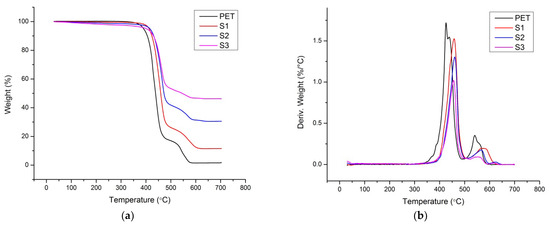
The thermal stability of the PET sample coated with TiO2 NPs was assessed using thermogravimetric analysis (TGA). Tests were performed on both untreated PET fabric and PET fabric immobilized with TiO2 NPs, utilizing various doses of the precursor. The TGA outcomes for the pristine PET sample revealed that the polymer structure decomposes in three stages: volatilization, initial degradation, and carbonization, as illustrated in Figure 8. The results indicate that incorporating TiO2 NPs significantly enhances the heat resistance of the PET sample [53,54]. The weight loss of the pristine PET sample was analyzed over time through thermogravimetric analysis (TGA), as shown in Figure 8. Generally, PET undergoes two stages of degradation, which can be recognized by two temperature points: the initial decomposition temperature (Ti) and the final decomposition temperature (Tf). In the first stage, depolymerization occurs as the polyester main chain breaks down, resulting in significant weight loss within the temperature range of 380–430 °C. During the second stage, oxidative degradation of the ash residues occurs, resulting in less weight loss between 450 and 600 °C. The immobilization of TiO2 NPs on the surface of the PET fabric causes the second peak in the thermogram to become broader and flatter. This phenomenon is likely due to the TiO2 NPs creating a physical barrier against air, which hampers the oxidation process in the second stage [55].
Figure 8.
TGA and DTG curves of the pristine PET and TiO2 NPs-coated PET fabrics. (a) TGA curves; (b) DTG curves.
The experimental results indicated that pure PET fabric completely disintegrated at a temperature below 600 °C, leading to a weight reduction of approximately 98.4% (with a remaining weight of 1.6%), as shown in Table 2. The thermal degradation of the TiO2 NPs-coated PET samples exhibited increased residue at 700 °C. The percentages of residue were 11.6%, 30.5%, and 46.3% for the precursor volumes of 30 mL/L (S1), 60 mL/L (S2), and 90 mL/L (S3), respectively. Furthermore, a higher concentration of TiO2 NPs was associated with a larger quantity of residue on the surface of the PET fabric. The increased Ti and Tf temperatures in the TiO2 NPs-coated PET compared to the uncoated PET sample can be explained by the enhanced thermal resistance provided by the coating [56]. The TiO2 NPs can absorb and dissipate heat energy, which helps to alleviate the impact of temperature on the PET fabric and results in an increased initial decomposition temperature [57,58]. The thermal stability results indicate that the TiO2-coated PET fabrics retain their structural integrity well beyond typical usage conditions. Importantly, the fabrics withstood temperatures typically used for sterilization, including 121–132 °C for wet heat sterilization and 150–190 °C for dry heat sterilization. This indicates that coated fabrics are appropriate for applications that require sterilization without losing their mechanical or functional properties. These results offer valuable insights into the thermal behavior of PET fabrics with varying surface coatings, which may be of considerable interest to professionals and researchers across multiple industries.
Table 2.
Thermal analysis of pristine PET, and TiO2 NPs-coated PET fabrics.
3.7. Thermal Insulation Index (I)
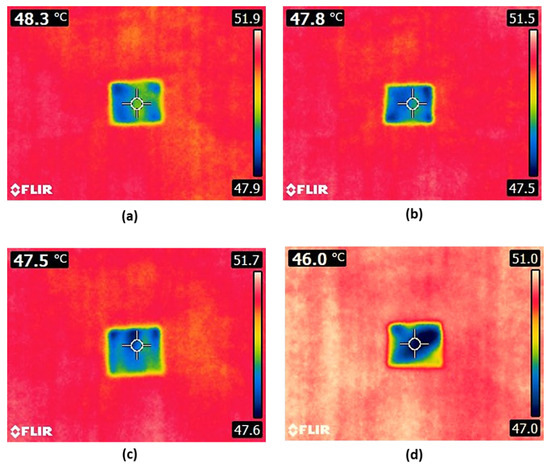
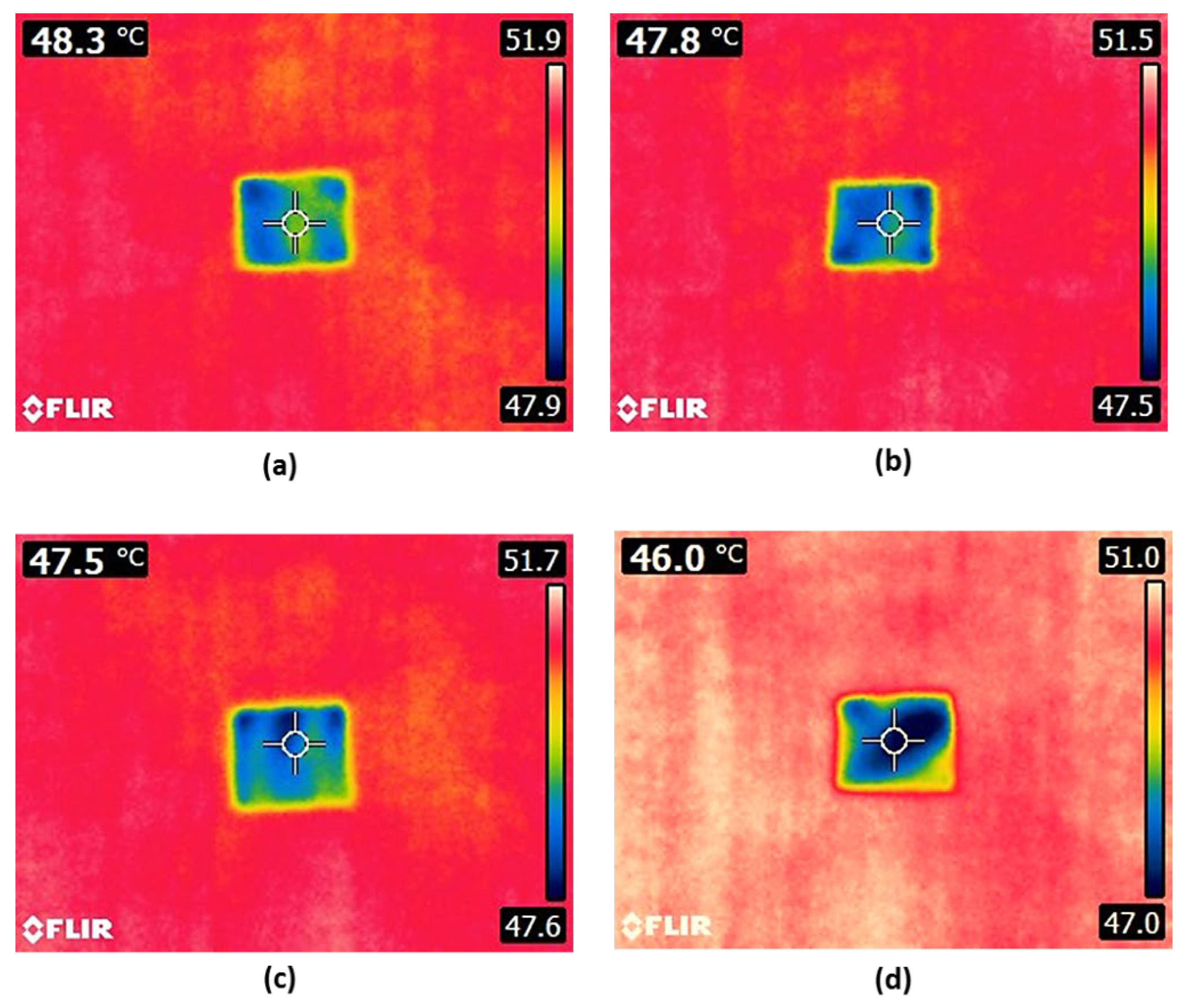
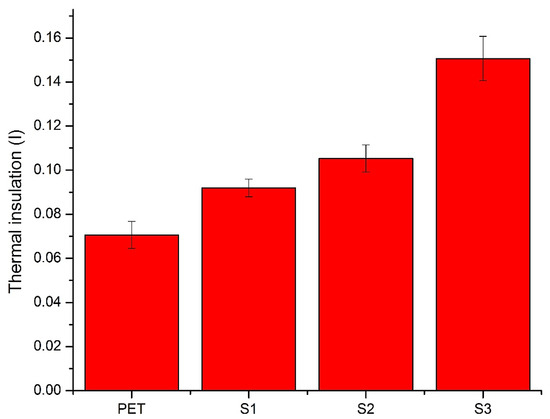
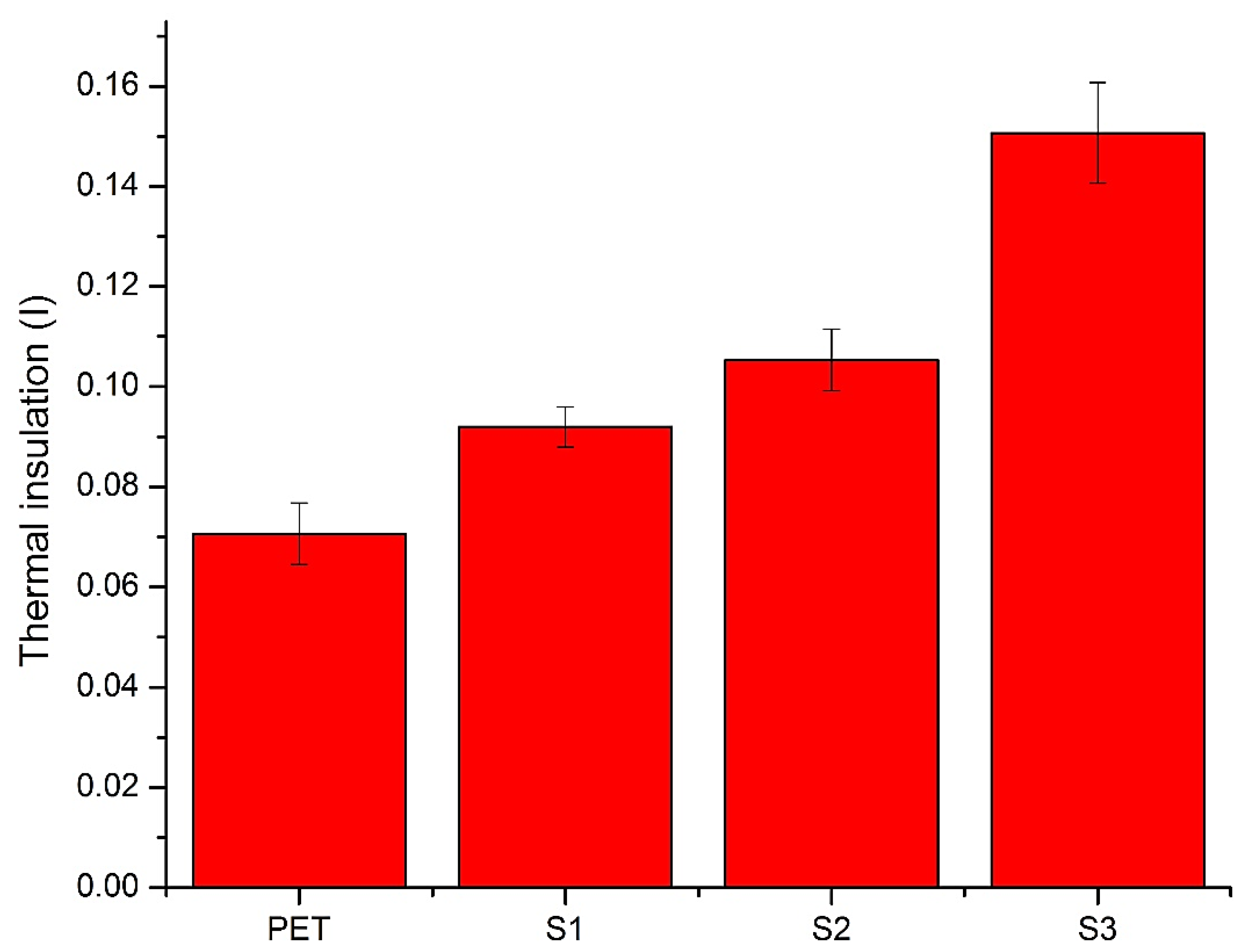
Figure 9 presents the thermography images of the TiO2 NPs-coated samples. Temperature values obtained from the thermal camera were used to calculate the average thermal insulation index (I) of the TiO2 NPs-coated samples, as shown in Figure 10. The TiO2 NPs-coated samples exhibited an increase in thermal insulation index values, confirming the positive impact of the TiO2 NPs coating. This coating serves as a protective layer for pristine PET, enhancing its thermal insulation properties. The pristine PET sample showed the lowest thermal insulation value of 0.07, attributed to the inherently high thermal conductivity. In contrast, the TiO2 NPs-coated samples displayed progressively higher insulation index values of 0.09, 0.11, and 0.15 for samples S1, S2, and S3, respectively. The increase in insulation performance is associated with greater density and thickness of the TiO2 NPs film, which forms a barrier layer on the PET surface. TiO2 in nanoscale form possesses intrinsically low thermal conductivity, providing better thermal insulation [59,60]. It is important to note that thermal conductivity and, consequently, insulation efficiency are strongly influenced by material morphology, density, and homogeneity factors [61,62].
Figure 9.
Thermal images of the samples: (a) Pristine PET; (b) S1; (c) S2; (d) S3.
Figure 10.
Thermal insulation index (I) of pristine PET and TiO2 NPs-coated PET fabrics. Error bars indicate standard deviations (SD).
3.8. Thermal Conductivity
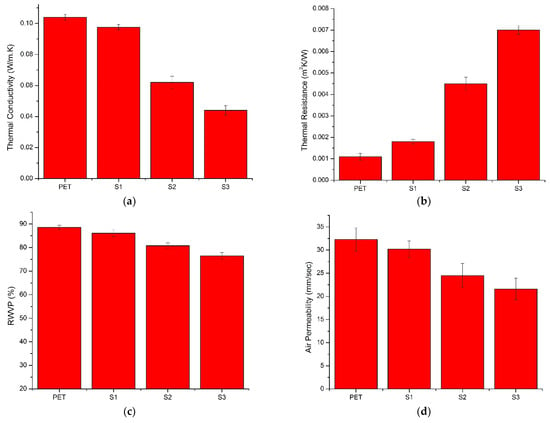
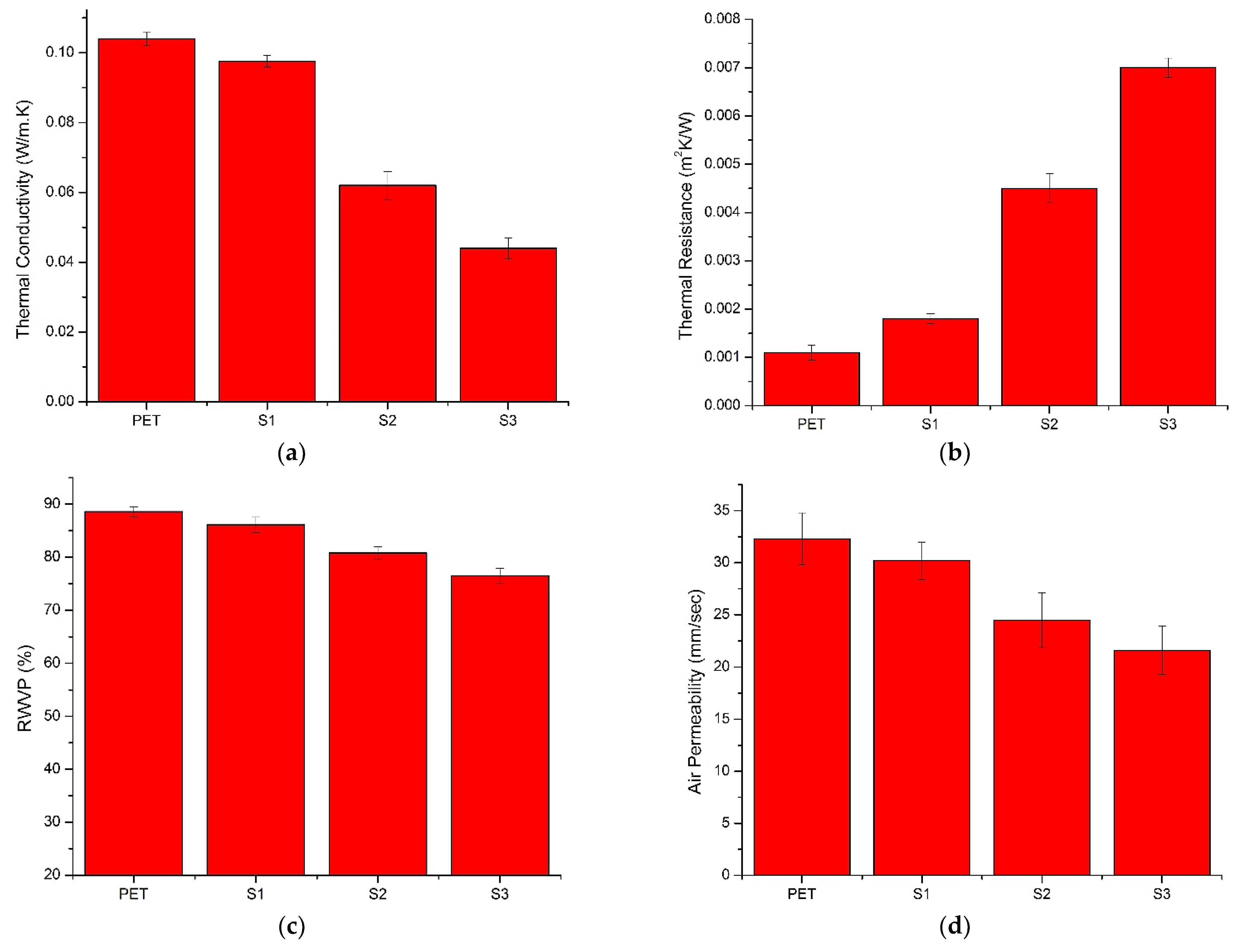
Thermal conductivity indicates the quantity of heat that travels through a unit area of a material over a unit thickness when subjected to a certain temperature gradient. The thermal characteristics of textiles, which include thermal conductivity, thermal absorptivity, and thermal resistance, are influenced by factors such as the fabric’s structure, density, chemical treatments, and fiber properties. Figure 11a demonstrates how different amounts of tetraisopropyl orthotitanate (TPOT) influence the thermal conductivity of PET fabrics coated with TiO2 nanoparticles. It was observed that thermal conductivity decreases as the density of the TiO2 NPs increases. The pristine PET sample showed a maximum thermal conductivity of 0.104 W/m·K, while the S3 sample exhibited the lowest thermal conductivity of 0.044 W/m·K. The data indicate that an increase in TPOT dose leads to a decrease in thermal conductivity for the TiO2 NPs-coated fabric, suggesting enhanced thermal insulation characteristics. Additionally, as the concentration of surface nanoparticles rises, the porosity and the amount of air trapped between the fibers also increase, further aiding in the reduction in thermal conductivity. The coating process also enhances the fabric’s thickness, improving the volume of trapped air and, in turn, augmenting thermal insulation properties. Additionally, the use of TiO2 nanoparticles effectively reduces thermal conductivity due to their inherent low thermal conductivity properties. Another element that contributes to the decrease in thermal conductivity is the creation of small air pockets within the insulation structure, which obstructs heat transfer [54,63,64].
Figure 11.
Thermophysiological comfort properties of pristine PET and TiO2 NPs-coated PET fabrics. Error bars indicate standard deviations (SD). (a) Thermal conductivity; (b) Thermal resistance; (c) Water vapor permeability; (d) Air permeability.
3.9. Thermal Resistance
Thermal resistance, which quantifies the thermal insulation capability of fabrics, is inversely proportional to thermal conductivity [34]. This study observed a notable increase in thermal resistance with higher TPOT doses, corresponding to greater TiO2 nanoparticle immobilization on the PET surface. The pristine PET fabric exhibited the lowest thermal resistance of 0.0011 m2·K/W, indicating minimal insulation. In contrast, TiO2 NPs-coated PET samples showed progressively higher values of 0.0018 for S1, 0.0045 for S2, and a maximum of 0.007 m2·K/W for S3 (Figure 11b). The enhanced thermal resistance performance is linked to the greater density and thickness of the TiO2 NPs on the PET surface. TiO2 at the nanoscale has low thermal conductivity, improving thermal insulation. This may also be attributed to the increased NPs coverage, which raises surface roughness and traps more air between fibers. Since air is a poor conductor of heat, its greater presence within the fabric structure enhances insulation. Furthermore, the TiO2-PET interfaces introduce additional thermal boundary resistance, further impeding heat flow. As a result, higher TiO2 coating densities significantly improve thermal insulation properties [65,66].
3.10. Relative Water Vapor Permeability (RWVP)
Relative water vapor permeability (RWVP) is a crucial property for assessing fabric comfort. A higher RWVP indicates improved thermal comfort in the material. The RWVP of TiO2 NPs-coated PET fabrics showed a small reduction. There was a slight decrease in RWVP for TiO2 NPs-coated PET fabrics, which may be attributed to the increase in fiber thickness after coating. Still, the fabric’s porous design remained unobstructed due to the uniform coating of TiO2 nanoparticles on the fiber surface, which significantly maintained its comfort properties. The RWVP value for pristine PET fabric was recorded at 88.6%, while measurements of 86.1%, 80.8%, and 76.5% were obtained for TiO2 NPs-coated PET samples S1, S2, and S3, respectively. The relative water vapor permeability exhibited a slight decrease of 12.1%, which is considered acceptable, as shown in Figure 11c. In a previous study, the water vapor permeability indexes of the coated samples ranged from 58.41% to 88.73%, indicating that breathability decreased after coating. However, all values remained above 50%, which is considered the minimum threshold for breathable fabrics [67]. Based on these findings, it can be concluded that there was no significant change in the water vapor permeability of TiO2 NPs-coated PET fabrics, which demonstrate favorable physiological comfort properties.
3.11. Air Permeability (AP)
The air permeability of a fabric is primarily influenced by its porosity, along with characteristics like the fiber’s cross-section, the shape of the channels, and the number of channels. Because air permeability directly affects the thermal characteristics and overall comfort of the wearer, it is crucial to evaluate how surface treatments influence this property. The pristine PET fabric showed an AP of 32.3 mm/s, which decreased to 30.2, 24.5, and 21.6 mm/s for samples S1, S2, and S3, respectively, as the density of nanoparticles increased (Figure 11d). This pattern shows a gradual decline in air permeability (AP) as the load of TiO2 nanoparticles (NPs) increases. However, this reduction is relatively small compared to instances where pore blockage significantly limits breathability. This implies that TiO2 NPs mainly cover the surfaces of the fibers instead of clogging the inter-yarn pores. The minor decrease in AP can likely be attributed to a reduction in pore size caused by the deposition of NPs on the fiber surfaces. A significant reduction in AP can lower physiological comfort, yet the slight decrease observed here suggests that the treated fabrics still retain adequate breathability [68,69]. Similar small reductions in air permeability have been documented in textiles coated with nanoscale layers that preserve inter-yarn porosity, maintaining breathability [70]. Comparable results were seen in studies where nanoparticle coatings that did not fill pores resulted in only modest losses in permeability. In contrast, coatings that did block the pores caused more significant reductions [71].
4. Conclusions
In this study, PET fabric was surface engineered to enhance its antibacterial properties, thermophysiological comfort, and thermal properties, catering to the increasing demand for such features in medical textiles. The main objective was to evaluate the synergistic effects of TiO2 nanoparticle (NPs) coatings on antibacterial performance, thermo-physiological comfort, thermal stability, and thermal insulation of PET fabrics. Comprehensive analyses, including SEM, EDS, FTIR, and TGA, confirmed the morphological, chemical, and thermal properties of the TiO2 NPs-coated PET samples. The results revealed that the TiO2 NPs-coated PET fabrics exhibited excellent antibacterial activity against Gram-negative E. coli and Gram-positive S. aureus. Regarding thermophysiological comfort, the thermal conductivity of the fabric decreased, while thermal resistance increased with a higher loading of TiO2 NPs. Notably, there was a small reduction in relative water vapor permeability and air permeability. This stability was attributed to the uniform immobilization of TiO2 NPs, which covered the PET fibers without substantially altering the fabric’s porosity. The TiO2-coated PET fabrics also demonstrated enhanced thermal stability and thermal insulation index. Introducing TiO2 coatings significantly improves the functional and comfort properties of PET fabrics, making them strong candidates for advanced medical textile applications.
Author Contributions
Conceptualization, M.Z.K. and J.W.; Methodology, M.Z.K.; Software, H.T. and A.A.; Formal analysis, M.Z.K., A.A. and H.T.; Investigation, M.Z.K. and H.T.; Validation, J.W.; Writing—original draft preparation, M.Z.K.; Writing—review and editing, J.M. and J.W.; Supervision, J.W. and J.M.; Funding acquisition, J.M.; Project administration, D.K.; Resources, D.K. All authors have read and agreed to the published version of the manuscript.
Funding
This research was funded by the Technology Agency of the Czech Republic (TAČR) under the project “Multifunctional textiles using the heat radiated from the human body” (Project No. FW12010015) and also by the Czech Science Foundation (GAČR) under the project “Advanced Structures for Thermal Insulation in Extreme Conditions” (Reg. No. 21-32510M).
Institutional Review Board Statement
Not applicable.
Data Availability Statement
The original contributions presented in this study are included in the article. Further inquiries can be directed to the corresponding author.
Conflicts of Interest
The authors declare no conflict of interest.
References
- Rivero, P.J.; Urrutia, A.; Goicoechea, J.; Arregui, F.J. Nanomaterials for functional textiles and fibers. Nanoscale Res. Lett. 2015, 10, 501. [Google Scholar] [CrossRef] [Scilit] [PubMed]
- Chokesawatanakit, N.; Thammasang, S.; Phanthanawiboon, S. Enhancing the multifunctional properties of cellulose fabrics through in situ hydrothermal deposition of TiO2 nanoparticles at low temperature for antibacterial self-cleaning under UV–Vis illumination. Int. J. Biol. Macromol. 2024, 256, 128321. [Google Scholar] [CrossRef] [Scilit] [PubMed]
- Thi, Q.; Huong, T.; Thanh, N.; Nam, H.; Hai, N.D.; Dat, N.M. Surface modification and antibacterial activity enhancement of acrylic fabric by coating silver/graphene oxide nanocomposite. J. Polym. Res. 2023, 30, 109. [Google Scholar] [CrossRef] [Scilit]
- Kübra, A.; Çevik, S. Electrospray deposited plant-based polymer nanocomposite coatings with enhanced antibacterial activity for Ti-6Al-4V implants. Prog. Org. Coat. 2024, 186, 107965. [Google Scholar] [CrossRef] [Scilit]
- Zhang, H.; Cao, Y.; Zhen, Q.; Hu, J.-J.; Cui, J.-Q.; Qian, X.-M. Facile Preparation of PET/PA6 Bicomponent Microfilament Fabrics with Tunable Porosity for Comfortable Medical Protective Clothing. ACS Appl. Bio Mater. 2022, 5, 3509–3518. [Google Scholar] [CrossRef] [Scilit]
- Hassabo, A.G.; Elmorsy, H.M.; Gamal, N.; Sedik, A.; Saad, F.; Bouthaina, M.; Othman, H.A. Applications of nanotechnology in the creation of smart sportswear for enhanced sports performance: Efficiency and comfort. J. Text. Color. Polym. Sci. 2023, 20, 11–28. [Google Scholar] [CrossRef] [Scilit]
- Lou, J.; Zhao, Y.; Meng, Y.; Su, J.; Han, J. Long-lasting superhydrophobic antibacterial PET fabrics via graphene oxide promoted in-situ growth of copper nanoparticles. Synth. Met. 2023, 293, 117293. [Google Scholar] [CrossRef] [Scilit]
- Oopath, S.V.; Baji, A.; Abtahi, M.; Luu, T.Q.; Vasilev, K.; Truong, V.K. Nature-inspired biomimetic surfaces for controlling bacterial attachment and biofilm development. Adv. Mater. Interfaces 2023, 10, 2201425. [Google Scholar] [CrossRef] [Scilit]
- Mu, M.; Liu, S.; Deflorio, W.; Hao, L.; Wang, X.; Salazar, K.S.; Taylor, M.; Castillo, A.; Cisneros-zevallos, L.; Oh, J.K.; et al. Influence of surface roughness, nanostructure, and wetting on bacterial adhesion. Langmuir 2023, 39, 5426–5439. [Google Scholar] [CrossRef] [Scilit]
- Özen, İ.; Çinçik, E.; Şimşek, S. Thermal comfort properties of simulated multilayered diaper structures in dry and wet conditions. J. Ind. Text. 2016, 46, 256–278. [Google Scholar] [CrossRef] [Scilit]
- Khan, M.Z.; Hussain, S.; Siddique, H.F.; Baheti, V.; Militky, J.; Azeem, M.; Ali, A. Improvement of liquid moisture management in plaited knitted fabrics. Tekst. Konfeksiyon 2018, 28, 182–188. [Google Scholar]
- Khan, M.Z.; Baheti, V.; Ashraf, M.; Hussain, T.; Ali, A.; Javid, A.; Rehman, A. Development of UV protective, superhydrophobic and antibacterial textiles using ZnO and TiO2 nanoparticles. Fibers Polym. 2018, 19, 1647–1654. [Google Scholar] [CrossRef] [Scilit]
- Yuenyongsuwan, J.; Nithiyakorn, N.; Sabkird, P.; O’Rear, E.A.; Pongprayoon, T. Surfactant effect on phase-controlled synthesis and photocatalyst property of TiO2 nanoparticles. Mater. Chem. Phys. 2018, 214, 330–336. [Google Scholar] [CrossRef] [Scilit]
- Wang, J.; Zhao, J.; Sun, L.; Wang, X. A review on the application of photocatalytic materials on textiles. Text. Res. J. 2015, 85, 1104–1118. [Google Scholar] [CrossRef] [Scilit]
- Fujishima, A.; Honda, K. Electrochemical photolysis of water at a semiconductor electrode. Nature 1972, 238, 37–38. [Google Scholar] [CrossRef] [Scilit] [PubMed]
- Mutsak Ahmed, R.; Hasan, I. A review on properties and applications of TiO2 and associated nanocomposite materials. Mater. Today Proc. 2023, 81, 1073–1078. [Google Scholar] [CrossRef] [Scilit]
- Di Paola, A.; Bellardita, M.; Palmisano, L. Brookite, the least known TiO2 photocatalyst. Catalysts 2013, 3, 36–73. [Google Scholar] [CrossRef] [Scilit]
- Banerjee, S.; Pillai, S.C.; Falaras, P.; O’Shea, K.E.; Byrne, J.A.; Dionysiou, D.D. New insights into the mechanism of visible light hotocatalysis. J. Phys. Chem. Lett. 2014, 5, 2543–2554. [Google Scholar] [CrossRef] [Scilit]
- Li, Y.; Liu, J.; Jia, Z. Morphological control and photodegradation behavior of rutile TiO2 prepared by a low-temperature process. Mater. Lett. 2006, 60, 1753–1757. [Google Scholar] [CrossRef] [Scilit]
- Taziwa, R.; Okoh, O.; Nyamukamba, P.; Zinya, S.; Mungondori, H. Synthetic methods for titanium dioxide nanoparticles: A review. In Titanium Dioxide—Material for a Sustainable Environment; Yang, D., Ed.; IntechOpen: Rijeka, Croatia, 2018; p. 518. ISBN 978-1-78923-327-8. [Google Scholar]
- Ortelli, S.; Costa, A.L.; Dondi, M. TiO2 nanosols applied directly on textiles using different purification treatments. Materials 2015, 8, 7988–7996. [Google Scholar] [CrossRef] [Scilit]
- Khan, M.Z.; Baheti, V.; Militky, J.; Wiener, J.; Ali, A. Self-cleaning properties of polyester fabrics coated with flower-like TiO2 particles and trimethoxy (octadecyl)silane. J. Ind. Text. 2019, 50, 543–565. [Google Scholar] [CrossRef] [Scilit]
- Huang, J.Y.; Li, S.H.; Ge, M.Z.; Wang, L.N.; Xing, T.L.; Chen, G.Q.; Liu, X.F.; Al-Deyab, S.S.; Zhang, K.Q.; Chen, T.; et al. Robust superhydrophobic TiO2 @fabrics for UV shielding, self-cleaning and oil–water separation. J. Mater. Chem. A 2015, 3, 2825–2832. [Google Scholar] [CrossRef] [Scilit]
- Tan, J.; Deng, H.; Lu, F.; Chen, W.; Su, X. Antibacterial nanocellulose-TiO2/polyester fabric for the recyclable photocatalytic degradation of dyes. Polymers 2023, 15, 4376. [Google Scholar] [CrossRef] [Scilit] [PubMed]
- Salvia Binte Touhid, S.; Shawon, M.R.K.; Ali Khoso, N.; Xu, Q.; Pan, D.; Liu, X. TiO2/Cu composite NPs coated polyester fabric for the enhancement of antibacterial durability. IOP Conf. Ser. Mater. Sci. Eng. 2020, 774, 12114. [Google Scholar] [CrossRef] [Scilit]
- Taghavian, H.; Černík, M.; Dvořák, L. Advanced (bio) fouling resistant surface modification of PTFE hollow-fiber membranes for water treatment. Sci. Rep. 2023, 13, 11871. [Google Scholar] [CrossRef] [Scilit]
- Taghavian, H.; Khan, M.Z.; Wiener, J.; Militky, J.; Tomkova, B.; Venkataraman, M.; Ali, Z.; Cernik, M.; Dvorak, L. Green superhydrophobic surface engineering of PET fabric for advanced water-solvent separation. Prog. Org. Coatings 2024, 197, 108842. [Google Scholar] [CrossRef] [Scilit]
- Khan, M.Z.; Taghavian, H.; Wiener, J.; Militky, J. Green in-situ immobilization of ZnO nanoparticles for functionalization of polyester fabrics. Surf. Interfaces 2024, 55, 105336. [Google Scholar] [CrossRef] [Scilit]
- Khan, M.Z.; Ashraf, M.; Hussain, T.; Rehman, A.; Malik, M.M.; Raza, Z.A.; Nawab, Y.; Zia, Q. In situ deposition of TiO2 nanoparticles on polyester fabric and study of its functional properties. Fibers Polym. 2015, 16, 1092–1097. [Google Scholar] [CrossRef] [Scilit]
- Barrios, Y.; Perez, L.D.; Soto, C.Y.; Sierra, C. Metal-organic framework (MOFs) tethered to cotton fibers display antimicrobial activity against relevant nosocomial bacteria. Inorganica Chim. Acta 2022, 537, 120955. [Google Scholar] [CrossRef] [Scilit]
- Fonseca, S.; Cayer, M.-P.; Ahmmed, K.M.T.; Khadem-Mohtaram, N.; Charette, S.J.; Brouard, D. Characterization of the antibacterial activity of an SiO2 nanoparticular coating to prevent bacterial contamination in blood products. Antibiotics 2022, 11, 107. [Google Scholar] [CrossRef] [Scilit]
- Peer, P.; Sedlaříková, J.; Janalíková, M.; Kučerová, L.; Pleva, P. Novel polyvinyl butyral/monoacylglycerol nanofibrous membrane with antifouling activity. Materials 2020, 13, 3662. [Google Scholar] [CrossRef] [Scilit]
- Hes, L. Non-destructive determination of comfort parameters during marketing of functional garments and clothing. Indian J. Fibre Text. Res. 2008, 33, 239–245. [Google Scholar]
- Mangat, M.M.; Hes, L.; Bajzık, V. Thermal resistance models of selected fabrics in wet state and their experimental verification. Text. Res. J. 2015, 85, 200–210. [Google Scholar] [CrossRef] [Scilit]
- Hes, L.; Loghin, C. Heat, moisture and air transfer properties of selected woven fabrics in wet state. J. Fiber Bioeng. Informatics 2009, 2, 141–149. [Google Scholar] [CrossRef] [Scilit]
- Bogusławska-Baczek, M.; Hes, L. Effective water vapour permeability of wet wool fabric and blended fabrics. Fibres Text. East. Eur. 2013, 97, 67–71. [Google Scholar]
- ISO 11092:2014; Textiles—Physiological Effects—Measurement of Thermal and Water-Vapour Resistance under Steady-State Conditions (Sweating Guarded-Hotplate Test). International Organization for Standardization: Geneva, Switzerland, 2014.
- Hes, L.; de Araujo, M. Simulation of the effect of air gaps between the skin and a wet fabric on resulting cooling flow. Text. Res. J. 2010, 80, 1488–1497. [Google Scholar] [CrossRef] [Scilit]
- ISO 9237:1995; Textiles—Determination of the Permeability of Fabrics to Air. International Organization for Standardization: Geneva, Switzerland, 1995.
- Montazer, M.; Sadighi, A. Optimization of the hot alkali treatment of polyester/cotton fabric with sodium hydrosulfite. J. Appl. Polym. Sci. 2006, 100, 5049–5055. [Google Scholar] [CrossRef] [Scilit]
- Cammarano, A.; De Luca, G.; Amendola, E. Surface modification and adhesion improvement of polyester films. Cent. Eur. J. Chem. 2013, 11, 35–45. [Google Scholar] [CrossRef] [Scilit]
- Soundarrajan, P.; Sankarasubramanian, K.; Logu, T.; Sethuraman, K.; Ramamurthi, K. Growth of rutile TiO2 nanorods on TiO2 seed layer prepared using facile low cost chemical methods. Mater. Lett. 2014, 116, 191–194. [Google Scholar] [CrossRef] [Scilit]
- Nagaraju, G.; Manjunath, K.; Ravishankar, T.N.; Ravikumar, B.S.; Nagabhushan, H.; Ebeling, G.; Dupont, J. Ionic liquid-assisted hydrothermal synthesis of TiO2 nanoparticles and its application in photocatalysis. J. Mater. Sci. 2013, 48, 8420–8426. [Google Scholar] [CrossRef] [Scilit]
- Gan, X.; Gao, X.; Qiu, J.; He, P.; Li, X.; Xiao, X. TiO2 nanorod-derived synthesis of upstanding hexagonal kassite nanosheet arrays: An intermediate route to novel nanoporous TiO2 nanosheet arrays. Cryst. Growth Des. 2012, 12, 289–296. [Google Scholar] [CrossRef] [Scilit]
- Subramaniam, M.R.; Devanathan, S.; Kumaresan, D. Synthesis of micrometer-sized hierarchical rutile TiO2 flowers and their application in dye sensitized solar cells. RSC Adv. 2014, 4, 36791–36799. [Google Scholar] [CrossRef] [Scilit]
- Selman, A.M.; Hassan, Z.; Husham, M. Structural and photoluminescence studies of rutile TiO2 nanorods prepared by chemical bath deposition method on Si substrates at different pH values. Meas. J. Int. Meas. Confed. 2014, 56, 155–162. [Google Scholar] [CrossRef] [Scilit]
- Mecozzi, M.; Nisini, L. The differentiation of biodegradable and non-biodegradable polyethylene terephthalate (PET) samples by FTIR spectroscopy: A potential support for the structural differentiation of PET in environmental analysis. Infrared Phys. Technol. 2019, 101, 119–126. [Google Scholar] [CrossRef] [Scilit]
- Al Lafi, A.G.; Abboudi, M.; Aljoumaa, K. Natural sunlight ageing of control and sterilized poly(ethylene terephthalate): Two-dimensional infrared correlation spectroscopic investigation. J. Appl. Polym. Sci. 2017, 134, 44736. [Google Scholar] [CrossRef] [Scilit]
- Bhullar, S.; Goyal, N.; Gupta, S. FericipXT-coated PEGylated rutile TiO2 nanoparticles in drug delivery: In vitro assessment of imatinib release. RSC Adv. 2024, 14, 23886–23901. [Google Scholar] [CrossRef] [Scilit]
- Serov, D.A.; Gritsaeva, A.V.; Yanbaev, F.M.; Simakin, A.V.; Gudkov, S.V. Review of Antimicrobial Properties of Titanium Dioxide Nanoparticles. Int. J. Mol. Sci. 2024, 25, 10519. [Google Scholar] [CrossRef] [Scilit]
- Krumdieck, S.P.; Boichot, R.; Gorthy, R.; Land, J.G.; Lay, S.; Gardecka, A.J.; Polson, M.I.J.; Wasa, A.; Aitken, J.E.; Heinemann, J.A.; et al. Nanostructured TiO2 anatase-rutile-carbon solid coating with visible light antimicrobial activity. Sci. Rep. 2019, 9, 1883. [Google Scholar] [CrossRef] [Scilit]
- Yang, H.; Liu, C.; Yang, D.; Zhang, H.; Xi, Z. Comparative study of cytotoxicity, oxidative stress and genotoxicity induced by four typical nanomaterials: The role of particle size. J. Appl. Toxicol. 2009, 29, 69–78. [Google Scholar] [CrossRef] [Scilit]
- Saad, M.A.O.; Hassan, S.; Ashraf, Y.; Basuony, Y.; Mostafa, S.T. Enhancing the functional properties of polyester and polyester/cotton fabric via treatment with impregnated metal oxide nanoparticles in the polymer network. Egypt. J. Chem. 2025, 68, 595–604. [Google Scholar] [CrossRef] [Scilit]
- Yang, J.; Wu, H.; Wang, M.; Liang, Y. Prediction and optimization of radiative thermal properties of nano TiO2 assembled fibrous insulations. Int. J. Heat Mass Transf. 2018, 117, 729–739. [Google Scholar] [CrossRef] [Scilit]
- Mahmood Katun, M.; Kadzutu-Sithole, R.; Moloto, N.; Nyamupangedengu, C.; Gomes, C. Improving thermal stability and hydrophobicity of rutile-TiO2 nanoparticles for oil-impregnated paper application. Energies 2021, 14, 7964. [Google Scholar] [CrossRef] [Scilit]
- Hui, Z.; Fang, L.; Hong, Z. Immobilization of TiO2 nanoparticles on PET fabric modified with silane coupling agent by low temperature hydrothermal method. Fibers Polym. 2013, 14, 43–51. [Google Scholar] [CrossRef] [Scilit]
- Szczurek, A.; Tran, T.N.L.; Kubacki, J.; Gąsiorek, A.; Startek, K.; Mazur-Nowacka, A.; Dell’Anna, R.; Armellini, C.; Varas, S.; Carlotto, A.; et al. Polyethylene terephthalate (PET) optical properties deterioration induced by temperature and protective effect of organically modified SiO2–TiO2 coating. Mater. Chem. Phys. 2023, 306, 128016. [Google Scholar] [CrossRef] [Scilit]
- Chiu, C.; Lin, C.; Hong, P. Melt-spinning and thermal stability behavior of TiO2 nanoparticle/polypropylene nanocomposite fibers. J. Polym. Res. 2011, 18, 367–372. [Google Scholar] [CrossRef] [Scilit]
- Rezaei Qazviniha, M.; Piri, F. Preparation, identification, and evaluation of the thermal properties of novolac resins modified with TiO2, MgO, and V2O5 oxides. Mech. Adv. Compos. Struct. 2024, 11, 1–9. [Google Scholar] [CrossRef]
- Xu, Z.; Zhu, J.; Liao, X.; Ni, H. Thermal behavior of poly (ethylene terephthalate)/SiO2/TiO2 nano composites prepared via in situ polymerization. J. Iran. Chem. Soc. 2015, 12, 765–770. [Google Scholar] [CrossRef] [Scilit]
- Zainudin, E.S.; Abdul, S.; Yamani, K.; Alamery, S.; Fouad, H.; Santulli, C. Thermal and acoustic properties of silane and hydrogen peroxide treated oil palm/bagasse fiber based biophenolic hybrid composites. Polym. Compos. 2022, 43, 5954–5966. [Google Scholar] [CrossRef] [Scilit]
- Khan, M.Z.; Taghavian, H.; Zhang, X.; Militky, J.; Ali, A.; Wiener, J.; Tun, V.; Venkataraman, M.; Dvorak, L. Highly stable, flexible, anticorrosive coating of metalized nonwoven textiles for durable EMI shielding and thermal properties. ACS Omega 2025, 10, 8127–8139. [Google Scholar] [CrossRef] [Scilit]
- Torres, P.; Rurali, R. Thermal conductivity of rutile and anatase TiO2 from first-principles. J. Phys. Chem. C 2019, 123, 30851–30855. [Google Scholar] [CrossRef] [Scilit]
- Pirposhteh, E.A.; Mortazavi, S.B.; Dehghan, S.F.; Khaloo, S.S.; Montazer, M. Optimization and development of workwear fabric coated with TiO2 nanoparticles in order to improve thermal insulation properties and air permeability. J. Ind. Text. 2024, 54, 1–24. [Google Scholar] [CrossRef] [Scilit]
- Pakdel, E.; Naebe, M.; Kashi, S.; Cai, Z.; Xie, W.; Chun, A.; Yuen, Y.; Montazer, M.; Sun, L.; Wang, X. Functional cotton fabric using hollow glass microspheres: Focus on thermal insulation, flame retardancy, UV-protection and acoustic performance. Prog. Org. Coat. 2020, 141, 105553. [Google Scholar] [CrossRef] [Scilit]
- Orjuela-garz, I.C.; Rodr, C.F.; Cruz, J.C.; Bricen, J.C. Design, characterization, and evaluation of textile systems and coatings for sports use: Applications in the design of high-thermal comfort wearables. ACS Omega 2024, 9, 49143–49162. [Google Scholar] [CrossRef] [Scilit] [PubMed]
- Ghezal, I.; Moussa, A.; Ben Marzoug, I.; El-Achari, A.; Campagne, C.; Sakli, F. Investigating waterproofness and breathability of a coated double-sided knitted fabric. Coatings 2022, 12, 1572. [Google Scholar] [CrossRef] [Scilit]
- Zhu, G.; Kremenakova, D.; Wang, Y.; Militky, J.; Mishra, R. Study on air permeability and thermal resistance of textiles under heat convection. Text. Res. J. 2015, 85, 1681–1690. [Google Scholar] [CrossRef] [Scilit]
- Naeem, J.; Mazari, A.; Volesky, L.; Mazari, F. Effect of nano silver coating on thermal protective performance of firefighter protective clothing. J. Text. Inst. 2019, 110, 847–858. [Google Scholar] [CrossRef] [Scilit]
- Babaeipour, S.; Nousiainen, P.; Kimiaei, E.; Tienaho, J.; Kohlhuber, N.; Korpinen, R.; Kaipanen, K.; Österberg, M. Thin multifunctional coatings for textiles based on the layer-by-layer application of polyaromatic hybrid nanoparticles. Mater. Adv. 2024, 5, 6114–6131. [Google Scholar] [CrossRef] [Scilit]
- Hong, H.R.; Kim, J.; Park, C.H. Facile fabrication of multifunctional fabrics: Use of copper and silver nanoparticles for antibacterial, superhydrophobic, conductive fabrics. RSC Adv. 2018, 8, 41782–41794. [Google Scholar] [CrossRef] [Scilit]

Disclaimer/Publisher’s Note: The statements, opinions and data contained in all publications are solely those of the individual author(s) and contributor(s) and not of MDPI and/or the editor(s). MDPI and/or the editor(s) disclaim responsibility for any injury to people or property resulting from any ideas, methods, instructions or products referred to in the content. |
© 2025 by the authors. Licensee MDPI, Basel, Switzerland. This article is an open access article distributed under the terms and conditions of the Creative Commons Attribution (CC BY) license (https://creativecommons.org/licenses/by/4.0/).