Article

Virgin Volcanic Rock: Kinetics and Equilibrium Studies for the Adsorption of Methylene Blue

by
Guillermo Martínez-Cadena
1,2,
Brenda Isela Berrelleza-Félix
2,
Dolores Judith Caballero-Jiménez
3,
Diana Laura Villegas-Coronado
4,
Judith Celina Tánori-Córdova
2,
Amir Dario Maldonado-Arce
5 and
Diana Vargas-Hernández
2,6,*
1
Departamento de Ingeniería Industrial, Universidad de Sonora, Boulevard Luis Encinas Johnson, and Rosales S/N, Hermosillo 83000, Sonora, Mexico
2
Departamento de Investigación en Polímeros y Materiales, Universidad de Sonora, Boulevard Luis Encinas Johnson, and Rosales S/N, Hermosillo 83000, Sonora, Mexico
3
Facultad de Ciencias Químicas, Benemérita Universidad Autónoma de Puebla, 18 Sur y Avenida San Claudio, Ciudad Universitaria, Puebla 72570, Puebla, Mexico
4
Departamento de Ciencias Químico Biológicas, Universidad de Sonora, Boulevard Luis Encinas Johnson, and Rosales S/N, Hermosillo 83000, Sonora, Mexico
5
Departamento de Física, Universidad de Sonora, Boulevard Luis Encinas Johnson, and Rosales S/N, Hermosillo 83000, Sonora, Mexico
6
Dirección de Apoyos para la Consolidación de la Comunidad Científica y Humanística, Secretaría de Ciencia, Humanidades, Tecnología e Innovación (Secihti), Av. Insurgentes Sur 1582, Crédito Constructor, Demarcación Territorial Benito Juárez, Ciudad de México 03940, Mexico
*
Author to whom correspondence should be addressed.
Physchem 2026, 6(3), 41; https://doi.org/10.3390/physchem6030041
Submission received: 7 May 2026 / Revised: 26 June 2026 / Accepted: 1 July 2026 / Published: 3 July 2026
(This article belongs to the Section Surface Science)

Abstract

Dye removal from aqueous solutions remains a major global environmental challenge. Among the various remediation techniques, adsorption using natural materials has gained significant attention. In this study, the adsorption of methylene blue (MB) by a natural volcanic rock (VR) adsorbent—collected from the Cerro Blanco volcano in Divisaderos, Sonora, Mexico—was investigated, and the process efficiency was evaluated at different temperatures. The comprehensive characterization revealed a rough and irregular porous surface via SEM, while the EDS elemental data and the CIPW normative calculations identified the material as a silica-saturated tholeiitic basalt, primarily composed of bytownite ( A n 71 ) and pyroxenes. This petrological classification was cross-validated by XRD and FTIR spectra, which exhibited vibrational modes characteristic of mafic silicate. The surface analysis via the BET method indicated a specific surface area of 12 m2·g−1, while a BJH analysis indicated a mesoporous structure (average pore diameter of 3.75 nm), and a Type IV isotherm with H3-type hysteresis, suggesting narrow, slit-shaped pores. Batch adsorption experiments demonstrated an exceptional removal efficiency of 99.99% for 50 mg·L−1 MB within only 30 min. The equilibrium data and the adsorption kinetics followed the Langmuir isotherm and a pseudo-second-order model, respectively. Cytotoxicity assays confirmed the VR is biosafe. The combination of high removal efficiency, low cost, and environmental safety positions this material as high-potential adsorbent for sustainable water remediation processes.

1. Introduction

Currently, water pollution is one of the primary concerns worldwide; it is estimated that approximately 80% of global wastewater is discharged into water bodies without proper treatment [1]. In particular, the dye industry contributes significantly to water pollution, as it utilizes persistent synthetic compounds, which can have an adverse impact on both aquatic organisms and human beings, given that dyes can reduce sunlight transmission and hinder photosynthetic processes [2].
To address these challenges, various techniques have been implemented for dye removal from aqueous solutions, including coagulation–flocculation, biological processes, membrane filtration, ion exchange, adsorption, electrochemical methods, photocatalysis, and advanced oxidation processes [3]. Conventional methods, such as coagulation–flocculation, are simple initially and are cost-effective; however, they generate significant amounts of sludge that require further handling [4]. Biological treatments (aerobic and anaerobic) offer an environmentally friendly and economical alternative, yet their efficiency is often limited by the recalcitrant nature of many synthetic dyes. Similarly, while membrane filtration and ion exchange processes provide high removal efficiencies, their practical application is hindered by membrane fouling and high maintenance costs [5]. In recent years, electrochemical techniques (electrocoagulation and electrooxidation) and photocatalytic processes have gained attention due to their ability to achieve high mineralization; however, they remain expensive due to considerable energy requirements [6].
Among these, adsorption has gained significant attention, owing to its operational simplicity, high efficiency, and the potential for adsorbent regeneration [7]. While carbonaceous materials are widely utilized due to their remarkable adsorption capacity, their high production costs often limit large-scale application. Consequently, there is an urgent need to explore more economical and sustainable natural alternatives [8].
Volcanic rock is emerging as a promising natural adsorbent due to its widespread lithological availability and unique physicochemical properties, including high porosity, significant surface area, and exceptional chemical stability [9]. Recent studies have demonstrated that the multi-component mineralogy of volcanic rock facilitates the adsorption of various contaminants, such as heavy metals and organic dyes, positioning volcanic rock as a sustainable and cost-effective candidate for advanced wastewater treatment [10].
The application of volcanic rock as a natural adsorbent for dye remediation has yielded promising results. Nevertheless, its performance is highly contingent upon critical operational parameters, including the solution pH, the initial adsorbate concentration, and the solid–liquid contact time [11]. These variables fundamentally govern the adsorption kinetics and the thermodynamic equilibrium, ultimately determining the overall efficiency of the sequestration process [12].
This study evaluates the adsorbent properties of volcanic rock (VR) sourced from the Cerro Blanco volcano, located in Divisaderos, eastern Sonora, Mexico [29.600° N, −109.516° W]. A petrological and mineralogical analyses identified this material as a silica-saturated tholeiitic basalt, primarily composed of bytownite A n 71 . Notably, mechanical processing and crushing of the rock generate a mesoporous silica-rich structure [13], which, combined with its intrinsic porosity, suggests a significant potential for the sequestration of cationic dyes. Beyond its structural advantages, the VR exhibits intrinsic photoluminescence properties, an unconventional feature in natural mineral adsorbents. This natural florescence is attributed to the presence of specific active centers within the bytownite lattice, such as structural defects or trace element activators [14].
Methylene blue (MB) is a prominent cationic organic dye widely used in the textile, pharmaceutical, paper, and plastic industries [15]. Due to its stable aromatic structure, MB is highly resistant to natural biodegradation, and its presence in aquatic systems disrupts photosynthetic processes by blocking sunlight [16]. Furthermore, exposure to MB can cause adverse health effects in humans, including respiratory distress and digestive disorders [17]. Testing its removal is therefore a critical case study for evaluating the efficiency of VR as an adsorbent.

2. Materials and Methods

2.1. Chemicals

Sodium chloride (NaCl 99%, Sigma-Aldrich, Toluca, México), sodium hydroxide (NaOH 97.0%, pellets, Sigma-Aldrich), ethyl alcohol (CH3CH2OH 99.5%, Sigma-Aldrich), nitric acid (HNO3 70%, Sigma-Aldrich) and hydrochloric acid (HCl 37%, Sigma-Aldrich) were obtained from commercial sources and used as received. Deionized water (DW) was employed in all experimental procedures. The methylene blue dye (C16H18ClN3S·3H2O, 82%) produced by Sigma-Aldrich was used without any purifying procedures. By combining 1.2195 g of MB with one liter of deionized water, a stock solution with a concentration of 1000 mg/L was created.

2.2. Material Source

The volcanic rock (VR) used in this investigation was obtained from the Cerro Blanco volcano, located near the municipality of Divisaderos in the eastern region of Sonora State, Mexico, a region recognized for its extensive volcanic formations. The volcano coordinates are 29.600° N, −109.516° W and it is part of the geological formation named Sierra Madre Occidental.
Material was collected from the flank of the volcano, ensuring that selected rocks exhibit homogeneity in terms of appearance and size. Subsequently, rock samples were packed, labelled, and transported to the research laboratory under controlled conditions.

2.3. Preparation of Volcanic Rock Particles

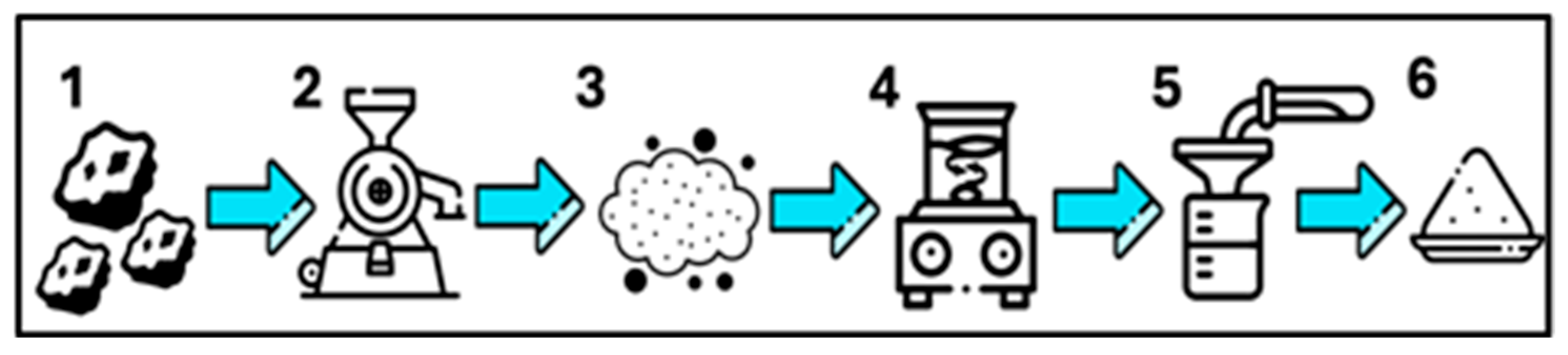
Figure 1 illustrates the milling procedure for the VR particles. The rock samples, each weighing approximately 4 g, were introduced into a Fritsch Pulverisette 7 ball mill for comminution at a rotational speed of 800 rpm. Subsequently, to remove dust impurities from the comminuted particles, these were immersed in 30 mL of deionized water and subjected to agitation for 15 min. Finally, the mixture was filtered with paper to recover the VR particles.

2.4. Characterization

The surface morphology of the VR was characterized using the following techniques: Scanning Electron Microscopy (SEM) with a JEOL JSM-5410LV (Tokyo, Japan) equipped with an INCA system and an Oxford Instruments, Energy-Dispersive X-ray Spectroscopy (EDS) detector operating at 15 kV (before the analysis, samples were coated with a gold layer of approximately 20 nm to prevent charge build-up), and elemental analysis using the EDS detector.
Chemical composition of the sample was determined using a Perkin-Elmer Model 1600 ATR-FTIR spectrometer with an ATR accessory. Spectral data were acquired in the range of 400 to 4000 cm−1 at a resolution of 2 cm−1.
Crystalline structure of the sample was determined using a Bruker Discover D8 X-ray diffractometer, employing Cu Kα1 radiation (λ = 1.5406 Å). Angular measurements were performed through a range of 10° to 70°, with the X-ray tube operating at 40 kV and 30 mA.
The specific surface area was determined through nitrogen adsorption–desorption isotherms, obtained at 77 K using a Quantachrome NOVA analyzer. Pore size distribution and average pore diameter were assessed using the BJH method.
The pH at the point of zero charge (pHpzc) was determined by adding 0.1 g of the sample to 10 mL of a 0.01 M NaCl solution. The initial pH was adjusted within the range of 2–12 using 0.1 M HCl or 0.1 M NaOH. The suspension was then stirred, and the final pH was measured after 24 h. The pHpzc value was obtained from the intersection in the graph of ΔpH vs. initial pH curve.

2.5. Adsorption Experiments

2.5.1. Adsorption Kinetics

To evaluate the effect of the solution pH on the MB adsorption with 0.25 g volcanic rock at 298.15 K, experiments were conducted over a pH range of 3 to 11. The pH was adjusted by the controlled addition of 0.1 M HCl or 0.1 M NaOH solutions.
Sorption experiments used 50 mL of a 50 mg·L−1 MB solution with 0.25 g of adsorbent at different temperatures (298.15, 308.15, and 318.15 K), which were equilibrated for 24 h, and samples were collected at predetermined time intervals. Then the suspension was centrifuged at 5000 rpm for 5 min. The supernatant was analyzed by UV-Vis spectrophotometry (Agilent 8453). The absorbance value of methylene blue was read at the wavelength of 664 nm. All experiments were conducted in triplicate, and the mean value was used for data analysis of the experimental design.
The sorption capacity of the adsorbent sample for dye (q, mg/g) at equilibrium conditions was calculated using Equation (1).
q = C 0 C e V w
The initial concentration ( C 0 ) and the equilibrium concentration ( C e ) of MB are given in mg·L−1, the volume of the solution ( V ) is expressed in L, and the mass sample ( w ) is expressed in g. The reproducibility was verified by triplicate analysis. The MB removal percentage was obtained using Equation (2).
R e m o v a l   % = C 0 C e C 0 × 100

2.5.2. Equilibrium Studies

The adsorption isotherms were obtained by employing 50 mL of MB solutions with concentrations ranging from 20 to 100 mg·L−1, which were mixed with 0.25 g of adsorbent at 298.15, 308.15 and 318.15 K. The mixtures were then subjected to different temperatures for 30 min. The regeneration and reuse of the samples were evaluated as follows: 0.5 g of a sample was added to 50 mL of 50 mg·L−1 MB solution. Adsorption was performed at 298.15 K and 150 rpm for 30 min until saturation was achieved.

2.5.3. Desorption Studies

After MB adsorption process, VR adsorbent was centrifuged, dried, and desorbed before being reused. Effects of solvent (deionized water, ethanol, nitric acid, hydrochloric acid, and sodium hydroxide) were studied. The desorption of MB was determined by loading 0.25 g of adsorbent with 50 mL of MB solution in a solvent at 318.15 K. These samples were agitated at 150 rpm for 50 min. Amount of dye desorbed was determined by use of a spectrophotometer at 664 nm.
After identifying the ideal desorption circumstances, adsorbent was reused for adsorption with optimized adsorption conditions, and the number of reuses of volcanic rock was then calculated. Desorption capacity ( q d e ) was calculated using Equation (3):
q d e   ( mg · g 1 ) = C f V w

2.5.4. Statistical Analysis

The experiments were performed in triplicate, and the results were presented in form of mean ± standard deviation (SD). Significant differences between different samples were examined by one-way analysis of variance (ANOVA) with F-test and T-test.

2.6. Cytotoxic Assays of VR Particles

Human dermal fibroblasts from the Detroit 548CCL-116 cell line were cultured with initial density of 5 × 10⁵ cells·mL−1 using Dulbecco’s Modified Eagle Medium (DMEM; Sigma-Aldrich). The culture medium was enriched with 10% fetal bovine serum (FBS; Sigma-Aldrich) and 1% antibiotic–antimycotic solution containing 100 U·mL−1 penicillin and 100 µg·mL−1 streptomycin (Thermo Fisher Scientific). Cells were maintained at 310 K in a humidified incubator under a 5% CO2 atmosphere.
To assess the cytotoxicity of the VR particles, the material was sterilized by subjecting it to four consecutive cycles of ultraviolet (UV) irradiation of 15 min each. Following sterilization, particles were washed with methanol and left to air-dry, following the method described by Vuong et al. in 2016 [18]. Particles were subsequently suspended in DMEM containing 1% FBS and dispersed in ice-cooled water by applying sonication for 20 min.
For cytotoxicity testing, fibroblasts were placed in 96-well plates at a density of 5000 cells per well. Once the cells were adhered to the substrate, the culture medium was replaced with fresh medium containing VR particles at different concentrations (0, 12.5, 25, 50, 100, 200 and 300 mg·L−1). Cell viability was evaluated after 24 h using a resazurin-based assay, which measures metabolic activity via absorbance readings at 570 nm and 600 nm, in accordance with the method of Giordano et al. [19].

3. Results

3.1. Characterization

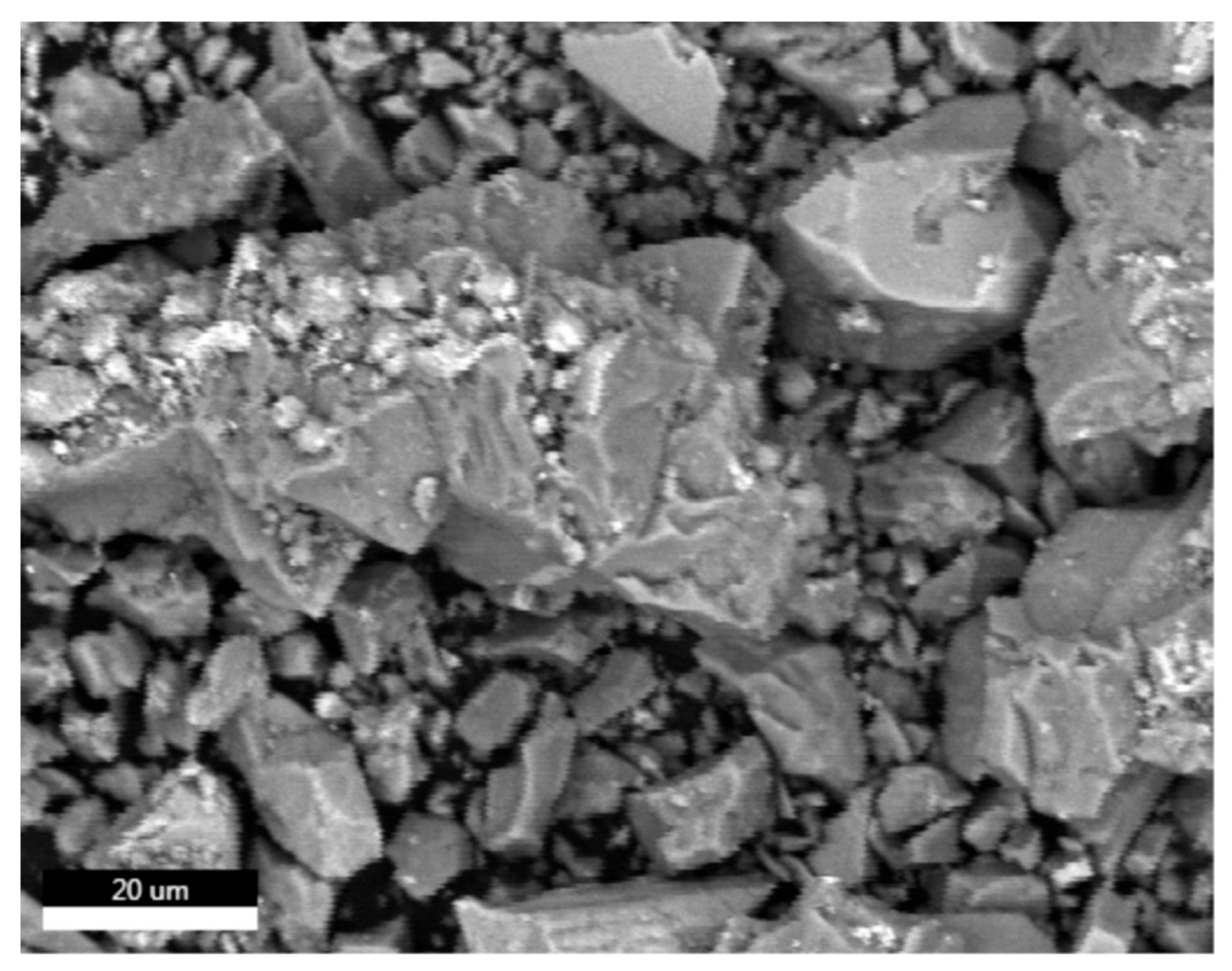
Figure 2 shows an SEM micrograph of the VR particles displaying an irregular morphology, with angular edges and a surface texture consisting of fragmented volcanic materials. The particle size distribution spanned from 10 to 100 µm. The most abundant particles were found within the 30 to 50 µm size fraction.
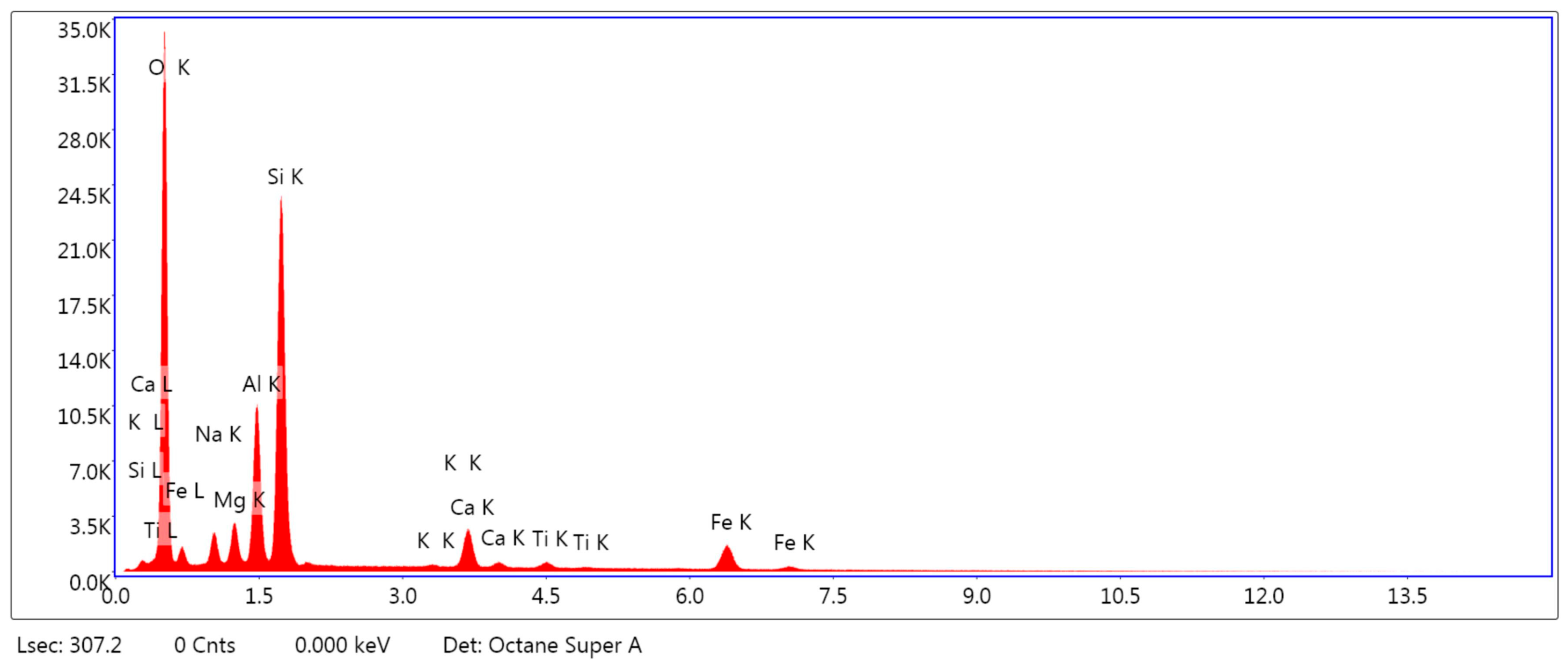
The Energy-Dispersive X-ray Spectroscopy (EDS) spectrum (Figure 3) revealed the elemental composition of the sample VR, which was primarily composed of 46.59% oxygen and 21.49% silicon, followed by 9.89% iron, 9.41% aluminum, 5.35% calcium, 2.63% magnesium, 3.01% sodium, 1.33% titanium, and 0.30% potassium. The EDS analysis was performed in triplicate on different areas of the sample. The reported values correspond to the average composition. Some variability was observed among the replicates, particularly in the oxygen content, which may be attributed to surface heterogeneity, particle topography, and possible surface hydration effects. The estimated uncertainty is ±1–3 wt% for major elements, with a detection limit of approximately 0.1 wt%.
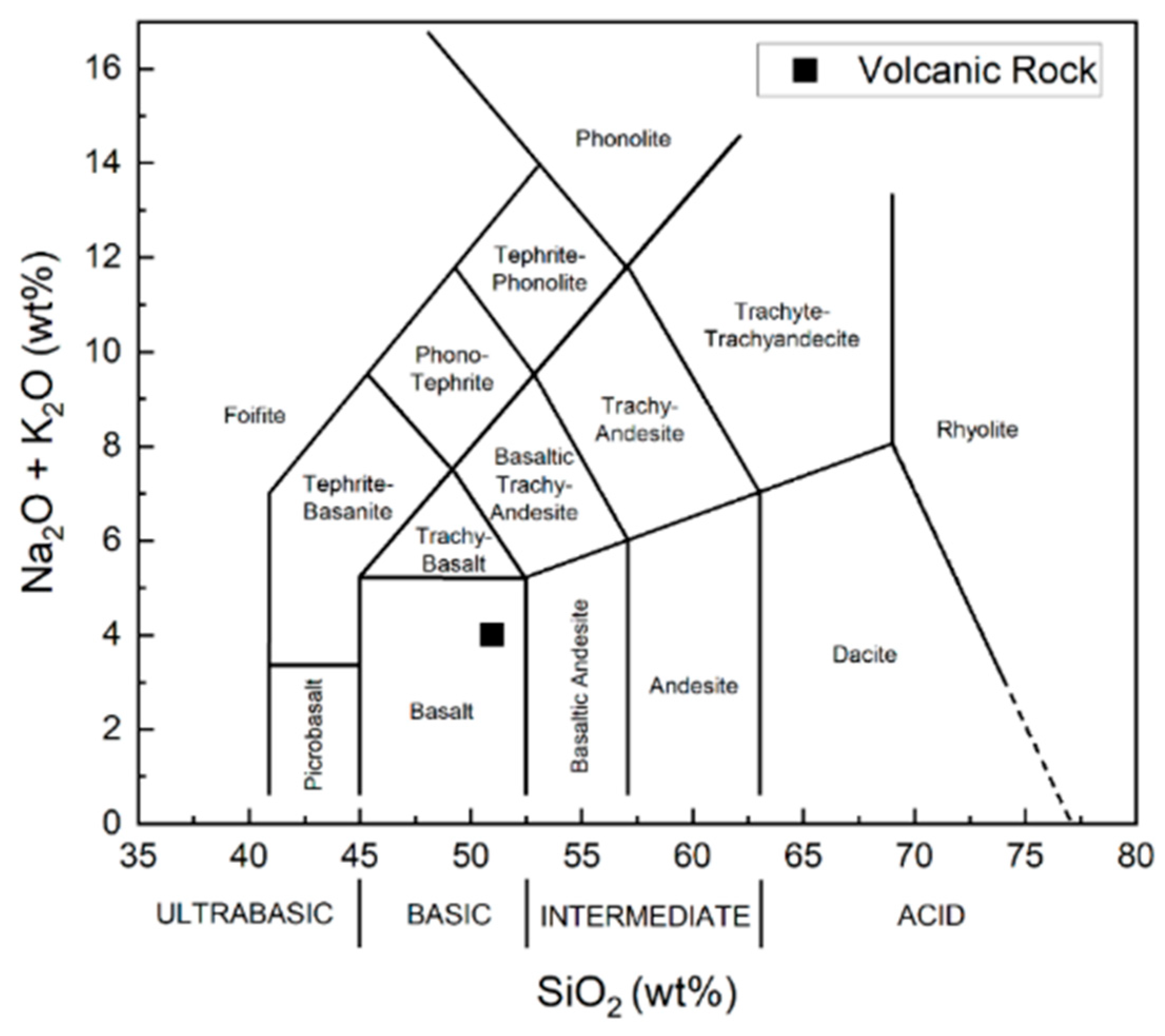
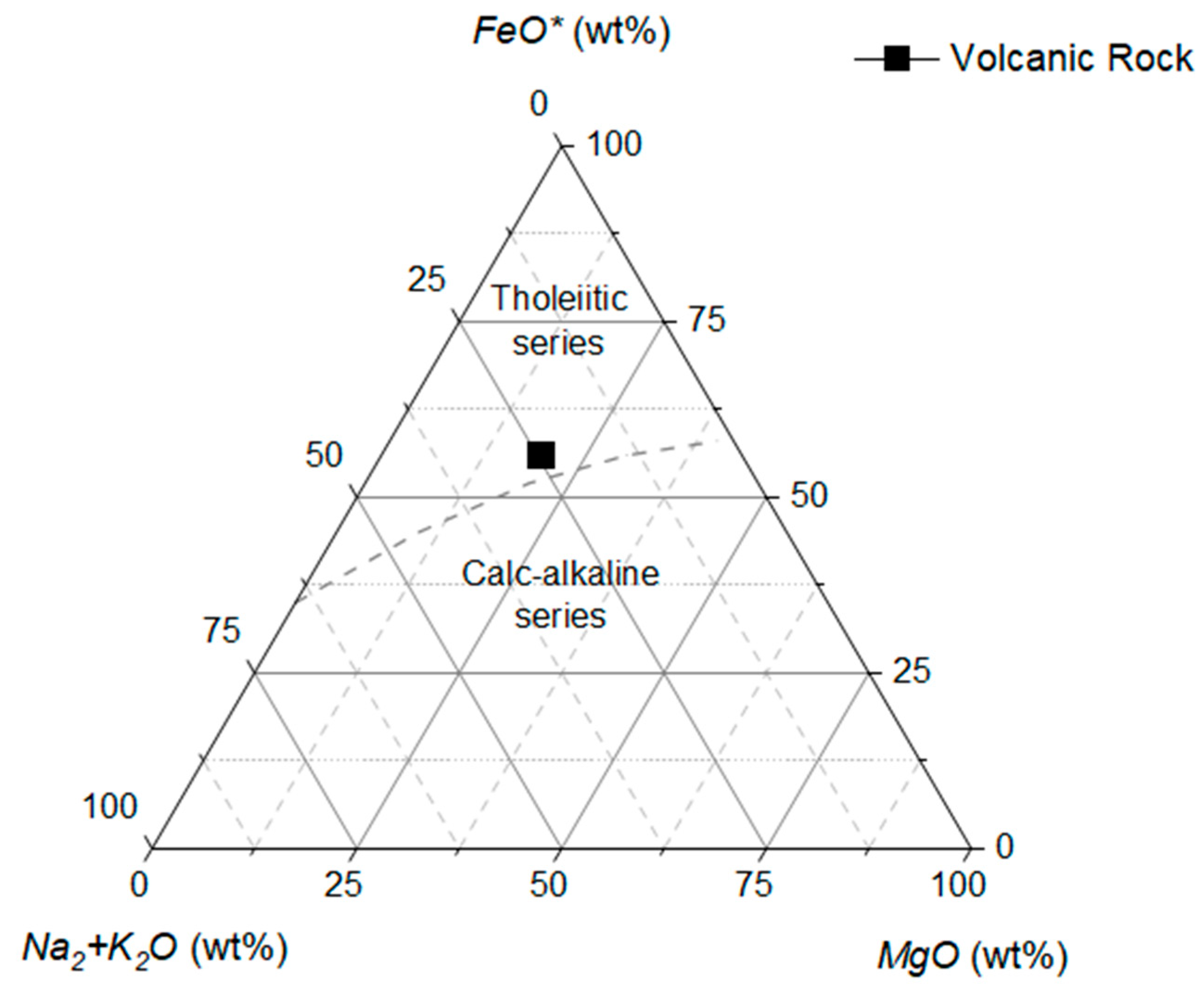
From these data, the corresponding oxide weight percentages (wt%) were calculated and are summarized in Table 1. The resulting oxide concentrations indicate contents of 50.95% SiO2, 11.45% total iron oxide (FeO) and 5.04% magnesium oxide (MgO). These data were subsequently employed for petrological classification and geochemical modelling through the Total Alkali–Silica (TAS), Alkalis–Ferrum–Magnesium (AFM), and Cross–Iddings–Pirsson–Washington (CIPW) normative analysis. The integration of these chemical parameters allowed a precise determination of the magmatic series and the crystallization environment of the VR.
As shown in Figure 4, the coordinates (50.95, 4.0) identify the VR as basalt, a classification that is in strict agreement with the TAS scheme for volcanic materials [20]. This position within the basaltic field confirms the basic nature of the rock and provides the necessary geochemical framework to proceed with the identification of its magmatic series and normative mineralogy.
The AFM diagram, presented in Figure 5, and the information of the normalized oxide percentages, presented in Table 1, locates the VR within the tholeiitic series, according to the boundary established by Kuno. The coordinates (19.55, 55.98, 24.44) were calculated following the method of Santos and Hartmann [21], confirming a significant iron enrichment relative to magnesium, which is a diagnostic feature of tholeiitic magmatism.
According to the CIPW normative calculations presented in Table 2, the VR consists of quartz (Qz), orthoclase (Or), albite (Ab), anorthite (An), diopside (Di), hypersthene (Hy), magnetite (Mt) and ilmenite (Il). This mineralogical assemblage confirms a silica-saturated basalt belonging to the tholeiitic series [22]. The normative presence of Qz and Hy, coupled with its iron-rich nature, is characteristic of continental rift formation rather than Mid-Ocean Ridge Basalts (MORBs).
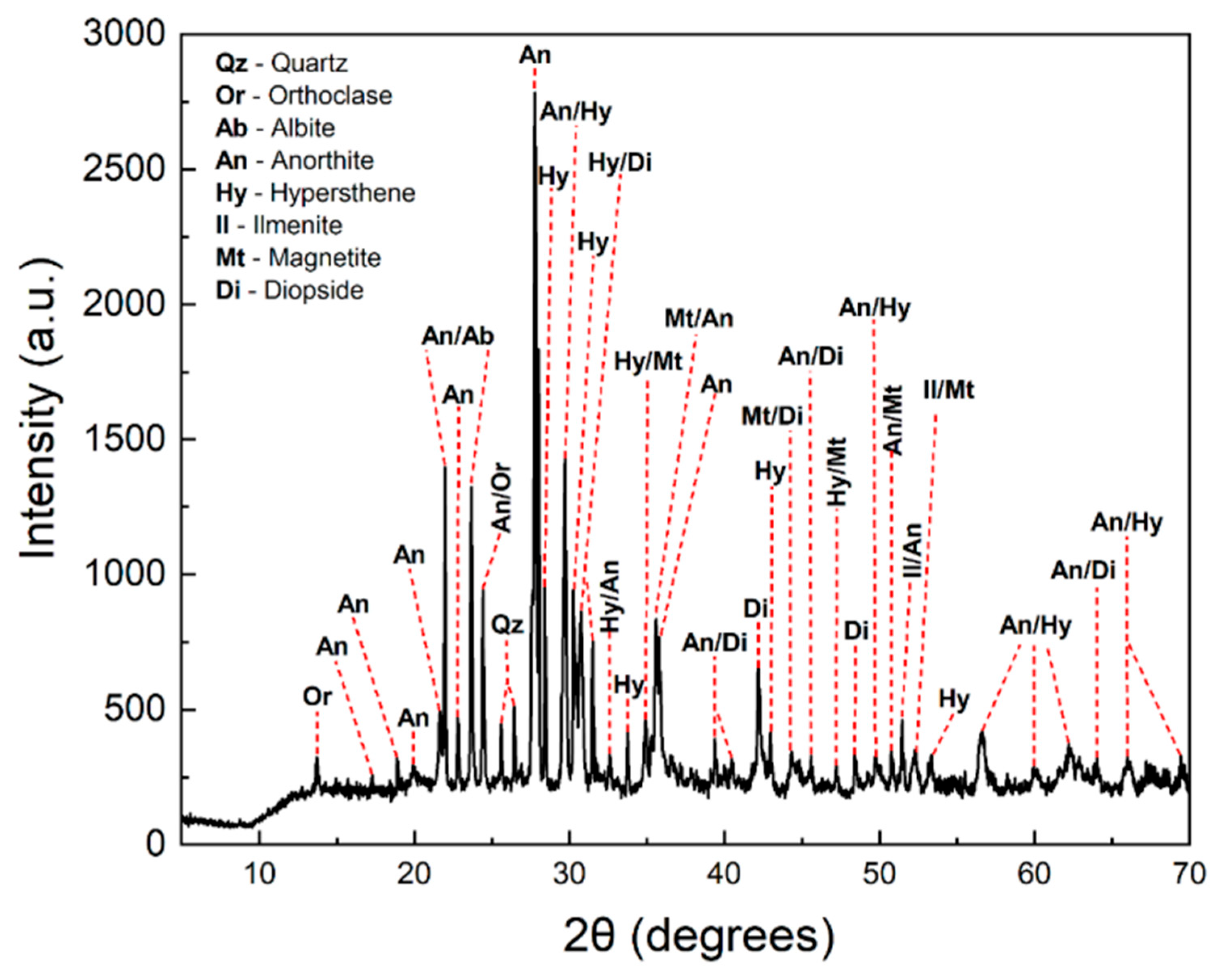
Figure 6 shows the X-ray diffraction (XRD) pattern corresponding to the VR sample. This diffractogram reveals several prominent reflections characteristic of volcanic mineralogy. In accordance with the TAS and AFM diagrams as well as the CIPW norm calculations, which classified the sample as a tholeiitic basalt, the identified mineral phases include Qz, Or, Ab, An, Hy, Il, Mt, and Di.
In the XRD reflections, several material phases were identified by their specific interplanar d-spacings and Miller indices (hkl), as summarized in Table 3. The predominance of reflections associated with An and Hy strongly confirms the tholeiitic nature of the VR unit, which exhibits high crystallinity as evidenced by the sharp peaks persistent even at diffraction angles exceeding 60° (2θ). The presence of Mt and Il, albeit in minor proportions, corroborates the Fe–Ti oxide content determined by the CIPW norm, comprising a primary mineral paragenesis with no significant evidence of secondary alteration or detectable amorphous phases.
The most abundant mineral in the VR sample is An, exhibiting a primary diffraction peak at 27.76° (2θ). This position indicates that a triclinic structure dominates the rock matrix, characteristic of calcic plagioclases. The overlap between the An and Ab signals suggests a non-pure phase, consisting instead of an intermediate-composition plagioclase where sodium is integrated into the crystal lattice of the predominant feldspar.
Coexisting with this matrix, a significant presence of Hy is observed, with reflections in the 30–33° (2θ) range, confirming the stability of the iron–magnesium silicates as orthopyroxene. Additionally, Di occurs as a minority phase between 30 and 64° (2θ); its occurrence as a calcium-rich clinopyroxene demonstrates that the silica-oversaturated matrix of the VR unit provides the necessary environment for the stability of diverse crystalline structures.
Regarding the oxides, Mt is manifested through its primary reflection at 44.32° (2θ), corresponding to the (400) plane of its cubic spinel structure. Conversely, Il is subtly identified at 51.46° (2θ), overlapping with the high-resolution signals of the An phase. The crystallization of these minerals suggests that the VR magma possessed a moderate oxygen fugacity (fO2), which allowed iron to be partitioned into two distinct environments: the cubic spinel lattice of Mt and the rhombohedral structure within the trigonal system of Il.
This information reveals a holocrystalline rock, characterized by narrow, high-intensity peaks, indicating slow to moderate cooling that allowed for excellent atomic ordering. The identified mineralogical assemblage (calcic plagioclase + orthopyroxene + clinopyroxene + Fe-Ti oxides) is diagnostic of a tholeiitic basalt.
Based on the normative values of Ab (6.83) and An (16.51), an An content of 70.74% (An71) was determined. This result allows for the classification of the dominant phase as bytownite (0.71 CaAl2Si2O8 ·0.29 NaAlSi3O8), situated at the compositional boundary with labradorite. This highly calcic nature is consistent with the position of the observed diffraction maximum at 27.76° (2θ), which shows a mineral shift relative to the pure An pattern, confirming the mafic character and tholeiitic signature of the VR unit. This data is coherent with the whole-rock geochemistry (AFM diagram), reinforcing the interpretation of the sample as a primary volcanic product with scarce magmatic diffraction.
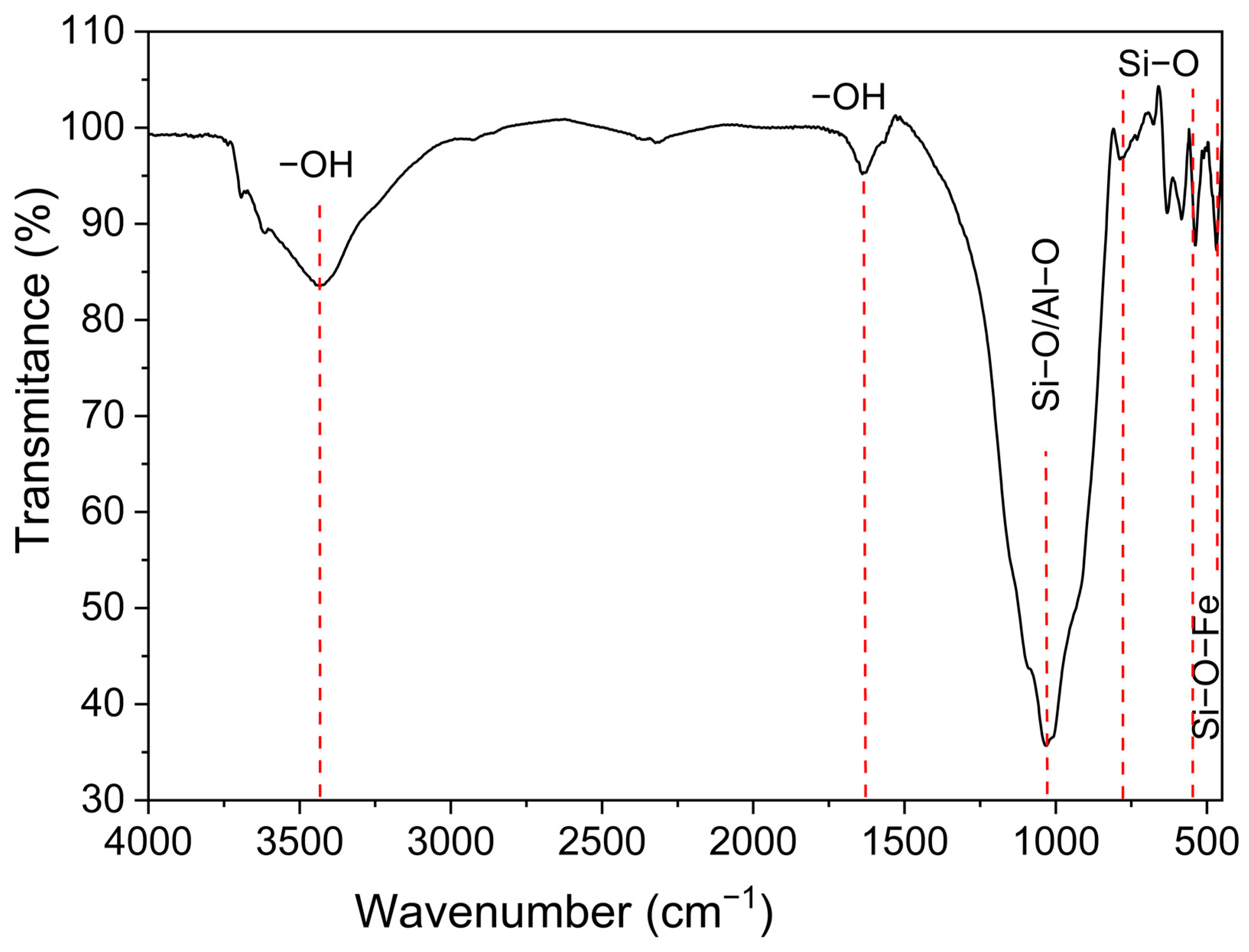
The FTIR spectrum of the VR is presented in Figure 7. The absorption bands at 757, 650, and 540 cm−1 correspond to the vibrational modes of the Si-O bond in the ring linkages within the silicate network, a characteristic feature of minerals such as feldspar [23]. The absorption peak observed at 472 cm−1 is attributed to the Si-O-Fe vibrational modes, indicating the potential presence of ferromagnesian minerals, including Mt and Il, for which absorption in this spectral region has been previously documented [24]. The principal absorption band at 1014 cm−1 is associated with the stretching vibrations of Si-O and Al-O linkages, which are characteristic of the aluminosilicate framework commonly found in minerals such as feldspar, and its precise position changes depending on the structural degree order within the material [25].
Furthermore, the absorption bands at 3420 and 1630 cm−1 correspond to the stretching and bending vibrations of O-H bonds in water molecules. These spectral features may be associated with either the hydration of minerals within the VR or the presence of adsorbed water on its surface, a phenomenon commonly reported in studies of both zeolites and phyllosilicates. These hydroxylated surfaces are crucial for the functionalization of the VR unit, providing the necessary active sites for its interaction with nanomaterials.
In calcic plagioclases such as bytownite, the substitution of S4+ by Al3+ in the tetrahedral sites creates a charge imbalance that is typically compensated by Ca2+. However, at the surface level, this configuration often leads to the presence of reactive sites. The absorption bands observed at 3420 and 1630 cm−1 indicate that, despite the anhydrous nature of the primary bulk mineralogy, the VR unit possessed a hydroxylated surface.
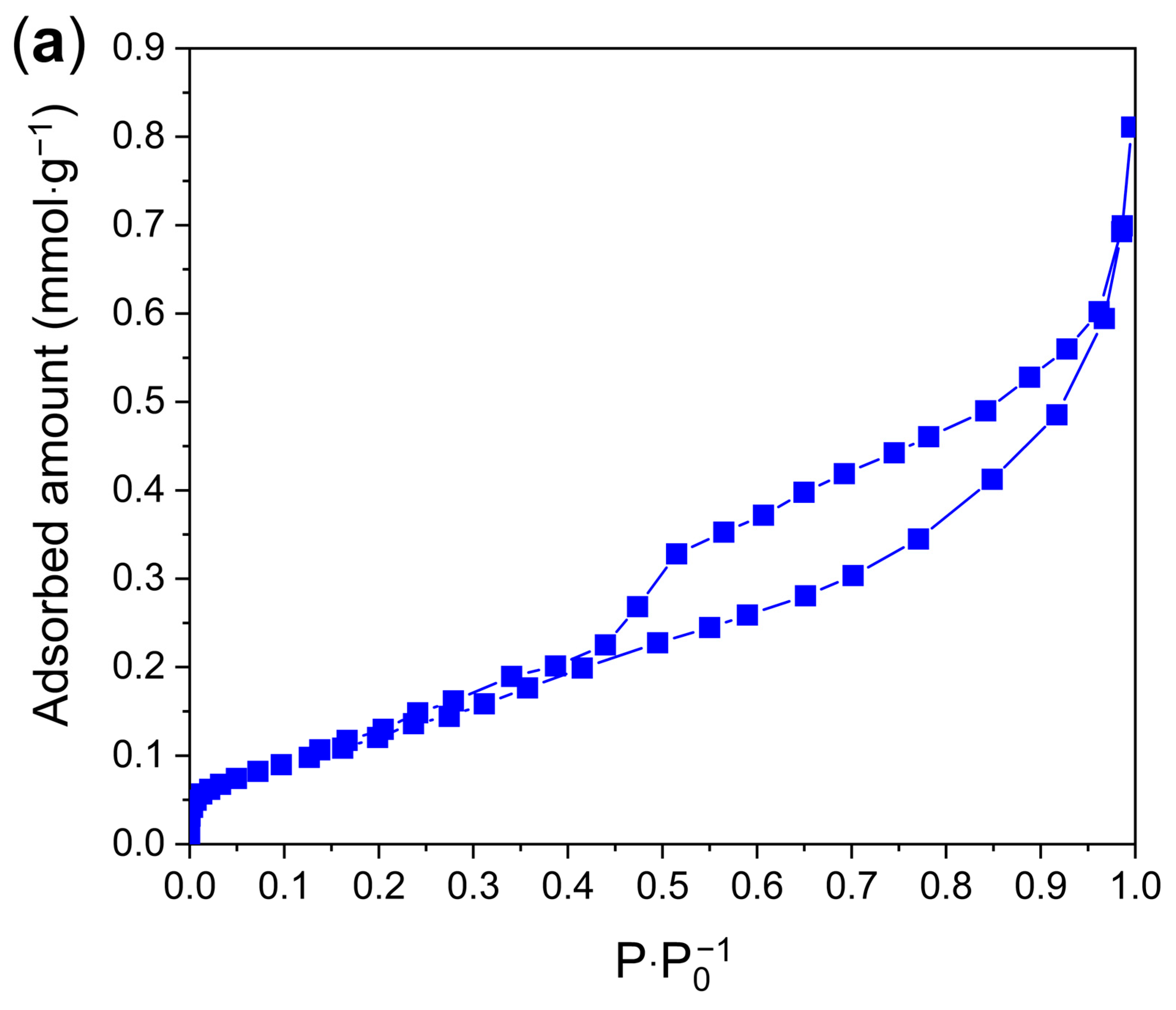
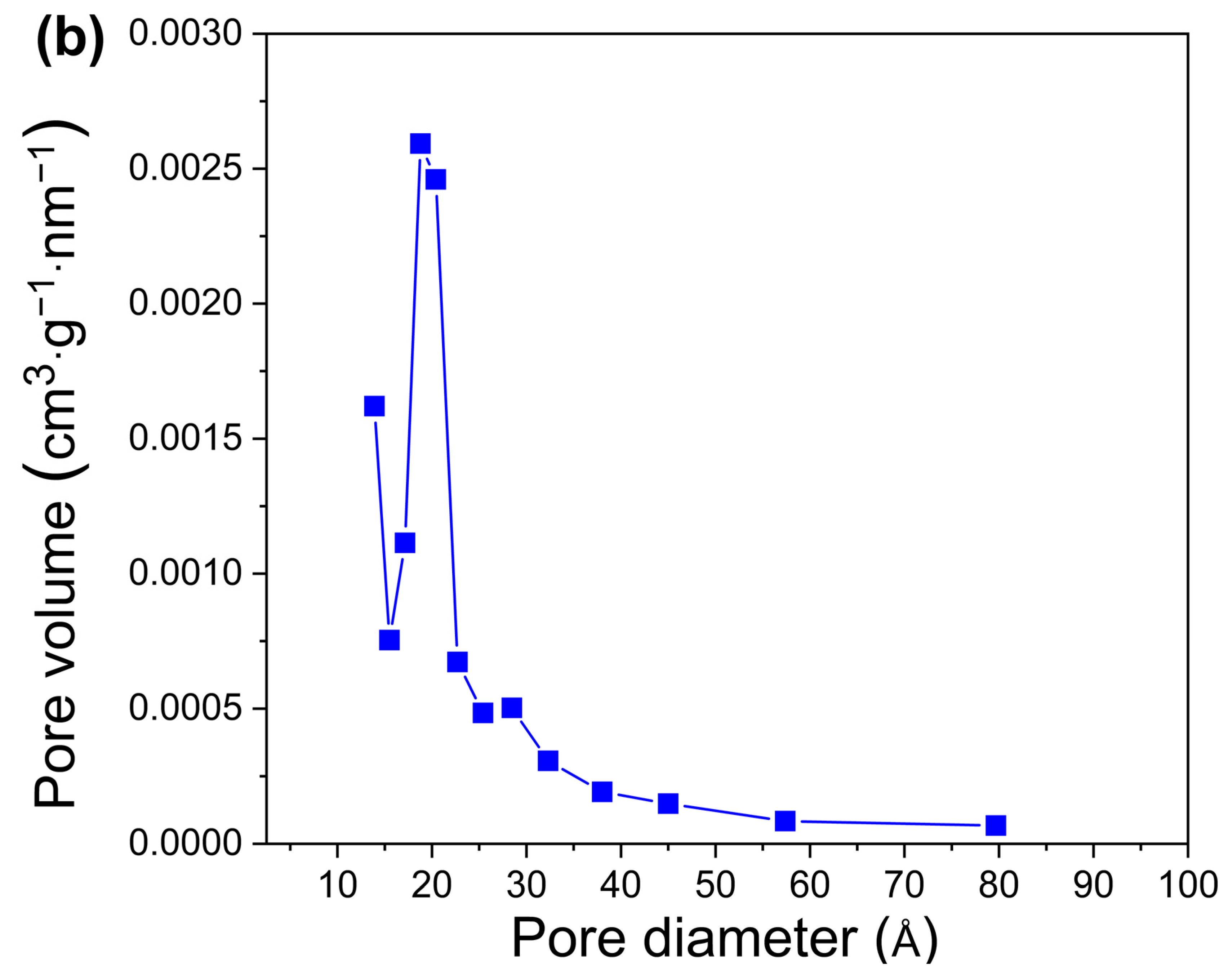
Figure 8 shows the N2 adsorption–desorption isotherm at 77 K and the corresponding pore size distribution of the VR. The isotherm is type IV, according to the BDDT classification with H3-type hysteresis that describes a material with slit-shaped pores, as can be observed in Figure 2 [26]. The specific surface area of the VR was calculated to be 12 m2·g−1 using the Brunauer–Emer–Teller (BET) method, and the average pore diameter and total pore volume are 3.75 nm and 0.037 cm3·g−1, respectively, using the Barrett–Joyner–Halenda (BJH) theory for mesopore analysis. This indicates that the surface of the VR has pores, with mesopores being the dominant type.
These are the results of the particle size reduction by ball milling, which causes the silicate chains to fracture and rearrange, leading to the formation of cavities.
The pH of the dye solution, which is a critical factor affecting dye removal, can change the degree of ionization of the adsorbent and the molecular structure of the dye [27].
According to the prevailing pH conditions and the molar fraction of dye molecules in the aqueous solution, MB can be present either as a cationic (MB+) or neutral (un-charged) (MB0) species, as displayed in the speciation diagram. The MB0 species predominates (86%) at pH = 3.0, whereas both MB0 (50%) and MB+ (50%) species coexist at pH = pKa = 3.8. On the other hand, MB+ is practically the only species present at pH > 6.0 [28]. Therefore, the removal of MB from aqueous solutions by the addressed adsorbent was mainly controlled by the prevailing pH conditions, as shown in Figure 5.
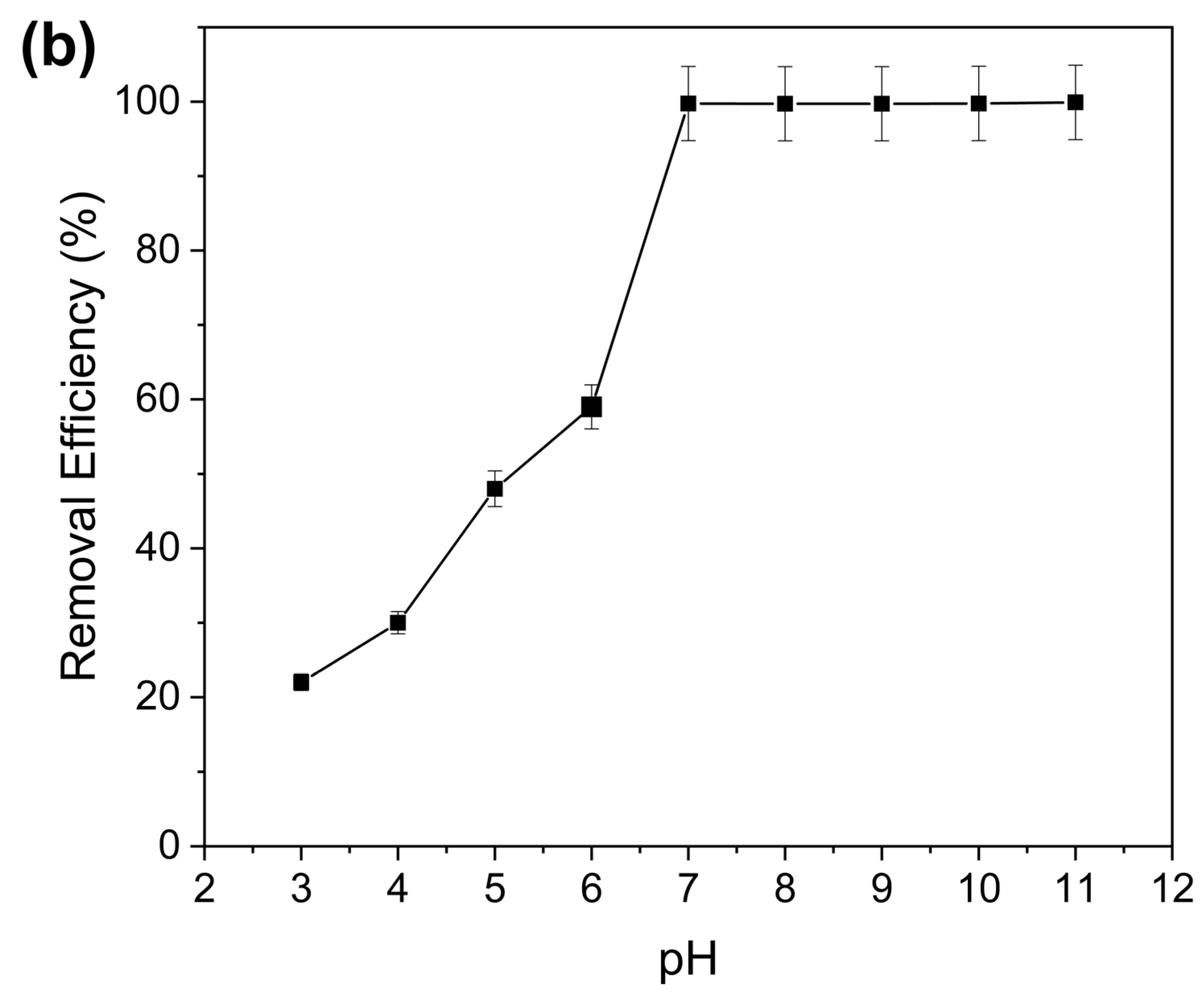
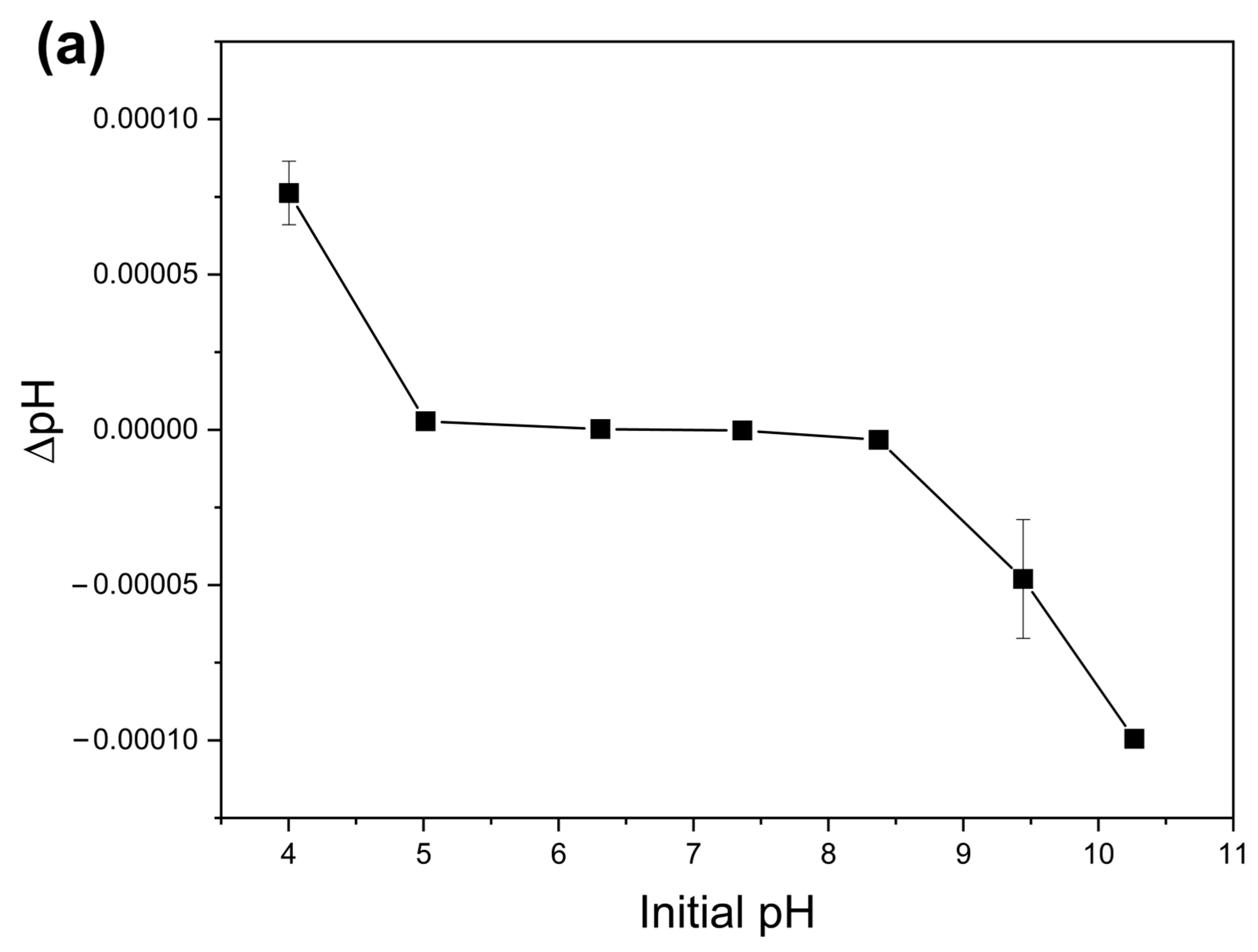
The pHpzc indicates the pH at which an adsorbent surface has no net electrical charge [29]. The pHpzc was determined from the intersection of the ΔpH versus the initial pH curve. All the measurements were performed in triplicate, and the results are presented as the mean ± the standard deviation. The pHpzc of the adsorbent was determined to be 6.89 (Figure 9a). The adsorption experiments for a 50 mg·L−1 sample of MB were done in a pH range from 3 to 11, and we observed a 99.9% removal of MB. The adsorption is higher when the pH conditions get closer to the pHpzc (Figure 9b). Then, the pH solution significantly controls the adsorption process by influencing the chemistry of the solid phase, modifying the binding sites on the adsorbent surface. At low pH conditions, the Al-O and Si-O groups of the material can be protonated, repelling the MB molecules at the adsorption sites, thereby decreasing dye adsorption efficiency. Below the VR pHpzc, protons (H+) and MB molecules compete for active adsorption sites, which restricts the extent of dye adsorption [30]. As the pH increases, a larger surface area of the adsorbent repels protons, acquiring negative charges, reducing the repulsion of MB molecules, and favoring their adsorption. This study shows that pH control is a factor improving the MB dye molecule adsorption process into the VR adsorbent material. Although electrostatic attraction is the main mechanism governing the adsorption of MB by the investigated adsorbents, hydrogen bonding and π-π interactions [31] (between the two benzene rings of the adsorbent and MB) may also be important, particularly at pH values below the pHPZC. Hydrogen bonding can occur either between the H-donor (hydrogen of the amino groups on the surface of adsorbents) and the H-acceptor (nitrogen atoms of the MB) or between the surface amino groups of the adsorbents and the aromatic ring of the MB [32].
In addition, this behavior can be described by the following mechanisms: ion exchange between the cationic dye and the protons of surface hydroxyl groups of natural zeolite and ion exchange between the metallic species and the exchangeable cations (Na+, Ca2+, etc.) associated with plagioclase and other mineral phases. These may participate in dye uptake and balance the negative charges of each AlO4 or SiO4 tetrahedron in the framework. Surface complexation and specific interactions between the MB molecules and the Fe- and Al-containing active sites are present in the aluminosilicate matrix.

3.2. Adsorption Study: Kinetics and Equilibrium

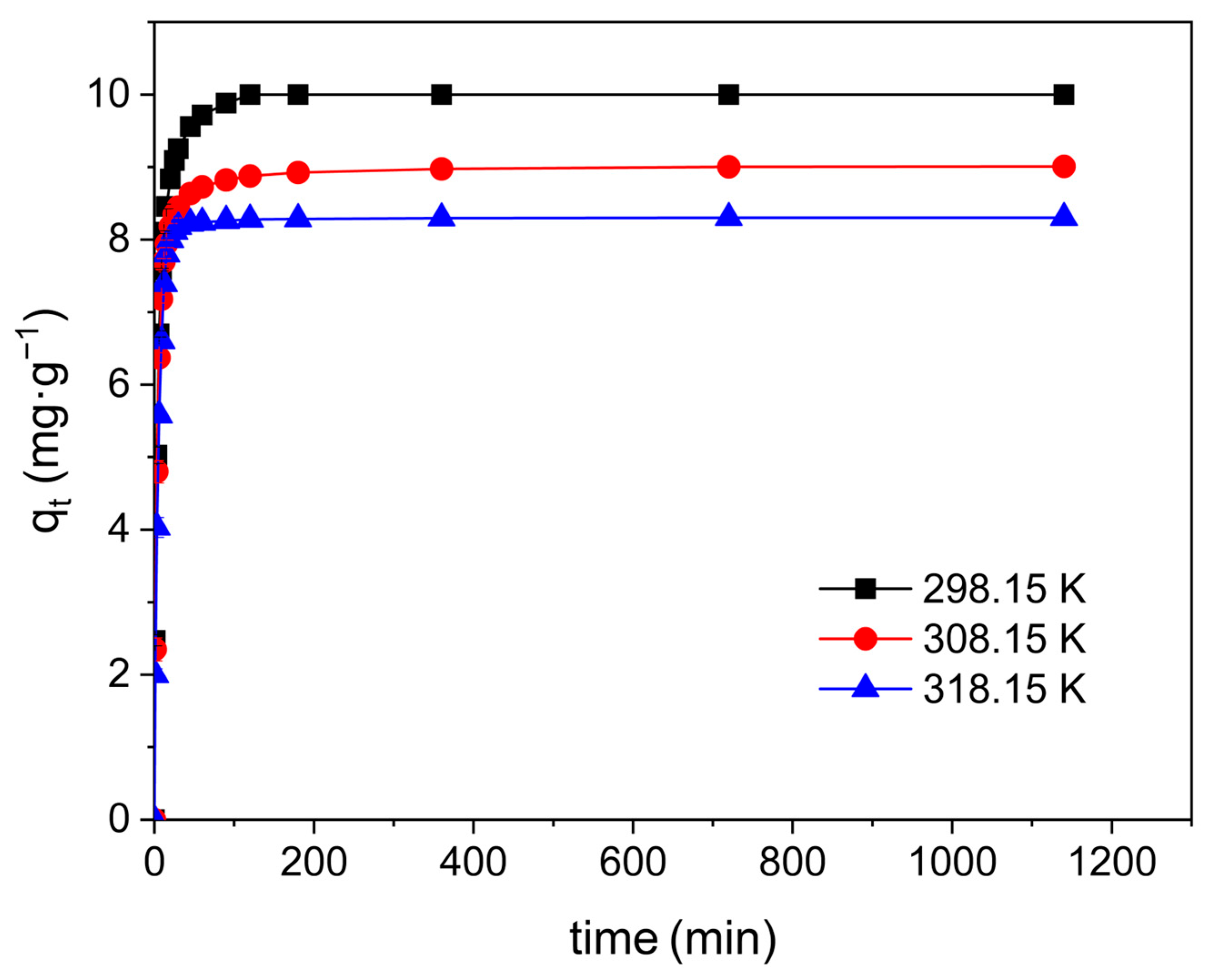
Figure 10 presents the adsorption kinetic curves for MB on the VR sorbent at three different temperatures. At the same sampling adsorption time, the amount of adsorbed dye decreased as the temperature increased. The process starts with an initial MB concentration of 50 mg·L−1, and it can be observed that in 30 min, the VR removes approximately 99% of the dye. This rapid response suggests that an effective interaction takes place between the dye and the active surface of the adsorbent. The effectiveness of VR as the adsorbent can be associated with the hydroxyl groups Si-O and Al-O on its surface and its specific surface area.
Applying pseudo-first and pseudo-second order kinetic models to the experimental data, the fitting parameters were obtained (Table 4). An analysis of these parameter values reveals that the pseudo-second order model accurately describes the data, suggesting that diffusion of MB dye into the absorbent pores is the dominant mechanism in the adsorption process. In the pseudo-second order model, the VR adsorbent material exhibits an equilibrium capacity (qe) value of 10 mg·g−1. Simultaneously, the kinetic constant (K2) reached 17.47, a value related to the larger pore size in the material.
This behavior suggests that the structural characteristics of the VR favor the effective diffusion of the dye in its pores, exerting a positive influence on MB removal from aqueous solutions. The apparent activation energy ( E a ) was calculated using the Arrhenius equation (Equation (4)) [33].
l n   K T 1 K T 2 = E a R 1 T 2 1 T 1
In this equation, KT1 and KT2 are the pseudo-second order constants at 298.15 and 318.15 K, respectively, and R is the gas constant ( R = 8.314 J·mol−1·K−1). The calculated E a value for the VR is 30 kJ·mol−1. Additional information can be obtained using the intraparticle diffusion model equation (Equation (5)) [34].
q t = k i d t 1 2 + I
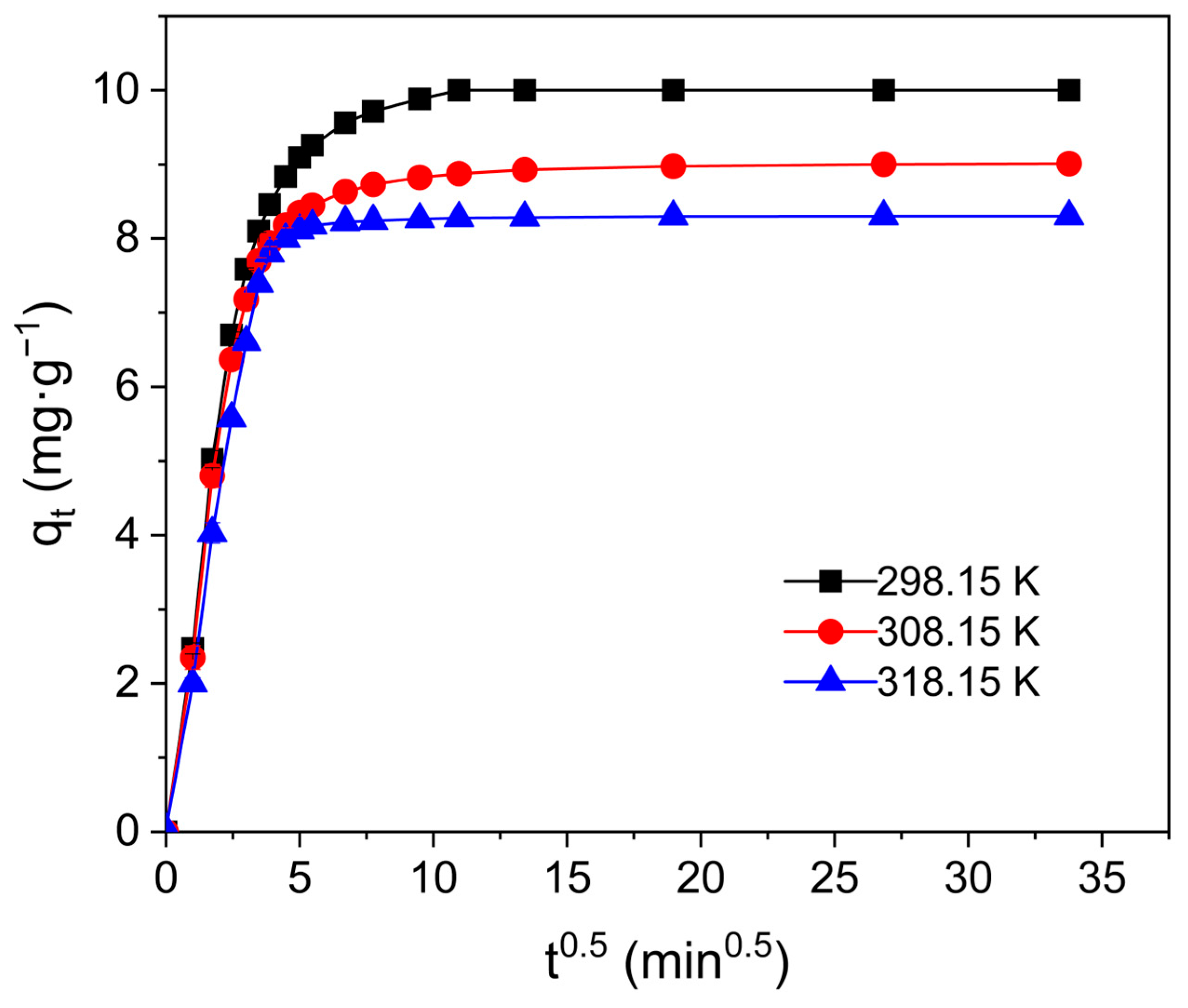
In Equation (4), k i d (mg·g−1·min−0.5) represents the intraparticle rate constant, and I (mmol·g−1) corresponds to the thickness of the boundary layer. Figure 11 shows the plot of q t versus t 0.5 , and k i d is obtained from the slope.
The rate constant for the VR decreases when the temperature increases, which could be attributed to the pore size of the adsorbent (Table 5).
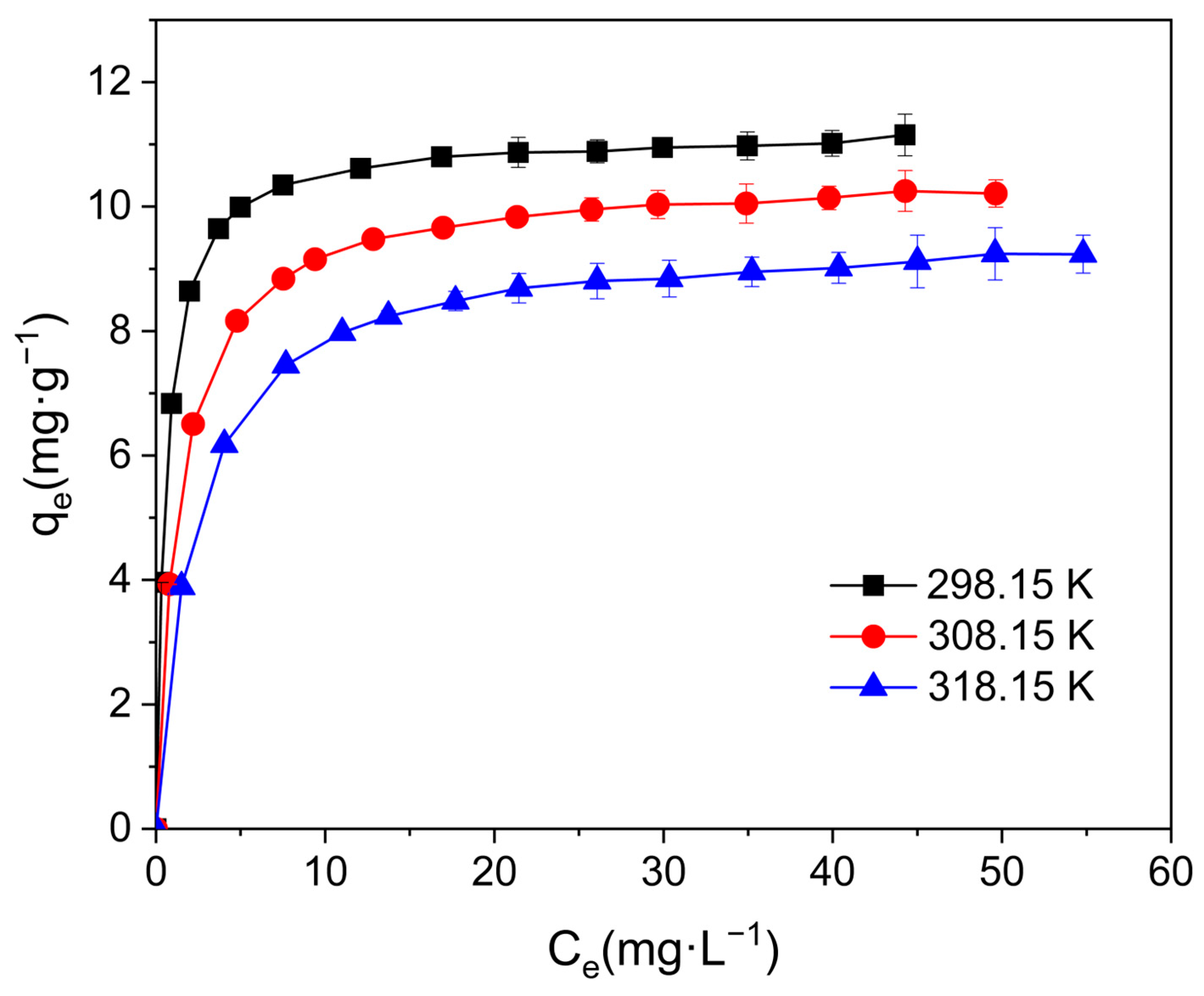
The adsorption isotherms of MB at different temperatures using the VR are reported in Figure 12. According to the Giles classification, these isotherms belong to class “L” type 2 [35], suggesting favorable adsorption onto the Si-O and Al-O groups of the adsorbent material surface. The adsorption capacity is significantly higher in the experiment at 298.15 K, where the MB adsorbed by the VR reaches a value of 10 mg·g−1. The efficiency of the MB dye adsorption decreases as the temperature increases, because the interaction forces between the organic compound and the water molecules are weaker. Therefore, the interaction forces are reduced by the temperature.
The Langmuir and Freundlich equations provide the fitting parameters for the MB dye adsorption isotherms, as indicated by the experimental data reported in Table 6. The Langmuir model provides the best fit, indicating that adsorption occurs in a monolayer on a homogeneous surface, without interaction between the adsorbed molecules and a limited number of adsorption sites.
According to Equation (6), the equilibrium adsorption constant (Kd) values can be calculated [36].
K d = d y e   c o n c e n t r a t i o n   i n   t h e   a d s o r b e n t   a t   e q u i l i b r i u m   ( m g · g 1 ) d y e   c o n c e n t r a t i o n   i n   s o l u t i o n   a t   e q u i l i b r i u m   ( m g · m L 1 )
Table 7 shows the K d   values for dye adsorption onto the adsorbent, which can exhibit variations with initial dye concentrations. The K d values increase as the initial MB dye concentration in the solution rises. The values of K d were calculated at different temperatures and, using these values, the thermodynamic parameters for standard free energy, G 0 , and standard enthalpy, H 0 , were obtained using Equations (7) and (8) [37,38].
G 0 = R T   l n   K d
l n   K d = H 0 R T + S 0 R
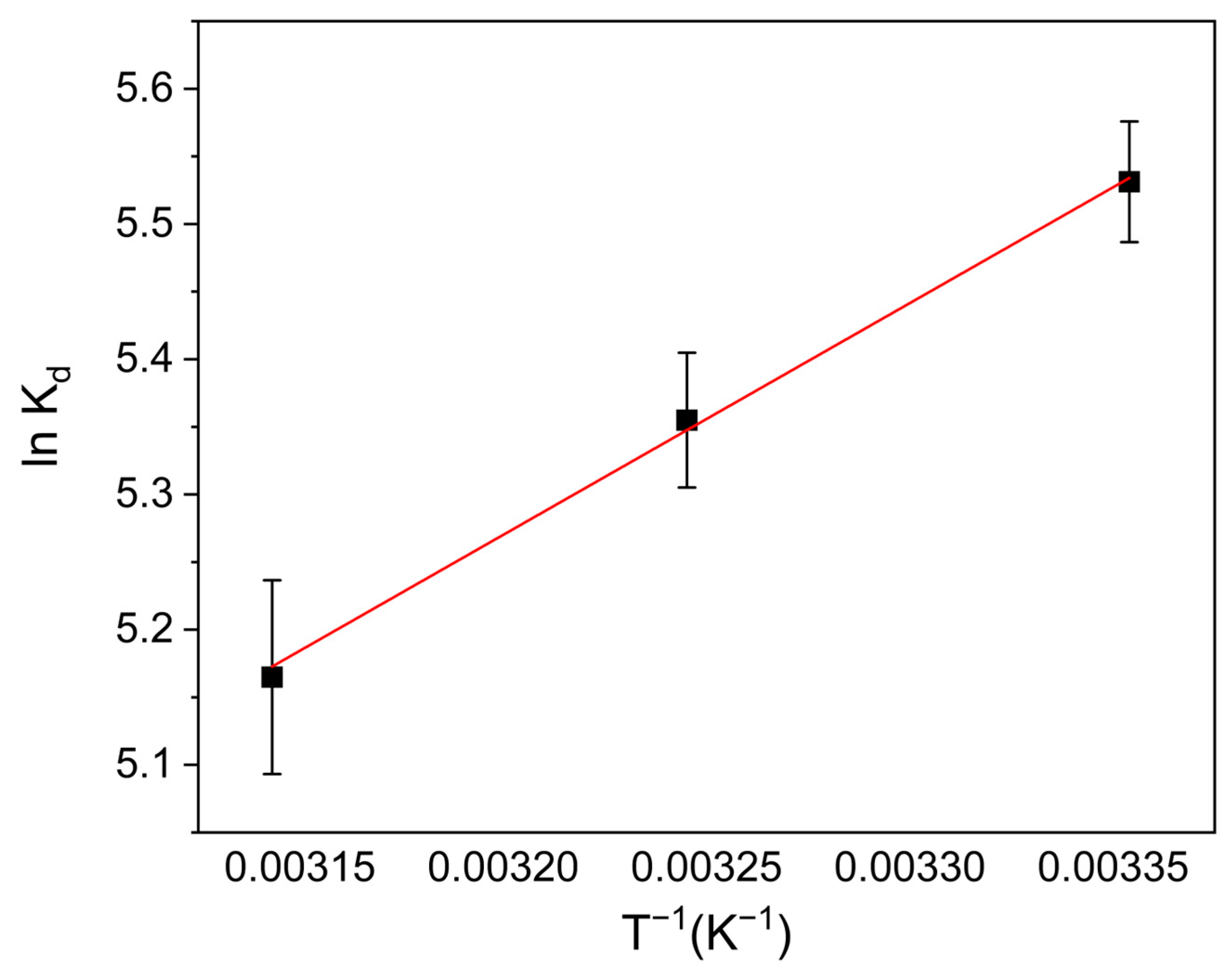
The dimensional units for G 0 and H 0 are (kJ·mol−1) and (kJ·mol−1), respectively. The H 0 value was calculated from the slope of the linear plot of l n   K d versus 1/T, and it is shown in Figure 13.
With the standard free energy, G 0 , and the standard enthalpy, H 0 , the values of the standard entropy, ∆S0, were determined using the Gibbs–Helmholtz equation (Equation (9)).
S 0 = H 0 G 0 T
The ∆G0, ∆H0, and ∆S0 values for MB adsorption on the VR at the different temperatures are reported in Table 7. The negative values of ∆G0 and ∆H0 indicate that the dye adsorption process is spontaneous and exothermic, while the negative result of ∆S0 suggests a decrease in order at the adsorbent/liquid interface for MB adsorption.

3.3. Analysis of Desorption Properties

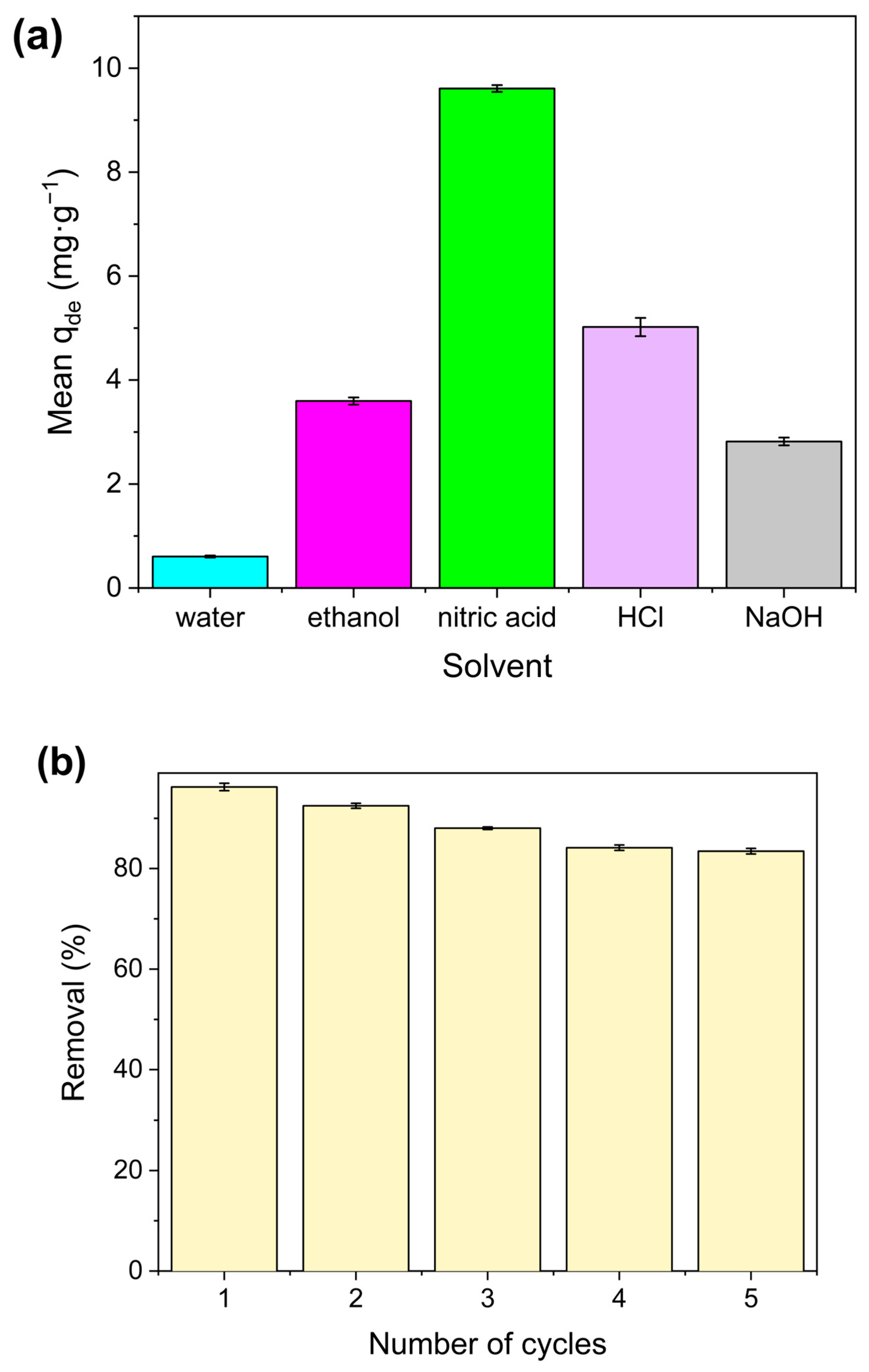
Figure 14a shows the desorption efficiencies of 0.25 g adsorbent loaded with MB and 50 mL of different eluents (deionized water, anhydrous ethanol, 0.2 M nitric acid solution, 0.2 M hydrochloric acid solution, or 0.2 M sodium hydroxide solution) at 318.15 K for 60 min. The removal efficiency of methylene blue adsorbed on the material follows the order 0.2 M HNO3 > 0.2 M HCl > anhydrous ethanol > 0.2 M NaOH > deionized water. These results indicate that nitric acid is the most effective desorption agent and is therefore the most suitable for regenerating the volcanic rock after methylene blue adsorption.
Figure 14b shows that the adsorption capacity of the material gradually decreases with an increasing number of adsorption–desorption cycles. After the first cycle, the removal efficiency of methylene blue reaches 95%. However, after five cycles, the efficiency decreases to approximately 90%. Despite this decline, the material retains significant adsorption capacity, confirming its reusability and highlighting the stability and potential of volcanic rock as a sustainable and reusable adsorbent for methylene blue removal.
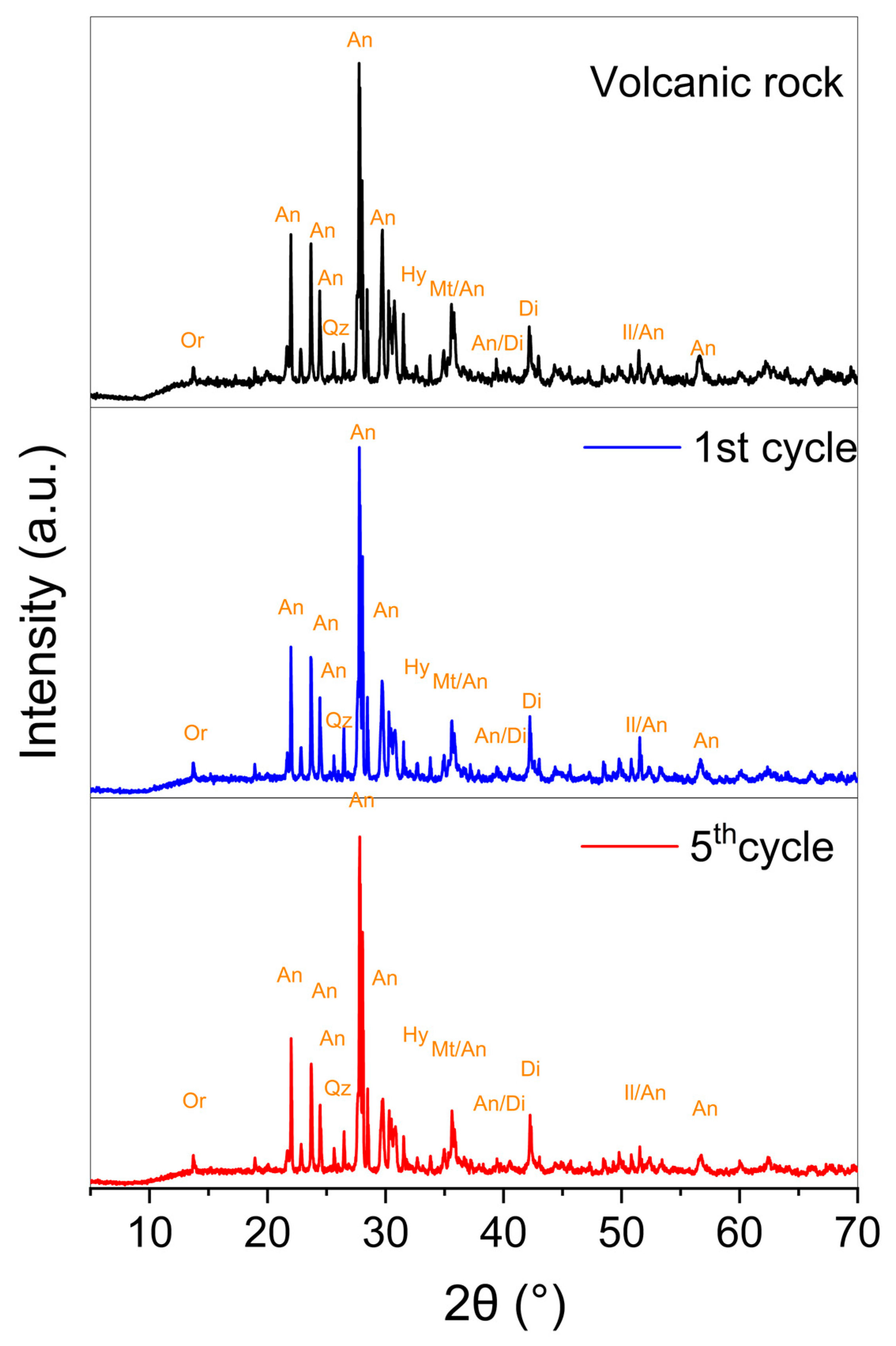
To determine the stability of volcanic rock, the XRD patterns obtained after the first and fifth cycles were analyzed. These patterns are shown in Figure 15. The adsorbent was exceptionally stable, because no variations were detected in the diffractogram peaks after the MB adsorption.

3.4. Adsorption Mechanism

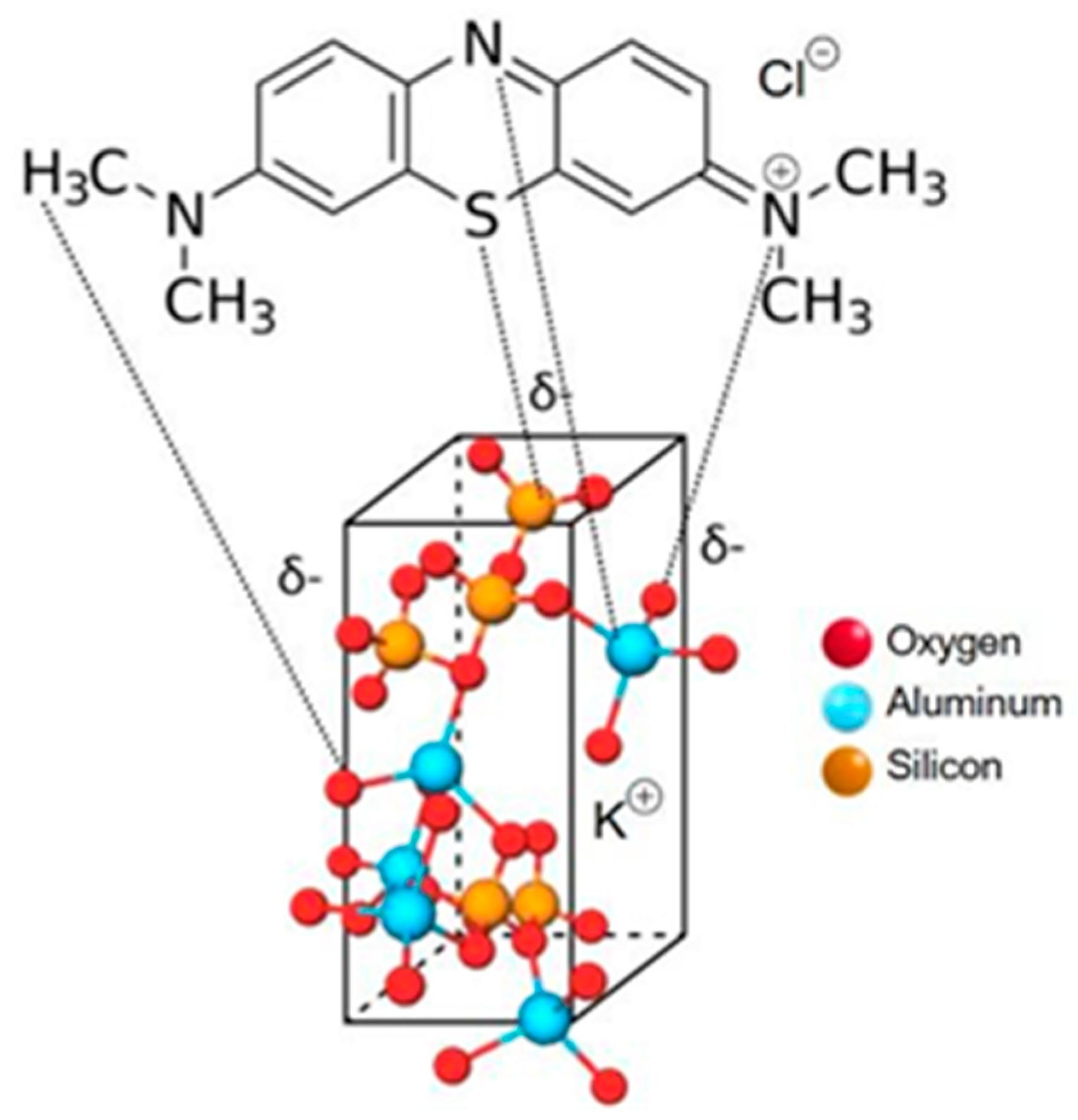
Figure 16 shows the possible adsorption interactions of the MB molecules on the VR adsorbent. Electrostatic interactions occur between the partially negative sulfur (S) and nitrogen (N) groups of the MB molecules with the potassium (K), silicon (Si) and aluminum (Al) groups on the surface of the material and a positive partial interaction of nitrogen (N) with oxygen (O) in the material [39].

3.5. Study of Cytotoxicity

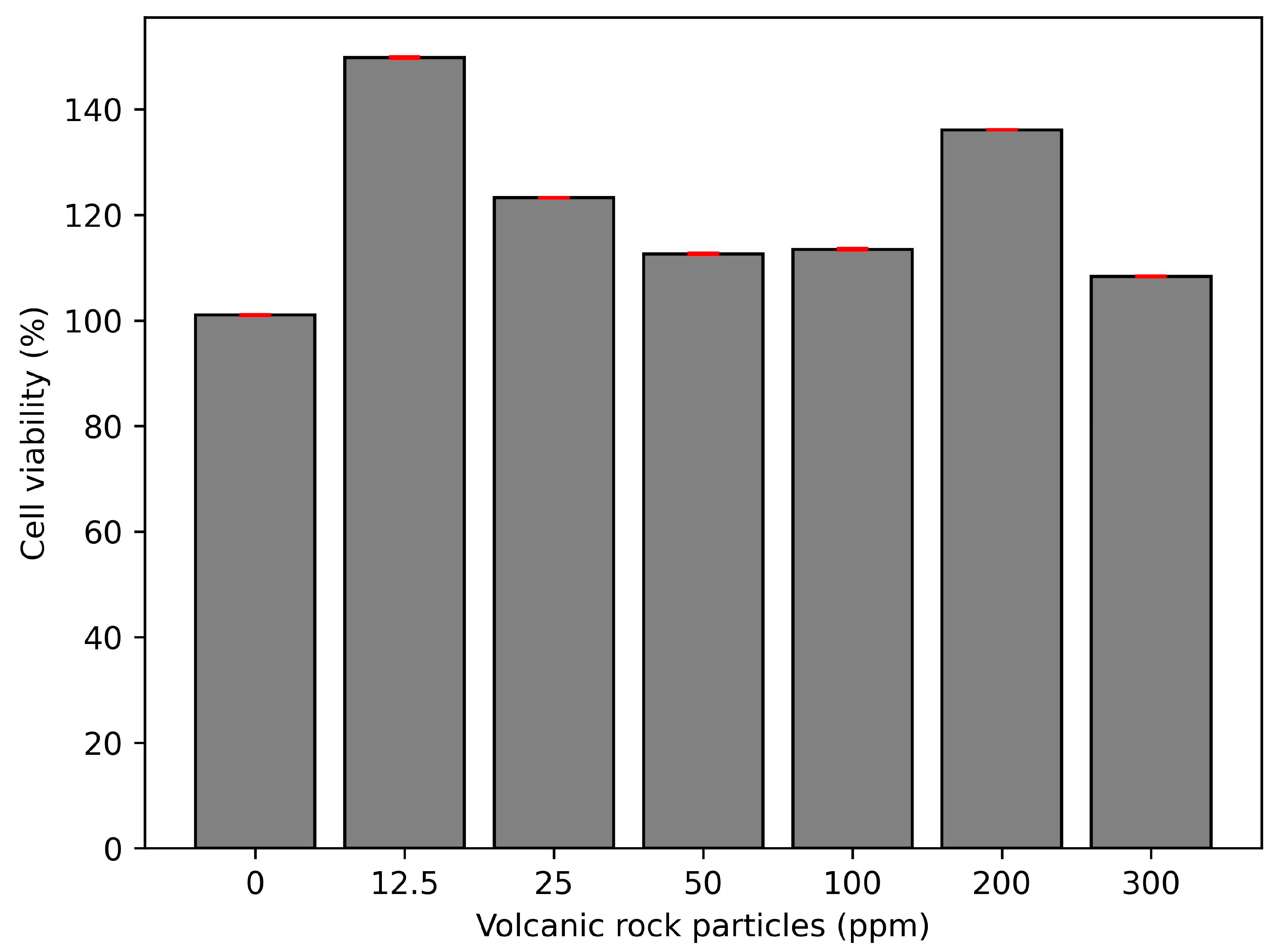
The cytotoxic effects due to the VR particles on fibroblast cells was evaluated at 0, 12.5, 25, 50, 100, 200, and 300 mg·L−1 (Figure 17). The results showed that the VR particles did not induce significant cytotoxicity, as cell viability remained above 100% following 24 h of exposure, and there was no significant difference between the VR particles and the untreated control (p ≤ 0.05), even at the highest concentration tested (300 mg·L−1). On the contrary, an increase in cell viability was observed as the concentration of VR particles increased. In this study, a VR concentration that enables an effective MB adsorption and exhibits non-toxic behavior under the experimental conditions was selected.
In other studies, the volcanic ash exhibited lower toxicity and did not induce significant inflammatory responses. The results indicated a decrease in cell viability upon exposure to ash concentrations of 100–300 μg mg·mL−1, with significant reductions observed at 48 and 72 h [40]. Horwell et al. conducted a comparative toxicity study demonstrating that volcanic ash particles are significantly less cytotoxic than pure crystalline silica [41]. In vitro assays using macrophages and A549 cells revealed that volcanic ash did not elicit a strong inflammatory response or significant cell death, indicating relatively low biological reactivity. These findings suggest that many types of volcanic ash are not inherently hazardous and may be considered biosafe under specific exposure conditions. The results demonstrate that the VR particles possess a favorable biosafety profile, indicating their suitability for applications such as water remediation, with negligible cytotoxic effects on endothelial human cells. Wilson et al. reported an assessment of toxicity from volcanic ash, collected at Montserrat Mountain, on human lung epithelial cells (A549) [42]. The results indicated that volcanic ash represents a relatively low health risk, supporting its potential consideration as a biosafe material for specific environmental or technological applications. So far, the results from the toxicity evaluation of the VR confirm that the material is biosafe; therefore, it is possible to consider the potential use of the VR particles in the field of water remediation.
One limitation of the cytotoxicity assay is that it was evaluated exclusively using a resazurin-based metabolic assay. Since particulate materials may interfere with colorimetric measurement through dye adsorption, light scattering, or sedimentation, the observed increase in apparent cell viability at some concentrations should be interpreted with caution. Although no significant reduction in viability was detected, future studies should include particle-only interference controls, characterization of particle stability and aggregation in complete culture medium, and complementary cytotoxicity assays based on independent endpoints, such as lactate dehydrogenase (LDH) release, trypan blue exclusion, or live–dead fluorescence staining, to further confirm the biosafety of the volcanic rock particles.
In this study, a deep insight into the properties of the VR from the Cerro Blanco volcano is provided. In Table 8, the capacity for MB removal of the VR is compared with other adsorbents reported in the literature to validate its practical application in water remediation.

4. Conclusions

This study demonstrated that VR from the Cerro Blanco volcano, located in Divisaderos, Sonora, Mexico, can be used as a low-cost natural adsorbent, and this was demonstrated by using it for the removal of methylene blue (MB). The material characterization confirmed that the rock is composed of various minerals, including quartz, potassium feldspar, plagioclase, augite, and olivine, and it possesses a high surface porosity with an average pore diameter of 3.75 nm.
Compared to other adsorbent materials, this volcanic rock stands out because of its regional abundance, low cost, and ease of preparation, positioning it as a viable and sustainable alternative for wastewater treatment.
The adsorption tests revealed that the VR rock is capable of removing up to 99.99% of MB at an initial concentration of 50 mg·L−1 within just 30 min., indicating its strong potential for large-scale applications.
Overall, this work supports the development of eco-friendly and cost-effective solutions for water treatment, highlighting not only the high adsorption capacity of the material but also its non-toxic nature, as confirmed by cytotoxicity tests. These findings underscore the potential of natural materials to play a significant role in mitigating environmental pollution caused by industrial activities, while also ensuring safety for both humans and ecosystems.

Author Contributions

Conceptualization, G.M.-C., B.I.B.-F. and D.V.-H.; methodology, G.M.-C., B.I.B.-F., D.L.V.-C. and D.V.-H.; validation, G.M.-C., B.I.B.-F., D.L.V.-C. and D.V.-H.; investigation, G.M.-C., B.I.B.-F. and D.V.-H.; formal analysis, G.M.-C., B.I.B.-F. and D.V.-H.; resources, J.C.T.-C., A.D.M.-A. and D.V.-H.; writing—original draft preparation, G.M.-C., B.I.B.-F. and D.V.-H.; writing—review and editing, G.M.-C., B.I.B.-F., D.J.C.-J., D.L.V.-C., J.C.T.-C., A.D.M.-A. and D.V.-H.; visualization, G.M.-C., B.I.B.-F., D.J.C.-J. and D.V.-H.; supervision, D.V.-H.; funding acquisition, G.M.-C., D.J.C.-J., D.L.V.-C., J.C.T.-C., A.D.M.-A. and D.V.-H. All authors have read and agreed to the published version of the manuscript.

Funding

The financial backing was provided by CONACYT (grants 242943 and 244797) and the supporting scholarship 997785.

Data Availability Statement

The original contributions presented in this study are included in the article. Further inquiries can be directed to the corresponding author.

Acknowledgments

The authors express their gratitude to the Secretaría de Ciencia, Humanidades, Tecnología e Innovación (Secihti, grant no. 7114) and the supporting scholarship 997785.

Conflicts of Interest

The authors declare no conflicts of interest.

Abbreviations

The following abbreviations are used in this manuscript:
VRVolcanic rock
MBMethylene blue

References

  1. Devda, V.; Chaudhary, K.; Varjani, S.; Pathak, B.; Patel, A.K.; Singhania, R.R.; Taherzadeh, M.J.; Ngo, H.H.; Wong, J.W.C.; Guo, W.; et al. Recovery of resources from industrial wastewater employing various processes: A review. Bioengineered 2021, 12, 4697–4718. [Google Scholar] [CrossRef] [PubMed]
  2. Zhou, Y.; Lu, J.; Zhou, Y.; Liu, Y. Recent advances for dyes removal using novel adsorbents: A review. Environ. Pollut. 2019, 252, 352–365. [Google Scholar] [CrossRef] [PubMed]
  3. Noori, H.; Idrus, S. Recent developments in the application of bio-waste-derived adsorbents for the removal of methylene blue from wastewater: A review. Polymers 2022, 14, 783. [Google Scholar] [CrossRef] [PubMed]
  4. Crini, G. Non-conventional low-cost adsorbents for dye removal: A review. Bioresour. Technol. 2006, 97, 1061–1085. [Google Scholar] [CrossRef] [PubMed]
  5. Patel, D.; Singh, A.; Ambati, S.R.; Singh, R.S.; Sonwani, R.K. An overview of recent advances in treatment of complex dye-containing wastewater and its techno-economic assessment. J. Environ. Chem. Eng. 2023, 11, 109258. [Google Scholar] [CrossRef] [PubMed]
  6. Chalatsi-Diamanti, P.; Isari, E.A.; Grilla, E.; Kokkinos, P.; Kalavrouziotis, I.K. Recent prospects, challenges and advancements of photocatalysis as a wastewater treatment method. Water Emerg. Contam. Nanoplastics 2025, 4, 12. [Google Scholar] [CrossRef]
  7. Wang, S.; Peng, Y. Natural zeolites as effective adsorbents in water and wastewater treatment. Chem. Eng. J. 2010, 156, 11–24. [Google Scholar] [CrossRef]
  8. Dawood, S.; Sen, T. Review on dye removal from its aqueous solution into alternative cost effective and non-conventional adsorbents. Chem. Process Eng. 2014, 1, 1–7. [Google Scholar] [CrossRef]
  9. Rossatto, D.L.; Netto, M.S.; Reis, G.S.; Silva, L.F.O.; Dotto, G.L. Volcanic rock powder residues as precursors for the synthesis of adsorbents and potential application in the removal of dyes and metals from water. Environ. Sci. Pollut. Res. 2022, 29, 25685–25693. [Google Scholar] [CrossRef] [PubMed]
  10. Tejeda, A.; Barrera, A.; Zurita, F. Adsorption capacity of a volcanic rock—Used in constructed wetlands—For carbamazepine removal, and its modification with biofilm growth. Water 2017, 9, 721. [Google Scholar] [CrossRef]
  11. Palomares-Hernández, A.; Mares-Briones, F.; Medrano, Y.; Espejel-Ayala, F.; Bacame-Valenzuela, F.J.; Böhnel, H.N.; Esparza, R. Synthesis of magnetic zeolite from volcanic rock “Red Tezontle” for removal of Nickel (II) and Copper (II) ions from aqueous solution. Inorg. Chem. Commun. 2000, 186, 116160. [Google Scholar] [CrossRef]
  12. Fuhr, A.C.F.P.; Leichtweis, J.; Rossato, D.L.; Machado, F.M.; Knani, S.; Silva, L.F.O.; Crissien, T.J.; Dotto, G.L. Statistical physics, mechanisms, and reuse potential of an adsorbent from volcanic rock powder towards metals and dyes. Mater. Res. Bull. 2025, 197, 113983. [Google Scholar] [CrossRef]
  13. Mourhly, A.; Khachani, M.; Hamidi, A.E.; Kacimi, M.; Halim, M.; Arsalane, S. The Synthesis and Characterization of Low-Cost Mesoporous Silica SiO2 from Local Pumice Rock. Nanomater. Nanotechnol. 2015, 5, 35. [Google Scholar] [CrossRef] [PubMed]
  14. Milojkov, D.; Sokic, M.; Jovanovic, G.; Bugarcic, M.; Vukovic, N.; Stojanovic, J.; Mutavdzic, D. Transforming volcanic rocks from Lichadonisia Island, Greece, into advanced luminescent nanostructures for potential solar concentrator applications. Sci. Sinter. 2024, 57, 131–143. [Google Scholar] [CrossRef]
  15. Forgacs, E.; Cserháti, T.; Oros, G. Removal of synthetic dyes from wastewaters: A review. Environ. Int. 2004, 30, 953–971. [Google Scholar] [CrossRef] [PubMed]
  16. Al-Tohamy, R.; Ali, S.S.; Li, F.; Okasha, K.M.; Mahmoud, Y.A.; Elsamahy, T.; Jiao, H.; Fu, Y.; Sun, J. A critical review on the treatment of dye-containing wastewater: Ecotoxicological and health concerns of textile dyes and possible remediation approaches for environmental safety. Ecotoxicol. Environ. Saf. 2022, 231, 113160. [Google Scholar] [CrossRef] [PubMed]
  17. Oladoye, P.O.; Ajiboye, T.O.; Omotola, E.O.; Oyewola, O.J. Methylene blue dye: Toxicity and potential technologies for elimination from (waste) water. Results Eng. 2022, 16, 100678. [Google Scholar] [CrossRef]
  18. Vuong, N.Q.; Goegan, P.; Mohottalage, S.; Breznan, D.; Ariganello, M.; Williams, A.; Elisma, F.; Karthikeyan, S.; Vincent, R.; Kumarathasan, P.K. Proteomic changes in human lung epithelial cells (A549) in response to carbon black and titanium dioxide exposures. J. Proteom. 2016, 149, 53–63. [Google Scholar] [CrossRef] [PubMed]
  19. Giordano, C.; Sandrini, E.; Del Curto, B.; Signorelli, E.; Rondelli, G.; Di Silvio, L. Titanium for osteointegration: Comparison between a novel biomimetic treatment and commercially exploited surfaces. J. Appl. Biomater. Biomech. 2004, 2, 35–44. [Google Scholar] [PubMed]
  20. Bas, M.J.L.; Le Maitre, R.W.; Streckeisen, A.; Zanettin, B.; IUGS Subcommission on the Systematics of Igneous Rocks. A chemical classification of volcanic rocks based on the total alkali–silica diagram. J. Petrol. 1986, 27, 745–750. [Google Scholar] [CrossRef]
  21. Santos, J.O.; Hartmann, L.A. Chemical classification of common volcanic rocks based on degree of silica saturation and CaO/K2O ratio. An. Acad. Bras. Cienc. 2021, 93, e20201202. [Google Scholar] [CrossRef] [PubMed]
  22. Wang, X.; Yu, Z.; Sun, P.; Zhang, Z.; He, K.; Zhang, S.; Jin, Z. Serpentinization-mediated H2 generation and its genesis link to supra-subduction zone ophiolites. Earth-Sci. Rev. 2025, 273, 105369. [Google Scholar] [CrossRef]
  23. Zviagina, B.B.; McCarty, D.K.; Środoń, J.; Drits, V.A. Interpretation of infrared spectra of dioctahedral smectites in the region of OH-stretching vibrations. Clays Clay Miner. 2004, 52, 399–410. [Google Scholar] [CrossRef]
  24. Hernández-Oloño, J.T.; Vargas-Hernández, D.; Castro-Campoy, D.A.; Ibarra-Espinoza, A.; Pérez-Cruz, M.A.; Garrafa-Gálvez, H.E.; Herrera-Urbina, J.R.; Tánori-Córdova, J.C. Photo-catalytic activity of iron nanoparticles supported on SBA-15 for degradation of organic pollutants. J. Photochem. Photobiol. A 2025, 469, 116597. [Google Scholar] [CrossRef]
  25. Youssef, N.A.; Shaban, S.A.; Ibrahim, F.A.; Mahmoud, A.S. Degradation of methyl orange using Fenton catalytic reaction. Egypt. J. Pet. 2016, 25, 317–321. [Google Scholar] [CrossRef]
  26. El Azrak, A.; Grekov, D.I.; Truche, L.; Pré, P. Advanced analysis of clay microporosity using high-resolution N2-Ar adsorption isotherms coupled with the derivative isotherm summation method. Molecules 2024, 29, 6019. [Google Scholar] [CrossRef] [PubMed]
  27. Inbaraj, B.S.; Chiu, C.P.; Ho, G.H.; Yang, J.; Chen, B.H. Removal of cationic dyes from aqueous solution using an anionic poly-γ-glutamic acid-based adsorbent. J. Hazard. Mater. 2006, 137, 226–234. [Google Scholar] [CrossRef] [PubMed]
  28. Salazar-Rabago, J.J.; Leyva-Ramos, R.; Rivera-Utrilla, J.; Ocampo-Pérez, R.; Cerino-Córdova, F.J. Biosorption mechanism of Methylene Blue from aqueous solution onto White Pine (Pinus durangensis) sawdust: Effect of operating conditions. Sustain. Environ. Res. 2017, 27, 32–40. [Google Scholar] [CrossRef]
  29. Nasiruddin, K.M.; Sarwar, A. Determination of points of zero charge of natural and treated adsorbents. Surf. Rev. Lett. 2007, 14, 461–469. [Google Scholar] [CrossRef]
  30. Satyam, S.; Patra, S. Innovations and challenges in adsorption-based wastewater remediation: A comprehensive review. Heliyon 2024, 10, e29573. [Google Scholar] [CrossRef] [PubMed]
  31. El-Sheikh, M.N.; Metwally, B.S.; Mubarak, M.F.; Ahmed, H.A.; Abdel Moghny, T.; Zayed, A.M. Fabrication of electrospun polyamide–weathered basalt nanocomposite as a non-conventional membrane for basic and acid dye removal. Polym. Bull. 2023, 80, 8511–8533. [Google Scholar] [CrossRef]
  32. Tran, H.N.; You, S.J.; Chao, H.P. Fast and efficient adsorption of methylene green 5 on activated carbon prepared from new chemical activation method. J. Environ. Manag. 2017, 188, 322–336. [Google Scholar] [CrossRef] [PubMed]
  33. Bayramoglu, G.; Altintas, B.; Arica, M.Y. Adsorption kinetics and thermodynamic parameters of cationic dyes from aqueous solutions by using a new strong cation-exchange resin. Chem. Eng. J. 2009, 152, 339–346. [Google Scholar] [CrossRef]
  34. Weber, W.J., Jr.; Morris, J.C. Kinetics of adsorption on carbon from solution. J. Sanit. Eng. Div. 1963, 89, 31–59. [Google Scholar] [CrossRef]
  35. El-Habacha, M.; Dabagh, A.; Lagdali, S.; Miyah, Y.; Mahmoudy, G.; Sinan, F.; Zerbet, M. An efficient adsorption of methylene blue dye on a natural clay surface: Modeling and equilibrium studies. Environ. Sci. Pollut. Res. 2024, 31, 62065–62079. [Google Scholar] [CrossRef] [PubMed]
  36. Yu, Y.; Zhuang, Y.Y.; Wang, Z.H. Adsorption of water-soluble dye onto functionalized resin. J. Colloid Interface Sci. 2001, 242, 288–293. [Google Scholar] [CrossRef]
  37. Ada, K.; Ergene, A.; Tan, S.; Yalçın, E. Adsorption of Remazol Brilliant Blue R using ZnO fine powder: Equilibrium, kinetic and thermodynamic modeling studies. J. Hazard. Mater. 2009, 165, 637–644. [Google Scholar] [CrossRef] [PubMed]
  38. Nandi, B.K.; Goswami, A.; Purkait, M.K. Removal of cationic dyes from aqueous solutions by kaolin: Kinetic and equilibrium studies. Appl. Clay Sci. 2009, 42, 583–590. [Google Scholar] [CrossRef]
  39. Bahmanzadegan, F.; Ghaemi, A. A comprehensive review on novel zeolite-based adsorbents for environmental pollutant. J. Hazard. Mater. Adv. 2025, 17, 100617. [Google Scholar] [CrossRef]
  40. Horwell, C.J.; Damby, D.E.; Nattrass, C. The in vitro respiratory toxicity of cristobalite-bearing volcanic ash. Environ. Toxicol. Pharmacol. 2015, 40, 1019–1029. [Google Scholar] [CrossRef] [PubMed]
  41. Horwell, C.J.; Damby, D.E.; Nattrass, C. The effect of aluminium and sodium impurities on the in vitro toxicity and pro-inflammatory potential of cristobalite. Environ. Res. 2017, 159, 164–175. [Google Scholar] [CrossRef] [PubMed]
  42. Wilson, M.R.; Stone, V.; Cullen, R.T.; Searl, A.; Maynard, R.L.; Donaldson, K. In vitro toxicology of respirable Montserrat volcanic ash. Occup. Environ. Med. 2000, 57, 727–731. [Google Scholar] [CrossRef] [PubMed]
  43. Hor, K.Y.; Chee, J.M.C.; Chong, M.N.; Jin, B.; Saint, C.; Poh, P.E.; Aryal, R. Evaluation of physicochemical methods in enhancing the adsorption performance of natural zeolite as low-cost adsorbent of methylene blue dye from wastewater. J. Clean. Prod. 2016, 118, 197–209. [Google Scholar] [CrossRef]
  44. Amin, G.; Đorđević, D.; Konstantinović, S.; Jordanov, I. The Removal of the Textile Basic Dye from the Water Solution by Using Natural Zeolite. Adv. Technol. 2017, 6, 67–71. [Google Scholar] [CrossRef]
  45. Asefa, M.T.; Feyisa, G.B. Comparative Investigation on Two Synthesizing Methods of Zeolites for Removal of Methylene Blue from Aqueous Solution. Int. J. Chem. Eng. 2022, 2022, 9378712. [Google Scholar] [CrossRef]
  46. Radoor, S.; Karayil, J.; Jayakumar, A.; Parameswaranpillai, J.; Siengchin, S. Removal of Methylene Blue Dye from Aqueous Solution Using PDADMAC Modified ZSM-5 Zeolite as a Novel Adsorbent. J. Polym. Environ. Mater. 2021, 29, 3185–3198. [Google Scholar] [CrossRef]
  47. Han, R.; Zhang, J.; Han, P.; Wang, Y.; Zhao, Z.; Tang, M. Study of Equilibrium, Kinetic and Thermodynamic Parameters about Methylene Blue Adsorption onto Natural Zeolite. Chem. Eng. J. 2009, 145, 496–504. [Google Scholar] [CrossRef]
  48. Akbal, F. Adsorption of basic dyes from aqueous solution onto pumice powder. J. Colloid Interface Sci. 2005, 286, 455–458. [Google Scholar] [CrossRef] [PubMed]
  49. Derakhshan, Z.; Baghapour, M.A.; Ranjbar, M.; Faramarzian, M. Adsorption of Methylene Blue Dye from Aqueous Solutions by Modified Pumice Stone: Kinetics and Equilibrium Studies. Health Scope 2013, 2, 136–144. [Google Scholar] [CrossRef]
  50. Genişoğlu, M.; Özdemir, M.; Bülbül, E.; Yılmaz, S. Methylene Blue Removal of Fixed-Bed Column Reactor with nZVI and nZVI-Pumice: Experimental and Modeling Study. Süleyman Demirel Univ. J. Nat. Appl. Sci. 2019, 23, 354–363. [Google Scholar] [CrossRef]
Figure 1. Fabrication procedure for VR particles.
Physchem 06 00041 g001
Figure 2. SEM micrograph of volcanic rock.
Physchem 06 00041 g002
Figure 3. EDS analysis of volcanic rock.
Physchem 06 00041 g003
Figure 4. TAS diagram showing the VA as a basalt.
Physchem 06 00041 g004
Figure 5. AFM diagram locating the VR in the tholeiitic series.
Physchem 06 00041 g005
Figure 6. X-ray diffractogram of volcanic rock.
Physchem 06 00041 g006
Figure 7. FT-IR spectrum of volcanic rock. The red dotted line indicates the wavelength corresponding to absorption bands.
Physchem 06 00041 g007
Figure 8. (a) N2 adsorption–desorption isotherm at 77 K and (b) corresponding pore size distribution of VR.
Physchem 06 00041 g008aPhyschem 06 00041 g008b
Figure 9. Determination of the influences of (a) point of zero charge and (b) pH on the adsorption of MB on VR. Experimental conditions: temperature 298.15 K, equilibrium time 30 min, mass to volume ratio 5 g/L, initial concentration of 50 mg·L−1, stirring 150 rpm.
Physchem 06 00041 g009aPhyschem 06 00041 g009b
Figure 10. Adsorption kinetics of MB on VR as a function of the temperature. Symbols represent experimental data points, and lines the predicted pseudo-second order model. Experimental conditions: pH 9, equilibrium time 24 h, mass to volume ratio 5 g/L, initial concentration of 50 mg·L−1, stirring 150 rpm.
Physchem 06 00041 g010
Figure 11. Intraparticle diffusion plots of MB adsorption in volcanic rock. Experimental conditions: pH 9, equilibrium time 24 h, mass to volume ratio 5 g/L, initial concentration of 50 mg·L−1, stirring 150 rpm.
Physchem 06 00041 g011
Figure 12. Adsorption isotherms of MB on VR adsorbents at different temperatures. Experimental conditions: pH 9, equilibrium time 24 h, mass to volume ratio 5 g/L, initial concentration of 50 mg·L−1, stirring 150 rpm.
Physchem 06 00041 g012
Figure 13. Plot of l n   k d versus 1/T for determining thermodynamic parameters.
Physchem 06 00041 g013
Figure 14. Reusability of volcanic rock. (a) Desorption effectiveness of different eluents. (b) Effect of different adsorption–desorption cycle numbers on adsorption of methylene blue by adsorbent. Experimental conditions: temperature: 318.15 K, pH 3, equilibrium time 1 h, mass to volume ratio 5 g/L, initial concentration of 50 mg·L−1 of nitric acid, stirring 150 rpm.
Physchem 06 00041 g014
Figure 15. XRD patterns of recycled MB adsorption on volcanic rock after of the 1st and 5th cycles.
Physchem 06 00041 g015
Figure 16. Functional groups involved in the adsorption mechanism of MB dye.
Physchem 06 00041 g016
Figure 17. Cell viability percentage of fibroblast cells exposed to various concentrations of VR particles.
Physchem 06 00041 g017
Table 1. Oxide weight percentages and normative moles in VR.
SampleElementwt% (EDS)Oxide FactorOxideOxide wt%Normative Moles (PMol)
Volcanic RockSi23.822.1393SiO250.950.8735
Al9.701.8895Al2O318.330.1875
Fe8.901.2865FeO11.450.1713
Ca5.511.3992CaO7.710.1467
Mg3.041.6581MgO5.040.1382
Na2.821.3481Na2O3.80.0641
Ti1.511.6681TiO22.520.0353
K0.171.2046K2O0.200.0025
Note: Total iron is expressed as FeO for normative and petrological classification purposes.
Table 2. Calculated CIPW normative mineralogy for tholeiitic basalt.
Mineral PhaseCrystal SystemFormulawt%
QuartzTrigonalSiO25.23
OrthoclaseMonoclinicKalSi3O80.30
AlbiteTriclinicNaAlSi3O86.83
AnorthiteTriclinicCaAl2Si2O816.51
DiopsideMonoclinicCaMgSi2O62.50
HyperstheneOrthorhombic(Mg, Fe) SiO316.63
MagnetiteCubicFe3O40.35
IlmeniteTrigonalFeTiO33.92
Note: Values indicate the calculated normative weight percentage for each mineral phase.
Table 3. Mineral phase identification, interplanar d-spacings, and Miller indices (hkl) for the XRD pattern of the VR.
Mineral Phase
(°)
d-Spacing
(Å)
Miller Indices
(hkl)
Mineral
Phase

(°)
d-Spacing
(Å)
Miller Indices
(hkl)
Quartz25.63.47(011)Diopside30.742.91( 2 ¯ 21)
26.443.37(101)31.52.84(310)
Orthose24.423.64(111)Hypersthene28.423.14(211)
27.763.21 ( 2 ¯ 01 ) 29.723.01(311)
Albite21.984.04(0 2 ¯ 2)30.262.95(411)
23.683.75(002)30.742.91(511)
Anorthite21.984.04(0 2 ¯ 2)31.52.84(321)
23.683.75(002)Magnetite34.922.57(311)
24.423.64(111)35.582.52(311)
29.723(131)44.322.04(400)
39.382.28( 2 ¯ 4 ¯ 2)47.21.93(331)
40.462.22(151)51.461.78(116)
Table 4. Kinetic models for MB adsorption on the synthesized adsorbents at different temperatures yielded values for the adsorbed amount and rate constants.
Pseudo-First OrderPseudo-Second Order
SampleT
(K)
R2K1
(min−1)
qe
(mg·g−1)
R2K2
(g(mg·min−1))
qe
(mg·g−1)
Volcanic rock298.150.9150.04323.7800.99800.04510.030
308.150.9710.12916.4500.99850.0549.025
318.150.9920.17157.6850.99830.0968.313
Initial concentration (C0); temperature (T); correlation (R2); pseudo-first constant (K1); equilibrium adsorbed amount (qe); pseudo-second constant (K2).
Table 5. Infraparticle diffusion rate constant for MB adsorption in VR at different temperatures.
SampleC0
(mg·L−1)
T
(K)
kid
(mg·g−1·min−0.5)
I
(mg·g−1)
R2
Volcanic rock50298.150.85530.87670.9989
50308.150.85180.88030.9993
50318.150.85670.87540.9991
Initial concentration (C0); temperature (T); intraparticle rate constant (Kid); thickness of the boundary layer (I); correlation (R2).
Table 6. Constants and correlation coefficients of Langmuir and Freundlich isotherms.
Model
LangmuirFreundlich
SampleC0
(mg·L−1)
Ce
(mg·L−1)
K d T
(K)
qmax
(mg·g−1)
KL
(L·mg−1)
R2KF
(L·mg−1)
NR2
volcanic rock10044.26693.25298.1511.221.570.99856.626.080.7813
10049.6317302.11308.1510.500.720.99815.275.100.8382
10054.79241.13318.159.600.440.99794.374.810.8607
Initial concentration (C0); equilibrium concentration (Ce); equilibrium adsorption constant (K); temperature (T); adsorbed amount (qmax); interaction constant (K); correlation (R2); adsorbed amount (N).
Table 7. The thermodynamic parameters for MB adsorption on VR at different temperatures.
SampleT
(K)
G 0
(kJ·mol−1)
H 0
(kJ·mol−1)
S 0
(J·mol−1·K−1)
volcanic rock298.15−13.72−14.57−2.84
308.15−13.71--
318.15−13.66--
T, temperature; G 0 , standard free energy; H 0 , standard enthalpy; S 0 , standard entropy.
Table 8. Comparative analysis of methylene blue adsorption capacities across different carbonaceous and mineral materials.
MaterialSource/
Composition Type
MB Adsorption
(mg/g)
Initial
Concentration
(ppm)
Adsorbent
Dose
(g/L)
Initial
pH
Contact
Time
(min)
Reference
Natural zeolite modified by acid and alkaline treatmentsAcid: 2.113
Alkaline: 1.089
5–20611120[43]
Natural zeolite
(clinoptilolite)
1.82010460[44]
Sodalite octahydrate3.54057150[45]
ZSM-5 zeolite4.3110210300[46]
Natural Chinese zeolite
(clinoptilolite)
5.153067.5840[47]
Pumice powder from
Anatolia and Turkey
Anatolia: 0.442
Turkey: 1.488
10–5020–100-60[48]
Modified pumice stone15.8730–60410120[49]
Mixture of natural and nZVI pumiceMixture: 4.27100in column7-[50]
Volcanic rockMexico10505930This work
Disclaimer/Publisher’s Note: The statements, opinions and data contained in all publications are solely those of the individual author(s) and contributor(s) and not of MDPI and/or the editor(s). MDPI and/or the editor(s) disclaim responsibility for any injury to people or property resulting from any ideas, methods, instructions or products referred to in the content.