Article

Rising Reptile Trade from Kenya: Analysis of CITES-Listed Captive-Bred Wildlife Exports

1
World Animal Protection, 3rd Floor, 86-90 Paul Street, London EC2A 4NE, UK
2
Department of Natural Sciences, Manchester Metropolitan University, Oxford Road, Manchester M15 6BH, UK
*
Author to whom correspondence should be addressed.
Conservation 2026, 6(2), 56; https://doi.org/10.3390/conservation6020056
Submission received: 19 January 2026 / Revised: 13 April 2026 / Accepted: 15 April 2026 / Published: 4 May 2026

Abstract

Kenya has a long history of both legal and illegal wildlife trade, functioning as a source, consumer, and transit hub within global wildlife markets. Yet, despite its increasing prominence, the scale and composition of Kenya’s captive-bred and ranched wildlife trade sectors remain poorly characterized, particularly following the enactment of the Wildlife Conservation and Management Act (WCMA) in 2013. This study addresses this gap by analyzing Convention on International Trade in Endangered Species of Wild Fauna and Flora (CITES) annual report data from 2013 to 2023 to: (1) identify trends in the volume and taxonomic composition of CITES-listed species exported as captive-bred or ranched from Kenya; (2) quantify the number of specimens and individuals traded; (3) assess their conservation status and legal classification; and (4) identify key export destinations. Between 2013 and 2023, Kenya reported 886 CITES export records involving captive-bred and ranched specimens from 28 vertebrate taxa across nine orders. Reptiles dominated exports (81% of records), followed by birds (15%) and mammals (4%). Live animals accounted for 80% of records (with reptiles comprising 96.1% of all live animal export records), totaling more than 870,000 individuals traded over the study period. The annual number of export records more than doubled across the decade, while exports of individual live reptiles increased more than tenfold, from 8551 individuals in 2013 to 86,330 in 2023. Most exports were commercial (93%) with the United States, Germany, Spain, Taiwan, and the Republic of Korea identified as major importers. 77% of exported species have unknown or declining wild population trends, and seven species are internationally threatened, including the Critically Endangered pancake tortoise (Malacochersus tornieri). We highlight the animal welfare, conservation, and biosecurity implications of this rapidly expanding trade, as well as consistent discrepancies between exporter- and importer-reported quantities that indicate substantial monitoring and regulatory challenges. The findings provide timely evidence to inform national wildlife management and protection measures, and ongoing policy discussions including those surrounding the forthcoming Wildlife Conservation and Management Bill (2025) and the role of captive breeding in Kenya’s wildlife trade.

1. Introduction

The global commercial wildlife trade involves billions of individual animals (both vertebrate and invertebrate) each year [1], traded live or as body parts to satisfy demand for pets, food, traditional medicine, entertainment, decorations, and luxury goods [1,2]. Although wildlife use has long-standing cultural and subsistence roots [3,4], the scale of today’s globalized trade is unprecedented [5,6], affecting approximately 24% of all terrestrial vertebrate species [7]. Between 1997 and 2016, the legal trade alone was valued at USD 220 billion annually [2], while an estimated 13 million individual specimens entered illegal wildlife markets between 2015 and 2021 [8].
Commercial wildlife trade can generate livelihoods and economic benefits [9,10], yet its scale and complexity raise major concerns for biodiversity, animal welfare, and public health [1,11,12,13]. Unsustainable and poorly regulated exploitation is a leading driver of global species declines, particularly in tropical regions [11,14], while also facilitating the spread of invasive species [15] and zoonotic pathogens [16,17].
In response to these growing concerns, captive breeding and ranching of wildlife have been widely promoted as potentially sustainable trade alternatives [18], thought to help reduce pressure on wild populations, contribute to species recovery, and provide economic opportunities for rural communities [19]. Globally, close to one billion individual animals, representing at least 487 wildlife species, were estimated to be farmed commercially in 90 countries between 2000 and 2020 [20]. However, evidence increasingly indicates that captive breeding and ranching pose significant risks, including the potential laundering of wild-caught individuals into legal supply chains [21,22,23], genetic erosion of wild populations [24], poor animal welfare conditions [25,26,27], and increased zoonotic disease transmission in captive settings [28]. These concerns are particularly relevant in Africa, where farming of reptiles, birds, and mammals has expanded rapidly in recent decades but often in the absence of robust regulatory oversight [26,27,29].
Across sub-Saharan Africa, wildlife farming industries have grown substantially over the past three decades. In South Africa, for example, large-scale commercial breeding of thousands of lions Panthera leo (Linnaeus, 1758) for captive hunting, interactive tourism, live exports, and the supply of bones and derivatives for traditional medicine markets [30], has raised ethical concerns surrounding wildlife farming [27,31]. Similar trends are observed in the industrial-scale breeding of African grey parrots Psittacus erithacus (Linnaeus, 1758) in countries like South Africa [32], as well as the expansion of reptile-breeding facilities in West Africa that supply global pet markets [33].
In East Africa, Kenya is internationally recognized for its rich biodiversity but also plays multiple roles in global wildlife trade networks as a source, consumer, and transit hub [34]. Beyond promoting tourism to see iconic megafauna (the ‘Big Five’—elephant, lion, buffalo, rhinos, and leopard), the country also exports live reptiles such as tortoises, and crocodile skins and meat, largely serving international pet and fashion markets [35,36,37]. Kenya also acts as a regional trade corridor connecting African source countries with both legal and illegal global wildlife markets [34,38].
Historically, wildlife use in Kenya evolved from subsistence and cultural practices to intensive commercial hunting during the colonial and postcolonial periods [39]. By the mid-20th century, big-game hunting and exports of ivory, rhino horn, skins, and trophies peaked [40,41], driving severe declines in elephant and rhino populations before national hunting and trophy trade bans were enacted in 1977–78 [42]. Despite these prohibitions, illegal hunting persisted into the 1980s [43], reducing elephant and rhino populations by approximately 85% and 97%, respectively [44]. The creation of the Kenya Wildlife Service (KWS) in 1989 was instrumental in reducing poaching and improving enforcement [45]. Yet legal and illegal wildlife trade has continued in new forms, including for the live animal pet trade [46], trafficking of pangolin scales and rhino horn for traditional Asian medicine [47,48], and trade in wildlife-based souvenirs, including feathers, skins, and ivory carvings linked to the tourism sector [49].
Captive breeding of wildlife was formally integrated into Kenya’s wildlife use policy in the early 1990s through regulated game cropping and ranching schemes under the Wildlife Use Rights Programme [42]. This framework was later consolidated in the Wildlife Conservation and Management Act (WCMA) of 2013 [50], which permits consumptive and non-consumptive wildlife uses through licensed activities, including game farming (defined in the WCMA as “the rearing of wildlife in enclosed, controlled environments for conservation, trade, and recreation”) and game ranching (“keeping wildlife under natural, extensive conditions for conservation, recreation, and trade”). The WCMA’s Tenth Schedule lists eligible species for farming and ranching, including crocodiles, tortoises, chameleons, snakes, lizards, ostriches, butterflies, and guinea fowl, many of which are traded internationally (e.g., [20]).
Despite the growing prominence of captive-bred and ranched wildlife industries in Kenya [51,52], the scale, composition, and regulatory oversight of these sectors remain poorly understood [20]. Existing studies highlight Kenya’s production of Nile crocodiles Crocodylus niloticus (Laurenti, 1768) and pancake tortoises Malacochersus tornieri (Siebenrock, 1903) [20], its role as both a source and transit point for reptile exports [34], and its participation in regional chameleon trade networks [53]. However, no comprehensive assessment has examined trade patterns in captive-bred and ranched specimens since the implementation of the WCMA in 2013.
As a Party to the Convention on International Trade in Endangered Species of Wild Fauna and Flora (CITES)—an international agreement between governments whose aim is to ensure that the international trade of specimens of wild animals and plants does not threaten the survival of the species—Kenya is legally obliged to regulate and monitor trade in CITES-listed species through a permitting system. However, enforcement capacity and inter-agency coordination remain limited [34]. Understanding Kenya’s captive-bred and ranched trade patterns is therefore essential for evaluating the sustainability of wildlife exports.
This study addresses these gaps by analyzing CITES annual trade reports from 2013 to 2023 to: (1) identify trends in the volume and taxonomic composition of CITES-listed species exported as captive-bred or ranched from Kenya; (2) quantify the number of specimens and individuals traded; (3) assess their conservation status and legal classification; and (4) identify key export destinations. By providing the first systematic assessment of Kenya’s post-WCMA captive-bred and ranched exports of CITES-listed species, the study aims to inform national wildlife management and guide policy development, particularly in the context of Kenya’s forthcoming Wildlife Conservation and Management Bill, 2025, which is currently under public consultation [54] as part of the review of the WCMA (2013).

2. Materials and Methods

The CITES Trade Database (https://trade.cites.org; accessed on 23 June 2025) contains records of all reported legal wildlife trade exported from or imported by CITES Parties (currently 184), based on official annual reports submitted by member states. Each record represents a single shipment between two countries for products derived from a single taxon. The database, which has been widely used to analyze global wildlife trade patterns (e.g., [55,56]), is publicly accessible online.
On 23 June 2025 we queried the database for all records of Animalia exports from Kenya between 2013 and 2023 inclusive, focusing specifically on specimens recorded under CITES source codes for captive-bred (C, D, F) and ranched (R) origin [where C = captive-bred animals (bred in accordance with Resolution Conf. 10.16 (Rev. CoP19), including parts and derivatives, exported under Article VII, paragraph 5 of the Convention); D = Appendix I animals bred in captivity for commercial purposes in operations registered with the CITES Secretariat (Resolution Conf. 12.10 (Rev. CoP15)), including parts and derivatives exported under Article VII, paragraph 4; F = animals born in captivity (F1 or subsequent generations) that do not meet the CITES definition of “bred in captivity” (Resolution Conf. 10.16 (Rev. CoP19)), including parts and derivatives; and R = ranched specimens (animals reared in a controlled environment, taken as eggs or juveniles from the wild, where they would otherwise have had a very low probability of surviving to adulthood)]. The timeframe 2013–2023 was selected to encompass the period since the introduction of Kenya’s WCMA of 2013, enabling an assessment of trends in wildlife exports following its implementation (see Supplementary Materials for dataset).
The search included all Purpose codes reported by CITES Parties: commercial, zoo, circus, scientific, hunting trophy, educational, personal, medicinal, reintroduction or introduction into the wild, and breeding in captivity. All reported trade terms, unit codes, and importing countries were also included.
Trade data were obtained in the form of a Comparative Tabulation Table, including Trade Year, CITES Appendix, Taxon, Class, Order, Family, Genus, Importer, Exporter, Origin, Importer reported quantity, Exporter reported quantity, Term, Unit, Purpose, and Source. All Appendix listings (I–III) were included in the analysis.
Reported quantities differed significantly between importers and exporters (Wilcoxon rank sum test: W = 202,661, p-value < 0.0001); therefore, the higher value of the two was used in subsequent analysis. Statistical analyses, including linear regression, were conducted in R statistical software (R version 4.5.1) [57] to assess trends over the study period.
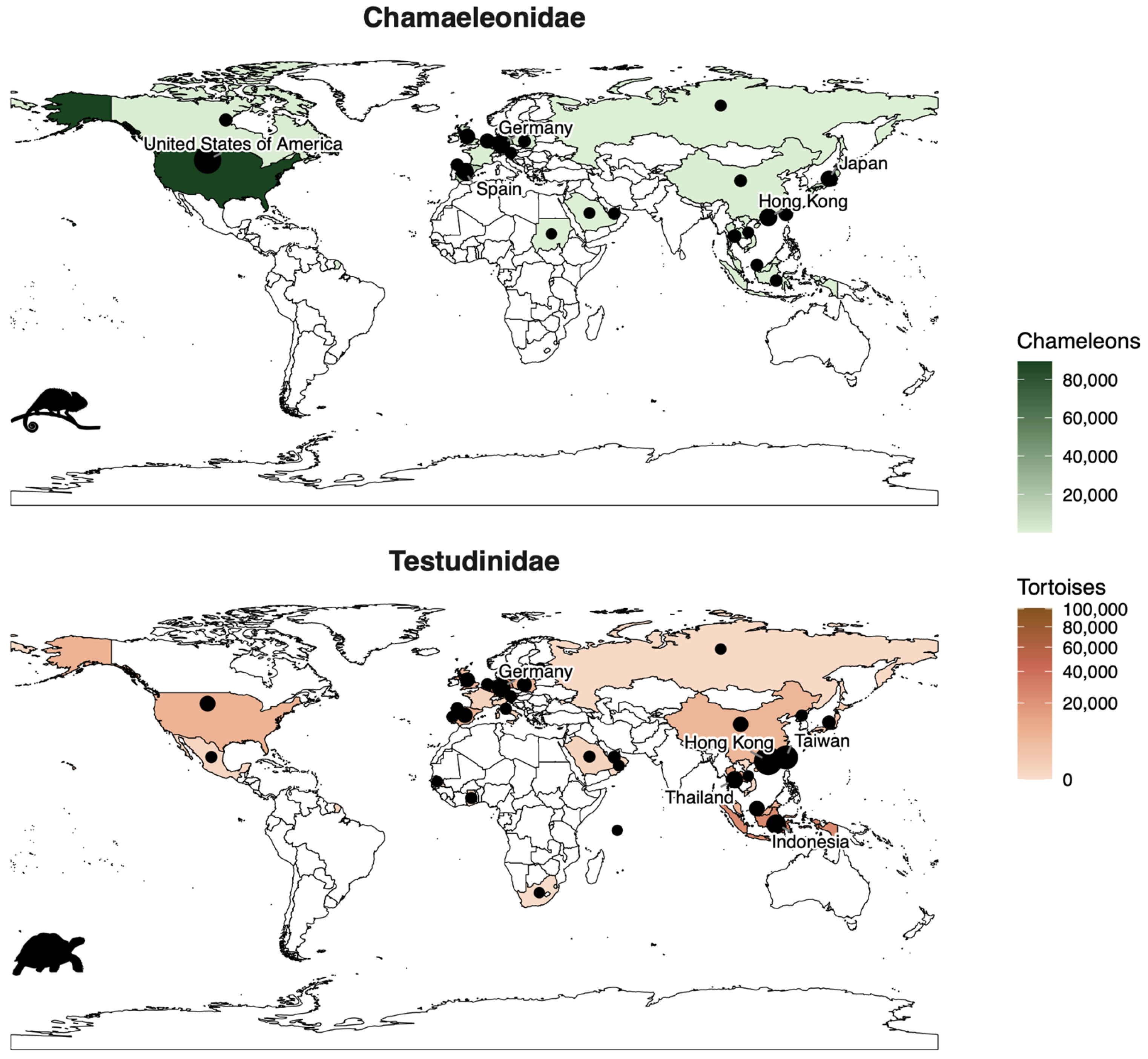
Live reptile exports from Kenya (2013–2023) were visualized using country-level data for the families Chamaeleonidae (chameleons) and Testudinidae (tortoises), with export quantities aggregated by importing country. Country names were standardized to match the Natural Earth shapefile using dplyr in R. Spatial data were obtained from the rnaturalearth package (medium scale, sf format) and merged with the export data. Maps were generated using ggplot2.
In addition, each species in the trade records was matched with its most recent International Union for Conservation of Nature (IUCN) Red List assessment (as of October 2025) (https://www.iucnredlist.org/; accessed 1 October 2025) to extract information on conservation status and wild population trend. We also recorded whether each species was native to Kenya.

3. Results

3.1. Overview of Captive-Bred and Ranched Exports

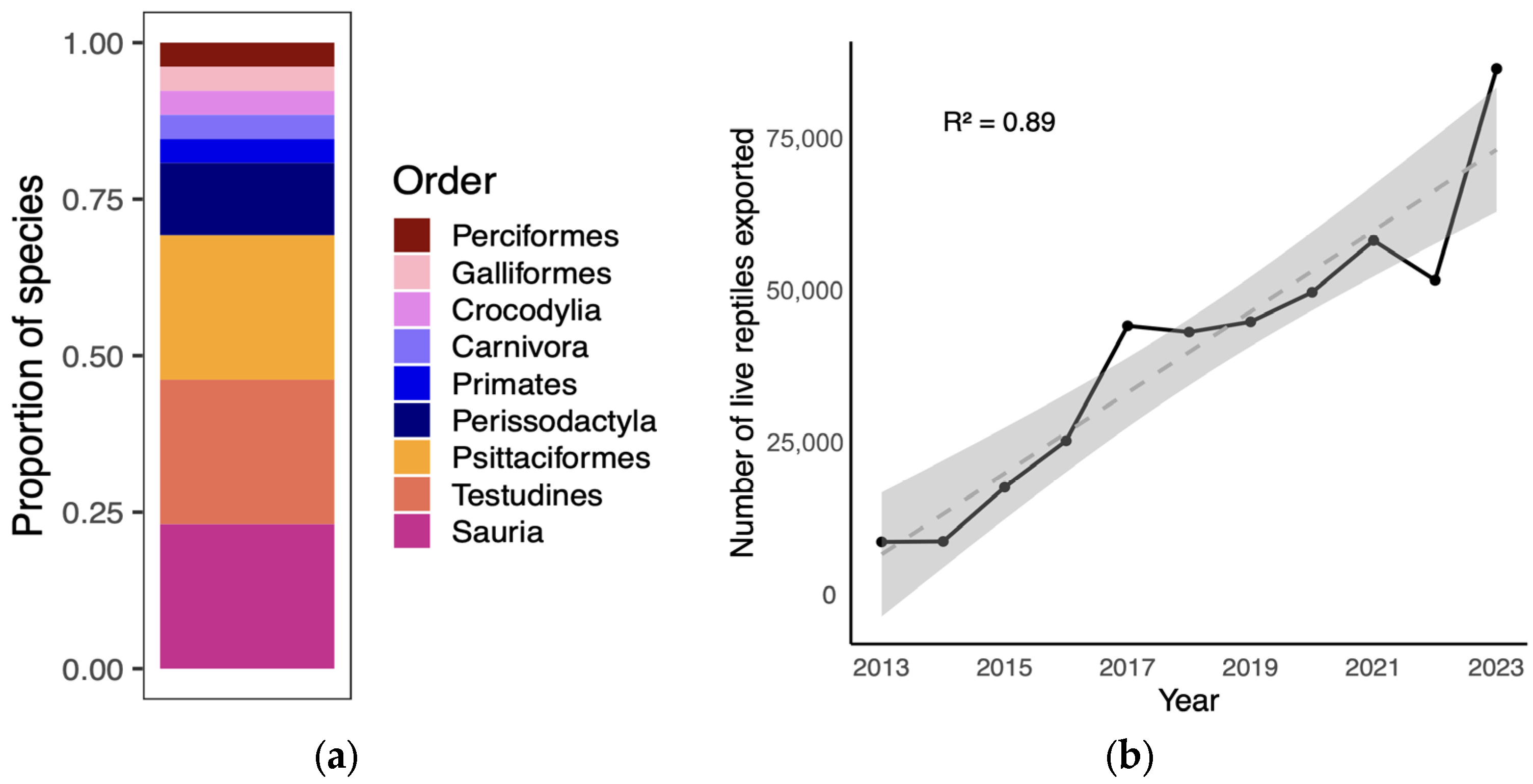
Between 2013 and 2023, Kenya reported 886 export records of captive-bred and ranched CITES-listed specimens, representing 28 taxa across nine orders. Two of these taxa could not be identified down to the species level and were recorded at the genus level as Pavo spp. (peafowl) and Tioceros spp. (chameleon). Most export records were for reptiles (n = 721 records; 81.4%), comprising 14 species (50.0% of all recorded taxa). This was followed by birds (n = 133; 15.0%; 8 species, 28.5%), mammals (n = 31; 3.5%; 5 species, 17.9%), and a single record of fish (two live humphead wrasse Cheilinus undulatus (Rüppell, 1835) exported to China). The most species-rich order was Sauria (lizards, chameleons, etc.) with 7 species and 424 records, followed by Testudines (tortoises and turtles; 6 species, 259 records) (Figure 1a).
Over the 10-year period, the mean annual number of export records was 80.6 ± 17.5. When disaggregated by class, the annual mean number of export records was 65.55 ± 14.5 for reptiles, 12.09 ± 4.5 for birds, and 3.44 ± 2.7 for mammals. There was a significant increase in the total number of CITES export records from Kenya between 2013 and 2023, more than doubling from 53 records in 2013 to 110 in 2023 (linear regression, adjusted R2 = 0.61, df = 9, p = 0.003). This upward trend was primarily driven by reptile exports, which nearly doubled over the same period, from 45 records in 2013 to 88 in 2023 (adjusted R2 = 0.60, p = 0.003). In contrast, there were no significant trends in the annual number of export records for birds (adjusted R2 = −0.07, p = 0.57) or mammals (adjusted R2 = 0.05, p = 0.28).

3.2. Trade Terms

The vast majority of export records (80.1%) involved live animals, with 710 records accounting for 871,783 individual live animals (median = 44,059 per year, IQR: 21,352–53,836). While there was no significant trend in the overall annual number of live animal exports over time (adjusted R2 = 0.22, p = 0.08), exports of live reptiles showed a significant and sharp increase, rising more than tenfold from 8551 individuals in 2013 to 86,330 in 2023 (adjusted R2 = 0.89, p < 0.0001) (see Figure 1b).
Reptiles dominated live animal exports, comprising 96.1% of live trade records (682 records) and involving 437,232 individuals in total between 2013 and 2023 (median = 44,059 per year, IQR: 17,534–51,558; Figure 1b). This was followed by birds, with 27 records representing 434,549 individuals (99.98% of which were exported in 2022). Feathers accounted for the second highest number of export records (n = 104), comprising 9080.5 kg, 4,820,104 ‘specimens’, and 2,471,451 unspecified units (UU) of Indian peafowl Pavo cristatus (Linnaeus, 1758) feathers. Skins followed with 32 records involving 80,298 skins of Nile crocodile, 45 skins of pancake tortoise, and one skin of African lion.
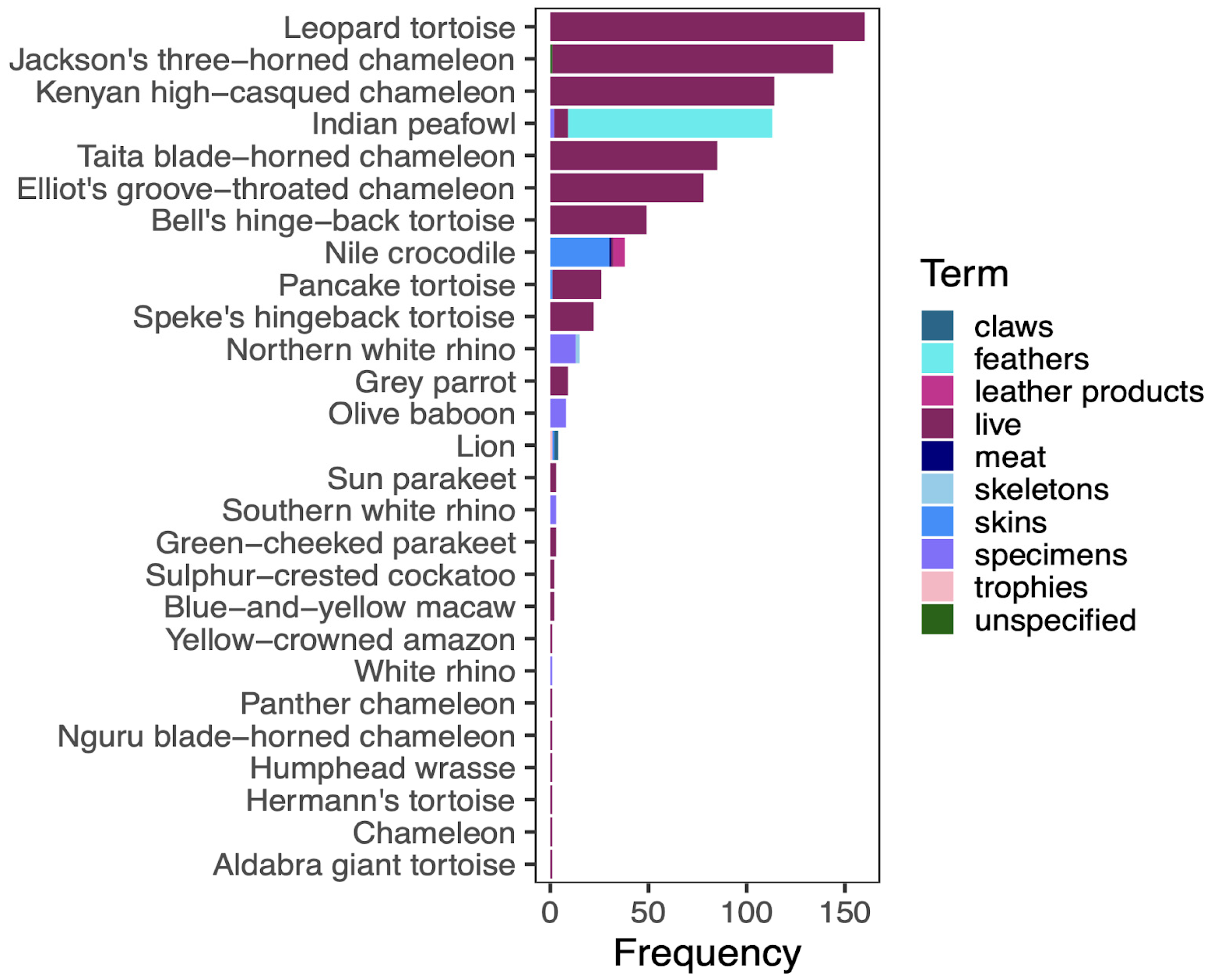
There were also 27 records of ‘specimens’ involving multiple taxa, including 16,032 specimens, 5899 UU, 2.4 L, and 140 g of samples from Indian peafowl, olive baboon Papio anubis (Lesson, 1827), white rhinoceros Ceratotherium simum (Burchell, 1817), northern white rhinoceros C. s. cottoni (Lydekker, 1908), and southern white rhinoceros C. s. simum (Burchell, 1817). Additionally, six records of leather products involved 4181 items made from Nile crocodile. Other trade items included two records involving 36 African lion claws, one record of 22 kg of Nile crocodile meat, two records of northern white rhinoceros skeletons (140 kg and 1 UU), one African lion trophy, and one record of 100 UU of Jackson’s three-horned chameleon Trioceros jacksonii (Boulenger, 1896) (Figure 2).

3.3. Trade Source and Purpose

With regards to trade source, the majority of export records (n = 815, 92%) involved animals classified as “bred in captivity,” representing 25 species. This was followed by 36 records of animals “born in captivity” involving six species, and 34 records of “ranched specimens” involving two species (Nile crocodile and Indian peafowl). There was also a single record classified as “Appendix I animals bred in captivity” for Indian peafowl, which may represent a reporting error because this species is listed in CITES Appendix III. Ranched exports included 20 feathers from Indian peafowl, and for Nile crocodiles: 3676 leather products, 22 kg of live animals, 22 kg of meat, and 78,745 skins.
Regarding trade purpose, most exports (n = 829 records; 93.6%) were reported as intended for commercial use. Personal use was the second most common purpose (n = 27; 3.0% involving Nile crocodile, Indian peafowl, six species of Psittaciformes, and two species of Testudines), followed by scientific research (n = 24; 2.7% involving Northern white rhino, Southern white rhino and olive baboon), medical use (n = 3; 0.34%; olive baboon), hunting trophies (n = 2; 0.23%; African lion), and reintroduction into the wild (n = 1; 0.11%; Aldabra giant tortoise, Aldabrachelys gigantea (Schweigger, 1812).

3.4. Conservation Status and Population Trend

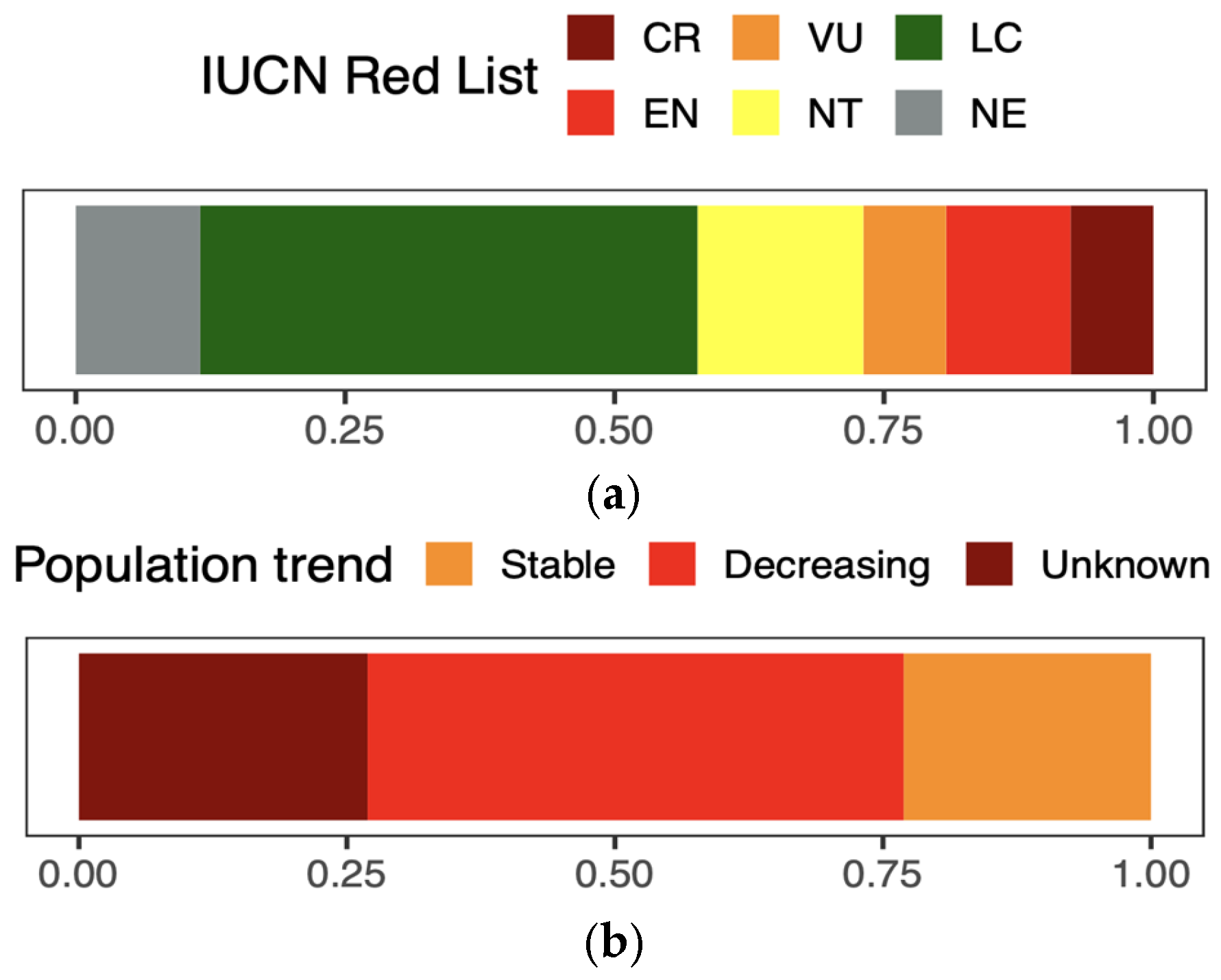
Of the 26 species exported, two (7.7%; pancake tortoise and Northern white rhino) are currently classified as Critically Endangered on the IUCN Red List, with 2691 live specimens and 45 skins reported in trade for the pancake tortoise and 869 ‘specimens’, 92 millilitres of specimens, and 140 kg plus 1 skeleton for the Northern white rhino. Three species (11.5%) are listed as Endangered: the sun parakeet Aratinga solstitialis (Linnaeus, 1758), humphead wrasse, and grey parrot. Two species (7.7%) are considered Vulnerable: the African lion and Hermann’s tortoise Testudo hermanni (Gmelin, 1789). Four species (15.4%) are listed as Near Threatened: the white rhino, Southern white rhino, Taita blade-horned chameleon Kinyongia boehmei (Lutzmann & Necas, 2002), and Nguru blade-horned chameleon Kinyongia fischeri (Reichenow, 1887). The remaining 12 species (46.2%) are classified as Least Concern (Figure 3a).
Thirteen species (50%) involved in exports are reported to have declining wild population trends, including the yellow-crowned Amazon Amazona ochrocephala (Gmelin, 1788), blue-and-yellow macaw Ara ararauna (Linnaeus, 1758), sun parakeet, sulphur-crested cockatoo Cacatua galerita (Latham, 1790), white rhinoceros, Northern and Southern white rhinoceros subspecies, humphead wrasse, pancake tortoise, African lion, grey parrot, green-cheeked conure Pyrrhura molinae (Massena & Souancé, 1854), and Hermann’s tortoise.
Six species (23%) are reported to have stable wild populations, including the Nile crocodile, panther chameleon Furcifer pardalis (Cuvier, 1829), olive baboon, Indian peafowl, Kenyan high-casqued chameleon, and Jackson’s three-horned chameleon. The remaining seven species (27%) have unknown wild population trends, including the Aldabra giant tortoise, Bell’s hinge-back tortoise Kinixys belliana (Gray, 1831), Speke’s hinge-back tortoise Kinixys spekii (Gray, 1831), Taita blade-horned chameleon, Nguru blade-horned chameleon, leopard tortoise Stigmochelys pardalis (Bell, 1828), and Elliot’s groove-throated chameleon Trioceros ellioti (Günther, 1895) (Figure 3b).
There were a small proportion of African species in the export records that were likely to have been imported into Kenya either because they are not native to Kenya (n = 3; Nguru blade-horned chameleon native to Tanzania, panther chameleon native to Madagascar, and Aldabra giant tortoise native to Aldabra atoll in the Seychelles) or because they are considered to be scarce (or extinct) in Kenya (n = 2; Southern white rhino, white rhino). In addition, seven of the species exported were exotic to Africa: the Blue-and-yellow macaw, Sun parakeet, yellow-crowned amazon, and green-cheeked parakeet native to South America, Hermann’s tortoise native to Europe, Indian peafowl and sulphur-crested cockatoo native to Asia.

3.5. CITES Status

Of the 26 species exported, five (19.2%) are currently listed in CITES Appendix I, including the white rhinoceros, its subspecies, the pancake tortoise, and the grey parrot. Twenty-three species (88.5%) are listed in CITES Appendix II, and one species (3.8%), the Indian peafowl, is listed in CITES Appendix III. Most export records involved Appendix II species (84%), followed by Appendix III (13%), and Appendix I (3%). Throughout the study period, Appendix II species consistently dominated the trade in terms of number of records (Table 1).

3.6. Importing Countries

Export destination countries for the above taxa included at least 43 different countries across Asia (n = 16), Europe (n = 13), Africa (n = 10), North America (n = 3) and South America (n = 1, Brazil) (Figure 4). In terms of the number of records, the leading importing countries were the United States (n = 177 records), Germany (n = 95), Spain (n = 62), Taiwan (n = 52), the United Kingdom (n = 52) and the Republic of Korea (n = 50).
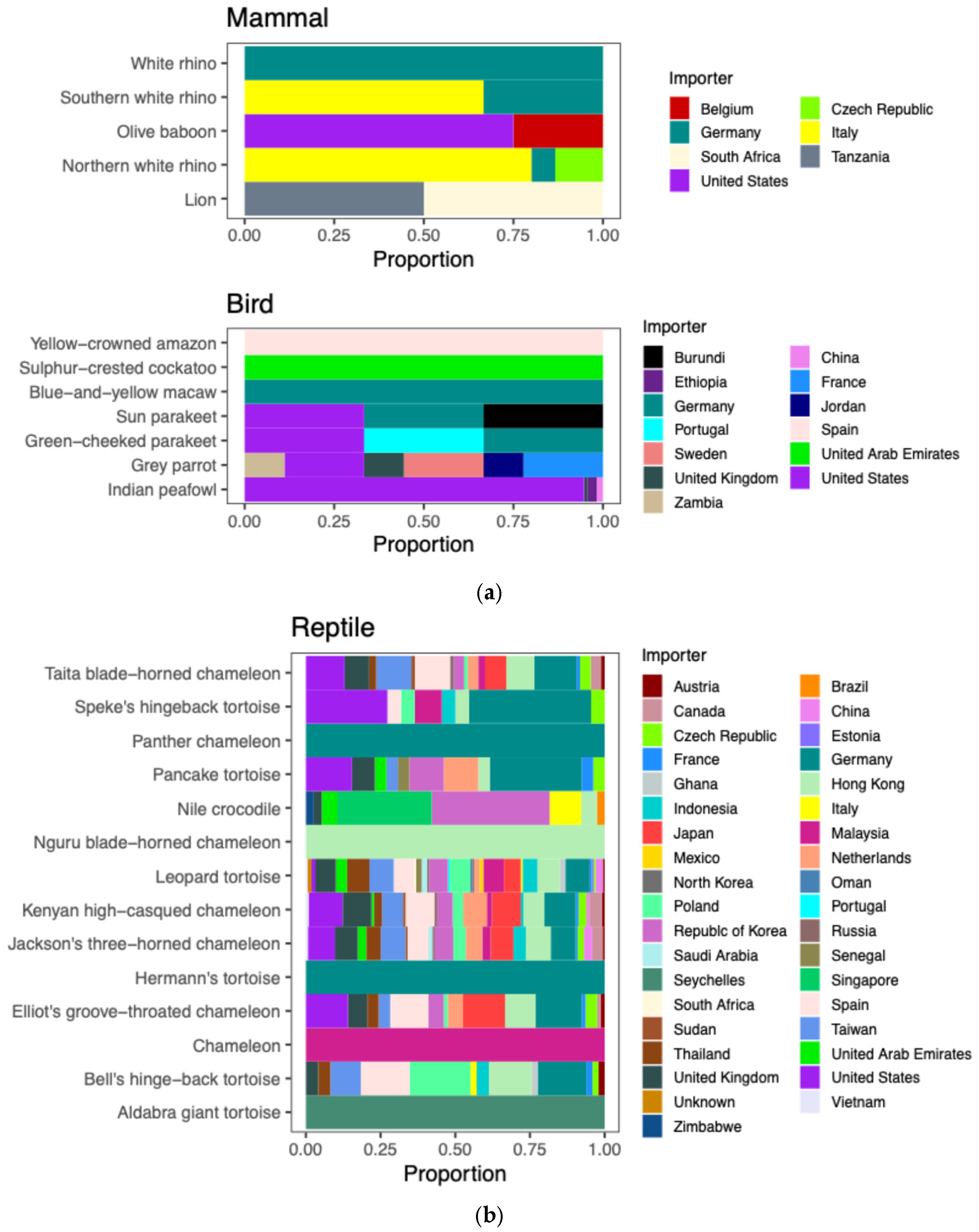
The diversity of destination countries was notably greater for reptiles (n = 35 plus one “Unknown”; Figure 4b) than for mammals (n = 7) or birds (n = 13; Figure 4a). In particular, exports of eight chameleon and tortoise species (Bell’s hinge-back, leopard, Speke’s hinge-back, and pancake tortoise, as well as Elliot’s groove-throated, Jackson’s three-horned, Kenyan high-casqued, and Taita blade-horned chameleons), were distributed across a wide range of importing countries (Figure 4b).
Between 2013 and 2023, the United States imported a total of 101 records of Indian peafowl feathers, 68 records of live animals involving 531,121 individuals and 8 records of specimens of Indian peafowl and olive baboon. Live animal imports into the United States were dominated by Indian peafowl (434,504 individuals), followed by Jackson’s three-horned chameleons (55,944), Kenyan high-casqued chameleons (14,266), and Taita blade-horned chameleons (11,497) (Figure 4).
Germany imported 91 records of live animals totaling 38,174 individuals, with leopard tortoises (18,102), Jackson’s three-horned chameleons (5577), and Taita blade-horned chameleons (4456) being the most prominent species. Additional imports included one record of 45 pancake tortoise skins in 2016 and three records of specimens. Other notable trends among the top importing countries included Spain’s imports of live Jackson’s three-horned chameleons, Taiwan and the UK imports of live leopard tortoises, and the Republic of Korea’s imports of Nile crocodile skins (Figure 4).
Bird exports were dominated by Indian peafowl (feathers and live birds), with the United States representing the principal importer, particularly for live individuals. Exports of live birds to European countries were minimal, with small numbers recorded for Germany, Portugal, Sweden, France, Spain, and the United Kingdom (Figure 4a). Across six additional species, exports of only 25 live individuals were recorded in total, including the blue-and-yellow macaw (Ara ararauna; n = 2), green-cheeked parakeet (Pyrrhura molinae; n = 3), grey parrot (Psittacus erithacus; n = 12), sulphur-crested cockatoo (Cacatua galerita; n = 4), sun parakeet (Aratinga solstitialis; n = 3), and yellow-crowned Amazon (Amazona ochrocephala; n = 1). Reported destinations included Europe, the United States, Africa, and parts of Asia (Figure 4a).
Overall, bird trade was characterised by low taxonomic diversity, with occasional high-volume shipments of Indian peafowl, and a narrower range of destination countries compared to the more geographically dispersed reptile trade.

3.7. Live Animals in Detail

When examined by the number of export records, reptiles dominated Kenya’s live-animal exports. Sauria (lizards and chameleons) accounted for 60.8% of all live-animal export records (n = 432), followed by Testudines (tortoises), which comprised 26.3% of records (n = 258). In contrast, Galliformes (e.g., pheasants, peafowl) accounted for just 0.9% of records (n = 7).
When examined by the number of individual animals traded, Galliformes dominated in terms of volume, involving 434,524 individuals, driven almost entirely by high-volume exports of Indian peafowl (99.99% of which were for commercial purposes). Testudines accounted for 263,124 individuals, while Sauria exports involved 174,086 individuals. Psittaciformes accounted for 2.8% of records (n = 20) but involved only 25 individuals, while Crocodylia (crocodiles) and Perciformes (perches and related fishes) were each represented by a single record, involving 22 and 2 individuals, respectively.
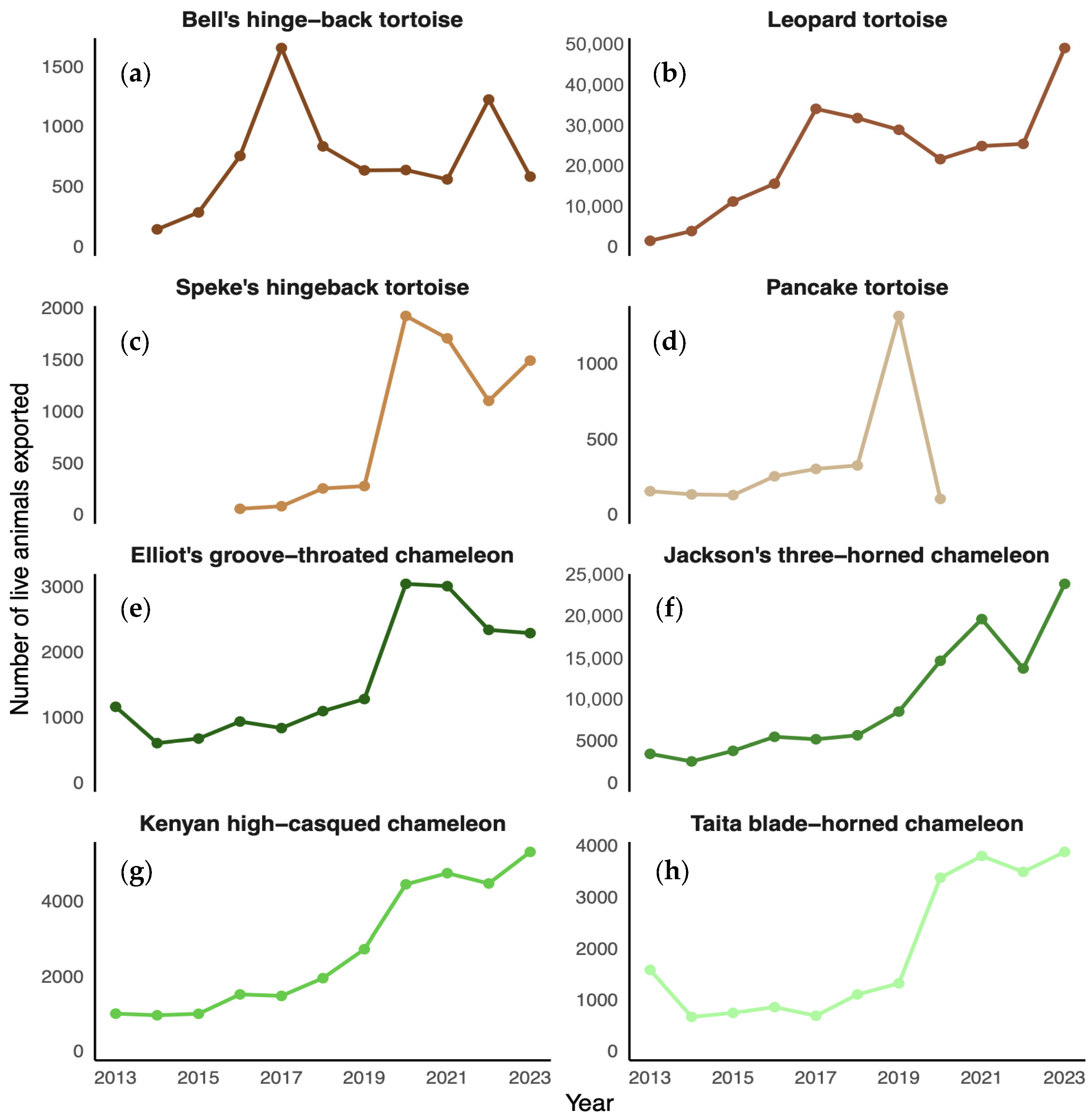
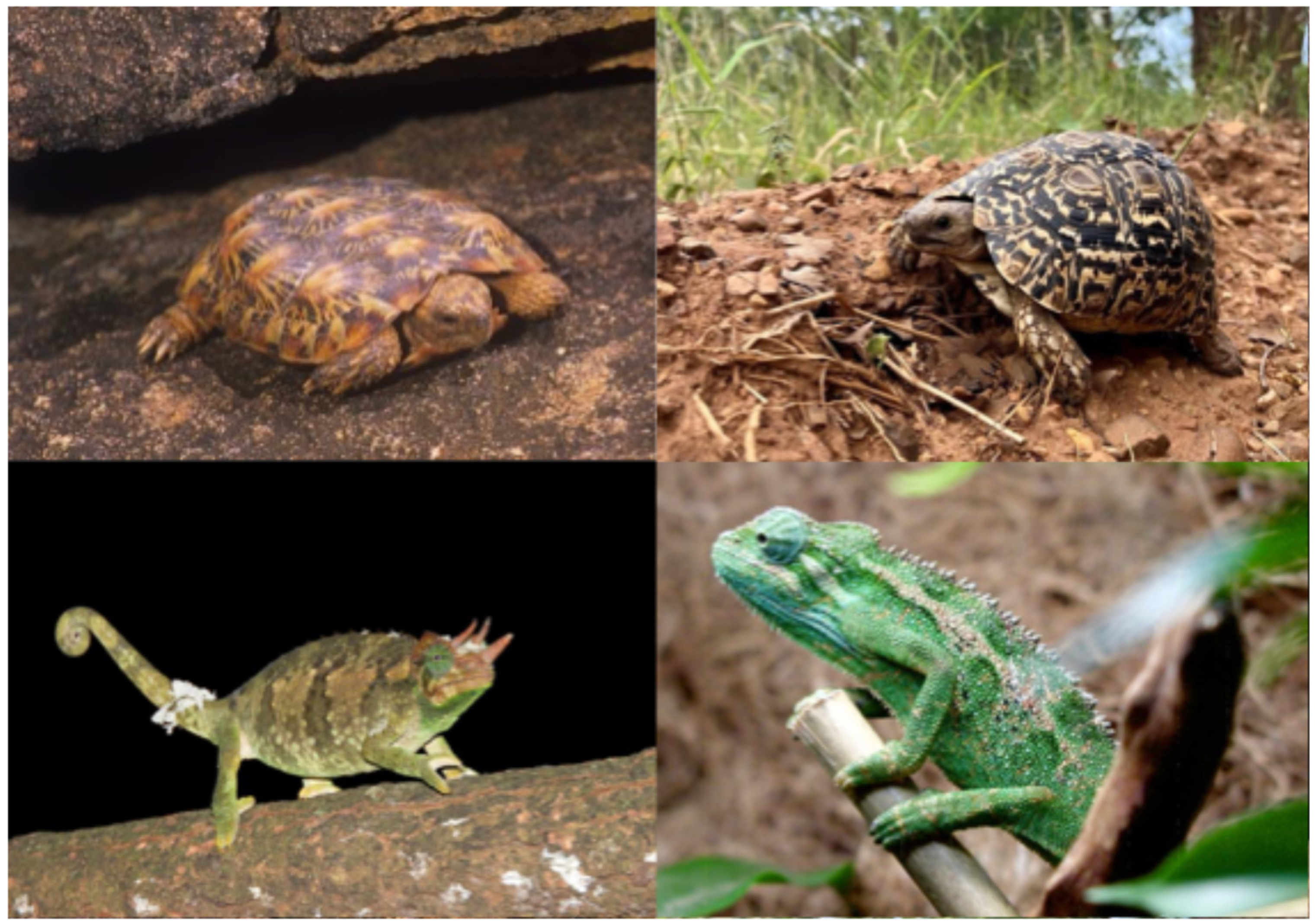
At the species level, the most frequently exported live taxa between 2013 and 2023 were the Indian peafowl (434,524 individuals, six records), the leopard tortoise (246,328 individuals, 160 records), and several chameleon species, including Jackson’s three-horned chameleon (105,767 individuals, 143 records), Kenyan high-casqued chameleon (29,451 individuals, 114 records), Taita blade-horned chameleon (21,389 individuals, 85 records), and Elliot’s groove-throated chameleon (17,159 individuals, 78 records) (Figure 5). The primary import destinations for live chameleons were the United States, Germany, Spain, Hong Kong, and Japan, while Germany, Hong Kong, Thailand, Taiwan and Indonesia dominated tortoise imports (Figure 6).

4. Discussion

4.1. Expansion of Kenya’s Captive-Bred Wildlife Trade

Our analysis highlights a marked expansion of Kenya’s captive-bred and ranched wildlife exports since the enactment of the Wildlife Conservation and Management Act (WCMA) in 2013. Over the decade 2013–2023, CITES records document exports of 28 vertebrate taxa across nine orders, overwhelmingly dominated by reptiles (81% of records), particularly tortoises and chameleons. Export volumes more than doubled during this period, driven largely by a tenfold rise in live reptile exports, from 8551 individuals exported annually in 2013 to 86,330 in 2023, and involving more than 437,000 individual live reptiles overall for the 10-year period. While the Indian peafowl was the most frequently exported live species overall (>434,000 individuals), the leopard tortoise and several chameleon species each exceeded tens of thousands of exported individuals (Figure 7). More than 90% of shipments were commercial and reached at least 43 importing countries, primarily the United States, Germany, Spain, Taiwan, the United Kingdom, and the Republic of Korea.
The sharp increase in Kenya’s wildlife exports since 2013 suggests that legal reforms intended to promote “sustainable use” may have facilitated a rapid growth in commercial breeding enterprises, often under limited regulatory oversight [34]. Our findings build on and extend previous analyses of African reptile exports [26,34,53,58] and highlight Kenya’s emergence as a key supplier in global luxury and pet wildlife markets. The pace of this expansion raises critical questions regarding the sustainability, animal welfare, biosecurity, and governance dimensions of the trade.

4.2. Governance and Conservation Risks

Although all CITES records analysed were officially reported as ranched or captive-bred, Kenya’s expanding wildlife exports raise concerns about traceability and the potential for negative conservation outcomes. The diversity of species involved, and wide range of importing countries, reflect complex trade dynamics that are difficult to monitor and regulate effectively [59,60]. Within our dataset, discrepancies between exporter and importer reported quantities exceeded 84,000 for leopard tortoise, 21,800 for Jackson’s three-horned chameleon, and 9100 for Kenyan high-casqued chameleon, with inconsistencies present in over 99% of examined records.
Discrepancies of this nature in the CITES database have been widely documented and may result from reporting delays, unit or terminology mismatches, or misclassification of source or destination [61]. However, similar patterns have also been linked to more serious issues, including misreporting, or possible violations of CITES regulations [61,62]. The presence of non-native species—such as Tanzanian chameleons—in Kenyan export records further highlights potential risks of weak regulatory oversight, including potential for illegal cross-border sourcing and limited verification at the point of origin [53].
The trade in the Critically Endangered pancake tortoise illustrates persistent governance and monitoring challenges in Kenya. Although the species was uplisted to CITES Appendix I in 2019 [63] and officially reported exports have declined since 2020 (Figure 3), seizure evidence indicates that illegal trade continues. Notably, in 2025, three suspects were apprehended at Marimanti Market in Kenya while transporting concealed live pancake tortoises [64]. Such incidents point to ongoing weaknesses in institutional capacity to effectively monitor and prevent illegal trade.
Similar irregularities have been documented across regional and international reptile trade networks. For instance, 1500 smuggled turtles and tortoises were seized from passenger luggage in Manila in 2019 [65]; 74 Tanzanian chameleons were intercepted en-route to Austria in 2021 [66]; and in June 2025, Spanish authorities discovered 20 Endangered black-breasted leaf turtles Geoemyda spengleri (Gmelin, 1789) concealed among children’s toys in a shipment from China [67]. Additional seizures of live Tanzanian chameleons smuggled into Europe in 2021 further underscore the transnational nature of illegal reptile trade.
Kenya has taken steps to strengthen wildlife trade enforcement in recent years, including the introduction of new regulatory measures and an increase in high-profile prosecutions [68]. A recent analysis of 1099 wildlife crime prosecutions in Kenya found that 90% of cases resulted in guilty verdicts, indicating increasing effectiveness of the legal system in addressing wildlife offences [69]. However, reactive enforcement approaches and long-standing structural constraints have continued to limit enforcement effectiveness [69]. Previous reviews have identified limited prosecutorial capacity, unclear legal provisions, overlapping mandates across agencies, and corruption as persistent challenges [34]. In addition, high minimum penalties introduced under the WCMA have reportedly been associated with increased rates of ‘not guilty’ pleas and longer trials, placing further strain on judicial capacity and complicating prosecutions [34,70]. More recent analyses also highlight institutional misalignment between national and county authorities, which has reportedly constrained consistent implementation of CITES and inter-agency coordination [71].
Although all specimens in the dataset were reported as captive-bred or ranched, these enforcement and governance challenges raise concerns about the traceability of captive-breeding claims. Weak oversight, limited inspection capacity, and incomplete record-keeping may create conditions under which wild-caught individuals are laundered into commercial breeding facilities or where wild individuals are harvested to establish or replenish breeding stocks [72,73]. Such practices have been documented in wildlife trade systems globally and may occur where captive breeding is economically or biologically constrained. For example, in Kenya, a recent report documents the capture of wild tortoises to supply breeding stock at a captive breeding facility [74].
From a conservation perspective, these uncertainties are particularly concerning for species with biological traits that make them highly vulnerable to overexploitation if wild collection occurs. Hinge-back tortoises (Kinixys spp.), for example, are slow-growing and late-maturing, meaning that even low levels of wild harvest can severely impede population recovery [75,76]. The risk is further heightened for species whose wild population status remains unknown—an issue affecting a quarter of the taxa exported in this study. These include the leopard tortoise, Taita blade-horned chameleon, Elliot’s groove-throated chameleon, and Bell’s hinge-back tortoise, where a lack of population baselines [77,78,79] could complicate assessment of sustainability or verification of reported trade sources.
While several regional studies have examined chameleon trade dynamics and aspects of conservation status, such as in Madagascar and East Africa (e.g., [53,80]), robust, long-term, species-specific population monitoring data remain scarce. For many taxa exported from Kenya, population trends are classified as unknown or are based on limited or outdated field data. This lack of baseline and longitudinal information constrains the ability to determine whether current levels of trade, whether reported as captive-bred or otherwise, are sustainable [59]. Consequently, even when trade is formally classified as captive-bred or ranched, uncertainties in origin and production systems, combined with potential laundering and supplementation of breeding stock from the wild, mean that potential impacts on wild populations cannot be excluded.
At a global scale, limited alignment between IUCN Red List assessments and CITES listings further complicates monitoring of trade impacts, particularly for reptiles, where more than 75% of species in the pet trade remain unlisted under CITES, and many rare taxa have yet to be formally assessed [58].

4.3. Animal Welfare and Biosecurity Risks

Wildlife farming also carries significant animal welfare [1,81] and biosecurity risks that intersect with public health [82]. In Kenya, investigations of captive breeding facilities reveal inconsistent adherence to welfare standards [74,83] outlined in the 2015 Captive Wildlife Management and Welfare Guidelines [84]. Documented shortcomings include inadequate food and water provision, unsuitable environments, and insufficient health and veterinary care [74,83]. These reports suggest that oversight mechanisms tend to prioritise conservation management and administrative compliance rather than comprehensive welfare protection, leaving systemic welfare violations largely unmonitored [74].
Poor welfare conditions within captive-breeding industries have been documented previously. Crocodile farms, for example, often confine animals in high-density concrete enclosures that can promote aggressive interactions [1]. Reptiles exported to the pet trade can also face considerable welfare challenges, from stressful captive conditions to inhumane handling and transport [85]. Exported animals may be held for prolonged periods in overcrowded, overheated, and poorly ventilated containers, resulting in dehydration, stress, injury, and mortality [1]. For reptiles exported from West Africa, conditions can be especially severe, with animals documented packed into sacks or crates without water, sometimes at densities that restrict movement and increase the risk of crushing [26]. Seizure reports also document tortoises bound with duct tape and hidden in passenger luggage [65].
Mortality during transport can be particularly high among reptiles [86], and additional unrecorded losses are likely occurring during capture, holding, and distribution stages [87]. Chameleons are especially vulnerable: more than 170,000 individuals were exported from Kenya during the study period despite their susceptibility to stress, dehydration, and handling injuries [88]. Robinson et al. (2015) reported mortality rates of 28% for captive chameleons in domestic settings, substantially higher than the estimated average reptile mortality rate of 3.6% [89].
High volume, rapid turnover consumer markets, such as at pet reptile expos in the US and Europe, further compounds these risks [90]. Animals at such events are frequently exposed to overcrowding, handling stress, inadequate access to food and water, and high pathogen exposure [91]. Mortality rates at wholesaler facilities are reportedly particularly high: up to 72% of reptiles may die within a six-week stock cycle, and 41.6% may die within ten days of confiscation due to dehydration, emaciation, hypothermic stress, infection, parasitism, overcrowding, or injuries [87]. In households, inappropriate enclosures, diets, and inadequate husbandry may contribute to estimated first-year mortality rates of up to 75% [92].
CITES records also indicate that between 2014 and 2020, nearly 2000 olive baboon specimens from captive-bred sources were exported from Kenya to the United States and Belgium, alongside additional trade reported as measured quantities of olive baboon derivatives. The international trade in primates raises particularly acute welfare concerns given their complex social structures, cognitive capacities, and environmental needs, which cannot be fully replicated under captive breeding, holding, and transport conditions [93,94].
Beyond ethical concerns, these welfare issues intersect with biosecurity threats. Reptiles are well-documented carriers of Salmonella and other zoonotic pathogens [95,96,97], and the movement of primates and their derivatives presents particularly elevated zoonotic disease risks [98]. High-density breeding and global transport networks increase opportunities for pathogen amplification and spillover [99], while the escape or release of non-native species can lead to the establishment of invasive populations with significant ecological and epidemiological consequences, including altered community dynamics and disease transmission patterns [100,101]. For example, non-native reptiles introduced through the pet trade have established populations in Florida, such as the veiled chameleon Chamaeleo calyptratus (Duméril & Bibron in Duméril & Duméril, 1851) following escape and release from captivity, and the Burmese python Python bivittatus (Kuhl, 1820), which now thrives in the Everglades [102]. These introductions have resulted in competitive and predatory pressures on native fauna, including declines in native mammal populations [100,102] and indirect shifts in vector-borne pathogen dynamics [101]. Despite these risks, pathogen surveillance within captive breeding facilities and export chains remains minimal due to limited diagnostic capacity and the presence of asymptomatic carriers, which can allow infections to move undetected along trade chains [103].
Temporal patterns in Kenya’s wildlife exports further underscore these public health concerns. Notably, 2020—the first year of the COVID-19 pandemic—recorded the second-highest number of CITES export records in the dataset (n = 104; Table 1), despite intense global scrutiny of zoonotic risks linked to wildlife supply chains (e.g., [104]). Although export records declined in 2021 (n = 76), they rose sharply again in 2022 and peaked in 2023 (n = 110), indicating a sustained increasing trend and a rapid return to “business as usual” following the pandemic. This rebound suggests that pandemic-related public health concerns had limited long-term impact on trade activity as travel routes and trade opened back up, reinforcing the need for stronger integration of animal welfare, pathogen surveillance, and One Health considerations into wildlife trade governance [105].

4.4. Economic Drivers and Global Trade Dynamics

Kenya’s wildlife export patterns reflect international demand for live animals and high-value wildlife derivatives, particularly within luxury ornamental, fashion, and pet markets. For example, exports of Nile crocodile skins exceeded 80,000 between 2013 and 2023—likely representing to similar number of individual animals—with most shipments destined for Singapore and the Republic of Korea, both major global hubs for crocodilian leather tanning and high-end fashion manufacturing. Singapore alone has historically imported around 60% of reptile skins exported from Africa to Asia for processing into handbags and other leather products [106].
Nile crocodile ranching in Kenya was introduced in the 1970s [107], initially partly as a human–wildlife conflict mitigation strategy along the Tana River, where local communities were permitted to collect wild-harvested eggs for sale to licensed crocodile farms [108]. However, this sector has since evolved into a large-scale commercial enterprise, primarily supplying crocodile skins to Asian luxury leather industries [109]. Although ranching was expected to provide both conservation and livelihood benefits, recent research suggests that socioeconomic gains for communities in the Tana River region have been limited [110].
Kenya’s trade in Indian peafowl illustrates a similar dynamic for birds and their derivatives. Live exports totaled over 430,000 individuals, while feathers accounted for the second highest number of export records, comprising more than 9000 kg, 4.8 million “specimens”, and 2.4 million UU. Although the purpose of live exports is not specified in the CITES database beyond ‘commercial’, it is plausible that many of these birds and their feathers enter ornamental and fashion markets, consistent with known global uses of peafowl products, particularly in the United States [111].
Live reptile exports, including tortoises and chameleons, further demonstrate Kenya’s role as a key supplier to international wildlife pet markets. Major importing countries included Hong Kong (22%), the United States (19%), Singapore and Taiwan (12% each), and Germany (7%), indicating a concentrated pattern of global demand. Germany’s prominence reflects its long-standing culture of reptile and amphibian keeping and its position as the EU’s largest importer of live reptiles [112], as well as its hosting of Terraristika in Hamm, reported to be the world’s largest reptile trade fair [113].
Kenya’s wildlife export patterns should be understood within a broader global context, in which multiple countries supply international wildlife markets. For example, Tanzania exported more than 190,000 chameleons across 32 species between 2000 and 2019, accounting for approximately 34% of the global chameleon trade and supplying primarily the United States and Germany [53]. Similarly, West African countries have long supplied large volumes of reptiles, particularly ball pythons Python regius (Shaw, 1802) to European and North American pet markets [29]. These patterns indicate that Kenya operates within a wider network of wildlife exporting countries rather than in isolation.
A contrasting pattern is observed in South Africa, where exports of CITES-listed species are dominated by captive-bred alien species, particularly birds (Psittaciformes), traded in very large volumes for the international pet trade, in some cases reaching hundreds of thousands of individuals [114]. Exports of reptiles from South Africa include both native and alien species at comparatively lower volumes. Notably, the leopard tortoise is represented in both Kenyan and South African export systems [114], although the species is exported in substantially higher volumes from Kenya, where it is among the most frequently traded native reptiles. The rapid growth in Kenya’s captive-bred exports, particularly following the implementation of the WCMA (2013), suggests that it may be emerging as an increasingly significant supplier within this global trade.
Smaller but notable trades of other species, such as exports of African lion claws and skins to South Africa and Tanzania for commercial purposes between 2019 and 2022, highlight continuing commodification of even nationally protected and threatened native species. These trades occurred despite African lions being legally protected in Kenya and commercial breeding or export being prohibited under the WCMA of 2013, suggesting potential irregularities in reporting, regulatory gaps, or the possibility of re-export through Kenya. Further investigation into these transactions is warranted.

4.5. Study Limitations and Future Research

This study provides the first quantitative assessment of Kenya’s post-WCMA captive-bred CITES-listed wildlife exports, but we acknowledge that it offers only a partial view of the country’s broader wildlife trade dynamics. Non-CITES-listed species are not captured in our dataset, despite evidence that they may carry zoonotic pathogens and often receive less regulatory scrutiny [115]. Furthermore, CITES data rely on self-reporting information that is prone to inconsistencies between exporting and importing countries (e.g., [61]) that may result from reporting errors or deliberate misreporting. Inconsistencies may also occur in source codes, including misclassifications between wild-caught and captive-bred specimens or unrecorded trade. Trade records themselves are also known to suffer from incompleteness and uncertainty [116], meaning that both trade volumes and associated risks may be under- or overestimated. Our study also focused exclusively on legally reported trade records, without assessing illegal exports or seizures.
Future research could integrate CITES data with national licensing records, compliance audits, and direct field inspections to verify the legitimacy of captive-bred claims. The use of molecular, genomic, or isotopic traceability tools would further strengthen the ability to distinguish wild-caught from captive-bred specimens and detect potential laundering [117]. Additionally, research assessing the ecological sustainability of Kenya’s live reptile exports is urgently needed, particularly given the high mortality rates in the trade [86,92], evidence of poor welfare conditions [74], and documented cases of illegal sourcing and laundering in reptile supply chains (e.g., [64,74]).
Critically, the absence of robust data on wild population trajectories for many traded species remains a major limitation in assessing whether current trade is sustainable [59]. Addressing this gap through long-term population monitoring, combined with improved traceability and integration of trade and ecological data, should therefore be a central priority for future research.

4.6. Policy Implications

Kenya’s forthcoming Wildlife Conservation and Management Bill (2025), currently under public review and consultation [54], represents a potential pivotal moment for national wildlife governance. The Bill seeks to embed principles of protection, conservation, sustainable use, and management of wildlife, defining ‘sustainable use’ as “present use of resources that does not compromise their future availability and that maintains or enhances the long-term health of ecosystems and biodiversity for the benefit of present and future generations”. Section 168 authorises permits for import, export, re-export, and other forms of trade, provided such activities are “not detrimental to the survival of the species.” At the same time, the Bill prohibits unregulated or unsustainable trade and introduces stricter penalties for violations, particularly involving vulnerable taxa [54].
Endangered and threatened species are defined as those listed in the Sixth Schedule or within the CITES Appendices, while all species included in CITES Appendix I are declared “protected under this Act” (Section 200 [2]). Section 149 (2) further prohibits the ranching of any threatened, endangered, or protected species. These provisions have direct implications for several species highlighted in this study: the pancake tortoise, last recorded in CITES exports in 2020, is listed as ‘threatened’ in the Sixth Schedule, prohibiting ranching and subjecting unpermitted trade to severe penalties (Sections 149 (2), 228 (2–5). Similarly, Jackson’s three-horned chameleon and Elliot’s groove-throated chameleon—both prominent in Kenya’s export data—are listed as ‘protected species’ and subject to comparable restrictions. In contrast, species such as the Nile crocodile and several chameleon and tortoise species are not listed as threatened or protected, allowing licenced farming or ranching under annual monitoring and quota setting overseen by the KWS (Section 148 (2), 149 (1 (a)). While the proposed 2025 Bill continues to allow regulated trade in selected species under permit, these permissions may be suspended if monitoring indicates population decline, reflecting an intent to embed precautionary principles and adaptive management.
However, the Bill’s proposed protections currently apply to only a subset of the species currently exported from Kenya. Of the eight key reptile species exported as live specimens in this study (Figure 5), only the pancake tortoise, Elliot’s groove-throated chameleon, Kenyan high-casqued chameleon, and Jackson’s three-horned chameleon are included in the Sixth Schedule. This leaves substantial regulatory gaps through which trade in unlisted species may continue without adequate monitoring, traceability, or safeguards. Without comprehensive species coverage, improved traceability, and robust enforcement, these policy reforms risk perpetuating the same oversight weaknesses observed under the WCMA of 2013.
Given the high animal welfare and public health risks associated with the wildlife trade, a holistic One Health approach is recommended [118]. This should include stronger regulation of captive-breeding operations, routine welfare audits, enhanced biosecurity measures [119], and initiatives to reduce demand for wild animals [120], particularly pets, among youth and key consumer demographics [121]. Routine pathogen screening and the integration of welfare standards into licensing processes would also help to enhance both ethical and biosecurity standards in the short-term [119]. Where trade restrictions are introduced, they should be accompanied by robust enforcement, provision of humane and sustainable livelihood alternatives [69], and targeted consumer awareness campaigns to prevent unintended consequences [12]. Importing countries can also play a role by implementing stricter import checks, enhancing scrutiny of declared origins, and evidence-based demand-reduction strategies.
In the longer-term, reducing and redirecting consumer demand away from wildlife products and towards wildlife-friendly alternatives represents one of the most effective strategies for mitigating the interconnected risks that wildlife trade poses to biodiversity, animal welfare, and public health [12]. Given the current biodiversity crisis [11] and the rising risks of zoonotic disease, particularly in Africa [122], demand-side interventions are particularly urgent. These efforts should be complemented by strengthened regulation, improved traceability, and enhanced regional and international cooperation.

Supplementary Materials

The following supporting information can be downloaded at: https://www.mdpi.com/article/10.3390/conservation6020056/s1.

Author Contributions

Conceptualization, P.M. and A.E.; methodology, A.E.; formal analysis, A.E. and E.B.; data curation, A.E. and E.B.; writing—original draft preparation, A.E.; writing—review and editing, A.E., P.M. and E.B.; visualization, A.E.; supervision, A.E. and P.M.; project administration, A.E. and P.M.; funding acquisition, P.M. All authors have read and agreed to the published version of the manuscript.

Funding

This research received no external funding.

Data Availability Statement

Data available on request.

Acknowledgments

The authors would like to thank Hayley Payne for her assistance in collating information for this study, as well as Frances MacGuire and Alex Schnell for their valuable feedback on an earlier draft of the manuscript.

Conflicts of Interest

All of the authors are employed by an animal welfare organisation (A.E. holds the position of Head of Research). However, our results pertaining to this study were in no way influenced by our own personal views on animal welfare.

References

  1. Lambert, H.; Elwin, A.; Assou, D.; Auliya, M.; Harrington, L.A.; Hughes, A.C.; Mookerjee, A.; Moorhouse, T.; Petrossian, G.A.; Sun, E.; et al. Chains of Commerce: A Comprehensive Review of Animal Welfare Impacts in the International Wildlife Trade. Animals 2025, 15, 971. [Google Scholar] [CrossRef]
  2. Andersson, A.A.; Tilley, H.B.; Lau, W.; Dudgeon, D.; Bonebrake, T.C.; Dingle, C. CITES and beyond: Illuminating 20 Years of Global, Legal Wildlife Trade. Glob. Ecol. Conserv. 2021, 26, e01455. [Google Scholar] [CrossRef]
  3. Landim, A.S.; De Menezes Souza, J.; Braz Dos Santos, L.; Machado De Freitas Lins-Neto, E.; Tenório Da Silva, D.; Ferreira, F.S. How Do Cultural Factors Influence the Attitudes of Human Populations Protecting Fauna? A Systematic Review. J. Nat. Conserv. 2024, 79, 126605. [Google Scholar] [CrossRef]
  4. Williams, V.L.; Drouilly, M.; Coals, P.G.R.; Whittington-Jones, G.M. Pan-African Review of Cultural Uses of Carnivores. PLoS ONE 2025, 20, e0315903. [Google Scholar] [CrossRef] [PubMed]
  5. Fukushima, C.S.; Mammola, S.; Cardoso, P. Global Wildlife Trade Permeates the Tree of Life. Biol. Conserv. 2020, 247, 108503. [Google Scholar] [CrossRef]
  6. Wang, J.; Ji, Y.; Meng, X. Communities beyond Geographical Limitation: The Network Characteristics of International Wildlife Trade under the Pandemic. Glob. Ecol. Conserv. 2024, 53, e03032. [Google Scholar] [CrossRef]
  7. Scheffers, B.R.; Oliveira, B.F.; Lamb, I.; Edwards, D.P. Global Wildlife Trade across the Tree of Life. Science 2019, 366, 71–76. [Google Scholar] [CrossRef] [PubMed]
  8. United Nations Office on Drugs and Crime. World Wildlife Crime Report 2024: Trafficking in Protected Species; United Nations: New York, NY, USA, 2024. [Google Scholar]
  9. Robinson, J.E.; Griffiths, R.A.; Fraser, I.M.; Raharimalala, J.; Roberts, D.L.; St. John, F.A.V. Supplying the Wildlife Trade as a Livelihood Strategy in a Biodiversity Hotspot. Ecol. Soc. 2018, 23, 13. [Google Scholar] [CrossRef]
  10. De Wit, L.A.; Fisher, B.; Naidoo, R.; Ricketts, T.H. Economic Incentives for the Wildlife Trade and Costs of Epidemics Compared across Individual, National, and Global Scales. Conserv. Sci. Pract. 2022, 4, e12735. [Google Scholar] [CrossRef]
  11. Brondizio, E.S.; Settele, J.; Díaz, S.; Ngo, H.T. (Eds.) IPBES Global Assessment Report on Biodiversity and Ecosystem Services of the Intergovernmental Science-Policy Platform on Biodiversity and Ecosystem Services; IPBES Secretariat: Bonn, Germany, 2019. [Google Scholar]
  12. D’Cruze, N.; Green, J.; Elwin, A.; Schmidt-Burbach, J. Trading Tactics: Time to Rethink the Global Trade in Wildlife. Animals 2020, 10, 2456. [Google Scholar] [CrossRef]
  13. Mozer, A.; Prost, S. An Introduction to Illegal Wildlife Trade and Its Effects on Biodiversity and Society. Forensic Sci. Int. Anim. Environ. 2023, 3, 100064. [Google Scholar] [CrossRef]
  14. Jaureguiberry, P.; Titeux, N.; Wiemers, M.; Bowler, D.E.; Coscieme, L.; Golden, A.S.; Guerra, C.A.; Jacob, U.; Takahashi, Y.; Settele, J.; et al. The Direct Drivers of Recent Global Anthropogenic Biodiversity Loss. Sci. Adv. 2022, 8, eabm9982. [Google Scholar] [CrossRef] [PubMed]
  15. Li, Y.; Blackburn, T.M.; Luo, Z.; Song, T.; Watters, F.; Li, W.; Deng, T.; Luo, Z.; Li, Y.; Du, J.; et al. Quantifying Global Colonization Pressures of Alien Vertebrates from Wildlife Trade. Nat. Commun. 2023, 14, 7914. [Google Scholar] [CrossRef]
  16. Swift, L.; Hunter, P.R.; Lees, A.C.; Bell, D.J. Wildlife Trade and the Emergence of Infectious Diseases. EcoHealth 2007, 4, 25–30. [Google Scholar] [CrossRef]
  17. Bezerra-Santos, M.A.; Mendoza-Roldan, J.A.; Thompson, R.C.A.; Dantas-Torres, F.; Otranto, D. Illegal Wildlife Trade: A Gateway to Zoonotic Infectious Diseases. Trends Parasitol. 2021, 37, 181–184. [Google Scholar] [CrossRef]
  18. Wang, W.; Yang, L.; Wronski, T.; Chen, S.; Hu, Y.; Huang, S. Captive Breeding of Wildlife Resources—China’s Revised Supply-side Approach to Conservation. Wildl. Soc. Bull. 2019, 43, 425–435. [Google Scholar] [CrossRef]
  19. Meeks, D.; Morton, O.; Edwards, D.P. Wildlife Farming: Balancing Economic and Conservation Interests in the Face of Illegal Wildlife Trade. People Nat. 2024, 6, 446–457. [Google Scholar] [CrossRef]
  20. Green, J.; Schmidt-Burbach, J.; Elwin, A. Taking Stock of Wildlife Farming: A Global Perspective. Glob. Ecol. Conserv. 2023, 43, e02452. [Google Scholar] [CrossRef]
  21. TRAFFIC. Captive Breeding and Ranching: The Case for a New CITES Mechanism for Reviewing Trade; TRAFFIC Briefing Paper. 2016. Available online: https://www.traffic.org/site/assets/files/7515/cites-cop17-ranching-captive-breeding.pdf (accessed on 1 October 2025).
  22. Keskin, B.B.; Griffin, E.C.; Prell, J.O.; Dilkina, B.; Ferber, A.; MacDonald, J.; Hilend, R.; Griffis, S.; Gore, M.L. Quantitative Investigation of Wildlife Trafficking Supply Chains: A Review. Omega 2023, 115, 102780. [Google Scholar] [CrossRef]
  23. Morton, O.; Nijman, V.; Edwards, D.P. Assessing and Improving the Veracity of International Trade in Captive-Bred Animals. J. Environ. Manag. 2024, 354, 120240. [Google Scholar] [CrossRef]
  24. D’Cruze, N.; Bates, J.; Assou, D.; Ronfot, D.; Coulthard, E.; Segniagbeto, G.H.; Auliya, M.; Megson, D.; Rowntree, J. A Preliminary Assessment of Bacteria in “Ranched” Ball Pythons (Python regius), Togo, West Africa. Nat. Conserv. 2020, 39, 73–86. [Google Scholar] [CrossRef]
  25. Rizzolo, J.B. Wildlife Farms, Stigma and Harm. Animals 2020, 10, 1783. [Google Scholar] [CrossRef] [PubMed]
  26. Harrington, L.A.; Auliya, M.; Eckman, H.; Harrington, A.P.; Macdonald, D.W.; D’Cruze, N. Live Wild Animal Exports to Supply the Exotic Pet Trade: A Case Study from Togo Using Publicly Available Social Media Data. Conserv. Sci. Pract. 2021, 3, e430. [Google Scholar] [CrossRef]
  27. Elwin, A.; Asfaw, E.; D’Cruze, N. Under the Lion’s Paw: Lion Farming in South Africa and the Illegal International Bone Trade. Nat. Conserv. 2024, 56, 1–17. [Google Scholar] [CrossRef]
  28. Green, J.; Jakins, C.; Asfaw, E.; Bruschi, N.; Parker, A.; de Waal, L.; D’Cruze, N. African Lions and Zoonotic Diseases: Implications for Commercial Lion Farms in South Africa. Animals 2020, 10, 1692. [Google Scholar] [CrossRef] [PubMed]
  29. D’Cruze, N.; Harrington, L.A.; Assou, D.; Green, J.; Macdonald, D.W.; Ronfot, D.; Hoinsoudé Segniagbeto, G.; Auliya, M. Betting the Farm: A Review of Ball Python and Other Reptile Trade from Togo, West Africa. Nat. Conserv. 2020, 40, 65–91. [Google Scholar] [CrossRef]
  30. Green, J.; Jakins, C.; Waal, L.D.; D’Cruze, N. Ending Commercial Lion Farming in South Africa: A Gap Analysis Approach. Animals 2021, 11, 1717. [Google Scholar] [CrossRef]
  31. Green, J.; Elwin, A.; Jakins, C.; Klarmann, S.-E.; De Waal, L.; Pinkess, M.; D’Cruze, N. Reviewing Evidence for the Impact of Lion Farming in South Africa on African Wild Lion Populations. Animals 2025, 15, 2316. [Google Scholar] [CrossRef]
  32. Davies, A.; D’Cruze, N.; Martin, R. A Review of Commercial Captive Breeding of Parrots as a Supply-side Intervention to Address Unsustainable Trade. Conserv. Biol. 2024, 38, e14338. [Google Scholar] [CrossRef]
  33. Harrington, L.A.; Green, J.; Muinde, P.; Macdonald, D.W.; Auliya, M.; D’Cruze, N. Snakes and Ladders: A Review of Ball Python Production in West Africa for the Global Pet Market. Nat. Conserv. 2020, 41, 1–24. [Google Scholar] [CrossRef]
  34. Weru, S. Wildlife Protection and Trafficking Assessment in Kenya: Drivers and Trends of Transnational Wildlife Crime in Kenya and Its Role as a Transit Point for Trafficked Species in East Africa; TRAFFIC International: Cambridge, UK, 2016; pp. 1–49. [Google Scholar]
  35. Chebet, C. Kenya’s Chameleons and Tortoises’ Exports for Pet Trade Soars. Farm Kenya, 7 November 2019. Available online: https://www.standardmedia.co.ke/farmkenya/article/2001348443/kenyas-chameleons-and-tortoises-exports-for-pet-trade-soars (accessed on 10 October 2025).
  36. Chebet, C. Chameleons, Tortoises Top Kenya’s Exotic Wildlife Trade. The Standard, 14 October 2024. Available online: https://www.standardmedia.co.ke/business/article/2001504543/chameleons-tortoises-top-kenya-s-exotic-wildlife-trade (accessed on 1 October 2025).
  37. CITES. Harvest and Trade of Nile Crocodiles in Kenya; CITES: Geneva, Switzerland, 2019. [Google Scholar]
  38. Outhwaite, W.; Little, L. Countering Wildlife Trafficking Through Kenya’s Seaports: A Rapid Seizure Analysis; TRAFFIC: Cambridge, UK, 2020. [Google Scholar]
  39. Shanguhyia, M.S. Politics of Colonial Conservation in Kenya. In Oxford Research Encyclopedia of African History; Oxford University Press: Oxford, UK, 2024; ISBN 978-0-19-027773-4. [Google Scholar]
  40. MacKenzie, J.M. The Empire of Nature: Hunting, Conservation and British Imperialism; Manchester University Press: Manchester, UK, 1988. [Google Scholar]
  41. Tyler, D.; Dangerfield, J.M. Ecosystem Tourism: A Resource-Based Philosophy for Ecotourism. J. Sustain. Tour. 1999, 7, 146–158. [Google Scholar] [CrossRef]
  42. Kock, R.A. Wildlife Utilization: Use It or Lose It? A Kenyan Perspective. Biodivers. Conserv. 1995, 4, 241–256. [Google Scholar] [CrossRef]
  43. Parker, I.S.C. Perspectives on Wildlife Cropping or Culling. In Conservation and Wildlife Management in Africa; Bell, R.H.V., McShane Cahuzi, E., Eds.; U.S. Peace Corps, Office of Training and Program Support: Washington, DC, USA, 1984; pp. 233–252. [Google Scholar]
  44. Cumming, D.H.M. Wildlife Products and the Market Place: A View from Southern Africa. In Wildlife Production: Conservation and Sustainable Development; WWF Multispecies Project; University of Alaska Fairbank: Fairbanks, AK, USA, 1990. [Google Scholar]
  45. Karanja, D. The Role of the Kenya Wildlife Service in Protecting Kenya’s Wildlife. George Wright Forum 2012, 29, 74–80. [Google Scholar]
  46. Waita, E.; Mwangi, M. Kenyan Agents Bust Plot to Smuggle Giant Ants for Sale to Foreign Insect Lovers. Reuters, 15 April 2025. Available online: https://www.reuters.com/world/africa/kenyan-agents-bust-plot-smuggle-giant-ants-sale-foreign-insect-lovers-2025-04-15/ (accessed on 1 February 2026).
  47. Olage, M. Kenya Battles Rising Wildlife Trafficking of Smaller, Endangered Species. Mwakilishi.com, 20 April 2025. Available online: https://mwakilishi.com/article/kenya-news/2025-04-20/kenya-battles-rising-wildlife-trafficking-of-smaller-endangered (accessed on 1 February 2026).
  48. Reuters. Kenya Charges Man for Trading Rhino Horn Years after Conviction for Ivory Smuggling. Reuters, 16 September 2025. Available online: https://www.reuters.com/business/environment/kenya-charges-man-trading-rhino-horn-years-after-conviction-ivory-smuggling-2025-09-16/ (accessed on 1 December 2025).
  49. United Nations Environment Programme (UNEP). Kenya Launches “Ivory Trade Is a Rip-Off” Campaign; UNEP: Nairobi, Kenya, 2019; Available online: https://www.unep.org/news-and-stories/press-release/kenya-launches-ivory-trade-rip-campaign (accessed on 14 April 2026).
  50. The Republic of Kenya. Wildlife Conservation and Management Act; No. 47 of 2013; Government of Kenya: Nairobi, Kenya, 2014.
  51. Kenya Wildlife Service. National Wildlife Conservation Status Report 2019–2020; Nairobi KWS: Nairobi, Kenya, 2020.
  52. TRAFFIC. Wildlife Trade in East Africa: Overview of Legal and Illegal Markets; TRAFFIC International: Cambridge, UK, 2021. [Google Scholar]
  53. Isaac, M.C.; Burgess, N.D.; Tallowin, O.J.S.; Pavitt, A.T.; Kadigi, R.M.J.; Ract, C. Status and Trends in the International Wildlife Trade in Chameleons with a Focus on Tanzania. PLoS ONE 2024, 19, e0300371. [Google Scholar] [CrossRef] [PubMed]
  54. State Department for Wildlife, Ministry of Tourism and Wildlife, Republic of Kenya. The Wildlife Conservation and Management Bill; Draft Legislation; Government of Kenya: Nairobi, Kenya, 2025.
  55. D’Cruze, N.; Macdonald, D.W. A Review of Global Trends in CITES Live Wildlife Confiscations. Nat. Conserv. 2016, 15, 47–63. [Google Scholar] [CrossRef]
  56. Harfoot, M.; Glaser, S.A.M.; Tittensor, D.P.; Britten, G.L.; McLardy, C.; Malsch, K.; Burgess, N.D. Unveiling the Patterns and Trends in 40 Years of Global Trade in CITES-Listed Wildlife. Biol. Conserv. 2018, 223, 47–57. [Google Scholar] [CrossRef]
  57. R Core Team R. A Language and Environment for Statistical Computing; R Foundation for Statistical Computing: Vienna, Austria, 2025; Available online: https://www.R-project.org/ (accessed on 1 October 2025).
  58. Marshall, B.M.; Strine, C.; Hughes, A.C. Thousands of Reptile Species Threatened by Under-Regulated Global Trade. Nat. Commun. 2020, 11, 4738. [Google Scholar] [CrossRef]
  59. Hughes, A.; Auliya, M.; Altherr, S.; Scheffers, B.; Janssen, J.; Nijman, V.; Shepherd, C.R.; D’Cruze, N.; Sy, E.; Edwards, D.P. Determining the Sustainability of Legal Wildlife Trade. J. Environ. Manag. 2023, 341, 117987. [Google Scholar] [CrossRef]
  60. Hughes, A.C. Wildlife Trade. Curr. Biol. 2021, 31, R1218–R1224. [Google Scholar] [CrossRef]
  61. Nijman, V.; Shepherd, C.R. The Role of Thailand in the International Trade in CITES-Listed Live Reptiles and Amphibians. PLoS ONE 2011, 6, e17825. [Google Scholar] [CrossRef]
  62. Brandis, K.J.; Meagher, P.J.B.; Tong, L.J.; Shaw, M.; Mazumder, D.; Gadd, P.; Ramp, D. Novel Detection of Provenance in the Illegal Wildlife Trade Using Elemental Data. Sci. Rep. 2018, 8, 15380. [Google Scholar] [CrossRef] [PubMed]
  63. Eustace, A.; Esser, L.F.; Mremi, R.; Malonza, P.K.; Mwaya, R.T. Protected Areas Network Is Not Adequate to Protect a Critically Endangered East Africa Chelonian: Modelling Distribution of Pancake Tortoise, Malacochersus Tornieri under Current and Future Climates. PLoS ONE 2021, 16, e0238669. [Google Scholar] [CrossRef] [PubMed]
  64. Mwenda, K. 3 Nabbed in Marimanti for Possessing Four Live Pancake Tortoises. People Daily, 11 August 2025. Available online: https://peopledaily.digital/news/3-nabbed-in-marimanti-for-possessing-four-live-pancake-tortoises (accessed on 1 October 2025).
  65. Katz, B. 1500 Turtles and Tortoises Found Stuffed Into Luggage at Manila Airport. Smithsonian Magazine, 4 March 2019. Available online: https://www.smithsonianmag.com/smart-news/1500-turtles-and-tortoises-found-stuffed-luggage-manila-airport-180971609/ (accessed on 1 February 2026).
  66. BBC News. Dozens of Smuggled Chameleons Found in Suitcase in Austria. BBC News, 26 January 2021. Available online: https://www.bbc.co.uk/news/world-europe-55795655 (accessed on 1 February 2026).
  67. Carneri, S. Wildlife Crime Alert: Rare Turtles Trafficked from China. 2025. Available online: https://euroweeklynews.com/2025/06/29/wildlife-crime-alert-rare-turtles-trafficked-from-china/ (accessed on 1 February 2026).
  68. Ministry of Tourism & Wildlife. Government To Eradicate Poaching and Illegal Trade in Wildlife; Ministry of Tourism & Wildlife: Nairobi, Kenya, 2024.
  69. Riungu, J.; Sosnowski, M.; Petrossian, G.A. Profiling Prosecuted Wildlife Crimes in Kenya. Front. Conserv. Sci. 2025, 6, 1626061. [Google Scholar] [CrossRef]
  70. EIA. Time for Action: End the Criminality and Corruption Fuelling Wildlife Crime; Environmental Investigation Agency (EIA): London, UK, 2016. [Google Scholar]
  71. Kilonzo, N.; Heinen, J.T.; Byakagaba, P. An Assessment of the Implementation of the Convention on International Trade in Endangered Species of Wild Fauna and Flora in Kenya. Diversity 2024, 16, 183. [Google Scholar] [CrossRef]
  72. TRAFFIC. Flawed Indonesian Captive Breeding Plan Facilitates Wildlife Laundering. 2017. Available online: https://www.traffic.org/news/flawed-indonesian-captive-breeding-plan-facilitates-wildlife-laundering/ (accessed on 1 February 2026).
  73. Sung, Y.-H.; Hu, S.; Wai-Neng Lau, M.; Hendrie, D.; Fong, J.J.; Shi, H.-T. Regulation Loopholes in China Aggravate Depletion of Wildlife. Curr. Biol. 2024, 34, R1135–R1136. [Google Scholar] [CrossRef]
  74. World Animal Protection. Behind Bars: Lifting the Lid off Kenya’s Cruel Wildlife Farming. 2025. Available online: https://www.worldanimalprotection.or.ke/our-campaigns/wildlife/commercial-exploitation/behind-bars-lifting-the-lid-off-kenyas-cruel-wildlife-farming/ (accessed on 14 April 2026).
  75. Cayuela, H.; Akani, G.C.; Hema, E.M.; Eniang, E.A.; Amadi, N.; Ajong, S.N.; Dendi, D.; Petrozzi, F.; Luiselli, L. Life History and Age-Dependent Mortality Processes in Tropical Reptiles. Biol. J. Linn. Soc. 2019, 128, 251–262. [Google Scholar] [CrossRef]
  76. Luiselli, L.; Agyekumhene, A.; Akani, G.C.; Allman, P.; Diagne, T.; Eniang, E.A.; Mifsud, D.A.; Petrozzi, F.; Segniagbeto, G.H. The IUCN Red List of Threatened Species: Kinixys homeana; E.T11003A18341580 2019; IUCN: Gland, Switzerland, 2021; Available online: https://www.iucnredlist.org/species/11003/18341580 (accessed on 14 April 2026).
  77. Baker, P.J.; Kabigumila, J.; Leuteritz, T.; Hofmeyr, M.; Ngwava, J.M. Stigmochelys pardalis: The IUCN Red List of Threatened Species. 2015. Available online: https://www.iucnredlist.org/species/163449/1009442 (accessed on 14 April 2026).
  78. Tolley, K. Kinyongia boehmei: The IUCN Red List of Threatened Species. 2014. Available online: https://www.iucnredlist.org/species/172564/1345493 (accessed on 14 April 2026).
  79. Tolley, K.; Plumptre, A. Trioceros ellioti: The IUCN Red List of Threatened Species. 2014. Available online: https://www.iucnredlist.org/species/172580/1346206 (accessed on 14 April 2026).
  80. Carpenter, A.I.; Robson, O.; Rowcliffe, J.M.; Watkinson, A.R. The impacts of international and national governance changes on a traded resource: A case study of Madagascar and its chameleon trade. Biol. Conserv. 2005, 123, 279–287. [Google Scholar] [CrossRef]
  81. Baker, S.E.; Cain, R.; Van Kesteren, F.; Zommers, Z.A. Rough Trade: Animal Welfare in the Global Wildlife Trade. BioScience 2013, 63, 928–938. [Google Scholar] [CrossRef]
  82. Clifford Astbury, C.; Demeshko, A.; Aguilar, R.; Mapatano, M.A.; Li, A.; Togño, K.C.; Shi, Z.; Wang, Z.; Wu, C.; Yambayamba, M.K.; et al. Wildlife Policy, the Food System and One Health: A Complex Systems Analysis of Unintended Consequences for the Prevention of Emerging Zoonoses in China, the Democratic Republic of the Congo and the Philippines. BMJ Glob. Health 2025, 10, e016313. [Google Scholar] [CrossRef]
  83. Kerubo, R. Trapped for Tourism: Inside Kenya’s Cruel Wildlife Farming Industry. The Standard, 2025. Available online: https://www.standardmedia.co.ke/business/health-science/article/2001532418/trapped-for-tourism-inside-kenyas-cruel-wildlife-farming-industry (accessed on 1 February 2026).
  84. Kenya Wildlife Service. Captive Wildlife Management and Welfare Policy Guidelines 2015; Kenya Wildlife Service: Nairobi, Kenya, 2015. Available online: https://kws.go.ke/sites/default/files/2019-11/KWS%20CWM%2001%20-%20Captive%20Animals%20Welfare%20%20Policy%20Guidelines-1.pdf (accessed on 14 April 2026).
  85. Chan, S.-W.; Fang, W.-T.; LePage, B.; Wang, S.-M. Assessing the Current Landscape of Reptile Pet Ownership in Hong Kong: A Foundation for Improved Animal Welfare and Future Research Directions. Animals 2024, 14, 1767. [Google Scholar] [CrossRef]
  86. Nuwer, R. Many Exotic Pets Suffer or Die in Transit, and Beyond—And the U.S. Government Is Failing to Act. National Geographic, 2 March 2021. Available online: https://www.nationalgeographic.com/animals/article/exotic-pets-suffer-wildlife-trade (accessed on 14 April 2026).
  87. Ashley, S.; Brown, S.; Ledford, J.; Martin, J.; Nash, A.-E.; Terry, A.; Tristan, T.; Warwick, C. Morbidity and Mortality of Invertebrates, Amphibians, Reptiles, and Mammals at a Major Exotic Companion Animal Wholesaler. J. Appl. Anim. Welf. Sci. 2014, 17, 308–321. [Google Scholar] [CrossRef] [PubMed]
  88. Scarffe, C. Pet Trade Relies on ‘Disposable’ Wild Chameleons from Madagascar. Mongabay, 20 January 2021. Available online: https://news.mongabay.com/2021/01/pet-trade-relies-on-disposable-wild-chameleons-from-madagascar/ (accessed on 14 April 2026).
  89. Robinson, J.E.; Griffiths, R.A.; St. John, F.A.V.; Roberts, D.L. Dynamics of the Global Trade in Live Reptiles: Shifting Trends in Production and Consequences for Sustainability. Biol. Conserv. 2015, 184, 42–50. [Google Scholar] [CrossRef]
  90. Altherr, S.; Lameter, K. The Rush for the Rare: Reptiles and Amphibians in the European Pet Trade. Animals 2020, 10, 2085. [Google Scholar] [CrossRef] [PubMed]
  91. Warwick, C.; Steedman, C.; Jessop, M.; Grant, R. Reptile Expos: An Analysis and Recommendations for Control. Front. Anim. Sci. 2024, 5, 1335982. [Google Scholar] [CrossRef]
  92. Robinson, J.E.; St. John, F.A.V.; Griffiths, R.A.; Roberts, D.L. Captive Reptile Mortality Rates in the Home and Implications for the Wildlife Trade. PLoS ONE 2015, 10, e0141460. [Google Scholar] [CrossRef]
  93. Prescott, M.J.; Jennings, M. Ethical and Welfare Implications of the Acquisition and Transport of Non-Human Primates for Use in Research and Testing. Altern. Lab. Anim. 2004, 32, 323–327. [Google Scholar] [CrossRef]
  94. Svensson, M.S.; Nijman, V.; Shepherd, C.R. Insights into the Primate Trade into the European Union and the United Kingdom. Eur. J. Wildl. Res. 2023, 69, 51. [Google Scholar] [CrossRef]
  95. Karesh, W.B.; Cook, R.A.; Bennett, E.L.; Newcomb, J. Wildlife Trade and Global Disease Emergence. Emerg. Infect. Dis. 2005, 11, 1000–1002. [Google Scholar] [CrossRef]
  96. Chisholm, R.H.; Campbell, P.T.; Wu, Y.; Tong, S.Y.C.; McVernon, J.; Geard, N. Implications of Asymptomatic Carriers for Infectious Disease Transmission and Control. R. Soc. Open Sci. 2018, 5, 172341. [Google Scholar] [CrossRef]
  97. Watsa, M. Wildlife Disease Surveillance Focus Group Rigorous Wildlife Disease Surveillance. Science 2020, 369, 145–147. [Google Scholar] [CrossRef]
  98. Badihi, G.; Nielsen, D.R.K.; Garber, P.A.; Gill, M.; Jones-Engel, L.; Maldonado, A.M.; Dore, K.M.; Cramer, J.D.; Lappan, S.; Dolins, F.; et al. Perspectives on Conservation Impacts of the Global Primate Trade. Int. J. Primatol. 2024, 45, 972–999. [Google Scholar] [CrossRef]
  99. Sikkema, R.S.; Koopmans, M. Viral Emergence and Pandemic Preparedness in a One Health Framework. Nat. Rev. Microbiol. 2026, 24, 29–44. [Google Scholar] [CrossRef]
  100. Taillie, P.J.; Hart, K.M.; Sovie, A.R.; McCleery, R.A. Native Mammals Lack Resilience to Invasive Generalist Predator. Biol. Conserv. 2021, 261, 109290. [Google Scholar] [CrossRef]
  101. Burkett-Cadena, N.D.; Blosser, E.M.; Loggins, A.A.; Valente, M.C.; Long, M.T.; Campbell, L.P.; Reeves, L.E.; Bargielowski, I.; McCleery, R.A. Invasive Burmese Pythons Alter Host Use and Virus Infection in the Vector of a Zoonotic Virus. Commun. Biol. 2021, 4, 804. [Google Scholar] [CrossRef] [PubMed]
  102. U.S. Geological Survey. How Have Invasive Pythons Impacted Florida Ecosystems? U.S. Geological Survey: Reston, VA, USA, 2025. Available online: https://www.usgs.gov/faqs/how-have-invasive-pythons-impacted-florida-ecosystems (accessed on 1 February 2026).
  103. Kahariri, S.; Thumbi, S.M.; Bett, B.; Mureithi, M.W.; Nyaga, N.; Ogendo, A.; Muturi, M.; Thomas, L.F. The Evolution of Kenya’s Animal Health Surveillance System and Its Potential for Efficient Detection of Zoonoses. Front. Vet. Sci. 2024, 11, 1379907. [Google Scholar] [CrossRef] [PubMed]
  104. Shivaprakash, K.N.; Sen, S.; Paul, S.; Kiesecker, J.M.; Bawa, K.S. Mammals, Wildlife Trade, and the next Global Pandemic. Curr. Biol. 2021, 31, 3671–3677.e3. [Google Scholar] [CrossRef]
  105. Clifford Astbury, C.; Demeshko, A.; Gallo-Cajiao, E.; McLeod, R.; Wiktorowicz, M.; Aenishaenslin, C.; Cullerton, K.; Lee, K.M.; Ruckert, A.; Viens, A.M.; et al. Governance of the Wildlife Trade and the Prevention of Emerging Zoonoses: A Mixed Methods Network Analysis of Transnational Organisations, Silos, and Power Dynamics. Glob. Health 2024, 20, 49. [Google Scholar] [CrossRef]
  106. Ming-en, S. Singapore Tanneries: Africa’s Largest Market for Reptile Skins in Asia. South China Morning Post, 19 March 2018. Available online: https://www.scmp.com/news/asia/southeast-asia/article/2137850/singapore-tanneries-africas-largest-market-reptile-skins (accessed on 25 January 2026).
  107. IUCN/SSC Crocodile Specialist Group. Review of Crocodile Ranching Programs; Prepared for CITES, January–April 2004; IUCN Species Survival Commission: Gland, Switzerland, 2004. [Google Scholar]
  108. Obare, F.D. Harvest and Ranching of Nile Crocodiles in Kenya: CITES & Livelihoods Case Study; Prepared for CITES; IUCN CEESPSSC Sustainable Use and Livelihoods Specialist Group: Gland, Switzerland, 2019. [Google Scholar]
  109. Caldwell, J. World Trade in Crocodilian Skins 2021–2023; Prepared as Part of the International Alligator and Crocodile Trade Study; UNEP World Conservation Monitoring Centre: Cambridge, UK, 2024. [Google Scholar]
  110. Mosse, M.N.; Odadi, W.O.; Kibue, G.W. Anthropogenic Threats to Crocodiles, and the Level and Sociodemographic Determinants of Their Utilization in Lower River Tana Basin, Kenya. Trop. Conserv. Sci. 2024, 17, 19400829241241457. [Google Scholar] [CrossRef]
  111. Broadbridge, J.; Watters, F.; Cassey, P. Unruffling the Global Feather Trade: A Comparative Analysis of CITES and LEMIS Records of Feathers and Bird Skins. Wildl. Biol. 2026, 2026, e01553. [Google Scholar] [CrossRef]
  112. Auliya, M.; Altherr, S.; Ariano-Sanchez, D.; Baard, E.H.; Brown, C.; Brown, R.M.; Cantu, J.-C.; Gentile, G.; Gildenhuys, P.; Henningheim, E.; et al. Trade in Live Reptiles, Its Impact on Wild Populations, and the Role of the European Market. Biol. Conserv. 2016, 204, 103–119. [Google Scholar] [CrossRef]
  113. Terraristika Hamm. Terraristika Hamm World’s Largest Fair for Terrarium Animals. Available online: https://www.terraristika.de/en/ (accessed on 29 December 2025).
  114. Shivambu, N.; Shivambu, T.C.; Nelufule, T.; Moshobane, M.C.; Seoraj-Pillai, N.; Nangammbi, T.C. South Africa as a Donor of Its Native and Exotic Species to the International Pet Trade. Sustainability 2024, 16, 8828. [Google Scholar] [CrossRef]
  115. Hamers, M.; Elwin, A.; Collard, R.-C.; Shepherd, C.R.; Coulthard, E.; Norrey, J.; Megson, D.; D’Cruze, N. An Analysis of Canada’s Declared Live Wildlife Imports and Implications for Zoonotic Disease Risk. FACETS 2023, 8, 1–18. [Google Scholar] [CrossRef]
  116. Blundell, A.G.; Mascia, M.B. Discrepancies in Reported Levels of International Wildlife Trade. Conserv. Biol. 2005, 19, 2020–2025. [Google Scholar] [CrossRef]
  117. Prigge, T.; Andersson, A.A.; Hatten, C.E.R.; Leung, E.Y.M.; Baker, D.M.; Bonebrake, T.C.; Dingle, C. Wildlife Trade Investigations Benefit from Multivariate Stable Isotope Analyses. Biol. Rev. 2025, 100, 1083–1104. [Google Scholar] [CrossRef] [PubMed]
  118. Ortiz-Millán, G. One Health in a Globalized World: Challenges and Responses to Zoonotic Threats. Glob. Bioeth. 2025, 36, 2550805. [Google Scholar] [CrossRef]
  119. WOAH. Guidelines for Addressing Disease Risks in Wildlife Trade; WOAH (World Organisation for Animal Health): Paris, France, 2024. [Google Scholar]
  120. Veríssimo, D.; Wan, A.K.Y. Characterizing Efforts to Reduce Consumer Demand for Wildlife Products. Conserv. Biol. 2019, 33, 623–633. [Google Scholar] [CrossRef]
  121. Moorhouse, T.P.; D’Cruze, N.C.; Macdonald, D.W. Information About Zoonotic Disease Risks Reduces Desire to Own Exotic Pets Among Global Consumers. Front. Ecol. Evol. 2021, 9, 609547. [Google Scholar] [CrossRef]
  122. World Health Organisation (WHO). In Africa, 63% Jump in Diseases Spread from Animals to People Seen in Last Decade; WHO Regional Office for Africa: Brazzaville, Republic of Congo, 2022; Available online: https://www.afro.who.int/news/africa-63-jump-diseases-spread-animals-people-seen-last-decade (accessed on 1 October 2025).
Figure 1. (a) Proportion of CITES-listed captive-bred and ranched species exported from Kenya 2013–2023 by taxonomic order; (b) total annual number of live CITES-listed captive-bred and ranched reptile exports from Kenya between 2013 and 2023. Grey shaded area: 95% confidence interval around the fitted trend line.
Conservation 06 00056 g001
Figure 2. Number of records of CITES-listed captive-bred and ranched animal species exported from Kenya between 2013 and 2023, categorized by species and trade term.
Conservation 06 00056 g002
Figure 3. Proportion of captive-bred and ranched species exported from Kenya 2013–2023 by (a) IUCN Red List Status. CR = Critically Endangered, EN = Endangered, VU = Vulnerable, NT = Near Threatened, LC = Least Concern, NE = Not Evaluated; (b) Population trend.
Conservation 06 00056 g003
Figure 4. Export destination countries for CITES-listed taxa from Kenya (2013–2023), showing 43 importing CITES Parties and one “Unknown” destination, with proportional quantities of reported export shipments. (a) Export destinations for mammal and bird shipments; (b) Reptile shipments.
Conservation 06 00056 g004
Figure 5. Annual exports of live CITES-listed captive bred reptiles from Kenya between 2013 and 2023. (a) Bell’s hinge-back tortoise; (b) Leopard tortoise; (c) Speke’s hinge-back tortoise; (d) Pancake tortoise; (e) Elliot’s groove-throated chameleon; (f) Jackson’s three-horned chameleon; (g) Kenyan high-casqued chameleon; and (h) Taita blade-horned chameleon.
Conservation 06 00056 g005
Figure 6. Live CITES-Listed captive-bred reptile exports from Kenya (2013–2023) to international importing countries, shown separately for Chamaeleonidae (chameleons) and Testudinidae (tortoises). The number of individuals is shown. Top importing countries are labelled, and the size of the black dots indicates the total number of live reptiles exported to each country.
Conservation 06 00056 g006
Figure 7. Some of the most frequently exported CITES-listed live reptiles from Kenya between 2013 and 2023: Top left pancake tortoise (credit: Roberto Sindaco); top right Leopard tortoise (credit: Neil D’Cruze); bottom left Elliot’s groove throated chameleon (credit: Erik Möller Creative Commons Attribution-Share Alike 2.0 Germany license); bottom right Jackson’s three horned chameleon (credit: “Trioceros jacksonii 114285602” by Marius Burger, CC0 1.0).
Conservation 06 00056 g007
Table 1. Number of CITES-listed individual export records per year by CITES Appendix category.
YearAppendix IIIIIITotal Number of Records
2013-53-53
2014-67774
2015-571067
2016-571673
2017-531063
20182641783
20197751294
20203929104
2021169676
20225731189
202378815110
Grand total25748113886
Disclaimer/Publisher’s Note: The statements, opinions and data contained in all publications are solely those of the individual author(s) and contributor(s) and not of MDPI and/or the editor(s). MDPI and/or the editor(s) disclaim responsibility for any injury to people or property resulting from any ideas, methods, instructions or products referred to in the content.