Article

Notes on Winter Bat Mortality, Hibernation Preferences, and the Demographic Structure of Deceased Individuals from One of Europe’s Largest Bat Colonies


National Museum of Natural History, Bulgarian Academy of Sciences, 1 Tsar Osvoboditel Blvd, 1000 Sofia, Bulgaria
*
Author to whom correspondence should be addressed.
Conservation 2026, 6(1), 3; https://doi.org/10.3390/conservation6010003

Submission received: 8 October 2025 / Revised: 2 December 2025 / Accepted: 10 December 2025 / Published: 4 January 2026

Abstract

Understanding the drivers of population dynamics in long-lived, slow reproducing species such as bats is critical for conservation, particularly during vulnerable life history stages like hibernation. We reviewed winter mortality records from more than 109 monitored hibernacula in Bulgaria. We found that unusual mortality events (UME > 7 individuals) were recorded at only four sites, involving carcasses from at least five species, indicating that such events are uncommon and likely under-detected due to uneven survey effort. Because the conditions under which bats hibernate can shape vulnerability to stressors, we used available long-term survey data to outline species-specific hibernation preferences as a first step toward identifying ecological settings that may influence winter mortality risk. Across Bulgaria, species exhibited distinct preferences for hibernacula: most bats selected humid, low-altitude caves, whereas others occupied colder, high-elevation roosts. Roost temperatures and altitudes differed significantly among species, with Miniopterus schreibersii using the broadest range of conditions, yet neither variable explained variation in colony size. We further analysed the age structure of deceased Miniopterus schreibersii (Bonaparte, 1837) from Bulgaria’s largest hibernation colony following mortality events in winter 2022. Carcasses spanned a wide range of age classes, yet younger individuals predominated, consistent with the idea that early-life mortality represents a key demographic filter in bats. These findings emphasise the need for consistent mortality monitoring in bats, using standardised protocols that account for detection biases, scavenger removal, and site-specific variation. Such efforts are essential for clarifying the roles of environmental extremes, disease, and human disturbance in winter mortality.

1. Introduction

Understanding patterns of wildlife survival is fundamental to both population ecology and conservation. However, for many species, particularly bats, obtaining reliable survival estimates is challenging due to both biological and logistical constraints [1]. Bats are nocturnal, roost in concealed or inaccessible locations, and have relatively long lifespans and low reproductive rates, necessitating long-term studies to detect demographic trends. Traditional approaches, such as the Capture–Mark–Recapture method, provide valuable estimates but are often limited by low recapture rates, mark loss, and the need for long-term data [2].
As an alternative, direct observations of mortality events can provide critical—albeit episodic—insight into population-level mortality and stressors, especially during biologically sensitive periods, such as reproduction and hibernation. While mortality records alone cannot provide formal survival estimates, they are particularly valuable in identifying acute threats and their demographic consequences. The emergence of White-nose Disease (WND) in 2006 demonstrated the importance of mortality surveillance, with the fungal pathogen driving unprecedented die-offs among hibernating bats in North America [3]. Since then, monitoring efforts have increasingly focused on detecting mortality events during hibernation, when bats are in a physiologically vulnerable state and may be disproportionately impacted by disease and environmental stressors [4].
A comprehensive assessment of such mortality events requires not only documentation of fatalities but also an investigation into their underlying causes and demographic impacts [5]. In particular, understanding which age classes are most affected is essential for interpreting population-level consequences. Age-specific mortality can influence recruitment rates, recovery potential, and long-term viability [6]. Incremental dentine layer analysis has emerged as a robust method for age estimation, with a clear distinction between first-year individuals and adults, making it particularly suited to assessing whether juveniles face higher winter mortality [7,8,9,10,11].
Here, we address the gap in knowledge on winter bat mortality by compiling records from hibernation surveys across Bulgaria. We document unusual mortality events (UMEs) [4] to summarise their frequency and geographic distribution. We also describe species-specific hibernation preferences to provide ecological context; however, the limited number of mortality sites prevented evaluating whether roost characteristics were associated with mortality risk. In addition, we analyse the age structure of deceased Miniopterus schreibersii from Bulgaria’s largest hibernation colony, using dentine-layer counts to assess whether mortality disproportionately affected younger individuals. We address three related questions: (1) how frequently UMEs have been reported across Bulgarian hibernacula, (2) how species differ in the environmental characteristics of their hibernation sites, and (3) how age classes are represented among deceased individuals in a major winter colony? Together, these components provide new insight into the demographic context of winter mortality in bats and underscore the need for more systematic surveillance to inform conservation.

2. Materials and Methods

2.1. Hibernacula Survey and Hibernation Site Characteristics

We analysed winter roost monitoring records from the dataset “Bat occurrences from Bulgaria” [12], which is openly available via the Global Biodiversity Information Facility (GBIF). A subset of the winter monitoring records used in this study is provided in Supplementary Table S1. The dataset compiles observations from the National Biodiversity Monitoring System of Bulgaria (2003–2023), coordinated by the Ministry of Environment and Water, together with earlier survey efforts dating back to 1991. Monitoring was conducted annually between 1 December and 31 March, most frequently in February when colony sizes peak.
During each survey, observers recorded species composition, colony size, environmental parameters (temperature, humidity), evidence of disturbance, and carcass counts. Water regime for each cave was classified according to the national classification used in the Bulgarian Cave Database, which distinguishes three categories of water presence: Dry, Humid, and Wet. For every cave included in this study, the corresponding category was retrieved from the Bulgarian Cave Database (caves.speleo-bg.org) [13]. Species-specific hibernacula preferences were characterised using these ecological variables. Carcasses were identified in the field based on external morphology [14]. Although unusual mortality events (UMEs; >7 individuals) [4] were noted, their systematic recording was inconsistent across years and sites.
Species that are difficult to distinguish visually in the field and frequently form mixed clusters were treated as species groups. Myotis myotis and M. blythii were combined as Myotis myotis/blythii, and Rhinolophus euryale, R. mehelyi and R. blasii were combined as Rhinolophus media. All analyses were restricted to roosts where at least one of the six taxa—Miniopterus schreibersii, Myotis capaccinii, Myotis myotis/blythii, Rhinolophus ferrumequinum, R. hipposideros and Rhinolophus media was present and for which colony size and environmental covariates were available.
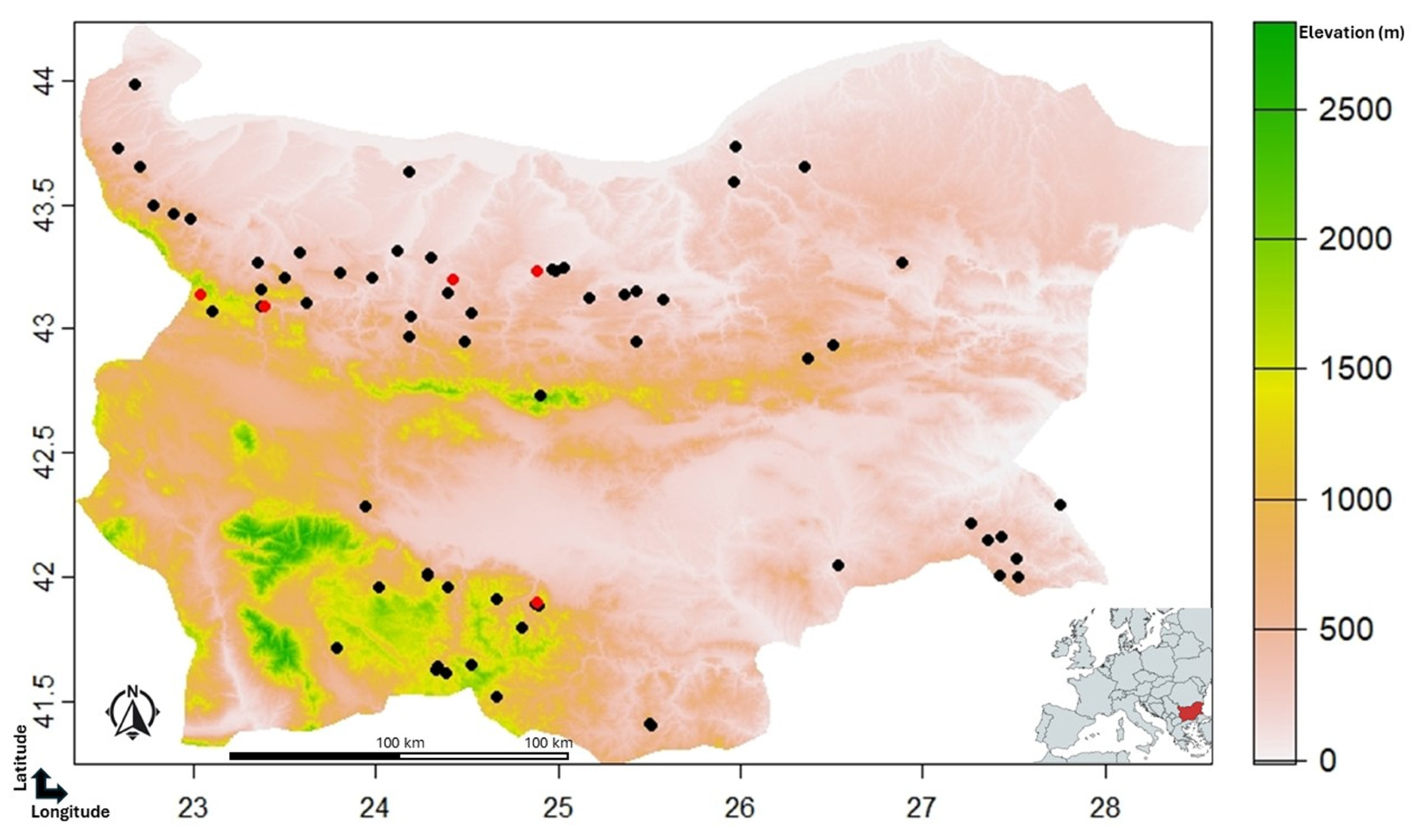
Across the 30-year monitoring period, more than 109 hibernacula were visited (Figure 1). Survey frequency varied by site: priority caves, such as Devetashka, Parnicite, and Ivanova Voda, were visited almost annually, and some years more than once. In contrast, smaller or less accessible sites were surveyed less regularly, often at intervals of two to three years (Table 1).

2.2. Bat Sampling

Our demographic analysis focused on Miniopterus schreibersii, an insectivorous and cave-dwelling bat. The species is highly dependent on subterranean roosts, primarily occupying caves and abandoned mine galleries throughout the year. Adults weigh 10–18 g, yet the species is unusually long-lived for its size and individuals are known to reach 22 years in the wild (AnAge database). Long-term mark–recapture studies in Bulgaria confirm survival beyond 12 years (NMNH-BAS dataset). In Bulgaria, M. schreibersii forms some of the largest winter colonies across its range. Several roosting sites are easily accessible, facilitating both the observation and collection of deceased individuals. All samples for this study were collected at the end of the hibernation period during the winter of 2022 from Parnicite (Dolen Parnik) Cave (43°20′ N, 24°41′ E, altitude 232 m), which hosts an estimated 53,468 individuals of the target species in a mixed-species colony. The tunnel-shaped system extends 2.5 km, with continuous water flow and two entrances. Colonies occupy a section near the exit, where slower water forms small pools. At the end of the hibernation period in February and March 2022, 40 carcasses were collected from the water surface and stored at −20 °C. Due to poor preservation or missing teeth, six carcasses were excluded from the analyses, leaving a final sample size of 34. From each individual, the upper canine tooth was extracted using metal tweezers under 10× magnification using a Carl Zeiss STEMI 2000 stereomicroscope (Carl Zeiss, Jena, Germany). The material is preserved in the collection of the National Museum of Natural History, Sofia, Bulgaria (NMNHS). Carcases were collected under a permit issued by the Bulgarian Biodiversity Act (No. 830/19.09.2020).

2.3. Laboratory Processing and Age Determination

The age of adult individuals was determined using cross-sections of the upper canine tooth. The growth layers in the dentine exhibited a complex structure, with the primary element appearing as an intensely stained line of varying width, representing one full year of life [7,8,9,10,11]. A total of 34 individual samples of dead Miniopterus schreibersii were analysed.
Samples (upper canines) were fixed and stored in neutral buffered formalin for several months, washed twice with phosphate buffer containing Triton™ X-100 (0.3%), decalcified in EDTA 0.15 M for 10–14 days, rinsed, dehydrated through graded ethanol, cleared in xylene, embedded in Paraplast Plus®, sectioned at 15 μm, and stained with haematoxylin and eosin (H&E). The samples were examined and photographed using an Amplival (Carl Zeiss, Jena, Germany) microscope under brightfield conditions with an EOS 2000D (Canon, Tokyo, Japan) camera attached. Multiple images were stacked with Helicon Focus (Helicon Soft, Kharkiv, Ukraine) to improve focus.
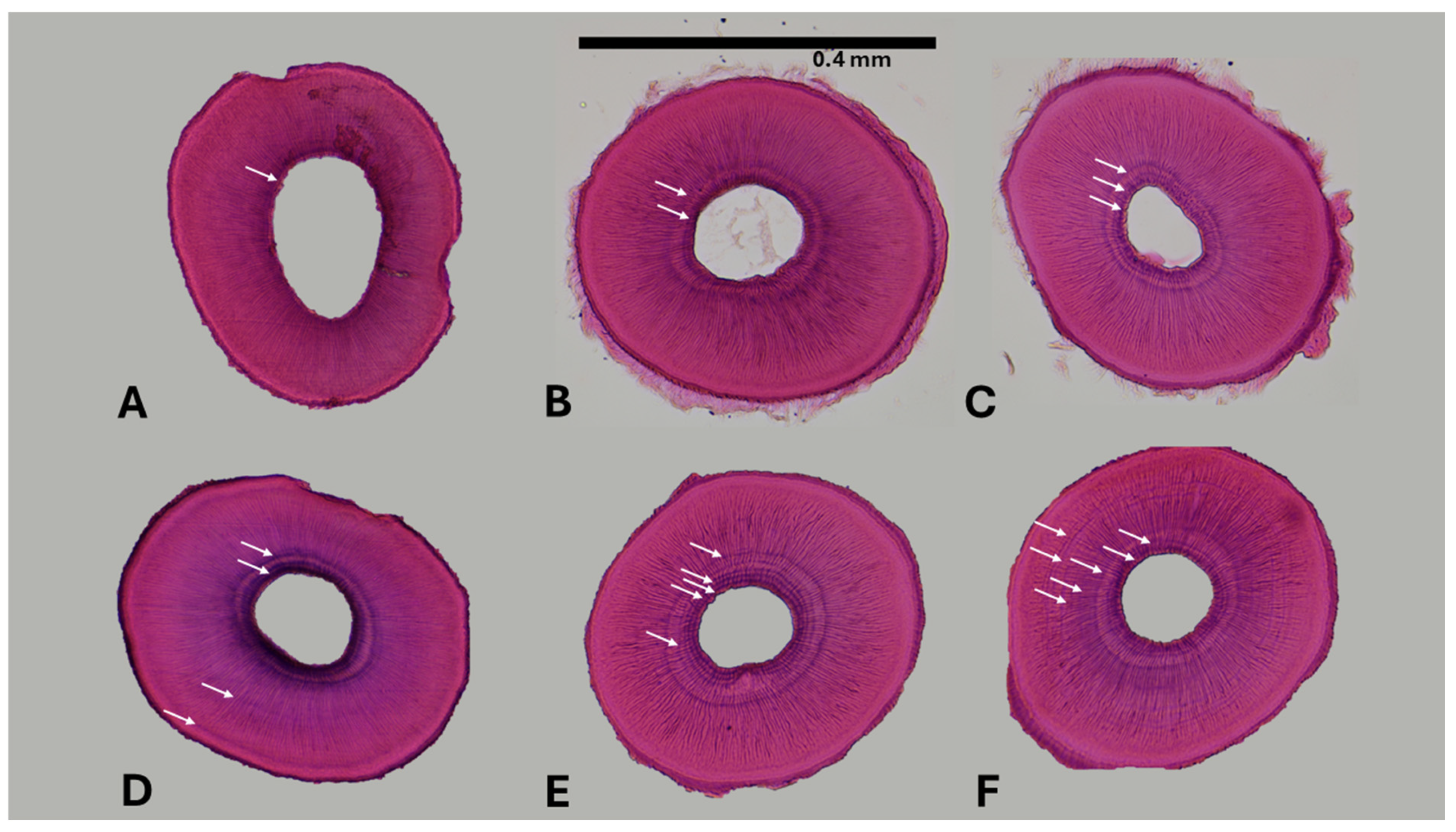
Age estimation was undertaken by counting dentine growth rings in cross-sections (Figure 2). Because dentine-ring counts in bats provide only approximate chronological ages, individuals were grouped into broader biological age classes according to the number of observed rings: juveniles (1 ring), subadults (2–3 rings), adults (4–5 rings), and aged adults (≥7 rings). Ring counts were performed independently by three researchers, and final class assignments were based on consensus. Each bat was categorised as juvenile, subadult, adult, or aged adult, representing increasing levels of physiological maturity and expected preparedness for hibernation.

2.4. Data Processing and Statistical Analyses

Data management and statistical analyses were performed in R (version 4.1.3) [15]. Data were cleaned and charmonised using the janitor package, and visualisations were generated with ggplot2.

2.4.1. Unusual Mortality Event

To avoid pseudoreplication from repeated cave visits, we summarised the dataset at the species × roost level. For each roost, we extracted: (1) the roost altitude, taken directly from the dataset as a fixed site attribute; (2) the mean number of individuals recorded across all winter visits for each species and hibernaculum and (3) the mean roost temperature, based on all available temperature measurements for each hibernaculum. This procedure yielded 146 roost entries across six species or species groups.

2.4.2. Species-Specific Hibernation Preferences

Differences among species in roost temperature and altitude were tested using Kruskal–Wallis tests. To assess whether mean colony size was related to these variables, we fitted a negative-binomial generalised linear model using glmmTMB, with mean colony size as the response and species identity, roost temperature and roost altitude as fixed effects. Model fit and distributional assumptions were evaluated using DHARMa simulation-based diagnostics. Because neither temperature nor altitude showed a detectable effect on colony size, we also fitted simple linear models for each species to quantify the proportion of variance in colony size explained by each environmental gradient (R2).

2.4.3. Age-Structure Analysis

Age-class frequencies were summarised and analysed to assess whether mortality in Miniopterus schreibersii was evenly distributed across categories, using a chi-square goodness-of-fit. Exact 95% binomial confidence intervals were calculated for the proportion of individuals in each age class, and a dependency ratio was computed as the number of young individuals (juveniles + subadults) relative to adults (adults + aged adults) to quantify age-specific mortality bias.

3. Results

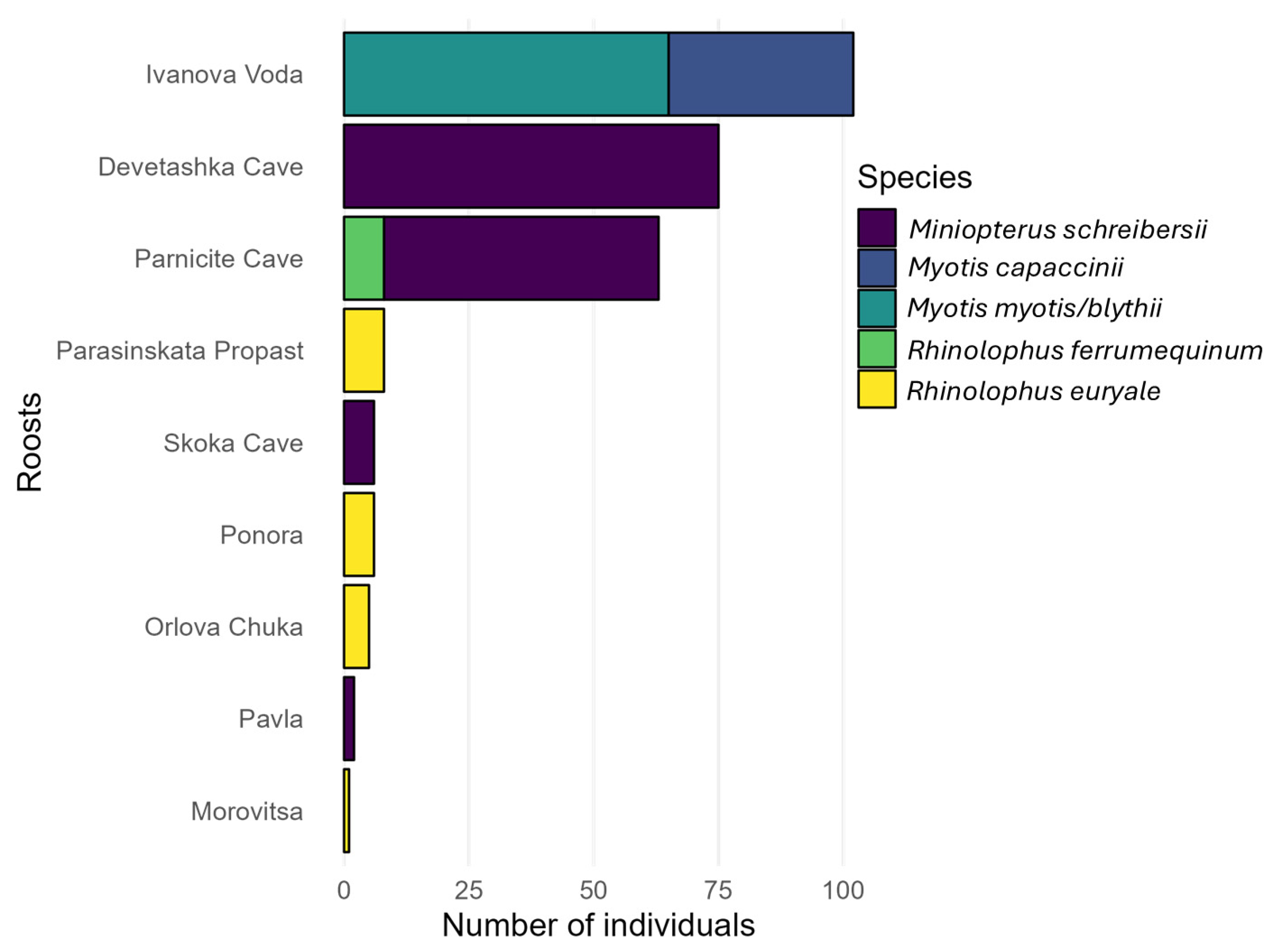
Winter mortality was recorded across seven bat species at nine hibernation sites in Bulgaria (Figure 3; Table 2). The majority of unusual mortality events (UMEs) were concentrated in winter 2012, with additional events documented in later years at fewer sites. Mortality was unevenly distributed, both taxonomically and geographically: Miniopterus schreibersii accounted for the largest and most recurrent losses, particularly in Devetashka and Parnicite caves, whereas Myotis capaccinii and M. myotis/blythii experienced substantial mortality at Ivanova Voda during the same winter. In contrast, Rhinolophus euryale and R. ferrumequinum were only sporadically affected, with small numbers scattered across sites and years. Carcass counts varied among species and sites, with the largest numbers for M. schreibersii at Devetashka and Parnicite, both of which were surveyed more frequently and therefore yielded more detections.
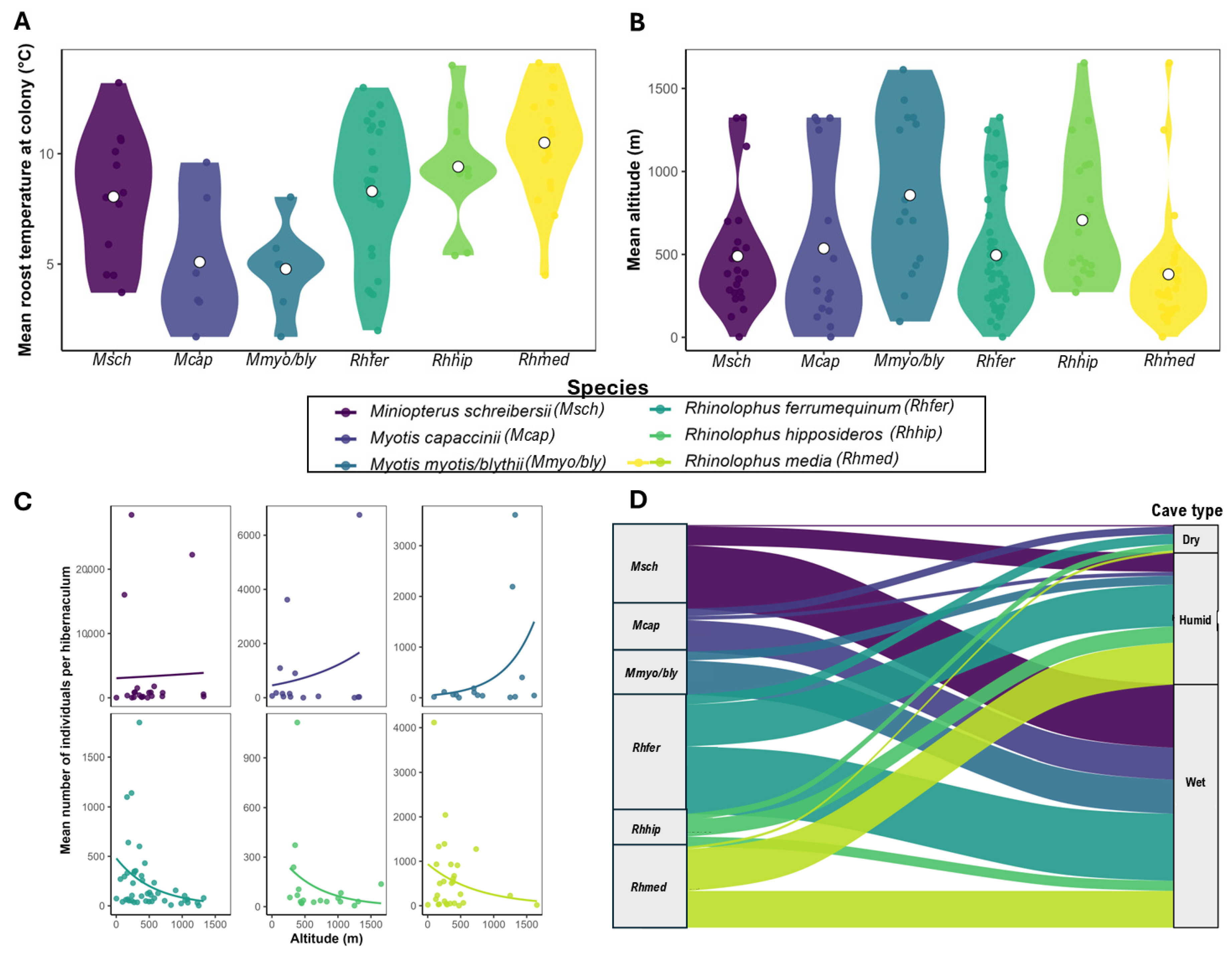
Across Bulgaria, species exhibited distinct preferences for hibernacula (Figure 4). Most bats selected humid caves at lower altitudes, whereas others occupied colder, high-elevation roosts. These patterns suggest that wet and stable microclimates are generally favoured for hibernation. The statistical analyses supported these observations. Roost temperatures differed significantly among species (χ2 = 23.3, df = 5, p < 0.001), as did roost altitudes (χ2 = 18.6, df = 5, p = 0.002). Miniopterus schreibersii used the widest range of conditions, from warm lowland caves to colder, upland sites. Myotis capaccinii and M. myotis/blythii were associated with cooler, higher-altitude roosts, whereas Rhinolophus hipposideros and R. media group were mostly found in warmer lowland caves. R. ferrumequinum tended to use intermediate conditions. All species were predominantly associated with humid and wet caves, indicating a shared preference for moist winter roosts, while exhibiting contrasting patterns in temperature and altitude use. Although species differed in the roosts they selected, neither altitude nor temperature explained variation in colony size. The negative-binomial model showed no significant effect of either variable (both p > 0.58), and species-specific linear models explained very little of the variation in abundance. Colony size, therefore, differed mainly among species rather than according to the environmental conditions measured here.
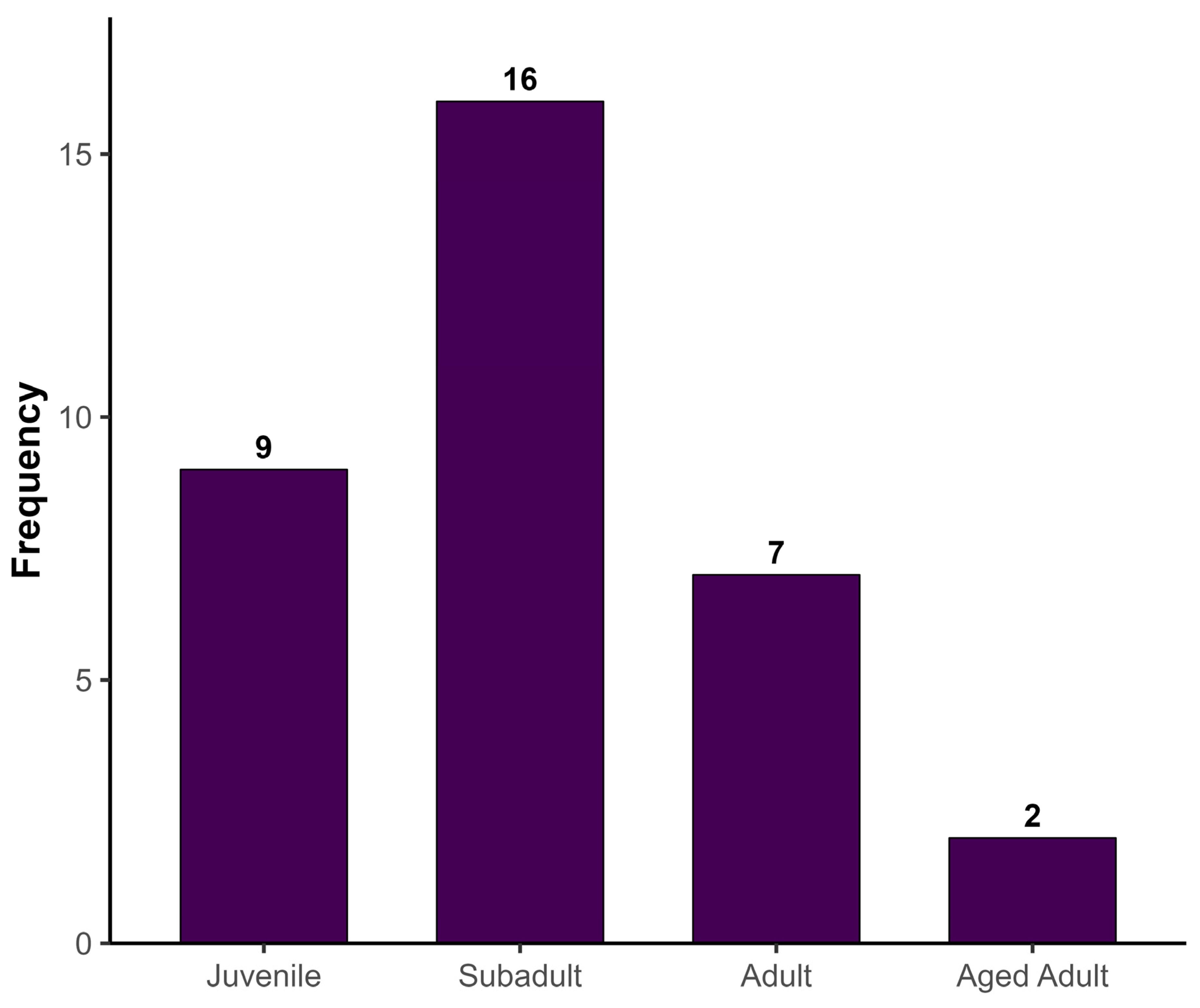
Of the 40 carcasses collected (~0.07% of the colony), 34 were suitable for age analysis and were assigned to four age classes (Figure 5): subadult (47.1%), juvenile (26.5%), adult (20.6%), and aged adult (5.9%). Mortality was not evenly distributed across age groups (χ2 = 11.882, df = 3, p = 0.0078). Subadults and juveniles accounted for the majority of deaths, whereas adults and aged adults were comparatively rare. Exact binomial 95% confidence intervals corroborated these disparities, and the dependency ratio (2.78) indicated that young individuals died at nearly three times the rate of adults. Overall, the data reveal a marked age bias in overwinter mortality within the hibernaculum.

4. Discussion

In this study, we analysed records of winter mortality from bat hibernacula in Bulgaria. Because the available data vary in survey coverage across sites and years, our inferences are necessarily descriptive. Unusual mortality events (>7 individuals), were recorded at only four of the important underground habitats that are regularly surveyed [16,17]. Although uncommon, such events may affect local populations and should not be dismissed as anomalies. Their apparent scarcity may reflect both a true low incidence and substantial under-reporting, owing to inconsistent monitoring protocols and the rapid removal of carcasses by scavengers or floods within roosts.
Winter die-offs can have disproportionate demographic consequences in long-lived, K-selected species, where population growth is strongly governed by adult survival and annual reproductive output is low. Even short-term increases in mortality can therefore generate long-lasting demographic deviations, especially in small or isolated colonies [5,18,19]. These characteristics make winter mortality a potentially important bottleneck in the long-term persistence of bat populations.
Early bat research in Bulgaria focused mainly on colony assessments and the protection of underground roosts [20], with systematic recording of mortality events emerging only later. However, historical evidence supports the view that winter mortality events were under-documented before the onset of regular monitoring. Unsystematic field observations from Ivanova Voda and Parnicite cave describe dead bats observed during the winters of 1994–1995 and 1999–2000 (S. Delchev, in litt.). In Devetashka Cave, at least one UME (ten carcasses) were recorded in the river and skeletal remains were found beneath or around the colony before 2003 (N. Simov, pers. obs.). During a subsequent visit to Ivanova Voda after 2003, additional carcasses were seen floating in the cave lake (N. Simov, pers. obs.). Although these records lack systematic quantification, they indicate that sporadic mortality events likely occurred earlier than documented, suggesting that such incidents may long have formed part of the natural or environmental stress regime affecting bat colonies. The emergence of these early, fragmented observations reflects a broader pattern known from other European bat-monitoring schemes, where winter counts traditionally focused on colony size rather than mortality, and standardised UME documentation was seldom integrated into routine surveys [4]. Thus, the Bulgarian case is not exceptional; rather, it exemplifies the wider challenge that opportunistic, non-standardised monitoring across Europe has historically limited the detection and interpretation of winter die-offs [21].
Survey effort has remained uneven since the onset of regular winter bat monitoring, with some hibernacula visited annually or multiple times per season, while others were surveyed only sporadically. This variation in visit frequency affects the probability of detecting carcasses and leads to substantial differences in data completeness among sites. As a result, the mortality tallies reported here largely reflect the roosts surveyed most frequently rather than a comprehensive national picture, and comparisons among sites and years must therefore be interpreted descriptively. The apparent association between mortality events and colony size should be viewed in this context: although larger colonies seemed more affected, previous UME models show that colony size itself is not a reliable predictor of risk [4]. In our dataset, this pattern likely reflects the survey-effort biases described above, as the largest and most important roosts were monitored every year and therefore provided greater opportunity for carcass detection. Increasing the consistency of winter surveys and integrating standardised carcass documentation into routine monitoring would improve the ability to detect mortality events and assess their drivers.
Winter die-offs can arise from multiple factors, including sudden environmental extremes. In our dataset, elevated mortality occurred in the unusually cold winter of 2012, but without continuous microclimate data, this link cannot be verified and other explanations remain plausible. Because neither microclimate nor regional climatic indices were incorporated into our analyses, we cannot verify whether the cold conditions in 2012 contributed to the elevated mortality observed that winter. Similar cold-driven mortality spikes have been reported elsewhere in Europe: during the winter of 2010/2011, mortality in Myotis bechsteinii increased twelvefold, and severe declines in Myotis nattereri were documented across The Netherlands, Belgium, and Poland, indicating that continent-wide weather anomalies can cause acute overwinter losses [22]. Physiological context further supports this interpretation. In some European regions, M. schreibersii now hibernate with reduced fat reserves due to changing climate conditions, increasing their sensitivity to cold periods [23]. At the same time, emerging evidence shows that certain species, including M. schreibersii, engage in winter foraging outside hibernacula as a strategy to compensate for energy deficits [24,25]. Extended cold snaps may therefore create a dual constraint by increasing energetic demands while simultaneously limiting the ability of bats to replenish depleted reserves. Although modelling work suggests that prolonged hibernation can, under stable conditions, enhance longevity [26], empirical evidence linking cold anomalies, hibernation behaviour, and mortality remains scarce. These considerations suggest that extreme winter conditions may contribute to mortality events, but this cannot be confirmed with the available data. Continuous microclimate monitoring, combined with systematic retrieval and documentation of carcasses, will be essential for identifying the environmental mechanisms underlying winter die-offs and for improving early detection of future UMEs.
Extreme winters may further interact with chronic anthropogenic stressors, such as habitat fragmentation, land-use change, and expanding infrastructure, to reduce the capacity of colonies to recover from episodic losses. Combined effects of climate-related extremes and human pressures have been increasingly recognised as key determinants of bat population viability in rapidly changing landscapes [27]. Such interactions may help explain why even moderate die-offs can have lasting impacts on small or isolated populations.
Carcass preservation strongly influences how mortality is recorded in the field. In Devetashka Cave, carcasses are rapidly decomposed by amphipods (e.g., Gammarus pulex cognominus and Niphargus bureschi) or scavenged by shrews, whereas in Ivanova Voda they often persist afloat for extended periods. By contrast, bloated carcasses may persist at the surface into spring in some sites (e.g., Parnicite) but sink more rapidly in others. These differences between rivers and lakes underscore how habitat type and post-mortem processes can bias detection, complicating cross-site comparisons. Scavenger activity not only obscures mortality estimates but may also constitute an overlooked pathway for pathogen transmission [28,29], highlighting the importance of incorporating scavenger dynamics into future mortality assessments. In particular, mammals that enter bat caves may contribute to both carcass removal and pathogen circulation within these environments. Nevertheless, systematic data on their presence and behaviour in Bulgaria are still lacking.
A major challenge is the lack of systematic protocols for documenting winter mortality. Historically, such events were often considered part of the “normal” losses in large colonies and therefore went unrecorded. In many monitoring schemes, the extent of carcass collection was not explicitly reported, limiting the reliability of quantitative inference. The sporadic occurrence of mortality events further reduces the likelihood of detection. Addressing these gaps will require coordinated, standardised approaches, including regular surveys of key hibernacula, systematic carcass recovery, and the use of established post-mortem and necropsy protocols to distinguish environmental from disease-related causes of death [30,31,32]. Novel techniques, such as dental wear analysis, may provide additional insight into age structure, although their utility remains constrained by sparse comparative datasets [33].
Species-specific differences in hibernacula use may also influence both vulnerability to winter mortality and the likelihood of carcass detection. However, the limited number of mortality events prevents a formal assessment of how these roost characteristics relate to mortality risk. In our dataset, most bats were associated with wet, humid caves at lower altitudes, whereas others occupied colder, high-elevation roosts. Such preferences likely reflect trade-offs between energetic demands and microclimatic stability during hibernation. Colonies in more variable and unfavourable environments may face greater risks from extreme winters (e.g., Ivanova Voda), while those in more stable roosts may benefit from reduced energetic costs [34]. However, mortality still occurs in such sites, as observed at Parnicite, although detection can be biased due to the sites being surveyed more frequently. Roost characteristics should therefore be evaluated not only as potential refuges but also in terms of how they influence the visibility of mortality events.
The use of incremental dentine and cementum lines to estimate the age of bats is subject to considerable uncertainty. Line clarity varies among species, counts may differ between teeth or sections, and external factors such as mechanical stress can generate non-annual increments [10,35]. In older individuals, rings may merge or become obscured, limiting the accuracy of age estimates at advanced stages [36]. In some taxa, multiple layers may form within a single year [37], while in other cases, counts may underestimate known ages [10]. Recent advances in epigenetics offer a promising alternative. The development of bat methylation clocks now allows hypotheses about age-related survival to be tested directly [38]. Epigenetic profiling provides accurate age estimates and has been linked to variation in mortality risk across sexes and social groups [39]. Moreover, methylation clocks supply an independent benchmark for evaluating tooth-based ageing methods, which remain largely unvalidated and subject to significant uncertainty. Thus, while the method used provides useful insights, it cannot yield precise chronological ages. However, the use of age classes neutralises this drawback and makes the technique suitable for the study.
With these methodological uncertainties in mind, the age structure at Parnicite indicates mortality across several age classes, with younger individuals predominating. As the 40 carcasses constitute only ~0.07% of the colony, they do not reflect its overall demographic structure. Interpretation of this pattern is therefore cautious, as the true age distribution of the colony remains unknown and reliable data on local longevity in the wild are lacking. The predominance of younger bats may simply reflect their numerical dominance within the colony, or alternatively, it may indicate that individuals surviving the early years exhibit relatively high persistence. Capture–recapture studies of Pipistrellus pipistrellus support the latter view, showing juvenile survival to be approximately 20–25% lower than that of adults, both before and after hibernation [40]. Likewise, Myotis bechsteinii exhibits negligible senescence, with survival and reproduction remaining stable even into advanced age; mortality in this species appears to be driven largely by episodic severe winters rather than intrinsic ageing [22]. Collectively, these findings suggest that early-life mortality may act as a key demographic filter in long-lived bats.
Furthermore, the demographic effects of repeated winter mortality may precede any detectable genetic signal, as genetic responses to population decline typically appear only after one or more generations [41]. Such time-lags are characteristic of long-lived species with low annual recruitment, where demographic fluctuations can remain genetically invisible for extended periods [42,43]. This distinction underscores the importance of demographic monitoring even when genetic data appear stable [41,42,43].

5. Conclusions

This study provides the first structured assessment of winter bat mortality in Bulgarian hibernacula, showing that UMEs are rare but likely under-detected because of inconsistent monitoring and rapid carcass loss. Differences in carcass persistence among sites highlight strong detection biases, while the predominance of younger individuals among deceased Miniopterus schreibersii supports the role of early life as a key demographic filter in long-lived bats. The main limitation remains the lack of standardised winter monitoring. Coordinated surveys, consistent carcass retrieval, and integration of microclimate and weather data are essential for identifying the drivers of mortality and improving early detection of UMEs. Because demographic responses may precede detectable genetic change, regular demographic monitoring is particularly important. Thus, winter mortality events may also act as sentinel indicators of environmental stress, emphasising both the vulnerability of bat populations to climatic extremes and the need for more robust national monitoring frameworks.

Supplementary Materials

The following supporting information can be downloaded at: https://www.mdpi.com/article/10.3390/conservation6010003/s1, Table S1: Raw_data_winter_monitoring_BG. The file contained all the census data used in this study; Table S2: Raw_data_dentine_growth_layers_Mschreibersii. Each sample was independently examined by three observers (Nikolay, Nia, and Boyan). The number of visible dentine growth layers (“rings”) was recorded and used for age estimation. The final age represents a consensus or averaged value among observers. Remarks indicate sample condition, missing structures, or discrepancies in counts.

Author Contributions

Conceptualization, N.T. and N.S.; methodology, N.T. and N.S.; software, N.T. and N.S.; validation, N.T. and N.S.; formal analysis, N.T.; investigation, N.T. and N.S.; resources, N.T. and N.S.; data curation, N.T.; writing—original draft preparation, N.T.; writing—review and editing, N.S.; visualization, N.T.; supervision, N.S.; project administration, N.S.; funding acquisition, N.S. All authors have read and agreed to the published version of the manuscript.

Funding

This study was supported by the Bulgarian National Science Fund, project KΠ-06-H51/9 “Caves as a reservoir for novel and reoccurring zoonoses–ecological monitoring and metagenomic analysis in real time.”.

Institutional Review Board Statement

Ethical review and approval were waived for this study. The bat survey was conducted following all relevant ethical guidelines to ensure minimal disturbance to the animals and their environment. Carcases were collected under a permit issued by the Bulgarian Biodiversity Act (No. 830/19.09.2020), which authorises the collection of deceased individuals for scientific research purposes and for inclusion in museum collections. Ethical review and approval were waived for this study due to compliance with the national legal framework (Bulgarian Biodiversity Act, Articles 49(1) and 58(1)), which governs the handling of protected species for scientific purposes under official permit.

Informed Consent Statement

Not applicable.

Data Availability Statement

All survey data are provided in the Supplementary Materials.

Acknowledgments

We thank Boyan Zlatkov for leading the laboratory work, Mario Langourov, Rostislav Bekchiev, Nedko Nedyalkov, Maria Kachamakova and Yasen Mutafchiev for field assistance, and Stanimira Deleva, together with all the biologists conducting bat monitoring surveys in Bulgaria. We are grateful to Ian Bradley for proofreading the English in the manuscript.

Conflicts of Interest

The authors declare no conflicts of interest.

References

  1. O’Shea, T.J.; Ellison, L.E.; Stanley, T.R. Survival estimation in bats: Historical overview, critical appraisal and suggestions for new approaches. In Sampling Rare or Elusive Species: Concepts, Designs, and Techniques for Estimating Population Parameters; Thompson, W.L., Ed.; Island Press: Washington, DC, USA, 2004; pp. 297–336. [Google Scholar]
  2. Touzalin, F.; Petit, É.; Cam, E.; Stagier, C.; Teeling, E.C.; Puechmaille, S.J. Mark loss can strongly bias estimates of demographic rates in multi-state models: A case study with simulated and empirical datasets. Peer Community J. 2023, 3, e348. [Google Scholar] [CrossRef]
  3. Blehert, D.S.; Hicks, A.C.; Behr, M.; Meteyer, C.U.; Berlowski-Zier, B.M.; Buckles, E.L.; Coleman, J.T.H.; Darling, S.R.; Gargas, A.; Niver, R.; et al. Bat white-nose syndrome: An emerging fungal pathogen? Science 2009, 323, 227. [Google Scholar] [CrossRef] [PubMed]
  4. Fritze, M.; Puechmaille, S.J. Identifying unusual mortality events in bats: A baseline for bat hibernation monitoring and white-nose syndrome research. Mammal Rev. 2018, 48, 224–228. [Google Scholar] [CrossRef]
  5. O’Shea, T.J.; Cryan, P.M.; Hayman, D.T.S.; Plowright, R.K.; Streicker, D.G. Multiple mortality events in bats: A global review. Mammal Rev. 2016, 46, 175–190. [Google Scholar] [CrossRef]
  6. Vindenes, Y.; Langangen, Ø. Individual heterogeneity in life histories and eco-evolutionary dynamics. Ecol. Lett. 2015, 18, 417–432. [Google Scholar] [CrossRef]
  7. Lord, R.D.; Muradali, F.; Lázaro, L. Age composition of vampire bats (Desmodus rotundus) in northern Argentina and southern Brazil. J. Mammal. 1976, 57, 573–575. [Google Scholar] [CrossRef]
  8. Schowalter, D.B.; Harder, L.D.; Treichel, B.H. Age composition of some vespertilionid bats as determined by dental annuli. Can. J. Zool. 1978, 56, 355–358. [Google Scholar] [CrossRef]
  9. Brunet-Rossinni, A.K.; Austad, S.N. Ageing studies on bats: A review. Biogerontology 2004, 5, 211–222. [Google Scholar] [CrossRef]
  10. Batulevicius, D.; Paužienė, N.; Pauža, D.H. Dental incremental lines in some small species of the European vespertilionid bats. Acta Theriol. 2001, 46, 33–42. [Google Scholar] [CrossRef]
  11. Brunet-Rossini, A.K.; Wilkinson, G. Methods for estimating age in bats. In Ecological and Behavioral Methods for the Study of Bats, 2nd ed.; Kunz, T.H., Parsons, S., Eds.; The Johns Hopkins University Press: Baltimore, MD, USA, 2009; pp. 315–326. [Google Scholar]
  12. Toshkova, N.; Brosens, D.; Stoeva, E.; Deleva, S.; Zhelyazkova, V.; Acosta-Pankov, I.; Goranov, S.; Dundarova, H.; Lakovski, K.; Genova, O.; et al. Bat Occurrences from Bulgaria, Version 1.5; National Museum of Natural History, Bulgarian Academy of Sciences: Sofia, Bulgaria, 2025; Occurrence Download. Available online: https://doi.org/10.15468/dnu63p (accessed on 10 September 2025). [CrossRef]
  13. Bulgarian Federation of Speleology. Bulgarian Cave Database. Available online: https://caves.speleo-bg.org/ (accessed on 10 September 2025).
  14. Dietz, C.; von Helversen, O. Illustrated Identification Key to the Bats of Europe; Dietz & von Helversen: Tübingen, Germany, 2004; Volume 1, pp. 1–74. [Google Scholar]
  15. R Core Team. R: A Language and Environment for Statistical Computing; R Foundation for Statistical Computing: Vienna, Austria, 2021. [Google Scholar]
  16. Ivanova, T. Important bat underground habitats (IBuH) in Bulgaria. Acta Zool. Bulg. 2005, 57, 197–206. [Google Scholar]
  17. Deleva, S.; Toshkova, N.; Kolev, M.; Tanalgo, K.C. Important underground roosts for bats in Bulgaria: Current state and priorities for conservation. Biodivers. Data J. 2023, 11, e98734. [Google Scholar] [CrossRef]
  18. O’Shea, T.J.; Ellison, L.E.; Stanley, T.R. Adult survival and population growth rate in Colorado big brown bats (Eptesicus fuscus). J. Mammal. 2011, 92, 433–443. [Google Scholar] [CrossRef]
  19. Barclay, R.; Harder, L. Life Histories of Bats: Life in the Slow Lane. In Bat Ecology; Kunz, T.H., Fenton, M.B., Eds.; University of Chicago Press: Chicago, IL, USA, 2003; pp. 209–253. [Google Scholar]
  20. Ivanova, T.; Petrov, B. A new stage in bat (Chiroptera) research in Bulgaria. Hist. Nat. Bulg. 2001, 13, 88. (In Bulgarian) [Google Scholar]
  21. López-Baucells, A.; López-Bosch, D.; Blanch, E.; Hamidovic, D.; Ortega Castaño, A.; Aihartza, J.; Aulagnier, S.; Bartonicka, T.; Bas, Y.; Bellè, A.; et al. Bat Monitoring Programmes and Protocols for European Bats, Version 1.0.0.; Zenodo: Geneva, Switzerland, 2025. [CrossRef]
  22. Fleischer, T.; Gampe, J.; Scheuerlein, A.; Kerth, G. Rare catastrophic events drive population dynamics in a bat species with negligible senescence. Sci. Rep. 2017, 7, 6298. [Google Scholar] [CrossRef] [PubMed]
  23. López-Roig, M.; Piera, E.; Serra-Cobo, J. Thinner bats to face hibernation as response to climate warming. Sci. Rep. 2024, 14, 1024. [Google Scholar] [CrossRef] [PubMed]
  24. Bernard, R.F.; Willcox, E.V.; Jackson, R.T.; Brown, V.A.; McCracken, G.F. Feasting, not fasting: Winter diets of cave hibernating bats in the United States. Front. Zool. 2021, 18, 43. [Google Scholar] [CrossRef]
  25. Toshkova, N.; Dimitrova, K.; Langourov, M.; Zlatkov, B.; Bekchiev, R.; Ljubomirov, T.; Zielke, E.; Angelova, R.; Parvanova, R.; Simeonov, T.; et al. Snacking during hibernation? Winter bat diet and prey availabilities, a case study from Iskar Gorge, Bulgaria. Hist. Nat. Bulg. 2023, 45, 125–142. [Google Scholar] [CrossRef]
  26. Constant, T.; Giroud, S.; Viblanc, V.A.; Tissier, M.L.; Bergeron, P.; Dobson, F.S.; Habold, C. Integrating mortality risk and the adaptiveness of hibernation. Front. Physiol. 2020, 11, 706. [Google Scholar] [CrossRef]
  27. Medinas, D.; Ribeiro, V.; Barbosa, S.; Valerio, F.; Marques, J.T.; Rebelo, H.; Paupério, J.; Santos, S.; Mira, A. Fine scale genetics reveals the subtle negative effects of roads on an endangered bat. Sci. Total Environ. 2023, 869, 161705. [Google Scholar] [CrossRef]
  28. Theimer, T.C.; Dyer, A.C.; Keeley, B.W.; Gilbert, A.T.; Bergman, D.L. Ecological potential for rabies virus transmission via scavenging of dead bats by mesocarnivores. J. Wildl. Dis. 2017, 53, 382–385. [Google Scholar] [CrossRef]
  29. Vicente, J.; VerCauteren, K.C. The role of scavenging in disease dynamics. In Wildlife Research Monographs; Springer: Cham, Switzerland, 2019; pp. 161–182. [Google Scholar] [CrossRef]
  30. Mühldorfer, K.; Speck, S.; Wibbelt, G. Diseases in free-ranging bats from Germany. BMC Vet. Res. 2011, 7, 61. [Google Scholar] [CrossRef]
  31. Sriraman, P. Wildlife Necropsy and Forensics; CRC Press: Boca Raton, FL, USA, 2021. [Google Scholar] [CrossRef]
  32. Colombino, E.; Lelli, D.; Canziani, S.; Quaranta, G.; Guidetti, C.; Leopardi, S.; Robetto, S.; De Benedictis, P.; Orusa, R.; von Degerfeld, M.M.; et al. Main causes of death of free-ranging bats in Turin province (north-western Italy): Gross and histological findings and emergent virus surveillance. BMC Vet. Res. 2023, 19, 34. [Google Scholar] [CrossRef] [PubMed]
  33. Gol’din, P.; Godlevska, L.; Ghazali, M. Age-related changes in the teeth of two bat species: Dental wear, pulp cavity and dentine growth layers. Acta Chiropterolog. 2019, 20, 519–526. [Google Scholar] [CrossRef]
  34. Toshkova, N.; Kolev, M.; Deleva, S.; Simeonov, T.; Popov, V. Winter is (not) coming: Acoustic monitoring and temperature variation across important bat hibernacula. Biodivers. Data J. 2025, 13, e141801. [Google Scholar] [CrossRef]
  35. Phillips, C.J.; Steinberg, B.M.; Kunz, T.H. Dentin, cementum, and age determination in bats: A critical evaluation. J. Mammal. 1982, 63, 197–207. [Google Scholar] [CrossRef]
  36. Baagøe, H.J. Age determination in bats (Chiroptera). Videnskabelige Meddelelser fra. Dan. Naturhist. Foren. 1977, 140, 53–92. [Google Scholar]
  37. Cool, S.M.; Bennet, M.; Romaniuk, K. Age estimation of pteropodid bats (Megachiroptera) from hard tissue parameters. Wildl. Res. 1994, 21, 353–361. [Google Scholar] [CrossRef]
  38. Wilkinson, G.S.; Adams, D.M.; Haghani, A.; Lu, A.T.; Zoller, J.A.; Breeze, C.E.; Arnold, B.D.; Ball, H.C.; Carter, G.G.; Cooper, L.N.; et al. DNA methylation predicts age and provides insight into exceptional longevity of bats. Nat. Commun. 2021, 12, 1615. [Google Scholar] [CrossRef] [PubMed]
  39. Adams, D.M.; Rayner, J.G.; Hex, S.B.S.W.; Wilkinson, G.S. DNA methylation dynamics reflect sex and status differences in mortality rates in a polygynous bat. Mol. Ecol. 2025, 34, 2331–2346. [Google Scholar] [CrossRef]
  40. Sendor, T.; Simon, M. Population dynamics of the pipistrelle bat: Effects of sex, age and winter weather on seasonal survival. J. Anim. Ecol. 2003, 72, 308–320. [Google Scholar] [CrossRef]
  41. Clark, M.I.; Fitzpatrick, S.W.; Bradburd, G.S. Pitfalls and windfalls of detecting demographic declines using population genetics in long-lived species. Evol. Appl. 2024, 17, e13754. [Google Scholar] [CrossRef] [PubMed]
  42. Gargiulo, R.; Budde, K.B.; Heuertz, M. Mind the lag: Understanding genetic extinction debt for conservation. Trends Ecol. Evol. 2025, 40, 228–237. [Google Scholar] [CrossRef] [PubMed]
  43. Gamelon, M.; Gaillard, J.; Giménez, O.; Coulson, T.; Tuljapurkar, S.; Baubet, É. Linking demographic responses and life history tactics from longitudinal data in mammals. Oikos 2015, 125, 395–404. [Google Scholar] [CrossRef]
Figure 1. Geographic locations of the important hibernacula in Bulgaria (black dots), with sites where mortality was most often recorded highlighted in red.
Conservation 06 00003 g001
Figure 2. Cross-sections of upper canines from Miniopterus schreibersii. White arrows indicate dentine growth layers used for age estimation. Panels (AF) illustrate examples from different age classes used in this study: (A) = 1 ring (juvenile), (B) = 2 rings (subadult), (C) = 3 rings (subadult), (D) = 4 rings (adult), (E) = 5 rings (adult), and (F) = 7 rings (aged adult).
Conservation 06 00003 g002
Figure 3. Winter mortality events in hibernating bats across Bulgaria. Colours are species-consistent across all panels.
Conservation 06 00003 g003
Figure 4. Hibernacula preferences of Bulgarian bat species. (A) Roost temperature preference by species. Violin plots show the distribution of mean roost temperature measured at colony position for each species (one point per roost). White dots indicate species means. (B) Altitude preference by species. Violin plots show the distribution of mean roost altitude (m) across occupied caves. (C) Relationship between colony size (mean number of individuals per hibernaculum) and altitude (m), with simple linear model fits shown for each species. (D) Sankey diagram illustrating species-specific use of hibernacula differing in cave water regime (Dry, Humid, Wet). The diagram represents the total number of roosts in each category for each species.
Conservation 06 00003 g004
Figure 5. Age classes distribution of Miniopterus schreibersii carcasses from Parnicite Cave (n = 34).
Conservation 06 00003 g005
Table 1. Survey effort at the Bulgarian hibernacula where mortality events have been reported. Numbers indicate the total visits per site and the years during which surveys were conducted.
SiteTotal VisitsYears CoveredNotes (e.g., Multiple Visits per Year)
Devetashka141997–2024Several years with >1 visit
Parnicite (Dolen parnik)141996–2023Several years with >1 visit
Ivanova Voda61997–2022Surveyed every 2–3 years
Orlova Chuka121991–2022Several years with >1 visit
Pavla (Ravnogorskata Peshtera) 42008–2014Occasional surveys
Skoka22008–2016Occasional surveys
Ponora72012–2022Surveyed every 2–3 years
Table 2. Summary of winter bat mortality events recorded at Bulgarian hibernacula (2012–2023), showing affected sites, species, year of occurrence, and number of deseased individuals (n). UMEs are in bold.
SiteSpeciesYearn
Devetashka CaveMiniopterus schreibersii201275
Ivanova VodaMyotis capaccinii201237
Ivanova VodaMyotis myotis/blythii201265
Parnicite CaveMiniopterus schreibersii201215
Parnicite CaveMiniopterus schreibersii202240
PavlaMiniopterus schreibersii20142
Skoka CaveMiniopterus schreibersii20126
Parasinskata PropastRhinolophus euryale20128
PonoraRhinolophus euryale20126
Orlova ChukaRhinolophus euryale2021–20225
MorovitsaRhinolophus euryale20231
Parnicite CaveRhinolophus ferrumequinum20128
Disclaimer/Publisher’s Note: The statements, opinions and data contained in all publications are solely those of the individual author(s) and contributor(s) and not of MDPI and/or the editor(s). MDPI and/or the editor(s) disclaim responsibility for any injury to people or property resulting from any ideas, methods, instructions or products referred to in the content.