Article

A Protein Hydrolysate Mitigates the Adverse Effect of Chilling Stress on Cucumber Plants

by
Dobrinka Balabanova
1,*,
Adelina Harizanova
1,
Lyubka Koleva-Valkova
1,2,
Veselin Petrov
1,3 and
Andon Vassilev
1,2
1
Department of Plant Physiology, Biochemistry and Genetics, Agricultural University Plovdiv, 12 Mendeleev Str., 4000 Plovdiv, Bulgaria
2
Center of Competence in Agro-Food Systems and Bioeconomy, 4000 Plovdiv, Bulgaria
3
Center of Plant Systems Biology and Biotechnology, 14 Knyaz Boris I Pokrastitel Str., 4023 Plovdiv, Bulgaria
*
Author to whom correspondence should be addressed.
Stresses 2026, 6(1), 5; https://doi.org/10.3390/stresses6010005
Submission received: 23 December 2025 / Revised: 26 January 2026 / Accepted: 28 January 2026 / Published: 30 January 2026
(This article belongs to the Section Plant and Photoautotrophic Stresses)

Abstract

Chilling has been recognized as a stress factor adversely impacting plant growth and productivity. Even a slight decrease in temperature may significantly reduce crop yield. Recently, biostimulants have emerged as a new tool for enhancing the chilling tolerance of cold-sensitive plants. The early stages of cucumber growth often occur under suboptimal temperatures, which motivated the aim of the current study to assess the effect of a protein hydrolysate (PH) on the physiological performance of young cucumber plants subjected to chilling stress. The results showed that low temperatures caused severe chilling stress by inducing changes in growth, photosynthesis, and nitrogen assimilation. These adverse effects were mitigated when the PH was supplied. The ameliorating effect could be due to a remedial influence on photosynthetic pigment content, facilitating light harvesting and energy utilization. The potential impact of the PH treatment on the redox balance was demonstrated by the activation of the G6PD gene. The possible effect of the biostimulant on nitrate assimilation was tested by measuring nitrate reductase activity, which improved after application of the biostimulant. Moreover, the activity of phenylalanine ammonia-lyase (PAL) in PH-supplied plants was also increased, further confirming the enhanced protective capacity of the plants. All obtained results indicate the beneficial effect of PH application on cucumber plants and their chilling resilience.

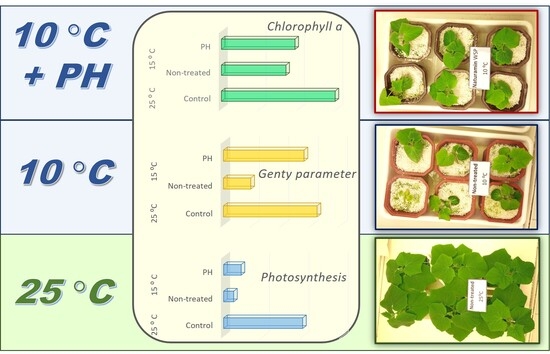
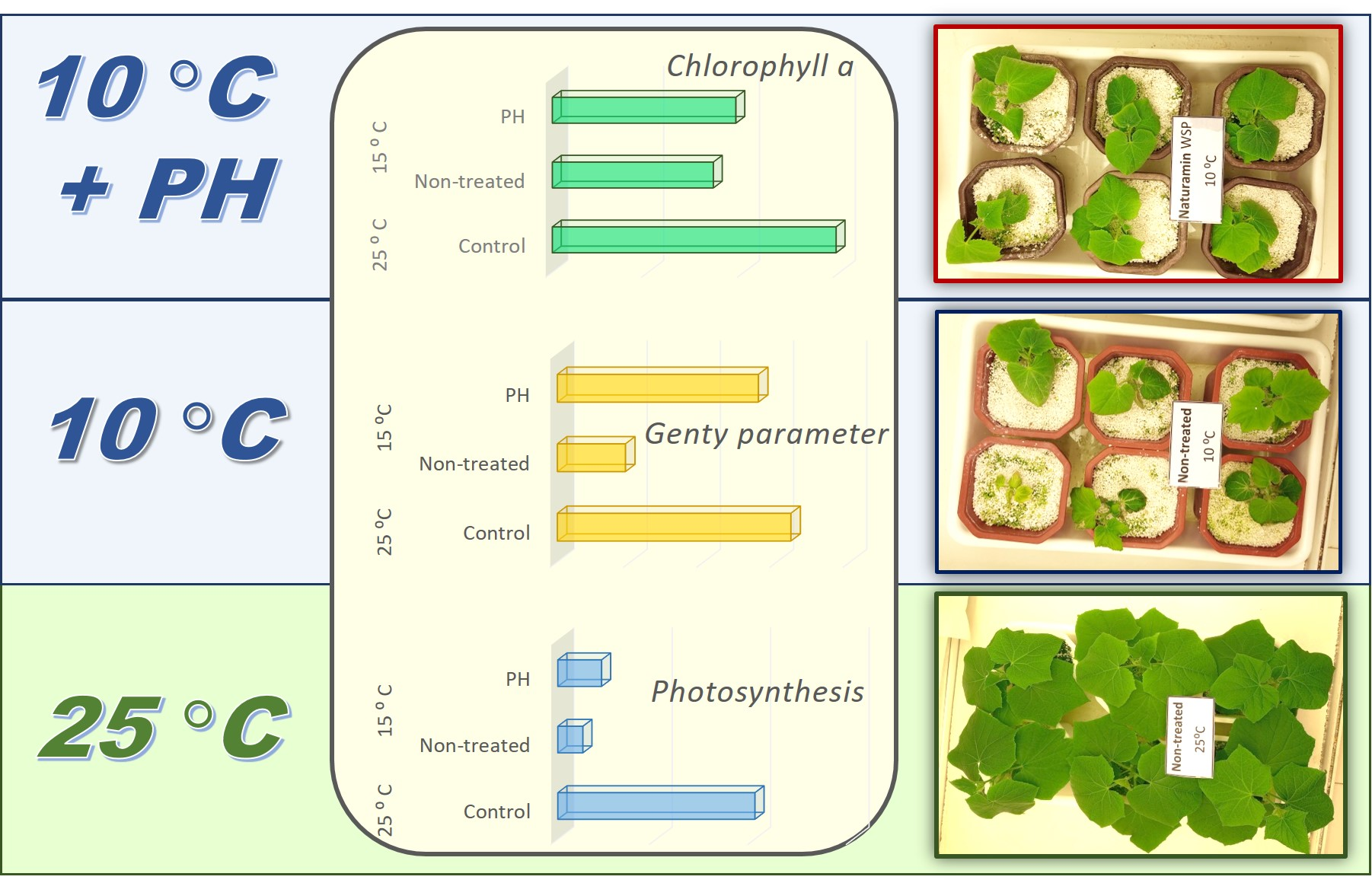
Graphical Abstract

1. Introduction

Being immobile, plants are subjected to different unfavorable abiotic conditions. Exposure to low non-freezing temperatures, within the range of 0–15 °C, is commonly known as chilling stress. Due to the extreme climate, chilling has long been recognized as a stress factor impairing plant growth and productivity [1]. Even a slight decrease in temperature, which does not cause visible damage to crops, may reduce their productivity by up to 50% [2]. Some plant species can adapt to low temperatures and acquire chilling tolerance. However, others, mainly tropical or subtropical crops such as maize, rice, tomato, cucumber, cotton, or soybean [3], are unable to cope properly or in time and develop chilling symptoms that can even lead to plant death [4].
Growing crops at low temperatures undermines most physiological processes throughout all stages of vegetation, from germination to maturity [2]. Some authors report a loss of membrane integrity and solute leakage in plant cells as common adverse effects of chilling conditions due to increased oxidative stress [5,6]. One of the most sensitive physiological processes to chilling is maintaining a plant’s water balance. Water relation disorder is primarily caused by a rapid decline in the root’s ability to absorb water and transport it to the leaves [3]. Chilling temperatures also affect plants’ mineral nutrition since the absorption of ions by the roots is disrupted. Translocation of mineral elements between the roots and the aboveground organs is impaired, resulting in severe nutrient deficiency in all plant tissues [7]. Chloroplasts are the organelles first and most severely affected by cold stress in plant cells [8]. Chilling-sensitive plants exhibit lower-temperature homeostasis of leaf photosynthesis compared to tolerant species [9]; therefore, the functioning of photosynthesis is also harmed during and after chilling exposure. The effect of low temperatures on the photosynthetic machinery is complex. Some of the initial inhibitory effects include decreasing enzyme activity and cold-induced stomatal closure [10,11]. Changes in lipid composition, resulting in altered membrane structure and permeability, have also been reported as an effect of chilling exposure [12], leading to compromised chloroplast ultrastructure and functioning. This is followed by an imbalance between light energy harvesting and utilization, leading to photoinhibition and damage to photosystem II, as well as excess energy [13,14,15]. These disruptions result in reduced photosynthetic carbon assimilation and apparent growth retardation.
In turn, plants trigger various physiological, biochemical, and molecular adaptations in order to mitigate the damage in response to cold stress. These include synthesis of accessory pigments, modulation of stomatal size, activation of both enzymatic and non-enzymatic antioxidants, production of antifreeze proteins (AFPs) and other stress response proteins, an increase in the quantities of soluble sugars, polyamines, and certain amino acids, among others [16]. NADPH plays an intriguing dual role in cold acclimation. On one hand, it is the substrate of NADPH oxidase. This crucial enzyme generates apoplastic H2O2 upon low-temperature stimulus, which subsequently serves as a signal to trigger adaptive responses like the activation of antioxidant enzymes [17]. On the other hand, it is a direct electron donor for members of this reactive oxygen species (ROS) scavenging molecular machinery, especially monodehydroascorbate reductase (MDHAR) and glutathione reductase (GR), both of which participate in the regeneration of the major non-enzymatic antioxidants ascorbate and glutathione [18]. Secondary metabolites, mainly represented by products of the phenylpropanoid pathway initiated by the enzyme phenylalanine ammonia-lyase (PAL), like flavonoids, also contribute to enhancing cold resilience in various plant species, mainly via their ROS neutralizing properties [19]. Another vital molecule that attracts much attention due to its polyvalent functions in low-temperature stress adaptation is NO, as it acts as a second messenger, helps maintain redox homeostasis, and interacts with other pathways [20]. The primary source of NO in plants is nitrate reductase (NiR), which links central nitrogen metabolism to acclimation processes.
Plant biostimulants are defined as products that stimulate plant growth and development by improving one or more of the following characteristics of the plant or the plant rhizosphere: nutrient use efficiency, tolerance to abiotic stress, quality traits, or availability of confined nutrients in the soil or rhizosphere [21]. Their application enhances plant tolerance to environmental stresses, such as drought [22], salinity [23], and herbicide phytotoxicity [24], among others. Biostimulants can be applied to plants through seed, soil, or foliar treatment [21]. The timing of application, considering their activity under stress conditions, can be before (priming) or during (therapeutic) exposure to abiotic stress [24,25]. When their use is intended to improve crop tolerance to abiotic stresses, biostimulants are mainly applied before the stressful occasion to prime plant physiological defenses [25]. There is a wide diversity of products labeled as plant biostimulants, but the main types include seaweed extracts, humic/fulvic acids, protein hydrolysates, microbial inoculants, and silicon products [26]. Protein hydrolysates are one of the most common groups of biostimulants containing “mixtures of free amino acids, low molecular weight peptides, and other nitrogen-containing organic substances” [27]. Several publications report the ameliorative effects of PHs on plants exposed to various abiotic stress factors, as well as their positive impact on overall physiological functioning. All these amendments lead to a higher resilience of plants to stress conditions, enhancing growth and productivity [27,28]. Biostimulants are among the new tools used to improve the chilling tolerance of cold-sensitive plants. For example, this has also been observed in lettuce plants that were additionally treated with protein hydrolysate [29]. Our previous study found that the ameliorative impact of PH biostimulants might be due to an activated antioxidative defense system [30]. This was an indication that the pretreatment with PHs has a mitigating effect on plant performance under chilling stress, but it still needs to be studied in more detail.
The early stages of cucumber growth often occur under suboptimal temperature conditions. However, to date, little is known about the influence of biostimulants, particularly protein hydrolysates, on the performance of chilling-sensitive cucumber plants exposed to low-temperature conditions. This motivated the aim of the current study to assess the effect of PHs on the physiological performance of young cucumber plants subjected to chilling stress.

2. Results

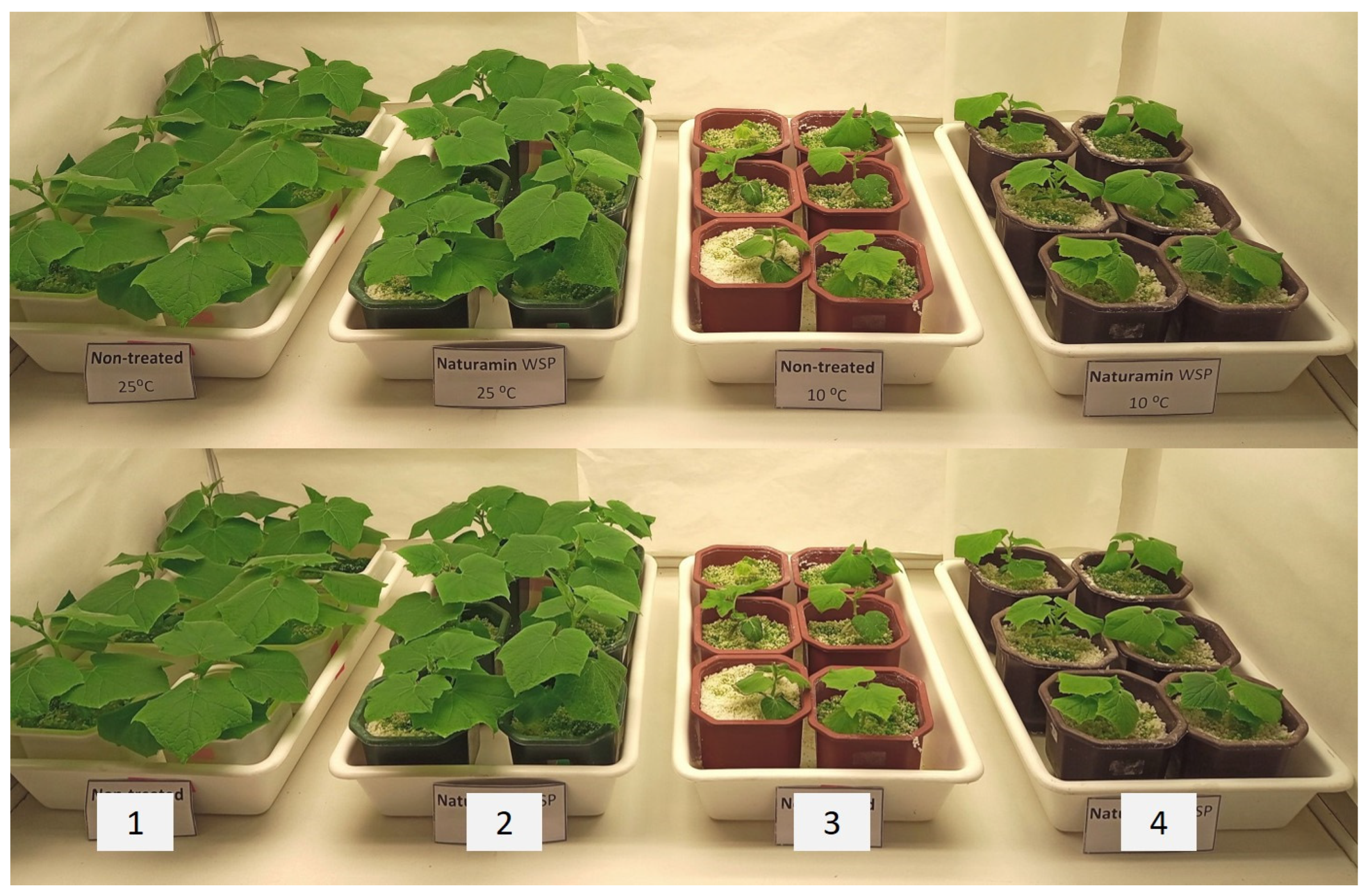
To establish the effect of chilling stress and preliminary priming with a protein hydrolysate (PH) biostimulant on the growth of cucumber plants (Figure 1), we measured the weight of the whole plants (roots and aboveground parts) and the leaf area (Table 1). The results showed a potent suppressive effect of low temperatures, with plant weight decreasing by almost 83% and the leaf area by 84%, compared to plants grown at 25 °C. Pretreatment with the biostimulant product alleviated this adverse effect on the growth indicators by 65% and 53% for plant weight and leaf area, respectively.
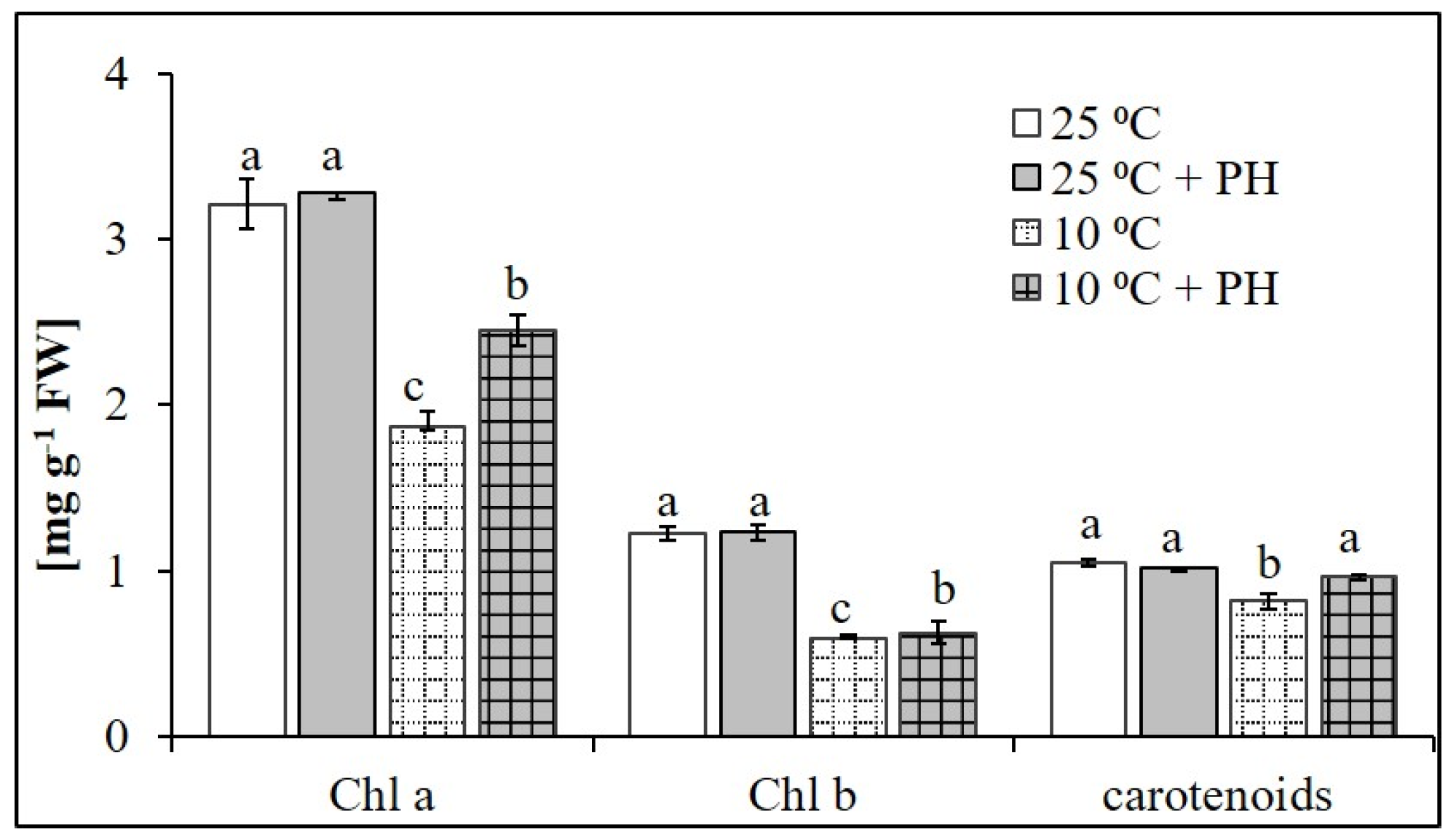
The content of photosynthetic pigments (Figure 2) was also negatively influenced by the plants’ exposure to low temperatures. The amount of chlorophyll a and b and carotenoids was reduced by 42%, 52%, and 22%, respectively. The pretreatment with protein hydrolysate confirmed its preserving effect on the content of the measured photosynthetic pigments, with an average increase of 8%, 12%, and 13% for chlorophyll a and b and carotenoids, respectively.
Low temperature had a suppressive effect on the gas exchange parameters of cucumber plants (Table 2). Indicators such as photosynthesis, transpiration, and stomatal conductance were significantly decreased, with reductions of approximately 82%, 78%, and 93%, respectively. Pretreatment of the stressed plants with the PH exerted an ameliorative effect on the mentioned parameters. This effect was clearly illustrated by an increase in the photosynthetic rate (A), transpiration rate (E), and stomatal conductance (gs) of 79%, 77%, and 100%, respectively, compared to nontreated, chilling-exposed plants. At the same time, the intracellular CO2 concentration was not significantly affected by the different treatments.
Chlorophyll fluorescence analysis is one of the most reliable non-destructive indicators, widely used for studying the effect of stress conditions on plant photosynthetic performance [31]. In our study, we performed detailed analyses of the chlorophyll fluorescence parameters (Table 3). As a result of the low temperature, the indicators of light reactions were significantly inhibited. The ground fluorescence (Fo) increased significantly by 43%, indicating losses of excitation energy in the PSII antenna complex. The maximal fluorescence (Fm) decreased by 60%, which, together with the increase in Fo, led to a significant decrease in variable fluorescence (Fv) as well, suggesting that under chilling stress, not all electron acceptors in PSII are reduced. As a result of these disturbances in the photochemical processes, the maximal quantum yield of PSII (Fv/Fm) was also significantly reduced by 36%. On the other hand, pretreatment with the protein hydrolysate ameliorated this inhibitory effect on the mentioned indicators, with 22% and 25% improvements for the Fo and Fv/Fm, respectively.
The quantum yield of PSII, also known as the Genty parameter (Y), was significantly decreased by 71% at low temperatures, indicating that a substantial portion of the absorbed light was not utilized for photochemistry. This resulted in a 70% inhibition of the electron transport rate (ETR). The quenching parameters confirmed the inhibitory effect of chilling on the photosynthetic apparatus, where photochemical quenching (qP) was significantly reduced by 48%, while non-photochemical quenching (qN) increased by 23%. Pretreatment with PHs mitigated this suppression at the low temperature, as evident from parameters such as Y, ETR, and qP, which increased by more than a hundred percent (120%, 117%, and 111%, respectively) compared to chilling-exposed plants. The foliar application of the biostimulant had no significant effect on chlorophyll fluorescence parameters in plants grown under optimal temperature conditions.
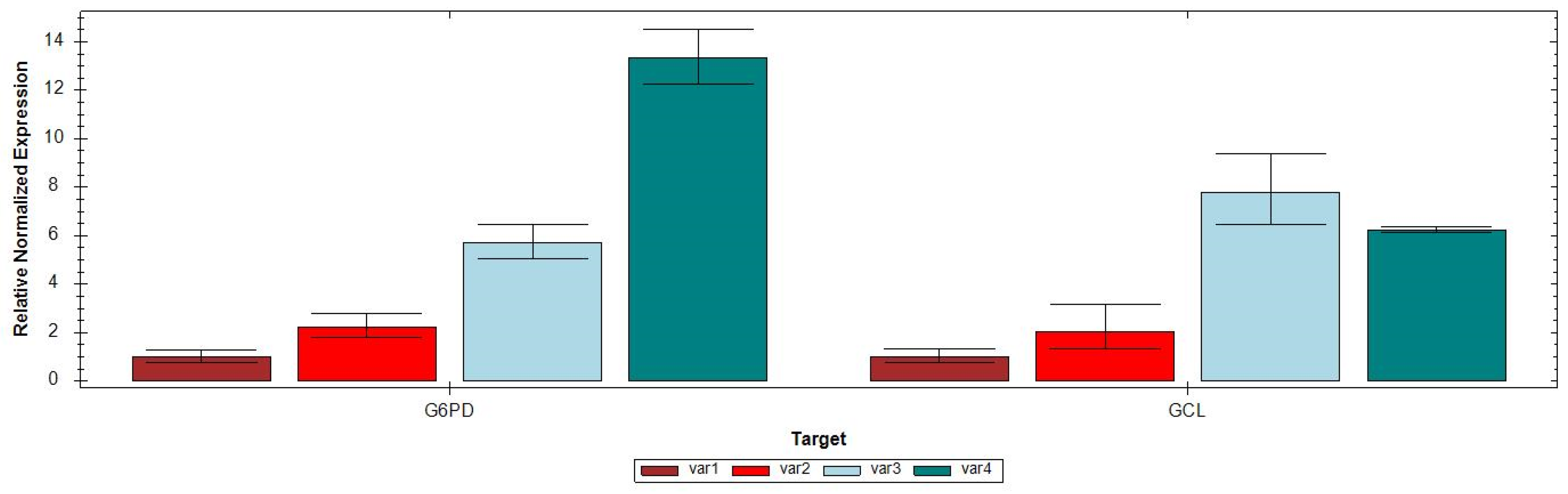
To gain further insight into the influence of the biostimulant on the crop’s responses at the molecular level, the expression of genes encoding two additional important enzymes related to defense mechanisms, namely glucose-6-phosphate dehydrogenase (G6PD) and glutamate-cysteine ligase (GCL), was examined. The quantification results are presented in Figure 3, while the output of the ANOVA test is shown in Table 3. Both the low temperature and the application of the biostimulant affected the transcription of the studied genes. However, the effect of the suboptimal temperature treatment was significantly more pronounced, causing a considerable upregulation of G6PD and GCL. Under normal conditions, supplementation with the PH induced only a slight, but not significant, effect on the genes, with a stronger influence on G6PD (the p-value was actually quite close to 0.05, Table S2). At 10 °C, the PH additionally boosted the expression of G6PD almost twofold, reaching around 13 times that of the control. On the other hand, GCL was not significantly affected in the sample at 10 °C + the PH when compared to chilled plants.
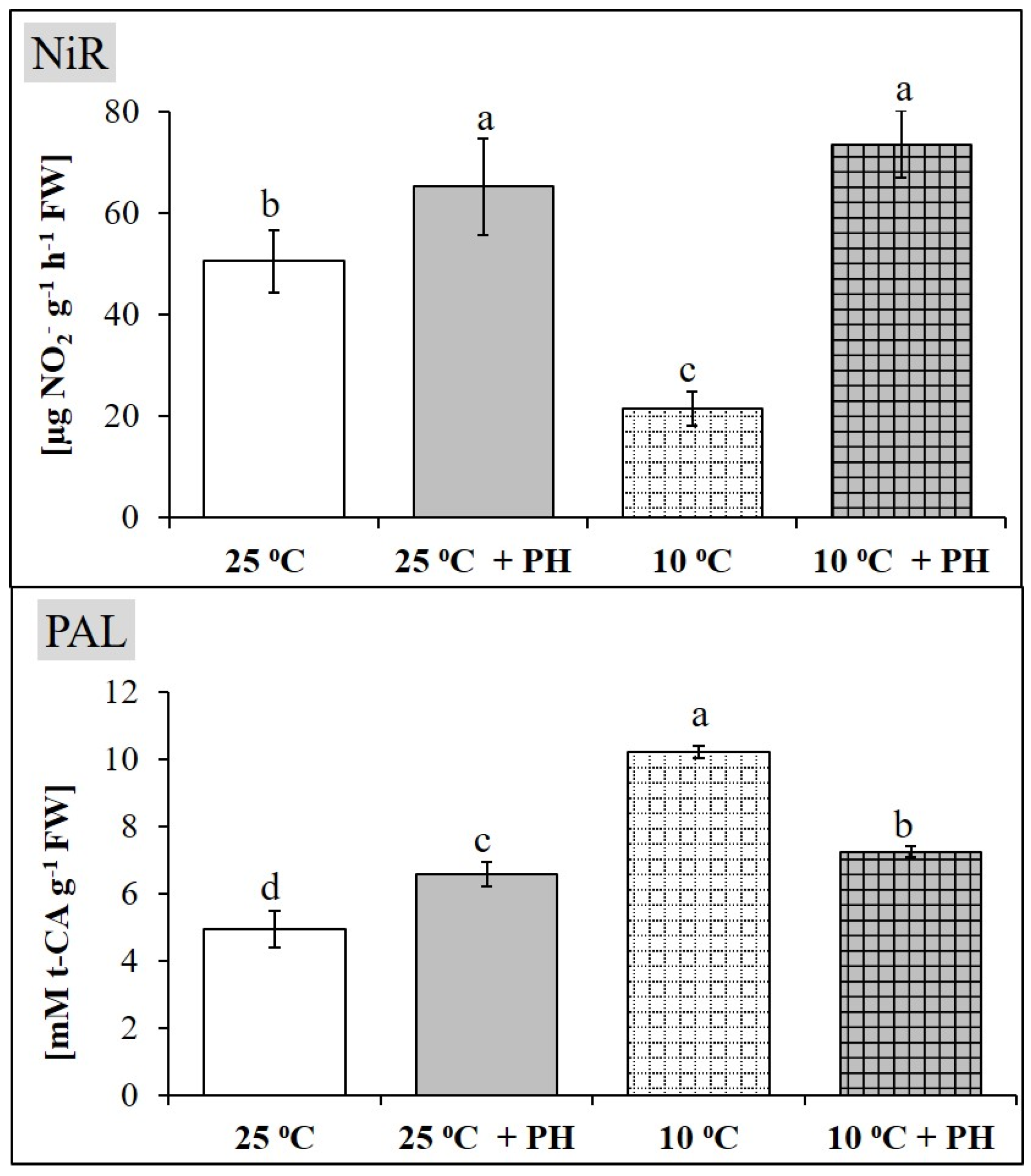
The results regarding the activity of nitrate reductase (NiR) and phenylalanine ammonia-lyase (PAL) are presented in Figure 4. Treatment with the PH at optimal temperature resulted in a 34% increase in PAL activity. The highest PAL activity was observed in the leaves of the untreated stressed plants. Low temperature enhanced PAL activity by 108% compared to the control. PAL activity in plants at 10 °C was also 47% higher than in the control.
Application of the PH to plants grown at 25 °C resulted in an almost 29% increase in NiR activity compared to the nontreated control. Exposure to low temperatures decreased the activity of nitrate reductase by 43%. In comparison, treatment with the biostimulant enhanced NiR activity by 45% compared to the untreated control at 25 °C and by 242% compared to the chilling-exposed plants.

3. Discussion

Climate change is already impacting the world and will continue to do so in the foreseeable future. Unfavorable low-temperature stress has a detrimental effect on overall plant functioning [2] and is one of the major factors limiting plant growth and productivity [32]. Photosynthesis is one of the principal processes in plants, and techniques that analyze photosynthetic functioning provide reliable results and are widely used to study plant stress responses. Photosynthesis may be inhibited by various means, including stomatal limitation, disrupted phloem transport of carbohydrates, damage to the water-splitting complex of PSII, impaired electron transport, and inhibition of key enzymes of the Calvin cycle, among others [33,34,35,36,37,38].
The results of the current study showed a markedly suppressed physiological status of cucumber plants as a result of low temperature, as evidenced by the considerable reduction in light reactions and gas exchange. Although stomatal conductance (gs) was reduced, the intracellular CO2 concentration (ci) remained relatively unchanged. This, together with the reduced photosynthetic rate (A) and transpiration rate (E), and the fact that the available CO2 was not utilized for photosynthesis, indicates both stomatal and mesophyll limitations of photosynthesis. This is related to potential damage to the light-harvesting and energy-utilizing processes. In line with our results, other authors have also reported that low temperatures disrupt the photosynthetic machinery, including light harvesting, pigment synthesis, and electron transport [39,40].
Fluorescence analysis on cucumber plants confirmed the negative impact on the light reactions of photosynthesis, as indicated by lower maximal fluorescence (Fm), quantum yield of PSII, and ETR in chilled plants (Table 3). Due to the decrease in CO2 assimilation, the absorbed excitation energy overloaded the electron transport processes, increasing the probability of photoinhibition [41]. The lowering of Fm may also be due to the photoinhibition of PSII reaction centers, resulting in a loss of their variable fluorescence [42], which may be even more pronounced under chilling conditions [43]. The exposure of plants to chilling had a more significant injury effect on parameters measured in the light than in the dark [44].
Pretreatment with the protein hydrolysate diminished the adverse effects of low temperature, as evidenced by the overall physiological performance of the plants, including light harvesting, CO2 assimilation, and plant growth. The results showed that biostimulant-treated plants exhibited a more effective use of photochemical energy compared to untreated ones under chilling stress. A possible mechanism of this ameliorative effect may be the improvement in the photosynthetic pigment profile in affected plants. A similar effect resulting from PH application has already been reported repeatedly [45]. The observed ameliorative effect of the biostimulant Naturamin WSP corresponds with the study by Botta [29], who also reported that treatment with PHs improved the cold tolerance of lettuce plants. Our previous study found that the PH supply to chilled maize plants increased the performance of leaf gas exchange, photosynthetic pigment content, and chlorophyll fluorescence [46].
The gene expression measurements of G6PD and GCL were conducted with the aim of examining the processes underlying the biostimulant protective effect from another perspective, namely, its possible involvement in the maintenance of redox balance and the ROS scavenging mechanisms of plant cells. Glucose-6-phosphate dehydrogenase is the first enzyme of the pentose phosphate pathway and catalyzes the rate-limiting step of the process [47]. Therefore, it is crucial in maintaining reducing equivalents, in the form of NADPH, in the cell [48]. Glutamate-cysteine ligase catalyzes the first and rate-limiting step of the biosynthesis of one of the primary cellular non-enzymatic antioxidants—glutathione. The total concentration of glutathione, as well as the amount of its non-reduced form, are markers for the redox status of the plant cell and its tolerance to oxidative stress caused by abiotic or biotic stimuli [49].
We resorted to RT-qPCR analysis, as it was faster and more straightforward in our case than enzymatic assays for the respective enzymes. As expected, when cultivated at the stress-inducing lower temperature, the cucumber plants responded by inducing the expression of both G6PD and GCL, which implies the activation of the oxidative pentose phosphate pathway (OPPP) and glutathione biosynthesis. The additional upregulation of G6PD by the biostimulant under chilling conditions suggests that it may influence the redox balance of cucumber cells by stimulating the initial reaction of the NADPH-producing pentose-phosphate pathway, particularly under stress conditions. As mentioned above, both of these processes are associated with plant fitness during unfavorable conditions, with OPPP delivering the crucial reductant NADPH [50] and glutathione being one of the main non-enzymatic reactive oxygen scavengers in the cell [51]. Moreover, they are related, as NADPH is necessary to maintain the reduced glutathione pool through the action of glutathione reductase [51]. Modulating the OPPP by enhancing G6PD transcription appears to be one of the outcomes of PH application. G6PD was slightly induced by the biostimulant even at standard temperature, and we speculate that this could be a molecular priming process to prepare the plants in advance for upcoming stress instances. Such molecular priming has recently been proposed to be a significant mechanism by which biostimulants exert their action and stress mitigation properties [52]. At 10 °C, the effects of the lower temperature and the biostimulant appeared to synergize, resulting in greater transcriptional activation of G6PD in the sample treated with the PH compared to the one that was not. The increased availability of NADPH, presumably achieved as a result of G6PD upregulation, can then provide more reductive power for the antioxidant systems to mitigate the stress symptoms in the plants supplemented with the biostimulant. This is in accordance with the other observations on the photosynthetic parameters and enzymatic activities described above.
Phenylalanine ammonia-lyase (PAL) is the first enzyme in the phenylpropanoid pathway [53,54] and represents a key enzyme participating in the formation of a series of structural and defensive phenolic compounds [55]. Its activity has been widely investigated in plants, as PAL is also involved in growth, development, and defense systems [56], including lignin synthesis in cell walls and nutrient transport [57]. Plants can induce PAL activity under stress conditions, such as high or low temperatures and salt stress, which leads to the accumulation of phenolic compounds, including phenolic acids and flavonoids [58]. Our study also points at the putative protective role of PAL under chilling conditions, with high PAL activity detected at low temperatures (Figure 4). These results align with those reported by Lafuente and colleagues [59], who demonstrated increases in both PAL mRNA and activity in response to chilling in citrus fruits. Similarly, Chen and co-workers [60] reported that PAL protein levels increased during chilling temperatures in banana fruits. In addition, Dong and co-workers [61] also reported that exposure to low temperatures enhances PAL activity, thereby increasing the biosynthesis of phenylpropanoid compounds and activating antioxidant enzymes, which maintain the cellular redox status. The ameliorative effect of the PH on cucumber status is also confirmed by the raised PAL activity as well. PAL activity also significantly increased in chili pepper after the application of a biostimulant containing amino acids [62]. Later, the same authors reported that the biostimulant also improved PAL activity in salt stress conditions [63].
Chilling temperatures diminish the efficiency of mineral nutrition in plants by lowering nutrient uptake and transport, as well as by decreasing the activity of nitrate reductase and nitrogen incorporation into amino acids and proteins [64,65]. Nitrate reductase is the first enzyme in nitrate assimilation, and its activity is crucial for providing nitrogen to plant cells [66]. Our results confirm that low temperatures notably inhibit the activity of nitrate reductase (Figure 4); however, the additional application of the PH improved its activity. This aligns with a study demonstrating that the application of a biostimulant increased the activities of nitrate reductase and nitrite reductase, as well as N use efficiency, in wheat and maize during the flowering stage [67].
The unfavorable climate changes and the undeniably growing need for food sources are increasing the interest in plant tolerance to adverse environmental factors, particularly in the use of biostimulants. Biostimulants are reported to improve plant performance under various stress conditions, including chilling. In a test of multiple seaweed extracts, the ability to enhance cold tolerance was reported through strengthening ROS responses [68]. A biostimulant containing algal extract influenced photosynthetic activity and reduced leaf injury symptoms in barley [68]. Similar effects of glycine betaine (a cytokinin-like compound) supply have been reported as a biostimulant on tomato plants [69]. The ameliorative effect of the supplied PH might be due to facilitated protein turnover and secondary metabolism of plants, which are proposed to be among the possible ameliorative mechanisms of PHs [70,71]. In this regard, we can confirm the potential of PHs to mitigate the negative impact of low-temperature exposure, as indicated by the photosynthetic indicators and overall performance of the cucumber plants. Our results also demonstrate the mitigating effect of the additional application of the PH on the growth, physiological, and biochemical performance of chilling-injured young cucumber plants.

4. Materials and Methods

4.1. Growth Conditions and Experimental Design

Cucumber plants (Cucumis sativus L. ‘Kaliopa’) were grown in climate-controlled growth chambers at the Department of Plant Physiology, Biochemistry, and Genetics, Agricultural University, Plovdiv. The seeds were imbibed in distilled water in a Petri dish for 24 h and then sown in pots filled with perlite enriched with a modified Hoagland nutrient solution (1/2 strength). The volume of each pot was 2 L. The plants were cultivated in a controlled environment: photoperiod, 14/10 h day/night; PPFD, 200 μmol m−2 s−1; temperature, 25 ± 1 °C/20 ± 1 °C (day/night), and relative air humidity, 60 ± 5%. Half of the plants were sprayed with a 0.1% aqueous solution of the biostimulant Naturamin WSP (Daymsa, Saragossa, Spain) when the first true leaf reached full development (18 days after germination). The concentration was chosen according to the manufacturer’s recommendations. The protein hydrolysate (abbreviated as PH) Naturamin WSP contains an elevated concentration of free amino acids, around 80%. The product is rich in serine, proline, and glycine-betaine, which are crucial metabolites during temperature and drought stress. Control plants were sprayed with distilled water.
After treatment, the plants were transferred to two growth chambers with different temperature regimes and identical light and air humidity conditions. The experimental design of the study included four variants:
  • Nontreated plants grown at 25 ± 1 °C/20 ± 1 °C (day/night) (control).
  • Pretreated plants with protein hydrolysate (PH, Naturamin WSP), grown at 25/20 ± 1 °C (day/night).
  • Nontreated plants grown at 10 ± 1 °C.
  • Pretreated plants with protein hydrolysate (PH, Naturamin WSP), grown at 10 ± 1 °C.
The plants were grown under the aforementioned temperature regimes for 14 days. Each variant had six replicates (pots), with one plant per pot. Biochemical and molecular analyses were performed on the second and third fully developed leaves, following non-destructive physiological measurements, on the 14th day after chilling exposure.

4.2. Photosynthetic Pigments Profiling

Photosynthetic pigments (chlorophyll a, chlorophyll b, and total carotenoids) were extracted in 80% acetone, measured spectrophotometrically [72].

4.3. Leaf Gas Exchange Measurement

Leaf gas exchange (net photosynthetic rate—A, transpiration rate—E, stomatal conductance—gs, and internal CO2 concentration—ci) was measured with an open photosynthetic system LCpro+ (Analytical Development Company Ltd., Hoddesdon, UK), equipped with a broad chamber. The conditions during the measurements were as follows: light intensity, 250 μmol m−1 s−1 (PAR); leaf temperature, 24–25 °C; and relative humidity, 60–65%. Measurements were performed on the second fully expanded mature leaves.

4.4. Chlorophyll Fluorescence Analysis

Chlorophyll fluorescence parameters of plants were determined by using a pulse modulation fluorometer (MINI-PAM, Heinz Walz, Effeltrich, Germany). After at least 30 min in darkness, the values of the ground (minimal) (Fo) and maximal fluorescence (Fm) were recorded at measuring light of 0.15 μmol m−2 s−1 and a saturating light pulse (SLP) of 5000 μmol m−2 s−1, respectively, for 0.8 s. These values were used to determine the variable fluorescence, Fv (Fv = Fm − Fo), and the potential photochemical activity of PSII, Fv/Fm.
After 30 min of light adaptation, the steady-state fluorescence F and the maximum fluorescence (Fm’) were determined at a saturating pulse with a duration of 0.8 s and a light intensity (PPFD) above 5000 µmol m−2 s−1. The following parameters were calculated using the formulas in [73].
˗
Photochemical quenching, qP = (Fm’ − F)/(Fm’ − Fo).
˗
Non-photochemical quenching, qN = (Fm − Fm’)/(Fm − Fo),
˗
quantum yield, Y = (Fm’ − F)/Fm’ [74].
˗
Photosynthetic electron transport rate, ETR = Y × 0.84 × 0.5 × PAR (Handbook of operation with MINI-PAM).

4.5. RNA Extraction, cDNA Synthesis, and qRT-PCR Analysis

High-quality RNA was extracted from ground frozen material as described above, using Quick-RNATM MiniPrep kit of Zymo Research (Irvine, CA, USA). The yield, which varied between 115 and 298 ng/µL, and purity, evaluated by the A260/280 (>1.8) and A260/A320 (>2) absorbance ratios, were measured on a Genova Nano (Cole-Parmer, Shanghai, China) spectrophotometer. Subsequently, the isolated RNAs (1 µg from each variant) were used as templates for the synthesis of cDNAs, utilizing the RevertAid First Strand cDNA kit from Thermo Scientific (Waltham, MA, USA). These procedures were performed according to the manufacturer’s instructions. The functionality of the cDNAs was preliminarily tested in standard PCR reactions before conducting the quantitative RT-PCR using Power SYBR Green PCR master mix from Thermo Scientific, 5 ng cDNA as the template, and 5 pmol of each primer on the Bio-Rad CFX96 Touch Real-Time PCR Detection System.
For relative quantification, CsEF1α was selected as an endogenous control, and the ΔΔCt method was applied [75], using Bio-Rad CFX Matestro Software (version qPCRsoft 4.0). The ANOVA test for the statistical significance of the observed changes in expression was also directly performed with this software.

4.6. Enzyme Activity Measurements

4.6.1. Phenylalanine Ammonia Lyase (EC 4.3.1.24)

Phenylalanine ammonia-lyase activity was determined spectrophotometrically by following the formation of trans-cinnamic acid, which exhibits an increase in absorbance at 290 nm, according to [76]. The absorbance was recorded at 290 nm, and PAL activity was measured in terms of the amount of trans-cinnamic acid (t-CA) formed.

4.6.2. Nitrate Reductase (EC 1.6.6.2)

NiR activity was determined using in vivo assays, following the methods described in [77,78]. To determine the concentrations of nitrite produced during the assays, 1 mL samples were mixed with 1 mL of sulphanilamide (1% weight/volume in 10 times diluted concentrated HCl) and 1 mL of 0.1% N-(1-naphthyl)-ethylenediamine dihydrochloride in distilled water. The solution was left to stand at room temperature for 10 min until color development was complete, and the absorbance was measured at 543 nm using a spectrophotometer.

4.7. Statistical Analysis

Statistical analysis was performed using one-way ANOVA, and Duncan’s test for mean comparison was performed at p ˂ 0.05 using SPSS 19.

5. Conclusions

In conclusion, low temperatures caused chilling stress and induced changes in growth and photosynthetic performance by lowering the light-harvesting capacity of cucumber plants. The activity of nitrate reductase was significantly inhibited, suggesting that nitrogen assimilation was also negatively influenced by the chilling conditions. The upregulated expression of the G6PD and GCL genes points to a concomitant increase in the production of ROS and subsequent oxidative stress. These adverse effects were significantly alleviated when the protein hydrolysate was supplied to the plants. The mitigating effect could be caused by remediation of the photosynthetic pigment content, thereby facilitating light harvesting and energy utilization. Other pathways and processes potentially modulated by the PH were nitrate assimilation, cell protection, and redox balance, as evidenced by the observed alterations in the activity of nitrate reductase, PAL, and the expression of G6PD, but further investigations are needed to elucidate in greater detail the molecular mechanisms involved. Our study was conducted at a provocatively low temperature of 10 °C for two weeks, which influenced the plants’ responses to both stress conditions and the treatment with the protein hydrolysate. In this way, we could characterize the physiological processes and some major markers of metabolism, even though the plants did not completely recover after chilling exposure. All obtained results indicate the beneficial effect of PH application, which increases the defense abilities of cucumber plants and their resilience under chilling conditions. Future experiments to build on the results of this work could include monitoring the plants under prolonged cold exposure, more detailed characterization of the effects of the PH on members of the antioxidant and nitrogen assimilation apparatus, or directly performing omics analyses like transcriptomics and metabolomics, enabling us to pinpoint major players in these and other affected pathways. Finally, functional analysis of selected key genes could allow us to validate their involvement in the biostimulant-induced response.

Supplementary Materials

The following supporting information can be downloaded at: https://www.mdpi.com/article/10.3390/stresses6010005/s1.

Author Contributions

Conceived and designed the experiments: A.V. Performed the experiments: D.B., A.H., V.P. and L.K.-V. Analyzed the data: D.B., A.H., V.P. and L.K.-V. Prepared the manuscript: D.B., A.H., V.P., L.K.-V. and A.V. Revised the manuscript: D.B., A.V. and V.P. All authors have read and agreed to the published version of the manuscript.

Funding

This research was funded by project BG16RFPR002-1.014-0012-C01 Establishment and sustainable development of a Center of CompetenceAgrifood Systems and Bioeconomy, financed by the European Regional Development Fund through the Program for Research, Innovation and Digitalisation for Smart Transformation (PRIDST). VP acknowledges the funding obtained by the European Regional Development Fund through Programme Research Innovation and Digitization for Smart Transformation, Grant agreement № BG16RFPR002-1.014-0003-C01.

Institutional Review Board Statement

Not applicable.

Informed Consent Statement

Not applicable.

Data Availability Statement

The original contributions presented in this study are included in the article. Further inquiries can be directed to the corresponding author.

Acknowledgments

V.P. thanks Valentina Ivanova for provided technical assistance.

Conflicts of Interest

The authors declare no conflicts of interest.

Abbreviations

PHProtein Hydrolisate
ROSReactive Oxygen Species
G6PDGlucose-6-Phosphate Dehydrogenase
GCLGlutamate-Cysteine ligase
PALPhenylalanine Ammonia Lyase
NADPHReduced Nicotinamide Adenine Dinucleotide Phosphate
MDHARMonodehydroascorbate Reductase
GRGlutathione Reductase
NiRNitrate Reductase
PPFDPhotosynthetic Photon Flux Density
PARPhotosynthetic Active Radiation
SLPSaturation Light Pulse
RNARibonucleic Acid
DNADeoxyribonucleic Acid
PCRPolymerase Chain Reaction

References

  1. Ding, Y.; Shi, Y.; Yang, S. Advances and challenges in uncovering cold tolerance regulatory mechanisms in plants. New Phytol. 2019, 222, 1690–1704. [Google Scholar] [CrossRef]
  2. Lukatkin, A.S.; Brazaitytė, A.; Bobinas, Č.; Duchovskis, P. Chilling injury in chilling-sensitive plants: A review. Zemdirb. Agric. 2012, 99, 111–124. [Google Scholar]
  3. Bolger, T.P.; Upchurch, D.R.; McMichael, B.L. Temperature effects on cotton root hydraulic conductance. Environ. Exp. Bot. 1992, 32, 49–54. [Google Scholar] [CrossRef]
  4. Janská, A.; Maršík, P.; Zelenková, S.; Ovesná, J. Cold stress and acclimation—What is important for metabolic adjustment? Plant Biol. 2010, 12, 395–405. [Google Scholar] [CrossRef]
  5. Lukatkin, A.S. Contribution of oxidative stress to the development of cold-induced damage to leaves of chilling-sensitive plants: 2. The activity of antioxidant enzymes during plant chilling. Russ. J. Plant Physiol. 2002, 49, 782–788. [Google Scholar] [CrossRef]
  6. Gill, S.S.; Tuteja, N. Reactive oxygen species and antioxidant machinery in abiotic stress tolerance in crop plants. Plant Physiol. Biochem. 2010, 48, 909–930. [Google Scholar] [CrossRef]
  7. Lukatkin, A.S.; Isaikina, E.E. Calcium status and chilling injury in maize seedlings. Russ. J. Plant Physiol. 1997, 44, 339–342. [Google Scholar]
  8. Lee, K.P.; Kim, C.; Landgraf, F.; Apel, K. EXECUTER1- and EXECUTER2-dependent transfer of stress-related signals from the plastid to the nucleus of Arabidopsis thaliana. Proc. Natl. Acad. Sci. USA 2007, 104, 10270–10275. [Google Scholar] [CrossRef] [PubMed]
  9. Yamori, W.; Noguchi, K.; Hikosaka, K.; Terashima, I. Cold-tolerant crop species have greater temperature homeostasis of leaf respiration and photosynthesis than cold-sensitive species. Plant Cell Physiol. 2009, 50, 203–215. [Google Scholar] [CrossRef] [PubMed]
  10. Wilkinson, S.; Clephan, A.L.; Davies, W.J. Rapid low temperature-induced stomatal closure occurs in cold-tolerant Commelina communis leaves but not in cold-sensitive tobacco leaves, via a mechanism that involves apoplastic calcium but not abscisic acid. Plant Physiol. 2001, 126, 1566–1578. [Google Scholar] [CrossRef]
  11. He, S.; Zhao, K.; Ma, L.; Yang, J.; Chang, Y.; Ashraf, M.A. Comparison of cold resistance physiological and biochemical features of four Herba Rhodiola seedlings under low temperature. Saudi J. Biol. Sci. 2016, 23, 198–204. [Google Scholar] [CrossRef]
  12. Liu, X.; Zhou, Y.; Xiao, J.; Bao, F. Effects of chilling on the structure, function and development of chloroplasts. Front. Plant Sci. 2018, 9, 1715. [Google Scholar] [CrossRef]
  13. Allen, D.J.; Ort, D.R. Impacts of chilling temperatures on photosynthesis in warm-climate plants. Trends Plant Sci. 2001, 6, 36–42. [Google Scholar] [CrossRef] [PubMed]
  14. Yamasaki, T.; Yamakawa, T.; Yamane, Y.; Koike, H.; Satoh, K.; Katoh, S. Temperature acclimation of photosynthesis and related changes in photosystem II electron transport in winter wheat. Plant Physiol. 2002, 128, 1087–1097. [Google Scholar] [CrossRef] [PubMed]
  15. Wei, Y.; Chen, H.; Wang, L.; Zhao, Q.; Wang, D.; Zhang, T. Cold acclimation alleviates cold stress-induced PSII inhibition and oxidative damage in tobacco leaves. Plant Signal. Behav. 2022, 17, 2013638. [Google Scholar] [CrossRef]
  16. Satyakam; Zinta, G.; Singh, R.K.; Kumar, R. Cold adaptation strategies in plants—An emerging role of epigenetics and antifreeze proteins to engineer cold resilient plants. Front. Genet. 2022, 13, 909007. [Google Scholar] [CrossRef]
  17. Zhou, J.; Wang, J.; Shi, K.; Xia, X.J.; Zhou, Y.H.; Yu, J.Q. Hydrogen peroxide is involved in the cold acclimation-induced chilling tolerance of tomato plants. Plant Physiol. Biochem. 2012, 60, 141–149. [Google Scholar] [CrossRef]
  18. Foyer, C.H.; Kunert, K. The ascorbate–glutathione cycle coming of age. J. Exp. Bot. 2024, 75, 2682–2699. [Google Scholar] [CrossRef] [PubMed]
  19. Li, J.; Yu, Q.; Liu, C.; Zhang, N.; Xu, W. Flavonoids as key players in cold tolerance: Molecular insights and applications in horticultural crops. Hortic. Res. 2025, 12, uhae366. [Google Scholar] [CrossRef]
  20. Cui, J.; Huang, M.; Qi, J.; Yu, W.; Li, C. Nitric oxide in plant cold stress: Functions, mechanisms and challenges. Agronomy 2025, 15, 1072. [Google Scholar] [CrossRef]
  21. Ruzzi, M.; Colla, G.; Rouphael, Y. Editorial: Biostimulants in agriculture II: Towards a sustainable future. Front. Plant Sci. 2024, 15, 1427283. [Google Scholar] [CrossRef]
  22. Petrozza, A.; Santaniello, A.; Summerer, S.; Di Tommaso, G.; Di Tommaso, D.; Paparelli, E. Physiological responses to Megafol® treatments in tomato plants under drought stress: A phenomic and molecular approach. Sci. Hortic. 2014, 174, 185–192. [Google Scholar] [CrossRef]
  23. Ertani, A.; Francioso, O.; Tugnoli, V.; Righi, V.; Nardi, S. Effect of commercial lignosulfonate-humate on Zea mays L. metabolism. J. Agric. Food Chem. 2011, 59, 11940–11948. [Google Scholar] [CrossRef]
  24. Katsenios, N.; Sparangis, P.; Vitsa, S.; Leonidakis, D.; Efthimiadou, A. Application of biostimulants and herbicides as a promising co-implementation: The incorporation of a new cultivation practice. Agronomy 2023, 13, 2634. [Google Scholar] [CrossRef]
  25. Andreotti, C.; Rouphael, Y.; Colla, G.; Basile, B. Rate and Timing of Application of Biostimulant Substances to Enhance Fruit Tree Tolerance toward Environmental Stresses and Fruit Quality. Agronomy 2022, 12, 603. [Google Scholar] [CrossRef]
  26. Bulgari, R.; Franzoni, G.; Ferrante, A. Biostimulants application in horticultural crops under abiotic stress conditions. Agronomy 2019, 9, 306. [Google Scholar] [CrossRef]
  27. Colla, G.; Hoagland, L.; Ruzzi, M.; Cardarelli, M.; Bonini, P.; Canaguier, R.; Rouphael, Y. Biostimulant action of protein hydrolysates: Unraveling their effects on plant physiology and microbiome. Front. Plant Sci. 2017, 8, 2202. [Google Scholar] [CrossRef]
  28. Nardi, S.; Pizzeghello, D.; Schiavon, M.; Ertani, A. Plant biostimulants: Physiological responses induced by protein hydrolysate-based products and humic substances in plant metabolism. Sci. Agric. 2016, 73, 18–23. [Google Scholar] [CrossRef]
  29. Botta, A. Enhancing plant tolerance to temperature stress with amino acids: An approach to their mode of action. Acta Hortic. 2013, 1009, 29–35. [Google Scholar] [CrossRef]
  30. Harizanova, A.; Koleva-Valkova, L.; Vassilev, A. Effects of the protein hydrolysate pretreatment on cucumber plants exposed to chilling stress. Acta Agrobot. 2022, 75, 756. [Google Scholar] [CrossRef]
  31. Murchie, E.H.; Lawson, T. Chlorophyll fluorescence analysis: A guide to good practice and understanding some new applications. J. Exp. Bot. 2013, 64, 3983–3998. [Google Scholar] [CrossRef] [PubMed]
  32. Hund, A.; Richner, W.; Soldati, A.; Fracheboud, Y.; Stamp, P. Early vigour of maize inbred lines at low temperature as characterised by root and shoot traits. Eur. J. Agron. 2007, 27, 52–61. [Google Scholar] [CrossRef]
  33. Yordanov, I. Response of photosynthetic apparatus to temperature stress and molecular mechanisms of its adaptations. Photosynthetica 1992, 26, 517–531. [Google Scholar]
  34. Nie, G.Y.; Long, S.P.; Baker, N.R. The effects of development at suboptimal growth temperatures on photosynthetic capacity and susceptibility to chilling-dependent photoinhibition in Zea mays. Physiol. Plant. 1992, 85, 554–560. [Google Scholar] [CrossRef]
  35. Terashima, I.; Noguchi, K.; Itoh-Nemoto, T.; Park, Y.M.; Kubo, A.; Tanaka, K. The cause of PSI photoinhibition at low temperatures in leaves of Cucumis sativus, a chilling-sensitive plant. Physiol. Plant. 1998, 103, 295–303. [Google Scholar] [CrossRef]
  36. Venema, J.H.; Posthumus, F.; de Vries, M.; van Hasselt, P.R. Differential response of domestic and wild Lycopersicon species to chilling under low light: Growth, carbohydrate content, photosynthesis and the xanthophyll cycle. Physiol. Plant. 1999, 105, 81–88. [Google Scholar] [CrossRef]
  37. Van Heerden, P.D.R.; Kruger, G.H.J.; Loveland, J.E.; Parry, M.A.J.; Foyer, C.H. Dark chilling imposes metabolic restrictions on photosynthesis in soybean. Plant Cell Environ. 2003, 26, 323–337. [Google Scholar] [CrossRef]
  38. Garstka, M.; Venema, J.H.; Runiak, I.; Gieczewska, K.; Rosiak, M.; Koziol-Lipinska, J.; Kierdaszuk, B.; Vredenberg, W.J.; Mostowska, A. Contrasting effect of dark-chilling on chloroplast structure and arrangement of chlorophyll–protein complexes in pea and tomato: Plants with a different susceptibility to non-freezing temperature. Planta 2007, 226, 1165–1181. [Google Scholar] [CrossRef] [PubMed]
  39. Sakoda, K.; Yamori, W.; Groszmann, M.; Evans, J.R. Stomatal, mesophyll conductance, and biochemical limitations to photosynthesis during induction. Plant Physiol. 2021, 185, 146–160. [Google Scholar] [CrossRef] [PubMed]
  40. Schiavon, M.; Pizzeghello, D.; Muscolo, A.; Vaccaro, S.; Francioso, O.; Nardi, S. High molecular size humic substances enhance phenylpropanoid metabolism in maize (Zea mays L.). J. Chem. Ecol. 2010, 36, 662–669. [Google Scholar] [CrossRef]
  41. Godde, D.; Bornman, J.S. Regulation of photosynthesis in higher plants. In Molecular to Global Photosynthesis; Archer, M.D., Barber, J., Eds.; Imperial College Press: London, UK, 2004; pp. 49–51. [Google Scholar]
  42. Kalaji, H.M.; Schansker, G.; Ladle, R.J.; Goltsev, V.; Bosa, K.; Allakhverdiev, S.I.; Brestic, M.; Bussotti, F.; Calatayud, A.; Dąbrowski, P.; et al. Frequently asked questions about in vivo chlorophyll fluorescence: Practical issues. Photosynth. Res. 2014, 122, 121–158. [Google Scholar] [CrossRef]
  43. Potvin, C. Effect of leaf detachment on chlorophyll fluorescence during chilling experiments. Plant Physiol. 1985, 78, 883–886. [Google Scholar] [CrossRef]
  44. Alam, B.; Jacob, J. Overproduction of photosynthetic electrons is associated with chilling injury in green leaves. Photosynthetica 2002, 40, 91–95. [Google Scholar] [CrossRef]
  45. Pasković, I.; Popović, L.; Pongrac, P.; Polić Pasković, M.; Kos, T.; Jovanov, P.; Franić, M. Protein hydrolysates—Production, effects on plant metabolism, and use in agriculture. Horticulturae 2024, 10, 1041. [Google Scholar] [CrossRef]
  46. Cholakova-Bimbalova, R.; Petrov, V.; Vassilev, A. Photosynthetic performance of young maize (Zea mays L.) plants exposed to chilling stress can be improved by the application of protein hydrolysates. Acta Agrobot. 2019, 72, 1769. [Google Scholar] [CrossRef]
  47. Jiang, Z.; Wang, M.; Nicolas, M.; Ogé, L.; Pérez-Garcia, M.-.D.; Crespel, L.; Li, G.; Ding, Y.; Le Gourrierec, J.; Grappin, P.; et al. Glucose-6-phosphate dehydrogenases: The hidden players of plant physiology. Int. J. Mol. Sci. 2022, 23, 16128. [Google Scholar] [CrossRef]
  48. Stincone, A.; Prigione, A.; Cramer, T.; Wamelink, M.M.; Campbell, K.; Cheung, E.; Olin-Sandoval, V.; Grüning, N.M.; Krüger, A.; Alam, M.T.; et al. The return of metabolism: Biochemistry and physiology of the pentose phosphate pathway. Biol. Rev. 2015, 90, 927–963. [Google Scholar] [CrossRef]
  49. Noctor, G.; Mhamdi, A.; Chaouch, S.; Han, Y.; Neukermans, J.; Marquez-Garcia, B.; Queval, G.; Foyer, C.H. Glutathione in plants: An integrated overview. Plant Cell Environ. 2012, 35, 454–484. [Google Scholar] [CrossRef] [PubMed]
  50. Hashida, S.N.; Takahashi, H.; Uchimiya, H. The role of NAD biosynthesis in plant development and stress responses. Ann. Bot. 2009, 103, 819–824. [Google Scholar] [CrossRef] [PubMed]
  51. Foyer, C.H.; Shigeoka, S. Understanding oxidative stress and antioxidant functions to enhance photosynthesis. Plant Physiol. 2011, 155, 93–100. [Google Scholar] [CrossRef] [PubMed]
  52. Kerchev, P.; van der Meer, T.; Sujeeth, N.; Verlee, A.; Stevens, C.V.; Van Breusegem, F.; Gechev, T. Molecular priming as an approach to induce tolerance against abiotic and oxidative stresses in crop plants. Biotechnol. Adv. 2020, 40, 107503. [Google Scholar] [CrossRef]
  53. Irisarri, P.; Zhebentyayeva, T.; Errea, P.; Pina, A. Differential expression of phenylalanine ammonia lyase (PAL) genes implies distinct roles in development of graft incompatibility symptoms in Prunus. Sci. Hortic. 2016, 204, 16–24. [Google Scholar] [CrossRef]
  54. Han, C.; Li, J.; Jin, P.; Li, X.; Wang, L.; Zheng, Y. The effect of temperature on phenolic content in wounded carrots. Food Chem. 2017, 215, 116–123. [Google Scholar] [CrossRef]
  55. Vogt, T. Phenylpropanoid biosynthesis. Mol. Plant 2010, 3, 2–20. [Google Scholar] [CrossRef]
  56. Wang, X.H.; Gong, M.; Tang, L.; Zheng, S.; Lou, J.D.; Ou, L.; Zhang, C. Cloning, bioinformatics and enzyme activity analyses of a phenylalanine ammonia-lyase gene involved in dragon’s blood biosynthesis in Dracaena cambodiana. Mol. Biol. Rep. 2013, 40, 97–107. [Google Scholar] [CrossRef] [PubMed]
  57. Rohde, A.; Morreel, K.; Ralph, J.; Goeminne, G.; Hostyn, V.; De Rycke, R.; Boerjan, W. Molecular phenotyping of the pal1 and pal2 mutants of Arabidopsis thaliana reveals far-reaching consequences on phenylpropanoid, amino acid, and carbohydrate metabolism. Plant Cell 2004, 16, 2749–2771. [Google Scholar] [CrossRef]
  58. Tovar, M.J.; Romero, M.P.; Girona, J.; Motilva, M.J. L-Phenylalanine ammonia-lyase activity and concentration of phenolics in developing olive (Olea europaea L. cv. Arbequina) fruit grown under different irrigation regimes. J. Sci. Food Agric. 2002, 82, 892–898. [Google Scholar] [CrossRef]
  59. Lafuente, M.T.; Zacarías, L.; Martínez-Téllez, M.Á.; Sanchez-Ballesta, M.T.; Granell, A. Phenylalanine ammonia-lyase and ethylene in relation to chilling injury as affected by fruit age in citrus. Postharvest Biol. Technol. 2003, 29, 309–318. [Google Scholar] [CrossRef]
  60. Chen, J.Y.; He, L.H.; Jiang, Y.M.; Wang, Y.; Joyce, D.C.; Ji, Z.L.; Lu, W.J. Role of phenylalanine ammonia-lyase in heat pretreatment-induced chilling tolerance in banana fruit. Physiol. Plant. 2008, 132, 318–328. [Google Scholar] [CrossRef]
  61. Dong, C.J.; Li, L.; Cao, N.; Shang, Q.M.; Zhang, Z.G. Roles of phenylalanine ammonia-lyase in low temperature tolerance in cucumber seedlings. J. Appl. Ecol. 2015, 26, 2041–2049. [Google Scholar]
  62. Zamljen, T.; Medič, A.; Hudina, M.; Veberič, R.; Slatnar, A. Biostimulatory effects of amino acids on phenylalanine ammonia lyase, capsaicin synthase, and peroxidase activities in Capsicum baccatum L. Biology 2022, 11, 674. [Google Scholar] [CrossRef]
  63. Zamljen, T.; Medič, A.; Hudina, M.; Veberič, R.; Slatnar, A. Biostimulative effect of amino acids on the enzymatic and metabolic response of two Capsicum annuum L. cultivars grown under salt stress. Sci. Hortic. 2023, 309, 111713. [Google Scholar] [CrossRef]
  64. Holobrada, M.; Mistrik, J.; Kolek, J. The effect of temperature on the uptake and loss of anions by seedling roots of Zea mays L. Biol. Plant. 1981, 23, 241–248. [Google Scholar] [CrossRef]
  65. Zia, M.S.; Salim, M.; Aslam, M.; Gill, M.A. Rahmatullah Effect of low temperature of irrigation water on rice growth nutrient uptake. J. Agric. Sci. 1994, 123, 22–31. [Google Scholar]
  66. Campbell, W.H. Nitrate reductase structure, function and regulation: Bridging the gap between biochemistry and physiology. Annu. Rev. Plant Physiol. Plant Mol. Biol. 1999, 50, 277–303. [Google Scholar] [CrossRef] [PubMed]
  67. Li, J.; Ma, H.; Ma, H.; Lei, F.; He, D.; Huang, X.; Yang, H.; Fan, G. Comprehensive effects of N reduction combined with biostimulants on N use efficiency and yield of the winter wheat–summer maize rotation system. Agronomy 2023, 13, 2319. [Google Scholar] [CrossRef]
  68. Bradacova, K.; Weber, N.F.; Morad-Talab, N.; Asim, M.; Imran, M.; Weinmann, M.; Neumann, G. Micronutrients (Zn/Mn), seaweed extracts, and plant growth-promoting bacteria as cold-stress protectants in maize. Chem. Biol. Technol. Agric. 2016, 3, 19. [Google Scholar] [CrossRef]
  69. Park, E.J.; Jeknic, Z.; Chen, T.H.H. Exogenous application of glycinebetaine increases chilling tolerance in tomato plants. Plant Cell Physiol. 2006, 47, 706–714. [Google Scholar] [CrossRef] [PubMed]
  70. Ertani, A.; Cavani, L.; Pizzeghello, D.; Brandellero, E.; Altissimo, A.; Ciavatta, C.; Nardi, S. Biostimulant activities of two protein hydrolysates on the growth and nitrogen metabolism in maize seedlings. J. Plant Nutr. Soil Sci. 2009, 172, 237–244. [Google Scholar] [CrossRef]
  71. Balabanova, D. The ameliorative effect of protein hydrolysate on imazamox-damaged young wheat plants. Agric. Sci. 2021, 13, 69–76. [Google Scholar] [CrossRef]
  72. Lichtenthaler, H. Chlorophylls and carotenoids: Pigments of photosynthetic biomembranes. Methods Enzymol. 1987, 148, 350–382. [Google Scholar] [CrossRef]
  73. Van Kooten, O.; Snel, J.F.H. The use of chlorophyll fluorescence nomenclature in plant stress physiology. Photosynth. Res. 1990, 25, 147–150. [Google Scholar] [CrossRef] [PubMed]
  74. Genty, B.; Briantais, J.M.; Baker, N.R. The relationship between the quantum yield of photosynthetic electron transport and quenching of chlorophyll fluorescence. Biochim. Biophys. Acta 1989, 990, 87–92. [Google Scholar] [CrossRef]
  75. Livak, K.J.; Schmittgen, T.D. Analysis of relative gene expression data using real-time quantitative PCR and the 2−ΔΔCT method. Methods 2001, 25, 402–408. [Google Scholar] [CrossRef] [PubMed]
  76. Brueske, C.H. Phenylalanine ammonia-lyase activity in tomato roots infected and resistant to the root-knot nematode Meloidogyne incognita. Physiol. Plant Pathol. 1980, 16, 409–414. [Google Scholar] [CrossRef]
  77. Al Gharbi, A.; Hipkin, C. Studies on nitrate reductase in British angiosperms: I. A comparison of nitrate reductase activity in ruderal woodland-edge and woody species. New Phytol. 1984, 97, 629–639. [Google Scholar] [CrossRef]
  78. Downs, M.; Nadelhoffer, K.; Melillo, J.; Aber, J. Foliar and fine root nitrate reductase activity in seedlings of four forest tree species in relation to nitrogen availability. Trees 1993, 7, 233–236. [Google Scholar] [CrossRef]
Figure 1. Cucumber plants grown under the following conditions (from left to right): 1—control plants grown at 25 °C, without supplementation with the PH (25 °C); 2—plants cultivated at 25 °C, with addition of Naturamin WSP (25 °C + PH); 3—stressed plants at 10 °C, without PH treatment (10 °C); 4—plants grown at 10 °C and supplemented with the biostimulant (10 °C + PH).
Stresses 06 00005 g001
Figure 2. Photosynthetic content in young cucumber plants. The values represent the mean of three biological replicates, and the error bars represent the standard deviation. Values associated with different letters significantly differ according to Duncan’s test at p < 0.05.
Stresses 06 00005 g002
Figure 3. Transcript abundance of G6PD, encoding glucose-6-phosphate dehydrogenase, and GCL, the gene for glutamate-cysteine ligase, was measured by qRT-PCR. Var1—control plants grown at 25 °C, without supplementation with the PH (25 °C); Var2—plants cultivated at 25 °C, with addition of Naturamin WSP (25 °C + PH); Var3—stressed plants at 10 °C, without PH treatment (10 °C); Var4—plants grown at 10 °C and supplemented with biostimulant (10 °C + PH).
Stresses 06 00005 g003
Figure 4. Activity of Nitrate reductase (NiR) and Phenylalanine ammonia-lyase (PAL) in leaves of cucumber plants. The values represent the mean of three biological replicates, and the error bars represent the standard deviation. Values associated with different letters significantly differ according to Duncan’s test at p < 0.05.
Stresses 06 00005 g004
Table 1. Growth parameters of young cucumber plants. The values represent the mean of five biological replicates, ± standard deviation. Within each column, values associated with different letters significantly differ according to Duncan’s test at p < 0.05.
TreatmentPlant Mass [g]Root Mass [g]Leaf Area [cm2]
25 °C13.63 ± 0.9 a5.91 ± 0.8 a531 ± 46 a
25 °C + PH12.73 ± 0.5 a6.07 ± 0.6 a502 ± 55 a
10 °C2.36 ± 0.2 c1.68 ± 0.2 b83 ± 8 c
10 °C + PH3.89 ± 0.1 b1.83 ± 0.1 b127 ± 6 b
Table 2. Gas exchange parameters of young cucumber plants: A—photosynthetic rate; ci—intracellular CO2 concentration; E—transpiration rate; gs—stomatal conductance. The values represent the mean of five biological replicates, ± standard deviation. Within each column, values associated with different letters significantly differ according to Duncan’s test at p < 0.05.
TreatmentA
[µmol CO2 m−2 s−1]
ci
[vpm]
E
[mmol H2O m−2 s−1]
gs
[mol m−2 s−1]
25 °C20.02 ± 1.18 a449 ± 13 a2.67 ± 0.07 b0.74 ± 0.05 a
25 °C + PH18.97 ± 0.47 a426 ± 16 a2.92 ± 0.12 a0.91 ± 0.20 a
10 °C3.54 ± 0.41 c482 ± 51 a0.57 ± 0.02 d0.04 ± 0.01 c
10 °C + PH6.19 ± 0.15 b439 ± 42 a1.01 ± 0.06 c0.08 ± 0.01 b
Table 3. Chlorophyll fluorescence parameters in young cucumber plants: Fo—ground fluorescence; Fm—maximal fluorescence; Fv/Fm—maximal quantum yield of PSII; Y—quantum yield of photosystem II (PSII); ETR—apparent electron transport rate (mol quanta m−2 s−1); qP—photochemical quenching; qN—non-photochemical quenching. The values in the tables represent the mean of three biological replicates, ± standard deviation. Within each column, values associated with different letters significantly differ according to Duncan’s test at p < 0.05.
TreatmentFoFmFv/FmYERTqPqN
25 °C288 ± 4 c1412 ± 82 a0.795 ± 0.009 a0.319 ± 0.008 a32 ± 0.7 a0.476 ± 0.014 b0.478 ± 0.034 c
25 °C + PH282 ± 2.5 c1436 ± 81 a0.803 ± 0.009 a0.289 ± 0.028 b29.5 ± 0.8 a0.442 ± 0.025 b0.505 ± 0.029 c
10 °C412 ± 6.5 a841 ± 50 c0.509 ± 0.022 c0.093 ± 0.001 c9.5 ± 0.1 c0.247 ± 0.015 c0.589 ± 0.017 a
10 °C + PH321 ± 10 b1115 ± 29 b0.712 ± 0.038 b0.204 ± 0.029 b20.6 ± 1.4 b0.521 ± 0.010 a0.553 ± 0.002 b
Disclaimer/Publisher’s Note: The statements, opinions and data contained in all publications are solely those of the individual author(s) and contributor(s) and not of MDPI and/or the editor(s). MDPI and/or the editor(s) disclaim responsibility for any injury to people or property resulting from any ideas, methods, instructions or products referred to in the content.