Article

Quiet Quitting in Healthcare: The Synergistic Impact of Organizational Culture and Green Lean Six Sigma Practices on Employee Commitment and Satisfaction


by
Anastasia Vasileiou
1,*,
Georgios Tsekouropoulos
2,
Greta Hoxha
2,
Dimitrios Theocharis
2 and
Evangelos Grigoriadis
3
1
Department of Social Sciences, Hellenic Open University, 26335 Patra, Greece
2
Department of Organisation Management, Marketing & Tourism, International Hellenic University, Sindos Campus, P.O. Box 141, 57400 Thessaloniki, Greece
3
Department of Theology, Aristotle University of Thessaloniki, 54124 Thessaloniki, Greece
*
Author to whom correspondence should be addressed.
Businesses 2025, 5(4), 57; https://doi.org/10.3390/businesses5040057
Submission received: 2 November 2025 / Revised: 22 November 2025 / Accepted: 26 November 2025 / Published: 4 December 2025

Abstract

Quiet quitting—a subtle form of disengagement where employees withdraw discretionary effort—poses a growing challenge for healthcare organizations. It undermines workforce resilience and compromises care quality. This study explores how organizational culture and Green Lean Six Sigma (GLSS) practices interact to address this issue, fostering employee commitment and job satisfaction. We analyzed data from 312 healthcare professionals using SEM to examine five hypothesized relationships concerning the independent and combined influence of culture and GLSS. The findings reveal that a supportive workplace environment is strongly associated with lower levels of quiet quitting and higher levels of commitment, while structured improvement practices independently contribute to reduced disengagement and greater job satisfaction. This study identifies a synergy between culture and GLSS: a supportive culture enables improvement practices, and successful initiatives reinforce cultural trust. This virtuous cycle promotes motivation, alleviates burnout, and enhances long-term organizational resilience. The results emphasize the importance of leadership investment in both cultural development and participatory improvement practices. Aligning process optimization with ethical and human-centered principles can strengthen engagement and ensure sustainable, high-quality healthcare delivery.

1. Introduction

The modern healthcare sector, like many businesses, faces high demands, persistent stressors, and systemic pressures that contribute to employee disengagement. A subtle but disruptive outcome of this disengagement is quiet quitting—where employees meet only minimum job requirements while withholding discretionary effort. Unlike overt turnover behaviors, this form of disengagement is subtle and difficult to detect, often arising from burnout, insufficient recognition, and underlying structural imbalances (Zu et al., 2008; Patyal & Koilakuntla, 2018; Knapp, 2015). This study examines how two organizational constructs—organizational culture and Green Lean Six Sigma (GLSS)—jointly influence this phenomenon. This culture encompasses the shared values, norms, and beliefs that guide workplace behavior, while GLSS integrates process efficiency, quality improvement, and sustainability principles to reduce waste and strengthen engagement. Together, they offer a synergistic framework for addressing quiet quitting (Hoxha et al., 2024; J. Kang et al., 2023; Nakajima & Sekiguchi, 2025).
The consequences of disengagement are especially critical in healthcare, where staff engagement directly affects patient safety, quality of care, and organizational resilience. Evidence highlights the scale of this issue (Toska et al., 2025; Poku et al., 2025): found that 62% of healthcare professionals in Greece displayed quiet quitting behaviors, with nurses disproportionately represented. Similarly, Poku et al. (2025) emphasized that chronic stress and burnout intensify disengagement among nurses, undermining both retention and patient outcomes. Other studies indicate that withdrawals stemming from burnout not only undermine the quality of care provided but also heighten employees’ intentions to leave their positions, thereby highlighting the critical need to address these often-overlooked phenomena (Galanis et al., 2024; Pevec, 2023; Atiq et al., 2025).
Efforts to counter quiet quitting in healthcare and other businesses require more than superficial engagement strategies and must instead tackle the structural causes of disengagement. This study focuses on two organizational constructs with the potential to address these issues: organizational culture and this lean-sustainability approach this lean-sustainability approach. This culture encompasses the shared values, beliefs, norms, and attitudes that shape employees’ perceptions and behaviors within the workplace (Hussein et al., 2021). GLSS, on the other hand, integrates Lean’s emphasis on eliminating waste, Six Sigma’s focus on reducing variation and errors through statistical tools, and sustainability principles to achieve efficiency while minimizing environmental and social impacts. In practice, (Agris et al., 2024; Boy & Sürmeli, 2023; Şen, 2025) Lean Six Sigma (LSS) has been widely applied in healthcare, where it has produced measurable improvements such as reduced emergency department wait times, enhanced surgical safety, and significant cost savings in laboratory services. Furthermore, LSS has proven to contribute to job satisfaction by fostering a culture of continuous improvement, empowering employees to solve problems, and reducing the frustration associated with inefficiencies and recurring errors (Graban, 2018; Lin & Huang, 2021; McDermott et al., 2022b; Sfakianaki & Kakouris, 2019; Kakouris et al., 2022).
Moreover, interventions against quiet quitting must go beyond surface-level engagement initiatives to address systemic drivers of disengagement. This study concentrates on two organizational constructs with significant potential to mitigate these challenges: organizational culture and GLSS. The shared values, beliefs, attitudes, and norms within a company shape how employees understand and carry out their roles (Hussein et al., 2021). This lean-sustainability approach, by contrast, is a holistic improvement methodology that combines Lean’s process efficiency, Six Sigma’s defect reduction, and sustainability principles to enhance performance while reducing environmental and social impacts
Although both organizational culture and Lean Six Sigma have been independently linked to gains in engagement, satisfaction, and retention (Hussein et al., 2021; Clery et al., 2021; Mortimer et al., 2018), few studies have explored their combined influence as a strategic framework for addressing disengagement in healthcare and other knowledge-driven businesses. This integration is novel, as it establishes an enabling context that allows LSS initiatives to thrive, fostering both systemic efficiency and human-centered sustainability. By examining this synergy, the present study aims to fill a critical theoretical and practical gap by offering a dual framework to address the roots of quiet quitting.
Accordingly, this research tests the following hypotheses:
H1: 
A positive organizational culture is negatively associated with quiet quitting behaviors.
H2: 
The implementation of GLSS practices is negatively associated with quiet quitting behaviors.
H3: 
A positive organizational culture is positively associated with employee commitment and job satisfaction.
H4: 
The implementation of GLSS practices is positively associated with employee commitment and job satisfaction.
H5: 
Organizational culture and GLSS practices exert a synergistic effect, with their combined influence being greater in reducing quiet quitting and enhancing commitment and satisfaction than either factor alone.
In positioning this disengagement as a symptom of systemic dysfunction-particularly burnout and insufficient organizational support-this study emphasizes that effective solutions must address root causes rather than surface behaviors. By examining the combined impact of organizational culture and the above-mentioned lean-sustainability approach, this paper contributes a holistic, integrated model that advances both theoretical understanding and practical strategies to reduce disengagement, strengthen workforce sustainability, and safeguard healthcare delivery.

2. Literature Review

2.1. Quiet Quitting in Healthcare: Causes, Prevalence, and Impacts

This disengagement in healthcare is a multifaceted phenomenon shaped by both organizational structures and individual experiences. The COVID-19 pandemic intensified disengagement by increasing stress, staff shortages, and dissatisfaction among healthcare workers and employees in many other businesses (Galanis et al., 2024; Moisoglou et al., 2025; Simeli et al., 2023; Kakouris et al., 2025a). The term refers to behavioral withdrawal, where employees limit themselves to minimum job requirements while withholding discretionary effort, initiative, and collaboration. This disengagement is frequently associated with burnout, insufficient workplace support, and lack of recognition.
Furthermore, empirical evidence highlights the seriousness of quiet quitting across professional groups. Galanis et al. (2024) reported that 67.4% of nurses exhibited this disengagement behaviors, compared to 53.8% of physicians and 40.3% of other healthcare staff, indicating that nurses-due to their frontline responsibilities-are particularly vulnerable. In a subsequent study, Galanis et al. (2024) linked such disengagement to diminished morale, reduced vigilance, and compromised patient safety. Similarly, Moisoglou et al. (2025) demonstrated that poor work environments and inadequate organizational support exacerbate disengagement and perpetuate attrition cycles.
The consequences extend beyond workforce morale. For healthcare and businesses alike, disengagement is strongly associated with medical errors, delayed diagnoses, communication failures, and staff turnover, all of which jeopardize patient safety and care continuity (Toska et al., 2025; Pevec, 2023; Brubakk et al., 2021; Katsiroumpa et al., 2024; Kyriakeli et al., 2025b). Collectively, these findings emphasize that unless structural stressors such as excessive workload, weak leadership, and limited recognition are addressed, quiet quitting will persist, undermining both staff well-being and institutional resilience.

2.2. Organizational Culture: The Role in Engagement, Motivation, and Retention

Organizational and business culture—defined as the shared values, norms, and practices that shape workplace behavior-is a fundamental determinant of employee engagement and retention. A supportive culture characterized by trust, transparency, and inclusion fosters psychological safety, which in turn motivates staff to contribute beyond basic requirements (Harhash et al., 2020; Anokha & Reddy, 2025; Mirji et al., 2023).
Leadership plays a decisive role in shaping such environments. Leaders who demonstrate empathy, emotional intelligence, and strategic vision enhance resilience, reduce burnout, and encourage collaborative problem-solving (Romosiou et al., 2019). In healthcare settings, where errors carry severe consequences, culture determines whether staff feel empowered to voice concerns, collaborate, and innovate. Initiatives such as structured onboarding, professional development, recognition systems, and career progression pathways reinforce alignment between individual and organizational values (Sen et al., 2023; Aydın, 2018; Banaszak-Holl et al., 2015).
Specifically empirical studies confirm that a positive culture correlates with increased loyalty, higher job satisfaction, and lower turnover intentions (Lin & Huang, 2021; Cronley & Kim, 2017; Malik et al., 2020). Moreover, culture facilitates systemic interventions such as Lean Six Sigma, as staff engagement in process improvements depends on psychological safety and intrinsic motivation (Kargas & Varoutas, 2015; Carney, 2011).

2.3. Lean Six Sigma (LSS) and Its Contribution to Healthcare

LSS has been widely adopted in healthcare and in businesses to improve efficiency, reduce errors, and enhance patient outcomes. Lean emphasizes the elimination of waste and optimization of workflow, while Six Sigma focuses on reducing variation and defects through statistical tools. Together, LSS has achieved measurable improvements such as decreased emergency department wait times, safer surgical procedures, and significant cost savings in laboratory services (Antony et al., 2023; Yadav et al., 2024; Kubiak & Benbow, 2016).
The integration of the “Green” dimension expands LSS beyond efficiency, embedding sustainability principles into healthcare operations. Frameworks such as Sustainable Quality Improvement (Mortimer et al., 2018; Kakouris et al., 2025b; Rizos et al., 2022) advocate for resource conservation, decarbonization, and socially responsible care pathways. This dimension ensures that operational improvements do not compromise environmental or societal well-being (Hoxha et al., 2024; Vasileiou et al., 2024; Erdil et al., 2018; Marsden et al., 2021; Clery et al., 2021).
Given healthcare’s and businesses’ significant contribution to global carbon emissions, sustainability is not only an operational priority but also an ethical one. Aligning quality improvement efforts with ecological responsibility resonates with healthcare professionals’ ethical commitments to “do no harm”-to patients, communities, and ecosystems alike (Crocker, 2008; Rushton & Sharma, 2018; Kyriakeli et al., 2025a). By promoting low-carbon alternatives, minimizing unnecessary interventions, and preventing waste, GLSS offers a triple-bottom-line approach: clinical quality, economic efficiency, and environmental stewardship (Graban, 2018; Kaswan & Rathi, 2020; McDermott et al., 2022b; Yang et al., 2025; Tsekouropoulos et al., 2024).

2.4. The Synergy of Culture and GLSS: An Integrated Framework

A central premise of this research is that organizational and business culture and GLSS function as mutually reinforcing mechanisms in addressing quiet quitting. Supportive cultures provide the psychological safety, trust, and empowerment necessary for lean-sustainability initiatives to succeed. In the absence of such cultural foundations, data-driven approaches risk being perceived as top–down or cost-centered, fostering resistance and disengagement (Veseli et al., 2025; Sun et al., 2023; Teeling et al., 2021; Theocharis, 2025).
Moreover, the Person-Centered Lean Six Sigma (PCLSS) model illustrates how technical and relational principles can be effectively integrated. By embedding values such as “Respect for People” and “Staff Empowerment,” PCLSS aligns process improvement with human-centered care, encouraging staff engagement and sustaining change efforts (Jekiel, 2020; Zu et al., 2008; Alvarado-Ramírez et al., 2018).
The addition of the “Green” component further strengthens this synergy. By aligning improvement initiatives with ethical and sustainability goals, GLSS appeals to intrinsic professional values and reframes process optimization as a shared mission rather than a managerial directive. This dual commitment to sustainability and staff well-being reinforces trust, loyalty, and long-term resilience. Ultimately, culture and the LSS approach form a virtuous cycle: culture enables its adoption, while the resulting outcomes validate and strengthen organizational culture.

2.5. Conceptual Framework

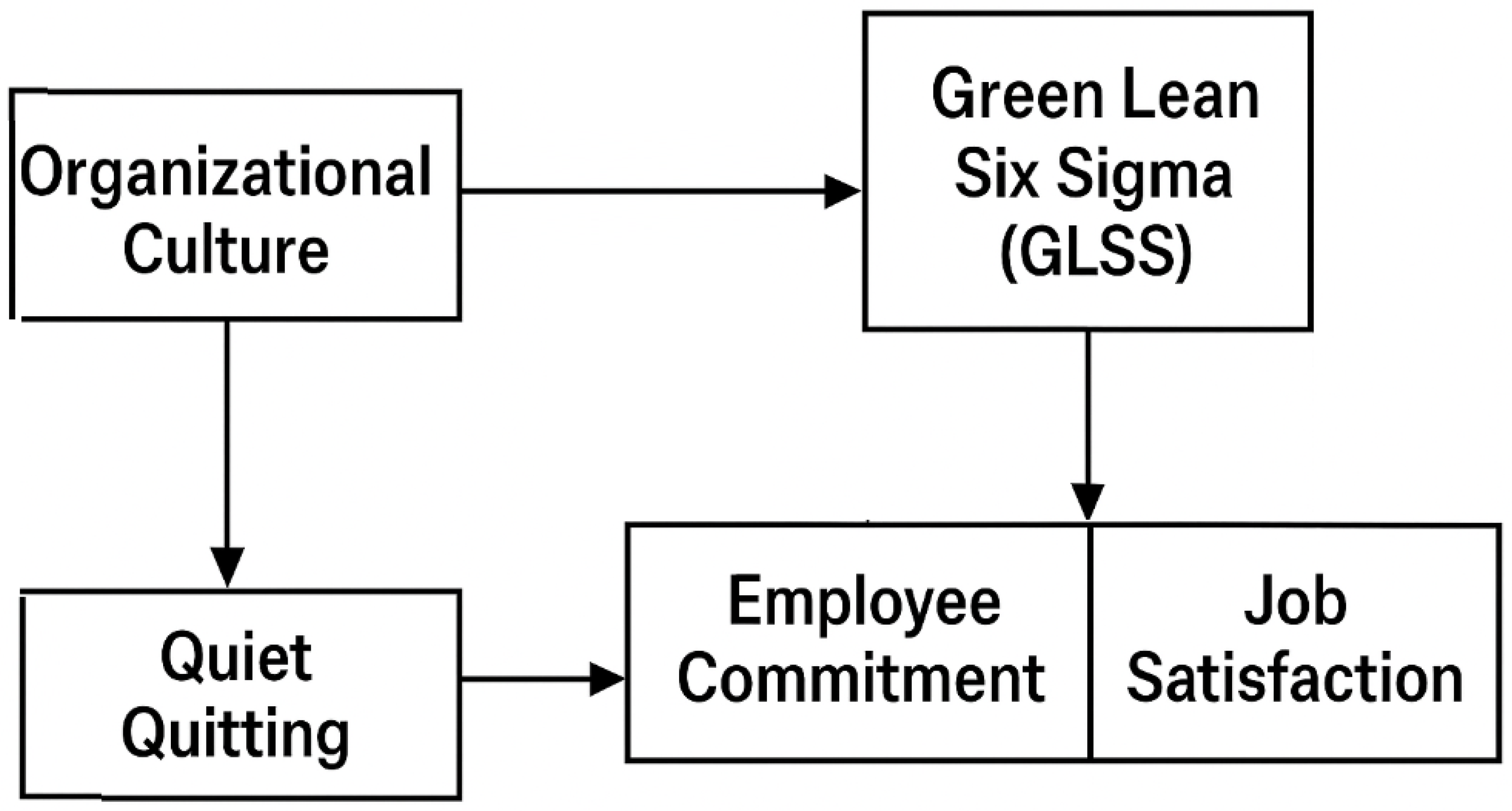
The conceptual framework (Figure 1) guiding this study proposes that both organizational culture and LSS practices independently influence quiet quitting, job commitment, and satisfaction. However, the central tenet is their synergistic relationship: culture amplifies the effectiveness of process improvement initiatives, while the resulting tangible outcomes reinforce cultural trust. This kind of disengagement is positioned here as a behavioral outcome of disengagement, while motivation and satisfaction represent positive outcomes. In this model, internal values and shared workplace norms may also serve as a moderating factor, strengthening the relationship between GLSS practices and workforce outcomes.

3. Methodology

3.1. Research Design

This study adopted a quantitative, cross-sectional research design to explore the relationships among organizational culture, lean-sustainability practices, quiet quitting, and employee outcomes. Data were obtained from 312 healthcare professionals representing clinical, administrative, and managerial positions. A structured questionnaire comprising six sections was administered to capture demographic details, participants’ perceptions of workplace environment, engagement with lean-sustainability practices, and levels of commitment and disengagement. Each construct was assessed using validated multi-item Likert scales, and the instrument was subjected to expert review and pilot testing to ensure clarity and content validity. Reliability analysis indicated satisfactory internal consistency, with Cronbach’s alpha values exceeding 0.88 for all constructs. SEM was conducted using AMOS 28.0 to test the hypothesized model, enabling simultaneous estimation of direct and indirect effects. Model adequacy was confirmed through established fit indices (RMSEA < 0.05, CFI > 0.90, SRMR < 0.08). Ethical considerations were rigorously upheld, including participant anonymity and adherence to GDPR standards. However, it is important to acknowledge that the cross-sectional nature of the study limits the ability to infer causality, allowing only the identification of associations (Nardi, 2018; Stockemer et al., 2019).

3.2. Population and Sample

The study’s target population included healthcare professionals across clinical, administrative, and managerial roles in both public and private organizations, similar to business employees working in service and management functions. A convenience sampling method was employed through an online questionnaire (Schrepp, 2015). While this approach enabled broad participation and efficient data collection, it necessarily limits representativeness, as not all segments of the healthcare workforce were equally captured. Convenience sampling also introduces potential response bias, since individuals with stronger opinions-whether more engaged or disengaged-may have been more motivated to respond. This limitation, although acknowledged, should be considered when interpreting the findings and assessing their generalizability beyond the sampled group.

3.3. Instrument Development

The primary data collection instrument was a structured questionnaire (see Appendix A) adapted from the provided research materials, comprising six distinct sections.
  • Demographic Information: This section collected basic respondent data, including gender, age group, professional role, years of experience in healthcare, and the type of healthcare sector (public, private, NGO).
  • Organizational Culture: A scale consisting of eight items measured respondents’ perceptions of organizational culture using a 5-point Likert scale (1 = Strongly Disagree, 5 = Strongly Agree). The questions focused on aspects such as leadership transparency, employee participation in decision-making, open communication, shared values, and a sense of belonging.
  • Green Lean Six Sigma Practices: A six-item scale, also using a 5-point Likert scale, assessed the perceived application of process improvement methodologies, the integration of sustainability, waste reduction efforts, and staff involvement in continuous improvement initiatives.
  • Quiet Quitting Indicators: This section utilized a seven-item scale to measure the presence of disengagement behaviors. Items were designed to capture reduced emotional investment, avoidance of extra responsibilities, lack of motivation, and performing only the minimum required.
  • Commitment and Engagement: A six-item scale measured employee motivation and engagement, with questions addressing commitment to organizational success, trust in leadership, and pride in being part of the healthcare team.
  • Organizational Support Against Disengagement: This final scale, comprising six items, evaluated the perceived organizational support mechanisms, such as early burnout identification, mental well-being support, work–life balance, and management responsiveness to staff concerns.

3.4. Validity and Reliability

Instrument quality was assessed through both expert review and a pilot test, ensuring content validity and item clarity. Internal consistency was evaluated using Cronbach’s alpha, with all constructs demonstrating high reliability values above 0.88. Although reliability was high, the uniform results may reflect some overestimation and should be interpreted cautiously. Reliability in applied research typically presents more variation across constructs, and future studies should replicate these findings with larger and more diverse samples to further confirm the robustness of the measures (Kaper et al., 2018; How & Cheah, 2023).

3.5. Data Collection and Ethical Considerations

Participants completed a voluntary, anonymous online questionnaire that did not include any personally identifiable or sensitive information. Participation was open to healthcare professionals who chose to respond independently, and no institutional or patient data were accessed.
An introductory statement informed participants about the study’s purpose, their right to withdraw at any time, and the confidentiality and anonymity of their responses. Completion and submission of the questionnaire indicated informed consent.
All data collection and storage procedures adhered to the principles of voluntary participation, privacy protection, and compliance with the General Data Protection Regulation (GDPR).

3.6. Data Analysis

The data analysis plan was structured to provide a comprehensive evaluation of the study’s hypotheses (see Appendix B). Initial analysis involved calculating descriptive statistics (e.g., means, standard deviations, frequencies) to summarize the demographic profile of the respondents and the central tendencies of the key study variables. Reliability analysis was performed by computing Cronbach’s alpha for each scale to confirm their internal consistency (Costa, 2016; Kline, 2023; Nakajima & Sekiguchi, 2025).
Hypothesis testing was conducted using a two-stage approach. First, a correlation analysis was performed to examine the initial relationships between all study variables. The primary method for hypothesis testing, however, was SEM (Mueller & Hancock, 2018; H. Kang & Ahn, 2021). SEM was chosen for its ability to simultaneously test a complex network of relationships, including direct and indirect effects, within a single, unified analytical framework (Westland, 2015; Nardi, 2018). This statistical technique is particularly well-suited to evaluating the conceptual framework, allowing for a more nuanced understanding of the causal pathways and the synergistic effect proposed in the hypotheses. The SEM analysis involved assessing the overall model fit using various indices (e.g., chi-square, RMSEA, CFI) and then examining the standardized path coefficients (β) and their associated p-values to determine the significance of each relationship (Galvan & Pyrczak, 2023). The use of SEM provides a more rigorous approach than traditional regression by confirming the underlying measurement models (Confirmatory Factor Analysis) before testing the structural relationships, thereby providing a more robust test of the theoretical model (Nardi, 2018).

4. Results

The analysis of the collected data tested the proposed hypotheses through descriptive statistics, measurement validation, and SEM. The following subsections present the demographic profile of respondents, descriptive statistics, reliability and validity of measures, and results from the hypothesis testing.

4.1. Respondent Demographic Profile

A total of 312 healthcare professionals participated in the study. Table 1 summarizes their demographic characteristics. Most respondents were female (68.9%) and between 31 and 40 years of age (41.3%). Clinical staff accounted for the largest proportion (56.1%), followed by administrative (28.9%) and managerial staff (15%). More than half of the respondents (54.5%) reported 11–20 years of work experience in the healthcare sector. The majority of participants were employed in the public sector (71.1%), with fewer from the private sector (25.6%) and NGOs (3.3%).

4.2. Descriptive Statistics and Scale Reliability

Table 2 summarizes descriptive statistics and reliability for all variables. The mean for Organizational Culture was relatively high (M = 3.82, SD = 0.65), indicating that respondents generally perceived a supportive and positive workplace environment. Lean-sustainability practices yielded a moderate mean (M = 3.24, SD = 0.81), suggesting that these methodologies were not yet consistently adopted across healthcare institutions and businesses. Quiet Quitting Indicators had a mean of M = 2.45 (SD = 0.77), reflecting moderate levels of disengagement, while Commitment and Engagement displayed the highest mean (M = 4.10, SD = 0.58), highlighting employees’ strong sense of attachment and satisfaction.
Furthermore, reliability analysis confirmed internal consistency for all constructs, with Cronbach’s alpha values above the accepted threshold of 0.70: Organizational Culture (α = 0.91), GLSS Practices (α = 0.88), Quiet Quitting Indicators (α = 0.89), and Commitment and Engagement (α = 0.92). Confirmatory Factor Analysis (CFA) supported convergent validity, as all items loaded significantly on their respective constructs with factor loadings above 0.60. Composite Reliability (CR) values ranged from 0.89 to 0.93, and Average Variance Extracted (AVE) values ranged from 0.53 to 0.63, all surpassing recommended cutoffs (CR > 0.70; AVE > 0.50).

4.3. Confirmatory Factor Analysis

CFA was conducted to evaluate the adequacy of the measurement model prior to hypothesis testing. Results indicated strong reliability and validity across all constructs, with standardized loadings exceeding 0.60, CR ranging from 0.89 to 0.93, and AVE values between 0.53 and 0.63.
The overall measurement model demonstrated good fit (χ2(345) = 485.67, p < 0.001; RMSEA = 0.048; CFI = 0.94; SRMR = 0.045). These indices are within the recommended thresholds (RMSEA < 0.08; CFI > 0.90; SRMR < 0.08), confirming the suitability of the measurement model for subsequent SEM analysis.

4.4. Hypothesis Testing: SEM

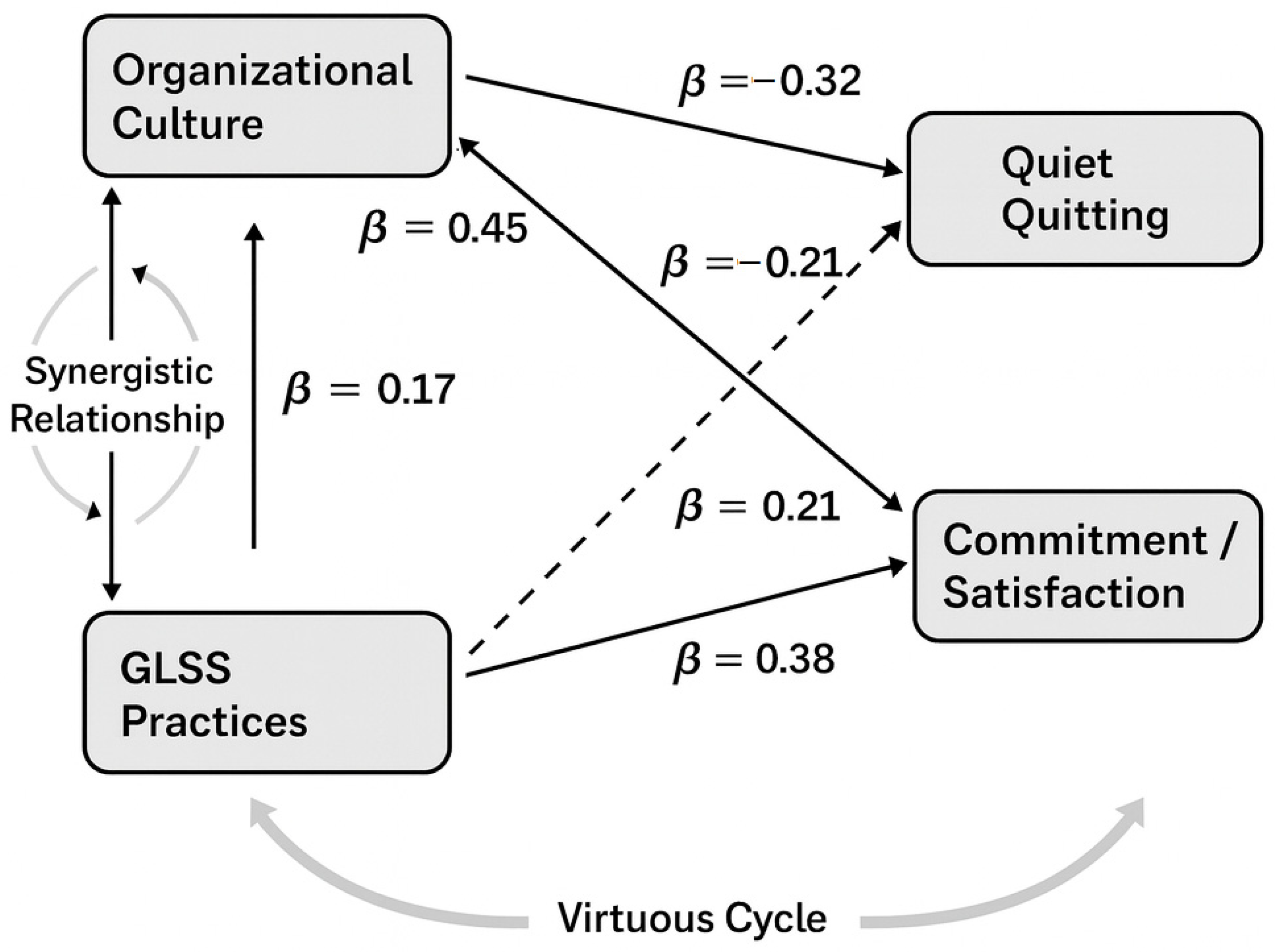
The hypothesized relationships among the constructs were tested using SEM (Figure 2). Model fit indices indicated a satisfactory fit (χ2(345) = 485.67, p < 0.001; RMSEA = 0.048; CFI = 0.94; SRMR = 0.045). Table 3 presents the standardized coefficients (β), 95% confidence intervals (CI), and significance levels. Figure 2 illustrates the final model.
All five hypotheses were supported:
H1: 
Organizational Culture → Quiet Quitting A stronger organizational culture significantly reduced disengagement behaviors (β = −0.32, 95% CI [−0.42, −0.22], p < 0.001). Practically, this indicates that employees in organizations with a supportive and cohesive culture are less likely to exhibit disengagement behaviors, such as doing the bare minimum or disengaging emotionally from their work.
H2: 
GLSS Practices → Quiet Quitting Greater implementation of GLSS practices was also associated with lower disengagement (β = −0.21, 95% CI [−0.29, −0.13], p < 0.01). This suggests that structured improvement methodologies foster efficiency and inclusion, which reduce withdrawal behaviors.
H3: 
Organizational Culture → Commitment/Satisfaction Organizational culture had a strong positive effect on employee commitment and job satisfaction (β = 0.45, 95% CI [0.33, 0.57], p < 0.001), indicating that a positive cultural environment enhances motivation, loyalty, and attachment to the organization.
H4: 
GLSS Practices → Commitment/Satisfaction GLSS practices significantly increased commitment and satisfaction (β = 0.38, 95% CI [0.28, 0.48], p < 0.001), showing that employees perceive higher engagement when continuous improvement methodologies are effectively applied.
H5: 
Organizational Culture → GLSS Practices → Commitment/Satisfaction (Indirect Effect) Organizational culture indirectly improved motivation and satisfaction through lean-sustainability practices (β = 0.17, 95% CI [0.09, 0.25], p < 0.05). This result highlights the synergistic effect: while culture and GLSS are beneficial independently, their combination produces a stronger positive impact on employee outcomes than either factor alone.
Presenting standardized coefficients alongside confidence intervals provides a clearer understanding of effect sizes and strengthens interpretation beyond mere p-value significance. Collectively, these findings underscore the crucial role of organizational culture and lean-sustainability practices in both reducing quiet quitting and enhancing employee motivation and satisfaction, offering actionable insights for healthcare managers.

5. Discussion

5.1. Interpretation of Key Findings and Alignment with Literature

The results of this study indicate that both organizational and business culture and LSS practices serve as significant predictors of reduced disengagement and increased job commitment among healthcare professionals. These findings are consistent with prior research that underscores the critical role of supportive organizational environments in reducing burnout and disengagement (Hoxha et al., 2024; Knapp, 2015; Chugani et al., 2017; Gün et al., 2025). Furthermore, the observed association between lean-sustainability practices and higher levels of staff satisfaction reinforces earlier evidence that Lean Six Sigma contributes to improved efficiency and safety in healthcare delivery (Ilangakoon et al., 2022; McDermott et al., 2022a). Importantly, this study highlights that organizational culture and GLSS are not only independently beneficial but also synergistic, thereby extending existing literature by demonstrating their combined influence on workforce resilience and long-term sustainability (Capolupo et al., 2024; Ito et al., 2022; Ng et al., 2025).
Moreover, recent contributions further illustrate the risks posed when culture is unsupportive. Galanis et al. (2024), in a national study of nurses in Greece, documented that manipulative supervisory practices substantially increased burnout and turnover intentions, with nearly half of participants considering leaving their jobs. Their findings highlight the fragility of workforce motivation when organizational climates lack trust and authenticity. This context underscores that while positive culture and GLSS reinforce each other, negative dynamics can erode these mechanisms, threatening both staff well-being and healthcare service quality.

5.2. The Synergistic Effect of Culture and GLSS: A Virtuous Cycle of Improvement

This study shows that a supportive culture forms the psychological foundation for successful GLSS adoption. Cultures marked by openness, trust, and collaboration foster active staff engagement in process improvement initiatives. In turn, successful outcomes reinforce cultural norms of transparency, sustainability, and continuous improvement. This reciprocal relationship reflects a positive feedback loop, consistent with the Person-Centered Lean Six Sigma (PCLSS) model, which emphasizes staff empowerment and respect for individuals as central to sustainable change (Bourke et al., 2024).
Without such a supportive cultural base, process improvement efforts risk being perceived as top-down directives, potentially exacerbating stress and disengagement (Capolupo et al., 2024; Moisoglou et al., 2025). Conversely, cultures that foster psychological safety enable staff to engage meaningfully in problem-solving, thereby transforming GLSS into a participatory process (Ito et al., 2022; McDermott et al., 2022a; Zhang et al., 2025; Kaswan et al., 2024; Kaswan & Rathi, 2020). The integration of the “green” dimension further strengthens this alignment, embedding sustainability and social responsibility into organizational goals. By framing efficiency gains as contributions to environmental stewardship and community well-being, GLSS resonates with healthcare professionals’ intrinsic values, reinforcing both motivation and engagement (Nuru, 2024; dos Santos & Pais, 2025; Zhu et al., 2018; Rathi et al., 2023; Sijm-Eeken et al., 2024).
This framing transforms routine tasks, such as waste reduction, into meaningful contributions to broader ethical commitments, thereby enhancing morale and reducing disengagement. Over time, the dual emphasis on performance and sustainability nurtures both efficiency and organizational loyalty, with culture and lean-sustainability practices reinforcing one another in a cycle of responsiveness and resilience (Dekker et al., 2022; Hoxha et al., 2024; Aydın, 2018; Gholami et al., 2021; Alquwez, 2023).
Overall, the evidence indicates that positive organizational culture is strongly associated with greater engagement in GLSS initiatives, while successful GLSS adoption strengthens cultural values. This reciprocal relationship underscores the role of leadership in sustaining a cycle of improvement, ethical alignment, and long-term workforce motivation.

5.3. Visualizing the Synergy Between Organizational Culture and GLSS

While evidence for the synergy between organizational culture and Green Lean Six Sigma (GLSS) is strong, it is important to acknowledge potential limitations. Critics argue that Lean-based initiatives may be misinterpreted as cost-cutting strategies when imposed in a top-down manner, particularly within resource-constrained healthcare systems (Sun et al., 2023). If staff perceive GLSS as prioritizing financial efficiency over professional empowerment, such initiatives risk intensifying stress and disengagement, potentially leading to quiet quitting rather than mitigating it. This concern highlights the necessity of authentic leadership and participatory implementation to ensure credibility and alignment with professional values. Additionally, practical barriers such as insufficient staffing, heavy workloads, or lack of training represent significant challenges to the effective adoption of GLSS. Without adequate investment in capacity-building and organizational readiness, implementation risks becoming superficial, yielding limited or unsustainable outcomes (Swarnakar et al., 2021; Rathi et al., 2023).
Despite these challenges, the relationship between organizational culture and LSS is best understood as reciprocal and synergistic. A supportive culture-characterized by trust, transparency, and psychological safety-creates the conditions for such practices to be successfully adopted. In turn, well-implemented initiatives reinforce cultural values by promoting leadership responsiveness, embedding sustainability, and institutionalizing continuous improvement (Fukami, 2024; Ito et al., 2022; Clery et al., 2021; Mortimer et al., 2018; Anokha & Reddy, 2025).
The conceptual model (Figure 3) illustrates this dynamic. Organizational culture enables the effective implementation of lean-sustainability practices, which subsequently generate positive workforce outcomes. Crucially, the model emphasizes bidirectional reinforcement: while culture provides the foundation for these initiatives, successful projects strengthen cultural norms of openness, sustainability, and improvement. As mentioned before, this process creates a reinforcing loop where culture and continuous improvement strengthen each other. The resulting synergy enhances employee engagement, promotes ethical alignment, and supports sustainable organizational development.
Conceptual models illustrate the synergy between organizational culture, process optimization practices, and employee outcomes. Supportive cultures facilitate adoption, while successful initiatives reinforce values of sustainability and continuous improvement. Together, these dynamics are associated with reduced employee disengagement and stronger organizational commitment.

5.4. Practical Implications for Healthcare Administrators and Business Leaders

This study underscores the necessity for leaders and managers to pursue an integrated strategy that merges organizational culture enhancement with the implementation of Green Lean Six Sigma (GLSS) initiatives. Building a strong cultural foundation characterized by transparency, participative leadership, and mutual trust is a prerequisite for successful process improvement. Leaders should prioritize investments in leadership development, establish reliable feedback loops, and institutionalize recognition practices that reinforce psychological safety and engagement (Swarnakar et al., 2021; Sohal et al., 2022). Such measures create the social infrastructure upon which sustainable improvement can be achieved and help pre-empt the disengagement that leads to quiet quitting.
Equally, GLSS initiatives must be framed as inclusive, value-driven collaborations rather than managerial mandates. Empowering employees to co-design and lead improvement processes transforms Lean Six Sigma from a procedural intervention into a participatory mechanism that enhances both efficiency and job satisfaction (Igoe et al., 2024; Rudnick et al., 2023). This approach not only refines operations but also cultivates ownership and accountability, key antidotes to professional withdrawal and turnover intentions.
Integrating sustainability principles into GLSS further amplifies its organizational impact. Aligning efficiency objectives with environmental and ethical responsibility allows employees to perceive improvement projects as extensions of their professional and moral commitments (Vasileiou et al., 2024; Tsekouropoulos et al., 2025). This alignment reframes productivity gains as socially meaningful contributions, reinforcing intrinsic motivation and commitment while avoiding the perception of austerity-driven reforms.
Practical applications include establishing cross-functional “green lean” teams, embedding sustainability metrics in performance dashboards, and offering interdisciplinary training programs that merge technical problem-solving with education in environmental ethics and social responsibility (McDermott et al., 2022a; Swarnakar et al., 2021). These initiatives foster synergy between professional identity and organizational performance, reinforcing resilience in the workforce.
Nonetheless, leaders must recognize that cultural dynamics can also undermine improvement efforts. As highlighted by Galanis et al. (2024), negative supervisory behaviors or manipulative leadership practices can destabilize even the most well-intentioned initiatives. Regular cultural assessments, therefore, should accompany GLSS implementation to identify and mitigate latent risks that might compromise engagement or care quality.
Ultimately, integrating a supportive culture with participatory GLSS initiatives offers a coherent framework for reducing quiet quitting, reinforcing employee commitment, and embedding long-term sustainability. By harmonizing efficiency with ethical purpose, healthcare organizations can advance operational excellence while safeguarding the well-being, motivation, and moral integrity of their workforce.
Key Managerial Recommendations:
  • Strengthen cultural foundations before or alongside GLSS initiatives through transparent leadership and active staff engagement.
  • Adopt participatory GLSS practices that empower employees to co-design process improvements.
  • Embed sustainability metrics into improvement programs to align efficiency with environmental and ethical goals.
  • Create interdisciplinary “green lean” teams to promote collaboration and innovation.
  • Conduct regular cultural assessments to detect risks such as toxic supervision or disengagement.
  • Invest in ethical and environmental training that integrates professional purpose with organizational strategy.

5.5. Limitations and Future Research

Several limitations of this study warrant careful consideration. The reliance on a cross-sectional design constrains the ability to establish temporal ordering or causal mechanisms among organizational culture, improvement practices, quiet quitting, and employee outcomes. While the findings provide valuable correlational insights, they cannot capture how these relationships evolve over time. Future research should therefore employ longitudinal designs to trace the progression of disengagement behaviors and examine whether interventions such as GLSS produce sustained changes in commitment and satisfaction. Experimental or quasi-experimental approaches could further strengthen causal inference by isolating the effects of specific improvement initiatives within healthcare organizations.
Another limitation concerns the sampling strategy. The use of convenience sampling introduces the possibility of systematic bias, as individuals who elected to participate may differ in meaningful ways from those who did not. This reduces representativeness and limits the generalizability of the results. Expanding future studies to include randomized or stratified sampling across diverse professional groups would enhance external validity. Moreover, the single-country context restricts the applicability of findings to healthcare systems with distinct institutional arrangements and cultural norms. Comparative, multi-country investigations could illuminate how contextual differences shape both the adoption and long-term sustainability of process optimization practices.
A further limitation lies in the reliance on self-reported measures. Although validated instruments and assurances of confidentiality were employed, responses may still be influenced by social desirability or underreporting of disengagement behaviors. To mitigate this concern, future research could incorporate objective indicators, such as performance metrics, absenteeism records, or turnover data, alongside perceptual measures. Integrating qualitative methods—such as interviews, ethnographic observation, or focus groups—would also provide richer insights into how employees interpret and respond to improvement initiatives, particularly in settings where skepticism or resistance may undermine their effectiveness.
Taken together, these limitations highlight the need for more robust methodological designs. Longitudinal, cross-national, and mixed-methods approaches would not only strengthen causal inference but also broaden the scope of generalizability. By combining quantitative rigor with qualitative depth, future research can more comprehensively capture the complex interplay between organizational culture, GLSS practices, and the dynamics of quiet quitting, thereby advancing both theoretical understanding and practical strategies for fostering workforce resilience in healthcare.

6. Conclusions

This research establishes that organizational culture and GLSS practices each play a vital role in reducing quiet quitting while jointly creating a reinforcing cycle that enhances commitment, satisfaction, and workforce stability. A transparent and supportive culture cultivates trust, psychological safety, and collaboration, providing the foundation for improvement initiatives to flourish. In turn, effective process optimization practices embed these cultural values into daily operations, strengthening organizational resilience and sustainability.
Theoretically, the study contributes by reframing quiet quitting as a systemic phenomenon rather than an individual behavior, emphasizing the need for integrated cultural and operational responses. It extends the literature by linking human-centered leadership with process improvement frameworks, offering a nuanced understanding of how organizational systems interact to shape engagement. Practically, the findings provide healthcare and business leaders with a roadmap for aligning cultural development and structured improvement programs. Leadership training should focus on fostering trust, participatory problem-solving, and shared accountability, positioning Lean Six Sigma as an inclusive, adaptive mechanism for continuous development rather than a top-down intervention.
Although the cross-sectional and self-reported nature of this study limits causal claims, its insights lay a strong empirical and conceptual foundation for future research. Longitudinal and mixed-methods studies are recommended to examine how cultural and operational dynamics co-evolve over time and across diverse healthcare contexts. Such work will deepen understanding of how sustainable engagement and well-being can be achieved through the reciprocal integration of culture and improvement practices.

Author Contributions

Conceptualization, A.V. and G.T. and G.H.; methodology, G.T.; software, A.V., D.T. and E.G.; validation, A.V. and G.H.; formal analysis, D.T.; investigation, G.H.; resources, A.V., G.T. and E.G.; data curation, D.T.; writing—original draft preparation, A.V.; writing—review and editing, A.V., G.H. and E.G.; visualization, D.T.; supervision, G.T.; project administration, A.V. and G.H.; funding acquisition, G.T. All authors have read and agreed to the published version of the manuscript.

Funding

This research received no external funding.

Institutional Review Board Statement

The study was conducted in accordance with the Declaration of Helsinki, and approved by the Institutional Review Board of International Hellenic University—Department of Organisation Management, Marketing and Tourism (protocol code IHU-OMMT-0172025 and date of approval 17 January 2025).

Informed Consent Statement

Informed consent was obtained from all subjects involved in the study.

Data Availability Statement

The original contributions presented in this study are included in the article. Further inquiries can be directed to the corresponding author.

Conflicts of Interest

The authors declare no conflict of interest.

Abbreviations

The following abbreviations are used in this manuscript:
GLSSGreen Lean Six Sigma
LSSLean Six Sigma
SEMStructural Equation Modeling

Appendix A

Full Questionnaire
Questionnaire Title: Quiet Quitting in Healthcare Staff: The Role of Organizational Culture and Green Lean Six Sigma (GLSS)
Section 1: Demographic Information
  • Gender: ☐ Female ☐ Male ☐ Other ☐ Prefer not to say
  • Age Group: ☐ 18–30 ☐ 31–40 ☐ 41–50 ☐ 51–60 ☐ 61+ ☐ Prefer not to say
  • Professional Role: ☐ Clinical Staff ☐ Administrative Staff ☐ Managerial Staff ☐ Other: _______
  • Years of Experience in Healthcare: ☐ 0–4 ☐ 5–10 ☐ 11–20 ☐ 21–30 ☐ 31+ ☐ Prefer not to say
  • Healthcare Sector: ☐ Public ☐ Private ☐ NGO ☐ Other: _______
Section 2: Organizational Culture (Likert Scale 1–5)
5 = Strongly Agree … 1 = Strongly Disagree
  • Leadership in my organization operates with transparency and integrity.
  • Employees participate actively in decision-making processes.
  • Open communication between departments is consistently encouraged.
  • The organization promotes shared values and teamwork.
  • New staff are smoothly integrated into the organizational culture.
  • I feel a strong sense of belonging within the organization.
  • Feedback and continuous improvement are core values in my workplace.
  • Personal values are aligned with the organization’s mission and culture.
Section 3: Green Lean Six Sigma Practices (Likert Scale 1–5)
5 = Strongly Agree … 1 = Strongly Disagree
  • My organization applies process improvement methodologies such as Lean or Six Sigma.
  • Sustainability is considered in day-to-day healthcare operations.
  • Waste reduction and efficiency are prioritized through structured initiatives.
  • Staff are trained and involved in continuous improvement practices.
  • GLSS initiatives have improved my workflow or reduced unnecessary tasks.
  • The organization regularly evaluates and adjusts its processes based on employee feedback.
Section 4: Quiet Quitting Indicators (Likert Scale 1–5)
5 = Strongly Agree … 1 = Strongly Disagree
  • I feel less emotionally invested in my work than before.
  • I avoid taking on responsibilities outside my basic job description.
  • I often think of leaving but don’t express it.
  • I am disengaged during meetings or organizational activities.
  • I rarely contribute ideas even when I have suggestions.
  • I perform only the minimum required to meet job expectations.
  • My work-related motivation has significantly decreased in recent months.
Section 5: Commitment and Engagement (Likert Scale 1–5)
5 = Strongly Agree … 1 = Strongly Disagree
  • I feel committed to the success of this organization.
  • I trust the decisions made by leadership.
  • I would recommend this healthcare facility as a good place to work.
  • My work is appreciated and recognized.
  • I see a future for myself in this organization.
  • I am proud to be part of this healthcare team.
Section 6: Organizational Support Against Disengagement (Likert Scale 1–5)
5 = Strongly Agree … 1 = Strongly Disagree
  • The organization identifies and addresses employee burnout early.
  • Support mechanisms are in place for mental well-being.
  • There is a good balance between work and personal life.
  • Management listens and responds to staff concerns.
  • GLSS practices empower me to stay engaged and proactive.
  • The workplace promotes innovation and self-improvement.

Appendix B

Supplemental Statistical Outputs
Appendix B provides detailed statistical outputs, including the correlation matrix, model fit indices, regression weights, and indirect effects. These results strengthen the rigor of the analysis by making the underlying calculations transparent. However, the lack of graphical representations, such as path diagrams or visual summaries of model fit, limits interpretability for readers less familiar with advanced statistics. Including visuals-particularly a schematic of the tested structural equation model-would improve accessibility and enhance the clarity of statistical findings.
Table A1. Correlation Matrix of Study Variables.
Variable1234
1. Organizational Culture1.00
2. GLSS Practices0.62 ***1.00
3. Quiet Quitting−0.55 ***−0.48 ***1.00
4. Commitment/Satisfaction0.78 ***0.65 ***−0.61 ***1.00
Note: *** p < 0.001.
Table A2. Structural Equation Model Fit Indices.
IndexValueInterpretation
χ2485.67The model has a significant difference from the perfect model, which is common in large samples.
Degrees of Freedom (df)345
p-value<0.001
Root Mean Square Error of Approximation (RMSEA)0.048Good fit (values < 0.05 are excellent, <0.08 are acceptable)
Comparative FitIndex (CFI)0.94Good fit (values > 0.90 are acceptable, >0.95 are excellent)
Standardized Root Mean Square Residual (SRMR)0.045Good fit (values < 0.08 are generally considered a good fit)
Table A3. Regression Weights (Unstandardized and Standardized).
PathUnstandardized Coef. (B)Standard Error (SE)Standardized Coef. (β)p-Value
Quiet Quitting <- Organizational Culture−0.360.05−0.32<0.001
Quiet Quitting <- GLSS Practices−0.210.04−0.21<0.01
Commitment/Satisfaction <- Organizational Culture0.520.060.45<0.001
Commitment/Satisfaction <- GLSS Practices0.410.050.38<0.001
Table A4. Indirect Effects Analysis.
Indirect PathUnstandardized Coef. (B)Standard Error (SE)Standardized Coef. (β)p-Value
Organizational Culture -> GLSS Practices -> Commitment/Satisfaction0.090.040.17<0.05

References

  1. Agris, J. L., Gelmon, S., Wynia, M. K., Buder, B., Emma, K. J., Alasmar, A., & Frankel, R. (2024). How leaders at high-performing healthcare organizations think about organizational professionalism. Journal of Law, Medicine & Ethics, 52(4), 922–935. [Google Scholar] [CrossRef]
  2. Alquwez, N. (2023). Association between nurses’ experiences of workplace incivility and the culture of safety of hospitals: A cross-sectional study. Journal of Clinical Nursing, 32(1–2), 320–331. [Google Scholar] [CrossRef]
  3. Alvarado-Ramírez, K. M., Pumisacho-Álvaro, V. H., Miguel-Davila, J. Á., & Suárez Barraza, M. F. (2018). Kaizen, a continuous improvement practice in organizations: A comparative study in companies from Mexico and Ecuador. TQM Journal, 30(4), 255–268. [Google Scholar] [CrossRef]
  4. Anokha, V., & Reddy, A. V. (2025). Beyond the paycheck: Unlocking employee engagement. In R. Garg (Ed.), Harnessing happiness and wisdom for organizational well-being (pp. 61–84). IGI Global. [Google Scholar]
  5. Antony, J., Lancastle, J., McDermott, O., Bhat, S., Parida, R., & Cudney, E. A. (2023). An evaluation of Lean and Six Sigma methodologies in the national health service. International Journal of Quality & Reliability Management, 40(1), 25–52. [Google Scholar]
  6. Atiq, A., Sullman, M., & Apostolou, M. (2025). The silent shift: Exploring the phenomenon of quiet quitting in modern workplaces. Personnel Review, 1–23. [Google Scholar] [CrossRef]
  7. Aydın, B. (2018). The role of organizational culture on leadership styles. Manas Journal of Social Studies, 7(1), 267–280. [Google Scholar]
  8. Banaszak-Holl, J., Castle, N. G., Lin, M. K., Shrivastwa, N., & Spreitzer, G. (2015). The role of organizational culture in retaining nursing workforce. The Gerontologist, 55(3), 462–471. [Google Scholar] [CrossRef]
  9. Bourke, C., Mulaniff, A., Tang, B., Waya, O., & Teeling, S. P. (2024). Using a person-centred model of Lean Six Sigma to support process improvement within a paediatric primary eye care clinic. Research Square. preprint. [Google Scholar] [CrossRef]
  10. Boy, Y., & Sürmeli, M. (2023). Quiet quitting: A significant risk for global healthcare. Journal of Global Health, 13, 03014. [Google Scholar] [CrossRef]
  11. Brubakk, K., Svendsen, M. V., Deilkås, E. T., Hofoss, D., Barach, P., & Tjomsland, O. (2021). Hospital work environments affect the patient safety climate: A longitudinal follow-up using a logistic regression analysis model. PLoS ONE, 16(10), e0258471. [Google Scholar] [CrossRef] [PubMed]
  12. Capolupo, N., Rosa, A., & Adinolfi, P. (2024). The liaison between performance, strategic knowledge management, and lean six sigma: Insights from healthcare organizations. Knowledge Management Research & Practice, 22(3), 314–326. [Google Scholar]
  13. Carney, M. (2011). Influence of organizational culture on quality healthcare delivery. International Journal of Health Care Quality Assurance, 24(7), 523–539. [Google Scholar] [CrossRef]
  14. Chugani, N., Kumar, V., Garza-Reyes, J. A., Rocha-Lona, L., & Upadhyay, A. (2017). Investigating the green impact of Lean, Six Sigma and Lean Six Sigma: A systematic literature review. International Journal of Lean Six Sigma, 8(1), 7–32. [Google Scholar] [CrossRef]
  15. Clery, P., d’Arch Smith, S., Marsden, O., & Leedham-Green, K. (2021). Sustainability in quality improvement (SusQI): A case study in undergraduate medical education. BMC Medical Education, 21(1), 425. [Google Scholar] [CrossRef] [PubMed]
  16. Costa, V. (2016). Correlation and regression. In A. R. Rao, & K. H. Hamed (Eds.), Fundamentals of statistical hydrology (pp. 391–440). Springer International Publishing. [Google Scholar]
  17. Crocker, D. A. (2008). Ethics of global development: Agency, capability, and deliberative democracy. Cambridge University Press. [Google Scholar]
  18. Cronley, C., & Kim, Y. (2017). Intentions to turnover: Testing the moderated effects of organizational culture, as mediated by job satisfaction, within the Salvation Army. Leadership & Organization Development Journal, 38(2), 194–209. [Google Scholar]
  19. Dekker, S., Oates, A., & Rafferty, J. (Eds.). (2022). Restorative just culture in practice: Implementation and evaluation. CRC Press. [Google Scholar]
  20. dos Santos, N. R., & Pais, L. (2025). Decent work, human needs, demands, and resources. In Decent work-life-flow and organizational sustainability: Achieving balance, health, and performance in organizations (pp. 31–56). Springer Nature. [Google Scholar]
  21. Erdil, N. O., Aktas, C. B., & Arani, O. M. (2018). Embedding sustainability in lean six sigma efforts. Journal of Cleaner Production, 198, 520–529. [Google Scholar] [CrossRef]
  22. Fukami, T. (2024). Enhancing healthcare accountability for administrators: Fostering transparency for patient safety and quality enhancement. Cureus, 16(8), e66007. [Google Scholar] [CrossRef]
  23. Galanis, P., Katsiroumpa, A., Vraka, I., Siskou, O., Konstantakopoulou, O., Katsoulas, T., Moisoglou, I., Gallos, P., & Kaitelidou, D. (2024). Nurses quietly quit their job more often than other healthcare workers: An alarming issue for healthcare services. International Nursing Review, 71(4), 850–859. [Google Scholar] [CrossRef] [PubMed]
  24. Galvan, M. C., & Pyrczak, F. (2023). Writing empirical research reports: A basic guide for students of the social and behavioral sciences. Routledge. [Google Scholar]
  25. Gholami, H., Jamil, N., Mat Saman, M. Z., Streimikiene, D., Sharif, S., & Zakuan, N. (2021). The application of green lean six sigma. Business Strategy and the Environment, 30(4), 1913–1931. [Google Scholar] [CrossRef]
  26. Graban, M. (2018). Lean hospitals: Improving quality, patient safety, and employee engagement (3rd ed.). Productivity Press. [Google Scholar]
  27. Gün, İ., Balsak, H., & Ayhan, F. (2025). Mediating effect of job burnout on the relationship between organisational support and quiet quitting in nurses. Journal of Advanced Nursing, 81(8), 4644–4652. [Google Scholar] [CrossRef] [PubMed]
  28. Harhash, D., Ahmed, M. Z., & Elshereif, H. (2020). Healthcare organizational culture: A concept analysis. Menoufia Nursing Journal, 5(1), 65–77. [Google Scholar] [CrossRef]
  29. How, M. L., & Cheah, S. M. (2023). Business renaissance: Opportunities and challenges at the dawn of the quantum computing era. Businesses, 3(4), 585–605. [Google Scholar] [CrossRef]
  30. Hoxha, G., Simeli, I., Theocharis, D., Vasileiou, A., & Tsekouropoulos, G. (2024). Sustainable healthcare quality and job satisfaction through organizational culture: Approaches and outcomes. Sustainability, 16(9), 3603. [Google Scholar] [CrossRef]
  31. Hussein, M., Pavlova, M., Ghalwash, M., & Groot, W. (2021). The impact of hospital accreditation on the quality of healthcare: A systematic literature review. BMC Health Services Research, 21(1), 1057. [Google Scholar] [CrossRef]
  32. Igoe, A., O’Connor, A., O’Reilly, A., Tobin, A. M., & Bourke, J. F. (2024). Implementing person-centred Lean Six Sigma to transform dermatology waiting lists: A case study from a major teaching hospital in Dublin, Ireland. Science, 6(4), 72. [Google Scholar] [CrossRef]
  33. Ilangakoon, T. S., Weerabahu, S. K., Samaranayake, P., & Wickramarachchi, R. (2022). Adoption of Industry 4.0 and lean concepts in hospitals for healthcare operational performance improvement. International Journal of Productivity and Performance Management, 71(6), 2188–2213. [Google Scholar] [CrossRef]
  34. Ito, A., Sato, K., Yumoto, Y., Sasaki, M., & Ogata, Y. (2022). A concept analysis of psychological safety: Further understanding for application to health care. Nursing Open, 9(1), 467–489. [Google Scholar] [CrossRef] [PubMed]
  35. Jekiel, C. M. (2020). Lean human resources: Redesigning HR processes for a culture of continuous improvement. Productivity Press. [Google Scholar]
  36. Kakouris, A., Athanasiadis, V., & Sfakianaki, E. (2025a). Industry 4.0 and lean thinking: The critical success factors perspective. International Journal of Quality & Reliability Management, 42(6), 1625–1671. [Google Scholar]
  37. Kakouris, A., Sfakianaki, E., & Kapaj, M. (2025b). Lean readiness factors for higher education. International Journal of Lean Six Sigma, 16(3), 752–777. [Google Scholar] [CrossRef]
  38. Kakouris, A., Sfakianaki, E., & Tsioufis, M. (2022). Lean thinking in lean times for education. Annals of Operations Research, 316(1), 657–697. [Google Scholar] [CrossRef]
  39. Kang, H., & Ahn, J. W. (2021). Model setting and interpretation of results in research using structural equation modeling: A checklist with guiding questions for reporting. Asian Nursing Research, 15(3), 157–162. [Google Scholar] [CrossRef] [PubMed]
  40. Kang, J., Kim, H., & Cho, O. H. (2023). Quiet quitting among healthcare professionals in hospital environments: A concept analysis and scoping review protocol. BMJ Open, 13(11), e077811. [Google Scholar] [CrossRef]
  41. Kaper, M. S., Sixsmith, J., Koot, J. A., Meijering, L. B., van Twillert, S., Giammarchi, C., Bevilacqua, R., Barry, M. M., Doyle, P., Reijneveld, S. A., & de Winter, A. F. (2018). Developing and pilot testing a comprehensive health literacy communication training for health professionals in three European countries. Patient Education and Counseling, 101(1), 152–158. [Google Scholar] [CrossRef]
  42. Kargas, A. D., & Varoutas, D. (2015). On the relation between organizational culture and leadership: An empirical analysis. Cogent Business & Management, 2(1), 1055953. [Google Scholar] [CrossRef]
  43. Kaswan, M. S., & Rathi, R. (2020). Green Lean Six Sigma for sustainable development: Integration and framework. Environmental Impact Assessment Review, 83, 106396. [Google Scholar] [CrossRef]
  44. Kaswan, M. S., Rathi, R., Antony, J., Cross, J., Garza-Reyes, J. A., Singh, M., Preet Singh, I., & Sony, M. (2024). Integrated Green Lean Six Sigma-Industry 4.0 approach to combat COVID-19: From literature review to framework development. International Journal of Lean Six Sigma, 15(1), 50–79. [Google Scholar] [CrossRef]
  45. Katsiroumpa, A., Moisoglou, I., Konstantakopoulou, O., Kalogeropoulou, M., Gallos, P., Tsiachri, M., & Galanis, P. (2024). Practice environment scale of the nursing work index (5 items version): Translation and validation in Greek. International Journal of Caring Sciences, 17(3), 1509. [Google Scholar]
  46. Kline, R. B. (2023). Principles and practice of structural equation modeling (5th ed.). Guilford Publications. [Google Scholar]
  47. Knapp, S. (2015). Lean Six Sigma implementation and organizational culture. International Journal of Health Care Quality Assurance, 28(8), 855–863. [Google Scholar] [CrossRef] [PubMed]
  48. Kubiak, T. M., & Benbow, D. W. (2016). The certified six sigma black belt handbook. Quality Press. [Google Scholar]
  49. Kyriakeli, G., Georgiadou, A., Lithoxopoulou, M., Tsimtsiou, Z., & Kotsis, V. (2025a). The impact of ISO certification procedures on patient safety culture in public hospital departments. Healthcare, 13(6), 661. [Google Scholar] [CrossRef]
  50. Kyriakeli, G., Georgiadou, A., Symeonidou, A., Tsimtsiou, Z., Dardavesis, T., & Kotsis, V. (2025b). Patient safety culture among nurses in hospital settings worldwide: A systematic review and meta-analysis. The Joint Commission Journal on Quality and Patient Safety, 51(5), 350–360. [Google Scholar] [CrossRef]
  51. Lin, C. Y., & Huang, C. K. (2021). Employee turnover intentions and job performance from a planned change: The effects of an organizational learning culture and job satisfaction. International Journal of Manpower, 42(3), 409–423. [Google Scholar] [CrossRef]
  52. Malik, R. F., Buljac-Samardžić, M., Akdemir, N., Hilders, C., & Scheele, F. (2020). What do we really assess with organisational culture tools in healthcare? An interpretive systematic umbrella review of tools in healthcare. BMJ Open Quality, 9(1), e000826. [Google Scholar] [CrossRef] [PubMed]
  53. Marsden, O., Clery, P., D’Arch Smith, S., & Leedham-Green, K. (2021). Sustainability in quality improvement (SusQI): Challenges and strategies for translating undergraduate learning into clinical practice. BMC Medical Education, 21(1), 555. [Google Scholar] [CrossRef] [PubMed]
  54. McDermott, O., Antony, J., Bhat, S., Jayaraman, R., Rosa, A., Marolla, G., & Parida, R. (2022a). Lean six sigma in healthcare: A systematic literature review on challenges, organisational readiness and critical success factors. Processes, 10(10), 1945. [Google Scholar] [CrossRef]
  55. McDermott, O., Antony, J., Douglas, J., Antony, F., & Sony, M. (2022b). Lean Six Sigma in healthcare: A systematic literature review on motivations and benefits. Processes, 10(10), 1910. [Google Scholar] [CrossRef]
  56. Mirji, H., Bhavsar, D., & Kapoor, R. (2023). Impact of organizational culture on employee engagement and effectiveness. American Journal of Economics and Business Management, 6(1), 1–9. [Google Scholar]
  57. Moisoglou, I., Katsiroumpa, A., Katsapi, A., Konstantakopoulou, O., & Galanis, P. (2025). Poor nurses’ work environment increases quiet quitting and reduces work engagement: A cross-sectional study in Greece. Nursing Reports, 15(1), 19. [Google Scholar] [CrossRef]
  58. Mortimer, F., Isherwood, J., Wilkinson, A., & Vaux, E. (2018). Sustainability in quality improvement: Redefining value. Future Healthcare Journal, 5(2), 88–92. [Google Scholar] [CrossRef]
  59. Mueller, R. O., & Hancock, G. R. (2018). Structural equation modeling. In The reviewer’s guide to quantitative methods in the social sciences (pp. 445–456). Routledge. [Google Scholar]
  60. Nakajima, H., & Sekiguchi, T. (2025). Is business planning useful for entrepreneurs? A review and recommendations. Businesses, 5(1), 10. [Google Scholar] [CrossRef]
  61. Nardi, P. M. (2018). Doing survey research: A guide to quantitative methods (4th ed.). Routledge. [Google Scholar]
  62. Ng, I. K., Goh, W. G., Thong, C., & Teo, K. S. (2025). ‘Quiet quitting’ among medical practitioners: A hallmark of burnout, disillusionment and cynicism. Journal of the Royal Society of Medicine, 118(3), 73–77. [Google Scholar] [CrossRef] [PubMed]
  63. Nuru, H. A. (2024). Leadership Strategies for Sustainable Organizational Performance in Small and Medium Healthcare Businesses [Doctoral dissertation, Walden University]. [Google Scholar]
  64. Patyal, V. S., & Koilakuntla, M. (2018). Impact of organizational culture on quality management practices: An empirical investigation. Benchmarking: An International Journal, 25(5), 1406–1428. [Google Scholar] [CrossRef]
  65. Pevec, N. (2023). The concept of identifying factors of quiet quitting in organizations: An integrative literature review. Challenges of the Future/IzziviPrihodnosti, 8(2), 128–147. [Google Scholar]
  66. Poku, C. A., Bayuo, J., Agyare, V. A., Sarkodie, N. K., & Bam, V. (2025). Work engagement, resilience and turnover intentions among nurses: A mediation analysis. BMC Health Services Research, 25(1), 71. [Google Scholar] [CrossRef] [PubMed]
  67. Rathi, R., Kaswan, M. S., Antony, J., Cross, J., Garza-Reyes, J. A., & Furterer, S. L. (2023). Success factors for the adoption of green lean six sigma in healthcare facility: An ISM-MICMAC study. International Journal of Lean Six Sigma, 14(4), 864–897. [Google Scholar] [CrossRef]
  68. Rizos, S., Sfakianaki, E., & Kakouris, A. (2022). Quality of administrative services in higher education. European Journal of Educational Management, 5(2), 115–128. [Google Scholar] [CrossRef]
  69. Romosiou, V., Brouzos, A., & Vassilopoulos, S. P. (2019). An integrative group intervention for the enhancement of emotional intelligence, empathy, resilience and stress management among police officers. Police Practice and Research, 20(5), 460–478. [Google Scholar] [CrossRef]
  70. Rudnick, J. D., Jr., Jaeger, C. L., Kenly, B. N., Modafari, N. M., & Saraswat, J. (2023). Evaluation cases frame healthcare quality improvement. In Handbook of research on quality and competitiveness in the healthcare services sector (pp. 37–62). IGI Global. [Google Scholar]
  71. Rushton, C. H., & Sharma, M. (2018). Designing sustainable systems for ethical practice. Oxford University Press. [Google Scholar]
  72. Schrepp, M. (2015). User experience questionnaire handbook: All you need to know to apply the UEQ successfully in your project. Available online: https://www.researchgate.net/profile/Martin-Schrepp/publication/303880829_User_Experience_Questionnaire_Handbook_Version_2/links/575a631b08ae414b8e460625/User-Experience-Questionnaire-Handbook-Version-2.pdf (accessed on 21 November 2025).
  73. Sen, L., Kumar, A., & Biswal, S. K. (2023). An inferential response of organizational culture upon human capital development: A justification on the healthcare service sector. Folia Oeconomica Stetinensia, 23(1), 208–227. [Google Scholar] [CrossRef]
  74. Sfakianaki, E., & Kakouris, A. (2019). Lean thinking for education: Development and validation of an instrument. International Journal of Quality & Reliability Management, 36(6), 917–950. [Google Scholar] [CrossRef]
  75. Sijm-Eeken, M., Greif, A., Peute, L., & Jaspers, M. (2024). Implementation of Green Lean Six Sigma in Dutch healthcare: A qualitative study of healthcare professionals’ experiences. Nursing Reports, 14(4), 2877–2895. [Google Scholar] [CrossRef]
  76. Simeli, I., Tsekouropoulos, G., Vasileiou, A., & Hoxha, G. (2023). Benefits and challenges of teleworking for a sustainable future: Knowledge gained through experience in the era of COVID-19. Sustainability, 15(15), 11794. [Google Scholar] [CrossRef]
  77. Sohal, A., Prajapati, S., Morrison, J., & Hilton, K. (2022). Success factors for lean six sigma projects in healthcare. Journal of Management Control, 33(2), 215–240. [Google Scholar] [CrossRef]
  78. Stockemer, D., Stockemer, G., & Glaeser, J. (2019). Quantitative methods for the social sciences. Springer International Publishing. [Google Scholar]
  79. Sun, J., Sarfraz, M., Ivascu, L., & Ozturk, I. (2023). How does organizational culture affect employees’ mental health during COVID-19? The mediating role of transparent communication. Work, 76(2), 473–488. [Google Scholar] [CrossRef] [PubMed]
  80. Swarnakar, V., Bagherian, A., & Singh, A. R. (2021). Modeling critical success factors for sustainable LSS implementation in hospitals: An empirical study. International Journal of Quality & Reliability Management, 39(5), 1249–1280. [Google Scholar] [CrossRef]
  81. Şen, H. (2025). A systematic review of quiet quitting in the health sector. OPUS Journal of Society Research, 22(3), 391–404. [Google Scholar] [CrossRef]
  82. Teeling, S. P., Dewing, J., & Baldie, D. (2021). A realist inquiry to identify the contribution of Lean Six Sigma to person-centred care and cultures. International Journal of Environmental Research and Public Health, 18(19), 10427. [Google Scholar] [CrossRef]
  83. Theocharis, D. (2025). Peer dynamics in digital marketing: How product type shapes the path to purchase among Gen Z consumers. Businesses, 5(3), 43. [Google Scholar] [CrossRef]
  84. Toska, A., Dimitriadou, I., Togas, C., Nikolopoulou, E., Fradelos, E. C., Papathanasiou, I. V., Sarafis, P., Malliarou, M., & Saridi, M. (2025). Quiet quitting in the hospital context: Investigating conflicts, organizational support, and professional engagement in Greece. Nursing Reports, 15(2), 38. [Google Scholar] [CrossRef] [PubMed]
  85. Tsekouropoulos, G., Vasileiou, A., Hoxha, G., Dimitriadis, A., & Zervas, I. (2024). Sustainable approaches to medical tourism: Strategies for Central Macedonia/Greece. Sustainability, 16(1), 121. [Google Scholar] [CrossRef]
  86. Tsekouropoulos, G., Vasileiou, A., Hoxha, G., Theocharis, D., Theodoridou, E., & Grigoriadis, T. (2025). Leadership 4.0: Navigating the challenges of the digital transformation in healthcare and beyond. Administrative Sciences, 15(6), 194. [Google Scholar] [CrossRef]
  87. Vasileiou, A., Sfakianaki, E., & Tsekouropoulos, G. (2024). Exploring sustainability and efficiency improvements in healthcare: A qualitative study. Sustainability, 16(19), 8306. [Google Scholar] [CrossRef]
  88. Veseli, A., Hasanaj, P., & Bajraktari, A. (2025). Perceptions of organizational change readiness for sustainable digital transformation: Insights from learning management system projects in higher education institutions. Sustainability, 17(2), 619. [Google Scholar] [CrossRef]
  89. Westland, J. C. (2015). Structural equation models. Studies in Systems, Decision and Control, 22(5), 152. [Google Scholar]
  90. Yadav, V., Kumar, V., Gahlot, P., Mittal, A., Kaswan, M. S., Garza-Reyes, J. A., Rathi, R., Antony, J., Kumar, A., & Owad, A. A. (2024). Exploration and mitigation of green lean six sigma barriers: A higher education institutions perspective. TQM Journal, 36(7), 2132–2153. [Google Scholar] [CrossRef]
  91. Yang, Y., Jensen, J. M., & Jørgensen, R. H. (2025). On the factors influencing banking satisfaction and loyalty: Evidence from Denmark. Businesses, 5(2), 26. [Google Scholar] [CrossRef]
  92. Zhang, P., Zhang, H., & Wang, A. (2025). Research on the impact of hospital organizational behavior on physicians’ patient-centered care. Archives of Public Health, 83(1), 148. [Google Scholar] [CrossRef] [PubMed]
  93. Zhu, Q., Johnson, S., & Sarkis, J. (2018). Lean Six Sigma and environmental sustainability: A hospital perspective. Supply Chain Forum: An International Journal, 19(1), 25–41. [Google Scholar] [CrossRef]
  94. Zu, X., Fredendall, L. D., & Douglas, T. J. (2008). The evolving theory of quality management: The role of Six Sigma. Journal of Operations Management, 26(5), 630–650. [Google Scholar] [CrossRef]
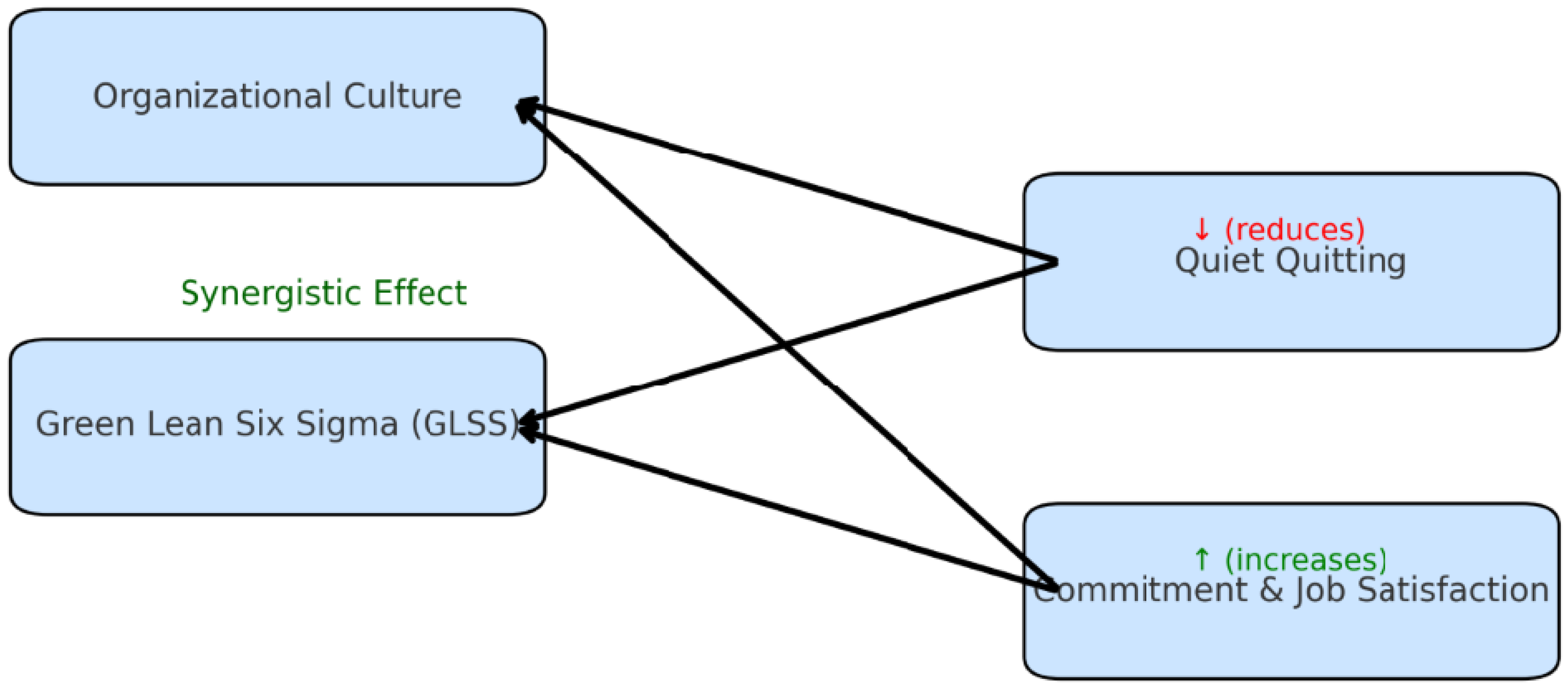
Figure 1. Conceptual_Framework.
Businesses 05 00057 g001
Figure 2. Final Structural Equation Model (SEM) with Standardized Path Coefficients. Notes: The figure presents a Structural Equation Model (SEM) that explains how Organizational Culture and lean-sustainability practices affect Quiet Quitting and Commitment/Satisfaction among healthcare professionals. The results indicate that a supportive organizational culture significantly lowers the tendency for quiet quitting (β = −0.32) while increasing employees’ motivation and satisfaction (β = 0.45). Likewise, the application of lean-sustainability practices helps reduce disengagement (β = −0.21) and strengthens commitment and satisfaction (β = 0.38). The indirect effect (β = 0.17) shows that a positive culture promotes the successful adoption of GLSS, which in turn enhances staff motivation and organizational loyalty. Overall, the model demonstrates a reinforcing cycle, where culture and improvement practices work together to build a more engaged and committed healthcare workforce.
Businesses 05 00057 g002
Figure 3. Conceptual Model Linking Culture, GLSS, and Outcomes.
Businesses 05 00057 g003
Table 1. Respondent Demographic Profile (N = 312).
CharacteristicCategoryFrequencyPercentage
GenderFemale21568.9%
Male9731.1%
Age Group18–303812.2%
31–4012941.3%
41–508527.2%
51–605016.0%
61+103.2%
Professional RoleClinical Staff17556.1%
Administrative Staff9028.9%
Managerial Staff4715.0%
Years of Experience0–4258.0%
5–107825.0%
11–2017054.5%
21–303210.3%
31+72.2%
Healthcare SectorPublic22271.1%
Private8025.6%
NGO103.3%
Table 2. Descriptive Statistics, Reliability, and Validity of Constructs.
ScaleItemsMean (M)Standard
Deviation (SD)
Cronbach’s
Alpha (α)
Composite
Reliability (CR)
Average Variance Extracted (AVE)
Organizational Culture83.820.650.910.930.62
Green Lean Six Sigma Practices63.240.810.880.900.60
Quiet Quitting Indicators72.450.770.890.890.53
Commitment and Engagement64.100.580.920.910.63
Notes: Higher means indicate stronger presence of the construct. Cronbach’s α values above 0.70 indicate good internal consistency. CR and AVE values exceed recommended thresholds (CR > 0.70; AVE > 0.50), confirming reliability and convergent validity.
Table 3. Structural Equation Model (SEM) Path Coefficients with Standardized Effects.
PathStandardized
Coefficient (β)
95% Confidence
Interval
p-ValueResult
Organizational Culture → Quiet Quitting−0.32[−0.42, −0.22]<0.001Supported (H1)
GLSS Practices → Quiet Quitting−0.21[−0.29, −0.13]<0.01Supported (H2)
Organizational Culture → Commitment/Satisfaction0.45[0.33, 0.57]<0.001Supported (H3)
GLSS Practices → Commitment/Satisfaction0.38[0.28, 0.48]<0.001Supported (H4)
Organizational Culture → GLSS Practices → Commitment/Satisfaction (Indirect)0.17[0.09, 0.25]<0.05Supported (H5)
Notes: Negative β coefficients indicate a reduction in quiet-quitting behaviors, whereas positive β coefficients reflect an increase in commitment and satisfaction; the indirect effects (H5) highlight the synergistic relationship between organizational culture and lean-sustainability practices, and presenting β coefficients with 95% confidence intervals offers a clearer estimate of effect size and statistical precision beyond simple p-value significance.
Disclaimer/Publisher’s Note: The statements, opinions and data contained in all publications are solely those of the individual author(s) and contributor(s) and not of MDPI and/or the editor(s). MDPI and/or the editor(s) disclaim responsibility for any injury to people or property resulting from any ideas, methods, instructions or products referred to in the content.