Article

Acute Effect of Bilateral Horizontal Drop Jumps in Sprint and Jumping Performance and Sprint Mechanical and Kinematics Characteristics


by
Eirini Zanni
,
Ioannis Stavridis
,
Elias Zacharogiannis
,
Prokopios Chatzakis
,
Polyxeni Argeitaki
and
Giorgos Paradisis
*
School of Physical Education & Sport Science, National & Kapodistrian University of Athens, 17237 Athens, Greece
*
Author to whom correspondence should be addressed.
Biomechanics 2026, 6(1), 10; https://doi.org/10.3390/biomechanics6010010
Submission received: 2 December 2025 / Revised: 31 December 2025 / Accepted: 6 January 2026 / Published: 9 January 2026
(This article belongs to the Section Sports Biomechanics)

Abstract

Background/Objectives: This study aimed to examine the post-activation performance enhancement effects of bilateral horizontal drop jumps (BHDJs) on 30 m sprint and countermovement jump (CMJ) performance, as well as in sprint mechanical and kinematics characteristics. Methods: Fourteen young sprinters (nine boys and five girls) completed both an experimental condition (EC) and a control condition (CC). The EC consisted of five BHDJs performed at each participant’s individually determined optimal drop height, whereas in the CC, no exercise has been performed. Results: The findings revealed no significant (p > 0.05) interactions for CMJ and time to 30 m. Significant increases in 5 m split times were observed across all segments in the CC, as well as in the initial 5 m segment in the EC. Regarding sprint mechanics, a significant interaction was found in the effectiveness of horizontal force application (−2.42% in CC vs. −0.33% in EC). Step frequency demonstrated significant interaction in the 5–10 m segment (−1.79% in CC vs. 1.20% in EC) and decreased significantly in the 15–20 m segment in the CC (−2.03% in CC vs. −1.85% in EC). Conclusions: In conclusion, performance parameters reduced under the CC, whereas the BHDJ intervention stabilized these parameters or exhibited smaller performance variations than in the CC.

1. Introduction

A pre-conditioning activity performed before a competitive exercise session is a commonly endorsed practice in training and athletic competitions, as it has been shown to enhance subsequent performance [1]. This improvement may be attributed to the enhancement of the contractile properties of muscle fibers, which enables the generation of greater force and power. The capacity of a muscle group to produce force has been shown to increase acutely following a post-activation potentiation enhancement (PAPE) stimulus, which refers to the short-term enhancement of performance in explosive movements elicited by a preceding maximal or near-maximal muscular effort, commonly termed a conditioning activity [1,2]. Resistance exercises have demonstrated significant effectiveness as PAPE interventions. Briefly, sled towing has been shown to acutely improve sprint performance over distances of 15–30 m by approximately 0.8–2.24% [3,4,5,6], while sled pushing can acutely enhance 20 m sprint performance by about 0.95–1.8% [7]. Additionally, free-weight exercises performed at intensities between 60% and 80% of one-repetition maximum (1RM) have been shown to improve vertical jump height by approximately 2–10%, peak power output by 1.31–3.36%, and sprint performance by 1.5–1.9% [8,9,10]. Furthermore, the use of accommodating resistance, which combines free weights with resistance bands, has also been reported to elicit additional improvements in sprinting, horizontal, and vertical jump performance by 3.5%, 5.7%, and 8.5%, respectively [11,12,13].
Plyometric exercises as pre-conditioning activities are widely used to enhance running and jumping performance. In particular, alternate-leg horizontal bounding and squat jumps have been shown to improve 5 m, 10 m, and 20 m sprint performance following recovery intervals of 4 and 8 min [14,15,16]. Furthermore, combining bilateral Vertical Drop Jumps (VDJs) with additional plyometric exercises has been reported to enhance countermovement jump (CMJ) height and 20 m sprint performance [17,18]. Notably, bilateral VDJs have been found to improve 20 m running performance when assessed 15 s, 4 min, and 15 min after the intervention [19]. Conversely, some studies report no improvement in 20 m or 30 m sprint performance following the application of resisted squat jumps or knees-to-chest jumps [20,21].
Drop jumps (DJs) are widely implemented plyometric exercises and are regarded as an effective means of eliciting PAPE [22,23]. Previous research employing DJs as a pre-conditioning activity has demonstrated improvements in running [24], jumping [23], and throwing [25] performance. To maximize the potentiating effects of DJs, it is essential to select an appropriate drop height. Previous studies have shown that optimal drop height can be determined using the Reactive Strength Index (RSI), with an individual’s optimal height defined as the height that produces the lowest RSI value [19,26,27]. Additionally, determining the axis of jump execution is also a critical consideration. According to Hicks et al. [28] the specific “position” or, directionality, of strength or plyometric exercises induces distinct adaptations across different regions of the force–velocity spectrum. In line with this perspective, previous research has demonstrated that single-leg horizontal drop jumps (HDJs) acutely enhance change-of-direction performance to a greater extent than vertical drop jumps (VDJs) (−6.8% vs. −1.3%), likely because the movement trajectory in HDJs more closely corresponds to the directional demands of sprinting. Conversely, VDJs appear to produce superior improvements in vertical jump performance than HDJs (6.5 vs. 1%) [29]. Similarly, warm-up protocols incorporating PAPE through HDJs appear to enhance repeated-sprint performance greater than VDJs (3.35 vs. 2.65%), whereas PAPE induced via VDJs improves CMJ performance greater than HDJs (3.81 vs. 3.64%) [30].
By providing these direction-specific stimuli, it becomes particularly relevant, beyond examining sprinting and jumping performances, to investigate the acute influence of HDJs on the force–velocity spectrum. Accordingly, the present study incorporates HDJs alongside countermovement jump (CMJ) and sprint assessments to evaluate sprint mechanical variables associated with the force–velocity–power (FvP) profile [31,32]. To the authors’ knowledge, no studies have examined the acute effects of HDJs on sprint mechanical characteristics in young sprinters. Therefore, the present study aimed to evaluate the acute effects of bilateral horizontal drop jumps (BHDJs) on 30 m sprint and CMJ performance, and key mechanical and kinematic parameters. It was hypothesized that acceleration performance, running mechanics, and kinematics would be significantly enhanced following the BHDJ intervention, whereas CMJ height would remain unchanged.

2. Materials and Methods

2.1. Participants

Fourteen young sprinters, nine boys and five girls (age: 16.86 ± 1.70 years; body mass: 62.70 ± 5.55 kg; height: 1.72 ± 0.07 m; 100 m personal best ranging from 11.52 to 12.13 s for boys and 13.90 to 14.71 s for girls), participated in the study. All participants were physically active, engaging in a minimum of three training sessions per week, had at least two years of structured training experience, were familiar with plyometric jumping exercises, and were in good health, with no recent injuries. Participation was voluntary, and all athletes were fully informed of the study’s purpose, benefits, and potential risks. Written informed consent was obtained from each participant; for underage athletes, consent was additionally provided by a parent or legal guardian. All procedures conformed to the ethical standards of the Declaration of Helsinki and received approval from the University Ethics Committee (protocol number: 1271/17-3-2021).

2.2. Procedures

Participants completed five sessions (one familiarization session followed by four testing sessions), each separated by at least 48 h, to examine the acute effects of BHDJs on CMJ height; sprint performance (time to 30 m, and split times per 5 m); kinematic variables (step frequency, step length, contact time, and flight time); and sprint mechanical characteristics [theoretical maximal horizontal force (F0), theoretical maximal horizontal velocity (v0), maximal mechanical power output (Pmax), the mechanical effectiveness of horizontal force application (RFmax), and the rate of decline in RF (DRF)] [31].
At the beginning of every testing session, athletes completed a standardized warm-up consisting of 10 min of jogging, 5 min of dynamic stretching, 5 min of sprint drills, three 40 m sprints of progressively increasing intensity, followed by 5 min of passive rest. During the first session, anthropometric data were collected and participants were familiarized with the BHDJ protocol. After familiarization, participants performed two BHDJs from 20, 30, 40, and 50 cm drop heights, with a 2 min recovery between trials [33] to determine their individual optimal height. The optimal height was defined as the height producing the highest RSI [19,34]. The RSI calculated as the ratio of BHDJ distance to ground contact time, expressed as RSI = Horizontal distance (m) to ground contact time (s) [35,36]. The BHDJ distance was assessed using high-speed video recording at 300 Hz (Casio EX-F1, Tokyo, Japan) with reference markers placed at 1 m intervals, and contact time was measured using a ChronoJump platform (ChronoJump Boscosystem, Barcelona, Spain).
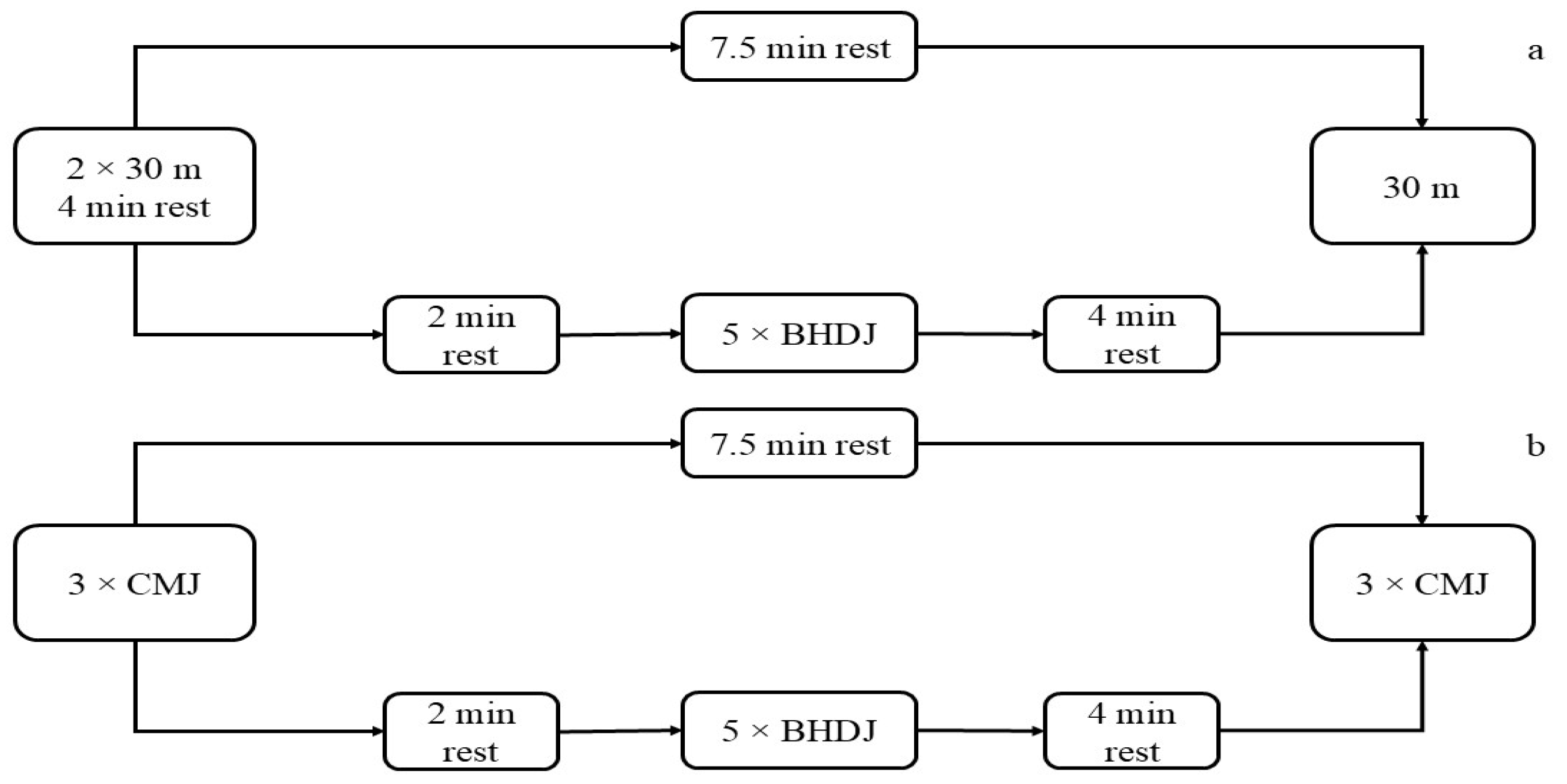
Across sessions two to five, participants were randomly assigned to either the experimental condition (EC) or the control condition (CC). The testing protocols for both conditions are illustrated in Figure 1. In the EC, participants performed five repetitions of BHDJs, with 10 s intervals between repetitions [30,37] followed by a 4 min period of passive recovery [19,37]. In the CC the participants sat for 7.5 min and did not perform any exercise. During all BHDJ trials, athletes were instructed to place their hands on their waists, stand at the edge of the drop box, and, upon ground contact, propel themselves forward as quickly and forcefully as possible using both legs. The 30 m sprint performance assessments were conducted in sessions two and three (Figure 1a), while the countermovement jump (CMJ) assessments were performed in sessions four and five (Figure 1b).
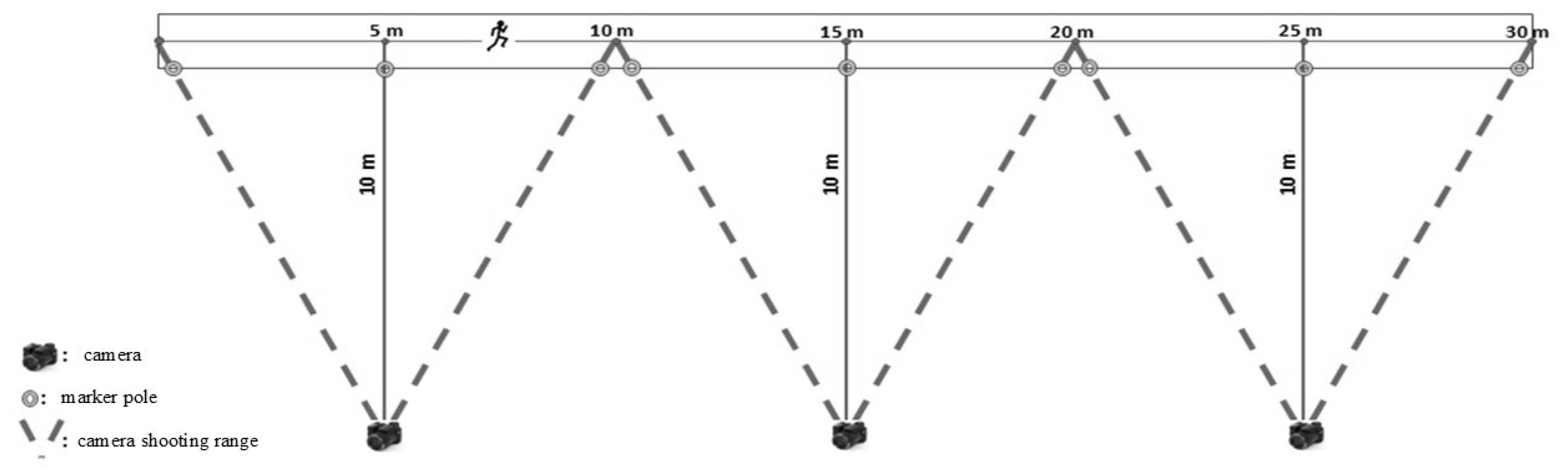
Sprinting performance and kinematic parameters during the 30 m tests were evaluated using three high-speed cameras (Casio EX-F1, Tokyo, Japan) placed in the sagittal plane of motion at 5, 15, and 25 m, 10 m from the middle of the running lane, recording 10 m intervals. Eight marker poles were placed in adjusted spots to record 5 m intervals [38]. Reference markers were placed on both sides of the 30 m distance at 1 m intervals to evaluate kinematic characteristics (Figure 2). Each split time was calculated from the exact frame in which the athlete’s hip crossed the corresponding marker pole, and video parallax errors were corrected to achieve maximum accuracy in study results. The kinematic characteristics were calculated by analyzing each sprint step and averaging over 5 m splits. The instant when the first propulsive movement was detected was defined as the starting point (frame 0) [38,39]. Step length was defined as the distance from the take-off point of the toes of one foot until the touchdown point of the other lower limb, while step frequency was calculated by the ratio of running velocity divided by step length [16,40]. The frame where the athlete’s foot lost contact with the ground and the frame where the other foot touched the ground were used to calculate flight time. Contact time was calculated from the moment of the first touch on the ground until the moment the foot lost contact with the ground [16,40]. All the videos were analyzed using Quintic Biomechanics software v.31 (Quintic Consultancy Ltd., Birmingham, UK). The variables of the horizontal FvP profile were determined using Samozino’s method [32,41]. According to the applied method, F0 and v0 were extrapolated from the linear sprint force–velocity relationship as the intercepts of the force and velocity axes of the linear regression, respectively. Pmax was calculated as Pmax = F0 × v0/4. RFmax was determined as the proportion of total force directed in the horizontal direction, and DRF was computed as the slope of the linear RF–velocity relationship across the acceleration phase [31]. The intraclass correlation coefficient (ICC) assessing the consistency between baseline trials, as derived from 30 m sprint performance, was notably high (0.994, 95% confidence interval (CI) from 0.978 to 0.998). Finally, the participants performed CMJs on a ChronoJump platform, with their hands at their waist, and the best trial of the three jumps was used in the analysis [37].

2.3. Statistical Analysis

The Shapiro–Wilk and Levene’s tests were used to assess normality and homogeneity of the data. A 2 × 2 repeated-measures ANOVA (time: Pre and Post × conditions: CC and EC) was conducted for all dependent variables. Sphericity was evaluated employing Mauchly’s test, and, when necessary, the Greenhouse-Geisser correction was applied. Interactions and main effects of time and condition were examined. In case of significant ANOVA, Bonferroni post hoc analysis was used. All data are presented as mean ± standard deviation (SD), and Cohen’s d is used to display the magnitude of the within-subjects effect. Cohen’s d was calculated as the mean difference between conditions divided by the standard deviation of the differences, and interpreted using conventional thresholds as small (d = 0.2), medium (d = 0.5), and large (d = 0.8) [42]. Significance level was set at p ≤ 0.05. All analyses were conducted using the statistical program SPSS (IBM SPSS version 25.0, Chicago, IL, USA).

3. Results

The results of the statistical analysis for the sprinting and jumping performance for both conditions are displayed in Table 1. A significant main effect of time for the 5 m (F = 12.07, p = 0.004, η2 = 0.48, Observed power (OP) = 0.89), 10 m (F = 5.53 p = 0.035, η2 = 0.30, OP = 0.59), 15 m (F = 5.59 p = 0.034, η2 = 0.30, OP = 0.59), 20 m (F = 7.43 p = 0.017, η2 = 0.36, OP = 0.71), 25 m (F = 6.98 p = 0.020, η2 = 0.35, OP = 0.69), and 30 m (F = 7.39 p = 0.018, η2 = 0.36, OP = 0.71) sprint time. Bonferroni’s post hoc analysis revealed that both conditions significantly decreased the 5 m performance (CC: Mean Difference (MD) = −0.03 s, p = 0.025; EC: MD = −0.02 s, p = 0.006). Furthermore, Post hoc main effect of time analysis indicated a significant decrease in the 10 m (MD = −0.03 s, p = 0.017), 15 m (MD = −0.04 s, p = 0.010), 20 m (MD = −0.05 s, p = 0.003), 25 m (MD = −0.04 s, p = 0.003), and 30 m (MD = −0.05 s, p = 0.002) sprint performance only for the CC. No significant (p > 0.05) interaction or main effect of time and condition was observed for the CMJ for both conditions.
The results of the ANOVA indicated a significant interaction effect (condition × time) for RFmax (F = 5.43 p = 0.037, η2 = 0.29, OP = 0.58). Post hoc analysis showed that only the CC significantly reduced the RFmax post intervention (MD = −1.07%, p = 0.008). No significant (p > 0.05) interaction or main effect of time and condition was found for the F0, v0, Pmax, SFv, and DRF for both the EC and CC (Table 2).
The results of the analysis of variance for kinematics variables indicated a significant interaction effect in step frequency at 5–10 m distance interval (F = 6.36 p = 0.025, η2 = 0.33, OP = 0.65). Post hoc interaction effect analysis showed that only the CC significantly decreased the step frequency at 5–10 m (MD = −0.08 Hz, p = 0.026). A main effect of time occurred in step frequency at 20–25 m interval (F = 8.09 p = 0.014, η2 = 0.38, OP = 0.75). Bonferroni’s post hoc analysis revealed that the step frequency at the 15–20 m distance interval reduced only for the CC (MD = −0.09 Hz, p = 0.015).
A main effect of time was noticed in running velocity at 0–5 m (F = 12.04 p = 0.004, η2 = 0.48, OP = 0.89), 15–20 m (F = 5.75 p = 0.032, η2 = 0.31, OP = 0.60), and 20–25 m (F = 5.97 p = 0.030, η2 = 0.32, OP = 0.62). Post hoc analysis of the main effect of time revealed that both conditions significantly reduced the running velocity at 0–5 m distance interval (CC: MD = −0.07 m∙s−1, p = 0.021; EC: MD = −0.04 m∙s−1, p = 0.005). Moreover, for the 15–20 m and 25–30 m intervals, the Post hoc analysis indicated a significant decrease in running velocity only for the CC (MD = −0.01 m∙s−1, p = 0.025 and MD = −0.01 m∙s−1, p = 0.005, respectively). No significant interaction effects or main effects of time or condition were observed for step length or contact and flight time. Furthermore, running velocity and step frequency showed no significant interaction or main effects across the remaining distance intervals (Table 3).

4. Discussion

The purpose of the study was to examine the acute effect of BHDJ on sprint and CMJ performance, running mechanics, and kinematics characteristics. The main finding revealed that no changes were observed in sprint or CMJ performance in the EC group post intervention, whereas the CC group exhibited a significant decrease in sprinting performance and RFmax, as well as in mean velocity, and mean step frequency across certain 5 m segments.
The findings of the present study indicated a significant decrease in sprint performance post-intervention in the CC, evidenced by slower 30 m sprint times and reduced performance across all 5 m distance intervals. Furthermore, running velocity decreased in the 0–5 m, 15–20 m, and 20–25 m segments in the CC. In contrast, no significant differences in sprint performance were observed in the EC; however, both the 0–5 m running velocity and the 5 m split time were slower post-intervention in the EC. These reductions may be attributed to the lower RFmax. RFmax reflects an athlete’s technical capability to effectively apply horizontal force to the ground during the initial acceleration phase. A reduction in RFmax indicates a smaller proportion of the resultant ground reaction force being directed anteroposteriorly, which can negatively influence the initial sprint performance [31]. On the other hand, the ability to direct the total force in the horizontal direction during the late acceleration phase did not differ post-intervention. Despite these performance decrements, the mechanical characteristics associated with athletes’ physical qualities remained unchanged. This finding suggests that the athletes’ abilities to generate horizontal force, velocity, and power were not acutely influenced by the 5-BHDJs PAPE protocol. Moreover, the lack of variation in the slope of the linear force–velocity relationship indicates that the protocol did not modify the balance of the force–velocity spectrum. These observations align with findings from Zisi et al. [6] who reported no alterations in mechanical variables following sled towing as a pre-conditioning activity.
Regarding sprint performance outcomes in the broader literature, numerous studies have shown improvements following VDJ-based interventions [18,19,26,27], while HDJ protocols have demonstrated even greater acute sprint enhancements [10,29,30,43]. Conversely, some studies have reported no improvement in sprint time following sled towing [3,44], plyometric protocols [20,21] or VDJ interventions [45]. In the present investigation, the absence of change in 30 m sprint time following the BHDJ intervention performed from optimal height contradicts prior findings. This discrepancy may reflect an insufficient recovery interval, as a longer period between the PAPE stimulus and the post-intervention may have better accommodated the recovery needs of this moderately trained athlete sample and potentially facilitated performance enhancement. Notably, this study appears to be the first to report a reduction in sprint performance following a PAPE protocol in the CC. This decline may be attributable to residual fatigue. The observation that POST 30 m times were slower than PRE only in the CC (while EC performance remained unchanged) suggests that the PAPE protocol may have interacted with fatigue in an inhibitory manner for the CC. Conversely, the decrease in performance observed in the CC following the intervention may be partly attributed to the prolonged passive recovery period after the initial warm-up. Extended inactivity is known to diminish the physiological benefits gained from warming up, including reductions in muscle temperature and neural activation [46]. Previous research has shown that a 9 min of inactivity can result in decreases in muscle temperature and subsequent athletic performance [46]. In contrast, the BHDJ intervention may have functioned as a maintenance or “re-warm-up” activity, thereby helping to preserve the neuromuscular state achieved during the initial warm-up. From this perspective, the stable performance observed in the BHDJ group may reflect the prevention of performance decline rather than an additional enhancement beyond baseline warm-up effects. This interpretation is supported by previous studies highlighting the effectiveness of plyometric strategies in maintaining physical performance during periods of inactivity [47]. Consequently, these findings should be interpreted with caution, as they may indicate the preservation of warm-up-induced readiness rather than a true PAPE response. Future research incorporating direct measures of muscle temperature and neuromuscular activation is warranted to further clarify this distinction.
The CMJ performance reduced following both PAPE interventions (−0.90% and −2.27% in EC and CC, respectively). These outcomes contrast with previous research reporting improvements in CMJ performance at 2 [9], 3 [8,48,49], 5 [10], and 7 min [8,48] after a PAPE intervention involving squats. Moreover, the use of VDJs as pre-conditioning exercise has similarly been shown to elicit CMJ improvements of up to 6%, with rest intervals ranging from 1 to 15 min [17,18]. Notably, when VDJs are performed from an individualized optimal drop height, CMJ performance may improve by 16.7%, compared to 7.4% when executed from a standard height of 30 cm [50]. HDJs have also been reported to enhance CMJ performance and vertical Ground Reaction Force (GRF); However, these effects are consistently lower than those observed following VDJ-based protocols [29,30]. According to the existing literature, the absence of CMJ improvement observed in the present study may be attributed to the distinct biomechanical characteristics of the BHDJ as a conditioning activity, compared with those required for optimal CMJ performance [51]. These findings support the force–vector theory, which emphasizes that the direction of force application during conditioning activities should closely match the specific biomechanical demands of the subsequent performance task to optimize potentiation effects [51]. Specifically, the BHDJ predominantly elicits a horizontal impulse, whereas CMJ performance is maximized through the generation of substantial vertical GRF impulses. Numerous studies have demonstrated that PAPE interventions are most effective when the movement axis and force–vector orientation of the conditioning exercise closely match those of the subsequent performance test. In contrast, when the conditioning activity and performance outcome rely on different axes of force production, performance benefits are consistently attenuated [28,29,30,52]. A secondary explanation for the lack of improvement may be related to the recovery interval implemented following the PAPE intervention. The 4 min rest period used in this study may have been insufficient for the athletes to dissipate fatigue and fully express potentiation [1]. Given the participants’ moderate performance level, it is plausible that they required a longer rest interval to achieve an optimal balance between fatigue and potentiation, as less-trained or moderately trained individuals often exhibit slower recovery kinetics compared with highly trained athletes. Therefore, a longer recovery period might have allowed a stronger potentiation effect to develop and could have resulted in improvements in CMJ performance.
Concerning the kinematic characteristics, the results of the present study revealed a reduction in mean step frequency in the 5–10 m and 15–20 m intervals in the CC. This decrease in step frequency likely contributed to the lower running velocity observed during the later phases of acceleration. Step frequency is derived from the relationship between running velocity and step length; thus, given that step length remained unchanged, the reduction in mean step frequency appears to be the primary factor associated with the decline in mean velocity [53]. It should be noted that fluctuations in mean velocity and mean step length may influence step frequency values, representing a potential explanation for the observed lack of change in step frequency within the 10–15 m distance interval. This outcome contrasts with previous research demonstrating that pre-conditioning activities such as alternate-leg horizontal bounding [16] and mini-hurdle jumps [43] can acutely increase both step frequency and running velocity. Notably, these conditioning activities involve movements characterized by inherently higher step frequencies, which may stimulate a greater level of neuromuscular activation, thereby promoting faster leg turnover [54]. Additionally, contact time and flight time remained unchanged following the intervention. This finding aligns with Zisi et al. [16], who similarly reported no acute alterations in contact or flight times after plyometric-based pre-conditioning activities. The age and performance level of the participants may account for changes in sprint performance, but not for the corresponding alterations in sprint kinematics. This suggests that mechanical factors have a greater influence on sprint performance than the kinematic parameters themselves.

Limitations

This study has several limitations that should be acknowledged. The inclusion of both male and female young participants, together with the relatively small sample size (n= 14) and a limited age range, did not allow for meaningful sex- or age-based analyses. Consequently, potential differences in the PAPE response related to sex or age could not be examined. Future studies with larger, more balanced samples and broader age distributions are needed to explore possible sex- and age-specific responses. Furthermore, the inverse dynamics model employed in this study has several limitations, including the estimation of horizontal aerodynamic drag force based solely on stature, body mass, and a fixed drag coefficient as well as the assumption of a quasi-negligible vertical acceleration of the center of mass during the sprint acceleration phase [55]. Furthermore, Fvp profiling represents a mathematical transformation of sprint velocity–time data. Although such transformations may accentuate specific features of sprint behavior, they do not introduce additional information regarding sprint performance. Thus, contrary to what is often claimed, the force–velocity profile may not represent maximal capacities (ability of force and velocity generation) of the athlete [56,57]. However, this assumption pertains to the optimal balance between force and velocity capabilities required for the expression of maximal power output, rather than to the sprint mechanical variables examined in the present study.

5. Conclusions

The findings of the present study indicate that a set of five BHDJs did not provide a sufficient PAPE stimulus to enhance CMJ or 30 m sprint performance in young track and field athletes. The absence of improvement in CMJ performance is likely attributable to the differences in the orientation of the axis of motion between the conditioning activity and the vertical force demands of the CMJ. Sprint performance was negatively affected in the CC, as evidenced by slower 30 m times and reduced running velocity, which may be explained by decreases in the mechanical effectiveness of horizontal force application and reductions in step frequency. The mechanical variables remained unchanged, suggesting that fatigue, rather than neuromuscular or structural adaptations, was the primary factor underlying the observed performance decrements. Overall, these results highlight the necessity of matching the biomechanical characteristics of the conditioning exercise to the demands of the performance task and emphasize the importance of individualizing rest intervals and PAPE parameters. Future studies should consider tailoring recovery durations based on the athlete’s strength level or optimal drop height to maximize the efficacy of PAPE interventions.

Author Contributions

Writing—original draft, E.Z. (Eirini Zanni); data curation, E.Z. (Eirini Zanni), G.P. and P.C.; methodology, E.Z. (Eirini Zanni), E.Z. (Elias Zacharogiannis), P.A. and G.P.; writing—review and editing, E.Z. (Elias Zacharogiannis), I.S. and G.P.; supervision, G.P. All authors have read and agreed to the published version of the manuscript.

Funding

This research received no external funding.

Institutional Review Board Statement

The study was conducted in accordance with the Declaration of Helsinki and approved by the Ethics Committee of School of Physical Education & Sports Science, Athens, Greece (protocol number: 1271/17-3-2021).

Informed Consent Statement

Informed consent was obtained from all subjects involved in the study.

Data Availability Statement

The raw data supporting the conclusions of this article will be made available by the authors on request.

Acknowledgments

The authors sincerely thank all participants for their voluntary and enthusiastic efforts during the testing procedures.

Conflicts of Interest

The authors declare no conflicts of interest.

Abbreviations

The following abbreviations are used in this manuscript:
BHDJsBilateral Horizontal Drop Jumps
CMJCountermovement Jump
ECExperimental Condition
CCControl Condition
PAPEPost-Activation Potentiation Enhancement
1RMOne-Repetition Maximum
VDJsVertical Drop Jumps
DJsDrop Jumps
RSIReactive Strength Index
FvPForce–Velocity–Power
F0Theoretical Maximal Horizontal Force
v0Theoretical Maximal Horizontal Velocity
PmaxMaximal Mechanical Power Output
RFmaxMechanical Effectiveness of Horizontal Force Application
DRFRate of Decline in RF
SDStandard Deviation
MDMean Difference
OPObserved Power

References

  1. Tillin, N.A.; Bishop, D. Factors Modulating Post-Activation Potentiation and Its Effect on Performance of Subsequent Explosive Activities. Sports Med. 2009, 39, 147–166. [Google Scholar] [CrossRef]
  2. Blazevich, A.J.; Babault, N. Post-Activation Potentiation Versus Post-Activation Performance Enhancement in Humans: Historical Perspective, Underlying Mechanisms, and Current Issues. Front. Physiol. 2019, 10, 1359. [Google Scholar] [CrossRef]
  3. Smith, C.E.; Hannon, J.C.; McGladrey, B.; Shultz, B.; Eisenman, P.; Lyons, B. The Effects of a Postactivation Potentiation Warm-up on Subsequent Sprint Performance. Hum. Mov. 2018, 15, 36–44. [Google Scholar] [CrossRef]
  4. Winwood, P.W.; Posthumus, L.R.; Cronin, J.B.; Keogh, J.W.L. The Acute Potentiating Effects of Heavy Sled Pulls on Sprint Performance. J. Strength Cond. Res. 2016, 30, 1248–1254. [Google Scholar] [CrossRef] [PubMed]
  5. Wong, M.A.; Dobbs, I.J.; Watkins, C.M.; Barillas, S.R.; Lin, A.; Archer, D.C.; Lockie, R.G.; Coburn, J.W.; Brown, L.E. Sled Towing Acutely Decreases Acceleration Sprint Time. J. Strength Cond. Res. 2017, 31, 3046–3051. [Google Scholar] [CrossRef]
  6. Zisi, M.; Stavridis, I.; Agilara, G.-O.; Economou, T.; Paradisis, G. The Acute Effects of Heavy Sled Towing on Acceleration Performance and Sprint Mechanical and Kinematic Characteristics. Sports 2022, 10, 77. [Google Scholar] [CrossRef]
  7. Seitz, L.B.; Mina, M.A.; Haff, G.G. A Sled Push Stimulus Potentiates Subsequent 20-m Sprint Performance. J. Sci. Med. Sport 2017, 20, 781–785. [Google Scholar] [CrossRef]
  8. Bauer, P.; Sansone, P.; Mitter, B.; Makivic, B.; Seitz, L.B.; Tschan, H. Acute Effects of Back Squats on Countermovement Jump Performance Across Multiple Sets of a Contrast Training Protocol in Resistance-Trained Men. J. Strength Cond. Res. 2019, 33, 995–1000. [Google Scholar] [CrossRef]
  9. Fukutani, A.; Takei, S.; Hirata, K.; Miyamoto, N.; Kanehisa, H.; Kawakami, Y. Influence of the Intensity of Squat Exercises on the Subsequent Jump Performance. J. Strength Cond. Res. 2014, 28, 2236–2243. [Google Scholar] [CrossRef]
  10. Petisco, C.; Ramirez-Campillo, R.; Hernández, D.; Gonzalo-Skok, O.; Nakamura, F.Y.; Sanchez-Sanchez, J. Post-Activation Potentiation: Effects of Different Conditioning Intensities on Measures of Physical Fitness in Male Young Professional Soccer Players. Front. Psychol. 2019, 10, 1167. [Google Scholar] [CrossRef]
  11. Scott, D.J.; Ditroilo, M.; Marshall, P. Effect of Accommodating Resistance on the Postactivation Potentiation Response in Rugby League Players. J. Strength Cond. Res. 2018, 32, 2510–2520. [Google Scholar] [CrossRef] [PubMed]
  12. Seitz, L.B.; Mina, M.A.; Haff, G.G. Postactivation Potentiation of Horizontal Jump Performance Across Multiple Sets of a Contrast Protocol. J. Strength Cond. Res. 2016, 30, 2733–2740. [Google Scholar] [CrossRef] [PubMed]
  13. Wyland, T.P.; Van Dorin, J.D.; Reyes, G.F.C. Postactivation Potentation Effects From Accommodating Resistance Combined With Heavy Back Squats on Short Sprint Performance. J. Strength Cond. Res. 2015, 29, 3115–3123. [Google Scholar] [CrossRef] [PubMed]
  14. Turner, A.P.; Bellhouse, S.; Kilduff, L.P.; Russell, M. Postactivation Potentiation of Sprint Acceleration Performance Using Plyometric Exercise. J. Strength Cond. Res. 2015, 29, 343–350. [Google Scholar] [CrossRef]
  15. Vanderka, M.; Krčmár, M.; Longová, K.; Walker, S. Acute Effects of Loaded Half-Squat Jumps on Sprint Running Speed in Track and Field Athletes and Soccer Players. J. Strength Cond. Res. 2016, 30, 1540–1546. [Google Scholar] [CrossRef]
  16. Zisi, M.; Stavridis, I.; Bogdanis, G.; Terzis, G.; Paradisis, G. The Acute Effects of Plyometric Exercises on Sprint Performance and Kinematics. Physiologia 2023, 3, 295–304. [Google Scholar] [CrossRef]
  17. Tobin, D.P.; Delahunt, E. The Acute Effect of a Plyometric Stimulus on Jump Performance in Professional Rugby Players. J. Strength Cond. Res. 2014, 28, 367–372. [Google Scholar] [CrossRef]
  18. Sharma, S.K.; Raza, S.; Moiz, J.A.; Verma, S.; Naqvi, I.H.; Anwer, S.; Alghadir, A.H. Postactivation Potentiation Following Acute Bouts of Plyometric versus Heavy-Resistance Exercise in Collegiate Soccer Players. Biomed. Res. Int. 2018, 2018, 3719039. [Google Scholar] [CrossRef]
  19. Byrne, P.J.; Moody, J.A.; Cooper, S.-M.; Callanan, D.; Kinsella, S. Potentiating Response to Drop-Jump Protocols on Sprint Acceleration: Drop-Jump Volume and Intrarepetition Recovery Duration. J. Strength Cond. Res. 2020, 34, 717–727. [Google Scholar] [CrossRef]
  20. Till, K.A.; Cooke, C. The Effects of Postactivation Potentiation on Sprint and Jump Performance of Male Academy Soccer Players. J. Strength Cond. Res. 2009, 23, 1960–1967. [Google Scholar] [CrossRef]
  21. Tomlinson, K.A.; Hansen, K.; Helzer, D.; Lewis, Z.H.; Leyva, W.D.; McCauley, M.; Pritchard, W.; Silvestri, E.; Quila, M.; Yi, M.; et al. The Effects of Loaded Plyometric Exercise during Warm-Up on Subsequent Sprint Performance in Collegiate Track Athletes: A Randomized Trial. Sports 2020, 8, 101. [Google Scholar] [CrossRef] [PubMed]
  22. Pappas, P.; Stavridis, I.; Paradisis, G. Acute Effects of Drop Jumps on Lower Limb Stiffness and Mechanical and Kinematic Parameters During High-Speed Treadmill Running. Appl. Sci. 2024, 15, 242. [Google Scholar] [CrossRef]
  23. dos Santos Silva, D.; Boullosa, D.; Moura Pereira, E.V.; de Jesus Alves, M.D.; de Sousa Fernandes, M.S.; Badicu, G.; Yagin, F.H.; Aidar, F.J.; dos Santos, L.F.; do Nascimento, H.R.; et al. Post-Activation Performance Enhancement Effect of Drop Jump on Long Jump Performance during Competition. Sci. Rep. 2023, 13, 16993. [Google Scholar] [CrossRef] [PubMed]
  24. Boullosa, D.; Abad, C.C.C.; Reis, V.P.; Fernandes, V.; Castilho, C.; Candido, L.; Zagatto, A.M.; Pereira, L.A.; Loturco, I. Effects of Drop Jumps on 1000-m Performance Time and Pacing in Elite Male and Female Endurance Runners. Int. J. Sports Physiol. Perform. 2020, 15, 1043–1046. [Google Scholar] [CrossRef]
  25. Terzis, G.; Spengos, K.; Karampatsos, G.; Manta, P.; Georgiadis, G. Acute Effect of Drop Jumping on Throwing Performance. J. Strength Cond. Res. 2009, 23, 2592–2597. [Google Scholar] [CrossRef]
  26. Byrne, P.J.; Kenny, J.; O’ Rourke, B. Acute Potentiating Effect of Depth Jumps on Sprint Performance. J. Strength Cond. Res. 2014, 28, 610–615. [Google Scholar] [CrossRef]
  27. Bomfim Lima, J.; Marin, D.; Barquilha, G.; Da Silva, L.; Puggina, E.; Pithon-Curi, T.; Hirabara, S. Acute Effects of Drop Jump Potentiation Protocol on Sprint and Countermovement Vertical Jump Performance. Hum. Mov. 2011, 12, 324–330. [Google Scholar] [CrossRef]
  28. Hicks, D.S.; Schuster, J.G.; Samozino, P.; Morin, J.-B. Improving Mechanical Effectiveness During Sprint Acceleration: Practical Recommendations and Guidelines. Strength Cond. J. 2020, 42, 45–62. [Google Scholar] [CrossRef]
  29. Dello Iacono, A.; Martone, D.; Padulo, J. Acute Effects of Drop-Jump Protocols on Explosive Performances of Elite Handball Players. J. Strength Cond. Res. 2016, 30, 3122–3133. [Google Scholar] [CrossRef]
  30. Al Kitani, M.; Ambussaidi, A.; Al Busafi, M.; Al-Hadabi, B.; Sassi, R.H.; Bouhlel, E.; Gmada, N. Acute Effect of Post Activation Potentiation Using Drop Jumps on Repeated Sprints Combined with Vertical Jumps in Young Handball Players. Isokinet. Exerc. Sci. 2021, 29, 147–154. [Google Scholar] [CrossRef]
  31. Morin, J.-B.; Samozino, P. Interpreting Power-Force-Velocity Profiles for Individualized and Specific Training. Int. J. Sports Physiol. Perform. 2016, 11, 267–272. [Google Scholar] [CrossRef] [PubMed]
  32. Samozino, P.; Rabita, G.; Dorel, S.; Slawinski, J.; Peyrot, N.; Saez de Villarreal, E.; Morin, J.-B. A Simple Method for Measuring Power, Force, Velocity Properties, and Mechanical Effectiveness in Sprint Running. Scand. J. Med. Sci. Sports 2016, 26, 648–658. [Google Scholar] [CrossRef]
  33. Young, W.B.; Wilson, G.J.; Byrne, C. A Comparison of Drop Jump Training Methods: Effects on Leg Extensor Strength Qualities and Jumping Performance. Int. J. Sports Med. 1999, 20, 295–303. [Google Scholar] [CrossRef] [PubMed]
  34. Byrne, P.J.; Moran, K.; Rankin, P.; Kinsella, S. A Comparison of Methods Used to Identify “optimal” Drop Height for Early Phase Adaptations in Depth Jump Training. J. Strength Cond. Res. 2010, 24, 2050–2055. [Google Scholar] [CrossRef] [PubMed]
  35. Ball, N.B.; Zanetti, S. Relationship between Reactive Strength Variables in Horizontal and Vertical Drop Jumps. J. Strength Cond. Res. 2012, 26, 1407–1412. [Google Scholar] [CrossRef]
  36. Flanagan, E.P.; Comyns, T.M. The Use of Contact Time and the Reactive Strength Index to Optimize Fast Stretch-Shortening Cycle Training. Strength Cond. J. 2008, 30, 32–38. [Google Scholar] [CrossRef]
  37. Baena-Raya, A.; Sánchez-López, S.; Rodríguez-Pérez, M.A.; García-Ramos, A.; Jiménez-Reyes, P. Effects of Two Drop-Jump Protocols with Different Volumes on Vertical Jump Performance and Its Association with the Force-Velocity Profile. Eur. J. Appl. Physiol. 2020, 120, 317–324. [Google Scholar] [CrossRef]
  38. Romero-Franco, N.; Jiménez-Reyes, P.; Castaño-Zambudio, A.; Capelo-Ramírez, F.; Rodríguez-Juan, J.J.; González-Hernández, J.; Toscano-Bendala, F.J.; Cuadrado-Peñafiel, V.; Balsalobre-Fernández, C. Sprint Performance and Mechanical Outputs Computed with an IPhone App: Comparison with Existing Reference Methods. Eur. J. Sport. Sci. 2017, 17, 386–392. [Google Scholar] [CrossRef]
  39. Economou, T.; Stavridis, I.; Zisi, M.; Fragkoulis, E.; Olanemi-Agilara, G.; Paradisis, G. Sprint Mechanical and Kinematic Characteristics of National Female Track and Field Champions and Lower-Level Competitors. J. Phys. Educ. Sport. 2021, 21, 3227–3235. [Google Scholar] [CrossRef]
  40. Stavridis, I.; Economou, T.; Walker, J.; Bissas, A.; Tsopanidou, A.; Paradisis, G. Sprint Mechanical Characteristics of Sub-Elite and Recreational Sprinters. J. Phys. Educ. Sport 2022, 22, 1126–1133. [Google Scholar] [CrossRef]
  41. Morin, J.-B.; Samozino, P.; Murata, M.; Cross, M.R.; Nagahara, R. A Simple Method for Computing Sprint Acceleration Kinetics from Running Velocity Data: Replication Study with Improved Design. J. Biomech. 2019, 94, 82–87. [Google Scholar] [CrossRef]
  42. Cohen, J. Statistical Power Analysis for the Behavioral Sciences; Routledge: London, UK, 2013. [Google Scholar]
  43. Yoshimoto, T.; Takai, Y.; Kanehisa, H. Acute Effects of Different Conditioning Activities on Running Performance of Sprinters. Springerplus 2016, 5, 1203. [Google Scholar] [CrossRef]
  44. Monaghan, D.J.; Cochrane, D.J. Can Backward Sled Towing Potentiate Sprint Performance? J. Strength Cond. Res. 2020, 34, 345–354. [Google Scholar] [CrossRef]
  45. Kümmel, J.; Bergmann, J.; Prieske, O.; Kramer, A.; Granacher, U.; Gruber, M. Effects of Conditioning Hops on Drop Jump and Sprint Performance: A Randomized Crossover Pilot Study in Elite Athletes. BMC Sports Sci. Med. Rehabil. 2016, 8, 1. [Google Scholar] [CrossRef] [PubMed]
  46. Kapnia, A.Κ.; Dallas, C.N.; Gerodimos, V.; Flouris, A.D. Impact of Warm-Up on Muscle Temperature and Athletic Performance. Res. Q. Exerc. Sport 2023, 94, 460–465. [Google Scholar] [CrossRef] [PubMed]
  47. Flórez-Gil, E.; Mateus, N.; Sampaio, J.; Abade, E. Examining the Impact of Different Re-Warm-up Strategies on Non-Starter Basketball Players’ Physical Performance. J. Sports Sci. 2025, 43, 536–543. [Google Scholar] [CrossRef] [PubMed]
  48. Beato, M.; Bigby, A.E.J.; De Keijzer, K.L.; Nakamura, F.Y.; Coratella, G.; McErlain-Naylor, S.A. Post-Activation Potentiation Effect of Eccentric Overload and Traditional Weightlifting Exercise on Jumping and Sprinting Performance in Male Athletes. PLoS ONE 2019, 14, e0222466. [Google Scholar] [CrossRef]
  49. Weber, K.R.; Brown, L.E.; Coburn, J.W.; Zinder, S.M. Acute Effects of Heavy-Load Squats on Consecutive Squat Jump Performance. J. Strength Cond. Res. 2008, 22, 726–730. [Google Scholar] [CrossRef]
  50. Ramirez-Campillo, R.; Alvarez, C.; García-Pinillos, F.; Sanchez-Sanchez, J.; Yanci, J.; Castillo, D.; Loturco, I.; Chaabene, H.; Moran, J.; Izquierdo, M. Optimal Reactive Strength Index: Is It an Accurate Variable to Optimize Plyometric Training Effects on Measures of Physical Fitness in Young Soccer Players? J. Strength Cond. Res. 2018, 32, 885–893. [Google Scholar] [CrossRef]
  51. Fitzpatrick, D.A.; Cimadoro, G.; Cleather, D.J. The Magical Horizontal Force Muscle? A Preliminary Study Examining the “Force-Vector” Theory. Sports 2019, 7, 30. [Google Scholar] [CrossRef]
  52. Jusseaume, J.; Fornasier-Santos, C.; Morin, J.B.; Millot, B.; Guilhem, G.; Slawinski, J. Kinematic and Kinetic Comparison of Sprint-Specific Exercises: Impact on Maximal Sprint Acceleration Training. J. Hum. Kinet. 2025, 99, 191–205. [Google Scholar] [CrossRef]
  53. Hunter, A.P.; Marshall, R.N.; Mcnair, P.J. Interaction of Step Length and Step Rate during Sprint Running. Med. Sci. Sports Exerc. 2004, 36, 261–271. [Google Scholar] [CrossRef]
  54. Salo, A.I.T.; Bezodis, I.N.; Batterham, A.M.; Kerwin, D.G. Elite Sprinting: Are Athletes Individually Step-Frequency or Step-Length Reliant? Med. Sci. Sports Exerc. 2011, 43, 1055–1062. [Google Scholar] [CrossRef]
  55. Arsac, L.M.; Locatelli, E. Modeling the Energetics of 100-m Running by Using Speed Curves of World Champions. J. Appl. Physiol. (1985) 2002, 92, 1781–1788. [Google Scholar] [CrossRef]
  56. Ettema, G. The Force-Velocity Profiling Concept for Sprint Running Is a Dead End. Int. J. Sports Physiol. Perform. 2024, 19, 88–91. [Google Scholar] [CrossRef]
  57. Lindberg, K.; Solberg, P.; Rønnestad, B.R.; Frank, M.T.; Larsen, T.; Abusdal, G.; Berntsen, S.; Paulsen, G.; Sveen, O.; Seynnes, O.; et al. Should We Individualize Training Based on Force-Velocity Profiling to Improve Physical Performance in Athletes? Scand. J. Med. Sci. Sports 2021, 31, 2198–2210. [Google Scholar] [CrossRef]
Figure 1. (a) 30 m PAPE protocol; (b) CMJ PAPE protocol. BHDJ = bilateral horizontal drop jump; CMJ = countermovement jump.
Biomechanics 06 00010 g001
Figure 2. Cameras placement during 30 m tests.
Biomechanics 06 00010 g002
Table 1. Mean ± SD, 95% CI, % change, and effect size for sprinting and CMJ performance variables between pre- and post-measurements for both conditions.
Condition5 m10 m15 m20 m25 m30 mCMJ
PerformanceCCPre1.37 ± 0.092.14 ± 0.142.82 ± 0.183.47 ± 0.224.08 ± 0.274.70 ± 0.3230.92 ± 6.50
Post1.40 ± 0.10 *2.18 ± 0.14 *2.86 ± 0.18 *3.51 ± 0.23 *4.14 ± 0.27 *4.77 ± 0.33 *30.22 ± 6.37
95%CI−0.05–<−0.01−0.06–<−0.01−0.07–0.01−0.08–0.02−0.09–0.02−0.09–0.03−0.18–1.58
2.03%1.53%1.37%1.4%1.33%1.29%−2.27%
ES0.680.730.810.980.961.050.46
ECPre1.39 ± 0.102.16 ± 0.152.84 ± 0.183.48 ± 0.234.09 ± 0.274.71 ± 0.3231.09 ± 6.11
Post1.40 ± 0.092.17 ± 0.142.85 ± 0.183.50 ± 0.234.12 ± 0.274.74 ± 0.27 *30.81 ± 4.84
95%CI−0.02–<−0.01−0.04–0.01−0.04–0.01−0.06–0.01−0.07–0.02−0.08–0.02−2.27–2.83
1.08%0.53%0.45%0.72%0.66%0.68%−0.90%
ES0.880.260.280.380.370.400.06
CC = control condition; EC = experimental condition; 95%CI = 95% Confidence Intervals; %Δ = percent change; ES = effect size; CMJ = countermovement jump. * significantly different from baseline trial (p < 0.05).
Table 2. Mean ± SD, 95% CI, % change, and effect size for sprint mechanical variables between pre- and post-measurements for both conditions.
ConditionF0 (N·kg−1)v0 (m·s−1)Pmax (W·kg−1)SFv (N·s·m−1·kg−1)RFmax (%)DRF (%·s·m)
Mechanical ProfileCCPre7.68 ± 1.008.60 ± 0.7716.60 ± 3.05−0.89 ± 0.1144.29 ± 3.47−8.37 ± 0.8
Post7.41 ± 1.048.66 ± 0.9415.91 ± 2.77−0.87 ± 0.1643.21 ± 3.40 *−8.16 ± 1.38
95%CI−0.02–0.57−0.25–0.140.18–1.19−0.07–0.040.34–1.80−0.62–0.20
−3.60%0.62%−4.14%−1.61%−2.42%−2.51%
ES0.540.160.780.150.840.30
ECPre7.47 ± 1.038.72 ± 0.7516.07 ± 2.72−0.86 ± 0.1343.64 ± 3.50−8.01 ± 1.12
Post7.41 ± 0.908.60 ± 0.7416.00 ± 2.71−0.86 ± 0.1143.50 ± 3.20 *−8.10 ± 0.98
95%CI−0.11–0.24−0.05–0.29−0.47–0.62−0.03–0.03−0.53–0.82−0.18–0.36
−0.83%−1.42%−0.47%0%−0.33%−1.14%
ES0.200.420.0800.120.20
CC = control condition; EC = experimental condition; 95%CI = 95% Confidence Intervals; %Δ = percent change; ES = effect size; F0 = theoretical maximal horizontal force; v0 = theoretical maximal horizontal velocity; Pmax = theoretical maximal horizontal power; SFv = slope of the linear force–velocity relationship; RFmax = maximal ratio of horizontal-to-resultant force; DRF = rate of decrease in the ratio of horizontal force. * significantly different from baseline trial (p < 0.05).
Table 3. Mean ± SD, 95% CI, % change, and effect size for running kinematics variables between pre- and post-measurements for both conditions.
Condition0–5 m5–10 m10–15 m15–20 m20–25 m25–30 m
Running velocity (m∙s−1)CCPre3.66 ± 0.266.52 ± 0.417.40 ± 0.537.81 ± 0.548.14 ± 0.628.10 ± 0.72
Post3.58 ± 0.25 *6.48 ± 0.417.34 ± 0.557.71 ± 0.56 *8.04 ± 0.65 *8.05 ± 0.73
95%CI0.01–0.14−0.02–0.10<−0.01–0.130.042- 0.190.04–0.16−0.05–0.15
−2.03%−0.60%−0.86%−1.32%−1.20%−0.63%
ES0.700.390.540.680.910.30
ECPre3.62 ± 0.246.46 ± 0.447.47 ± 0.447.82 ± 0.588.17 ± 0.588.18 ± 0.66
Post3.58 ± 0.24 *6.49 ± 0.387.44 ± 0.457.68 ± 0.628.13 ± 0.568.11 ± 0.63
95%CI0.01–0.06−0.17–0.10−0.06–0.12−0.06–0.34−0.05–0.14−0.04–0.17
−1.03%0.54%−0.38%−1.74%−0.53%−0.81%
ES0.910.150.180.390.270.37
Step frequency (Hz)CCPre3.32 ± 0.234.46 ± 0.244.39 ± 0.254.47 ± 0.284.35 ± 0.224.30 ± 0.34
Post3.26 ± 0.274.38 ± 0.24 *4.38 ± 0.224.38 ± 0.24 *4.36 ± 0.244.26 ± 0.24
95%CI−0.02–0.130.01–0.15−0.06–0.07−0.02–0.16−0.06–0.15−0.07–0.17
−1.55%−1.79%−0.18%−2.03%0.11%−1.1%
ES0.40.670.070.750.050.23
ECPre3.37 ± 0.254.41 ± 0.294.45 ± 0.194.48 ± 0.294.41 ± 0.244.32 ± 0.26
Post3.33 ± 0.224.47 ± 0.254.43 ± 0.234.40 ± 0.284.39 ± 0.224.35 ± 0.29
95%CI−0.01–0.10−0.14–0.03−0.04–0.09−0.04–0.21−0.06–0.10−0.11–0.05
−1.25%1.20%−0.55%−1.85%−0.53%0.74%
ES0.460.370.230.380.170.23
Step length (m)CCPre1.11 ± 0.071.46 ± 0.091.69 ± 0.101.75 ± 0.111.87 ± 0.121.89 ± 0.15
Post1.10 ± 0.101.48 ± 0.101.68 ± 0.121.76 ± 0.121.85 ± 0.131.89 ± 0.15
95%CI−0.02–0.03−0.04–<−0.01−0.01–0.04−0.04–0.01<−0.01–0.05−0.05–0.04
−0.26%1.27%−0.72%0.78%−1.34%0.26%
ES0.060.510.300.350.560.07
ECPre1.08 ± 0.081.46 ± 0.091.68 ± 0.111.75 ± 0.111.86 ± 0.141.89 ± 0.12
Post1.08 ± 0.081.46 ± 0.091.68 ± 0.101.75 ± 0.101.85 ± 0.131.86 ± 0.11
95%CI−0.02–0.02<−0.01–0.02−0.02–0.01−0.02–0.02−0.02–0.03<−0.01–0.06
0.26%−0.54%0.13%−0.08%−0.1 9%−1.58%
ES0.090.370.070.040.070.63
Contact Time (s)CCPre0.165 ± 0.010.130 ± 0.010.122 ± 0.010.118 ± 0.010.114 ± 0.010.115 ± 0.01
Post0.169 ± 0.020.133 ± 0.010.124 ± 0.010.119 ± 0.010.116 ± 0.010.117 ± 0.01
95%CI−0.009–0.001−0.005–< 0.001−0.007–0.001−0.007–0.004−0.004–< 0.001−0.004–0.001
2.67%1.97%1.43%0.91%1.57%1.43%
ES0.500.640.540.110.520.42
ECPre0.164 ± 0.020.132 ± 0.010.120 ± 0.010.117 ± 0.010.115 ± 0.010.116 ± 0.01
Post0.166 ± 0.020.132 ± 0.010.122 ± 0.010.118 ± 0.010.115 ± 0.010.117 ± 0.01
95%CI−0.006–0.003−0.003–0.003−0.004–0.001−0.003–< 0.001−0.003–0.001−0.003–0.002
0.87%−0.11%1.49%1.16%0.50%−0.55%
ES0.190.030.420.540.170.16
Flight time (s)CCPre0.079 ± 0.010.096 ± 0.010.108 ± 0.010.115 ± 0.030.115 ± 0.010.122 ± 0.011
Post0.079 ± 0.010.098 ± 0.010.105 ± 0.010.111 ± 0.010.114 ± 0.010.121 ± 0.001
95%CI−0.005–0.004−0.007–0.003−0.001–0.007−0.014–0.021−0.002–0.004−0.004–0.006
0.27%2.08%−2.86%−3.29%−0.56%−0.82%
ES0.030.230.440.130.120.12
ECPre0.077 ± 0.010.096 ± 0.010.105 ± 0.010.110 ± 0.010.113 ± 0.010.118 ± 0.01
Post0.077 ± 0.010.095 ± 0.010.106 ± 0.010.109 ± 0.010.112 ± 0.010.116 ± 0.01
95%CI−0.003–0.007−0.002–0.008−0.006–0.003−0.002–0.005−0.002–0.006−0.001–0.009
0.56%−0.37%0.61%−0.33%−0.25%−1.40%
ES0.050.080.100.100.050.36
CC = control condition; EC = experimental condition; 95%CI = 95% Confidence Intervals; %Δ = percent change; ES = effect size. * significantly different from baseline trial (p < 0.05).
Disclaimer/Publisher’s Note: The statements, opinions and data contained in all publications are solely those of the individual author(s) and contributor(s) and not of MDPI and/or the editor(s). MDPI and/or the editor(s) disclaim responsibility for any injury to people or property resulting from any ideas, methods, instructions or products referred to in the content.