Article

Optoelectronic Properties and Photocatalytic Activity of Cu-Doped Zinc Chalcogenides: A First-Principles Study


by
Michele Loriso
and
Francesco Ambrosio
*
Dipartimento di Scienze di Base e Applicate (DiSBA), Università degli Studi della Basilicata, Viale dell’Ateneo Lucano, 10, 85100 Potenza, Italy
*
Author to whom correspondence should be addressed.
Nanoenergy Adv. 2026, 6(2), 17; https://doi.org/10.3390/nanoenergyadv6020017

Submission received: 13 February 2026 / Revised: 7 April 2026 / Accepted: 29 April 2026 / Published: 22 May 2026

Abstract

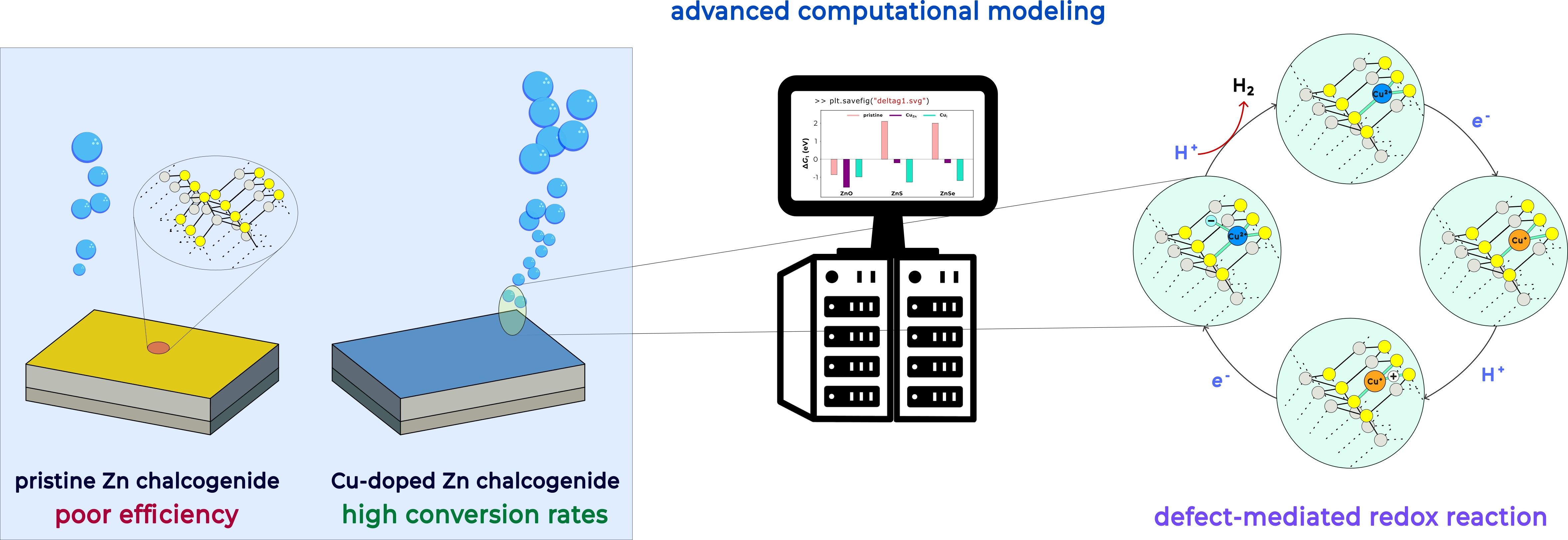
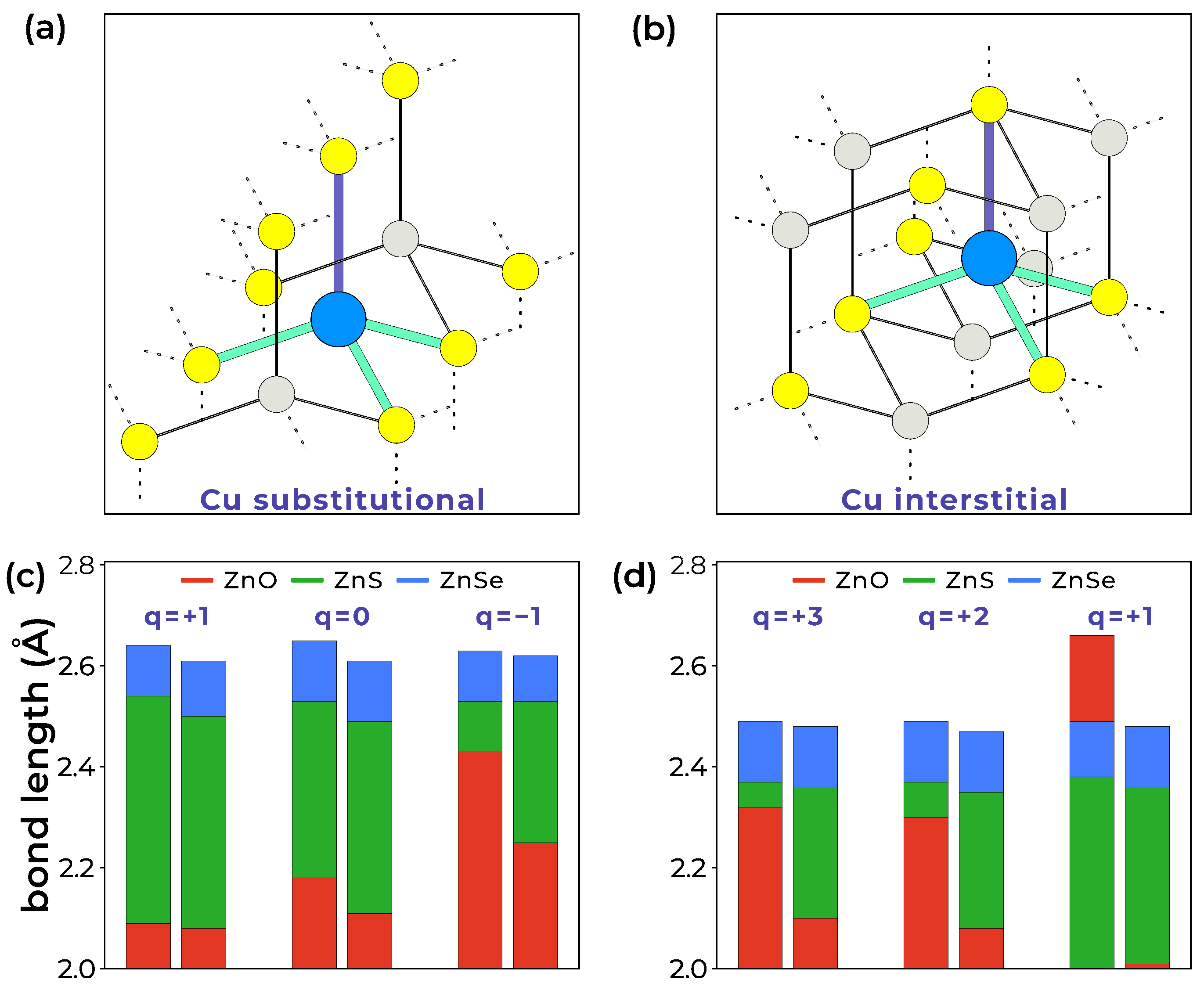
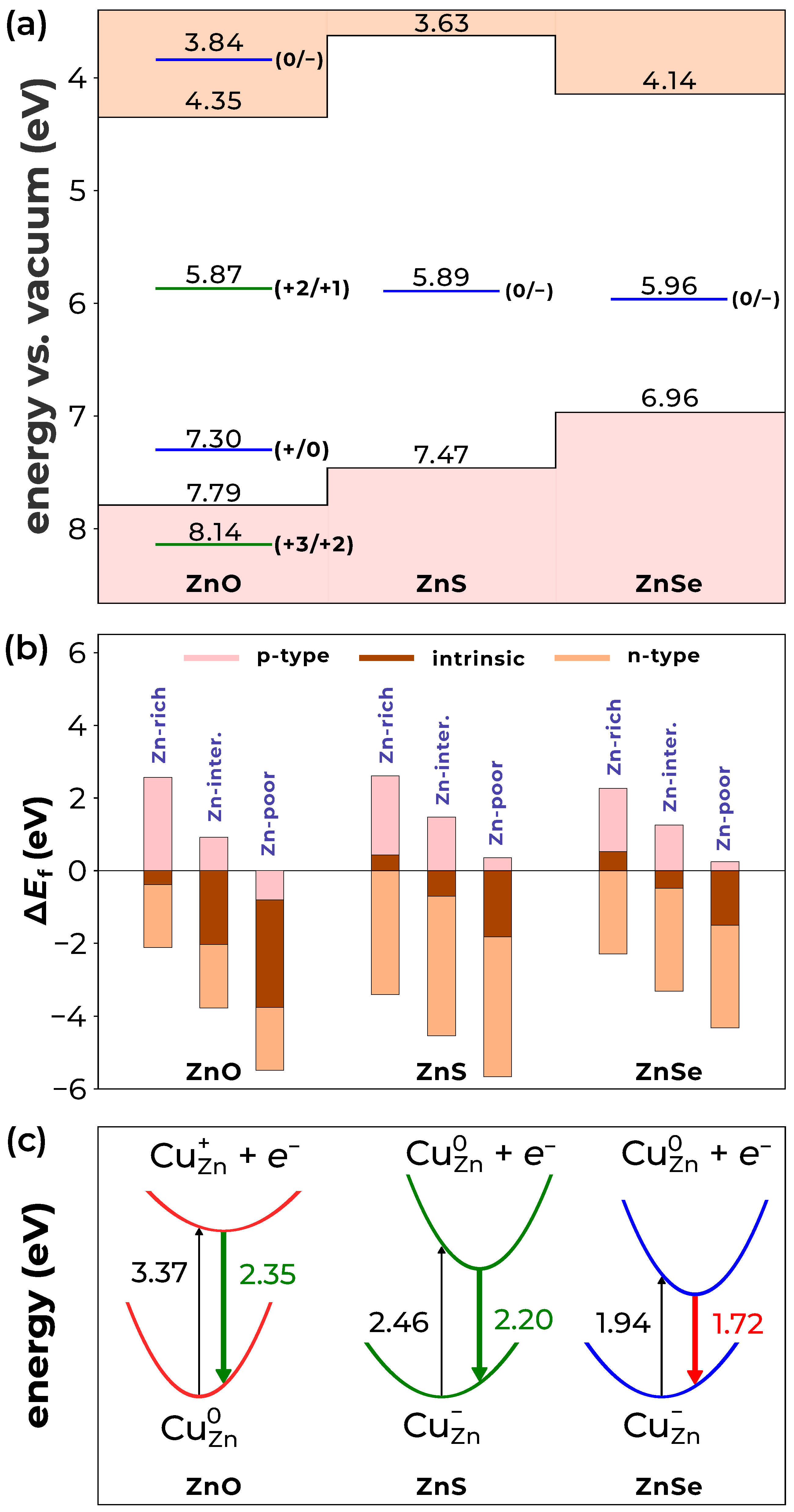
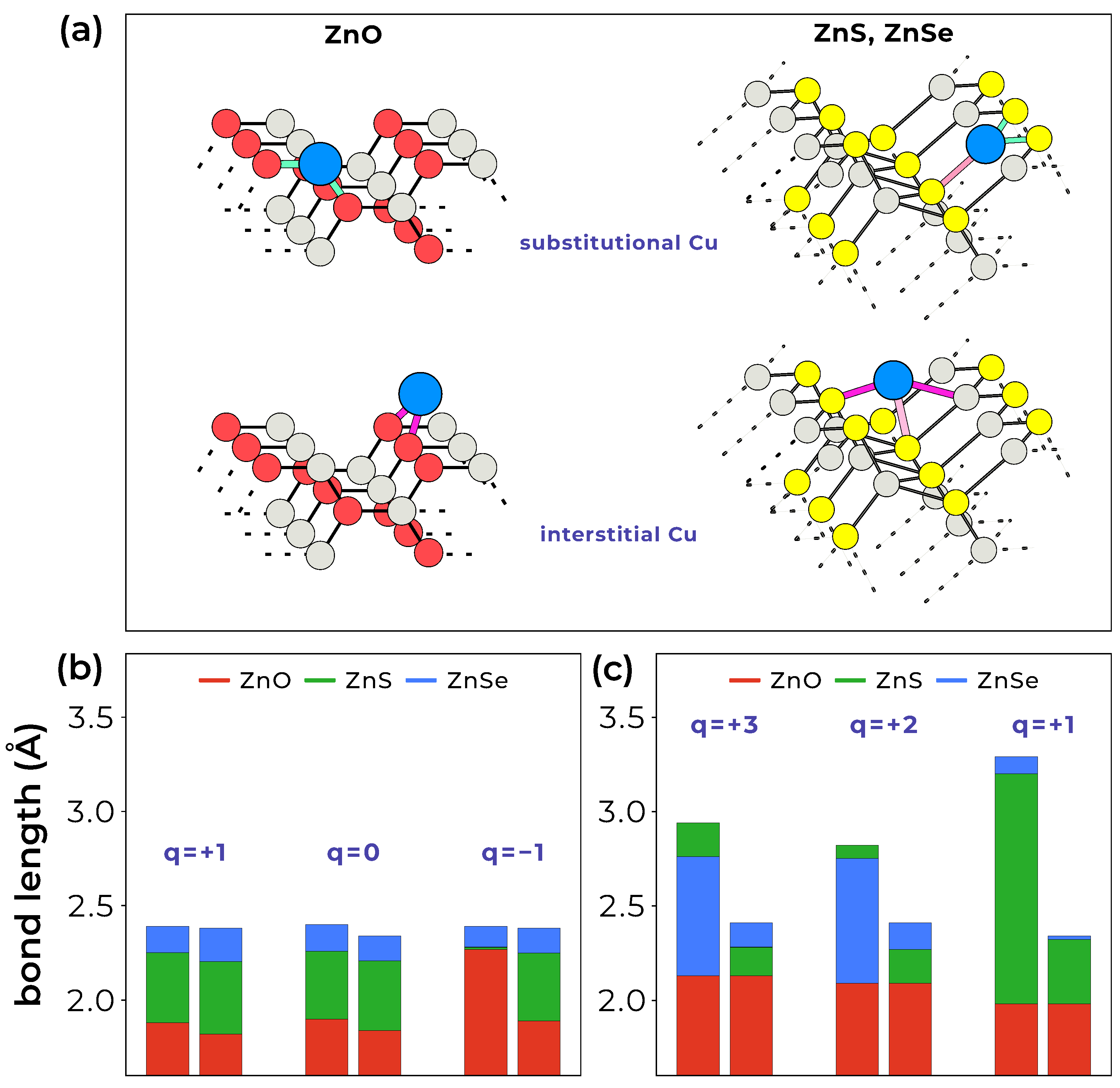
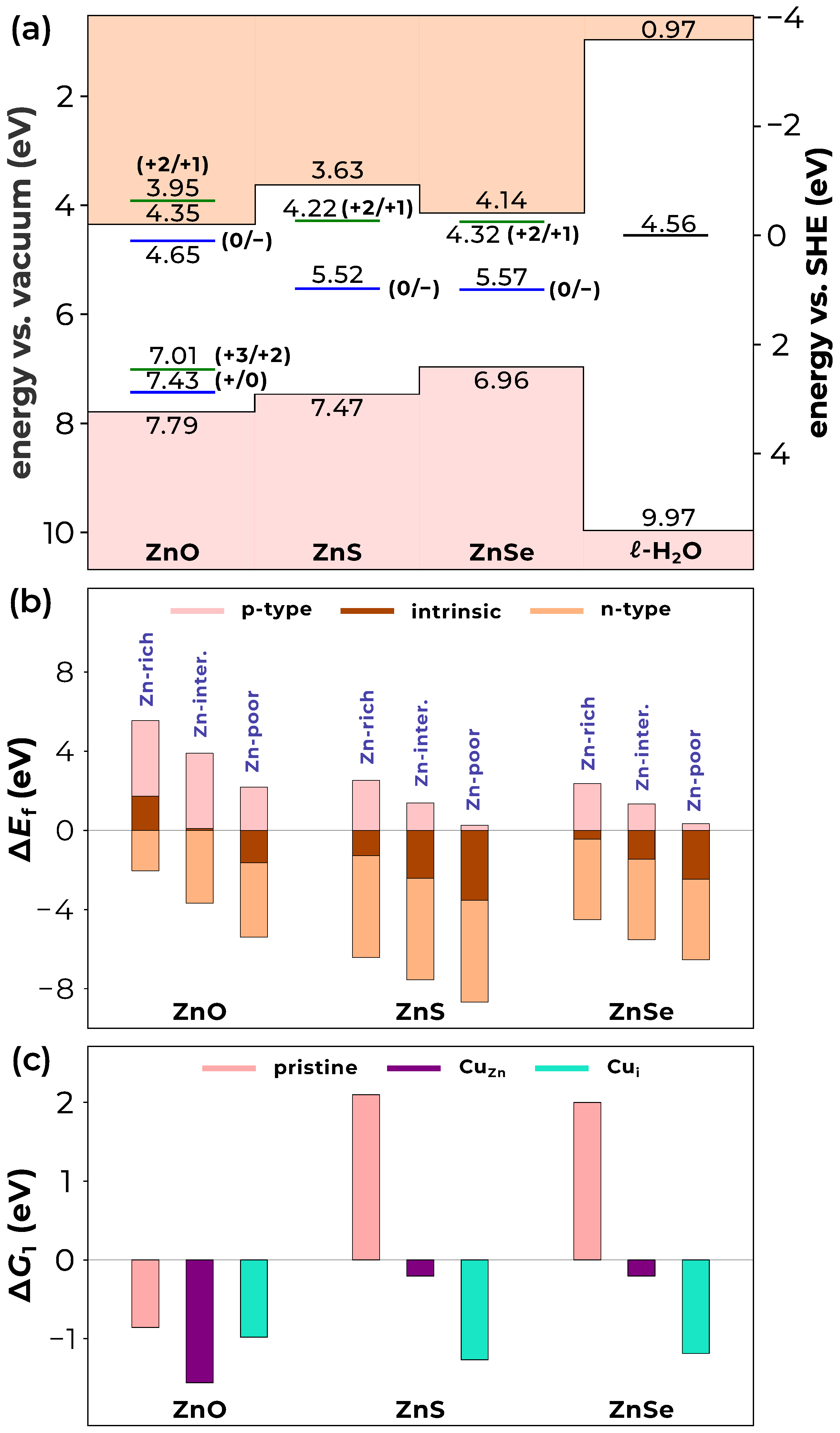
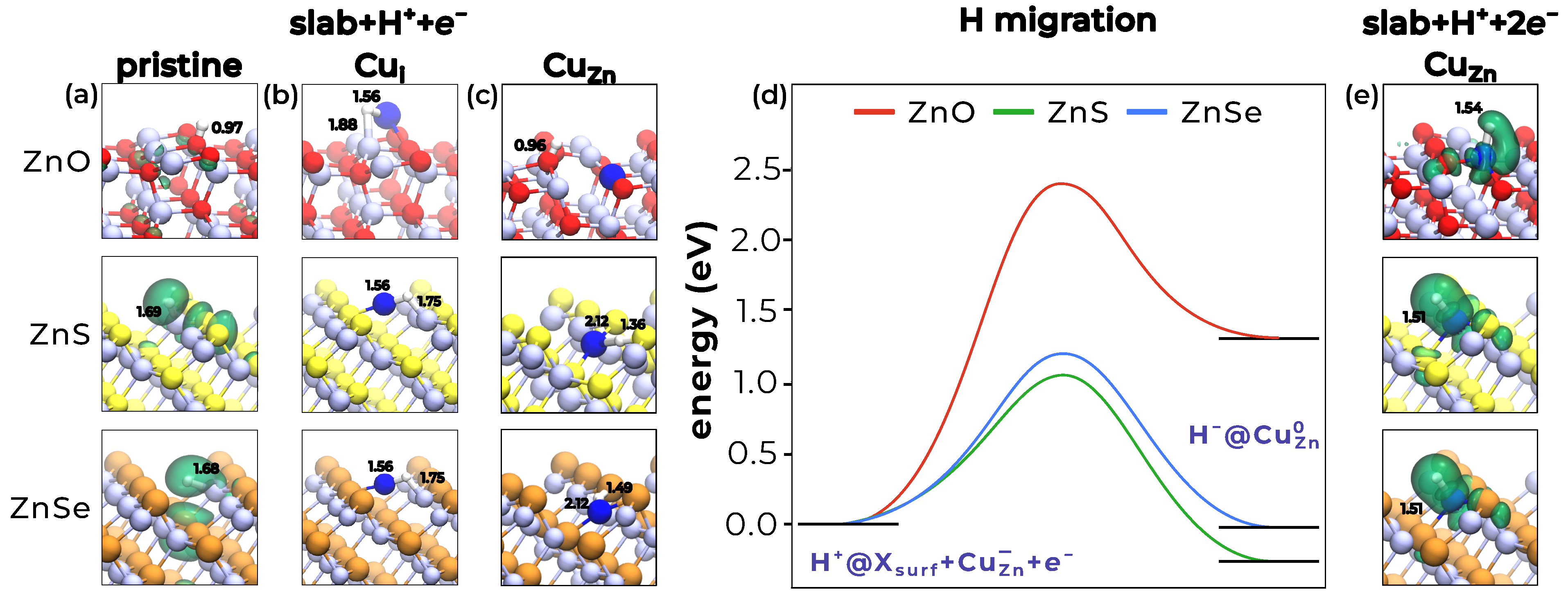
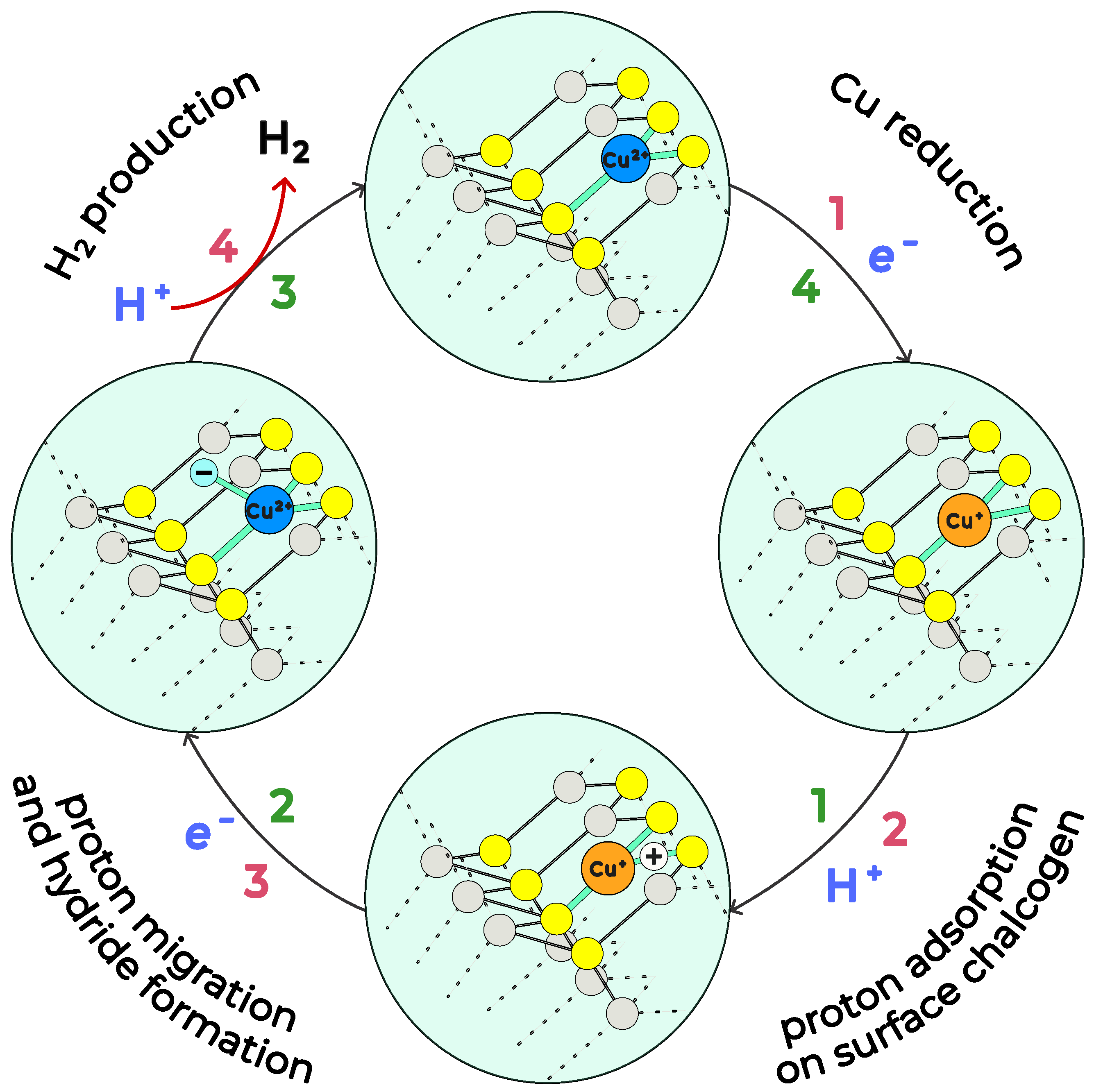
A comprehensive first-principles investigation of bulk and surface Cu defects in Zn-based chalcogenides (ZnO, ZnS, and ZnSe) is presented, aimed at assessing the effect of Cu doping on the optoelectronic properties of these materials and at addressing the photocatalytic activity towards the hydrogen evolution reaction (HER). Defect formation energies, adiabatic and optical charge-transition levels of the bulk materials are determined, and their dependence on growth conditions and Fermi-level position is analysed. The results indicate that, whereas ZnO supports both donor- and acceptor-like Cu defects with pronounced Jahn-Teller distortions, ZnS and ZnSe predominantly stabilise substitutional Cu as a mid-gap acceptor with weaker electron-lattice coupling and similar absolute transition levels. Calculated vertical transition energies rationalise the characteristic emission of Cu-doped samples in terms of defect-mediated optical cycles. The focus is then placed on surface energetics, which differ markedly from bulk behaviour and critically influence photocatalytic performance. Explicit modelling of HER demonstrates that Cu substitution dramatically reduces the overpotential on ZnS and ZnSe by tuning hydrogen adsorption toward the Sabatier optimum, while in ZnO the beneficial effect of Cu doping is diminished by the excessive strengthening of the adsorbate-surface interactions. Finally, the measured HER activities are rationalised by proposing a defect-mediated mechanism involving electron trapping at the surface Cu site, cooperative proton adsorption, and hydride formation. These findings establish defect thermodynamics and surface charge localisation as key design parameters for optimising materials engineering strategies in photocatalytic applications.
Keywords: defect chemistry; density functional theory; heterogeneous photocatalysis; hydrogen evolution reaction defect chemistry; density functional theory; heterogeneous photocatalysis; hydrogen evolution reaction
Graphical Abstract