Review

Recent Research Progress on the Preparation and Applications of Metallic, Semiconducting, and Carbon-Based Photothermal Nanomaterials

Key (Guangdong-Hong Kong Joint) Laboratory for Preparation and Application of Ordered Structural Materials of Guangdong Province, Guangdong Engineering Technology Research Center of Advanced Polymer Synthesis, College of Chemistry and Chemical Engineering, Shantou University, Shantou 515063, China
*
Author to whom correspondence should be addressed.
Nanoenergy Adv. 2026, 6(1), 8; https://doi.org/10.3390/nanoenergyadv6010008
Submission received: 22 December 2025 / Revised: 9 February 2026 / Accepted: 11 February 2026 / Published: 14 February 2026

Abstract

Energy obtained by green ways with releasing environmental pollution is still a challenge for sustainable development for model society. Among energy technologies, photothermal conversion by using solar energy has become a new field and a hot topic in recent years. Based on the exploration of nanomaterials in the past decades, photothermal nanomaterials by using nanomaterials bring new chances for expending the utilization of green energy with high efficiency, mainly including metal semiconductors and carbon nanomaterials. Their modulated structure for enhancing light absorption, accelerating transformation of photon into heat, and located heat management were also considered important for promoting the utilization of solar energy and therefore, the strategies for designed and controllable preparing of photothermal nanomaterials were also summarized. The applications of photothermal nanomaterials were also reviewed to reveal the new chances for energy conversion engineering or promoting the solar energy utilization of solar energy in some cold regions or somewhere with low solar irradiation.

1. Introduction

Today, energy shortage is a serious issue to the modern society and green energy is expected for our sustainable development [1,2]. Solar energy has been considered abundant for decades and consequently technologies were explored for utilizing this clean energy with high efficiency, such as photothermal power generation, photocurrent conversion, photocatalysis, photochemical reaction, solar-driven interfacial evaporation, and so on [3,4,5]. Although numerous achievements have been obtained in the past years, the harvesting and utilization of solar energy still face challenges due to its inherent intermittency, fluctuation, and low energy density. Hence, advanced materials, such as nanomaterials, were designed and prepared for the utilization of solar energy in limited conditions and to bring new applications. Among them, photothermal conversion technology is considered a promising application strategy of solar energy, performing unique advantages in the fields of space heating, power generation, and seawater desalination [6,7]. Traditional solar thermal materials often have issues such as narrow spectral absorption ranges, weak light absorption, and poor thermal management. Consequently, these materials cannot fully utilize solar energy during photothermal conversion, resulting in consistently low efficiency levels [8]. With the rapid development of nano-functional materials in the past decades, it has become possible to directly utilize solar energy through photothermal processes due to the tunable optical properties of nanomaterials (such as light absorption, paths for photon transferring, and so on), presenting huge potential applications [9,10]. Therefore, photothermal nanomaterials exhibit a great chance for green energy generation and application, and thus the studies on such nanomaterials with photothermal conversion properties have attracted lots of attention [11].
Compared with traditional photothermal materials, nano-photothermal materials rely on the nanoscale effect to achieve significant improvement in conversion into heat [12,13]. In the past decades, several nanomaterials were designed and prepared with enhanced photothermal conversion capacities for solar energy utilization [11,13]. Generally, based on the differences in electronic structure and photothermal conversion mechanisms, nano-photothermal materials can be classified into three main categories of metal, semiconductor, and carbon nanostructure. These mechanistic differences reveal the unique optical and thermal properties of each material, which can be applied to practical applications in various photothermal systems according to their distinctive characteristics.
Metallic materials primarily achieve photothermal conversion through surface plasmon resonance (SPR) between metals and dielectrics. When incident light irradiates the metal surface, electrons in the metal are excited and undergo transitions from lower to higher energy levels, generating large number of hot electrons. These hot electrons then transfer their energy to the metal lattice via electron–phonon coupling, thereby heating the material itself. The accumulated heat is subsequently dissipated into the surrounding environment through thermal transport, ultimately realizing efficient photothermal conversion [14]. Some metals (Au, Ag, Pd, just name a few) in nanoscale perform high local surface plasmon under light irradiation, promoting the light-absorbed intensity and accelerating the energy conversion. For alloy or hetero nanostructures, the coupling of different carrier behaviors would significantly promote their photothermal conversion [15].
Owing to the unique band structure, semiconductor materials achieve photothermal conversion primarily through electron excitation and non-radiative recombination of electron-hole pairs. As photothermal materials, their most defining feature is the tunable bandgap structure. To address practical demands in diverse photothermal systems, the structure (including band gap, interface, carrier concentration, and so on) of semiconductor nanomaterials can be modulated through methods such as interface modification and elemental doping to enhance photothermal conversion efficiency [16,17,18].
The high efficiency of photothermal conversion in carbon-based materials stems from their strong coupling between delocalized π-electron systems and lattice vibrations. Carbon materials can excite electrons from π orbitals to π* orbitals by absorbing incident light, then convert the absorbed energy into thermal energy through molecular thermal vibrations, thereby exhibiting superior photothermal conversion efficiency [14]. The material sources for preparing carbon photothermal nanomaterials are so abundant that such kinds of photothermal materials are usually obtained at a low cost. In addition, carbon nanomaterials (such as graphene, carbon nanotubes, porous carbon nanomaterials, etc.) absorb light across broad ranges due to their hybrid structures; many efforts are therefore focused on increasing the absorption intensity and improving the utilization of light energy [19].
Hence, reasonable design and preparation of nanomaterials are the key paths for obtaining photothermal materials. What is more, the small size of photothermal nanomaterials provides high specific surface area and paves the way for constructing light-trapping structures of hollow or porous morphologies [17]. By constructing light-trapping structures, the transmission distance of the incident light would be prolonged in the material so that the multiple diffuse reflection and absorption of light enhanced the total absorptance improving the photothermal conversion [20]. In addition, nanomaterials with anisotropic morphology, such as one-dimensional carbon nanotubes and two-dimensional graphene, exhibit directional thermal conductivity during photothermal conversion achieving efficient directional transmission of photogenerated heat and avoiding material crystal destruction or chemical degradation caused by local overheating, thus ensuring the long-term operation stability of photothermal systems [21].
Based on the excellent properties resulting from the size effects of nanomaterials, photothermal conversion has been introduced into multi-dimensional and cross-field application systems [22]. For example, in recent years, solar-driven interface evaporation with photothermal nanomaterials achieved seawater desalination and deep purification of industrial wastewater at high evaporation rates [23]. For power generation with green ways, photothermal conversion/photovoltaic hybrid concepts were also proposed and photothermal nanomaterials were loaded on the thermoelectric devices for obtaining electric power via photothermal-thermoelectric process [24]. Combining the heat management, photothermal nanomaterials were also employed in infrastructures protection (deicing, etc.), reducing energy consumption of indoor-temperature modulation, and energy supply at cold regions [25,26].
Nano-scale effects bring new functions or enhancements to photothermal materials and thus enlarge the applications in energy conversion. Hence, by structure modulations, photothermal nanomaterials are expected to break out the bottleneck of traditional photothermal performance. This paper reviews recent studies on photothermal nanomaterials, including their preparation, structure modulations, and typical applications, aiming to provide theoretical and technical reference for the industrialization of photothermal nanomaterials and the global energy transition.

2. Photothermal Nanomaterials: Preparation and Photothermal Conversion Tailoring

The methods for designed and controlled preparation of nanomaterials have been explored in the past decades, paving the way for applications with targeted functions [27,28,29,30,31]. Based on the controlled strategies for constructing nanocrystals, photothermal nanomaterials were prepared effectively [32,33,34], thus strongly supporting the applications in energy conversion. Owing to the photothermal conversion properties of nanomaterials depending on their sizes, morphologies, electronic structure, surface or interface, and so on, the preparation and modulation methods of photothermal nanomaterials are the keys for converting solar energy into heat. In this section, the reported strategies for tailoring photothermal nanomaterials were reviewed, including metals and alloys, semiconductors, and carbon.

2.1. Metallic Nanomaterials

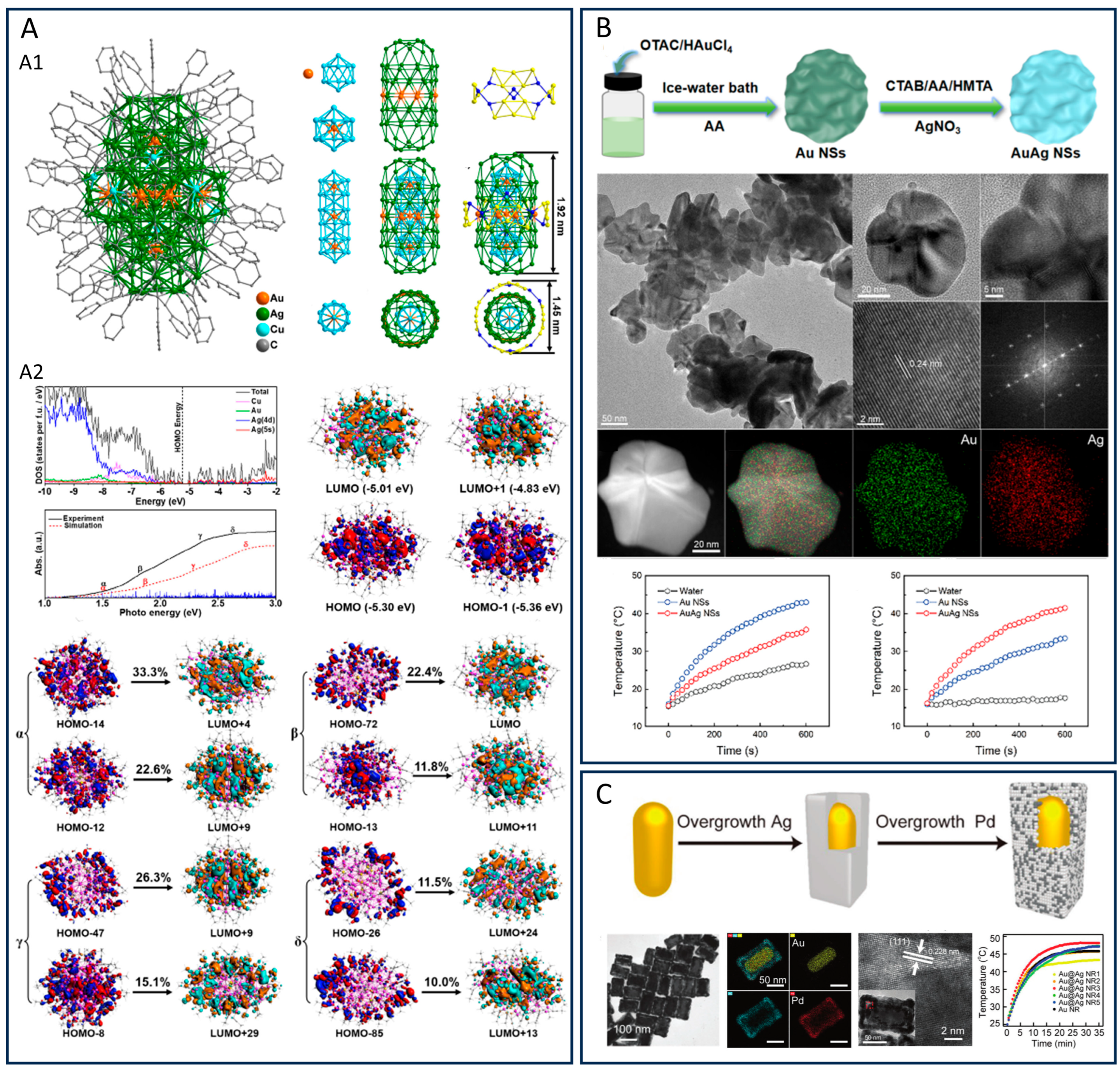
Metals exhibit high photothermal conversion efficiency owing to their high density of free electrons and thus rapid conversion rate with high light absorption. When scaled down to the nanoscale, certain metals exhibit strong localized surface plasmon resonance (LSPR). This effect significantly enhances their light absorption and photothermal conversion efficiency, while also allowing spectral tunability. Specifically, Au, Ag, Pd, etc. have been widely prepared for photothermal conversion application [35]. Au nanocrystals were prepared for photothermal therapy or medical imaging in the past decades [36,37,38] and the strategies were designed and explored for accurately tailoring Au nanocrystals [39,40,41], including morphologies and sizes. For instance, the largest all-alkynyl-protected rod-shaped trimetallic alloy nanocluster, {Au9Ag126−xCux (PhC=C)68(BF4)}4+, was synthesized via a direct reduction precursors strategy (Figure 1A), using phenylacetylene (PhC≡CH) ligand with diverse metal-coordination as the protective agent [42]. The metallic cluster core features a concentric core–shell heterostructure arranged as Au3Ag34@Au6Ag64@(AgCu)28. Time-dependent density functional theory (TD-DFT) calculations revealed the 0.29 eV of energy gap between HOMO and LUMO, indicating that the electronic structure of the cluster lies at the critical transition boundary between molecular and metallic states. Consequently, the Au3Ag34@Au6Ag64@(AgCu)28 cluster demonstrated remarkable exceptional photothermal conversion performance and cycling stability [9]. AuNCs@TBN-Superphanes were prepared via encapsulating Au cluster with a TBN-Superphane supramolecular cage, exhibiting a broad absorption range from 500 to 2500 nm and remarkable photothermal conversion under 808 nm [13]. In addition, alloyed metal nanocrystals or heterostructures were synthesized to modulate the LSPR absorption. As recently reported by Zheng et al., AuAg alloyed nanosheets were achieved via a seed-mediated synthesis method with precise controlling of Ag/Au ratio and morphology preserving of Au nanosheets. By this approach, a continuous blue-shift in the in-plane dipole plasmon resonance was facilely modulated from 1000 nm (NIR-II) to 700 nm (NIR-I) because the incorporation of silver modulates the plasmonic response by altering the free electron density and the local dielectric environment, thereby enabling effective optical tuning (Figure 1B) [42]. Due to the similar lattices of metallic Au and Ag, their heterostructures were usually prepared by using seed-mediated process. Chen et al. employed Au nanorods (NRs) as cores and epitaxially grew silver shells on the surface by precisely controlling the addition of AgNO3, resulting in Au@Ag core–shell nanostructures with tunable aspect ratios [43]. The Ag shell broadened the LSPR absorption and thus absorption of the Au@Ag NRs covered a wider visible light range. Based on the enhanced light absorption, the optimized Au@Ag NRs performed a high photothermal conversion with a steady-state temperature of 48.1 °C under one sun irradiation. Furthermore, metallic Pd was grown onto the surface of Au@Ag NRs to form Au@AgPd NRs, which performed an expanded plasmon resonance absorption and enhanced photothermal efficiency. The studies demonstrated that it is an effective way to obtain photothermal metal reagents by constructing metallic heterostructure or alloy with appropriate compositions and suitable structure (Figure 1C). Pd@Ag core–shell nanoplates perform tunable SPR over a wider spectral region relative to pure Ag nanoplate and outstanding photothermal properties, serving NIR-SER substances and photothermal reagents for cancer therapy [44]. AuAg alloy nanoplates prepared via galvanic replacement enhanced tunable NIR absorption from the synergetic LSPR from triangular shape, performing a high photothermal conversion of 78.5% [45]. NIR-resonance plasmonic absorption of PtSb alloy nanocrystals can be optimized for compositions due to the strong p-d orbital hybridization, thus demonstrating excellent properties of photothermal conversion and activities on reactive oxygen species production for photothermal-catalytic therapy [15].
Based on the preparation and tailoring, self-assembly or space-confined strategy of metal nanocrystal also enhanced the photothermal conversion with LSPR coupling [46,47,48]. The plasma band of Ag nanoparticles is narrow and limits their applications. Nevertheless, black Ag nanocrystals grown via space-confined seed process presents high plasma resonance coupling due to the assemblage with widely distributed interparticle distances, improving utilization of solar energy for photothermal steam generation [49].

2.2. Semiconductor Nanomaterials

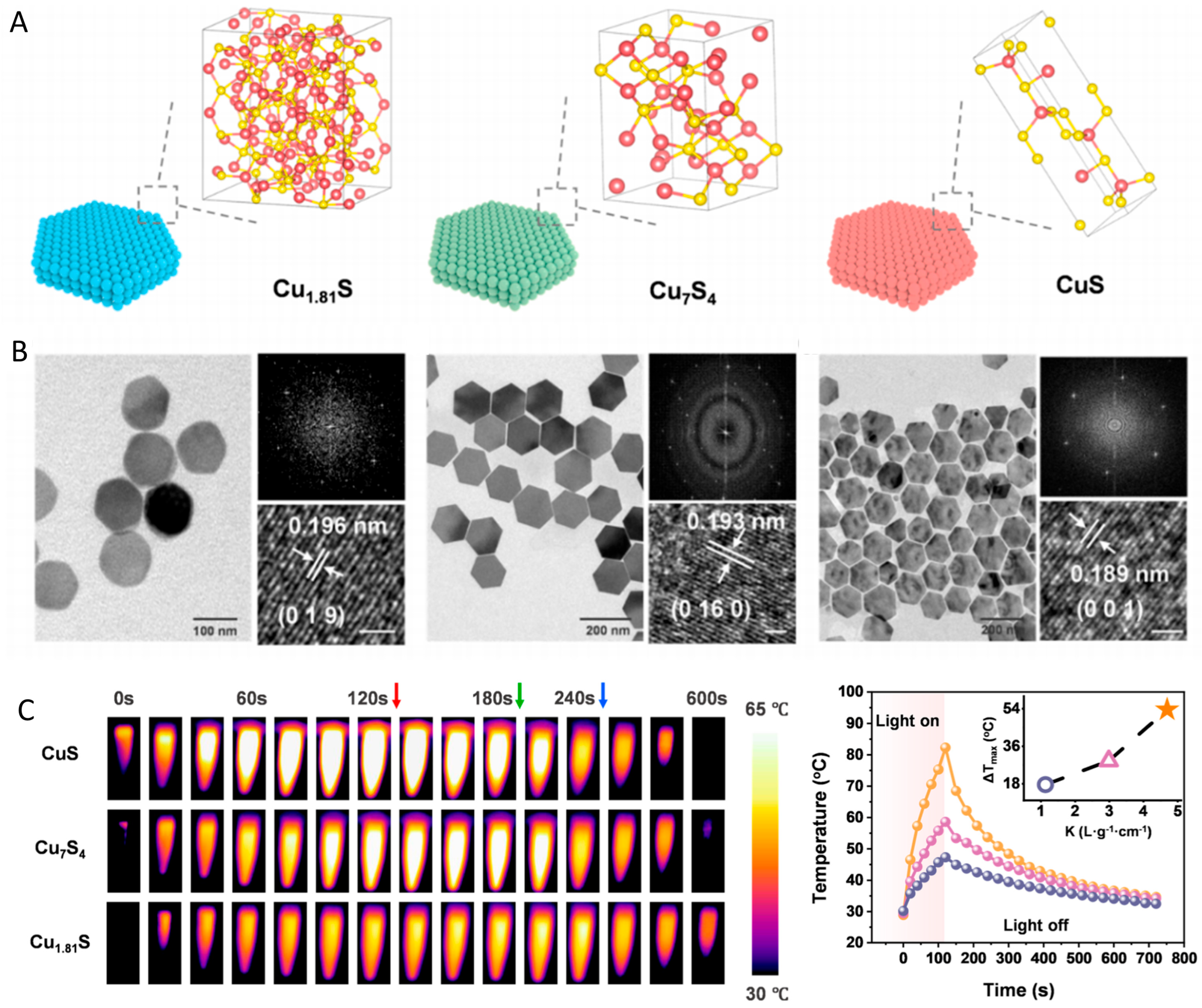
Generally, semiconductor nanomaterials exhibit strong light absorption and photon trapping capabilities within specific spectral ranges due to their ability to form electron-hole pairs with energies exceeding the bandgap. As these pairs relax toward the bandgap edge, significant thermal effects can be generated within the system, making them important candidate materials in the field of photothermal conversion. The bandgap width of semiconductor nanomaterials directly affects the range of the material’s optical response. Reducing the bandgap width of semiconductor material broadens its spectral absorption range, thereby enhancing its photothermal conversion efficiency. Moreover, the bandgap and electronic structure of semiconductors can be tailored through various strategies, such as constructing heterointerfaces, introducing defects, doping with cations, and controlling crystal phases. These modifications improve their photothermal performance by strengthening the light absorptions with broadened range and accelerating the energy conversion processes. The reported semiconductor nanomaterials currently used for photothermal applications are primarily metal oxysulfides and titanium compounds, such as copper sulfide nanocrystals, titanium oxide nanoarrays, and so on. Specifically, copper sulfide nanocrystals possess both semiconductor and plasmonic-enhanced photothermal conversion regents, effectively combining the non-radiative carrier recombination of low-dimensional semiconductors with LSPR response characteristics [32,50]. The phase of copper sulfide nanocrystals synthesized via chemical methods can be precisely controlled by manipulating the reducing environment and the reaction temperature [51]. For instance, CuS prepared by using sulfur precursor (sulfur dissolved in oleyamine and n-octylamine) would transform into Cu7S4 by heating at 80–240 °C in oleylamine while Cu1.81S could be obtained via a similar path by using tert-dodecyl mercaptan. The phase controlling and photothermal conversion investigation results showed that the unique S-S double bond and semimetallic band gap of CuS enable a strong LSPR effect resulting in much higher photothermal conversion efficiency (Figure 2). Hollow core copper sulfide (H-Cu2S) nanostructures were prepared by the hydrothermal reaction of copper sulfide via a Kirkendall effect process [52]. The hollow core and hierarchical shell structures promote photon capture by prolonging light-matter interaction path through multiple internal scatterings, achieving an exceptional photothermal conversion efficiency of 86.8%. Cu2S/CuO@Cu nanoarray grows with size control onto the copper substrate in situ by two-step impregnation method and performs high photothermal conversion rapidly [53]. The strategies for tailoring composition and morphologies pave the way for tailored prepared copper sulfide photothermal nanomaterials with high performance.
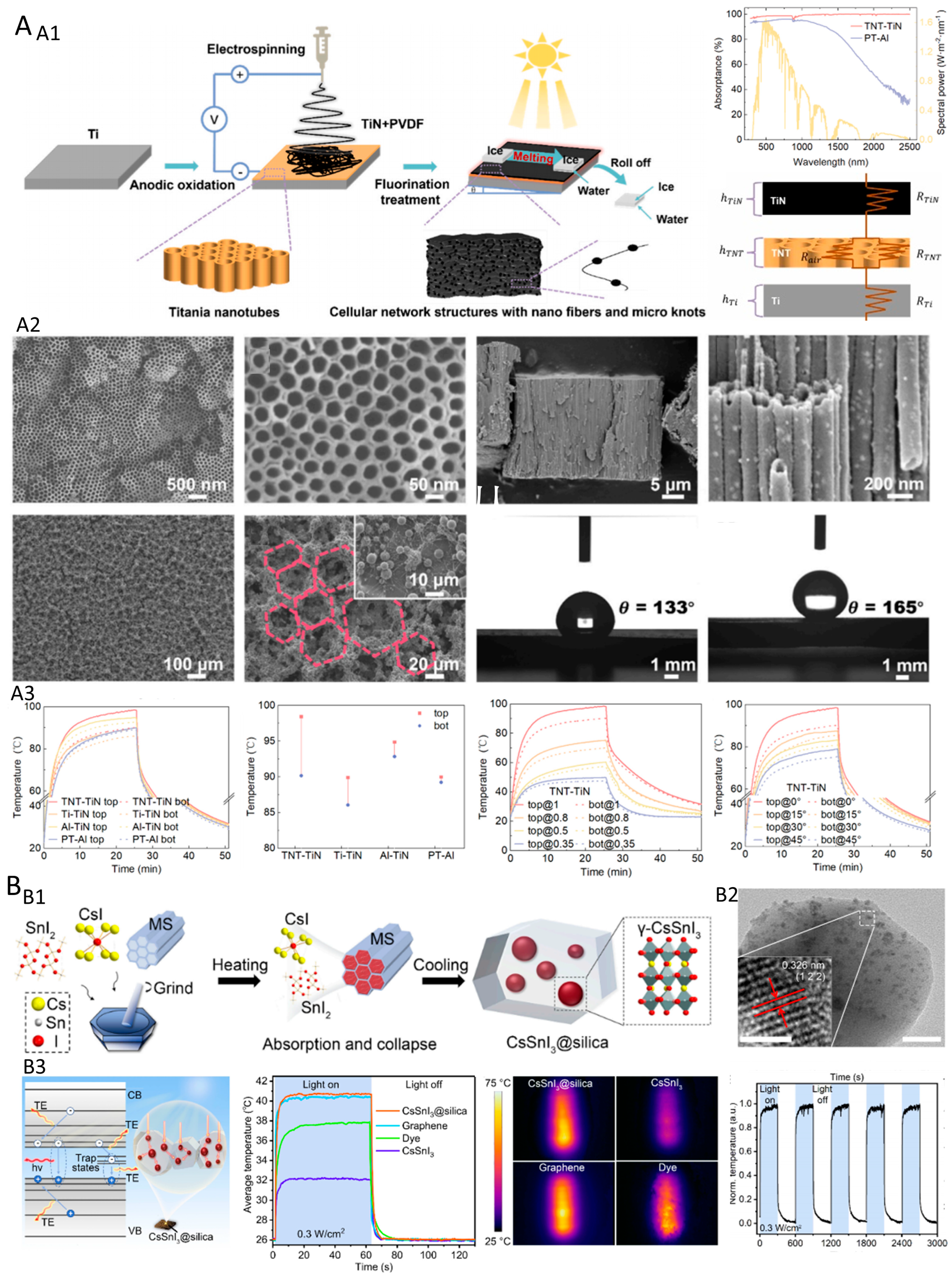
Cr-doped TiO2 treated in ammonia atmosphere would result in defects with Cr-N co-doping so that the process could be used in modulated defect state [54]. The Cr-N dopants of CrN-TiO2 can control the nitridation temperature, and the doped Cr and N form Cr-N structural units in TiO2 lattice forming a delocalized intermediate band to significantly enhance photo-generated electron–phonon interactions and energy conversion. Nanolamellar λ-Ti3O5@SiO2 could be tailored via suppressing grain growth by SiO2 layer during hydrogen reduction at high temperature [55]. The confined grain growing preserves the high-specific-surface-area layered morphology of λ-Ti3O5@SiO2 and then results in the narrower bandgap of λ-Ti3O5, achieving a maximum solar absorption rate of 92.2% and a photothermal conversion efficiency of 91.7%. Additionally, other nanostructures such as nanosheets and nanotubes with specific morphologies were controlled to increase specific surface area and light absorption efficiency. For instance, TiO2 nanotubes were grown on the surface of a titanium substrate, followed by the fixation of rigid plasma-sputtered TiN particles using a polyvinylidene fluoride (PVDF) binder via electrospinning. The resulting devices based on the TiN and porous structure of Ti nanotubes exhibited high photothermal conversion and anti-icing at low temperature (−23 °C) and low solar irradiance (0.35 sun illumination) [56] (Figure 3A). A regional phase transition on the MoS2 (1T@2H MoS2) was prepared by heat treatment using MoS2 powder with high concentration of S vacancies obtained via electrochemical ultrasonic method. In the 1T@2H MoS2 heterostructure, metallic 1T phase coexists with the semiconducting 2H phase, which can be optimized by high-temperature annealing conditions and affects the localized surface plasmon resonance (LSPR) of the metallic 1T phase and the non-radiative electron-hole recombination dynamics of the semiconducting 2H phase [57]. Therefore, the synergy of region phase connection results in high-efficiency absorption across the full spectrum and then demonstrates a photothermal conversion efficiency exceeding 90%.
Quantum dots with modification including elemental doping and surface modulation would also perform high photothermal conversion with enhanced light absorption capacity. A confined tin-based perovskite CsSnI3 was encapsulated by SiO2 shell so that the quantum dots exhibit high photothermal conversion efficiency (>99.4%) in near-infrared region and stably work in high temperature, high humidity and intense light (Figure 3B) [58].

2.3. Carbon-Based Photothermal Nanomaterials

Carbon materials possess a distinctive electronic structure with conjugated π-electron systems through sp2 hybridized carbon lattices, exhibiting ultra-broad spectral absorption capabilities across the ultraviolet to microwave region. Upon absorbing light energy, the electrons in π-electron systems of carbon materials convert photon into heat rapidly through internal electronic transitions and molecular thermal vibrations. Furthermore, carbon materials possess key properties such as low density, high light absorption and high thermal conductivity, making them ideal for use in fields including solar water evaporation technology, photothermal therapy, environmental remediation and optoelectronic sensors. On the other hand, although carbon materials have some advantages for photothermal conversion and application, the controllable constructions of photothermal structures still face great challenges, such as the difficulty in precise tailoring of π-electron system during the preparation process. Moreover, aiming at the applied details, the heat management is also an important issue, which depends on the designed carbon structure. Therefore, the strategy for constructing carbon structures with high photothermal conversion properties has been expected in the past years [59,60].
In the past years, carbon materials with diverse shapes and structures have been designed and fabricated. Their properties are tuned through strategies such as surface modification via etching or by forming composites with other materials, which effectively regulate their physical microstructure. These microstructures generally would enhance light absorption and thus promote photothermal conversion. For example, a novel black carbon nanotube (CNT)-based acrylamide-acrylic acid copolymer gel (GEL-CNT-ILS) was synthesized via radiation-induced polymerization [61]. Based on the unique crosslinked polymer network structure, the porous photothermal carbon nanomaterial accelerates the water transport and promote interfacial water evaporation (4.18 kg·m−2·h−1) with high light absorption and photothermal conversion capability. The synergistic interaction of carbon nanotubes and ionic liquids also significantly brings outstanding electrical conductivity (3.67 mS·cm−1) and thermoelectric conversion capabilities (5.62 mV/K). A zero-dimensional functional nanocarbon (N-CQD) was prepared via a hydrothermal process for constructing composite materials with two-dimensional nanostructures (rGO), and the photothermal conversion capability was found to depend on the ratio of N-CQD and rGO [62]. The optimized samples achieve a photothermal conversion efficiency (η) of 82.64%, and a 49.82% increase in thermal conductivity (0.88 W·m−1·K−1), demonstrating potential practical applications.
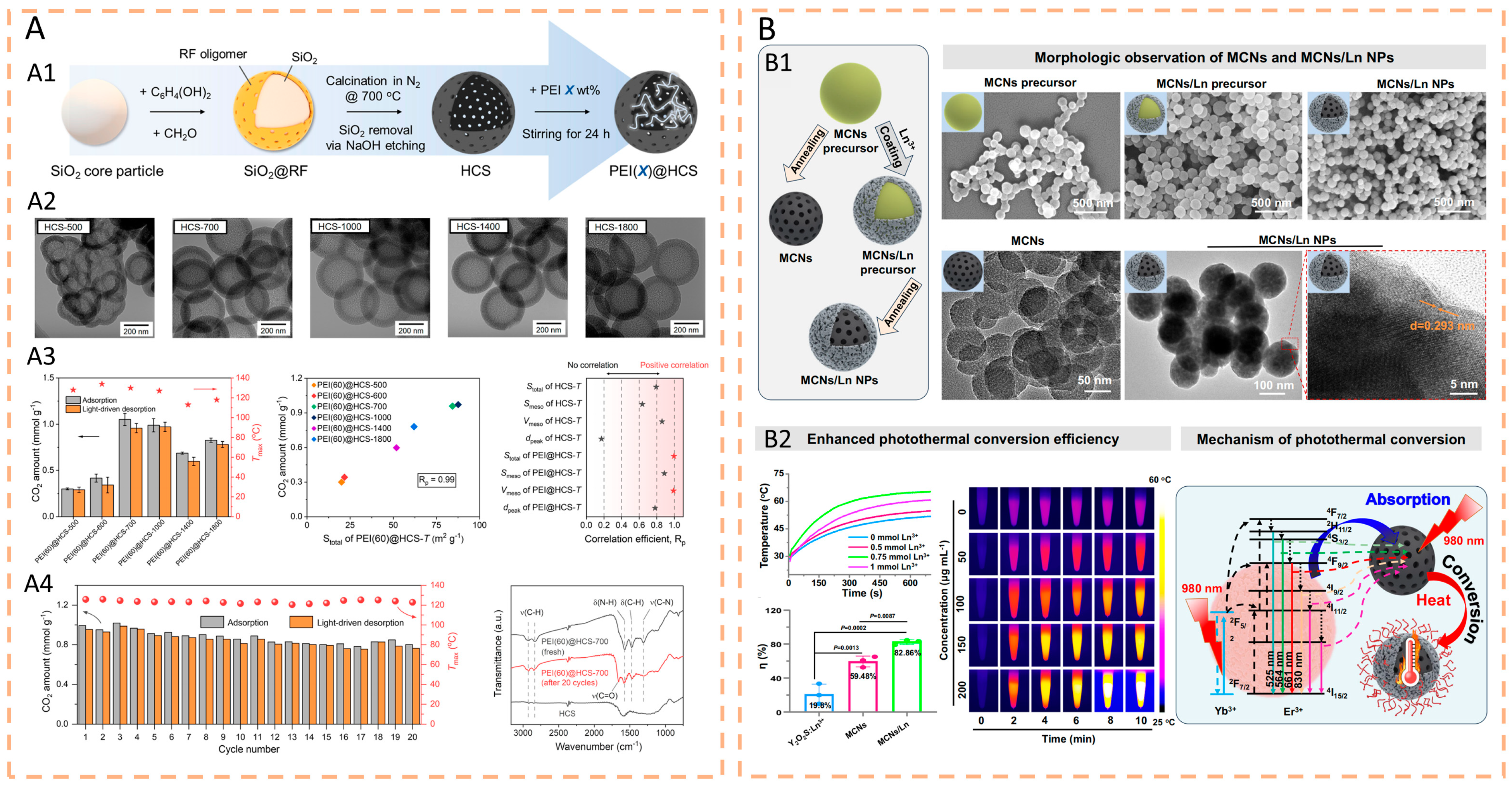
Constructing carbon nanomaterials with special structure was considered an effective strategy for tailoring their photothermal conversion. Hollow carbon spheres (HCSs) were prepared by employing a hard template to encapsulate polyethyleneimine (PEI) via wet impregnation, creating PEI@HCS precursors [63]. Then, a series of carbon structures were obtained by annealing PEI@HCS at different temperatures, and the resulting carbon materials were employed as CO2 adsorbents which released the gas by thermal input generated from photothermal conversion (Figure 4A).
In addition, introducing functional groups or chemically modifying carbon materials are general ways to alter their electronic structure for expanding absorption range of specific wavelengths and enhancing photothermal conversion efficiency. For instance, mesoporous carbon nanomaterial (MCN) surface was modified by coating up-converting Y2O2S:Yb3+/Er3+ so that the resulting composites would convert 980 nm laser light into visible light, boosting photothermal conversion efficiency from 59.48% to 82.86% [64]. After combining with light converting materials, the MCN/Y2O2S:Yb3+/Er3+ performs rapid photothermal response within 150 s under 280 mW cm−2 980 nm laser irradiation, demonstrating potential for cancer cell ablation (Figure 4B).
In short, methods of preparing nanomaterials for photothermal conversion were explored for constructing special units to enhance light absorption, accelerate the energy conversion, and improve thermal management or employment. These achievements provide necessary foundation for the photothermal conversion application and the employment of solar energy.

3. Applications of Photothermal Nanomaterials

Generations and utilizations of green energy via photothermal conversion perform some supplements on clean energy consumptions. So far, there have been lots of photothermal nanomaterials that have been explored for wide applications, such as steam generation/interface evaporation, photothermal-thermoelectric power generation, photothermal catalysis, anti-icing or deicing [65,66,67,68,69,70], providing new paths for solving the problems that traditional solutions are difficult to deal with. In this section, the recent reports on the applications of photothermal nanomaterials were reviewed to reveal the new chances of materials exploration and energy conversion engineering.

3.1. Photothermal for Green Energy Generation

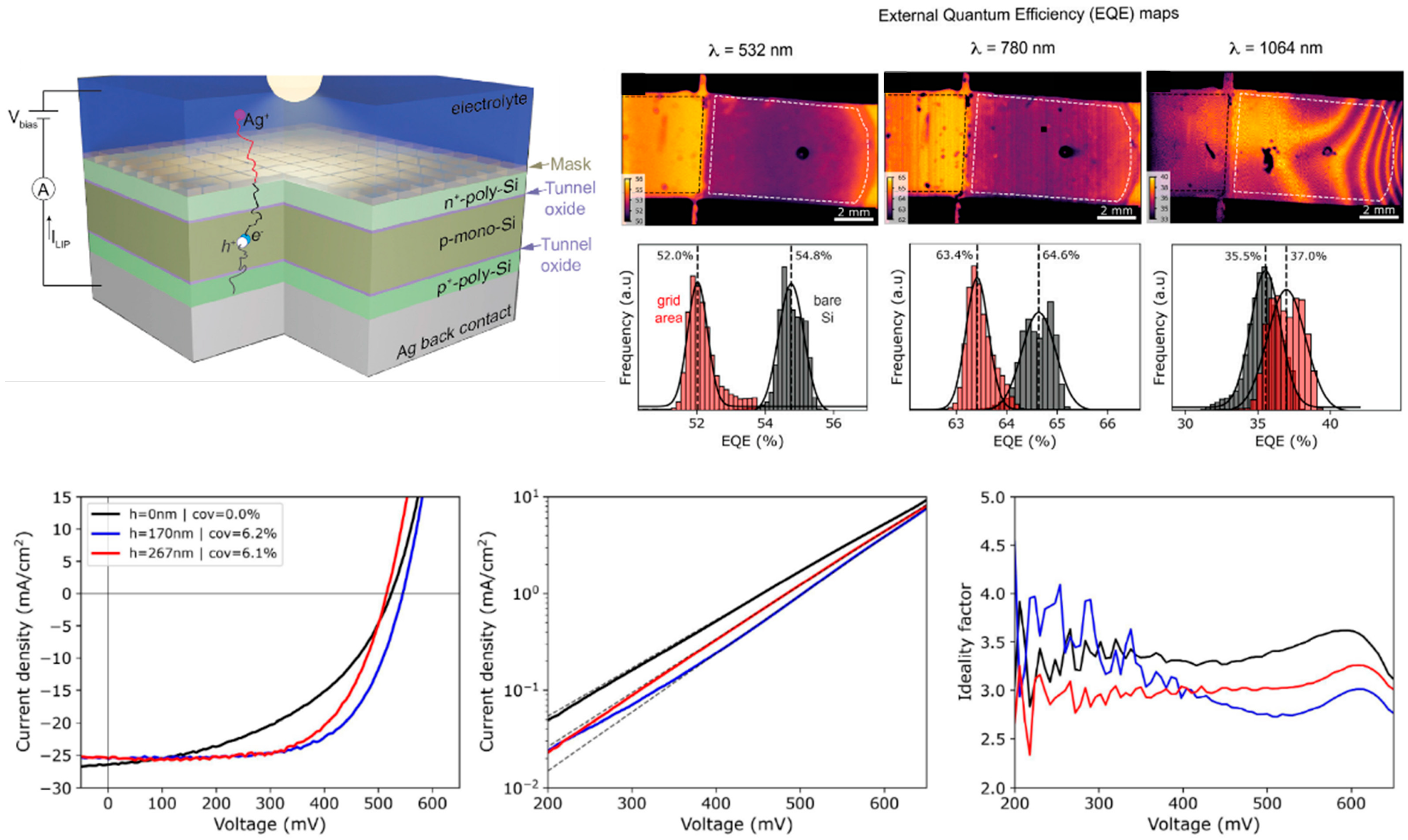
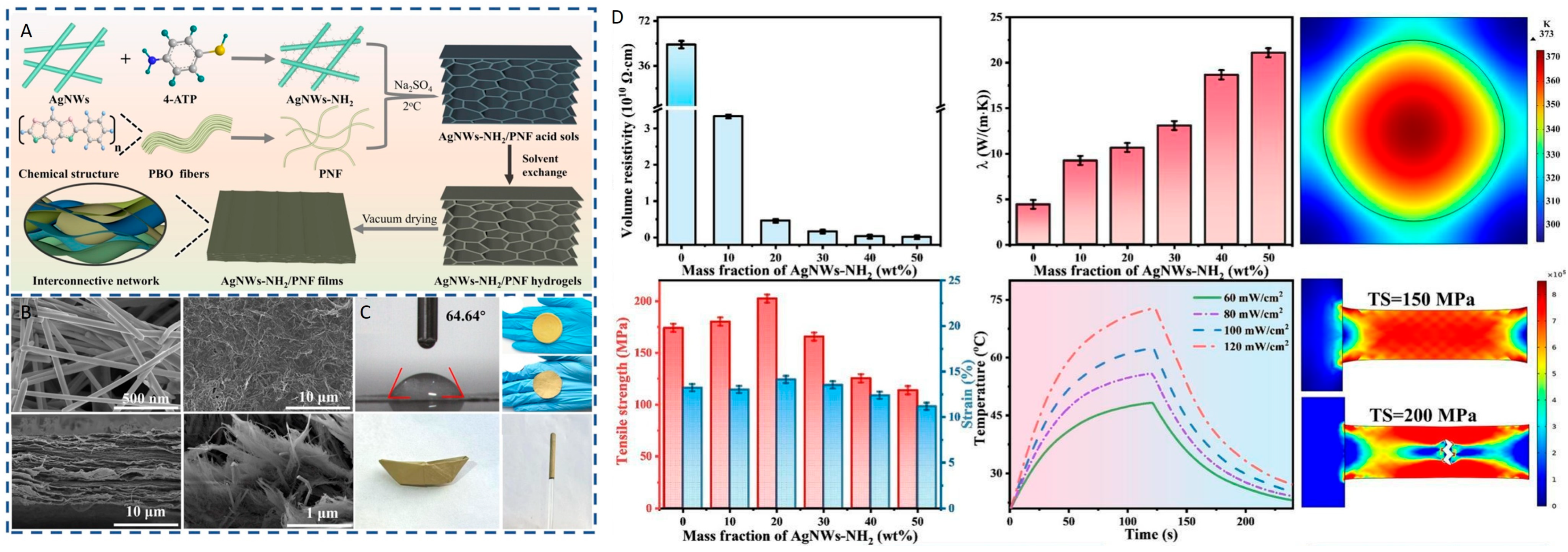
Owing to their unique surface plasmon resonance effects, tunable optical properties, and exceptional thermal/electrical conductivity, metal nanomaterials simultaneously trap light and rapidly transfer the energy into heat, and thus perform high photothermal conversion effectively which provides heat management for applications, such as cutting-edge solar cell technologies and so on [71,72,73]. Generally, metal clusters or nanocrystals were considered useful compositions for enhanced photothermal conversion. For example, a system of Au3Ag34@Au6Ag64@(AgCu)28 cluster in DMF is irradiated under a 660 nm laser with 0.5 W cm−2 of power density and the temperature rise to 51.5 °C in 5 min with photothermal conversion efficiency (PCE) of 84.7%, demonstrating remarkable exceptional photothermal conversion performance and cycling stability [9]. Using nanoimprint polymer masks and photo-induced electroplating, high-aspect-ratio Ag nanowire (Ag NWs) grids were successfully fabricated on ITO-free tunnel oxide passivated contact (TOPCon) silicon cells with 6% of surface coverage and the visible light transmittance was over 95% (Figure 5) [74]. By spatially resolved light-induced current (SR-LBIC) and optical simulations, the nanowire grid was revealed to exhibit lower shading effects in the visible spectrum than geometrically predicted with enhanced NIR light capture. Therefore, such silver nanowire meshes enable boosting the external quantum efficiency (EQE) of cells and effectively enhance the performance of underlying silicon cells by extending the optical path length, demonstrating significant value in silicon/perovskite tandem cell applications. Ag NWs/polyethylene glycol (PNF) composite films were found the temperature rapid increases to 72.8 °C under 120 mW cm−2 of illumination (Figure 6), demonstrating high photothermal conversion efficiency. Furthermore, the composite shows exceptional stability and flexibility, including resistance to strong acids and alkalis, inherent flame retardancy, and the ability to withstand tens of thousands of folding cycles with good recovery, which presents their capacities for portable photothermal energy applications in extreme environments, such as wilderness and aerospace applications [75].
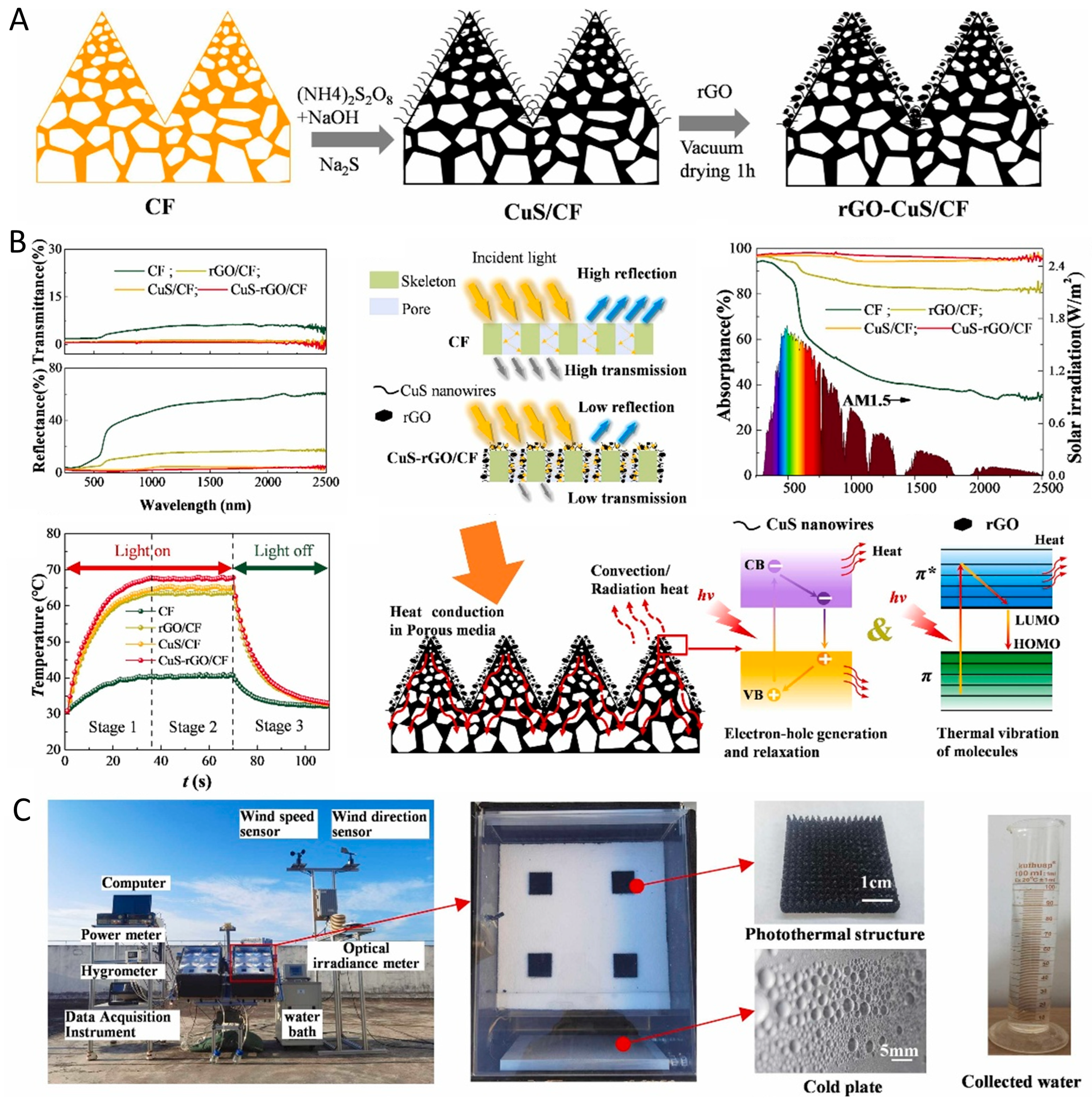
Semiconductors with tunable bandgap provide a path to modulate their light absorptions and the transferring of excited electrons and thus enhance their photothermal conversion [76,77]. Moreover, after modulation via band engineering techniques such as element doping and defect introduction, light absorption range of semiconductors could be adjusted to enhance broad spectral response. Meanwhile, efficient synergistic processes like photothermal effects and thermoelectric conversion would also be utilized due to photo-generated carriers, facilitating multifunctional conversion of light energy. The excellent photothermal conversion of multi-scale pyramidal composited by CuS nanowires and rGO provides a possibility for generating power by combining with thermoelectric generators (TEGs) with maximum power generation of 5.55 W m−2 under sunny conditions [78]. With interface evaporation, the water-electricity cogeneration prototype of CuS-rGO composite offers a viable solution for the simultaneous supply of freshwater and electricity in remote areas. The CuS nanowires construct a porous structure, promoting the multiple refraction for enhanced light absorption and providing path for accelerating water transportation. Furthermore, the narrow bandgap of CuS also enhances the non-radiative relaxation of electron-holes pair while the π electrons in rGO facilitate the thermal vibration in the lattice, resulting in photothermal conversion with high efficiency. Although the photothermal surface and the water transport channel are key for the integration of electricity generation and water evaporation, photothermal conversion capacity is the core of the composites.
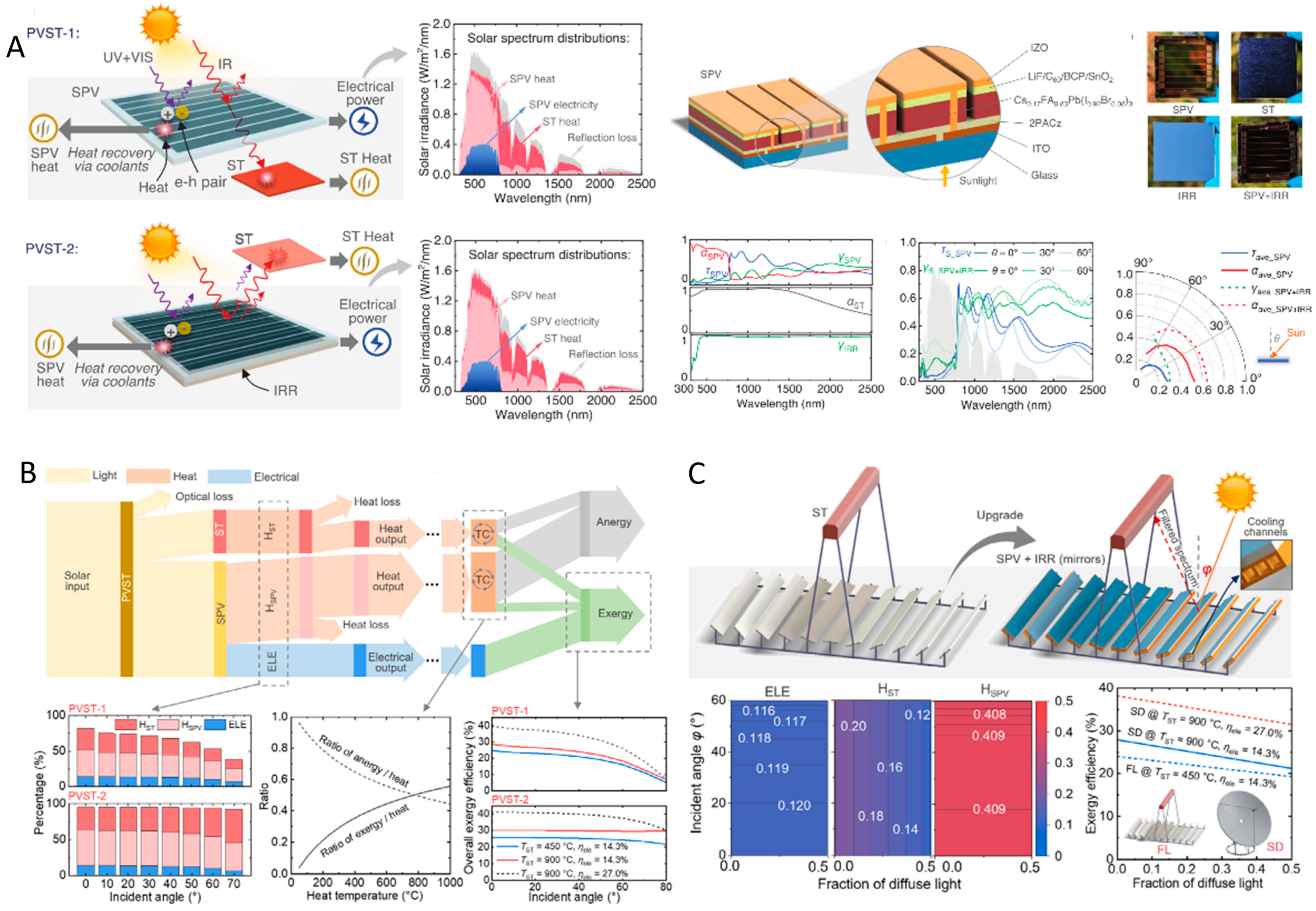
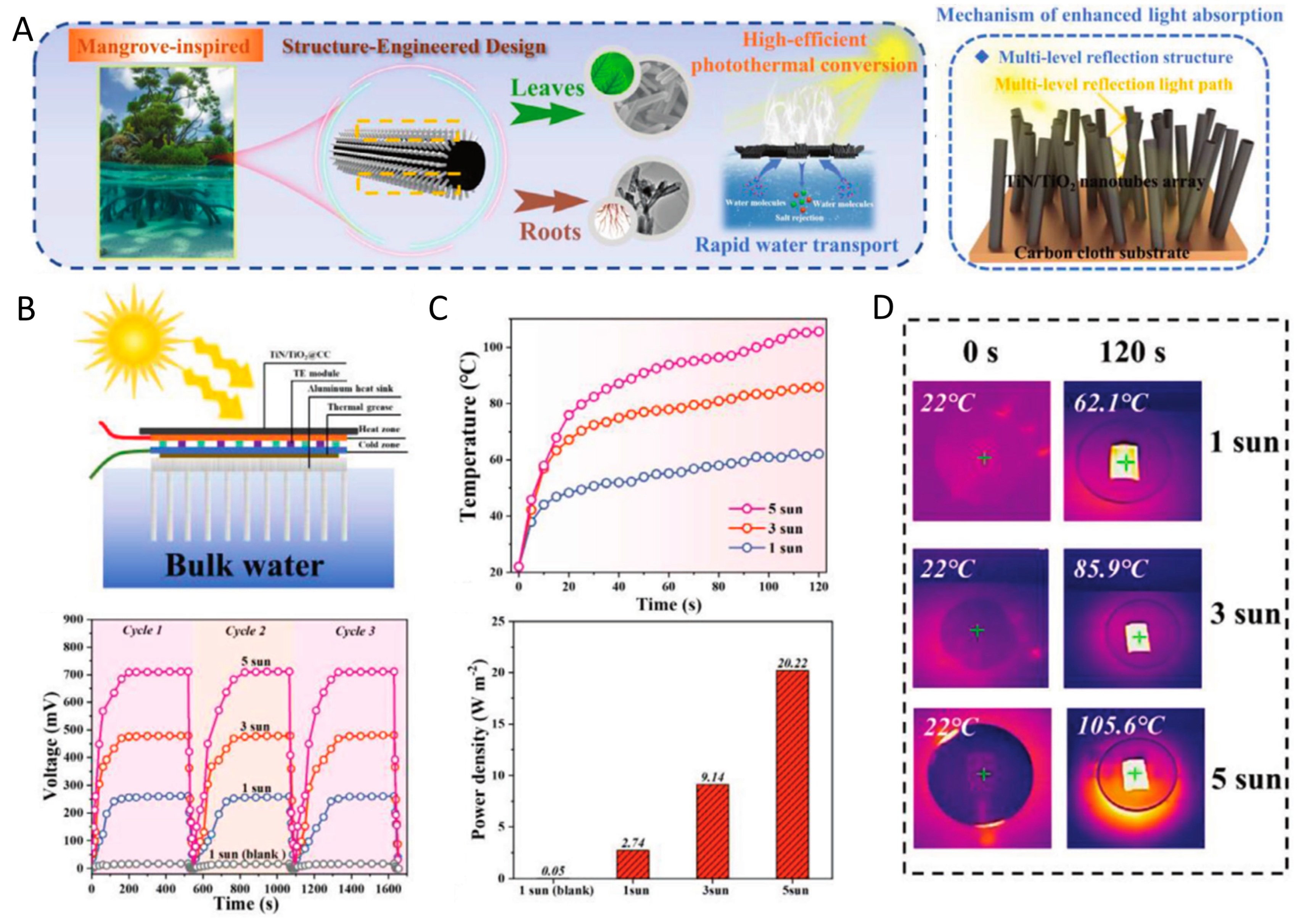
In photovoltaics, semiconductors convert absorbed light into charge carriers. However, a substantial portion of this energy is inevitably lost as heat through non-radiative recombination, resulting in energy loss and reduced conversion efficiency. Hence, collecting or utilizing the side energy is significant and photovoltaic-solar thermal hybrid system is a possible way to promote solar utilizing. Based on semi-permeable perovskite photovoltaic (SPV) modules, a hybrid system was constructed by converting the high energy photon into current and low energy photon into heat [79]. The hybrid system generates high-temperature thermal energy up to 900 °C in a modeled large-scale high-concentration ratio with 12.3% of SPV electrical power and 27.9% of solar efficiency, while the SPV PEC increases to 14.3% with a heat temperature of 450 °C with a lower energy efficiency (24%) (Figure 7). Considering the thermal energy for driving steam turbines to generate electricity or be stored directly as a high-temperature heat source, the system provides a high-efficiency solution for harvesting the full solar spectrum. By utilizing low-grade thermal energy from photothermal conversion, the technologies combined with thermoelectricity attracted more and more attention [80,81]. Biomimetic photothermal materials were constructed on TiN/TiO2 nanotube arrays to accelerate light absorption and energy conversion into thermal at the local interface, creating a temperature difference to the surrounding environment, which achieves a power output of up to 2.74 W m−2 [82].
Nanomaterials with photothermal conversion properties play a significant role in energy applications, and numerous new materials with excellent performance have been explored in recent years (Table 1). When integrated into structures like transparent electrodes for solar cells, metal nanocrystals enhance light capture and thus improve device performance. Semiconductors with bandgap engineering enable broad spectral absorption and facilitate multifunctional systems. By combining photothermal conversion with thermoelectric generators or photovoltaic modules, green power can be generated in a cost-effective manner.

3.2. Photothermal Materials for Interface Evaporation

Interface evaporation is one of hot applications of photothermal materials due to its ability to produce fresh water at low cost and green energy consumption, which is also further explored to apply in environmental fields such as waste water treatment. Nanomaterials also have been investigated for applications on the interface evaporation with enhanced performance from size effects.
Metallic nanomaterials have been employed in photothermal interfacial evaporation or solution heating in recent years because of the high light absorption and rapid energy conversion [91,92]. For example, 3D aluminum particle plasmonic blackbody materials with porous structures exhibit an average absorption efficiency exceeding 96% across the broad solar spectrum ranging from 400 to 2500 nm, and hence, the corresponding energy transfer efficiency reaches as high as 90%, enabling practical solar-powered seawater desalination with a four-fold reduction in salinity, offering a viable solution for portable solar desalination systems [93]. Concurrently, the porous alumina layer encapsulating the nanoparticles effectively confines generated heat to the evaporation interface, significantly reducing thermal losses to the bulk water, and the hydrophilic insulating structure promotes mass transport of water. To address the issue of self-floating photothermal materials and efficient thermal localization for practical applications, a fully dielectric-insulated 3D plasmonic metal nanocrystals (i-Au/NPT) was successfully constructed by self-assembling gold nanoparticles within a nanoporous alumina template and removing the continuous gold film from the surface using ion beam stripping technology. This structure leverages the plasmonic effects of Au nanoparticles for broadband light absorption and photothermal conversion. Based on this synergistic light-heat-mass management, the self-floating evaporator achieves an evaporation efficiency of up to 80.5% under one sun illumination—approximately 20% higher than conventional plasmonic evaporators without requiring any external insulating floats, it offers new insights for developing high-performance, compact solar photothermal conversion devices [94]. By using metal nanocrystals, high performance of interface evaporation would be obtained, but the cost of plasmonic metals limited their wide applications.
Copper or cuprous sulfide nanocrystals are excellent photothermal conversion materials with strong NIR light absorption and are viewed as a kind of potential candidate for interface evaporation [95,96]. Aiming to enhance both solar thermal conversion efficiency and water transport, a multi-scale pyramidal CuS-rGO composite solar thermal structure was fabricated, demonstrating an impressive solar thermal conversion efficiency of up to 97.6% (Figure 8) and generated steam in Shenzhen Bay with an average daily water production of 12.1 kg m−2 [78]. By constructing a thermal cycle system without external energy input, a TiN/TiO2 nanotubes array achieves a high seawater desalination capacity of 2.02 kg m−2 h−1 under 1 Sun (Figure 9).
Carbon materials process the unique sp2-sp3 hybridized electronic structures which are considered key electronic characteristics for light absorption and energy conversion. In addition, carbon nanomaterials also possess some advantages for application on a large scale, such as low density, high optical absorption coefficient, and high thermal conductivity, demonstrating significant potential for low-density and high-efficiency energy applications [97,98]. For example, graphene oxide with modifications can be used as the raw material for the photothermal conversion layer for solar evaporation applications. During photothermal conversion, the surface temperature of carbon materials exposed to light would rise rapidly and thus the localized temperature enhances heating water molecules, providing the thermal energy required for evaporation and thereby achieving high evaporation [97,98]. As reported, a Janus-type layered porous carbon-graphene aerogel (CrGOA) enables the rapid photothermal response under low-light conditions and thus exhibits an ultra-high water evaporation rate of 3.66 kg·m−2·h−1 with a steam generation efficiency of 96.9% under one-sun illumination [99]. The CrGOA also possesses high salt tolerance and the evaporation rate of CrGOA reached 2.95 kg·m−2·h−1 in 16% saline water without salt accumulation, indicating its suitability as a solar-driven interfacial evaporator for practical applications. A solar osmotic vaporization desalination system of carbon nanotubes (CNTs)/graphene nanosheets (GNSs)-PVA films reaches 3.02 kg m−2 h−1 under 1 sun irradiation with an excellent stability in 10-day testing [100]. Leveraging the high-efficiency photothermal conversion and high thermal conductivity, a MOF-derived nanoporous carbon demonstrates rapid desorption kinetics. This enables a rapid-cycle water harvesting (0.18 L kg−1 h−1) under 30% relative humidity per solar cycle, facilitating the development of high-yield, solar-driven atmospheric water harvesting (AWH) systems for advanced freshwater generation [94].
By enhancing photothermal conversion and vapor generation rates by optimizing light absorption, interfacial evaporation has made significant strides for obtaining fresh water (Table 2). Besides noble metal nanocrystals, carbon-based and semiconductor nanomaterials were expected for wide application on a large scale with a balance of performance, scalability, and cost. However, challenges remain in long-term stability under real conditions, salt rejection durability, and large-scale manufacturing. A lot of future work should focus on integrated system design, ecological impact assessment, and improving the energy efficiency of complete water-production cycles to transition from laboratory prototypes to deployable sustainable water solutions.

3.3. Other Photothermal Applications of Nanomaterials

Coupling functional nanomaterials directly with thermoelectric modules provides a significant reference for the synergistic utilization of multiple low-grade heat sources, such as solar energy and industrial waste heat, to achieve distributed energy–water co-generation. Integrating photothermal nanomaterials into traditional energy systems are effective strategies to convert or utilize solar thermal energy directly and overcome the defects of solar energy applications.
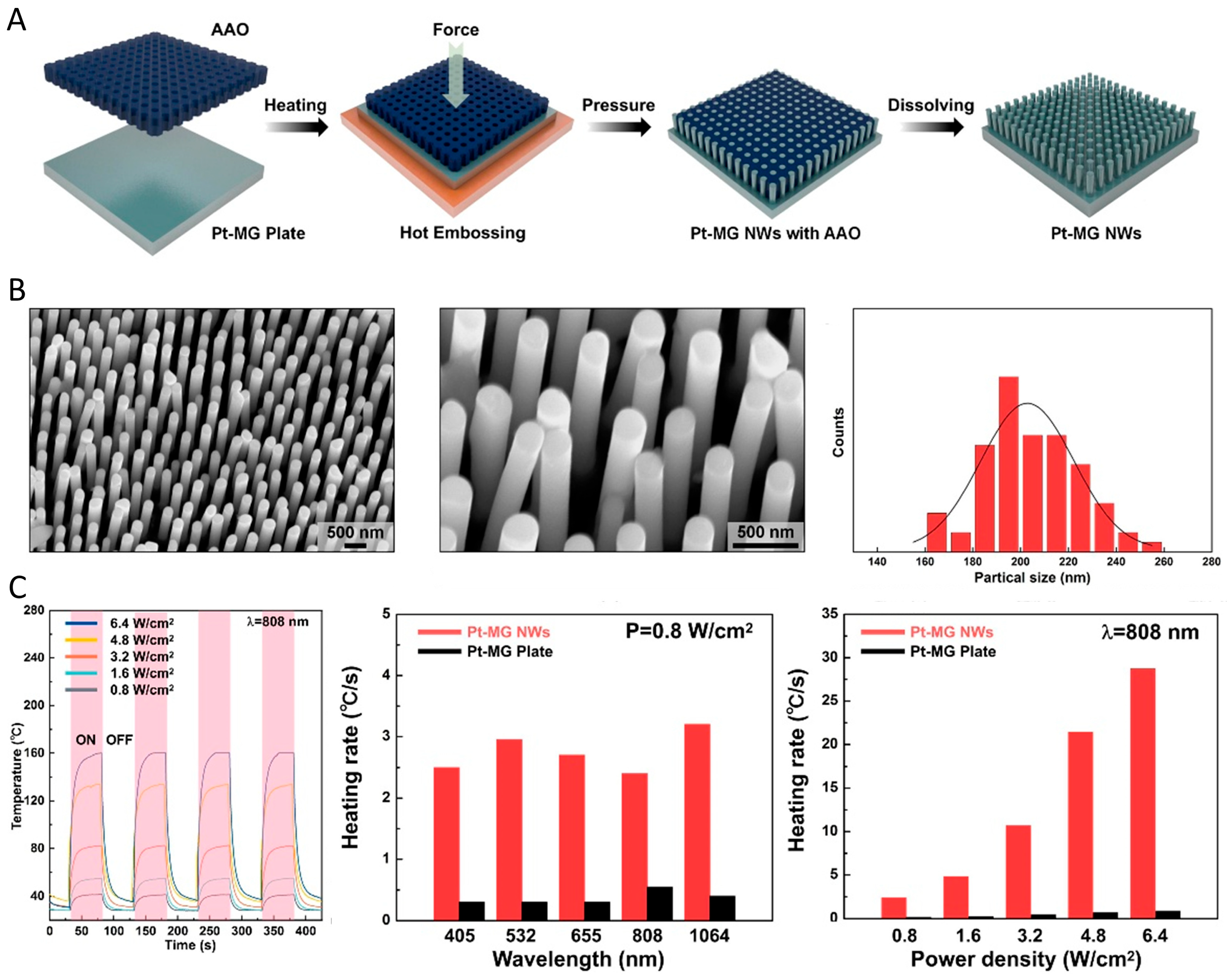
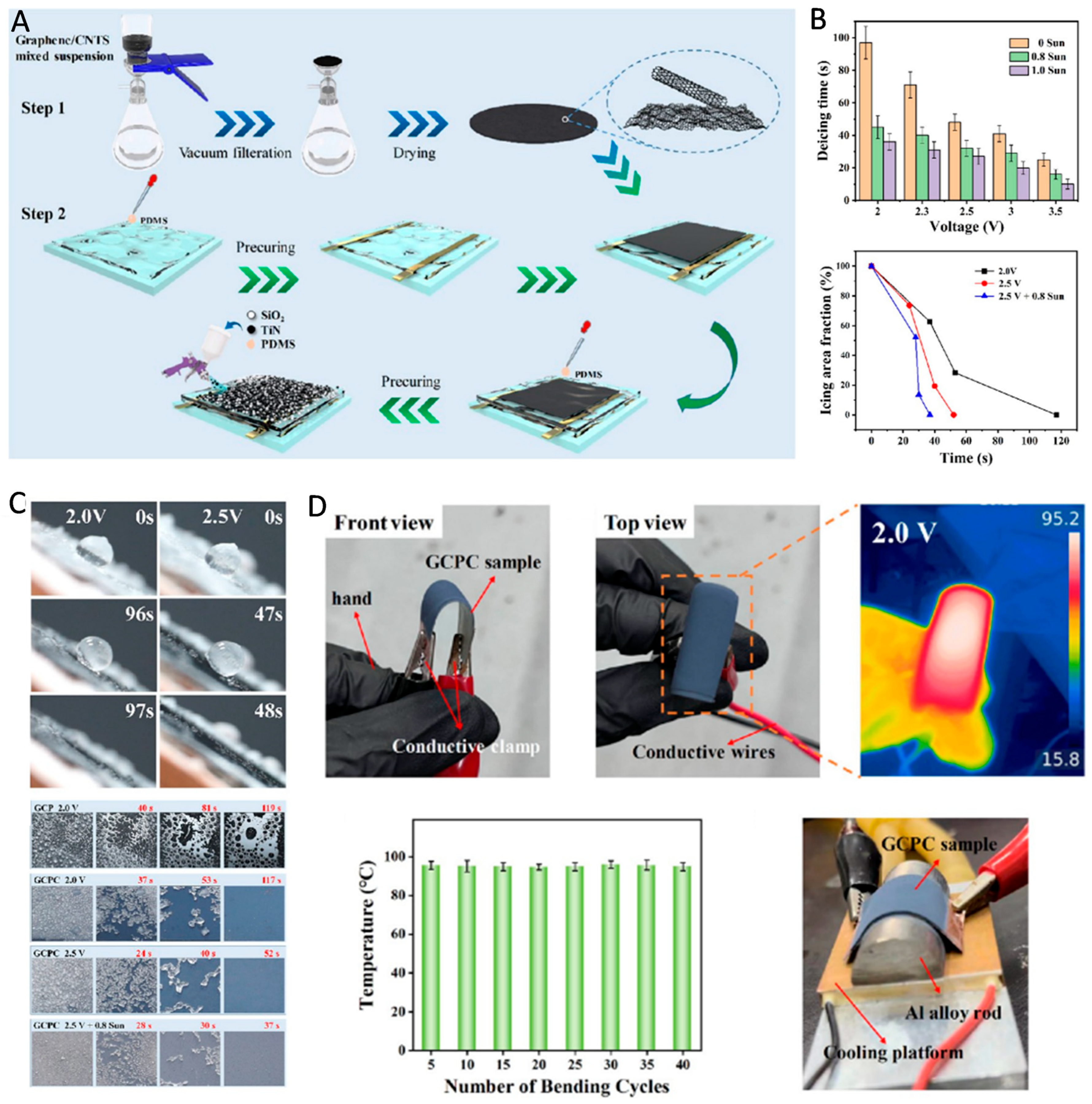
For instance, photothermal conversion paved the path for utilizing solar thermal for cold regions, reducing energy costs and carbon emissions associated with winter heating. Large-scale, finely ordered nanowire arrays were fabricated using an anodic aluminum oxide (AAO) template on surfaces of thermoplastic metallic glass and performed exceptional broadband light absorption with low reflectance (~0.6%) in the visible and near-infrared spectrum (Figure 10). Such nanowire arrays can reach 160 °C at a rate of 28.75 °C/s with 56% of photothermal conversion efficiency [119], paving the ways for applications in photothermal electric power generation. The carbon nanowalls were composites with silicon carbide nanowire (SiCNWs) aerogel to obtain excellent solar energy absorption and energy conversion efficiency, and then injecting polyethylene glycol into the SiCNWs layer, the device (CNW&ND@S-A/PEG) with the dual-functional was prepared. [120]. The reported device exhibits an absorption rate of 92% in the visible light spectrum while the bottom composite phase-change material has a thermal conductivity of 1.13 W m−1·K−1 and an enthalpy of storage of 157.0 J g−1, which is expected to be used in building insulation for heating in cold regions. Meanwhile, carbon nanomaterials with excellent photothermal capacities are suitable for anti-icing and bring large opportunities for infrastructure. Huang et al. [88] fabricated a sandwich-structured anti-icing/deicing coating by sequentially assembling a conductive sheet of densely mixed CNTs/graphene, a flexible PDMS encapsulation layer, and a top composite layer of polymer filled with TiN/SiO2 nanoparticles. What is more, the synergistic interaction between TiN nanoparticles with strong light absorption and carbon nanomaterials (graphene and CNTs) achieved nearly 100% light absorption efficiency, enhancing photothermal conversion efficiency and further reducing power consumption (Figure 11). Under 0.8 Sun light illumination, the coating only requires a low voltage of 1.8 V to significantly increase the surface temperature, preventing ice formation and efficiently removing ice/frost.

4. Summary and Outlook

Nanomaterials engineered for efficient photothermal conversion have emerged as a pivotal technology in the energy sector. Their core function lies in transforming sunlight into usable heat, which is leveraged across diverse applications such as solar-driven water desalination, low-grade thermal energy harvesting, and building-integrated heating in cold regions. These materials also contribute substantially to sustainability by reducing net energy consumption and enhancing the efficiency of existing energy infrastructures. By providing decentralized thermal energy solutions, they mitigate reliance on fossil fuels, alleviate pressure on global energy supply chains, and facilitate the adoption of cleaner living practices, thereby acting as a critical indirect enabler in the transition towards a low-carbon future.
To realize this potential and address persistent efficiency challenges in practical applications, a key strategy lies in engineering heterostructures or composites from conventional nanomaterials. These advanced architectures enhance photothermal performance through synergistic coupling effects between components. Moving forward, elucidating the intricate energy conversion mechanisms at the interfaces within these composites will be essential to guide the rational design and development of the next generation of photothermal nanomaterials.

Author Contributions

Information collection: X.W., H.D., Y.Z., C.Z., writing: X.W., H.D., Y.Z., and M.J.; writing—review and editing: X.W., H.D., H.X., F.L. and M.J.; supervision: M.J.; funding acquisition, H.X., F.L. and M.J. All authors have read and agreed to the published version of the manuscript.

Funding

This work is supported by Guangdong Basic and Applied Basic Research Foundation (2025A1515010343, 2022A1515240007, and 2023A1515010562), Special Fund for the Sci-tech Innovation Strategy of Guangdong Province (STKJ202209083), the Innovation Team Project of Guangdong Provincial Department of Education (2023KCXTD012), Shantou Scientific Research Initiation Grant (NTF22018, NTF20005), National Natural Science Foundation of China (52303010), and 2020 Li Ka Shing Foundation Cross-Disciplinary Research Grant (2020LKSFG01A).

Data Availability Statement

No new data were created or analyzed in this study. Data sharing is not applicable to this article.

Conflicts of Interest

The authors declare no conflicts of interest.

References

  1. Nabera, A.; Istrate, I.-R.; Martín, A.J.; Pérez-Ramírez, J.; Guillén-Gosálbez, G. Energy crisis in Europe enhances the sustainability of green chemicals. Green Chem. 2023, 25, 6603–6611. [Google Scholar] [CrossRef]
  2. Kendall, K. Green villages by Wind + Solar + Hydrogen. Clean Energy Sci. Technol. 2024, 2, 261. [Google Scholar]
  3. Xiang, C.; Yuan, M.; Ding, C.a.; Zheng, Y.; Li, Y.; Hu, X.; Zhang, J.; Li, X.; Ma, C.; Wang, S.; et al. Solution-processed kesterite solar module with 10.1% certified efficiency. Nat. Energy 2025, 10, 1315–1322. [Google Scholar] [CrossRef]
  4. Ganesh, I. Is it possible to utilize photoelectrochemical, photochemical and photocatalytic reactions to harvest sunlight to meet the energy needs of the society?—A critical evaluation. Clean Energy Sci. Technol. 2025, 3, 406. [Google Scholar] [CrossRef]
  5. Cao, S.; Thomas, A.; Li, C. Emerging Materials for Interfacial Solar-Driven Water Purification. Angew. Chem. Int. Ed. 2023, 62, e202214391. [Google Scholar] [CrossRef] [PubMed]
  6. Guo, J.; Li, R.; Cai, P.; Xiao, Z.; Fu, H.; Guo, T.; Wang, T.; Zhang, X.; Wang, J.; Song, X. Risk in solar energy: Spatio-temporal instability and extreme low-light events in China. Appl. Energy 2024, 359, 122749. [Google Scholar] [CrossRef]
  7. Zhao, X.; Meng, X.; Zou, H.; Zhang, Y.; Ma, Y.; Du, Y.; Shao, Y.; Qi, J.; Qiu, J. Nano-enabled solar driven-interfacial evaporation: Advanced design and opportunities. Nano Res. 2023, 16, 6015–6038. [Google Scholar] [CrossRef]
  8. Wang, Y.; Ji, Y.; Yang, Y.; Chen, Z.; Sun, H.; Wang, X.; Zou, Z.; Huang, H. Narrow-Bandgap Halide Perovskite Cs4CuSb2Cl12 with Full-Spectrum Photothermal Conversion. ACS Energy Lett. 2024, 9, 336–345. [Google Scholar] [CrossRef]
  9. Li, N.L.; Wei, J.; Ran, X.Y.; Li, J.; Shen, L.; Zhang, F.; Dai, Q.; Wang, W.; Li, K.; Wan, X.K. All-Alkynyl Protected Rod-Shaped Au9(AgCu)126 Nanocluster with Remarkable Photothermal Conversion. Angew. Chem. Int. Ed. 2025, 64, e202503036. [Google Scholar] [CrossRef] [PubMed]
  10. Naik, A.M.; Sánchez-Iglesias, A.; Montaño-Priede, J.L.; D’Souza, N.M.; Sancho-Parramon, J.; Mezzasalma, S.A.; Rao, A.; Grzelczak, M. Size Effect on Photothermal Heating Ability of Gold Bipyramids. Adv. Opt. Mater. 2025, 13, 202501006. [Google Scholar] [CrossRef]
  11. Yan, X.; Shang, Y.; Li, Y.; Wang, X.; Yao, Y.; Ding, L.; Liu, T.; Miao, R.; Fang, Y. Localized and Controllable Mineral Salts Crystallization Enabled by Dye Modified Gold Nanorods with Enhanced Photothermal Conversion. Adv. Mater. 2025, 37, 2417138. [Google Scholar] [CrossRef]
  12. Xie, W.; Li, X.; Zhou, J.; Yin, F.; Jiang, Y.; Yang, L. The PPy-coated halloysite nanotubes nanofluids with high stability and broad-spectrum absorption for effective photothermal conversion. Sol. Energy Mater. Sol. Cells 2024, 266, 112694. [Google Scholar] [CrossRef]
  13. Zhang, Y.; Zhou, J.; Luo, K.; Zhou, W.; Wang, F.; Li, J.; He, Q. Ferritin-Inspired Encapsulation and Stabilization of Gold Nanoclusters for High-Performance Photothermal Conversion. Angew. Chem. Int. Ed. 2025, 64, e202500058. [Google Scholar] [CrossRef] [PubMed]
  14. Xu, H.; Han, P.; Qin, A.; Tang, B.Z. Recent Advances and Application Prospects in Photothermal Materials. Acta Chim. Sin. 2023, 81, 1420–1437. [Google Scholar] [CrossRef]
  15. Zhao, C.; Li, D.; Tian, Y.; Tang, Y.; Qin, G.; Wei, J.; Zhou, J.; Wu, F.; Niu, W.; Zhang, W. NIR-Responsive Plasmonic PtSb Alloys with Strong p-d Orbital Hybridization for Synergistic Photothermal-Catalytic Therapy. Small 2025, 21, e06890. [Google Scholar] [CrossRef]
  16. Mu, J.; Xu, S. SnO2 tetragonal nanonails with enhanced optical and photoelectric performances via localized surface plasmon resonance effect of Au nanoparticles. Ceram. Int. 2024, 50, 692–703. [Google Scholar] [CrossRef]
  17. Cheng, P.; Wang, H.; Wang, H.; Wang, D.; van Aken, P.A.; Schaaf, P. Plasmon-Enhanced Light Absorption Below the Bandgap of Semiconducting SnS2 Microcubes for Highly Efficient Solar Water Evaporation. Small 2024, 20, 2400588. [Google Scholar] [CrossRef]
  18. Wang, J.; Li, Y.; Deng, L.; Wei, N.; Weng, Y.; Dong, S.; Qi, D.; Qiu, J.; Chen, X.; Wu, T. High-Performance Photothermal Conversion of Narrow-Bandgap Ti2O3 Nanoparticles. Adv. Mater. 2017, 29, 1603730. [Google Scholar] [CrossRef]
  19. Cui, X.; Ruan, Q.; Zhuo, X.; Xia, X.; Hu, J.; Fu, R.; Li, Y.; Wang, J.; Xu, H. Photothermal Nanomaterials: A Powerful Light-to-Heat Converter. Chem. Rev. 2023, 123, 6891–6952. [Google Scholar] [CrossRef]
  20. Xi, M.; Xu, L.; Li, N.; Zhang, S.; Wang, Z. Plasmonic Cu27S24 nanocages for novel solar photothermal nanoink and nanofilm. Nano Res. 2021, 15, 3161–3169. [Google Scholar] [CrossRef]
  21. Kang, Z.; Xi, M.; Li, N.; Zhang, S.; Wang, Z. Anisotropic thermal conductivity of 3D printed graphene enhanced thermoplastic polyurethanes structure toward photothermal conversion. Carbon 2025, 234, 120023. [Google Scholar] [CrossRef]
  22. Huang, H.; Shi, T.; He, R.; Wang, J.; Chu, P.K.; Yu, X.F. Phase-Changing Microcapsules Incorporated with Black Phosphorus for Efficient Solar Energy Storage. Adv. Sci. 2020, 7, 2000602. [Google Scholar] [CrossRef]
  23. Xu, X.; Qiu, J.; Li, Z.; Fu, A.; Yuan, S.; Li, H.; Lu, B. A bifunctional polyacrylamide-alginate-TiO2 hydrogel solar evaporator for integrated high-efficiency desalination and photocatalytic degradation. Desalination 2025, 611, 118920. [Google Scholar] [CrossRef]
  24. Ruhwedel, M.; Gehrke, K.; Lüpfert, E.; Sutter, F.; Heller, P.; Pitz-Paal, R. Integrated Concentrating Solar/Photovoltaic Hybrid Concepts—Technological Discussion, Energy Yield, and Cost Considerations. Energy Technol. 2024, 12, 2301181. [Google Scholar] [CrossRef]
  25. Wang, Y.; Tang, G.; Xiang, X.; Qin, M.; Qiu, Y.; Lai, J.C.; Peng, Y. Self-Stratifying Colorful Low-Emissivity Paint for Thermal Regulation and Energy Saving. Adv. Funct. Mater. 2025, 35, 202507409. [Google Scholar] [CrossRef]
  26. Liu, B.Y.; Wu, J.; Xue, C.H.; Zeng, Y.; Liang, J.; Zhang, S.; Liu, M.; Ma, C.Q.; Wang, Z.; Tao, G. Bioinspired Superhydrophobic All-In-One Coating for Adaptive Thermoregulation. Adv. Mater. 2024, 36, 202400745. [Google Scholar] [CrossRef] [PubMed]
  27. Li, W.; Xiao, Y.; Zhu, N.; Chen, Z.; Jiang, Z.; Li, B.; Yu, G.; Guo, Z.; Liang, M.; Guo, W. Cuprous oxide nanocomposites with photothermal (PTT) and chemical dynamics (CDT) effects induce cuproptosis in breast cancer using the strategy of increasing inflow and reducing outflow. Nano Today 2024, 56, 102223. [Google Scholar] [CrossRef]
  28. Zeng, L.; Cui, X.; Shi, J. A facile strategy for ultrasmall Pt NPs being partially-embedded in N-doped carbon nanosheet structure for efficient electrocatalysis. Sci. China Mater. 2018, 61, 1557–1566. [Google Scholar] [CrossRef]
  29. Xun, W.; Jing, Z.; Qing, P.; Yadong, L. A general strategy for nanocrystal synthesis. Nat. Lett. 2005, 437, 121–124. [Google Scholar]
  30. Wang, J.L.; Liu, J.W.; Lu, B.Z.; Lu, Y.R.; Ge, J.; Wu, Z.Y.; Wang, Z.H.; Arshad, M.N.; Yu, S.H. Recycling nanowire templates for multiplex templating synthesis: A green and sustainable strategy. Chemistry 2015, 21, 4935–4939. [Google Scholar] [CrossRef]
  31. Zhang, J.; Tang, Y.; Lee, K.; Ouyang, M. Nonepitaxial Growth of Hybrid Core-Shell Nanostructures with Large Lattice Mismatches. Science 2010, 327, 1634–1638. [Google Scholar] [CrossRef]
  32. Ji, M.; Xu, M.; Zhang, W.; Yang, Z.; Huang, L.; Liu, J.; Zhang, Y.; Gu, L.; Yu, Y.; Hao, W.; et al. Structurally Well-Defined Au@Cu2-xS Core–Shell Nanocrystals for Improved Cancer Treatment Based on Enhanced Photothermal Efficiency. Adv. Mater. 2016, 28, 3094–3101. [Google Scholar] [CrossRef]
  33. Xin, Y.; Yu, Y.; Su, M.; Li, X.; Elsabahy, M.; Gao, H. In situ-activated photothermal nanoplatform for on-demand NO gas delivery and enhanced colorectal cancer treatment. J. Control. Release 2023, 359, 69–84. [Google Scholar] [CrossRef]
  34. Ying, L.; Zhu, H.; Li, H.; Zhu, Z.; Sun, S.; Wang, X.; Lu, S.; Du, M. Heterostructure design of Cu2O/Cu2S core/shell nanowires for solar-driven photothermal water vaporization towards desalination. Sustain. Energy Fuels 2020, 4, 6023–6029. [Google Scholar] [CrossRef]
  35. Huang, X.; Tang, S.; Yang, J.; Tan, Y.; Zheng, N. Etching Growth under Surface Confinement: An Effective Strategy To Prepare Mesocrystalline Pd Nanocorolla. J. Am. Chem. Soc. 2011, 133, 15946–15949. [Google Scholar] [CrossRef]
  36. Dreaden, E.C.; El-Sayed, M.A. Detecting and Destroying Cancer Cells in More than One Way with Noble Metals and Different Confinement Properties on the Nanoscale. Acc. Chem. Res. 2012, 45, 1854–1865. [Google Scholar] [CrossRef] [PubMed]
  37. Jain, P.K.; El-Sayed, I.H.; El-Sayed, M.A. Au nanoparticles target cancer. Nano Today 2007, 2, 18–29. [Google Scholar] [CrossRef]
  38. Huang, X.; El-Sayed, I.H.; Qian, W.; El-Sayed, M.A. Cancer Cell Imaging and Photothermal Therapy in the Near-Infrared Region by Using Gold Nanorods. J. Am. Chem. Soc. 2006, 128, 2115–2120. [Google Scholar] [CrossRef] [PubMed]
  39. Near, R.D.; Hayden, S.C.; El-Sayed, M.A. Thin to Thick, Short to Long: Spectral Properties of Gold Nanorods by Theoretical Modeling. J. Phys. Chem. C 2013, 117, 18653–18656. [Google Scholar] [CrossRef]
  40. Lyu, Z.; Shang, Y.; Xia, Y. Shape-Controlled Synthesis of Copper Nanocrystals for Plasmonic, Biomedical, and Electrocatalytic Applications. Acc. Mater. Res. 2022, 3, 1137–1148. [Google Scholar] [CrossRef]
  41. Wang, Y.; Black, K.C.L.; Luehmann, H.; Li, W.; Zhang, Y.; Cai, X.; Wan, D.; Liu, S.-Y.; Li, M.; Kim, P.; et al. Comparison Study of Gold Nanohexapods, Nanorods, and Nanocages for Photothermal Cancer Treatment. ACS Nano 2013, 7, 2068–2077. [Google Scholar] [CrossRef]
  42. He, Q.; Yang, Q.; Tong, X.; Zhang, X.; Wang, Y.; Wu, X.; Ma, Y.; Zheng, Y. Morphology-Preserved Ag Alloying in Au Nanosheets Enables Tunable NIR-I/II Plasmonics for Enhanced Photothermal Conversion. ACS Appl. Nano Mater. 2025, 8, 16915–16925. [Google Scholar] [CrossRef]
  43. Chen, Z.; Wang, J.; Zhou, H.; Xie, Z.; Shao, L.; Chen, A.; Wang, S.B.; Jiang, N. Janus Nano-Micro Structure-Enabled Coupling of Photothermal Conversion, Heat Localization and Water Supply for High-Efficiency Solar-Driven Interfacial Evaporation. Adv. Funct. Mater. 2023, 33, 2303656. [Google Scholar] [CrossRef]
  44. Huang, X.; Tang, S.; Liu, B.; Ren, B.; Zheng, N. Enhancing the Photothermal Stability of Plasmonic Metal Nanoplates by a Core-Shell Architecture. Adv. Mater. 2011, 23, 3420–3425. [Google Scholar] [CrossRef]
  45. Qian, H.; Xu, M.; Li, X.; Ji, M.; Cheng, L.; Shoaib, A.; Liu, J.; Jiang, L.; Zhu, H.; Zhang, J. Surface micro/nanostructure evolution of Au–Ag alloy nanoplates: Synthesis, simulation, plasmonic photothermal and surface-enhanced Raman scattering applications. Nano Res. 2016, 9, 876–885. [Google Scholar] [CrossRef]
  46. Huang, L.; Zheng, J.; Huang, L.; Liu, J.; Ji, M.; Yao, Y.; Xu, M.; Liu, J.; Zhang, J.; Li, Y. Controlled Synthesis and Flexible Self-Assembly of Monodisperse Au@Semiconductor Core/Shell Hetero-Nanocrystals into Diverse Superstructures. Chem. Mater. 2017, 29, 2355–2363. [Google Scholar] [CrossRef]
  47. Huang, L.; Wan, X.; Rong, H.; Yao, Y.; Xu, M.; Liu, J.; Ji, M.; Liu, J.; Jiang, L.; Zhang, J. Colloid-Interface-Assisted Laser Irradiation of Nanocrystals Superlattices to be Scalable Plasmonic Superstructures with Novel Activities. Small 2018, 14, 1703501. [Google Scholar] [CrossRef] [PubMed]
  48. Xu, M.; Tu, G.; Ji, M.; Wan, X.; Liu, J.; Liu, J.; Rong, H.; Yang, Y.; Wang, C.; Zhang, J. Vacuum-tuned-atmosphere induced assembly of Au@Ag core/shell nanocubes into multi-dimensional superstructures and the ultrasensitive IAPP proteins SERS detection. Nano Res. 2019, 12, 1375–1379. [Google Scholar] [CrossRef]
  49. Zhang, Q.; Lee, I.; Joo, J.B.; Zaera, F.; Yin, Y. Core–Shell Nanostructured Catalysts. Acc. Chem. Res. 2013, 46, 1816–1824. [Google Scholar] [CrossRef]
  50. Chen, T.; Xu, M.; Ji, M.; Cheng, L.; Liu, J.; Zhang, B.; Zhang, J. Aqueous Phase Synthesis of Au@Ag3AuX2 (X = Se, Te) Core/Shell Nanocrystals and Their Broad NIR Photothermal Conversion Application. CrystEngComm 2016, 18, 5418–5422. [Google Scholar] [CrossRef]
  51. Su, M.; Li, N.; Li, X.; Li, Y.; Zhang, X.; Zhang, H.; Xu, B.; Zhang, C.; Wang, Z.; Zhang, J. Crystalline phases-mediated discriminative photothermal properties in plasmonic copper-based sulfides. Nano Today 2025, 61, 102647. [Google Scholar] [CrossRef]
  52. Anwer, S.; Anjum, D.H.; Alazzam, A.; Abu-Nada, E. Photon-Trapping Cu2S Architectures for Next-Generation Solar Thermal Conversion. EcoMat 2025, 7, e70038. [Google Scholar] [CrossRef]
  53. Miao, H.; Wu, Y.; Zhou, C.; Yang, Z.; Kong, C. Controlled Growth Cu2S Nanoarrays with High-Performance Photothermal Properties. Nanomaterials 2023, 13, 1260. [Google Scholar] [CrossRef]
  54. Hu, X.; Wang, S.; Duan, R.; Li, A.; Li, J.; Feng, Z.; Zhai, M.; Wang, E.; Li, C. Structure regulation of TiO2 with transition metal nitride units towards efficient solar energy harvesting. Chem. Eng. J. 2025, 519, 165325. [Google Scholar] [CrossRef]
  55. Yuan, T.; Wang, Y.; Jin, N.; Ye, J. Efficient solar steam generation enabled by nanolamellar λ-Ti3O5 based on designing the bandgap through morphology modulation. J. Mater. Chem. C 2025, 13, 10367–10377. [Google Scholar] [CrossRef]
  56. Zhong, H.; Xiang, C.; Hu, Z.; Yang, X.; Liu, H.; Wang, R. Plasmonic photothermal superhydrophobic surface with nanotubes thermal insulating blanket for anti-icing and anti-frosting under weak light illumination. Mater. Today Phys. 2025, 50, 101625. [Google Scholar] [CrossRef]
  57. Wang, T.; Wang, Q.; Yin, H.; Ye, Q.; Zhang, H.; Song, S.; Jia, F. In-situ 1T@2H MoS2 with phase doped arrays for full-spectrum solar absorption and high-performance solar desalination. Chem. Eng. J. 2025, 522, 168163. [Google Scholar] [CrossRef]
  58. Jiang, X.; Huang, H.; Wang, K.; Dai, X.; Ye, Z.; He, H.; Fan, C. Ultrastable Silica-Confined CsSnI3 Perovskite Nanocrystals for Noncontact Near-Infrared Light Communication and Sunlight–Thermal–Electric Conversion. ACS Nano 2025, 19, 35787–35796. [Google Scholar] [CrossRef] [PubMed]
  59. Jin, Y.; Wang, K.; Li, S.; Liu, J. Encapsulation of MXene/polydopamine in nitrogen-doped 3D carbon networks with high photothermal conversion efficiency for seawater desalination. J. Colloid Interface Sci. 2022, 614, 345–354. [Google Scholar] [CrossRef]
  60. Lu, H.; Liu, J.; Yu, M.; Li, P.; Huang, R.; Wu, W.; Hu, Z.; Xiao, Y.; Jiang, F.; Xing, X. Photothermal-enhanced antibacterial and antioxidant hydrogel dressings based on catechol-modified chitosan-derived carbonized polymer dots for effective treatment of wound infections. Biomater. Sci. 2022, 10, 2692–2705. [Google Scholar] [CrossRef]
  61. Li, D.; Lin, L.; Xu, S.; Wang, F.; Li, L.; Li, J. Multifunctional carbon nanotubes based hydrogel integrates photothermal water desalination, photothermal power generation, sensing, and flame retardancy, with a multi purpose and adjustable thermoelectric effect. J. Colloid Interface Sci. 2025, 690, 137344. [Google Scholar] [CrossRef] [PubMed]
  62. Javidi, M.; Entezari, M.H. Advanced Two-Dimensional/Zero-Dimensional Carbon Composite Nanofluids for Enhanced Optical and Photothermal Performance in Direct Absorption Solar Collectors. ACS App. Energy Mater. 2025, 8, 8442–8457. [Google Scholar] [CrossRef]
  63. Li, K.; Shimomura, H.; Kuwahara, Y.; Yoshii, T.; Nishihara, H.; Yamashita, H. Reversible Adsorption and Light-Driven Release of CO2 Using Hollow Carbon Sphere-Based Adsorbents with Photothermal Conversion Feature. ACS Sustain. Chem. Eng. 2025, 13, 7418–7429. [Google Scholar] [CrossRef]
  64. Yang, M.; Huang, Y.; Chen, Z.; Ye, Q.; Zeng, Z.; You, X.; Bao, B.; Xing, W.; Zhao, N.; Zou, Z.; et al. Synthetic carbon-based lanthanide upconversion nanoparticles for enhanced photothermal therapy. Nat. Commun. 2025, 16, 6343. [Google Scholar] [CrossRef] [PubMed]
  65. Cui, Y.; Liang, X.; Wang, J.; Kumar, N.; Sun, J.; Wang, C. Recent progress in photothermal-catalysis: The pivotal impact factors and various applications from energy to environment. J. Energy Chem. 2025, 103, 888–910. [Google Scholar] [CrossRef]
  66. Hou, L.; Li, S.; Qi, Y.; Liu, J.; Cui, Z.; Liu, X.; Zhang, Y.; Wang, N.; Zhao, Y. Advancing Efficiency in Solar-Driven Interfacial Evaporation: Strategies and Applications. ACS Nano 2025, 19, 9636–9683. [Google Scholar] [CrossRef]
  67. Shi, X.-L.; Wang, L.; Lyu, W.; Cao, T.; Chen, W.; Hu, B.; Chen, Z.-G. Advancing flexible thermoelectrics for integrated electronics. Chem. Soc. Rev. 2024, 53, 9254–9305. [Google Scholar] [CrossRef]
  68. Vahidhosseini, S.M.; Rashidi, S.; Hsu, S.-H.; Yan, W.-M.; Rashidi, A. Integration of solar thermal collectors and heat pumps with thermal energy storage systems for building energy demand reduction: A comprehensive review. J. Energy Storage 2024, 95, 112568. [Google Scholar] [CrossRef]
  69. Xiao, Z.; Zhang, L.; Tan, X.; Sun, K.; Li, J.; Pan, L.; Zou, J.-J.; Li, G.; Wang, D. Advances in Oxygen Defect-Mediated Photothermal Catalytic CO2 Hydrogenation Reduction. Adv. Funct. Mater. 2025, 35, 2500339. [Google Scholar] [CrossRef]
  70. Zhang, A.; Xiong, Y.; Zhao, Y.; Wu, Y.; Xu, Q.; Ding, Y. A review of passive building thermal management with phase-change materials. Renew. Sustain. Energy Rev. 2025, 211, 115334. [Google Scholar] [CrossRef]
  71. Shen, M.X.; Chen, G.Y.; Zhang, J.P.; Zhu, W.X.; Yang, M.L.; Chen, X.H.; Song, H.H.; Li, A. The Synergetic Effect of Metal-Loaded Electrospun Carbon Fibers for Photothermal Conversion. ACS Appl. Mater. Interfaces 2024, 16, 52572–52582. [Google Scholar] [CrossRef]
  72. Li, A.; Huang, M.; Hu, D.; Tang, Z.; Xu, J.; Li, Y.; Zhang, X.; Chen, X.; Wang, G. Polydopamine-coated metal-organic framework-based composite phase change materials for photothermal conversion and storage. Chin. Chem. Lett. 2023, 34, 107916. [Google Scholar] [CrossRef]
  73. Ji, M.; Liu, H.; Cheng, M.; Huang, L.; Yang, G.; Bao, F.; Huang, G.; Huang, Y.; Hu, Y.; Cong, G.; et al. Plasmonic Metal Nanoparticle Loading to Enhance the Photothermal Conversion of Carbon Fibers. J. Phys. Chem. C 2022, 126, 2454–2462. [Google Scholar] [CrossRef]
  74. Bleiji, Y.; Müller, R.; Micali, M.; Bläsi, B.; Höhn, O.; Alarcón-Lladó, E. Enhanced near infrared light trapping in Si solar cells with metal nanowire grid front electrodes. Sol. Energy Mater. Sol. Cells 2025, 281, 113289. [Google Scholar] [CrossRef]
  75. Men, J.; Xiang, B.; Mao, X.; Ren, W.; Yang, Z.; Zhang, S.; Wang, L. Ultra-flexible and mechanically strong silver nanowires/PBO nanofibers composite films for thermal management and photothermal conversion. J. Colloid Interface Sci. 2025, 700, 138352. [Google Scholar] [CrossRef]
  76. Li, Y.; Chang, H.; Wang, Z.; Shen, Q.; Liu, X.; Xue, J.; Jia, H. A 3D C@TiO2 multishell nanoframe for simultaneous photothermal catalytic hydrogen generation and organic pollutant degradation. J. Colloid Interface Sci. 2022, 609, 535–546. [Google Scholar] [CrossRef]
  77. Huang, X.; Zhang, W.; Guan, G.; Song, G.; Zou, R.; Hu, J. Design and Functionalization of the NIR-Responsive Photothermal Semiconductor Nanomaterials for Cancer Theranostics. Acc. Chem. Res. 2017, 50, 2529–2538. [Google Scholar] [CrossRef] [PubMed]
  78. Zeng, L.; Deng, D.; Zhu, L.; Zhang, Z.; Gu, X.; Wang, H.; Jiang, Y. Multi-scale CuS-rGO pyramidal photothermal structure for highly efficient solar-driven water evaporation and thermoelectric power generation. Nano Energy 2024, 125, 109531. [Google Scholar] [CrossRef]
  79. Huang, G.; Arya, P.H.; Ritzer, D.B.; Alati, N.A.; Abdollahi Nejand, B.; Paetzold, U.W.; Richards, B.S. Hybrid Perovskite-Photovoltaic and Solar-Thermal Harvesting. Adv. Sci. 2025, 12, e09692. [Google Scholar] [CrossRef]
  80. Wang, S.; Almenabawy, S.M.; Kherani, N.P.; Leung, S.N.; O’Brien, P.G. Solar-Driven Interfacial Water Evaporation Using Open-Porous PDMS Embedded with Carbon Nanoparticles. ACS App. Energy Mater. 2020, 3, 3378–3386. [Google Scholar] [CrossRef]
  81. Han, X.; Wang, Z.; Shen, M.; Liu, J.; Lei, Y.; Li, Z.; Jia, T.; Wang, Y. A highly efficient organic solar energy-absorbing material based on phthalocyanine derivative for integrated water evaporation and thermoelectric power generation application. J. Mater. Chem. A 2021, 9, 24452–24459. [Google Scholar] [CrossRef]
  82. Du, Y.; Liu, P.; Zhang, H.; Zou, L.; Deng, K.; Li, X.; Tian, W.; Ji, J. Nature-Inspired Structure-Engineered TiN/TiO2 Nanotubes Array Toward Solar Desalination Synergy with Photothermal-Enhanced Degradation and Thermoelectric Generation. Adv. Funct. Mater. 2023, 34, 2309830. [Google Scholar] [CrossRef]
  83. Lu, Y.; Yu, D.; Dong, H.; Lv, J.; Wang, L.; Zhou, H.; Li, Z.; Liu, J.; He, Z. Magnetically tightened form-stable phase change materials with modular assembly and geometric conformality features. Nat. Commun. 2022, 13, 1397. [Google Scholar] [CrossRef] [PubMed]
  84. Liu, B.W.; Zhao, H.B.; Wang, Y.Z. Advanced Flame-Retardant Methods for Polymeric Materials. Adv. Mater. 2022, 34, 2107905. [Google Scholar] [CrossRef]
  85. Wang, M.; Zhang, C.; Wang, J.; Wang, Y.; Yu, F. Carbon hybrid aerogel-based phase change material with reinforced energy storage and electro-thermal conversion performance for battery thermal management. J. Energy Storage 2022, 52, 104905. [Google Scholar] [CrossRef]
  86. Yue, Z.; Zhou, W.; Ji, X.; Zhang, F.; Guo, F. Enhanced thermoelectric properties of Ag doped Cu2S by using hydrothermal method. J. Alloys Compd. 2022, 919, 165830. [Google Scholar] [CrossRef]
  87. Mani, J.; Radha, S.; Prita, F.J.; Rajkumar, R.; Arivanandhan, M.; Anbalagan, G. Enhancing the Thermoelectric Performance of Cu2S/CuO Nanocomposites Through Energy-Filtering effect and Phonon Scattering. J. Inorg. Organomet. Polym. Mater. 2023, 34, 1548–1563. [Google Scholar] [CrossRef]
  88. Huang, J.; Peng, Z.; Zhang, B.; Yao, Y.; Chen, S. A Flexible and High-Efficient Anti-Icing/Deicing Coating Based on Carbon Nanomaterials. ACS Appl. Mater. Interface 2024, 16, 44210–44224. [Google Scholar] [CrossRef]
  89. Wang, Z.; Zhang, X.; Min, X.; Fang, M.; Zhang, W.; Cao, P. Carbon fiber-reinforced carbon foam-based composite phase change materials for efficient photothermal and electrothermal conversion. J. Power Sources 2026, 665, 238985. [Google Scholar] [CrossRef]
  90. Zhu, X.; Liu, J.; Yang, K.; Zhang, L.; Wang, S.; Liu, X. Structurally engineered 3D porous graphene based phase change composite with highly efficient multi-energy conversion and versatile applications. Compos. Part B Eng. 2024, 272, 111233. [Google Scholar] [CrossRef]
  91. Tao, P.; Ni, G.; Song, C.; Shang, W.; Wu, J.; Zhu, J.; Chen, G.; Deng, T. Solar-driven interfacial evaporation. Nat. Energy 2018, 3, 1031–1041. [Google Scholar] [CrossRef]
  92. Wang, X.; He, Y.; Liu, X.; Cheng, G.; Zhu, J. Solar steam generation through bio-inspired interface heating of broadband-absorbing plasmonic membranes. Appl. Energy 2017, 195, 414–425. [Google Scholar] [CrossRef]
  93. Zhou, L.; Tan, Y.; Wang, J.; Xu, W.; Yuan, Y.; Cai, W.; Zhu, S.; Zhu, J. 3D self-assembly of aluminium nanoparticles for plasmon-enhanced solar desalination. Nat. Photonics 2016, 10, 393–398. [Google Scholar] [CrossRef]
  94. Wang, Y.; Ma, H.; Yu, J.; Li, J.; Xu, N.; Zhu, J.; Zhou, L. All-Dielectric Insulated 3D Plasmonic Nanoparticles for Enhanced Self-Floating Solar Evaporation under One Sun. Adv. Opt. Mater. 2023, 11, 2201907. [Google Scholar] [CrossRef]
  95. Kong, H.; Tan, J.; Wu, S.; Jiang, Z.; Wang, Y. Manipulating the transformation of Cu2O nanocubes to CuS nanocages for signal-enhanced photothermal detection of sulfur ions. Sci. Sin. Chim. 2024, 54, 1127–1134. [Google Scholar] [CrossRef]
  96. Park, T.; Lee, D.; Lee, M.; Lee, S.; Heo, J.; Shin, H.; Jeong, S.; Kim, Y. Synergistic effects of photothermal CuS nanoparticles immobilized on the thermoresponsive polymer for photocatalytic degradation of organic dye. Mater. Lett. 2024, 360, 136033. [Google Scholar] [CrossRef]
  97. Zhu, J.; Huang, L.; Bao, F.; Chen, G.; Song, K.; Wang, Z.; Xia, H.; Gao, J.; Song, Y.; Zhu, C.; et al. Carbon materials for enhanced photothermal conversion: Preparation and applications on steam generation. Mater. Rep. Energy 2024, 4, 100245. [Google Scholar] [CrossRef]
  98. Li, J.; Wang, X.; Lin, Z.; Xu, N.; Li, X.; Liang, J.; Zhao, W.; Lin, R.; Zhu, B.; Liu, G.; et al. Over 10 kg m−2 h−1 Evaporation Rate Enabled by a 3D Interconnected Porous Carbon Foam. Joule 2020, 4, 928–937. [Google Scholar] [CrossRef]
  99. Gan, Z.; Zhao, S.; Zhang, Z.; Li, X.; Zhang, P.; Song, Y.; Yang, Z. Janus structured carbon-graphene composite aerogel for high efficiency solar water evaporation. Sep. Purif. Technol. 2025, 360, 130937. [Google Scholar] [CrossRef]
  100. Yue, T.; Zhu, M.; Hu, X.; Yu, W.; Wang, Z.; Lei, H. A novel photothermal composite membranes for solar pervaporation desalination. J. Clean. Prod. 2025, 501, 145290. [Google Scholar] [CrossRef]
  101. Sun, Y.; Liu, D.; Zhang, F.; Gao, X.; Xue, J.; Zheng, Q. Multiscale Biomimetic Evaporators Based on Liquid Metal/Polyacrylonitrile Composite Fibers for Highly Efficient Solar Steam Generation. Nano-Micro Lett. 2025, 17, 129. [Google Scholar] [CrossRef]
  102. Yang, L.; Shengfeng, P.; Wenxi, X.; Pingli, Q.; Wei, W.; Qingbo, L.; Xiangbai, C.; Liang, M.; Sijing, D.; Ququan, W. Strong interaction between plasmon and topological surface state in Bi2Se3/Cu2-xS nanowires for solar-driven photothermal applications. Sci. Adv. 2025, 11, eadt2884. [Google Scholar]
  103. Fu, B.; Zhang, X.; Robinson, N.; Zhang, Z.; Zhang, J.; Ji, J.; Xu, Y.; Zhang, K.; Dong, M.; Kang, J.; et al. Multi-shelled hollow porous carbon nanospheres-based evaporator for highly efficient solar-driven desalination. Nano Energy 2024, 129, 110054. [Google Scholar] [CrossRef]
  104. Liu, P.; Hu, Y.b.; Li, X.Y.; Xu, L.; Chen, C.; Yuan, B.; Fu, M.L. Enhanced Solar Evaporation Using a Scalable MoS2-Based Hydrogel for Highly Efficient Solar Desalination. Angew. Chem. Int. Ed. 2022, 61, e202208587. [Google Scholar] [CrossRef] [PubMed]
  105. Fan, Z.; Ren, J.; Bai, H.; He, P.; Hao, L.; Liu, N.; Chen, B.; Niu, R.; Gong, J. Shape-controlled fabrication of MnO/C hybrid nanoparticle from waste polyester for solar evaporation and thermoelectricity generation. Chem. Eng. J. 2023, 451, 138534. [Google Scholar] [CrossRef]
  106. Zhang, Y.; Wang, Y.; Yu, B.; Yin, K.B.; Zhang, Z.H. Hierarchically Structured Black Gold Film with Ultrahigh Porosity for Solar Steam Generation. Adv. Mater. 2022, 34, 2200108. [Google Scholar] [CrossRef]
  107. Jing, Y.; Long, Y.; Si, Y.; Li, J.; Sun, H.; Jiao, R.; Zhu, Z.; Liang, W.; Li, A. Encapsulation of phase change materials in conjugated microporous polymers hollow microspheres for continuous solar-driven seawater desalination. Chem. Eng. J. 2025, 506, 160358. [Google Scholar] [CrossRef]
  108. Wang, Z.Y.; Zhu, Y.J.; Chen, Y.Q.; Yu, H.P.; Xiong, Z.C. Bioinspired Aerogel with Vertically Ordered Channels and Low Water Evaporation Enthalpy for High-Efficiency Salt-Rejecting Solar Seawater Desalination and Wastewater Purification. Small 2023, 19, 2206917. [Google Scholar] [CrossRef]
  109. Li, W.; Li, T.; Deng, B.; Xu, T.; Wang, G.; Hu, W.; Si, C. Fabrication of a facile self-floating lignin-based carbon Janus evaporators for efficient and stable solar desalination. Adv. Compos. Hybrid Mater. 2024, 7, 52. [Google Scholar] [CrossRef]
  110. Yang, G.; Yin, Z.; Zha, Q.; Wang, R.; Xie, Y.; Chen, Y.; Hong, Z.; Luo, Y.; Xue, M. A typha orientalis-inspired 3D Janus solar evaporator with controllable wettability for highly efficient and stable solar desalination. Desalination 2025, 595, 118318. [Google Scholar] [CrossRef]
  111. Liu, Z.; Zhou, Z.; Wu, N.; Zhang, R.; Zhu, B.; Jin, H.; Zhang, Y.; Zhu, M.; Chen, Z. Hierarchical Photothermal Fabrics with Low Evaporation Enthalpy as Heliotropic Evaporators for Efficient, Continuous, Salt-Free Desalination. ACS Nano 2021, 15, 13007–13018. [Google Scholar] [CrossRef] [PubMed]
  112. Zhang, H.; Shen, X.; Kim, E.; Wang, M.; Lee, J.-H.; Chen, H.; Zhang, G.; Kim, J.-K. Integrated Water and Thermal Managements in Bioinspired Hierarchical MXene Aerogels for Highly Efficient Solar-Powered Water Evaporation. Adv. Funct. Mater. 2022, 32, 2111794. [Google Scholar] [CrossRef]
  113. Lu, Y.; Fan, D.; Shen, Z.; Zhang, H.; Xu, H.; Yang, X. Design and performance boost of a MOF-functionalized-wood solar evaporator through tuning the hydrogen-bonding interactions. Nano Energy 2022, 95, 107016. [Google Scholar] [CrossRef]
  114. Yan, Y.; Yuan, M.; Yin, S.; Li, X.; Wang, Y.; Liu, J.; Song, B. Janus structured 3D PVA/rGO hydrogel evaporator for highly efficient desalination, salt collection and oil-water separation. Desalination 2026, 618, 119489. [Google Scholar] [CrossRef]
  115. Yang, Y.; Que, W.; Zhao, J.; Han, Y.; Ju, M.; Yin, X. Membrane assembled from anti-fouling copper-zinc-tin-selenide nanocarambolas for solar-driven interfacial water evaporation. Chem. Eng. J. 2019, 373, 955–962. [Google Scholar] [CrossRef]
  116. Yu, H.; Wang, D.; Jin, H.; Wu, P.; Wu, X.; Chu, D.; Lu, Y.; Yang, X.; Xu, H. 2D MoN1.2-rGO Stacked Heterostructures Enabled Water State Modification for Highly Efficient Interfacial Solar Evaporation. Adv. Funct. Mater. 2023, 33, 2214828. [Google Scholar] [CrossRef]
  117. Cui, L.; Wang, P.; Che, H.; Gao, X.; Chen, J.; Liu, B.; Ao, Y. Co nanoparticles modified N-doped carbon nanosheets array as a novel bifunctional photothermal membrane for simultaneous solar-driven interfacial water evaporation and persulfate mediating water purification. Appl. Catal. B Environ. 2023, 330, 122556. [Google Scholar] [CrossRef]
  118. Wu, X.; Li, C.; Zhang, Z.; Cao, Y.; Wang, J.; Tian, X.; Liu, Z.; Shen, Y.; Zhang, M.; Huang, W. Nitrogen-doped microporous graphite-enhanced copper plasmonic effect for solar evaporation. Carbon Energy 2024, 6, e466. [Google Scholar] [CrossRef]
  119. Fu, J.; Li, X.; Li, Z.; Sun, F.; Wen, W.; Zhao, J.; Ruan, W.; Ren, S.; Zhang, Z.; Liang, X.; et al. Strong absorption in ultra-wide band by surface nano engineering of metallic glass. Fundam. Res. 2025, 5, 307–314. [Google Scholar] [CrossRef]
  120. Qin, Y.; Zhu, B.; Li, L.; Wang, Y.; Li, M.; Zhang, Z.; Zhou, Y.; Yang, R.; Xu, K.; Cai, T.; et al. Dual-functional carbon material possessing light absorption and heat conduction & energy storage. Adv. Compos. Hybrid Mater. 2025, 8, 313. [Google Scholar] [CrossRef]
Figure 1. (A) AuAgCu cluster structures and the optical properties: (A1) the molecule structure of {Au9Ag118Cu8(PhC≡C)68}5+ cation in Au9Ag126−xCux(PhC≡C)68(BF4)5 (x = 0–20) and the corresponding anatomy of the Au9Ag118Cu8 structure; (A2) the TDDFT calculation results and optical spectra of Au9Ag126−xCux(PhC≡C)68(BF4)5. Reproduced with consent from [9]. Copyright: Wiley-VCH, 2025. (B) AuAg nanocrystals: the schematics of preparation, structure characterization and photothermal conversion capability depending on their morphologies. Reproduced with consent from [42]. Copyright: American Chemical Society, 2025. (C) Au@Ag-Pd NSs: schematic of the synthetic procedure, TEM images, Element mapping image, HRTEM image, and photothermal conversion performance. Reproduced with consent from [43]. Copyright: Wiley-VCH, 2025.
Nanoenergyadv 06 00008 g001
Figure 2. (A) Schematic diagram of a single cell in the crystalline phase composition of CuS, Cu7S4 and Cu1.81S. (B) TEM, Fourier transform and HAADF-STEM images of CuS, Cu7S4 and Cu1.81S nanocrystals. (C) Photothermal studies of copper-based sulfide nanocrystals. Reproduced with consent from [51]. Copyright: Elsevier, 2025.
Nanoenergyadv 06 00008 g002
Figure 3. (A) Synthesis procedure and photothermal conversion properties of the TNT-TiN. (A1) Schematic of the TNT-TiN design; (A2) Fabrication and characterizations of the TNT-TiN surface; (A3) Photothermal performances of different samples. Reproduced with consent from [56]. Copyright: Elsevier, 2025. (B) CsSnI3@silica NCs synthesis and the optical properties: (B1) Schematic diagram of the syntheses process for the CsSnI3@silica NCs via a solid-state calcination method. (B2) TEM image of the CsSnI3@silica NCs. (B3) Photothermal properties of CsSnI3@silica NCs. Reproduced with consent from [58]. Copyright: ACS publications, 2025.
Nanoenergyadv 06 00008 g003
Figure 4. (A) Synthesis procedure and optical properties of PEI(X)@HCS: (A1) synthesis procedure of PEI(X)@HCS; (A2) TEM images of HCS-T samples. (A3,A4) CO2 adsorption performance. Reproduced with consent from [63]. Copyright: ACS publications, 2025. (B) Material characterization of MCNs/Ln NPs: (B1) Synthesis procedure, SEM, TEM and HRTEM images of MCNs/Ln NPs. (B2): photothermal properties and possible photothermal conversion mechanism of MCNs/Ln NPs. Reproduced with consent from [64]. Copyright: Nature, 2025.
Nanoenergyadv 06 00008 g004
Figure 5. Schematic illustration showing the light-induced plating (LIP) process, EQE maps and thermoelectric properties of Ag NW grids on TOPCon. Reproduced with consent from [74]. Copyright: Elsevier, 2024.
Nanoenergyadv 06 00008 g005
Figure 6. (A) Schematics of preparing Ag NWs/PNFs films. (B) The SEM image of prepared Ag NWs/PNFs films and (C) the hydrophilic property test. (D) The photothermal conversion performance of Ag NWs/PNFs films. Reproduced with consent from [75]. Copyright: Elsevier,2025.
Nanoenergyadv 06 00008 g006
Figure 7. (A) Schematic illustration of the concept of hybrid perovskite-photovoltaic and solar-thermal (PVST) harvesting; (B) optical properties of key components of SPV, IRR, and ST; (C) design and performance of concentrated hybrid perovskite-photovoltaic and solar-thermal (PVST) collectors. Reproduced with consent from [79]. Copyright: Wiley-VCH, 2025.
Nanoenergyadv 06 00008 g007
Figure 8. (A) Schematic diagram of the preparation of CuS-rGO composite photothermal materials; (B) photothermal conversion performance of the multi-scale CuS-rGO pyramidal photothermal structure; (C) photograph of the outdoor solar-driven water-electricity co-generation experimental setup. Reproduced with consent from [78]. Copyright: Elsevier, 2024.
Nanoenergyadv 06 00008 g008
Figure 9. (A) Illustration of mangroves-inspired evaporator with elaborate structure-engineered design; (B) schematic illustration of the mechanism of enhanced light absorption (multi-level reflection structure and LSPR effect); (C) the IR temperature images of TiN/TiO2@CC-3 under 1, 3, and 5 sun; (D) thermoelectric Properties of TiN/TiO2@CC-3. Reproduced with consent from [82]. Copyright: Wiley-VCH, 2023.
Nanoenergyadv 06 00008 g009
Figure 10. (A) Schematic diagram of the Pt-MG NWs fabrication. (B) Micromorphology and size distribution of the Pt-MG NWs. (C) The PT conversion performance of Pt-MG NWs. Reproduced with consent from [119]. Copyright: Elsevier, 2022.
Nanoenergyadv 06 00008 g010
Figure 11. (A) Schematic of the fabrication procedures of the GC sheet (step 1) and the GCPC sample (step 2). (B,C) Testing results of deicing/defrosting performances. (D) Experimental measurements of electrothermal conversion and defrosting performances of a GCPC-0.08 sample in a bending state. Reproduced with consent from [88]. Copyright: ACS publications, 2024.
Nanoenergyadv 06 00008 g011
Table 1. List of photothermal materials with both photothermal-thermoelectric (PT-TE) conversion capabilities.
MaterialsElectrical Conductivity (S∙m−1)PT Conversion Efficiency (%)Thermal Conductivity (W m−1 K−1)PT-TE PropertiesRef.
NdFeB@Ag104-0.76Conversion efficiency: 78.45%.
Voltage: 3V.
[83]
Ag-MWCNTs/PW@CNS1.3973.90.433TE efficiency: 81.6%[84]
LA@MOF-C/GO-901.36TE efficiency: 90%
Voltage: 2.2V
[85]
TiN/TiO2@carbon cloth-92.18-Power outputmax: 2.74 W/m2[82]
CuS-rGO-97.6-Power outputmax: 1.32 W/m2[78]
Ag@Cu2S~3 × 10⁴-0.85S(µV K−1): ~220[86]
Cu2S/CuO~2.3 × 104--Seebeck coefficient: ~220µV K−1[87]
GEL-CNT-ILS *0.367--Seebeck coefficient: ~5620µV K−1[61]
GCPC1.68 × 103--TE efficiency: 90%;
Voltage: 2V
[88]
PGC-CF **∼2685.70.3216Thermoelectric conversion efficiency(%): 81.5% (3V)[89]
2LrGO@LIG/MA307.994.100.831Thermoelectric conversion efficiency(%): 99.1% (3V)[90]
* GEL-CNT-ILS: carbon nanotube (CNT)-based acrylamide-acrylic acid copolymer gel; ** PGC-CF: partially graphitized porous carbon framework.
Table 2. List of photothermal materials for solar interface evaporator.
MaterialLight IntensityEvaporation Rate (kg·m−2·h−1)Efficiency (%)StabilityRefer.
Au@Ag-Pd/PS Janus nano-micro structures1 sun3.0499.1-[43]
3D multiscale LM/PAN evaporator *1 sun2.6696.5-[101]
CrN-TiO2 (2D evaporator)1 sun2.0794-[54]
CrN-TiO2 (3D evaporator)1 sun4.5994.74.50 kg m−2 h−1 over 6 cycles[54]
1 T@2H MoS21 sun1.2790.5210 cycles in 10 h[57]
λ-Ti3O5 2D evaporation1 sun1.7976.8-[55]
λ-Ti3O5 3D evaporation1 sun6.4191.710 cycles in 10 h[55]
Bi2Se3/Cu2-xS1 sun3.6795.2maintaining at 98.86% after 8 h test[102]
CrGOA **1 sun3.6696.90-[98]
3S-HCNs ***1 sun2.486 10 cycles in 10 h[103]
SMoS2-porous hydrogel1 sun3.29793.415 days[104]
MnO/C nanoparticles1 sun2.3898.4-[105]
Nanoporous black Au film1 sun1.5194.51.50 kg m−2 h−1 over 18 cycles[106]
CMP2-HDA-A1 sun1.5995.31.54 kg m−2 h−1 across 10 cycles in 6 h[107]
Biomimetic PDMX/HPP aerogel1 sun2.6293.62.4–2.7 kg m−2 h−1 in 10 cycles in 10 h[108]
Lignin-based carbon/melamine foam1 sun1.5495.881.54 kg m−2 h−1 for 12 cycles[109]
SA/MWCNTs@PPy/MWCNTs-NH2@PU1 sun2.4092.762.08 kg m−2 h−1 after 18 days[110]
PAN@CuS1 sun2.2783.9-[111]
SM-Ti3C2Tx/PVA Aerogels0.5 sun0.9288.521.8–1.9 kgm−2 h−1 in 30 h[112]
Wood/ZIF-8@PDA1 sun2.78610 cycles in 10 h[113]
PVA/GO hydrogel (3D evaporator)1 sun3.71~903.70 kg m−2 h−1 after 10 days[114]
Anti-fouling CuZnSnSe nanocarambolas1 sun1.52886.430 cycles over 30 days without decay[115]
MoN1.2-rGO-HSs1 sun2.6-2.4 kg m−2 h−1 after 8 h[116]
Bifunctional photothermal membrane (Co-N-C/CF)1 sun1.88875 cycles in 5 h[117]
Cu@C–N1 sun1.9489.4-[118]
* LM/PAN: liquid metal/polyacrylonitrile; ** CrGOA: carbon-graphene composite aerogel; *** 3S-HCNs: triple-shell hollow carbon nanospheres.
Disclaimer/Publisher’s Note: The statements, opinions and data contained in all publications are solely those of the individual author(s) and contributor(s) and not of MDPI and/or the editor(s). MDPI and/or the editor(s) disclaim responsibility for any injury to people or property resulting from any ideas, methods, instructions or products referred to in the content.