Review

Creatine Monohydrate in Adolescent Athletes: A Critical Narrative Review of Performance, Safety, and Considerations for Responsible Use


by
Álvaro Farfán-Díaz
1,*,
Camila Fuentes-Hinojosa
2,
Marcelo Andrade-Oyarzun
3,4,
Exal Garcia-Carrillo
5,6,
Iván Molina-Márquez
7,8,
Rodrigo Yáñez-Sepúlveda
9,10,
Antonio Castillo-Paredes
11,
Dario Barrera-González
12 and
Felipe Montalva-Valenzuela
13
1
Carrera de Nutrición y Dietética, Departamento de Kinesiología y Nutrición, Facultad de Ciencias de la Salud, Universidad de Tarapacá, Iquique 1140000, Chile
2
Escuela de Nutrición y Dietética, Facultad de Salud, Universidad Santo Tomás, Santiago 8370003, Chile
3
Carrera de Nutrición, Facultad de Salud, Universidad de Magallanes, Punta Arenas 6210427, Chile
4
Centro Asistencial de Docencia e Investigación (CADI-UMAG), Universidad de Magallanes, Punta Arenas 6210427, Chile
5
Department of Physical Activity Sciences, Faculty of Education Sciences, Universidad Católica del Maule, Talca 3480112, Chile
6
Department of Physical Activity Sciences, Universidad de Los Lagos, Osorno 5290000, Chile
7
Pedagogía en Educación Física, Facultad de Educación, Universidad Adventista de Chile, Chillán 3780000, Chile
8
Programa Doctorado en Ciencias de la Actividad Física, Universidad Católica del Maule, Talca 3460000, Chile
9
Facultad de Educación y Humanidades, Escuela de Ciencias del Deporte, Universidad Andrés Bello, Viña del Mar 2200055, Chile
10
School of Medicine, Universidad Espíritu Santo, Samborondón 092301, Ecuador
11
Grupo AFySE, Investigación en Actividad Física y Salud Escolar, Escuela de Pedagogía en Educación Física, Facultad de Educación, Universidad de Las Américas, Santiago 8370040, Chile
12
Carrera de Kinesiología, Facultad de Ciencias de la Salud, Universidad Autónoma de Chile, Talca 3460000, Chile
13
Escuela de Entrenador en Actividad Física y Deporte, Facultad de Ciencias Humanas, Universidad Bernardo O’Higgins, Santiago 8370993, Chile
*
Author to whom correspondence should be addressed.
Adolescents 2026, 6(4), 59; https://doi.org/10.3390/adolescents6040059
Submission received: 5 July 2026 / Revised: 27 July 2026 / Accepted: 6 August 2026 / Published: 10 August 2026

Abstract

Creatine monohydrate is well supported as an ergogenic aid in adults, but age-specific evidence in adolescent athletes remains limited. This critical narrative review examined performance, safety, dosing, and responsible-use considerations. PubMed/MEDLINE was the primary source; citation tracking, the Cochrane Library, ClinicalTrials.gov, Google Scholar, and Semantic Scholar were used through 19 June 2026. The core athletic synthesis included 17 primary studies: five Tier 1 studies with direct adolescent samples, eleven Tier 2 age-adjacent or mixed-age studies, and one Tier 4 adult study retained for contextual interpretation. Across soccer, swimming, basketball, rehabilitation, and resistance-training settings, controlled studies reported possible task-specific improvements in selected power, repeated-sprint, jumping, technical, and rehabilitation outcomes, whereas other outcomes were unchanged and some favorable findings were limited to within-group analyses. Short-term controlled studies and a 32-week mixed-age cohort did not identify a consistent clinically important safety signal within the protocols studied; however, safety monitoring was often secondary and the evidence remains underpowered for uncommon or long-term events. Creatine monohydrate should therefore be neither routinely recommended nor categorically prohibited in adolescent athletes. Any consideration represents a precautionary, individualized risk-management approach—not a validated adolescent protocol—and should be food-first, family-involved, professionally supervised, and accompanied by product-quality control and planned reassessment.

1. Introduction

Creatine is a nitrogen-containing compound synthesized endogenously from arginine, glycine, and methionine and obtained through foods of animal origin. Approximately 95% of the body pool is located in skeletal muscle, where free creatine and phosphocreatine (PCr) form a spatial and temporal energy-buffering system that supports rapid adenosine triphosphate (ATP) resynthesis during brief, intense, and repeated contractions [1]. The early experiments by Harris et al. [2], Greenhaff et al. [3], and Hultman et al. [4] demonstrated that oral creatine loading increases intramuscular total creatine and PCr availability and can accelerate PCr resynthesis. These findings established the principal mechanistic basis for potential benefits during repeated high-intensity exercise with incomplete recovery [2,3,4,5].
In adults, creatine monohydrate is one of the most extensively investigated sports supplements. Position stands, consensus statements, and reviews support benefits for maximal strength and power, training capacity, lean-mass accrual during resistance training, and repeated high-intensity performance, whereas effects on steady-state endurance are less consistent and depend on the task, training status, dosing strategy, and individual response [6,7,8,9,10,11,12]. Adult mechanistic, clinical, and cognitive evidence is useful for context but cannot establish routine benefit in healthy adolescent athletes [13,14,15,16]. In this review, adolescence was operationally defined as 10–19 years, consistent with the World Health Organization [17]. Translation of adult findings requires caution because physiological maturation, training age, dietary requirements, and the scarcity of age-specific trials limit direct comparison.
Adolescence presents a distinct decision context. Growth and maturation, variable training age, changing dietary requirements, parental responsibility, body-image pressures, and exposure to commercial supplement messages can all affect the balance of benefit and risk. Adolescents may also use multi-ingredient pre-workout products, proprietary blends, or combinations of supplements without disclosure, making it difficult to attribute an adverse event to creatine monohydrate itself [18,19,20]. This distinction is important throughout the review: uncertainty related to adulteration, stimulant combinations, inaccurate labeling, or supplement stacking should not be conflated with the evidence for a certified single-ingredient creatine monohydrate product. Recent reviews of nutritional strategies in young athletes emphasize that promising effects do not constitute sufficient evidence for routine pediatric use and that individualization and qualified supervision remain central [21].
Supplement use should be interpreted within the athlete’s total diet, recovery, and health behavior. In adolescents, frequent supplement consumption can coexist with low adherence to healthy dietary patterns and limited professional supervision [22]. Correcting low energy availability, inadequate carbohydrate intake, suboptimal protein distribution, dehydration, insufficient sleep, and inappropriate training design is generally more consequential than adding a supplement [23,24,25]. Creatine should never be used to compensate for these deficits. At the same time, blanket prohibition may drive use underground and forgo opportunities for education, product-quality control, and clinical screening. High-performance guidance recognizes creatine monohydrate as an evidence-based supplement in selected adult sport scenarios, but only within a risk-managed, food-first framework [8,26].
The purpose of this critical narrative review was therefore to examine the performance effects and safety of creatine monohydrate in adolescent athletes and to develop considerations for responsible decision-making under uncertainty. Recent reviews have addressed selected youth performance or safety questions, but they have not consistently integrated complete-age-range classification, dosing heterogeneity, design-specific methodological appraisal, sex and maturation gaps, psychosocial risk, product quality, and shared decision-making within one synthesis. The present review adds this integrated interpretation and explicitly separates direct adolescent athletic evidence from mixed-age or age-adjacent athletic studies, pediatric clinical exposure, and adult extrapolation. It also prioritizes between-group or group-by-time evidence over favorable within-group changes. These distinctions are necessary to avoid both overstatement of efficacy and overstatement of risk.

2. Materials and Methods

2.1. Review Design and Reporting Approach

A critical narrative review with a structured literature search was conducted. This design was selected because the question required integration of mechanistic, performance, clinical, behavioral, and practical evidence rather than estimation of a single pooled effect. Manuscript development was informed by the SANRA (Scale for the Assessment of Narrative Review Articles) domains for narrative reviews, including justification of importance, an explicit objective, description of the search, appropriate referencing, scientific reasoning, and presentation of relevant data [27]. The review was also framed using the typology of Grant and Booth, which differentiates narrative, systematic, and scoping approaches by purpose and method [28].

2.2. Literature Search

The primary bibliographic source was PubMed/MEDLINE. The Cochrane Library was consulted for relevant reviews and controlled trials, and ClinicalTrials.gov was searched for ongoing or unpublished studies. Google Scholar and Semantic Scholar were used as supplementary citation-chasing tools to identify cited-by records, reference-list links, and records located through targeted title or author searches; they were not treated as denominator-defining bibliographic databases. Reference lists of reviews, consensus statements, position stands, and eligible trials were also screened manually. Searches covered 1 January 1992 through 19 June 2026, and the final focused update was completed on 19 June 2026. No explicit language filter was applied at the database-search stage; reports were retained when sufficient information could be reliably assessed by the author team in English or Spanish. Complete source-specific search strings and the supplementary-platform procedures are provided in Supplementary Table S1. Because Google Scholar, Semantic Scholar, and citation-chasing procedures were used iteratively and complete platform-specific result counts were not prospectively retained, a defensible conventional search-flow denominator could not be reconstructed retrospectively. To avoid pseudo-precision, no numerical PRISMA-style flow diagram was produced. The final core athletic synthesis comprised 17 primary studies. Table 1 summarizes the structured search domains, core concepts, and sources used in the review.

2.3. Eligibility and Evidence Hierarchy

For the core athletic synthesis, eligible reports evaluated creatine monohydrate as the principal isolatable intervention in participants engaged in organized sport, structured athletic training, or sport rehabilitation. The operational adolescent age range was 10–19 years [17]. Eligible designs included randomized or non-randomized controlled trials, crossover trials, prospective intervention studies, and longitudinal athletic cohorts that reported performance, recovery, body-composition, physiological, biochemical, or adverse-event outcomes. Full articles and sufficiently detailed peer-reviewed reports were eligible; narrative opinions, conference abstracts without adequate outcome data, and registry entries without posted results were not used as outcome evidence. Tier 1 direct adolescent evidence required the complete reported age range or explicit eligibility criteria to fall within 10–19 years, or separately extractable data for that age range. Tier 2 age-adjacent evidence included samples whose age range crossed 20 years, samples described only by a mean compatible with adolescence but without a complete range or age-eligibility criterion, and mixed youth–adult samples without separately extractable adolescent data. Pediatric clinical trials were included as Tier 3 evidence for supervised exposure and tolerability, not as direct justification for ergogenic use in healthy athletes. Adult evidence was Tier 4 and was included only to explain mechanism, contextualize safety, or describe adult protocols.
Animal and in vitro studies without a direct translational purpose, opinion articles lacking a transparent evidentiary basis, and multi-ingredient products in which the effect of creatine could not be isolated were excluded from the core synthesis. The four evidence tiers described directness for adolescent application, whereas study design and methodological quality were evaluated separately. Thus, Tier 1 did not automatically indicate low risk of bias, and a methodologically strong adult trial remained Tier 4 because of indirectness. Controlled evidence, prespecified between-group comparisons, and group-by-time interactions were given greater interpretive weight than within-group changes. A statistically significant change within the creatine group alone was not interpreted as evidence of superiority over placebo or control.

2.4. Data Organization and Synthesis

Two reviewers (A.F.-D. and C.F.H.) independently screened potentially eligible reports and independently extracted study characteristics and outcomes into a structured qualitative evidence matrix. Extracted fields included design, complete reported age information, sex, sport or clinical context, dose, duration, loading status, comparator, primary and relevant secondary outcomes, between-group or group-by-time results, effect estimates when reported, adverse events, evidence tier, and major limitations. Disagreements in eligibility, classification, or extraction were resolved through discussion and consensus. No meta-analysis or formal certainty grading was undertaken because of the narrative design and substantial heterogeneity in populations, protocols, and outcomes. A favorable change in a laboratory or sport-specific test was not treated as proof of improved overall competitive performance.

2.5. Methodological Appraisal

A.F.-D. and C.F.H. independently appraised the methodological quality of the 17 core athletic studies using design-appropriate JBI critical appraisal tools for randomized controlled trials, quasi-experimental studies, or cohort studies [29,30,31]. Item-level judgments were recorded as yes, no, unclear, or not applicable and reconciled by discussion and consensus. Because the JBI tools are not intended to generate a universal numerical quality score across heterogeneous designs, no summed cut-off was used. Instead, recurrent concerns—such as incomplete reporting of randomization or allocation concealment, inadequate blinding, small samples, incomplete age reporting, selective emphasis on within-group findings, concurrent interventions, and limited adverse-event ascertainment—were used to calibrate confidence in each result rather than to dismiss otherwise relevant evidence. The consensus summary is presented in Supplementary Table S2, and the item-level design-specific matrices are provided in Supplementary File S2; studies were not excluded solely on the basis of appraisal results. Two studies required a specific tool-assignment decision: Garcia et al. [32] is a single-arm in-season cohort without a concurrent non-supplemented comparison group and was therefore appraised with the quasi-experimental checklist rather than the cohort checklist, which assumes comparison between exposed and unexposed groups; Theodorou et al. [33] was evaluated in two parts, with the uncontrolled acute loading phase appraised using the quasi-experimental checklist and the randomized maintenance phase appraised using the randomized controlled trial checklist.

3. Evidence Synthesis

3.1. Scope and Certainty of the Evidence

The evidence base is heterogeneous but clinically informative. Seventeen primary athletic studies met the operational eligibility criteria: five were classified as Tier 1 direct adolescent evidence [34,35,36,37,38], eleven as Tier 2 age-adjacent or mixed-age evidence [32,33,39,40,41,42,43,44,45,46,47], and one adult resistance-training trial as Tier 4 contextual evidence [48]. These core athletic studies are summarized in Table 2. Several controlled studies reported favorable task-specific effects, particularly for selected explosive, repeated-sprint, technical, jumping, or rehabilitation outcomes, while other trials were neutral or showed benefits only for selected endpoints. The studies were generally small, short, and concentrated in male soccer players, swimmers, and basketball players. Reviews focused on youth consistently describe the evidence as promising but insufficient for routine or universal recommendation [19,20,49]. A recent systematic safety review found no consistent renal, hepatic, or cardiometabolic signal while emphasizing the limited number and duration of studies [50]. Safety monitoring in most performance trials was secondary, incompletely standardized, and underpowered for uncommon or delayed adverse events. The design-specific appraisal therefore informs the strength and scope of interpretation without negating the contribution of these early studies (Supplementary Table S2 and Supplementary File S2).
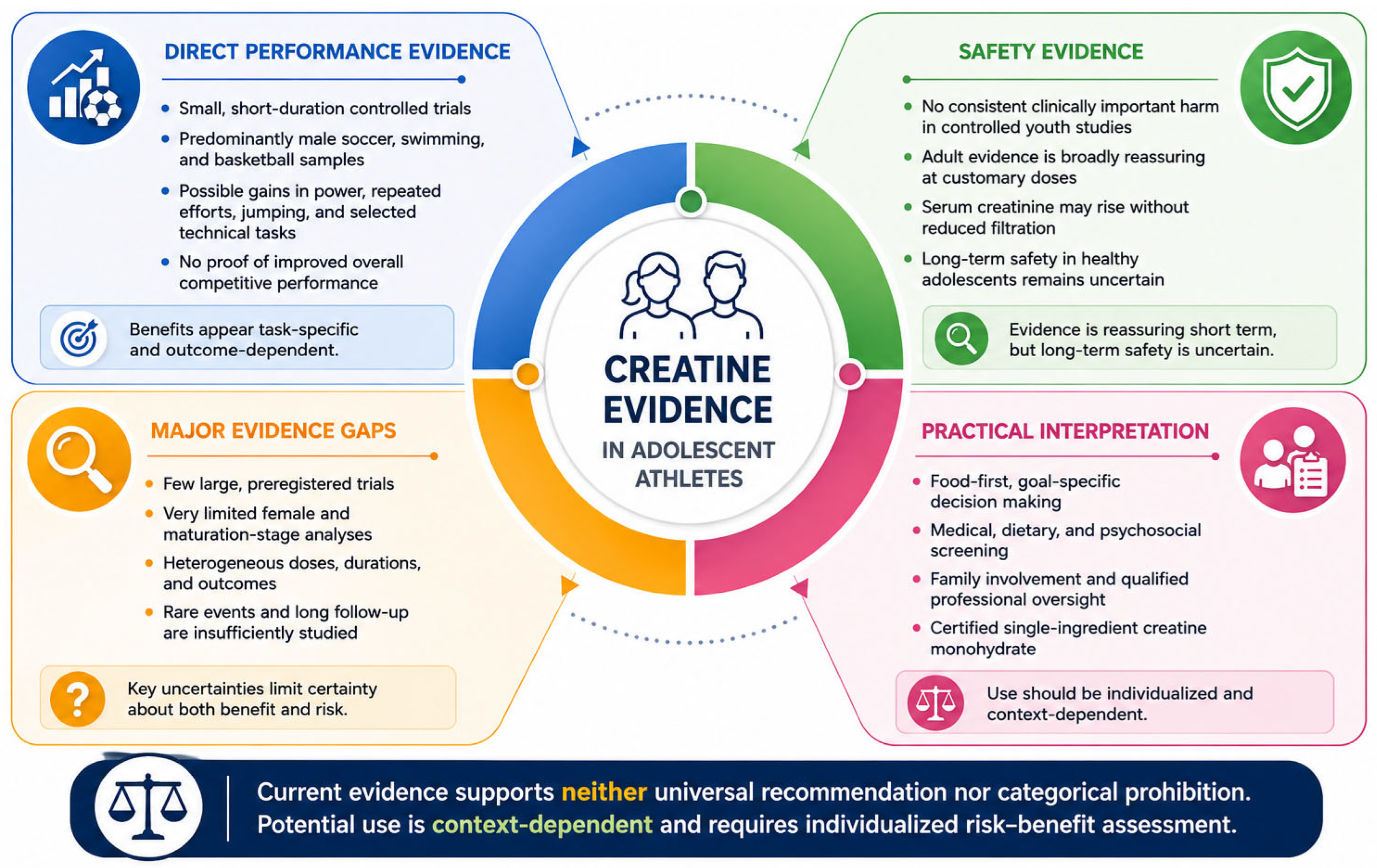
Across the short controlled studies involving adolescents, no consistent clinically important adverse pattern emerged within the doses and durations studied, and reported short-term tolerability was generally reassuring. This is a meaningful finding, but it should not be interpreted as proof of long-term safety. The limited number, size, duration, and sex distribution of available studies prevent firm conclusions regarding rare adverse events, sustained use across seasons, sex-specific responses, maturation-related differences, or optimal dosing strategies. Figure 1 summarizes the balance between plausible task-specific benefits, reassuring short-term observations, and persistent uncertainty resulting from limited adolescent-specific evidence.

3.2. Mechanistic Rationale and Limits of Extrapolation

The mechanistic rationale in adolescents is expected to resemble that in adults: increasing the muscle creatine pool can improve the availability of PCr for rapid ATP resynthesis, particularly during repeated brief efforts and during recovery between bouts [1,2,3,4]. This mechanism is compatible with sprinting, jumping, repeated accelerations, resistance exercise, and other actions in which the phosphagen system contributes substantially. Creatine may also support greater training volume or quality over time, which can indirectly influence adaptation [7,11].
Mechanistic plausibility does not establish the magnitude of benefit in adolescents. Baseline muscle creatine, habitual meat and fish intake, body mass, training status, sex, maturation, protocol adherence, and the specificity of the performance test can all influence response. Moreover, improvements in laboratory-based performance tests may not necessarily translate into meaningful changes in competition performance, tactical decision-making, or long-term athletic development.

3.3. Sports Performance

3.3.1. Soccer

Soccer contains repeated accelerations, sprints, jumps, and high-power actions separated by incomplete recovery, making it a plausible sport for creatine supplementation. Ostojic [39] reported improvements in selected soccer-specific tests after 30 g/day for 7 days in 20 young male players, although incomplete reporting of the age range and methodological details limits precision. Mohebbi et al. [40] compared creatine with placebo in 17 matched young male players and reported favorable between-group changes in repeated-sprint and dribbling time, but not shooting accuracy; the non-random allocation, very small sample, and limited statistical reporting reduce confidence without invalidating the observed signal. Yanez-Silva et al. [41] studied 20 elite youth players, of whom 19 completed 14 days of 0.03 g/kg/day or placebo. Peak and mean Wingate power increased within the creatine group, but no group-by-time interaction was statistically significant for peak power, mean power, total work, or fatigue index. The study therefore supports possible within-group improvement but does not demonstrate clear superiority over placebo. All three reports remain Tier 2 because the complete observed age range was not provided.
Huerta Ojeda et al. [42] evaluated 28 male players eligible at 16–20 years in a matched, double-blind, placebo-controlled study classified as Tier 2. After 14 days at 0.3 g/kg/day, several post-fatigue outcomes improved over time, but the published group-by-time interactions were not statistically significant for bar velocity (p = 0.0744; partial eta squared = 0.02), power (p = 0.17; partial eta squared = 0.009), or the other principal performance outcomes. Accordingly, the trial did not demonstrate a superior treatment effect relative to placebo, although it contributes useful information on a loading-level protocol in young players. The dose was ten times the 0.03 g/kg/day used by Yanez-Silva et al. [41] and should not be treated as an equivalent “low-dose” strategy.
A systematic review published in Retos identified substantial heterogeneity across soccer studies in dose, intervention period, respiratory outcomes, jump performance, anaerobic power, technical skill, speed, and change-of-direction testing [51]. Valenta et al. [34] enrolled 16 players aged 17–19 years (Tier 1) and found no significant group-by-time advantage for the principal jumping, sprinting, or anaerobic performance tests after five days of loading, although body mass increased relative to placebo and active symptom monitoring found no reported problems. Palma-Pulido et al. [43] described a four-arm 10-week study across U17, U20, and senior categories; creatine alone did not produce the reported reduction in creatine kinase, whereas several favorable signals occurred in the combined creatine-plus-protein arm. The abstract-only report and small treatment cells make this hypothesis-generating rather than confirmatory. Simpson et al. [44] assessed respiratory safety in players aged 16–21 years, as discussed below. Overall, soccer studies provide selected favorable signals but not a consistent season-level competitive advantage; neutral and positive findings should both be retained in the interpretation.

3.3.2. Swimming

Swimming studies are heterogeneous and show clear outcome dependence. Grindstaff et al. [45] randomized 18 junior competitive swimmers to creatine or placebo for nine days. Selected 50 m and 100 m interval times and the first upper-body ergometer sprint favored creatine, whereas the cumulative time for three repeated 100 m sprints and overall repeated-work outcomes were not consistently superior. Dawson et al. [46] matched 20 junior swimmers by sex and 50 m performance before creatine or placebo. Four weeks of supplementation did not clearly improve single 50 m or 100 m freestyle performance, body mass, body composition, or post-exercise lactate; swim-bench work improved within the creatine group, but the accessible report did not provide a complete direct comparison of change. Both studies are Tier 2 because the full age ranges were not reported. Together, they suggest that dry-land or interval-specific responses should not be equated automatically with improved race performance.
Theodorou et al. [33] used a two-phase design in 22 elite swimmers. Mean interval performance improved by approximately 1.5% after all participants completed four days of creatine loading, but this acute phase lacked a concurrent placebo group. Participants were subsequently randomized to creatine or placebo for eight weeks, with no further group-by-time benefit. The study therefore offers a favorable uncontrolled acute signal but a neutral controlled maintenance result. Silva et al. [47] randomized 16 female junior swimmers to 20 g/day or placebo for 21 days. Creatine did not improve 25 m swimming velocity or body composition relative to placebo; reported hydrodynamic changes were primarily within-group and affected by baseline imbalances. By contrast, Juhasz et al. [35] included 16 male elite fin swimmers aged 14–19 years and therefore provide Tier 1 direct adolescent evidence. Five days of loading were followed by favorable changes in rebound-jump power and two repeated 100 m fin-swimming efforts, although the report did not provide the complete group-by-time statistics or confidence intervals needed to quantify the comparative effect precisely.
Creatine has also been examined as an adjunct during rehabilitation rather than as a pure ergogenic intervention. Juhasz et al. [36] randomized 18 injured fin swimmers aged 12–18 years to creatine or placebo during a six-week immobilization and rehabilitation program (Tier 1). Group-by-time results favored creatine for plantar-flexion torque and pain reduction, and a smaller decline in segmental lean mass estimated by bioimpedance was reported during immobilization. These findings support a rehabilitation hypothesis, but they should be interpreted in context: plantar-flexion torque was not measured before immobilization, pain reliability was limited in the creatine group, and bioimpedance-derived lean mass may have been influenced by fluid retention. The fixed six-week program did not test time to return to sport or prevention of future injury.

3.3.3. Basketball and Strength-Based Contexts

In 24 male under-16 basketball players, Vargas-Molina et al. [37] randomized participants to creatine plus an eight-week resistance and plyometric program or the same training program without supplementation; 23 completed the study (Tier 1). Group-by-time interactions favored creatine for the Abalakov jump (p = 0.003; partial eta squared = 0.342) and points per game (p = 0.049; partial eta squared = 0.149), whereas squat, drop, and countermovement jump outcomes and minutes played did not show clear differential effects. The direct adolescent sample and positive comparative findings are relevant, while the open-label design, absence of placebo, small single-club sample, concurrent training intervention, and contextual influences on points scored limit generalizability rather than nullifying the observed effects.
Wu et al. [38] used a randomized, double-blind, placebo-controlled crossover design in 40 male basketball players aged 13–14 years (Tier 1). A short protocol of 0.3 g/kg/day for five days plus 0.1 g/kg before testing improved selected dribbling, passing, and shooting outcomes, with more consistent effects under cognitive-motor dual-task conditions. One participant reported mild transient gastrointestinal discomfort. This trial provides a comparatively strong direct signal for narrow technical outcomes, but the acute high-dose protocol, male-only sample, task-specific endpoints, and lack of formal period or carryover analysis restrict translation to routine supplementation or long-term competition performance.
Almeida et al. [48] randomized 34 recreationally trained adult men, with mean ages of approximately 23 years, to creatine or placebo during four weeks of standardized resistance training. Creatine produced greater gains in body mass and 1 RM across six exercises, while the assessed blood and urine markers showed no clinically important deterioration; serum creatinine increased modestly within the laboratory reference range. The trial used intention-to-treat analysis, baseline-adjusted linear mixed models, and 95% confidence intervals, but it is Tier 4 adult evidence and should not be presented as adolescent-specific efficacy or safety data.
Table 2. Core athletic studies relevant to the interpretation of creatine monohydrate use in adolescent athletes.
StudySample and AgeStudy DesignEvidence TierProtocol/DoseMain Comparative FindingsSafety/Adverse EventsKey Methodological Limitations
Ostojic [39]n = 20; male soccer; mean 16.6 ± 1.9 y; range NRControlled allocation trialTier 230 g/day for 7 d; loadingSelected soccer-specific tests favored creatine; complete between-group estimates were incompletely reported.Adverse-event methods NR.Some concerns: small sample; full age range, allocation concealment, and reporting details unclear.
Mohebbi et al. [40]n = 17 (CRE n = 8; PLA n = 9); male soccer; mean 17.18 ± 1.37 y; range NRMatched, double-blind, placebo-controlled non-randomized trialTier 220 g/day for 7 d; loadingRepeated-sprint and dribbling changes favored creatine; no advantage for shooting accuracy.Events not systematically assessed; creatinine result insufficiently characterized.Major concerns: very small sample, non-random allocation, single pre/post measures, and limited statistical reporting.
Yanez-Silva et al. [41]20 randomized; 19 analyzed; elite male soccer; mean 17.0 ± 0.5 y; range NRMatched randomized double-blind placebo-controlled trialTier 20.03 g/kg/day for 14 d; no loadingNo significant group-by-time interaction for peak power, mean power, total work, or fatigue index; favorable changes were within-group.No gastrointestinal, medical, or cramping problems reported; collection was not systematic.Some concerns: small sample, one loss without intention-to-treat analysis, baseline mass imbalance, and incomplete allocation reporting.
Huerta Ojeda et al. [42]n = 28; male soccer; eligibility 16–20 yMatched double-blind placebo-controlled trial; random-sequence method unclearTier 20.3 g/kg/day for 14 d; loading-level exposureNo significant group-by-time interaction for velocity, power, strength, fatigue index, or repeated-sprint time.Adverse events and biochemical safety were not systematically assessed.Some concerns: small mixed-age sample, incomplete allocation/blinding reporting, and favorable interpretation despite non-significant interactions.
Valenta et al. [34]n = 16 (8/8); male soccer; 17–19 yRandomized double-blind placebo-controlled trialTier 120 g/day for 5 d; loadingNo significant group-by-time advantage for jumping, sprinting, or anaerobic performance; body mass increased relative to placebo.Active daily symptom monitoring; no symptoms, medical problems, injuries, or cramps reported.Some concerns: very small sample, brief exposure, multiple outcomes, and incomplete randomization/concealment reporting.
Palma-Pulido et al. [43]n = 28; male U17, U20, and senior categories; arm n = 5–10Four-arm randomized study reported as a brief journal-supplement abstractTier 2Creatine 5 g/day, whey 25 g/day, combined, or placebo for 10 wkCreatine alone did not reduce CK; several favorable within-group signals occurred in the creatine-plus-protein arm.Adverse events and clinical safety outcomes NR.Major concerns: abstract-only report, very small treatment cells, mixed ages, and no clear interaction isolating creatine or synergy.
Simpson et al. [44]25 randomized; 19 completed; elite male soccer; 16–21 yStratified randomized double-blind placebo-controlled trialTier 20.3 g/kg/day for 1 wk, then 5 g/day for 7 wkFull-sample respiratory interactions did not reach p < 0.05; unfavorable effects appeared in a small post hoc atopic subgroup.Daily monitoring; one minor gastrointestinal complaint.Some concerns: mixed age, 24% attrition, complete-case analysis, small post hoc subgroup, and no replication.
Grindstaff et al. [45]n = 18 (9/9); 11 female/7 male junior swimmers; mean 15.3 ± 0.6 y; range NRRandomized double-blind placebo-controlled trialTier 221 g/day for 9 d; loadingSelected swim intervals and the first arm-ergometer sprint favored creatine; cumulative 3 × 100 m time and overall repeated work were not superior.No gastrointestinal distress, medical problems, or muscle cramps reported.Some concerns: nine participants per group, incomplete allocation reporting, multiple outcomes, and brief follow-up.
Dawson et al. [46]n = 20 (10/10); 10 female/10 male junior swimmers; mean 16.4 ± 1.8 y; range NRMatched placebo-controlled trial; randomization unclear; appraisal based on accessible abstractTier 220 g/day for 5 d, then 5 g/day for 22 dNo clear benefit for single 50 m or 100 m pool sprints; swim-bench work improved within creatine, but direct between-group change was incompletely reported.Adverse events and clinical safety NR.Major concerns due to unavailable full methods: blinding, attrition, adherence, and complete comparative analysis could not be verified.
Theodorou et al. [33]n = 22; 12 male/10 female elite swimmers; male mean 19.7 ± 2.3 y; female mean 17.7 ± 2.0 y; range NRUncontrolled acute pre/post phase plus randomized maintenance phaseTier 225 g/day for 4 d; then 5 g/day or placebo for 8 wkAcute pre/post interval performance improved by ~1.5%; the controlled 8 wk phase showed no additional group-by-time benefit.Adverse events and adherence NR.Major concerns for the acute causal inference; some concerns for the controlled phase. Heterogeneous protocols and incomplete blinding/allocation reporting.
Silva et al. [47]n = 16 (8/8); female junior swimmers; means 16.3 ± 1.8 and 15.7 ± 1.2 y; range NRRandomized double-blind placebo-controlled trialTier 220 g/day for 21 d; prolonged loading-level exposureNo benefit for 25 m velocity or body composition; hydrodynamic changes were within-group and did not establish comparative superiority.No side effects reported; ascertainment method not described.Major concerns: baseline imbalances, eight participants per group, incomplete allocation reporting, and reliance on within-group comparisons.
Juhasz et al. [35]n = 16 (8/8); male elite fin swimmers; 14–19 yMatched double-blind placebo-controlled trial; random-sequence method unclearTier 120 g/day for 5 d; loadingRebound-jump power and two repeated 100 m fin-swimming efforts improved within creatine; complete group-by-time estimates were not reported.No spontaneous adverse effects reported; no post-intervention renal or hepatic markers.Some concerns: very small sample, incomplete randomization/concealment reporting, multiple outcomes, and imprecise comparative reporting.
Juhasz et al. [36]n = 18 (9/9); 10 male/8 female injured fin swimmers; 12–18 yRandomized double-blind placebo-controlled rehabilitation trialTier 120 g/day for 5 d, then 5 g/day for 37 dInteractions favored creatine for plantar-flexion torque and pain; smaller BIA-estimated lean-mass loss was observed during immobilization.No side effects reported; no post-intervention renal or hepatic markers.Some concerns: nine per group, individualized rehabilitation, no pre-immobilization torque, low pain reliability, and BIA hydration confounding.
Vargas-Molina et al. [37]24 randomized; 23 completed; male U16 basketball; mean 14.3 ± 0.4 yRandomized open-label controlled trial without placeboTier 10.1 g/kg/day for 8 wk plus combined trainingGroup-by-time interactions favored Abalakov jump and points per game; other jump outcomes and minutes played were not different.No side effects spontaneously reported; events were not systematically assessed and no biochemical markers were measured.Some concerns: open label, no placebo, small single-club sample, concurrent training, per-protocol analysis, and contextual game outcomes.
Wu et al. [38]n = 40; male basketball; 13–14 yRandomized double-blind placebo-controlled crossover trialTier 10.3 g/kg/day for 5 d plus 0.1 g/kg before testingSelected dribbling, passing, and shooting outcomes improved, with more consistent effects under dual-task conditions.One mild transient gastrointestinal event; no biochemical safety assessment.Some concerns: acute loading-level exposure, male-only narrow age group, task-specific endpoints, and no formal period/carryover analysis.
Almeida et al. [48]n = 34 (17/17); recreationally trained adult men; mean 23.1–23.8 yRandomized double-blind placebo-controlled trialTier 40.3 g/kg/day for 7 d, then 0.03 g/kg/day for 21 dCreatine produced greater body-mass and 1 RM gains across six exercises; no clinically important blood or urine deterioration was identified.Symptomatic events were not systematically described; small creatinine rise remained within the reference range.Some concerns: adult indirectness, short biomarker follow-up, no creatinine-independent filtration marker, and multiplicity of laboratory outcomes.
Garcia et al. [32]n = 71 female football players: U17 n = 13, U20 n = 25, professionals n = 33; n = 66 at week 32Single-arm longitudinal quasi-experimental cohortTier 220 g/day for 7 d, then 5 g/day for up to 32 wkMean markers remained within clinical reference ranges; creatinine/eGFR changed transiently and returned to baseline; no concurrent causal comparison.Symptomatic adverse-event surveillance was not systematically described.Major concern for causal inference despite strong execution: no control group, mixed ages, seasonal confounding, and no adolescent-stratified outcomes.
Note: Tier 1 indicates direct adolescent athletic evidence with the complete reported age range or explicit eligibility criteria within 10–19 years, or separately extractable adolescent data. Tier 2 includes age-adjacent or mixed-age athletic evidence, including reports with incomplete upper-age information. Tier 4 indicates adult athletic evidence retained only for contextual interpretation. Evidence tier describes directness, not methodological quality. Comparative findings prioritize between-group or group-by-time evidence; within-group changes are identified explicitly. Overall concern categories summarize the likely interpretive impact of the item-level JBI judgments and are not numerical quality scores. NR, not reported or not sufficiently described.

3.4. Safety and Tolerability

3.4.1. Renal, Hepatic, and Cardiometabolic Outcomes

Garcia et al. [32] provide the longest athlete-specific exposure located in the update, but the study is Tier 2 mixed-age observational evidence rather than an adolescent-only safety trial. This single-arm cohort included 71 female football players: U17 (n = 13; 16 ± 0 years), U20 (n = 25; 18 ± 1 years), and professionals (n = 33; 27 ± 5 years). Participants received 20 g/day for seven days and 5 g/day thereafter across 32 weeks, with daily adherence supervision. Mean renal, hepatic, hematological, and electrolyte markers remained within the clinical reference ranges used by the investigators. Creatinine increased and creatinine-based eGFR decreased transiently at mid-season, with both returning to baseline by week 32; albuminuria decreased and urea remained stable. These findings are reassuring as real-world biochemical observations, but the absence of a non-supplemented group prevents causal attribution and the results were not reported separately for adolescents.
A 2025 case report described biopsy-confirmed acute kidney injury with cast nephropathy in a 17-year-old male after a six-day high-dose creatine-loading regimen [52]. A single case report cannot establish causality, incidence, or comparative risk, and it provides little information about customary lower-dose maintenance protocols. Its appropriate role is to support clinical vigilance and prompt evaluation of compatible symptoms. The absence of a cluster of similar published cases despite widespread creatine use is consistent with such an event being uncommon, although under-reporting cannot be excluded. Accordingly, the preference to avoid aggressive loading in minors is presented as a precautionary expert risk-management judgment based on uncertainty, dose minimization, and ease of monitoring—not as a harm conclusion demonstrated by comparative adolescent trials.
Tier 4 adult evidence, including the resistance-training trial by Almeida et al. [48], is broadly reassuring and does not support the claim that creatine monohydrate at customary studied doses causes renal, hepatic, or cardiometabolic injury in healthy individuals [7,53,54]. A recent systematic review and meta-analysis found a small increase in serum creatinine without a significant reduction in glomerular filtration [55]. Because creatinine is generated through non-enzymatic conversion of creatine, a modest rise may reflect increased creatine turnover rather than structural kidney injury. Reviews focused on the kidney similarly emphasize that serum creatinine alone can be misleading in muscular athletes who use creatine [56]. Recent evidence mapping and adverse-event analyses broaden the safety database [57,58,59], but adult data remain indirect for adolescents and do not resolve long-term or uncommon-event uncertainty.
Clinical interpretation should integrate baseline kidney and liver history, hydration status, muscle mass, recent exercise, dose, symptoms, urinalysis, and alternative filtration markers when indicated. No single universal change in creatinine or aminotransferases can define clinical significance in every adolescent athlete. Greater concern is warranted when a change is persistent or substantial relative to age- and sex-appropriate reference ranges, is accompanied by symptoms, or is corroborated by abnormal urinalysis, cystatin C or other filtration measures, bilirubin, or additional clinically indicated tests. Earlier controlled and longitudinal adult work is broadly reassuring [60,61,62], but caution remains appropriate in adolescents with kidney or liver disease, unexplained abnormalities, or medications that may affect renal function. Reassuring statements in this review apply only to the populations, doses, and durations studied.

3.4.2. Gastrointestinal Tolerance, Body Mass, Hydration, and Cramps

Gastrointestinal discomfort is most likely when a large amount is consumed at once, particularly during rapid loading. Dividing the daily dose and avoiding unnecessarily aggressive protocols may improve tolerance. A loading phase is not required to increase tissue stores; slower maintenance dosing can achieve saturation over a longer interval [7,54]. Early body-mass gain is common and is generally attributed to increased intracellular water and, over longer periods with training, potentially greater lean-mass accrual. This change may be advantageous in some sports but undesirable in weight-category or weight-sensitive contexts, making the sport-specific trade-off important.
Current adult evidence does not support a consistent increase in dehydration, heat illness, or muscle cramping with creatine monohydrate [7,53,63]. Nevertheless, creatine is not a hydration strategy, and adolescent athletes still require individualized fluid, electrolyte, acclimatization, and heat-management plans. Because youth-specific surveillance is limited, clinicians should avoid converting the reassuring adult literature into a claim of zero risk in every adolescent setting.

3.4.3. Respiratory Considerations

The principal athlete-specific respiratory signal comes from Simpson et al. [44], who randomized 25 elite soccer players aged 16–21 years; 19 completed the eight-week trial (Tier 2). In the complete sample, the group-by-time interactions for fractional exhaled nitric oxide and airway responsiveness did not reach the conventional p < 0.05 threshold. Significant unfavorable interactions emerged in a post hoc analysis restricted to 15 athletes with allergic sensitization. The study therefore identifies a hypothesis-generating respiratory signal rather than a demonstrated general pulmonary contraindication. Persistent respiratory symptoms, poorly controlled asthma, or allergic airway disease should prompt individualized medical review rather than automatic exclusion of all athletes.

3.4.4. Hormonal Effects and Hair Loss

Concern about hair loss largely originated from a small study in college-aged rugby players that observed an increase in the dihydrotestosterone-to-testosterone ratio after loading; the study did not measure hair loss or follicle health [64]. This hormonal signal has not been consistently replicated in a well-designed trial. A 12-week randomized controlled trial that directly assessed hair-related outcomes did not support a causal effect of creatine on hair loss [65]. The most defensible communication is therefore that current evidence does not establish creatine-induced alopecia, while acknowledging that long-term adolescent-specific data in genetically predisposed individuals are unavailable.

3.4.5. Long-Term Safety, Sex, and Maturation

No consistent clinically important adverse pattern has emerged from the available controlled youth studies within the doses and durations studied. Where symptoms were actively monitored, short-term tolerability was generally favorable, and no controlled study identified a reproducible renal, hepatic, cardiometabolic, hydration, or cramping signal. This is reassuring for short-term supervised exposure but does not prove long-term safety. The 32-week female football cohort extends observation beyond most trials but remains uncontrolled and mixed age [32]. A 2025 systematic review of 27 studies in active females found performance effects inconclusive and highlighted heterogeneity and inadequate attention to female physiology; it was not adolescent-specific [66]. Most sport studies have enrolled boys or young men, rarely stratified by biological maturation, and were not powered to detect uncommon adverse events. Evidence is particularly sparse in prepubertal children, for whom performance supplementation cannot be justified from the present literature. Future work must report sex, maturation stage, baseline diet, medical history, co-supplement use, and prospectively defined adverse-event monitoring with substantially longer follow-up. These limitations support a precautionary rather than prohibitive interpretation. Table 3 summarizes the principal safety domains and practical implications for adolescent athletes.

3.5. Pediatric Clinical Evidence and Limits of Extrapolation

Tier 3 pediatric clinical evidence includes medically supervised creatine use in children and adolescents with Duchenne muscular dystrophy, juvenile dermatomyositis, facioscapulohumeral muscular dystrophy, and other muscle disorders [67,68,69,70,71]. This literature provides useful information about supervised exposure and short-term tolerability, but it is indirect for healthy sport participants. Therapeutic indications, baseline disease, concomitant treatment, dose selection, benefit thresholds, and follow-up differ fundamentally from elective ergogenic supplementation.
Two additional controlled pediatric studies broaden Tier 3 supervised-exposure evidence but remain indirect for sport. In adolescent females with selective serotonin reuptake inhibitor (SSRI)-resistant depression, an 8-week placebo-controlled dose-ranging trial (2, 4, or 10 g/day) demonstrated brain PCr target engagement without a between-group signal in adverse events, weight gain, or serum creatinine [72]. In childhood myositis, a 6-month randomized double-blind feasibility trial found creatine feasible and generally well tolerated but did not establish a clear functional benefit [73]. Disease context, concurrent treatment, small samples, and non-athletic outcomes prevent direct transfer to healthy adolescent athletes.
Clinical pediatric exposure should therefore neither be ignored nor used as a shortcut to routine sport recommendation. Its strongest contribution is to show that creatine is not intrinsically incompatible with pediatric care when prescribed for a defined indication and monitored appropriately. It does not establish that a healthy adolescent athlete will obtain a meaningful performance benefit, that the same protocol should be used, or that unsupervised long-term consumption is safe.

3.6. Dietary, Psychosocial, and Product-Quality Considerations

The decision to use creatine is partly behavioral. In a school-based sample of 237 Australian boys aged 14–16 years, 8.4% reported creatine use; muscle-building supplement use clustered with weight training, participation in sport, and a stronger drive for muscularity [74]. In a prospective Canadian sample of adolescents and young adults, creatine use was associated with later muscle-dysmorphia symptomatology after adjustment for baseline symptoms and other substance use [75]. These observational findings do not show that creatine causes muscle dysmorphia, but they justify screening motivation for use, appearance intolerance, compulsive training, restrictive or compensatory eating, rapid weight-change practices, and concurrent use of performance or weight-control products.
Other adolescent research has linked weekly protein, creatine, and dieting-supplement use with exercise participation and eating-disorder risk factors, particularly among boys [76]. Prevalence varies substantially by population and sport: one survey of students in grades 6–12 reported creatine use in 8.8% of boys and 1.8% of girls [77], while a high-school athlete survey reported 8.2% overall use and higher prevalence among football players [78]. These estimates are not directly comparable because sampling, age, sport, and definitions differ, but they indicate that unsupervised use is not exceptional. The nutrition assessment should precede the supplement decision, and creatine should never compensate for chronic low energy availability, inadequate carbohydrate or protein intake, dehydration, or poor sleep [22].
Product selection and shared responsibility are also safety interventions. When use is considered, the most defensible option is single-ingredient creatine monohydrate from an independently batch-tested or third-party-certified source. Programs such as NSF Certified for Sport and Informed-Sport are examples of established certification systems; certification can reduce, but not eliminate, contamination, adulteration, or prohibited-substance risk. Multi-ingredient pre-workouts, proprietary blends, stimulant combinations, and products from uncertain online channels introduce risks separate from creatine monohydrate itself [8,26]. Parents or guardians should participate in informed shared decision-making; coaches should avoid prescribing supplements or exerting appearance-based pressure; and qualified health professionals should assess diet, medical history, psychosocial risk, product quality, and follow-up. Open communication is preferable to blanket prohibition because secrecy reduces opportunities for harm reduction and early identification of problematic use.

4. Discussion and Practical Decision Framework

4.1. Integrated Interpretation and Candidate Selection

The integrated evidence suggests a recurring pattern rather than a simple positive or negative verdict. Creatine has a strong mechanistic rationale, several controlled athletic studies report task-specific benefits, and the short-term tolerability findings available in adolescents are generally reassuring. At the same time, performance effects are not uniform across sports or outcomes, and direct evidence remains too limited to establish a universal competitive benefit, an optimal adolescent dose, or long-term safety. Five core studies met the strict Tier 1 age criterion, eleven were age-adjacent or mixed age, and one was adult contextual evidence. The practical framework therefore combines three explicitly different inputs: direct adolescent evidence where available, age-adjacent or adult extrapolation where necessary, and precautionary expert interpretation for matters not validated in trials. It should be read as a structured aid to shared decision-making, not as an evidence-graded or prospectively validated clinical algorithm.
Creatine should not be the first response to ordinary fatigue, inconsistent training, or an unstructured diet. In this framework, “mature and trained” does not refer to chronological age alone. It denotes a multidimensional judgment that includes biological or pubertal maturation when clinically relevant, sufficient training age and exposure to structured high-intensity or strength-power training, psychological readiness, realistic expectations, capacity to understand uncertainty and follow instructions, and the ability to participate in shared decision-making. These attributes are considerations for readiness, not validated eligibility criteria. The adolescent should receive age-appropriate information and express an informed preference; parents or guardians should participate in decisions; and sport goals should be reviewed only after nutrition, hydration, sleep, recovery, and training design have been addressed.
Before use, screening should include kidney and liver history, recurrent dehydration or heat illness, gastrointestinal disease, asthma or persistent respiratory symptoms, medications, prior adverse reactions, and all other supplements. Equally important are motivation, body image, eating behavior, rapid weight-change practices, and pressure from coaches, peers, or social media. In this review, a “qualified professional” means a licensed or appropriately credentialed clinician or sports-nutrition professional acting within scope of practice and competent in adolescent assessment, supplement evidence, product-quality risk, and referral. The clinician is responsible for medical screening and interpretation of symptoms or laboratory findings; the sports-nutrition professional evaluates diet, sport demands, product quality, and follow-up; parents or guardians support consent-like shared decision-making and adherence; and coaches should support disclosure without prescribing supplements or applying appearance-based pressure. The proposed screening, deferral, stopping, and referral criteria are precautionary considerations rather than validated clinical thresholds.

4.2. Dosing Heterogeneity and Clinical Interpretation

No adolescent-specific optimal dose has been established. The athletic studies used heterogeneous protocols ranging from 0.03 to 0.3 g/kg/day, fixed intakes of 5–30 g/day, exposure lasting five days to 32 weeks, and both loading and non-loading strategies (Table 2). The available studies do not provide a reliable dose–response comparison, and several positive outcomes were observed with both loading-level and non-loading protocols. Adult protocols commonly use approximately 0.3 g/kg/day for 5–7 days followed by 3–5 g/day, or 3–5 g/day without loading [7,54], but these are presented only to contextualize the research literature and must not appear as pediatric dosing recommendations. If an appropriately qualified clinician elects to consider use, a conservative non-loading approach may be easier to tolerate, attribute, and monitor; this is a precautionary expert preference rather than a protocol established by adolescent dose-comparison trials.

4.3. Monitoring, Reassessment, and Discontinuation

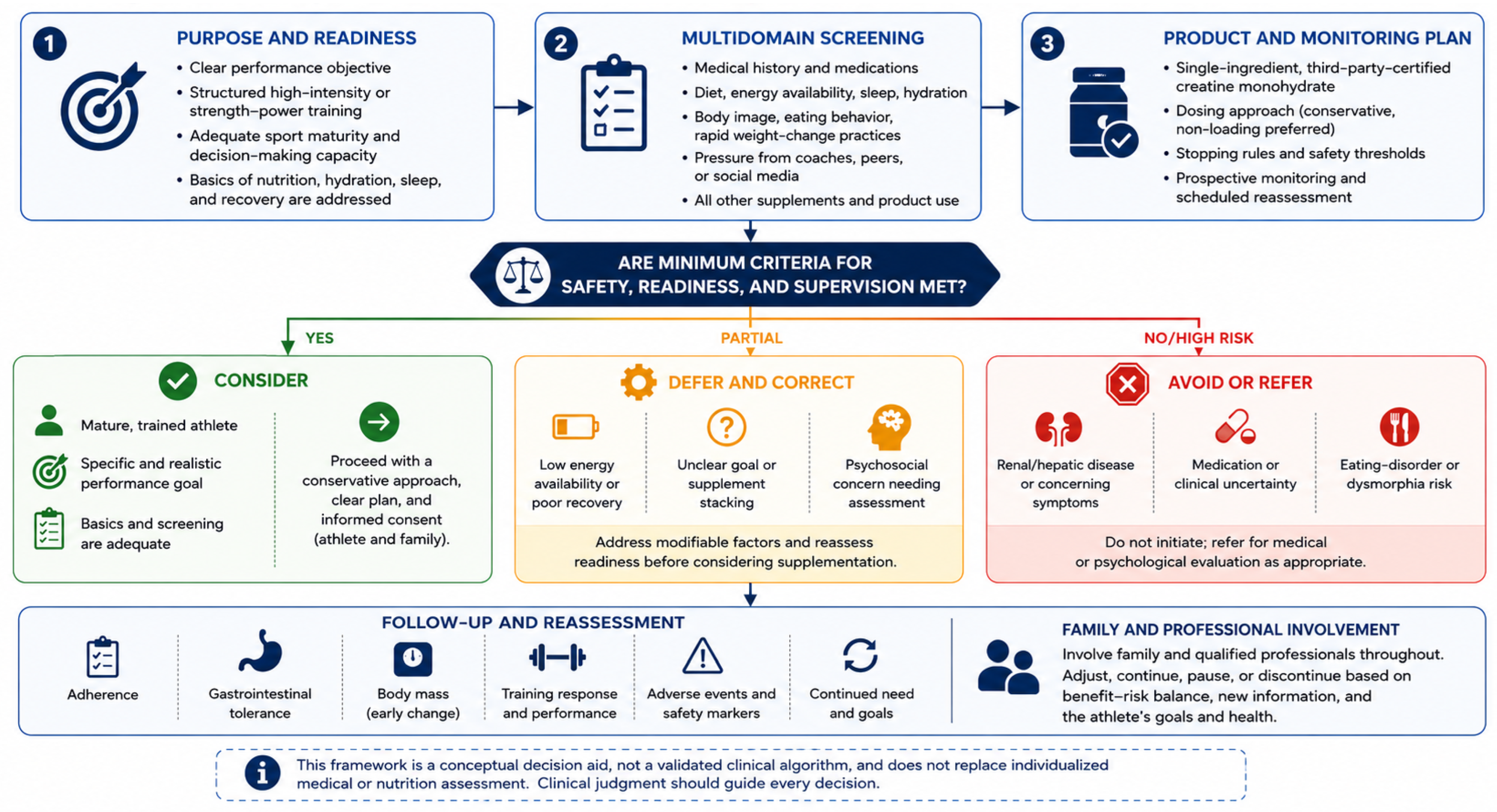
Monitoring should be prospective and purpose driven. The athlete and family should know the target outcome, expected time frame, possible early body-mass change, common gastrointestinal symptoms, stopping considerations, and planned reassessment. In some supervised settings, an early review after approximately 2–4 weeks and then periodic review during the first months may be operationally useful; however, no adolescent evidence validates a universal schedule, and follow-up should be individualized to dose, duration, symptoms, medical history, and training phase. Prompt cessation and medical assessment are reasonable precautions for flank pain, reduced urine output, edema, persistent vomiting, unexplained weakness, or clinically important laboratory abnormalities, but these are not validated creatine-specific thresholds. Continued use is difficult to justify when no meaningful benefit is observed, adherence is poor, adverse symptoms arise, products are stacked, or the original performance objective no longer exists. Figure 2 presents the conceptual decision process.

5. Limitations and Research Priorities

This review has limitations inherent to its narrative design. Although two reviewers independently screened studies, extracted data, and completed a structured design-specific appraisal, the search was not prospectively registered as a systematic review, no meta-analysis or formal certainty grading was undertaken, and complete record-level counts for identification, deduplication, screening, and exclusion were not prospectively retained, particularly for iterative Google Scholar, Semantic Scholar, and citation-tracking procedures. Consequently, a conventional numerical PRISMA-style flow diagram could not be reconstructed without relying on approximate counts that might imply a degree of denominator precision not supported by the original review process. Selection may still have been influenced by database coverage, accessibility, and publication bias. These limitations reduce confidence in the completeness and reproducibility of the retrieval denominator and preclude a pooled or formally graded estimate, but they do not prevent a transparent qualitative comparison of the 17 core athletic studies that were identified, independently appraised, and included in the synthesis.
The underlying evidence also has important but expected limitations for the emerging pediatric sport literature. Five core studies met the strict direct-adolescent age criterion, while most reports were small, male-dominated, short, and focused on laboratory, technical, or rehabilitation outcomes. Methodological appraisal commonly identified incomplete reporting of randomization, allocation concealment, blinding, full age range, comparative estimates, and adverse-event ascertainment (Supplementary Table S2 and Supplementary File S2). These issues reduce precision and can make favorable within-group findings vulnerable to placebo, learning, maturation, training, or regression effects. They do not imply that the observed benefits are necessarily spurious; rather, they limit how broadly and confidently those benefits can be generalized. The 32-week female football study was uncontrolled and mixed age [32], so biochemical stability is reassuring but cannot establish causal safety. Accordingly, the review can identify plausible task-specific benefits and a generally favorable short-term tolerability pattern, but it cannot establish an adolescent-specific benefit–risk ratio, optimal dose, or long-term safety.
Future research should prioritize the questions most relevant to clinical and sport practice. First, adequately powered, preregistered adolescent-only randomized trials should compare clinically plausible dosing strategies and prespecify meaningful performance and safety outcomes. Second, longer controlled cohorts and registries should characterize uncommon events, repeated seasonal exposure, product stacking, adherence, and discontinuation. Third, recruitment and analysis must address female athletes, biological maturation, menstrual health, baseline diet, and training age rather than treating adolescents as homogeneous. ClinicalTrials.gov record NCT06250556 describes a planned randomized creatine-versus-placebo performance experiment and a longer single-arm seasonal safety component in female football players. The registry continues to list an estimated total enrollment of 70, estimated completion on 30 December 2024, and no posted results; its eligibility excludes participants younger than 18 years, so it cannot provide direct adolescent outcome evidence [79]. The published 32-week cohort [32] appears to address the seasonal safety component, whereas results from the randomized performance component remain publicly unavailable. Table 4 outlines the corresponding study approaches and reporting priorities.

6. Conclusions

Creatine monohydrate has a strong mechanistic foundation and a substantial adult evidence base. Among 17 core athletic studies relevant to adolescent interpretation, five provided direct adolescent evidence, eleven were age-adjacent or mixed age, and one was adult contextual evidence. Selected controlled studies suggest possible benefits for particular high-intensity, repeated-sprint, jumping, technical, or rehabilitation outcomes, while other trials were neutral or showed benefits only for selected endpoints. The literature therefore supports a plausible and sometimes positive, but not uniform, performance effect. Short controlled studies have not shown a consistent pattern of clinically important harm within the doses, durations, and outcomes studied, and reported tolerability is generally reassuring; this absence of a signal does not establish long-term safety or exclude uncommon events. Sex-specific responses, maturation effects, repeated seasonal exposure, and optimal adolescent dosing remain insufficiently characterized.
Creatine monohydrate should not be recommended routinely to all adolescent athletes, but the available evidence also does not justify categorical prohibition of carefully supervised use in every case. Consideration in a selected athlete should be described as a cautious expert interpretation and precautionary risk-management process, not as a conclusion demonstrated by adolescent trials or as a validated protocol. Adult dosing strategies provide context only; no optimal adolescent-specific dosing strategy or long-term safety profile has been established. Any decision should prioritize adequate energy and nutrient intake, hydration, sleep, recovery, age-appropriate shared decision-making, medical and psychosocial screening, qualified professional involvement, single-ingredient product-quality control, explicit communication of uncertainty, and planned reassessment. This approach preserves scientific caution and is intended to reduce the risks associated with clandestine, unsupervised, or poorly informed supplement use, although its effectiveness in achieving that reduction has not been evaluated and requires prospective assessment.

Supplementary Materials

The following supporting information can be downloaded at: https://www.mdpi.com/article/10.3390/adolescents6040059/s1, Supplementary File S1, including Table S1: complete source-specific search strategies and supplementary search procedures; Table S2: consensus summary of the design-specific methodological appraisal; Supplementary File S2, including Table S2A: Revised JBI randomized controlled trial appraisal: domains 1–7; Table S2B: Revised JBI randomized controlled trial appraisal: domains 8–13 and overall interpretive concern. Table S2C: Revised JBI quasi-experimental appraisal: domains 1–5. Table S2D: Revised JBI quasi-experimental appraisal: domains 6–9 and overall interpretive concern.

Author Contributions

Conceptualization, Á.F.-D.; methodology, Á.F.-D. and C.F.-H.; investigation, Á.F.-D., C.F.-H. and M.A.-O.; data curation, Á.F.-D., C.F.-H. and M.A.-O.; formal analysis, Á.F.-D. and C.F.-H.; writing—original draft preparation, Á.F.-D.; writing—review and editing, Á.F.-D., C.F.-H., M.A.-O., F.M.-V., E.G.-C., I.M.-M., R.Y.-S., A.C.-P. and D.B.-G.; visualization, Á.F.-D. and F.M.-V.; supervision, Á.F.-D.; project administration, Á.F.-D. All authors have read and agreed to the published version of the manuscript.

Funding

This research received no external funding.

Institutional Review Board Statement

Not applicable.

Informed Consent Statement

Not applicable.

Data Availability Statement

No new data were created or analyzed in this study. Data sharing is not applicable to this article.

Acknowledgments

During the preparation of this manuscript, the authors used ChatGPT (GPT-5.6; OpenAI, San Francisco, CA, USA) to support English-language editing, structural refinement, figure drafting, and bibliographic consistency checks. The authors reviewed and edited all AI-assisted output and take full responsibility for the content of this publication.

Conflicts of Interest

The authors declare no conflicts of interest.

Abbreviations

The following abbreviations are used in this manuscript:
1 RMOne-repetition maximum
ATPAdenosine triphosphate
BIABioelectrical impedance analysis
CKCreatine kinase
CRECreatine group
DHTDihydrotestosterone
eGFREstimated glomerular filtration rate
JBIJoanna Briggs Institute
PCrPhosphocreatine
PLAPlacebo group
PRISMAPreferred Reporting Items for Systematic Reviews and Meta-Analyses
RCTRandomized controlled trial
SANRAScale for the Assessment of Narrative Review Articles
SSRISelective serotonin reuptake inhibitor

References

  1. Wyss, M.; Kaddurah-Daouk, R. Creatine and creatinine metabolism. Physiol. Rev. 2000, 80, 1107–1213. [Google Scholar] [CrossRef] [Scilit] [PubMed]
  2. Harris, R.C.; Soderlund, K.; Hultman, E. Elevation of creatine in resting and exercised muscle of normal subjects by creatine supplementation. Clin. Sci. 1992, 83, 367–374. [Google Scholar] [CrossRef] [Scilit] [PubMed]
  3. Greenhaff, P.L.; Bodin, K.; Soderlund, K.; Hultman, E. Effect of oral creatine supplementation on skeletal muscle phosphocreatine resynthesis. Am. J. Physiol. 1994, 266, E725–E730. [Google Scholar] [CrossRef] [Scilit] [PubMed]
  4. Hultman, E.; Soderlund, K.; Timmons, J.A.; Cederblad, G.; Greenhaff, P.L. Muscle creatine loading in men. J. Appl. Physiol. 1996, 81, 232–237. [Google Scholar] [CrossRef] [Scilit] [PubMed]
  5. Balsom, P.D.; Ekblom, B.; Soderlund, K.; Sjodin, B. Creatine supplementation and dynamic high-intensity intermittent exercise. Scand. J. Med. Sci. Sports 1993, 3, 143–149. [Google Scholar] [CrossRef] [Scilit]
  6. Buford, T.W.; Kreider, R.B.; Stout, J.R.; Greenwood, M.; Campbell, B.; Spano, M.; Ziegenfuss, T.; Lopez, H.; Landis, J.; Antonio, J. International Society of Sports Nutrition position stand: Creatine supplementation and exercise. J. Int. Soc. Sports Nutr. 2007, 4, 6. [Google Scholar] [CrossRef] [Scilit] [PubMed]
  7. Kreider, R.B.; Kalman, D.S.; Antonio, J.; Ziegenfuss, T.N.; Wildman, R.; Collins, R.; Candow, D.G.; Kleiner, S.M.; Almada, A.L.; Lopez, H.L. International Society of Sports Nutrition position stand: Safety and efficacy of creatine supplementation in exercise, sport, and medicine. J. Int. Soc. Sports Nutr. 2017, 14, 18. [Google Scholar] [CrossRef] [Scilit] [PubMed]
  8. Maughan, R.J.; Burke, L.M.; Dvorak, J.; Larson-Meyer, D.E.; Peeling, P.; Phillips, S.M.; Rawson, E.S.; Walsh, N.P.; Garthe, I.; Geyer, H.; et al. IOC consensus statement: Dietary supplements and the high-performance athlete. Br. J. Sports Med. 2018, 52, 439–455. [Google Scholar] [CrossRef] [Scilit] [PubMed]
  9. Balsom, P.D.; Soderlund, K.; Ekblom, B. Creatine in humans with special reference to creatine supplementation. Sports Med. 1994, 18, 268–280. [Google Scholar] [CrossRef] [Scilit] [PubMed]
  10. Butts, J.; Jacobs, B.; Silvis, M. Creatine use in sports. Sports Health 2018, 10, 31–34. [Google Scholar] [CrossRef] [Scilit] [PubMed]
  11. Wax, B.; Kerksick, C.M.; Jagim, A.R.; Mayo, J.J.; Lyons, B.C.; Kreider, R.B. Creatine for exercise and sports performance, with recovery considerations for healthy populations. Nutrients 2021, 13, 1915. [Google Scholar] [CrossRef] [Scilit] [PubMed]
  12. Forbes, S.C.; Candow, D.G.; Neto, J.H.F.; Kennedy, M.D.; Forbes, J.L.; Machado, M.; Bustillo, E.; Gomez-Lopez, J.; Zapata, A.; Antonio, J. Creatine supplementation and endurance performance: Surges and sprints to win the race. J. Int. Soc. Sports Nutr. 2023, 20, 2204071. [Google Scholar] [CrossRef] [Scilit] [PubMed]
  13. Avgerinos, K.I.; Spyrou, N.; Bougioukas, K.I.; Kapogiannis, D. Effects of creatine supplementation on cognitive function of healthy individuals: A systematic review of randomized controlled trials. Exp. Gerontol. 2018, 108, 166–173. [Google Scholar] [CrossRef] [Scilit] [PubMed]
  14. Balestrino, M.; Adriano, E. Beyond sports: Efficacy and safety of creatine supplementation in pathological or paraphysiological conditions of brain and muscle. Med. Res. Rev. 2019, 39, 2427–2459. [Google Scholar] [CrossRef] [Scilit] [PubMed]
  15. Roschel, H.; Gualano, B.; Ostojic, S.M.; Rawson, E.S. Creatine supplementation and brain health. Nutrients 2021, 13, 586. [Google Scholar] [CrossRef] [Scilit] [PubMed]
  16. Xu, C.; Bi, S.; Zhang, W.; Luo, L. The effects of creatine supplementation on cognitive function in adults: A systematic review and meta-analysis. Front. Nutr. 2024, 11, 1424972. [Google Scholar] [CrossRef] [Scilit] [PubMed]
  17. World Health Organization. Adolescent Health. Available online: https://www.who.int/health-topics/adolescent-health (accessed on 23 July 2026).
  18. Jagim, A.R.; Stecker, R.A.; Harty, P.S.; Erickson, J.L.; Kerksick, C.M. Safety of creatine supplementation in active adolescents and youth: A brief review. Front. Nutr. 2018, 5, 115. [Google Scholar] [CrossRef] [Scilit] [PubMed]
  19. Jagim, A.R.; Kerksick, C.M. Creatine supplementation in children and adolescents. Nutrients 2021, 13, 664. [Google Scholar] [CrossRef] [Scilit] [PubMed]
  20. Metzger, G.A.; Minneci, P.C.; Gehred, A.; Day, A.J.; Klingele, K.E. Creatine supplementation in the pediatric and adolescent athlete: A literature review. J. Orthop. 2023, 38, 73–78. [Google Scholar] [CrossRef] [Scilit] [PubMed]
  21. De Zan, D.; Eletti, F.; Fiore, G.; Di Girolamo, E.; Bozzini, G.G.M.; Perico, V.; Tosi, M.; Norsa, L.; Zuccotti, G.; Verduci, E. Use of nutritional strategies, bioactive compounds, and dietary supplements in young athletes: From evidence to potential risks-A narrative review. Nutrients 2025, 17, 2194. [Google Scholar] [CrossRef] [Scilit] [PubMed]
  22. Lotti, S.; Tristan Asensi, M.; Creti, D.; Mollo, E.; Sarti, A.; Sciattella, F.; Dinu, M.; Colombini, B.; Rizzo, L.; Sofi, F. High use of dietary supplements and low adherence to the Mediterranean diet among Italian adolescents: Results from the EduALI Project. Nutrients 2025, 17, 2213. [Google Scholar] [CrossRef] [Scilit] [PubMed]
  23. Capra, M.E. Nutrition for children and adolescents who practice sport. Nutrients 2024, 16, 2803. [Google Scholar] [CrossRef] [Scilit] [PubMed]
  24. Thomas, D.T.; Erdman, K.A.; Burke, L.M. Position of the Academy of Nutrition and Dietetics, Dietitians of Canada, and the American College of Sports Medicine: Nutrition and athletic performance. J. Acad. Nutr. Diet. 2016, 116, 501–528. [Google Scholar] [CrossRef] [Scilit] [PubMed]
  25. American Academy of Pediatrics. Performance-Enhancing Sports Supplements. Available online: https://www.healthychildren.org/English/healthy-living/sports/Pages/Performance-Enhancing-Substances.aspx (accessed on 31 May 2026).
  26. Australian Institute of Sport. AIS Sports Supplement Framework: Creatine Monohydrate. Available online: https://www.ausport.gov.au/ais/nutrition/supplements/group_a/performance-supplements/creatine (accessed on 31 May 2026).
  27. Baethge, C.; Goldbeck-Wood, S.; Mertens, S. SANRA-A scale for the quality assessment of narrative review articles. Res. Integr. Peer Rev. 2019, 4, 5. [Google Scholar] [CrossRef] [Scilit] [PubMed]
  28. Grant, M.J.; Booth, A. A typology of reviews: An analysis of 14 review types and associated methodologies. Health Inf. Libr. J. 2009, 26, 91–108. [Google Scholar] [CrossRef] [Scilit] [PubMed]
  29. Barker, T.H.; Stone, J.C.; Sears, K.; Klugar, M.; Tufanaru, C.; Leonardi-Bee, J.; Aromataris, E.; Munn, Z. The revised JBI critical appraisal tool for the assessment of risk of bias for randomized controlled trials. JBI Evid. Synth. 2023, 21, 494–506. [Google Scholar] [CrossRef] [Scilit] [PubMed]
  30. Barker, T.H.; Habibi, N.; Aromataris, E.; Stone, J.C.; Leonardi-Bee, J.; Sears, K.; Hasanoff, S.; Klugar, M.; Tufanaru, C.; Moola, S.; et al. The revised JBI critical appraisal tool for the assessment of risk of bias for quasi-experimental studies. JBI Evid. Synth. 2024, 22, 378–388. [Google Scholar] [CrossRef] [Scilit] [PubMed]
  31. JBI. Critical Appraisal Tools. Available online: https://jbi.global/critical-appraisal-tools (accessed on 23 July 2026).
  32. Garcia, M.P.; Longobardi, I.; Saito, T.; Miranda, M.S.; Roschel, H.; Gualano, B. Safety of long-term creatine supplementation in women’s football players: A real-world in-season study. J. Int. Soc. Sports Nutr. 2025, 22, 2591782. [Google Scholar] [CrossRef] [Scilit] [PubMed]
  33. Theodorou, A.S.; Cooke, C.B.; King, R.F.; Hood, C.; Denison, T.; Wainwright, B.G.; Havenetidis, K. The effect of longer-term creatine supplementation on elite swimming performance after an acute creatine loading. J. Sports Sci. 1999, 17, 853–859. [Google Scholar] [CrossRef] [Scilit] [PubMed]
  34. Valenta, S.; Psotta, R.; Hrabal, J. The effects of creatine supplementation on single and intermittent anaerobic exercises and body composition during reduced training in soccer players. Acta Salus Vitae 2022, 10, 58–71. [Google Scholar] [CrossRef] [Scilit]
  35. Juhasz, I.; Gyore, I.; Csende, Z.; Racz, L.; Tihanyi, J. Creatine supplementation improves the anaerobic performance of elite junior fin swimmers. Acta Physiol. Hung. 2009, 96, 325–336. [Google Scholar] [CrossRef] [Scilit] [PubMed]
  36. Juhasz, I.; Plachy Kopkane, J.; Hajdu, P.; Szalay, G.; Kopper, B.; Tihanyi, J. Creatine supplementation supports the rehabilitation of adolescent fin swimmers in tendon overuse injury cases. J. Sports Sci. Med. 2018, 17, 279–288. [Google Scholar] [PubMed]
  37. Vargas-Molina, S.; Garcia-Sillero, M.; Kreider, R.B.; Salinas, E.; Petro, J.L.; Benitez-Porres, J.; Bonilla, D.A. A randomized open-labeled study to examine the effects of creatine monohydrate and combined training on jump and scoring performance in young basketball players. J. Int. Soc. Sports Nutr. 2022, 19, 529–542. [Google Scholar] [CrossRef] [Scilit] [PubMed]
  38. Wu, J.; Qiu, P.; Li, Y. Acute creatine supplementation enhances technical performance in adolescent basketball players under cognitive-motor dual-task condition. J. Int. Soc. Sports Nutr. 2025, 22, 2542369. [Google Scholar] [CrossRef] [Scilit] [PubMed]
  39. Ostojic, S.M. Creatine supplementation in young soccer players. Int. J. Sport Nutr. Exerc. Metab. 2004, 14, 95–103. [Google Scholar] [CrossRef] [Scilit] [PubMed]
  40. Mohebbi, H.; Rahnama, N.; Moghadassi, M.; Ranjbar, K. Effect of creatine supplementation on sprint and skill performance in young soccer players. Middle-East J. Sci. Res. 2012, 12, 397–401. Available online: https://www.idosi.org/mejsr/mejsr12(3)12/19.pdf (accessed on 23 July 2026).
  41. Yanez-Silva, A.; Buzzachera, C.F.; Picarro, I.D.C.; Januario, R.S.B.; Ferreira, L.H.B.; McAnulty, S.R.; Utter, A.C.; Souza-Junior, T.P. Effect of low dose, short-term creatine supplementation on muscle power output in elite youth soccer players. J. Int. Soc. Sports Nutr. 2017, 14, 5. [Google Scholar] [CrossRef] [Scilit] [PubMed]
  42. Huerta Ojeda, A.; Jofre-Saldia, E.; Torres-Banduc, M.; Galdames Maliqueo, S.; Barahona-Fuentes, G.; Cofre Acevedo, C.; Lizana Romero, G.; de Villa Garduno, R.; Riquelme Vera, G.; Vera Paredes, P.; et al. Effects of a low dose of orally administered creatine monohydrate on post-fatigue muscle power in young soccer players. Nutrients 2024, 16, 1324. [Google Scholar] [CrossRef] [Scilit] [PubMed]
  43. Palma-Pulido, L.H.; Guio-Bacares, J.A.; Palacios-Ruales, Y.M.; Bonilla, D.A. Creatine monohydrate supplementation reduces muscle damage and player load index in young semi-professional Colombian football players. J. Int. Soc. Sports Nutr. 2025, 22, 2533655. [Google Scholar] [CrossRef] [Scilit]
  44. Simpson, A.J.; Horne, S.; Sharp, P.; Sharps, R.; Kippelen, P. Effect of creatine supplementation on the airways of youth elite soccer players. Med. Sci. Sports Exerc. 2019, 51, 1582–1590. [Google Scholar] [CrossRef] [Scilit] [PubMed]
  45. Grindstaff, P.D.; Kreider, R.; Bishop, R.; Wilson, M.; Wood, L.; Alexander, C.; Almada, A. Effects of creatine supplementation on repetitive sprint performance and body composition in competitive swimmers. Int. J. Sport Nutr. 1997, 7, 330–346. [Google Scholar] [CrossRef] [Scilit] [PubMed]
  46. Dawson, B.; Vladich, T.; Blanksby, B.A. Effects of 4 weeks of creatine supplementation in junior swimmers on freestyle sprint and swim bench performance. J. Strength Cond. Res. 2002, 16, 485–490. [Google Scholar] [CrossRef] [Scilit]
  47. Silva, A.J.; Machado Reis, V.; Guidetti, L.; Bessone Alves, F.; Mota, P.; Freitas, J.; Baldari, C. Effect of creatine on swimming velocity, body composition and hydrodynamic variables. J. Sports Med. Phys. Fit. 2007, 47, 58–64. [Google Scholar]
  48. Almeida, D.; Pereira, R.; Borges, E.Q.; Rawson, E.S.; Rocha, L.S.; Machado, M. Creatine supplementation improves physical performance, without negative effects on health markers, in young weightlifters. J. Sci. Sport Exerc. 2022, 4, 255–265. [Google Scholar] [CrossRef] [Scilit]
  49. Ortiz-Barroso, G.S.; Espinoza-López, F.; Ocón-García, S.G.; Salazar-Ramos, R.M.; Esparza-Villalpando, V. Effect of creatine supplementation on muscular function and physical performance in children and adolescents: A literature review. Arch. Latinoam. Nutr. 2024, 74, 222–239. [Google Scholar] [CrossRef] [Scilit]
  50. Rubinchuk, A.; Dulkoski, Z.; Persaud, N.A.; Wallen, M. Evaluating the safety of creatine monohydrate in adolescents: A systematic review of renal, hepatic, and cardiometabolic outcomes. Cureus 2026, 18, e106808. [Google Scholar] [CrossRef] [Scilit] [PubMed]
  51. Monsalve Guevara, V.; Montalva-Valenzuela, F.; Andrades-Ramírez, O.; Narrea Vargas, J.J.; Flores, I.; Castillo-Paredes, A. Futbol y creatina, una revisión sistemática (Soccer and creatine, a systematic review). Retos 2024, 51, 763–770. [Google Scholar] [CrossRef] [Scilit]
  52. Filler, G.; Maung, E.; Diaz Gonzalez de Ferris, M.E.; Chan, N.G.; Sharma, A.P. Acute kidney injury with cast nephropathy following creatine loading in a 17-year-old. Pediatr. Nephrol. 2025, 40, 3089–3092. [Google Scholar] [CrossRef] [Scilit] [PubMed]
  53. Antonio, J.; Candow, D.G.; Forbes, S.C.; Gualano, B.; Jagim, A.R.; Kreider, R.B.; Rawson, E.S.; Smith-Ryan, A.E.; VanDusseldorp, T.A.; Willoughby, D.S.; et al. Common questions and misconceptions about creatine supplementation: What does the scientific evidence really show? J. Int. Soc. Sports Nutr. 2021, 18, 13. [Google Scholar] [CrossRef] [Scilit] [PubMed]
  54. Kreider, R.B.; Jager, R. Bioavailability, efficacy, safety, and regulatory status of creatine and related compounds: A critical review. Nutrients 2022, 14, 1035. [Google Scholar] [CrossRef] [Scilit] [PubMed]
  55. Naeini, E.K.; Eskandari, M.; Mortazavi, M.; Gholaminejad, A.; Karevan, N. Effect of creatine supplementation on kidney function: A systematic review and meta-analysis. BMC Nephrol. 2025, 26, 622. [Google Scholar] [CrossRef] [Scilit] [PubMed]
  56. Longobardi, I.; Gualano, B.; Seguro, A.C.; Roschel, H. Is it time for a requiem for creatine supplementation-induced kidney failure? A narrative review. Nutrients 2023, 15, 1466. [Google Scholar] [CrossRef] [Scilit] [PubMed]
  57. Bonilla, D.A.; Gonzalez, D.E.; Humeres, G.; Chun, J.; Hines, K.; Gil, A.; Kreider, R.B. Safety of creatine supplementation: A scientometrics analysis on the impact of the "Creatine for Health" initiative and introduction to CREAS. J. Int. Soc. Sports Nutr. 2025, 22, 2533692. [Google Scholar] [CrossRef] [Scilit]
  58. Gonzalez, D.E.; Hines, K.; Gil, A.; Bonilla, D.A.; Kreider, R.B. Safety of creatine supplementation: Analysis of the prevalence of reported side effects in clinical trials. J. Int. Soc. Sports Nutr. 2025, 22, 2533687. [Google Scholar] [CrossRef] [Scilit]
  59. Kreider, R.B.; Jagim, A.R.; Antonio, J.; Kalman, D.S.; Kerksick, C.M.; Stout, J.R.; Wildman, R.; Collins, R.; Bonilla, D.A. Creatine supplementation is safe, beneficial throughout the lifespan, and should not be restricted. Front. Nutr. 2025, 12, 1578564. [Google Scholar] [CrossRef] [Scilit] [PubMed]
  60. Persky, A.M.; Rawson, E.S. Safety of creatine supplementation. Subcell. Biochem. 2007, 46, 275–289. [Google Scholar] [CrossRef] [Scilit] [PubMed]
  61. Poortmans, J.R.; Francaux, M. Long-term oral creatine supplementation does not impair renal function in healthy athletes. Med. Sci. Sports Exerc. 1999, 31, 1108–1110. [Google Scholar] [CrossRef] [Scilit] [PubMed]
  62. Vega, J.; Huidobro, J.P. Effects of creatine supplementation on renal function. Rev. Med. Chil. 2019, 147, 628–633. [Google Scholar] [CrossRef] [Scilit] [PubMed]
  63. Antonio, J.; Brown, A.F.; Candow, D.G.; Chilibeck, P.D.; Ellery, S.J.; Forbes, S.C.; Gualano, B.; Jagim, A.R.; Kerksick, C.M.; Kreider, R.B.; et al. Part II. Common questions and misconceptions about creatine supplementation: What does the scientific evidence really show? J. Int. Soc. Sports Nutr. 2025, 22, 2441760. [Google Scholar] [CrossRef] [Scilit] [PubMed]
  64. van der Merwe, J.; Brooks, N.E.; Myburgh, K.H. Three weeks of creatine monohydrate supplementation affects dihydrotestosterone to testosterone ratio in college-aged rugby players. Clin. J. Sport Med. 2009, 19, 399–404. [Google Scholar] [CrossRef] [Scilit] [PubMed]
  65. Lak, M.; Forbes, S.C.; Ashtary-Larky, D.; Dadkhahfar, S.; Robati, R.M.; Nezakati, F.; Khajevandi, M.; Naseri, S.; Gerafiani, A.; Haghighat, N.; et al. Does creatine cause hair loss? A 12-week randomized controlled trial. J. Int. Soc. Sports Nutr. 2025, 22, 2495229. [Google Scholar] [CrossRef] [Scilit] [PubMed]
  66. Tam, R.; Mitchell, L.; Forsyth, A. Does creatine supplementation enhance performance in active females? A systematic review. Nutrients 2025, 17, 238. [Google Scholar] [CrossRef] [Scilit] [PubMed]
  67. Escolar, D.M.; Buyse, G.; Henricson, E.; Leshner, R.; Florence, J.; Mayhew, J.; Tesi-Rocha, C.; Gorni, K.; Pasquali, L.; Patel, K.M.; et al. CINRG randomized controlled trial of creatine and glutamine in Duchenne muscular dystrophy. Ann. Neurol. 2005, 58, 151–155. [Google Scholar] [CrossRef] [Scilit] [PubMed]
  68. Tarnopolsky, M.A.; Mahoney, D.J.; Vajsar, J.; Rodriguez, C.; Doherty, T.J.; Roy, B.D.; Biggar, D. Creatine monohydrate enhances strength and body composition in Duchenne muscular dystrophy. Neurology 2004, 62, 1771–1777. [Google Scholar] [CrossRef] [Scilit] [PubMed]
  69. Solis, M.Y.; Hayashi, A.P.; Artioli, G.G.; Roschel, H.; Sapienza, M.T.; Otaduy, M.C.; De Sã Pinto, A.L.; Silva, C.A.; Sallum, A.M.E.; Pereira, R.M.R.; et al. Efficacy and safety of creatine supplementation in juvenile dermatomyositis: A randomized, double-blind, placebo-controlled crossover trial. Muscle Nerve 2016, 53, 58–66. [Google Scholar] [CrossRef] [Scilit] [PubMed]
  70. Kley, R.A.; Tarnopolsky, M.A.; Vorgerd, M. Creatine for treating muscle disorders. Cochrane Database Syst. Rev. 2013, 6, CD004760. [Google Scholar] [CrossRef] [Scilit] [PubMed]
  71. Woodcock, I.R.; de Valle, K.; Cairns, A.; Davidson, Z.E.; Kean, M.; Varma, N.; Grobler, A.; Metz, D.; Carroll, K.; Dilek, N.; et al. Effect of creatine monohydrate on motor function in children with facioscapulohumeral muscular dystrophy: A multicenter, randomized, double-blind placebo-controlled crossover trial. Pharmacotherapy 2025, 45, 341–351. [Google Scholar] [CrossRef] [Scilit] [PubMed]
  72. Kondo, D.G.; Forrest, L.N.; Shi, X.; Sung, Y.H.; Hellem, T.L.; Huber, R.S.; Renshaw, P.F. Creatine target engagement with brain bioenergetics: A dose-ranging phosphorus-31 magnetic resonance spectroscopy study of adolescent females with SSRI-resistant depression. Amino Acids 2016, 48, 1941–1954. [Google Scholar] [CrossRef] [Scilit] [PubMed]
  73. Dover, S.; Stephens, S.; Schneiderman, J.E.; Pullenayegum, E.; Wells, G.D.; Levy, D.M.; Marcuz, J.A.; Whitney, K.; Schulze, A.; Tein, I.; et al. The effect of creatine supplementation on muscle function in childhood myositis: A randomized, double-blind, placebo-controlled feasibility study. J. Rheumatol. 2021, 48, 434–441. [Google Scholar] [CrossRef] [Scilit] [PubMed]
  74. Yager, Z.; McLean, S. Muscle building supplement use in Australian adolescent boys: Relationships with body image, weight lifting, and sports engagement. BMC Pediatr. 2020, 20, 89. [Google Scholar] [CrossRef] [Scilit] [PubMed]
  75. Ganson, K.T.; Testa, A.; Nagata, J.M. Creatine monohydrate use is prospectively associated with muscle dysmorphia symptomatology. Eat. Behav. 2024, 54, 101910. [Google Scholar] [CrossRef] [Scilit] [PubMed]
  76. Svantorp-Tveiten, K.M.E.; Friborg, O.; Torstveit, M.K.; Mathisen, T.F.; Sundgot-Borgen, C.; Rosenvinge, J.H.; Bratland-Sanda, S.; Pettersen, G.; Sundgot-Borgen, J. Protein, creatine, and dieting supplements among adolescents: Use and associations with eating disorder risk factors, exercise and sports participation, and immigrant status. Front. Sports Act. Living 2021, 3, 727372. [Google Scholar] [CrossRef] [Scilit] [PubMed]
  77. Metzl, J.D.; Small, E.; Levine, S.R.; Gershel, J.C. Creatine use among young athletes. Pediatrics 2001, 108, 421–425. [Google Scholar] [CrossRef] [Scilit] [PubMed]
  78. Smith, J.; Dahm, D.L. Creatine use among a select population of high school athletes. Mayo Clin. Proc. 2000, 75, 1257–1263. [Google Scholar] [CrossRef] [Scilit] [PubMed]
  79. ClinicalTrials.gov. Creatine Supplementation in Young and Elite Female Football Players (NCT06250556). Available online: https://clinicaltrials.gov/study/NCT06250556 (accessed on 24 July 2026).
Figure 1. Author-developed conceptual synthesis of the available evidence. The figure integrates four domains derived from the qualitative review: direct performance evidence, safety evidence, major evidence gaps, and practical interpretation. Direct studies provide signals of benefit for selected high-intensity and technical outcomes, but small samples, short follow-up, and limited representation of female athletes and maturation stages restrict certainty. Adult safety evidence is informative but cannot substitute for long-term adolescent data. The figure is not a quantitative model, formal risk-of-bias assessment, or certainty-grading instrument.
Adolescents 06 00059 g001
Figure 2. Author-developed conceptual framework for considering creatine monohydrate in adolescent athletes. Blue elements summarize direct or age-adjacent athletic evidence; green elements reflect general clinical and sports-nutrition assessment principles; and amber/red decision pathways represent precautionary expert considerations where adolescent validation is absent. The steps address purpose and readiness, multidomain screening, product and monitoring planning, consider/defer/avoid pathways, and follow-up with family and professional involvement. The framework is not a validated clinical algorithm, its thresholds and monitoring rules have not been tested prospectively, and its effectiveness in reducing unsupervised use, adverse events, or misinformation is unknown.
Adolescents 06 00059 g002
Table 1. Structured search domains and operational criteria.
Search DomainCore Concepts and Example TermsSources
Adolescent sport performance(creatine OR creatine monohydrate) AND (adolescent OR youth OR young athlete) AND (sport OR soccer OR swimming OR basketball OR power OR sprint)PubMed/MEDLINE; Google Scholar; Semantic Scholar; citation tracking
Safety and tolerability(creatine OR creatine monohydrate) AND (safety OR adverse effects OR kidney OR liver OR gastrointestinal OR dehydration OR cramps OR testosterone OR DHT OR alopecia)PubMed/MEDLINE; Cochrane Library; Google Scholar; Semantic Scholar
Pediatric clinical exposure(creatine OR creatine monohydrate) AND (pediatric OR child OR adolescent) AND (muscular dystrophy OR dermatomyositis OR neuromuscular OR clinical)PubMed/MEDLINE; Cochrane Library
Foundational and adult context(creatine supplementation OR creatine loading) AND (phosphocreatine OR ATP OR repeated sprint OR high-intensity exercise OR muscle creatine OR safety)PubMed/MEDLINE; consensus statements; manual reference screening
Psychosocial and product quality(creatine OR muscle-building supplements) AND (adolescent OR youth) AND (body image OR muscularity OR eating behavior OR contamination OR certification)PubMed/MEDLINE; citation tracking
Ongoing or unpublished studies(creatine OR creatine monohydrate) AND (adolescent OR youth OR female athlete OR football) AND (trial OR registry OR protocol)ClinicalTrials.gov; citation tracking
Note: Complete search strings are provided in Supplementary Table S1. Google Scholar and Semantic Scholar were used for targeted citation tracking rather than as exhaustive search sources. Complete record-level counts from these iterative procedures were not prospectively retained; therefore, total numbers identified, deduplicated, screened, and excluded could not be reconstructed without relying on approximate values. To avoid presenting potentially misleading pseudo-precision in a PRISMA-like format, no numerical flow diagram was produced. The review transparently reports the final 17 core athletic studies included in the synthesis and acknowledges the absence of a complete search-flow denominator as a limitation.
Table 3. Safety domains and implications for adolescent athletes.
DomainWhat the Evidence SupportsWhat Remains UncertainPractical Implication
Renal and biochemical markersAdult trials and reviews are broadly reassuring; a modest creatinine rise may reflect creatine turnover without reduced filtration. A short adult RCT found no clinically important blood or urine deterioration [48], and the 32-week mixed-age female football cohort showed no clinically meaningful biochemical derangement [32].Long-term adolescent-only exposure, pre-existing disease, uncommon events, maturation effects, creatinine-independent filtration, and causal interpretation of uncontrolled observations.Screen history and symptoms; interpret creatinine with baseline values, training, hydration, urinalysis, and alternative filtration markers when indicated. Avoid unsupervised use with renal disease or unexplained abnormalities.
Hepatic and cardiometabolicNo consistent clinically important deterioration has been identified in healthy studied populations.Long follow-up in healthy adolescents and interactions with medications or other supplements.Use clinical judgment in athletes with liver disease, metabolic disease, or poly-supplement use.
Gastrointestinal and body massSymptoms are usually mild and dose related; early body-mass gain is expected in some users.Tolerance of different youth protocols and consequences in weight-sensitive sports.Avoid unnecessarily large single doses; discuss the performance trade-off of body-mass change.
Hydration, cramps, and heatAdult evidence does not show a consistent increase in dehydration or cramping.Youth-specific monitoring in extreme heat and prolonged competition.Maintain independent hydration, electrolyte, heat-acclimation, and illness plans.
Respiratory and allergyOne small mixed-age soccer trial found no significant adverse respiratory interaction in the full sample, but a post hoc atopic subgroup showed an unfavorable airway-inflammatory signal.Replication, clinical importance, and relevance to adolescents with asthma.Review persistent symptoms or poorly controlled asthma; refer when uncertainty is clinically relevant.
Hormonal and hairA DHT-ratio signal did not measure hair loss, has not been consistently replicated, and a later RCT did not support follicular harm.Long-term adolescent data and genetically susceptible groups.Correct misinformation without claiming absolute certainty; document relevant history if concern is high.
Long-term, sex, and maturationShort controlled youth studies have not shown a consistent clinically important adverse pattern within studied protocols; reported short-term tolerability is generally reassuring. One 32-week cohort was mixed age and uncontrolled [32].Adolescent-only causal safety, menstrual and maturation interactions, uncommon events, and sustained use across seasons.Do not generalize adult or male data; document sex, maturation, menstrual health when relevant, dose, co-supplements, duration, and planned reassessment.
Psychosocial and product-relatedSupplement use can cluster with muscularity concerns, restrictive behaviors, compulsive training, and use of other products; certified single-ingredient products reduce some product-related risk.Direction of causality, effects of supervised versus unsupervised use, and residual contamination risk despite certification.Screen motivation, body image, eating behavior, and product source; involve family and qualified professionals; avoid multi-ingredient or uncertified products.
Note: These implications are intended as a risk-management framework, not as evidence that monitoring prevents all adverse events. Medical evaluation or clinical referral is appropriate when underlying disease, persistent or unexplained symptoms, potential drug–supplement interactions, or psychosocial risk are present.
Table 4. Research priorities for creatine studies in adolescent athletes.
DomainCurrent LimitationSuggested Study ApproachMinimum Design/Reporting FeaturePriority Outcomes
Participant characterizationChronological age is often reported without maturation or training age.Multicenter adolescent-only trials and prospective cohorts.Report sex, pubertal/maturation status, training age, sport level, diet, and co-supplement use.Effect modification, responder profiles, external validity.
Dose and exposureProtocols range from 0.03 to 0.3 g/kg/day and are described inconsistently.Randomized dose-comparison or loading-versus-non-loading trials.Predefine rationale, verify adherence, report product analysis, total exposure, and loading status.Dose–response, tolerability, body-mass change, time to benefit.
PerformanceSmall samples and narrow laboratory or technical tests.Adequately powered placebo-controlled trials with preregistered primary outcomes.Use validated sport tasks, concealed allocation where feasible, and competition-relevant follow-up.Repeated-sprint ability, strength/power, training quality, competition outcomes.
SafetySafety is usually secondary and follow-up is brief.Longer controlled cohorts plus standardized prospective adverse-event surveillance.Clinically interpreted renal/hepatic markers, symptom collection, serious-event adjudication, and appropriate comparators.Uncommon events, symptom burden, kidney filtration, liver, cardiometabolic, and respiratory outcomes.
Sex and maturationFemale and prepubertal data are scarce; existing female evidence is mixed-age or not adolescent-specific [32,66].Stratified recruitment with prespecified sex- and maturation-interaction analyses.Report menstrual health, maturation, growth-related variables, and avoid treating adolescents as homogeneous.Efficacy, menstrual health, growth-related outcomes, tolerability.
Psychosocial and product qualityMotivation, body image, stacking, and contamination are rarely integrated.Mixed-method cohorts and pragmatic supervised-versus-usual-practice comparisons.Measure body-image/eating-risk variables and verify third-party product certification and composition.Behavioral trajectories, hidden ingredients, supervised versus unsupervised use.
Long-term implementationNo robust adolescent-only evidence on sustained use across seasons.Prospective registries and controlled seasonal cohorts with public result reporting.Standardize exposure, stopping, adherence, adverse-event, and product-quality definitions.Persistence of benefit, stopping behavior, rare events, and educational impact.
Note: The suggested approaches are intended to improve interpretability and clinical relevance. They do not imply that a single study must address every domain, and registry records without posted results should not be interpreted as evidence of efficacy or safety.
Disclaimer/Publisher’s Note: The statements, opinions and data contained in all publications are solely those of the individual author(s) and contributor(s) and not of MDPI and/or the editor(s). MDPI and/or the editor(s) disclaim responsibility for any injury to people or property resulting from any ideas, methods, instructions or products referred to in the content.