
Case Report

Carbon Monoxide Poisoning in Putrefied Corpses: A Difficult Diagnosis
by
Francesco Gabrielli
1,
Francesco Calabrò
1,
Lorenzo Franceschetti
2,*,
Silvio Chericoni
3 and
Valentina Bugelli
1
1
Department of Medicine and Surgery, Forensic Science Unit, University of Parma, Via Gramsci 14, 43126 Parma, Italy
2
Department of Biomedical Sciences for Health, Section of Forensic Medicine, University of Milan, Via Luigi Mangiagalli 37, 20133 Milan, Italy
3
Department of Surgical, Medical and Molecular Pathology and Critical Care Medicine, University of Pisa, Via Roma 55, 56126 Pisa, Italy
*
Author to whom correspondence should be addressed.
Forensic Sci. 2026, 6(1), 5; https://doi.org/10.3390/forensicsci6010005
Submission received: 8 December 2025 / Revised: 12 January 2026 / Accepted: 16 January 2026 / Published: 21 January 2026

Abstract

Background. Determining the cause and manner of death in scenes involving multiple and putrified bodies found in the same environment is a real challenge for forensic pathologists. While common scenarios include fires, vehicle crashes, and natural disasters, one of the most common causes is drug intoxication or poisoning, and the scene must be carefully evaluated based on circumstantial evidence. Carbon monoxide (CO) (also called “the silent killer”) remains one of the leading agents capable of producing simultaneous fatalities. In multi-body scenes, distinguishing between homicide–suicide, double suicide, and accidental deaths adds further complexity. The aim of this study is to highlight the limitations of toxicological and pathological investigations in advanced putrefaction and to emphasize the role of scene investigation in the interpretation of suspected CO-related deaths. Methods. The authors report a case of suspected CO intoxication involving two bodies in an advanced stage of decomposition recovered from the same room. The scene investigation, coupled with the presence of a malfunctioning combustion source, raised suspicion of CO exposure; however, analytical interpretation was severely constrained by the altered condition of biological samples. Results. Advanced decomposition magnifies these challenges. Putrefactive changes can mimic traumatic injuries, hide hypostasis, and compromise both macroscopic and microscopic evaluations due to autolysis and gas formation. Toxicological investigations are frequently hindered by the degradation or absence of key biological matrices such as blood, cavity fluids, or vitreous humor, rendering carboxyhaemoglobin quantification unreliable or impossible. These limitations may lead to incorrect medico-legal conclusions. Conclusions. Determining the cause and manner of death in complex multi-body scenes requires careful evaluation of circumstantial evidence and scene investigation, particularly when advanced decomposition compromises biological analyses and toxicological interpretation.

1. Introduction

Forensic pathologists are sometimes called to determine the cause of death in situations involving multiple bodies found in the same environment. In those cases, the most common causes are accidents involving house fires, vehicle crashes, or natural disasters [1]. When those are excluded by circumstantial evidence, the other causes may be sexual asphyxia, drug intoxication, or, usually, carbon monoxide (CO) poisoning [1]. This gas is also known as the “silent killer” [2], and it is a colorless, odorless, and non-irritating gas, able to kill multiple individuals at the same time [3,4]. Lately it has also been described the Philemon and Baucis death, when the death of two close people is due to natural causes [5,6]. In addition, when two or more bodies are found in the same room, it becomes difficult to distinguish the manner of death, as it could be a homicide–suicide, a double suicide [7,8], or two accidental deaths.
In these circumstances, investigations and medico-legal on-site inspection are important; it is required not just a careful examination of the bodies but also a meticulous assessment of the scene, looking for any agents capable of causing death in multiple individuals within a short time.
An additional challenge in these cases is the discovery of bodies in an advanced stage of decomposition. Indeed, putrefaction makes findings difficult to understand, and they might be misinterpreted, like the early changes in decomposition may be confused with signs of violence or trauma [9]. Decomposition also modifies the skin color, making the evaluation of hypostasis difficult or even impossible [10], and the organs may become deteriorated, both at the macroscopic and microscopic analysis, where autolysis and putrefactive gases can make histological investigations difficult to interpret [11]. Toxicological investigations are also affected by putrefactive processes; biological samples, such as blood, cavity fluids, urine, or humor vitreous, may be absent or deteriorated in bodies in an advanced state of decomposition, making such investigations impossible or not fully reliable [9,12,13,14,15].
Therefore, the discovery of two or more decomposed bodies in the same environment presents substantial challenges for forensic pathologists, and the absence of a standardized approach may result in the loss of crucial elements in determining the cause and the manner of death, mostly in intoxication deaths, where finding and preserving biological samples is fundamental.
The authors present an interesting case of CO intoxication involving two bodies in an advanced state of decomposition found in the same room.
The aim of this study is to highlight the limitations of toxicological and pathological investigations in advanced putrefaction and to emphasize the role of scene investigation in the interpretation of suspected carbon monoxide-related deaths.

2. Case Presentation

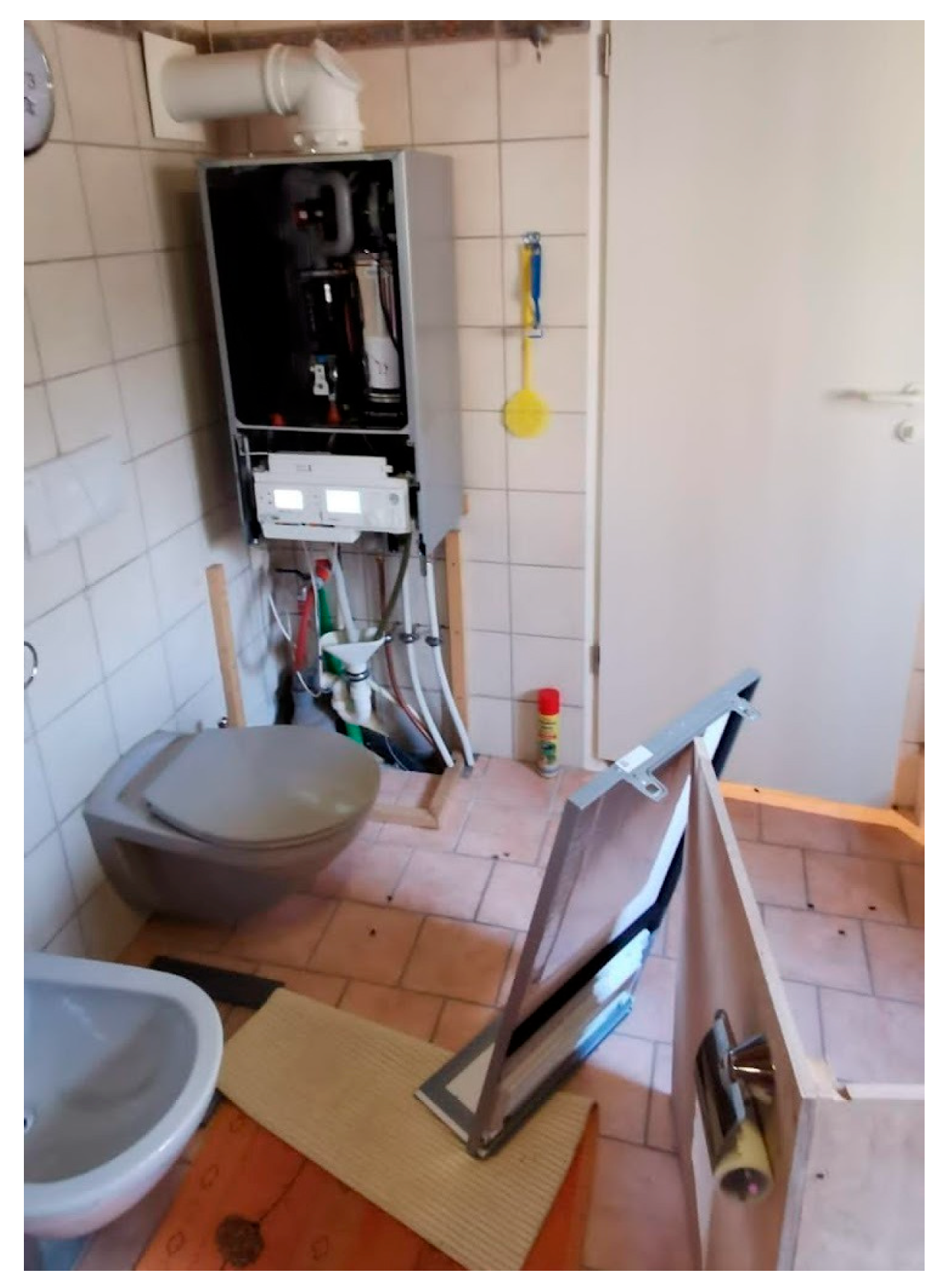
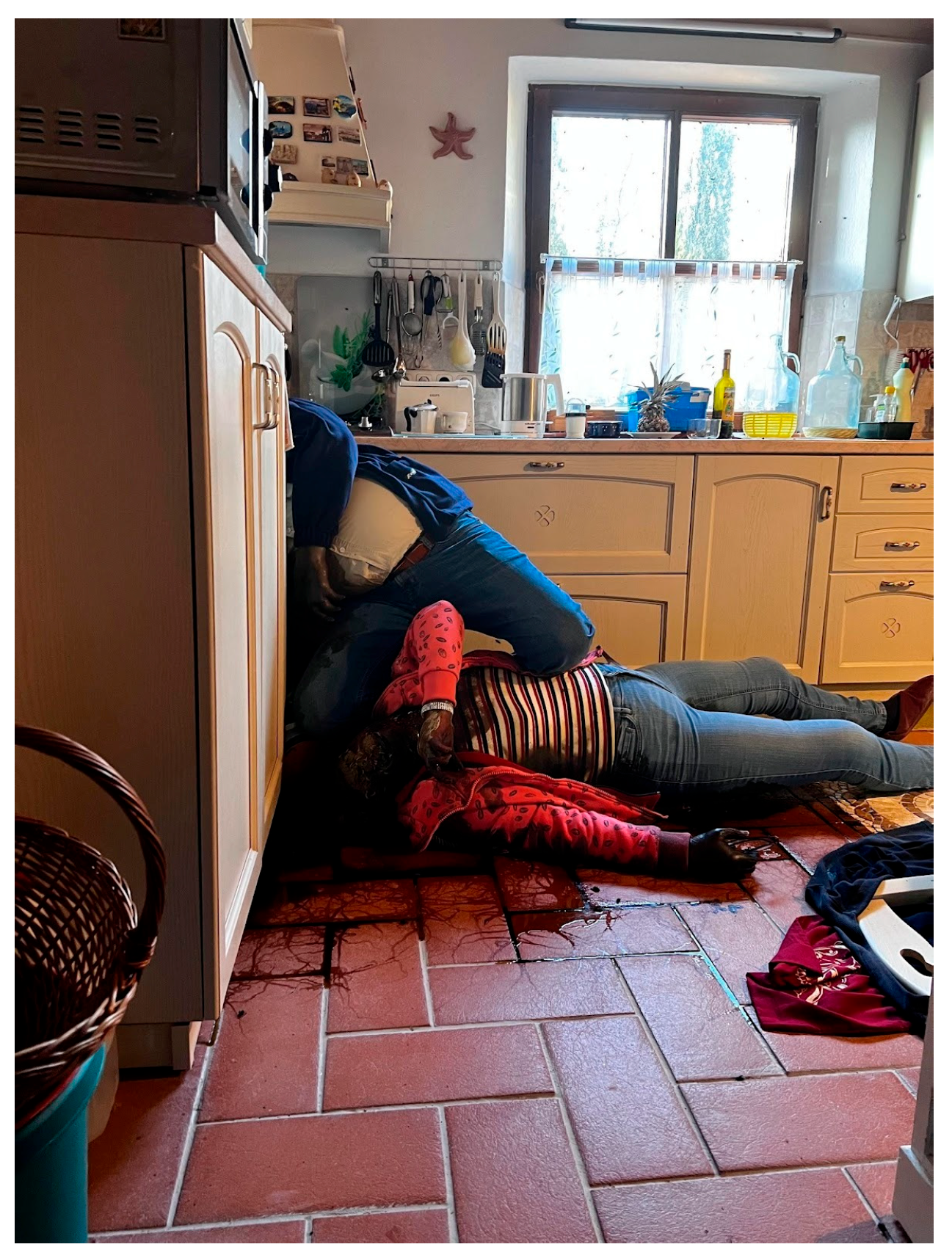
In winter 2023, two dead bodies—a 79-year-old husband and his 76-year-old wife—were found inside the kitchen of their rural house in central Italy. The alarm had been raised by their son, who had not heard them for approximately ten days. At the forensic pathologist’s on-site inspection, the bodies were found in an unusual position: the wife was lying supine on the floor, and the husband was half-sitting on top of her, with one knee on her chest (Figure 1). Both were in an advanced stage of decomposition (bloated/active decay) and colonized by Diptera larvae. Their clothes were intact but soiled with dried, dark brown-black fluid. The room temperature was 22 °C one meter above the ground and 25 °C at the floor level. The CO levels in the room were not available. The kitchen was tidy, and no notes suggestive of suicide were found. The kitchen was continuous with the bathroom, where a boiler was discovered with its front panel removed and resting on the floor (Figure 2). The boiler had two illuminated screens showing error and malfunction codes.

2.1. Radiological Findings

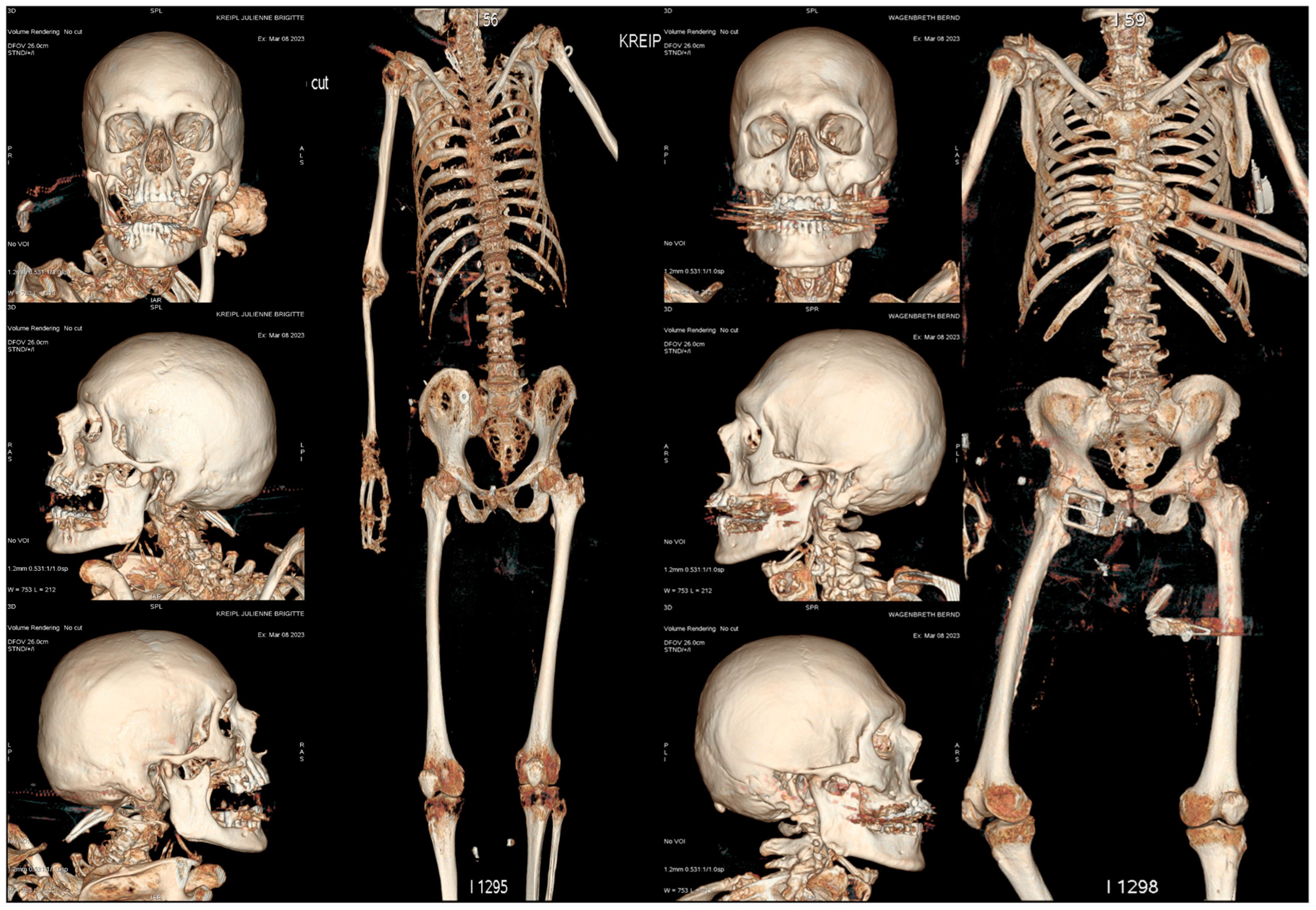
A post-mortem total body CT scan was performed on both cadavers, using an MSCT 64 B CT Discovery 750 HD system (GEMS) with the following technical parameters: helical scan type, 0.6–1.25 mm, interval 0.625–1, pitch 0.5–1 acquisitions, and a standard/bone reconstruction algorithm. The images obtained were processed using a dedicated post-processing workstation with MPR (multi-plane reformat) and 3D VR (volume rendering) reconstructions. Both exams showed extensive and diffuse putrefactive changes, characterized by gases collected in superficial and deep tissues and liquefactive changes in visceral organs [16,17,18]. No signs of trauma or foreign bodies were found (Figure 3).

2.2. Autopsy Findings

Both bodies were characterized by advanced putrefactive changes (bloated/active decay). External and internal examination rule out traumatic signs. Brains were liquefied, the female lungs were light in weight (L: 290 g R: 360 g) and colonized by larvae, while the male lungs were heavier (L: 383 g R: 650 g). The wife’s heart weighed 220 g, the thickness of the left ventricle was 1.4 cm, and the right coronary artery had an atherosclerotic plaque occluding the lumen by 30%. The husband’s heart weighed 405 g, the thickness of the left ventricle was 1.3 cm, while the septum was 2 cm. The anterior interventricular artery had a metallic stent and an atherosclerotic plaque occluding the lumen by 30%. The same plaques were also found in the circumflex artery and the right coronary artery, where they occluded the lumen by 20%.
Biological samples were collected for histological and toxicological analyses. Due to the advanced decomposition stage, central blood was found only in the husband’s body, while organ samples were collected from both individuals as the larvae for entomological analyses.

2.3. Histological Findings

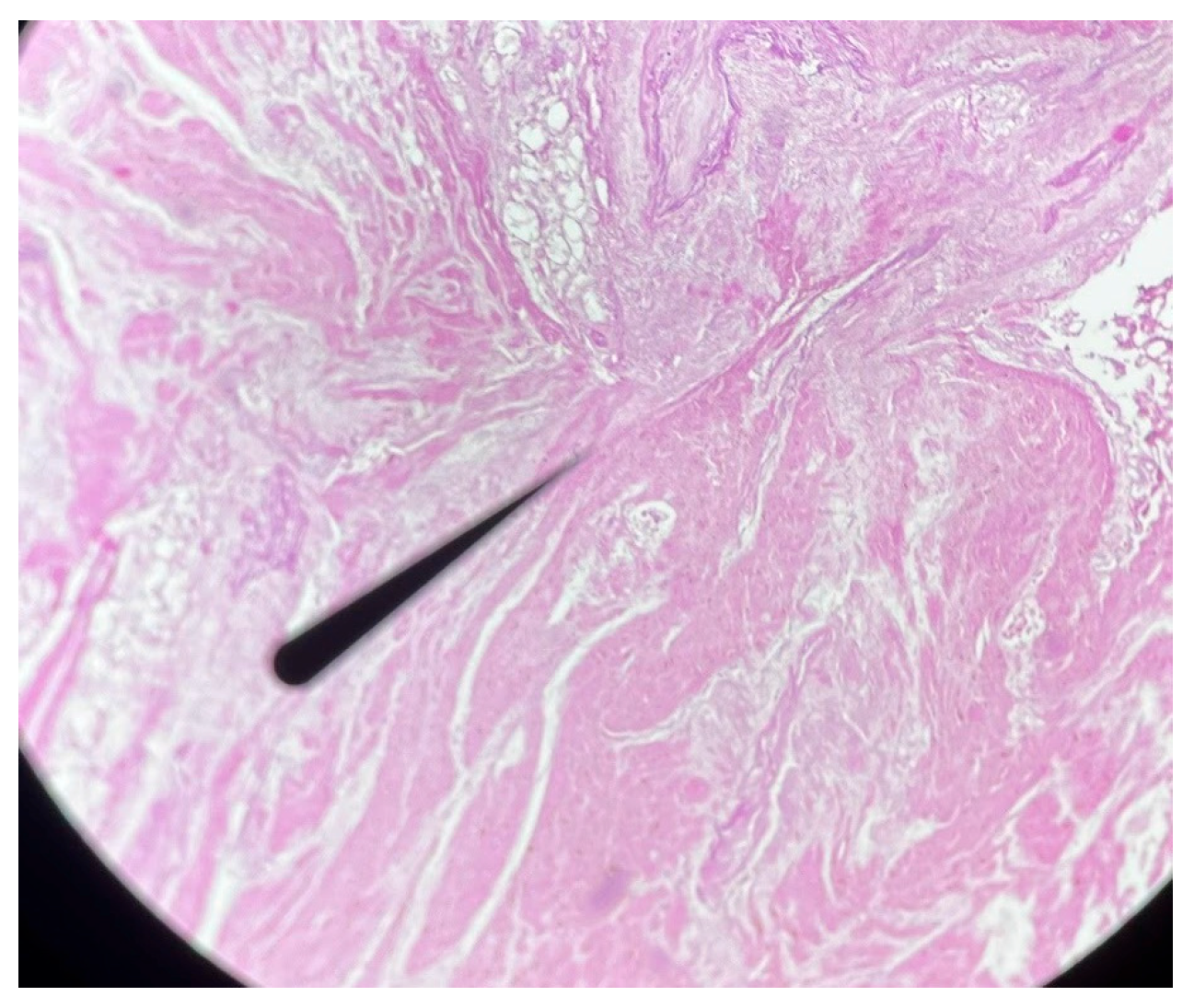
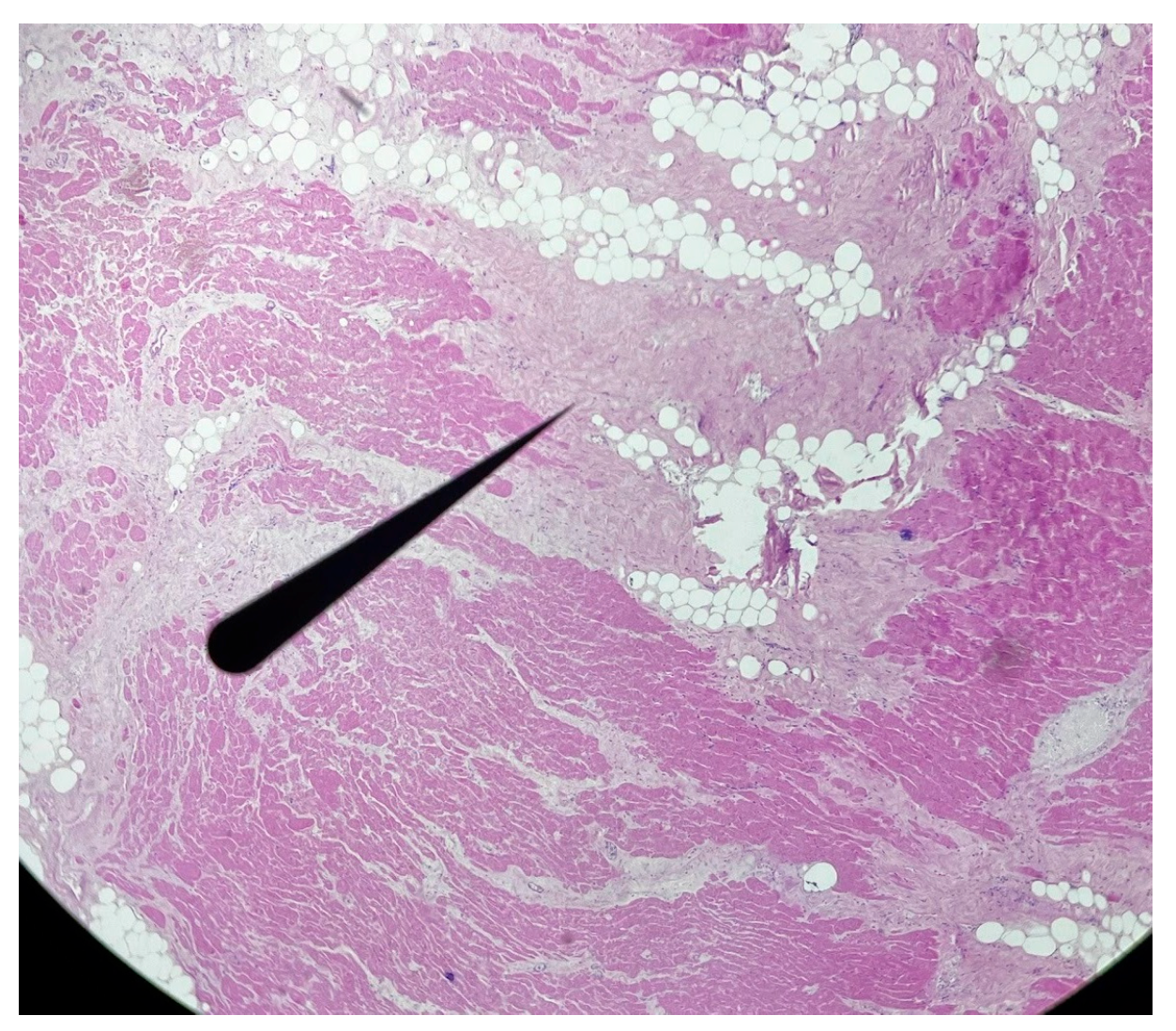
Histological examination—although hindered by putrefaction changes—confirmed the chronic myocardial damage (Figure 4), more marked in the male, who showed widespread areas of myocardial sclerosis (Figure 5).

2.4. Toxicological Analyses

Toxicological analyses made on liver and brain samples of both individuals with high-performance liquid chromatography coupled with high-resolution mass spectrometry (HPLC-HRMS) detected no drugs capable of explaining the deaths. However, the husband’s central blood, using a UV spectrophotometry, showed a carboxyhaemoglobin (COHb) concentration of 29.98%, expressed as the arithmetic mean of two different results (29.07% and 30.90%). The analysis should be repeated using the GC-O-FID technique on the spleen if this instrument is available in the laboratory.
To determine the COHb concentration, 0.2 mL of blood was diluted with 50 mL of a 10 mmol/L tris(hydroxymethyl)aminomethane (THAM) solution, and 100 mg of sodium hydrosulfite was added. Subsequently, 5 mL of this diluted blood were satured with gaseous carbon monoxide and further diluted with THAM to obtain six blood aliquots with increasing carboxyhemoglobin concentrations, which were used to construct the calibration curve. The absorbance difference between spectrophotometric readings at 530 nm and 584 nm was evaluated (Table 1).

2.5. Entomological Findings

Entomological analyses were performed on both cadavers. The only species identified was Calliphora vomitoria in the third stage of development. The entomological results, along with the TBS Total Body Score (TBS) [19] and Total Decomposition Score (TDS) [20], provided a minimum post-mortem interval (PMI) between six and thirteen days for the male cadaver and between six and fourteen days for the female body (Table 2).

2.6. Cause of Death

Therefore, after excluding traumatic deaths and drugs/alcohol intoxication, considering the malfunctioning boiler discovered in the bathroom during the on-site inspection and the COHb concentration of 29.98% in the husband’s blood, the cause of death for both was attributed to acute respiratory failure due to carbon monoxide poisoning in individuals with chronic artery disease, occurred approximately ten days before the discovery on the bodies.

3. Discussion

Forensic pathologists are often involved in establishing the cause of death in suspected CO poisoning deaths. CO is a colorless, tasteless, odorless, and non-irritating gas, also known as the “silent killer” [2]. It is mainly produced through the incomplete combustion of carbon-containing substances such as vehicle exhaust, smoke from fires, and improperly maintained heating systems [21].
CO is the leading cause of unintentional poisoning deaths in Western countries, causing 500 deaths/year in Italy and more than 1000 deaths/year in the US [22], and its leading pathophysiological mechanism resides in the ability of carbon monoxide to bind to hemoglobin molecules with a higher affinity (200–250 times greater) than oxygen, generating COHb.
The presence of COHb in the blood reduces oxygen delivery to tissues by inducing a leftward shift in the Hb-O2 dissociation curve, leading to tissue hypoxia [23,24] and increased vulnerability of organs with the highest oxygen demand, such as the brain and the heart. In addition, CO produces myocardial injuries with cardio-specific mechanisms, and patients with underlying cardiac disease, especially coronary heart disease, are at greater risk of infarction and arrhythmias [25,26].
Cardiac comorbidities account for most of the variability in CoHb levels, and exposure to levels of 15% COHb is sufficient to cause myocardial infarction and arrhythmias in individuals with at least moderate cardiovascular disease [25,27], and a concentration of 25–30% of COHb might become lethal in older patients with cardiovascular diseases [28].
Usually, in healthy subjects, normal COHb levels are <1%; they might be remarkably higher in smokers (10–15%), and more than 20% is found in seriously intoxicated patients. Levels above 30% are considered life-threatening without intervention, and greater than 50% is typically lethal (Table 3) [25,27].
Intoxicated patients commonly report weakness, headache, dizziness, nausea, vomiting, chest pain, or neurologic symptoms, but their severity does not always correlate with COHb levels [21]. Clinical manifestations range from mild, flu-like symptoms to stroke-like deficits, cardiovascular collapse, and death [24].
In these cases, autopsy findings are well described and known in fresh cadavers [28]. The classical “cherry-pink/red” color of the skin, especially in areas of postmortem hypostasis, is the most characteristic finding in CO poisoning deaths, and it is usually visible on blood, muscles, and organs too, especially when carboxyhaemoglobin level exceeds about 30 per cent in the blood [28]. Those findings are difficult to see in anemic and racially pigmented victims, where nailbeds, mucosae, and soles can be examined. Other findings are non-specific, even if pulmonary and brain edema are usually observed [28].
As most autopsy findings are non-specific for CO poisoning, the basic point of evaluation in forensic practice is the determination of COHb levels, usually carried out on blood samples, even if spleen, liver, muscles, and body cavity fluids can also be used.
In putrefied cadavers, it is even more difficult, because cherry pink/red color is not visible, and samples for the COHb saturation levels might be compromised. Indeed, the scientific literature is not unanimous regarding the detection of COHb in blood or cavitary fluids of bodies in an advanced stage of decomposition because they can contain low total hemoglobin levels, or a significant number of oily droplets, methaemoglobin (MetHb), and sulphaemoglobin (SHb) [29], all conditions which make COHb measurement unclear without a standardized process.
Post-mortem changes, such as thermocoagulation and putrefaction, are well known to be sources of error.
For example, Kojima et al. suggested that there is a post-mortem formation of CO in putrefied bodies due to the decomposition of Hb, myoglobin, and other proteins [13], and they also found that body cavity fluids should not be used for CO determination because levels may rise even in non-CO-related deaths [30].
Samples storage may also influence the CO and COHb levels, as experienced by Chace et al., where a blood sample has been left at ambient temperature for 45 h, and the COHb% decreased from 80% to 50% [31].
In the last forty years, toxicologists have tried a lot of different methods, such as UV-spectrophotometry, CO-oximeter, and gas chromatography (GC) on different samples (blood, body cavity fluids, and liver/spleen tissues).
Chau-Wing Lee et al. proposed a sample pre-treatment to make COHb levels suitable using CO-oximetry even in dead people [32].
Hao et al. made an interesting trial comparing the Head-Space Gas Chromatography–Mass Spectrometry (HS-GC/MS) with the UV method on different samples and different storage situations. They concluded that both time and temperature affect the determination of CO, with 4 °C being the most suitable temperature and HS-GC/MS being the most reliable method for COHb levels. Indeed, when the specimens were stored at room temperature, the COHb levels were reduced by about half: the original 70% COHb levels fell to 45.1%, making the UV method not fully clear, primarily in decomposed blood samples [32].
Although UV-spectrophotometry remains the most frequently used method in forensic cases, CO-oximetry and GC methods are also widely employed in this field [33].
All these methods have their own weaknesses [32], and toxicologists are trying to find new biomarkers and processes for CO and COHb levels on different samples [34].
From the literature’s analysis, there is no standardized method capable of ensuring, especially in putrefied cadavers, where the variables increase, a result free from considerations and uncertainties, ranging from the type of sample to its collection and preservation, and finally to its analysis. Moreover, the scientific literature reports only a few cases of putrefied cadavers with corresponding analyses of biological samples.
In the case shown, there were two bodies, both died at the same time—as demonstrated by the entomological analysis—and found in the same room. Blood was available only from the male body, which was less affected by the putrefactive processes and had worse cardiac comorbidity. The COHb% analysis, performed by UV spectrophotometry, revealed a value of 29.98%.
The review of the literature about putrefied body CO intoxication showed just three cases where the COHb% levels were available [35].
A. Sartori et al. report a twenty-year case series of CO poisoning from the Institute of Verona, in which only 3 out of the 24 examined cases were in a state of putrefaction. In these decomposed bodies, the analyses, made on blood samples was carried out with UV-Spectrophotometry through the Sakata method [36], revealed COHb levels of 25% and 32% in individuals with severe cardiac comorbidities (accident death) and a single case with COHb levels exceeding 50% (69%) in a putrefied subject who had died by suicide through exposure to a car exhaust gases. Further studies should be conducted to evaluate whether the spleen [37,38], even in an advanced stage of decomposition, may constitute a valuable biological material when GC-O-FID is applied.
The scarcity of reported cases makes the findings presented in this study even more interesting. First, it confirms that when blood is available, even in bodies in an advanced stage of decomposition, it can be considered sufficiently reliable for determining COHb levels and can serve as a basis for establishing the cause of death. This is particularly relevant in individuals with cardiovascular comorbidities, such as the cadaver in question, who suffered from three-vessel coronary artery disease with a metallic stent.
Moreover, we should ask why so few cases of carbon monoxide intoxication in putrefied bodies in the advanced stage of decomposition are reported in scientific literature. It is possible that when a single decomposed body is found, the carbon monoxide poisoning is not considered by forensic pathologists, and COHb analysis is not requested. Instead, the cause of death may be attributed to underlying cardiac pathology, particularly when the decedent is old.

4. Conclusions

Carbon monoxide intoxication, even if well-known and discussed in the scientific literature, remains a challenge for toxicologists and forensic pathologists, particularly when bodies are found in an advanced stage of decomposition. In such cases, post-mortem changes not only affect the autopsy findings but also compromise the biological samples used for toxicological analyses. Furthermore, the absence of a standardized and widely accepted method prevents the validation of a procedure that could establish the cause of death even when COHb levels do not exceed 50%.
For this reason, in the future, it is essential to advance forensic and toxicological research to identify the most appropriate specimens to collect during autopsy for subsequent analyses. Nonetheless, the integration of data from the medico-legal scene investigation with law enforcement inquiries remains essential to avoid attributing an incorrect cause of death in cases involving single decomposed bodies.

Author Contributions

Conceptualization, F.C. and V.B.; methodology, S.C.; validation, S.C.; formal analysis, V.B. and S.C.; data curation, V.B., F.C., and F.G.; writing—original draft preparation, F.G., F.C., and L.F.; writing—review and editing, L.F. and V.B.; visualization, L.F. and V.B.; supervision, V.B. All authors have read and agreed to the published version of the manuscript.

Funding

This research received no external funding.

Institutional Review Board Statement

This study was performed using data from human cadavers. This article does not contain any studies with (living) human participants or animals performed by any of the authors. The subjects involved in this study underwent a judicial autopsy in order to identify the cause of death. In Italy, forensic autopsies and related post-mortem investigations that are performed within the framework of a judicial proceeding (either upon prosecutorial order or under the authority of the judiciary) do not require approval by an Institutional Review Board (IRB) or Ethics Committee. Such procedures are conducted under the provisions of the Italian Code of Criminal Procedure (Articles 359–360, 116, 224 et seq.), which govern medico-legal examinations performed for judicial purposes. The case concerns two deceased subjects within a legal/forensic context. Prosecutors opened an investigation, and a judicial autopsy was ordered. Therefore, ethics committee approval was not required.

Informed Consent Statement

Not applicable. The data processing is covered by the general authorization to process personal data for scientific research purposes issued by the Italian Data Protection Authority (Garante per la Protezione dei Dati Personali), 1 March 2012, published in Italy’s Official Journal no. 72, 26 March 2012, and also GDPR nr 679/2016 and 9/2016 and recent law addition number 424/19 July 2018; http://www.garanteprivacy.it, (accessed on 15 November 2025). All case details have been fully anonymized and do not entail any significant personalized impact on the individual.

Data Availability Statement

All available data are within the manuscript.

Conflicts of Interest

The authors declare no conflicts of interest.

Abbreviations

The following abbreviations are used in this manuscript:
COCarbon monoxide
COHbCarboxyhemoglobin
CTComputed tomography
MPRMulti-plane reformat
TBSTotal body score
TDSTotal decomposition score
PMIPost-mortem interval
MetHbMethemoglobin
SHbSulfhemoglobin
GCGas chromatography
HS-GC/MSHead-Space Gas Chromatography–Mass Spectrometry

References

  1. Byard, R.W. The features and complexities of coincident deaths. Forensic Sci. Med. Pathol. 2016, 12, 1–3. [Google Scholar] [CrossRef][Green Version]
  2. Byard, R.W. Carbon monoxide-the silent killer. Forensic Sci. Med. Pathol. 2019, 15, 1–2. [Google Scholar] [CrossRef]
  3. Husna, T.; Neelagund, S.E.; Harsha Raj, G.; Kotresh, K.R.; Avinash, B.; Gowtham, M.D.; Sulochana, N. Double deaths due to domestic carbon monoxide poisoning correlated with medicolegal autopsy and laboratory studies. Biomedicine 2022, 42, 405–409. [Google Scholar] [CrossRef]
  4. Wollersen, H.; Erdmann, F.; Dettmeyer, R.B.; Hennemann, K.; Spencer, V. Three unusual cases of CO poisoning with each two victims. Toxichem Krimtech 2013, 80, 335. [Google Scholar]
  5. Sottmann, L.; Schmeling, A. Philemon and Baucis death: A literature review. Int. J. Leg. Med. 2024, 138, 1011–1021. [Google Scholar] [CrossRef]
  6. Tarozzi, I.; Gitto, L.; Borck, C.C.; Weyrauch, D. One house, two bodies: Investigating non-traumatic companion deaths and challenges in the “Philemon and Baucis” syndrome. J. Forensic Sci. 2025, 70, 2375–2380. [Google Scholar] [CrossRef]
  7. Riedel, M. Homicide–suicides in the united states: A review of the literature. Sociol. Compass 2010, 4, 430–441. [Google Scholar] [CrossRef]
  8. Serinelli, S.; Bonaccorso, L.; Furnari, C.; Gitto, L. Double suicide due to the ingestion of levamisole-adulterated cocaine: Case report and review of the literature. Acad. Forensic Pathol. 2022, 12, 23–30. [Google Scholar] [CrossRef]
  9. Ambade, V.N.; Keoliya, A.N.; Deokar, R.B.; Dixit, P.G. Decomposed bodies—Still an unrewarding autopsy? J. Forensic Leg. Med. 2011, 18, 101–106. [Google Scholar] [CrossRef]
  10. Collis, S.; Johnson, C.P. The decomposed cadaver. Diagn. Histopathol. 2019, 25, 431–435. [Google Scholar] [CrossRef]
  11. Dettmeyer, R.B. Histothanatology: Autolysis, putrefaction, and mummification. In Forensic Histopathology; Dettmeyer, R.B., Ed.; Springer International Publishing: Cham, Switzerland, 2018. [Google Scholar] [CrossRef]
  12. Stephenson, L.; Van Den Heuvel, C.; Scott, T.; Byard, R.W. Difficulties associated with the interpretation of postmortem toxicology. J. Anal. Toxicol. 2024, 48, 405–412. [Google Scholar] [CrossRef]
  13. Kojima, T.; Nishiyama, Y.; Yashiki, M.; Une, I. Postmortem formation of carbon monoxide. Forensic Sci. Int. 1982, 19, 243–248. [Google Scholar] [CrossRef]
  14. Piersanti, V.; Napoletano, G.; David, M.C.; Umani Ronchi, F.; Marinelli, E.; De Paola, L.; Zaami, S. Sudden death due to butane abuse-An overview. J. Forensic Leg. Med. 2024, 103, 102662. [Google Scholar] [CrossRef]
  15. Camatti, J.; Santunione, A.L.; Bolognini, M.; Cusack, D.; Zerbo, S.; Argo, A.; Puntarello, M.; Scalzo, G.; Paolo, F.; Bruscagin, T.; et al. Towards a standard of scientific evidence in on-site inspection: Compilation of the ECLM on-site inspection form in a broad case history. Leg. Med. 2025, 78, 102717. [Google Scholar] [CrossRef]
  16. Thali, M.J.; Yen, K.; Schweitzer, W.; Vock, P.; Boesch, C.; Ozdoba, C.; Schroth, G.; Ith, M.; Sonnenschein, M.; Doernhoefer, T.; et al. Virtopsy, a new imaging horizon in forensic pathology: Virtual autopsy by postmortem multislice computed tomography (MSCT) and magnetic resonance imaging (MRI)—A feasibility study. J. Forensic Sci. 2003, 48, 386–403. [Google Scholar] [CrossRef]
  17. Christe, A.; Flach, P.; Ross, S.; Spendlove, D.; Bolliger, S.; Vock, P.; Thali, M.J. Clinical radiology and postmortem imaging (Virtopsy) are not the same: Specific and unspecific postmortem signs. Leg. Med. 2010, 12, 215–222. [Google Scholar] [CrossRef]
  18. Zech, W.D.; Jackowski, C.; Buetikofer, Y.; Kara, L. Characterization and differentiation of body fluids, putrefaction fluid, and blood using Hounsfield unit in postmortem CT. Int. J. Leg. Med. 2014, 128, 795–802. [Google Scholar] [CrossRef]
  19. Megyesi, M.S.; Nawrocki, S.P.; Haskell, N.H. Using accumulated degree-days to estimate the postmortem interval from decomposed human remains. J. Forensic Sci. 2005, 50, 618–626. [Google Scholar] [CrossRef]
  20. Gelderman, H.T.; Boer, L.; Naujocks, T.; IJzermans, A.C.M.; Duijst, W.L.J.M. The development of a post-mortem interval estimation for human remains found on land in the Netherlands. Int. J. Leg. Med. 2018, 132, 863–873. [Google Scholar] [CrossRef]
  21. Kinoshita, H.; Türkan, H.; Vucinic, S.; Naqvi, S.; Bedair, R.; Rezaee, R.; Tsatsakis, A. Carbon monoxide poisoning. Toxicol. Rep. 2020, 7, 169–173. [Google Scholar] [CrossRef]
  22. Shin, M.; Bronstein, A.C.; Glidden, E.; Malone, M.; Chang, A.; Law, R.; Boehmer, T.K.; Strosnider, H.; Yip, F. Morbidity and Mortality of Unintentional Carbon Monoxide Poisoning: United States 2005 to 2018. Ann. Emerg. Med. 2023, 81, 309–317. [Google Scholar] [CrossRef]
  23. Raub, J.A.; Mathieu-Nolf, M.; Hampson, N.B.; Thom, S.R. Carbon monoxide poisoning—A public health perspective. Toxicology 2000, 145, 1–14. [Google Scholar] [CrossRef]
  24. McMahon, K.; Launico, M.V. Carbon Monoxide Toxicity. In StatPearls; StatPearls Publishing: Treasure Island, FL, USA, 2025. [Google Scholar]
  25. Lippi, G.; Rastelli, G.; Meschi, T.; Borghi, L.; Cervellin, G. Pathophysiology, clinics, diagnosis and treatment of heart involvement in carbon monoxide poisoning. Clin. Biochem. 2012, 45, 1278–1285. [Google Scholar] [CrossRef]
  26. Gandini, C.; Castoldi, A.F.; Candura, S.M.; Locatelli, C.; Butera, R.; Priori, S.; Manzo, L. Carbon monoxide cardiotoxicity. J. toxicol. Clin. Toxicol. 2001, 39, 35–44. [Google Scholar] [CrossRef]
  27. Conway, K.; Rayes, O.; Brown, T.; Webb, M. Atherosclerotic and Hypertensive Cardiovascular Disease are Associated with Death at Sublethal Carboxyhemoglobin Levels: A Postmortem Study. J. Forensic Sci. 2020, 65, 855–859. [Google Scholar] [CrossRef]
  28. Saukko, P.; Knight, B. Knight’s Forensic Pathology, 4th ed.; CRC Press: Boca Raton, FL, USA, 2015. [Google Scholar] [CrossRef]
  29. Lee, C.W.; Yim, L.K.; Chan, D.T.; Tam, J.C. Sample pre-treatment for CO-oximetric determination of carboxyhaemoglobin in putrefied blood and cavity fluid. Forensic Sci. Int. 2002, 126, 162–166. [Google Scholar] [CrossRef]
  30. Kojima, T.; Yashiki, M.; Okamoto, I.; Noda, J.; Une, I.; Miyazaki, T.; Chikasue, F. Postmortem formation of carbon monoxide in blood and body cavity fluids of rats drowned and kept immersed in fresh water. Hiroshima J. Med. Sci. 1984, 33, 591–594. [Google Scholar]
  31. Chace, D.H.; Goldbaum, L.R.; Lappas, N.T. Factors affecting the loss of carbon monoxide from stored blood samples. J. Anal. Toxicol. 1986, 10, 181–189. [Google Scholar] [CrossRef]
  32. Hao, H.; Zhou, H.; Zeng, L.; Yu, Z. Microanalysis of carbon monoxide in decomposed blood and hepatic tissues by headspace gas chromatography and mass spectrometry. J. Chem. Pharm. Res. 2014, 6, 1709–1715. [Google Scholar]
  33. Oliverio, S.; Varlet, V. What are the limitations of methods to measure carbon monoxide in biological samples? Forensic Toxicol. 2020, 38, 1–14. [Google Scholar] [CrossRef]
  34. Oliverio, S.; Ferger, M.C.; Yegles, M. Postmortem concentrations for total blood carbon monoxide (TBCO) as a novel biomarker for carbon monoxide (CO) poisonings. J. Anal. Toxicol. 2024, 48, 289–298. [Google Scholar] [CrossRef]
  35. Sartori, A.; Tiberio, M.; Gottardo, R.; Del Balzo, G.; Vermiglio, E.; Raniero, D.; De Leo, D. Carbon monoxide related deaths: A Verona case series. When cooperation becomes compulsory. Leg. Med. 2024, 67, 102375. [Google Scholar] [CrossRef]
  36. Sakata, M.; Yoshida, A.; Haga, M. Simple determination of carboxyhemoglobin by double wavelength spectrophotometry of absorbance difference and the comparison with gas chromatographic method. Forensic Sci. Int. 1983, 21, 187–195. [Google Scholar] [CrossRef]
  37. Lee, M.; Lee, D.; Jo, Y.H.; Kim, H.J.; Park, W. Advancing forensic accuracy: Mitigating methemoglobin interference in postmortem carbon monoxide analysis using sodium dithionite reduction. Sci. Rep. 2025, 15, 26564. [Google Scholar] [CrossRef] [PubMed]
  38. Vreman, H.J.; Wong, R.J.; Stevenson, D.K.; Smialek, J.E.; Fowler, D.R.; Li, L.; Vigorito, R.D.; Zielke, H.R. Concentration of Carbon Monoxide (CO) in Postmortem Human Tissues: Effect of Environmental CO Exposure. J. Forensic Sci. 2006, 51, 1182–1190. [Google Scholar] [CrossRef]
Figure 1. On-site inspection.
Forensicsci 06 00005 g001
Figure 2. Malfunctioning boiler.
Forensicsci 06 00005 g002
Figure 3. No traumatic signs at post-mortem CT. (Left): male; (Right): female.
Forensicsci 06 00005 g003
Figure 4. Chronic myocardial damage.
Forensicsci 06 00005 g004
Figure 5. Myocardial sclerosis.
Forensicsci 06 00005 g005
Table 1. HbCO levels in husband’s central blood.
SampleConc. [%]Conc. (Lower)Conc. (Upper)
Std 100%95.9893.9698.11
Central blood29.9829.0630.90
Table 2. Entomological identification and developmental stage.
Order: FamilySpeciesDevelopmental StageTube Nr.
Diptera: CalliphoridaeCalliphora vomitoriaLarvae IIIA1
Larvae I–IIIA2
Larvae I–IIB1
Table 3. Carbon monoxide toxicity and carboxyhemoglobin levels.
COHb Level (%)Clinical Symptoms
<1Normal level, no symptoms
<10/15Smokers, no symptoms
15–30Headache, dizziness, nausea, vomiting
30–50Neurological-cardiological symptoms, life-threatening
>50Coma, cardiopulmonary depression, death
Disclaimer/Publisher’s Note: The statements, opinions and data contained in all publications are solely those of the individual author(s) and contributor(s) and not of MDPI and/or the editor(s). MDPI and/or the editor(s) disclaim responsibility for any injury to people or property resulting from any ideas, methods, instructions or products referred to in the content.