
Case Report

Natural or Violent Death? Deceptive Crime Scene in a Case of Ruptured Varicose Vein
by
Gennaro Baldino
1,*,
Pietro Tarzia
2,
Gabriele Rotter
1,
Simona Calabrese
1,
Marija Čaplinskienė
3 and
Elvira Ventura Spagnolo
1
1
Department of Biomedical and Dental Sciences and Morphofunctional Imaging, University of Messina, Via Consolare Valeria, 1, 98125 Messina, Italy
2
Section Legal Medicine, University of Catanzaro, 88100 Catanzaro, Italy
3
State Forensic Science, Mykolas Romeris University, LT-08303 Vilnius, Lithuania
*
Author to whom correspondence should be addressed.
Forensic Sci. 2025, 5(4), 70; https://doi.org/10.3390/forensicsci5040070 (registering DOI)
Submission received: 14 October 2025 / Revised: 10 November 2025 / Accepted: 17 November 2025 / Published: 1 December 2025

Abstract

Background: Fatal hemorrhage from ruptured varicose veins is a rare event that may mimic violent death given the quantity and distribution of blood at the scene. Accurate determination of cause and manner of death requires careful scene investigation, autopsy, histology, and ancillary methods such as bloodstain pattern analysis (BPA). Case presentation: We describe an 80-year-old woman found deceased at home, with evidence of extensive bloodstaining, no significant external trauma except a small laceration over a varicosity, and ultimately a ruptured branch of the small saphenous vein. The cause of death was hemorrhagic shock due to spontaneous varicose vein rupture. Discussion: This case reinforces the importance of integrating death scene findings (including shoe prints, bloodstain distribution), anatomical dissection, histology, and toxicology to exclude non-natural causes. We also review recent similar cases in the literature, noting risk factors, presentation, and common pitfalls. Conclusions: Forensic investigations of massive bleeding in elderly, isolated individuals should include varicose vein rupture in the differential. A multidisciplinary approach is essential to avoid misclassification of manner of death.

1. Introduction

Varicose veins are a common chronic venous disorder distributed worldwide, typically benign but occasionally leading to life-threatening complications due to their ulceration and bleeding. They result from venous valvular incompetence and structural weakness of the vein wall, leading to venous hypertension, dilation, and tortuosity of the superficial venous system [1]. Although spontaneous varicose vein rupture resulting in fatal hemorrhage is a rare event, such episodes have been reported and may represent a diagnostic challenge in forensic pathology due to their resemblance to violent or traumatic deaths [2,3]. Literature reviews estimate that less than 1 in 1000 autopsy cases involve fatal varicose vein rupture [2].
They are a widespread condition, recognized since ancient times and observed across all populations. Chronic venous disease is more prevalent in women and increases with age, with contributing factors including prolonged standing, obesity, pregnancy, and hereditary predisposition [4,5]. Commonly associated symptoms are leg heaviness, fatigue, cramping, swelling, and nocturnal restlessness. From a pathophysiological standpoint, varicose vein formation involves both genetic and acquired mechanisms that compromise vein wall integrity and valvular function. Recent research emphasizes the role of chronic inflammation, extracellular matrix degradation, endothelial dysfunction, and altered smooth muscle tone in venous wall remodeling, all of which may predispose to ulceration and spontaneous rupture [6,7,8]. While most bleeding episodes from varicose veins are self-limiting, spontaneous rupture—particularly in elderly or debilitated patients, or in those with thin, atrophic skin, chronic ulcers, or receiving anticoagulant therapy—can cause massive external hemorrhage and hypovolemic shock [9,10,11]. In forensic settings, such deaths may initially raise suspicion of homicide or suicide, particularly when the scene exhibits extensive blood loss and dramatic bloodstain patterns [4,12,13]. Therefore, careful integration of bloodstain pattern analysis (BPA), circumstantial data, and autopsy findings is essential to differentiate natural hemorrhagic death from violent causes and to reconstruct the sequence of events accurately [14]. The present study aims to contribute to the limited forensic literature on deaths due to spontaneous varicose vein rupture. We highlight that, although this mechanism of death is infrequent, it represents a possible natural cause of fatal hemorrhage. Through comprehensive evaluation of the scene, BPA, circumstantial evidence, and autopsy results, it is possible to reconstruct the dynamics of death and avoid diagnostic errors in forensic practice.

2. Case Report

An 80-year-old woman living alone was found dead in her home. She was unclothed, only wearing a pair of blue slippers with white rubber soles, which were smeared with blood. Her body was found collapsed on a chair, with her head tilted slightly backward, mouth open, upper limbs hanging loosely by her sides, and lower limbs extended with her feet resting on the floor. A large pool of blood was present beneath her (Figure 1)
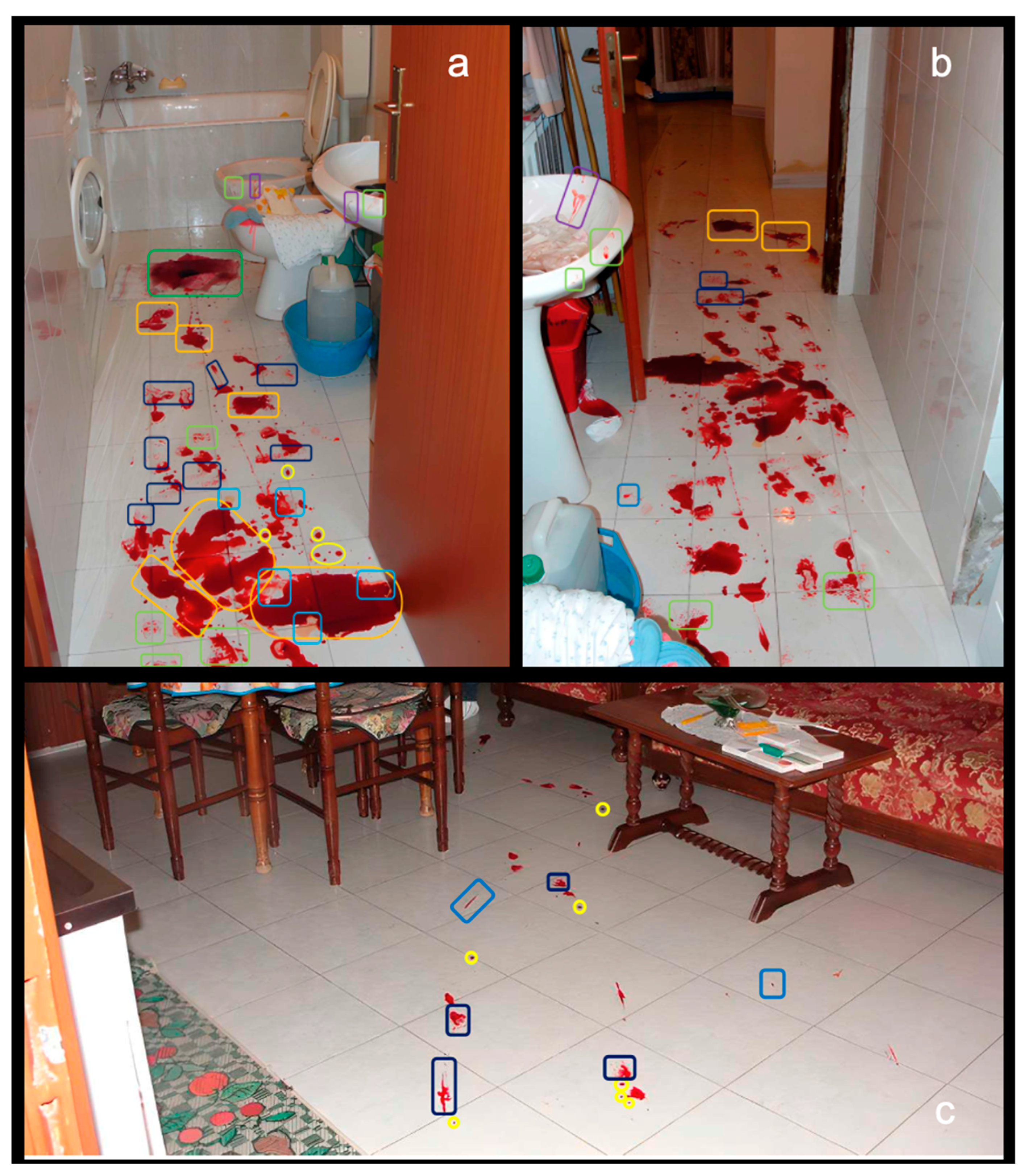
The crime scene showed multiple bloodstains of varying sizes scattered across several rooms, including the corridors and bathroom, along with some shoe prints. Bloodstain pattern analysis (BPA) revealed a heterogeneous distribution of stains in each examined area. In the case presented, the scene of death did not reveal any distribution of bloodstains in the form of arcs, splashes or distinctive waves on the surrounding surfaces (particularly vertical ones, such as walls) typical of arterial splashes. Instead, the scene was dominated by: extensive pools and saturation stains on the floor, indicating a large, passive accumulation of blood from a low-pressure source; flow patterns resulting from the movement of this large volume of blood due to gravity; drip stains and transfer stains (such as the bloody shoe prints), which are consistent with movement through the already-accumulated blood. Medications, including antihypertensive, antidepressants and antiplatelet agent were found in the living room. The entrance door was found open, initially raising suspicion of a homicide. From the circumstantial evidence, it was revealed that the woman, who had suffered a fracture of her right femur a few years earlier, had high blood pressure, mood disorders and vascular disease. To clarify the circumstances of death, a judicial autopsy was conducted (Figure 2).
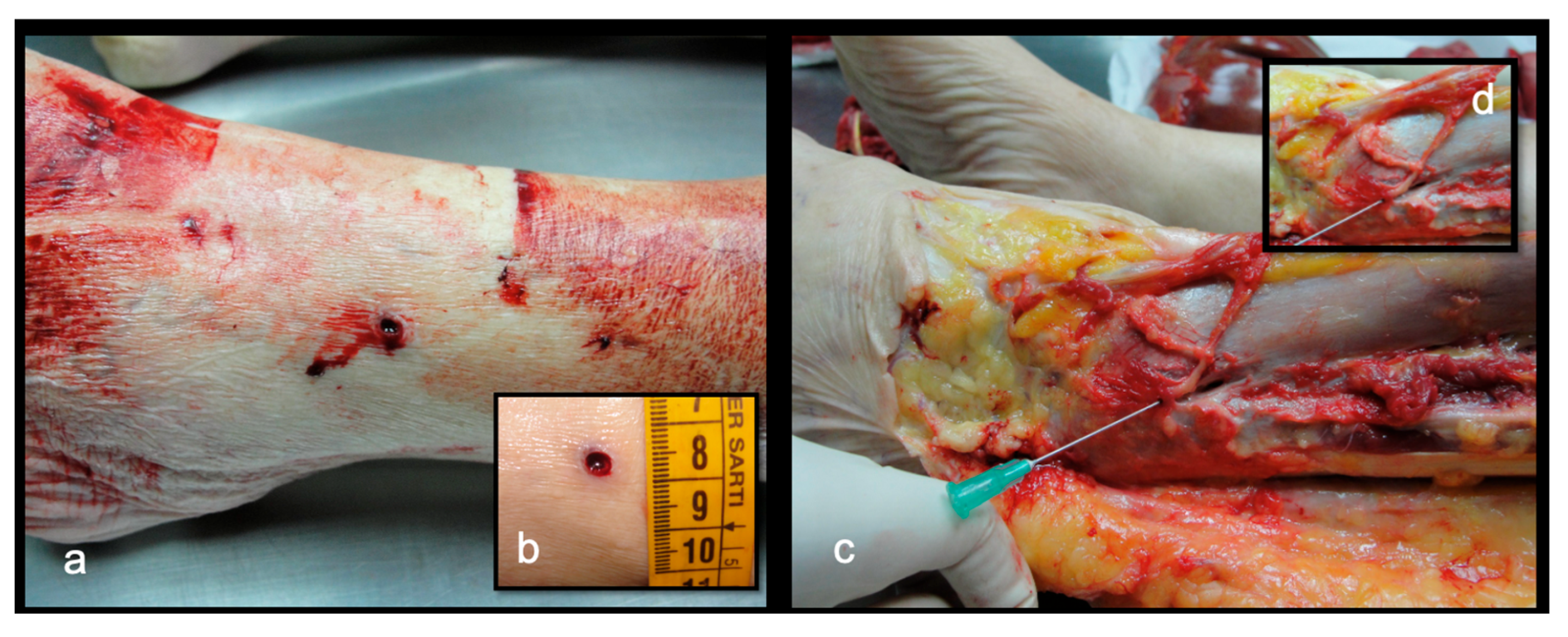
External examination showed slight hypostasis of light coloring on the posterior surface of the body; the lower limbs show no evident signs of chronic venous disease or skin discoloration, no evidence of active or passive defense injuries and absence of traumatic injury, except for a small, rounded laceration on the lateral malleolus of the left foot, measuring approximately 0.5 cm in diameter and a few millimeters deep, involving the skin and subcutaneous tissue (Figure 3a). A stepwise anatomical dissection was carried out. Examination of the dorsum of the foot and malleolar region revealed the dorsal metatarsal veins, dorsal venous arch, lateral marginal vein, small saphenous vein, and the dorsal cutaneous nerve of the lateral vein. A partial laceration of a lateral branch of the small saphenous vein was identified (Figure 3b). A tissue sample from the lesion site was also collected.
Internal examination revealed, in particular, pallor of the organs but no evidence of recent myocardial infarction or other significant disease; the aorta has small, widespread yellowish sub-intimal plaques on its inner surface and small aneurysm of the ascending aorta. Spleen of normal shape, reduced in volume, with wrinkled capsule. The toxicological examination of the blood sample ruled out the presence of alcohol and narcotics. The concentration of the antiplatelet drug (acetylsalicylic acid—cardioaspirin) was determined using an LC-MS/MS analytical method. The therapeutic concentration range considered for acetylsalicylic acid was 10–30 µg/mL. All analyses were conducted following standard quality control procedures and in accordance with international guidelines for the validation of analytical methods in forensic toxicology. Histological analyses, with haematoxylin-eosine, showed obstructive fibromuscular dysplasia of the small intramural coronary vessels, multifocal lymphocytic epicarditis with lymphatic follicle formation in the left ventricle, and fibro-lipomatous infiltration of the right ventricle with myocyte hypertrophy. The coronary arteries showed eccentric fibrotic thickening that narrowed the lumen. The autopsy procedures, supported by histological and toxicological analyses, excluded alternative causes of death. The fatal outcome was ultimately attributed to hemorrhagic shock secondary to rupture of a varicose vein, a natural pathological event. BPA data characterized absence of high-velocity, rhythmic arterial patterns, combined with the presence of massive low-pressure pooling, allowed us to confidently exclude a major arterial injury. This finding strongly supported the conclusion that the hemorrhage originated from a venous source, which was subsequently confirmed at autopsy as the ruptured branch of the small saphenous vein. The bloodstain distribution was therefore entirely consistent with a massive, passive, and fatal hemorrhage from a venous origin.

3. Discussion

Fatal rupture of varicose veins most often occurs in elderly individuals who live alone and lack immediate assistance once bleeding begins. Attempts at self-management are frequently ineffective, for example applying proximal bandages or remaining upright can increase venous return and worsen the hemorrhage. Bleeding may arise from rupture of an intact varix, sometimes following minor trauma, from chronic venous ulceration eroding into a superficial vein, or from more substantial trauma causing laceration of the skin and soft tissue overlying a varicosity. In older adults, the fragility of skin and connective tissues further predisposes them to significant injury from relatively minor trauma [2,15]. It is a common condition affecting up to 40% of the population [16] and is more likely to be associated with female sex, older age, obesity, and prolonged standing activity [17]. Rupture of a varicose vein can occur spontaneously or be due to minor trauma. A predisposing factor is the location of varices over a bump, particularly in the lower leg and malleolar region, as in the present case [18].
Severe or fatal hemorrhage resulting from ruptured varicose veins is an exceptionally rare occurrence, documented mainly in clinical and forensic investigations. Autopsy studies estimate its incidence at roughly 0.01% of all examined deaths. Although cases often involve individuals with coexisting cardiovascular conditions such as coronary artery disease, this reflects shared demographic and health risk factors—particularly advanced age and vascular fragility—rather than a direct causal association between varicose vein rupture and coronary artery disease [2,15,19]. In fact, these are not generally considered life-threatening conditions per se. Because this event is rare, fatal hemorrhagic deaths due to varicose vein rupture can confuse forensic pathologists in determining the cause of death. At first glance, a fatal hemorrhage with massive blood loss may appear to be an unnatural death due to a crime [20,21]. Cases of fatal hemorrhage due to ruptured varicose veins recorded in the literature closely resemble “suspicious crime scenes” with possible traumatic causes [21,22,23,24]. As in this case, large amounts of blood observed at the scene by first responders can be misinterpreted and distract from the true cause of death [10,25,26,27].
In the presented case, death was attributed to hemorrhagic shock due to fatal hemorrhage from a ruptured varicose vein in the malleolar region. Body inspection revealed no significant skin changes, so the lesion was recognized as acute perforating type. Data collection during death scene investigation and external examination did not rule out the possibility that the vein rupture occurred due to minor accidental trauma, especially considering the location of the ulcer. However, no ecchymosis was found in the subcutaneous or connective tissue below the skin lesion. Therefore, spontaneous rupture is the most plausible, and major blunt trauma is in our opinion highly unlikely.
The recovery position of the corpse, as shown by the GAP (Geometric Analysis of Position) data, probably stimulated even more bleeding. It is also worth considering that fatal hemorrhage victims are often elderly people living alone, where social isolation makes first aid unavailable, as in our case [28].
Our case furtherly supports of rigorous multidisciplinary approach, that a death scene investigation involving a ruptured varicose vein can be mistaken for homicide or suicide due to the presence of large amounts of blood.
Although autopsy findings, accompanied by histological and immunohistochemical analyses, are often sufficient to establish the type of injury and cause of death, determining the manner of death—whether homicide, suicide, or accident—frequently requires integration with information from other disciplines. The judicial inspection and scene investigation represent the initial step in the discovery of a body. Since this examination is performed only once, close collaboration between the forensic pathologist and law enforcement is essential to ensure proper collection of evidence, samples, and information necessary for accurate case reconstruction [29,30]. External examination and autopsy should be complemented by radiological investigations (such as conventional radiography, post-mortem CT, or micro-CT), which offer valuable virtual imaging to identify or rule out traumatic injuries in anatomical regions that are not routinely examined during autopsy [31].
This requires the integration of findings from bloodstain pattern analysis (BPA) conducted at the recovery scene with circumstantial evidence, autopsy results, and other complementary examinations [2,11,12,13,14,15,16,17,18,19,20,21,22,23,24,25,26,27,28,29,30,31,32,33]. BPA often demonstrates large, pooled stains (typically 13–22 cm in diameter). This pattern arises because venous blood is expelled at much lower pressure than arterial blood, causing it to accumulate until the force of gravity exceeds surface tension, leading to the formation of spherical droplets that create circular stains upon impact with the floor [34,35].
Autopsy assessment should include meticulous, layer-by-layer dissection of the hemorrhagic area in order to identify the ruptured varicose vein and to guide targeted histological sampling of any associated ulcerative lesions responsible for the bleeding. Examination of the subcutaneous tissue may reveal features consistent with advanced chronic venous insufficiency (CVI), such as dermal fibrosis and hemosiderin deposition.
Correlating these data sources not only strengthens the reconstruction of the sequence of events but also enhances the accuracy in determining both the cause and manner of death. Such an approach ensures that no single line of evidence is interpreted in isolation, thereby reducing the risk of misclassification and increasing the reliability of forensic conclusions.

Author Contributions

Conceptualization, G.B. and E.V.S.; methodology, G.B.; formal analysis, and G.B. and S.C.; investigation, E.V.S., G.R. and P.T.; writing—original draft preparation, G.B. and S.C.; writing—review and editing, G.B. and E.V.S.; supervision, M.Č. and E.V.S. All authors have read and agreed to the published version of the manuscript.

Funding

Research did not receive any specific grant from funding agencies in the public, commercial, or not-for-profit sectors.

Institutional Review Board Statement

Not applicable, since this is a postmortem case report. Anyhow, the data of the case were provided respecting the privacy law and the anonymity of the subjects (Italian Law art. 110 D.Lgs. 196/2003 and Presidential Decree 285/1990, Chapter VI, Articles 40–43). The autopsy was ordered in accordance with Article 116 of the Code of Criminal Procedure.

Informed Consent Statement

All procedures were in accordance with the 1964 Helsinki declaration and its later amendments or comparable ethical standards. Patient consent was waived due to it is not necessary for an anonymized case report of a forensic autopsy in the author’s country; the patient’s consent was revoked due to the impossibility of obtaining it from the deceased and of locating his living relatives, given that the case occurred a long time ago. In compliance with Italian privacy laws D.Lgs 196/2023 and D.Lgs 101/2018 (integration of European rego-182 laments 2016/679).

Data Availability Statement

All the data are reported in the paper.

Conflicts of Interest

The authors declare no conflicts of interest.

References

  1. Teiteilbaum, G.P.; Davis, P.S. Spontaneous rupture of a lower extremity varix: Case report. Cardiovasc. Interv. Radiol. 1989, 12, 101–102. [Google Scholar] [CrossRef]
  2. Byard, R.W.; Gilbert, J.D. The incidence and characteristic features of fatal hemorrhage due to ruptured varicose veins: A 10-year autopsy study. Am. J. Forensic Med. Pathol. 2007, 28, 299–302. [Google Scholar] [CrossRef]
  3. Cittadini, F.; Albertacci, G.; Pascali, V.L. Unattended fatal hemorrhage caused by spontaneous rupture of a varicose vein. Am. J. Forensic Med. Pathol. 2008, 29, 92. [Google Scholar] [CrossRef]
  4. Gentile, G.; Tambuzzi, S.; Boracchi, M.; Gobbo, A.D.; Bailo, P.; Zoia, R. Fatal hemorrhage from peripheral varicose vein rupture. Autops. Case Rep. 2021, 11, e2021330, Erratum in Autops. Case Rep. 2022, 12, e2021367. https://doi.org/10.4322/acr.2021.367. [Google Scholar] [CrossRef]
  5. Takamatsu, J.; Nakajima, H.; Nakata, M.; Fukuhara, A.; Kang, J.; Yasue, Y. Near—Fatal bleeding due to ruptured peripheral varicose vein that developed after previous orthopedic surgery: A case report. Clin. Case Rep. 2023, 11, e8139. [Google Scholar] [CrossRef] [PubMed]
  6. Pfisterer, L.; König, G.; Hecker, M.; Korff, T. Pathogenesis of varicose veins—Lessons from biomechanics. VASA Z. Gefasskrankh. 2014, 43, 88–99. [Google Scholar] [CrossRef] [PubMed]
  7. Sansilvestri-Morel, P.; Fioretti, F.; Rupin, A.; Senni, K.; Fabiani, J.N.; Godeau, G.; Verbeuren, T.J. Comparison of extracellular matrix in skin and saphenous veins from patients with varicose veins: Does the skin reflect venous matrix changes? Clin. Sci. 2007, 112, 229–239. [Google Scholar] [CrossRef] [PubMed]
  8. Lim, C.S.; Davies, A.H. Pathogenesis of primary varicose veins. Br. J. Surg. 2009, 96, 1231–1242. [Google Scholar] [CrossRef]
  9. Cocker, D.M.; Nyamekye, I.K. Fatal haemorrhage from varicose veins: Is the correct advice being given? J. R. Soc. Med. 2008, 101, 515–516. [Google Scholar] [CrossRef]
  10. Doberentz, E.; Hagemeier, L.; Veit, C.; Madea, B. Unattended fatal haemorrhage due to spontaneous peripheral varicose vein rupture—Two case reports. Forensic Sci. Int. 2011, 206, e12–e16. [Google Scholar] [CrossRef]
  11. Sauvageau, A.; Schellenberg, M.; Racette, S.; Julien, F. Bloodstain pattern analysis in a case of fatal varicose vein rupture. Am. J. Forensic Med. Pathol. 2007, 28, 35–37. [Google Scholar] [CrossRef] [PubMed]
  12. Fragkouli, K.; Mitselou, A.; Boumba, V.A.; Siozios, G.; Vougiouklakis, G.T.; Vougiouklakis, T. Unusual death due to a bleeding from a varicose vein: A case report. BMC Res. Notes 2012, 5, 488. [Google Scholar] [CrossRef] [PubMed]
  13. Handlos, P.; Handlosová, K.; Klabal, O.; Uvíra, M. A rare suicide case involving fatal bleeding from varicose veins. J. Forensic Sci. 2021, 66, 2020–2023. [Google Scholar] [CrossRef] [PubMed]
  14. Saukko, P.; Knight, B. Knight’s Forensic Pathology, 4th ed.; CRC Press: Boca Raton, FL, USA, 2016. [Google Scholar]
  15. Serra, R.; Ielapi, N.; Bevacqua, E.; Rizzuto, A.; De Caridi, G.; Massara, M.; Casella, F.; Di Mizio, G.; de Franciscis, S. Haemorrhage from varicose veins and varicose ulceration: A systematic review. Int. Wound J. 2018, 15, 829–833. [Google Scholar] [CrossRef]
  16. Beebe-Dimmer, J.L.; Pfeifer, J.R.; Engle, J.S.; Schottenfeld, D. The epidemiology of chronic venous insufficiency and varicose veins. Ann. Epidemiol. 2005, 15, 175–184. [Google Scholar] [CrossRef]
  17. Salim, S.; Machin, M.; Patterson, B.O.; Onida, S.; Davies, A.H. Global epidemiology of chronic venous disease: A systematic review with pooled prevalence analysis. Ann. Surg. 2021, 274, 971–976. [Google Scholar] [CrossRef]
  18. Chung, J.H.; Heo, S. Varicose veins and the diagnosis of chronic venous disease in the lower extremities. J. Chest Surg. 2024, 57, 109–119. [Google Scholar] [CrossRef]
  19. Serinelli, S.; Bonaccorso, L.; Gitto, L. Fatal bleeding caused by a ruptured varicose vein. Med. Leg. J. 2020, 88, 41–44. [Google Scholar] [CrossRef]
  20. Aquila, I.; Sacco, M.A.; Gratteri, S.; Di Nunzio, C.; Ricci, P. Sudden death by rupture of a varicose vein: Case report and review of literature. Med. Leg. J. 2017, 85, 47–50. [Google Scholar] [CrossRef]
  21. Ampanozi, G.; Preiss, U.; Hatch, G.M.; Zech, W.D.; Ketterer, T.; Bolliger, S.; Thali, M.J.; Ruder, T.D. Fatal lower extremity varicose vein rupture. Leg. Med. 2011, 13, 87–90. [Google Scholar] [CrossRef]
  22. Fassina, G.; Rigato, S.; Fassan, M.; Rotter, G.; Sanavio, M.; Cecchetto, G.; Viel, G. A case of lethal varicose vein rupture caused by massive leiomyoma. Forensic Sci. Int. 2021, 328, 111039. [Google Scholar] [CrossRef] [PubMed]
  23. Manetti, A.C.; Baronti, A.; Bosetti, C.; Costantino, A.; Di Paolo, M.; Turillazzi, E.; Maiese, A. Bleeding varicose veins’ ulcer as a cause of death: A case report and review of the current literature. Clin. Ter. 2021, 172, 395–406. [Google Scholar] [CrossRef] [PubMed]
  24. Mileva, B.; Tsranchev, I.; Angelov, M.; Brainova, I.; Georgieva, M.; Peev, K.; Alexsandrov, A.; Jelev, L.; Goshev, M. Homicide or a Sudden Death? Rupture of Varicose Veins—Case Report. Rom. J. Leg. Med. 2023, 31, 20–22. [Google Scholar] [CrossRef]
  25. Wigle, R.L.; Anderson, G.V., Jr. Exsanguinating hemorrhage from peripheral varicosities. Ann. Emerg. Med. 1988, 17, 80–82. [Google Scholar] [CrossRef]
  26. Shimada, Y. A case of life-threatening hemorrhagic shock due to spontaneous rupture of a leg varicose vein. J. Rural. Med. 2012, 7, 73–74. [Google Scholar] [CrossRef]
  27. Gilbert, J.D.; Byard, R.W. Ruptured varicose veins and fatal hemorrhage. Forensic Sci. Med. Pathol. 2018, 14, 244–247. [Google Scholar] [CrossRef]
  28. Hejna, P. A case of fatal spontaneous varicose vein rupture—An example of incorrect first aid. J. Forensic Sci. 2009, 54, 1146–1148. [Google Scholar] [CrossRef]
  29. Cecchi, R.; Cusack, D.; Ludes, B.; Madea, B.; Vieira, D.N.; Keller, E.; Payne-James, J.; Sajantila, A.; Vali, M.; Gherardi, M.; et al. European Council of Legal Medicine (ECLM) on-site inspection forms for forensic pathology, anthropology, odontology, genetics, entomology and toxicology for forensic and medico-legal scene and corpse investigation: The Parma form. Int. J. Leg. Med. 2022, 136, 1037–1049. [Google Scholar] [CrossRef]
  30. Camatti, J.; Santunione, A.L.; Bolognini, M.; Cusack, D.; Zerbo, S.; Argo, A.; Puntarello, M.; Scalzo, G.; Paolo, F.; Bruscagin, T.; et al. Towards a standard of scientific evidence in on-site inspection: Compilation of the ECLM on-site inspection form in a broad case history. Leg. Med. 2025, 78, 102717. [Google Scholar]
  31. Stassi, C.; Mondello, C.; Baldino, G.; Cardia, L.; Gualniera, P.; Calapai, F.; Sapienza, D.; Asmundo, A.; Ventura Spagnolo, E. State of the art on the role of postmortem computed tomography angiography and magnetic resonance imaging in the diagnosis of cardiac causes of death: A narrative review. Tomography 2022, 8, 961–973. [Google Scholar] [CrossRef]
  32. Baldino, G.; Mondello, C.; Sapienza, D.; Stassi, C.; Asmundo, A.; Gualniera, P.; Vanin, S.; Ventura Spagnolo, E. Multidisciplinary Forensic Approach in “Complex” Bodies: Systematic Review and Procedural Proposal. Diagnostics 2023, 13, 310. [Google Scholar] [CrossRef]
  33. Rotter, G.; Raffino, C.; Burrascano, G.; Ventura Spagnolo, E.; Baldino, G.; Asmundo, A. The Role of Bloodstain Pattern Analysis (BPA) in Reconstructing the Dynamics of Forensic Cases. Clin. Ter. 2024, 175 (Suppl. S2), 125–129. [Google Scholar] [CrossRef]
  34. Nikolic, S.; Zivkovic, V. Bloodstain pattern in the form of gushing in a case of fatal exsanguination due to ruptured varicose vein. Med. Sci. Law 2011, 51, 61–62. [Google Scholar] [CrossRef]
  35. Harding, B.E.; Sullivan, L.M.; Adams, S.; Middleberg, R.A.; Wolf, B.C. Multidisciplinary investigation of an unusual apparent homicide/suicide. Am. J. Forensic Med. Pathol. 2011, 32, 208–212. [Google Scholar] [CrossRef]
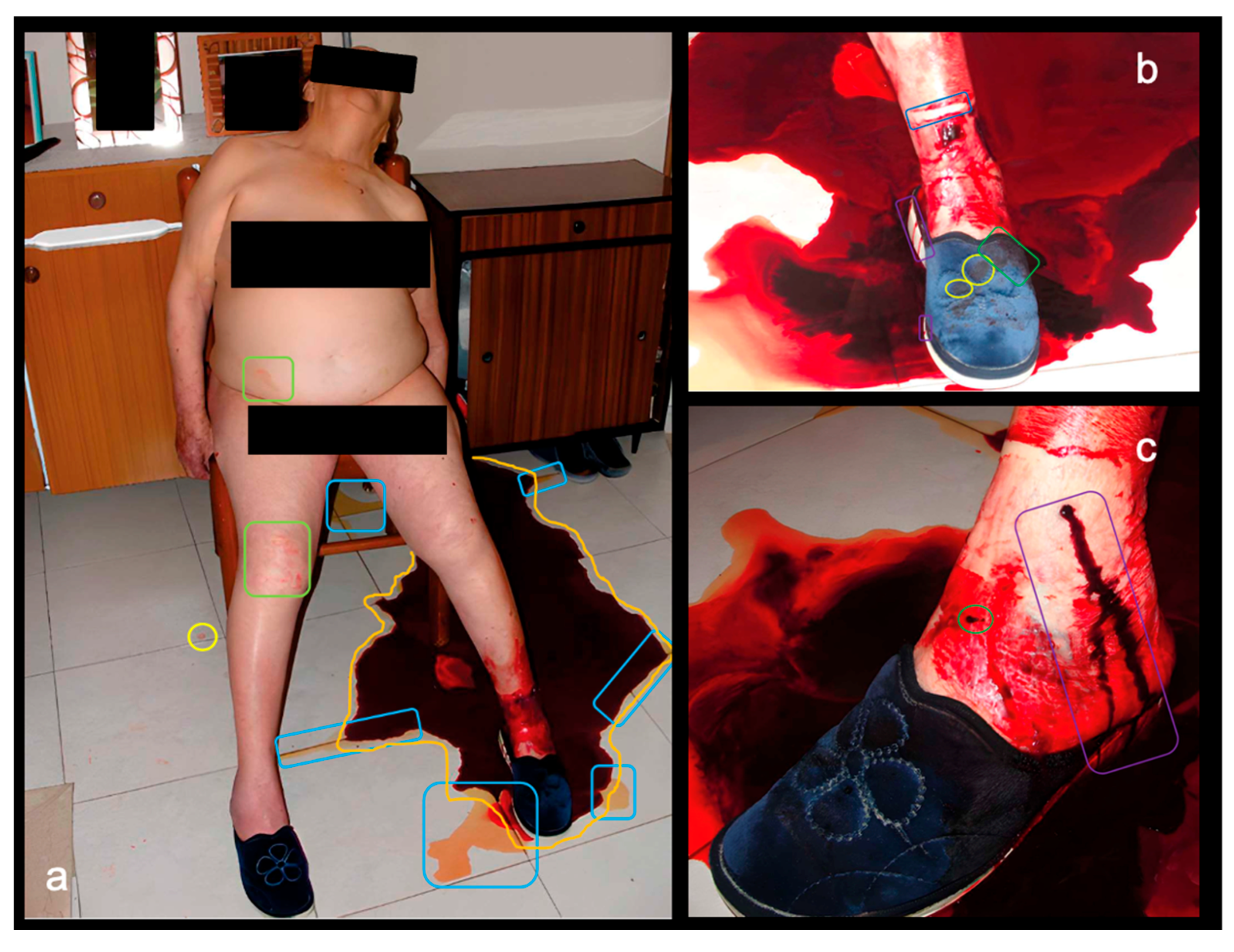
Figure 1. Position of the body at the place of discovery, found sitting in a chair surrounded by a large pool of blood (a). Detail of left slipper (b). Detail of the ankle (c). Orange panel (pool): A bloodstain resulting from an accumulation of liquid blood on the floor. Light blue panel: the stain resulting from the liquid portion of blood (serum). Green panel (transfer stain): a bloodstain resulting from contact. Yellow panel (drip stain): a bloodstain resulting from a falling drop that formed due to gravity. Purple panel (flow): a bloodstain resulting from the movement of a volume of blood on a surface due to gravity or movement of the target. Green panel (saturation stain): A bloodstain resulting from the accumulation of liquid blood in an absorbent material.
Forensicsci 05 00070 g001
Figure 2. The crime scene: small and large bloodstains on the floor of bathroom (a); view of the corridor passageway, from the bathroom (b); living room with blood pool and bloody footprints (c). Green panel (saturation stain). Orange panel (pool). Blue panel (Altered stain): A bloodstain with characteristics that indicate a physical change has occurred. Yellow panel (deep stain). Panel green (transfer stain). Light blue panel (serum). Panel orange (pool). Purple panel (flow)—Turquoise panel (directionality): The characteristic of a bloodstain that indicates the direction blood was moving at the time of deposition.
Forensicsci 05 00070 g002
Figure 3. Small perforation (5 mm) of a varicosity left lower leg (a,b). Superficial layer dissection (c). A needle has been inserted into the ruptured varix after dissection (d).
Forensicsci 05 00070 g003
Disclaimer/Publisher’s Note: The statements, opinions and data contained in all publications are solely those of the individual author(s) and contributor(s) and not of MDPI and/or the editor(s). MDPI and/or the editor(s) disclaim responsibility for any injury to people or property resulting from any ideas, methods, instructions or products referred to in the content.