


Abstract
The genus Lygodactylus includes a highly diverse and morphologically cryptic radiation of African dwarf geckos. Within the poorly known L. angularis group, the taxonomic distinction between L. heeneni and L. paurospilus has long been uncertain and controversial. Using newly available material from multiple localities of these taxa, combined with morphological and mitochondrial (16S rRNA) data, this study reveals that both taxa form a single, well-supported genetic lineage. Genetic divergence values between these taxa fall below the 6% interspecific threshold noted in previous studies for Lygodactylus, and previously proposed diagnostic morphological traits completely overlap with each other. These findings indicate that L. paurospilus represents a junior synonym of L. heeneni, which is now recognized as a widespread and morphologically variable species inhabiting diverse environments in southeastern Democratic Republic of the Congo and northern Zambia. This study highlights the importance of integrative approaches for resolving species boundaries in cryptic reptile groups.
1. Introduction
The genus Lygodactylus represents one of the most species-rich radiations of lizards on the African continent and because of the cryptic morphology and intricate biogeographic patterns of its taxa, the genus includes some taxonomically complex groups [1,2]. However, knowledge about the diversity, diversification, and evolution of this genus is not evenly distributed across regions and phylogenetic groups. Madagascar and the Indian Ocean islands, the Eastern Arc Mountains of East Africa, and the South African radiation have experienced a rapid increase in knowledge regarding Lygodactylus taxonomic diversity, phylogenetic relationships, and evolutionary histories over the past decade [3,4,5,6,7,8,9]. Nevertheless, several species groups remain poorly resolved and require further investigation [10,11,12].
The Afro-American radiation [Clade C in 1] represents one of the groups in which both the actual diversity and the evolutionary processes driving diversification are relatively poorly known. This radiation comprises four major groups: the L. angularis group, occurring along the southern and eastern rim of the Congo Basin; the L. fischeri group from West Africa and proximate Atlantic islands; the L. picturatus/gutturalis group, broadly distributed across sub-Saharan Africa; and the L. klugei group, representing the American lineage of the genus. Although the L. picturatus/gutturalis and L. klugei groups have received partial phylogenetic attention [10,11], the L. angularis and L. fischeri groups remain largely unstudied. This gap in knowledge stems from the continued scarcity of available specimens and fresh tissue samples from poorly sampled areas of Africa [12], which has hindered molecular analyses. The problem is exacerbated by the morphological complexity of this genus of dwarf geckos [11,12,13].
The Lygodactylus angularis group comprises five recognized taxonomic units: L. angularis angularis Günther, 1893; L. a. grzimeki Bannikov & Darevsky, 1969; L. baptistai Marques, Ceríaco, Buehler, Bandeira, Janota & Bauer, 2020; L. heeneni de Witte, 1933; and L. paurospilus (Laurent, 1952) [11,13,14]). All of these species are characterized by a distinct “V-shaped” gular pattern (entire or fragmented) and an undivided mental scale [15,16]. The group is widely distributed south and east of the Congo Basin, occurring in Democratic Republic of the Congo (DRC), northern Zambia, and Malawi, with scattered records along the southern margins of the Eastern Arc Mountains in Kenya and Tanzania, with the exception of one species, L. baptistai, which is endemic to Serra da Neve, an inselberg in western Angola [17]. Among the members of this group, the taxonomic status of L. a. grzimeki and L. paurospilus remain controversial and require molecular confirmation.
Lygodactylus paurospilus was originally described from two specimens (one male and one female) from Haute Lubitshako (1900–2000 m a.s.l.), in the Kabobo Plateau, Tanganyika Province, DRC, as a subspecies of L. angularis [18]. The exceptionally brief description was based on minor morphological differences between L. angularis and L. heeneni, including a gular pattern consisting of fragmented “V-shaped” chevrons resulting in spots or irregular lines in L. a. paurospilus vs. entire “V-shaped” chevrons in L. angularis, and seven precloacal pores in L. a. paurospilus compared to ten in L. heeneni. Pasteur [19] argued that L. paurospilus cannot be morphologically distinguished from L. heeneni because of the variation in the number of precloacal pores (6–9) found in the material reported by de Witte [20], and he consequently regarded L. paurospilus as a junior synonym of the latter taxon. Nevertheless, this taxonomic action was ignored by most authors [21,22,23].
To provide taxonomic stability, Lobón-Rovira et al. [11] examined the type series of L. paurospilus and L. heeneni, and identified two putatively diagnostic characters between the taxa, including the number of supralabials and the presence/absence of vertebral ocelli in the dorsal pattern. Moreover, L. heeneni was described from Kapiri, in Upemba National Park, DRC, an area predominantly characterized by Miombo woodland savannah [24], whereas L. paurospilus is only known from the type locality, where the habitat consists of montane forest, shrubland, and grassland [25]. Given the considerable geographic separation between these regions, both recognized as important centers of reptile endemism [26,27,28], Lobón-Rovira et al. recognized L. paurospilus and L. heeneni as distinct species, but they cautioned that genetic data were not available and “these morphological differences may, however, overlap when larger series of L. a. paurospilus are analyzed” [11].
Recent surveys conducted in two key regions of DRC, Itombwe Nature Reserve (~170 km north of the Kabobo Plateau, the type locality of L. paurospilus) and Pepa, Marungu Plateau (~500 km south of the type locality, in Haut-Katanga Province), have resulted in the discovery of new material within the Lygodactylus angularis group. Preliminary morphological assessments indicate that these specimens can be assigned to either L. heeneni or L. paurospilus, and are therefore of particular importance for resolving the taxonomic status of this complex group. The newly collected material thus provides an opportunity to examine the taxonomic relationships of these putative species and to propose a new phylogenetic hypothesis for the group.
2. Materials and Methods
2.1. Sampling
In addition to type specimens of L. paurospilus examined by JLR and shown in Lobón-Rovira et al. [11], the following new material from the University of Texas at El Paso Biodiversity Collections (UTEP) was examined for this study. Lygodactylus heeneni: UTEP 22997–23006 (field nos. EBG 2982–91) collected inside a house at Pepa, Marungu Plateau, Tanganyika Province, DRC (S07.70938, E29.78100, 2030 m a.s.l.) on 3 January 2010 by Chifudera Kusamba, Wandege M. Muninga, Mwenebatu M. Aristote, and Eli Greenbaum. Lygodactylus paurospilus: UTEP 22996 (field no. DFH 4790) collected from a tree at the edge of secondary montane forest at Kilumbi, Itombwe Plateau, South Kivu Province, DRC (S03.43221, E28.57624, 2020 m a.s.l.) on 16 June 2015 by Mwenebatu M. Aristote.
2.2. Molecular Methods
To provide a phylogenetic framework for the newly collected material, we constructed a Maximum Likelihood (ML) tree based on the mitochondrial 16S rRNA gene (32 sequences; 544 bp). The dataset included sequences from the newly collected DRC material from the Itombwe and Marungu plateaus (UTEP 22996 [GenBank Accession Number: PX724200] and UTEP 22997 [GenBank Accession Number: PX724201], respectively), previously unpublished sequences of L. baptistai from Angola (JLRZC0230, P4.274, P4.284–85 [GenBank Accession Numbers: PX724196–99]), and available genetic data for the Lygodactylus angularis and L. klugei groups from GenBank (Accession Numbers: HQ872460, MZ770786, MZ770799, MN276251). The L. fischeri group was used as the outgroup because it represents the most closely related lineage [1]. We extracted DNA using a standard salt-extraction protocol [29] or the Qiagen DNeasy tissue kit (Qiagen Inc., Valencia, CA, USA). Primers used in this study for the 16S gene were: L2510 and R1478 [30] or 16L9 and 16H13 [31]. Maximum Likelihood inference was performed in IQ-TREE v3.0 [32] using a random starting tree and the Ultrafast Bootstrap approximation (UFBoot; [33]) with 1000 bootstrap replicates. Bootstrap support values (BS) ≥ 95% were considered strongly supported. Uncorrected pairwise sequence divergences (p-distances) for 16S sequences were calculated in MEGA v10.1.7 [34].
2.3. Morphological Characters
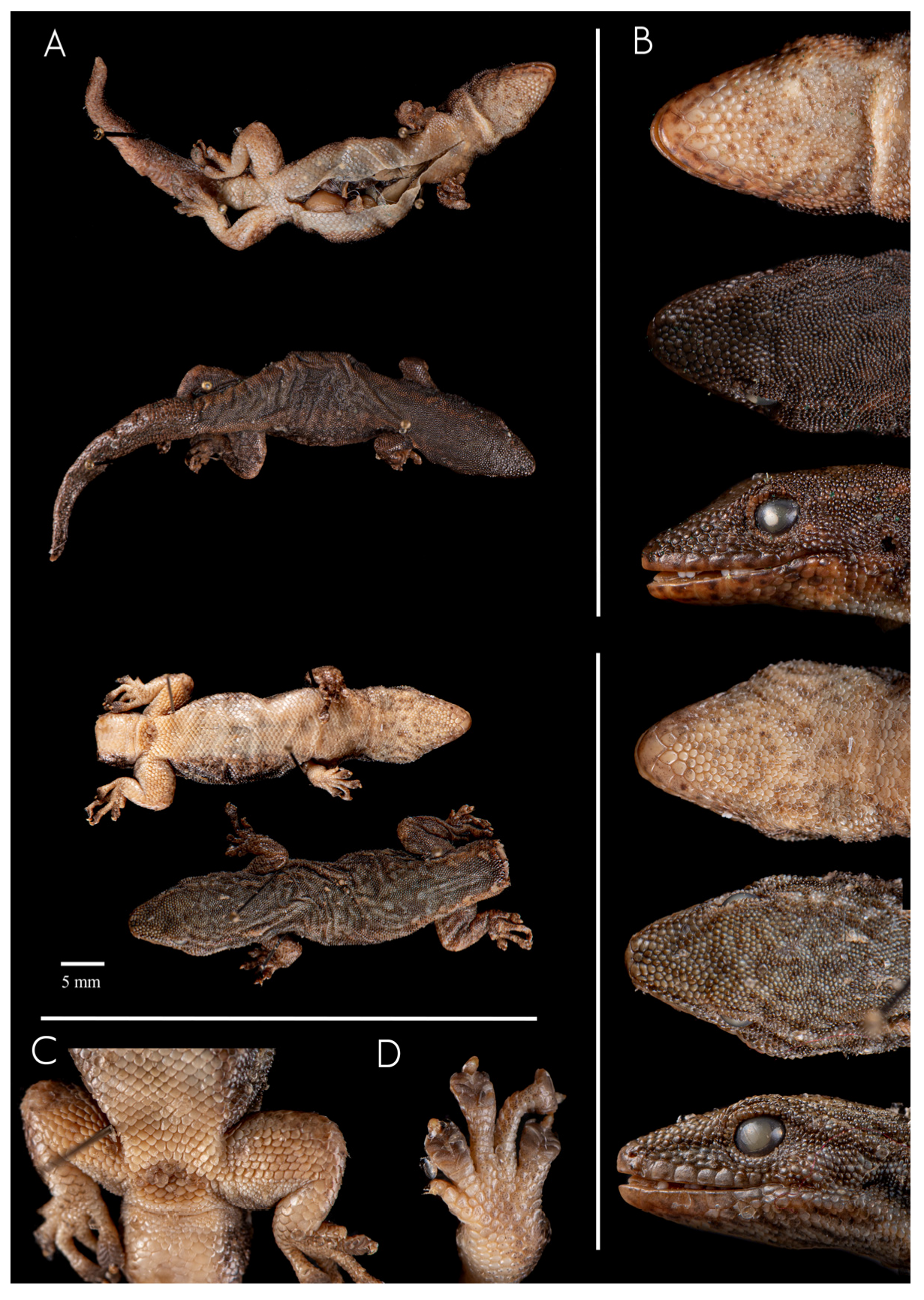
To test the taxonomic status of Lygodactylus paurospilus, we examined morphological variation in the type series of both taxa (i.e., L. heeneni [holotype and two paratypes] and L. paurospilus [holotype and paratype]; Figure 1 and Figure 2). These were compared with available genetically identified material and newly collected specimens from the Itombwe Plateau (one specimen) and the Marungu Plateau (ten specimens) in DRC and historical material deposited at the Royal Museum of Central Africa (RMCA, Belgium), the Royal Belgian Institute of Natural Sciences (RBINS, Belgium), and Port Elizabeth Museum (PEM, South Africa). We also examined photographic material of live specimens from Fungurume, Lualaba Province, DRC, ca. 34 km north of Kapiri, Lualaba Province, DRC (the type locality of L. heeneni). We focused on the morphological characters used in the original species descriptions by Laurent [18] and those identified by Lobón-Rovira et al. [11], including the number of precloacal pores and supralabials, and dorsal pattern variation.
Figure 1.
Holotype of L. heeneni [RMCA (= MRAC) R.8477] from Kapiri, Lualaba Province, DRC. (A) Ventral and dorsal view of body. (B) Details of head in dorsal, ventral, and lateral views (from top to bottom). (C) Details of cloacal region. (D) Details of right manus. Figure reproduced from Lobón-Rovira et al. [11].
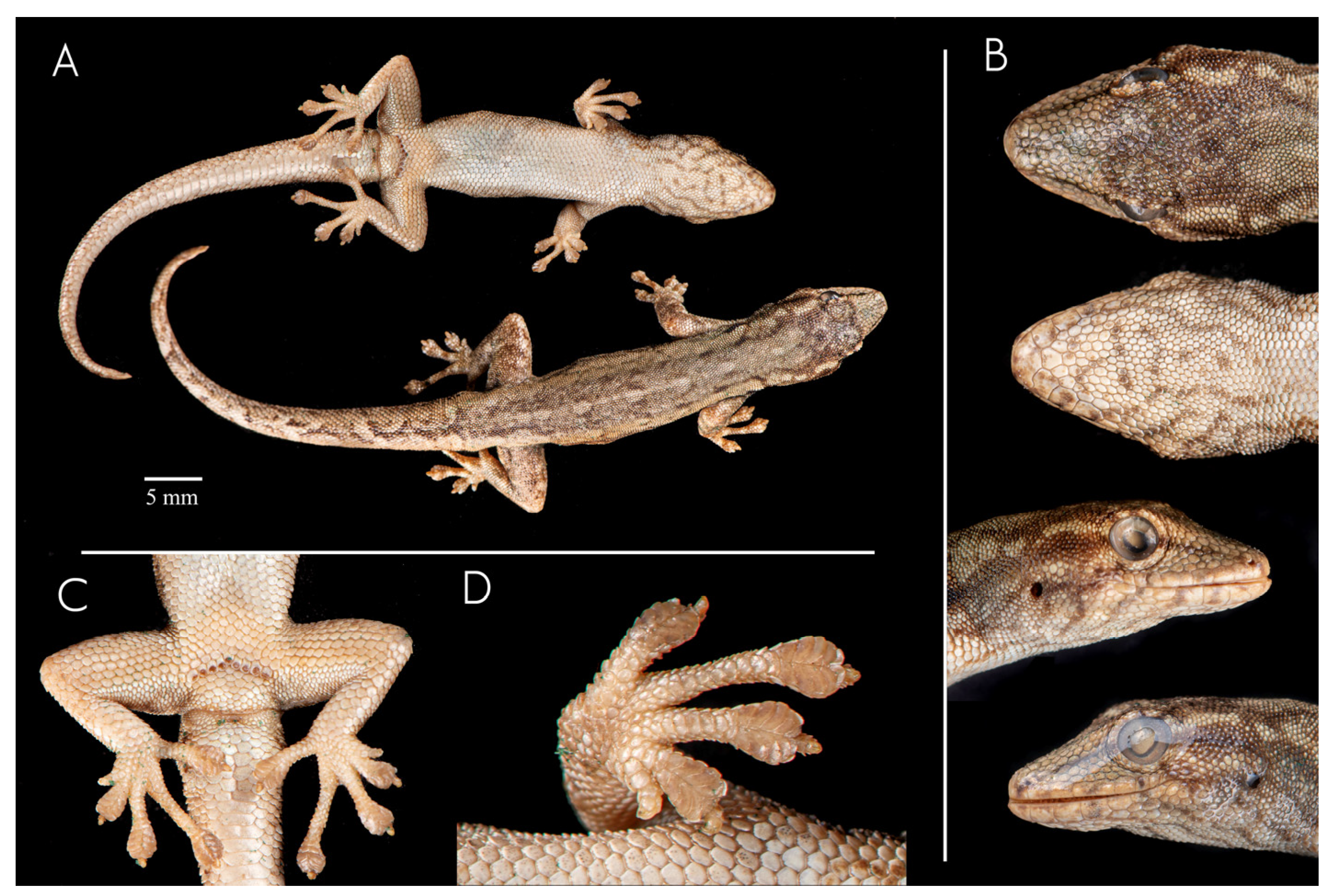
Figure 2.
Holotype ([RMCA (=MRAC) R.27408], above) and paratype ([RMCA (=MRAC) R.27409], below) of L. paurospilus from Haute Lubitshako, South Kivu Province, DRC. (A) Ventral and dorsal views of bodies. (B) Details of heads in ventral, dorsal, and lateral views (from top to bottom). (C) Details of cloacal region. (D) Right manus of the paratype. Figure adapted from Lobón-Rovira et al. [11].
2.4. Geographic Distribution
In order to provide a geographic revision framework for members of the L. angularis group, a total of 139 records were compiled (Table S1), including material from the VertNet [35] and GBIF [36] repositories, as well as unpublished material from RMCA, RBINS, and PEM. Doubtful records were checked and filtered to ensure the most accurate distribution of the species, which were then plotted using QGIS v3.34 [37].
3. Results
The maximum likelihood tree inferred from the 16S rRNA gene fragment (Figure 3) identified three deeply divergent, well-supported lineages in the Lygodactylus angularis group, including L. angularis, L. heeneni, and L. baptistai. Uncorrected pairwise distances between these three mitochondrial lineages were relatively high and ranged from 11.3–13.6% (Table 1). It is noteworthy that the L. paurospilus sample from Itombwe clusters together with the L. heeneni samples from the Marungu Plateau and Zambia (Figure 3 and Figure 4). The 16S uncorrected pairwise genetic distances among the L. heeneni and L. paurospilus samples from these localities range from 4.0–6.4% (Table 1), with the highest divergence observed between the most geographically distant samples from Itombwe and Ikelenge. Nevertheless, the mean uncorrected pairwise distance among these samples (5.1%) remains below the 6% interspecific threshold proposed for this gene in Lygodactylus [1,11].
Table 1.
Uncorrected pairwise distances for the 16S rRNA gene between and within members of the L. angularis and L. fischeri groups. Italic numbers represent distances between individuals of L. heeneni. Bold numbers represent mean p-distances within species.
Figure 3.
Maximum likelihood analysis based on 544 bp of the mitochondrial 16S rRNA gene for all available samples of the Lygodactylus angularis, L. klugei, and L. fischeri groups. Support values (ML BS = Maximum Likelihood bootstrap values) are shown at the nodes. New samples from this study are shown with red text. (Left inset) Maximum likelihood tree based on partitioned multigene analysis of [2] to display the phylogenetic placement of these three species groups.
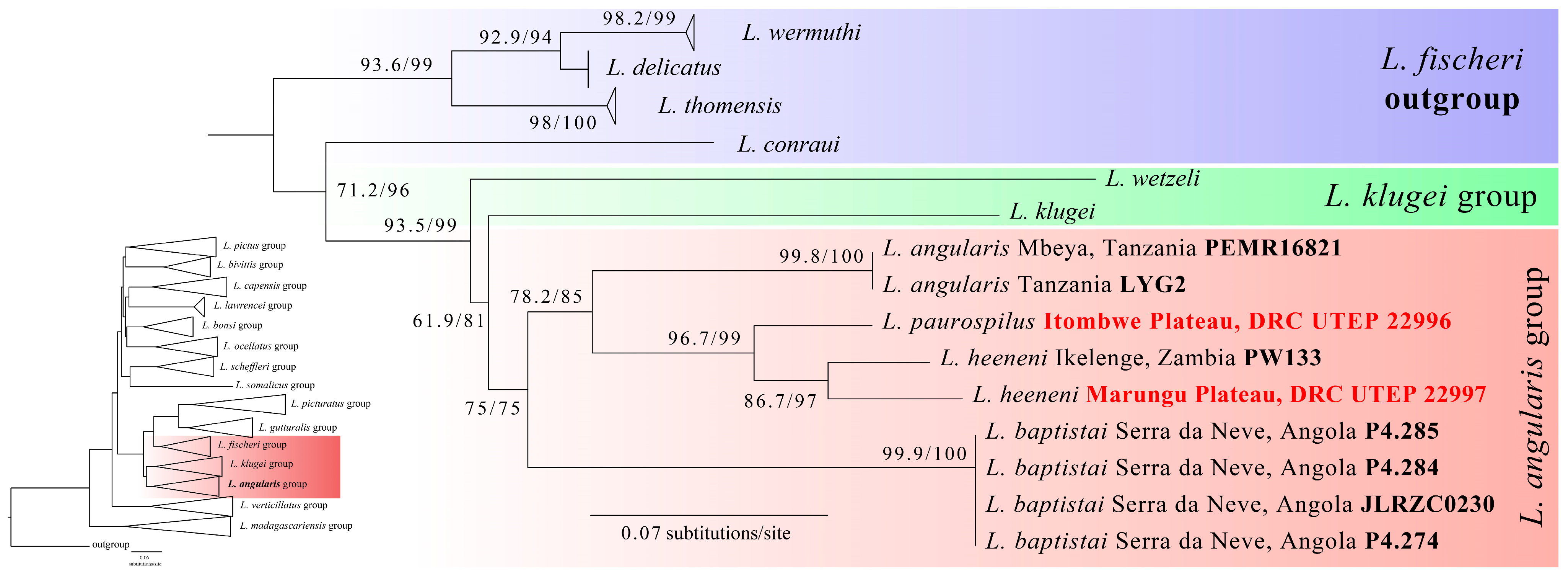
Figure 4.
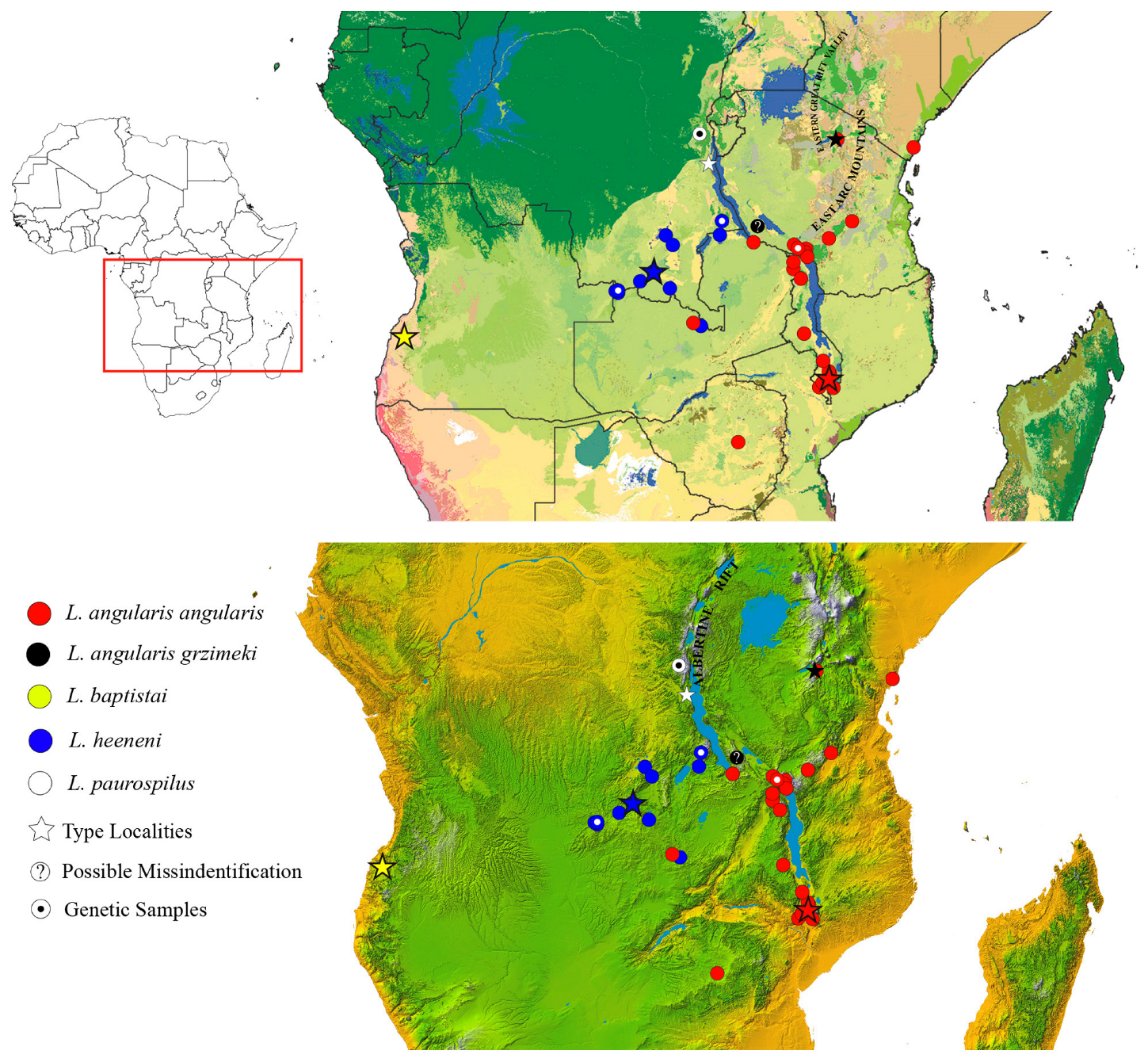
Geographical distribution of the L. angularis group, on a map of the major vegetation divisions (above [38]) and 1 arc-second elevation map (below; NASA 2000). Colors depict records of different species within the L. angularis group; stars depict type localities; inner circles depict genetic samples included in the phylogenetic analysis; see inset for explanations of symbols. Elevation map of Africa from NASA (2000), Shuttle Radar Topography Mission (SRTM) https://www.jpl.nasa.gov/images/ (accessed on 1 January 2023).
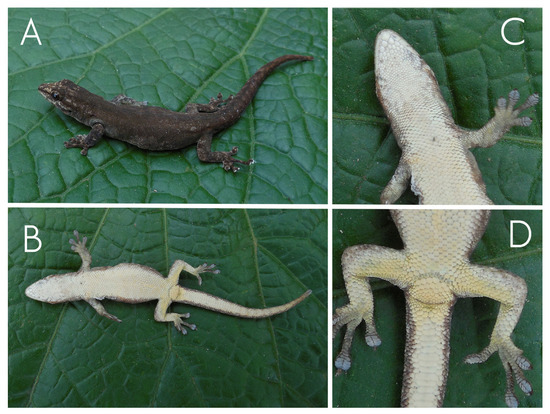
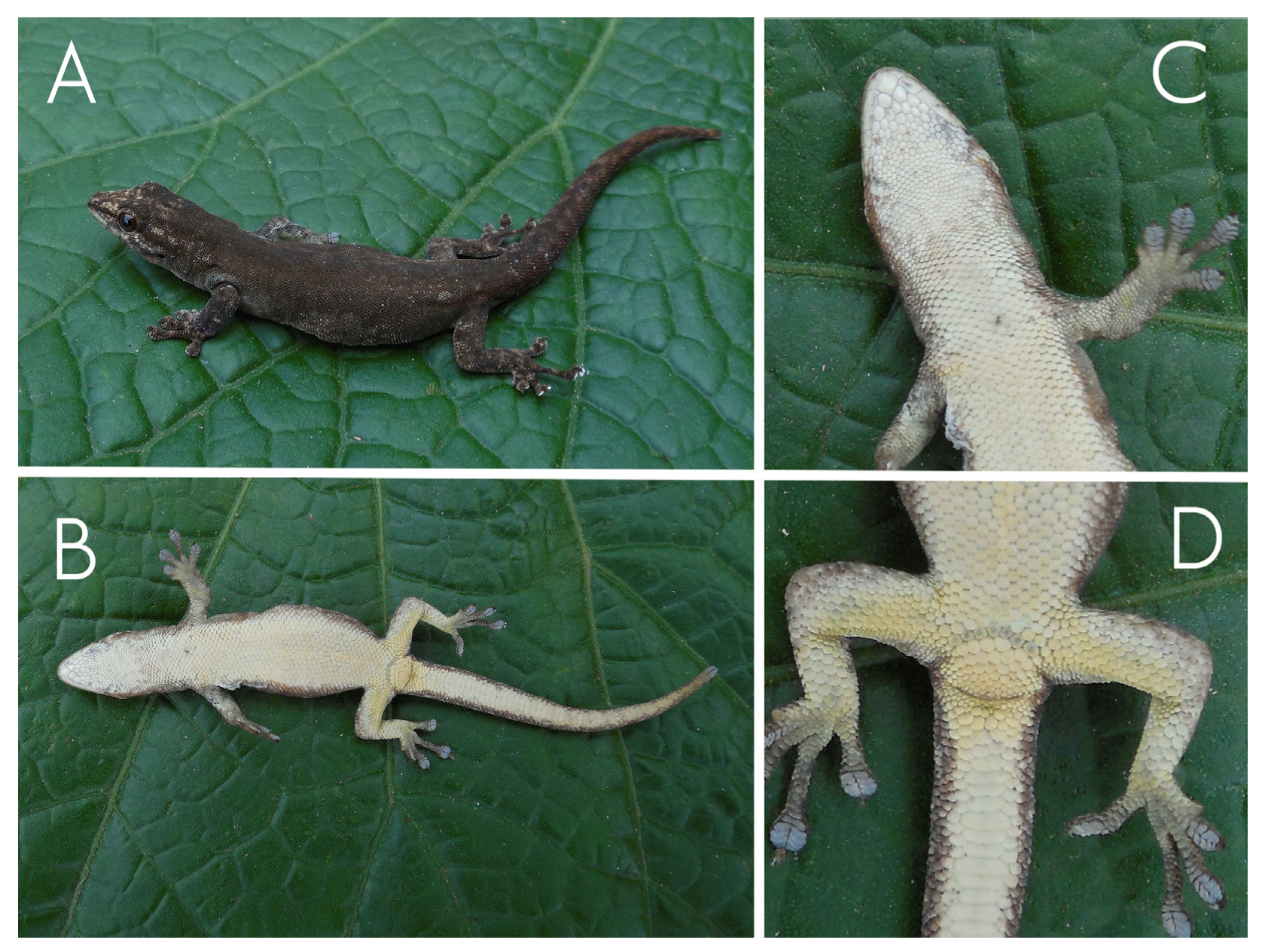
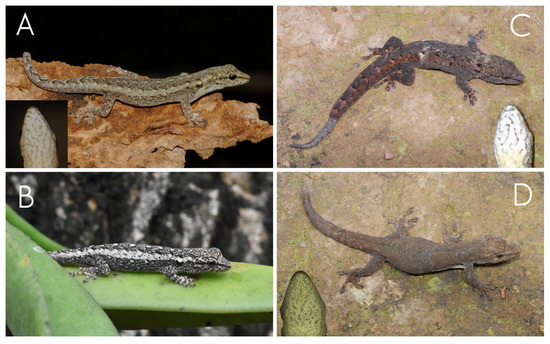
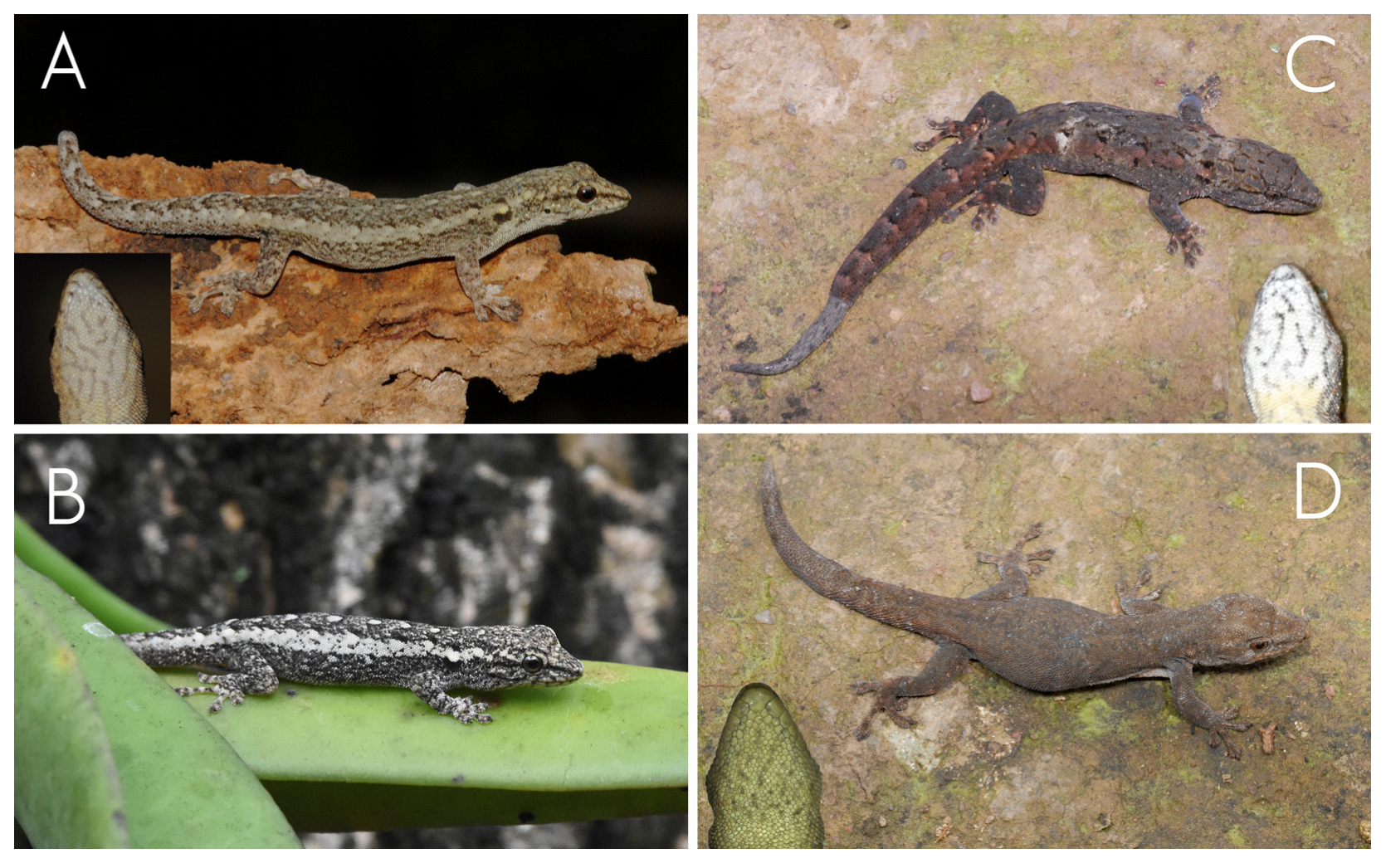
The examination of 23 specimens (including the three genetically analyzed individuals) and three additional photographs of live specimens from Fungurume, DRC, revealed considerable morphological variation in the three characters previously used to distinguish L. heeneni from L. paurospilus, including the number of precloacal pores and supralabials, and the presence/absence of vertebral ocelli in the dorsal pattern (Table 2). Of particular relevance is the specimen from the Itombwe Plateau (UTEP 22996), located ~150 km north of the type locality of L. paurospilus. Morphologically, the Itombwe specimen conforms to the original description of the latter species, possessing seven precloacal pores, seven supralabials on each side, and a patternless dorsal coloration (versus a dorsal pattern consisting of two light cream to white dorsolateral stripes on the dorsum, flanking a vertebral line of light cream to white spots in the type series of L. heeneni; Figure 1, Figure 2 and Figure 5). However, it was recovered in a well-supported clade with all other L. heeneni material, and it had a low uncorrected pairwise distance (4.95%) from the specimen collected in Pepa, southeastern DRC. Finally, the large series from Pepa, Marungu Plateau, DRC (10 specimens) exhibits extensive morphological variation in all three previously mentioned characters (Figure 6; Table 2). This variation includes specimens with the typical dorsal pattern of L. heeneni (Figure 1 and Figure 6A,B), others with a dorsal pattern that lacks the vertebral line (Figure 6C), and some patternless individuals (Figure 6D). There is also variation in the number of precloacal pores (ranging from seven to ten) and supralabials (six to nine).
Table 2.
Morphological information of the material examined in this work. (0) Dorsal pattern absent; (1) Dorsal pattern with two dorsolateral stripes flanking a vertebral ocelli line; (2) Dorsal pattern with two dorsolateral stripes lacking a vertebral ocelli line. All localities are in Democratic Republic of the Congo.
Figure 5.
Photograph of a live specimen of Lygodactylus paurospilus (UTEP 22996) collected from Kilumbi, Itombwe Plateau, South Kivu Province, Democratic Republic of the Congo (DRC), showing (A) Dorsal view of the body. (B) Ventral view of the body. (C) Detail of the gular pattern. (D) Details of cloacal region. Photos by M. M. Aristote.
Figure 6.
Photographs of live specimens of Lygodactylus heeneni (A,B) from Fungurume, Luabala Province, DRC, and (C) [UTEP 22997]–(D) [UTEP 22998]) from Pepa, Tanganyika Province, DRC. Insets show gular coloration in specimens in life (A,C) and the preserved specimen (D). Photos by (A,B) Colin Tilbury and (C,D) EG.
4. Discussion
The results of this study provide new insights into the diversity, evolutionary relationships, and biogeography of this complex radiation of dwarf geckos in Central Africa. They emphasize the importance of applying integrative approaches, combining molecular, morphological, and geographic data when making taxonomic decisions within this group. As reported in other Lygodactylus groups [9], the deep nodes depicting relationships among species groups had poor to moderate support (BS = 60–80%), confirming that sampling gaps and 16S alone are insufficient to reconstruct a conclusive hypothesis of phylogenetic relationships within the genus Lygodactylus. However, recently diverged lineages, including the focal taxa of this study, were well-supported by bootstrap proportions of 90–100% (Figure 3). Despite the 6.4% genetic distance between the Ikelenge and Itombwe samples, the relatively proximate samples of the L. heeneni/L. paurospilus clade have uncorrected pairwise genetic distances below the 6% species-level threshold proposed for Lygodactylus [1], supporting their conspecific status. These findings also suggest that the observed morphological variation in scale counts and color patterns likely represent intraspecific polymorphism rather than evidence of distinct species boundaries. Our interpretation may seem controversial when compared to the genetic distances (4.1–7.3%) reported among sister species within the L. fischeri group (namely L. thomensis, L. delicatus, and L. wermuthi), which were originally described as subspecies of L. thomensis (Peters, 1881) based on their gular patterns [39]. This low genetic distance, despite being the exception rather than the rule within Lygodactylus, has been attributed to accelerated mitochondrial evolution within the clade, possibly driven by the island effect that has promoted rapid isolation between populations [40]. However, the taxonomic status and degree of genetic isolation among these taxa have never been rigorously tested, and thus, the taxonomic status of these three taxa warrants further investigation.
Although genetic data from the type locality of Lygodactylus paurospilus at Haute Lubitshako in the Kabobo Plateau, DRC is not available, the large geographic distribution of L. heeneni (including localities north and south of the Kabobo Plateau) and the broad morphological variability observed within the species, including considerable overlap between the two taxa, support Pasteur’s [19] original hypothesis that they are conspecific. Notably, a high degree of herpetological connectivity has previously been documented between the Itombwe and Kabobo plateaus, suggesting the existence of a corridor linking the two regions during the early Pleistocene [28]. Furthermore, it should be noted that Lygodactylus is considered a “non-adaptive radiation,” so color polymorphism is more likely a matter of developmental plasticity rather than an adaptation to a specific ecological niche [2,11]. Considered together, these lines of evidence support our taxonomic decision to consider L. paurospilus as a junior synonym of L. heeneni.
Lygodactylus heeneni is now known to have an extensive geographic distribution from the copperbelt of Zambia [41] to high elevations of the Itombwe Nature Reserve in DRC (this study). The species is also known from 700–1750 m a.s.l. of the Kibara Plateau in Upemba National Park [20]. Furthermore, the presence of multiple individuals inside a house in Pepa in the Marungu Plateau (this study) suggests that this species is likely a habitat generalist that can adapt to anthropogenically modified environments, as reported with other Lygodactylus species [42,43]. Therefore, given the wide distribution and high adaptability of L. heeneni, it is also expected that this species occurs in neighboring regions, such as the northeastern part of Angola (Lunda Norte Province), which shares similar ecological conditions [44] and reptile communities with southern DRC [45].
5. Conclusions
In summary, our results clarified the taxonomy, evolutionary relationships, and biogeography of this Central African dwarf gecko radiation. The genetic and morphological evidence indicate that L. heeneni and L. paurospilus are conspecific, with observed variation representing intraspecific polymorphism rather than distinct species boundaries. These findings underscore the value of combining multiple lines of evidence in resolving complex taxonomic questions and highlight the need for continued sampling across the geographic range of poorly known reptiles in Central Africa.
Supplementary Materials
Supplementary material (Table S1) were submitted to the Zenodo repository and are available on https://doi.org/10.5281/zenodo.18034135.
Author Contributions
Conceptualization, J.L.-R.; Methodology, J.L.-R.; Formal Analysis, J.L.-R.; Investigations, J.L.-R., E.G. and C.D.; Resources, E.G., C.K. and C.D.; Data Curation, J.L.-R.; Writing—Original Draft preparation, J.L.-R.; Writing—Review and Editing, J.L.-R., E.G., C.K. and C.D.; Visualization, J.L.-R. and C.D.; Project Administration, E.G.; Funding Acquisition, E.G. All authors have read and agreed to the published version of the manuscript.
Funding
Fieldwork by EG in Democratic Republic of the Congo (DRC) was funded by a National Geographic Research and Exploration Grant (no. 8556-08) and the University of Texas at El Paso. Laboratory work was funded by the US National Science Foundation (DEB-1145459). The genomics core was supported by grants G12MD007592 and 5U54MD007592 from the National Institutes on Minority Health and Health Disparities (NIMHD), a component of the National Institutes of Health (NIH).
Institutional Review Board Statement
Permits to collect specimens in Democratic Republic of the Congo were provided by the Centre de Recherche en Sciences Naturelles and Institut Congolais pour la Conservation de la Nature. The Institutional Animal Care and Use Committee of the University of Texas at El Paso approved the ethical protocols to collect specimens in this study (reference no. A-200902-1 dated January 2009 [renewed every 3 years]).
Data Availability Statement
All sequences generated in this study were deposited to GenBank under the accession numbers PX724196–PX724201.
Acknowledgments
Thanks to C. Tilbury and M. M. Aristote for providing photographic material from Fungurume, DRC, and Itombwe Nature Reserve, which were used in this work. Thanks to Garin Cael (RMCA), Olivier S. G. Pauwels (RBINS), and Werner Conradie (PEM) for providing access and detailed photographs of relevant material for this work. EG and CK thank field colleagues Mwenebatu M. Aristote and Wandege M. Muninga. We thank Ana Betancourt of the Border Biomedical Research Center (BBRC) Genomics Analysis Core Facility for services and facilities provided.
Conflicts of Interest
The authors declare no conflicts of interest.
References
- Gippner, S.; Travers, S.L.; Scherz, M.D.; Colston, T.J.; Lyra, M.L.; Mohan, A.V.; Multzsch, M.; Nielsen, S.V.; Rancilhac, L.; Glaw, F.; et al. Comprehensive phylogeny of dwarf geckos of the genus Lygodactylus, with insights into their systematics and morphological variation. Mol. Phyl. Evol. 2021, 165, 107311. [Google Scholar] [CrossRef] [Scilit] [PubMed]
- Lobón-Rovira, J.; Marugán-Lobón, J.; Nebreda, S.M.; Buckley, D.; Stanley, E.L.; Köhnk, S.; Glaw, F.; Conradie, W.; Bauer, A.M. Adaptive or non-adaptive? Cranial evolution in a radiation of miniaturized day geckos. BMC Ecol. Evol. 2024, 24, 150. [Google Scholar] [CrossRef] [Scilit]
- Malonza, P.K.; Granthon, C.; Williams, D.A. A new species of dwarf gecko in the genus Lygodactylus (Squamata: Gekkonidae) from central Kenya. Zootaxa 2016, 4061, 418–428. [Google Scholar] [CrossRef] [Scilit]
- Rakotoarison, A.; Gippner, S.; Multzsch, M.; Miralles, A.; Razafimanafo, D.; Hasiniaina, A.; Glaw, F.; Vences, M. Molecular systematics of the enigmatic dwarf gecko Lygodactylus ornatus and description of a new species of the L. verticillatus group from the North West of Madagascar. Zootaxa 2025, 5621, 420–436. [Google Scholar] [CrossRef] [Scilit] [PubMed]
- Röll, B.; Sanchez, M.; Gippner, S.; Bauer, A.M.; Travers, S.L.; Glaw, F.; Hawlitschek, O.; Vences, M. Phylogeny of dwarf geckos of the genus Lygodactylus (Gekkonidae) in the Western Indian Ocean. Zootaxa 2023, 5311, 232–250. [Google Scholar] [CrossRef] [Scilit]
- Travers, S.L.; Jackman, T.R.; Bauer, A.M. A molecular phylogeny of Afromontane dwarf geckos (Lygodactylus) reveals a single radiation and increased species diversity in a South African montane center of endemism. Mol. Phylogenet. Evol. 2014, 80, 31–42. [Google Scholar] [CrossRef] [Scilit] [PubMed]
- Vences, M.; Multzsch, M.; Gippner, S.; Miralles, A.; Crottini, A.; Gehring, P.S.; Rakotoarison, A.; Ratsoavina, F.M.; Glaw, F.; Scherz, M.D. Integrative revision of the Lygodactylus madagascariensis group reveals an unexpected diversity of little brown geckos in Madagascar’s rainforest. Zootaxa 2022, 5179, 1–61. [Google Scholar] [CrossRef] [Scilit]
- Vences, M.; Multzsch, M.; Zerbe, M.; Gippner, S.; Andreone, F.; Crottini, A.; Glaw, F.; Köhler, J.; Rakotomanga, S.; Rasamison, S.; et al. Taxonomizing a truly morphologically cryptic complex of dwarf geckos from Madagascar: Molecular evidence for new species-level lineages within the Lygodactylus tolampyae complex. Zootaxa 2024, 5468, 416–448. [Google Scholar] [CrossRef] [Scilit]
- Vences, M.; Herrmann, C.; Multzsch, M.; Gippner, S.; Razafimanafo, D.; Rahagalala, N.A.; Rakotomanga, S.; Rakotoarison, A.; Glaw, F.; Miralles, A. Revision of the Lygodactylus tolampyae complex, with descriptions of three additional new dwarf gecko species from Madagascar’s North West. Zootaxa 2025, 5665, 301–328. [Google Scholar] [CrossRef] [Scilit]
- Lanna, F.M.; Werneck, F.P.; Gehara, M.; Fonseca, E.M.; Colli, G.R.; Sites, J.W., Jr.; Rodrigues, M.T.; Garda, A.A. The evolutionary history of Lygodactylus lizards in the South American open diagonal. Mol. Phylogenet. Evol. 2018, 127, 638–645. [Google Scholar] [CrossRef] [Scilit]
- Lobón-Rovira, J.; Bauer, A.M.; Vaz Pinto, P.; Trape, J.F.; Conradie, W.; Kusamba, C.; Julio, T.; Cael, G.; Stanley, E.L.; Hughes, D.F.; et al. Integrative revision of the Lygodactylus gutturalis (Bocage, 1873) complex unveils extensive cryptic diversity and traces its evolutionary history. Zool. J. Linn. Soc. 2024, 201, 447–492. [Google Scholar] [CrossRef] [Scilit]
- Greenbaum, E. Venomous River: Changing Climate, Imperiled Forests, and a Scientist’s Race to Find New Species in the Congo; High Road Books (Imprint of The University of New Mexico Press): Albuquerque, NM, USA, 2025; xvii + 298p. [Google Scholar]
- Röll, B.; Vaz Pinto, P.; Lobón-Rovira, J. A new species of African diurnal dwarf geckos (Gekkonidae: Lygodactylus) from the Lower Guinea rainforest. Zootaxa 2024, 5538, 561–574. [Google Scholar] [CrossRef] [Scilit]
- Röll, B.; Pröhl, H.; Hoffmann, K.P. Multigene phylogenetic analysis of Lygodactylus dwarf geckos (Squamata: Gekkonidae). Mol. Phylogenet. Evol. 2010, 56, 327–335. [Google Scholar] [CrossRef] [Scilit]
- Castiglia, R.; Annesi, F. The phylogenetic position of Lygodactylus angularis and the utility of using the 16S rDNA gene for delimiting species in Lygodactylus (Squamata, Gekkonidae). Acta Herpetol. 2022, 6, 35–45. [Google Scholar]
- Portik, D.M.; Travers, S.L.; Bauer, A.M.; Branch, W.R. A new species of Lygodactylus (Squamata: Gekkonidae) endemic to Mount Namuli, an isolated ‘sky island’ of northern Mozambique. Zootaxa 2013, 3710, 415–435. [Google Scholar] [CrossRef] [Scilit]
- Marques, M.P.; Ceríaco, L.M.; Buehler, M.D.; Bandeira, S.A.; Janota, J.M.; Bauer, A.M. A revision of the Dwarf Geckos, genus Lygodactylus (Squamata: Gekkonidae), from Angola, with the description of three new species. Zootaxa 2020, 4853, 301–352. [Google Scholar] [CrossRef] [Scilit] [PubMed]
- Laurent, R.F. Reptiles et batraciens nouveaux du massif du Mont Kabobo et du plateau des Marungu. Rev. Zool. Bot. Afr. 1952, 46, 18–34. [Google Scholar]
- Pasteur, G. Recherches sur l’évolution des lygodactyles, lézards Afro-Malgaches actuels. Trav. Inst. Sci. Chérifien Sér. Zool. 1965, 29, 1–132. [Google Scholar]
- de Witte, G.F. Reptiles. In Exploration du Parc National de l’Upemba, Mission G. F. de Witte en Collaboration avec W. Adam, A. Janssens, L. Van Meel et R. Verheyen (1946–1949); De Witte, G.F., Ed.; Institut des Parcs Nationaux du Congo Belge: Bruxelles, Belgium, 1953; Volume 6, 322p, pls. XLI. [Google Scholar]
- Kluge, A.G. Checklist of gekkonid lizards. Smithson. Herpetol. Inf. Serv. Ser. 1991, 85, 1–35. [Google Scholar] [CrossRef] [Scilit]
- Kluge, A.G. Gekkonoid Lizard Taxonomy; International Gecko Society: San Diego, CA, USA, 1993. [Google Scholar]
- Kluge, A.G. Gekkotan lizard taxonomy. Hamadryad 2001, 26, 1–209. [Google Scholar]
- Timberlake, J. Miombo Ecoregion Vision Report 2001 (rev. August 2011); Biodiversity Foundation for Africa: Bulawayo, Zimbabwe, 2011. [Google Scholar]
- Hirschfeld, M.; Blackburn, D.C.; Burger, M.; Greenbaum, E.; Zassi-Boulou, A.G.; Rödel, M.O. Two new species of long-fingered frogs of the genus Cardioglossa (Anura: Arthroleptidae) from Central African rainforests. Afr. J. Herpetol. 2015, 64, 81–102. [Google Scholar] [CrossRef] [Scilit]
- Broadley, D.G. Pachydactylus katanganus de Witte 1953, a species endemic to the Upemba National Park (Sauria: Gekkonidae). Afr. J. Herpetol. 2003, 52, 69–70. [Google Scholar] [CrossRef] [Scilit]
- Owiunji, I.; Plumptre, A.J. The importance of cloud forest sites in the conservation of endemic and threatened species of the Albertine Rift. In Tropical Montane Cloud Forests: Science for Conservation and Management; Bruijnzeel, L.A., Scatena, F.N., Hamilton, L.S., Eds.; Cambridge University Press: Cambridge, UK, 2011; pp. 164–171. [Google Scholar]
- Greenbaum, E.; Kusamba, C. Conservation implications following the rediscovery of four frog species from the Itombwe Natural Reserve, eastern Democratic Republic of the Congo. Herpetol. Rev. 2012, 43, 253–259. [Google Scholar]
- Bruford, M.W.; Hanotte, O.; Brookfield, J.F.Y.; Burke, T. Single-locus and multilocus DNA fingerprint. In Molecular Genetic Analysis of Populations: A Practical Approach; Hoelzel, A.R., Ed.; Irl Press: Oxford, UK, 1992; pp. 225–270. [Google Scholar]
- Palumbi, S.R. The polymerase chain reaction. In Molecular Systematics, 2nd ed.; Hillis, D., Moritz, C., Mable, B., Eds.; Sinauer Associates: Sunderland, UK, 1996; pp. 205–247. [Google Scholar]
- Pramuk, J.B.; Robertson, T.; Sites, J.W., Jr.; Noonan, B.P. Around the world in 10 million years: Biogeography of the nearly cosmopolitan true toads (Anura: Bufonidae). Glob. Ecol. Biogeogr. 2008, 17, 72–83. [Google Scholar] [CrossRef] [Scilit]
- Wong, T.K.F.; Ly-Trong, N.; Ren, H.; Banos, H.; Roger, A.J.; Susko, E.; Bielow, C.; De Maio, N.; Goldman, N.; Hahn, M.W.; et al. IQ-TREE 3: Phylogenomic Inference Software Using Complex Evolutionary Models. 2025. Available online: https://ecoevorxiv.org/repository/view/8916/ (accessed on 15 January 2025).
- Hoang, D.T.; Chernomor, O.; Von Haeseler, A.; Minh, B.Q.; Vinh, L.S. UFBoot2: Improving the ultrafast bootstrap approximation. Mol. Biol. Evol. 2025, 35, 518–522. [Google Scholar] [CrossRef] [Scilit]
- Tamura, K.; Dudley, J.; Nei, M.; Kumar, S. MEGA 4: Molecular Evolutionary Genetics Analysis (MEGA) software version 4.0. Mol. Biol. Evol. 2007, 24, 1596–1599. [Google Scholar] [CrossRef] [Scilit] [PubMed]
- VertNet. Available online: https://www.vertnet.org (accessed on 2 October 2025).
- GBIF Occurrence Download. Available online: https://doi.org/10.15468/dl.nhe7cq (accessed on 17 October 2025).
- QGIS Development Team. QGIS Geographic Information System. Open Source Geospatial Foundation. 2021. Available online: http://qgis.org (accessed on 15 January 2025).
- Sayre, R.G.; Comer, P.; Hak, J.; Josse, C.; Bow, J. A New Map of Standardized Terrestrial Ecosystems of Africa; Association of American Geographers: Washington, DC, USA, 2013; 22p. [Google Scholar]
- Pasteur, G. Notes préliminaires sur les lygodactyles (gekkonidés). II. Diagnose de quelques Lygodactylus d’Afrique. Bull. Inst. Franç. Afrique Noire 1962, 24, 606–614. [Google Scholar]
- Jesus, J.; Brehm, A.; Harris, D.J. Phylogenetic relationships of Lygodactylus geckos from the Gulf of Guinea islands: Rapid rates of mitochondrial DNA sequence evolution? Herpetol. J. 2006, 16, 291–295. [Google Scholar]
- Broadley, D.G.; Cotterill, F.P.D. The reptiles of southeast Katanga, an overlooked ‘hot spot’. Afr. J. Herpetol. 2004, 53, 35–61. [Google Scholar] [CrossRef] [Scilit]
- Bocage, J.V.B. Mammiferos, aves e reptis da Hanha, no sertào de Benguella. Jorn. Sci. Math. Phys. Nat. 1896, 14, 105–114. [Google Scholar]
- Rebelo, A.D.; Bates, M.F.; Burger, M.; Branch, W.R.; Conradie, W. Range expansion of the Common Dwarf Gecko, Lygodactylus capensis: South Africa’s most successful reptile invader. Herpetol. Notes 2019, 12, 643–650. [Google Scholar]
- Huntley, B.J.; Ferrand, N. Biodiversity of Angola; Science & Conservation: A Modern Synthesis; Springer: Cham, Switzerland, 2019; 549p. [Google Scholar]
- Branch, W.R.; Baptista, N.L.; Vaz Pinto, P.; Conradie, W. The reptiles of Angola—History, diversity, endemism and hotspots. In Biodiversity of Angola; Huntley, B.J., Ferrand, N., Eds.; Science & Conservation: A Modern Synthesis; Springer: Cham, Switzerland, 2019; pp. 283–326. [Google Scholar]

Disclaimer/Publisher’s Note: The statements, opinions and data contained in all publications are solely those of the individual author(s) and contributor(s) and not of MDPI and/or the editor(s). MDPI and/or the editor(s) disclaim responsibility for any injury to people or property resulting from any ideas, methods, instructions or products referred to in the content. |
© 2026 by the authors. Licensee MDPI, Basel, Switzerland. This article is an open access article distributed under the terms and conditions of the Creative Commons Attribution (CC BY) license.